16 Gothic Table Styling Concepts With Dark, Refined Character

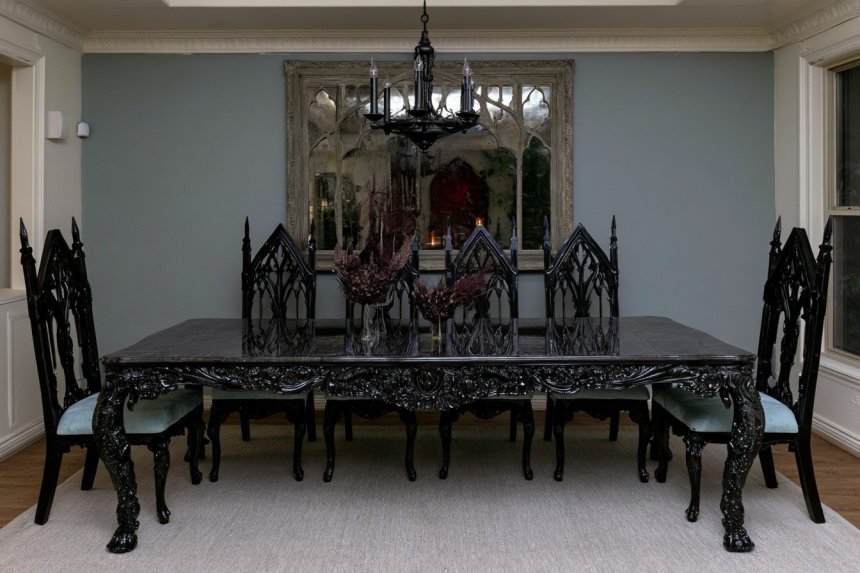
Gothic table decor works best when darkness comes from material, shape, and atmosphere rather than simply covering everything in black. Carved wood, oxidized metal, smoked glass, deep red flowers, sculptural branches, stone surfaces, and dramatic height changes can create a much richer result. The strongest tables often mix one historical reference with something cleaner and more contemporary, preventing the setting from feeling theatrical or costume-like. A long dining table might use cathedral-inspired forms, while a smaller console can rely on mineral textures and shadow. These gothic table styling concepts focus on distinctive compositions that feel deliberate enough for everyday interiors, special dinners, seasonal displays, or dramatic entertaining.
1. Build a Cathedral-Inspired Centerpiece With Arched Frames
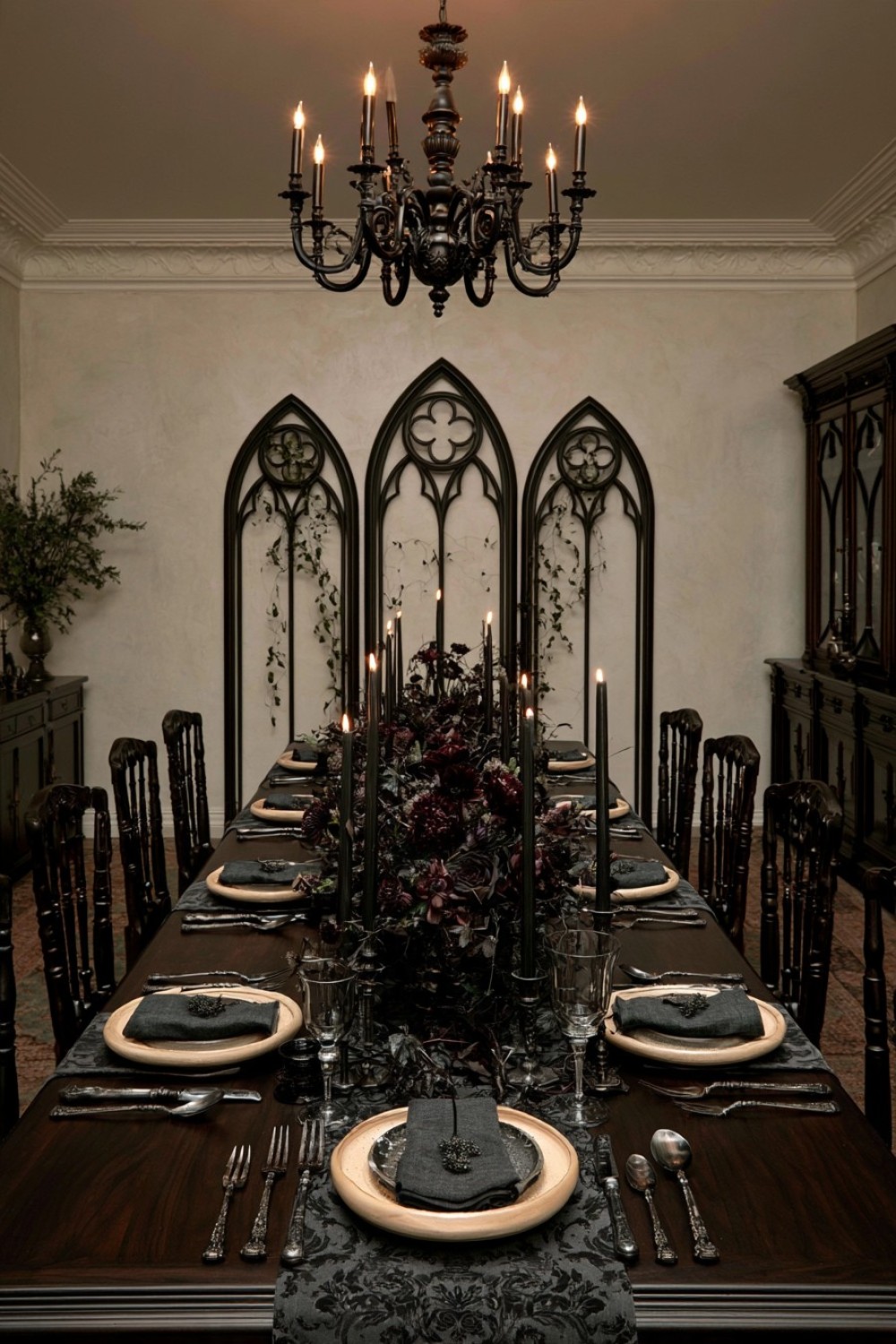
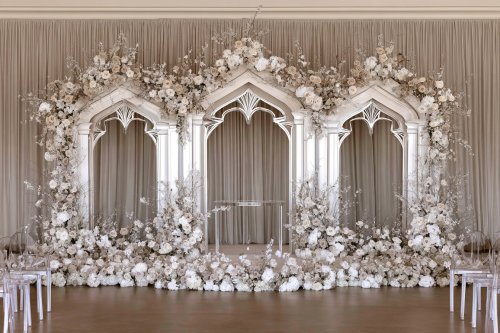
Instead of relying on obvious gothic props, use the pointed arch itself as the visual reference.
Create three or five narrow arch-shaped frames from thin stained timber, black metal, or painted plywood. Place them vertically along the table at different heights, leaving enough space between each one for clear sightlines.
For a DIY version, cut matching pointed arches from plywood with a jigsaw, sand the edges, and attach them to discreet weighted bases.
Thread a few dark florals or trailing vines through only selected frames rather than covering every surface.
The repeated architecture creates a subtle cathedral effect without literal crosses, gargoyles, or Halloween imagery.
Dark walnut, oxblood flowers, and aged brass details work particularly well together.
This arrangement suits long dining tables because the arches naturally create rhythm from one end to the other.
2. Pair Black Stone With Deep Burgundy Florals
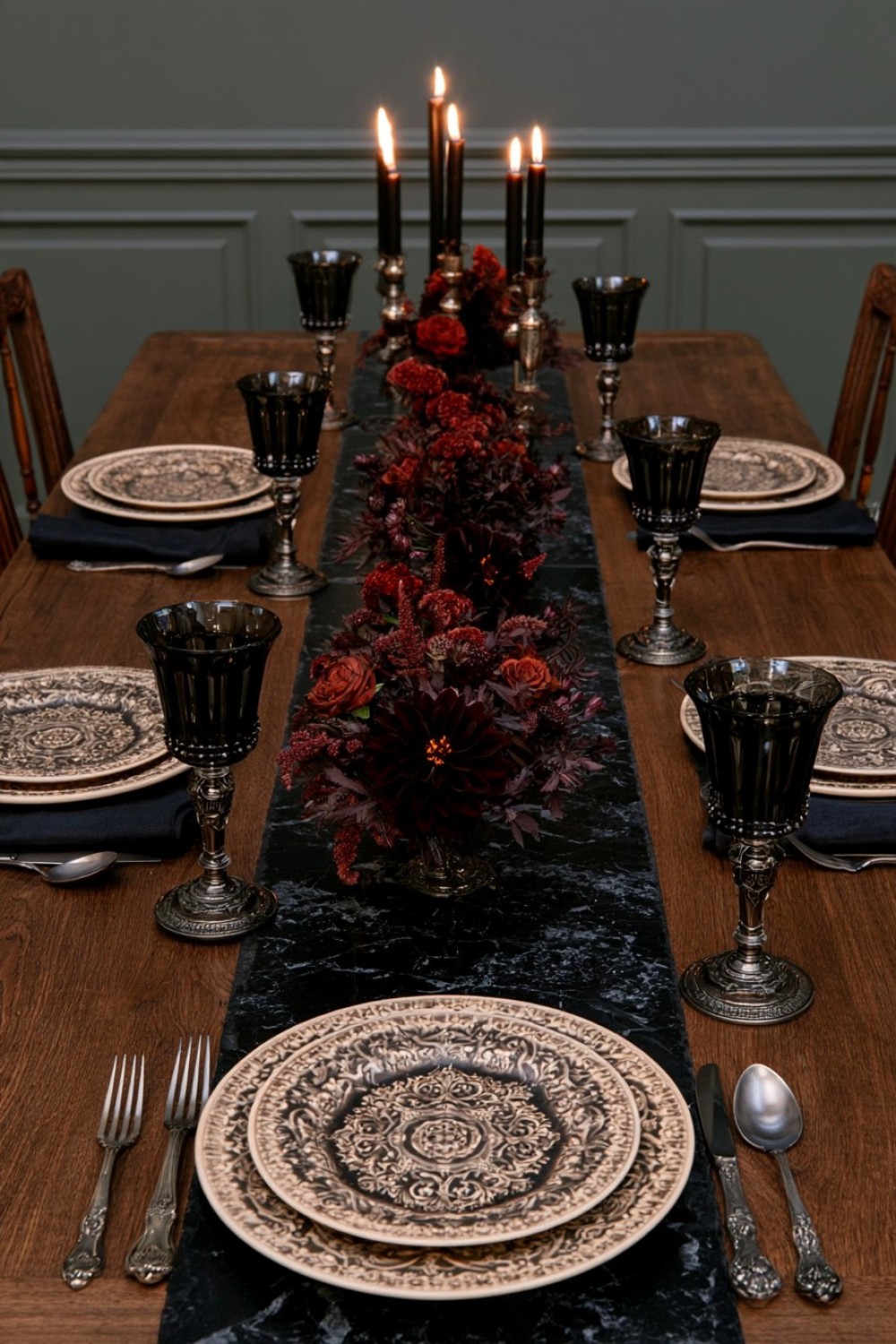
A gothic table can feel especially refined when hard mineral surfaces are balanced with saturated flowers.
Use a long black slate board, dark marble slab, or stone-look runner as the center of the table.
Arrange low clusters of burgundy dahlias, black-red roses, amaranthus, dark scabiosa, or plum foliage along the stone rather than building one tall centerpiece.
Keep the vessels mostly hidden so the flowers seem to emerge directly from the material.
The matte stone creates a strong visual base while the flowers introduce softness and movement.
Add only a few polished metal accents—perhaps pewter napkin rings or dark silver flatware.
The effect feels much more sophisticated than simply using a black tablecloth because the darkness comes from natural material rather than color alone.
3. Use Smoked Glass at Three Different Heights
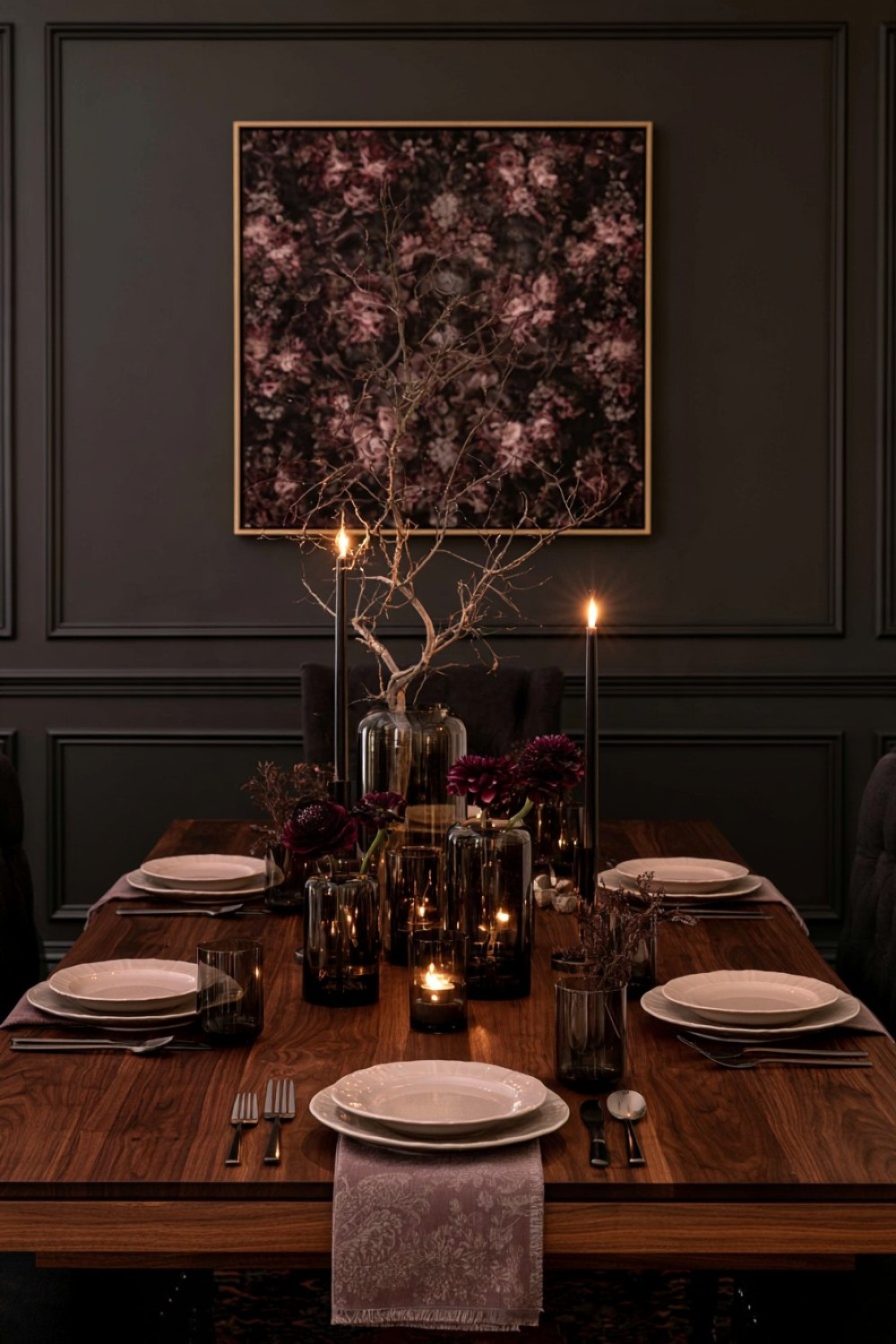
Smoked glass can create gothic atmosphere without making the table visually heavy.
Choose vessels in three height groups: low bowls, medium cylindrical vases, and one or two tall narrow forms.
Use charcoal, gray, or brown-tinted glass rather than opaque black.
The transparency allows light to pass through and produces layered shadows across the table.
Keep the florals restrained—perhaps one long branch in the tallest vessel and single dark blooms in the shorter ones.
The varied heights make the table feel more architectural, while the repeated glass finish keeps it cohesive.
This works especially well in modern interiors where ornate gothic objects might feel out of place.
4. Make a Table Runner From Layered Torn Linen
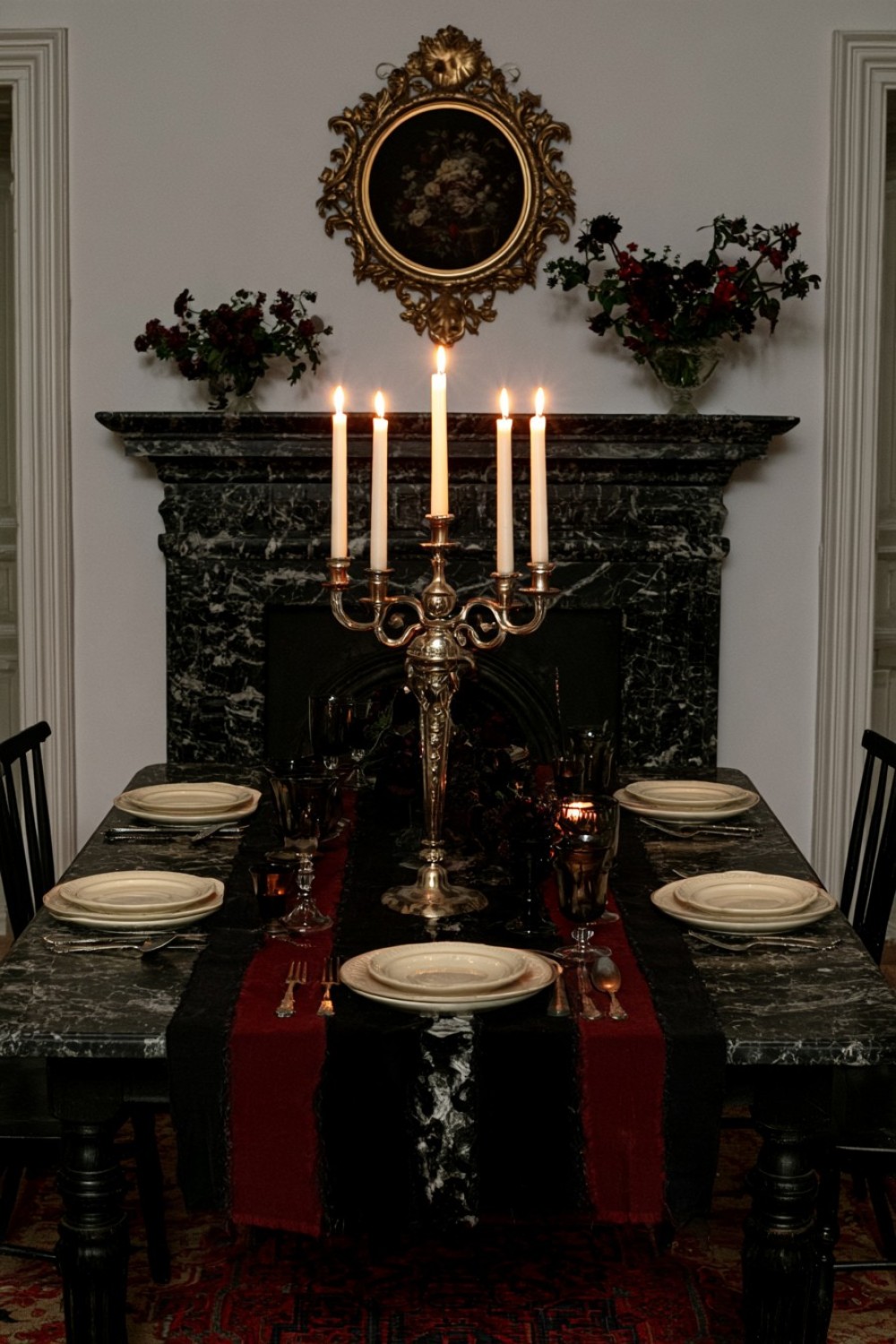
Instead of a polished fabric runner, build texture with several narrow strips of washed linen.
Use charcoal, tobacco, faded black, and deep wine-colored fabric in slightly different widths.
Tear or raw-cut the edges and layer the strips loosely down the center of the table.
Allow some sections to overlap heavily while others expose the wood or stone tabletop beneath.
The result looks aged and atmospheric without feeling like costume fabric.
For a DIY version, use linen remnants rather than buying a dedicated runner. Wash and air-dry them first to soften the fibers.
This works particularly well on an old timber table where the natural grain remains part of the setting.
5. Create a Sculptural Arrangement From Bare Dark Branches
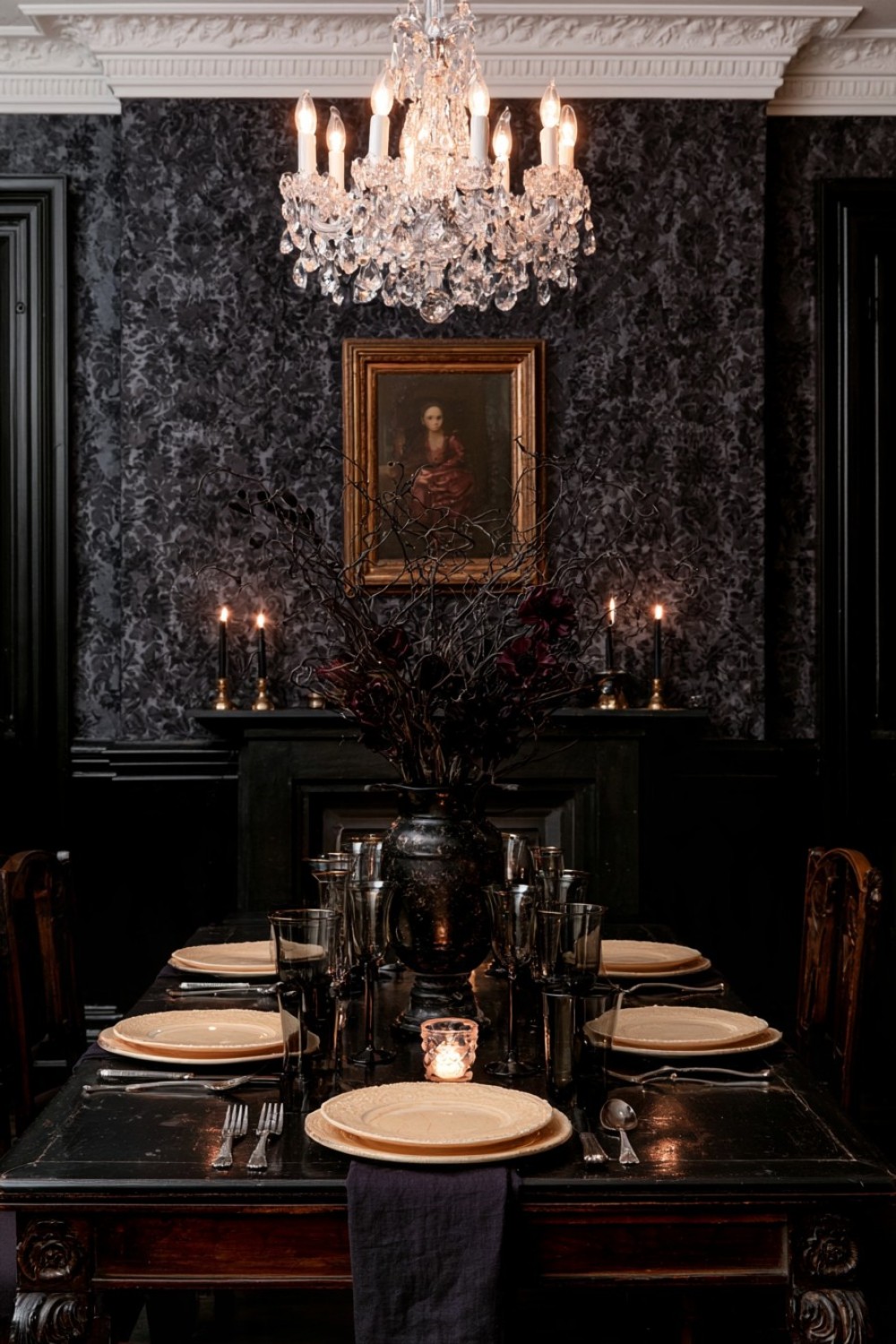
Branches can create more gothic impact than a dense floral centerpiece.
Choose naturally twisted willow, manzanita, grapevine, or other sculptural branches and place them in a heavy ceramic or metal vessel.
For a darker effect, use naturally deep-toned branches or apply a matte charcoal finish to clean decorative branches.
Keep the arrangement asymmetrical and allow one section to stretch horizontally above the table.
Add only a few small flowers or metallic leaves if extra detail is needed.
The empty spaces between branches are what create the drama.
This arrangement works particularly well in high-ceilinged dining rooms because it adds vertical scale without requiring an enormous amount of floral material.
6. Use Pewter and Oxidized Metal Instead of Shiny Silver
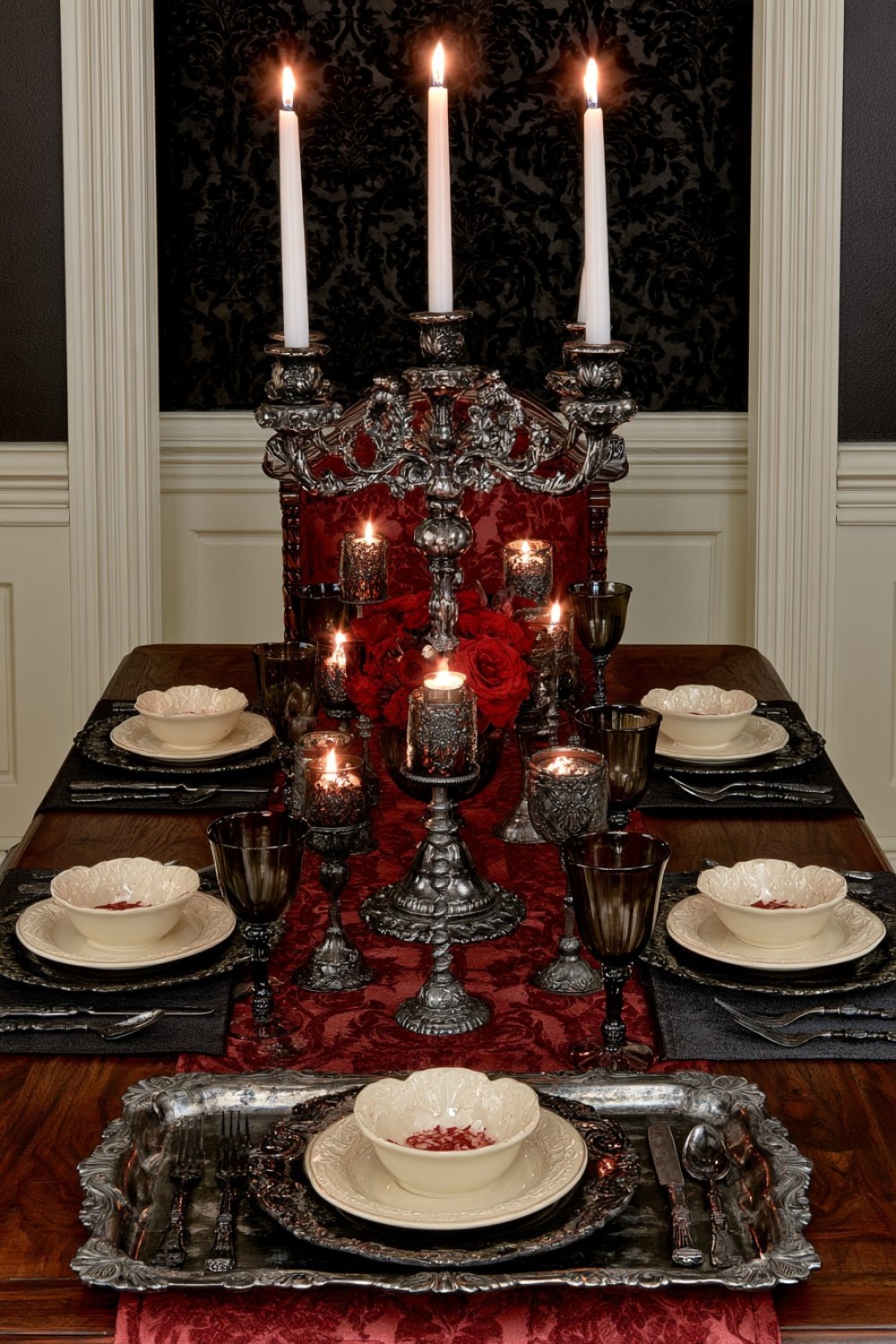
Bright polished silver can feel formal, but darker metals create a stronger gothic mood.
Use pewter plates, oxidized candlesticks, blackened steel serving pieces, or brushed gunmetal accessories.
Mix finishes slightly rather than matching every object perfectly.
The table should look collected over time rather than purchased as one coordinated set.
Dark metals pair especially well with warm timber, burgundy linen, smoky glass, and cream ceramics.
Avoid filling every place setting with metallic objects. One substantial serving tray or several aged metal details are usually enough.
The patina itself becomes part of the decoration.
7. Build a Miniature Ruin as the Centerpiece
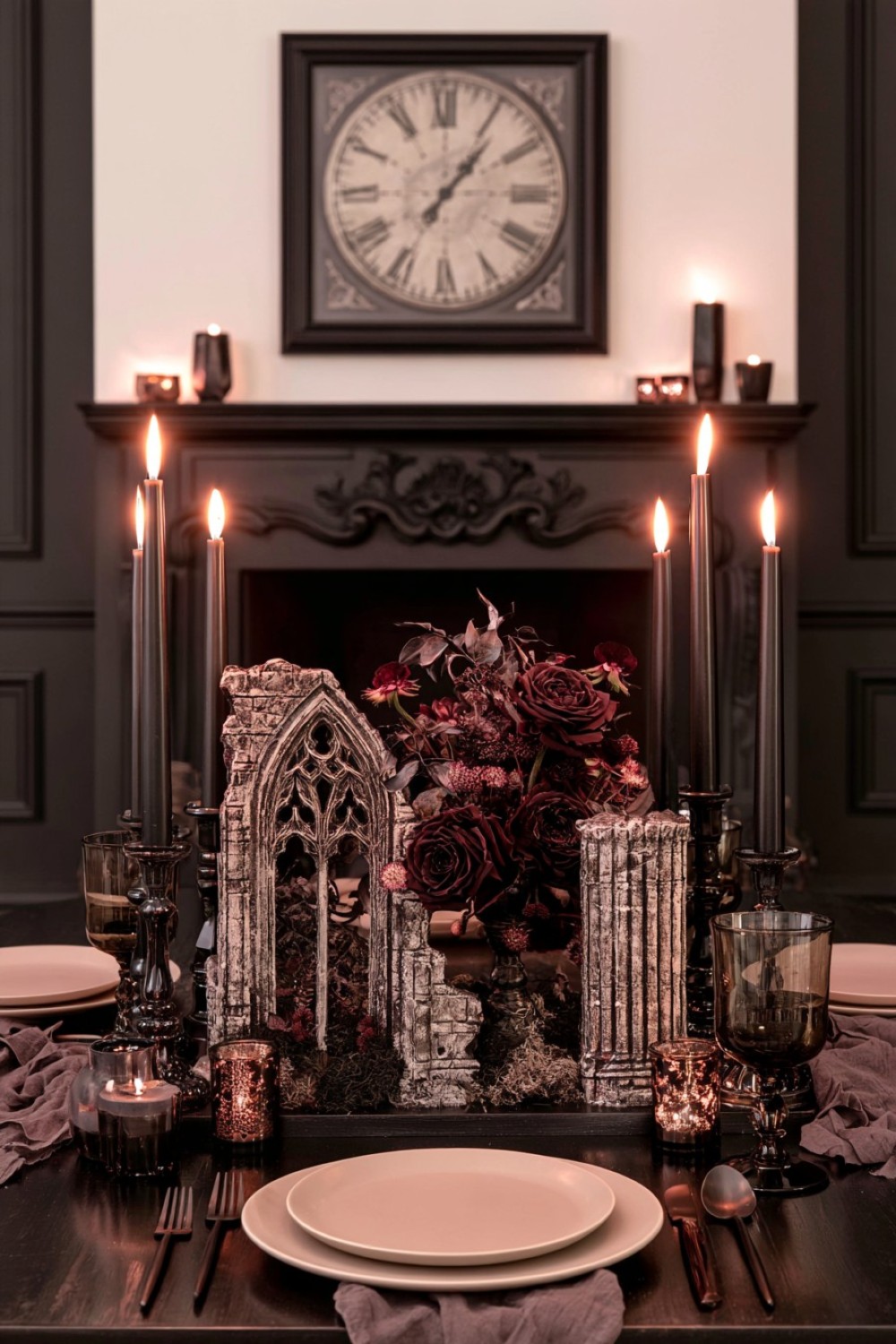
For a more unusual table, create a small architectural ruin rather than using a conventional vase.
Build fragments of arches or columns from lightweight foam, air-dry clay, or plaster-effect material.
Keep the forms abstract and weathered rather than overly detailed.
Arrange them across a narrow base, then allow moss, dried foliage, or small flowers to grow visually between the “ruins.”
You will need lightweight foam, craft knife, textured coating, gray and stone-toned paint, and a stable base.
Keep the structure low enough for guests to see across the table.
The result can resemble an abandoned gothic garden in miniature and works especially well for themed dinners or dramatic seasonal decor.
8. Use Blackened Wood Chargers With Pale Dinnerware
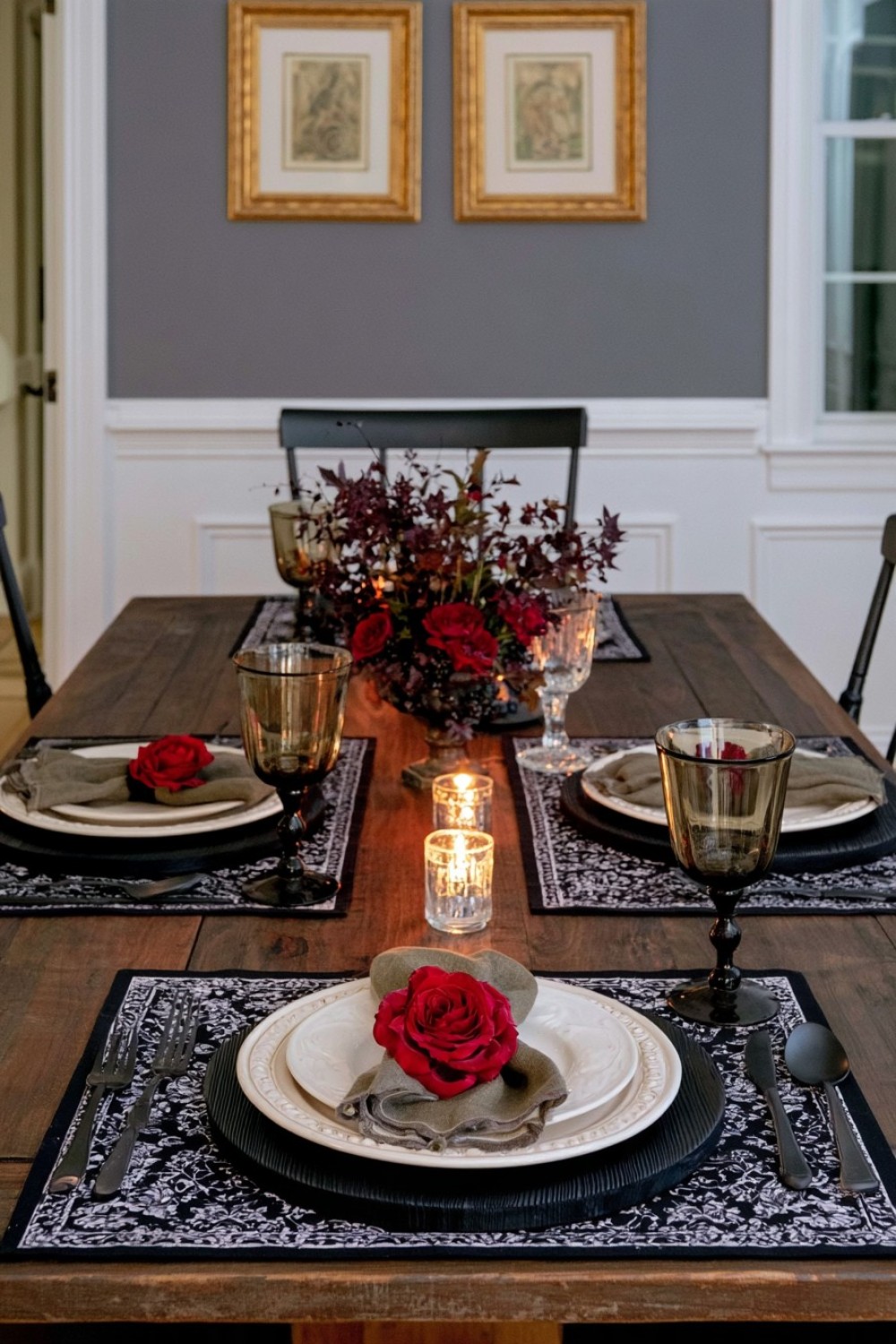
Contrast can make a gothic table feel more elegant.
Instead of using all-black place settings, place pale cream or bone-colored plates on dark-stained or blackened wooden chargers.
The lighter ceramic becomes more visible, while the wood introduces warmth that pure black surfaces often lack.
For a DIY version, cut circular plywood chargers, sand the edges, and finish them with an appropriate dark stain or food-safe surface treatment if they may contact serving items.
Add linen napkins in muted plum, olive, or taupe rather than bright red.
This creates a darker table without making every layer visually identical.
9. Create a Red-to-Black Floral Gradient Down the Table
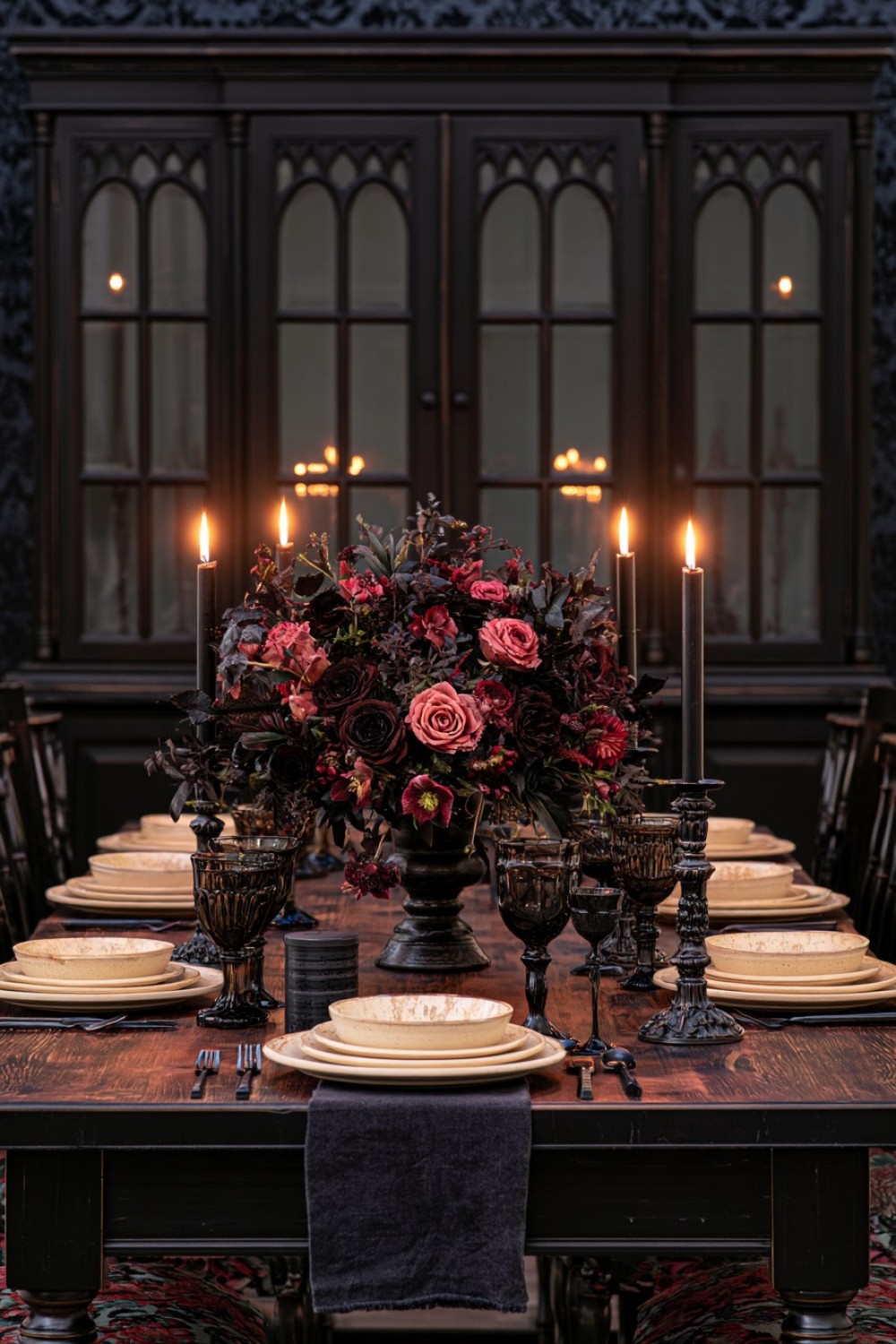
Instead of repeating the same floral color throughout, let the palette darken gradually.
Begin with muted red flowers at one end, transition into burgundy and plum through the center, then finish with near-black foliage or deep chocolate-toned blooms.
Use identical low vessels so the color shift becomes the main feature.
The gradual progression gives the table a sense of movement and feels more intentional than scattering dark flowers randomly.
Keep greenery minimal so it does not interrupt the transition.
This works particularly well on long rectangular tables where the full gradient can be seen from a distance.
10. Use Antique Books as Low Architectural Platforms
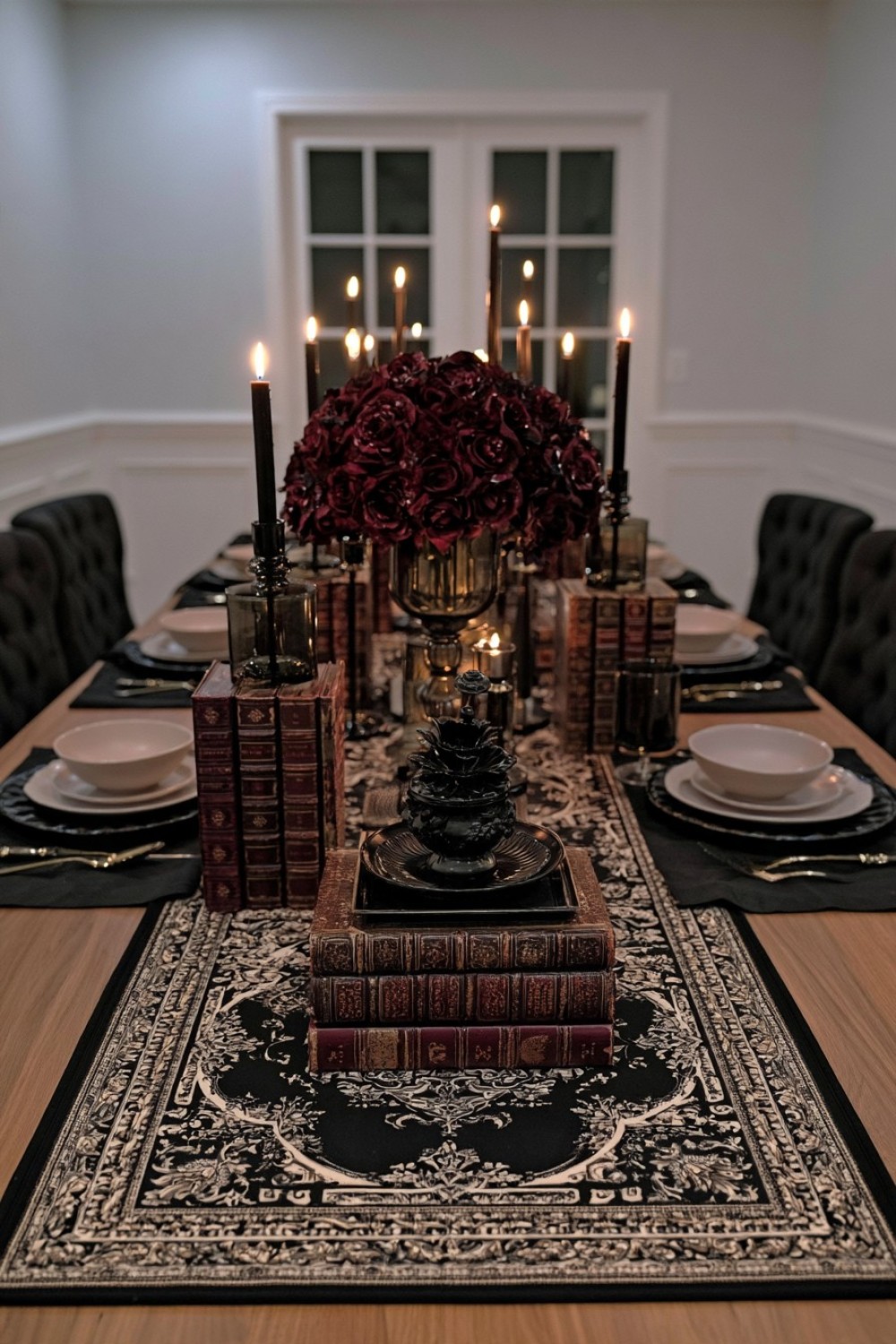
Old books can create level changes without resorting to decorative risers.
Choose a small number of hardcovers in dark brown, black, burgundy, or faded neutral bindings.
Stack two or three at selected points and place a vase, sculptural object, or serving piece on top.
Keep the stacks low and irregular rather than creating identical towers.
If using valuable or fragile books, protect them from spills with discreet trays or use inexpensive decorative copies.
The books introduce age, texture, and visual history without relying on overt gothic symbols.
This works especially well on sideboards or wider dining tables where extra depth allows for layered arrangements.
11. Make a Dark Botanical Table With Almost No Flowers
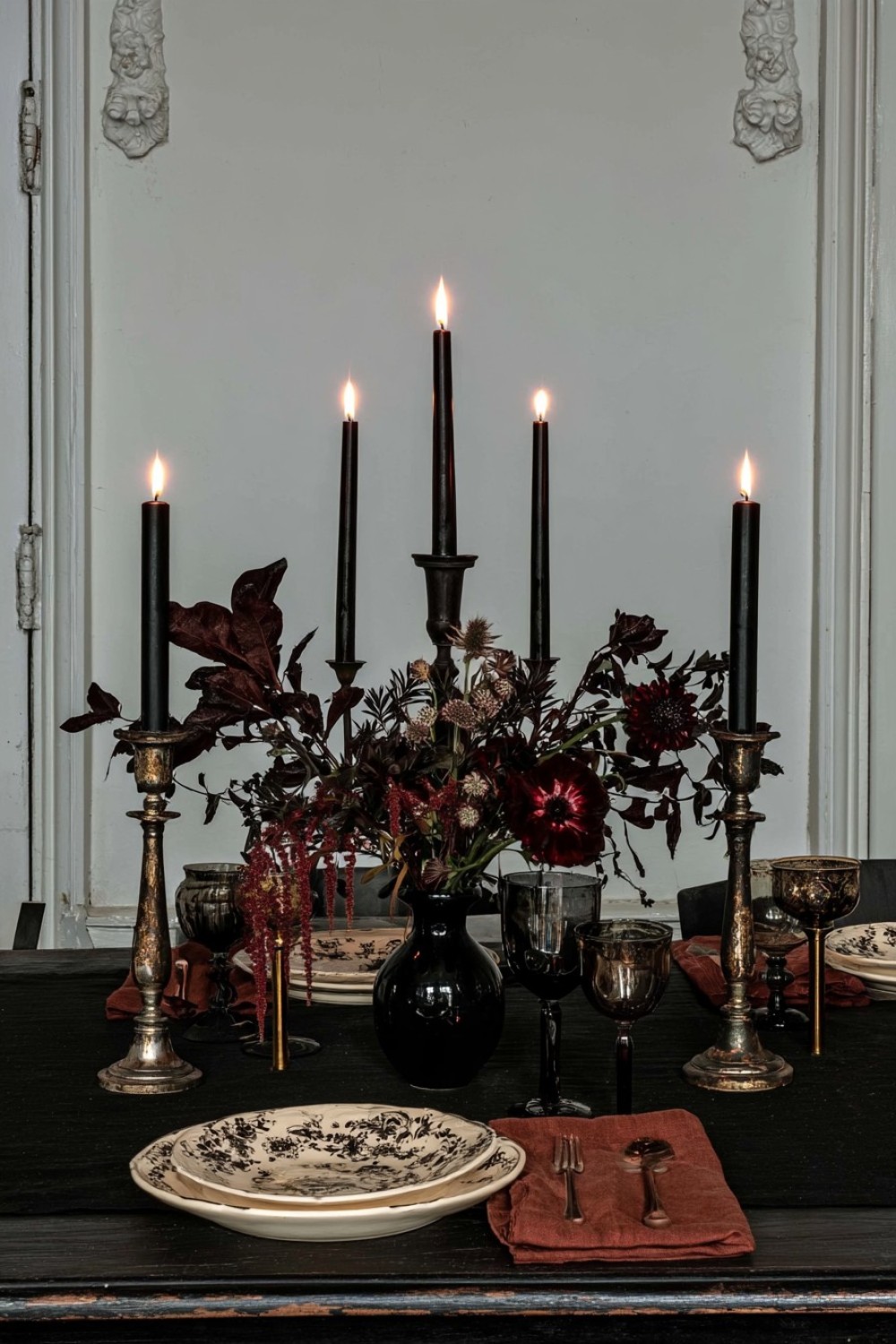
A gothic arrangement can rely primarily on foliage.
Use dark eucalyptus, plum-toned leaves, trailing amaranthus, black mondo grass, seed heads, olive branches, or deep burgundy foliage.
Arrange them loosely in low vessels with only one or two flowers added for contrast.
The lack of obvious blooms makes the composition feel more mysterious and less romantic.
Use black ceramic, aged metal, or smoky glass containers.
This approach works particularly well for autumn or winter tables but can be adapted year-round using seasonal foliage.
12. Create a Mirror Strip Beneath the Centerpiece
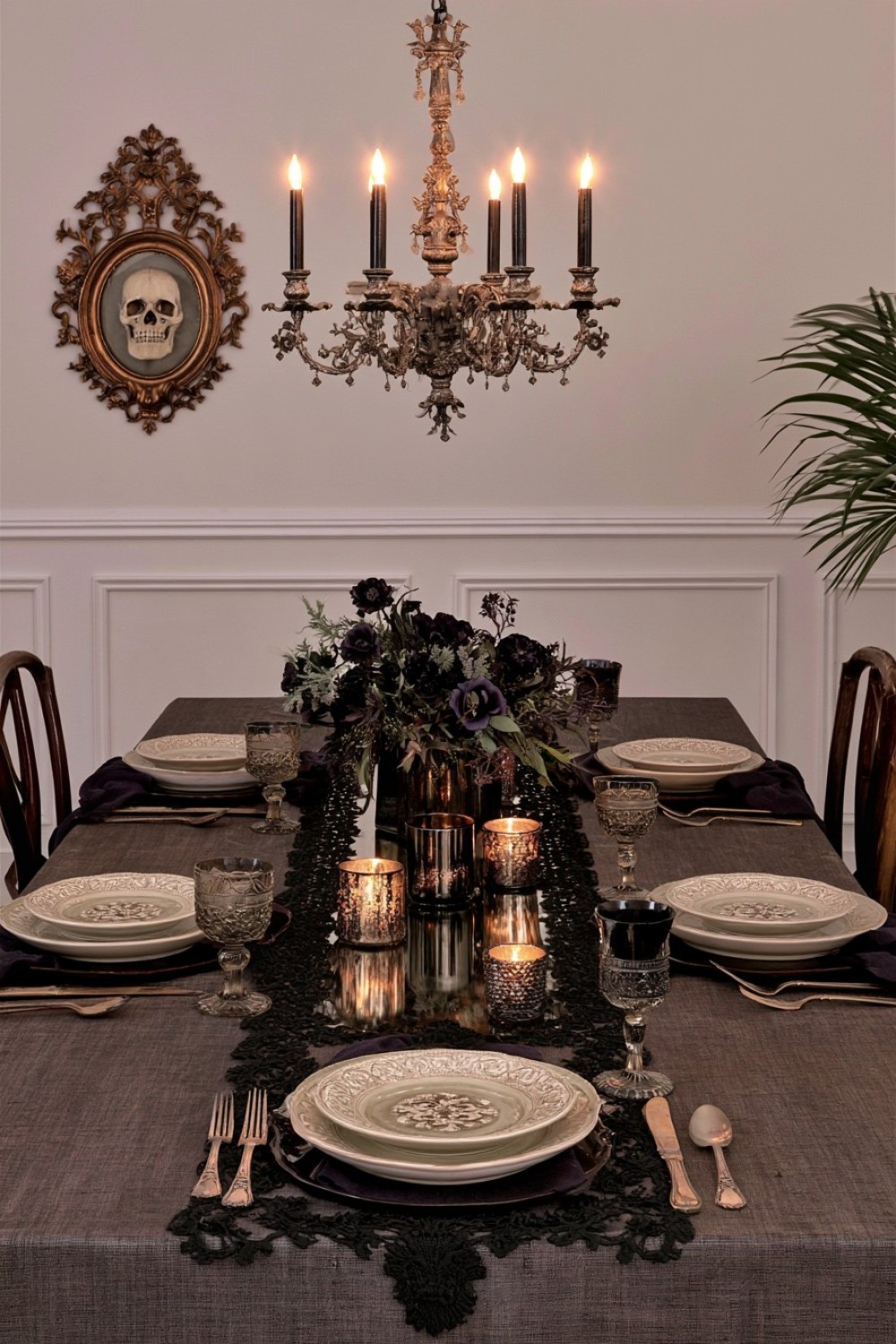
A narrow mirrored surface can deepen the table visually by reflecting dark florals, metal, and glass.
Use a long slim mirror or several irregular mirror tiles placed end to end.
Set only a few objects on top so the reflections remain visible.
Smoked or antiqued mirror works particularly well because it softens the brightness of ordinary clear mirror.
Pair it with dark flowers and low metal vessels rather than highly reflective chrome.
The mirror creates a subtle illusion of doubled depth, especially under evening light.
Protect the tabletop beneath sharp-edged mirror pieces and use finished or beveled edges wherever possible.
13. Turn One Place Setting Into a Dramatic Focal Point
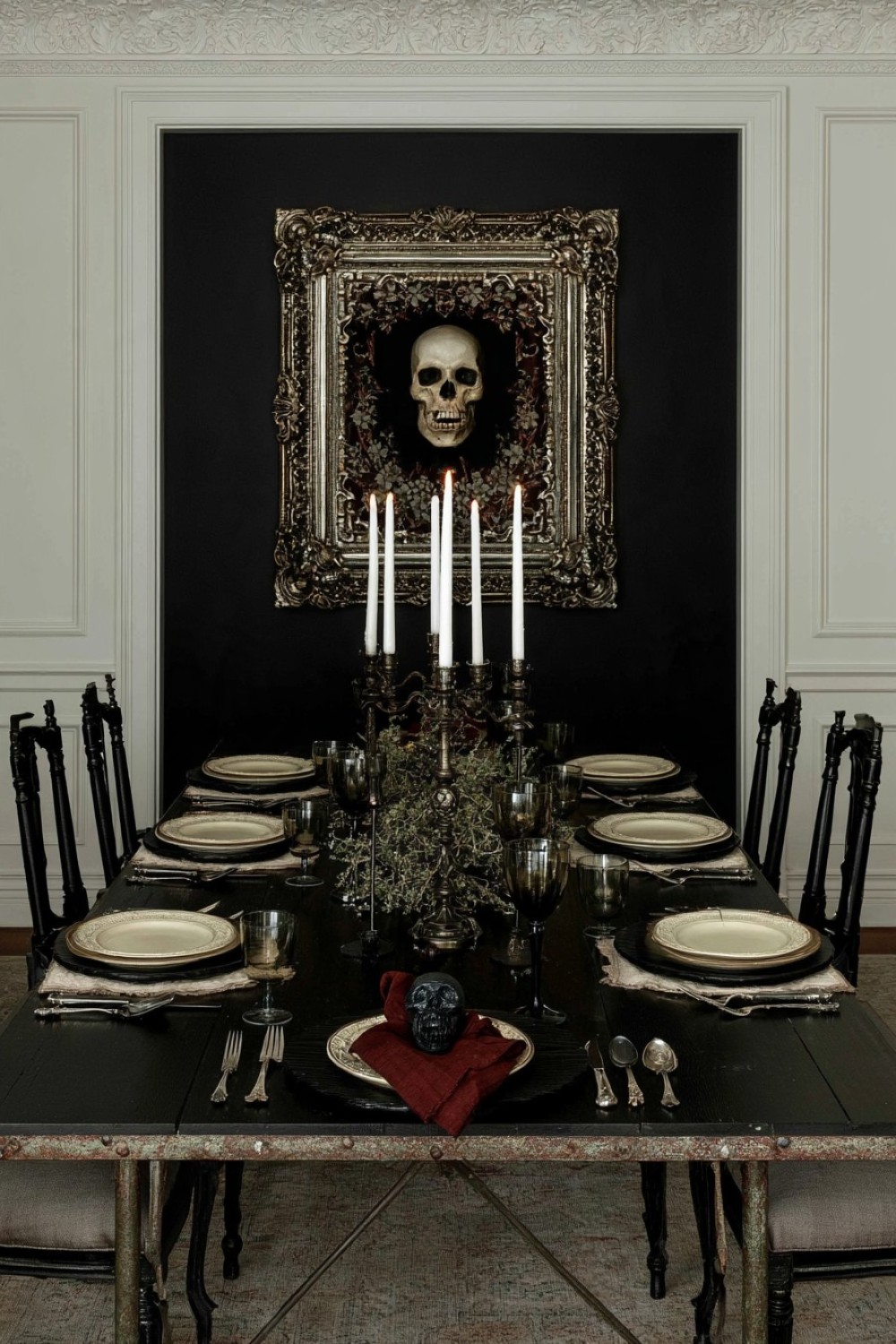
A gothic table does not need every place setting to be identical.
Create one deliberately stronger setting at the head of the table using a taller glass, darker napkin, unusual charger, or small sculptural object.
Keep the remaining places more restrained.
This hierarchy makes the table feel ceremonial without becoming overly themed.
It works particularly well for intimate dinners, birthdays, anniversaries, or formal entertaining where one seat naturally has significance.
The difference should be subtle enough to feel intentional rather than mismatched.
14. Use Ribbed Black Ceramic for Texture
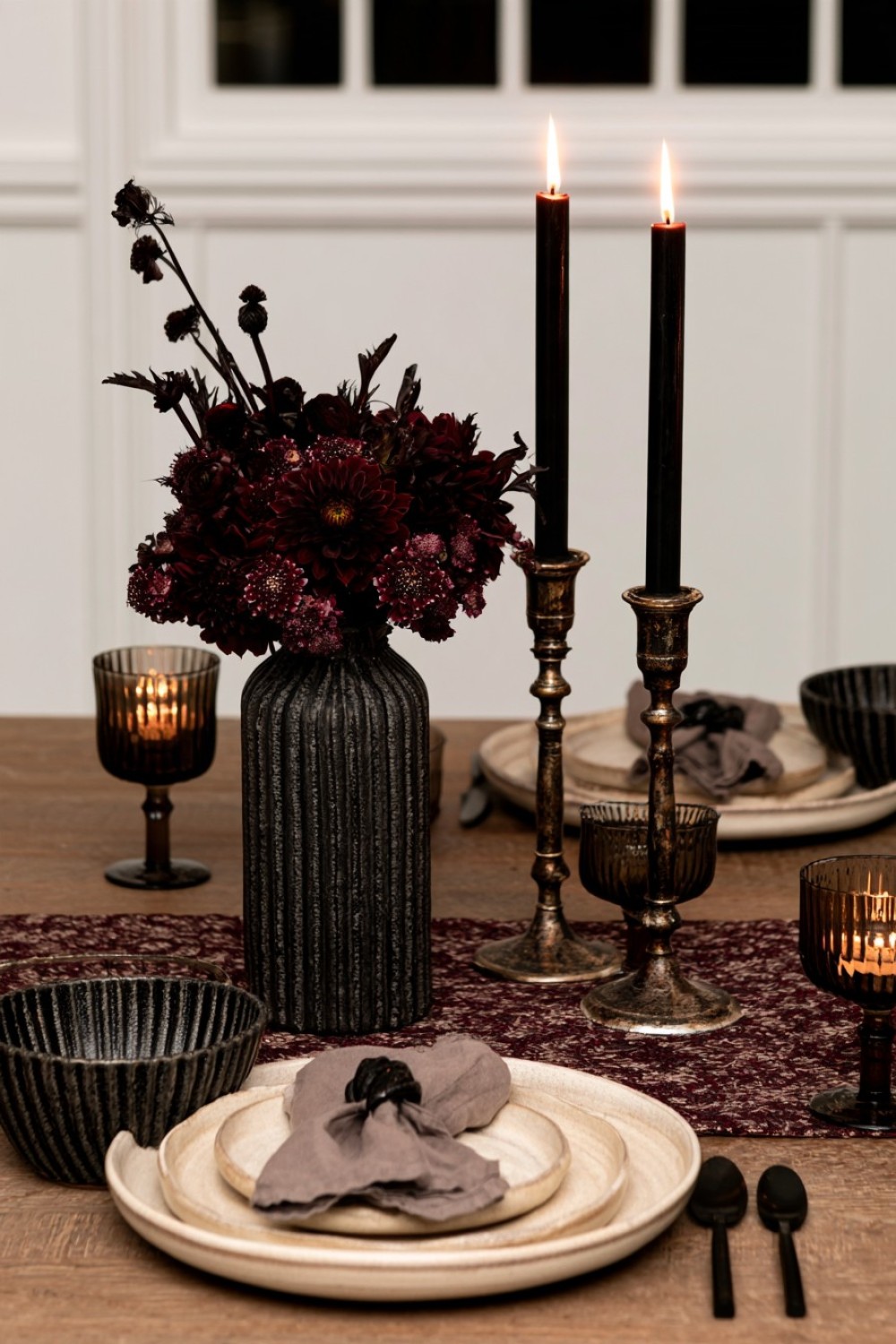
Flat black surfaces can become visually dull, so bring texture into the table through ceramics.
Choose serving bowls, vases, or plates with vertical ribs, carved grooves, or uneven handmade surfaces.
The relief catches highlights and gives black objects more depth.
Pair them with smoother materials such as linen, glass, or polished metal so the textures do not compete.
A single oversized ribbed vase can anchor the center of the table without additional decoration.
This approach works particularly well in contemporary gothic interiors where the goal is darkness without historical ornament.
15. Create a Hanging Botanical Feature Above the Table
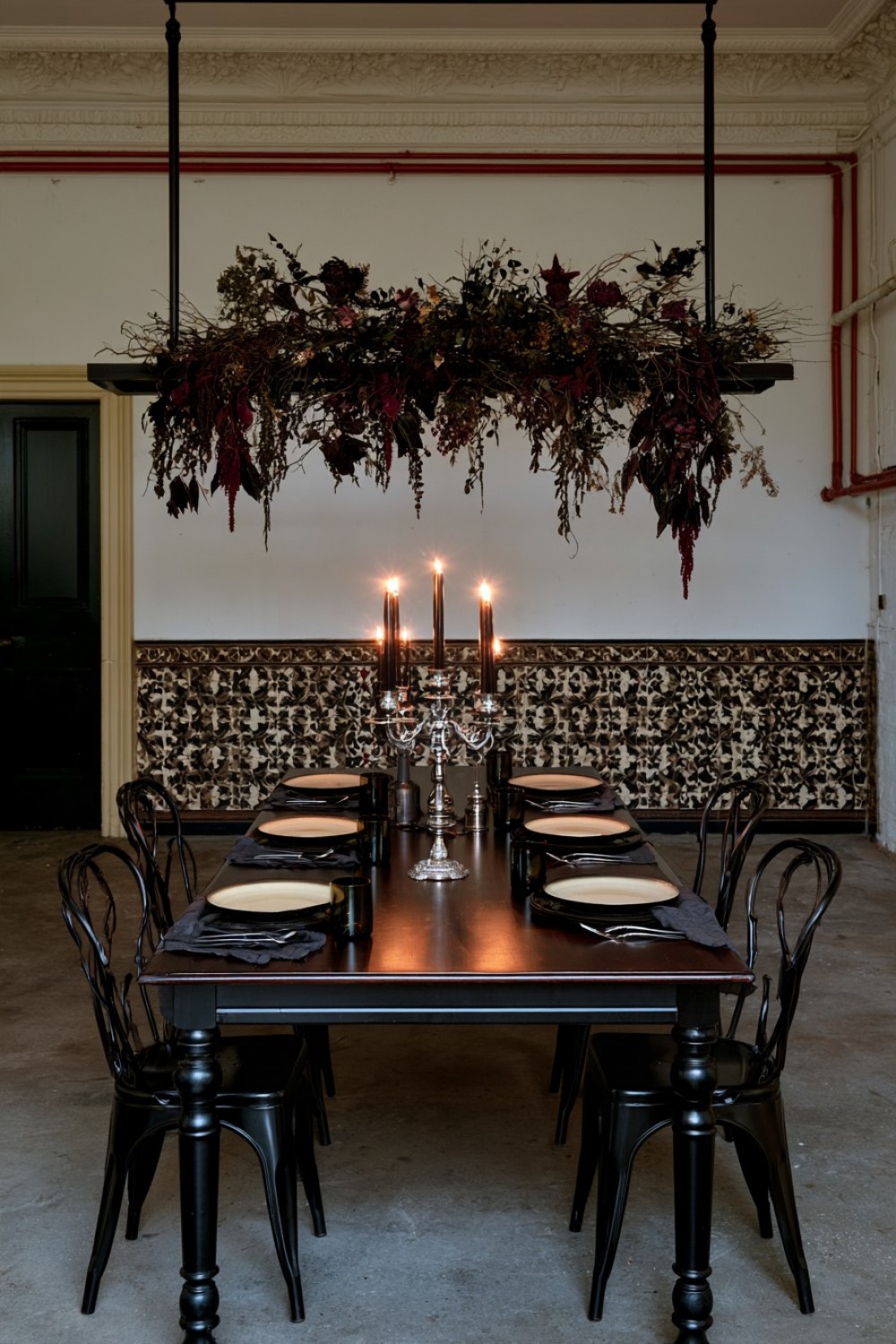
Move part of the decoration overhead and leave the tabletop relatively open.
Suspend a narrow frame above the table and attach lightweight dried botanicals, trailing dark foliage, or long strips of fabric.
Keep the structure linear rather than forming a dense canopy.
The suspended arrangement creates shadow and height while preserving serving space below.
For home use, dried or artificial lightweight materials are generally easier to manage than fresh floral mechanics overhead.
Any ceiling installation should use secure structural fixing and remain clear of lights, sprinklers, and headroom.
The table below can then remain surprisingly simple—dark linens, pale plates, and a few low objects may be enough.
16. Build the Entire Table Around One Gothic Material
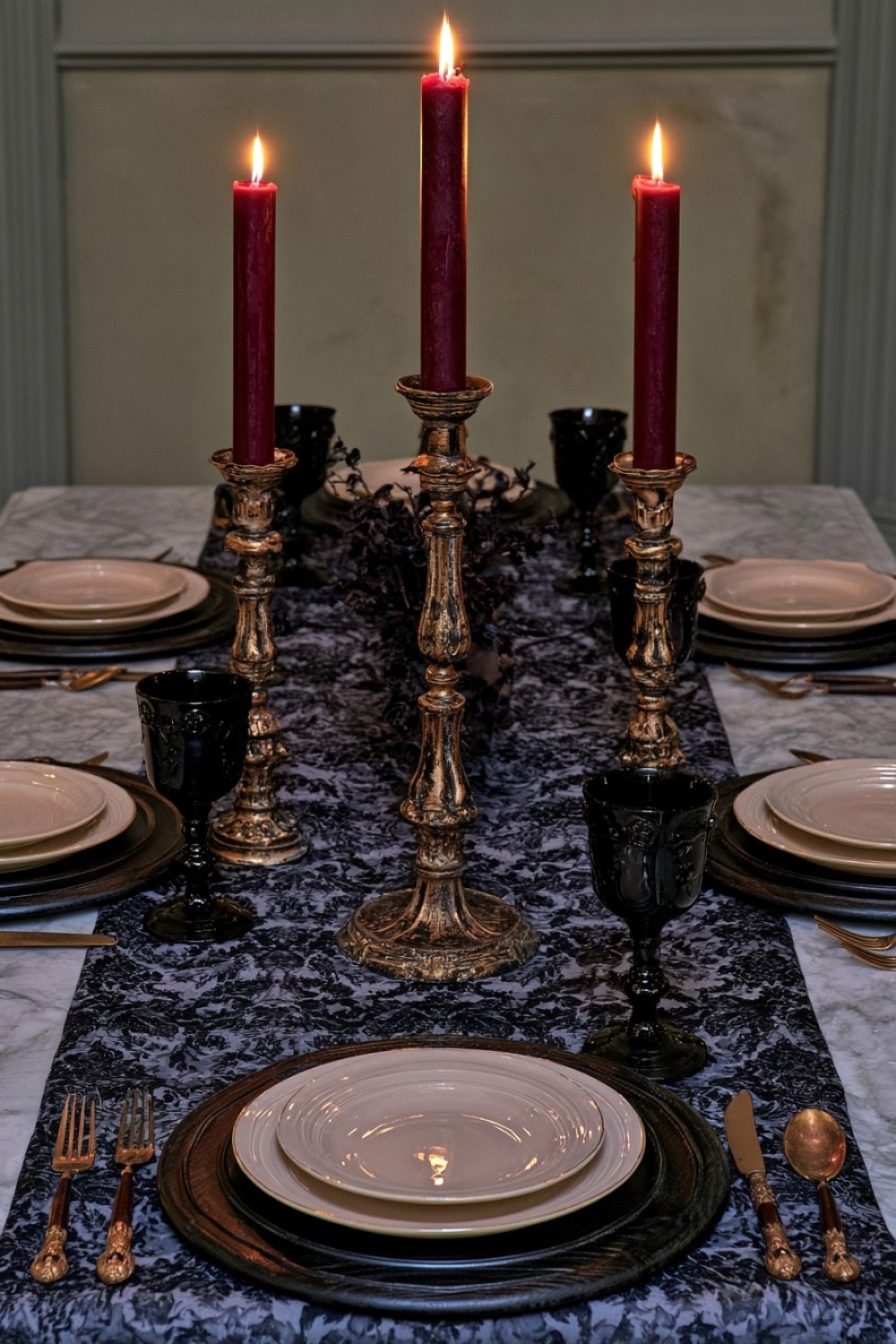
For the most cohesive result, choose one material and let it appear in several different ways.
If the material is dark wood, use carved chargers, a timber centerpiece base, and small wood-handled serving tools.
If it is aged metal, repeat it through flatware, risers, and one sculptural vessel.
If it is smoky glass, use varying heights and shapes rather than mixing many unrelated materials.
This creates a strong visual identity without resorting to themed props.
The table feels gothic because of repetition, shadow, patina, and weight—not because every object is literally gothic.
That restraint is often what makes the final setting feel more mature and memorable.
Making a Gothic Table Feel Refined Rather Than Themed
The strongest gothic tables usually avoid relying on obvious symbols. Dark atmosphere comes from material depth, contrast, silhouette, aged finishes, and controlled color.
Start with one dominant idea: architectural arches, deep red florals, smoked glass, dark timber, or oxidized metal. Then support it with only a few secondary elements.
Negative space is especially important. When every inch of the table is filled, the darker palette can quickly feel heavy. Leaving areas of wood, stone, or linen visible allows the objects that remain to feel more deliberate.
A gothic table should ultimately feel like part of the room rather than a temporary stage set. When the materials, proportions, and lighting work together, even a very dark composition can still feel elegant, calm, and highly designed.
MORE IDEAS


Share
What's Your Reaction?
 Like
0
Like
0
 Dislike
0
Dislike
0
 Love
0
Love
0
 Funny
0
Funny
0
 Angry
0
Angry
0
 Sad
0
Sad
0
 Wow
0
Wow
0