15 Farmhouse Exterior Lighting Details for a Warmer Entry

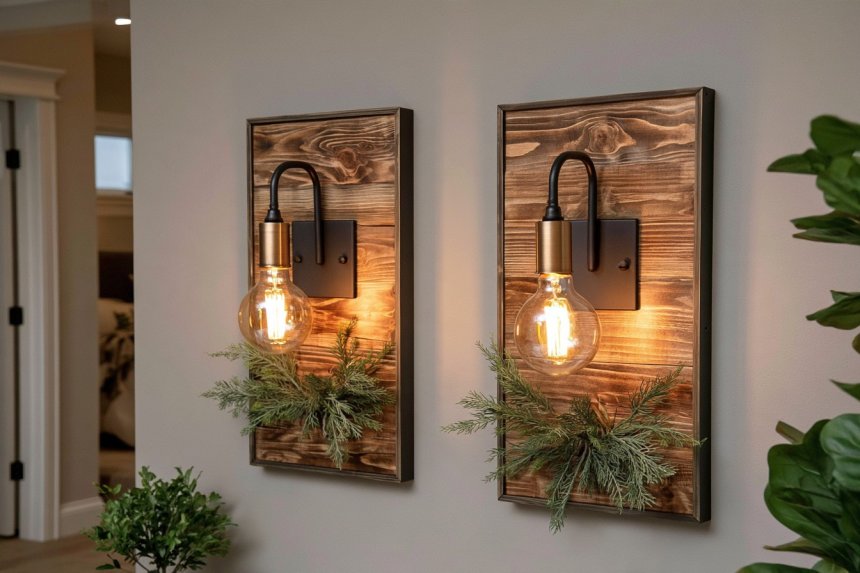
Farmhouse exterior lighting works best when it feels connected to the architecture rather than added as a decorative afterthought. The right fixture can emphasize a gabled entry, bring warmth to weathered siding, make a porch more inviting, or guide visitors along a path without flooding the property with harsh light. Traditional lanterns still have a place, but today's farmhouse look can also include restrained sconces, oversized pendants, discreet step lights, and softly illuminated landscaping. Material matters just as much as shape: aged brass, matte black metal, galvanized finishes, and clear glass all interact differently with wood, brick, stone, and painted siding. These approaches show how thoughtful exterior lighting can make a farmhouse feel warmer, more dimensional, and more intentional after dark.
1. Frame the Front Door With Oversized Lantern Sconces
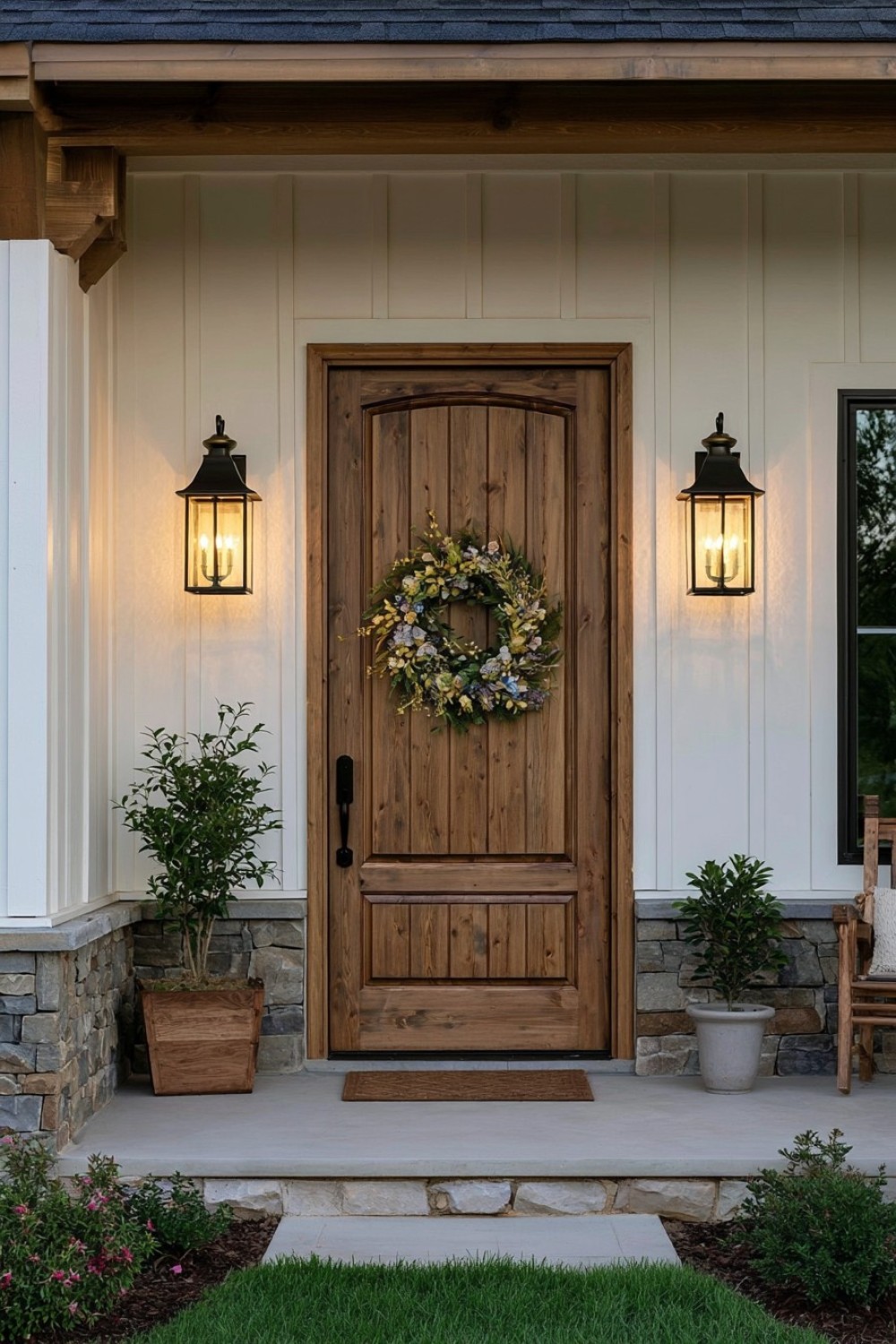
A pair of generously scaled lantern sconces can give a farmhouse entry much more presence than undersized fixtures. The key is proportion. If the front door is tall, double-width, or surrounded by substantial trim, tiny wall lights can make the entire elevation feel visually weak.
Choose lanterns with enough height to balance the doorway without crowding nearby architectural details. Matte black, aged bronze, or darkened brass usually pair well with white siding, natural timber, and stone.
Mounting position also affects the result. Lights placed slightly above eye level can illuminate both the door and the surrounding wall while keeping glare out of direct sight.
Clear glass works beautifully when the bulb or internal light source is attractive, while lightly seeded or textured glass can soften brightness. For a more convincing farmhouse look, prioritize simple metalwork and strong proportions over overly ornate scrolls or decorative flourishes.
2. Suspend a Simple Pendant Over a Covered Porch
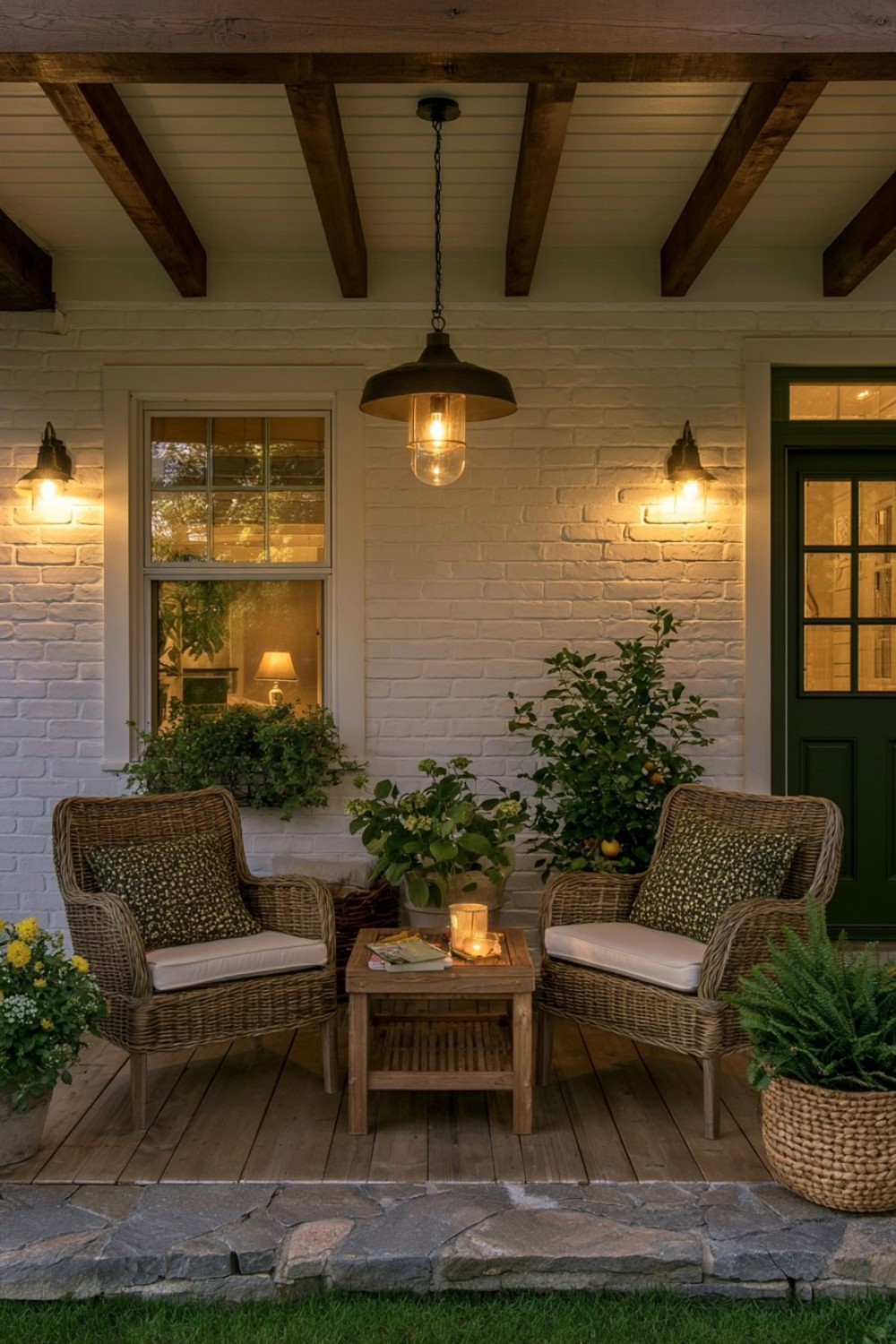
A covered porch creates one of the best opportunities to use lighting more like an interior fixture. Instead of relying only on wall sconces, a pendant centered above the seating area can make the porch feel like a true outdoor room.
Farmhouse pendants work especially well when they have a broad metal shade, simple cage frame, or clear glass enclosure. The fixture should relate to the width and ceiling height of the porch rather than simply matching the wall lights.
For low ceilings, keep the pendant compact enough to preserve comfortable headroom. On taller porches, a larger fixture can help fill vertical space and visually anchor furniture below.
Warm light around 2700K tends to complement timber beams, painted ceilings, woven seating, and natural stone. If the porch doubles as a conversation area, use dimmable lighting so the pendant can shift from practical illumination to a softer evening glow.
3. Use Downward Barn Lights Above Garage Doors
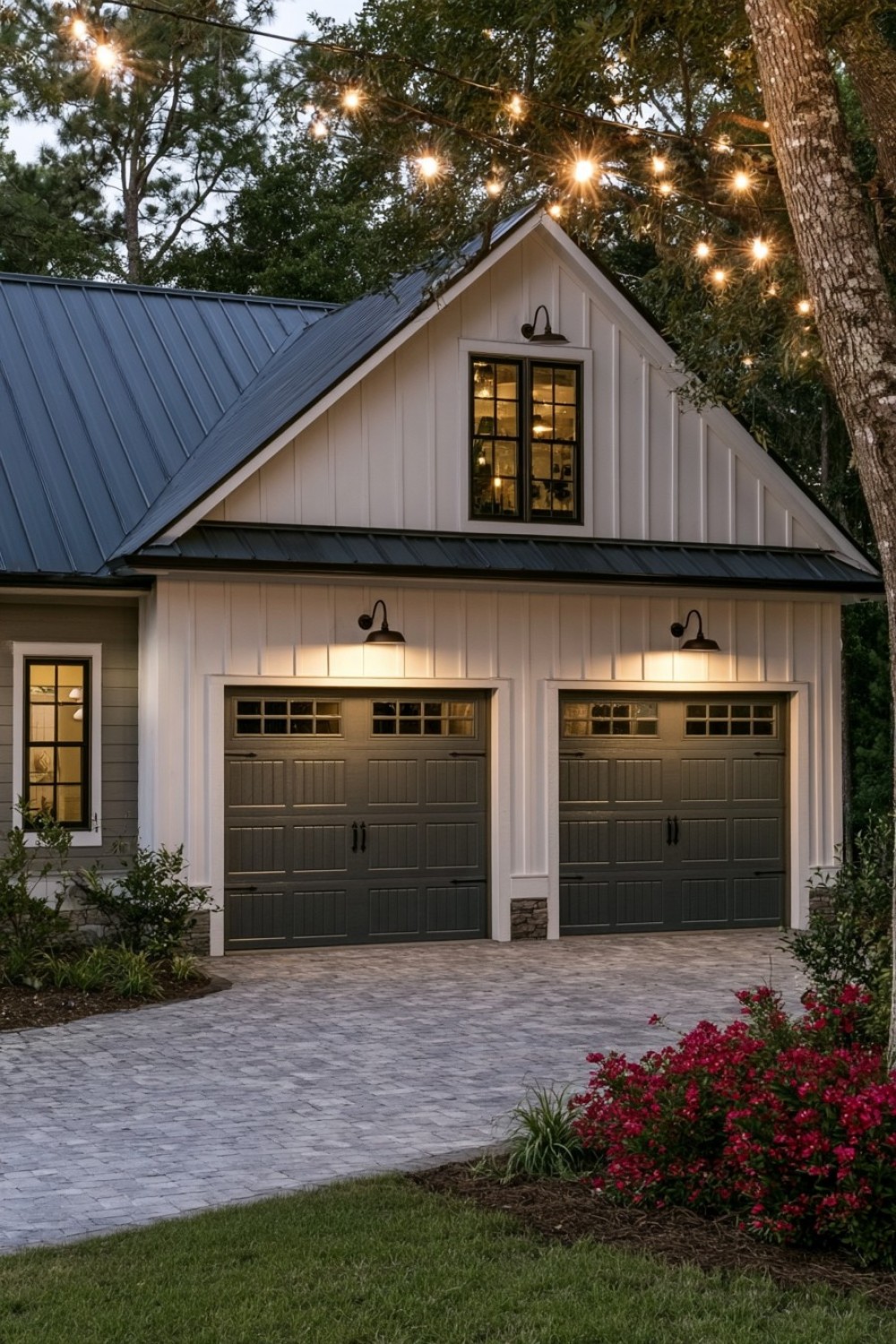
Barn-style gooseneck lights are familiar in farmhouse design, but they become more convincing when used to emphasize architecture rather than simply add rustic decoration.
Positioning one fixture above each garage bay can create a repeating rhythm across a long facade. The curved arm directs light downward, keeping the focus on the doors and reducing unnecessary spill toward the sky.
Black, deep bronze, or galvanized finishes work especially well against white board-and-batten siding. On darker exteriors, softer metal finishes such as aged brass can provide more contrast.
Scale is important here. A narrow garage bay may need a relatively compact shade, while large double doors can visually support broader fixtures.
Avoid choosing bulbs that are excessively bright. The lighting should reveal the texture and geometry of the garage doors rather than flatten the entire elevation. A controlled pool of light often feels more architectural than uniform brightness.
4. Let Warm Light Graze Stone Columns
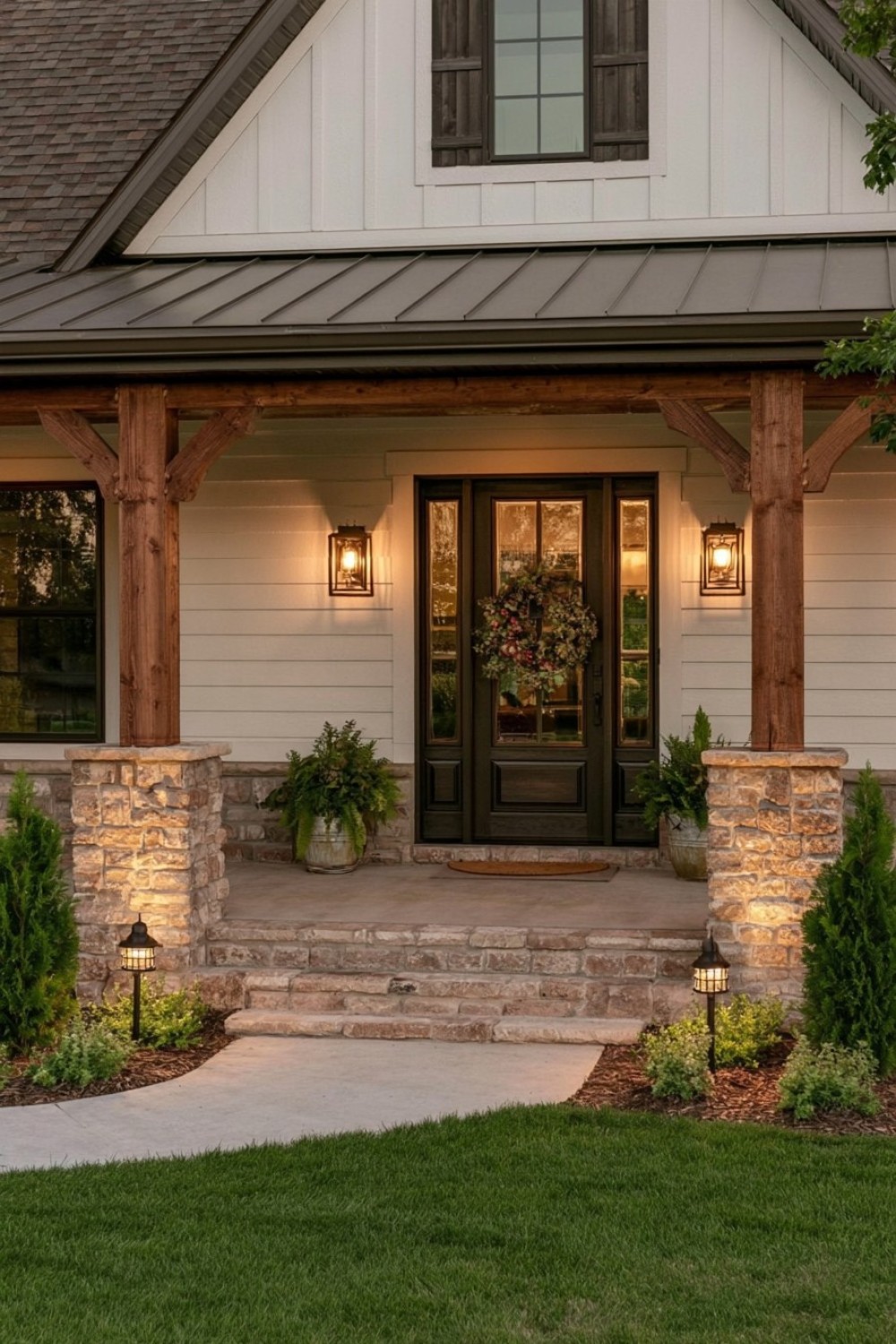
Farmhouse exteriors that incorporate stone can gain dramatic depth when the surface is lit from a shallow angle.
Instead of pointing a bright fixture directly at the entire column, place a small shielded light near the base or integrate a concealed source nearby. The goal is to graze the surface so shadows form between the stones and reveal their irregular texture.
This technique works particularly well with limestone, fieldstone, rough-cut masonry, and other surfaces that already have visible relief.
Use warm white lighting rather than cool blue-white tones, especially when the stone contains beige, rust, or earthy undertones. The warmer source will usually make the material appear richer.
Keep the fixture itself discreet. Once the eye starts noticing the hardware rather than the illuminated stone, the effect becomes less refined. On a farmhouse facade, this kind of low-key material lighting can add more evening character than adding several decorative sconces.
5. Highlight Timber Beams With Concealed Uplighting
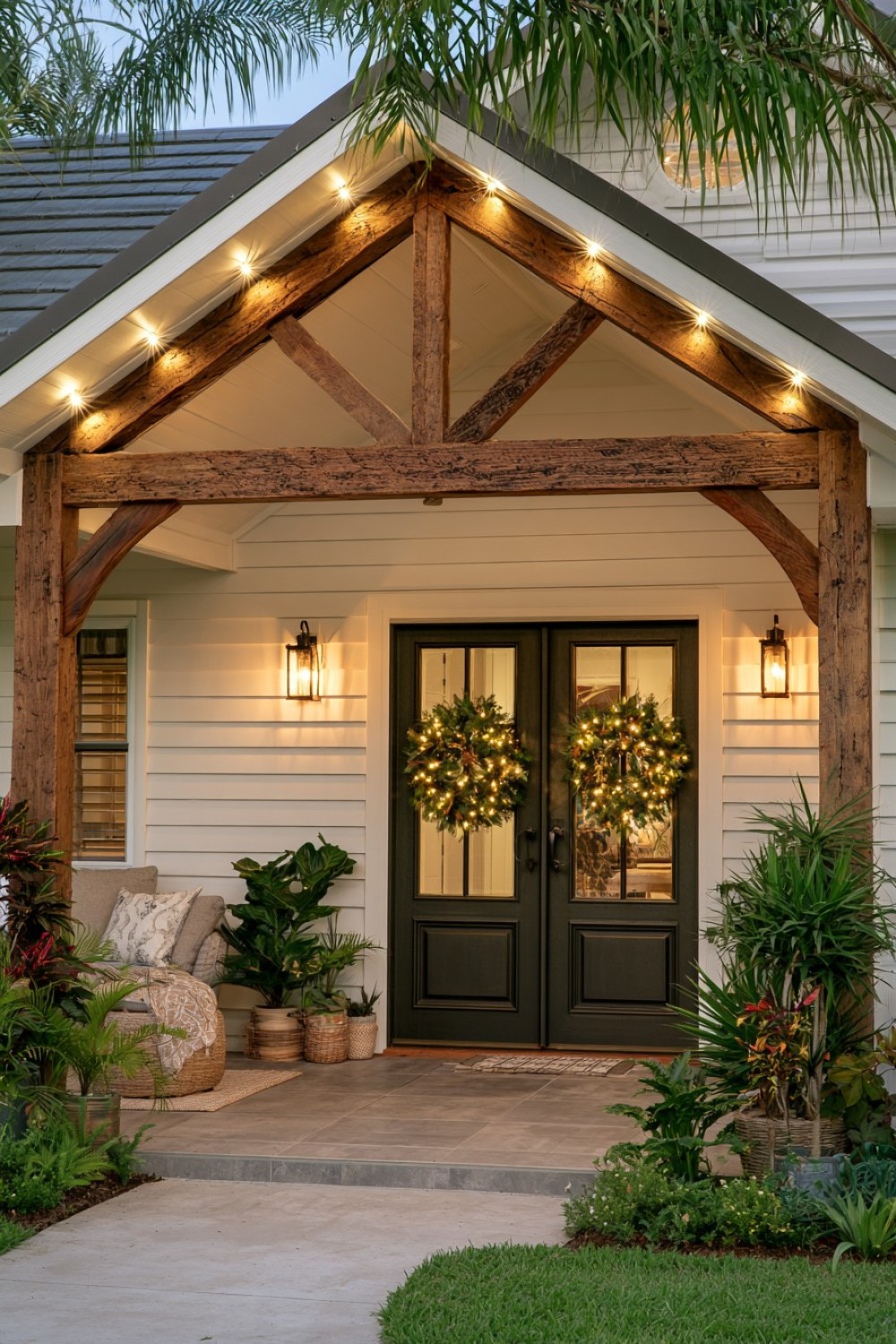
Exposed porch beams, timber brackets, and gable details often disappear at night because most exterior fixtures cast light downward.
Small concealed uplights can bring those architectural elements back into view without making the house overly bright. Position the light where it catches the underside of a beam or bracket, allowing the natural grain and structure to become visible after sunset.
This works especially well on homes that combine white siding with stained wood accents. The contrast between the darker timber and softly illuminated wall gives the facade more depth.
Avoid lighting every beam. Choose one or two important architectural areas—such as the main entry gable or porch structure—and allow the rest to remain quieter.
A narrow beam spread will create more drama, while a broader source produces a softer wash. In either case, the fixture should remain hidden from normal viewing angles whenever possible.
6. Add Low Path Lights Instead of Bright Driveway Floods
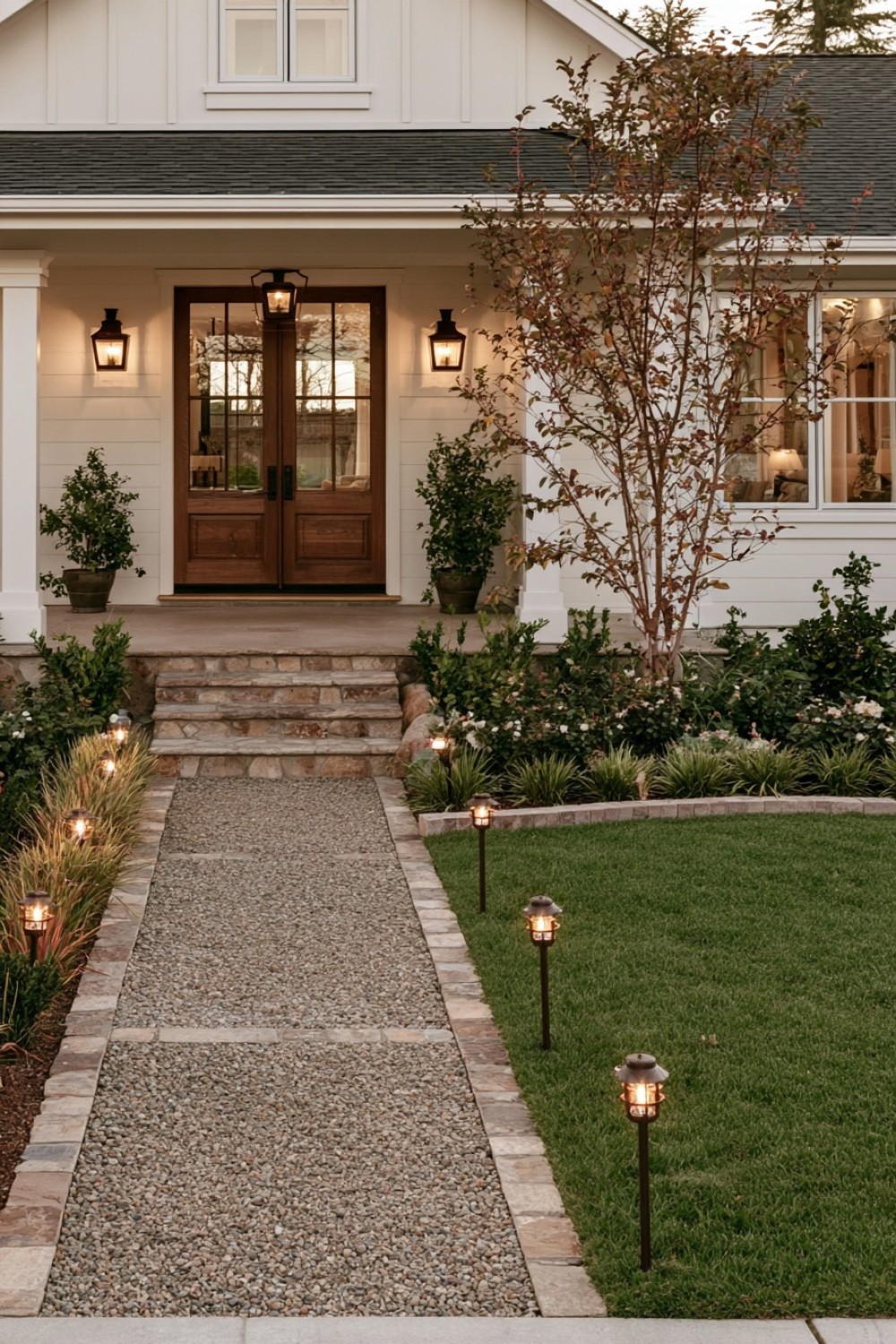
A farmhouse entrance does not need to be lit like a parking lot. Low-level path lighting can guide guests from the driveway to the front door while preserving a much calmer nighttime atmosphere.
Choose fixtures with shielded heads that direct light toward the ground rather than outward. This keeps glare under control and allows individual pools of light to overlap gently along the walkway.
Spacing should follow the path rather than create a perfectly mechanical row. If the landscape includes ornamental grasses, shrubs, or stone edging, allow the lights to interact with those features.
Black or dark bronze fixtures tend to disappear into planting beds during the day, which helps the landscape remain the visual priority.
Path lighting is particularly useful around steps, changes in grade, or uneven surfaces. When properly placed, it improves visibility without competing with the front porch or facade lighting.
7. Mix Black Fixtures With Natural Wood Siding
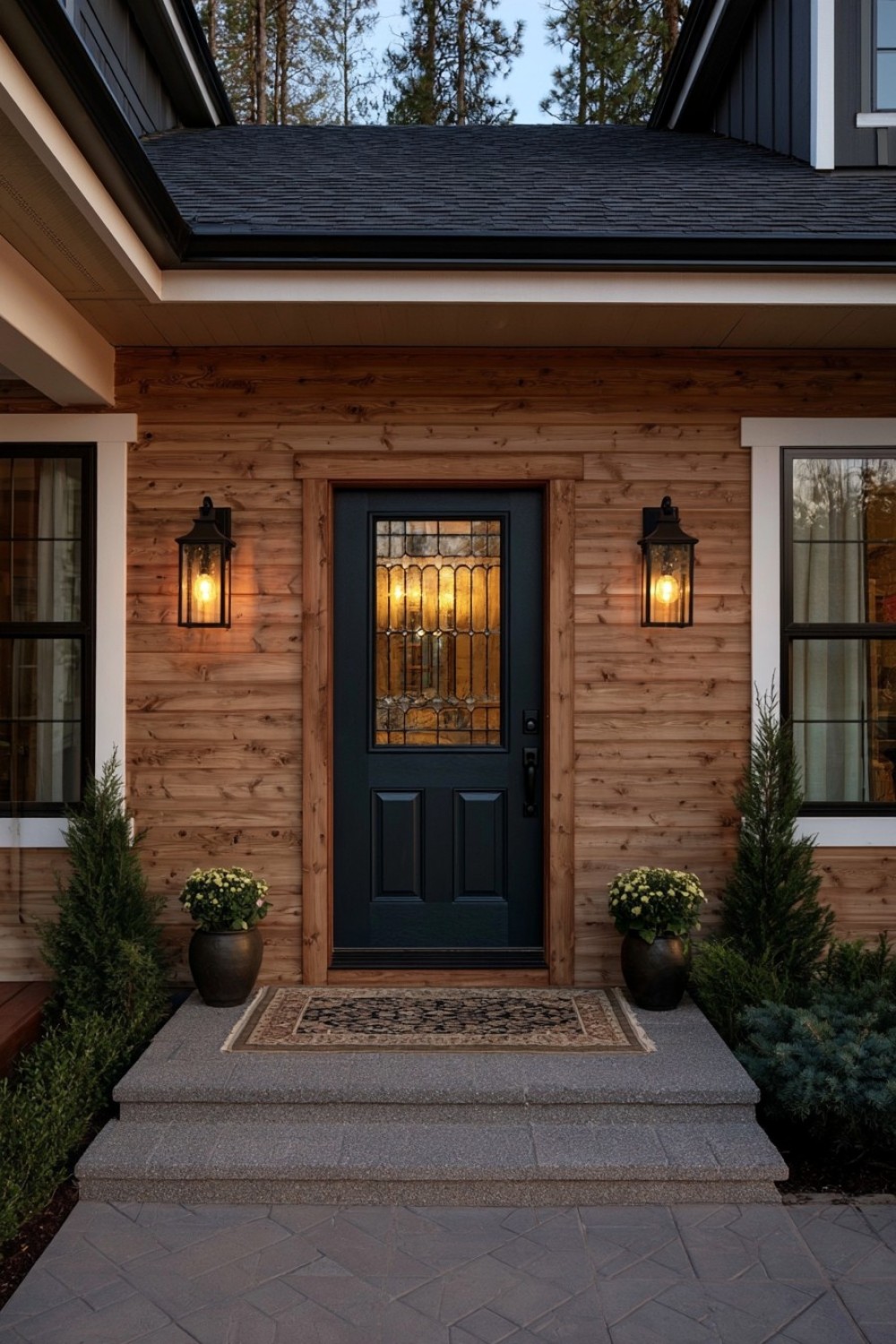
Farmhouse lighting often relies on contrast, and one of the strongest combinations is dark metal against warm timber.
Matte black sconces can look especially crisp on cedar, stained pine, or reclaimed-wood siding because the dark outline separates clearly from the grain. The combination feels grounded and modern without losing the farmhouse connection.
Keep the fixture design simple. Rectangular lanterns, shallow metal shades, or understated cage forms usually work better than heavily decorative styles.
The surrounding light temperature matters too. Warm bulbs enhance the amber and brown undertones in wood, while very cool light can make natural siding appear dull or gray.
If the exterior already includes black window frames, roofing details, or hardware, repeating that finish in the lighting can create visual continuity. The goal is not perfect matching but a consistent material story across the facade.
8. Give Side Entrances Their Own Smaller Lighting Language
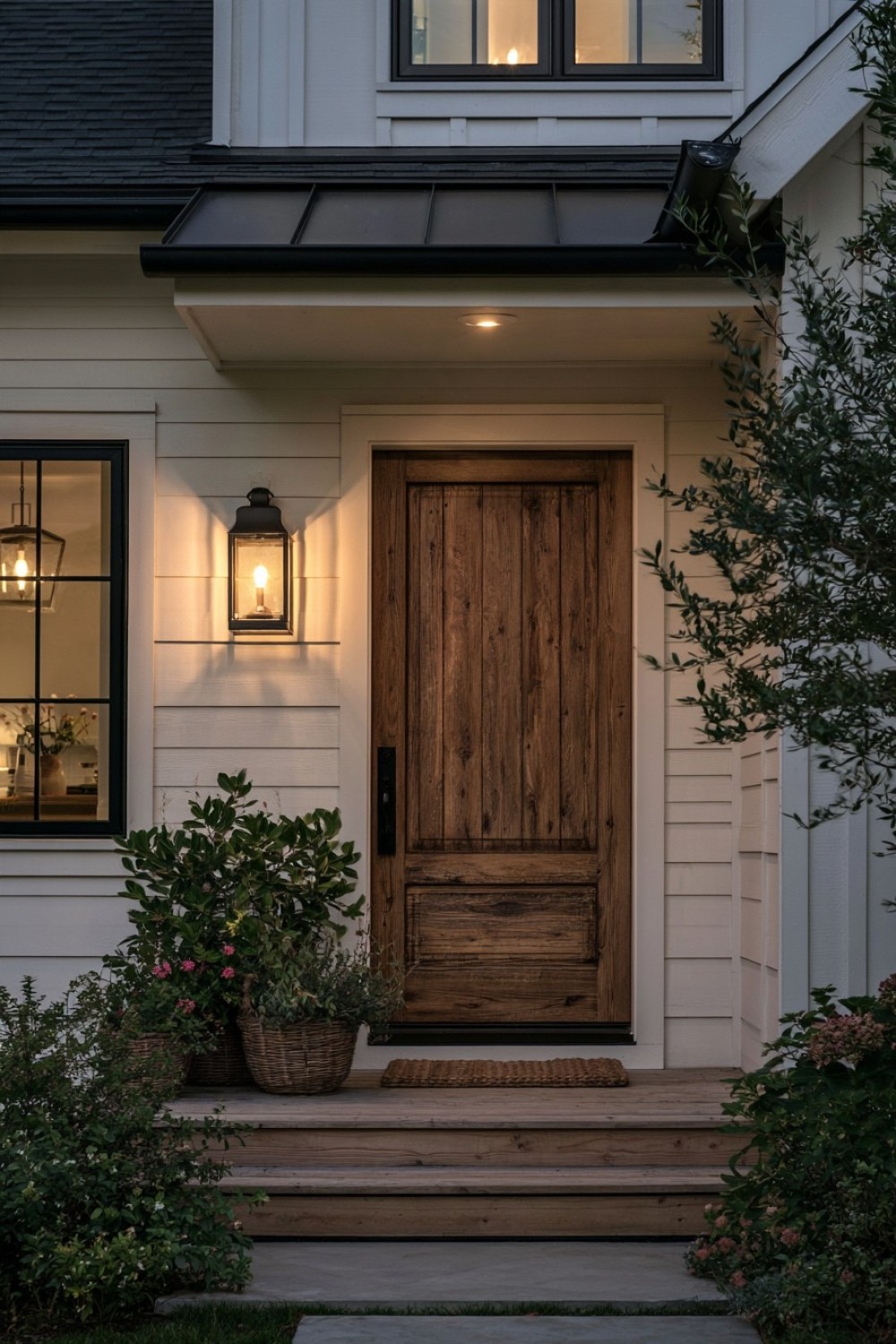
Secondary entrances often receive whatever fixture was left over after the front door was designed. A more thoughtful approach is to use lighting that feels related to the main facade but intentionally scaled down.
For a mudroom, side porch, or back entry, choose a smaller version of the primary lantern or a simpler fixture in the same finish. This keeps the exterior cohesive while acknowledging that the entrance plays a different role.
A single downward-facing sconce can be enough for a narrow door, especially when paired with a small roof or overhang.
The light should illuminate the handle, threshold, and immediate walking area clearly. Decorative atmosphere is useful, but practical visibility should take priority at frequently used secondary doors.
This subtle hierarchy helps the farmhouse feel designed from every side instead of treating only the main elevation as important.
9. Illuminate a Porch Ceiling Instead of Just the Floor
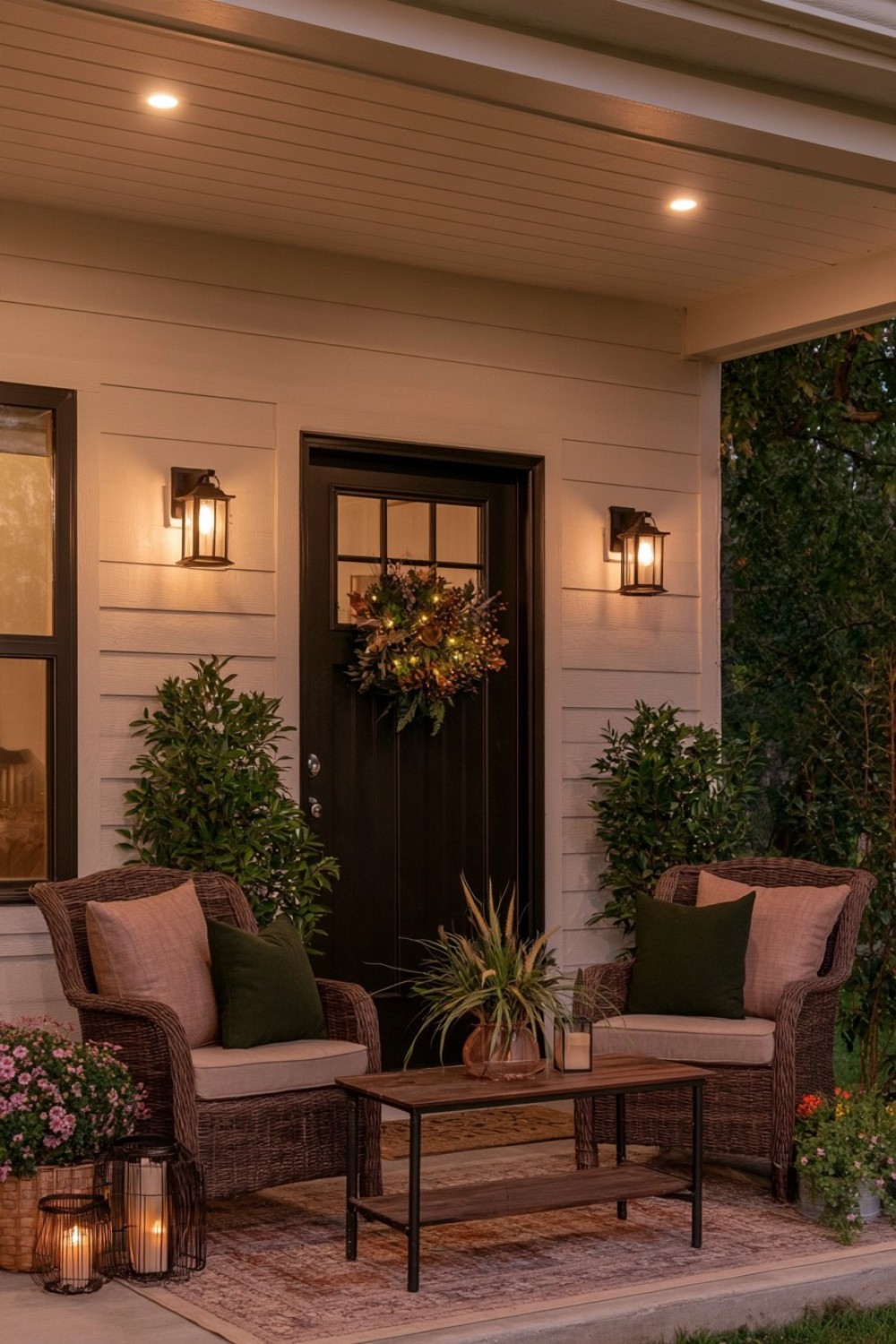
Exterior lighting often focuses entirely on what happens below eye level, but a farmhouse porch ceiling can become a beautiful feature after dark.
A small concealed uplight placed above a beam or along the top of a wall can softly illuminate tongue-and-groove boards, painted beadboard, or a wood-plank ceiling.
This is particularly effective when the ceiling has a pale blue, warm white, or natural timber finish. The reflected light makes the porch feel taller and more enclosed without adding another visible fixture.
Keep the brightness modest. The goal is to reveal texture rather than produce general illumination.
This technique pairs well with more functional wall sconces. The sconces handle entry lighting, while the upward glow adds atmosphere and architectural depth. Together, the two layers make the porch feel much more intentional than a single bright ceiling light.
10. Use Aged Brass as a Softer Alternative to Black
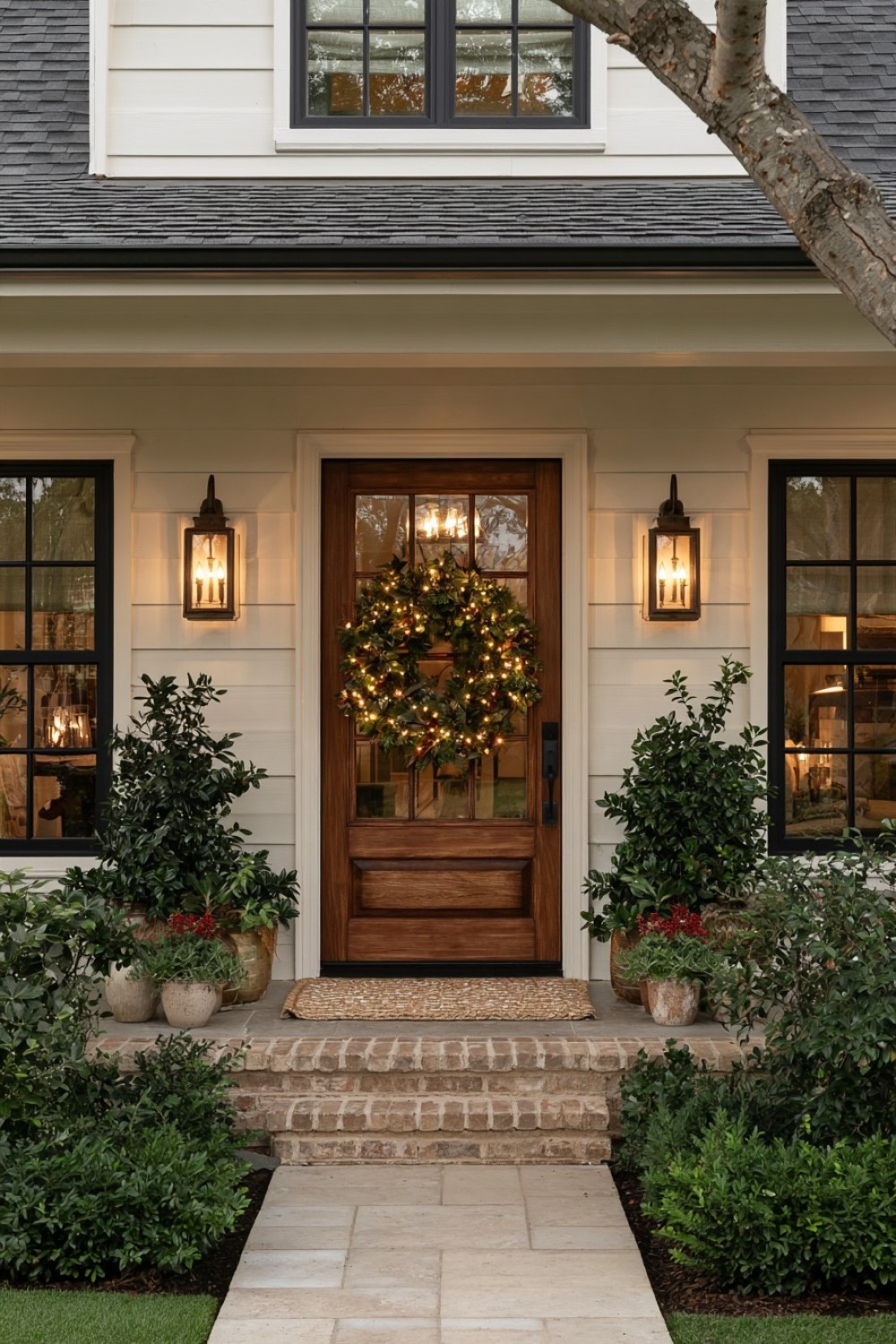
Black exterior lighting is popular for farmhouse homes, but it is not the only finish that works.
Aged brass or muted bronze can introduce warmth, especially on exteriors with cream siding, brick, natural stone, or honey-toned wood. These finishes tend to feel slightly more traditional and can soften a facade that already contains many dark elements.
The best aged finishes look subdued rather than shiny. High-polish brass may feel too formal for a relaxed farmhouse exterior unless the architecture is particularly refined.
Use brass selectively. A pair of entry sconces or one porch pendant is often enough to create a focal point without turning every fixture into a statement.
Because metal finishes continue to change visually as daylight shifts, it is worth viewing samples outdoors before choosing. A finish that looks brown indoors may appear much warmer in sunlight and almost charcoal at night.
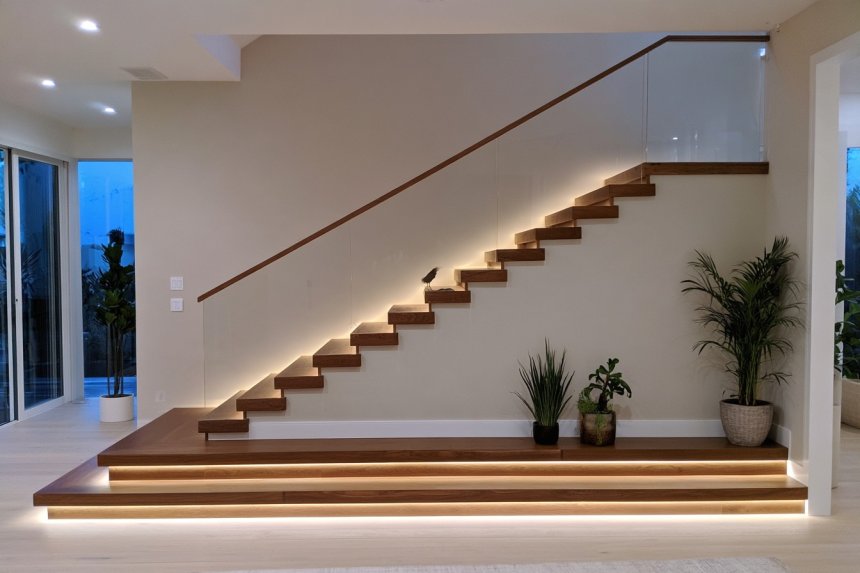
11. Add Step Lights to Wide Porch Stairs
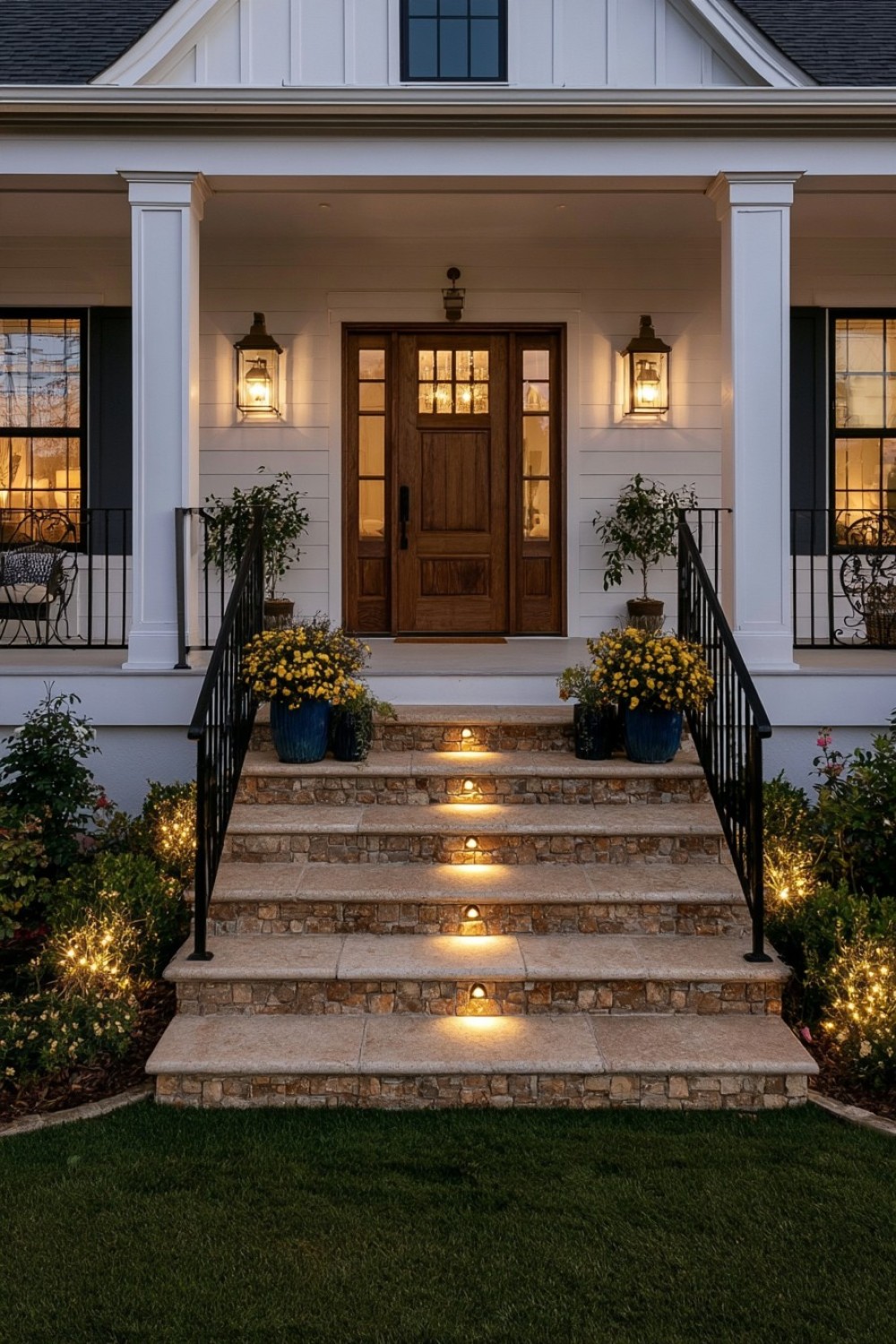
Wide farmhouse porch steps can become difficult to read after sunset, particularly when the treads and risers are made from similar materials.
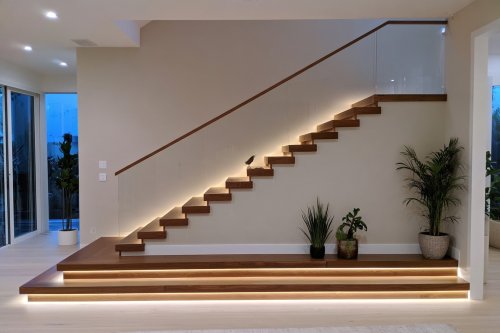
Small recessed step lights can improve visibility while remaining almost invisible during the day. Rather than placing one in every riser, consider lighting every second or third step depending on width and local safety requirements.
The light should wash downward across the tread without shining directly into someone's eyes.
This detail is particularly useful on timber steps, dark stone, or entrances surrounded by minimal landscaping where other ambient light may be limited.
Choose a fixture finish that blends into the stair material. Dark bronze disappears nicely against stained wood, while compact stainless or painted housings can work with masonry.
Because the lighting serves a safety function, installation should prioritize consistent coverage and secure wiring over decorative impact.
12. Wash Board-and-Batten Siding With Soft Vertical Light
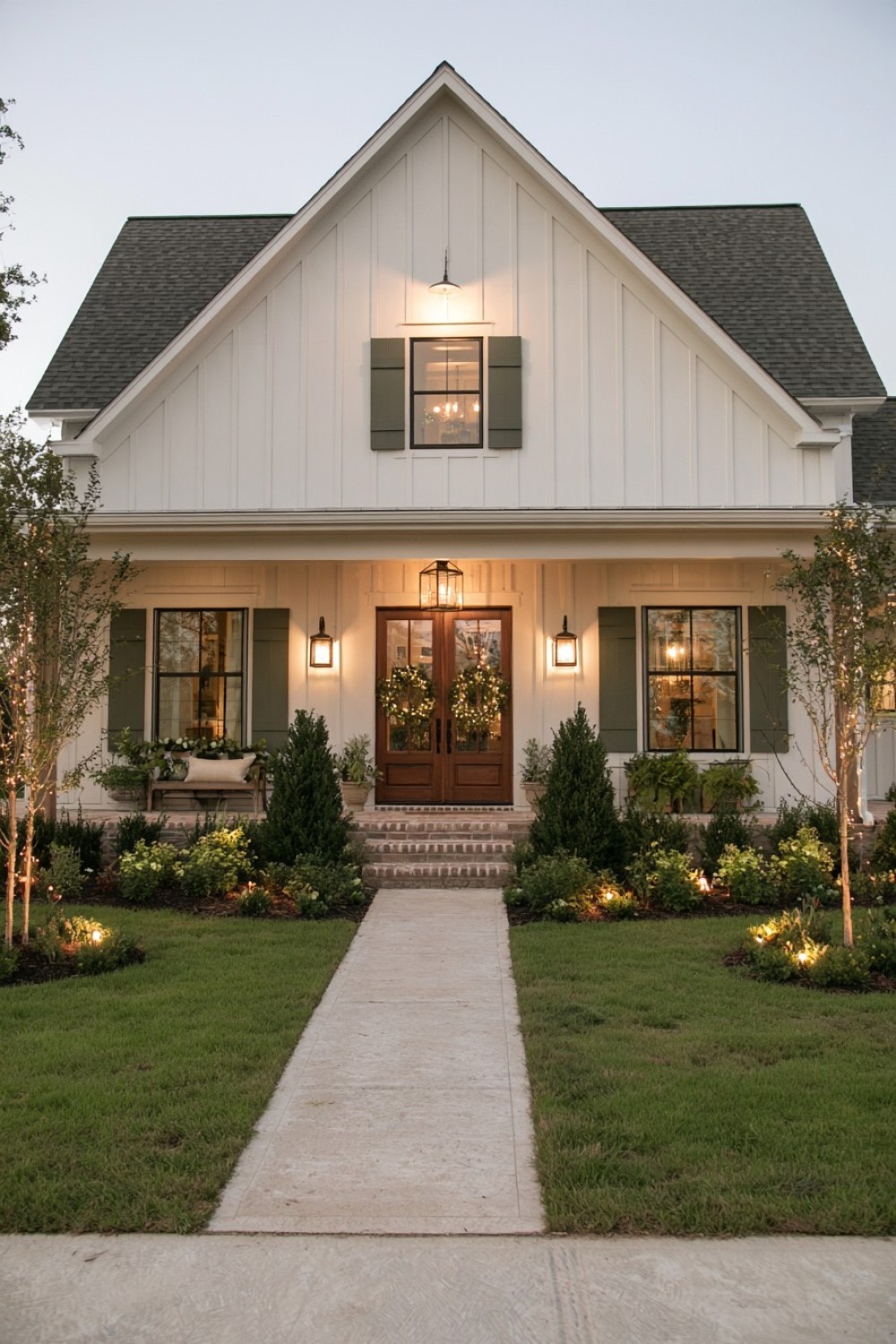
Board-and-batten siding has strong vertical texture that can look surprisingly flat under a single porch fixture.
Wall-mounted lights with controlled upward and downward beams can emphasize the siding's rhythm and create long, subtle shadows between battens.
This works especially well on white, cream, sage, or charcoal exteriors where the vertical pattern is already an architectural feature.
Keep the beam narrow enough to reveal texture without creating harsh cones of light. Fixtures spaced too closely can make the wall appear striped rather than dimensional.
Use this treatment selectively on a side wall, covered porch, or entry recess. Lighting every elevation the same way would remove the contrast that makes the effect interesting.
This is a strong option for newer farmhouse-style homes where the architecture is clean and simple but still benefits from additional nighttime depth.
13. Create a Quiet Glow Around an Outdoor Dining Area
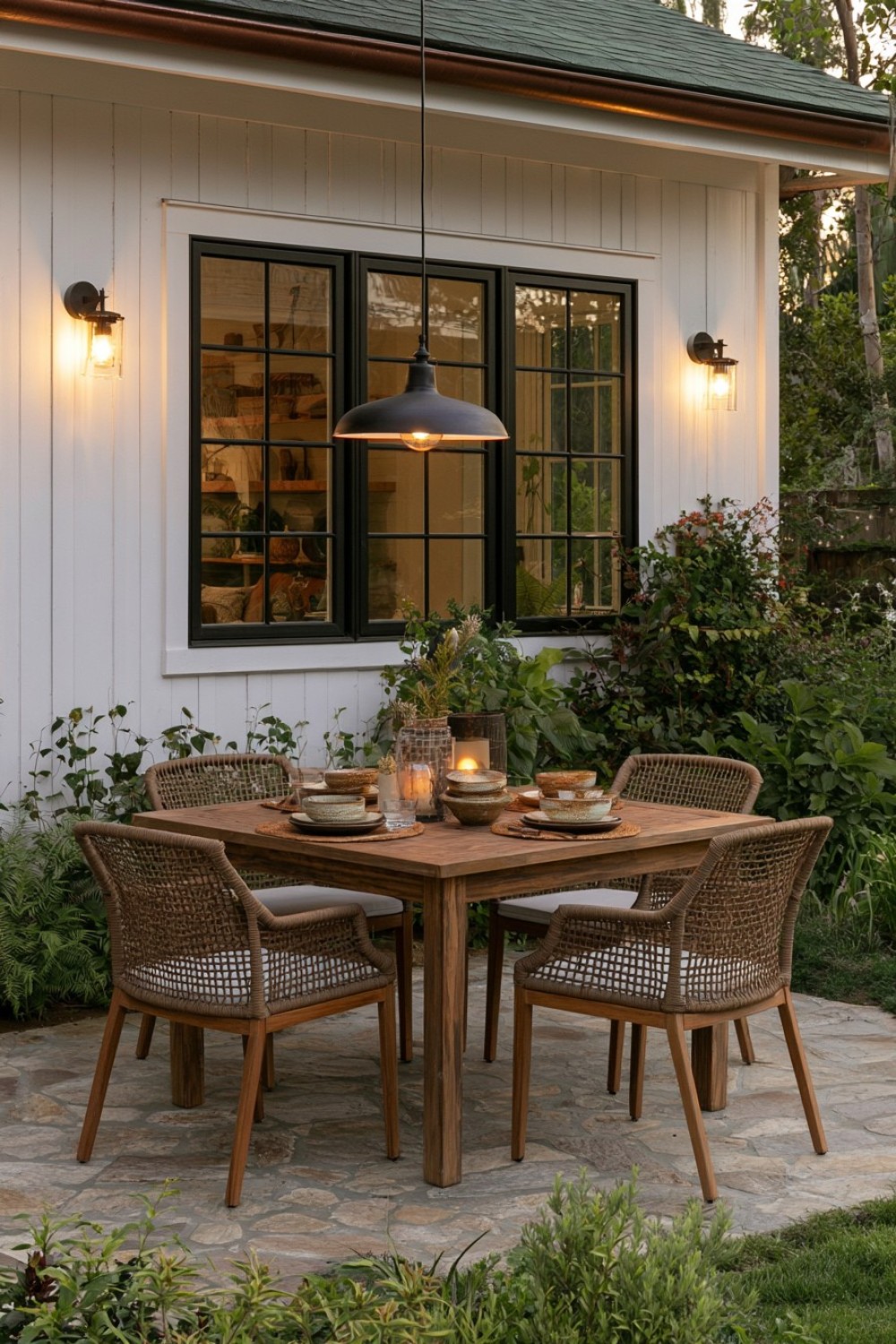
Farmhouse exterior lighting should also support how outdoor spaces are actually used.
For a porch or patio dining area, one low pendant, subtle wall lights, or a combination of both can create enough illumination for meals without making the space feel overlit.
The fixture should center visually over the table rather than the entire patio. This creates a smaller pool of light that makes the dining area feel more intimate.
If the table sits near the house, nearby wall sconces can provide supplemental illumination without requiring several overhead fixtures.
Warm light works especially well around wood furniture, woven chairs, stone paving, and ceramic tableware. Avoid extremely bright cool-white sources, which can make outdoor dining spaces feel more commercial.
The best lighting allows surrounding garden areas to remain slightly darker, giving the dining zone a natural sense of enclosure after sunset.
14. Use One Statement Fixture on a Tall Gabled Entry
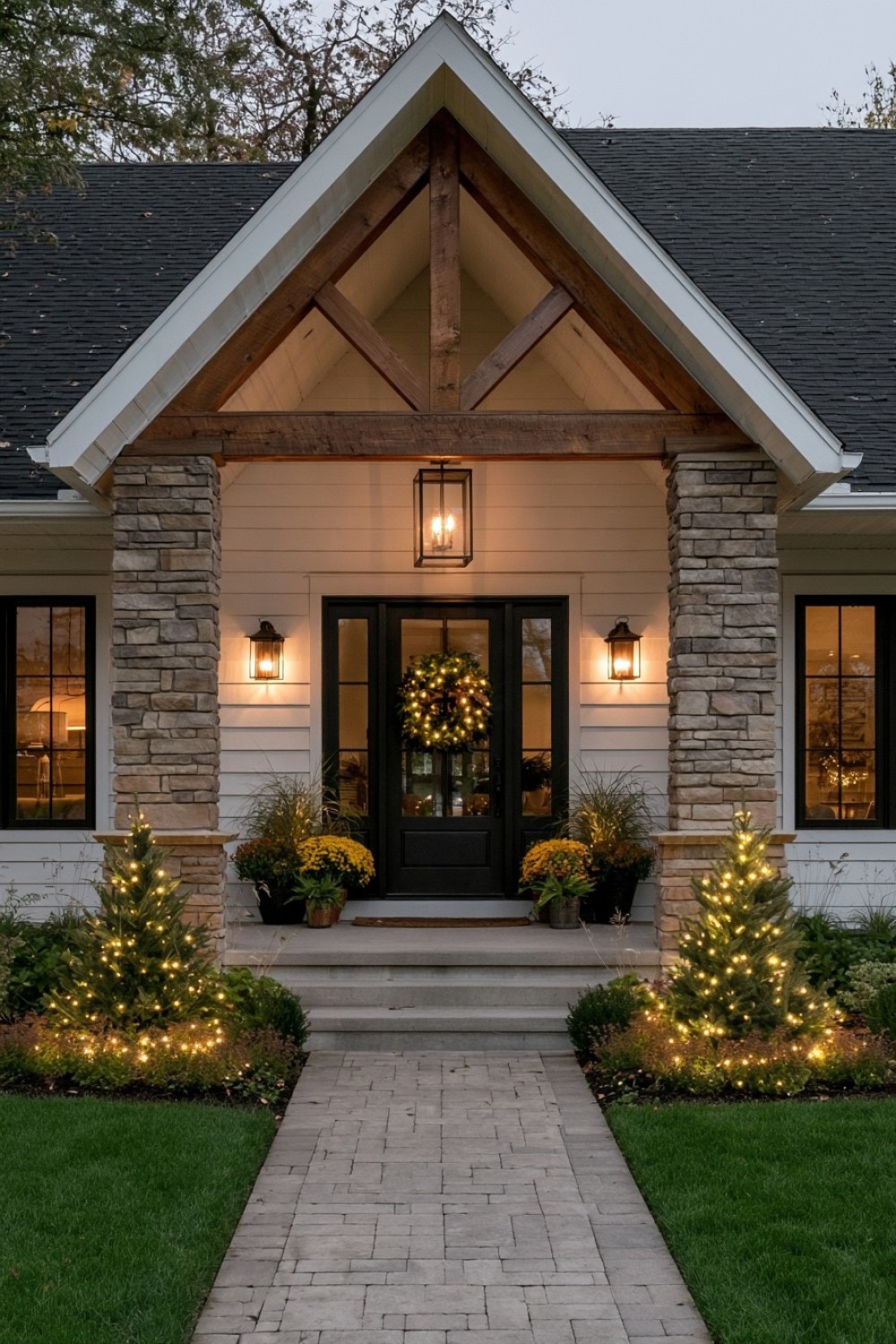
Some farmhouse exteriors have enough height to support one dramatic fixture instead of many smaller ones.
A tall covered entry beneath a steep gable can accommodate a large pendant or lantern that becomes visible from both the driveway and front porch.
The fixture should relate to the vertical proportions of the architecture. A broad, low pendant may disappear in a tall gable, while a long lantern can emphasize the height more effectively.
Keep the design visually simple if the structure already includes timber trusses, stone columns, or decorative siding.
One strong fixture can create more impact than multiple competing lights, especially when paired with subtle sconces lower down.
Before selecting the final size, consider how the pendant looks from a distance. Exterior fixtures often appear smaller once surrounded by a large facade, so slightly more scale may be appropriate than expected.
15. Build a Layered Lighting Plan Instead of Matching Everything
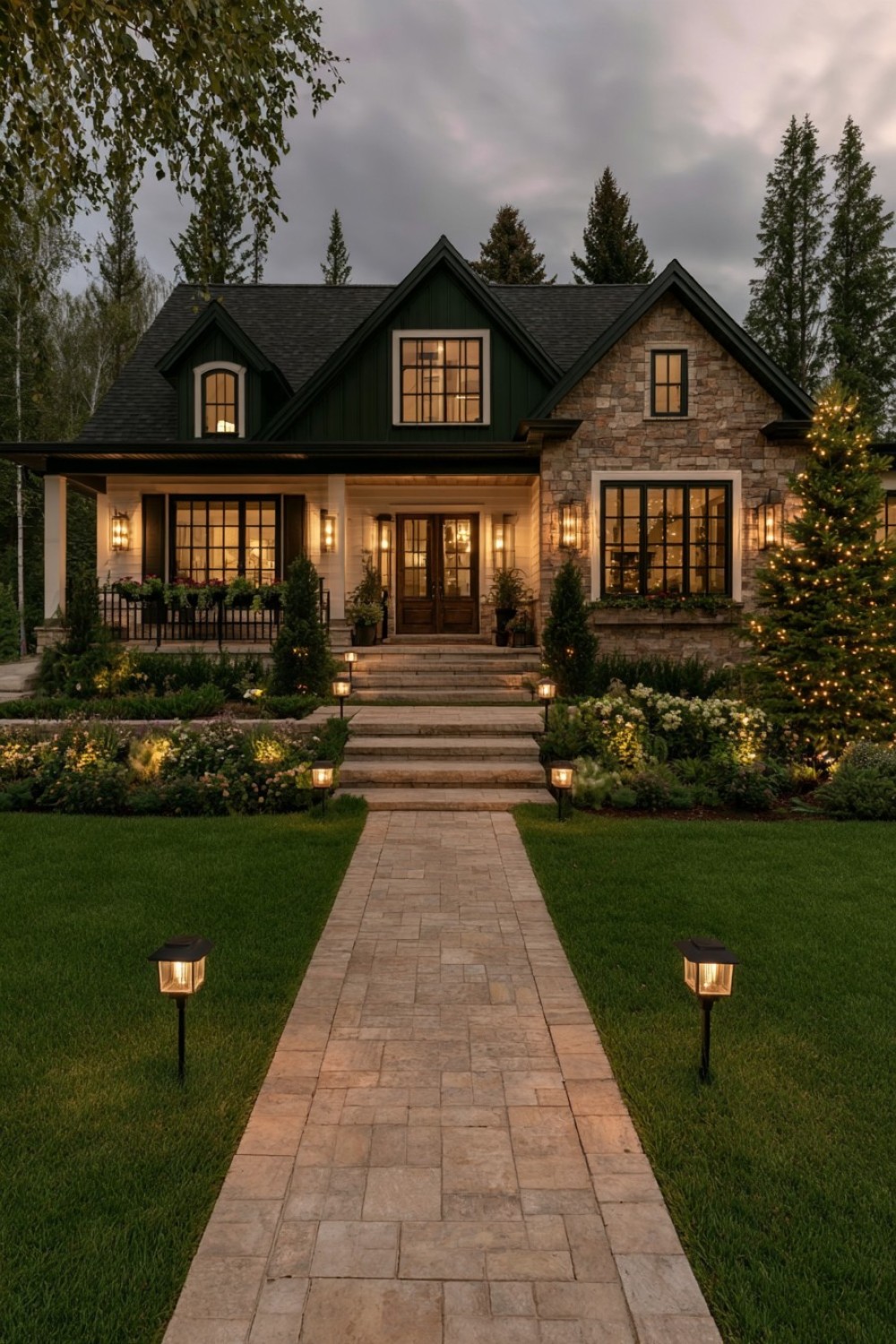
The most refined farmhouse exteriors rarely use one identical fixture everywhere.
A more convincing approach is to create a small family of related lights: perhaps lantern sconces at the front door, gooseneck fixtures above the garage, low path lights along the walkway, and subtle recessed lights around steps.
The pieces can share a finish or visual language without being exact matches.
This gives each area the type of light it actually needs while keeping the overall exterior cohesive. Functional zones receive practical illumination, architectural details receive accent light, and circulation areas stay safely visible.
The key is restraint. Too many fixture styles can make the exterior feel fragmented, but perfect matching can feel overly staged.
Think in terms of hierarchy: the front entry should usually read first, secondary doors next, and landscape or path lighting more quietly in the background.
Bringing Farmhouse Exterior Lighting Together
A well-lit farmhouse should still feel peaceful after dark. That usually means resisting the urge to illuminate every surface equally. Start with the places that need practical visibility—the entry, steps, driveway transitions, and frequently used outdoor areas—then add accent lighting only where the architecture or materials deserve attention.
Fixture scale, beam direction, and color temperature can make as much difference as the fixture style itself. Warm light tends to complement timber, brick, and stone, while shielded sources reduce glare and help darker areas remain part of the composition.
Most importantly, allow each section of the exterior to have a role. The porch can feel welcoming, the path can remain quiet and functional, and a stone wall or timber gable can become the evening focal point. That balance is what makes farmhouse exterior lighting feel intentional rather than simply decorative.
MORE IDEAS


Share
What's Your Reaction?
 Like
0
Like
0
 Dislike
0
Dislike
0
 Love
0
Love
0
 Funny
0
Funny
0
 Angry
0
Angry
0
 Sad
0
Sad
0
 Wow
0
Wow
0