19 Candle Styling Themes That Make Rooms Feel Warmer

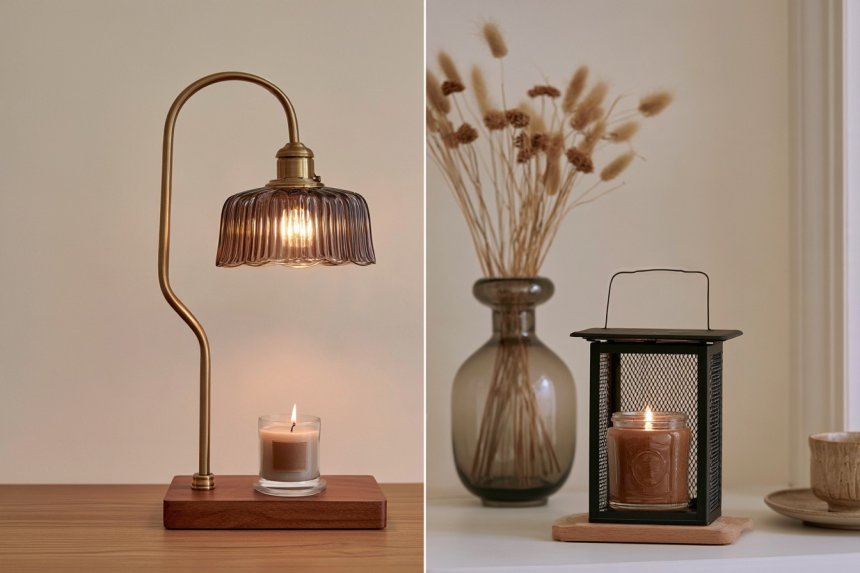
Candles can change the mood of a room faster than almost any other decorative detail, but the most memorable arrangements usually rely on more than simply placing a few holders together. Height, material, color, reflection, and surrounding objects all affect how candlelight feels once the room gets darker. A low cluster on a coffee table can feel intimate, while tall tapers against a mirror can create a much more dramatic focal point. The strongest candle displays also respect the architecture around them instead of competing with it. These candle styling themes explore ways to use ceramics, glass, vintage metal, stone, greenery, books, and sculptural holders to create arrangements that feel deliberate, layered, and connected to the rest of the home.
1. Build a Soft Tonal Candle Mantel
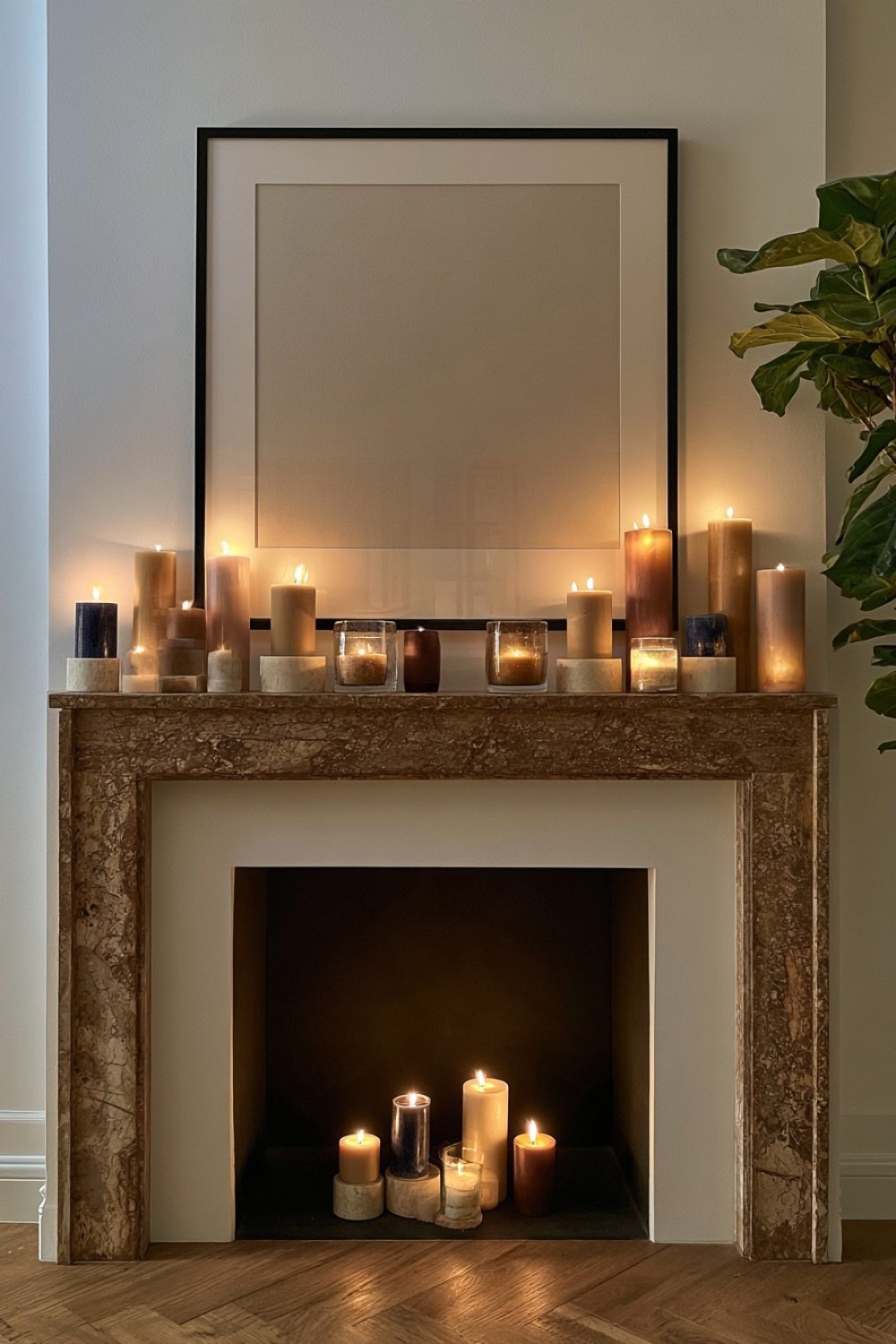
A fireplace mantel is one of the easiest places to create a layered candle arrangement, especially when the palette stays restrained.
Instead of mixing many unrelated colors, choose candles within one family—ivory, oatmeal, warm beige, soft taupe, or muted clay. Vary the heights so the composition rises and falls naturally across the mantel.
Ceramic holders, stone bases, and simple glass vessels can provide enough material contrast without adding visual clutter. Leave gaps between groups rather than filling the entire shelf from end to end.
If the mantel already includes art or a mirror, keep the candles lower near the center and slightly taller toward the outer edges. This preserves the focal point while still creating a warm frame.
For homes with an unused fireplace, the same palette can continue into the firebox with flameless candles or carefully supervised pillars placed on a heat-safe surface.
2. Create a Candle Library Corner
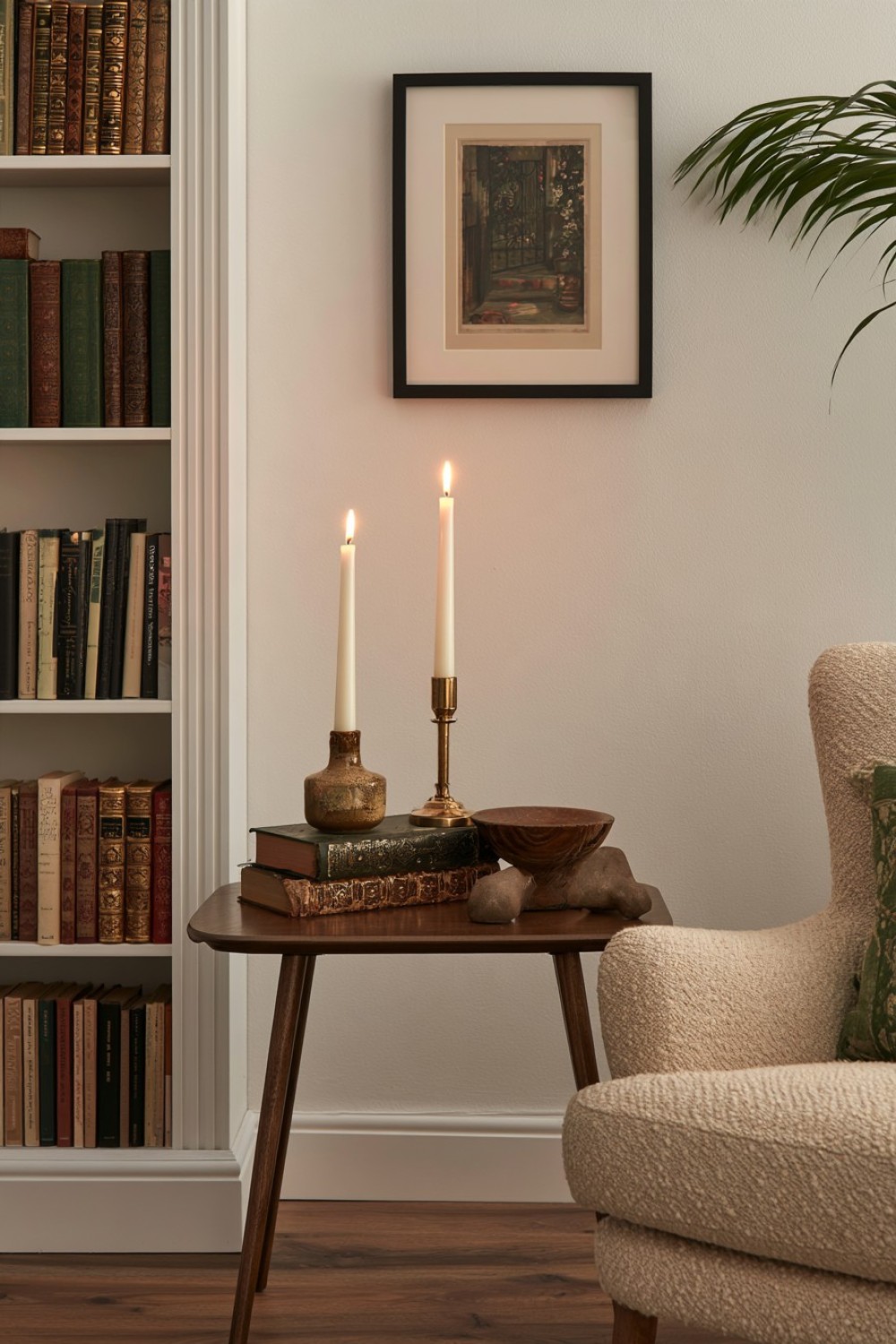
Candles and books naturally work together because both suit slower, quieter spaces.
Choose one side table or narrow shelf near a reading chair and build a small vignette using stacked books, a compact candleholder, and one tactile decorative object such as a ceramic bowl or carved wooden piece.
The key is scale. A tiny votive can disappear beside large hardcovers, while an oversized pillar may overwhelm the arrangement. A medium-height taper or sculptural candle often balances books better.
Use warm neutral colors so the display feels connected rather than overly styled. Deep green, tobacco brown, cream, oxblood, and black can all work well in a library-inspired corner.
If the books are valuable or frequently handled, keep open flames at a safe distance. The goal is to create the atmosphere of a private reading nook without sacrificing practicality.
3. Let Amber Glass Set the Mood
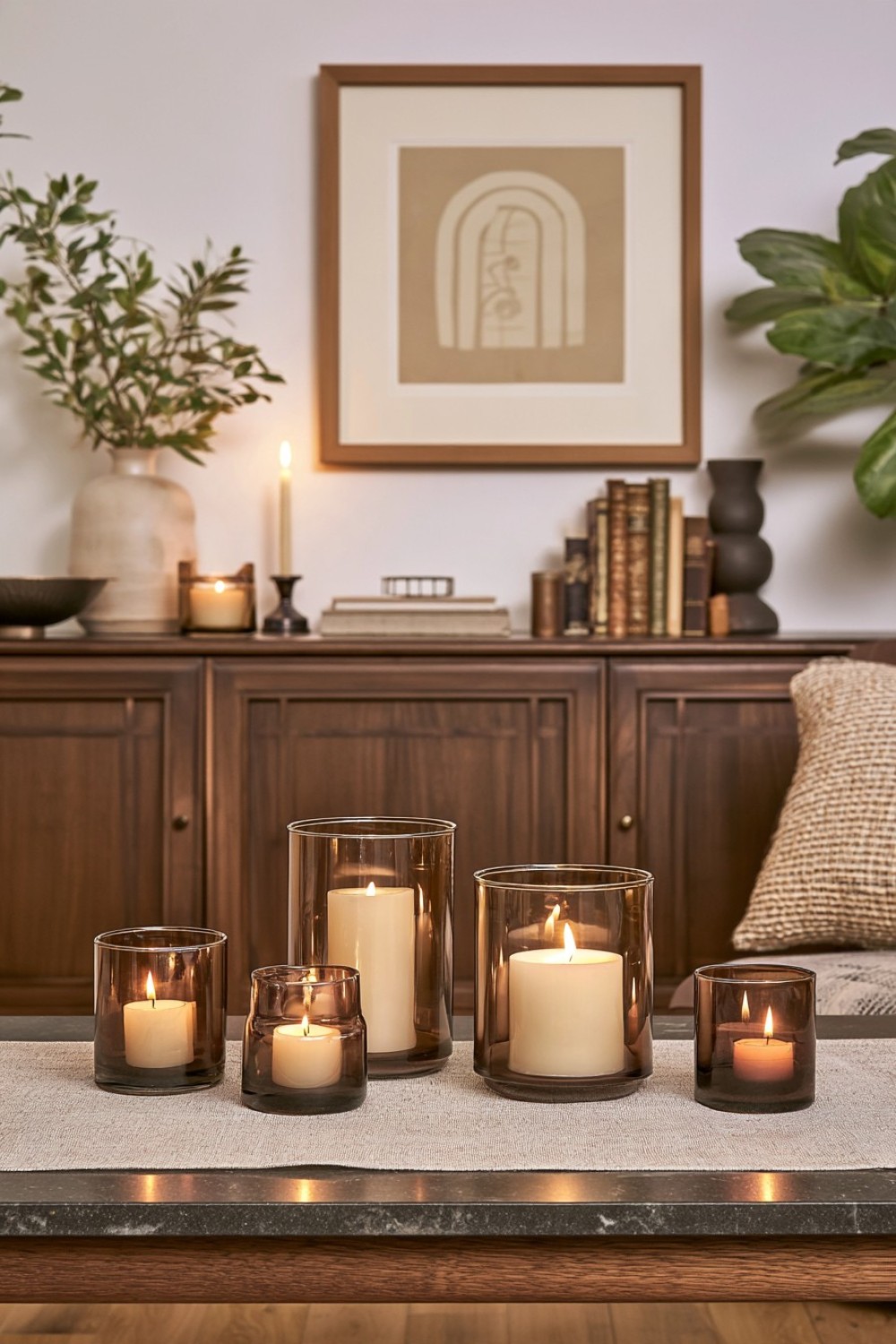
Amber glass candleholders create a softer, more filtered glow than clear glass and work especially well in rooms with warm wood, leather, or earth-toned fabrics.
Use several vessels in slightly different shapes rather than choosing identical pieces. Mixing squat votives, taller hurricanes, and one narrow taper holder creates more depth while keeping the color story unified.
Place them on a dark wood console, stone coffee table, or linen-covered dining surface where the amber tone can stand out.
Avoid surrounding the arrangement with too many orange or yellow accessories. The glass already introduces warmth, so neutral ceramics, greenery, or dark metal will usually create better balance.
This theme is especially effective during fall, but it does not need to feel seasonal. With simple shapes and restrained styling, amber glass can look sophisticated year-round.
4. Use Candlelight to Highlight a Mirror
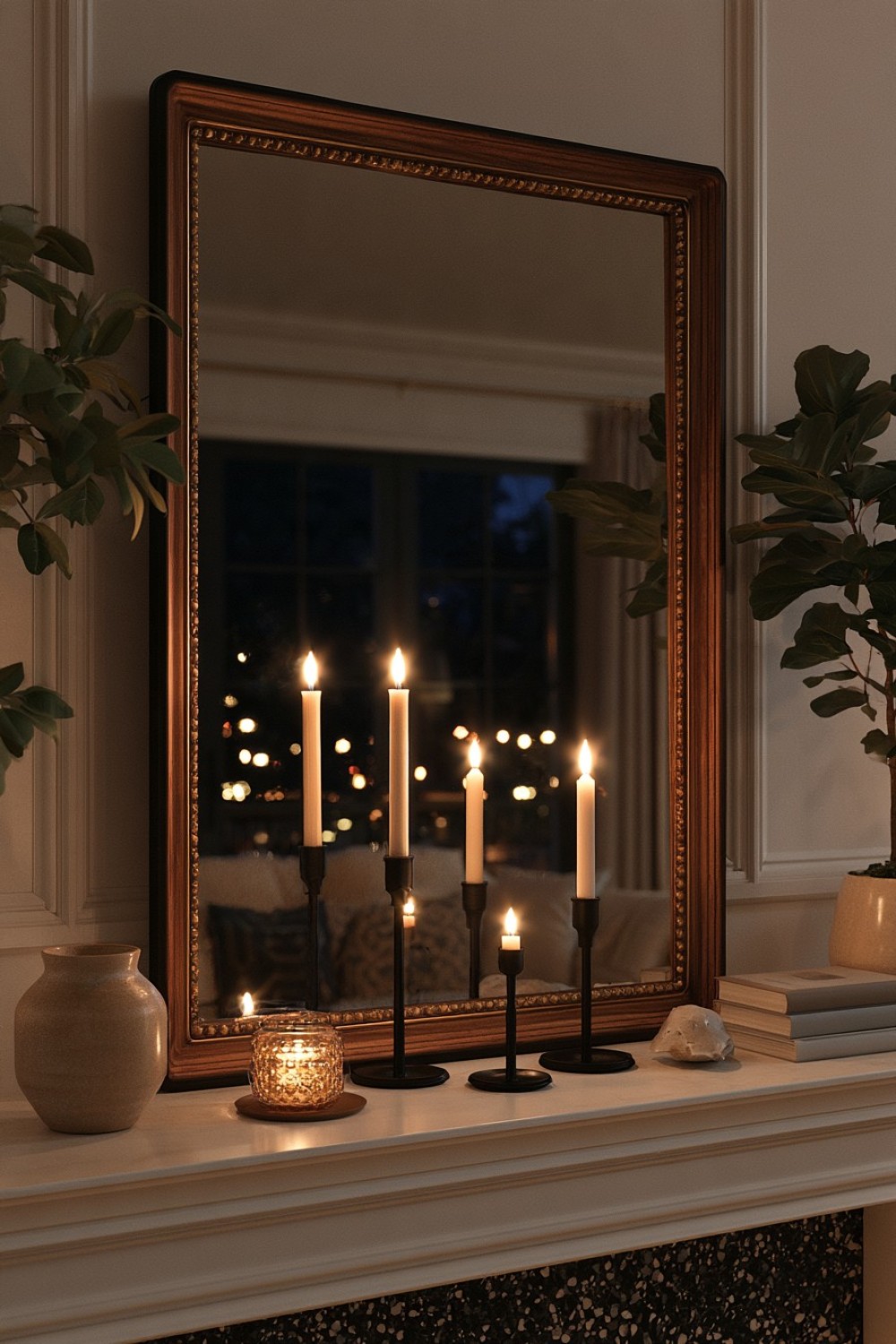
A mirror can double the visual impact of candlelight without requiring a large number of candles.
Place two or three tapers or votives in front of a leaning mirror on a console or mantel. The reflected flames add depth and make the arrangement feel fuller from multiple angles.
This works best when the mirror itself has a simple frame. Ornate frames can still work, but the candleholders should then stay relatively understated.
Leave enough distance between the flame and the mirror frame, especially if the frame is wood or another heat-sensitive material. Flameless candles are a good alternative where clearance is limited.
For a more modern interpretation, use black metal holders in front of a frameless mirror. For a softer traditional look, aged brass or ceramic holders can create a warmer connection with the rest of the room.
5. Style a Long Dining Table With Uneven Heights
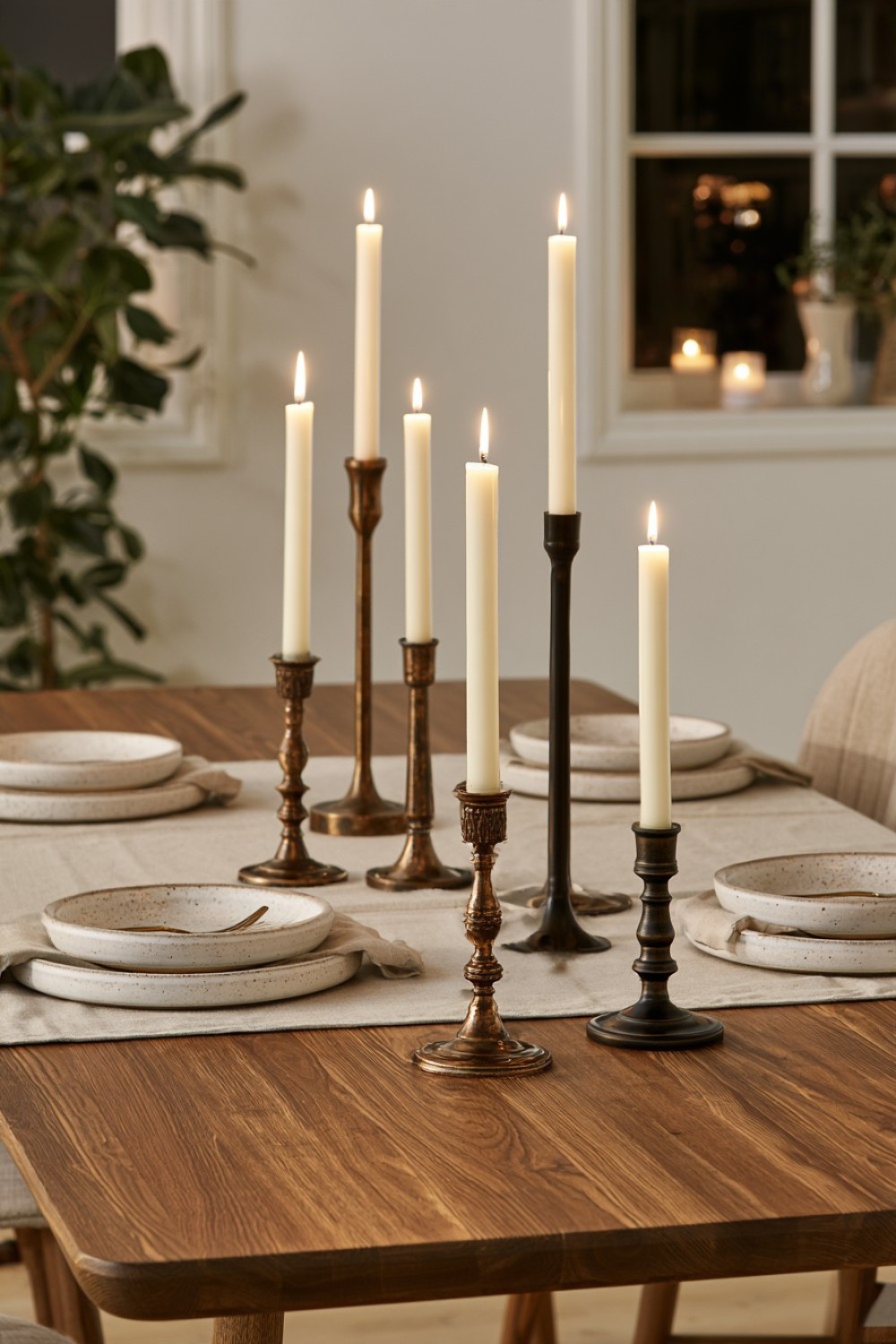
A candle centerpiece does not have to sit in one cluster in the middle of the table.
Instead, distribute candlesticks across the length of the table at irregular intervals. Mix tall tapers with lower holders so sightlines remain open and guests can still see one another comfortably.
Keep the color palette consistent even if the holder shapes vary. A mix of aged brass, dark bronze, and black can feel cohesive because the finishes are closely related.
For a lighter look, use clear glass holders with cream tapers and allow the table linen or dishes to provide the color.
Avoid placing the tallest candles directly in front of each place setting. Position them between seating areas so the arrangement feels atmospheric rather than obstructive.
This approach works particularly well on long farmhouse tables where one central centerpiece can feel too small for the scale of the surface.
6. Make Stone and Candlelight Feel Sculptural
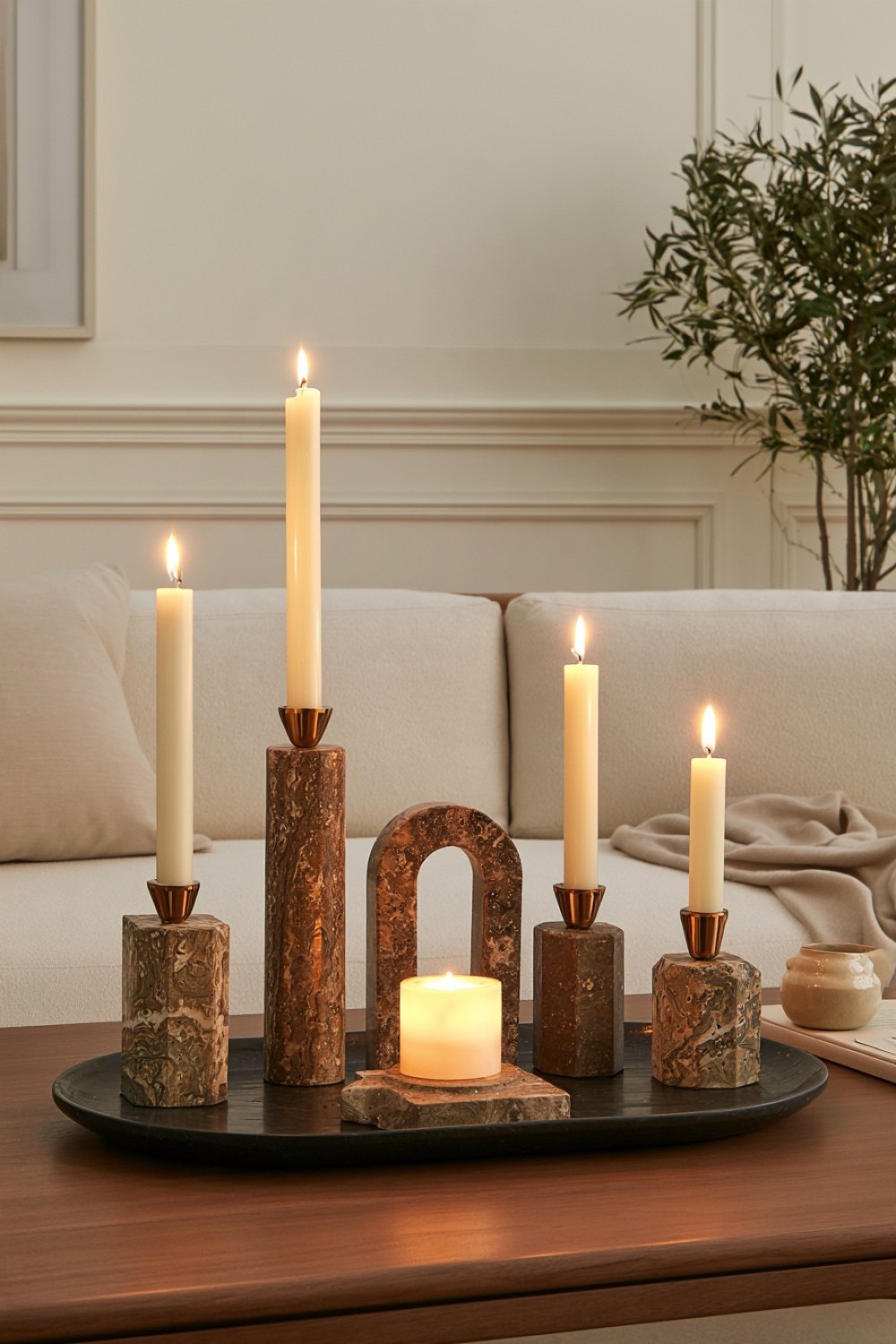
Travertine, marble, soapstone, and limestone candleholders can turn a simple arrangement into something that feels almost architectural.
Use holders with strong geometric shapes—cylinders, blocks, arches, or carved forms—and arrange them as a small group rather than scattering them around the room.
Stone works best when paired with warm white or cream candles. Highly saturated colors can distract from the natural veining and texture.
On a low coffee table, combine one tall stone holder, one shorter piece, and a small decorative tray. This creates a sculptural composition even when the candles are not lit.
The weight of stone also makes it a useful material in high-traffic spaces because the holders feel stable. Still, place them where they will not be knocked or exposed to heat-sensitive surfaces.
7. Build a Moody Black Candle Arrangement
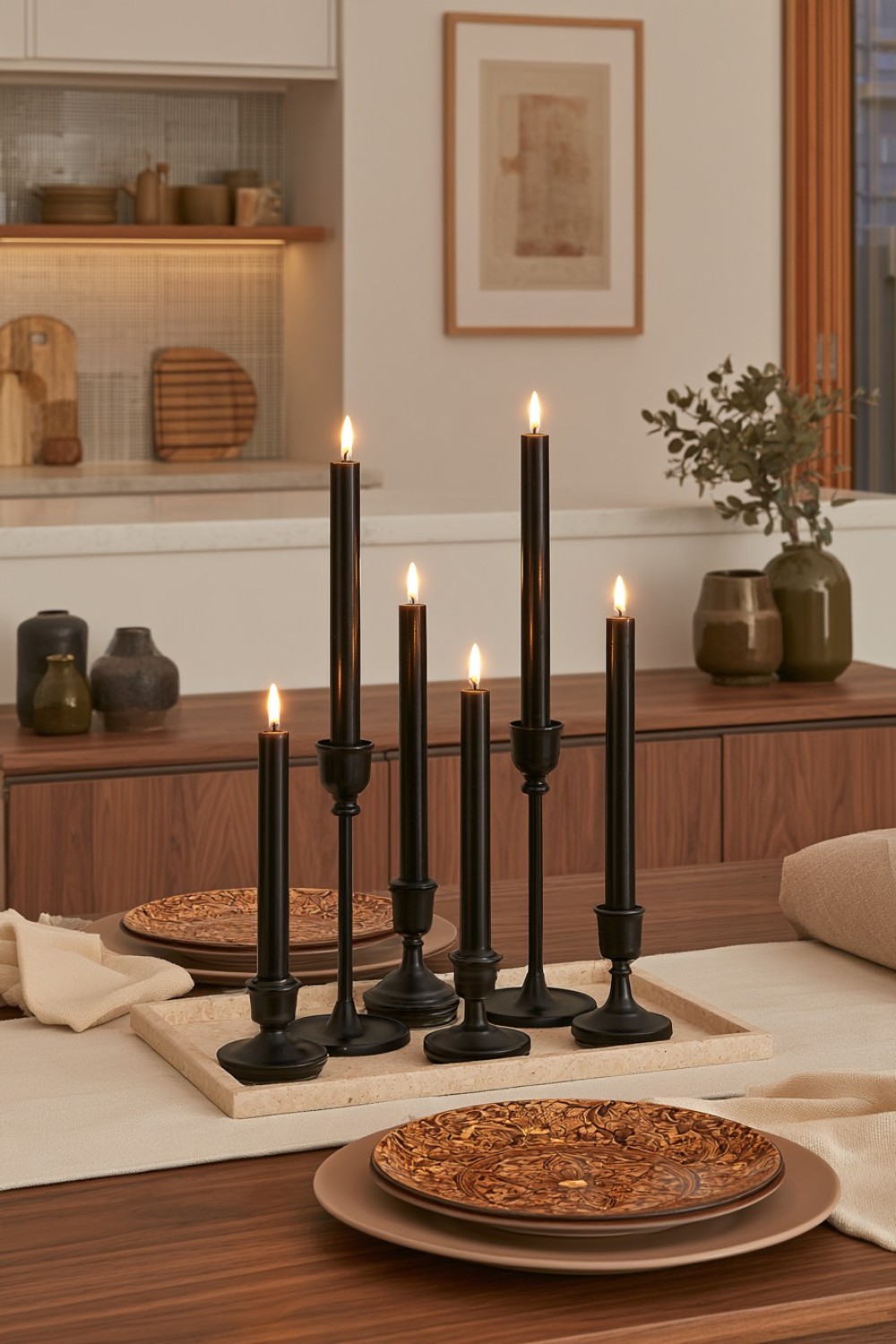
Black candles can look elegant rather than gothic when surrounded by the right materials.
Pair matte black tapers with dark wood, smoked glass, charcoal ceramics, or aged metal. Then introduce one lighter element—perhaps a cream table runner, pale stone tray, or soft linen napkin—to prevent the composition from becoming visually heavy.
This theme works especially well in dining rooms, modern kitchens, and dark-painted living spaces.
Keep the arrangement fairly minimal. Black already carries strong visual weight, so too many decorative objects can make the display feel crowded.
For a softer look, mix black candles with warm brown or deep olive rather than using a completely monochrome palette. The result feels richer and more layered while still maintaining the dramatic mood.
8. Turn a Window Ledge Into an Evening Display
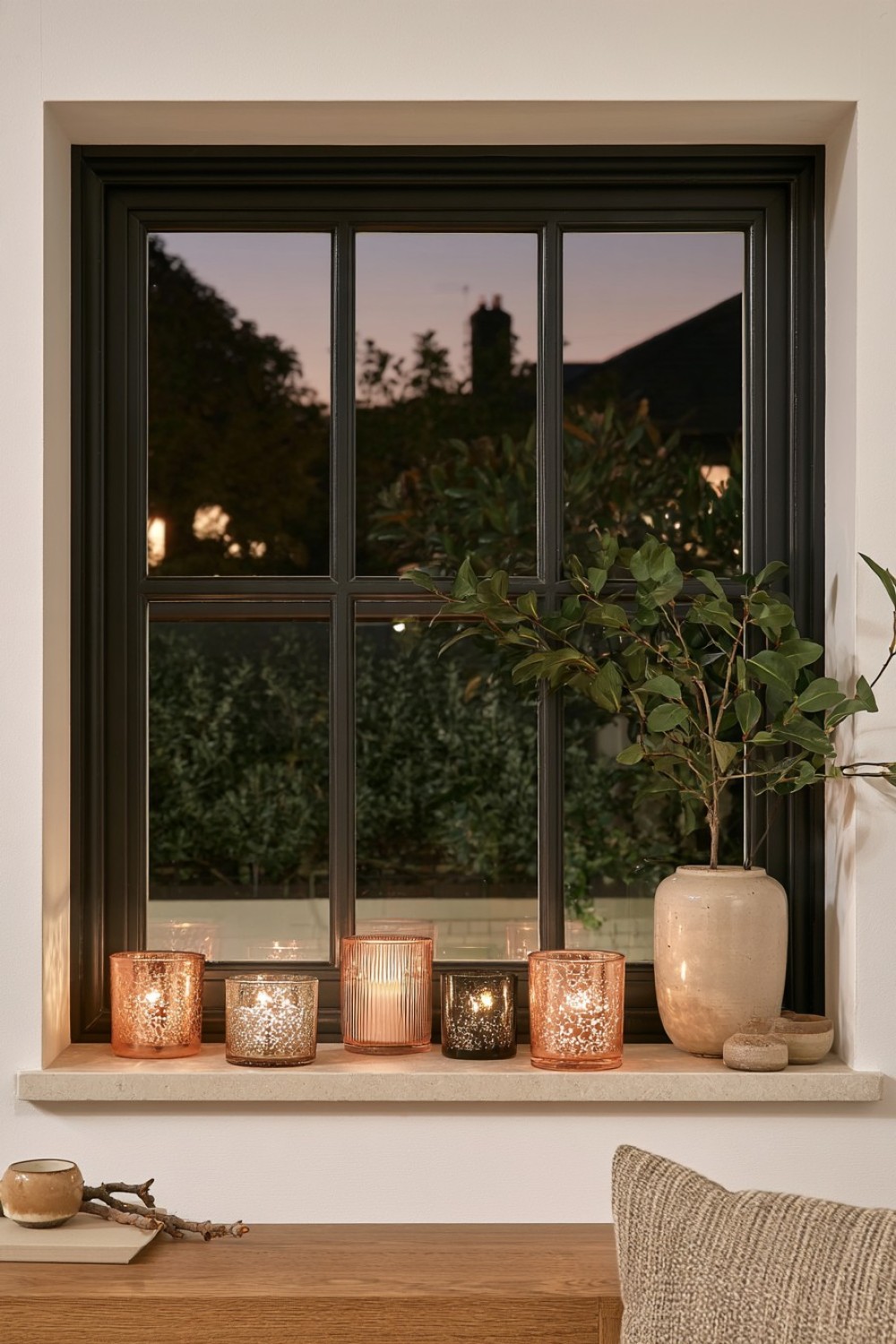
A deep interior window ledge can become a beautiful candle location, especially after sunset when reflections begin to appear in the glass.
Use a few low candles or lantern-like holders rather than tall tapers that could feel unstable near curtains or blinds.
Clear, ribbed, or lightly tinted glass works especially well because the window reflection extends the effect visually.
Keep fabrics well away from open flames. If curtains fall close to the ledge, flameless candles are the safer choice.
This idea is particularly effective in kitchens, dining rooms, or stair landings where the window becomes part of the evening atmosphere. During the day, the arrangement can remain decorative without looking overly seasonal.
9. Use Handmade Ceramics for an Organic Theme
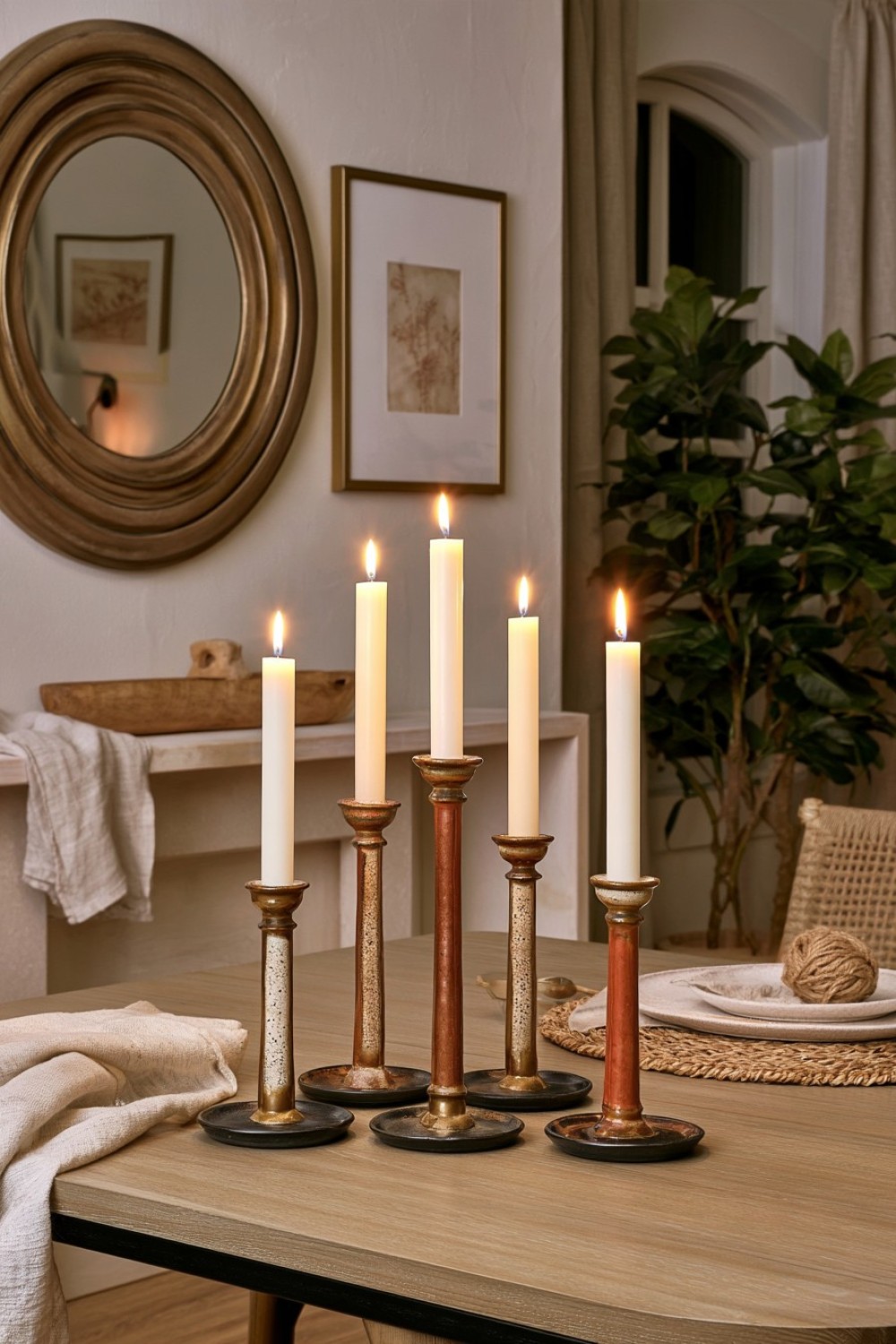
Hand-thrown ceramic candleholders introduce subtle irregularity that makes an arrangement feel less formal and more collected.
Look for matte glazes, speckled clay, off-white stoneware, terracotta, or soft gray finishes. Slight differences in height and shape make the group feel more natural.
Pair them with linen, woven baskets, wood, or simple branches for a grounded palette.
Avoid using too many decorative accessories nearby. The uneven glaze and handmade shape already provide texture.
This theme works especially well in Scandinavian, rustic, farmhouse, and wabi-sabi interiors because it embraces small imperfections rather than hiding them.
10. Make the Coffee Table Glow From the Center
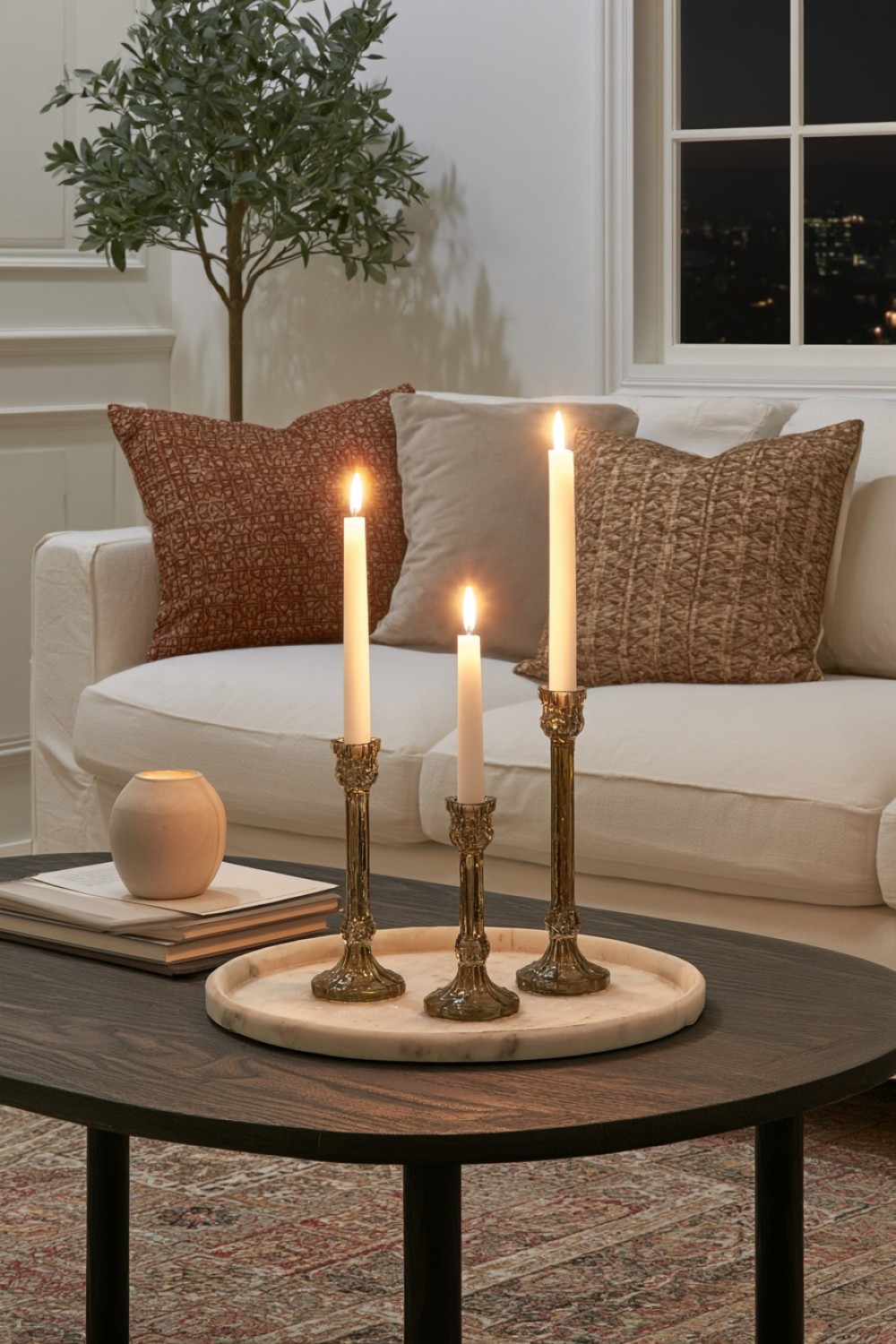
A coffee table arrangement should look good from every seating angle.
Instead of lining candles along one edge, create a low central composition using a shallow tray, two or three candleholders, and one non-flammable decorative object such as a ceramic vessel or stone sculpture.
Keep the tallest element low enough that it does not interrupt conversation across the room.
A round tray can soften a rectangular table, while a narrow stone slab can provide stronger structure on a round or organic-shaped table.
If the table surface is wood or another material sensitive to heat, always use protective bases beneath real candles. The styling should feel relaxed, but the setup still needs to be practical for everyday use.
11. Add Romance With Aged Brass
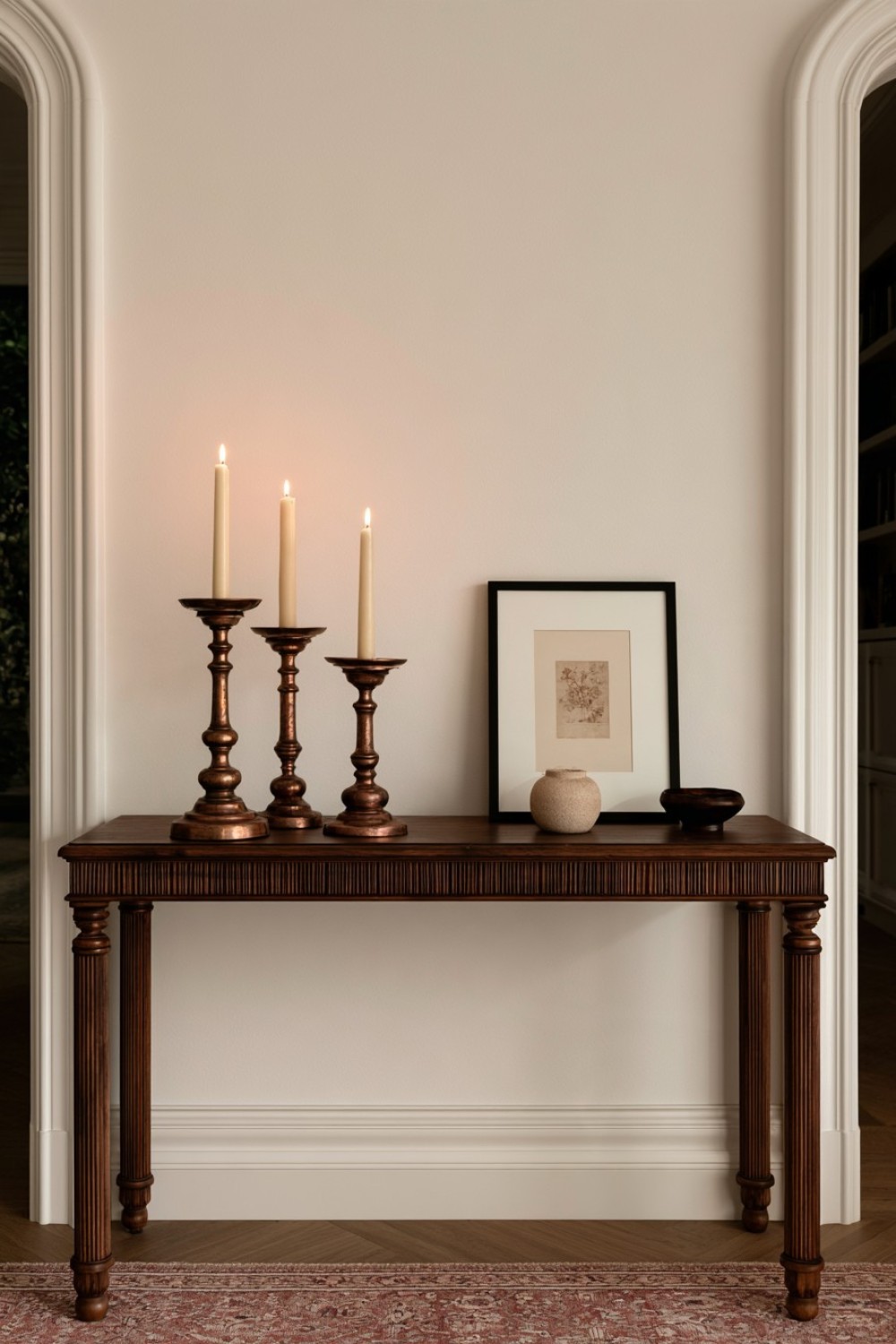
Aged brass candleholders bring warmth without the brightness of polished gold.
Their slightly worn surface works particularly well with cream tapers, dark timber, patterned rugs, and vintage artwork.
Mixing different brass shapes can make the arrangement feel collected over time rather than purchased as a matching set. Look for differences in stem thickness, base design, and height.
On a console table, place two or three holders beside a framed artwork or vase rather than centering everything perfectly. Slight asymmetry usually feels more natural.
Brass can become visually heavy if every nearby accessory uses the same finish, so combine it with glass, ceramic, or wood to keep the composition balanced.
12. Create a Soft Coastal Candle Palette
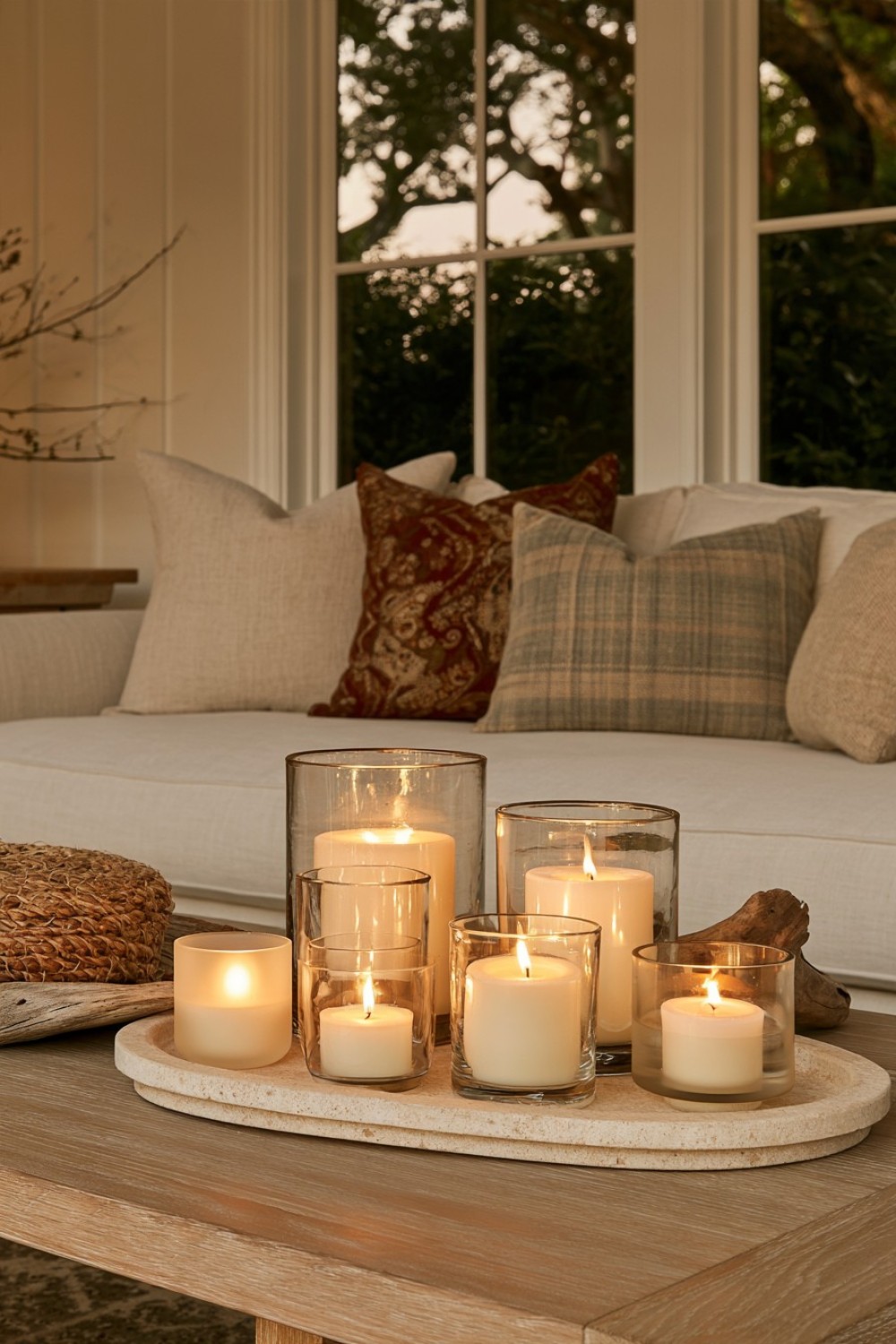
Candle decor does not need shells or nautical motifs to feel coastal.
Use pale sand, chalky white, muted blue-gray, and translucent glass instead. A mix of frosted holders, clear hurricanes, and off-white candles can evoke the softness of seaside light without becoming themed in an obvious way.
Add driftwood-toned timber, woven textures, or a stone tray to complete the palette.
The arrangement works particularly well in bright rooms with linen upholstery and natural fibers.
Keep the styling airy. Too many objects will work against the relaxed quality that makes this theme appealing.
13. Use Candles to Warm a Minimalist Interior
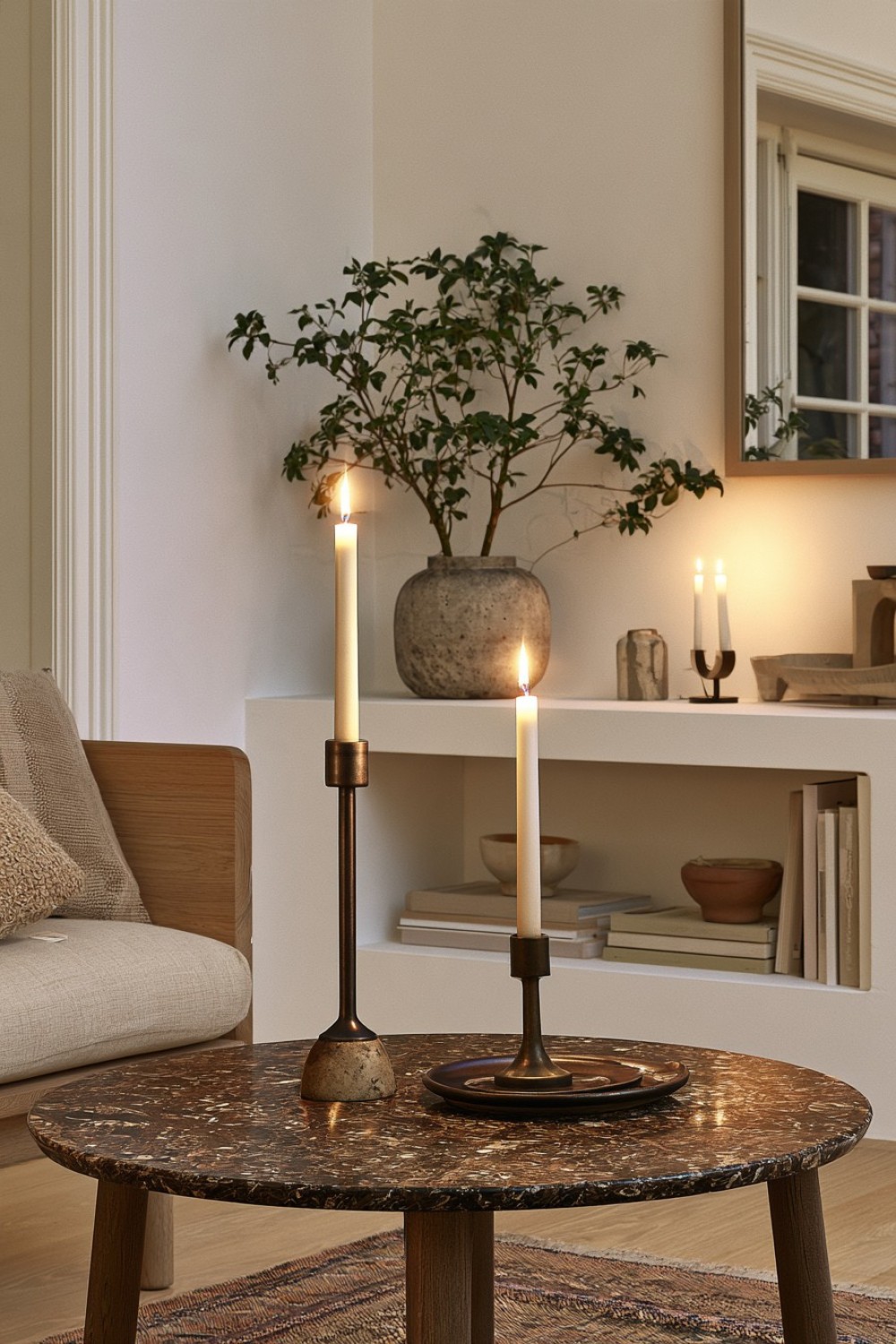
Minimalist spaces can sometimes feel visually cool, especially when they rely heavily on white walls, pale stone, or simple furniture.
A small group of candles can soften that effect without adding clutter.
Choose one or two sculptural holders rather than a large collection. Smooth stone, black metal, or unglazed ceramic works particularly well because the materials feel intentional even when the candles are unlit.
Position the arrangement where the eye naturally pauses—perhaps on a low sideboard, coffee table, or built-in shelf.
The goal is not to fill empty space. It is to give one quiet area a little warmth and contrast.
14. Build a Seasonal Forest-Inspired Display
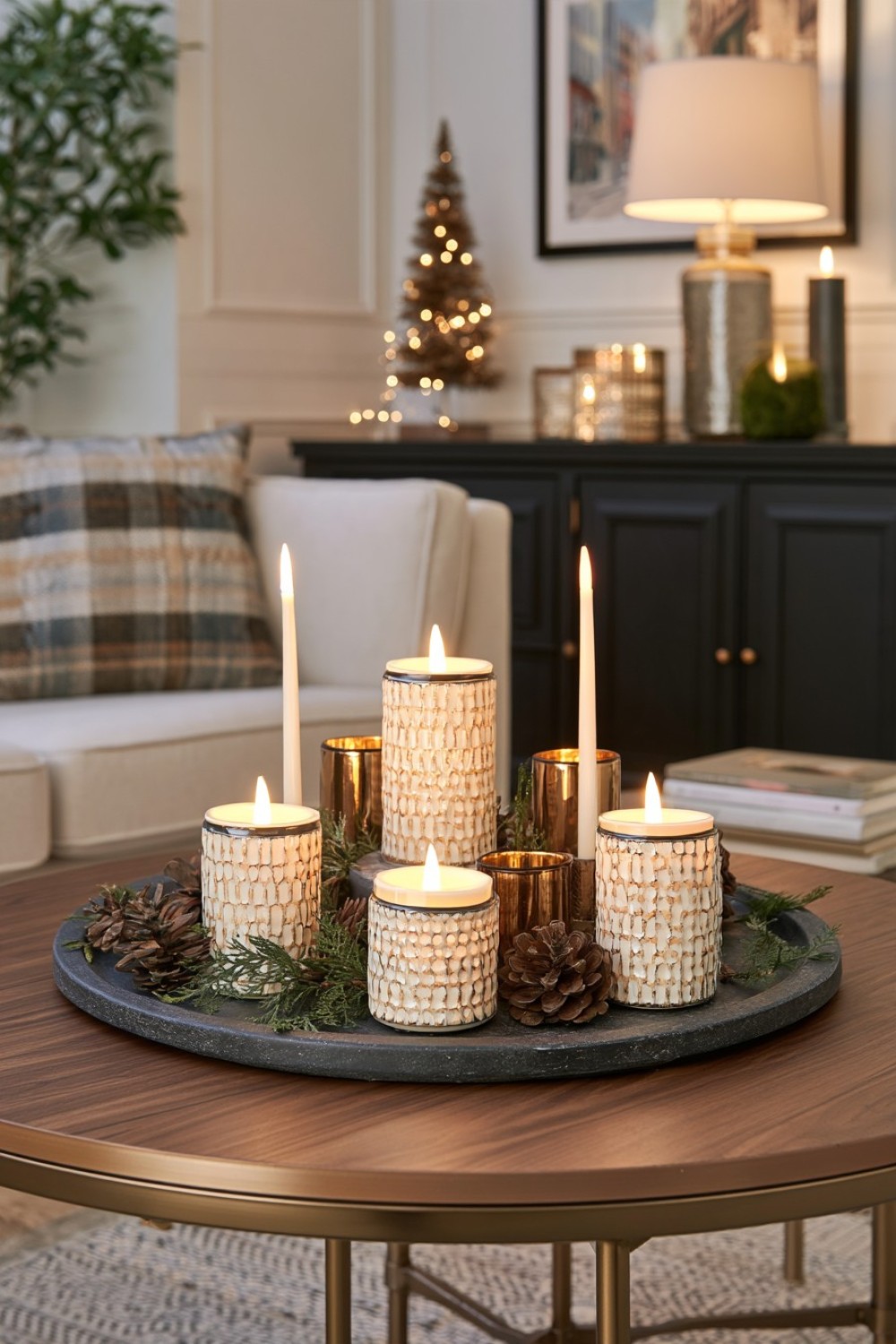
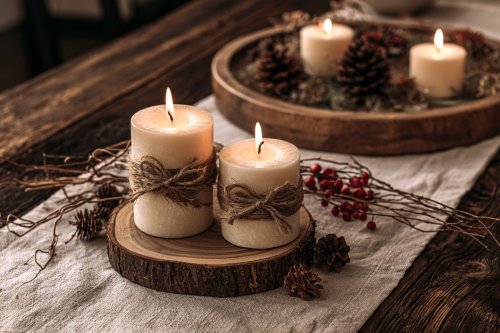
For a subtle seasonal theme, combine candles with natural textures rather than obvious holiday decorations.
Evergreen clippings, pinecones, dark wood, moss-colored textiles, and brown glass can create a forest-inspired arrangement that works through autumn and winter.
Use greenery sparingly and keep all natural materials safely away from open flames. Flameless candles are particularly useful when the display includes dried branches or foliage.
A dark tray or shallow bowl can help contain the composition and make it easier to move.
This theme feels more sophisticated when the palette remains restrained—deep green, brown, cream, and black are usually enough.
15. Give the Bathroom a Quiet Spa-Like Glow
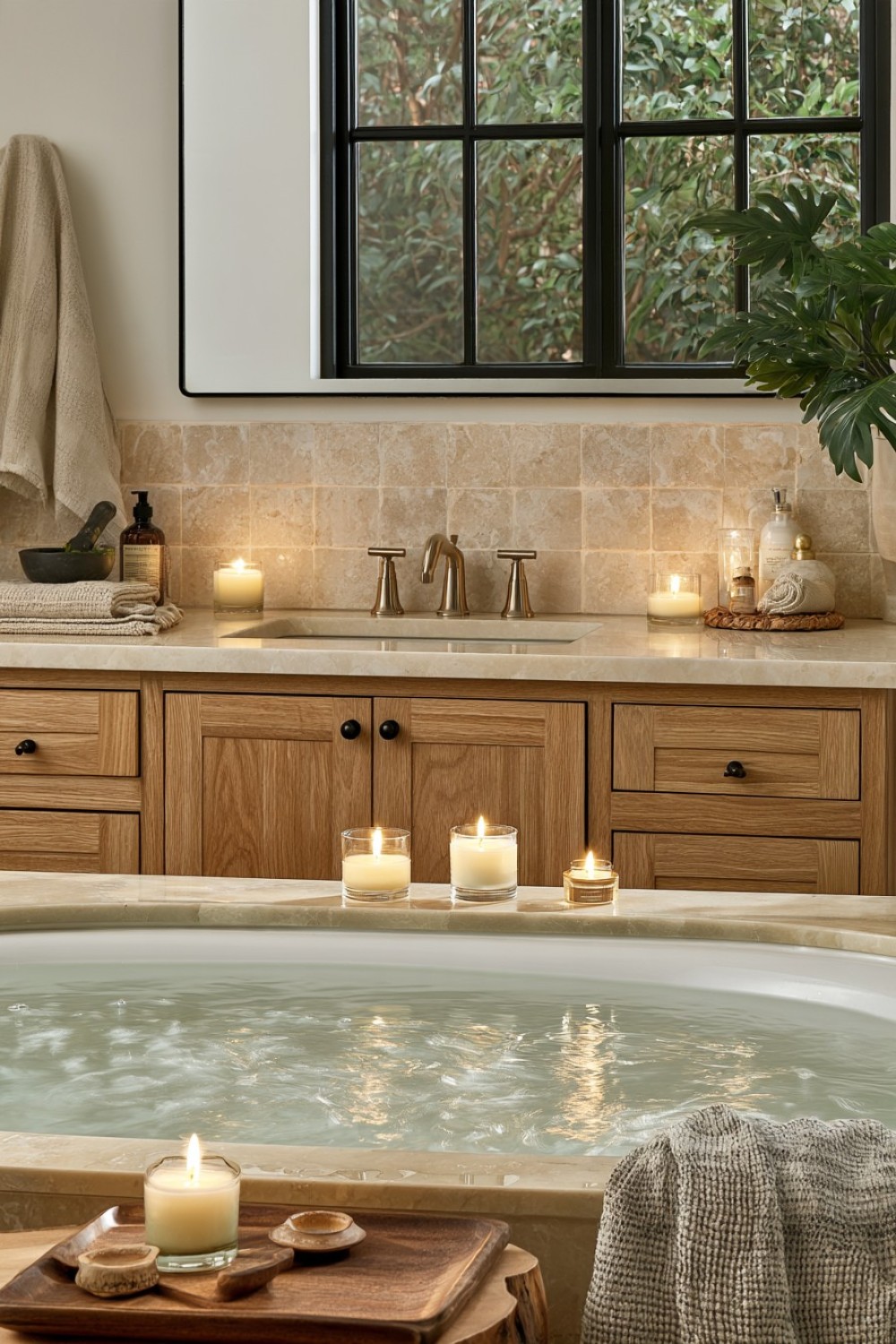
Bathrooms can benefit from low-level candlelight, particularly around a soaking tub or vanity.
Use small glass votives or ceramic holders placed on stable, dry surfaces away from towels, curtains, and toiletries.
Instead of clustering many candles, use two or three carefully placed sources so the room still feels calm.
Natural stone, pale tile, warm wood, and soft textiles all respond beautifully to warm candlelight.
Scented candles can add another layer, but fragrance should remain subtle in small bathrooms. Unscented candles are often more comfortable when the room already contains soaps, bath oils, or other scented products.
16. Create a Sculptural Candle Shelf
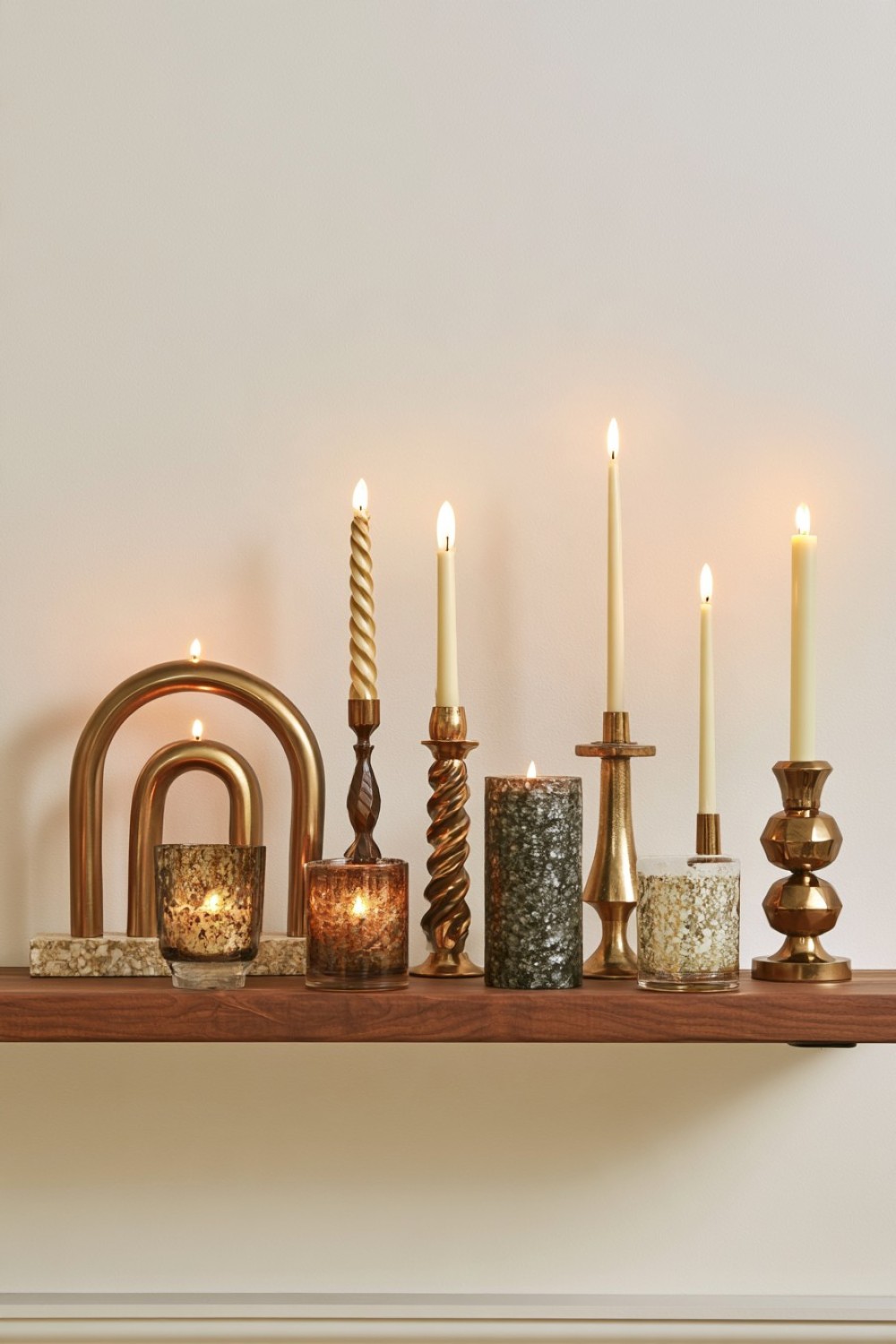
A narrow floating shelf can become a dedicated candle display when the shapes are treated almost like small sculptures.
Mix arches, twisted tapers, chunky cylinders, and simple geometric holders in one controlled color palette.
This idea works best when the shelf is decorative rather than functional. Too many objects in regular use will disturb the arrangement.
Use negative space between each form so the silhouettes remain clear.
If the shelf is high or close to the wall, consider using unlit decorative candles or flameless alternatives. The visual interest comes from shape and composition as much as from the flame itself.
17. Bring Vintage Drama to a Sideboard
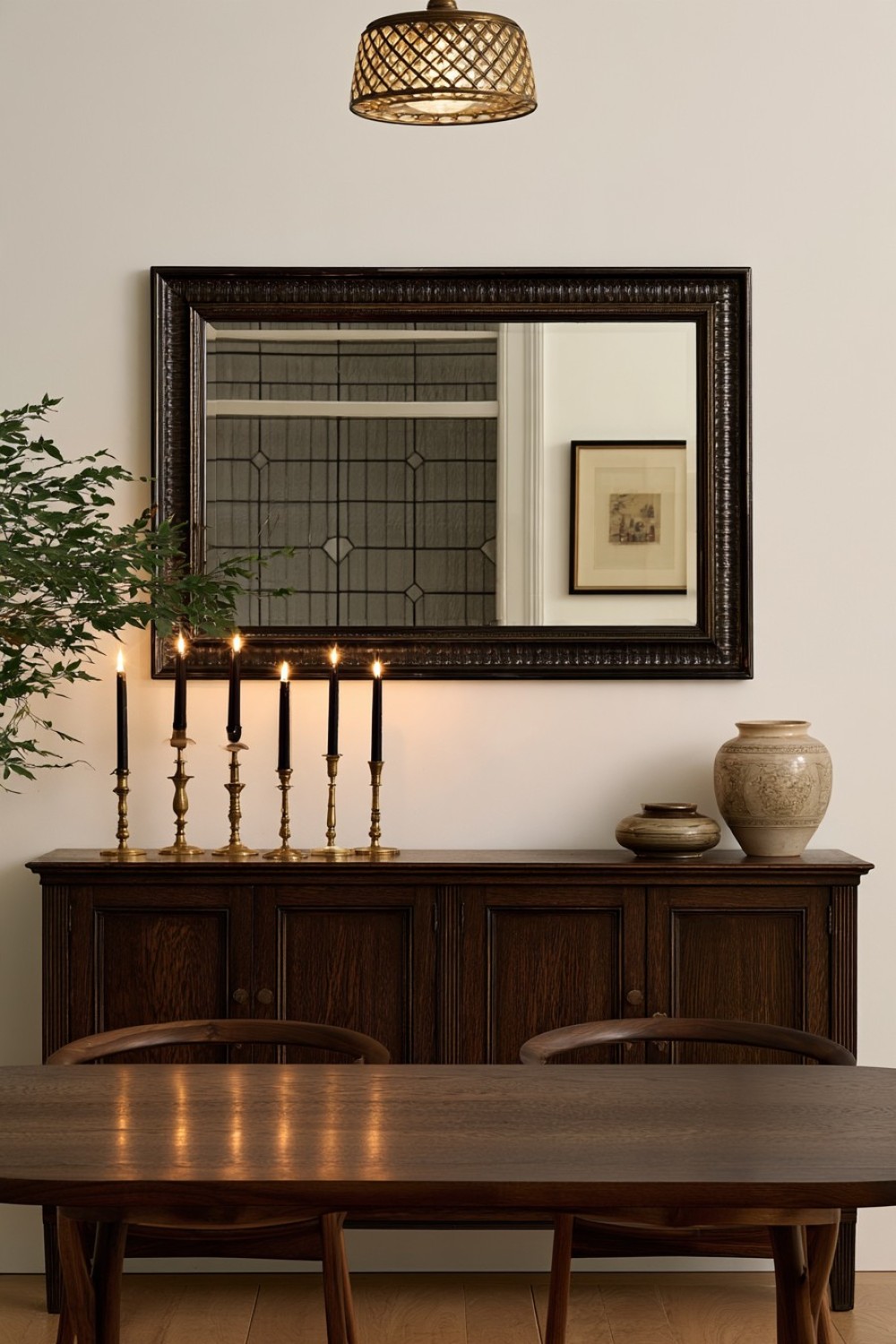
A dark wood sideboard, antique cabinet, or painted buffet can become an ideal setting for a more dramatic candle arrangement.
Use tall brass or black candlesticks, a vintage mirror, and one strong decorative object such as a ceramic urn or framed artwork.
Keep the palette deeper than you would on a modern console. Burgundy, tobacco, black, cream, and aged metal can all work well together.
The arrangement should feel layered but not crowded. Leave some exposed surface so the furniture itself remains part of the composition.
This theme is particularly effective in dining rooms where the sideboard can become a secondary evening focal point.
18. Use Ribbed Glass for a Softer Light Effect
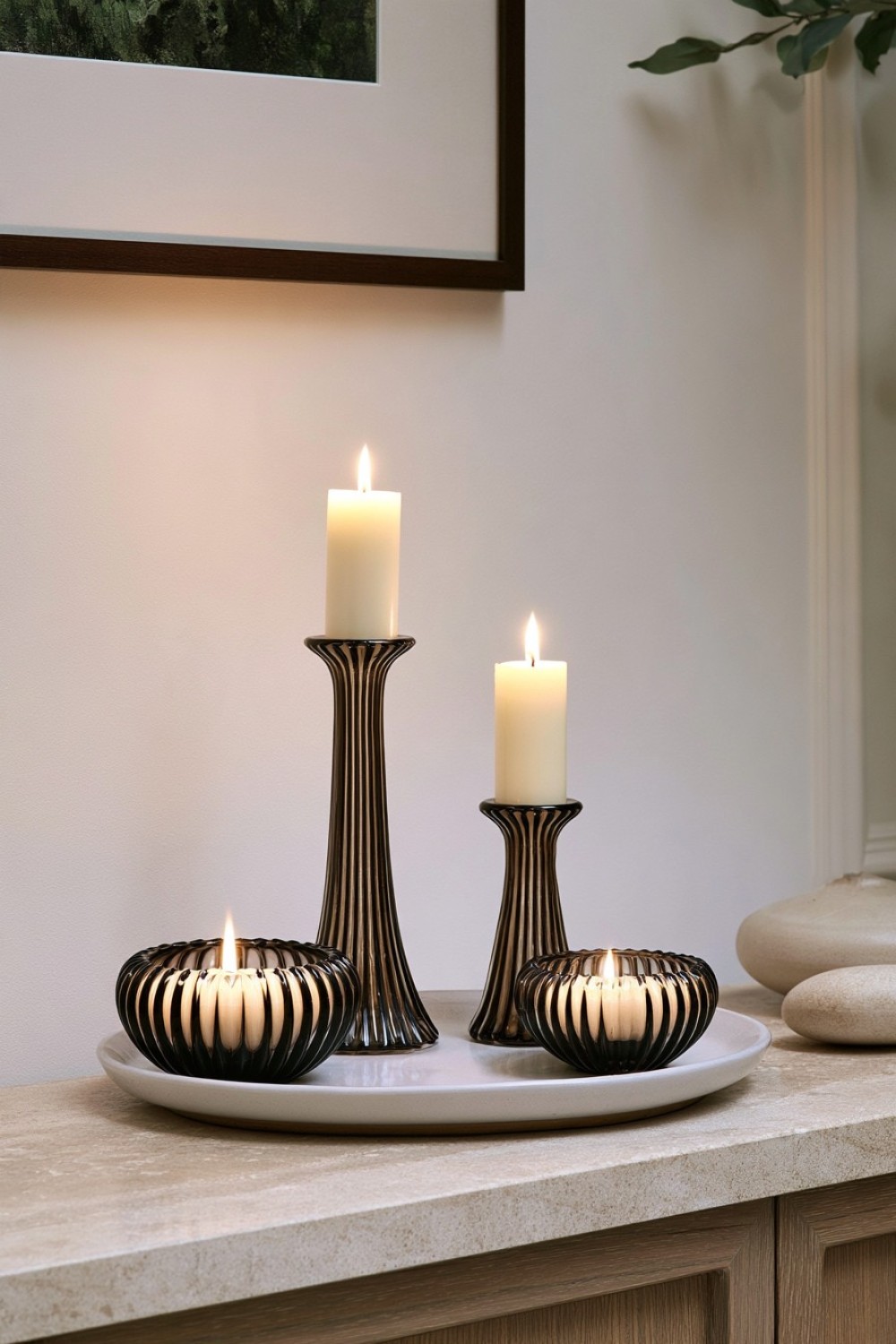
Ribbed or fluted glass candleholders distort candlelight into soft vertical patterns.
This makes them useful when clear glass feels too sharp or exposed.
Group two or three different heights together on a console, bathroom ledge, or dining table. The repeated texture will unify the arrangement even if the vessels are different shapes.
Neutral glass works well in most interiors, while smoke-gray or amber versions can introduce a more dramatic mood.
Because patterned glass already adds visual detail, surrounding accessories can remain simple.
19. Create One Dramatic Candle Moment Instead of Many
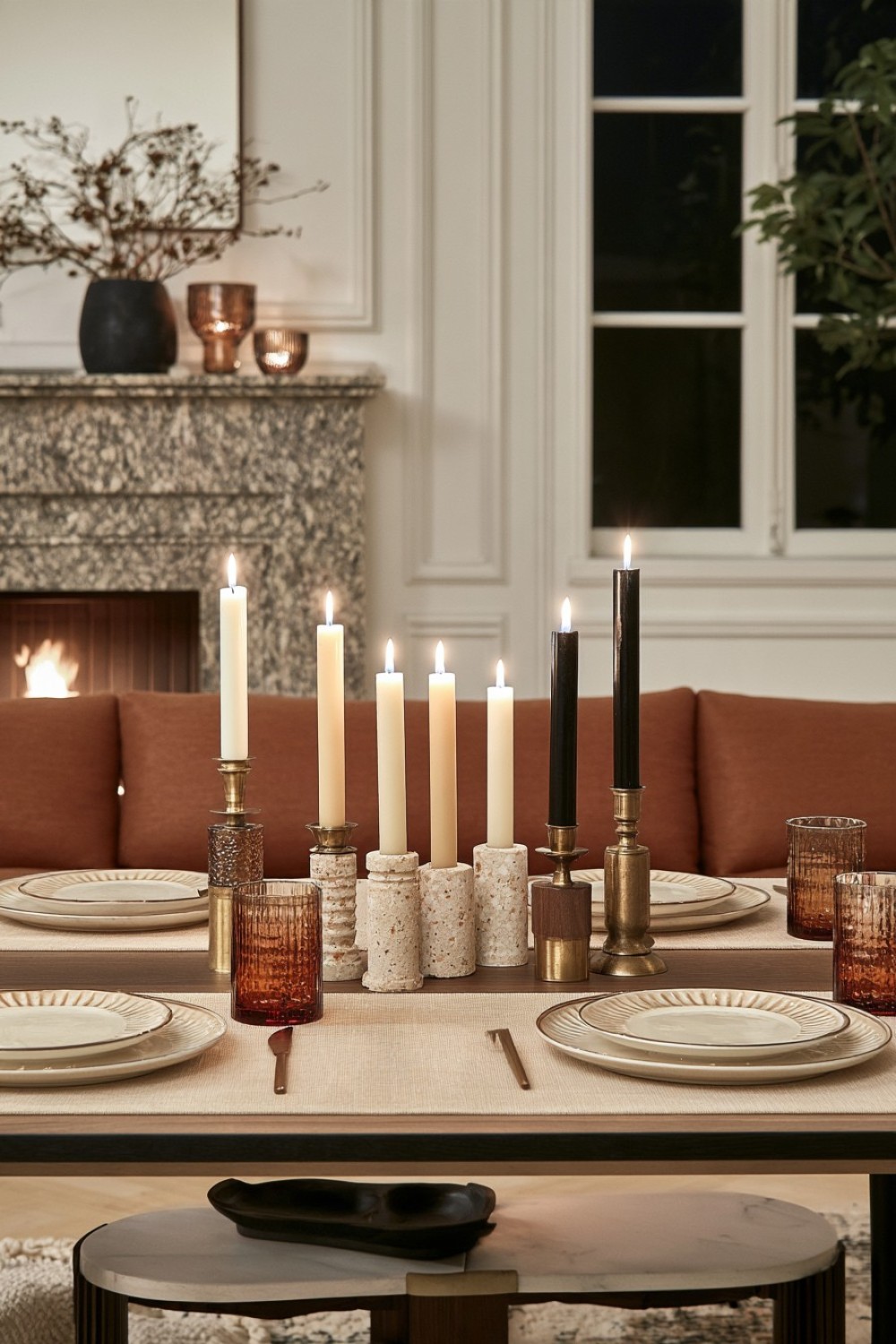
One of the strongest candle styling ideas is also the simplest: concentrate the effect in one place.
Rather than scattering small candles across every room, create one deliberate focal point—a long dining arrangement, a dramatic mantel, a mirrored console, or a sculptural coffee table composition.
This gives the display more visual impact and helps the rest of the room stay calm.
The same principle applies to color and material. Choose one clear direction instead of mixing farmhouse lanterns, modern glass, ornate brass, and colorful novelty candles in a single space.
Candlelight is most effective when it has contrast around it. Leaving darker, undecorated areas nearby allows the glow to feel warmer and more atmospheric.
Creating Candle Decor That Feels Intentional
Candle styling is most convincing when the arrangement responds to the room rather than following a fixed formula. A traditional dining room may suit aged brass and tall tapers, while a minimalist living space might benefit from two sculptural stone holders and nothing more. Materials, scale, and placement usually matter more than the number of candles.
Think about the composition even when the candles are unlit. Good holders, balanced heights, and a consistent palette should still contribute to the room during daylight hours.
Safety should remain part of the design process as well. Keep real flames away from fabrics, dried plants, books, and unstable surfaces, and use flameless alternatives where clearance is limited.
By combining atmosphere with restraint, candles can become more than seasonal decoration. They can help shape focal points, soften hard materials, and give familiar rooms a richer sense of warmth.
MORE IDEAS


Share
What's Your Reaction?
 Like
0
Like
0
 Dislike
0
Dislike
0
 Love
0
Love
0
 Funny
0
Funny
0
 Angry
0
Angry
0
 Sad
0
Sad
0
 Wow
0
Wow
0