18 Rainbow Table Styling Ideas With Creative Color Effects

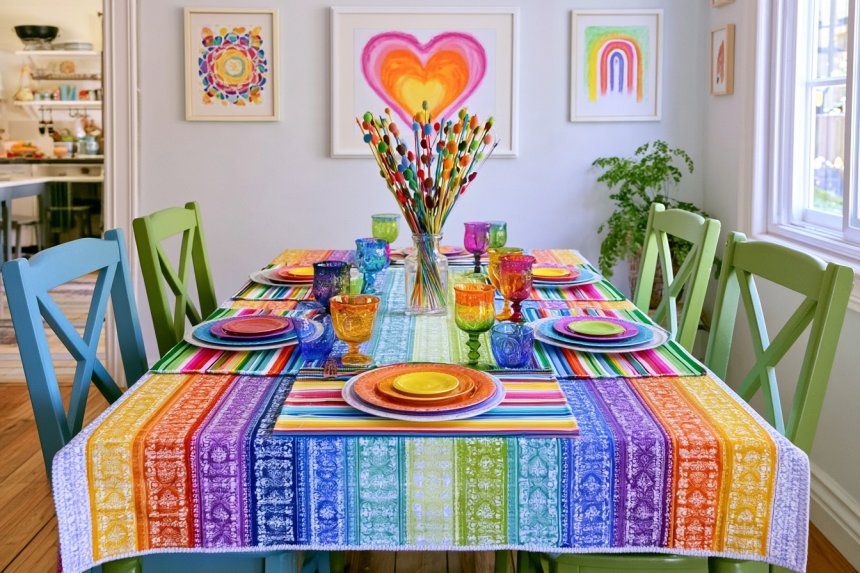
Rainbow table decor can become visually chaotic very quickly if every object tries to show every color at once. A stronger approach is to control where color appears, how it moves across the table, and which materials carry it. Translucent glass can make color feel lighter, ombré linens can create a gradual transition, and carefully arranged food can become part of the palette without adding more decorative objects. The most memorable rainbow tables usually rely on rhythm rather than excess. These concepts explore color through gradients, repetition, reflection, texture, and handmade details so the final setting feels creative and layered instead of looking like a generic rainbow party kit.
1. Build a Full-Table Color Gradient From One End to the Other
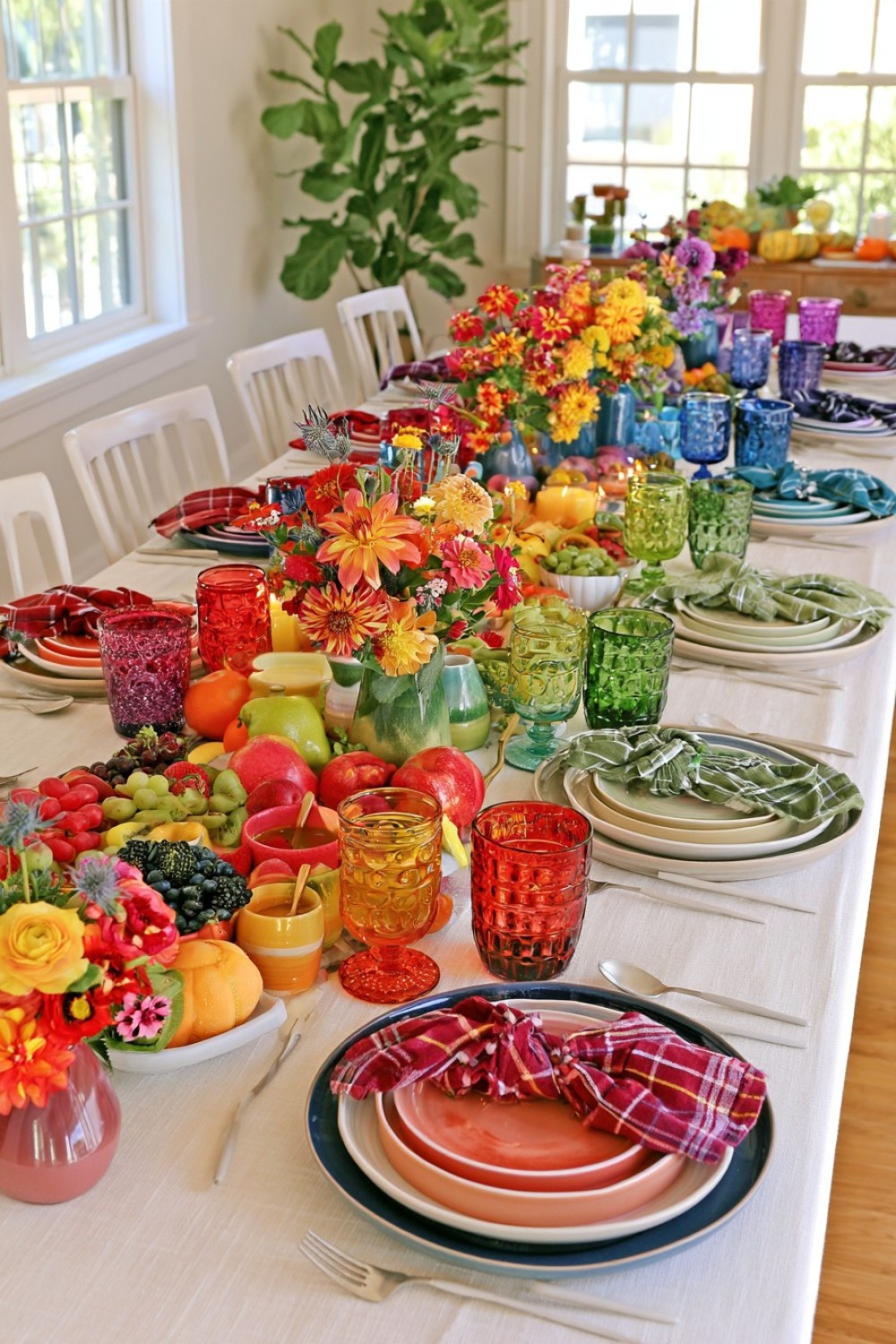
Instead of giving every place setting all seven rainbow colors, assign each section of the table its own part of the spectrum.
Begin with red and coral at one end, transition through orange and yellow, then move into green, blue, and violet toward the other side.
The gradient can appear through napkins, flowers, glasses, fruit, or plates rather than one single material.
Keep the tablecloth neutral so the color progression remains easy to read.
For long tables, this creates a particularly strong visual effect because guests can see the palette change as their eye travels down the surface.
Avoid making every object match perfectly. Several neighboring shades within each section create a richer transition than one flat color.
2. Create a Centerpiece From Layered Colored Glass
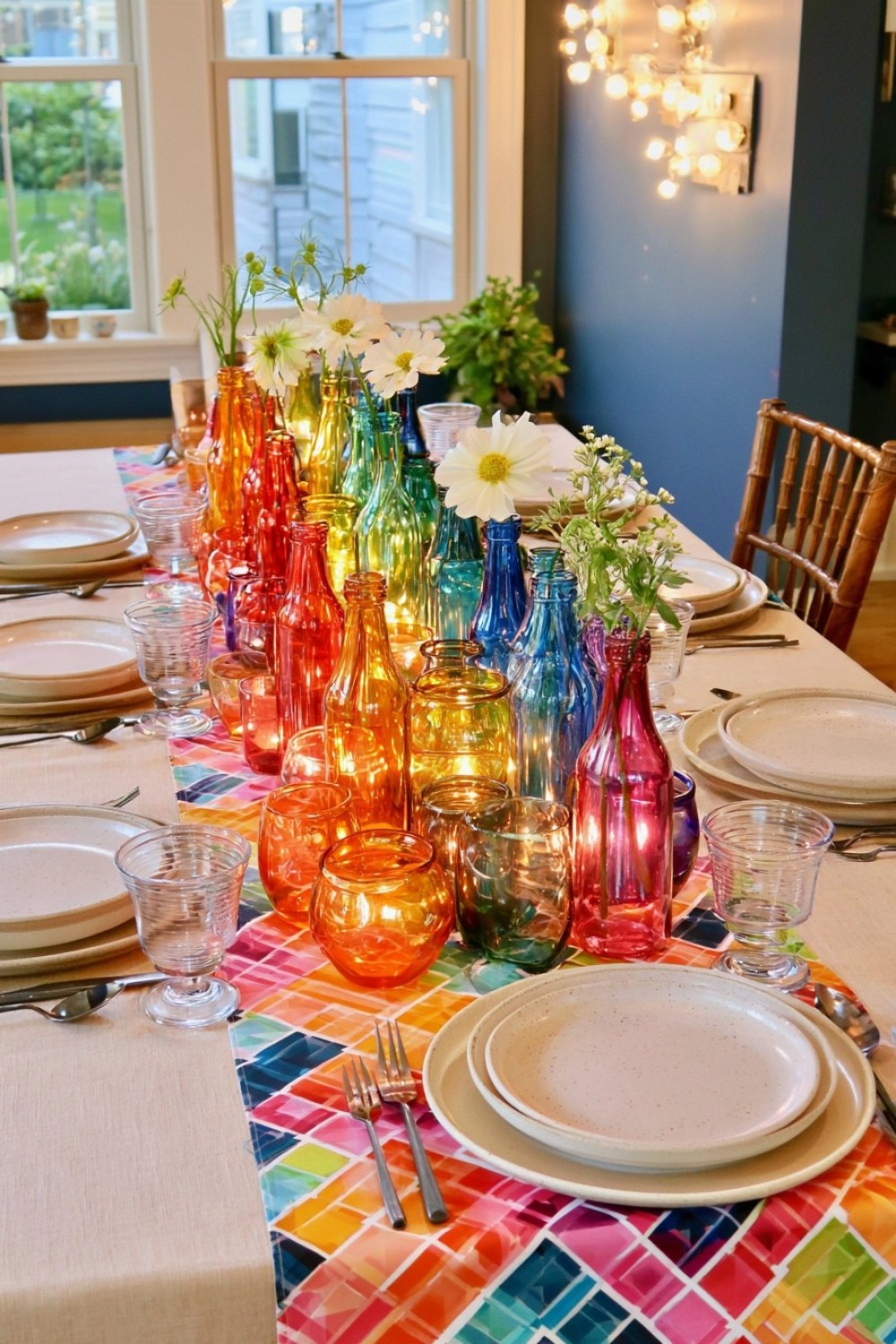
Colored glass can introduce rainbow tones while keeping the table visually light.
Collect bottles, bud vases, tumblers, or translucent vessels in red, amber, yellow, green, blue, and violet.
Arrange them in a loose line through the center, but vary heights and transparency rather than forming a rigid spectrum.
Some vessels can remain empty while others hold only one or two white flowers.
The white florals prevent the centerpiece from becoming too busy and let the glass itself carry the color.
If natural light reaches the table, the vessels may cast soft colored reflections onto the cloth.
This works especially well for brunches and daytime celebrations because sunlight becomes part of the decor.
3. Make a Watercolor Linen Runner by Hand
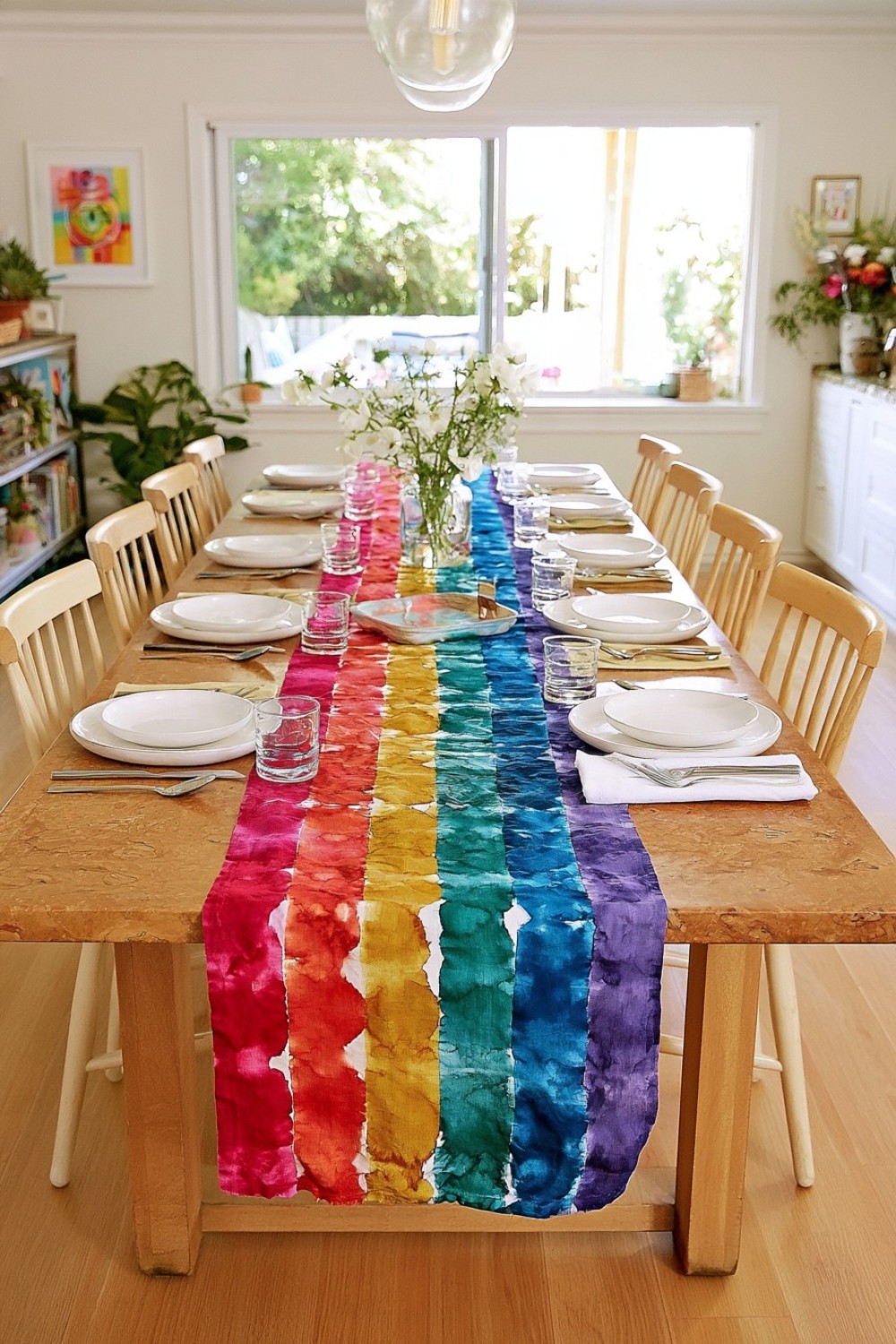
Instead of buying a printed rainbow runner, create one from plain cotton or linen.
You will need a light-colored fabric runner, fabric dye or fabric paint, spray bottles or brushes, gloves, and a protected work surface.
Dampen the fabric first, then apply several colors in broad overlapping sections so the edges bleed into one another.
Avoid perfect stripes. Soft irregular transitions make the textile feel more painterly and less like children's party decor.
Once fully dry and heat-set according to the product instructions, the runner becomes the main color feature of the table.
Pair it with simple white plates, clear glassware, and understated cutlery.
This is a useful DIY project because the handmade textile can be reused for birthdays, summer dinners, Pride celebrations, or creative brunches.
4. Turn Fruit Into the Rainbow Centerpiece
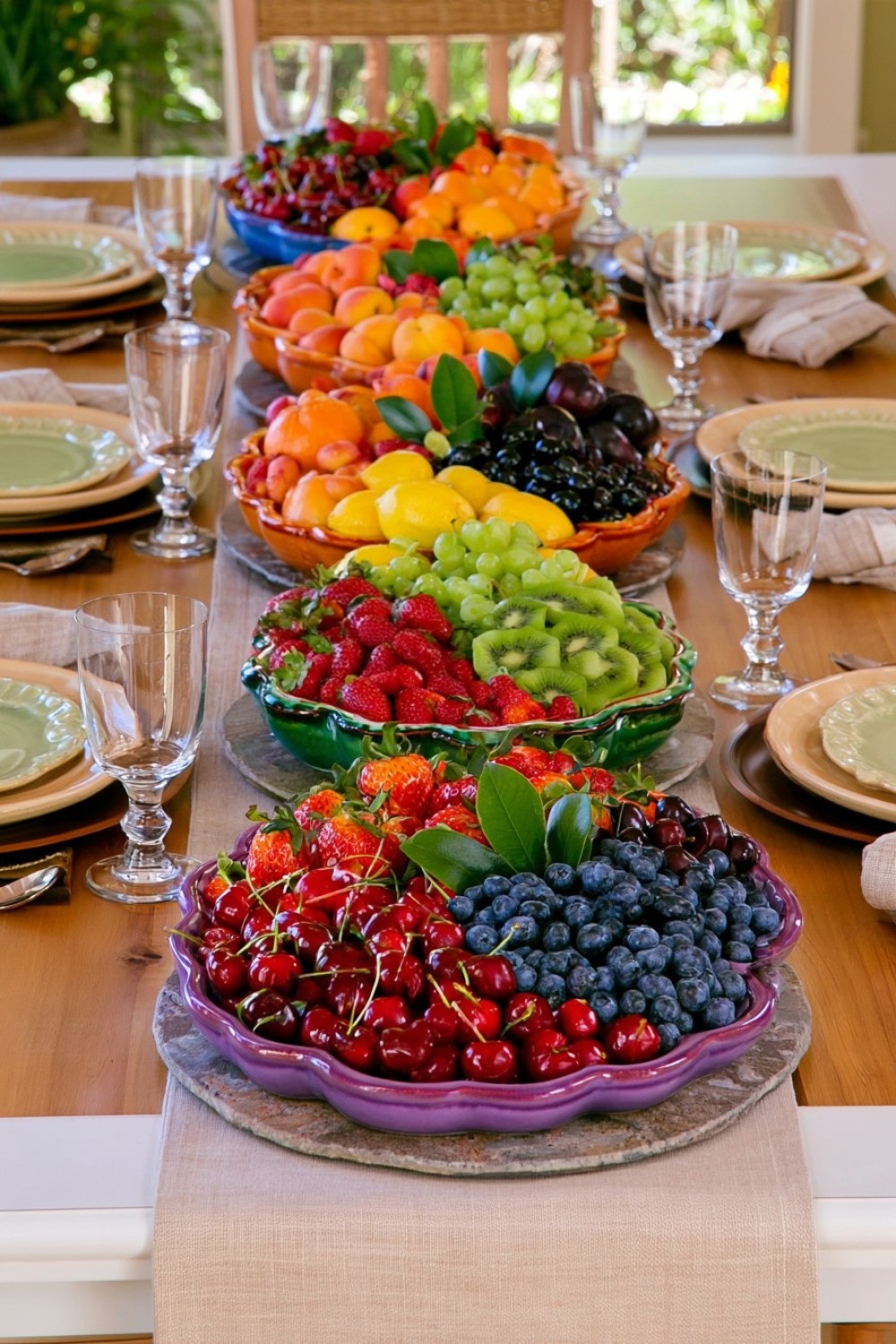
The centerpiece can be edible.
Arrange fruit by color across a series of low bowls or plates: strawberries and cherries for red, oranges and apricots for orange, lemons for yellow, green grapes and kiwi for green, blueberries for blue, and plums or blackberries for violet.
Instead of placing everything in one large bowl, create several smaller color blocks along the table.
Add minimal foliage so the fruit remains the main visual element.
This works particularly well for brunch, garden parties, or summer gatherings because guests can actually eat the centerpiece.
Choose fruit based on freshness rather than forcing every rainbow shade exactly. The goal is a convincing color rhythm, not a scientifically perfect spectrum.
5. Use Transparent Color Panels as Placemats
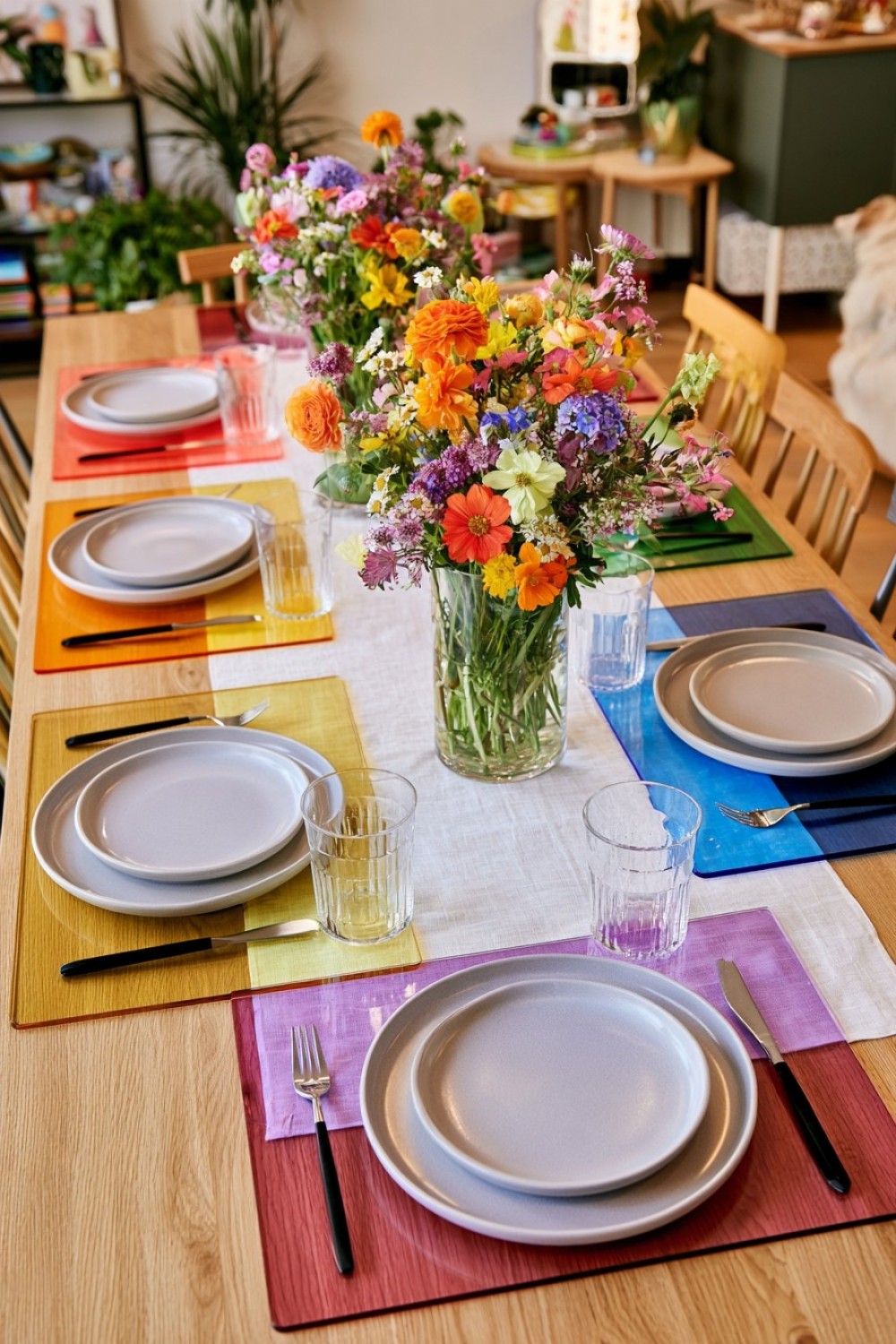
Thin translucent acrylic or colored plastic sheets can create a modern stained-glass effect beneath place settings.
Cut or purchase flat panels in different transparent colors and use one beneath each plate.
When layered over a white tablecloth, the colors remain bright. Over a pale wood table, they become softer and more complex.
For an unusual arrangement, overlap the edges of neighboring panels slightly so new colors appear where they intersect.
For example, yellow and blue may create a green overlap, adding a subtle color-mixing effect.
Use panels with smooth finished edges and keep them thin enough that plates remain stable.
This approach works especially well for contemporary tables where printed textiles would feel too decorative.
6. Create a Prism-and-Light Table
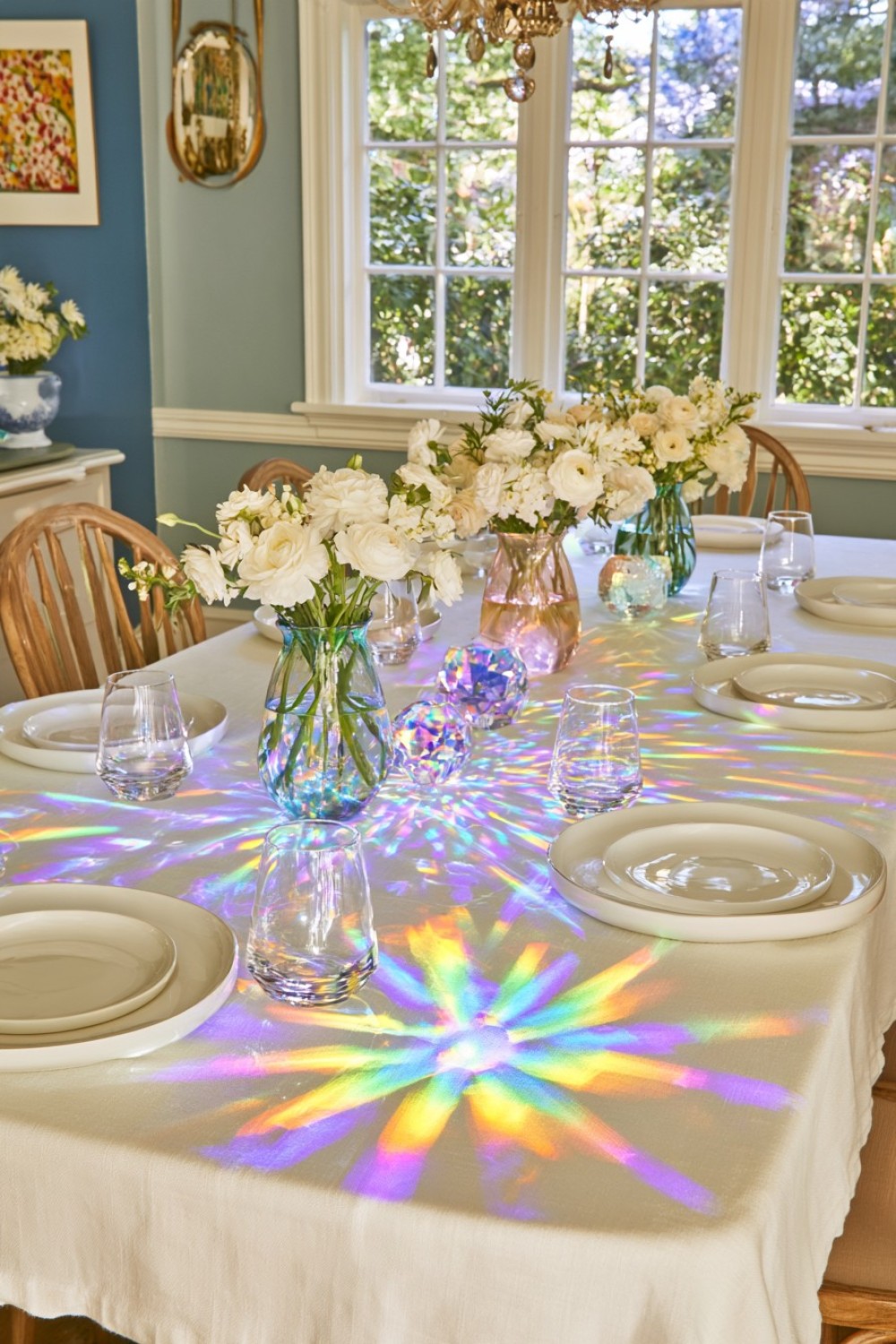
Instead of adding more colored objects, use light itself to generate rainbow effects.
Place several small glass prisms, faceted crystals, or optical suncatchers near the center of a table positioned close to strong daylight.
As sunlight passes through them, small rainbow fragments appear across the tablecloth and nearby glassware.
Keep the rest of the decor mostly white or transparent so the light effects remain visible.
This idea is especially successful for morning or afternoon events where the sun angle is predictable.
For evening versions, carefully positioned directional light can create a similar effect, though the setup should be tested in advance.
The result feels subtle from a distance but becomes more surprising as guests notice the colored reflections moving across the table.
7. Make a Rainbow From Different Flower Species, Not Dyed Flowers
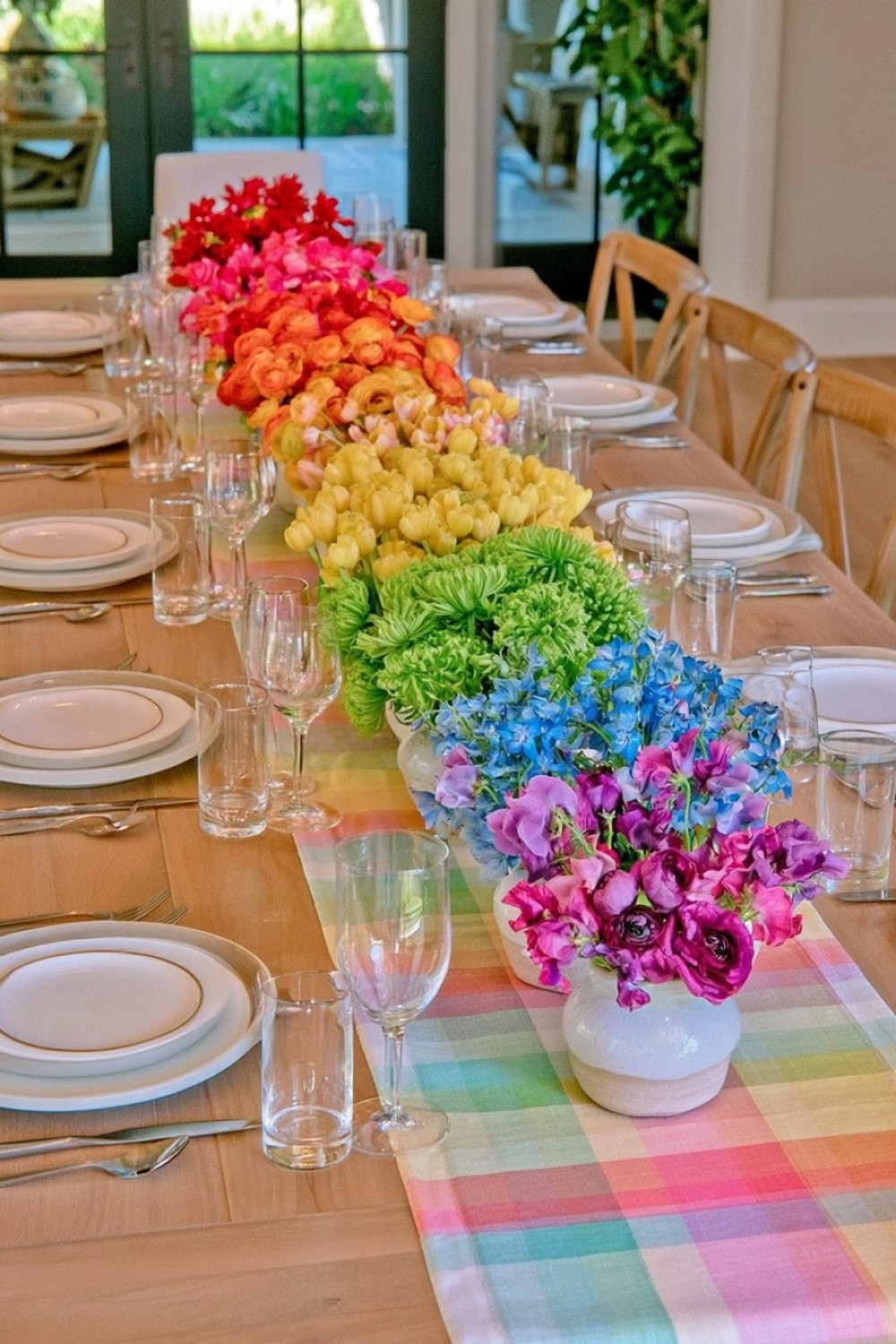
Instead of using artificially rainbow-colored flowers, let each natural flower represent a different part of the spectrum.
Try red ranunculus, orange marigolds, yellow tulips, green chrysanthemums, blue delphiniums, and violet lisianthus or irises.
Place each color in its own low vase and arrange the vessels gradually along the center.
Use identical containers so the flowers, not the vase shapes, create the progression.
This approach looks much more natural than one bouquet containing many unrelated rainbow tones.
It also gives every flower variety enough space to retain its own silhouette.
The arrangement can be scaled down for a small table by using one stem of each color in narrow bud vases.
8. Build a Rainbow With Food-Safe Colored Ice
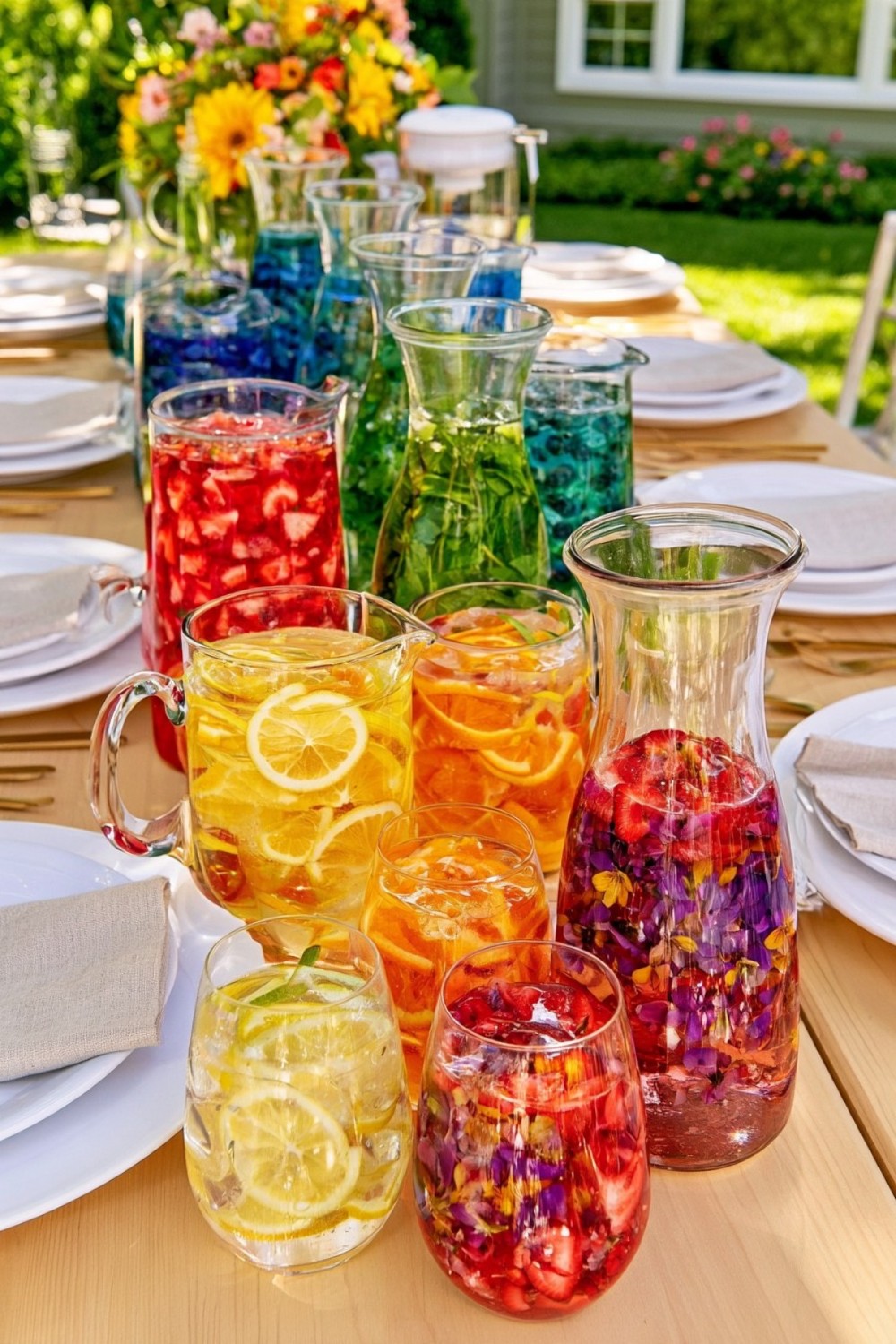
For a drink station or outdoor table, colored ice can become temporary decor.
Freeze fruit, herbs, or edible flowers into separate ice cubes and let the natural ingredients introduce color.
Strawberry slices create red, citrus adds orange and yellow, mint provides green, blueberries add blue tones, and edible violet petals can introduce purple.
Use the cubes in clear drink dispensers, water carafes, or individual glasses.
The effect changes naturally as the ice melts, making the table feel more dynamic.
Avoid using non-food-safe dyes merely for appearance if the ice will go into drinks.
This idea works especially well when the rest of the table remains simple and the beverages become the visual focus.
9. Create a Spectrum of Painted Wooden Risers
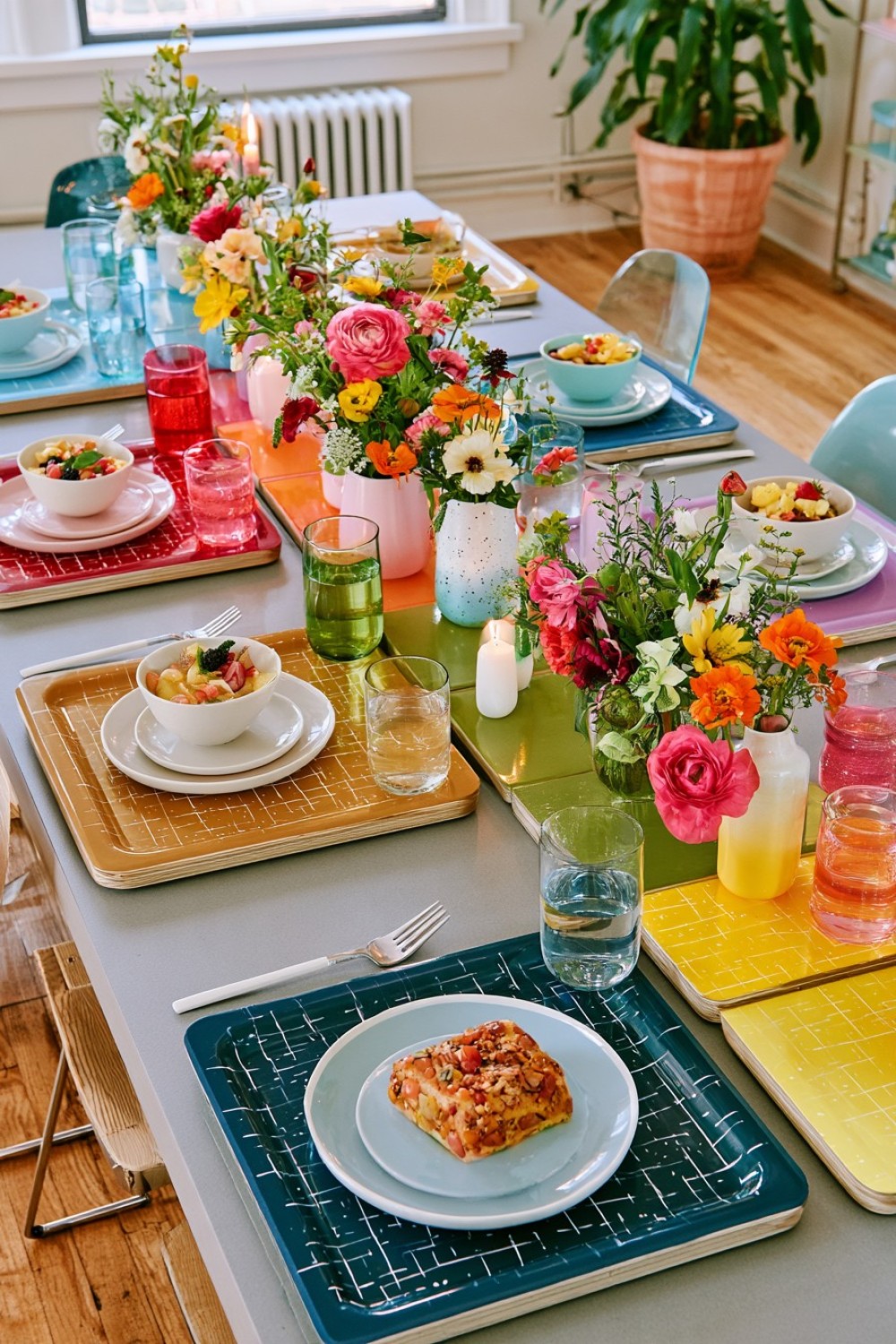
Give the table more height by introducing small platforms in different colors.
For a DIY version, cut several low wooden blocks or plywood risers in matching dimensions, sand them smooth, and paint each one a different muted or saturated rainbow shade.
Use them beneath serving bowls, dessert plates, flower vessels, or candles if appropriate.
Arrange the risers so the colors move gradually across the table.
Because the objects sit at different heights, the table gains both color and structure.
For a more sophisticated finish, use dusty versions of rainbow colors rather than the brightest possible paint.
The same risers can later be reused individually around the home as display blocks.
10. Make Each Place Setting a Different Color Story
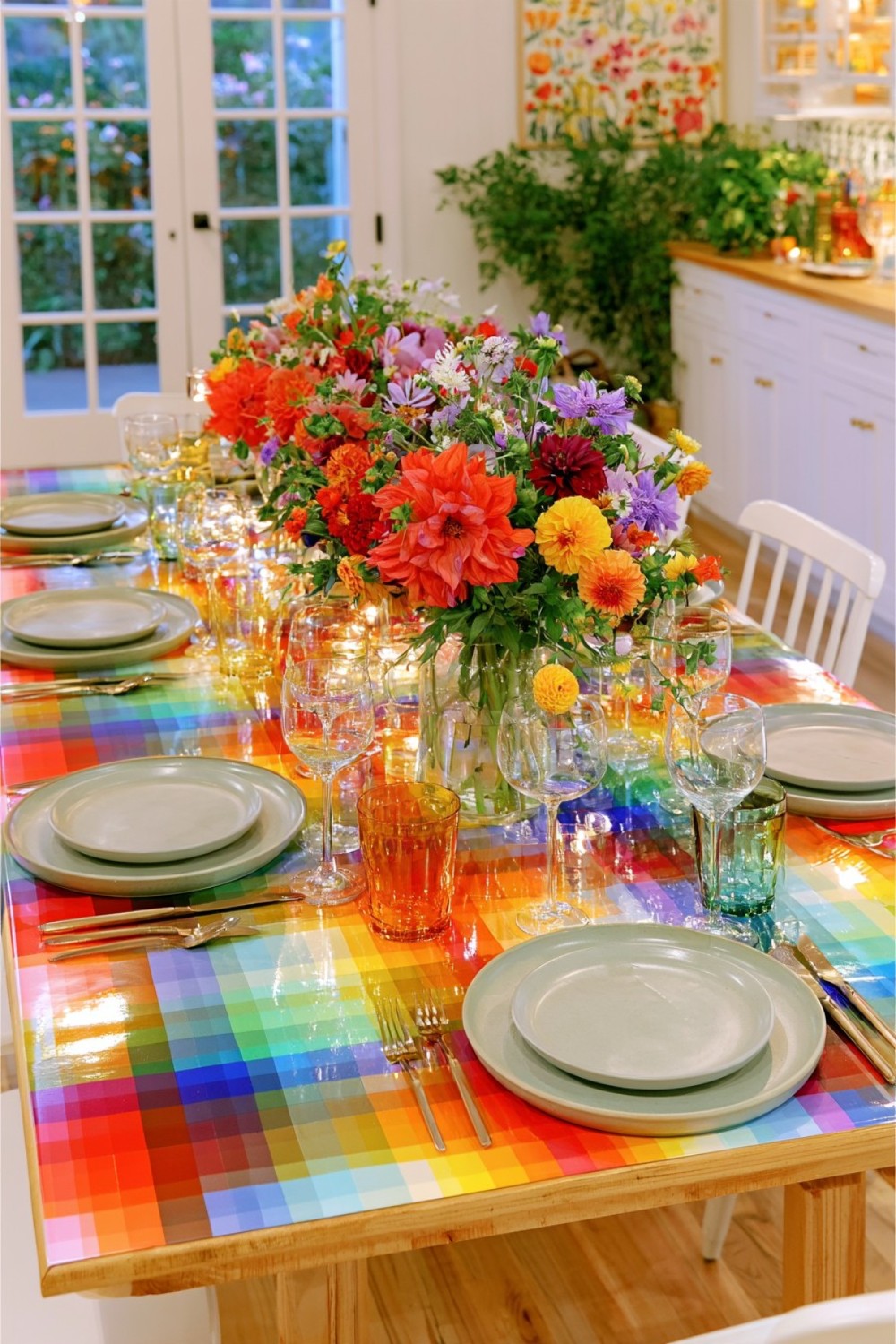
Instead of decorating the whole table as one rainbow, assign each guest a single color.
One place setting might use a coral napkin, red flower, and pink glass. Another might use mustard linen, yellow fruit, and amber glass.
Continue around the table until the spectrum is complete.
Keep the plates and cutlery consistent so the places still feel related.
This idea works particularly well for intimate dinners where each setting can feel slightly personalized.
You can even match place cards to the assigned color.
The table reads as a rainbow from a distance, but each guest experiences a more focused mini palette up close.
11. Create a Rainbow From Layered Paper Fans
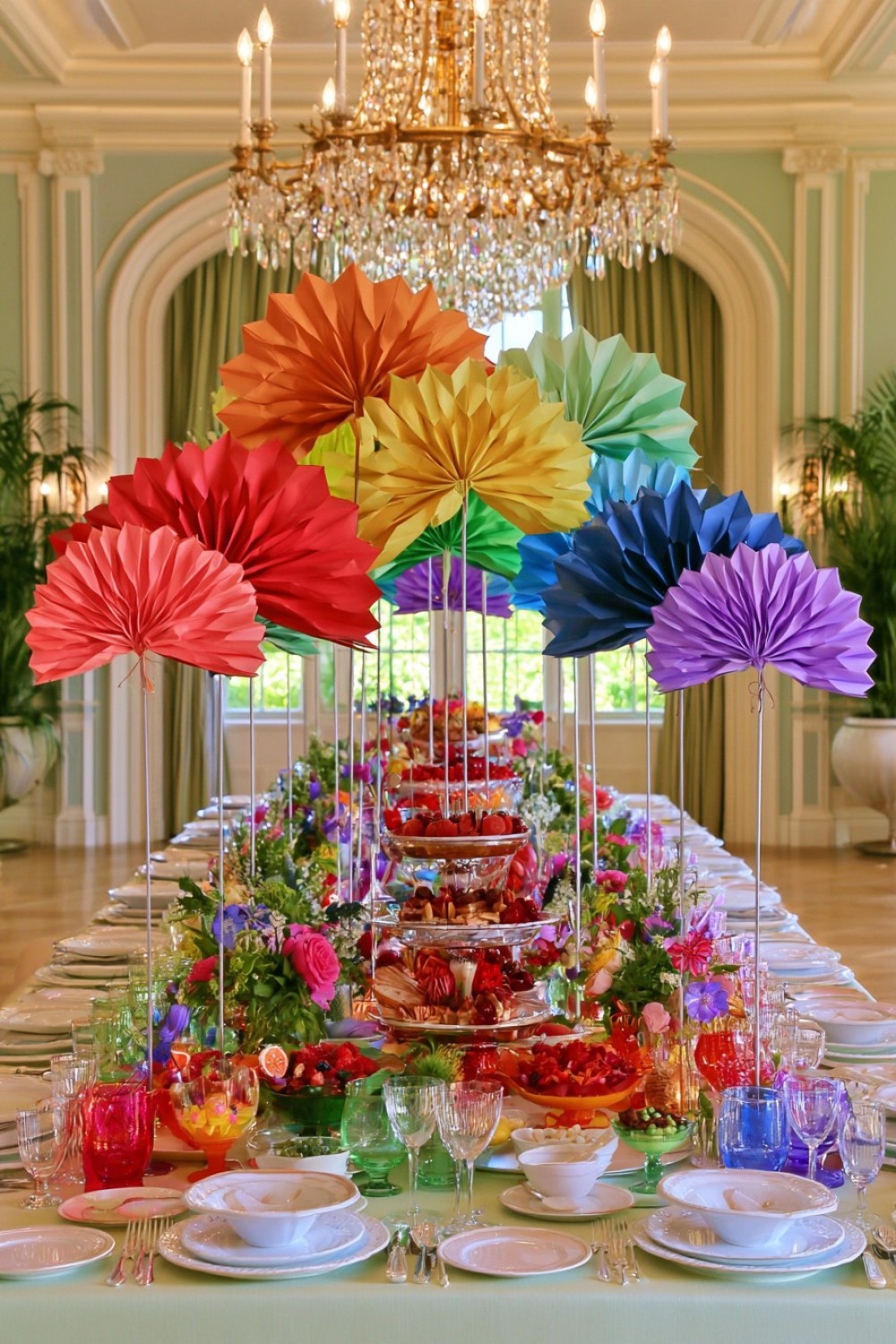
Paper can create large visual impact without taking much table space.
Make accordion fans from colored cardstock or handmade paper in several sizes.
Instead of laying them flat, partially open the fans and attach them to slim weighted stands so they rise vertically from the table.
Arrange colors gradually along the center.
For a more refined result, use textured paper and keep the shapes geometric rather than overly decorative.
The fans can overlap slightly to create layered color fields.
This DIY works especially well for temporary parties because the pieces fold almost flat for storage afterward.
12. Build a Dessert Gradient Instead of a Decorative Centerpiece
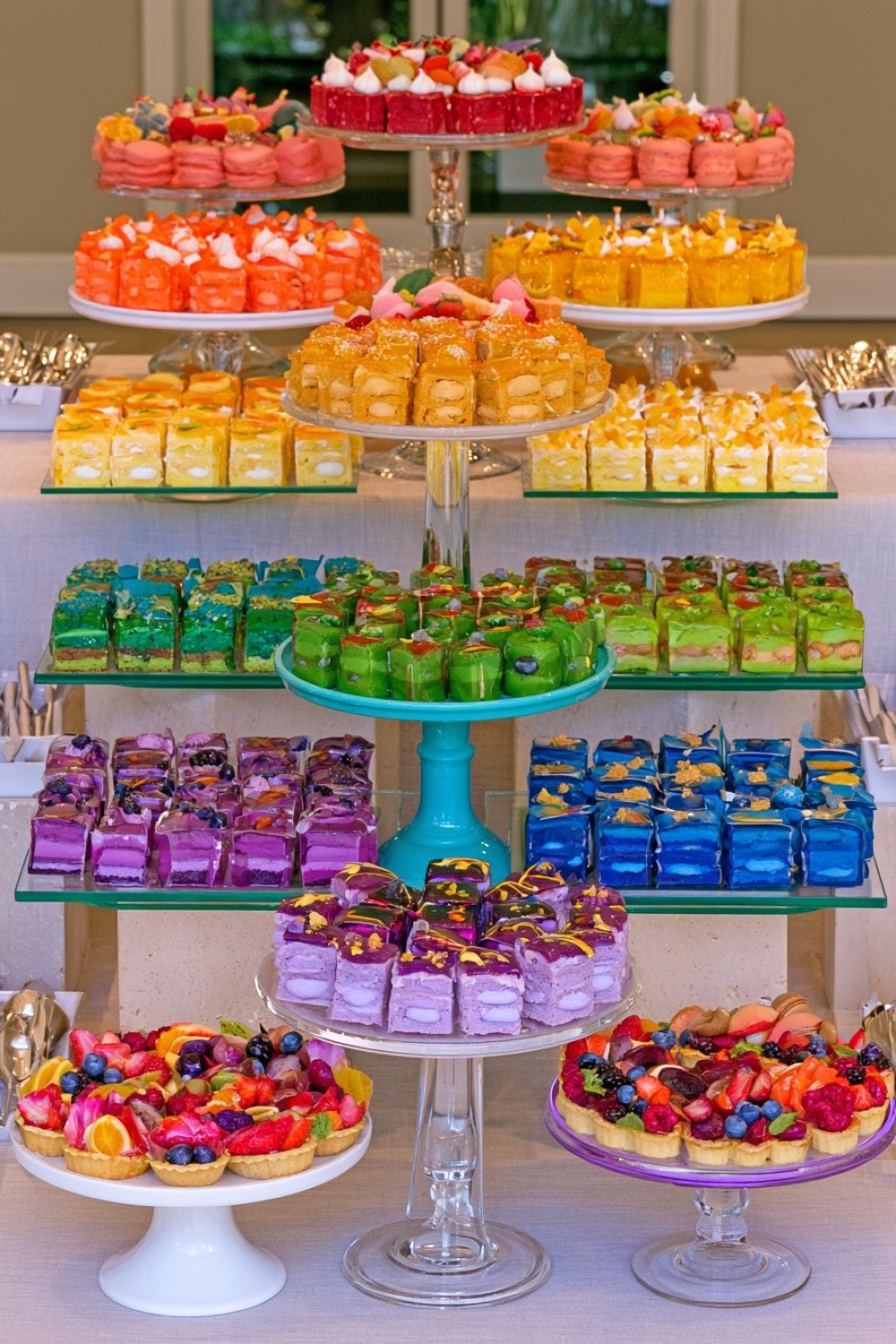
Let the desserts carry the rainbow theme.
Arrange macarons, petit fours, mini cakes, glazed cookies, fruit tarts, or meringues in a gradual color progression.
Use white, stone, or clear serving stands so the food remains the focus.
The arrangement can run down the center of the table or occupy one dedicated dessert zone.
Avoid making every dessert artificially neon. Softer tones often look more elegant and still communicate the spectrum clearly.
This is a useful approach when you want strong color but do not want to fill the table with nonfunctional decorations.
13. Use Dyed Napkins as a Color Wave
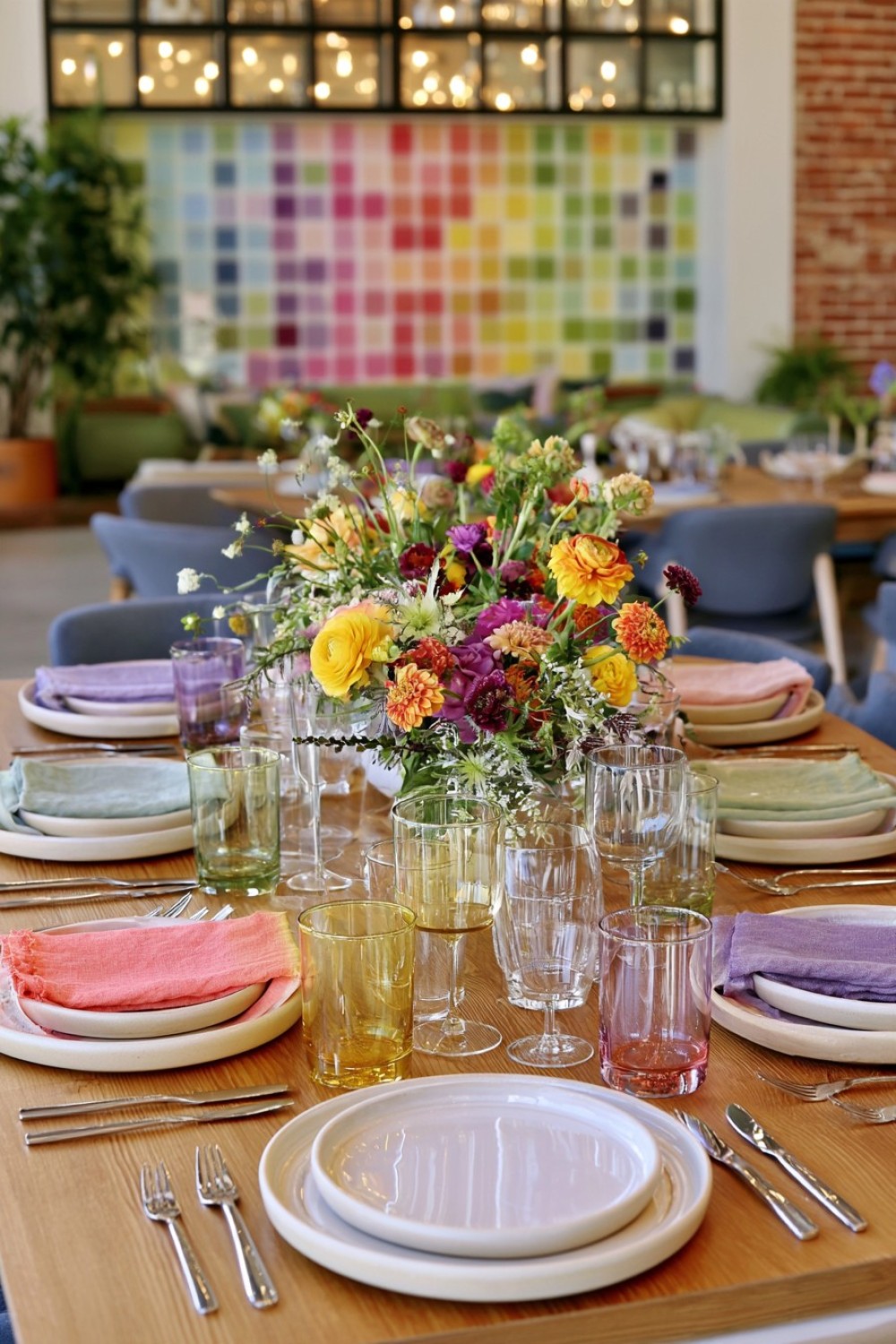
Hand-dyed napkins can create a softer, textile-based rainbow.
Start with plain cotton or linen napkins and dye each one in a different tone.
Instead of using pure red, orange, yellow, green, blue, and violet, try related shades such as coral, apricot, butter yellow, sage, dusty blue, and lavender.
Arrange the napkins according to color around the table.
Because each place setting receives only one color, the result feels calmer than a fully rainbow-patterned textile.
For a DIY variation, dip-dye only one edge of each napkin so the color fades into the natural fabric.
This creates a more handmade and subtle effect.
14. Build a Rainbow From Monochrome Objects in Different Materials
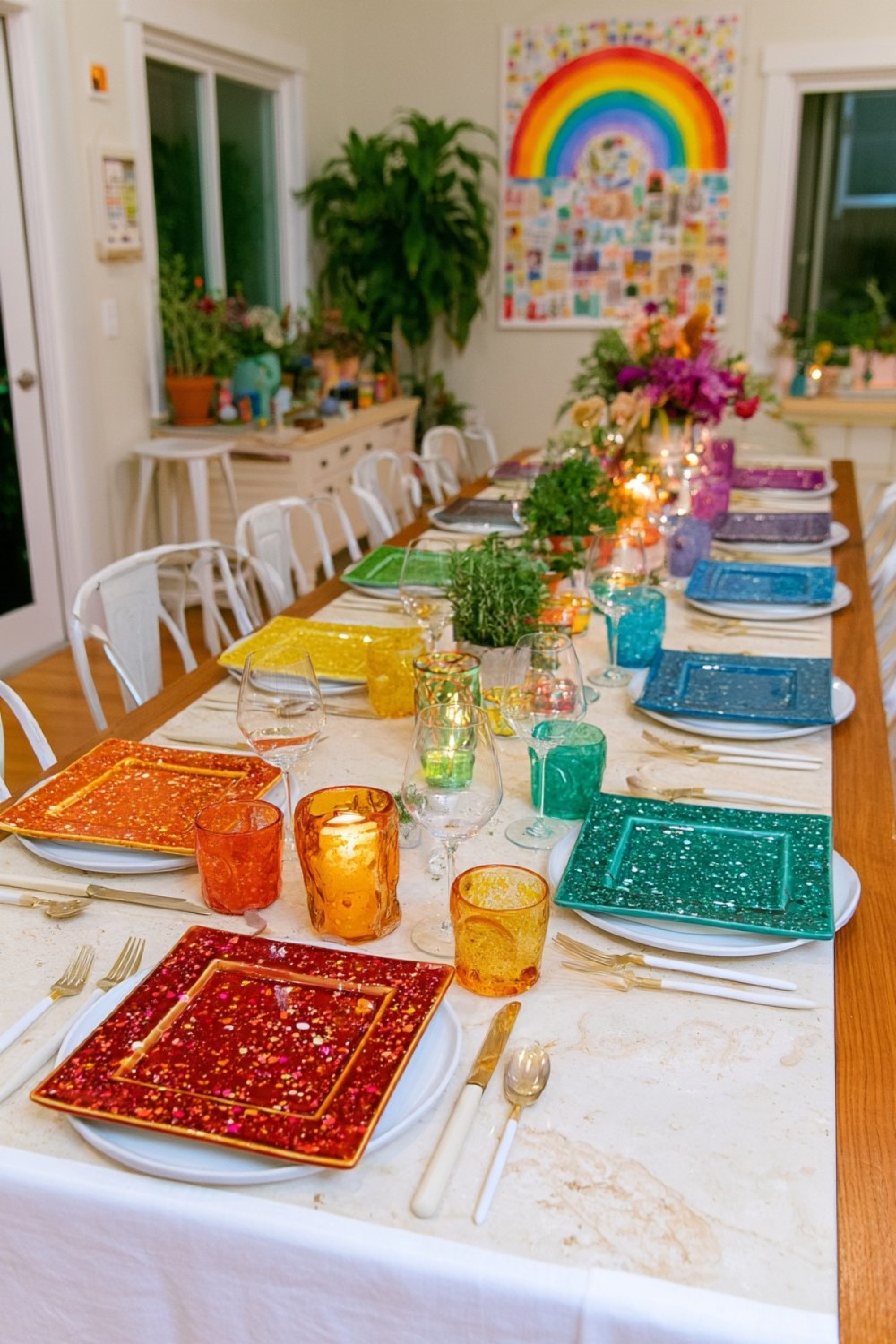
Color becomes more interesting when each section uses a different material.
For example, red could appear through ceramic, orange through glass, yellow through linen, green through foliage, blue through stoneware, and violet through paper.
The colors remain connected, but the textures change as the eye moves across the table.
This prevents the display from feeling like everything came from one party-supply set.
Keep object counts low—one or two strong pieces per color are enough.
The goal is not to fill every gap but to create a sequence of material moments.
This approach works beautifully on long sideboards or buffet tables as well as dining tables.
15. Create a Rainbow “River” Down the Middle of the Table
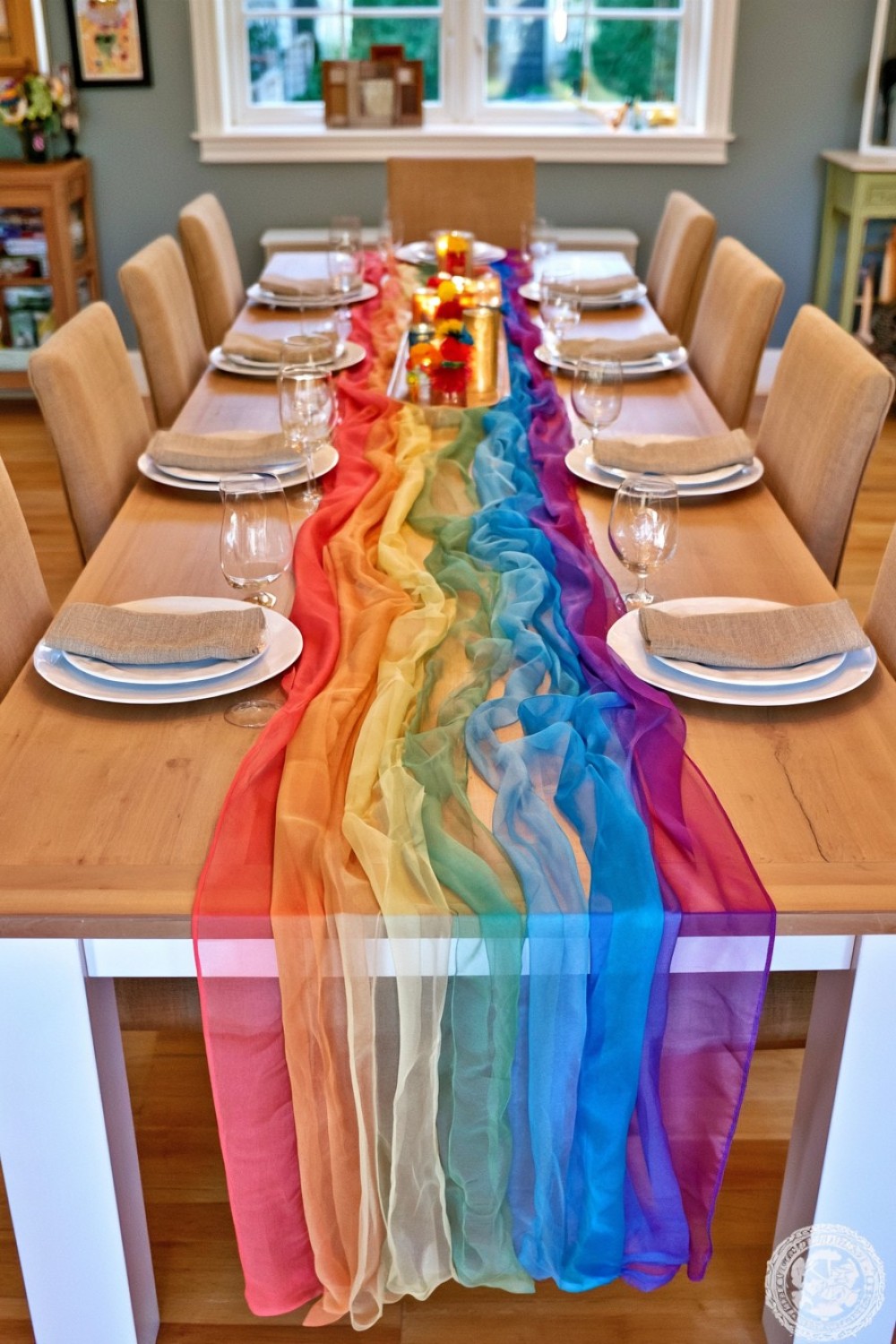
Instead of scattering color everywhere, concentrate it into one flowing central band.
Use overlapping ribbons, translucent fabric strips, colored paper, or narrow floral clusters to create a loose river of color that bends gently down the table.
The bands should merge rather than forming rigid parallel stripes.
Keep place settings mostly neutral so the centerline remains the visual focus.
For a DIY textile version, layer narrow strips of organza or voile in overlapping colors. Because the material is transparent, the overlaps naturally produce new tones.
This is especially effective on white or pale wood tables where the colors remain clear.
16. Use Books or Art Prints to Create a Cultural Rainbow Table
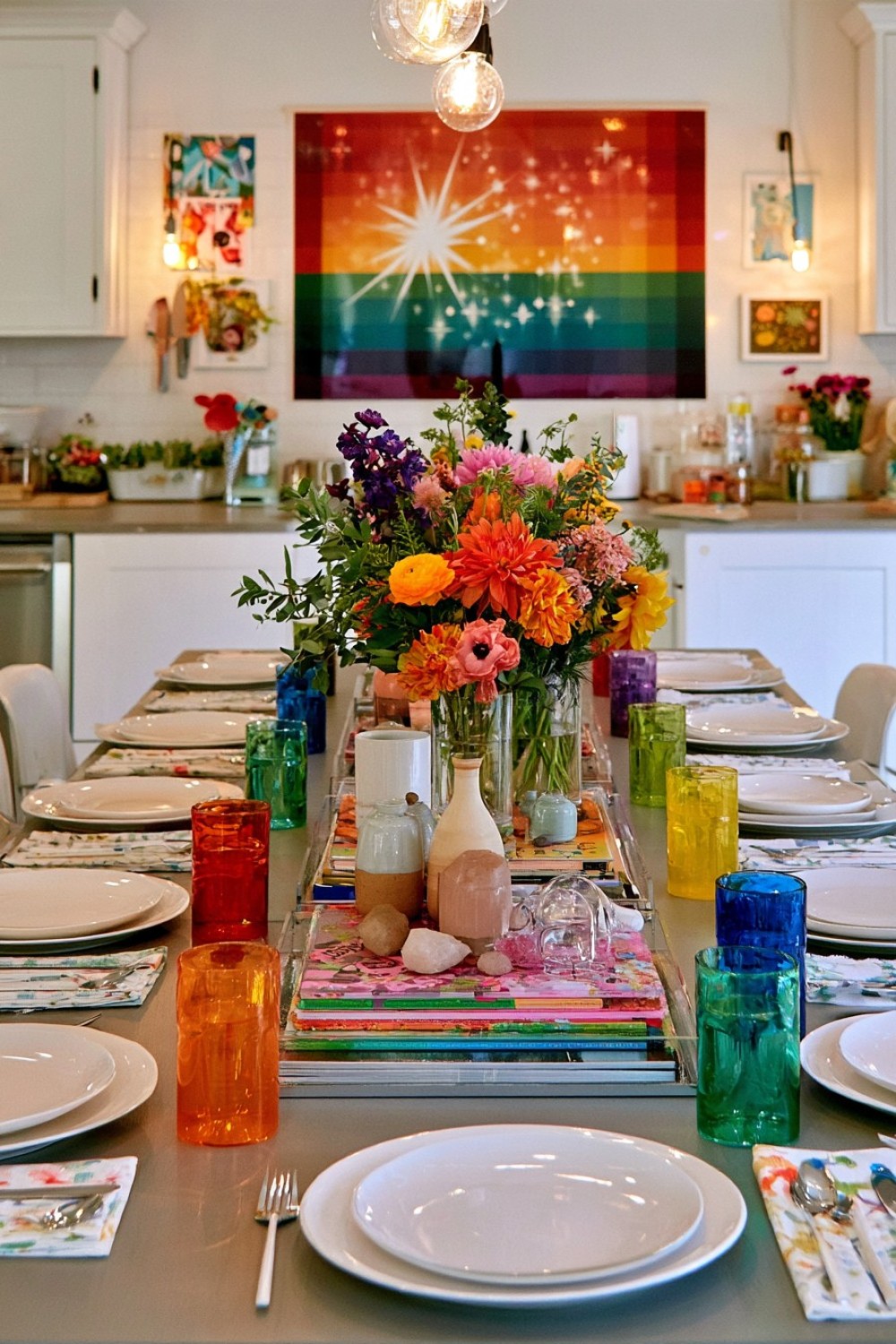
Color does not have to come only from tableware.
Use small art books, illustrated postcards, or print reproductions as color anchors along the table.
Choose one image for each color family and place it beneath a vase, plate stand, or decorative object.
This creates a rainbow through art rather than literal party decor.
Guests may stop to inspect the images, which gives the table an interactive quality.
Use protective covers if food or drinks will sit nearby.
This idea works particularly well for creative gatherings, design-focused dinners, or art-themed celebrations.
17. Build a Rainbow With Colored Shadows
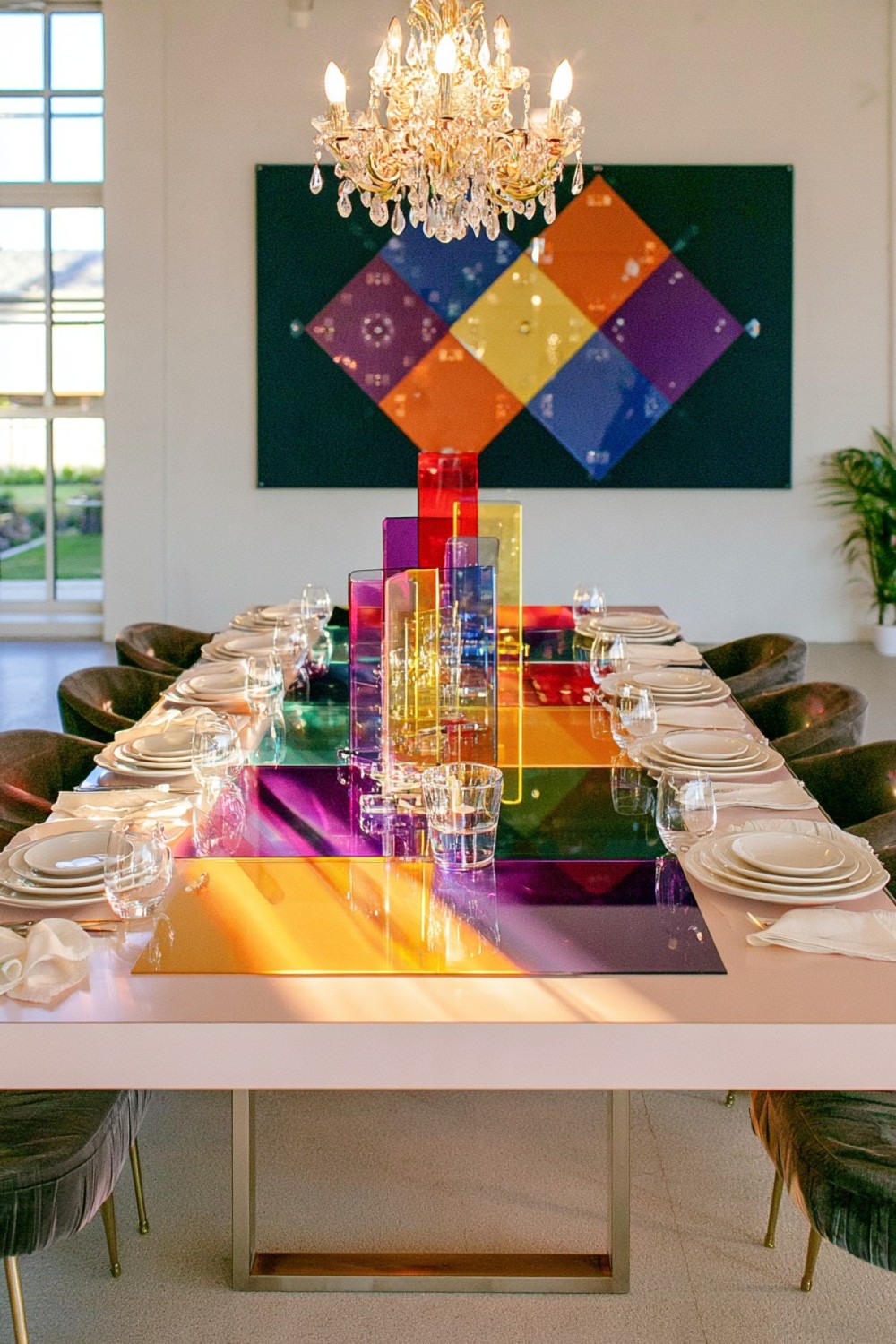
A more experimental table can use translucent colored panels placed near a directional light source.
Position red, yellow, blue, and violet transparent acrylic sheets vertically in small holders beside the table or near the centerpiece.
When light passes through them, colored shadows fall across the surface.
Where shadows overlap, secondary colors appear naturally.
This allows the table to change as light direction shifts.
For the strongest effect, use a white or very pale table surface and keep other decorations minimal.
The concept feels more like a small light installation than conventional party decor.
18. Create a Muted Rainbow for a More Grown-Up Look
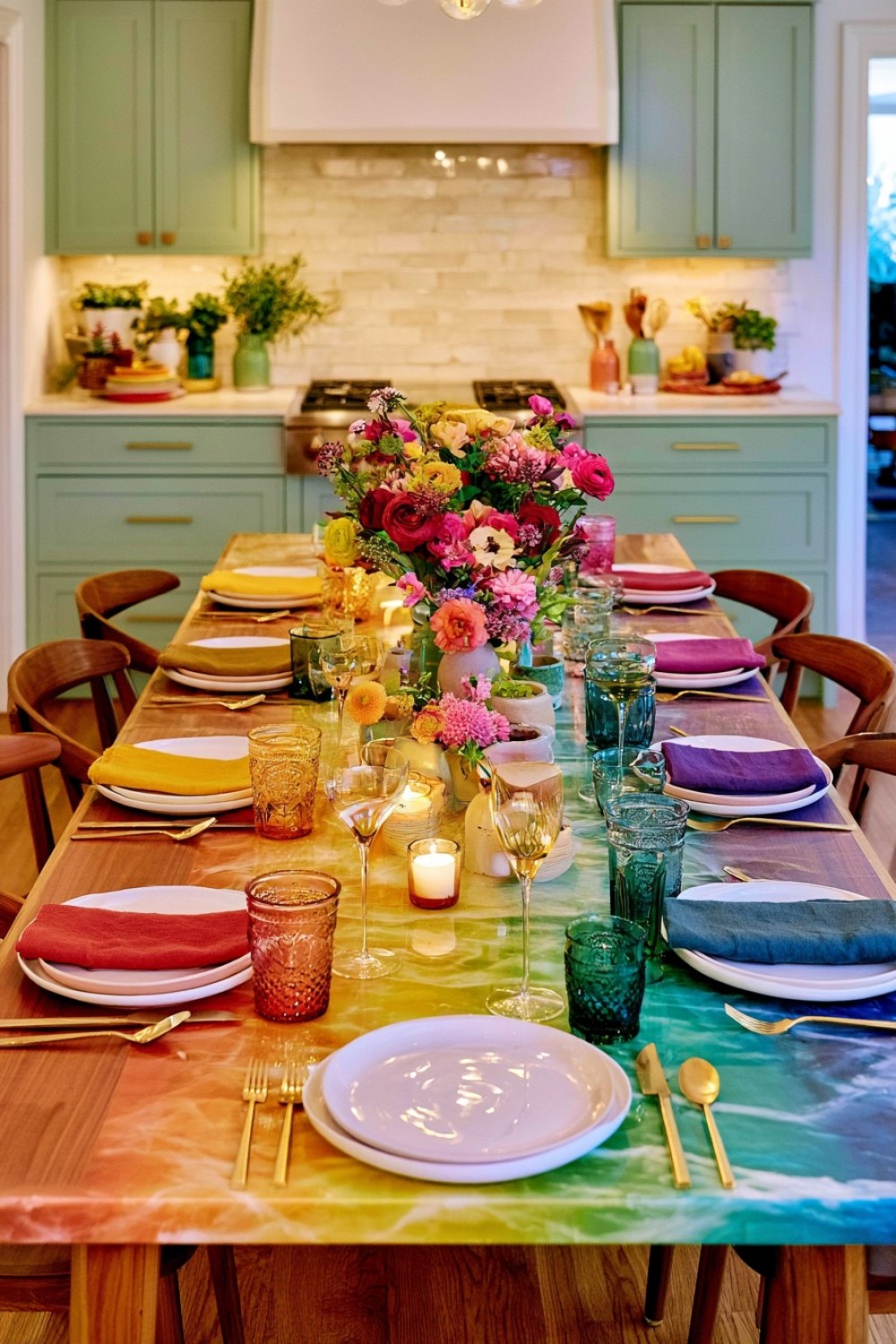
A rainbow table does not need to use maximum saturation.
Build the palette from softened versions of each hue: brick red, terracotta, ochre, olive, slate blue, indigo, and dusty plum.
Use those colors through linen, glassware, flowers, and ceramics rather than plastic decor.
This creates the structure of a rainbow while fitting much more naturally into a sophisticated dining room.
Pair the palette with warm wood, stone, brass, or matte white surfaces.
The idea works especially well for dinner parties where you want color without making the table feel juvenile.
A restrained spectrum can often feel richer because differences in texture and tone become easier to notice.
Making a Rainbow Table Feel Designed Instead of Busy
The key to successful rainbow decor is deciding where the color should live. If the plates, flowers, linens, glasses, food, candles, and centerpiece all carry the full spectrum, the table can quickly lose visual hierarchy.
Choose one main color system—a gradient, repeated place-setting palette, glass collection, dyed textile, or edible centerpiece—and let everything else support it.
Texture also helps. Transparent glass makes bright colors feel lighter, linen softens saturated tones, stone grounds them, and fruit or flowers bring natural variation.
Most importantly, allow neutral areas to remain visible. White cloth, pale timber, clear glass, or open table surface gives each color room to register.
A rainbow table feels most sophisticated when the spectrum is easy to understand at a glance but still contains small surprises when guests look closer.
MORE IDEAS


Share
What's Your Reaction?
 Like
0
Like
0
 Dislike
0
Dislike
0
 Love
0
Love
0
 Funny
0
Funny
0
 Angry
0
Angry
0
 Sad
0
Sad
0
 Wow
0
Wow
0