14 Under-Stairs Storage Systems That Use Every Awkward Corner

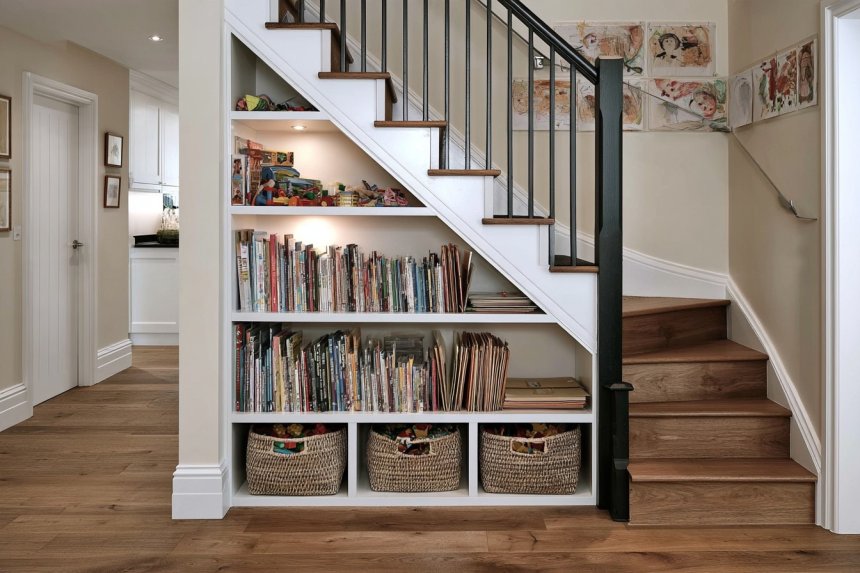
The space beneath a staircase is often treated as leftover architecture, yet its unusual angles can support storage that would feel awkward almost anywhere else. Instead of filling the area with one deep cupboard, it can be divided into pull-out modules, hidden work zones, vertical collections, or compact rooms designed around very specific routines. The slope of the stairs can actually become an advantage when storage is arranged from tall to short rather than forced into standard rectangular cabinetry. These under-stairs storage concepts focus on making difficult corners accessible, keeping everyday items visible, and giving the staircase a more intentional role in the room. Some are straightforward cabinetry upgrades, while others can transform the entire area into a highly specialized part of the home.
1. Build a Graduated Pull-Out Pantry
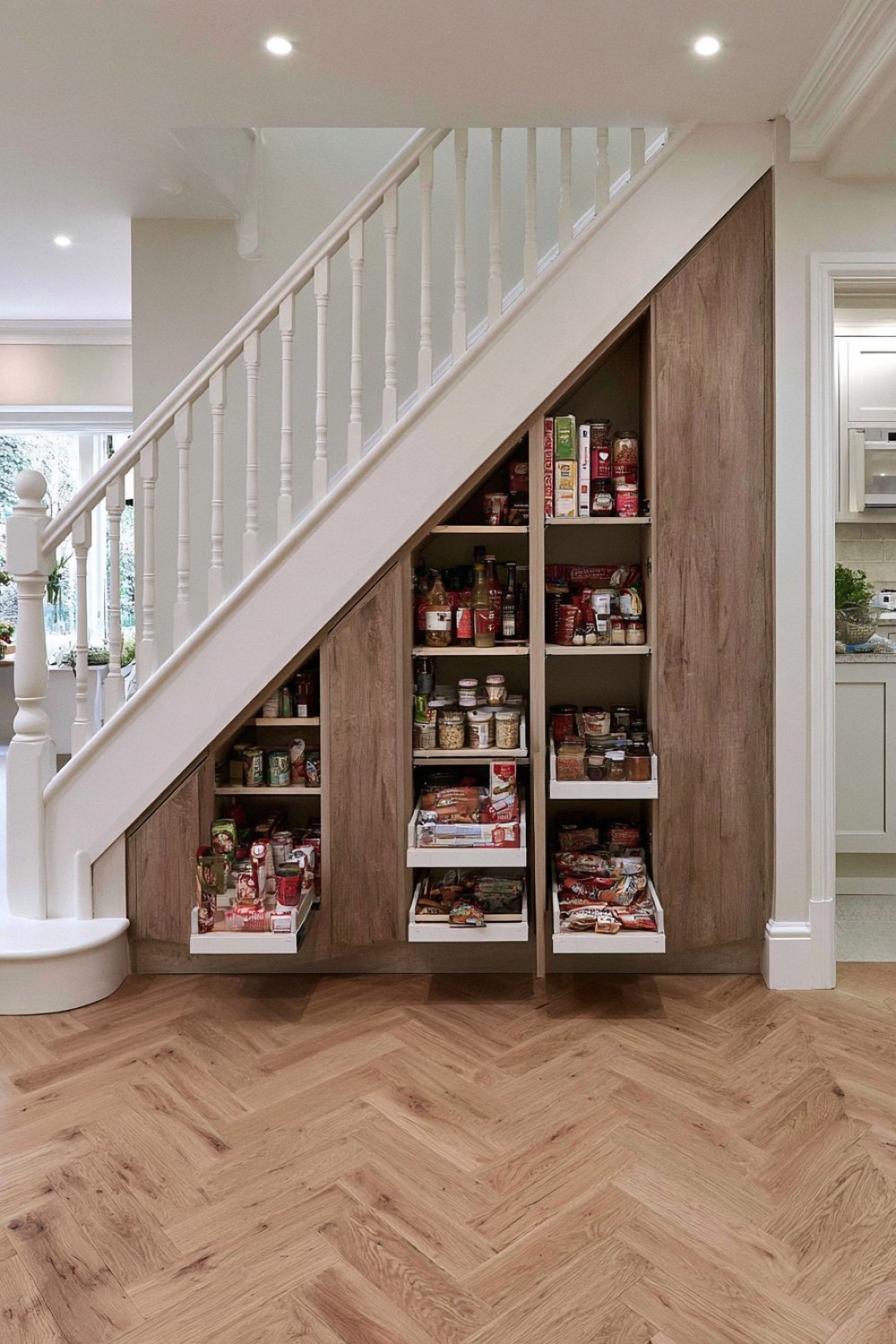
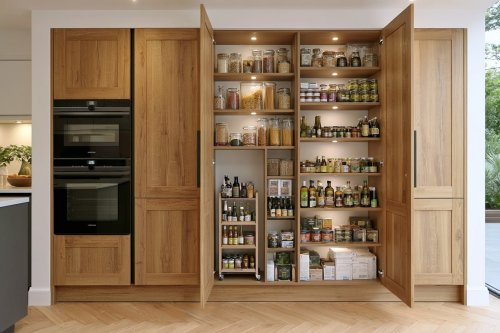
A staircase beside the kitchen can become a pantry that follows the exact rise of the steps.
Instead of installing one large door, divide the space into several tall pull-out cabinets that gradually decrease in height. Each unit slides forward independently like an oversized kitchen drawer.
The tallest module can store cereal boxes, bottles, and bulk groceries, while shorter sections hold canned food, baking supplies, or snacks.
For a custom build, use full-extension heavy-duty runners, plywood cabinet boxes, adjustable internal shelves, and narrow front panels that visually align when closed.
Shallow door-mounted racks inside the taller units can create additional storage for spices and smaller packets.
The advantage over a conventional deep cupboard is accessibility. Nothing gets pushed into a dark rear corner because the entire cabinet comes toward you.
For heavy pantry storage, runner capacity and cabinet anchoring should be specified for the expected load.
2. Create a Hidden Cleaning-Supply Dock
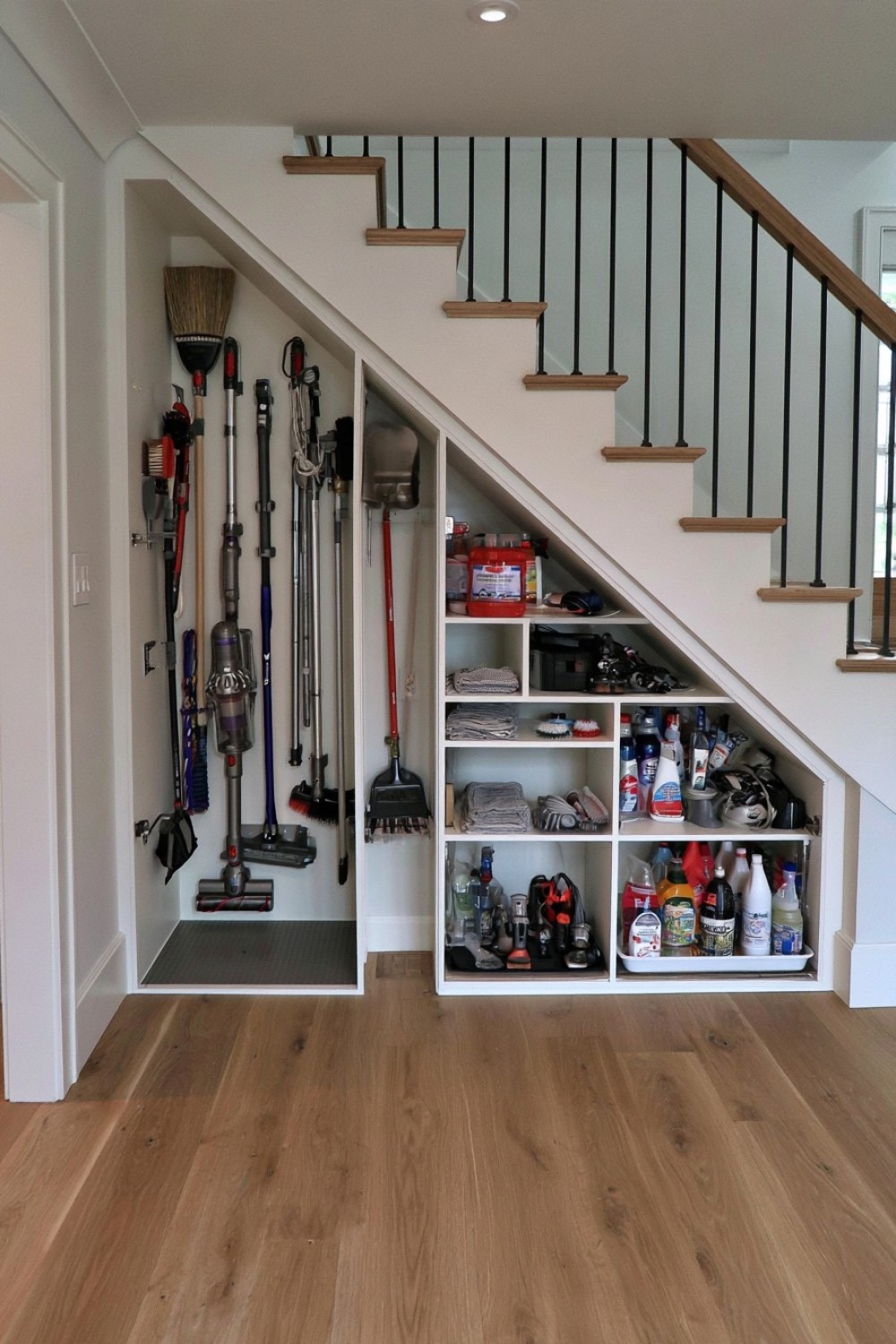
Brooms, vacuums, mops, and cleaning products are awkward because they combine tall equipment with very small accessories.
Use the highest portion beneath the stairs for vertical tools and create a narrow charging station beside them for a cordless vacuum.
Add wall clips for handles, a removable waterproof tray beneath cleaning bottles, and shallow shelves for cloths, replacement filters, and brushes.
A small internal power outlet can make the area much more functional, but electrical installation should be completed appropriately rather than through improvised extension wiring.
Mount the vacuum slightly above floor level so the charging head remains easy to access.
If children can reach the cupboard, household chemicals should be stored in a secured upper compartment.
This kind of storage works particularly well because it gives awkward long objects their own dedicated home without occupying valuable kitchen cabinetry.
3. Turn the Stair Slope Into a Shoe Library
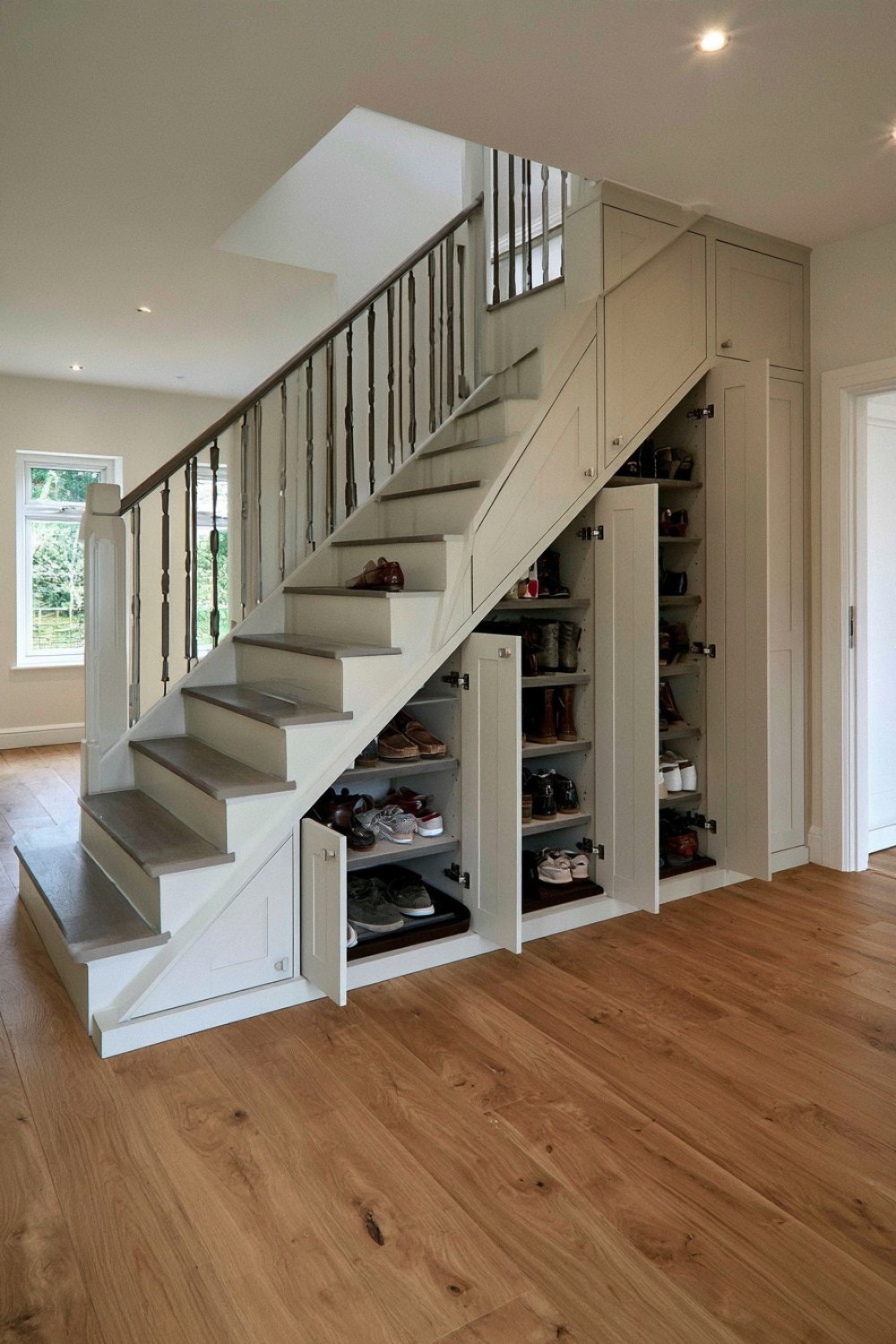
Instead of pushing footwear into baskets, use the diagonal underside of the stairs to create a stepped shoe display.
Build shallow shelves that rise gradually with the staircase, giving each row just enough height for the shoes stored there.
Everyday shoes can occupy the lower levels, while taller boots sit beneath the highest section.
For a more refined look, recess the shelves behind flush doors with discreet finger pulls. When opened, the angled interior reveals the collection like a compact shoe library.
A narrow ventilated grille or concealed airflow gap can help prevent the storage from becoming stale.
Include a removable mat beneath the lowest section for wet footwear.
This setup works especially well near an entrance because it uses the stair geometry rather than trying to hide it.
4. Build a Roll-Out Coat Rack Instead of a Closet Rail
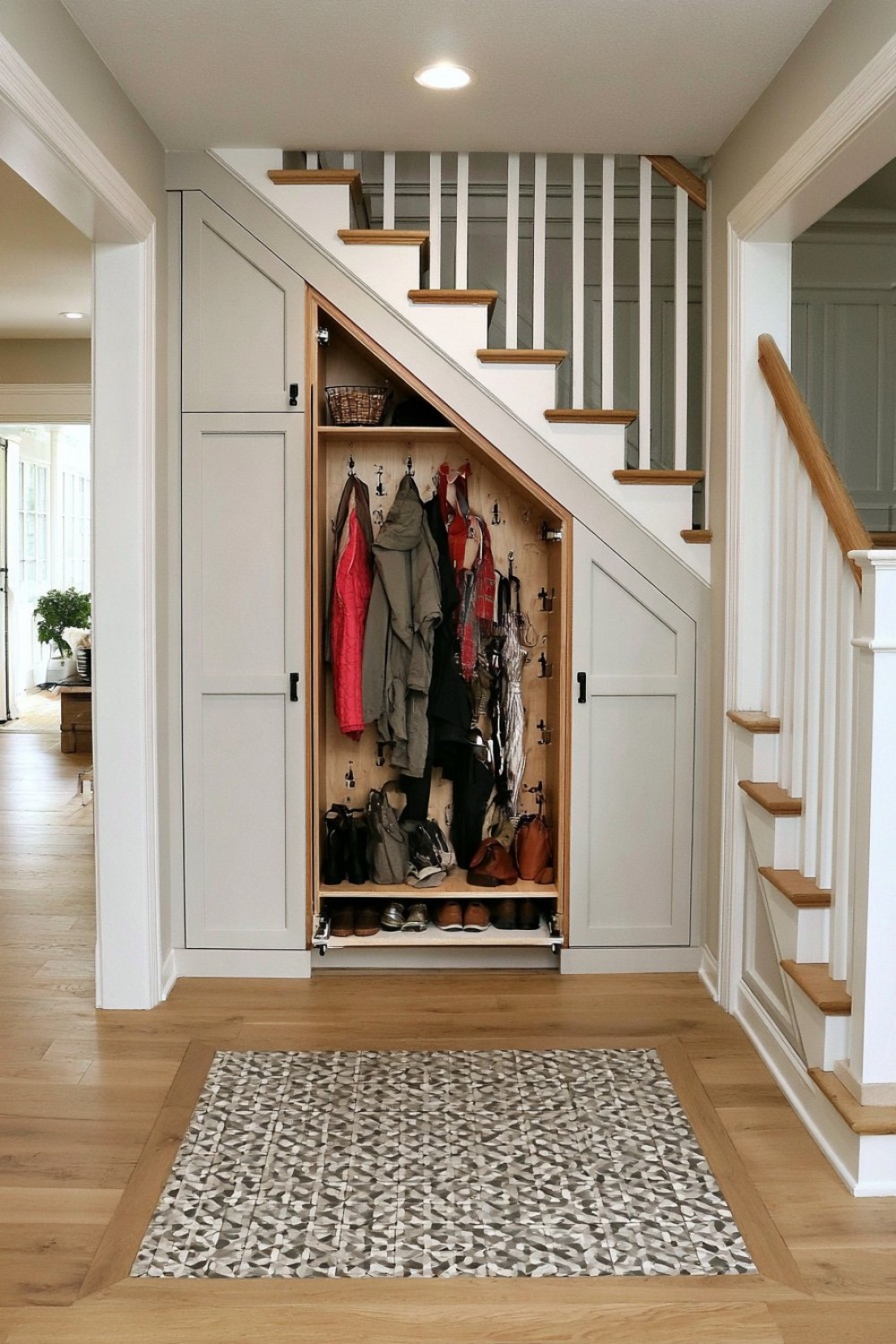
A standard coat rail wastes much of the triangular space beneath stairs.
A better solution is a narrow vertical rack mounted on heavy-duty slides. The entire unit pulls sideways or forward from the cavity, revealing hooks on both faces.
Use one side for coats and the other for bags, umbrellas, or scarves.
The rack can be built from plywood with a substantial timber frame and fitted with full-extension runners rated for the loaded weight.
Because the garments move out of the cavity, you do not have to reach into a dark narrow cupboard.
Add a lower shelf for shoes and a small upper basket for hats.
This is particularly effective in narrow hallways where a full-depth wardrobe would make circulation feel cramped.
5. Create a Concealed Pet Station
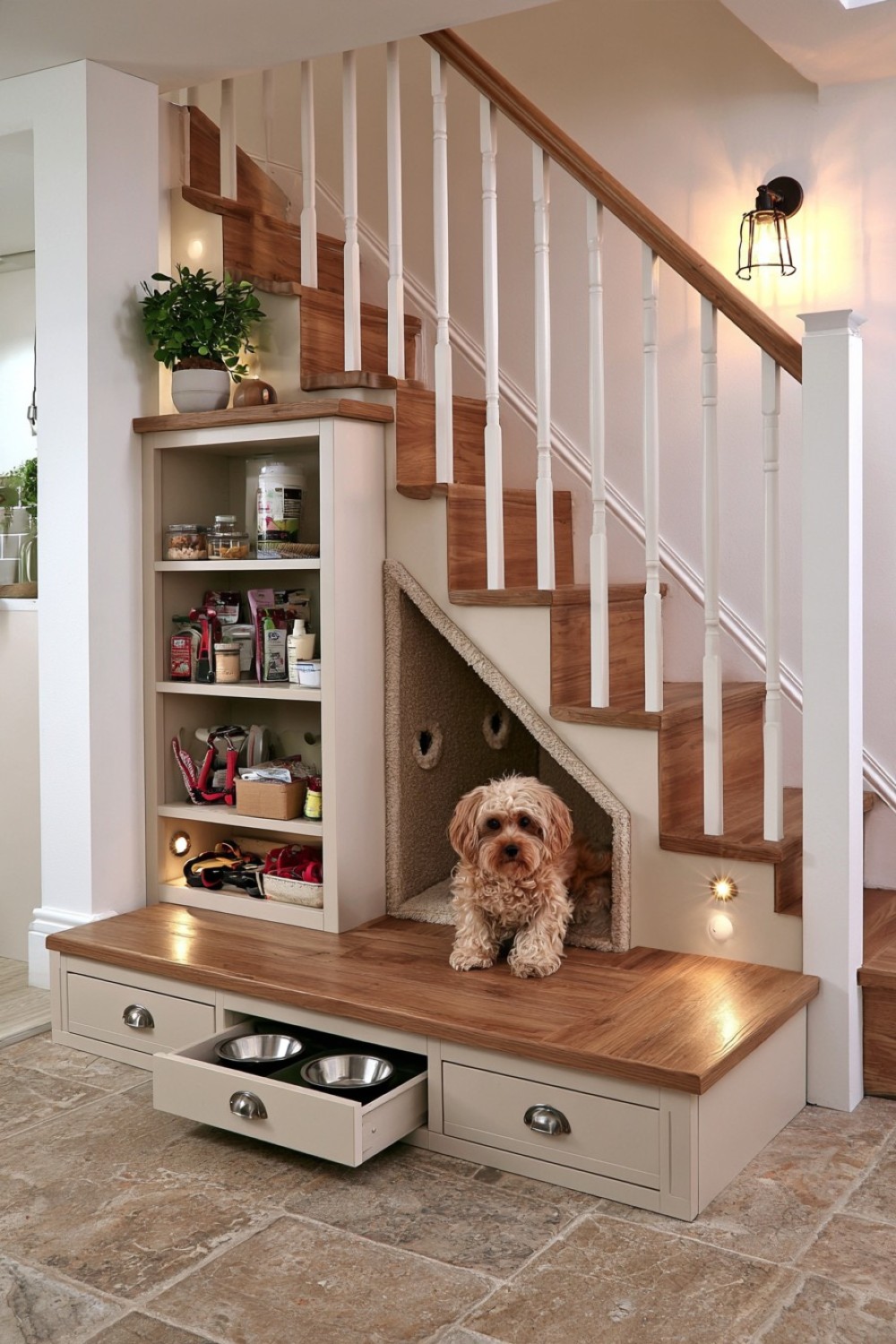
Under-stairs space can accommodate pet supplies without allowing food bags, leashes, and bowls to spread across the room.
Build a low feeding drawer that slides out at mealtimes and disappears afterward. Above it, add a shallow cabinet for treats, grooming supplies, medications, and spare leads.
A taller section can store large food containers.
If your pet prefers a quiet enclosed spot, the deepest part of the staircase can become a ventilated resting nook with a removable washable cushion.
Avoid sealing the area tightly if it is intended as a pet space. Airflow, comfortable access, and easy cleaning matter more than achieving a perfectly flush facade.
Keep electrical cables, sharp hardware, and cleaning chemicals completely separate from the animal area.
6. Make a Gift-Wrapping Workshop That Folds Away
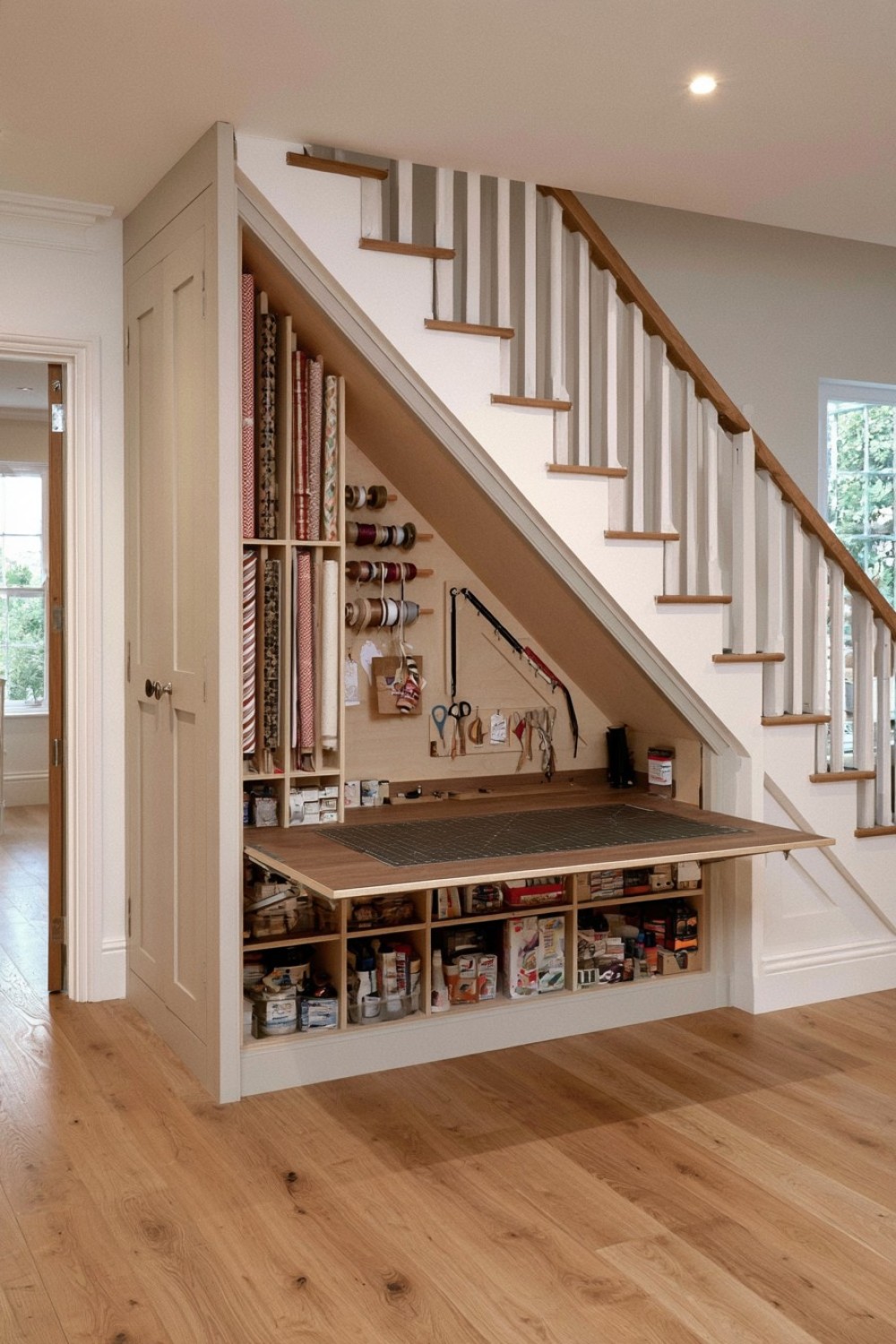
Wrapping paper, ribbon, tape, gift bags, and scissors tend to occupy several unrelated storage areas.
Turn a shallow under-stairs cabinet into a dedicated wrapping station.
Store rolls vertically in narrow tubes or dividers, mount ribbon spools on removable dowels, and keep scissors and tape inside shallow door pockets.
The most useful feature is a small fold-down work surface. When lowered, it provides enough room to measure and wrap a gift; when closed, the entire station disappears.
Use a durable laminated or sealed plywood surface that can tolerate cutting mats and adhesive residue.
A slim magnetic strip or peg rail can hold lightweight tools nearby.
This is one of those storage areas that feels surprisingly luxurious because it gathers an annoying collection of supplies into one compact system.
7. Build a Wine Drawer Wall Instead of a Wine Rack
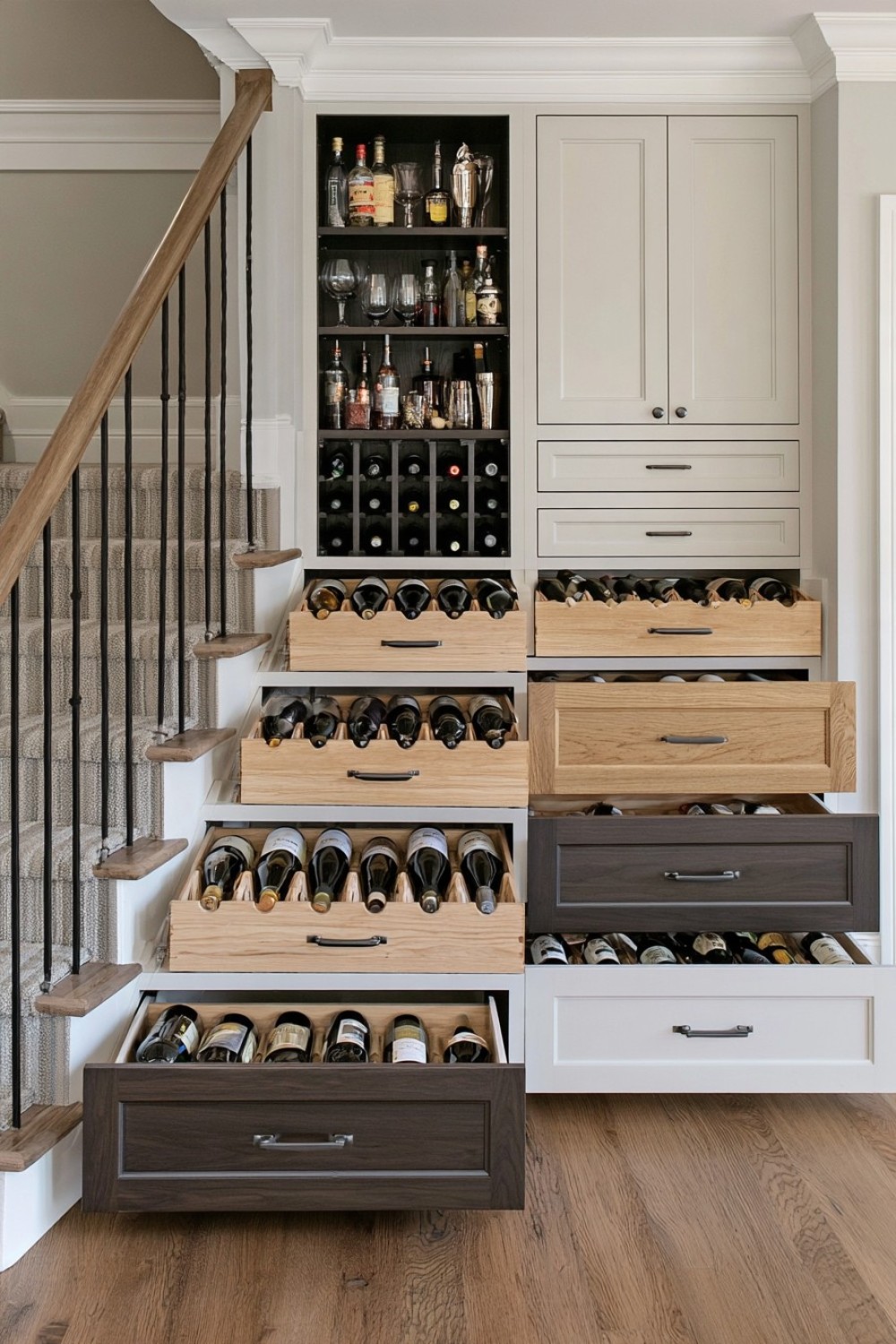
If the location is suitable for wine storage conditions, individual pull-out modules can make better use of an angled staircase than a conventional rectangular rack.
Create deep horizontal drawers fitted with bottle cradles. Taller drawers sit near the high end of the stairs and progressively shorter modules follow the slope.
The bottles remain horizontal and hidden from direct light when the drawers are closed.
Use dividers that prevent glass from rolling or contacting neighboring bottles.
For a more general drinks station, reserve one taller cabinet for glassware, mixers, and bar tools.
However, temperature matters. An under-stairs location near a radiator, boiler, or strong sunlight is not appropriate for long-term wine storage.
In that case, use the design for barware rather than treating the space as a cellar.
8. Turn the Deepest Section Into a Rotating Storage Carousel
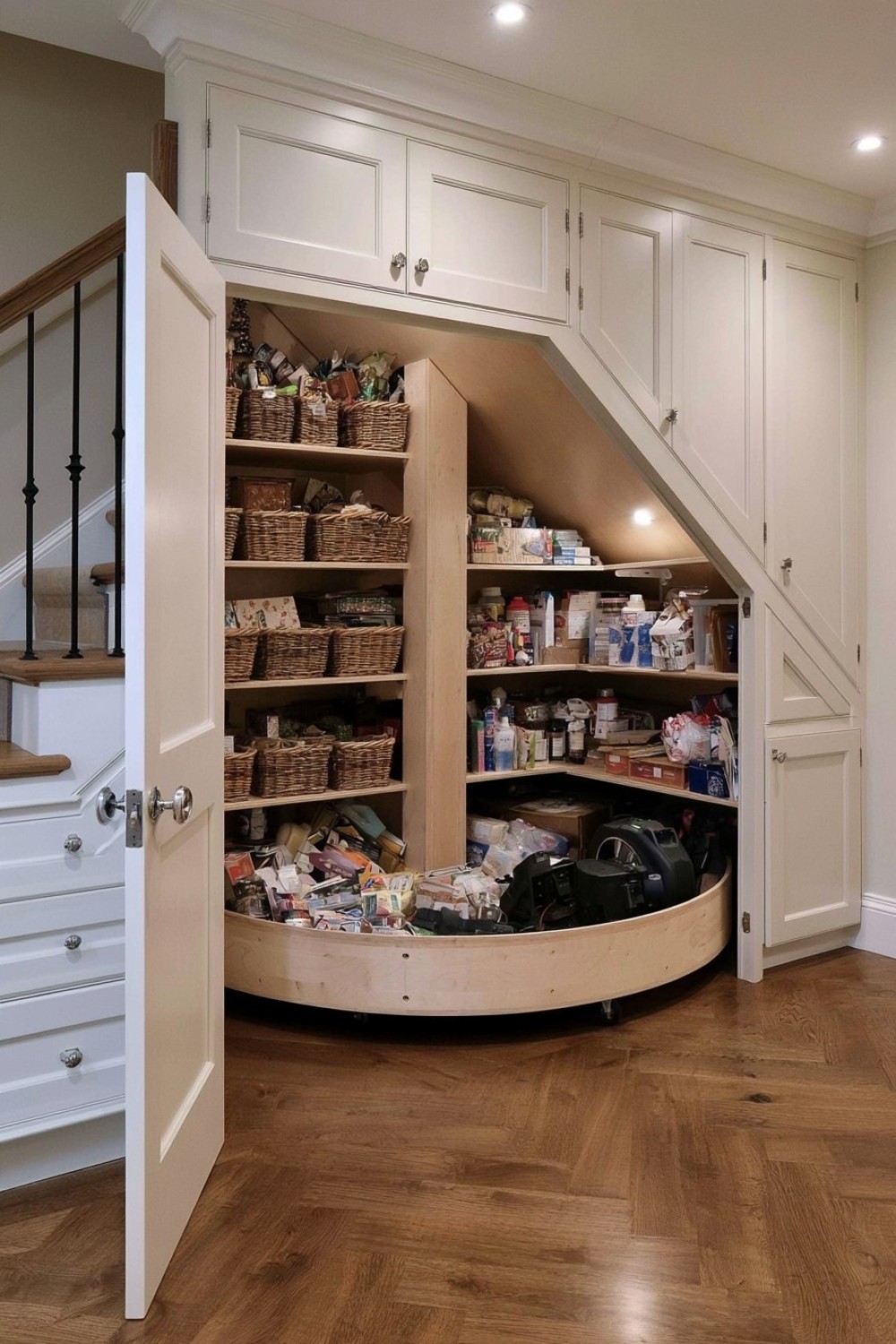
The farthest corner beneath stairs is often the least useful because it is difficult to reach.
Instead of accepting that dead zone, install a rotating storage platform.
A large circular or semi-circular base mounted on a heavy-duty turntable bearing can hold baskets, seasonal decorations, household supplies, or rarely used equipment.
Add a low edge around the platform so objects remain secure as it turns.
The front portion of the area can remain conventional cabinetry while the rotating section serves the otherwise inaccessible rear cavity.
This idea is particularly useful when the staircase has significant depth but only one practical access point.
For heavy loads, the rotating base needs proper structural support and a bearing designed for the expected weight.
9. Create a Fold-Out Hobby Cabinet
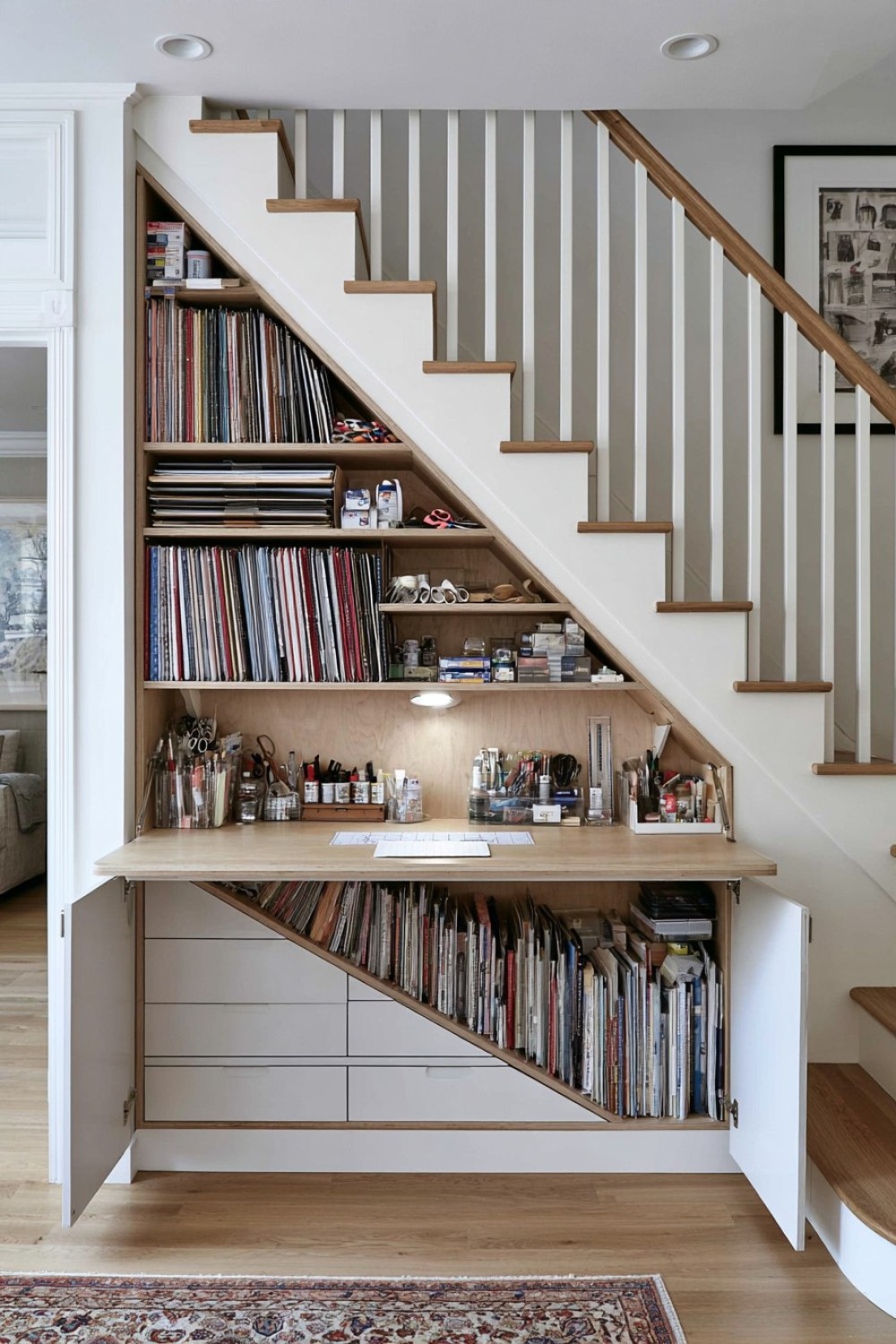
The under-stairs area can become a compact sewing, painting, model-making, or paper-craft station.
Use the tallest section for shallow material shelves and install a fold-down desk below them.
The lower triangular area can hold removable project boxes or drawers.
For sewing, include vertical storage for thread and fabric tools. For painting, use bottle racks and washable trays. For paper crafts, add vertical files for cardstock and cutting mats.
A small task light mounted inside the cabinet can make the workspace genuinely usable.
The important part is designing around one hobby rather than trying to store every possible craft supply.
When the work surface folds up, tools remain behind closed doors and the staircase returns to looking like ordinary cabinetry.
10. Build a Library Drawer for Oversized Books and Magazines
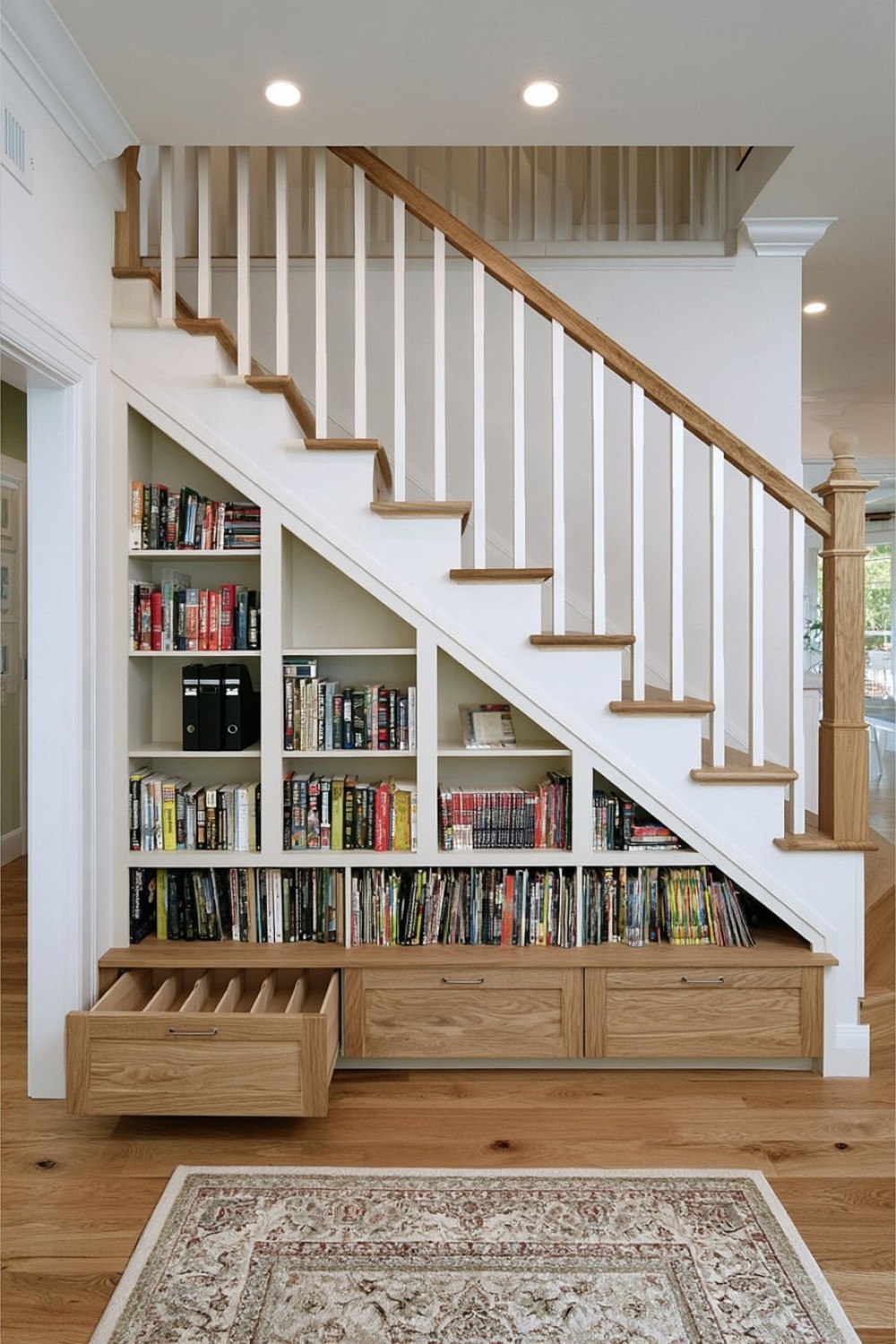
The low end of a staircase can be difficult to use with standard shelves but is ideal for horizontal paper storage.
Install deep pull-out drawers sized for art books, magazines, maps, children's picture books, or sheet music.
Use internal dividers so books remain upright enough to browse without collapsing into stacks.
The taller section can transition into conventional bookshelves or display niches, creating a gradual library that follows the staircase profile.
For frequently used magazines, one drawer can contain removable file boxes.
This approach protects large-format material from dust while avoiding the awkward bending required by low open shelves.
Soft-close runners are particularly useful because fully loaded book drawers can become heavy.
11. Create a Secret Utility Drawer for Charging Devices
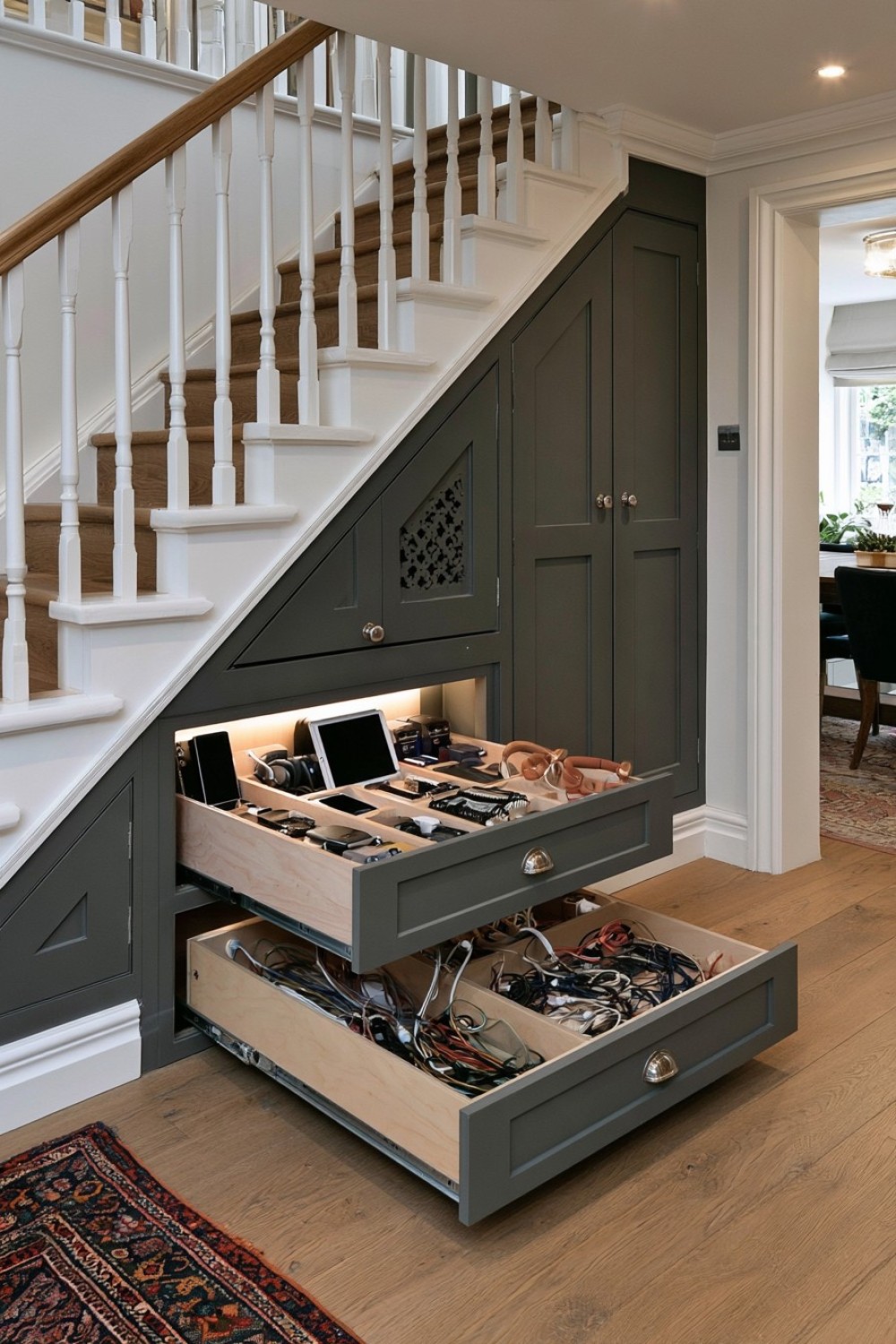
Household electronics often end up scattered across kitchen counters.
Use one shallow under-stairs drawer as a concealed charging station for phones, tablets, headphones, power banks, cameras, and rechargeable batteries.
Install divided compartments so cables do not tangle and allow enough ventilation around charging equipment.
A professionally installed internal outlet can keep adapters hidden, while cable openings prevent cords from becoming pinched by the drawer.
Keep the charging drawer away from soft combustible clutter and follow manufacturer guidance for devices while charging.
A second small drawer can hold spare cables and adapters separated by connector type.
This turns an otherwise ordinary storage area into a highly practical household technology zone.
12. Design a Seasonal Rotation Cabinet
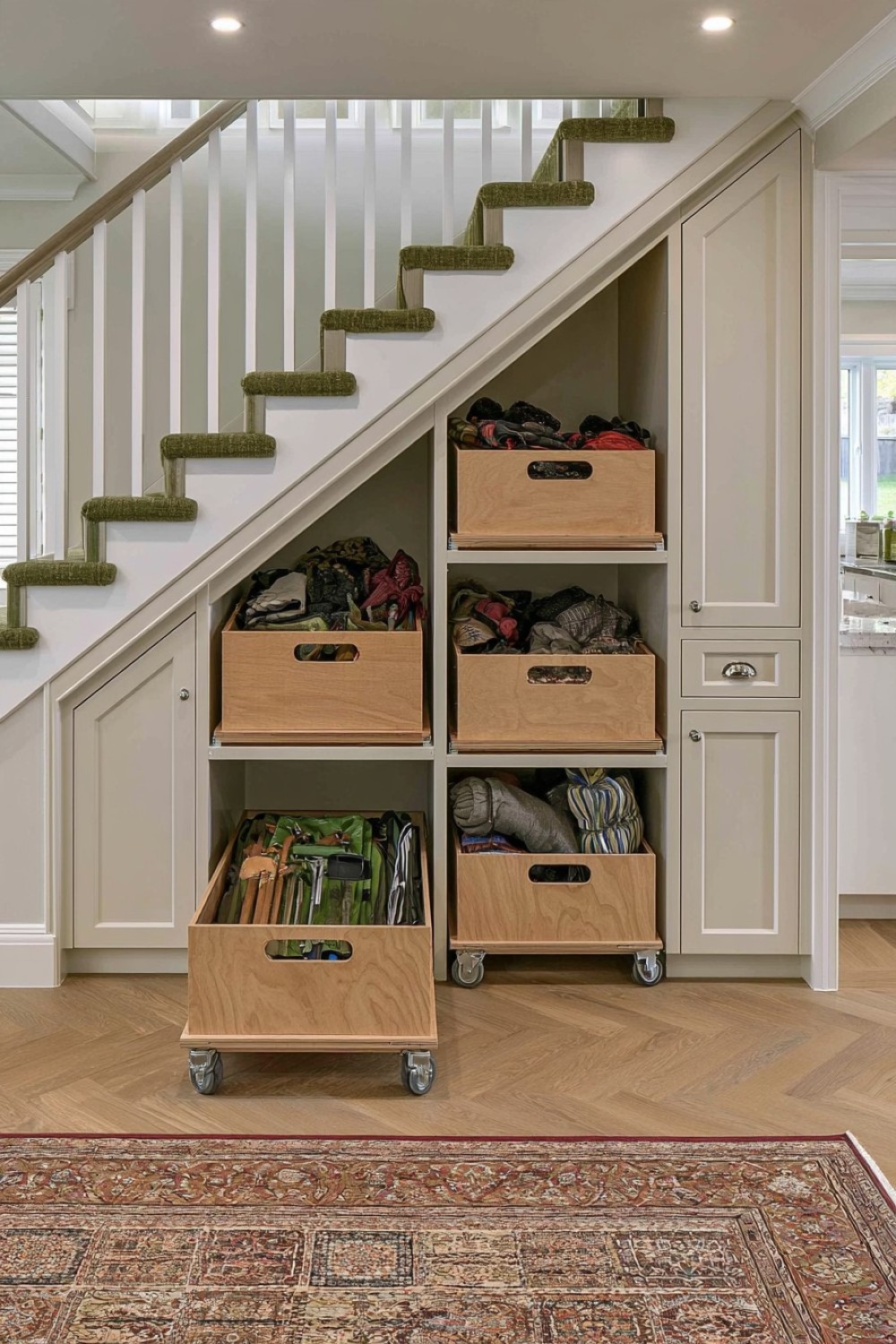
Seasonal items are often stored too deeply to be useful or too accessibly to stay tidy.
Divide the under-stairs cavity into four removable storage modules—one for each season or household cycle.
For example, winter might contain gloves and holiday supplies; summer could contain picnic equipment, outdoor textiles, or travel accessories.
Instead of permanent shelving, use large wheeled crates or slide-out boxes that can be removed entirely.
When the season changes, bring one module forward and push another toward the back.
Label both the front and top so contents remain identifiable even when a box is partially hidden.
The system works because it acknowledges that not every possession needs equal access all year.
13. Build an Under-Stairs Mudroom in a Single Wall
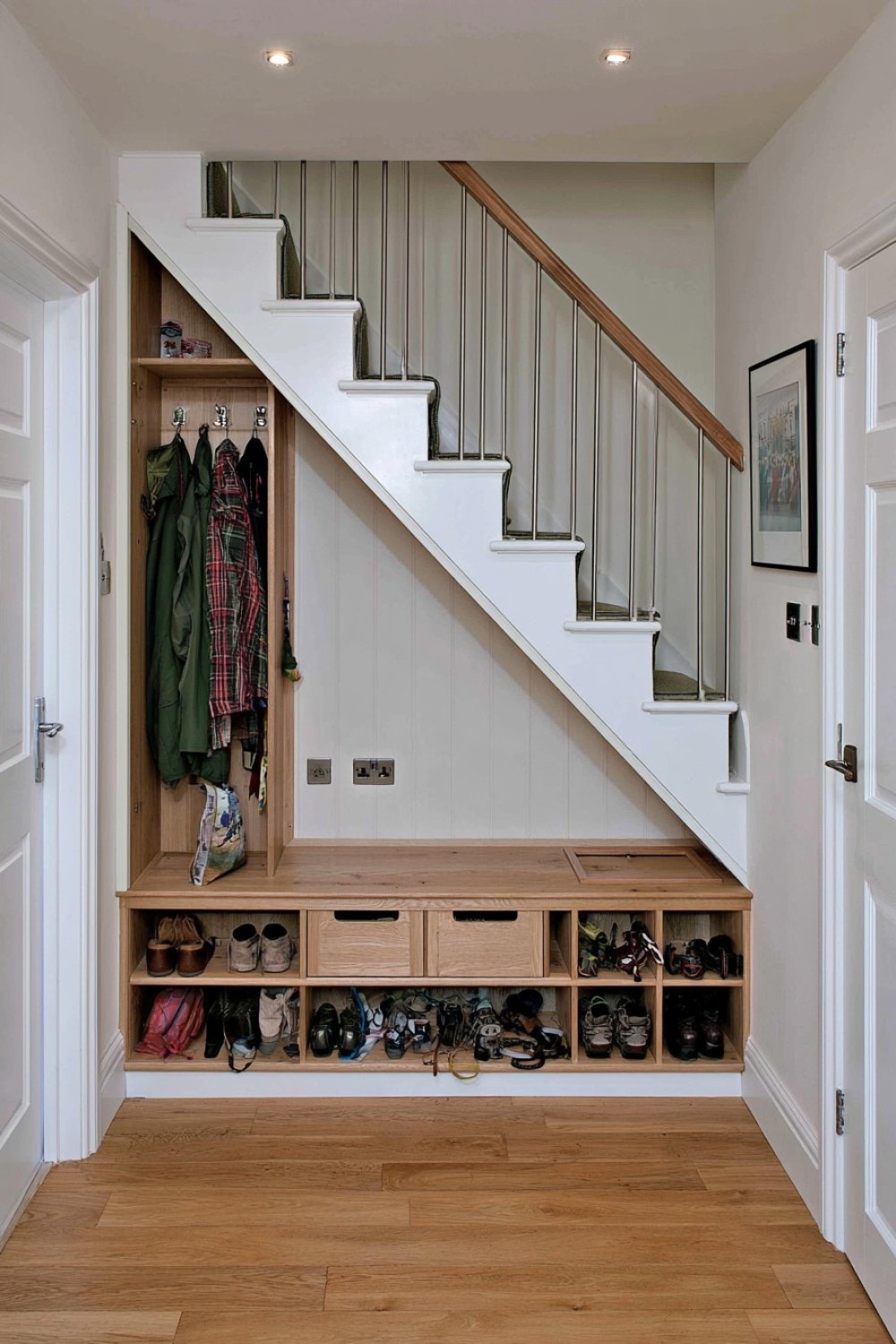
If the staircase sits near an exterior door, combine seating, shoes, coats, and small-item storage into one compact drop zone.
Use the high end for hooks or a slim coat cupboard. Place a bench beneath the middle section and use pull-out shoe drawers beneath the seat.
The lowest triangular end can contain shallow cubbies for gloves, dog leads, bike accessories, or reusable shopping bags.
Rather than treating the slope as a design problem, follow it deliberately with cabinetry fronts.
Add a durable washable wall panel behind the bench so wet coats and bags do not damage painted plaster.
A removable boot tray and ventilation gaps make the setup easier to maintain during wet weather.
This can replace several separate hallway furniture pieces with one built-in system.
14. Hide a Mobile Storage Cart Behind a Flush Panel
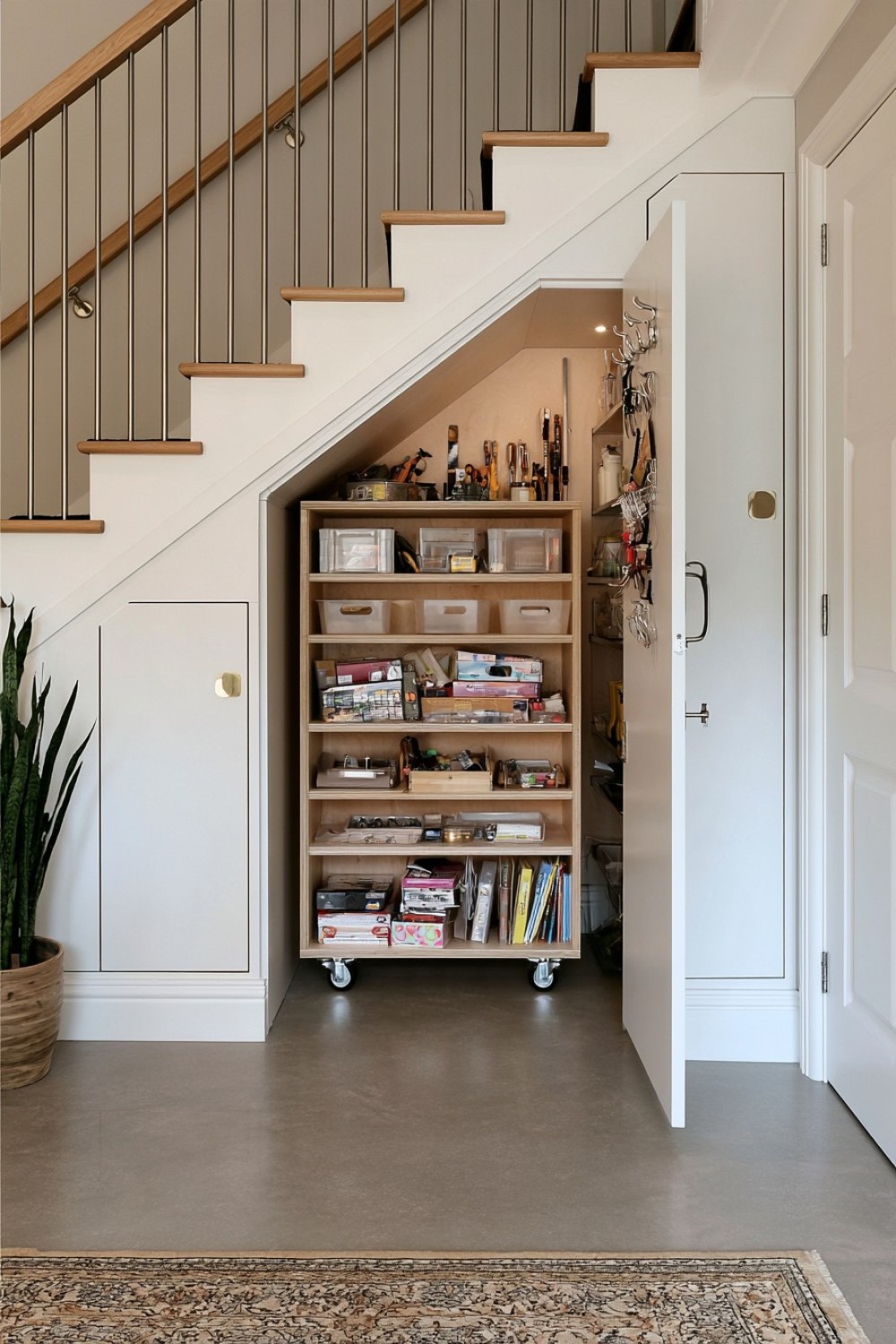
Sometimes the most flexible under-stairs storage is not built in at all.
Create a flush door that conceals a large wheeled cart sized precisely to the cavity.
The cart can hold tools, sewing supplies, children's crafts, pantry overflow, party equipment, or home-office materials.
Build it from plywood with locking casters, multiple shelf heights, and handles on both ends.
When needed, roll the entire storage unit into the room instead of repeatedly walking back to the cupboard.
The rear side can even contain a secondary storage surface with hooks or shallow bins.
This is especially useful in rental-friendly or changing households because the interior organization can evolve without rebuilding permanent cabinetry.
Just make sure the floor is level enough for safe rolling and that loaded casters are rated for the final weight.
Making Under-Stairs Storage Easier to Live With
The most effective under-stairs storage usually responds to the staircase's geometry instead of fighting it. Tall objects belong near the highest section, shallow drawers and low storage fit naturally beneath the lower steps, and deep inaccessible corners benefit from systems that rotate or pull completely forward.
Before building anything permanent, decide whether the space needs to hold everyday items, occasional supplies, or an entire household activity. That decision should determine the mechanism. Frequently used belongings benefit from full-extension drawers and visible storage, while seasonal items can occupy deeper modules.
Structural safety is also important. Stair stringers, supports, plumbing, ventilation, and electrical services should not be cut or altered simply to create additional storage. When the project involves structural changes, new electrical outlets, or extensive built-in cabinetry, professional assessment can prevent a clever storage idea from creating a much larger problem.
MORE IDEAS


Share
What's Your Reaction?
 Like
0
Like
0
 Dislike
0
Dislike
0
 Love
0
Love
0
 Funny
0
Funny
0
 Angry
0
Angry
0
 Sad
0
Sad
0
 Wow
0
Wow
0