
An attic can make a deeply personal place for meditation, prayer, devotional reading, or a few minutes of quiet. Its sloping walls naturally create smaller pockets within the room, while the taller central area can remain open for movement. The most useful arrangement begins with what you actually do there: sit in a chair, kneel at a prayer bench, spread out a mat, read a sacred text, or gather with family. That decision gives every cushion, cabinet, and meaningful object a reason to belong.
These 33 attic meditation and prayer room ideas explore both everyday retreats and rooms shaped by particular faith traditions. You will find floral sitting corners, quiet libraries, floor seating arrangements, home mandirs, Buddhist shrines, Christian devotional spaces, and other approaches to a dedicated prayer room. Each idea explains the visible materials, the relationship between furniture and roofline, and practical ways to adapt the arrangement. Use the designs as starting points for your own habits and beliefs, with special attention to comfortable seating, accessible storage, and a clear route through the attic.
Table of Contents
- Plan an Attic Retreat Around Everyday Use
- Let Your Practice Set the Layout
- Check the Attic Before Adding Heavy Furniture
- Gather Materials Around One Clear Palette
- Plan Light, Plants, and Daily Care
- 1. A Three Sided Yellow Seat in a Floral Attic
- 2. Burgundy Kneelers Before a Colored Folding Screen
- 3. Lavender Butterflies Around a Quiet Armchair
- 4. Sea Green Mosaic and a Circle of Floor Cushions
- 5. A Moth Tapestry Above a Rustic Sitting Room
- 6. Bronze Bells Behind Navy Crescent Cushions
- 7. Mauve Embroidery Above a Single Meditation Cushion
- 8. A Freestanding Gong Beneath a Triangular Window
- 9. A Carved Krishna Mandir with Saffron Floor Seating
- 10. A Fern Retreat with Glass Terrariums and Sage Seating
- 11. Navy Reading Chairs Along a Rose Colored Library
- 12. A Low Tea Table Between Cream Floor Chairs
- 13. A Buddhist Study Room with a Deep Red Focus Wall
- 14. Lavender Pillows and Apricot Bolsters in an Open Attic
- 15. A Ganesha Prayer Corner in a Narrow Roof Bay
- 16. Plum Floor Mats Beneath a Stone Window Arch
- 17. A Rose Colored Conversation Retreat with a Small Trolley
- 18. A Narrow Chanting Room with an Unbroken Central Aisle
- 19. Blue Gray Floor Chairs Around a Wooden Tea Chest
- 20. A Catholic Devotional Wall with Paired Rose Kneelers
- 21. A Jewish Prayer Room with a Navy Ark Curtain
- 22. An Open Circle of Chairs Under Exposed Beams
- 23. A Floral Catholic Prayer Nook with Teal Seating
- 24. A Teal Muslim Prayer Room with Clear Carpet Rows
- 25. A Tibetan Buddhist Shrine with Burgundy Sitting Rows
- 26. A Flower Framed Ganesha Mandir with Pink Cushions
- 27. A Blue and White Christian Chapel Beneath Timber Rafters
- 28. A Standing Buddha Against a Charcoal Shrine Wall
- 29. A White Stone Shrine with Black Accents
- 30. A Flower Draped Krishna Shrine Above Blue Cabinetry
- 31. A Carved Devotional Cabinet with Folding Doors
- 32. White Cabinetry for Prayer Textiles and Reflective Reading
- 33. A Red and Teal Chinese Devotional Alcove
- Practical Questions About Attic Meditation and Prayer Rooms
- What Is the Best Starting Point for a Small Attic Retreat?
- Do You Need to Sit on the Floor to Meditate or Pray?
- How Can You Keep the Room Personal Without Overfilling It?
Plan an Attic Retreat Around Everyday Use
Let Your Practice Set the Layout
Begin with the position you use most often. Place a chair where you can stand up without meeting the roof slope. Test a floor cushion with the support you normally need, and check that a kneeler has room for approaching, kneeling, and rising. Mark furniture footprints on the floor before ordering anything. In a shared room, each person needs usable space around their seat, including a way to leave without stepping over someone else.
Choose the devotional focus according to your own tradition. A home prayer corner and a space intended for congregational worship can have different requirements. Confirm the placement and care of sacred images, texts, and ritual objects with a knowledgeable member of your community. The designs below represent separate approaches, so their religious furnishings should be understood within their own contexts. For a retreat centered on books and a comfortable chair, these reading room decoration ideas offer additional seating and shelving inspiration.
Check the Attic Before Adding Heavy Furniture
Decorating an existing habitable attic differs from converting an unfinished roof space. Before bringing in substantial bookcases, stone shrines, or a group of visitors, have the floor capacity and the suitability of the room assessed. Ceiling joists in a storage loft may not be designed for regular occupation. Ask the relevant local professionals about access, headroom, insulation, ventilation, electrical work, and fire escape arrangements before planning a conversion.
Keep the tallest circulation route open and use lower eaves for carefully measured storage. Check cabinet doors, drawers, and roof windows through their full opening movement. New fitted furniture should preserve ventilation and access to existing services. Structural alterations, new glazing, and heavy overhead fixtures require appropriate professional design and installation.
Gather Materials Around One Clear Palette
For a straightforward refresh, gather a tape measure, floor plan, paint and fabric samples, comfortable seating, a flat rug with a backing suitable for the floor, and enough closed storage for the objects you use. Washable cushion covers, removable bench upholstery, and accessible shelves make ongoing care easier. Timber, woven textiles, ceramic vessels, and a few metal details can provide variety without filling every surface.
If painting, choose an interior coating and any primer specified for the actual wall surface. Resolve damp and loose finishes first, follow preparation instructions, and allow the coating to dry and cure as directed. Use an approved furniture finish for cabinets. Select wall fixings for the substrate and the complete installed weight; decorative trim and adhesive alone should not be assumed to support a shelf, cabinet, or heavy devotional object.
Plan Light, Plants, and Daily Care
A room can feel restful while still providing enough light to read and move safely. Combine controllable general illumination with a reading light where needed, and compare samples under the lighting you will actually use. Roof windows need coverings designed for inclined glazing. Keep curtain fabric clear of moving parts, heaters, and any required escape opening. Position living plants for their light and temperature needs, with containers that protect the floor from water.
Candles shown as part of a devotional arrangement can remain unlit. Where acceptable within your practice, flameless candles provide a useful alternative near textiles. If using a flame, choose a stable holder, keep it at least 12 inches from combustible materials, and extinguish it before leaving. Review incense and oil lamp use with the same attention to heat, nearby furnishings, and ventilation.
With those practical choices in place, explore the room arrangements below. Borrow the scale, materials, and storage solutions that fit your attic, then choose the decorative and devotional details that belong to your own daily practice.
1. A Three Sided Yellow Seat in a Floral Attic
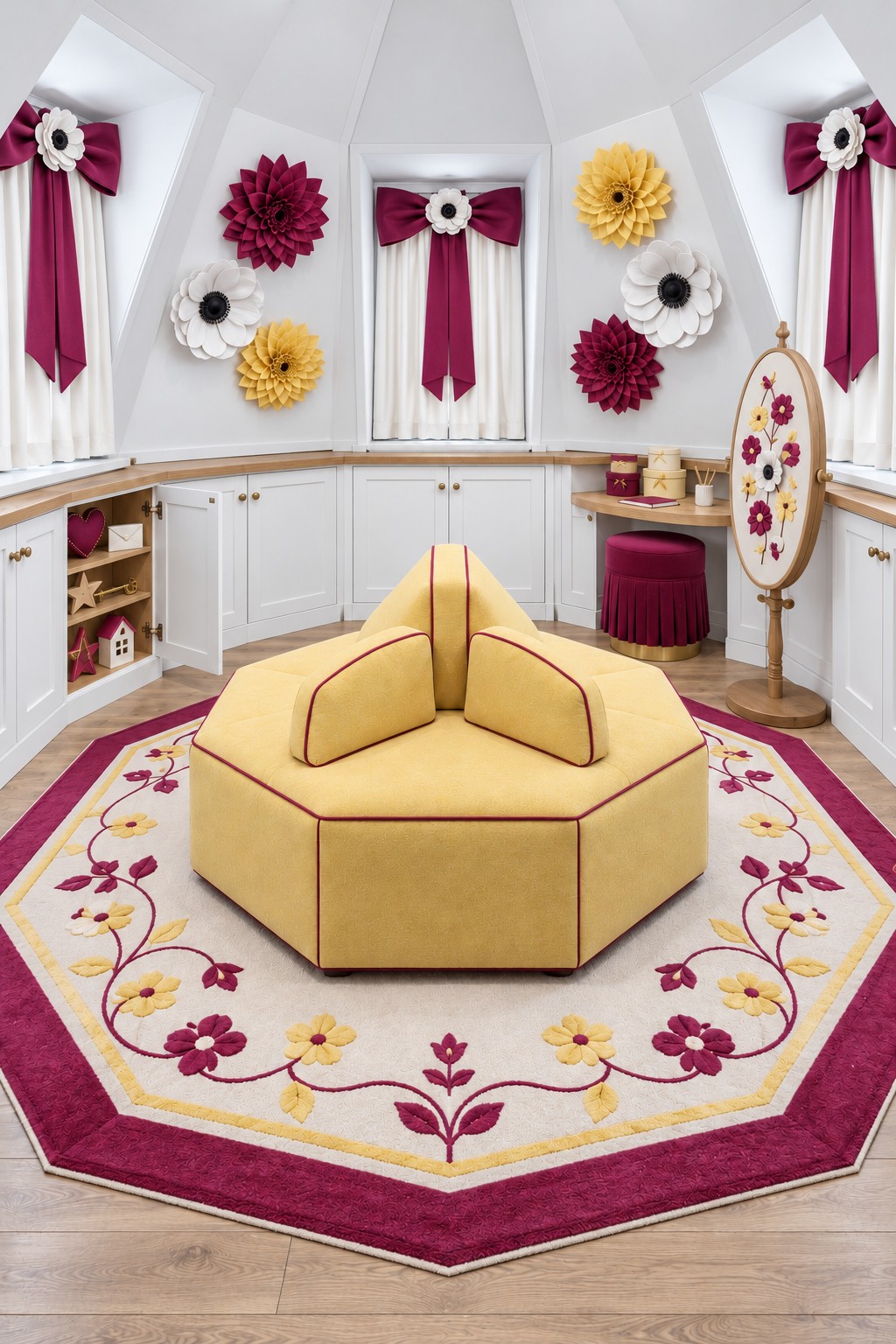
A yellow upholstered seat gives this small attic a cheerful gathering point. Its three sided arrangement allows people to share the room while facing different directions, and burgundy piping connects it to the window ribbons and rug border. Large flower decorations stay on the walls, leaving the central seating surface and surrounding floor usable. White cabinets provide a quiet background for the saturated yellow and red.
Adapt the arrangement with an appropriately sized upholstered bench or modular seating designed to stand securely. Measure the walking space around every side before committing to the central position. Use securely mounted lightweight fabric flowers and removable window trims, keeping their scale consistent with the room. A single floral rug can tie the palette together, while closed cabinets hold cushions and personal objects between visits.
2. Burgundy Kneelers Before a Colored Folding Screen
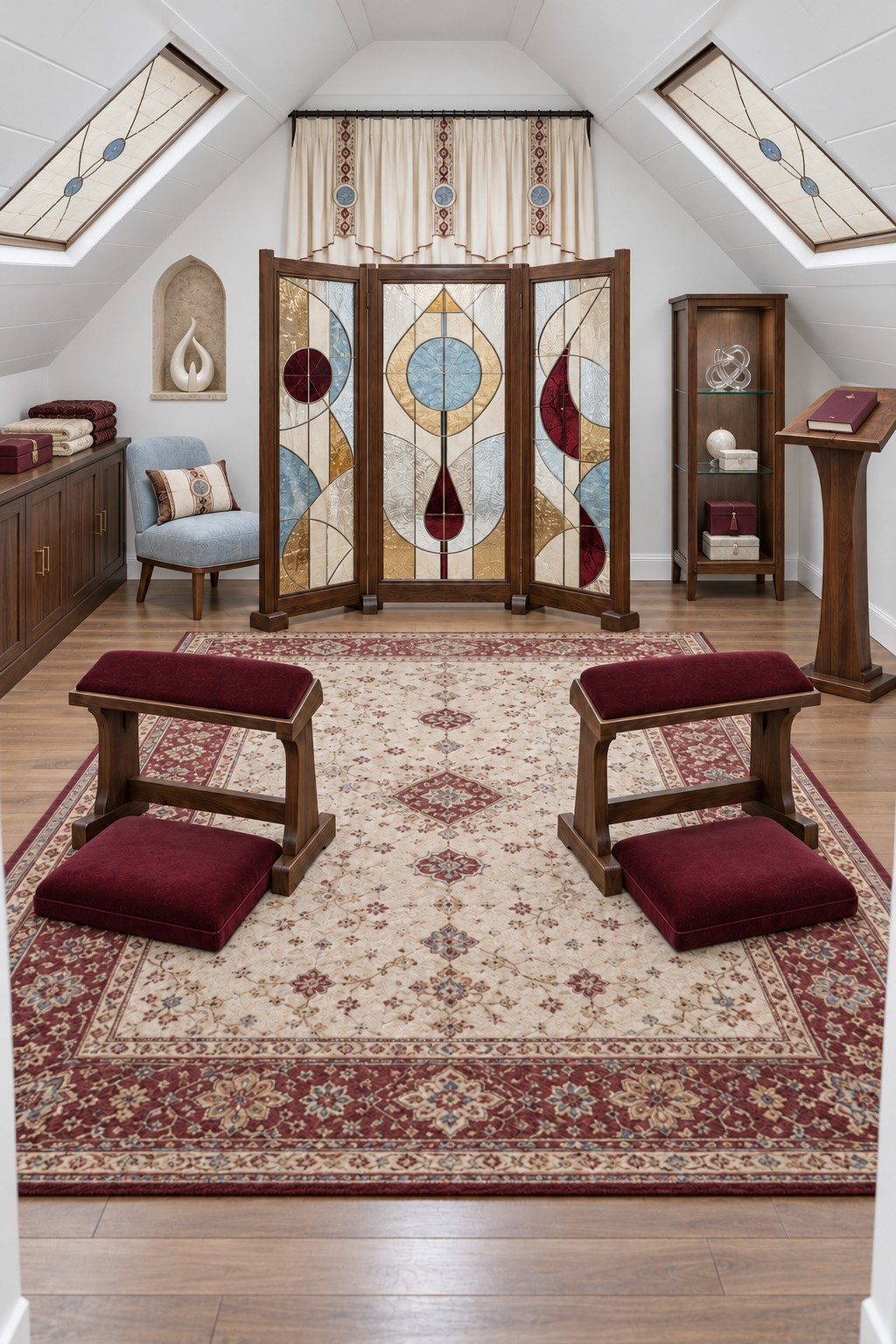
Two burgundy kneelers establish the purpose of this room immediately. A wooden folding screen behind them introduces circles, long curves, and translucent color, while a patterned rug brings the same warm tones down to the floor. The surrounding storage and a separate book stand give devotional reading a place without crowding the kneeling area. This layout suits a household that wants a defined focus within a flexible room.
Choose kneelers with stable bases and padding that suits your posture. Position the screen beyond the space needed to rise and move around each bench. Specify appropriate safety glazing if using glass inserts, and have a maker address the stability of the complete screen. For related ideas about translucent color and pattern, explore these stained glass window designs. Keep the surrounding furniture simpler so the screen remains the main decorative feature.
3. Lavender Butterflies Around a Quiet Armchair
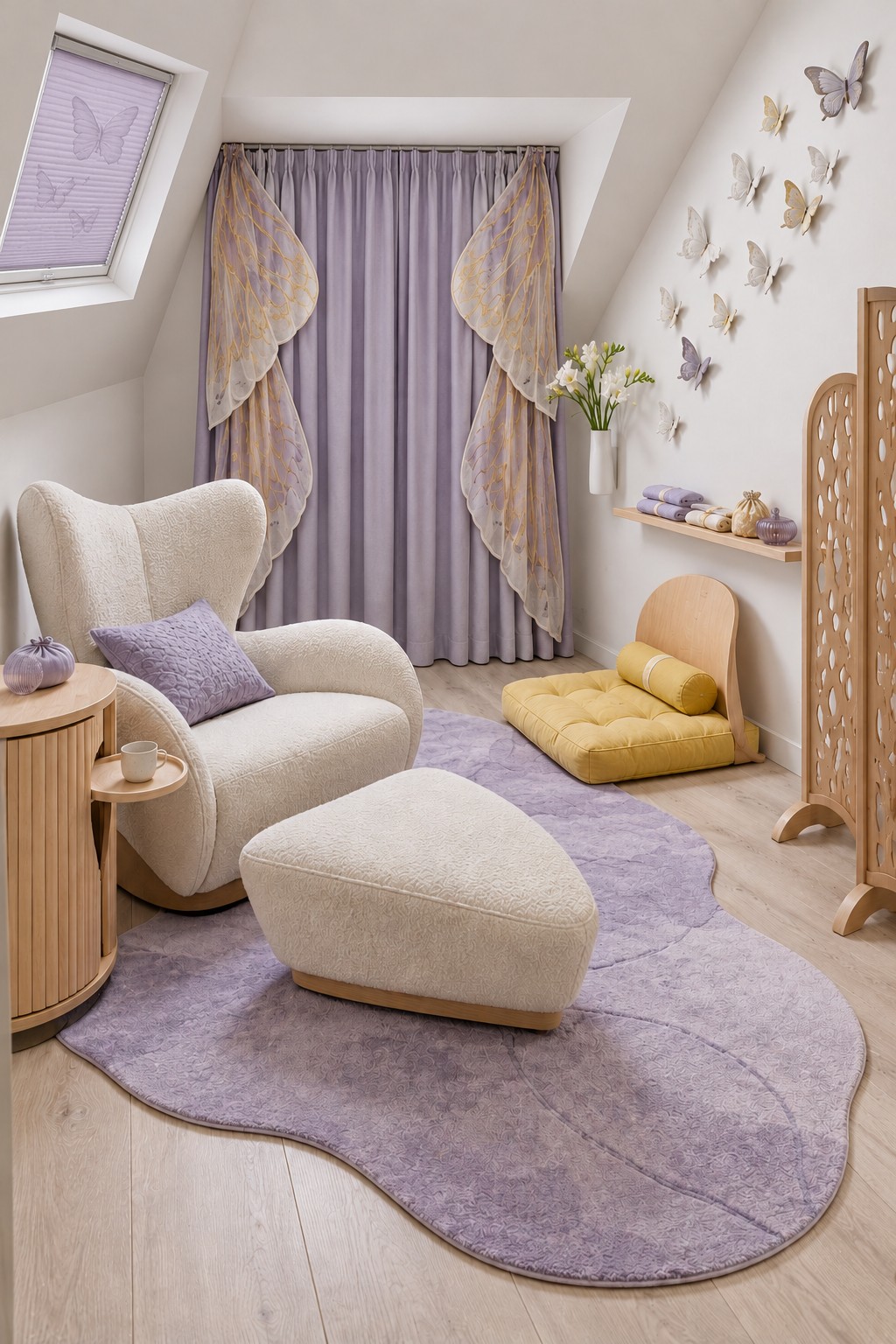
A cream armchair and matching footstool make this retreat practical for someone who prefers supported sitting. Lavender curtains, an irregular purple rug, and small butterfly ornaments give the corner a gentle visual rhythm. The yellow floor seat provides a second option without matching the armchair exactly. A small side table keeps a drink or notebook within reach, while the wall shelf carries the decorative details.
Start with the chair and the space needed to stand beside it, then size the footstool and rug around that footprint. Keep the side table close enough to reach without stretching. Lightweight butterfly decorations can follow a loose rising line above the shelf, away from the chair back. If you enjoy the soft botanical palette, these cottagecore wall decor ideas offer complementary ways to develop the surrounding walls.
4. Sea Green Mosaic and a Circle of Floor Cushions
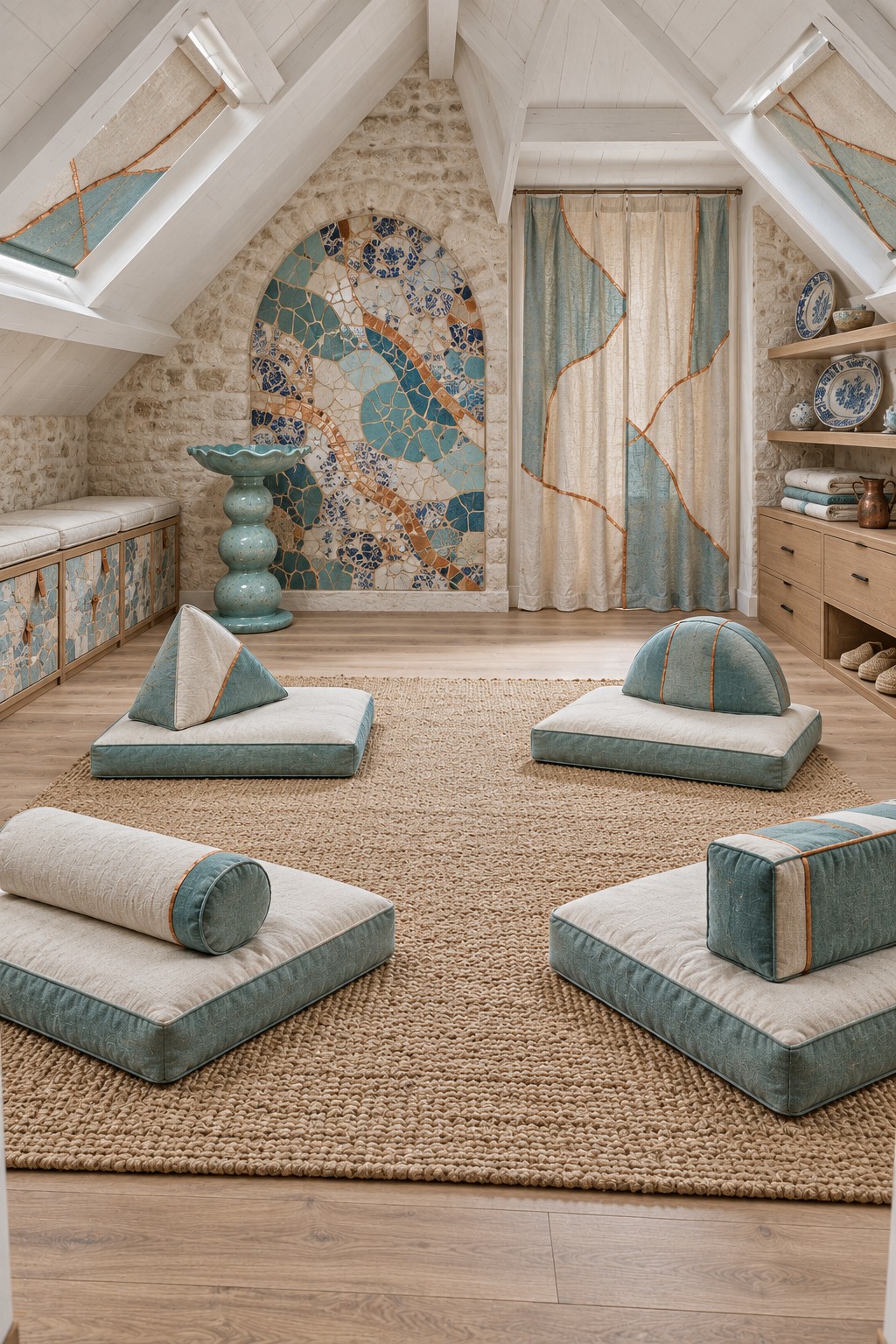
Sea green upholstery, pale stone texture, and an arched mosaic give this attic a layered but coordinated identity. The mosaic combines irregular ceramic pieces with flowing bands of turquoise and cream, while fine warm lines repeat in the curtain and cushion piping. Floor seats surround a generous open center. A glazed pedestal bowl stays beside the wall as a sculptural feature rather than taking over the seating area.
You can borrow the palette without covering an entire wall. A professionally installed decorative mosaic panel can become the focus, with plain cushions and a woven rug carrying the quieter textures. Have the installer assess the backing, adhesive system, edges, and finished weight. Use individually movable cushions so the arrangement can change for one person or a small gathering, and keep ceramics on fully supporting shelves away from passing shoulders.
5. A Moth Tapestry Above a Rustic Sitting Room
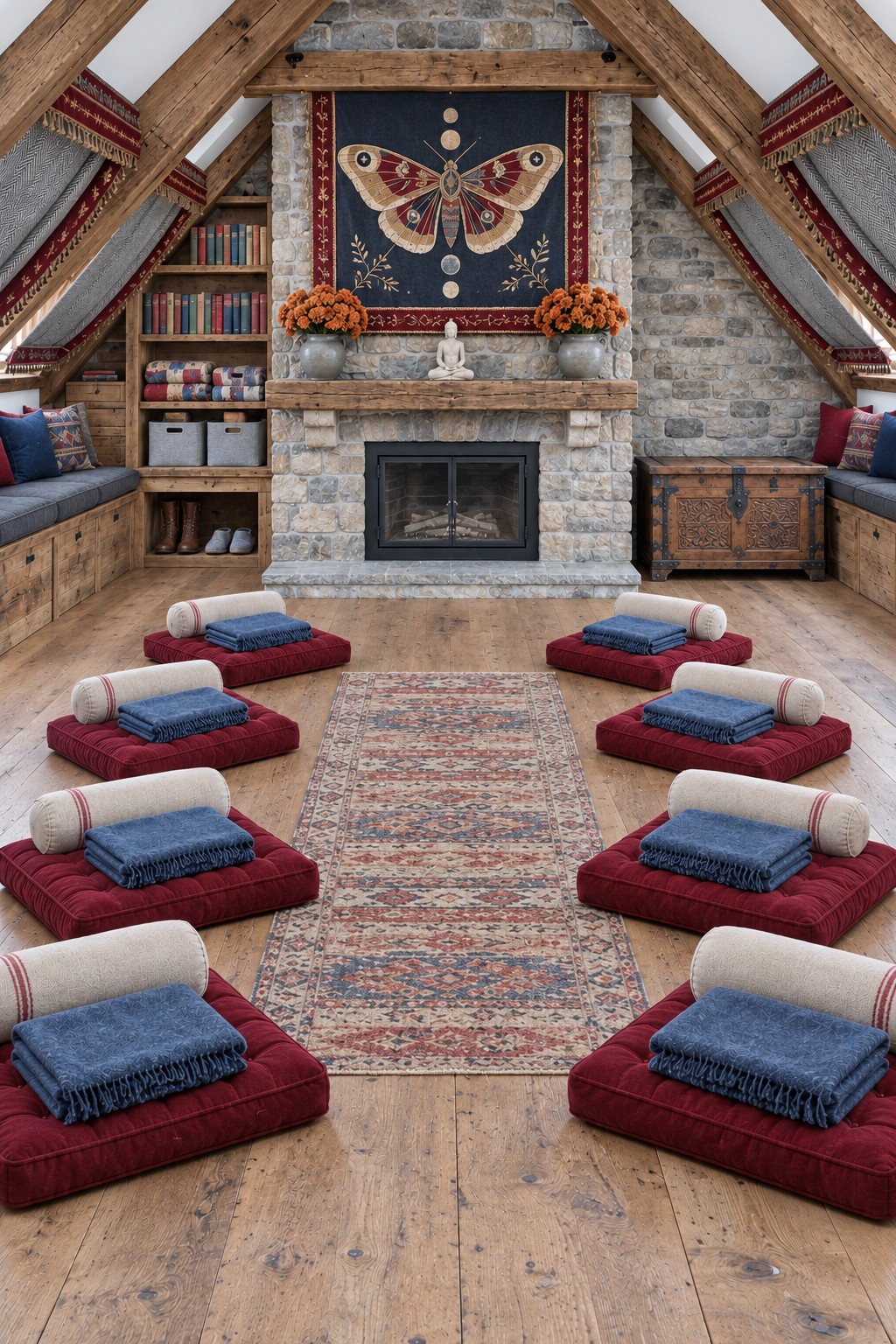
A large moth tapestry gives this rustic attic a distinctive focus above the stone fireplace. Burgundy sitting pads, blue folded blankets, and cream bolsters repeat the colors of the textile without copying its detailed pattern. Bookcases and storage benches occupy the eaves, leaving the central rug available for gathering. The combination suits reflective reading, journaling, or a shared period of quiet in a room with existing timber character.
Let the tapestry determine two or three accent colors, then keep the larger upholstery surfaces plain. Store additional blankets in the benches so every cushion does not need a permanent pile of accessories. Treat the fireplace as an existing building feature: any operational appliance needs its specified clearances and professional assessment. Keep rugs, cushions, books, and hanging textiles outside those clearances, or leave the fireplace unused as part of the room's architectural backdrop.
6. Bronze Bells Behind Navy Crescent Cushions
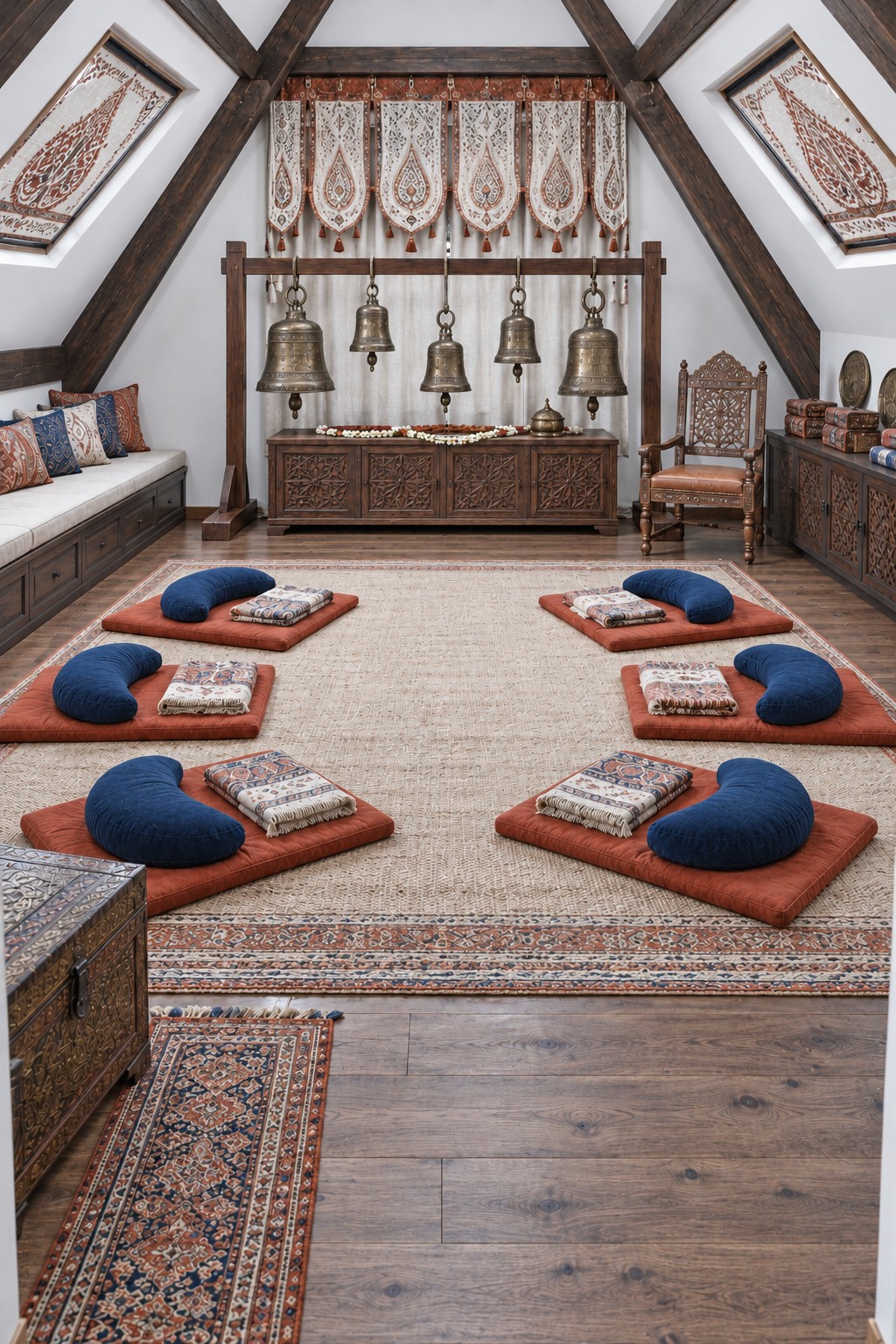
Hanging bells create a strong horizontal feature beneath the attic's highest wall. Their varied sizes contrast with the orderly pairs of rust colored mats and navy crescent cushions. Carved wooden cabinets and embroidered window textiles reinforce the room's warm, detailed character. The center remains clear enough to approach the bell frame and move between seats. This is an arrangement for people who already include gentle sound in their personal practice.
Use a frame designed for the actual weight and movement of the bells, with suitable attachment hardware and a stable base. A carpenter or specialist fabricator can assess the complete assembly. Place it beyond the seating zone and leave access for cleaning and inspection. Test cushion height before choosing a full set, and use sound considerately, allowing everyone present to choose whether they want it included.
7. Mauve Embroidery Above a Single Meditation Cushion
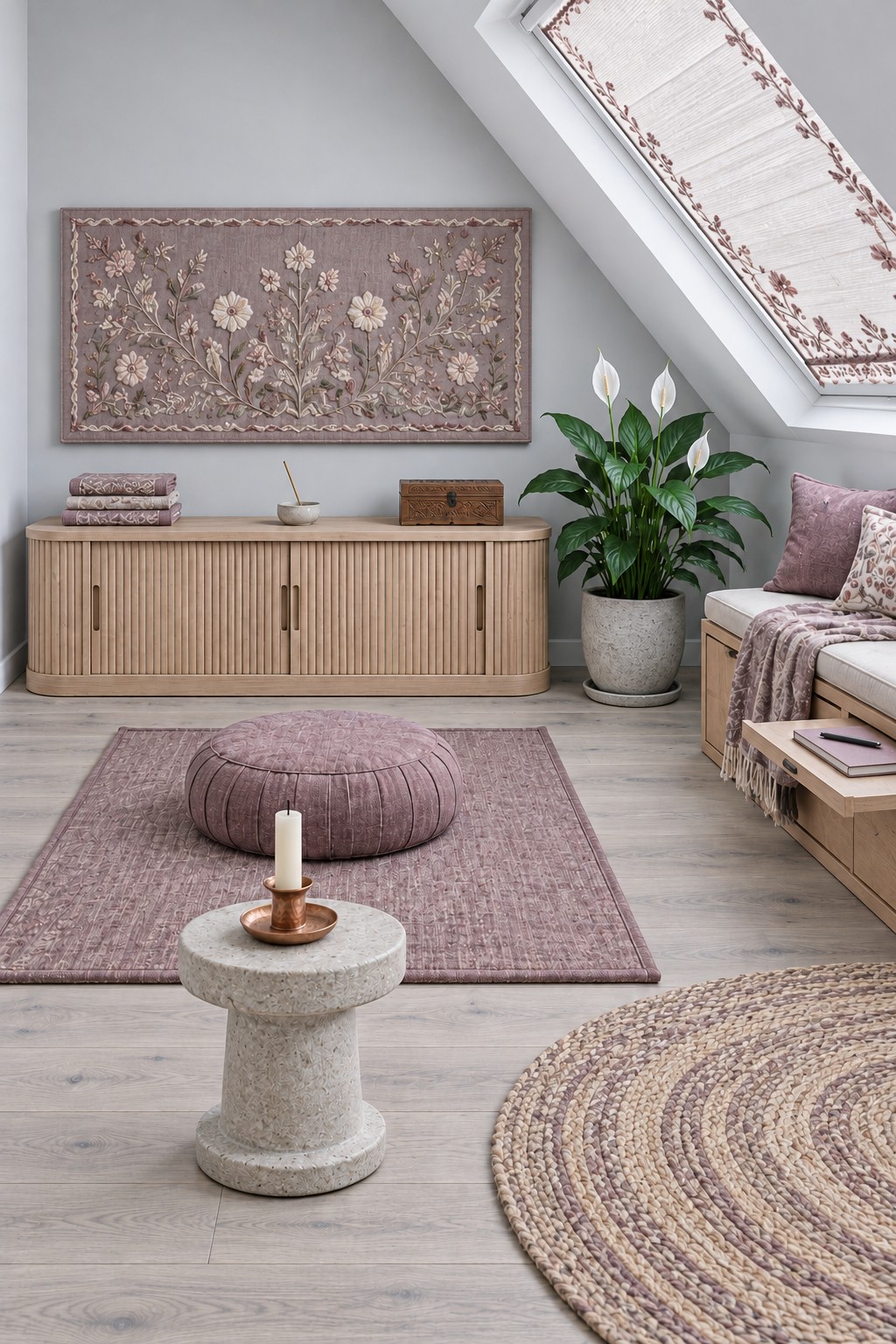
A single round mauve cushion gives this compact attic corner a clear starting point. The embroidered botanical hanging above the cabinet adds texture at eye level, while the fluted cupboard conceals everyday supplies. A low bench with a cushion offers another place to sit. The pale rug, light timber, and green foliage keep the muted pink palette from feeling flat or overly coordinated.
This is an approachable option when the attic also serves another purpose. Reserve one floor area for the cushion and keep a folded blanket inside the cabinet. Hang the textile from fittings that support its width without distorting the fabric. The small stone table can hold an unlit candle or another personal object, but should stay outside the route used to get up from the cushion. Choose a plant only if the corner provides suitable light.
8. A Freestanding Gong Beneath a Triangular Window
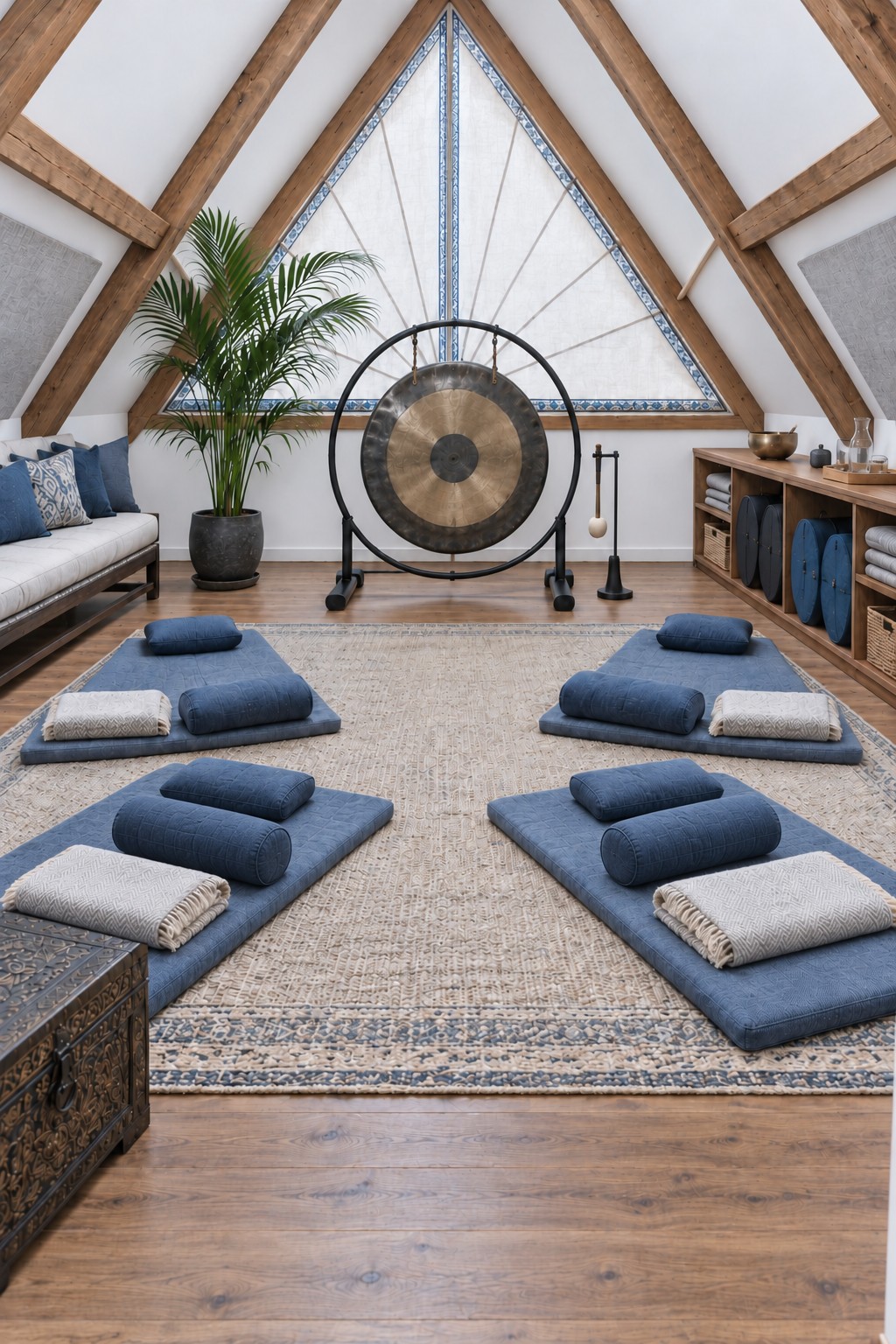
A circular gong stands out against the sharp lines of the triangular gable. Blue mats and pale bolsters repeat the cool window detailing, while exposed timber and woven flooring bring warmth. The gong has a dedicated freestanding support, and side storage gives the larger instruments and folded textiles a home. Seating faces the focal end of the room without filling its approach.
Plan this arrangement around the instrument's dimensions, support frame, and the space required to use it safely. Choose the frame and suspension specified for the gong rather than improvising roof attachments. Keep the cushions outside its movement area. The instrument can remain a visual focus when silent; any playing should suit the room, the people present, and nearby households. Treat sound as an optional part of the experience, without attaching medical promises to the equipment.
9. A Carved Krishna Mandir with Saffron Floor Seating
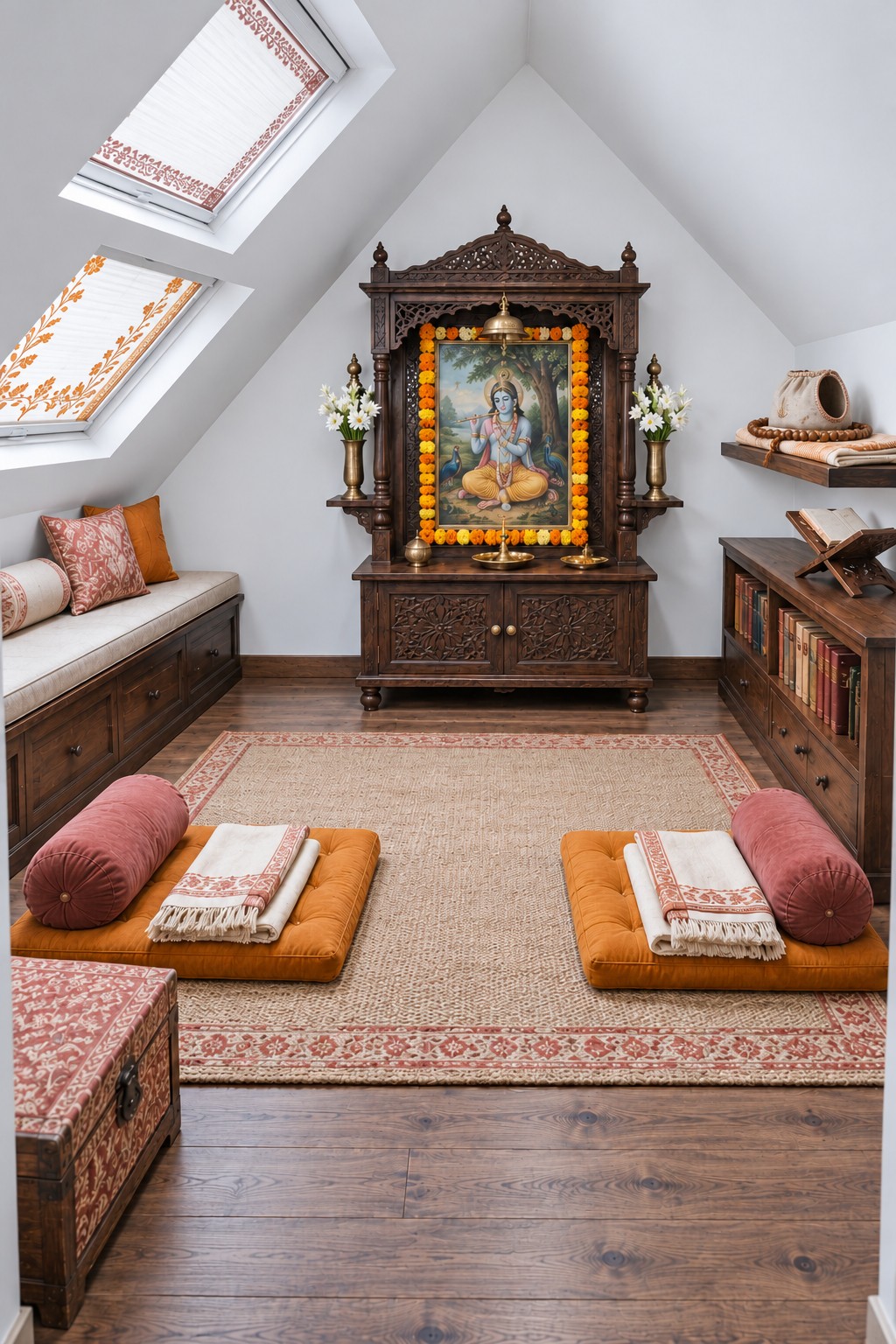
A carved wooden mandir gives this Hindu prayer room a clearly defined devotional center. The image of Krishna is framed by an orange flower garland, with brass vessels and pale flowers arranged on supported surfaces. Saffron floor cushions, rose bolsters, and a faded patterned rug bring the palette into the sitting area. Books and a reading stand remain beside the shrine for convenient use.
Begin with the form of worship practiced in your household, then choose a mandir sized for the attic and the objects it will hold. Confirm the placement and care of the sacred image within that tradition. Keep the front clear for approaching and attending to the shrine. Give garlands an independent support and replace fresh flowers before they deteriorate. Brass lamps can remain unlit when their position is too close to the wooden frame or floral decoration.
10. A Fern Retreat with Glass Terrariums and Sage Seating
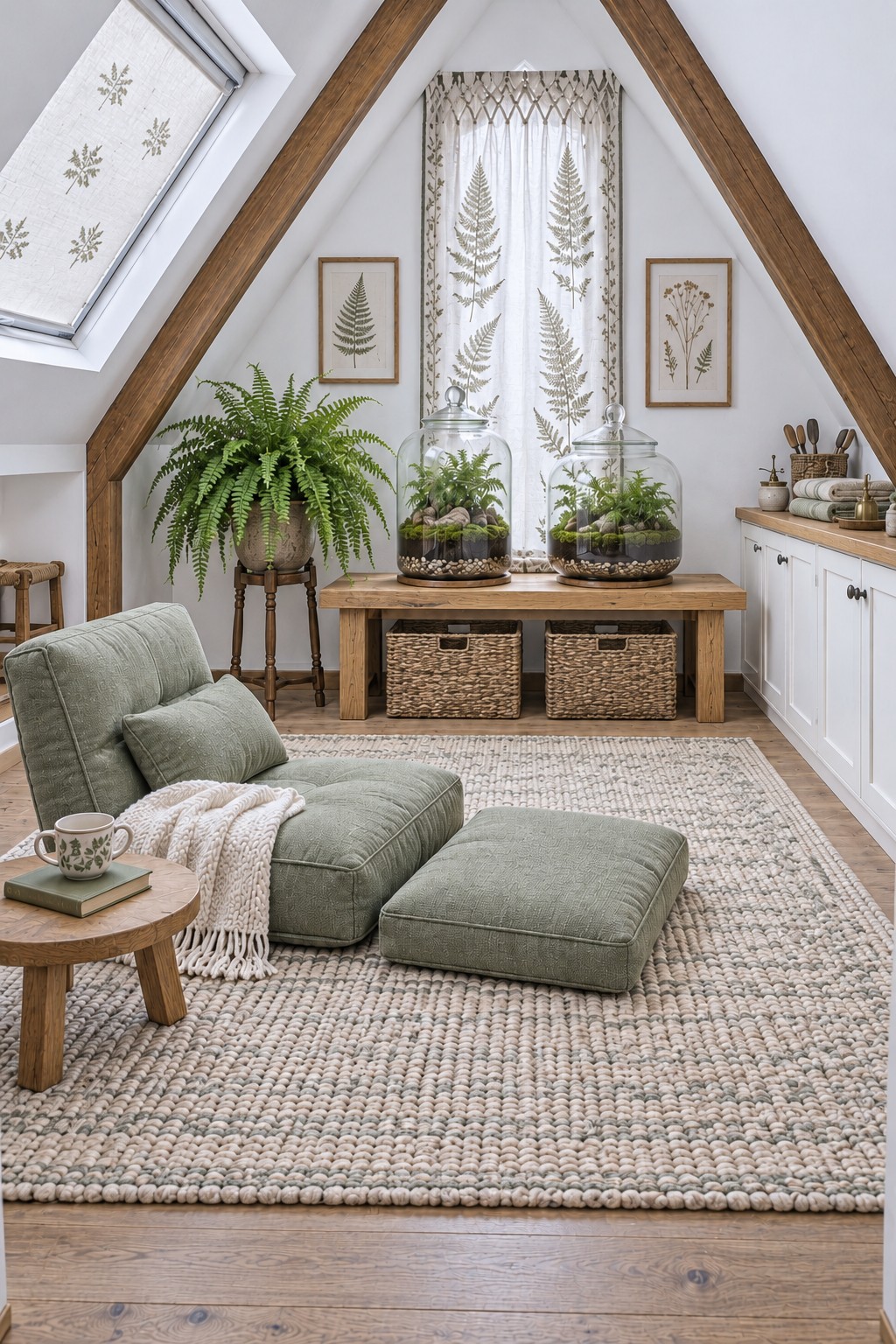
Sage upholstery, fern patterned curtains, and glass plant displays give this retreat a botanical focus. A low chair and broad footstool provide supported seating, while the large woven rug softens the timber floor. Two glass terrariums sit on a wooden console above wicker baskets, keeping the plants visible without occupying the sitting space. White cupboards make the greenery feel intentional against the sloping roof.
Choose plants around the conditions the room can provide. Boston ferns generally need bright indirect light, moisture, and adequate humidity, so a hot, dry attic may need a different choice. Match terrarium plants to the container's ventilation and watering conditions rather than selecting them solely for appearance. Protect the console from condensation and spills. Use the baskets for lightweight supplies and leave enough room to tend the plants without moving the chair each time.
11. Navy Reading Chairs Along a Rose Colored Library
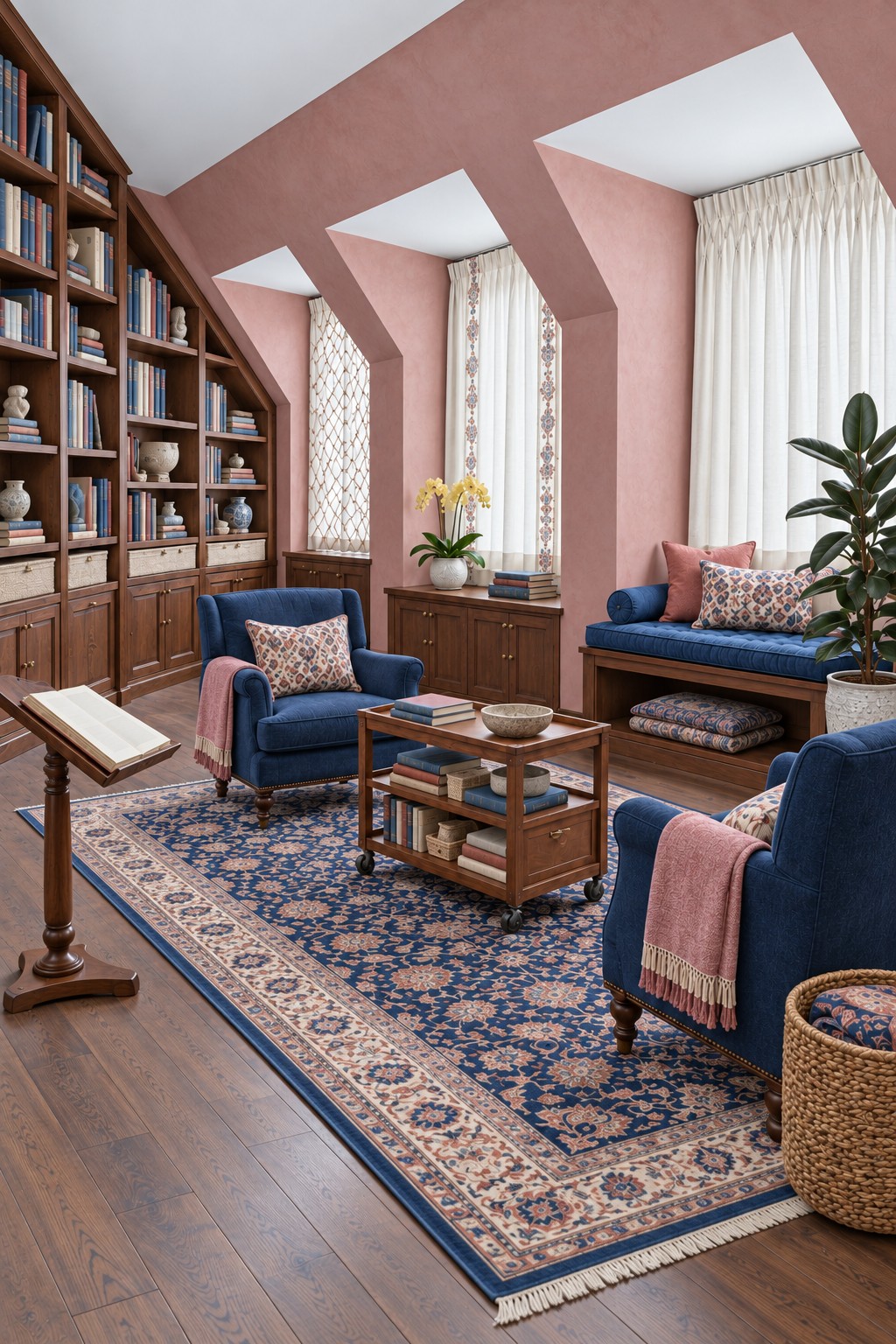
Navy armchairs bring depth to an attic library painted in muted rose. Fitted shelves climb into the available roof shape, while a cushioned window bench turns the side wall into another place to pause. A small central table holds a bowl and books without replacing the open space between the chairs. The patterned rug connects the stronger blue upholstery to the quieter walls and timber joinery.
Use this arrangement for devotional reading, reflective study, or quiet conversation. Start with the chairs at comfortable reading distances, then choose a table that remains reachable from both. A separate book stand can support a larger volume without making the table crowded. Have fitted shelving designed for its loaded weight and keep frequently used books within easy reach. A discreet reading light near each regular seat will be more useful than relying only on light from the windows.
12. A Low Tea Table Between Cream Floor Chairs
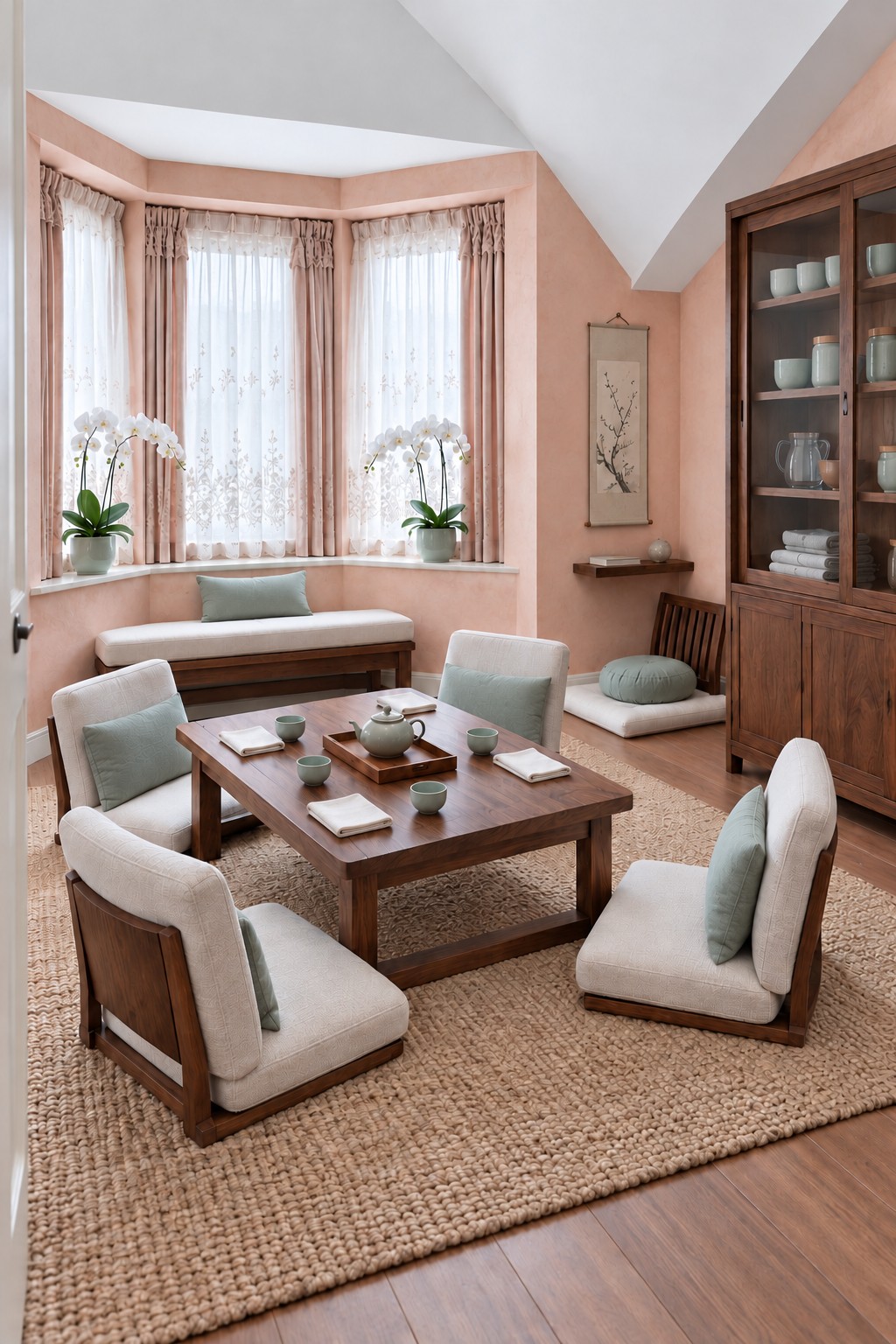
A low wooden table anchors this soft pink attic, bringing tea, reading, and conversation into the same compact setting. Cream floor chairs have supportive backs, and a cushioned window bench offers a higher sitting position. White orchids, pale textiles, and a glass fronted cupboard keep the room delicate without filling the tabletop with decoration. The plain woven rug defines the gathering area beneath the sloping walls.
Choose the table and seats together so the surface is comfortable to reach from the actual sitting height. Test getting in and out of the chairs before buying a complete set. Keep hot drinks on stable coasters and within easy reach, leaving the edges clear. A kettle can be filled elsewhere if the attic has no suitable service area. Treat the room as a personal tea and reflection space, with customs guided by the people using it.
13. A Buddhist Study Room with a Deep Red Focus Wall
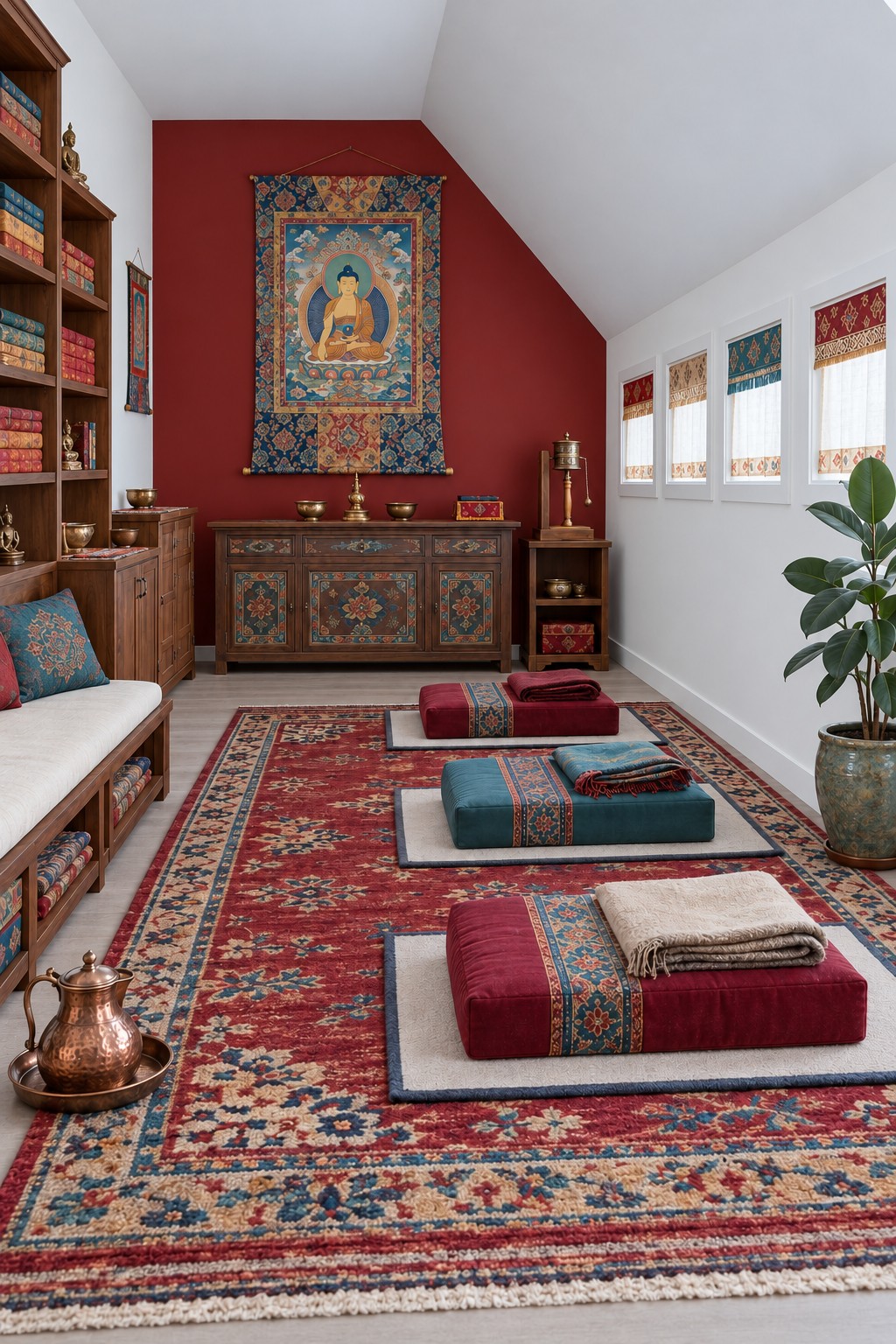
A deep red end wall gives a Buddhist devotional hanging clear prominence in this narrow attic. Painted wooden storage, richly patterned rugs, and burgundy and teal sitting cushions extend its color into the rest of the room. Tall bookshelves occupy one side, while small windows keep the opposite wall visually lighter. The arrangement brings study and seated practice together without placing books across the central route.
Choose devotional art that is appropriate to your Buddhist tradition, and give it a clean, secure place above a stable surface. Its placement and care can be discussed with your teacher or community. Use the cabinet for practice materials, with frequently consulted books at an accessible height. A smaller version can work with one cushion, one shelf, and a single red wall. Keep the detailed rug as the main floor pattern so additional textiles do not compete for attention.
14. Lavender Pillows and Apricot Bolsters in an Open Attic
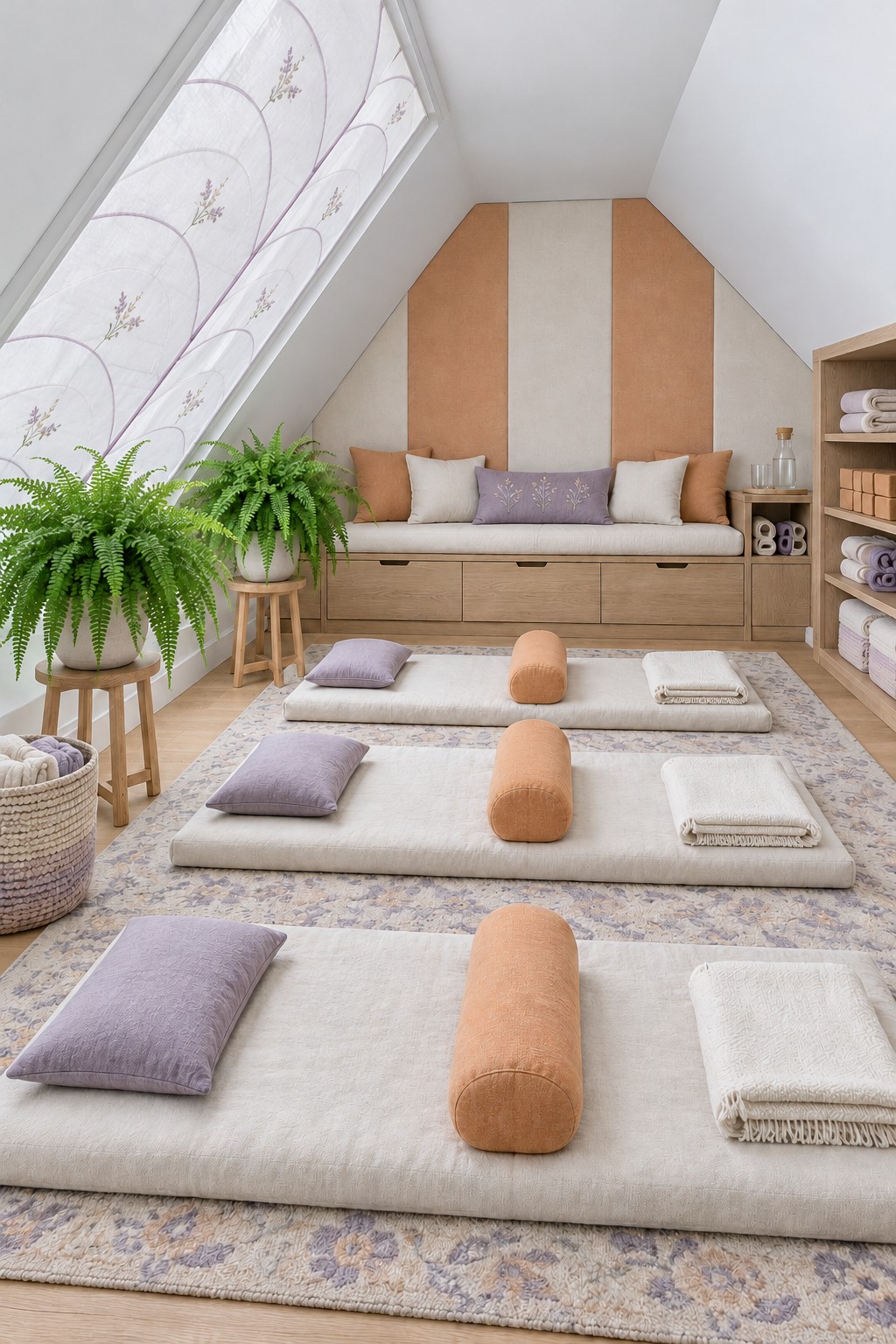
Cream mats, lavender pillows, and apricot bolsters give this attic a light, uncluttered arrangement. Long cushions lie in parallel with usable space between them, while a fitted bench at the far end stores extra textiles. Pale vertical wall accents add interest without making the room busy. Ferns beside the roof windows soften the long diagonal of the ceiling and stay outside the central floor area.
You can adapt the layout for seated reflection or a quiet rest by adjusting the number of mats to the available floor. Test each position with a person using it, including the space needed to rise. Keep the bench drawers accessible and choose removable covers that can be washed as directed. Bolsters should provide comfortable support for the individual user; their appearance alone does not determine suitability. Store unused mats so the room remains easy to clean.
15. A Ganesha Prayer Corner in a Narrow Roof Bay
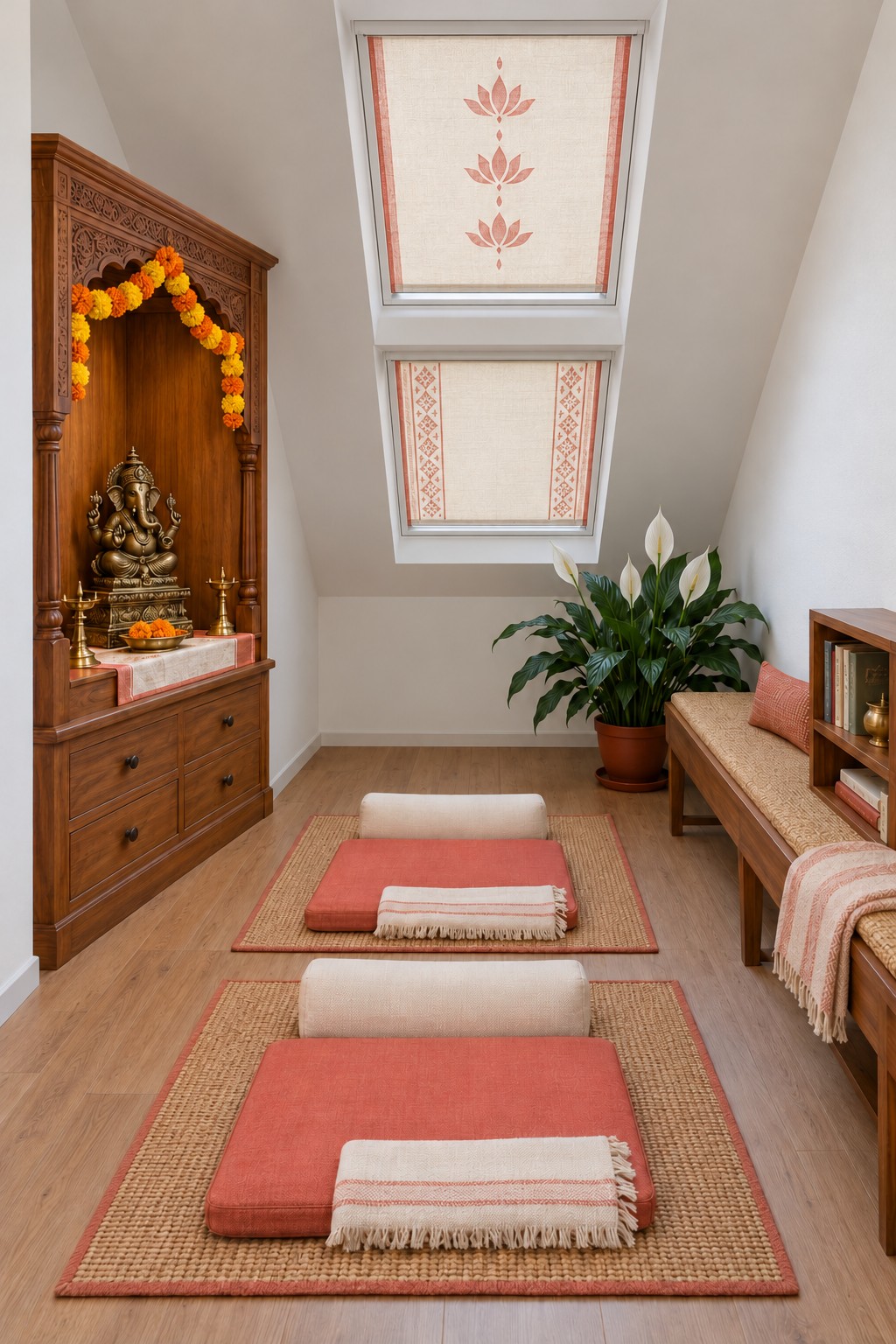
This narrow attic uses one side wall for a wooden Ganesha shrine, leaving the center available for two coral sitting mats and pale bolsters. Lotus patterned roof blinds repeat the warm accent color without requiring another large decorative object. A low book unit and a potted plant occupy the opposite side. The arrangement is compact, but the shrine still has a distinct area for devotional objects and offerings.
Measure the usable width before choosing the shrine depth, especially where the ceiling falls toward the wall. The seated person should be able to approach the devotional focus and stand without meeting the slope. Give books their own supported shelf and keep plant water away from timber and sacred objects. Select roof blinds made for the window model, then let their pattern guide smaller textiles. Adapt the devotional details according to your household's Ganesha worship practices.
16. Plum Floor Mats Beneath a Stone Window Arch
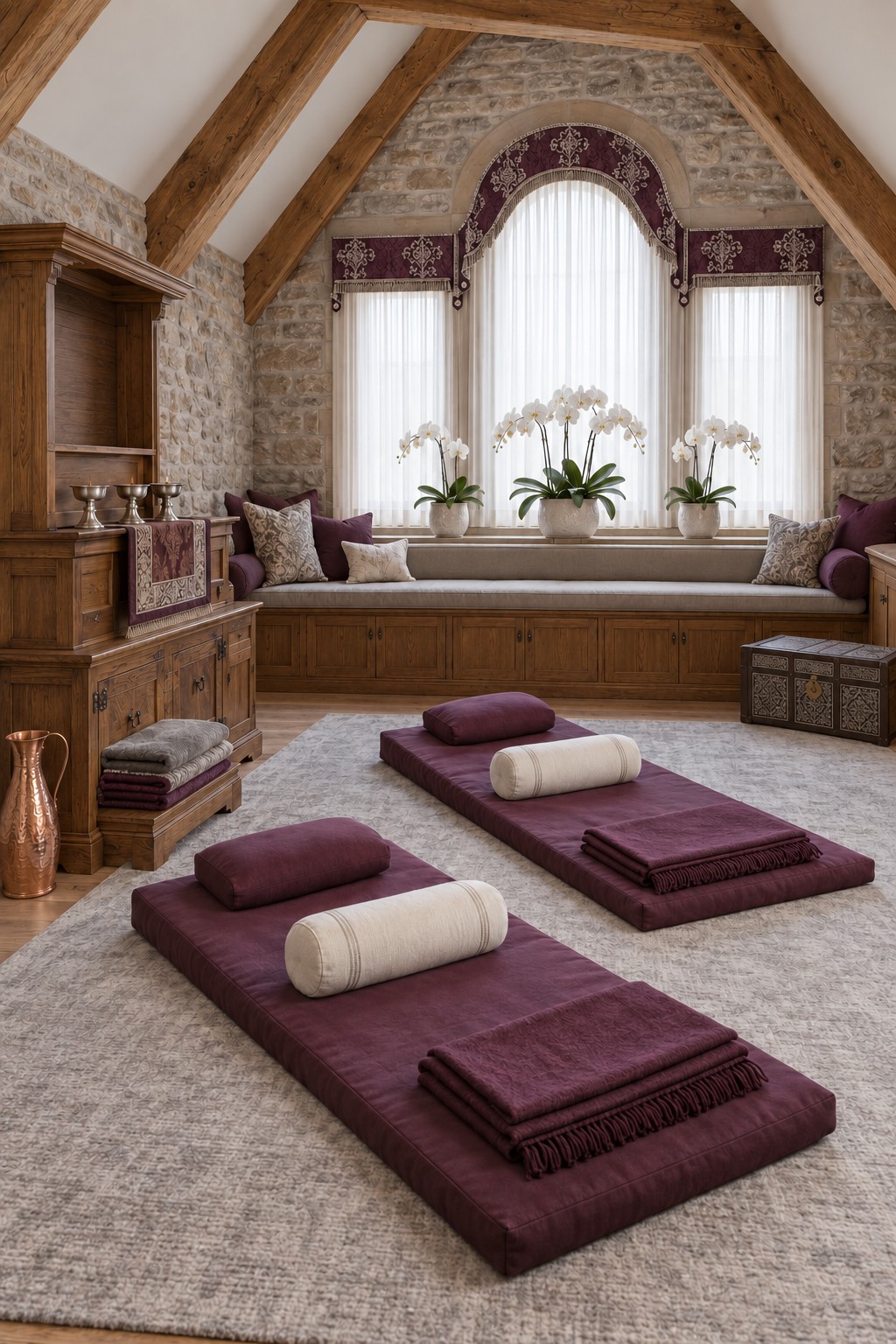
A stone arch and plum embroidered valance give this attic a composed, traditional character. The long window bench offers supported sitting, while two plum floor mats keep the center available for quiet individual practice. White orchids repeat along the sill above the bench. Carved cabinets and a small storage chest provide a place for folded textiles, helping the larger upholstered surfaces remain simple.
Use the window treatment as the main decorative gesture and repeat its darkest color in the mats. An existing arch can be emphasized with fabric and a bench without changing the structure around it. Keep the bench depth practical for sitting and allow access to any window hardware. Position orchids where their actual light needs can be met and use watertight outer containers. Store extra bolsters inside the cabinetry rather than stacking them along the floor's walking route.
17. A Rose Colored Conversation Retreat with a Small Trolley
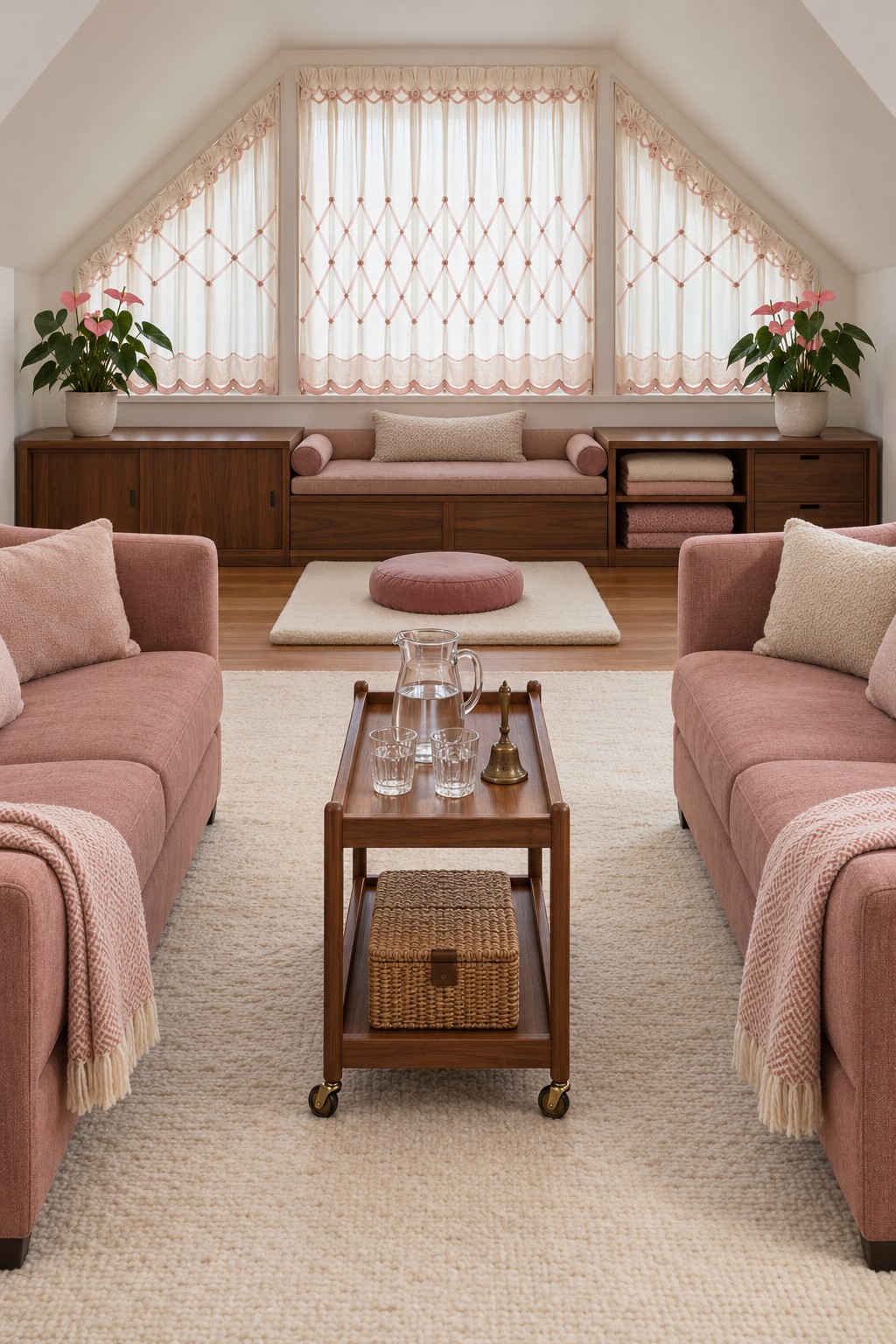
Facing rose colored sofas make this room welcoming for quiet conversation before or after a period of reflection. A compact wooden trolley holds water and glasses, while the rear platform gives one person a separate place for sitting. The triangular window's patterned curtains echo the roof shape, and storage below the bench keeps loose objects out of the way. Cream flooring and restrained cushions give the pink upholstery room to breathe.
Set the sofa spacing around people using the seats, including the movement of knees, feet, and the trolley. Choose a trolley with stable shelves and wheels that can be secured when parked. It should move to the side when the center is needed. Keep the meditation platform low enough to approach comfortably and its edges clearly visible. This arrangement works well when companionship is part of the retreat, while still allowing a quieter individual position at the back.
18. A Narrow Chanting Room with an Unbroken Central Aisle
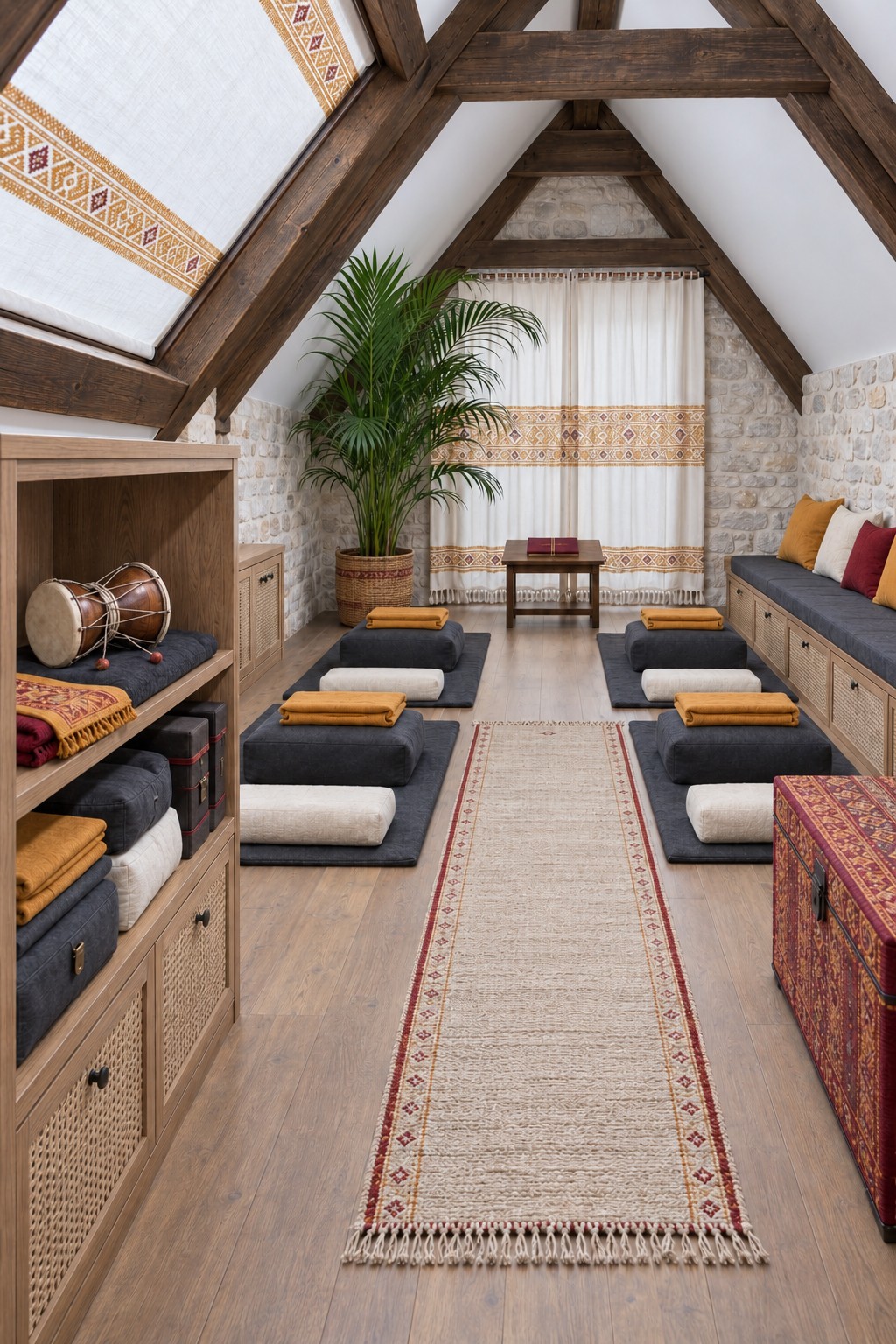
Dark sitting cushions and mustard bolsters line the sides of this long attic, leaving an unbroken central aisle. Timber beams, pale stone texture, and a patterned runner make the room feel settled without narrowing the passage with extra furniture. Instruments have dedicated shelves, and a long bench provides a higher seating choice. The far end remains open enough to approach the chair and window.
Use this plan when a narrow footprint needs several sitting positions. Mark the central route first, then see how many cushions genuinely fit beside it. Keep drums and other instruments fully supported, with their straps and handles contained inside the shelving. Any chanting or music can follow your own practice and the needs of the group. Plain upholstery is useful here because the beams, rug borders, and window fabric already introduce several lines of pattern.
19. Blue Gray Floor Chairs Around a Wooden Tea Chest
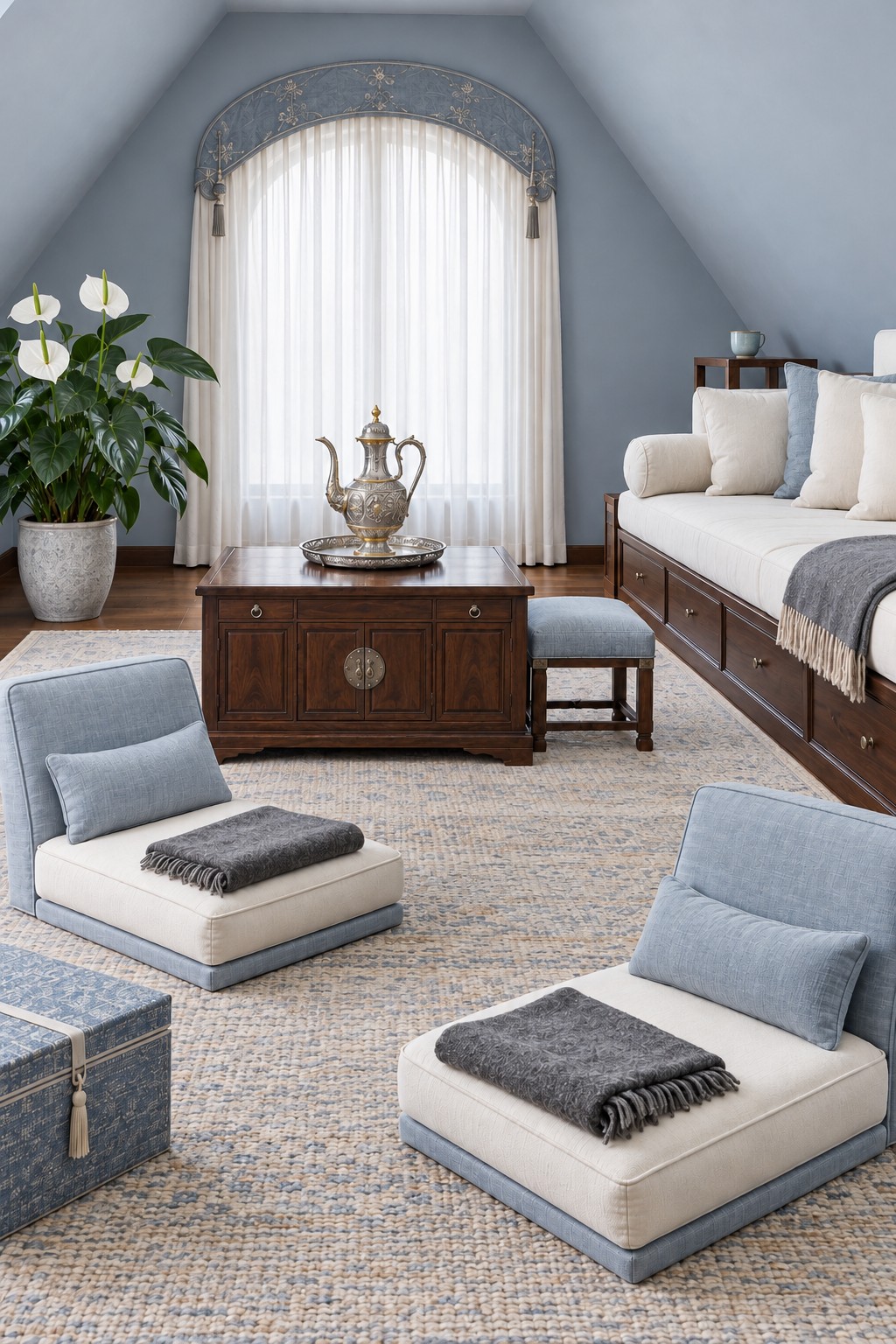
Soft blue gray walls and upholstered floor chairs give this attic a quieter, more domestic mood. A wooden chest supports a metal tea service, while a long window bench offers a higher place to sit. The broad pale rug connects the different seating heights, and a storage trunk can hold spare blankets. The arched curtain treatment adds a formal outline without overwhelming the room's modest furniture.
For a similar retreat, choose supportive seats first and check the height of any chest used as a table. Its top needs to be level, stable, and protected from moisture and heat. Keep heavy vessels toward the center and avoid using a hinged lid as an active tabletop when someone needs to open it. A plain rug and a limited blue palette make this arrangement easy to adapt to everyday reading or quiet conversation.
20. A Catholic Devotional Wall with Paired Rose Kneelers
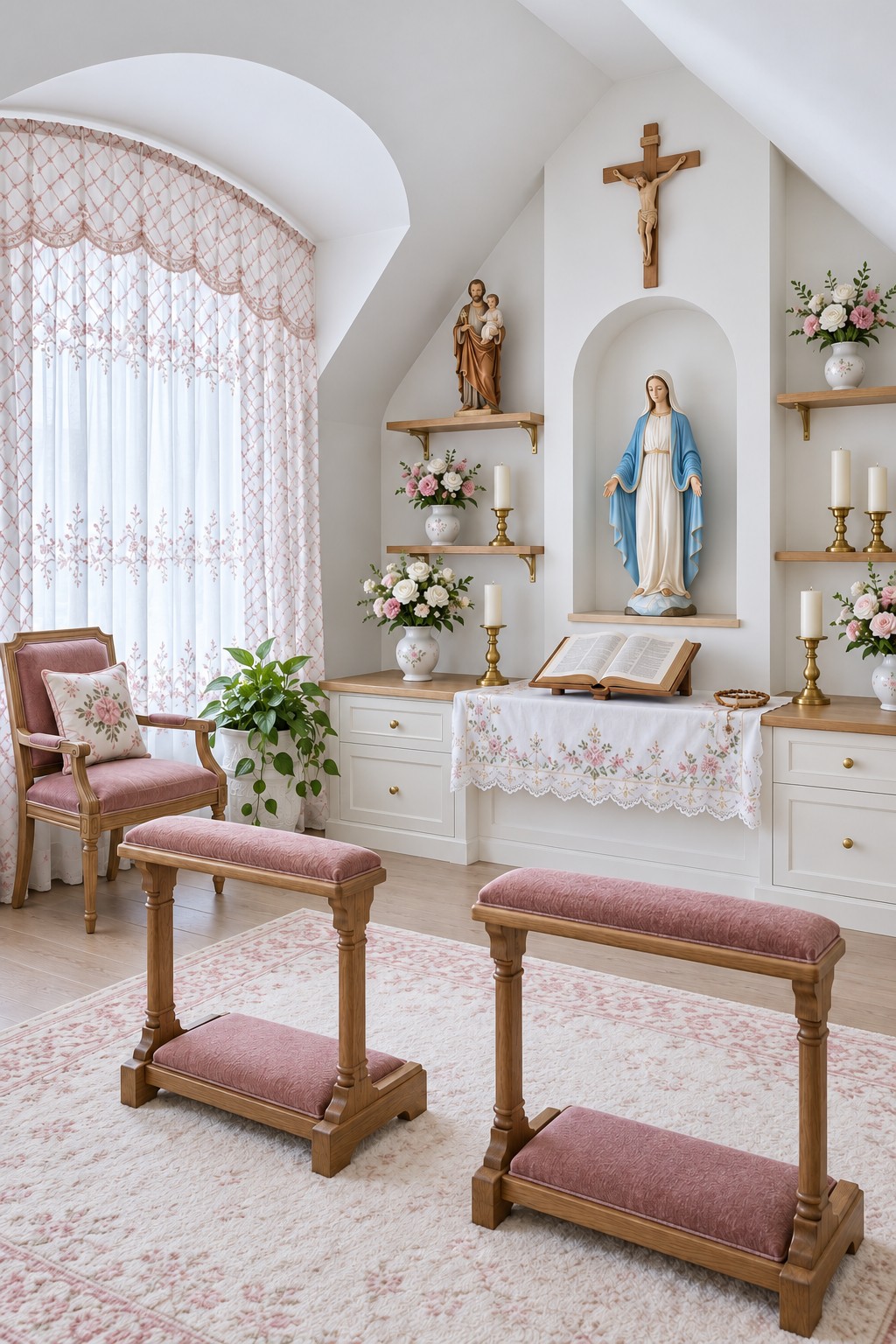
A crucifix, a Marian statue, an open Bible, and smaller devotional figures establish this room's Catholic character. White cabinetry gives the arrangement a continuous base, while rose upholstered kneelers repeat the soft floral details in the curtains and rug. The recessed center organizes the devotional wall clearly, leaving a separate surface for reading and prayer. Flowers provide a lighter counterpoint to the carved wood and metal candlesticks.
Begin with a stable prayer table or cabinet at a useful height for the people using it. Secure the crucifix and shelves independently with appropriate fittings. Test the kneeler positions for approach and balance, including the space needed to stand. Keep the Bible clear of flower water and use candles unlit or flameless where suitable. The devotional objects should reflect the household's prayer life, with arrangements for formal religious use guided by the relevant church community.
21. A Jewish Prayer Room with a Navy Ark Curtain
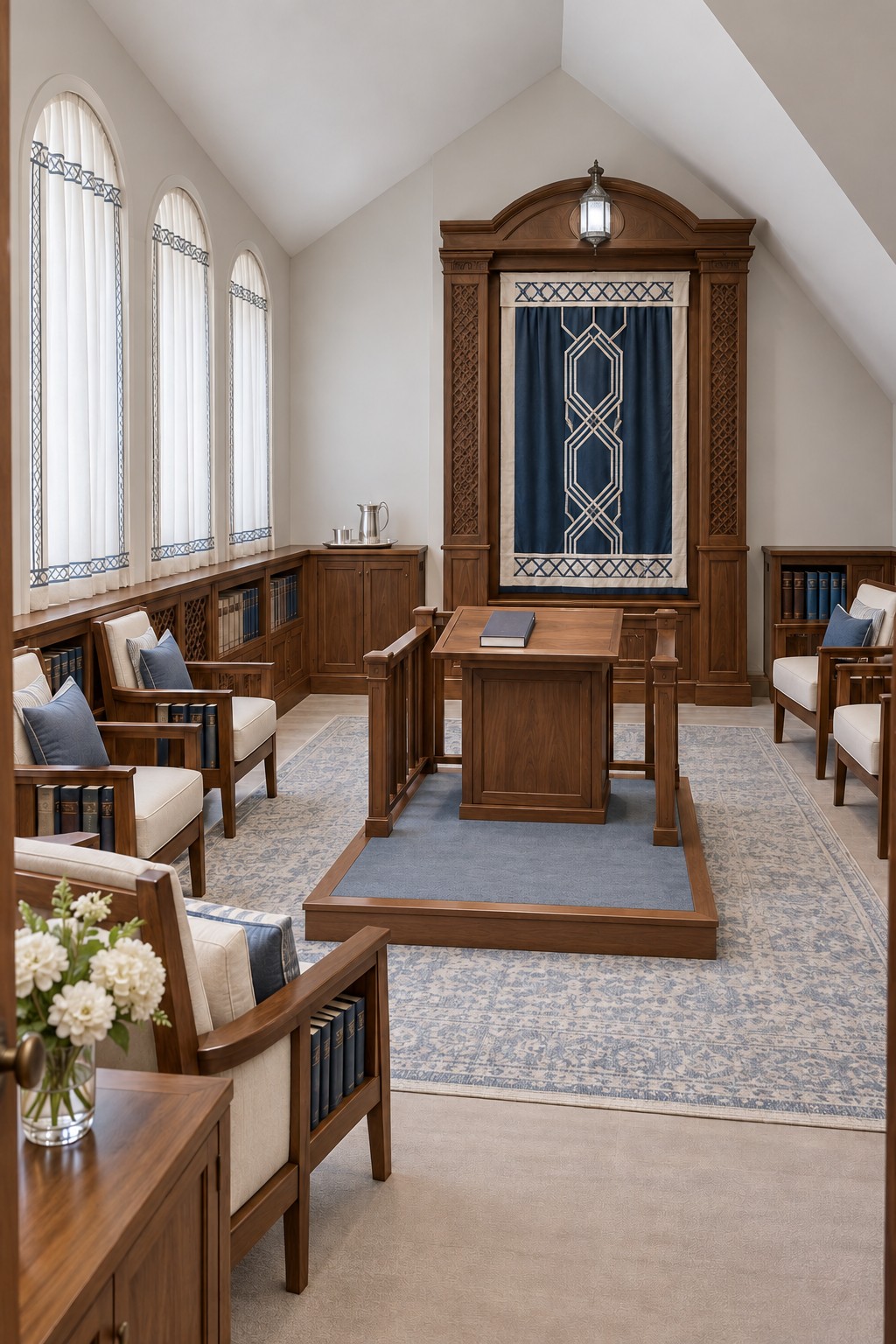
A navy curtain within a tall carved wooden surround gives this Jewish prayer room a clear focal end. Blue seat cushions repeat the textile color, while wood paneling and integrated book storage make the room feel orderly. A central reading position and open approach distinguish the prayer area from the seats at its sides. The tall surround fits within the highest part of the attic rather than pushing into the roof slope.
An ark, or aron kodesh, has a specific role in housing Torah scrolls, and its curtain is known as a parochet. Treat these as religious furnishings with appropriate guidance. For an ordinary home study or prayer room, a smaller book cabinet may suit the actual need. Confirm prayer orientation and any requirements for communal use with your rabbi, then size the furniture around a clear approach and comfortable seating.
22. An Open Circle of Chairs Under Exposed Beams
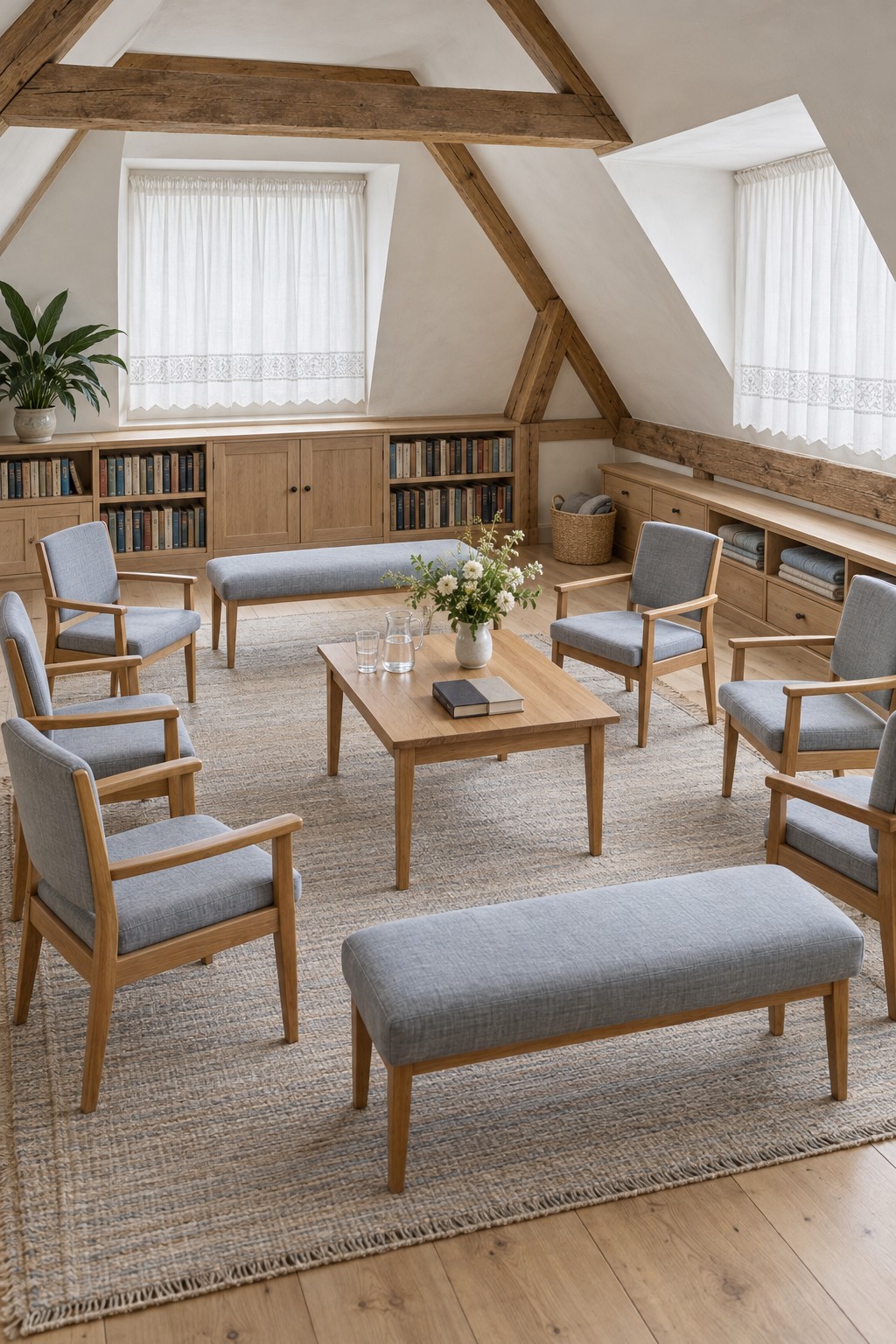
An open circle of timber chairs makes this attic useful for shared silence, reflection, or conversation. Blue gray upholstery gives the seats a common identity, while low bookshelves follow the eaves. The small central table holds flowers and water, keeping the room's visual center modest. Exposed beams provide the strongest architectural detail, so the walls and curtains can stay plain.
Arrange the seats so each person has a clear view across the group and a route to the exit. Use a similar sitting height for the chairs and benches, with an alternative position for anyone who needs more support. The plan can suit an unprogrammed Quaker style gathering, while individual communities shape their own practice. At home, it also works for a family reflection space that can be rearranged without moving substantial devotional furniture.
23. A Floral Catholic Prayer Nook with Teal Seating
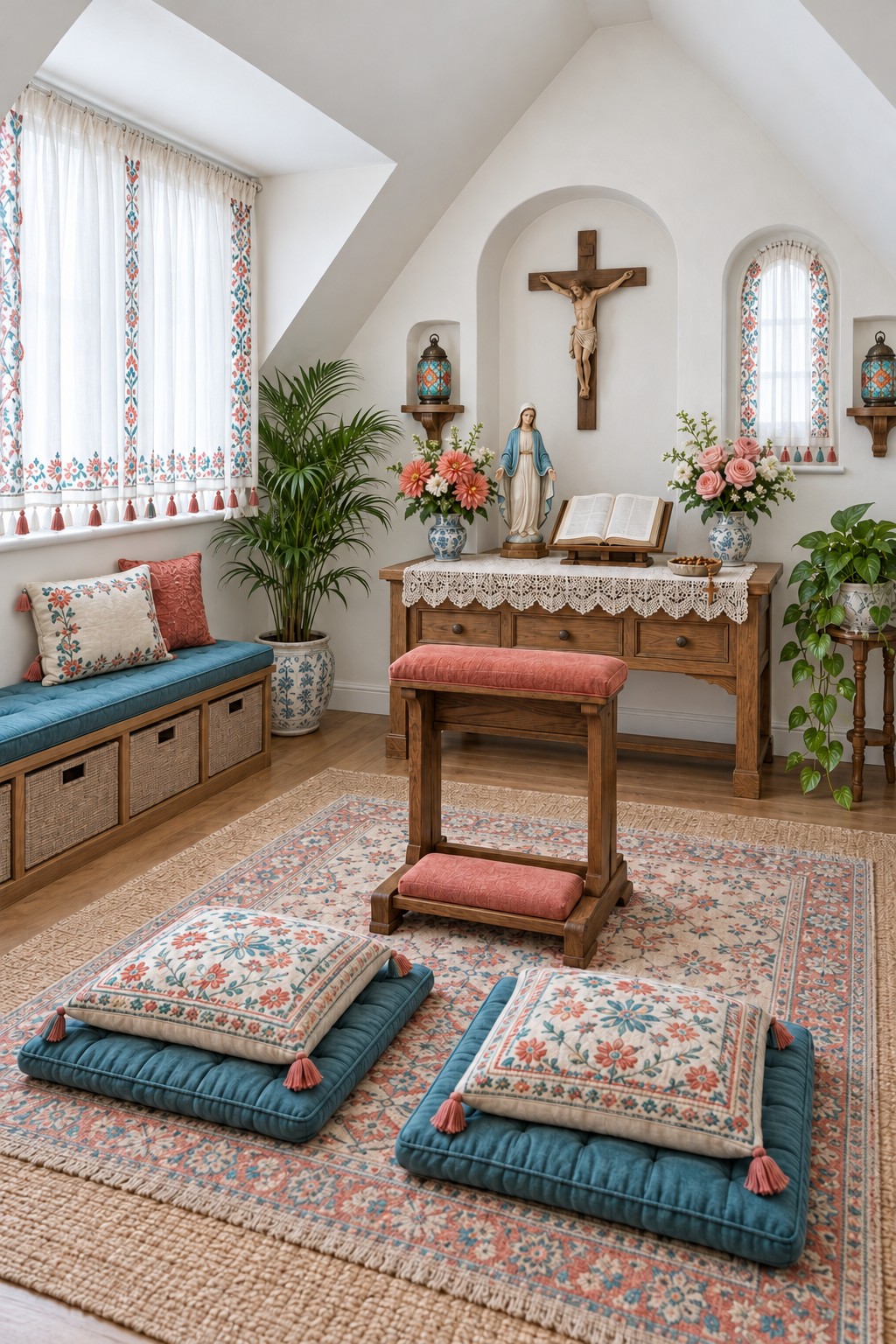
Floral curtains and a teal window bench give this Catholic prayer nook a welcoming domestic quality. A crucifix sits above the central devotional surface, accompanied by Marian imagery, flowers, and an open book. A rose kneeler provides one defined prayer position, while floral cushions on teal mats offer another way to sit. The plain sloping walls leave the concentrated detail around the devotional focus easy to read.
Choose one floral textile as the starting point, then repeat its teal and rose in the larger cushions. Keep the prayer surface deep enough to hold a book securely, with arrangements that can be removed for cleaning. Wall mounted figures and shelves need proper supports independent of the decorative finish. Leave space around the kneeler and floor mats so a person can move between them without stepping across another sitting position.
24. A Teal Muslim Prayer Room with Clear Carpet Rows
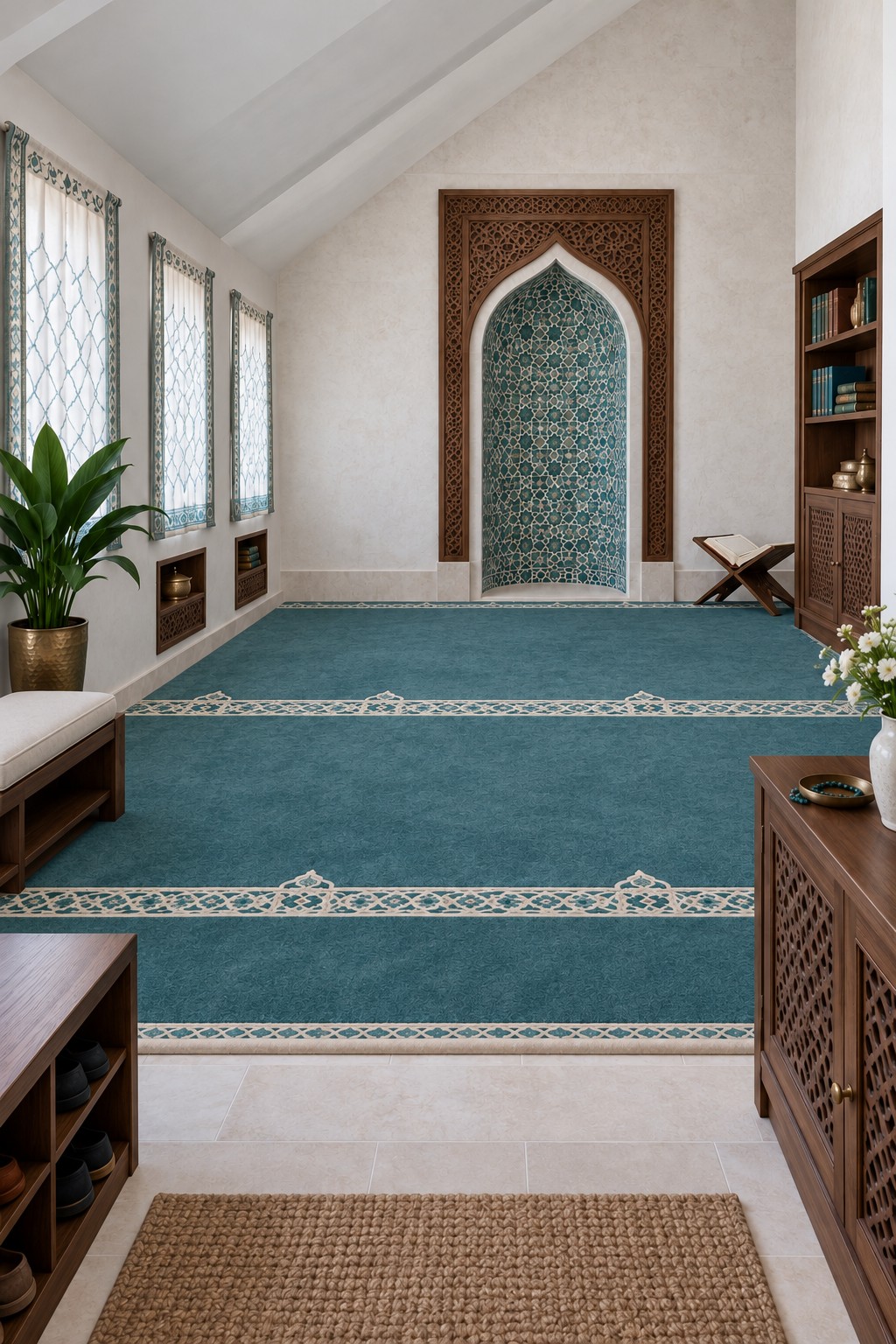
Teal carpet and narrow patterned borders define the prayer area in this Muslim attic room. A pointed arch with a patterned interior creates a restrained focal wall, while side benches and bookshelves keep the central floor open. The low furniture respects the roof slope. The entrance mat gives a practical transition before reaching the clean prayer surface, and the main carpet remains free of scattered decorative objects.
Confirm the qibla for the actual property before positioning the prayer rows. A decorative arch only functions as a directional prayer feature when it corresponds to that orientation. Choose a clean, stable floor covering that lies flat and leaves enough room for standing, bowing, and prostration. Keep books respectfully stored on supported shelves and allow for a chair position where needed. Place shoe storage outside the main prayer area, with access that does not cross occupied rows.
25. A Tibetan Buddhist Shrine with Burgundy Sitting Rows
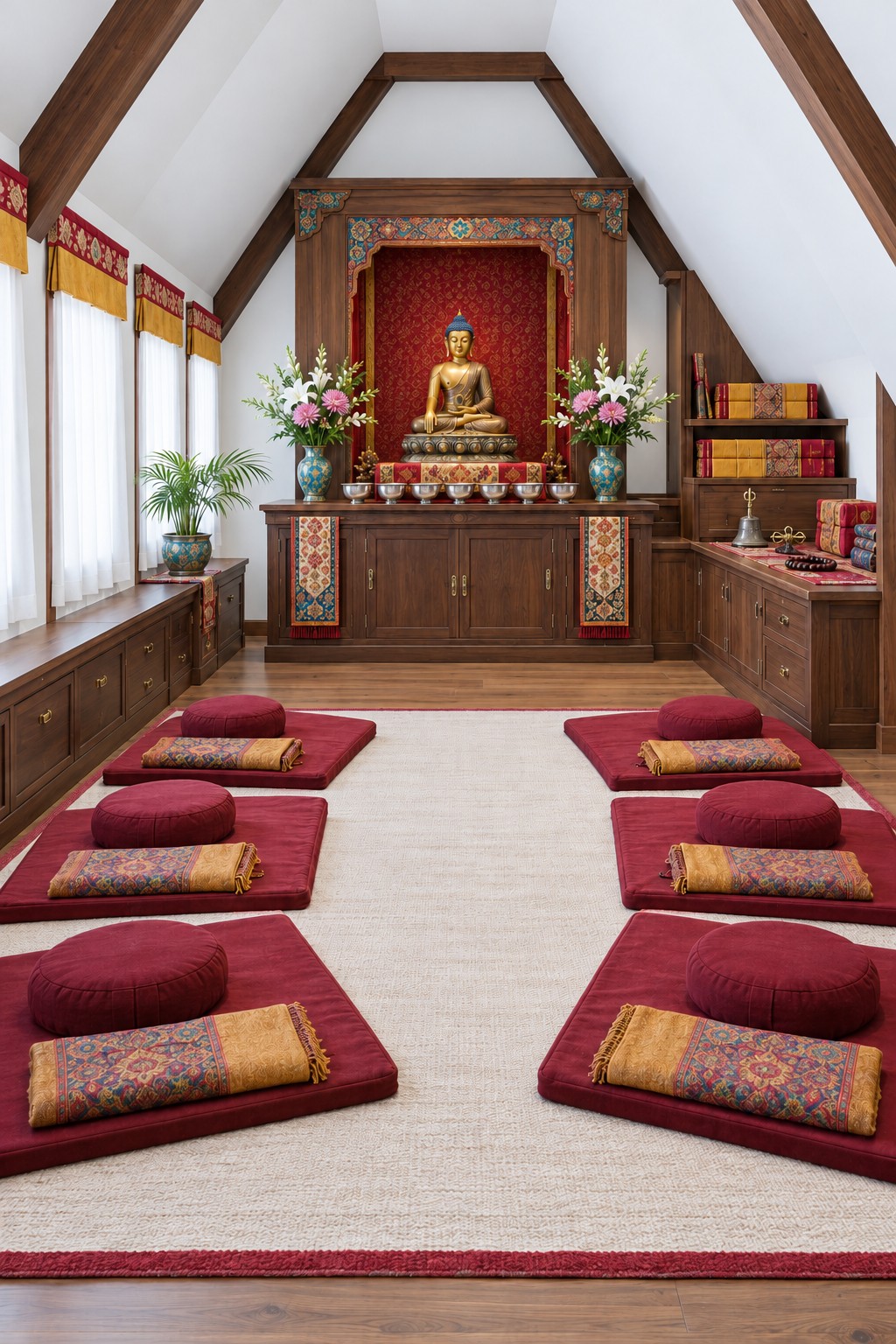
A golden seated Buddha within a red and painted wooden surround gives this Tibetan Buddhist inspired room a clear devotional focus. Burgundy sitting pads and round cushions repeat along both sides of the central rug. Patterned bolsters, folded textiles, and floral arrangements introduce detail around the otherwise open seating area. Low cabinetry follows the eaves and provides useful storage without adding taller furniture beside the shrine.
Work with your teacher or community when choosing the image, offerings, and arrangement of the shrine. Furniture can support the practice by keeping the approach clear and placing necessary objects on stable surfaces. Select cushion heights individually rather than buying matching pieces solely for appearance. If the attic is small, retain one or two sitting positions and the same orderly focal wall. Secure the shrine and any substantial display components for their actual weight.
26. A Flower Framed Ganesha Mandir with Pink Cushions
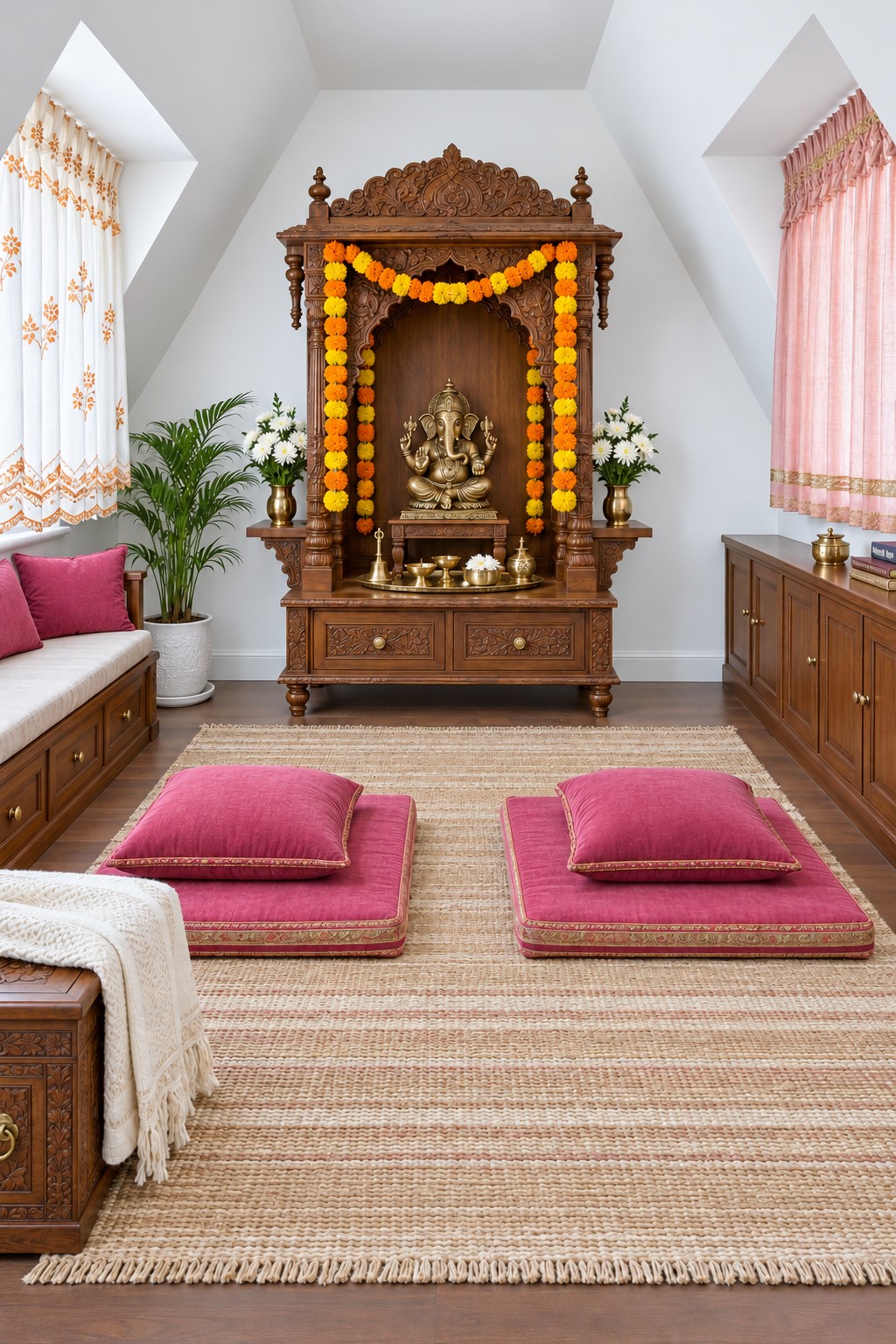
Orange and yellow flower garlands frame a carved Ganesha mandir, while bright pink cushions bring a more playful color into the sitting area. Pale walls and a woven rug keep the small attic from feeling crowded by the ornate shrine. Side cabinetry and a cushioned bench provide useful storage and an alternative seat. The flowers are concentrated around the mandir, giving the decoration a clear place and purpose.
Size the mandir for the tallest usable wall and check the approach before arranging the cushions. Attach garlands to suitable supports without relying on loose draping near lamps. Brass vessels need a level surface and space for handling. In a household using fresh flowers, make the garlands easy to remove and replace. Keep additional ritual supplies in the side cupboards, with devotional practice and the care of the image guided by your own tradition.
27. A Blue and White Christian Chapel Beneath Timber Rafters
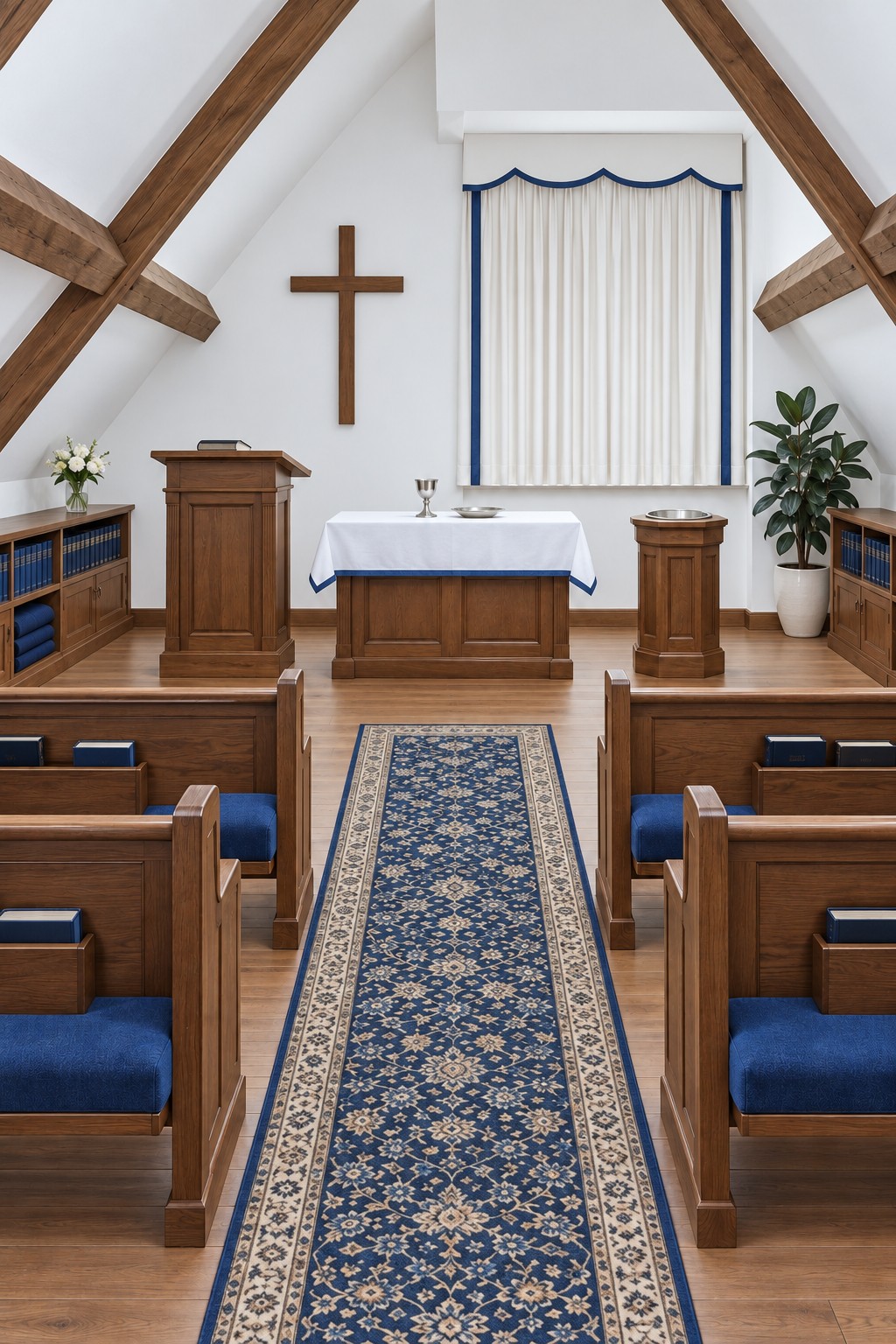
A plain wooden cross, a white covered table, and blue seating give this chapel shaped attic a clear Christian focus. The central runner draws the eye toward the front while leaving a defined aisle between the pews. A simple reading stand sits to one side. The exposed rafters remain visible above the otherwise restrained decoration, and a short blue trimmed curtain repeats the upholstery color at the focal wall.
For a domestic adaptation, you can use a prayer table and a small number of movable chairs in the same balanced arrangement. Keep the approach level and unobstructed; a raised front platform is not necessary for a home prayer room. Select cloths that fit the tabletop without trailing into the aisle. A space intended for services or wider public use needs guidance from the church community and the appropriate local building professionals.
28. A Standing Buddha Against a Charcoal Shrine Wall
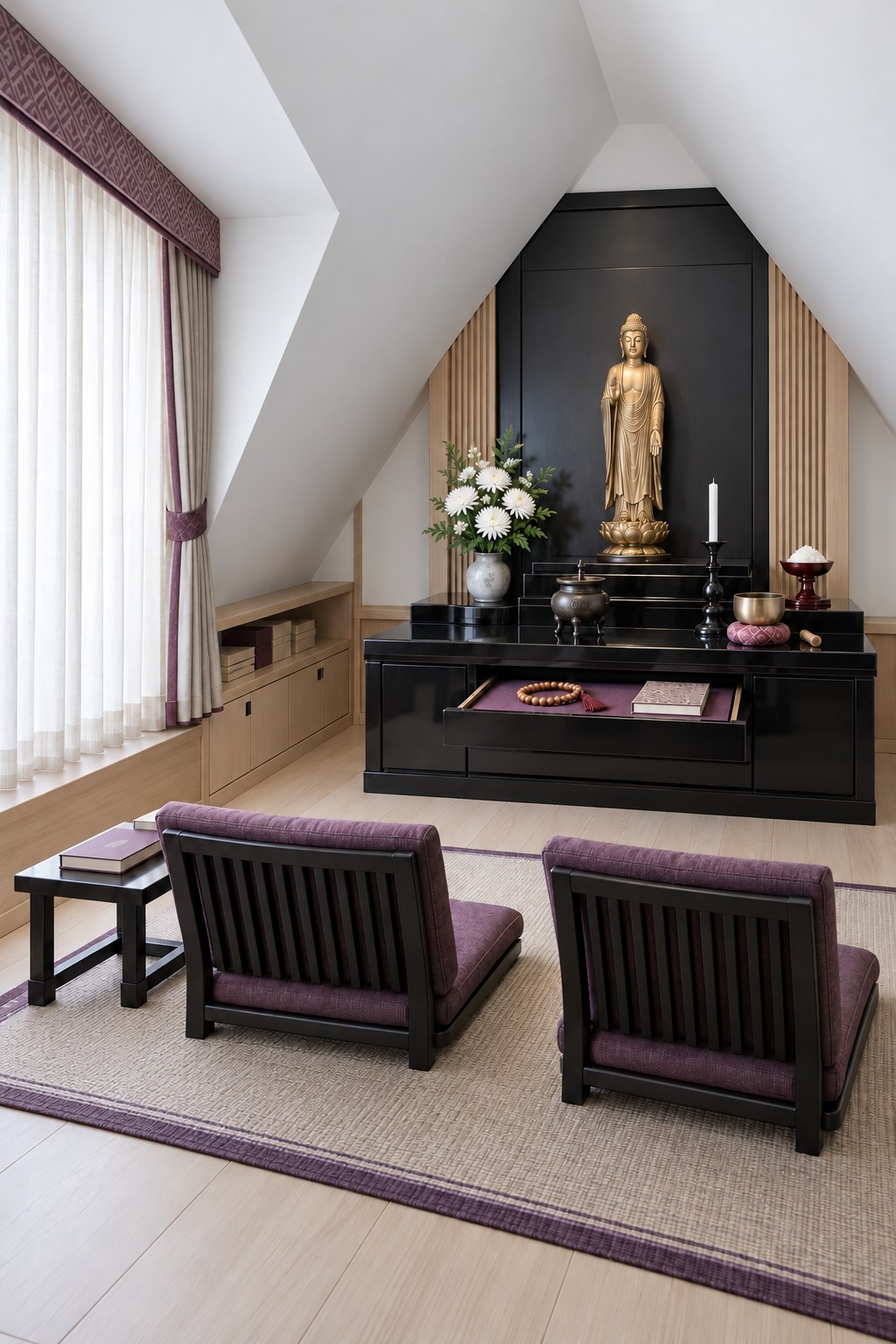
A golden standing Buddha contrasts with the charcoal backdrop and black shrine cabinet in this compact attic. Pale vertical timber strips frame the focal wall, while plum upholstery brings softness to the low wooden chairs. A fitted window bench creates a second seating height beside the shrine. The rug stays mostly plain, allowing the standing figure and carefully arranged vessels to remain the main visual focus.
Choose a stable base capable of supporting the figure, with suitable measures against accidental movement. Arrange devotional objects according to your Buddhist tradition and keep the cabinet top accessible for care. The two low chairs should be tested for comfort and ease of rising before their position is fixed. Repeat the plum accent sparingly in window trim or a cushion, letting the dark shrine wall provide the room's strongest contrast.
29. A White Stone Shrine with Black Accents
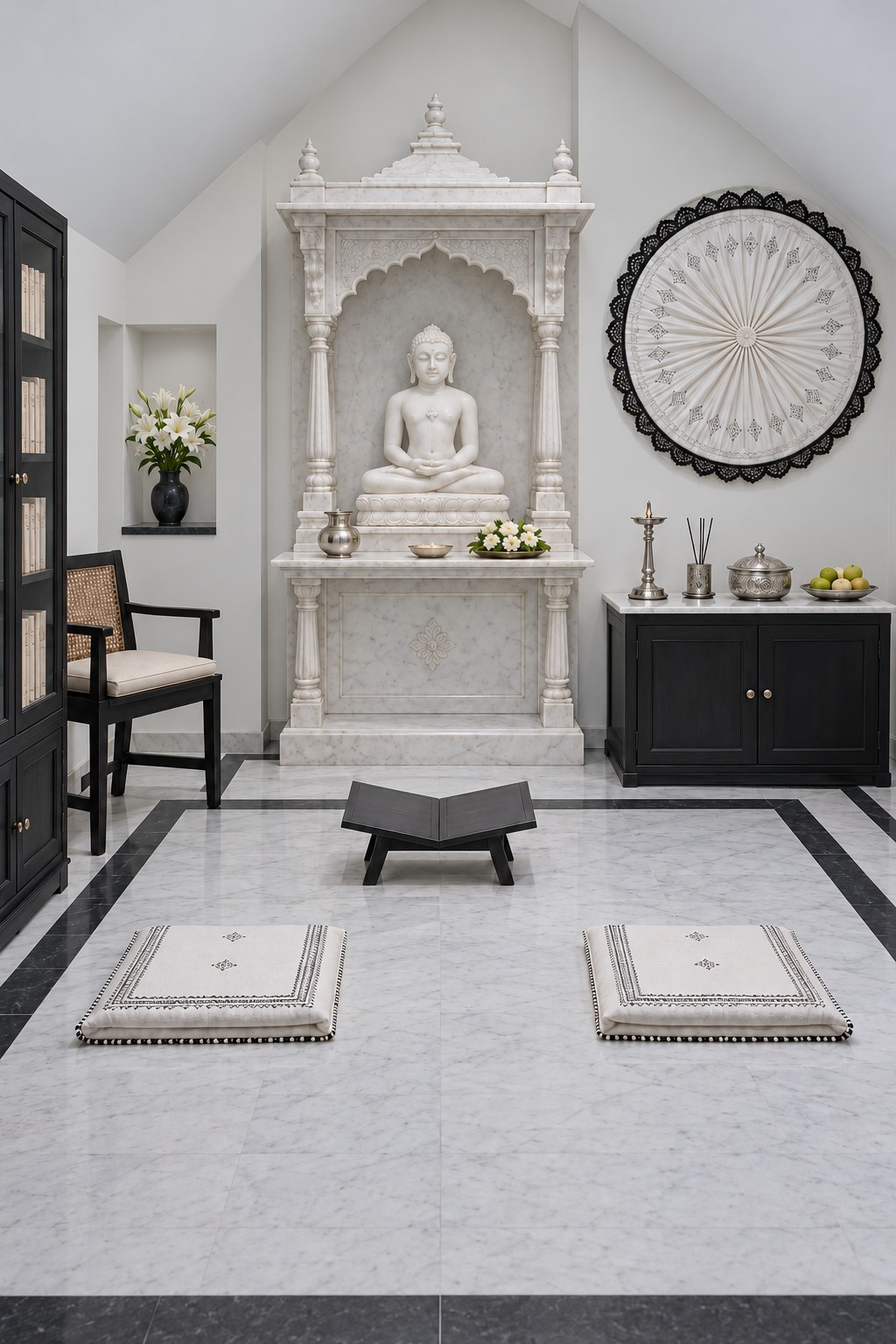
A seated devotional figure forms the focus of this white stone shrine. Black cabinetry, a dark floor border and a circular textile ornament contrast with its pale surround. Two ivory cushions face the shrine, with a low book support ahead and a chair at the side.
Have the shrine’s weight and the attic floor assessed before ordering. A specialist can plan delivery, support and assembly. Choose the devotional image and its placement according to your household’s tradition. Keep the polished floor dry, the cushions stable and the center clear for approaching the shrine.
30. A Flower Draped Krishna Shrine Above Blue Cabinetry
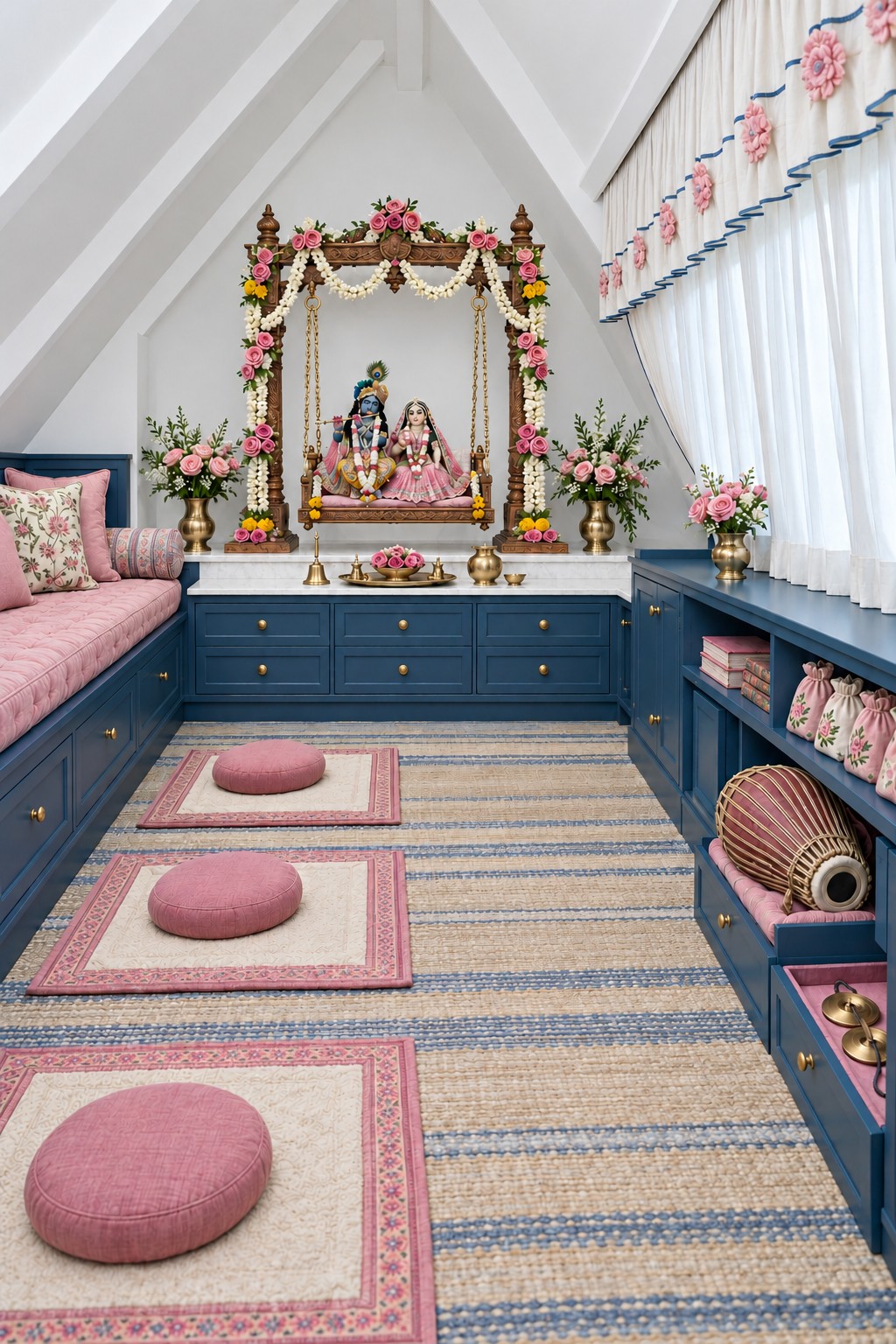
Blue cabinetry and pink cushions give this devotional attic a lively but organized palette. The shrine at the far end carries floral garlands and paired devotional figures, while a pale counter separates the detailed display from the storage below. Bench seating follows the sides, and three sitting cushions line the long woven rug. Floral trim above the windows repeats the pink without needing additional ornaments in the central aisle.
For a similar home mandir, commission storage around the ritual objects and textiles you actually use. Check that every drawer can open without moving a sitting mat. Give the shrine and garlands their own properly designed supports, and keep flower water contained on suitable trays. Select the images and their arrangement according to your Krishna devotional tradition. Plain cushion covers and a restrained rug pattern help balance the more intricate floral display.
31. A Carved Devotional Cabinet with Folding Doors
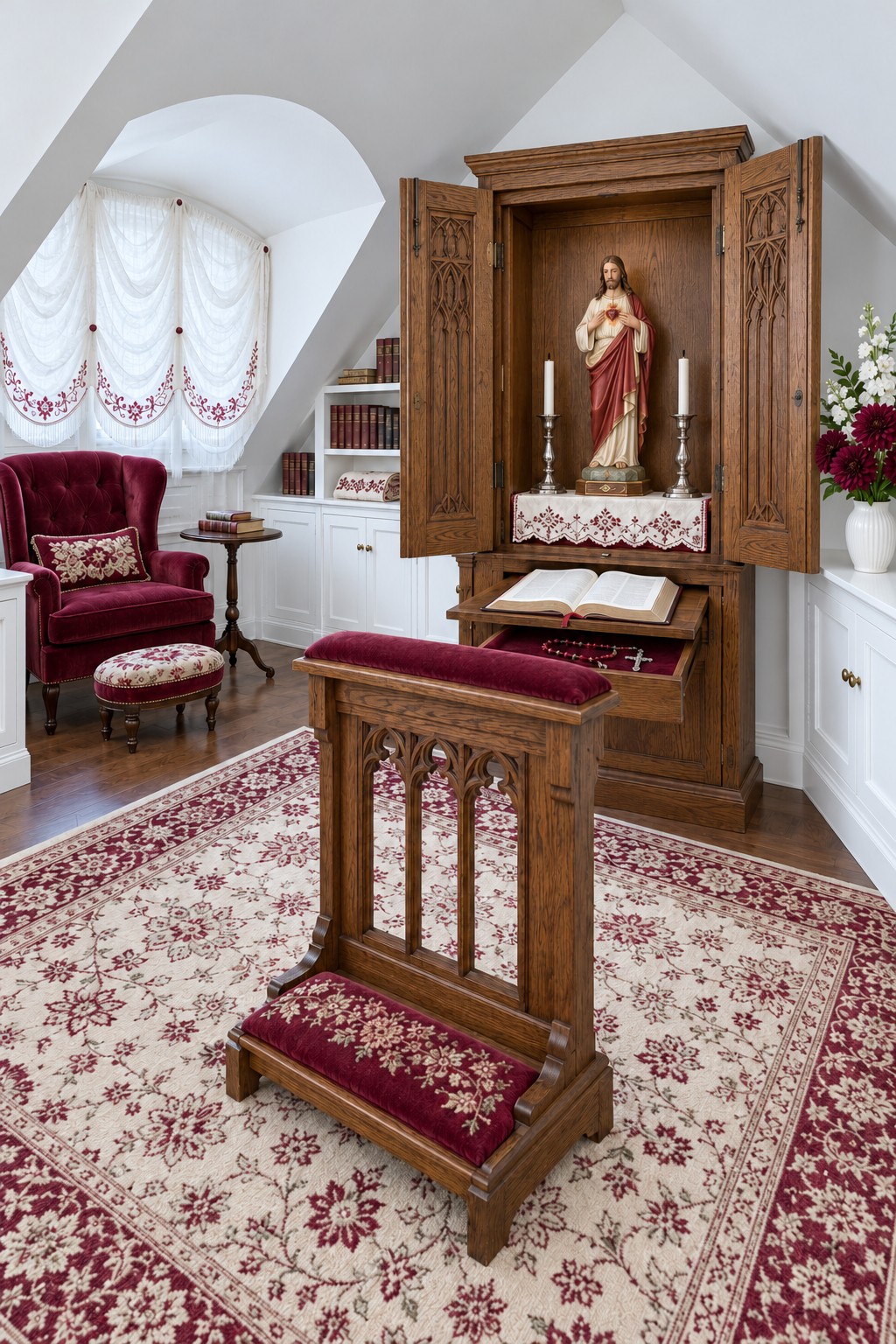
An opening wooden devotional cabinet makes this attic prayer corner feel especially personal. Its carved doors frame a Sacred Heart figure, with a reading surface below and a burgundy upholstered kneeler in front. A matching armchair creates a separate place for longer reading. Cream shelving and a pale floral rug keep the dark timber and deep red textiles from taking over the whole room.
Allow the cabinet doors to open fully without striking the wall, figures, or nearby furniture. Keep candles unlit inside the timber enclosure and confirm that every object remains secure when the doors move. A carpenter can design the cabinet and reading support around the real dimensions of your devotional pieces. The kneeler should have a stable footprint and room for rising, while the armchair stays outside its approach.
32. White Cabinetry for Prayer Textiles and Reflective Reading
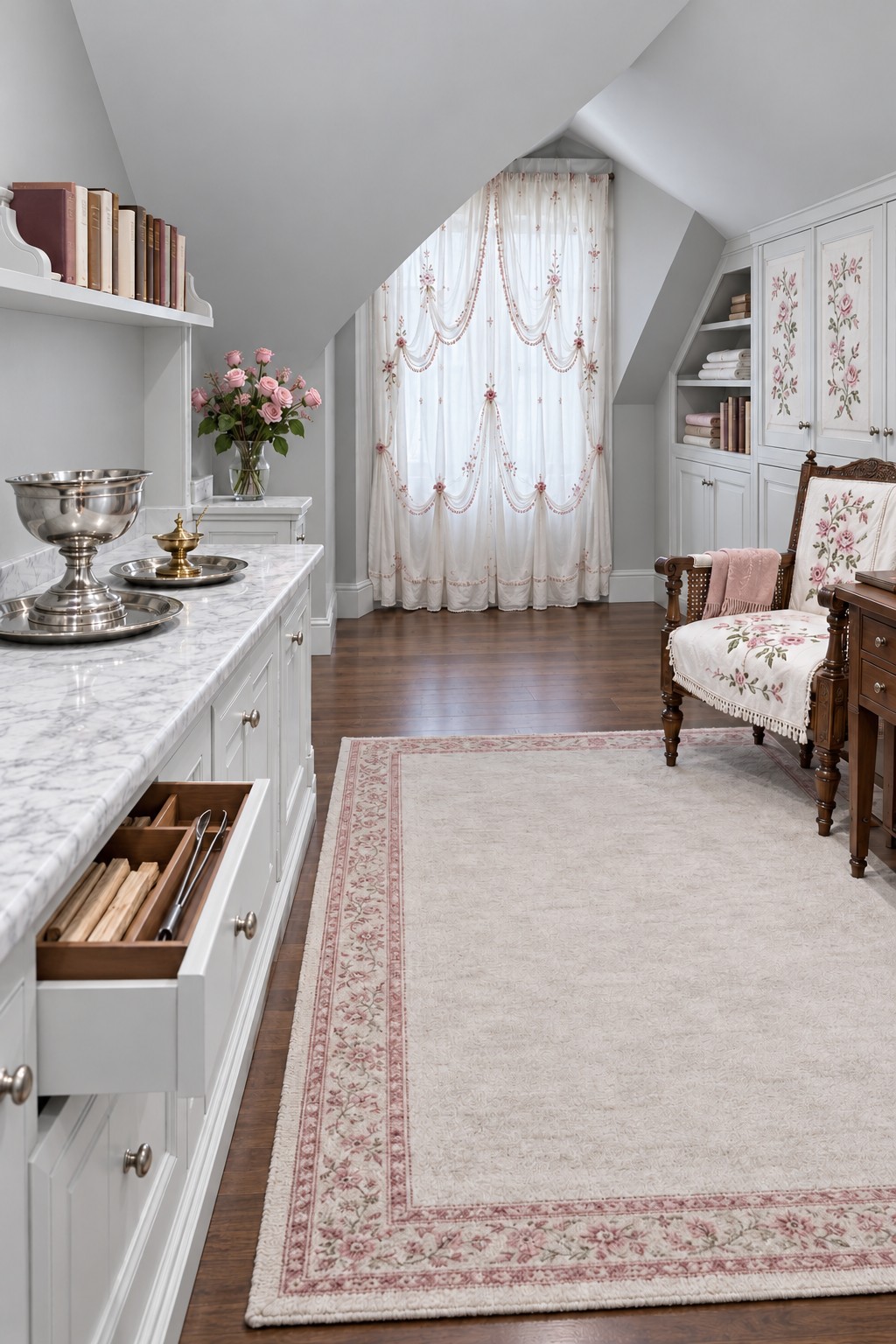
This attic gives storage the same attention as seating. White cabinetry follows the long wall, with shelves for folded textiles and a broad pale counter for vessels and supplies. A floral chair creates a quiet reading position at the far end. Rose patterned curtains and a soft border rug add warmth without filling the narrow floor with extra furniture. The room works as a support area for devotional objects as well as a retreat.
Plan drawers around the actual cloths, trays, and books they will hold, and check the clearance when they are open. Keep heavy vessels on strong, accessible surfaces. Store clean textiles dry and separate from items that might leak or tarnish. Use the long counter for sorting and care, then put objects away before sitting down. The chair needs enough headroom for standing, with a reading light positioned for the user.
33. A Red and Teal Chinese Devotional Alcove
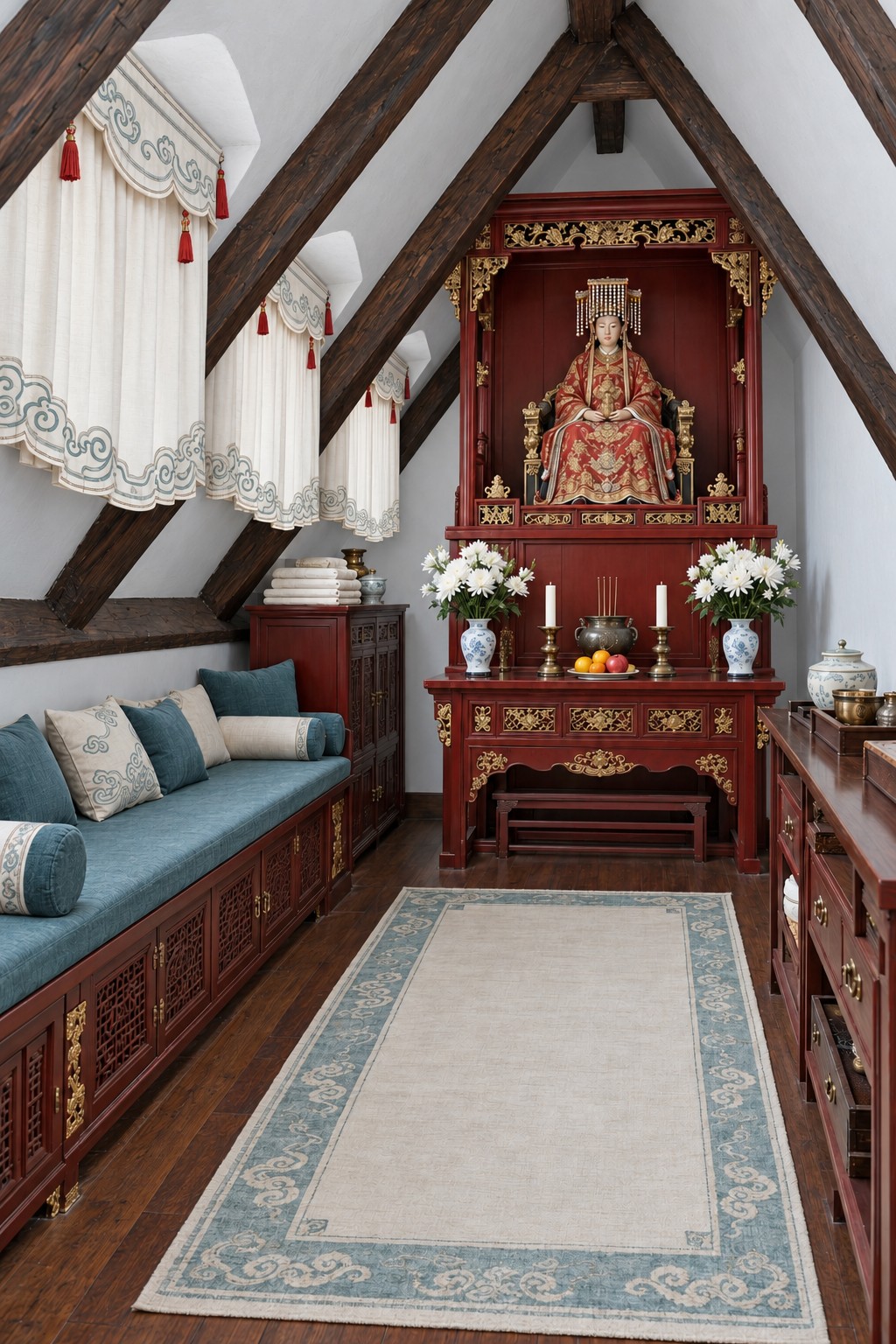
A red and gold shrine creates a strong focal point beneath the dark attic beams. Teal bench upholstery and a pale blue bordered rug give the surrounding room a quieter balance. Porcelain flower vases, metal vessels, and an offering plate occupy defined surfaces in front of the devotional figure. Side cabinets carry the same carved timber detail, while cream curtains soften the length of the window wall.
Choose the sacred figure and offerings according to your household's Chinese religious or devotional tradition, with guidance on their proper placement and care. Keep the shrine furniture structurally independent of decorative beam trim. Use the long bench for sitting and concealed storage, leaving the center open for approaching the devotional surface. Candles and incense can remain unlit where timber, curtains, or the low roof create unsuitable conditions for heat and smoke.
Practical Questions About Attic Meditation and Prayer Rooms
What Is the Best Starting Point for a Small Attic Retreat?
Choose one comfortable sitting position and one clear focus, such as a view, a book, or an appropriate devotional object. Add a small amount of closed storage before bringing in more decoration. One chair beneath adequate headroom can be more useful than several floor cushions that make movement difficult. Expand only after you have used the room and understand what is missing.
Do You Need to Sit on the Floor to Meditate or Pray?
The suitable position depends on the practice and the person. A supportive chair, a bench, or a floor cushion may each have a place. Choose a position you can enter and leave comfortably, and discuss any required religious posture or accommodation with your community. A room with more than one seating height is often easier for a household to share.
How Can You Keep the Room Personal Without Overfilling It?
Display the objects you use or care about, and give each a stable, accessible place. Repeat a limited set of colors through the rug, seating, and window treatments. Store spare cloths, extra cushions, and occasional supplies behind doors. Leaving an open center makes the room easier to use, and it gives the meaningful objects at its edges enough space to be noticed.

Leave a Reply