19 Unusual Hanging Basket Designs Made From Unexpected Materials

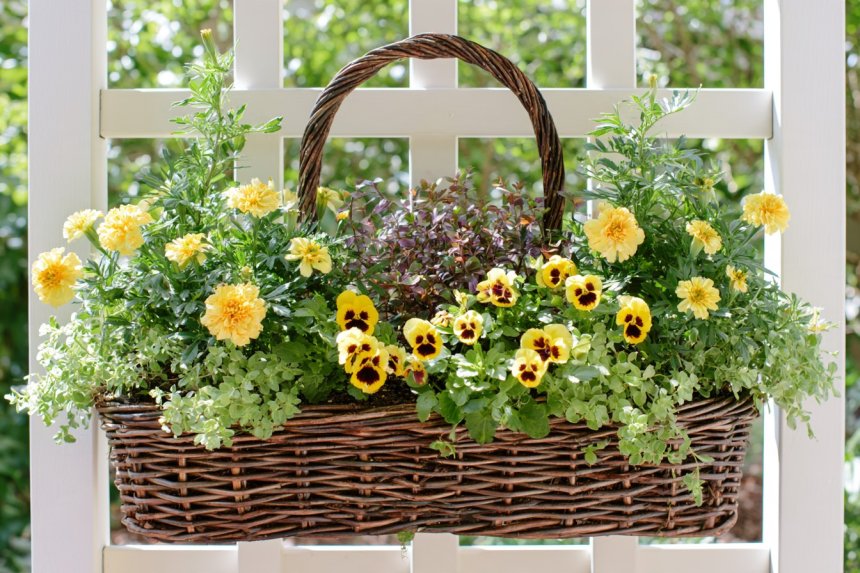
A hanging basket does not have to begin with a woven planter and three lengths of rope. Some of the most memorable designs come from objects that were never intended to hold plants at all: perforated metal bowls, reclaimed shutters, ceramic colanders, timber offcuts, wire sculptures, old baking forms, and even layered architectural frames. The challenge is making those materials work with water, weight, airflow, and root space rather than treating the plant as an afterthought. These hanging basket concepts combine unusual forms with practical construction, showing where drainage should go, how removable inner pots can simplify watering, and which ideas work best for trailing plants, herbs, compact foliage, or lightweight seasonal displays.
1. Turn a Vintage Metal Colander Into a Suspended Herb Basket
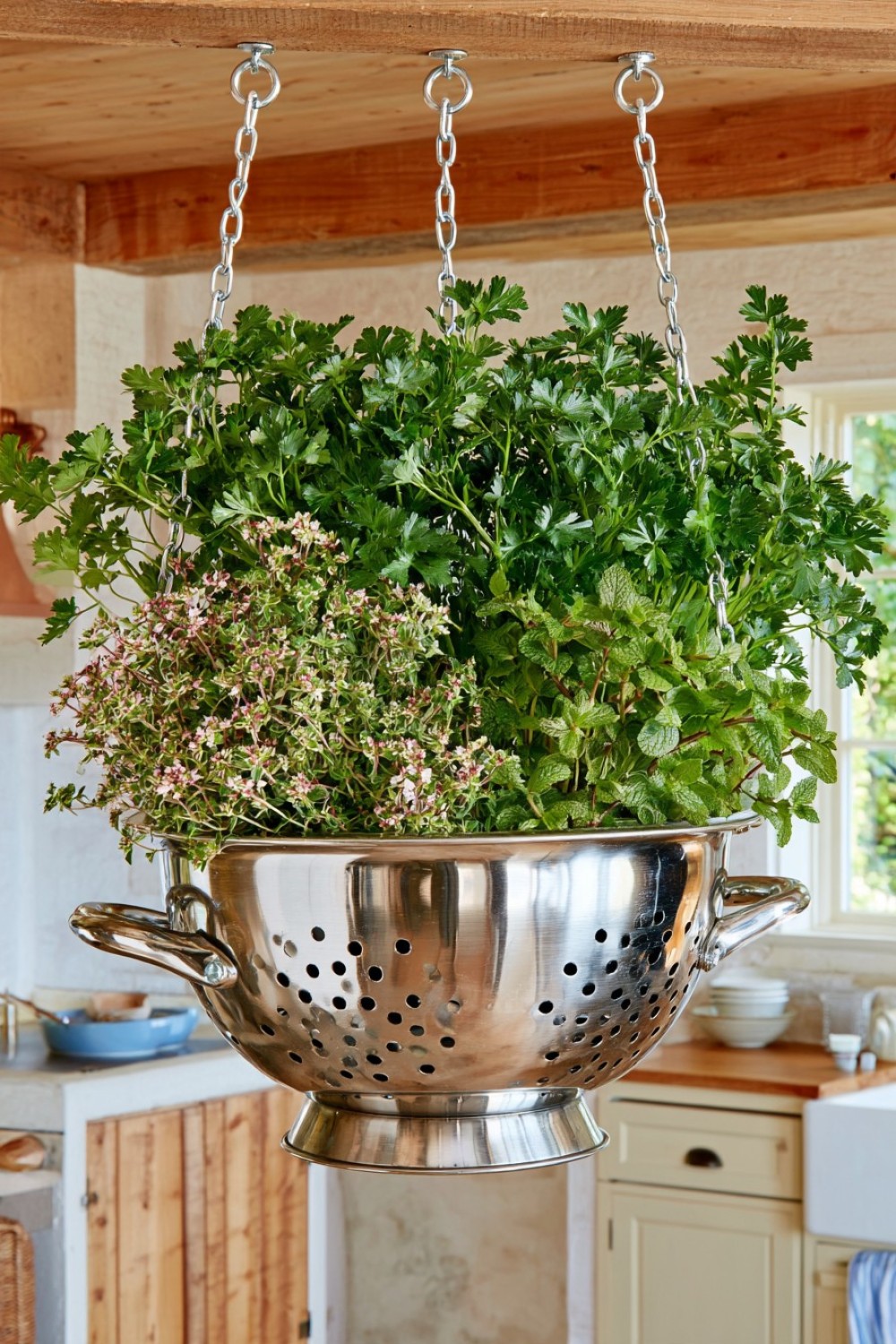
A stainless-steel or enamel colander already has something most improvised planters lack: built-in drainage.
Choose a sturdy colander with intact handles and no rust around the base. Fit a lightweight nursery pot or breathable liner inside rather than filling the entire vessel directly with soil.
You will need three equal lengths of coated chain, small shackles or S-hooks rated for the weight, a ceiling hook, and a removable drip saucer if the basket will hang indoors.
Attach each chain at evenly spaced points so the colander remains level when watered.
Parsley, trailing thyme, oregano, or compact mint can work well if the available light suits them.
A white enamel colander with a dark rim creates a vintage kitchen look, while brushed stainless steel feels more industrial.
Because drainage water can escape freely, always plan exactly where excess water will go before hanging it over finished flooring.
2. Build a Basket From Bent Wood Veneer Ribbons
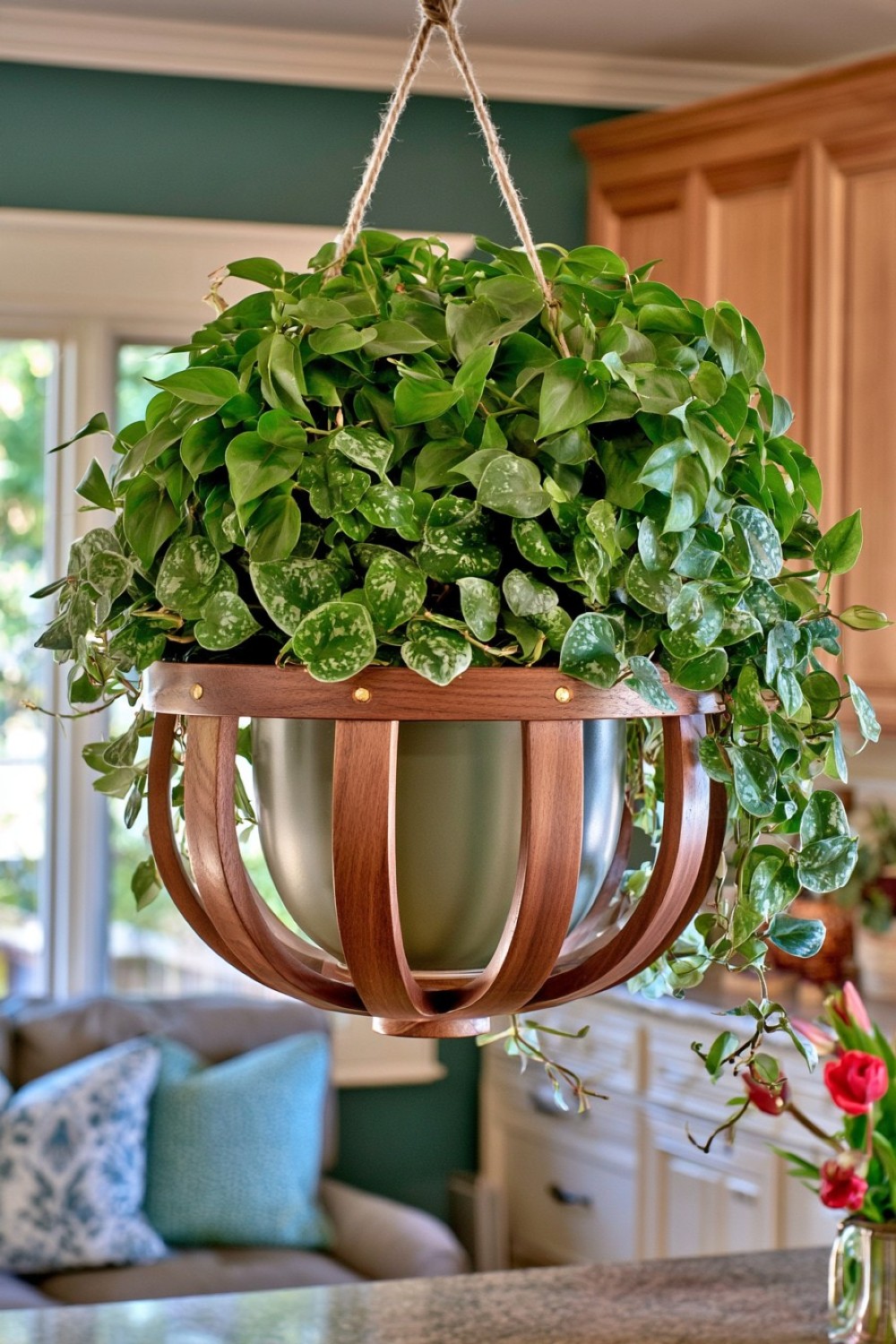
Instead of weaving cane, create an open hanging vessel from thin curved strips of wood veneer.
Use flexible oak, ash, or walnut veneer, two circular wooden rings, small brass fasteners, a lightweight waterproof inner pot, and strong suspension cord.
Attach the veneer strips vertically between the rings, bending them outward slightly so the basket forms a rounded cage rather than a straight cylinder.
Leave consistent spaces between the strips so the interior pot remains partially visible.
Walnut surrounding a matte cream pot can feel almost like mid-century furniture, while pale ash creates a softer Scandinavian version.
The timber shell should remain decorative; the actual wet growing medium stays inside a separate removable planter.
This makes watering much easier and prevents repeated moisture from damaging the veneer.
A trailing hoya or fine-leaved philodendron can soften the structured wooden lines without hiding the basket completely.
3. Suspend a Planter Inside an Old Lampshade Frame
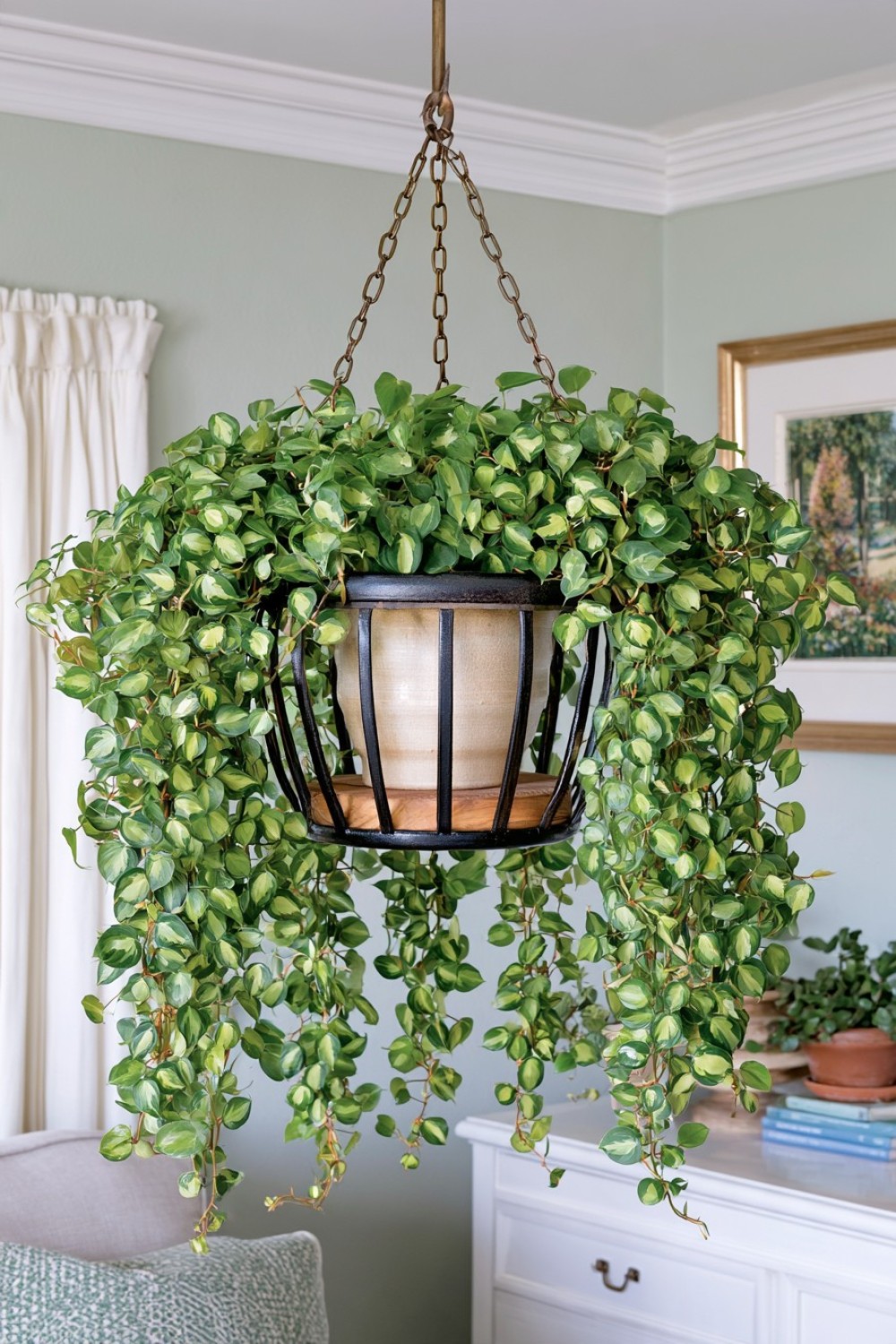
A bare wire lampshade frame can become an unexpectedly elegant plant holder once the fabric is removed.
Look for a rigid metal frame with a broad lower ring and smaller upper ring. Clean it thoroughly and repaint it if needed.
Place a lightweight planter inside the lower portion using a custom plywood disc, wire cradle, or fitted metal support that is independently secured to the frame.
You will need a lampshade skeleton, lightweight cachepot, coated wire, strong chain or cable, and appropriate ceiling hardware.
Instead of hiding the frame, let its geometry remain visible. Black metal with trailing green foliage looks graphic, while aged brass creates a softer vintage feel.
This design works particularly well with cascading plants that can fall through the open framework.
Do not hang a ceramic pot from thin decorative wire unless the frame has been reinforced and the suspension points are rated for the full wet weight.
4. Make a Suspended “Rock Pocket” From Lightweight Faux Stone
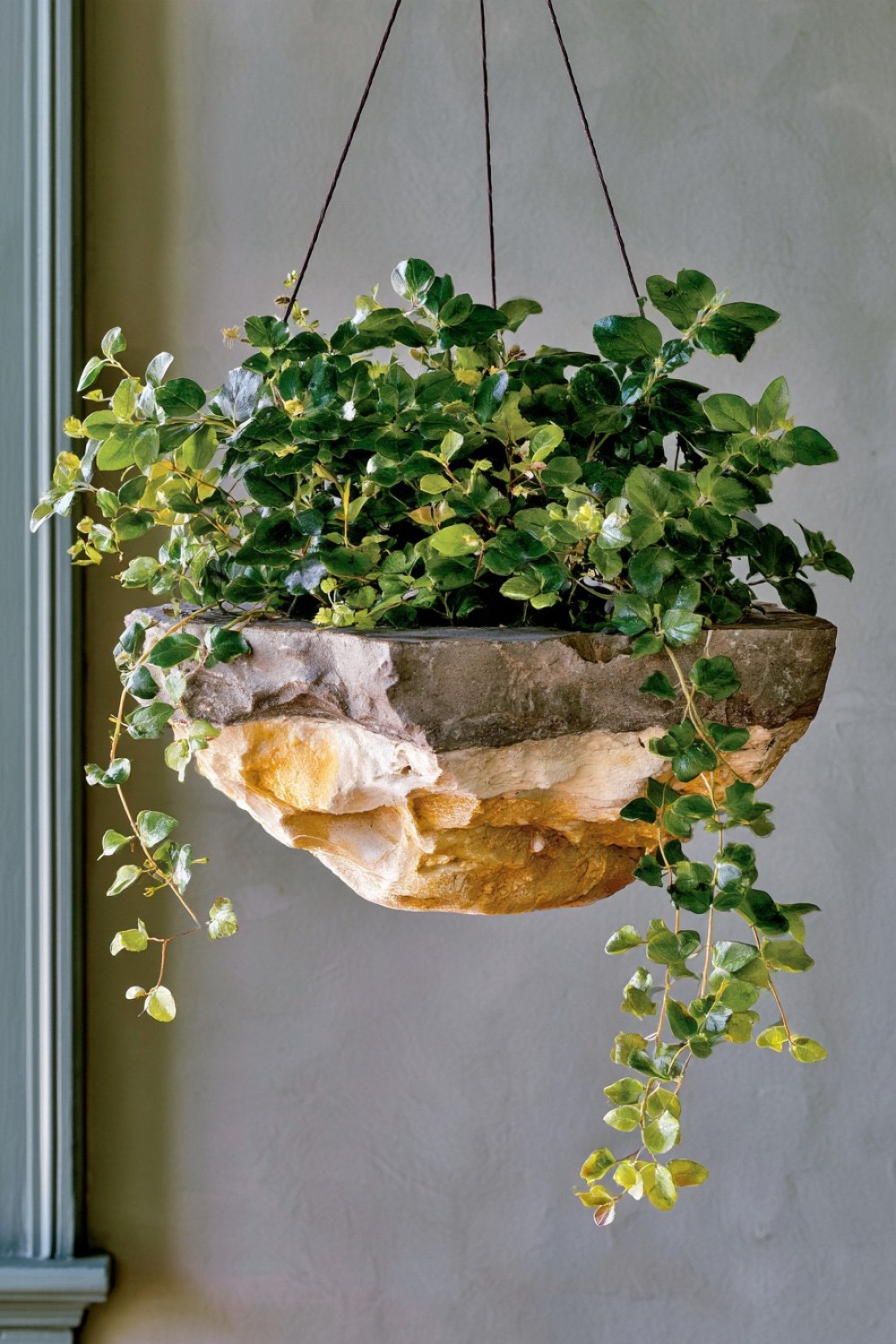
A hanging planter can look surprisingly architectural when the container resembles a carved stone pocket.
Build the outer shell from lightweight rigid foam shaped into an irregular bowl, then coat it with a durable stone-effect finish appropriate for indoor decorative use. Fit a separate plastic nursery pot inside.
You will need rigid foam, carving tools, lightweight plaster-effect coating, paint, concealed support straps, and a removable inner planter.
Instead of making the form perfectly round, create one flattened side and one rough broken edge so it resembles a fragment of carved stone.
Suspend it with thin dark cables to enhance the illusion that a heavy rock is floating.
The finished planter looks especially striking with delicate trailing plants because the visual contrast between “stone” and soft foliage is so strong.
This should remain a decorative shell only. The structural hanger must bypass the foam and attach to a proper internal support frame.
5. Turn a Wire Cooling Rack Into a Hanging Plant Grid
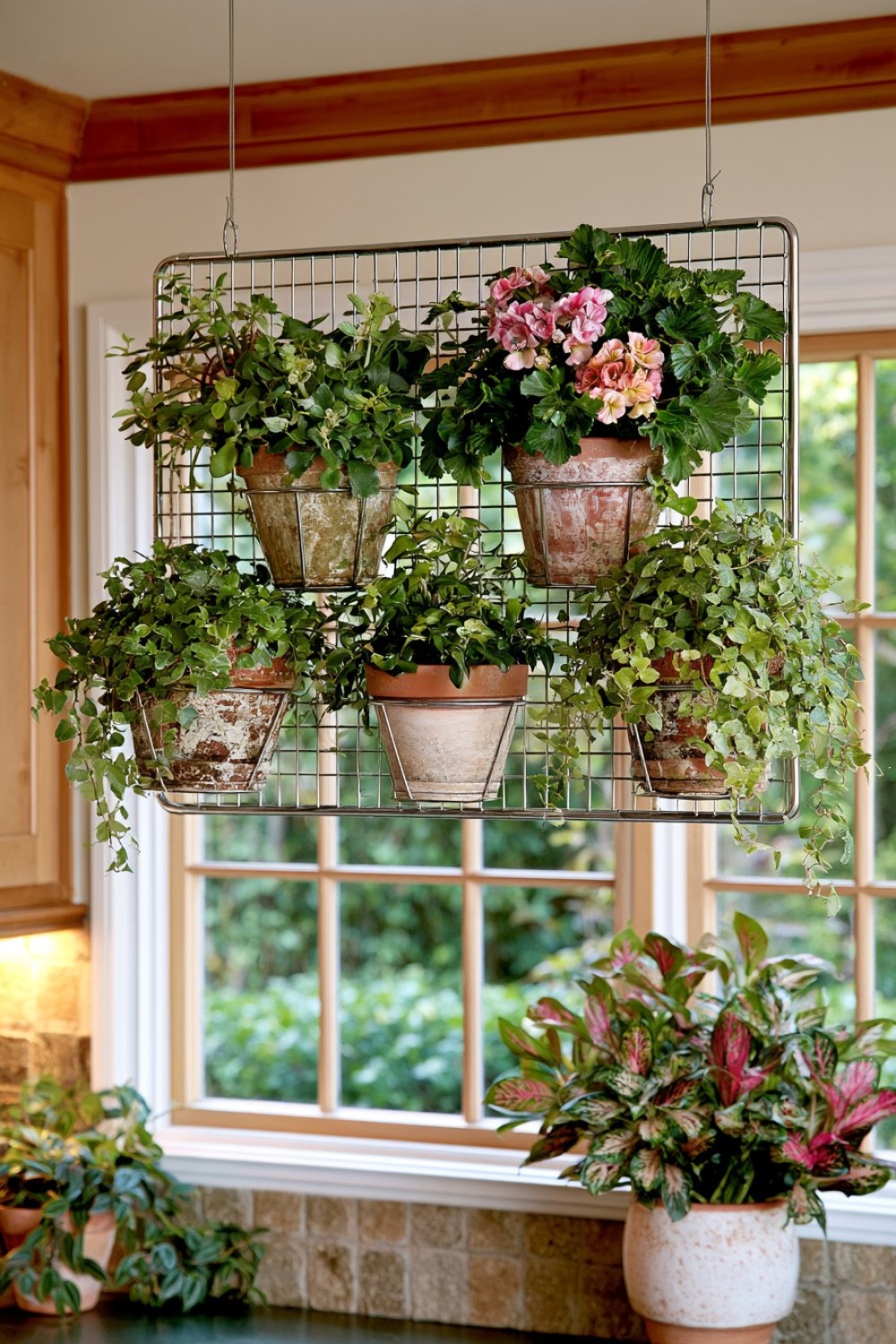
A rectangular stainless-steel cooling rack can become the backbone of a modular hanging garden.
Suspend the rack horizontally using four cables, then attach several small lightweight pots beneath it with secure hooks or custom metal clips.
Because the grid already provides many attachment points, pots can be moved as plants grow.
You will need a heavy-duty kitchen-grade rack, four suspension cables, small planters, locking clips, and ceiling anchors.
Keep the arrangement asymmetrical: perhaps one trailing plant at each corner and a compact plant near the center.
The effect is closer to a floating botanical grid than a traditional basket.
This works well above a utility table, kitchen island edge, or plant bench.
Do not use thin decorative racks that flex easily. The grid must be strong enough for the combined wet weight of every planter, and all hooks should close securely rather than simply resting on the wire.
6. Build a Hanging Basket From a Reclaimed Wooden Drawer
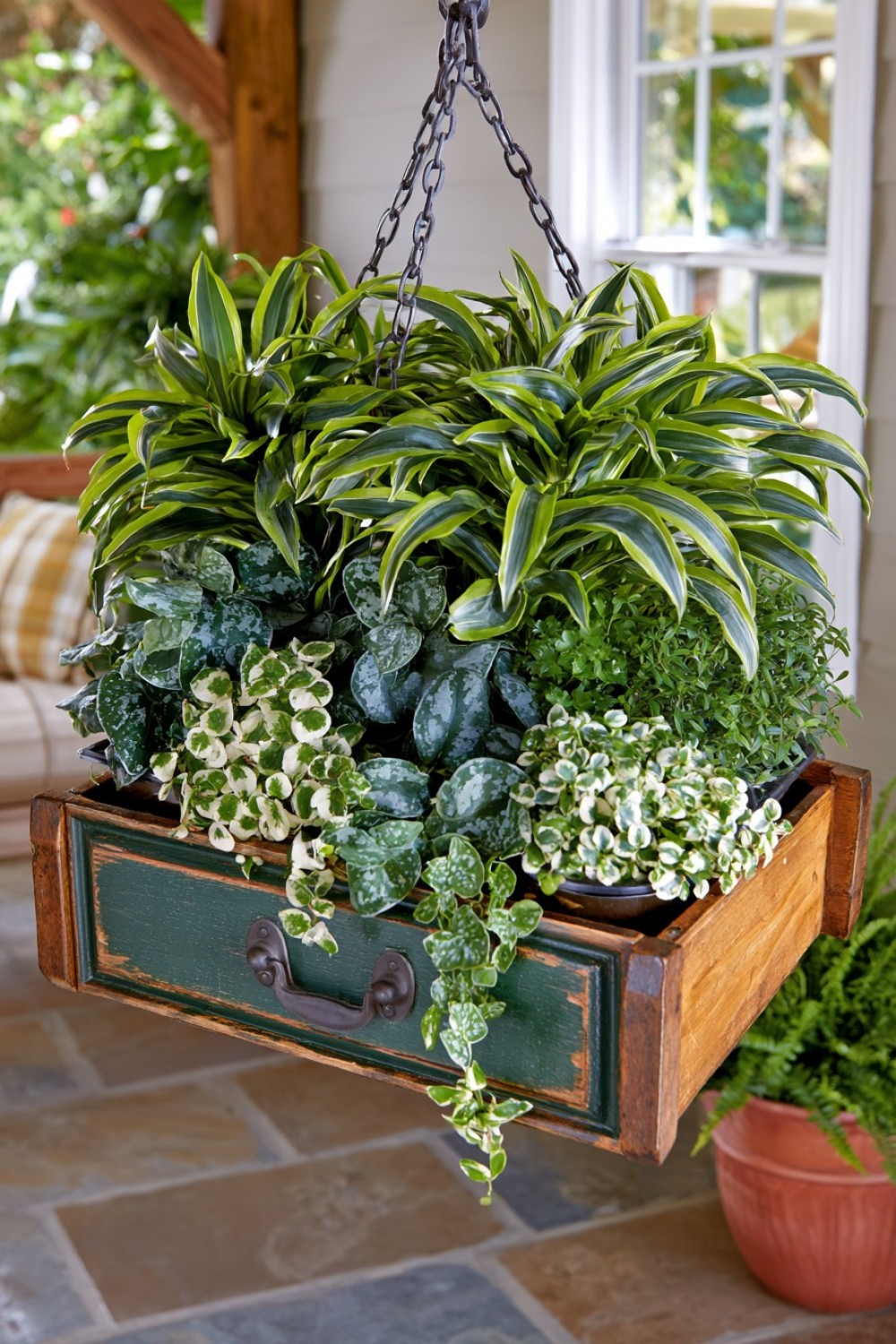
An old shallow drawer can become a suspended planter with a distinctly furniture-like character.
Choose a small solid-wood drawer with sound joints. Reinforce the corners internally, then fit a waterproof removable tray inside so wet soil never sits directly against the timber.
Drill four structural suspension points through reinforced areas near the corners and attach equal lengths of chain or strong cord.
The original drawer pull can remain visible as a decorative detail.
Instead of filling the drawer edge to edge, use several small nursery pots nested inside. This makes plant rotation and watering easier.
Trailing ivy-like plants, spider plants, or compact herbs can spill over the front while leaving part of the drawer face visible.
If the piece has old paint, test or seal it appropriately before sanding, especially if its age or previous coating is unknown.
The drawer itself should be treated as a decorative housing rather than the moisture-bearing planter.
7. Create a Suspended Basket From Interlocking Terracotta Rings
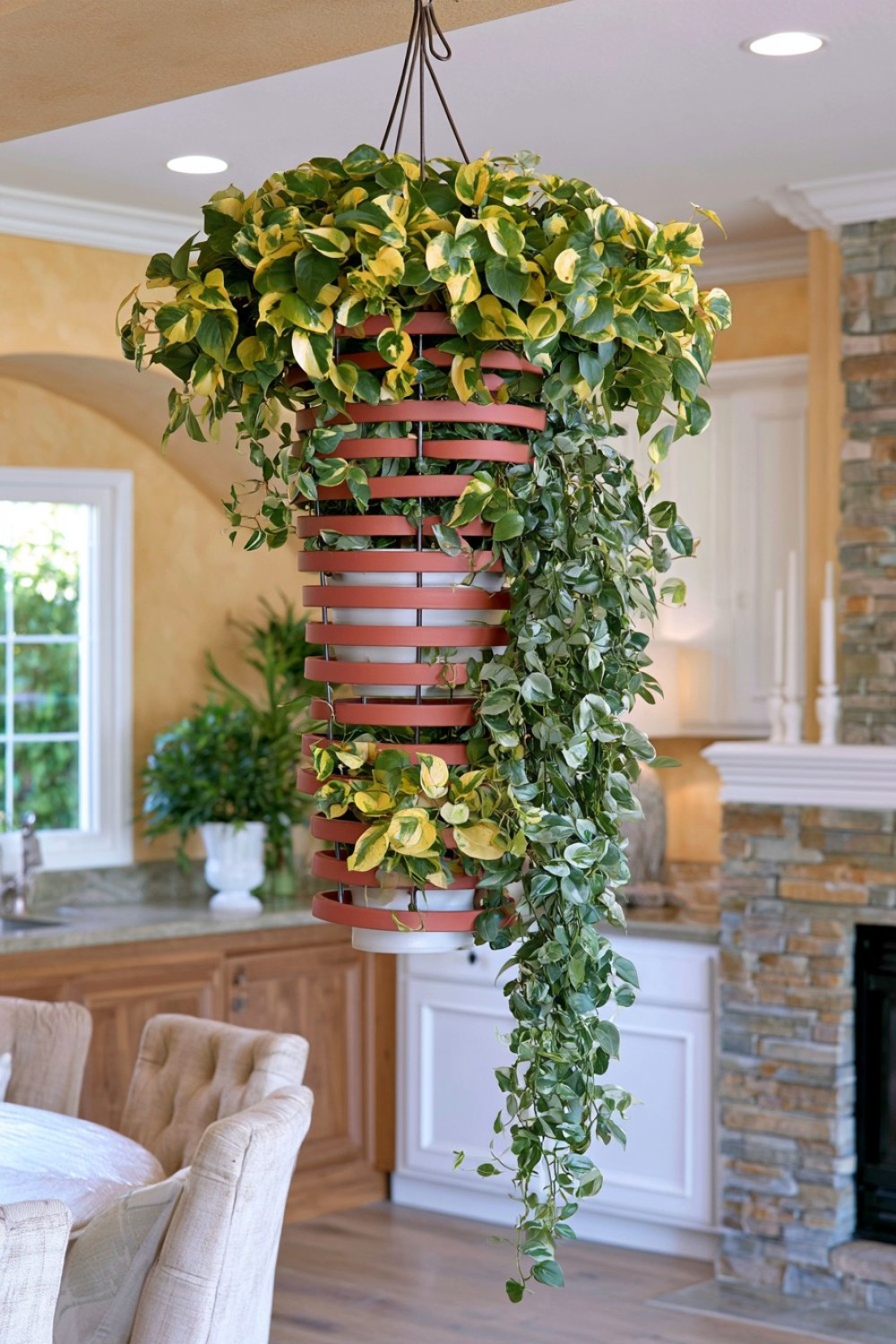
Rather than hanging one terracotta pot, build a sculptural outer cage from several circular clay-colored forms.
Use lightweight terracotta-look rings made from composite material, or purpose-made ceramic pieces if the support system is rated for their weight. Stack them vertically with small gaps between each level using metal rods or strong cord.
Place a lightweight inner pot in the center.
The repeated rings create a ribbed silhouette, and trailing foliage can emerge through the openings.
This looks especially good in Mediterranean, earthy, or organic-modern interiors.
For a DIY version, lightweight composite rings are safer and easier to suspend than multiple heavy fired-clay pieces.
Keep the wet planter independent from the decorative rings so watering does not stain porous material.
A single long trailing plant can create more impact here than filling every opening with foliage.
8. Turn a Vintage Basket Lid Into a Horizontal Hanging Garden
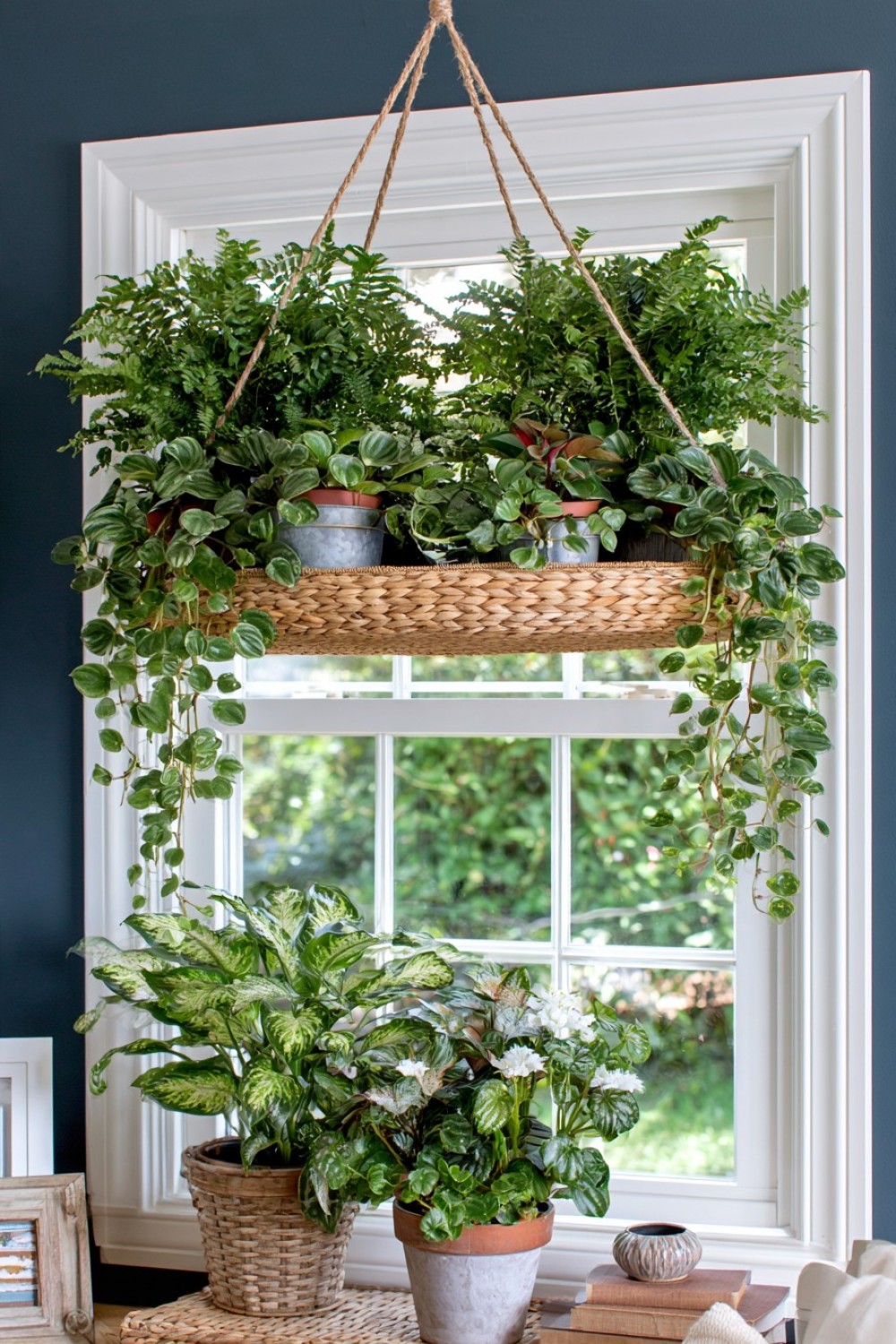
Instead of using the basket body, repurpose a large flat woven lid as a suspended platform.
Attach three or four structural support cords to a rigid backing disc fitted beneath the lid. Place one or several lightweight pots on top, secured with low retaining rings so they cannot slide.
From below, the woven lid becomes the visible decorative surface.
This creates a broad, floating botanical platform rather than a deep basket.
A shallow fern, trailing peperomia, or group of small hoyas can work well because the foliage spreads beyond the edge.
The key is reinforcement. Woven lids are usually decorative and should not bear planter weight directly. Use a concealed plywood or metal support plate beneath them.
This idea works particularly well in rooms where you want a wider horizontal plant feature without the visual bulk of a conventional hanging shelf.
9. Build a Basket From Perforated Brass Sheet
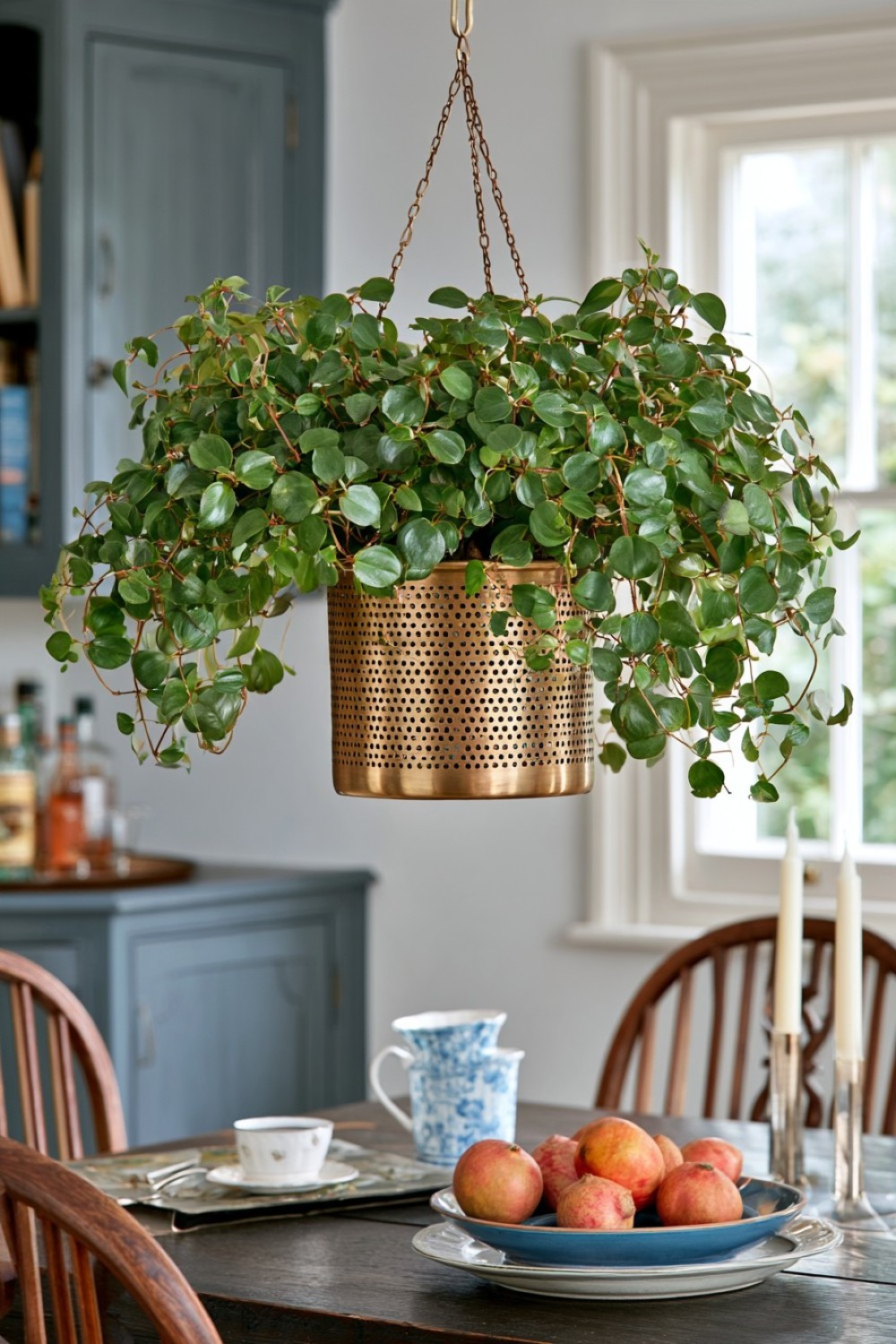
Perforated metal can produce a very different look from wire mesh.
Cut a thin sheet of brass or brass-finished aluminum into a rectangle, roll it into a cylinder, and fasten the seam mechanically. Add a rigid bottom support and place a waterproof liner or removable pot inside.
You will need perforated metal, metal snips, gloves, file, small bolts or rivets, bottom disc, and strong suspension hardware.
The holes allow glimpses of the inner pot while creating a patterned surface.
Warm brass paired with dark green foliage can look particularly refined in dining rooms or home bars.
Smooth every cut edge carefully and keep the decorative shell separate from the actual plant container.
Because metal can be heavier than it appears, calculate the total suspended load before installation and use proper ceiling anchoring.
10. Make a Hanging Basket From a Woven Leather Lattice
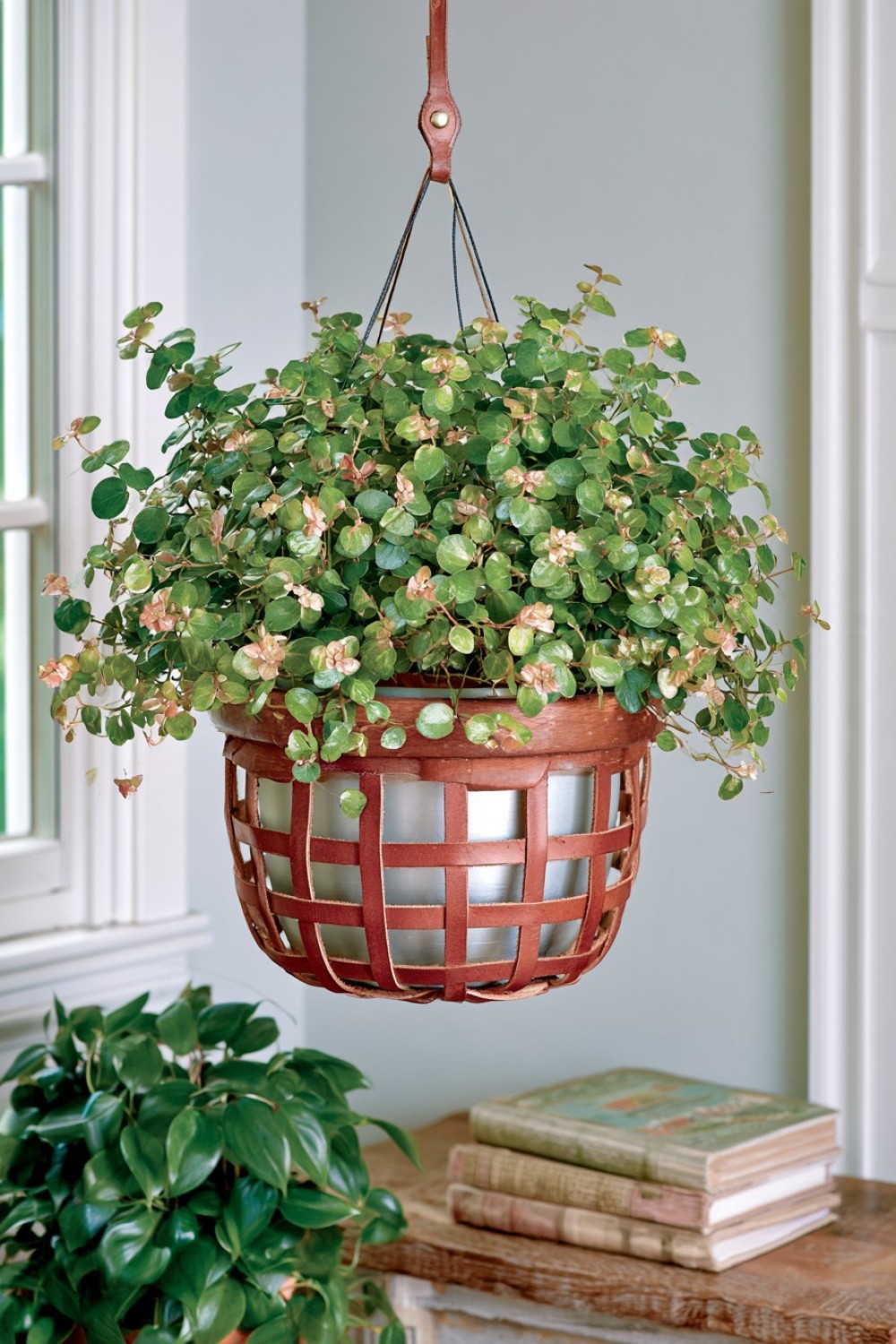
Leather can create a much more tailored hanging container than traditional rope.
Use vegetable-tanned leather strips, a round wooden base, leather punch, waxed cord or rivets, and a removable inner pot.
Attach vertical leather straps around the edge of the base, then weave thinner horizontal strips between them to create an open basket.
Do not make the weave too tight. The gaps allow the inner pot to remain visible and keep the design visually lighter.
Natural tan leather develops patina over time, while dark brown or black creates a more formal look.
The leather should not remain constantly wet, so use a waterproof inner planter and remove it for watering whenever practical.
This style works especially well with compact trailing plants in studies, dressing rooms, or contemporary living spaces where macramé would feel too casual.
11. Suspend a Plant Inside a Geometric Plywood Cage
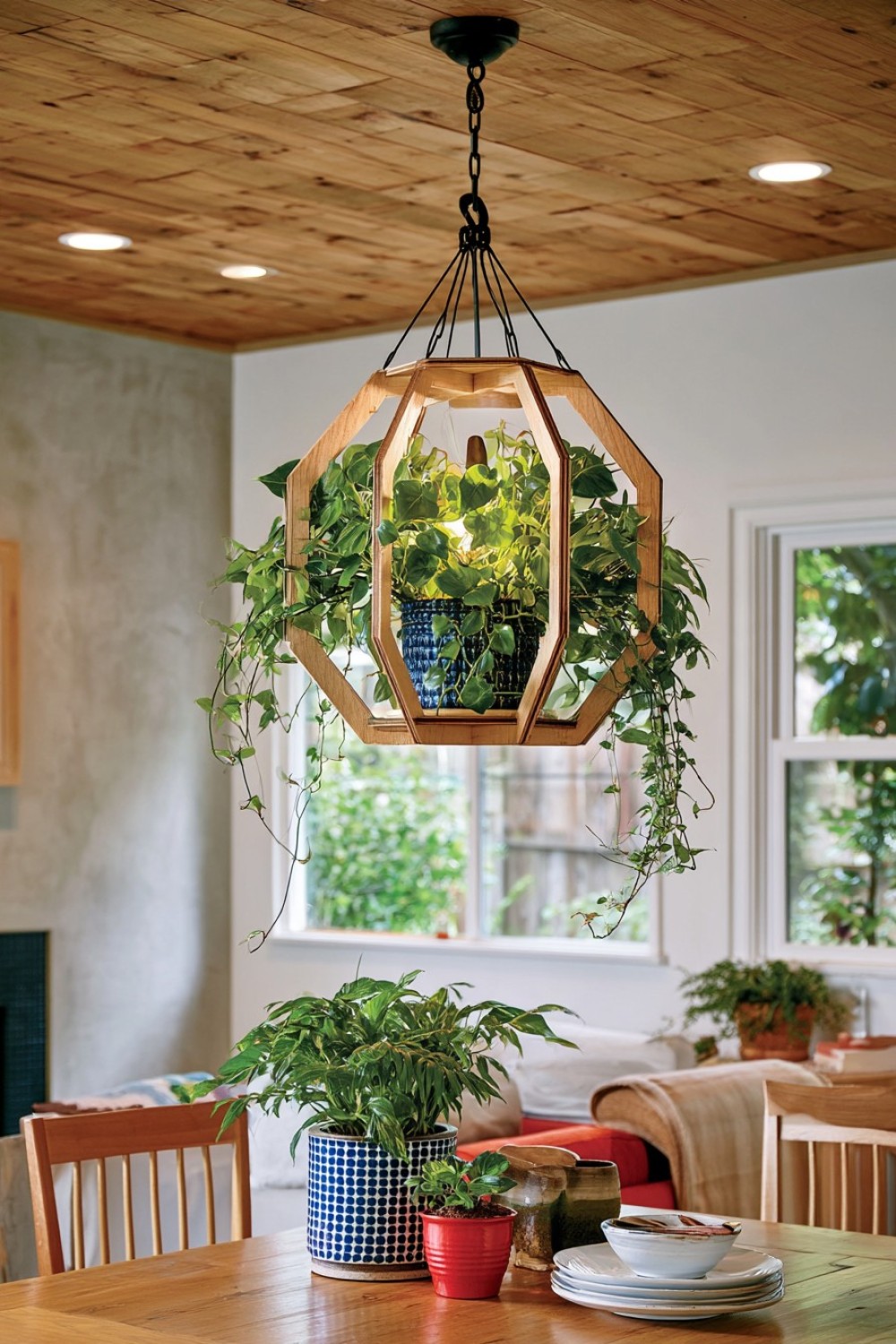
Instead of treating plywood as a flat shelf material, turn it into a three-dimensional frame.
Cut several identical hexagonal or arched profiles from birch plywood and connect them with short timber spacers to create an open cage.
Suspend a lightweight pot at the center so the plant appears to float within the geometry.
You will need plywood, jigsaw or laser-cutting service, spacers, wood glue, small screws, sanding tools, and strong hanging cable.
The outer frame can remain natural, be painted in one muted color, or use exposed plywood edges as part of the design.
A trailing plant that falls through only one or two sides keeps the geometry readable.
The decorative cage should not be expected to carry weight through glued joints alone; reinforce the suspension points mechanically and keep the wet planter relatively light.
12. Turn a Large Metal Kitchen Sieve Into a Moss-Lined Basket
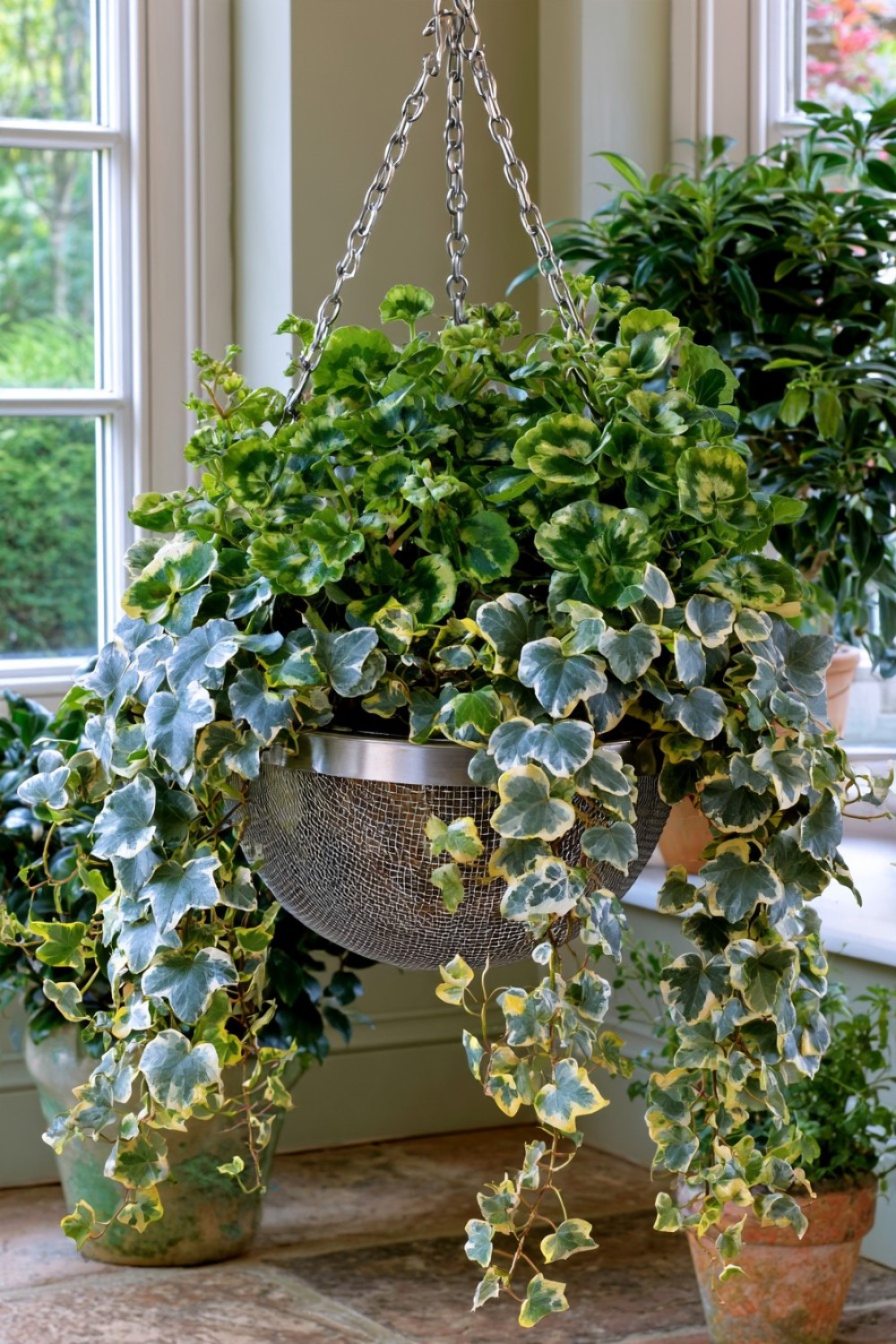
A wide commercial sieve can create a delicate hanging basket because the fine metal mesh almost disappears behind foliage.
Line the sieve with reusable breathable planting fabric or coco fiber, then place an appropriate lightweight growing medium inside.
Attach three equal chains to the reinforced rim.
This setup is especially effective for shallow-rooted trailing plants or seasonal displays.
Unlike a solid pot, the mesh allows excellent drainage and air movement, so watering may need to be more frequent.
For indoor use, either take the basket down for watering or suspend it above a removable catch tray.
Stainless steel is preferable to unknown coated mesh because it tolerates moisture better.
The final effect is subtle: from a distance, the plant appears almost unsupported.
13. Build a “Basket Within a Basket” Using Two Contrasting Materials
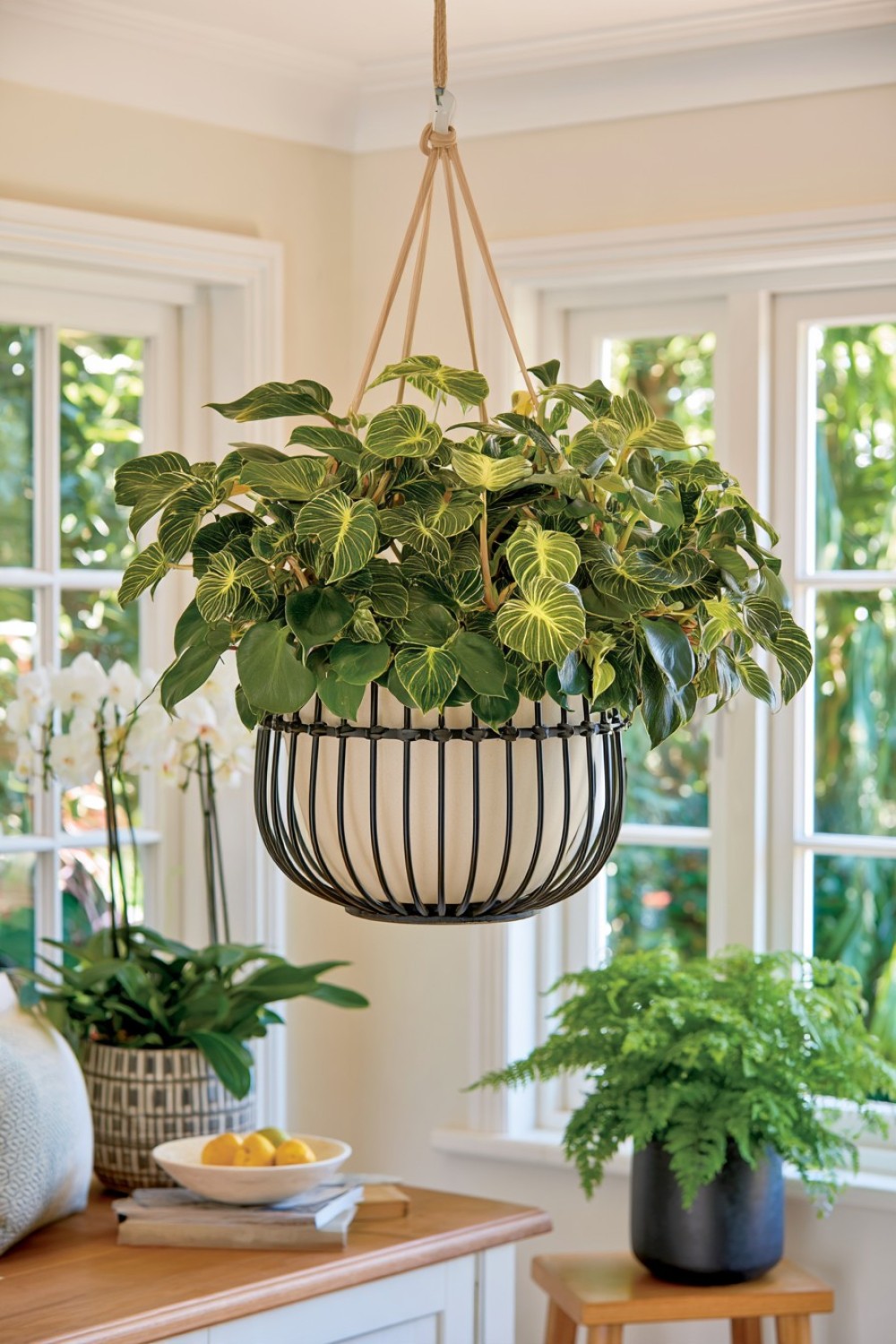
Layering two containers can create more visual depth than using one decorative basket.
Place a smooth ceramic or matte composite pot inside a much larger open wire, timber, or perforated-metal basket.
Suspend only the outer structural basket and let the inner planter sit independently inside it.
For example, a black wire cage around a pale stone-colored pot creates strong contrast, while pale oak ribs around a dark ceramic planter feels warmer.
Leave enough space between the two layers so they read as separate forms.
This also makes maintenance easier because the inner pot can lift out for watering.
The idea works particularly well when the plant is simple and architectural, such as a trailing philodendron or compact fern.
The visual interest comes from the relationship between shell and planter rather than excessive decoration.
14. Create a Hanging Basket From Reclaimed Window Shutters
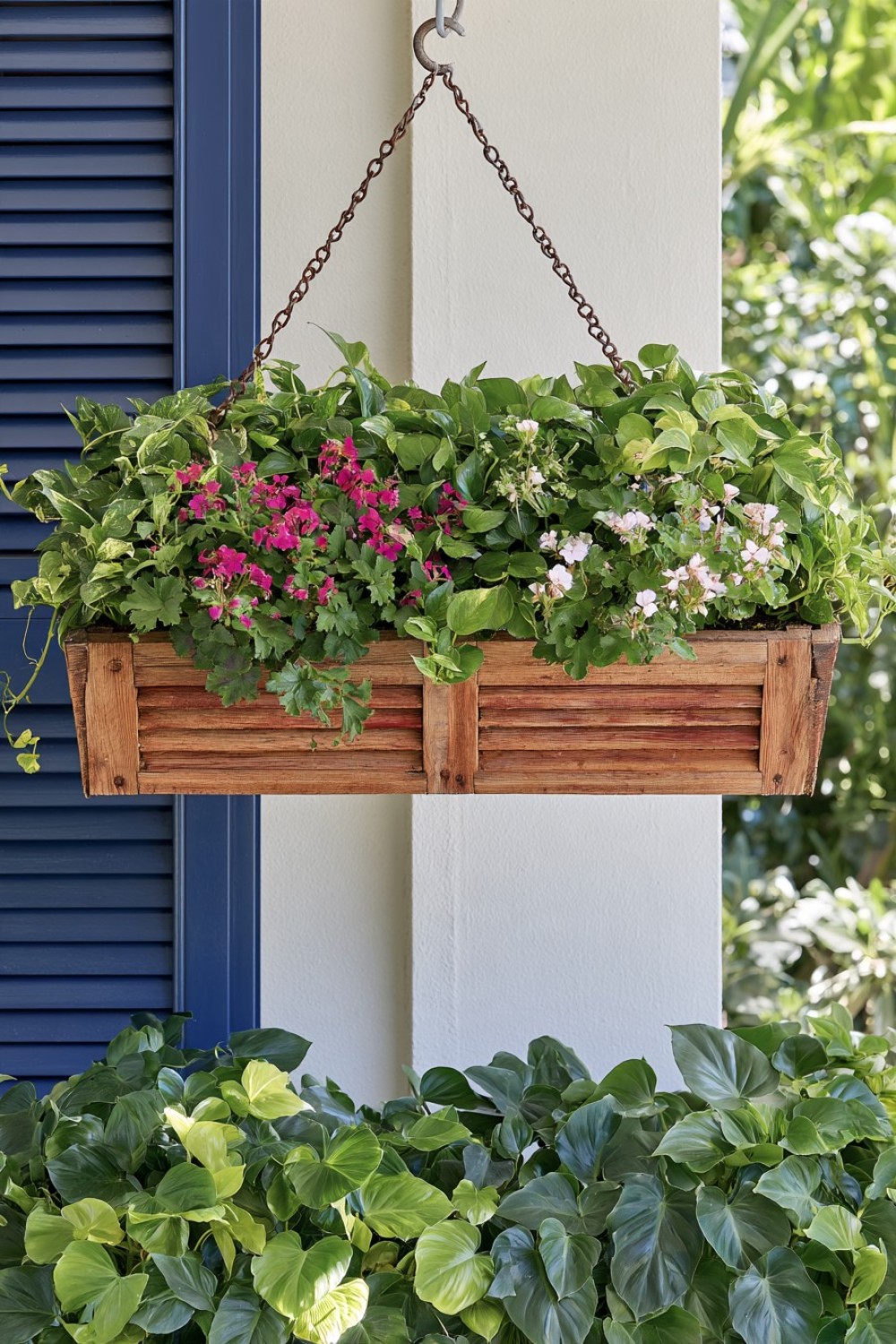
Small timber shutters or louvered cabinet doors can be transformed into a suspended planter box.
Use four narrow shutter panels to form the sides of a rectangular basket, fastening them around a rigid waterproof base. Keep the louvers visible rather than covering them.
Fit removable nursery pots inside so water never sits against the wood.
This approach creates strong texture and works especially well in cottage, Mediterranean, or eclectic interiors.
For a DIY version, reinforce each corner internally with timber battens rather than relying only on old shutter joints.
A few trailing plants can spill through the upper edge while the slatted sides remain visible below.
If the shutters have aged paint, avoid aggressively sanding unknown coatings until you know what they contain.
The entire planter should hang from the new structural frame, not from decorative shutter hardware.
15. Make a Basket From Coiled Paper Cord Over a Metal Skeleton
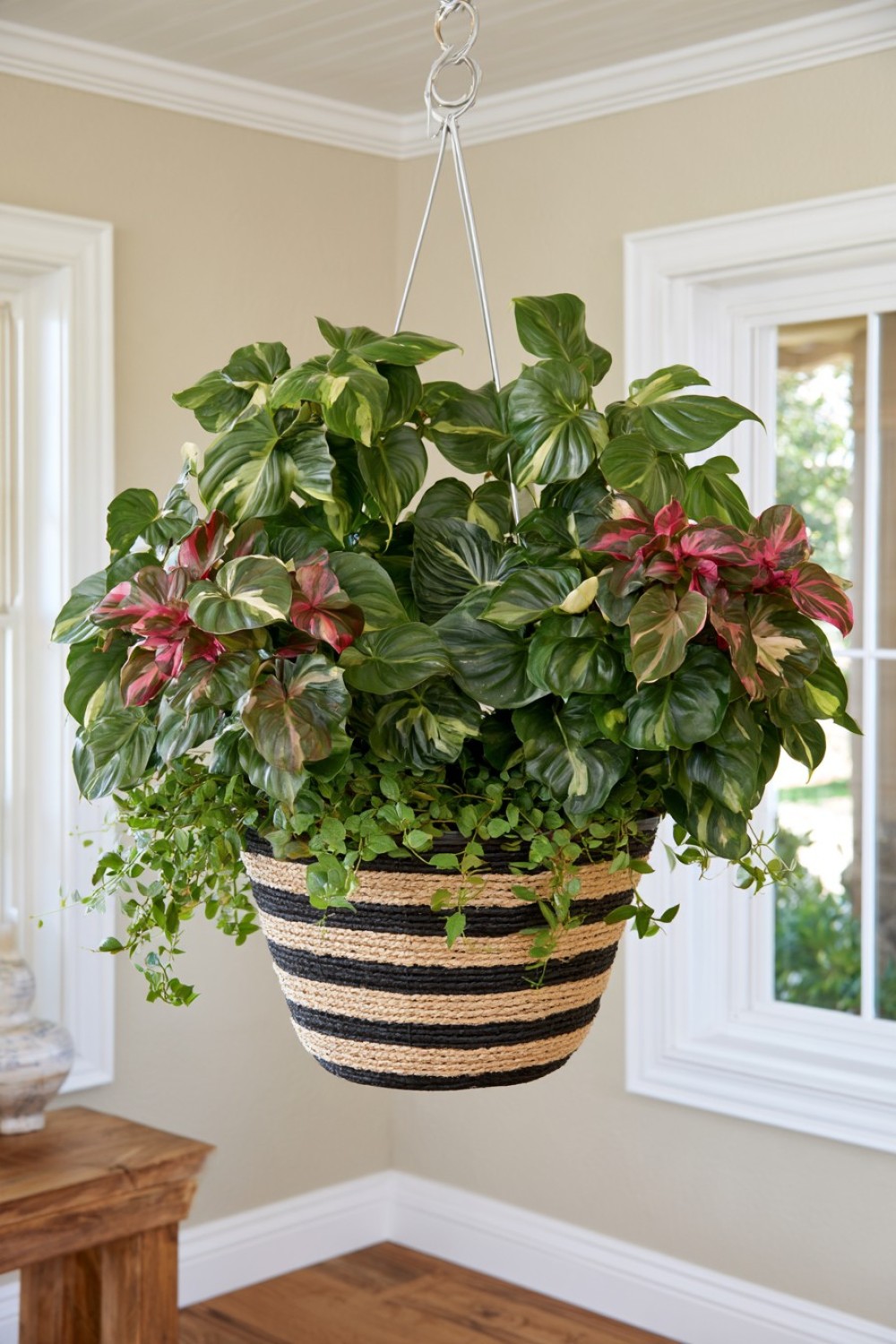
Paper cord can create a surprisingly refined planter when it is treated as an architectural wrapping material rather than a craft rope.
Start with a strong metal basket frame and weave wide sections of paper cord around it, intentionally leaving some parts open.
You will need paper cord, metal frame, clips, scissors, and a waterproof lightweight pot.
Instead of weaving continuously from top to bottom, create three or four broad horizontal bands with visible gaps between them.
This gives the planter a graphic striped appearance and allows foliage to interact with the empty sections.
Natural kraft cord feels warm and tactile, while black paper cord creates a much sharper silhouette.
Paper cord should remain dry, so keep it entirely outside the actual wet planter and remove the inner pot for watering.
16. Turn a Shallow Wooden Bowl Into a Suspended Dish Garden
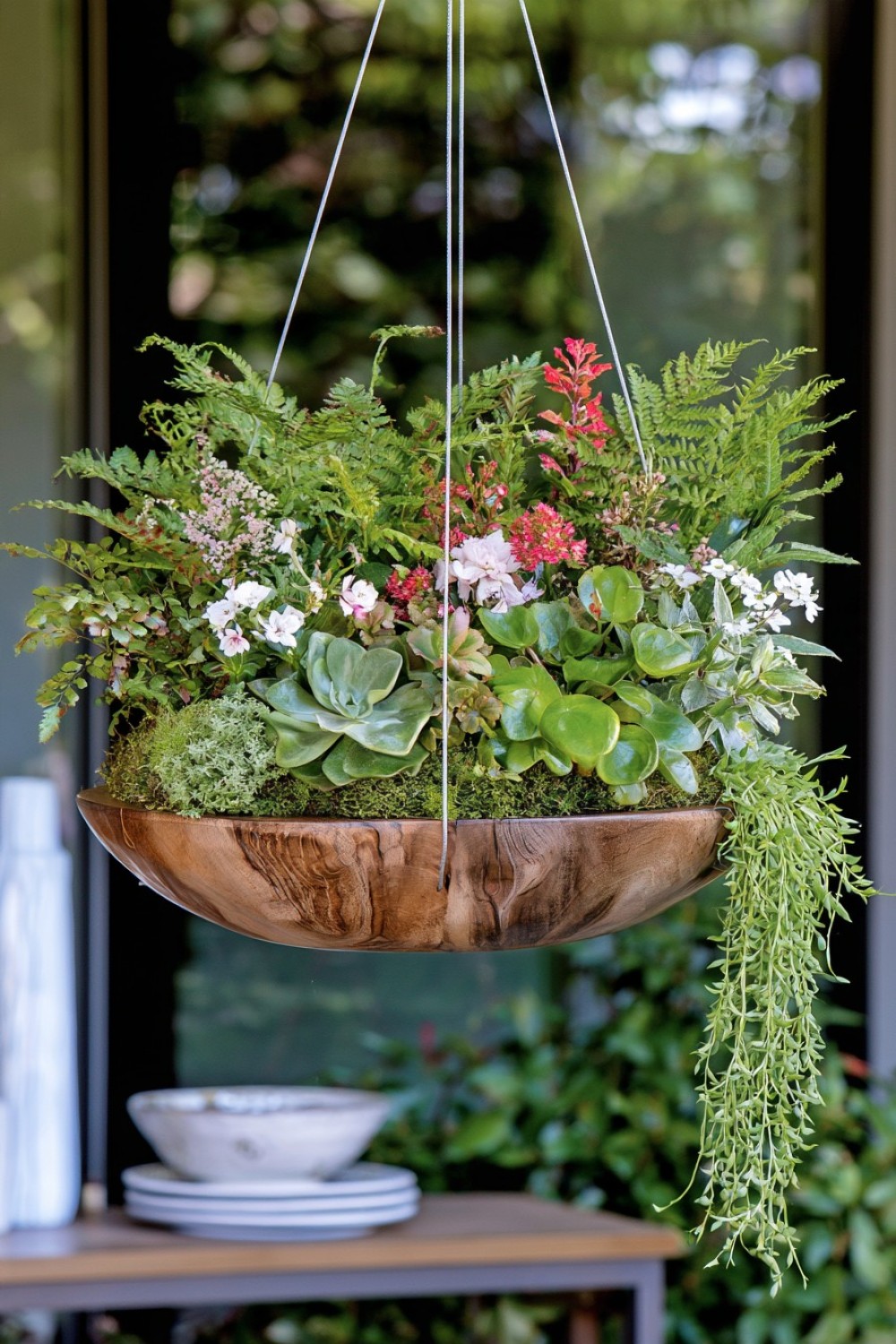
A broad wooden bowl can create a dramatic low-profile planter when hung from three discreet cables.
Rather than planting directly into the timber, fit a shallow waterproof insert inside.
The bowl shape works particularly well for compact ferns, peperomias, moss arrangements, or several small plants grouped together.
Use a bowl with enough wall thickness to accept proper structural fittings. Decorative salad bowls with thin fragile sides may not be suitable.
For a more sculptural result, choose an asymmetric carved bowl rather than a perfectly round one.
Suspend it relatively low over a console or side table where the broad underside remains visible.
Because shallow containers dry differently from deep pots, choose plants with compatible moisture needs and make sure the insert provides appropriate drainage or controlled watering.
17. Build a Hanging Basket From Stacked Wire Rings
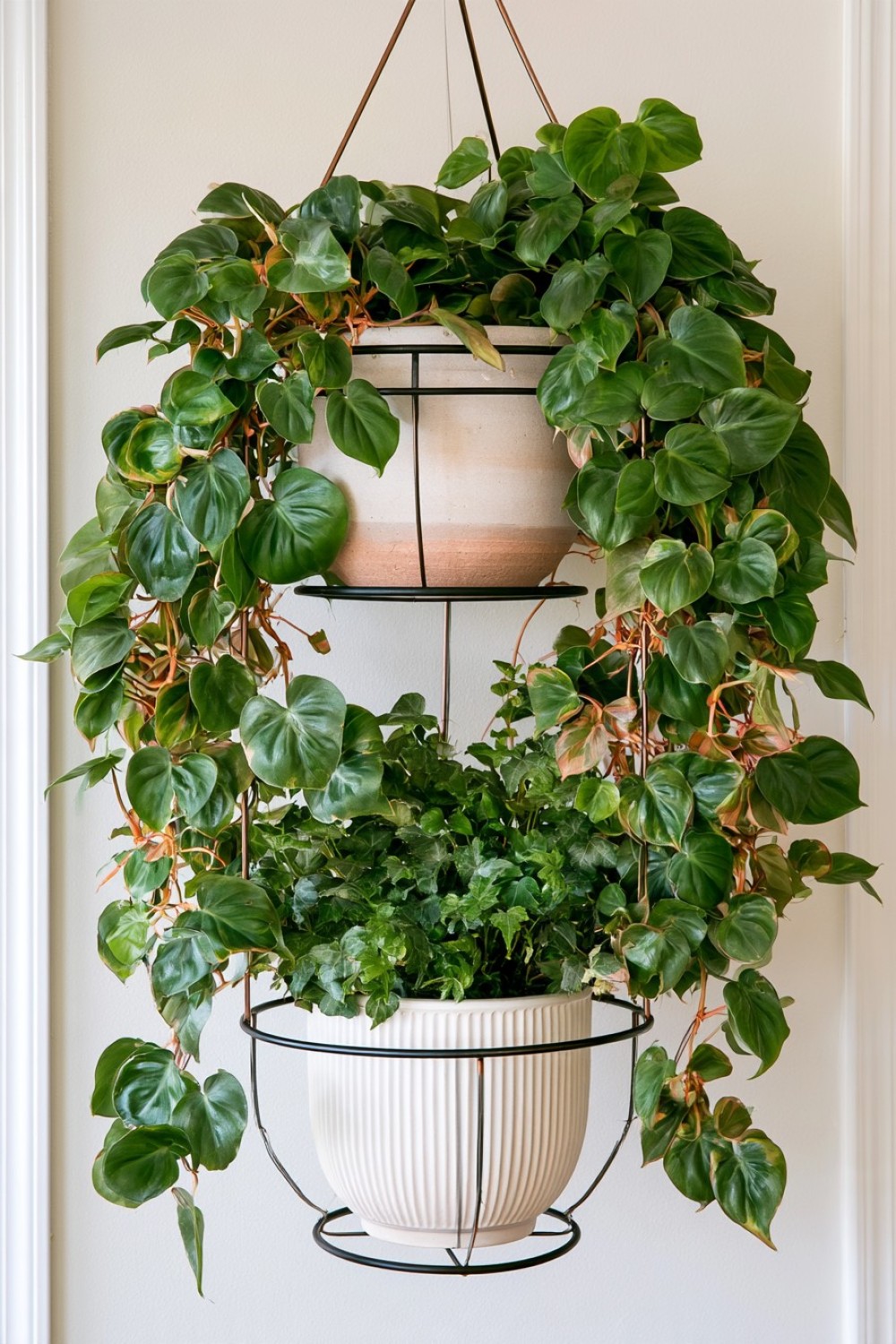
Several concentric or graduated wire rings can create a basket that feels almost invisible.
Use one small ring near the top, a larger ring around the middle, and another near the base, connected by several vertical steel rods.
Place a lightweight pot in the center using a discreet support platform.
The rings can be powder-coated black, bronze, or cream.
Unlike a traditional cage, the sparse structure leaves most of the planter exposed, giving it a floating quality.
This works best with a visually interesting inner pot—perhaps ribbed ceramic, colored glass-like composite, or matte stone finish.
The support platform and suspension points should be part of the metal structure rather than improvised with decorative wire.
This is a good choice when you want the plant and pot to remain visible while still creating a sculptural hanging outline.
18. Make a Hanging Basket From an Upcycled Baking Mold
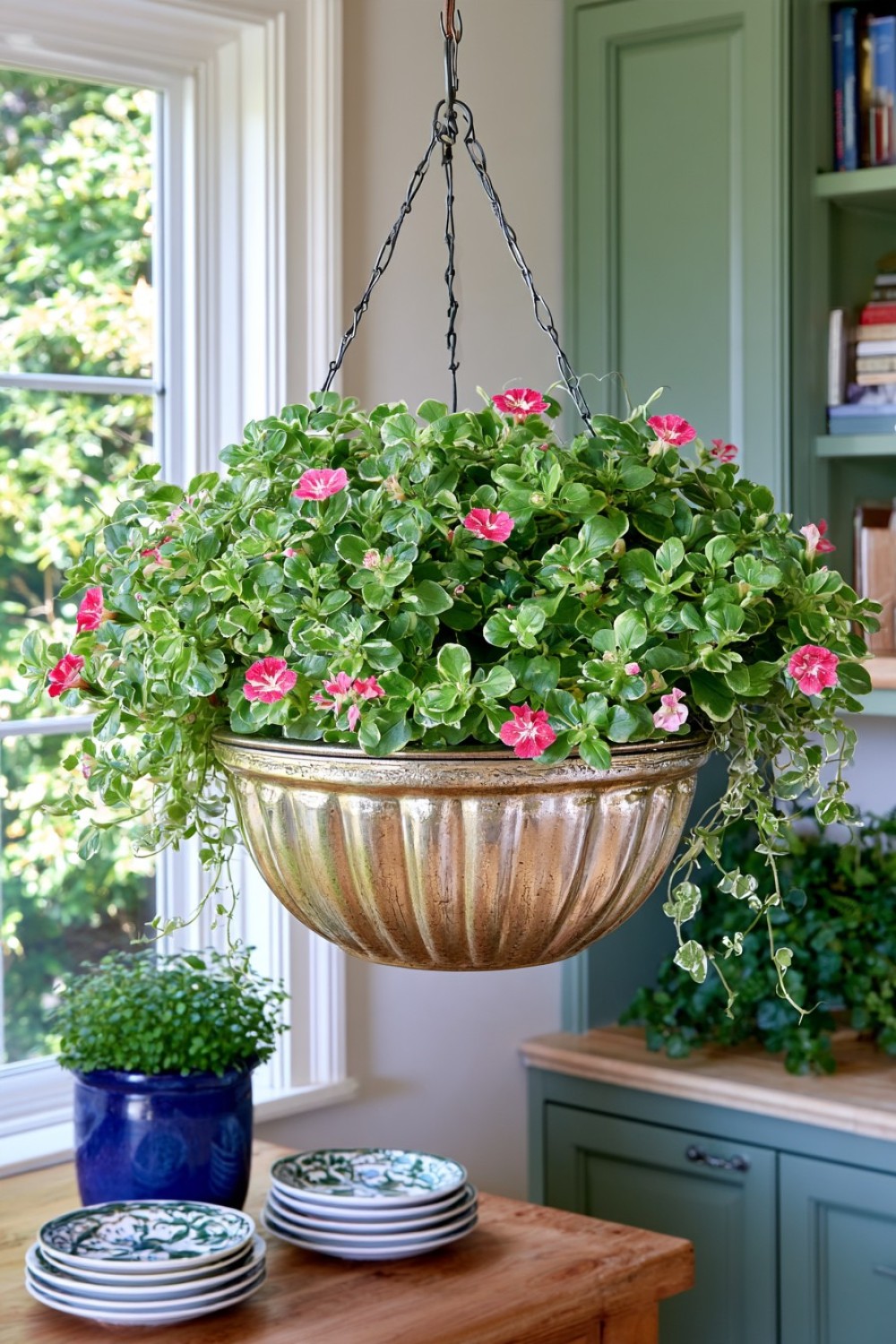
A large Bundt pan, pudding mold, or industrial baking tin can become a compact hanging planter with a strong sculptural shape.
Choose stainless steel or another intact food-safe metal vessel. If drainage holes are added, use proper metalworking tools and smooth all edges thoroughly.
Another approach is to leave the original mold intact and insert a separate nursery pot inside.
Attach three suspension points around the reinforced rim rather than drilling near thin decorative sections.
The fluted metal catches light beautifully and can make an inexpensive object feel much more intentional once suspended.
A satin-finish mold with fine trailing foliage can suit modern kitchens, while an aged-looking form works in more eclectic rooms.
Do not use rusty or heavily coated vintage metal for direct planting.
19. Create a Suspended Botanical “Basket Sculpture” From Multiple Frames
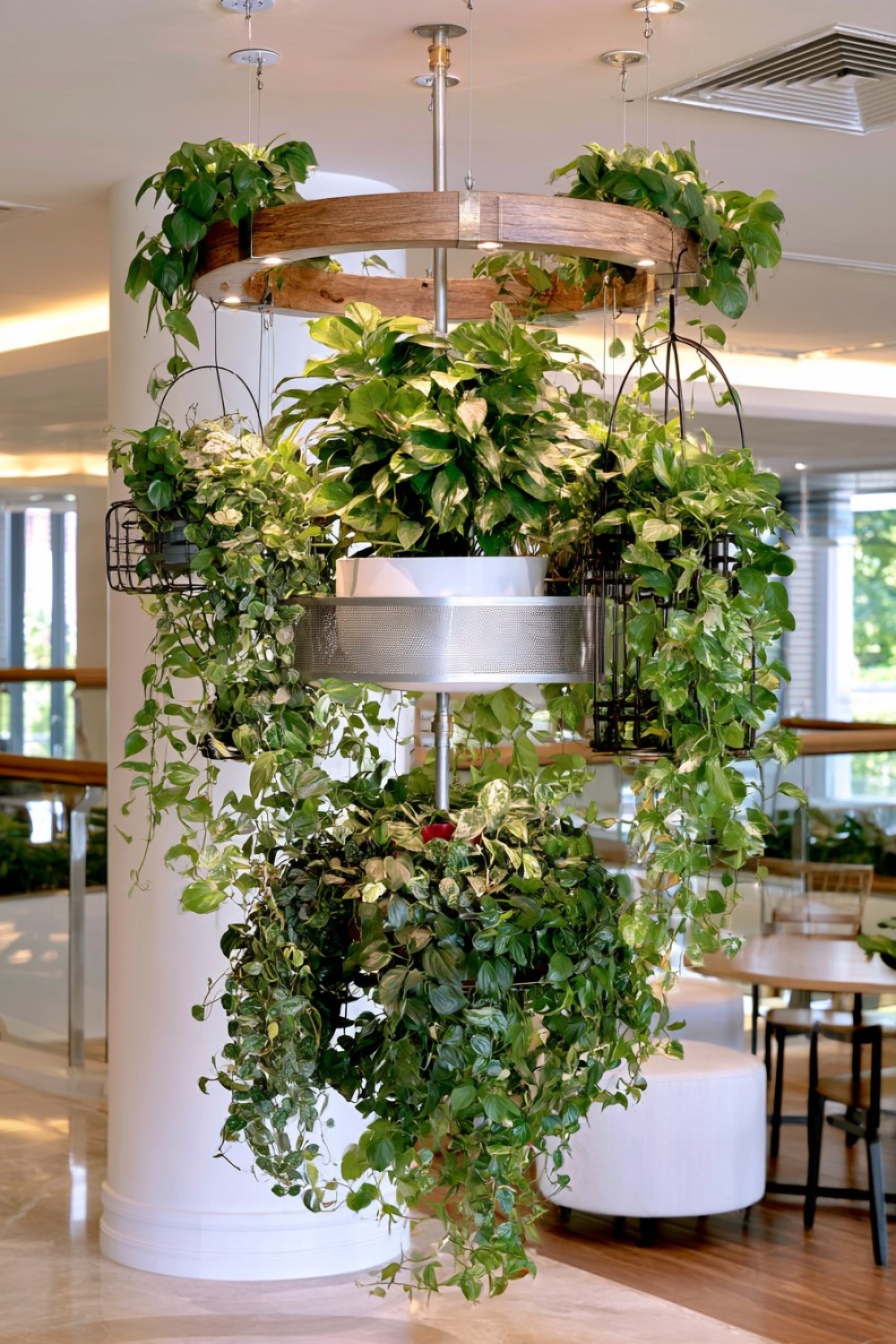
For the most experimental version, stop thinking of the basket as one container.
Build an installation from three separate open frames—perhaps one timber ring, one perforated metal panel, and one small wire cage—suspended at slightly different heights around a single central plant.
The plant itself sits in a lightweight removable pot held by a concealed structural bracket.
As foliage grows, stems can pass through different frames, gradually tying the entire composition together.
This turns the hanging planter into a changing sculpture rather than a static object.
Keep the materials related through color or finish so the result does not become visually chaotic.
The design requires careful balancing and secure load-bearing hardware, but it can create a genuinely unusual focal point in a stairwell, high-ceilinged room, or open-plan living area.
Making an Unusual Hanging Basket Actually Work
The strongest hanging basket designs are not unusual simply because they use unexpected objects. They work because the material, plant, and suspension system have been considered together.
Metal mesh improves drainage but may dry quickly. Timber, leather, paper cord, and woven materials look beautiful but should usually remain outside a removable waterproof planter. Heavy ceramic and stone-like containers require much stronger suspension than lightweight composite or plastic pots. In every case, calculate the weight after watering rather than when the planter is dry.
It also helps to design for maintenance. If the inner pot can lift out easily, watering, pruning, repotting, and cleaning become much less frustrating.
A creative hanging basket should therefore feel surprising from across the room while still making complete sense when you look at how it is built.
MORE IDEAS


Share
What's Your Reaction?
 Like
0
Like
0
 Dislike
0
Dislike
0
 Love
0
Love
0
 Funny
0
Funny
0
 Angry
0
Angry
0
 Sad
0
Sad
0
 Wow
0
Wow
0