

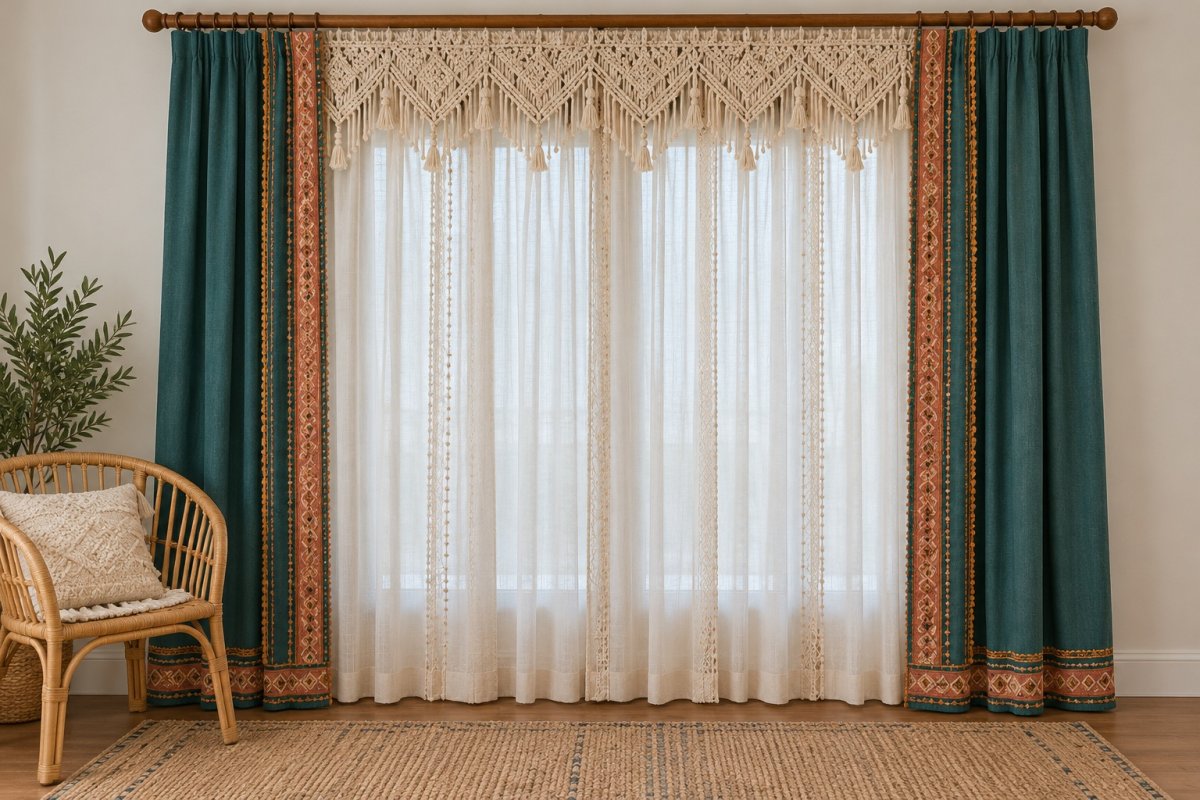
A memorable bohemian window starts with a balance between expressive fabric and the everyday job a curtain needs to do. Texture, color, and a thoughtful way of hanging each layer can turn an ordinary opening into a personal feature while leaving room for light, privacy, and easy use.
These ideas are for renters, beginners, and anyone who enjoys working with fabric, from simple ribbon borders to more involved crochet and macrame. Each idea explains its materials and a making or hanging method, with small window adaptations throughout; bead and cord safety has its own section. Some treatments are purely decorative and need a separate curtain or shade for privacy. Before selecting a design, consider how the window opens, who uses the room, and how the materials will be cleaned. A small change to an existing curtain can be just as rewarding as sewing an entirely new treatment.
Table of Contents
- Planning Your Bohemian Window Treatment
- Start with the Window
- Balance Privacy and Light
- Plan the Hanging Method
- Beads, Cords and Young Children
- Think About Care
- Compare Curtain Materials
- 1. Teal Swag Curtains
- 2. Full Length Patchwork Curtains
- 3. Terracotta Sunburst Shade
- 4. Lavender Lace Arch
- 5. Beaded Wave Curtain
- 6. Macrame Bay Curtains
- 7. Mustard Diamond Curtains
- 8. Midnight Mirror Work Curtains
- 9. Rose Lattice Curtains
- 10. Ginkgo Leaf Sheers
- 11. Wavy Stitched Curtains
- 12. Floral Medallion Strands
- 13. Celestial Track Curtains
- 14. Colorful Triangle Curtains
- 15. Crochet Diamond Curtains
- 16. Sage Ribbon Curtains
- 17. Pastel Ruffle Curtains
- 18. Chevron Cafe Curtains
- 19. Round Fan Curtains
- 20. Forest Branch Sheers
- 21. Striped Fringe Curtains
- 22. Pomegranate Floral Curtains
- 23. Crossed Fabric Curtains
- 24. Blush Draped Swags
- 25. Pastel Triangle Curtains
- 26. Fabric Yo Yo Flower Curtains
- 27. Braided Ribbon Sheers
- 28. Teardrop Hoop Curtain
- 29. Ikat Corner Curtains
- 30. Indigo Curtains with a Rag Strip Valance
- 31. Paisley Scarf Swags
- 32. Beaded Window Garland
- 33. Hoop and Tassel Strands
- 34. Floral Sage Curtains
- 35. Scarf Valance Curtains
- 36. Beaded Bay Curtains
- 37. Jewel Tone Curtains
- 38. Rainbow Thread Curtain
- 39. Rose Brocade Curtains
- 40. Embroidered Floral Borders
- 41. Geometric Valance Curtains
- 42. Burgundy Swag Curtains
- 43. Beaded Flower Window
- 44. Macrame Vase Curtain
- Where to Start
Planning Your Bohemian Window Treatment
Start with the Window
Measure the rod or track width and the length from the hanging point to the desired hem. Allow space at the sides for opened curtains and check that handles remain reachable. For single pleats, IKEA suggests a combined flat curtain width of 1.5 to 2 times the rod length; for double pleats, allow 2 to 2.5 times the rod length. For example, a 100 cm rod needs 150 to 200 cm of total curtain width for single pleats. For curtains that stay just above the floor, IKEA's length guide describes a gap of about 1 inch (2.5 cm). Add seam and hem allowances when cutting fabric.
Balance Privacy and Light
Sheer fabric filters light but may not provide nighttime privacy. Add a separate opaque curtain or a cordless shade when privacy matters, and select a double rod or track that holds both layers. On a short kitchen window, set the hem so the fabric stays clear of the counter and any heat source.
Plan the Hanging Method
Select brackets and fasteners made for the wall material and the combined weight of the rod, fabric, and decorations; follow the hardware instructions. A tension rod works for lightweight fabric if its length range and weight limit suit the opening. Never block a window used for escape.
Beads, Cords and Young Children
Use fabric embellishments instead of dangling beads, loops, or cords in rooms used by young children. The CPSC recommends cordless window coverings and advises moving cribs, beds, and furniture away from windows. Small detached beads can pose a choking hazard. Keep hanging ornaments away from pets too, as they may pull strands or swallow loose pieces.
Think About Care
Prewash new fabric if its label allows it, and compare the care instructions before joining different textiles. Protect treasured or fragile cloth from strong light, which can fade colors and weaken fibers over time, as the Canadian Conservation Institute explains. Choose washable trim for a curtain that will need regular cleaning.
Compare Curtain Materials
| Material or detail | Light and privacy | Care | Making effort |
|---|---|---|---|
| Cotton fabric | Varies with weave | Often washable; read the label | Easy for beginners to hem and trim |
| Sheer fabric | Filters light; limited privacy | Often delicate; read the label | Lightweight, but edges need care |
| Crochet or macrame | Openwork gives little privacy | Handmade details need gentle care | More time for knots or joining |
| Decorative beads and fringe | Mostly decorative | Dust and tangling need attention | Extra attachment work; strands need regular untangling |
| Patterned curtain fabric | Depends on fabric weight | Follow the care label | A quick starting point for simple hems |
1. Teal Swag Curtains
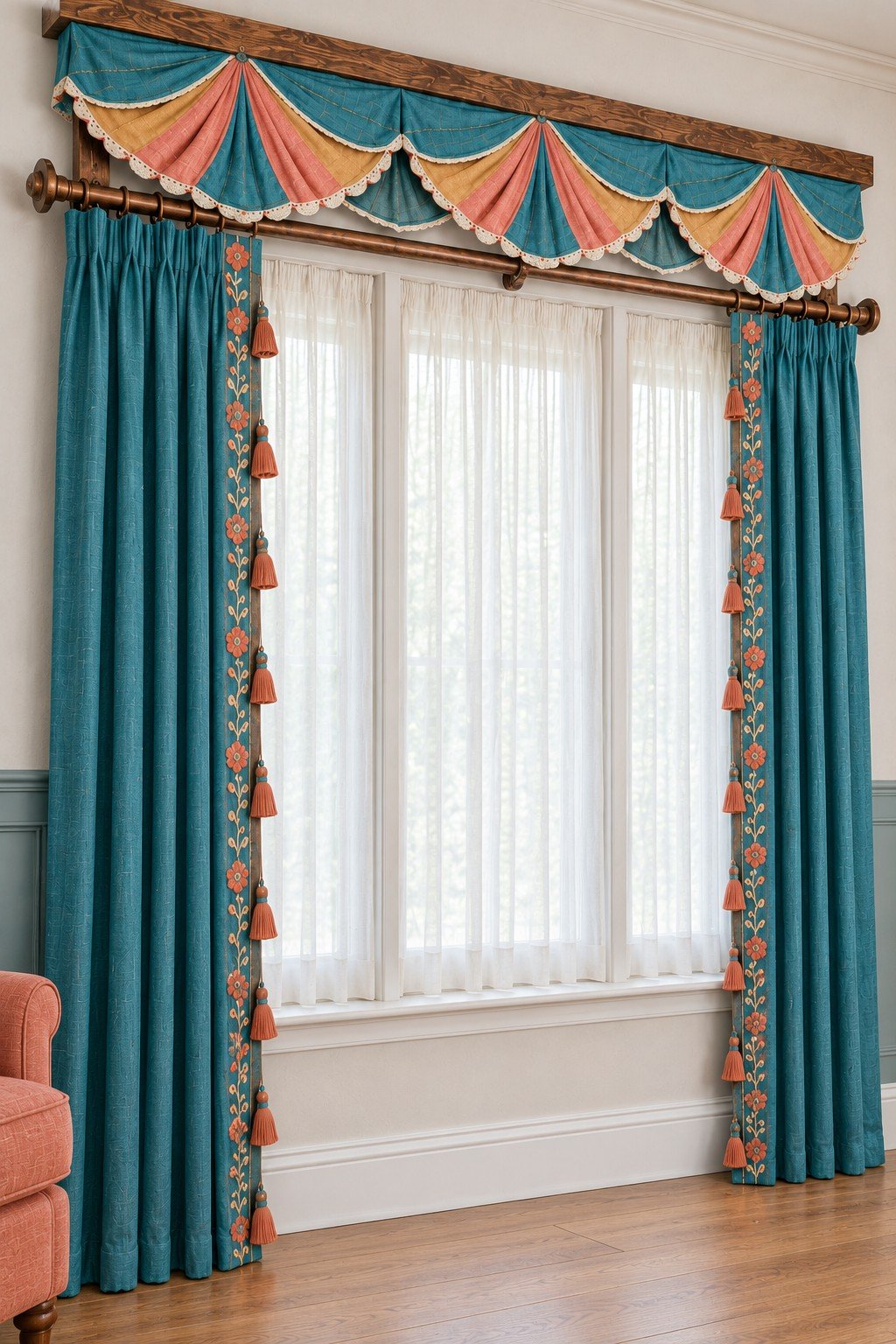
Coral, gold, and teal swags frame a white sheer between teal side curtains. Sew each colored length to a narrow fabric band, then fix the band to a mounted board above the window. Washable trim keeps the curved edges neat and makes the display easier to care for.
2. Full Length Patchwork Curtains
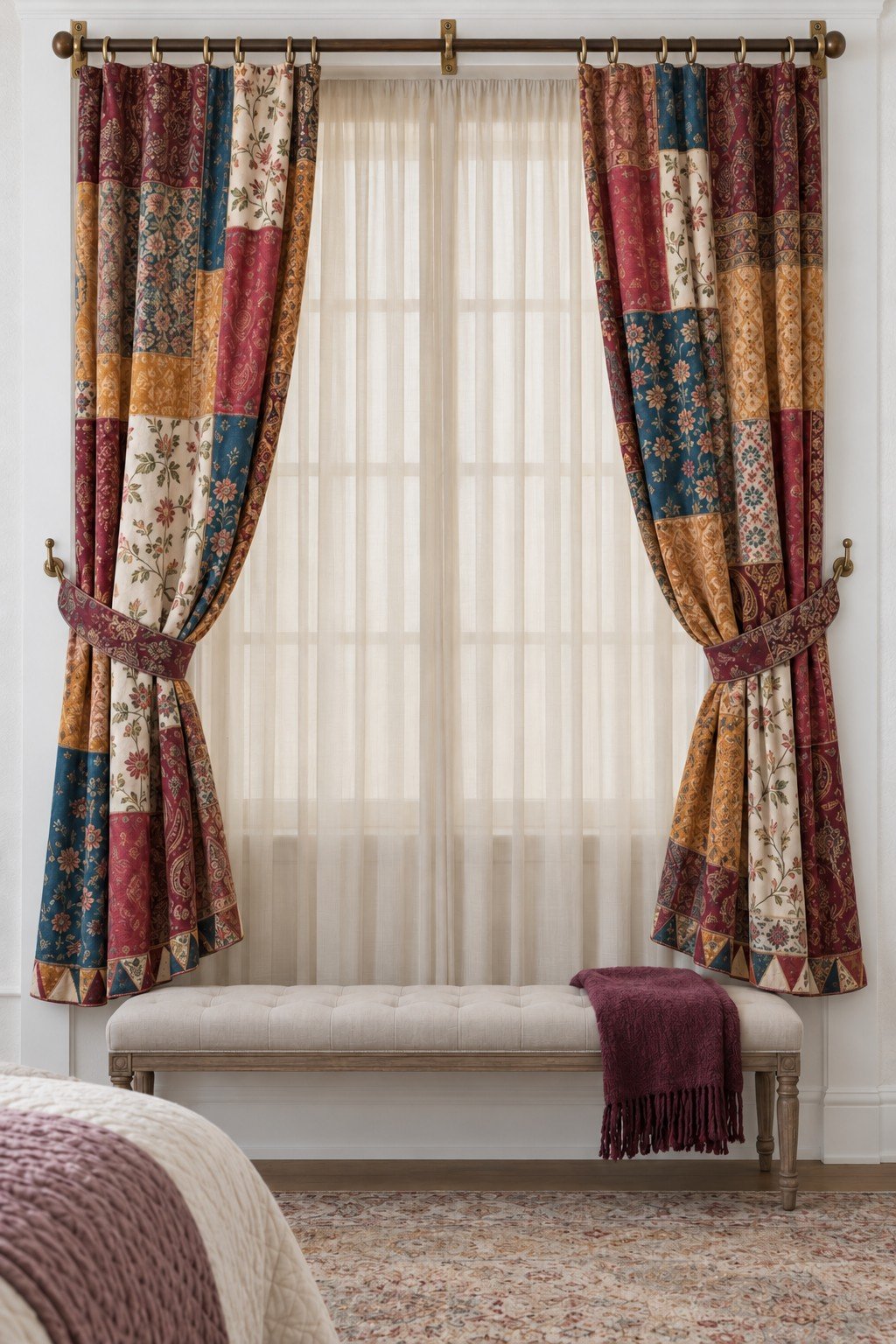
Full length patchwork panels in deep teal, berry, and ochre frame a white sheer, held back with matching ties. White sheers keep the layers light at the center. Cut washable cotton squares about 12 by 12 cm and join them with 1 cm seam allowances, which gives 10 cm finished squares. Press the seams flat, join the strips into full panels and line them before hanging. Old cotton shirts work well too if they have a similar weight and the same washing instructions.
3. Terracotta Sunburst Shade
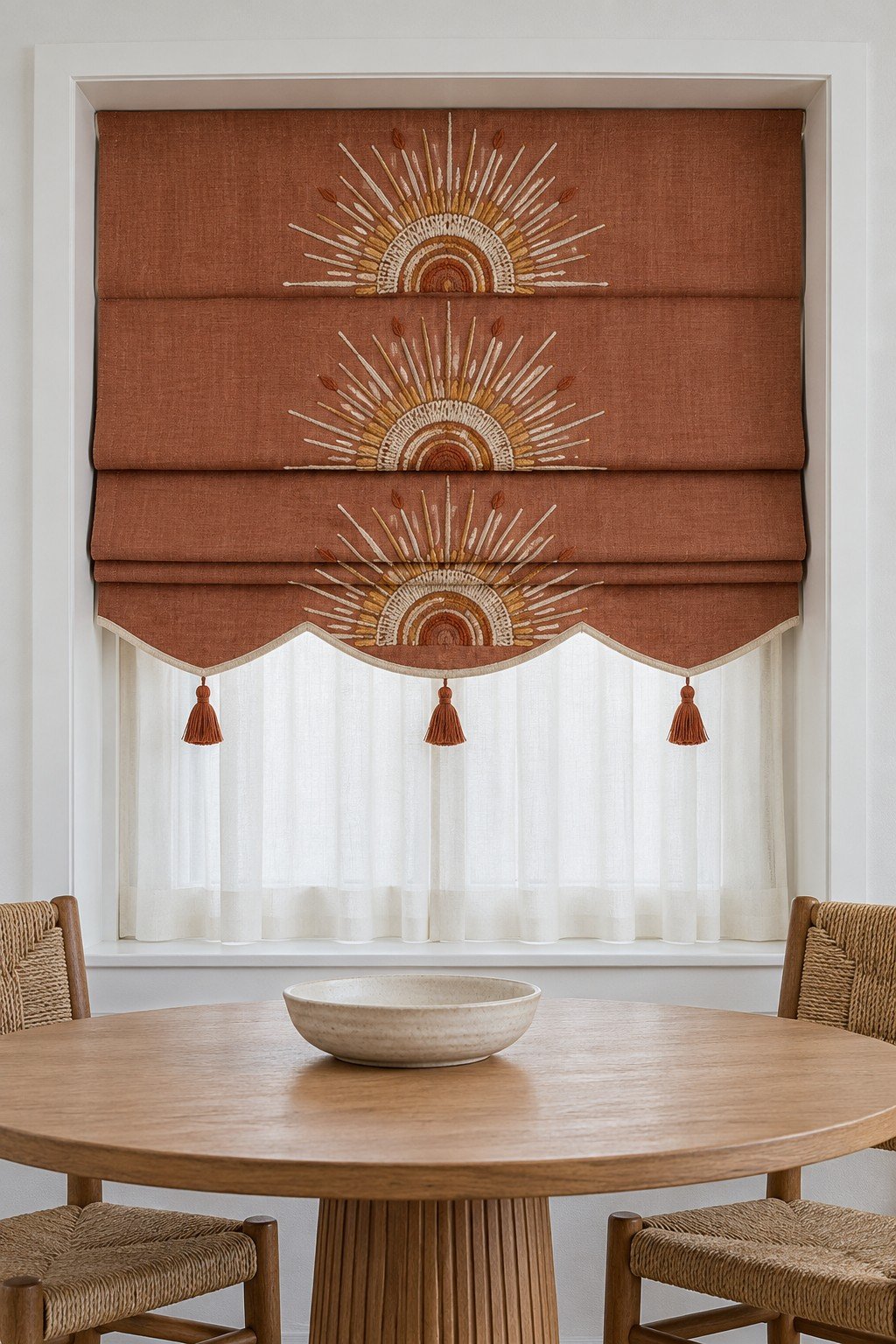
Three sunbursts brighten a terracotta fabric shade above a white sheer. Paint or embroider the motifs onto a stationary shade. If the shade needs to open and close, leave the folds free to move. For a narrow opening, place a smaller sunburst at the center and let the scalloped edge remain visible.
4. Lavender Lace Arch
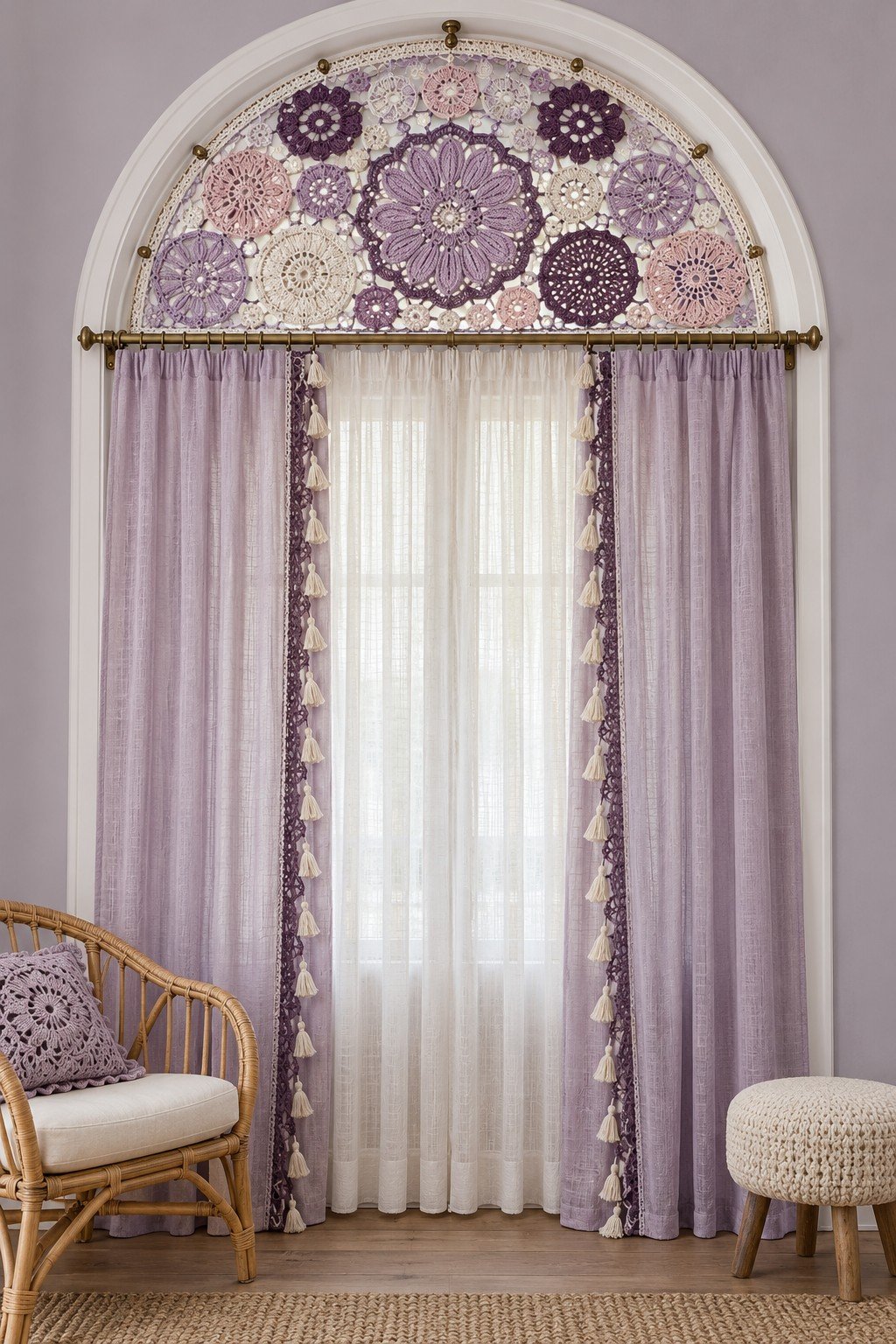
Lavender curtains sit beneath an arch filled with overlapping lace circles in plum, lilac, and cream. The circular patterns soften the curve of the window while the quieter fabric at the sides gives the arrangement breathing room. Sew small lace pieces to a lightweight mesh backing, then mount the finished piece on a removable frame rather than attaching lace directly to glass. Swap the colors for natural cotton and pale blue when a room needs a calmer palette.
5. Beaded Wave Curtain
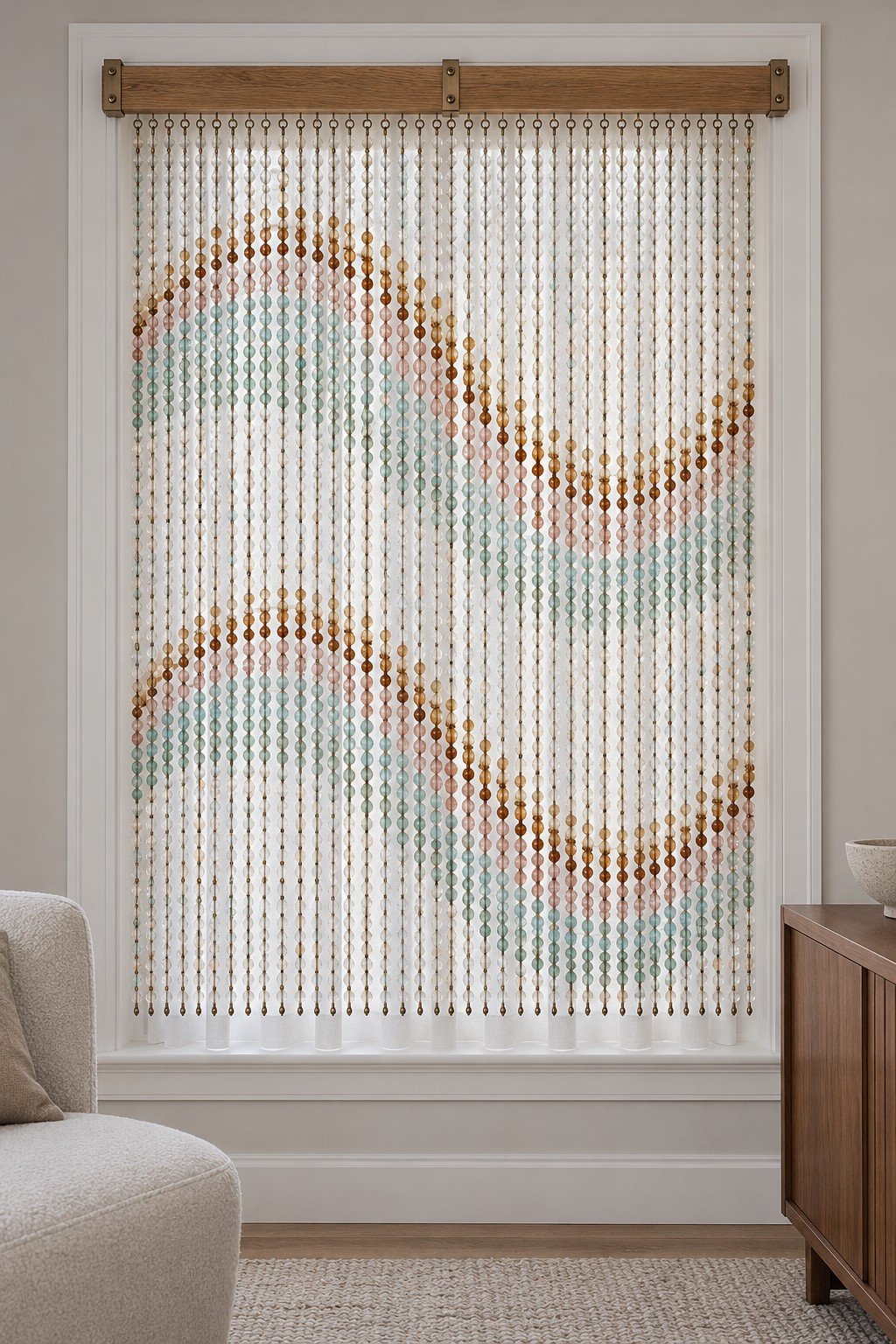
A beaded curtain forms waves in amber, blue, and pale pink. Lay the strands side by side on a table before knotting each bead in place, so the colors make continuous curves. For a sample window, begin with strands about 60 cm long and adjust them to stop above the sill. Attach each upper end through its own closed eye on a wooden rail, and check that the knots are secure. In a room young children use, choose a printed fabric curtain instead of loose strands.
6. Macrame Bay Curtains
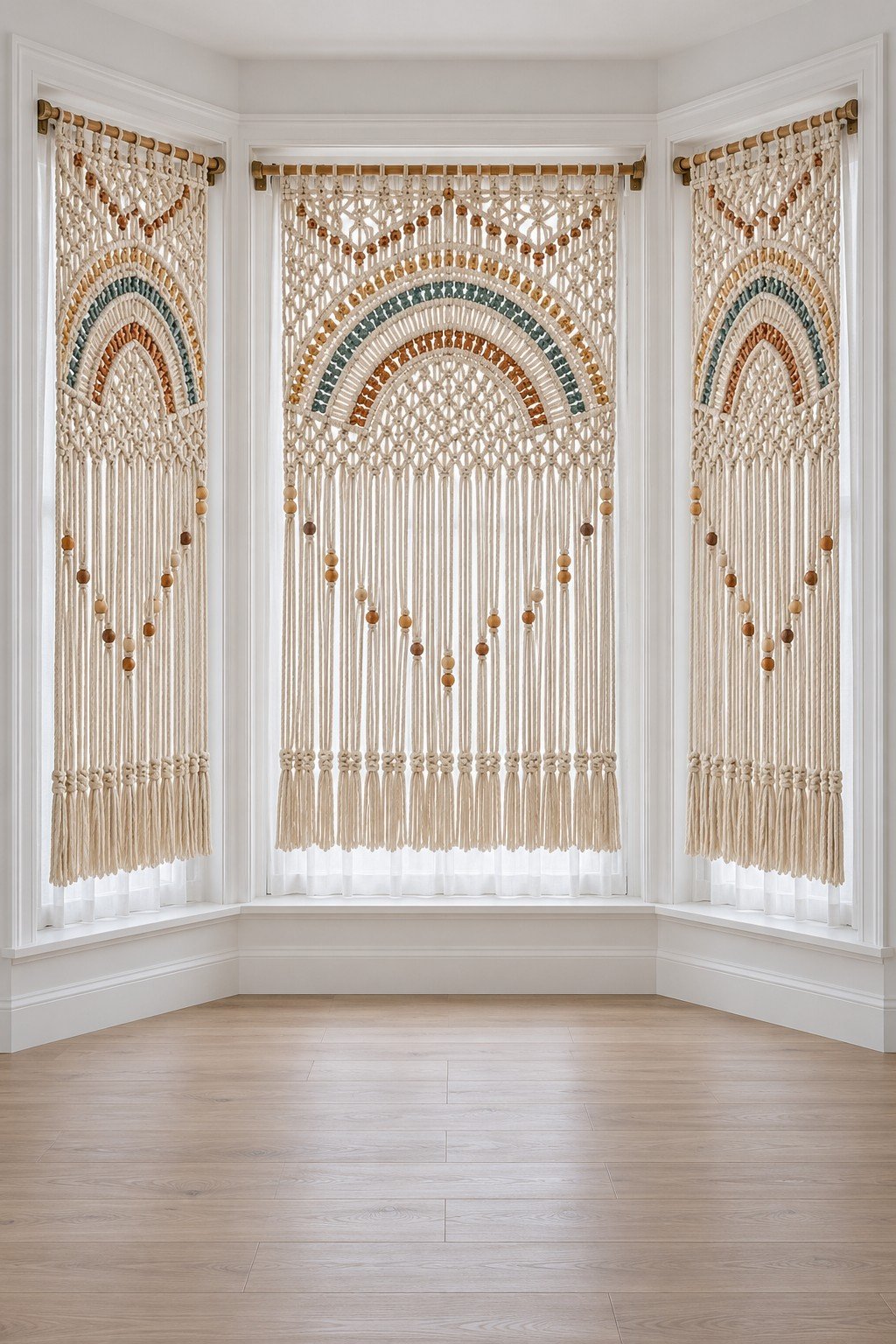
Cream macrame curtains trace the three sides of a bay window, with rust and teal arches woven through the cotton knots. Work each panel separately on a rod sized for its own bay section, repeating the knot pattern while checking that adjoining edges meet neatly. Openwork filters the view but needs a separate lining when privacy matters.
7. Mustard Diamond Curtains
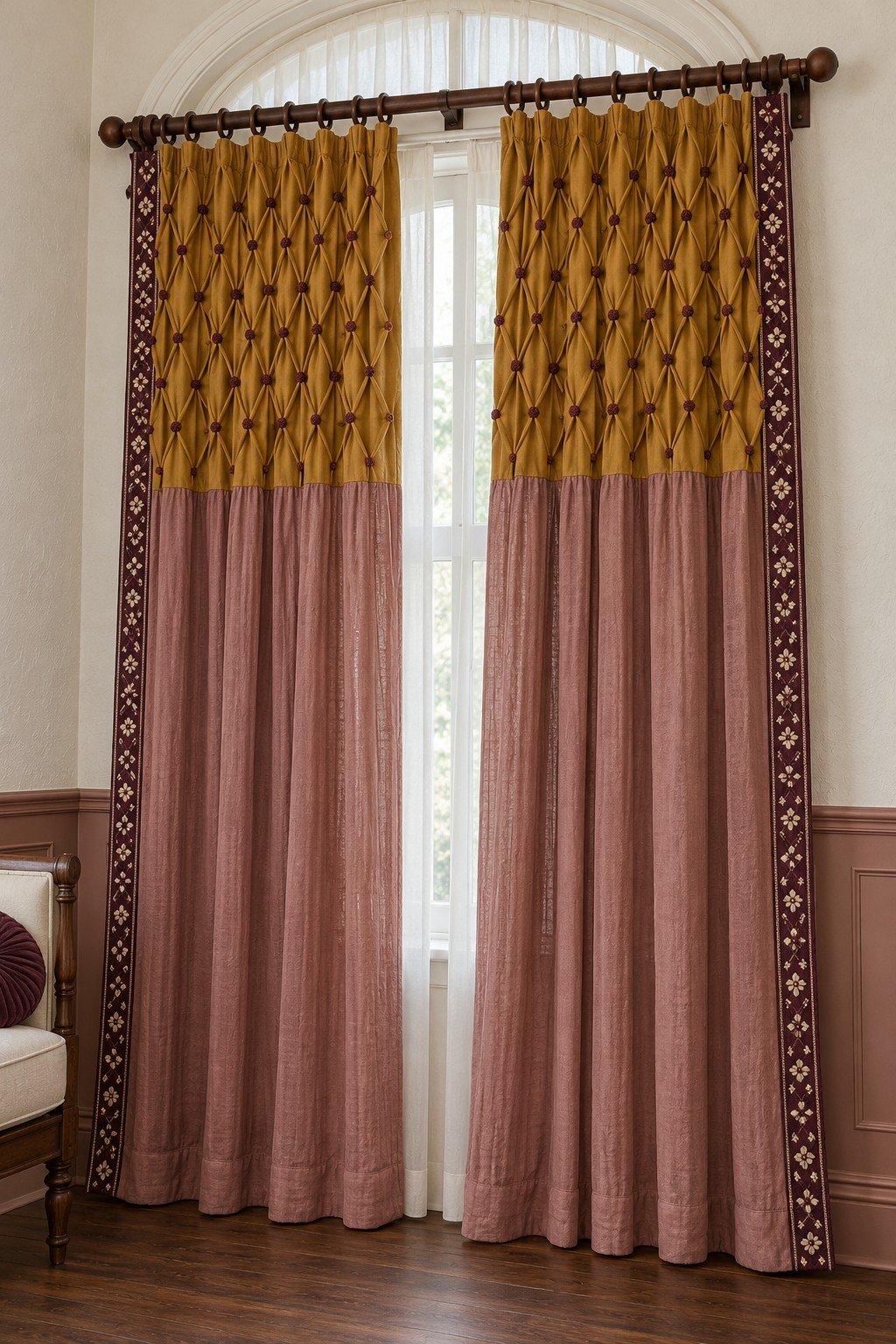
Rows of mustard diamond stitching sit above dusty rose curtain fabric. Mark evenly spaced points on cotton and draw them together with hand stitches, a technique known as lattice smocking, to create the raised shapes. Join the textured section to a plain lower panel and add a woven border. A test swatch about 15 cm deep helps you check how much width the gathers take up.
8. Midnight Mirror Work Curtains
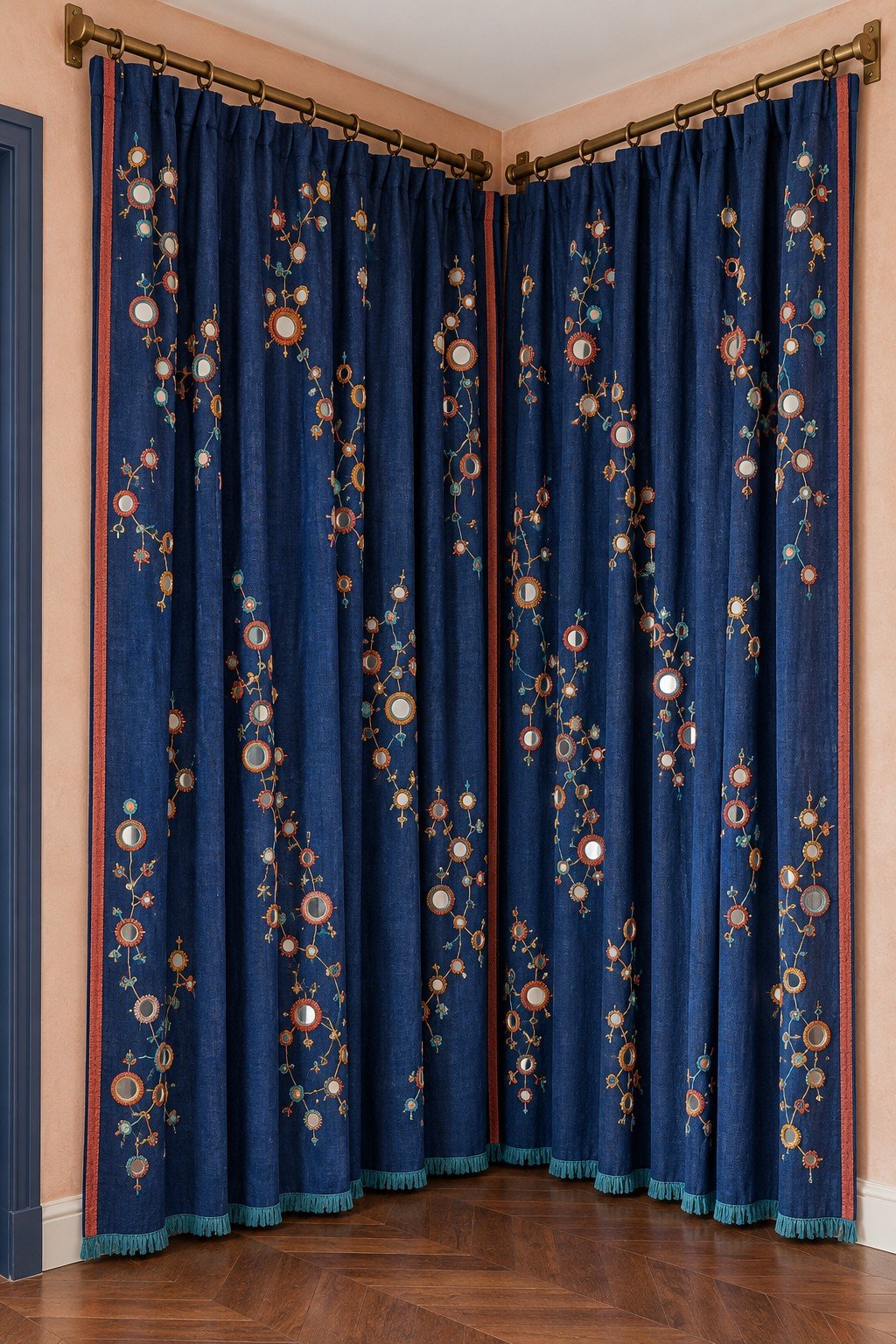
Midnight blue curtains turn a corner, with small round mirrors and colorful floral embroidery scattered on both panels. Embroider or sew small patches to washable cotton before hanging each panel on its own rod. Concentrate the motifs along the outer edges to keep the corner from feeling crowded.
9. Rose Lattice Curtains
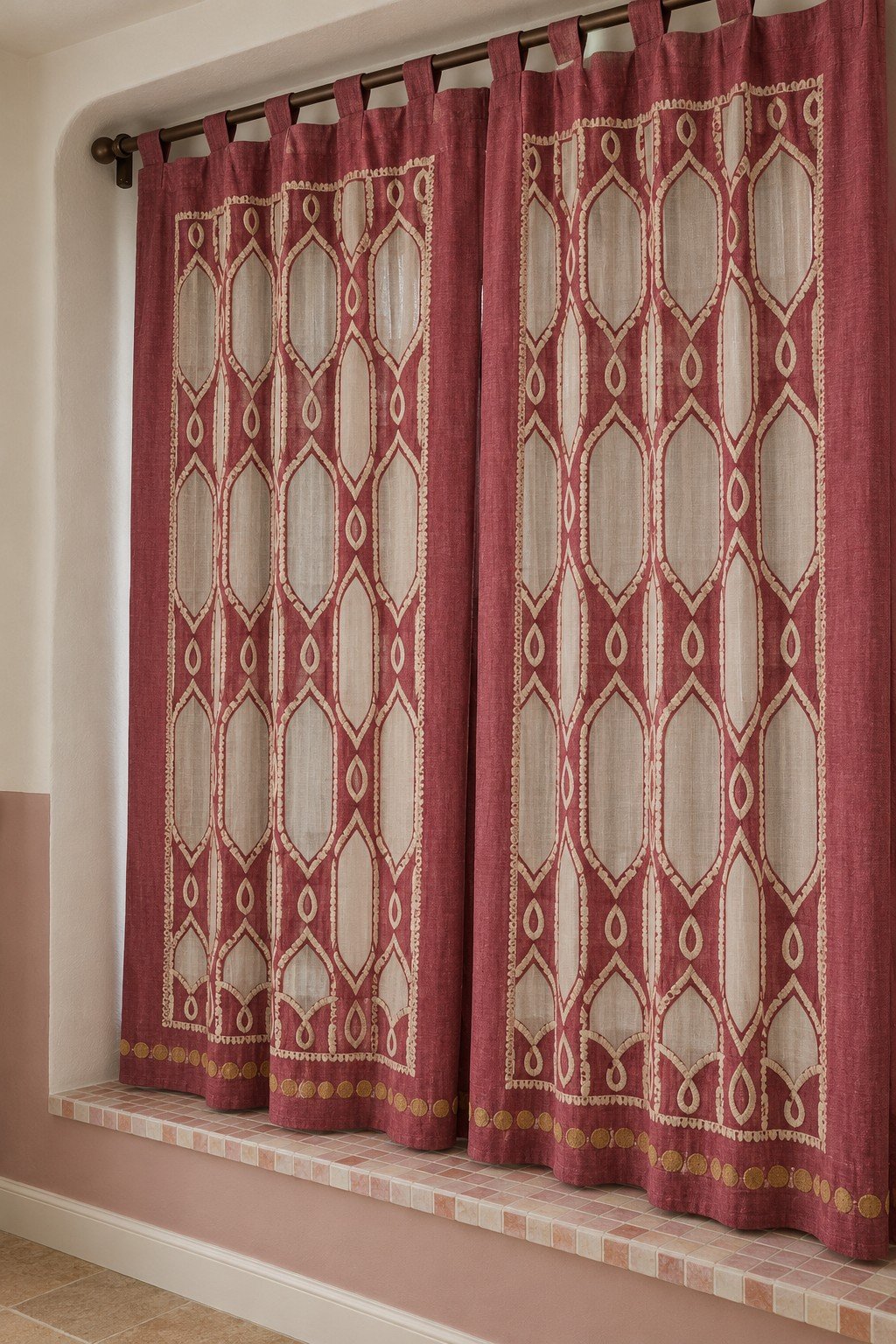
Rose curtains carry a cream lattice of elongated diamonds over a recessed window. The orderly repetition keeps this handmade pattern calm even though it covers much of the fabric. Draw the lattice on paper first, then transfer it to prewashed cloth and build the lines with narrow fabric tape or washable embroidery. Scale the diamonds larger on a wide curtain so the pattern remains distinct from across the room.
10. Ginkgo Leaf Sheers
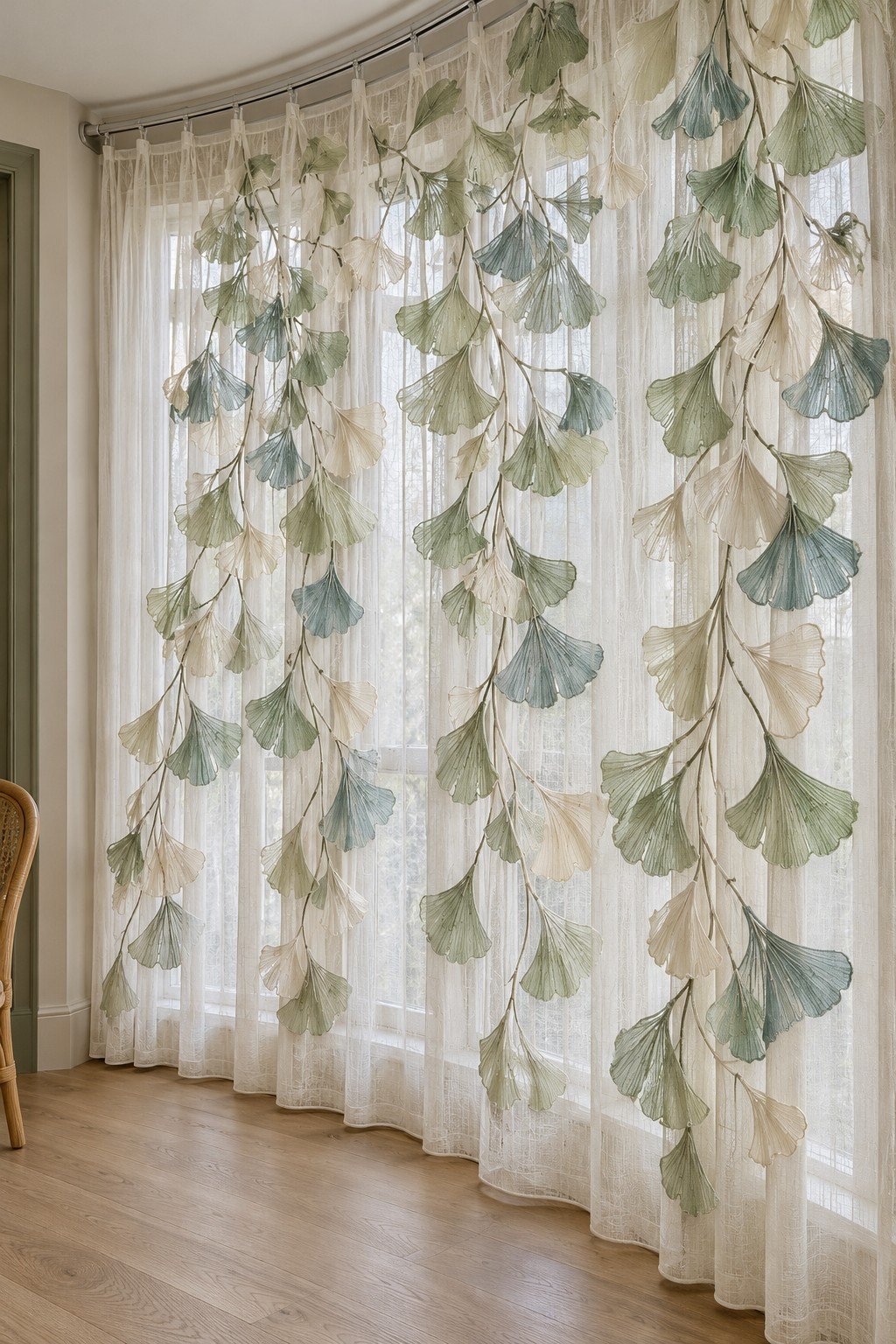
White sheers are decorated with trailing ginkgo leaf motifs in pale sage, blue, and ivory. The leaf shapes add movement while the translucent ground keeps the window visually open. Cut ginkgo shapes from lightweight fabric, finish their edges, and stitch them onto a sheer curtain with plenty of space between each stem. Stitch a single branch near one edge for a modest version that is easier to wash and maintain.
11. Wavy Stitched Curtains
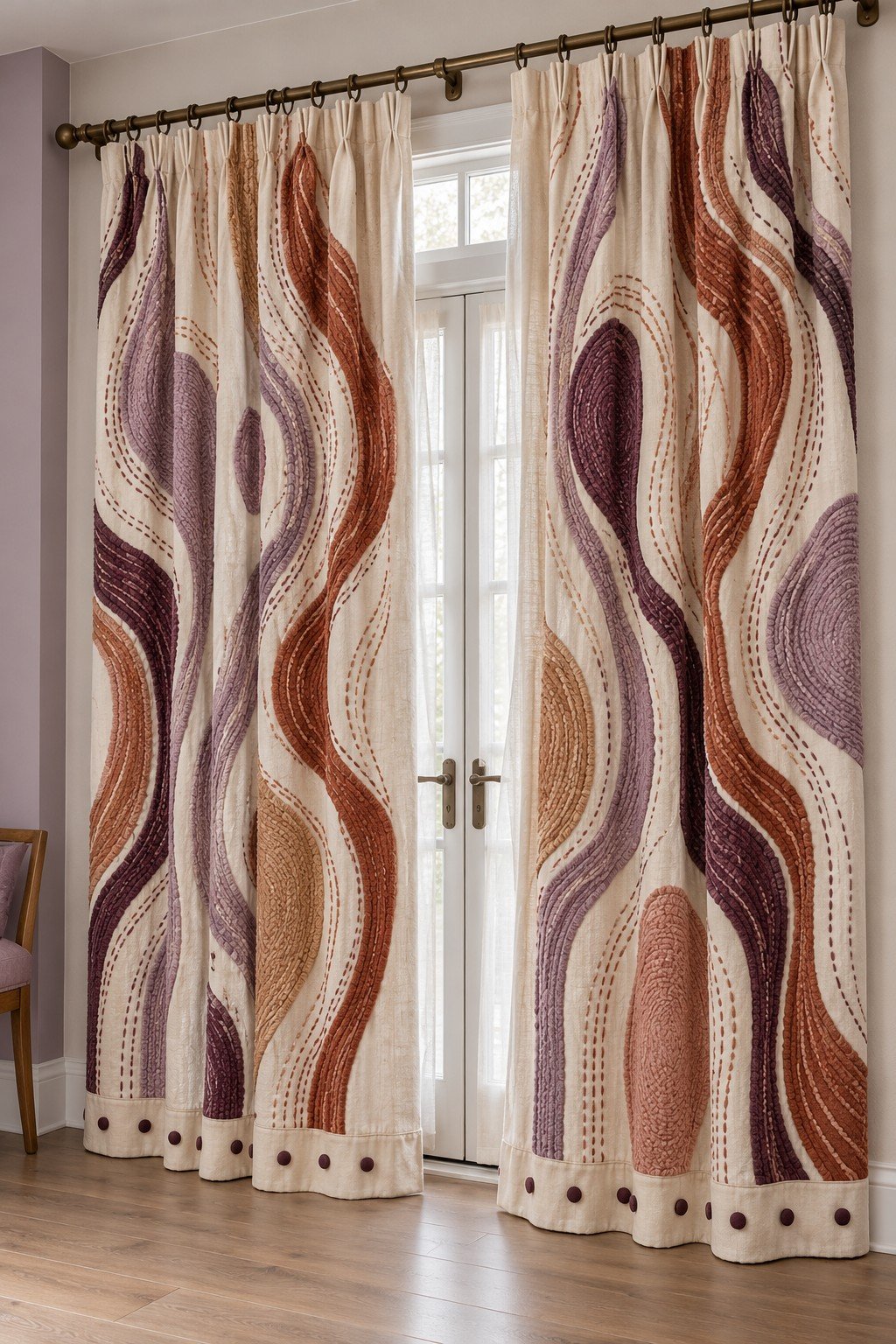
Cream curtains carry long wavy shapes in rust, plum, and muted gold. Sew the shapes from fabric pieces or paint them onto a plain curtain after testing on a scrap. For a quicker version, paint fewer and wider waves.
12. Floral Medallion Strands
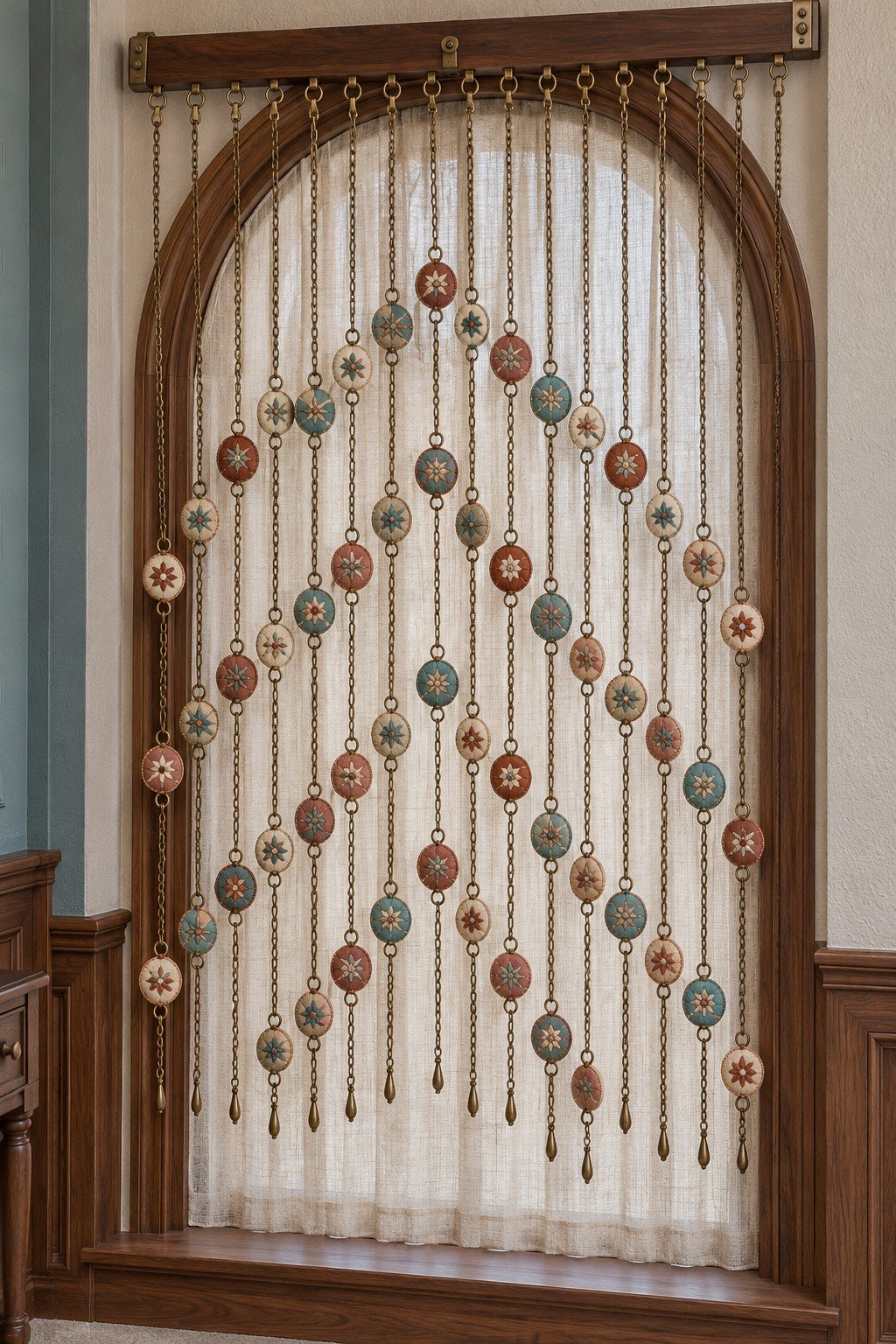
Floral medallion strands in rust and turquoise form a tall diamond arrangement over a white sheer. Lay the medallions in rows before connecting each piece to lightweight chain with closed jump rings. Hang each chain from an individual eye on a wooden header above the arch. As a starting point for a compact window, cut the chains to about 45 cm and adjust their lengths to leave the sill clear. The sheer remains on its own curtain track, so it can still be drawn independently.
13. Celestial Track Curtains
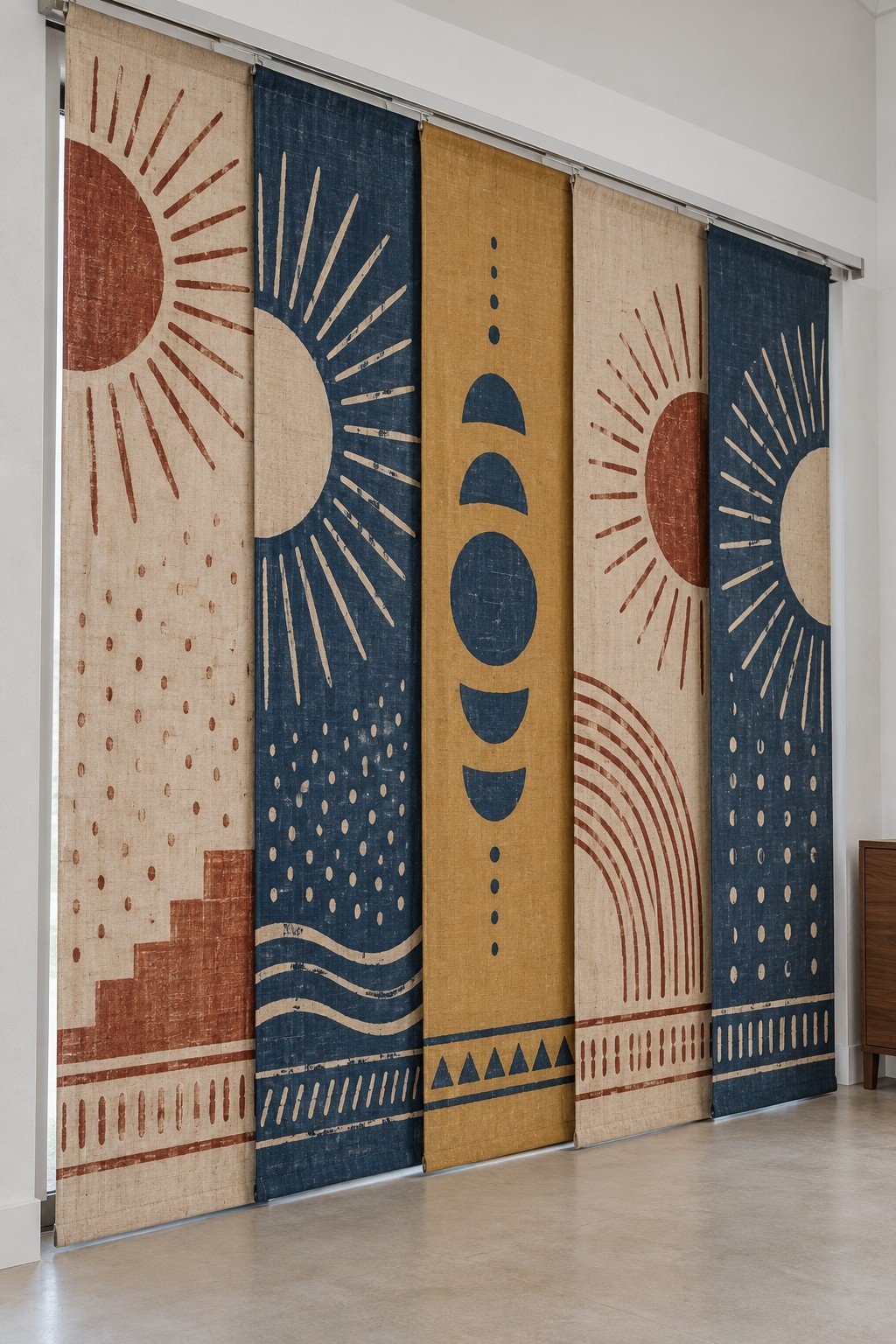
Cream, navy, and ochre track curtains carry suns and moons across a broad window. Paint the celestial motifs on each panel before hemming, then hang the panels from individual track gliders so they can move. A centered pair of motifs keeps the design legible on a narrow opening.
14. Colorful Triangle Curtains
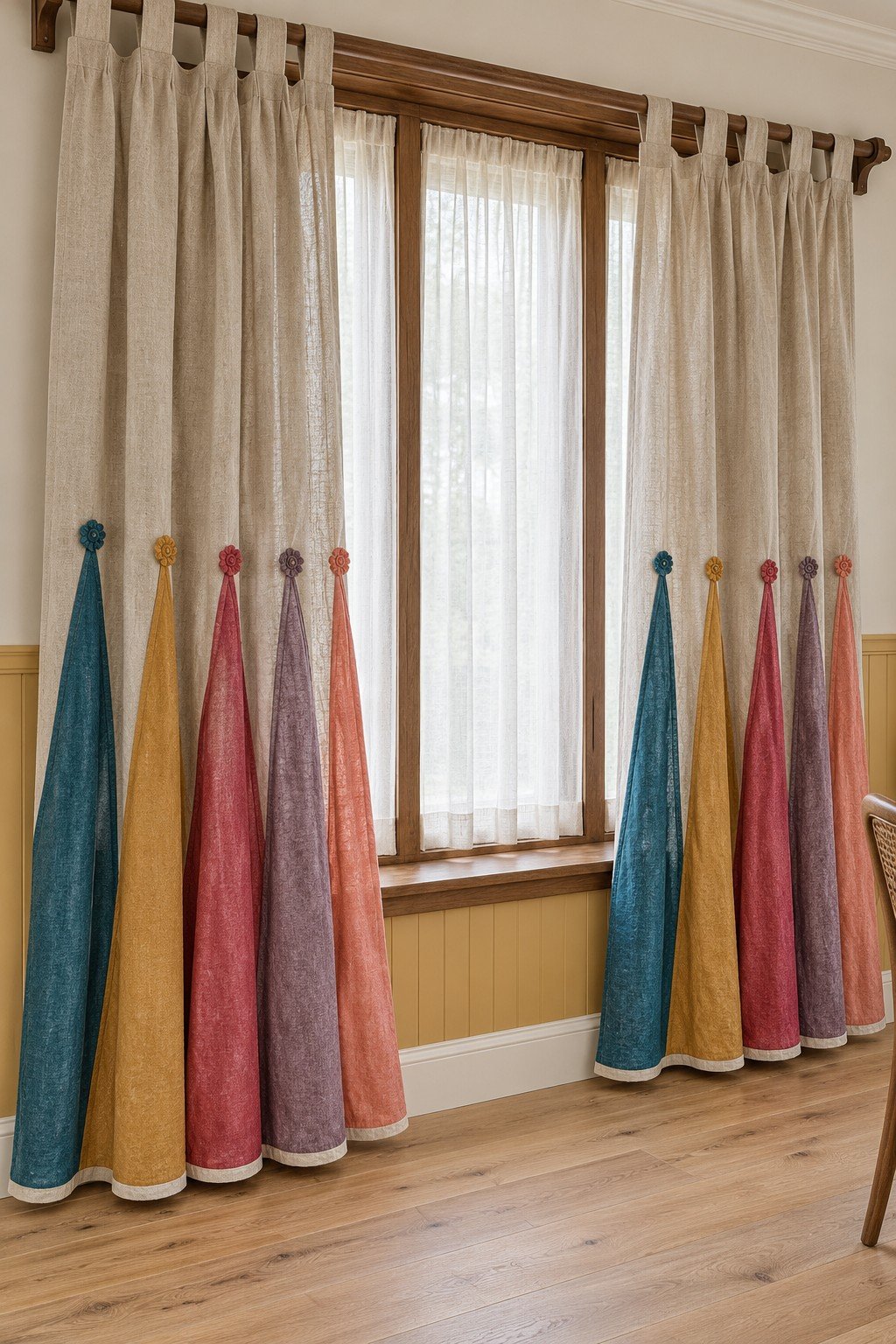
Teal, mustard, rose, and plum fabric triangles decorate cream curtains, with a rosette at the tip of each shape. Cut the triangles from thin cotton and sew their edges flat before stitching a matching rosette over each point. Spacing the motifs farther apart leaves more of the plain curtain visible.
15. Crochet Diamond Curtains
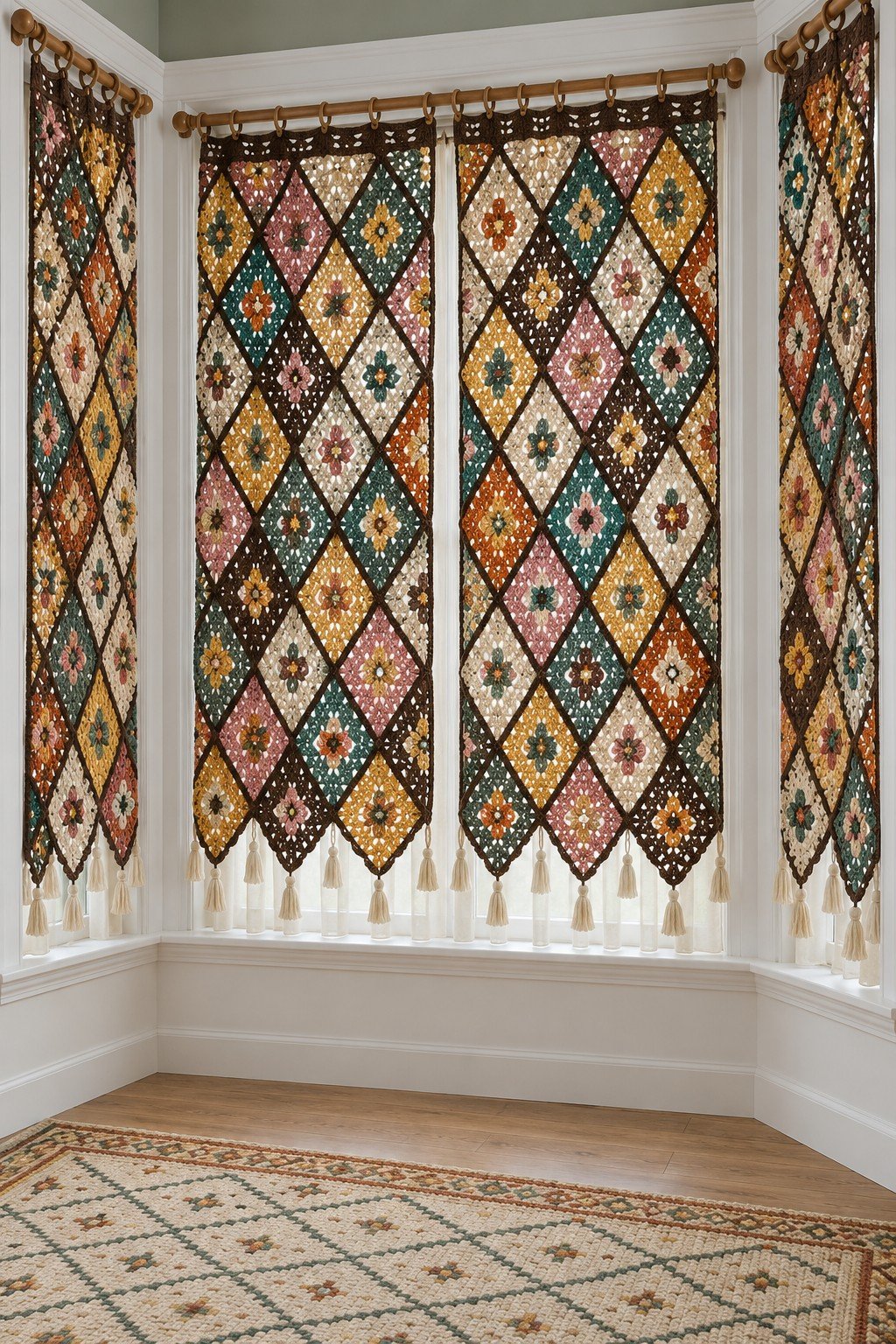
Crochet diamonds in teal, gold, pink, and cream cover the sections of a bay window. Make a test square about 10 cm across and block it before deciding how many motifs each panel needs. Join the squares edge to edge with matching yarn, turning the motif layout to create a diamond pattern. Use the same yarn weight throughout to keep the joins even. Finish each panel separately so the bay corners and curtain rings remain accessible. A shorter panel uses fewer motifs while retaining the pointed lower edge.
16. Sage Ribbon Curtains
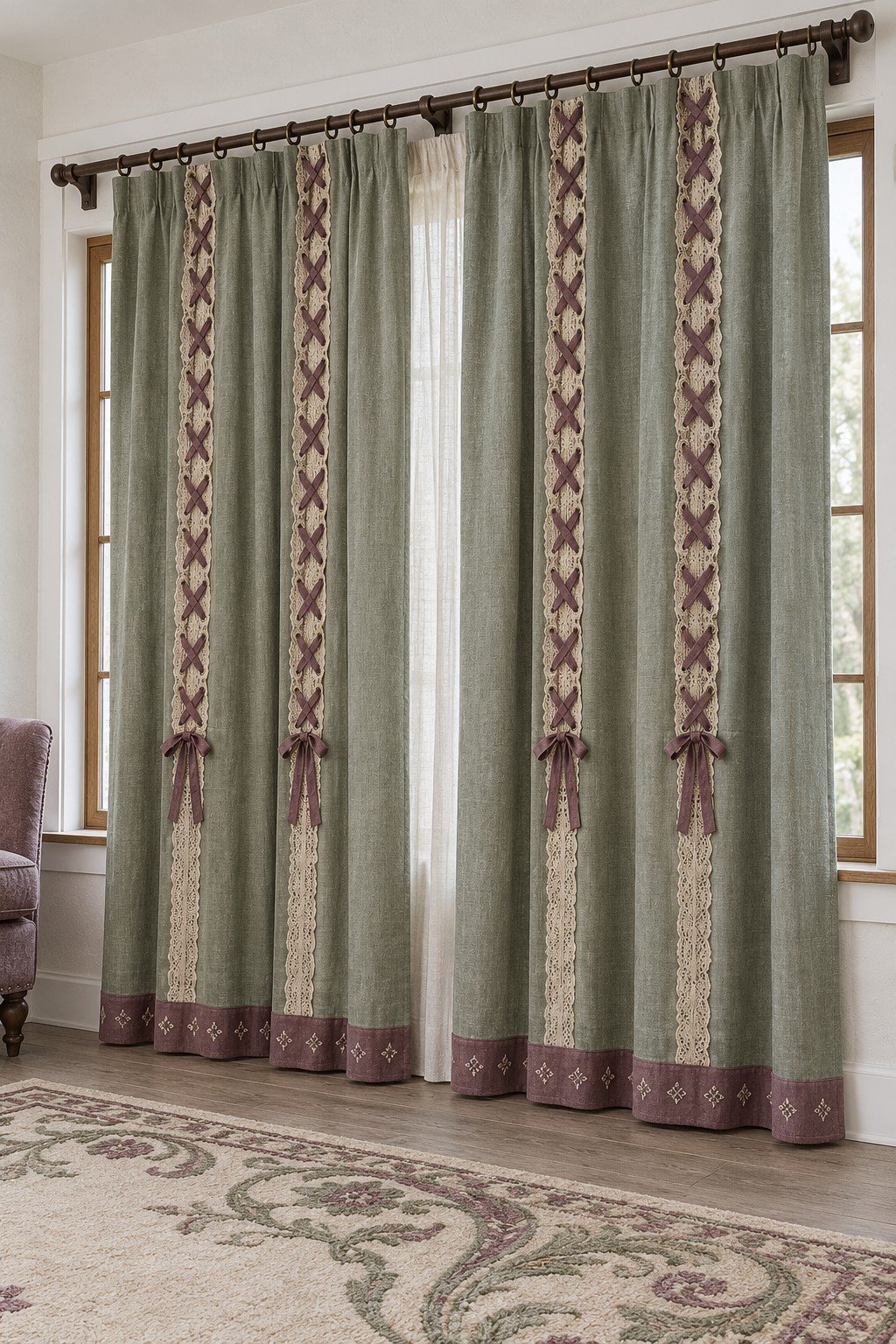
Sage curtains are finished with plum ribbon bands, cream lace, and small bows. The vertical decorations lengthen the look of the window, while the darker hem grounds the soft green fabric. Sew lace and ribbon onto washable curtain lengths before adding the bows, placing all stitches through the fabric rather than relying on glue. Accent a plain curtain you already own with one ribbon band if your budget or sewing experience is limited.
17. Pastel Ruffle Curtains
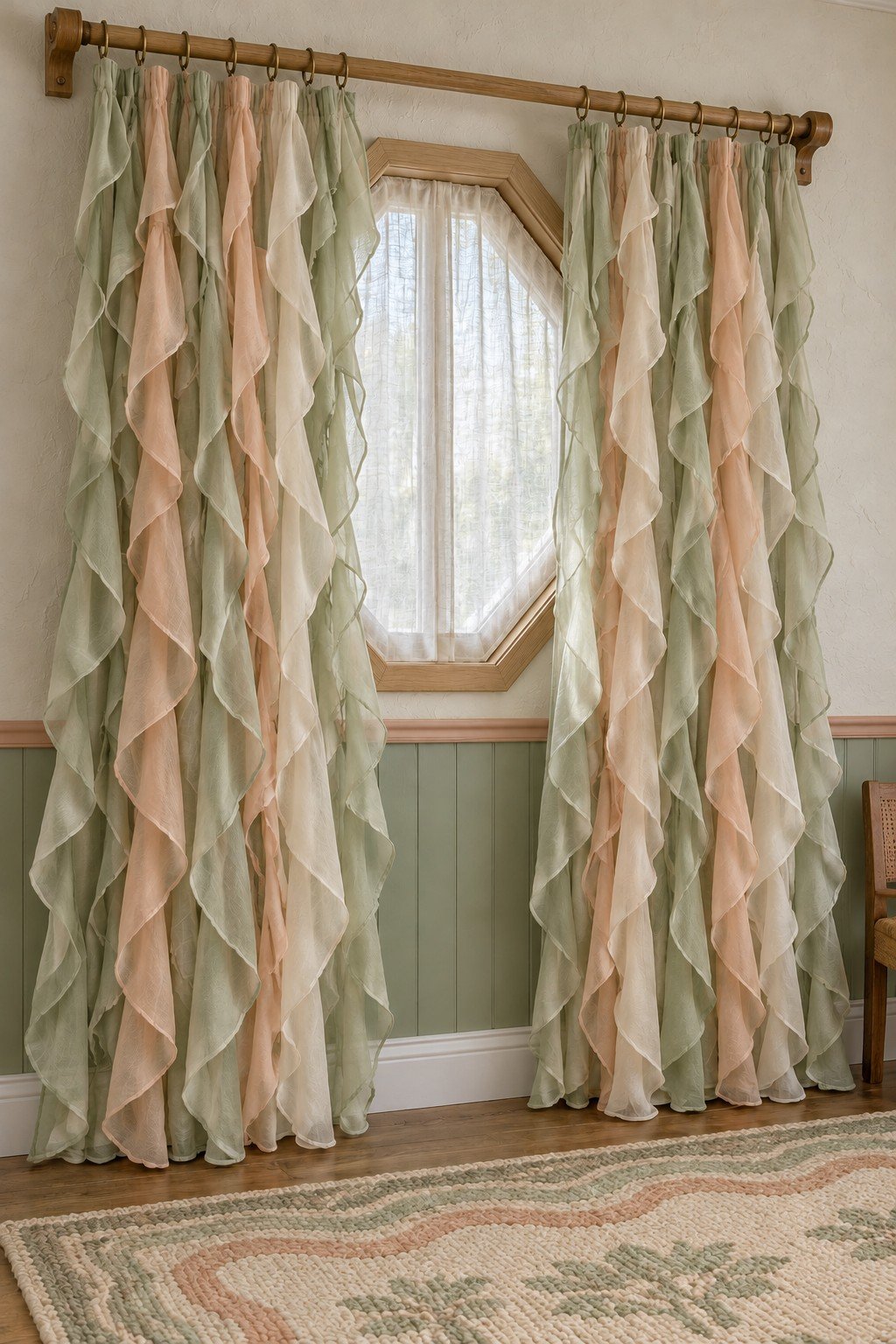
Pastel sage and peach ruffles frame a small window in soft layers. Cut lightweight cloth into strips about 8 cm wide, allowing extra length for gathers. Finish the long edges, then sew two rows of loose stitches along one edge of each strip. Pull the threads gently until the strip fits the curtain edge and stitch it in place. A ruffle along each leading edge is easier to wash than a curtain covered in ruffles.
18. Chevron Cafe Curtains
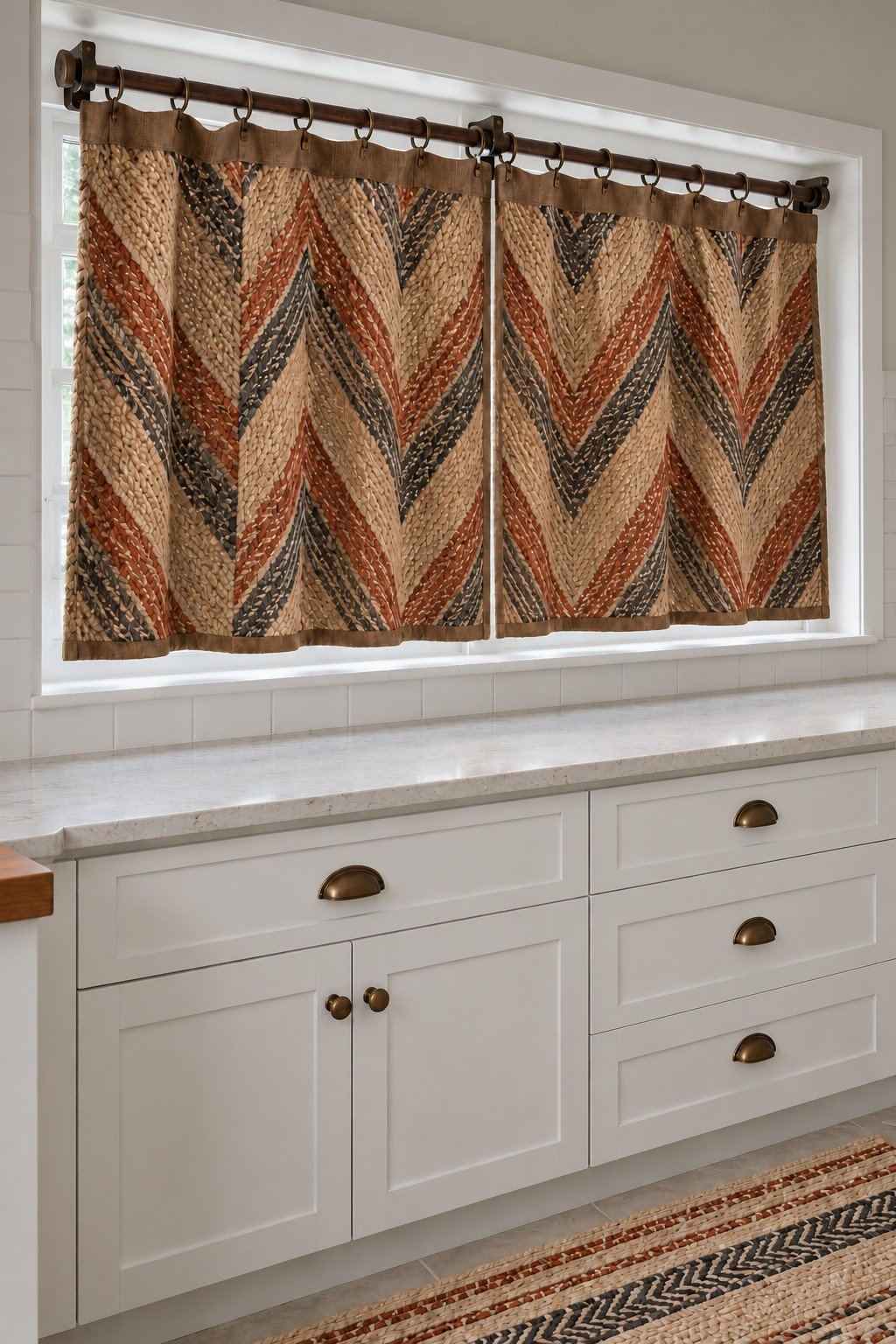
Chevron cafe curtains introduce rust, charcoal, and cream over a kitchen window. Cafe curtains cover only part of a window, so the short length works well where full curtains would crowd a counter. Sew a rod pocket or attach clip rings to washable chevron fabric, then hem the bottom so it clears the work surface. Leave extra room beside a sink or cooking area and select fabric that can be washed according to its label.
19. Round Fan Curtains
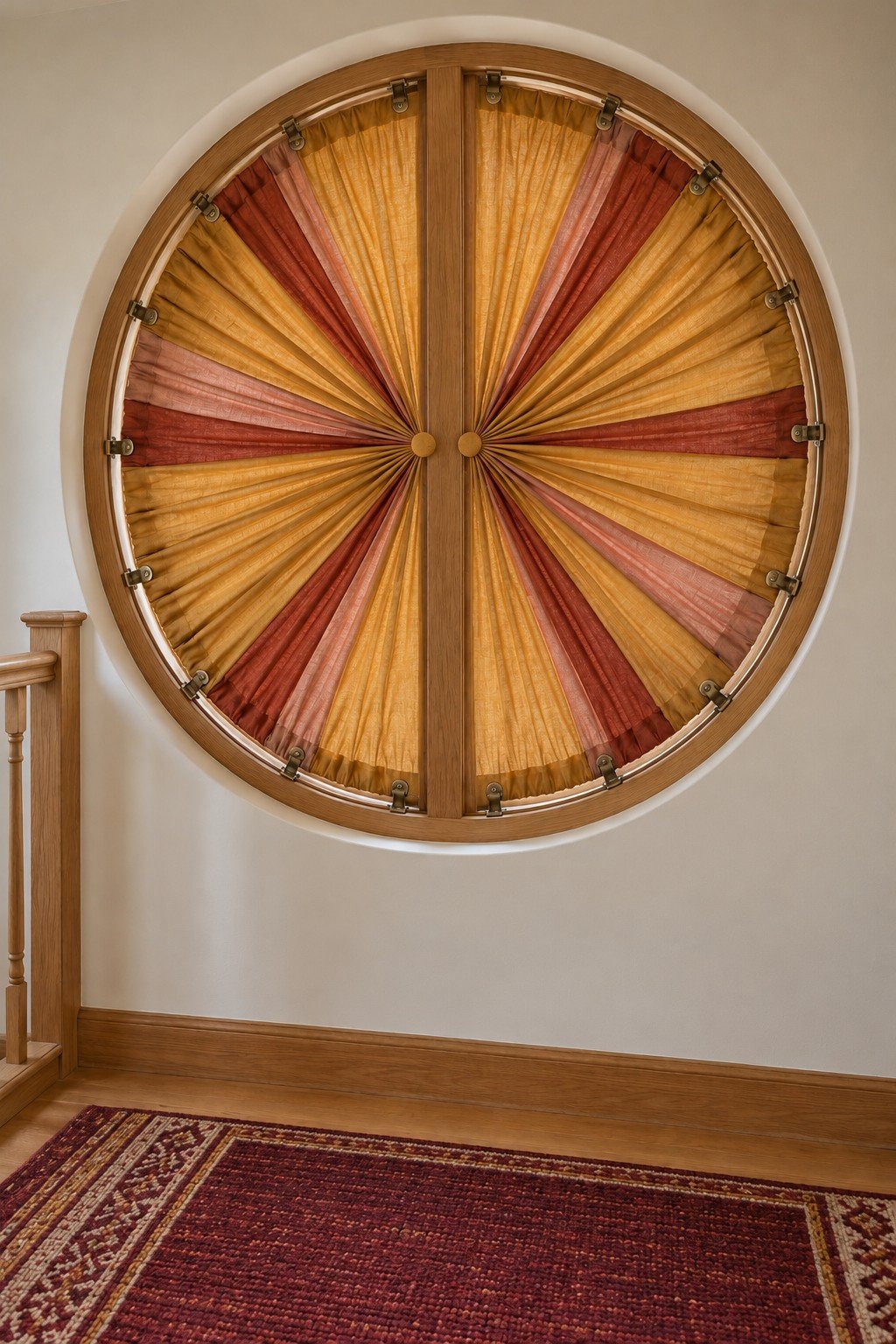
Mustard and rose fan curtains trace the shape of a round window. Fold thin cotton into two fans and secure each outer curve with clips on a semicircular backing frame. Cover the gathered center of each half with a fabric button for a neat finish. Use this fixed display only on a window that never needs to open or serve as an escape route.
20. Forest Branch Sheers
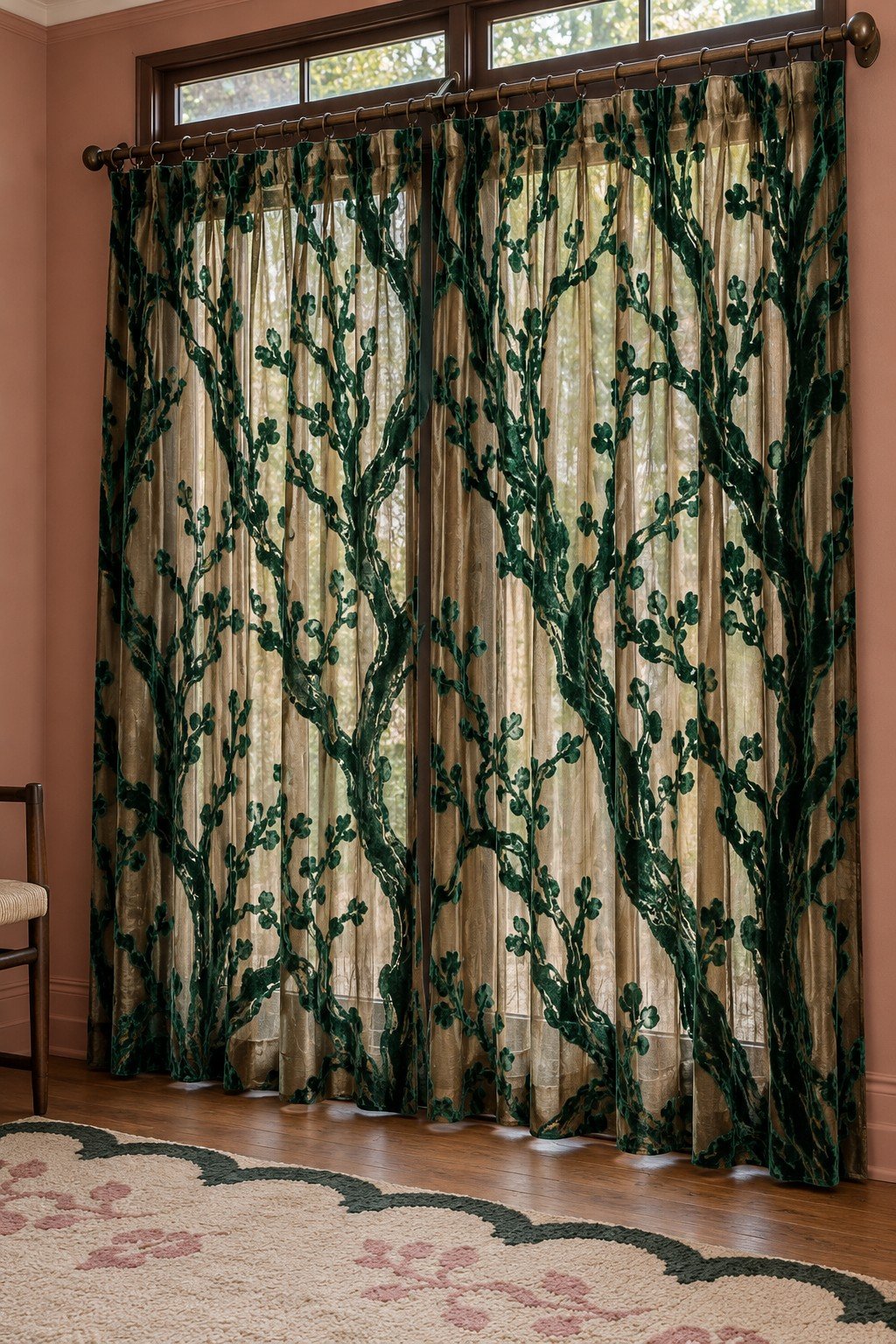
Sheer curtains carry dark green branching foliage across a tall window. The dense lines make a dramatic silhouette, while the translucent fabric lets the window retain its light appearance. Recreate the forest effect with washable fabric paint and a branch stencil, building the design on the curtain while it lies flat. Contrast a single painted branch with a plain sheer if a full forest would feel too busy in your room.
21. Striped Fringe Curtains
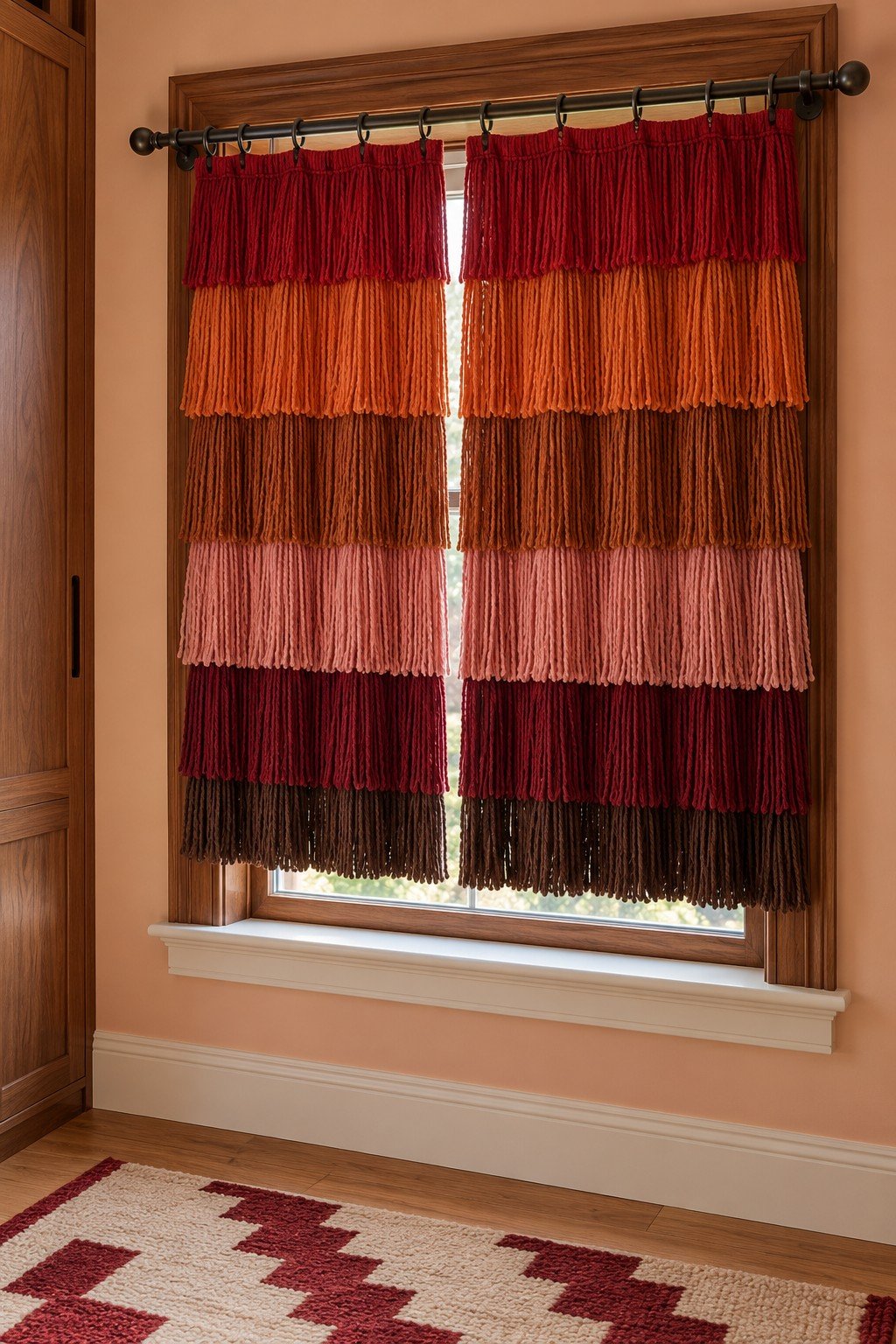
Horizontal stripes of fringe in red, rust, brown, and dusty pink give a short curtain a textured surface. Work from the bottom upward when stitching purchased fringe onto a fabric foundation, so each row hides the stitching of the row below. Using fewer bands on a plain panel makes the curtain easier to clean.
22. Pomegranate Floral Curtains
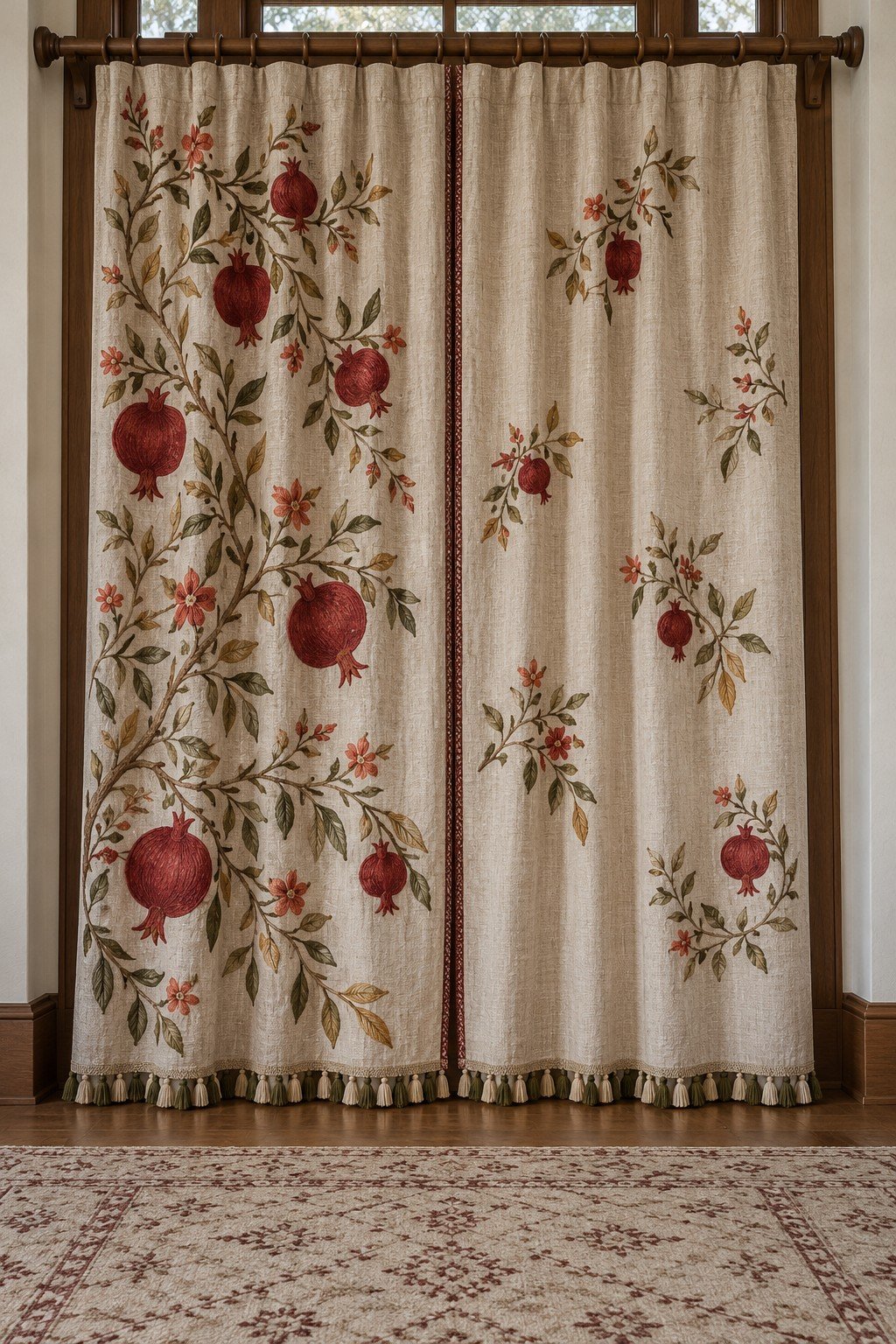
Cream curtains carry red pomegranates and slender floral branches in a loose climbing pattern. The open areas between the motifs help the deep red fruit stand out without making the whole window feel dark. Transfer a simple branch outline to washable cloth and fill the shapes with fabric paint or embroidery, then add a narrow trim along the lower edge. Trace only a few fruits along one side for a quicker treatment that still gives a plain curtain character.
23. Crossed Fabric Curtains
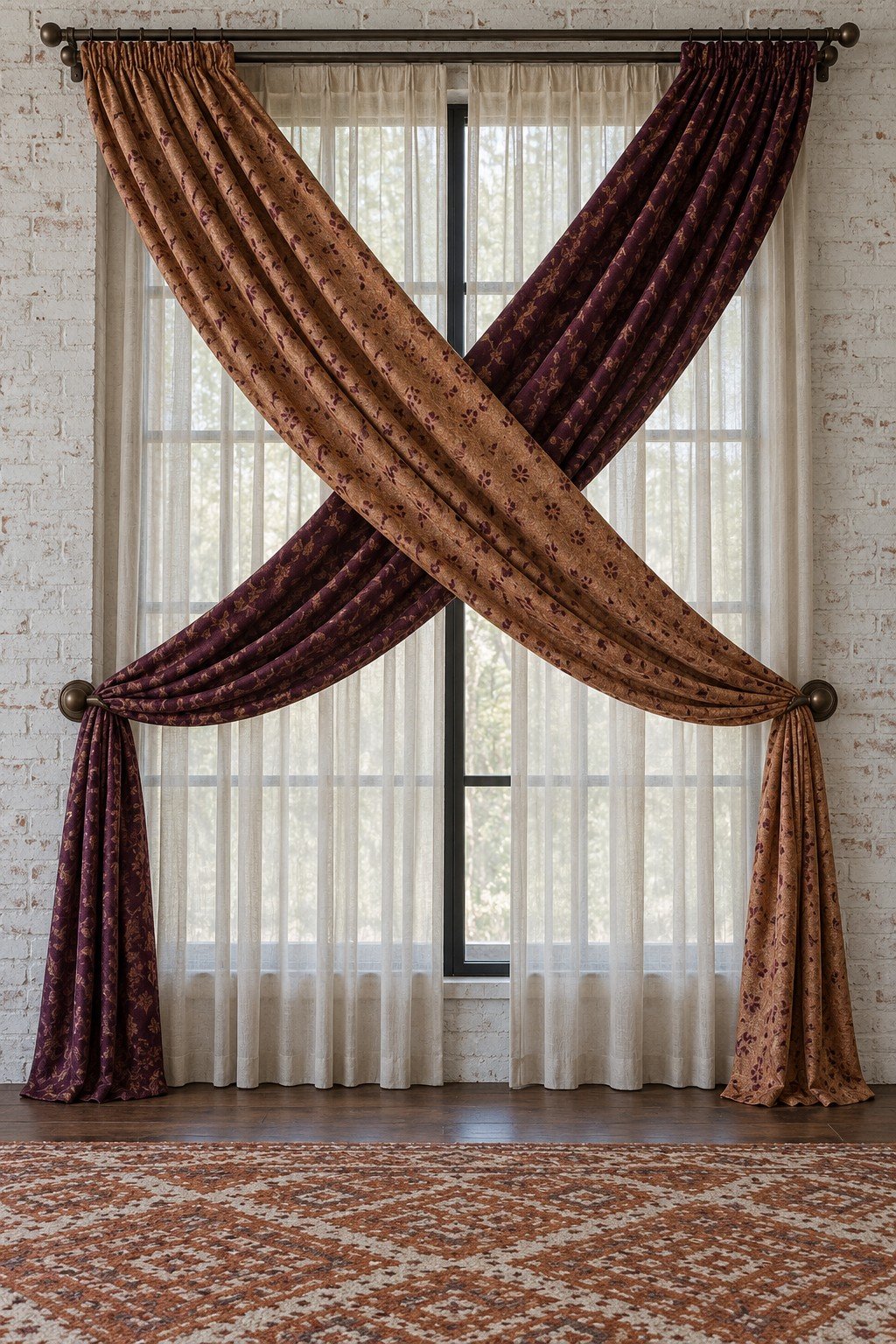
Rust and plum fabric curtains cross over a white sheer and draw back toward opposite sides of a tall window. Place the sheer on its own track, then cross the colored panels in front and secure their ends with broad holdbacks on the side walls. Leave enough slack at the crossing for the sheer and window handles to remain accessible.
24. Blush Draped Swags
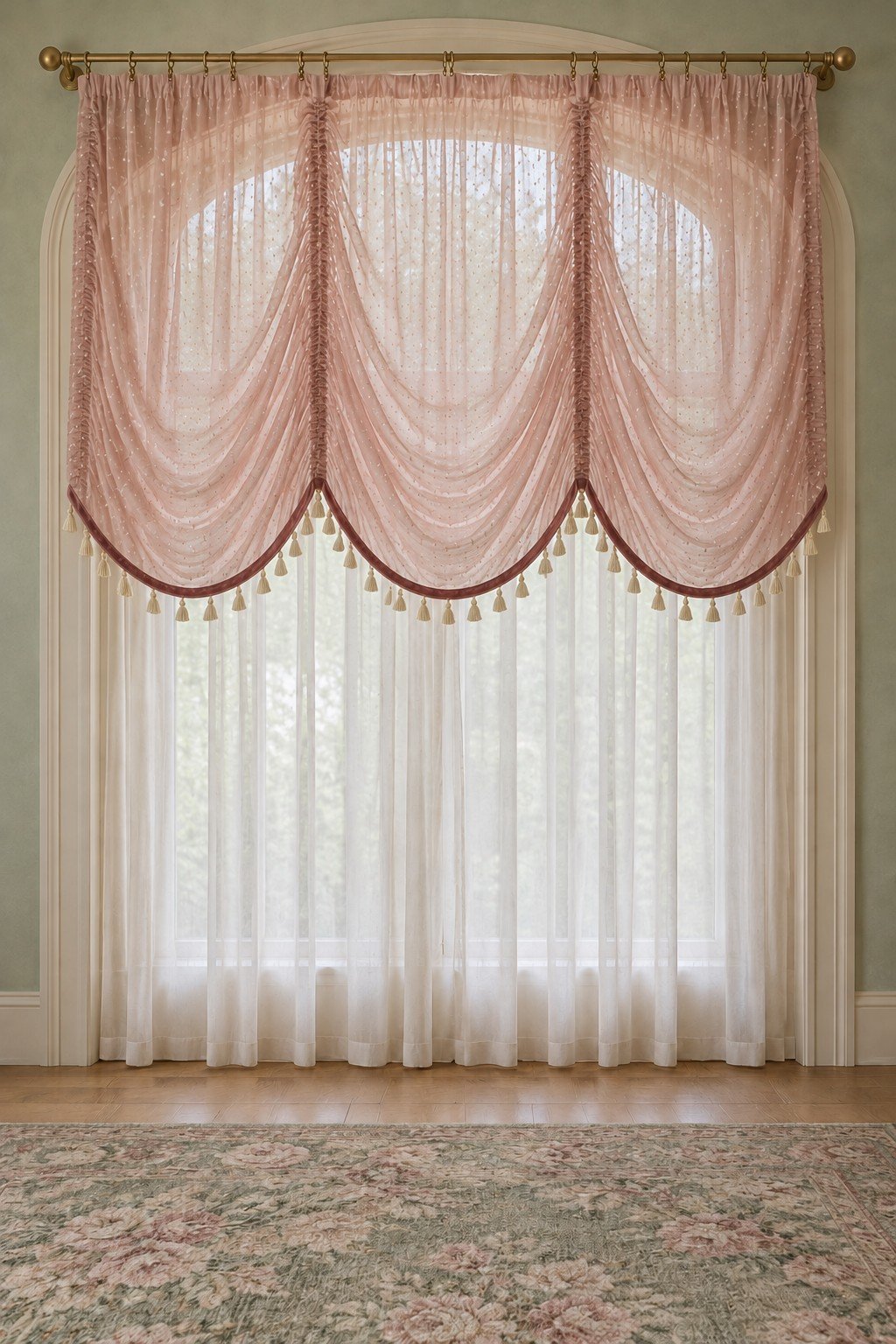
Blush sheer swags dip over a white curtain, edged with small tassels. Choose a lightweight panel with tassel trim already attached for a version that needs no sewing. Tie the panel to the rod at four spaced points with narrow fabric strips, allowing the three sections between them to drape. For a 90 cm rod, begin with about 150 cm of fabric and adjust the depth of each curve. Tuck the short tie ends behind the rod to keep the front tidy. The white curtain behind the swag gives the blush color an even backdrop.
25. Pastel Triangle Curtains
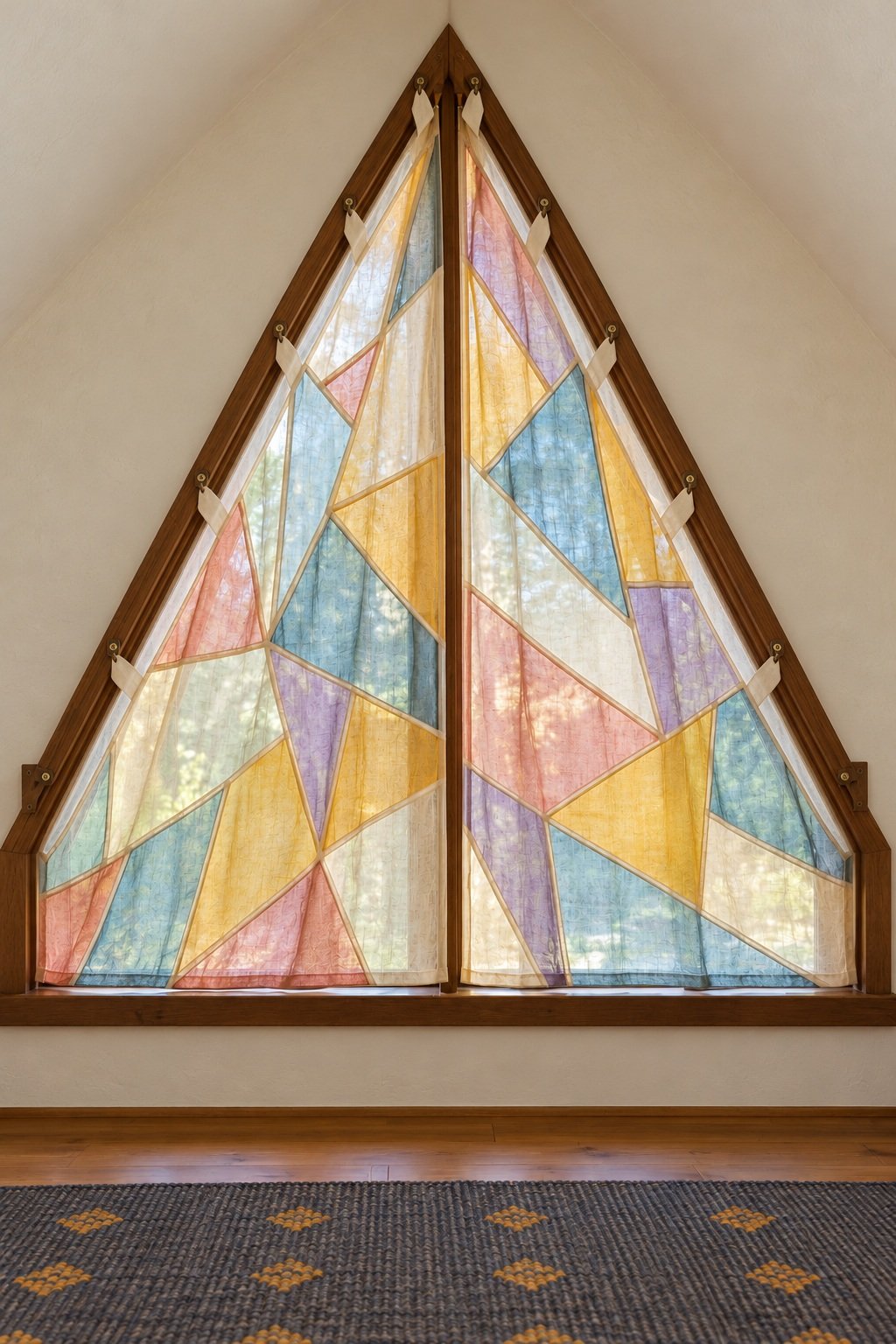
Pastel triangles in pink, blue, yellow, and ivory follow the slopes of a wooden window. Stitch fabric pieces together into two triangular panels, then hem their edges. Sew a tab about every 15 cm along each sloping edge and fasten them to hooks on the stationary frame. Test the sash and handle before finishing the installation. Use larger fabric pieces on a shallower triangular window to keep the pattern clear and reduce the number of seams.
26. Fabric Yo Yo Flower Curtains
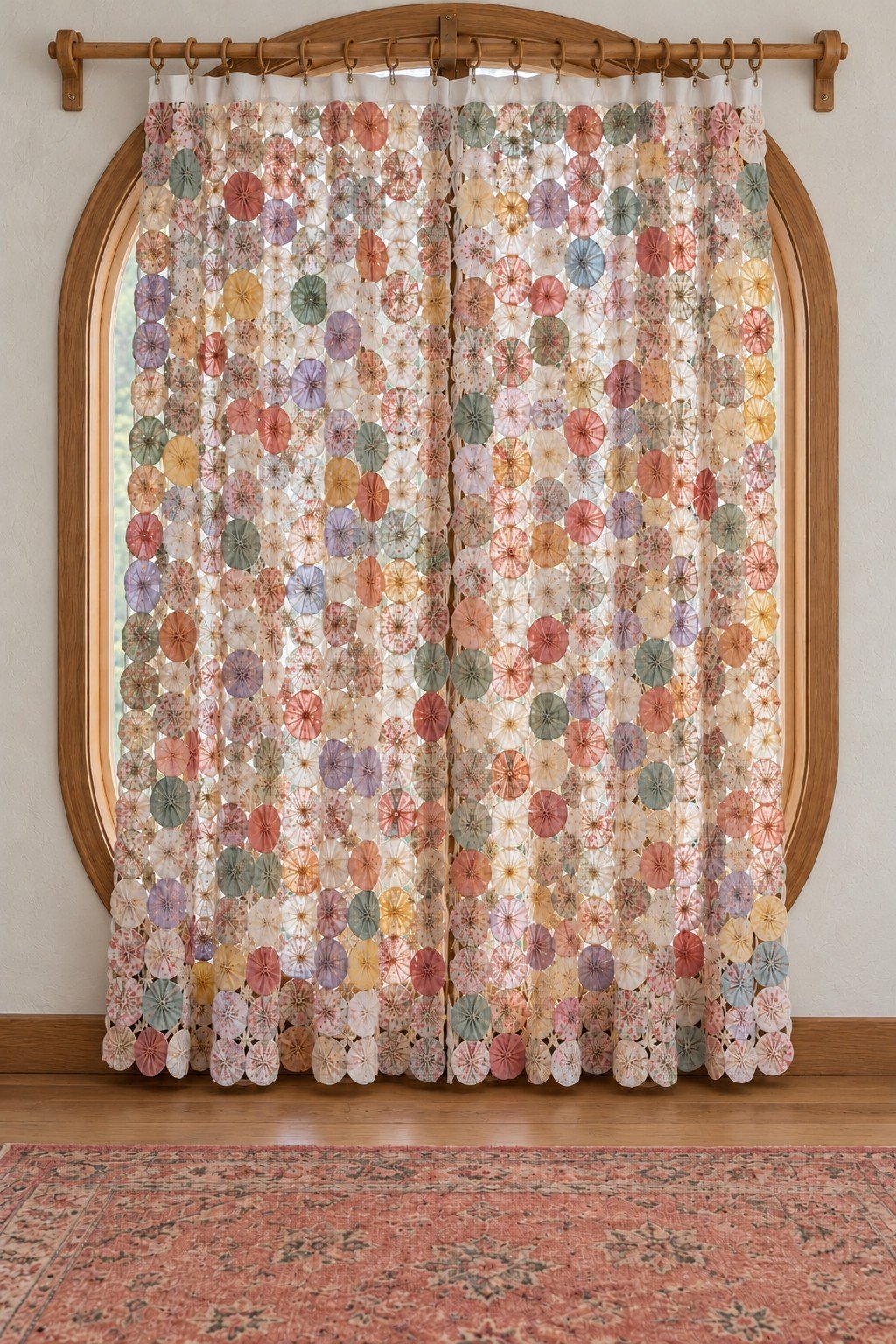
Cream, pink, sage, and muted lavender fabric yo yos cover a curtain in front of an arched window. Start with a sheer curtain you already own instead of joining the flowers into a freestanding panel. Gather fabric circles into yo yos about 5 cm across and arrange them on the curtain while it lies flat. Sew each flower around its edges with matching thread so its petals do not catch when the curtain moves. For a compact window, concentrate the flowers along the inner edges and leave the center airy.
27. Braided Ribbon Sheers
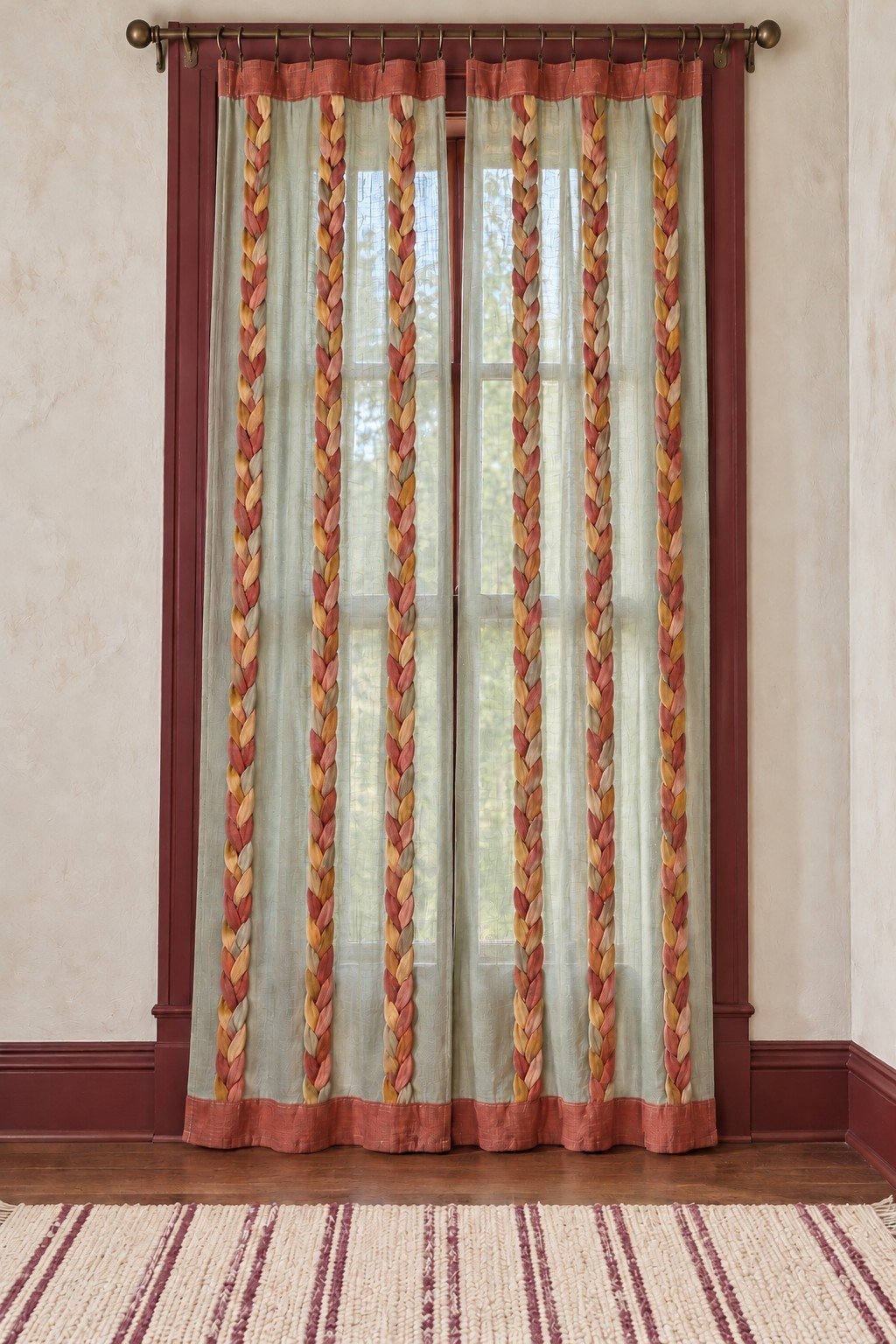
Pale sheers feature vertical braided ribbons in red, pink, and gold, with a rose border at the top and bottom. The slender braids give the fabric structure without taking away its airy character. Braid narrow strips of washable fabric, press the finished lengths flat, and stitch each braid to the sheer from top to bottom so it will not catch on nearby hardware. Braid one colorful stripe for each curtain when you want an economical detail instead of an allover design.
28. Teardrop Hoop Curtain
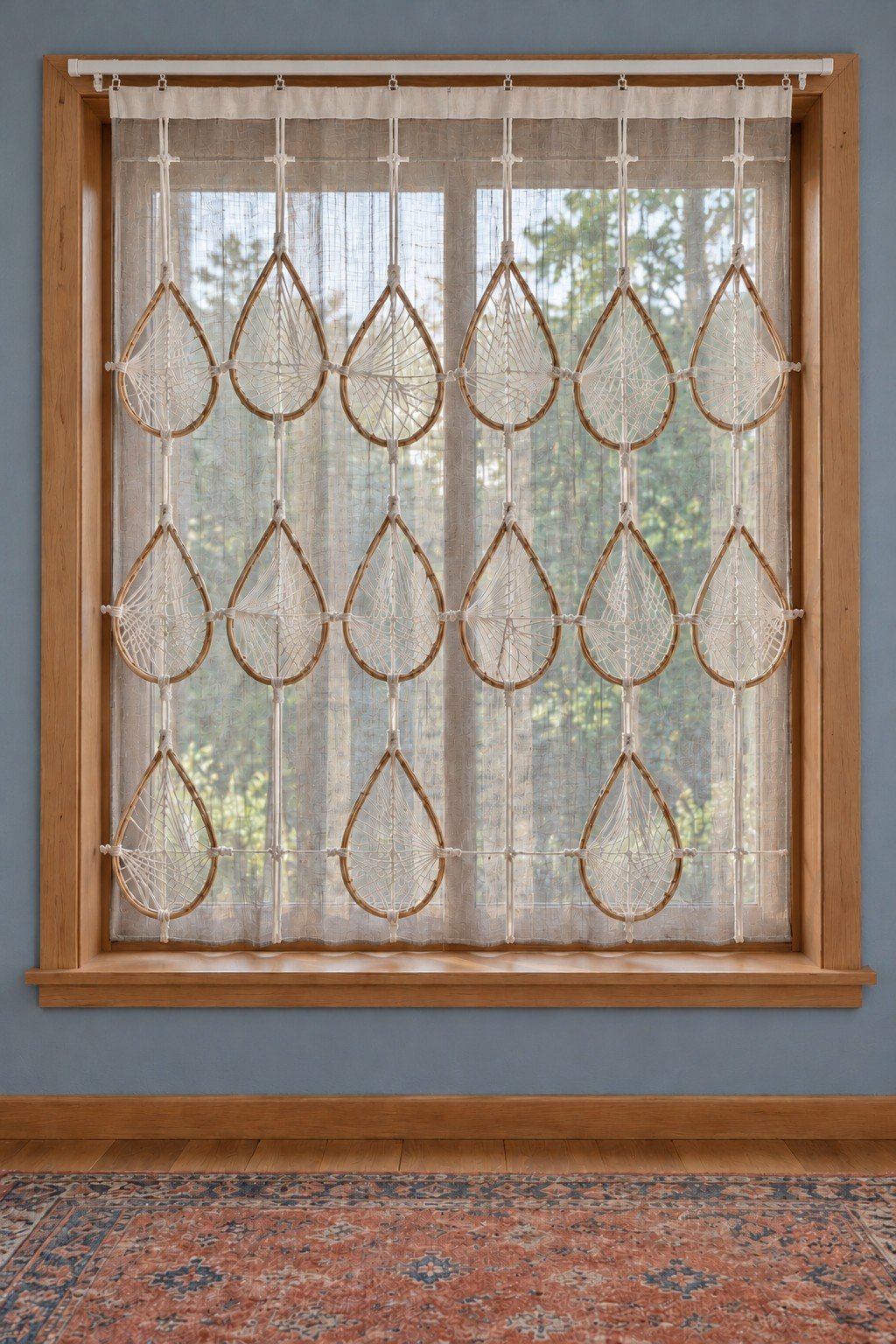
Rows of teardrop hoops hang in front of a sheer curtain in a window with a wooden frame. Wrap teardrop frames from a craft store in cotton cord, then weave fine thread across each opening. Tie the hoops into a light cord grid and suspend the grid from curtain rings above the sheer. Choose sewn fabric teardrops for a version that can be washed with the curtain.
29. Ikat Corner Curtains
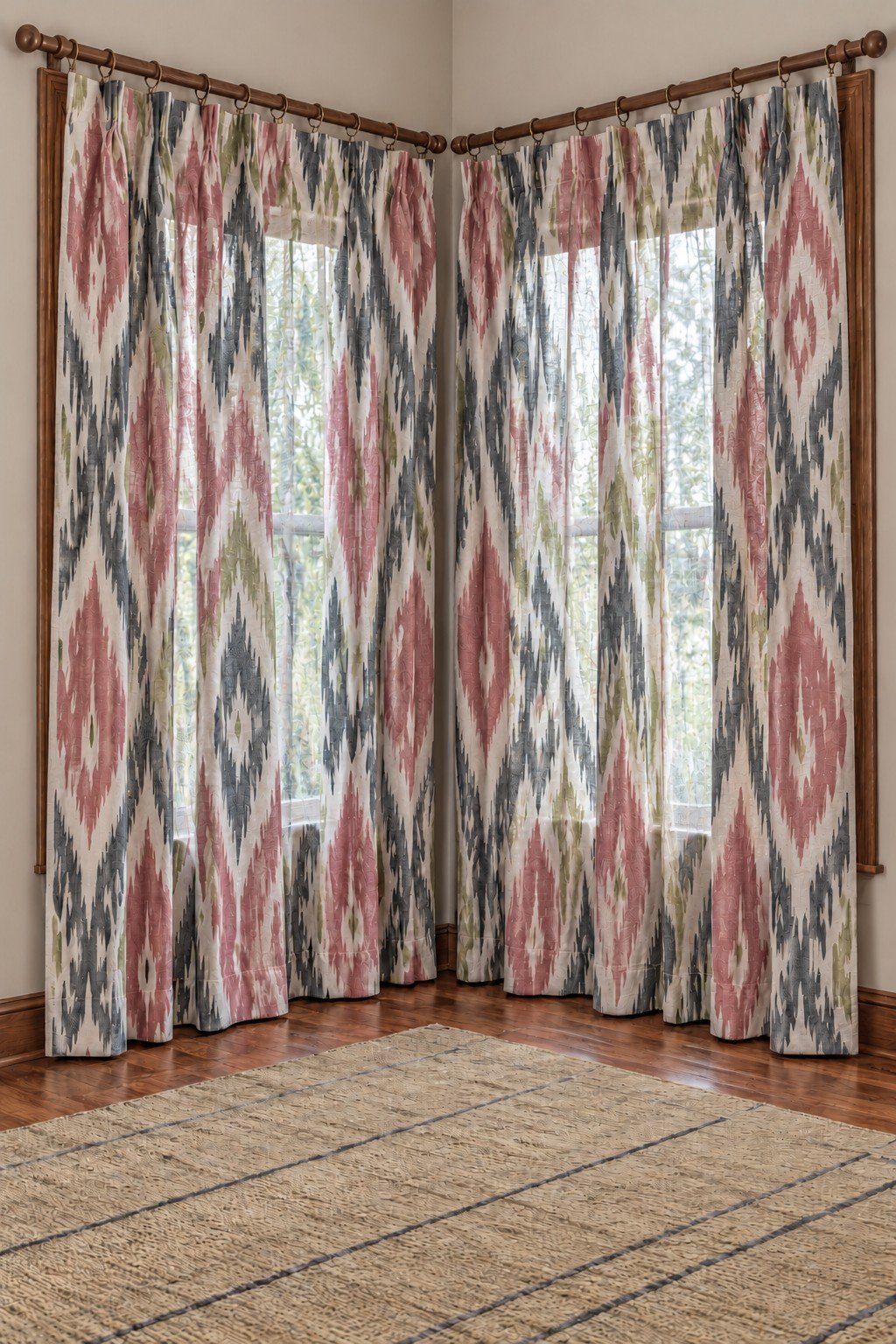
Rose, blue, and cream ikat curtains meet at a corner, their blurred diamonds linking the two windows. Traditional ikat patterns are formed by dyeing yarn before weaving, although printed fabric can create a similar effect. Hang the two sides on separate rods and use simple hems to keep each curtain easy to move.
30. Indigo Curtains with a Rag Strip Valance
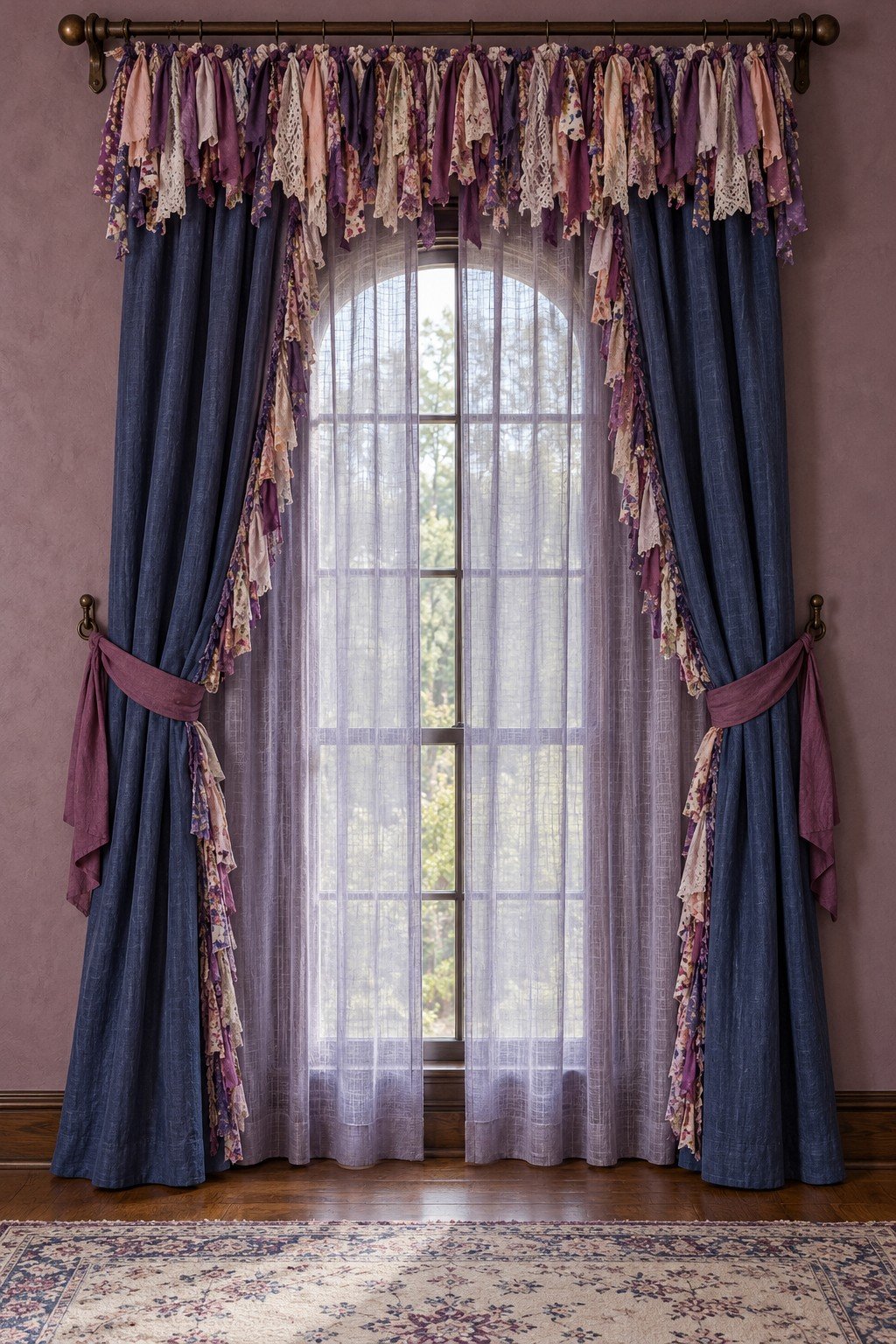
Indigo curtains frame a sheer layer beneath a valance of purple fabric and lace strips, with mauve tiebacks gathering the fabric at the sides. A valance is a short decorative treatment across the top of a window, and the varied lace edges soften the formal folds. Attach lace remnants to a fabric band, mount the band on its own board, and tie the curtains back with broad fabric strips. Mix lighter lavender lace with navy curtains for a quieter contrast that still feels richly layered.
31. Paisley Scarf Swags
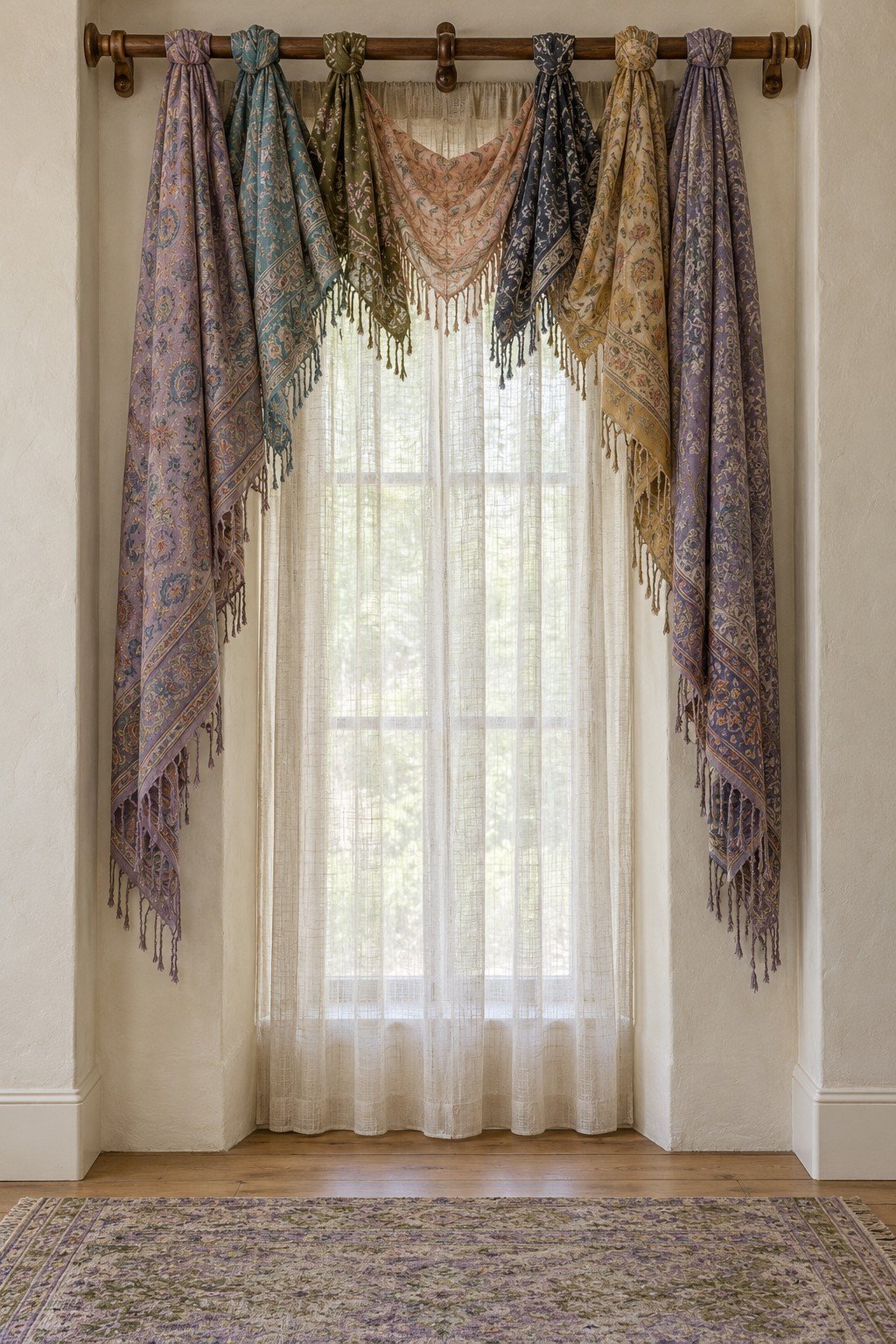
Paisley scarf swags in muted blue, lavender, gold, and rose drape above a white sheer. Wrap each scarf once around the decorative rod and let both ends fall at different lengths. Scarves about 40 to 60 cm wide are an approachable starting point; adjust the number for your rod. Secure any slippery fold with a few discreet stitches so it stays in place.
32. Beaded Window Garland
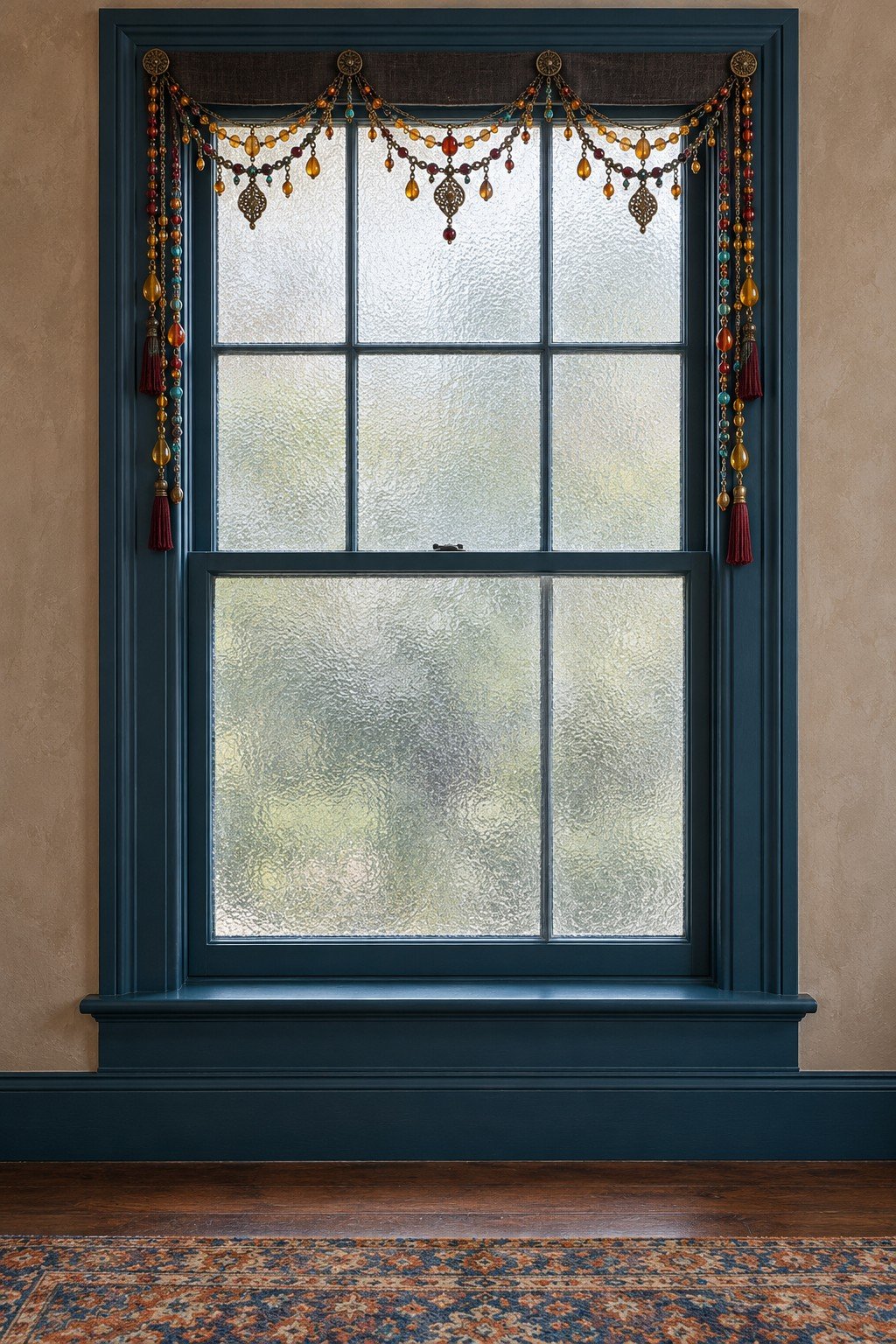
Amber, red, and turquoise beads make shallow garland swags against a dark blue window frame. String each strand on strong cord, knot the ends, and drape it between attachment points along the top of the frame. Position the swags clear of the opening sash and make the tassel ends short enough to avoid the sill. For a nursery or playroom, a fabric valance in the same colors gives the look without loose beads.
33. Hoop and Tassel Strands
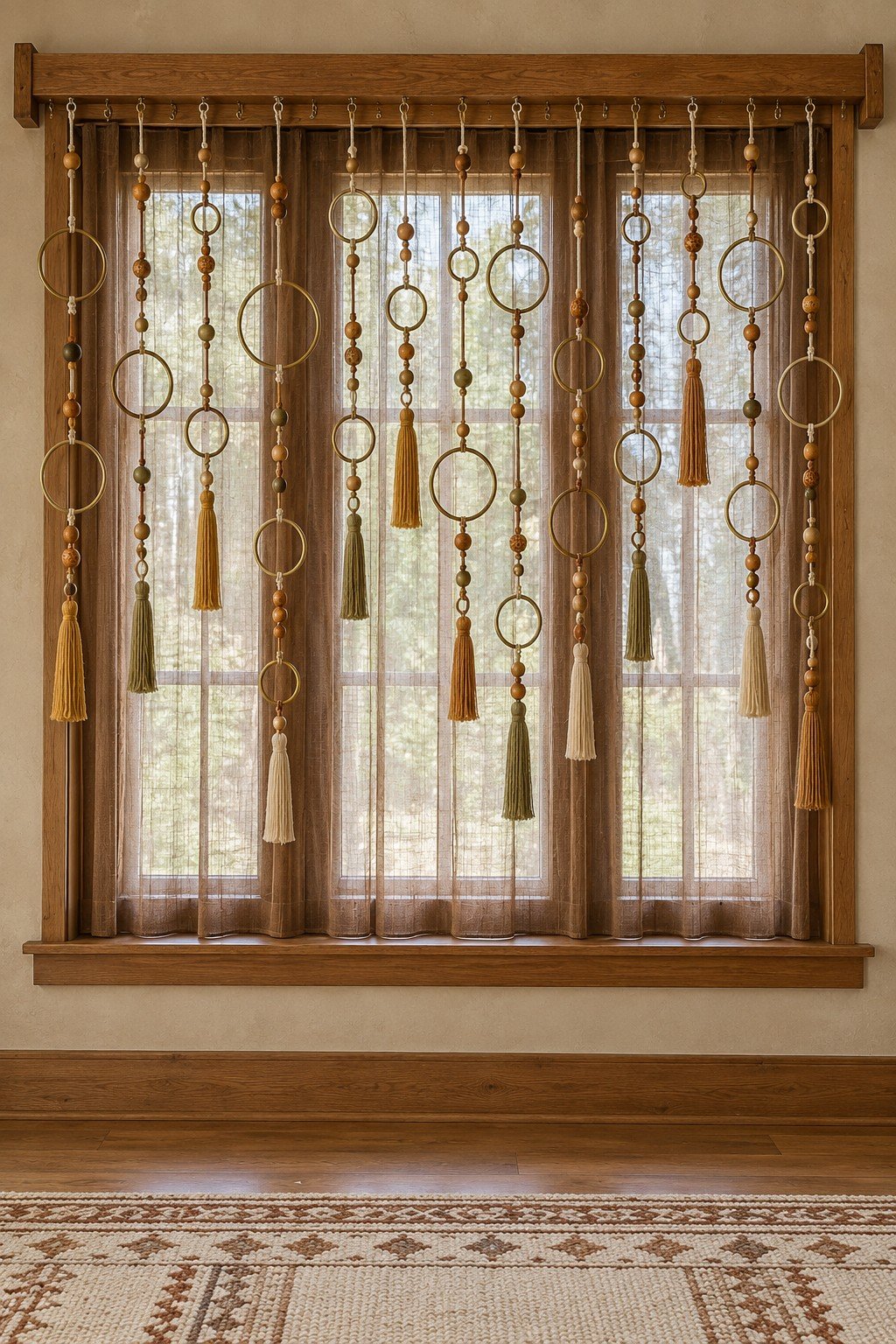
Gold hoops and tassels hang at different heights in front of a soft brown sheer. Knot the hoops and tassels onto individual cotton strands, placing a knot above and below each ornament. Sew the upper ends of the strands into a fabric heading and hang it from clip rings on the wooden rail. Where children or pets can reach the window, sew circular fabric appliqués to the sheer instead of using dangling pieces.
34. Floral Sage Curtains
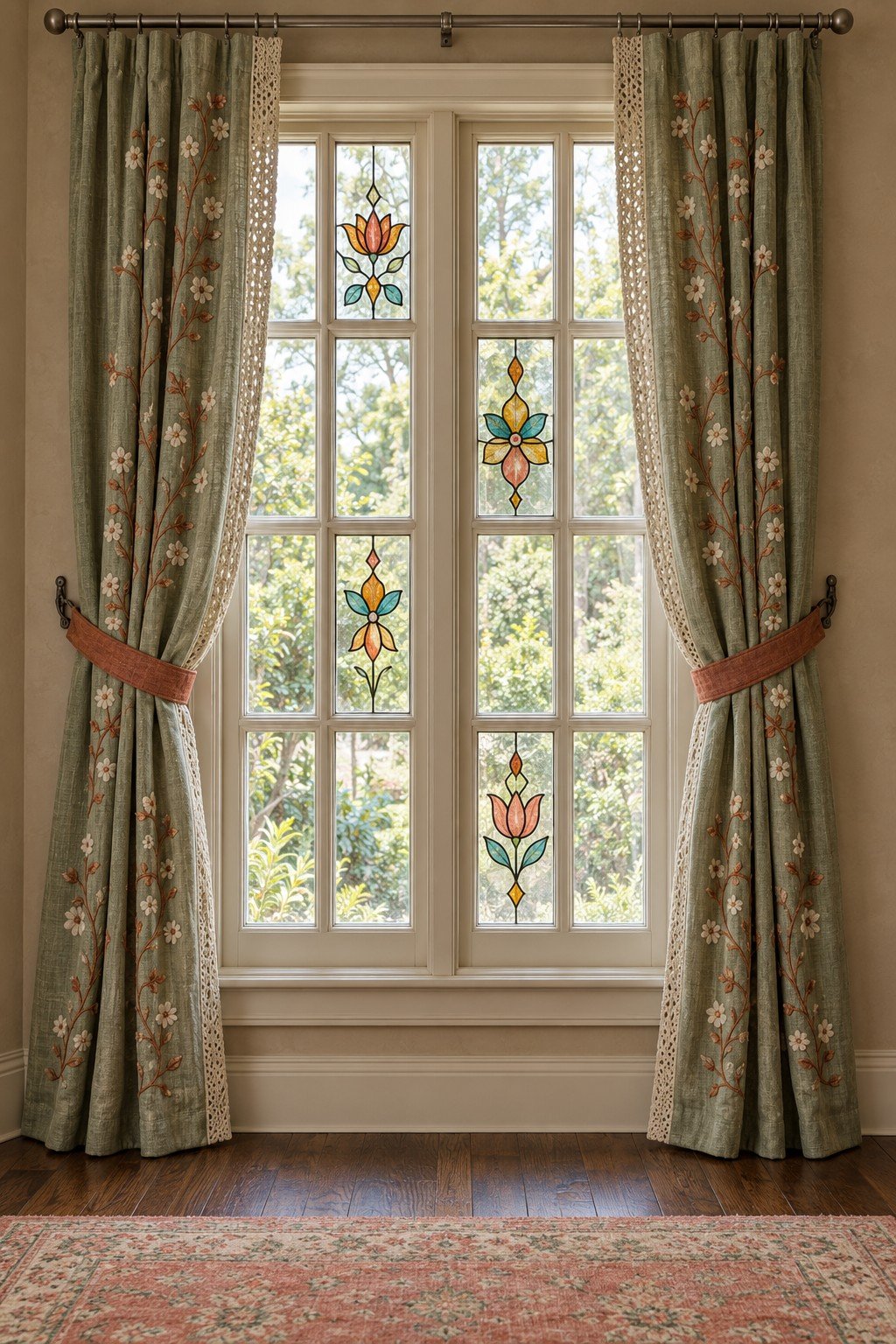
Floral sage curtains are tied back beside small colorful flower decals on the glass. The gentle green ties the fabric to the glass decoration, while the rose tiebacks provide a warmer accent. Add washable floral trim to plain green curtains and make broad tiebacks from a coordinating cotton, fastening them to secure wall holdbacks. Use removable window film for the flowers on the glass instead of paint, especially in a rental.
35. Scarf Valance Curtains
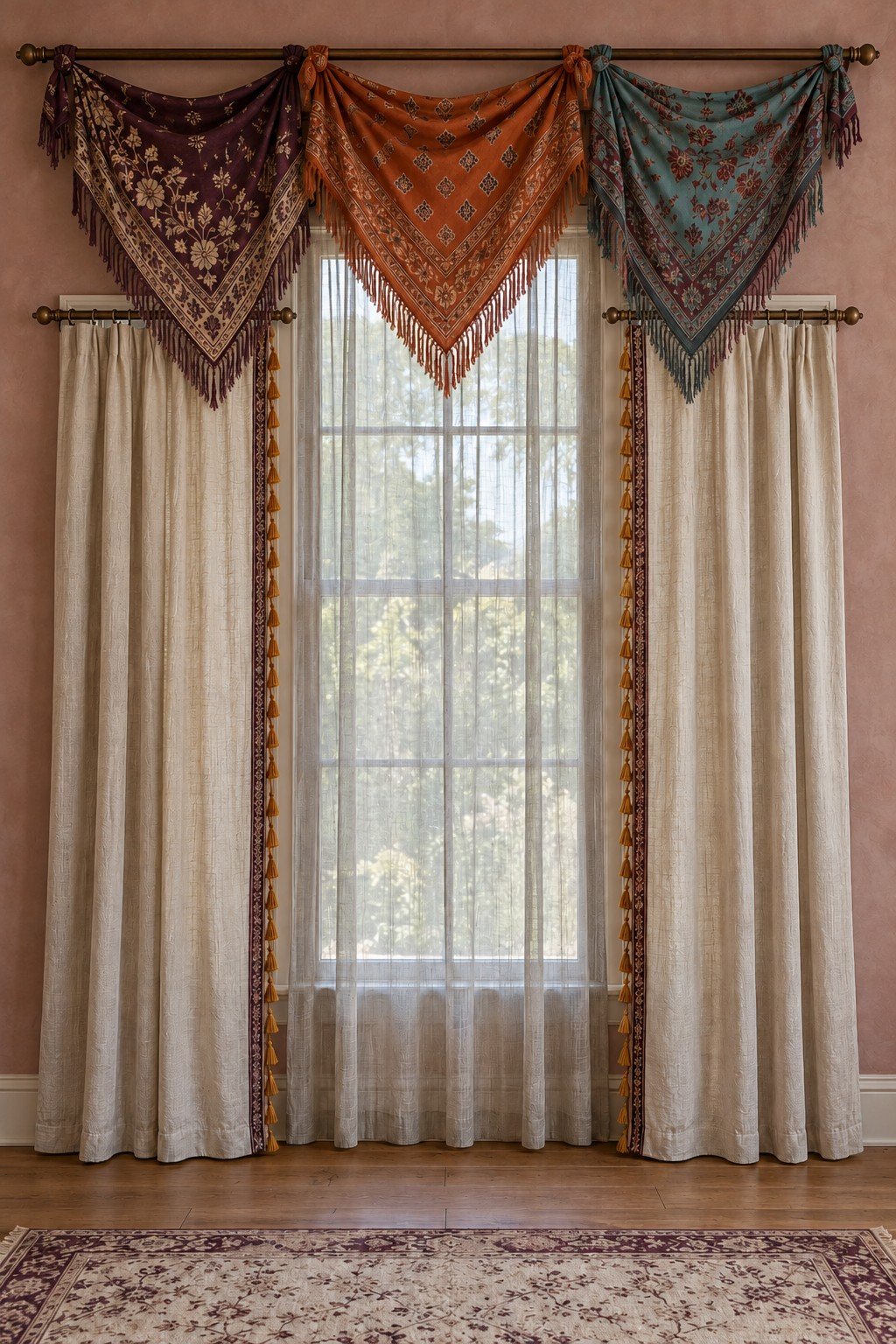
Plum, rust, and teal scarf valances sit above cream curtains and a white sheer. Arrange the scarves side by side with their pointed edges facing down. Sew their upper edges flat to a straight fabric band and add a rod pocket across the back to form a flat valance. Keep the finished valance about 25 cm deep on a small window, adjusting the points to clear the handle. Use a separate support for the valance so the curtains remain easy to draw.
36. Beaded Bay Curtains
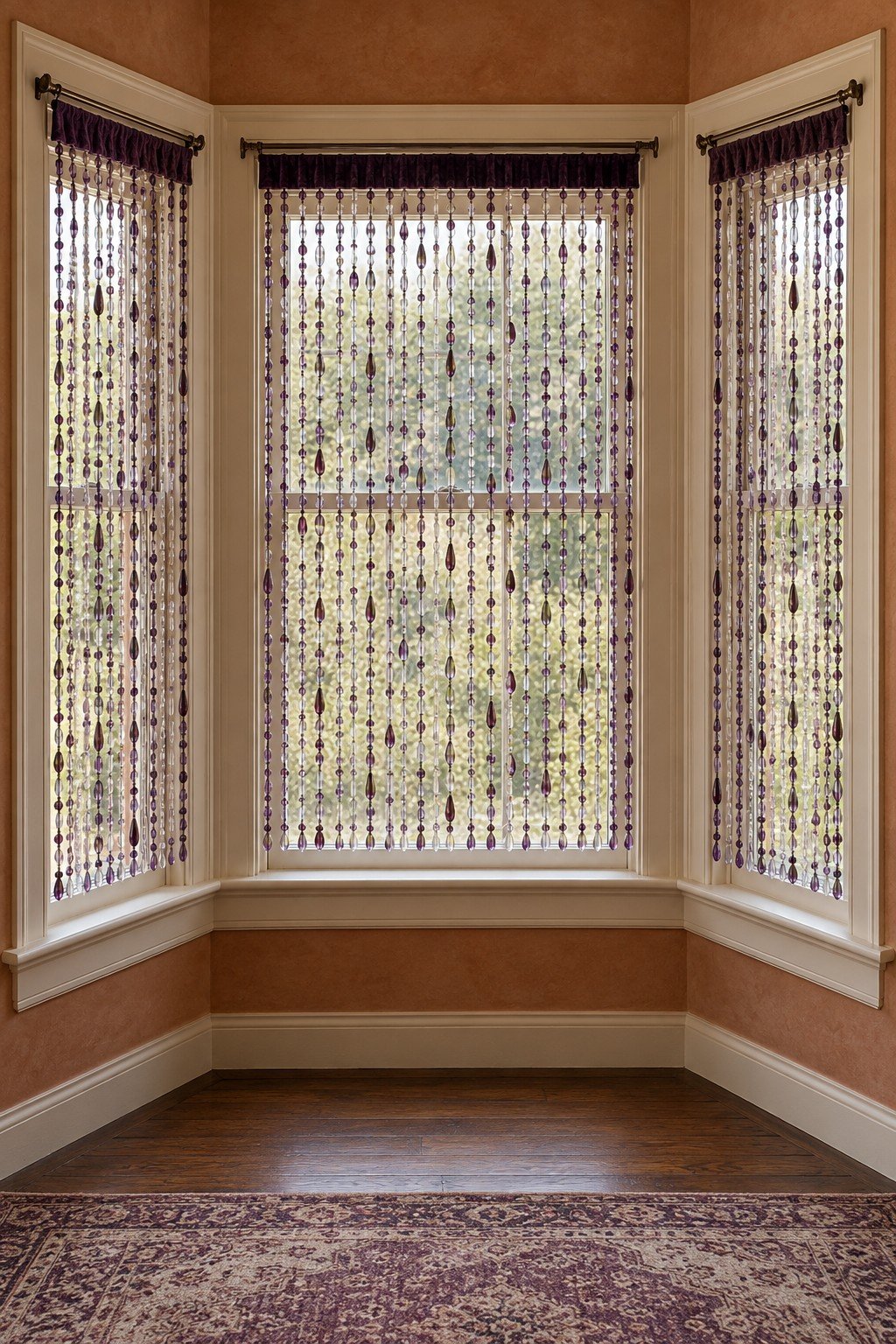
Purple beaded strands follow the three sections of a bay window, letting light pass through the gaps. Lay out matching strands for each section, knot the beads securely, and attach them to separate rails that follow the angles of the bay. An opaque curtain behind the beads adds privacy without changing the beaded pattern. Read the bead and cord safety section before hanging.
37. Jewel Tone Curtains
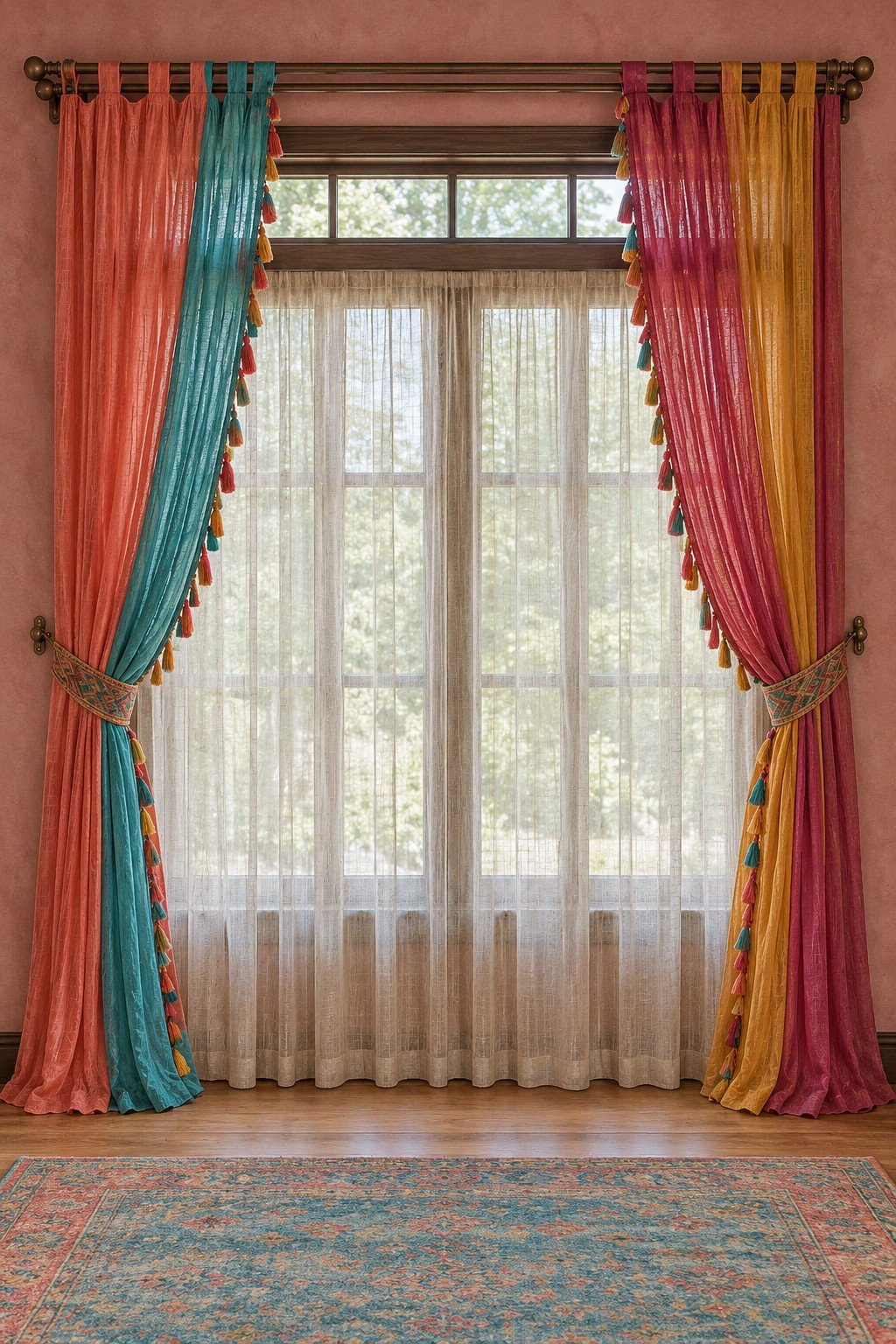
Curtains in jewel tones of coral, teal, gold, and magenta frame a white sheer with colorful tassels along the inner edges. The contrasting lengths feel cohesive because the tassels repeat the same palette across both sides. Join lightweight curtain fabrics at the top, then attach tassel trim to a reinforced edge and gather each side with a broad fabric tieback. Match the color of just one curtain length to an existing rug when you want a smaller change.
38. Rainbow Thread Curtain
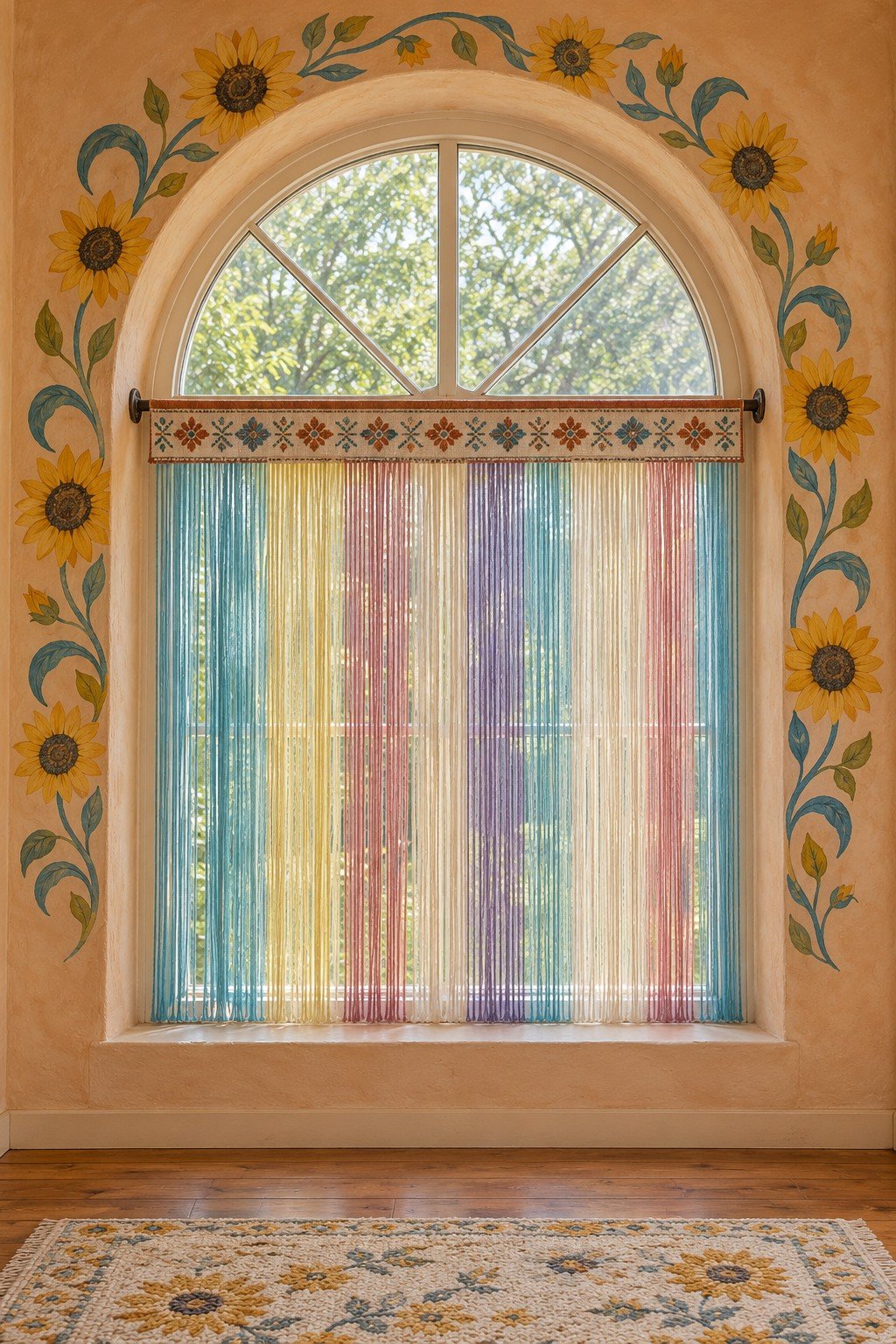
A rainbow thread curtain hangs below an arched window framed by painted sunflowers. Knot each thread to the rod individually so a pulled strand does not loosen the others. Choose lengths that stop above the sill, and mount the rod so it lifts off easily if the window needs to open. Where children could reach loose threads, use fabric printed with rainbow stripes instead.
39. Rose Brocade Curtains
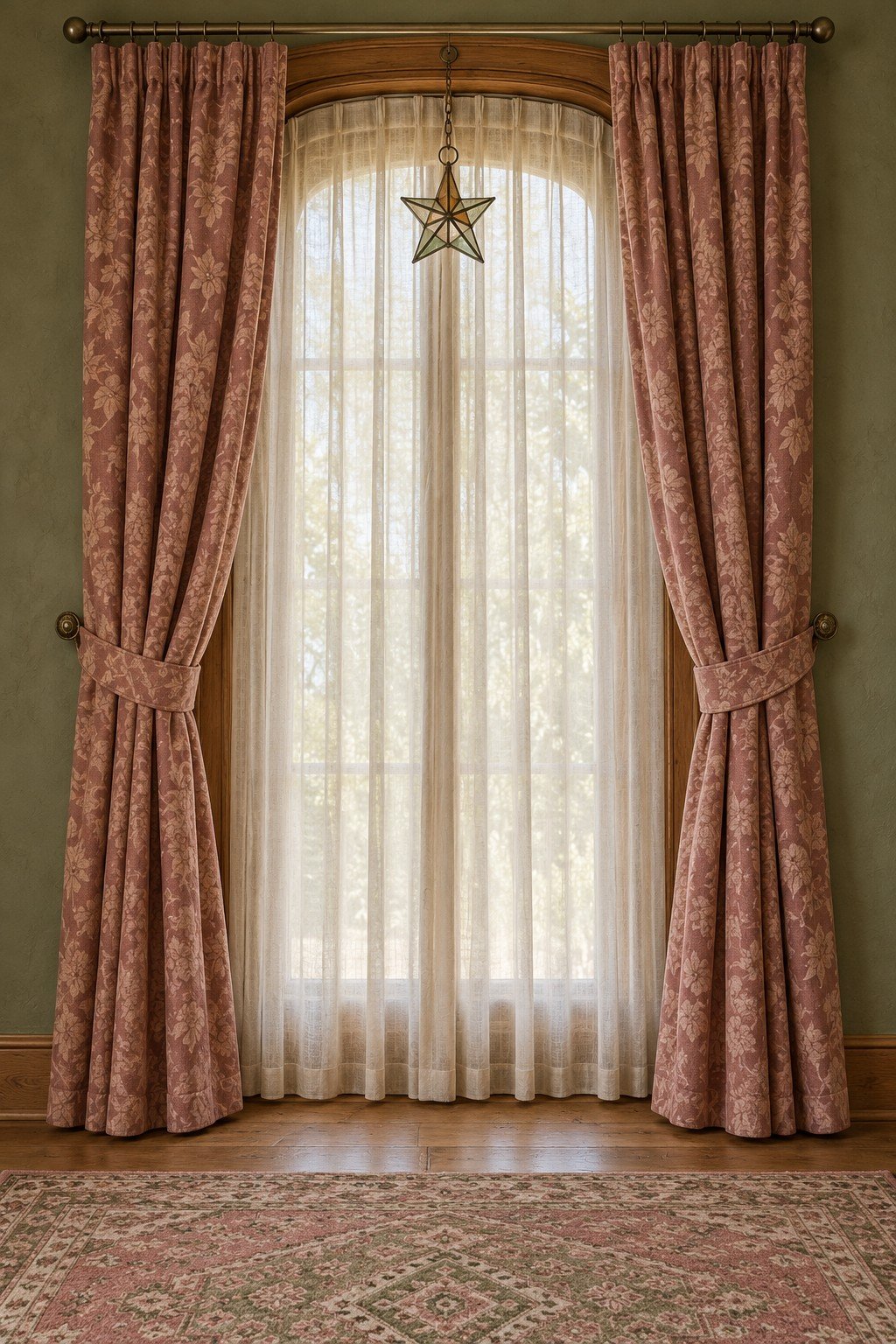
Dusty rose curtains in a brocade pattern flank a white sheer. A small star ornament hangs near the top of the window. The subtle pattern adds richness without interrupting the calm arrangement of straight fabric and soft folds. Stitch a pair of curtain lengths from a patterned fabric, add broad tiebacks in the same material, and hang a lightweight ornament from its own hook. Add a plain sheer behind the rose fabric when extra daytime privacy is needed.
40. Embroidered Floral Borders
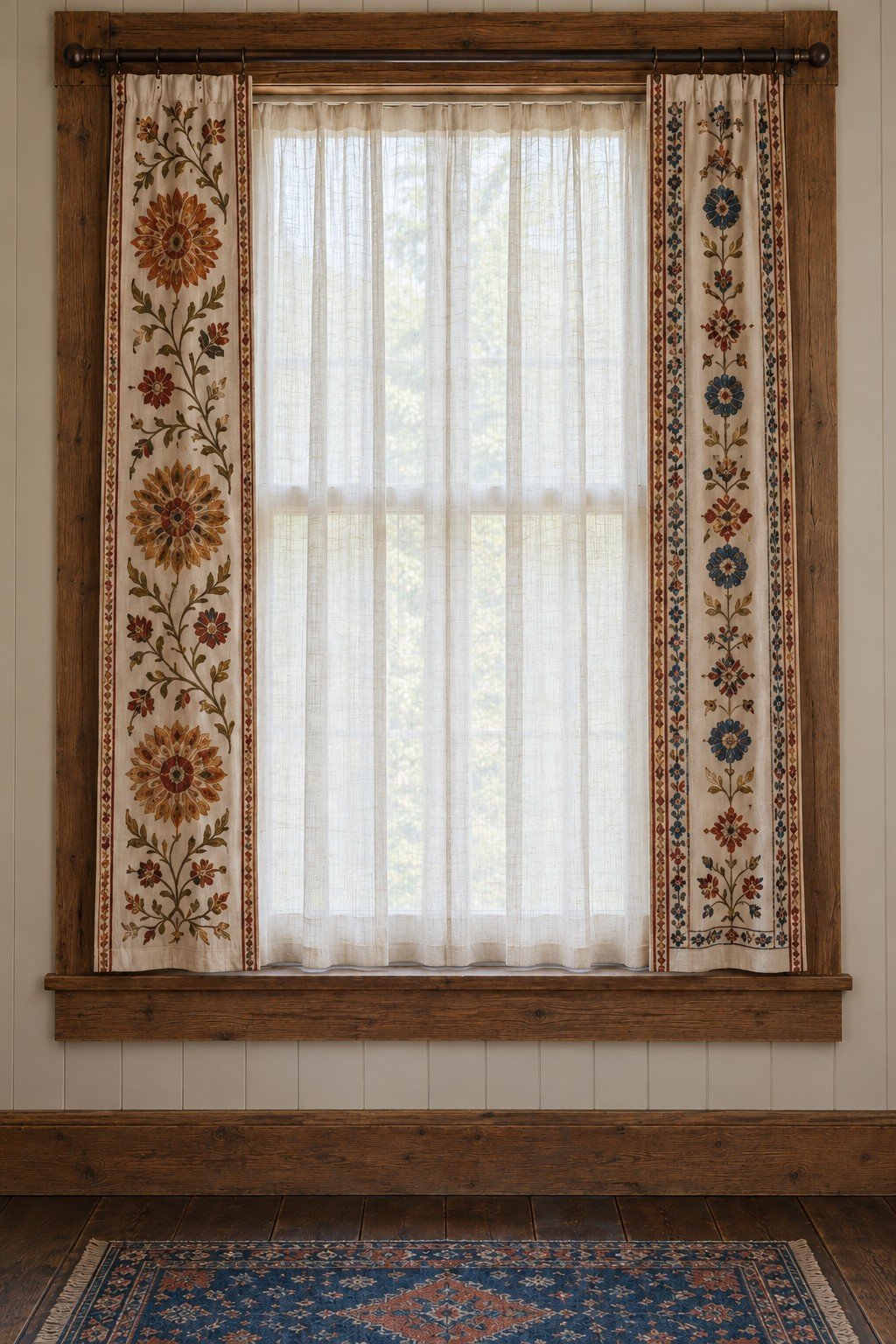
Cream curtain borders carry orange and blue floral patterns on either side of a sheer window covering. The narrow strips act like a decorative frame, making the details visible without covering the entire window in pattern. Align embroidered trim or strips of printed fabric along plain curtain edges before stitching, keeping the hem free to move. Frame a smaller kitchen window with shorter strips to reuse fabric remnants and reduce sewing time.
41. Geometric Valance Curtains
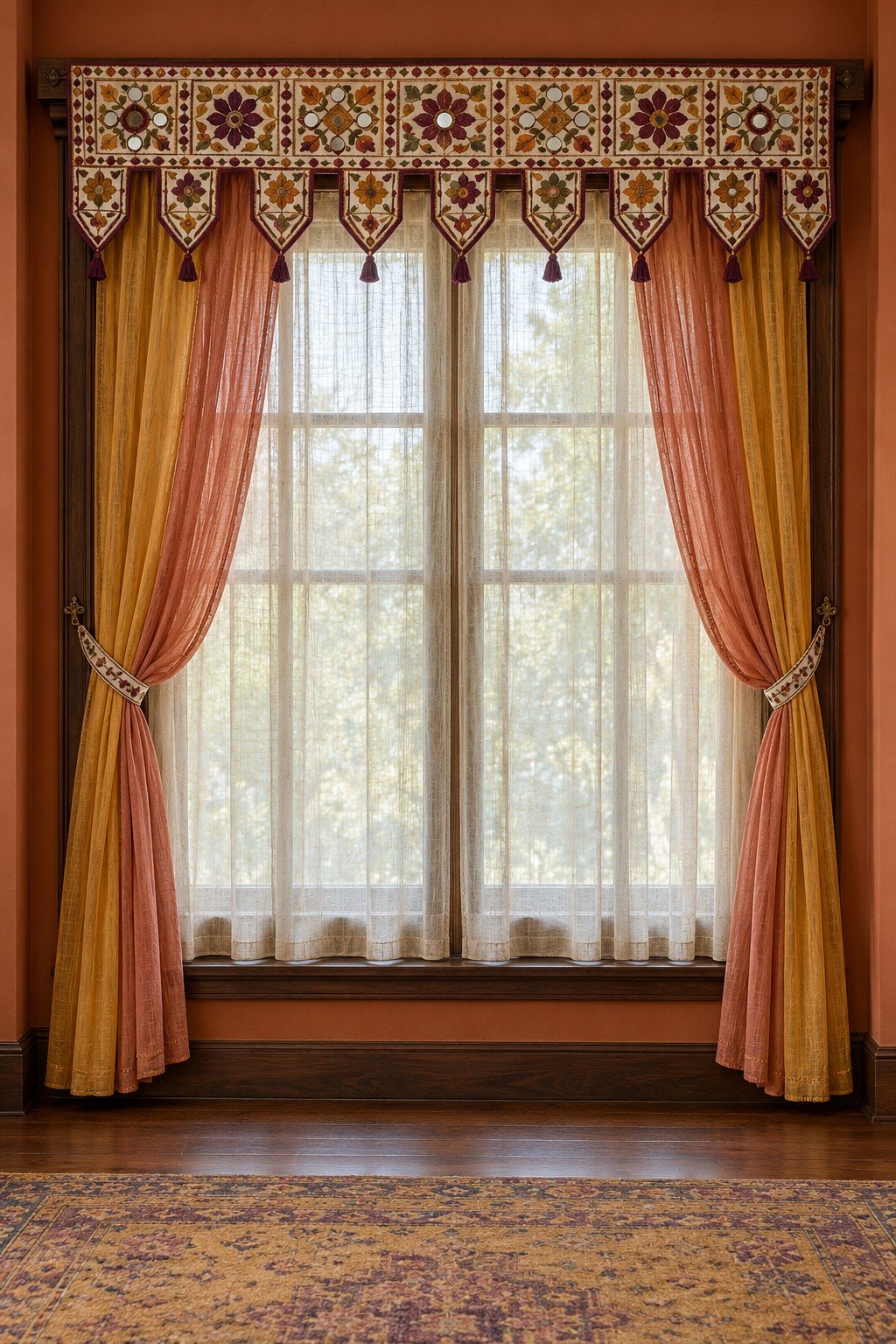
A geometric valance tops gold and coral curtains, with small tassels along its pointed lower edge. Back the patterned fabric with stiff interfacing, then fix the valance to a narrow mounted board with removable fastening tape so it can come down for washing. Limit the palette to two colors when nearby furnishings already have a strong pattern.
42. Burgundy Swag Curtains
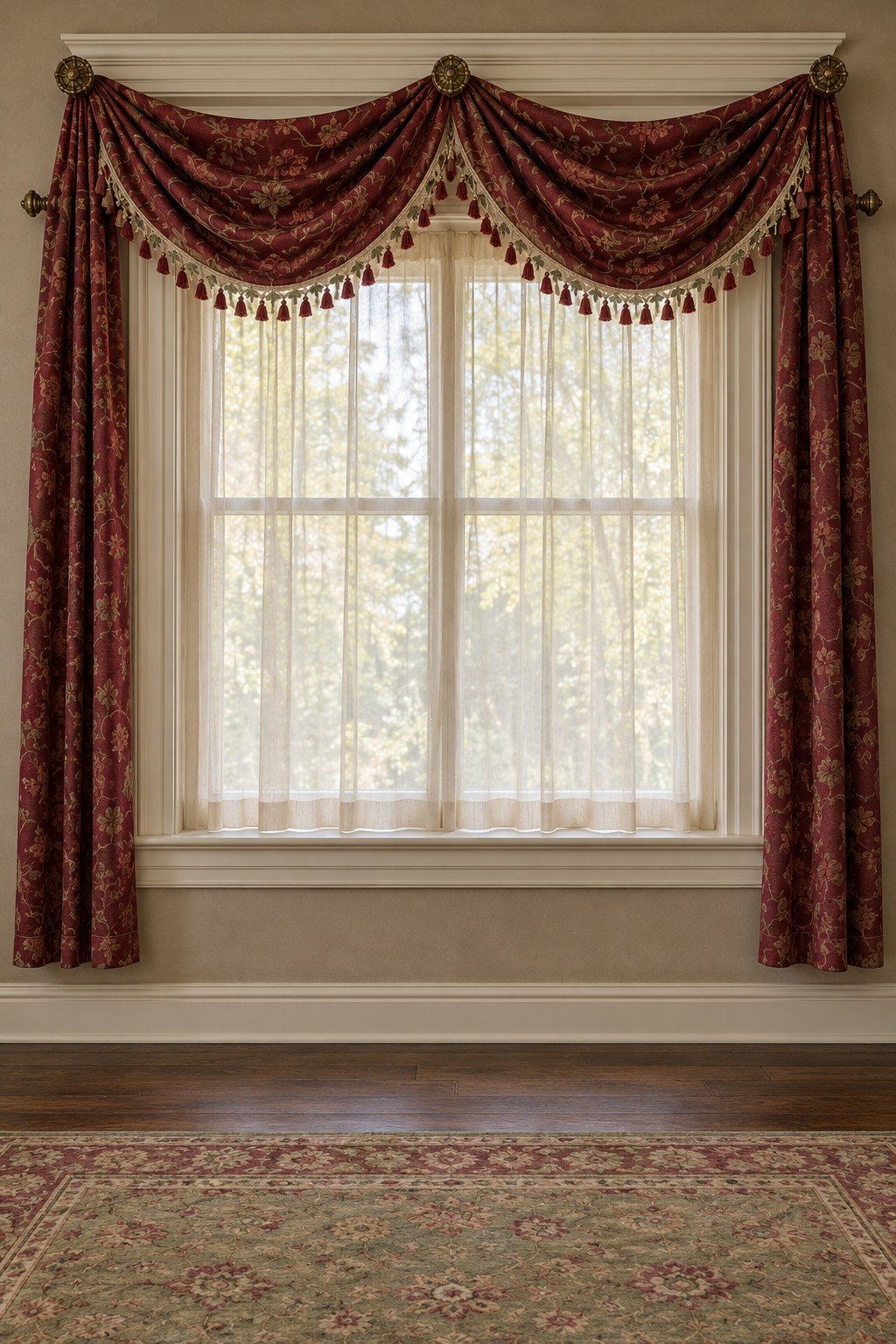
Burgundy patterned fabric forms two swag curves above matching side curtains. Sew a firm heading band to the top edge, then hand stitch the folds in place so the swags keep their shape. Attach tassel trim along the lower curve before fastening the heading to a mounted board. For a 100 cm span, start with about 150 cm of cloth and adjust the folds to the desired depth.
43. Beaded Flower Window
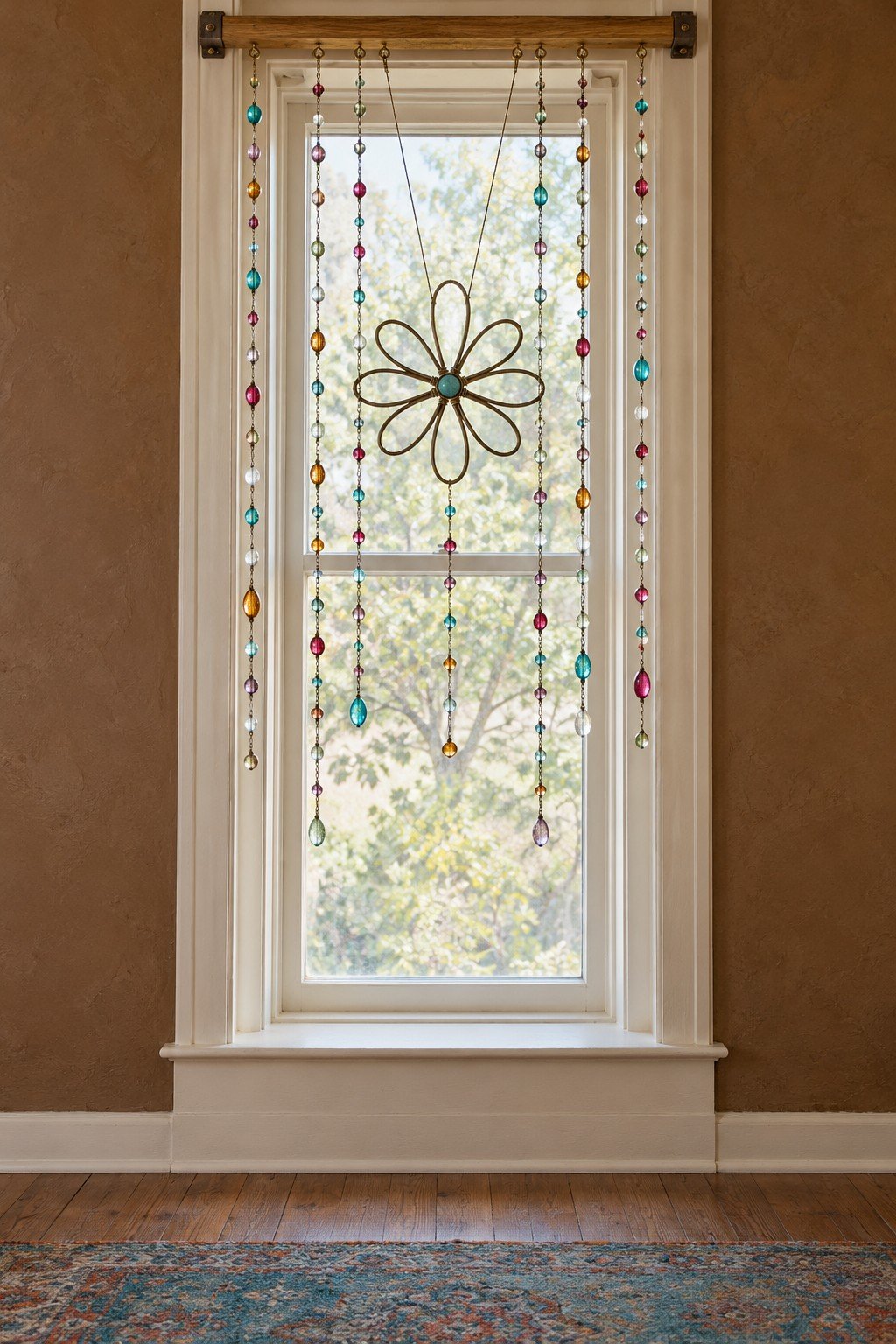
Colorful bead strands flank a wire flower ornament in a narrow window. Shape smooth craft wire into petals around a center bead, and turn the ends inward so no sharp tips remain. Suspend the flower from two cords at the top and hang the bead strands separately at either side. As a starting layout, space the strands about 10 cm apart and adjust them to the window width. Read the bead and cord safety section before hanging.
44. Macrame Vase Curtain
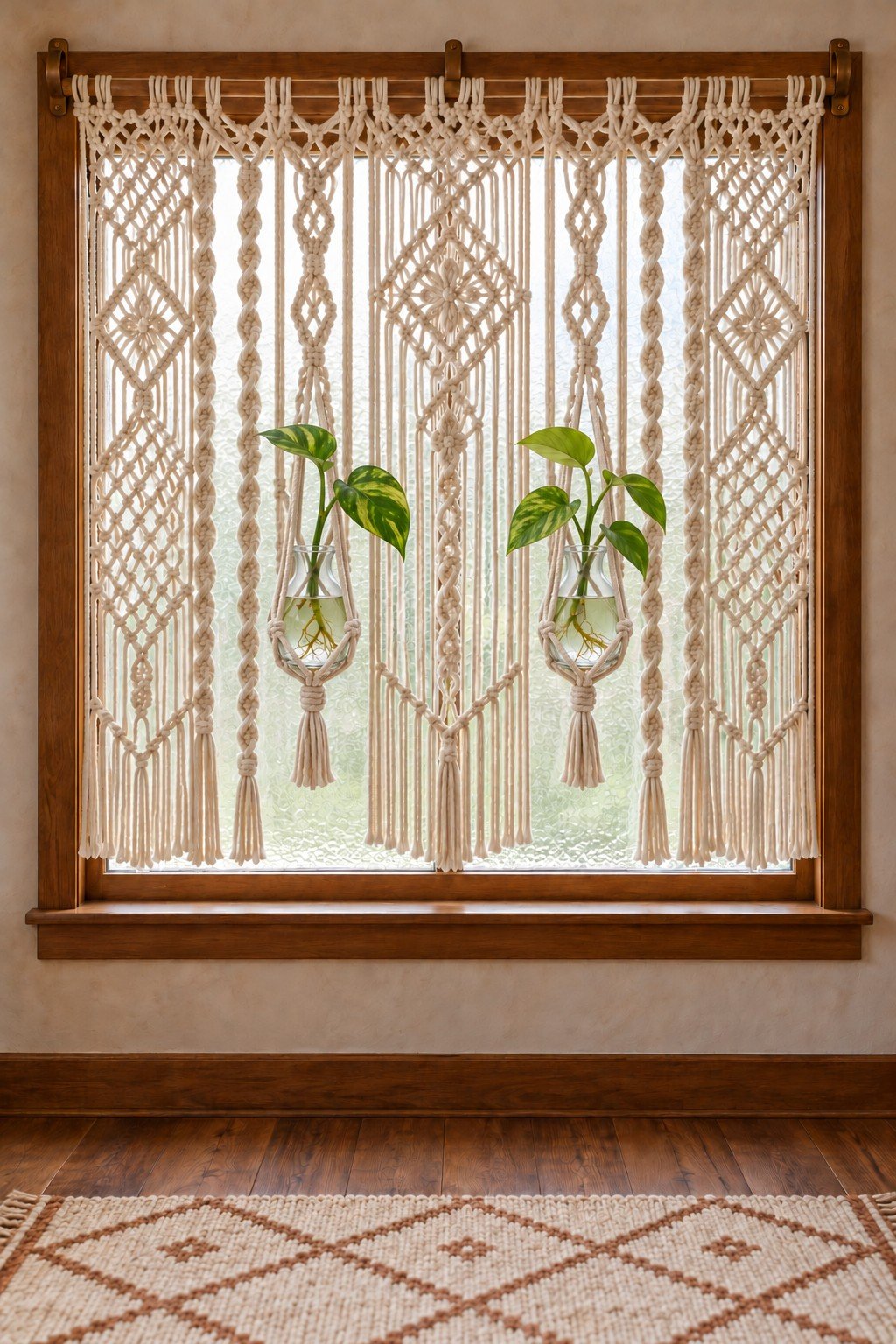
A cream macrame curtain supports two glass vases of green cuttings. Knot a cradle around the outside of each glass, with cords supporting the base and rising on both sides. Fasten the upper ends to the header and check that the rod can carry the weight of the glass and water. Pothos is toxic to cats and dogs, according to the ASPCA plant guide, so keep it away from pets or choose a plant that is safe for them.
Where to Start
For a first project, start with the sage ribbon curtains or the embroidered floral borders. Both let you personalize fabric you already own, and neither requires making an entire curtain from scratch. If you enjoy more detailed handwork, the crochet flower curtains offer a patient way to combine small motifs into a larger design. Look at the window from across the room before adding extra trim; one thoughtful detail can be more effective than several competing ones. For more ways to carry color through your home, explore these cottagecore wall decor ideas and reading room decorating ideas.

Leave a Reply