

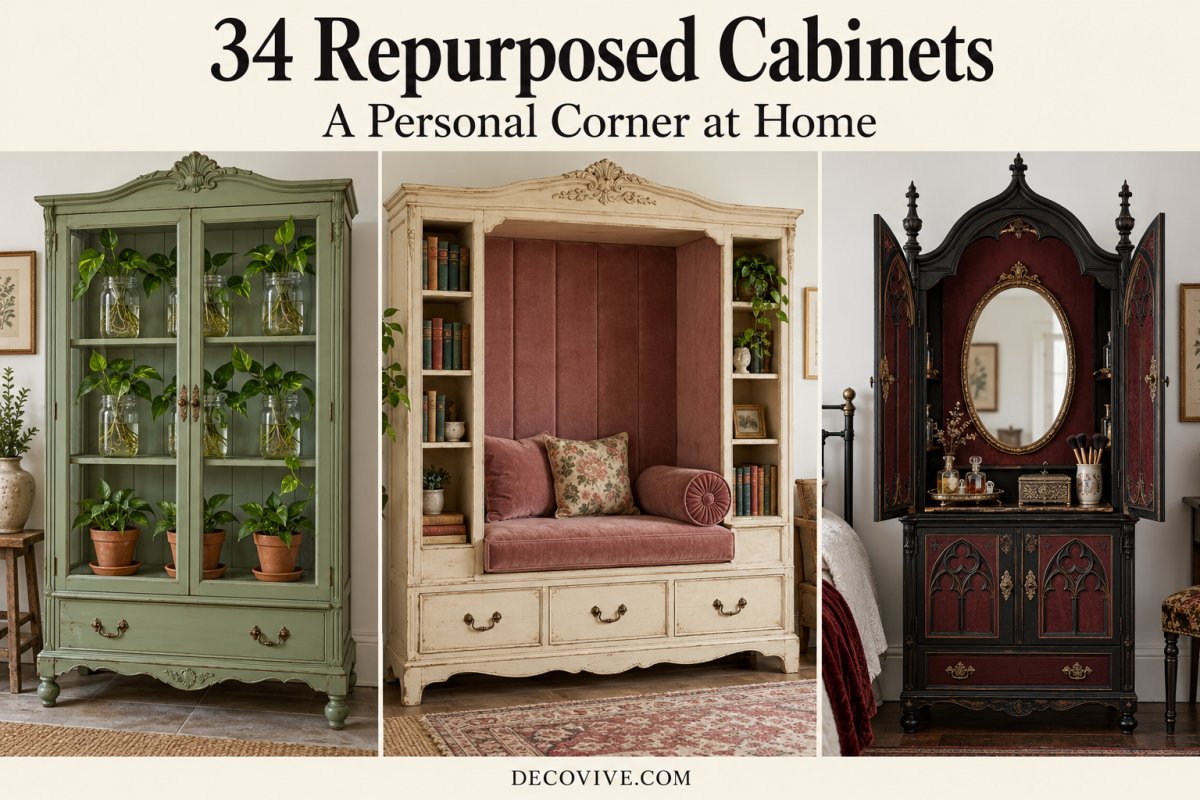
A cabinet becomes more useful when its compartments fit something you enjoy doing. Tea dishes, paper supplies, instruments, and books each suggest a different layout. These 34 repurposed cabinet designs range from modest paint and storage updates to work surfaces and upholstered seats. Borrow the arrangement that suits your furniture, then plan the practical changes before adding decorative details.
Table of Contents
- Choose the changes before the color
- Safety that belongs in the plan
- 1. Paper marbling behind lavender shelves
- 2. A sewing collection in turquoise
- 3. Ukuleles framed in sage
- 4. A puzzle surface that folds away
- 5. Citrus service against patterned blue
- 6. Tea things within reach
- 7. Flowers around a morning coffee corner
- 8. Coral shelves for a drinks station
- 9. A propagation display you can tend
- 10. Ribbon rolls above a wrapping flap
- 11. Records below a plum turntable shelf
- 12. Black cabinetry with a wine cooler
- 13. Let patterned dishes set the palette
- 14. Gingham worked into the lower doors
- 15. Small repairs at a mint workbench
- 16. Wool colors gathered for felting
- 17. Give bookbinding room for paper
- 18. Books beside a rose upholstered seat
- 19. Lavender storage for clay work
- 20. A dressing bench with a buttoned back
- 21. Tall bookshelves meet a low bench
- 22. A Gothic cupboard for tea
- 23. Baking tools beneath open blue shelves
- 24. A wardrobe becomes an entryway landing
- 25. Powder blue storage around a seated vanity
- 26. A standing beauty counter behind blush doors
- 27. Burgundy roses frame a Gothic mirror
- 28. Mint paint beneath raised floral trim
- 29. Woodland paper inside a reading recess
- 30. A gown takes the place of hanging clothes
- 31. An open wardrobe as a quiet display
- 32. A mirror above a lavender seat
- 33. Storybook ornaments around an ivory cushion
- 34. An arched reading seat in dark wood
- What one cabinet conversion can cost
- Estimate coating quantities from your cabinet
- Separate working sessions from curing
Choose the changes before the color
Inspect the joints, shelves, doors, and drawers first. An existing hutch can suit tea storage with little alteration; a work flap or seat needs new structural planning. Lay out the contents before fixing racks, and test the doors with everything in place. Seated work also needs room for knees, feet, and a chair.
Identify the existing surface before refinishing. General Finishes recommends cleaning before surface preparation so grime and oils do not compromise adhesion. Follow the chosen coating's preparation instructions, test compatibility in a discreet area, and keep a sound existing finish where repainting adds little.
Safety that belongs in the plan
Have unknown old paint assessed for lead before sanding or stripping; the EPA identifies furniture refinishing as a possible exposure source. Follow product ventilation and protective equipment instructions. Anchor tall furniture using CPSC furniture anchoring guidance and fixings appropriate to the wall.
Seat conversions need a base designed to transfer a person's weight to the floor, with drawers retained only where the supports allow. Have a furniture maker assess the complete assembly. Support work flaps for their intended loads, secure mirrors for their weight, and keep open flames away from wood, paper, and textiles. Electrical repairs involving household power belong with qualified service providers.
Lift plant jars out for filling, dry their bases, and protect shelves with suitable trays. Paint does not make furniture waterproof. Store sharp craft tools securely when the session ends.
1. Paper marbling behind lavender shelves
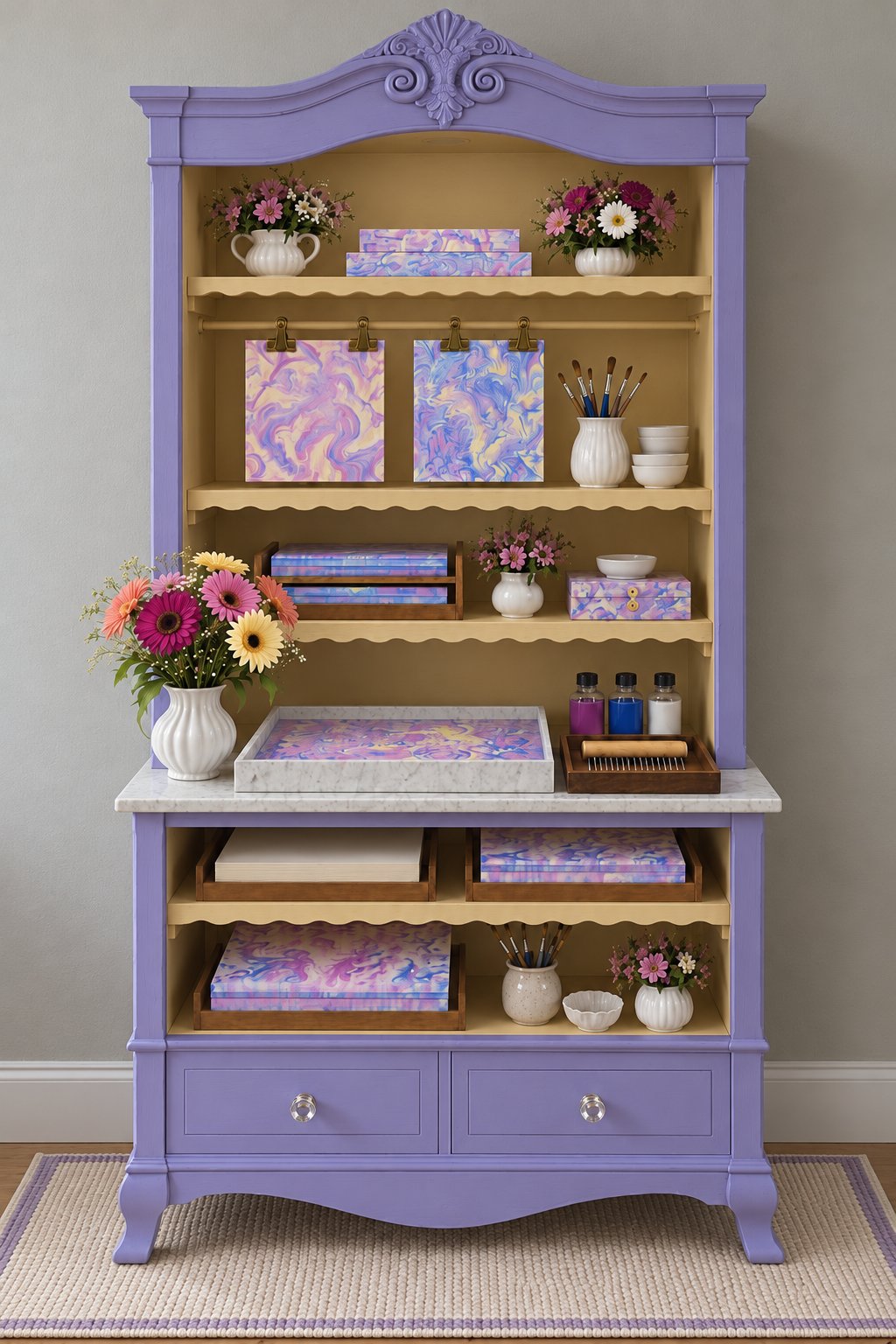
Lavender paint and an ocher interior echo the swirls in the clipped papers. Shallow shelves give brushes, color bottles, and dry sheets separate places. Hang finished papers above the counter and use a removable tray for wet work. This keeps the pattern visible while making the cabinet easier to clean between sessions.
2. A sewing collection in turquoise
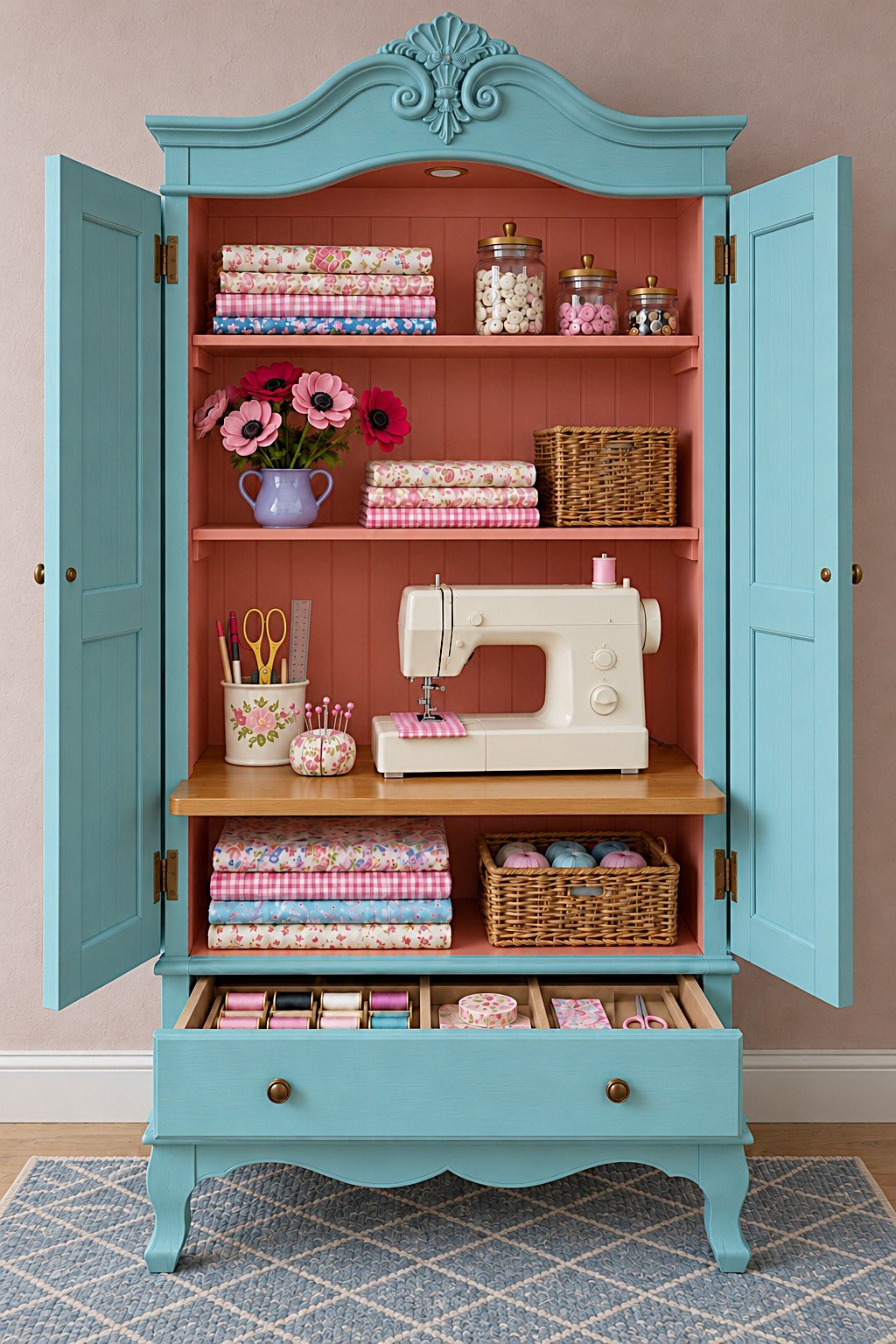
Short fabric stacks and jars of buttons make this turquoise cupboard feel like a small haberdashery. The coral backing brings the lighter textiles forward. Reserve the machine shelf for storage unless its height, pedal access, and knee room suit sewing. Move the machine to a suitable table when those conditions cannot be met.
3. Ukuleles framed in sage
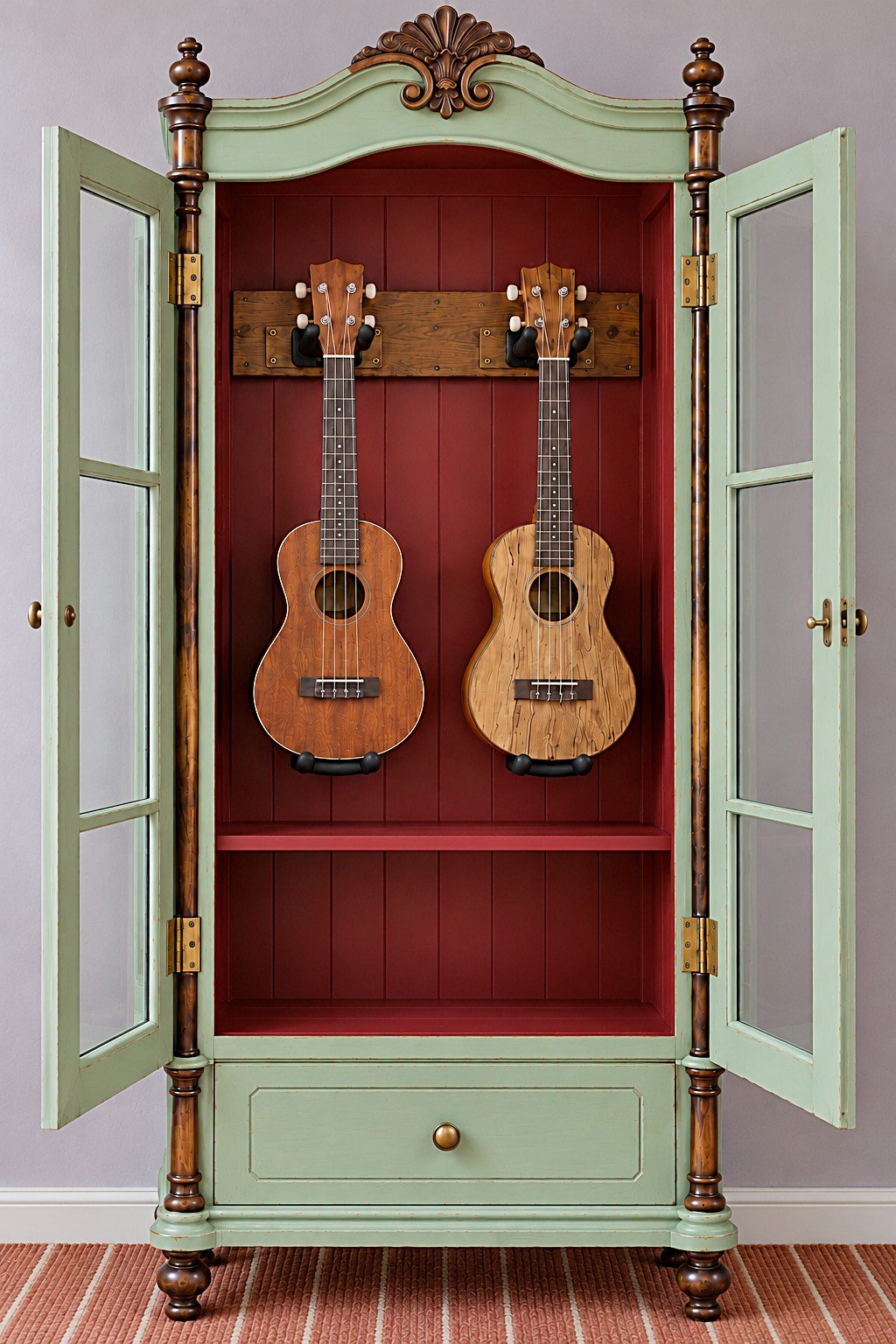
Two ukuleles become the display inside a sage cabinet with a red back. Individual neck holders and lower cradles separate the instruments without crowding their outlines. Fasten a mounting board to structural parts of the cupboard, then fit the holders around the instruments. Allow the tuning pegs and bodies room to pass through the open doors.
4. A puzzle surface that folds away
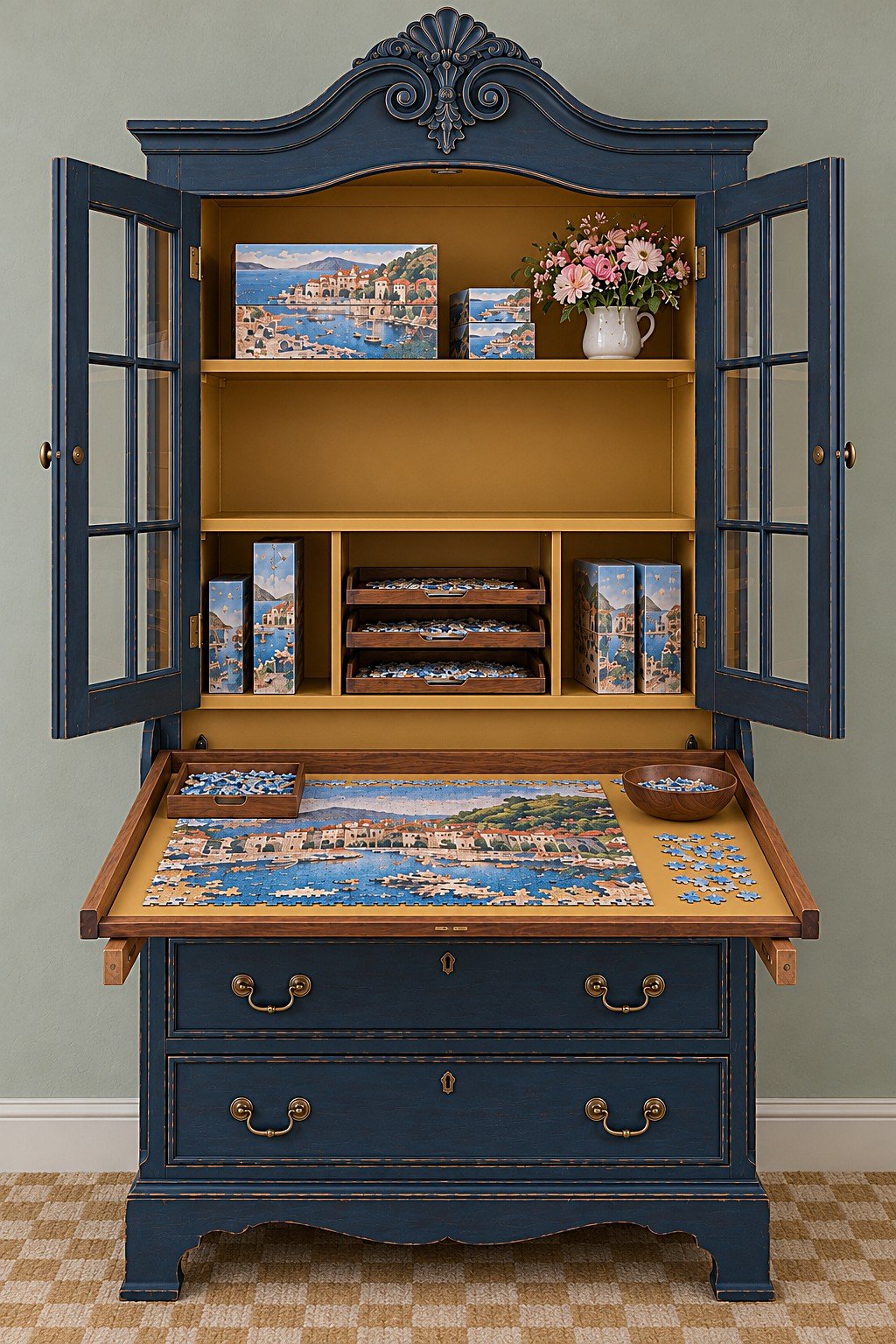
Navy doors open onto a golden interior with sorting trays and puzzle storage. The lowered flap brings the activity in front of the shelves. Transfer unfinished work to a suitable puzzle board before closing the flap. A secretary desk with sound supports can provide the starting shape, but its load rating must suit the working surface.
5. Citrus service against patterned blue
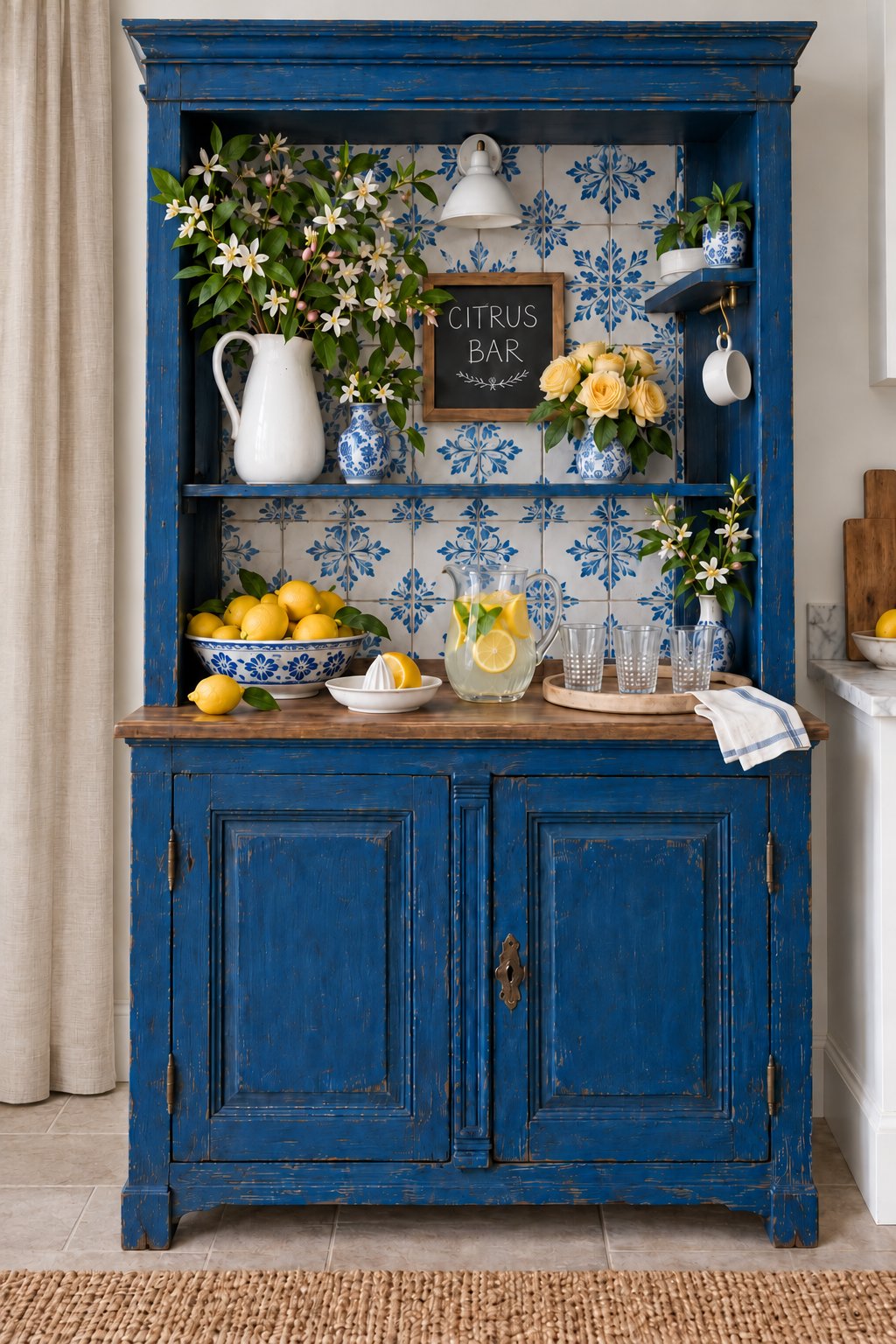
A blue hutch, patterned backing, and yellow lemons create a serving corner with very little equipment. A hand juicer, pitcher, and tumblers provide the useful center. Fill the pitcher elsewhere and dry its base before setting it down. A removable tray can carry the glasses to the table while keeping drips off the wood.
6. Tea things within reach
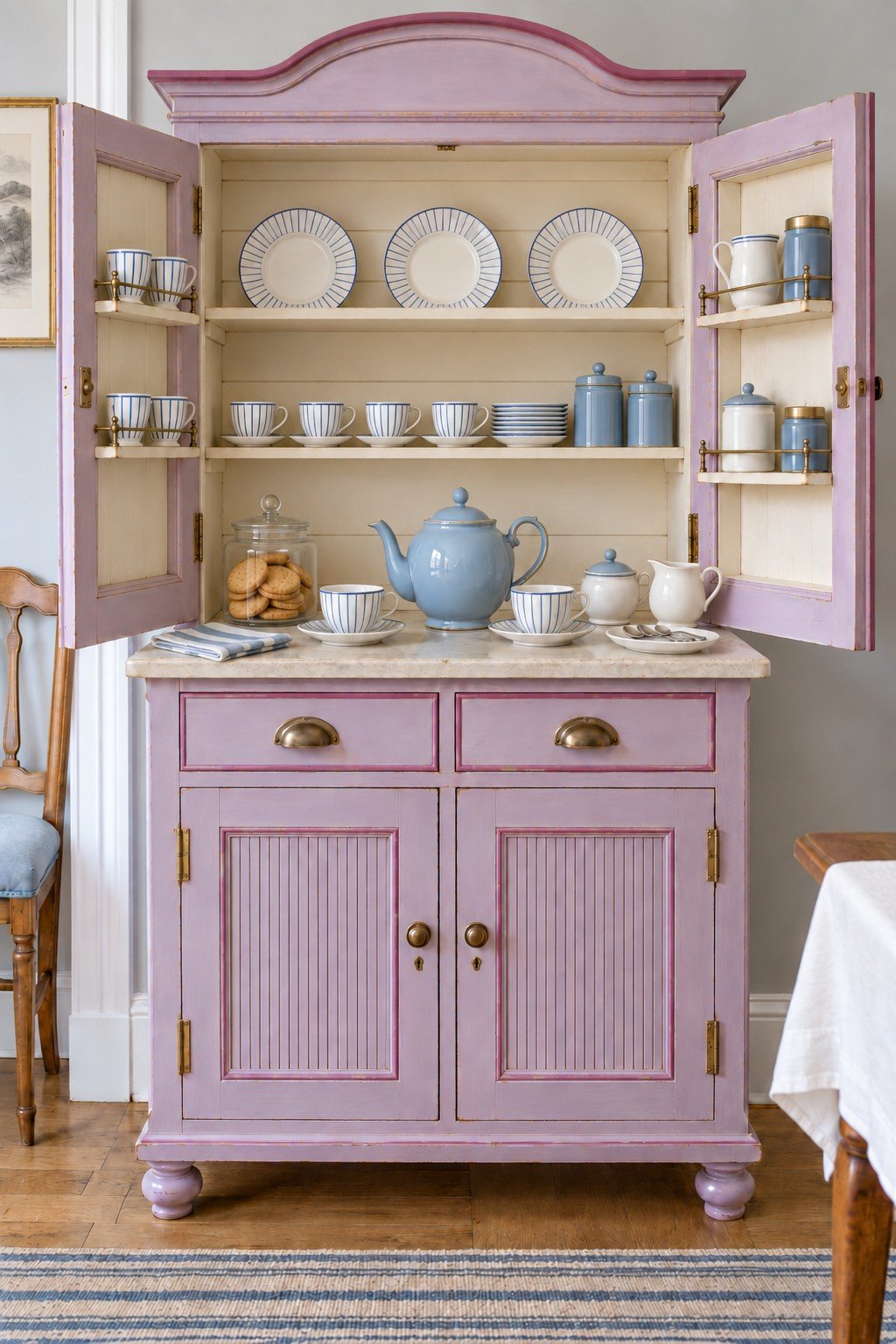
Shallow door racks make the lilac tea cupboard distinctive. Blue canisters and striped cups repeat across the cream shelves, leaving the teapot on the counter. Mock up new rack positions with the dishes in place before attaching them. Cup handles and loaded shelves must clear the interior when the doors close, and the hinges must suit the added weight.
7. Flowers around a morning coffee corner
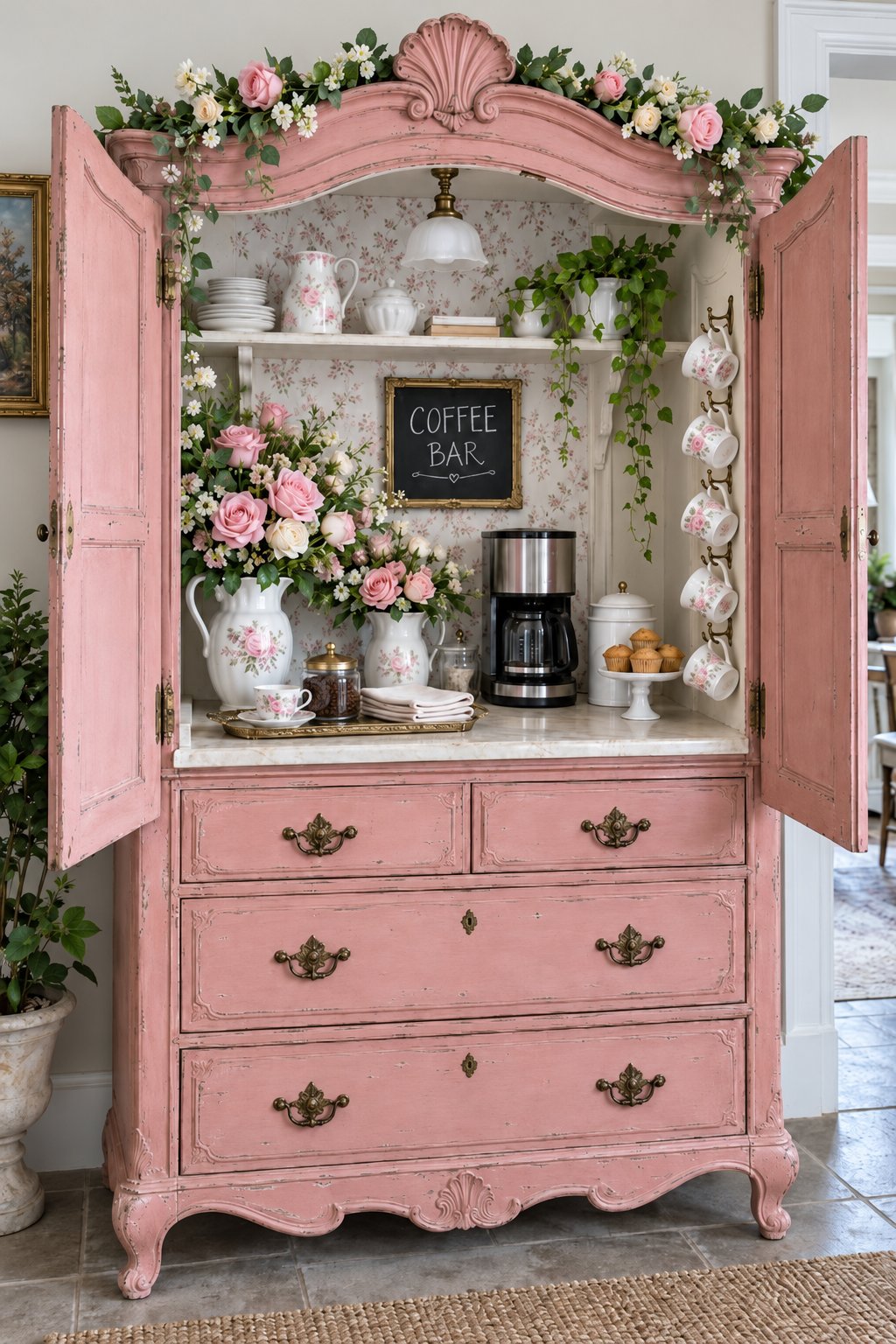
Rose paint and floral backing soften a cupboard arranged around a coffee maker. Hanging cups save shelf space, while pitchers of flowers continue the palette. Consult the appliance instructions before choosing its position. Access to the reservoir matters as much as the opening width; flowers should stay clear of controls, cords, and the area used to prepare a drink.
8. Coral shelves for a drinks station
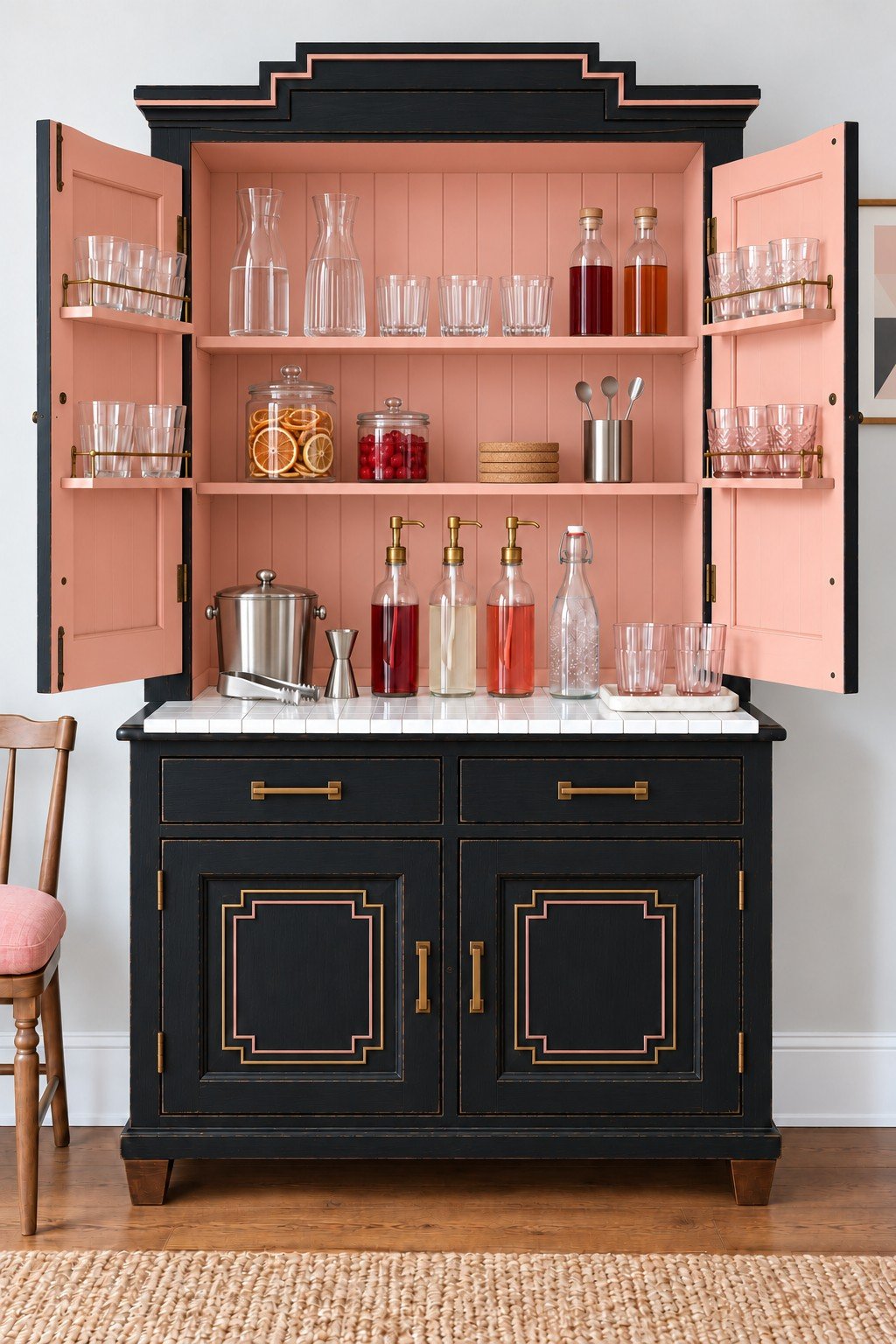
Coral inside a black cabinet gives clear glassware a stronger outline. Carafes sit above the counter, with bottles and an ice bucket below. Arrange tall containers where they lift out without striking the shelf above. The same layout can serve water, juice, or drink syrups, with a clear front edge for pouring.
9. A propagation display you can tend
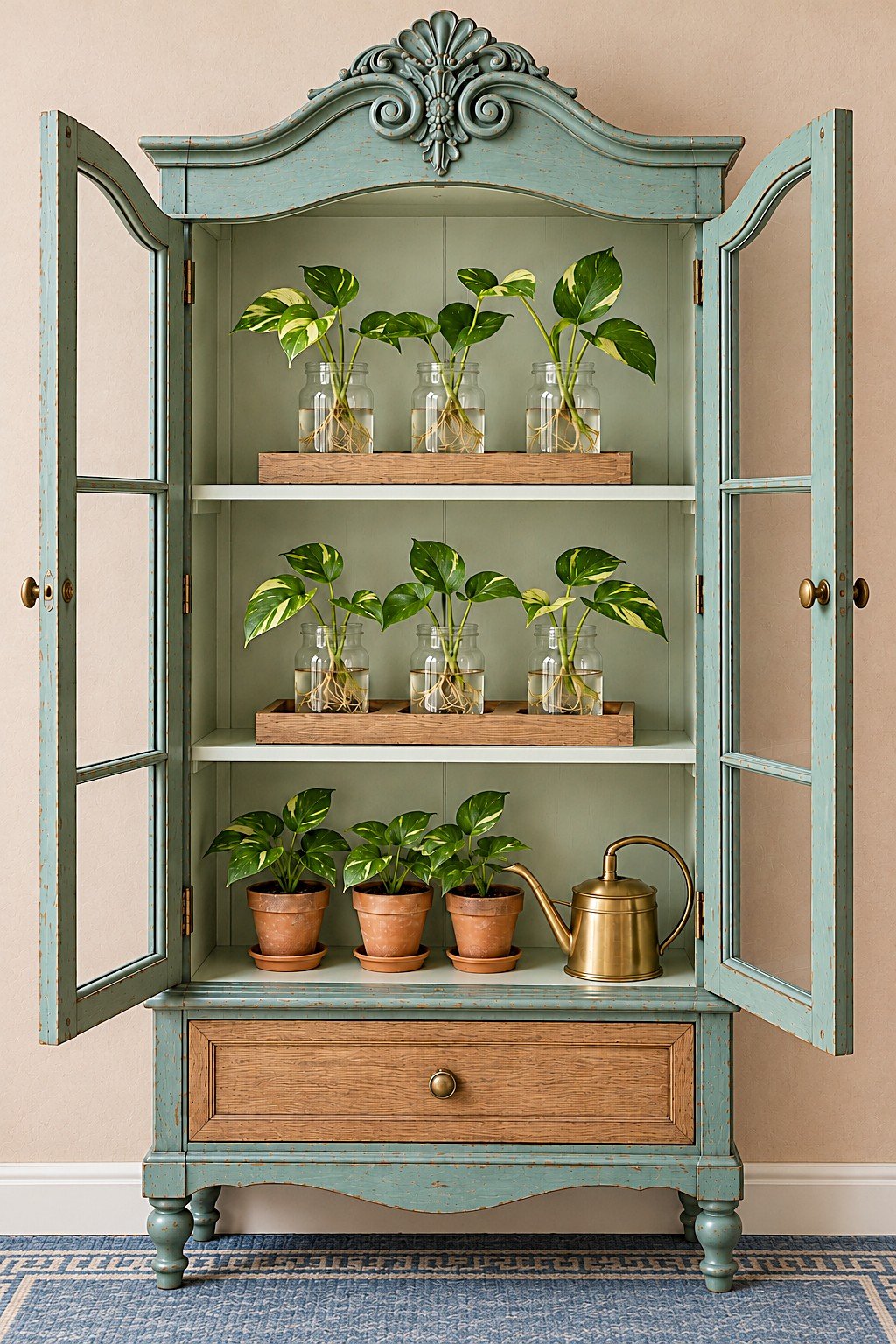
Roots in clear jars give this pale green cabinet a purpose beyond ornament. Wooden holders group the jars above three terracotta pots. Choose plants suited to your propagation method and the light reaching each shelf. Virginia Tech recommends bright, indirect light for stem and leaf cuttings. Each jar should lift out for cleaning and water changes.
10. Ribbon rolls above a wrapping flap
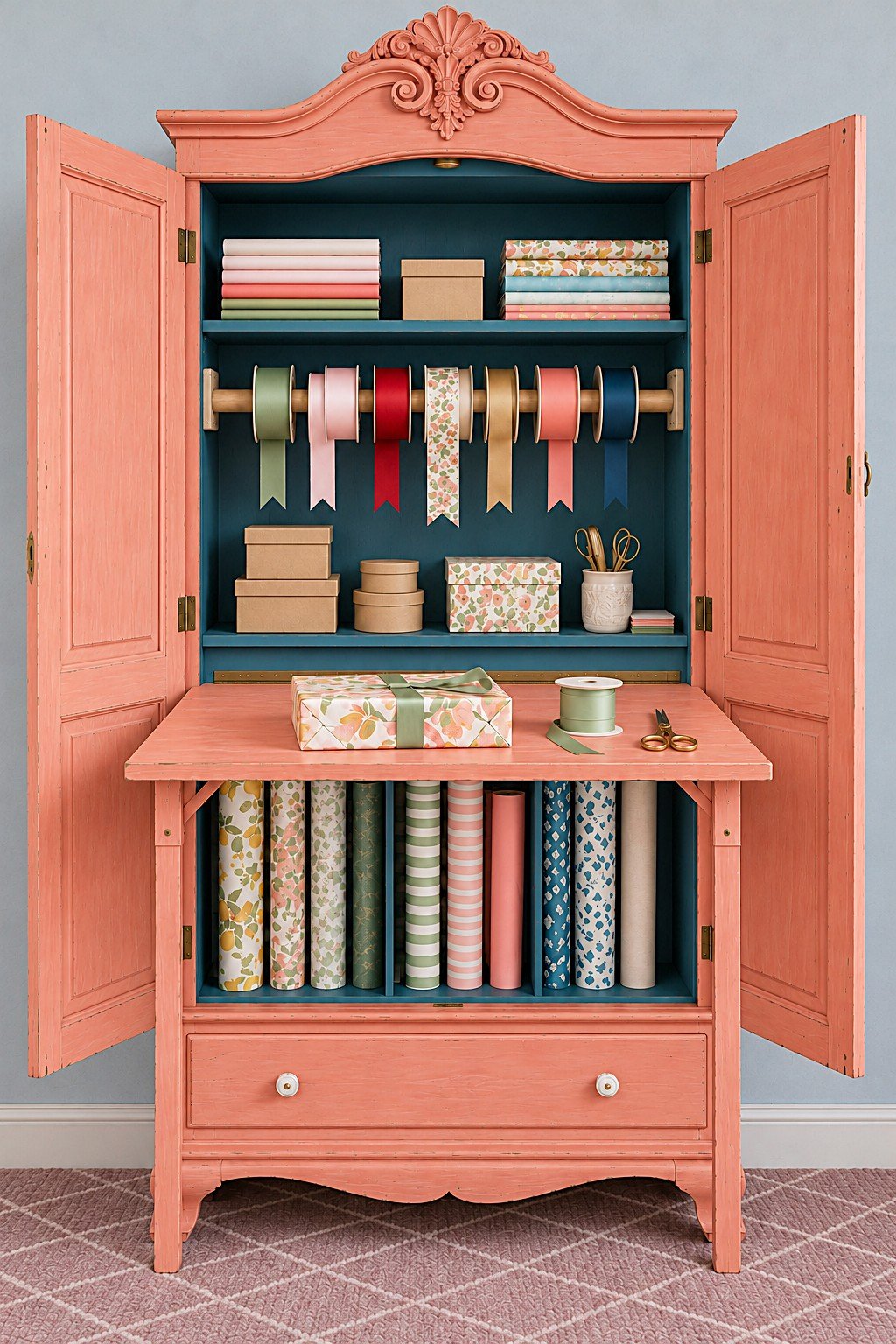
Coral doors reveal a teal interior arranged around ribbon spools, paper rolls, and a working flap. The vertical lower compartment makes use of the rolls' height. Make the ribbon rod removable so empty spools can be replaced. Measure your longest paper roll and the space needed to turn a box before deciding where the shelves and flap belong.
11. Records below a plum turntable shelf
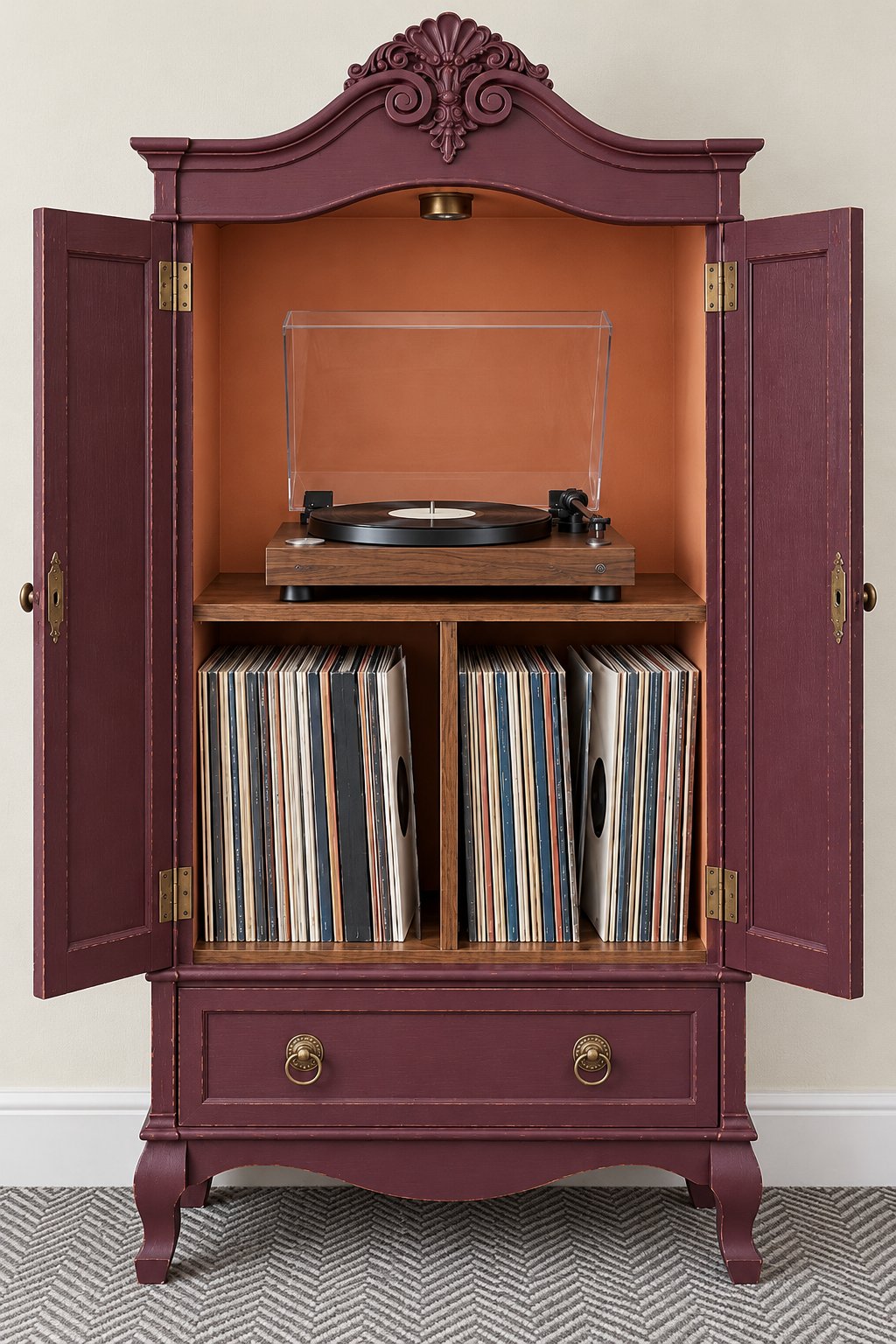
Plum and orange frame a simple division between the player above and upright record sleeves below. The records remain easy to browse without moving the turntable. Follow your player's installation directions, including ventilation and dust cover movement. If it needs an open surface for playback, keep this cabinet for storage and move the player when listening.
12. Black cabinetry with a wine cooler
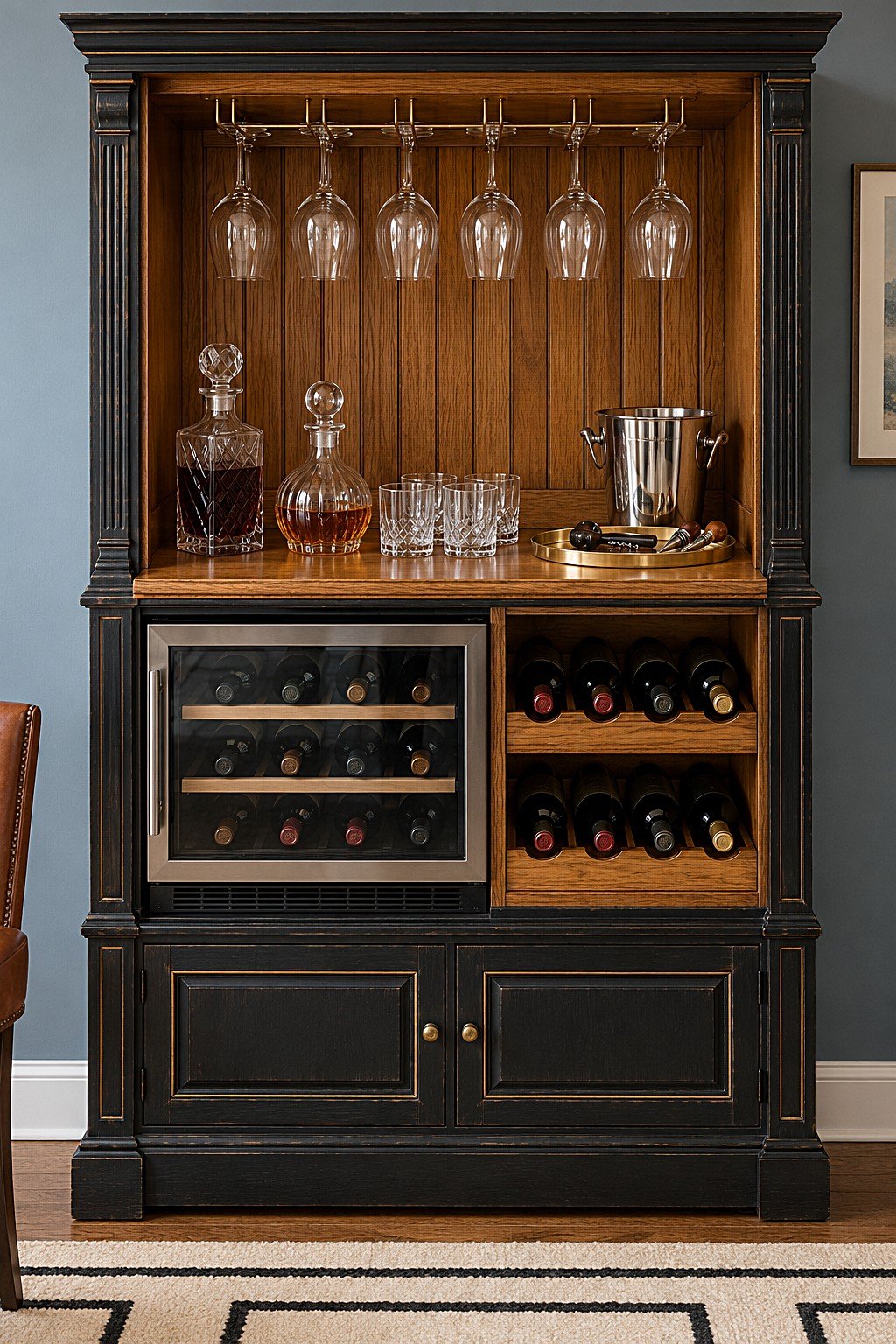
Hanging stemware and wood bottle racks surround a cooler in this black hutch. The appliance gives the lower opening a different job from the serving counter above. Select a model approved for installation inside cabinetry and follow its ventilation and clearance requirements. The visible front grille alone cannot establish suitability; open bottle storage offers a simpler alternative.
13. Let patterned dishes set the palette
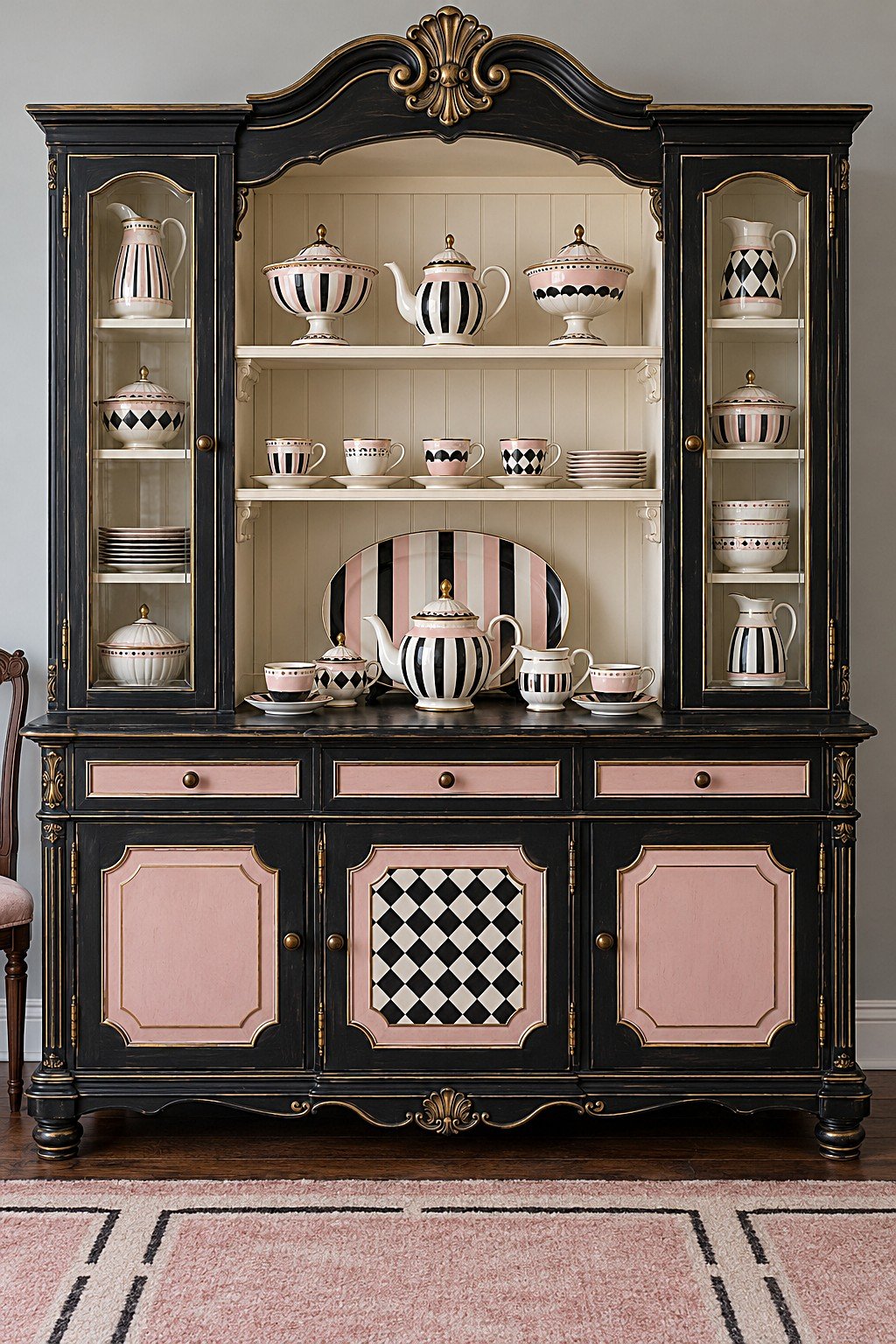
Stripes, diamonds, and dark rims connect the dishes in this black and blush hutch. Cream shelf backs keep the different silhouettes readable. Group pieces by how often you use them, with everyday cups together and occasional serving dishes behind glass. Repeating a color through existing tableware gives the cabinet coherence without repainting the dishes themselves.
14. Gingham worked into the lower doors
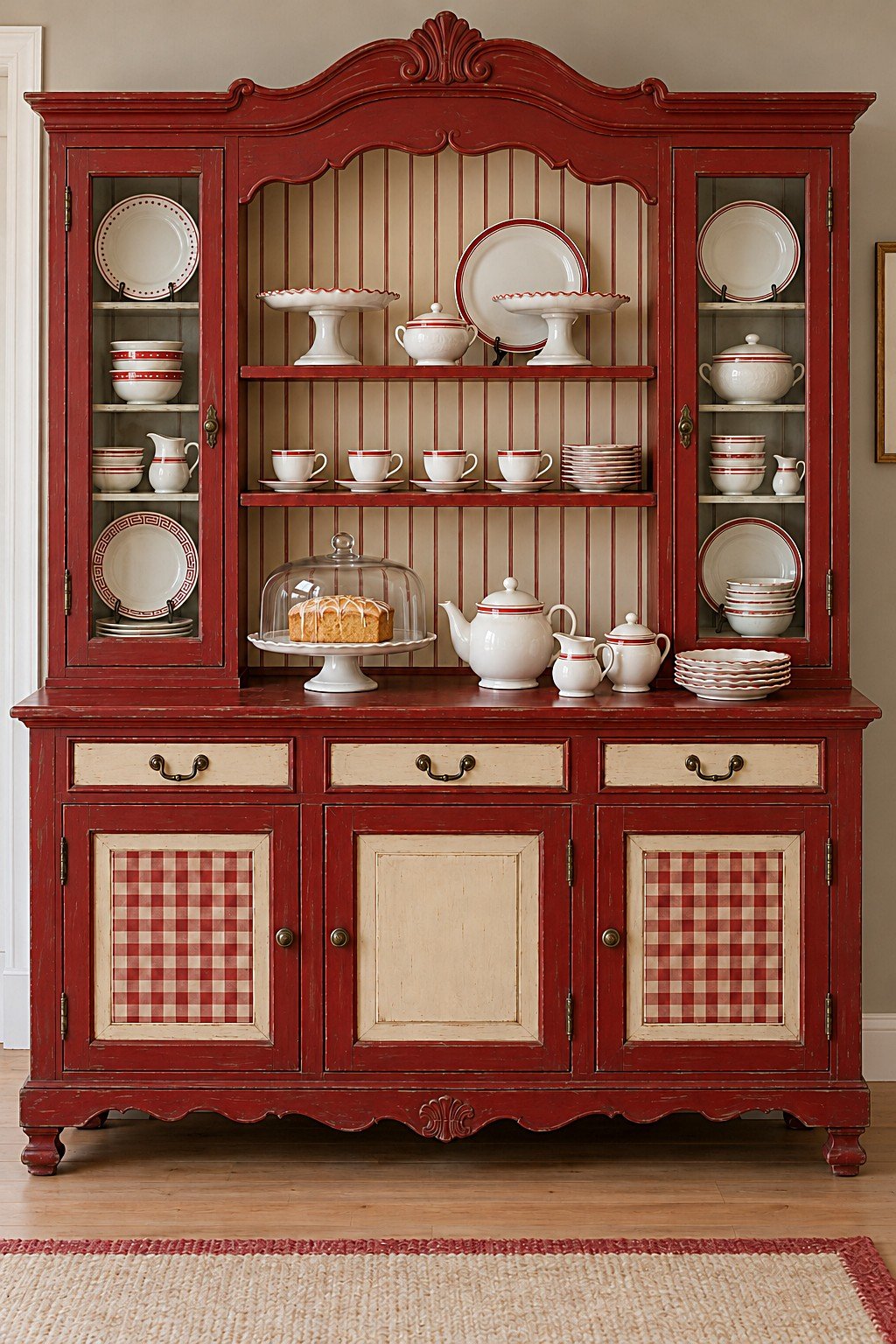
Red framing and checked lower panels give this hutch a distinct rhythm. White dishes and cream shelf backs keep the upper half lighter. Fit a removable patterned insert inside an existing door recess to try the effect. Edges should stay clear of moving joints, and the material should suit the cleaning the cupboard will need.
15. Small repairs at a mint workbench
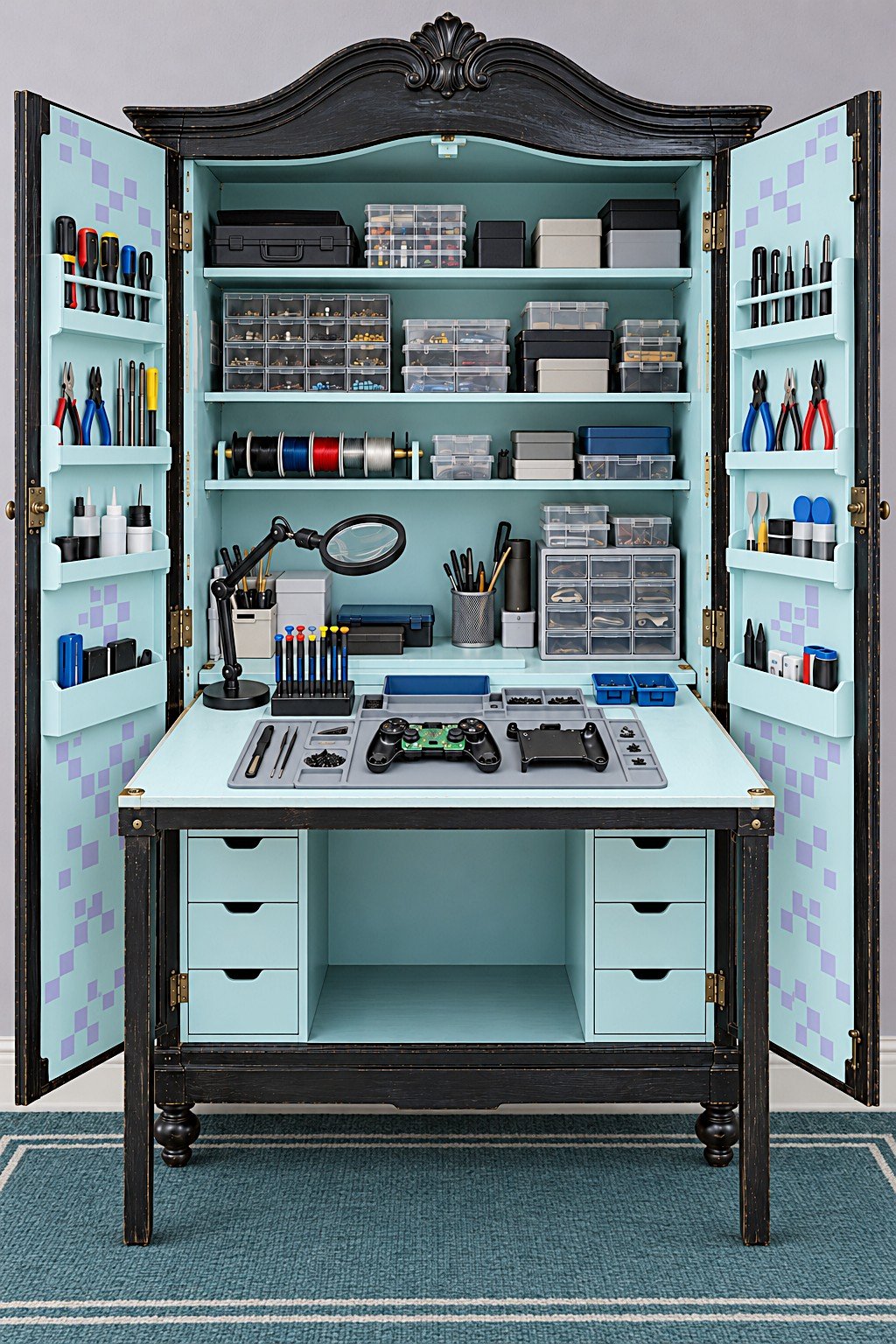
Clear drawers and shallow trays separate tiny parts from hand tools in this mint workbench. The supported front table provides a working area beneath the storage. Work only on accessories with suitable service instructions, such as a compatible controller. Separate screws and components by stage so reassembly does not depend on remembering where similar pieces belonged.
16. Wool colors gathered for felting
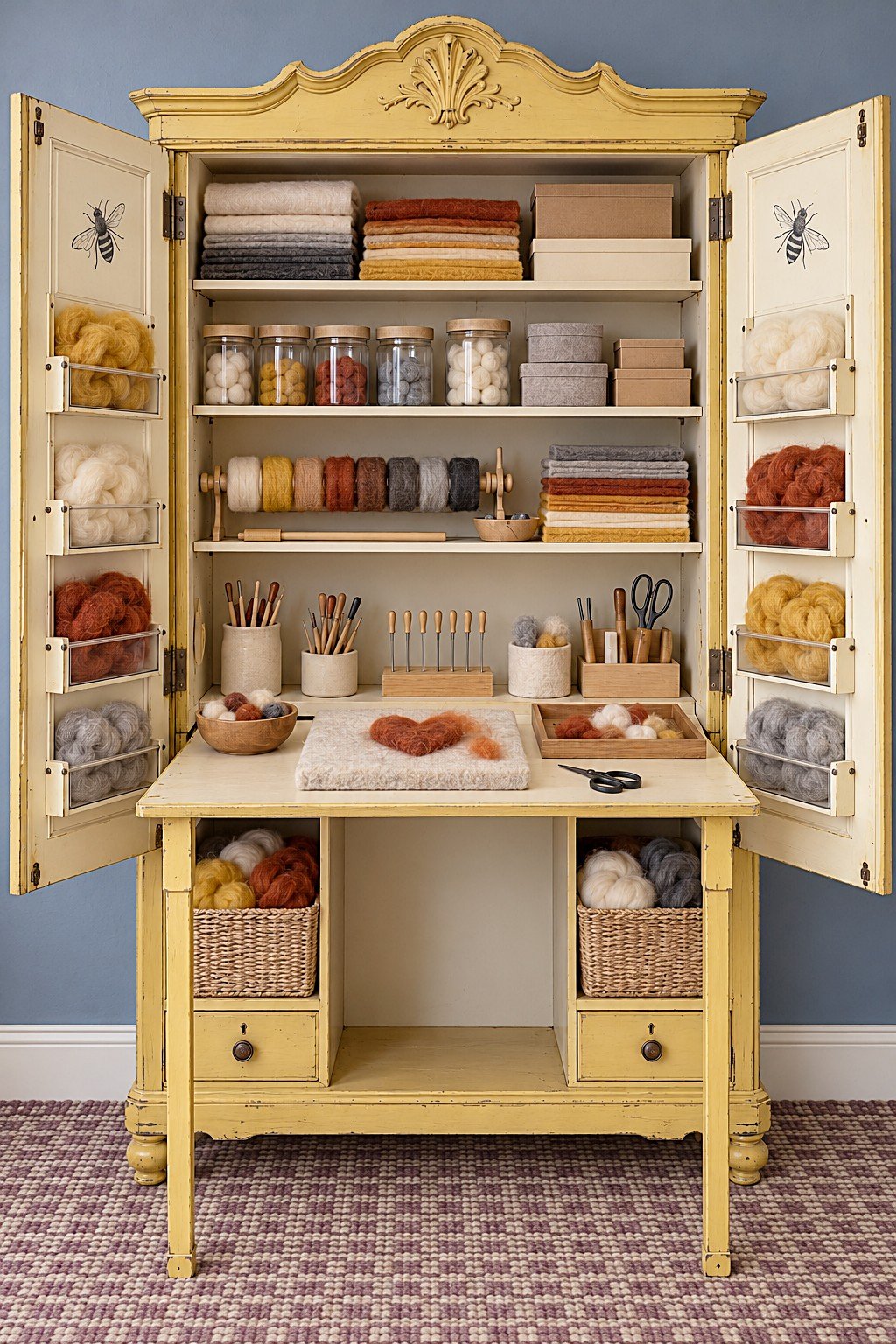
Yellow shelves gather wool in jars, baskets, and shallow door racks. The cream work area gives loose fibers a quieter background. Bring out only the colors needed for the current piece, leaving the rest in storage. A proper felting pad belongs under the work, with a closed container ready for the barbed needles afterward.
17. Give bookbinding room for paper
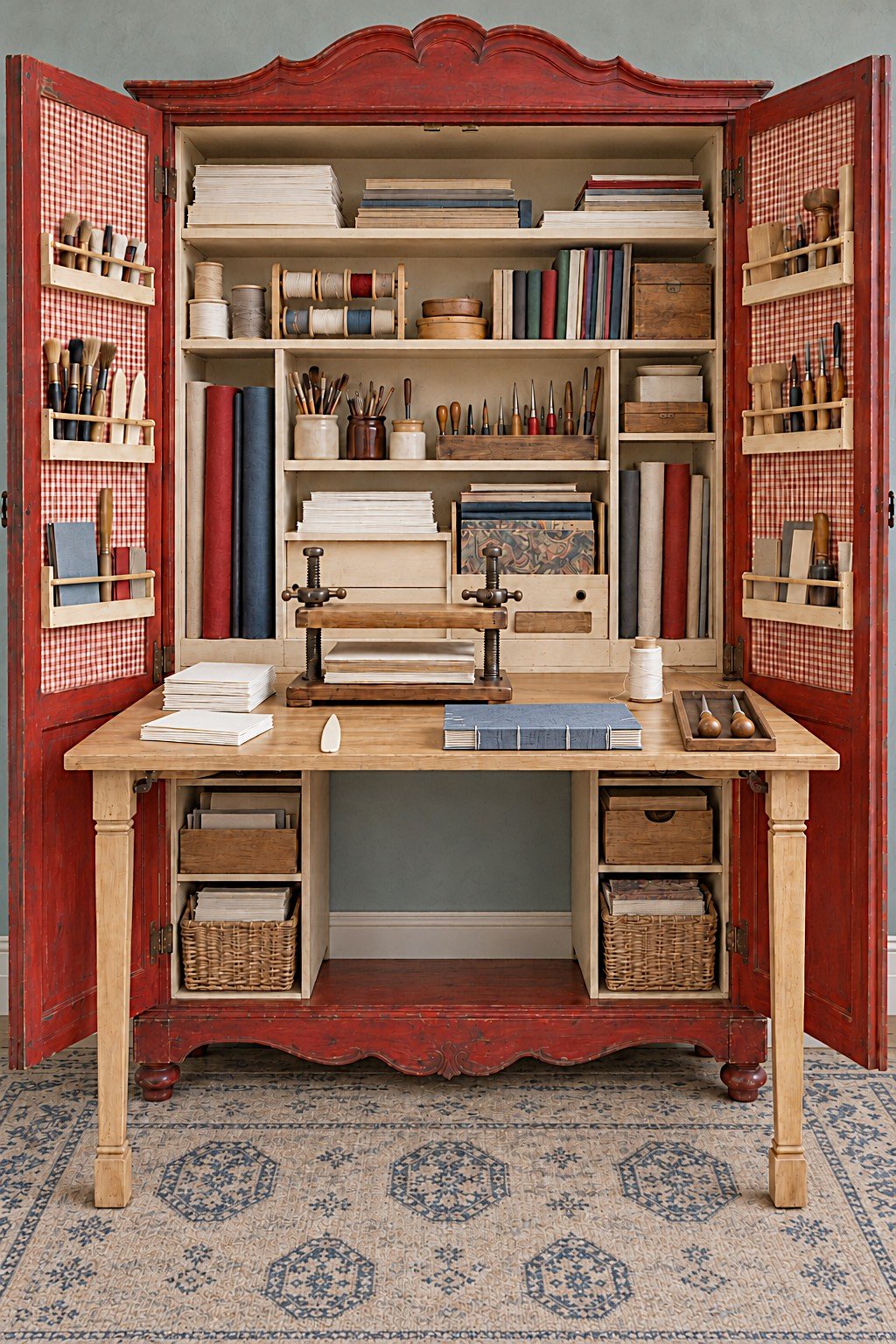
Flat stacks and vertical slots serve different paper formats in this red cabinet. A wooden press occupies the center of the supported worktop. Leave room to turn the press handles and lift a book without hitting the shelf above. For folding and stitching projects, paper handling space may be more useful than a large press.
18. Books beside a rose upholstered seat
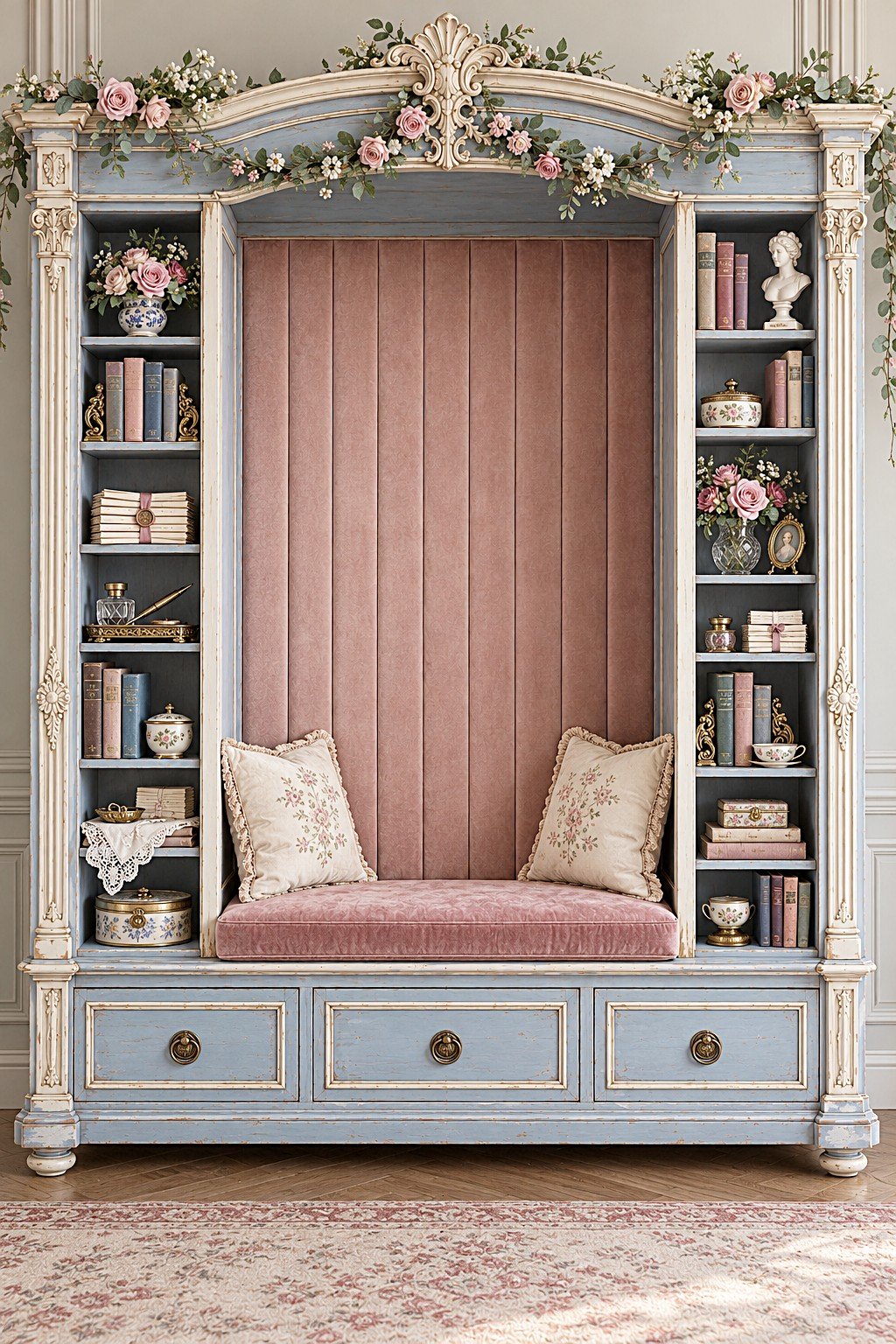
Narrow side shelves frame a rose seat inside this pale blue cabinet surround. Lower drawers retain useful storage without filling the central recess. Place favorite books at a comfortable reaching height and reserve upper compartments for occasional pieces. Decide the seat structure and drawer arrangement before ordering upholstery so the cushion fits the finished opening.
19. Lavender storage for clay work
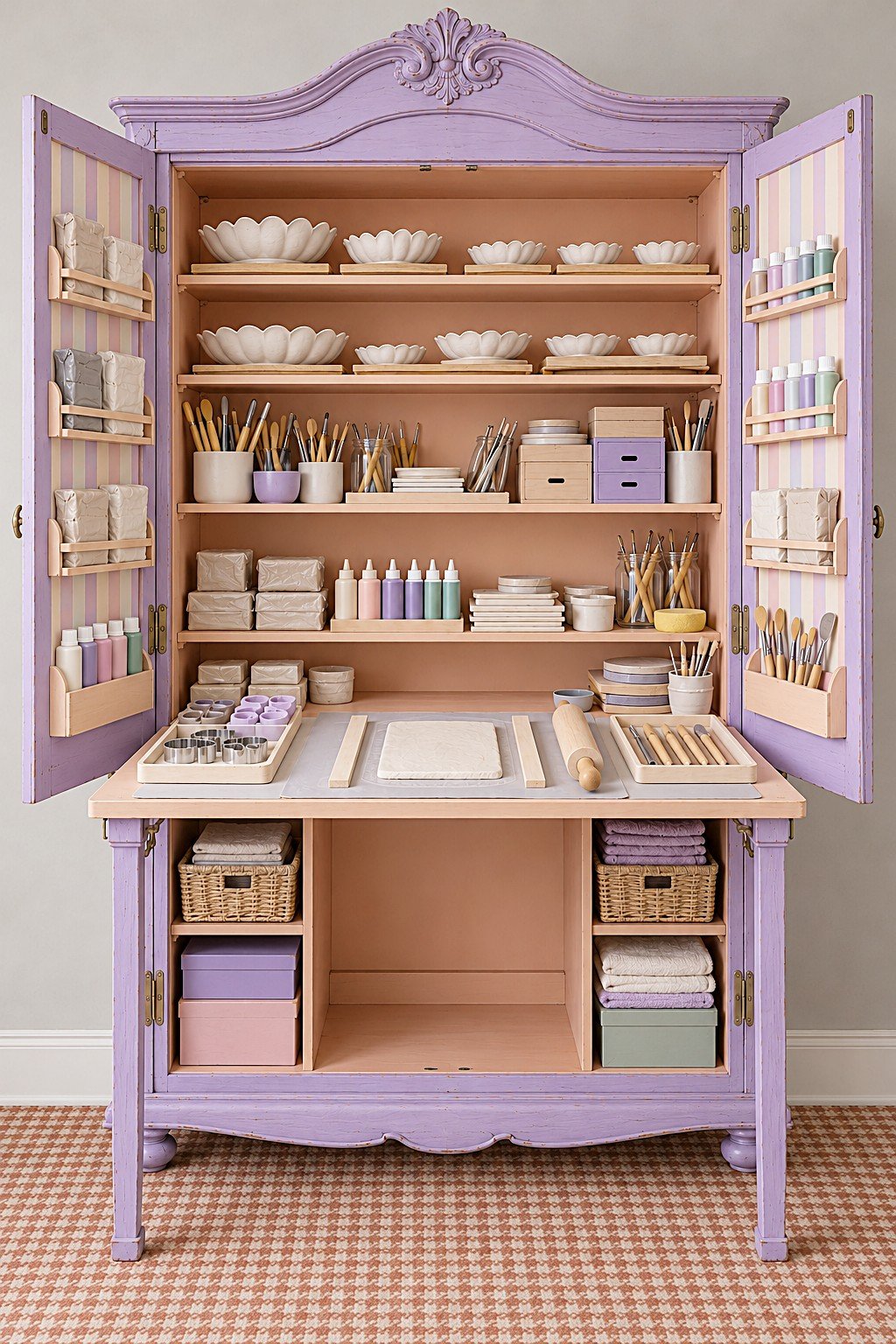
Peach shelves lift finished bowls above a protected rolling surface in this lavender cupboard. Wrapped clay and tools remain close to the work. Protect the counter with removable mats and trays, then allow room for pieces to dry undisturbed. Decorative clay bowls should hold dry objects unless the material and finish are specifically suitable for food or liquids.
20. A dressing bench with a buttoned back
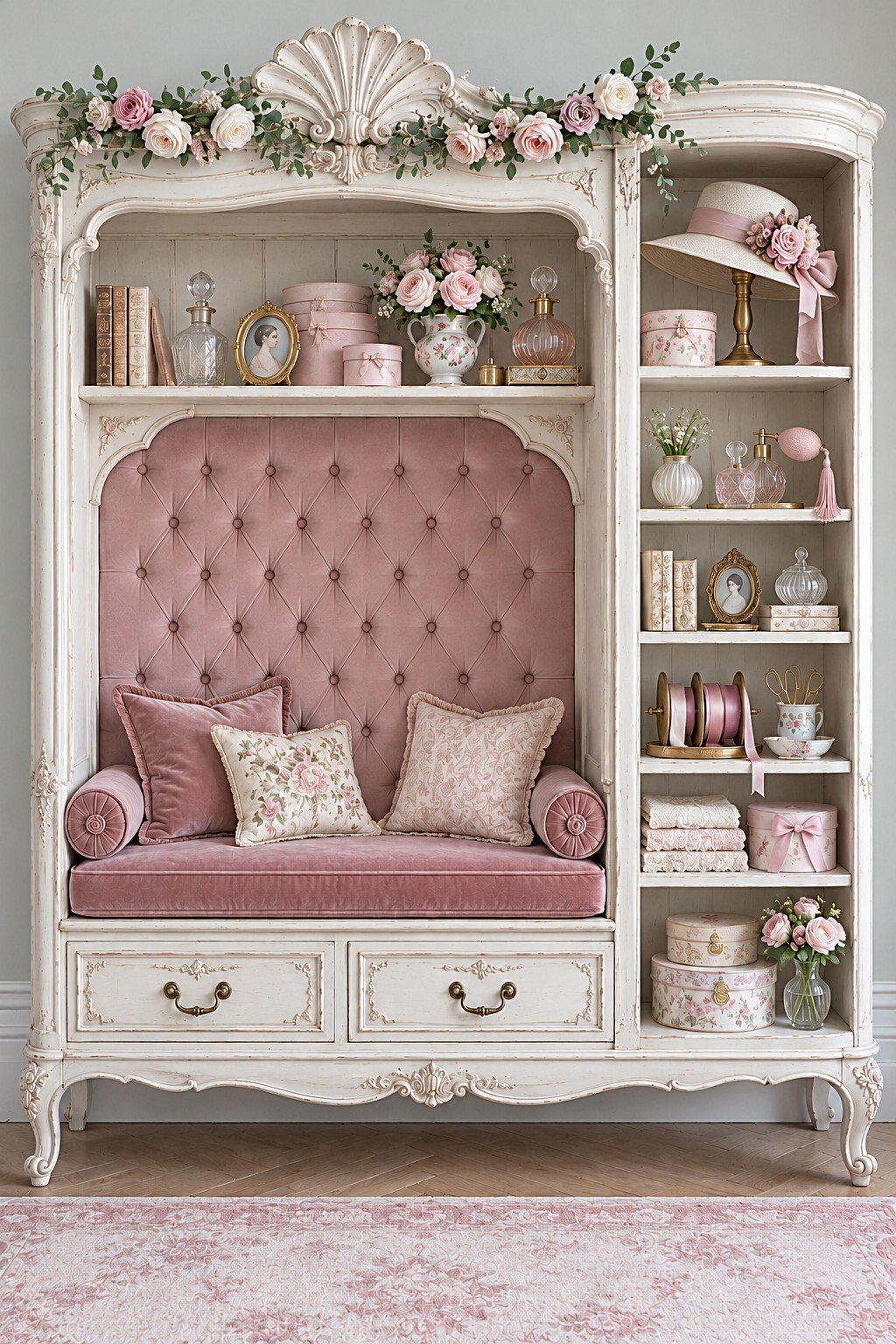
Pink upholstery gives this ivory cabinet a bedroom role, while a narrow side tower holds a hat, perfume, and small boxes. The buttoned back adds detail without relying on more shelf ornaments. Consider a removable seat cover where the upholstery construction allows it. Leave enough cushion visible for putting on shoes or laying out the next day's clothes.
21. Tall bookshelves meet a low bench
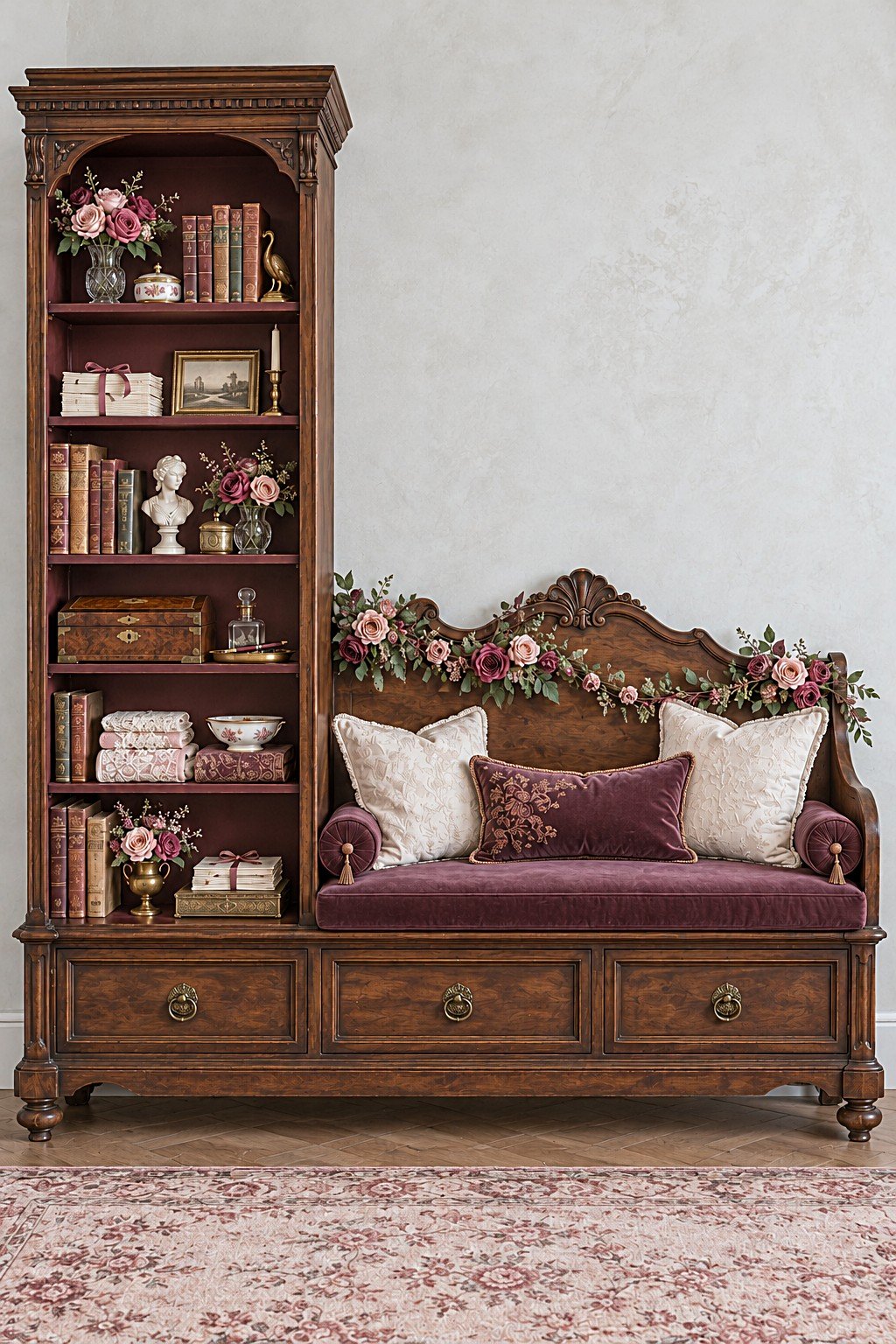
Unequal heights distinguish this dark wood reading arrangement. A bookcase rises at one end, while a burgundy cushion sits above a long drawer base. Retain a sound wood finish when cleaning and small repairs are enough. The connection between the two furniture sections needs a measured structural plan; matching their finishes alone does not make a supported seat.
22. A Gothic cupboard for tea
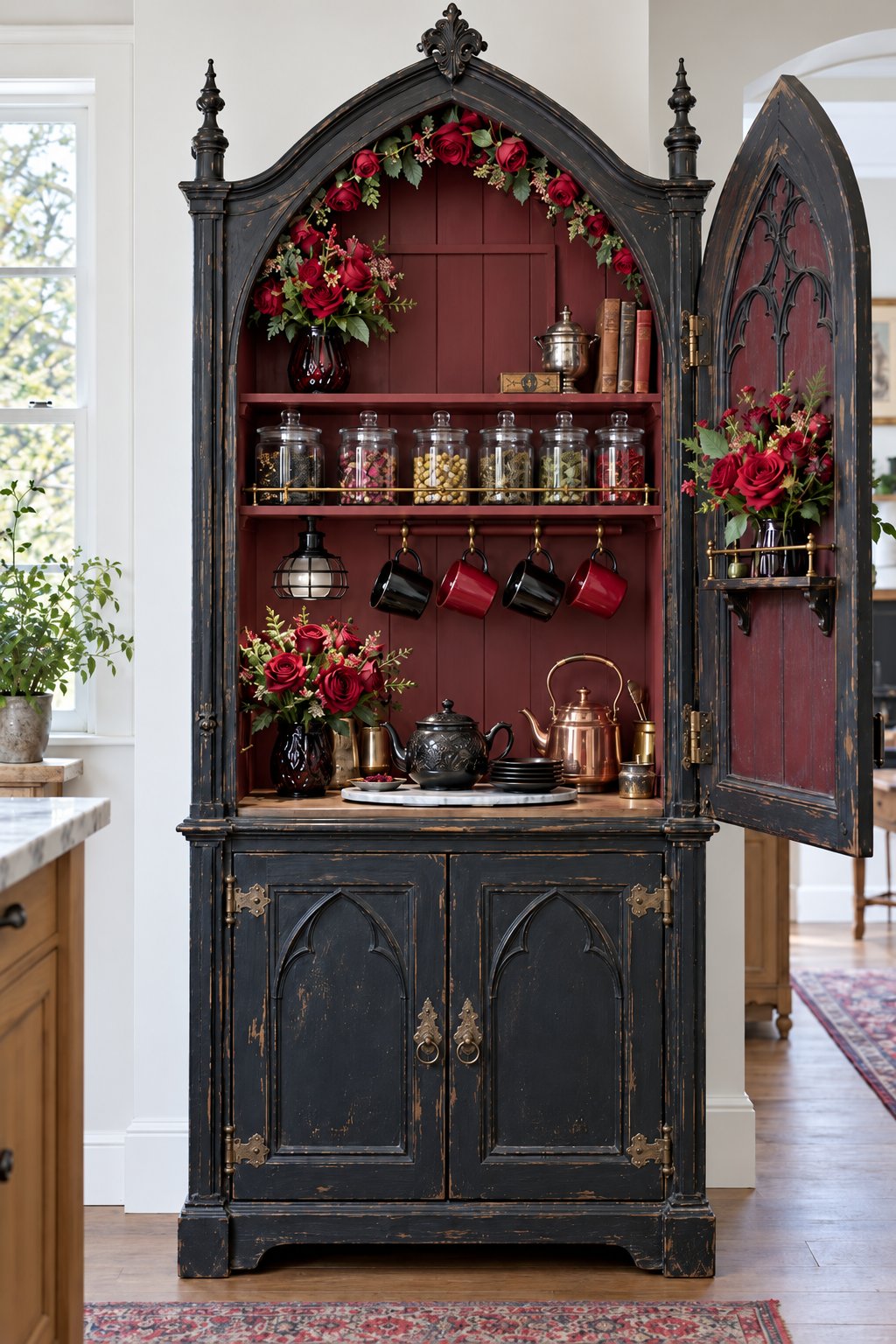
A pointed black frame and burgundy back set the mood around rows of tea jars and hanging mugs. Metal teapots give the counter a different texture from the glass above. Store tea and serving pieces here, with water heated in a suitable place elsewhere. Space the jars so one can be removed without disturbing its neighbors or catching the retaining rail.
23. Baking tools beneath open blue shelves
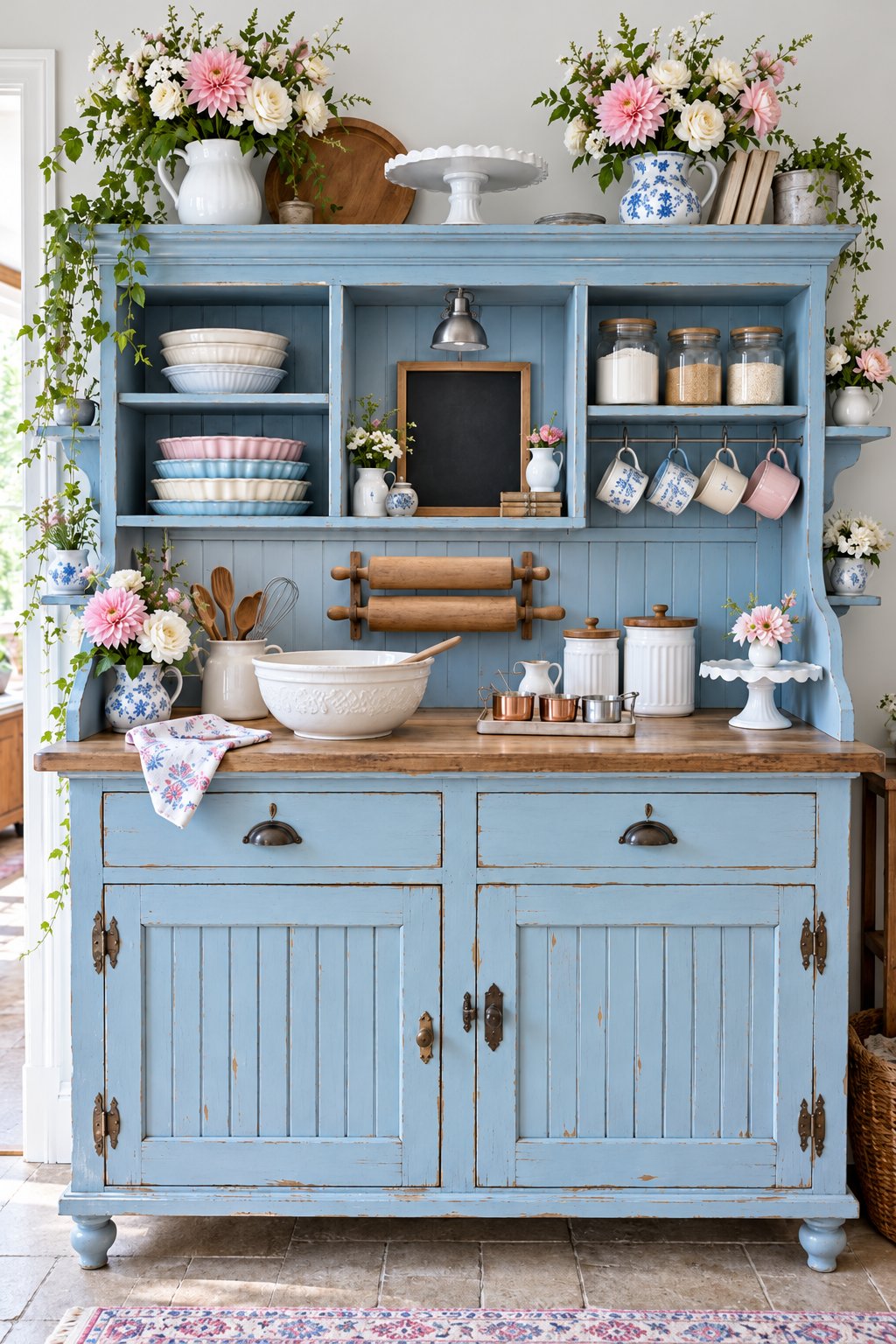
Nested bowls and hanging cups occupy the upper compartments of this blue hutch. Two rolling pins sit on a rack above the mixing area. Measure around your largest bowl before adding racks or hooks, allowing it to lift clear of nearby tools. Prepare food in suitable bowls or on an appropriate food preparation surface, keeping flowers away from ingredients.
24. A wardrobe becomes an entryway landing
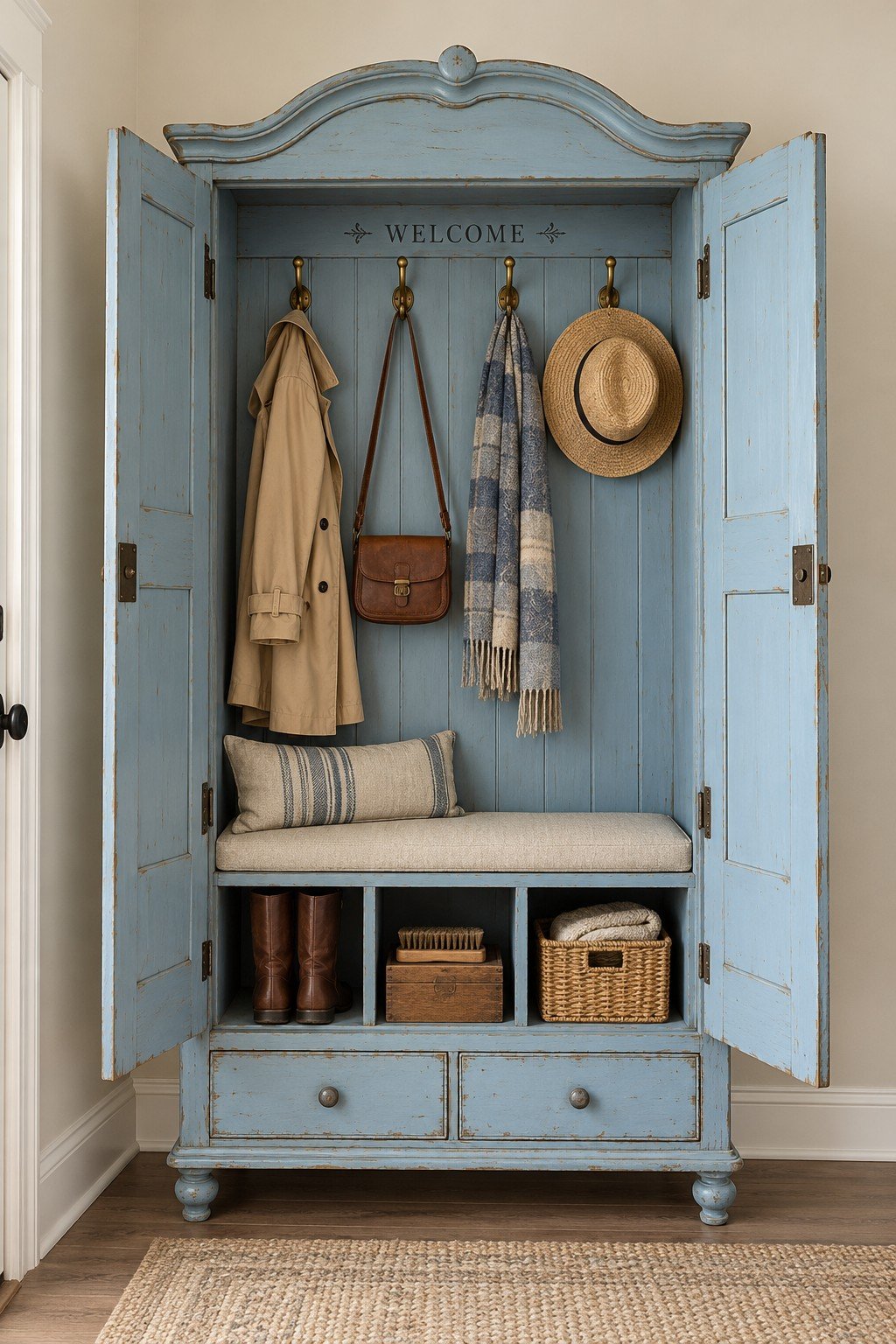
Coats hang above a cushion, with boots, a basket, and a box below. The blue wardrobe shell gathers the things that otherwise collect near a door. Position hooks using the coats and bags you carry, checking that sleeves clear the seat. Open cabinet doors must leave a usable route through the entrance when someone sits to change shoes.
25. Powder blue storage around a seated vanity
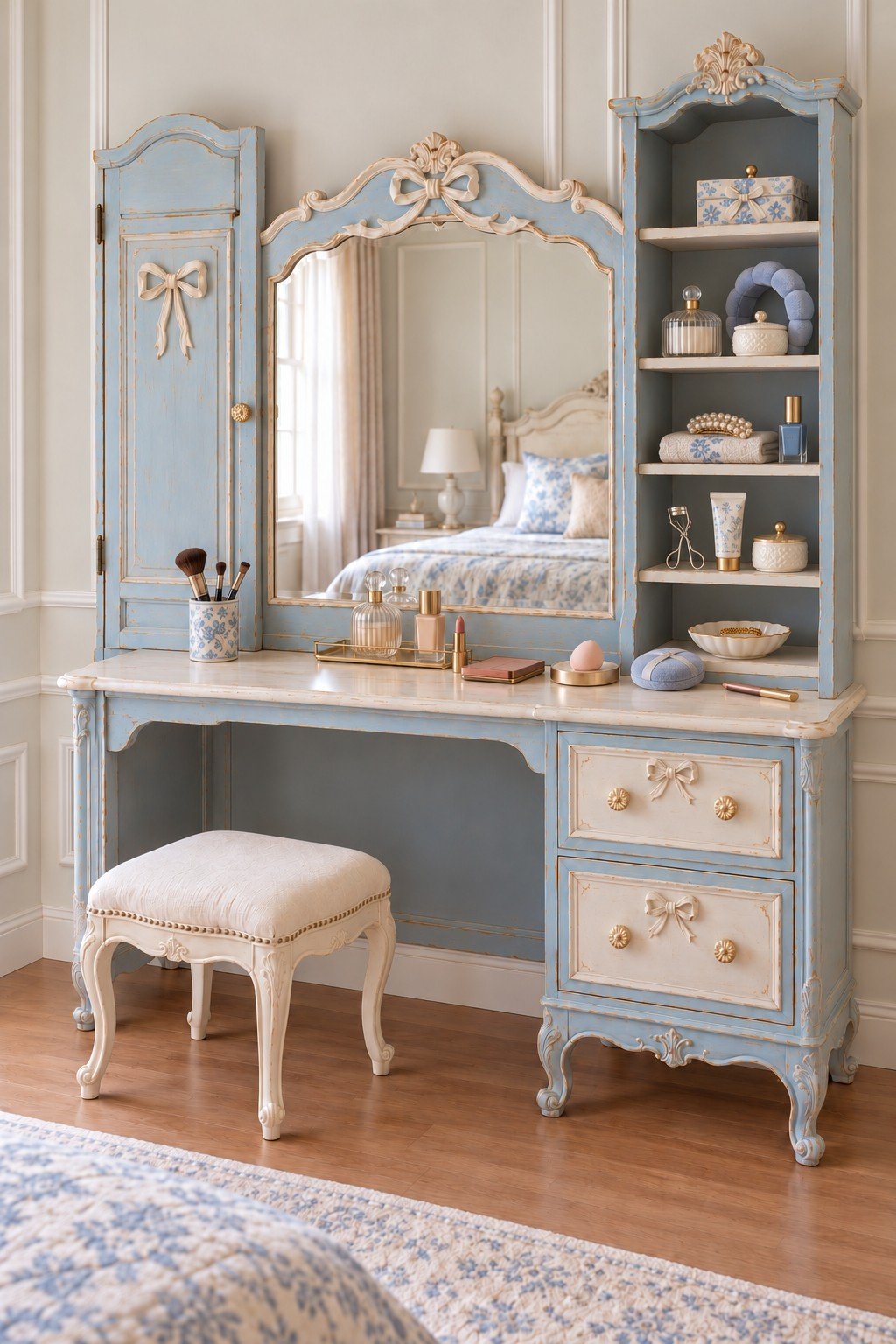
An open knee space lets the stool approach this powder blue dressing counter. Side storage frames a large mirror without filling the surface in front of it. Try the stool and your sitting position before fixing shelf heights. A movable tray for bottles and a brush cup can keep daily items together while making the counter easier to wipe.
26. A standing beauty counter behind blush doors
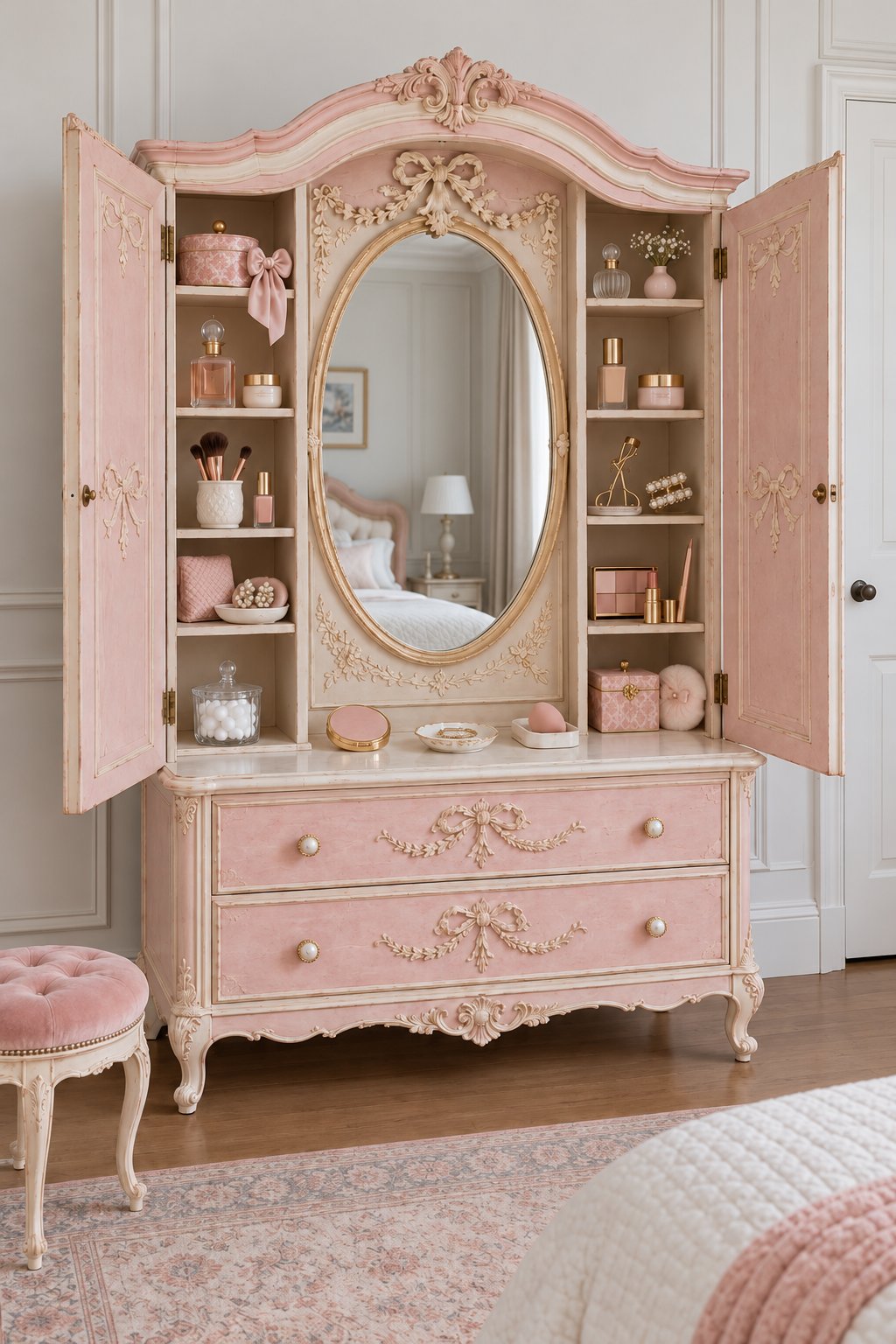
An oval mirror fills the center of this blush cabinet, with slim shelves for bottles, brushes, and boxes. The two drawers below make it a standing counter. Treat shelf depth as a limit on the collection rather than filling it tightly. Daily products should come out individually, and a removable tray can gather the few items that belong on the shallow counter.
27. Burgundy roses frame a Gothic mirror
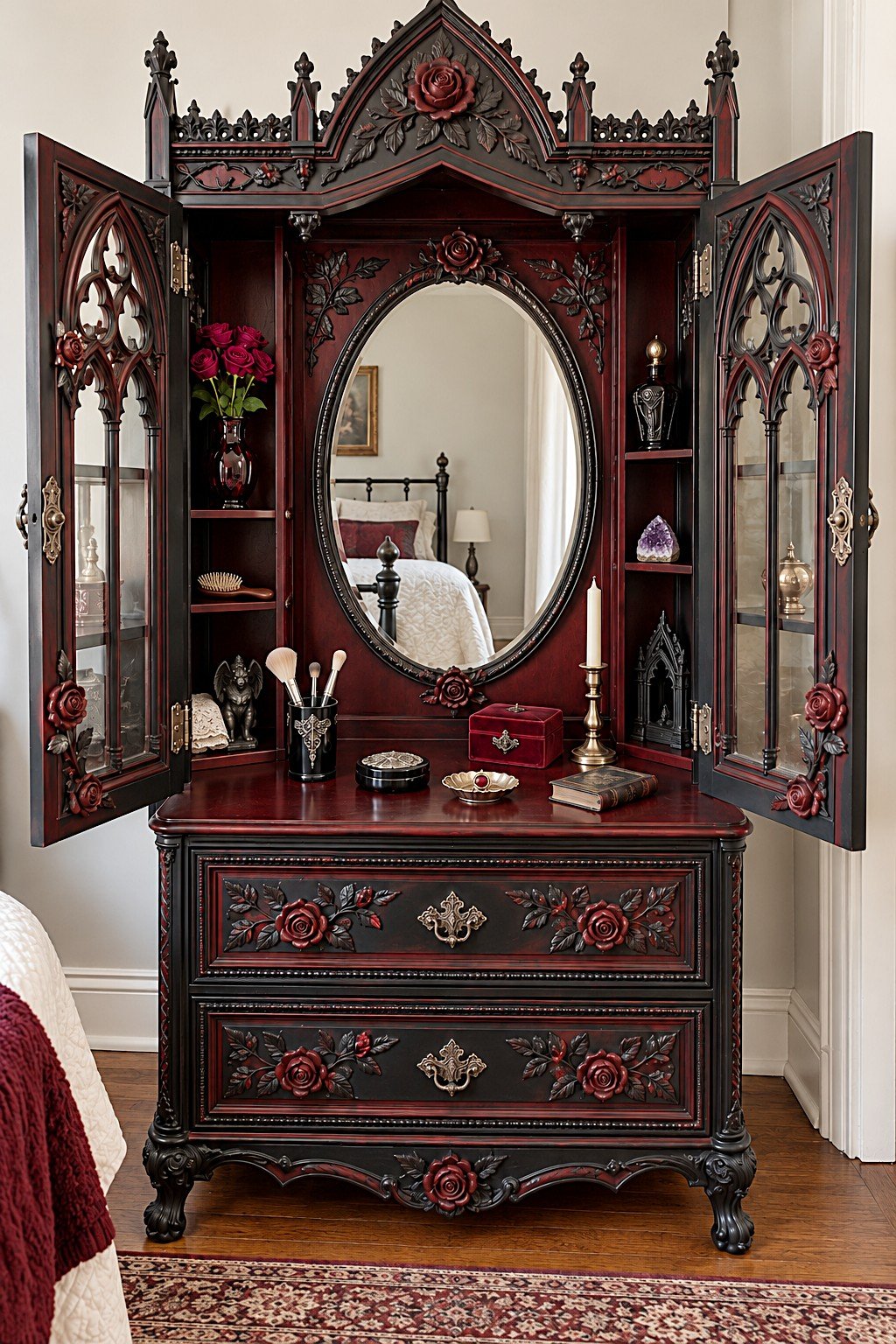
Black tracery and rose reliefs give this burgundy dressing cabinet its character. The oval mirror provides a calmer center among the pointed doors and narrow shelves. Borrow the palette and a small number of lightweight details for a simpler cupboard. Cosmetics can stay in cups and shallow dishes; this drawer base is intended for standing use.
28. Mint paint beneath raised floral trim
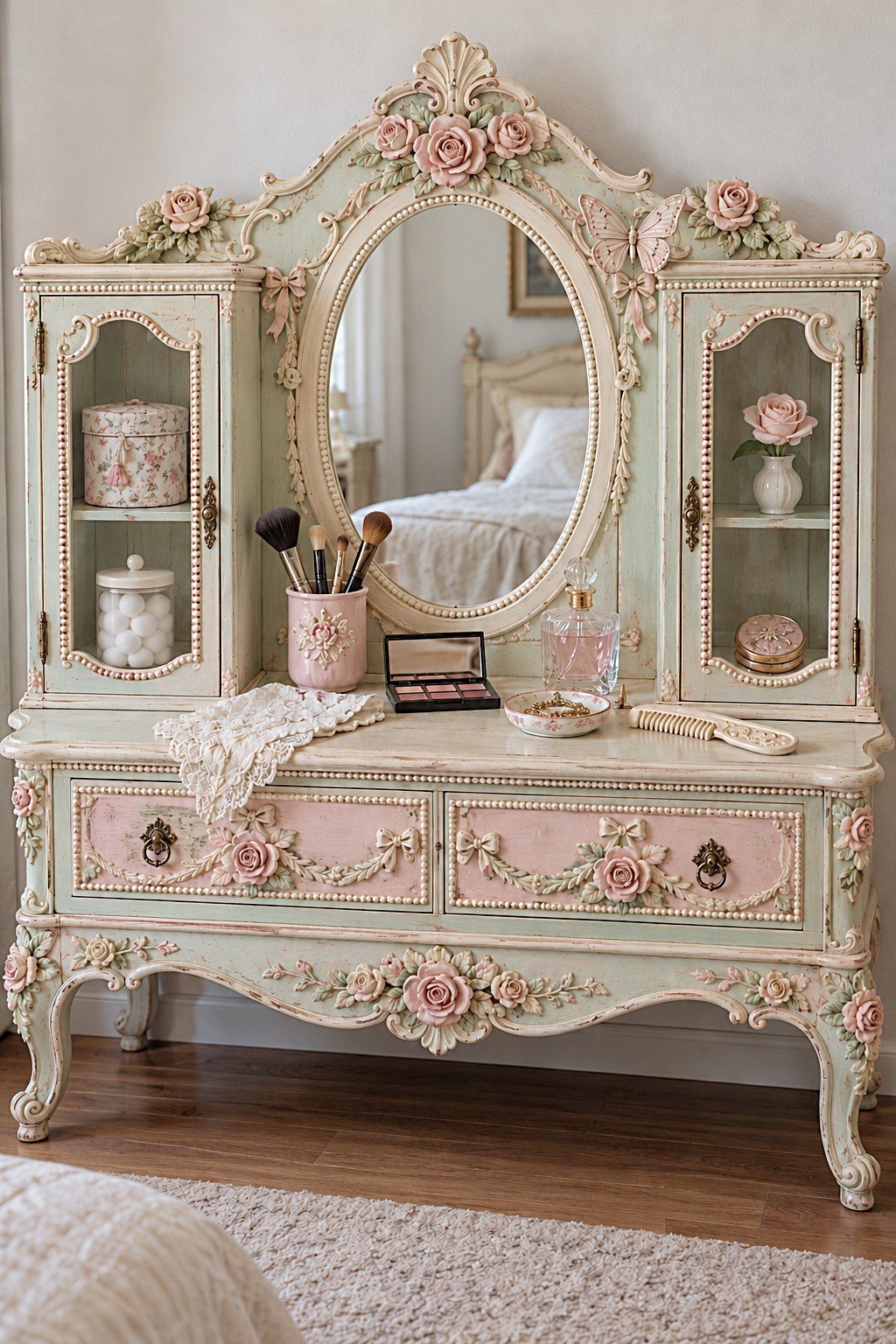
Cream beading, pink roses, and butterfly details make the mint cabinet decorative even with only a few accessories. Small glazed cupboards flank the central mirror. Attach new lightweight trim where it will not interfere with hinges, handles, or drawer movement. A limited tabletop arrangement leaves the elaborate edging visible and its crevices accessible for dusting.
29. Woodland paper inside a reading recess
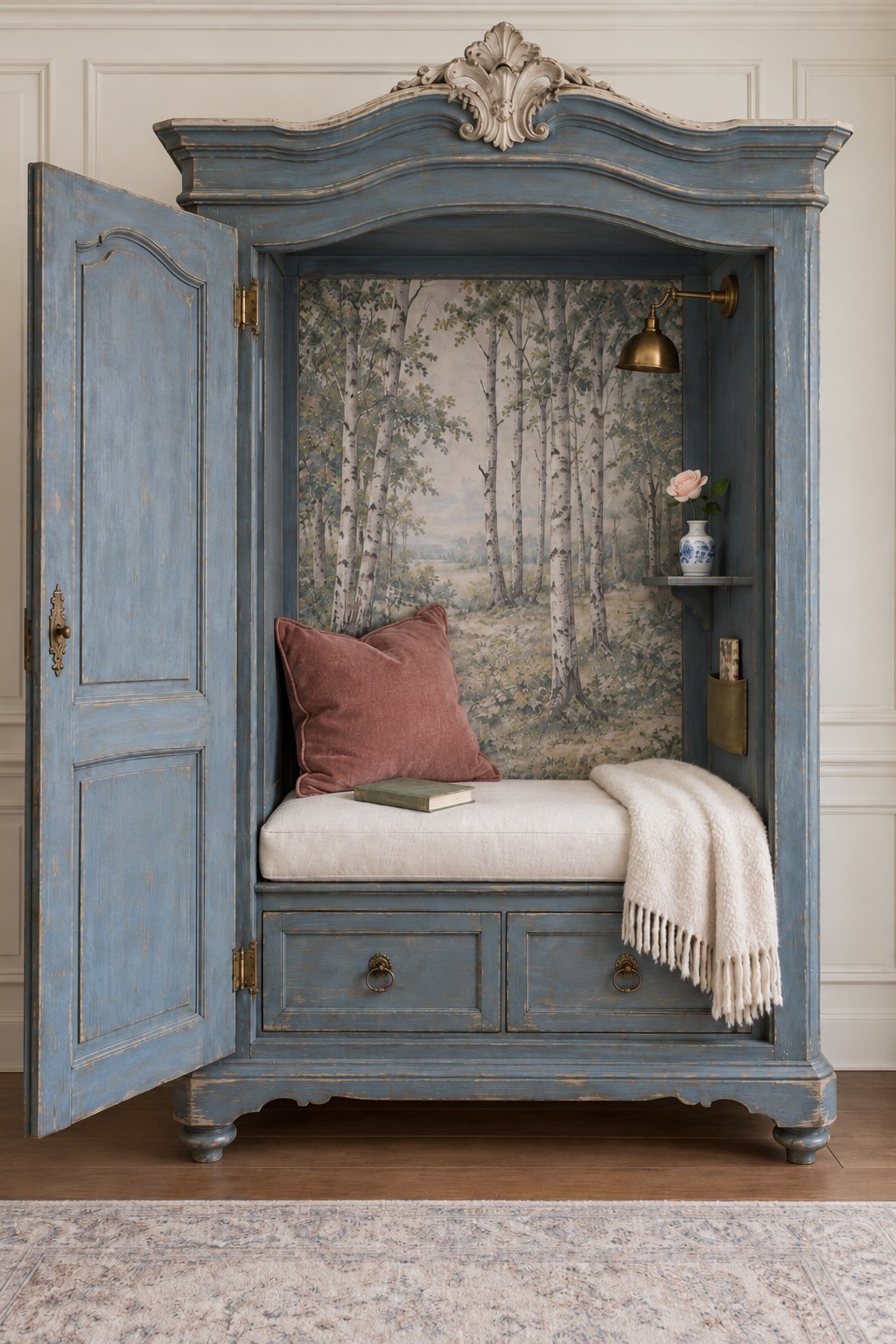
Printed trees give this blue wardrobe seat a sense of depth. A cream cushion, rose pillow, and small side shelf keep the arrangement restrained. Test the reading light from the seat with an open book before settling its position. The printed backing can be fitted to a removable panel if the cabinet's finish and attachment method allow it.
30. A gown takes the place of hanging clothes
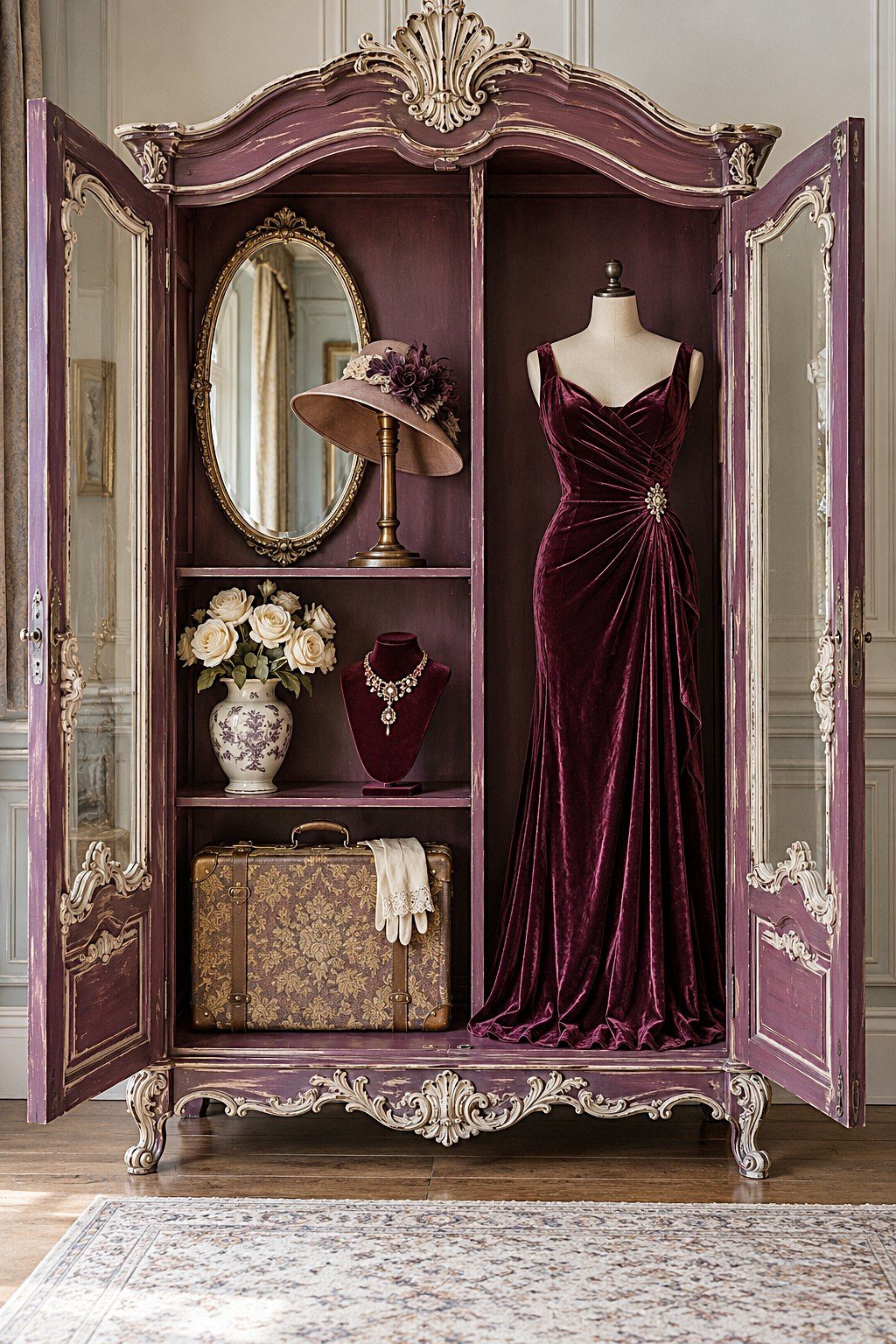
A burgundy gown becomes the focus of this plum wardrobe, alongside a hat, jewelry bust, and patterned suitcase. The hem pools on the base as part of the display. Check the dress form's height and depth before adapting the opening. For clothing you retrieve regularly, a shorter garment or taller compartment will let the hem hang freely.
31. An open wardrobe as a quiet display
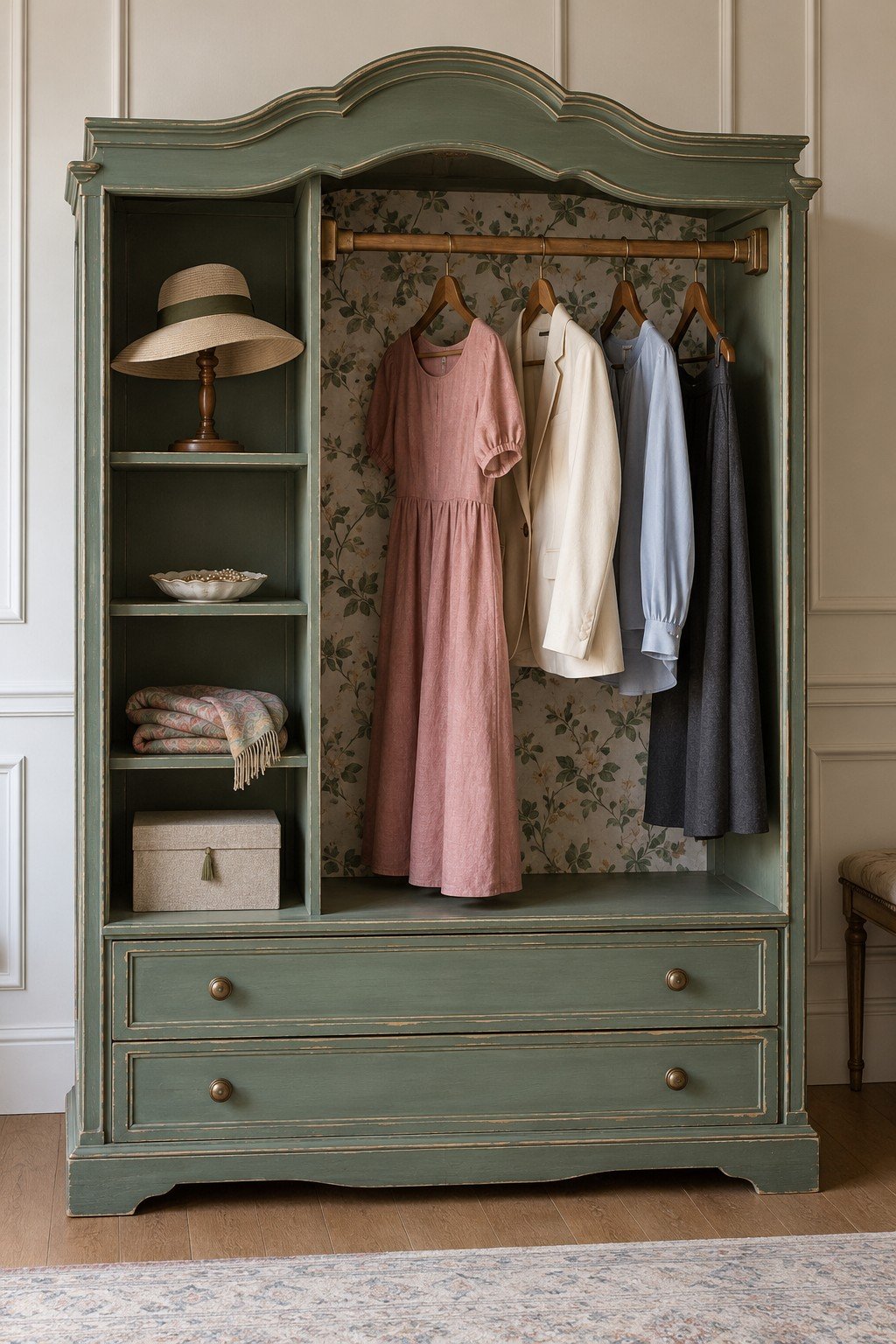
Green paint and floral backing turn familiar clothing storage into a more deliberate bedroom display. Side shelves hold folded textiles, a hat, and a box. Rotate a small selection of garments instead of exposing every item you own. Hangers should slide freely along the rail, with sleeves kept clear of the neighboring compartments.
32. A mirror above a lavender seat
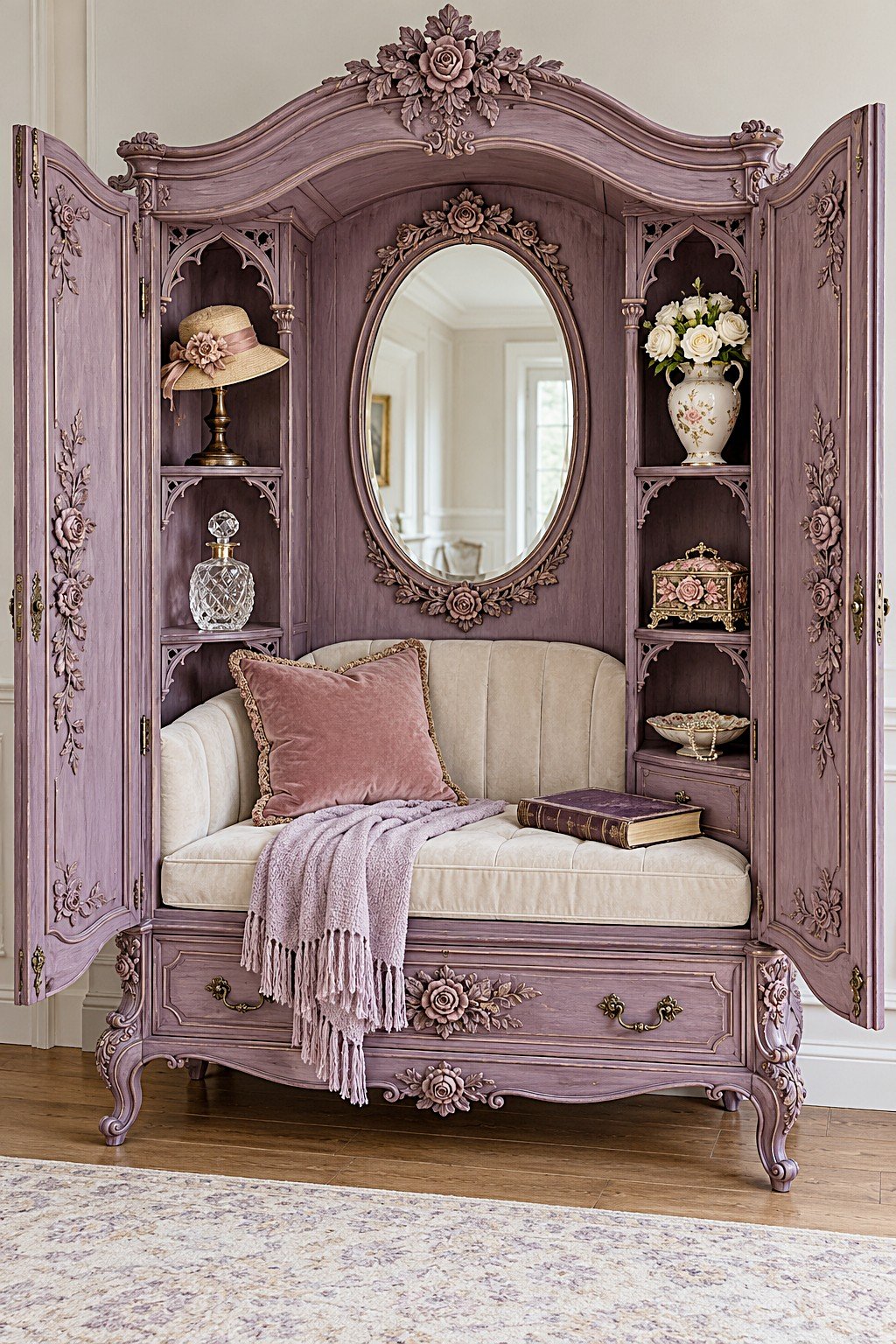
An oval mirror and cream cushion share this lavender surround, with small accessories set into the side shelves. A pillow and fringed throw soften the carved frame. Secure the mirror independently of decorative trim during the conversion. Shoulder room matters beside those shelves, and the throw should fold away from the approach to the seat.
33. Storybook ornaments around an ivory cushion
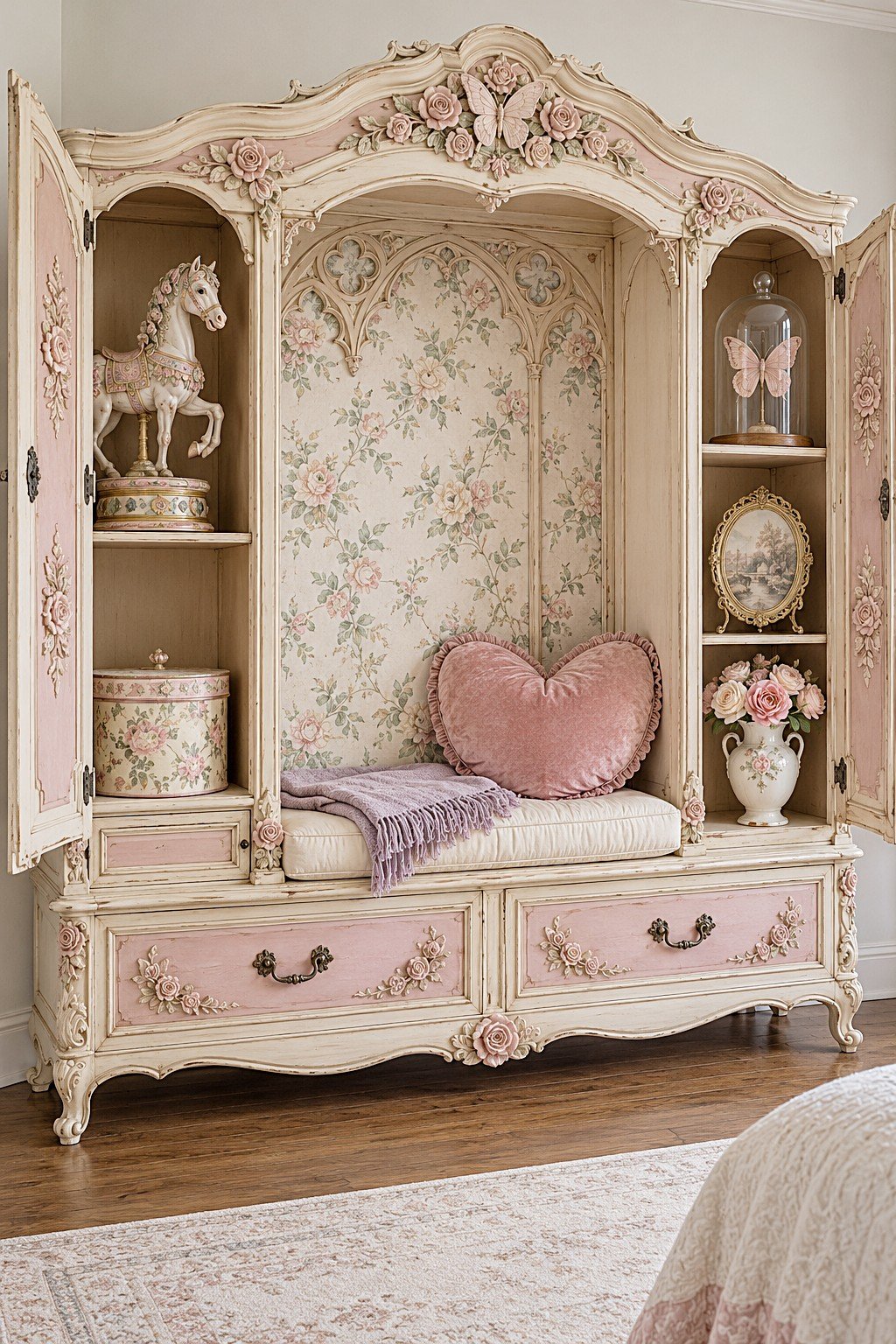
A carousel horse, butterfly under glass, and floral backing give this ivory seat a storybook theme. The heart cushion repeats the pink used in the smaller details. Limit the ornaments to pieces that fit fully within their compartments. Delicate glass and figures suit an adult display space, leaving the central cushion available for sitting.
34. An arched reading seat in dark wood
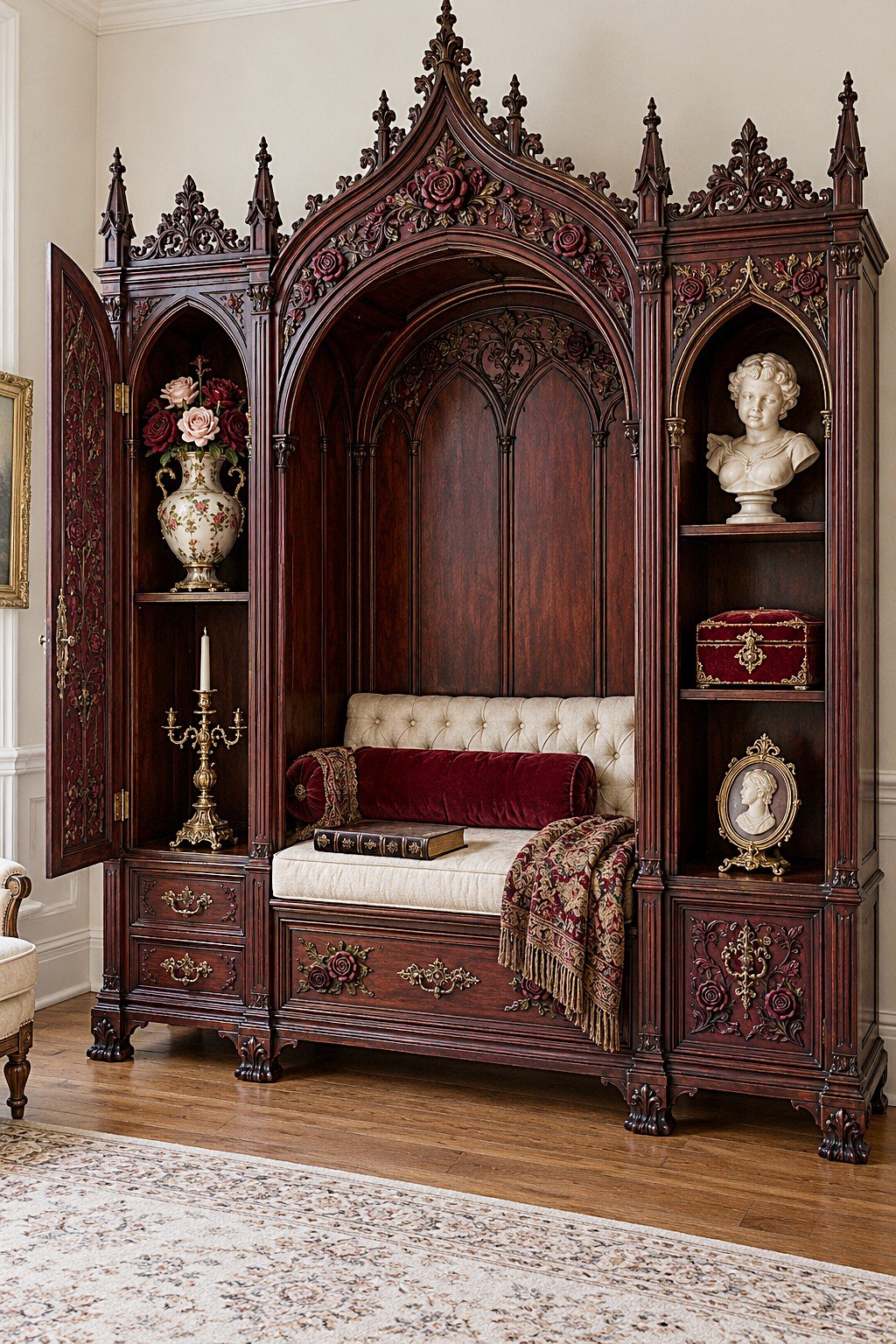
A pointed arch and rose reliefs surround cream upholstery in this dark Gothic cabinet. Burgundy textiles bring color into the tall central recess. Simplify the idea to an arched surround, dark finish, and one rich fabric if extensive carving is beyond the project. The tall assembly and seat require a furniture maker's structural design before decorative work begins.
What one cabinet conversion can cost
As a general planning estimate, allow about $100 to $300 for a simple DIY conversion of a sound cabinet you already own. That covers preparation supplies, a suitable finish, modest replacement hardware, and a basic decorative backing, with ordinary tools already available. Published hutch makeover budgets and coffee cabinet cost breakdowns provide useful comparisons, though their recorded prices are historical. Check current local costs before buying.
This scope suits a painted tea or display cupboard that retains its main structure. Buying the furniture, transport, major repairs, new seat framing, upholstery, and appliances need separate allowances or quotes. Reusing sound hardware and a usable existing finish can reduce the work; elaborate carving and added structural parts increase it.
Estimate coating quantities from your cabinet
List the cleaner, suitable abrasives, filler if needed, compatible primer, cabinet paint, and applicators before starting. Measure the surfaces you will coat, including chosen interiors and both sides of doors. For an illustrative 50 sq ft cabinet, two coats at the lower BEHR satin enamel coverage rate of 350 sq ft per gallon use about 1.14 quarts before application losses. An allowance of 2 quarts leaves a margin. One coat of the compatible primer at 250 sq ft per gallon uses 0.8 quart, so 1 quart provides a starting allowance. Extra coats or porous surfaces can require more.
Separate working sessions from curing
Plan cleaning, repairs, preparation, coating, and reassembly as separate sessions. The example primer normally allows topcoating after one hour, or four hours on stained surfaces and sixteen on heavy stains. The enamel lists two hours between coats and seven days to full cure at 77°F and 50 percent relative humidity. Allow that curing period before loading shelves. Surface condition, detailed trim, and cool or humid conditions can extend the schedule.
For smaller container projects, browse these upcycled storage ideas. To plan a room around cabinet seating, see these reading room layouts.
Leave a Reply