
An unused bread box, a retired suitcase, or an old muffin tin can solve a storage problem without losing the character that makes it worth keeping. These 30 upcycled storage ideas cover entryway essentials, craft supplies, kitchen items, bathroom linens, and larger furniture conversions. Start with the illustrated muffin tin organizer below, then explore ways to adapt the same planning process to other objects. Each idea explains what is being reused, how you could approach the conversion, and what to consider before putting it to work.
Table of Contents
- Plan Storage and Prepare the Original Pieces
- Plan the Storage Around What You Need to Keep
- Gather Materials That Suit the Original Object
- Make the Muffin Tin Organizer
- Check the Parts That Will Carry the Load
- Choose a Transformation That Fits Your Room
- 1. Bread Box Entryway Organizer
- 2. Suitcase Pet Supply Station
- 3. Wire Oven Rack Gift Wrap Station
- 4. Refrigerator Drawer Pantry Bins
- 5. Cantilever Toolbox Sewing Organizer
- 6. Picture Frame Desktop Supply Tray
- 7. Cereal Box Book and Craft Files
- 8. Globe Shell Yarn Bowl
- 9. CD Rack Pan Lid Organizer
- 10. Umbrella Fabric Laundry Basket
- 11. Mailbox Bathroom Storage
- 12. Ring Binder Cable Portfolio
- 13. Clock Case Bathroom Cabinet
- 14. Dishwasher Basket Cleaning Caddy
- 15. Colander Wall Produce Basket
- 16. Book Shaped Remote Control Box
- 17. Washing Machine Drum Towel Cabinet
- 18. Terracotta Pot Tiered Desk Stand
- 19. Magazine Rack Cutting Board Holder
- 20. Shutter Wall Mail Organizer
- 21. Lampshade Frame Soft Toy Organizer
- 22. Cardboard Tube Shoe Cubbies
- 23. Birdcage Linen Cabinet
- 24. Window Frame Tea Packet Display
- 25. Muffin Tin Hair Accessory Drawer
- 26. Cable Reel Ribbon Storage Stand
- 27. Tennis Racket Craft Pocket Organizer
- 28. Wardrobe Home Office Cabinet
- 29. Packing Crate Rolling Pantry
- 30. Changing Table Linen Station
- Keep the New Organizer Easy to Maintain
Plan Storage and Prepare the Original Pieces
Plan the Storage Around What You Need to Keep
Collect the items you want to organize before choosing the container. Measure the largest object, the available shelf or drawer, and the clearance needed to lift things out. A shallow tray suits small accessories; upright tools need deeper compartments; furniture conversions need comfortable reach, sound support, and a clear place to stand. Make a paper layout or try temporary cardboard dividers first. A useful organizer should make the next task easier, not simply move clutter into a more decorative container.
Gather Materials That Suit the Original Object
For the muffin tin example, gather one clean metal tin with 12 cups, felt scraps in four colors, a paper circle template, a pencil, scissors, mild dish soap, a sponge, and a drying cloth. You also need a drawer that closes freely over the tin and the accessories you want to separate. A removable nonslip mat is optional. No glue is necessary for the felt circles, which should lift out for cleaning.
For the other ideas, choose supplies according to the original material: fabric and thread for pockets, rigid board for backing panels, timber and suitable fasteners for shelves, and a compatible primer and finish only where refinishing is needed. Reuse does not require repainting every surface. Preserve sound hinges, handles, and dividers when they still perform the job, and replace parts that are damaged rather than covering the problem with decoration.
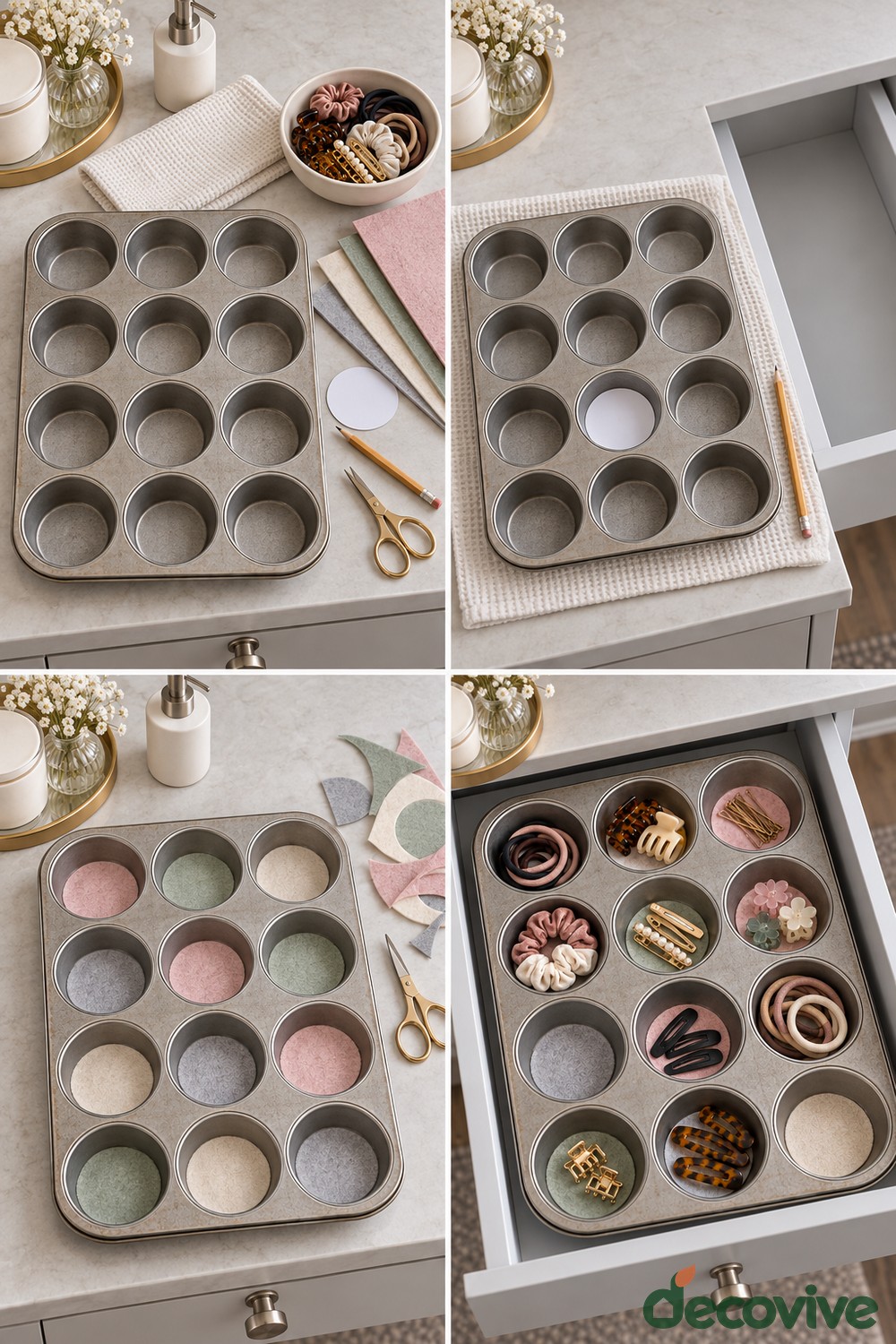
Make the Muffin Tin Organizer
- Gather and clean. Choose an intact tin, remove grease and residue with suitable cleaning supplies, rinse, and dry thoroughly. Gather felt, the paper template, pencil, scissors, and accessories. The first panel shows the materials ready for the project.
- Check the fit. Measure the drawer and make sure the tin sits flat with enough clearance above it. Adjust a paper circle until it lies flat at the base of one cup. The second panel shows the dry tin, template, and open drawer.
- Line the cups. Trace and cut 12 felt circles, checking the fit as you work. Set one in each cup without bunching the edges. The third panel shows the lined tin before any accessories are added.
- Sort and place. Set the tin in the drawer and group similar accessories into individual cups. Leave some spare space and check that the drawer closes without catching. The final panel shows the completed arrangement; idea 25 explains how to keep it useful.
Check the Parts That Will Carry the Load
Inspect reused objects for cracks, sharp metal, splinters, loose joints, and persistent contamination before working on them. Do not sand or scrape an unidentified old painted finish until its potential hazards have been assessed. Use finishes and adhesives according to their labels, including preparation and curing instructions. Keep food in suitable original or approved containers rather than assuming reclaimed wood, fabric, or a craft coating is appropriate for direct food contact.
Wall mounted projects need fasteners suited to the actual wall and the weight of the completed organizer. Tall furniture needs appropriate protection against tipping, and casters or decorative handles do not establish a safe load. Appliance parts, glazing, and substantial furniture alterations are better handled with experienced help when removal or support is uncertain. The ideas below describe adaptable design approaches; dimensions and fixing details must come from the object and location you actually have.
Choose a Transformation That Fits Your Room
Begin with a problem you notice every day: missing keys, tangled ribbon, scattered lids, or towels with no convenient shelf. Keep the original object recognizable where its shape is useful, and add only the compartments the contents need. The following ideas range from simple removable inserts to larger conversions, so you can choose a project that matches your tools, space, and experience.
1. Bread Box Entryway Organizer
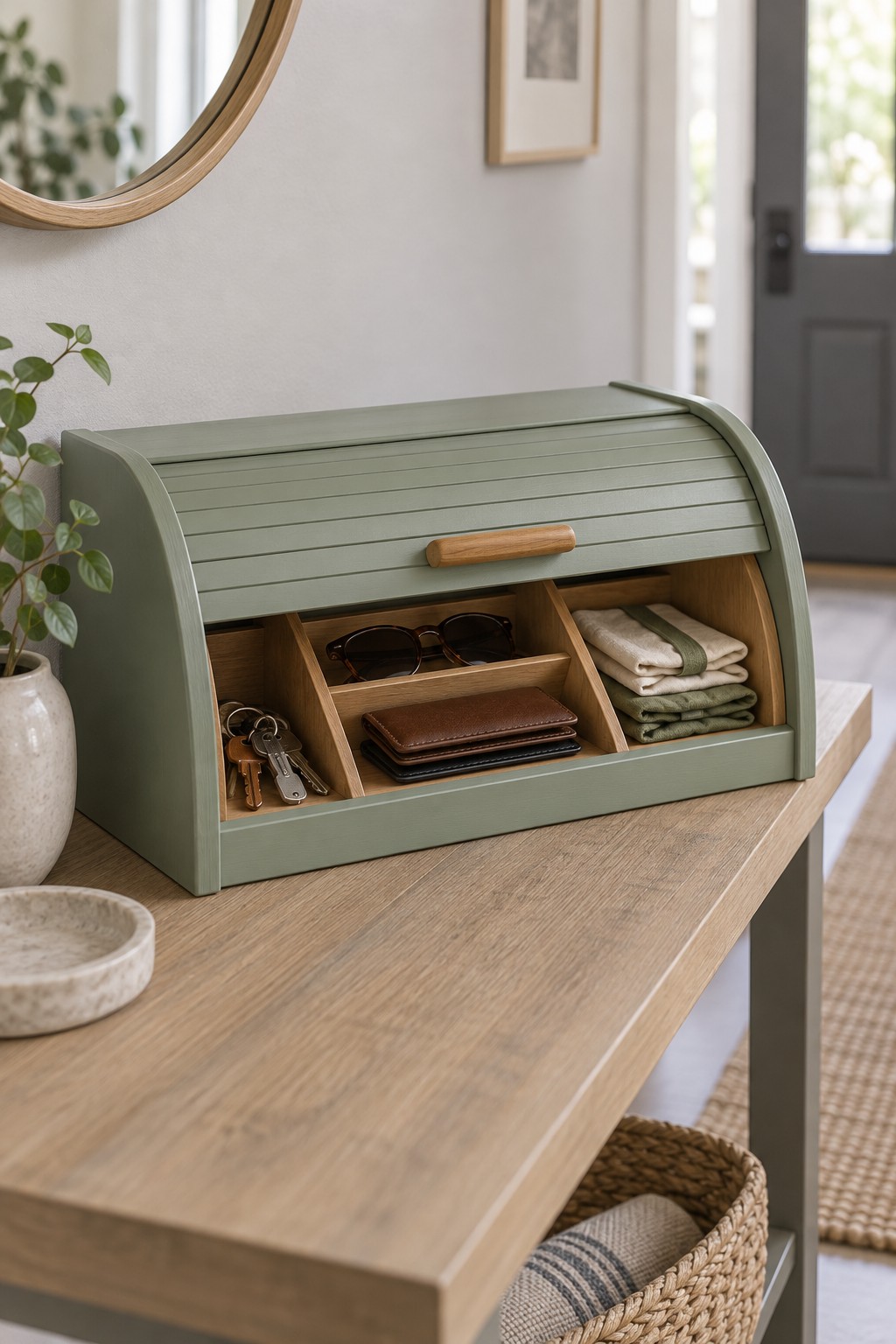
A wooden bread box can become the place you empty your pockets when you arrive home. Its original sliding door conceals the small belongings that usually spread across a console, while the sage green finish lets it read as a deliberate part of the hallway. Choose a box whose door still moves freely, then clean the interior and measure it with the door completely closed before planning any compartments.
You could fit thin wooden dividers for keys, wallets, glasses, and folded shopping bags, using shallow removable trays for the smallest items. Keep the dividers below the moving door and avoid painting inside the sliding tracks. Add felt beneath the box to protect the console, and place it where opening the door does not interfere with a nearby lamp or mirror. This works best for everyday pocket items rather than a crowded collection of bulky bags.
2. Suitcase Pet Supply Station
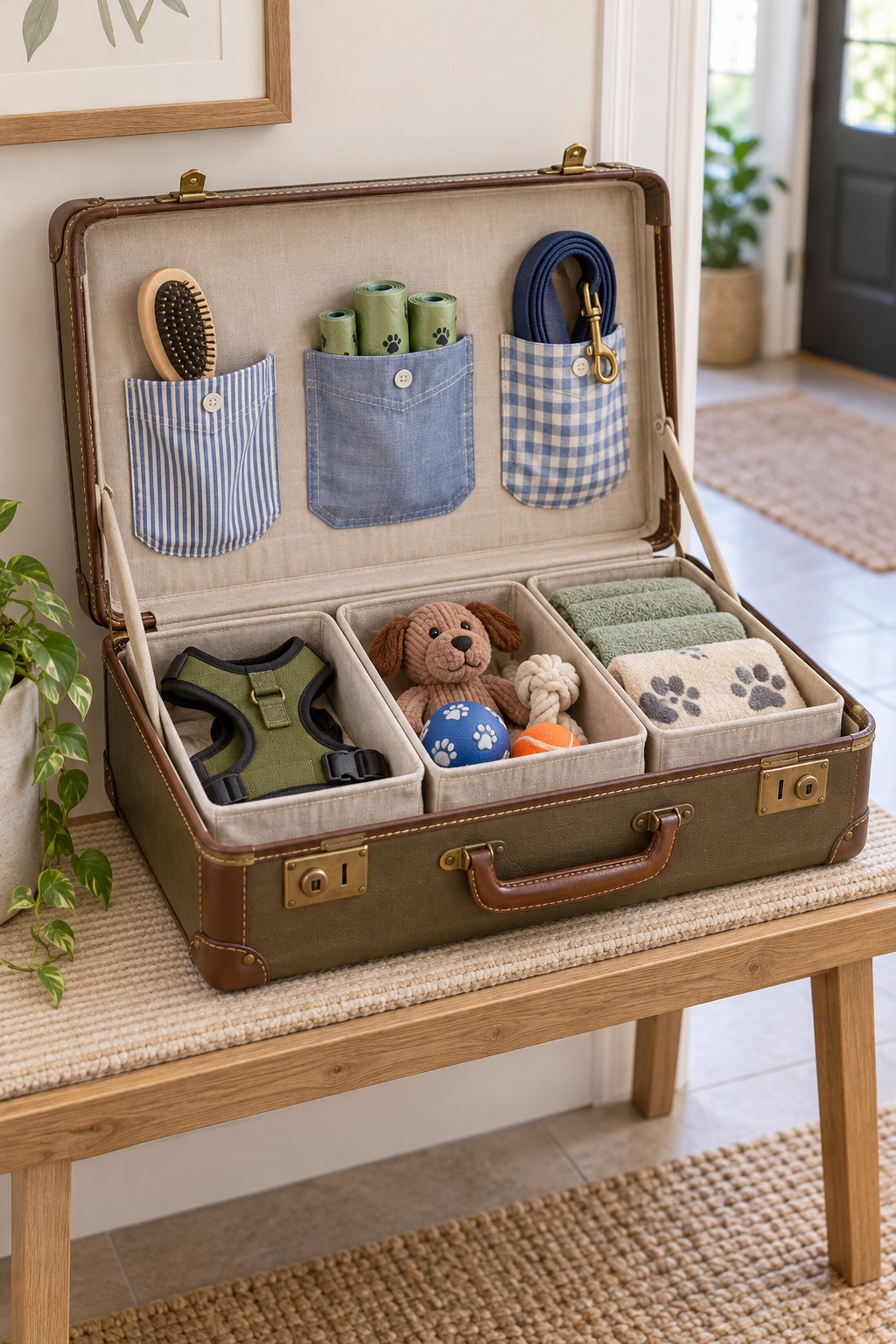
An old hard sided suitcase makes a compact pet supply station when its lid becomes a pocket panel and its base holds divided containers. The brown case, checked fabric, and pale lining create an approachable furniture accent rather than a pile of loose grooming supplies. Start with a clean suitcase free of persistent odors, damaged hinges, and crumbling lining; its decorative appearance should not come at the expense of hygiene.
For a similar arrangement, use washable fabric pockets for brushes and leads, then fit removable boxes below for toys and clean cloths. Attach pockets to a separate backing panel rather than relying on the thin original lining. Keep sharp grooming tools and medicines in a separate secure location. Position the open case on a stable surface, check that the lid cannot fall shut unexpectedly, and remove muddy items for cleaning before returning them to their compartments.
3. Wire Oven Rack Gift Wrap Station
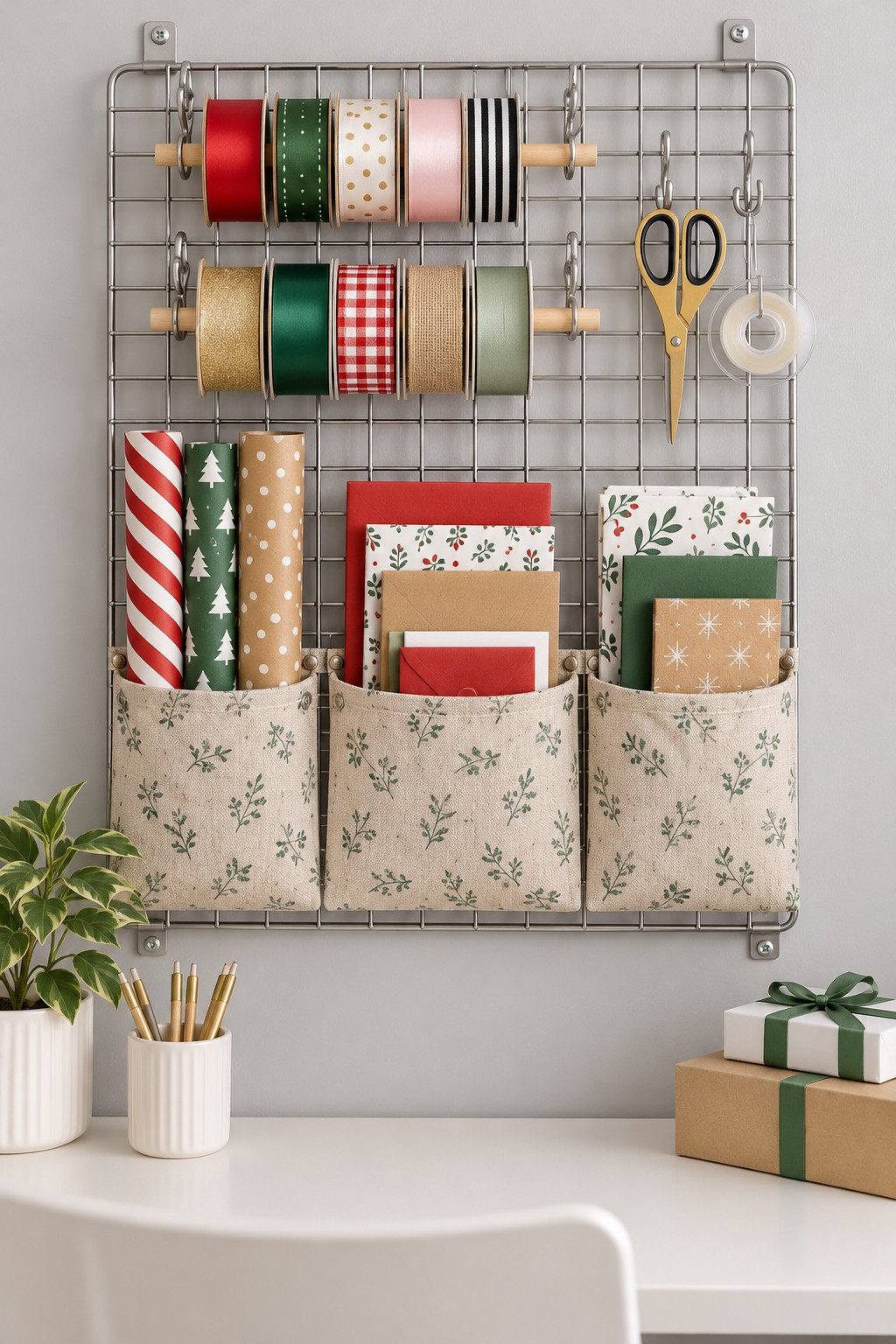
A spare wire oven rack can provide the structure for a gift wrapping station above a craft desk. Horizontal rods carry ribbon spools, fabric pockets hold folded paper and cards, and the exposed grid offers places to hang scissors. The useful transformation comes from arranging supplies around how you wrap: ribbon near the top, paper within reach, and cutting tools to one side rather than scattered across the work surface.
You could build this version with a thoroughly cleaned rack, smooth removable dowels, sewn cotton pockets, and suitable wall brackets. Secure the dowel ends so a spool cannot slide off when you pull ribbon, and make sure each rod can be removed for refilling. Hang the rack with fixings appropriate to the wall and the complete loaded weight. Keep sharp scissors out of children's reach, and avoid crowding the pockets with rolls that block access to the items behind them.
4. Refrigerator Drawer Pantry Bins
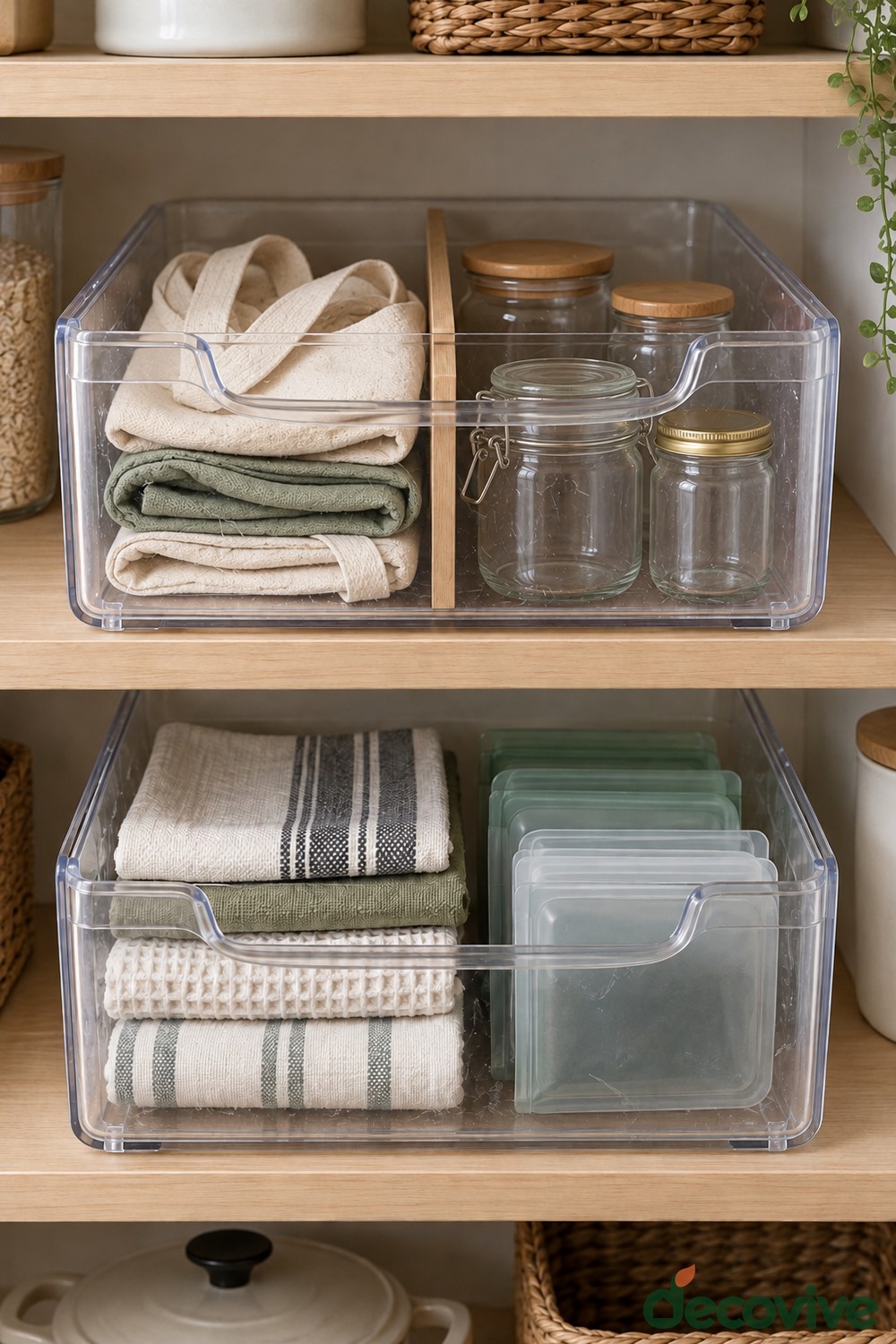
Clear drawers salvaged from a retired refrigerator can make useful pantry bins without an elaborate rebuild. Their molded fronts provide a convenient grip, and their transparent walls let you see reusable shopping bags, spare jars, folded towels, and container lids. Use only intact drawers with smooth edges and enough strength to hold their intended contents. A scratched surface can still be serviceable, but brittle plastic or cracked handles are reasons to choose another bin.
Wash and dry the drawers, measure the shelves, and leave enough clearance to lift the fronts comfortably. A removable wooden divider separates cloth bags from empty jars in the upper bin; the lower one keeps towels apart from upright lids. Keep the glass contents modest so the drawer remains easy to carry. Stand each bin securely on a shelf rather than treating it as a pull out drawer without runners, and wipe underneath periodically where dust can collect.
5. Cantilever Toolbox Sewing Organizer
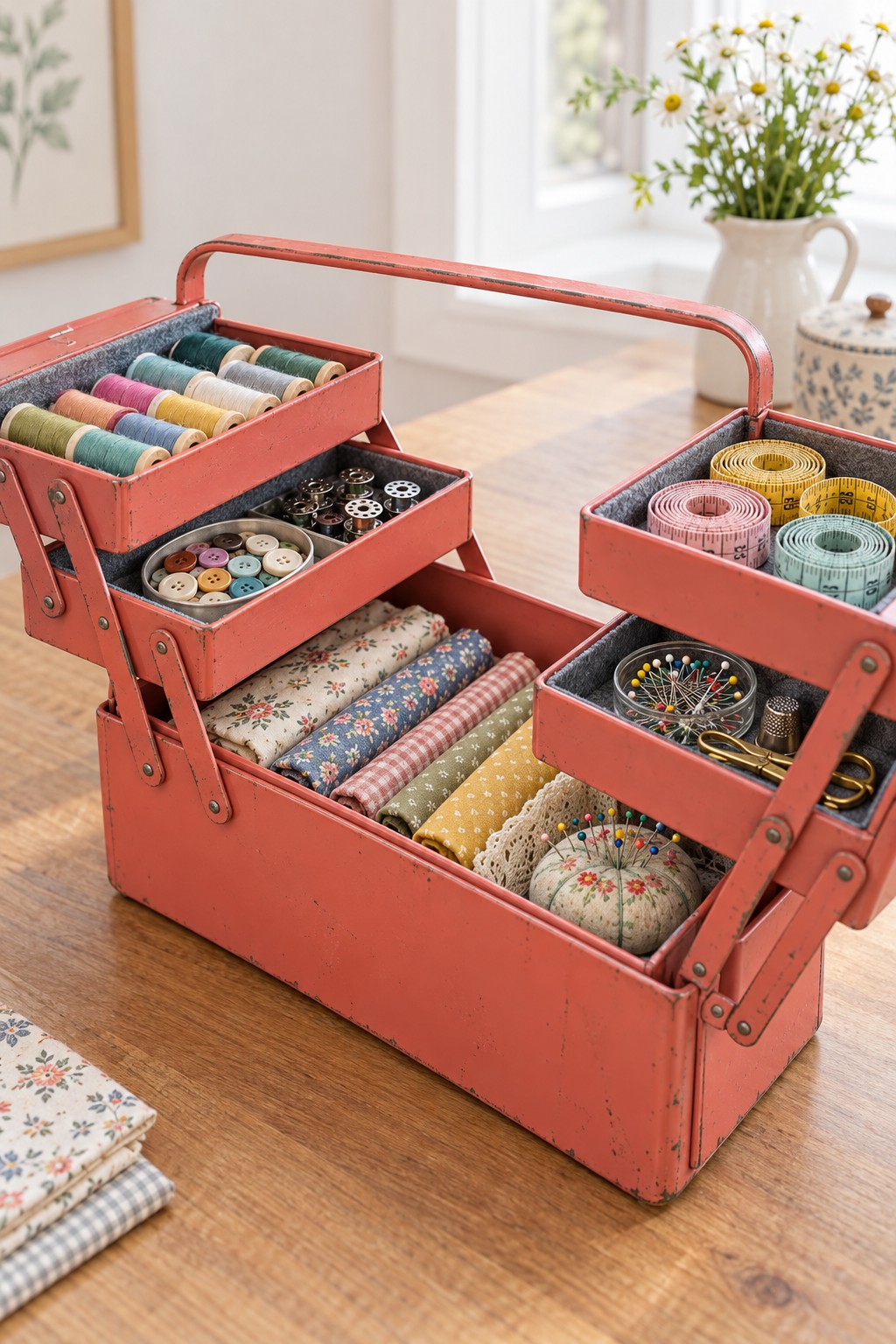
A retired cantilever toolbox already contains a clever storage mechanism: its small trays spread outward while the deeper compartment remains below. Repurpose that layout for sewing by placing thread and buttons in the upper trays and folded fabric in the base. The coral finish makes the original metalwork feel at home beside a sewing machine, while the handle keeps a current project portable.
Before adding supplies, remove oil residue, inspect the tray links, and check the metal edges for burrs. You could add removable fabric or felt liners, then place pins in a closed tin or a pincushion so they do not travel loose. Keep the pivots free of paint, and let any new coating cure fully before loading the box. Open it on a wide level surface, since extending the trays changes its balance. Store heavier fabric low and close the trays gently to avoid trapping thread or fingers.
6. Picture Frame Desktop Supply Tray
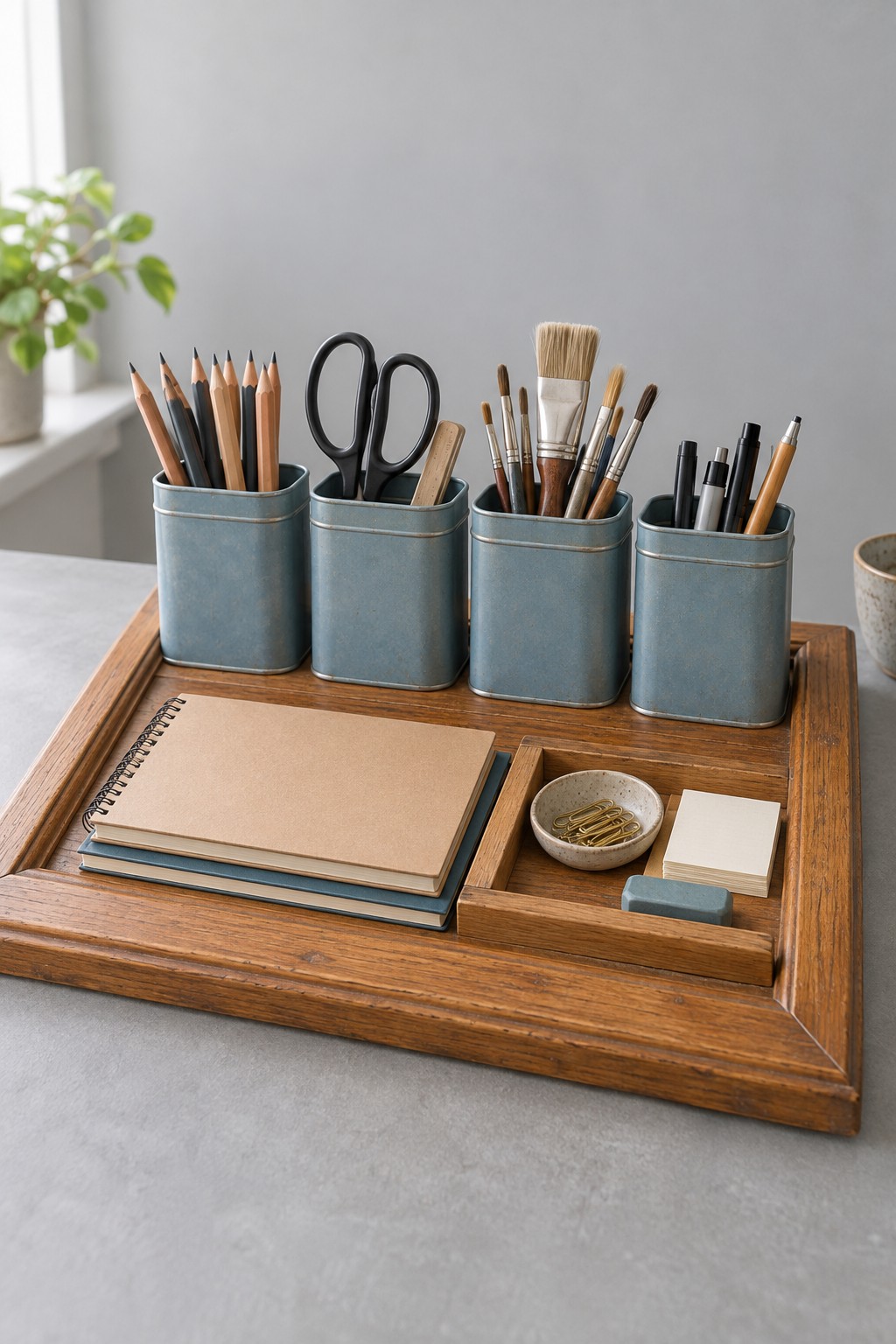
An old wooden picture frame can define a desktop organizer when you replace its fragile glazing with a solid base. The raised frame edge contains notebooks, sticky notes, and small supply cups, bringing separate objects into one useful arrangement. The warm wood and muted blue containers make an easy pairing for a desk that needs visible storage without an oversized cabinet.
To adapt the idea, choose a sound frame, remove the glass, and fit a rigid plywood backing securely into the rebate. Add felt beneath the base, then arrange clean metal tins with smooth rolled rims along the rear edge. A compatible primer and paint can coordinate the tins, but keep coatings away from the moving parts of tools. Leave enough open tray space for a notebook to lie flat. This is a stationary desktop tray; add properly secured handles and reinforce the base if you want to carry it while loaded.
7. Cereal Box Book and Craft Files
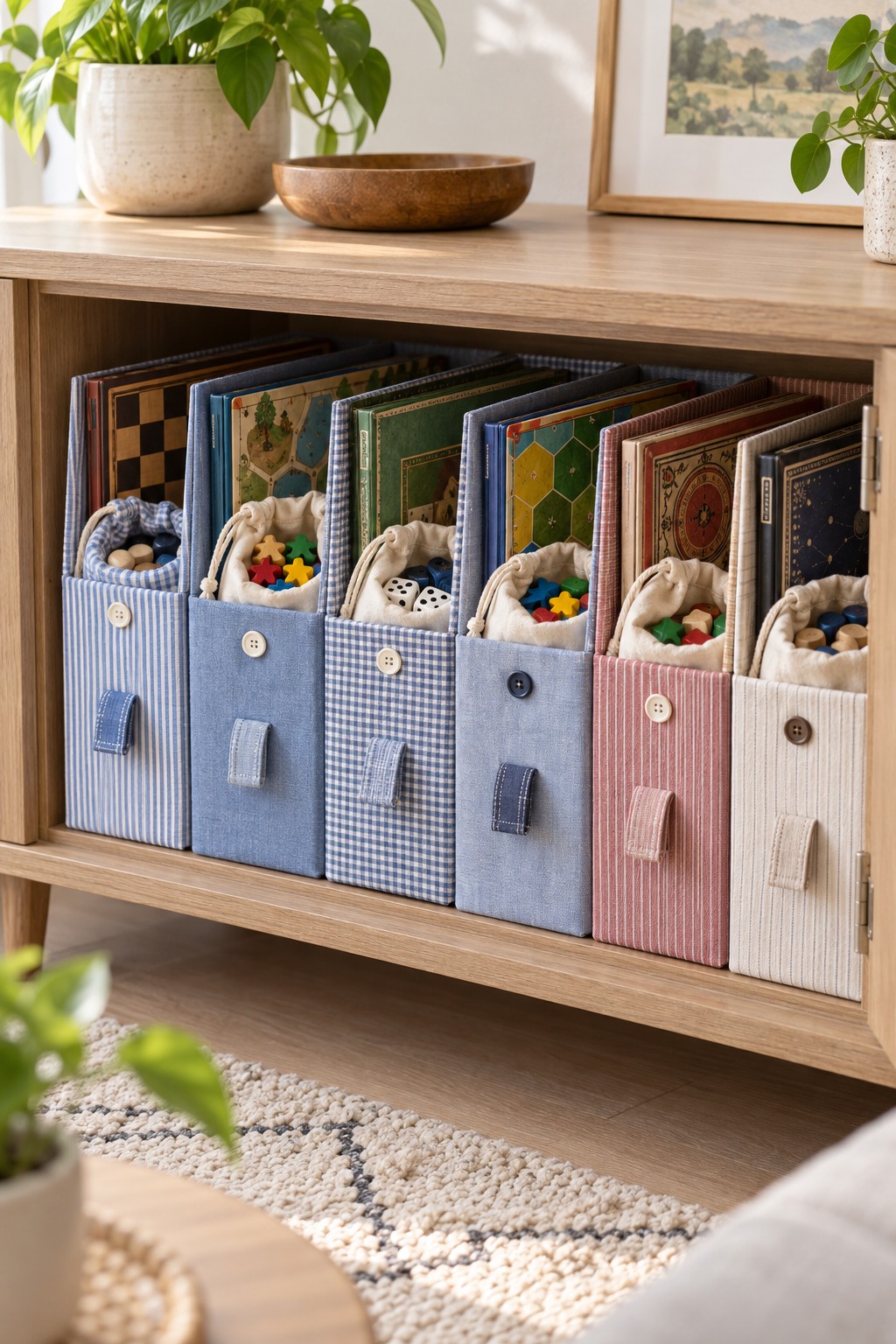
Empty cereal boxes can become individual files for books, activity pads, and light craft supplies. Cutting each box into a sloping magazine file shape keeps the spines visible, while striped and checked fabric gives the row a softer appearance than exposed packaging. Small front pockets add a place for a few loose supplies, making this especially useful when different activities need their own container.
You could make the files with clean dry boxes, scrap cotton, paper adhesive suitable for the materials, and reinforcing card for the bases. Check your tallest book before deciding the back height, and keep the front high enough to prevent contents slipping out. Fold fabric neatly over the cut edges and allow the adhesive to dry before loading. Cardboard suits lightweight indoor storage, not heavy textbooks or damp rooms. Combine these with the activity zones in our kids room ideas so supplies stay close to where they are used.
8. Globe Shell Yarn Bowl
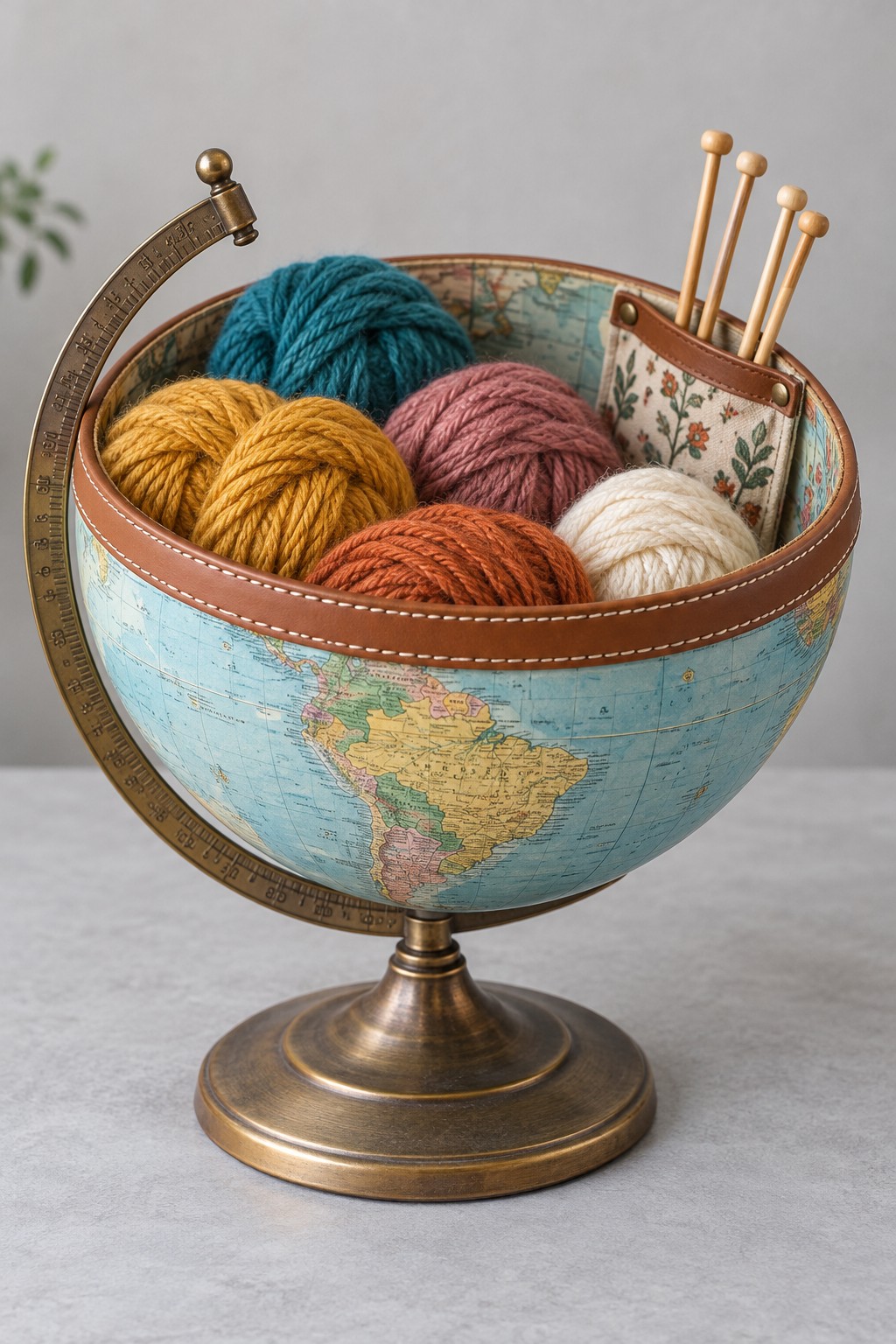
A damaged decorative globe can become a yarn bowl while retaining the map, curved supporting ring, and original pedestal. The lower hemisphere provides a broad opening for several yarn balls, and a fabric lining prevents loose fibers rubbing against a rough shell. This is a thoughtful option for a globe that can no longer function as a display piece, especially when its base is attractive and stable.
Choose a globe with a shell that can be separated safely at its existing join. Smooth and cover the exposed rim, fit a removable lining, and add a small reinforced pocket for knitting needles. The half sphere must be secured to the support so it cannot rotate or tip as you pull yarn. Keep the contents light, and use a separate pouch for scissors and small notions. Place the bowl beside your chair on a firm surface, where the stand is easy to reach without becoming a trip hazard.
9. CD Rack Pan Lid Organizer
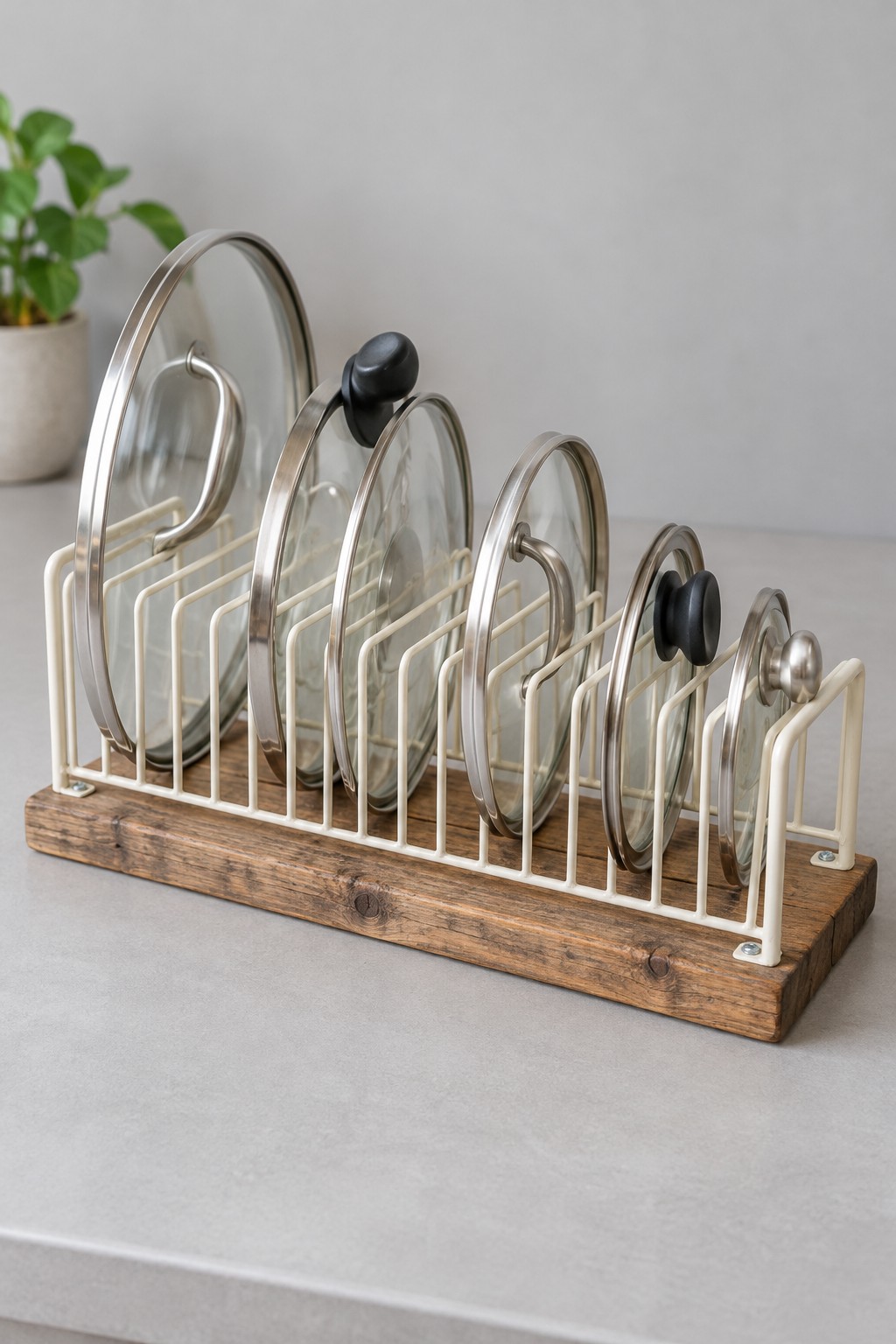
A wire CD rack can separate saucepan lids once its slots are arranged upright on a sturdy wooden base. The repeated narrow spaces keep lids from leaning into one another, and the visible knobs make the right size easier to identify. Use a rack with gaps that suit your own lids; a shallow music rack will not automatically support large heavy glass cookware.
For a similar organizer, clean the wire, check that its coating is intact, and fasten it mechanically to a flat board rather than relying on glue alone. Add protective feet beneath the wood and smooth any exposed ends. Arrange larger lids toward the back, leaving their handles accessible and making sure no rim balances precariously above a slot. Stand the unit where a cabinet door can close without striking the knobs. If it rocks when loaded, reduce the contents or choose a wider rack instead of trying to balance it with extra lids.
10. Umbrella Fabric Laundry Basket
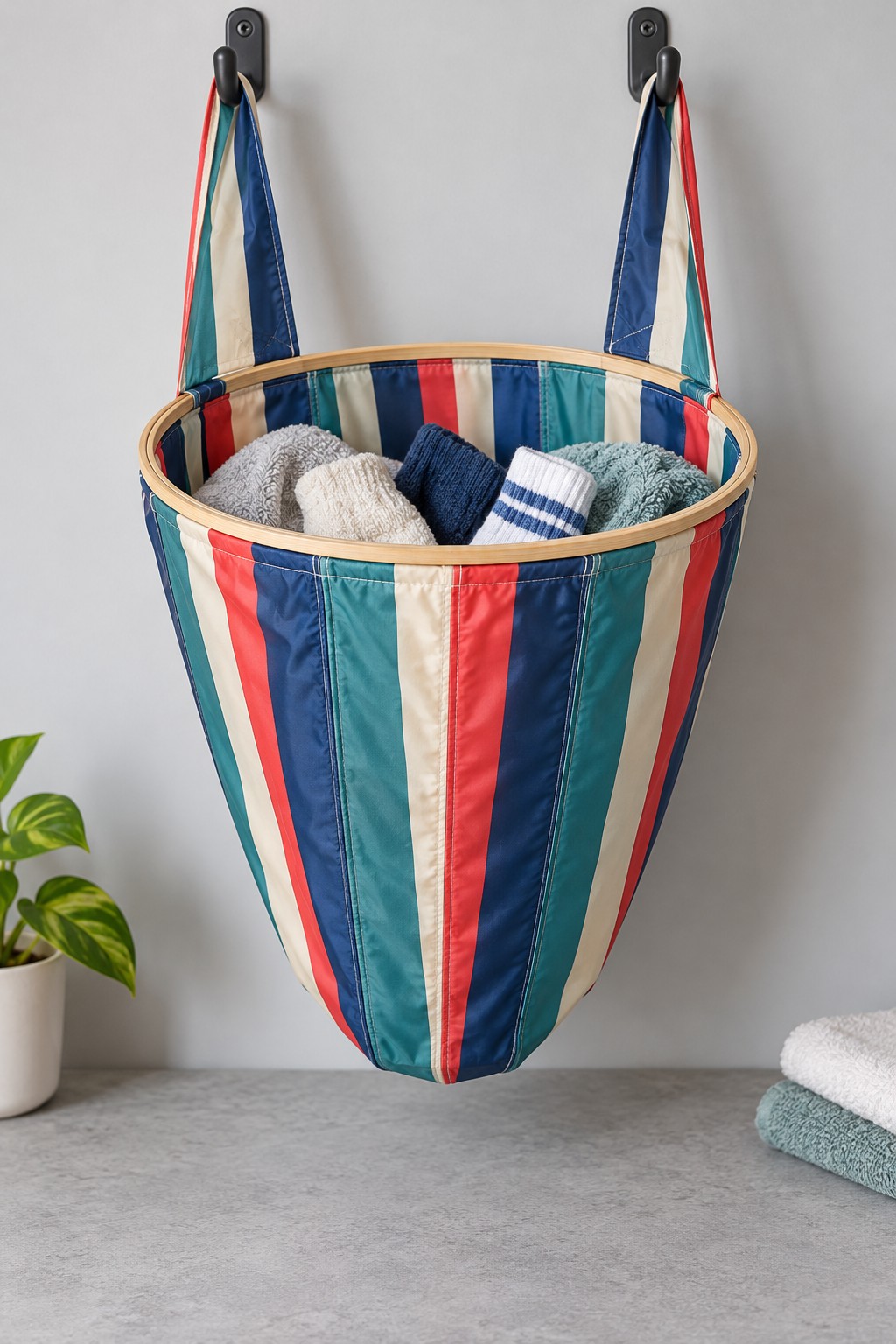
The colorful canopy of a broken umbrella can become a lightweight laundry bag after the ribs and pointed components are removed. A circular wooden hoop holds the opening, while fabric straps suspend the bag from two wall hooks. The striped panels preserve the umbrella's visual character, making the finished storage feel cheerful rather than purely utilitarian.
You could use the canopy as fabric for a newly sewn pouch, closing any central opening and reinforcing seams that were never designed to carry laundry. Add strong woven tape for the suspension straps instead of relying only on narrow scraps of canopy fabric. Choose mounting hardware for the wall and intended load, and keep the basket for dry socks, washcloths, or similarly light items. An umbrella's original water resistance does not make the finished bag suitable for wet laundry. Empty it regularly and clean it according to the reused fabric's condition and care requirements.
11. Mailbox Bathroom Storage
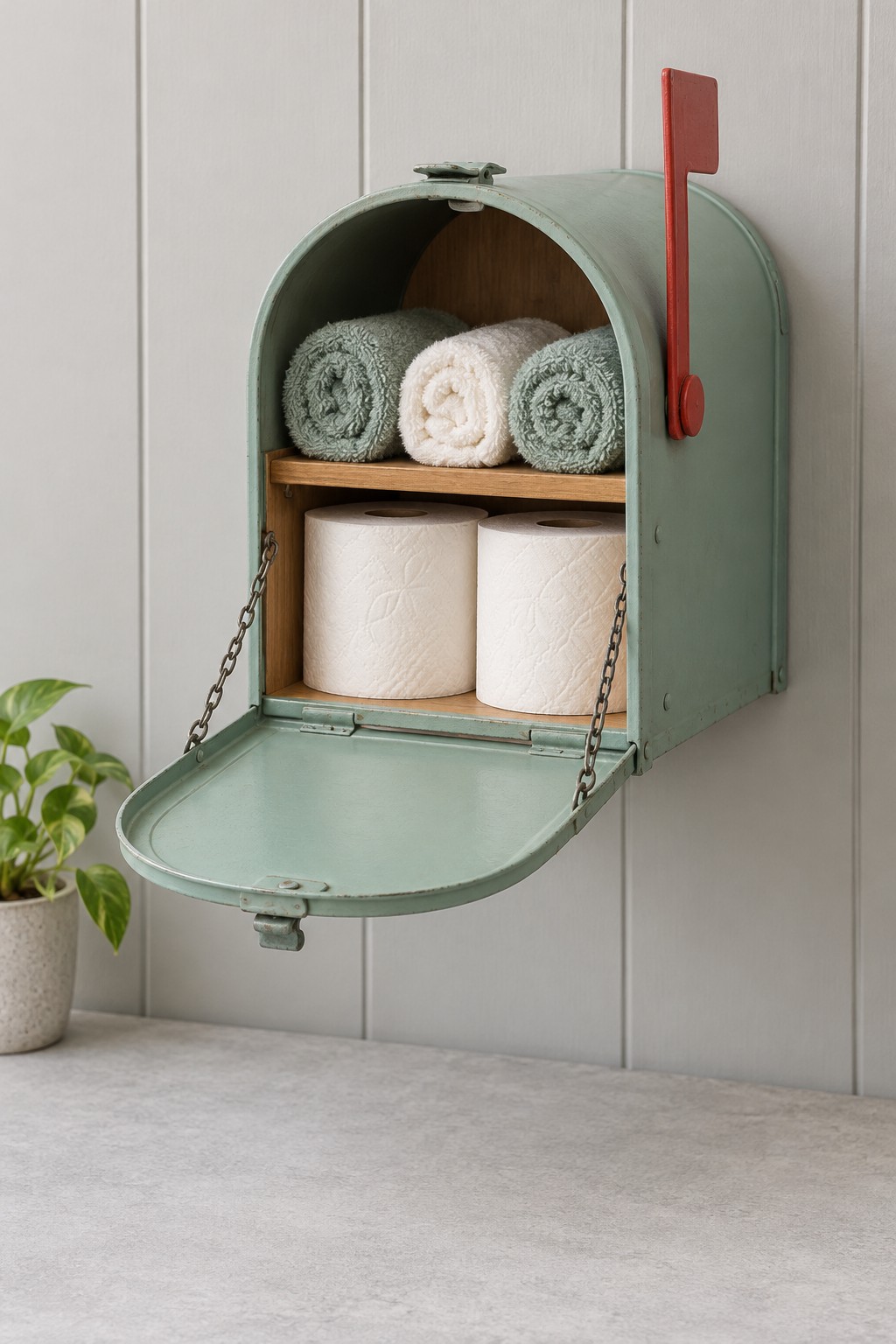
An unused metal mailbox can bring unexpected character to a bathroom while providing a small enclosed compartment. Mounted vertically, its curved body holds rolled hand towels above a fitted shelf and toilet paper below. The red flag remains a playful detail, while the open door makes the original object immediately recognizable. Choose a clean retired mailbox with a sound hinge and no sharp rusted edges.
To recreate the layout, measure the interior, add a supported removable shelf, and refinish the exterior with products appropriate to the metal and room conditions. Attach the body through reinforced mounting points into suitable wall support. The lowered door is part of the opening mechanism, not an extra shelf for bottles. Keep the mailbox outside direct splash zones and store only fully dry linens. Leave space for the door to move without hitting the sink, and periodically check the hinge, mounting screws, and interior for moisture.
12. Ring Binder Cable Portfolio
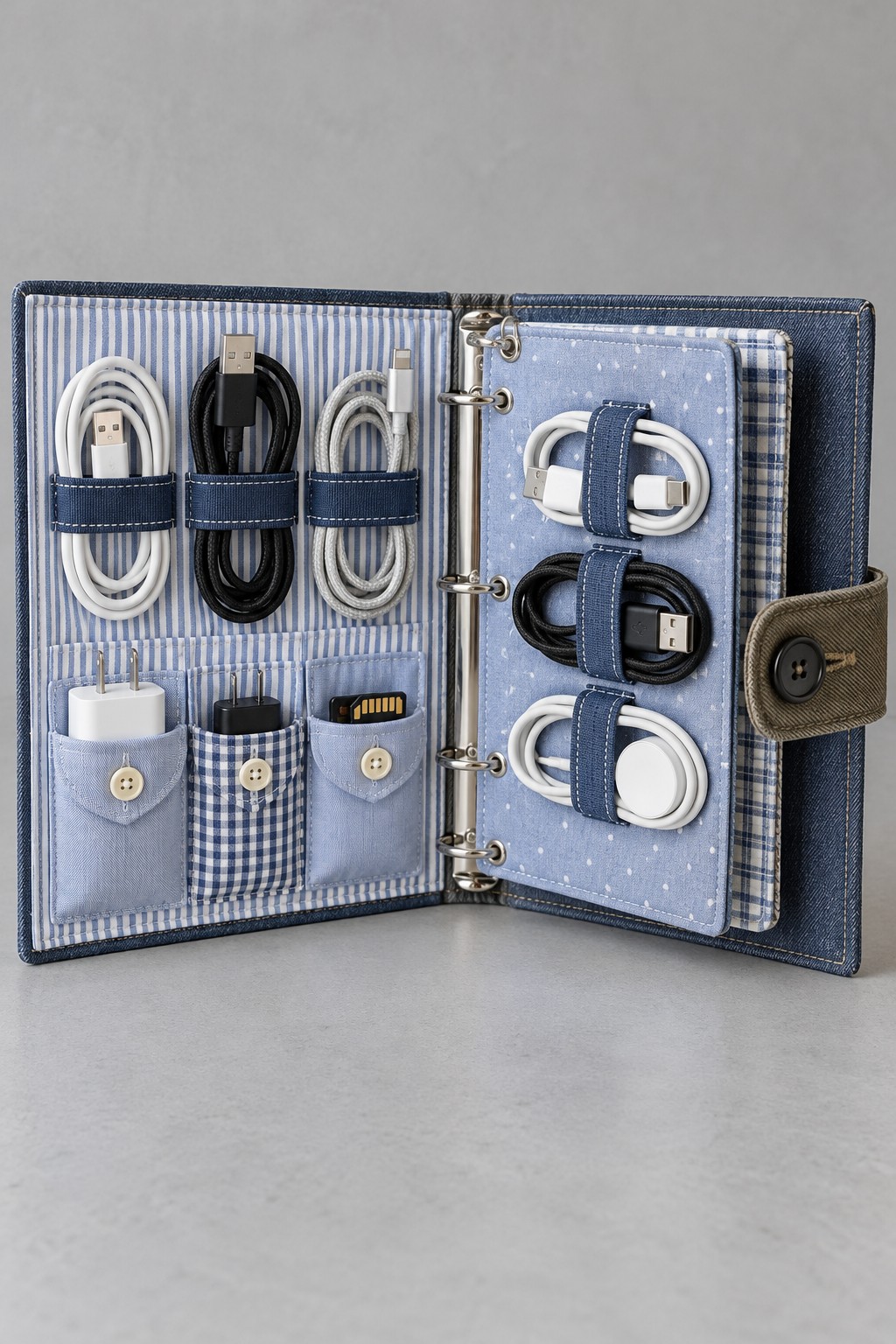
A sturdy ring binder can become a cable portfolio for the chargers and adapters that tend to disappear into drawers. Fabric covered panels soften the office appearance, elastic loops hold gently coiled leads, and small pockets collect compact accessories. Keeping each cable separate makes this especially helpful for travel preparation or a shared family electronics drawer.
You could make removable organizer panels from firm card or thin flexible plastic covered with fabric, punching holes to fit the binder rings. Sew elastic straps and pockets to the fabric before attaching it to the panels, and check the thickness with the binder shut. Coil cables loosely rather than forcing tight bends at their connectors. Keep the portfolio for disconnected cables and unplugged adapters; it is not a place to operate charging equipment. A closure strap can prevent panels opening during transport, but avoid overfilling the case until the rings or spine distort.
13. Clock Case Bathroom Cabinet
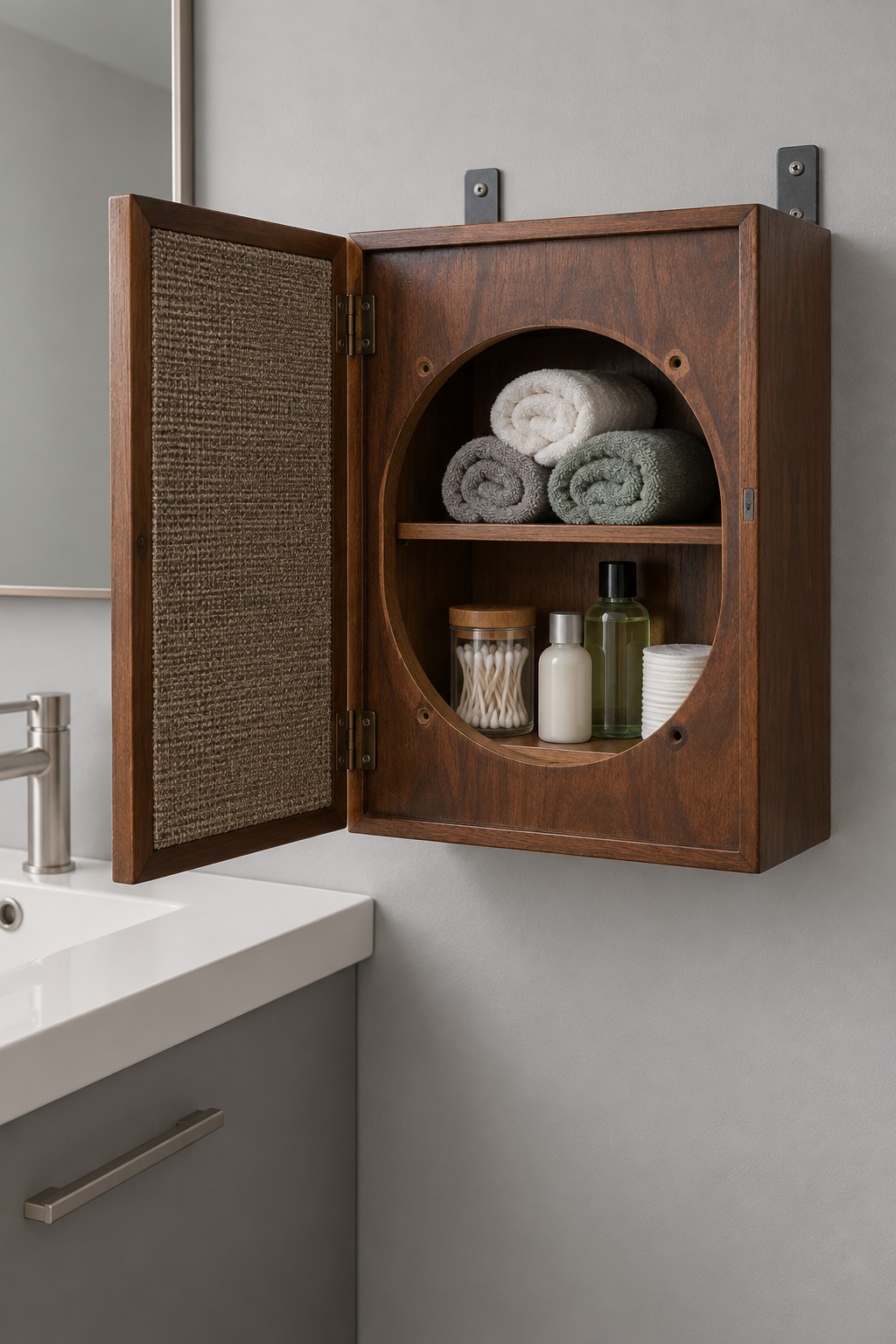
An empty wooden clock case can become a small bathroom cabinet when its mechanism and dial are no longer present. The circular opening retains the character of the original clock, while an internal shelf divides rolled towels from short toiletry bottles. A hinged mesh door gives the cabinet a finished appearance without hiding its distinctive shape.
Use a case that is already damaged or no longer worth restoring, then check the joints and back panel before adapting it. You could fit a shelf on wooden cleats and attach mesh securely inside a simple door frame, covering every cut wire edge. Mount the cabinet through solid structural parts rather than a fragile decorative back. Keep it beyond direct shower spray, and leave sufficient clearance for the door to open beside the basin. Store only light items, wipe spills promptly, and check whether your tallest bottles fit through the circular opening before committing to the layout.
14. Dishwasher Basket Cleaning Caddy
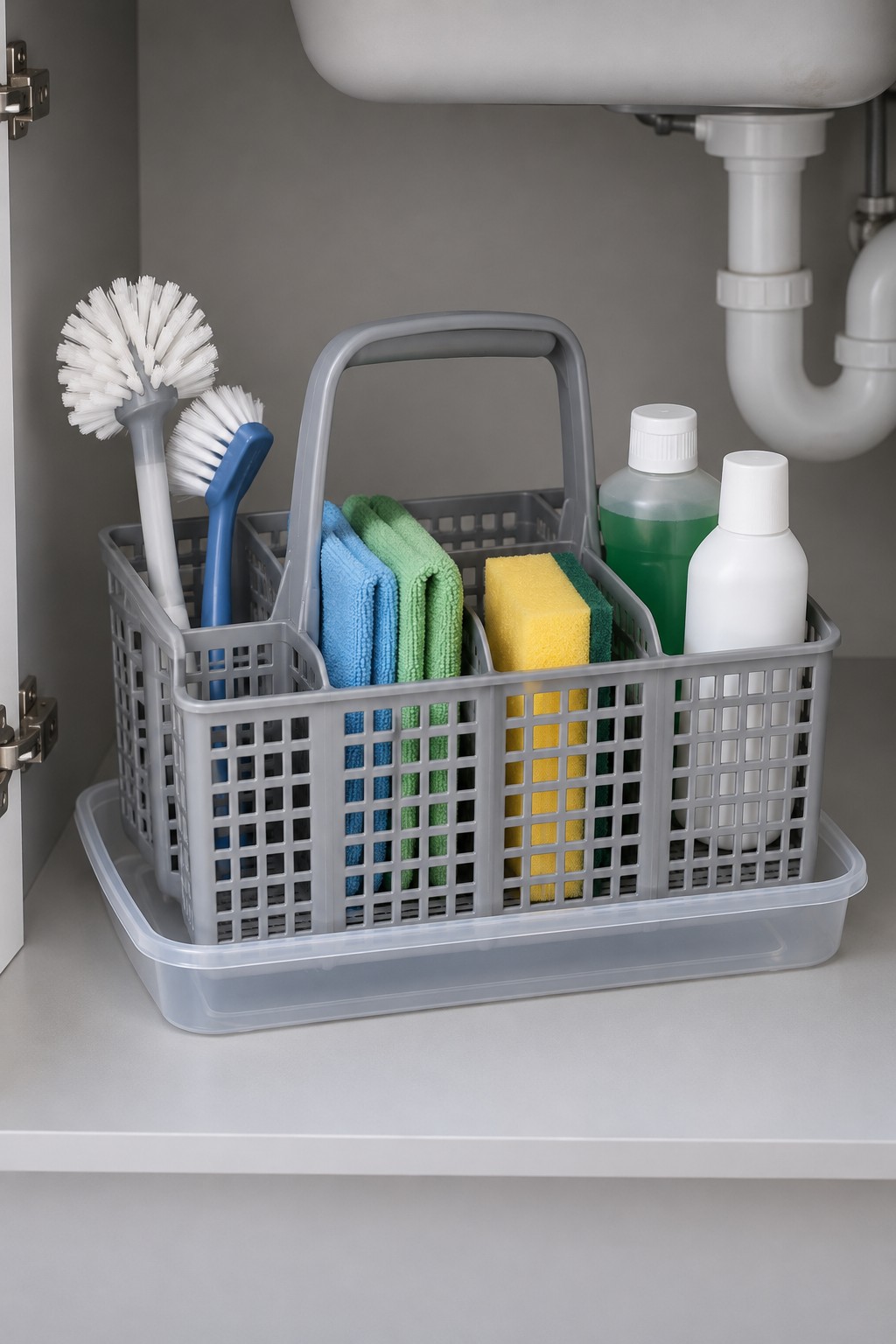
A dishwasher cutlery basket is already divided, portable, and easy to rinse, making it a useful starting point for a cleaning caddy. Its narrow compartments hold brushes upright, while wider sections can contain folded cloths, sponges, and compatible bottles. The gray basket fits neatly beneath a sink, keeping routine supplies together instead of scattered around the plumbing.
Check the plastic for brittleness, missing sections, and broken handle attachments before reuse. Wash the basket, dry it, and arrange contents so the handle remains clear. Stand it in a removable drip tray, emptying and drying that tray whenever water collects. Keep cleaning products in their original labeled containers and follow their storage instructions; a caddy does not justify decanting them into unmarked bottles. In a home with children or pets, store the whole unit in a secured cupboard. Check that its height allows removal without snagging the sink trap or other pipework.
15. Colander Wall Produce Basket
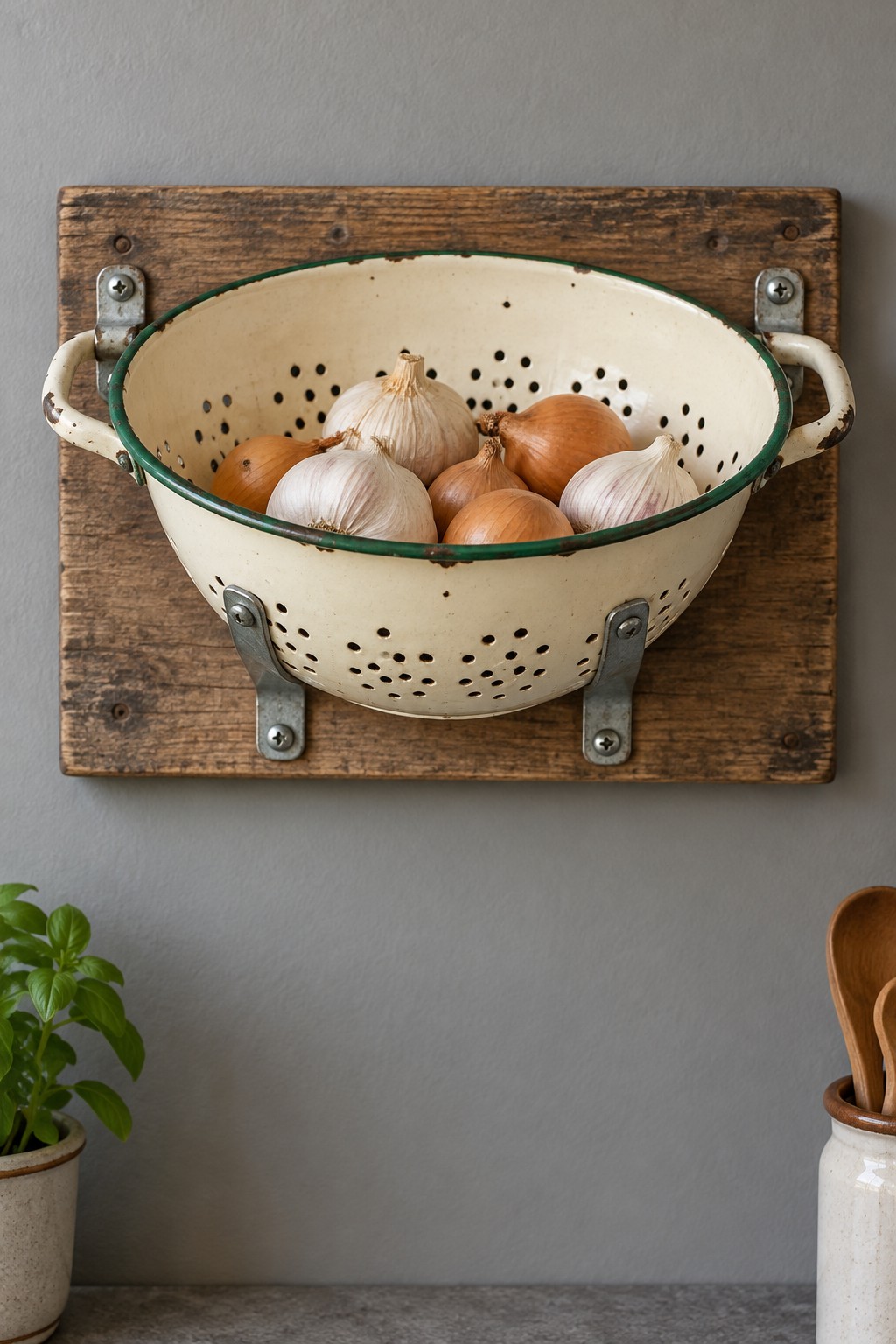
A retired enamel colander can become a ventilated wall basket for a small quantity of whole onions and garlic. Its perforated bowl makes the original kitchen function part of the new storage, while a wooden backing board gives the mounting hardware a firm foundation. The cream enamel and worn timber suit a pantry corner where a compact basket is more useful than another item on the counter.
Select a colander with intact smooth edges and no loose coating. You could secure it with shaped metal supports that carry the bowl from below, rather than expecting its decorative handles to take the entire load. Attach the backing board to suitable wall support and keep the contents light. Choose a dry shaded location away from stove heat, check stored produce regularly, and remove anything showing spoilage. Wipe the bowl clean between refills, and keep it accessible enough that you use older contents before adding fresh supplies.
16. Book Shaped Remote Control Box
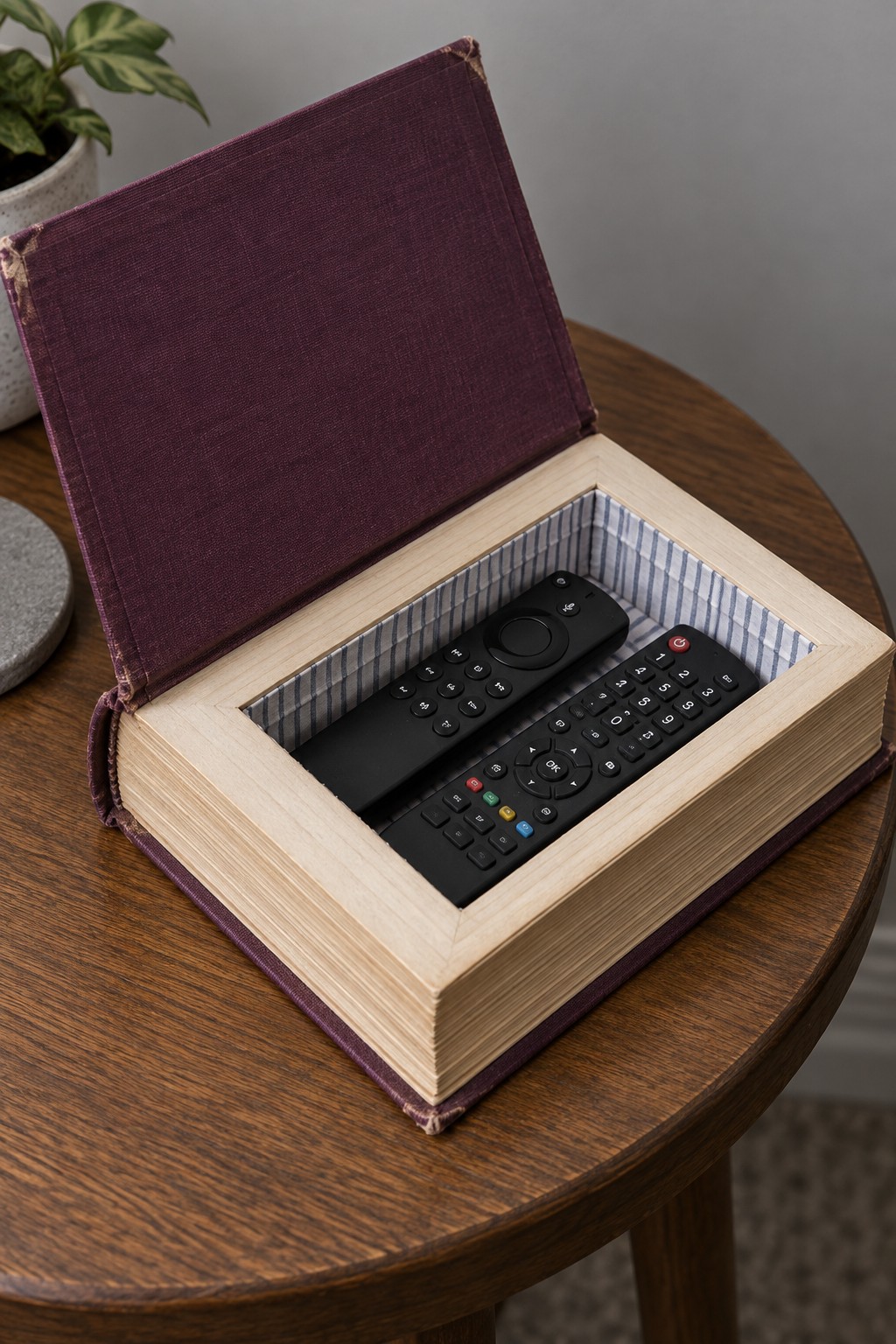
A damaged hardcover book can become a discreet remote control box, retaining its burgundy cover and page edges while opening to reveal a lined compartment. It suits a side table where you want frequently used controls close at hand without leaving them scattered beside a cup or reading lamp. Choose a discarded book with no collectible or personal value, and measure the remotes before selecting the volume.
One approach is to fit a shallow rigid box inside a salvaged cover and surround it with retained page edges, rather than depending on a loose hollowed paper block. Keep the spine flexible, reinforce the base, and line the interior with smooth fabric. The controls should lift out easily without catching their buttons. Avoid using this box for loose batteries or electrical equipment while charging. If you enjoy using fabric and pockets on familiar objects, our sketchbook cover ideas offer more ways to personalize paper based projects.
17. Washing Machine Drum Towel Cabinet
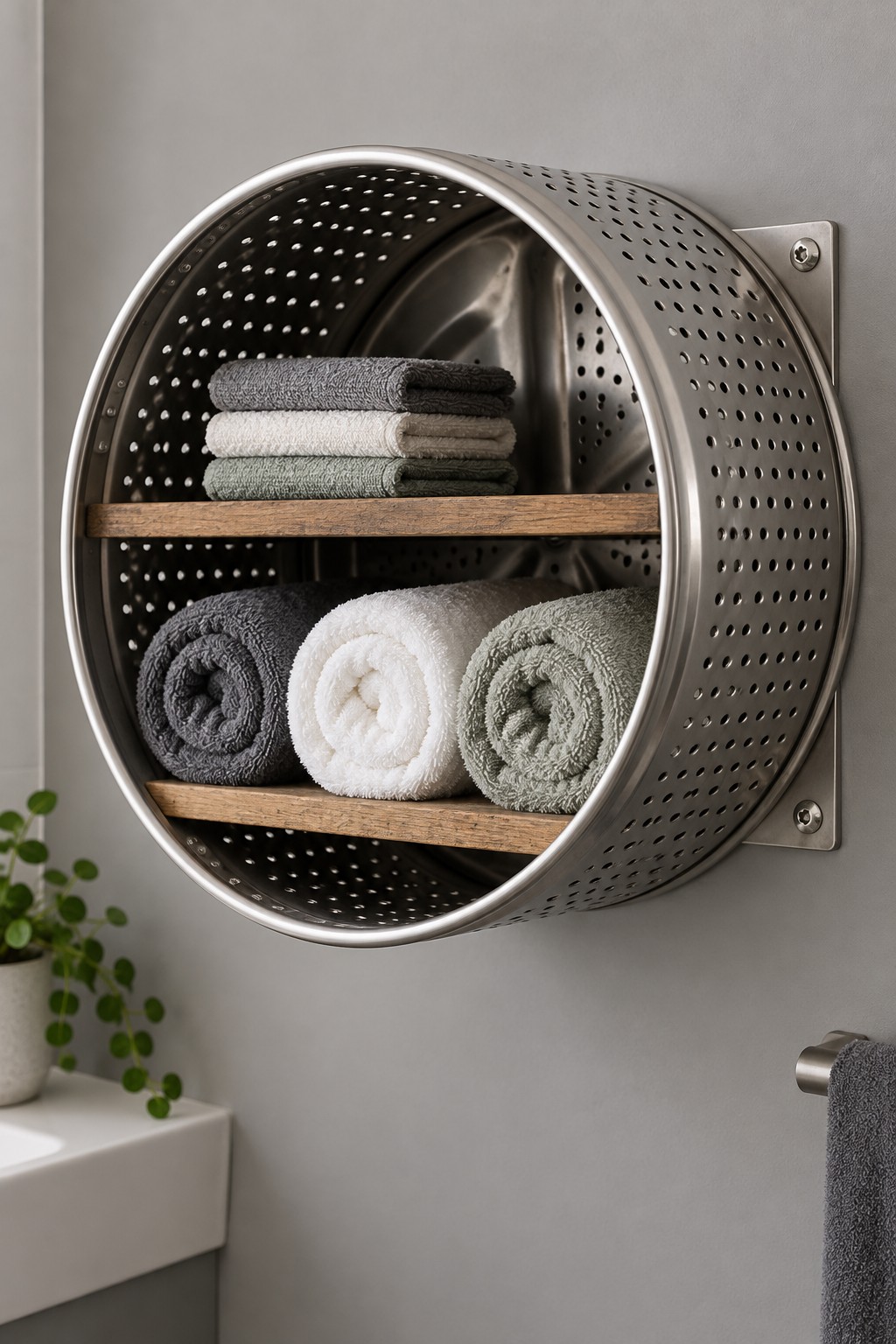
A stainless steel washing machine drum can become a striking towel cabinet, with the circular opening framing two fitted wooden shelves. The perforated metal surface preserves its industrial character, while pale wood and folded towels make it feel warmer in a bathroom. This is a more demanding conversion than a small basket project because appliance drums can be heavy and may have hazardous edges after removal.
Use a drum that has been safely removed by someone familiar with appliance dismantling. Have all edges finished, support the shelves on sound internal fittings, and mount the drum to a wall structure capable of carrying the complete unit. Do not infer a safe load from its appearance. A removable shelf finish suited to occasional bathroom humidity makes cleaning easier, but the cabinet still belongs away from direct water spray. Keep towels fully dry, inspect the wall fixings regularly, and leave enough surrounding space to reach the back of each shelf.
18. Terracotta Pot Tiered Desk Stand
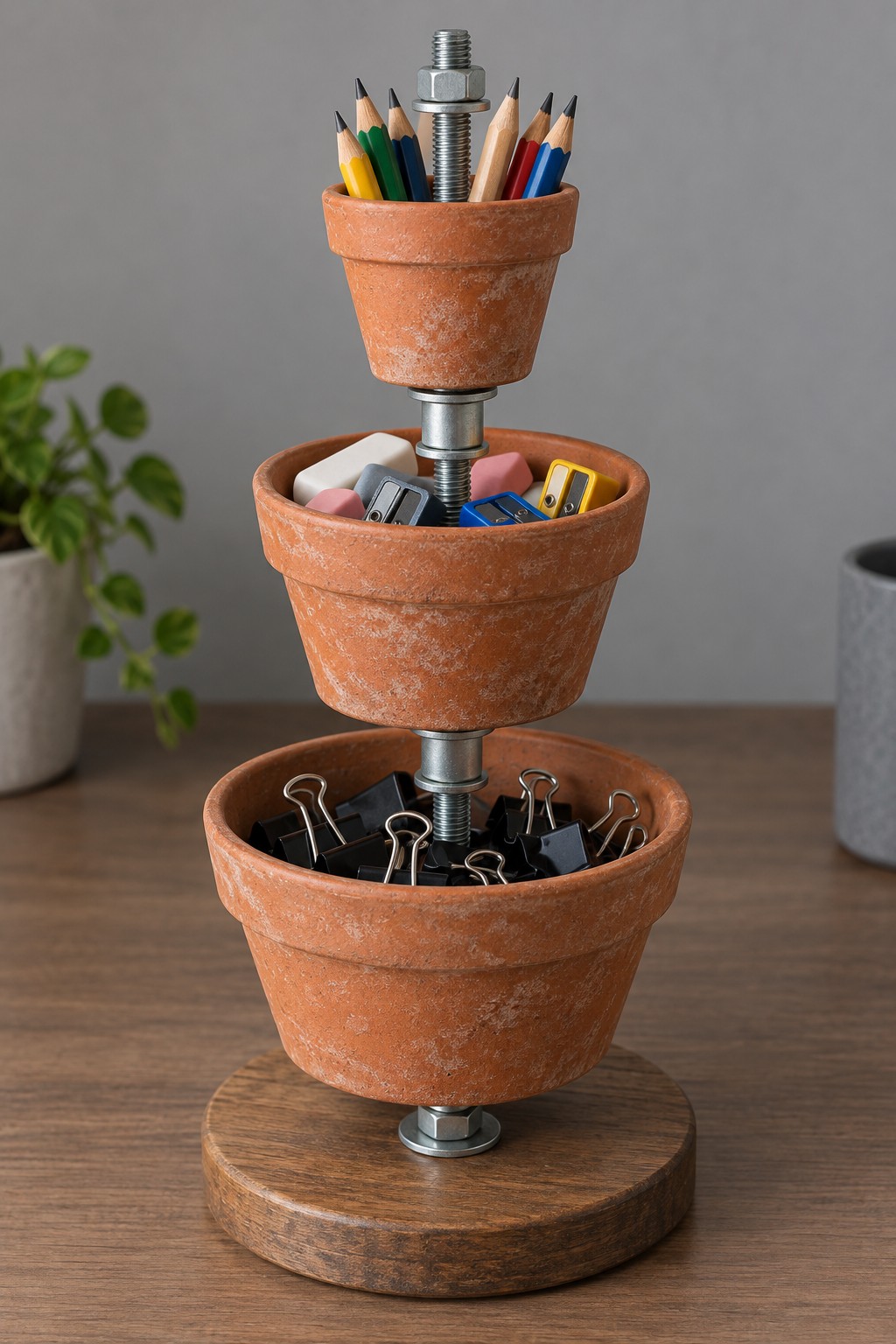
Three unused terracotta pots can become a tiered desk organizer when supported along a central threaded rod. The widest pot at the bottom holds clips, a middle pot collects erasers, and the small upper pot keeps pencils upright. A round wooden base supplies the footprint, while the natural clay finish makes the arrangement feel less formal than standard plastic desk storage.
Use intact pots with existing drainage holes that accommodate the rod; forcing a tight fit or drilling without suitable experience can crack terracotta. You could support each pot with properly sized washers, cushioned contact surfaces, and nuts above and below, leaving enough space to reach the contents. Secure the rod to the base and cover its upper end so it cannot scratch a hand. Keep this organizer stationary, load the lower tiers first, and avoid a narrow base that lets the stand tilt when you remove pencils from the top.
19. Magazine Rack Cutting Board Holder
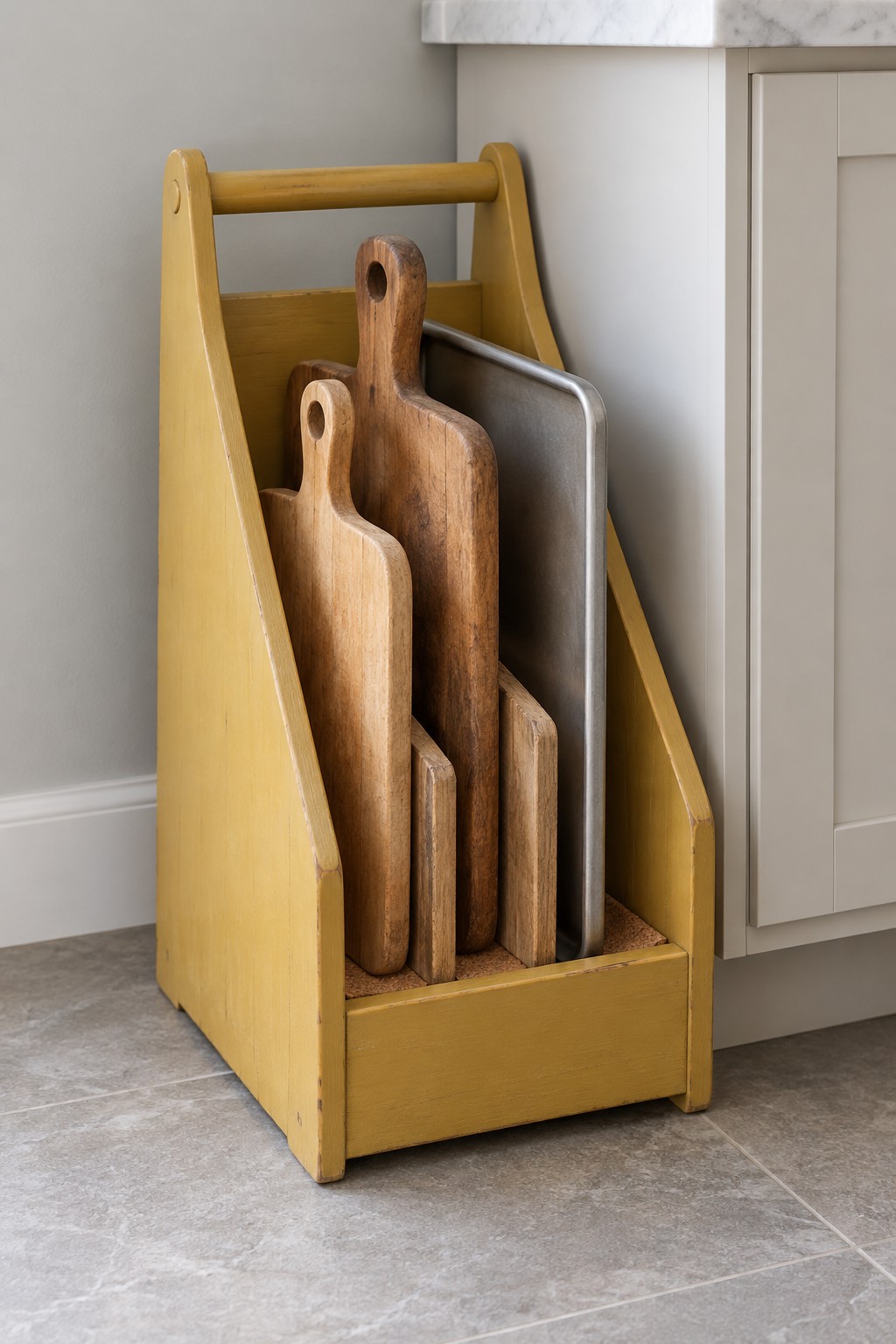
A wooden magazine rack can organize cutting boards and slim trays with very little structural change. Its tall sides keep the boards upright, while the open top lets you lift out the size you need. A mustard yellow finish adds color near otherwise neutral kitchen cabinetry, and the original carrying rail remains useful when moving the empty rack for cleaning.
Choose a rack wide enough for your largest board and inspect the base joints before adding weight. You could clean it, apply a suitable finish where needed, and add a removable washable liner at the bottom. Return only dry boards to the holder so water is not trapped against the wood. Arrange the heaviest pieces low and leave enough room to remove one without pulling out the entire group. This works for compact cutting boards and flat baking trays; oversized chopping blocks need a stronger purpose made support.
20. Shutter Wall Mail Organizer
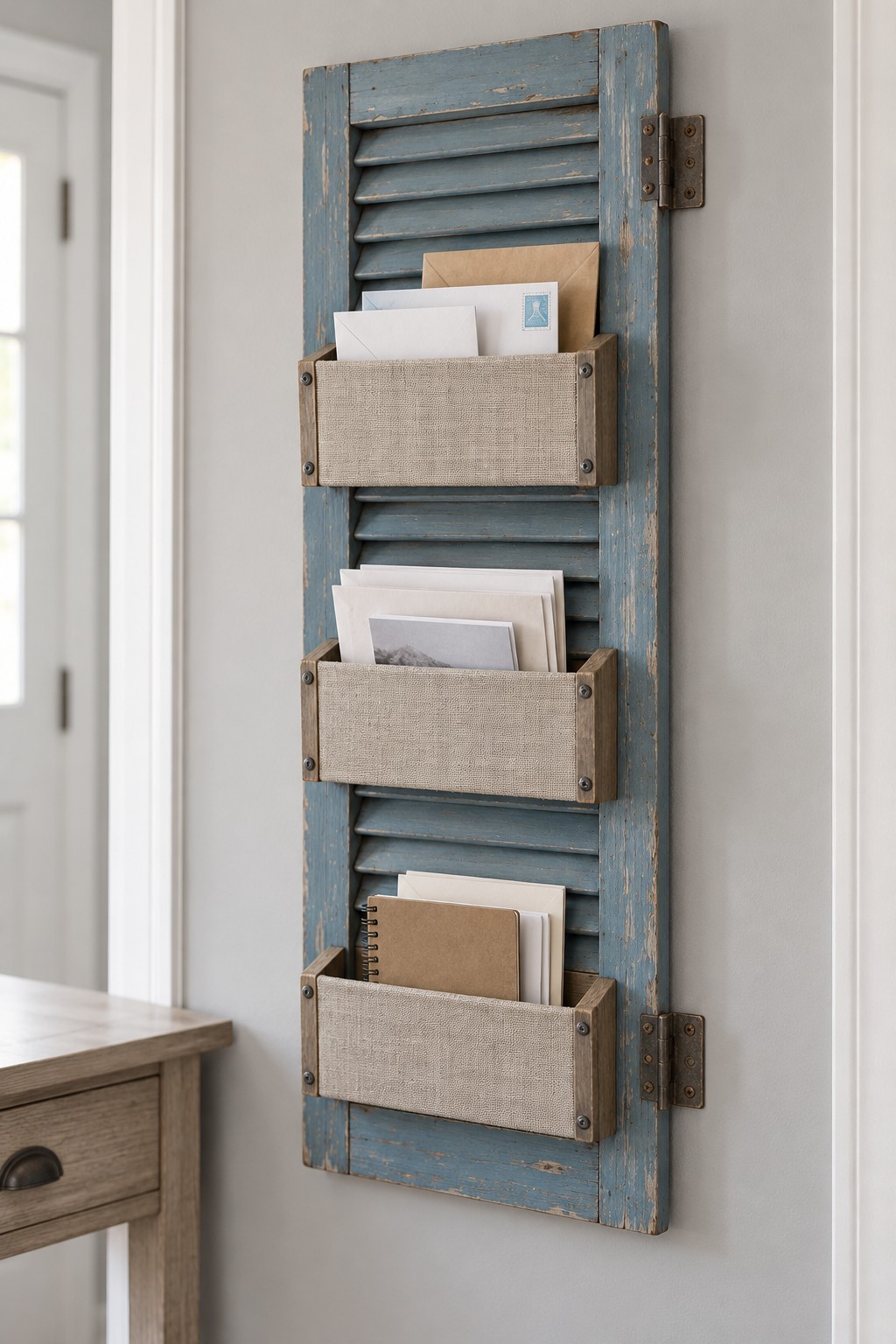
A retired wooden shutter can provide the backing for a mail organizer, using its narrow proportions to fill an otherwise awkward strip of wall. Three shallow wooden pockets divide incoming letters, papers to deal with, and small notebooks. The weathered blue surface keeps the shutter recognizable, while the pale pocket fronts make the contents easy to see.
Before working on an old painted shutter, check the coating's condition and history instead of immediately sanding it. You could attach the pockets to the solid side rails with suitable screws, then mount the whole assembly through those same structural rails. Louvers alone are not dependable support for a loaded organizer. Keep the pockets shallow so papers remain visible, and avoid placing confidential mail in a location seen from outside. Empty the sections regularly; the value of this project is creating a manageable paper routine, not turning a wall into permanent document storage.
21. Lampshade Frame Soft Toy Organizer
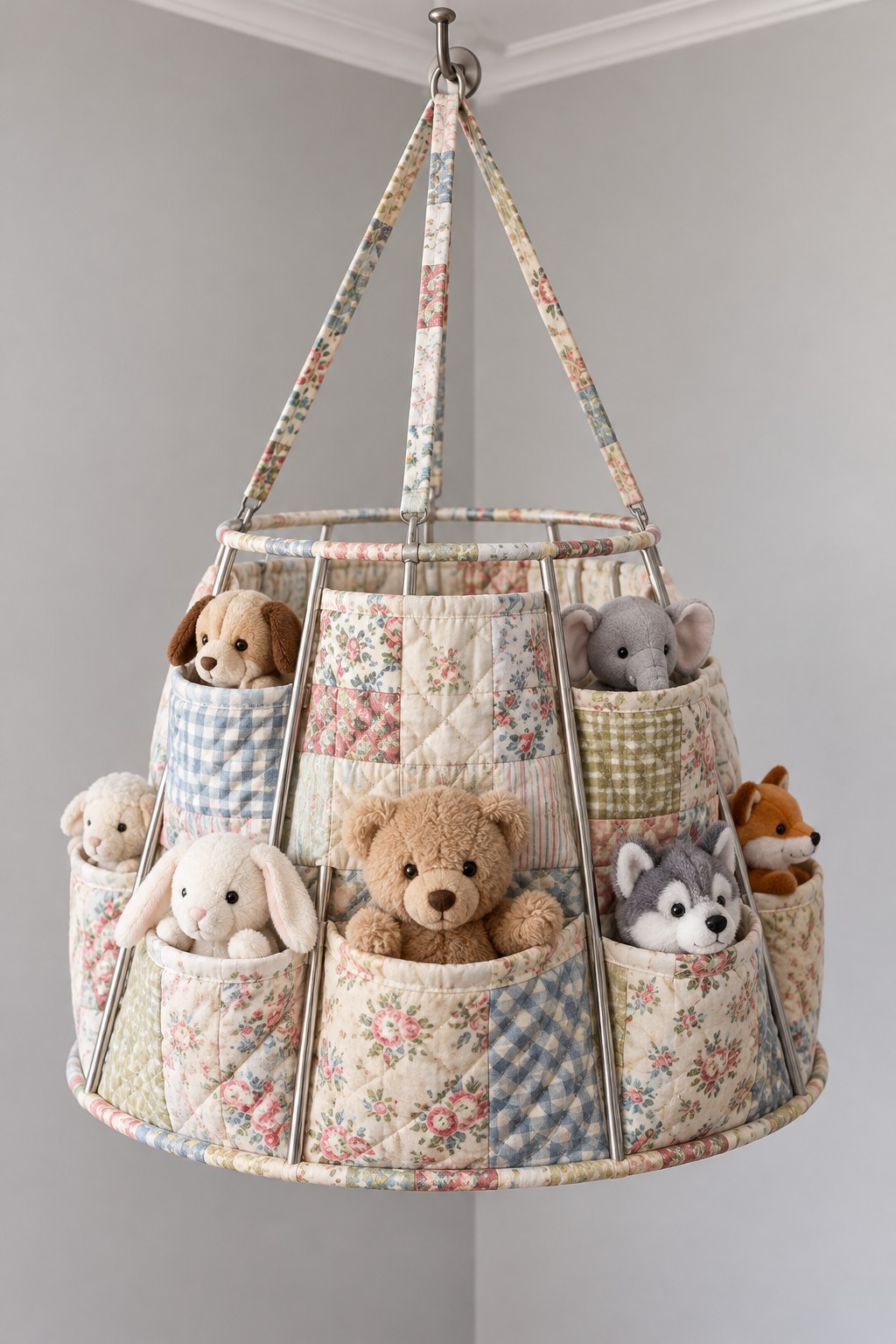
A bare wire lampshade frame can become a suspended organizer for small soft toys when wrapped with patchwork pockets. Its tapered shape naturally supports a ring of storage, while floral fabric gives the finished piece a gentle decorative character. The original lighting components are removed completely; only the frame serves as the support for the new fabric construction.
You could cover every wire edge, sew pockets onto a continuous fabric body, and add suspension straps securely around structural parts of the frame. Check the ceiling fixing against the total loaded weight and keep the contents light. For a room used by children, place this decorative storage out of reach, away from beds, and beyond any position where it could be pulled down. Long straps and accessible loops are not suitable play features. A low freestanding basket is a better choice when children need to collect and return toys independently.
22. Cardboard Tube Shoe Cubbies
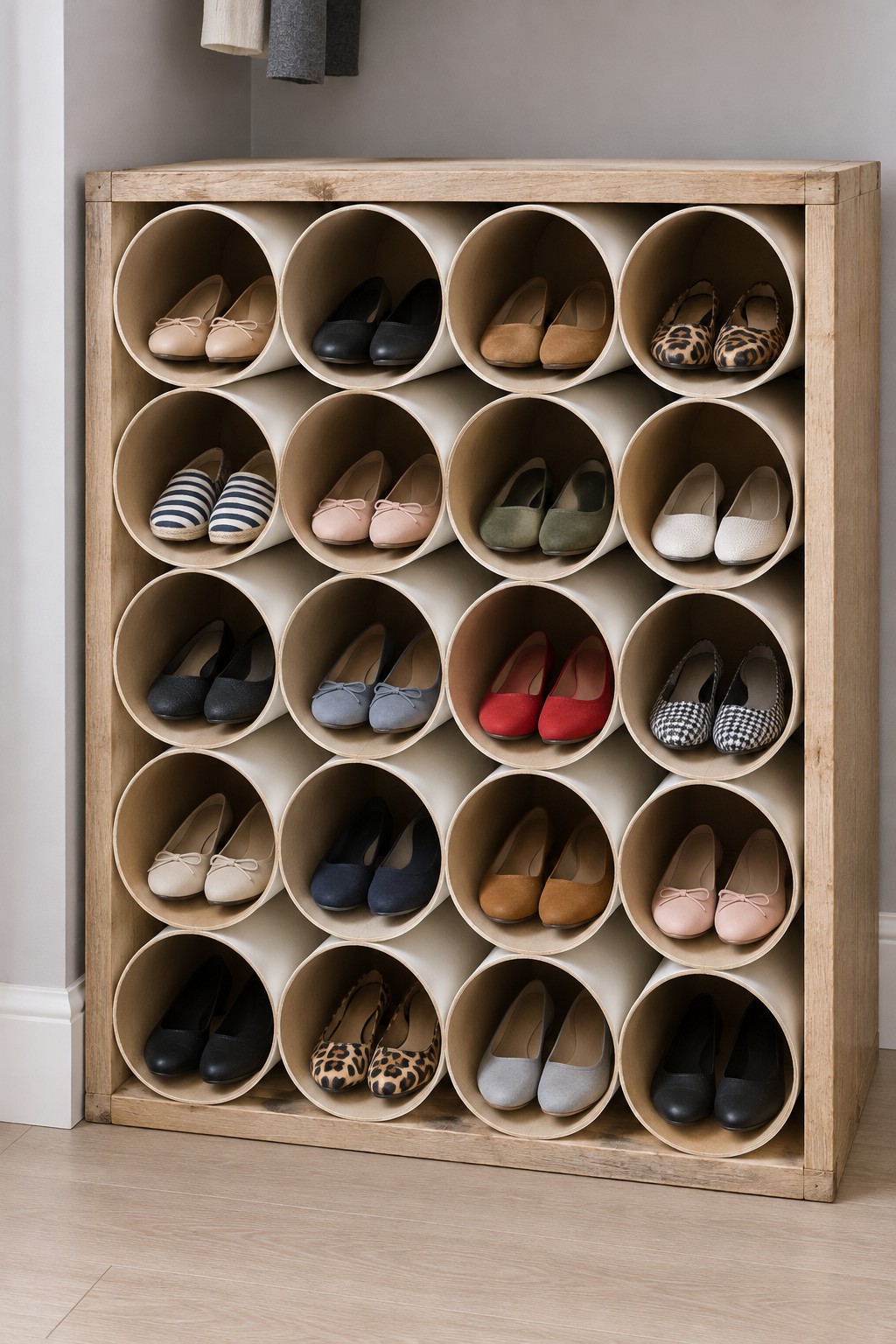
Wide cardboard packing tubes can become individual shoe cubbies inside a sturdy wooden frame. The round openings separate each pair and make a crowded entrance feel more orderly, especially when most of your footwear is flats, slippers, or compact trainers. This version has twenty compartments arranged in five rows, so the frame shape matters as much as the tubes themselves.
Start by checking a sample pair against a tube opening; small mailing tubes will be too narrow. You could cut clean large tubes to a consistent depth, finish their exposed edges, and secure them inside a rigid cabinet with a back panel. Use clean dry shoes and leave wet outdoor footwear elsewhere until dry. Cardboard is vulnerable to moisture and crushing, making these cubbies inappropriate for muddy boots or heavy storage. Anchor a tall cabinet where tipping is possible, and keep the lower compartments for the shoes you reach for most frequently.
23. Birdcage Linen Cabinet
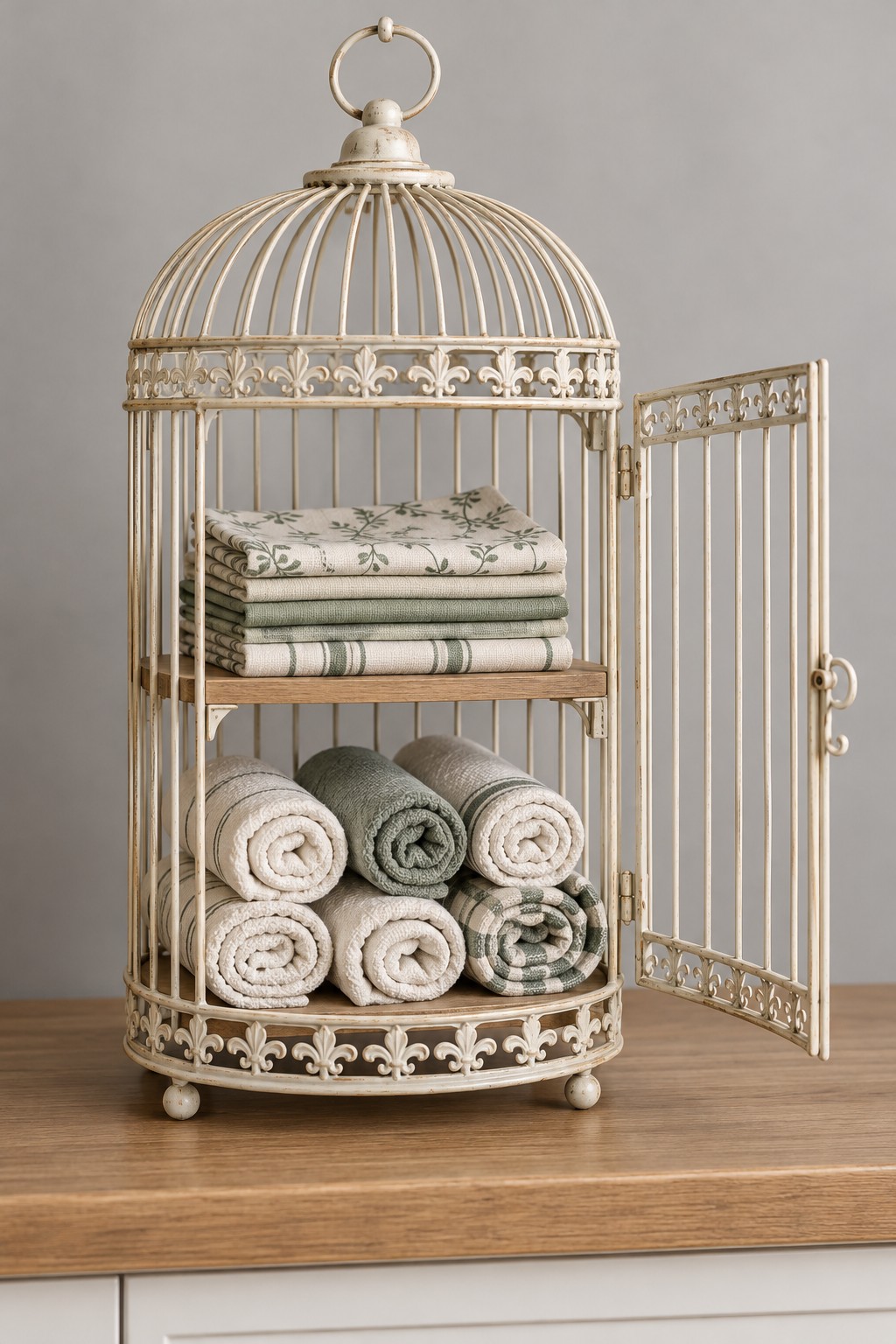
A retired decorative birdcage can become a small linen cabinet, using its domed top and open wirework as the main design feature. A fitted wooden shelf creates two levels: folded cloths above and rolled towels below. The cream finish works particularly well on a wooden bathroom console, where the cage's shape adds interest without requiring extra ornaments.
Choose a sturdy decorative cage, or thoroughly clean and assess one previously used for animals before considering indoor storage. Check all wire ends, coating damage, and door catches. You could support a removable shelf at several points around the frame so it cannot drop or rotate when a towel is removed. Keep the cabinet on a level surface and use the side door for access, rather than lifting a loaded cage by its decorative top ring. Store only dry linens and place it away from splashes so the open metalwork and wooden shelf remain easy to maintain.
24. Window Frame Tea Packet Display
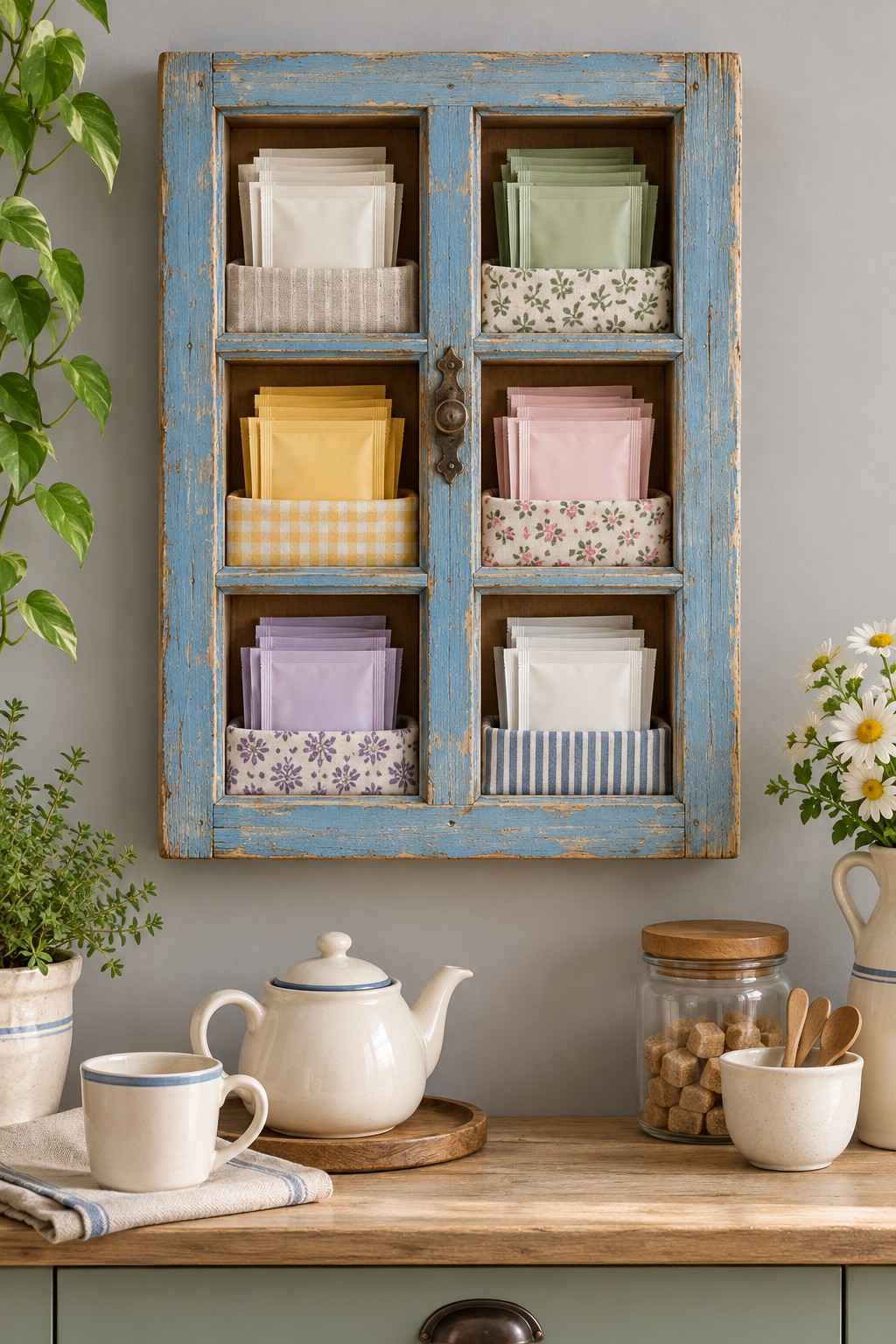
A six pane wooden window frame can become a wall display for tea packets once its glazing has been removed. Each former pane holds a small fabric pocket, creating an orderly arrangement of different teas without needing a deep cabinet. The aged blue frame and mixed floral and striped fabrics make the organizer feel like part of the kitchen's decoration.
Have damaged glazing removed safely, assess any old paint before disturbing it, and check that the frame joints remain sound. You could sew six washable pockets to fit the openings, attaching them securely to a firm backing so each pocket has support behind its contents. Store tea in its original sealed packets rather than placing loose leaves against reused fabric or wood. Mount the frame in a dry location away from steam and stove heat. Keep frequently chosen varieties in the easiest pockets, and replace the packets often enough that the display remains useful rather than simply decorative.
25. Muffin Tin Hair Accessory Drawer
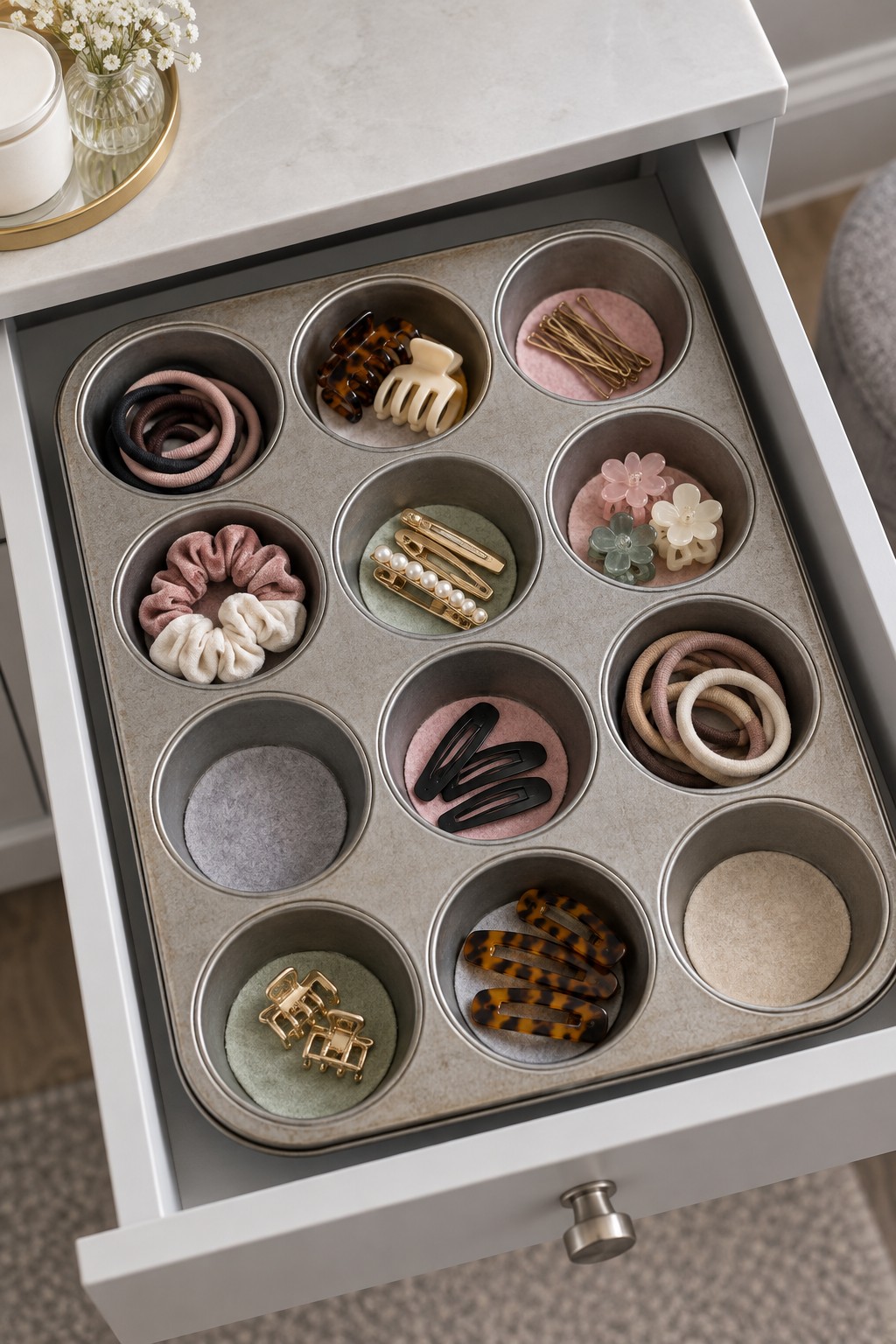
An old muffin tin gives a vanity drawer twelve ready made compartments for hair accessories. Soft circular liners create a gentler surface for clips and pins, while the shallow cups make it easy to see what you own. This is the simplest project to try from the introductory collage because its original structure already does most of the organizing work.
Choose a tin with smooth intact edges, clean it thoroughly, and check the drawer's internal width, depth, and closing clearance. Cut felt circles that lie flat at the cup bases and leave them removable for cleaning. Divide hair ties, scrunchies, snap clips, and small claw clips into separate cups, keeping bulky accessories elsewhere if they prevent the drawer closing. Add a removable nonslip layer beneath the tin if it shifts. Leave one or two cups empty for temporary sorting, and use small lidded containers instead when loose sharp pins need to be inaccessible to children.
26. Cable Reel Ribbon Storage Stand
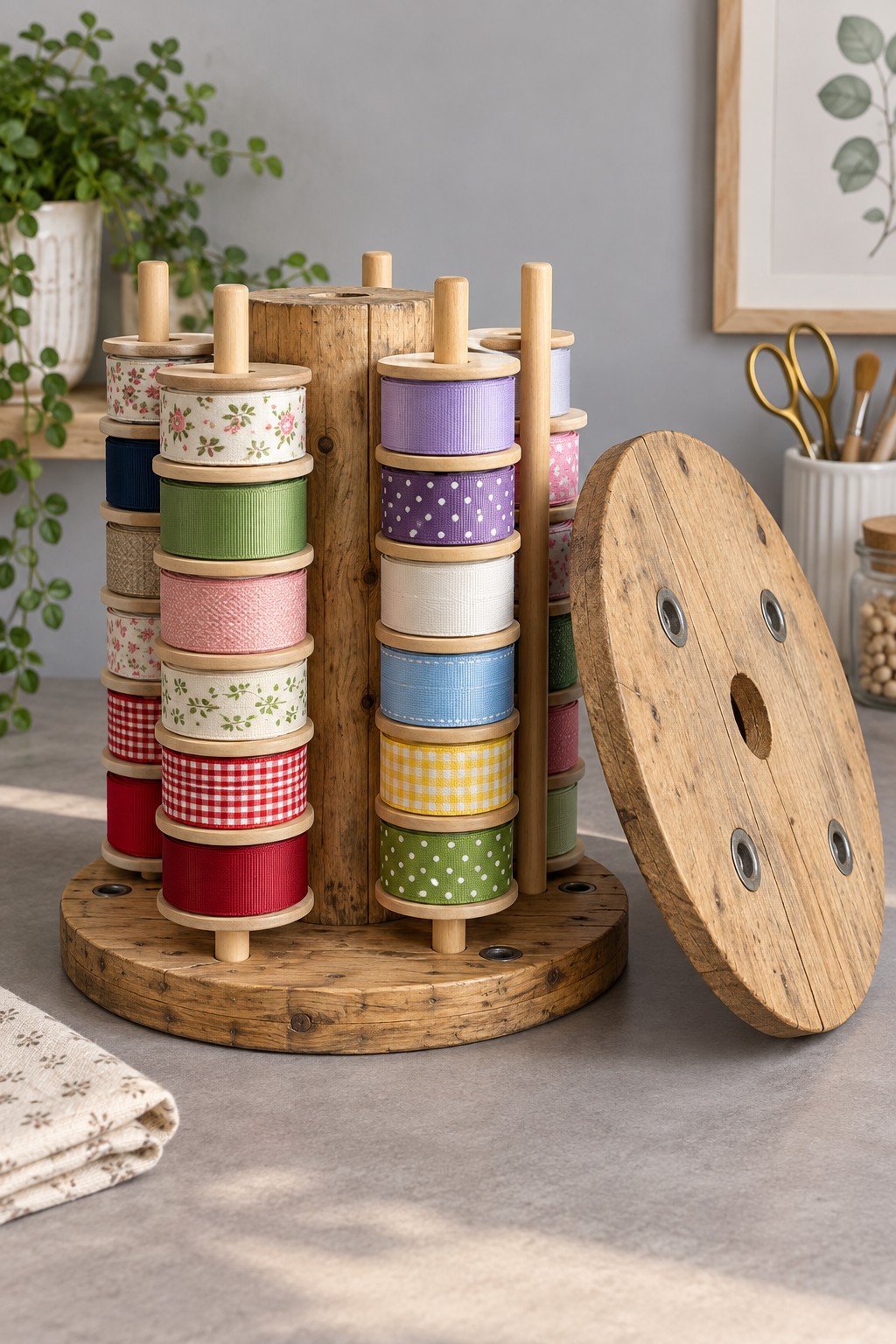
A small wooden cable reel can become a ribbon stand by reusing one round end disk as a base and fitting upright dowels around it. Stacked spools keep colors visible, while the original central opening and weathered wood preserve the reel's character. The second disk can remain a separate spare component rather than being fitted over the spools, which would make them harder to reach.
Check that the wood is clean and suitable for indoor use, then remove protruding nails and finish rough edges. You could drill aligned dowel holes into the base and choose dowel diameters that let your own spools slide freely. Secure the dowels and add protective feet below. Allow room between each stack to grasp a spool without disturbing its neighbors. Keep ribbon ends tucked against their rolls with small clips, and load heavier spools near the base. This stand works best on a dedicated craft table where its circular footprint has enough space.
27. Tennis Racket Craft Pocket Organizer
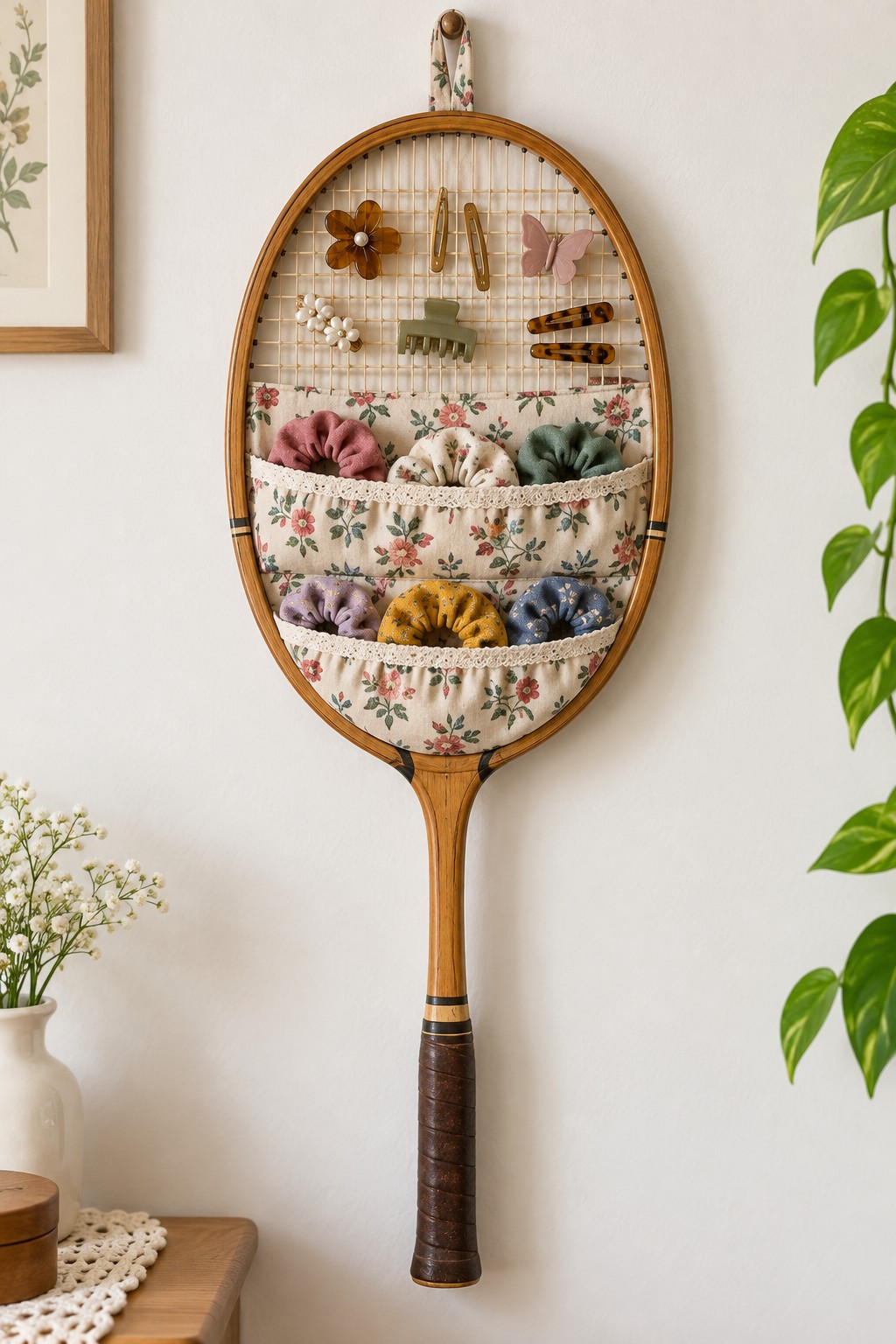
A worn wooden tennis racket can become a narrow craft organizer while retaining its oval head and wrapped handle. Fabric pockets span the string bed, creating spaces for yarn scraps, small tools, and notions. The combination is especially appealing when the racket has sentimental value but can no longer be used for sport.
Select a racket with a sound wooden frame and intact strings, then sew pockets to a fabric panel sized for the oval opening. You could attach that panel around the frame at several points, allowing the frame to carry the storage rather than depending on aging strings alone. Reinforce the pocket seams and keep contents light. Hang the racket by a secure fixing that supports its head, and avoid leaving scissors loose where they can fall. Smaller tools in a closed pouch and a few yarn balls make a more manageable arrangement than filling every pocket with heavy equipment.
28. Wardrobe Home Office Cabinet
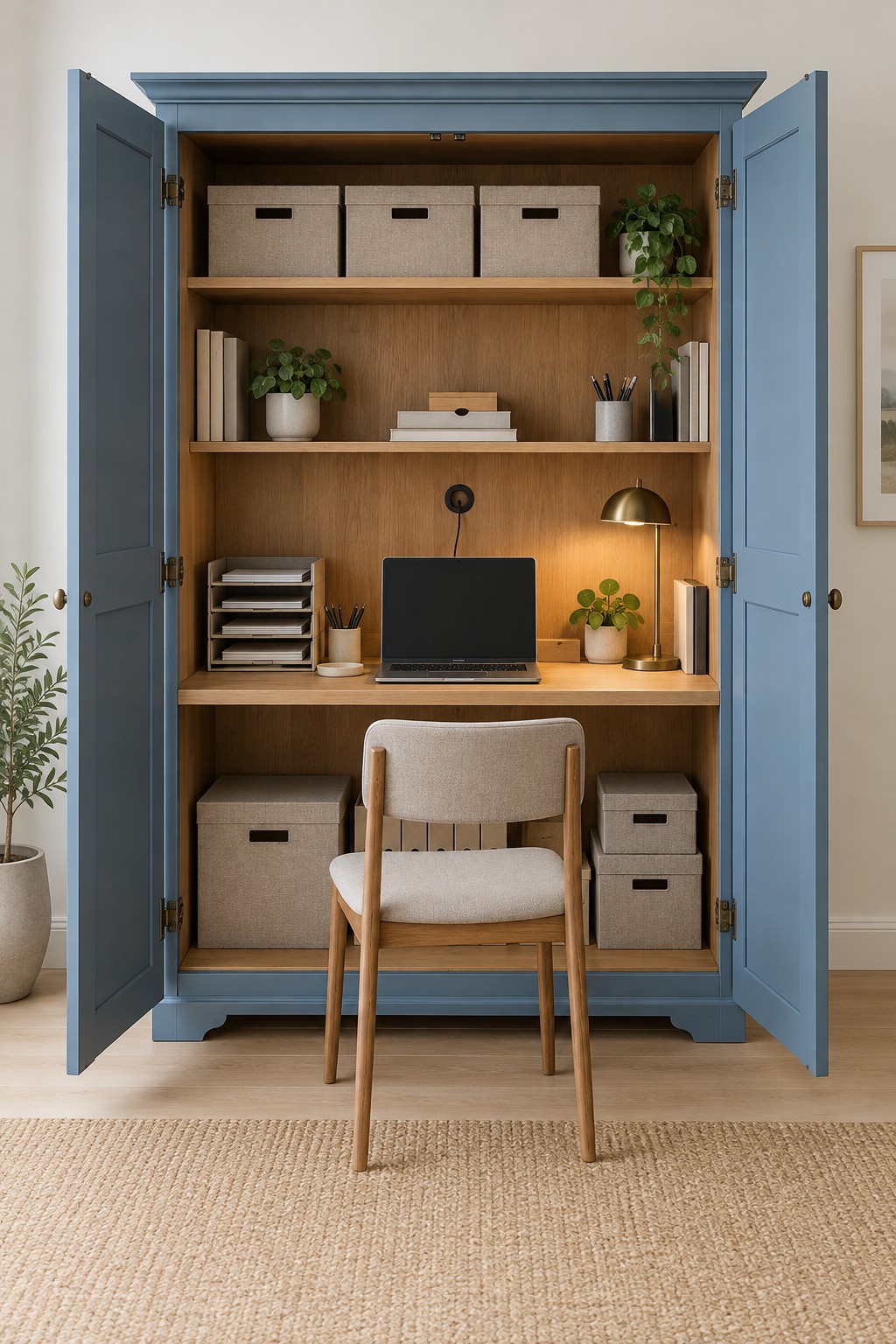
An old wardrobe can become a home office cabinet, using its doors to close away a desk and everyday work supplies. A fitted work surface takes the place of the hanging rail, shelves hold paper and boxes, and the natural wooden interior balances the painted blue exterior. This suits a shared room where work needs a defined place without remaining visible all evening.
Measure the cabinet around your seated posture, knee space, screen height, and chair before fitting a desktop. Support the work surface on structural parts of the carcass, anchor the wardrobe appropriately, and provide smooth finished openings for cables. Keep ventilation around equipment and avoid running chargers inside closed compartments. Position an accessible approved power arrangement without trapping cords in hinges or doors. You could use removable trays for current paperwork and plain boxes for occasional supplies, leaving the central work area clear enough that you can actually use the desk comfortably.
29. Packing Crate Rolling Pantry
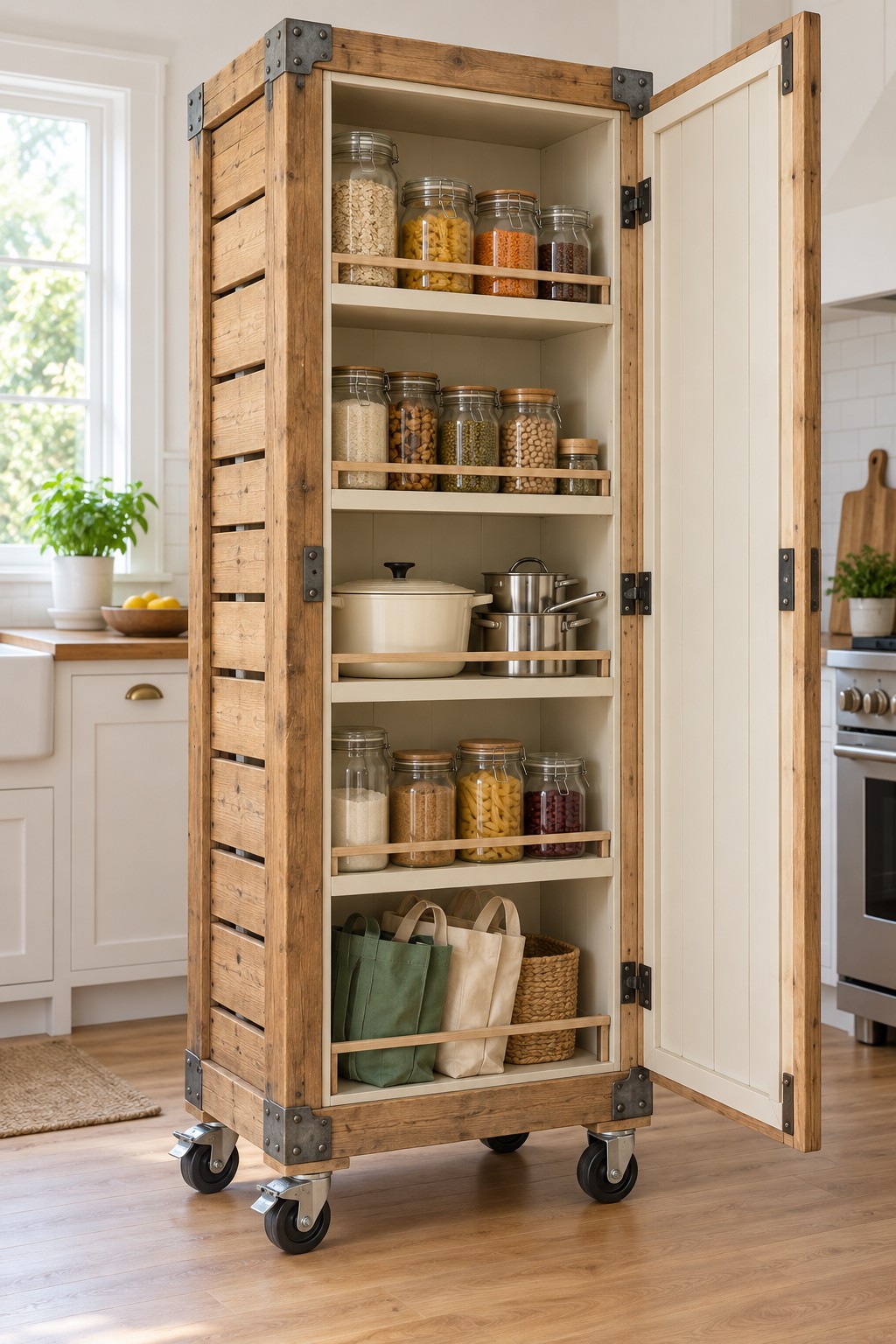
A tall wooden packing crate can be rebuilt into a narrow rolling pantry with shelves, a glazed door, and retaining rails for jars. Reused timber gives the cabinet texture, while the transparent front keeps stored supplies visible. The transformation needs more planning than simply standing a crate upright: the base, door, shelves, and wheels all have to work together as furniture.
Choose known clean timber in good condition, reinforce the cabinet structure, and have the glazing fitted securely with finished edges. Use casters selected for the complete loaded weight and an appropriate locking arrangement. Keep heavy sealed jars low, retain lighter items above, and avoid storing food directly against reclaimed wood. A tall narrow cabinet on wheels can tip, so arrange suitable restraint for its parked location and do not move it while heavily loaded. For a unit that remains unsteady after suitable repairs and restraint, choose a fixed pantry cabinet layout.
30. Changing Table Linen Station
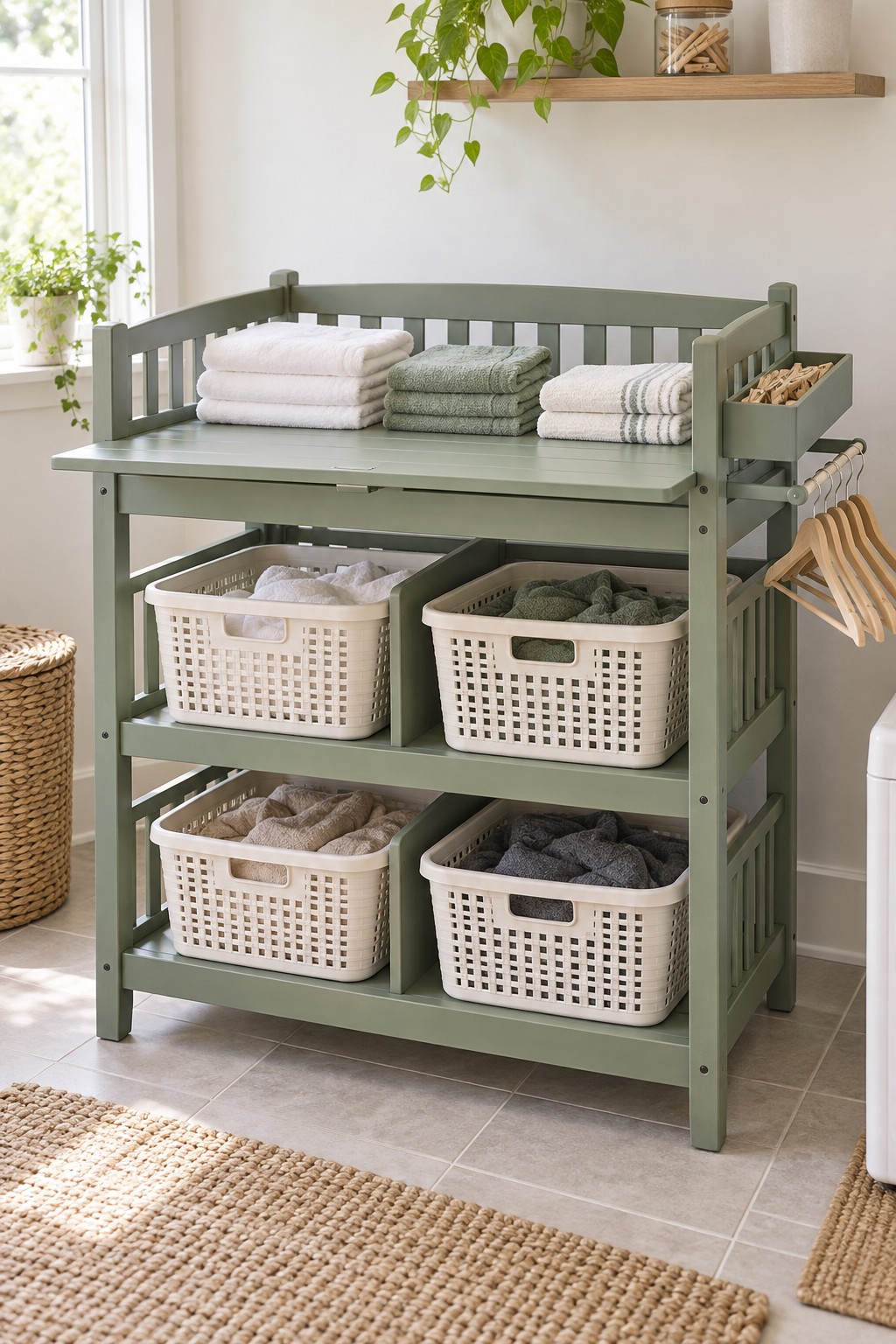
A retired baby changing table can find a new role as an adult household linen station. Its top provides a place to fold towels, while the lower shelves hold separate baskets for washcloths, spare linens, and small household essentials. The sage finish and woven containers turn a piece associated with one short stage of family life into useful open storage.
Check the frame joints, shelf supports, and original manufacturer's limits before repurposing it. You could clean the table, repair loose fittings, refinish suitable surfaces, and choose baskets that slide out without catching on the legs. Keep the heavier contents on the lower shelf and leave the upper area clear enough for sorting laundry. Anchor the unit where required by its design and household setting. This adaptation is for linen storage; do not assume a modified or secondhand table remains appropriate for changing a baby. Nearby painted jar organizers can hold small dry supplies on a separate stable shelf.
Keep the New Organizer Easy to Maintain
Choose one project that gives an awkward collection a clear home, then live with the arrangement before adding more compartments. Wash removable liners, return dry items to enclosed storage, and check hinges, straps, shelves, and mounting points if they loosen or begin to move. Leave room to lift things out comfortably. The most useful transformation is the one that continues to save effort after its first tidy day.




Leave a Reply