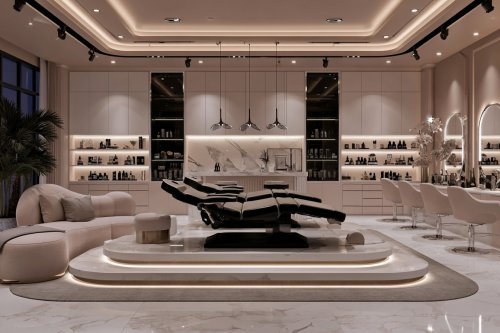
17 Creative LED Lighting Ideas for a Beautiful Home

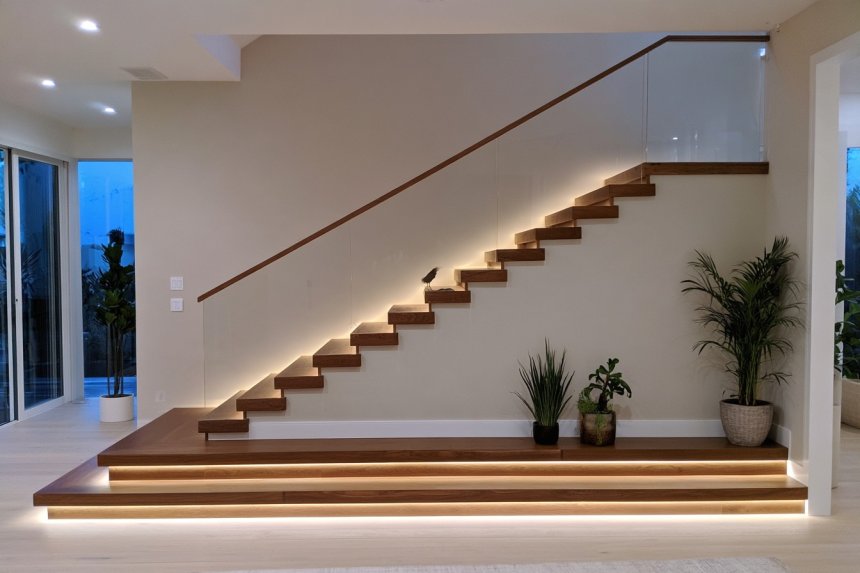
LED lighting can do much more than add a colorful glow around a room. Used thoughtfully, it can highlight architecture, make small spaces easier to navigate, improve task lighting, and create layers that make a home feel more intentional after sunset. The most convincing installations are often the ones where the light source itself is barely visible. Instead of exposing bright individual diodes, good LED design relies on concealed placement, diffusers, controlled brightness, and a color temperature that complements the surrounding materials. From kitchen cabinetry to shelving, bedrooms, staircases, and quiet architectural details, these LED lighting approaches show how subtle illumination can improve both atmosphere and everyday function.
1. Hide LED Strips Beneath Kitchen Cabinets
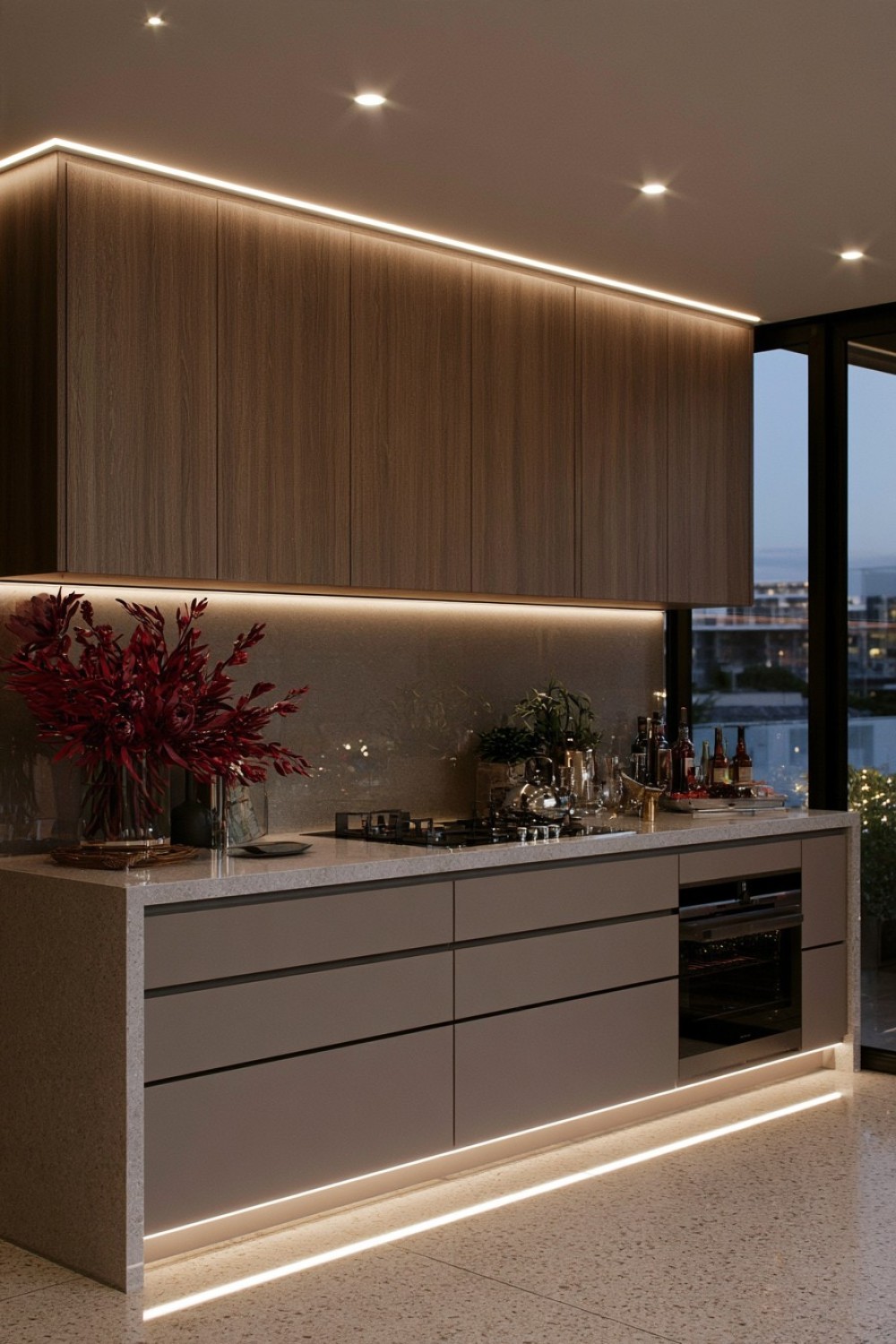
Under-cabinet lighting is one of the most practical places to use LEDs because it solves a common kitchen problem: overhead fixtures often leave the countertop in shadow when someone stands between the ceiling light and the work surface. A slim LED strip installed underneath the upper cabinets provides direct illumination for chopping, measuring, and food preparation without adding another visible fixture.
For a finished appearance, recess the strip slightly behind the cabinet's front edge or place it inside an aluminum channel with a frosted diffuser. This softens individual LED dots and spreads the light more evenly across the counter.
Warm white around 2700K to 3000K usually complements wood cabinetry and traditional kitchens, while approximately 3000K to 3500K can suit cleaner contemporary finishes. If possible, put the LEDs on a separate dimmer so bright task lighting can become softer ambient lighting later in the evening.
2. Add a Soft Glow Behind the Television
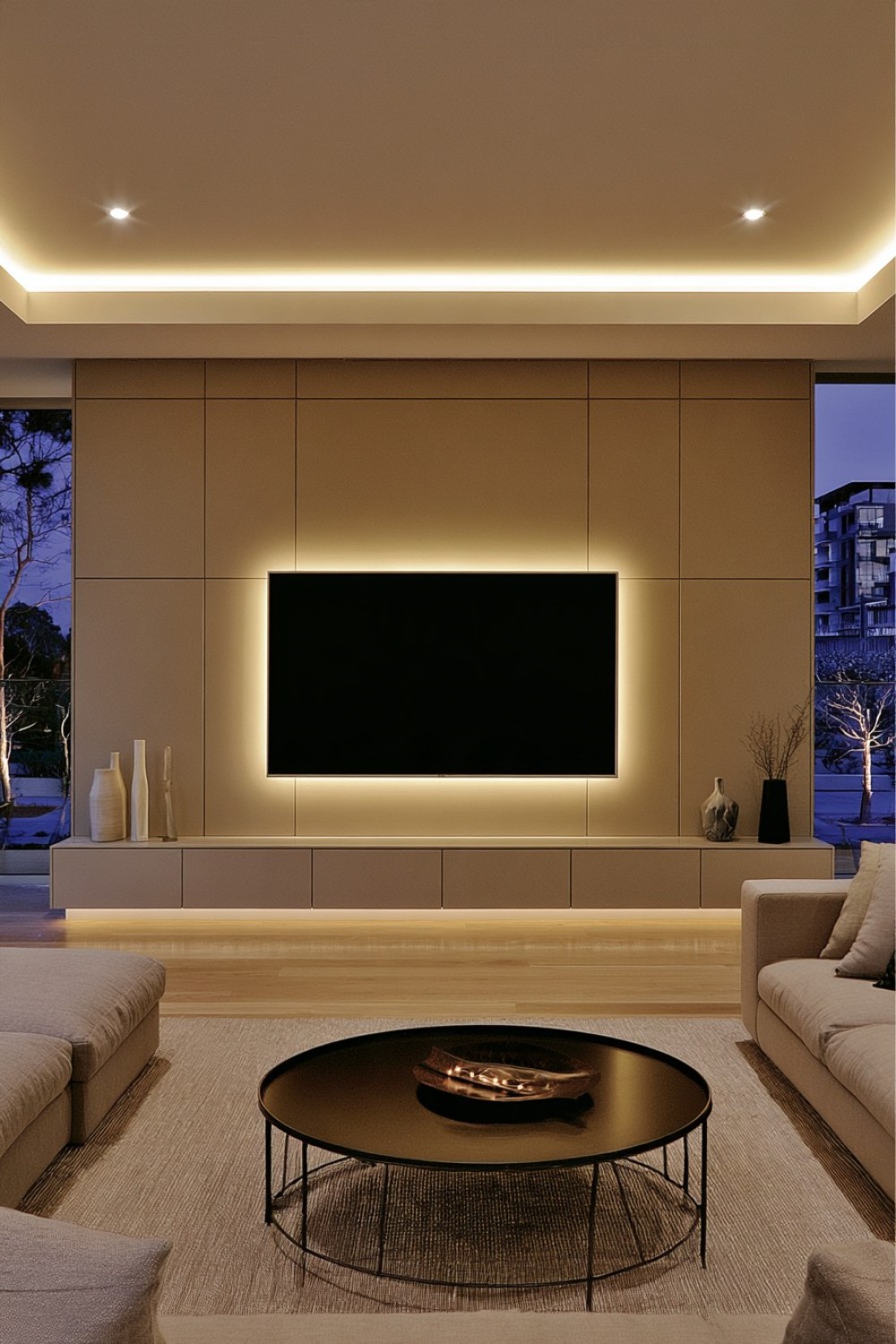
Lighting behind a television can make a media area feel calmer while reducing the harsh contrast between a bright screen and a dark wall. Rather than surrounding the entire entertainment unit with highly saturated colors, consider a restrained white LED strip mounted to the rear perimeter of the television or media panel.
The goal is to wash the wall with indirect light rather than make the LEDs themselves visible. Leaving enough distance between the strip and the wall helps the illumination spread into a broader halo instead of producing a narrow line.
A neutral or slightly warm white usually integrates more naturally with living-room decor than constantly changing RGB effects. Keep brightness relatively low so the lighting supports the screen instead of competing with it. In a compact living room, this subtle backlighting can also give a wall-mounted television a lighter visual presence, especially when paired with simple cabinetry and uncluttered surfaces.
3. Illuminate Open Shelving From Within
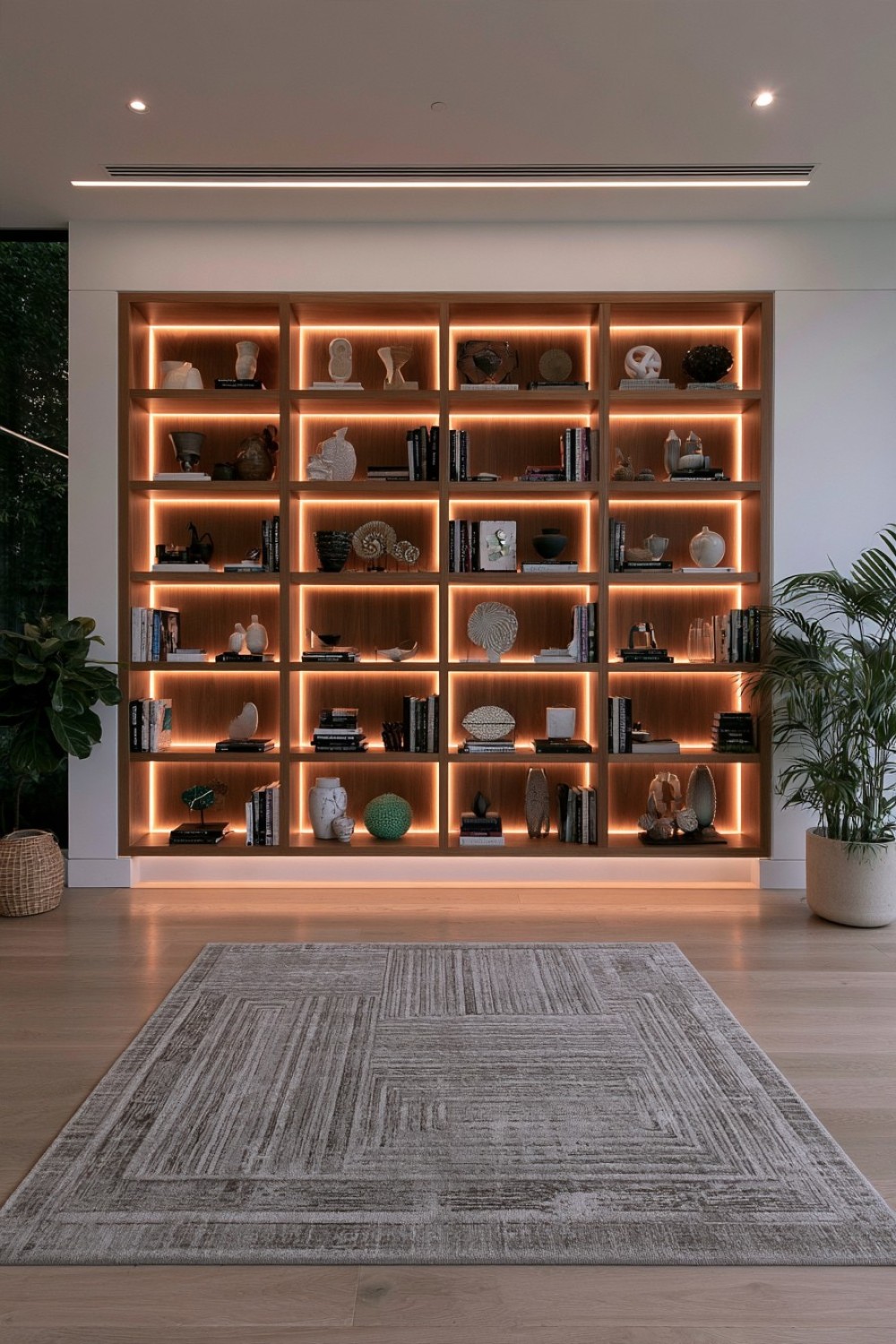
Built-in shelves become much more visually interesting when selected compartments are gently illuminated. Instead of placing LEDs around every shelf, concentrate light in a few areas where pottery, books, sculptural objects, or textured materials deserve attention.
LED strips can be recessed beneath shelf edges or installed vertically along the inner side of a cabinet. Vertical placement often creates a particularly smooth wash because it illuminates several shelves without producing bright horizontal lines.
For wood shelving, warmer LEDs tend to bring out grain and natural undertones. In white or stone-colored cabinetry, a neutral white source can provide a cleaner architectural look. Avoid placing decorative objects directly against the LEDs; leaving some negative space allows light to travel across the back panel.
This technique works especially well in living rooms where shelving needs to remain functional during the day but take on a softer, more atmospheric character in the evening.
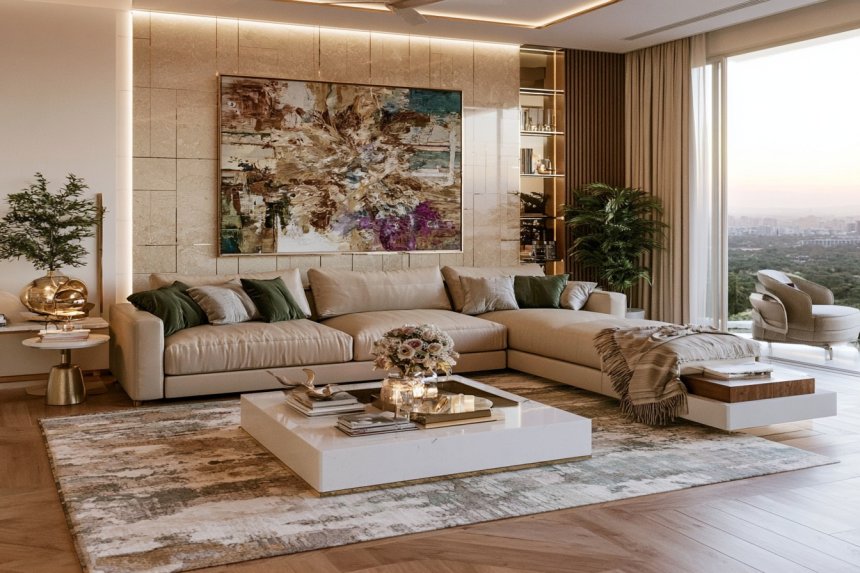
4. Create Indirect Ceiling Light With a Cove
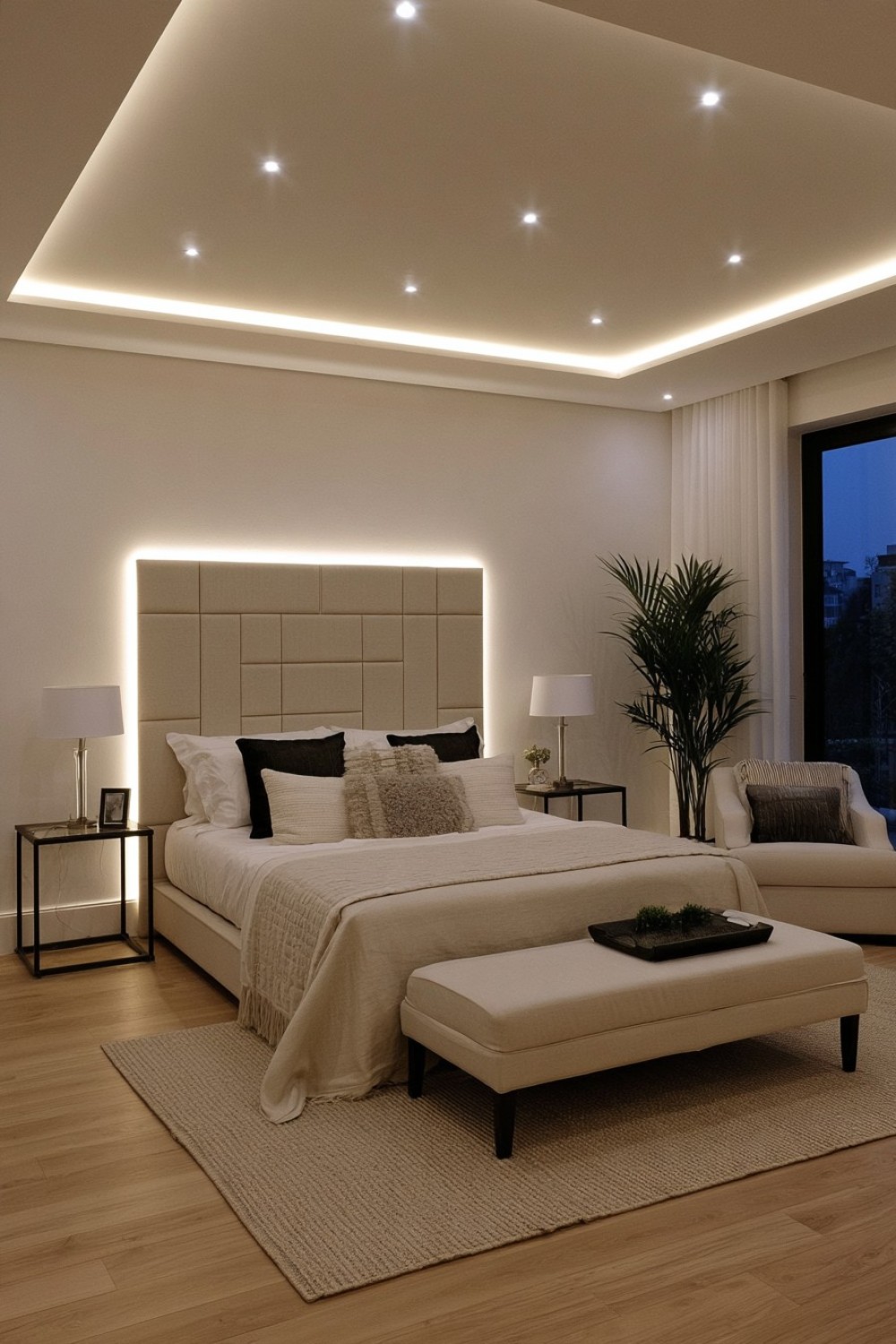
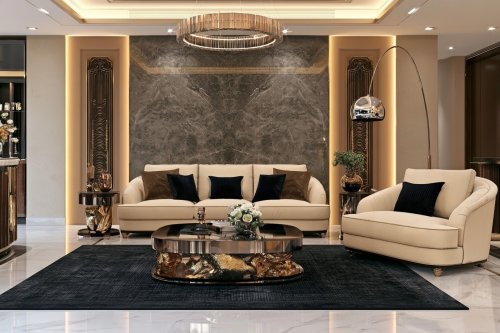
A concealed ceiling cove can produce one of the most polished LED effects because the actual light source disappears entirely. LED strips are installed inside a recessed edge, molding detail, or dropped ceiling feature so the light reflects upward before entering the room.
This reflected illumination is softer than direct downlights and can visually separate the ceiling from the walls. It works particularly well in bedrooms, living rooms, and media spaces where gentle ambient lighting is more useful than strong overhead brightness.
The detail is most successful when the cove has enough depth to hide the LEDs from common viewing angles. A diffuser may still be worthwhile if reflective surfaces could expose individual points of light.
Cove lighting should supplement rather than replace task lighting. Pair it with lamps, pendants, or recessed fixtures so the room has several controllable layers. A dimmable warm-white system will generally feel more residential than an extremely cool or overly bright installation.
5. Give the Headboard a Floating Effect
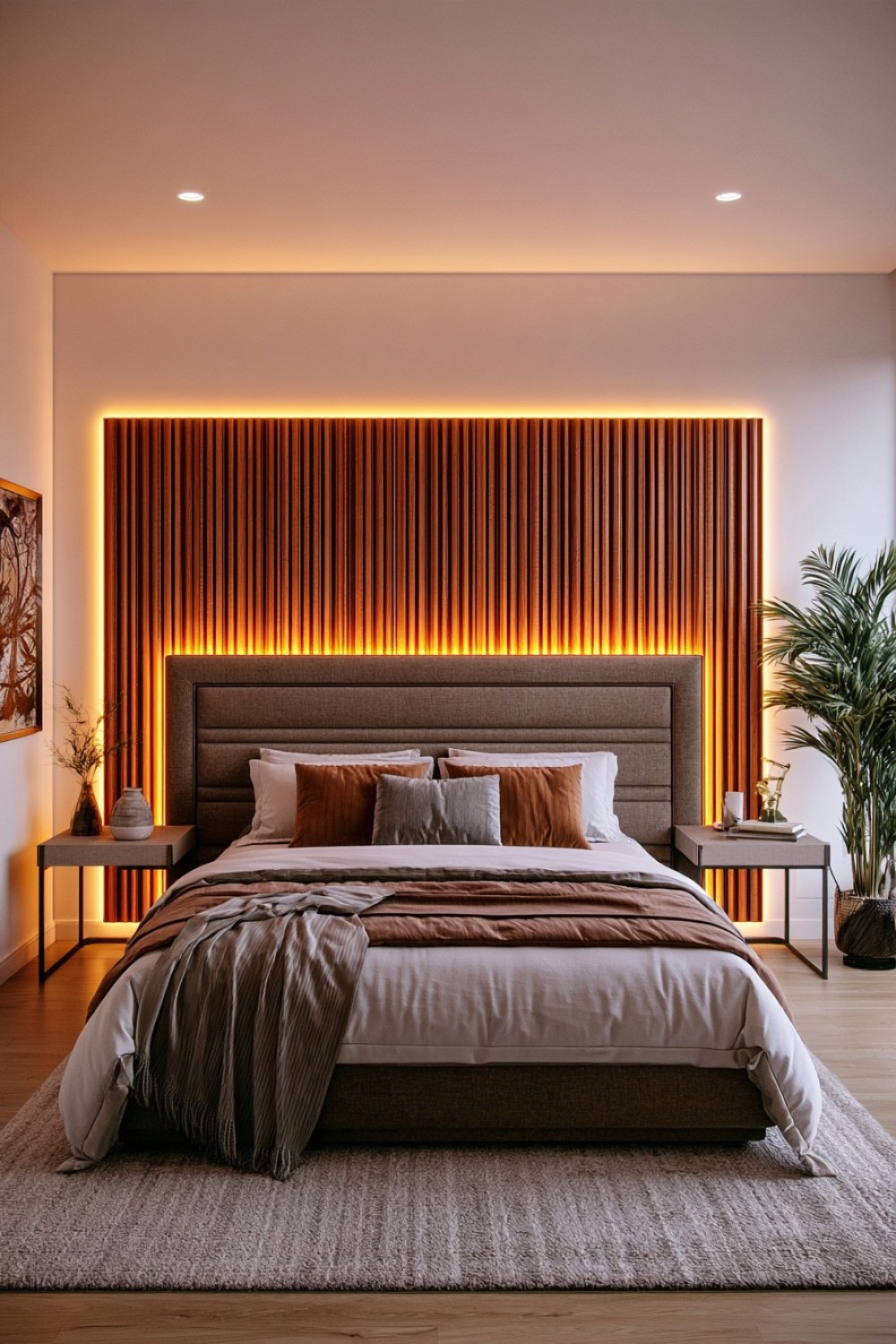
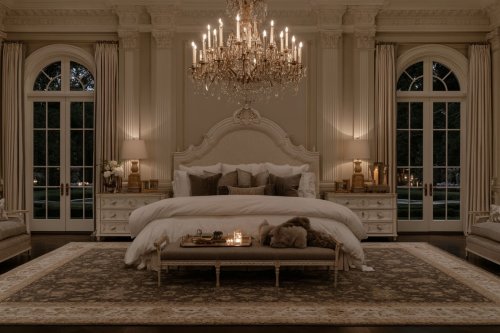
LED lighting behind a headboard can make a bedroom feel softer and more dimensional without using valuable bedside-table space. Mounting a warm LED strip behind the outer edge of a wall-mounted headboard creates a halo that separates it visually from the wall.
This works especially well with upholstered panels, slatted wood headboards, and simple oversized designs. The LEDs should face the wall rather than the bed so the surface acts as a reflector and prevents glare when someone is lying down.
Consider keeping the light around 2700K for a relaxed evening atmosphere. Bright daylight-white LEDs can feel too clinical in a bedroom, particularly when combined with warm textiles and timber.
For added functionality, connect the backlighting to a bedside switch or dimmer. It can then serve as low-level illumination before sleep without requiring the main ceiling light. The effect remains subtle during the day while providing an entirely different layer after dark.
6. Brighten Wardrobes and Deep Closets
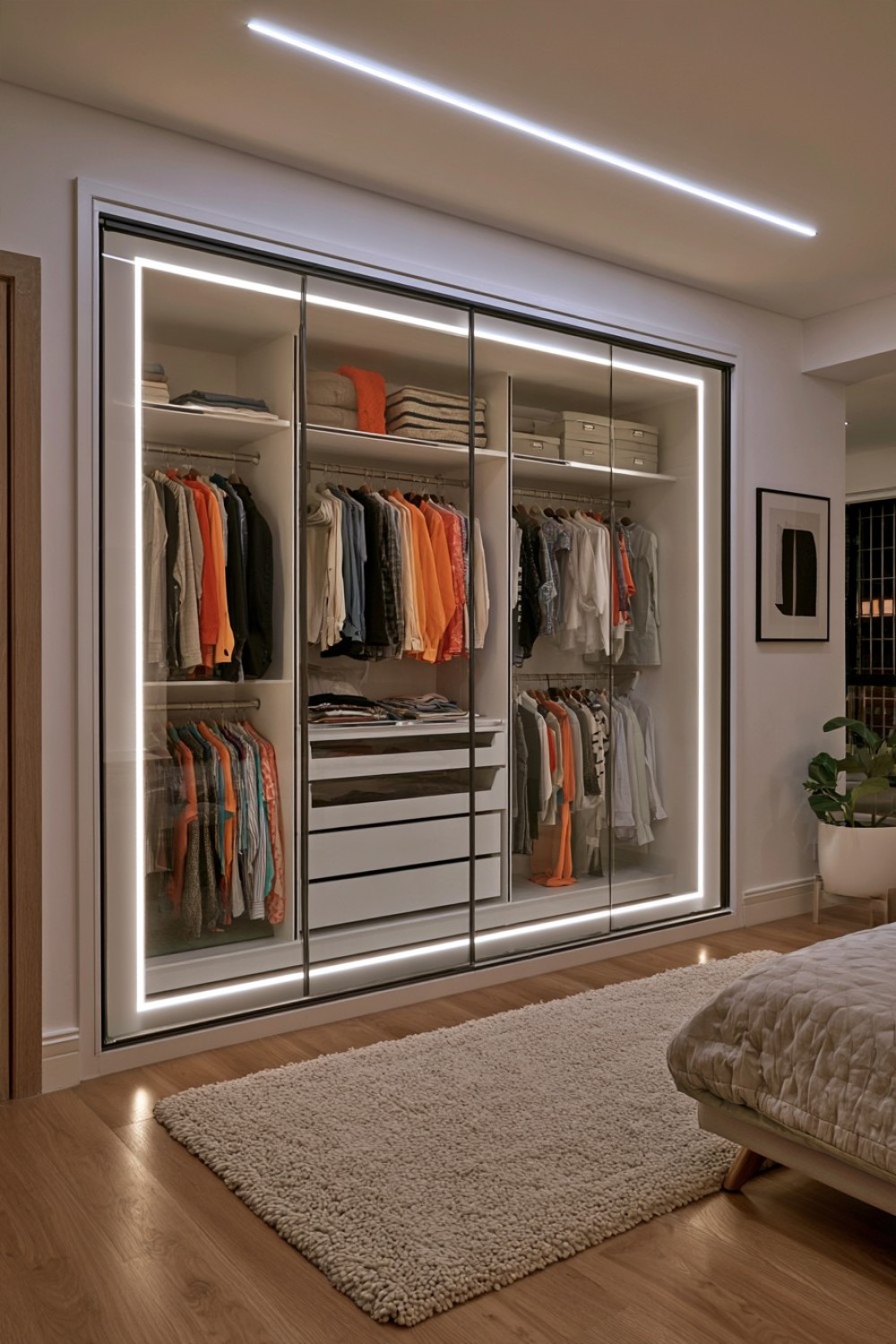
Closets are often designed with plenty of storage but surprisingly little useful lighting. Installing LEDs inside wardrobes can make clothing colors easier to distinguish and prevent darker shelves from becoming forgotten storage zones.
Vertical LED channels installed along the front interior edges of a wardrobe usually illuminate clothing more evenly than a single strip positioned at the top. Door-activated sensors can make the system particularly convenient, switching the light on automatically when the wardrobe opens.
For dressing areas, color quality matters as much as brightness. Look for LEDs with a relatively high color rendering index, often described as CRI, because they reproduce clothing and material colors more accurately.
Keep the strips protected inside channels rather than attaching bare tape directly beside clothing. This produces a cleaner finish and reduces the chance of accidental contact. In a small bedroom, well-lit internal storage can also reduce the need for additional freestanding lamps.
7. Use Toe-Kick Lighting for a Floating Kitchen Look
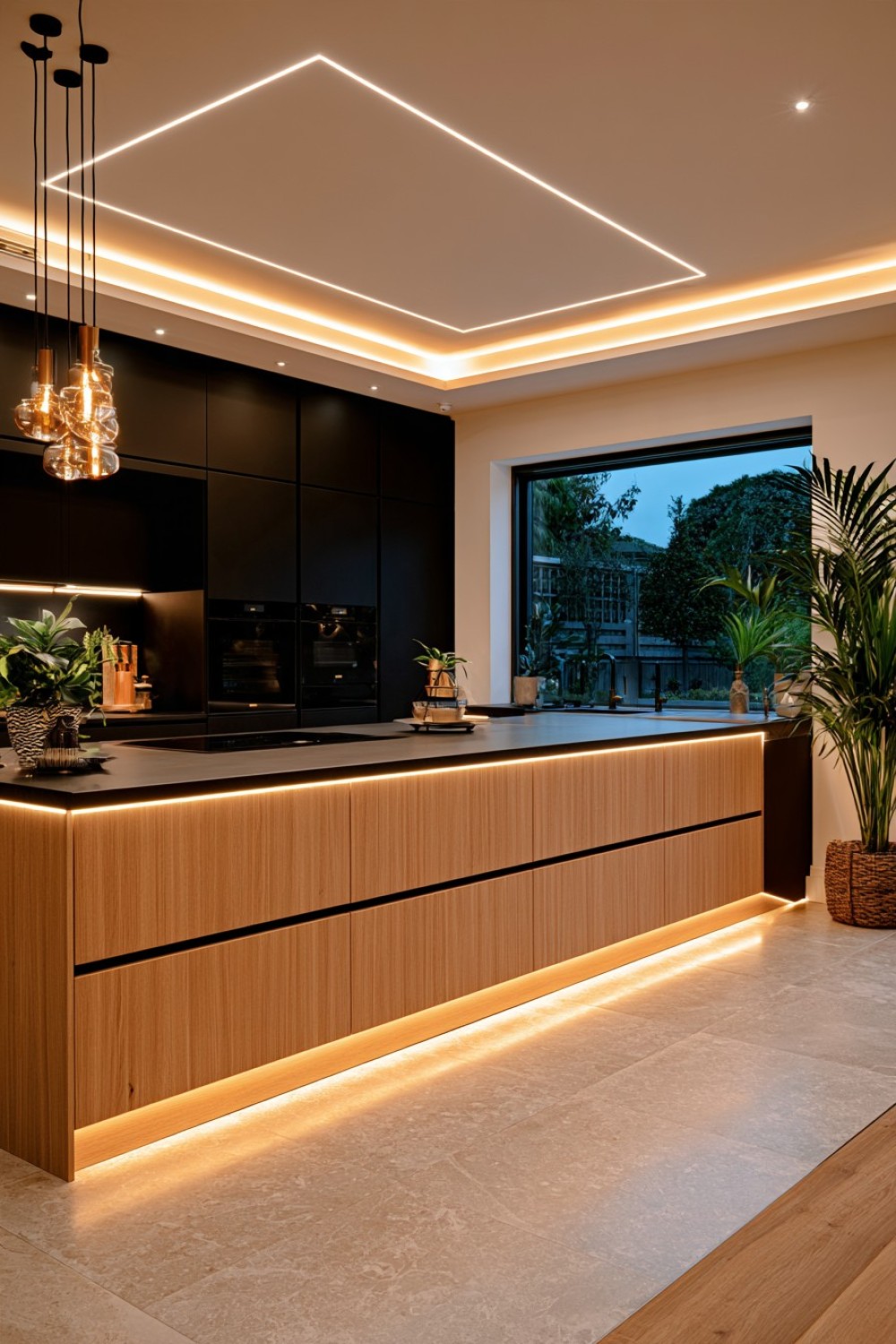
The narrow recessed area beneath base cabinets is easy to overlook, but it can become an elegant location for indirect lighting. A concealed LED strip along the kitchen toe kick creates a thin pool of light across the floor, making cabinetry appear slightly lifted.
This is most effective when used sparingly. Bright strips running under every cabinet can look theatrical, while low-intensity illumination along one continuous cabinet run feels more architectural.
Toe-kick lighting is also useful at night when full kitchen lighting would be unnecessarily bright. Connected to a low-level circuit or motion sensor, it can provide enough orientation for moving through the room without flooding the space.
Consider how the flooring reflects light. Glossy tile can reveal LED dots or produce strong reflections, so a recessed diffuser is particularly valuable in these situations. Matte stone, timber, and textured flooring generally create a softer and more forgiving result.
8. Guide the Way Along a Staircase
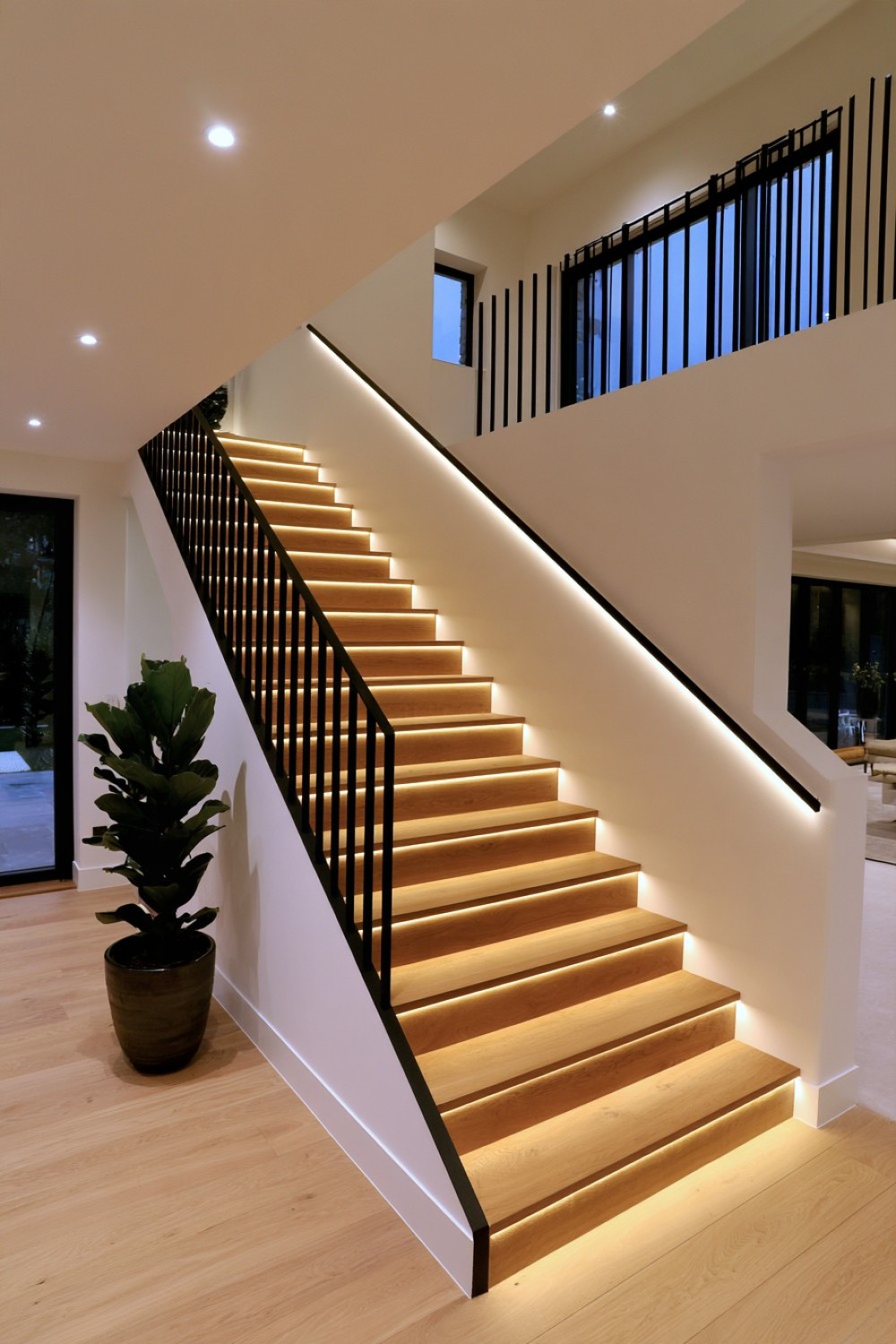
Stair lighting combines decoration with a genuine safety function. Instead of relying entirely on a bright ceiling fixture, small recessed LED lights can define individual steps or illuminate the wall alongside the staircase.
For a minimalist treatment, hide a continuous LED strip beneath the handrail. The downward-facing light emphasizes the route without exposing the source. Another approach is installing short linear lights beneath stair nosings, although careful detailing is important so the stairs do not resemble commercial or theater lighting.
Keep the brightness low and consistent. Stair LEDs are intended to improve visibility rather than create a strong decorative centerpiece.
Motion sensors can be useful in circulation areas, particularly at night, but their timing should allow enough time to reach the top or bottom comfortably. For hardwired stair installations, proper electrical planning during renovation generally produces a cleaner result than trying to conceal cables afterward.
9. Turn a Bathroom Mirror Into Ambient Lighting
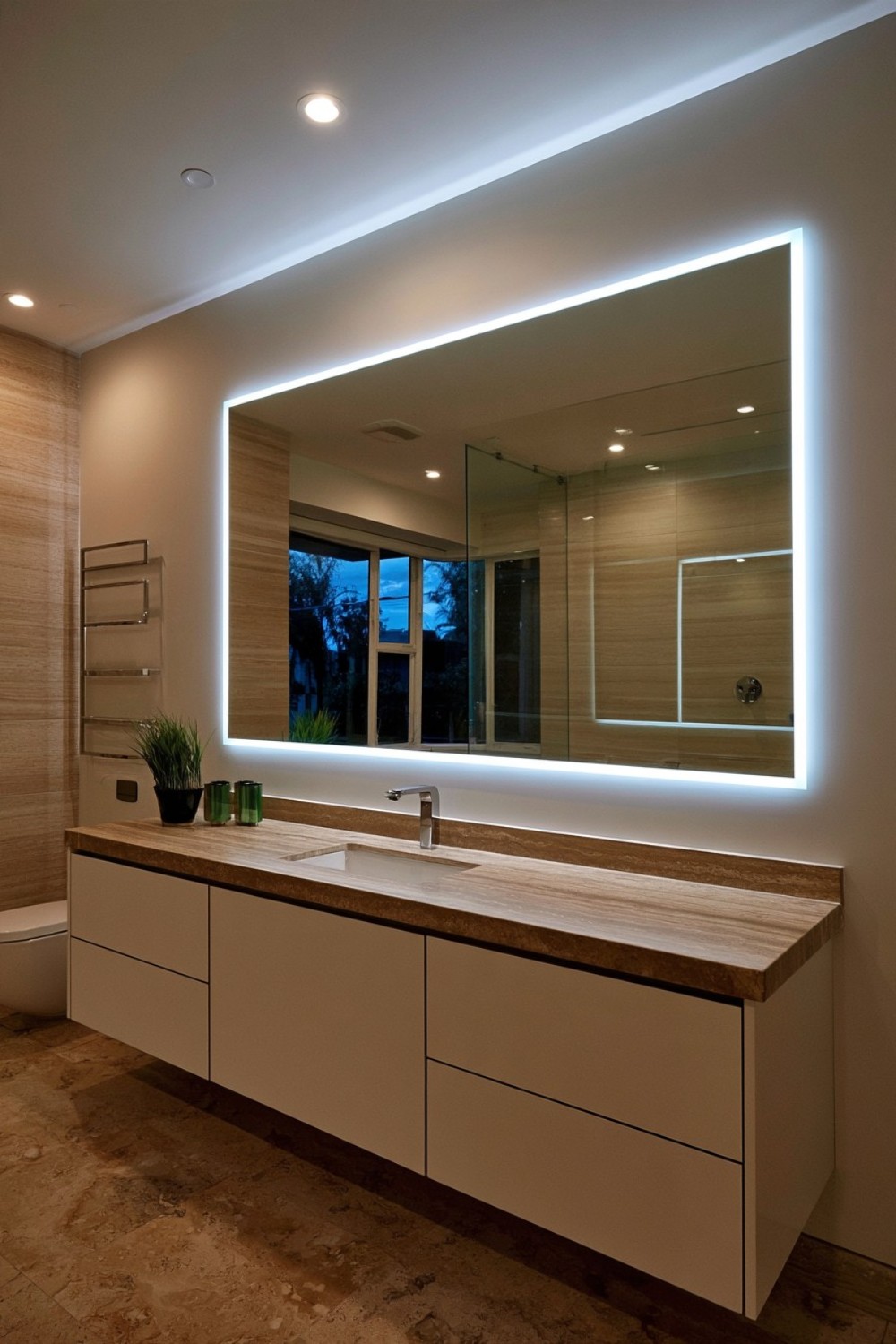
Backlit mirrors can introduce gentle illumination around a vanity while reducing the visual bulk of wall-mounted fixtures. LED strips positioned behind the mirror cast light onto the wall, giving the mirror a floating appearance and adding another layer to the bathroom's overall lighting scheme.
Backlighting alone, however, is not always ideal for grooming because it does not illuminate the face evenly. For makeup or shaving, combine ambient mirror lighting with front-facing or side lighting.
Color temperature deserves attention here. Neutral white around 3000K to 4000K can provide clearer visibility than very warm decorative lighting while still avoiding an excessively blue appearance.
Bathrooms also introduce moisture considerations. Any lighting system installed near sinks, showers, or wet zones should have an appropriate ingress-protection rating for its location, and electrical work should meet local safety requirements. The finished effect should feel integrated into the vanity rather than added as an afterthought.
10. Highlight a Textured Feature Wall
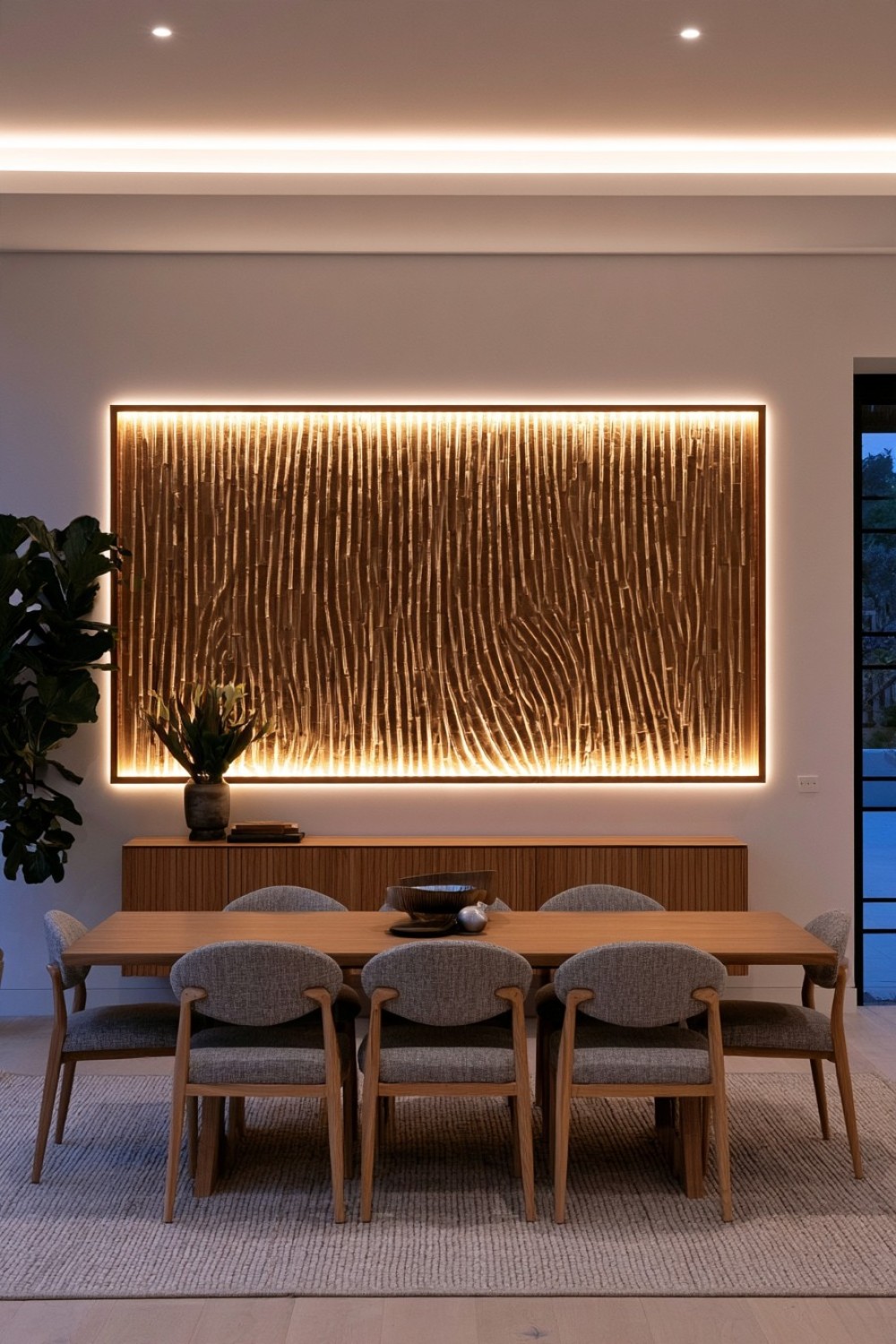
LED lighting can reveal texture that disappears under ordinary flat illumination. Brick, fluted wood, stone, limewash, and dimensional wall panels become more dramatic when light grazes the surface from above, below, or one side.
The key is positioning. When a light source sits close to a textured surface, tiny shadows form around raised details and make the material appear deeper. Moving the LEDs farther away creates a softer, more even wash.
A warm source can emphasize timber, brick, and earthy finishes, while a neutral white may work better with concrete, pale stone, or contemporary wall panels.
Avoid combining an already visually busy wall with rapidly changing colored LEDs. The architectural texture usually provides enough interest on its own. In living rooms and dining spaces, a restrained strip concealed inside a ceiling recess or millwork detail can transform the wall after dark while remaining almost invisible during daylight hours.
11. Add Low Lighting Beneath a Floating Bed
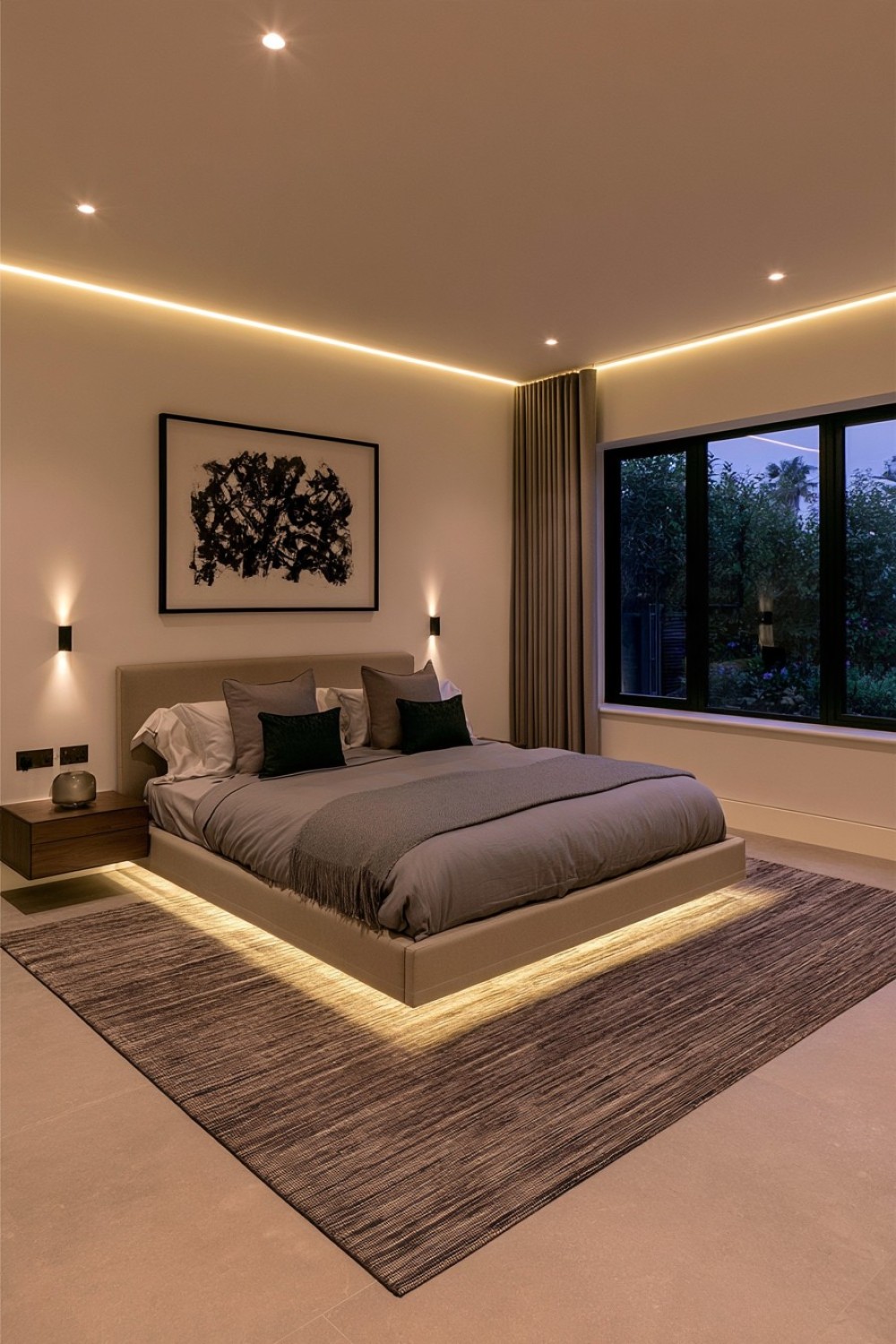
A floating or recessed-base bed can accommodate discreet LEDs underneath the frame, producing a gentle floor-level glow. This approach is particularly effective in modern bedrooms because the light reinforces the visual gap beneath the bed without introducing another visible fixture.
The strip should sit far enough inside the bed frame that someone standing nearby cannot see the diodes directly. A diffuser and low brightness setting prevent the floor from developing a harsh outline.
Warm white is usually the safest choice for bedrooms. Saturated colors can still be used occasionally if the system supports them, but designing the room around constantly changing RGB lighting can make the decor harder to coordinate.
Motion activation is another practical option. A subtle under-bed light triggered when someone gets up can provide enough visibility for nighttime movement without turning on a strong overhead fixture. Position sensors carefully so ordinary movement in bed does not activate them unnecessarily.
12. Frame a Desk With Functional LED Task Light
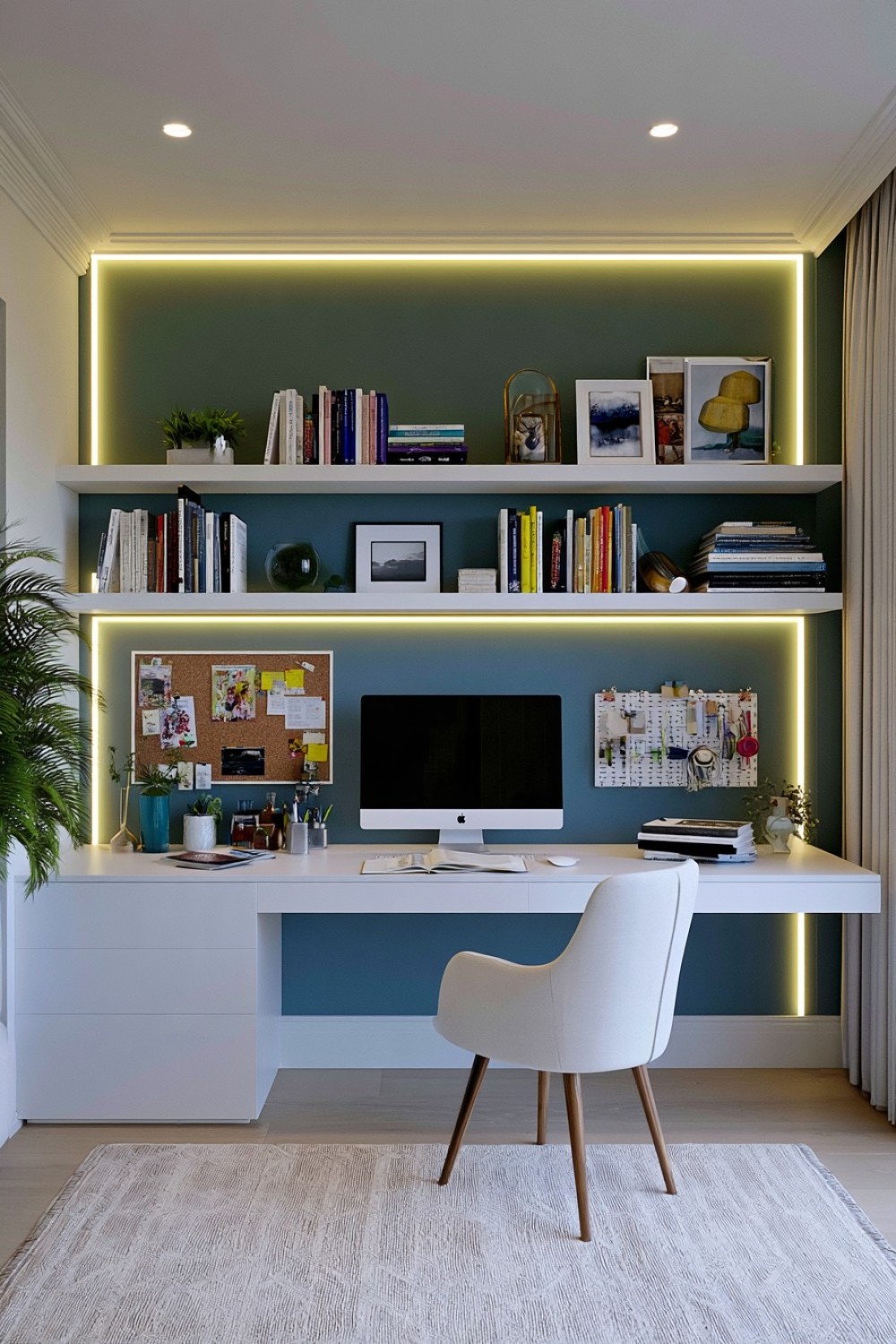
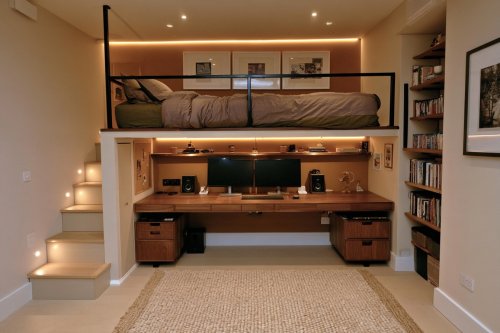
Home offices benefit from layered lighting just as much as living rooms. An LED strip beneath a shelf positioned above the desk can create useful task illumination while keeping the work surface free from another lamp.
For reading and paperwork, install the strip toward the front of the shelf rather than against the back wall. This directs more usable light onto the desk instead of producing only decorative illumination. A diffuser helps reduce reflections on glossy surfaces and computer screens.
Neutral white light around 3000K to 4000K often feels appropriate for workspaces, although comfort and surrounding daylight should guide the final choice.
If the desk includes shelving or pegboard storage, integrate the light into those elements rather than outlining the entire workstation. The result feels more like purposeful furniture design and less like decorative strip lighting. A dimmer can also help the same setup transition from daytime work to lower-intensity evening use.
13. Wash Curtains With Concealed Light
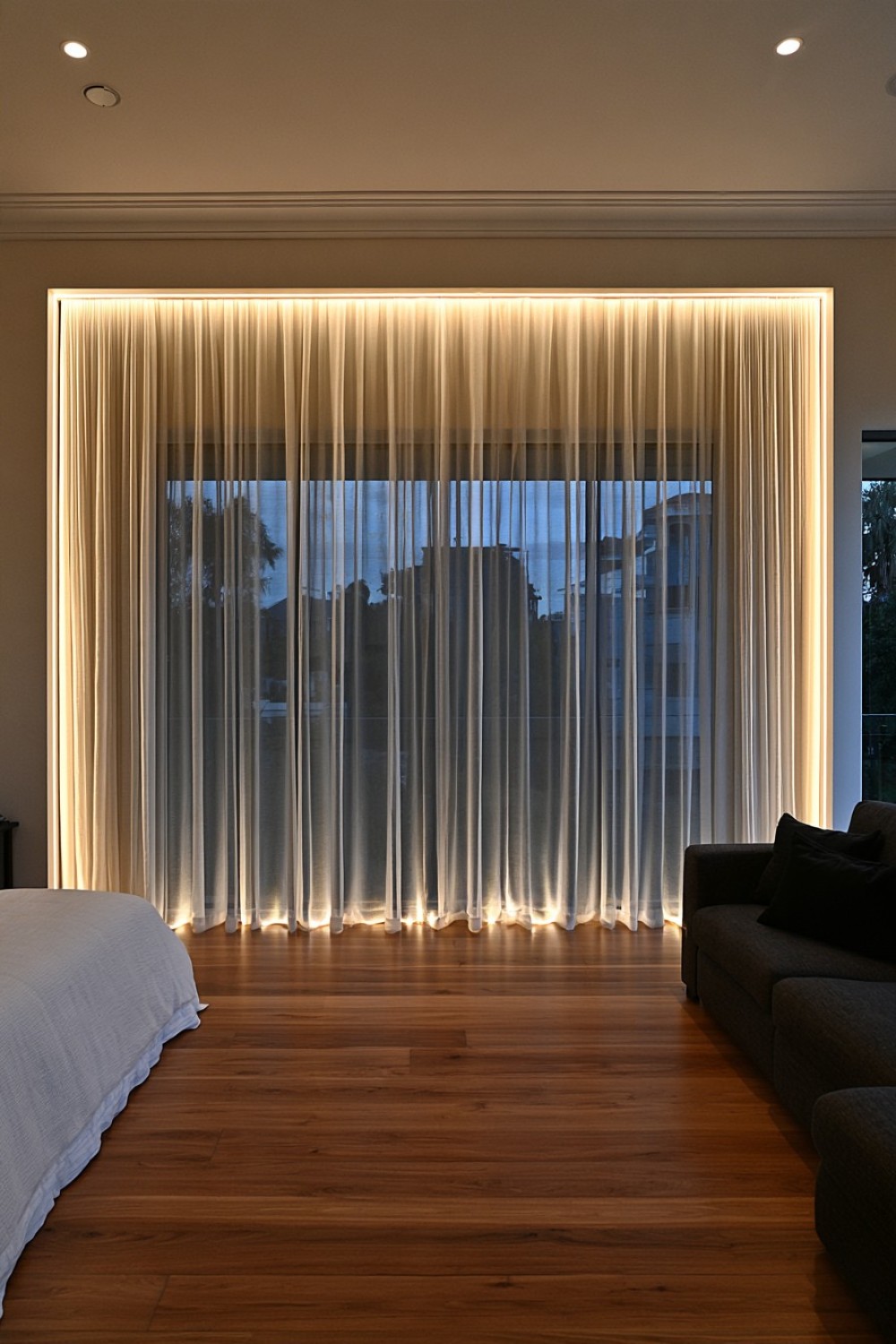
Curtain lighting can make a wall feel taller and add depth around a window without placing the LEDs directly in view. Installing a strip inside a curtain pelmet or recessed track allows light to travel down the fabric in a soft vertical wash.
This treatment works particularly well with linen, sheer panels, and other fabrics that have visible texture. The light catches folds and creates gentle highlights and shadows rather than a flat illuminated surface.
Keep the strip slightly away from the fabric to improve light spread and avoid concentrating heat in one area. Modern quality LEDs operate efficiently, but installation should still follow the product manufacturer's clearance recommendations.
Warm white generally produces the most residential effect. If the curtain lighting is dimmable, it can become a useful ambient layer after sunset while table and floor lamps handle localized lighting. During the day, the entire installation can remain hidden inside the window treatment.
14. Give a Kitchen Island a Subtle Underglow
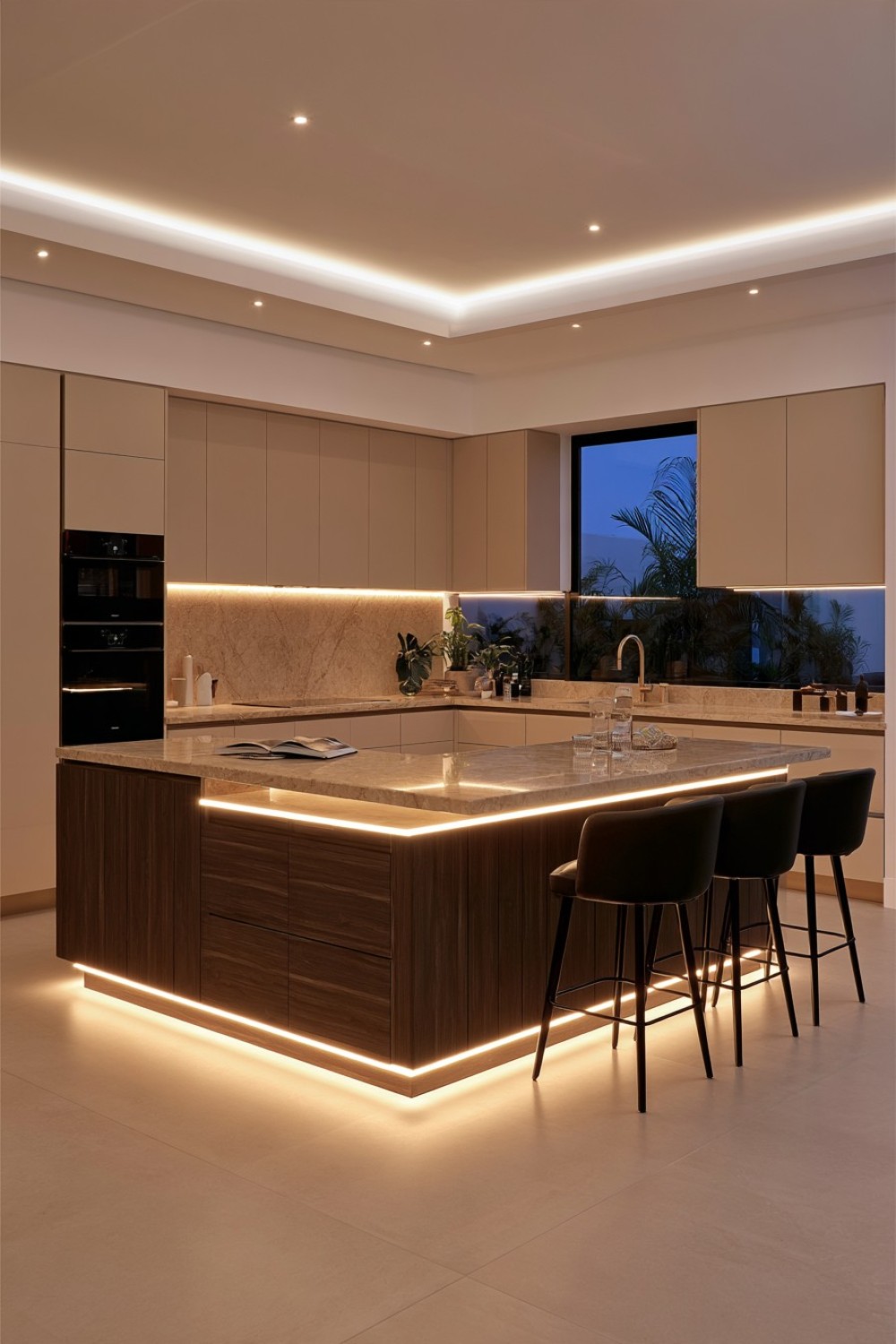
An island already acts as a major visual anchor in many kitchens, so LED lighting should enhance its proportions rather than overpower them. One effective option is recessing a strip beneath an overhanging countertop or along the underside of the island base.
Lighting under the counter edge can softly emphasize stone thickness and surface texture, while base lighting creates a lighter floating effect. Choose one approach instead of illuminating every available edge.
This detail is particularly attractive with natural stone, waterfall counters, and darker cabinetry because controlled light introduces contrast after sunset.
Coordinate the color temperature with pendant lights above the island. A warm pendant combined with cool blue-white LEDs below can make the composition feel disconnected. Matching or closely related temperatures usually appear more intentional.
Because kitchen islands are exposed to spills and frequent cleaning, the LEDs and channels should also be positioned where they are protected from direct contact.
15. Bring Depth to Display Niches
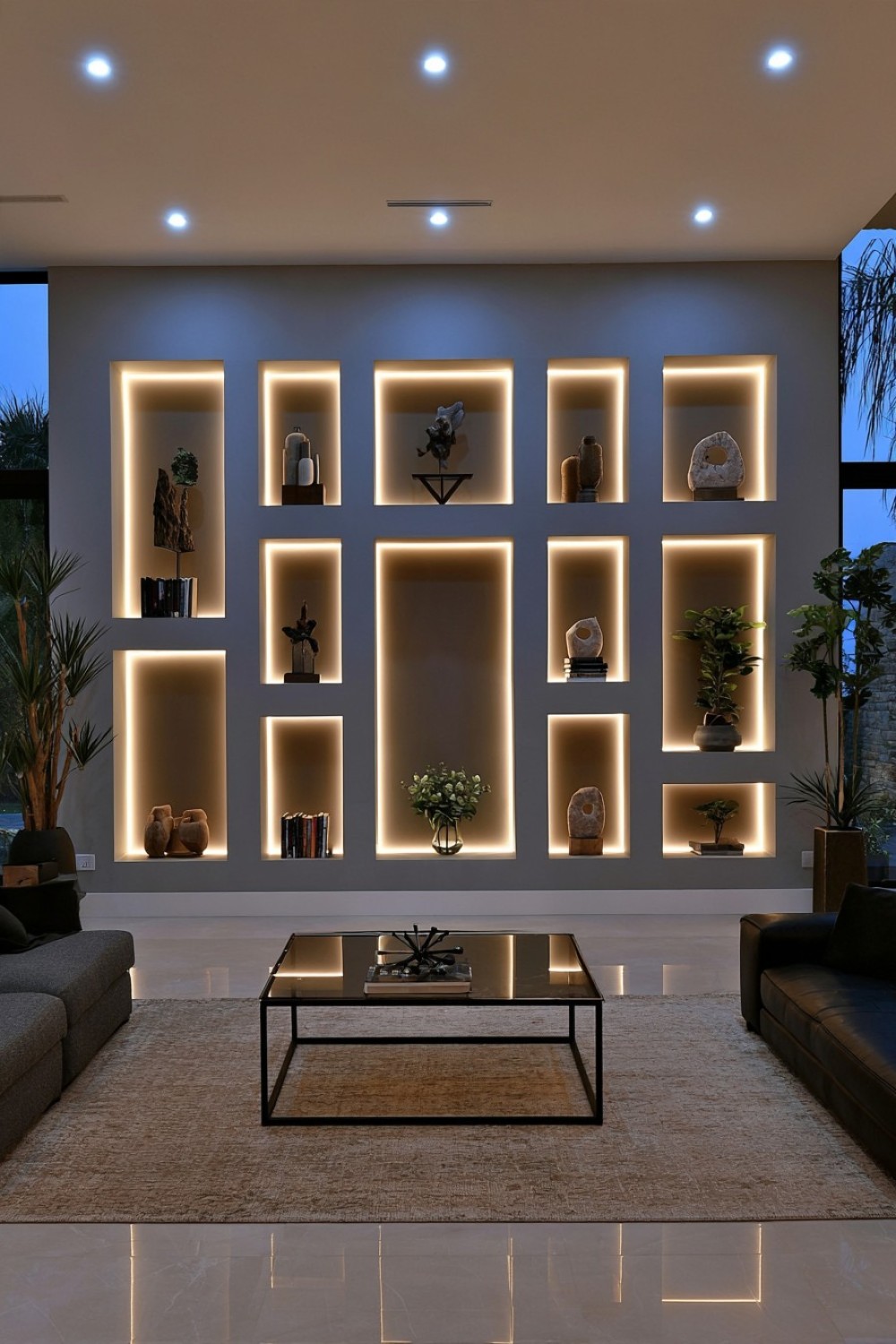
Small wall niches and recessed alcoves can disappear visually if they rely solely on the room's general lighting. Adding a concealed LED source transforms them into small architectural focal points.
A strip placed along the upper interior edge can wash downward across ceramic pieces, books, natural stone, or decorative objects. For deeper niches, vertical side lighting may provide more even coverage.
Avoid filling every illuminated niche with numerous accessories. Light naturally attracts attention, so a restrained composition often looks more sophisticated. One sculptural object with surrounding empty space can be more effective than a crowded shelf.
The interior finish also affects the result. Matte plaster produces soft diffusion, darker paint creates dramatic contrast, and textured stone introduces stronger shadows.
If several niches appear on the same wall, use consistent color temperature and brightness so they read as one architectural composition instead of unrelated glowing boxes.
16. Install Gentle Night Lighting in Hallways
Hallways rarely need full brightness throughout the evening. Low-level LED lighting near the baseboard or inside shallow wall recesses can provide enough guidance for nighttime movement while keeping adjacent bedrooms calmer.
Rather than running a visible strip along the entire skirting board, integrate the LEDs into short architectural sections or recessed channels. This prevents the corridor from looking overly futuristic and allows the illumination to feel like part of the building.
Motion sensors are especially useful here. Set the system to a low output so activation during the night does not create an abrupt burst of light.
Floor and wall colors will change the perceived brightness. Pale surfaces reflect more light, meaning a relatively modest LED output may be sufficient. Dark hallways may need several carefully placed sources rather than one excessively bright strip. Good hallway lighting prioritizes orientation, comfort, and visual continuity over decorative spectacle.
17. Use LEDs to Emphasize Architectural Details
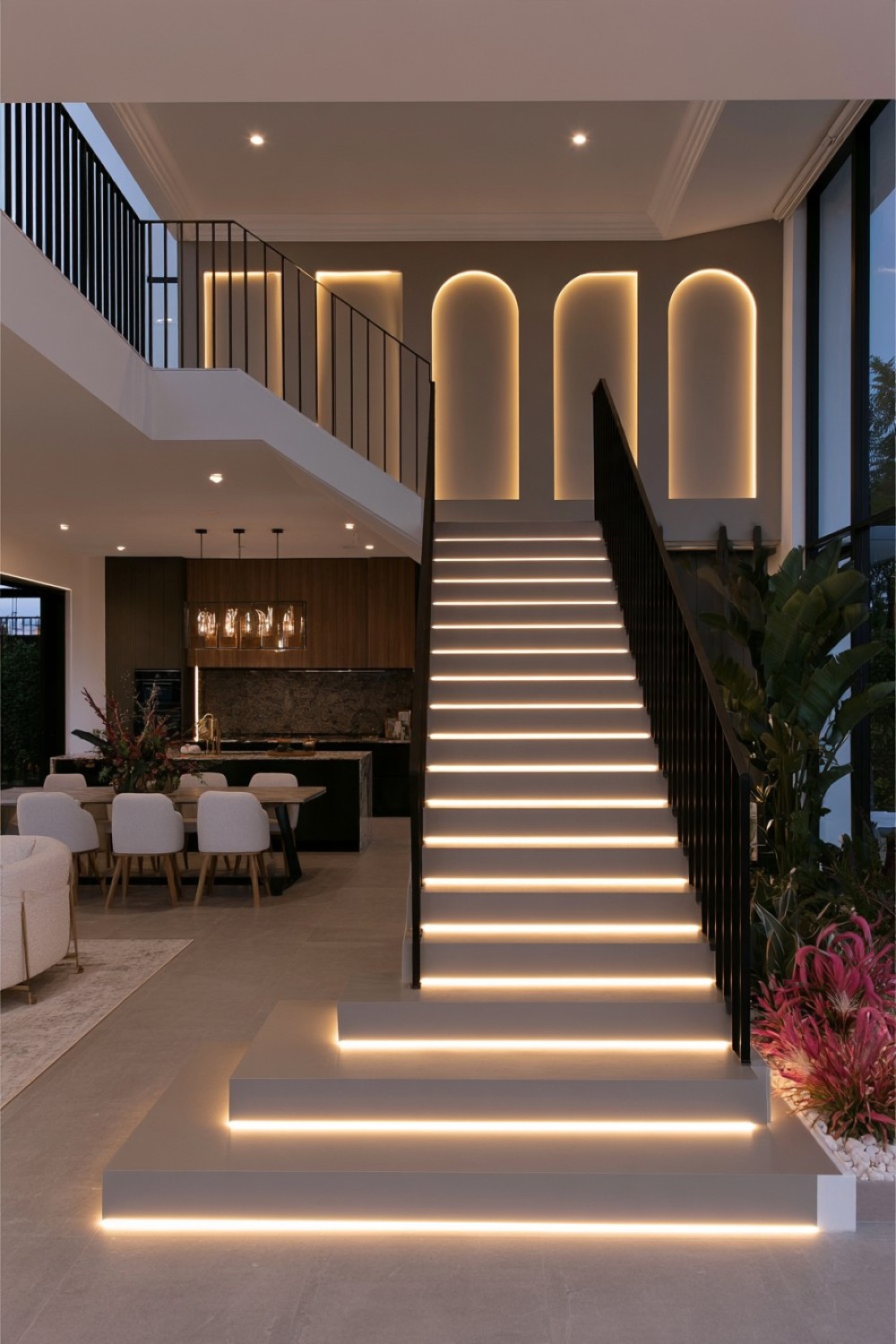
Some of the most effective LED applications do not involve furniture at all. Ceiling beams, wall recesses, arches, floating panels, built-in cabinetry, and unusual transitions between materials can all be emphasized with narrow concealed lighting.
Start by identifying which architectural feature already deserves attention. The LEDs should reinforce that feature rather than invent a focal point where none exists. For example, a strip hidden above a timber beam can gently reveal the ceiling plane, while light inside a recessed wall joint can emphasize a transition between plaster and stone.
Restraint is essential. When ceiling edges, shelves, floors, television units, stairs, and furniture are all illuminated simultaneously, the room loses hierarchy. Choose one or two important areas and allow darker zones to remain.
This balance between illumination and shadow is what gives architectural lighting depth. A thoughtful LED installation should make the room itself look better, not simply draw attention to the lighting technology.
Designing LED Lighting That Feels Intentional
The best LED lighting rarely begins with the question, “Where can I attach another strip?” Start instead with what the room needs after daylight fades. A kitchen may benefit from stronger countertop illumination, a bedroom from gentle low-level lighting, and a living room from indirect light that reveals shelving or architectural texture.
Color temperature, brightness, concealment, and placement are just as important as the fixture itself. Using aluminum channels and diffusers can make inexpensive strips look more integrated, while dimmers allow one installation to serve several moods throughout the day.
Most importantly, leave some areas unlit. Contrast gives illuminated surfaces their impact. By treating LEDs as one layer within a broader lighting plan rather than as decorative outlines around every surface, the result can feel calmer, more useful, and far more connected to the home's overall design.
MORE IDEAS


Share
What's Your Reaction?
 Like
0
Like
0
 Dislike
0
Dislike
0
 Love
0
Love
0
 Funny
0
Funny
0
 Angry
0
Angry
0
 Sad
0
Sad
0
 Wow
0
Wow
0