15 Mardi Gras Centerpiece Designs With Dramatic Carnival Style

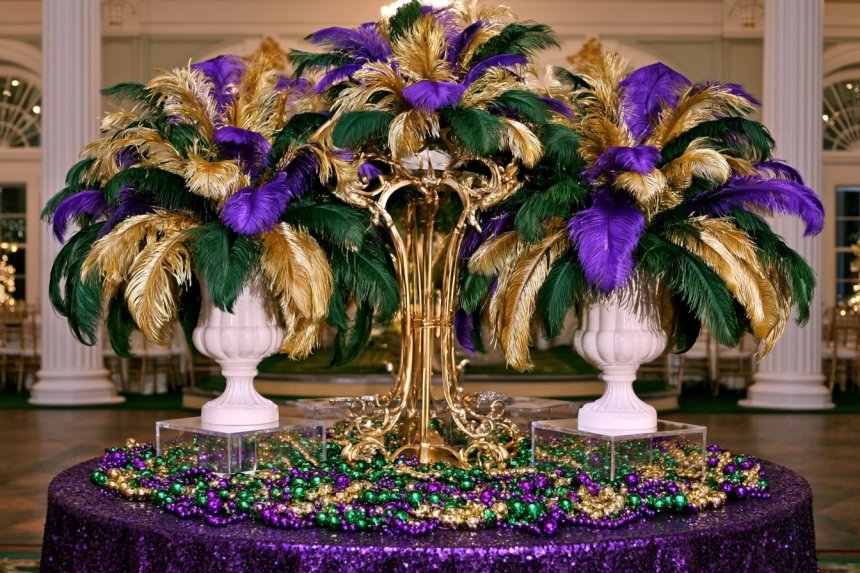
Mardi Gras centerpieces can be bold without becoming crowded or overly literal. Purple, green, and gold immediately establish the mood, but the most memorable tables usually build on those colors with strong shapes, reflective materials, theatrical height, and details inspired by masks, parades, velvet, feathers, and old-world celebration. Instead of filling a vase with beads and calling it finished, think about how the centerpiece can create movement, surprise, and a sense of spectacle from every angle. These ideas use layered materials, clever DIY construction, and more sculptural styling so the table feels festive and dramatic while still leaving enough room for food, conversation, and practical use.
1. Build a Floating Mask Centerpiece
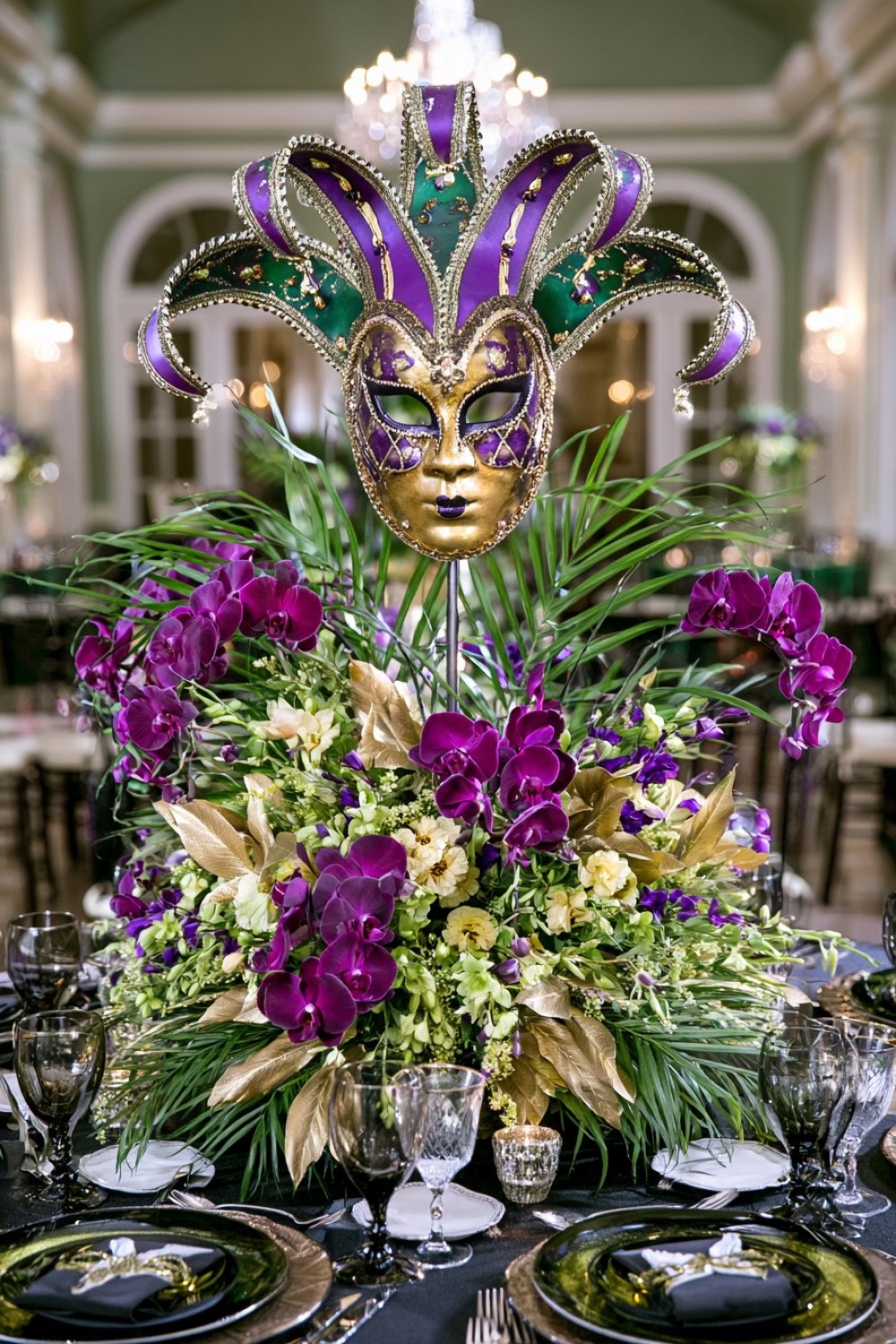
Instead of placing masks flat on the table, suspend one ornate mask above a low floral base so it appears to hover.
You will need a lightweight decorative mask, clear monofilament, a discreet stand or overhead support, low floral vessels, and flowers in deep purple, chartreuse green, cream, or gold-toned foliage.
Keep the floral arrangement low and asymmetrical. The mask should remain the visual focus.
For a more refined effect, choose a mask with one dominant finish—aged gold, matte plum, or black with metallic detailing—rather than one covered in several competing colors.
This works especially well on round tables because guests can see the mask from multiple angles.
If suspending anything overhead, use secure hardware and make sure the piece cannot swing into guests, glassware, or food.
2. Create a Velvet-and-Metal Floral Tower
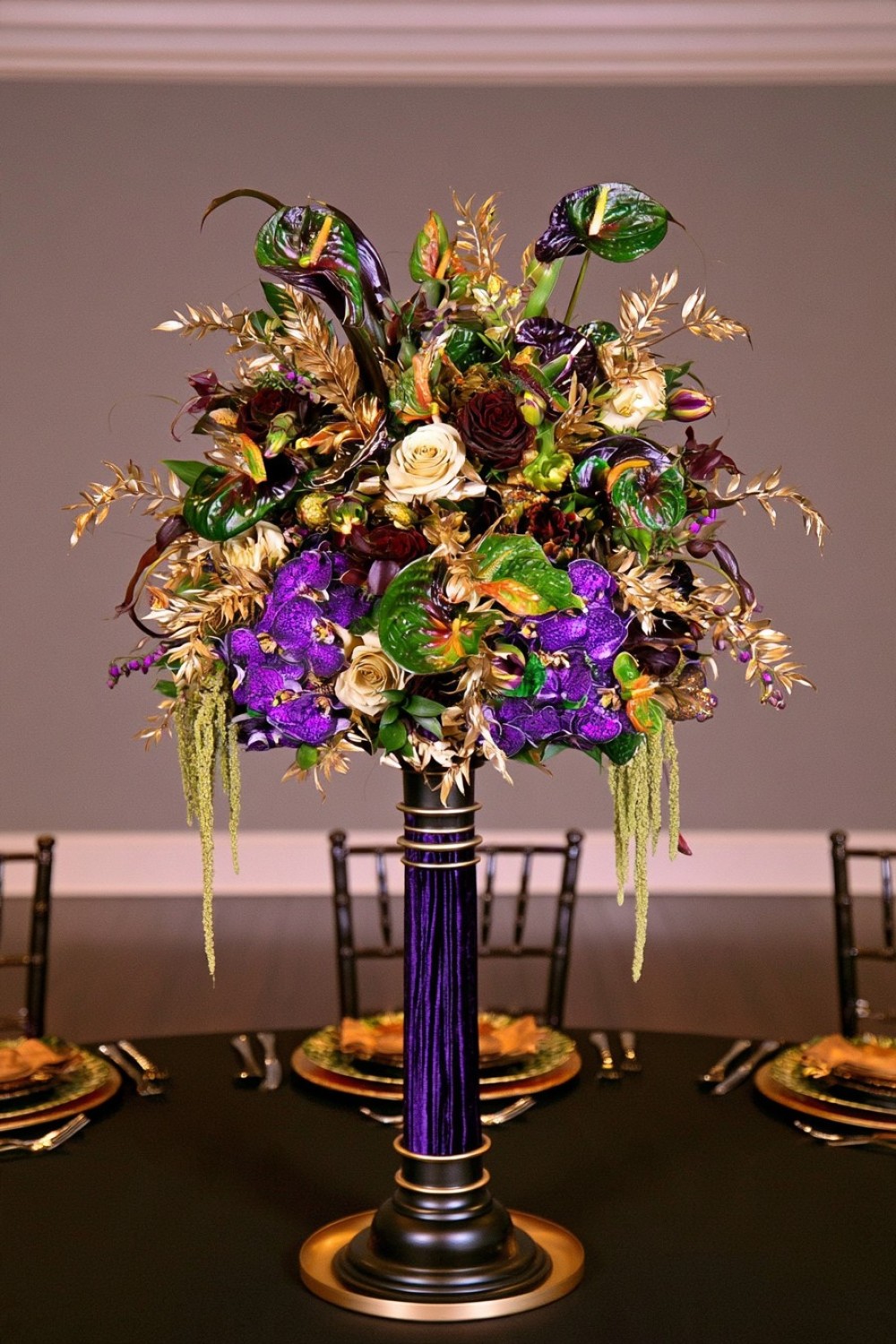
Velvet immediately adds richness to a Mardi Gras table.
Wrap a tall cylindrical pedestal or sturdy floral riser in deep purple or emerald velvet, then place a compact floral arrangement at the top.
Use flowers with strong silhouettes such as orchids, anthuriums, roses, or amaranthus rather than a generic mixed bouquet.
Add brushed gold metal at the base through a thin tray, small ring, or narrow trim detail.
The contrast between soft velvet and reflective metal gives the centerpiece more depth than color alone.
Keep the tower narrow enough that guests can still see around it.
This idea works particularly well for formal dinners where you want Mardi Gras drama without making the table look like a novelty party setup.
3. Build a Masked Floral Arch in Miniature
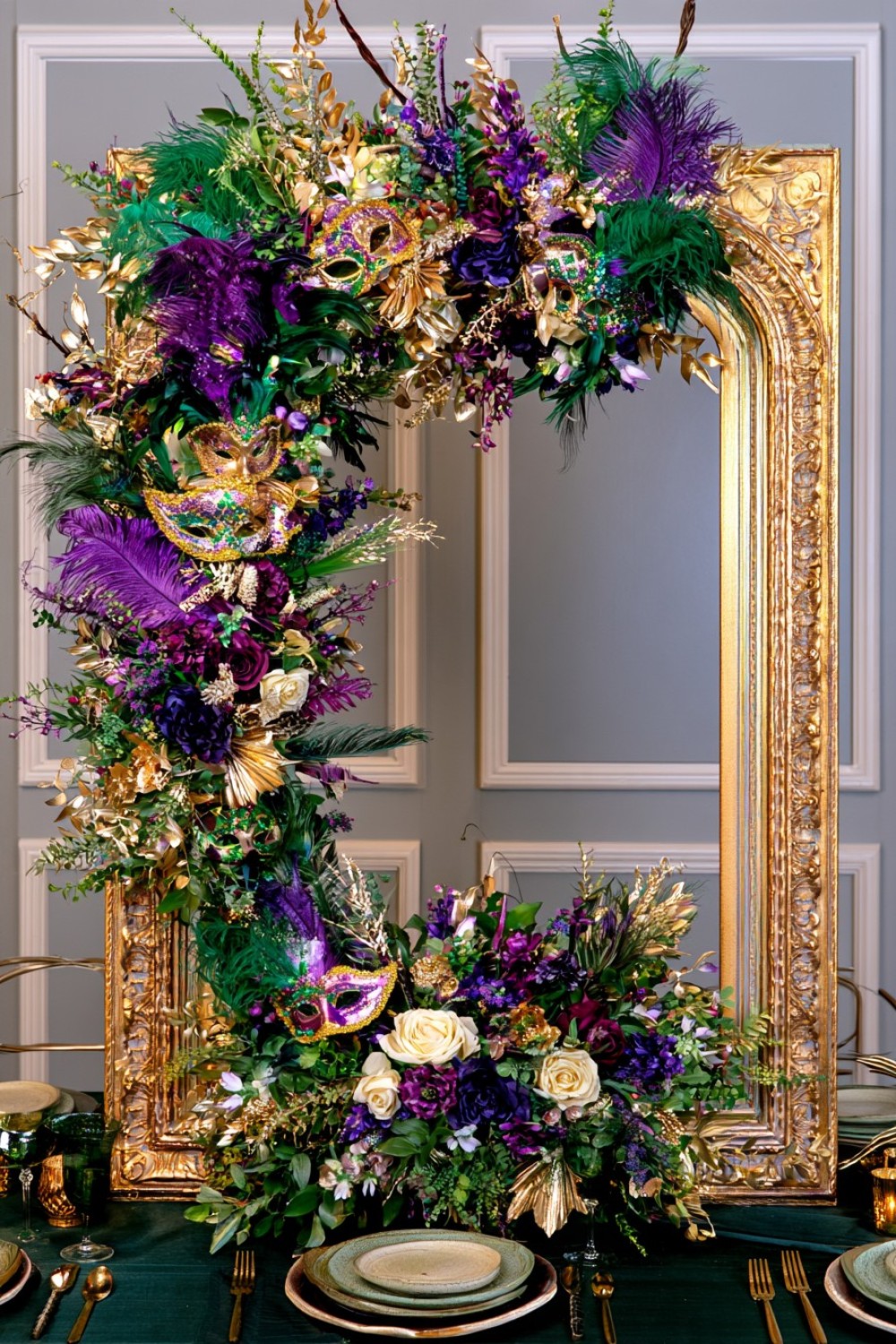
Instead of using a conventional floral arrangement, create a small architectural arch across the center of the table.
For a DIY version, cut two narrow arch shapes from plywood, foam board, or lightweight rigid material and connect them with a small base.
Paint the structure aged gold or dark plum.
Nest small masks, feathers, or floral stems into one side of the arch rather than covering the whole frame.
The asymmetry is what keeps the piece from feeling overly theatrical.
Use the open center of the arch as negative space so guests can still see through the centerpiece.
This approach works especially well on long rectangular tables where several smaller arches can repeat in sequence.
4. Use Colored Glass to Create a Jewel-Tone Glow
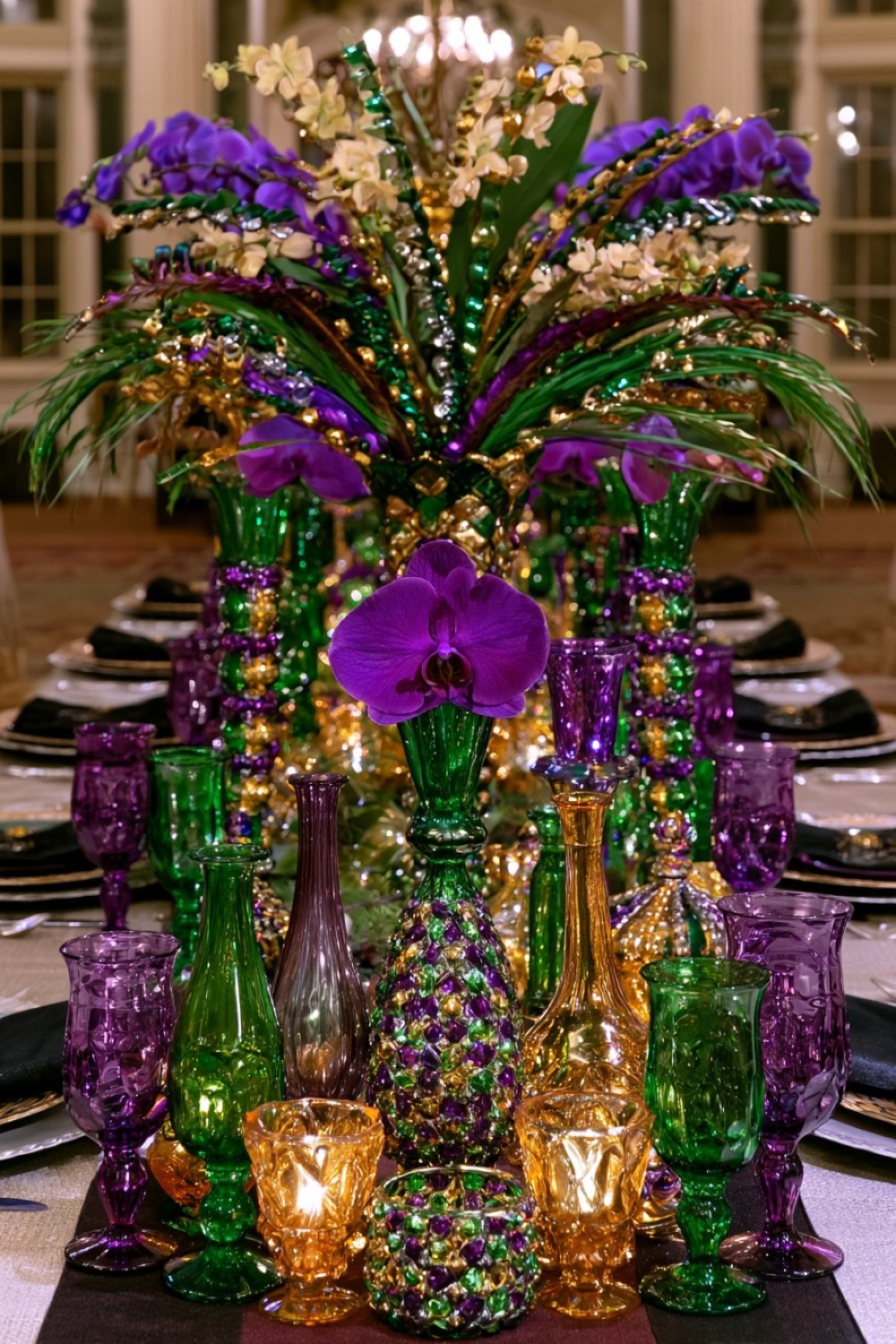
Purple, emerald, amber, and smoky glass can carry Mardi Gras color in a more sophisticated way than plastic decorations.
Collect translucent vases, bottles, goblets, or glass cylinders in varying heights and arrange them loosely down the table.
Fill only some with flowers. Leave others empty so light can pass through them.
Amber glass can stand in for gold without looking overly shiny, while deep violet and green keep the traditional palette recognizable.
If natural or directional light reaches the table, the glass can cast colored shadows onto the cloth.
This is especially effective for evening dinners where the centerpiece can feel dramatic without relying on glitter or sequins.
5. Create a Feather Gradient Instead of a Feather Explosion
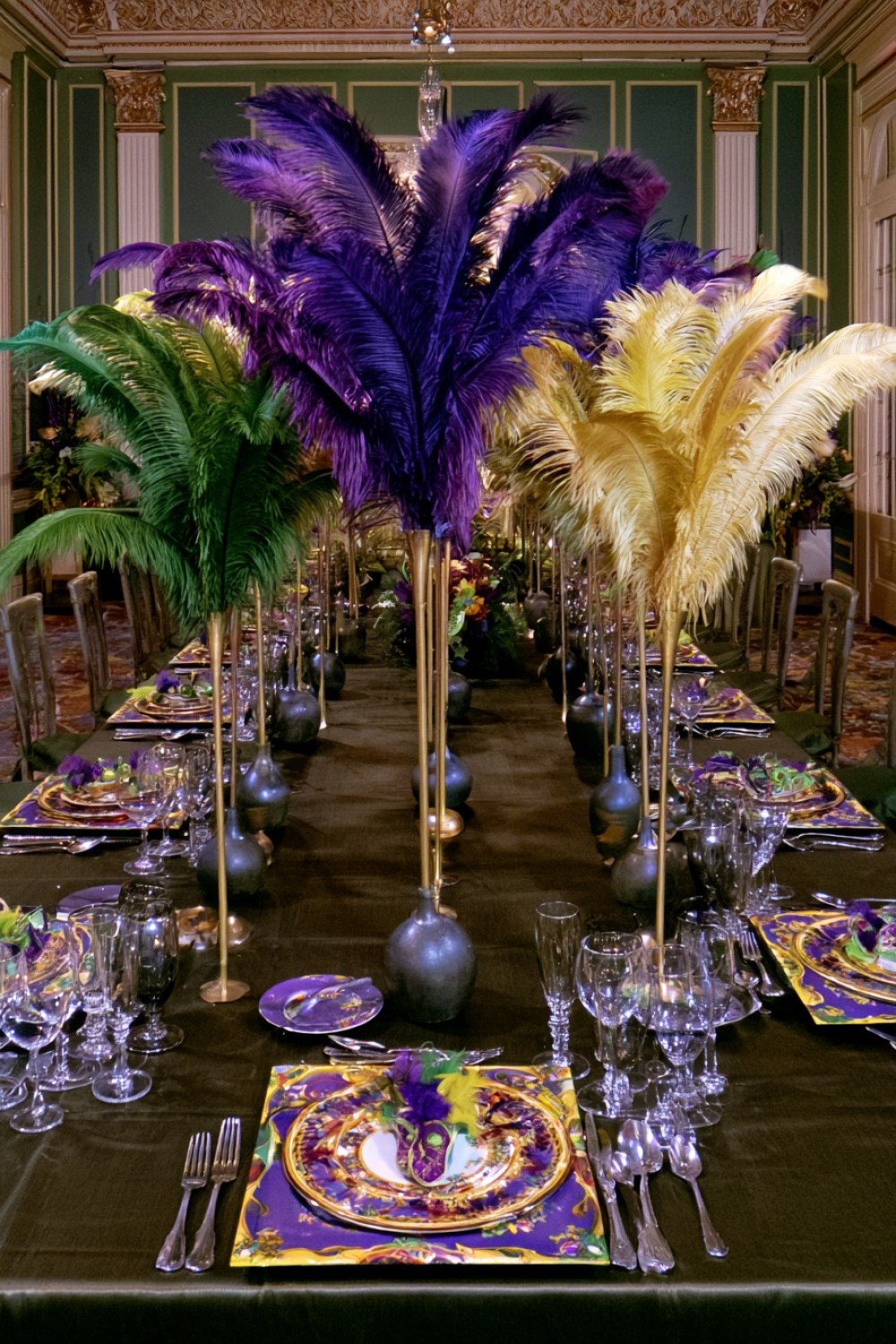
Feathers are common in Mardi Gras decor, but using them in a controlled gradient makes the table feel much more intentional.
Start with green feathers at one end, move into purple through the center, and finish with pale gold or cream at the opposite end.
Use narrow ceramic or metal bud vases so each group stays visually separate.
Keep the feathers upright and sparse rather than creating large fluffy clusters.
For a more sculptural result, mix different lengths and shapes while keeping the color transition consistent.
This works especially well on long dining tables where the gradient can be seen from a distance.
Choose clean decorative feathers and keep them away from food, open flames, and serving surfaces.
6. Build a Beaded Crown Centerpiece
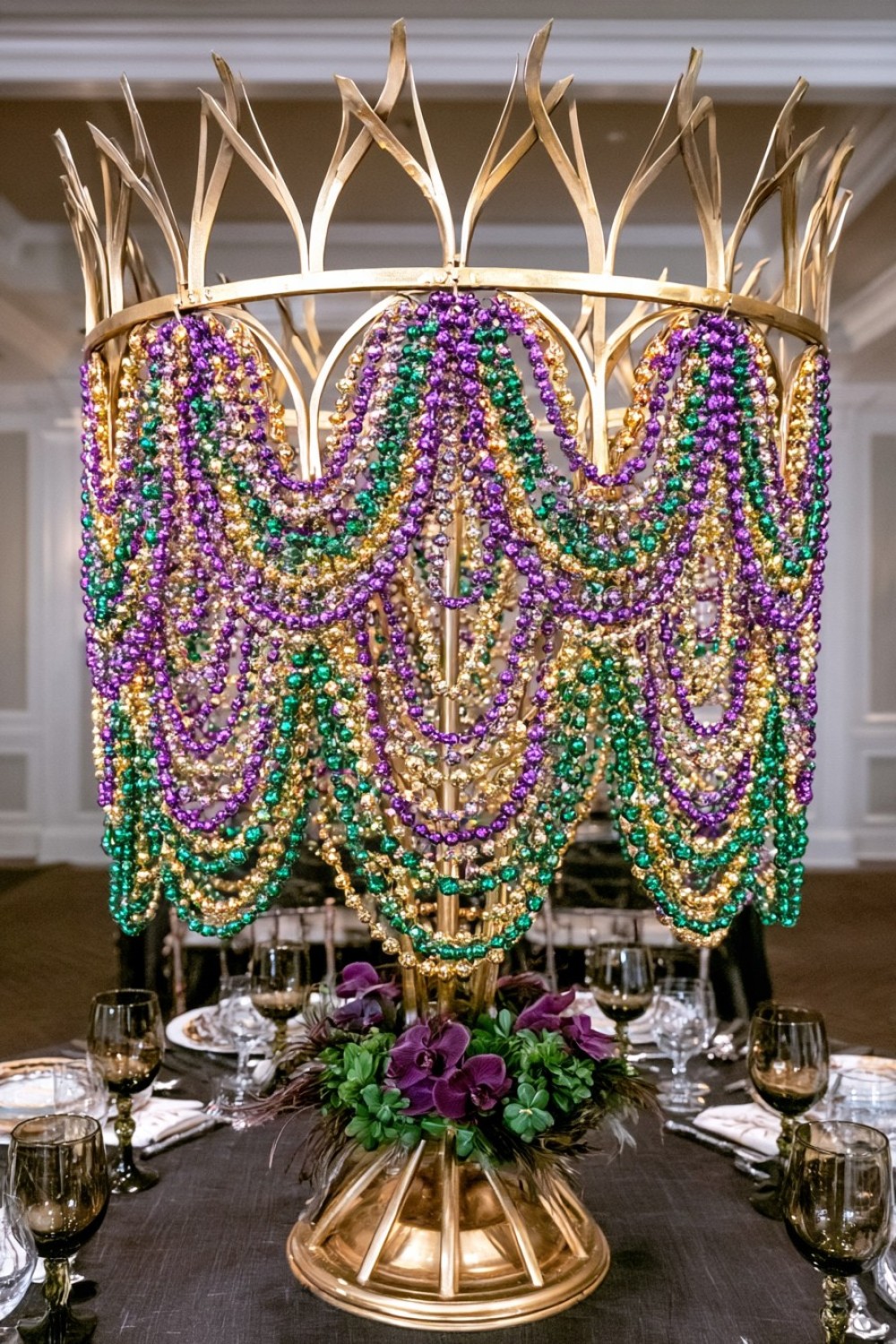
Instead of scattering bead necklaces across the table, turn them into a sculptural object.
Use a wire crown or circular metal frame as the base and drape Mardi Gras beads through it in controlled vertical loops.
You will need a sturdy metal form, bead strands in purple, green, and gold, wire cutters, floral wire, and a weighted base.
Allow some bead loops to hang longer than others so the centerpiece feels layered.
Add only a few flowers or feathers at the crown base.
The idea is to transform a familiar Mardi Gras material into something architectural rather than simply decorative.
This works beautifully on buffet tables or larger dining tables where the piece has enough space to stand on its own.
7. Make a Black-and-Gold Carnival Table With One Color Accent
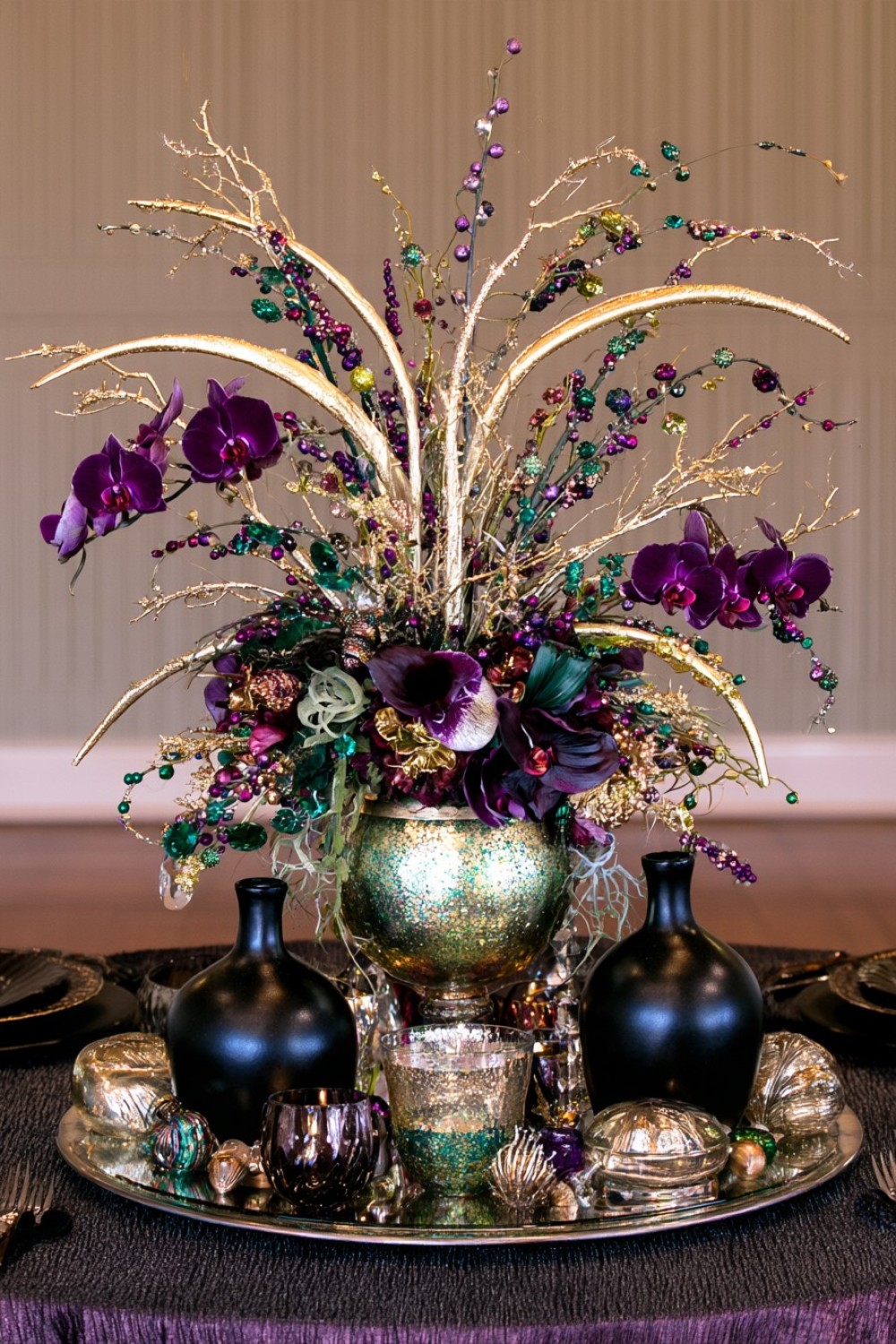
A strong Mardi Gras centerpiece does not need all three colors at equal intensity.
Build the arrangement primarily in black and aged gold, then introduce either purple or green as one controlled accent.
For example, use black ceramic vessels, gold-painted sculptural branches, and a few deep violet flowers.
The limited palette creates a more dramatic, almost theatrical mood.
This works particularly well in darker dining rooms or evening events.
Add texture through matte ceramics, brushed metal, velvet ribbon, or smoked glass rather than adding more colors.
The result still feels clearly connected to Mardi Gras but avoids the visual overload that can happen when every object uses the full palette.
8. Turn Vintage Frames Into a Table Sculpture
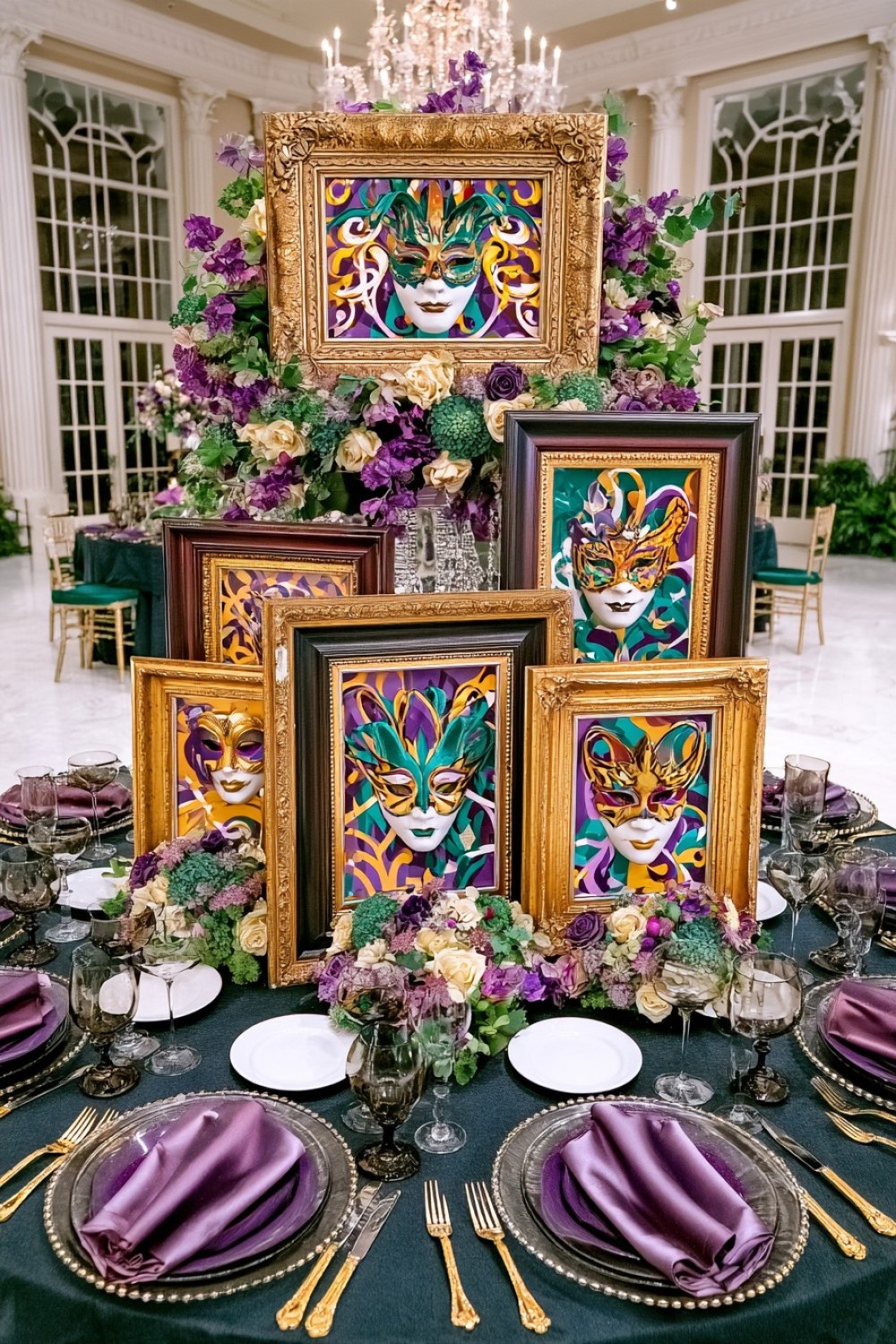
Old ornate frames can become part of a centerpiece instead of staying on the wall.
Use several small frames in gold, dark wood, or painted plum. Remove the glass and stand them upright at different angles using small supports.
Place mini masks, handwritten menu cards, or abstract patterned paper inside them.
For a DIY version, repaint thrifted frames in related finishes rather than trying to make them match perfectly.
Add a few low floral arrangements around the bases.
The overlapping frames create depth and give the table an old-world carnival atmosphere.
This works especially well for a dramatic dinner where the centerpiece should feel collected and theatrical rather than floral-only.
9. Build a Crescent-Moon Mardi Gras Centerpiece
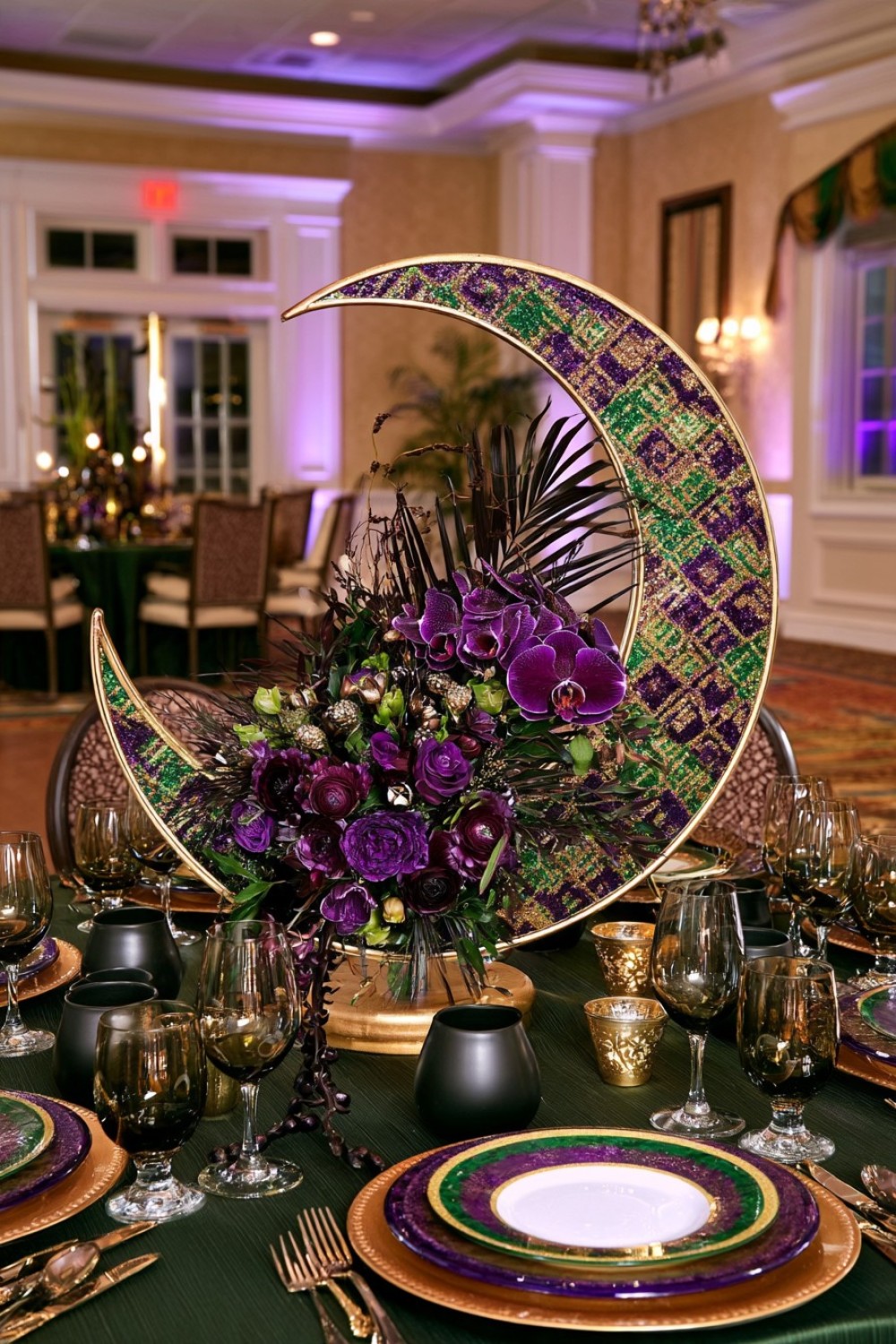
For a more unexpected direction, use a crescent shape as the main sculptural form.
Cut a large crescent from lightweight foam or plywood, cover it in aged gold paint, and mount it securely to a base.
Nest purple flowers, green foliage, and a few metallic accents around the lower curve.
The crescent silhouette creates immediate drama without using a literal Mardi Gras symbol.
For extra depth, keep one side more heavily decorated while leaving the upper section clean.
This idea feels especially effective with dark table linen because the gold form becomes more visible against the background.
Keep the structure lightweight but stable, particularly if the table will be used for active dining.
10. Create a Mini Parade Float Centerpiece
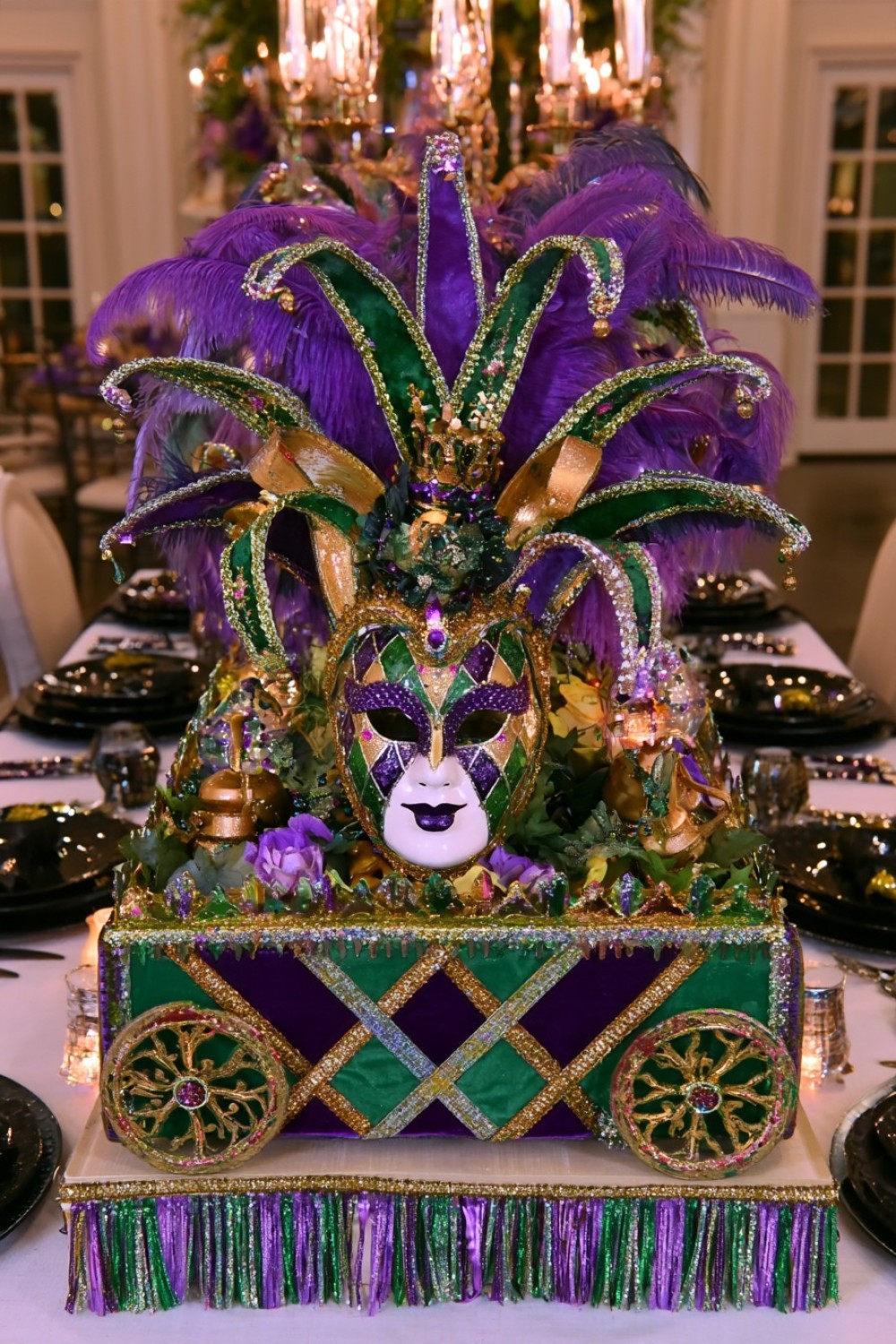
Instead of simply placing decorative objects on the table, build a miniature parade-inspired float.
Use a low wheeled-cart-style base or rectangular platform and cover it with layered fabric, fringe, or metallic trim.
Place a small sculptural centerpiece on top—perhaps a mask, flower arrangement, crown, or abstract carnival form.
For a DIY version, use foam board or lightweight plywood as the base and add decorative wheels that are visual only.
The important part is making the float feel like a designed miniature object rather than a toy.
Keep the palette controlled and the scale low enough that guests can see over it.
This creates a strong narrative element and can become the most memorable object on the table.
11. Build a Centerpiece Around a Fan of Metallic Leaves
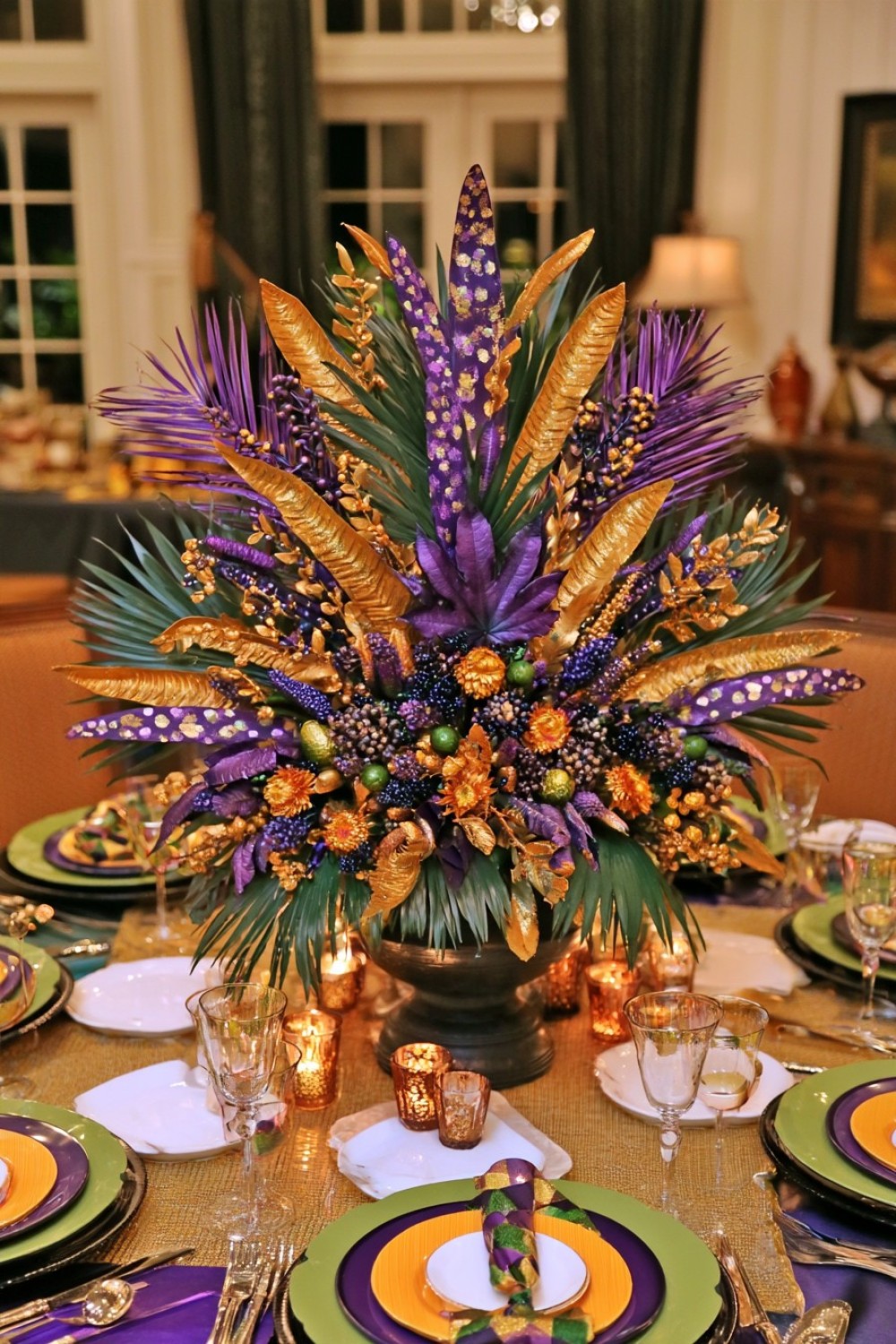
Instead of using conventional flowers, create a fan-shaped composition from painted or metallic foliage.
Use preserved palm leaves, artificial leaves, or clean decorative foliage and finish selected pieces in muted gold, plum, or deep green.
Arrange them in a wide fan using a heavy ceramic vase or low floral base.
Keep some leaves natural to prevent the metallic finish from becoming overwhelming.
The fan shape naturally creates movement and height.
This is particularly effective on a sideboard, buffet table, or large round table where the arrangement can be viewed from the front and sides.
Use only decorative finishes suitable for the foliage and keep painted material away from edible garnishes or serving ware.
12. Make a Mirror-and-Confetti Optical Centerpiece
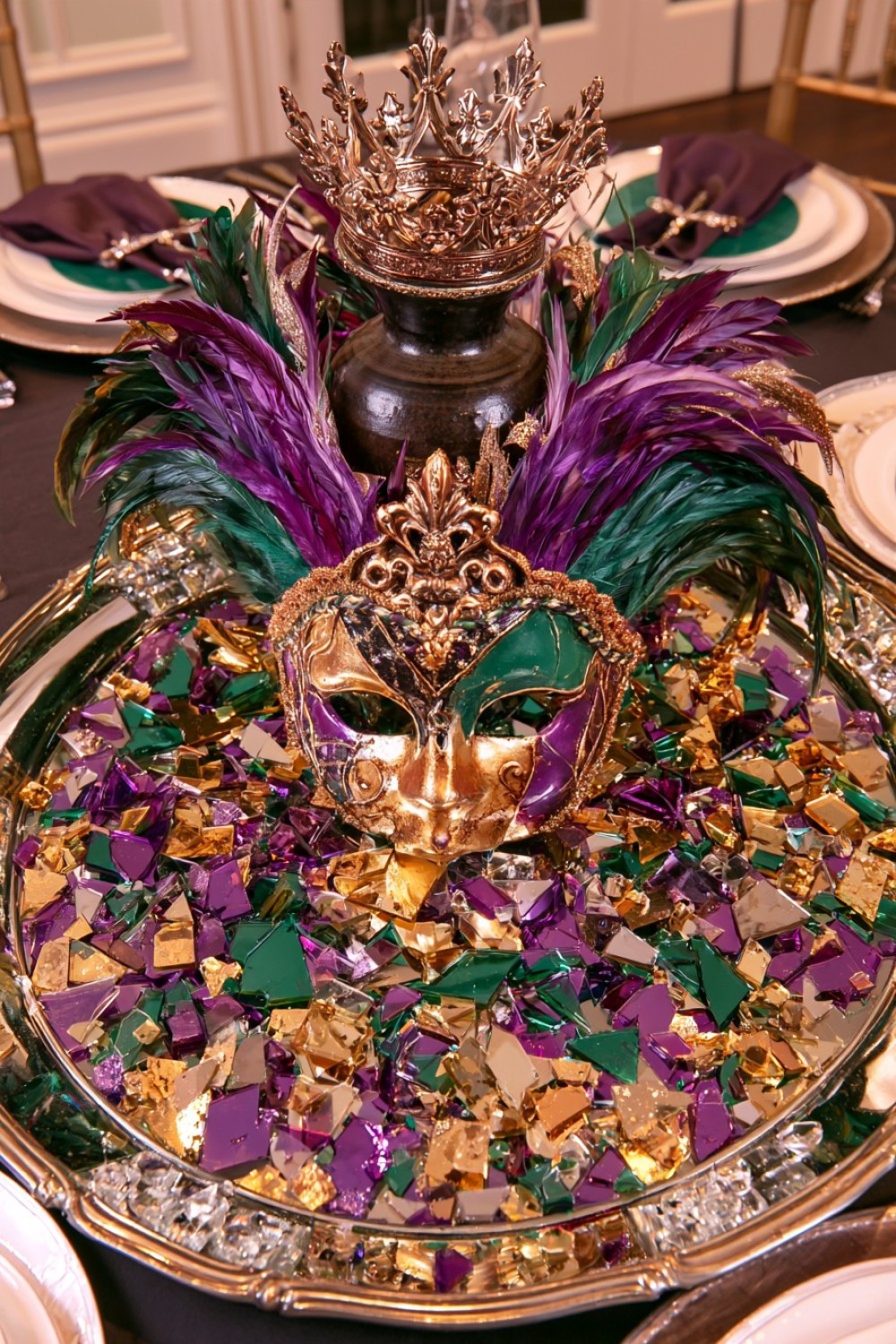
Confetti can feel messy when scattered directly on the table, but mirrored surfaces can make a smaller amount appear more dramatic.
Use a low mirrored tray and place only a few metallic shapes, masks, or glass vessels on top.
The reflection visually doubles the color and sparkle.
Instead of traditional round confetti, use larger geometric pieces in purple, green, and gold.
Add one sculptural object at the center, such as a dark ceramic vase or metallic crown.
Keep the edges of the mirror visible so the optical effect remains clear.
This approach creates more impact with fewer decorative pieces and keeps the surrounding table much cleaner.
13. Create a Floral “Firework” Arrangement
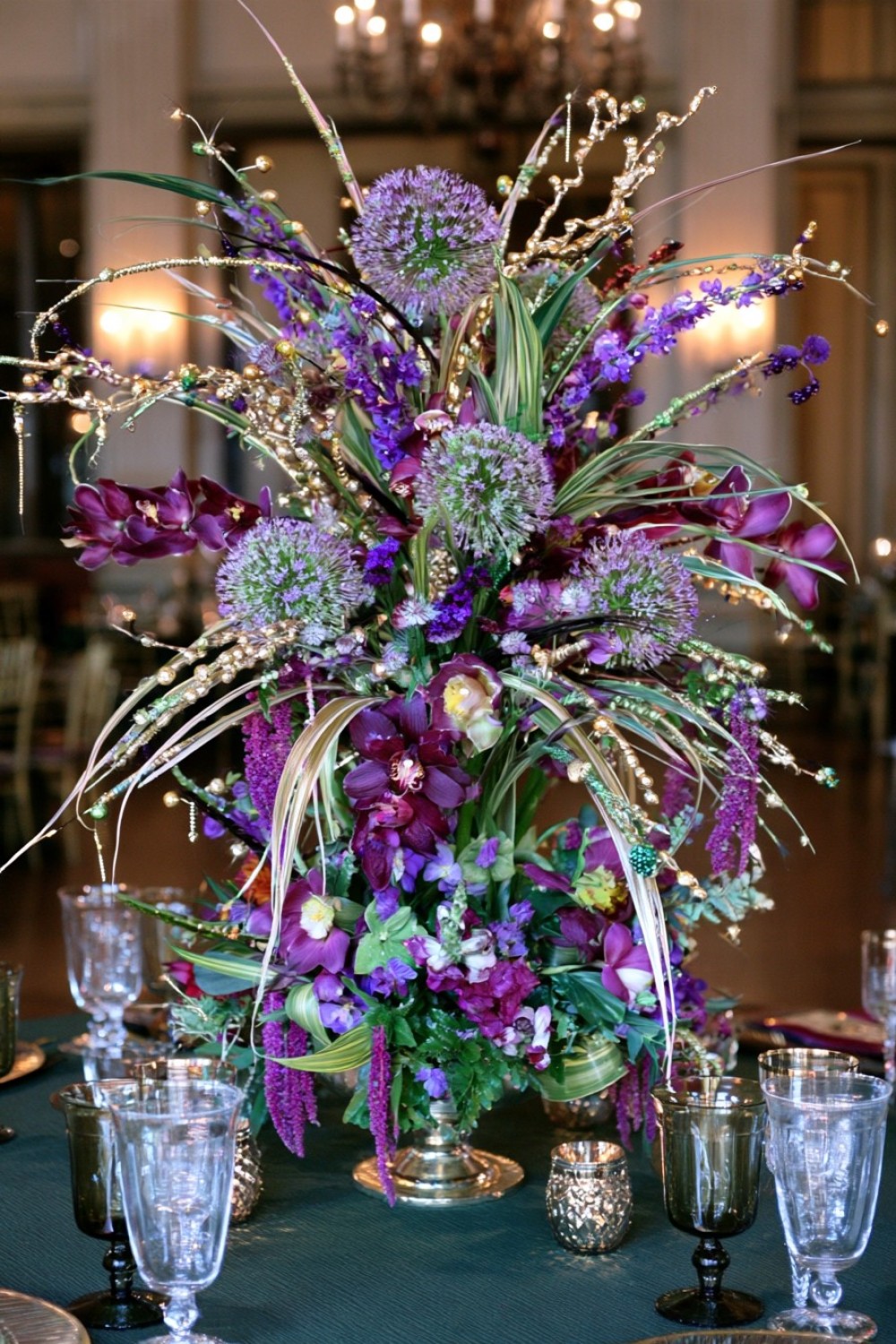
For a centerpiece with strong movement, arrange flowers so they radiate outward like a burst.
Use a low, stable vessel and flowers with long stems such as alliums, orchids, grasses, amaranthus, or decorative branches.
Build the arrangement in several directions instead of straight upward.
Use purple as the dominant color, with green and gold accents appearing in smaller amounts.
The final silhouette should feel energetic and slightly irregular.
This works particularly well on round tables because the burst shape can be appreciated from every side.
Keep the arrangement low enough in the center or open enough through the middle that it does not completely block conversation.
14. Build a Tabletop Carnival Canopy
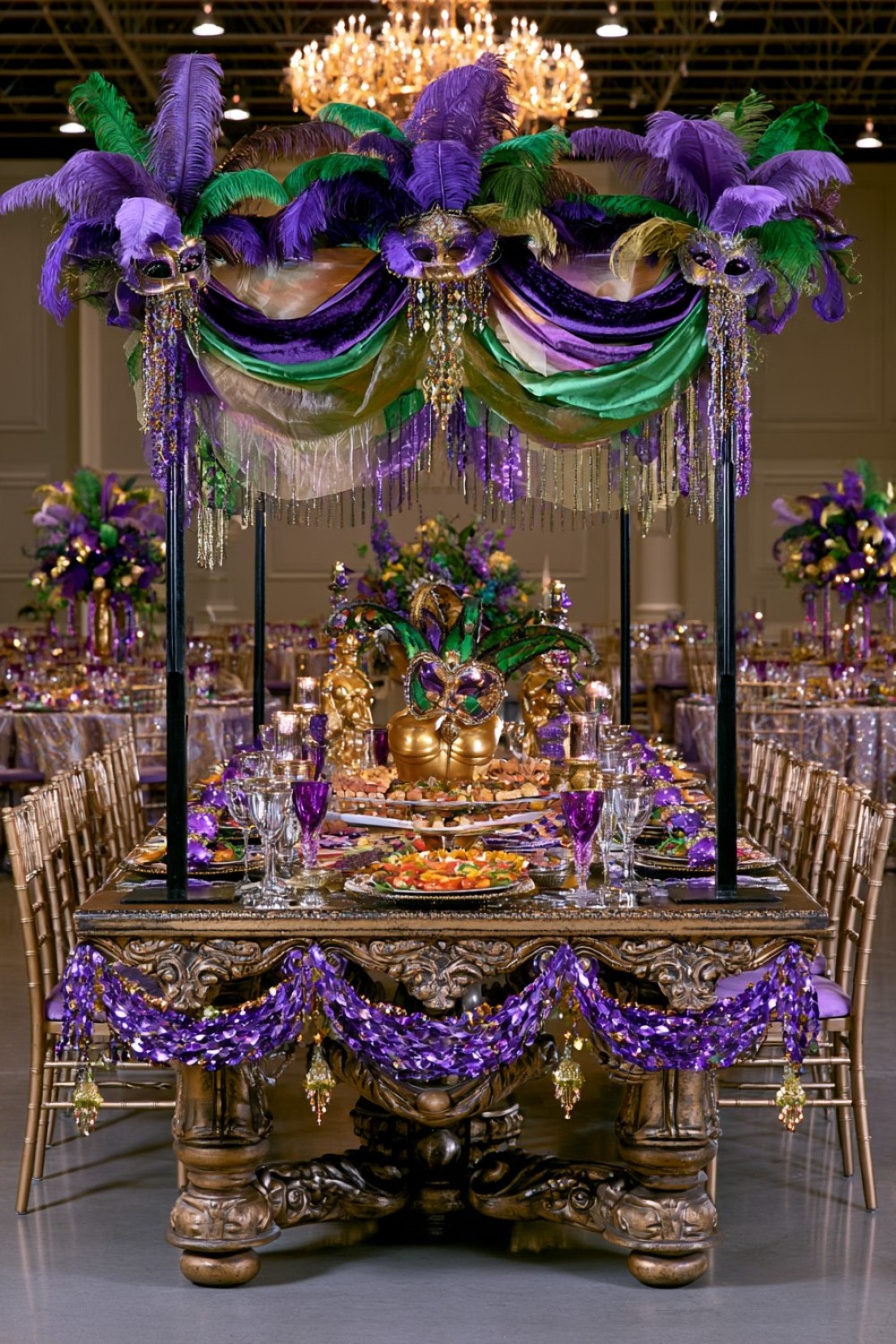
Create a miniature canopy structure that runs over the center of the table.
Use four small weighted posts and connect them with a lightweight top frame.
Drape narrow velvet ribbons, metallic fringe, or translucent fabric from the structure in purple, green, and gold.
Instead of covering the entire table, let the canopy frame one specific serving or centerpiece zone.
For a DIY version, build the frame from lightweight dowels or metal rods and paint it aged gold or black.
Keep fabric well above food and glasses.
This idea creates a small theatrical environment within the table and can make a dinner feel more immersive without requiring full-room decoration.
15. Create a “Midnight Mardi Gras” Centerpiece With Shadow and Reflection
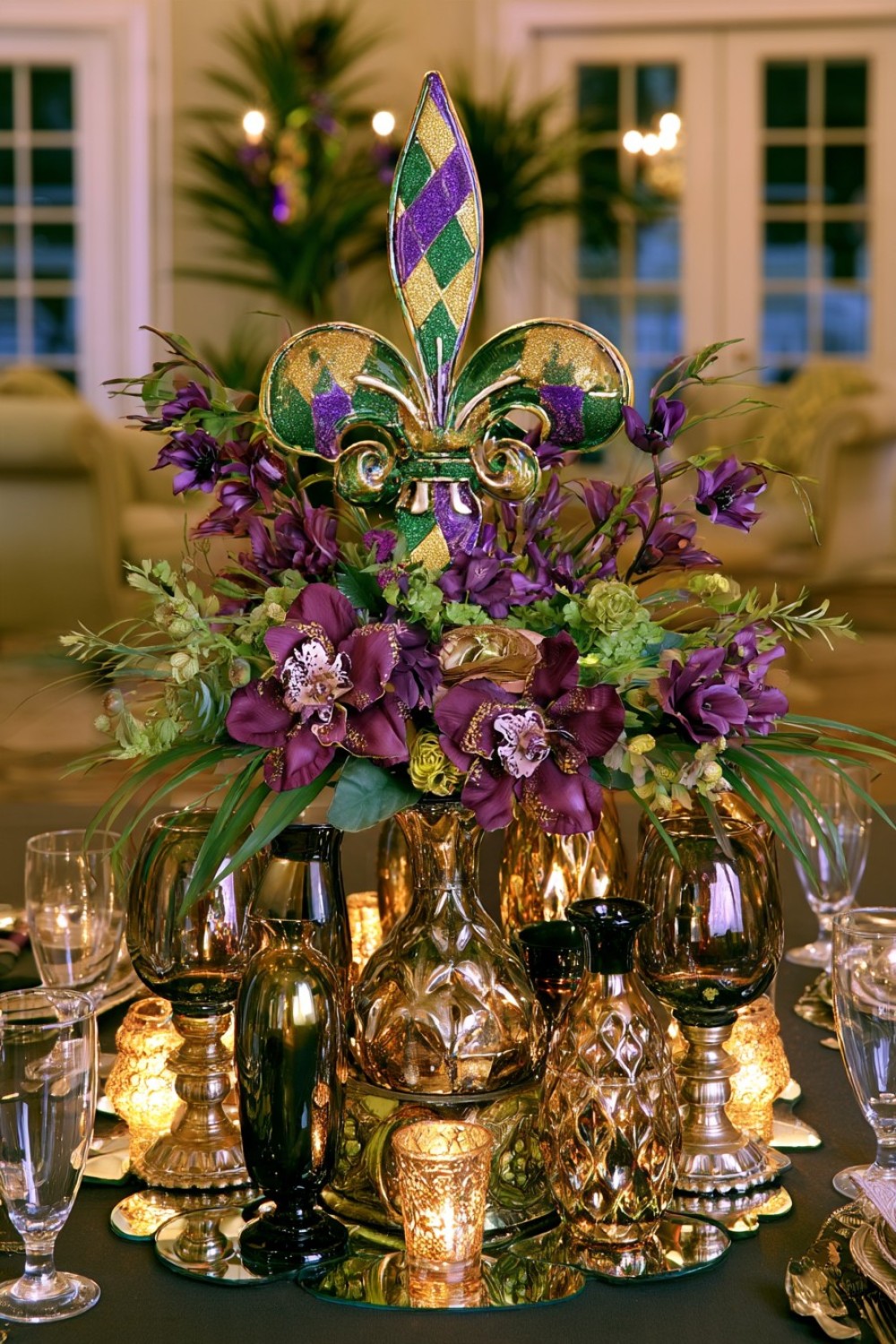
For the most dramatic version, build the centerpiece around low light and reflective surfaces rather than bright color.
Use smoked glass, black ceramic, aged gold metal, and very deep plum flowers.
Add reflective discs or small mirror fragments beneath selected objects so highlights appear around the arrangement.
Use warm, low-level LED lighting concealed behind vessels or within a safe decorative base rather than relying on exposed electrical components near drinks.
The result should feel atmospheric, not flashy.
Purple and green can appear only in the flowers or glass, while gold shows up through reflections and metal.
This approach feels especially refined for evening events and proves that Mardi Gras styling can be dramatic without becoming visually noisy.
Making Mardi Gras Centerpieces Feel Rich Rather Than Overloaded
The easiest way to make a Mardi Gras table feel chaotic is to use every symbol, every color, every bead strand, and every metallic finish at once. A stronger centerpiece starts with one clear concept and lets the theme appear through a few carefully chosen materials.
Purple, green, and gold can still anchor the palette, but they do not need to appear with equal intensity in every object. Velvet can bring depth, smoked glass can soften the color, aged metal can add richness, and flowers or feathers can introduce movement.
It also helps to create visual hierarchy. One strong crown, mask, arch, or sculptural arrangement can carry more impact than many unrelated decorations.
The most memorable Mardi Gras tables feel festive because they have rhythm, theatricality, and color—not because every inch of the table is filled.
MORE IDEAS


Share
What's Your Reaction?
 Like
0
Like
0
 Dislike
0
Dislike
0
 Love
0
Love
0
 Funny
0
Funny
0
 Angry
0
Angry
0
 Sad
0
Sad
0
 Wow
0
Wow
0