16 Attic Reading Nook Transformations for Quiet Loft Corners

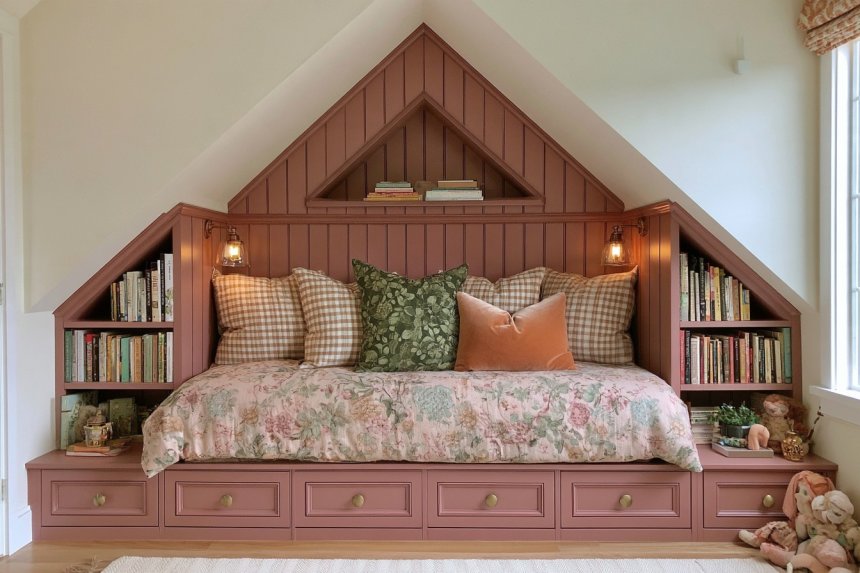
An attic reading nook can make productive use of low eaves, dormers, and irregular corners that are difficult to furnish conventionally. Before adding shelves or seating, confirm that the attic is suitable for regular occupation and assess its floor structure, insulation, ventilation, electrical system, stair access, and required escape route. Books create substantial concentrated weight, while low ceilings and exposed beams can introduce head hazards. Once these essentials are resolved, supportive seating, layered illumination, reachable storage, and a restrained material palette can make the space genuinely comfortable. These transformations show how different attic layouts can support reading without blocking circulation or overwhelming limited floor space.
1. Turn a Deep Dormer Into a Window-Seat Library
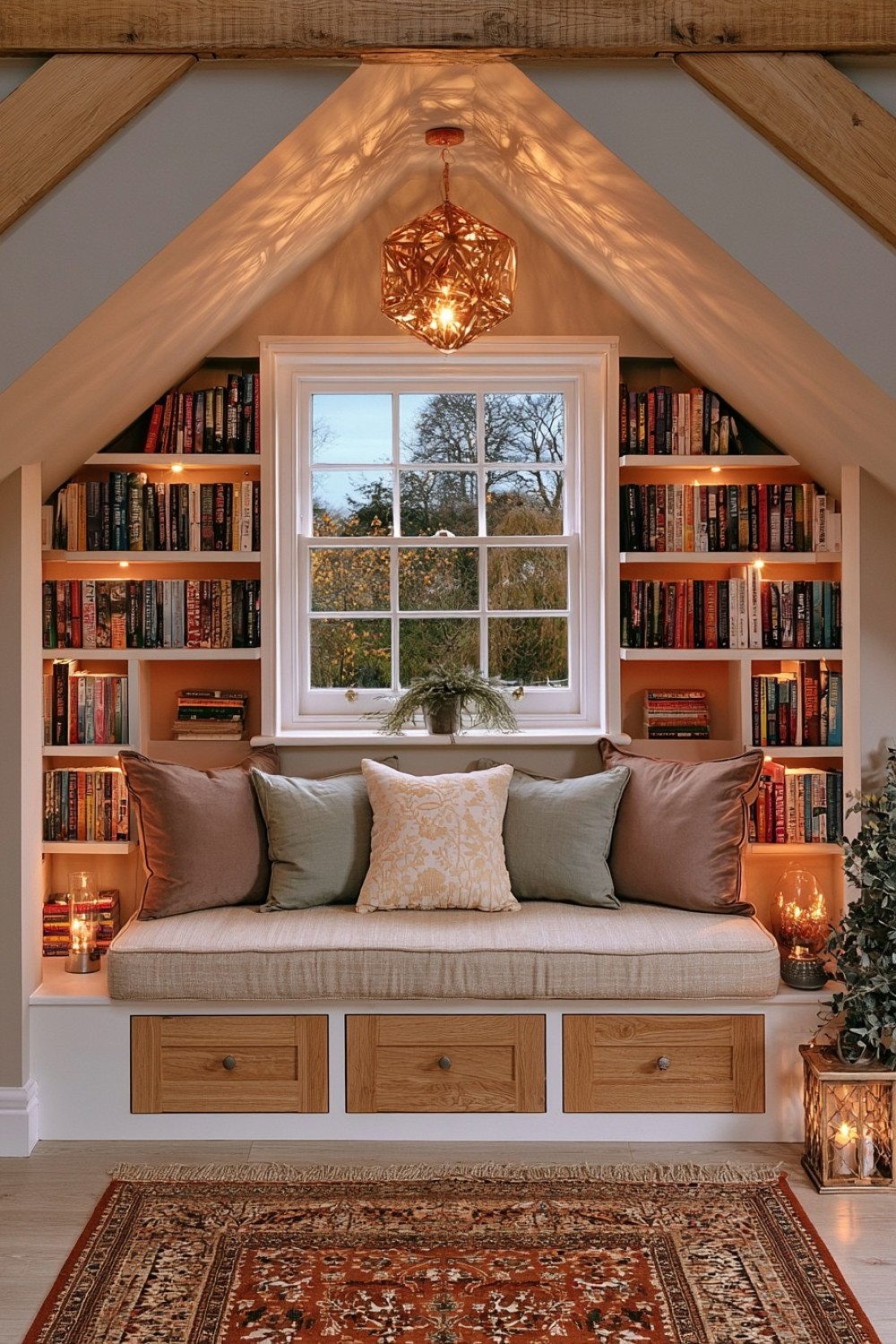
A deep dormer can accommodate a fitted bench with book storage beneath or along its side walls. Measure the available width, seat depth, and head clearance before designing the joinery. A firm cushion, supportive back pillows, and a nearby ledge for a drink can make the space comfortable for longer reading sessions. Keeping finishes pale can help the recess feel connected to the larger attic.
The seating must not obstruct the opening, handles, ventilation, or any required emergency access. Condensation and water intrusion should be resolved before enclosing the area with cabinetry. Drawers are generally easier to operate than a heavy lift-up seat, but their handles must not project into the walkway. Use washable covers and provide shading where strong sunlight could fade books or overheat the seat.
2. Create a Low-Eave Reading Den With Floor-Level Seating
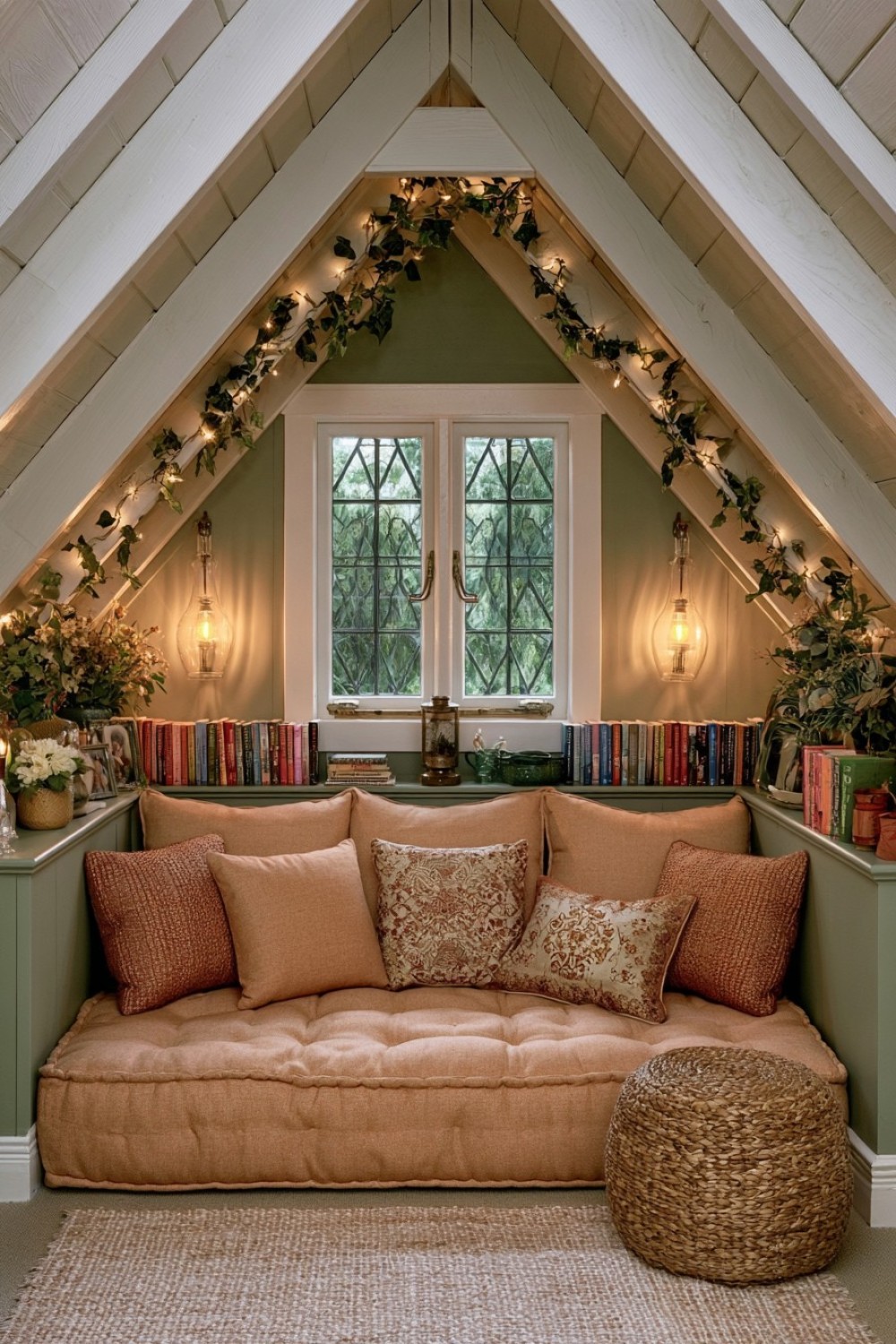
Floor-level seating can use a low roof section that would be uncomfortable for standing. Place a firm mattress-style cushion or modular seat beneath the slope, with books stored in low outward-facing racks. A lighter wall color and one focused reading lamp will keep the area from feeling enclosed. Limit loose cushions so the nook remains easy to enter and maintain.
Check sitting headroom across the complete seating surface rather than only at its highest point. Keep textiles away from heaters, outlets, and lamps, and avoid long canopies that reduce airflow or supervision. Rugs require slip-resistant backing. Floor cushions may not suit users who find standing difficult, so provide a conventional chair elsewhere when the reading area serves people with different mobility needs.
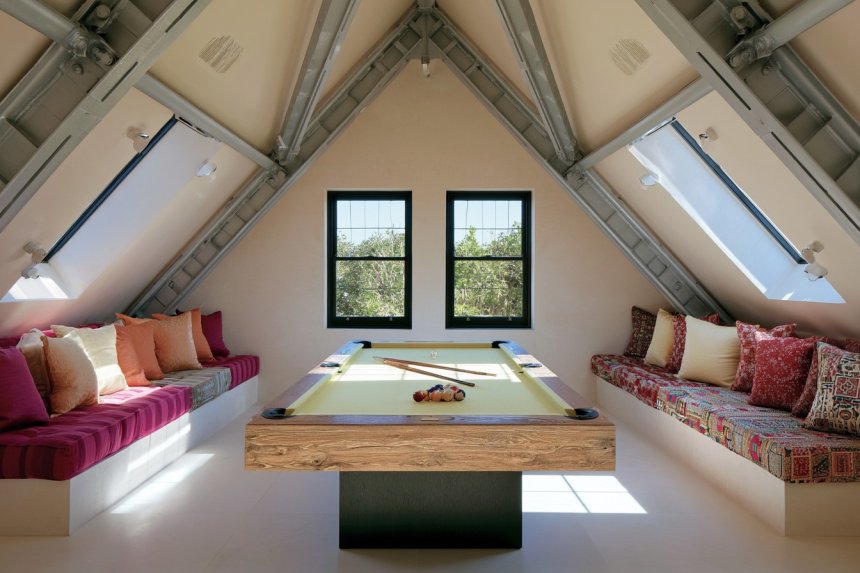
3. Frame the Roof Peak With Twin Reading Benches
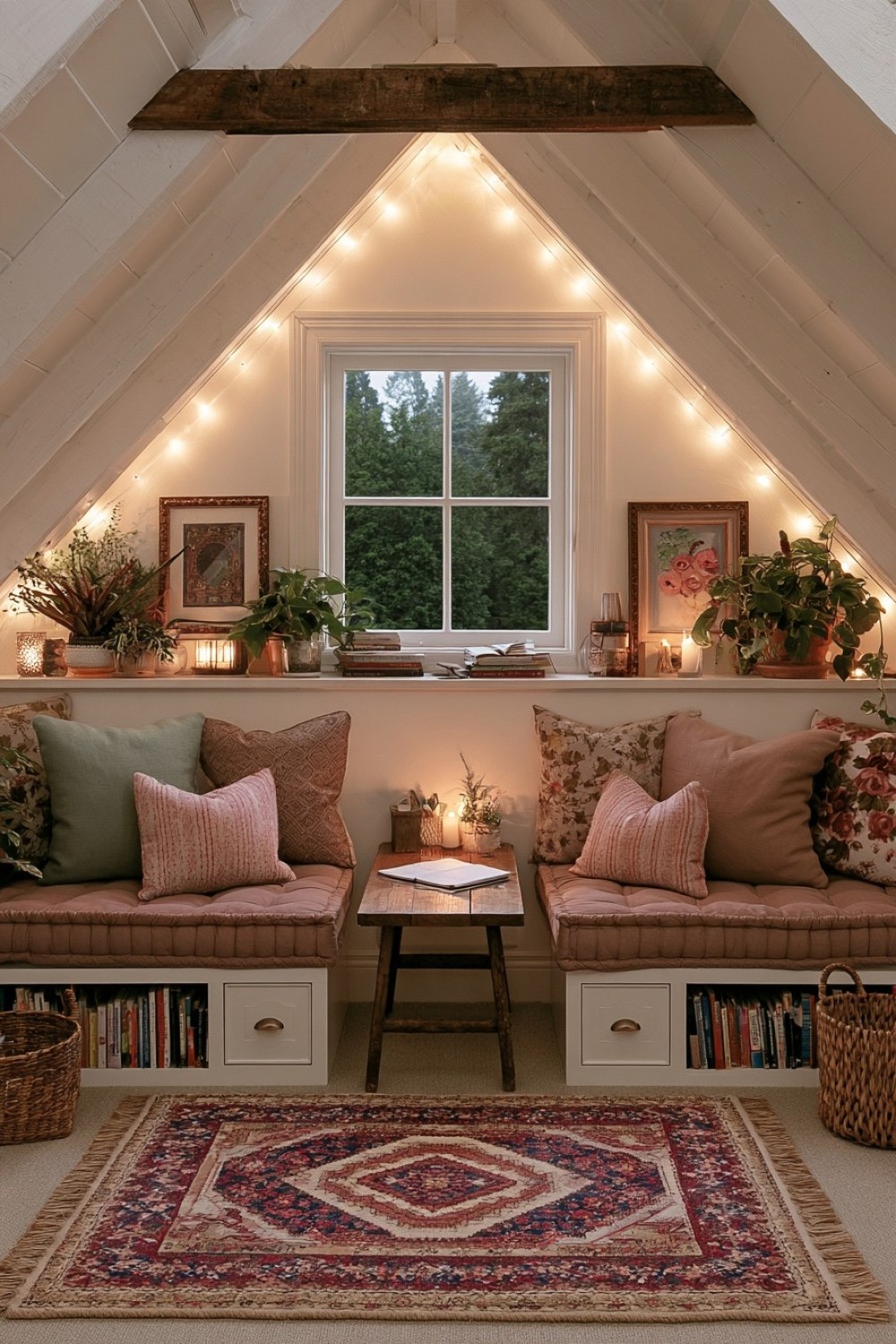
Twin benches placed opposite each other can turn the highest section of the attic into a shared reading and conversation area. Use matching seat depths and related upholstery to create balance, then position a narrow movable table between them. Low book storage beneath each bench keeps reading material accessible without introducing tall furniture beneath the roof slopes.
Maintain a clear central walkway and confirm that seated users will not strike sloping ceilings when standing. Built-in benches require adequate support and safe access to any storage beneath them. If lift-up lids are used, fit suitable stays to prevent sudden closing. Provide independent reading lights so each person can adjust illumination without directing glare toward the opposite seat.
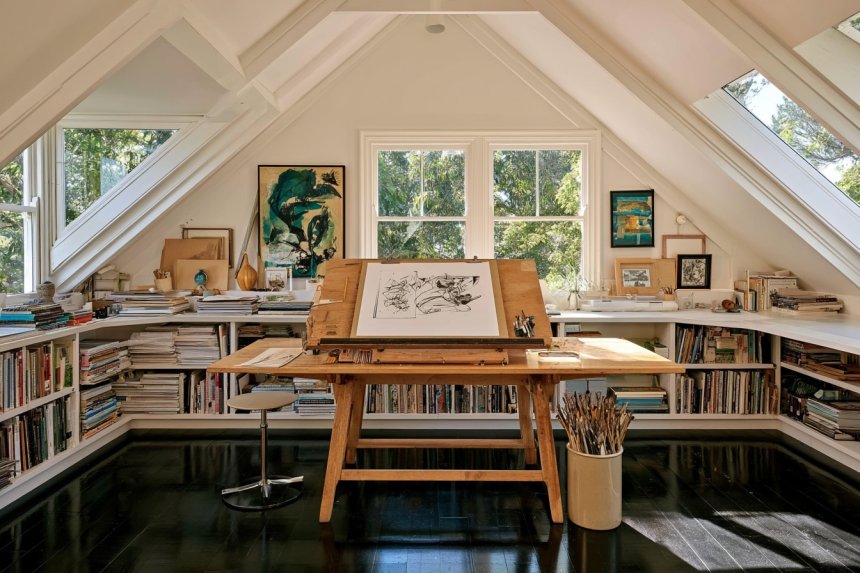
4. Build a Wraparound Bookshelf Beneath the Sloping Ceiling
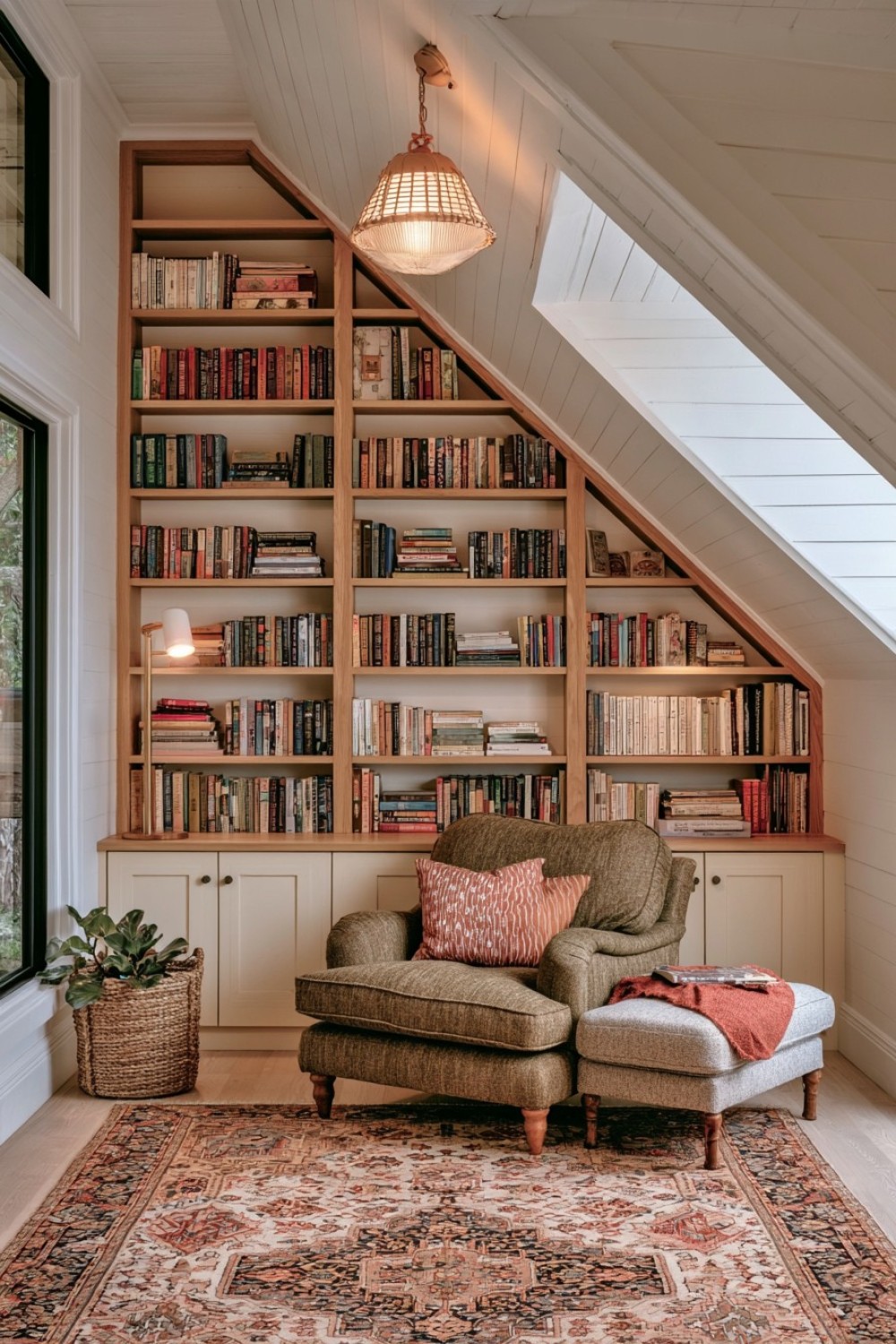
Low wraparound shelving can follow the roofline and turn an awkward perimeter into organized book storage. Adjustable shelves accommodate different formats, while closed cupboards can conceal household items that do not belong in the reading area. Place frequently used books near the chair and reserve the lowest or most distant sections for larger volumes and occasional collections.
Books are heavy, so shelf spans, fixings, floor loading, and the attic structure require careful consideration. Long unsupported boards may sag even when they initially appear adequate. Preserve ventilation paths and access to roof voids, plumbing, and electrical services. Tall or freestanding sections should be secured against tipping, and shelves must not narrow the required escape route.
5. Place a Reclined Daybed Beneath a Skylight
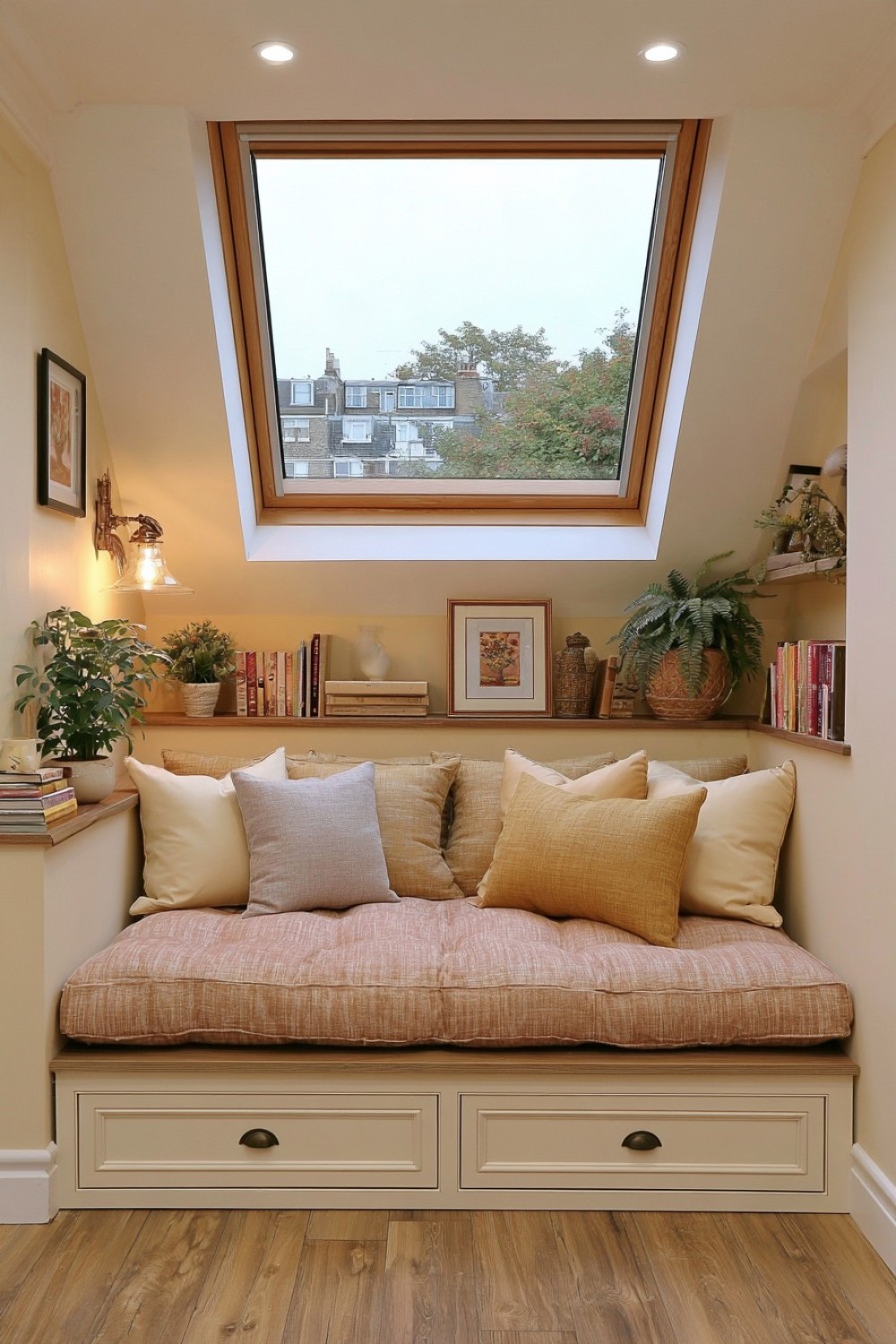
A reclined daybed beneath a skylight can provide generous daylight and a comfortable place for extended reading. Position the back support so the user can read without looking directly into glare. A slim side shelf can hold books and glasses, while storage beneath the frame may accommodate blankets. Neutral upholstery helps the changing daylight remain the main feature.
Skylight areas can become hot, bright, or affected by condensation. Use compatible shading and investigate any staining or leakage before placing furniture beneath the opening. Keep books out of prolonged direct sunlight to limit fading. The daybed must not obstruct operation, maintenance, ventilation, or emergency requirements associated with the skylight, and its frame should remain clear of damp surfaces.
6. Design a Reading Alcove Between Exposed Roof Beams
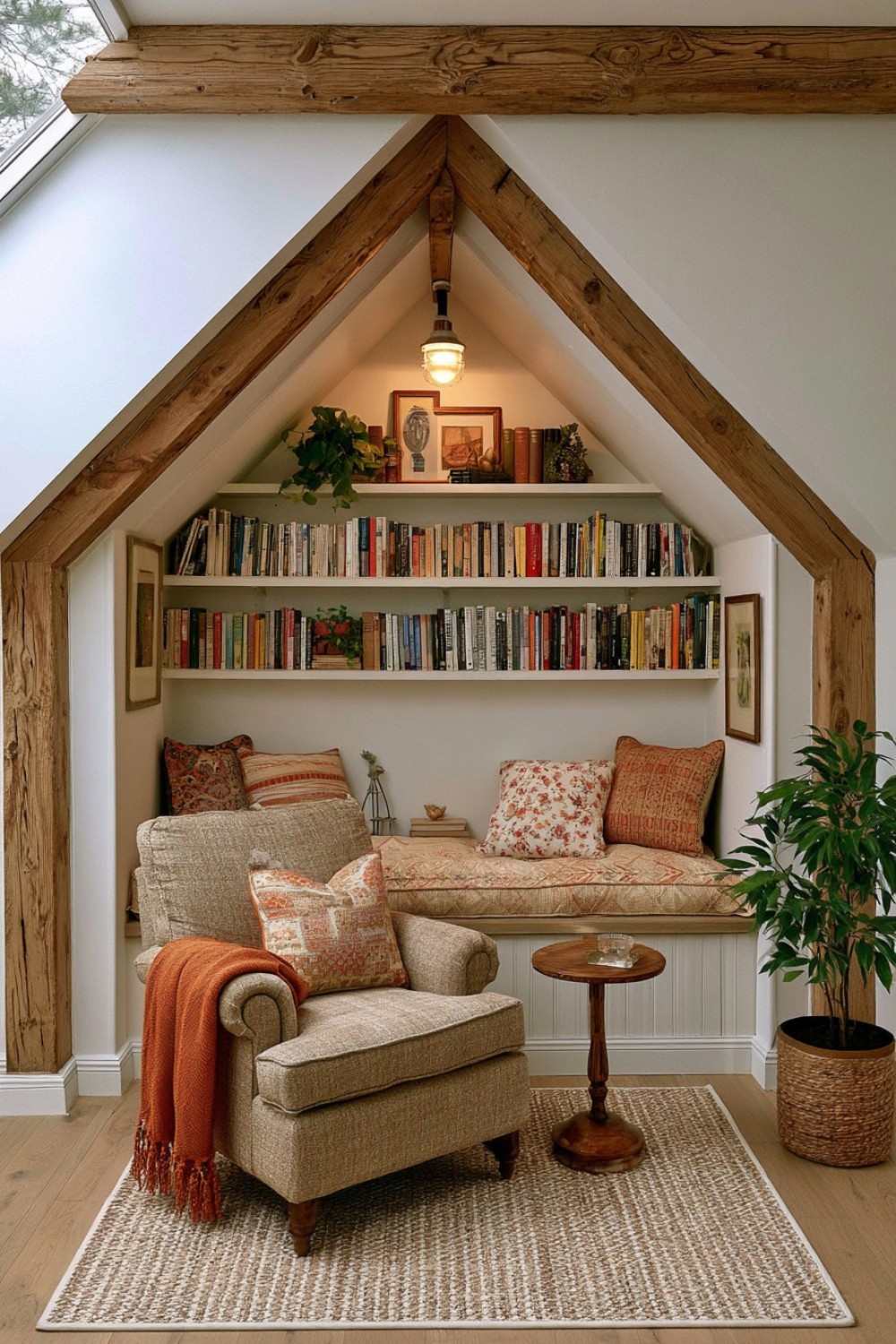
Exposed beams can visually frame a reading alcove without requiring additional decorative structures. Position a compact chair, wall-mounted lamp, and narrow shelf within a bay that provides adequate sitting and standing clearance. Repeating the timber tone through a small table or shelf can integrate the beams with the furniture while keeping the remainder of the room lighter.
Structural beams must not be cut, drilled, loaded, or used to support swings and hanging chairs without professional assessment. Check older timber for pests, moisture, splitting, and previous alterations. Low beams may need improved visibility or a carefully designed protective treatment where head contact is possible. Lighting and shelving should attach to suitable surfaces without concealing structural problems.
7. Turn an Attic Landing Into a Transitional Reading Corner
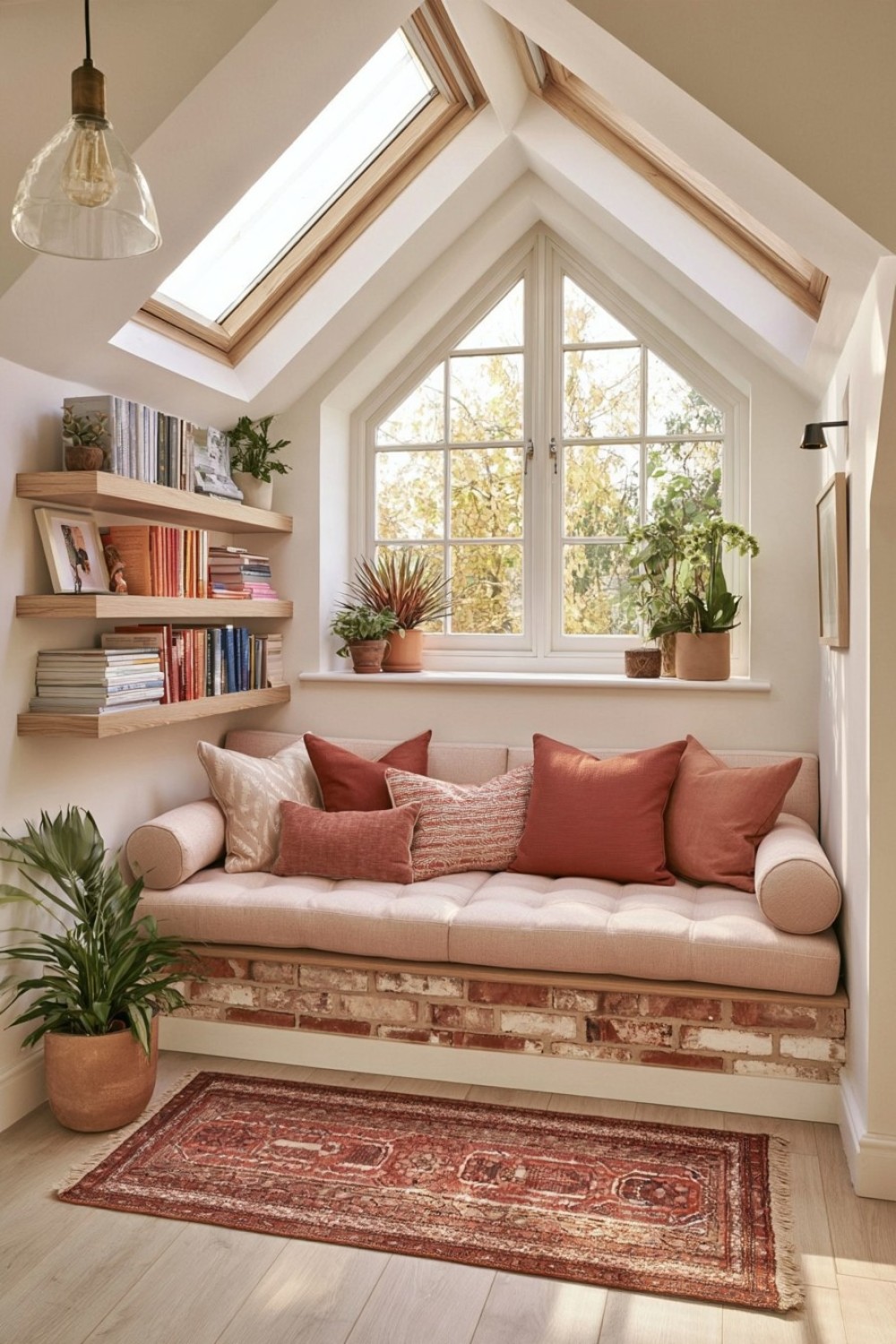
An attic landing can hold a compact chair and shallow bookshelf when enough circulation space remains around the stairs and adjoining doors. Choose furniture with a small footprint and raised legs so the area does not feel blocked. A wall-mounted reading light avoids adding a floor lamp, while a limited shelf of current books keeps the transition visually organized.
Stair landings are primarily circulation and emergency-access areas. Furniture must not reduce required widths, interfere with railings, or create a fall hazard near the stair opening. Avoid stools, low tables, loose rugs, and trailing cables at the top of stairs. Confirm local code requirements before treating a landing as occupiable space, and keep alarms and lighting controls fully accessible.
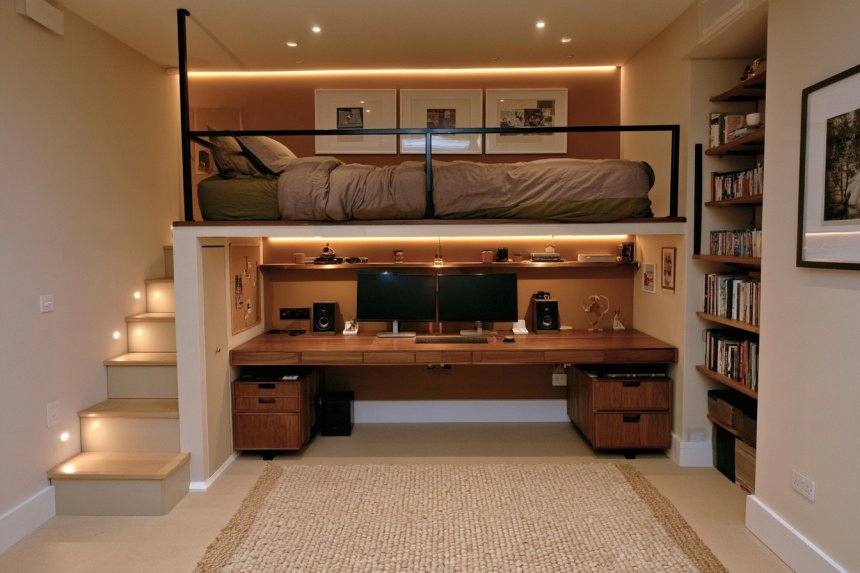
8. Add a Carefully Planned Raised Reading Platform
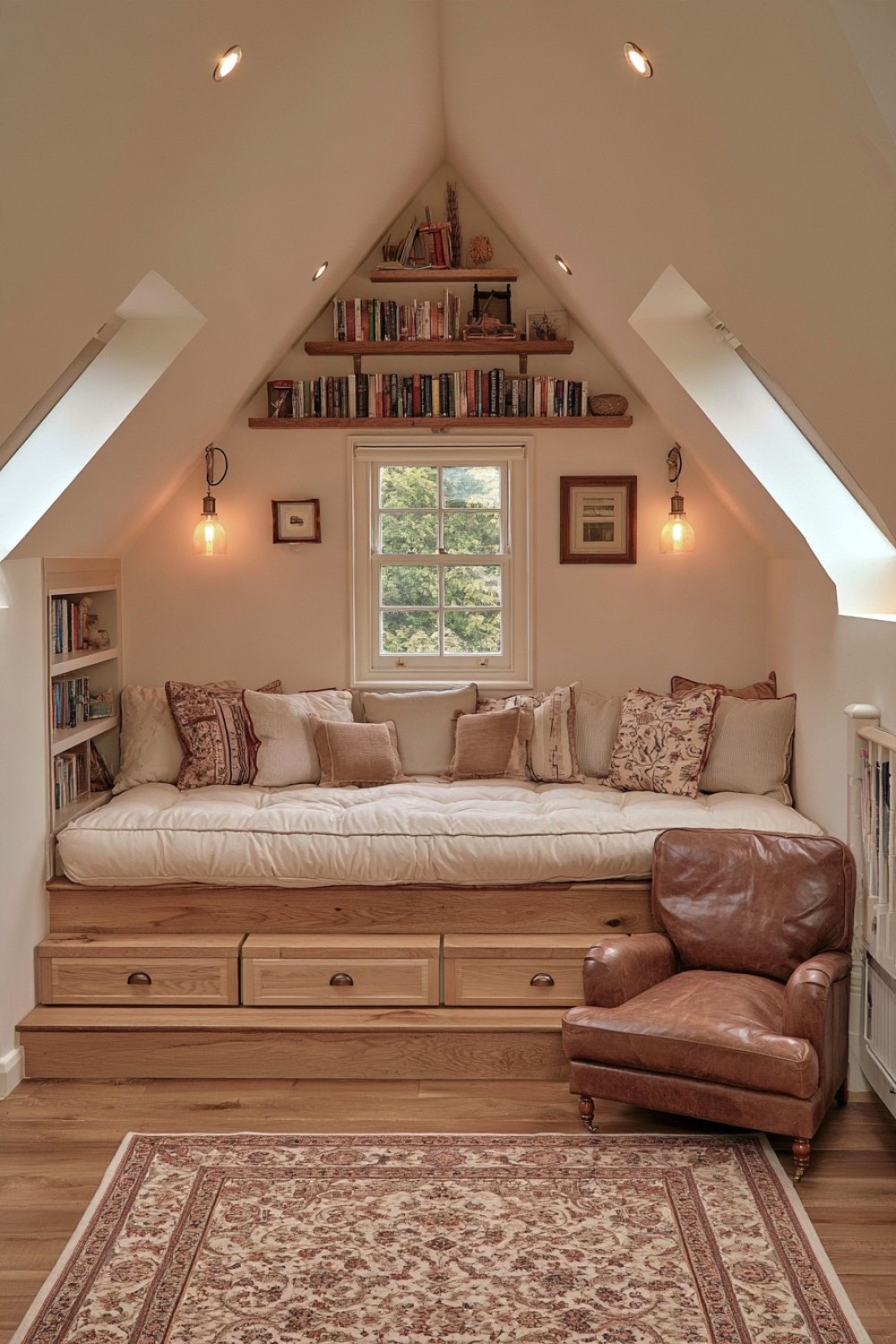
A raised platform can define the reading area and provide drawers beneath it, but it should only be considered where ceiling height permits. Keep the elevation modest and use built-in seating or a stable chair sized for the available headroom. Integrated storage can hold books, cushions, and blankets without requiring additional cabinets along the walls.
The platform changes floor levels and must be structurally designed for people, furniture, books, and stored items. Steps, edges, guards, head clearance, and lighting should comply with local requirements. Use a slip-resistant surface and make every change in level easy to see. A qualified professional should assess the existing attic floor before permanent construction begins.
9. Shape a Moody Literary Corner With Dark Built-In Shelves
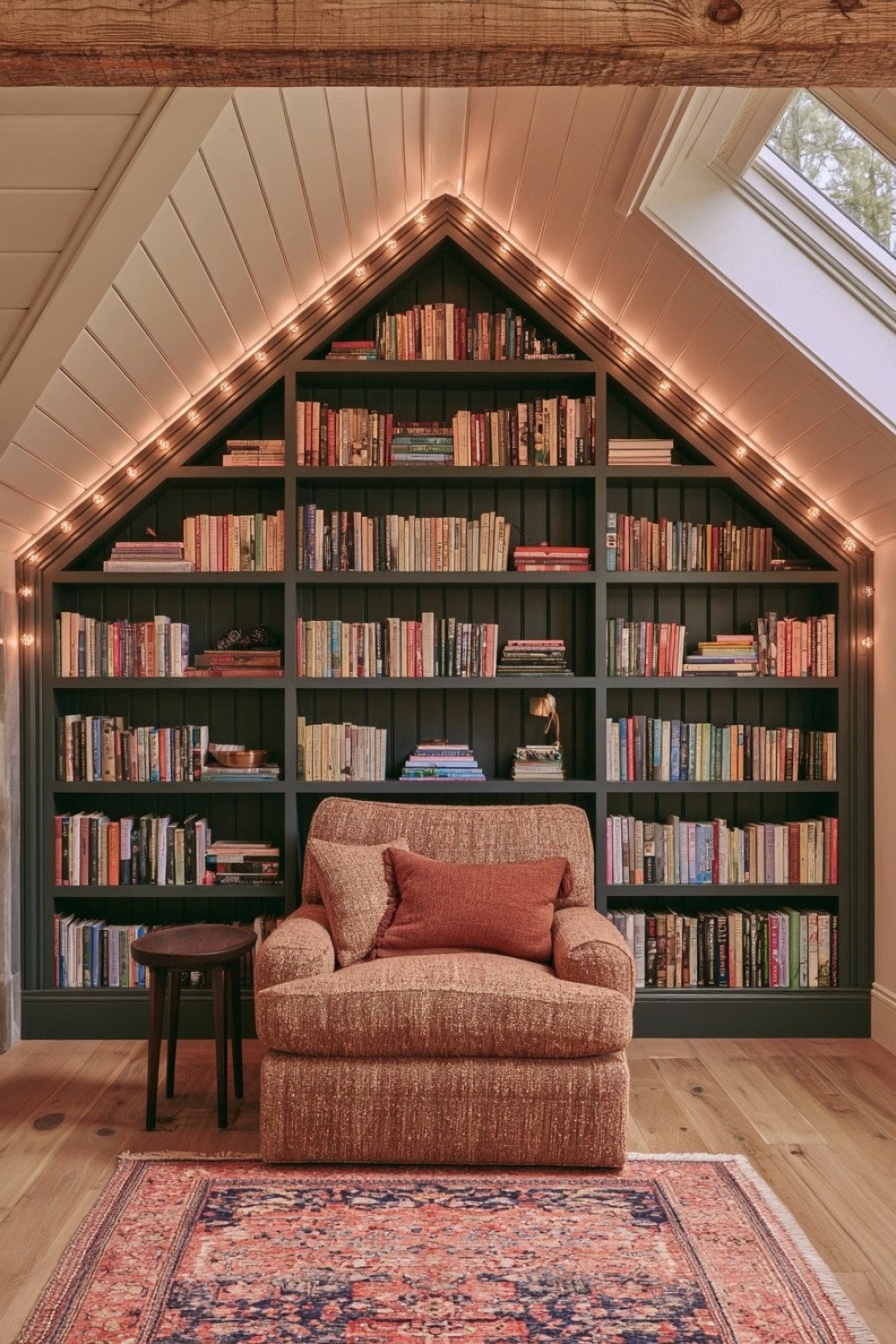
Dark green, charcoal, navy, or deep brown shelving can give an attic corner the atmosphere of a private library. Keep the ceiling and some surrounding walls lighter if the room is small or low. A supportive chair in leather, wool-look fabric, or warm neutral upholstery will stand out against the shelves. Picture lights or integrated shelf lighting can add depth.
Dark finishes reduce reflected light, making separate ambient and task lighting important. Integrated fixtures should produce minimal heat and use accessible electrical connections. Tall shelves require secure anchoring, and heavy books belong at lower levels. Avoid packing every shelf completely; open spaces improve visibility, reduce visual weight, and leave room for the collection to grow.
10. Keep a Scandinavian-Style Book Corner Light and Practical
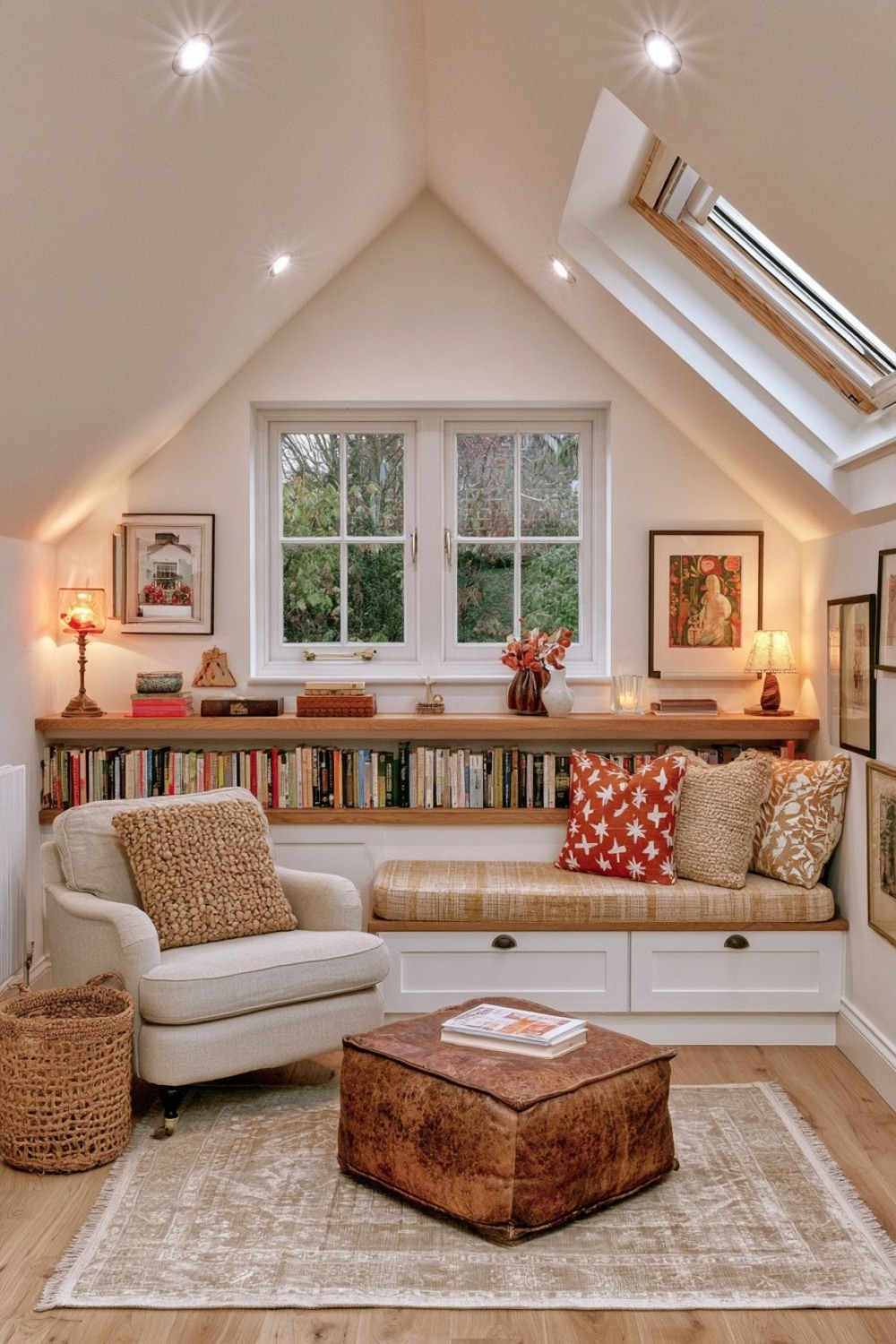
Pale timber, warm white walls, simple shelving, and one comfortable chair can make a compact attic reading area feel calm. Add a wool-look rug, neutral cushion, and muted accent color rather than leaving the room entirely white. Books provide enough natural variation, so furniture and storage can remain visually restrained.
Minimal appearance should not reduce comfort or storage capacity. Test the chair’s seat depth, back support, and arm height before buying it. Provide focused reading light and closed storage for cables, blankets, and unrelated attic items. Timber shelving must still support the weight of books, and rugs require non-slip backing on smooth floors.
11. Transform a Quiet Corner Into a Personal Poetry Nook
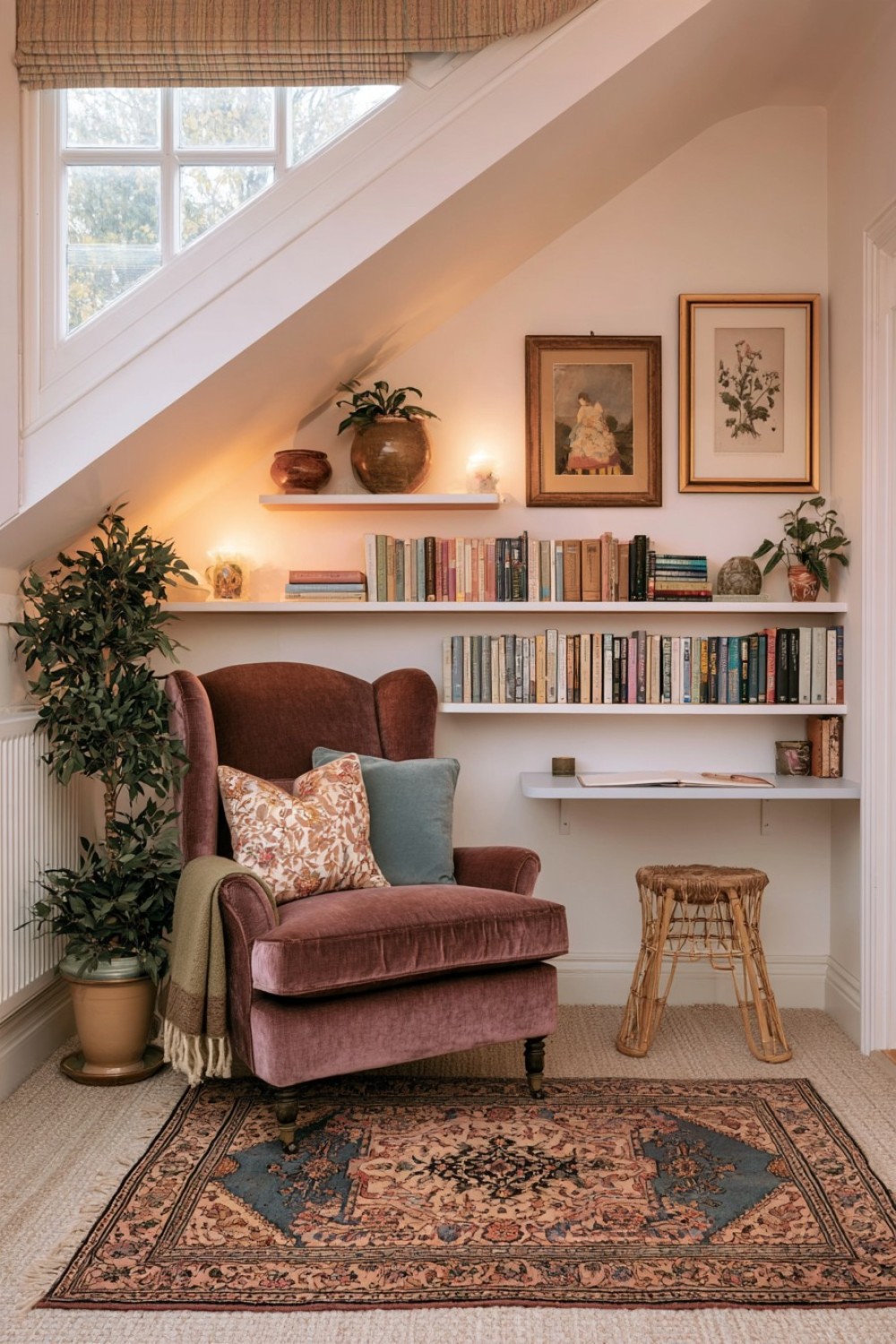
A poetry nook can combine reading with a small writing surface for notes and reflections. Use a supportive chair, narrow wall desk, and shelf containing a carefully selected collection. A pin-free display rail can hold favorite passages or personal writing without covering the entire wall. Muted colors and one tactile textile will keep the setting intimate.
The writing surface should provide comfortable knee clearance and enough depth for a notebook without projecting into the walkway. Position task lighting to illuminate the page without creating shadows. Avoid open flames and unstable stacks of books in a textile-rich attic. Wall-mounted desks, shelves, and artwork require fixings appropriate for their weight and the wall structure.
12. Create a Family Reading Nest With Oversized Seating
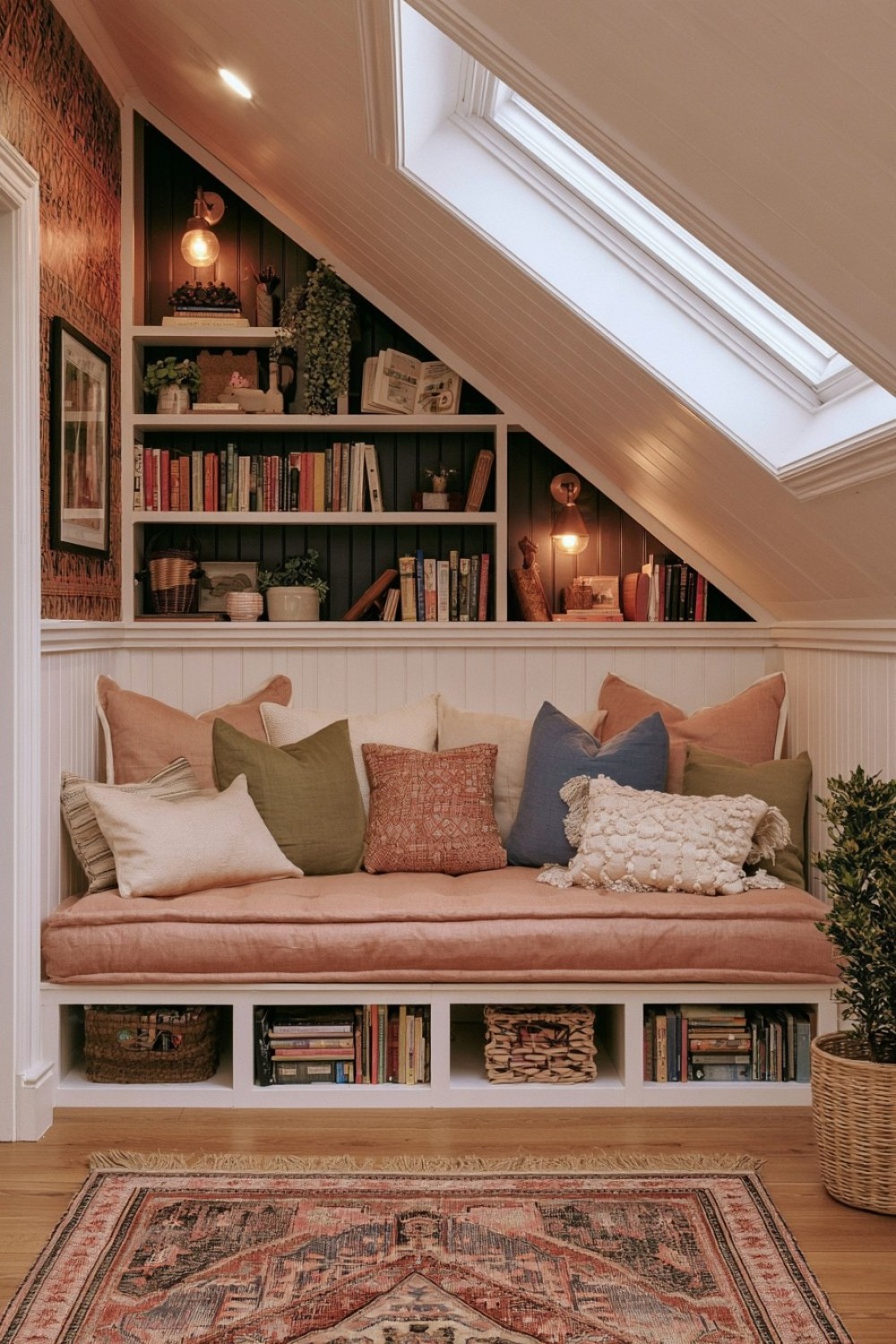
An oversized modular seat can accommodate adults and children for shared reading without requiring several separate chairs. Position it beneath the highest part of the roof and surround it with low, accessible book storage. Washable covers and a nearby basket for blankets make the area easier to maintain. Keep the book selection manageable and rotate children’s titles periodically.
Large seating should not block exits, stairs, heaters, or ventilation. Secure modular pieces so they do not separate during use, and keep floor cushions away from circulation routes. Children’s shelves need rounded edges and proper anchoring. Books intended for older readers should remain separate when they contain small accessories or materials unsuitable for younger children.
13. Build a Visible Reading Nook Beside Attic Storage
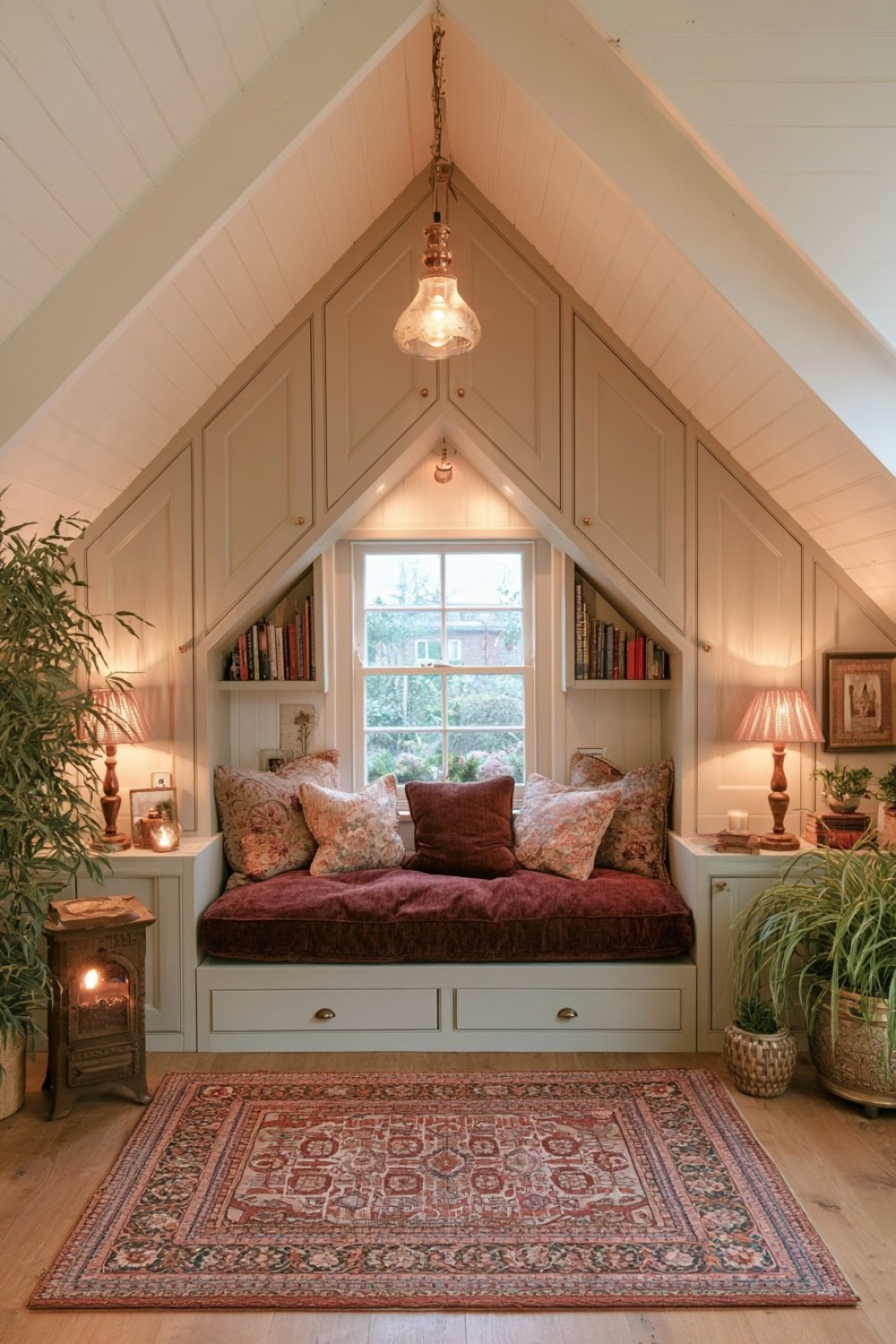
Storage cabinetry can conceal household items while leaving an open central bay for reading. Use matching doors around the nook so the composition appears built in, then distinguish the seat with a warmer color or timber finish. Shallow shelves beside the cushion can hold current books without reducing shoulder space. Good lighting prevents the recess from feeling hidden or enclosed.
The nook should remain visible and ventilated rather than sitting behind a secret door or inside a deep cupboard. Preserve access to roof voids, utility controls, and electrical systems. Cabinet doors need safe hinges and should not trap a seated person when opened. Do not use deep storage compartments that children could enter, and secure all tall joinery against tipping.
14. Arrange a Vintage Reading Corner Around a Chaise
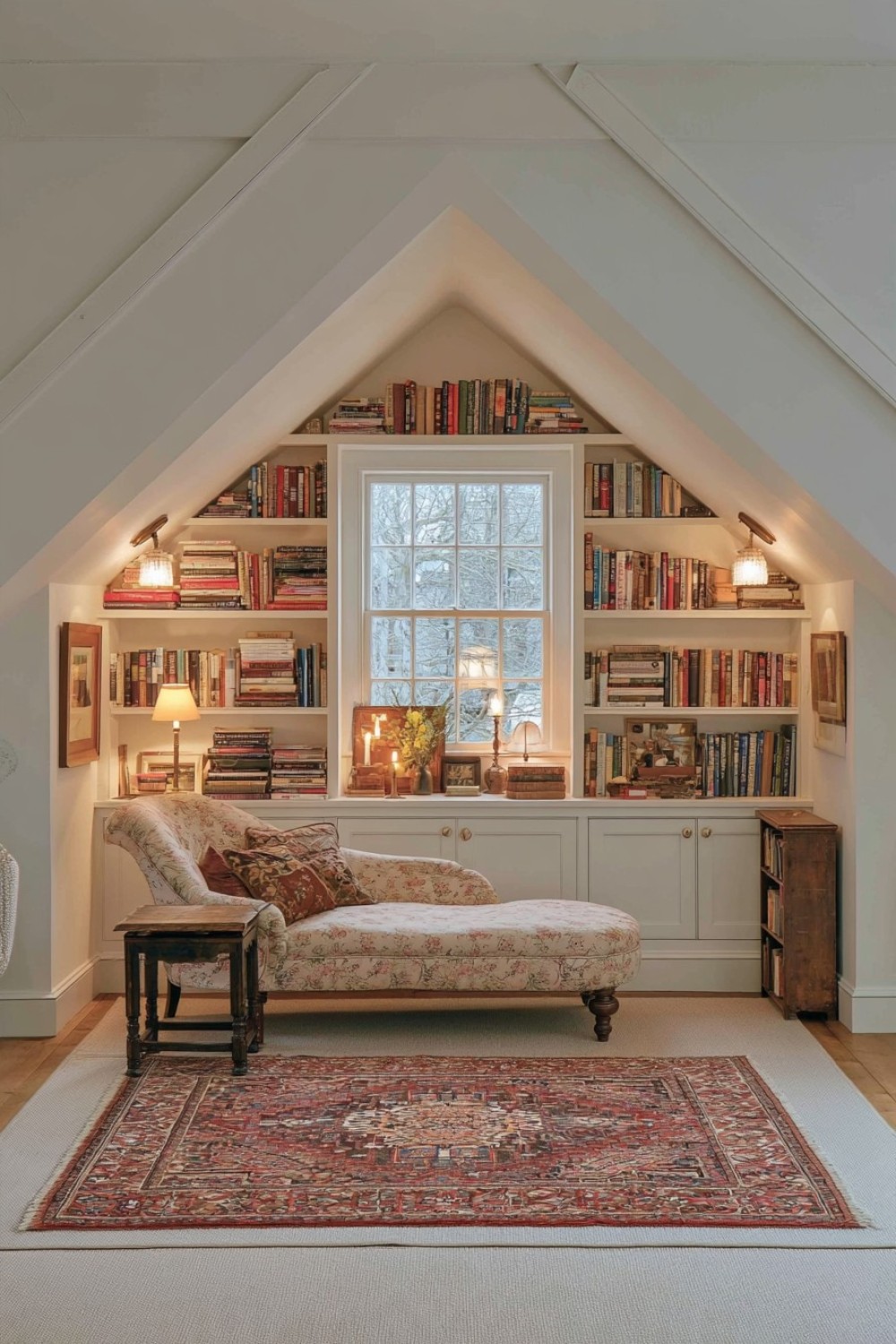
A chaise can provide a comfortable reclined position while giving the nook a collected vintage quality. Pair it with a floor lamp, small stable table, and one narrow bookshelf rather than filling the attic with period furniture. Faded green, dusty rose, warm beige, or subtle botanical upholstery can add character without requiring several competing patterns.
Check secondhand seating for frame damage, odors, pests, weakened springs, and deteriorated filling. Professional reupholstery may be necessary before regular use. Measure the chaise’s full length and delivery route, including attic stairs and turns. Position it where the raised back does not meet a low ceiling and where users can stand without striking the roof slope.
15. Create a One-Chair Library Under the Eaves
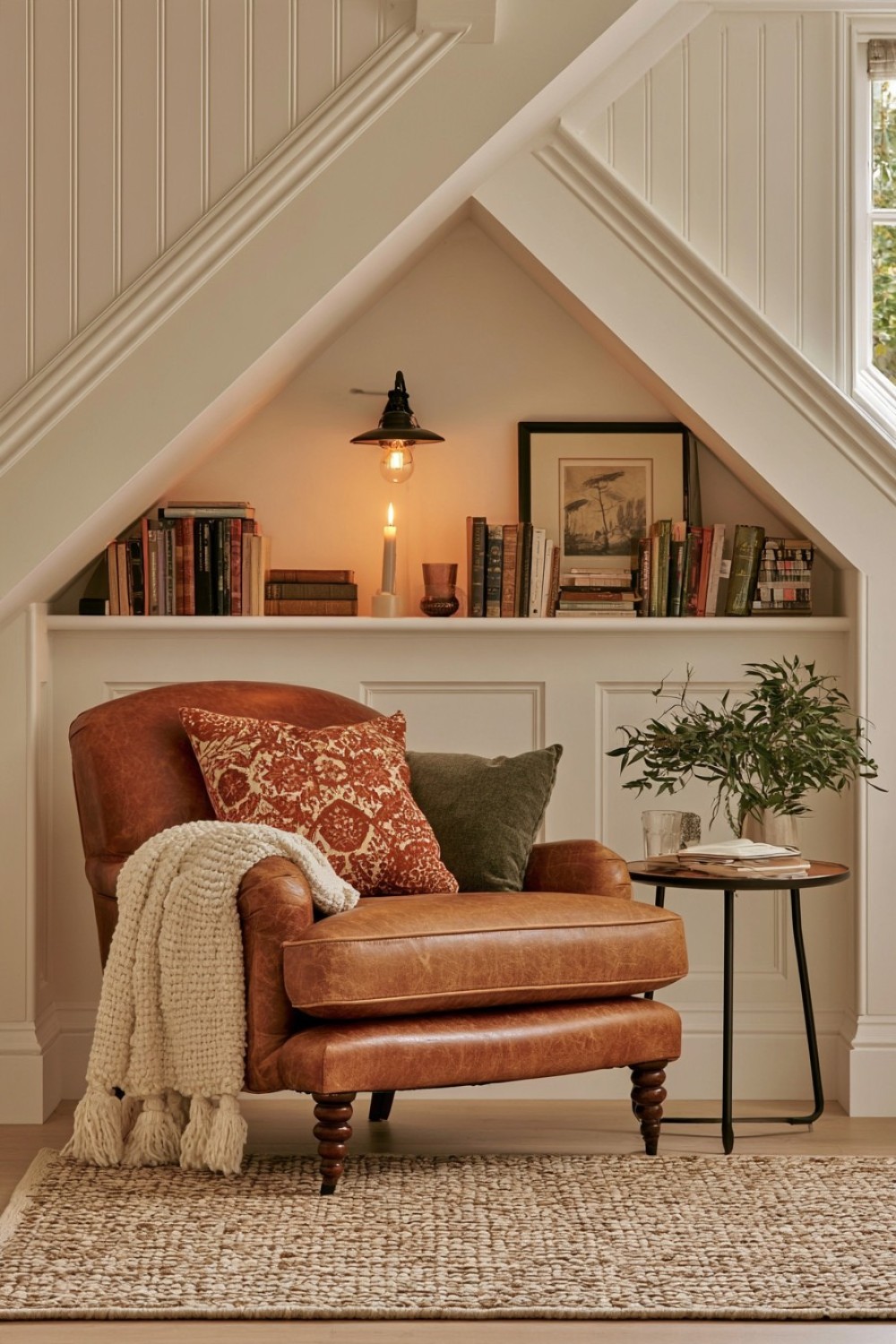
A single supportive chair, compact table, focused lamp, and one shelf can form a complete reading corner in a very small attic. Choose the chair first and arrange storage around its dimensions. Keeping the furniture palette consistent allows colorful book spines to provide visual interest. A wall-mounted lamp may preserve more floor space than a conventional floor model.
Leave enough room for the chair to recline or rotate if it includes those functions. Check standing clearance in front of the seat and avoid placing it immediately beside the stair opening. Cables should follow the wall rather than crossing the floor. Limit shelves to the number of books the structure can support and the reader can reach safely.
16. Combine the Nook With a Rotating Home Library
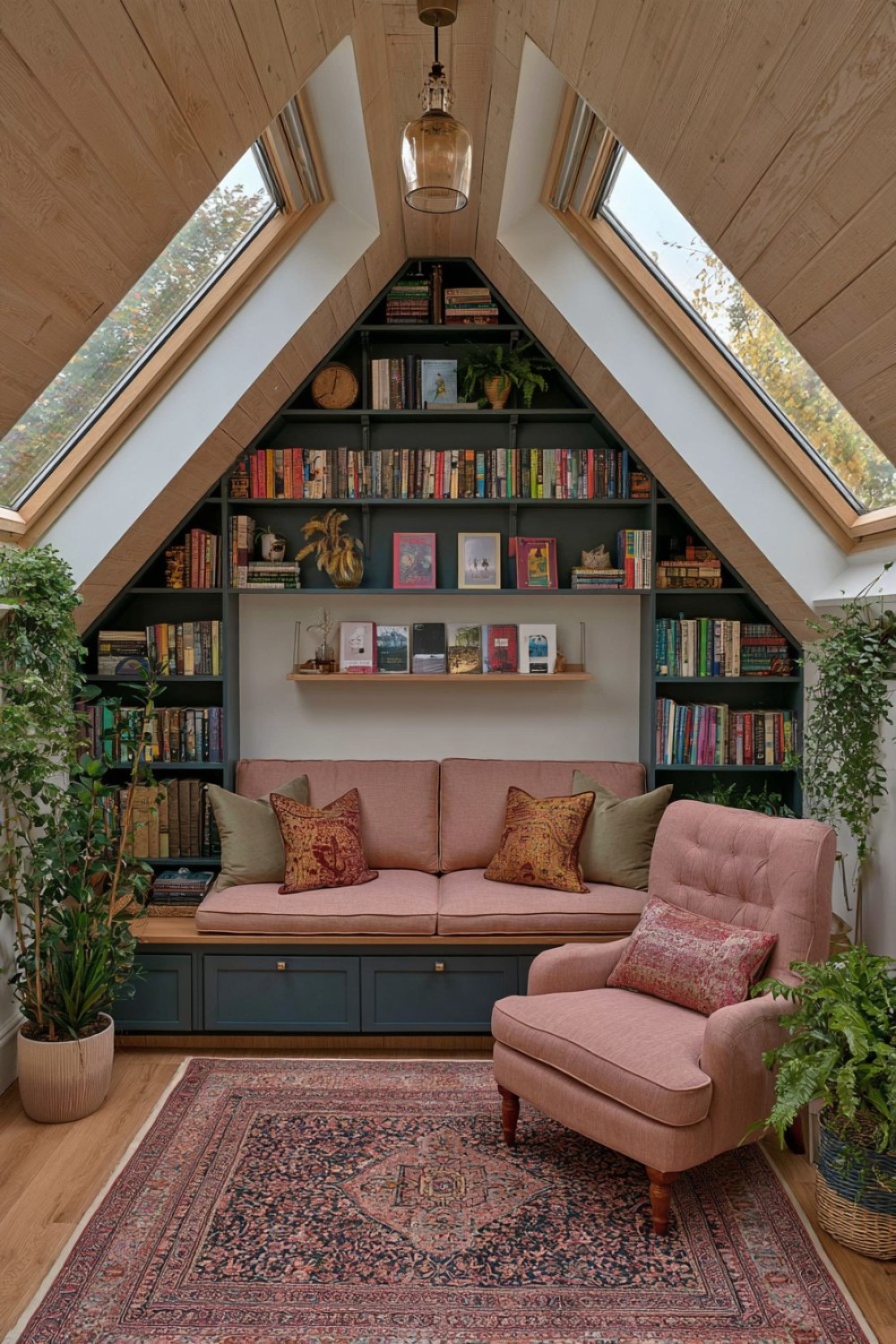
A rotating bookcase can provide access to several shelves within a compact footprint. Use it for a curated selection rather than attempting to store the entire household library. Position the unit beside the reading chair with enough clearance to rotate fully. Dividing books by current interests allows the selection to change without rebuilding fixed shelving.
A loaded rotating bookcase is heavy and requires a stable base, reliable bearings, controlled movement, and protection against tipping. Follow the manufacturer’s load limits and keep heavier books near the bottom. Finger-clearance gaps need careful attention, particularly when children use the area. The unit must not rotate into stairs, walls, furniture, lighting, or the required escape path.
MORE IDEAS


Share
What's Your Reaction?
 Like
0
Like
0
 Dislike
0
Dislike
0
 Love
0
Love
0
 Funny
0
Funny
0
 Angry
0
Angry
0
 Sad
0
Sad
0
 Wow
0
Wow
0