
A ribbon trimmed straw hat, a shelf of floral china, or a painted border of garden flowers can give a plain wall the feeling of a much loved cottage. Cottagecore wall decor brings those familiar details together through soft color, botanical patterns, useful display pieces, and the texture of handmade objects. The aim is to create a room that feels personal and comfortable, with decoration that belongs beside the furniture you use every day.
These 43 cottagecore wall decor ideas range from small collections and framed textiles to floral murals, shaped paneling, and fitted shelving. You will find guidance on choosing materials, combining patterns, planning the layout, and adapting each treatment to an ordinary home. Some approaches need only a few well chosen objects; others call for a decorator, joiner, tiler, or glazier. Use the material and preparation advice as a starting point, then borrow the colors, proportions, or motifs that suit your own wall.
Table of Contents
- Choose a Cottagecore Wall Treatment for Your Room
- Plan the Surface, Materials, and Fixings First
- 1. A Scalloped Blue Alcove for Floral China
- 2. Hydrangeas Around an Oval Hall Mirror
- 3. Painted Folding Fans Above Cream Beadboard
- 4. Hollyhocks Rising Behind a Sage Garden Edge
- 5. Strawberry Wallpaper with Small Bracket Shelves
- 6. Three Little Arches with Different Backdrops
- 7. A Lavender Trellis over Floral Wallpaper
- 8. A Loose Oval of Floral Plates
- 9. Rose Panels Topped with Sculpted Bows
- 10. A Patchwork Tile Picture in Pastel Colors
- 11. A Sage Shutter Cabinet with a Pink Surround
- 12. Wicker Flower Baskets on a Daisy Wall
- 13. Botanical Cameos with Raised Flower Details
- 14. Pansies Following the Line of a Staircase
- 15. Ribbon Trimmed Straw Hats in a Sunny Entry
- 16. Wavy Pastel Stripes with Tiny Rose Sprigs
- 17. Teacup Wall Pockets Filled with Fabric Flowers
- 18. An Oversized Daisy Vine with a Mosaic Finish
- 19. A Cottage Village Above Blue Hall Paneling
- 20. Pressed Botanicals in Small Brass Frames
- 21. Pastel Bead Swags with Gingham Bows
- 22. Overlapping Scallops in Cream, Pink, and Sage
- 23. Floral Harlequin Diamonds over Yellow Beadboard
- 24. Peonies and Small Birds Around a Quiet Center
- 25. A Rose Garland Painted Across White Brick
- 26. A Button Bow Framed on Natural Linen
- 27. A Tall Rose Panel with a Shell Border
- 28. A Floral Fabric Canopy Around an Entry Bench
- 29. A Swan Bracket Shelf for Rose Patterned Pottery
- 30. A Collection of Pastel Hand Mirror Shapes
- 31. Embossed Floral Panels Beneath a Blue Border
- 32. A Botanical Memo Board with Blue Ribbon
- 33. Pale Bell Flowers Along a Lavender Wall
- 34. Painted Blue Ribbon Swags on Butter Yellow
- 35. Cream Macrame with Small Pastel Flowers
- 36. A Floral Umbrella Used as a Bouquet Pocket
- 37. A Rose Transom Above a Powder Blue Door
- 38. Overlapping Botanical Arches in Three Pastels
- 39. Swan Pond Toile for a Quiet Sitting Wall
- 40. A Raised Woodland Border Above Sage Boards
- 41. A Crescent Shelf with Rose Lined Compartments
- 42. Tulips and Daisies Across Blue Fluted Panels
- 43. Lavender Garden Scrollwork on a Floral Wall
- Choose the Amount of Detail Your Room Can Carry
Choose a Cottagecore Wall Treatment for Your Room
For this collection, the common thread is a garden influenced palette paired with familiar domestic details. Think muted blue beside rose pink, sage green against cream, or a small floral repeat behind a collection of ceramics. Curved outlines, scalloped edges, woven fibers, and botanical illustrations soften straight furniture and plain architectural surfaces.
You do not need every ingredient in one room. A large mural can carry the decoration while the furniture stays simple. A busy wallpaper can work behind a small collection when the objects share a restrained color palette. Choose one dominant feature, then repeat one or two of its colors in a cushion, chair, or painted rail. This gives the wall a relationship with the room instead of making it feel like a separate display.
Plan the Surface, Materials, and Fixings First
Measure the wall, furniture, switches, doors, and any existing molding before buying materials. Paper templates are useful for collections, while a sample board helps you compare paint and wallpaper with the room's actual lighting. Check that projecting shelves leave doors free to open and that a seated person will not lean against a fragile object.
For painted treatments, gather a measuring tape, level, pencil, protective sheets, suitable painter's tape, brushes, and an interior wall paint approved for the surface. Choose compatible wall or mural colors for the details. Clean the surface, repair defects, let it dry, and use the specified primer where needed. Have unknown older coatings assessed before sanding or scraping. Resolve damp or loose plaster before covering it.
Wallpaper needs a smooth, sound, dry surface and the adhesive or installation method specified for that particular paper. Measure with the pattern repeat in mind. A paper designed for paste applied to the wall differs from a self adhesive covering, so follow the product instructions rather than combining methods. Test removable products on a discreet area; removal without damage depends on both the product and the existing finish.
Choose screws, brackets, and anchors for the wall construction and the finished weight, including the contents of shelves. Locate concealed services before drilling. Decorative bows, wallpaper, and lightweight molding cannot carry a cabinet or mirror. Adhesive hanging products have their own surface restrictions, paint curing times, and loading limits. Ceramic displays need appropriate plate or object hangers. Allow all coatings and adhesives their specified drying or curing time before loading or cleaning them.
The ideas below show how those choices can support very different cottage interiors. Start with the treatment that fits your wall's size and everyday use, then adapt its palette and decorative details.
1. A Scalloped Blue Alcove for Floral China
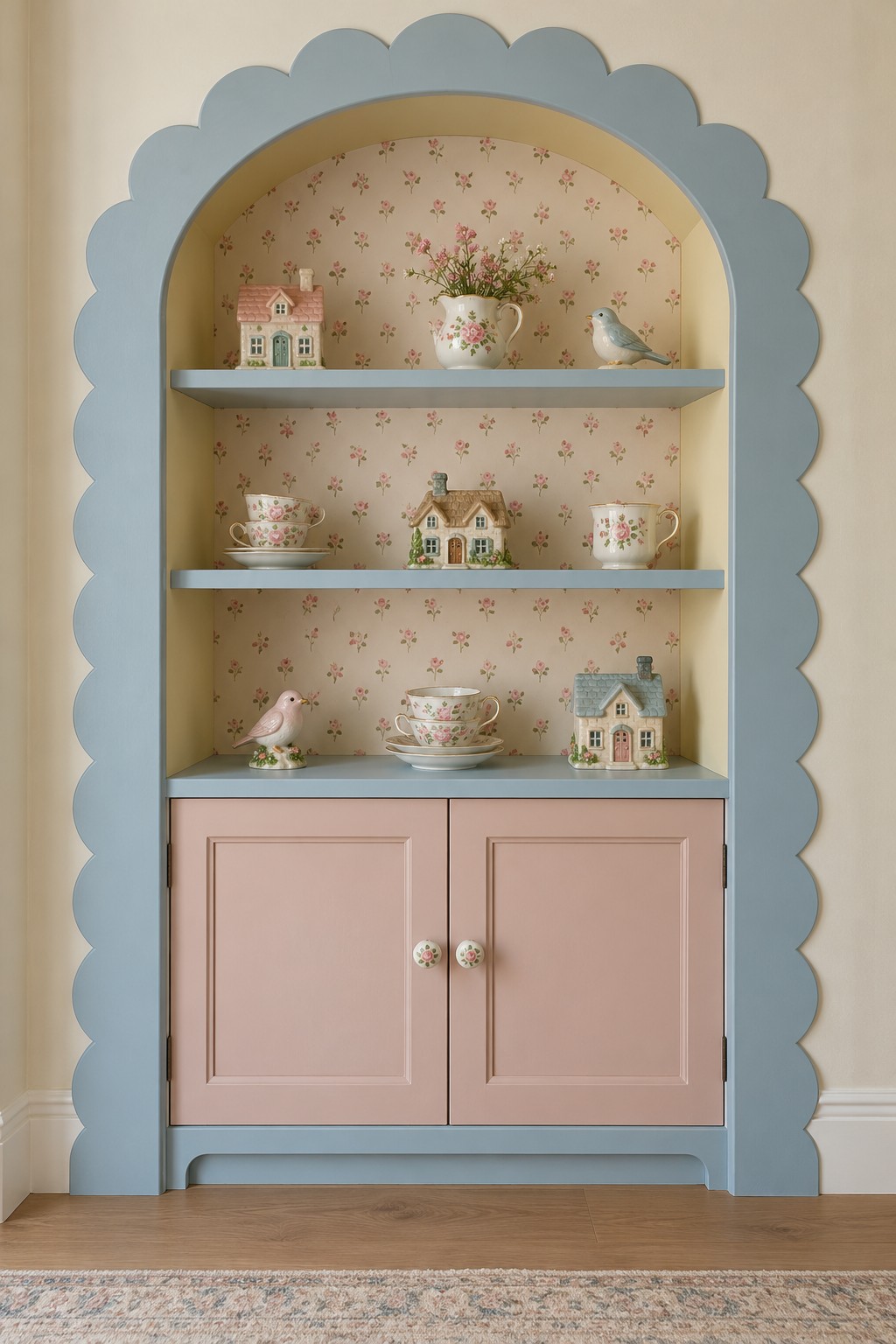
A broad powder blue scallop gives this display its storybook outline, while a pale yellow interior makes the shelves feel welcoming. Tiny rose patterns connect the teacups, floral jug, miniature cottages, and bird ornaments without requiring identical objects. Blush cabinet doors provide a quieter base, so the upper shelves remain the focus. This combination suits a dining corner or a living room wall where you also need enclosed storage.
Adapt the look with a sound wooden display unit, a separately fitted scalloped surround, and floral wallpaper on its back panel. Finish the cabinet before adding the paper and china. Keep each object fully supported on its shelf and leave clearance for both doors to open. Secure a tall unit to an appropriate wall fixing; the decorative surround should frame the storage rather than support it.
2. Hydrangeas Around an Oval Hall Mirror
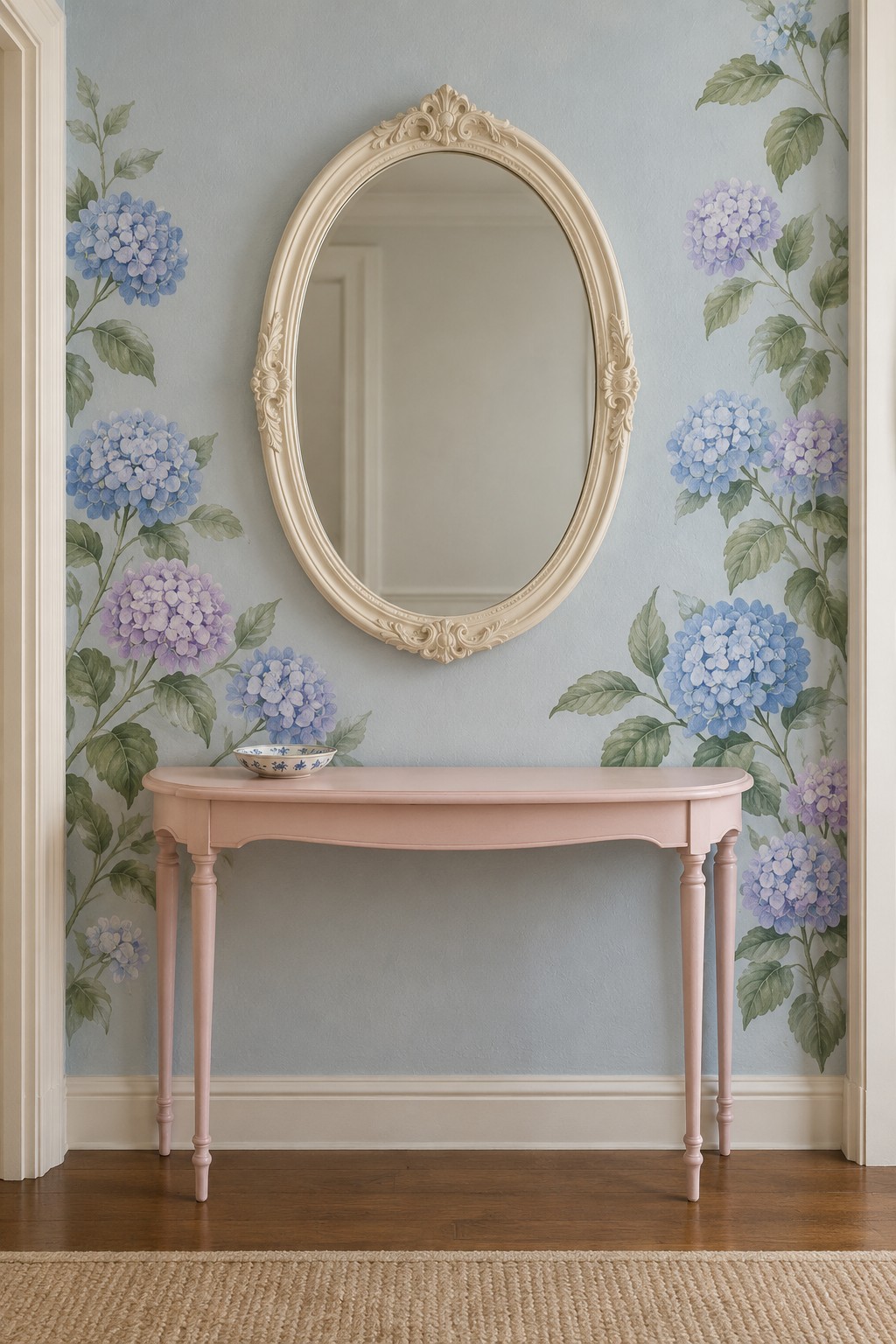
Clusters of blue and lilac hydrangeas give an otherwise simple entrance wall a garden atmosphere. The flowers rise around the edges of a cream oval mirror, leaving a calmer blue area behind the glass. A slender pink console repeats the floral palette at floor level. Because the composition is concentrated at the sides, the mirror remains useful and the hallway keeps a clear central focal point.
Choose a floral mural or commission painted hydrangeas sized around the actual mirror. Position a paper outline of the frame before ordering or painting the design, then check where the largest flower heads will fall. Hang the mirror from its proper backing fittings, independently of the wall treatment. A small bowl is enough on the console; tall arrangements would obscure the lower flowers and compete with the oval frame.
3. Painted Folding Fans Above Cream Beadboard
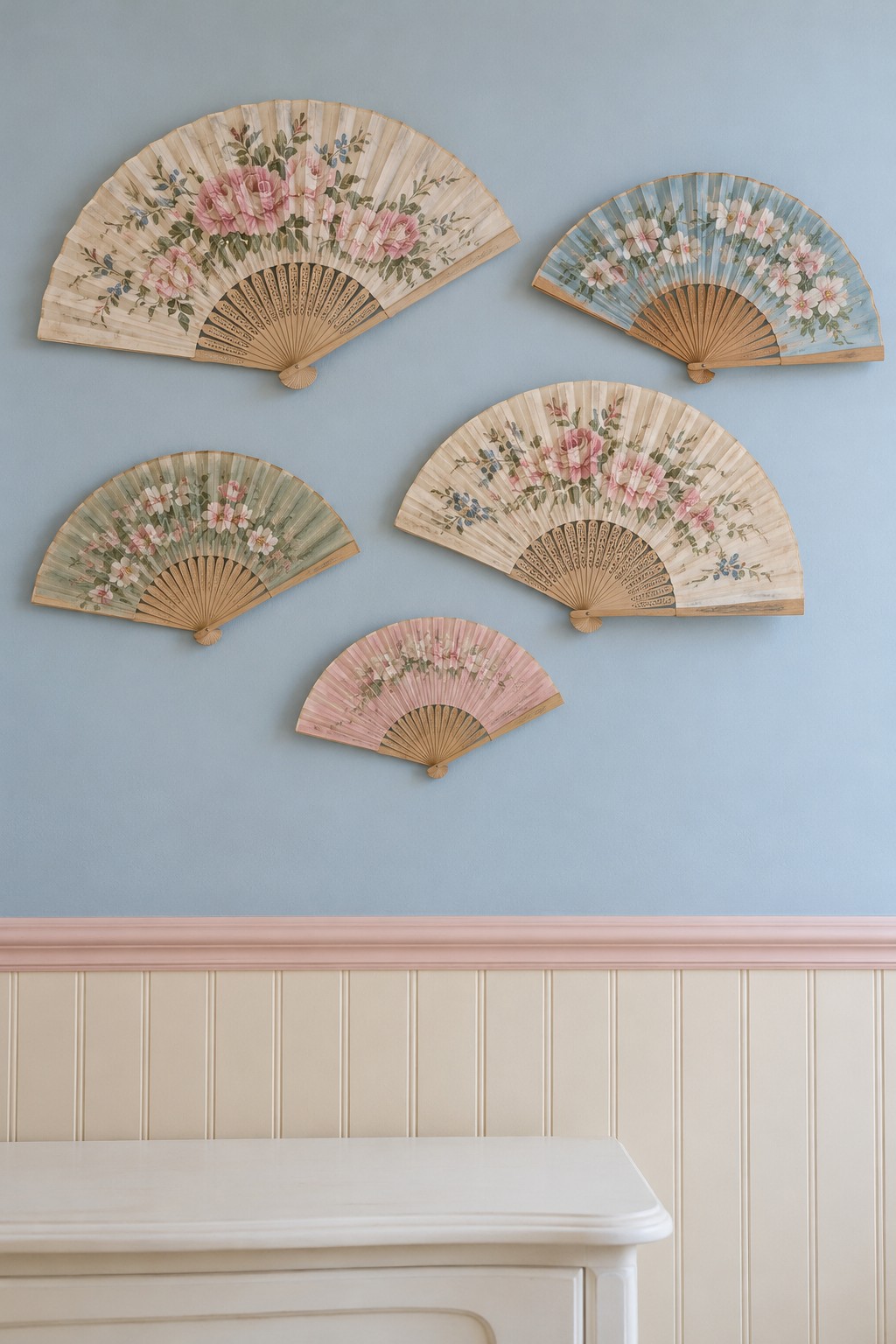
Floral folding fans turn a small collection into a light, spreading wall arrangement. Their curved edges repeat without forming a rigid grid, and the exposed wooden ribs add detail against pale blue paint. Cream, sage, and blush fan backgrounds help the pieces feel collected while staying within the room's palette. The pink rail and plain beadboard beneath them give the display a tidy lower boundary.
Use intact decorative fans and supports intended for their construction. Plan the arrangement with paper outlines so the widest pieces have enough space to open fully. Support the ribs without piercing delicate paper or forcing the pivot. Modern inexpensive fans can be decorated with compatible paint after testing; valuable or fragile examples are better left unchanged. Keep the display away from damp walls and clean it gently with a soft brush.
4. Hollyhocks Rising Behind a Sage Garden Edge
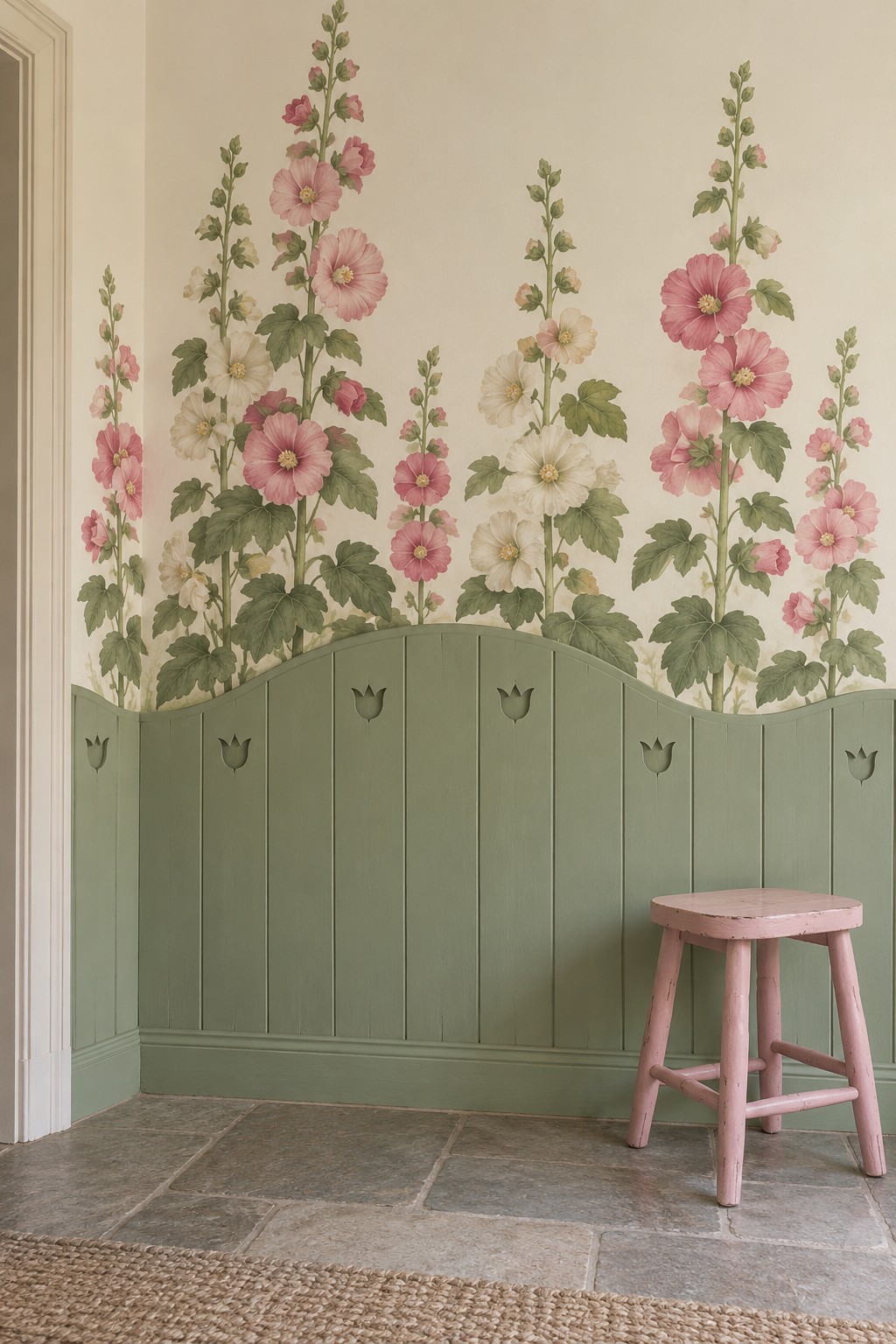
Tall hollyhock stems make a narrow wall feel like the edge of a cottage garden. Pink and cream blossoms rise above sage paneling with a gently undulating top. Small tulip motifs on the boards add a second, simpler botanical detail. The cream background keeps the taller flowers readable, while the pink stool gives the otherwise vertical arrangement a compact finishing touch.
A painted mural is a practical way to place the tallest stems exactly where the wall needs height. Use a full size paper layout before tracing the flowers. The shaped lower section can be a decorative interior panel with a separately cut top profile; its design should not require altering structural wall elements. Keep cuts smooth and accessible edges rounded. For a smaller room, borrow just the floral border and a straight sage dado.
5. Strawberry Wallpaper with Small Bracket Shelves
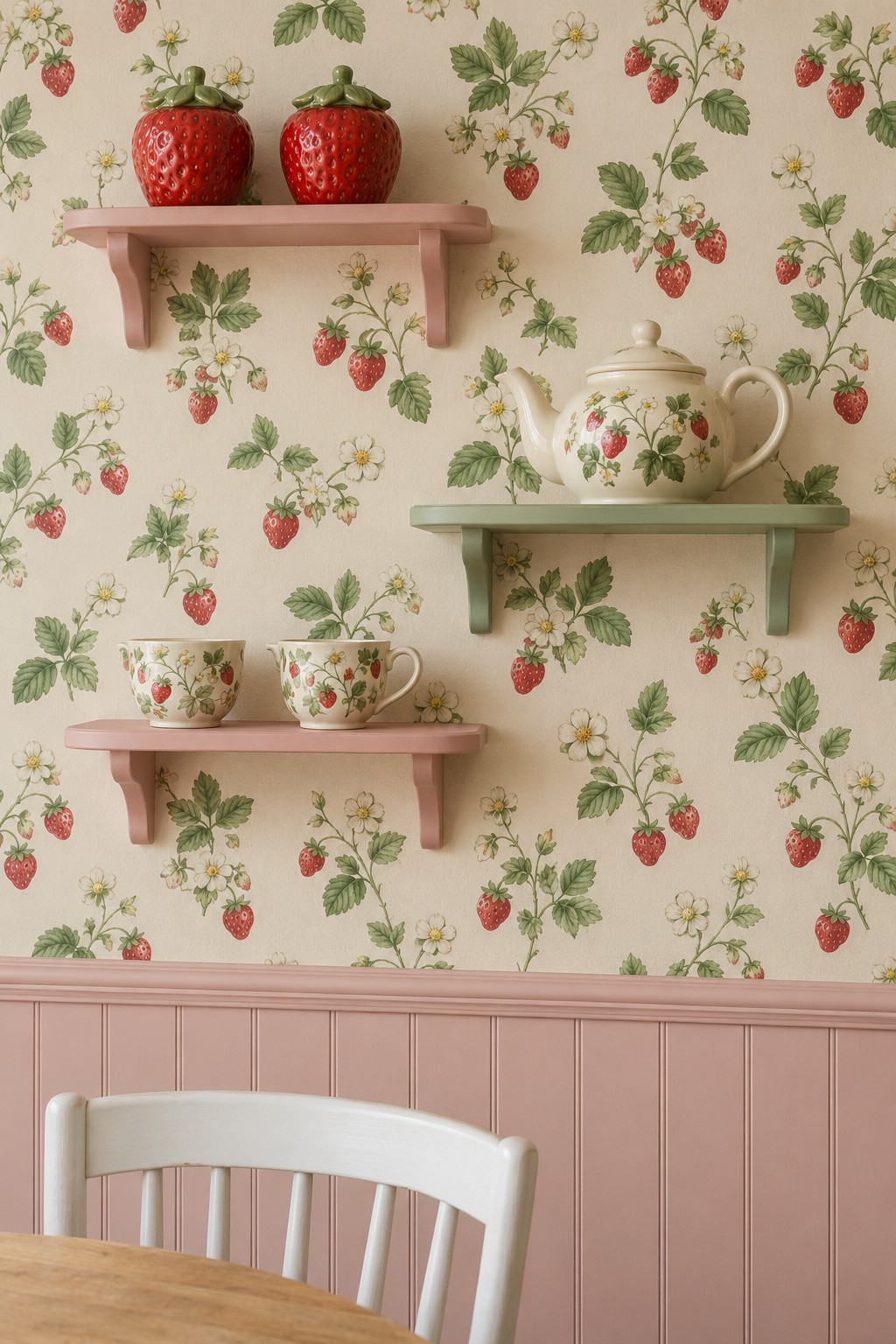
Strawberry vines bring a cheerful kitchen garden motif to a breakfast wall. Small pink and sage shelves echo the leaves and flowers, while strawberry shaped jars provide a more playful accent. A cream floral teapot and matching cups keep the arrangement connected to everyday dining. The pink lower paneling grounds the busy pattern, giving the eye a quieter place to rest beside the table.
Choose washable wallpaper appropriate for the location, especially if the wall is near food preparation. Install shelves with brackets and fixings sized for the ceramics, allowing enough depth for every base to sit flat. Plan drilling positions before hanging the paper so the supports reach the wall beneath it. Leave room above jar lids and teapot handles. This treatment works best on a dining wall clear of direct heat, grease, and persistent steam.
6. Three Little Arches with Different Backdrops
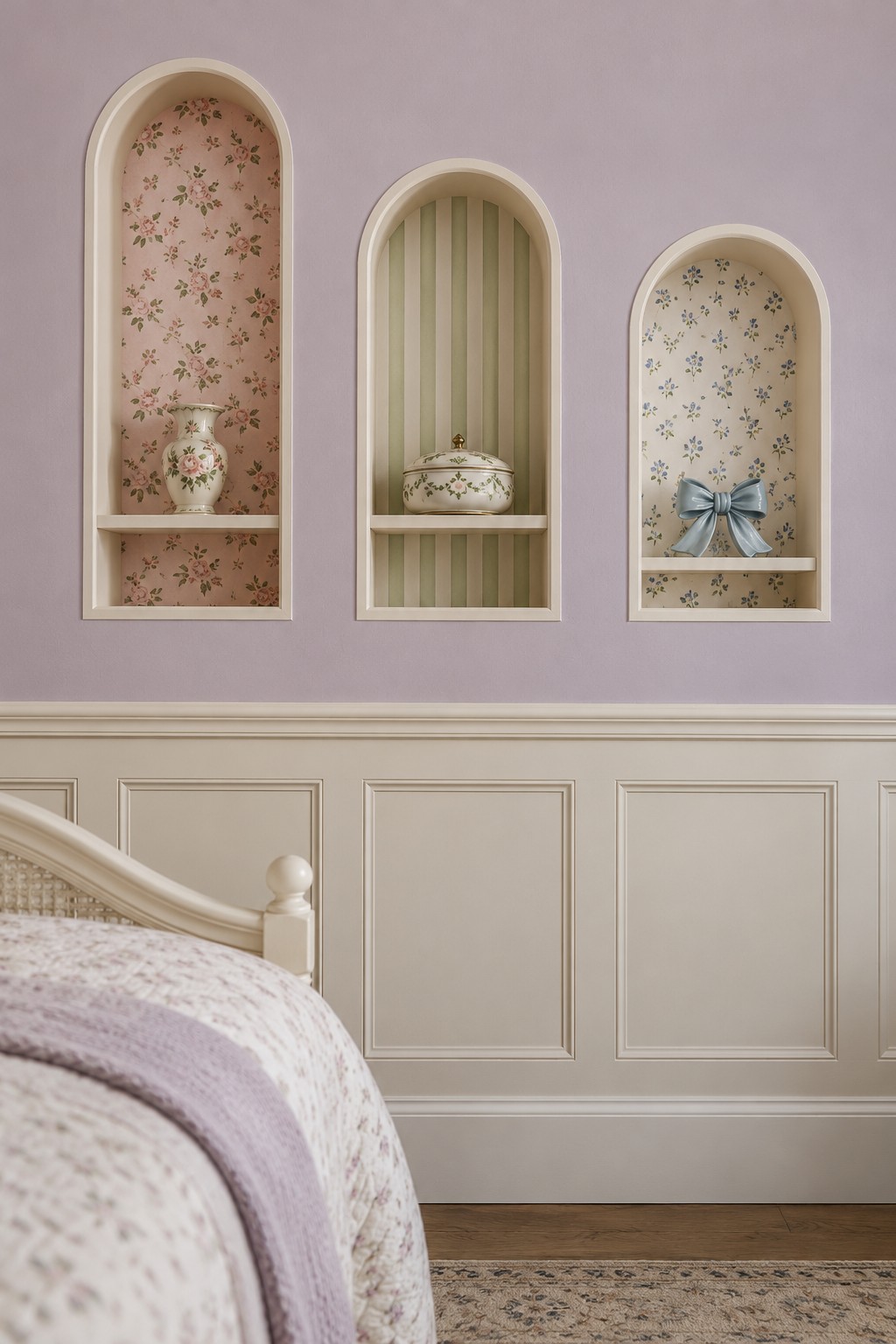
Three narrow arches give a lilac bedroom wall the rhythm of a miniature arcade. Each interior has its own finish: rose sprigs, sage fluting, or a tiny blue floral repeat. Cream edging connects the different backgrounds, and a single small object in each opening prevents the arrangement from becoming crowded. The varying heights make the group more relaxed than three identical rectangular shelves.
For an existing room, use shallow arched display boxes rather than assuming the wall can be cut open. Paint the boxes and line their backs before installation, then hang them from fittings suited to their loaded weight. Keep shelf depths appropriate for a vase or lidded dish and avoid pieces that overhang. Matching the lower edges can help a short wall feel orderly, while staggered tops retain the gentle movement of the original arrangement.
7. A Lavender Trellis over Floral Wallpaper
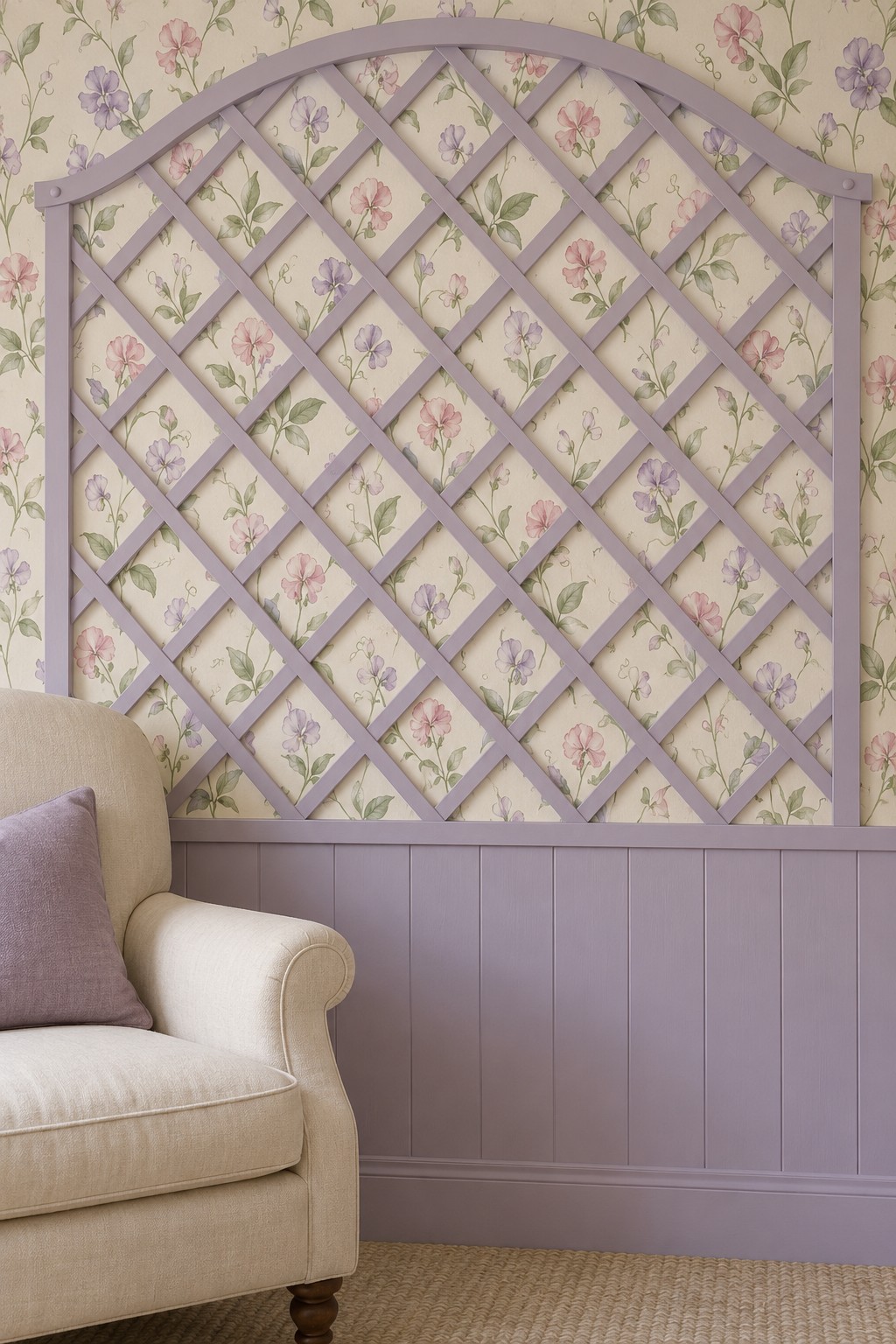
An arched lavender trellis brings the outline of a garden structure indoors. The open diamond lattice lets the floral wallpaper remain visible, creating depth without adding climbing plants or bulky ornaments. Matching lavender paneling below makes the trellis feel connected to the room. A cream armchair gives the pattern a practical setting and leaves the decorative upper wall easy to appreciate.
Use smooth interior timber strips or a purpose made decorative lattice panel, assembled and painted before mounting. Fix it through to a suitable supporting surface rather than relying on wallpaper adhesive. Keep the lower edge clear of the chair back so it will not catch clothing or rub the upholstery. If you are building a reading corner around this feature, these reading room decoration ideas offer related ways to arrange seating and books.
8. A Loose Oval of Floral Plates
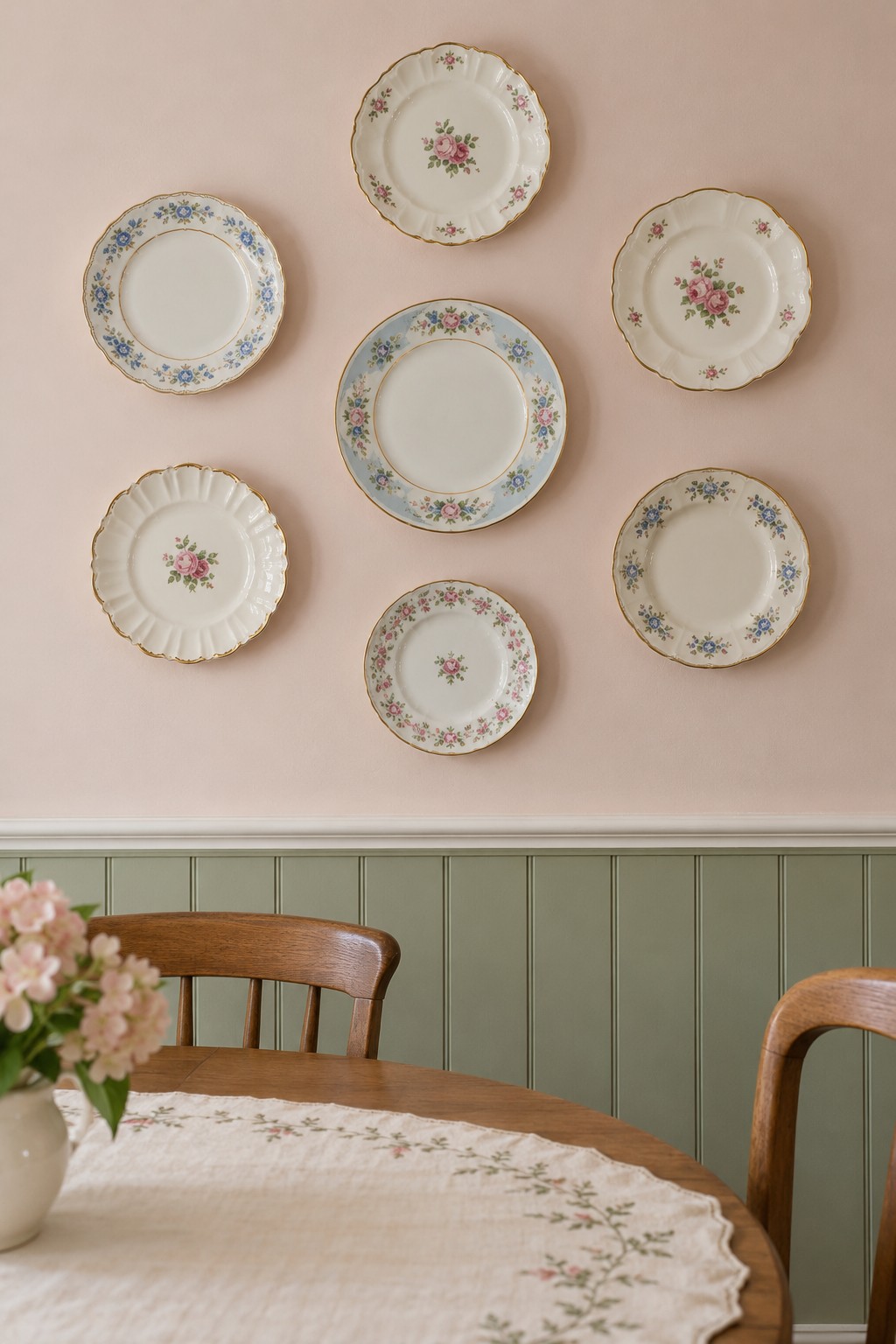
Different floral plates can form a coherent collection when their backgrounds and colors relate. Here, cream china, rose sprigs, and blue borders stand out softly against blush paint. A loose oval arrangement keeps the group centered above sage paneling without making every plate line up. This is an inviting choice for a dining nook, especially when the table linens repeat one small floral detail.
Trace each plate onto paper and adjust the spacing before making holes. Choose hangers approved for each plate's size, weight, glaze, and condition. For a compatible adhesive disc system, clean the back as directed, activate its adhesive, and allow the full specified drying period before testing the bond. Use suitable wall hooks independently of that bond. Never substitute a paper clip and hot glue, and protect valuable china by seeking specialist hanging advice.
9. Rose Panels Topped with Sculpted Bows
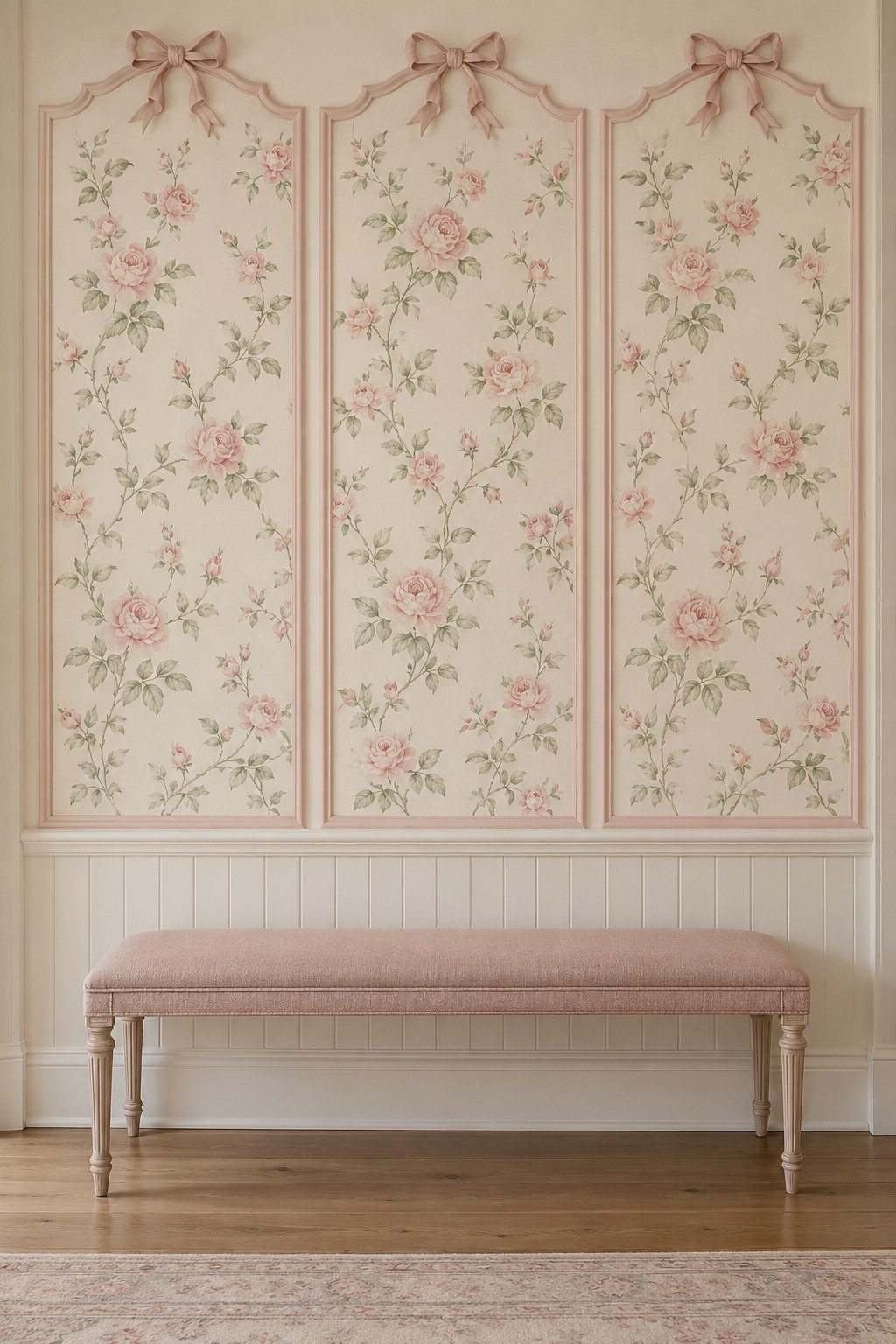
Three tall rose panels create an architectural backdrop for a slim upholstered bench. Their pink borders have shaped upper edges, with bow ornaments marking the center of each panel. Repeating the same floral paper inside all three frames keeps the decorative molding from feeling too busy. The cream spaces between the panels are equally important because they let the outlines remain distinct.
Lay out the complete group from the bench's center before cutting molding or wallpaper. Use interior profiles and ready made bow appliques with the installation adhesive specified for their material. Decorative molding adhesive differs from wallpaper paste, so apply each only where its system requires. Keep the panel widths consistent and finish joints carefully before painting. A simple bench and an uncluttered floor let this wall carry the room's romantic detail.
10. A Patchwork Tile Picture in Pastel Colors
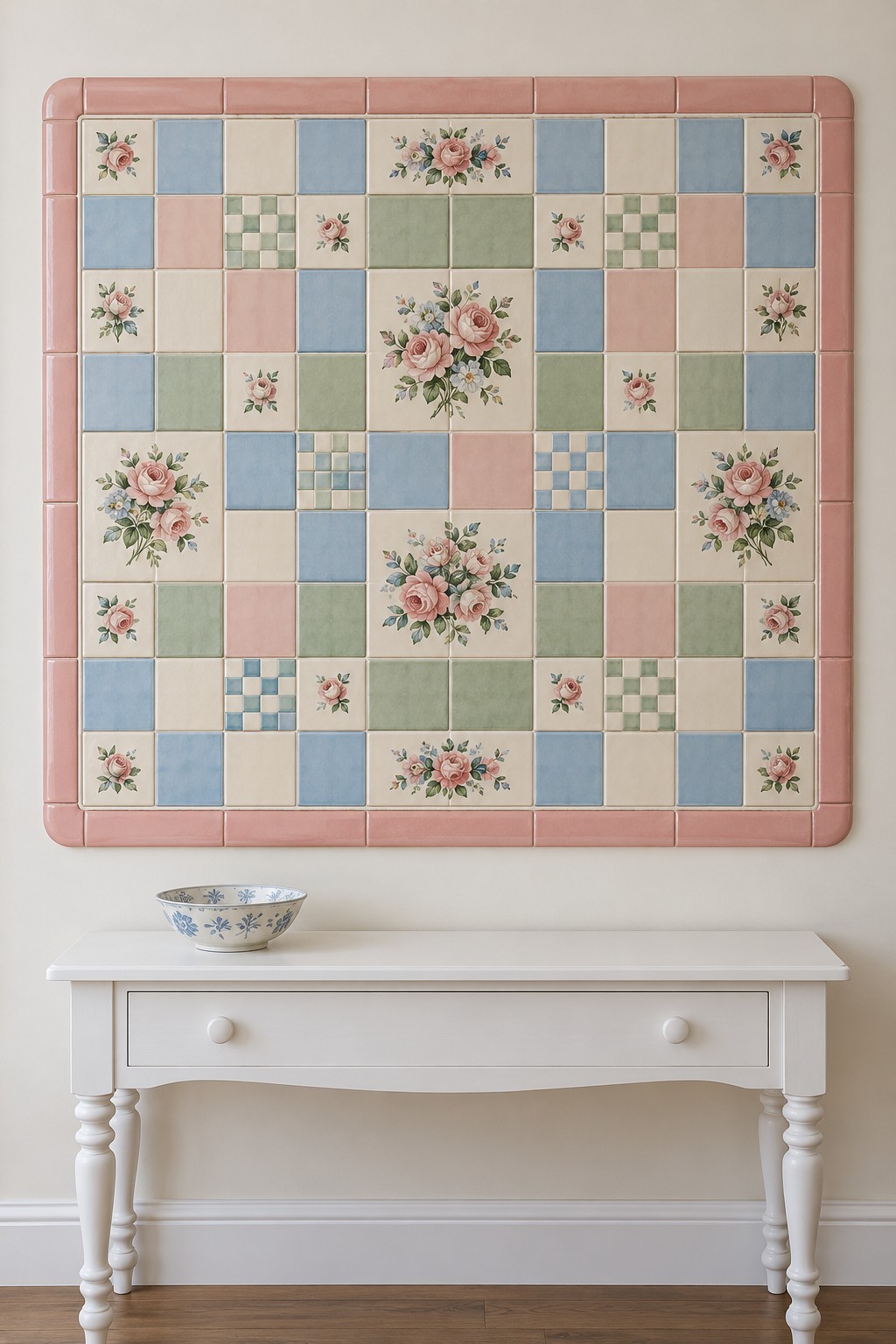
A tile patchwork brings the feeling of a cottage quilt to the wall. Plain blue, pink, sage, and cream squares give the floral tiles room to stand out, while small checked sections break up the larger blocks. A pink border holds the whole composition together. Above a simple white console, the tiled area reads as one substantial decorative feature rather than a collection of unrelated samples.
Draw the grid to scale and arrange all tiles before installation. Real ceramic needs an approved, stable substrate, compatible tile adhesive, and appropriate grout. A separately framed tile panel also needs a support and hanging system designed for its considerable finished weight. Ask a tiler to plan those details. For a lighter adaptation, paint the patchwork on a suitable decorative board and frame it, keeping the same balance of plain and patterned squares.
11. A Sage Shutter Cabinet with a Pink Surround
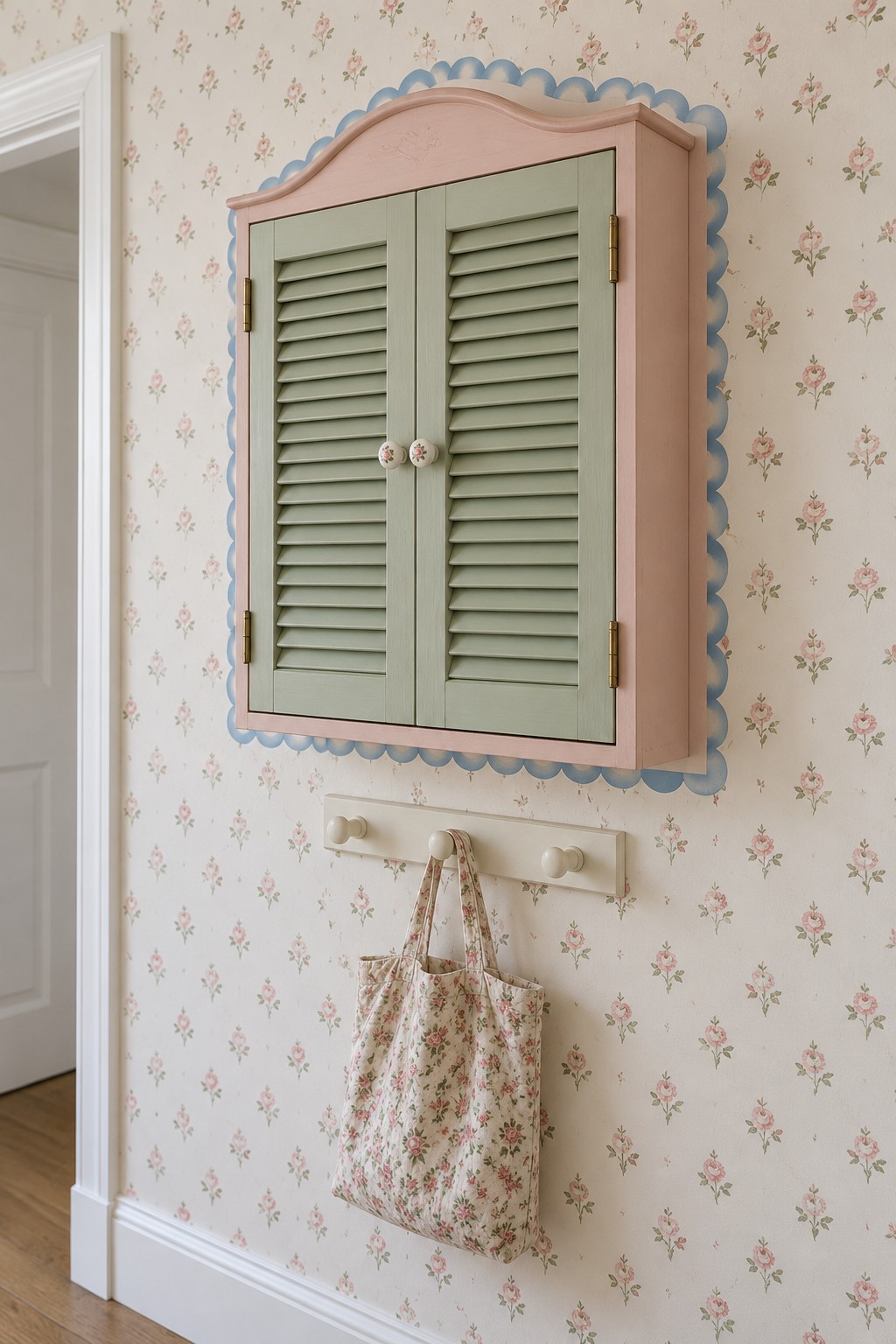
A small wall cabinet can contribute as much character as a purely decorative object. Sage shutter doors, a curved pink crown, and blue scalloped trim turn this one into a cottage focal point. Tiny rose wallpaper connects the cabinet to the wall, while a cream peg rail below provides a sensible place for a lightweight bag. The palette stays gentle even though several shapes and finishes are involved.
Start with a sound cabinet intended for wall installation and inspect its hinges, back, and mounting points. Add any decorative surround without obstructing the doors or hinge travel. Use a suitable furniture primer and paint for the cabinet material, allowing the finish to cure before closing the doors tightly. Fix the cabinet and peg rail separately to appropriate supports, and account for the stored contents when selecting the cabinet fixings.
12. Wicker Flower Baskets on a Daisy Wall
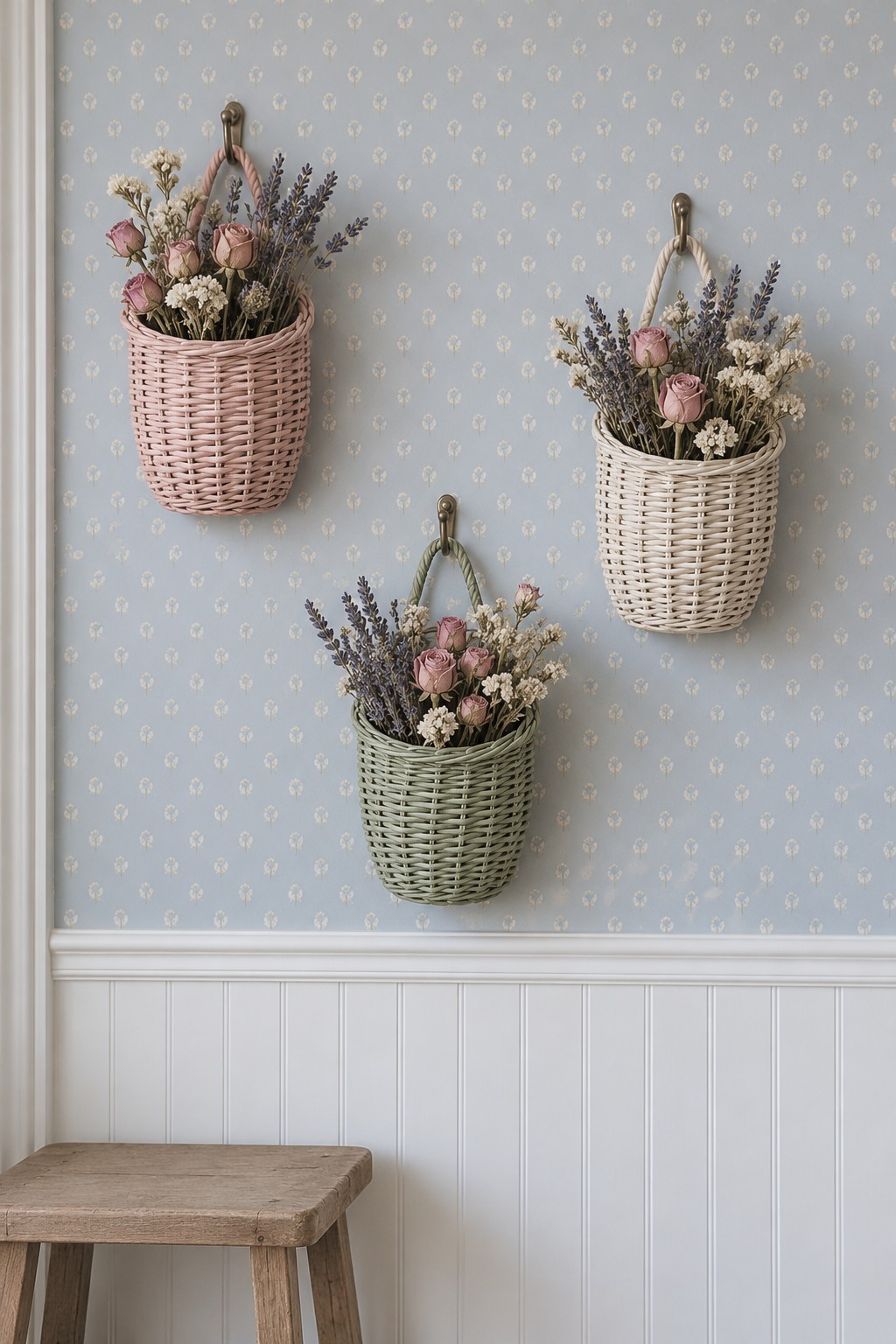
Three woven baskets give a blue daisy wall a more tactile layer. Their rose, cream, and sage finishes pick up the dried flower colors while retaining the visible weave. Staggered heights make the arrangement feel informal, and the white beadboard beneath them keeps the lower wall calm. The effect suits a hallway, a small sitting area, or the wall above an occasional bench.
Choose baskets made for wall display, with intact hanging loops and flat backs. Build each bouquet from completely dry stems or artificial flowers, keeping heavier materials low and close to the basket. Use hooks matched to the loaded basket and wall construction. If you repaint wicker, use a coating approved for it and avoid clogging the weave with thick layers. Keep dried stems away from moisture and dust them gently rather than spraying the arrangement.
13. Botanical Cameos with Raised Flower Details
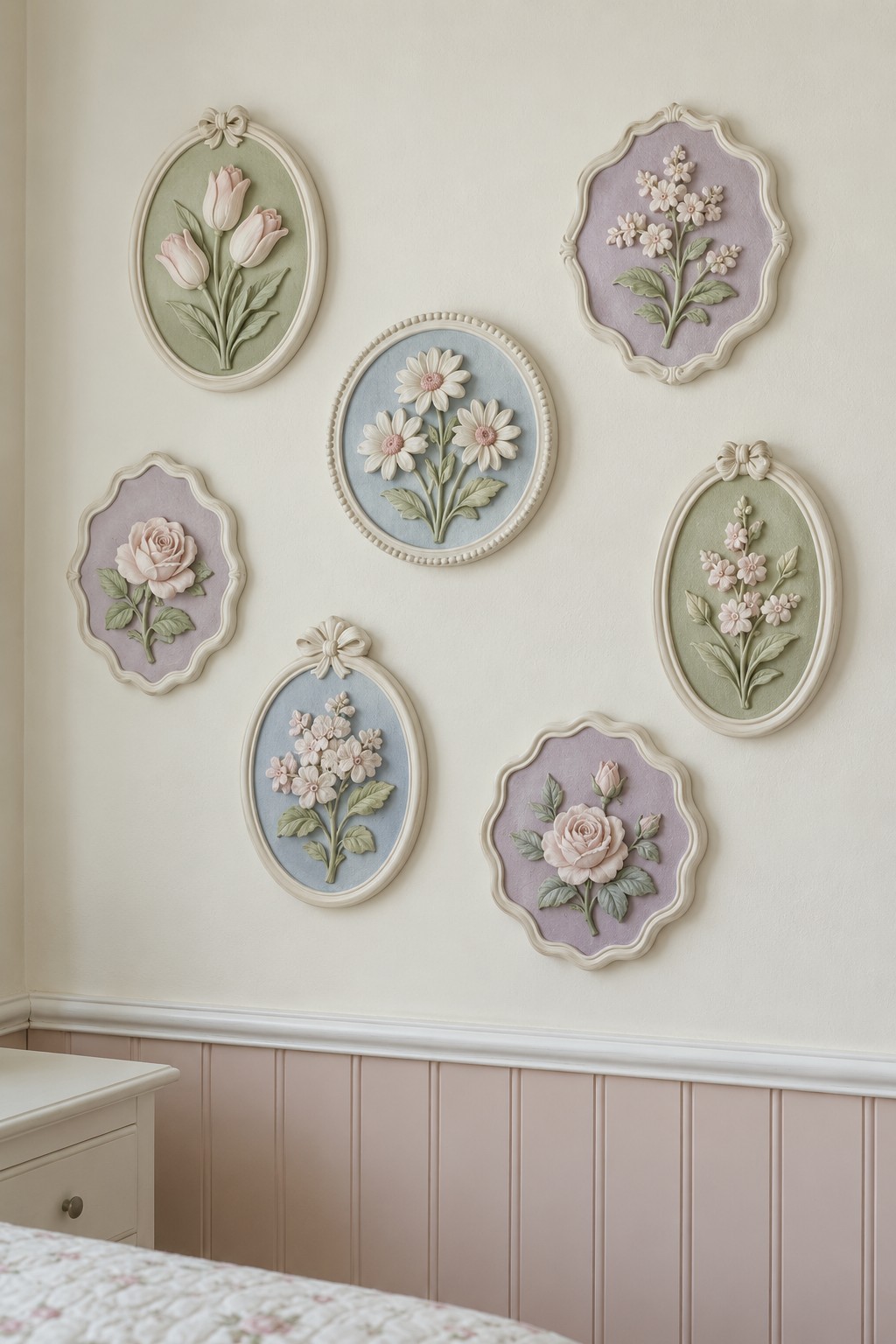
Botanical cameos bring the detail of a flower study into a more sculptural wall display. Cream edges unify oval and shaped plaques, while soft blue, sage, and lilac backgrounds distinguish the flowers. Tulips, daisies, roses, and clustered small blossoms provide variation without changing the overall palette. Generous gaps help each raised stem remain readable against the pale wall.
Choose finished botanical plaques or decorate suitable framed backing panels with lightweight, fully cured floral appliques. Identify the material before selecting paint, adhesive, or a hanger; cast plaster, resin, and wood need different handling. Dry arrange the group using paper shapes, balancing the larger plaques across the wall. Keep delicate petals away from places where pillows, chair backs, or passing shoulders can strike them. The arrangement also works as a smaller group above a dressing table.
14. Pansies Following the Line of a Staircase
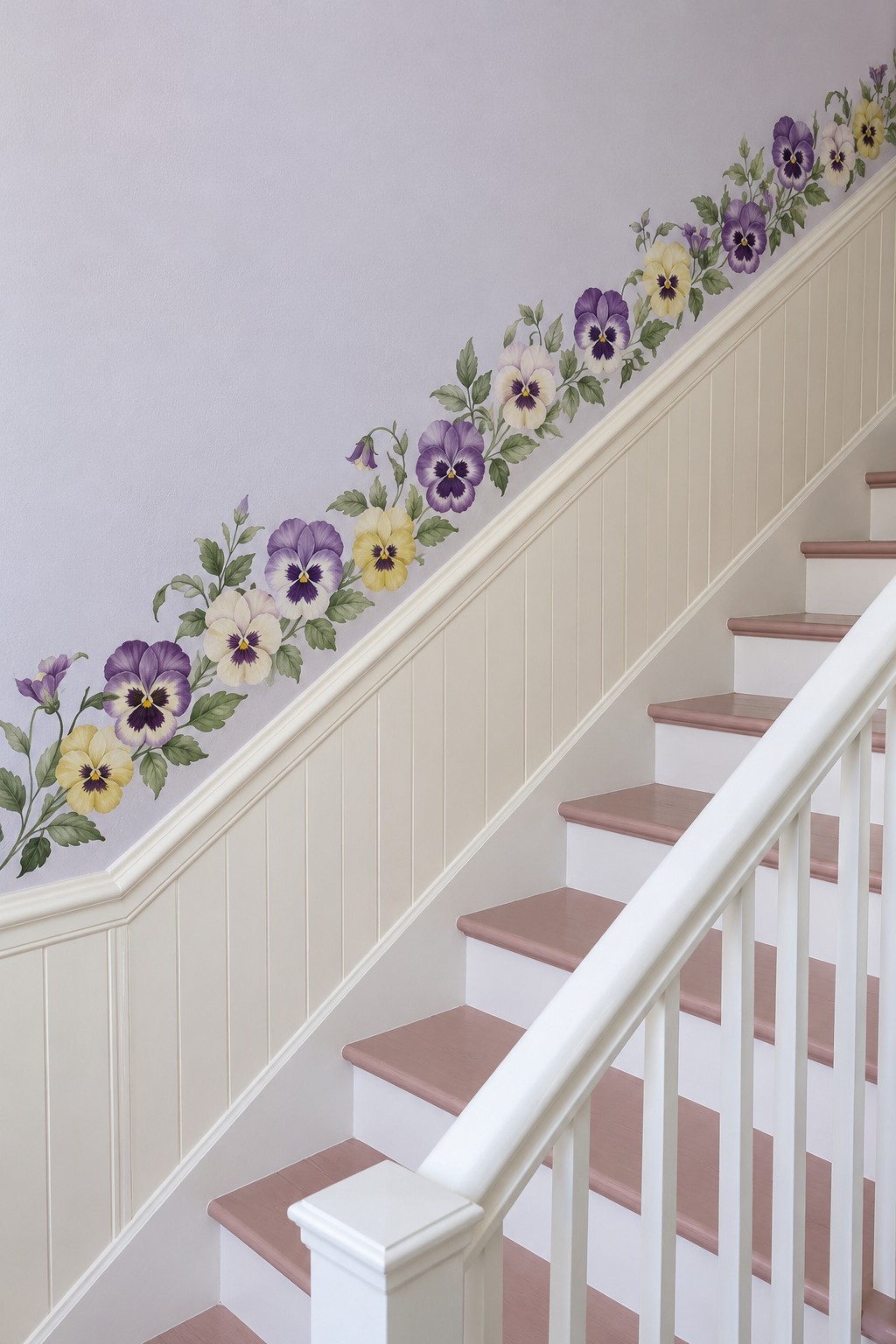
A pansy border follows the rising line of the stair paneling, making a circulation space feel like part of the home's decoration. Purple and cream petals stand out against lilac paint, with small green leaves linking one flower cluster to the next. The flowers stay close to the sloping trim rather than spreading over the whole wall. Pink treads provide a related color at a different scale.
Use a paper strip along the rake of the stairs to plan the repeat, checking the pattern at both ends and near any landing. A floral stencil can establish the shapes, with a small brush adding darker centers once the base colors dry. Safe access matters on a staircase, so use a decorator with appropriate equipment for high areas. Keep handrails, walking surfaces, and their required clearances fully functional while changing the decorative finish.
15. Ribbon Trimmed Straw Hats in a Sunny Entry
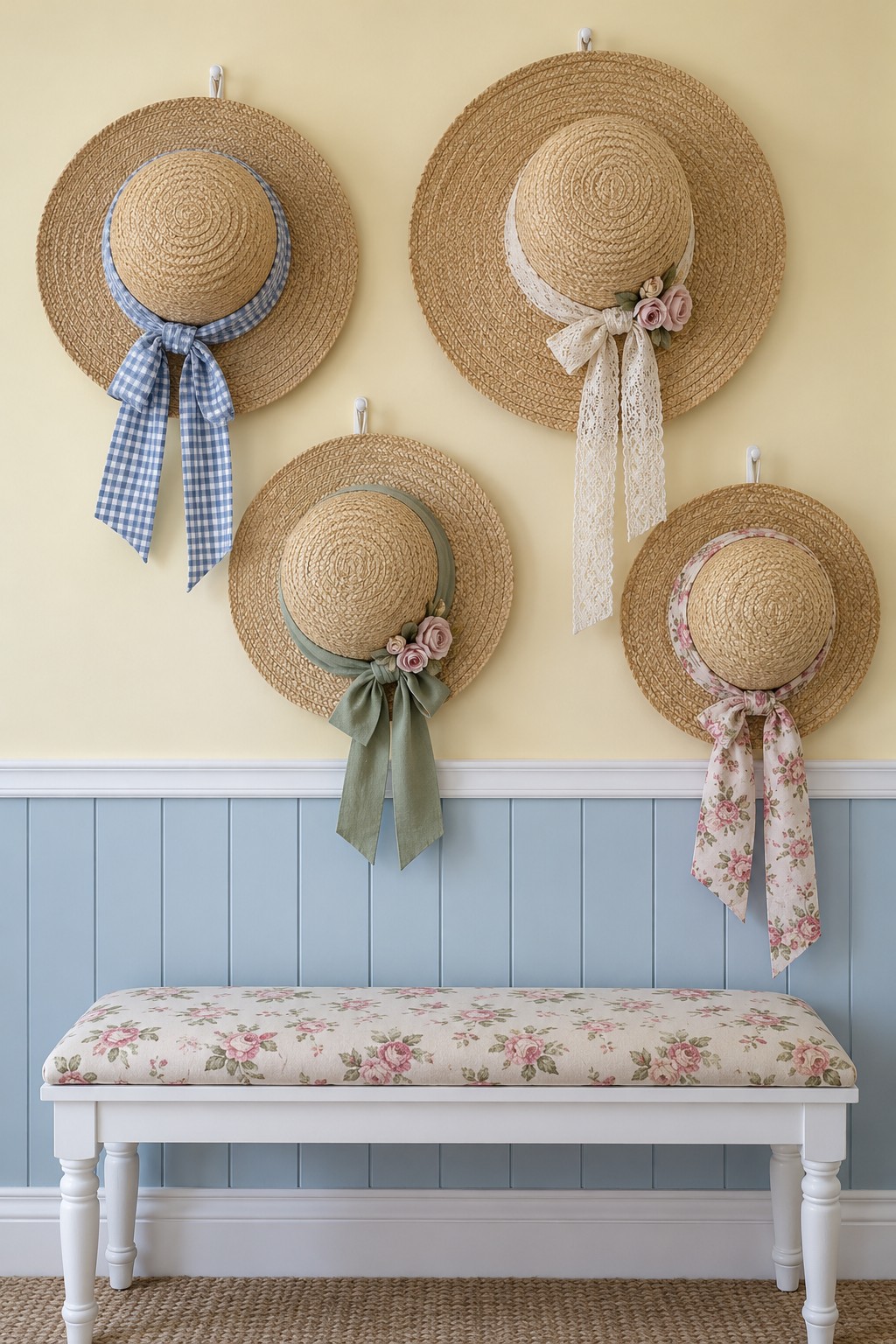
Straw hats bring natural texture to a pale yellow entry wall without needing a framed picture. Gingham, lace, floral ribbon, and a sage bow give each hat a slightly different personality. Blue lower paneling provides a cool counterpoint to the straw, and the floral bench fabric connects the display to the rest of the cottage palette. The grouping feels especially appropriate where outdoor accessories already belong.
Arrange hats with enough space that their brims do not press against one another. Choose broad supports or purpose made hat hooks that hold their shape without crushing the crown. Sew removable ribbon trims in place if the hats will still be worn, and keep the decoration light. Check the display from the doorway before fixing the hooks. A smaller collection of two hats can achieve the same effect on a narrow wall.
16. Wavy Pastel Stripes with Tiny Rose Sprigs
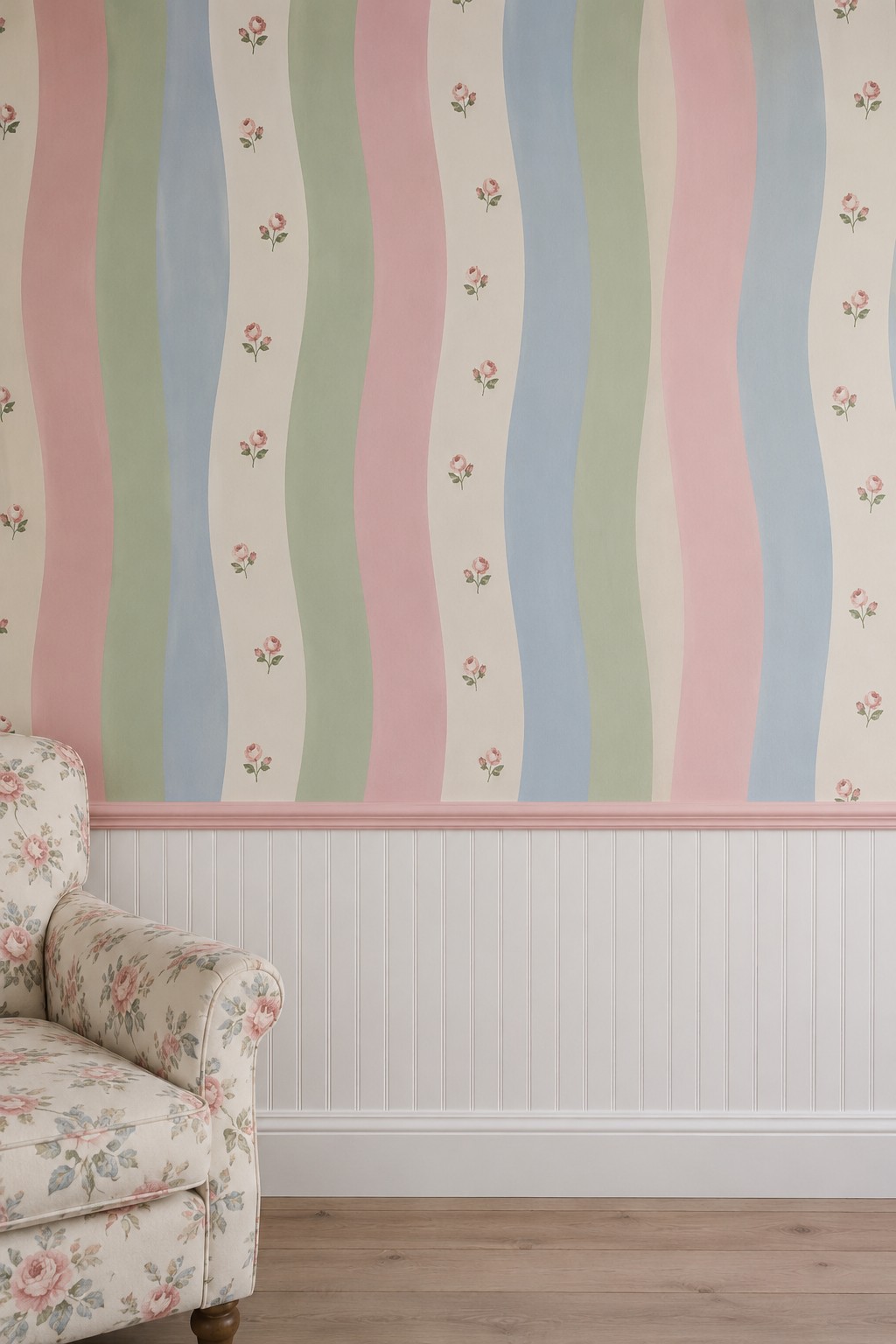
Gently wandering stripes make pastel wall colors feel softer and less formal. Blue, pink, sage, and cream bands share the space, while tiny rose sprigs decorate selected pale sections. A slim pink rail finishes the pattern above white beadboard. The floral armchair works because its much smaller print differs clearly from the broad movement of the stripes.
Plan a complete repeat on paper before transferring it to the wall. Keep the bands similarly wide even where their curves move sideways, and check that narrow slivers will not appear at the corners. Paint one color at a time with compatible interior coatings, then add the rose details after the background is ready. A custom printed wallpaper offers another route when you want consistent curves across a large wall. Use simpler upholstery if the room already contains several patterned surfaces.
17. Teacup Wall Pockets Filled with Fabric Flowers
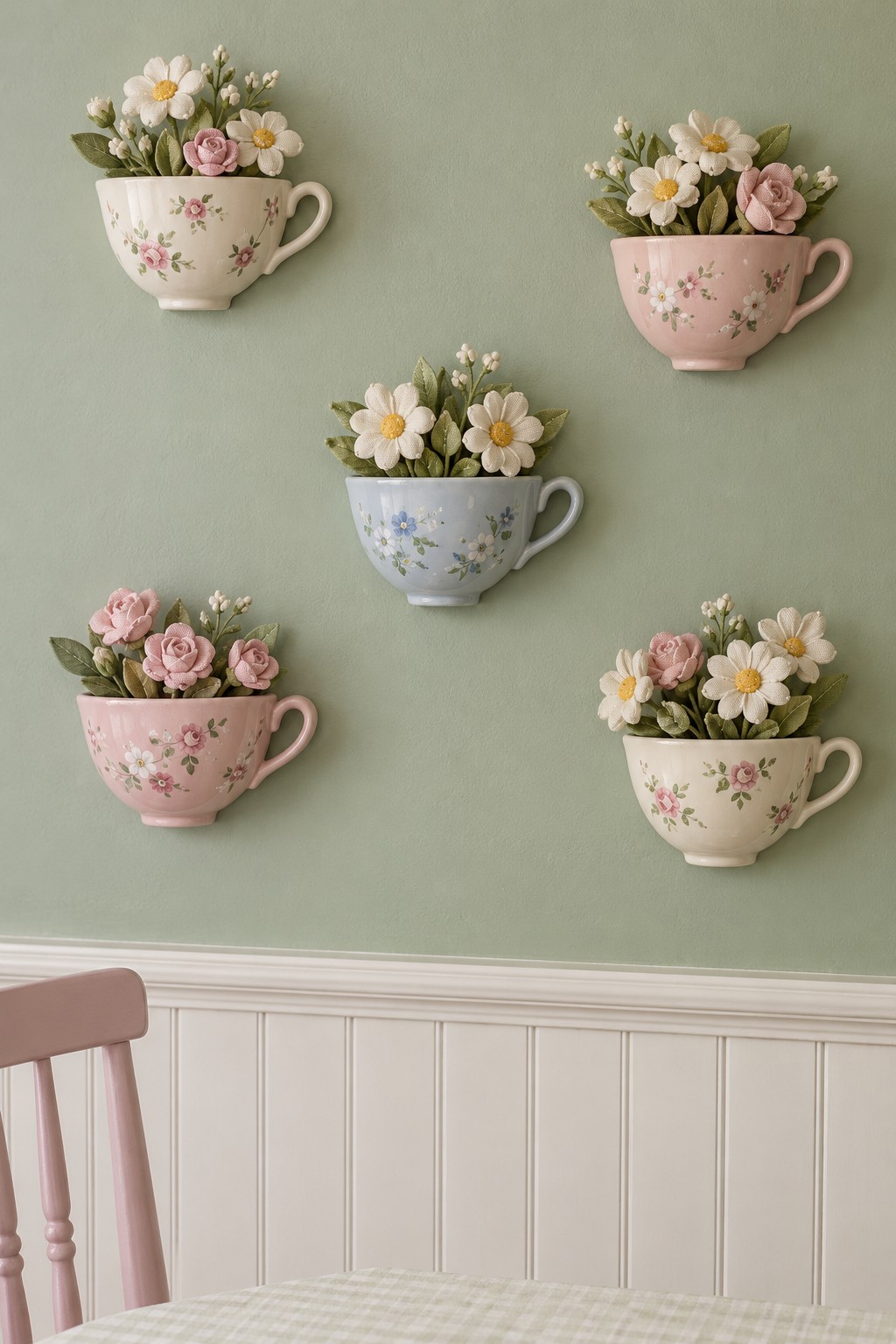
Teacup shaped wall pockets combine the charm of floral china with the softness of fabric flowers. Cream, blush, and pale blue cups stand out against sage paint, while daisies and small pink roses create a repeated bouquet. The flowers vary enough to look individually arranged, but their similar size keeps the group balanced. This is a cheerful accent for a dry breakfast nook or a craft room.
Use purpose made ceramic wall pockets with flat backs and manufacturer provided hanging points. An ordinary drinking cup needs a properly designed holder; its handle and a patch of craft glue are not a dependable mounting system. Fill the pockets with lightweight textile stems secured inside removable inserts. Keep the bouquets compact so they do not pull the containers forward, and leave access to each hanger for inspection and cleaning.
18. An Oversized Daisy Vine with a Mosaic Finish
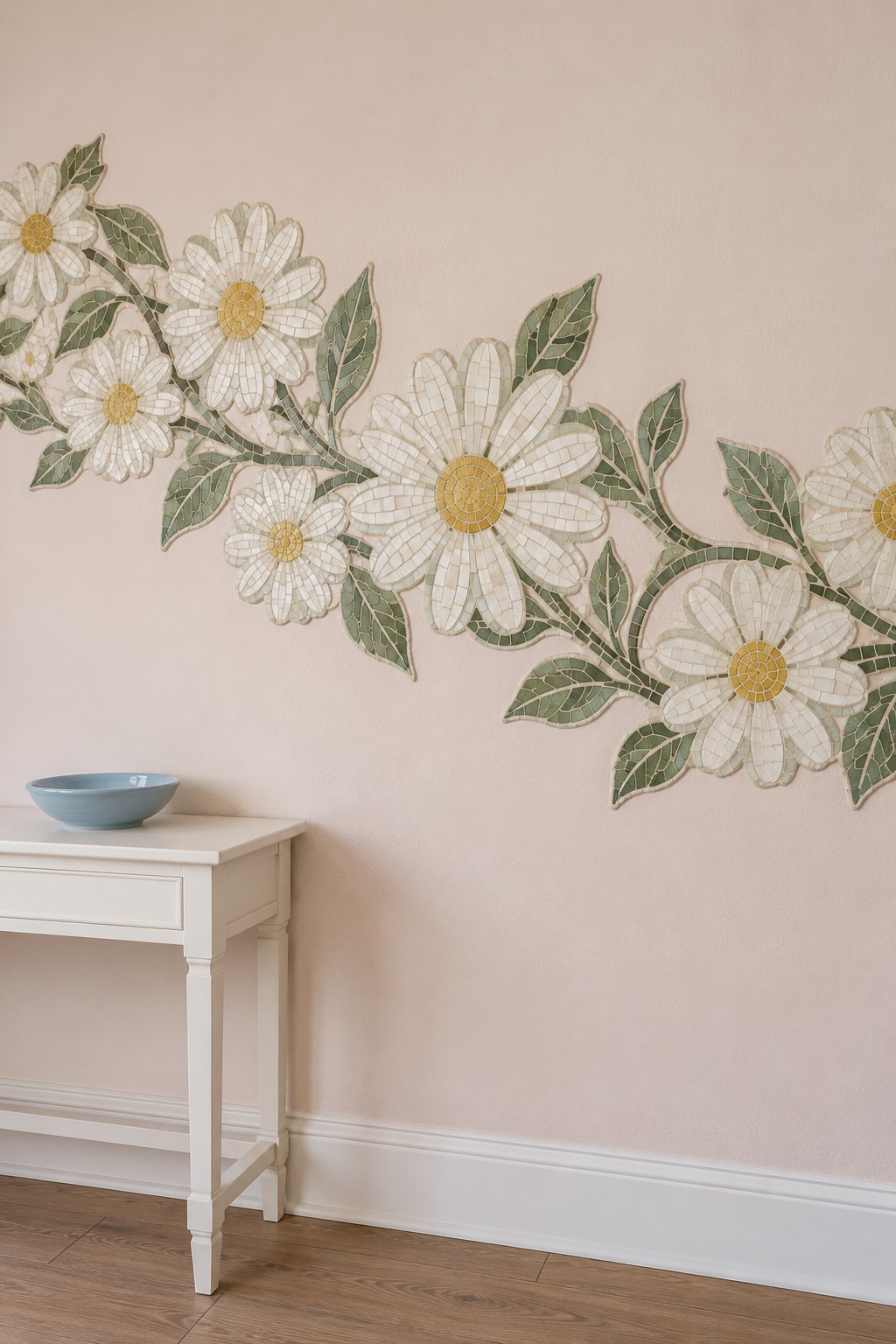
A diagonal daisy vine gives a blush wall movement without filling it with a repeating print. Large white petals, yellow centers, and sage leaves make the flowers easy to recognize, while the mosaic divisions add a more detailed surface. The long diagonal suits a wall where a centered rectangular picture would feel static. A small white table beneath it provides a simple visual anchor.
For an actual mosaic, plan the complete outline and have a tiler specify the substrate, tesserae, adhesive, grout, and finished edges. Include the mosaic's weight in the installation plan. A painted adaptation can reproduce the flower shapes and fine tile lines with much less projection. Make a sample first: small petal divisions can become visually fussy at a distance. Keep the surrounding wall plain so the vine retains its clear silhouette.
19. A Cottage Village Above Blue Hall Paneling
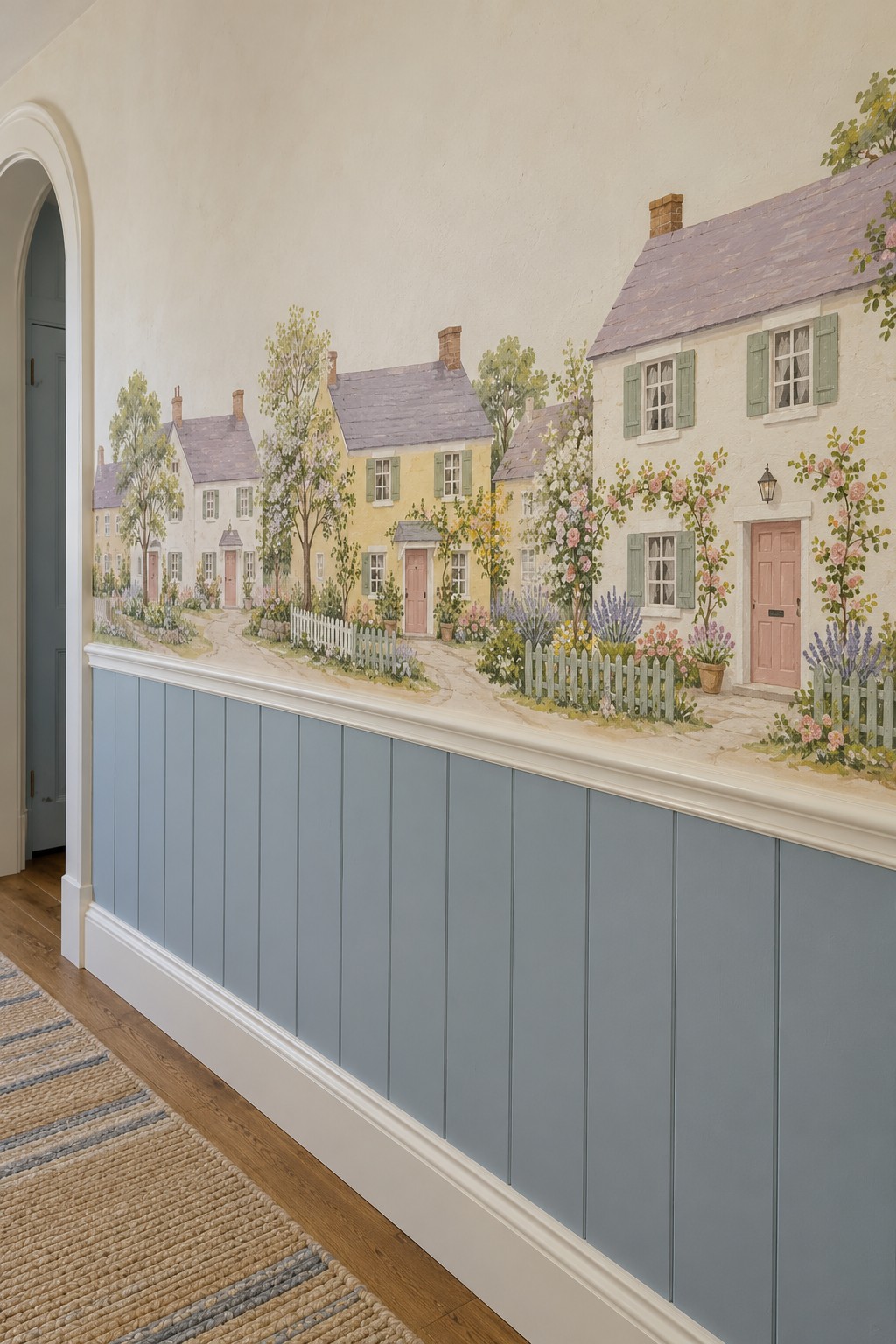
A row of cottages turns a long hallway into a gentle village scene. Pale walls, lavender roofs, climbing flowers, and little picket fences create a continuous story above blue paneling. The mural's ground line sits close to the rail, allowing the architecture below to act as a visual base. Because the detail travels horizontally, it suits a passage where several small pictures might feel disconnected.
Measure door openings and the finished height of the rail before choosing or commissioning the mural. Place important cottages on uninterrupted stretches of wall, and let quieter garden sections fall near corners. A decorator can adapt the scale so windows and roofs remain readable along the hallway. Keep runners and nearby furniture understated. If only one short wall is available, select a single cottage with a garden instead of squeezing in the whole village.
20. Pressed Botanicals in Small Brass Frames
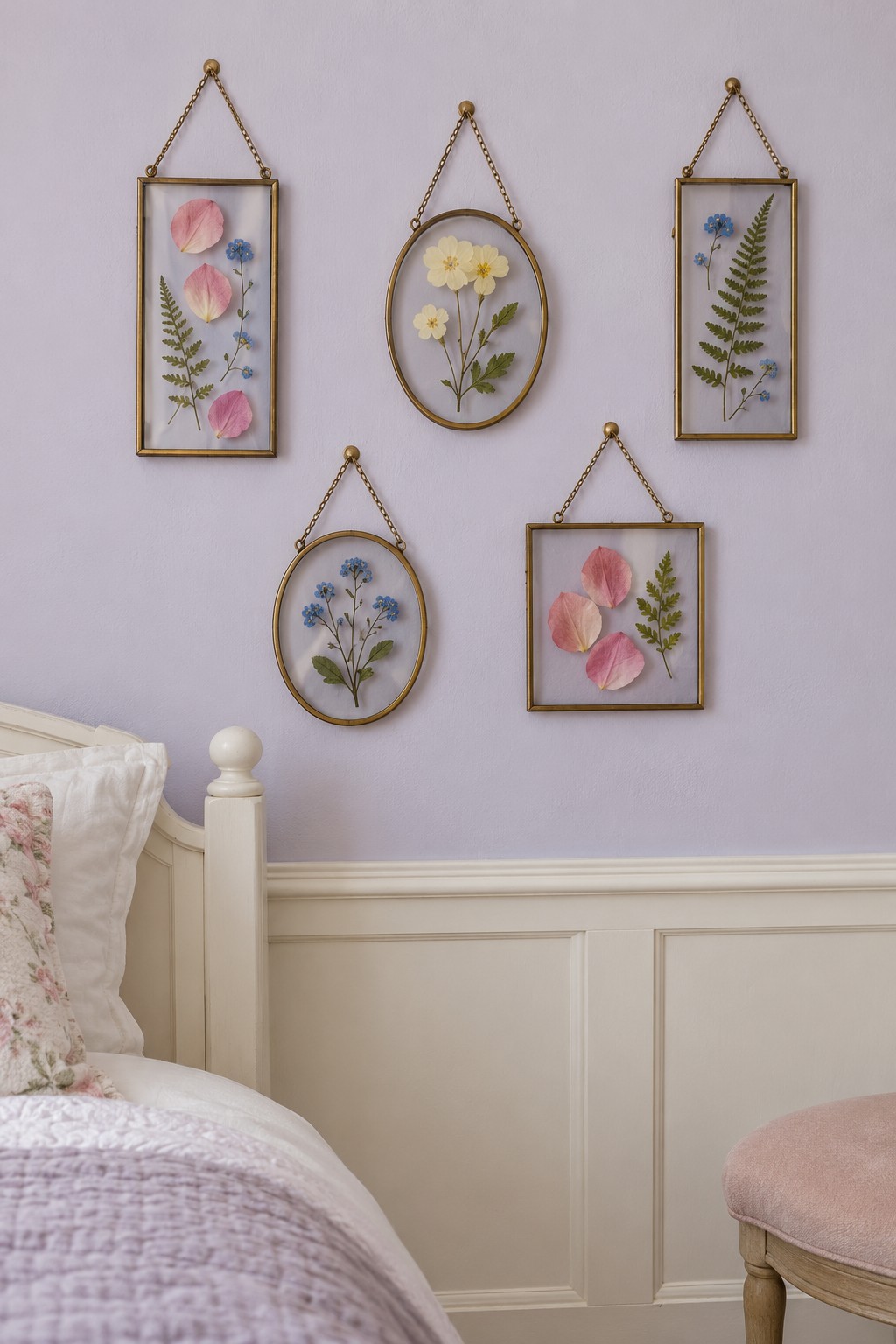
Small brass frames make individual petals and leaves feel worth pausing to notice. Rectangular and oval shapes introduce variety, while fine chains repeat a delicate line across the lilac wall. The pale flowers and fern fronds leave plenty of clear space inside the frames, giving the arrangement a lighter appearance than a dense botanical print. It works beside a dressing area or on a quiet bedroom wall.
Press suitable flowers between absorbent sheets under even pressure, leaving them until completely dry. This commonly takes two to four weeks, depending on the material and conditions. Arrange the dry specimens before securing them with tiny amounts of an adhesive intended for botanical mounting. Use frames designed for this type of display and follow their assembly instructions. Hang glass pieces away from places where they could be knocked or fall onto a sleeping person.
21. Pastel Bead Swags with Gingham Bows
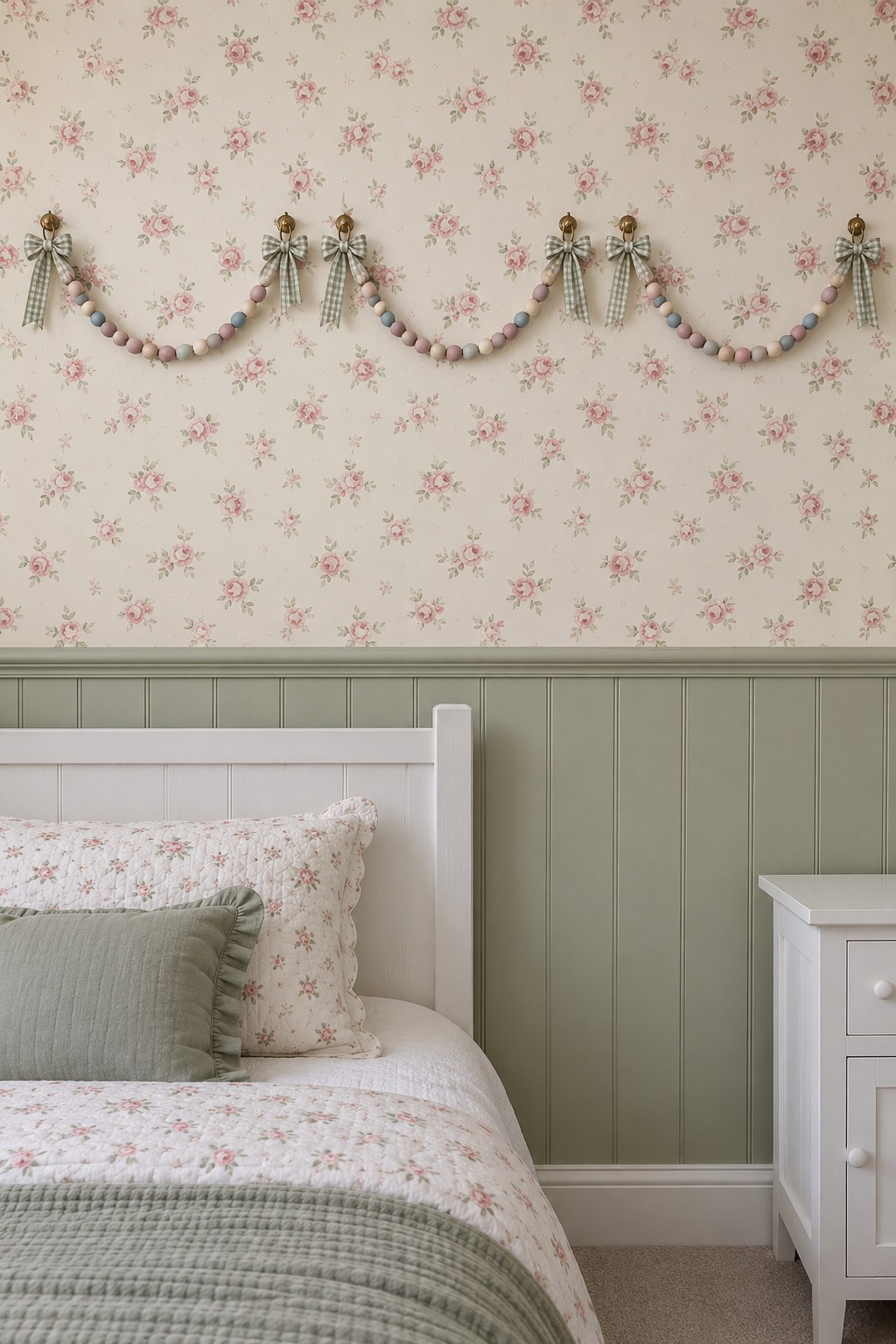
Short bead swags add a little dimension to a wall already covered in tiny rose patterns. Their pastel colors echo the wallpaper, while sage gingham bows connect the hanging points to the lower paneling. Repeating shallow curves gives the arrangement a steady rhythm. Keeping the garland close to the wall prevents it from competing with the bedding and nearby furniture.
For a decorative version, thread smooth wooden beads onto suitable strong cord and secure the ends with knots that cannot slip through the holes. Sew the bows separately and attach them without asking the ribbon to carry the beads. Plan the hook spacing before choosing the finished strand lengths. Use this approach on an adult bedroom or craft room wall, keeping loose cords and small detachable parts away from children, cots, and play areas.
22. Overlapping Scallops in Cream, Pink, and Sage
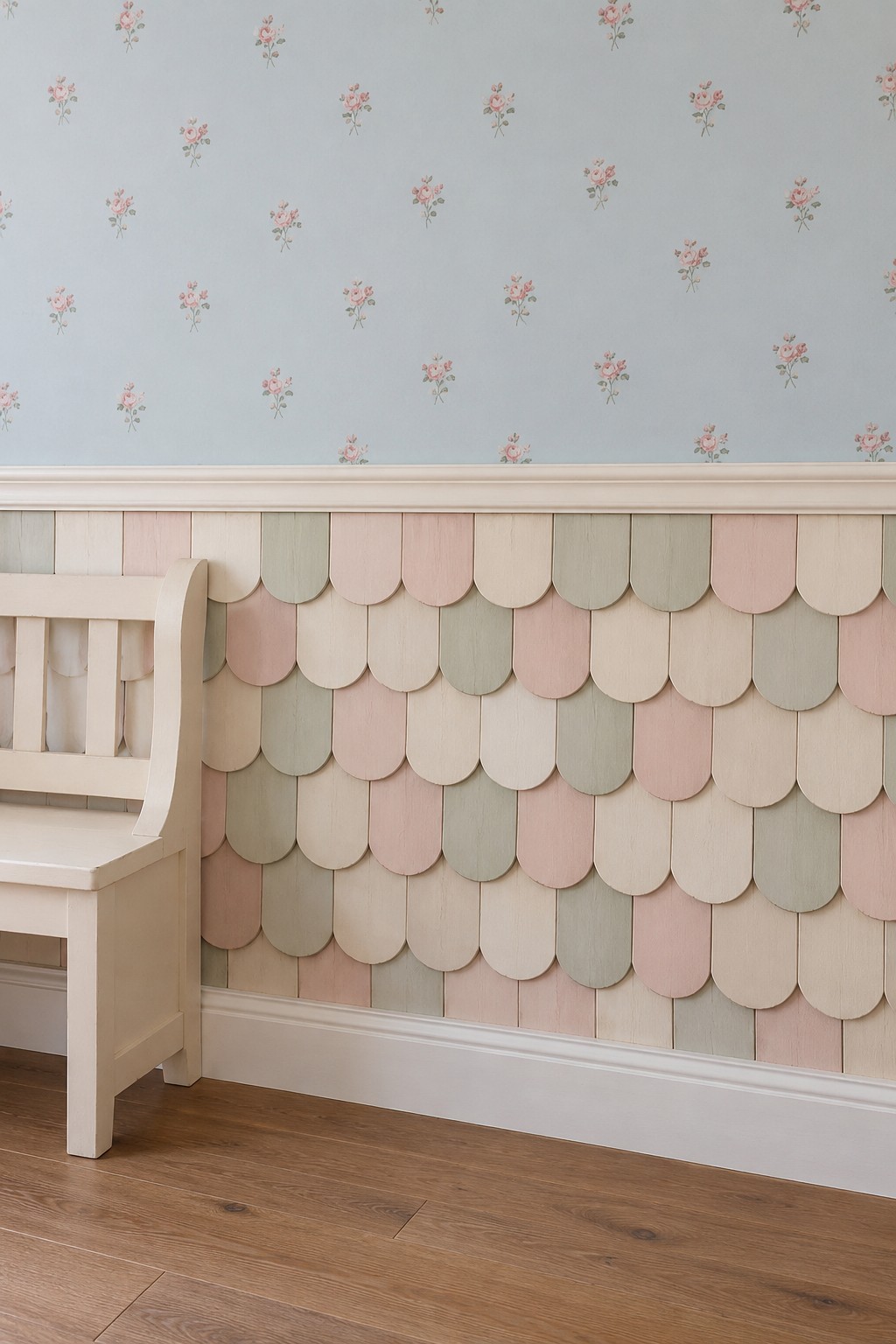
Overlapping scallops turn the lower wall into a textured patchwork. Cream, muted pink, and sage pieces distribute color across the surface, while blue rose sprig wallpaper adds a much smaller pattern above. The rounded ends soften the straight rail and skirting. A pale wooden bench keeps the combination domestic and useful without adding another strong shape.
Choose an interior decorative panel system or ask a joiner to prepare smooth, consistent scalloped pieces on a stable backing. Set out the rows on a measured drawing, allowing for the actual overlap and the thickness at edges. In a shingle arrangement, the lower row is established before rows above cover its upper fixings. Use the specified installation method and suitable trim around the perimeter. Painted scallop shapes offer a flatter alternative where an overlapping surface would be difficult to clean.
23. Floral Harlequin Diamonds over Yellow Beadboard
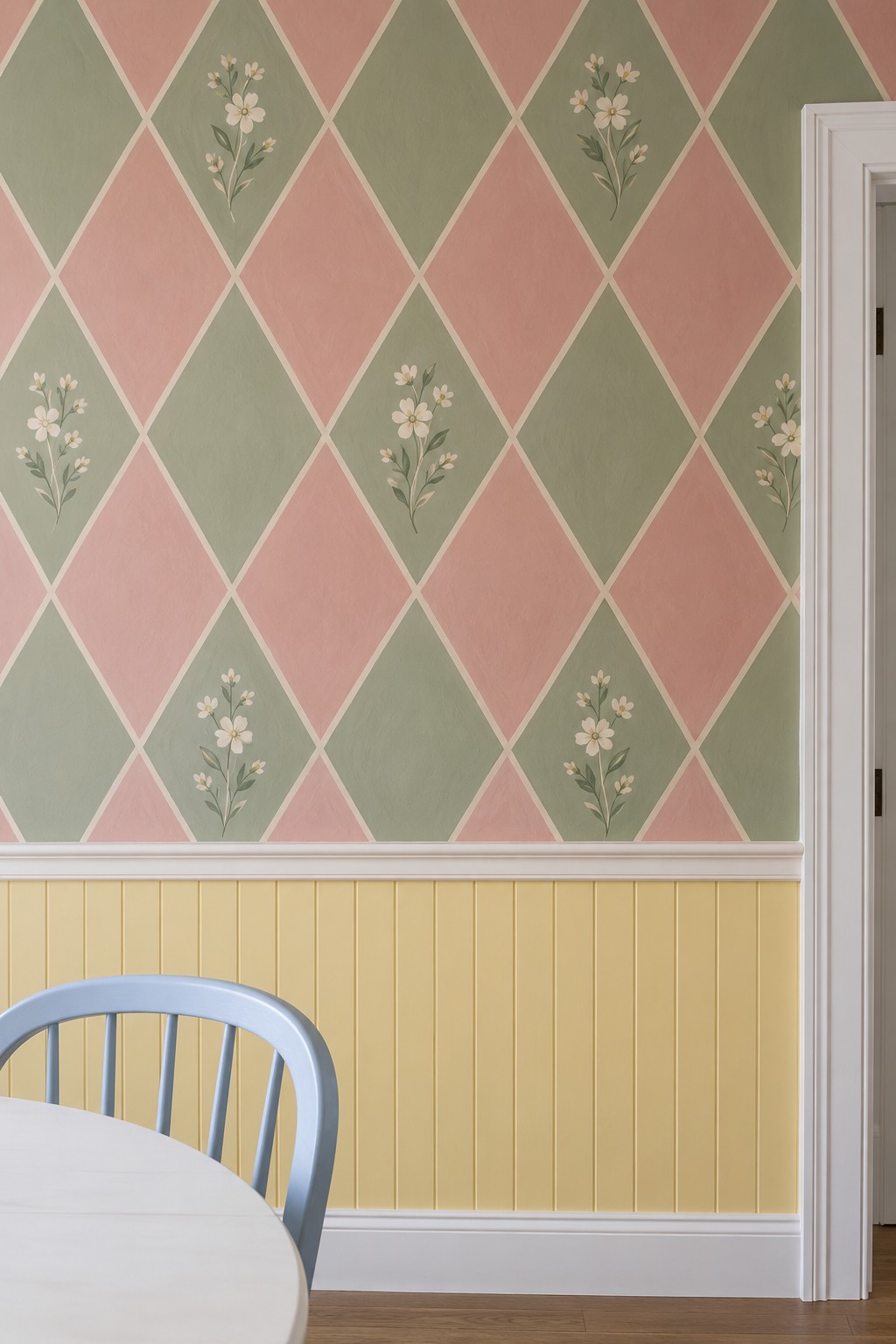
Large harlequin diamonds introduce structure to a cottage dining wall. Dusty pink and sage alternate within cream outlines, while small white flower sprigs soften selected green shapes. Yellow beadboard brings a cheerful base to the arrangement, and a blue chair supplies one cooler accent. The result has plenty of color, but the repeated geometry keeps it organized.
Draw the diamond grid to scale and test it against the wall width before marking any lines. A centered layout helps avoid awkward narrow fragments at the edges. Use suitable painter's tape on a fully prepared surface and follow the coating's drying guidance between colors. Add the floral details last with a lightly loaded stencil or fine brush. For related surface treatments, explore these creative wall painting ideas and choose a pattern scale that suits your room.
24. Peonies and Small Birds Around a Quiet Center
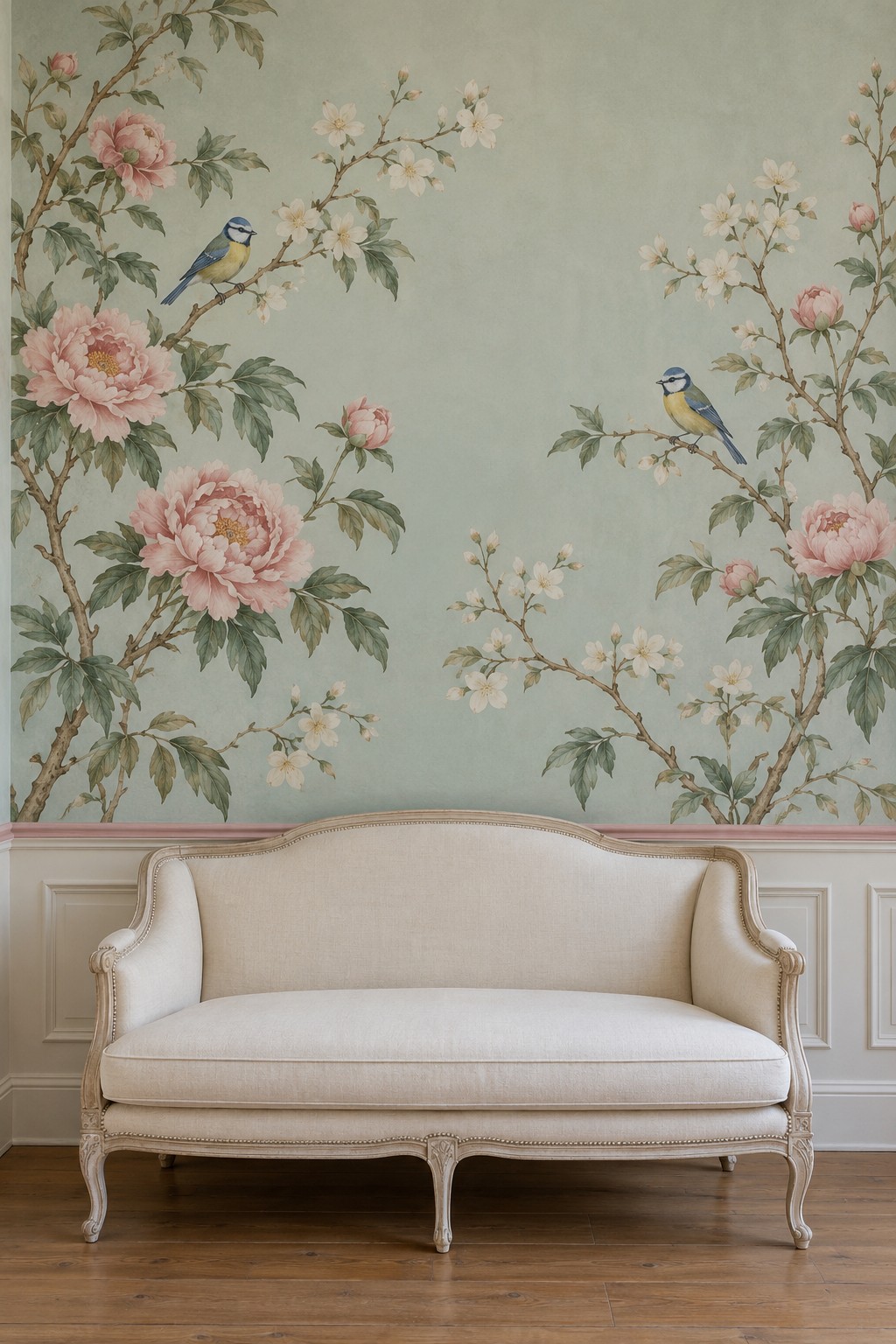
Large pink peonies and pale flowering branches create a garden border around a quieter blue center. Small birds add points of interest between the blooms without making the scene feel crowded. The cream loveseat gives the mural a clear relationship to the furniture, while the narrow pink trim repeats the flower color. This treatment works well when one wall is meant to provide most of the room's decoration.
Choose a mural layout or painted composition with the furniture position already marked. Keep the largest blooms visible beside or above the seat, and avoid placing a bird where an upholstery back will hide it. Order samples to compare the blue background with the room's existing fabrics. A plain rug and restrained cushions help preserve the mural's open center. For a smaller wall, use one flowering branch rather than reducing every detail.
25. A Rose Garland Painted Across White Brick
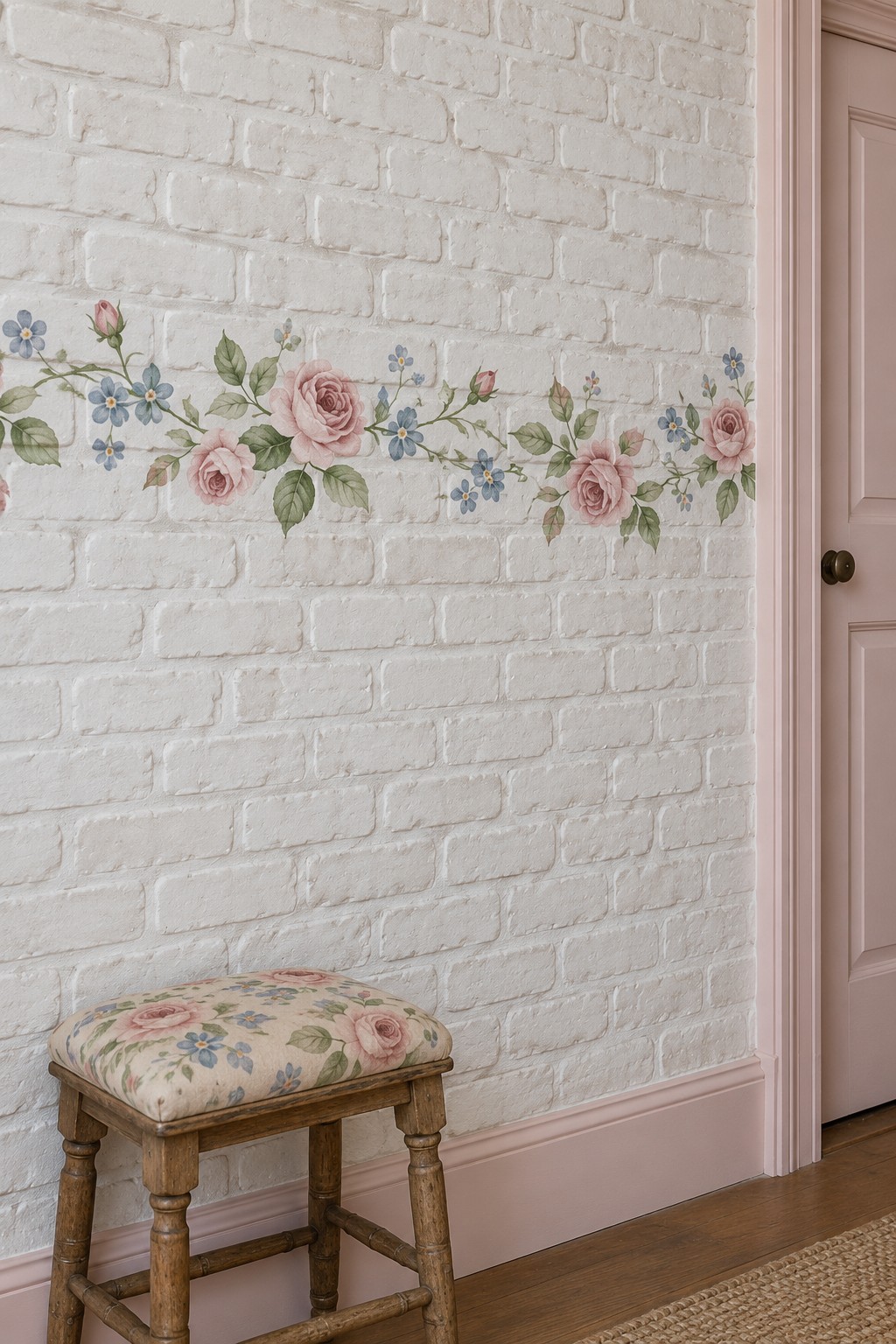
White brick gives a floral garland a textured setting that differs from smooth wallpaper. Pink roses, blue flowers, and green leaves travel across the wall in a loose horizontal band. The brick pattern remains visible through the composition, while pink skirting and door trim connect the artwork to the room. A floral stool repeats the motif at a much smaller scale.
Assess the masonry and existing finish before decorating. Deal with damp, loose material, or failing coatings first, then use a compatible masonry primer and paint system where required. Sketch the flower placement across several courses so the stems do not appear accidentally interrupted by the joints. A small brush can work color into shallow mortar recesses without flooding them. Test the effect on a sample surface, and avoid assuming that ordinary wallpaper will adhere evenly to textured brick.
26. A Button Bow Framed on Natural Linen
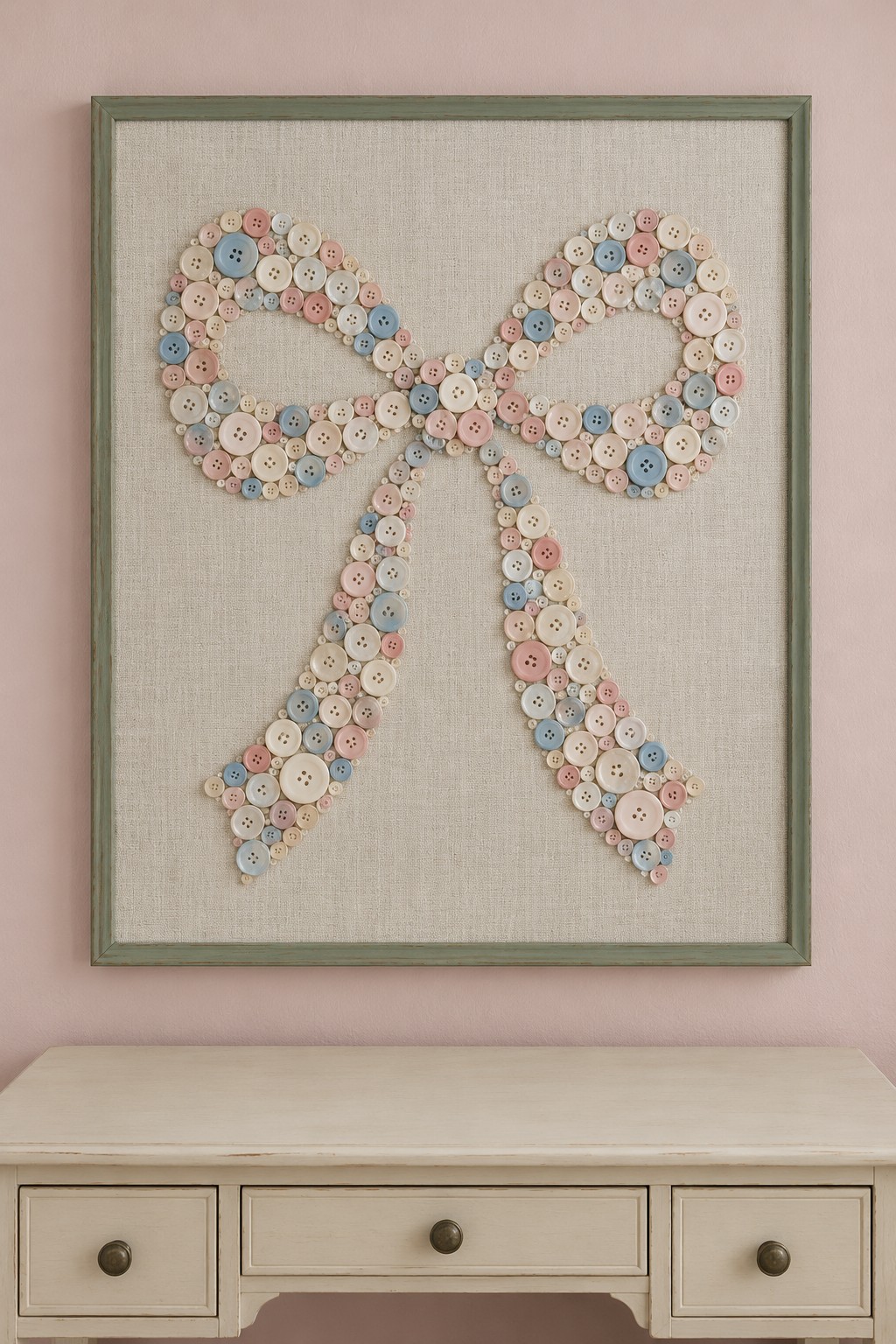
A bow made from small pastel buttons brings a sewing room detail into wall art. Different button sizes fill the loops and tails, while natural linen leaves the outline easy to read. A narrow sage frame gives the soft colors a clear edge against the pink wall. The design feels personal enough for a craft corner, yet simple enough to sit above a small desk.
Draw the bow on a paper template and arrange the buttons before making permanent attachments. For a stitched version, sew through the linen while it is off the rigid backing, securing each button individually with suitable thread. Mount the completed fabric flat without pulling it so tightly that the bow distorts. Choose a frame with enough depth for the raised buttons. Mix colors throughout the shape rather than letting one dense patch overpower a loop.
27. A Tall Rose Panel with a Shell Border
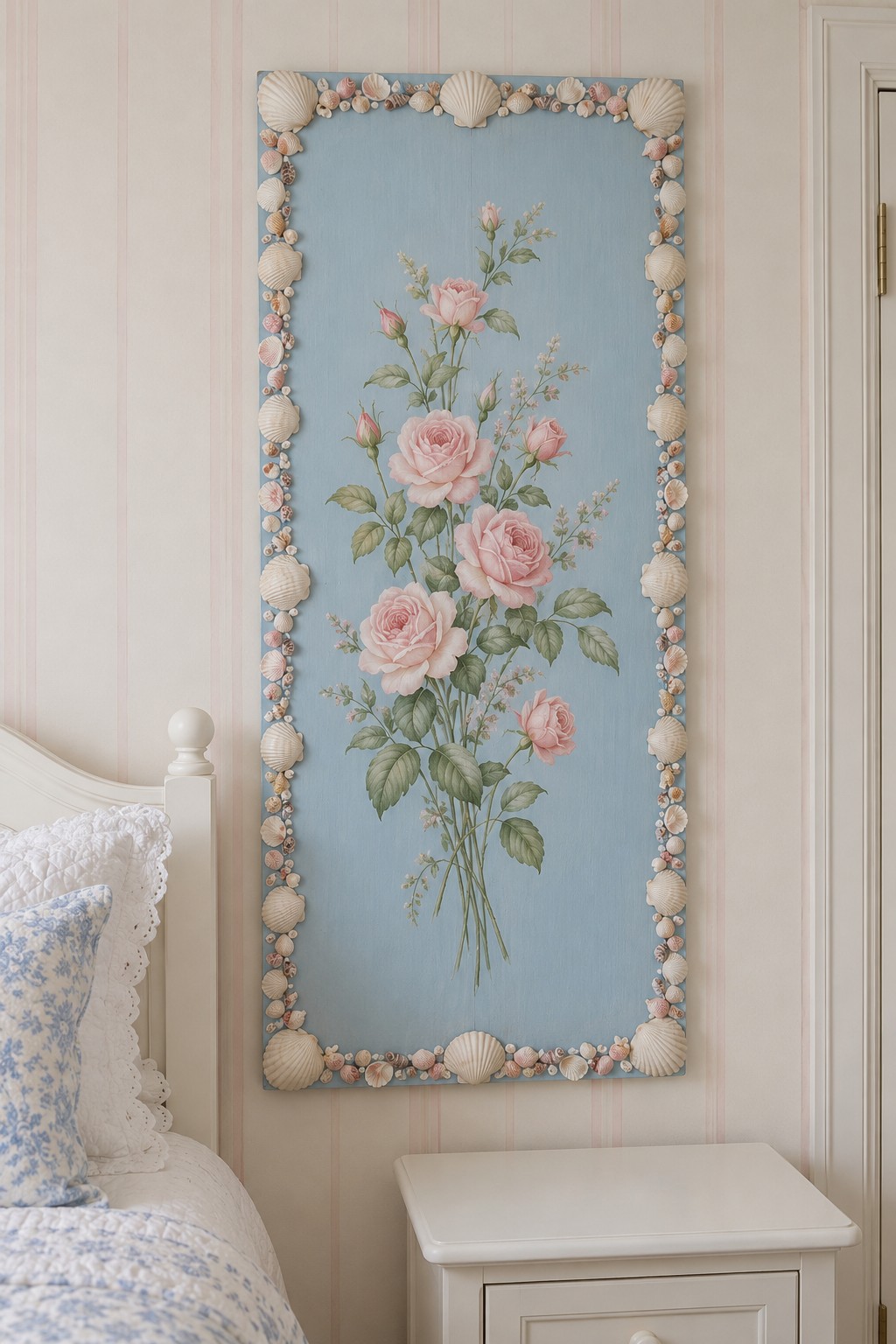
A long rose panel brings height to the narrow space beside a bedside table. Its blue ground makes the pink flowers stand out, while a border of small shells and pastel beads adds a seaside note. Pale striped walls remain quiet behind the piece. The narrow format is useful when a broad picture would interfere with a door, headboard, or furniture edge.
Start with a rigid framed panel and a floral print or painted design suited to its proportions. Lay clean, dry shells around the frame before attaching them, resolving the larger corner and center pieces first. A two part epoxy rated for shell and the frame material can suit modern decorative work; follow its preparation, ventilation, and curing instructions. Keep the ornament on the frame and weigh the completed piece before selecting its wall fittings. Position it where the raised shells cannot be struck.
28. A Floral Fabric Canopy Around an Entry Bench
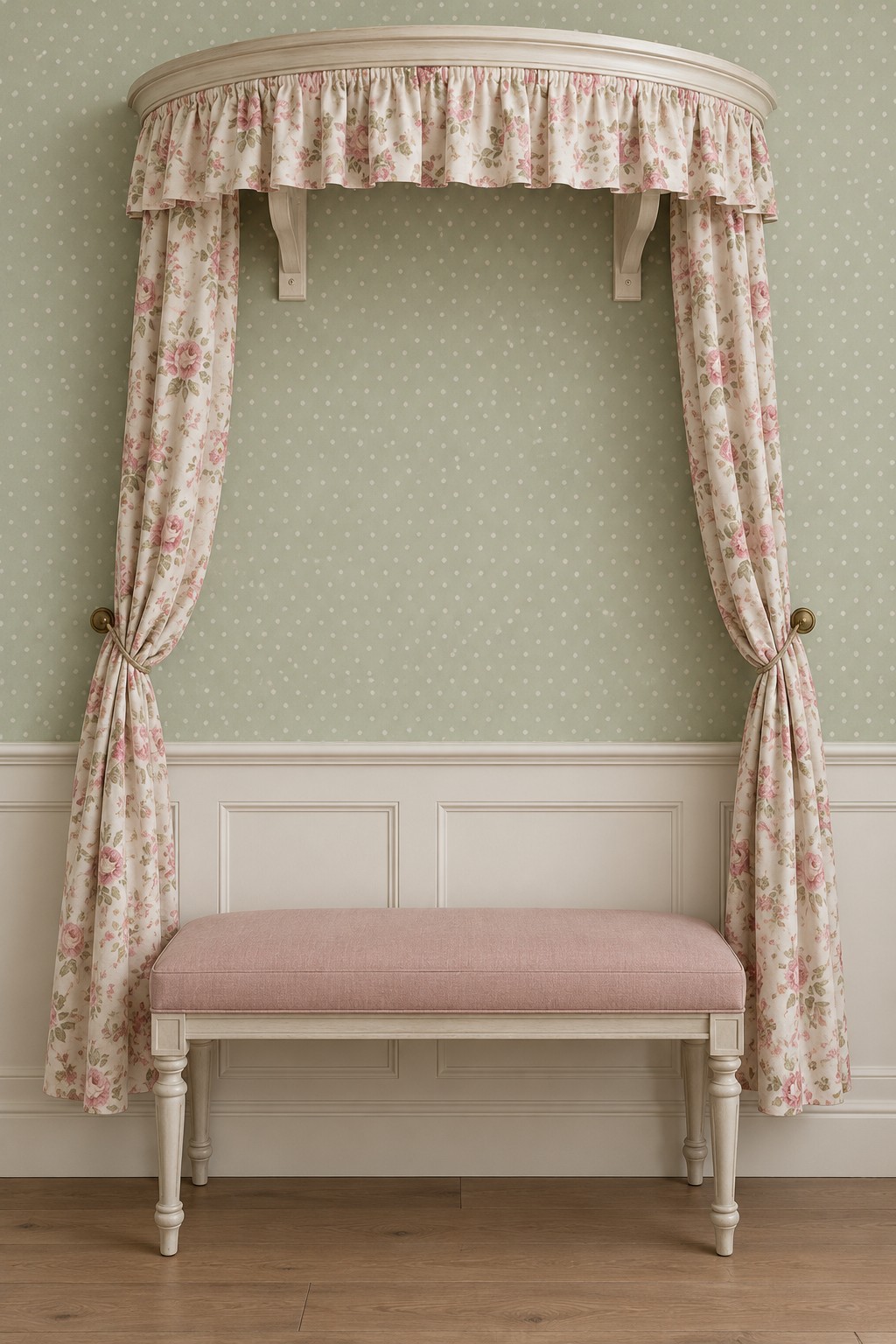
A shallow fabric canopy turns an ordinary bench wall into a little dressing alcove. The curved cream crown, gathered floral valance, and tied side panels create a soft frame around the empty center. Sage dotted wallpaper keeps the background smaller in scale than the rose fabric. The pink bench cushion repeats the blossoms without adding more pattern.
Have the crown and its brackets secured for the complete fabric weight, and keep the structure clear of door swings. Use hemmed fabric panels that can be removed for cleaning rather than permanently gluing cloth to the wall. Place tiebacks where they hold the material away from the seat and walking route. This is a decorative seating feature, so locate it away from heaters and flames. A short valance alone can provide a similar effect when floor space is limited.
29. A Swan Bracket Shelf for Rose Patterned Pottery
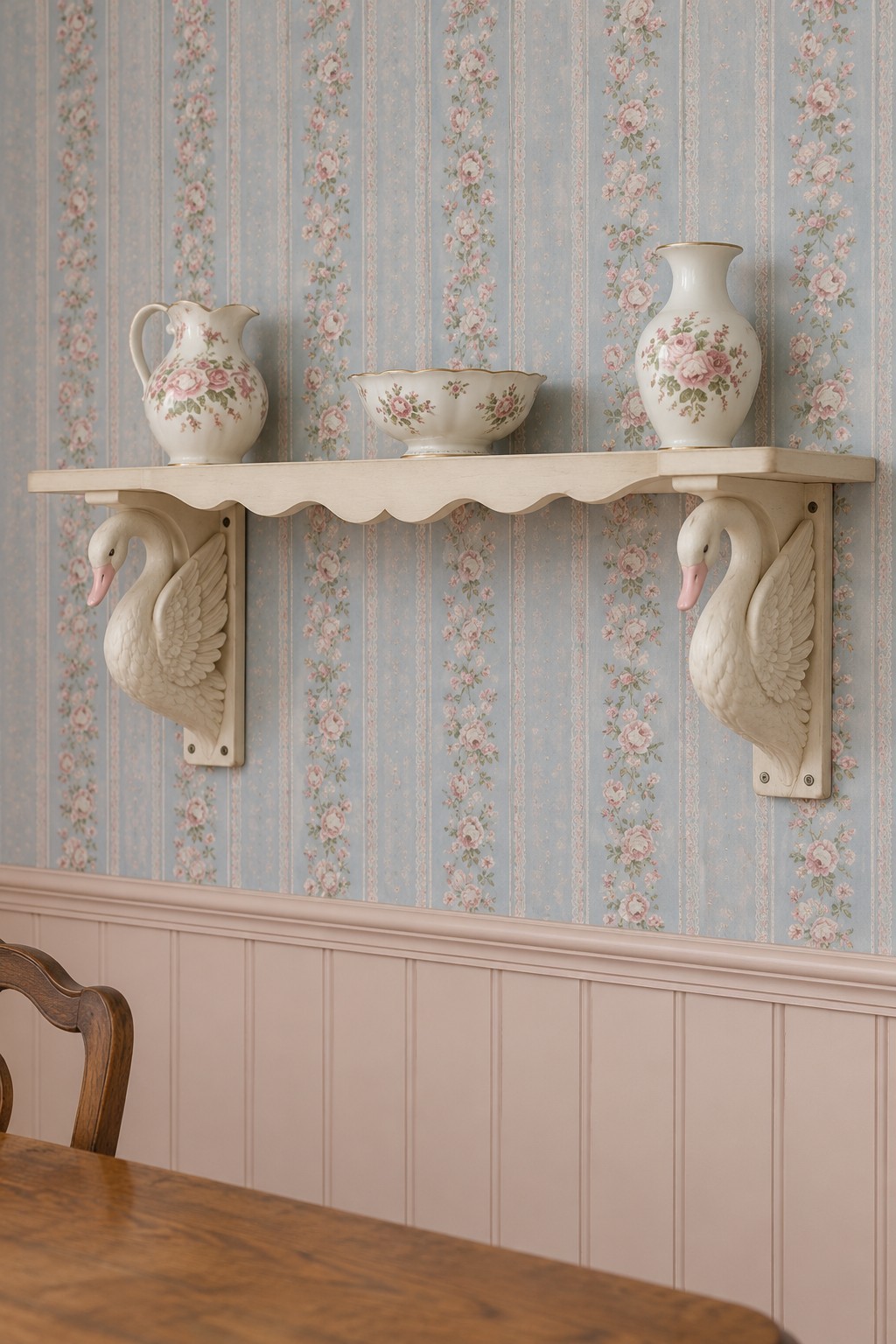
Swan shaped brackets turn a simple cream shelf into a characterful wall feature. Their curved necks echo the scalloped shelf edge, while the floral pitchers and bowl repeat the rose patterned wallpaper. Blue vertical stripes give the wall a sense of order beneath all those curves. Pink paneling links the display to the warmer tones of the pottery.
Choose a shelf whose brackets are genuinely designed to carry its intended load. Decorative swan appliques can be fitted around a separate rated support system if the sculpted pieces themselves are fragile. Fix supports through to the wall construction and check that every ceramic base fits within the shelf depth. Keep the tallest jug where it has enough overhead room, and avoid placing heavy pieces along the front edge. Leave some empty shelf surface so the swan shapes remain visible.
30. A Collection of Pastel Hand Mirror Shapes
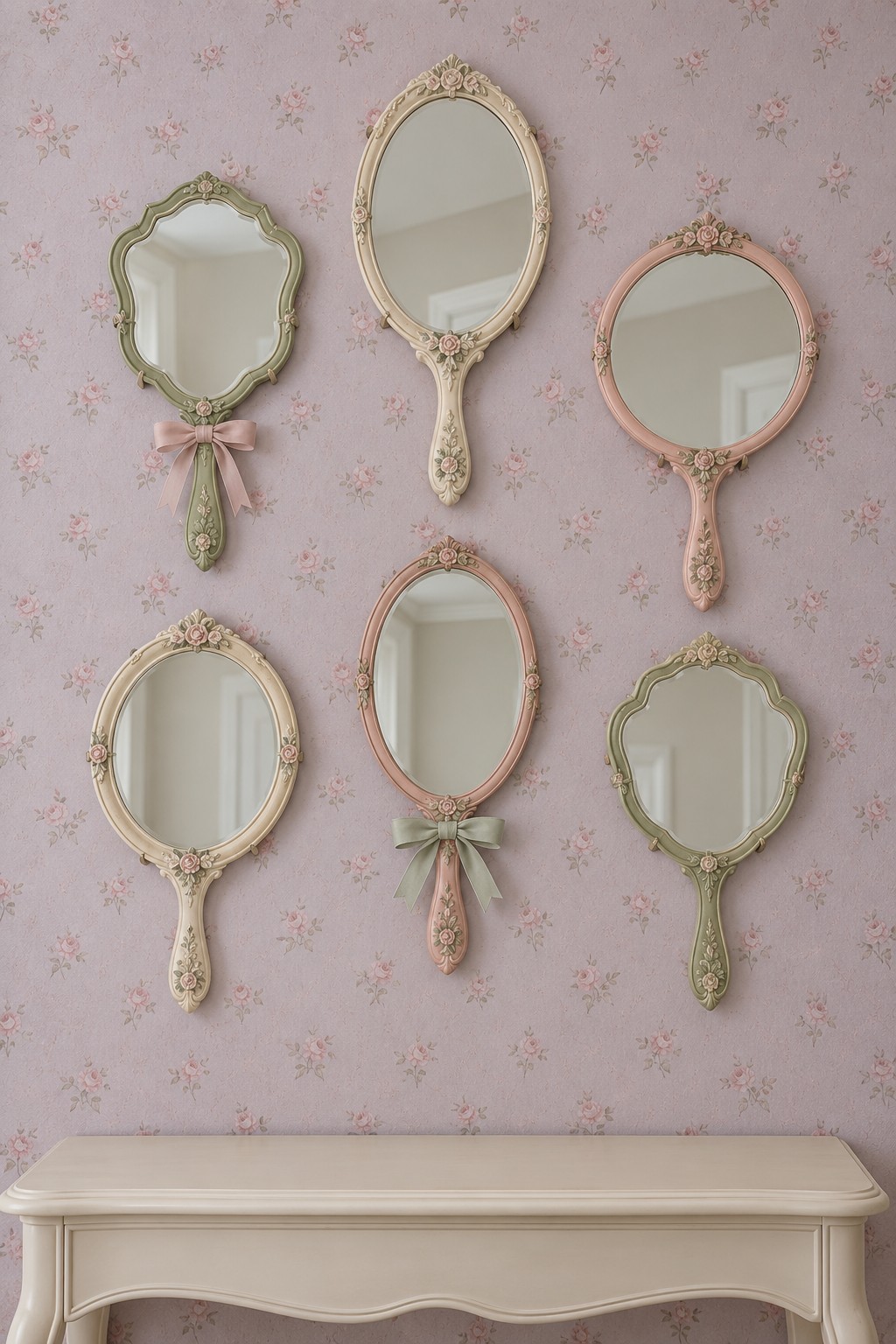
A group of small mirrors can bring variety to a floral wall without introducing another printed subject. Oval and shaped frames in cream, sage, and pink share an ornamental character, while a few bows soften the arrangement. The lilac wallpaper unifies their different silhouettes. Above a pale dressing table, the collection feels connected to getting ready rather than simply filling an empty space.
Use sound mirrors with secure glass retention and hanging fittings appropriate for each frame. A decorative handle is not automatically strong enough to carry the mirror. Arrange paper templates first, checking what each mirror will reflect from the doorway. If you want to refresh existing frames, these upcycling ideas for old mirrors can help you choose an approach. Protect the glass during finishing and keep paint or adhesive away from its vulnerable edges.
31. Embossed Floral Panels Beneath a Blue Border
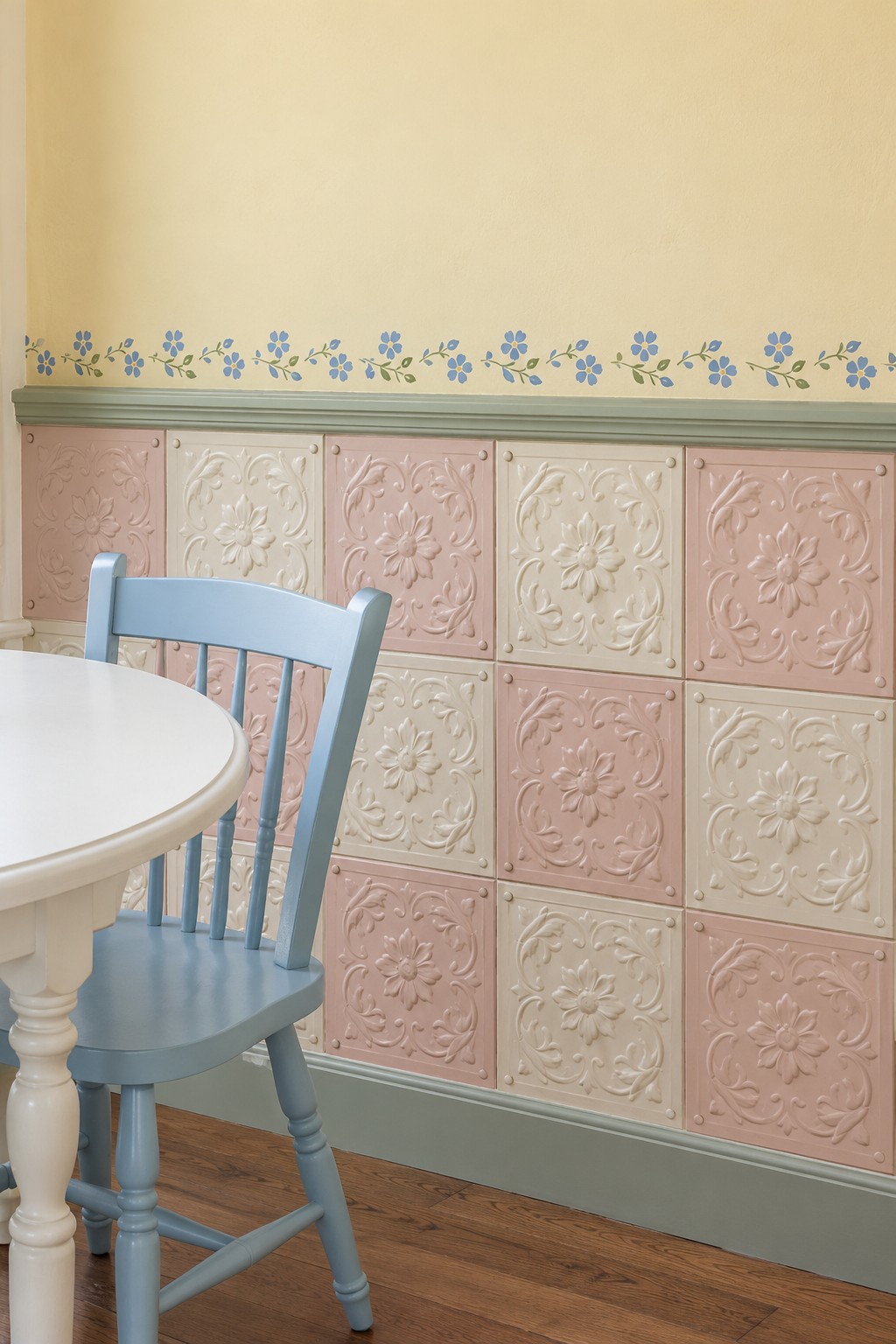
Raised floral panels give the lower wall the detail usually found on a decorative cabinet. Alternating blush and cream squares keep the embossed pattern lively, while sage rails define its upper and lower edges. A narrow blue flower border marks the transition to the plain yellow wall. The blue dining chair repeats that small accent at a larger scale.
To adapt the look, select interior relief panels with a documented installation system. Paintable polymer panels, cast plaster, and ceramic tiles require different adhesives and surface preparation, so identify the actual material before buying supplies. Set out complete rows and choose edge trims that cover the panel thickness cleanly. Use thin paint coats on paintable profiles so the floral relief stays crisp. Keep the blue border modest in height; the embossed lower section already supplies plenty of detail.
32. A Botanical Memo Board with Blue Ribbon
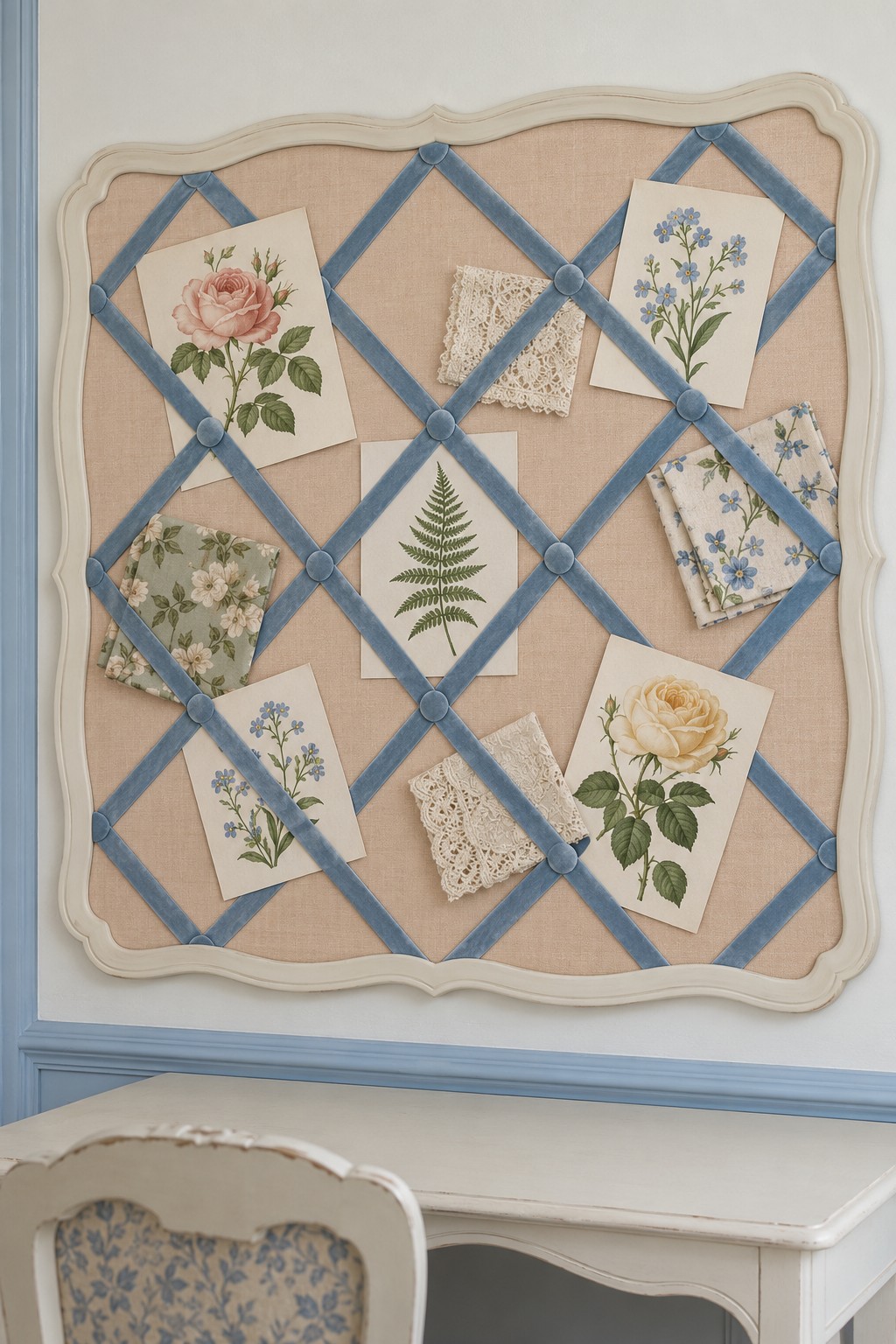
A ribbon memo board lets cottage wall decor change with the season. Blue diagonal ribbons create a diamond grid over a linen background, holding botanical cards and small lace samples within a cream shaped frame. The board becomes useful display space above a writing desk, and its soft fabric surface balances the harder lines of the surrounding trim.
Use a sound frame with a firm insert, a thin padding layer, linen, and ribbon of consistent width. Wrap and secure the fabric at the back of the insert, then establish the ribbon grid before fastening its ends. Stitched intersections or securely fitted covered buttons help hold the ribbons close enough to retain light cards. Assemble the board away from the wall and check the back for exposed sharp fasteners. Keep heavier keepsakes in a separate storage box.
33. Pale Bell Flowers Along a Lavender Wall
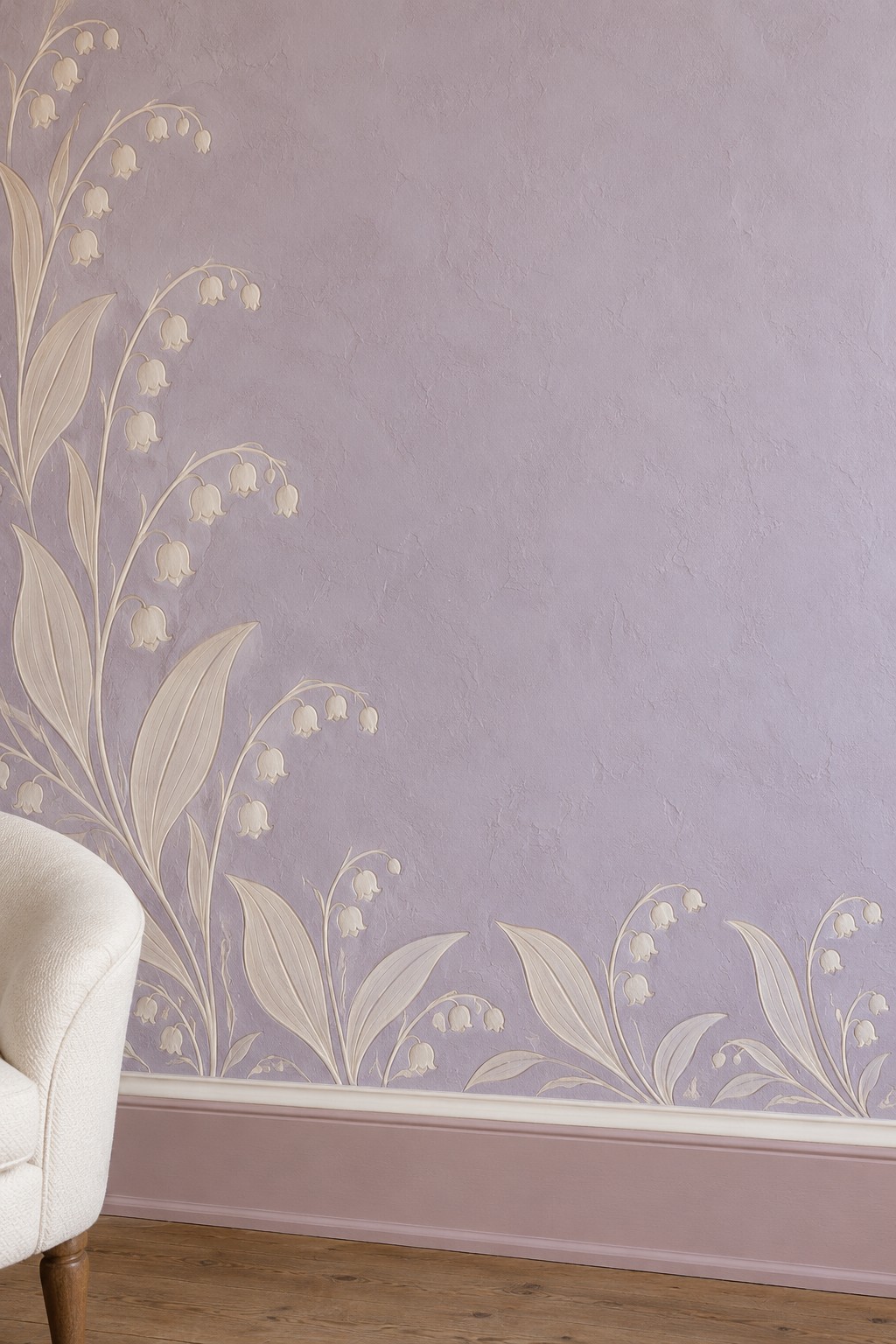
Pale bell flowers give a lavender wall a delicate border while leaving most of the surface quiet. Long leaves rise from the skirting and the flower stems climb one side, making the composition feel rooted in the room's corner. The dusty pink base trim adds warmth without competing with the fine cream lines. This is a useful direction when a full floral mural would overwhelm a small sitting area.
Plan the stems on paper at their intended size and check them beside the actual furniture. A fine brush and a wall compatible detail paint can create the slender outlines; a custom stencil can help repeat the bells. Keep the color close in value to the background for a subtle result, but test it at normal viewing distance. Let a few leaves cross naturally rather than spacing every stem identically.
34. Painted Blue Ribbon Swags on Butter Yellow
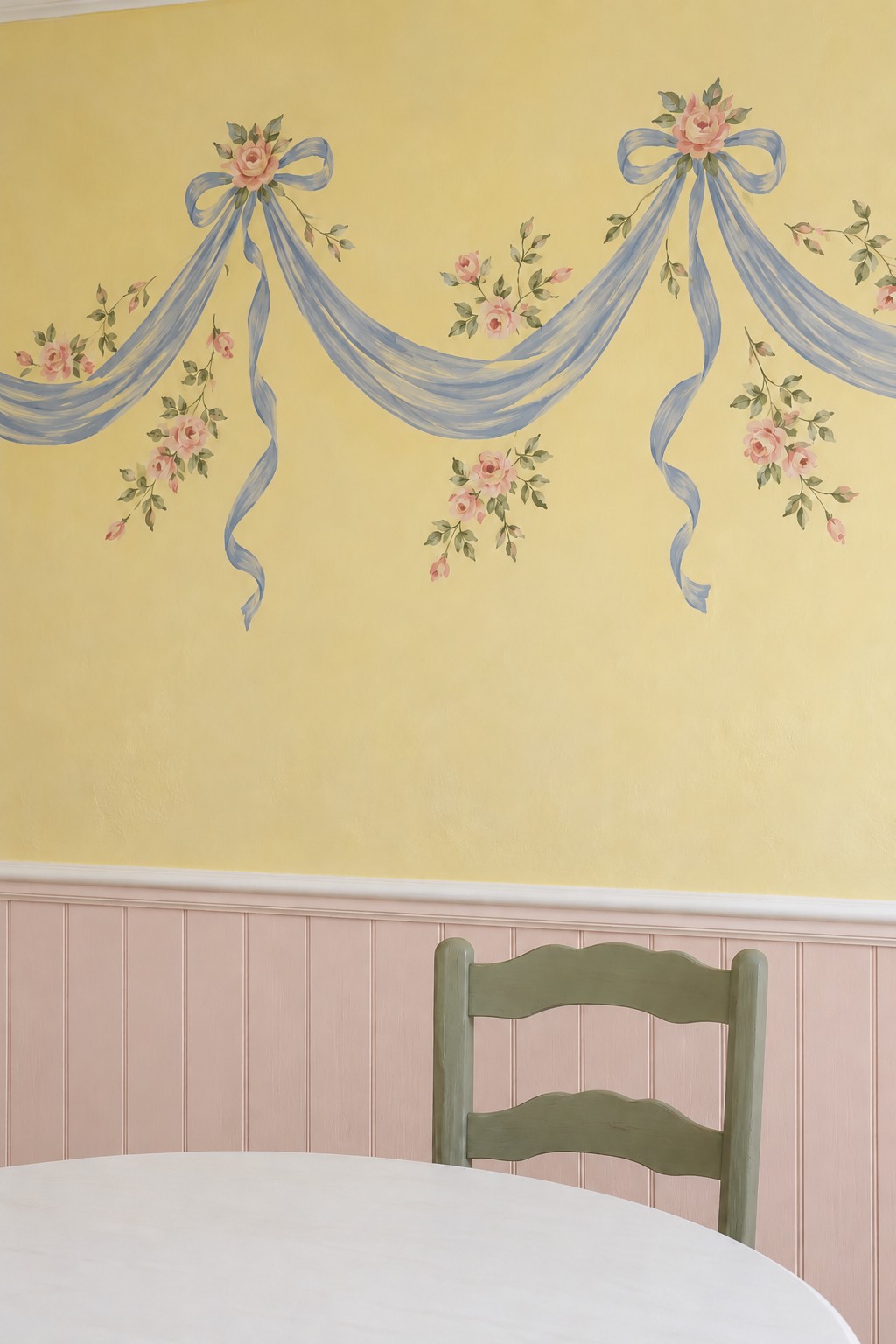
Painted ribbon swags give a yellow wall the softness of draped fabric while keeping the surface flat. Blue bows mark the upper points, and little rose clusters break up the long curves. Pink beadboard below echoes the flowers, while a sage chair introduces a quieter garden color. The composition is particularly suited to a dining corner where a projecting ornament might get in the way.
Mark the bow centers first and draw the lowest point of each swag before connecting the curves. A paper template helps keep repeated sections balanced. Use compatible wall paints or mural colors, adding pale highlights only after the main blue shape is established. Keep rose clusters small enough that the ribbon remains the dominant motif. If the wall is short, one centered bow and two trailing ends can provide the same decorative language.
35. Cream Macrame with Small Pastel Flowers
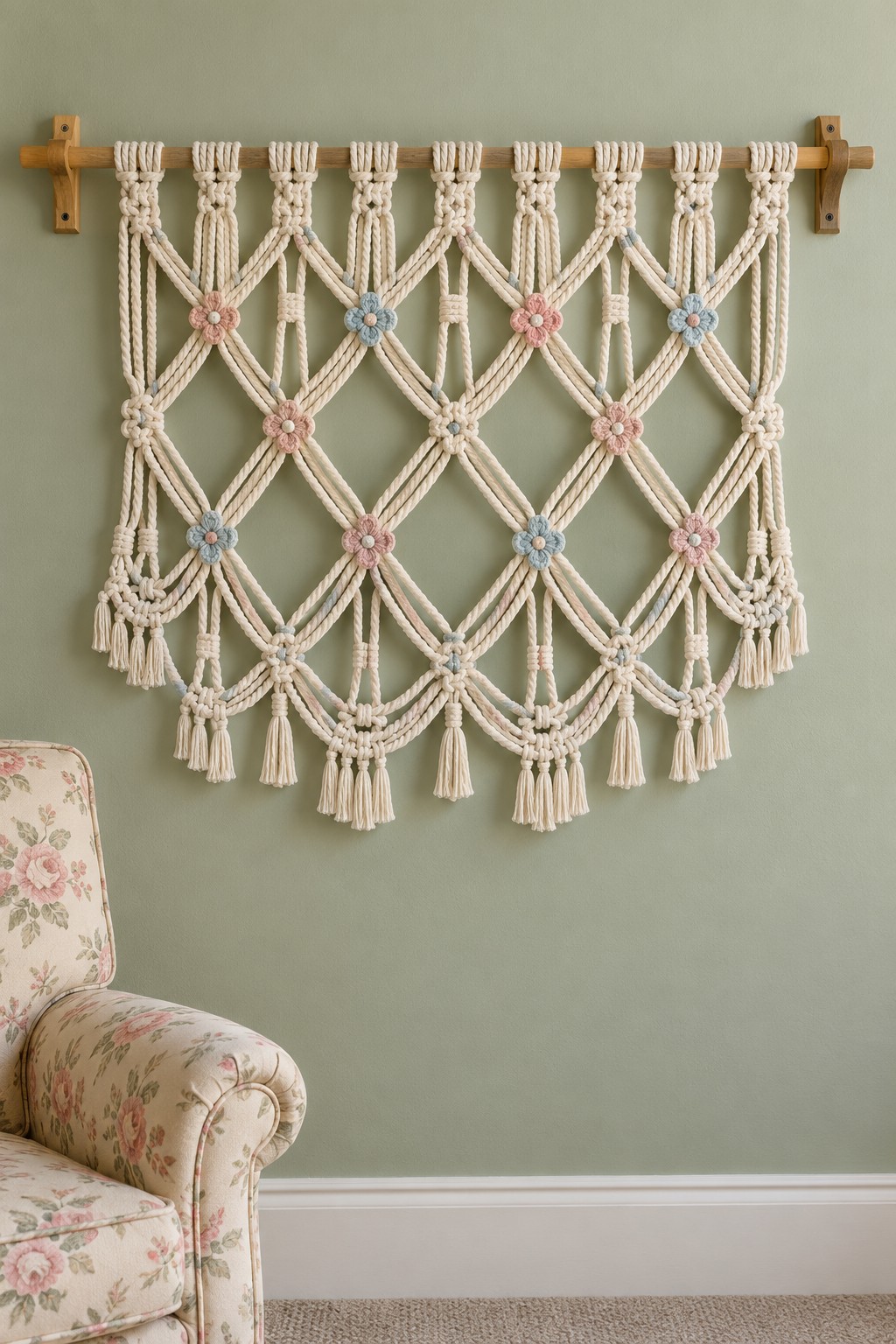
A cream knotted hanging introduces textile texture to a sage wall. Open diamonds, scalloped sections, and short tassels give the piece an orderly shape, while small pink and blue flower details connect it to floral upholstery nearby. A plain wooden rod provides a clean upper edge. The restrained palette makes the hanging suitable for a reading corner that already contains printed fabric.
Choose finished macrame or plan a pattern using cotton cord with a consistent diameter. Make a small sample before calculating the full cord quantity, since knot density affects both length and finished width. Sew lightweight flower appliques securely to selected joins instead of relying on visible blobs of glue. Hang the rod from properly fitted brackets and keep the textile clear of the chair back. Dust gently and follow the cord maker's care advice before washing.
36. A Floral Umbrella Used as a Bouquet Pocket
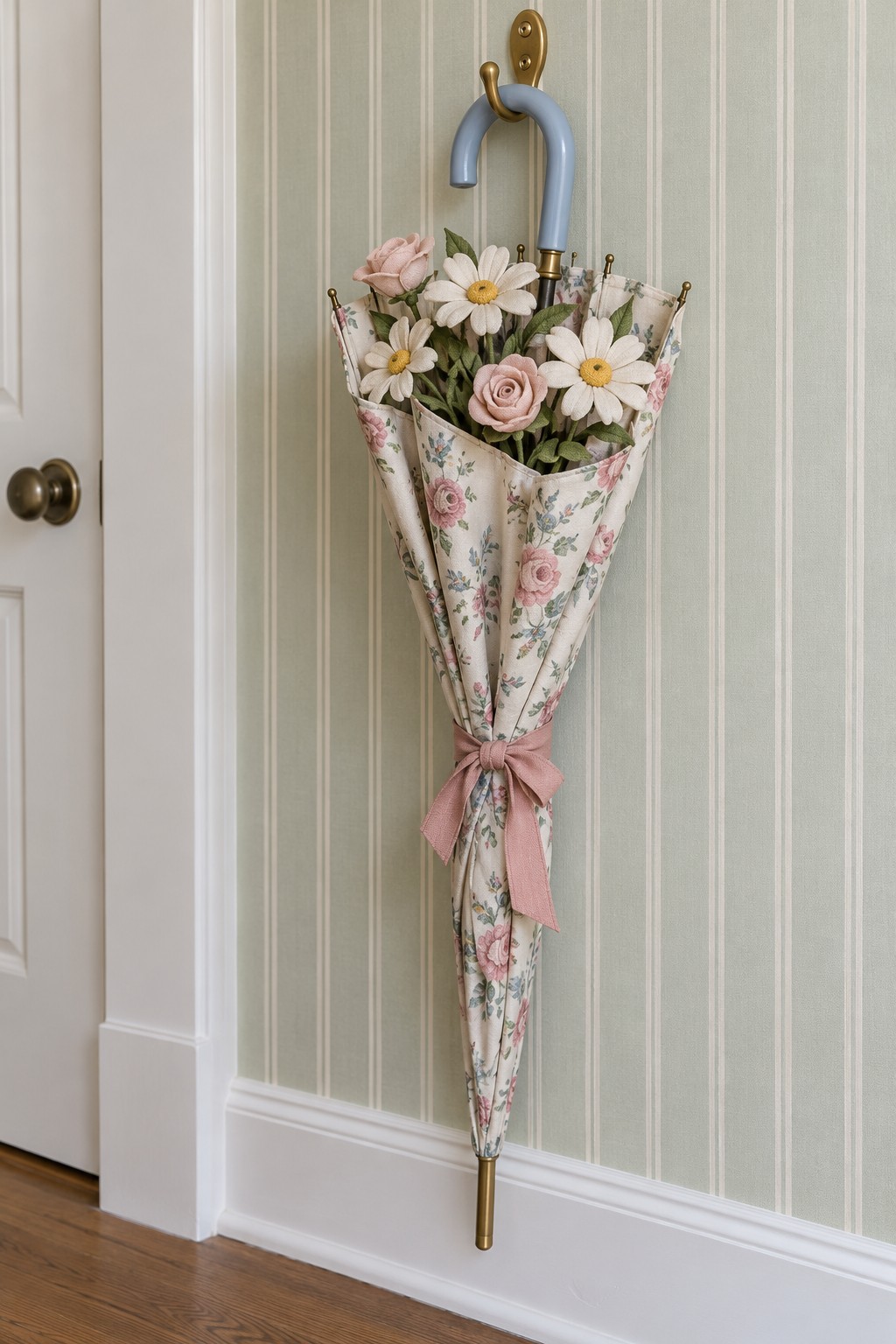
A closed floral umbrella becomes an unexpected bouquet pocket beside the door. Its blue handle provides the upper curve, while a pink ribbon gathers the fabric below the flowers. Daisies and roses repeat the umbrella's printed pattern, and sage striped wallpaper keeps the setting orderly. This treatment brings a familiar outdoor object into a dry interior display without needing a large shelf.
Choose a lightweight umbrella with a sound handle and use only dry artificial or textile flowers. Place a removable lightweight insert inside to organize the stems and keep the bouquet close to the wall. Hang the handle from a suitable hook and add a discreet lower restraint if needed to prevent swinging. Do not add water, and keep the metal tip clear of passing legs, door movement, and delicate floor finishes.
37. A Rose Transom Above a Powder Blue Door
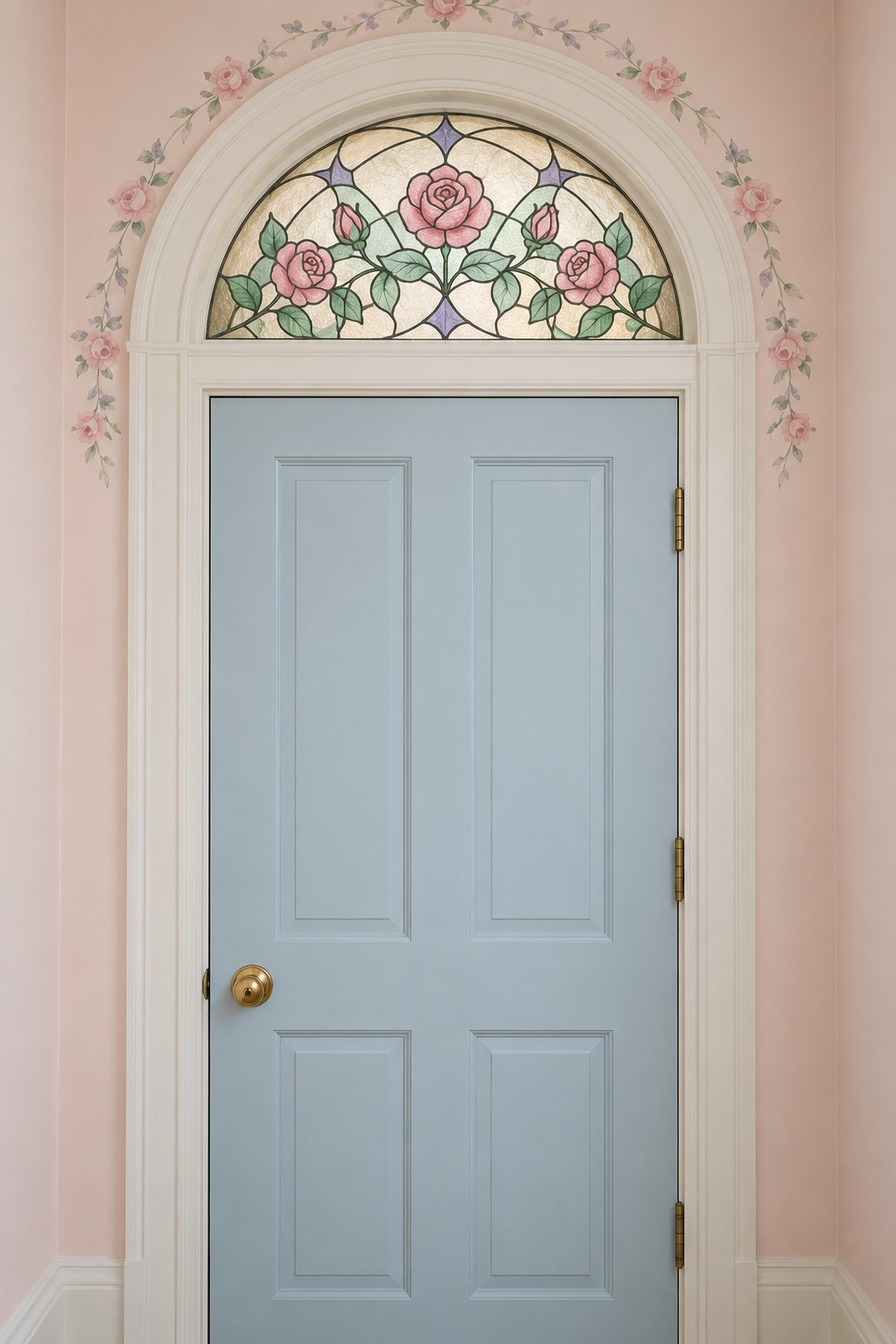
An arched floral transom makes the doorway itself part of the decoration. Pink roses, green leaves, and small lilac accents bring color to the glass, while a painted vine follows the cream outer molding. The powder blue door supplies a calm rectangular shape beneath the detailed arch. Pale pink walls make the doorway feel connected to the room instead of appearing as an isolated feature.
If you already have a suitable transom, ask a glazier about an appropriate decorative glass installation. A compatible stained glass effect film on existing smooth glass offers a simpler alternative; check the film and glazing instructions before applying it. Make a paper template of the arch so the floral design remains centered. Keep paint on the surrounding wall and trim, clear of hinges and seals. Creating a new opening above a door needs professional assessment.
38. Overlapping Botanical Arches in Three Pastels
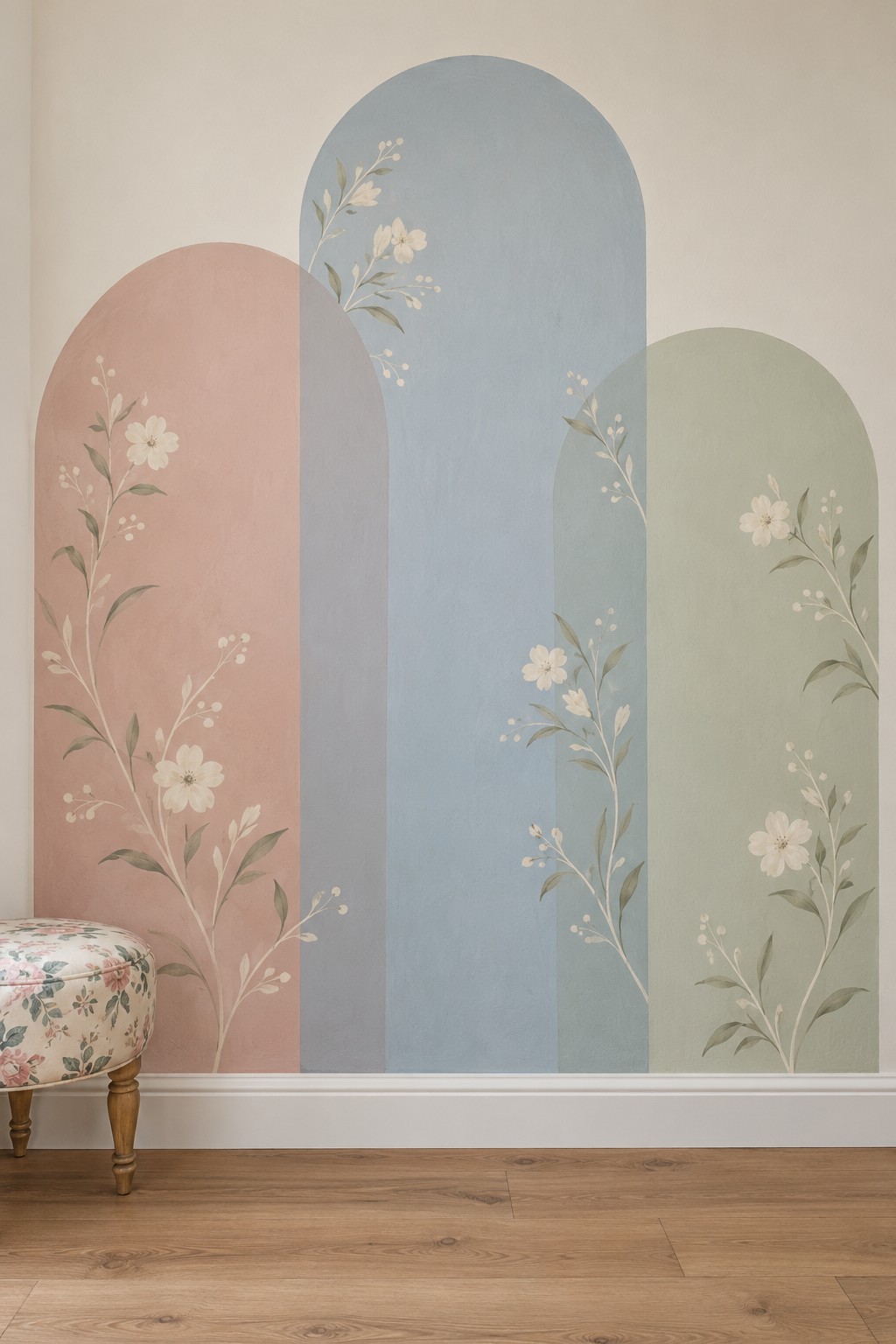
Overlapping arches provide a broad painted backdrop without the complexity of a full scenic mural. Dusty pink, blue, and sage shapes create a stepped silhouette, with the tallest blue arch near the center. Fine cream flowering stems soften the large areas of color. A small floral stool repeats the palette while leaving most of the wall visible.
Map the shapes with paper or a lightly drawn layout, then compare the heights with nearby furniture. Make the overlap intentional by deciding which color appears in front at each boundary. Paint one shape at a time and allow the finish to reach the condition required before masking over it. Add the botanical stems after the larger forms are complete. This approach can also frame a slim console or a low bench when you want a decorative zone without additional shelving.
39. Swan Pond Toile for a Quiet Sitting Wall
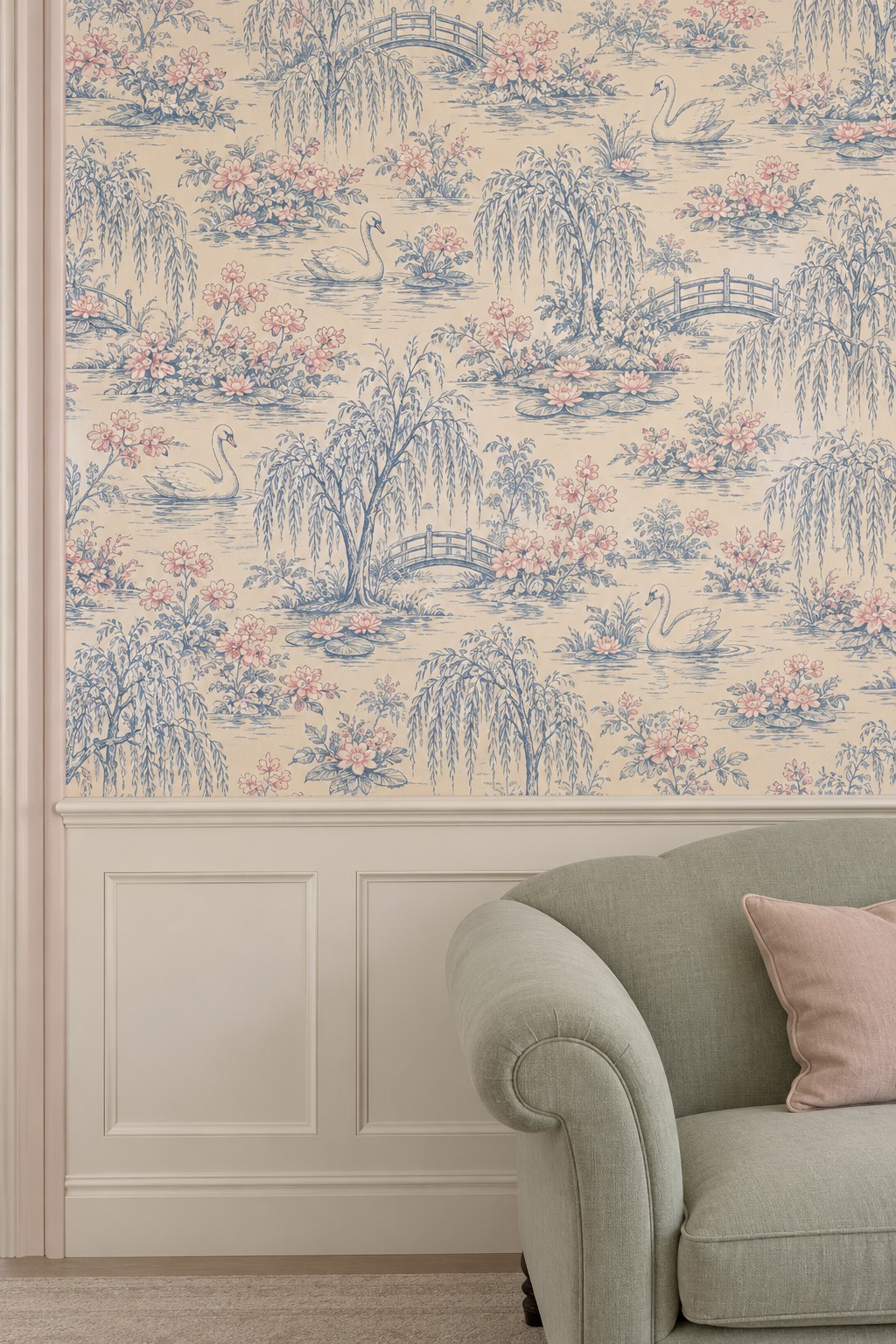
A swan pond toile brings narrative detail to a sitting wall while keeping the color range narrow. Blue linework describes bridges, willow trees, and water, with pink flowers adding a few warmer accents. Cream paneling below gives the repeating scenes a clear boundary. A sage chair and blush cushion draw colors from the wallpaper without adding another competing print.
Study a generous sample to see how often the swans and bridges repeat at the scale of your room. Measure for that repeat when ordering, and obtain compatible rolls from the same batch where possible. Plan the first drop so a favorite scene remains visible above the furniture. Follow the paper's installation method and prepare the wall accordingly. Keep nearby frames or shelves limited so the small landscape details can still be enjoyed from a seated position.
40. A Raised Woodland Border Above Sage Boards
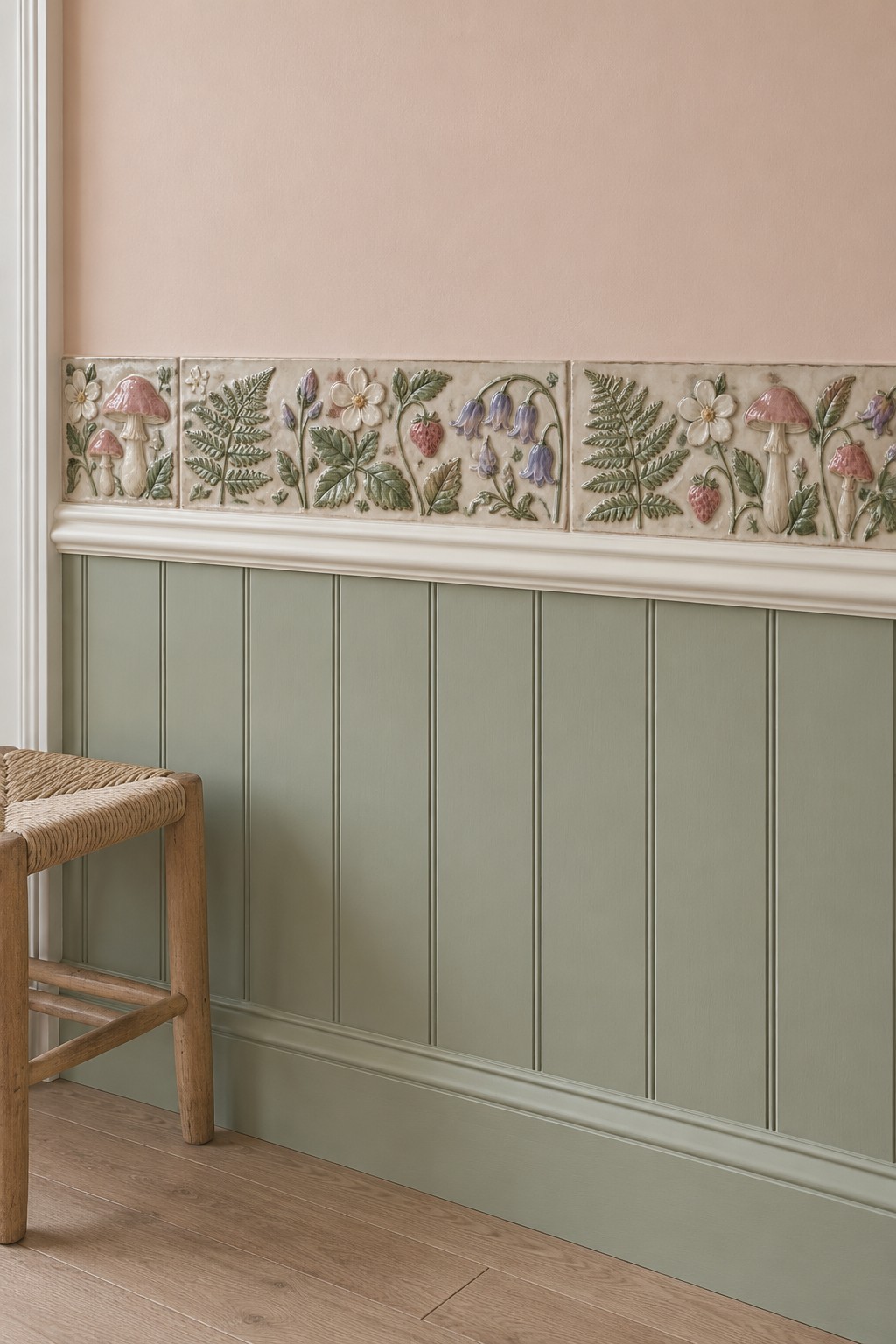
A narrow woodland relief border can introduce cottage detail without covering the entire upper wall. Mushrooms, fern fronds, strawberries, and small flowers form a textured strip between blush paint and sage boards. Cream edging separates the relief from both colors, helping the raised motifs remain readable. This is a good choice for a dining nook where a single horizontal accent can relate to the table.
Look for interior decorative border pieces in an appropriate material, then plan how complete sections meet at corners and doorways. Cast resin, plaster, and decorative ceramic versions need their own approved fixing systems. Dry arrange the sequence before installation so stems and motifs do not end in awkward fragments. Keep the relief clear of chair backs and dust it with a soft brush. A printed woodland border is a simpler option if a textured surface would be impractical.
41. A Crescent Shelf with Rose Lined Compartments
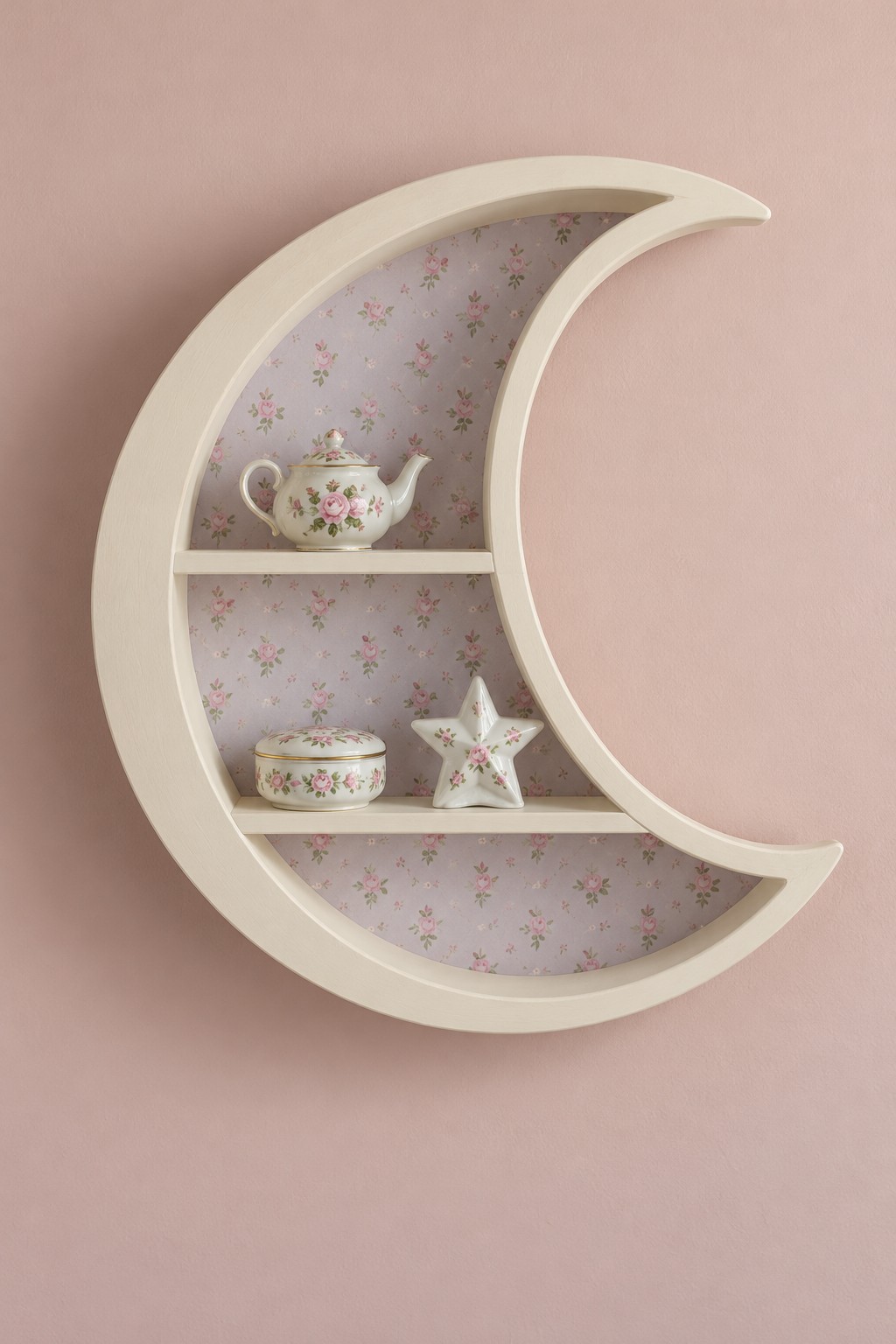
A crescent shaped shelf brings a playful curve to a plain pink wall. Cream outer edges frame a lilac rose backing, while two horizontal shelves provide practical places for a small teapot, lidded bowl, and star ornament. The open side keeps the silhouette recognizable. Because the shelf already has a distinctive outline, the surrounding wall can remain undecorated.
Choose a properly constructed display shelf with a stated load limit, or ask a joiner to build the curved body and shelf connections. Line the back after painting, keeping wallpaper clear of shelf joints and mounting points. Select objects whose full bases fit the available depth and keep the heavier pieces closer to the broader part of the structure. Fix the unit through its designated supports. The narrow crescent tips should remain decorative and free of heavy objects.
42. Tulips and Daisies Across Blue Fluted Panels
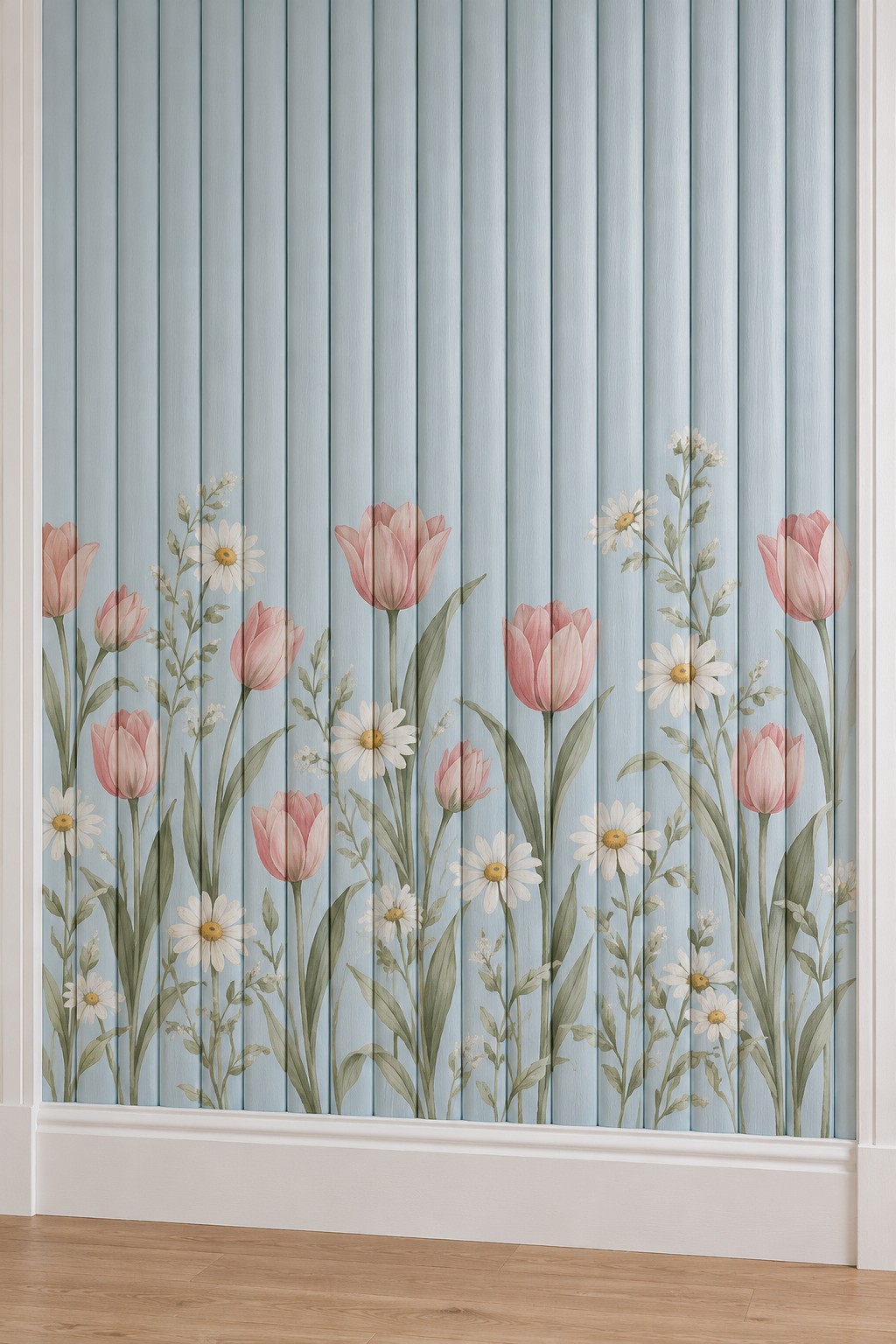
Powder blue fluted panels provide a structured background for a border of pink tulips and white daisies. The vertical grooves reinforce the direction of the flower stems, while the plain upper area prevents the wall from becoming too busy. White skirting gives the plants a clean lower edge. This treatment suits a narrow wall where texture and a low floral band can provide enough interest on their own.
Select paintable interior panels and follow their instructions for cutting, fixing, priming, and finishing. Test the floral detail on an offcut so you can judge how the grooves affect petal shapes. Once installed and prepared, trace a measured composition across the lower section. Use small brushes to carry the design over the profile without filling the grooves with pooled paint. Broad flower heads and restrained leaf detail are easier to read than many tiny stems.
43. Lavender Garden Scrollwork on a Floral Wall
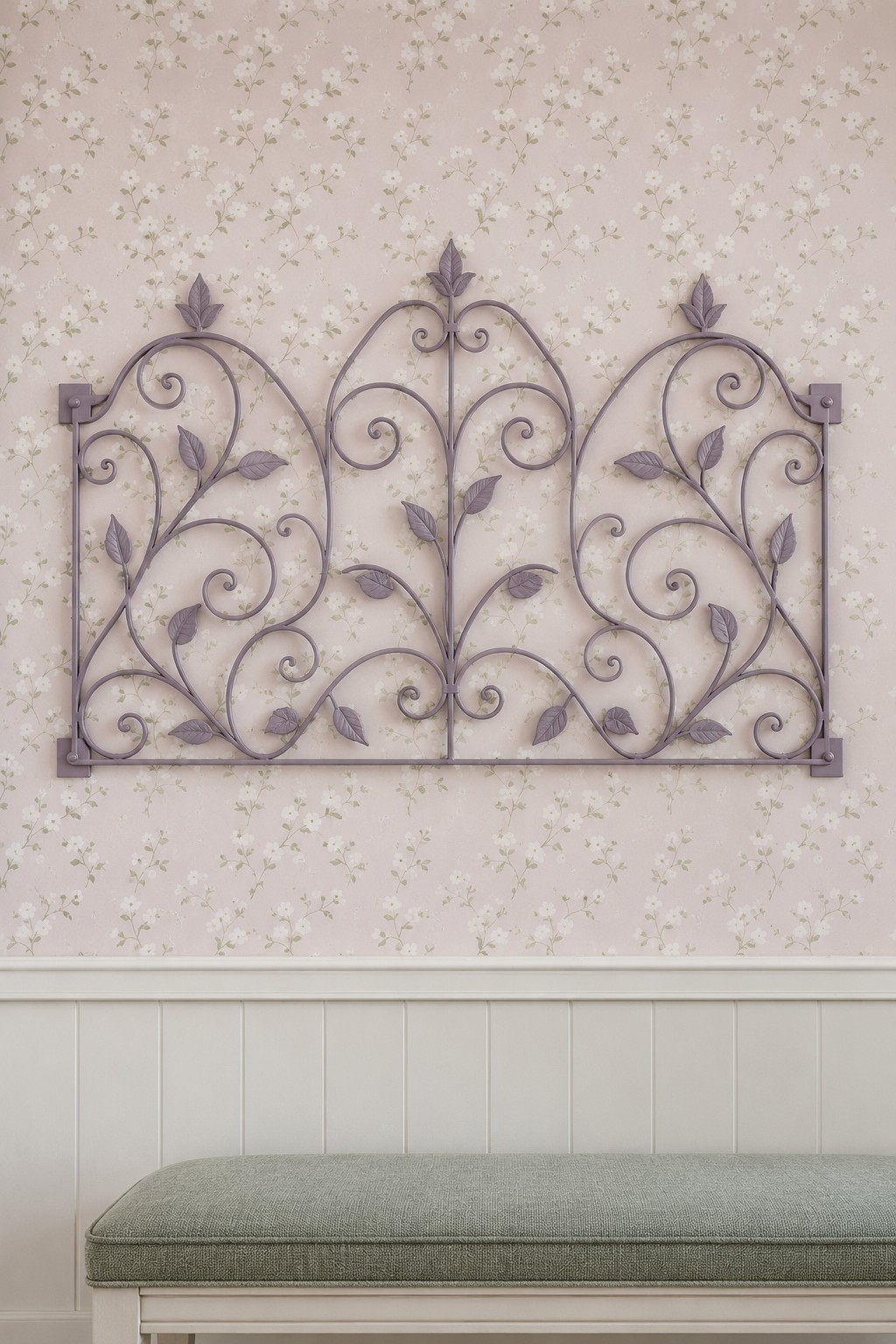
A garden gate silhouette can become an indoor wall ornament when its scrolls and leaf details are allowed to stand out. Lavender metalwork sits against a small floral wallpaper, with a sage bench below connecting the arrangement to the room. The open design leaves the paper visible, so the two layers work together without needing more objects around them.
Use a sound decorative metal panel with smooth edges and suitable mounting plates. Have damaged joins repaired before refinishing, and identify an unknown older coating before disturbing it. For suitable modern metal, clean and prepare the surface, then apply the specified metal primer and compatible finish in an appropriate work area. Weigh the finished panel and fix its mounting plates to the supporting wall construction. A lightweight purpose made wall panel is easier to accommodate than a heavy salvaged gate.
Choose the Amount of Detail Your Room Can Carry
Start with one wall and one clear decision: a floral surface, a shaped architectural feature, or a collection of objects. Then connect it to the room through one repeated color and one familiar material. A blue flower in the wallpaper might reappear on a chair; a cream mirror frame might relate to the skirting. Those small connections make the decoration feel settled without requiring a complete room makeover.
If you prefer a smaller change, begin with a memo board, a few plates, or a textile hanging. If the room needs a stronger focal point, consider a mural or paneling once the surface and installation are planned. These clever wall art ideas offer more ways to give useful objects a decorative role. Keep the finished arrangement easy to dust, inspect, and use, so its cottage character remains enjoyable in everyday life.

Leave a Reply