

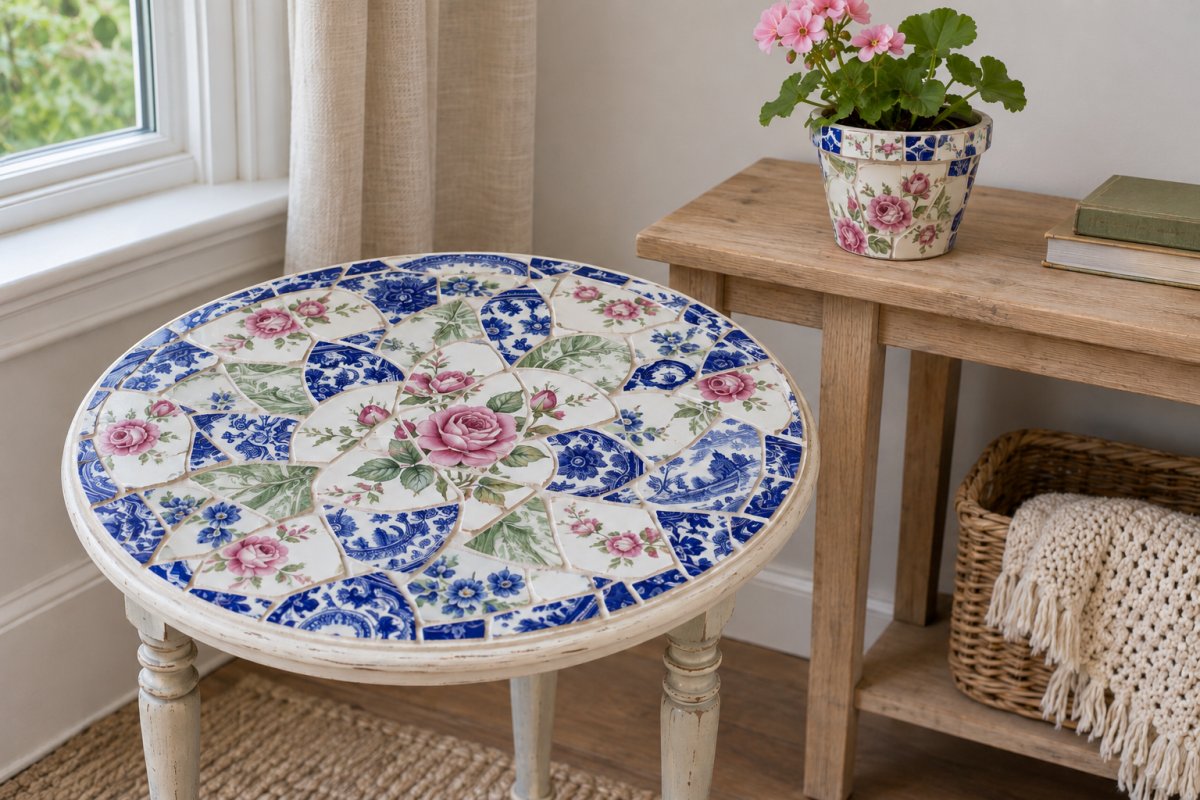
Broken china mosaic projects give patterned dishes a second life as wall decor, useful accents and garden details. A single floral fragment can suggest a color palette, while several plates can become a larger design. These 36 ideas range from small hanging ornaments to ambitious outdoor features, with practical notes to help you choose a project that fits your space.
Choose your materials. Start with clean, known lead free ceramic pieces, a firm base, mosaic adhesive, grout, a plastic spreader and a damp sponge. Wear safety glasses and cut resistant gloves when shaping pieces. Avoid cutting or grinding antique or unknown glazes that may contain lead; use modern mosaic pieces with known composition instead. The FDA explains where lead can occur in ceramic glazes. Follow the product safety directions when mixing powdered grout, and keep fragments away from children and pets.
Plan and make. Cover the work surface, sort clean, lead-free fragments, and shape them with tile nippers. For the indoor sample below, seal the porous MDF with one part Weldbond to five parts water and let it dry. Arrange the fragments with joints no wider than 1/8 inch (3 mm), attach them with full-strength adhesive, and allow at least 24 hours before grouting. Fill the joints with premixed grout using a spreader, clean excess with a damp sponge, and let the grout cure as directed. Set aside pieces with exposed sharp edges. Check Weldbond's surface preparation instructions and the mosaic sequence from WheatonArts.
Plan for weather and use. An outdoor base, fragments, adhesive and grout must all suit the exposure and local climate. Unknown dishes may crack in freezing conditions; grout sealer alone does not make a project waterproof. Consult an installer for permanent work, wet areas or surfaces people walk on. This exterior tile mortar guide shows how product choice depends on the substrate and exposure. Keep mosaic surfaces away from direct food contact.
Sample project budget. These estimates are for one 8 by 8 inch (20.3 by 20.3 cm) indoor decorative mosaic on an MDF square, displayed flat. The example U.S. retail prices below were checked November 2, 2026 and cover full items or packages.
Materials and application tools
| Item | Quantity | Unit price | Cost |
|---|---|---|---|
| 8 by 8 inch MDF base, 1/2 inch thick | 1 square | $8.86 | $8.86 |
| Lead-free 8 inch ceramic plates | 2 plates | $19.00 each | $38.00 |
| Weldbond adhesive | 1 bottle, 5.4 oz | $7.95 | $7.95 |
| Premixed mosaic grout | 1 container, 8 oz | $11.99 | $11.99 |
| Foam brushes for the base | 1 pack of 8 | $3.00 | $3.00 |
| Grout spreader | 1 | $4.04 | $4.04 |
| Soft cleaning sponges | 1 pack of 2 | $1.19 | $1.19 |
| Ceramic tile nippers | 1 pair | $20.95 | $20.95 |
| Work tray, table covering, mixing cup, water, rinse container, cleaning cloth and rigid lidded waste container | Already owned | $0.00 assumed | $0.00 |
| Materials and tools total | $95.98 |
Of this total, the base, plates, adhesive and grout cost $66.80; the brushes, spreader, sponges and nippers cost $29.18. The nippers were listed for preorder when checked.
Protective equipment
| Item | Quantity | Unit price | Cost |
|---|---|---|---|
| Safety glasses with side shields | 1 pair | $15.95 | $15.95 |
| Cut-resistant gloves | 1 pair | $17.95 | $17.95 |
| Nitrile gloves for wet materials | 1 box of 50 | $8.49 | $8.49 |
| NIOSH-approved N95 respirators | 1 pack of 2 | $7.99 | $7.99 |
| Protective equipment total | $50.38 |
Estimated total for both groups is $146.36. The plate price is a buying benchmark. Using broken dishes you already own can save $38 if their composition is known to be lead-free. If you also own the nippers and all four protective items, the remaining listed purchases total $37.03. Extra fragments may be needed if much of each plate is too curved to fit. Tax, shipping and any household items you need to buy are additional; prices and availability vary.
Wear the safety glasses, cut-resistant gloves and a properly fitted N95 when nipping; avoid grinding or working with glazes of unknown composition. Use suitable nitrile gloves for adhesive and grout as their labels direct, and put sharp waste in the lidded container.
Table of Contents
- 1. Teacups Grow Up a Narrow Wall Panel
- 2. Poppies Fill a Scalloped Heart
- 3. Lemon Cups Brighten Brick
- 4. Rose Patterned Arch for a Garden Wall
- 5. A Mirror Framed in Rose and Sage
- 6. Teapots Trim a Mustard Spice Rack
- 7. Jewelry Hangs Beneath a Teacup
- 8. Blue and Cream China Flower for a Console
- 9. Floral Circles in a Handled Tray
- 10. A Wood Shelf Against a Floral Arch
- 11. Botanical Fragments Become a Clock Face
- 12. Strawberry Planter with a Scalloped Backing
- 13. Roses Spiral Across a Side Table
- 14. Green Snake on a Pale Mosaic Panel
- 15. Lavender Lantern Wrapped in Florals
- 16. Scalloped Edging for a Flower Bed
- 17. Poppies Around a Garden Sink
- 18. A Floral Initial for an Entryway
- 19. Whimsical Face in Floral China
- 20. Yellow Eyes Give This Owl Its Focus
- 21. Blue Star Within a Floral Border
- 22. Pansy Heart for a Small Wall
- 23. Red House Number Beside a Blue Door
- 24. Koi and Lily Pad Garden Accent
- 25. Stacked Teacups on a Wall Panel
- 26. Pansy Jellyfish with Curving Tentacles
- 27. Doll Face Above a Double Hook
- 28. Sunburst Mosaic for a Garden Gate
- 29. Butterfly Key Holder in Cobalt and Turquoise
- 30. Layered Rose Wall Panel
- 31. Winding Mosaic Ribbon Through the Lawn
- 32. Colorful Square Accents in the Grass
- 33. Zigzag Border Beside the Patio
- 34. Bands of Color Around a Porch Column
- 35. Concentric Mosaic Ring Around a Tree
- 36. Floral Mosaic Lines Across a Patio
1. Teacups Grow Up a Narrow Wall Panel
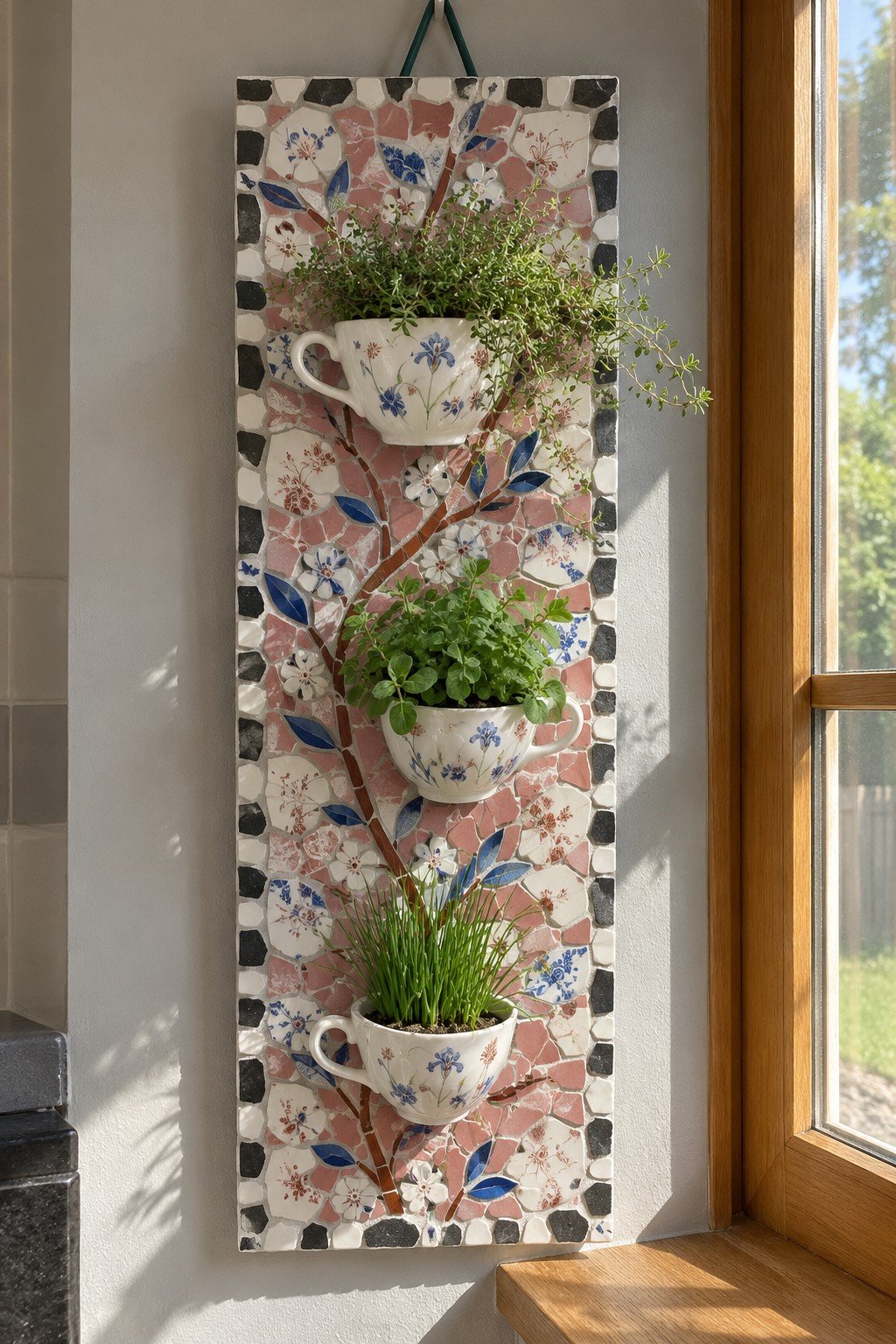
Three floral teacups rise through a narrow panel of pink, white and blue fragments. The vertical arrangement suits a small kitchen wall because each cup has its own space. To adapt it, fasten a rigid panel to the wall and support each cup independently; removable planting pots help keep water away from the mosaic.
2. Poppies Fill a Scalloped Heart
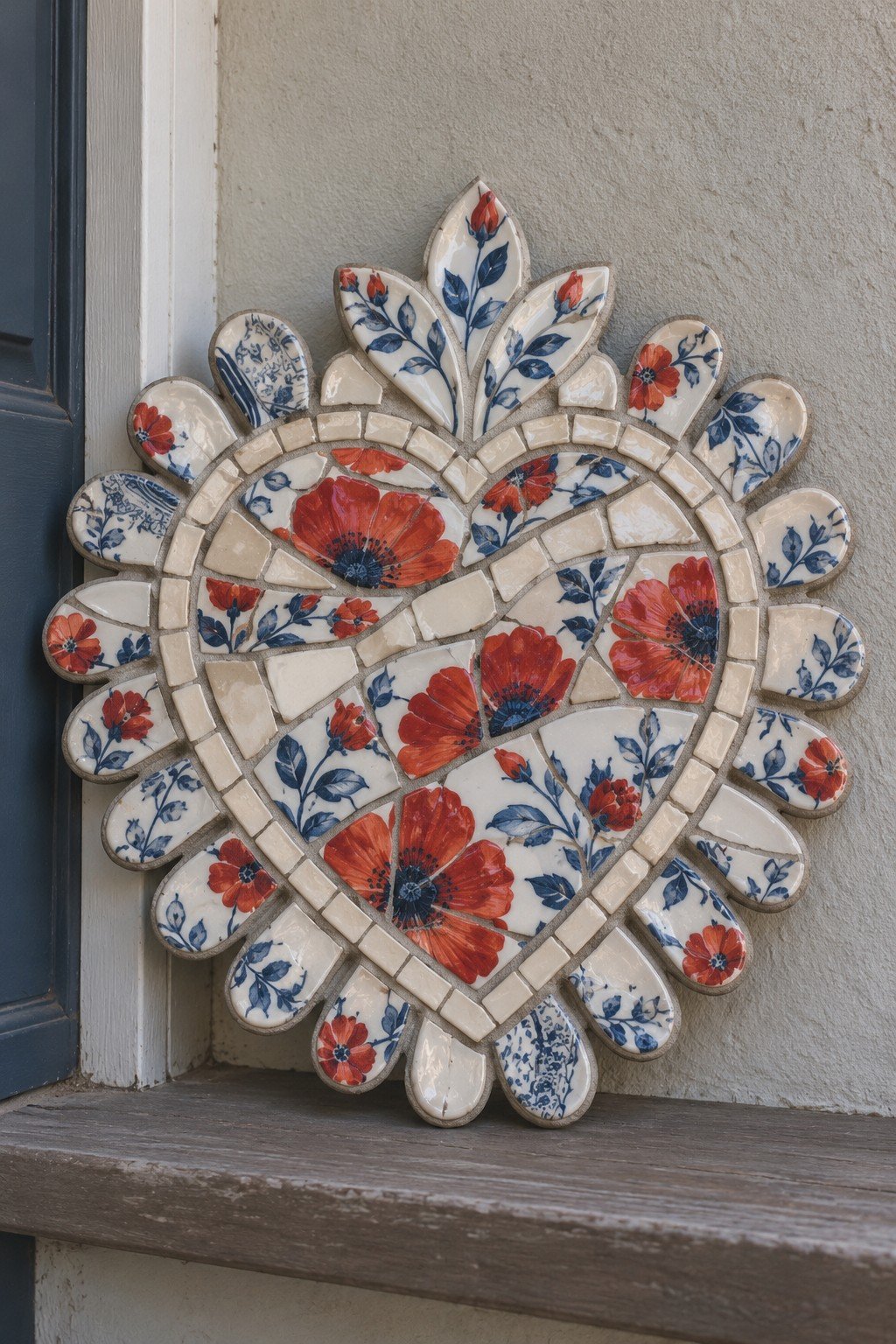
Red poppies and blue leaves cross this heart in curved bands, while a scalloped border gives it a folk art shape. Draw the heart and outer lobes on one sturdy backing before arranging the patterned pieces. Display it on a secure stand or use a hanger rated for its weight.
3. Lemon Cups Brighten Brick
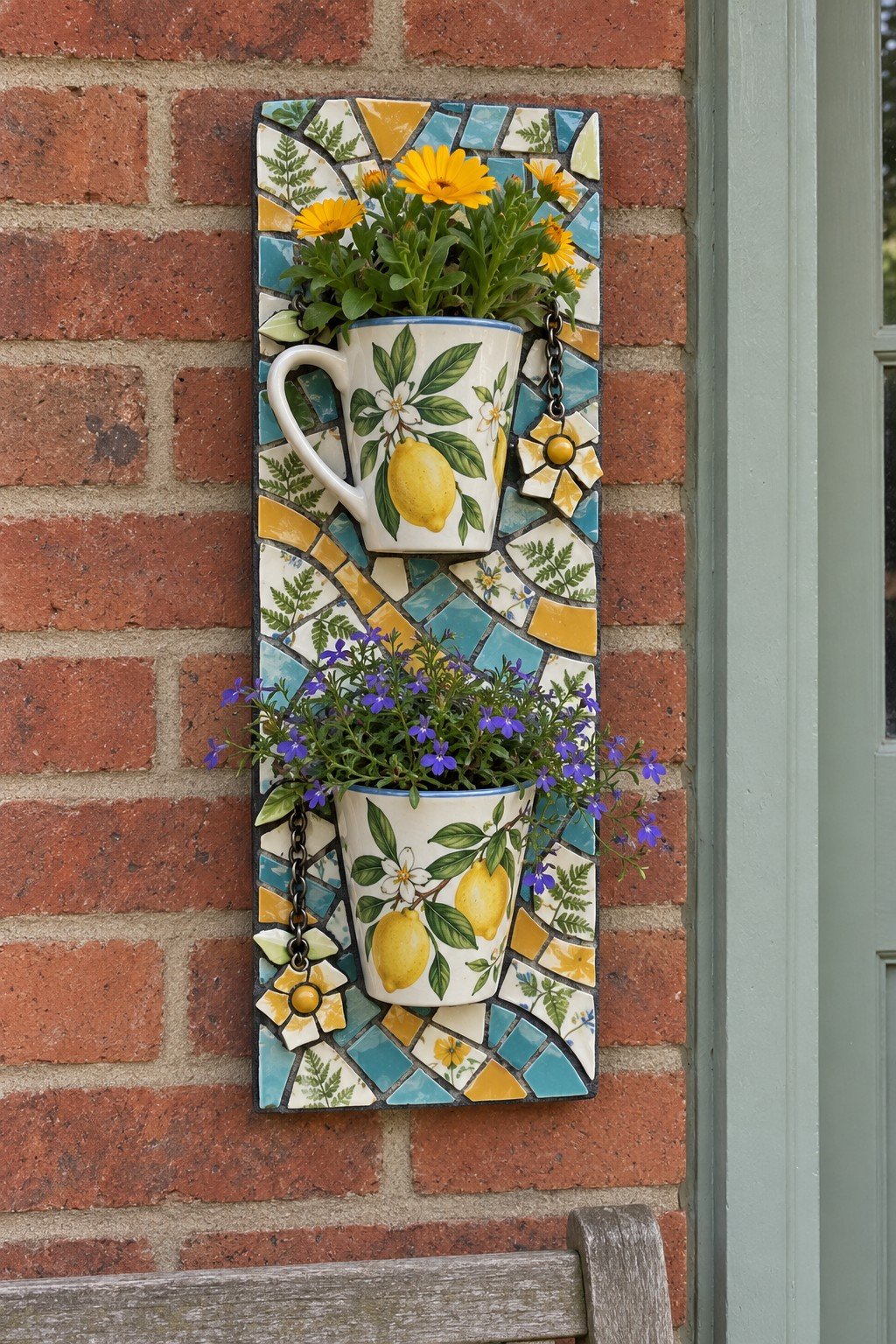
Two lemon patterned cups stand out against turquoise, cream and yellow fragments. The long panel brings color to brick without covering a large area. Attach cup supports to the backing and anchor the backing to the wall for the weight of wet plants; use a sheltered location if the china's weather rating is unknown.
4. Rose Patterned Arch for a Garden Wall
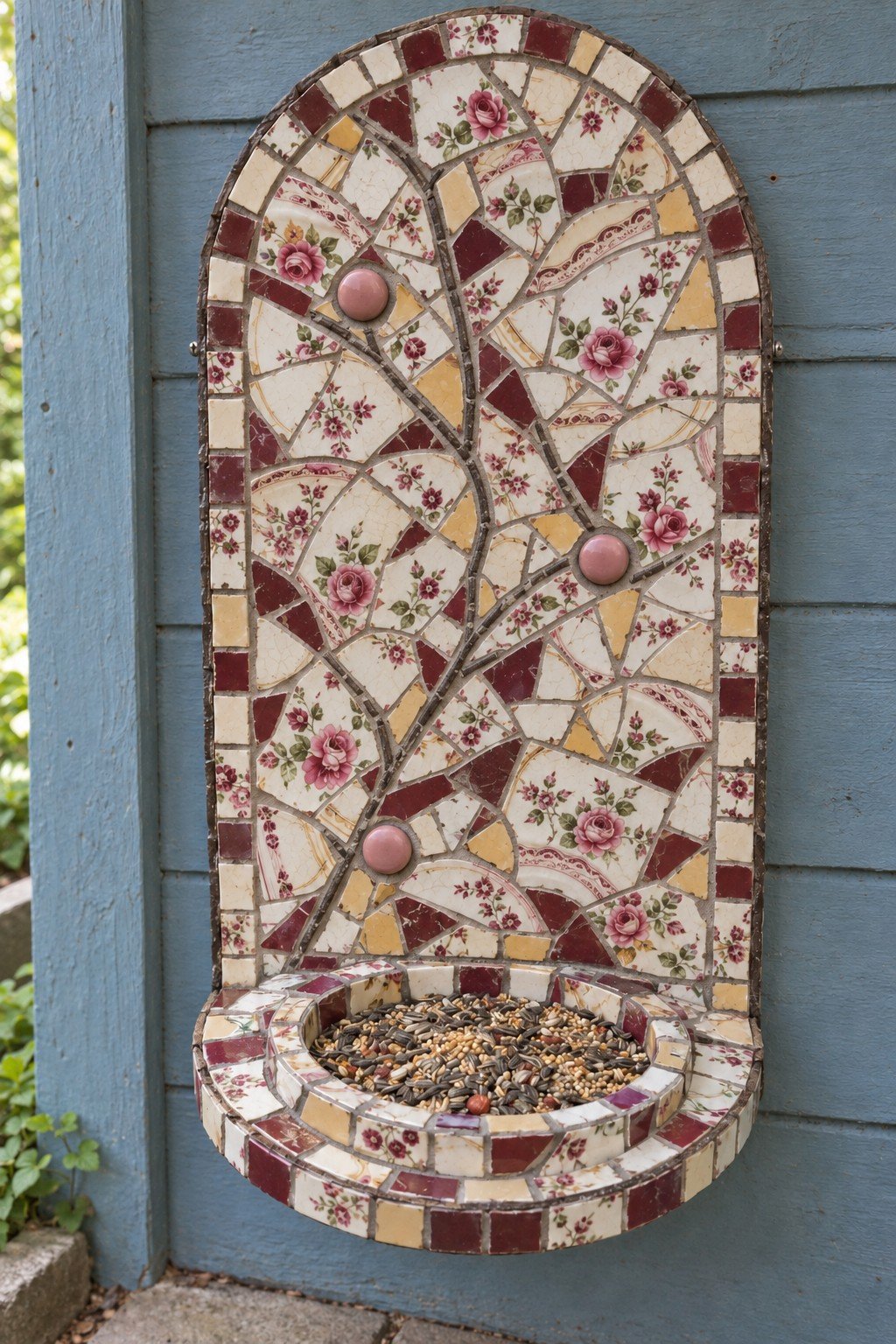
Pink rose fragments and burgundy accents fill an arched panel above a shallow bowl. The image shows seed in the bowl, but a surface made from unknown china and grout is difficult to assess for safe feeding and cleaning. Keep the mosaic as decoration and place a separate, easy to clean bird feeder nearby.
5. A Mirror Framed in Rose and Sage
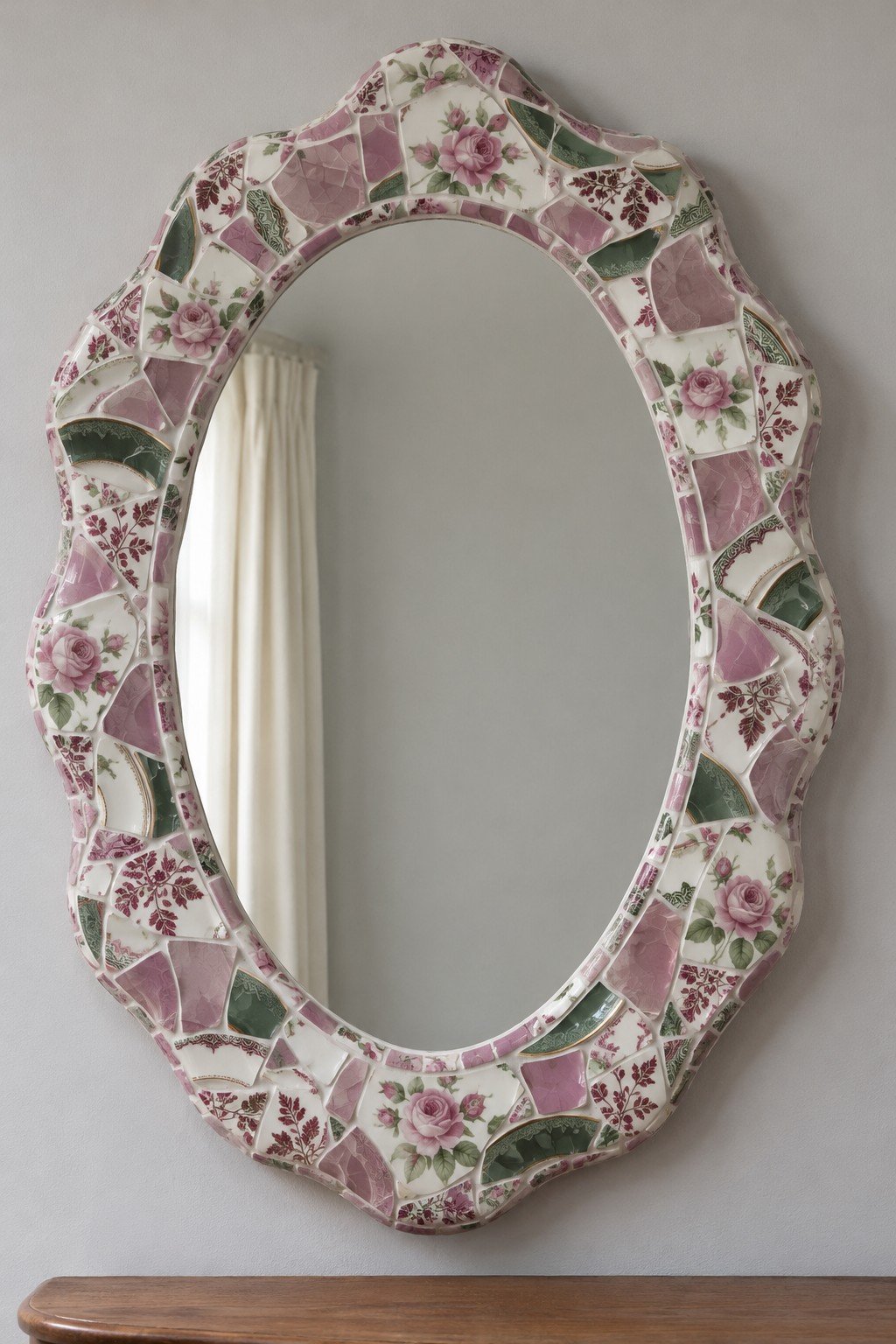
A wavy pink and sage surround softens the oval mirror, with small rose patterns scattered through the border. Protect the mirror glass while working and attach the pieces to a firm frame rather than the reflective surface. A narrow version works over a dresser without taking over the wall. For a different approach to old mirrors, see these mirror upcycling ideas.
6. Teapots Trim a Mustard Spice Rack
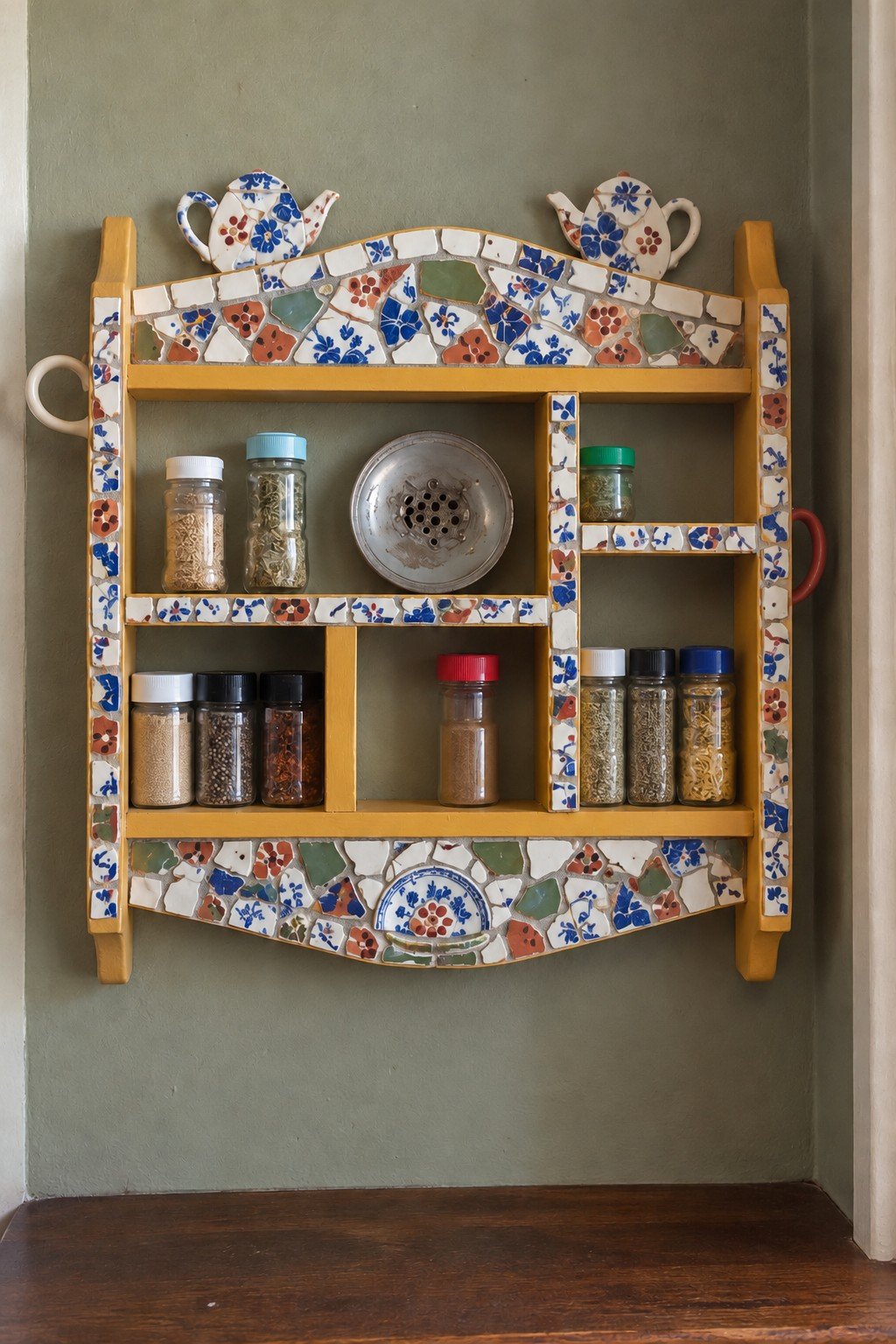
Blue and orange floral pieces frame the mustard yellow spice rack, with two teapot shapes along its upper edge. Preserve the shelf depth and jar clearance before adding trim. Fix the rack to wall supports suited to its loaded weight, and leave the mosaic clear of the jars so labels remain easy to read.
7. Jewelry Hangs Beneath a Teacup
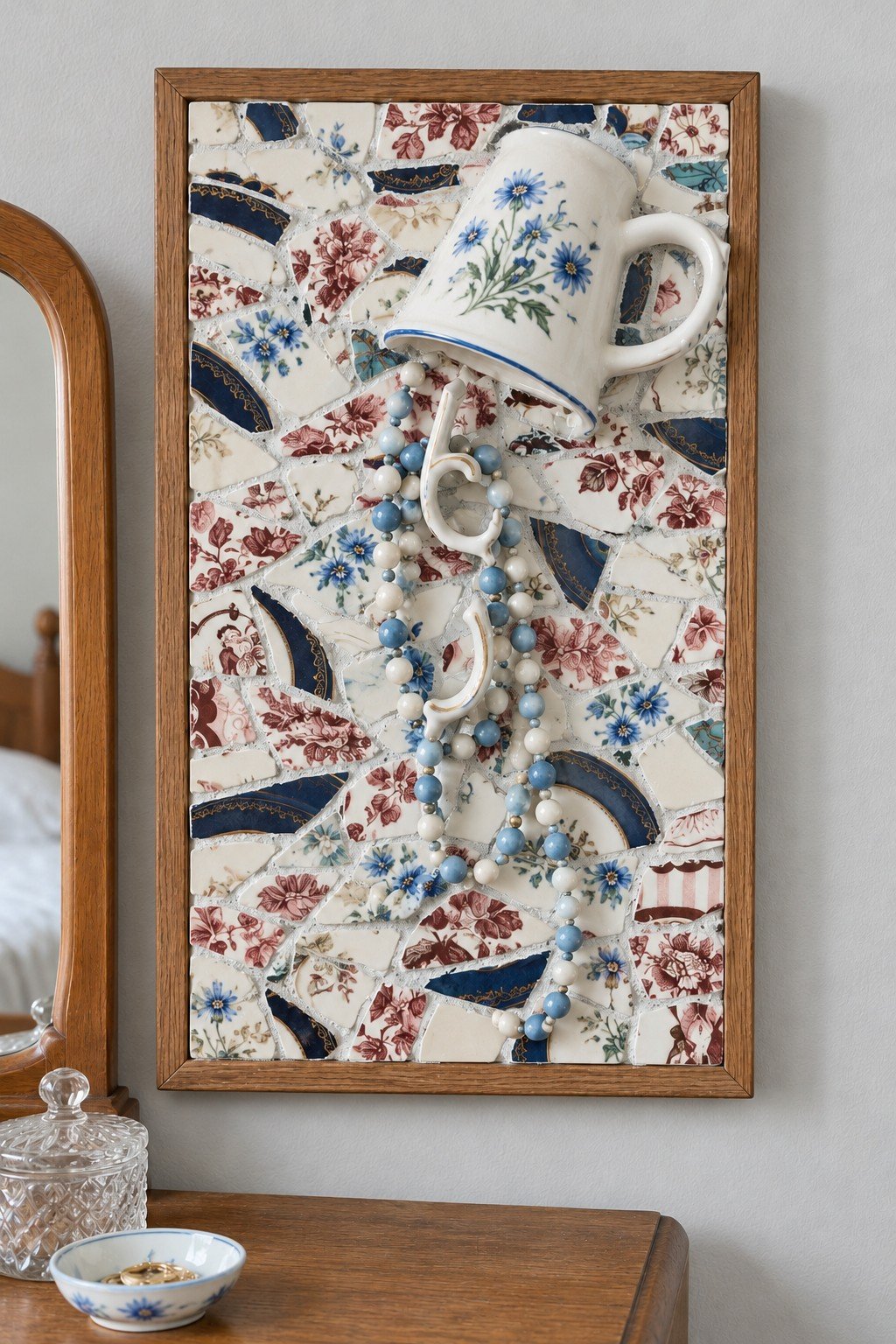
A tilted blue and white teacup catches the eye above curved hooks and necklaces. The wood frame keeps the busy floral background contained. Mount the hooks into the structural backing, not individual ceramic fragments, and space them for the necklaces you own so chains can hang without tangling.
8. Blue and Cream China Flower for a Console
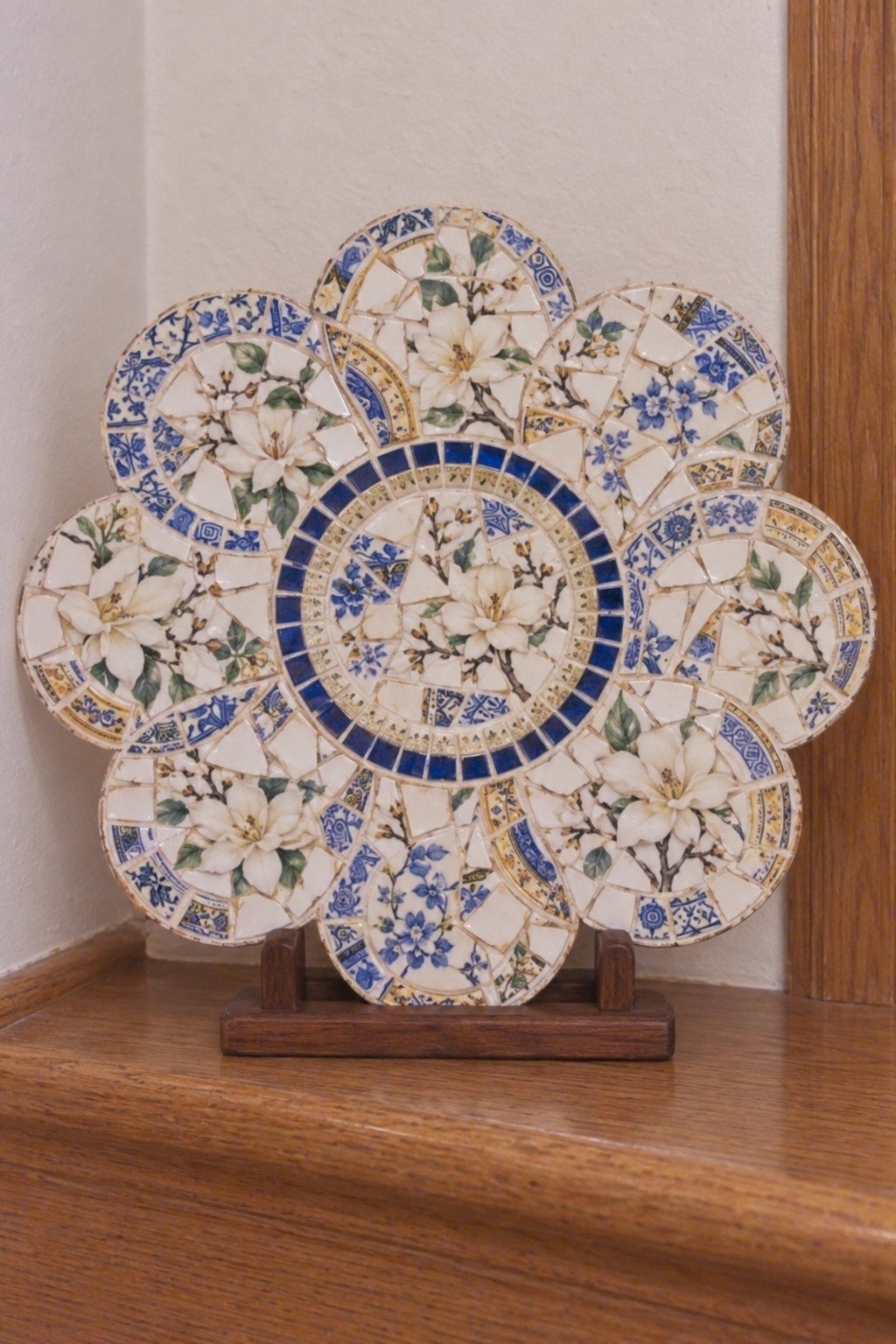
Floral china pieces form broad petals around a round blue center. Treat the petal outline as one cut backing so the tips remain supported, then arrange larger flower motifs before filling the gaps. A stable plate stand keeps the piece visible on a console without requiring a wall fixing.
9. Floral Circles in a Handled Tray
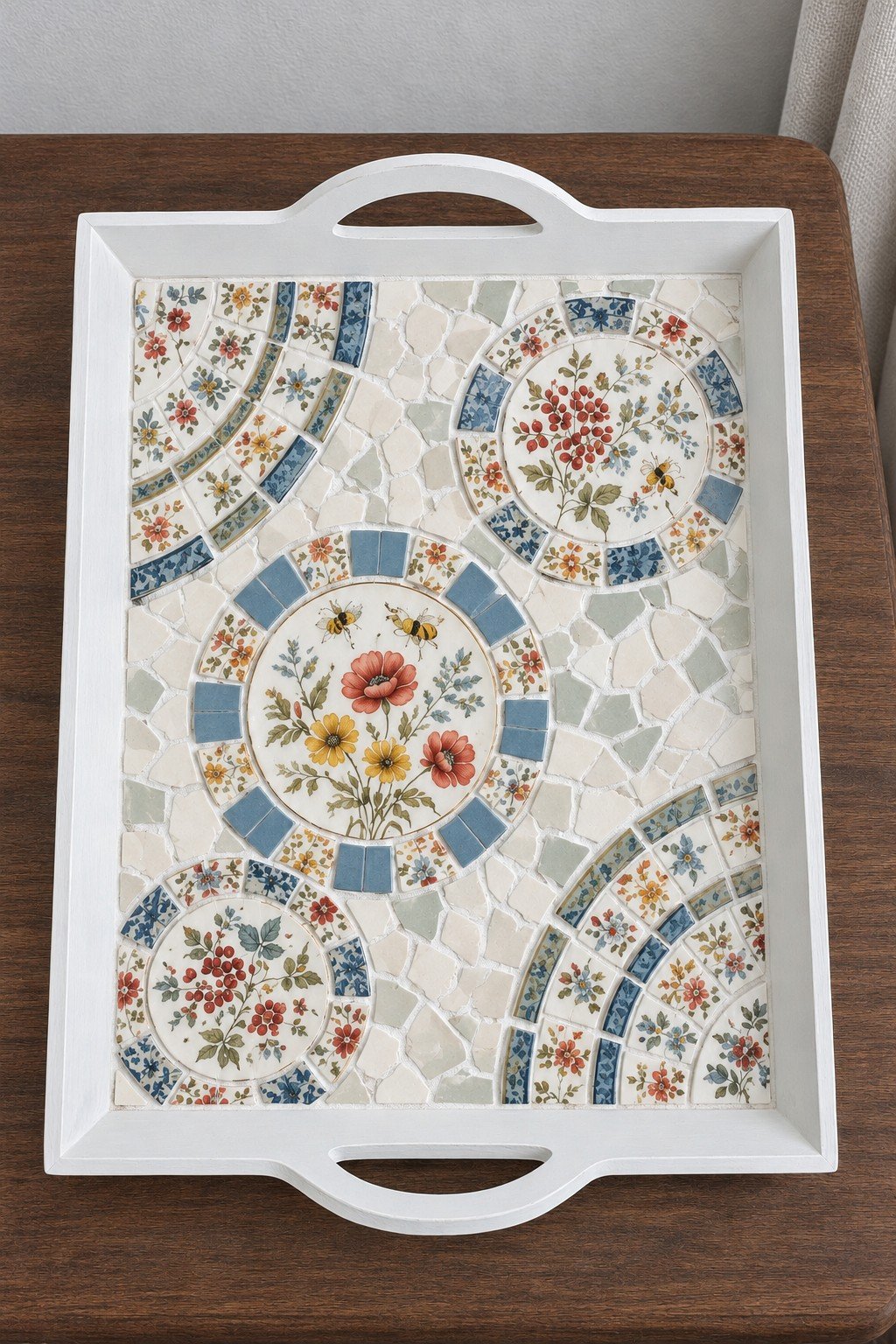
Three floral circles and partial rings break up the pale surface of this white handled tray. Use a sound tray with a rigid bottom, and keep the handles free of added weight and sharp edges. The mosaic is best for carrying items in containers, not for direct contact with uncovered food.
10. A Wood Shelf Against a Floral Arch
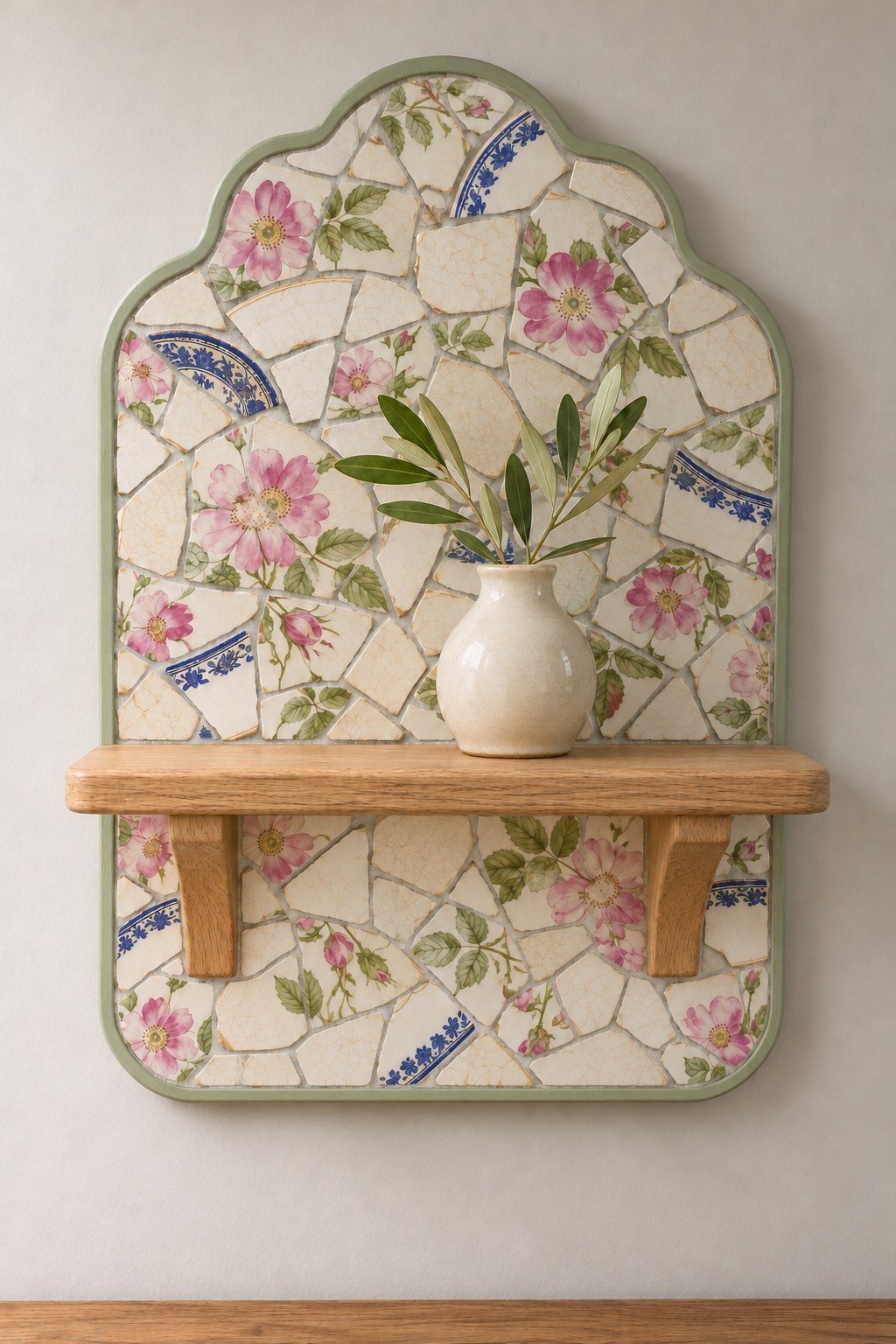
A small wooden shelf crosses an arched panel of pink flowers and blue china fragments. The shelf adds a useful ledge while the mosaic gives the vase a patterned backdrop. Attach the brackets and shelf to a structural support, and choose a shallow shelf for a tight entryway.
11. Botanical Fragments Become a Clock Face
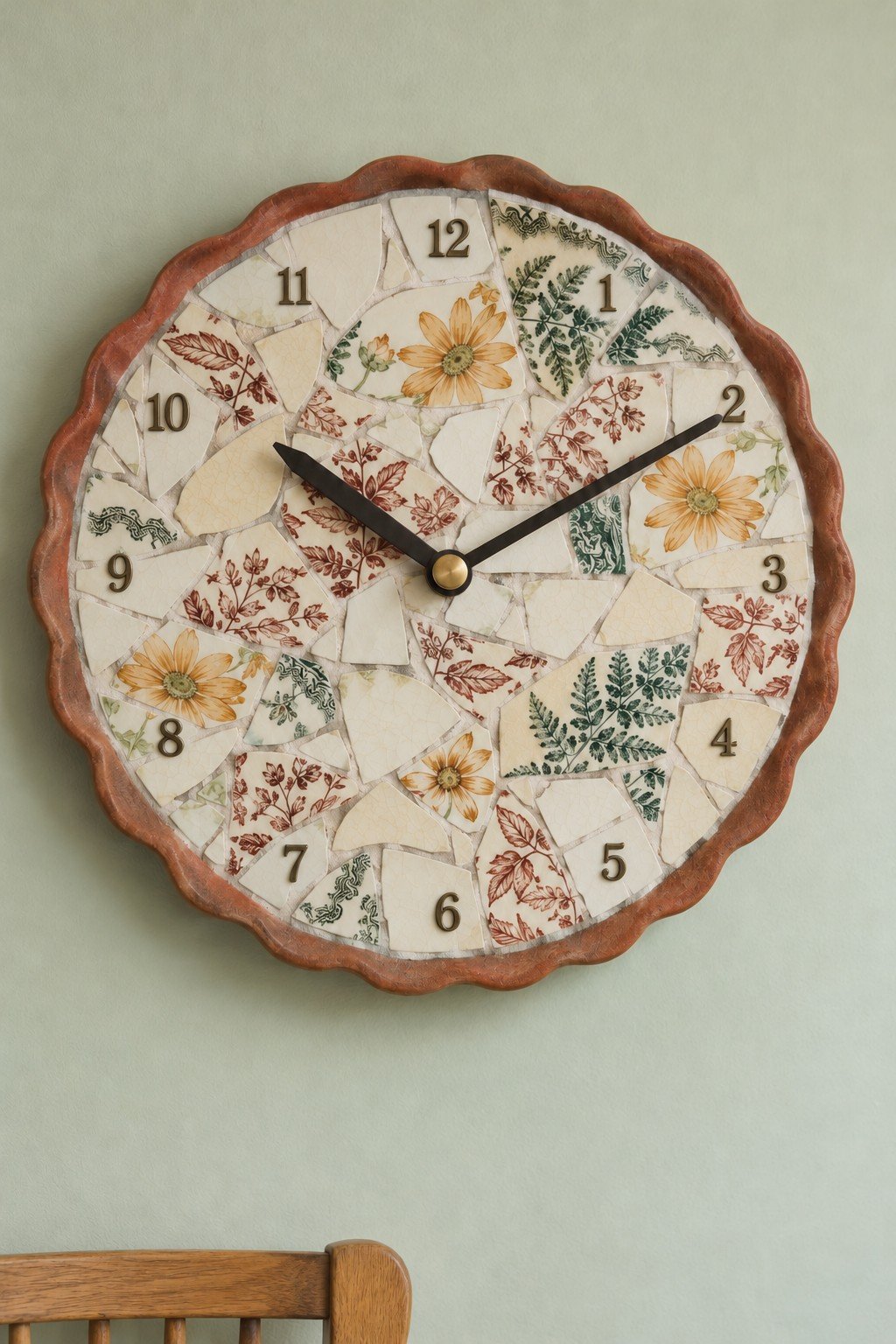
Yellow flowers and green fern motifs make this clock face feel collected rather than uniform. Plan the center opening and numeral positions before gluing; the mechanism needs a clear space behind the backing and hands that pass over the highest fragment. Check the time markings for legibility from across the room.
12. Strawberry Planter with a Scalloped Backing
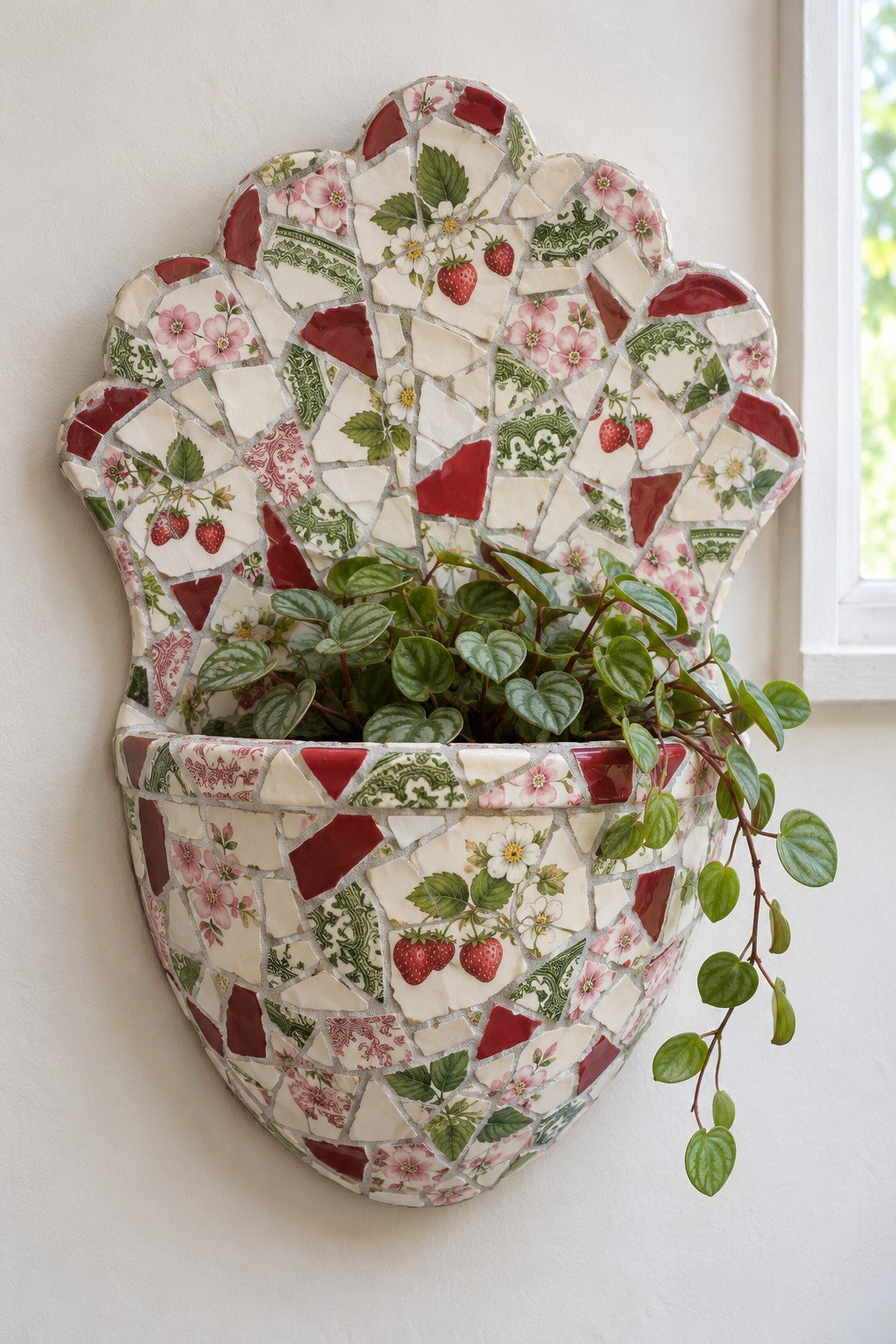
Strawberries, green leaves and red accents cover a scalloped wall planter with trailing foliage. The repeated red pieces define the planter's shape even among varied patterns. Fit a removable inner pot and support the container from its backing, allowing for the extra weight after watering.
13. Roses Spiral Across a Side Table
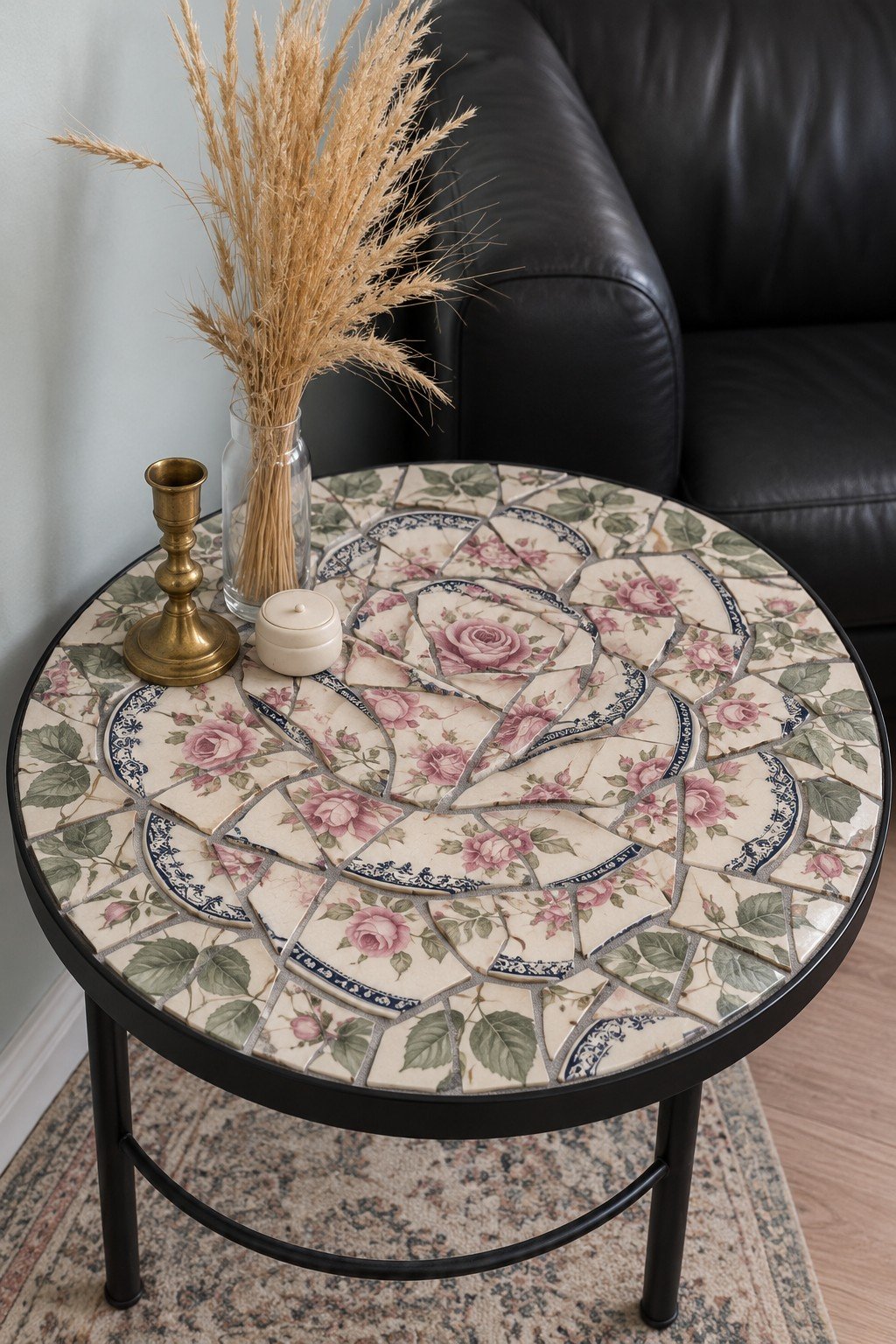
Pink roses curl across a round table top, while the black base gives the delicate pattern a stronger outline. Sketch a spiral first and sort the china by thickness to help create a level surface. Use the table for contained drinks and decor, and wipe spills promptly rather than soaking the grout.
14. Green Snake on a Pale Mosaic Panel
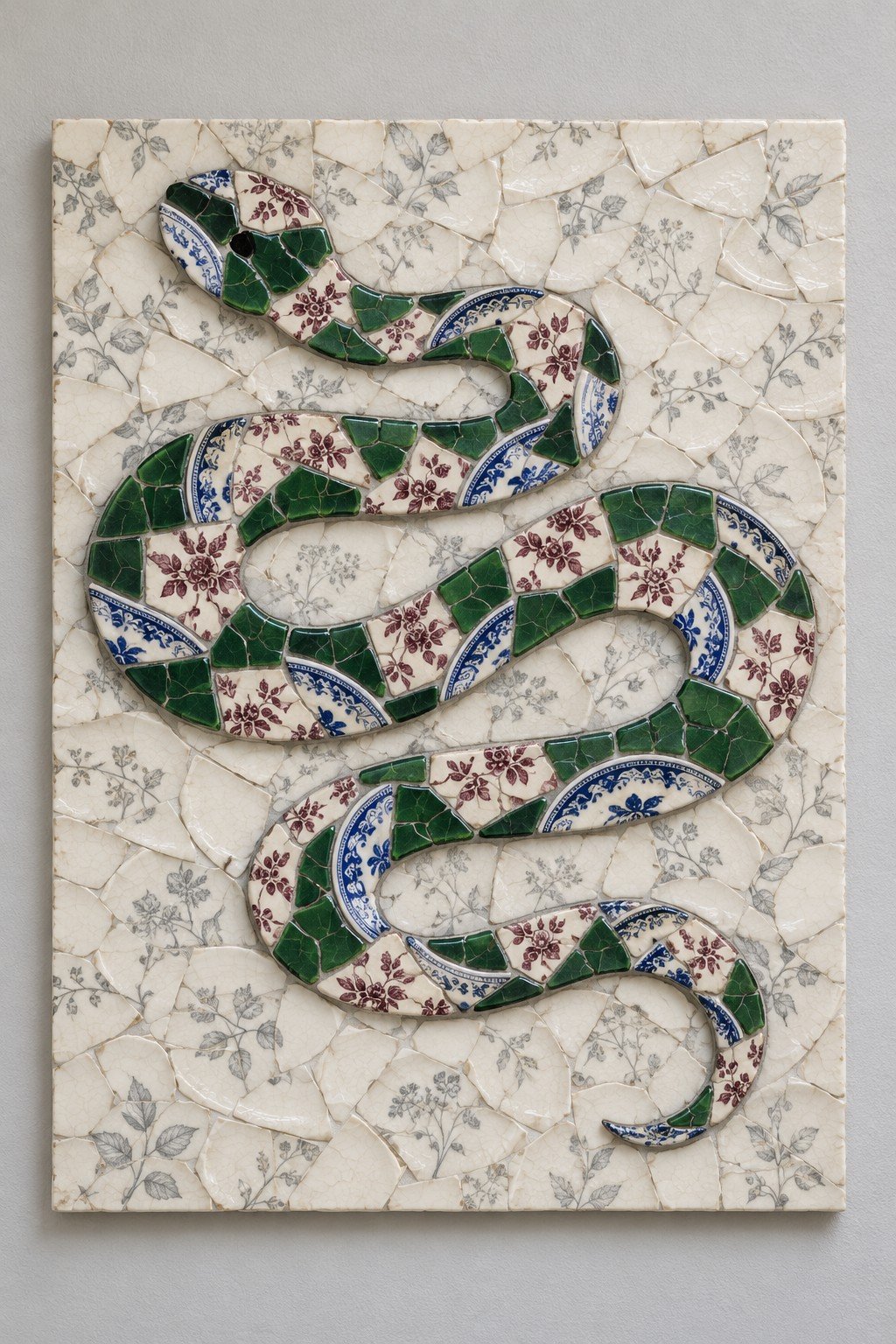
A green and blue snake winds across a field of pale floral pieces. The contrast is what makes its shape readable, so lay the silhouette first and keep the background quieter. Use a rigid backing with a hanger suited to the finished weight, and place the panel where its edges will not be bumped.
15. Lavender Lantern Wrapped in Florals
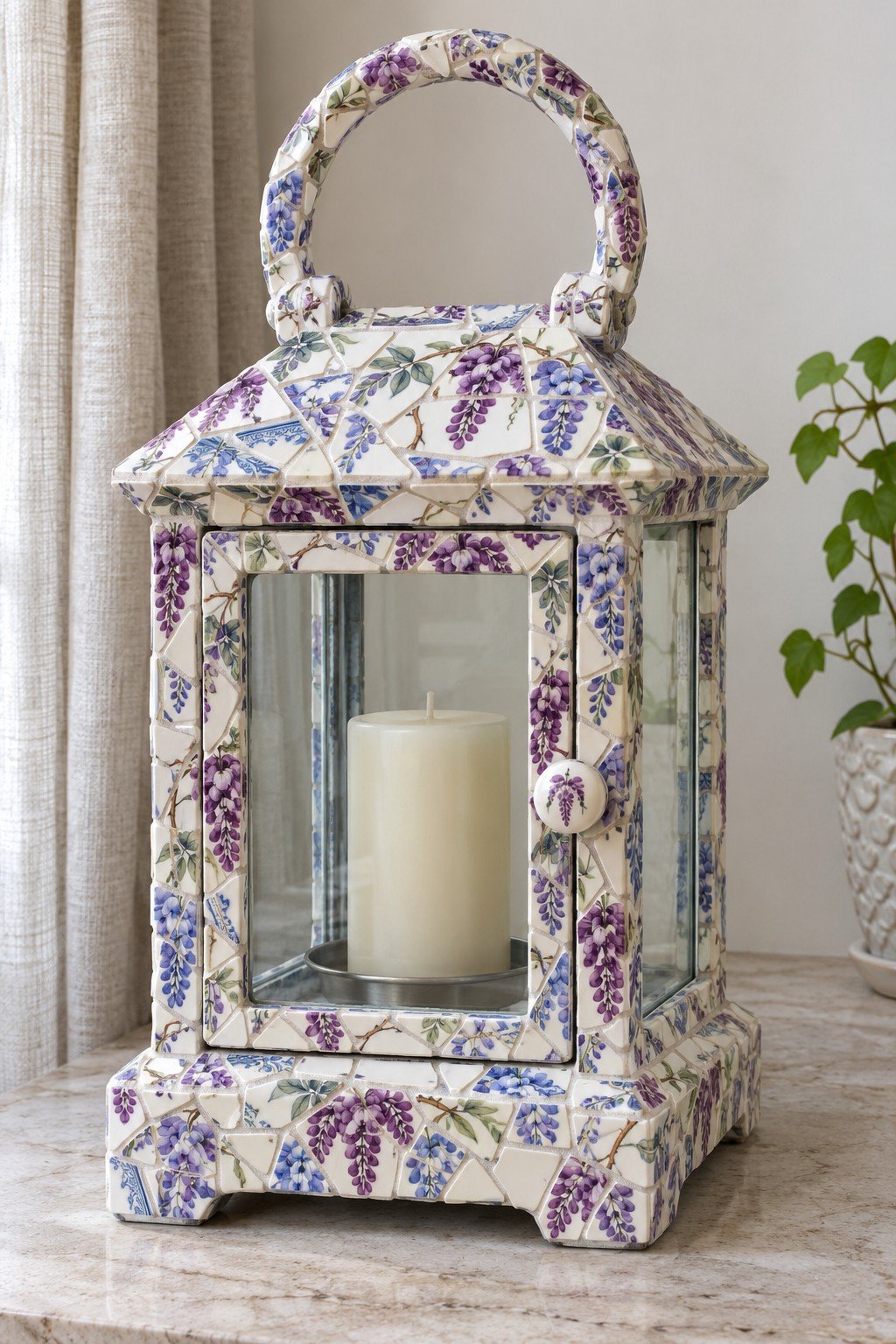
Purple floral fragments cover the frame and roof of this white lantern without hiding its glass sides. Keep the door and glass accessible when adapting a lantern, and check that added weight does not interfere with the handle. A battery candle avoids exposing the decorative finish to an open flame.
16. Scalloped Edging for a Flower Bed
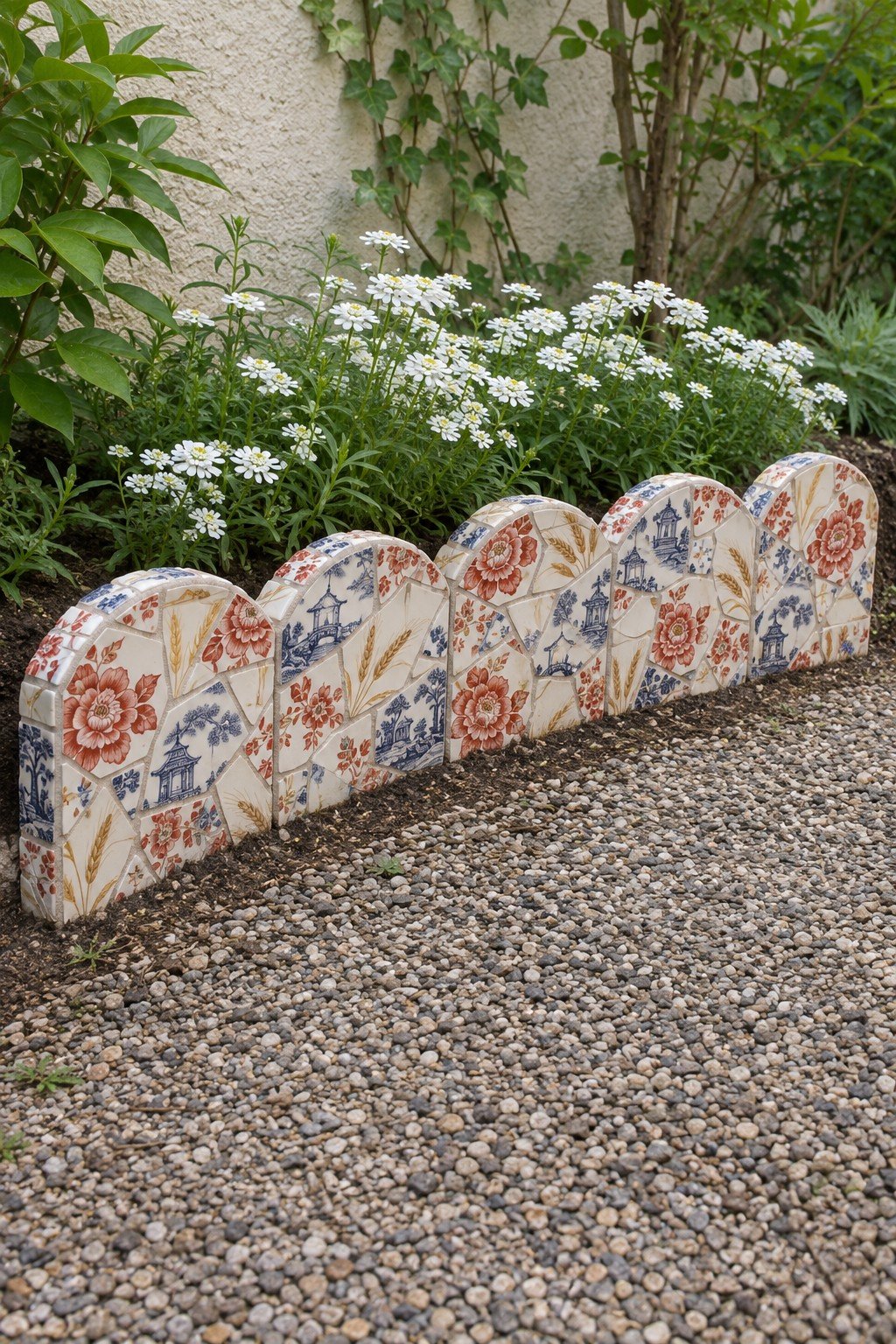
Repeated scallops create a low border between flowers and gravel, with orange and blue patterns alternating across the sections. Plan the border as separate stable units that follow the curve of the bed. Use exterior rated materials, keep the top edges smooth, and leave the walking area unobstructed.
17. Poppies Around a Garden Sink
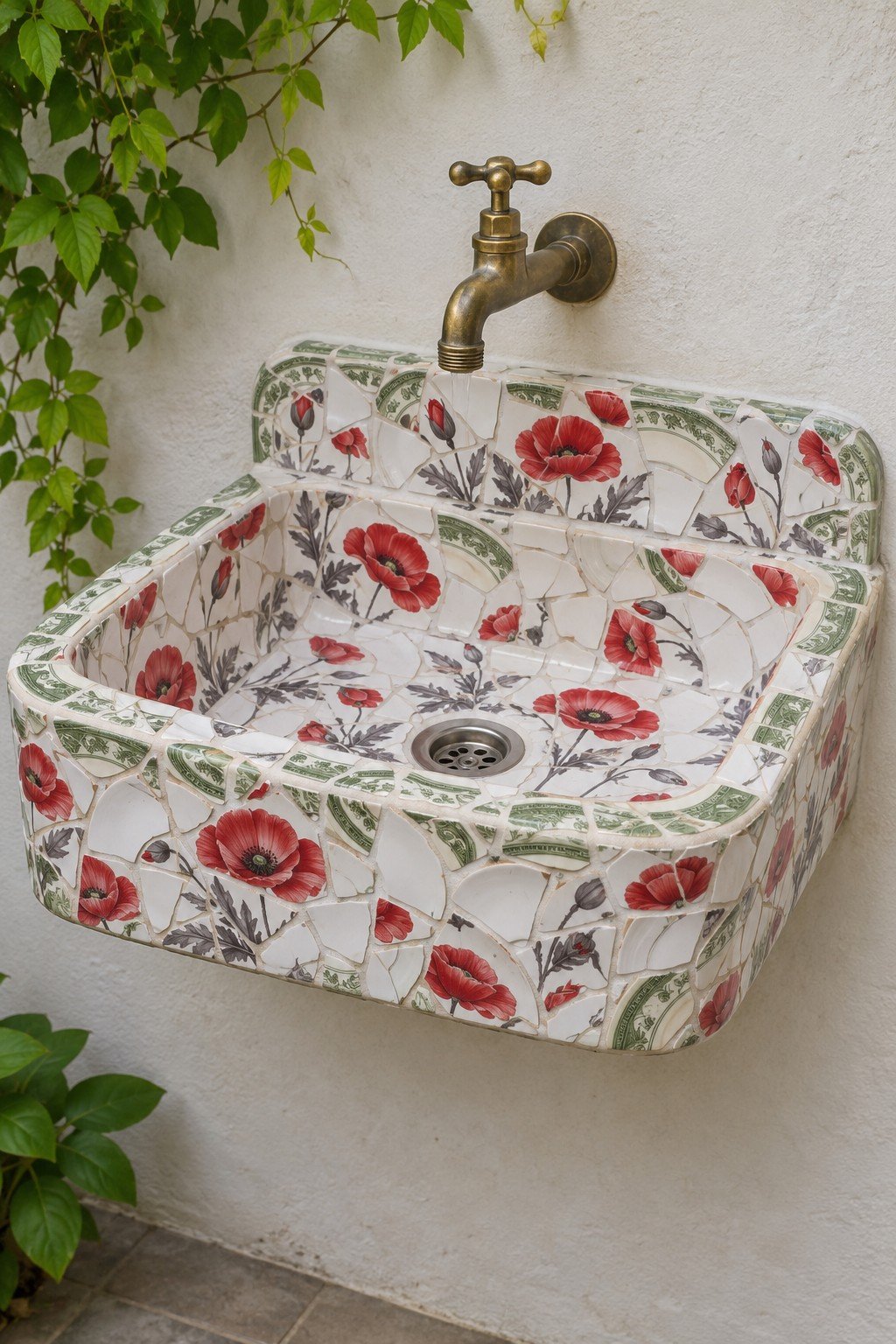
Red poppies spread across the pictured basin beneath a brass faucet. For a practical sink, borrow the pattern for an exterior panel or the wall behind an intact basin rather than covering the working bowl and drain with dish fragments. A plumber or tile professional can advise on the splash zone and waterproofing.
18. A Floral Initial for an Entryway
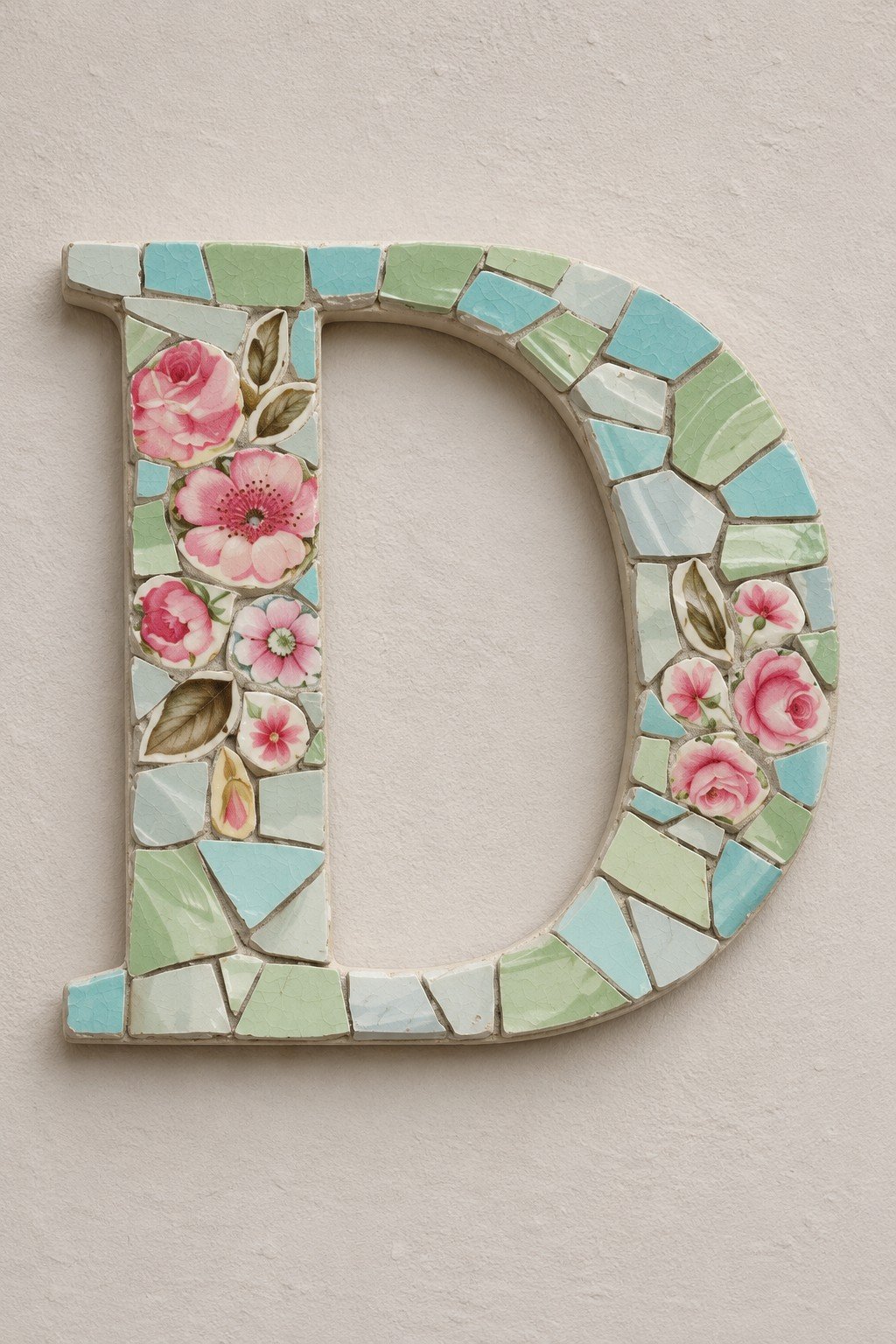
Mint and turquoise fragments outline a large letter D, while pink roses draw attention to its upright side. Trace the letter onto a firm backing and place the largest flowers where the shape has room to carry them. Choose an initial wide enough to keep narrow strokes from becoming fragile.
19. Whimsical Face in Floral China
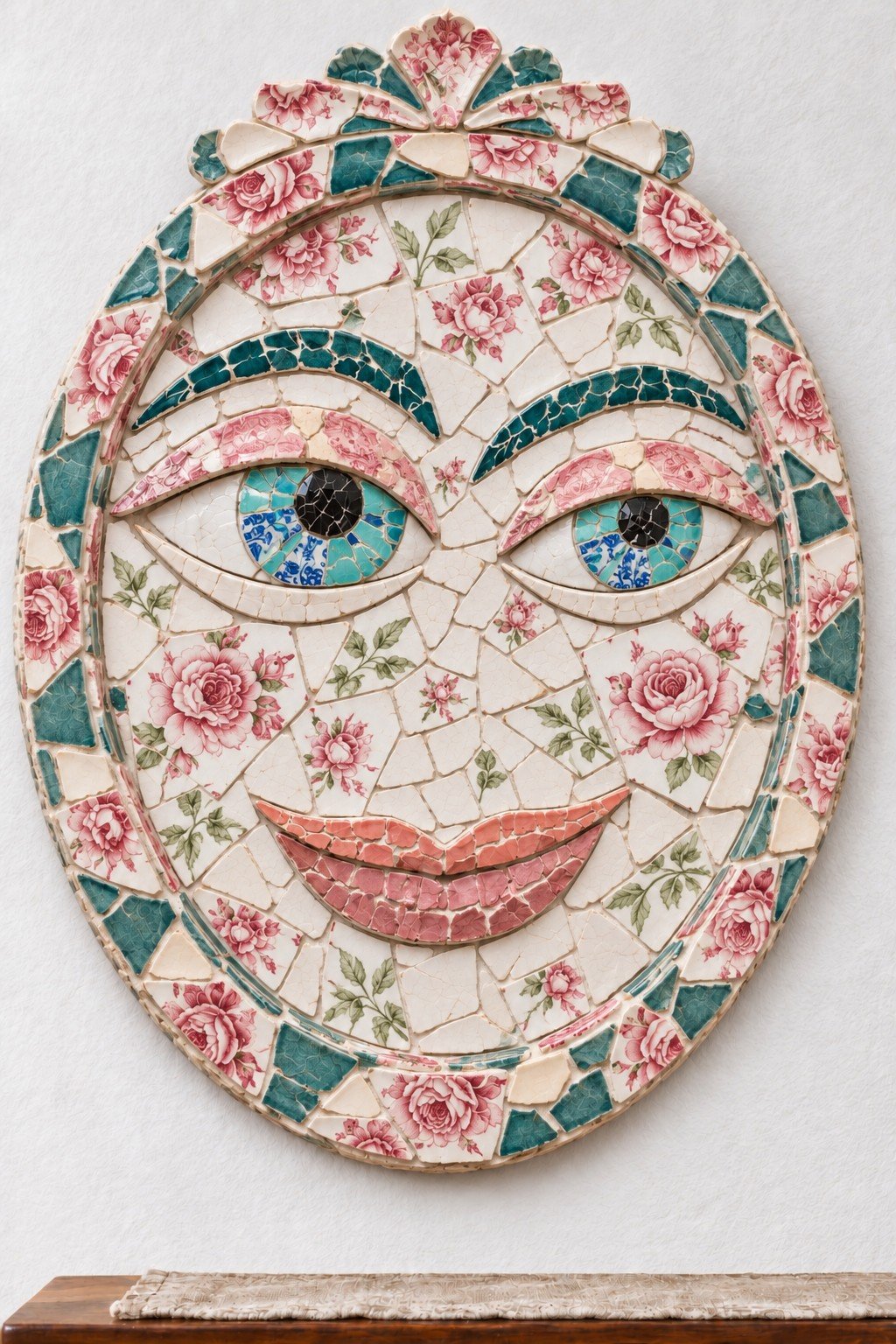
Turquoise eyes and coral lips give this oval floral face its expression. Start by placing the eyes, brows and mouth; the softer rose patterned pieces can then fill the remaining spaces. The raised looking outline can be recreated as a flat design on a single backing for easier mounting.
20. Yellow Eyes Give This Owl Its Focus
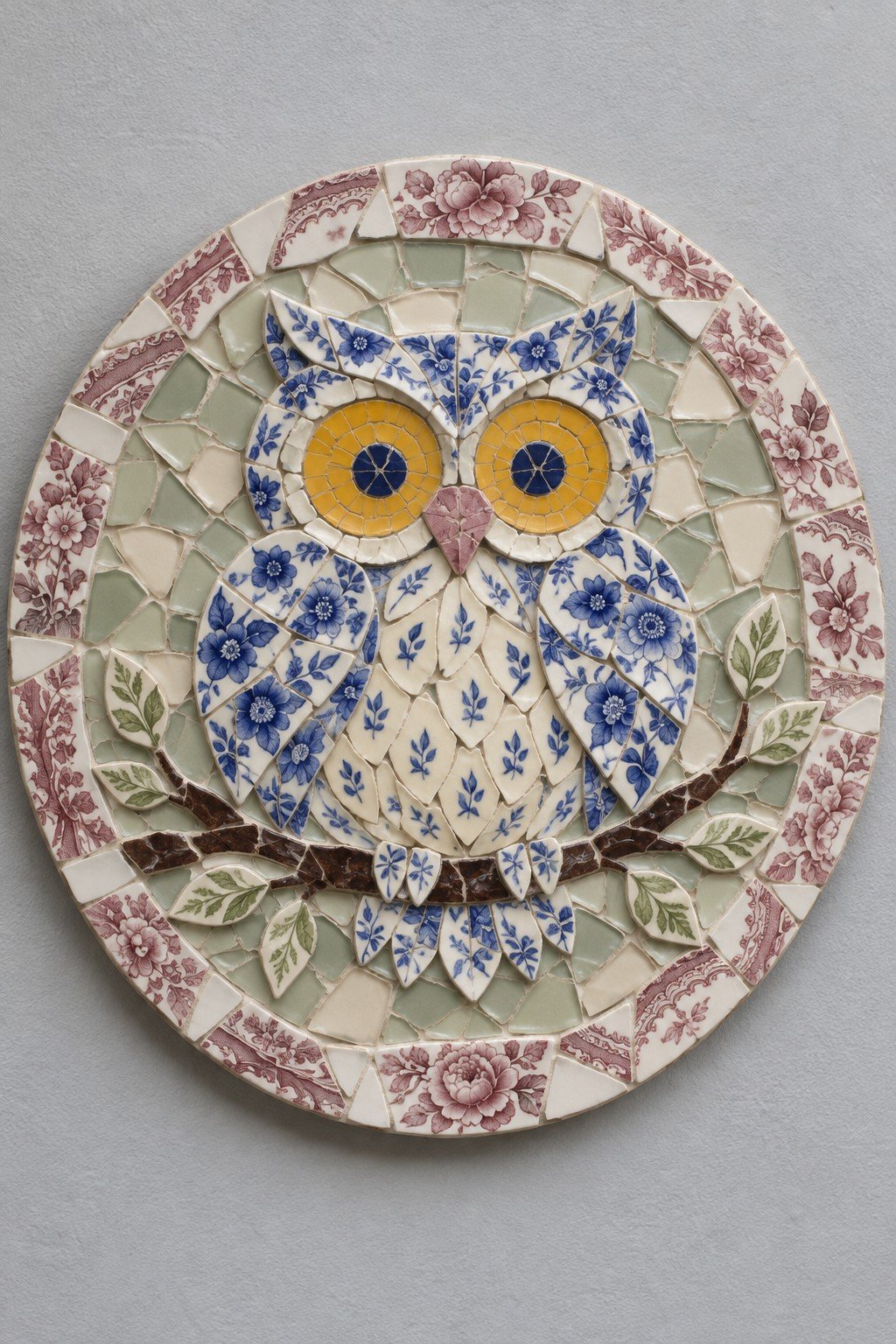
The yellow eyes bring focus to a blue and white owl surrounded by a muted floral border. Arrange the eyes and central body before the wings so the face stays symmetrical. A circular backing and restrained background help the owl remain distinct when viewed from a distance.
21. Blue Star Within a Floral Border
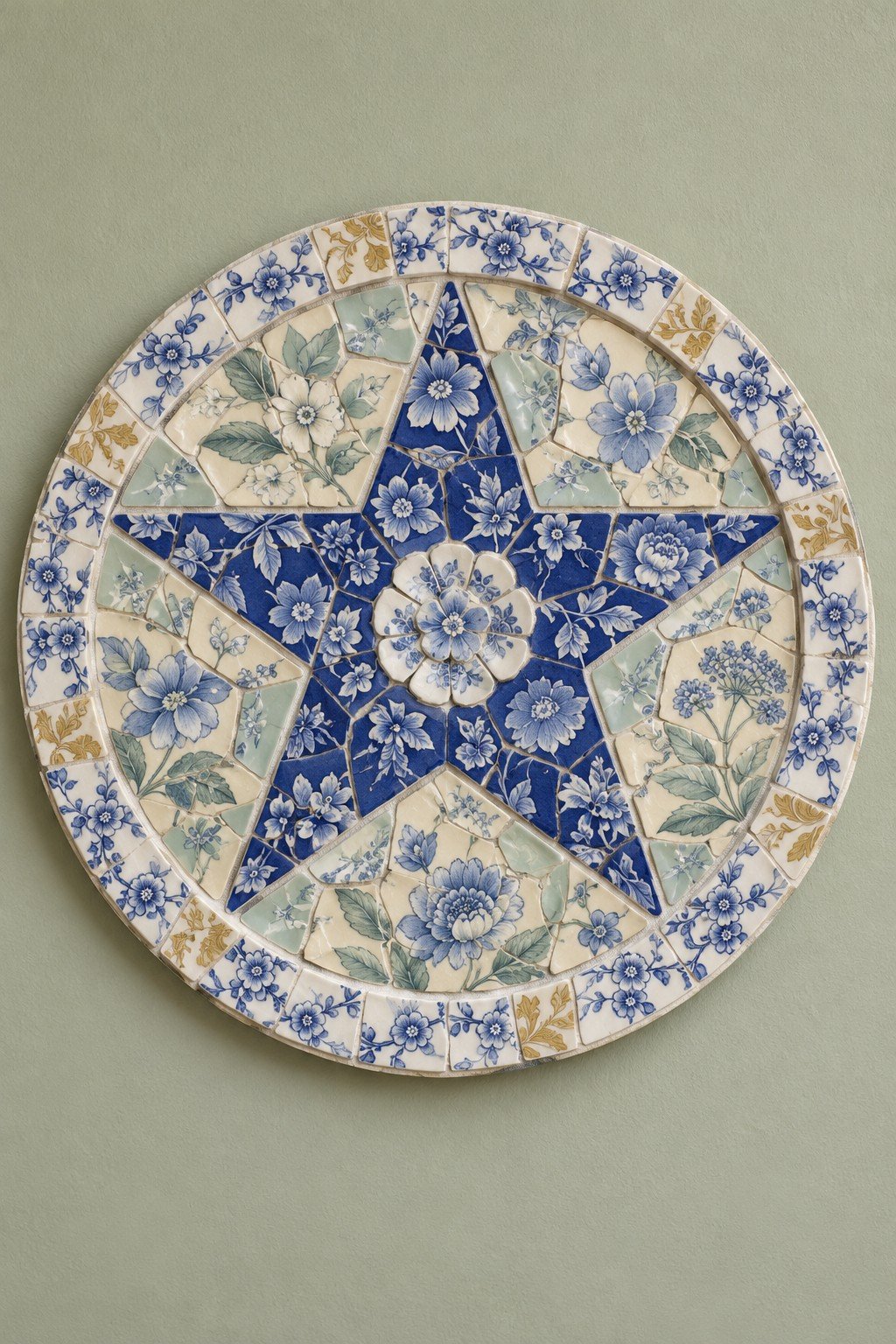
A deep blue star sits inside a ring of pale blue and cream floral pieces. Save similarly colored fragments for the star and use lighter ones outside it to preserve the outline. Test the pattern on paper first, especially where the points meet the circular border.
22. Pansy Heart for a Small Wall
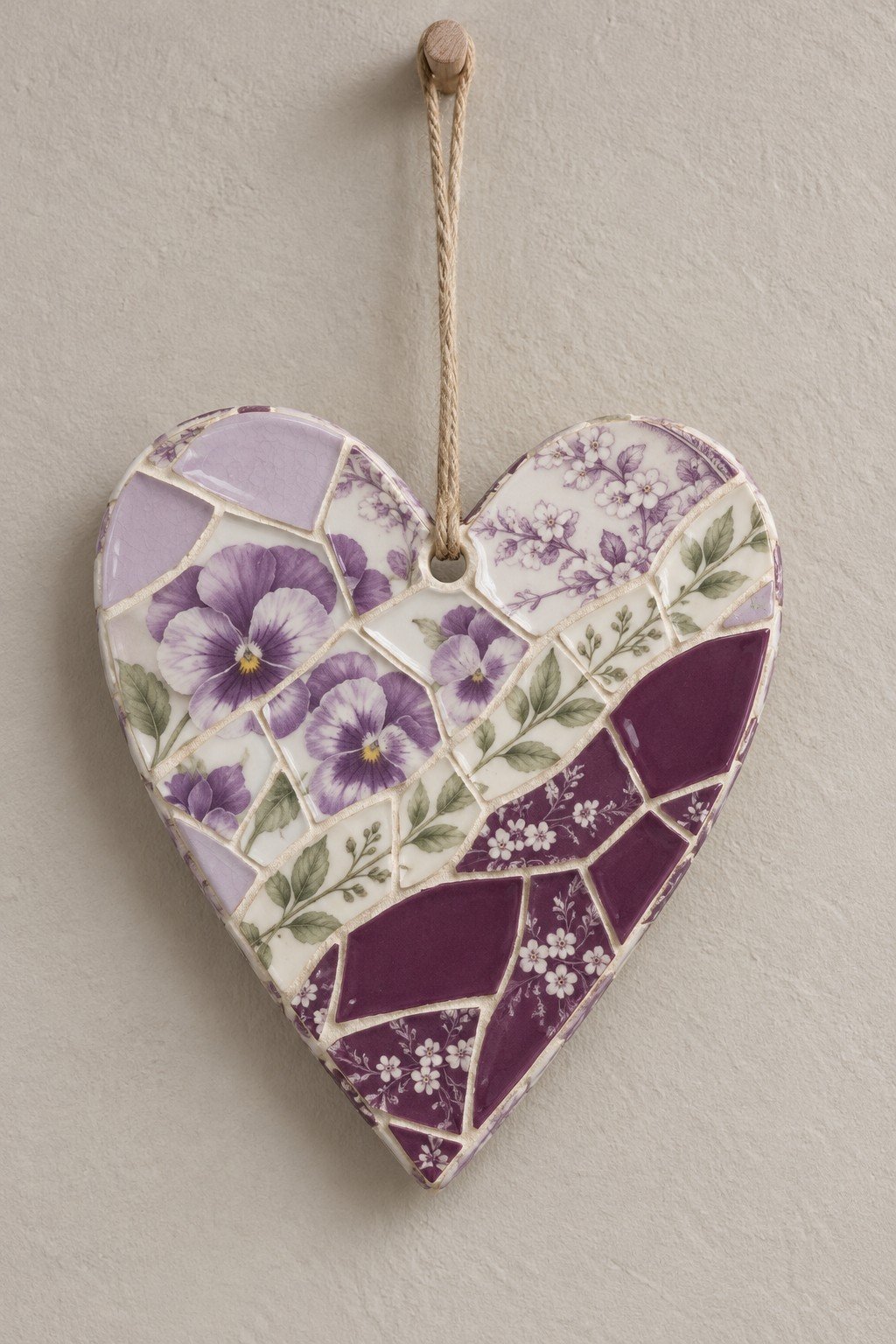
Purple pansies cross the upper half of this heart, while deep plum fragments define the lower point. A short hanging loop suits a small wall space or a shelf end. Drill or prepare the hanging hole in the backing before adding china, and check that the cord can carry the finished piece.
23. Red House Number Beside a Blue Door
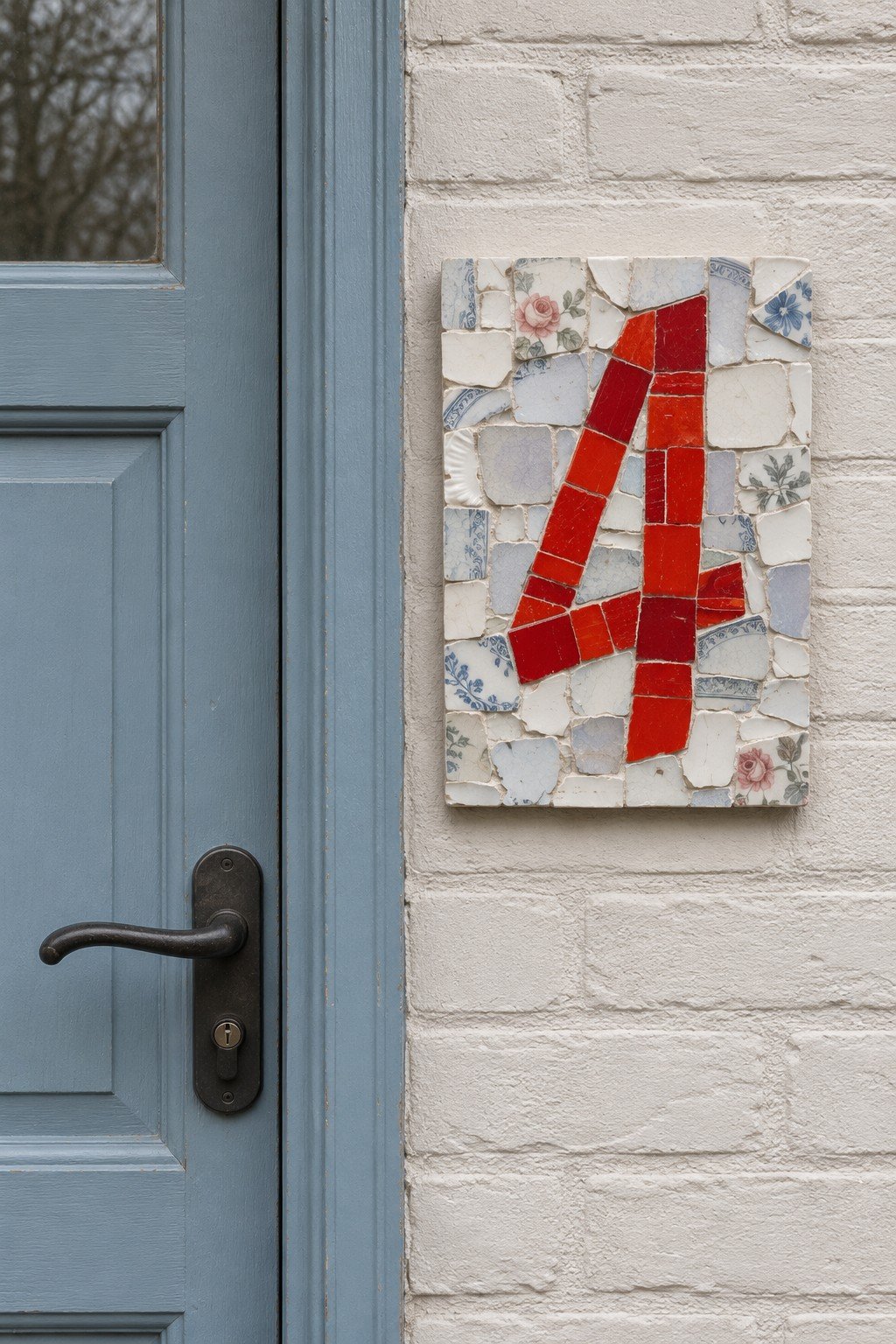
A red number four is easy to pick out against the pale, irregular background beside the door. Make the numeral large and high contrast enough to read from the street, leaving more space around it than around the smaller floral details. Use exterior rated backing and secure fixings for an exposed entrance.
24. Koi and Lily Pad Garden Accent
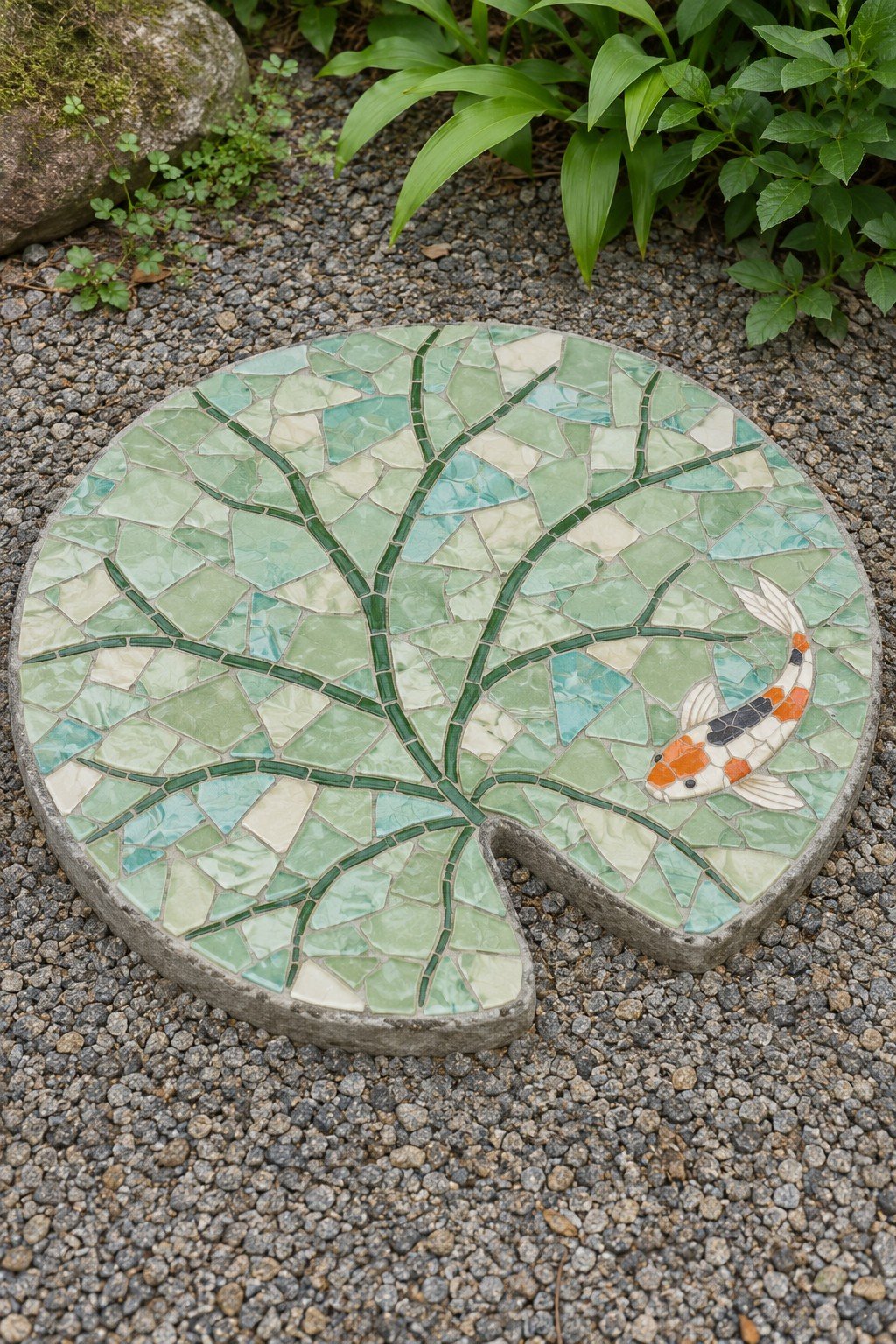
Fine green lines radiate across the lily pad, with a small orange and white koi adding contrast near its edge. Sketch the veins before placing the pale green pieces so the design does not disappear into the background. Keep a version made with ordinary dish fragments as a decorative accent, not a walking surface.
25. Stacked Teacups on a Wall Panel
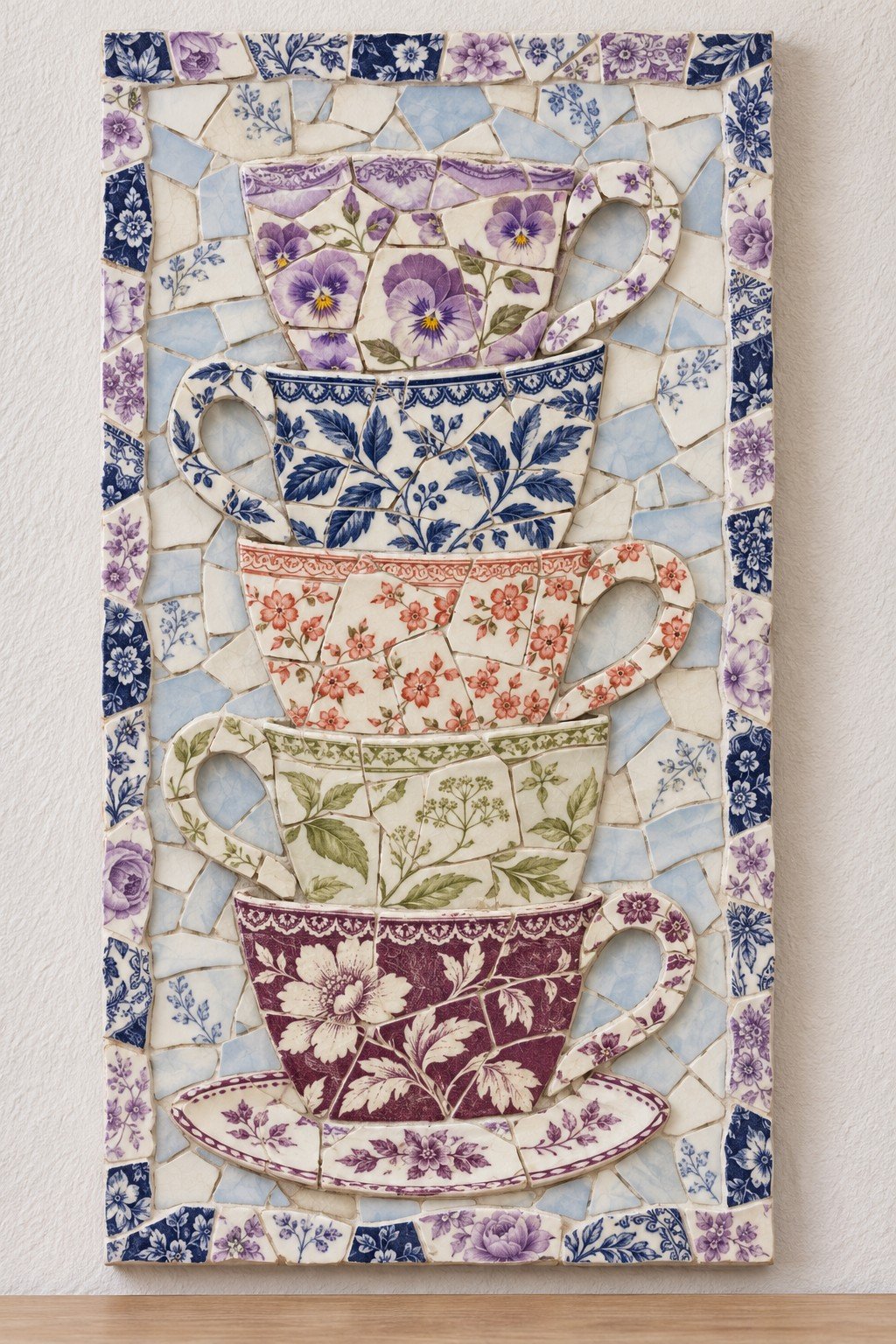
Five teacup silhouettes rise in different floral patterns inside a blue and purple border. Each cup needs a clear outline; arrange those boundaries before filling them with smaller pieces. This flat wall panel offers the look of a china collection without needing shelf space for cups.
26. Pansy Jellyfish with Curving Tentacles
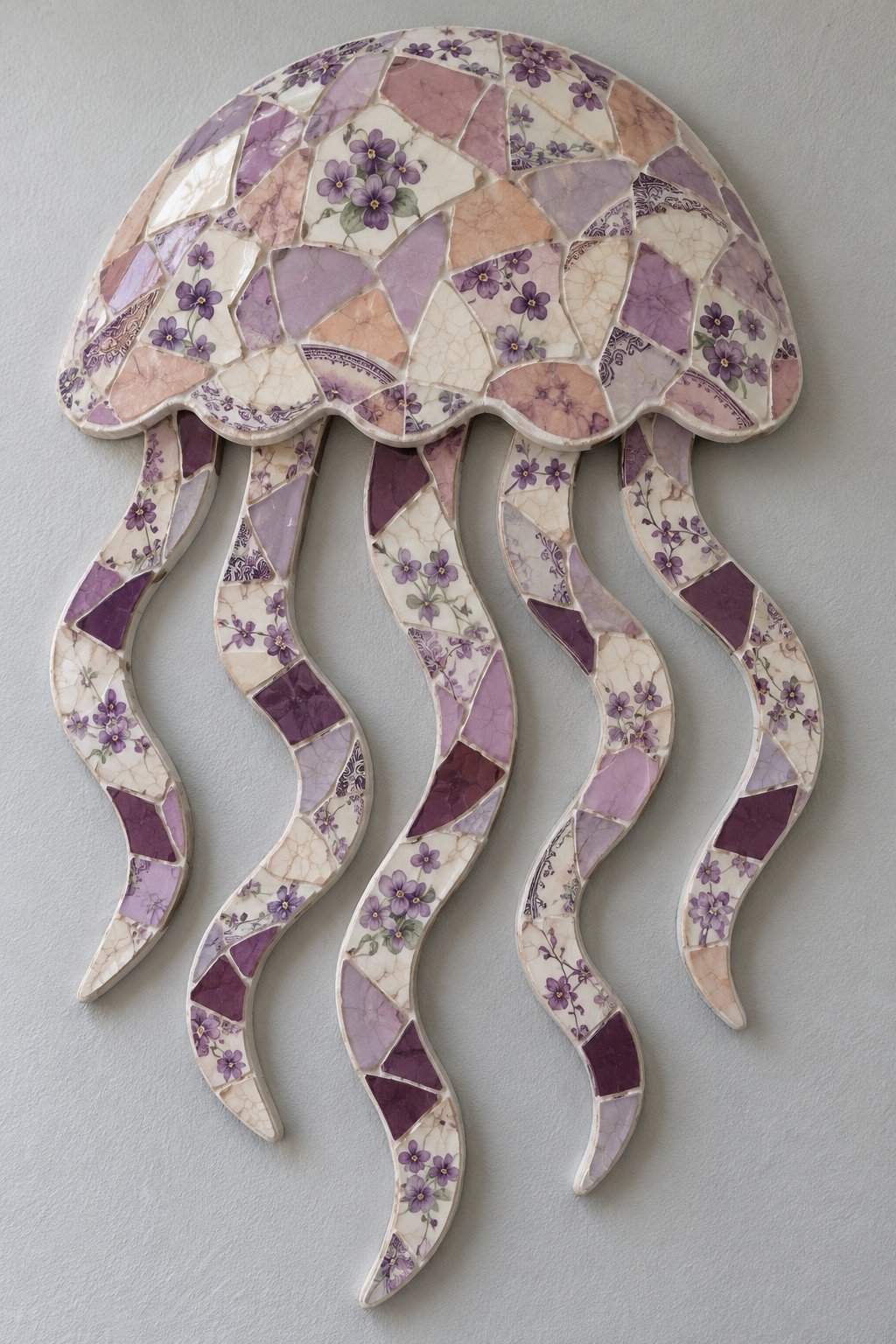
A domed top and curling tentacles turn violet and cream fragments into a jellyfish. To make the narrow shapes less vulnerable, cut the design from one supportive backing and avoid leaving ceramic tips unsupported. Hang it where the lower curves will not catch on clothing.
27. Doll Face Above a Double Hook
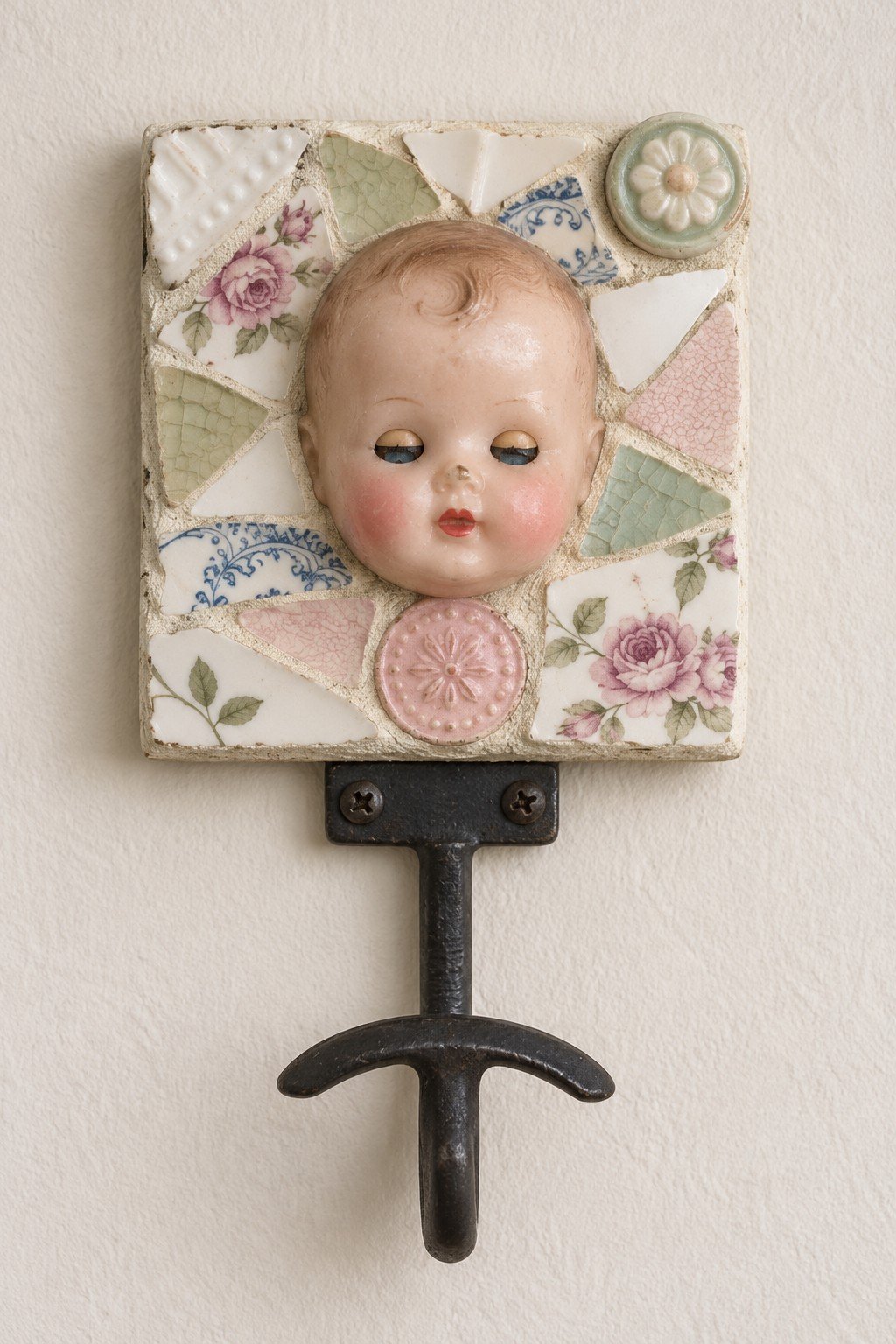
A doll face sits among small rose patterned pieces above a black double hook. Attach the hook to the wall or structural backing rather than relying on the decorative square to carry bags. Use a sound, clean ornament with a known finish, and place it out of reach of young children.
28. Sunburst Mosaic for a Garden Gate
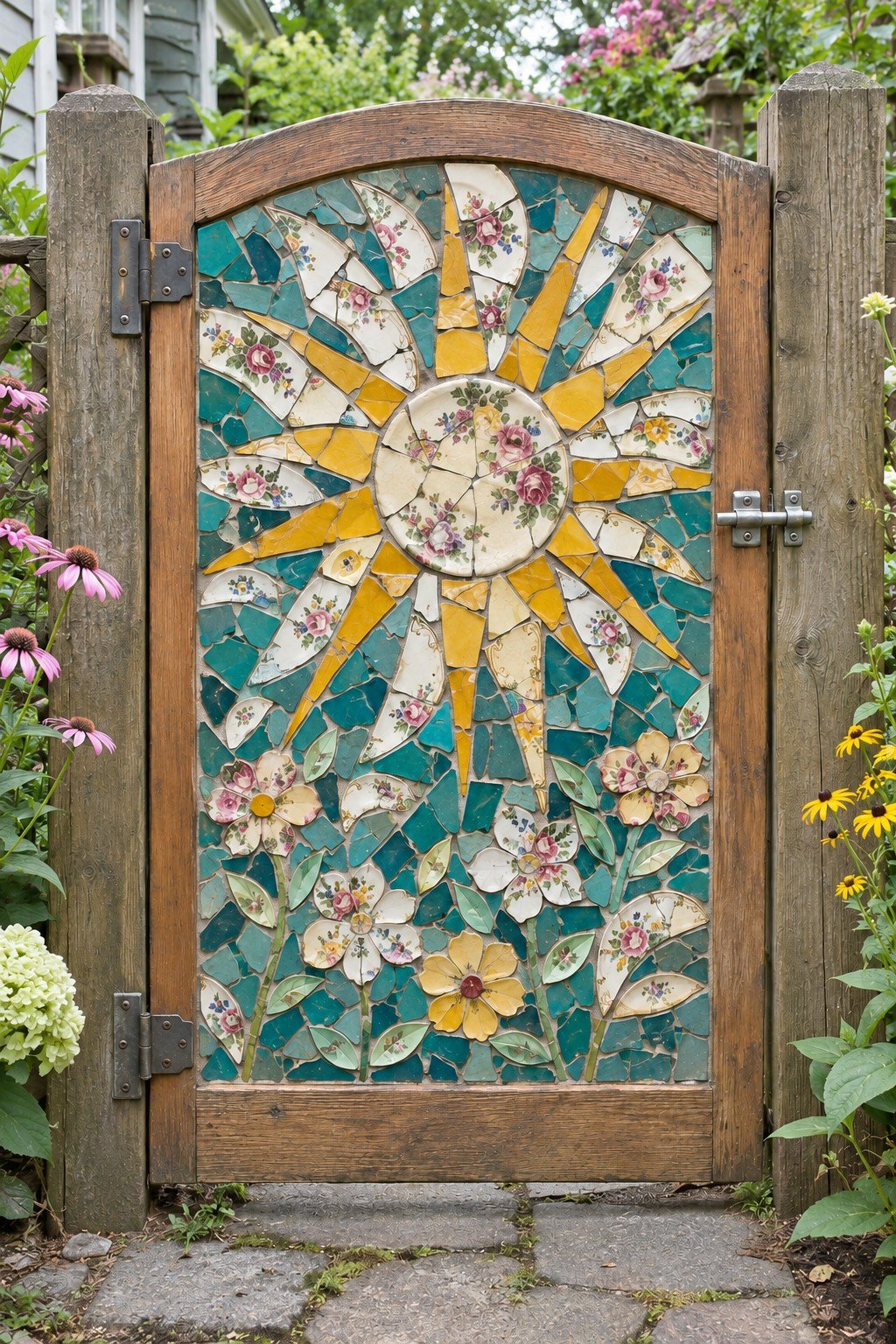
Yellow rays spread from a floral center across the turquoise panel of this wooden gate. Because an outdoor gate moves and its weight affects the hinges, consult a tile installer about a weather rated insert and leave movement clearances around it. Check that the latch still closes and the gate swings freely.
29. Butterfly Key Holder in Cobalt and Turquoise
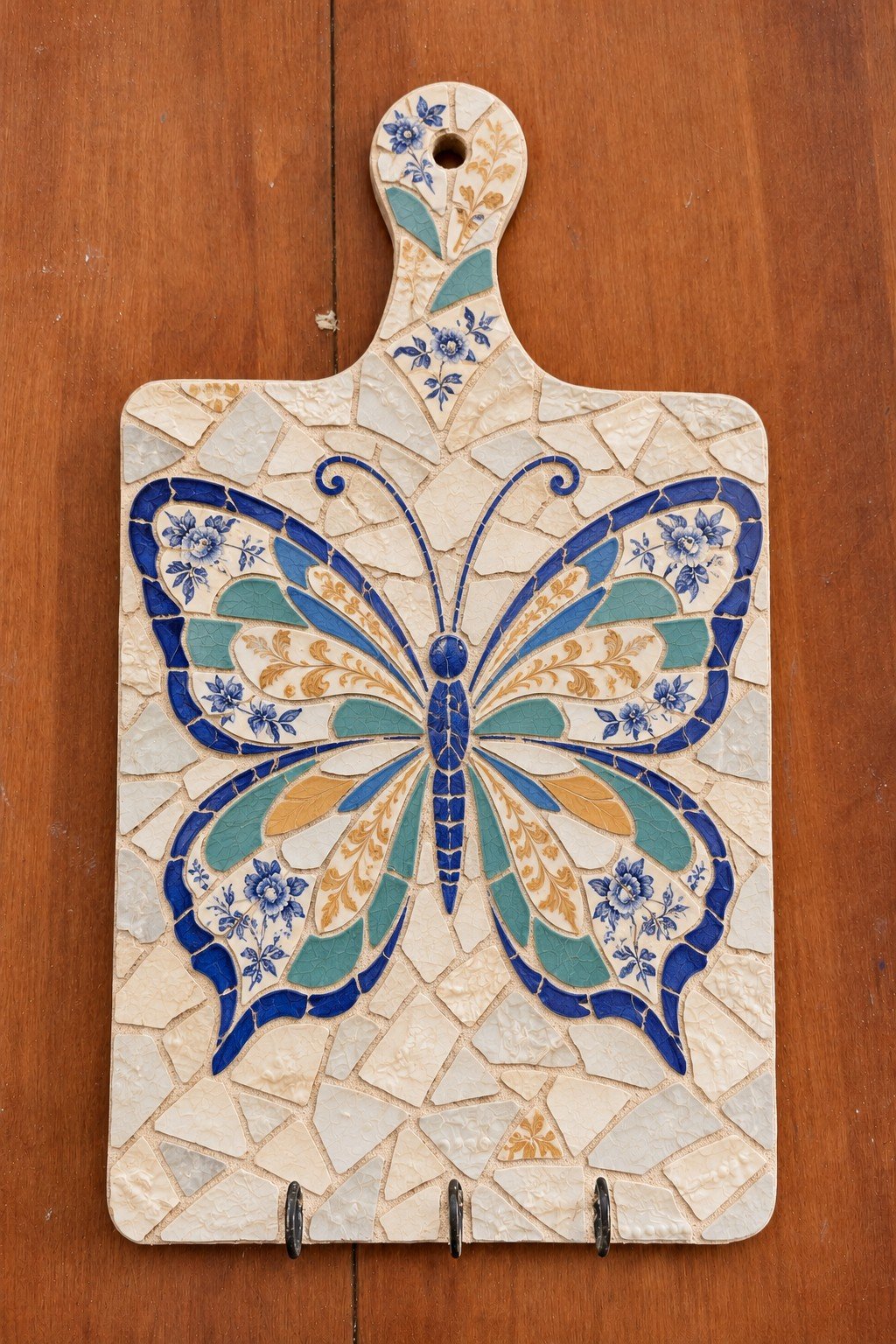
A blue and turquoise butterfly fills the center of this paddle shaped plaque, with three hooks along the bottom. The pale background keeps the wings visible. Fix the hooks into the backing and reserve the piece for keys or other light objects; the mosaic surface is decorative, not a cutting board.
30. Layered Rose Wall Panel
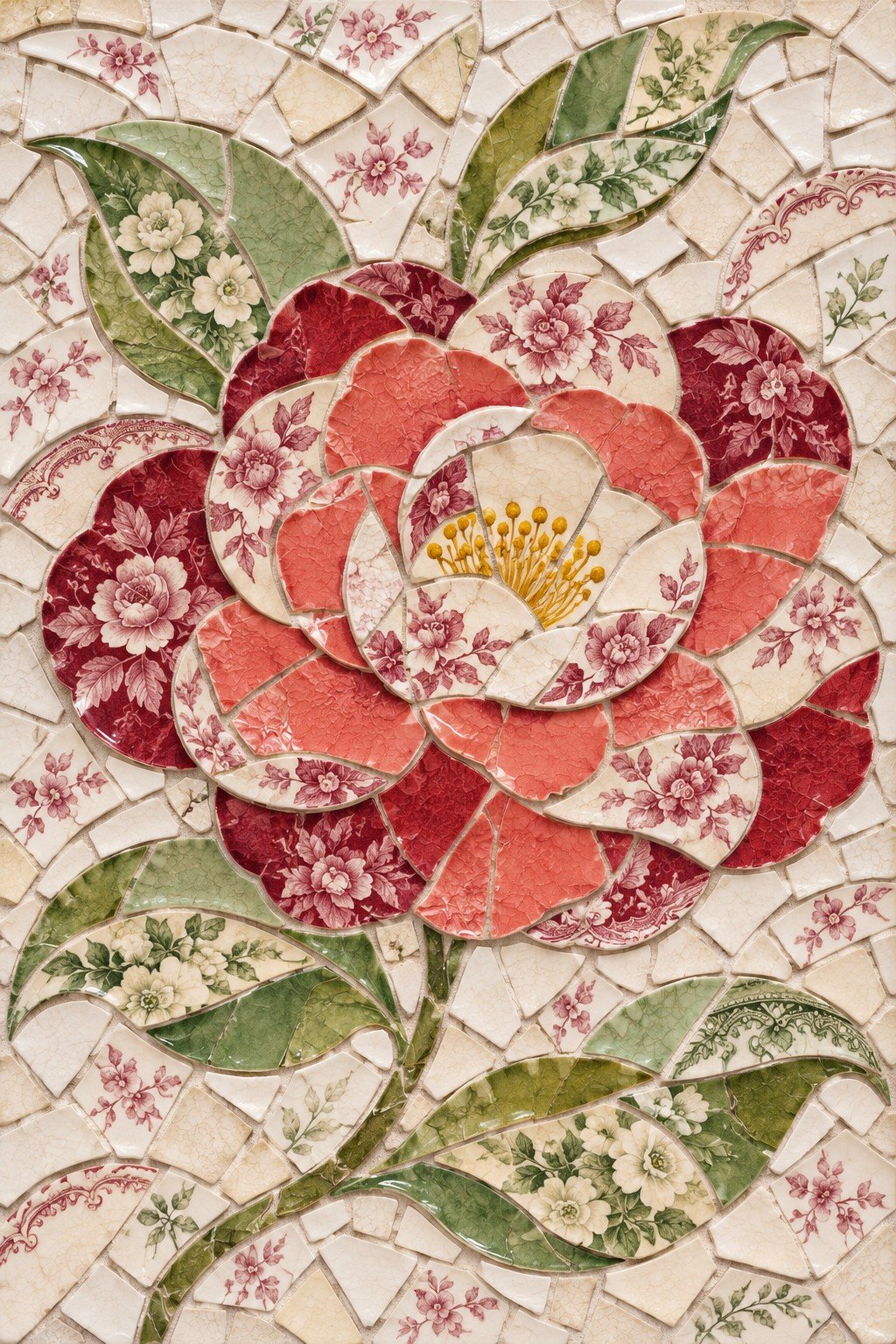
Red, coral and pink pieces form petals around a yellow centered rose, while green leaves extend into the cream background. Start with the center and work outward to keep the bloom balanced. For a flatter, easier to clean panel, suggest depth with color changes instead of overlapping loose fragments.
31. Winding Mosaic Ribbon Through the Lawn
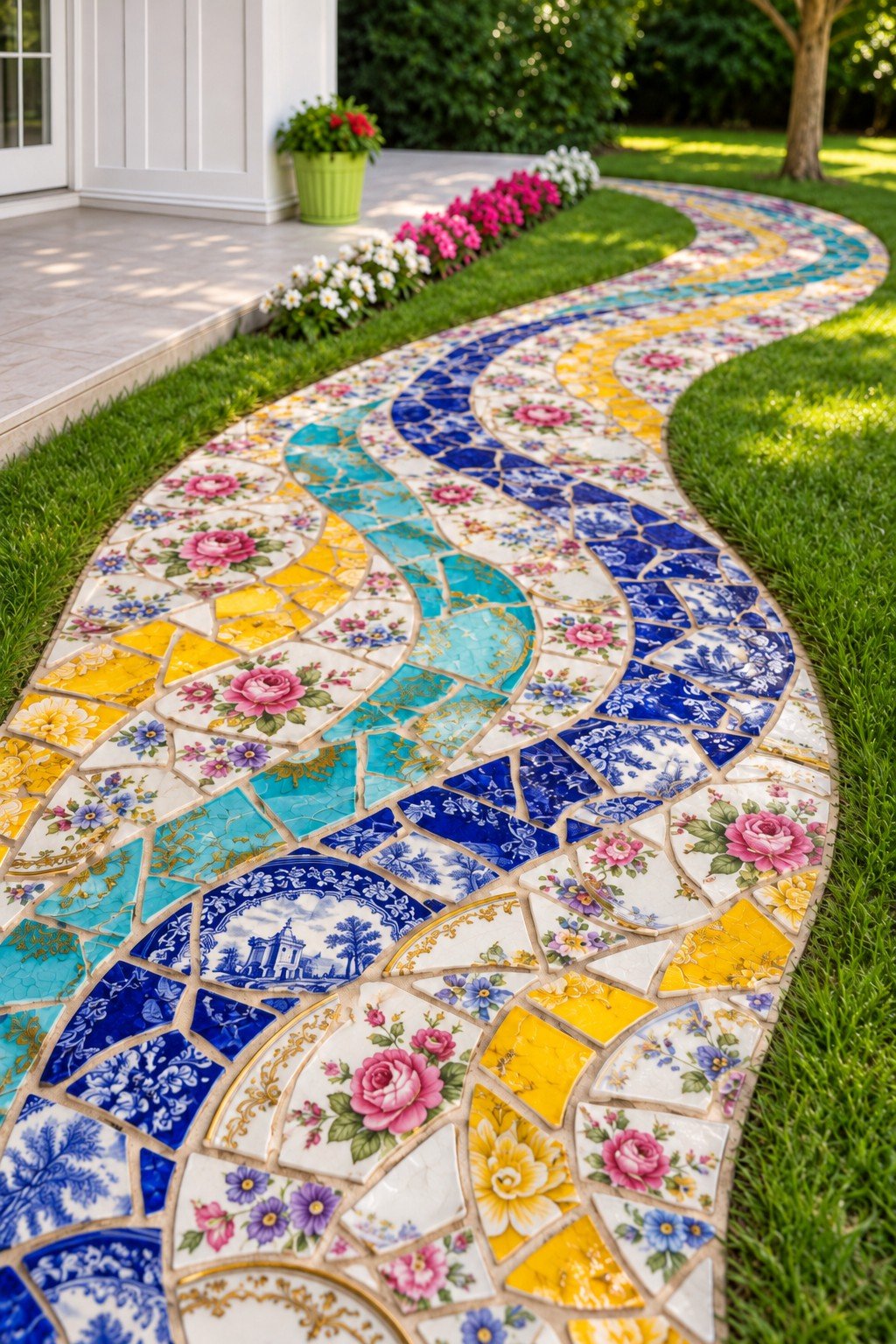
Blue and turquoise waves guide the eye along a curving ribbon edged with floral pieces. Repeat a few colors through the bends so the pattern remains clear across a long stretch. Treat ordinary broken china as a nonwalking garden border; a path needs a professionally designed, exterior rated, slip resistant surface.
32. Colorful Square Accents in the Grass
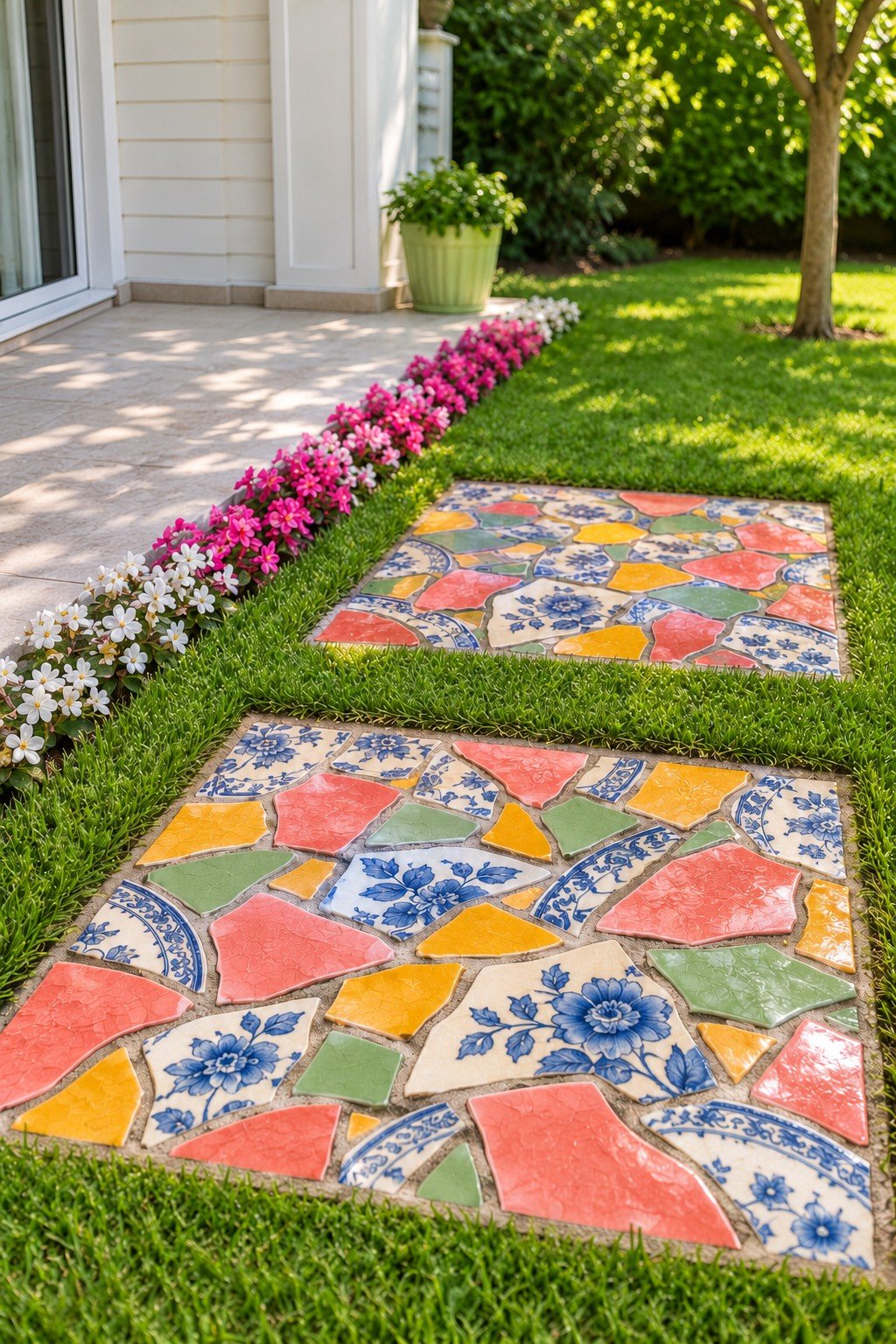
Two square panels interrupt the lawn with pink, yellow and blue floral fragments. Repeating the square shape ties the different compositions together without making them identical. Use pieces made from ordinary dishes as decorative insets outside a walking route; a true stepping surface needs materials rated for that use.
33. Zigzag Border Beside the Patio
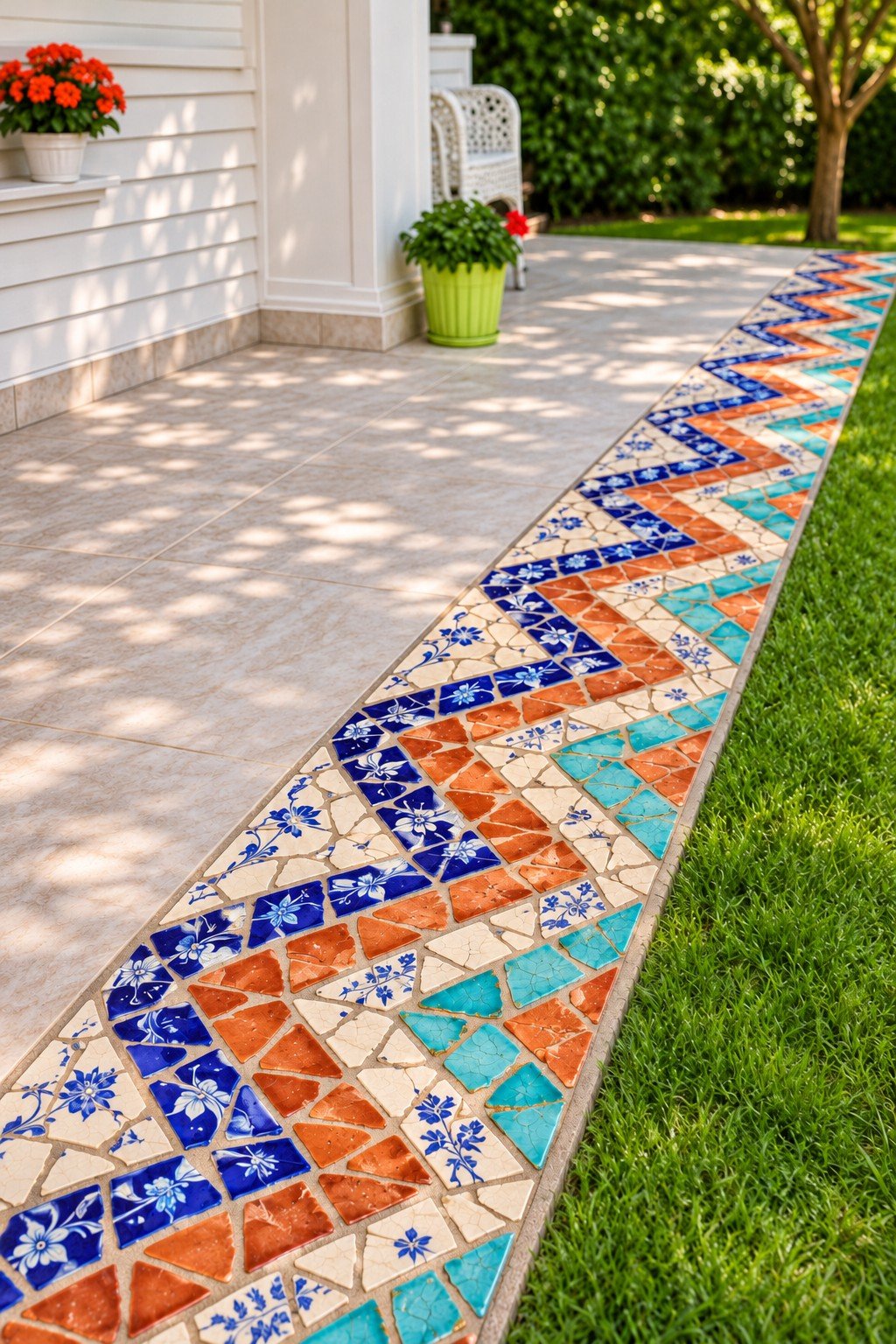
Cobalt, orange and turquoise zigzags create a crisp edge beside the pale patio. Lay out the repeating turns on paper to keep the bands consistent as the border gets longer. Place a decorative version away from foot traffic, and keep transitions level wherever a qualified installer specifies a walkable surface.
34. Bands of Color Around a Porch Column
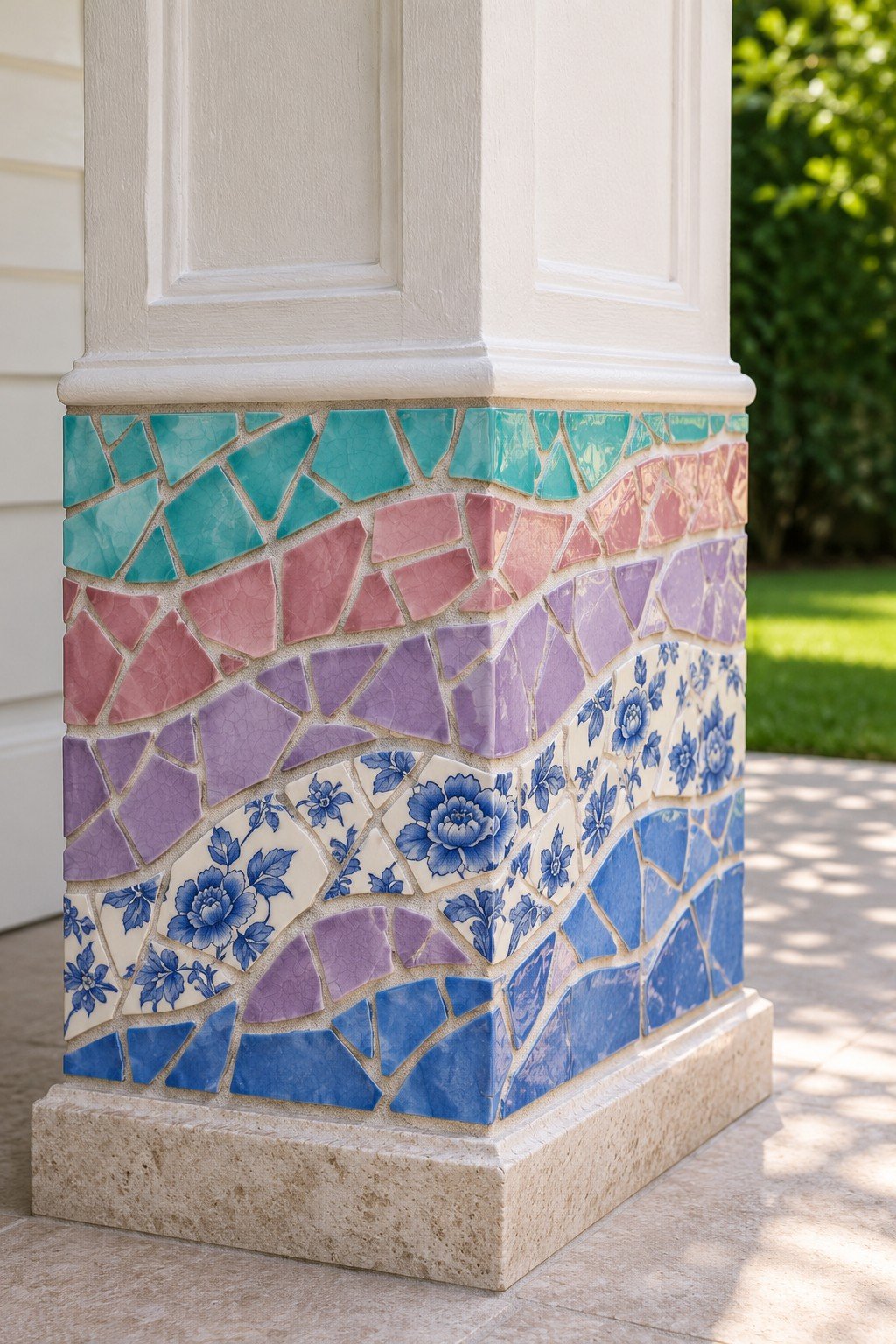
Turquoise, pink and lavender bands wrap the column base, with a blue floral strip interrupting the solid colors. Horizontal bands give a porch post color without changing its overall silhouette. Outdoor cladding adds weight and encounters moisture, so have the substrate and fixing method assessed before covering a structural column.
35. Concentric Mosaic Ring Around a Tree
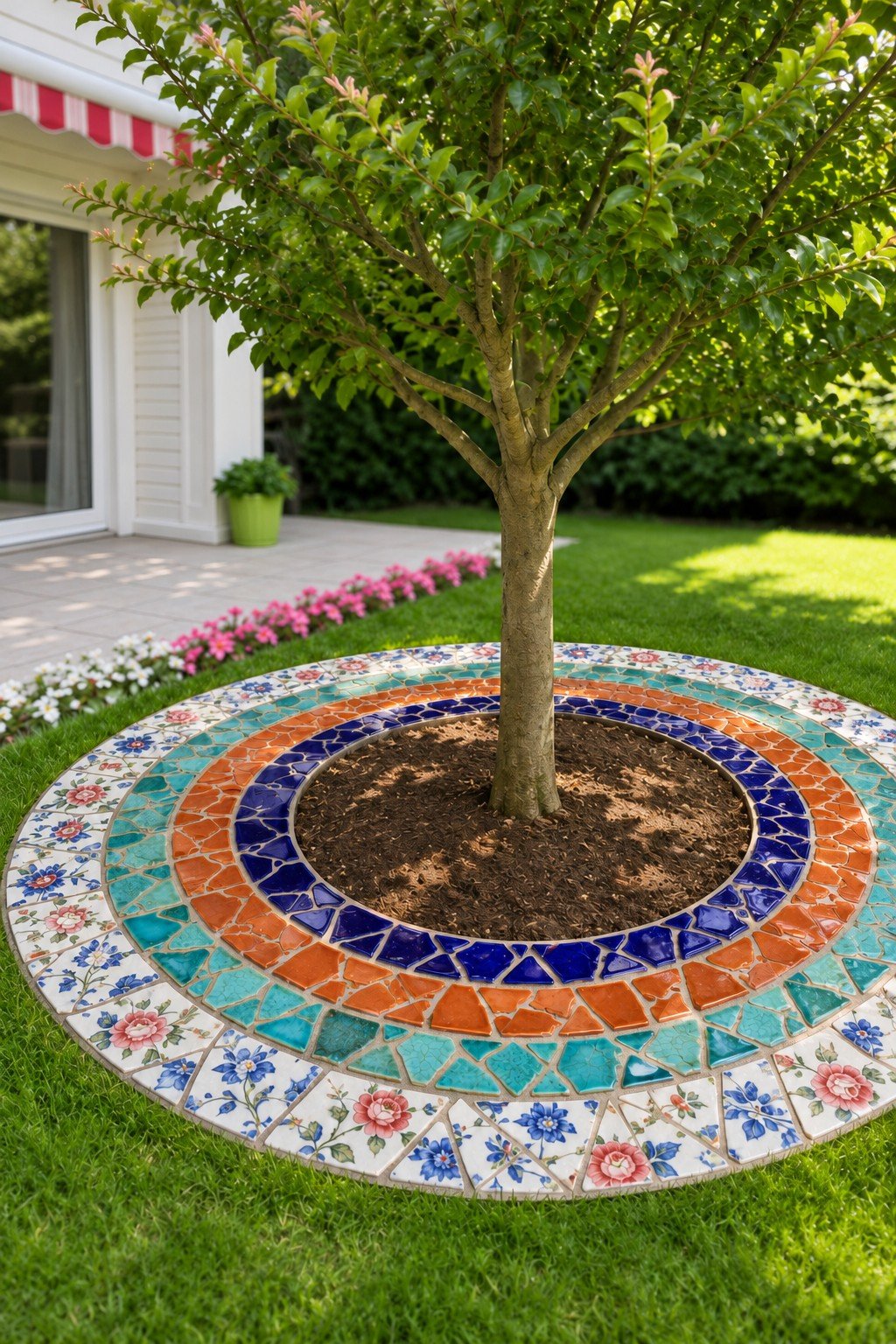
Concentric floral, turquoise, orange and blue rings frame the tree in this garden. Keep the trunk flare and root area open, and consult an arborist before compacting soil, excavating or installing a rigid ring around an established tree. A removable decorative panel set away from the roots can echo the colors.
36. Floral Mosaic Lines Across a Patio
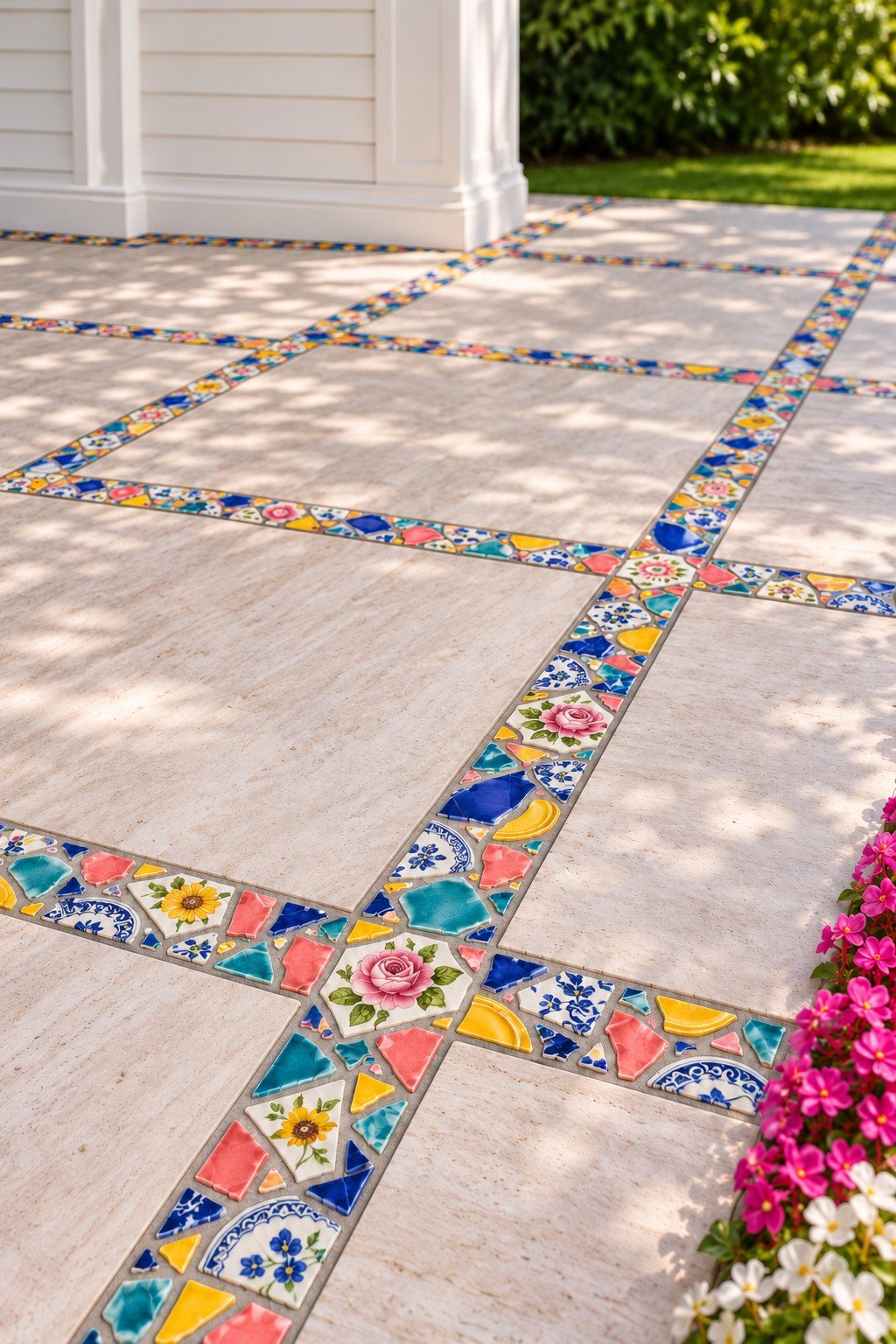
Narrow floral lines divide the pale patio into a simple grid, letting the larger paving areas remain visually calm. For an installation that people will walk on, consult a tile professional about flush transitions, drainage, movement joints and exterior rated slip resistant materials. Decorative china fragments are better reserved for a nonwalking accent.
Begin with a small heart or letter if you are learning to fit the pieces together. A table, gate or permanent garden surface involves more weight and planning. For more ways to reuse household finds outdoors, explore these upcycled vintage garden ideas.

Leave a Reply