16 Kitchen Cabinet Lighting Details Worth Trying

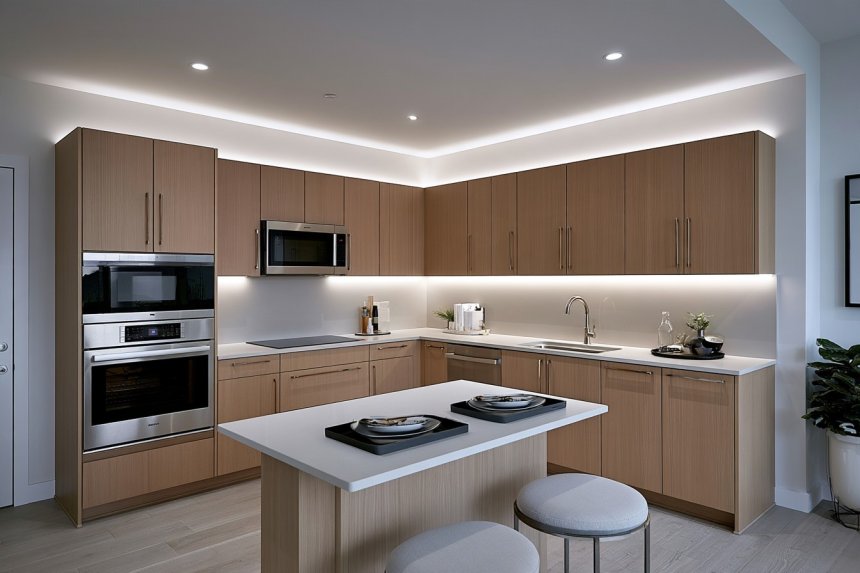
Kitchen cabinet lighting becomes far more interesting when it does more than brighten a countertop. Placed thoughtfully, light can make cabinetry appear lighter, reveal beautiful materials, improve visibility inside deep storage, and create an entirely different atmosphere after sunset. The most convincing installations are often hidden from direct view, allowing the glow itself—not the fixture—to shape the room. That may mean illuminating the inside edge of a glass cabinet, washing light across a stone backsplash, or adding a discreet glow beneath an island that seems to float above the floor. These kitchen cabinet lighting ideas combine practical illumination with less expected design moves, giving ordinary cabinetry a more architectural and carefully considered appearance.
1. Light the Back of Glass Cabinets Instead of the Shelves
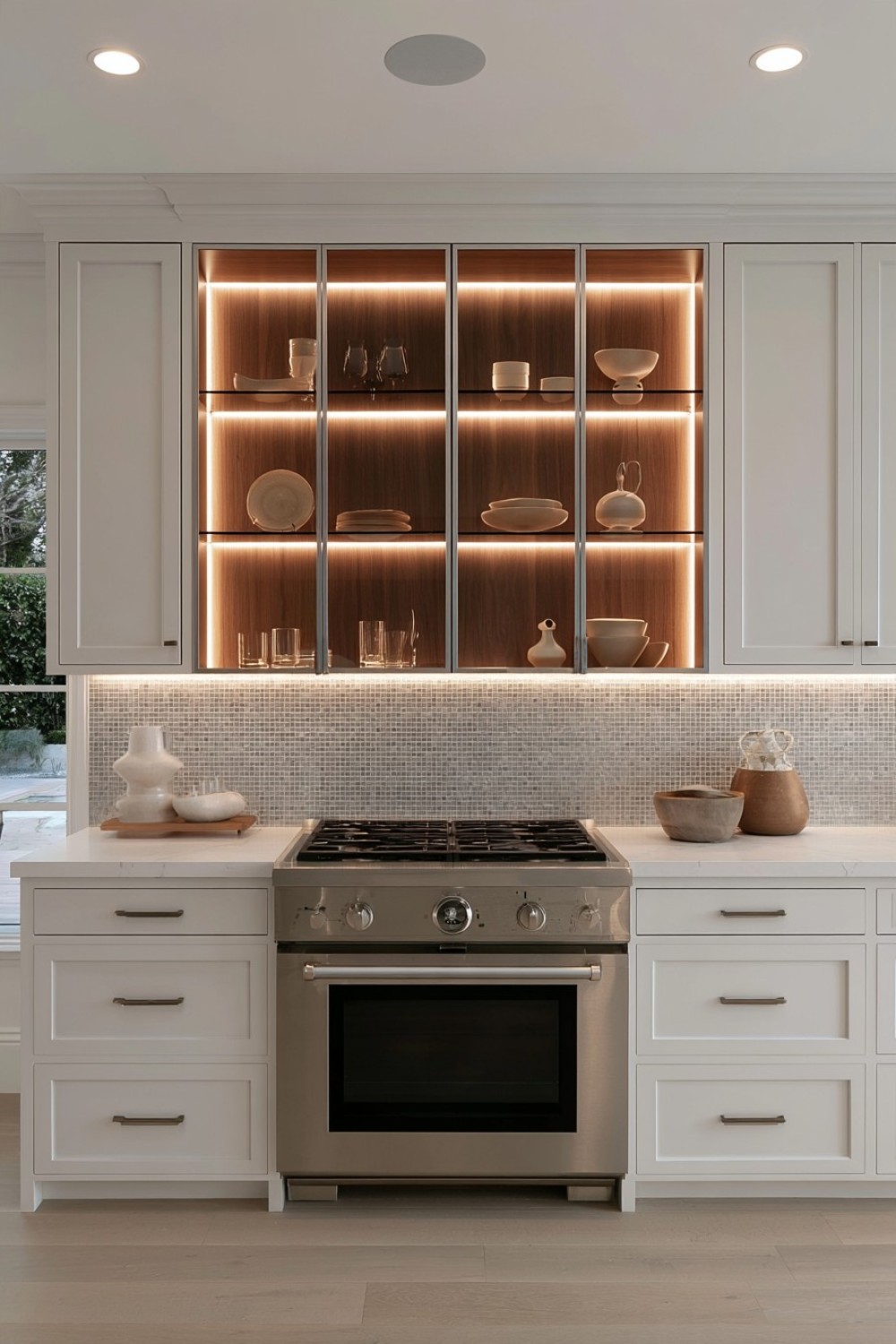
Glass-front cabinets are usually illuminated from above, but placing the light vertically along the rear corners can create a much more dramatic effect. Instead of shining directly onto the objects, the LEDs wash the cabinet's back panel and allow plates, glassware, and ceramics to appear in silhouette.
This technique works particularly well when the cabinet interior has a contrasting finish. A warm walnut backing, textured tile, dark paint, or softly reflective metal can become part of the display once illuminated.
For a cleaner result, recess narrow LED channels into both rear corners and cover them with frosted diffusers. The cabinet then glows evenly instead of showing obvious points of light.
Keep the arrangement inside relatively restrained. When every shelf is packed tightly, much of the lighting effect disappears. A few carefully spaced objects with empty space around them allow the cabinet to function almost like a small illuminated display case.
2. Make a Stone Backsplash Glow From Above
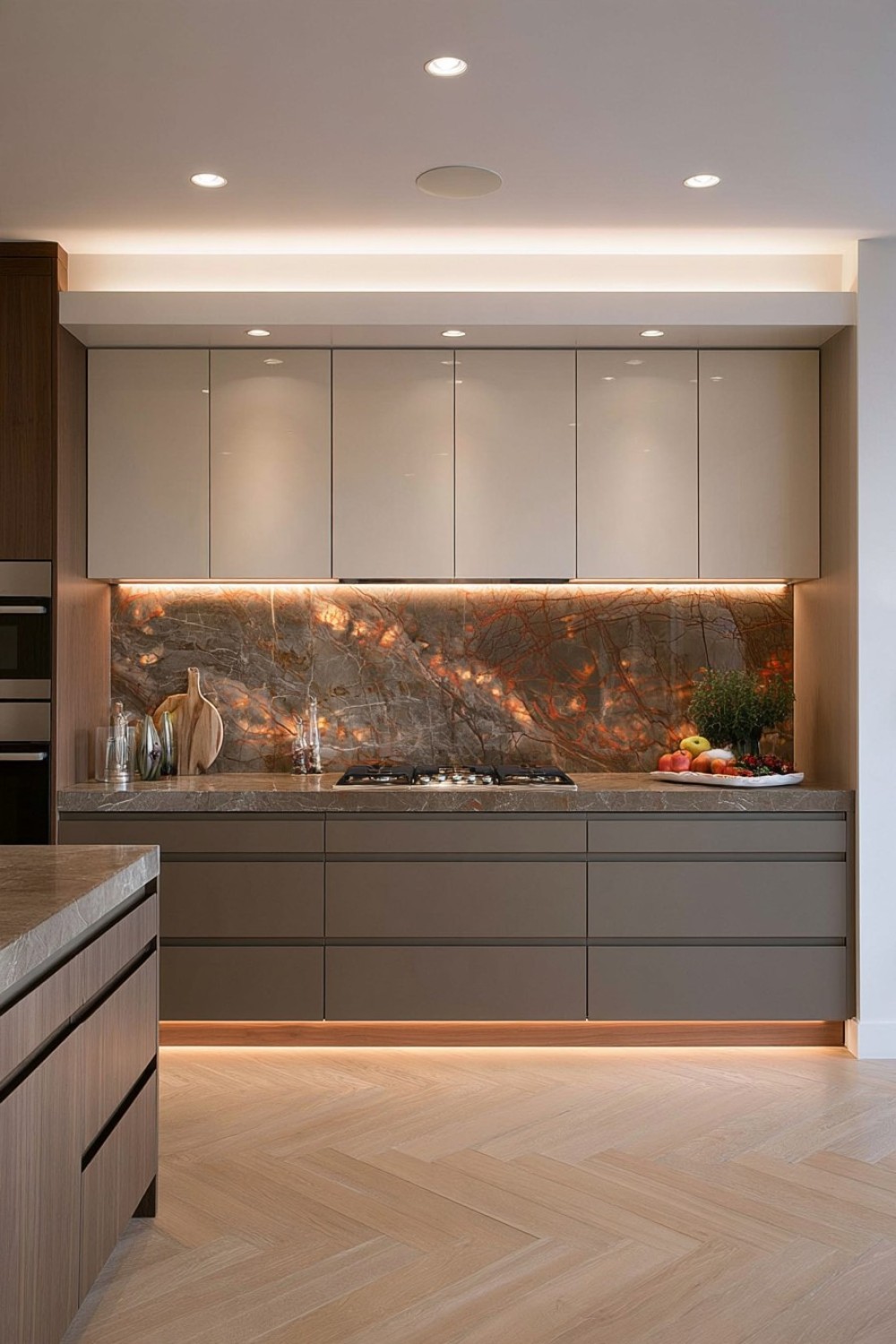
A beautiful backsplash often becomes visually flat at night because general ceiling lighting does not reveal its texture. Concealing a linear LED beneath upper cabinets can change that completely, especially when the light is positioned close enough to graze the wall.
Instead of centering the strip under the cabinet, install it nearer the backsplash. This creates small shadows across marble veining, handmade tile, brick, fluted stone, or textured plaster.
The effect is particularly striking on surfaces with subtle relief. Even a simple tile backsplash can look more dimensional once light travels across it at a shallow angle.
Use a diffuser if the countertop or backsplash is glossy enough to reflect individual LED points. Warm or neutral white usually works better than saturated colors because the goal is to reveal the material rather than compete with it.
It is a relatively small lighting adjustment that can make an expensive backsplash finally look as detailed at night as it does during the day.
3. Add a Hidden Glow Inside Deep Drawers
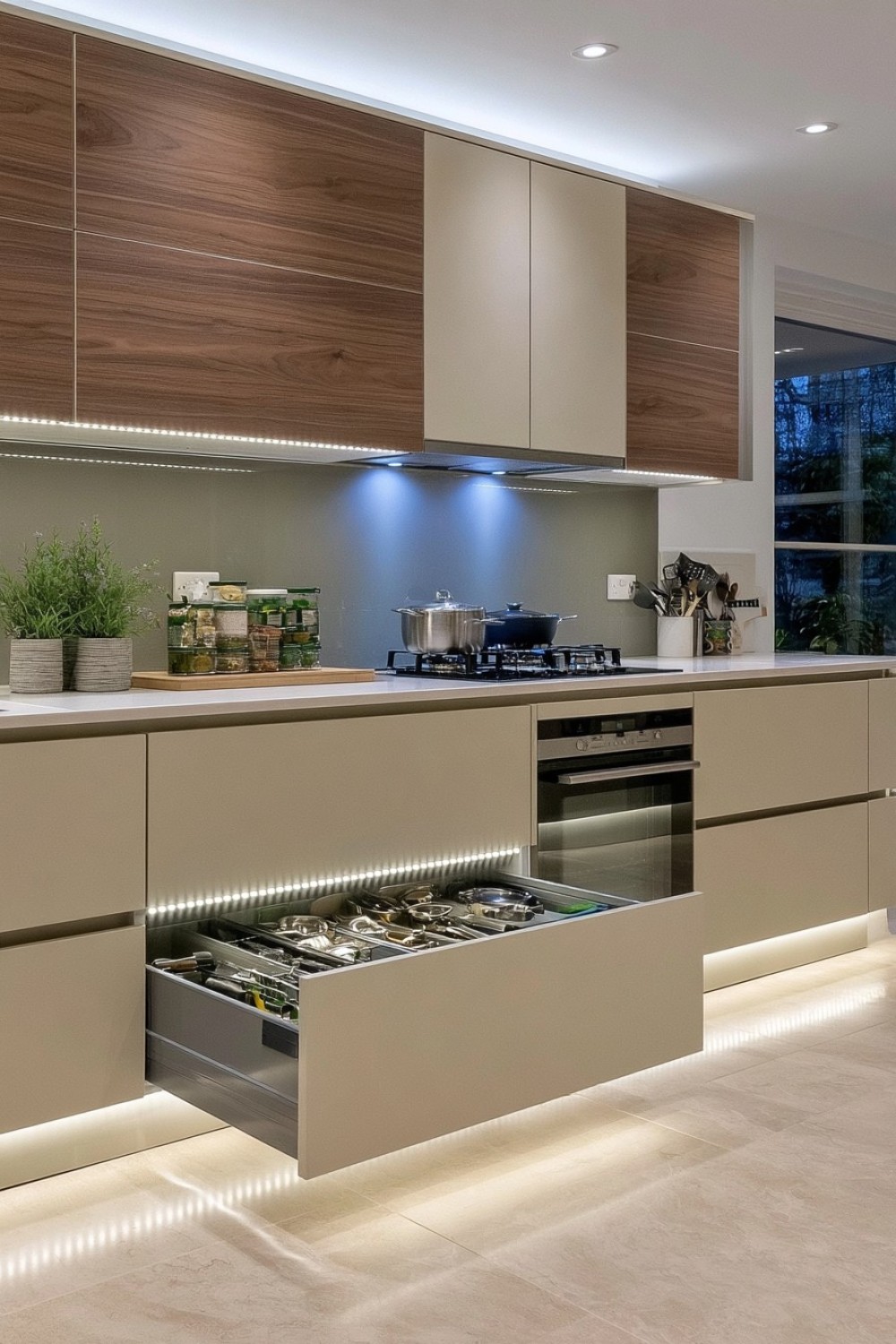
One of the most useful cabinet lighting upgrades is also one visitors may not notice until a drawer opens. Small LED strips installed inside deep drawers can illuminate cookware, baking tools, utensils, or pantry supplies automatically.
A door-contact or motion sensor keeps the installation practical: open the drawer and the light turns on; close it and the drawer goes dark.
This is especially helpful in wide drawers where items at the back can disappear into shadow. Rather than placing the light directly on the drawer bottom, install it along the upper interior edge so the contents are illuminated from above.
For cutlery drawers, a slim warm-white source creates a subtle premium effect without looking theatrical. Inside larger pot drawers, slightly brighter neutral lighting can make organization easier.
The idea is less about decoration and more about making beautifully organized storage genuinely easier to use. It also creates the satisfying impression that the cabinetry was designed around everyday routines rather than appearance alone.
4. Illuminate the Gap Above Full-Height Cabinets
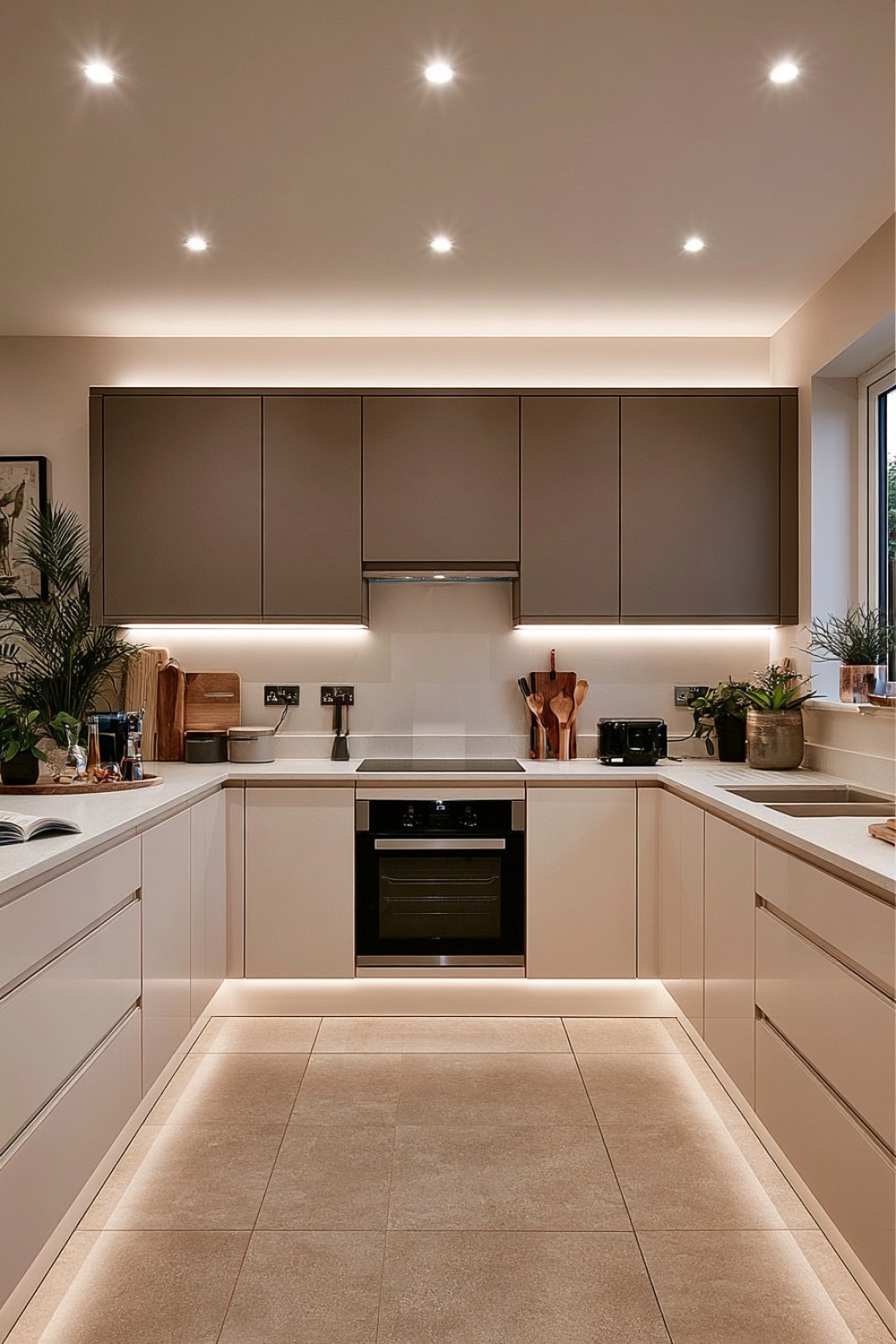
If cabinetry stops slightly below the ceiling, the empty space above it often becomes either forgotten or cluttered. Concealed uplighting can turn that gap into an intentional architectural feature.
Place an LED strip on top of the cabinets where it cannot be seen from normal viewing angles. The light reflects upward onto the ceiling, creating a soft halo that visually separates the cabinetry from the room.
This works particularly well with darker cabinets because the glow reduces their visual weight after sunset. In kitchens with pale cabinetry, it can make the ceiling seem slightly taller and more open.
Avoid using excessive brightness. The purpose is not to illuminate the entire kitchen from above but to introduce another gentle ambient layer.
If crown molding is present, the molding itself can conceal the strip even more effectively. Paired with pendant lights and under-cabinet task lighting, the result creates a layered lighting plan rather than relying on one bright central fixture.
5. Give the Island a Floating Base
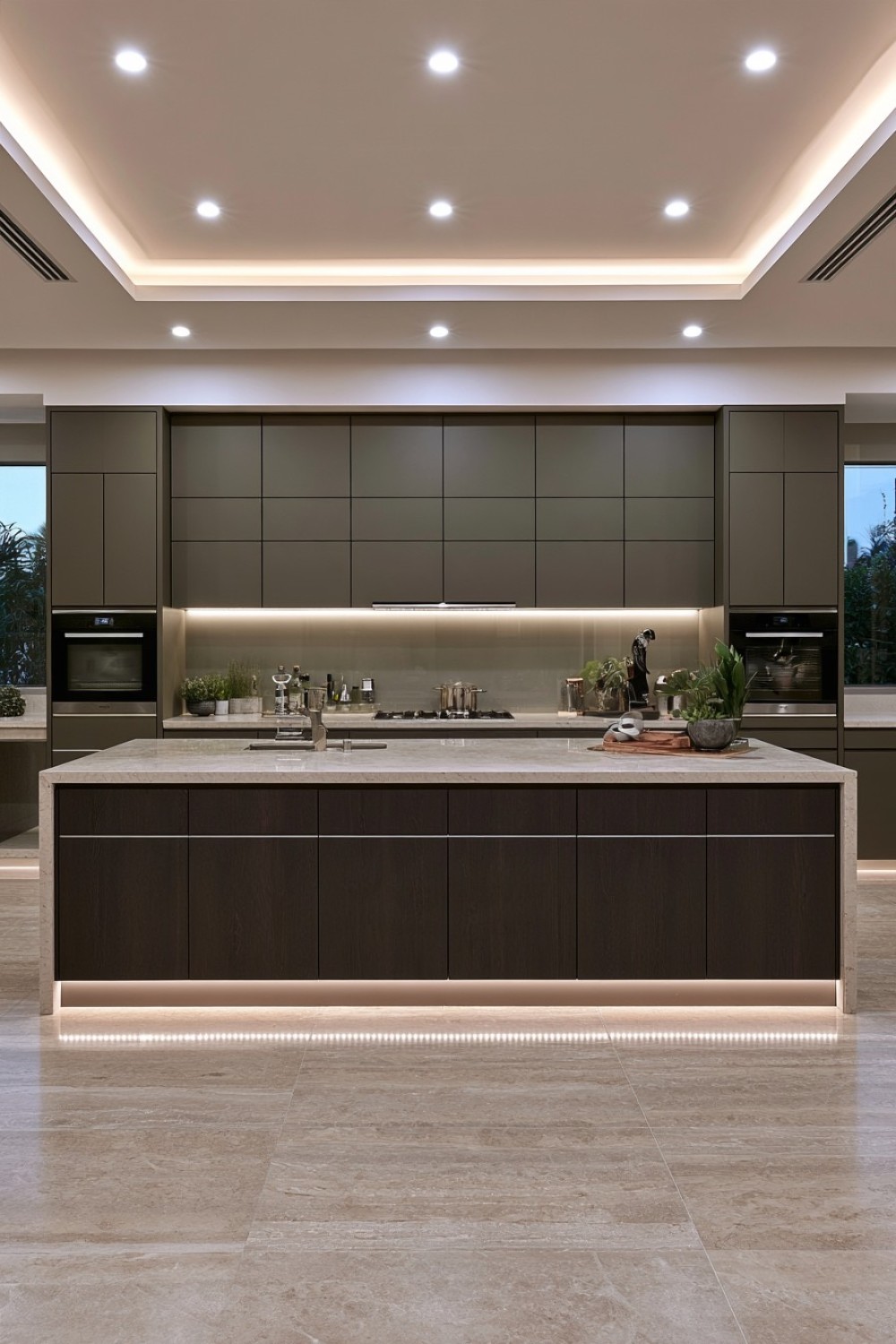
Toe-kick lighting is familiar, but using it only beneath the kitchen island can make the effect feel far more deliberate. A concealed strip tucked beneath the recessed base creates a thin pool of light around the island and makes the cabinetry appear to hover just above the floor.
This works especially well with large, visually heavy islands in dark timber, charcoal, deep green, or black.
Instead of running the light around every edge, consider illuminating only the long sides. Leaving portions in shadow makes the effect subtler and avoids the “spaceship” look that overly bright floor lighting can create.
Floor finish matters too. Matte timber and stone diffuse the light beautifully, while polished surfaces can show every individual diode. An aluminum channel with a frosted cover is therefore particularly useful over glossy tile.
Connected to a dimmer or nighttime scene, the same light can become a gentle guide through the kitchen when full overhead illumination is unnecessary.
6. Turn One Cabinet Into a Backlit Display Box
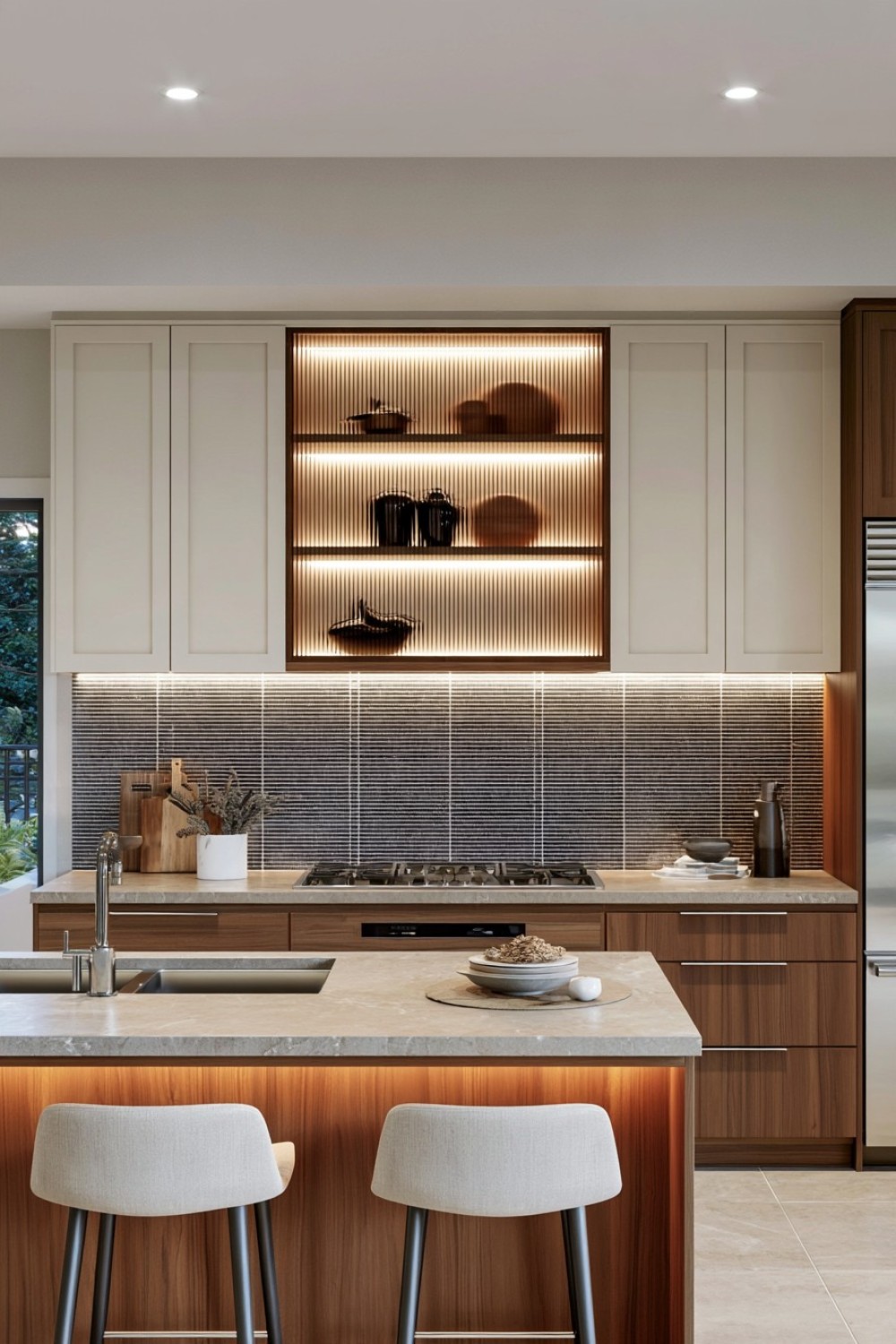
Rather than illuminating every upper cabinet, choose a single section and treat it almost like a decorative niche.
A shallow cabinet with a translucent or softly reflective back panel can be illuminated from behind, producing an even glow across the entire interior. The effect is especially interesting with ribbed glass, pale stone, reeded acrylic, or textured translucent panels.
This approach works best when the cabinet contains only a few objects. Handmade pottery, sculptural glassware, or dark ceramics become more striking against an illuminated surface than they would on an ordinary shelf.
Positioning the lighting behind the panel also means the LEDs themselves disappear completely.
Used sparingly, one glowing cabinet can serve as a nighttime focal point without turning the entire kitchen into a display showroom. It is an effective way to create visual hierarchy: functional cabinets remain quiet while one carefully selected area becomes the feature.
7. Hide Lighting Inside a Coffee Station
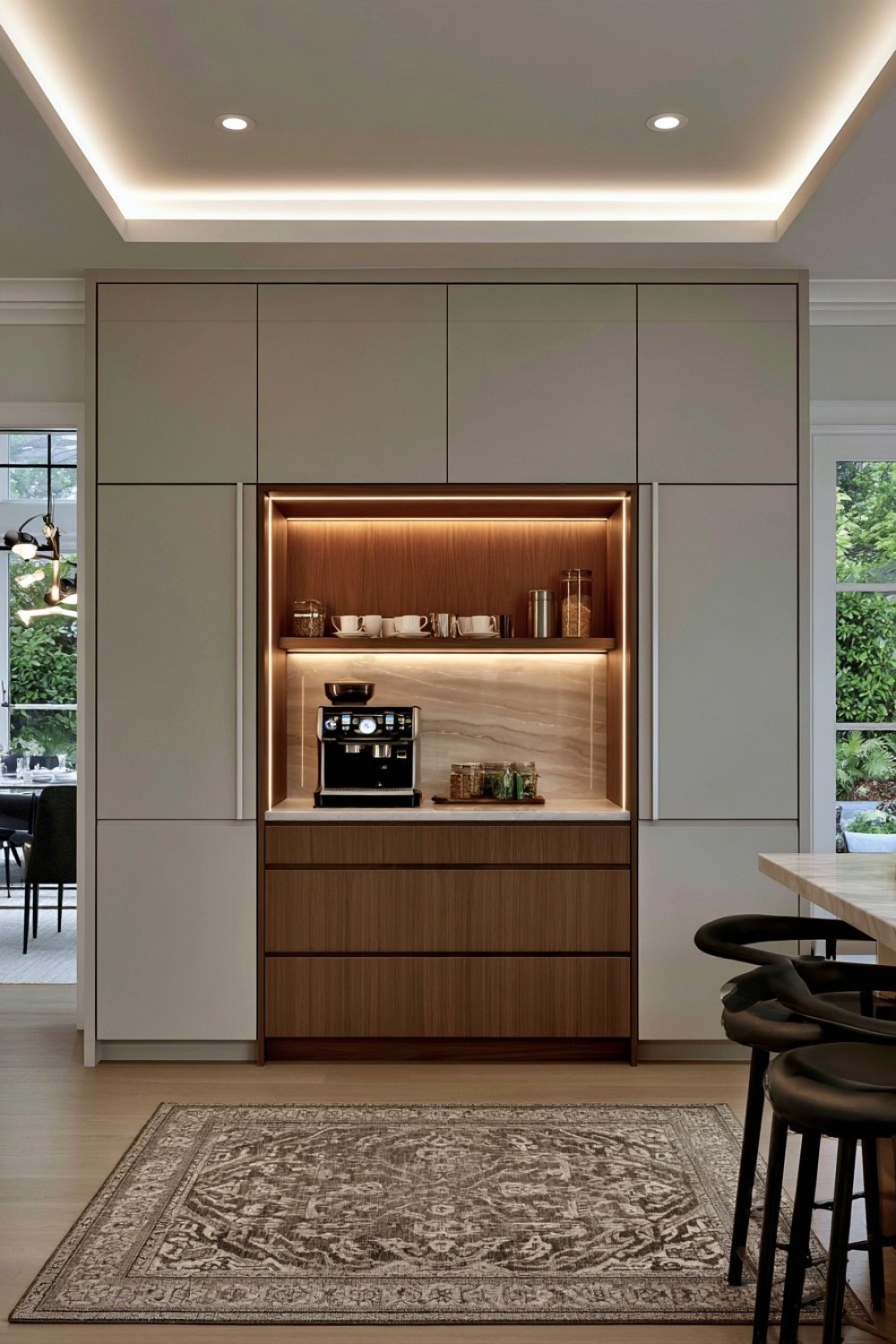
A concealed coffee or breakfast station becomes far more practical when its lighting activates as soon as the doors open.
Install slim LED channels beneath the internal shelves or vertically along the cabinet sides. The lighting can illuminate the coffee machine, cups, jars, and work surface without requiring the kitchen's main lights.
Because these stations are often deeper than standard upper cabinets, vertical side lighting can be particularly effective. It reduces the shadows that would otherwise form beneath multiple shelves.
A warm 2700K to 3000K source works nicely with timber interiors and creates a softer morning atmosphere. If the station is finished in white or stone, a slightly more neutral temperature can keep colors looking clean.
The surprising part comes when the doors close: the entire workstation disappears and so does the lighting. It gives the kitchen two personalities—minimal cabinetry when closed, fully functional preparation zone when opened.
8. Outline the Inside of an Open Shelf
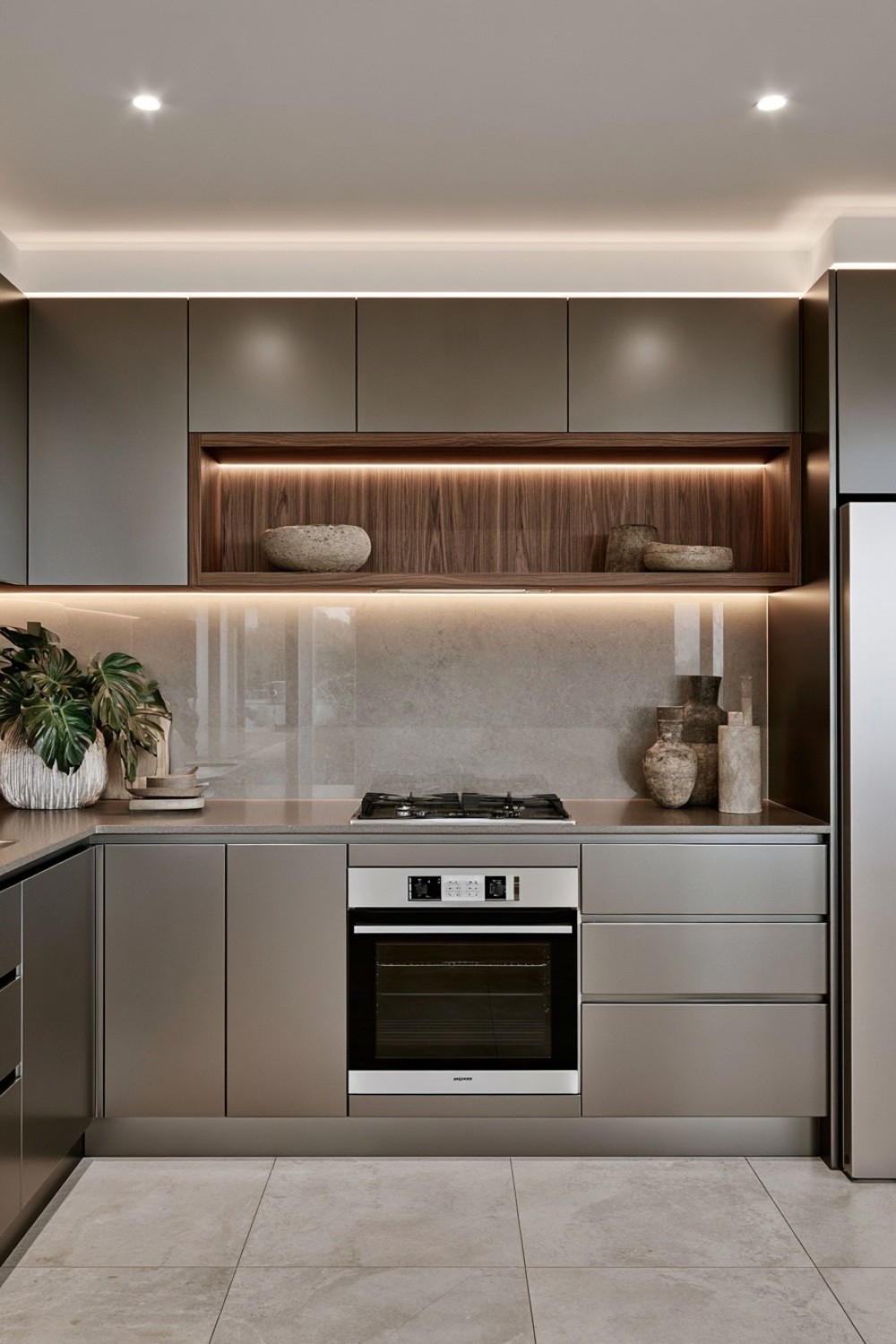
Open kitchen shelving usually relies on decorative objects for visual interest. A narrow recessed LED channel along the inner perimeter can make the shelf itself become part of the composition.
Instead of placing a strip directly beneath each shelf, hide the light along one side or the back edge. The illumination then creates a soft frame rather than a bright horizontal stripe.
This looks particularly sophisticated with timber box shelves, recessed niches, or cabinetry finished in a contrasting material. A darker interior paired with warm light can create a jewel-box effect, while pale shelves benefit from lower brightness and softer diffusion.
Avoid outlining every open shelf in the kitchen. One illuminated section surrounded by ordinary cabinetry feels intentional; ten glowing boxes can quickly become visually exhausting.
For maximum impact, place something tactile inside the lit shelf—a rough ceramic bowl, veined stone object, or textured vessel. The light then reveals material rather than simply decorating empty space.
9. Conceal Light Beneath a Waterfall Countertop
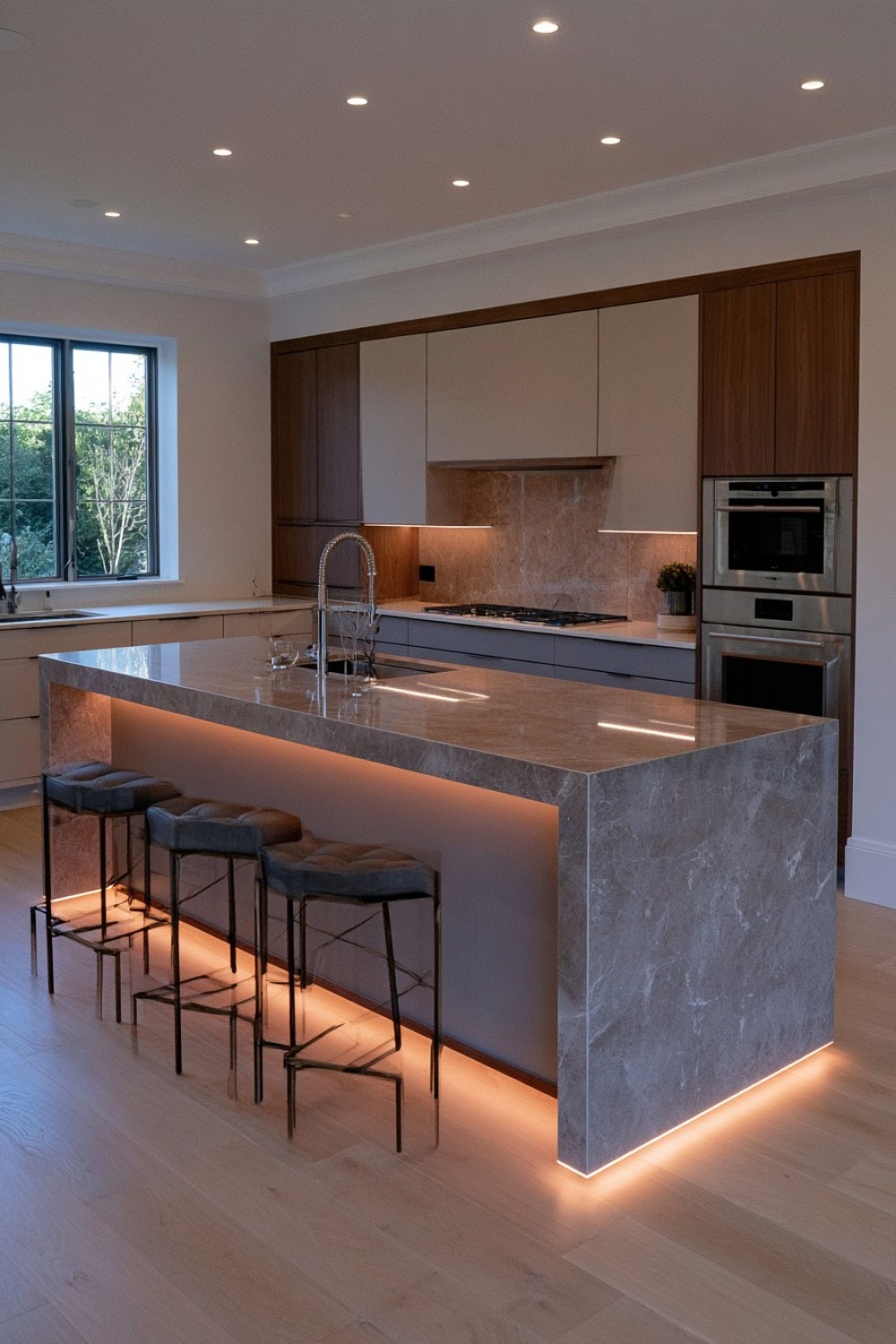
A waterfall island already draws attention because the worktop material continues vertically toward the floor. Lighting can make that transition even more dramatic without outlining the entire island.
One approach is to recess a very narrow LED line beneath the countertop overhang where the horizontal surface meets the vertical stone panel. The hidden source casts light downward across the slab, emphasizing veining and texture.
This technique works particularly well with marble, quartzite, heavily patterned engineered stone, and textured concrete.
Keep the light source warm enough to complement the stone's natural undertones. Bright blue-white lighting can flatten warmer materials or make them appear colder than intended.
The strip should not be visible when someone is standing at the island. If the fixture itself becomes the focal point, the installation loses much of its elegance.
Used selectively, this detail makes the countertop material feel less like a surface covering and more like an architectural feature.
10. Make Tall Pantry Cabinets Light Up Automatically
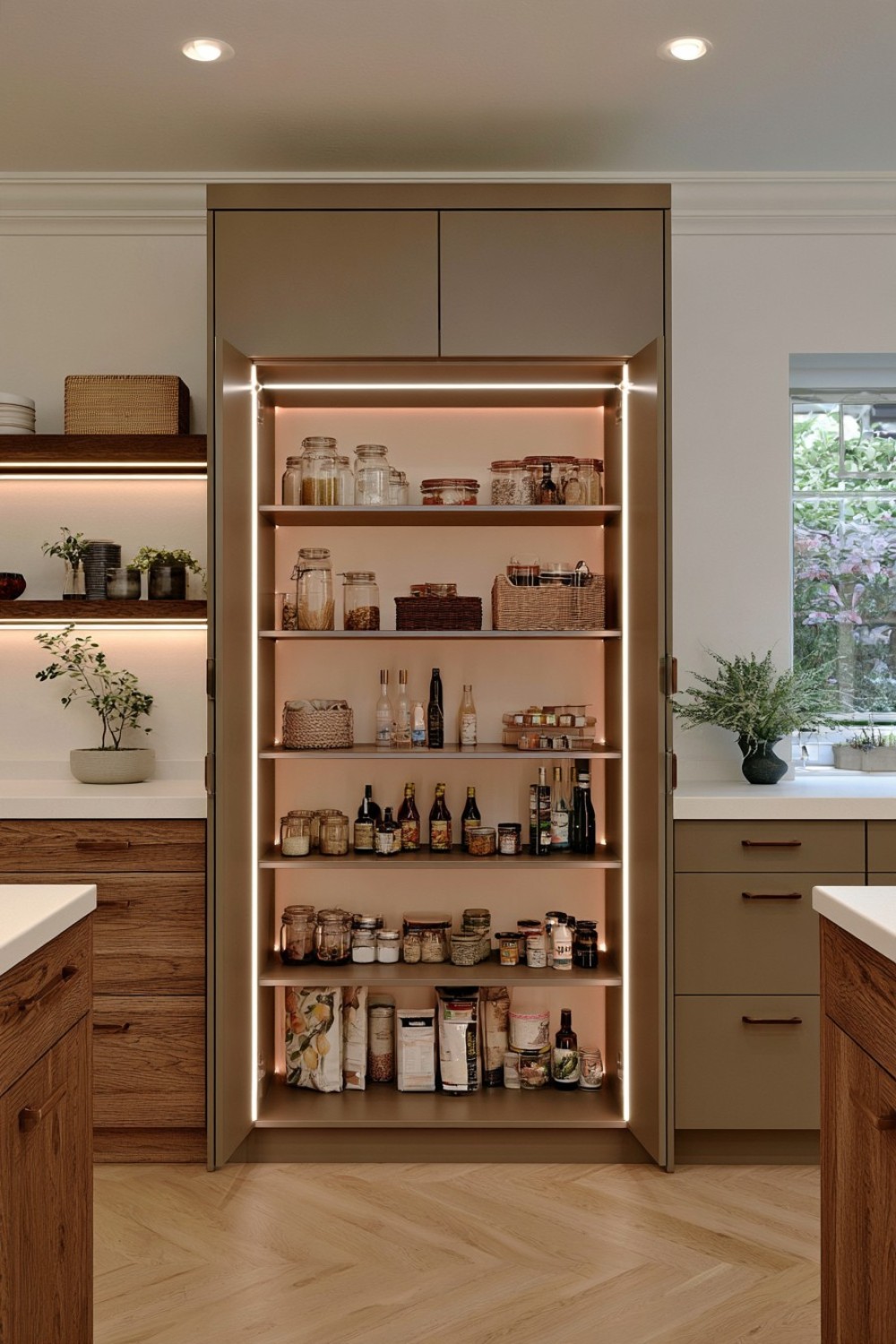
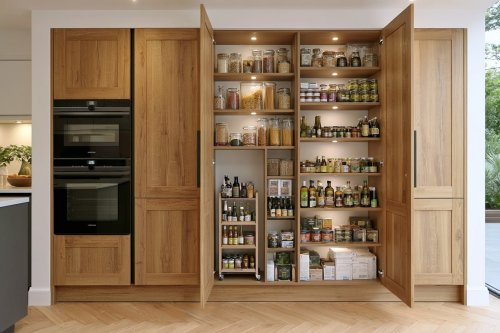
Deep pantry cabinets are practical until everything on the lower or rear shelves disappears into shadow. Vertical LED lighting along the inside front edges solves this much more effectively than a single ceiling-mounted cabinet light.
Running narrow channels from top to bottom provides consistent illumination across multiple shelves. When paired with a door sensor, the entire pantry brightens automatically as soon as it opens.
This arrangement also makes transparent containers, labels, and smaller ingredients easier to locate without moving everything in front of them.
For walk-in or extra-deep pantry cabinetry, consider lighting both front corners instead of only one side. This reduces harsh shadows created by tall containers.
The decorative benefit comes from organization itself. Rows of glass jars, baskets, bottles, and pantry staples take on a refined display quality once evenly lit, yet the lighting remains entirely hidden whenever the doors are closed.
It is a strong example of how cabinet lighting can improve function first and aesthetics as a natural consequence.
11. Use Light to Separate Two Cabinet Materials
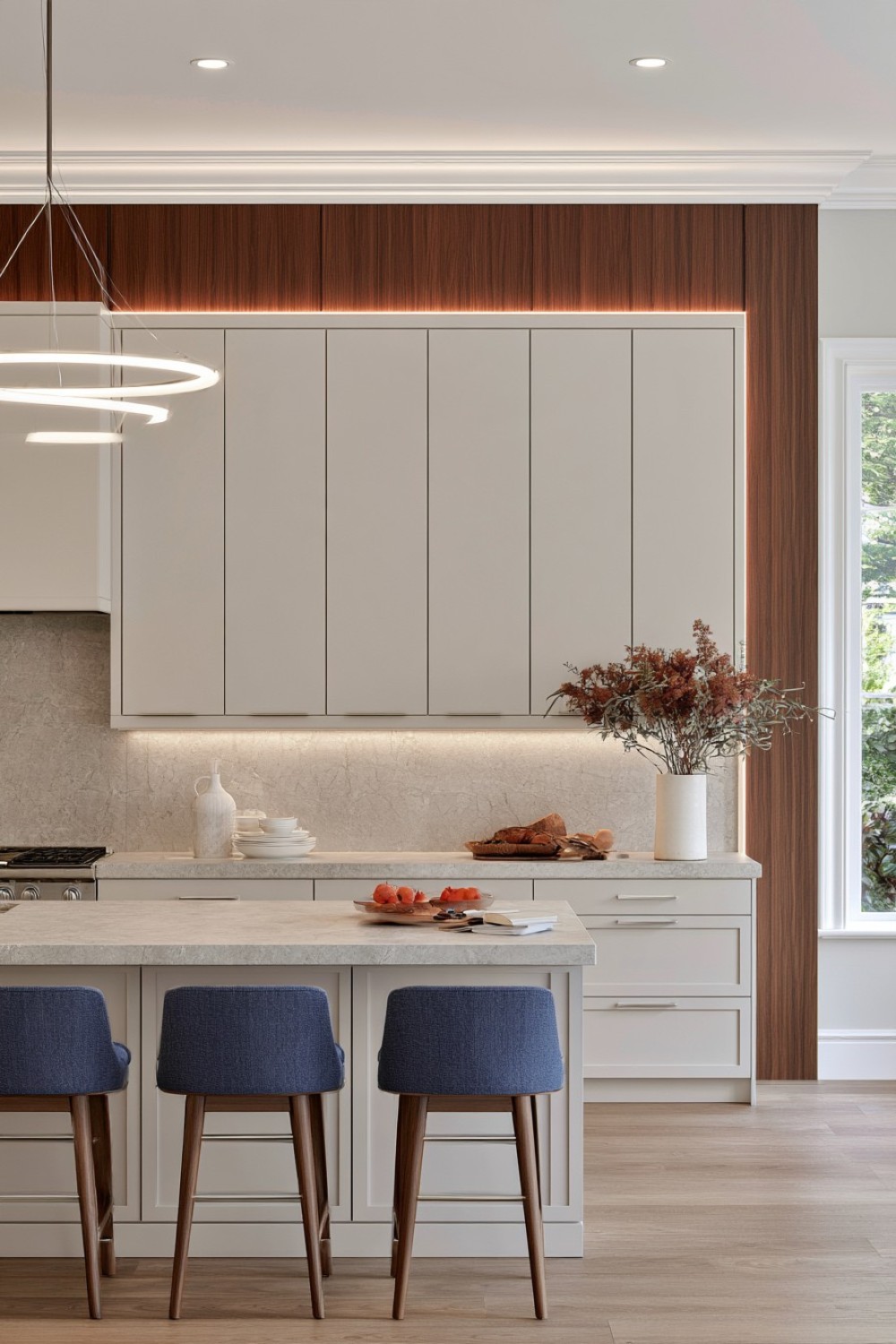
When a kitchen combines timber, painted cabinetry, stone, or metal, a narrow line of illumination can emphasize the transition between materials.
For example, imagine a tall walnut cabinet wall meeting a run of matte cream cabinets. A slim recessed vertical LED positioned at the junction can create a shadow-like separation that makes both finishes more distinct.
This is very different from wrapping cabinetry in decorative strips. Here, the lighting behaves almost like an architectural joint.
The idea works best in contemporary kitchens where cabinetry has clean geometry and minimal hardware. It can also help define a pantry block, appliance tower, or bar cabinet without changing the cabinet color.
Keep the strip narrow, diffused, and relatively dim. The eye should initially notice the separation between surfaces rather than the LED itself.
Used well, this kind of lighting can make inexpensive cabinet materials look more carefully composed simply because their boundaries have been designed intentionally.
12. Add Light Beneath a Floating Wall Cabinet
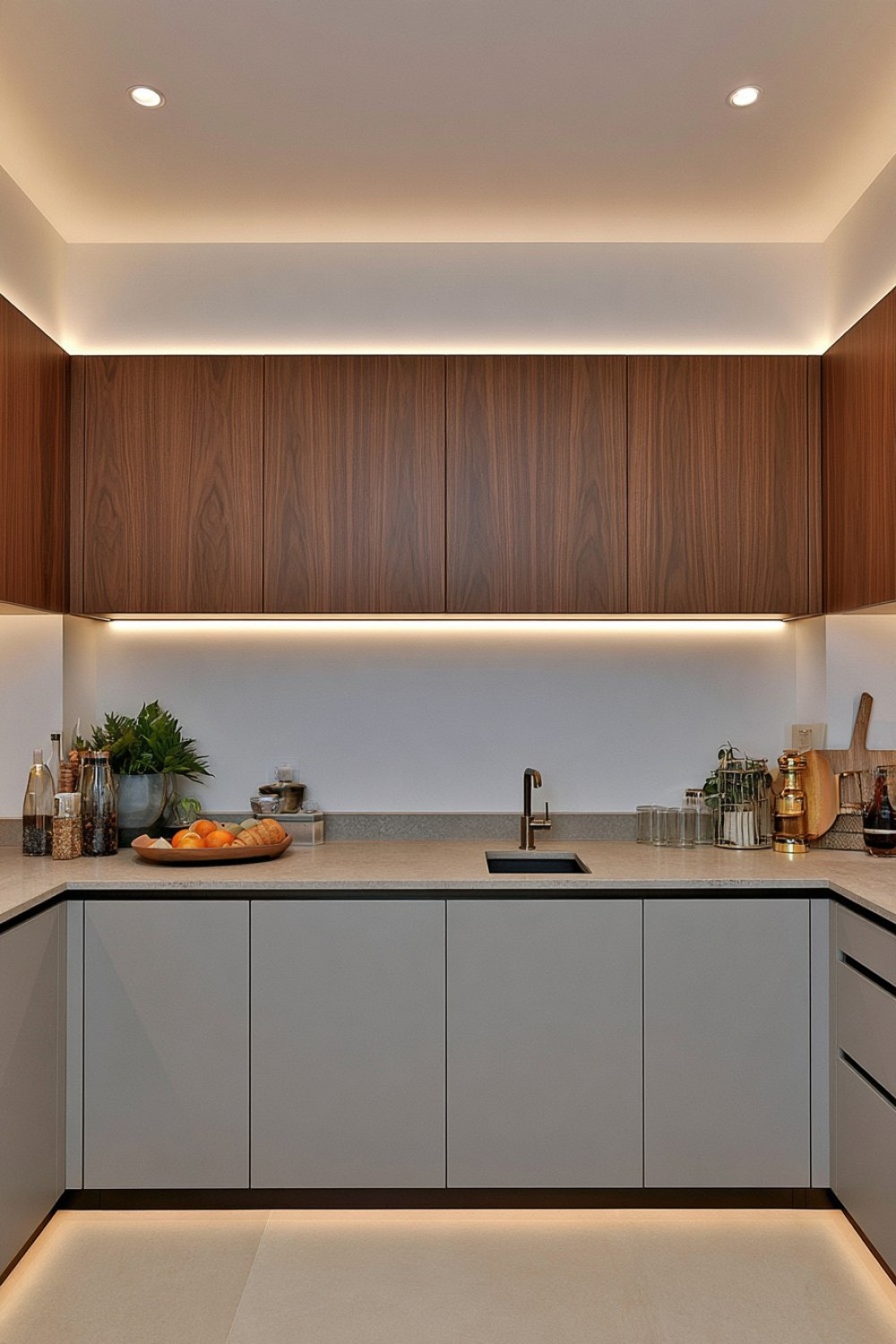
A floating cabinet mounted slightly above the countertop can become a subtle feature when illuminated from underneath.
Unlike ordinary task lighting, this approach treats the space beneath the cabinet as negative space. The light emphasizes the gap and makes the cabinet feel lighter and more furniture-like.
It works especially well for sideboards, coffee bars, small preparation areas, and kitchens where one section of cabinetry is intentionally detached from the main run.
Use a recessed linear source rather than exposed strip tape. If the cabinet is shallow, mounting the light toward the rear can create a gentle wall wash. Moving it forward provides stronger task illumination.
The most successful installations let the same fixture perform both roles: useful brightness when preparing food and a lower ambient glow when the kitchen is no longer active.
A dimmer makes that transition possible without installing two separate lighting systems.
13. Illuminate Cabinet Handles From Behind
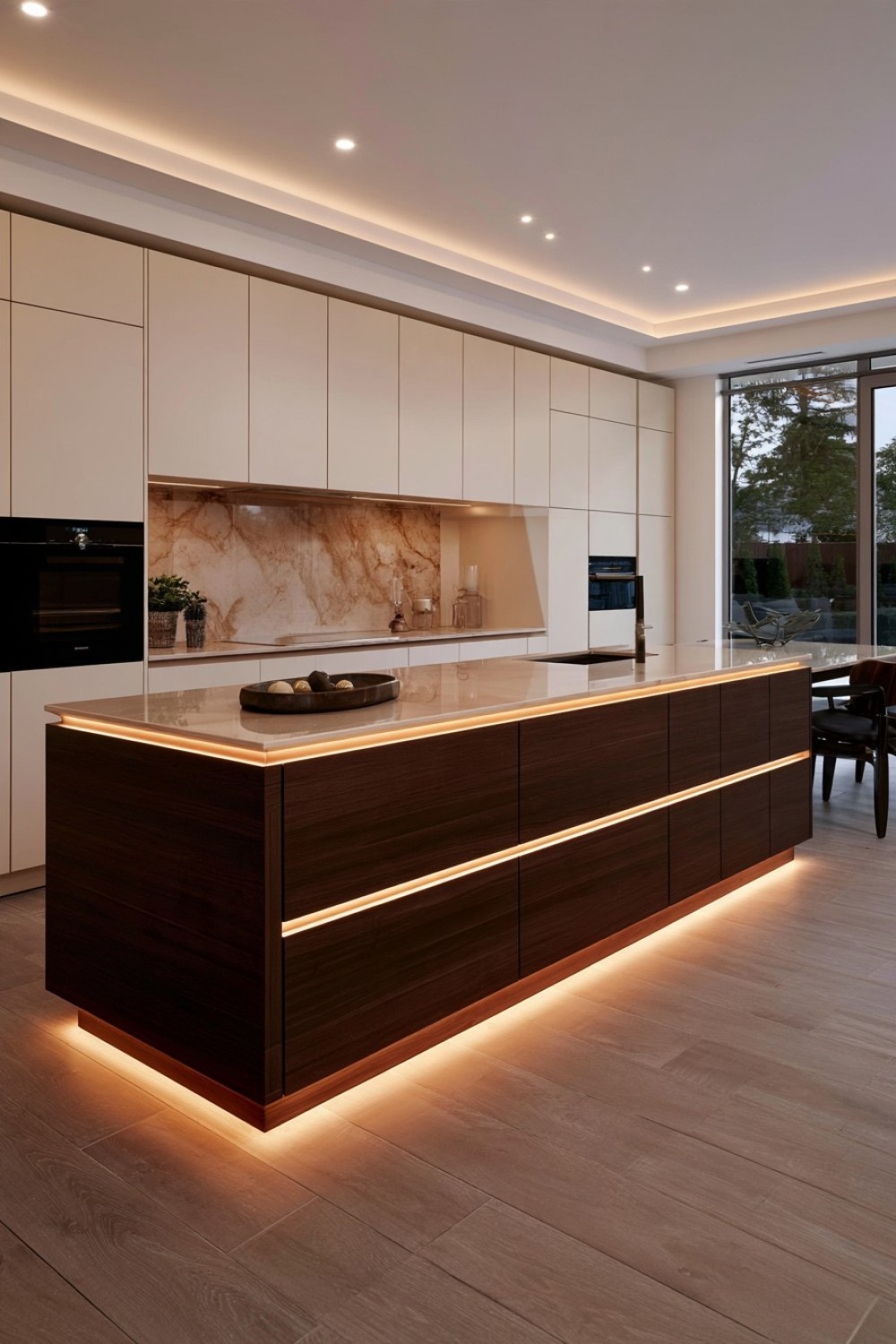
Integrated handle profiles offer an opportunity for one of the less expected lighting treatments: a narrow concealed LED inside the handle recess.
Instead of outlining the entire cabinet door, the light appears only in the shadow gap where fingers reach to open drawers or doors. The result can look particularly refined on handleless kitchens with horizontal grip rails.
Keep output extremely low. This is accent lighting, not task lighting.
On dark cabinetry, a thin warm line can reveal the geometry of long drawer fronts. On pale cabinetry, neutral light creates a quieter effect and helps define otherwise minimal surfaces.
It also has a functional benefit at night because handles and drawer divisions remain visible without switching on stronger fixtures.
The technique requires careful planning because wiring needs to remain hidden while doors and drawers continue to operate normally. It is therefore easier to incorporate during cabinetry design than as a later DIY addition.
14. Light Only the Lowest Shelf of an Upper Cabinet
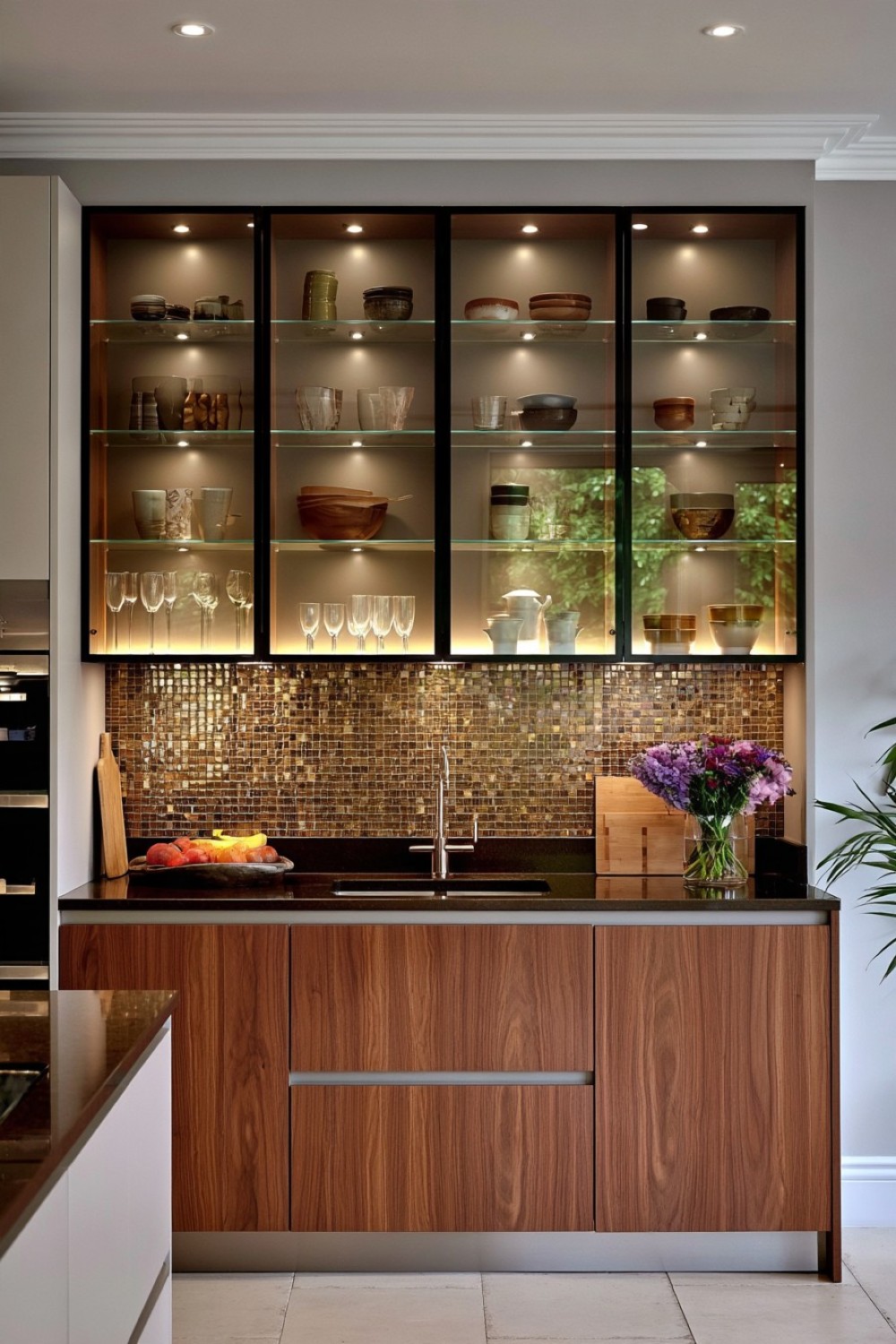
Lighting every shelf often creates more visual noise than necessary. A surprisingly effective alternative is illuminating just the lowest shelf of an upper cabinet.
This creates a transition between display lighting and countertop illumination. Glassware or ceramics on the bottom shelf glow gently while some of the light continues down toward the worktop.
Upper shelves remain darker, creating depth rather than making the entire cabinet equally bright.
The approach is particularly effective in tall glass-front cabinets where completely uniform illumination can make the contents look flat. By concentrating light lower down, the eye naturally moves from the countertop into the cabinet.
A concealed strip toward the front edge of the shelf helps illuminate objects, while positioning it toward the rear emphasizes the cabinet backing.
This small change demonstrates an important lighting principle: sometimes removing light from certain areas produces a more sophisticated result than adding more fixtures.
15. Create a Soft Night-Light Scene Along One Cabinet Run
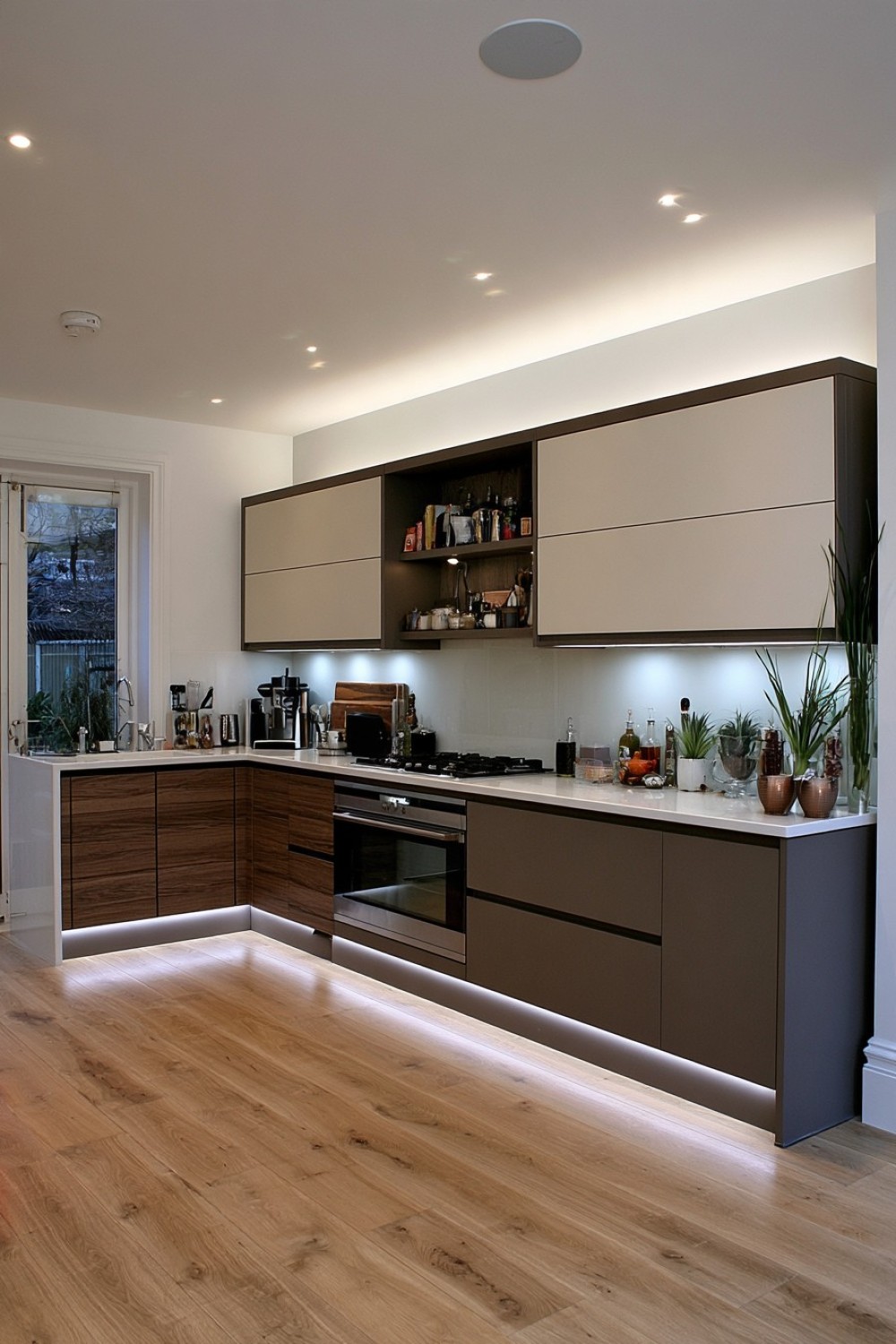
Kitchen lighting does not always need to illuminate the entire room. A single cabinet run can provide enough low-level light for late-night use.
Choose one continuous area—perhaps the sink wall, pantry side, or cabinets nearest the hallway—and install concealed LEDs beneath it. Program that group separately from the rest of the kitchen lighting so it can operate at a very low brightness.
The result provides orientation without turning on pendants or ceiling downlights.
This is especially useful in open-plan homes where harsh kitchen lighting can spill into adjacent living or dining areas.
Warm light generally works best for this purpose because the kitchen is functioning more as part of the evening living space than as a work zone.
For households using smart controls, the scene can be triggered by time or occupancy. A simpler dimmer works just as well. The important part is designing the kitchen for different moments rather than assuming every activity requires maximum brightness.
16. Let Cabinet Lighting Reveal One Unexpected Material
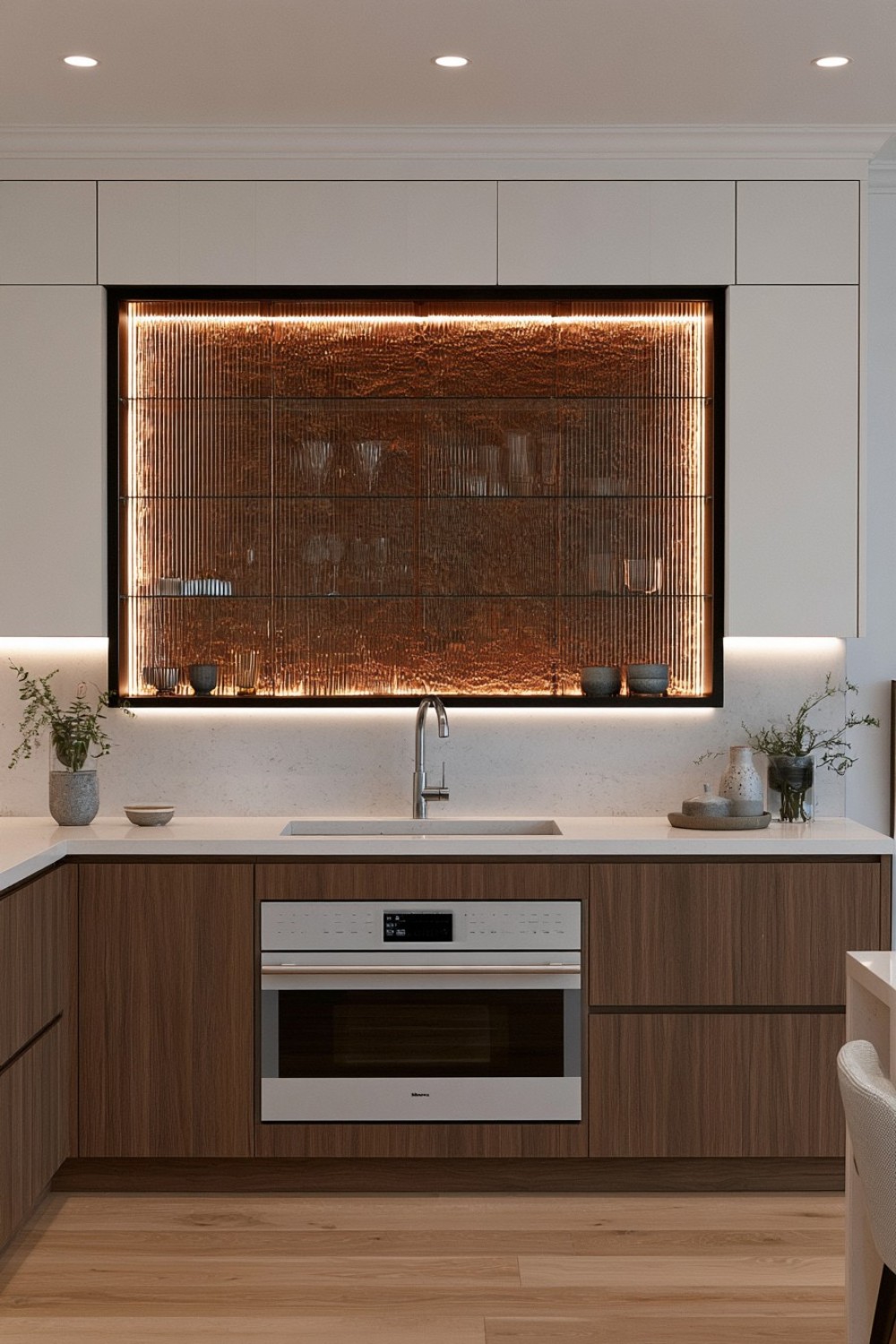
One of the most memorable ways to use cabinet lighting is to give it something unusual to illuminate.
Instead of installing LEDs beneath an ordinary painted panel, introduce a material that changes when light hits it: ribbed glass, hammered metal, textured stone, fluted timber, translucent acrylic, or handmade tile.
A drinks cabinet lined with aged brass can take on a rich amber glow. A reeded-glass panel can diffuse hidden LEDs into soft vertical bands. A rough stone niche can produce dramatic shadows that disappear during daylight.
The material becomes the feature, while the lighting simply reveals qualities that would otherwise remain unnoticed.
This approach is especially effective if the rest of the kitchen is relatively restrained. One illuminated material moment can create more character than adding decorative lighting everywhere.
Before choosing the final source, test the material under different color temperatures. The same stone, timber, or metal can look surprisingly different under warm, neutral, and cool illumination.
Make the Light Feel Built Into the Kitchen
The most successful kitchen cabinet lighting rarely looks like lighting that was added after the cabinetry was finished. It appears to belong to the shelves, recesses, handles, materials, and proportions of the room.
Start by deciding what deserves attention. A dramatic stone backsplash might need grazing light, while a deep pantry needs practical vertical illumination. A large island may benefit from a restrained floating effect, but a compact kitchen could look cleaner with just one softly illuminated display cabinet.
It is also worth protecting darkness. When every shelf, toe kick, handle, cabinet edge, and ceiling line glows simultaneously, none of them feels special.
Instead, combine practical task lighting with one or two unexpected details. Concealed channels, diffusers, dimmers, and carefully selected color temperatures can then turn inexpensive LED technology into lighting that feels far more architectural, intentional, and connected to the kitchen itself.
MORE IDEAS


Share
What's Your Reaction?
 Like
0
Like
0
 Dislike
0
Dislike
0
 Love
0
Love
0
 Funny
0
Funny
0
 Angry
0
Angry
0
 Sad
0
Sad
0
 Wow
0
Wow
0