

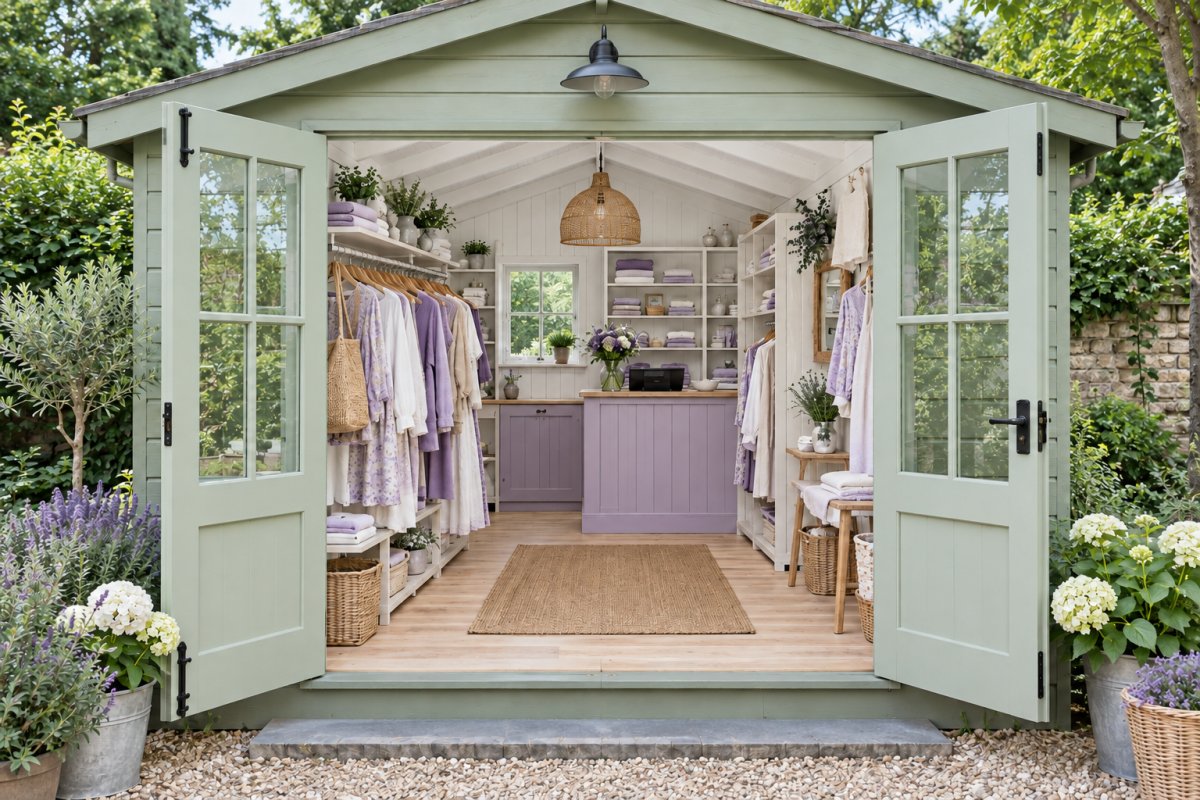
A she shed boutique can give a small collection its own setting, whether you display handmade jewelry, vintage clothes or garden art. These 20 ideas pair different products with a layout that suits them, from a hat wall to a shoe fitting bench. Use the details that fit your space and leave enough room for people to browse comfortably.
Start with the goods you plan to display. Measure the interior, door swing and any low roof sections; then choose your main rail, shelves or counter before adding color and accessories. If customers will visit, check local rules for the intended business use. The US Small Business Administration explains why home based businesses should check local zoning.
Plan an unobstructed entrance and route through the shop before adding fixtures. The US Department of Justice guide for small businesses discusses accessible routes, entrances and counters; requirements depend on the building and location. Secure tall units, keep exits clear and use a qualified electrician for new wiring.
Planning a budget. A UK shed conversion guide updated in September 2026 lists £1,825 to £20,175 plus VAT for general conversions, with an £11,000 average. Its range covers projects from basic conversions to living spaces, so it is not a quote for a boutique. For a simple calculation, the £11,000 average becomes £13,200 if the standard 20% UK VAT rate applies. That figure is a conversion benchmark, not a finished shop budget; ask for itemized prices for repairs, insulation, electricity, finishes, retail fixtures and any permissions or access work.
Table of Contents
- Lavender Clothing Boutique with Scalloped Shelves
- Midnight Walls for Velvet and Jewelry
- A Fan Shaped Hat Display
- Sage Jewelry Niches
- A Quilt Shop with a Burgundy Door
- Coral Accessories beside the Entrance
- Botanical Bath Goods around a Central Table
- A Bay Window for Woven Bags
- Colored Glass in a Window Display
- Flower Cubbies Sorted by Color
- Blue Barn Doors for a Denim Shop
- Leather Goods on Two Peg Rails
- Vintage China in a Blue Dresser
- An Umbrella Shop with a Parasol Focal Point
- Patterned Textile Panels for Easy Comparison
- A Blush Shoe Shop with a Window Bench
- A Folding Screen for Hair Accessories
- Vintage Clothing beneath a Sloping Roof
- A Glass Front with Ceiling Supported Rails
- Garden Art on Ledges and Cabinets
Lavender Clothing Boutique with Scalloped Shelves
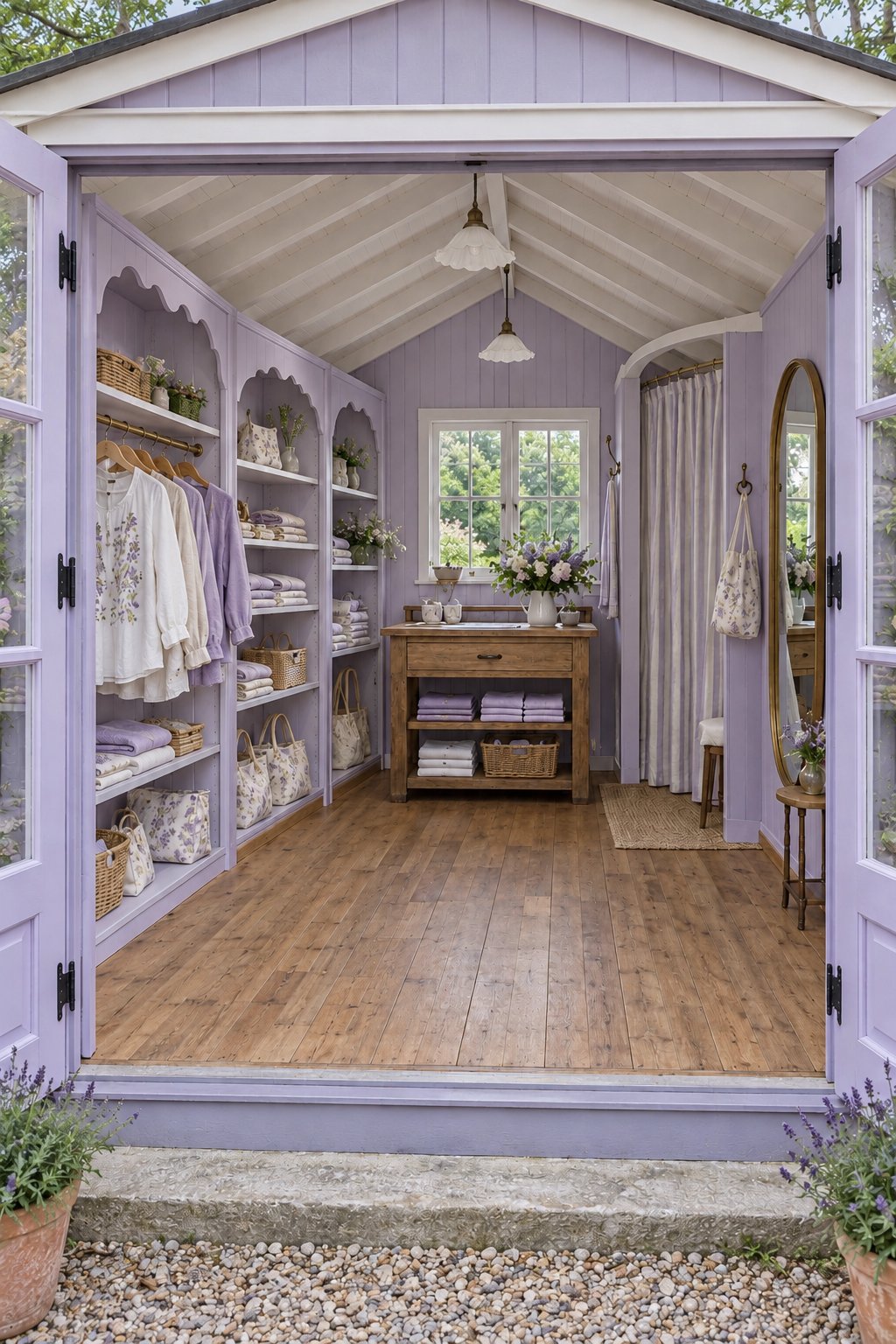
Lavender shelving gives this clothing boutique a calm backdrop for pale garments and folded linens. Place a short rail beside open shelves, then use the curtained corner for trying on pieces. An existing bookcase can give a smaller shed the same rhythm; secure it to a suitable wall.
Midnight Walls for Velvet and Jewelry
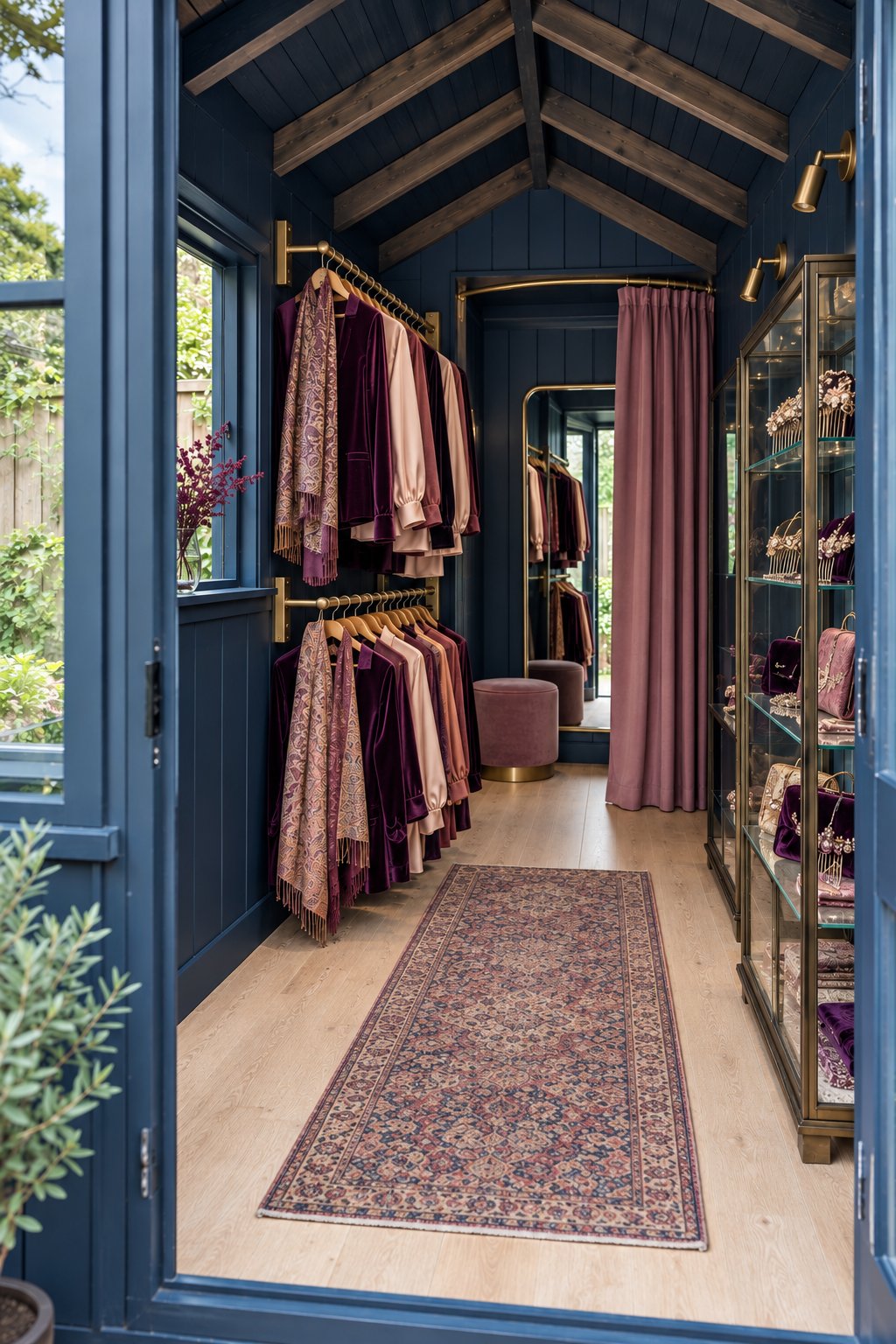
Dark blue walls make the plum garments and glass jewelry cabinet feel part of one collection. A mirror and curtain turn the far end into a fitting corner. Choose enough neutral lighting to judge fabric colors accurately, and keep the cabinet stable.
A Fan Shaped Hat Display
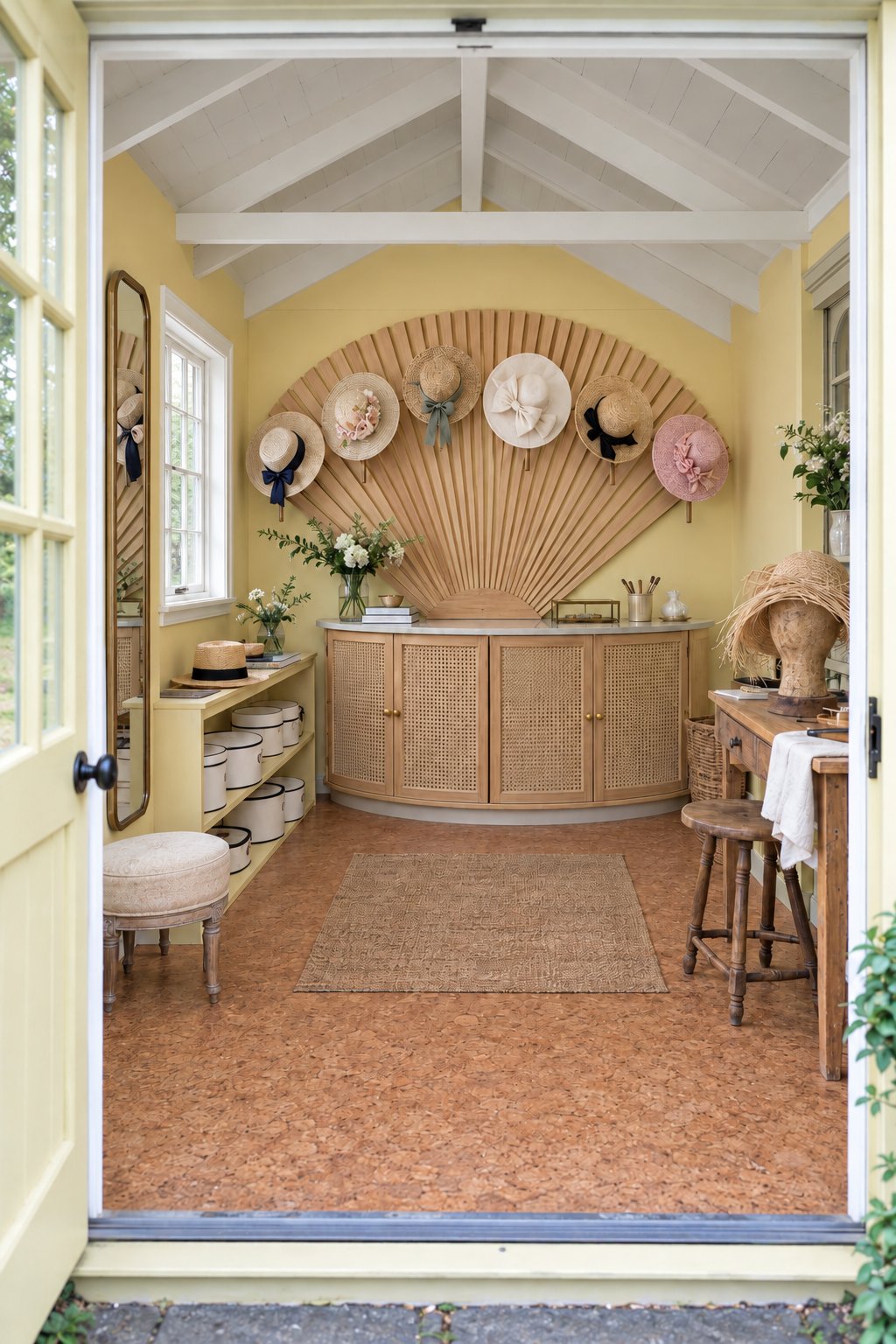
A wooden fan creates a focal point for hats against the yellow wall. Space pegs far enough apart that brims retain their shape and shoppers can lift one hat without disturbing the next. Hatboxes on lower shelves provide useful storage without competing with the display.
Sage Jewelry Niches
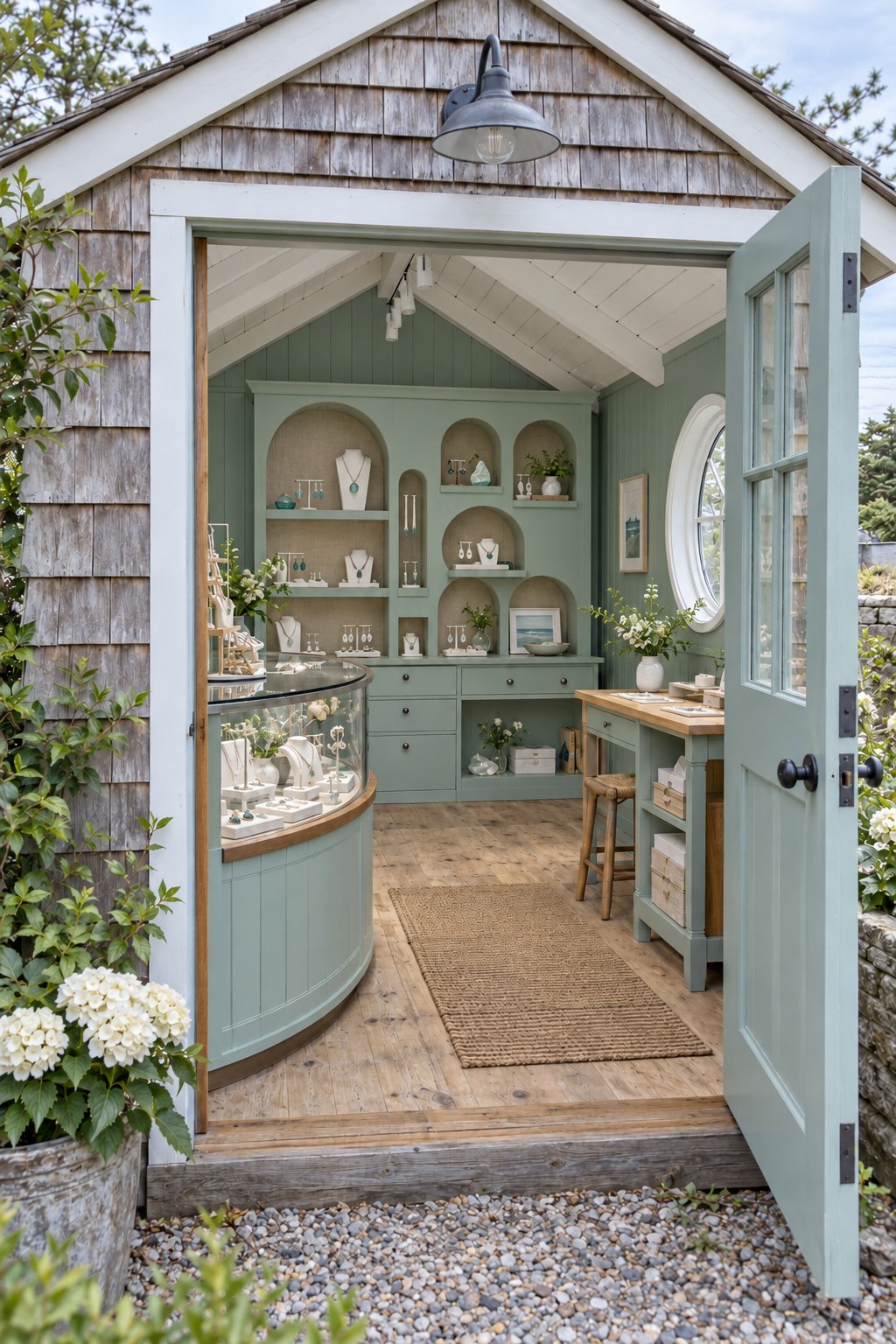
Arched niches frame individual jewelry displays while a curved glass counter holds smaller pieces nearby. The soft green backdrop lets pale stands and colorful stones stand out. To simplify the build, paint an existing shelving unit and use removable display risers inside it. For more ways to arrange small pieces, see our jewelry display ideas.
A Quilt Shop with a Burgundy Door
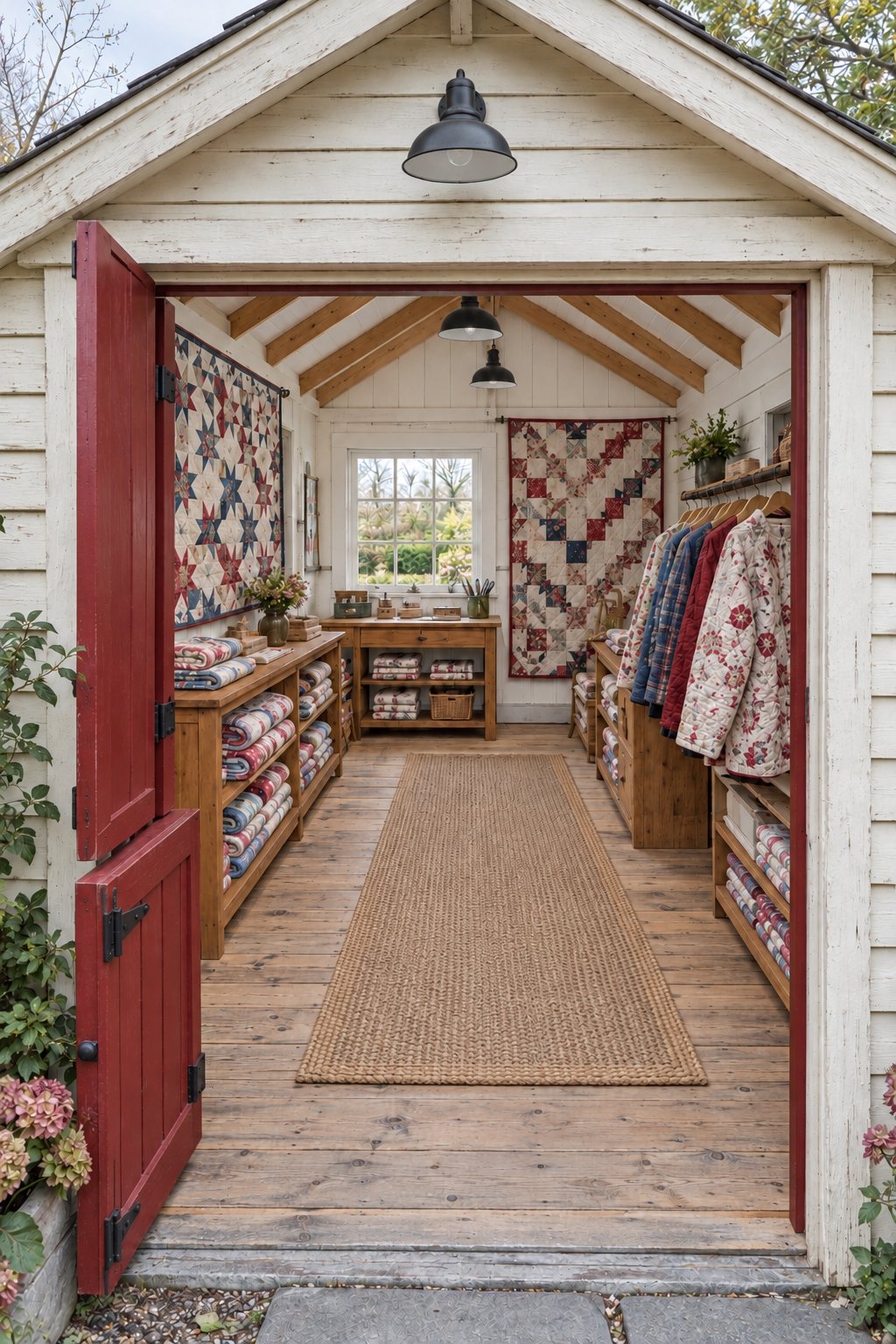
Folded quilts fill the side shelves while larger patterns hang on the walls, allowing visitors to compare scale before choosing. Keep the lower door open whenever customers enter, and leave room to unfold a quilt. Rotate textiles away from prolonged direct sun to reduce fading.
Coral Accessories beside the Entrance
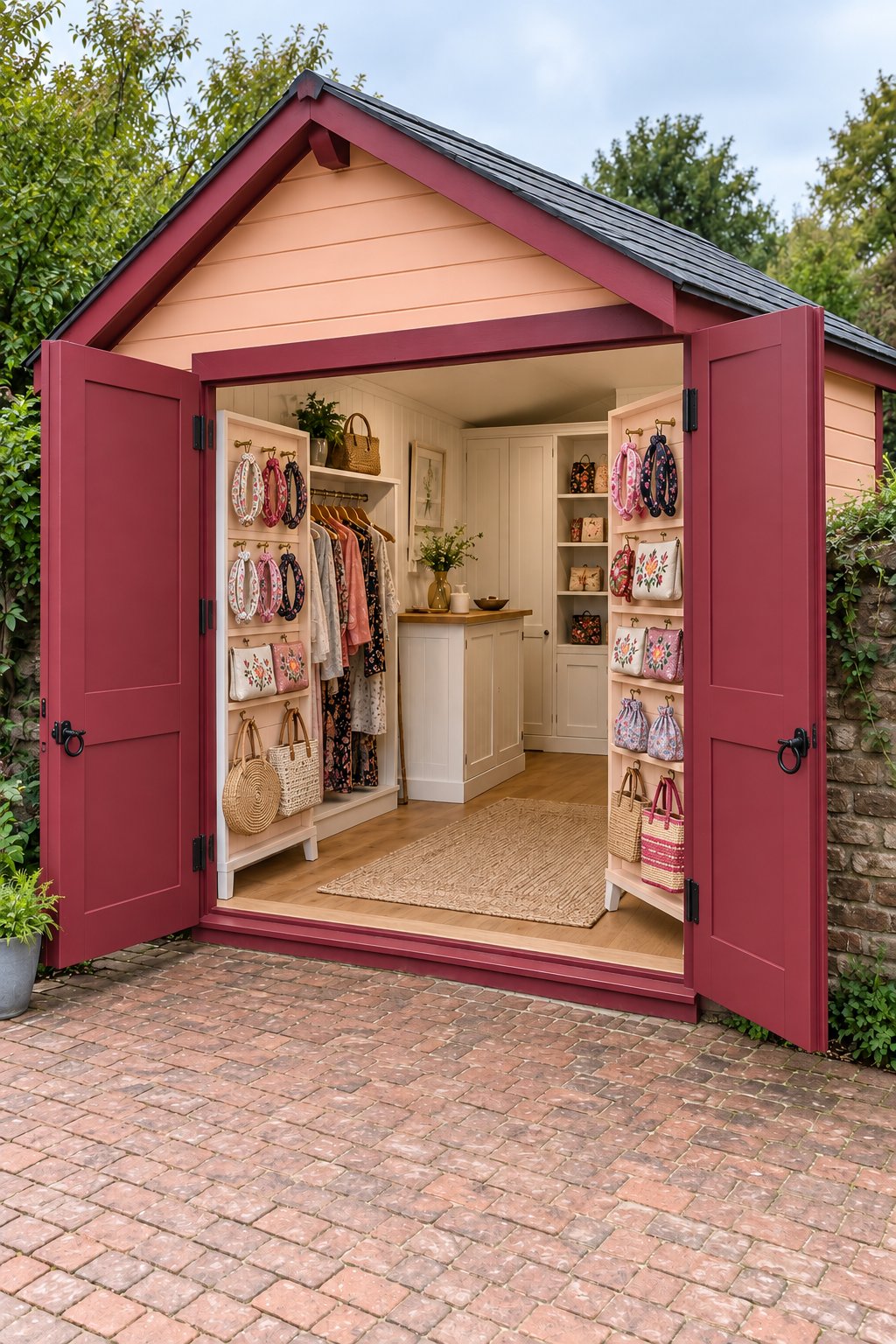
Small bags and fabric accessories make a colorful first impression beside the open coral doors. Shallow freestanding displays keep lightweight pieces visible without loading the door hinges. Set the panels back from the threshold so the entrance and door swing remain clear.
Botanical Bath Goods around a Central Table
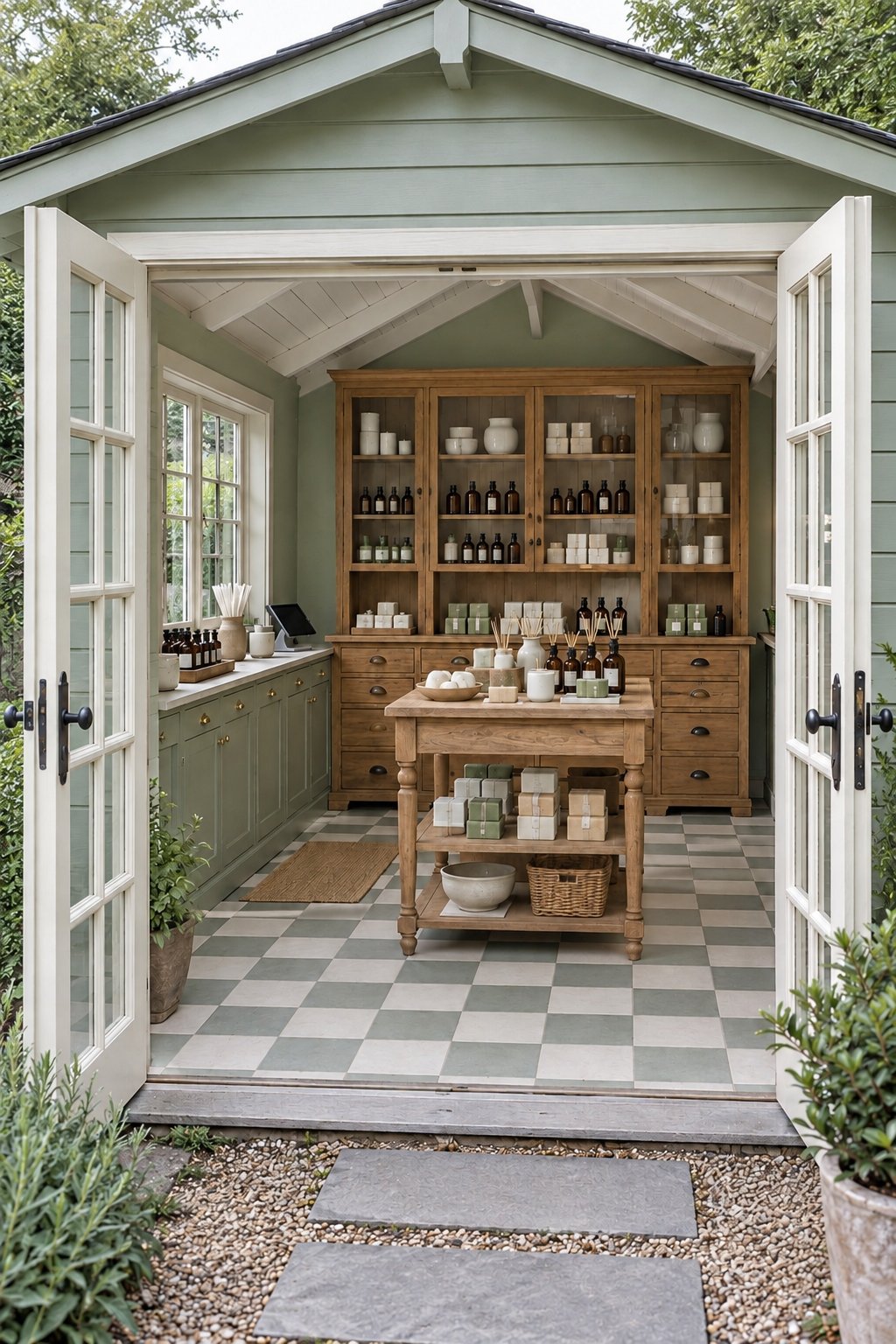
A wooden cabinet groups bottles and packaged bath products, while the central table presents a small selection for closer inspection. Choose a wipeable tray for testers and keep spare stock in closed drawers. If the room is narrow, move the table to one wall to preserve a clear route.
A Bay Window for Woven Bags
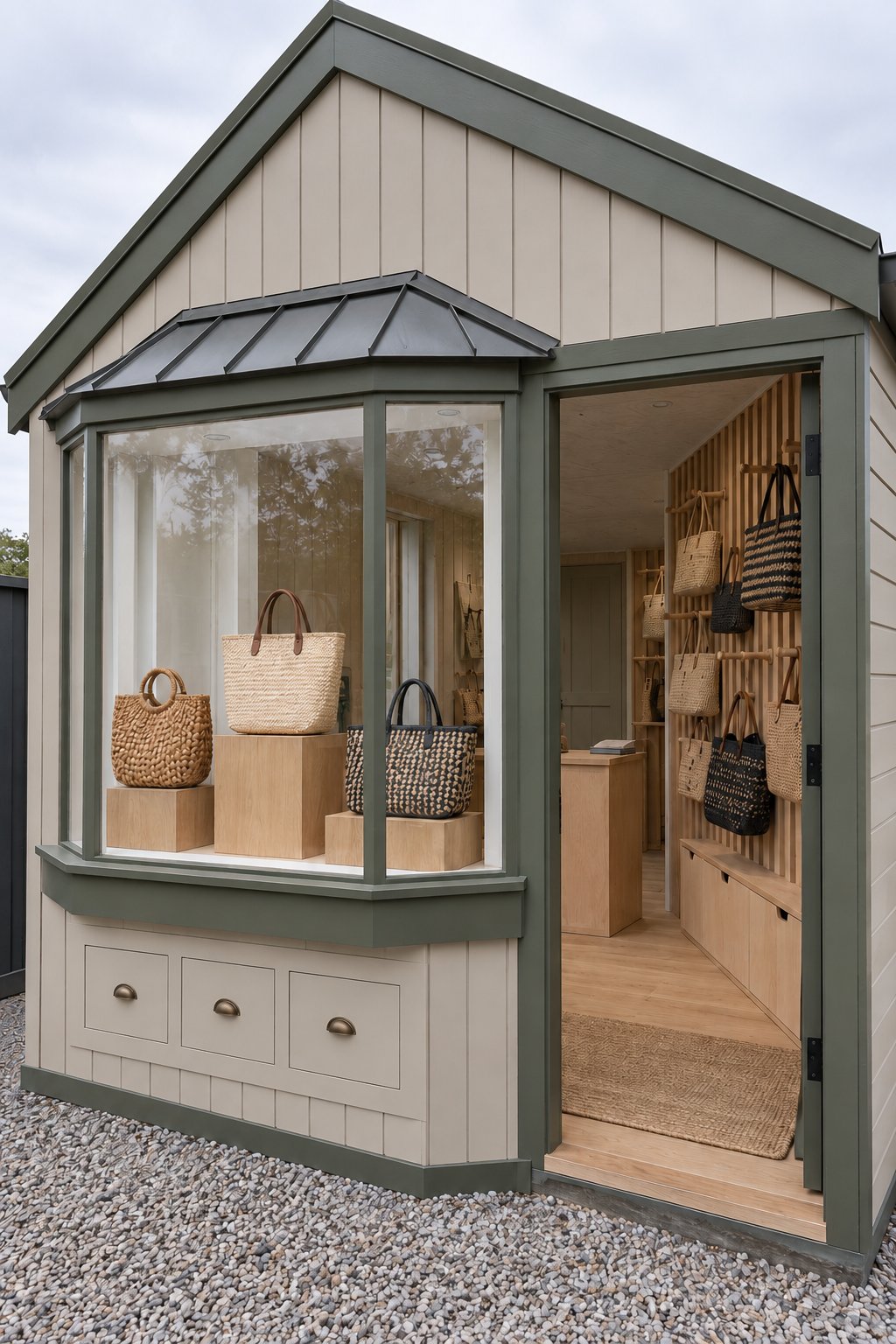
Three woven bags on different height blocks turn the bay window into a compact showcase. Inside, a wall of hooks keeps additional bags visible without filling the floor. Leave space between straps and change the window selection regularly to limit prolonged sunlight exposure.
Colored Glass in a Window Display
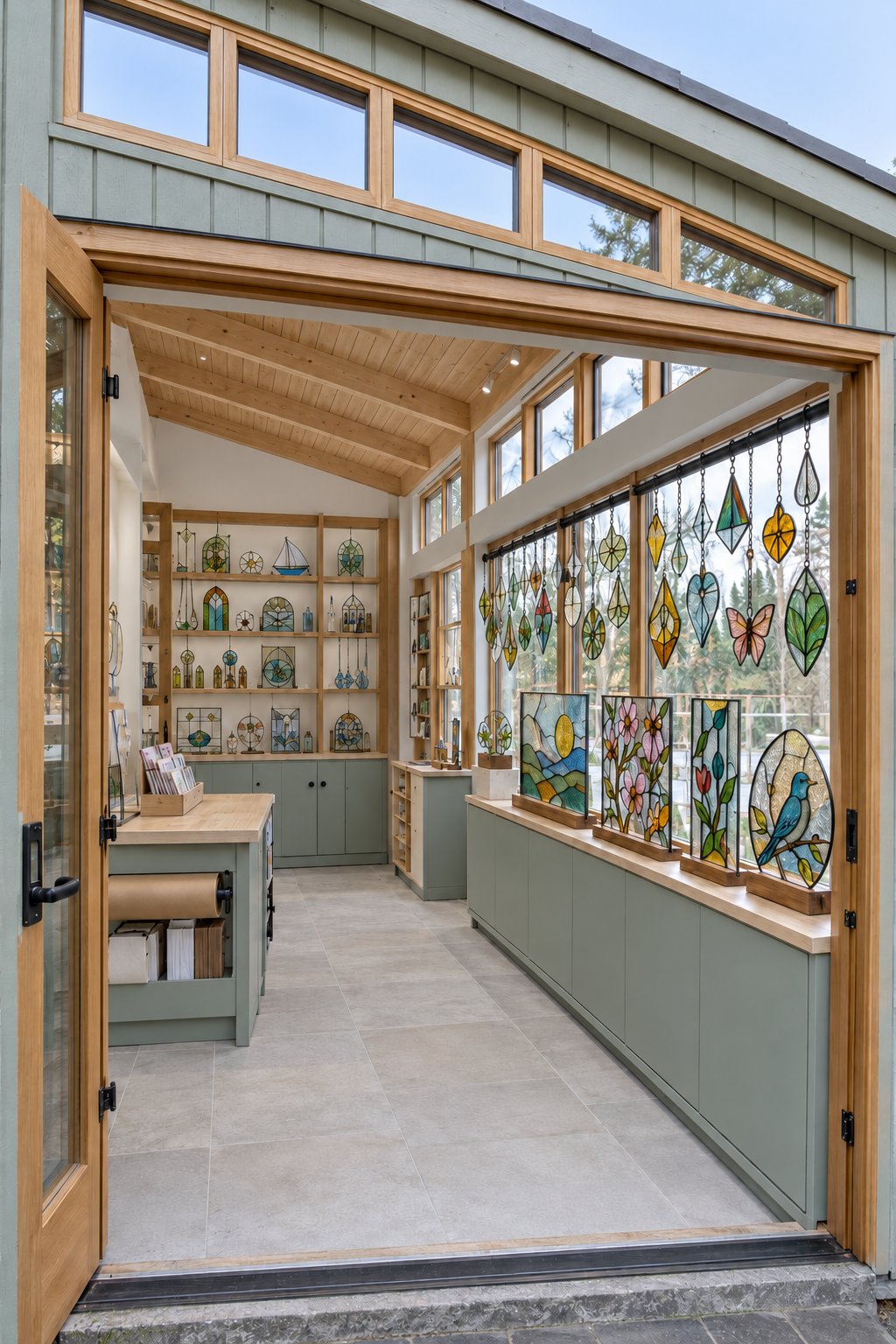
A rail of hanging glass pieces and a row of upright panels use the window as a backdrop. Secure each piece with hardware rated for its weight, and use stable stands for panels on the counter. Where space is tighter, display fewer pieces so visitors can move safely past them.
Flower Cubbies Sorted by Color
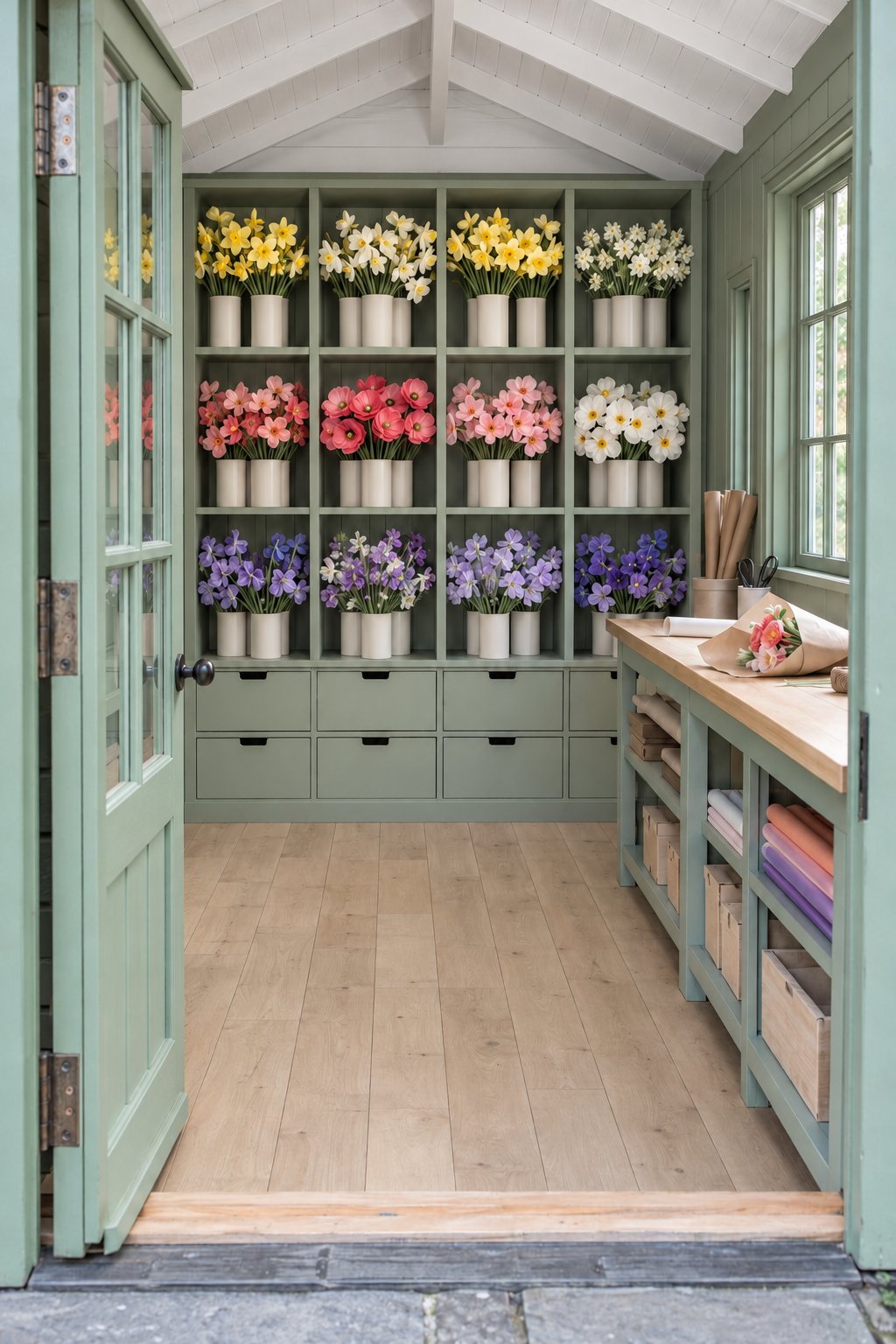
Rows of flower containers make a simple color system against the sage cabinetry. Keep wrapping paper and tools at the side counter so the display stays easy to browse. Fresh stems need watertight containers to protect the shelves from spills; dried arrangements need less water management.
Blue Barn Doors for a Denim Shop
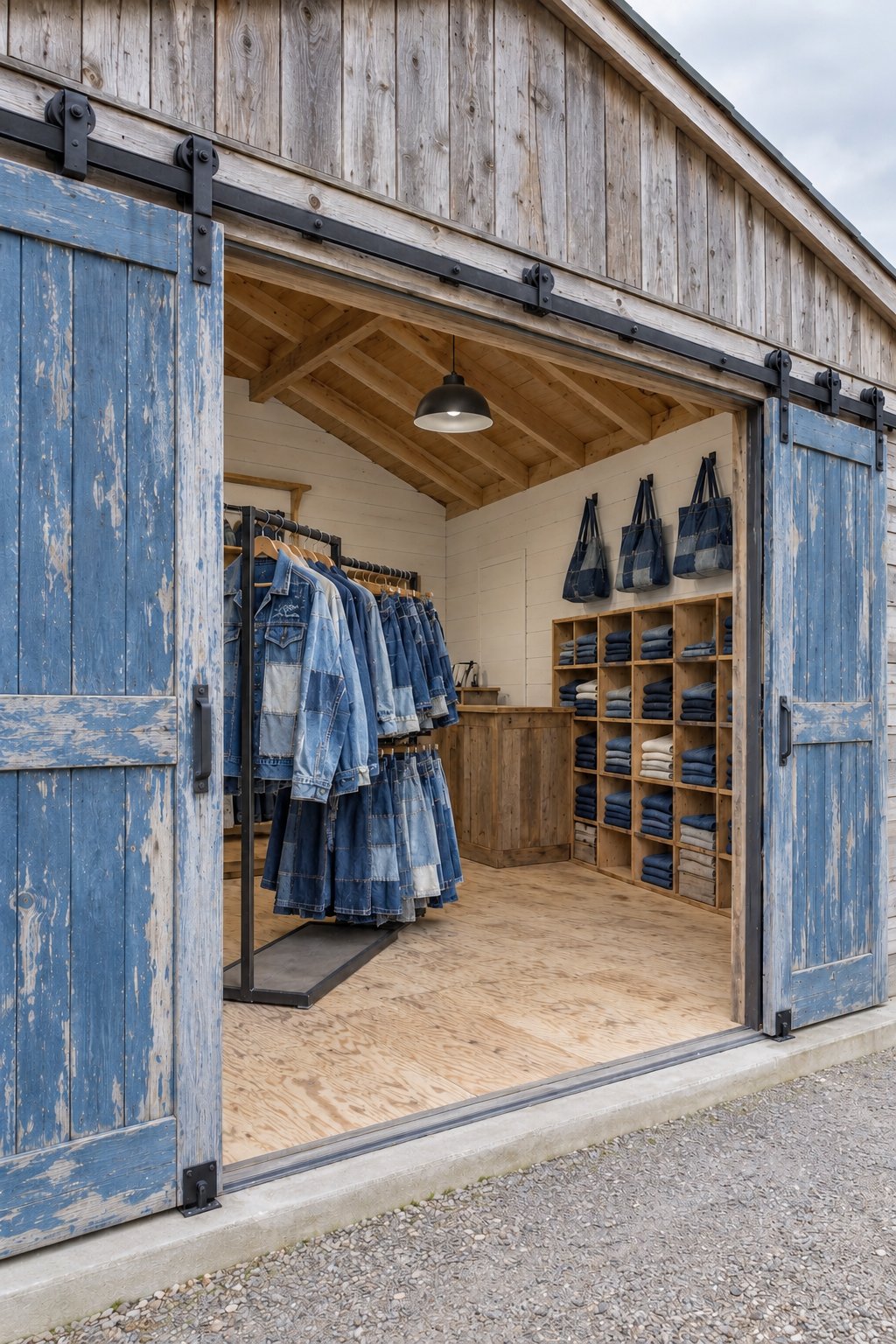
Weathered blue sliding doors introduce the denim collection before shoppers enter. Inside, folded jeans occupy cubbies and a freestanding rail holds jackets. Check that the doors have clear travel along the exterior wall, and arrange garments by size so each stack remains easy to browse.
Leather Goods on Two Peg Rails
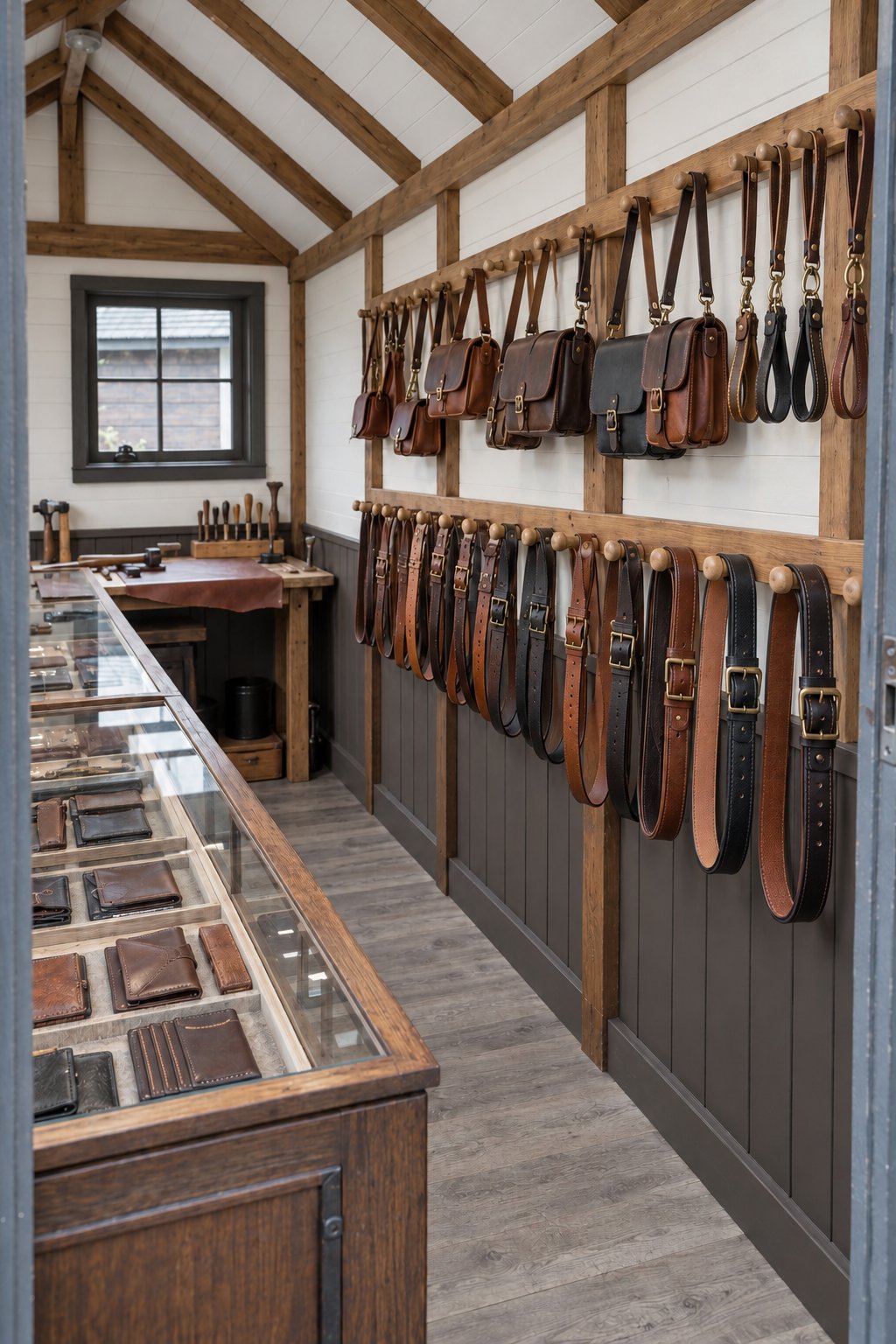
Two rows of wooden pegs separate bags from belts, making their shapes easy to compare. The glass counter offers a protected place for small leather goods. Fit each peg securely to its supporting rail and leave enough distance between bags to prevent rubbing.
Vintage China in a Blue Dresser
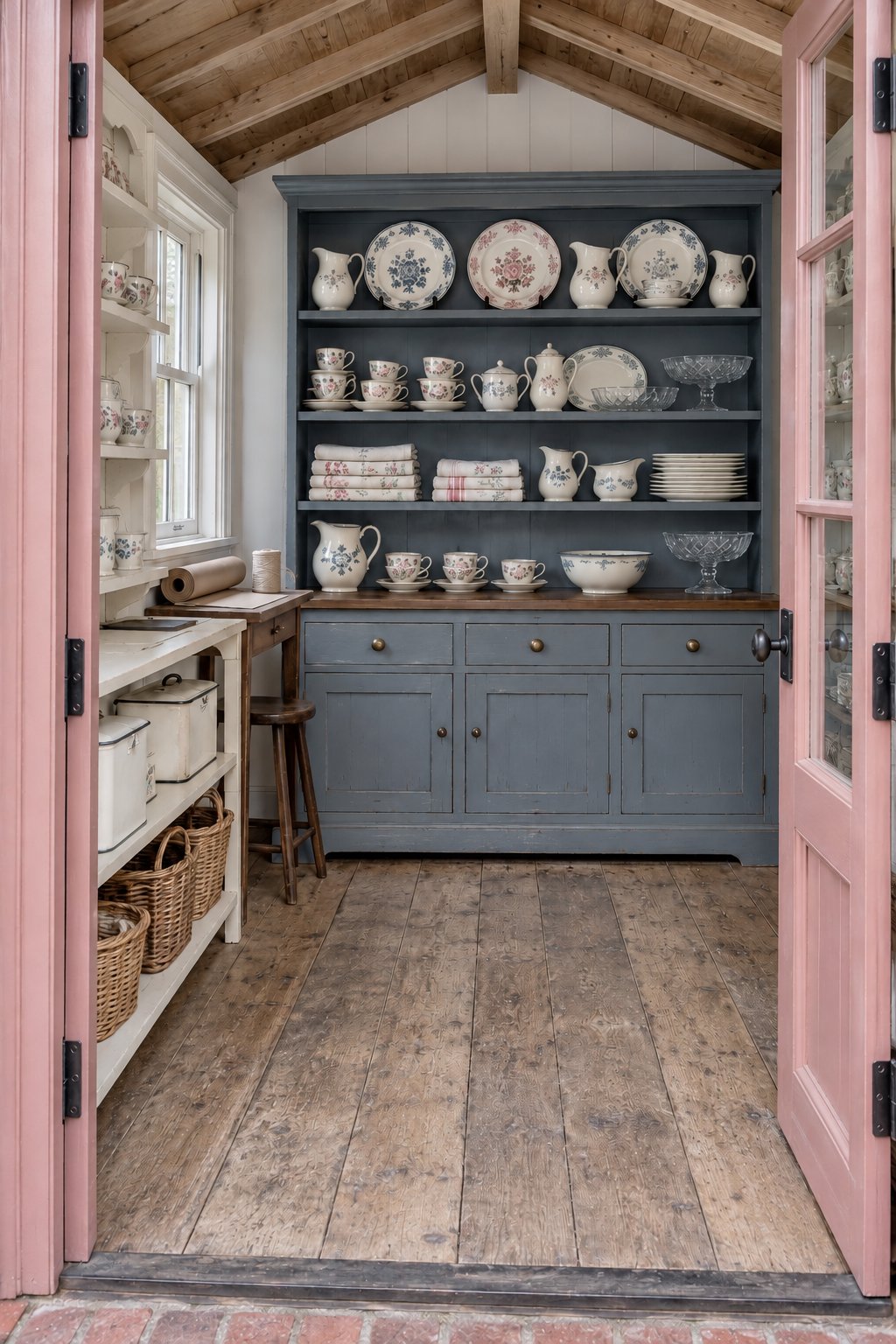
A slate blue dresser turns cups, plates and pitchers into a collection with a clear center of attention. Support upright plates with suitable stands and put heavier pieces on lower shelves. If using an old dresser, check shelf strength and anchor the unit before displaying breakables. Our repurposed cabinet ideas offer more ways to give an existing piece a new role.
An Umbrella Shop with a Parasol Focal Point
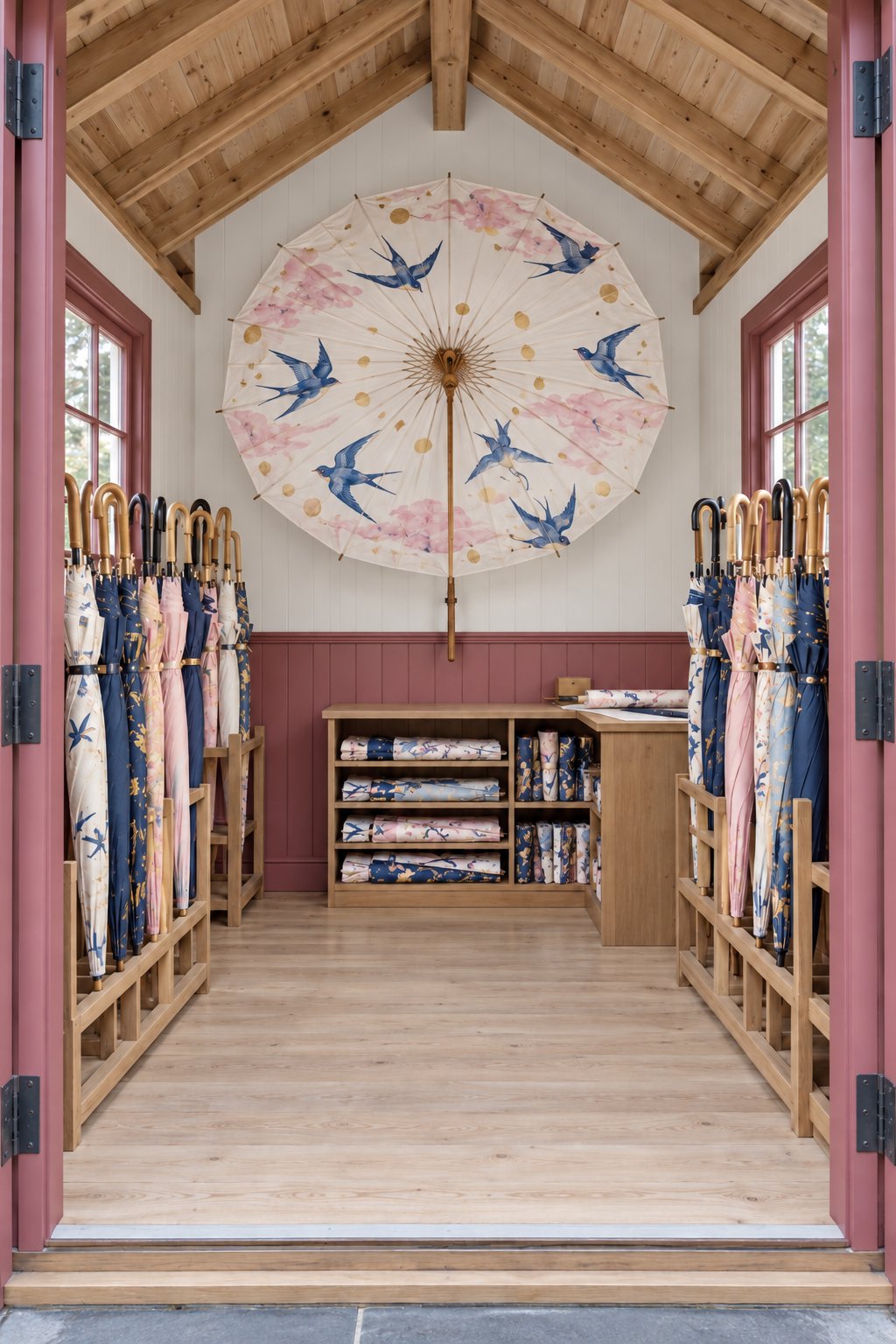
A painted parasol draws the eye to the back wall, while closed umbrellas stand in racks on either side. Group similar lengths together so handles are easy to reach. When umbrellas are wet, provide a separate drip tray near the entrance and keep the walkway dry.
Patterned Textile Panels for Easy Comparison
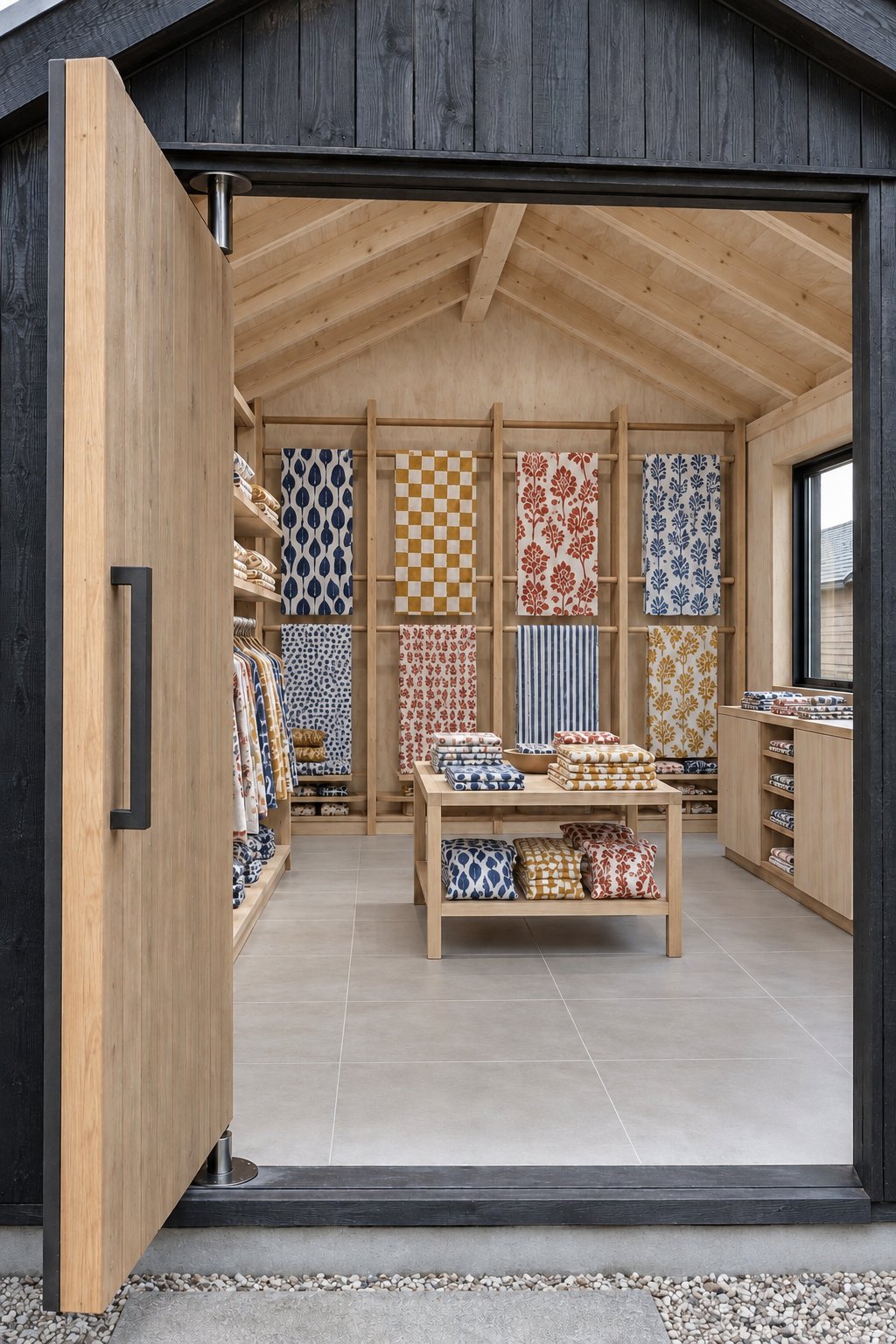
Long fabric samples hang against the back wall, with folded pieces on the center table and side shelves. This arrangement lets shoppers compare patterns at a larger scale. With limited room, use a small swatch set instead of a freestanding table.
A Blush Shoe Shop with a Window Bench
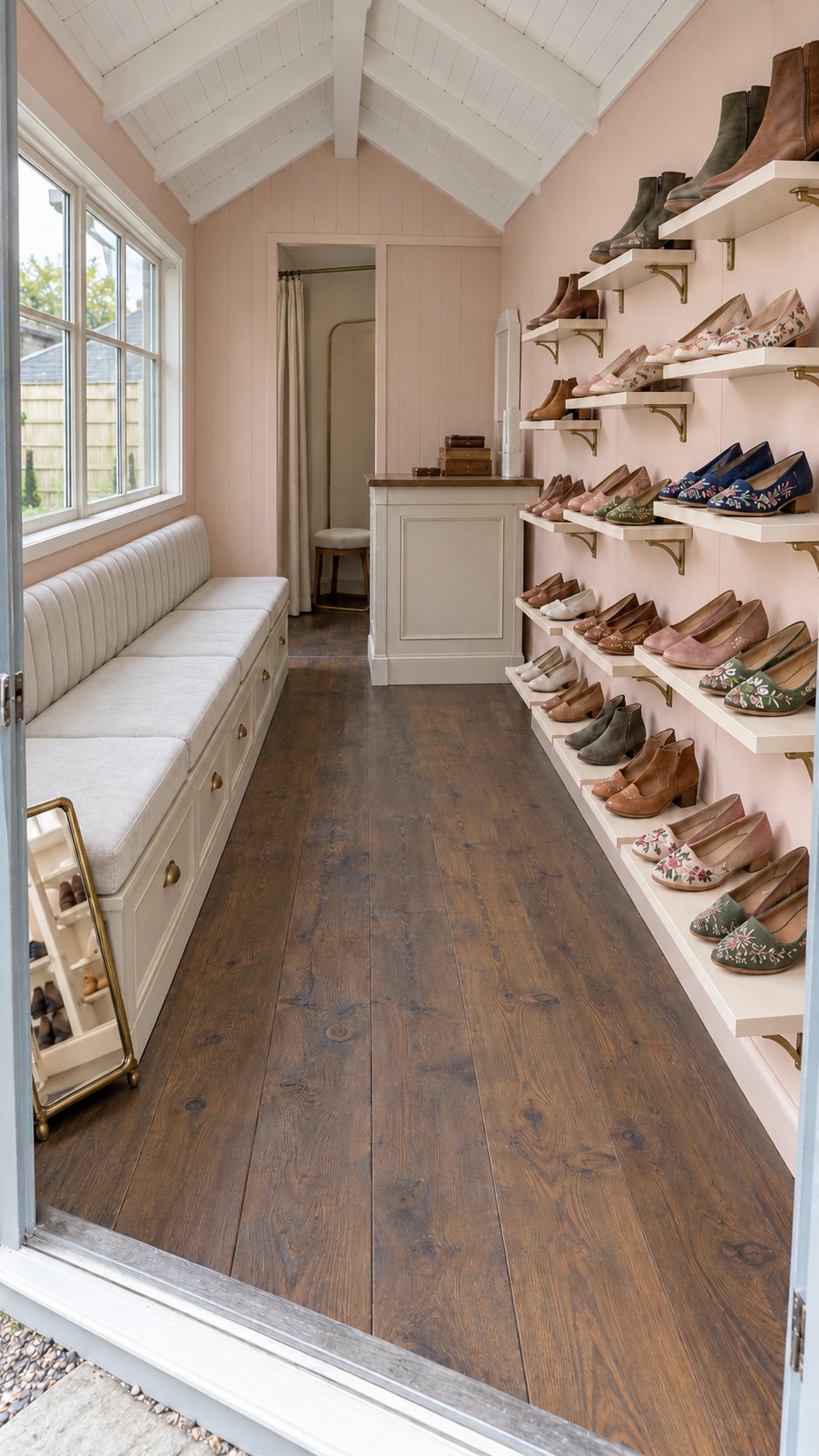
Shallow shelves display individual shoes beside a long upholstered bench, creating a useful place to try them on. The pink walls keep the display gentle while the dark floor adds contrast. Check shelf fixings for the wall material and keep pairs or sizes organized elsewhere.
A Folding Screen for Hair Accessories
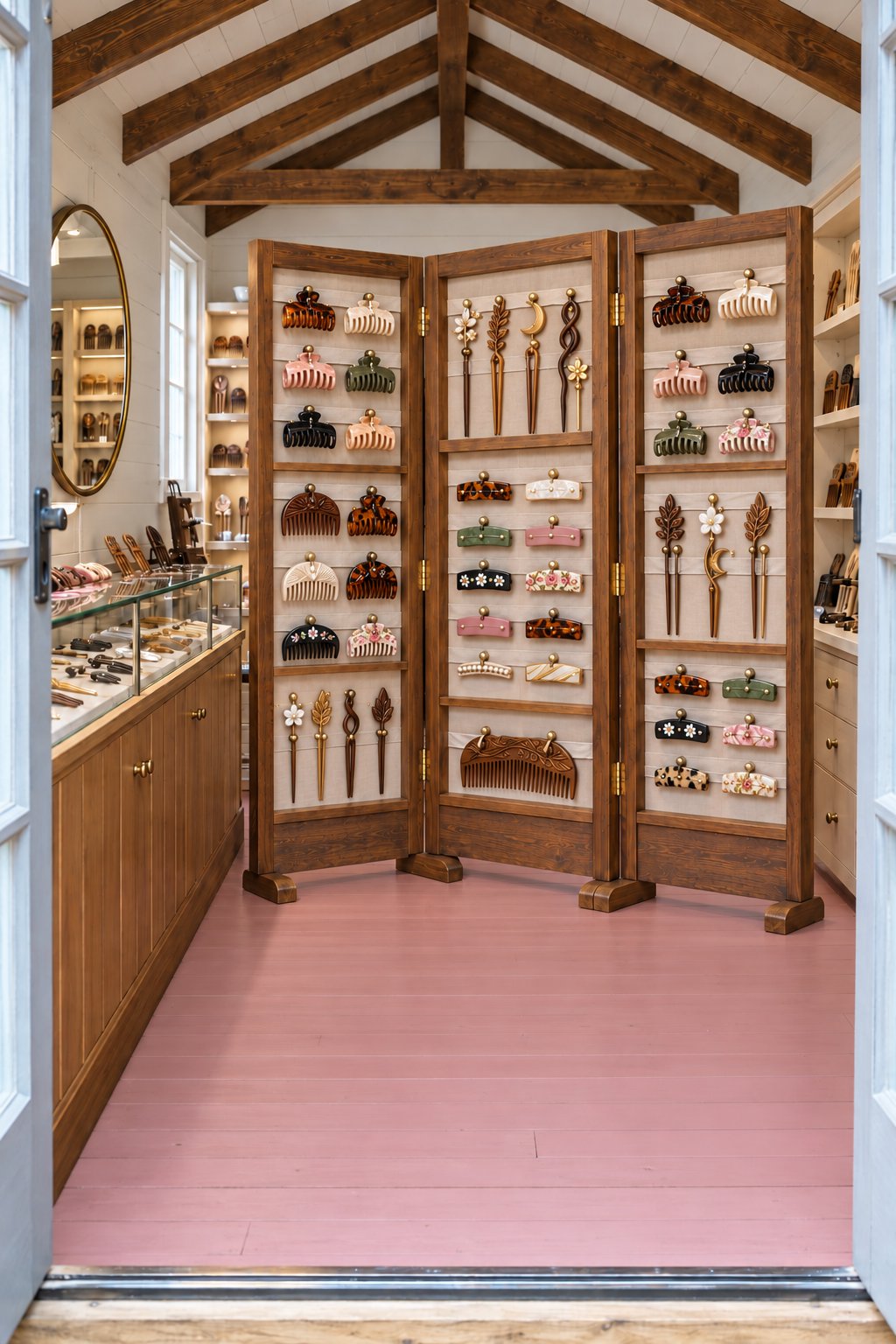
A three panel display brings hair clips, combs and decorative pins together at eye level. Arrange small pieces with visible individual supports so customers can remove one without disturbing the others. Choose a screen with a stable base and position it away from the entrance route.
Vintage Clothing beneath a Sloping Roof
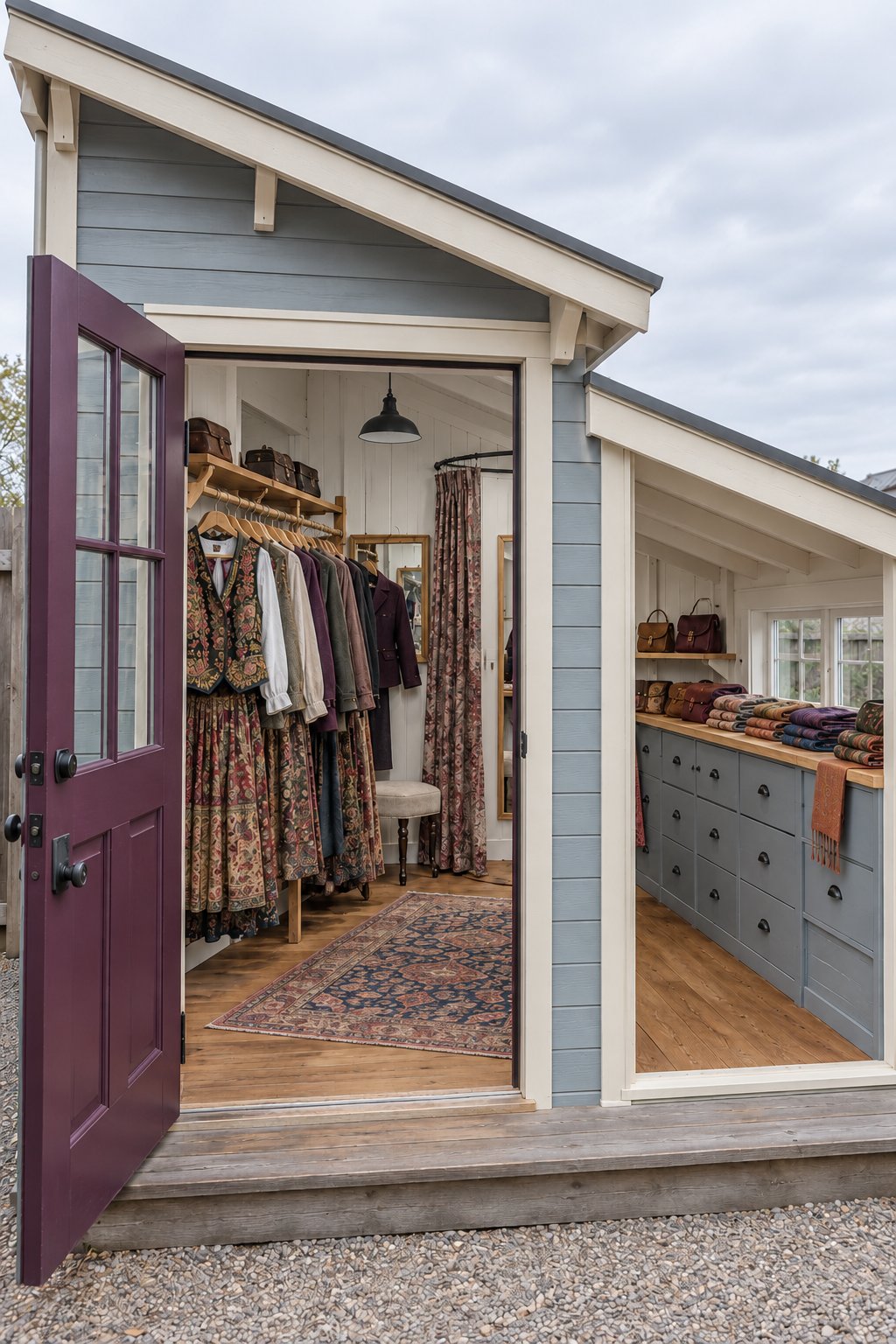
Long garments hang in the taller section of this shed, while folded pieces and bags use the lower roof area. A curtain creates a fitting corner at the back. Measure the lowest ceiling point before placing a counter so shoppers can browse without stooping into the slope.
A Glass Front with Ceiling Supported Rails
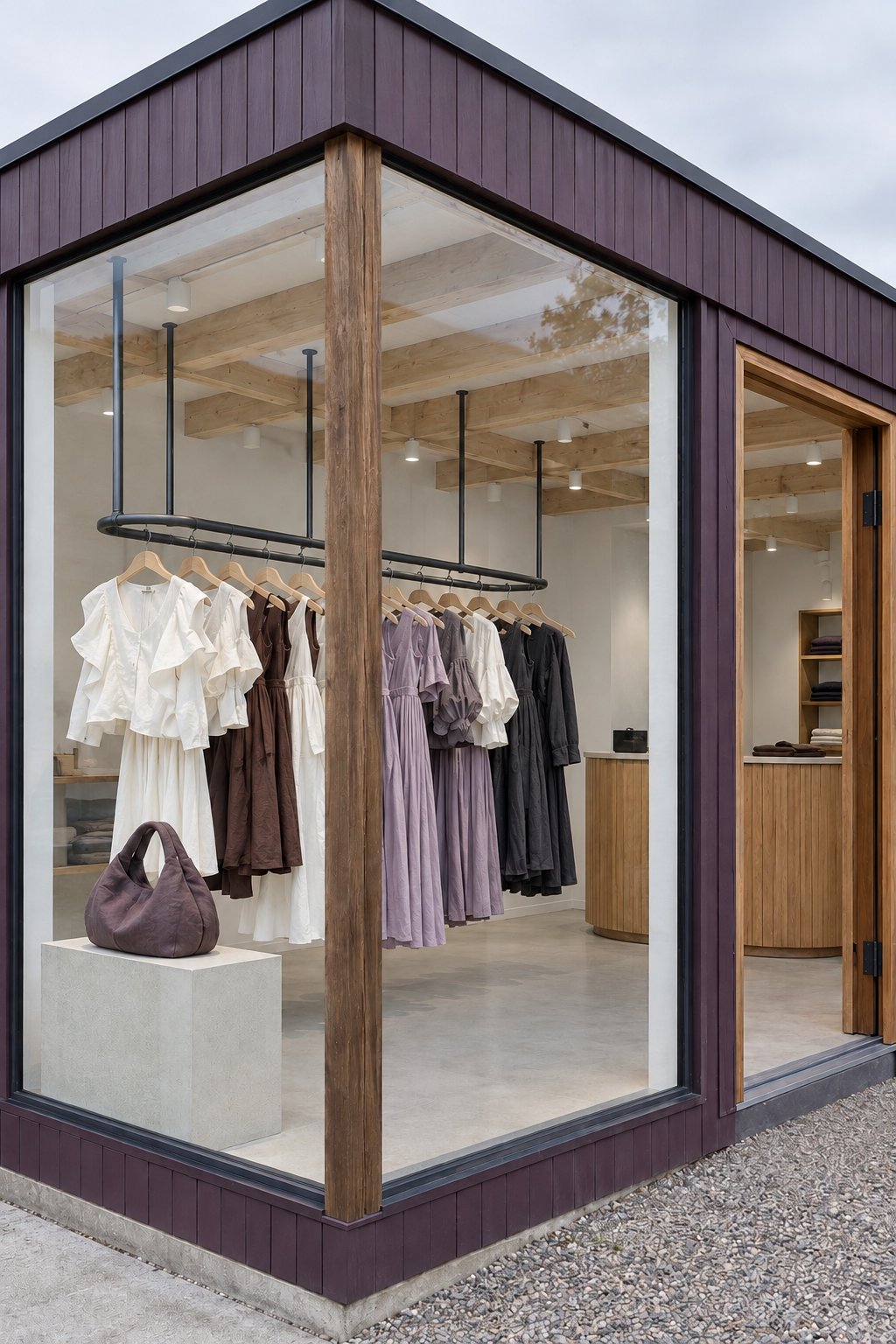
A glass corner makes the hanging clothing visible from outside, leaving the floor open around a small counter. Before hanging a rail, have the roof structure and fixings assessed for the full garment load. Consider window coverings or rotation to protect sensitive fabrics from prolonged sun.
Garden Art on Ledges and Cabinets
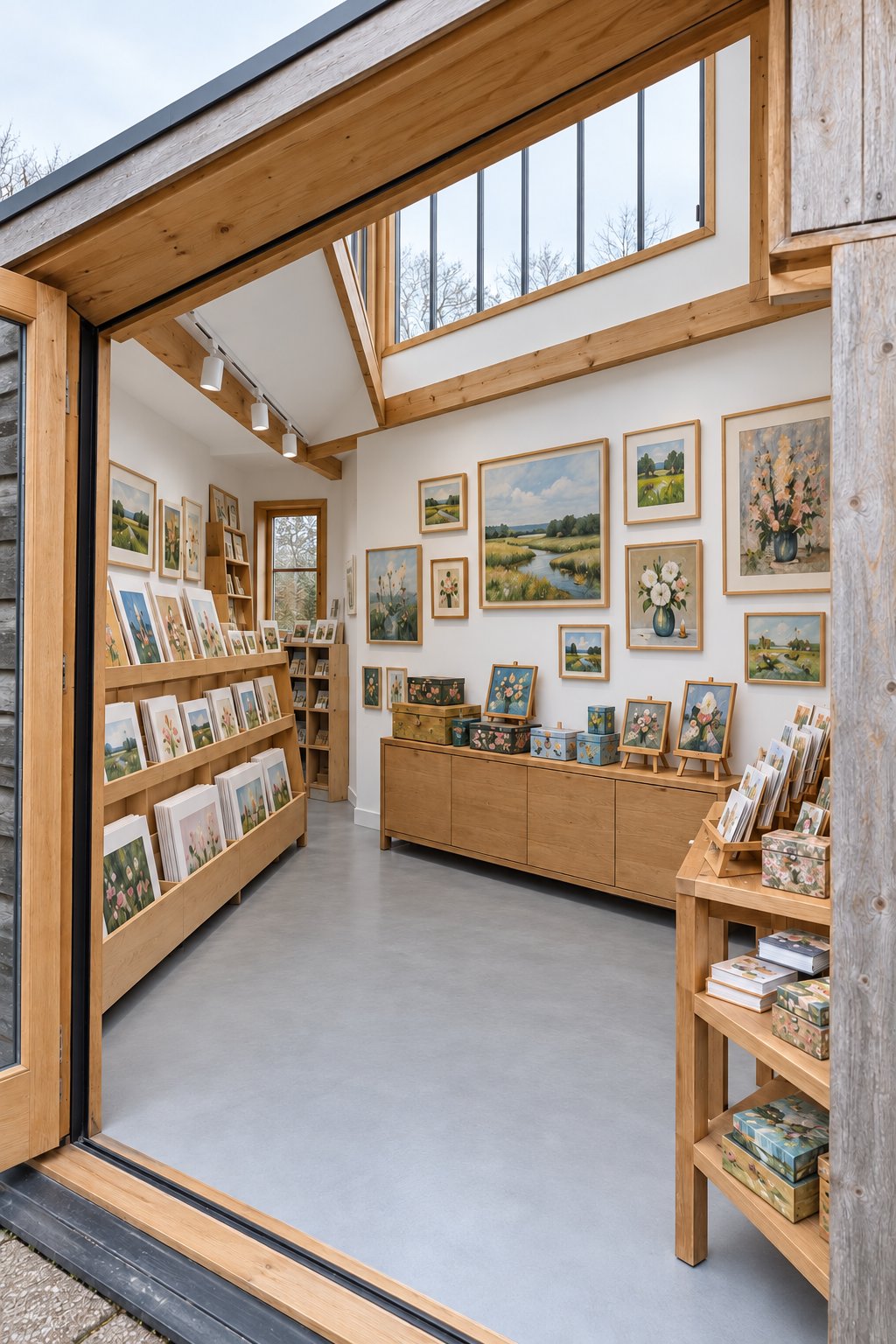
Framed landscapes and flower prints turn the back wall into a gallery, while low ledges let visitors flip through additional work. Keep prints upright in protective sleeves and make the ledges deep enough for the chosen frames. A closed cabinet below can hold extra stock.

Leave a Reply