
A memorable Halloween porch begins with a scene that fits your entrance. These 17 ideas range from simple ghost silhouettes to theatrical Gothic doorways and sheltered seating displays. Compare their scale, main pieces, and material needs to find a look you can adapt around your existing planters, furniture, and architecture.
Table of Contents
- Choose a Scene for Your Porch
- 1. White Hanging Ghosts and Black Pumpkin Accents
- 2. A Gothic Entrance with Red Foliage and Floating Ghosts
- 3. A Haunted Tea Table with Gauze Draped Chairs
- 4. Pumpkin Headed Ghosts Above a Covered Porch
- 5. A Vintage Doll Display with Lace and Autumn Flowers
- 6. A Witchy Doorway with Brooms, Ravens, and Book Props
- 7. A Masquerade Entrance with Masks and Dramatic Drapery
- 8. Raven Pedestals, Gold Frames, and Burgundy Florals
- 9. A Graveyard Approach with a Hooded Skeleton Guardian
- 10. A Gothic Arch with Dark Drapery and a Pumpkin Wreath
- 11. A Colorful Cemetery Theme with Black Pumpkins
- 12. Giant Skeletons and Pale Pumpkin Borders
- 13. An Abandoned House Scene with a Coffin and Weathered Markers
- 14. Branch Wreaths and a Witchy Symbol Display
- 15. An Aged Witch's Workshop with Twisted Branches
- 16. A Victorian Mourning Parlor with Dark Furniture
- 17. Ghostly Widow Figures in Ivory Gowns and Veils
- Check Access, Weather, and Lighting Before Displaying
- Begin with One Theme and One Focal Point
Choose a Scene for Your Porch
- Narrow entrances: Use the paired ghosts in idea 1 or the two figure overhead adaptation in idea 4 for character with fewer pieces at floor level.
- Covered seating areas: The haunted tea table in idea 3 and mourning parlor in idea 16 turn an existing seating corner into a seasonal scene.
- Wide entrances and side gardens: Compare the hooded guardian in idea 9, colorful flower groups in idea 11, and tall pale skeletons in idea 12.
Each idea below highlights its visual effect, a manageable home adaptation, and the main pieces to look for. These are decorating concepts; large suspended props and permanent lighting need an installation appropriate to the actual porch.
1. White Hanging Ghosts and Black Pumpkin Accents
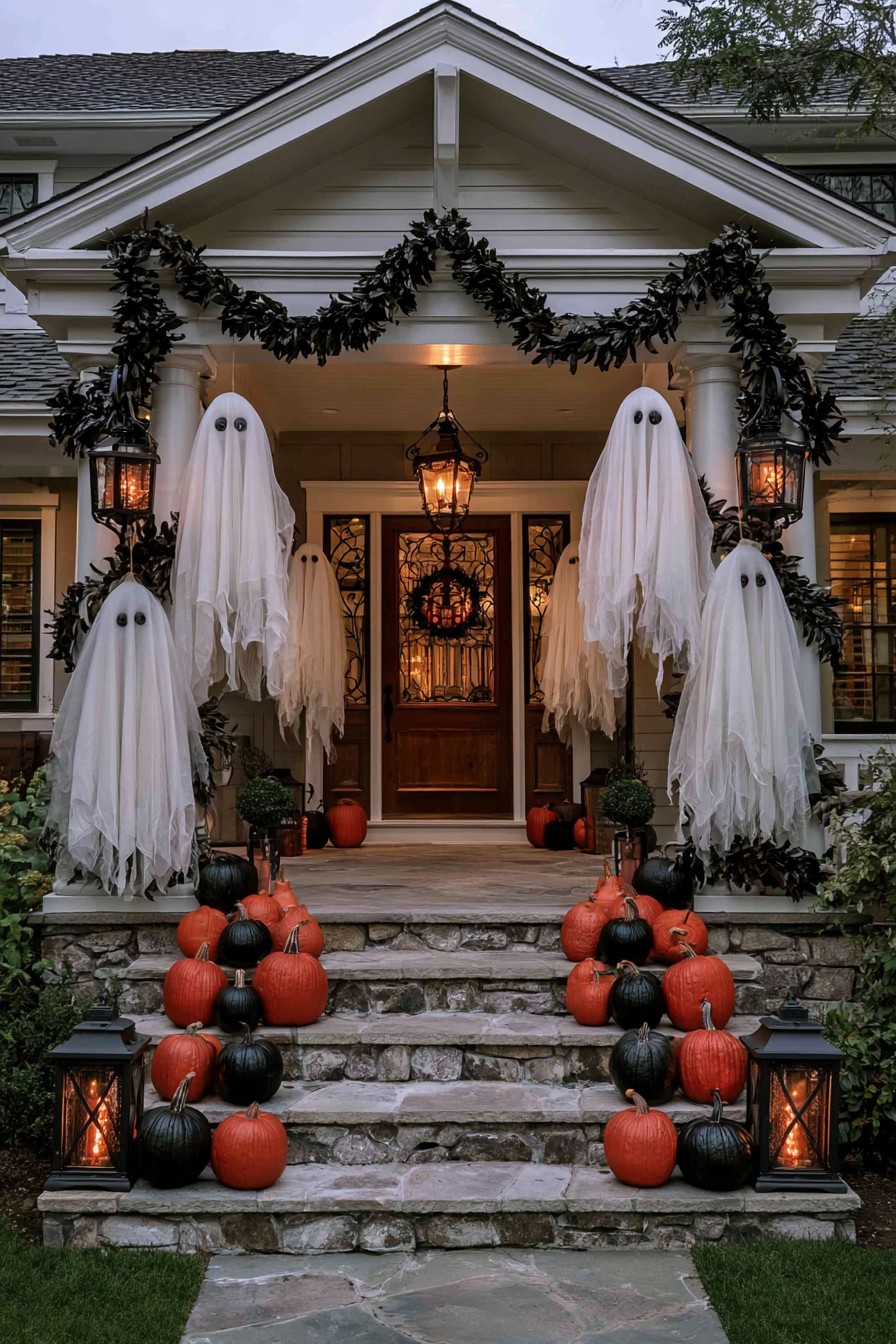
White ghosts against black leaf garlands create a crisp silhouette that reads clearly from the street. The restrained contrast suits pale columns and simple porch architecture, while a few orange pumpkins provide a familiar seasonal accent. This is the quieter choice when you want Halloween character without a fully theatrical entrance.
For a narrow porch, use one ghost at each side of the door, a single dark garland above it, and small pumpkin groups beside the stair base. Let the white fabric and black foliage carry the design; elaborate costumes and multiple layers of ornaments add little to this particular effect.
Key pieces: Two lightweight white ghost figures, black leaf garland, and a few orange and black pumpkins.
2. A Gothic Entrance with Red Foliage and Floating Ghosts
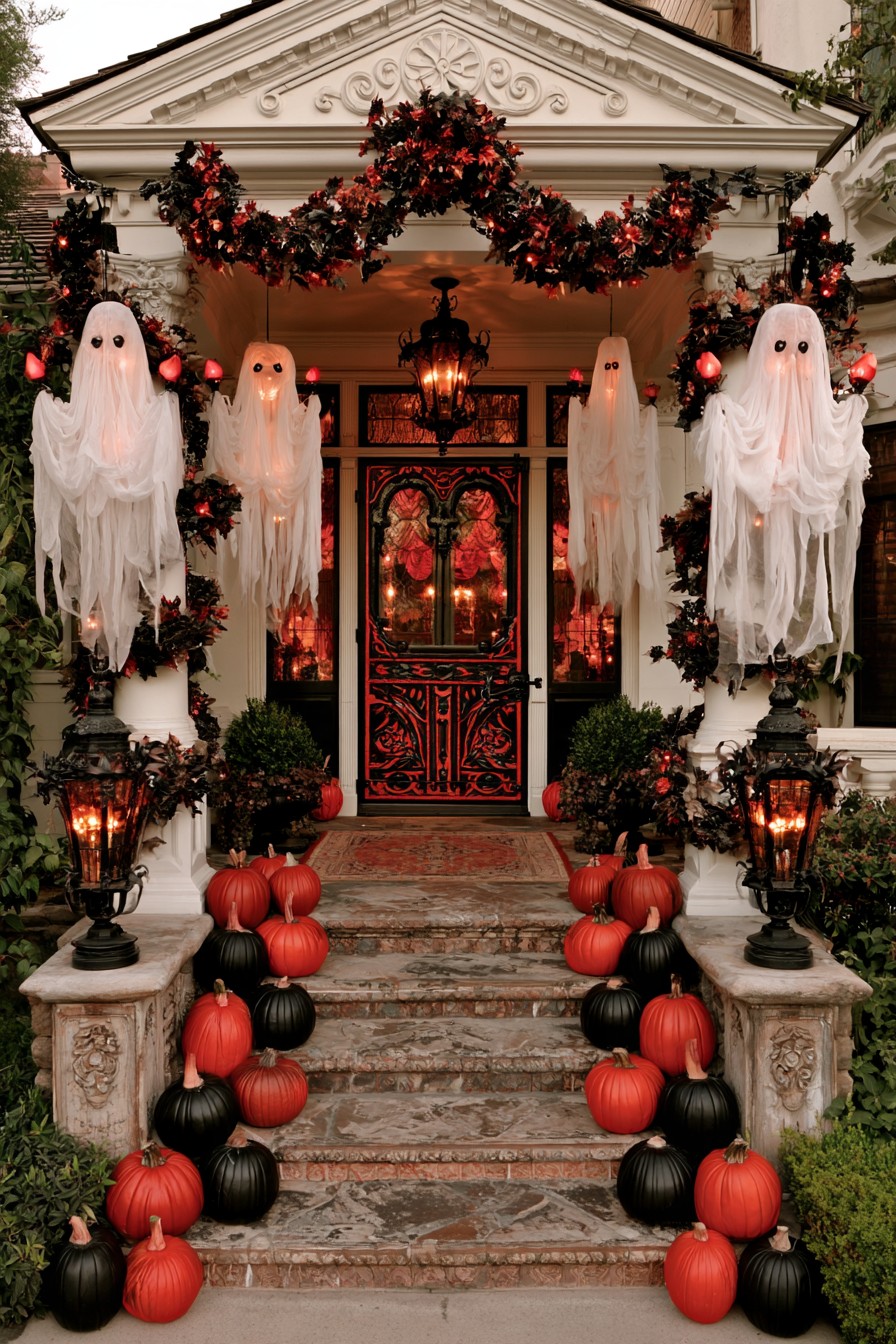
Burgundy leaves and black foliage turn the porch frame into a dense Gothic border. Pale figures punctuate the darker swags, drawing the eye toward the ornate doorway. Unlike the simple contrast of the first arrangement, this version relies on saturated color and fuller botanical texture for its sense of ceremony.
Build the strongest foliage cluster above the door, then repeat burgundy in shorter sections beside the columns. Leave gaps around the ghosts so their silhouettes remain distinct. A matching door wreath can connect the upper border with the entrance even when you reduce the number of hanging figures.
Key pieces: Burgundy and black foliage garlands, pale ghost figures, a coordinating wreath, and dark pumpkin accents.
3. A Haunted Tea Table with Gauze Draped Chairs
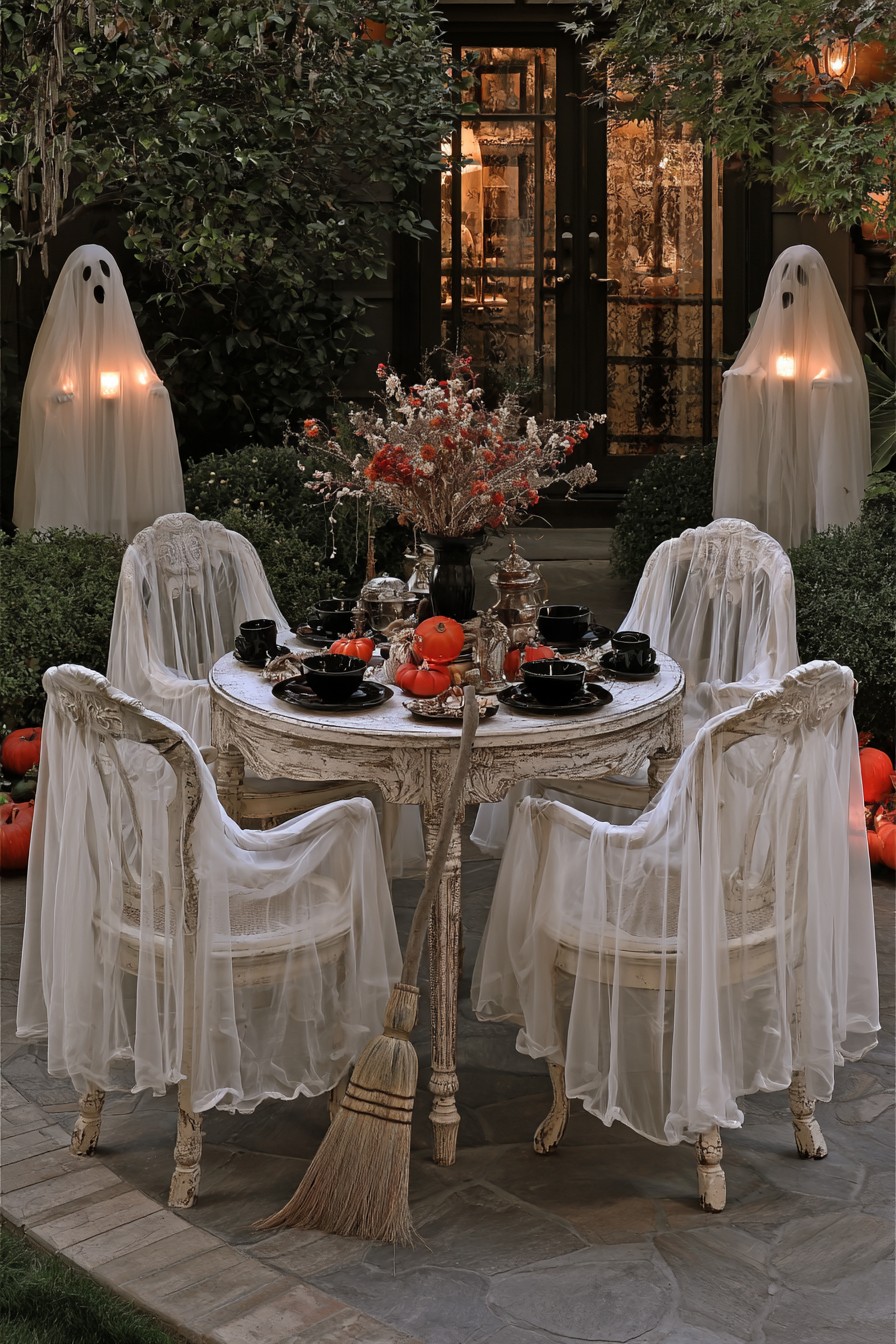
A round tea table surrounded by gauze draped chairs suggests a gathering of invisible guests. Black cups contrast with the pale furniture, and a tall autumn bouquet gives the intimate scene a center. It belongs in a covered seating corner where visitors can pause, rather than in the doorway itself.
Use an existing table with two display chairs if your porch is compact. Antique indoor furniture and gauze need a dry, sheltered setting and should come indoors between short displays when moisture is likely. Remove the drapes before sitting, and use proper tableware if serving refreshments. For coordinated place settings, explore ghost themed table styling with antique silver tones.
Key pieces: A small table, display chairs, white gauze, black cups, an autumn arrangement, and optional freestanding ghosts.
4. Pumpkin Headed Ghosts Above a Covered Porch
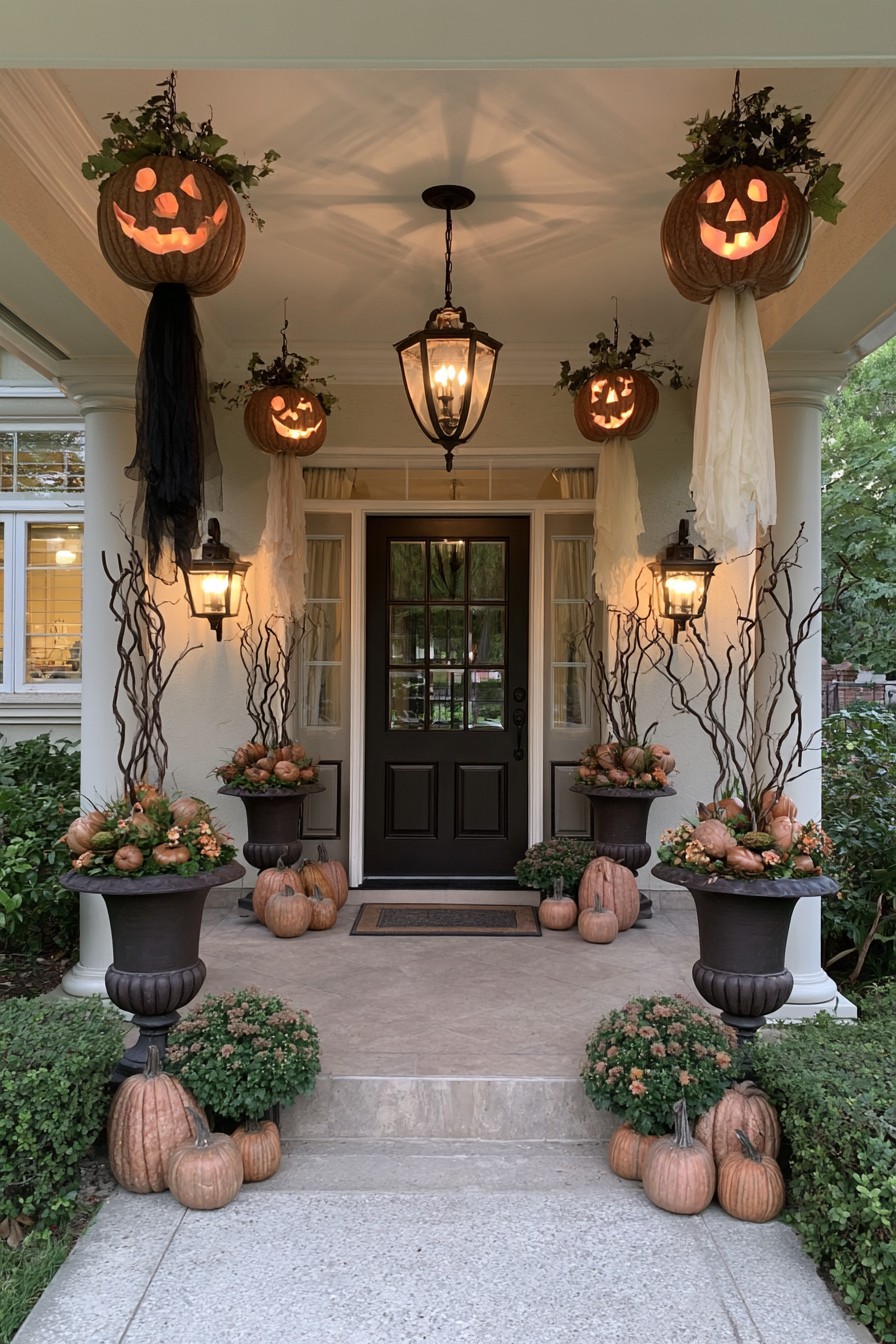
Hanging pumpkin characters make the upper porch the attraction, leaving more floor space available than a dense collection of freestanding props. Contrasting fabric tails add movement beneath the orange heads, while tall urns create a grounded counterpoint. The effect works especially well beneath a plain porch ceiling.
A small entrance needs only two lightweight figures and two existing planters. Short fabric tails preserve the character without making the installation sprawling. Suspend reusable lightweight heads from supports assessed for their load and exposure, independently of light fittings. Explore more pumpkin color palettes and character details to personalize the faces and decorative accents.
Key pieces: Two lightweight pumpkin head decorations, black and white fabric tails, foliage crowns, and two planters.
5. A Vintage Doll Display with Lace and Autumn Flowers
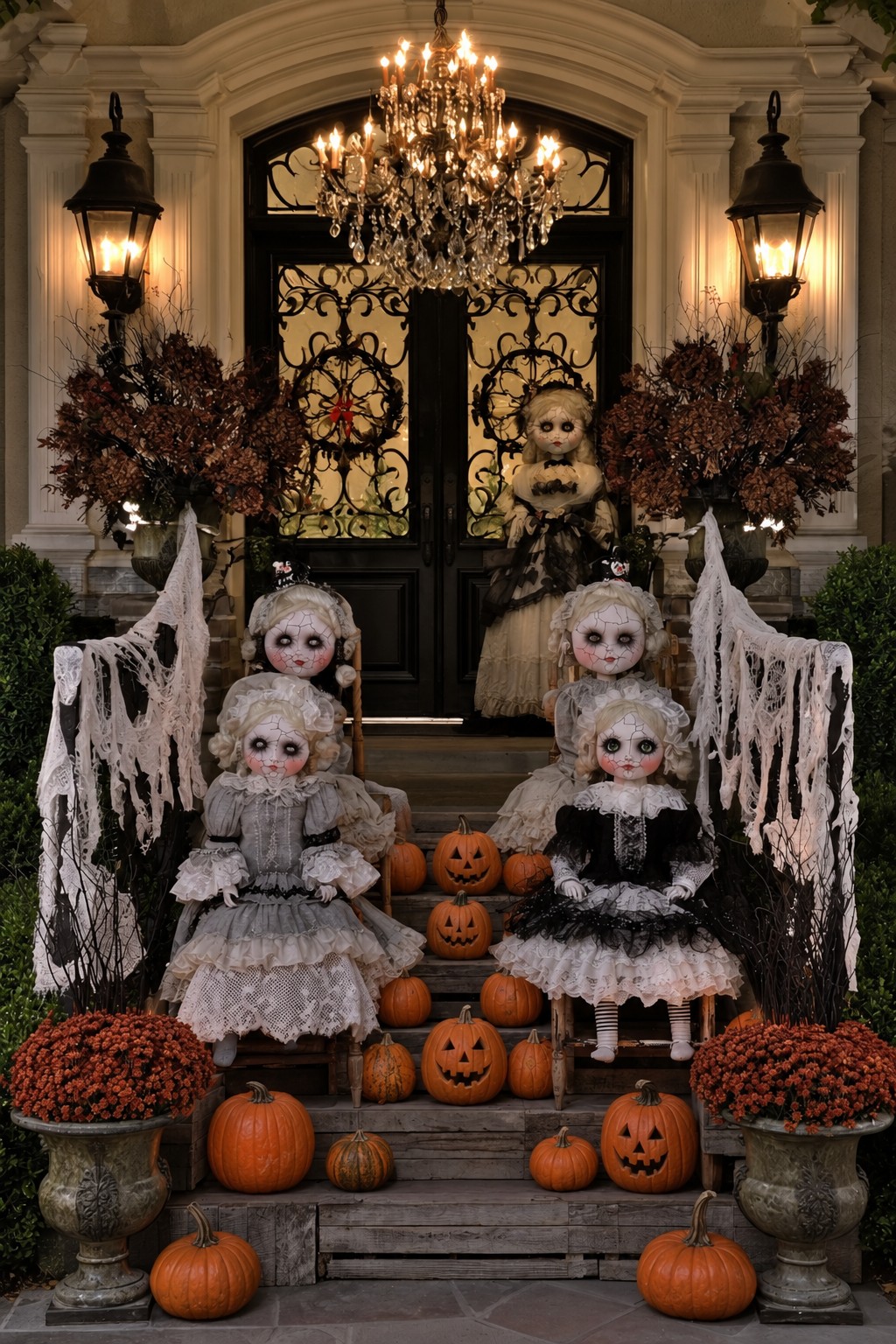
Old fashioned doll costumes make familiar porch flowers feel unexpectedly unsettling. Lace collars and layered skirts soften the figures, while upright poses suggest a waiting group. Rust colored blooms provide the autumn setting without competing with the dolls' faces, making this a character driven display rather than a pumpkin collection.
Try one doll on a dedicated display chair beside a single flower pot. Vintage dolls, fabric bodies, lace dresses, and paper accessories belong in dry shelter for a short event, then indoors; a porch roof alone cannot protect them from blowing rain or damp air. A reusable exterior prop is the better option for a longer exposed display.
Key pieces: One doll or exterior character prop, a display chair, a lace costume, and a pot of autumn flowers.
6. A Witchy Doorway with Brooms, Ravens, and Book Props
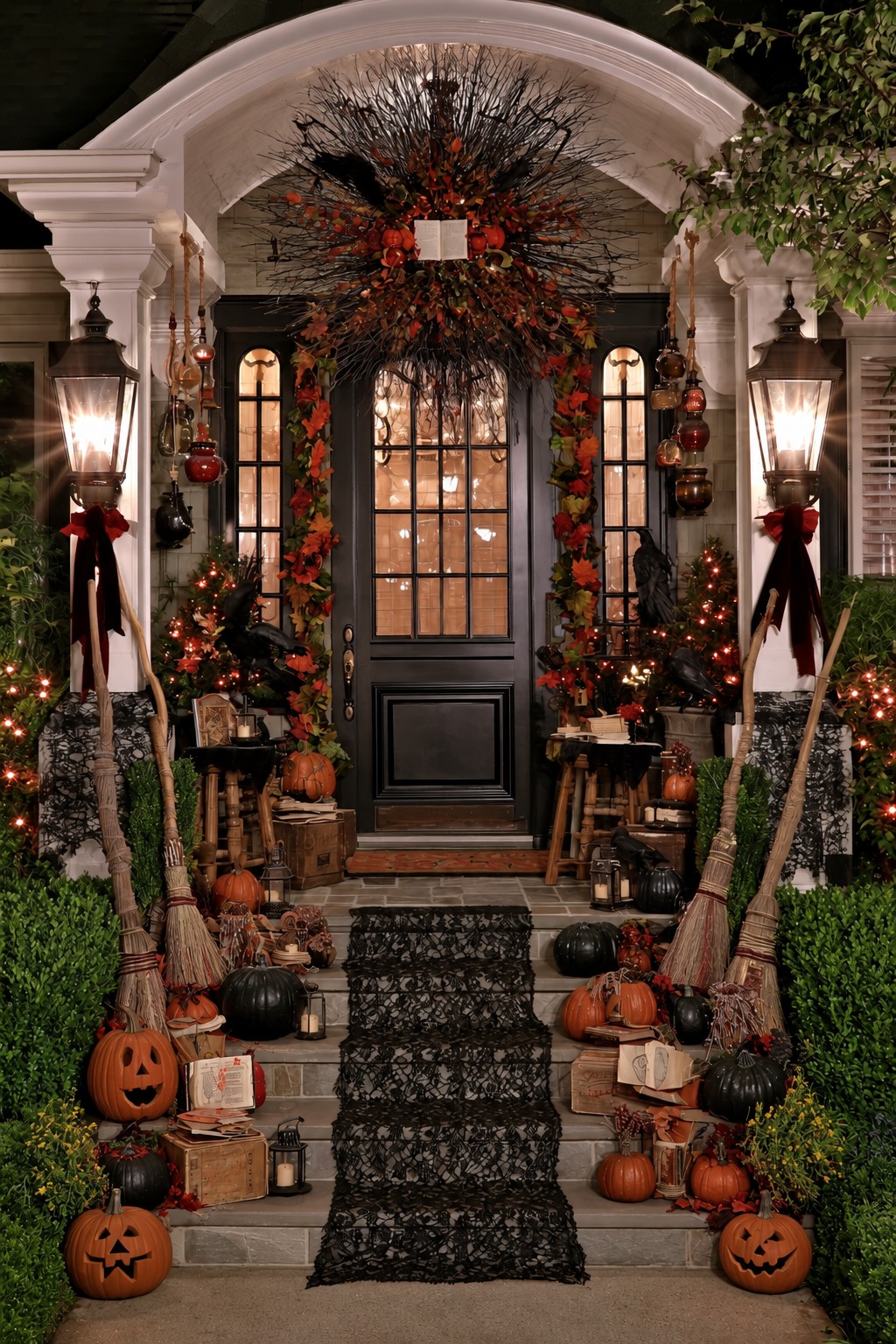
Put black lace on a vertical side panel and arrange brooms on a supported side display, with book props on a small table. This keeps the witchy textures visible without reproducing a fabric runner across the stairs. Above the doorway, radiating branches and autumn foliage suggest an untidy spell library.
A raven beside an open reproduction book makes the story readable without filling every corner. Printed pages and cardboard covers are short term details for a dry, sheltered area; retrieve them before damp weather. For an exposed installation, choose weather resistant imitation books and a compact branch arrangement instead of leaving actual volumes outdoors.
Key pieces: Decorative brooms, raven figures, reproduction book props, a black lace panel, and an autumn branch arrangement.
7. A Masquerade Entrance with Masks and Dramatic Drapery
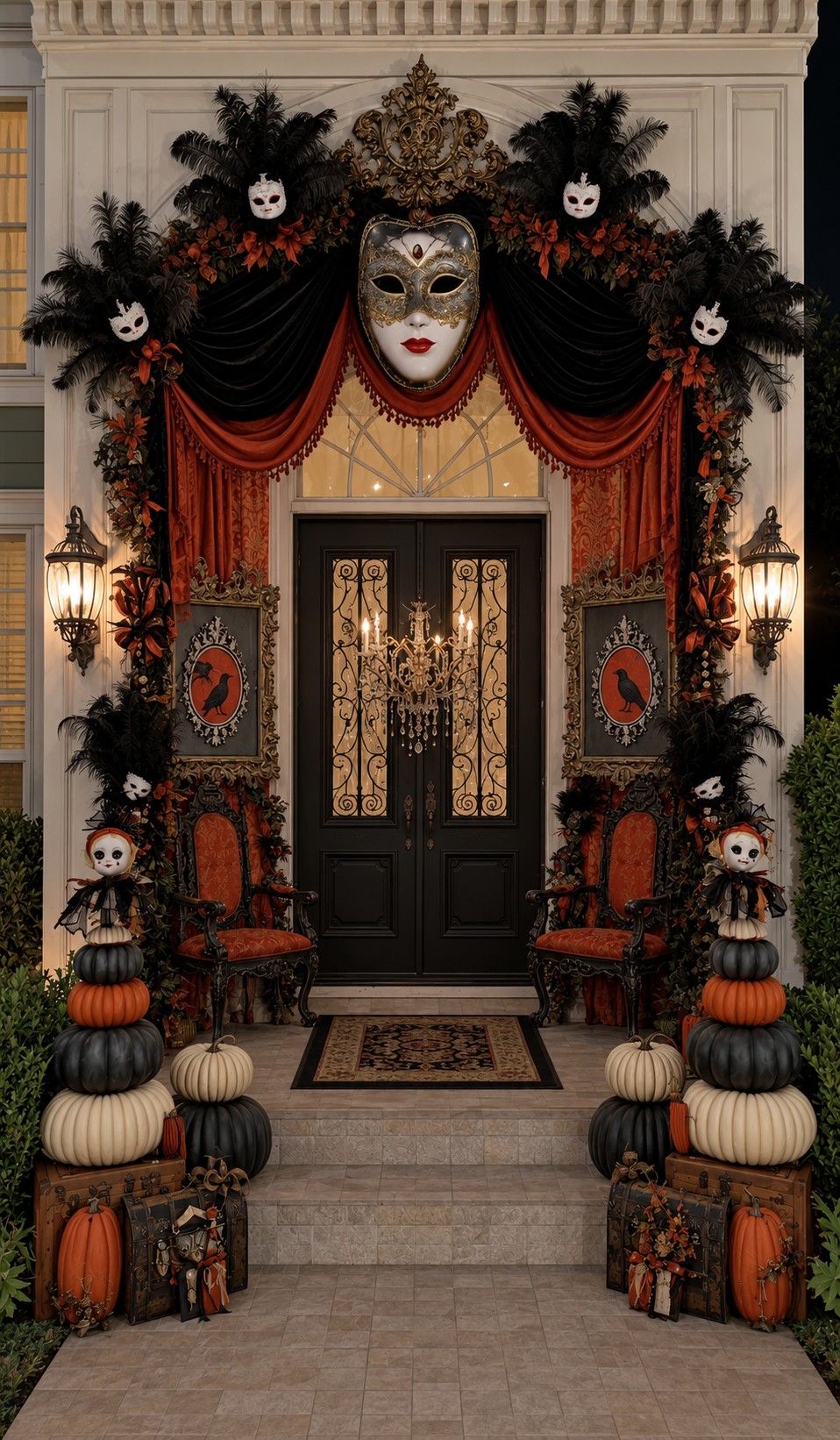
One oversized mask gives this porch the atmosphere of a deserted theater. Broad rust and black fabric swags create a stage curtain effect, while smaller pale masks provide rhythm around the border. The formal symmetry suits an entrance with enough height to give the main face breathing room.
On a smaller porch, mount one lightweight decorative mask against a compact foliage backing and omit the chairs and towers. Plush indoor upholstery, feather sprays, and heavy drapery should appear only in dry shelter for a brief display, then return indoors. A molded mask with a painted theatrical border carries the theme with fewer moisture sensitive materials.
Key pieces: A main decorative mask, dark foliage backing, rust and black fabric swags, and optional smaller pale masks.
8. Raven Pedestals, Gold Frames, and Burgundy Florals
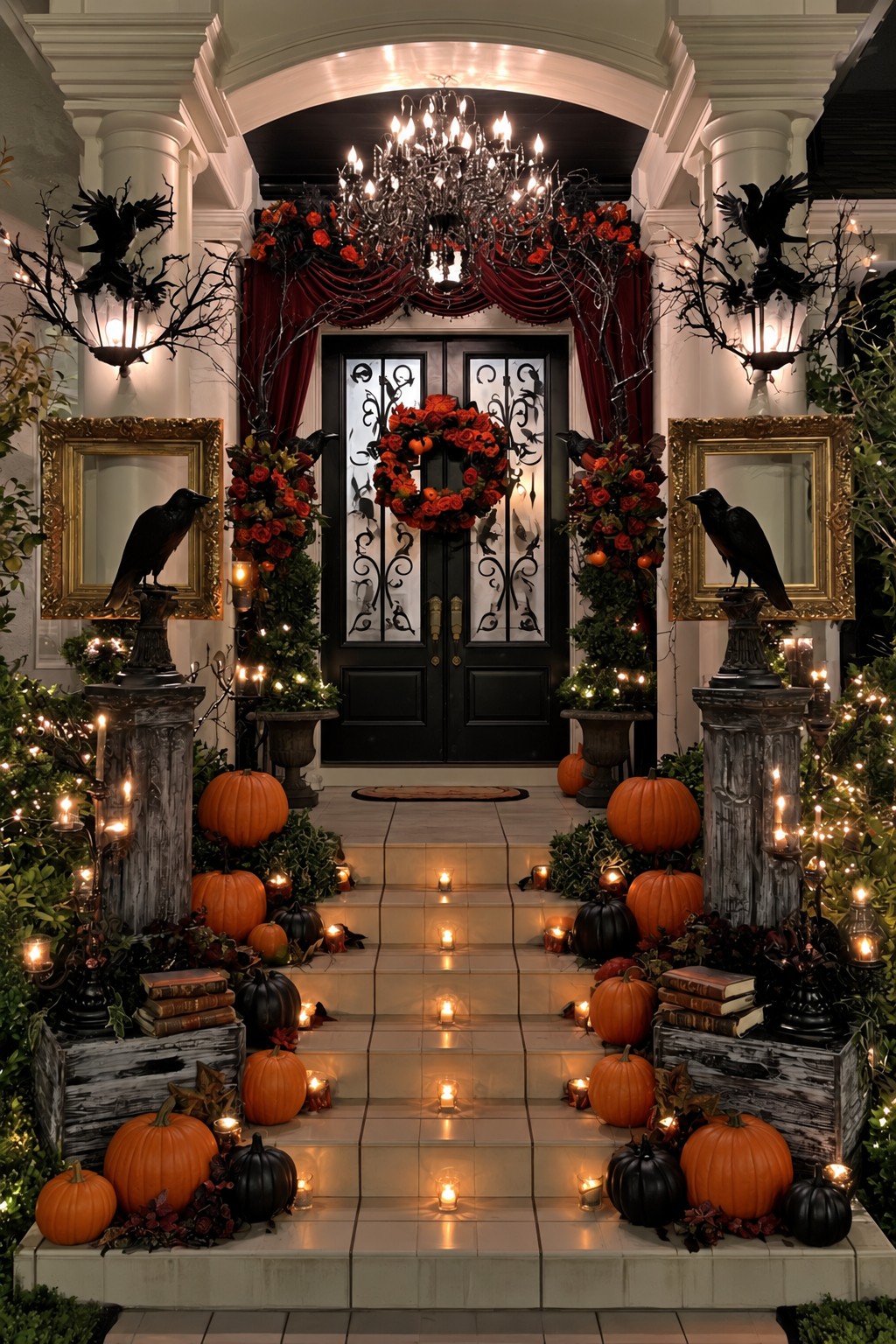
Place any accent lights on raised side display surfaces, then position a raven in front of a lightweight gold frame. The pale frame center makes the dark bird silhouette legible, while burgundy flowers connect it with the doorway. This abandoned gallery theme gains its character from the bird and frame pairing.
A single raven, one frame, and a floral cluster can reproduce the effect beside a compact entrance. Use a broad, stable display plinth sized for the assembled arrangement, and secure the frame instead of balancing it behind the bird. An empty decorative frame avoids the extra weight and fragile glass of an indoor picture frame.
Key pieces: A raven figure, lightweight decorative frame, burgundy flowers, and a stable display plinth.
9. A Graveyard Approach with a Hooded Skeleton Guardian
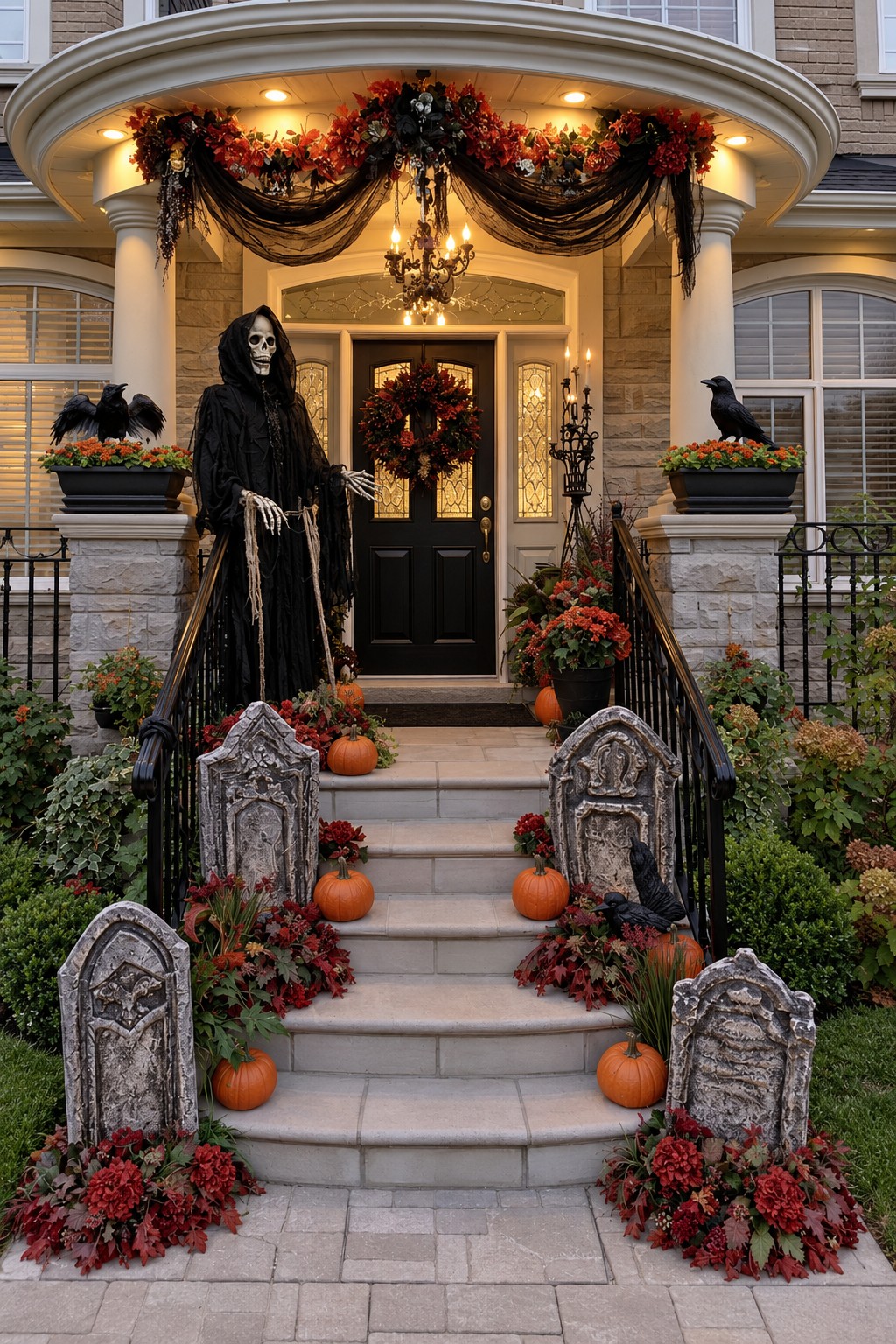
The hooded guardian is the main decision here: its tall dark robe establishes a watchful character before the smaller scenery registers. Gray markers and low autumn flowers act as supporting details. This approach suits a broad landing or side garden where the figure can be seen in full from the path.
Position the guardian behind a small side grouping, allowing its hands and posture to remain visible above it. Choose the figure first, then scale the surrounding props to its height; a crowded foreground weakens the character. Extend the cemetery scene into a side garden with weathered pickets around a small Halloween graveyard.
Key pieces: A hooded skeleton figure, a few grave marker props, low autumn flowers, and optional small ravens.
10. A Gothic Arch with Dark Drapery and a Pumpkin Wreath
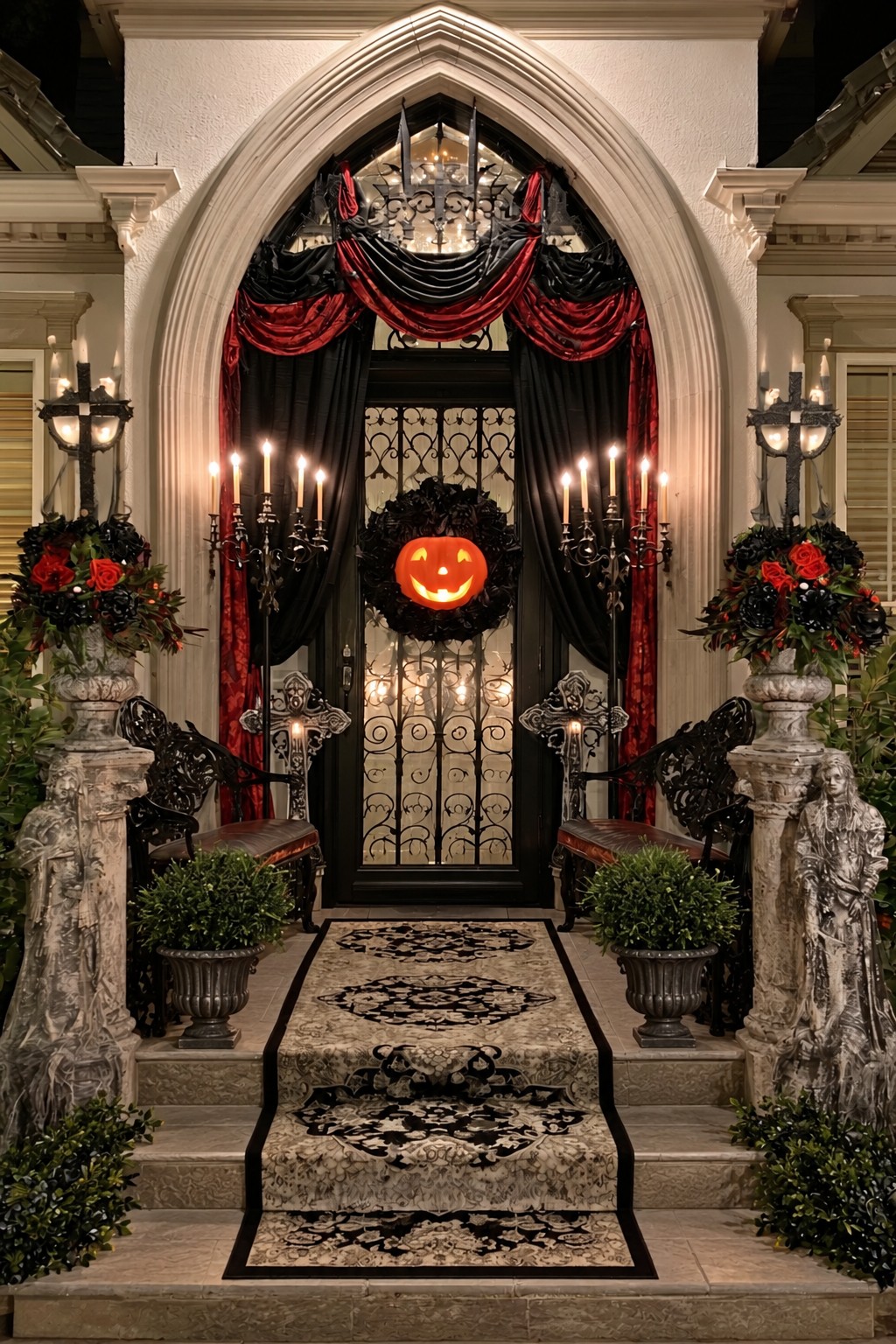
Move the patterned textile treatment to a side backdrop, and put candle accents on elevated display stands beside the entry. The pointed arch, dark swags, and central pumpkin wreath can then form a theatrical frame without relying on decoration underfoot. A bright pumpkin face becomes the cheerful interruption in the otherwise formal Gothic composition.
For a modest doorway, start with a pumpkin face wreath and one floral urn. These two pieces retain the central motif without copying the large curtain installation. If adding drapery, follow the existing arch above the door instead of concealing its shape, and keep the wreath's depth compatible with the door opening.
Key pieces: A pumpkin face wreath, dark fabric swags, a floral urn, and optional raised candle display stands.
11. A Colorful Cemetery Theme with Black Pumpkins
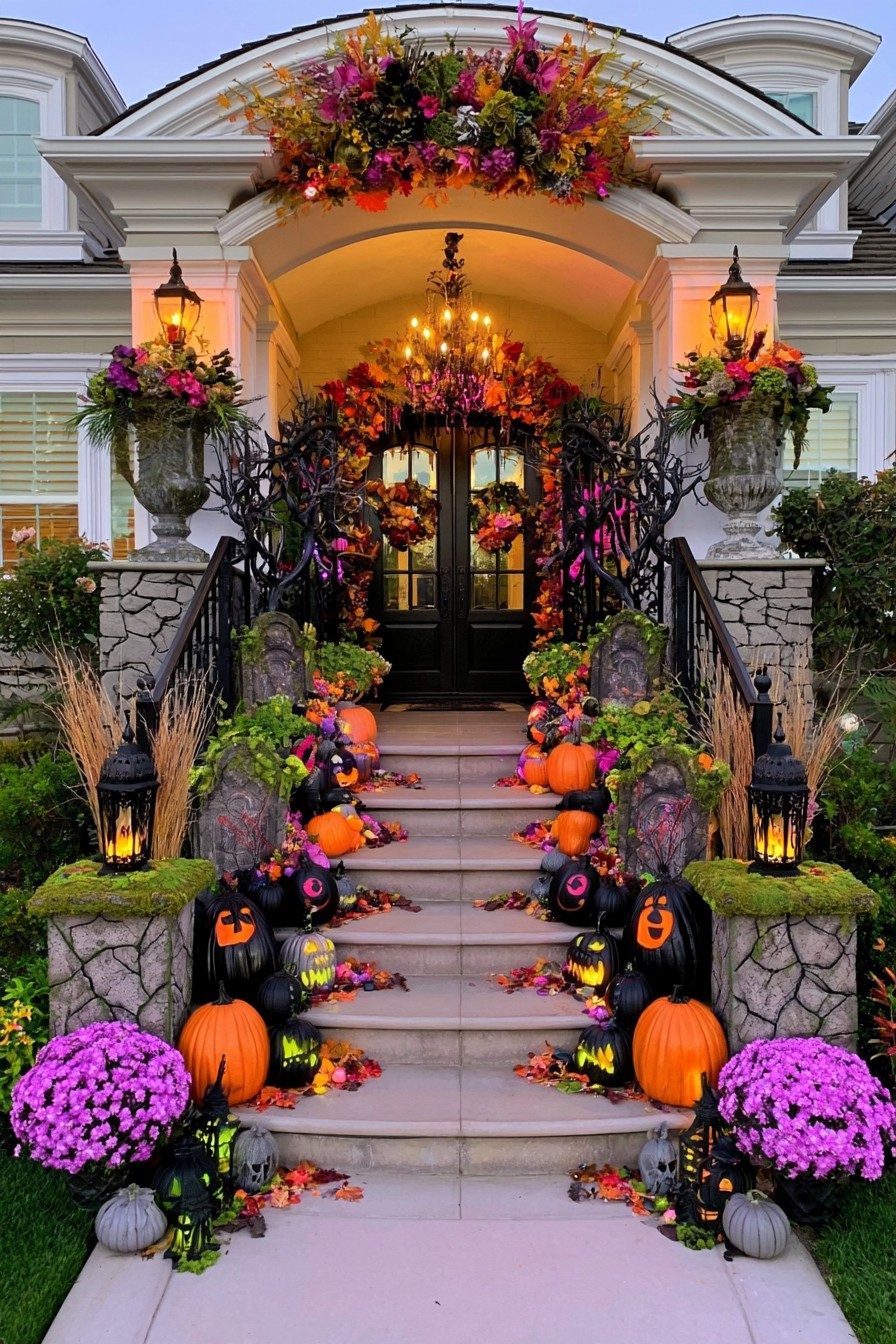
Vivid flowers give this cemetery a playful energy that separates it from the somber guardian scene. Purple and fuchsia mounds, orange accents, and fresh green foliage stand out against black pumpkins and gray markers. The contrast is most effective across a wide entrance or adjacent planting beds where each color group has room.
Use your existing flowering containers as the starting point, choosing living plants for the site's actual light and autumn temperatures. Rounded chrysanthemums can provide concentrated color where local conditions permit; faux floral inserts offer an alternative. Repeat one bright flower color near the door to connect the planting below with the upper porch.
Key pieces: Bright flowering pots or faux floral inserts, black pumpkins, a few gray markers, and dark branch accents.
12. Giant Skeletons and Pale Pumpkin Borders
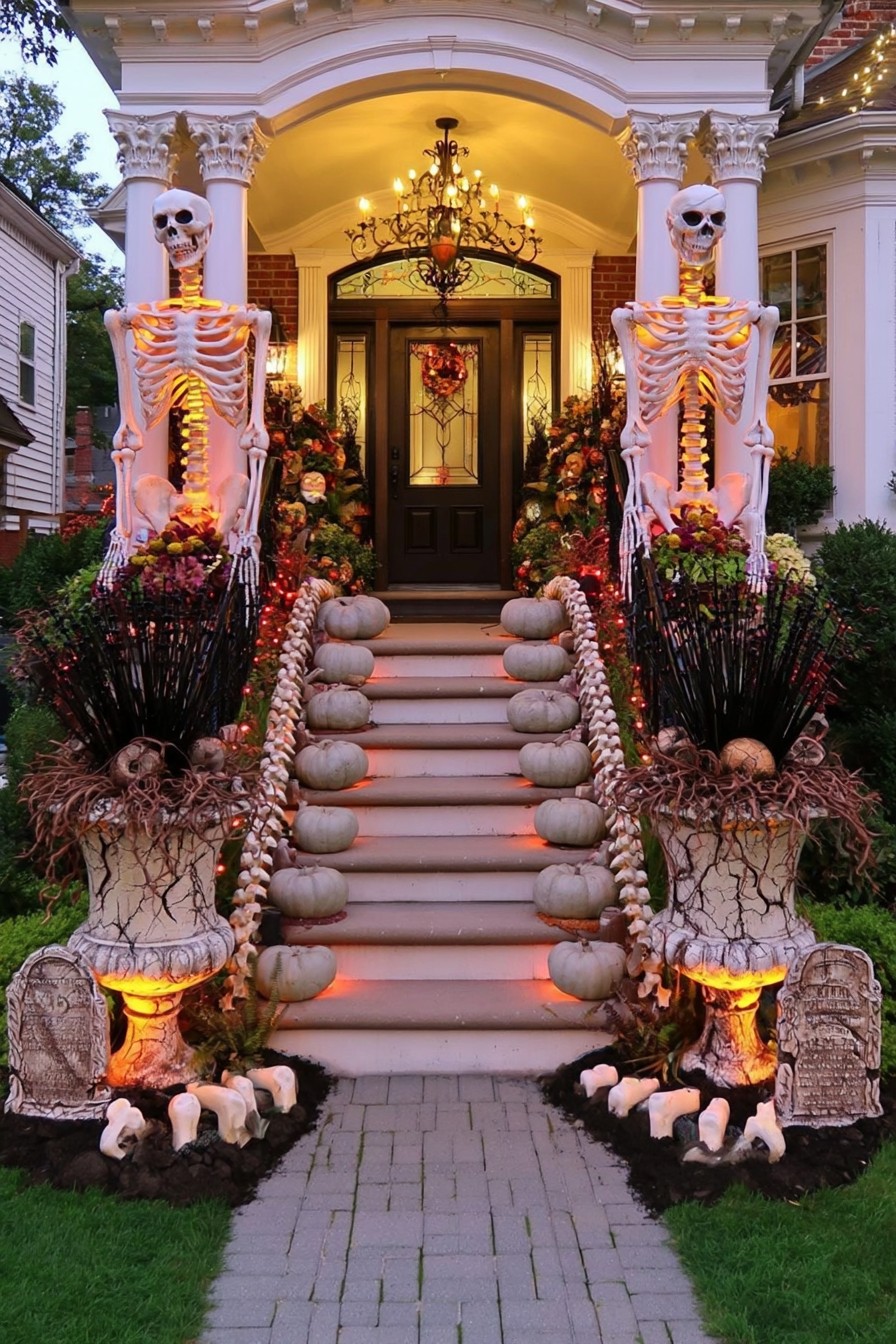
Oversized skeletons echo tall porch columns, while pale pumpkins repeat their bone colored palette closer to the ground. Scale and lightness are the distinguishing features: the display feels monumental because the figures reach upward, not because every surface holds an ornament. Dark urns make the pale forms stand out.
Reserve this idea for a wide entrance or side garden with space for the complete figures and their anchoring systems. Place pumpkins in side beds and use faux bone trim on separate decorative edging, leaving the real rails available. If the towering pair overwhelms the architecture, one smaller skeleton beside a tall planter retains the vertical emphasis.
Key pieces: Large exterior skeleton figures with their specified supports, pale pumpkins, dark urns, and optional faux bone edging.
13. An Abandoned House Scene with a Coffin and Weathered Markers
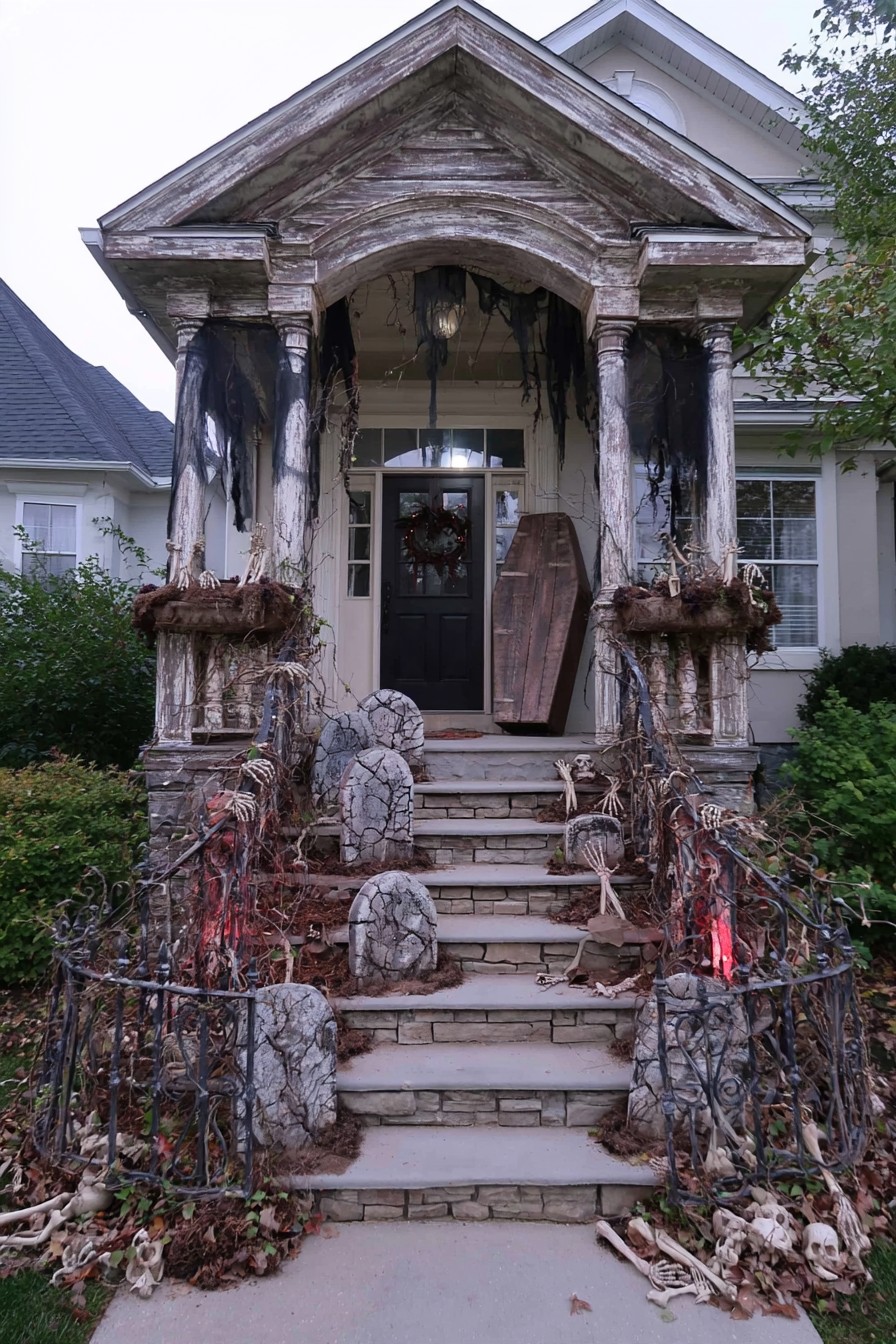
The effect comes from surface treatment: faded wood tones, cracked looking marker finishes, ragged gauze, and dry vine outlines suggest a house forgotten by time. A narrow coffin prop supplies a recognizable silhouette, but the aged textures do most of the storytelling. This is the muted alternative to the colorful cemetery.
Create weathering on removable scenic panels and props, keeping the home's actual trim intact. One secured coffin shape beside a distressed urn and a marker is enough to suggest the scene. Painted mottling and attached faux roots can imply neglect without scattering dirt or using genuinely decayed materials.
Key pieces: A lightweight coffin prop, weathered marker props, a removable distressed panel, dark gauze, and faux vines.
14. Branch Wreaths and a Witchy Symbol Display
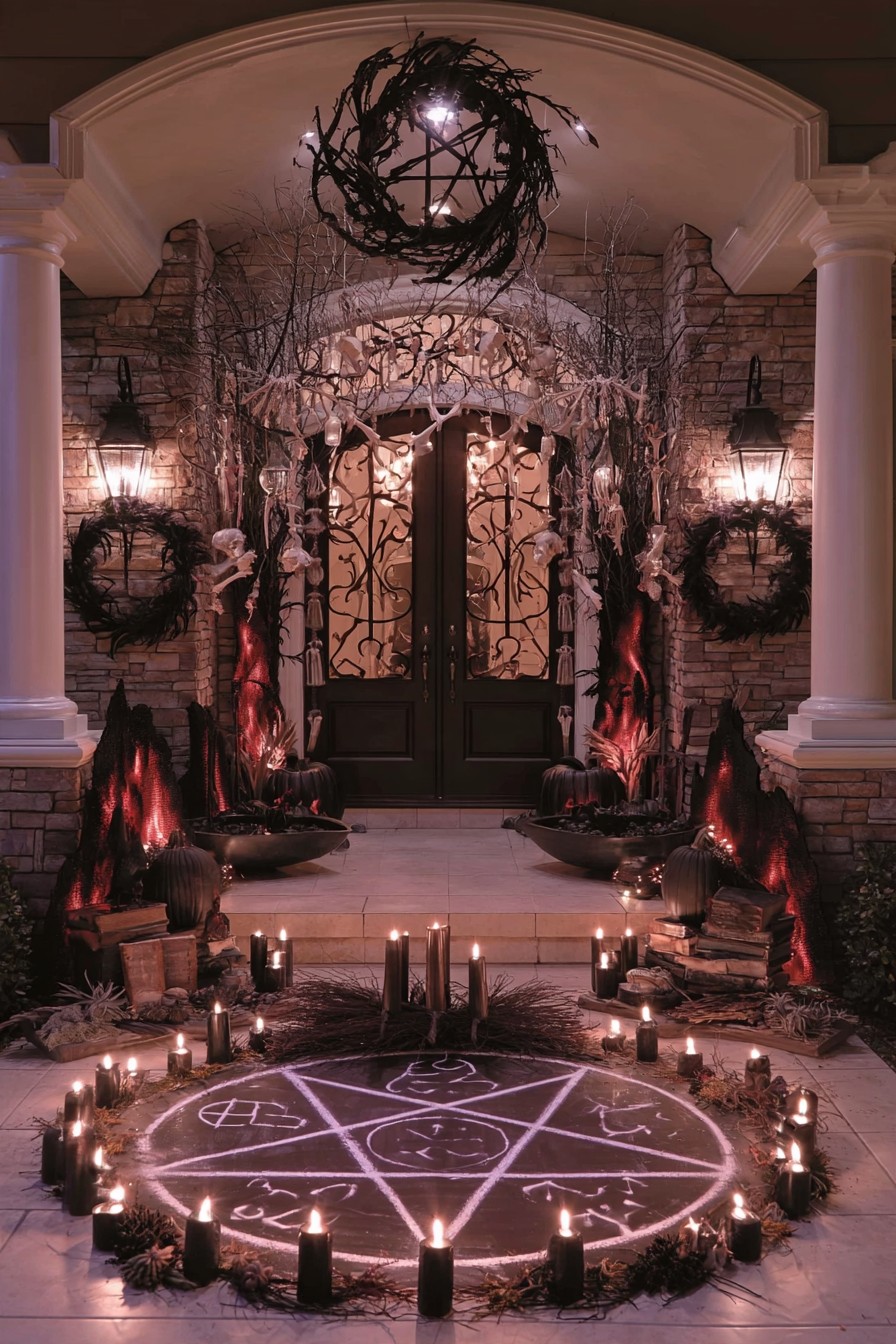
Place the circular star motif on a freestanding side panel or within a separate display area, with branch details and lights contained around it. Above the door, a twig wreath repeats the circle. These related shapes create a deliberate witchy theme without requiring an elaborate cast of characters.
Choose whether the doorway wreath or side graphic will be the main feature, then keep the other smaller. Black pumpkins and shallow botanical bowls introduce rounded forms beneath the angular branches. A painted graphic on a removable panel is easier to relocate and store than a large decorative treatment applied directly to the porch floor.
Key pieces: Twig wreaths, a circular star graphic panel, black pumpkins, shallow botanical bowls, and optional flameless lights.
15. An Aged Witch's Workshop with Twisted Branches
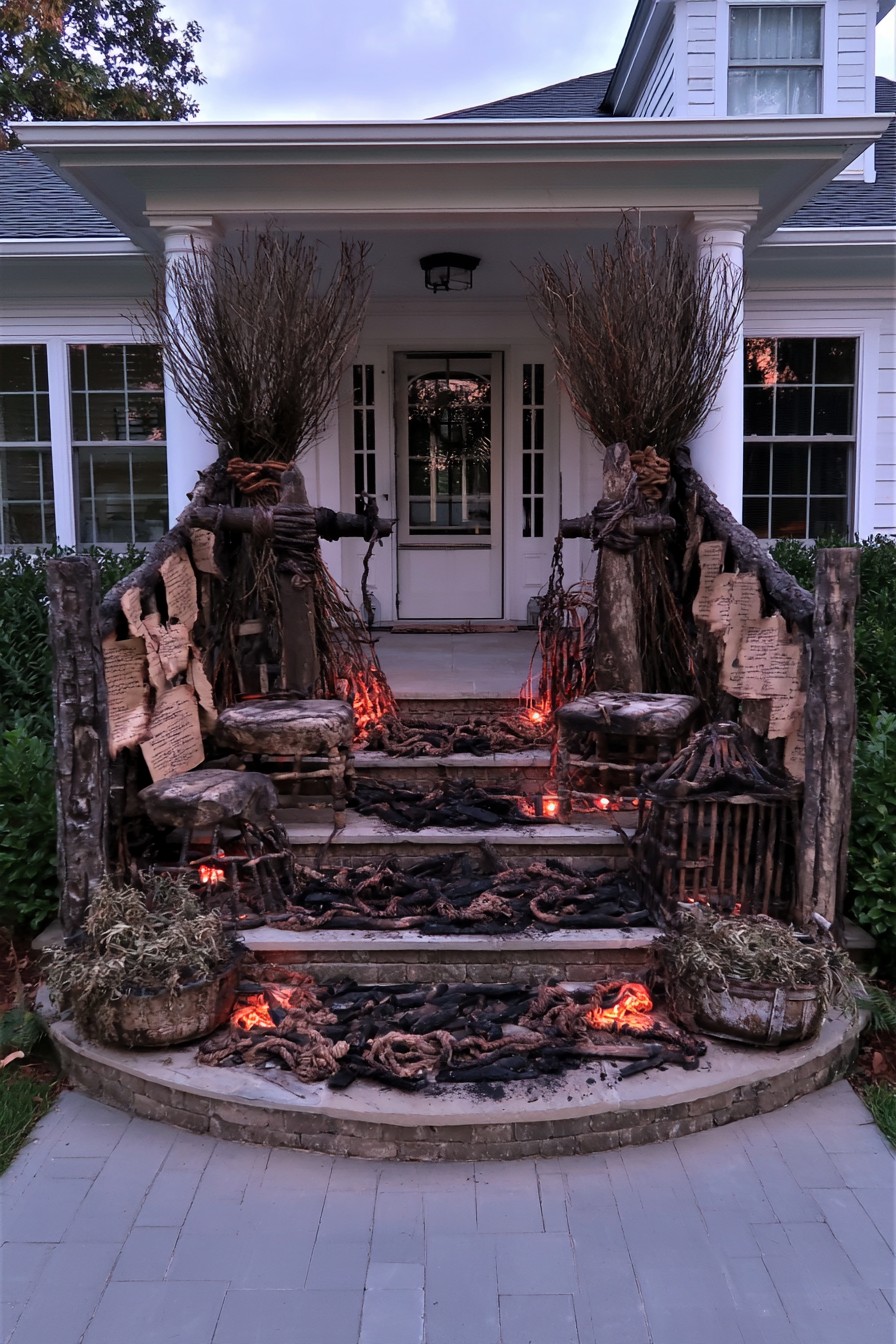
Build the workshop scenery in contained side trays or against separate panels, using branch bundles and rope textures above them. The setting should suggest accumulated tools and strange experiments, with dark painted bark shapes supplying the scorched effect. A small side composition captures that story without copying the debris across the stairs.
Printed notes need dry shelter and should come indoors after a short display. Worn looking chairs can be sound exterior furniture with a scenic finish, or dedicated props that are never offered as seats. Use paint for the burned appearance and keep any separate accent lamp uncovered, rather than burying it in rope or imitation embers.
Key pieces: Supported branch bundles, decorative rope, painted scenic pieces, reproduction notes, and a display stool or side tray.
16. A Victorian Mourning Parlor with Dark Furniture
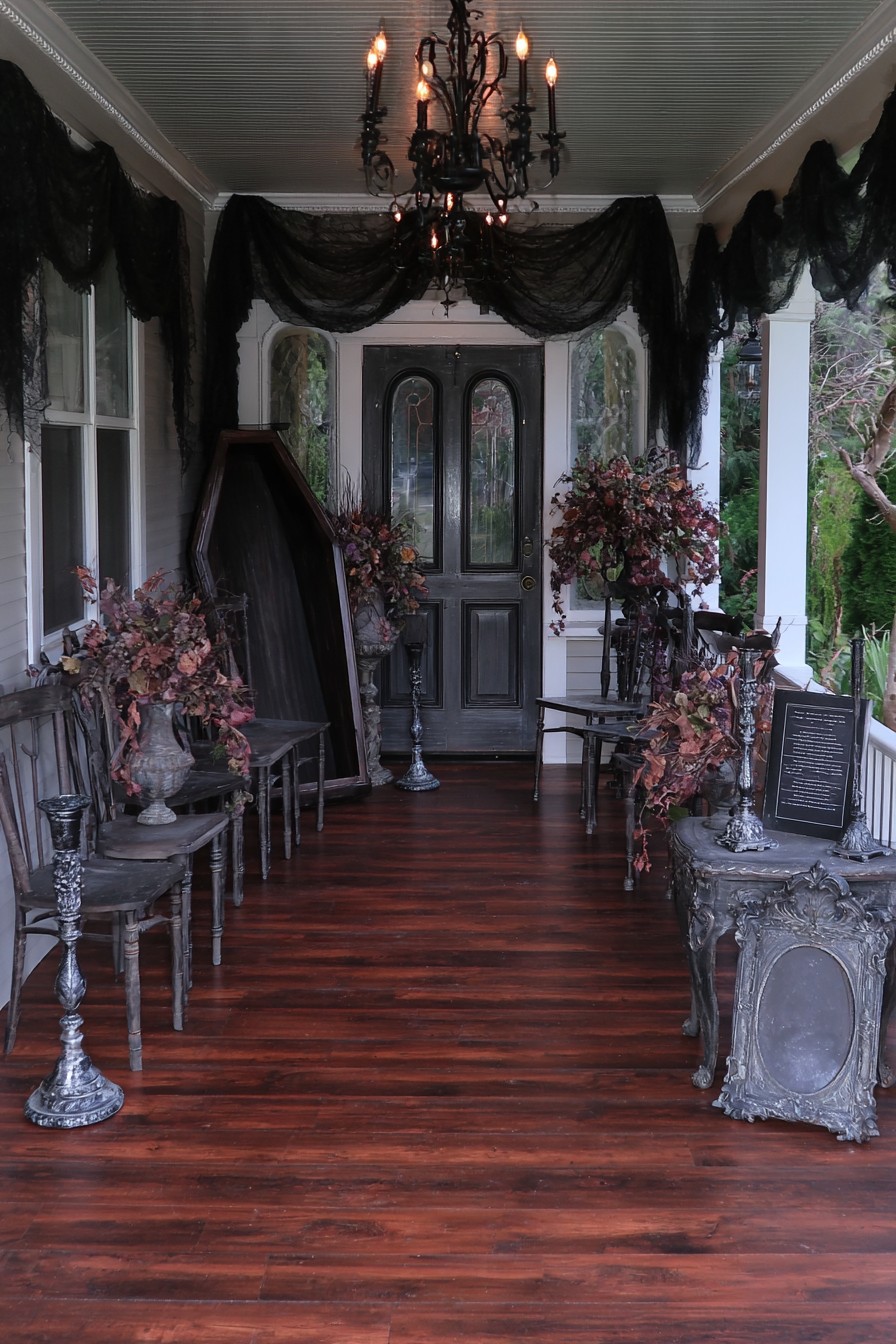
A long covered porch becomes a somber parlor through traditional chairs, muted floral urns, and restrained black gauze swags. The furniture gives this scene a different pace from the character displays: it suggests a quiet room waiting for guests. A coffin shaped prop adds Halloween context without becoming the only detail.
Arrange two chairs and a small side table along the wall for a scaled version. Indoor wood furniture, decorative papers, and delicate floral arrangements need a dry, sheltered event setting and indoor storage afterward; use exterior furniture for a season long display. Keep gauze on its own supports, leaving any working chandelier unmodified.
Key pieces: Traditional display chairs, a small side table, muted floral urns, black gauze, and an optional coffin shaped prop.
17. Ghostly Widow Figures in Ivory Gowns and Veils
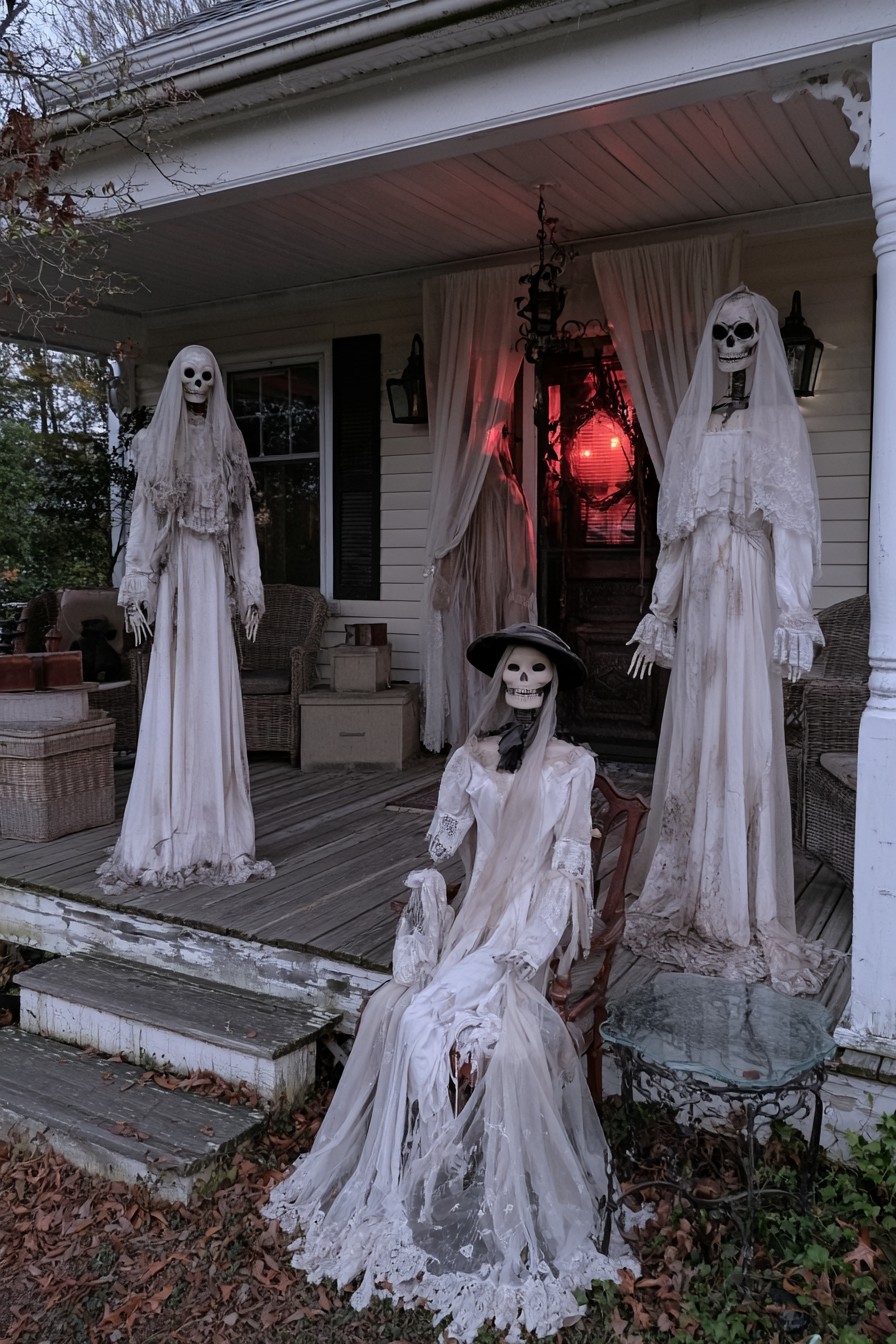
Ivory gowns turn skeletal figures into ghostly household characters. Long vertical costumes echo the porch posts, while a seated widow introduces a lower silhouette and a sense of quiet waiting. The pale textile palette works well against dark siding or a shaded doorway, with wicker textures adding familiar domestic detail.
One seated skeleton on a dedicated display chair can establish the theme. Gather its skirt and veil within the chair's display area, using simple costume layers to keep the outline readable. Lace, tulle, and indoor costume fabrics are best for a brief dry, sheltered display; remove and dry them promptly if damp, then store them indoors.
Key pieces: A skeleton figure, ivory costume fabric, a veil, a dedicated display chair, and an optional dark hat.
Check Access, Weather, and Lighting Before Displaying
- Everyday access: Keep the full usable walking route, stair treads, handrails, and threshold clear. Open the door completely and check that props, hanging hems, and projecting stems stay outside its movement and the path visitors use.
- Exposure: Check each product's instructions for covered or exposed exterior use. A roof cannot exclude wind driven rain or damp air. Inspect ties and supports after changing weather, remove decorations when conditions exceed their intended use, and dry components before storage.
- Supports: Assess the complete weight and wind exposure of hanging figures, tall props, frames, and seasonal swags. Use compatible mounting points and fixings; larger overhead installations may need a qualified installer to assess the porch structure. Keep light fittings separate from decoration supports.
- Lighting: Preserve practical light on the steps, door handle, and landing, then add atmosphere at the sides. Choose flameless candle accents with the exposure rating needed for their location. Follow lighting instructions for clearances from fabric and foliage, cable routing, and connections; permanent electrical changes need professional assessment.
Begin with One Theme and One Focal Point
Choose the story you want visitors to notice first: floating ghosts, a watchful guardian, a theatrical mask, or a quiet haunted seating area. Install that main feature, then complement it with your existing planters, a coordinating wreath, or a few pumpkins. A narrow entrance may need nothing more; a broad porch can extend the same motif into one side display.
Walk the approach and view it from the street before adding extra pieces. Keep additions that strengthen the chosen scene, and stop when its main character or shape is clear. Connect the entrance with nearby planting beds and garden paths using these Halloween outdoor decor ideas.


Leave a Reply