
A princess bedroom can begin with one detail your child loves: a crown shaped headboard, a little castle outline, a swan, or a favorite flower. These 20 ideas explore different ways to build that theme around sleeping, getting dressed, reading, and play. Alongside the colors and furniture, you will find suggestions for adapting each arrangement to the room you already have.
Start with the bed and storage that still serve your family well. A new wall color, washable bedding, or a framed motif may be enough to change their character. Larger changes, such as fitted cupboards or a raised bed, need a separate plan for dimensions, access, installation, and the child's age. The ideas below help you distinguish a decorative update from a furniture project.
Table of Contents
- How to Keep a Princess Bedroom Magical and Practical
- 1. Crown Shaped Headboard with Blush Castle Details
- 2. Enchanted Woodland Colors with Botanical Accents
- 3. Swan Inspired Styling with Soft Sculptural Curves
- 4. Lavender Panels with Small Golden Royal Accents
- 5. Arched Woodland Storage with a Castle Influence
- 6. Handmade Storybook Textiles and a Light Bed Canopy
- 7. Royal Blue Upholstery with French Inspired Furniture
- 8. Rose Garden Details Built Around Smart Storage
- 9. Vintage French Furniture with Delicate Floral Layers
- 10. Draped Pearl Tones with Layered Soft Textiles
- 11. Ballet Inspired Pink with Rounded Furniture Forms
- 12. Pastel Castle Towers with Integrated Book Storage
- 13. Garden Tea Party Colors with a Child Sized Activity Area
- 14. Antique Rose Style with Heirloom Inspired Textures
- 15. Castle Wall Panels Around a Raised Bed
- 16. Celestial Princess Decor with Crescent Shaped Details
- 17. Royal Carriage Bed as the Main Statement Piece
- 18. Swan Lake Elegance in Pink, Ivory, and Cream
- 19. Lavender Storage with a Painted Floral Arch
- 20. Rose Garden Canopy Details with Classic Furniture
- Creating a Fairytale Room That Can Grow with the Space
How to Keep a Princess Bedroom Magical and Practical
Before choosing a theme, sketch the room with its doors, windows, bed, and open drawers. Measure furniture at its widest points, including shaped headboards and projecting handles. Mark any proposed new piece on the floor with removable tape, then check the route from the door to the bed and wardrobe.
Ask your child which part matters most: a place for books, a dressing corner, flowers, or a castle story. Give that feature a clear position and keep the rest of the room easy to use. Comparing paint, bedding, and rug samples together is more useful than choosing each one separately.
Use furniture intended for the child's age and follow its assembly and restraint instructions. Anchor storage furniture as directed, keep window covering cords inaccessible, and avoid loose cords or draped fabric within a young child's sleeping space. Any wall decoration above the bed needs a secure fixing suitable for its weight and the wall.
- Choose one main theme and repeat two or three colors in smaller details.
- Keep everyday books, clothes, and toys at a height your child can use.
- Allow doors and drawers to open while the room is furnished.
- Choose removable covers and accessible surfaces for routine cleaning.
- Confirm furniture size and installation before ordering decorative additions.
Choose the idea that fits the furniture and activities you already have, then borrow its main shape, color combination, or storage arrangement. Each design below offers a different starting point.
1. Crown Shaped Headboard with Blush Castle Details
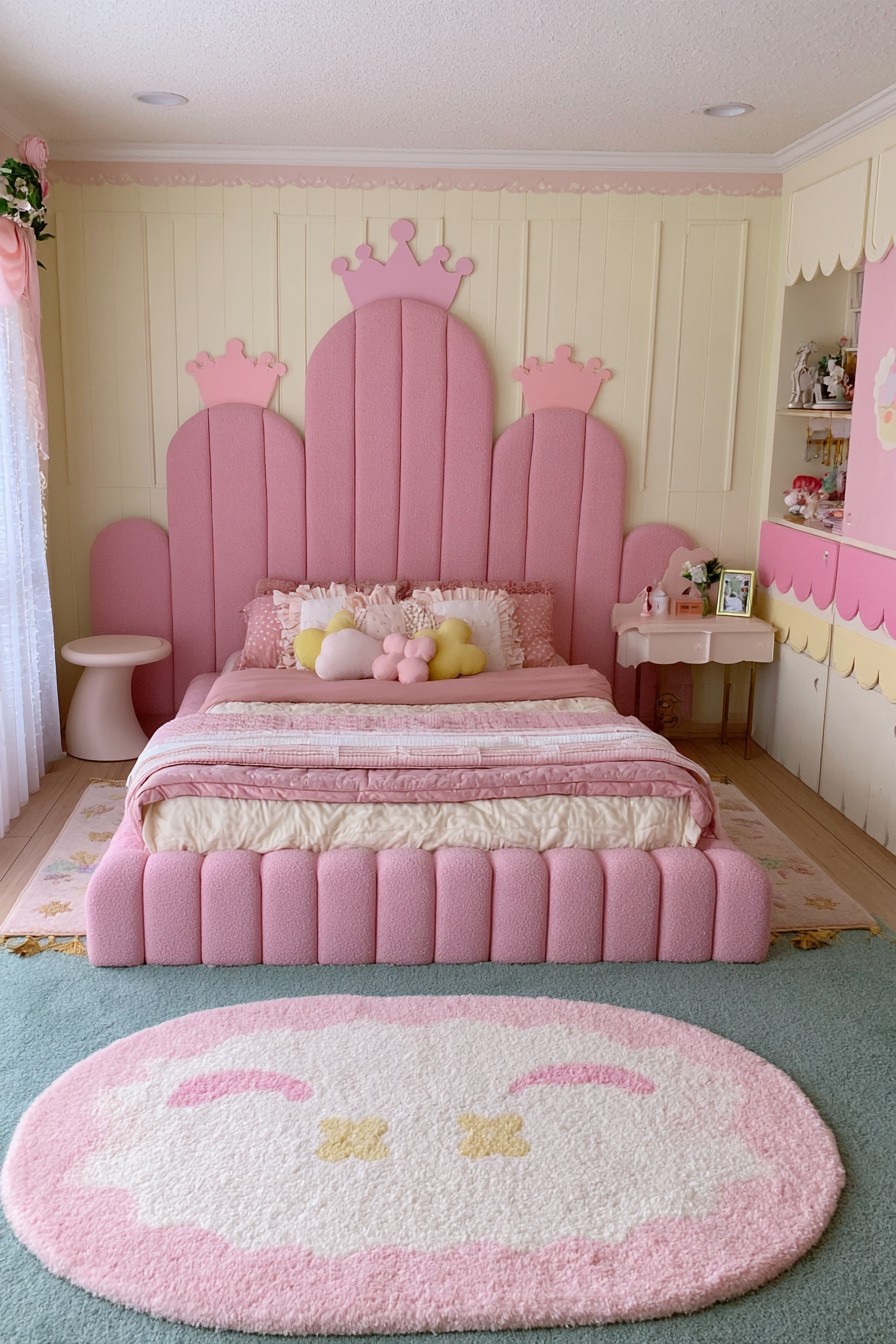
A tall pink crown headboard makes the bed the main feature, while cream cabinetry and a pale rug keep the surrounding room quieter. To adapt the look without replacing all the furniture, repeat the headboard's blush tone in one throw or cushion and retain plain bedding beneath it. The crown shape supplies enough detail on its own.
Measure the headboard against the wall, bedside furniture, and any nearby switches before choosing its height. An upholstered version should attach through its specified bed or wall fixing system. For a smaller change, paint a crown outline above an ordinary headboard instead. Keep the rug flat at the bedside, and leave a clear place to put decorative cushions at night.
2. Enchanted Woodland Colors with Botanical Accents
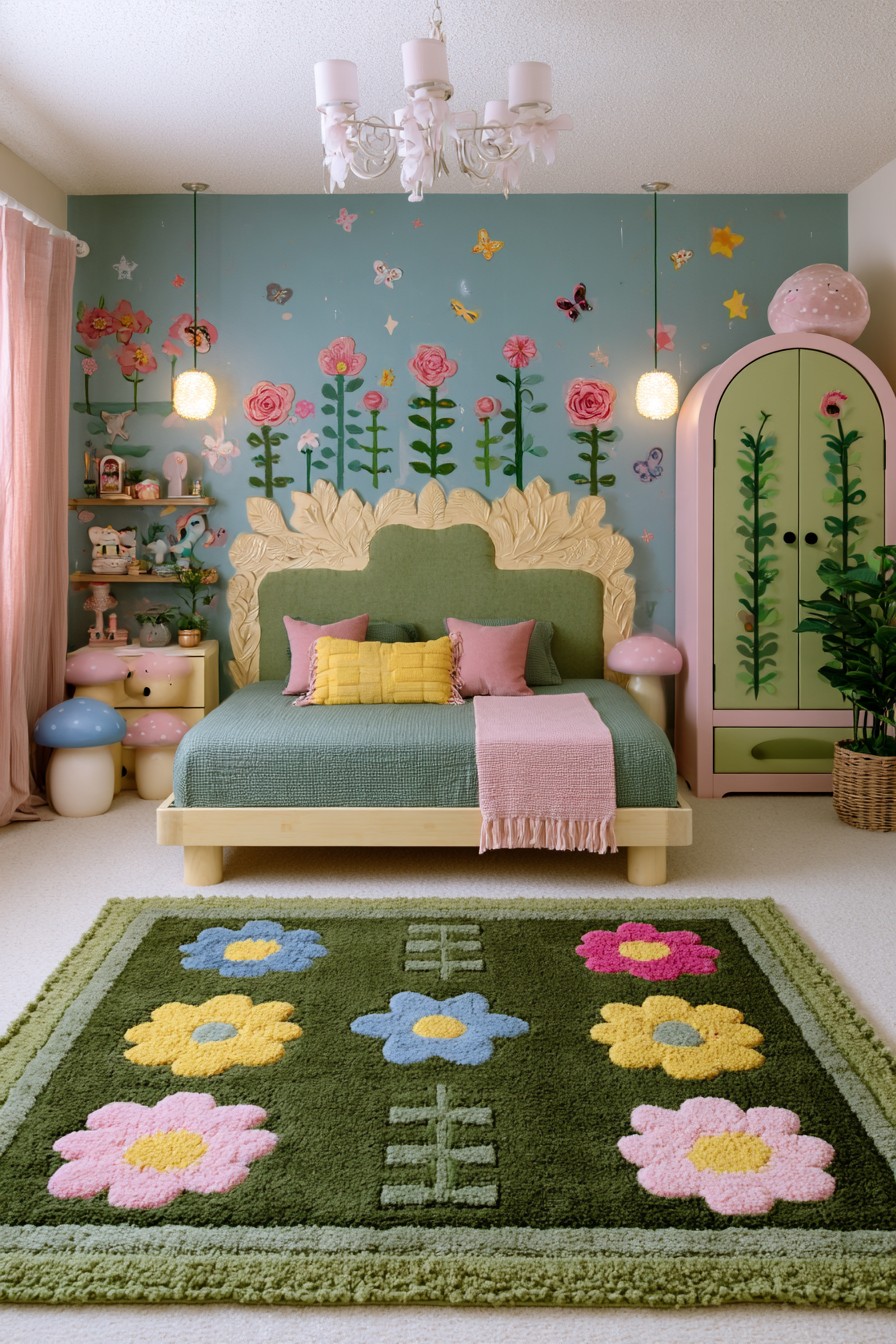
Sage green furniture, a blue green wall, and colorful flowers give this room a garden story rather than a traditional pink palace theme. The leaf shaped details and floral rug work together because they repeat recognizable botanical forms. Begin with the green already present in a bed, cupboard, or textile, then choose one flower color for the smaller accessories.
A painted flower border or a few securely fixed wall motifs can introduce the woodland character without custom cabinetry. Leave some plain wall around them so books and toys remain easy to see. If adding a storage unit, measure its open doors and drawers as well as its closed footprint; the garden theme should still leave room to get dressed and play.
3. Swan Inspired Styling with Soft Sculptural Curves
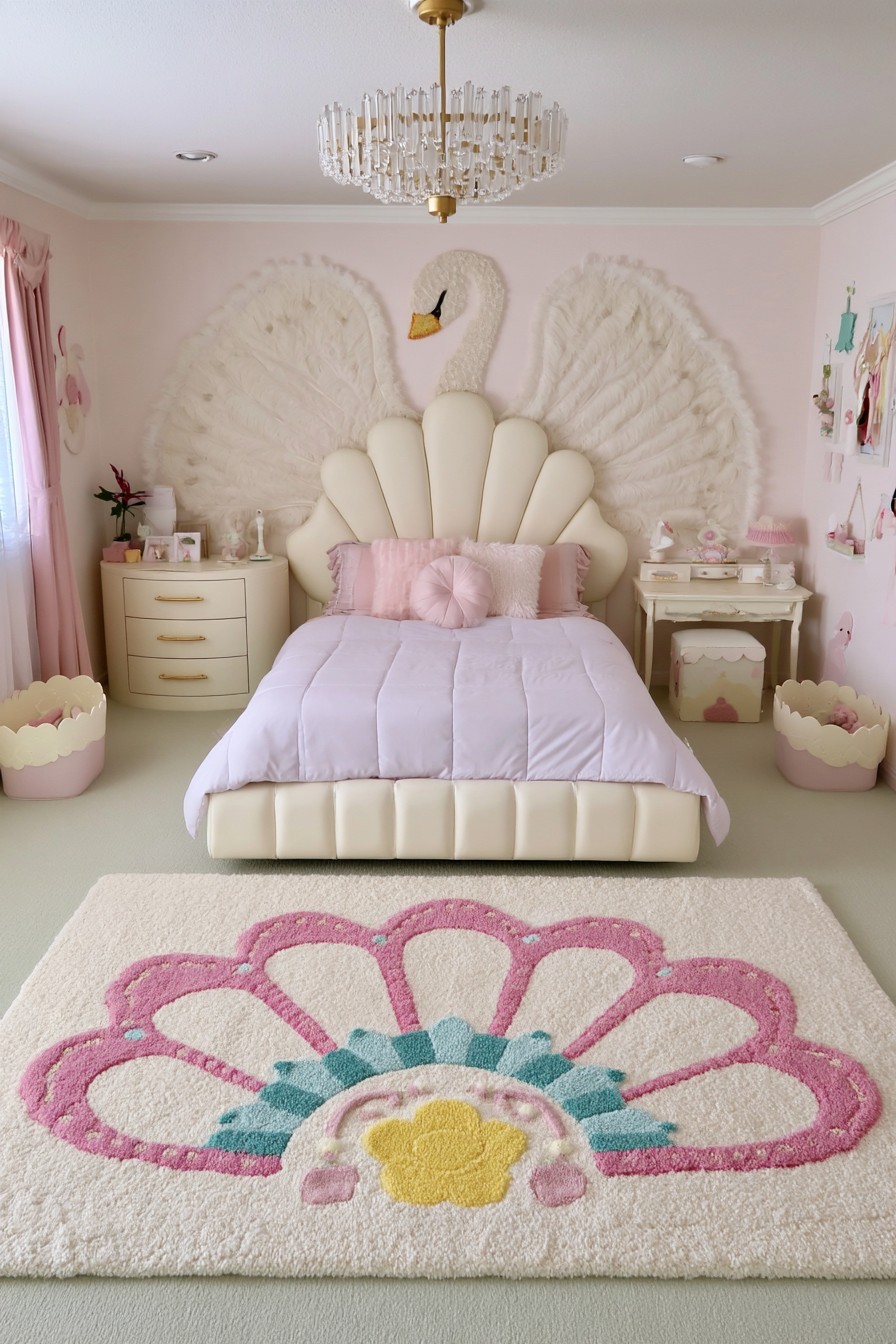
The large swan above the shell shaped headboard gives this cream and blush room its identity. Curved furniture and a broad flower rug echo the soft outline without adding more competing characters. If you already own a pale bed, a framed swan print and one curved cushion can suggest the same theme on a smaller scale.
Treat a substantial wall sculpture as a separate installation: check its weight, hanging points, and wall fixings before placing it over a sleeping area. A lightweight, securely mounted artwork is a simpler alternative. Choose the bed and bedside furniture for their actual use, then add the swan detail where it remains visible without interfering with lights, switches, or the headboard.
4. Lavender Panels with Small Golden Royal Accents
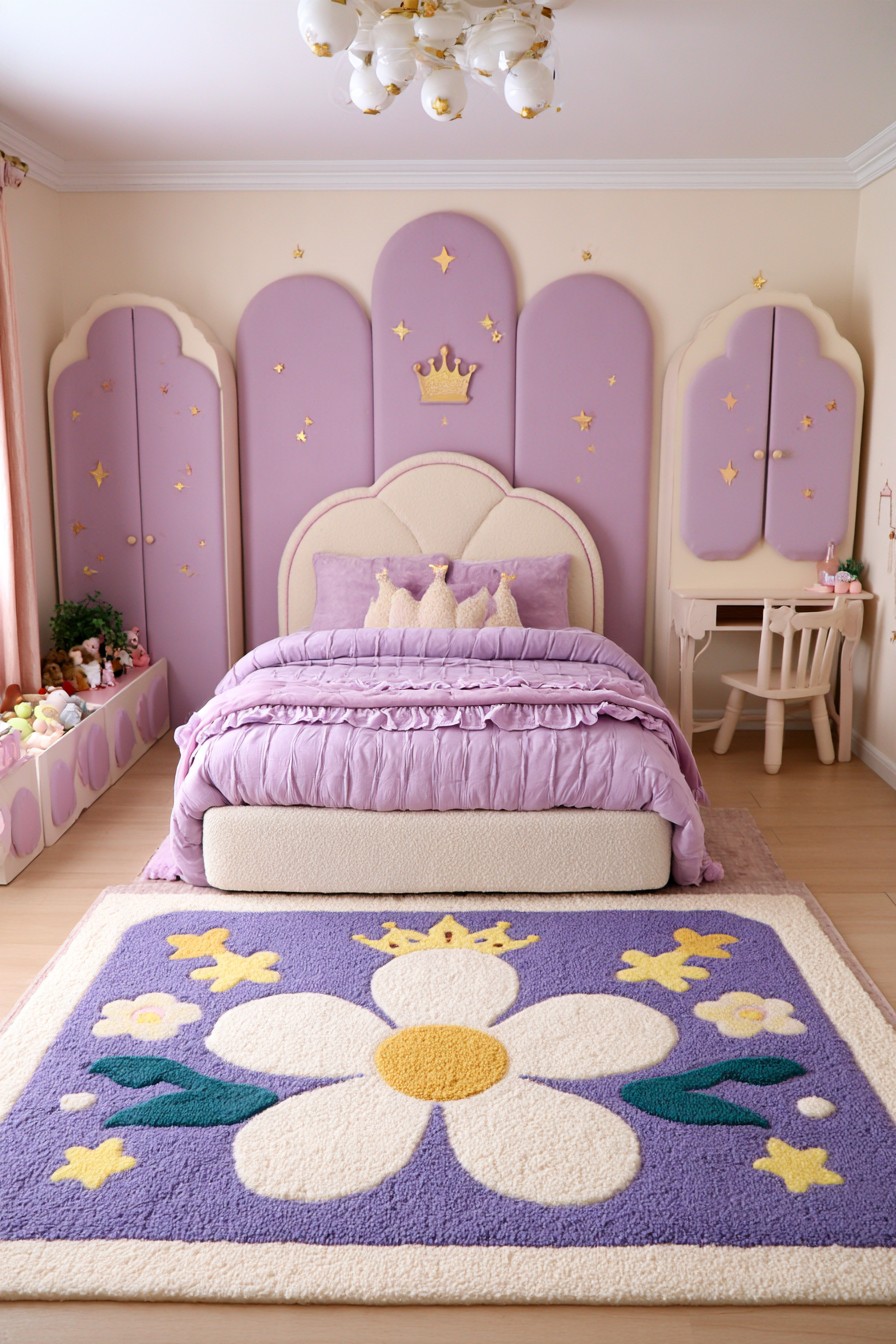
Lavender panels frame the bed with a tall scalloped outline, while a small crown and restrained gold details establish the royal theme. The surrounding cream storage gives the stronger purple a clear boundary. Try the lavender first in a paint sample or removable textile before committing to a whole wall of upholstered panels.
For a simpler interpretation, draw a scalloped shape on paper, position it behind the bed, and adjust it around sockets and furniture before transferring the outline to the wall. If choosing upholstered panels, plan their fixing and cleaning method as part of the purchase. Match the bed linen to one lavender shade rather than adding several slightly different purples that compete in the same light.
5. Arched Woodland Storage with a Castle Influence
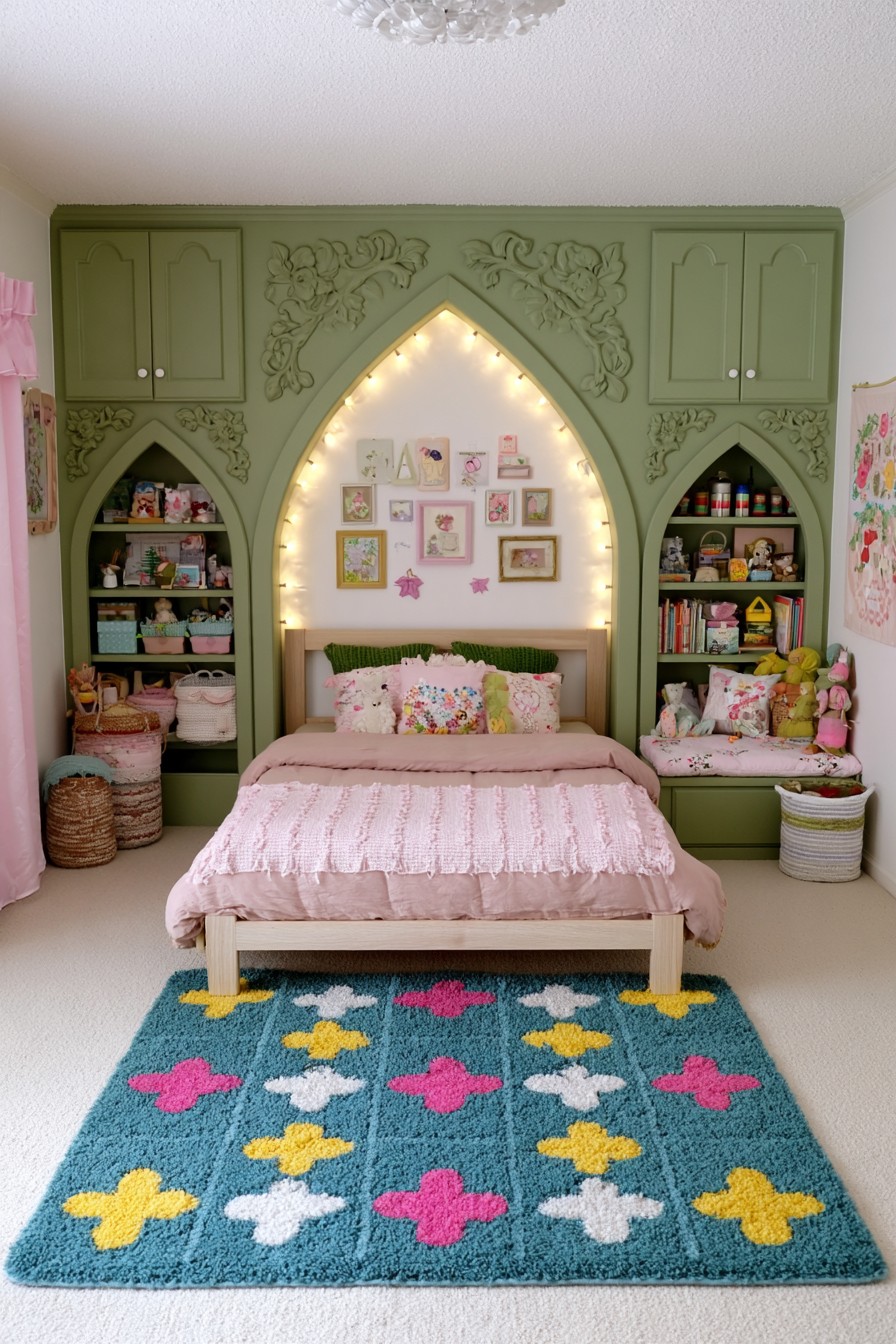
Pointed arches turn the sage storage wall into a storybook setting around the bed. Open shelves display books and small favorites, while closed sections contain the less decorative essentials. This direction suits a room that needs storage as much as a new theme. Start by listing what must fit, then divide it into reachable everyday items and things an adult will retrieve.
Plan the shelf depths around real books and baskets before adding arched trim. Decorative fronts must not obstruct doors, ventilation, or the furniture's fixing points. Anchor the complete system as instructed and keep heavier objects in lower compartments. A painted arch behind an existing low bookcase offers a smaller way to borrow the architecture without building cupboards around the bed.
6. Handmade Storybook Textiles and a Light Bed Canopy
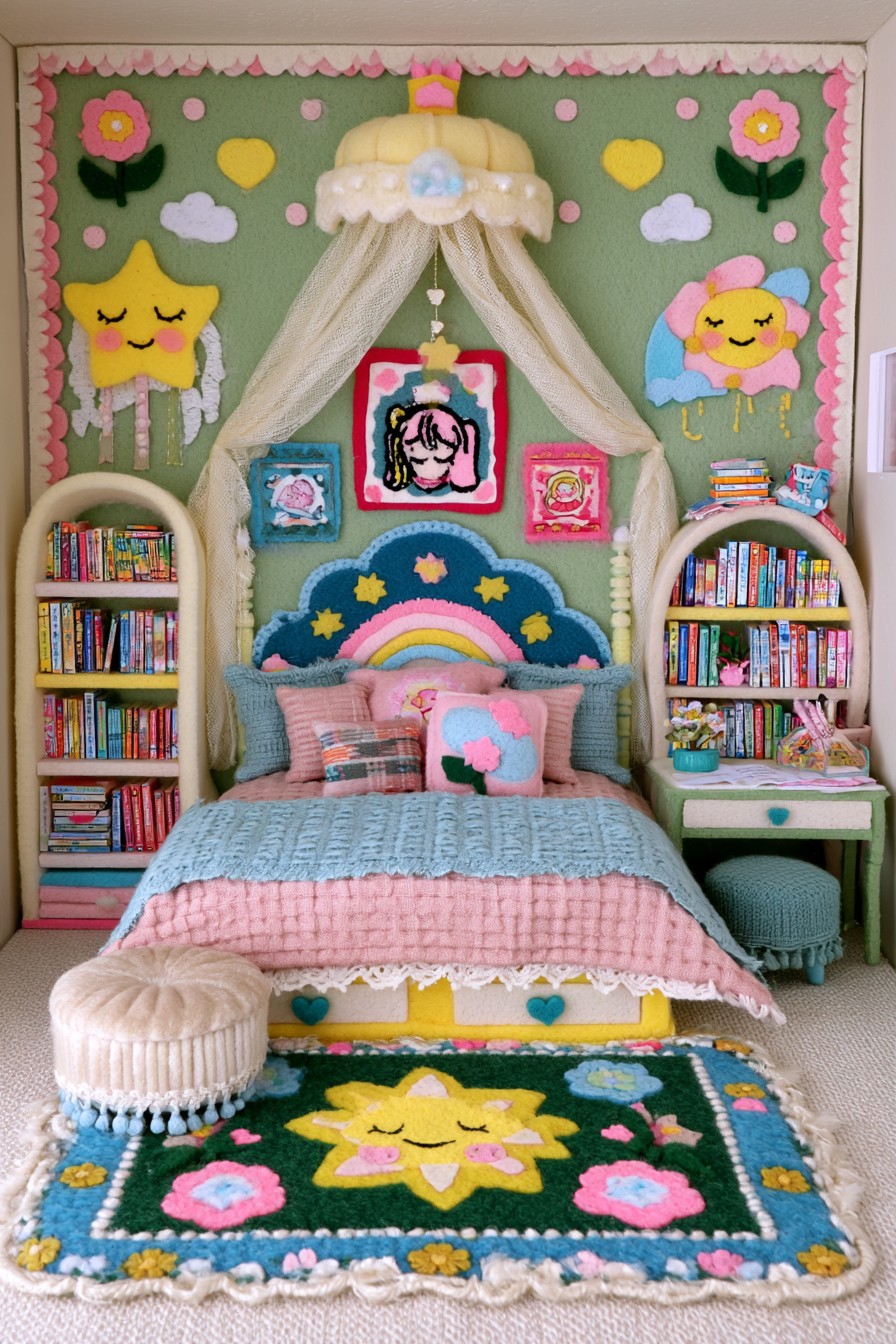
Crocheted flowers, cheerful stars, and a rainbow motif give this bedroom a handmade character. The green wall holds the colorful pieces together, while the nearby bookcases make the bed part of a reading corner. Choose one craft detail to repeat, such as a flower on a cushion and a matching framed textile, instead of covering every available surface.
Make decorative cushion covers removable and select yarns and backing fabrics with compatible care instructions. A canopy needs its own secure support and an arrangement suited to the child's age; keep loose fabric and ties away from the sleeping space. If a canopy is unsuitable, place the textile story on the wall with securely mounted framed pieces and leave the bed itself simple.
7. Royal Blue Upholstery with French Inspired Furniture
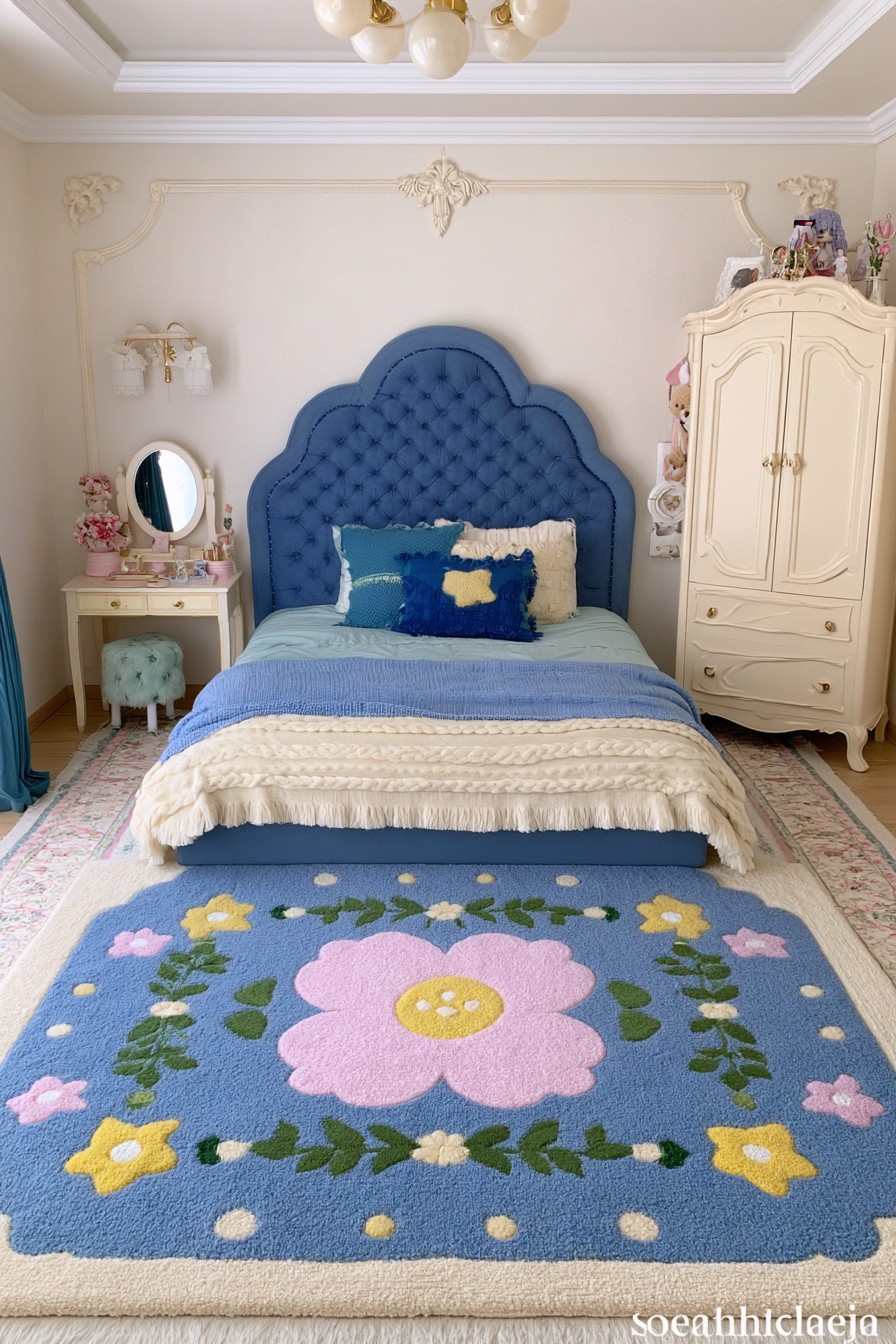
A deep blue upholstered headboard gives this room a stronger contrast than the pastel schemes. Cream furniture and lighter bedding keep the blue concentrated around the bed, with the floral rug introducing smaller areas of pink and yellow. This is a useful palette when you want a princess theme that can continue working after the more playful accessories change.
Place a blue fabric sample beside the existing wardrobe and floor before selecting the upholstery. Compare its texture as well as its color: a heavily textured fabric may need a different cleaning routine from a smooth washable cover. Keep enough space beside the bed to open the bedside drawers. One ornate furniture piece can establish the French influence without requiring a complete matching suite.
8. Rose Garden Details Built Around Smart Storage
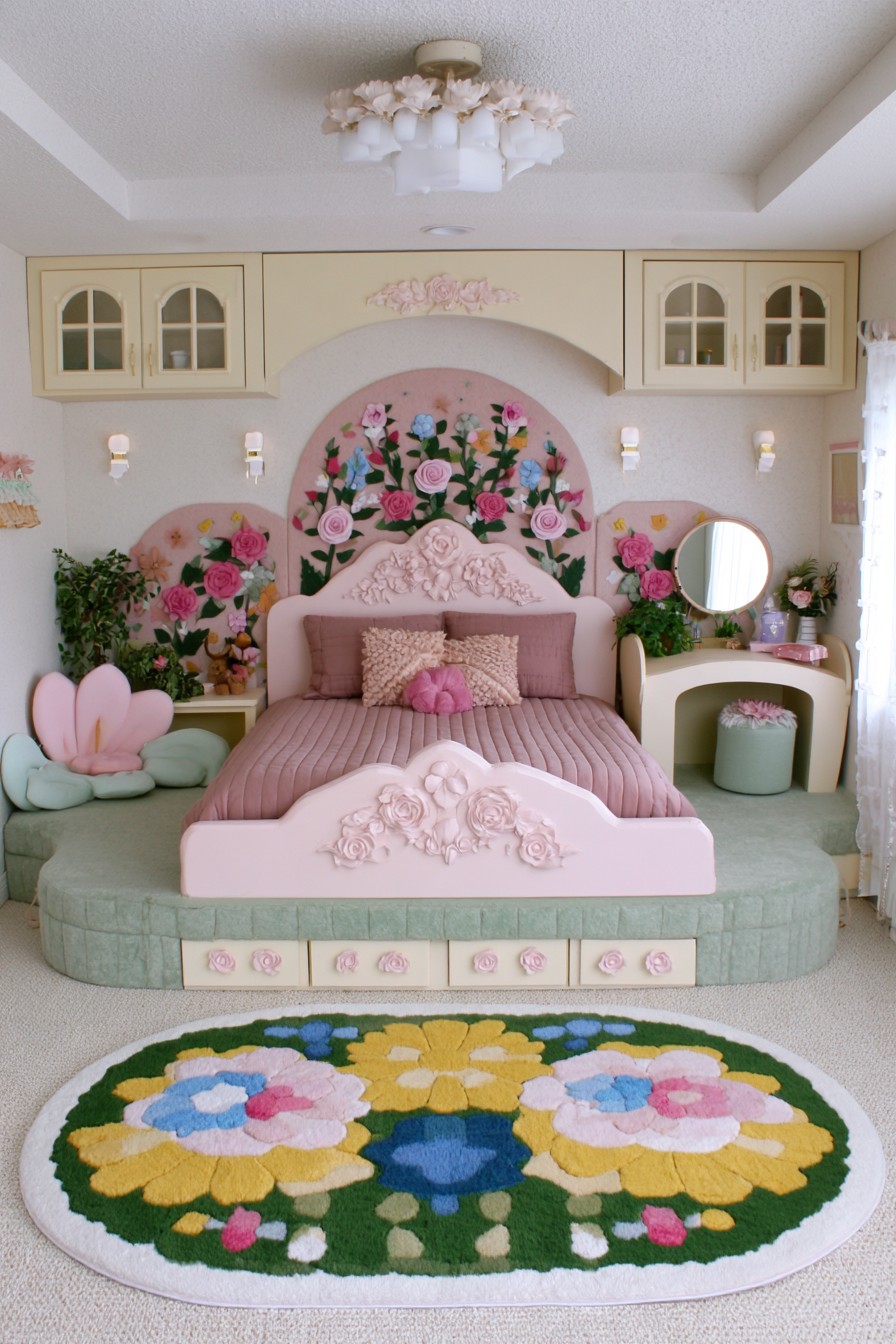
Pink roses surround the headboard, while the pale green bed base and upper cupboards make the floral scheme part of a storage arrangement. Let the roses occupy one defined area and keep nearby cabinet fronts comparatively plain. Repeating a leaf green in the bed base or a basket is enough to connect the wall decoration to the furniture.
Where a bed includes storage below, test access with the rug, bedding, and nearby furniture in position. A drawer that opens in an empty room may be awkward once the bedside table is added. Arrange regularly used contents where they can be removed without moving the mattress. Wall cupboards and large floral installations need suitable independent fixings, with their access and cleaning planned before decoration.
9. Vintage French Furniture with Delicate Floral Layers
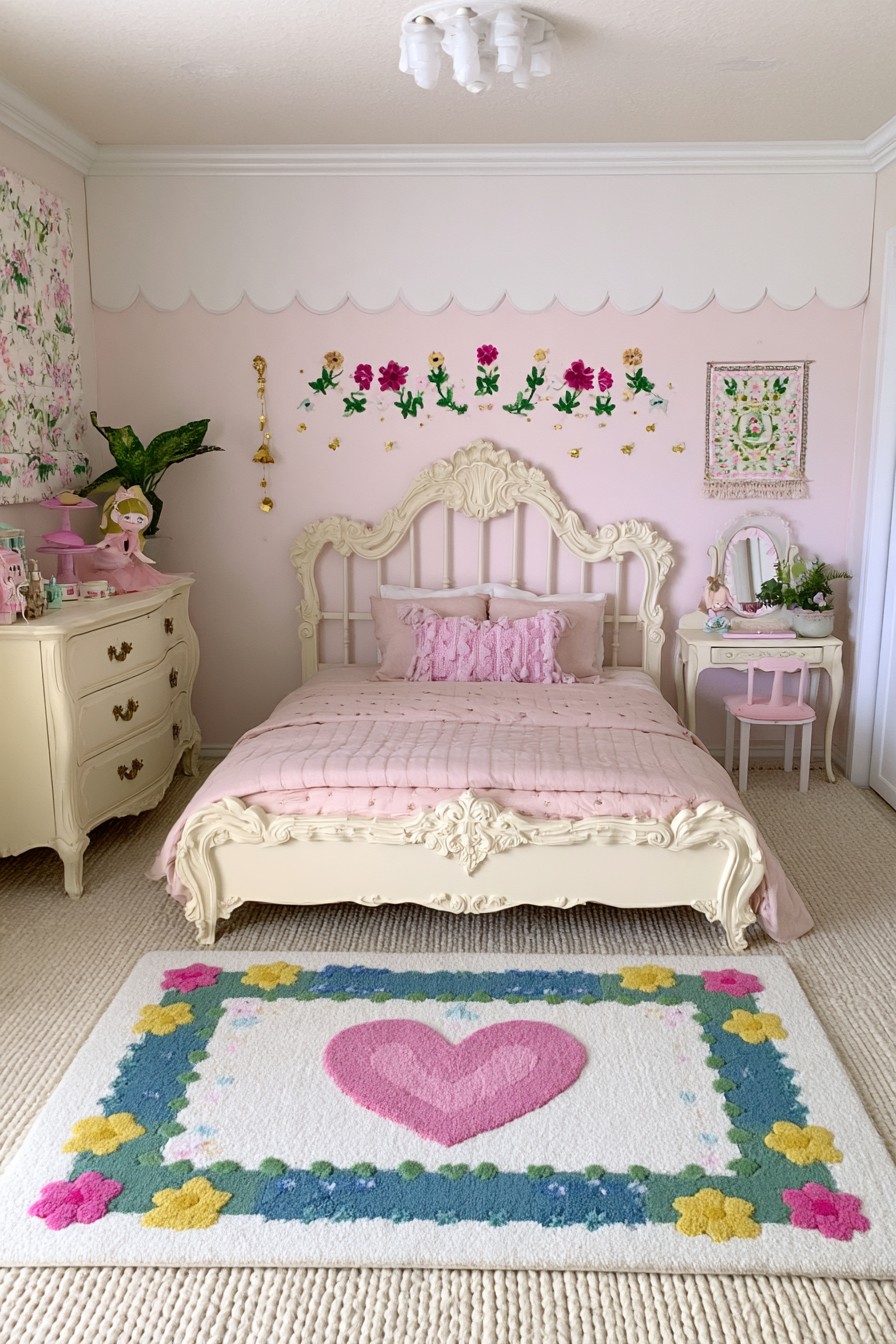
A cream bed frame, small dressing furniture, and pink floral bedding create a lighter vintage scheme. The flower details stay relatively delicate, leaving the carved furniture visible. You can develop this look around an existing pale bed by choosing one floral fabric for the bedding and a smaller repeat in the curtains or a cushion.
Check secondhand furniture for sound joints, working drawers, a stable mirror, and a finish appropriate for its intended use. An older appearance does not establish that a piece is suitable for a child's room. Arrange the dressing surface around the items it will hold, with fragile objects stored elsewhere. Leave enough room for its seat to pull out without blocking the route to the wardrobe.
10. Draped Pearl Tones with Layered Soft Textiles
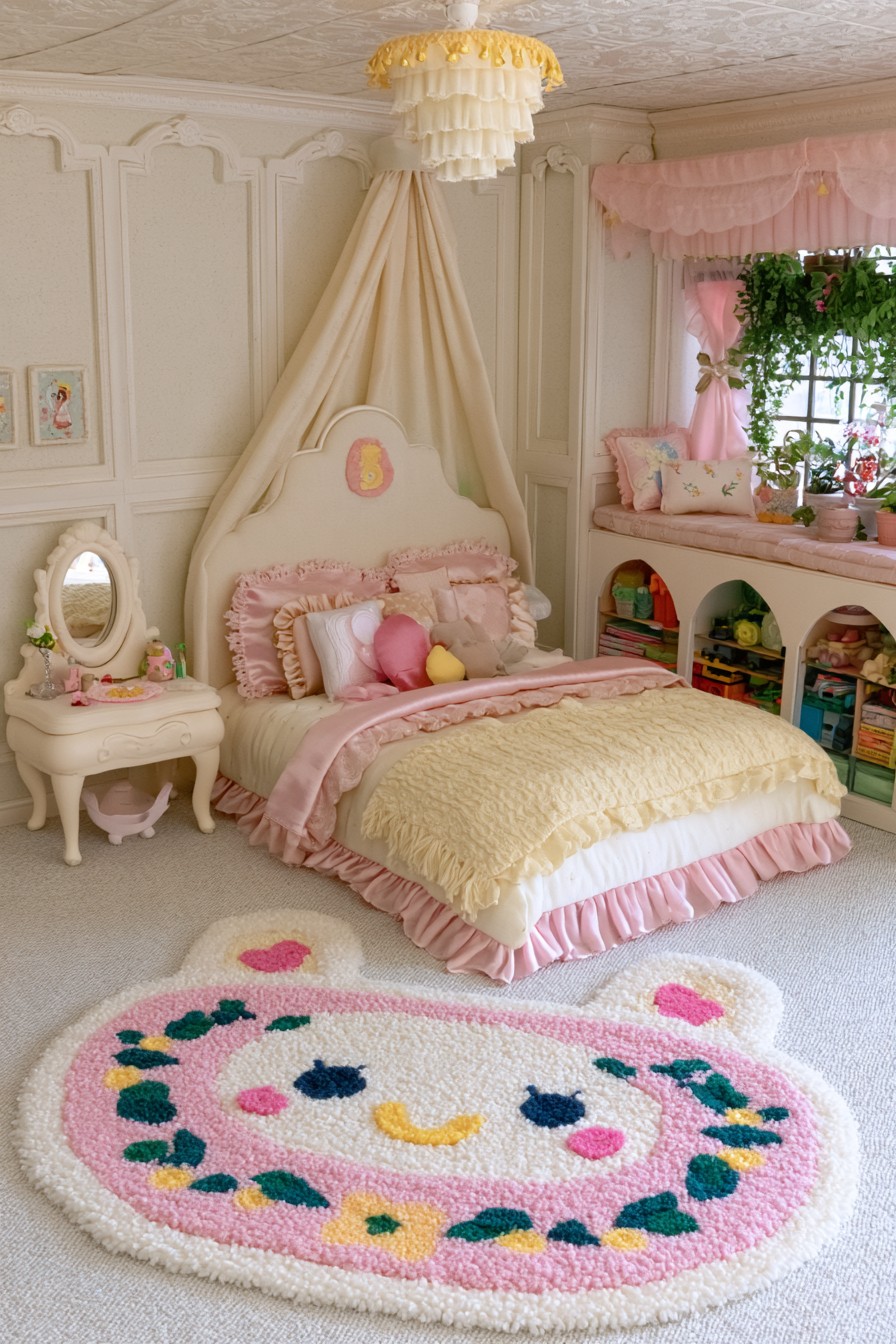
Ivory drapery, pale pink bedding, and cream furniture make texture the main decorative choice here. Gathered cloth gives the bed a sheltered outline, while the floral rug adds color near the floor. Before adding more layers, compare the fabrics together in daylight and under the room's usual evening light; different creams can look noticeably yellow or gray beside one another.
Choose a manageable number of washable bedding layers and give spare cushions a basket or shelf. Any overhead drapery needs a secure fixing and a design appropriate to the child's age, with no reachable loops or loose fabric in the sleeping area. The same pearl palette works without drapery: use a shaped upholstered headboard, plain curtains, and one textured throw.
11. Ballet Inspired Pink with Rounded Furniture Forms
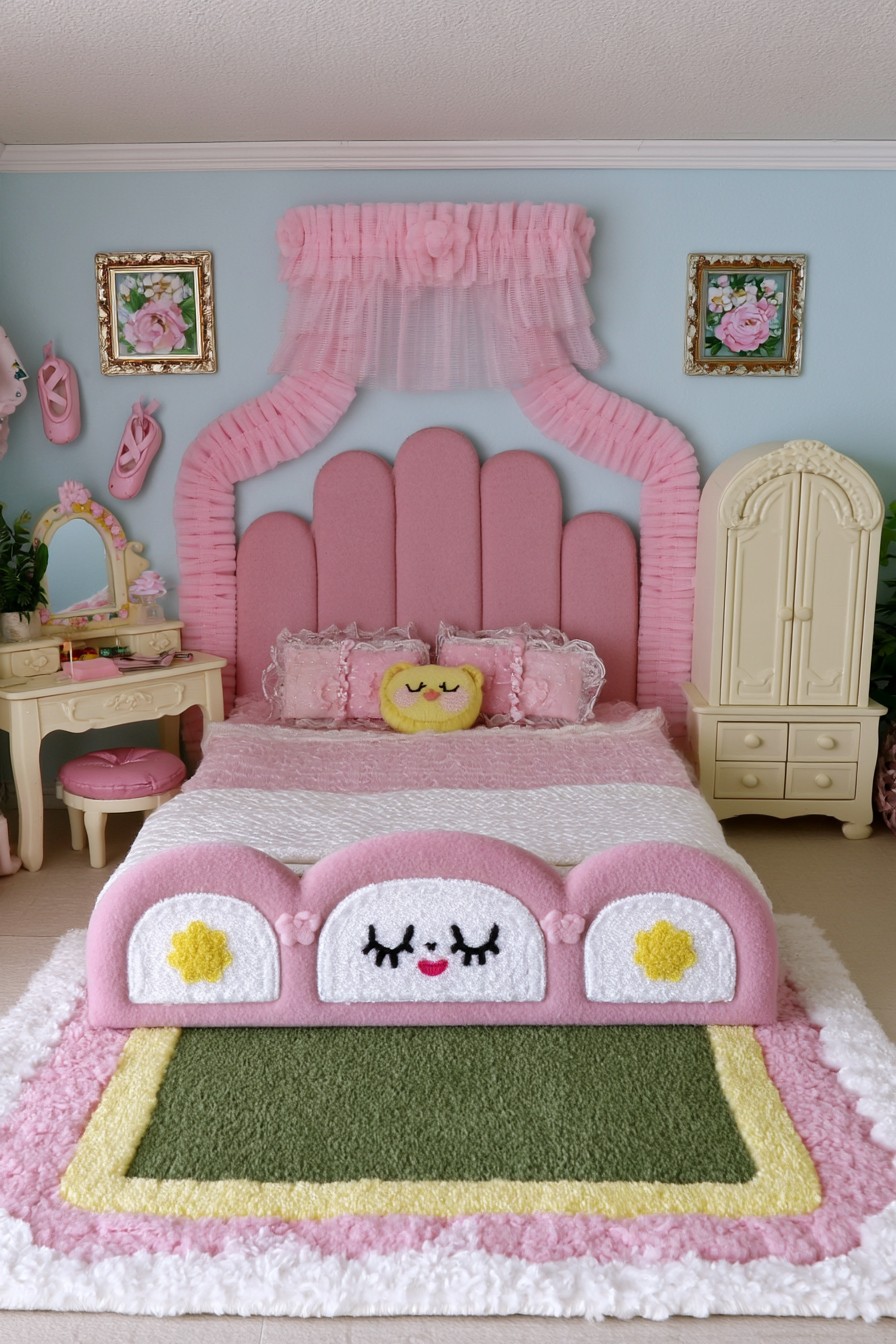
A scalloped pink headboard, a ruffled wall detail, and rounded furniture suggest a little dressing room. The pale blue wall gives the pink a distinct edge, so the room does not depend on several competing shades of blush. Start with the curved bed outline, then bring in the ballet influence through one framed illustration or a ribbon motif on a removable cushion.
Keep the center of the room available for movement instead of filling it with extra themed furniture. A useful dressing corner needs a stable mirror, reachable storage, and space to sit comfortably. Stitch ribbon decorations securely to their textile backing and avoid loose trailing ties. If using a substantial ruffled wall feature, plan how it will be taken down for cleaning before mounting it.
12. Pastel Castle Towers with Integrated Book Storage
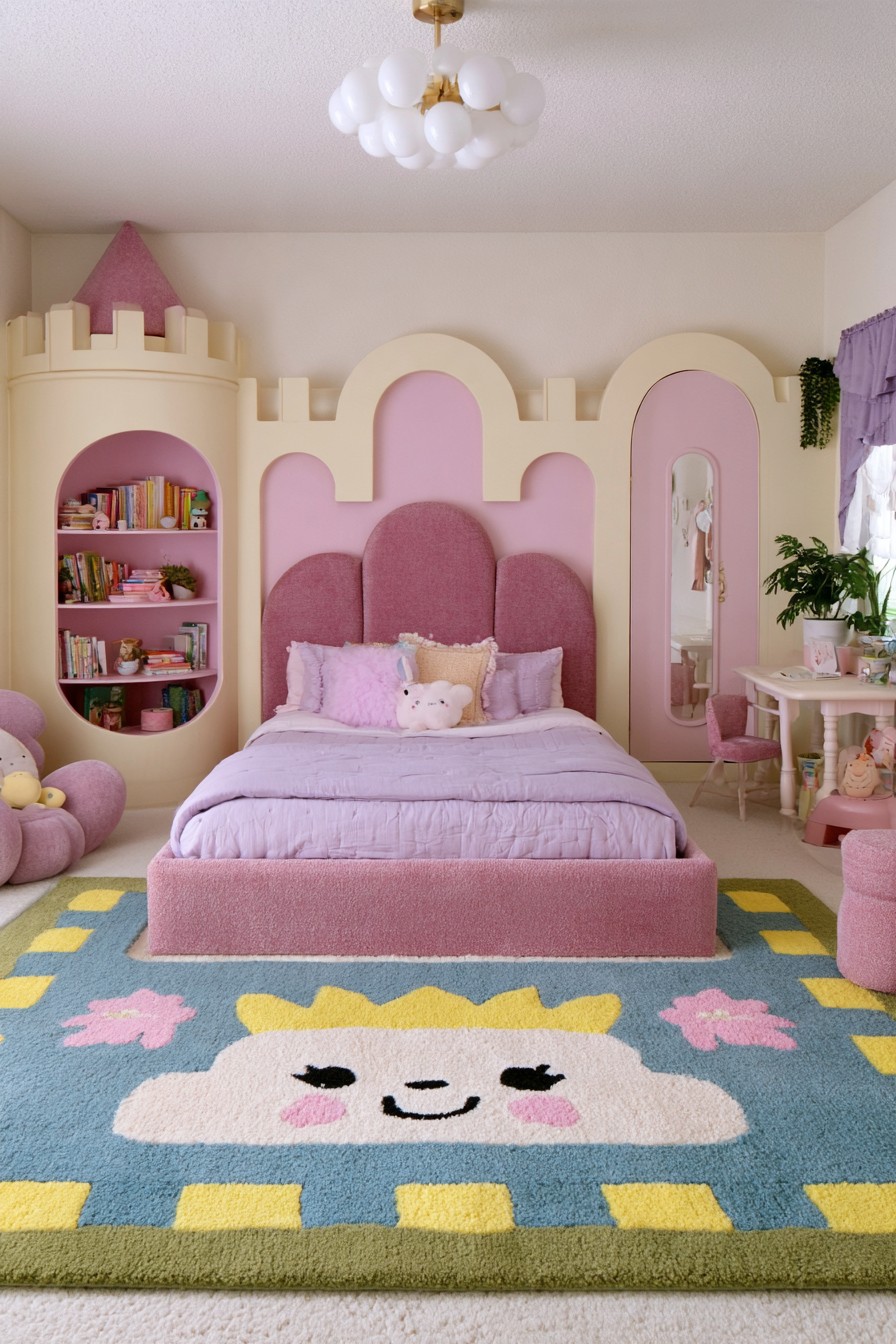
Cream tower shapes and pastel arches make the storage wall look like part of a small castle. The bookshelf beside the bed gives the architecture an everyday purpose, while the colorful rug keeps the lower half of the room playful. A low bookcase with an arched painted backdrop can capture the idea when full fitted furniture would crowd the room.
Decide which books and toys belong on open shelves before specifying the decorative front. Keep shelf openings large enough to lift those items out, with trim clear of the access space. Secure the storage according to its installation requirements and avoid arranging shelves as climbing steps. These kids room ideas for books, toys, and crafts offer related ways to organize the activities around the theme.
13. Garden Tea Party Colors with a Child Sized Activity Area
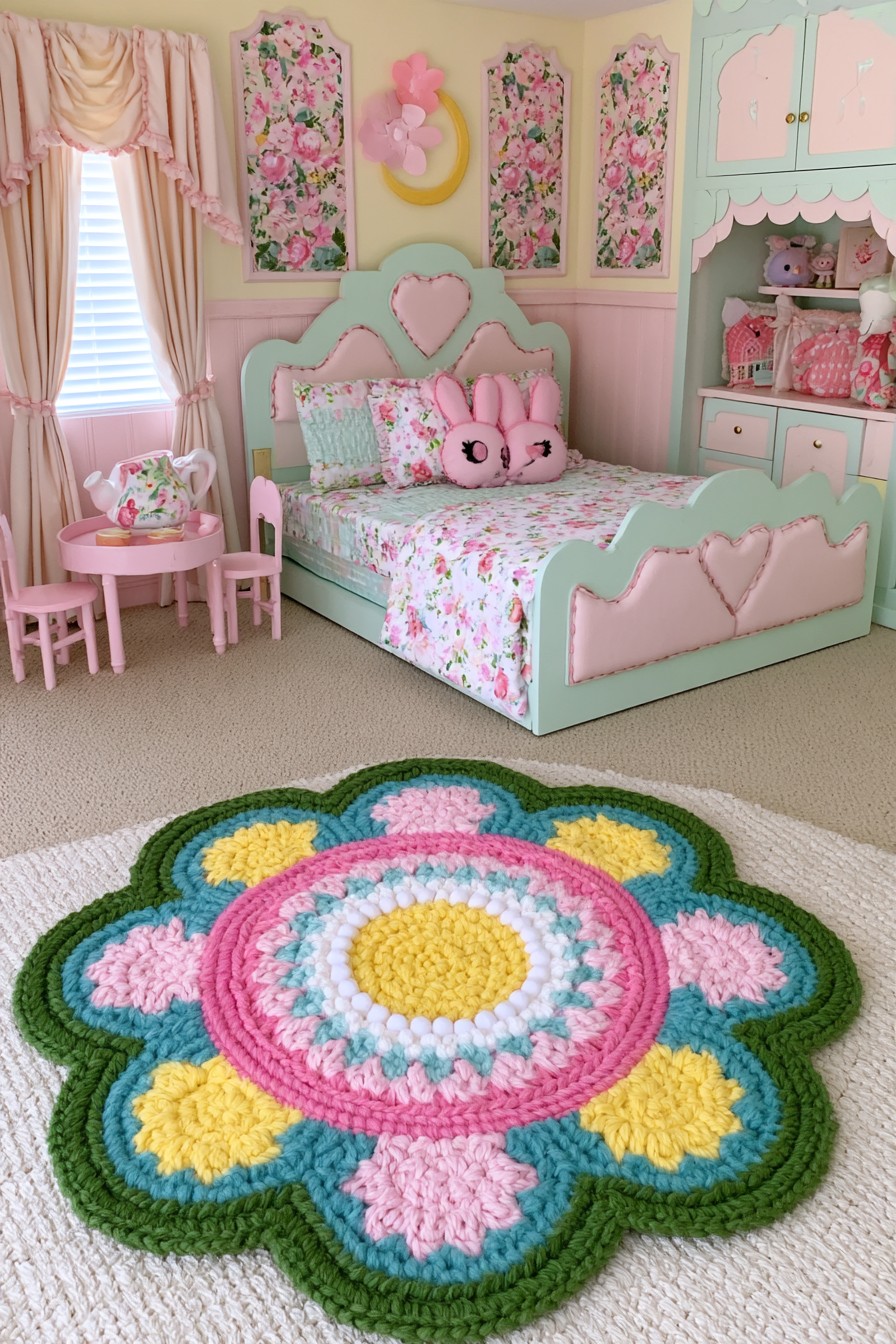
A small pink table beside the mint bed makes the garden theme usable for pretend tea, drawing, or a short craft session. Floral panels and bedding connect the play area to the sleeping area, while the large flower rug gives the floor its own focal point. Use one existing floral fabric to choose the pink and green rather than matching every object independently.
Size the table and chairs for the child, then check the arrangement with both chairs pulled out. Leave a clear route past the bed and keep art supplies in a nearby reachable container. For painting or glue activities, protect the table with a removable mat and choose a floor position that can be cleaned easily. Store the tea set after play so the same surface is ready for the next activity.
14. Antique Rose Style with Heirloom Inspired Textures
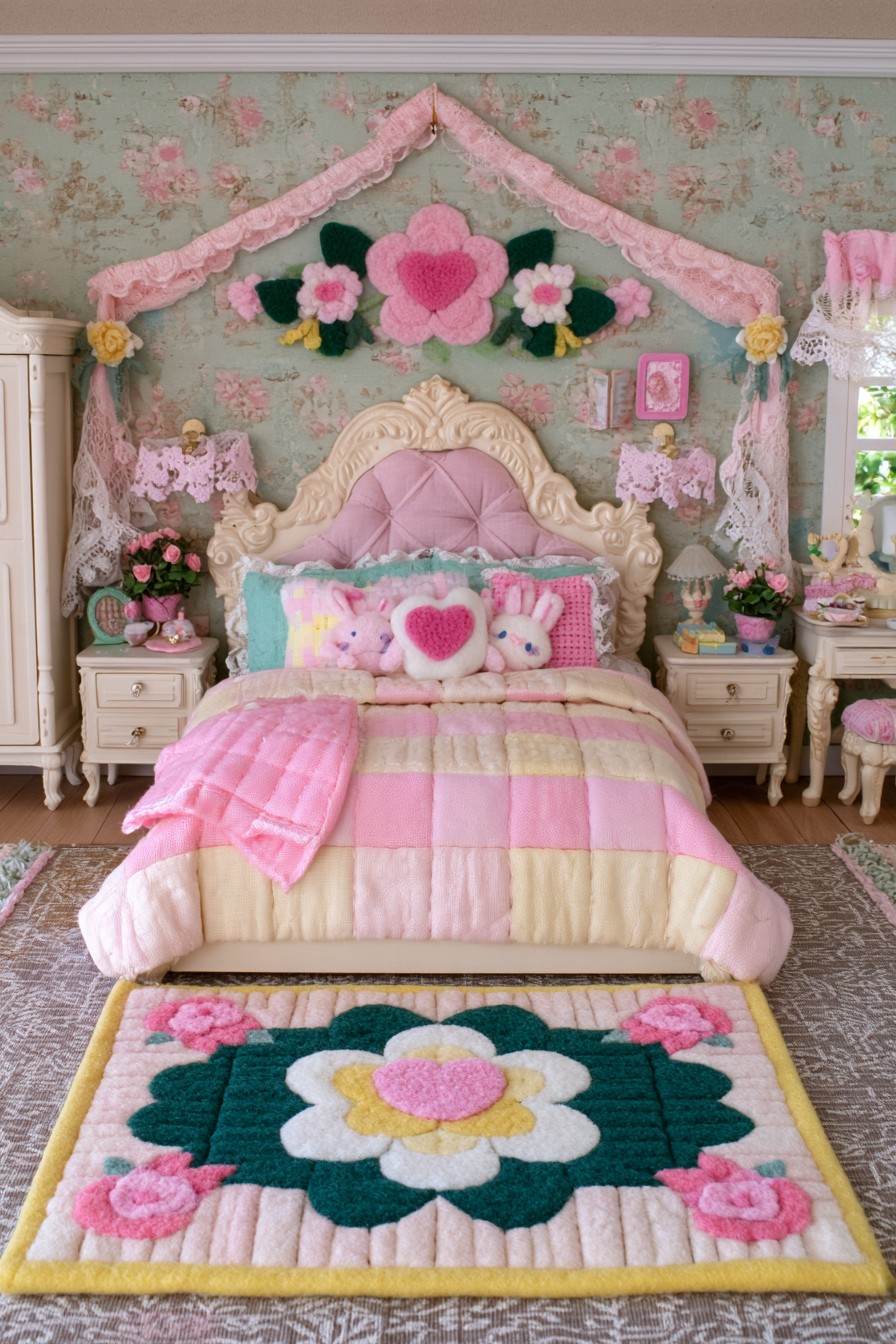
A carved cream bed, floral wallpaper, and a large rose detail create a collected, decorative look. Pink, yellow, and muted green appear in several textiles, but their different patterns keep the room from resembling a single matching set. Choose the wallpaper or quilt first, then take the smaller colors from that piece.
Introduce the handmade layer with one washable patchwork cover, a securely finished fabric flower, or a small framed embroidery. Check how each textile will be cleaned before combining lace, crochet, and substantial trims. A patterned wall already contributes considerable detail, so bedside storage can stay plain. Keep large decorative pieces accessible for dusting and fixed independently of curtains, furniture doors, and the bed frame.
15. Castle Wall Panels Around a Raised Bed
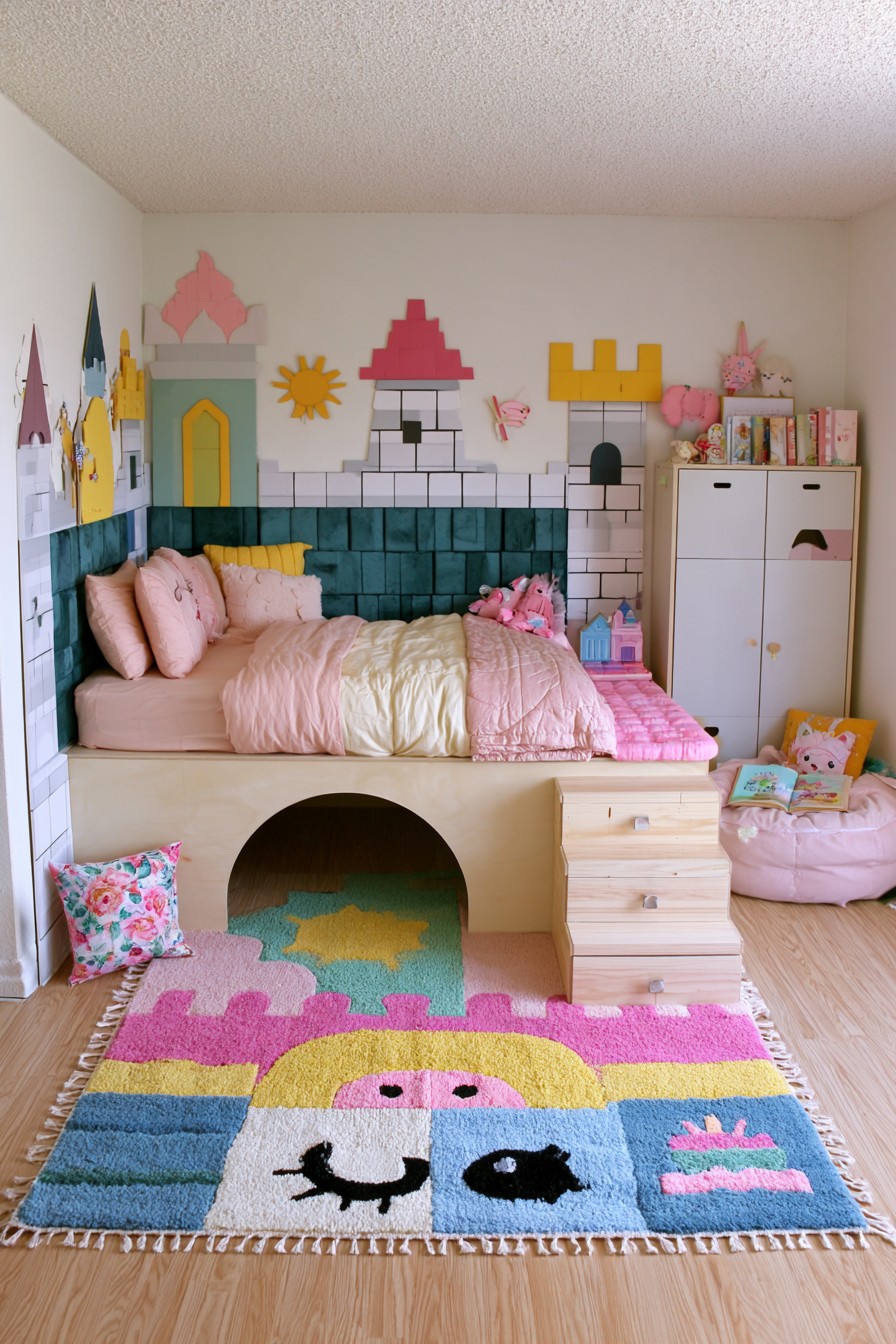
Pastel towers extend across the walls around a raised sleeping platform, with side steps and a low arched opening beneath. The castle outline is the most transferable part of the design. Paint towers on the wall or fit decorative panels beside an ordinary bed if you want the storybook setting without raising the sleeping surface.
For a raised bed, select a complete product intended for the child's age and follow its mattress, guardrail, access, and installation requirements. Do not use upper bunks or loft beds for children under six, and follow any higher minimum age stated by the manufacturer. Decorative tower panels are not guardrails. Check headroom and the route to the steps, and use an underbed opening for play only when the bed's design permits that use and provides suitable access.
16. Celestial Princess Decor with Crescent Shaped Details
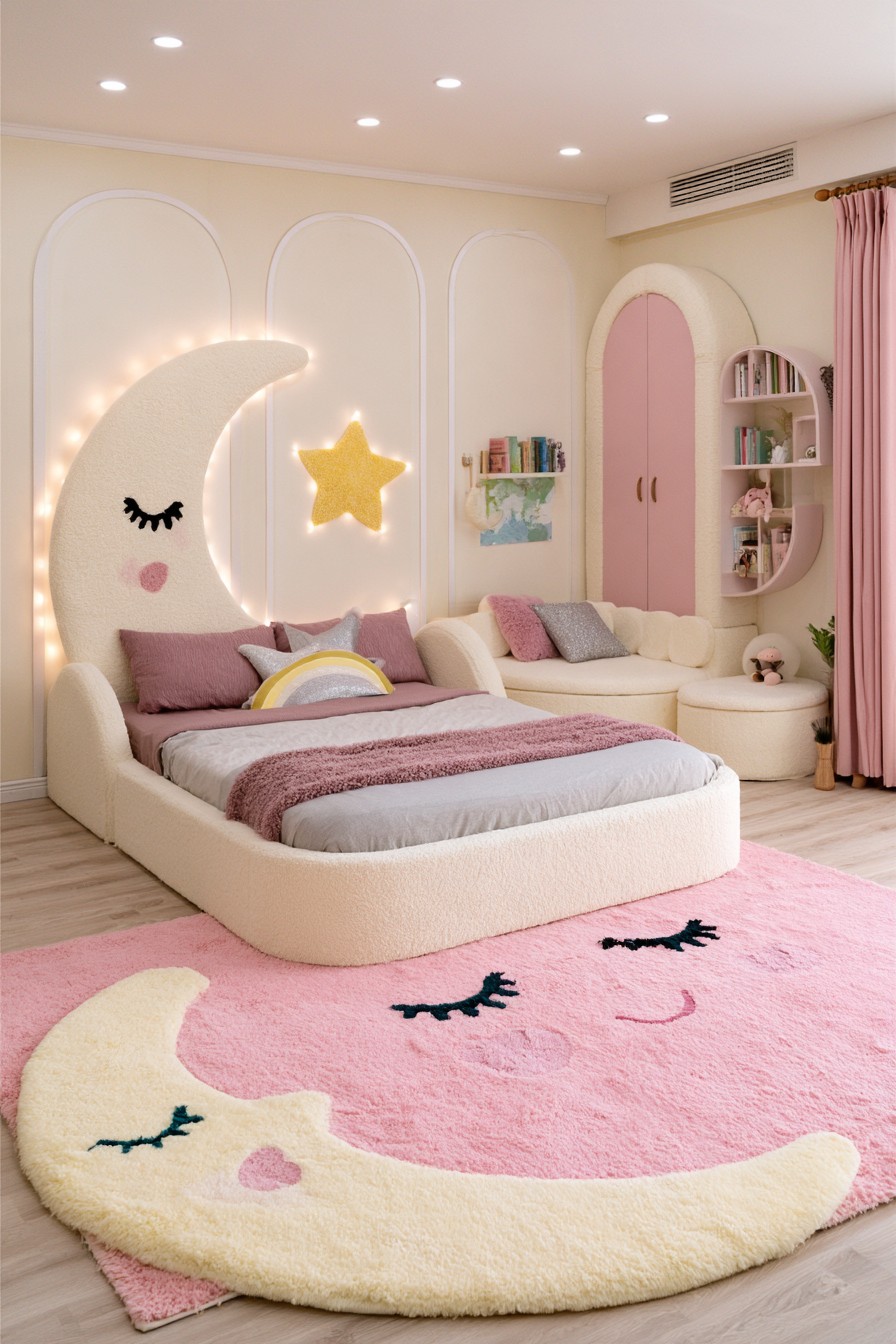
A broad crescent shape wraps around the headboard, with a star and soft pink accents giving the room a night sky theme. Rounded furniture repeats the curve, while the wardrobe keeps a familiar practical form. This approach is easy to simplify: paint a crescent on the wall behind an existing bed and use one star motif elsewhere.
Draw a full size paper outline before painting or ordering a shaped panel. Check the moon's position against the headboard, bedside light, and the view from the doorway. If choosing a three dimensional panel, its fixing and edges need to suit a child's room. Any decorative lighting should use a complete suitable product with accessible controls and wiring kept away from the sleeping space.
17. Royal Carriage Bed as the Main Statement Piece
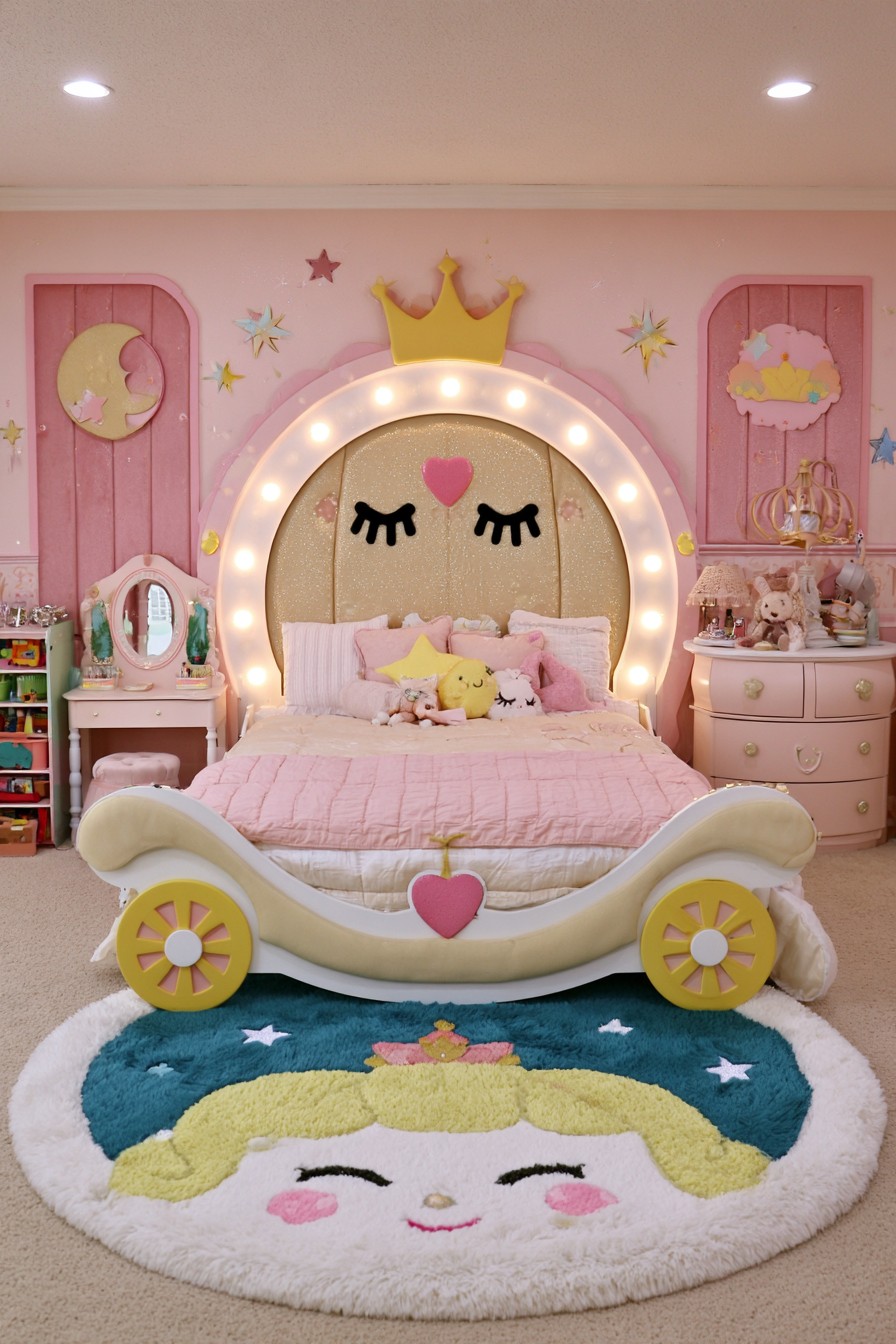
The carriage bed supplies the room's strongest shape, with wheel details, a curved surround, and a crown above it. Plain pink walls and smaller dressing furniture give the bed room to stand out. When a piece is this distinctive, a related cushion or rug can finish the theme without adding another large character or structure.
Measure the complete bed, including projecting wheels and decorative sides, rather than relying on the mattress dimensions. Check the delivery route and the space needed to change the bedding. Choose a product designed for its intended user, with suitable openings and installation instructions. A carriage shaped wall motif behind a regular bed offers a simpler option when the sculptural frame would reduce everyday access.
18. Swan Lake Elegance in Pink, Ivory, and Cream
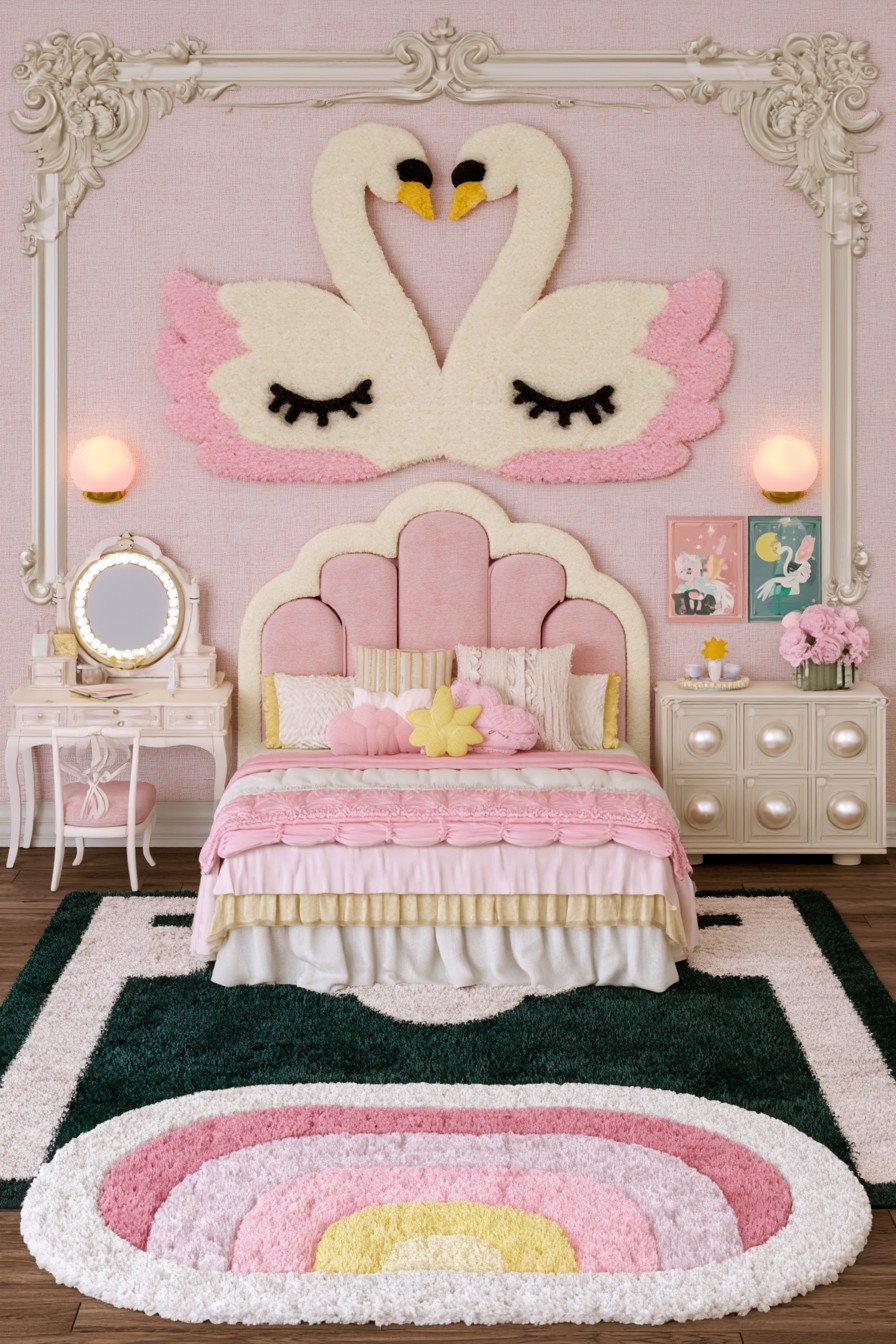
Paired swans form a broad wall feature above the bed, while cream furniture, pink bedding, and a rainbow rug keep the scheme playful. Use the paired motif as a starting point for the layout: center the birds above the headboard, then balance smaller details on either side. Leave the surrounding wall comparatively plain so the two silhouettes remain distinct.
A securely framed swan illustration can introduce that symmetry without a large wall ornament. Position the artwork around the actual headboard rather than centering it on an empty wall. Keep bedside surfaces useful for a book and ordinary evening essentials. If choosing coordinated lamps, compare their light from the bed and place their controls and cords where they can be managed safely.
19. Lavender Storage with a Painted Floral Arch
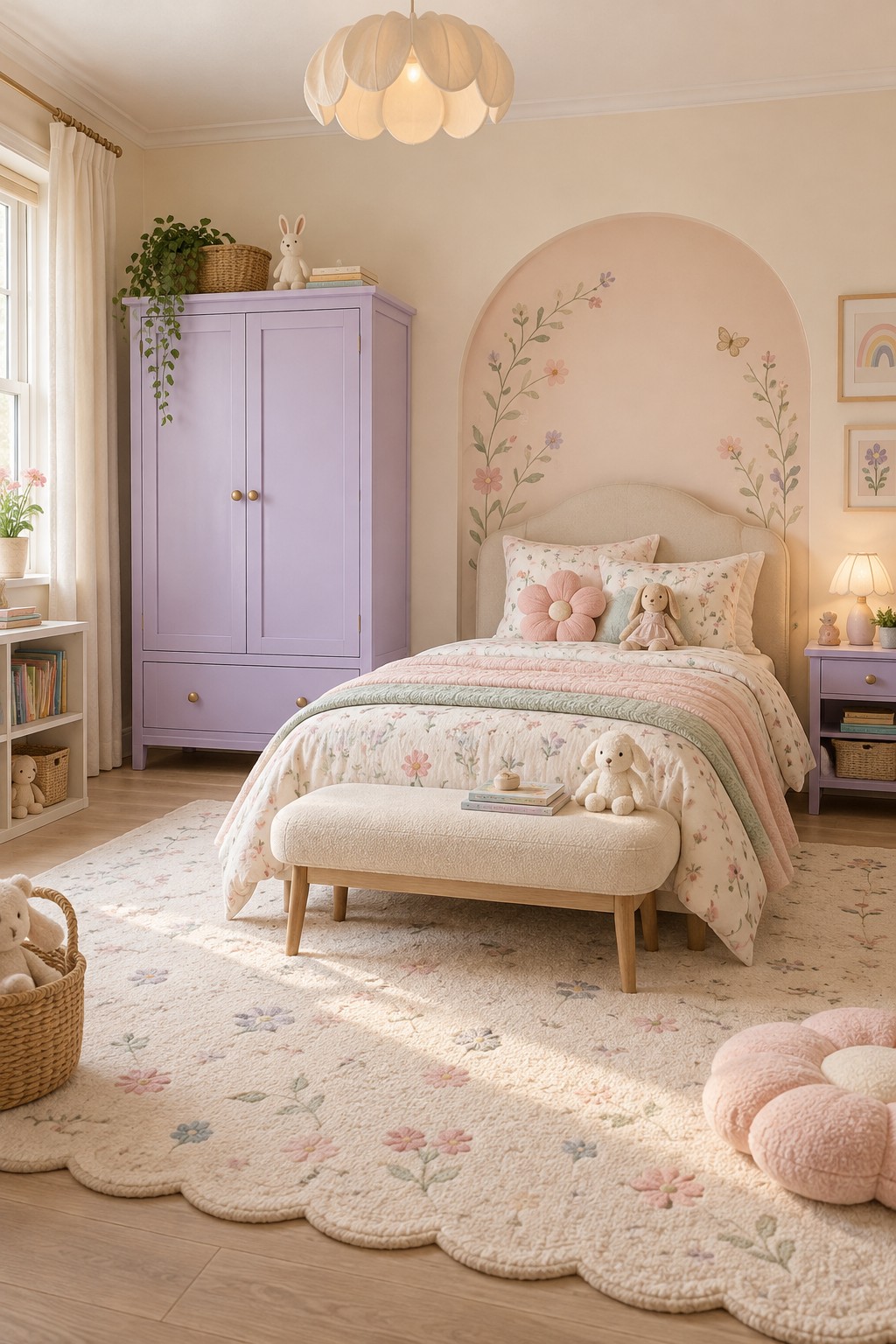
A lavender wardrobe and bedside table bring color into an otherwise cream bedroom. Behind the upholstered bed, a peach arch with slender painted flowers supplies the storybook detail. This is a useful direction when you prefer familiar furniture shapes and want the theme to come from paint, bedding, and a few soft accessories.
Sample the lavender beside the existing floor and bed fabric before painting compatible furniture. Follow the coating's preparation and curing instructions, keeping paint clear of hinges and sliding parts. Lay out the wall arch with a paper guide, then add a few stems around its edge so the center remains quiet. Check wardrobe door movement before placing the upholstered bench; the doors and the route around the bed both need room.
20. Rose Garden Canopy Details with Classic Furniture
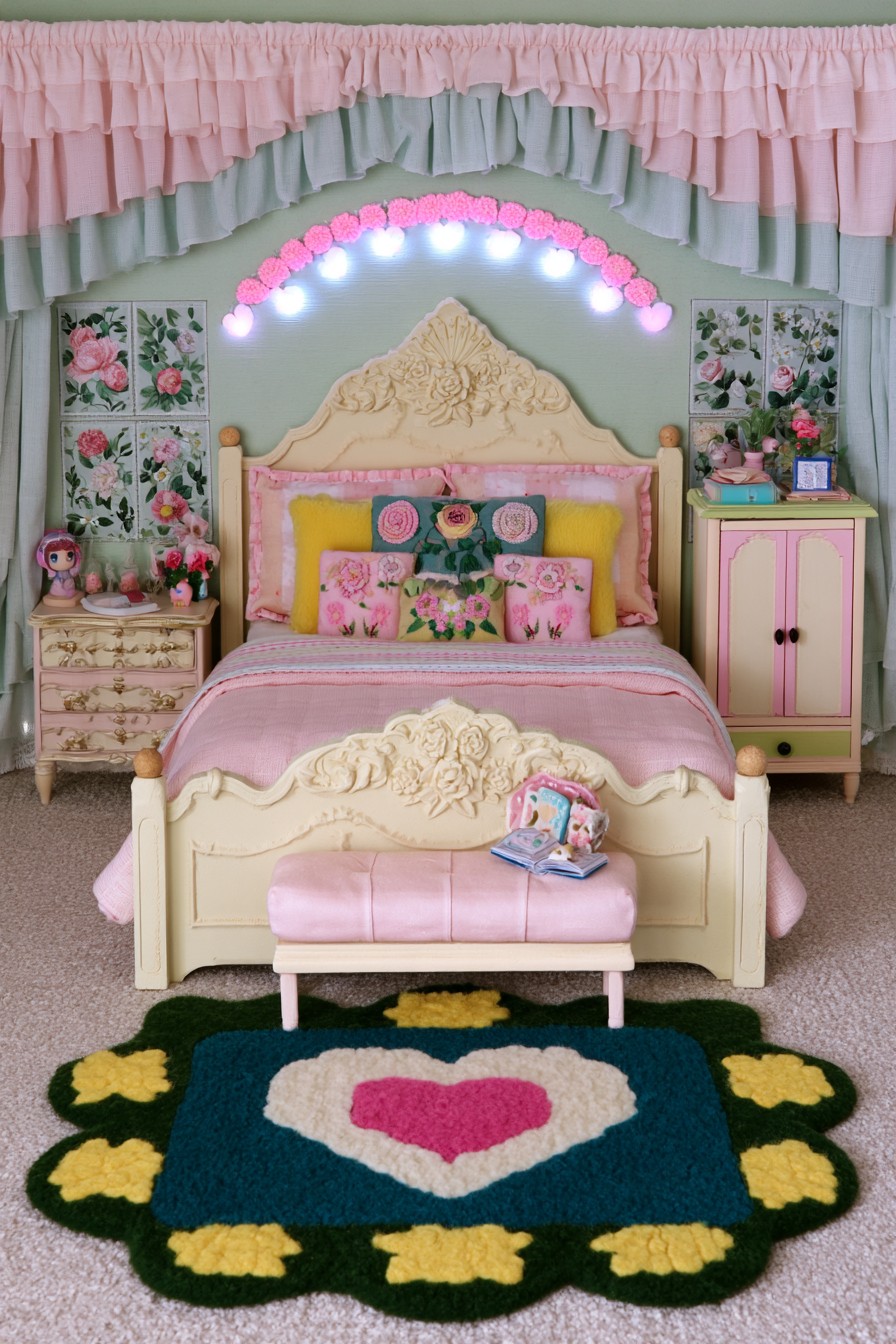
Floral wallpaper, pink ruffles, and a carved cream bed create a fuller garden room. The decorative fabric sits high around the bed wall, while the patterned rug and bedding repeat the pink and green below. Choose which surface will carry the strongest print before adding the rest; the wallpaper and quilt do not need equally dense patterns.
For a smaller update, retain the plain bed and bring the rose theme into curtains and bedding. If using overhead fabric or decorative lights, plan appropriate supports, product clearances, and cleaning access, with loose material kept away from a young child's sleeping area. Leave bedside drawers easy to open and give the bench a defined purpose, such as seating while dressing, rather than letting it become a permanent pile of bedding.
Creating a Fairytale Room That Can Grow with the Space
Choose the change that will make an ordinary day better: reachable books, a comfortable bed, a useful little table, or storage that opens without moving another piece. Build the princess theme around that improvement, then add the color or character your child wants most.
Keep a note of paint colors, fabric care instructions, and furniture fittings. Removable covers, framed artwork, and a restrained set of motifs make future changes easier. Before finishing, walk through the room with drawers open and bedding in place; the layout should work as comfortably as it looks.

Leave a Reply