
Gothic decor gains character through pointed silhouettes, textured black surfaces, ornate frames, and unexpected color. These 25 ideas range from small tabletop accents to layered living rooms. Use them to choose a focal piece, adapt the palette to your home, and create atmosphere without sacrificing seating, storage, or everyday comfort.
Table of Contents
- Find the Gothic Look That Fits Your Room
- Check the practical details before adding ornament
- 1. Pointed Mirror With a Gold Inner Border
- 2. Floral Black Vase Against a Light Wall
- 3. Framed Cathedral Textile Above a Console
- 4. Small Textile Motifs in an Ornate Frame Group
- 5. Sculptural Black Rose Table Accent
- 6. Apothecary Glass With Matching Bottle Artwork
- 7. Miniature Cathedral Folding Screen
- 8. Cathedral Inspired Clock as a Useful Focal Piece
- 9. Arched Wall Shelf for Books and Small Objects
- 10. Wide Mirror With Colored Side Panels
- 11. Lace Edged Table With a Soft Gothic Motif
- 12. Dark Roses and Old Keys Under a Glass Cloche
- 13. Coffin Outline Portrait Gallery
- 14. Pointed Keepsake Display With Individual Compartments
- 15. Entry Bench Beneath a Gothic Wall Collection
- 16. Bedroom Dresser With a Removable Textile Accent
- 17. Vintage Looking Bar Cart With a Colorful Gallery
- 18. Celestial Reading Nook With a Dark Armchair
- 19. Fireplace Parlor With Ochre Curtains
- 20. Fairytale Parlor With Cameos and Pink Accents
- 21. Botanical Bird Gallery Around a Display Cabinet
- 22. Facing Velvet Sofas With a Graphic Cream Rug
- 23. Branch Shaped Wall Installation With a Crescent Moon
- 24. Paired Chairs Framing a Dark Fireplace Wall
- 25. Colorful Graphic Rug in a Black Velvet Living Room
- Turn Your Favorite Detail Into a Room Plan
Find the Gothic Look That Fits Your Room
Pointed arches and tracery give the strongest architectural references in this collection. Ornate mirrors, deep upholstery, dark flowers, and aged looking finishes add a romantic layer. Skulls, moons, and playful textile motifs take some arrangements toward contemporary Gothic maximalism. These are different decorating directions, so choose the elements that express your taste rather than treating every symbol as essential.
The images show that a Gothic accent can work against white walls or alongside pink and yellow. Some pieces have visible textile decoration; others use elaborate frames or dark furniture. Borrow the relationship between shape, color, and texture instead of assuming every textured object is carved wood or a genuine antique.
| Your decorating goal | Where to begin | How to adapt it |
|---|---|---|
| A clear architectural focal point | The pointed mirror, cathedral artwork, or clock in ideas 1, 3, and 8 | Choose one silhouette large enough to read from the doorway, with a calm backdrop. |
| A softer romantic accent | The floral vase, rose sculpture, or lace edged table in ideas 2, 5, and 11 | Combine dark texture with wood, faded pink, and a usable surface nearby. |
| A personal collection | The portrait arrangement or compartmented display in ideas 13 and 14 | Select meaningful small pieces and give each enough contrast to remain visible. |
| A colorful room scheme | The sitting rooms and parlors in ideas 20, 22, and 25 | Use a rug to organize accent colors while keeping the largest furniture pieces related. |
Check the practical details before adding ornament
- Space: Mark furniture and rug outlines before buying. Allow doors, drawers, and seating to operate normally, and check decorative projections at shoulder and head height.
- Light: Plan general illumination and a reading or task light where needed. Dark surfaces and candle effects create atmosphere, but an attractive photograph does not establish adequate light for daily use.
- Support: Select wall fixings for the object, its full loaded weight, and the wall construction. Secure furniture that requires anchoring according to its instructions. Decorative adhesive strips are not a substitute for suitable support for heavy mirrors or shelves.
- Flame and heat: Use battery candles in textile displays and closely grouped decorative arrangements. Real candles need stable holders, supervision, and at least 30 centimeters of clearance from anything combustible. Keep lace, ribbons, branches, and ornaments outside a working fireplace's required clearances; follow its appliance instructions.
The ideas below move from individual accents to complete room compositions. Start at the scale your space needs, then borrow supporting details from other examples.
1. Pointed Mirror With a Gold Inner Border
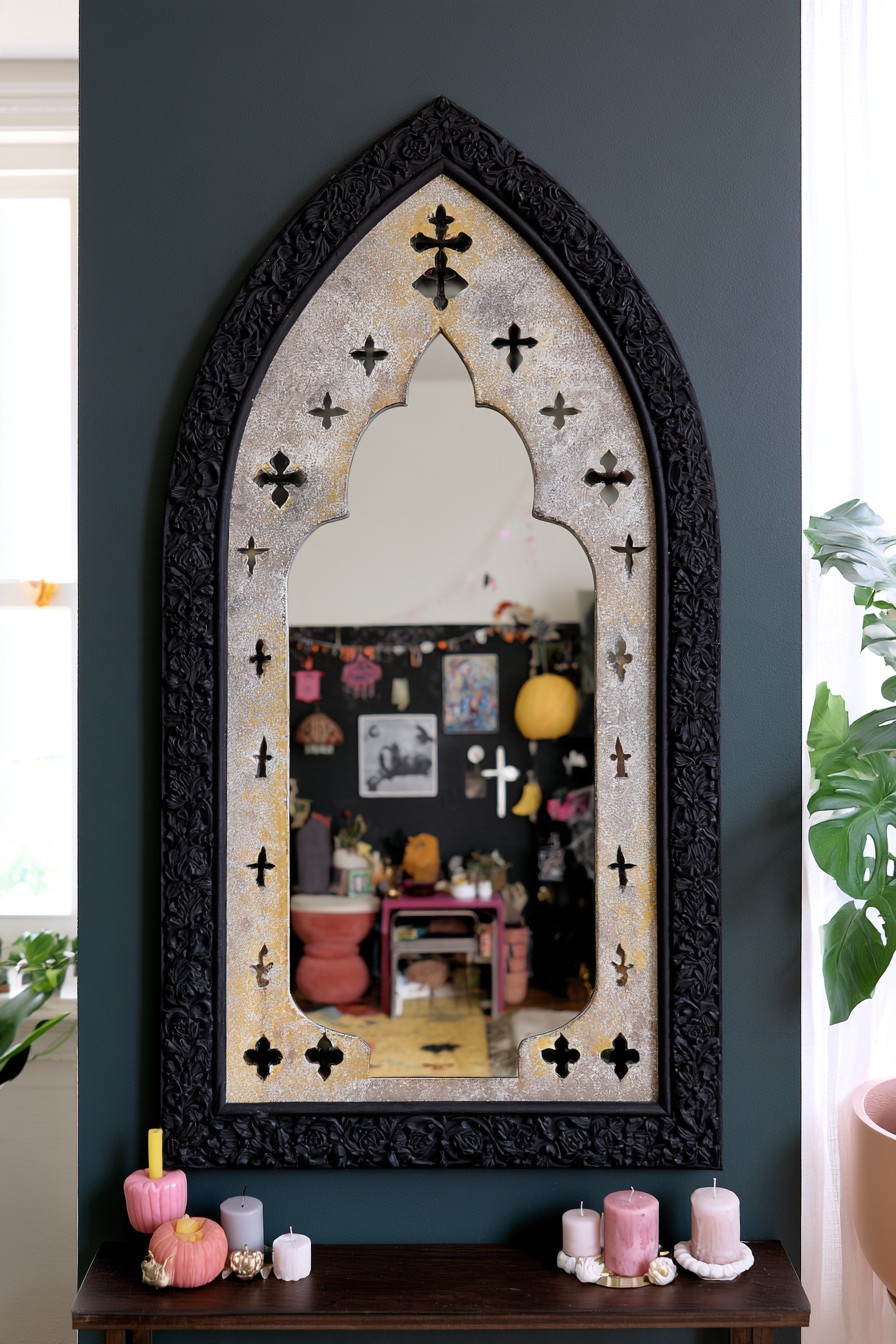
The pointed outer frame establishes the Gothic shape, while the gold toned inner border separates the reflective opening from the dark wall. That contrast matters: an entirely black frame on the same deep teal background could lose much of its intricate outline. The tall proportions make this an effective entrance or console wall accent.
Choose the mirror width in relation to the furniture below, then check its reflection from the usual approach to the room. Reflecting a plant or an organized adjoining area contributes more than reflecting everyday clutter. Keep low objects below the mirror so the lower edge stays legible, and mount the substantial frame using appropriate hardware. Pink candle forms or pale ceramics can repeat the softer mood shown without competing with its height.
2. Floral Black Vase Against a Light Wall
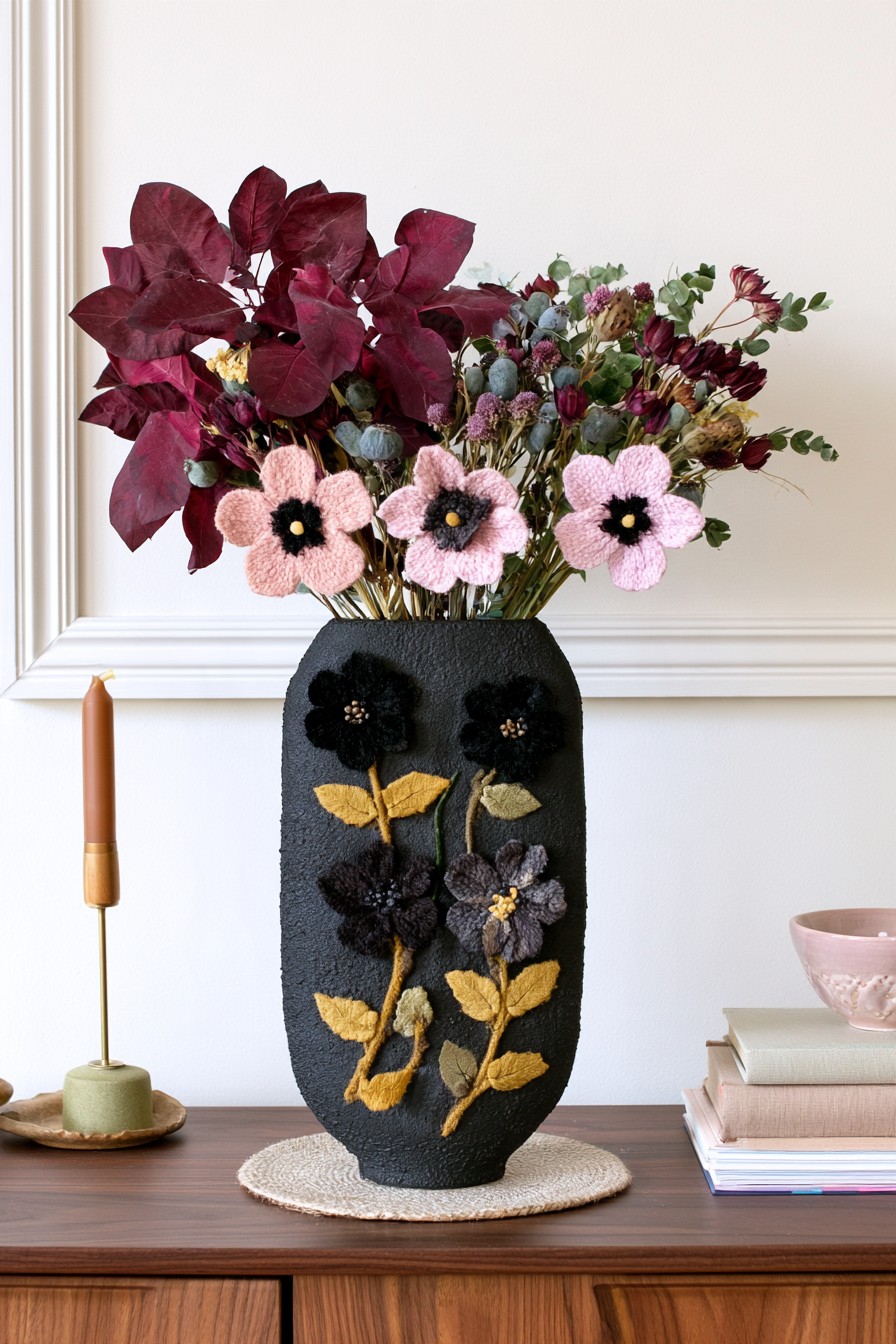
A light backdrop gives the black vase a crisp outline, proving that one Gothic accent can carry a room without repainting it. Raised floral details supply the ornament, while burgundy leaves and pale pink flowers extend the vessel's colors upward. The warm wood below keeps the grouping approachable rather than severe.
To recreate the relationship, select a vessel with visible surface detail and build an arrangement with one dominant foliage color. Keep delicate stems lower around the front so they do not hide the applied flowers on the vase. Before using fresh stems, check whether the vessel is watertight or needs a fitted water insert, and keep moisture away from vulnerable decorative attachments. This is particularly useful on a sideboard where a full Gothic room scheme would feel excessive.
3. Framed Cathedral Textile Above a Console
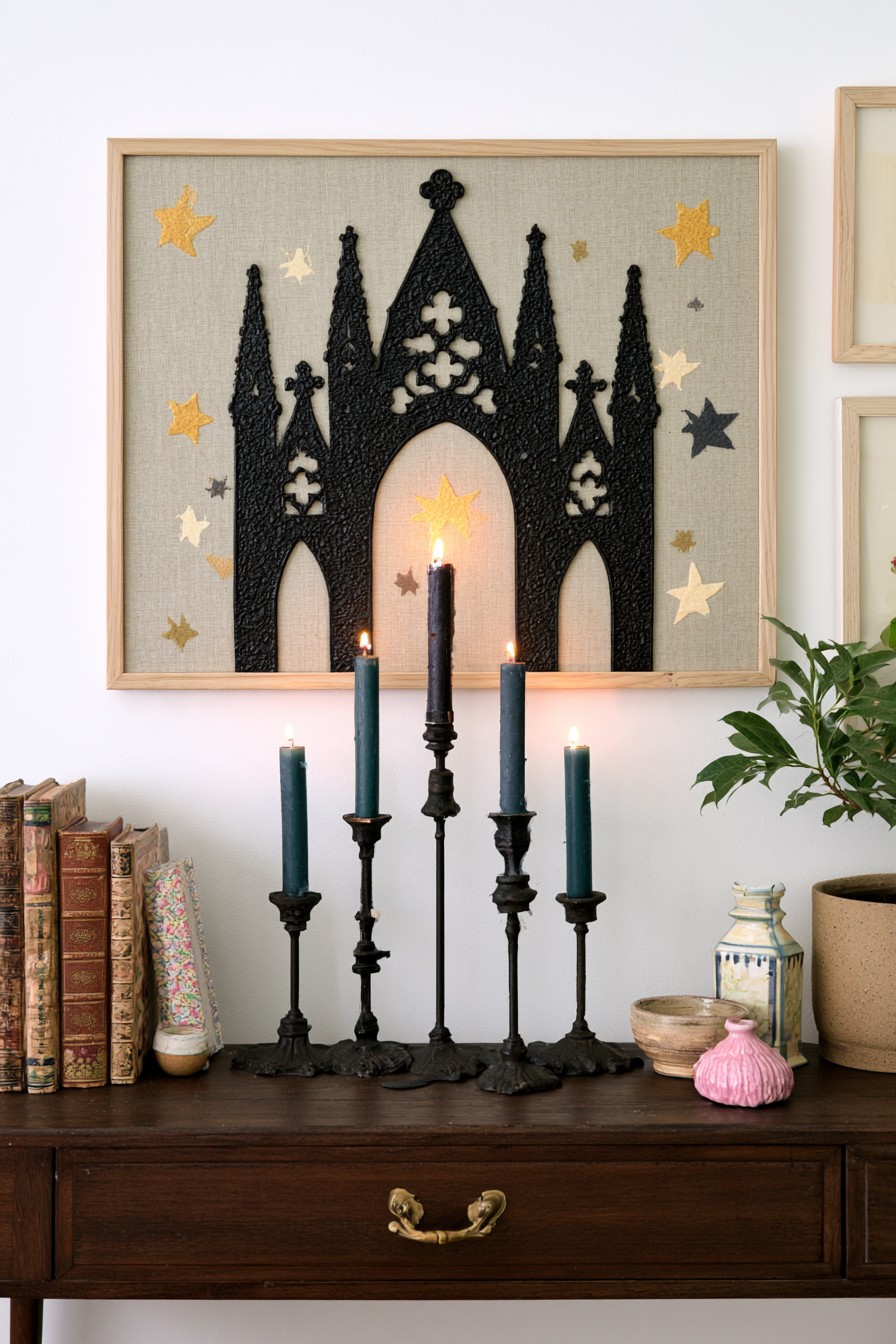
Here, cathedral spires and pointed openings appear within a framed textile composition rather than a structural wall panel. The natural colored backing and light timber frame soften the black motif, making the idea suitable for a bright dining area or a home with existing pale walls.
Look for artwork whose architectural outline remains recognizable at room viewing distance. Center it over the console and relate its width to that surface, leaving wall space around the frame. A compact row of vintage looking books echoes the historical mood, while a single blue or pink ceramic piece introduces color below. Tall candle shapes can repeat the spires, but battery versions are a better choice where the display sits close to textile artwork. This approach gives Gothic architecture a smaller, easily changed place in the room.
4. Small Textile Motifs in an Ornate Frame Group
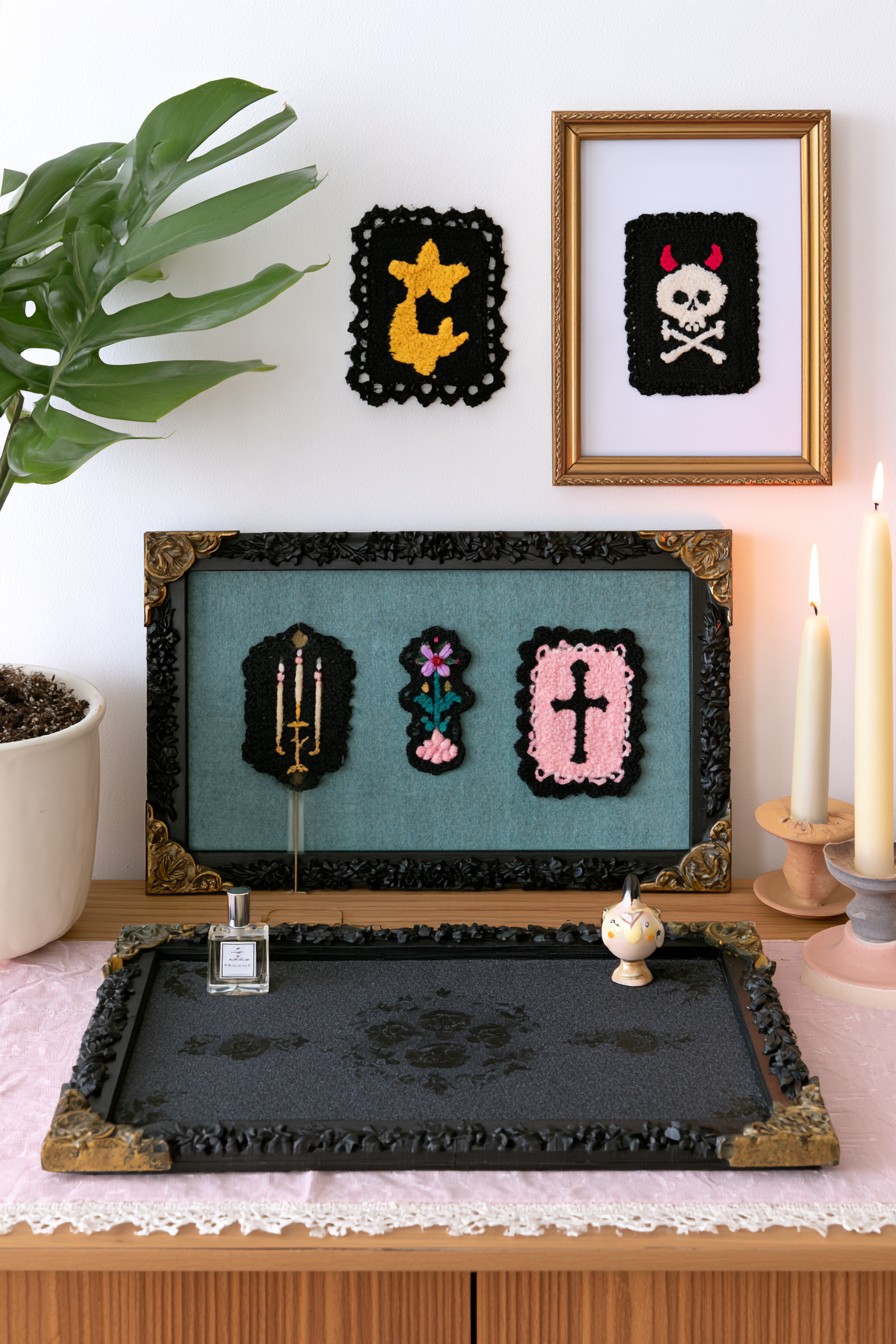
The small cat, skull, floral, and cross designs feel playful because their soft textile surfaces are paired with elaborate black and gold frames. Pink and mustard details create a romantic Gothic accent rather than a uniformly dark display. The tray below provides another ornate outline without repeating a large wall feature.
Begin with one shared background or frame finish, then vary the motif and shape. Arrange the pieces together before hanging, checking that the spaces between them form a coherent group rather than isolated dots. A larger horizontal frame can gather several small textile pieces; confirm that their supports will not stretch or damage the work. On the surface below, use the tray for a few frequently handled accessories, leaving enough room to lift them without catching on its raised ornament.
5. Sculptural Black Rose Table Accent
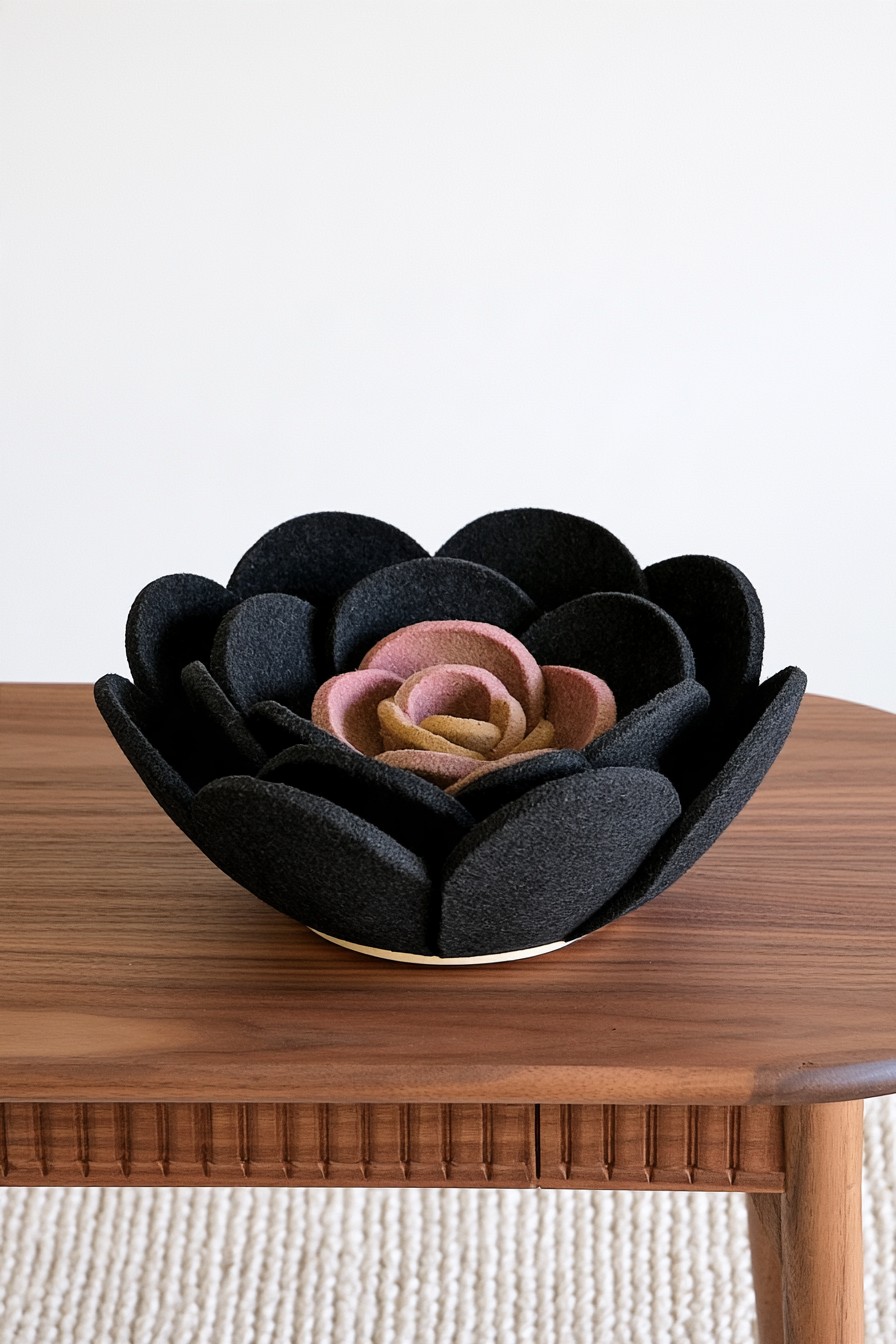
Overlapping black petals give this compact sculpture depth, and the dusty pink center prevents the flower shape from disappearing into one dark mass. It reads as a decorative rose rather than an ordinary storage bowl. Pale wood around it makes the layered edges easier to appreciate.
Use a similar flower form on a side table where it can be viewed slightly from above. Compare its footprint with the usable area before buying; wide petals can occupy more space than the base suggests. Let the center remain visible instead of filling it with keys or unrelated ornaments. If choosing a bowl shaped version for storage, check that the maker intends it for that function. A textured decorative object should not automatically be treated as a serving vessel or a place for delicate jewelry.
6. Apothecary Glass With Matching Bottle Artwork
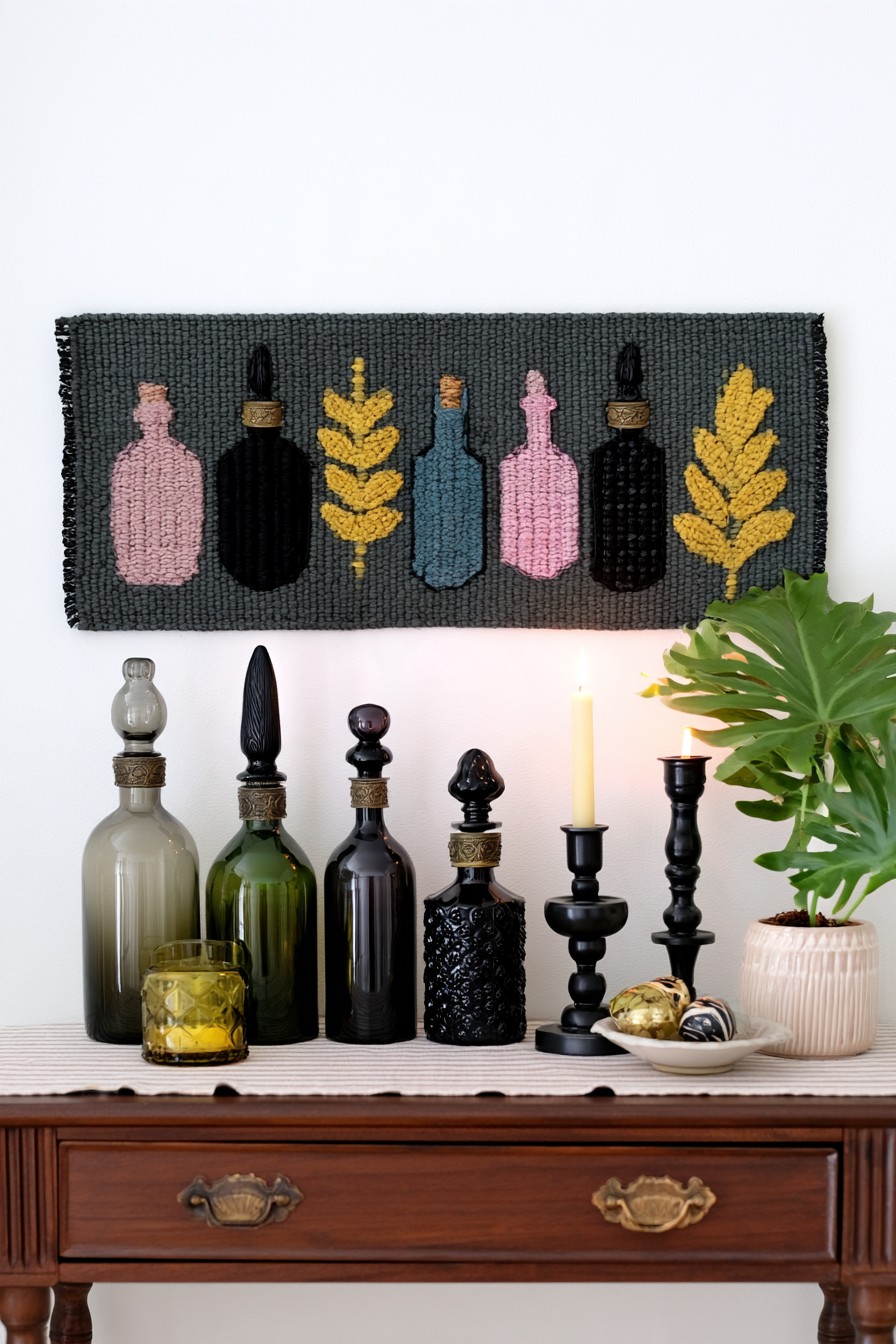
The illustrated bottle shapes above the console repeat the real glass below, tying the display together more specifically than a general dark palette would. Different stoppers and smoky tones give each bottle a distinct profile, while the mustard foliage in the artwork adds a warm counterpoint.
Build the lower grouping with one tall bottle and several shorter forms, keeping their necks and stoppers visible from the front. Give the glass a secure level surface rather than placing it over folds in a runner. If the wall piece has a soft surface, choose a hanging method suited to its backing. Treat unknown vintage bottles as decorative unless their condition and intended use support storing the chosen contents. This arrangement works well on a dining sideboard, with empty space left for serving when the room is in use.
7. Miniature Cathedral Folding Screen
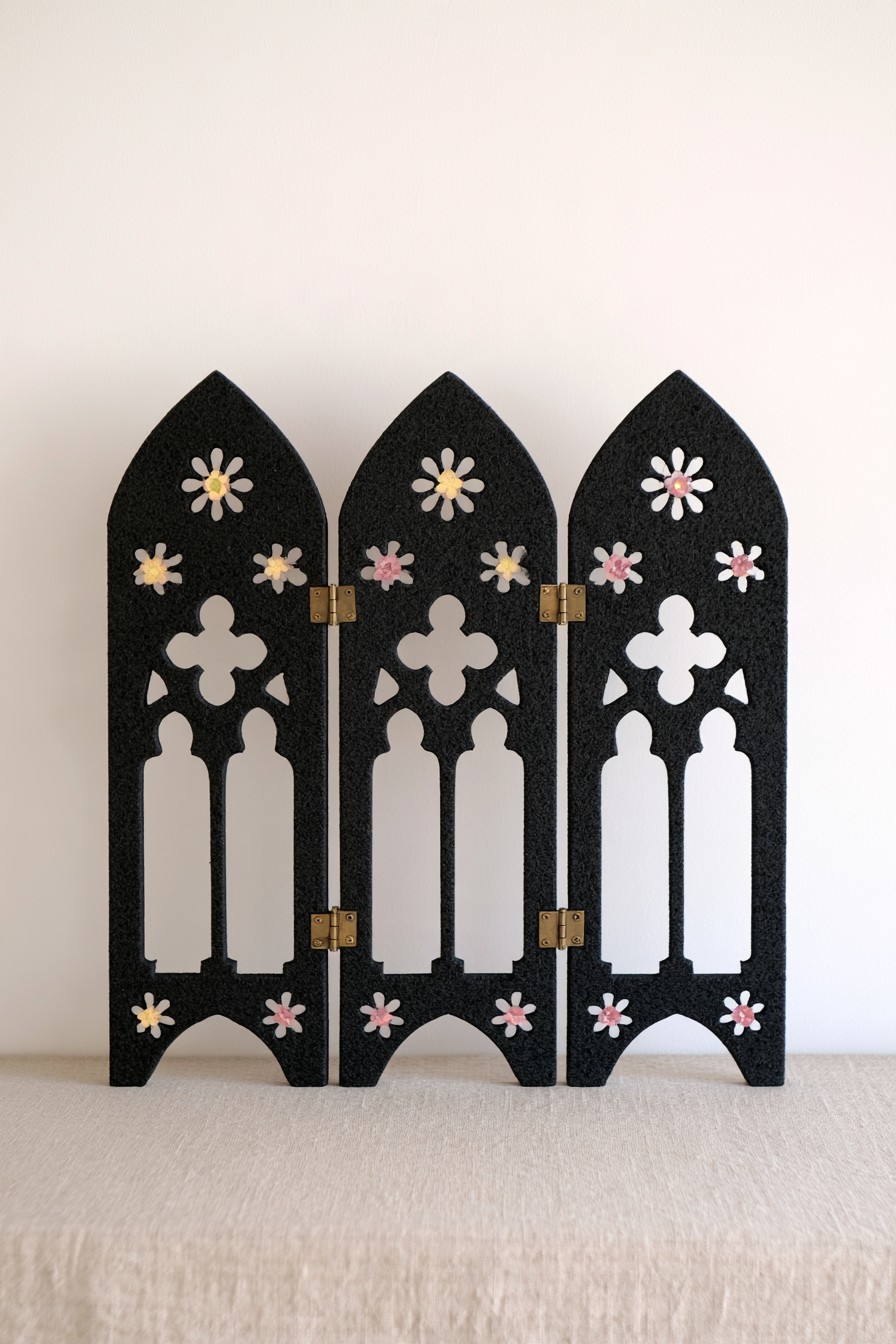
Three pointed panels turn cathedral tracery into a tabletop backdrop. The open centers keep the piece light, and the tiny flowers soften its dark silhouette. Its scale suits a dresser or console; it is a decorative screen rather than a full room divider or privacy solution.
Measure the width when the panels are gently angled, since the folded arrangement takes up both depth and width. Place it where the openings have a plain wall behind them, allowing the cutouts to remain recognizable. Test its stability in the maker's recommended position before adding objects nearby, and keep it away from a frequently bumped edge. A low box or perfume tray can sit in front, but avoid hiding all three openings. The folded form supplies dimension even when the surrounding room has simple modern furniture.
8. Cathedral Inspired Clock as a Useful Focal Piece
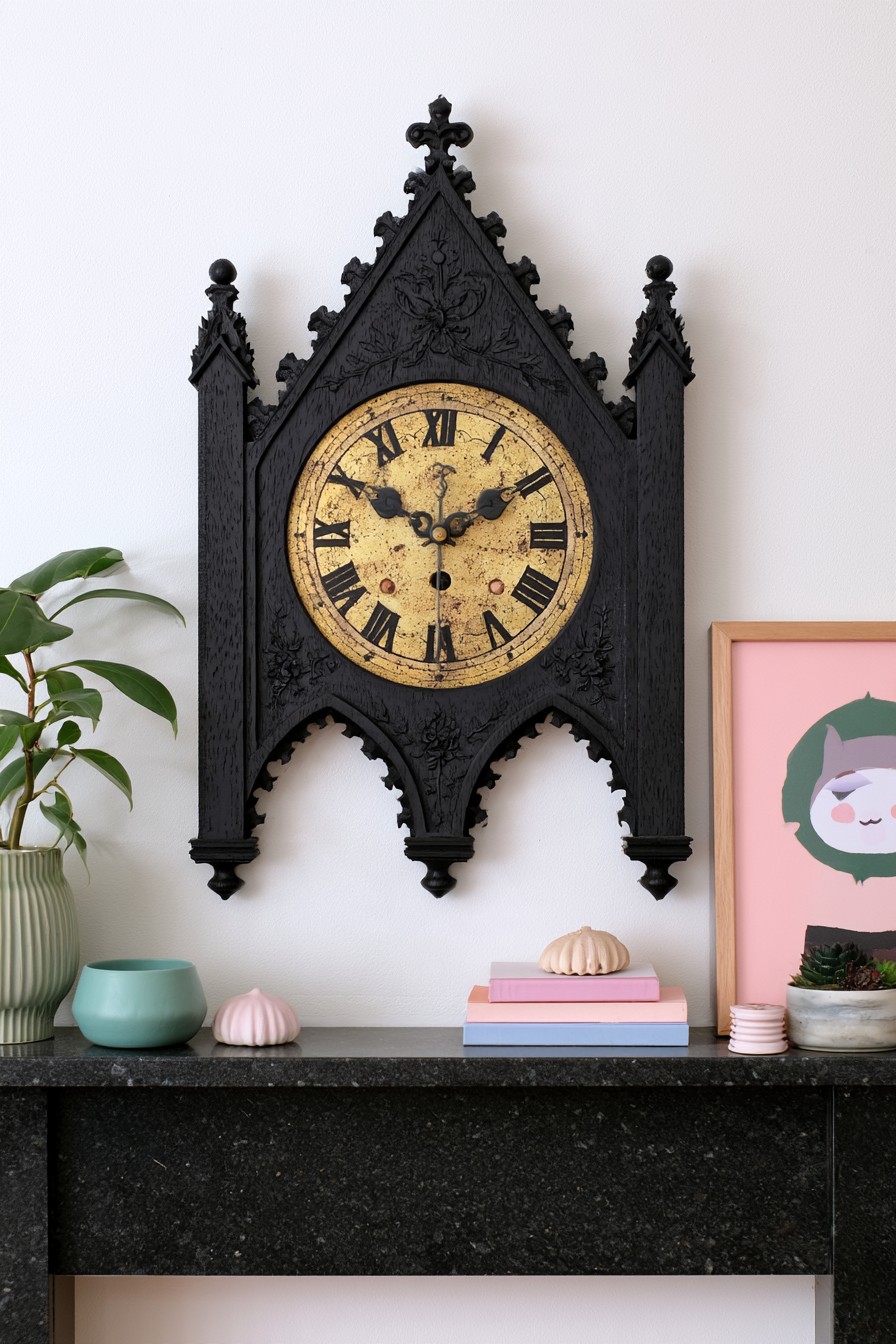
The pointed top, side pinnacles, and open arches give the clock its architectural presence. An aged gold colored face draws the eye toward the time display instead of letting the black surround dominate. The look references Gothic ornament without establishing that the clock is a genuine Victorian antique.
Choose a position where the hands and numerals can be read from the seat or doorway that matters. Check the frame depth, hanging instructions, and access for changing a battery or servicing the movement. A quiet stretch of pale wall makes the lower arches stand out; a stack of pink books beneath it picks up the collection's softer color direction. This is a useful choice when you want one substantial Gothic object that earns its space through daily function.
9. Arched Wall Shelf for Books and Small Objects
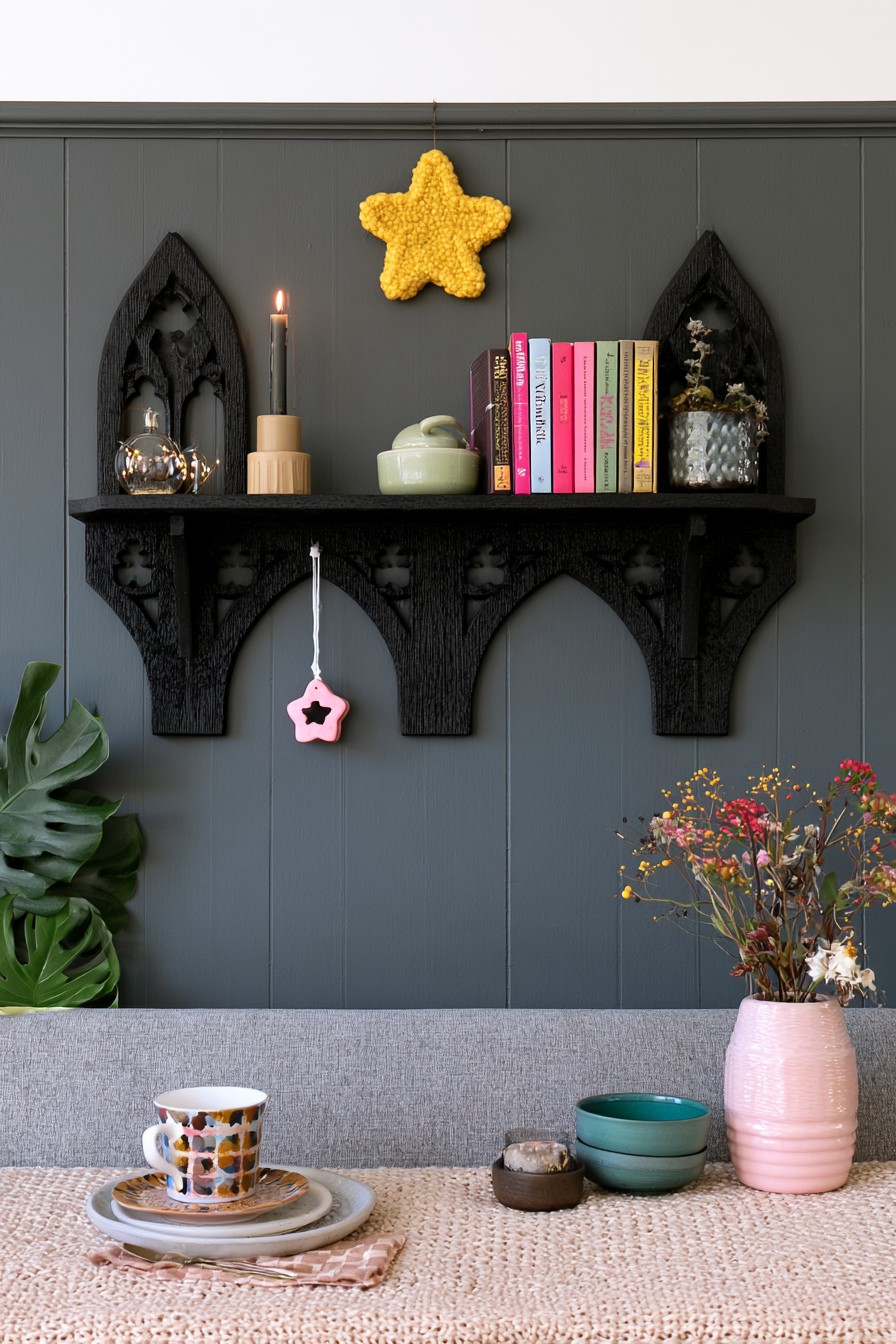
The pointed backing and lower arches make the shelf part of the decoration, not just a place to put it. Against gray paneling, the black form stays visible without becoming the only strong color. Pink book spines, a yellow star, and pale green ceramics make the stored objects readable.
Choose the shelf by usable depth and stated load capacity before considering its ornament. Books and filled plant pots can be surprisingly heavy, and the decorative arches should not be assumed to provide structural support. Install it for the actual loaded weight and wall type, keeping headroom in mind if a bench sits below. Group books where they can be removed easily, then reserve a smaller area for a lightweight object. That division gives a reading or dining corner display space that still serves a practical purpose.
10. Wide Mirror With Colored Side Panels
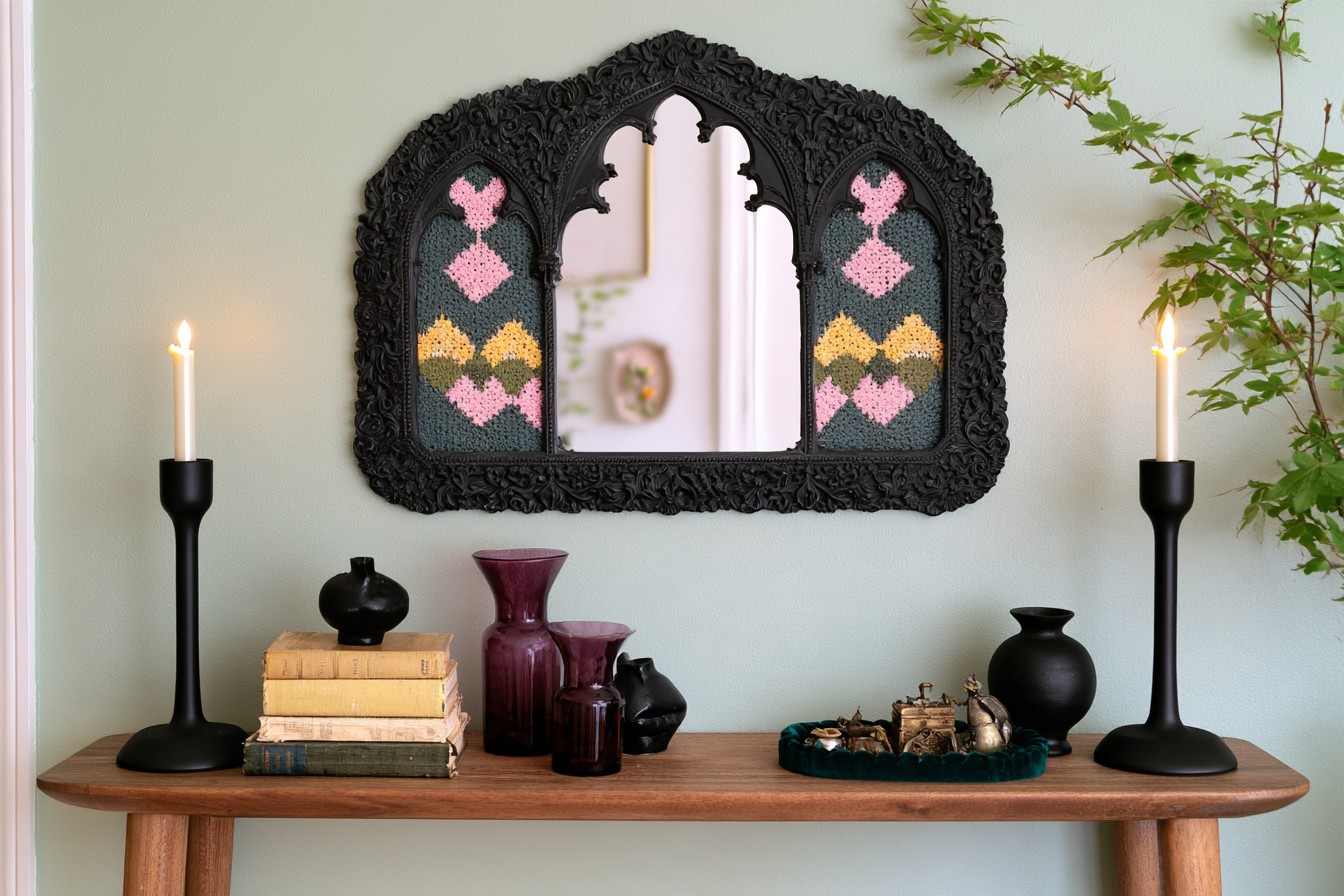
This mirror spreads Gothic detail horizontally, unlike the tall pointed example at the start of the collection. The decorated side panels frame a smaller reflective center, while pink and mustard motifs connect the elaborate black border to the colored glass below.
Use the idea over a console that is wide enough to support the composition visually. Check how much of the center actually reflects: a broad decorative frame does not necessarily provide a large useful mirror. Place comparable vertical forms near the ends and lower plum glass or books between them. Exact matching is optional; similar heights create balance while varied shapes retain personality. A shallow tray toward one side can collect daily items, making the arrangement suitable for a living room console or an entrance where a quick mirror check is useful.
11. Lace Edged Table With a Soft Gothic Motif
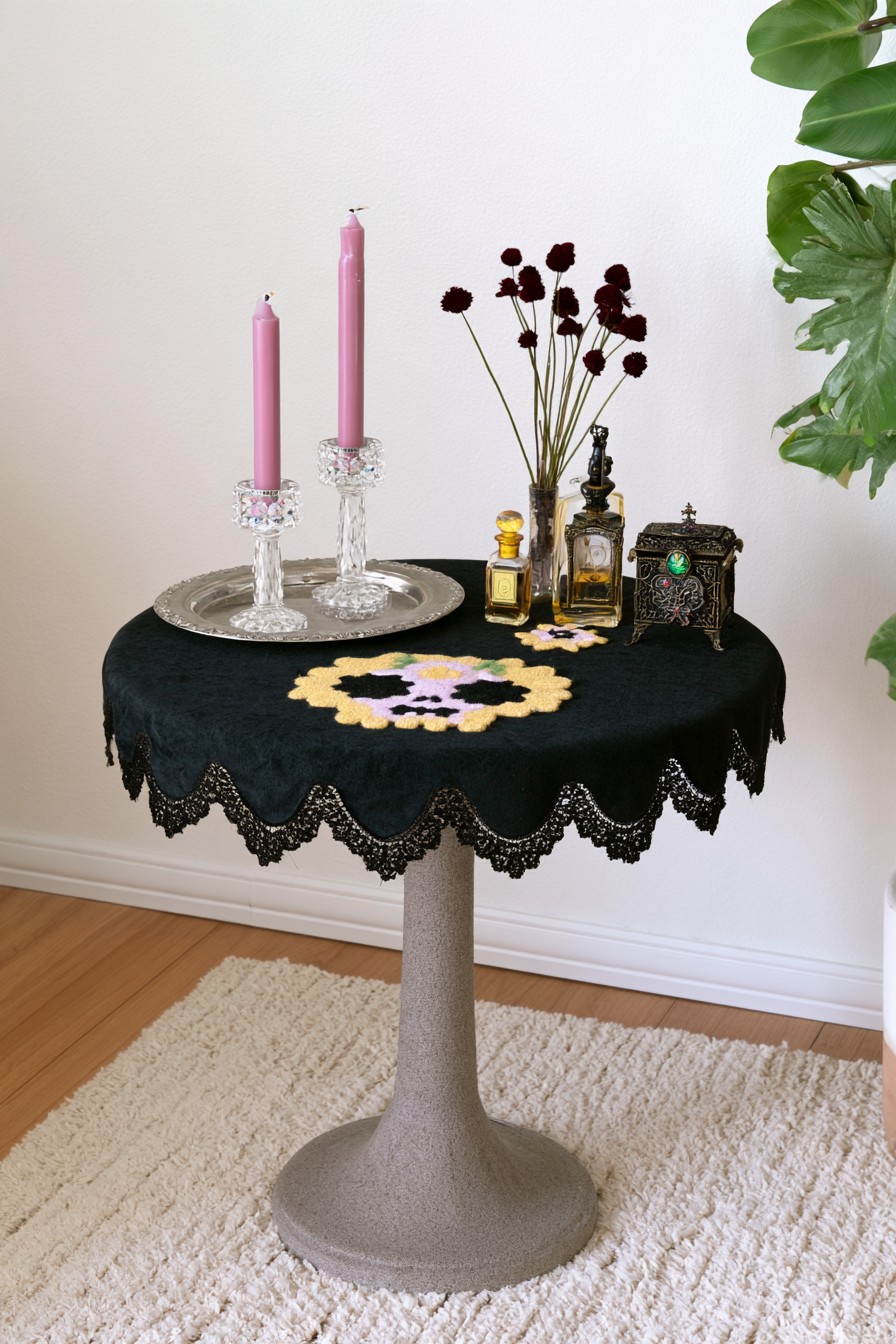
A dark plush covering and scalloped lace edge transform the outline of an otherwise simple pedestal table. The colorful central motif adds a humorous Gothic note, while glass perfume bottles and burgundy stems bring detail at a different scale. It suits a decorative bedroom corner more readily than a busy drinks table.
Select the cloth diameter so the edge hangs evenly without reaching the floor or catching beneath a chair. Keep the center motif exposed by grouping accessories toward the back, and use a removable tray for bottles that may leave marks. Choose battery taper lights for this textile setting rather than copying open flames close to the cloth. If the table will hold everyday drinks, shorten the covering or keep a separate stable surface available so delicate ornament does not interfere with normal use.
12. Dark Roses and Old Keys Under a Glass Cloche
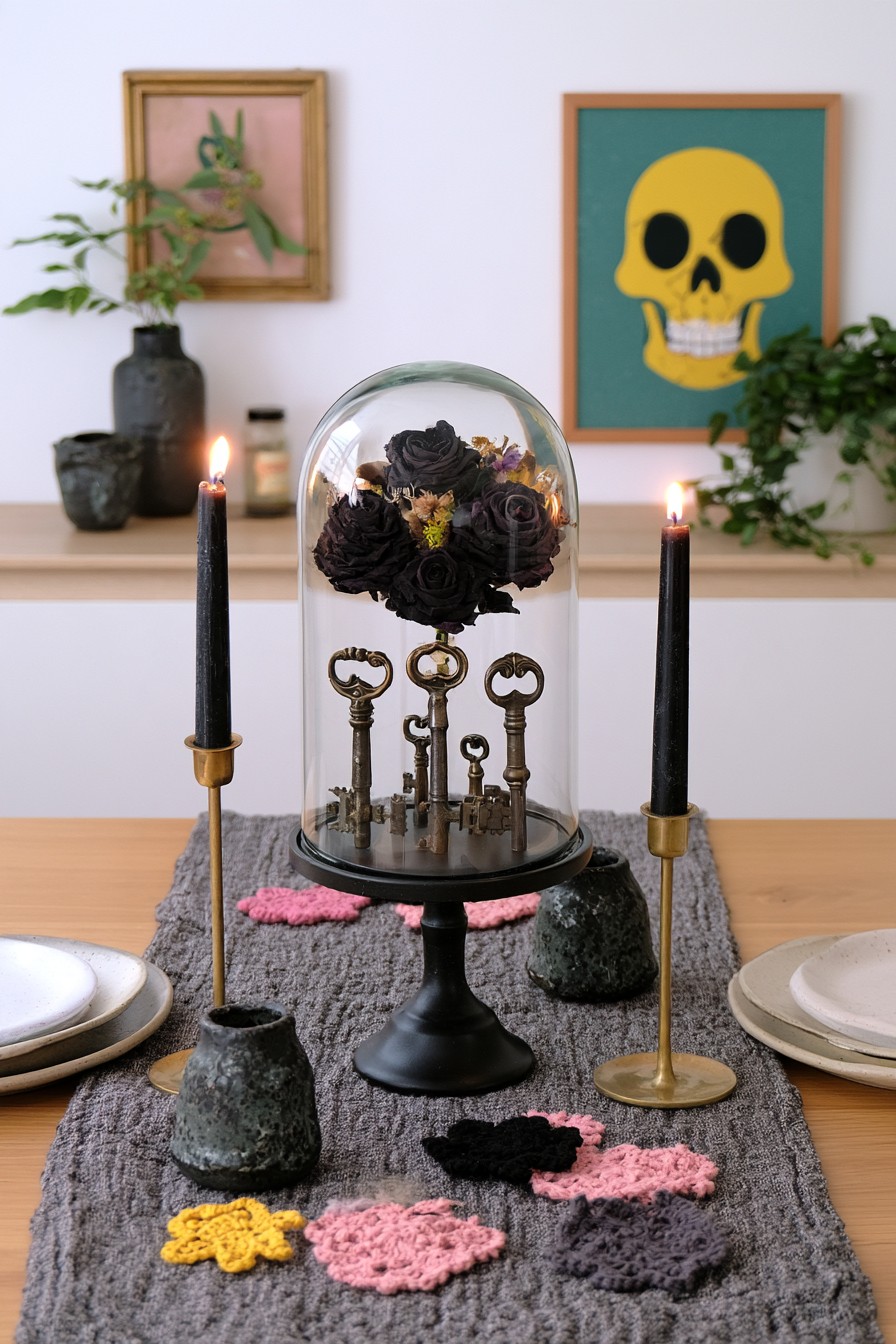
A clear dome sets a boundary around black roses and old looking keys, making a small collection feel intentional. The raised flowers and vertical keys create a miniature scene, with the black pedestal giving it a formal base. Pink and mustard textile details nearby make the table setting feel less solemn.
Choose a dome that lifts off without brushing the flowers, and leave enough clearance around the base to handle it securely. Arrange the keys on a supported insert so moving the cloche does not scatter them. Use dry decorative flowers beneath an enclosed dome unless the arrangement is designed for living plant care. On a dining table, check the height from seated eye level: a narrow centerpiece can still block conversation. Move it to the buffet during meals or choose a lower version when sightlines are important.
13. Coffin Outline Portrait Gallery
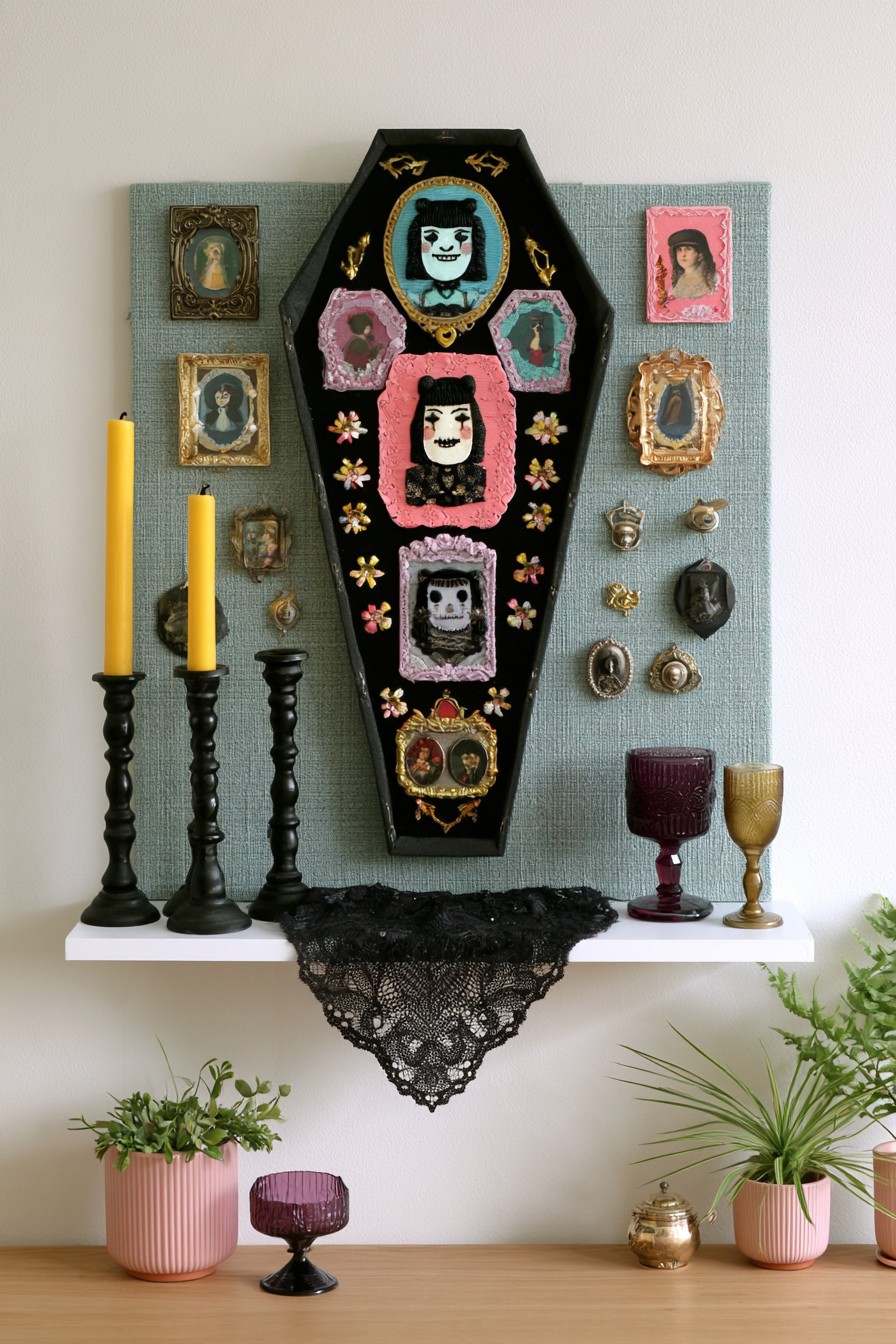
The coffin outline supplies a bold Gothic boundary, but the small portraits and floral details make the contents the real story. A blue gray backing extends beyond the main shape to hold additional keepsakes, so the wall arrangement reads as one collected panel rather than a scattered gallery.
Choose a few portraits or images with personal meaning and vary their frames within a related finish palette. Place the strongest face or image near the center, then balance smaller items around it without requiring perfect symmetry. Check that the completed backing can carry every attached component and that the wall fixing suits the full assembly. A narrow shelf beneath can echo the dark frame, but limit its contents so the portrait group remains readable. This works as a distinctive memory display in a hallway or private room.
14. Pointed Keepsake Display With Individual Compartments
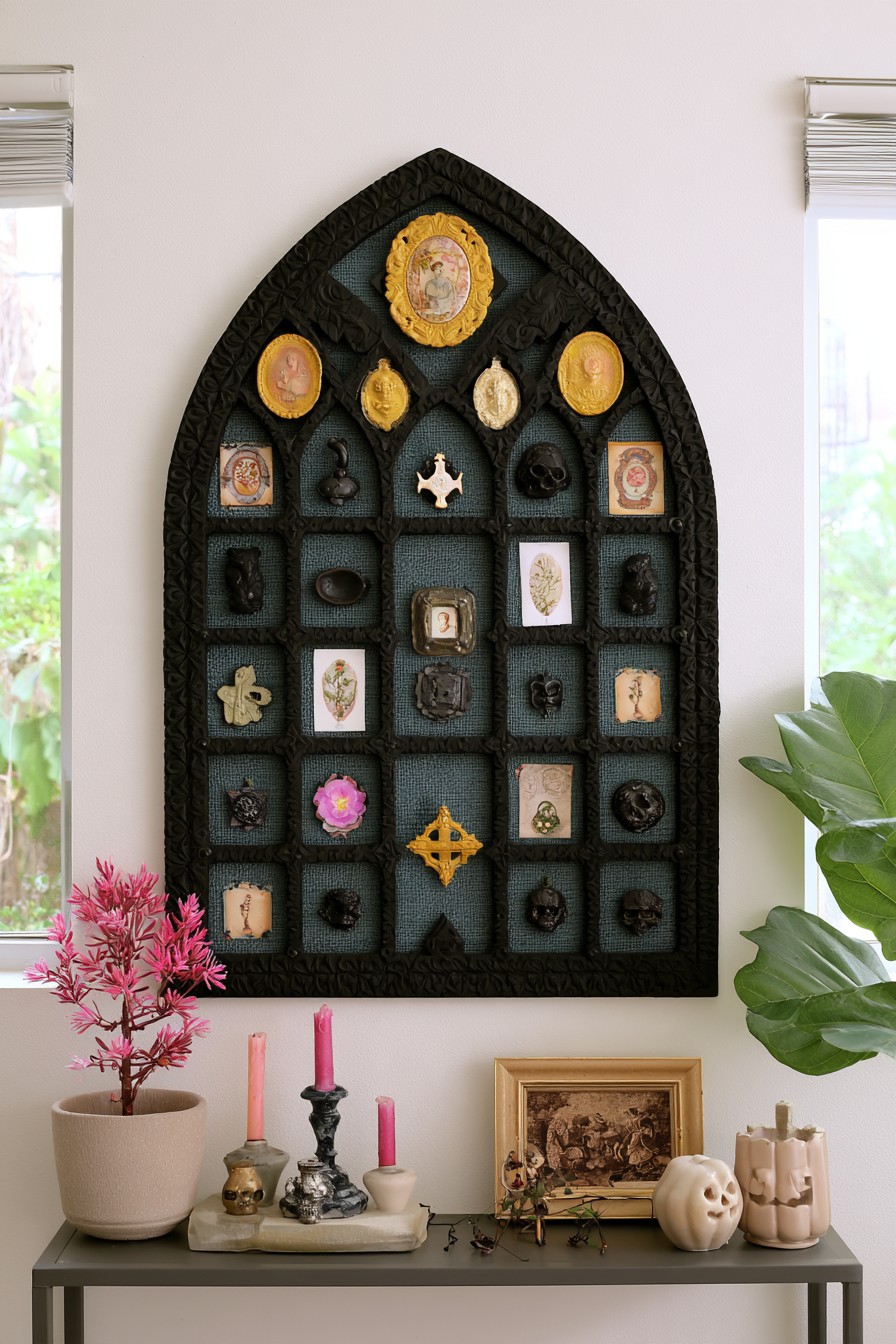
Individual compartments bring order to a larger collection of small objects. The pointed surround provides the Gothic reference, while the lighter blue gray backing stops dark keepsakes from vanishing. Gold frames toward the top lead the eye upward, giving the display a different rhythm from the coffin shaped portrait group.
Measure the depth and width of each section before selecting contents. A piece needs enough room to sit securely, not merely fit tightly between dividers. Put darker objects against lighter backing and distribute metallic details so one corner does not become much brighter than the others. Treat sentimental miniatures as decorative contents, and verify the display's support and load limits before filling it. Keeping the console below relatively open makes dusting and rearranging easier while letting the compartment pattern remain the main visual structure.
15. Entry Bench Beneath a Gothic Wall Collection
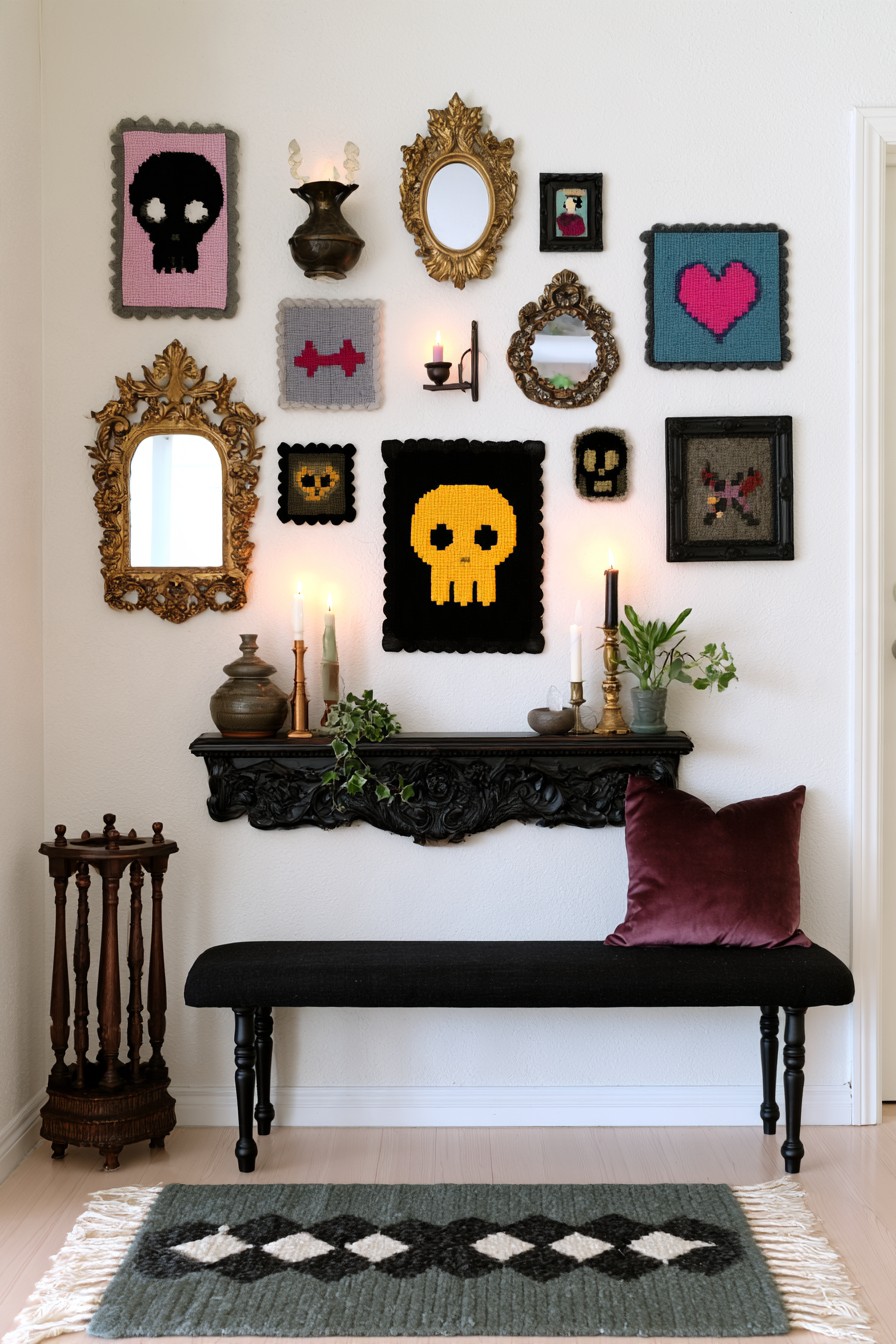
The bench makes this entrance useful before the wall decoration is considered. Gold mirror frames, colorful skull motifs, and a dark shelf then add personality above it. An umbrella stand to one side and a simple rug show how the Gothic mood can be built around everyday arrivals.
Position the bench where someone can sit and put on shoes without blocking the door. Check the shelf projection above the seated position, and place decorative objects where they cannot be knocked during use. Arrange mirrors and artwork within a common visual boundary, balancing larger frames with smaller textile pieces. Choose an entrance rug for the traffic and moisture it will actually receive, with a suitable nonslip backing or underlay. Leave one accessible landing place for keys instead of covering the entire shelf with ornaments.
16. Bedroom Dresser With a Removable Textile Accent
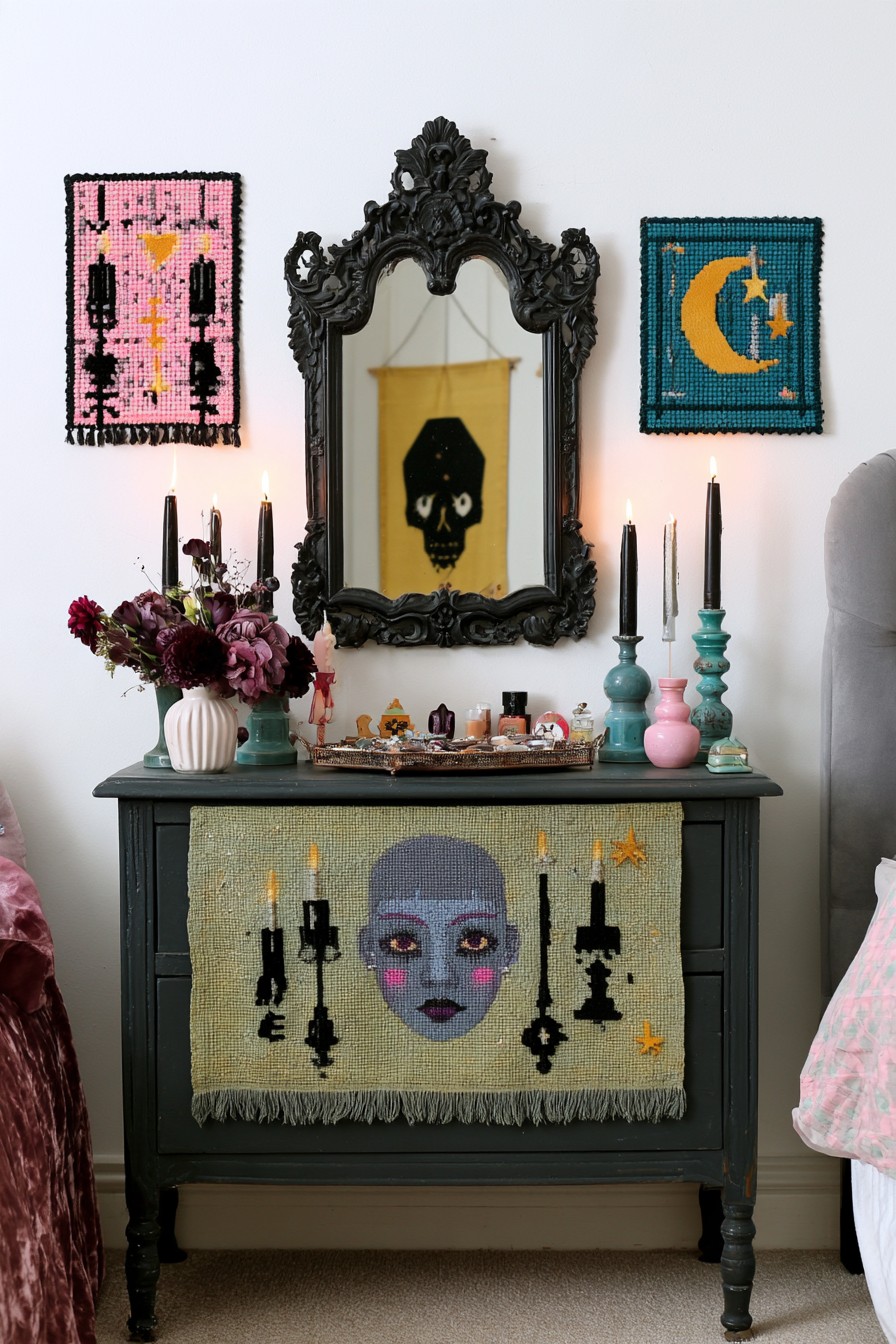
A tall ornate mirror anchors the dresser, while pink and teal textile art adds smaller color blocks around it. The decorative textile across the front gives the furniture its most distinctive layer, echoing the room's candle and portrait imagery. A central tray keeps small personal items together.
Before choosing a front hanging textile, open every drawer and check its handles. A removable piece may suit occasional styling better than daily storage if it covers several drawers. Keep flowers toward one side and put frequently used bottles on the tray, with enough space to lift them comfortably. Position the mirror for a useful dressing view rather than height alone, and make its support independent of loose tabletop accessories. The resulting arrangement feels personal while allowing the dresser to continue serving a bedroom routine.
17. Vintage Looking Bar Cart With a Colorful Gallery
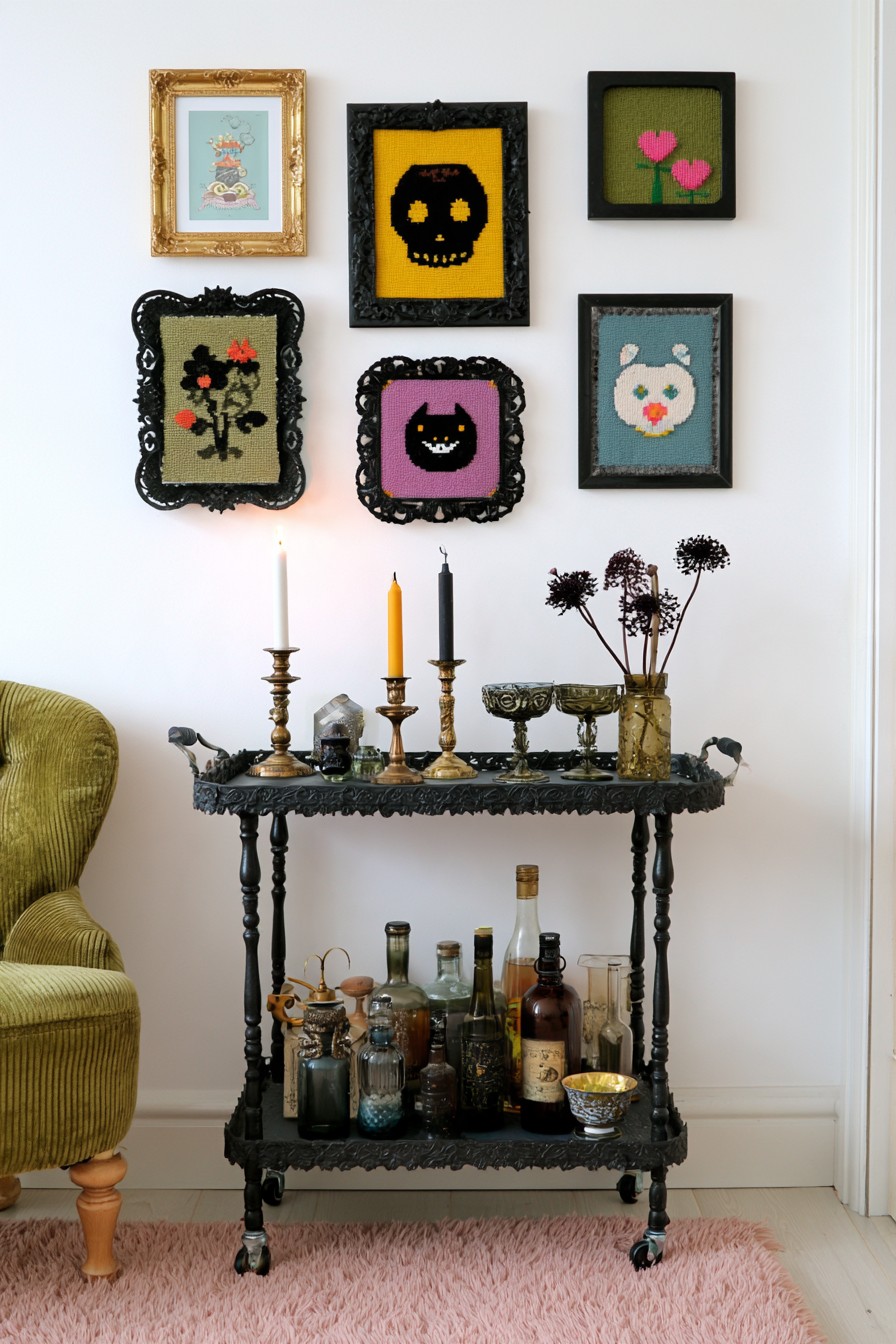
The cart concentrates bottles, glassware, and ornament into a compact furniture footprint. Black detailing connects it to the Gothic wall pictures, while an olive chair and pale pink rug soften the surrounding corner. Because the gallery stays on the wall, the cart can remain useful when moved for serving.
Choose a cart with a stated capacity and stable shelving. Keep heavier bottles on the lower level, secure loose items in suitable trays, and leave the upper surface available for preparing or setting down drinks. Before moving it, remove tall fragile pieces and check the wheels and any brakes; a crowded styled cart is not automatically ready to roll. Keep bottles with unidentified contents out of a serving collection. This arrangement suits a small entertaining area where flexible furniture is more useful than a permanent bar.
18. Celestial Reading Nook With a Dark Armchair
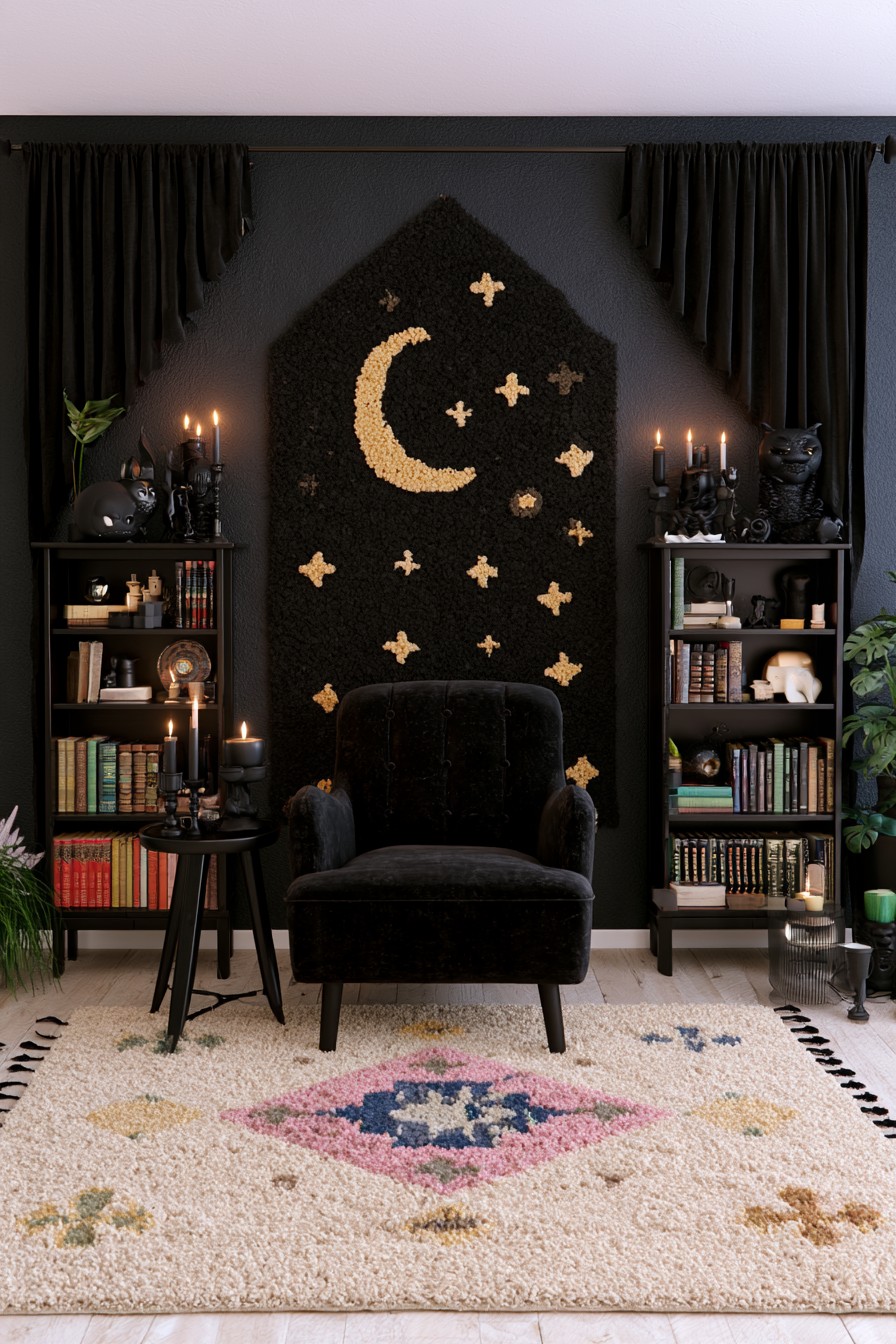
A pointed moon and star panel creates an enclosed backdrop for the chair, while bookshelves on both sides define the nook. The pale rug separates the seating from the dark walls and upholstery, making the place to sit easy to identify. This interpretation draws its Gothic character from a cathedral outline and celestial imagery.
Choose the chair for its seat depth and back support, then leave space to approach it and reach the shelves. Put a small table at a comfortable height for a book or cup. Add a suitable reading lamp positioned to illuminate the page without reflecting into your eyes; decorative candle effects alone are not reliable reading light. Secure bookcases as instructed and reserve shelf space for books you actually use. A bright rug can provide contrast without requiring a lighter chair or a complete repaint.
19. Fireplace Parlor With Ochre Curtains
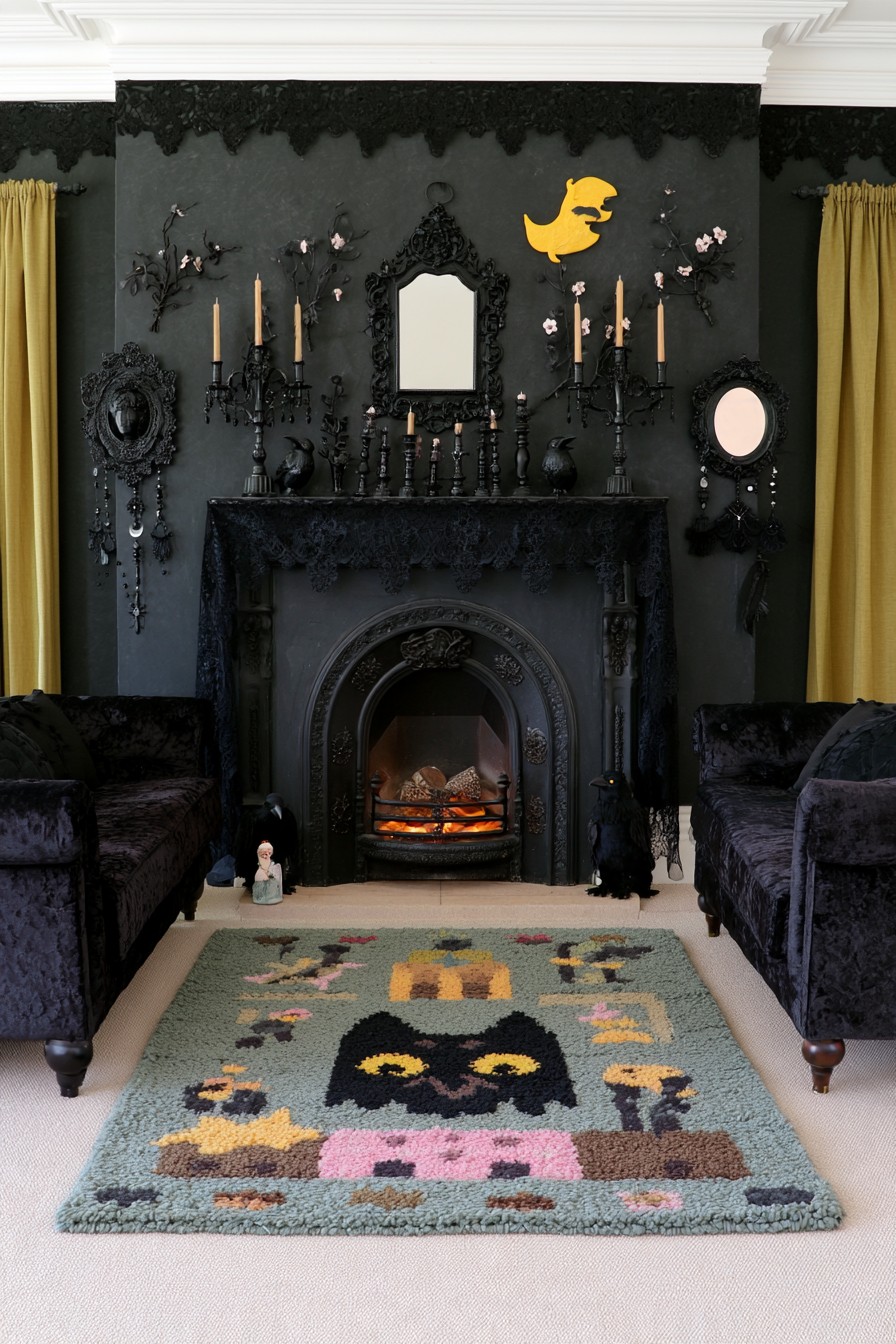
Ochre curtains provide vertical color beside a largely black fireplace wall. An arched surround and pointed mirror keep the main architectural shapes related, while the illustrated rug gives the lower half of the room a more playful character. The contrast is strongest because the color occupies clear areas rather than many unrelated accessories.
Build the seating arrangement around the fireplace view, with a route that does not pass through the main conversation zone. Sample the curtain color against the wall in daylight and evening lighting before committing to a full pair. Use the rug to link ochre with a second muted accent, keeping bulky furniture quieter. If the fireplace operates, plan its required clearances before positioning drapes, textiles, and mantel objects; remove combustible decorative coverings from restricted areas. The fireplace can organize the room even when the styling remains lighter than the example shown.
20. Fairytale Parlor With Cameos and Pink Accents
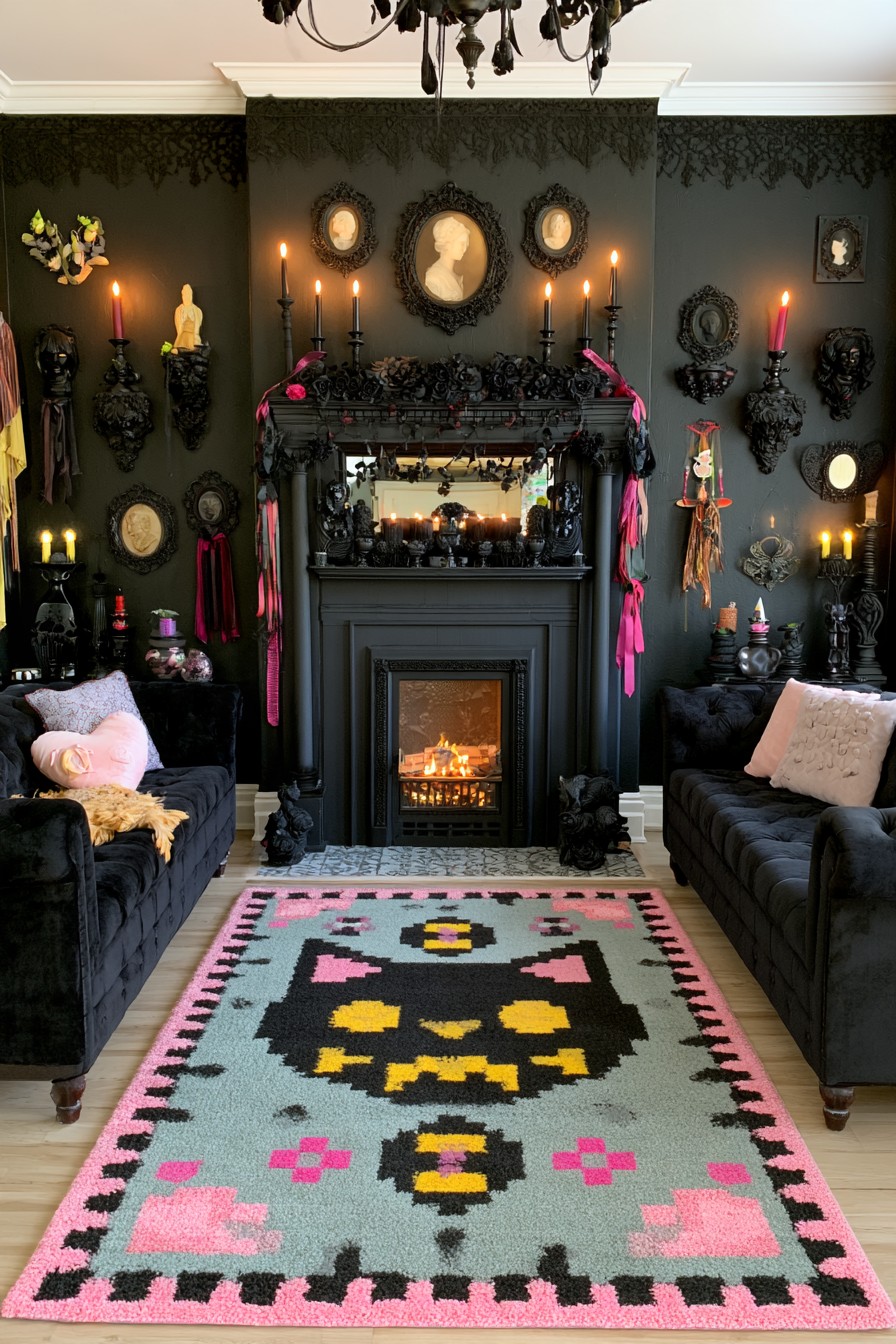
Cameo portraits introduce a romantic narrative above the fireplace, while pink ribbons and a large graphic rug make the room deliberately theatrical. The black sofas provide continuity on both sides, leaving the changing accent colors to describe the fairytale mood.
For a manageable version, choose either a portrait group or an embellished mantel as the main upper feature, then use the rug for the strongest color at floor level. Repeat pink in one or two cushions rather than spreading small bows everywhere. Keep ribbon details away from a working fireplace's heat zones and use battery candle effects where ornaments are closely grouped. Consider how much textile and ornament you are willing to dust: removable seasonal accents can create the same mood without making every everyday surface difficult to clean.
21. Botanical Bird Gallery Around a Display Cabinet
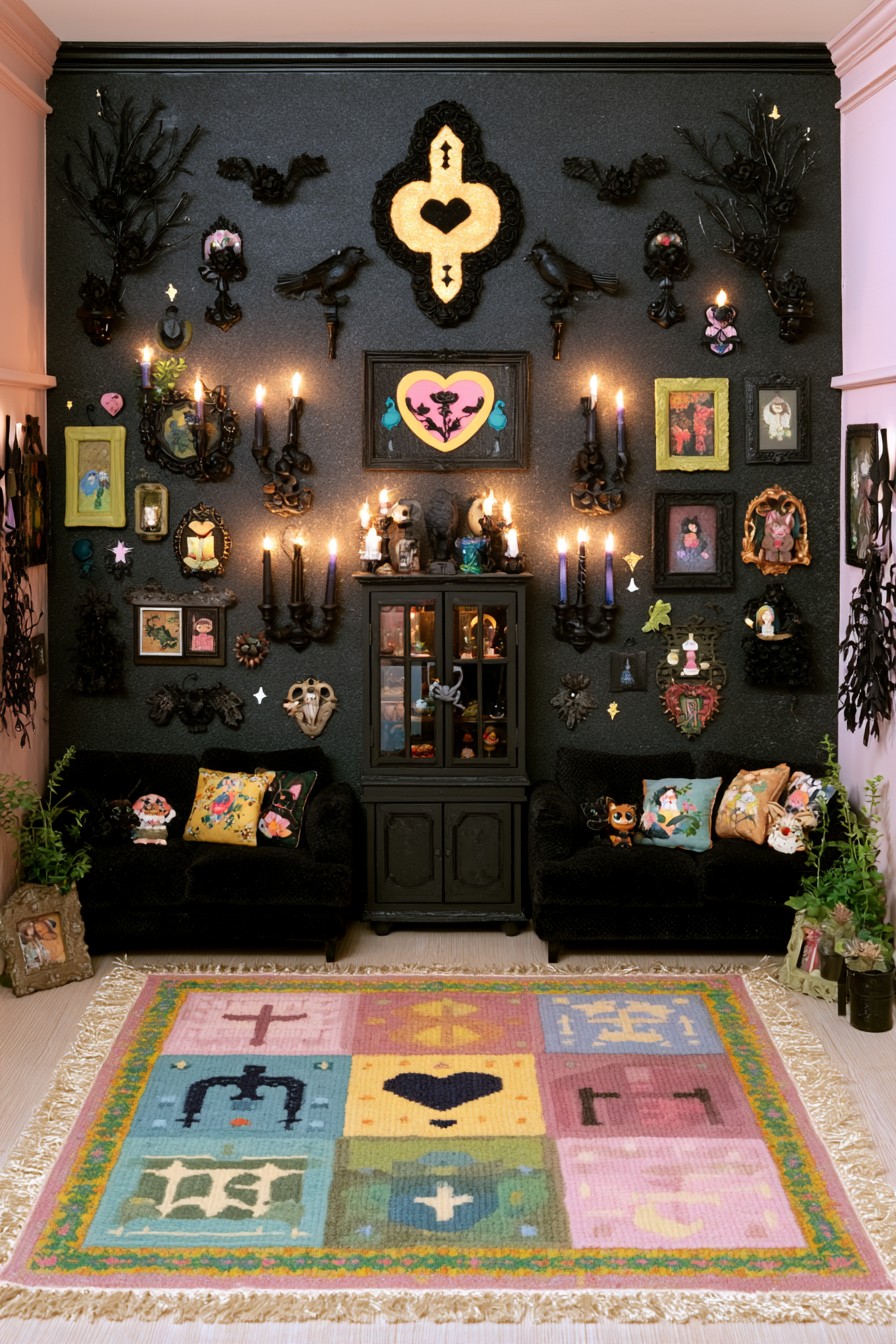
Bird silhouettes, branch shapes, flowers, and framed symbols form a dense wall collection, but the cabinet gives the lower center a clear anchor. The colorful patchwork rug repeats the artwork's small color areas on a much larger scale. Pink trim at the edges adds a frame around the whole scene.
Map the gallery as one composition, placing the cabinet and largest central piece first. Add paired or related forms outward from that axis, then use smaller pictures to connect the gaps. Each piece needs a fixing suited to its weight; crowded placement is not a reason to rely on improvised supports. Keep branches and projecting ornaments above reachable furniture zones, and avoid blocking cabinet doors. Start with fewer objects than the example shown if maintenance matters, leaving planned room for additions that belong to the same botanical or bird story.
22. Facing Velvet Sofas With a Graphic Cream Rug
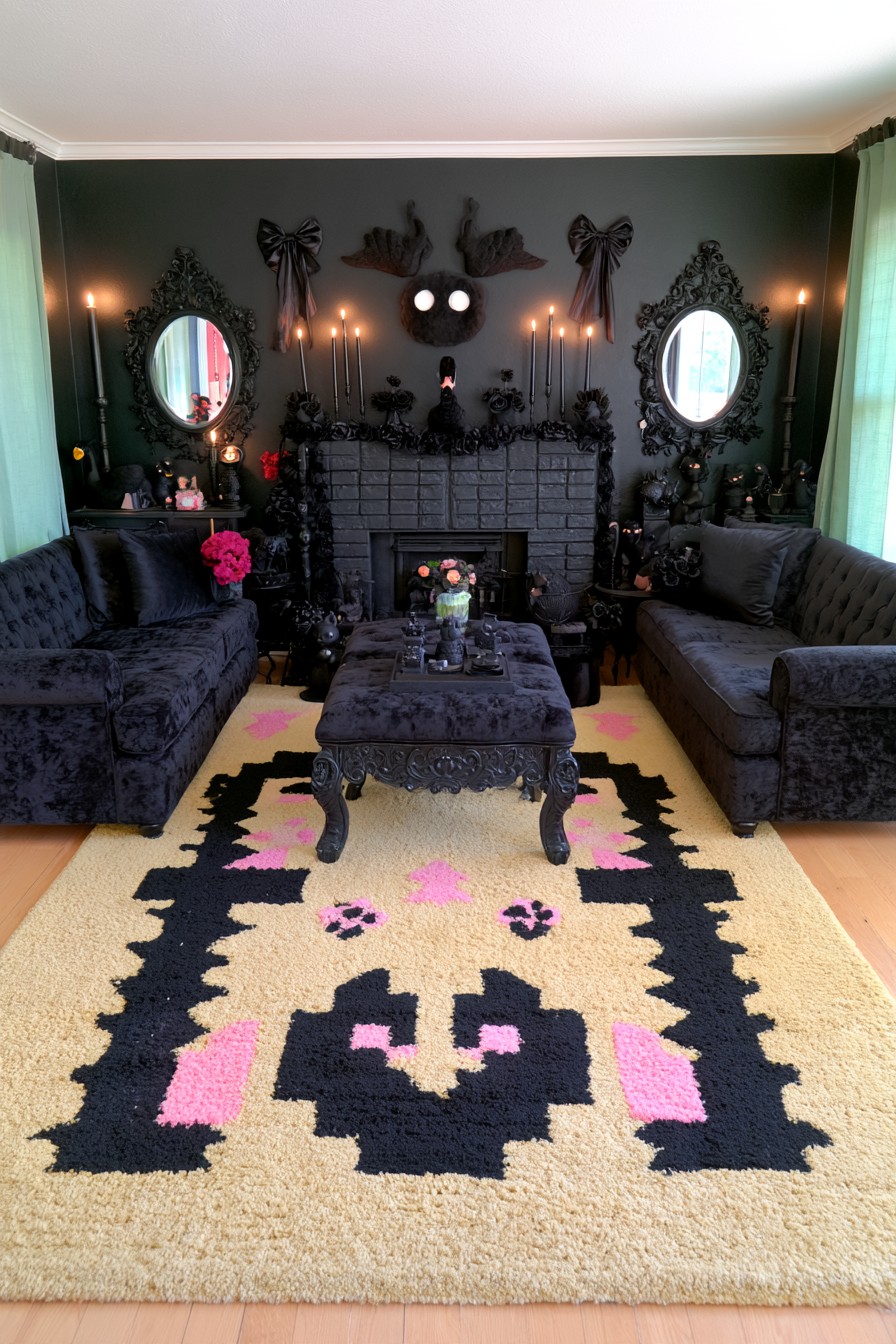
Facing sofas make conversation the organizing function of this room. Matching dark upholstery creates a calm furniture structure, while the large cream, black, and pink rug draws a graphic shape between them. Green curtains give the near monochrome arrangement another substantial color surface.
Measure the gap between the seating before choosing the central ottoman, allowing people to pass and reach the fireplace area. For drinks, use a suitable firm tray or a separate side table rather than assuming a soft upholstered top will hold glasses steadily. Choose velvet or another plush upholstery with care requirements that fit your household, and examine a sample in both light directions because the pile can change its apparent tone. Keep the rug motif partly visible instead of covering its entire center with oversized furniture.
23. Branch Shaped Wall Installation With a Crescent Moon
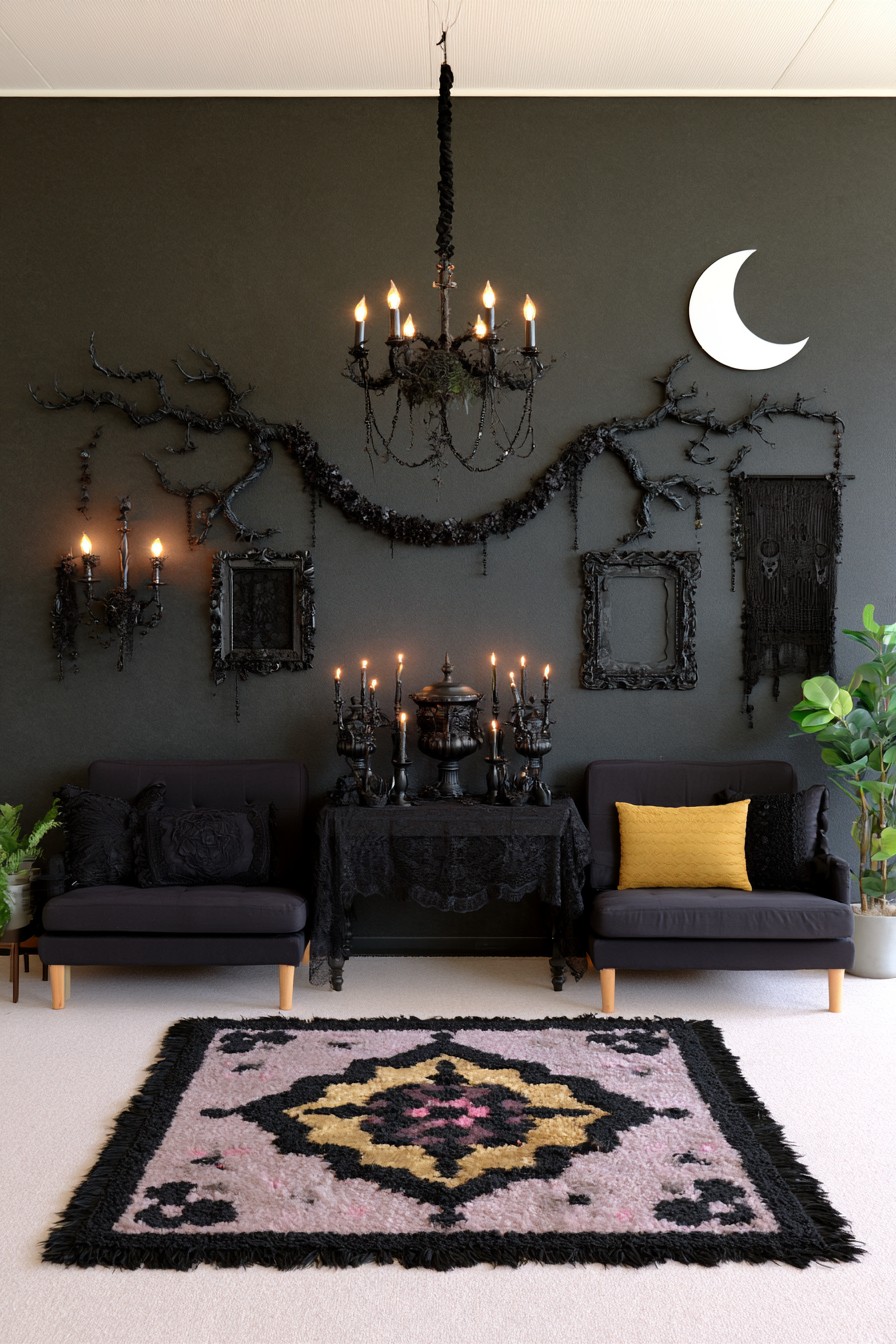
Branch shaped pieces stretch across the wall, giving the room an overgrown storybook atmosphere. A pale crescent remains easy to see among the dark lines. Compact chairs below keep the installation in view, while a mustard cushion creates a small point of warmth at seating height.
Plan the outline with paper templates before mounting any sculptural pieces. Check their depth as well as their span, keeping projecting tips clear of heads, chair movement, and the route through the room. Choose stable decorative components and a fixing system appropriate to both the wall and each piece; do not depend on loosely wedged branches. Arrange the chairs for the intended activity and add proper room lighting alongside decorative effects. One modest crescent and a limited branch outline can carry this idea in a smaller space.
24. Paired Chairs Framing a Dark Fireplace Wall
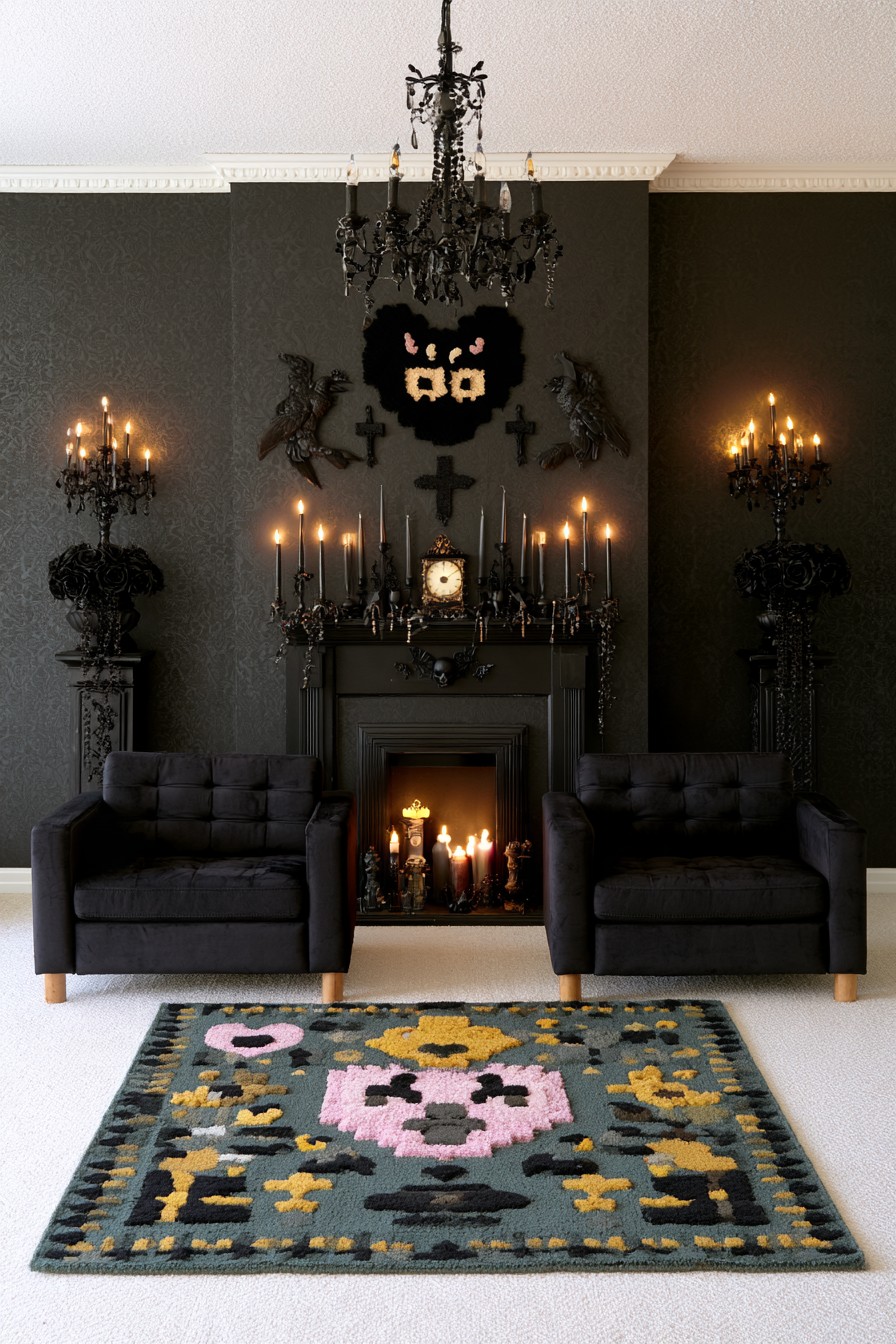
Similar chairs balance the fireplace wall, allowing the central clock, dark ornament, and chandelier to feel deliberate rather than scattered. The rug's pink and mustard medallion gives the nearly black scheme a readable center. Pale floor and ceiling areas also help separate furniture from the backdrop.
Begin with the chair positions, then check the fireplace view and access from both seats. Align the larger wall pieces around the center without requiring every small accessory to match. In a decorative unused firebox, battery candles can supply a visual glow; a working appliance must retain its required operating space and clearances. Specify a chandelier for the room and have installation assessed where electrical work is needed. Keep adequate ambient light so this ordered layout remains comfortable after dark rather than relying entirely on decorative points of light.
25. Colorful Graphic Rug in a Black Velvet Living Room
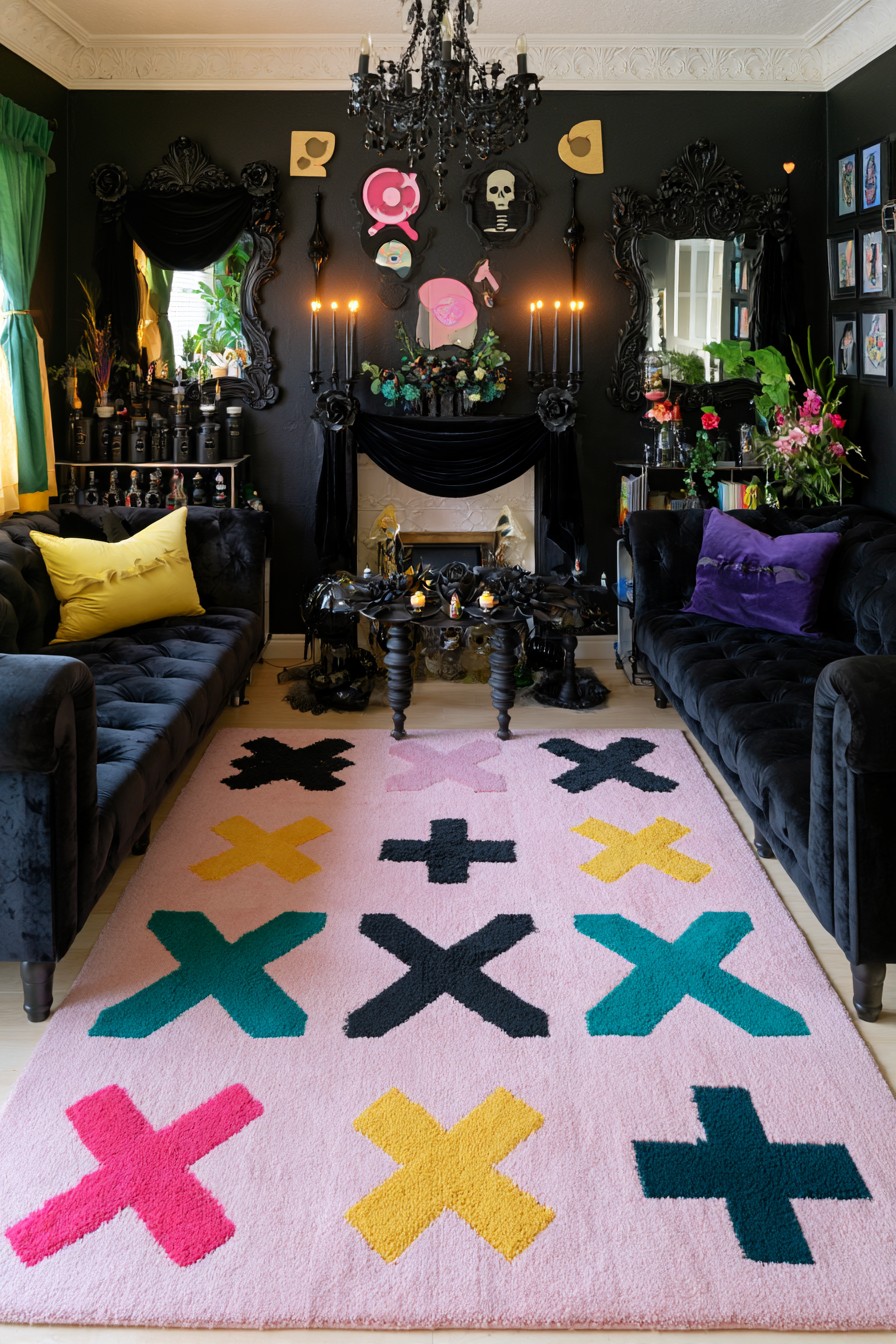
The pale pink rug is the color organizer here, with oversized graphic marks in teal, mustard, black, and brighter pink. Black sofas and ornate mirrors supply the Gothic foundation, while yellow and purple cushions bring a more contemporary energy. The result depends on generous color areas rather than an all dark palette.
Choose the rug first if you want a similarly expressive scheme, then select a few accent colors for cushions and flowers. Check its size against the actual seating footprint and leave a clear walking route through the room. A simpler coffee table arrangement will make those large graphic shapes easier to appreciate. If you prefer a quieter version, keep the dark furniture and use a rug with fewer colors, preserving the contrast in scale. This offers a flexible Gothic direction because textiles can change while the main furniture remains useful.
Turn Your Favorite Detail Into a Room Plan
Choose the idea that answers a real need first: an entrance bench, a useful mirror, a better reading seat, or a way to organize a collection. Note the available width, depth, and supporting surface before selecting the decorative piece. Then choose one architectural or symbolic motif to establish the Gothic direction.
Build the color palette from a textile, artwork, or object you intend to keep. Add one contrasting material, such as warm timber beside black ornament or glass beside plush fabric, and check the arrangement from its normal viewing position. Finish by testing the practical actions: sitting down, opening a drawer, reading, serving, or cleaning. A scheme that supports those routines is easier to enjoy as a lasting part of the home.


Leave a Reply