
Where you sit, how you reach a controller, and what you display all shape a gaming room. These 22 setups explore media walls, desktop stations, lounge seating, and collections in different styles, offering ways to bring personality into the room while giving games and equipment a practical place to belong.
Plan the main screen and seating together before adding display furniture. At a PC desk, leave room for the keyboard, mouse, and your legs, with the main monitor directly ahead at a comfortable viewing height. For console play, test the television from the seats you will actually use. Device compartments must allow the clearance and airflow specified for your equipment, along with access to connections. Route cables away from walking paths, then add lighting that helps you move around without reflecting brightly in the screens.
Table of Contents
- 1. A Black Media Wall with Timber Display Edges
- 2. Geometric Cabinet Fronts Beneath a Pink Screen Frame
- 3. A Gothic Screen Wall with a Pink Heart Motif
- 4. Brickwork with a Long Timber Media Console
- 5. A Built In Media Wall with a Pale Central Panel
- 6. A Rounded Space Station Wall with Pastel Seating
- 7. Sculptural Storage Around a Broad Illuminated Arch
- 8. Pointed Bookcases with a Patchwork Screen Border
- 9. Pastel Curves Around a Three Monitor Desk
- 10. A Moon and Cloud Wall Between Two Play Zones
- 11. A Pale Media Wall with an Adjacent PC Desk
- 12. A Dark Storage Run Around a Pink Screen Panel
- 13. Cathedral Shaped Displays with a Plum Sofa
- 14. A Midnight Blue Panel Beneath a Long Game Shelf
- 15. A Floating Screen Panel Against Stone Texture
- 16. Warm Timber with a Rainbow Screen Accent
- 17. A Collector Layout with Two Lounge Chairs
- 18. Black Fluting with Warm Light and Geometric Seating
- 19. A Teal Game Library Beside a Daylit Window
- 20. A Black Lounge with Mustard Seating and Character Displays
- 21. Olive Walls with Timber Cabinets and Pink Shapes
- 22. Pink Square Panels Inside a Burgundy Lounge
1. A Black Media Wall with Timber Display Edges
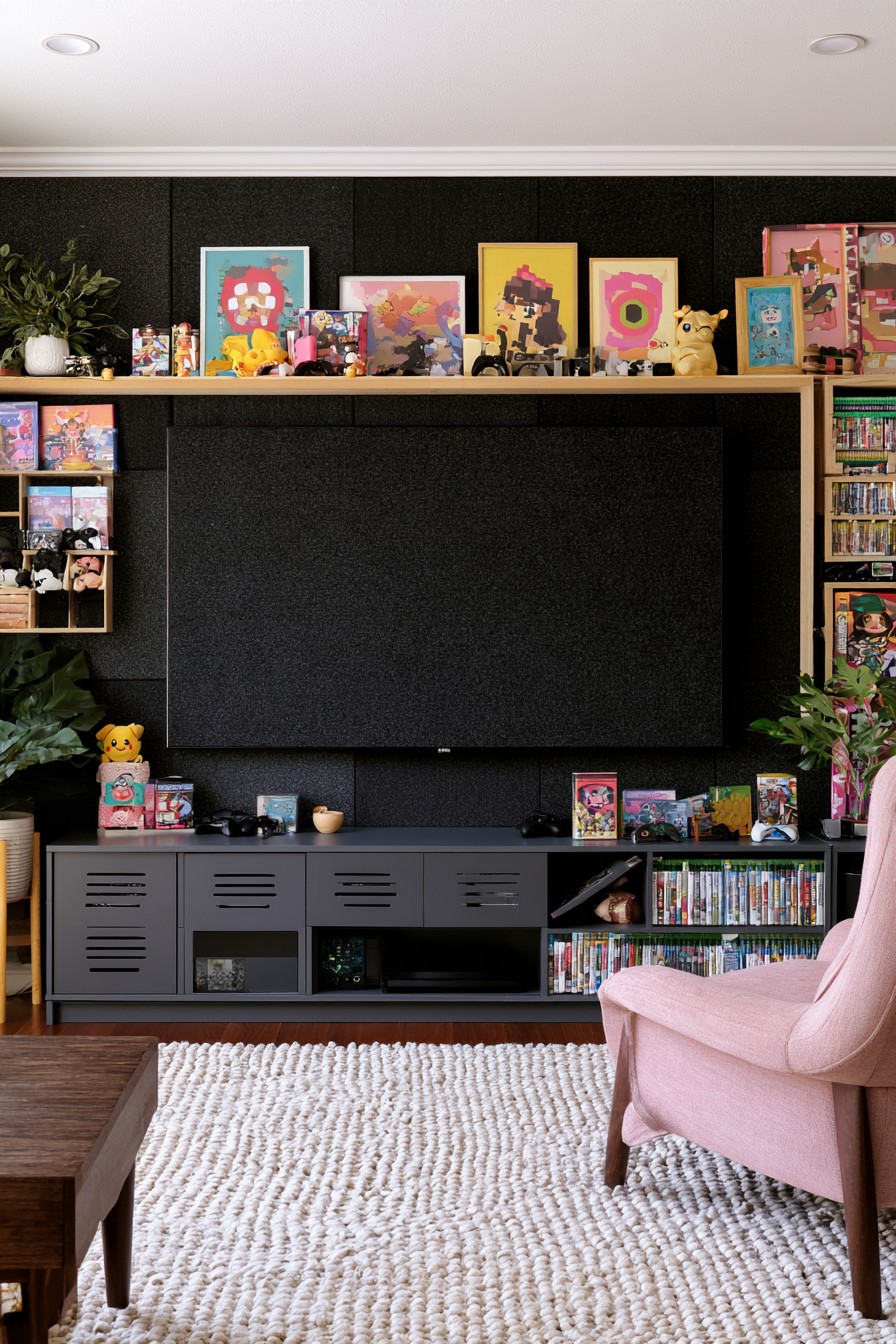
A slim timber outline connects the upper display shelf to the game storage beside this screen. Black wall panels and dark lower cabinets let colorful boxes, prints, and figures stand out. A pink lounge chair supplies a softer contrasting color, while the pale rug keeps the floor visually quiet. The collection is distributed around the television rather than confined to one bookcase.
Use the lower units to separate things you handle from things you display. Controllers can share a small tray, while game cases need enough shelf space to be removed without disturbing figures. Before putting a console in a compartment, check its required ventilation and connector clearance. Leave a way to reach behind the cabinet so changing a cable does not require dismantling the whole display.
2. Geometric Cabinet Fronts Beneath a Pink Screen Frame
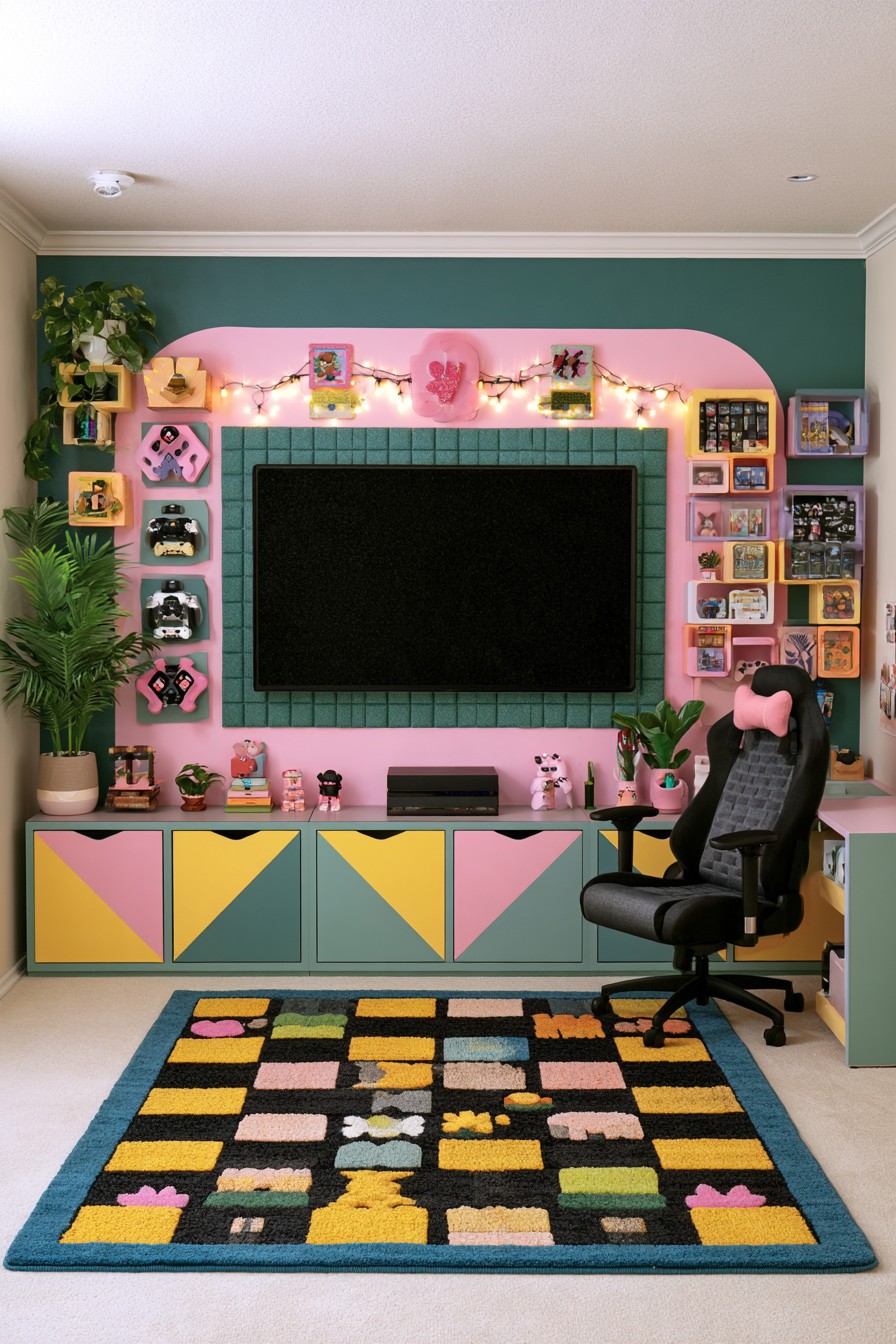
Pink outlines the television area, while a teal grid provides a darker center behind the screen. Yellow and pink triangles turn the lower cabinet doors into a geometric feature. Small framed displays fill the surrounding wall, and a black gaming chair sits at the right. The rug repeats the colors in smaller blocks, connecting the wall to the floor.
Painted cabinet fronts can introduce this look without changing the room's furniture layout. Choose two accent colors and repeat them in a few smaller pieces. Position the chair facing the television when playing, rather than treating its photographed angle as the viewing position. Keep the cabinets used for everyday accessories easy to open, with enough room for the chair base to move clear of their doors.
3. A Gothic Screen Wall with a Pink Heart Motif
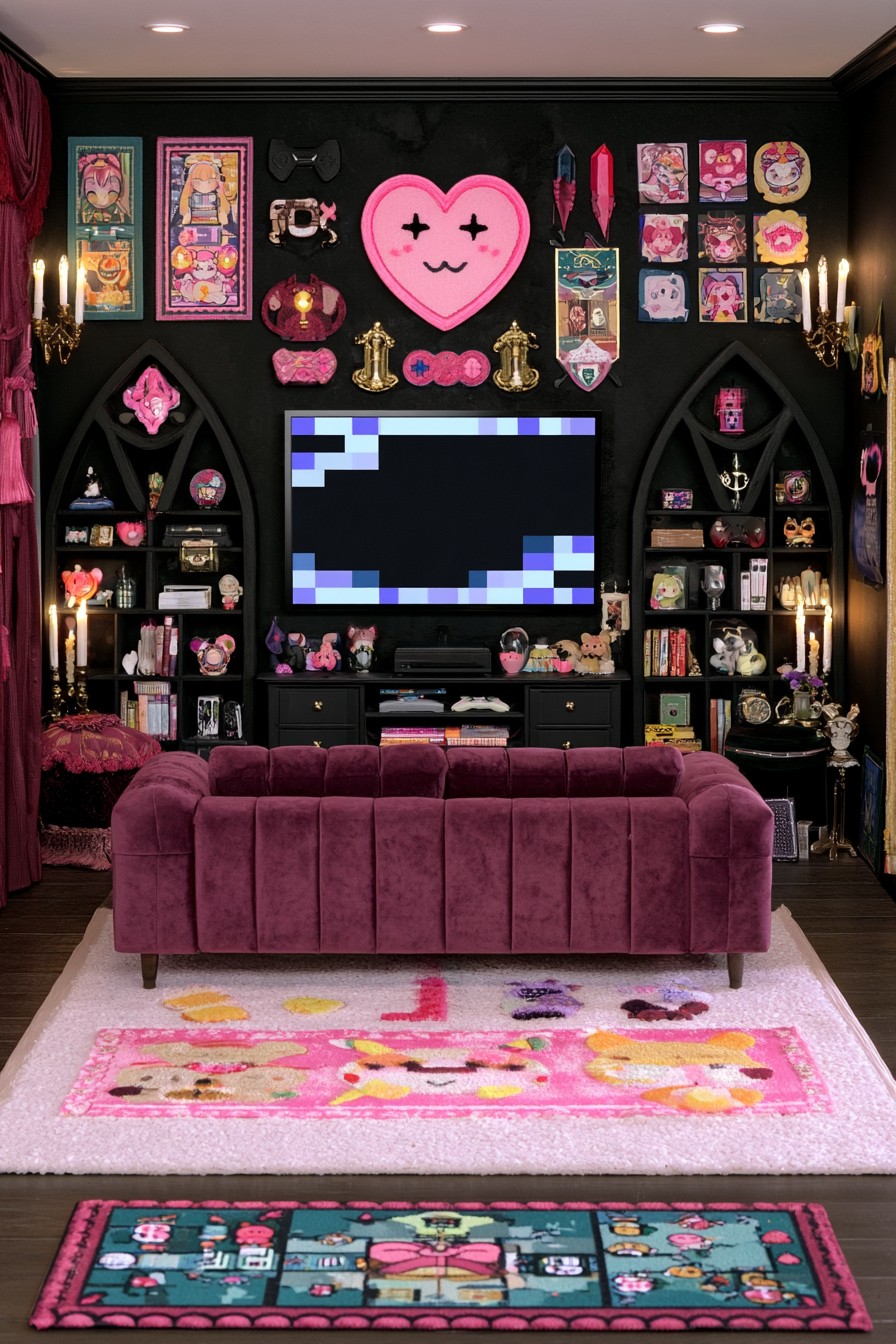
Pointed bookcases frame the television beneath a large pink heart and a collection of graphic artwork. Burgundy upholstery gives the black room a warmer seating layer, while two patterned rugs introduce brighter colors. The lower media unit keeps the screen grounded within the elaborate wall arrangement. Pink details appear across several sizes, from the large heart to small figures.
Choose one oversized motif before filling the remaining wall. A single heart shaped artwork can establish the contrast, with fewer accessories around the screen itself. Keep regularly handled games on reachable shelves and use lower drawers for loose accessories. Flameless candles are a practical way to echo the illustrated Gothic glow near books, decorations, and upholstery. Add useful room lighting for finding items when the television is off.
4. Brickwork with a Long Timber Media Console
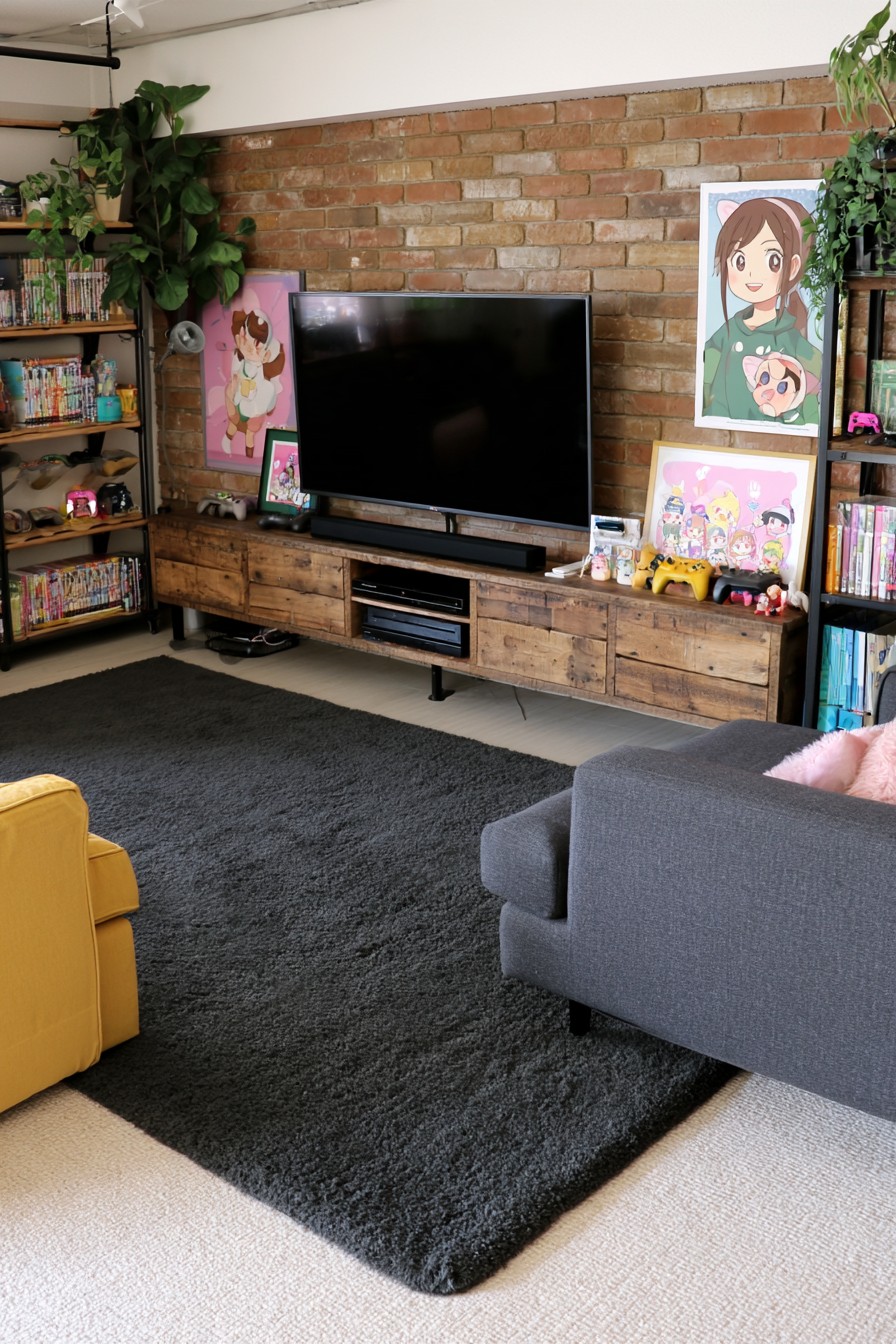
The exposed brick is the main decorative surface in this room. A long timber console sits beneath the television, with open shelves at the sides holding games and books. Gray and mustard seating introduce solid colors against the varied brickwork. The broad dark rug defines the lounge area without another busy print.
Check the actual wall construction before choosing television fixings; an uneven brick surface needs a mounting solution suited to its structure and load. Plan the cable route at the same stage so wires do not run awkwardly across the texture. Store frequently used controllers near the seats, leaving the console top relatively clear. Upholstered furniture and a rug can make the hard finished setting feel more inviting without hiding the brick.
5. A Built In Media Wall with a Pale Central Panel
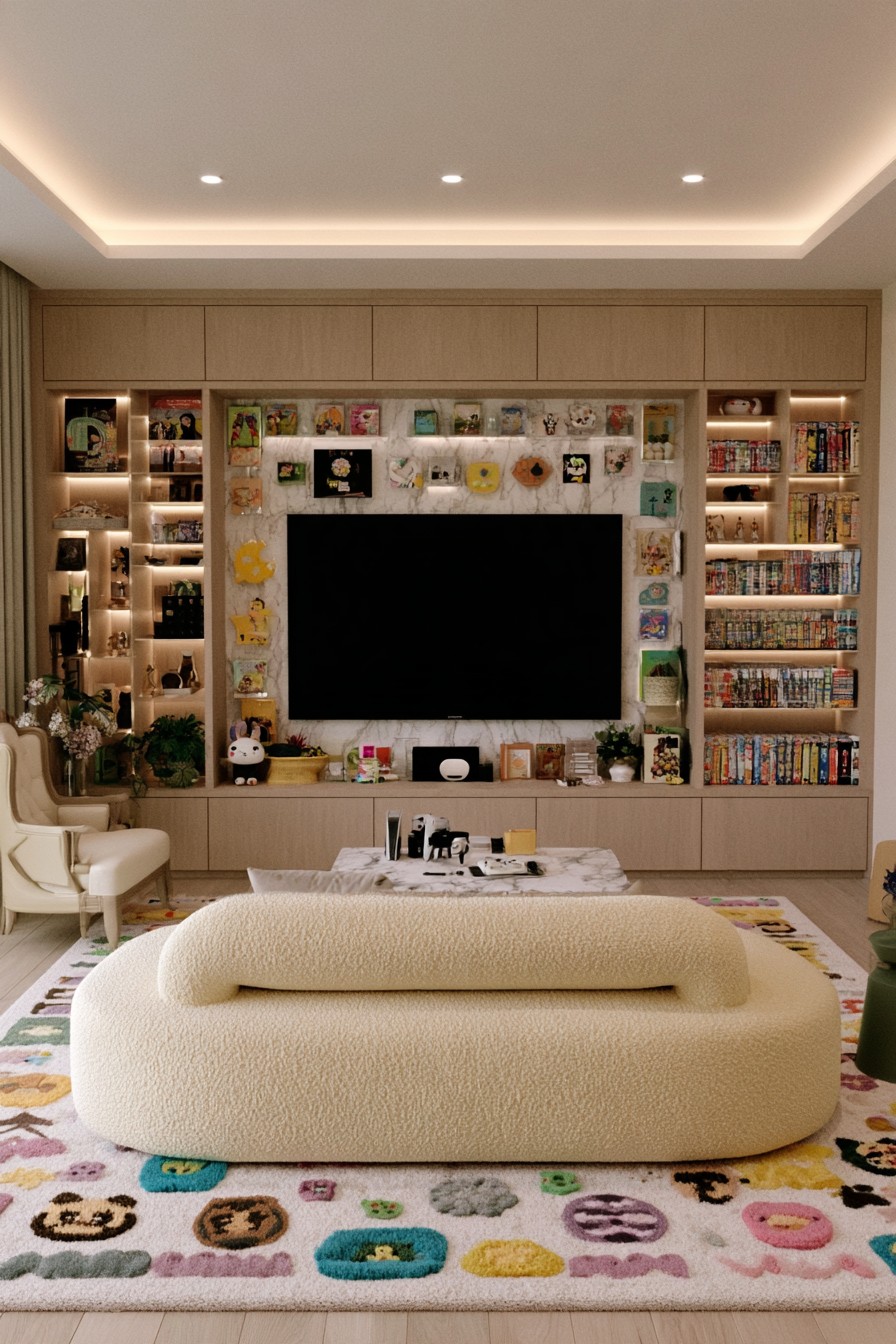
Timber cupboards surround a pale central panel, making the television part of a larger fitted wall. Lit niches and narrow shelves hold a mixture of figures and game cases, while closed fronts provide a calmer border above and below. A rounded cream sofa keeps the seating simple. The character patterned rug adds color without another large decorative feature.
Design fitted storage around equipment you own and the sizes you may need later. Adjustable shelves can accommodate a changing collection, while accessible cable routes make replacement devices easier to connect. Keep active electronics in suitable ventilated positions rather than assuming any closed cupboard will work. Place the main seat first and test the screen height from it before fixing the television within the joinery.
6. A Rounded Space Station Wall with Pastel Seating
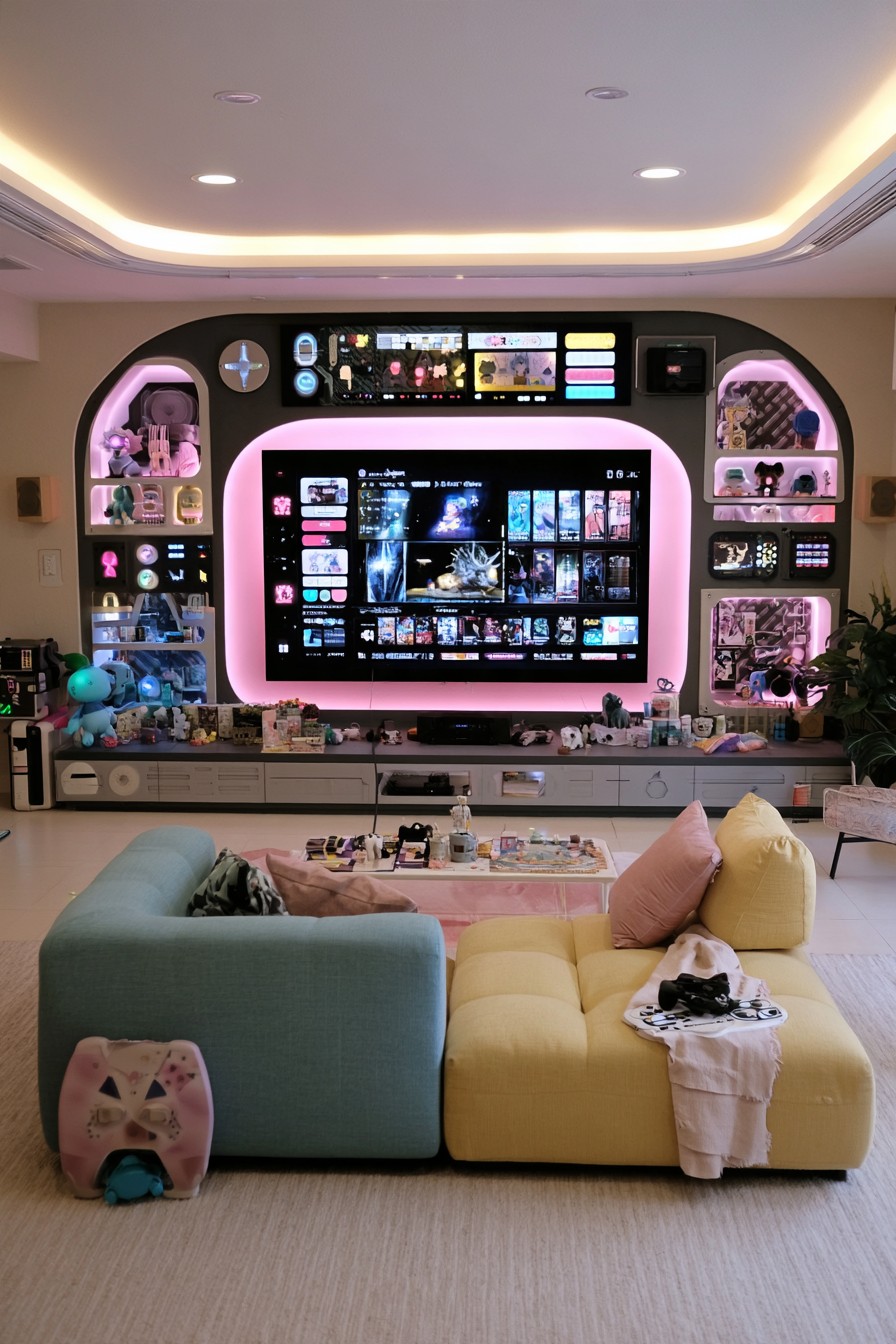
A dark rounded outline contains the main television and smaller illuminated display niches. Pink light around the central screen gives the wall a space station mood, with blue tones lower down. A pastel sectional combines aqua, cream, and yellow seats. The shape of the wall stays readable even though many small objects occupy its compartments.
Use separate controls for decorative lighting and the room's practical illumination. That lets the display remain visible without forcing the same brightness during every game. Check whether the sofa modules can be rearranged and how they connect before treating them as flexible furniture. A simpler dark screen panel with rounded shelves can suggest this style without constructing an entire custom wall.
7. Sculptural Storage Around a Broad Illuminated Arch
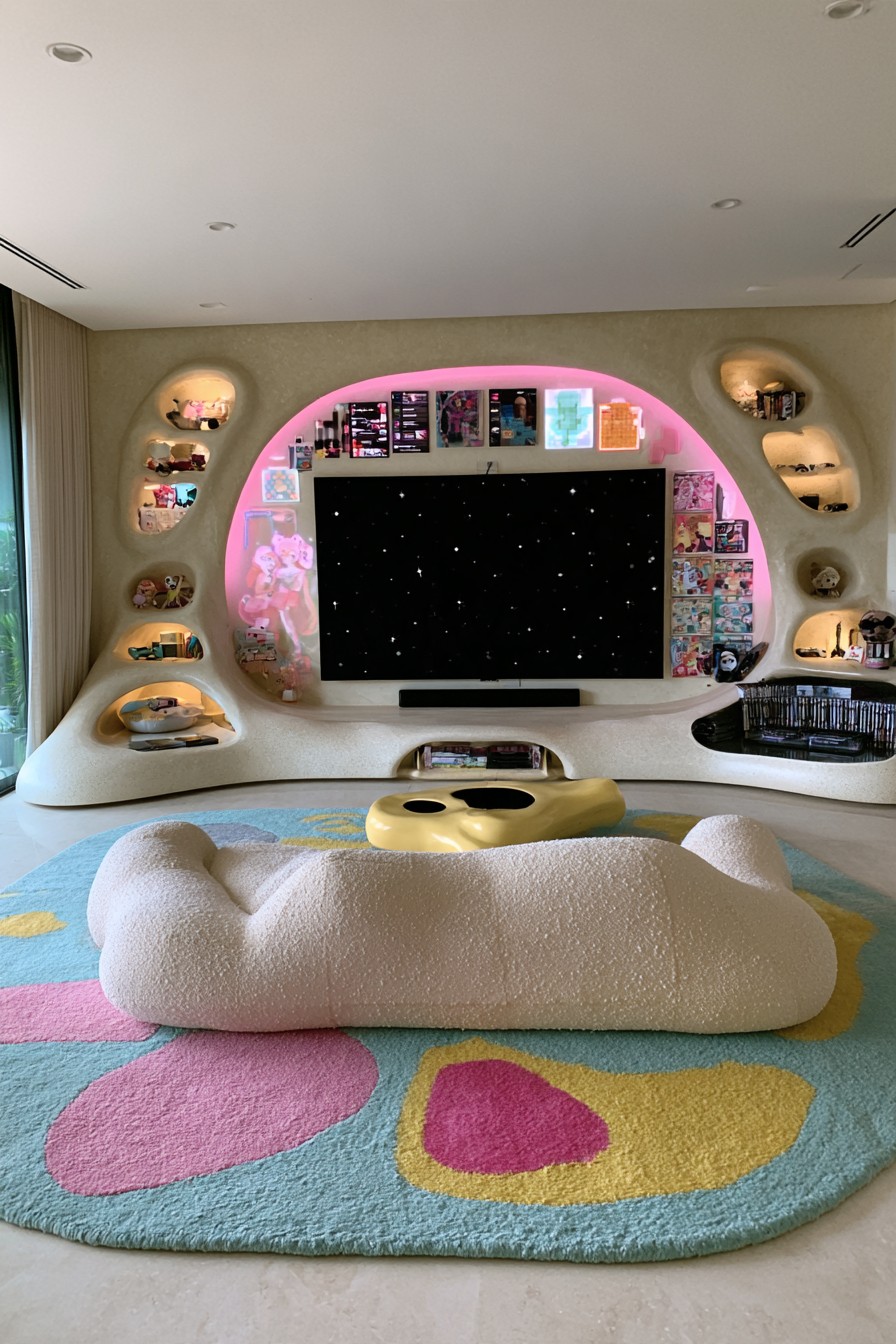
Rounded openings appear almost carved into the pale media wall, with a broad pink arch framing the television. The sculptural cream sofa and yellow table repeat its fluid shapes. An oval rug introduces large pink and yellow areas beneath the seating. The room relies on continuous curves rather than a collection of separate rectangular cabinets.
Check the usable depth of shaped compartments before choosing objects for them. A niche that looks generous may narrow toward the back, leaving little room for connectors or a boxed edition. Keep larger game collections in conventional storage if the recesses are mainly for display. Choose a table with a useful flat area, and preserve space around the sofa so its unusual outline does not complicate everyday movement.
8. Pointed Bookcases with a Patchwork Screen Border
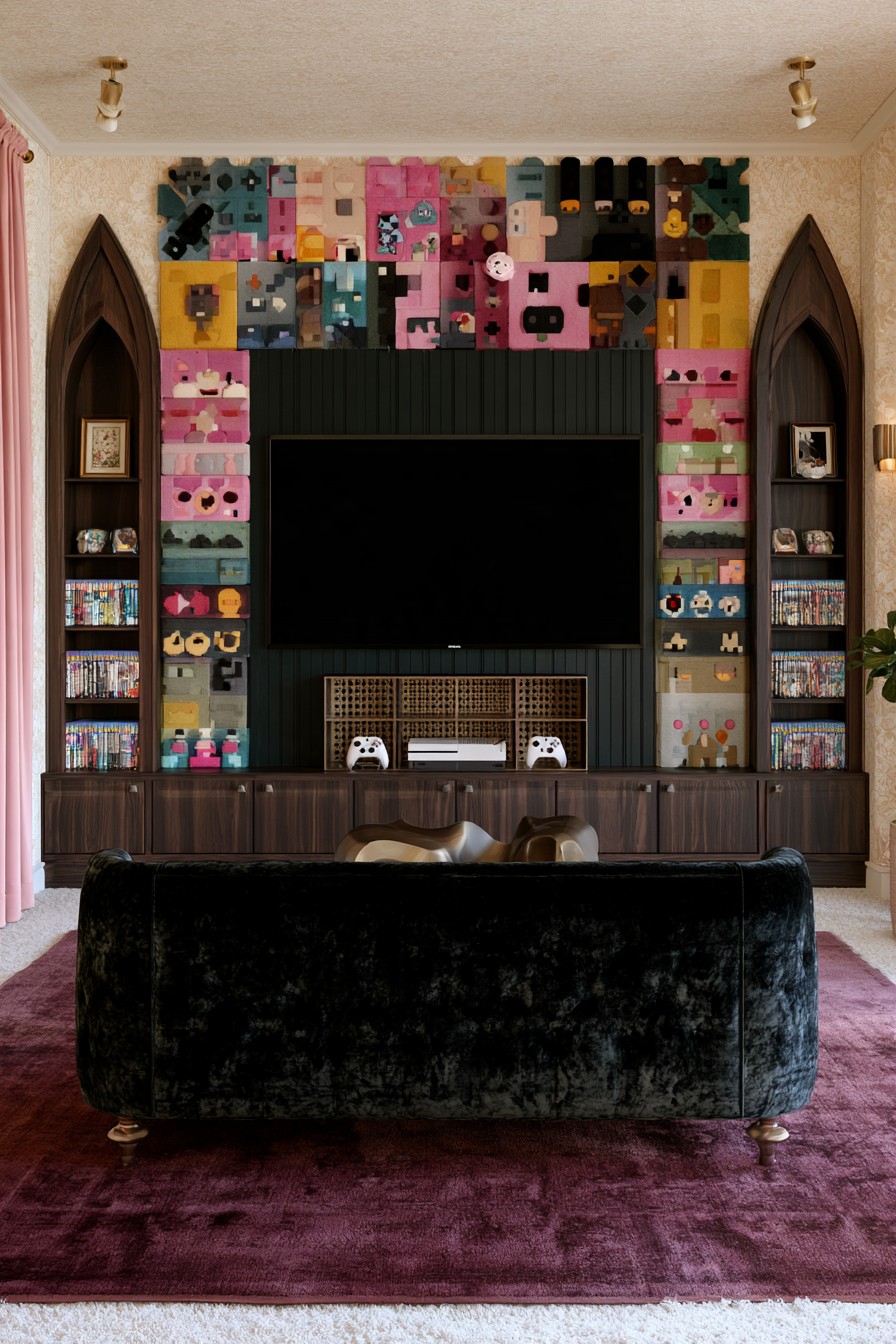
Tall pointed bookcases flank a dark paneled center, while colored patchwork details fill the wall above and beside the television. The sofa is black, with a burgundy rug adding warmth below it. A low timber cabinet anchors the arrangement and holds a few devices and controllers. The pointed outlines remain visible despite the colorful display.
Use the Gothic shelf shape as the main structural motif and let the patchwork appear in selected areas. Measure the side shelves for game cases before ordering custom units, including room to grasp a case at its edge. Keep the brightest or most detailed decorations outside the screen's immediate border if they distract during play. A black sofa can support the palette while a rug supplies the warmer color.
9. Pastel Curves Around a Three Monitor Desk
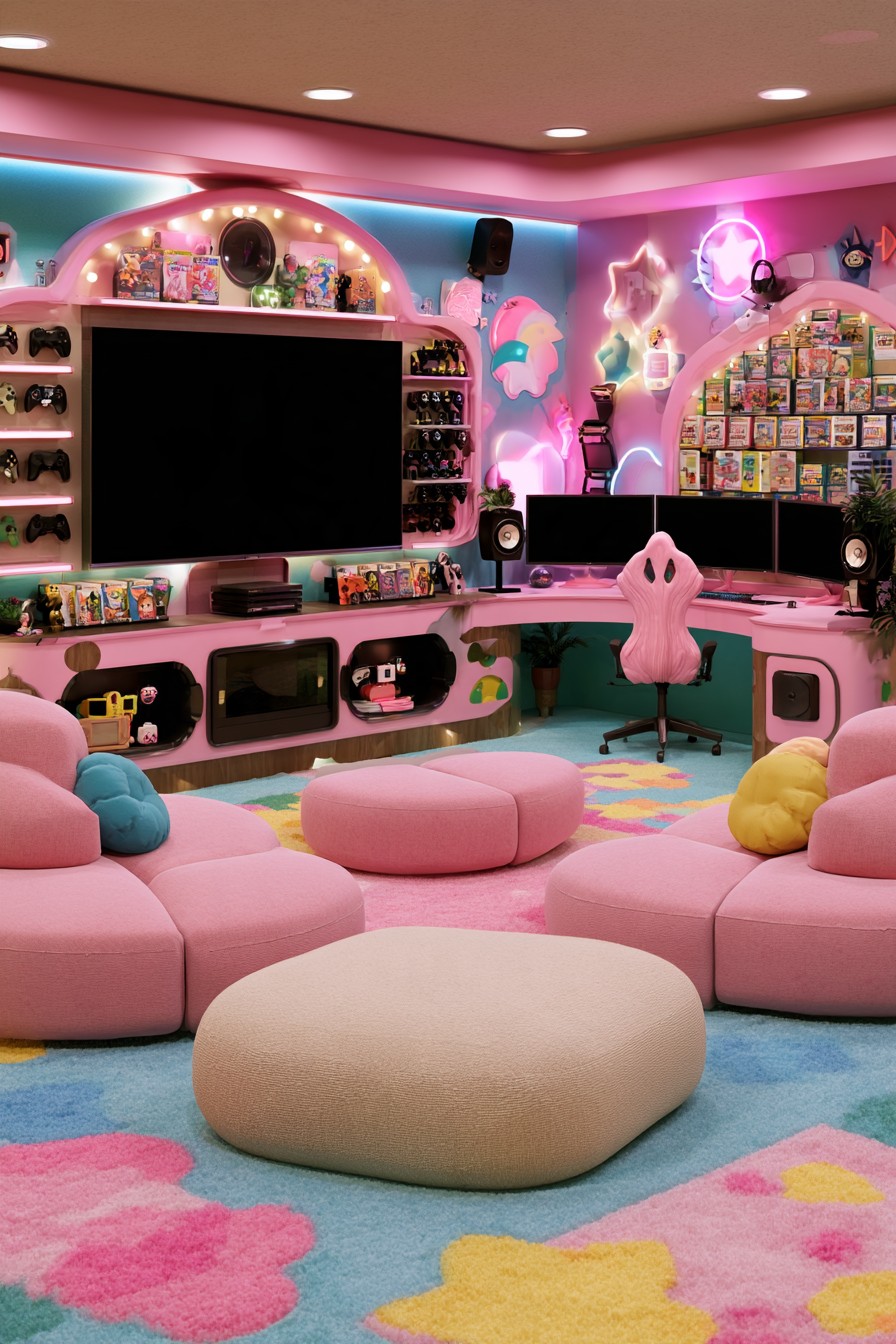
Pink curved cabinetry links the television wall to a three monitor desk in the corner. Aqua backing and glowing wall shapes introduce contrast behind the screens, while rounded pink seats and ottomans fill the lounge. Controllers are grouped beside the television and boxed items gather above the desk. The broad floral rug connects both zones through the same colors.
Plan a multiple monitor desk around the screen used most, placing that one directly ahead. Secondary screens should not require constant exaggerated turning, and the keyboard and mouse still need comfortable space. Allow the chair to pull back without meeting a lounge seat. For television sessions, arrange the rounded seats so players can look toward the screen comfortably rather than relying on a decorative semicircle alone.
10. A Moon and Cloud Wall Between Two Play Zones
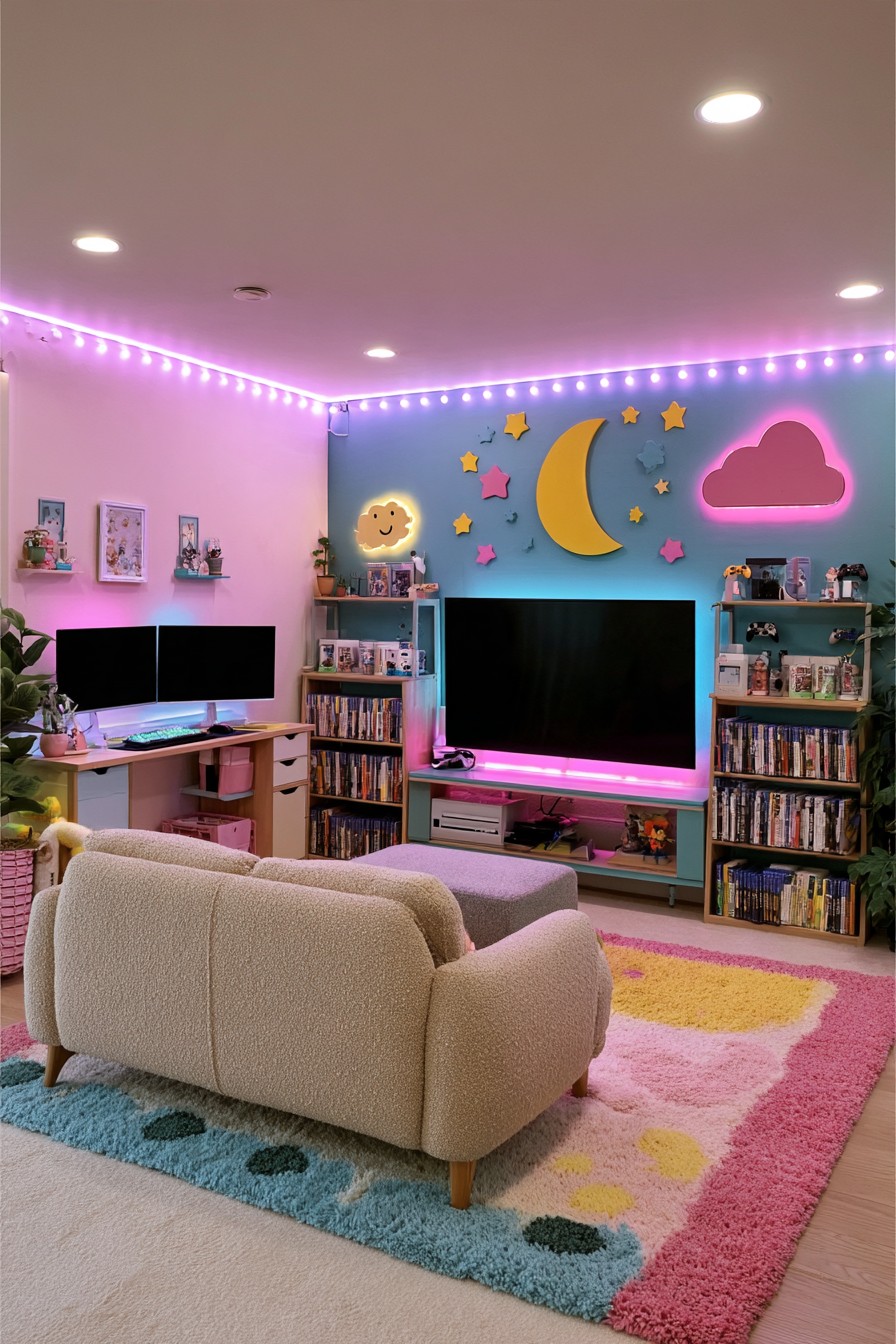
A crescent moon, small stars, and a glowing pink cloud give this blue wall its identity. Two bookcases sit beside the television, while a separate desk with two monitors occupies the left wall. A cream sofa and ottoman establish the lounge within a colorful rug. The desk and screen wall remain distinct even though they share the pink and blue lighting.
Provide each zone with its own place for daily accessories. Headphones and mouse supplies belong close to the desk; console controllers should be convenient from the sofa. Give the lighting independent controls so one player can use the desk while another prefers a dimmer television area. Keep the route between the two stations open before adding a side table or more floor storage.
11. A Pale Media Wall with an Adjacent PC Desk
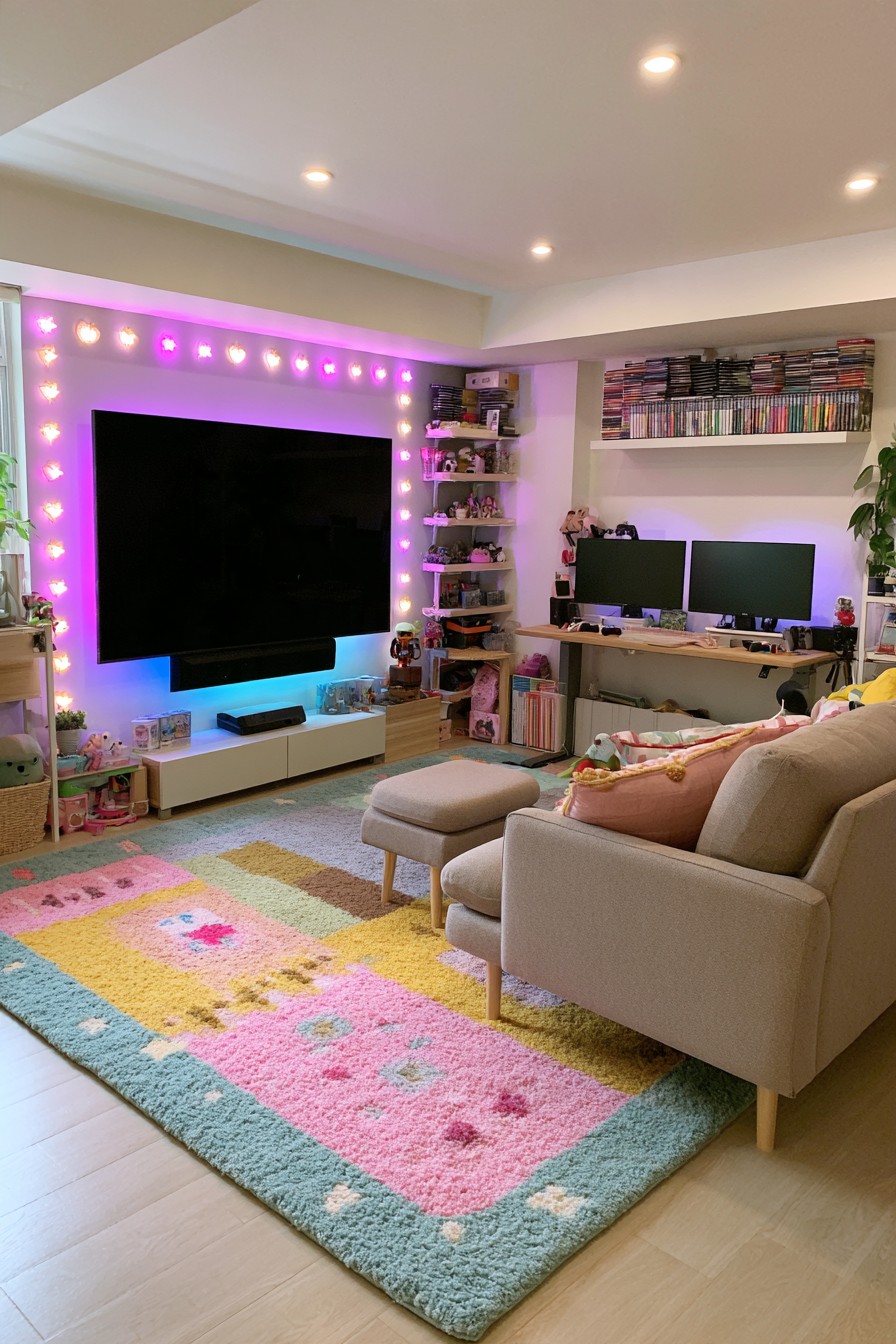
Low white cabinetry holds the television area together, with a narrow open shelf between it and the two monitor desk. A beige sofa and small ottoman occupy the opposite side. Game cases are stored above the desk and around the media wall, while pink and blue light gives the pale furniture a gaming character. The layout combines two stations without extensive fitted cabinetry.
Trace the chair's movement before committing to this compact arrangement. There must be space to sit at the desk, pull back, and leave without moving the sofa or ottoman. Keep high storage for items used less often, with current games lower down. A small ottoman can be moved for guests, but it should have a resting position that does not block the cabinet doors or the desk route.
12. A Dark Storage Run Around a Pink Screen Panel
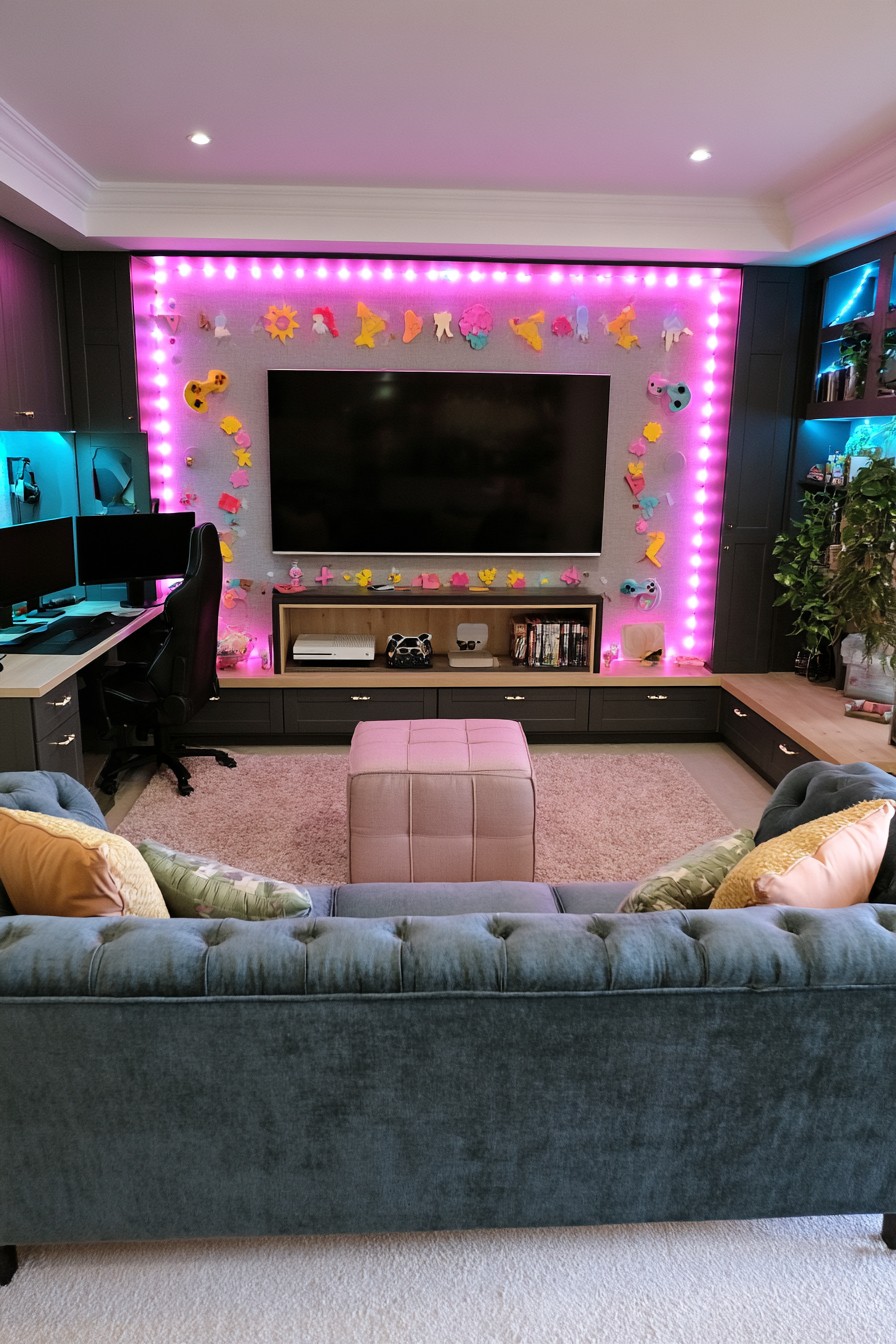
A continuous dark cabinet run joins the television wall to storage along the right side. Pink lights outline the central panel, while blue illumination marks selected display spaces. The PC desk occupies the left corner, facing away from the lounge. A deep blue sofa and pink ottoman introduce softer colors in front of the fitted furniture.
Separate connected equipment from spare accessories when assigning compartments. Controllers and cables can occupy divided drawers, but active consoles need positions that meet their ventilation guidance. Leave the connections reachable even when the sofa and ottoman are in use. A charging station close to the lounge can reduce trailing leads, provided its cables stay outside the walking route and away from cabinet hinges.
13. Cathedral Shaped Displays with a Plum Sofa
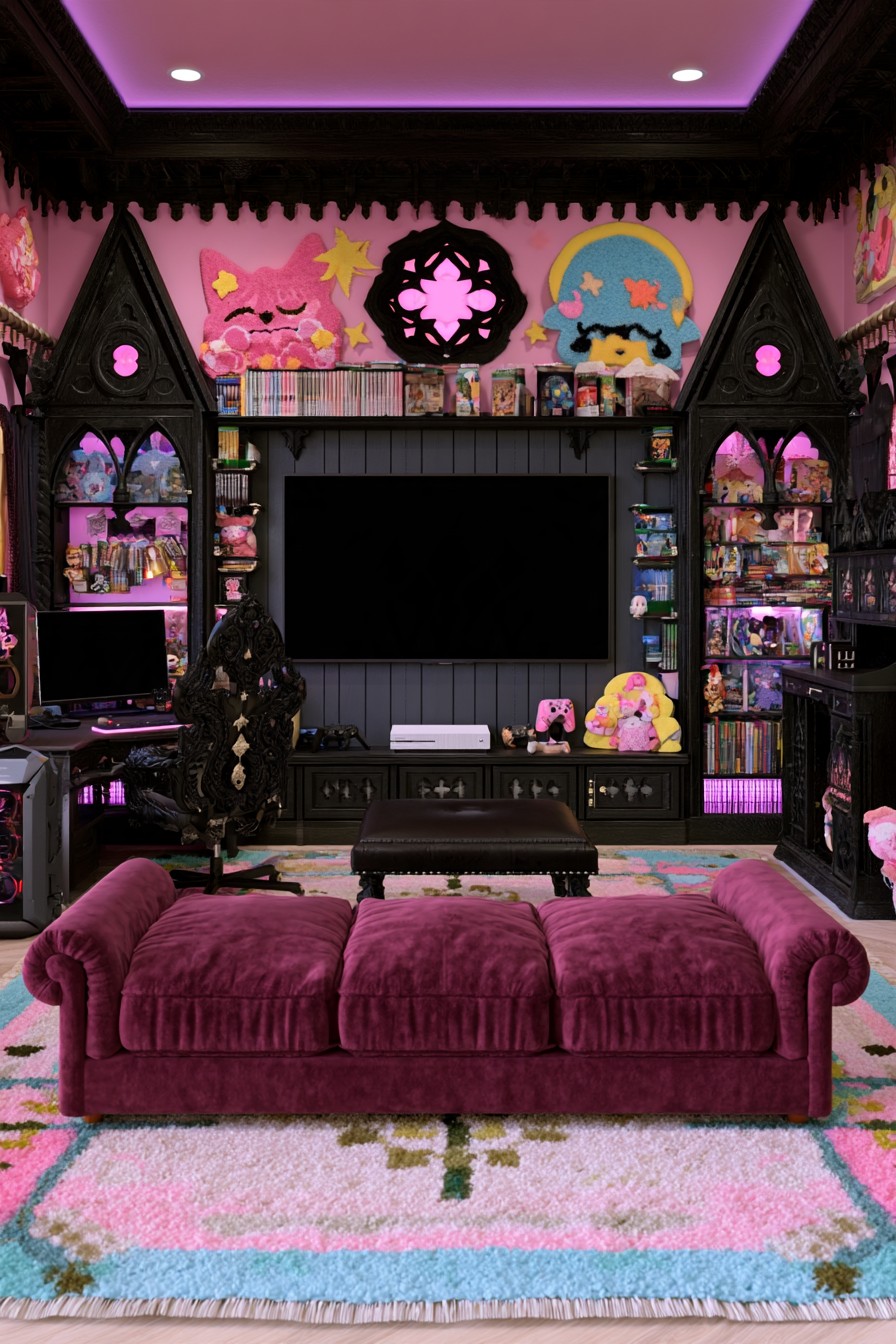
Pointed cabinet tops and dark carved trim give this room a cathedral inspired outline. Pink wall sections, colorful figures, and a plum sofa make the Gothic forms feel playful. The desk sits to the left of the television, with an ornate chair rather than a conventional adjustable workstation chair. A dark ottoman occupies the central lounge area.
Keep favorite figures in small groups so the pointed shelf frames remain visible. At the desk, choose a chair with comfortable support and adjustments suited to keyboard and mouse use. Give the computer station a useful light separate from the pink accent glow. An ottoman can serve the lounge, but it should not restrict the desk chair's exit or access to the lower media storage.
14. A Midnight Blue Panel Beneath a Long Game Shelf
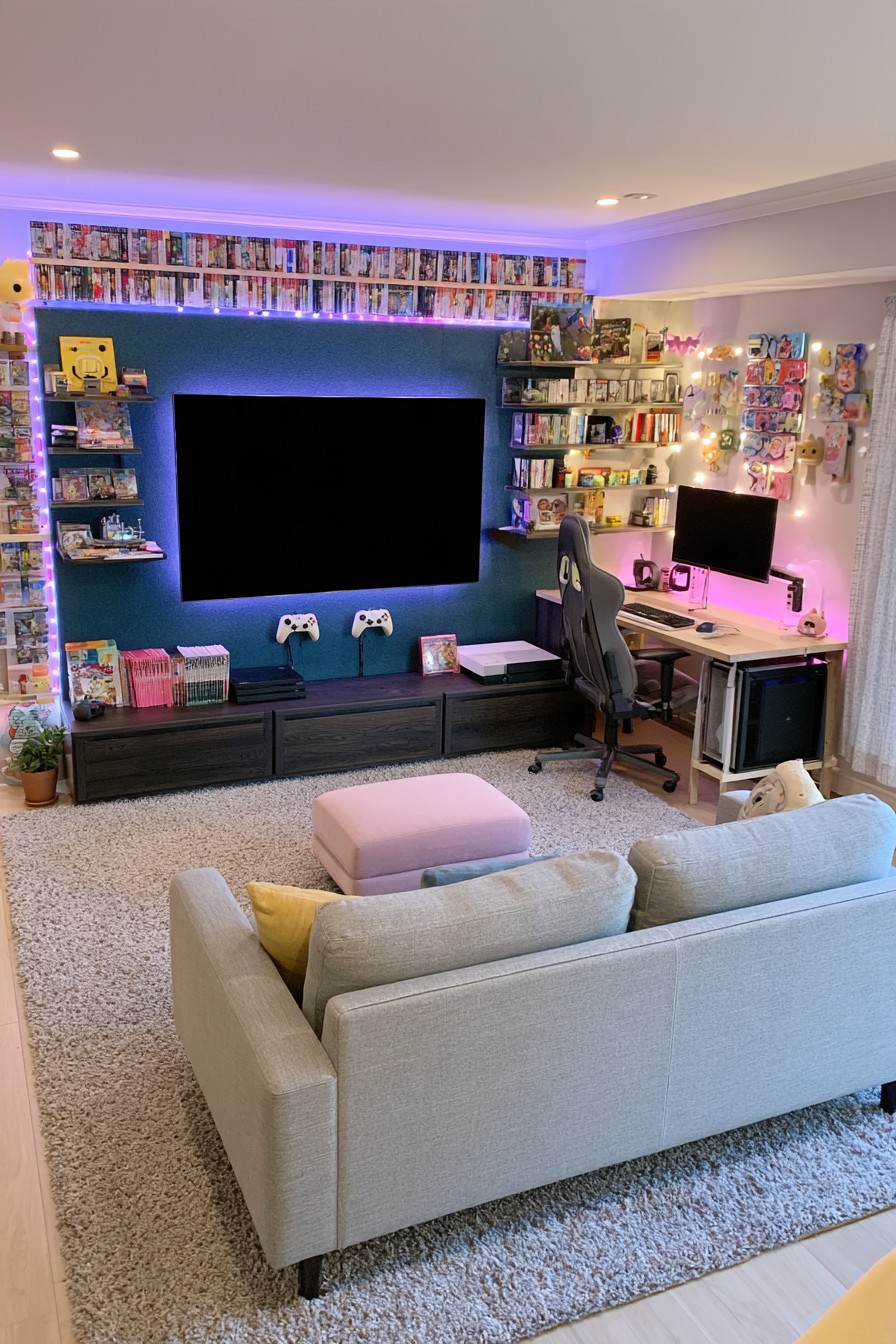
A midnight blue central panel provides a strong background for the television. Rows of game cases line a long shelf above it, with shorter displays continuing down the sides. A compact desk occupies the right corner, while a pale sofa and pink ottoman lighten the foreground. Blue and pink lighting distinguish the darker screen area from the surrounding pale walls.
Long shelves need supports suitable for the wall and the loaded collection. Use the high row for editions you do not need every day, keeping frequently played titles lower. Test the main viewing position before setting the television height. At the side desk, check that the chair can approach the work surface comfortably and that the PC position leaves enough room for legs, cables, and routine access.
15. A Floating Screen Panel Against Stone Texture
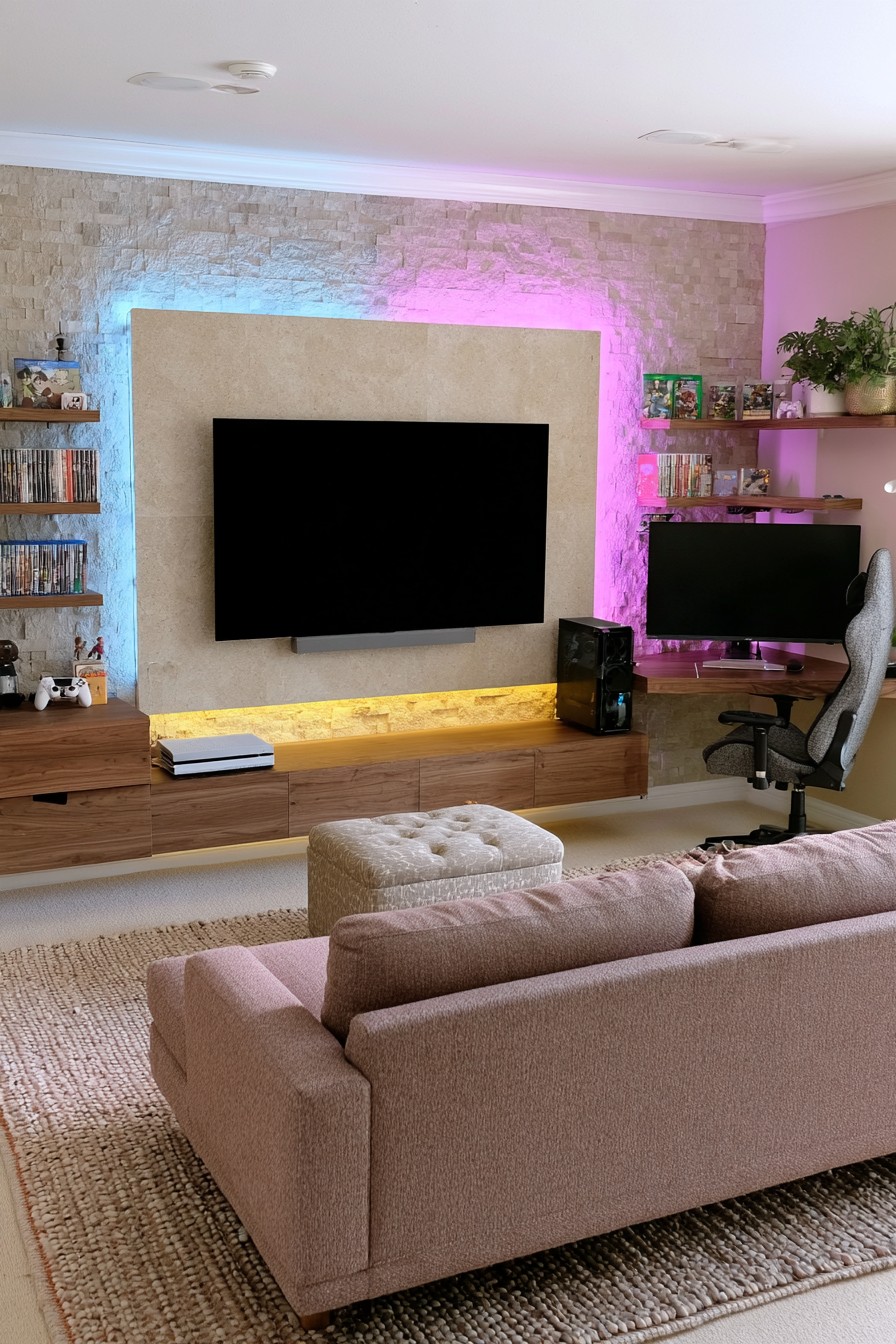
The television sits on a plain pale panel in front of a stone textured wall, rather than directly against the textured surface. Blue and pink backlighting emphasize that separation, with a warmer glow above the long timber cabinet. A PC station occupies the right end. The sofa and woven rug give the hard wall treatments a softer foreground.
Confirm the supporting structure behind a floating panel before mounting a screen, and plan how to reach its cables afterward. Keep any lighting components accessible for replacement. If you prefer a simpler version, a contrasting painted screen area can supply the visual separation. A tray can make the upholstered ottoman useful for controllers or drinks, but choose one that sits steadily and does not slide during use.
16. Warm Timber with a Rainbow Screen Accent
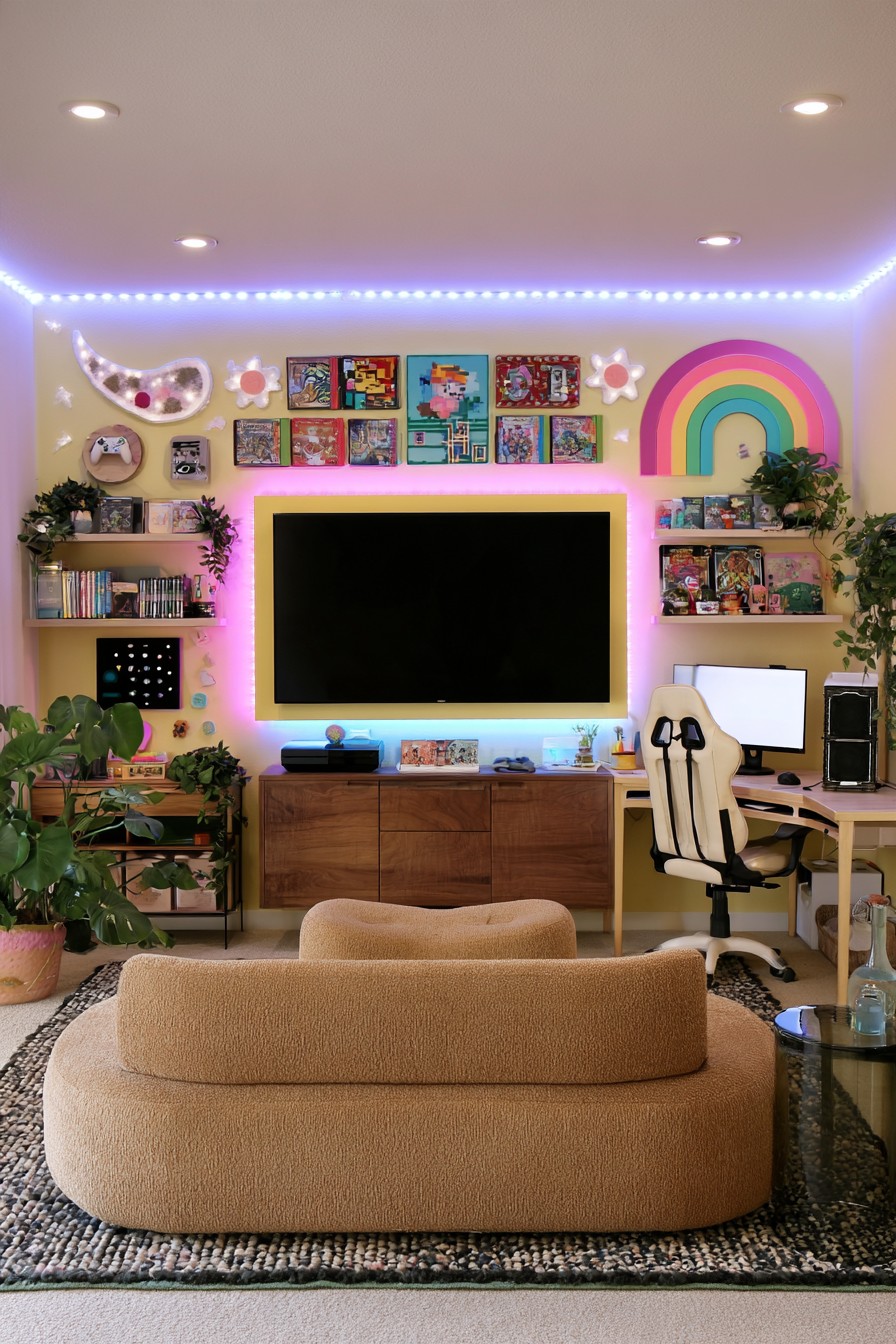
Warm timber cabinetry and a rounded tan sofa supply the room's retro influence. A yellow border around the screen and a rainbow detail on the wall introduce brighter color. Smaller game displays and a PC desk share the surrounding space. Plants soften the corners, while pale pink and blue accents keep the scheme connected to contemporary gaming decor.
Start with the timber and seating colors before selecting the bright accents. One rainbow artwork or a colored screen surround can be enough to suggest the mood. Test the television from the sofa's outer seats as well as the center. Put plants where watering and falling leaves will not affect electronics, and leave access to the desk and storage instead of filling every remaining corner.
17. A Collector Layout with Two Lounge Chairs
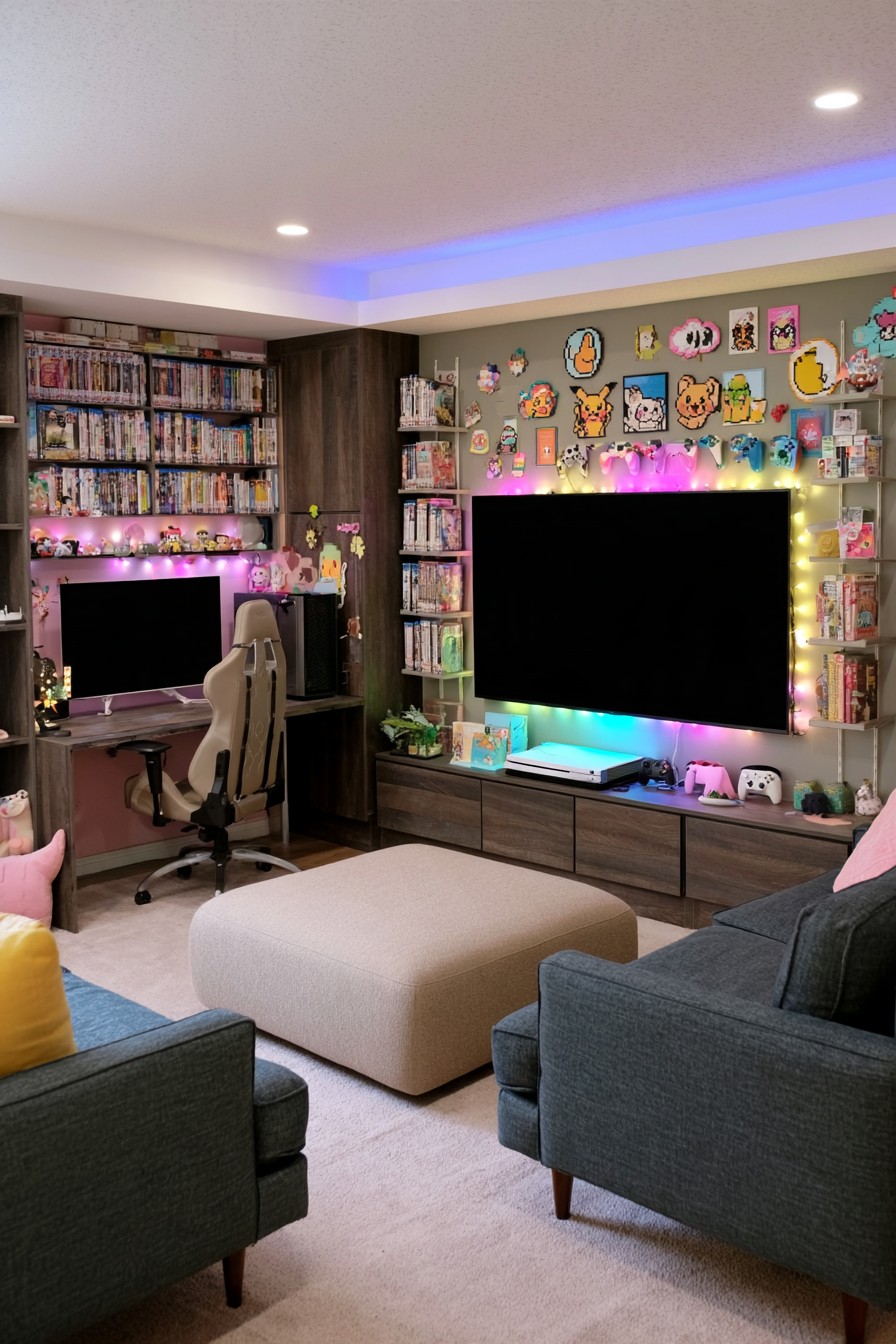
Game shelving surrounds a separate desk on the left, while the television occupies the right portion of the wall. Two charcoal lounge chairs and a broad cream ottoman provide flexible console seating. Tall dark cupboards introduce concealed storage beside the visible cases. Small character decorations above the television give the collection a lighter, more personal layer.
Group the library in a way that matches how you browse it, such as by platform or series. Allow space for unusually tall editions instead of squeezing them between fixed shelves. Check viewing angles from both chairs, which may need to move closer together for a shared session. A broad ottoman is useful only if players can still reach their seats and walk to the desk without stepping around it awkwardly.
18. Black Fluting with Warm Light and Geometric Seating
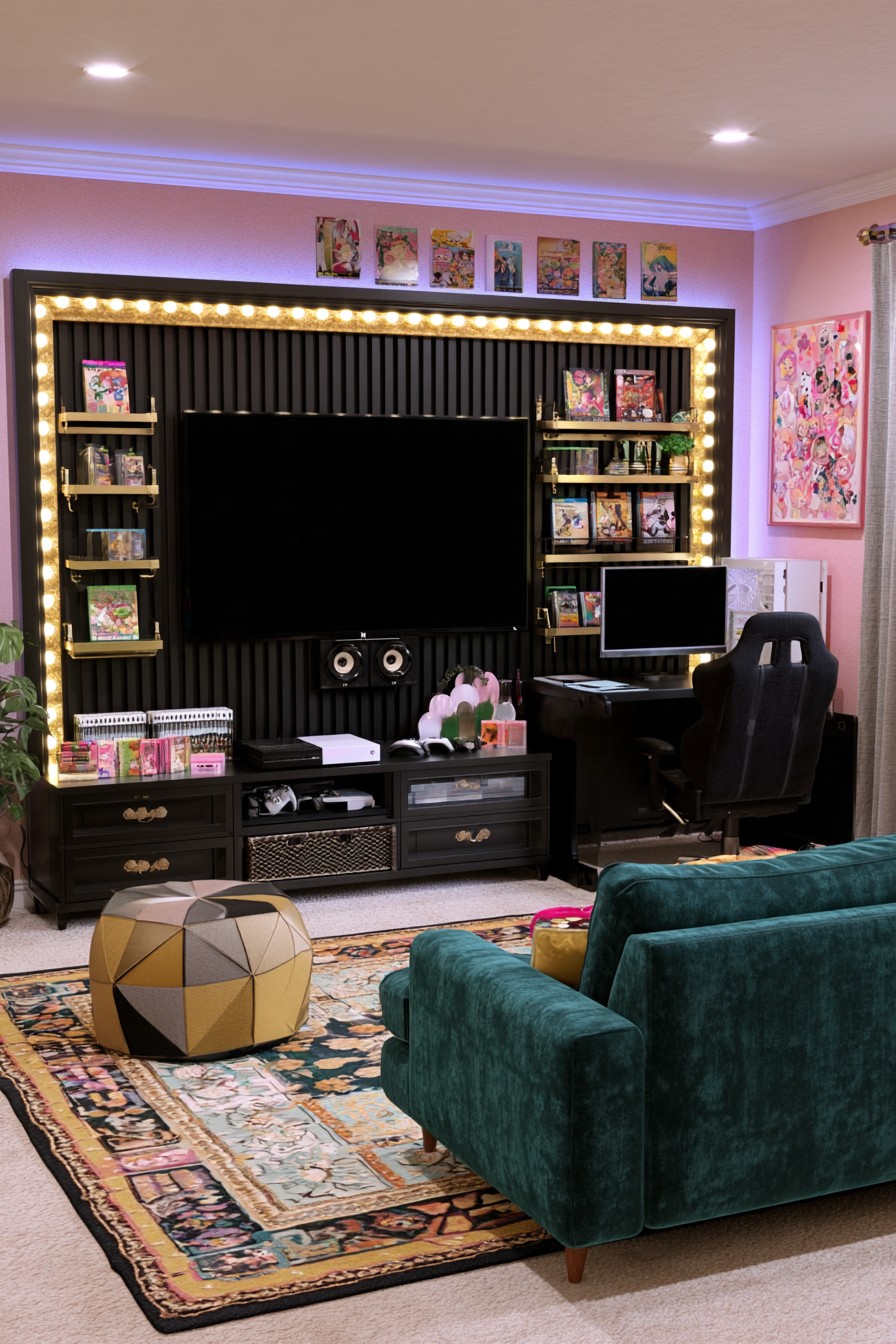
Black vertical fluting and warm metallic shelf edges give this media wall an Art Deco influenced character. A border of exposed bulbs outlines the whole display, contrasting with pale pink walls. The deep green sofa adds saturated color, while a geometric ottoman repeats the angular accents. A compact PC desk fits beside the television wall.
Treat the bulb border as a separate decorative light source so its brightness can be adjusted or switched off during play. View the screens from both stations to check for distracting reflections. At the desk, leave useful space for the keyboard and mouse instead of letting display objects occupy the working area. Repeating the metallic finish in a few fittings can connect the scheme without requiring more decorative shelves.
19. A Teal Game Library Beside a Daylit Window
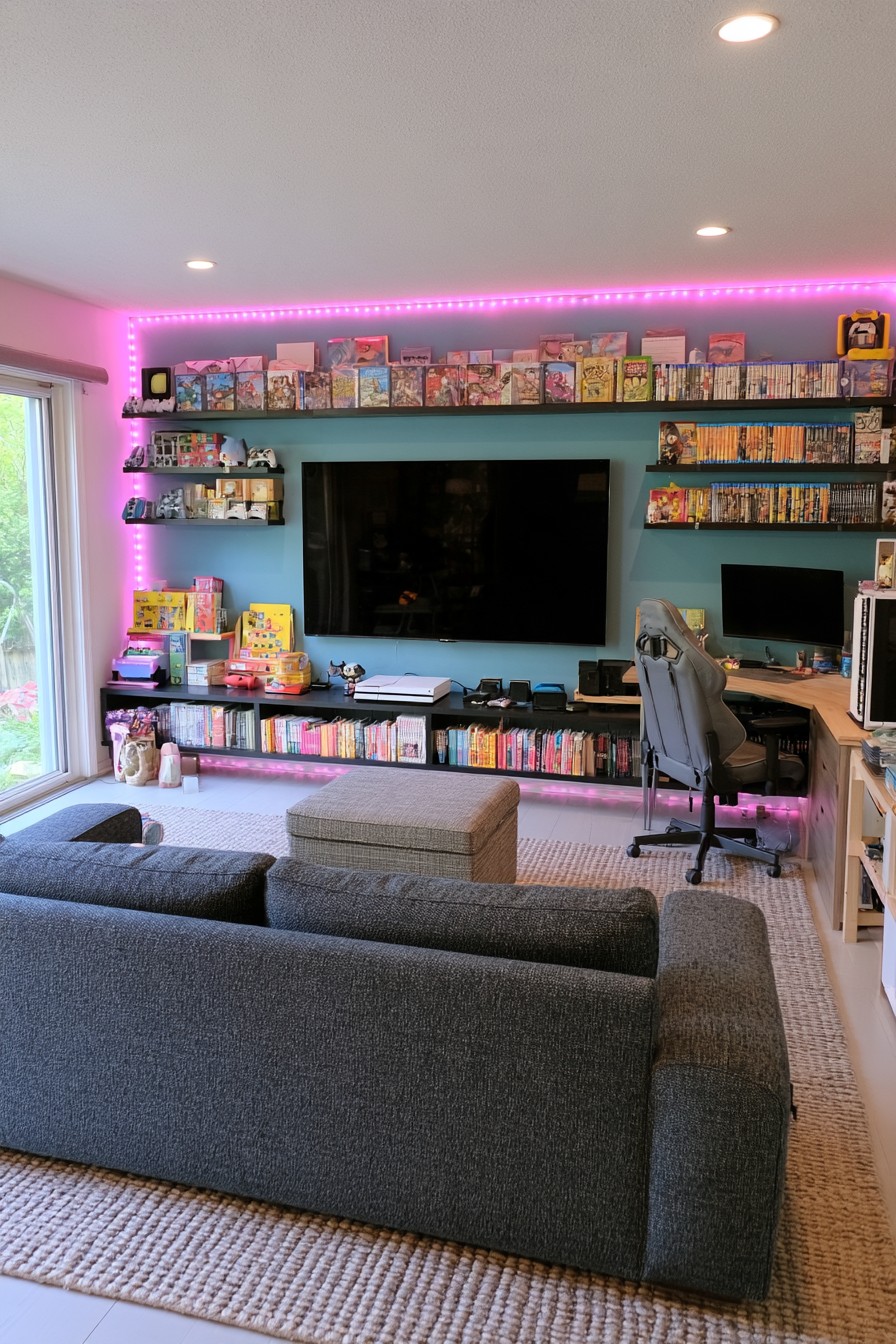
Long shelves of game cases turn the teal television wall into a visible library. Lower storage continues beneath the screen, while a single monitor desk sits to the right. A window at the left brings daylight into the room, contrasting with the pink perimeter lighting. Charcoal seating and a gray ottoman keep the foreground quieter than the colorful cases above.
Check daytime reflections before settling on the television and monitor angles. Window treatments that can be adjusted during play help the room work beyond its evening lighting scheme. Keep cases you use often on the lower accessible shelves, with display editions above. Leave some free shelf capacity as the library changes, and choose supports for the weight of the full collection rather than its initial arrangement.
20. A Black Lounge with Mustard Seating and Character Displays
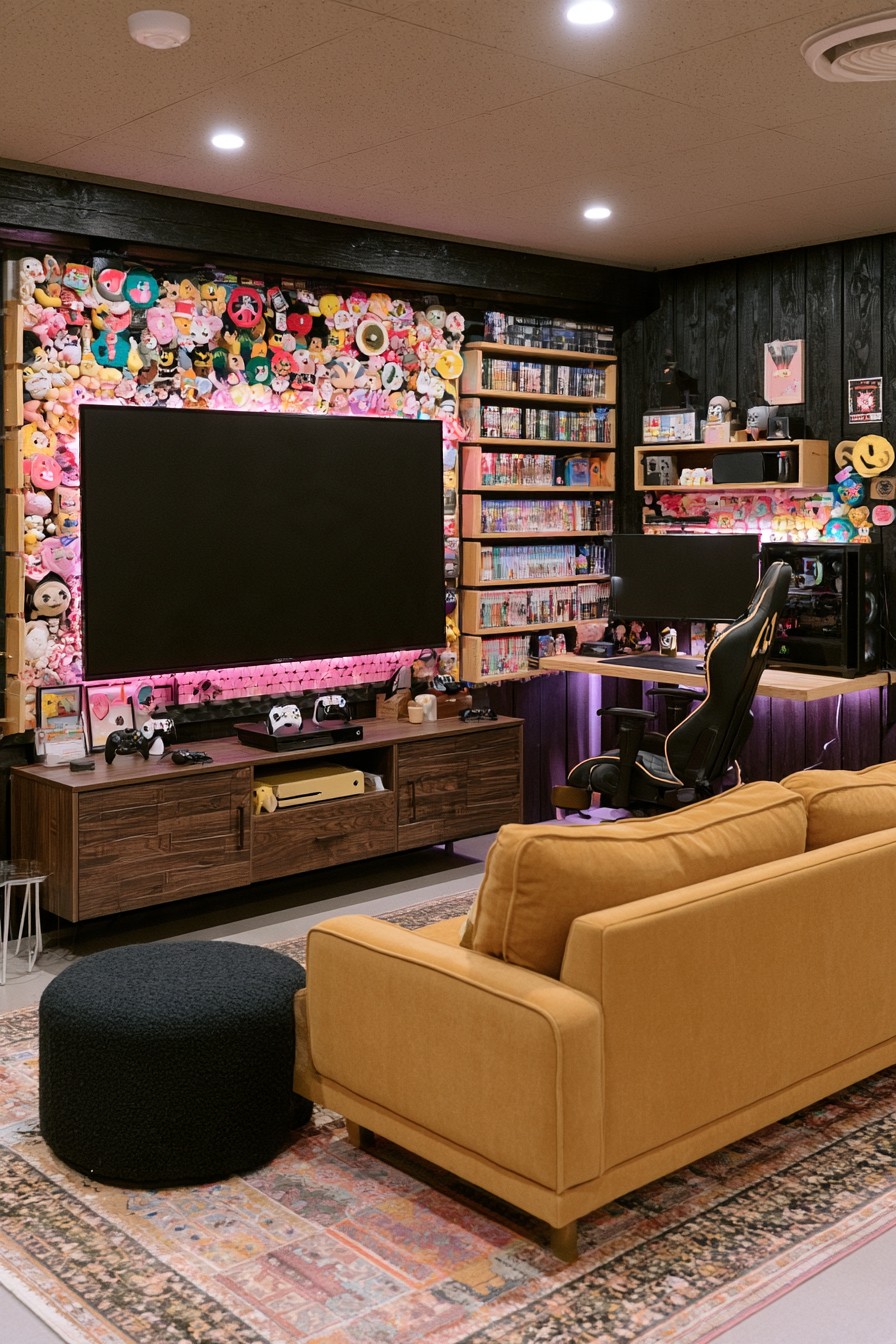
Black paneling gives this room a private lounge mood, with a mustard sofa adding warmth in front of the screen. Small character decorations densely surround the television, while a tall game shelf separates it from the PC corner. Timber media storage and a patterned rug provide another layer of color. A black round ottoman keeps the central furniture relatively simple.
Choose a smaller edited group of decorations if the dense illustrated border competes with what is on screen. Rotating favorites can keep the collection enjoyable without filling every space permanently. Give the PC corner its own work light, and place a reachable surface beside the sofa for controllers. Keep the screen's edges clear enough for maintenance and for any speakers or sensors that your equipment requires.
21. Olive Walls with Timber Cabinets and Pink Shapes
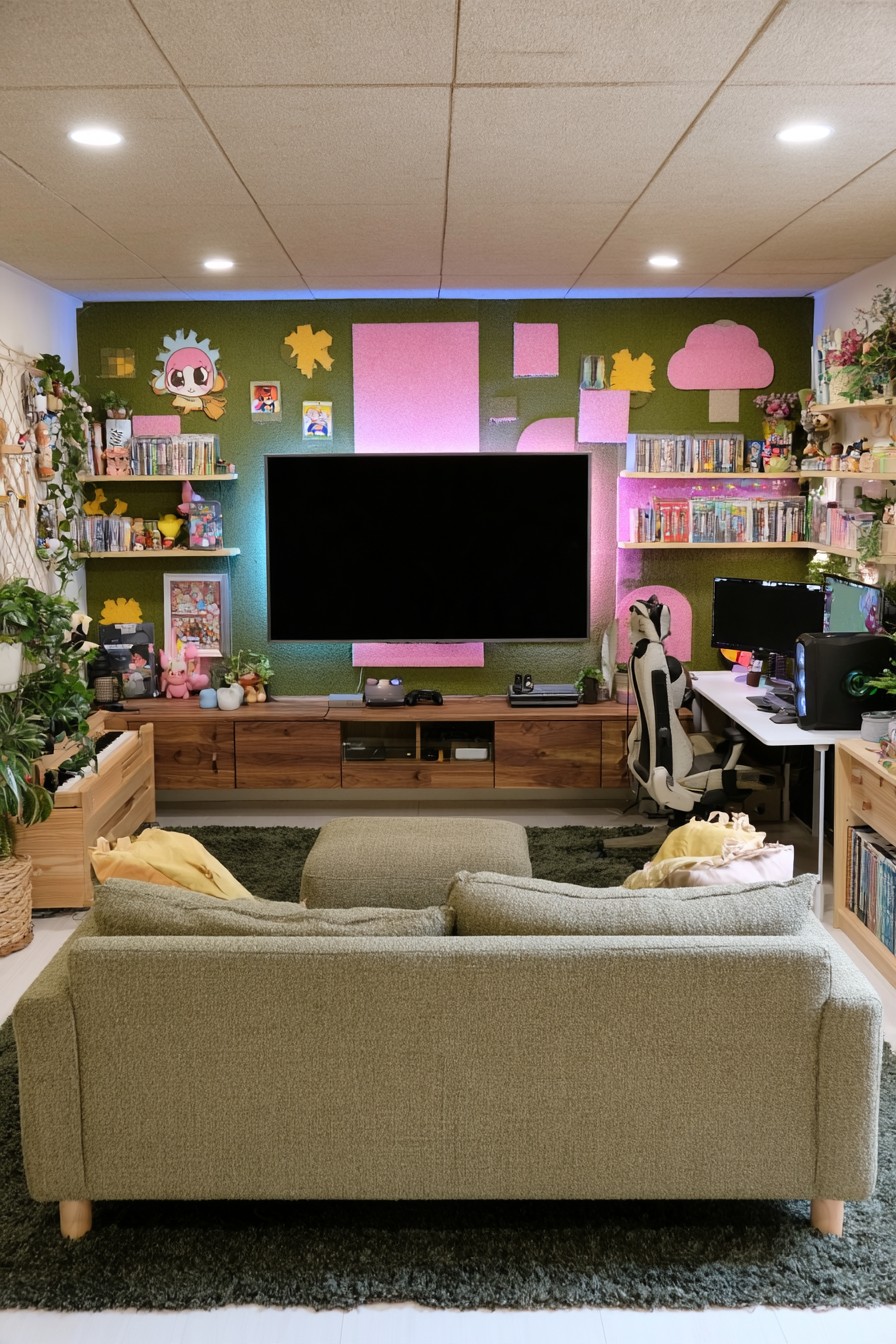
Pink rectangles and small graphic details interrupt the olive wall behind the television. Timber cabinetry below and beside it adds warmth, while game shelves occupy the higher wall. The PC station sits at the right, with a pale sofa facing the media area. Greenery around the sides blends with the olive backdrop rather than becoming a separate color theme.
Use painted shapes or removable artwork for the pink layer if you want a changeable scheme. Keep the PC tower and stored objects out of the space needed for knees and feet. A separate shelf beside the desk can hold items that would otherwise crowd the work surface. Leave room to tend plants without leaning over devices, and keep the cabinet top practical for handling controllers or connecting accessories.
22. Pink Square Panels Inside a Burgundy Lounge
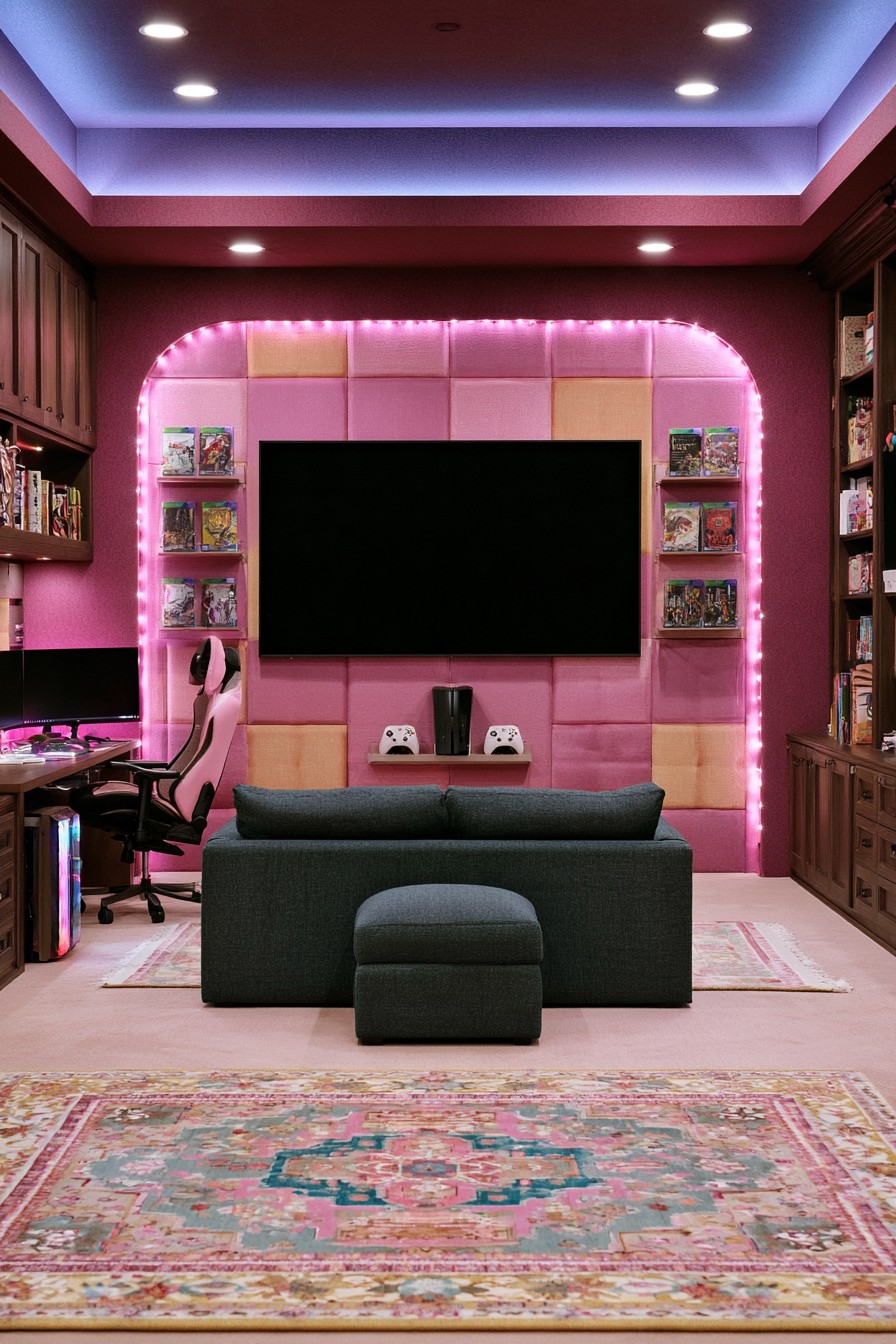
Pink square panels form a softly outlined backdrop within this burgundy room. Slim shelves beside the television display selected cases, with a small device shelf below. Dark side cabinetry accommodates a larger collection, and the PC desk occupies the left wall. A compact charcoal sofa, matching ottoman, and traditional patterned rugs complete the enclosed lounge mood.
Choose decorative panels for their finish and mounting requirements; for sound control, specify products with documented acoustic performance. Keep the device shelf large enough for the equipment's support and airflow requirements. Place the ottoman on the seating side when using it as a footrest, with an open route to the desk and cabinets. Separate control of the pink perimeter light and ceiling illumination makes the small room more adaptable. If two people will use the setup, compare these shared gaming room ideas before fixing desk positions and storage zones.
Let the room reflect the games and objects you enjoy, then check how it works during an ordinary session. You should be able to sit comfortably, find a controller, reach the current game, and move between stations without rearranging furniture. A thoughtful shelf system or a better placed seat may improve the space more than another decorative feature. Add color and lighting once that everyday arrangement feels right.

Leave a Reply