
A strawberry canister beside a pink cupboard, a line of little whales across a backsplash, or a lilac breakfast nook can give an everyday kitchen a story of its own. Whimsical kitchen decor brings that playful character into useful things: the tiles you wipe down, the dishes you reach for, and the chair where you drink your morning coffee. The most inviting versions connect those details through color and shape while leaving enough room to prepare food, open cupboards, and move comfortably.
These 25 kitchen ideas explore fruit motifs, cottage flowers, nostalgic patterns, sea creatures, and romantic touches. Alongside each look, you will find suggestions for cabinetry, wall finishes, fabrics, tableware, and placement, plus the practical detail that makes the arrangement easier to live with. You can borrow a complete palette or begin with one smaller change, such as a painted chair, a patterned curtain, or a shelf of favorite ceramics. Use the decorating approach below to choose materials and plan the changes before adapting an inspiration to your own kitchen.
Table of Contents
- Plan the Kitchen’s Colors, Finishes and Layout
- Give Your Kitchen One Playful Story
- Choose Finishes for the Work They Need to Do
- Check the Layout Before Adding the Charm
- Find the Details You Want to Bring Home
- 1. Carousel Horses with Powder Blue and Blush
- 2. Lilac Cabinets and a Ribbon of Violet Flowers
- 3. Sea Glass Scallops in Mint, White, and Soft Pink
- 4. A Mushroom Cottage with Sage and Terracotta
- 5. Yellow Ducks Along a Sage Kitchen Backsplash
- 6. Lemon Yellow Cabinets Framed by Cobalt Blue
- 7. Strawberries, Pink Cupboards, and Red Gingham
- 8. A Peach Orchard Palette with an Olive Pantry
- 9. Patchwork Tiles Between Blue and Butter Yellow
- 10. Retro Robots in Teal and Coral
- 11. Pomegranate Red with an Olive Crockery Cabinet
- 12. Hot Air Balloons Above Cornflower Blue Cupboards
- 13. A Little Train Crossing a Red and Cream Kitchen
- 14. Blush Hearts and a Black China Hutch
- 15. Whale Motifs Around a Curved Blue Breakfast Nook
- 16. Swan China Against Navy and Pale Pink
- 17. A Rose Covered Breakfast Table in Blue and Pink
- 18. Mint Cupboards with Rose China and Pink Gingham
- 19. A Lavender Island with a Botanical Cameo
- 20. Peach and Sage Around a Country Serving Cabinet
- 21. A Blue Pantry Alcove with Scallops and Ribboned Baskets
- 22. Sunflowers and Yellow Checks in a Green Kitchen
- 23. A Pansy Breakfast Nook in Sage and Lavender
- 24. A Raspberry Breakfast Booth with Cream Stripes
- 25. Dusty Pink Florals with a Plum Dresser
- Decide What to Change First
Plan the Kitchen’s Colors, Finishes and Layout
Give Your Kitchen One Playful Story
Choose a motif you would enjoy seeing every day, then decide where it should be most noticeable. A fruit patterned backsplash can lead the room while plain cabinetry supplies its background. Alternatively, keep permanent finishes quiet and put the character into dishes, curtains, or a breakfast seat. Take two colors from the motif and repeat them in different amounts. Cream, white, natural wood, or a pale counter can give the eye somewhere to rest.
Compare actual paint, tile, and fabric samples together in the kitchen, including under the white light you normally use for cooking. A pink that suits a curtain may look quite different across a full cupboard door. Start with accessories if you are still deciding how much color you want. For small containers that coordinate with the palette, explore our jar painting ideas; keep decorative coatings away from food contact surfaces.
Choose Finishes for the Work They Need to Do
For painted cupboards, gather a suitable cleaner, cloths, a screwdriver, the primer specified for the existing surface, cabinet enamel, and the brushes or rollers recommended for that coating. Remove doors and hardware, clean away grease, repair defects, and prepare the surface according to the chosen system. Test adhesion before treating the whole kitchen. Follow the stated preparation, recoating, and curing times; a dry surface may still need time before normal use. Assess an unknown old painted finish before sanding or scraping it.
For a backsplash, select tile approved for its intended wall location and a compatible installation system. Glazed ceramic and porcelain offer many patterned options, but the tile, grout, and trim need to work together. Choose cleaning products suitable for both tile and grout, test them discreetly, and rinse away residue. Follow separate care instructions for natural stone. Use washable fabric where splashes are likely, and choose serving pieces intended for food use rather than assuming a decorative glaze or craft finish is suitable.
Check the Layout Before Adding the Charm
Measure the room with appliance doors open, drawers extended, and chairs pulled out. Mark a proposed table, island, or trolley on the floor before ordering it. Check that a dishwasher can lower fully and that the refrigerator opens far enough for its internal drawers to come out. Small changes to furniture size can matter more than a different decorative finish.
Plan shelves around the objects they will hold, using a rated support system and fasteners suited to the actual wall and loaded weight. Display plates need appropriate stands, rack grooves, retaining rails, or plate hangers. Keep shelf edges and ornaments outside cupboard door swings. Leave appliance ventilation and the clearances specified by the appliance maker unobstructed, with curtains, loose fabric, and decorative objects away from cooking heat.
Find the Details You Want to Bring Home
Choose the detail that feels most like your home, then use its colors, materials, and placement as a starting point. These inspirations range from compact working kitchens to rooms with breakfast seating, so adapt the arrangement to your available space rather than copying furniture sizes without measuring.
1. Carousel Horses with Powder Blue and Blush
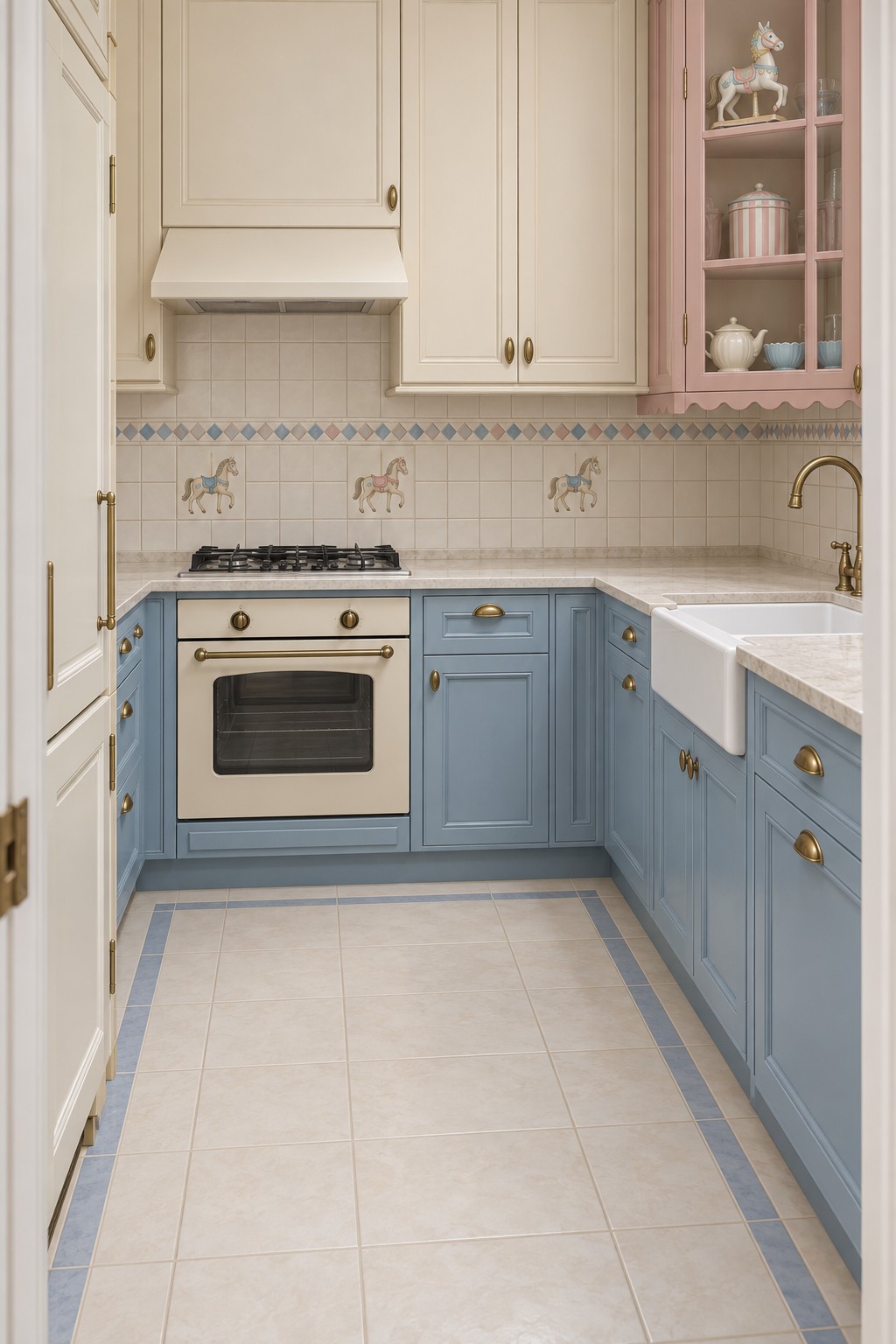
Little carousel horses give this compact kitchen a storybook character, while powder blue lower cupboards and cream upper cabinets keep the larger surfaces calm. A blush glass display cabinet repeats the pink saddle details, and its scalloped lower trim adds a gentle curve beside the straight cupboard frames. Brass colored handles and a pale counter connect the different cabinet colors.
To adapt the look, choose a few horse motif accent tiles for a mostly plain backsplash and repeat the blue in a narrow border. A striped canister and one ceramic horse can carry the theme into the display cabinet without crowding it. Have any added scalloped trim fitted to the cabinet structure with door movement left clear. You can also keep existing cream cupboards and introduce the entire palette through a single painted display unit.
2. Lilac Cabinets and a Ribbon of Violet Flowers
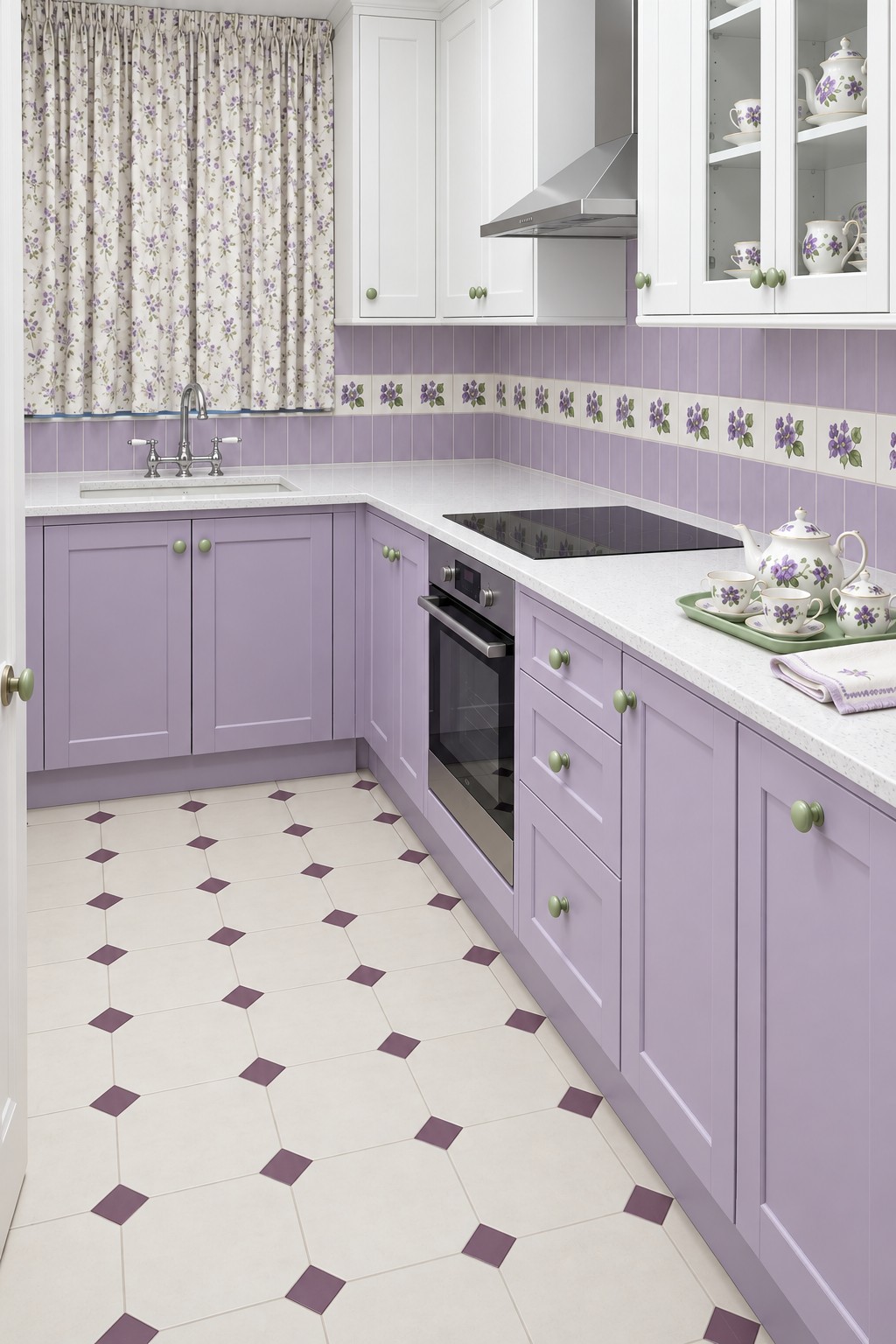
Lilac cabinetry feels especially charming when its color appears in several different scales. Here, plain cupboard fronts establish the main hue, a narrow band of purple flowers provides detail, and a delicate curtain print softens the window. Pale green knobs pick up the leaves rather than adding an unrelated accent. White upper cabinets and counters keep the purple from filling every surface.
Begin with a floral fabric or a favorite tea set, then compare cabinet samples against its petals and foliage. A decorative tile border can introduce the motif without covering the entire wall in flowers. Plan its height and corner joins before installation so the band remains continuous. Keep the curtain hem clear of the sink splash area, and group the tea pieces on a tray that can move when you need more preparation space.
3. Sea Glass Scallops in Mint, White, and Soft Pink
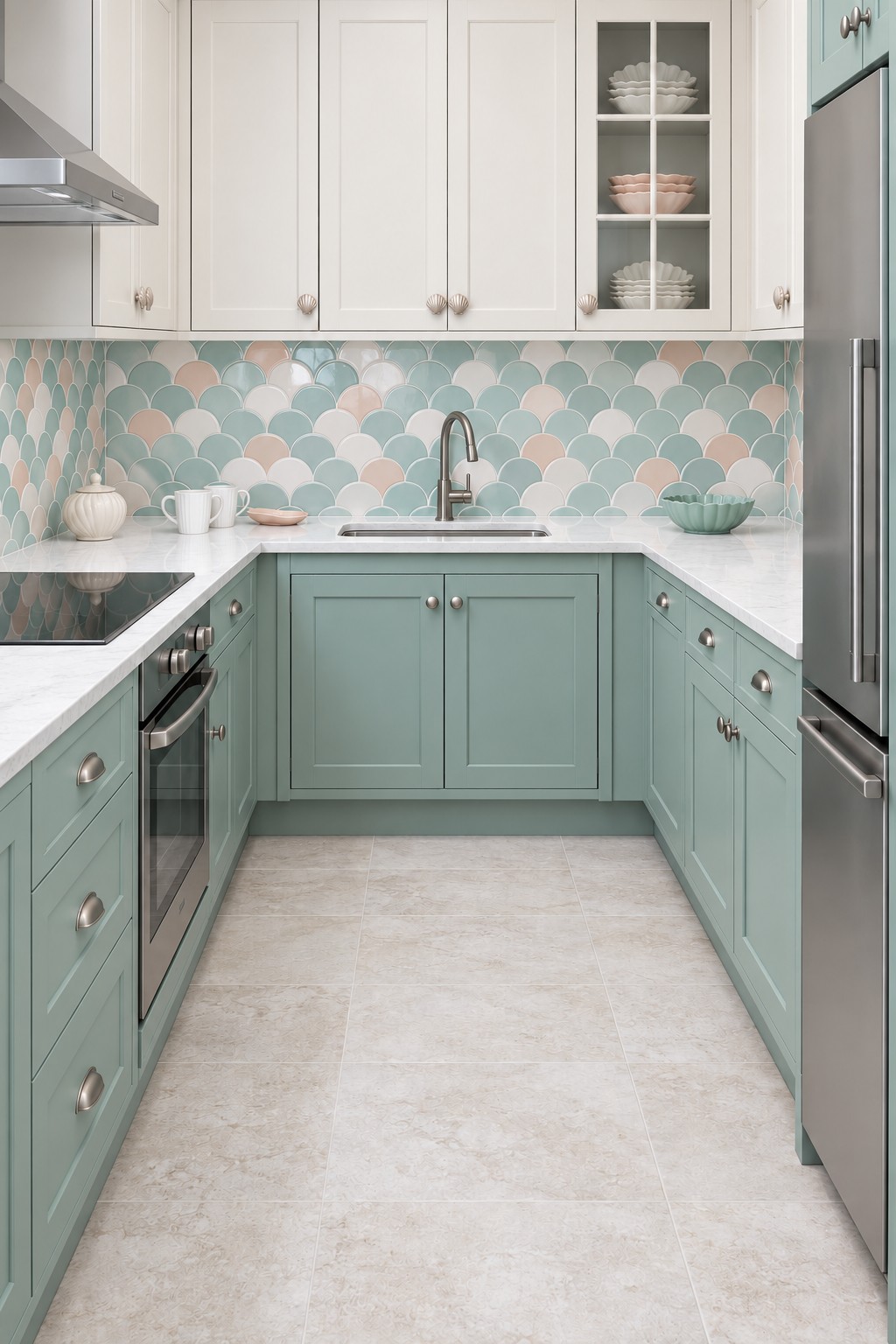
Overlapping scallop shapes give this kitchen movement without a busy illustrated motif. Mint and pale aqua tiles form most of the backsplash, with white and soft pink pieces scattered through the pattern. The lower cabinets repeat the green, while shell shaped knobs and fluted bowls echo the curved tile edges. Plain flooring lets that wall remain the main decorative surface.
Lay out several rows of tile samples before committing to the color distribution. Decide whether pink pieces should appear at regular intervals or in a looser arrangement, and ask the installer to plan corners and exposed edges. Keep countertop accessories rounded and simple, such as a ribbed white canister or a shallow green bowl. A kitchen with existing white cabinets could borrow the same effect through a smaller scalloped backsplash and a few coordinated serving pieces.
4. A Mushroom Cottage with Sage and Terracotta
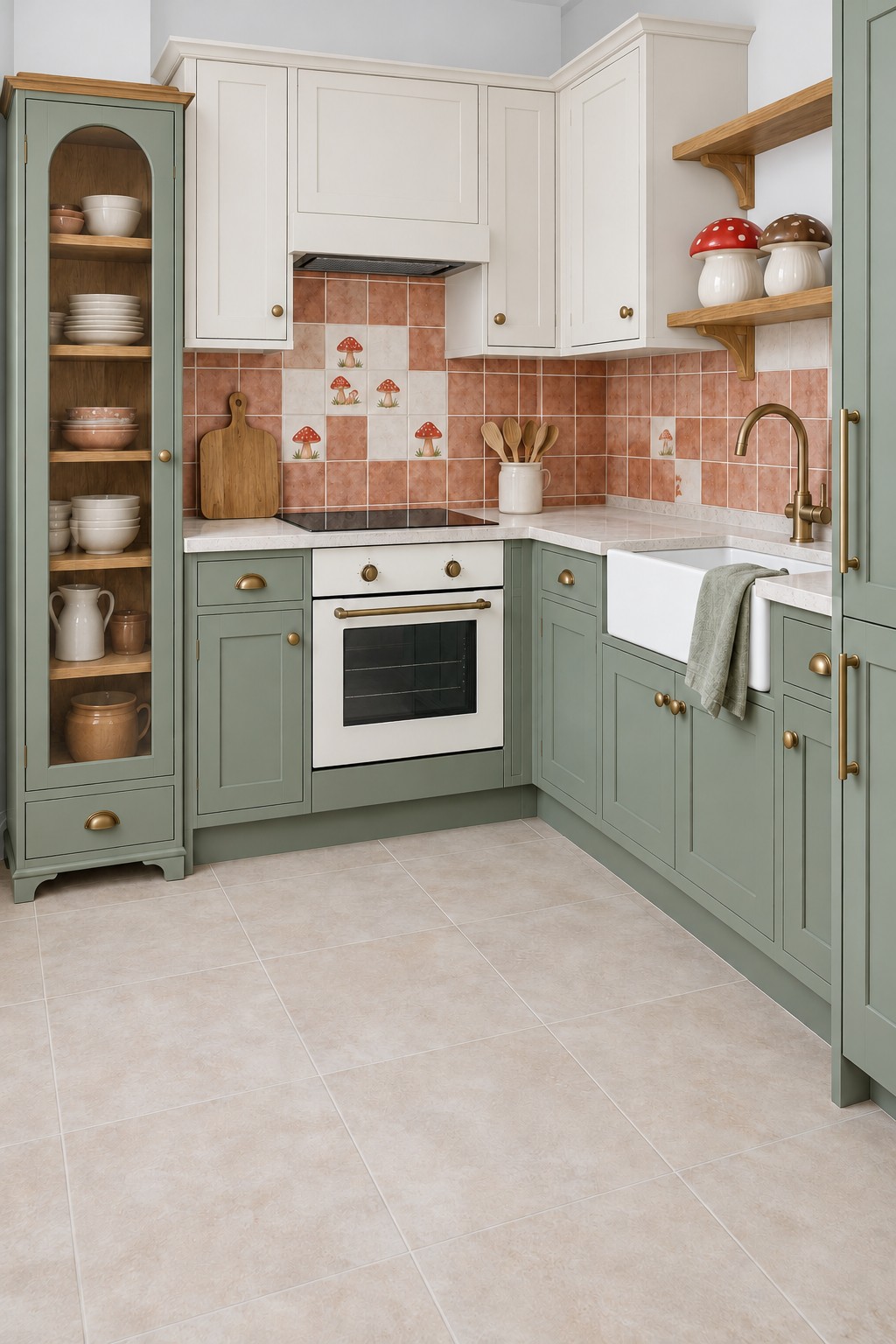
Sage cupboards, terracotta tiles, and exposed wood give this mushroom kitchen a grounded cottage mood. The small mushroom illustrations sit within the backsplash rather than spreading over every cabinet. Larger mushroom shaped canisters on the wooden shelf repeat the subject in three dimensions, while the tall arched crockery cabinet brings a softer outline to the corner.
Use earthy red and cream as the mushroom colors, then choose green cabinetry that sits comfortably beside the wood. A few illustrated accent tiles among plain terracotta colored tiles are enough to establish the theme. Position the canister shelf where lids can lift and neighboring cupboard doors can open freely. In a smaller refresh, leave the existing backsplash in place and combine sage painted furniture, everyday neutral crockery, and one pair of mushroom containers on a dry shelf.
5. Yellow Ducks Along a Sage Kitchen Backsplash
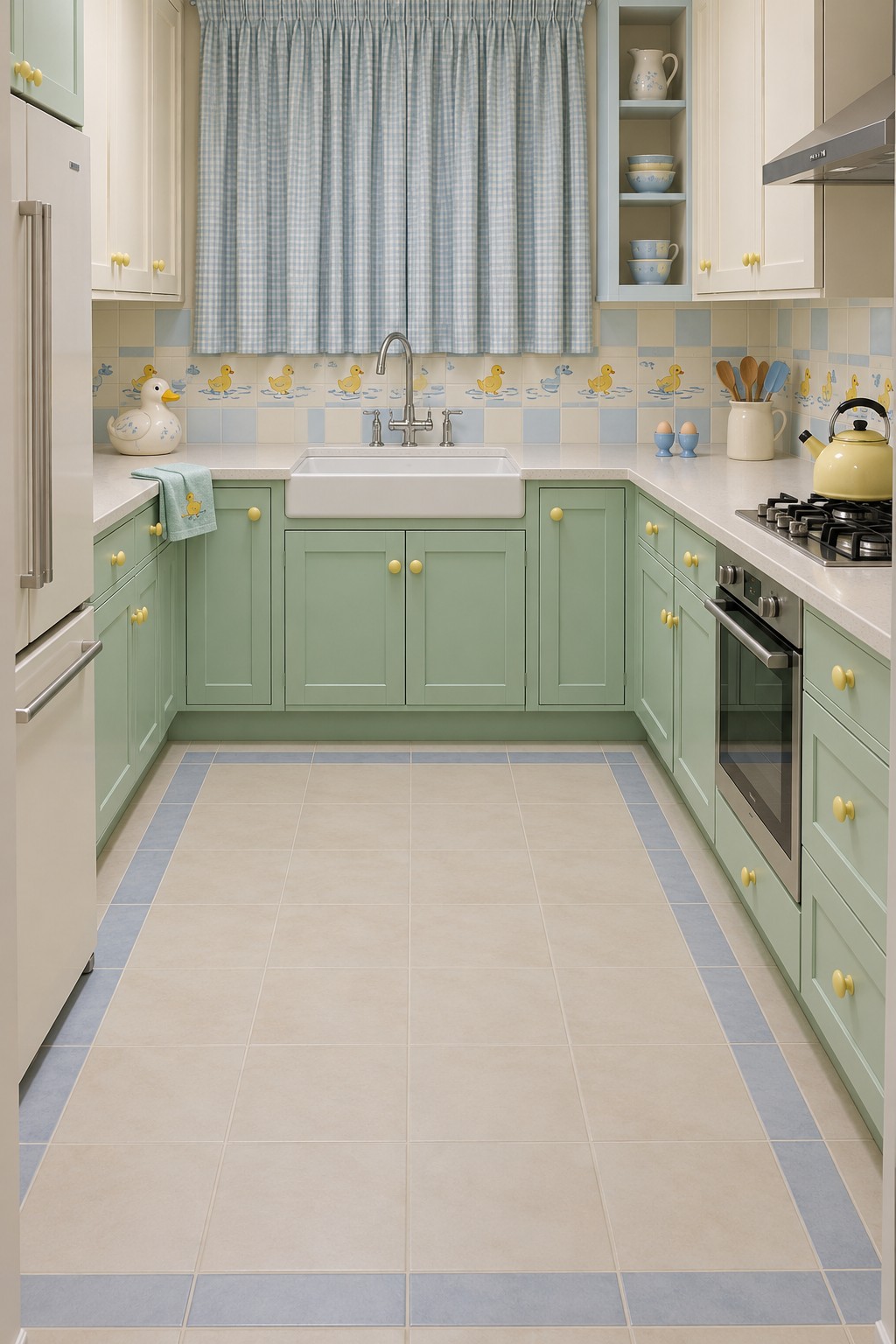
A row of yellow ducks gives the backsplash a cheerful focal point, with blue checks and sage cabinets providing a quieter setting. Yellow knobs and a pale yellow kettle repeat the ducks in useful objects. The cream upper cupboards stop the room from becoming a solid block of green, while the checked curtain adds softness above the sink.
Keep the duck motif at one consistent height, surrounded by plain tiles that give each illustration space. Choose a washable curtain fabric with a small check so it does not compete with the backsplash. You can introduce yellow through replaceable details such as knobs, a utensil holder, or a folded towel before changing any cabinets. Keep the window treatment clear of the faucet and cooking zone, and leave the central counter sections open for everyday preparation.
6. Lemon Yellow Cabinets Framed by Cobalt Blue
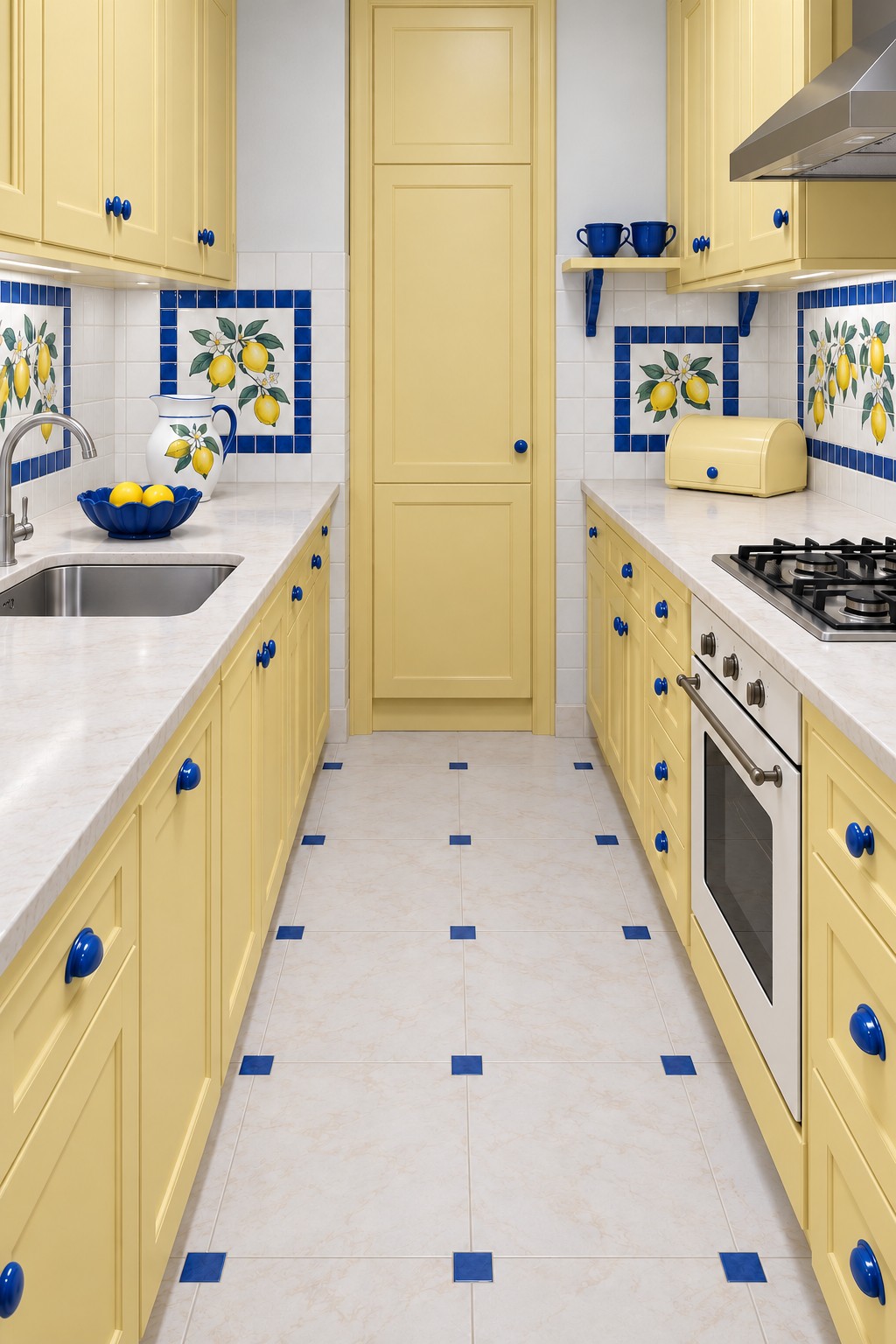
Lemon yellow and cobalt blue create a crisp, sunny palette in this narrow galley. The lemon illustrations read like little pictures because blue tile borders frame them against white. Blue knobs, mugs, and a fluted fruit bowl carry the accent through the room without adding another pattern. The pale floor uses small blue inserts to repeat the color at a different scale.
Choose the yellow cabinet shade beside an actual blue tile sample; strong cobalt can make a pale yellow appear brighter. Limit the most detailed lemon panels to selected backsplash areas and use plain white around them. If you retain your current cabinetry, a lemon pitcher, blue bowl, and matching hardware can introduce a smaller version. Check the end cupboard door swing and the appliance openings before adding any freestanding storage to a galley this compact.
7. Strawberries, Pink Cupboards, and Red Gingham
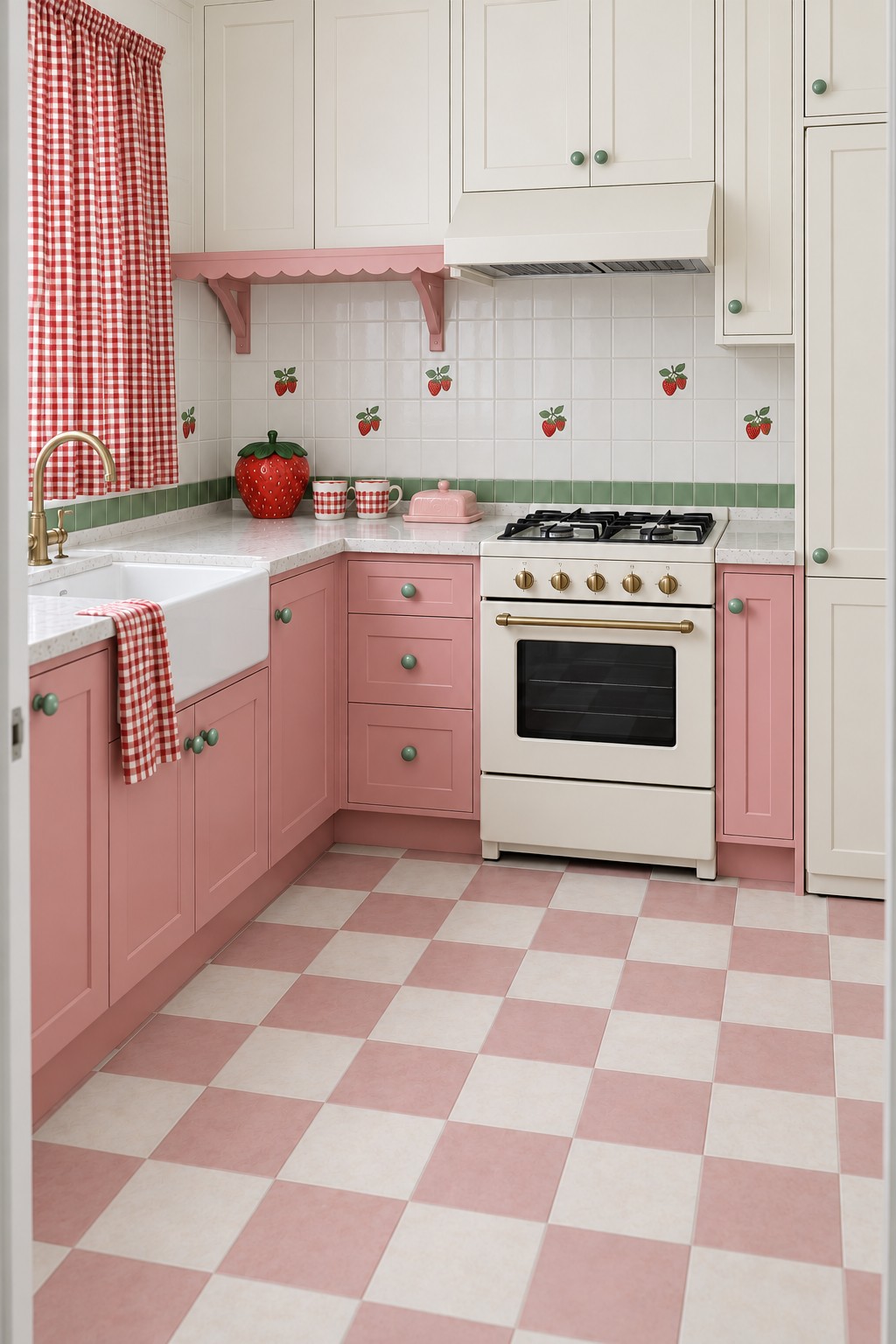
Strawberry red gives this pink kitchen a lively accent without replacing its softer foundation. Small fruit motifs dot a white backsplash, green knobs echo the leaves, and a strawberry shaped canister supplies one larger focal object. Red gingham at the window and broad pink floor checks share a grid pattern, but their different scales keep the room from feeling repetitive.
Take the strawberry colors into a few practical accessories, then keep the countertop mostly white and clear. A small pink shelf works well for light display pieces when its brackets and fixing method suit the load. Choose washable gingham and allow the curtain to hang clear of wet surfaces. For another modest accent, our 1950s craft ideas include kitchen textiles and useful decorative pieces that can complement this nostalgic palette.
8. A Peach Orchard Palette with an Olive Pantry
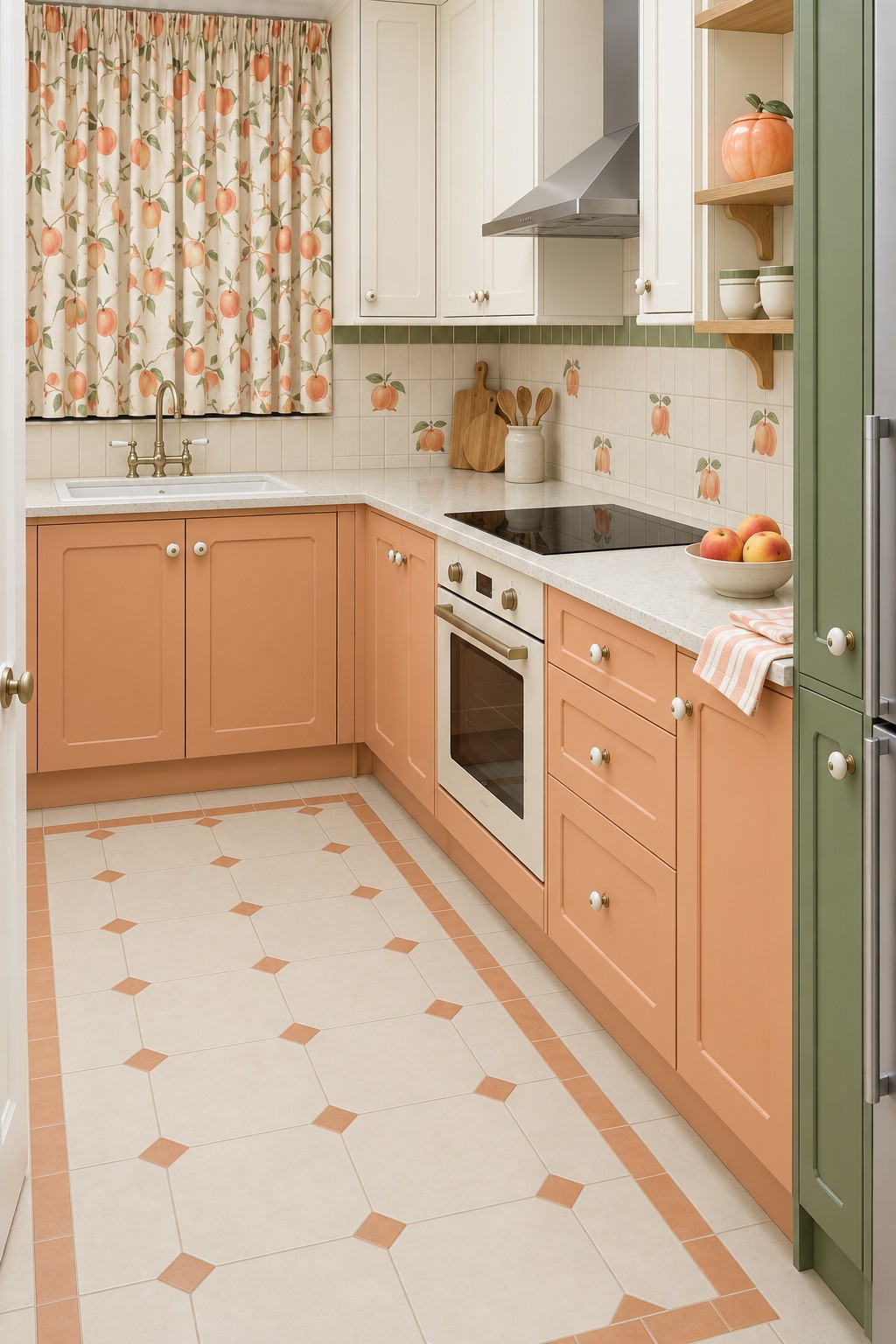
Soft peach cupboards give fruit themed decor a warmer, gentler direction than bright orange. Peach illustrations and a matching curtain print repeat the theme, while an olive green pantry supplies the leafy contrast. Cream upper cabinets and a pale counter create a light background for the fruit, wooden utensils, and small ceramic pieces.
Start with a peach print that includes a green you like, then draw the cabinet and accessory colors from it. Keep a tall green cupboard visually separate from the peach lower run so the two colors feel intentional. Open wooden shelves can hold a few frequently used cups or a single fruit shaped container, with enough room to lift each item out. A plain bowl of fresh fruit offers a changing accent without requiring more permanent decoration or sacrificing a large section of counter.
9. Patchwork Tiles Between Blue and Butter Yellow
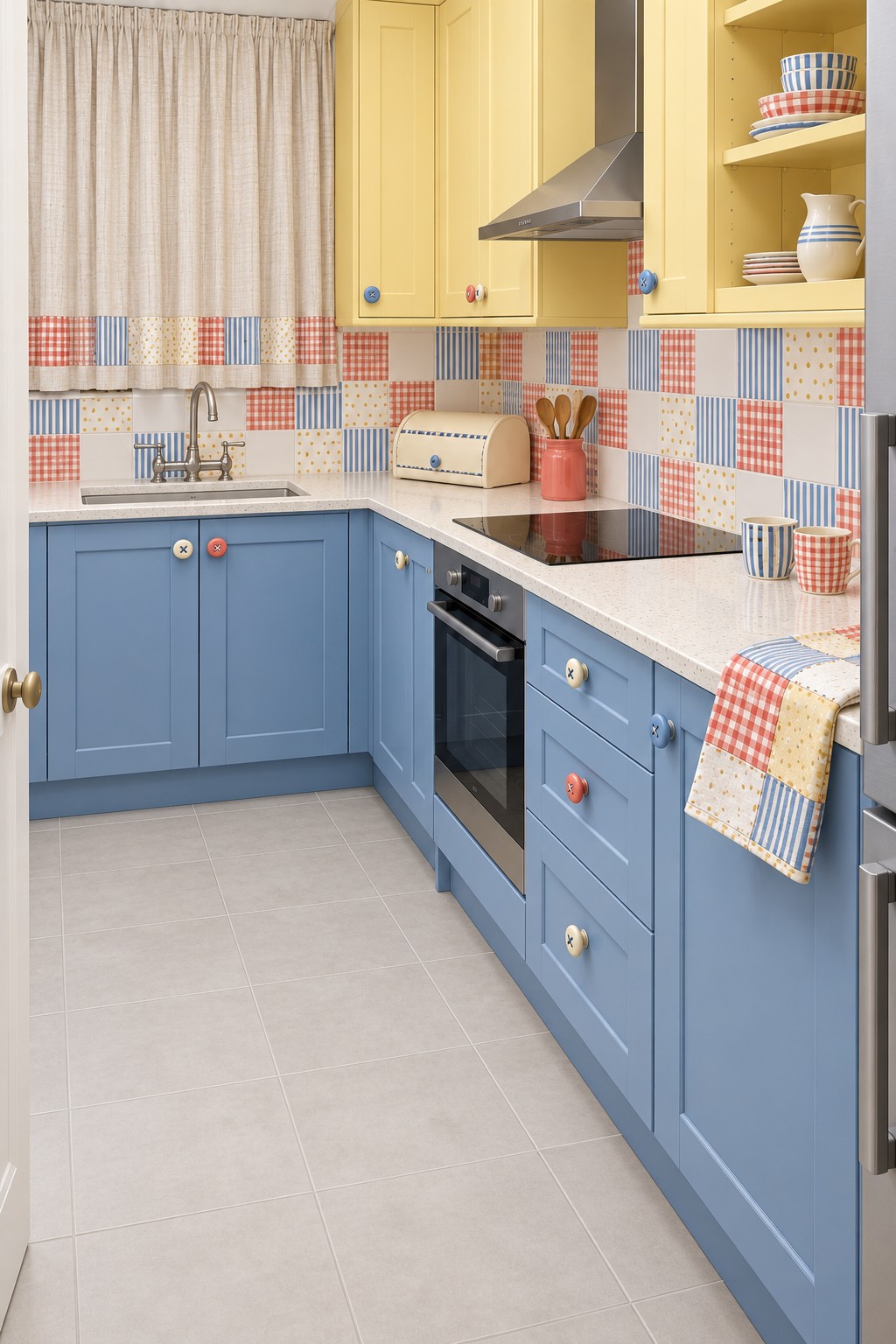
A patchwork backsplash connects the blue lower cupboards and butter yellow upper cabinets through small repeats of red, blue, cream, and yellow. Stripes, checks, and tiny dots work because each pattern occupies a similar sized square. The pale countertop and plain floor provide a pause beside the busy wall, while mismatched looking round knobs reinforce the collected character.
Use printed tiles from a compatible range or check that separately chosen pieces share the required dimensions and thickness. Arrange the complete sequence before installation, including corners and outlet positions. Repeat only one or two of the tile patterns in textiles, such as a checked towel or striped mug. Keep nearby accessories simple and useful. For a lighter update, introduce the patchwork effect with a washable table runner while leaving the existing backsplash untouched.
10. Retro Robots in Teal and Coral
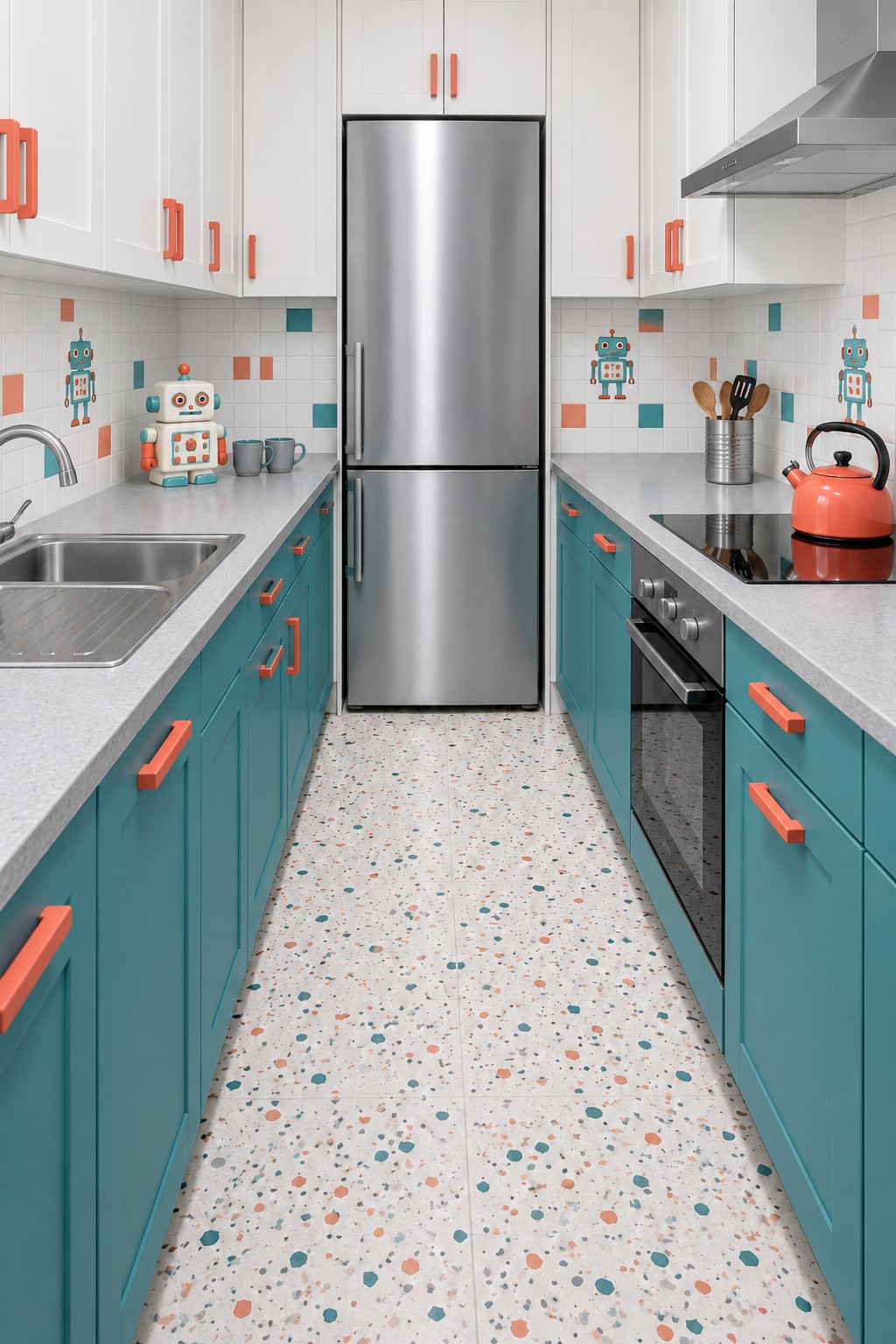
Teal cupboards and coral handles give this robot kitchen a playful graphic identity. Small robot illustrations appear among plain white tiles and scattered colored squares, so the motif remains readable. The speckled floor repeats both accent colors in tiny fragments, and a robot shaped canister turns one of the characters into a useful countertop object.
Keep the robots to the backsplash and one accessory rather than covering all the cabinet fronts. Select handles with mounting holes that fit the doors, or plan proper hole repairs before changing their spacing. Test neighboring handles at corners so they do not collide as doors open. In a narrow galley, leave the refrigerator approach unobstructed and confirm its required side clearances. Coral mugs or a kettle can provide the same color connection if you prefer to keep existing metal hardware.
11. Pomegranate Red with an Olive Crockery Cabinet
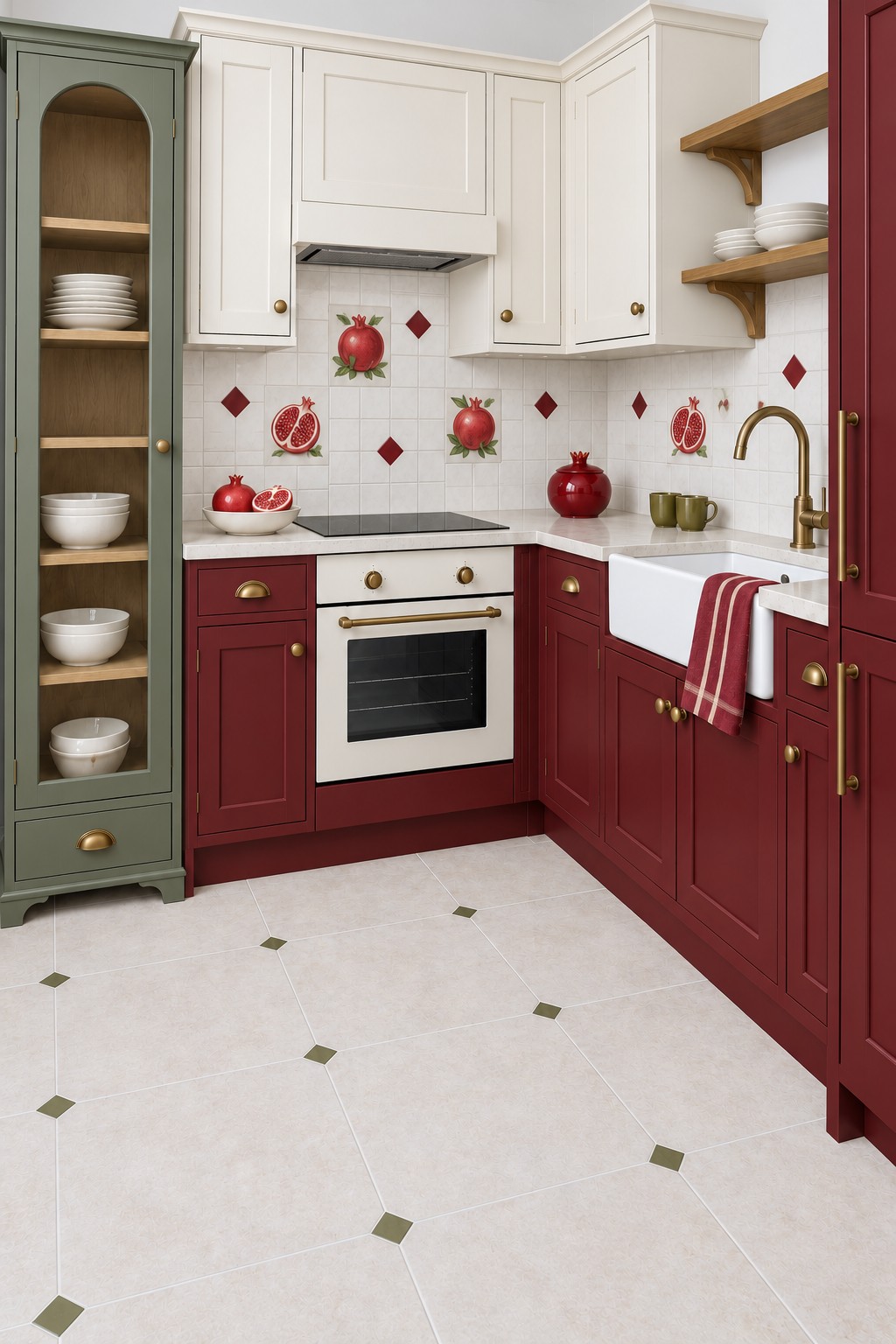
Pomegranate motifs make the burgundy cabinetry feel connected to a specific botanical story. Whole fruits and cut sections stand out against the pale backsplash, while small red diamond tiles provide a simpler repeat between them. The olive green crockery cupboard picks up the fruit leaves, and its wood lined arch adds warmth beside the cream upper cabinets.
Combine a deep red lower cabinet color with a lighter counter so the compact corner retains definition. Choose a few pomegranate tiles for the main sightline, then repeat the red in one lidded jar or bowl. The arched cabinet can be interpreted through a separate display unit if changing the fitted kitchen is impractical. Keep the shelf arrangement restrained, with heavier crockery low down, and check that the display unit and adjacent oven can both be used without moving each other.
12. Hot Air Balloons Above Cornflower Blue Cupboards
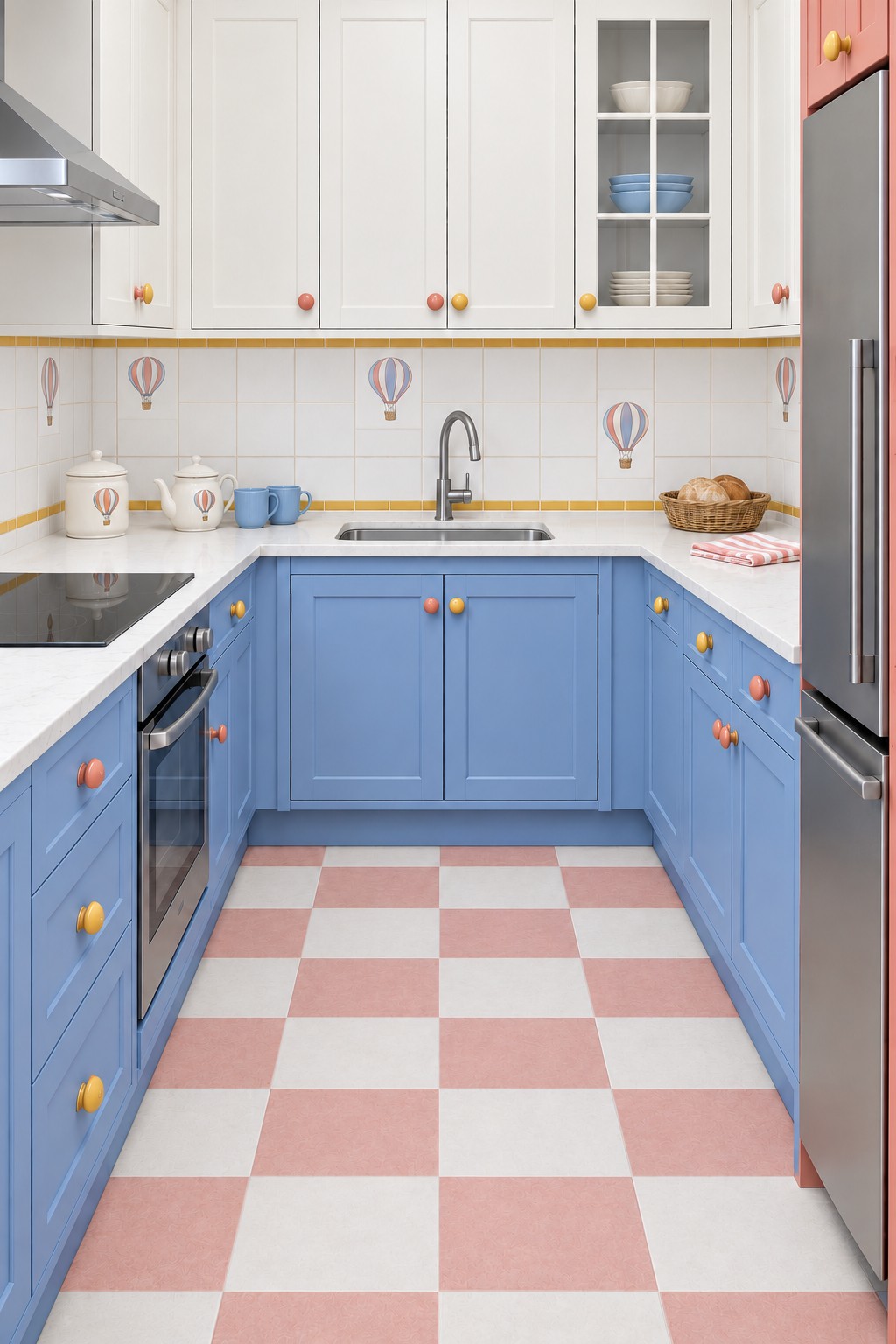
Small hot air balloons introduce a floating, storybook detail to this blue kitchen. Their pink, blue, and yellow stripes reappear in the mixed round knobs, while a thin yellow tile border organizes the backsplash. The broad pink and cream floor checks give the room a stronger pattern underneath the delicate wall illustrations.
Keep balloon tiles spaced across a plain background so each outline remains distinct. Choose knobs from one compatible range in several colors to preserve a consistent size and grip. If you want the floor to remain neutral, repeat the pink through a tea towel or a small tray instead. Check that any nearby tall cupboard or refrigerator door clears the handles on the facing run. The playful details work best when the practical cabinet layout stays straightforward and easy to use.
13. A Little Train Crossing a Red and Cream Kitchen
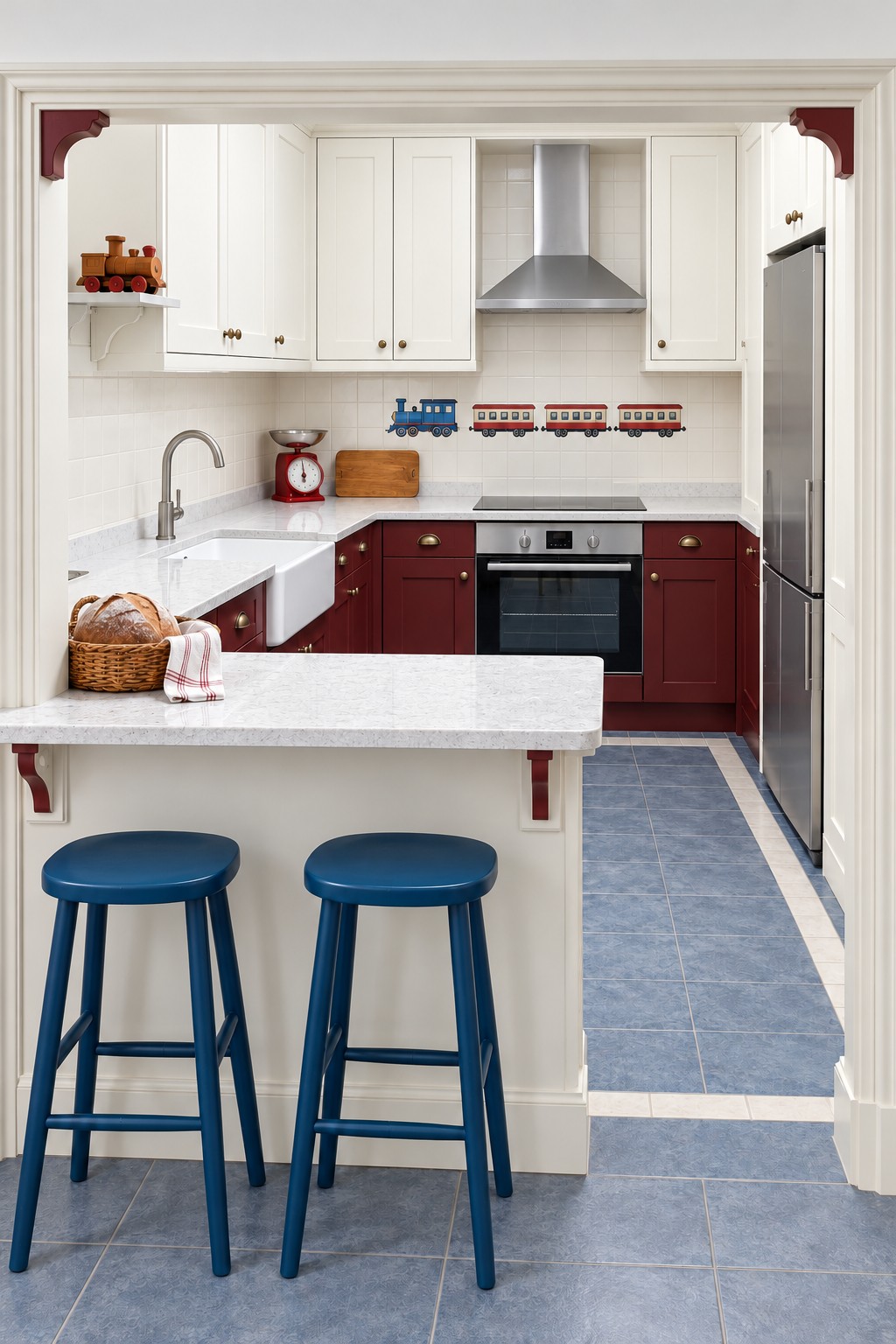
A small train travels across the pale backsplash, giving this red and cream kitchen a nostalgic focal point. Blue stools and the blue floor border pick up the engine color, while burgundy lower cupboards echo the carriages. The breakfast peninsula frames the entrance and provides a place to sit without introducing a separate table into the central work area.
Treat the train as a single decorative strip rather than repeating it on every accessory. A modest shelf display can reinforce the motif away from cooking splashes and heat. Match stool seat height to the actual counter and check the space needed for knees, feet, and access behind seated people. If a peninsula would restrict circulation, borrow the palette with blue kitchen chairs and a red cabinet base instead. The theme can remain cheerful without making the room feel like a play space.
14. Blush Hearts and a Black China Hutch
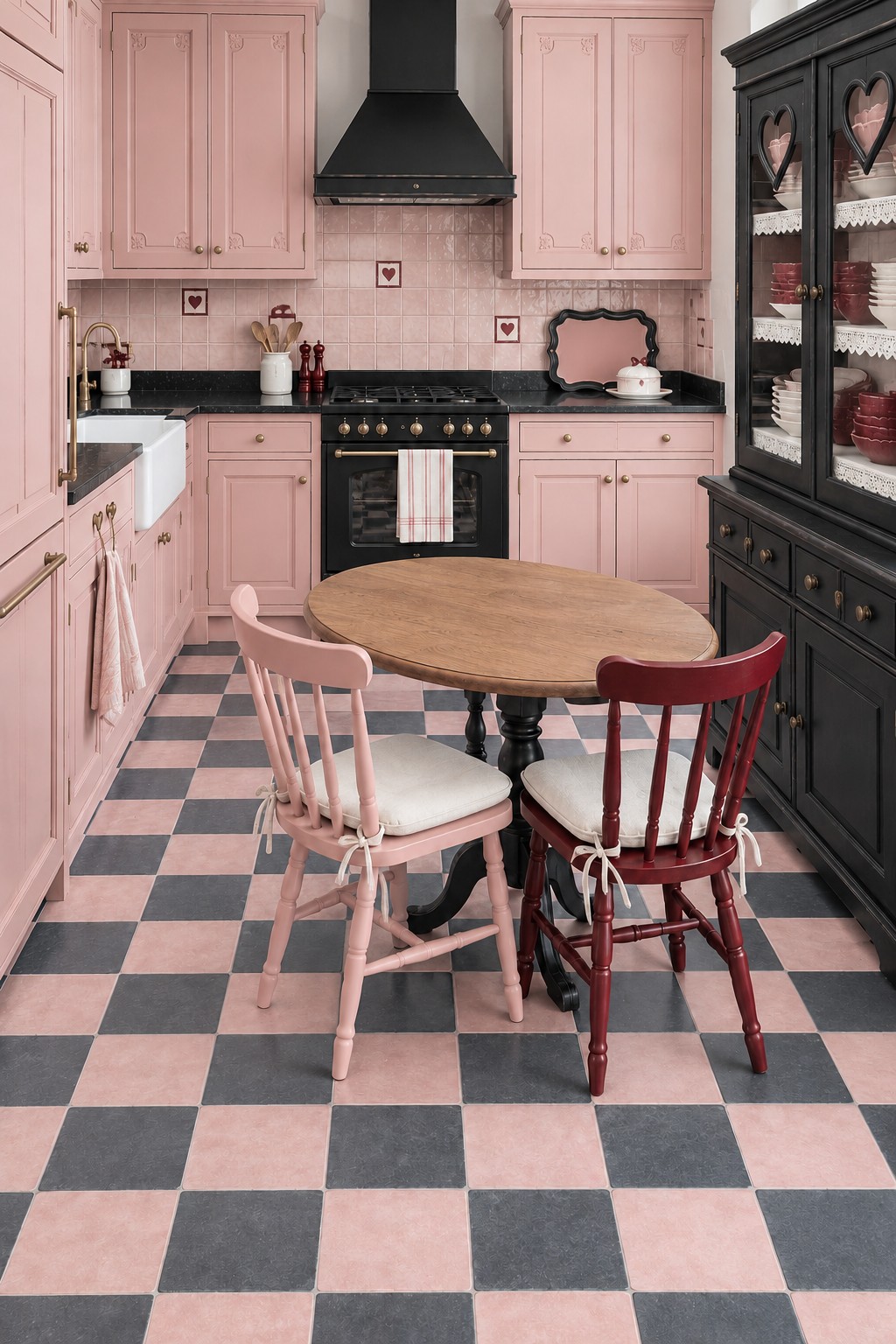
Blush pink cabinetry gains definition from a black range, hood, and china hutch. Small heart tiles keep the romantic detail focused, while the hutch repeats the shape in its upper doors. A natural wood table and two differently colored chairs introduce a collected quality, and the pink and charcoal floor checks connect the pale cupboards to the dark furniture.
Use black on a few substantial pieces so it has enough visual weight to balance the pink. A sound freestanding hutch can become the anchor of the scheme; our furniture painting ideas offer approaches to adapting existing pieces. Plan the dining area with the chairs pulled out, and keep the table outside the oven opening and main work route. Shallow heart details and washable seat cushions are easier to maintain than bulky fabric decoration.
15. Whale Motifs Around a Curved Blue Breakfast Nook
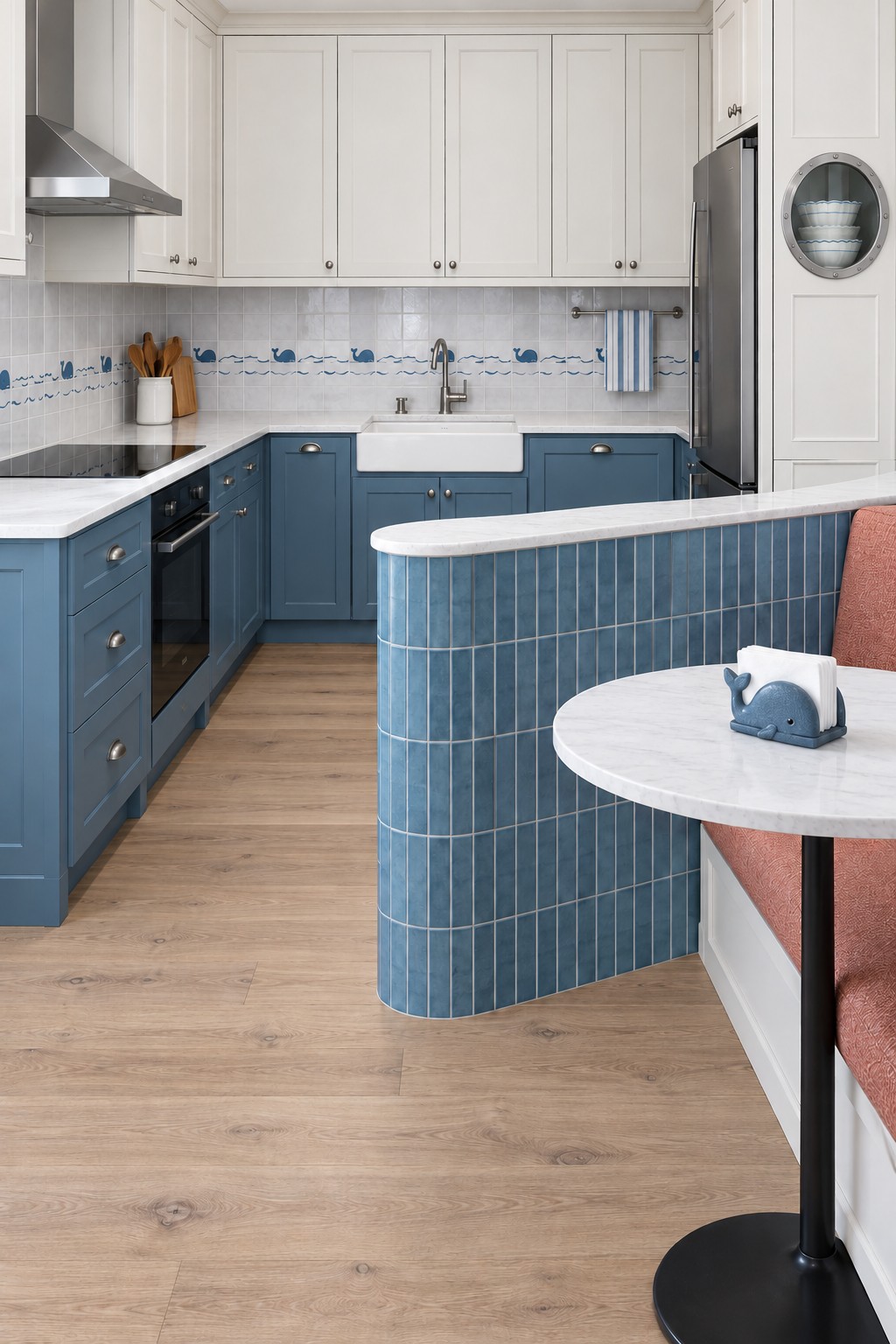
A slim line of blue whales supplies the decorative story, while a curved tiled partition gives the breakfast nook its shape. White cabinets and counters keep the room light, and the wood toned floor softens the blue. A whale napkin holder repeats the motif at table height without adding a second large feature.
Small rectangular tiles suit the curve of the partition when the substrate and installation are designed for that shape. For a simpler adaptation, use a straight breakfast screen or existing peninsula with blue tile facing. Choose a compact pedestal table so the base leaves room for feet, and fit the upholstered seat to the available nook. Keep the access opening comfortable and separate from the main preparation route. A whale border and one blue accessory can carry the same theme in a kitchen without built in seating.
16. Swan China Against Navy and Pale Pink
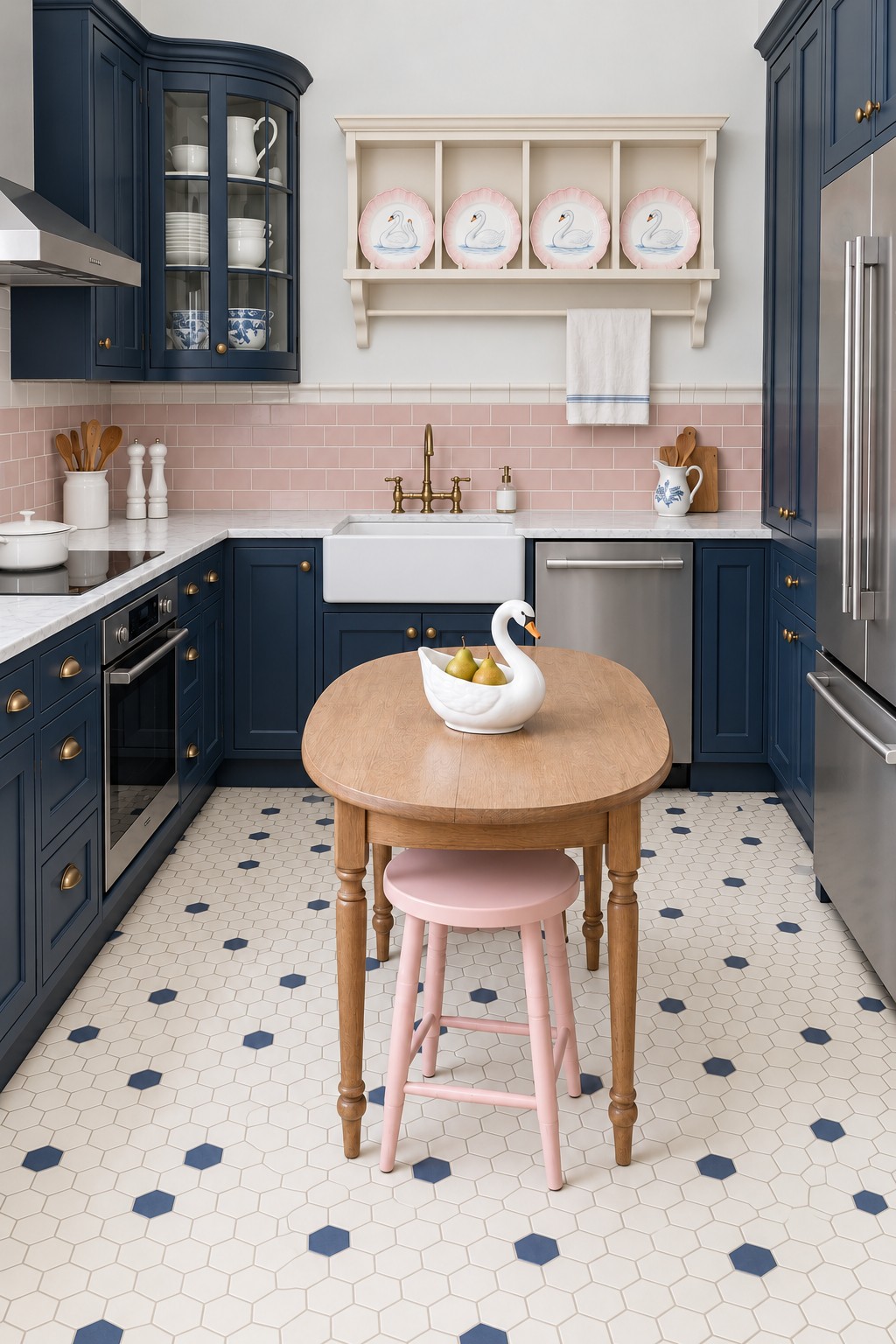
Deep navy cupboards give the pale pink backsplash and white swan ceramics a clear outline. A cream wall rack displays four matching plates above the sink, while a swan shaped bowl brings the motif onto the wooden table. The small pink stool and navy inserts in the white hexagonal floor repeat the palette without introducing another illustrated subject.
Use a plate rack with a proper ledge and retaining detail so the dishes are supported independently of the decorative dividers. Mount it for the combined rack and plate weight, allowing room to lift each plate out. Keep the tabletop arrangement small enough to remove easily. Before adding a table between fitted cabinets, check the dishwasher, oven, and refrigerator openings; position it elsewhere or choose a folding option if those doors cannot work freely. The navy, pink, and swan pairing also suits a single dresser display.
17. A Rose Covered Breakfast Table in Blue and Pink
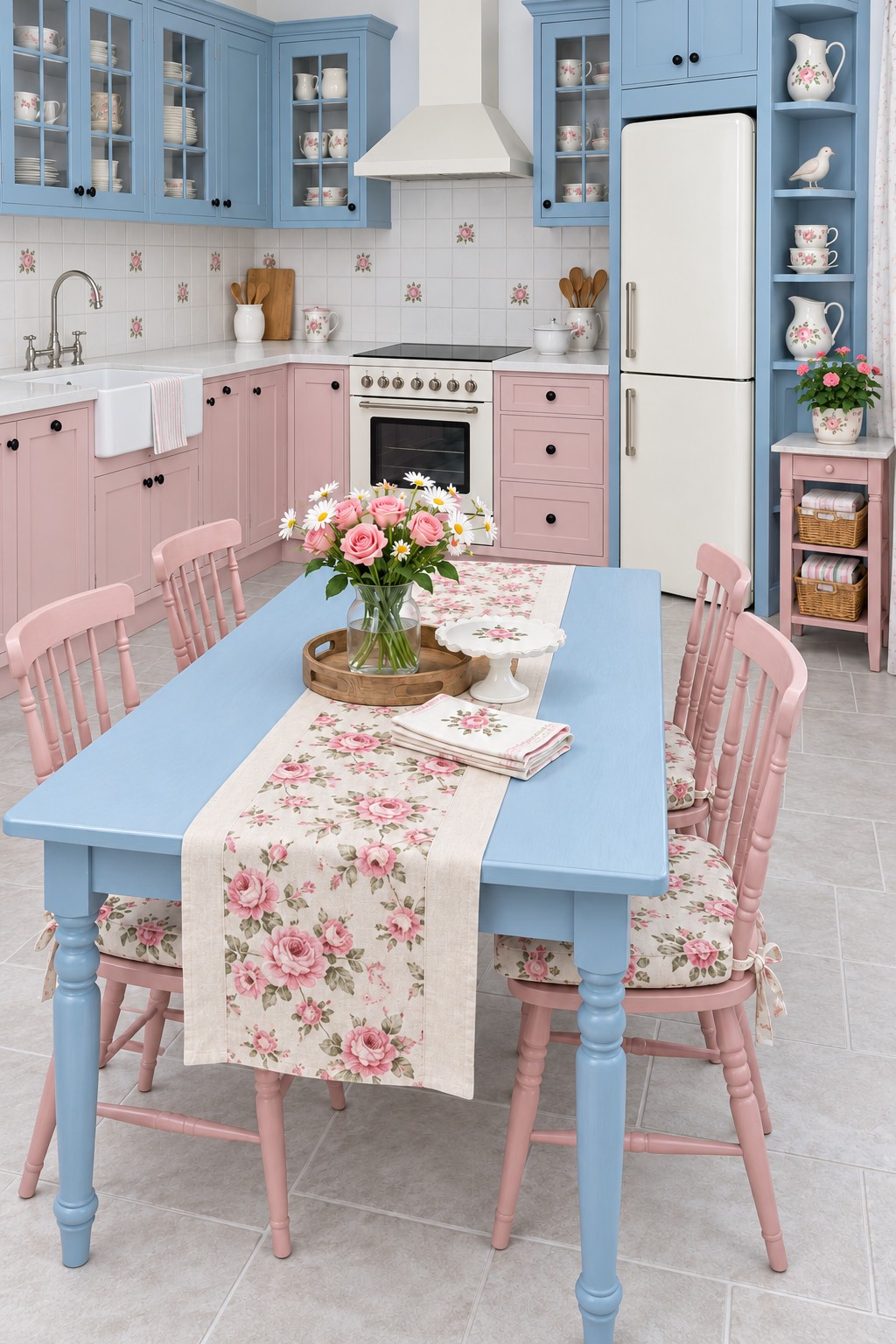
A blue painted table becomes the center of this pastel kitchen, with pink spindle chairs repeating the lower cabinet color. Rose prints appear in a narrow runner and seat cushions, while the upper cupboards display floral china. A bouquet on a tray links the real flowers to the printed ones without covering the whole tabletop.
Keep the tabletop largely plain so the floral runner has a clear background. Use removable cushion covers and secure their ties neatly behind the chairs. You can adapt the scheme with existing furniture by painting only the table base or chair frames in colors drawn from a favorite fabric. Leave enough space to pass behind occupied chairs and reach the kitchen cabinets. A low arrangement of flowers is easier to talk across and move aside when the table is needed for meals or other tasks.
18. Mint Cupboards with Rose China and Pink Gingham
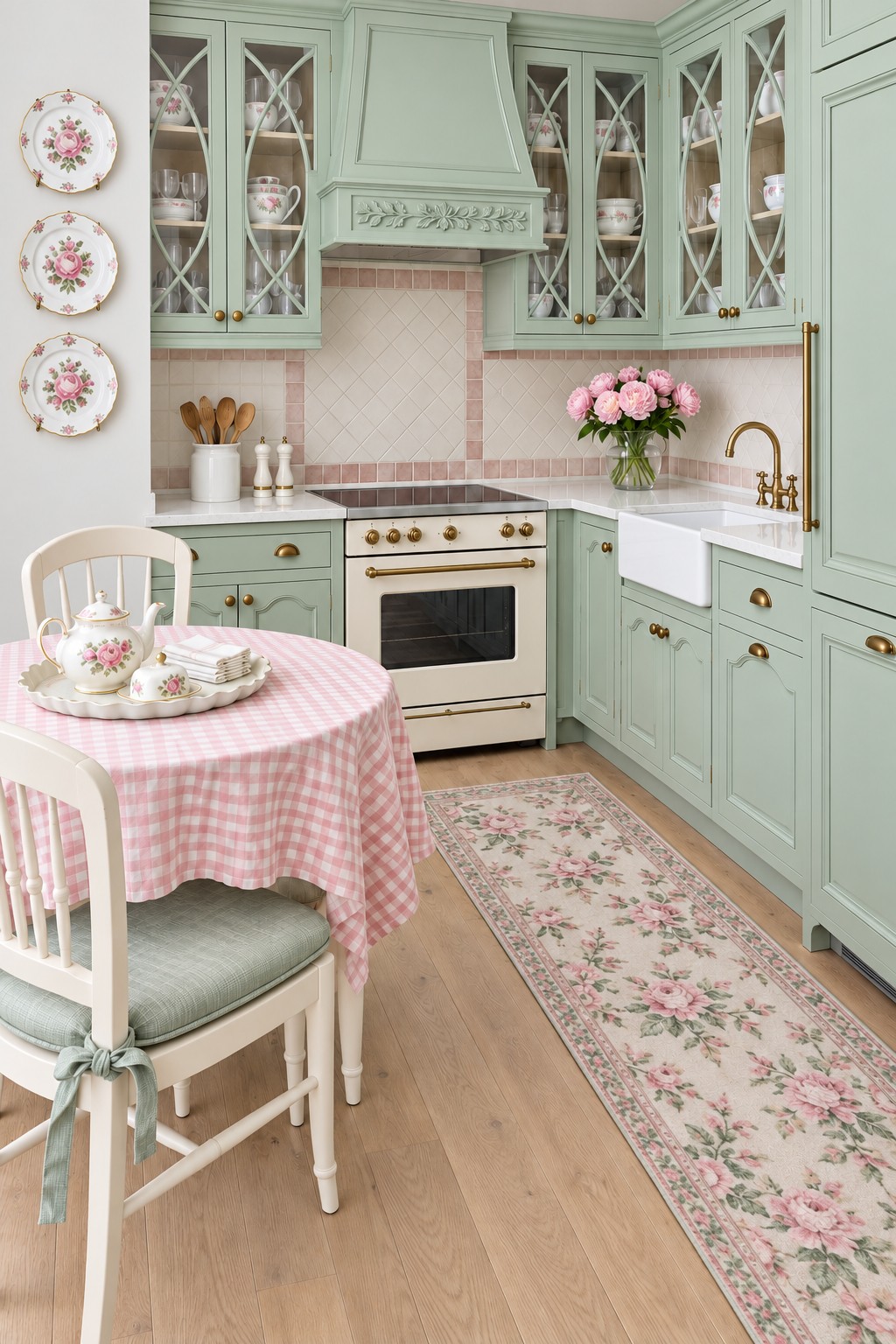
Mint green cupboards set a quiet background for pink roses and checks. Three floral plates create a vertical wall display, while the gingham tablecloth introduces a larger geometric pattern. Glass cabinet doors show coordinated china, and the long floral runner brings the rose palette onto the wood toned floor.
Choose one rose print to guide the pink shades, then let the checked fabric provide contrast through scale rather than extra color. Use plate hangers suited to the diameter and weight of each dish, with wall fixings selected for the surface. Keep the small dining table positioned clear of the cooking and sink approach. For a kitchen runner, choose a washable design with a suitable gripping backing, and check that its edges lie flat and do not catch beneath doors or chair legs.
19. A Lavender Island with a Botanical Cameo
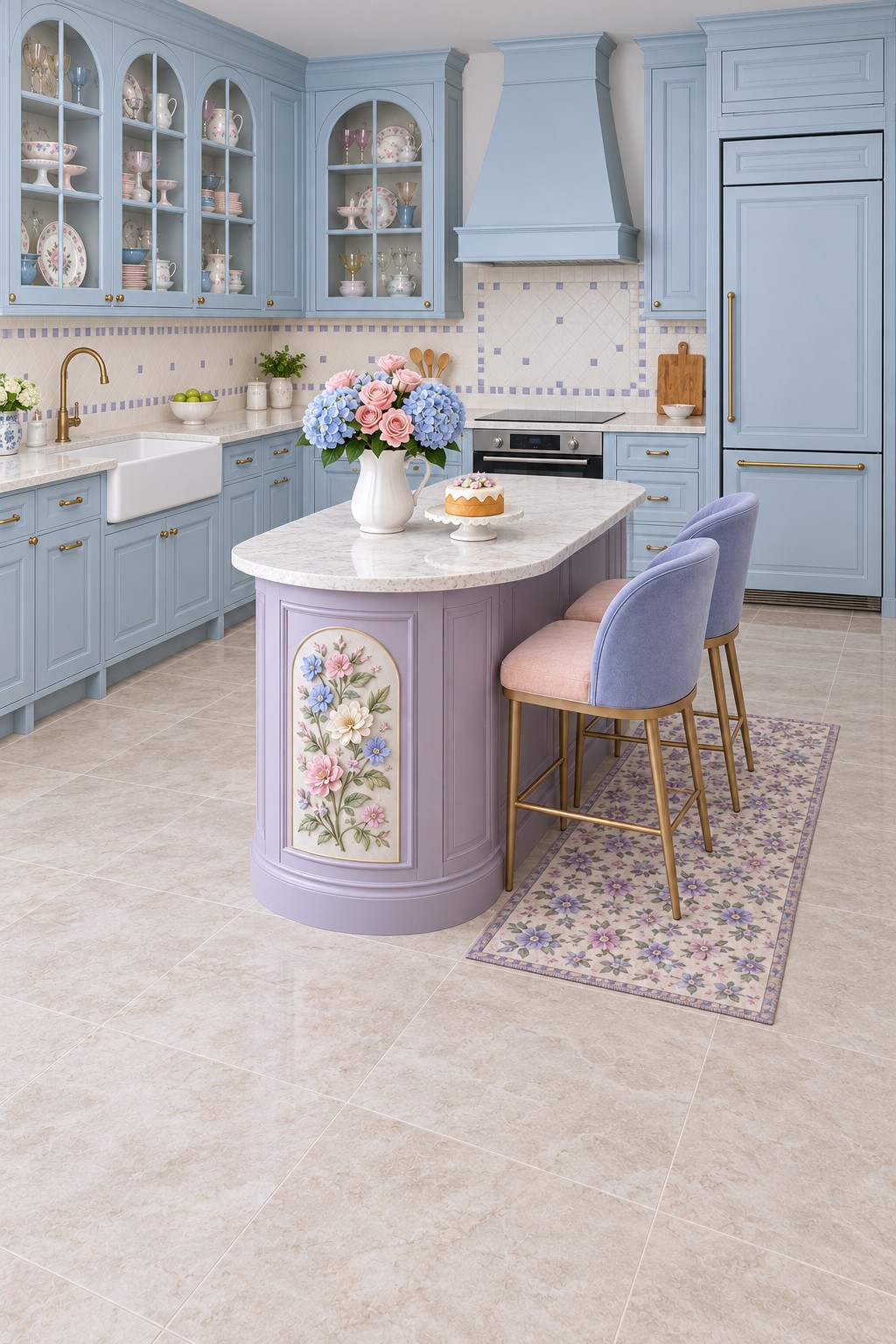
The lavender island introduces a second pastel beside the blue fitted cabinets, and its curved end becomes a place for a botanical cameo. Pale flowers and green leaves rise within the inset panel, while the light counter keeps the upper surface simple. Upholstered stools repeat the lilac and pink, and the floral runner makes the seating side feel connected to the rest of the room.
For a practical interpretation, use a professionally made decorative panel specified for the location, or translate the flowers into a flat painted design on a properly prepared end panel. Keep raised details away from knees, cleaning routes, and working cabinet gaps. Confirm the island overhang and stool height together, then measure circulation with people seated. A vase of pink roses and blue hydrangeas can echo the panel without adding more decoration to the worktop.
20. Peach and Sage Around a Country Serving Cabinet
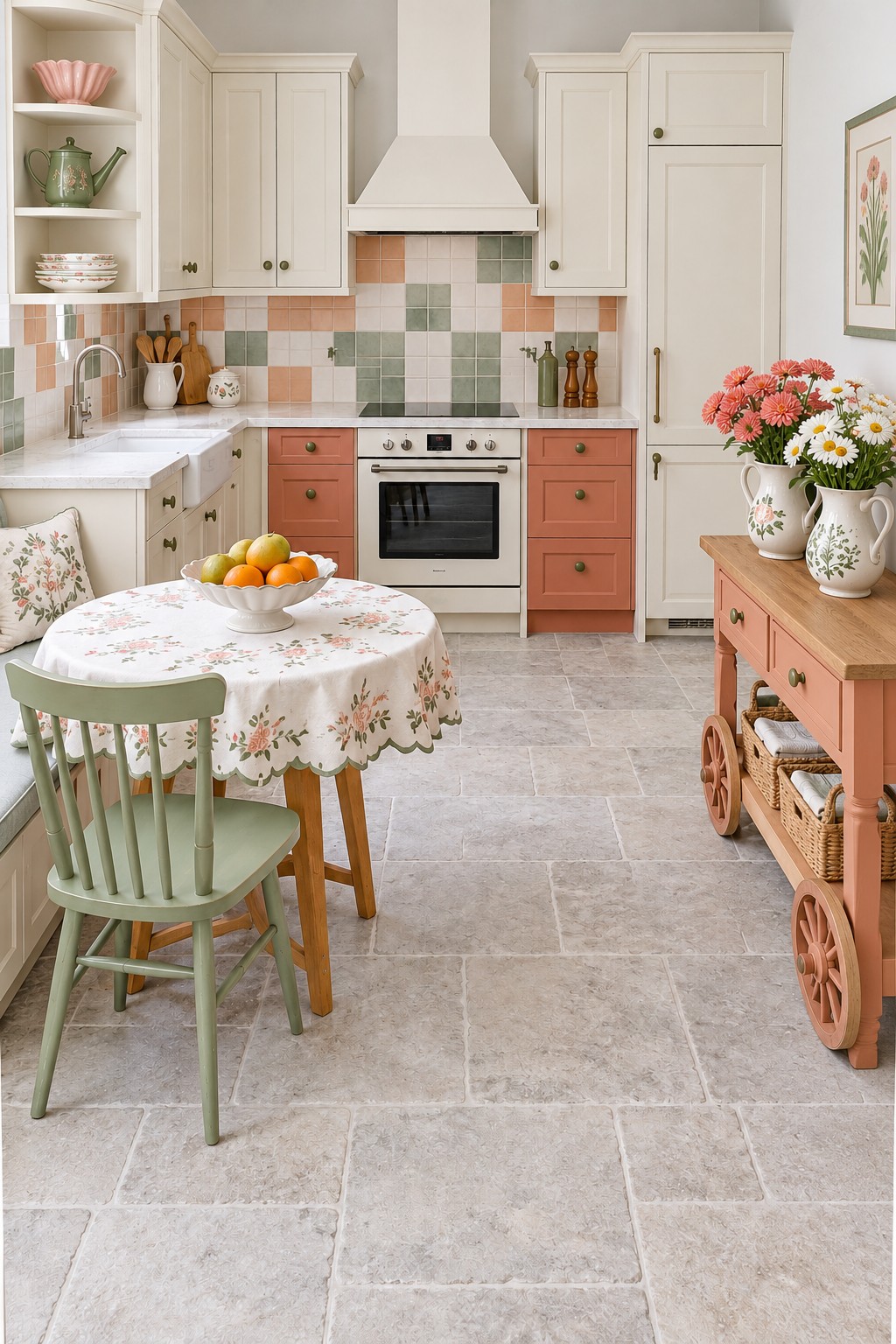
Peach, sage, and cream form a gentle patchwork across the backsplash, with peach drawer fronts repeating one part of the pattern. A wood topped serving cabinet introduces the same peach color on the opposite side. Its wagon style wheels add a playful furniture detail, while a floral tablecloth and green chair soften the cooking area with a country breakfast setting.
Use tiles with compatible sizes and finishes, arranging the color blocks before installation. The serving cabinet can hold baskets and folded linens while leaving the fitted counter available for food preparation. Choose a stable piece designed for its intended load; decorative wheels do not establish that a cabinet can safely roll. Keep flowers and pitchers on a tray that can be lifted away, and check circulation between the breakfast table, serving furniture, and oven before deciding on their dimensions.
21. A Blue Pantry Alcove with Scallops and Ribboned Baskets
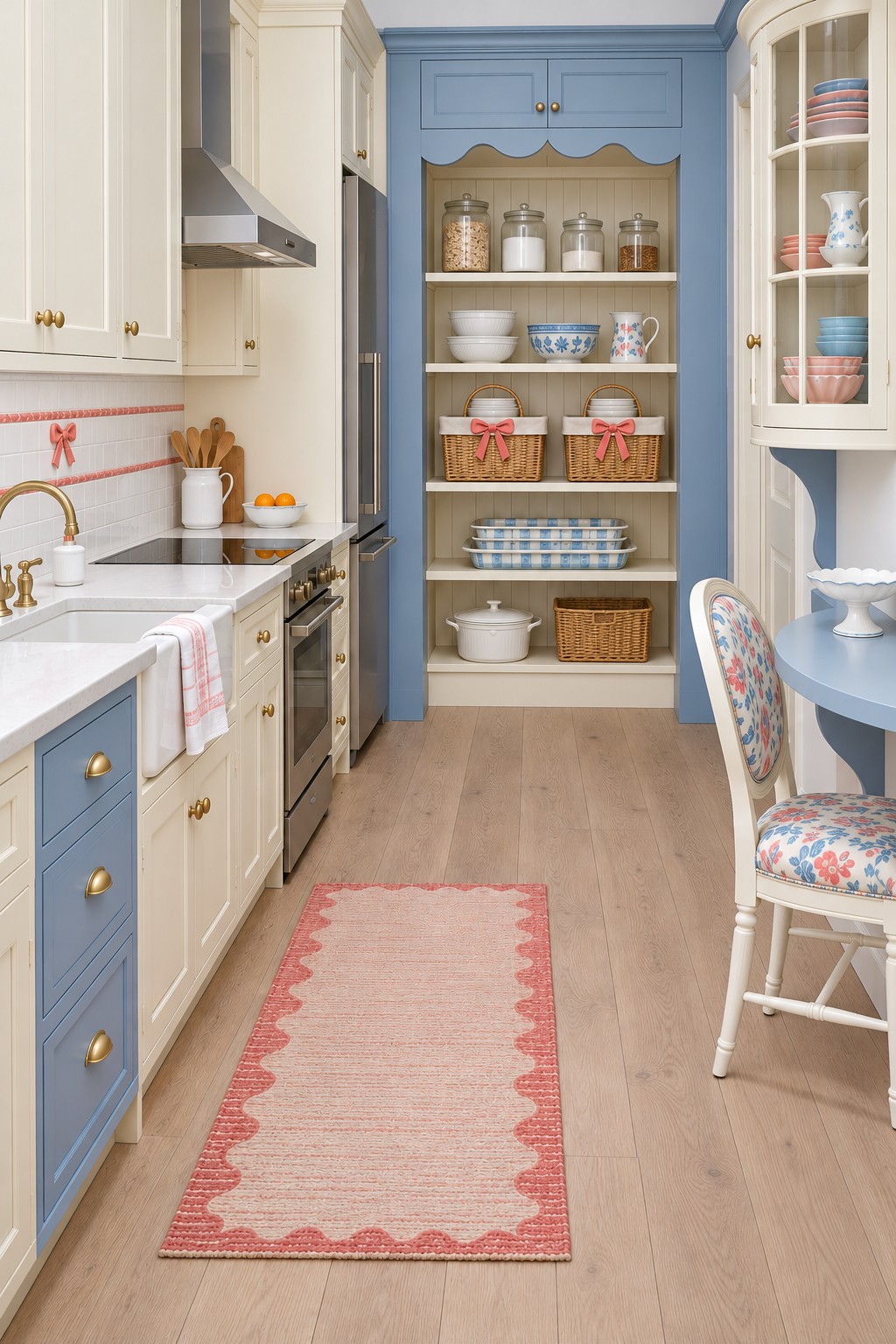
A blue framed pantry alcove gives the far end of this cream kitchen a decorative destination. Scalloped trim softens the opening, while jars, bowls, and wicker baskets form a useful shelf arrangement. Pink ribbons on the baskets connect with the runner and small fabric details without changing the practical shape of the storage.
Plan shelf spacing around your actual jars and dishes, keeping frequently used items within comfortable reach and heavier pieces lower down. Store food in suitable sealed containers, using baskets for packaged items or clean linens. Short removable ribbons are easier to clean and keep clear of handles. Our upcycled storage ideas offer further ways to adapt containers you already own. Fit any decorative trim to the fixed opening rather than across moving cabinet parts, and preserve the pantry's full usable width.
22. Sunflowers and Yellow Checks in a Green Kitchen
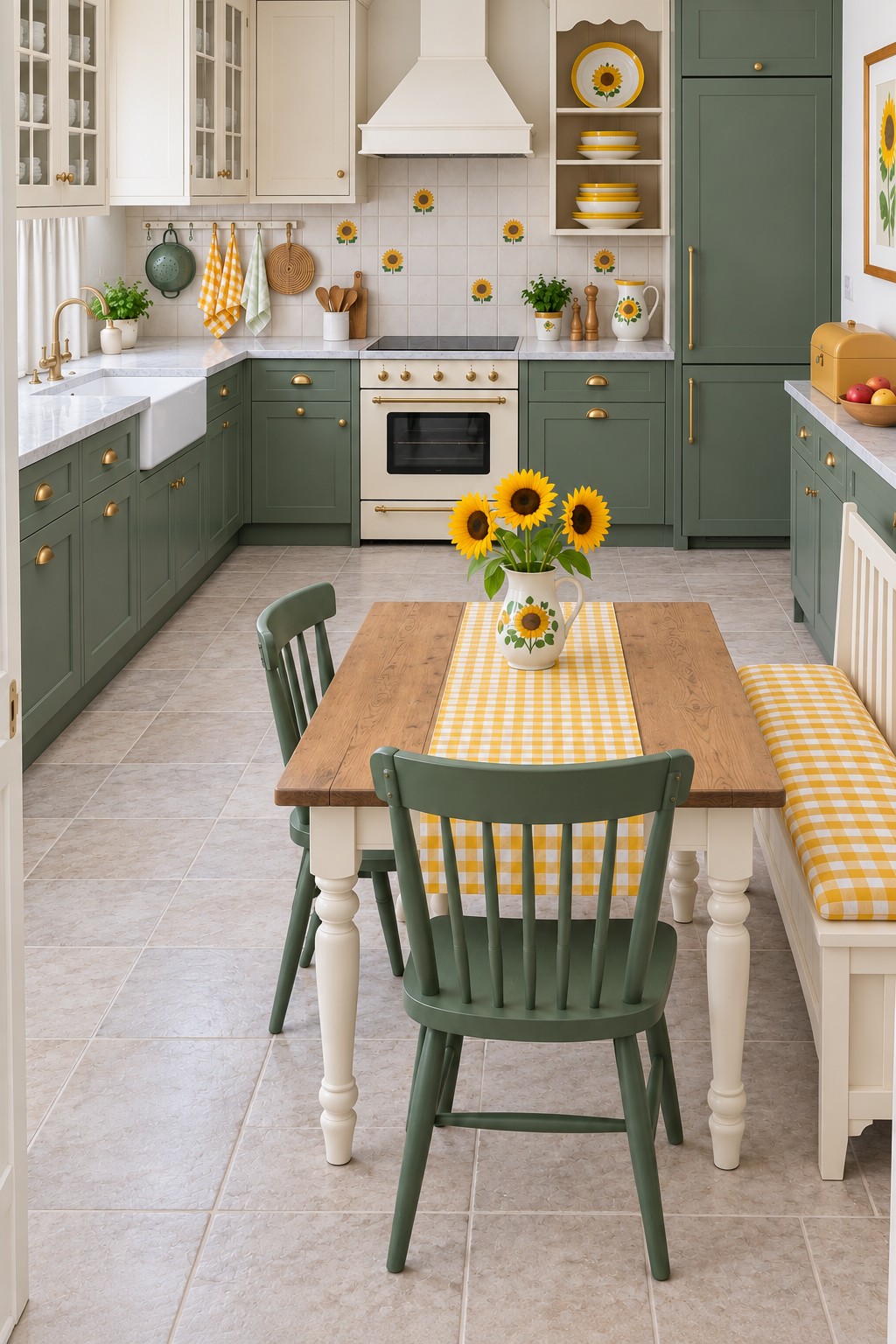
Sunflower yellow stands out warmly against deep green cupboards, with cream upper cabinets keeping the room from becoming too dark. Small sunflower tiles punctuate the backsplash, and a yellow checked runner repeats the color on the wood table. Green chairs and a white bench with a matching cushion make the dining area feel part of the fitted kitchen.
Use the flower's yellow petals and dark center to guide the accessories, then let the green cabinets supply the foliage connection. A sunflower pitcher or a simple vase of stems is enough for the table. Choose a removable bench cushion cover and check the available seating depth before ordering padding. Keep the table clear of cabinet door swings and leave space to stand at the sink. For a smaller change, begin with checked linens and sunflower ceramics against existing neutral cabinets.
23. A Pansy Breakfast Nook in Sage and Lavender
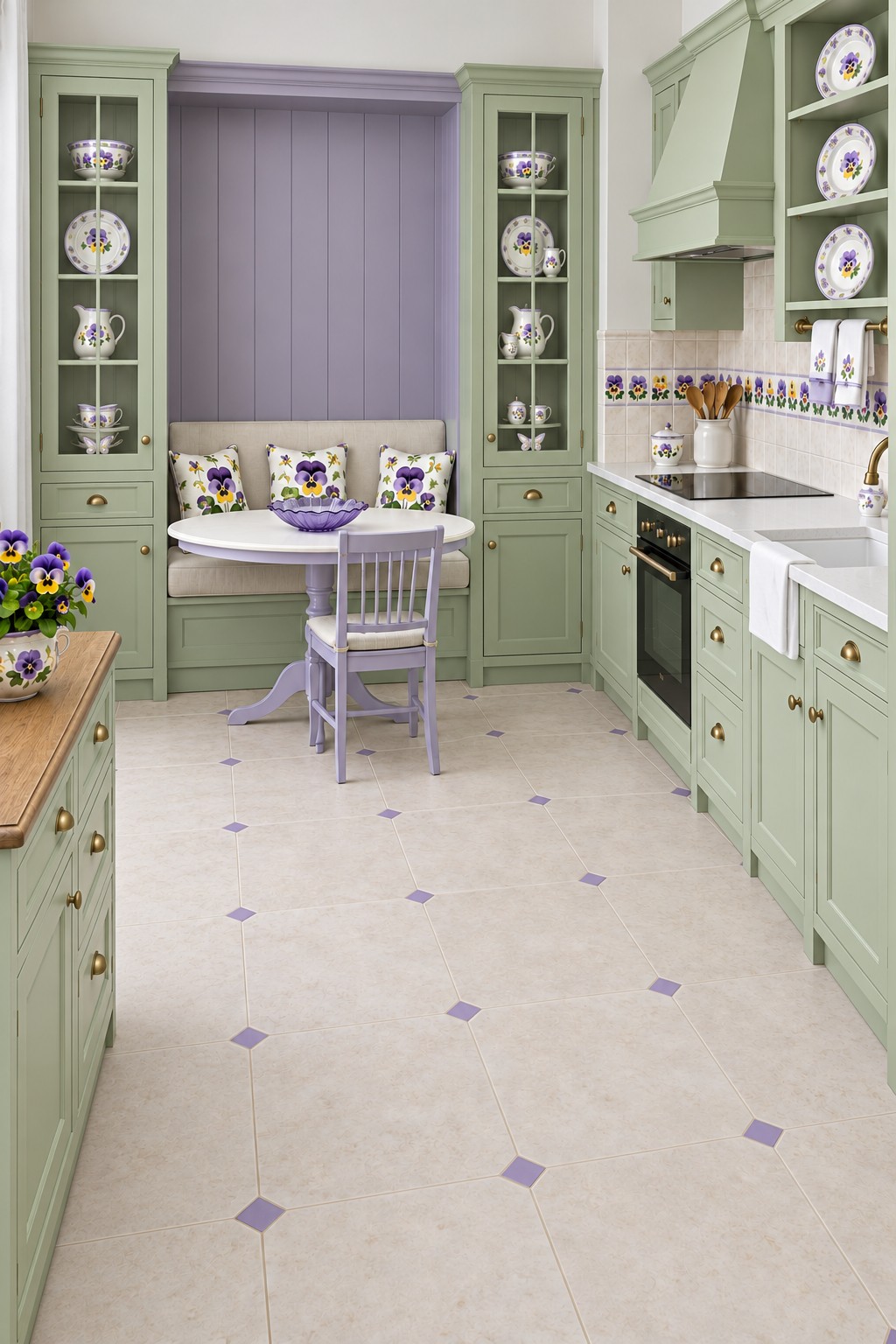
Pansies connect the sage cabinetry and lavender breakfast nook through purple petals, yellow centers, and green leaves. The paneled recess gives the seating area a distinct color field, framed by tall glass display cabinets. A small pedestal table and lavender chair make the nook feel like a quiet place for tea, while a narrow pansy tile border carries the flowers back into the working kitchen.
Choose a few pansy patterned cushions or pieces of china before selecting the lavender paint. Keep the fixed seat upholstery plain so the floral cushions remain the focus. Measure the table base against the seat and allow room to slide in comfortably. Leave the surrounding display doors accessible, and arrange plates on suitable stands or retaining shelves. A plain wall recess with a painted chair can suggest the same mood when fitted seating is beyond the scope of your refresh.
24. A Raspberry Breakfast Booth with Cream Stripes
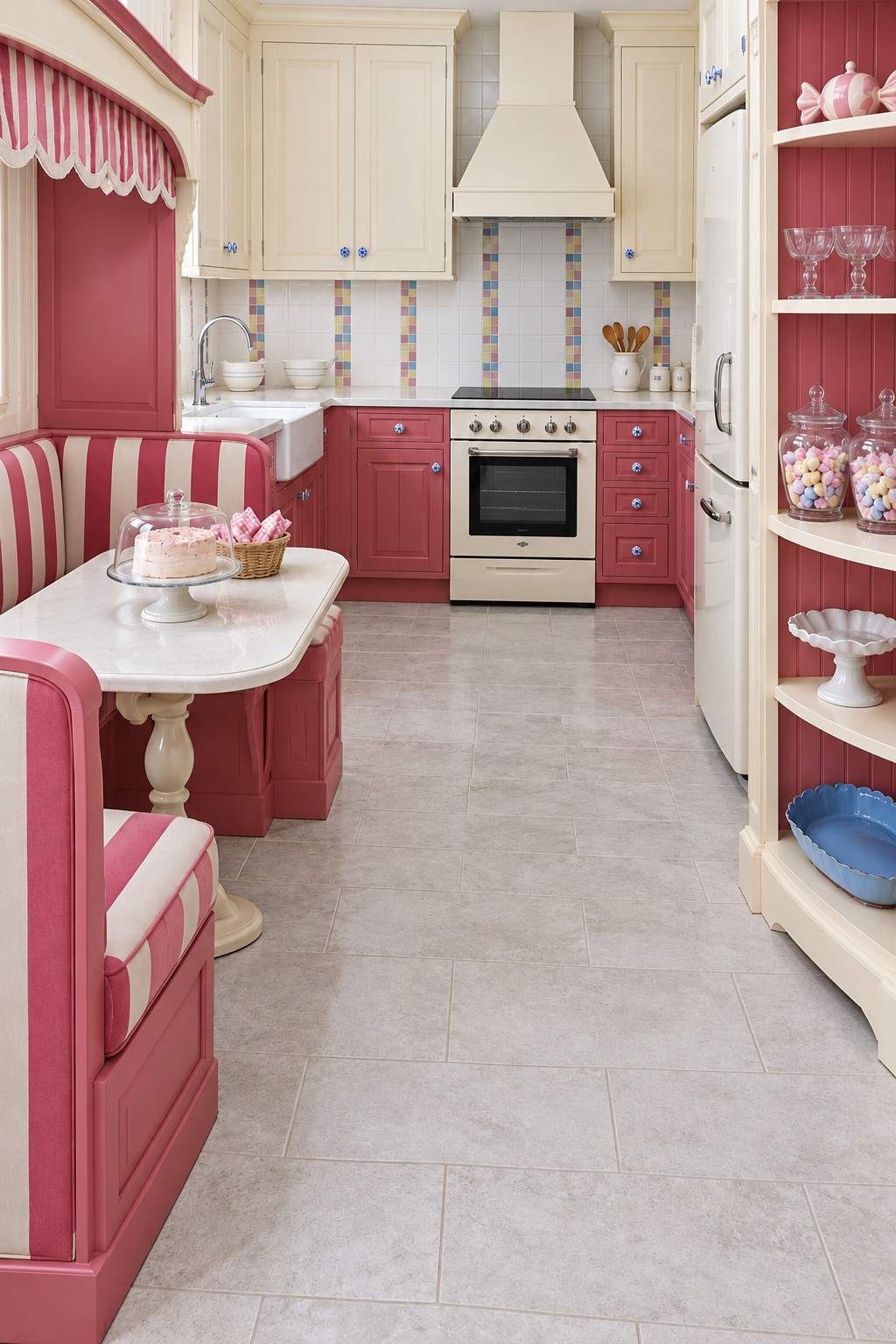
Raspberry pink gives this kitchen a lively cafe character, especially where the booth upholstery alternates pink and cream stripes. Cream cupboards keep the upper half light, and slim bands of colored backsplash tiles echo the room's smaller accents. A pink backed display cabinet turns glassware and cake stands into part of the decoration, while the compact table gives the booth a clear everyday purpose.
Choose upholstery rated for frequent seating and easy cleaning, with removable cushions where the booth design allows. Match the table height and edge position to the finished seat rather than to the bare bench frame. Keep the entry to the booth open, with room to sit down without squeezing past the table base. A short decorative valance can repeat the pink near a window when it remains well away from the cooking zone.
25. Dusty Pink Florals with a Plum Dresser
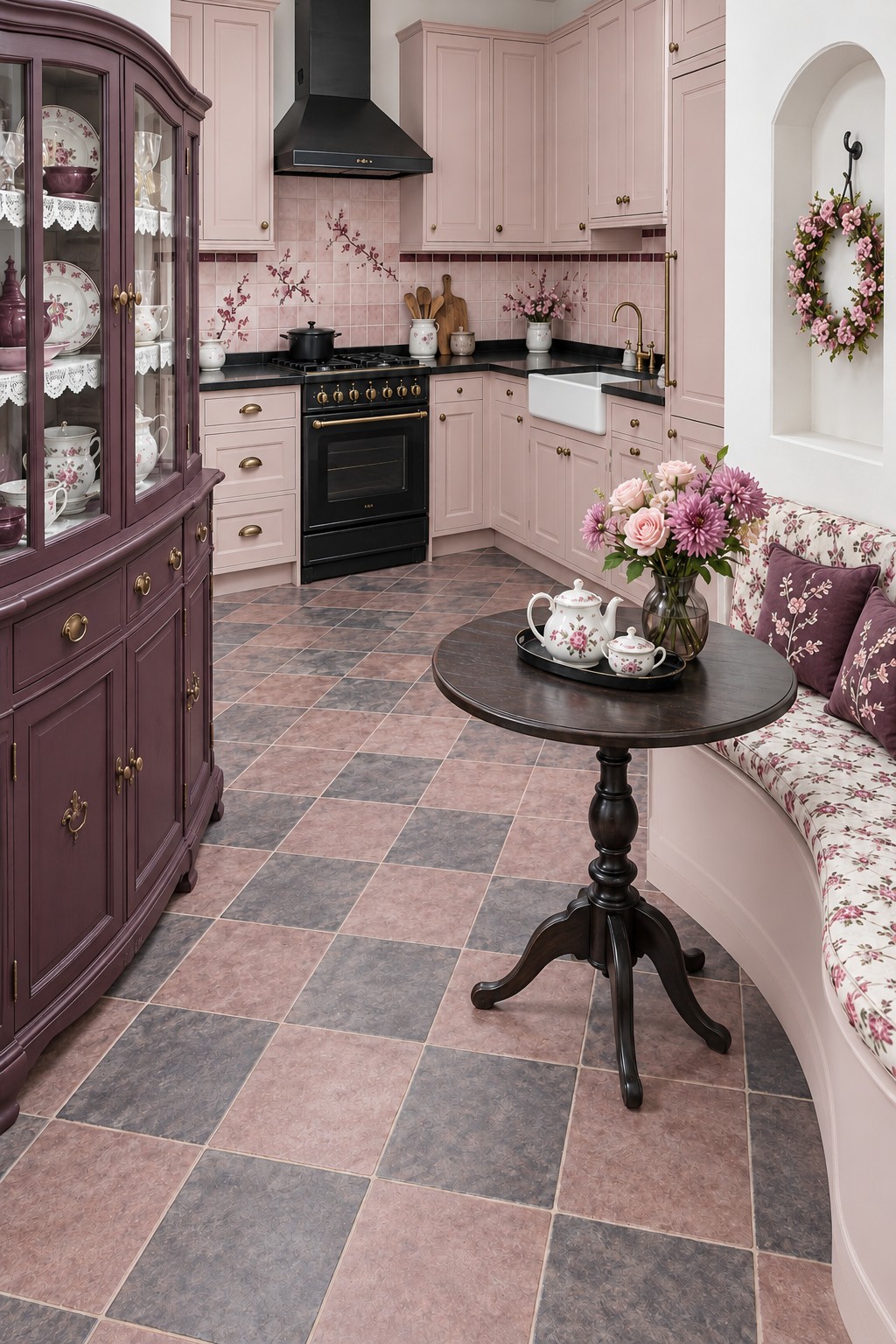
Dusty pink cupboards and a deep plum dresser give romantic kitchen decor a richer palette. Floral branches spread across the pale backsplash, while the curved breakfast bench repeats the botanical theme in upholstery. A dark pedestal table relates to the black range and hood, and the arched wall niche gives a small wreath its own defined place.
Keep the darker colors concentrated in the dresser, table, and a few cushions so the pink cabinetry remains distinct. Select floral fabric with enough pale background to avoid making the curved seat visually heavy. A flat botanical tile design is easier to keep clear around the counter than projecting ornaments. Leave the tea tray small enough to lift, and position the table so the bench remains easy to enter. You can borrow this mood with a plum painted dresser and floral seat cushions before considering a wider kitchen renovation.
Decide What to Change First
Choose one inspiration and make a short shopping list around its most distinctive detail. For a strawberry kitchen, that might mean gingham fabric, a red canister, and green knobs. For a swan scheme, it could be a plate display and a pale pink textile against existing dark cabinets. Try the movable pieces in place before ordering permanent finishes. Then check what the kitchen still needs for everyday use: accessible storage, a clear preparation surface, comfortable seating, or better light over the counter. Let that need guide the next change.

Leave a Reply