
Books within reach, a place to build, and storage that children understand can make a room easier to enjoy. These 21 kids room ideas bring reading, pretend play, and creative work into everyday spaces, using themed furniture and practical arrangements that can be adapted to the child and the room.
Begin with the activity that needs a better home, then measure its furniture and the space needed to use it. Keep everyday books and toys at a reachable height, with heavier belongings low and tall furniture secured according to its instructions. Pictures on bins can make cleanup understandable before a child reads. Simple changes include sorting supplies, choosing washable textiles, and painting a themed backdrop. Select raised beds, overhead frames, and substantial custom furniture designed for children's use, and follow their installation and restraint requirements.
Table of Contents
- 1. A House Outlined Bench with Books Below
- 2. A Cubby Wall with a Mix of Open and Covered Storage
- 3. Cloud Accents Above Simple Book Shelves
- 4. Divided Toy Storage Beneath a Daybed
- 5. A Puppet Stage Backdrop with Toy Shelves Below
- 6. A Raised Bed with Drawer Fronts in the Steps
- 7. An Activity Table with Open Recessed Supply Trays
- 8. A Building Table That Keeps Projects in Place
- 9. A House Shaped Cabinet for Plush Toys
- 10. A Narrow Book Tower with Separate Shelf Boxes
- 11. A Triangular Camping Retreat with a Floor Cushion
- 12. A Train Table with Deep Storage Compartments
- 13. A House Backdrop Around a Low Storage Bed
- 14. An Underwater Display Wall with a Submarine Feature
- 15. A Pretend Animal Care Station Beneath a Tree
- 16. A Pirate Loft with a Study Corner Underneath
- 17. A Woodland Book Wall Above a Floor Reading Mat
- 18. A Textured Space Console for Pretend Missions
- 19. A Cottage Framed Craft Desk with Side Drawers
- 20. A Crown Topped Accessory Station with a Heart Mirror
- 21. A Tall Barn Style Cabinet for a Toy Collection
1. A House Outlined Bench with Books Below
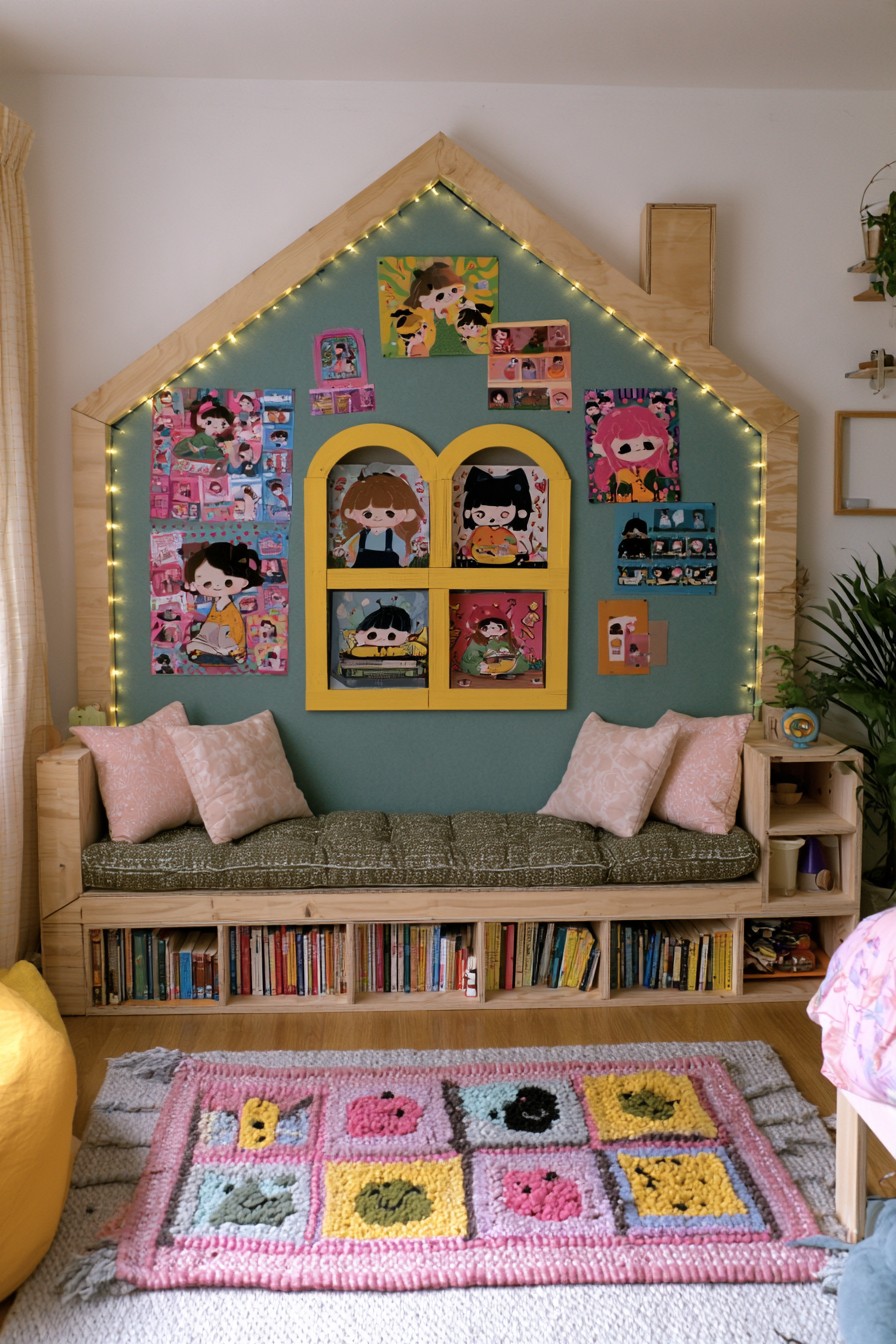
A peaked timber outline gives this reading bench the identity of a small house. Its sage backing includes a yellow pretend window, while pink cushions soften the long seat. Books fill the compartments beneath, with a narrow shelf unit beside the bench. The arrangement places the reading material close to the seat without needing another large bookcase.
Choose a bench at a height the child can use comfortably and a cushion cover that can be removed for washing. Leave room in each compartment to take out a book without tugging at a tightly packed row. A painted roofline above an ordinary bench can suggest the theme more simply. Keep decorative lighting and its cables out of reach, and secure any substantial framing appropriately.
2. A Cubby Wall with a Mix of Open and Covered Storage
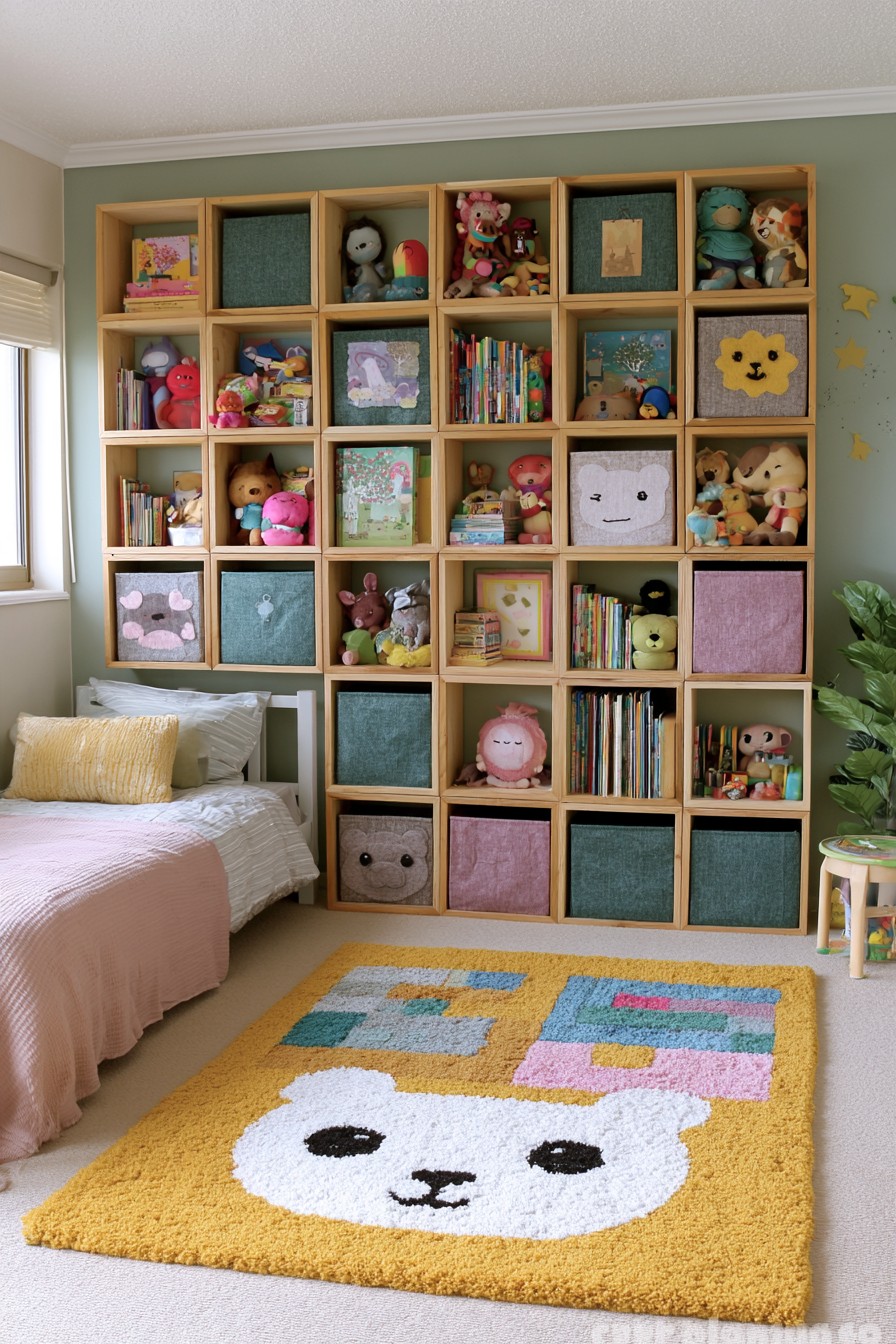
Repeating timber cubbies turn most of this sage wall into storage. Pastel fabric bins alternate with books, framed pieces, and plush toys, so the unit has both concealed compartments and visible displays. Yellow, pink, and blue in the rug echo the storage colors below. The bed sits beside the wall rather than in front of the compartments.
Sort by activity before deciding which cubbies need bins. A collection of vehicles may work in one container, while larger models need an open space. Keep regularly used items in the lowest reachable rows and avoid tempting toys at the top. The filled unit needs appropriate anchoring and shelf capacity. Picture labels on a few bins are more useful than a complicated system that requires an adult to explain every compartment.
3. Cloud Accents Above Simple Book Shelves
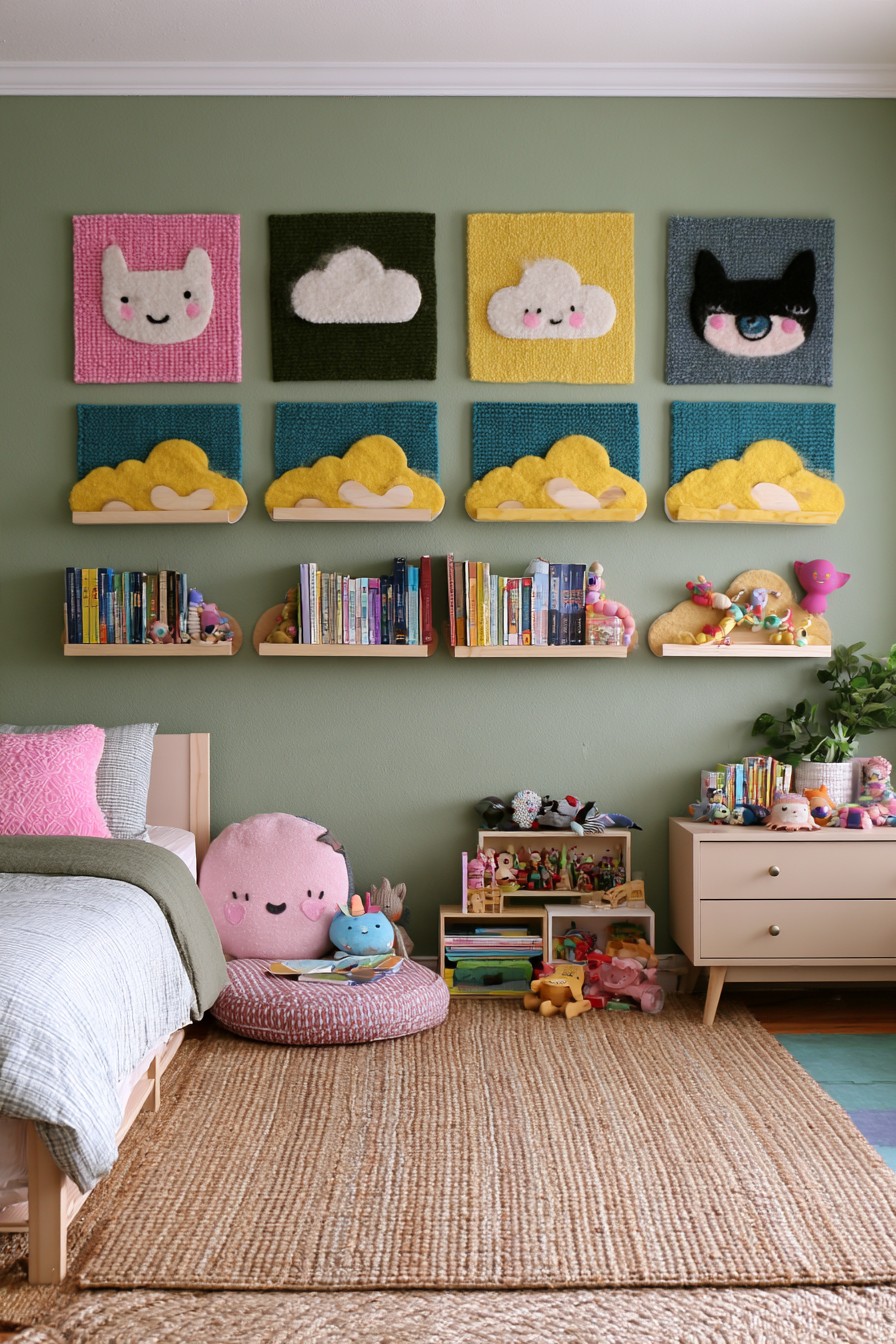
The cloud forms are decorative accents above the shelves in this room. Below them, straight timber ledges hold books and small toys, with another low organizer beside the bed. Pink, yellow, blue, and green wall panels introduce color while the sage background keeps the separate pieces connected. A plain natural toned rug leaves the wall display prominent.
Keep the distinction between decoration and storage when adapting this layout. Choose shelves deep enough to support the intended books, with secure fixings suited to the wall and load. Put the titles used most often on a lower accessible shelf or in the floor level organizer. Leave space between book groups so children can remove and return them without knocking over nearby toys.
4. Divided Toy Storage Beneath a Daybed
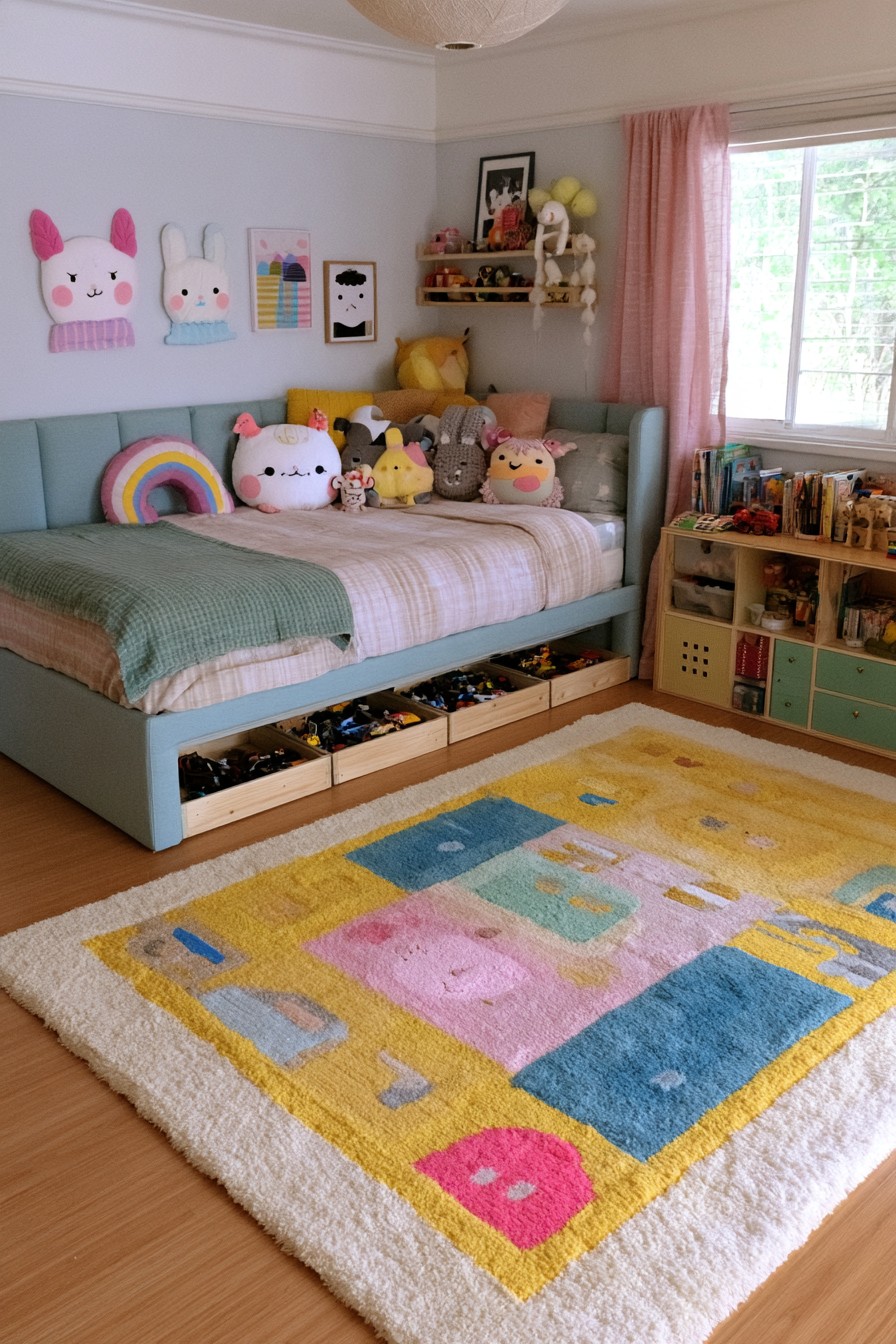
Shallow compartments beneath this blue daybed hold a collection of small toys in separate groups. Storage beside the window adds books and further compartments without occupying the central rug. The daybed's upholstered back makes it useful for sitting as well as sleeping, while yellow and pink accents repeat across the bedding and floor.
Measure the space beneath your own bed before choosing trays or drawers. Divide small vehicles or figures into categories that make sense to the child, and keep each tray light enough to handle. Allow room to pull storage out fully without catching the rug. A purpose made underbed container is a straightforward adaptation; wheels, stops, and handles should suit the floor and the child's use.
5. A Puppet Stage Backdrop with Toy Shelves Below
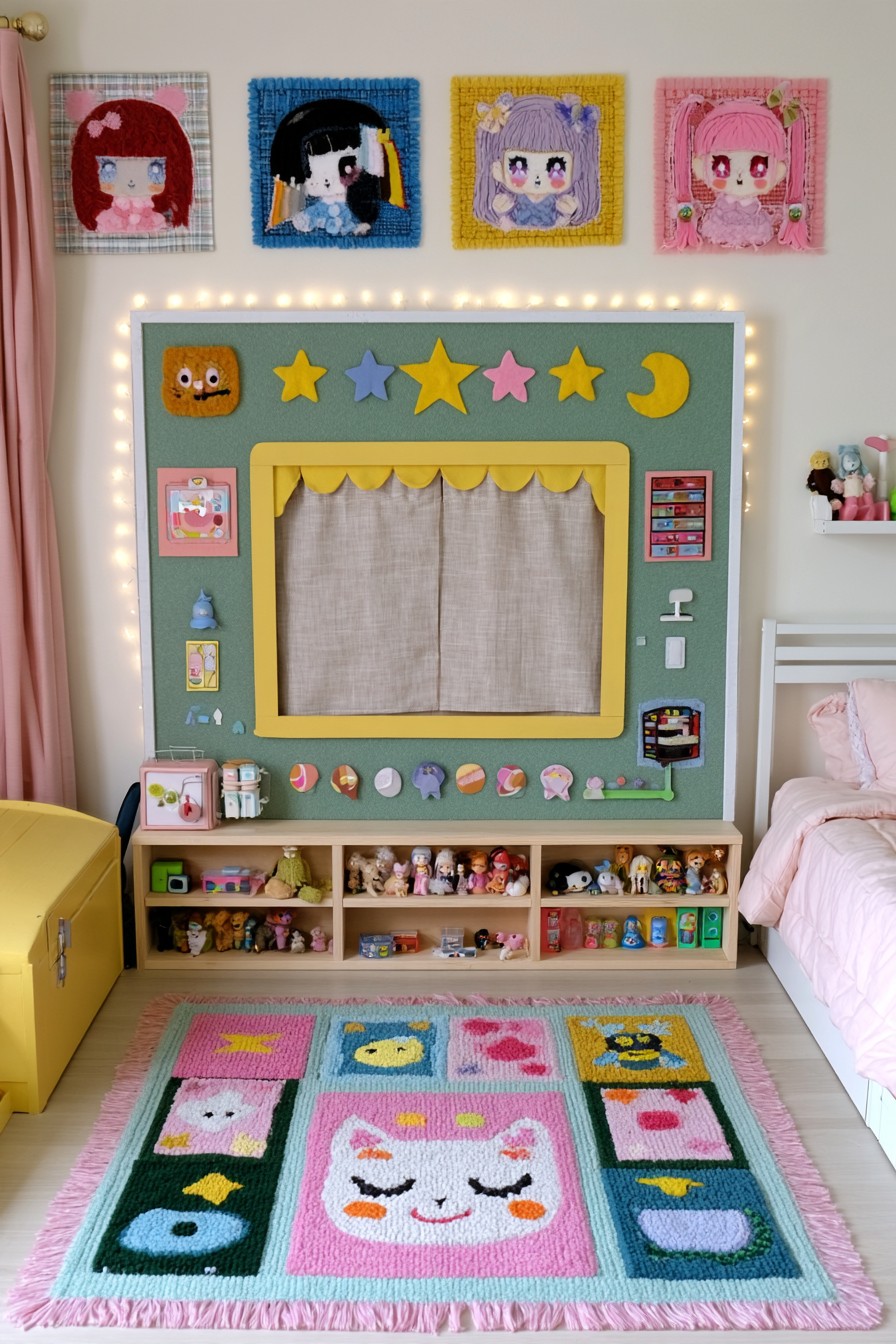
A yellow framed opening and pale curtain suggest a puppet stage in this sage panel. Stars and a crescent moon decorate the upper edge, while open shelves below collect figures and play props. The wall pictures and character rug extend the storytelling theme into the room. Its strongest practical feature is the clear place to return the characters after play.
If you want a functioning theatre, choose a design with room for the puppeteer and secure support in its play position. The illustrated panel alone does not show how a child would reach behind the curtain. A small tabletop theatre can supply the same activity with less space. Use short curtains without loose ties, and keep a manageable set of puppets in a nearby open bin.
6. A Raised Bed with Drawer Fronts in the Steps
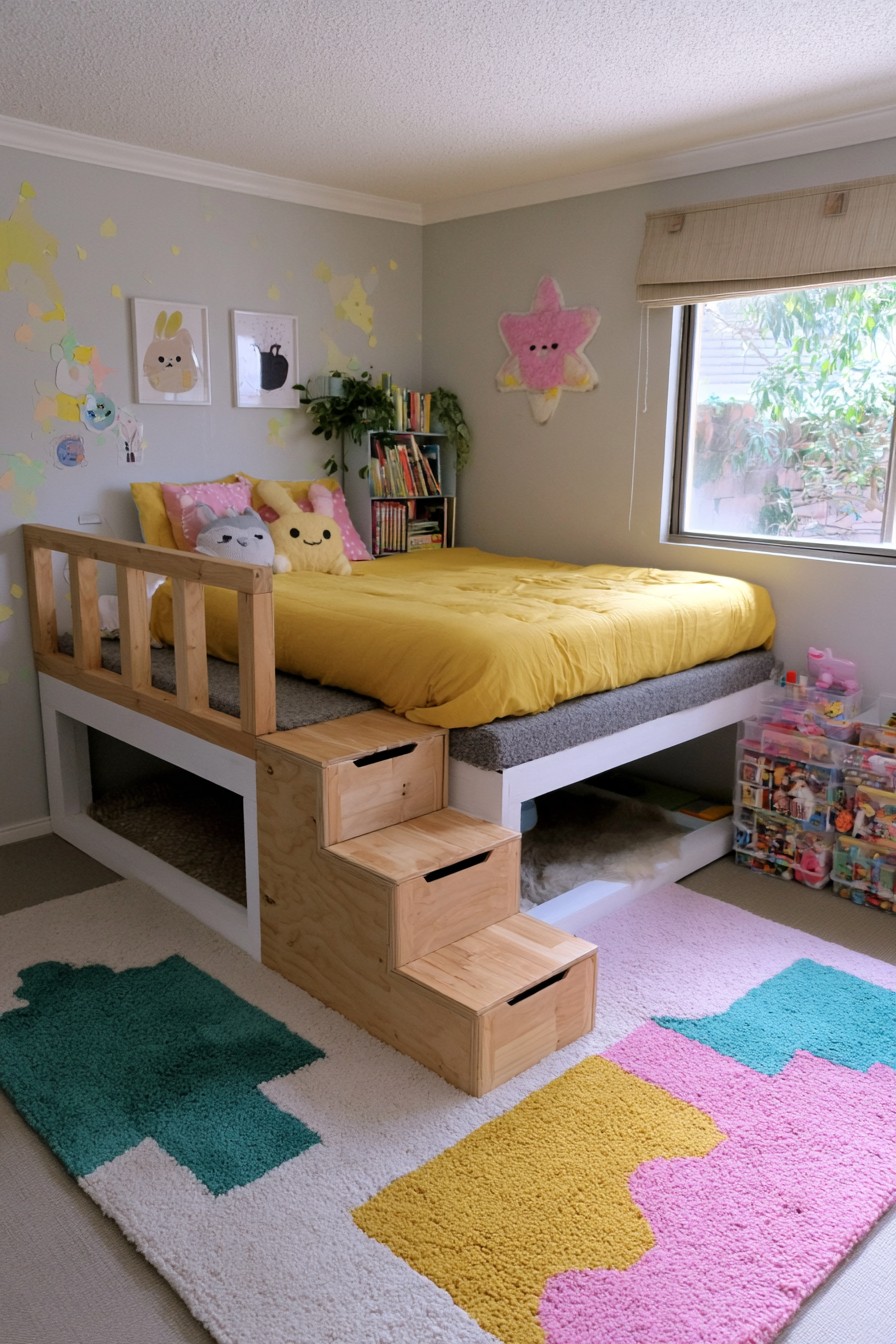
Three timber steps rise beside a bed dressed in yellow, with drawer fronts visible in the risers. The open space beneath the bed provides another zone within the same footprint. Pale walls, star details, and a colorful geometric rug create an adventure mood without a heavily themed enclosure. The elevated mattress makes access and edge protection central to the design.
Choose a complete bed system designed for the intended user. Check its instructions for the mattress, edge protection, and access arrangement. Step drawers need to close fully so they do not obstruct the route at night. Follow the assembly and load instructions rather than creating stairs from independent storage boxes. If elevated access is unsuitable, repeat the yellow palette around a low bed and use separate reachable drawers.
7. An Activity Table with Open Recessed Supply Trays
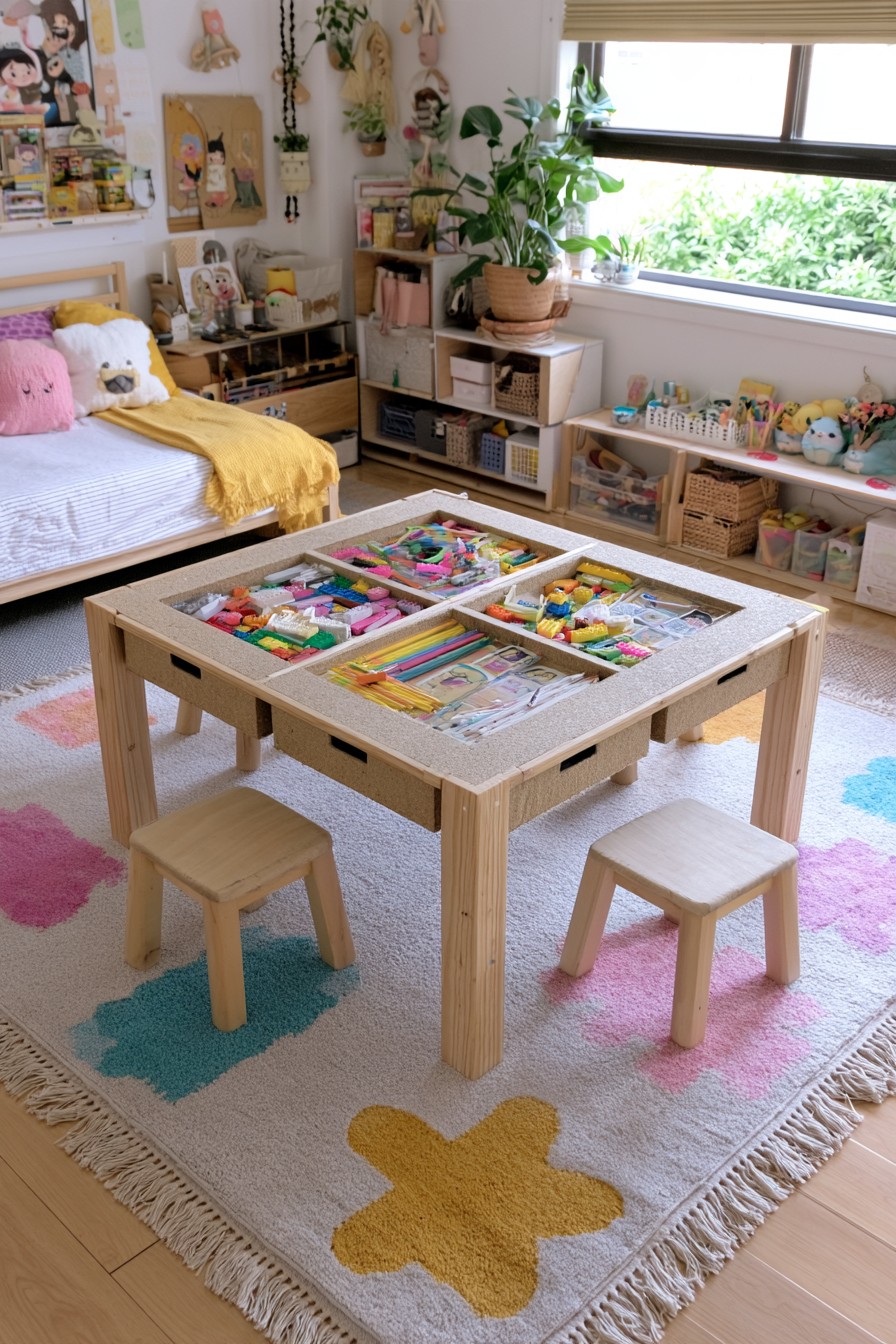
Four recessed trays occupy much of this timber tabletop, putting pens, small supplies, and assorted pieces in view. Two stools allow children to work alongside one another, and low storage around the room supports the central table. The compartments are open in the image, so this is a sorting surface rather than a clear writing desk.
Plan the table around the activity it must support. Drawing needs a continuous flat area; removable trays on an ordinary table can leave that space available when supplies are put away. Choose labeled materials intended for the child's age, and keep tools or products requiring supervision separately. Give each user enough legroom, with room to move a stool without striking the table or blocking access to the bed. To give the learning corner a practical purpose, choose an activity from these preschool alphabet activities and store its materials within the child's reach.
8. A Building Table That Keeps Projects in Place
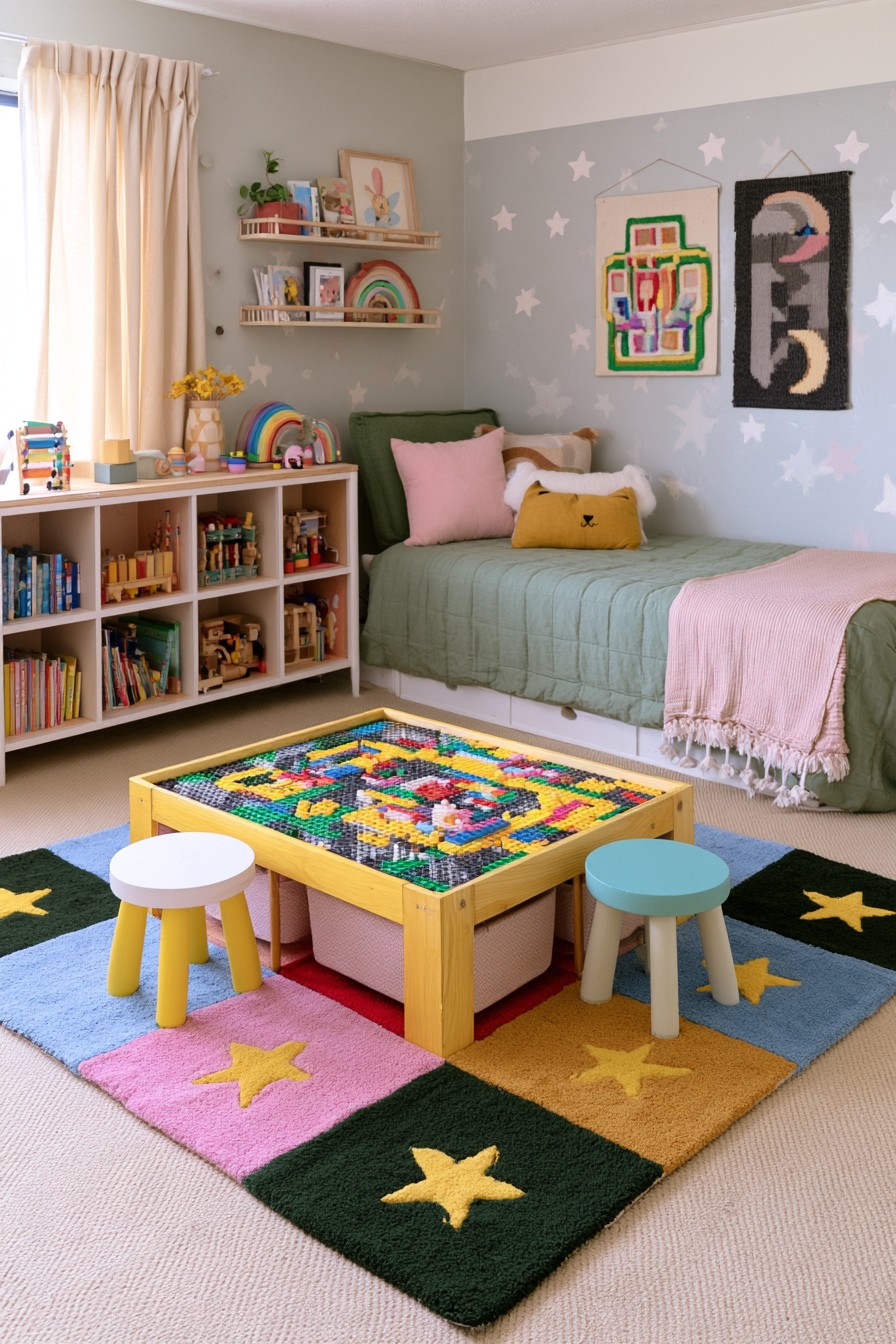
A yellow framed table gives building blocks a dedicated surface in the middle of this room. Two round stools sit on opposite sides, and containers fit beneath the tabletop. The nearby bookcase adds broader storage without being part of the table itself. Stars on the wall and rug supply the theme while the table remains focused on construction.
Size a building surface around both reach and floor space. A smaller child should be able to reach the center without climbing onto it. Leave one section for a model that will continue tomorrow and another for loose pieces. Select blocks according to their age guidance, particularly when younger siblings share the room. Shallow sorting bins make it easier to find a needed piece and return the rest afterward.
9. A House Shaped Cabinet for Plush Toys
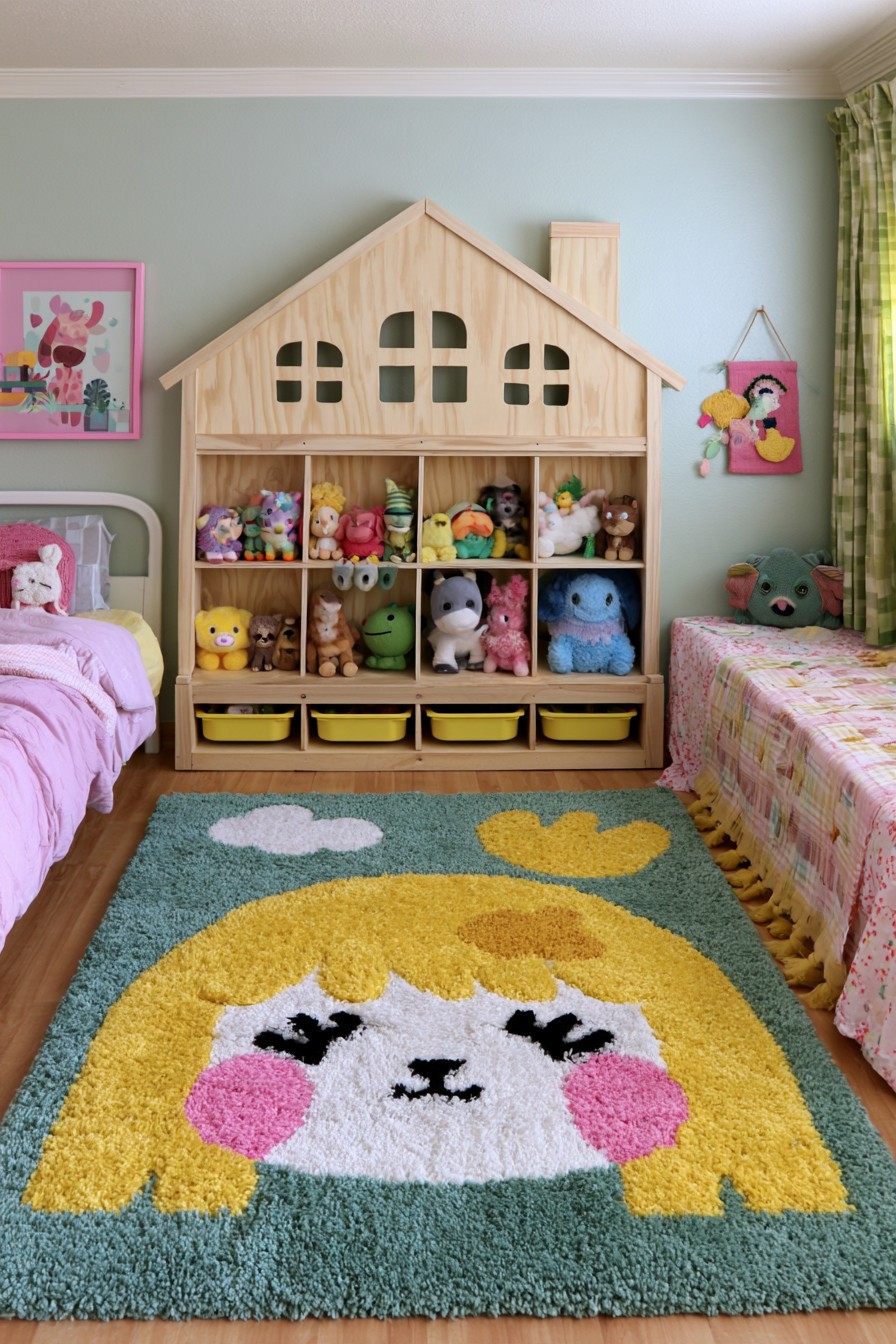
The peaked roof and small window shapes make this timber cabinet look like a house. Plush toys fill the open compartments, while yellow trays occupy the lowest row. Sage walls and a green character rug link the storage to the surrounding bedroom. The familiar outline gives the toy collection a distinctive home without changing the beds.
Keep enough empty space in the compartments for toys to be put away quickly. Use the lower trays for daily belongings and avoid reserving the only reachable shelves for decoration. A tall house shaped cabinet needs suitable anchoring, and its roofline should not invite climbing. You can create a similar identity by painting a house outline behind an existing low organizer, keeping the storage itself straightforward.
10. A Narrow Book Tower with Separate Shelf Boxes
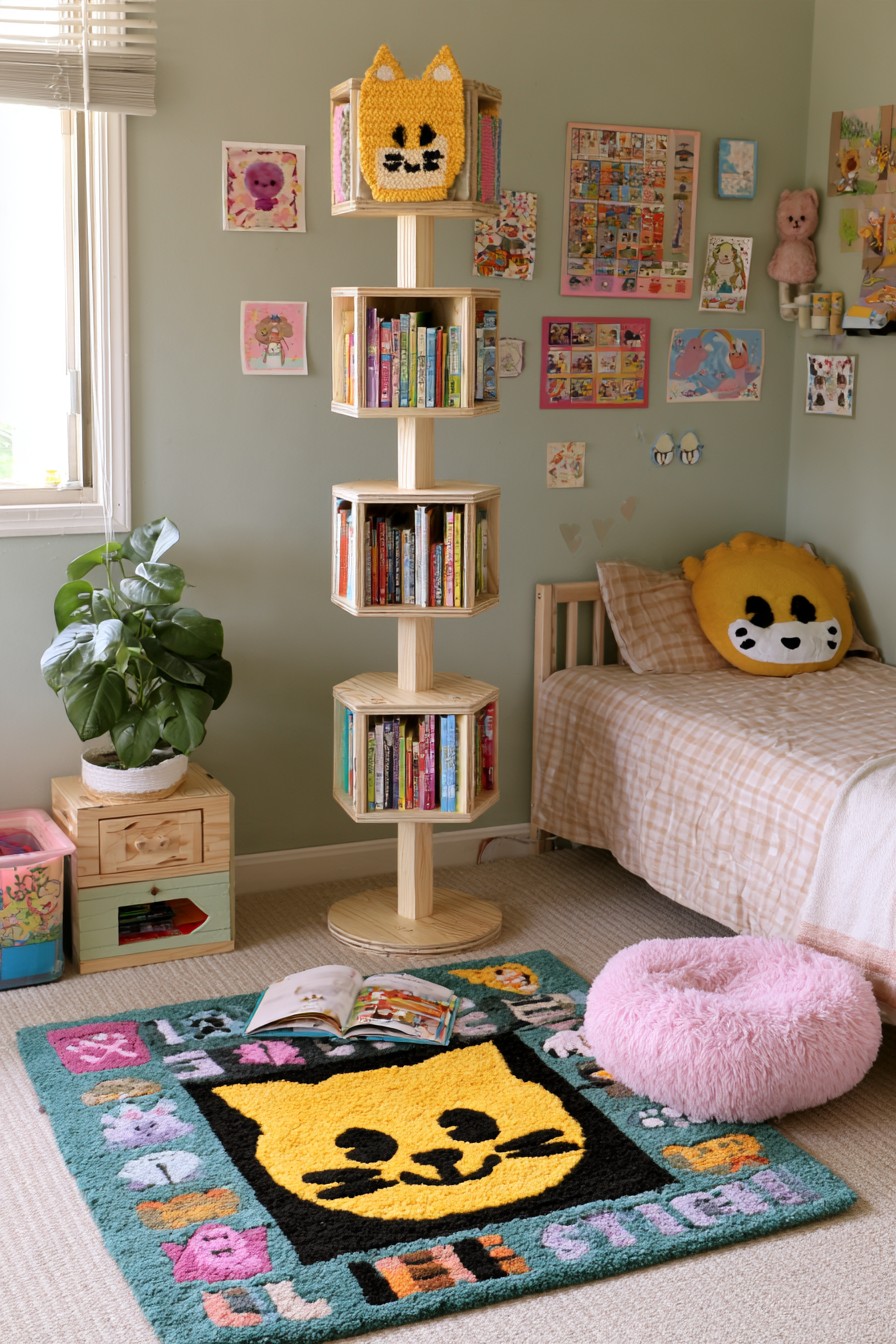
Separate book boxes rise along a central support, creating a narrow tower beside the bed. A yellow cat face at the top repeats the large motif on the green rug. The gaps between boxes make the arrangement feel lighter than a solid tall cabinet. Its vertical footprint is useful when there is little width available for a conventional bookcase.
Try the actual product mechanism to check how the boxes open or turn and how easily the child can reach inside. Look for stability when loaded and when books are removed unevenly. Daily reading choices belong in reachable compartments, with adult help for higher levels. Avoid using the bed or a stool as a climbing route to the top. A short fixed shelf can be a more convenient choice for a younger reader.
11. A Triangular Camping Retreat with a Floor Cushion
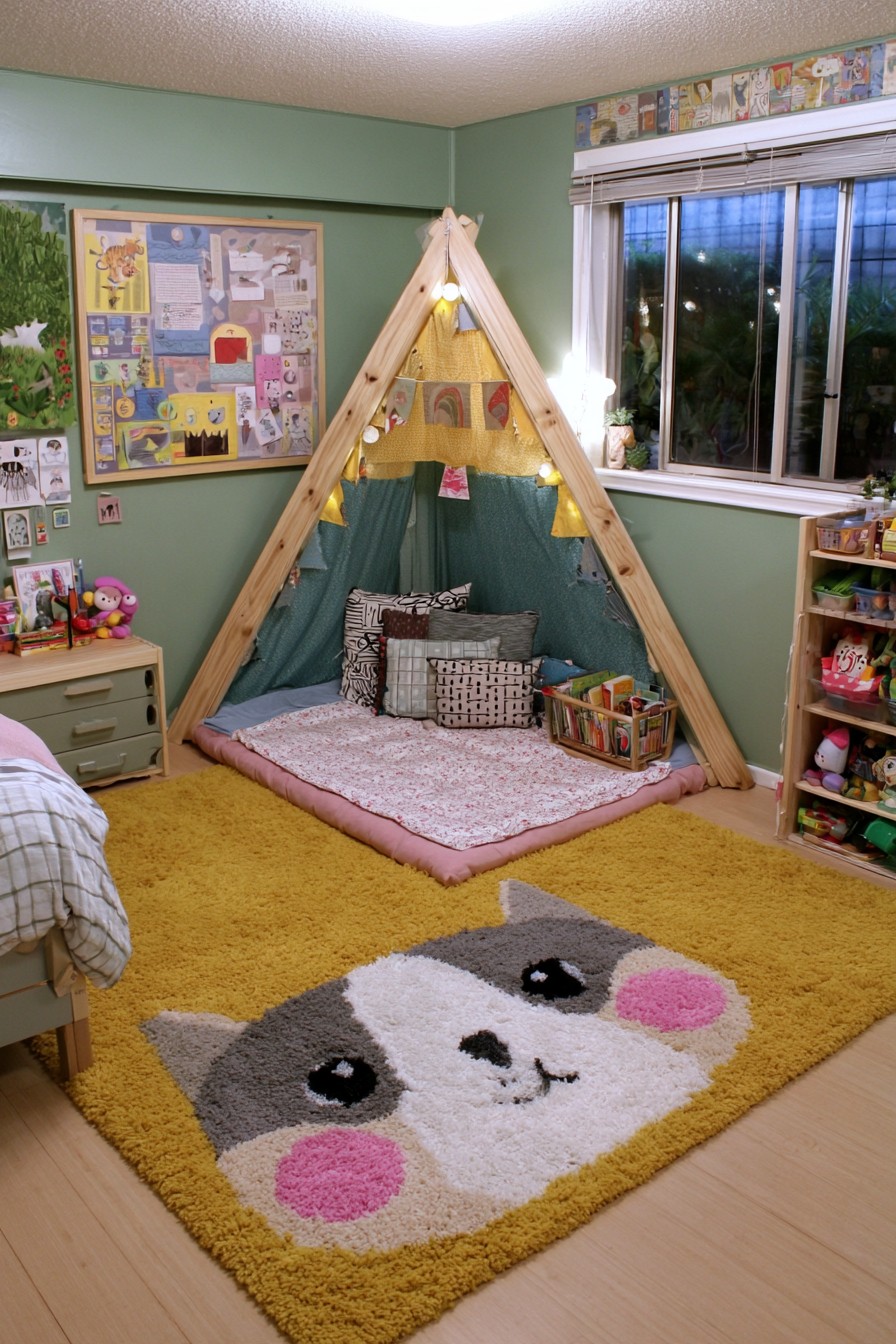
A triangular timber frame and green fabric create an indoor camping retreat beside the window. A pink floor cushion marks the seating area, with a basket of books ready at one side. The yellow character rug keeps the corner connected to the rest of the room. Its low seat and open front suggest a place for quiet play and reading.
Use a tent or frame designed for children's play and follow its age and assembly guidance. Keep the opening clear and omit loose cords or hanging lights where they could be pulled or wrapped around the child. A washable mat and a small book basket can create a similar retreat without an overhead structure. Check that the arrangement leaves the window and the main route through the room accessible.
12. A Train Table with Deep Storage Compartments
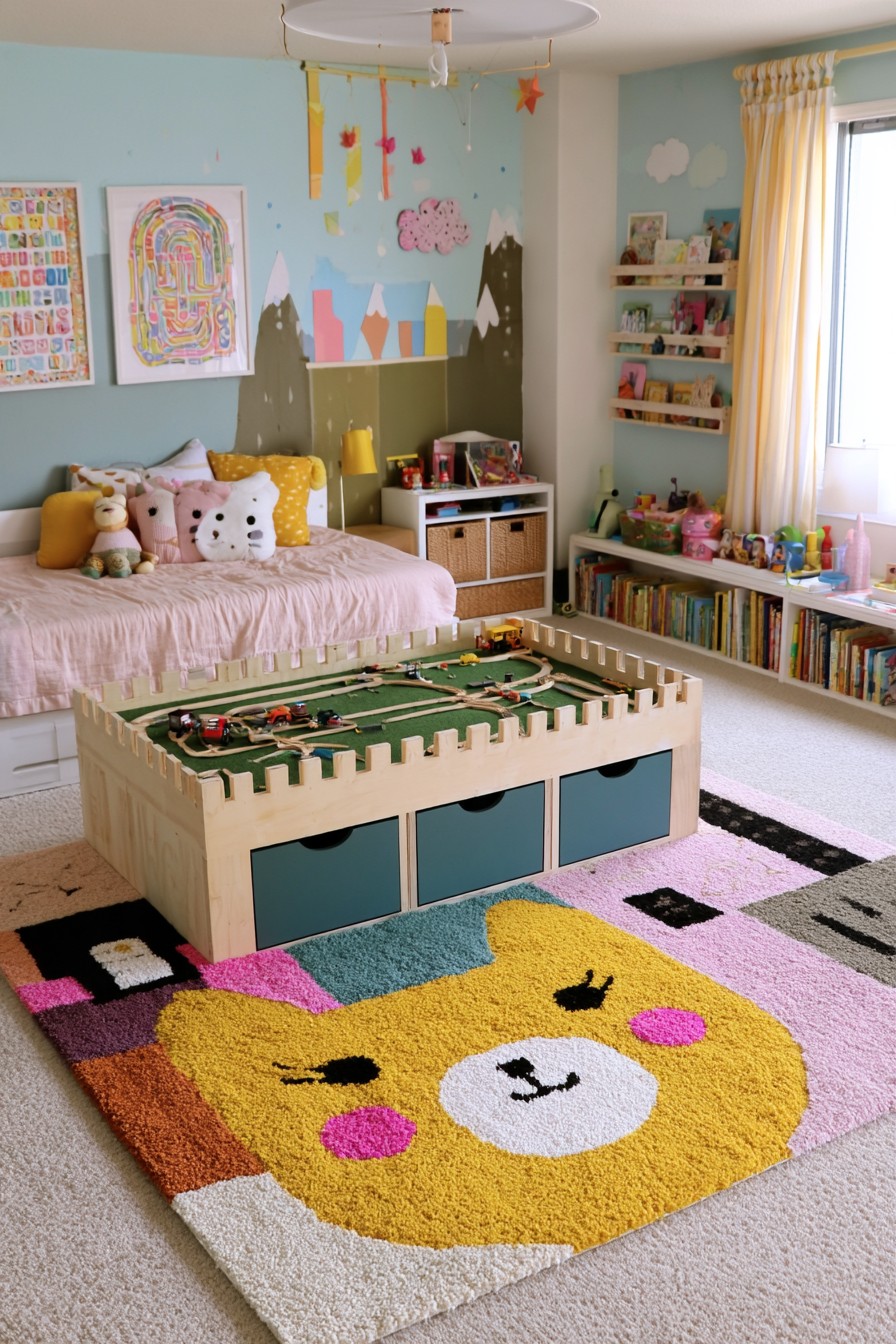
The train layout sits on a dedicated timber table, with a raised edge around the play surface. Blue storage fronts underneath introduce the room's pale wall color at furniture level. A mountain shaped wall pattern, nearby book storage, and pink bedding keep the surroundings playful. The tabletop gives a track arrangement somewhere to remain between sessions.
Check whether the child can reach every part of the layout from the floor or a suitable seat. The raised edge should help contain pieces without getting in the way of hands and forearms. Sort spare track, trains, and scenery separately so rebuilding does not require emptying everything. If you choose drawers or wheeled bins below, check their operation on your floor and leave space to pull them out fully.
13. A House Backdrop Around a Low Storage Bed
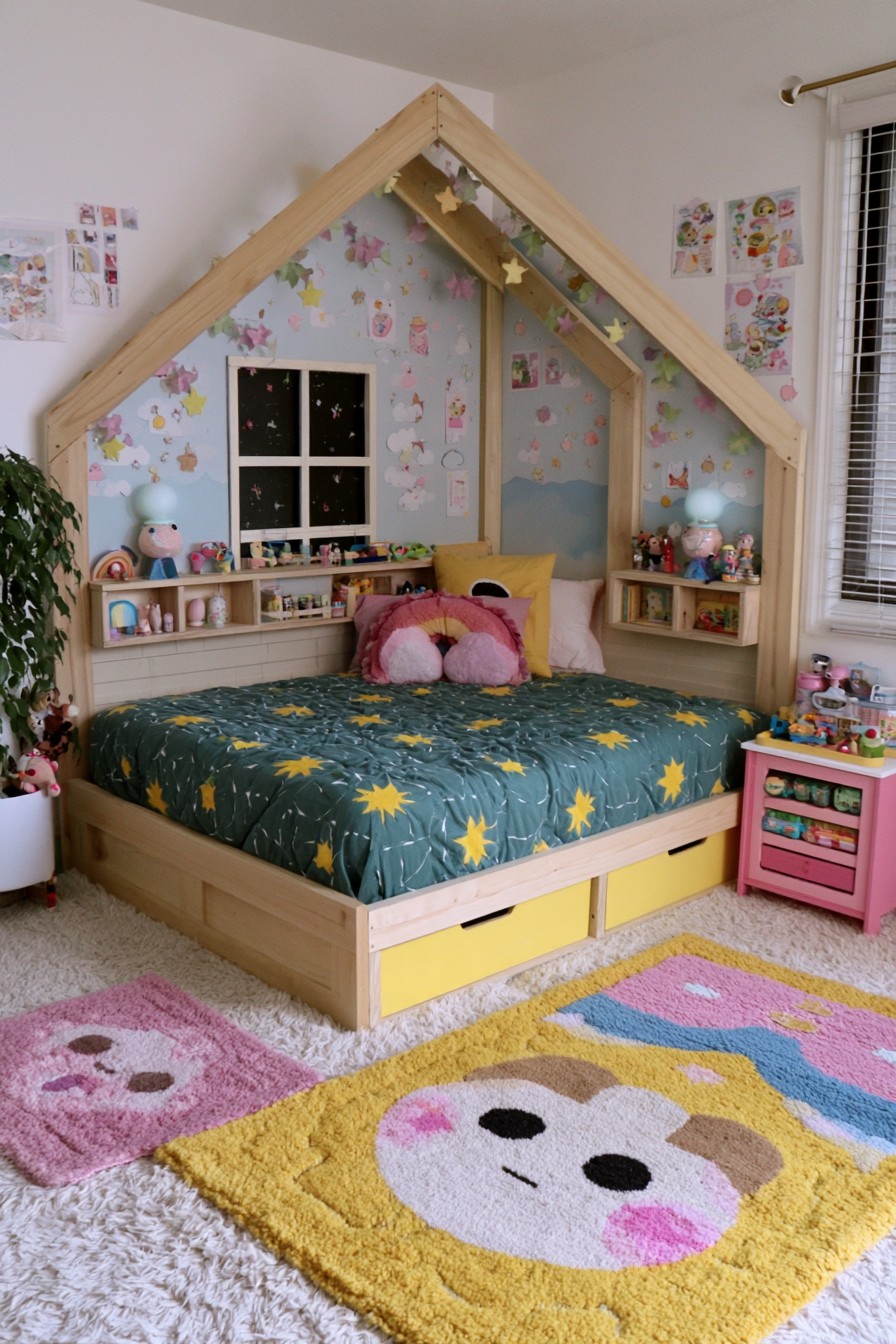
A timber house outline frames the wall around this low bed, rather than enclosing the mattress in a full playhouse. A pretend window and small shelves suggest the inside of a cottage. Yellow drawer fronts beneath the bed introduce useful storage, while green star patterned bedding repeats the storybook mood. The separate pink bedside organizer supplies another accessible place for small belongings.
Begin with a bed that meets the child's needs, then add the theme through wall color or a securely installed decorative outline. Keep shelves away from places where they could be struck when sitting up or getting out. Reserve nearby storage for bedtime books and spare bedding so hard play pieces do not accumulate on the mattress. Check drawer clearance before adding a rug or other furniture beside the bed.
14. An Underwater Display Wall with a Submarine Feature
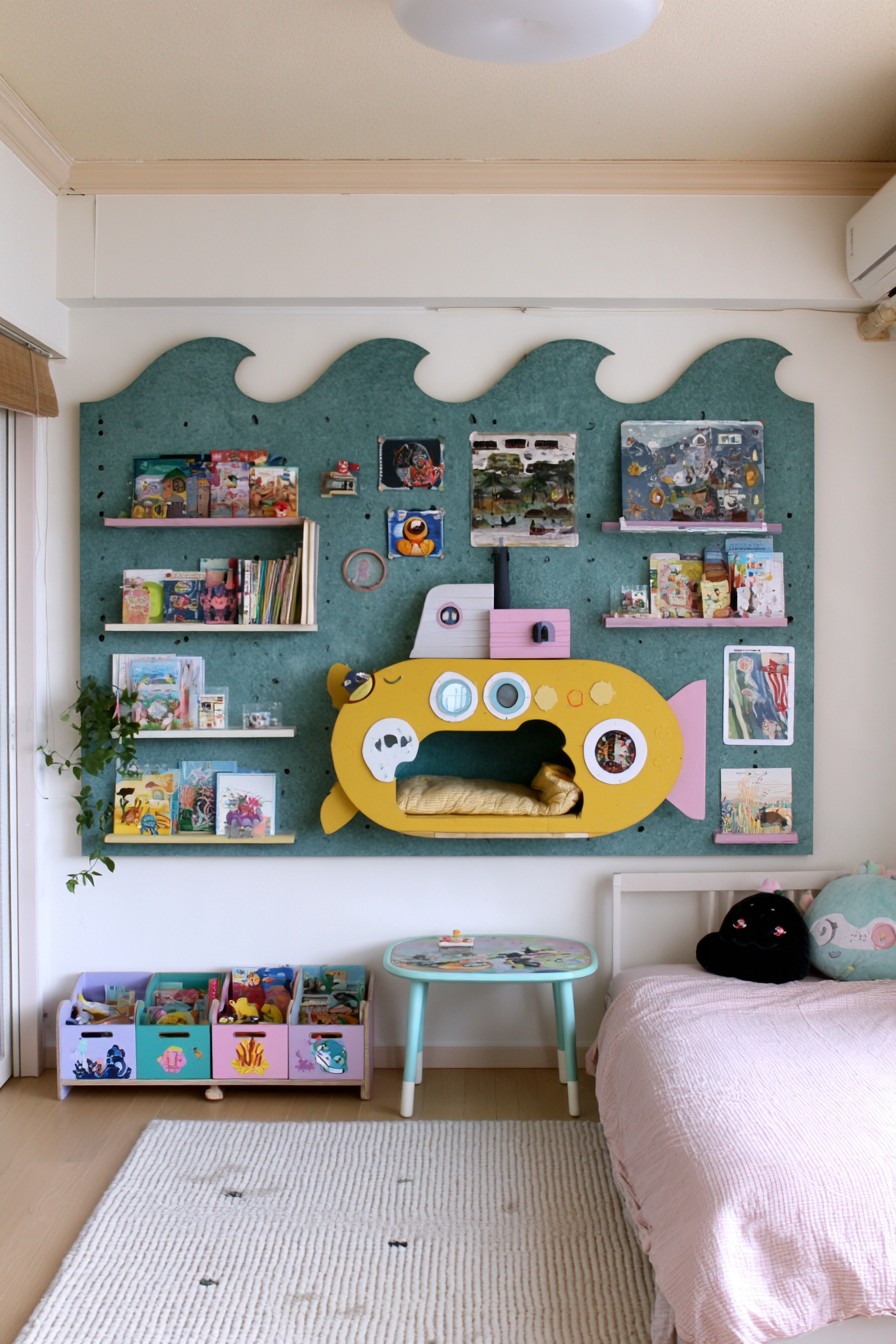
A wave shaped upper edge gives this teal wall panel an underwater identity. Books and artwork sit on small shelves around a yellow submarine shaped feature with a cushioned opening. Low floor bins and a compact table provide storage and activity space below it. Pink bedding keeps the large blue green panel from determining every color in the bedroom.
Use a painted wave border and ordinary book storage for a simpler version. The suspended submarine opening should not be used as a seat unless its design, support, size, and capacity are specifically suitable for a child. A floor cushion nearby can provide the reading place while the submarine remains decorative. Keep the lower bins accessible and avoid arranging them as steps toward the raised feature.
15. A Pretend Animal Care Station Beneath a Tree
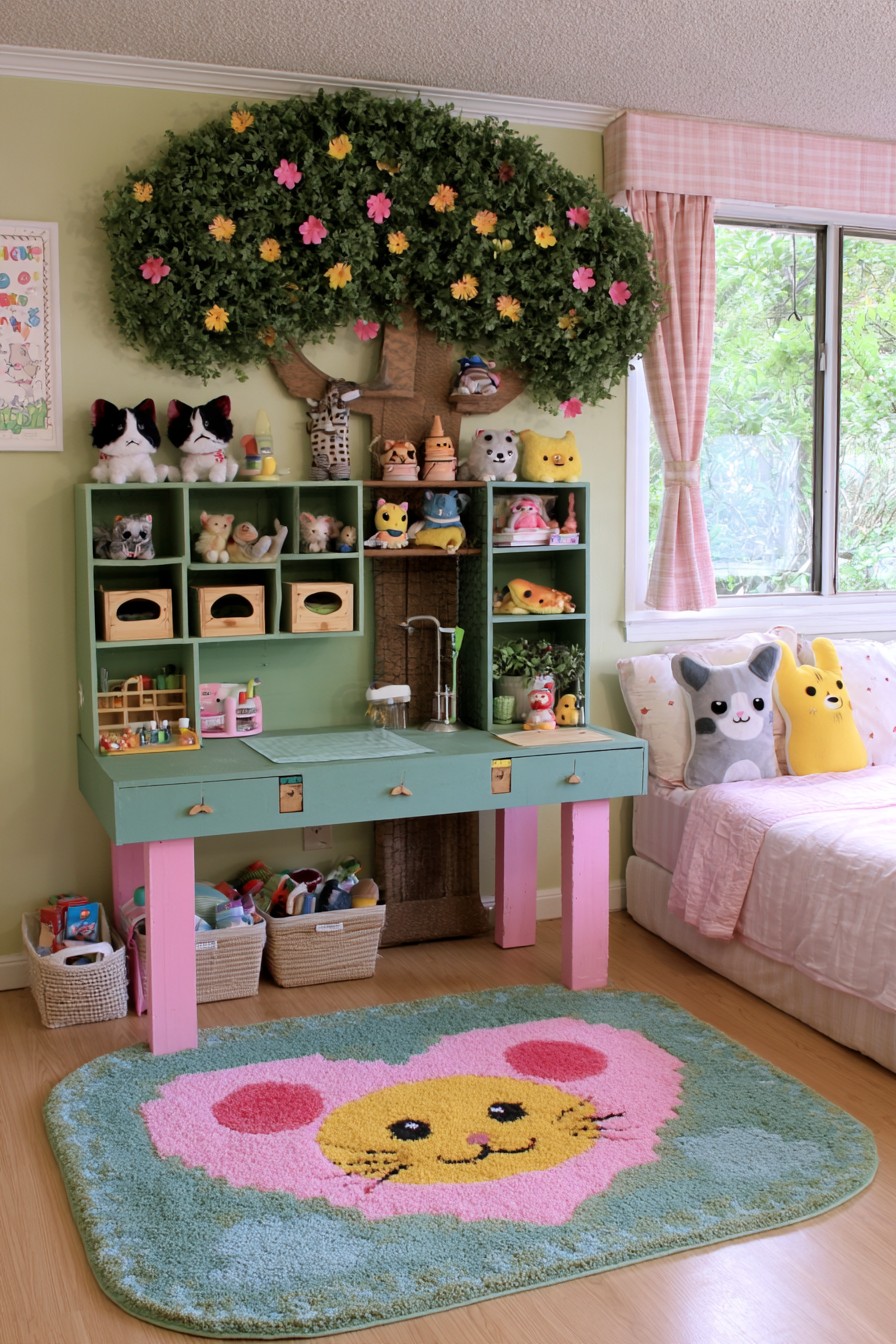
Toy animals gather in the cubbies above a green counter, with small wooden boxes and baskets organizing the props. A taplike fitting and work mat suggest a pretend care station. Pink legs connect the unit to the curtains and bedding, while a broad decorative tree gives the wall a woodland setting. The open area in front leaves space for a child to stand at the counter.
Keep this station focused on pretend care unless any water feature is deliberately designed and installed for real use. Small blankets, a toy brush, and washable containers can support animal rescue stories without elaborate equipment. Choose accessories suited to the child's age, and keep the counter clear enough to set down a toy. The decorative tree and upper shelving need secure support independent of how light they may appear.
16. A Pirate Loft with a Study Corner Underneath
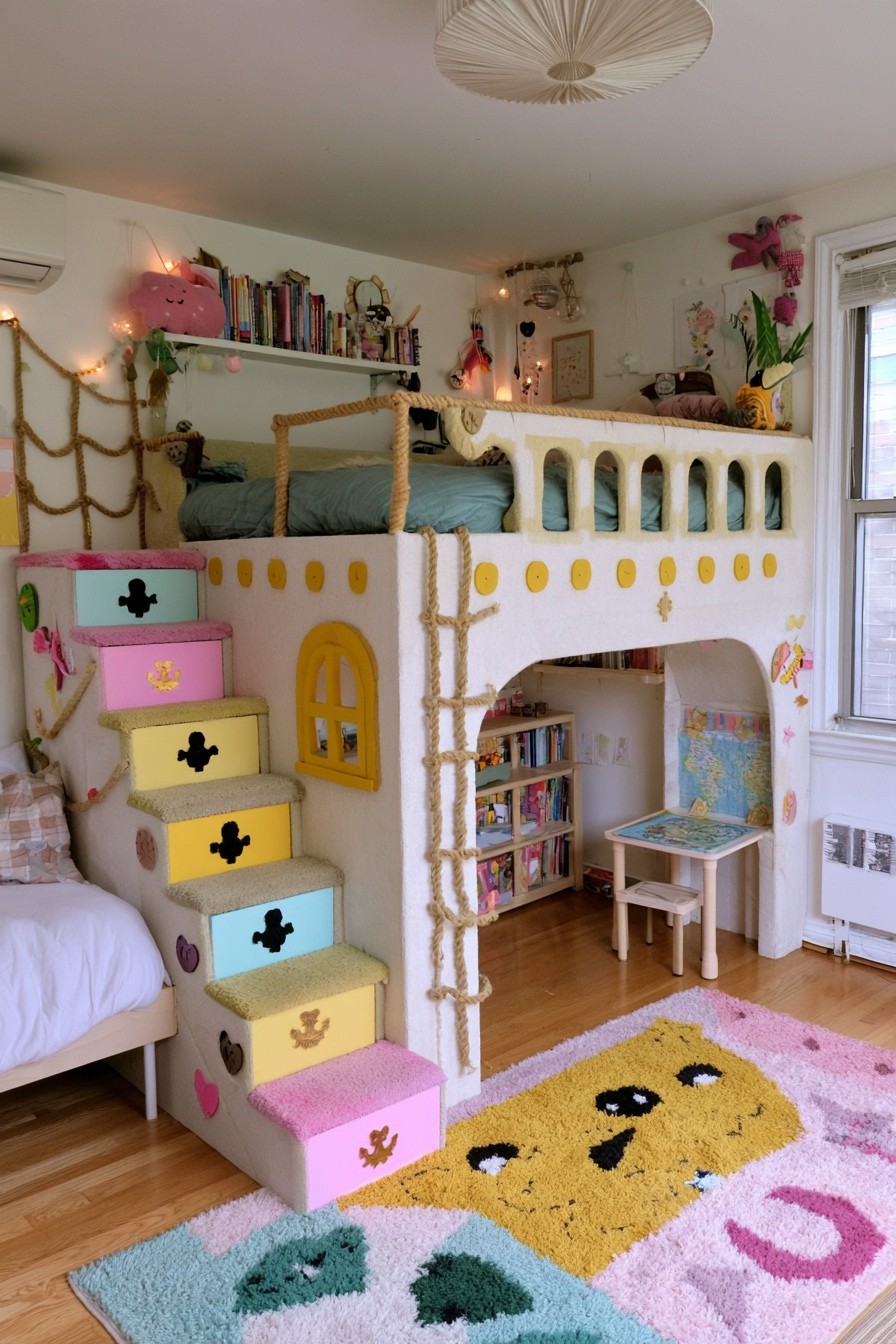
Pastel stair fronts, yellow portholed details, and rope accents give this loft a ship inspired character. The space below contains a bookcase and small desk, turning the bed footprint into an additional activity area. Books above the mattress and pictures around the desk carry the theme vertically. The elevated bed makes the access system and protective edges more important than the decorative details.
Select a compliant loft bed for the child's age, with the specified mattress thickness and guards. Upper bunks are unsuitable for children under six, and product guidance may set additional limits. Decorative rope should not substitute for proper guardrails or create loose loops near sleep or play. Keep the stair route clear, follow instructions for any storage steps, and ensure the lower desk has enough headroom for comfortable use.
17. A Woodland Book Wall Above a Floor Reading Mat
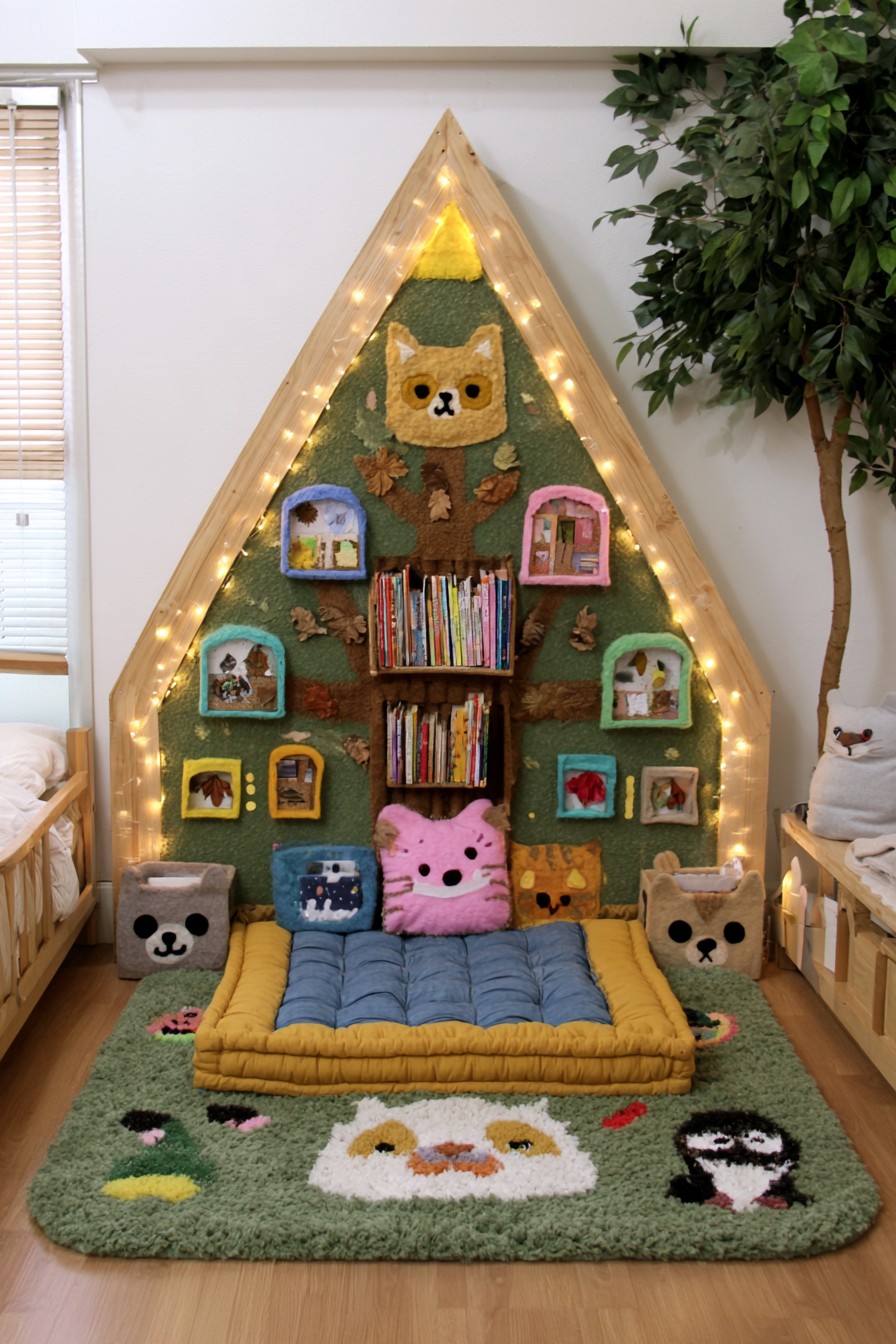
The triangular timber border sets this reading corner apart, with books stacked in shelves along the center. Small house shaped displays and animal motifs fill the sage backing, while yellow and blue cushions establish a floor level seat. A tree beside the corner extends the woodland atmosphere, but the storage itself is a peaked wall arrangement.
Place current reading choices on the lowest reachable shelf and keep the floor mat clear of loose play pieces. Removable cushion covers make the seat easier to maintain. If overhead shelves are inconvenient, a small basket next to the mat can provide the daily selection instead. Painted trees and a simple wall color can suggest woodland character without needing a large decorative plant or additional structures around the child.
18. A Textured Space Console for Pretend Missions
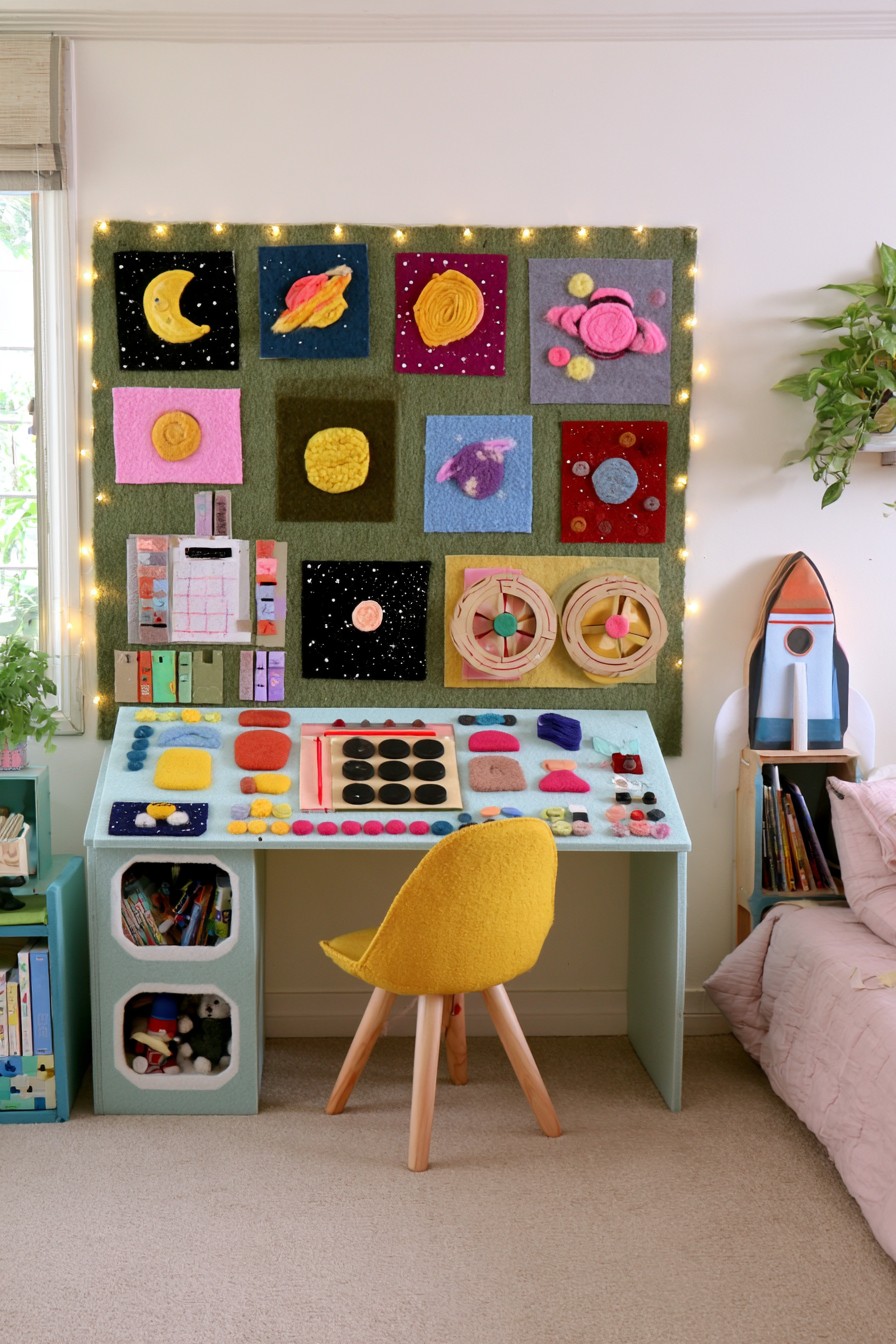
Moon and planet panels rise above a pale blue console filled with colorful pretend controls. The angled surface gives it the appearance of a mission station, with storage openings along one side and a yellow chair in front. A rocket shaped piece beside the bed reinforces the space theme. The controls make this an imaginative play surface rather than a clear desk.
Choose securely attached components intended for the user's age, paying particular attention to small detachable pieces. Keep pretend play separate from actual electrical wiring or devices. A removable control board on a regular tabletop can make the same station easier to switch between missions and drawing. Leave a flat area for paper if learning activities are part of the plan, and allow enough legroom for the chair.
19. A Cottage Framed Craft Desk with Side Drawers
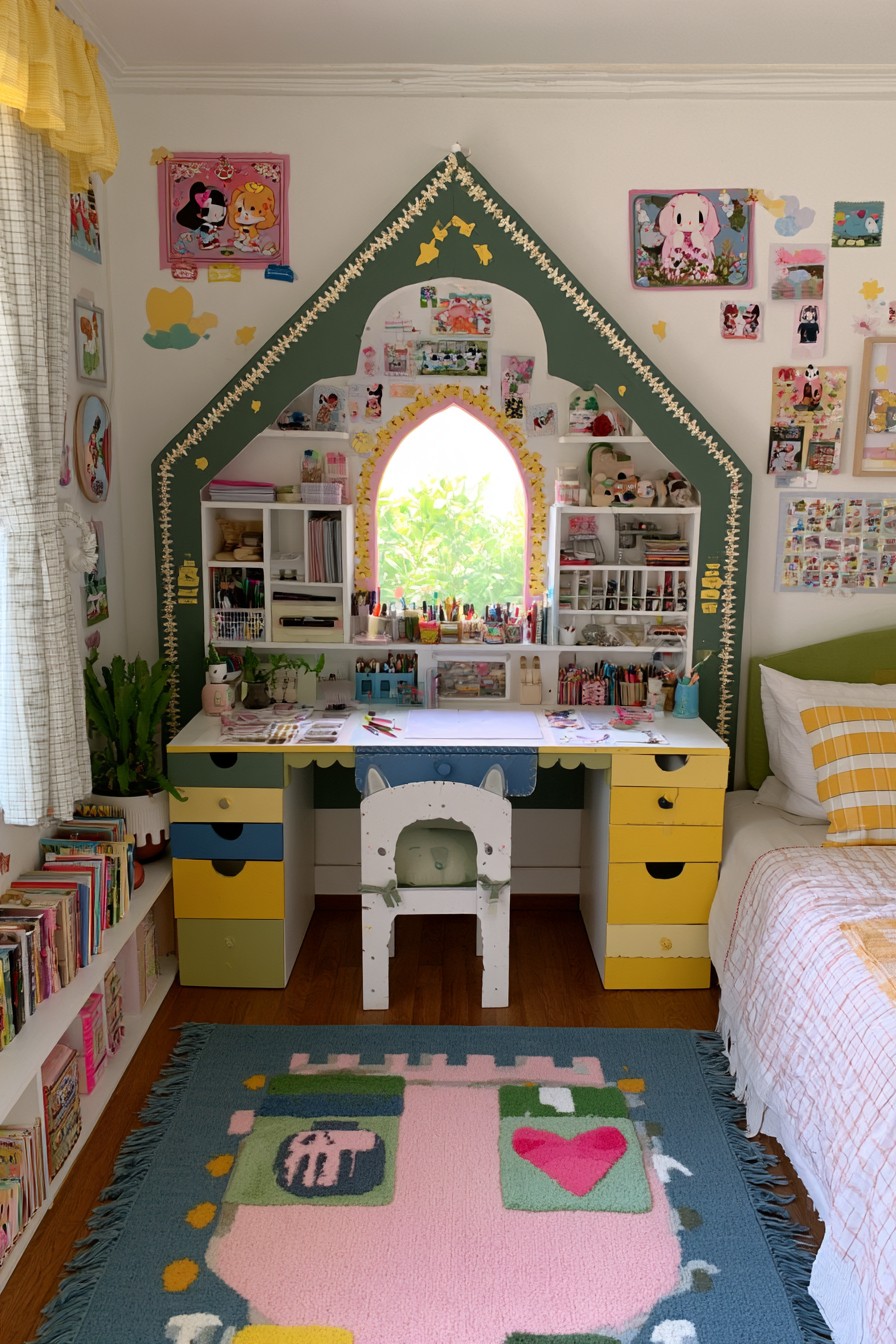
Colorful drawer stacks support a broad craft desk beneath a green cottage outline. The shelving surrounds an arched window, giving supplies a place above the work surface while keeping the central opening visible. Pens, paper, and small containers establish its practical purpose. A simple chair sits between the drawers, with the bed immediately beside the station.
Measure the seated space between drawer units before choosing a desk. Paper needs room to lie flat, and a small removable supply tray can keep pens from spreading across the work area. Maintain access to the window and its fittings rather than surrounding them with fixed storage. Use labeled art materials appropriate for the child, provide supervision where needed, and reserve a separate shelf or tray for unfinished work.
20. A Crown Topped Accessory Station with a Heart Mirror
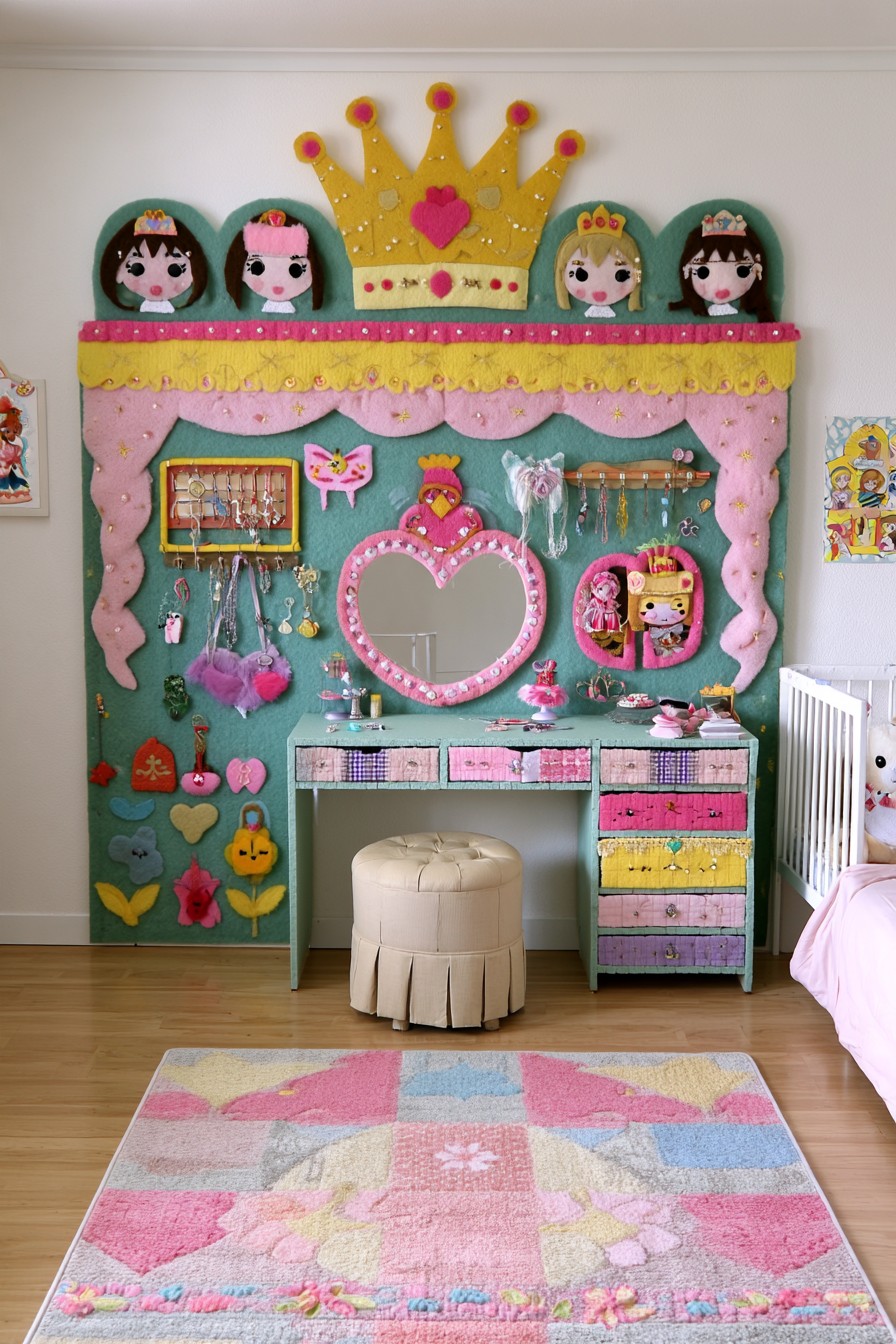
A heart shaped mirror is the center of this crown topped dressing area. Small accessories hang from rails and hooks around it, while pastel drawers provide additional storage beside the stool. Pink borders and a large yellow crown make the green backing feel theatrical. The visible arrangement is focused on accessories and a dressing surface rather than a full costume hanging rail.
Select only play accessories suitable for the child's age, with long strands and small pieces stored under adult control when needed. Divide the drawers by use so hair accessories or approved dress up props can be returned easily. The mirror needs secure mounting and glazing suitable for a child's space. If outfits are the main collection, add a separate low clothing rail with enough room for garments to hang clear of the floor.
21. A Tall Barn Style Cabinet for a Toy Collection
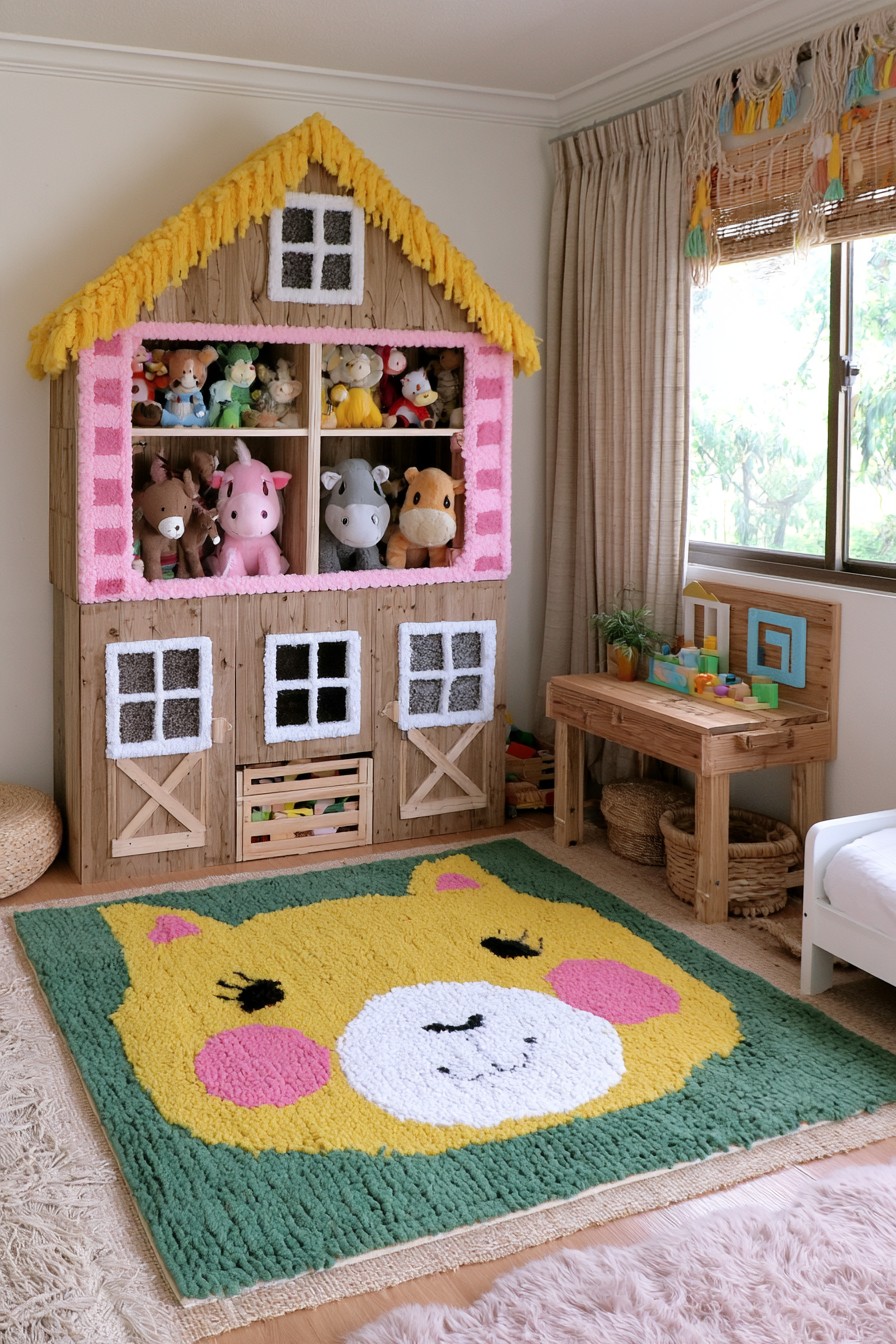
A tall timber cabinet takes the shape of a barn, with yellow roof trim and pink edging around the open toy compartments. Plush animals fill the upper display, while lower fronts resemble barn doors. A separate small table sits by the window with baskets beneath. The green character rug repeats the cabinet's playful colors without adding more large furniture.
Keep favorite toys at a reachable level, even if that means moving them out of the illustrated upper display. High shelves should not encourage climbing, and the tall cabinet needs anchoring suited to its construction and the wall. Check door operation and choose fittings that reduce finger trapping. A smaller low organizer with a painted barn backdrop can provide the same theme where a full height cabinet would crowd the room.
Choose one improvement that will change an ordinary day: somewhere to finish a model, pick a bedtime book, or return craft supplies after drawing. Keep the surrounding layout simple enough for the child to use and for an adult to help. As interests change, update the pictures, textiles, and play props while retaining the storage and furniture that still fit. The most useful theme gives an activity a place without taking over the room.

Leave a Reply