
These 20 alphabet activities turn letter practice into sensory searches, matching games, crafts, movement routes and pretend play. You will find ideas for preparing each activity, introducing a first round and adjusting the challenge without rushing the child. The examples also separate letter names, uppercase and lowercase forms, and beginning sounds, so you can choose a game that fits what your preschooler is exploring now.
Table of Contents
- Choose One Letter Goal Before You Start
- 20 Ways to Explore Letters Through Play
- 1. Sensory Letter Hunt with Wooden Alphabet Pieces
- 2. Alphabet Sorting Tray with Letters and Familiar Objects
- 3. Magnetic Alphabet Board for Letter Names and Sounds
- 4. Alphabet Road with Toy Cars and Letter Stops
- 5. Playdough Letter Building with Straight and Curved Pieces
- 6. Magnetic Letter Fishing with Matching Landing Cards
- 7. Nature Letters with Petals, Leaves and Stones
- 8. Felt Ice Cream Letters for a Pretend Shop
- 9. Alphabet Hopscotch with Walking and Pointing Options
- 10. Soft Counter Letter Outlines with Optional Tongs
- 11. Alphabet Parking Garage with Uppercase and Lowercase Pairs
- 12. Flower Pot Matching with Letter Centers and Labels
- 13. Alphabet Post Office with Correct Card Deliveries
- 14. Alphabet Pockets for Objects and Beginning Sounds
- 15. Letter Movement Path with Arrows and Destinations
- 16. Alphabet Train with Separate Letter and Cargo Rounds
- 17. Pretend Pancake Orders with Letter Toppings
- 18. Alphabet Farm with Matching Eggs and Nests
- 19. Feed the Letter Monsters with Two Distinct Games
- 20. Alphabet Safari with Animal Tracks and Matching Cards
- Keep the Next Round Familiar
Choose One Letter Goal Before You Start
Finding a named letter, matching A with a, and connecting the first sound in apple with A are different tasks. Begin with one of these goals and two or three familiar letters. A sorting tray suits quiet comparison; a road or walking route adds movement; a post office or kitchen gives the letters a role in a story. Follow the child's interest rather than requiring a complete alphabet in every session.
Use clear letter models and check every card before play. For sound games, agree on the picture's name first: a picture described as a car and as a vehicle suggests different starting sounds. The word examples here use English; choose words and sounds appropriate to the language you are using. Adults can model an unfamiliar sound instead of turning every choice into a test.
Prepare only the materials needed for the selected game, such as large letter cards, a shallow tray, sturdy boxes or familiar toys. Adults handle cutting and check sharp edges. Follow toy age guidance, keep small parts away from children under three, and supervise loose materials. Remove damaged magnetic toys from use. Floor activities need a clear route and pieces that stay flat. Walking, pointing and seated versions can offer the same letter goal.
20 Ways to Explore Letters Through Play
Use the preparation ideas above to try the activities below. Each setting offers a different reason to notice a letter, from delivering mail to ordering a pretend pancake. Start with the first game described, then add the suggested variation when it remains enjoyable.
1. Sensory Letter Hunt with Wooden Alphabet Pieces
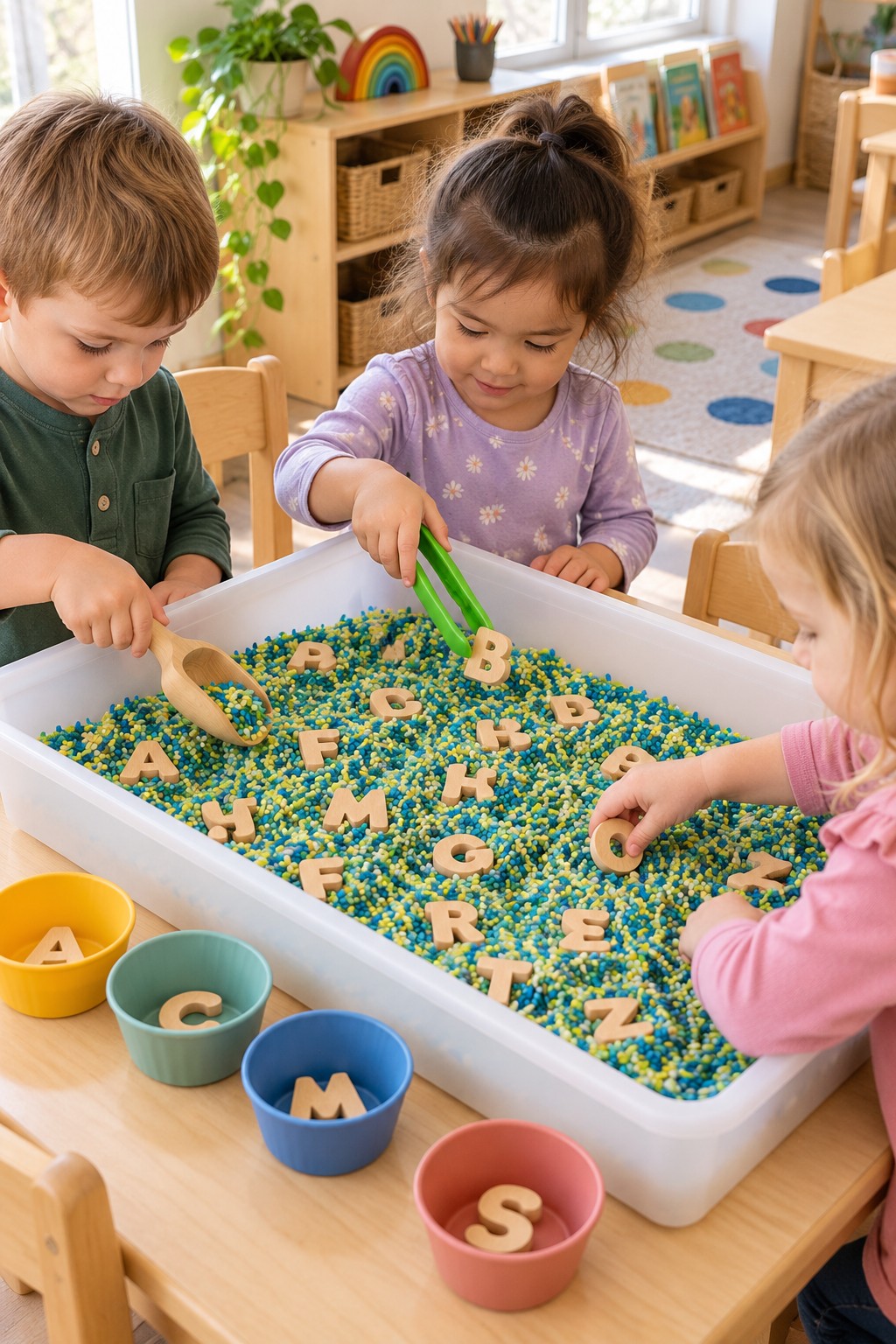
The shallow tray combines colorful granular filling with wooden letters, inviting children to uncover a shape and compare it with a model. For a first round, an adult places three contrasting letters in the tray and lays matching cards beside it. Name one letter, let the child search, and compare the recovered piece with its card. Searching for the first letter of the child's name gives the activity a personal purpose.
Choose the filling and letter pieces for the child's age, handling skills, and mouthing habits. If the child mouths materials, use a different setup with large cards under broad fabric pieces instead of loose filler. Keep the tray shallow enough to reach comfortably. Leave part of each letter visible to simplify the search, or hide all three for a later round. Count the pieces back into storage afterward.
2. Alphabet Sorting Tray with Letters and Familiar Objects
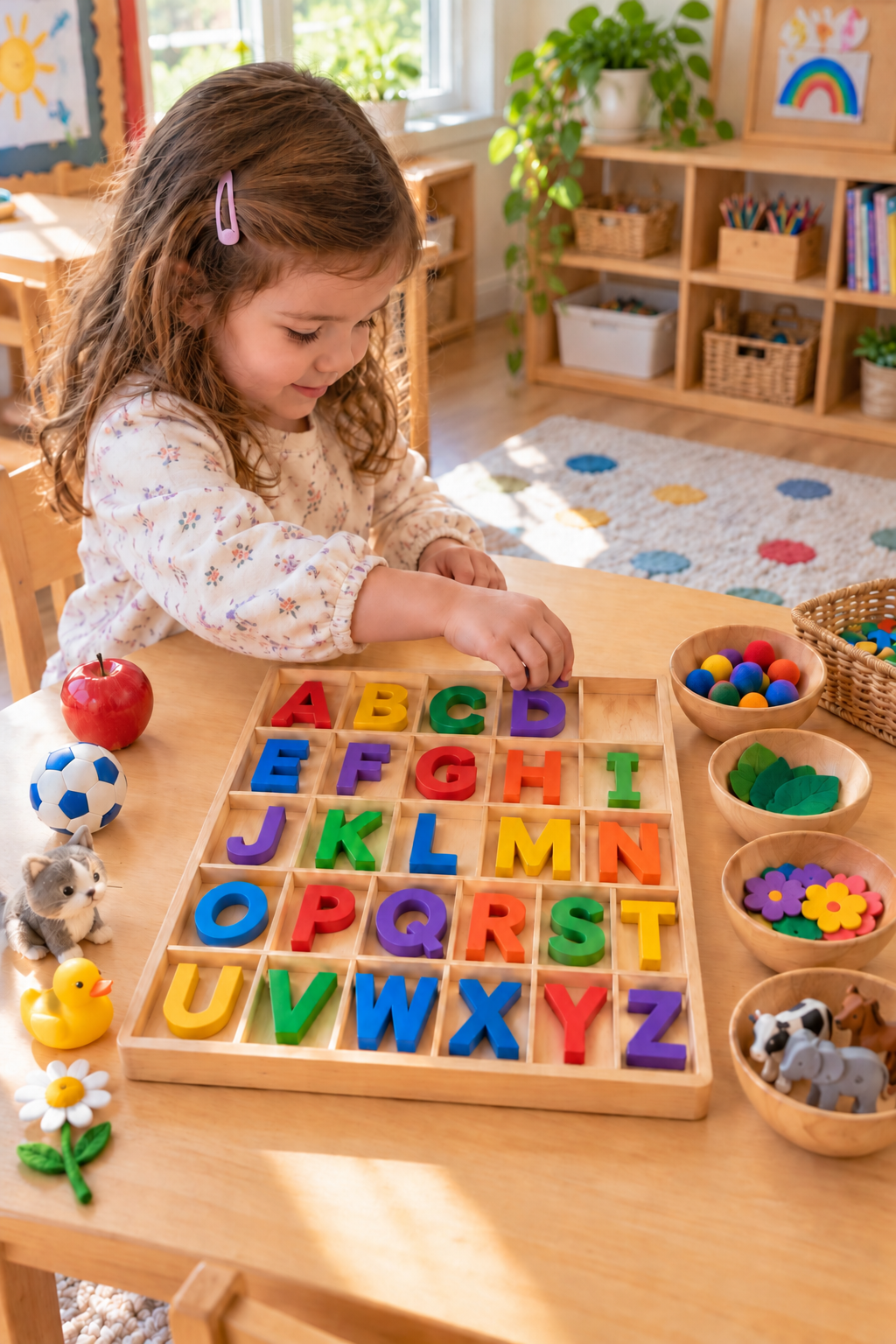
A divided wooden tray gives each uppercase letter a visible place, while nearby objects offer material for a separate sound game. Begin by removing a small selection of letters and asking the child to return each to a matching card in its compartment. Check the set before presenting it: an alphabet display should include O and Q as distinct shapes, with each intended letter represented correctly.
Once the first task is comfortable, choose three compartments for objects or pictures. Say apple, ball and cup together, model the initial sound, and invite the child to select A, B or C. Object sorting is a new round, rather than an extra instruction during shape matching. Offer only two choices if needed; later, let the child explain one placement. The compartments should accommodate the objects without obscuring their letter labels.
3. Magnetic Alphabet Board for Letter Names and Sounds
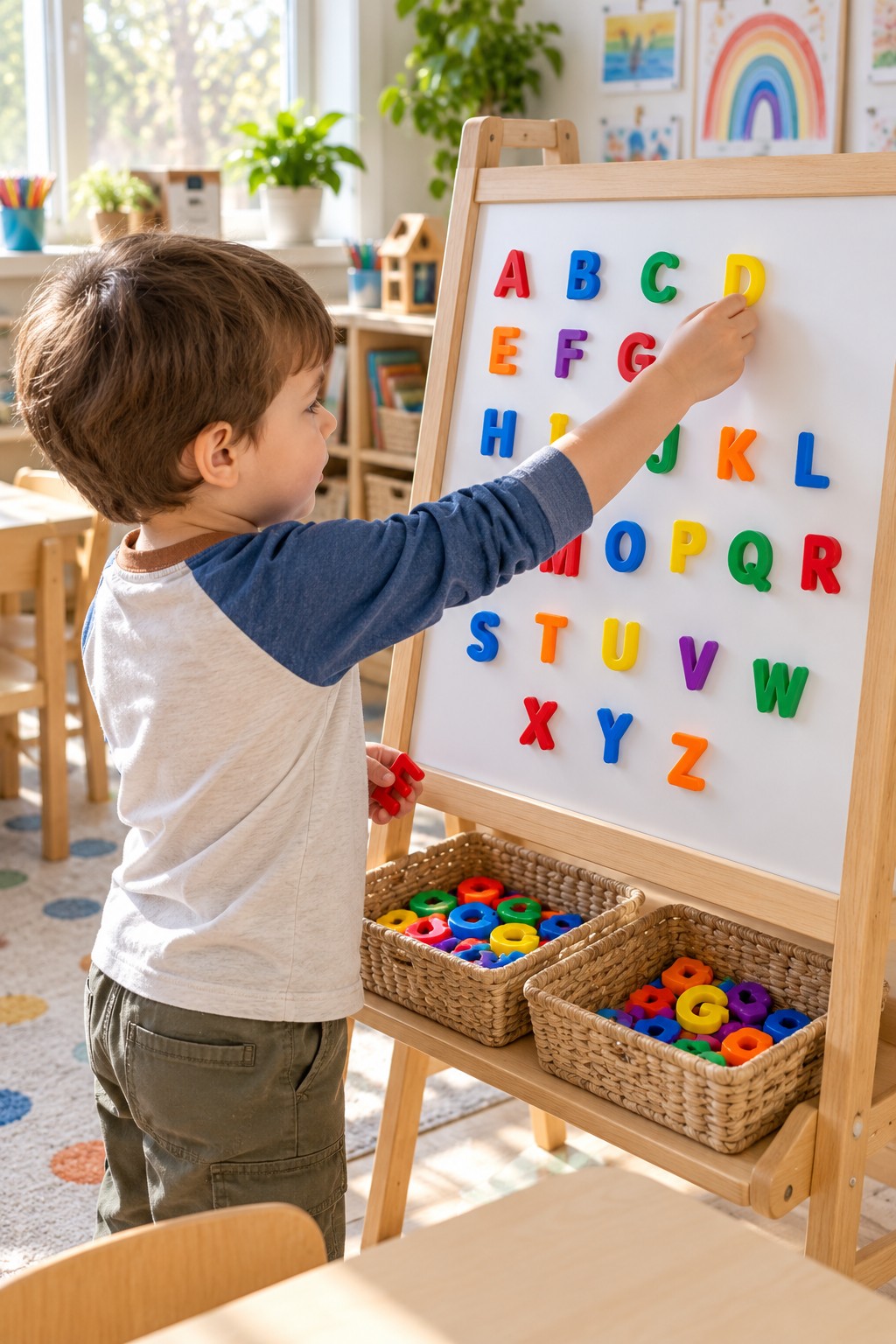
Movable magnetic letters let a child rearrange a display without repeatedly remaking cards. Start with a small group on an accessible board, leaving open space for one selected letter. Say, "Find the letter S," and invite the child to move it into that space. Name it together before returning it to the group. The full alphabet can remain a reference, but the game itself needs only a few choices.
For a separate sound round, say sun and model its opening /s/ sound, then show S. Saying the letter name and listening to the word are different tasks; demonstrate the sound if the child only knows the name. Add another familiar picture with the same initial sound when ready. Inspect the letters for damage and loose magnets before use, and keep the board within comfortable reach rather than encouraging climbing to high letters.
4. Alphabet Road with Toy Cars and Letter Stops
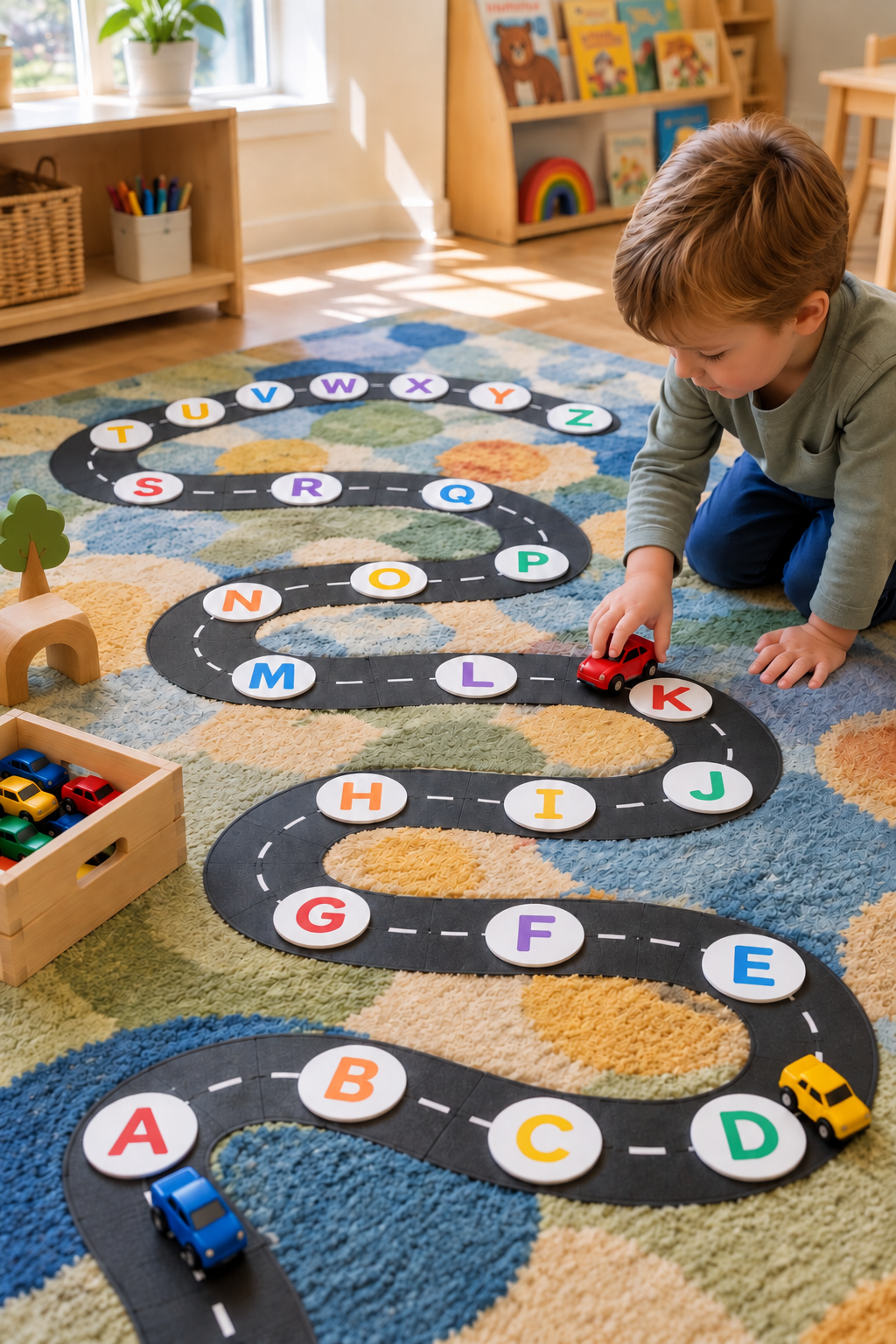
The winding road places letter stops along a continuous route. To prepare it, arrange large letter discs on a flat play surface and trace the route yourself from A to Z, checking the order through every bend. Rows that reverse direction must still follow the alphabet as the car travels. For the first game, give the child a toy car and name a nearby destination, such as C, for a slow delivery.
Alphabet order can become a later journey: move from A to B and onward, naming each stop together. For a shorter game, keep just a few stops instead of reproducing the entire road. A picture delivery introduces another task, so name the picture before choosing its destination letter. Allow space for turning and for another child to wait. This is a route for toy cars, not a surface intended for ride on vehicles.
5. Playdough Letter Building with Straight and Curved Pieces
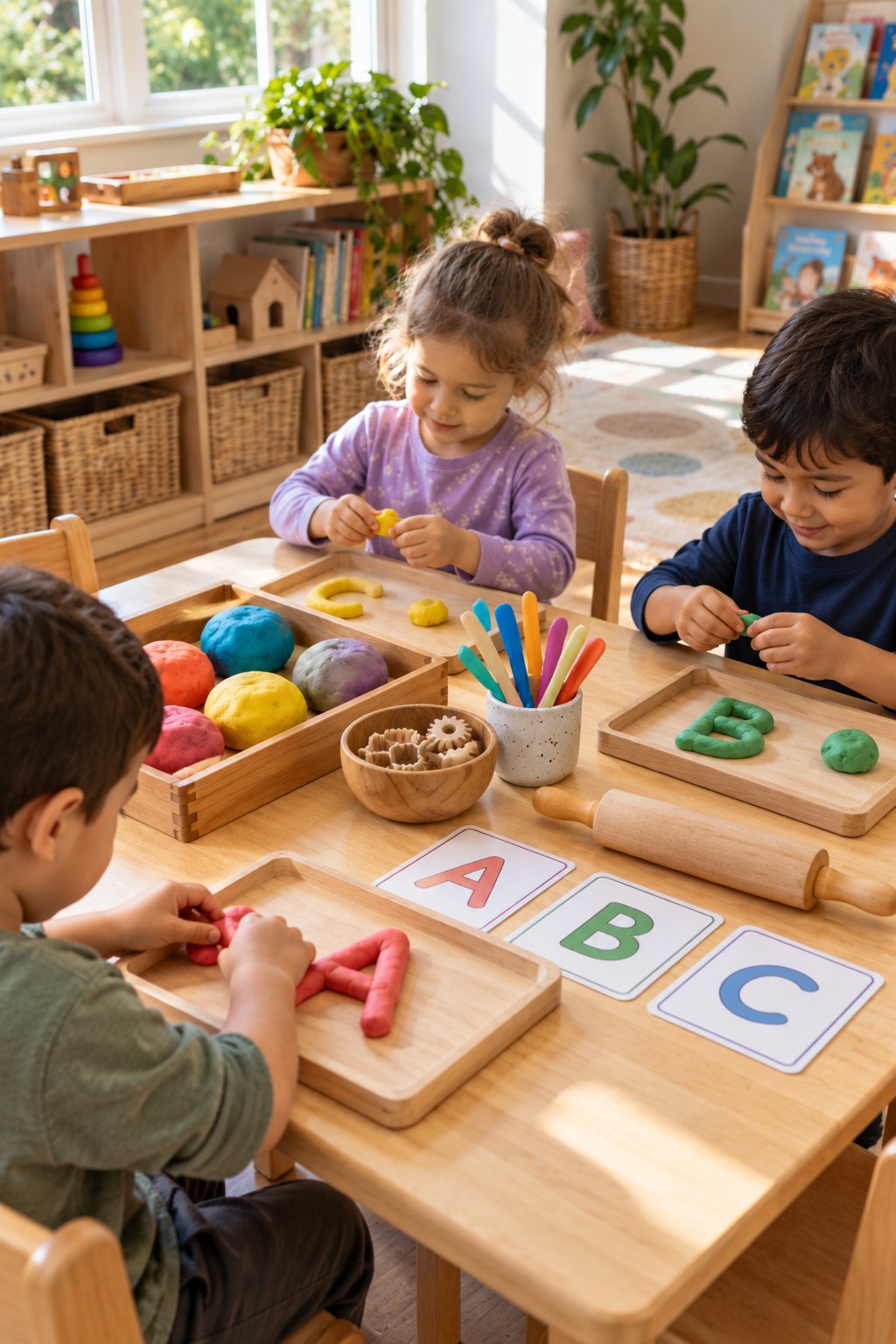
Large printed cards provide models while children shape playdough into letter parts. An adult prepares a workable portion of dough and demonstrates rolling one rope without making the whole letter for the child. Choose a simple form for the first attempt: L uses two straight pieces, while O uses a curved loop. Place the model nearby and ask the child to compare the arrangement before naming the finished letter together.
If rolling ropes is frustrating, offer prepared pieces for the child to position. Later, compare two letters and notice which parts change rather than demanding a perfect copy. Lightly tracing the finished shape with a finger adds another way to explore it. Use dough according to its age and use instructions, keep it separate from food, and check ingredient information when relevant. Store the dough as directed so the next session begins with a usable texture.
6. Magnetic Letter Fishing with Matching Landing Cards
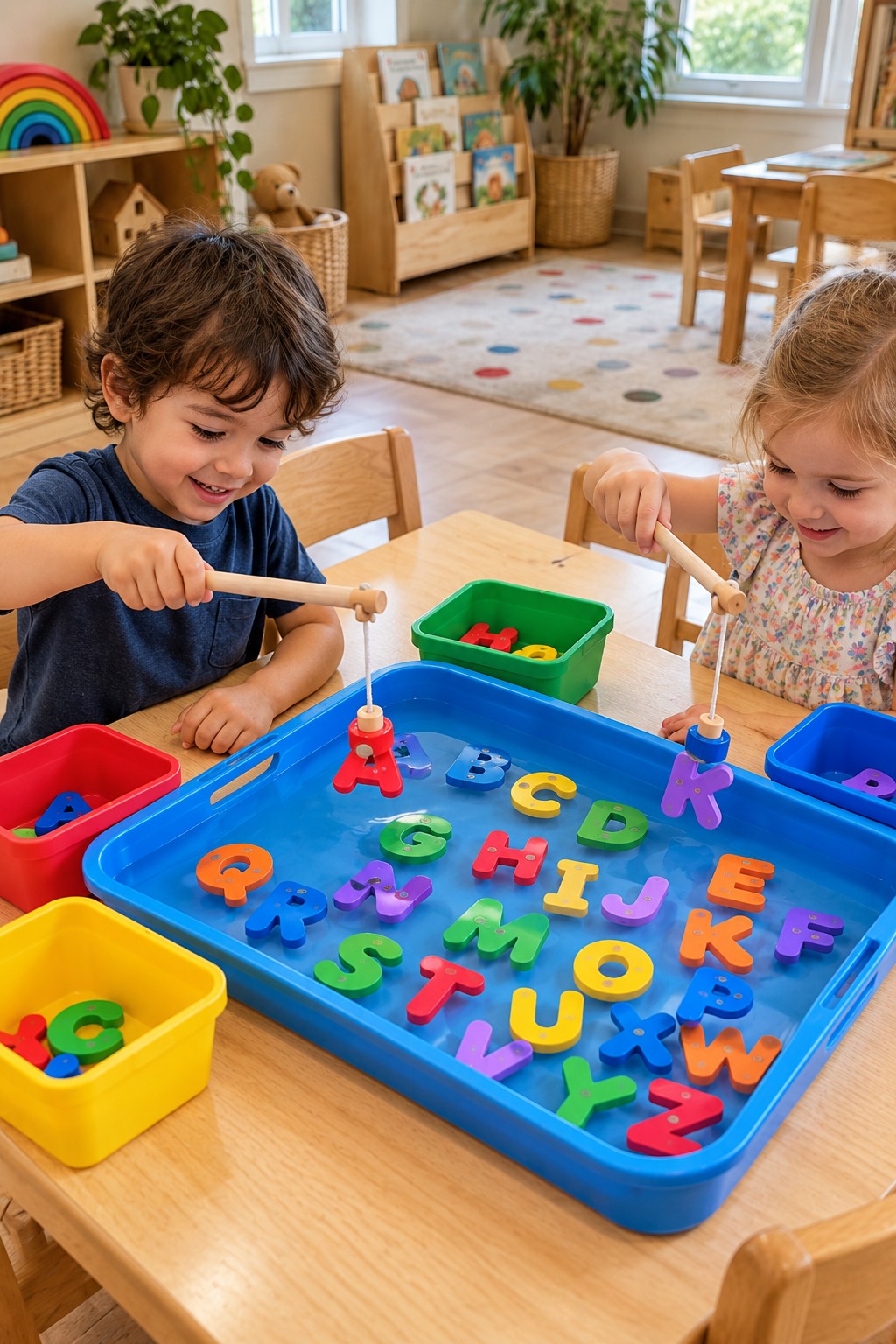
A shallow tray becomes a fishing area, with letter pieces waiting to be lifted by a magnetic rod. Choose a toy set intended for this use and the child's age, then place two or three matching cards beside the tray. In the first round, the child catches any letter, compares it with the cards, and places it on its matching landing spot. Take turns after each catch rather than emptying the tray in a race.
Naming a target before fishing adds a recognition challenge. If controlling the rod takes most of the child's attention, allow picking up a piece by hand so the letter task remains accessible. A dry tray is sufficient; water is not required for the fishing story. Keep cords and rods within the play area, inspect all magnetic components, and remove damaged pieces from use. Count the letters and put the complete set away after play.
7. Nature Letters with Petals, Leaves and Stones
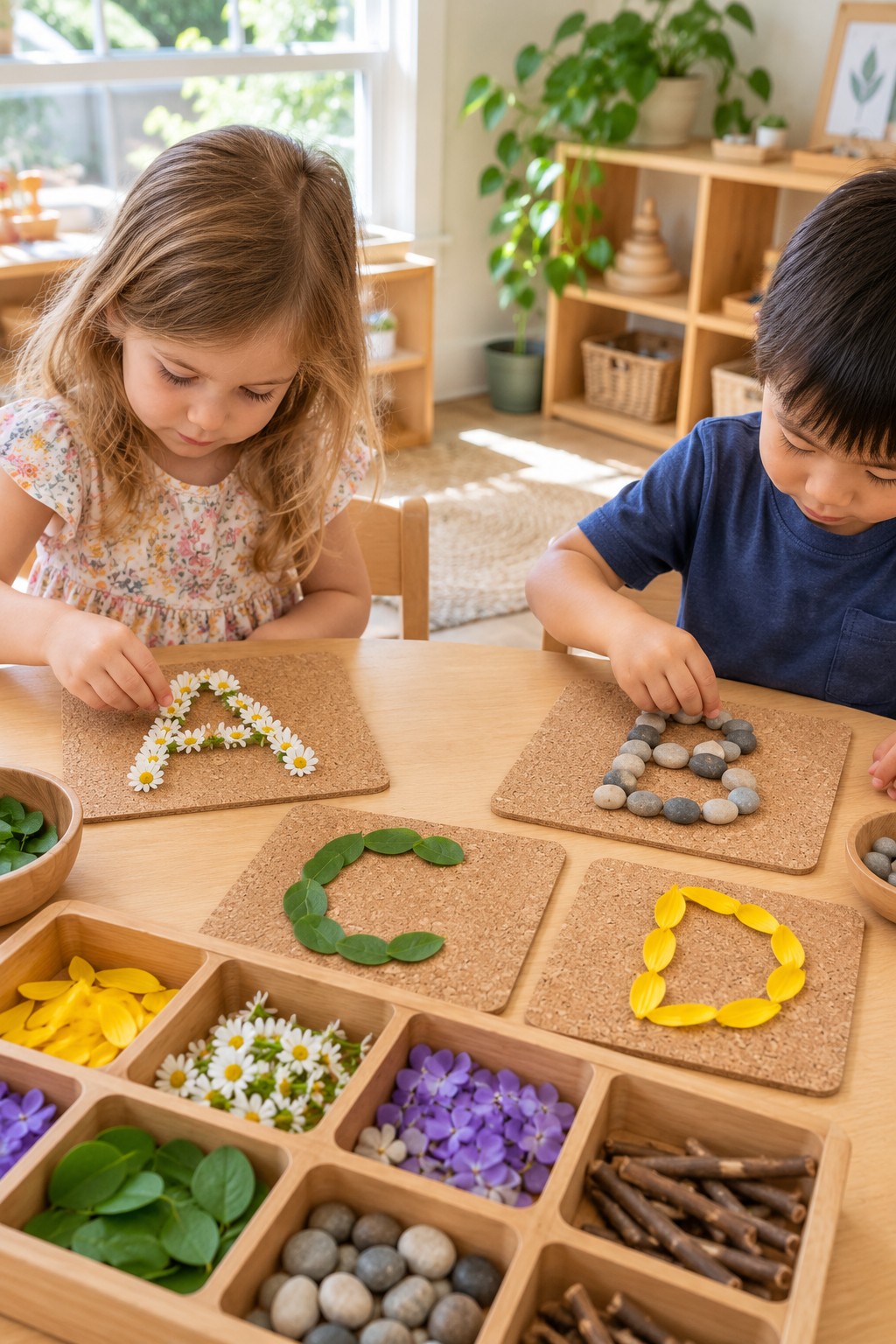
Flowers, leaves and stones form different textures along large letter outlines. Draw a clear model on a sturdy sheet and place a few suitable natural materials alongside it. The first task is to cover one letter's outline, noticing where it turns or curves. The pictured A, B, C and D demonstrate contrasting shapes, but one letter is enough for an initial activity. Name the completed shape together before moving the materials.
An adult chooses familiar, suitable plants and smooth pieces rather than collecting unknown material for children to handle. Avoid tiny objects for children who mouth items, and use paper leaf or petal shapes when natural materials are unsuitable. To extend the game, rebuild the same letter using a different material and compare the result. Keep the outline visible between pieces so the letter remains recognizable. Remove wilting plant material and clear the work surface after the session.
8. Felt Ice Cream Letters for a Pretend Shop
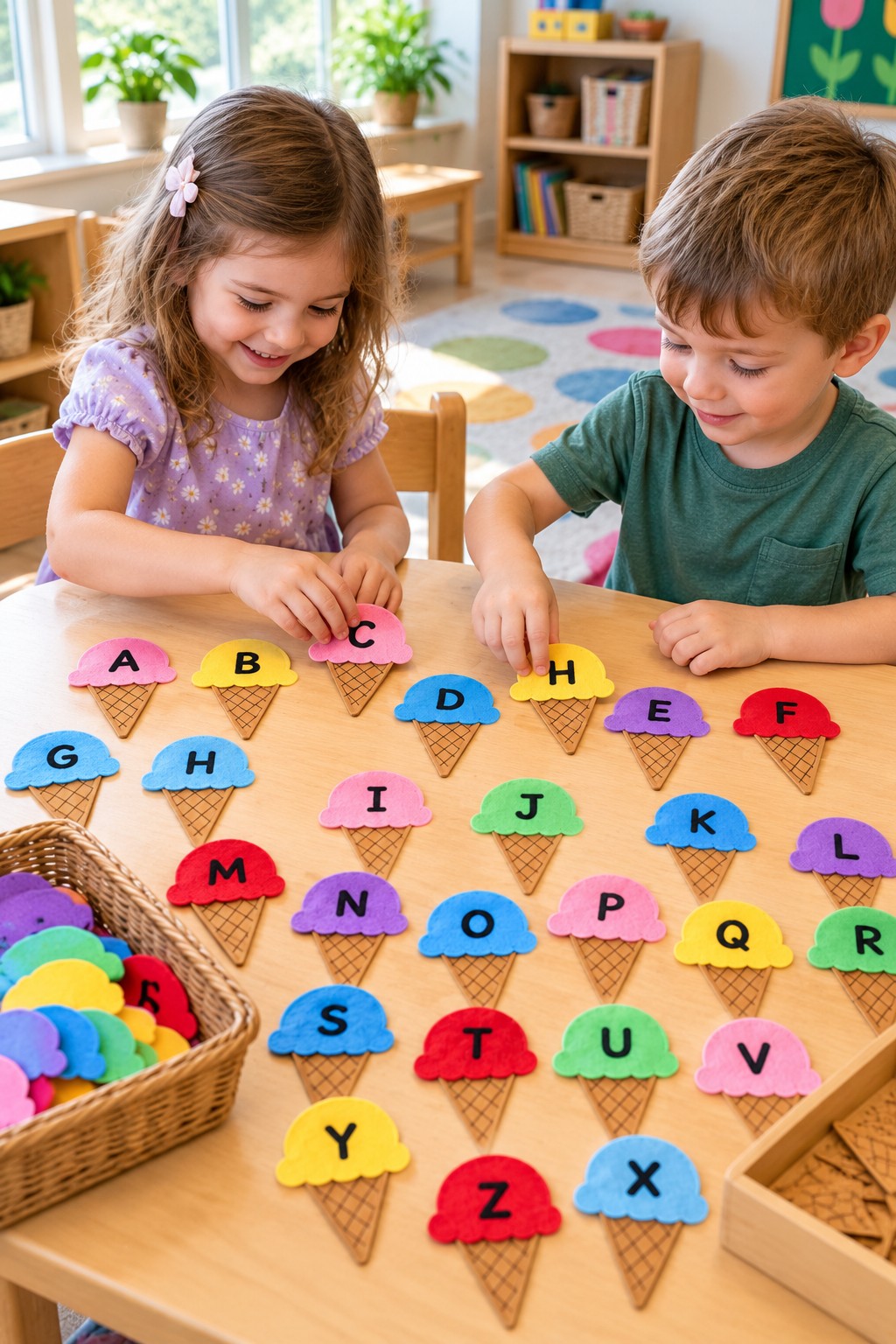
The ice cream scoops carry uppercase letters, while the cones provide a setting for ordering and serving them. Prepare several broad felt scoops with securely attached letter details and start with three choices. An adult orders a named letter; the child finds its scoop and places it on a cone. Change roles after a few orders so the child can ask for a letter while someone else serves it.
Uppercase and lowercase matching requires an additional prepared set. Add an uppercase label to each cone and a corresponding lowercase label to its scoop, then demonstrate A with a before offering several pairs. That is a variation on the pictured uppercase scoop game. Keep letters clear when stacking pieces and avoid making color the only clue. Store cones and scoops together, checking loose details and following the materials' cleaning instructions rather than assuming all felt is washable.
9. Alphabet Hopscotch with Walking and Pointing Options
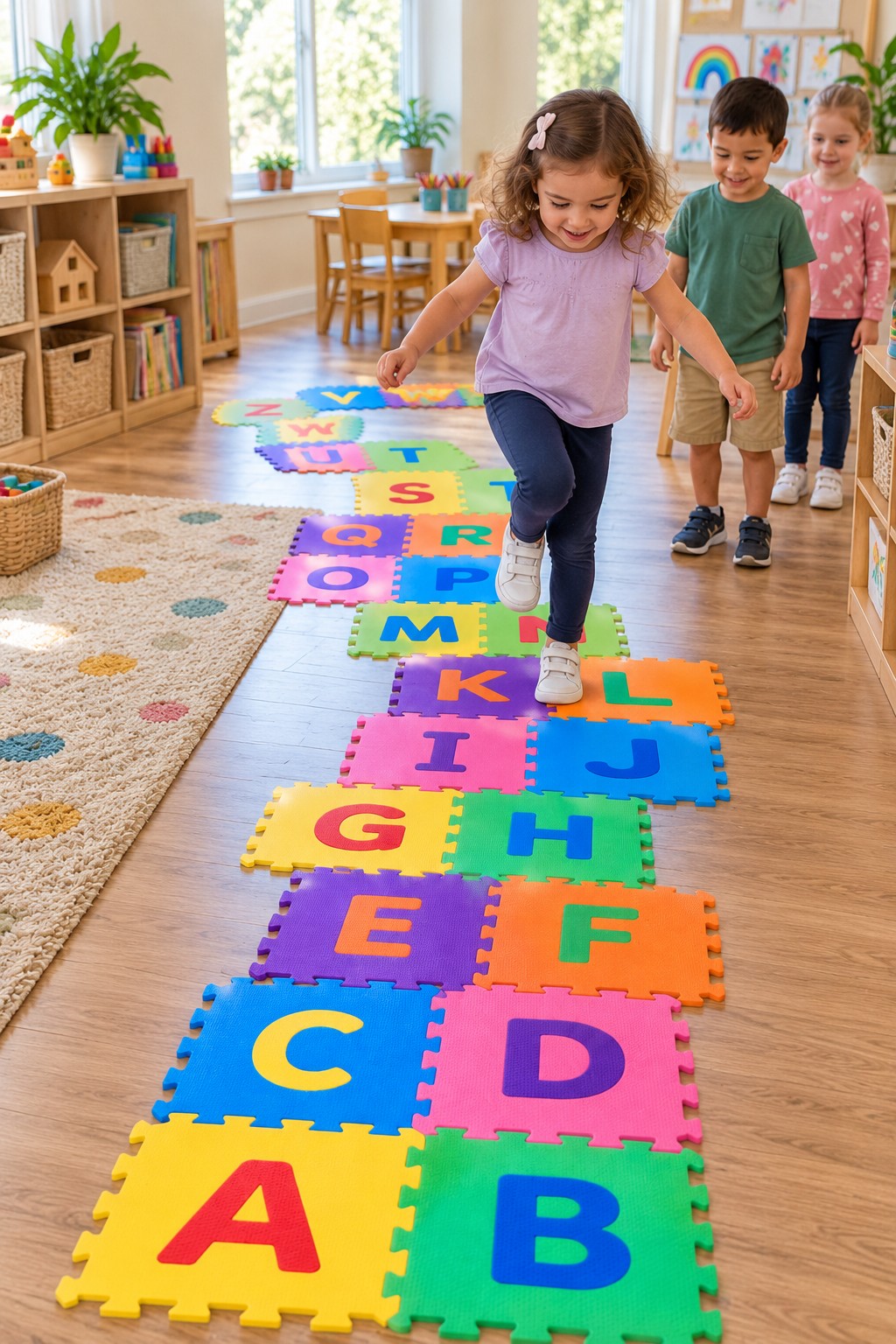
Interlocking letter mats create a course where children can notice letters while moving. Check that the mats connect securely, stay flat and suit the floor before choosing a short section for play. Name one visible letter and invite the child to step onto it. Say the name together, then return to the starting point before another turn. Hopping can be offered if the child is comfortable, but it is not the learning requirement.
Keep the distance manageable for the child's movement and leave room for others to wait outside the course. A child can also point to the target or place a soft counter on it from a stable seated position. Begin with neighboring letters; later, ask for one among a wider selection. Avoid timed turns that make movement accuracy compete with recognition. Put the course away if lifted edges or sliding pieces interfere with safe use.
10. Soft Counter Letter Outlines with Optional Tongs
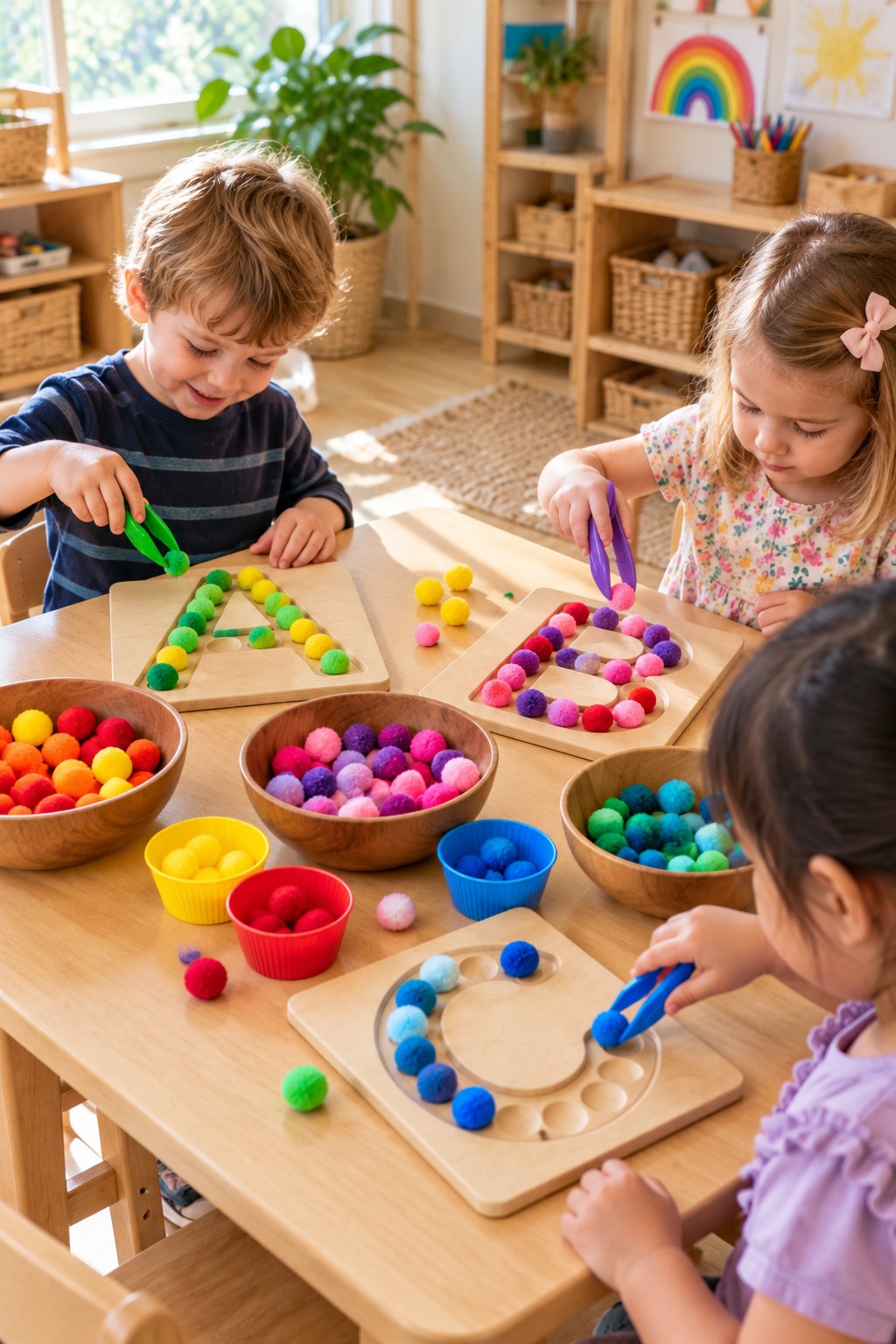
Colorful soft counters fill large A, B and C outlines, making each letter's shape visible through repeated placement. Set out one template and a small supply of suitable counters. The child places them along its lines, using fingers first if that is comfortable. An adult can draw attention to a turn or curve with a simple question, then name the completed letter. Tongs are an optional handling challenge, not a requirement.
Counter size, construction and age guidance still matter even when pieces look large in a photograph. Choose another material if the child mouths them. To simplify the task, demonstrate a few placements and leave gaps for the child to fill. To extend it, compare two completed letters and identify a shared straight line or curve. Store the counters separately from the templates, and inspect tongs for sharp edges, damage and a grip the child can manage.
11. Alphabet Parking Garage with Uppercase and Lowercase Pairs
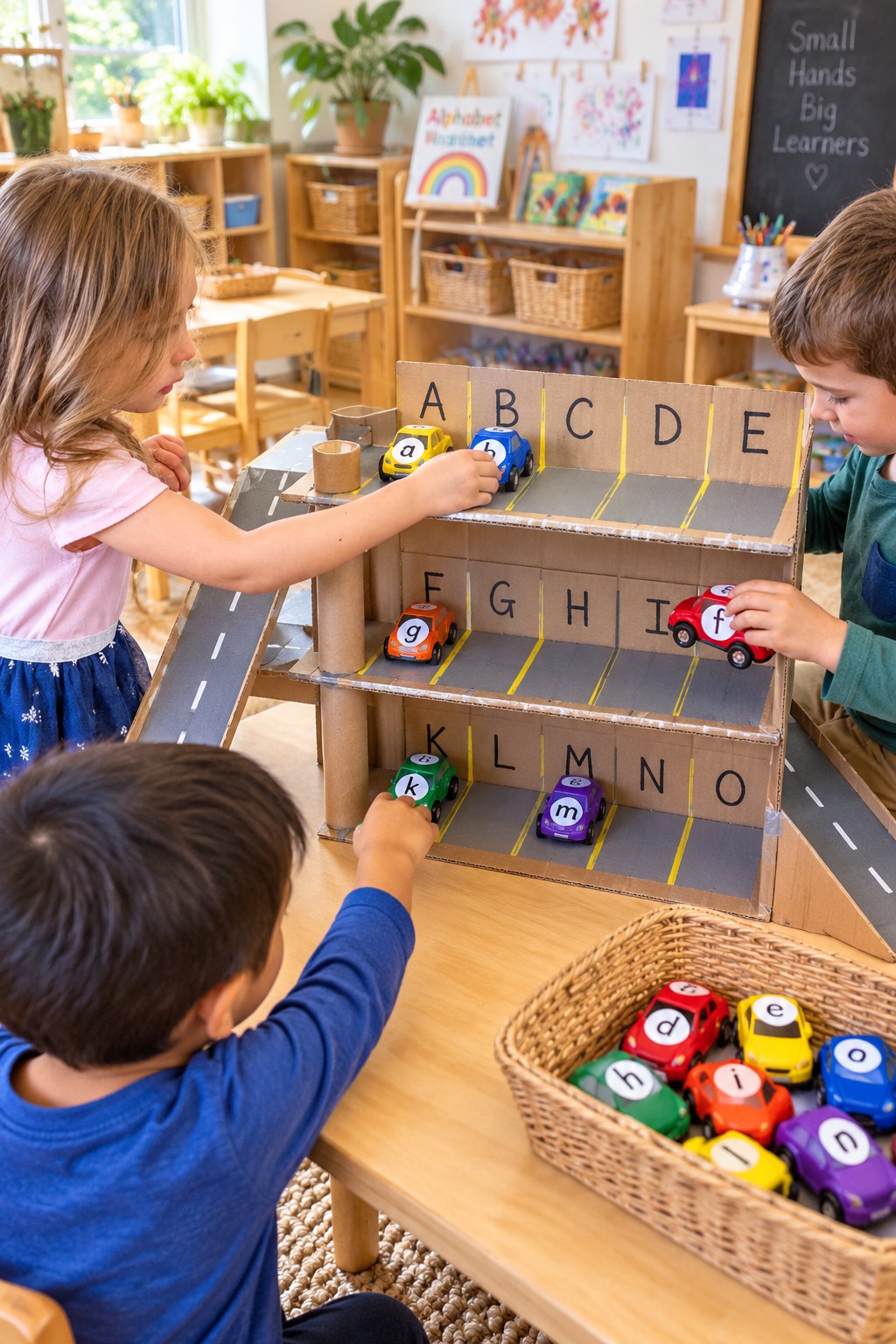
The garage places uppercase labels over parking bays and lowercase labels on cars. Prepare a few pairs and demonstrate driving one car into its matching space. C and c offer a useful first comparison in a clear typeface, while A and a require an adult to show that the different forms represent the same letter. The child chooses a car, compares the label and parks it before another player takes a turn.
A tabletop garage does not need every alphabet bay for one session. Leave unused spaces empty and make sure the car fits without covering the label used for checking. Lowercase forms vary between typefaces, so use consistent models at first and explain alternatives later. If driving distracts from matching, compare the labels beside the garage before parking. Secure labels to suitable toy cars and keep the ramp and waiting vehicles from blocking another child's access.
12. Flower Pot Matching with Letter Centers and Labels
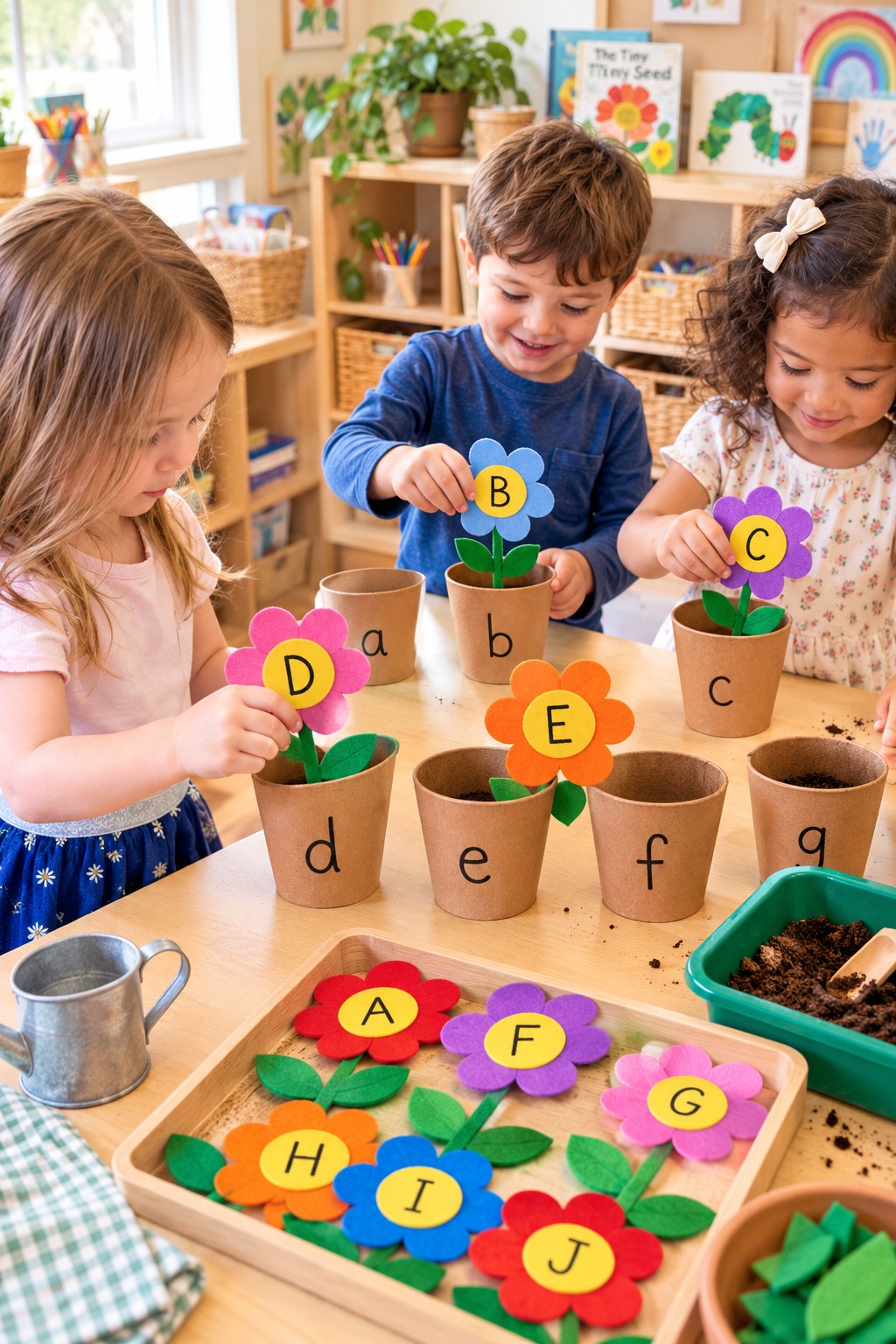
Uppercase letters appear in flower centers, with lowercase letters on the pots below. Make a small set of flowers from card or suitable fabric, attach them to sturdy stems, and use stable containers with readable labels. Show one pair, then invite the child to choose a flower and plant it in its matching pot. Name the letter together once the match is made, keeping the labels visible for comparison.
The pretend planting action adds a purpose without requiring soil or water. An adult prepares stems without sharp tips and secures decorations according to the chosen materials. If matching feels difficult, use two pots and show the corresponding forms beside each other. Later, name a pot first and ask the child to find its flower. Removable labels let you change the set without rebuilding everything. Check that the stems can be removed easily when resetting the activity.
13. Alphabet Post Office with Correct Card Deliveries
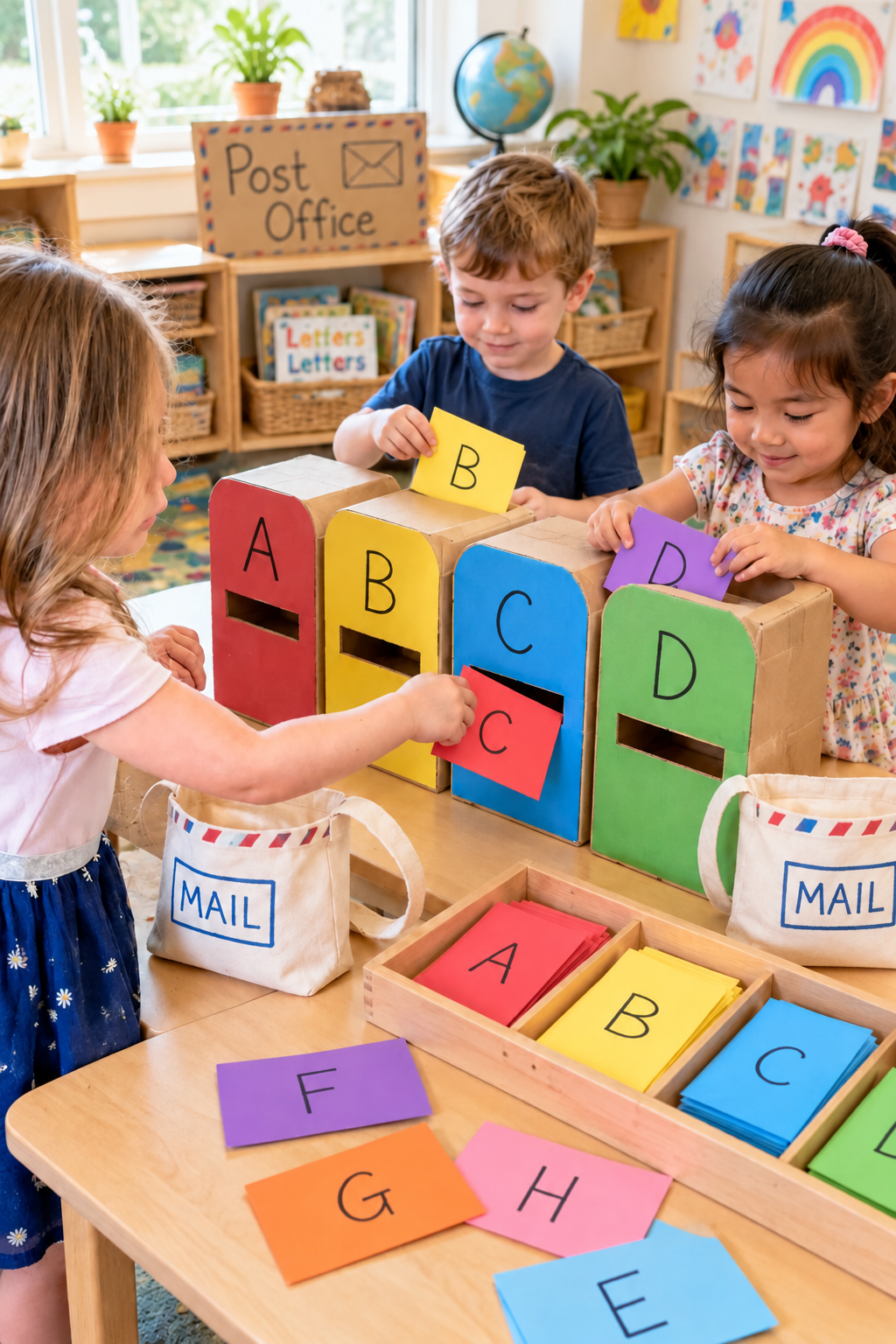
The post office uses uppercase cards and uppercase labels on cardboard mailboxes. The matching deliveries are B to B, C to C and D to D. Adults prepare broad posting slots, smooth the edges and leave access for retrieving the cards. Practical recycled cardboard crafts for kids offer related ideas for preparing and combining clean boxes. Begin with two mailboxes and a few matching cards in a small delivery bag.
The child collects a card, compares its letter with the box labels and posts it before choosing another. After delivery, open the boxes together to check the matches. A second round can use lowercase cards or envelopes with uppercase mailboxes, introduced as a new matching task. Keep unrelated letters out of the first delivery pile. Position the boxes so children can see every label and reach each slot without pushing past another player.
14. Alphabet Pockets for Objects and Beginning Sounds
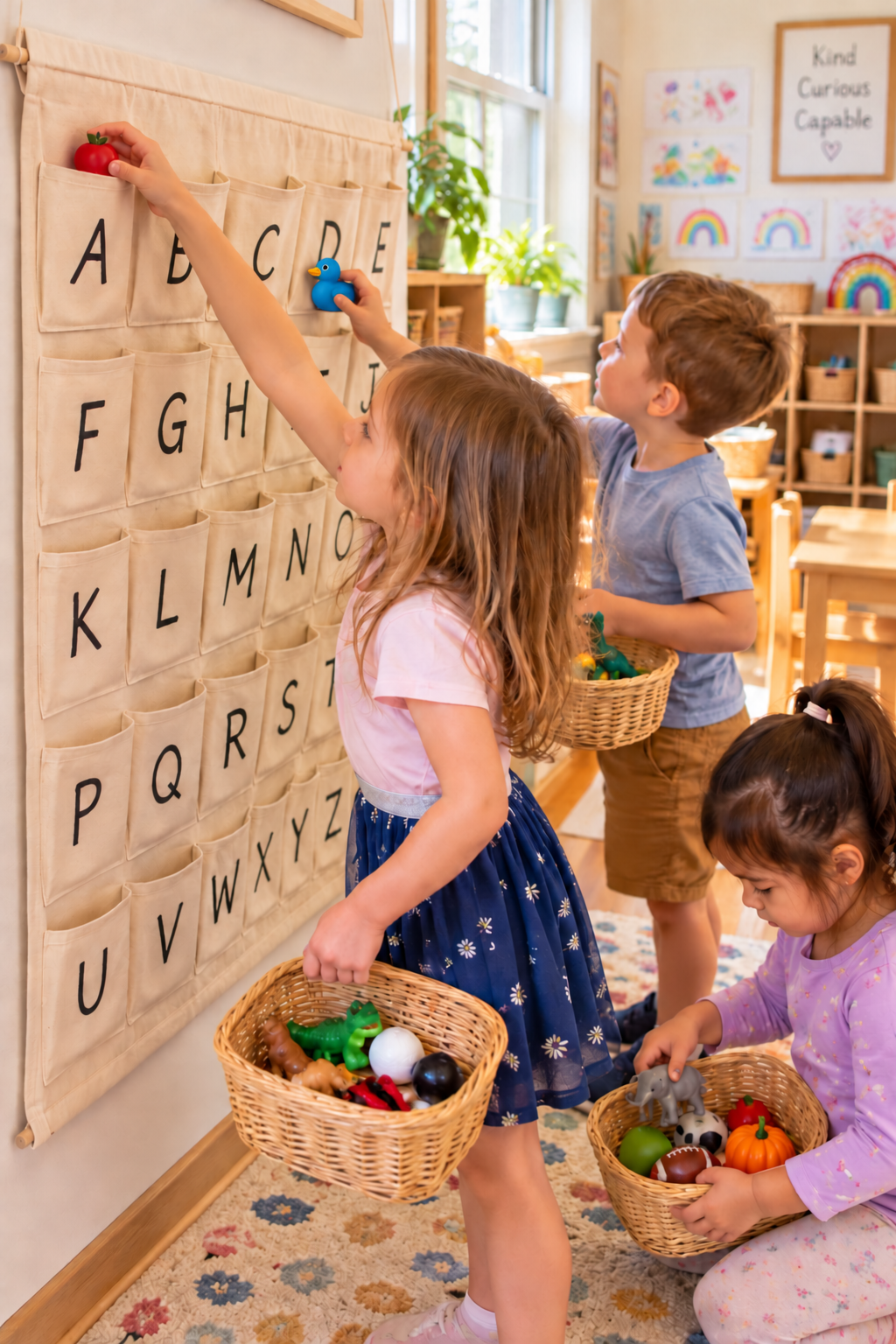
Lettered fabric pockets give familiar objects a place after children discuss their names. An apple belongs with A and a duck with D in the English word game. Before play, an adult selects just a few objects or picture cards, checks that each fits its pocket, and names them with the child. Reachable pockets matter more than filling the full display; cover or leave unused pockets empty for the first round.
Separate the prompts clearly. "Find S" asks for the letter name; "Listen to the start of sun: /s/" introduces a sound before showing its letter. Model that connection rather than expecting a child who recognizes S to infer it independently. A tabletop arrangement of labeled containers offers the same sorting task without high pockets. Empty the selected pockets together afterward, naming the objects again and checking that the panel remains securely mounted when items are removed.
15. Letter Movement Path with Arrows and Destinations
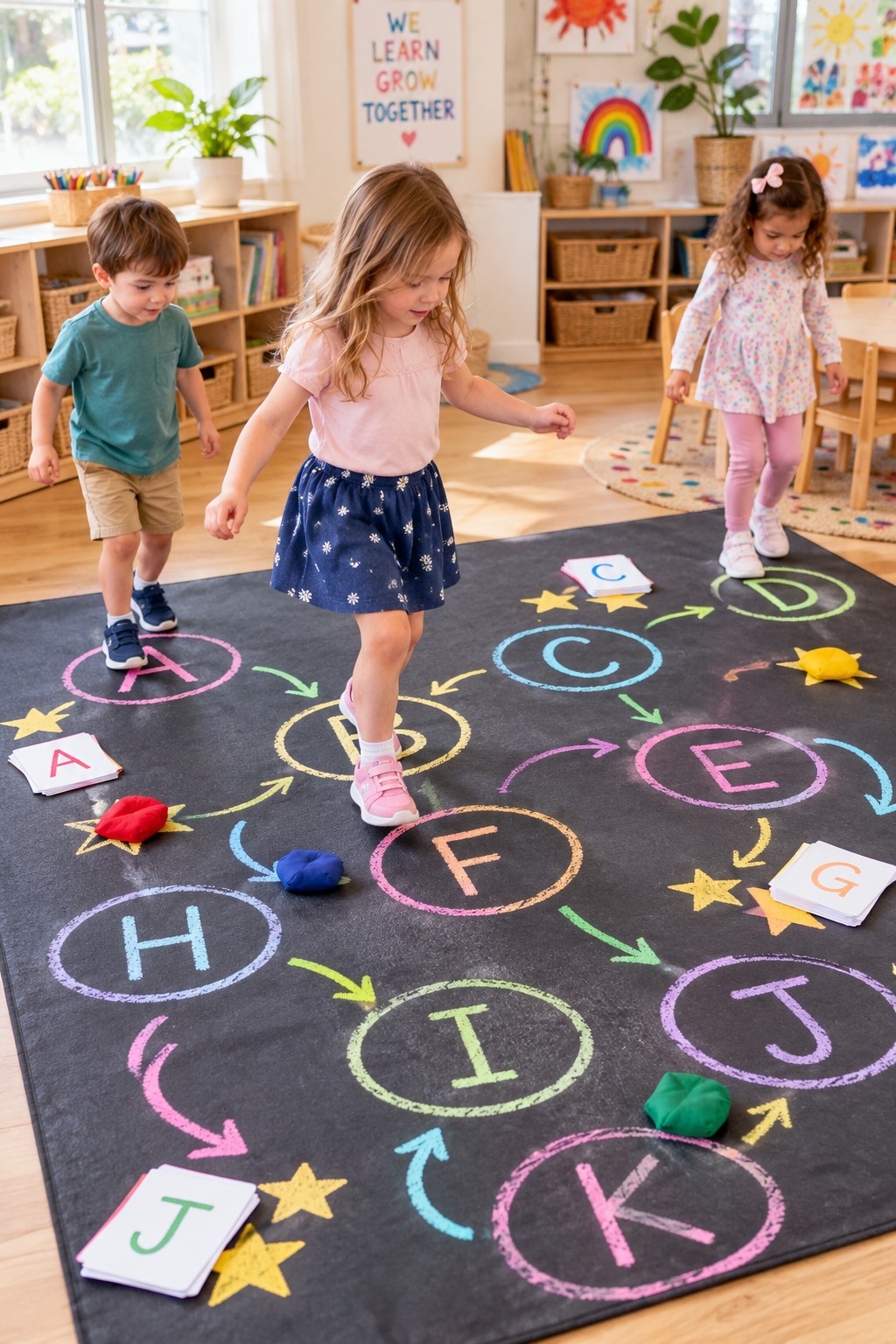
Large letter circles and arrows create a route for following directions. Adults plan a short path, check that every piece remains flat and clear nearby furniture from the walking space. Start with a named destination: the child follows the arrows to B, stops, and identifies it with adult support. Let the next child begin after the route is clear. Alphabet recitation is not necessary for this first destination game.
Another version follows the letters of the child's name, repeating a letter where the spelling requires it. Keep this distinct from an alphabetical sequence so the route has an understandable purpose. A child can trace the route with a finger on a tabletop copy or point to the next destination instead of walking. Make the bends wide enough for comfortable movement and avoid crossing the household's main passage. Remove floor pieces when the activity ends.
16. Alphabet Train with Separate Letter and Cargo Rounds
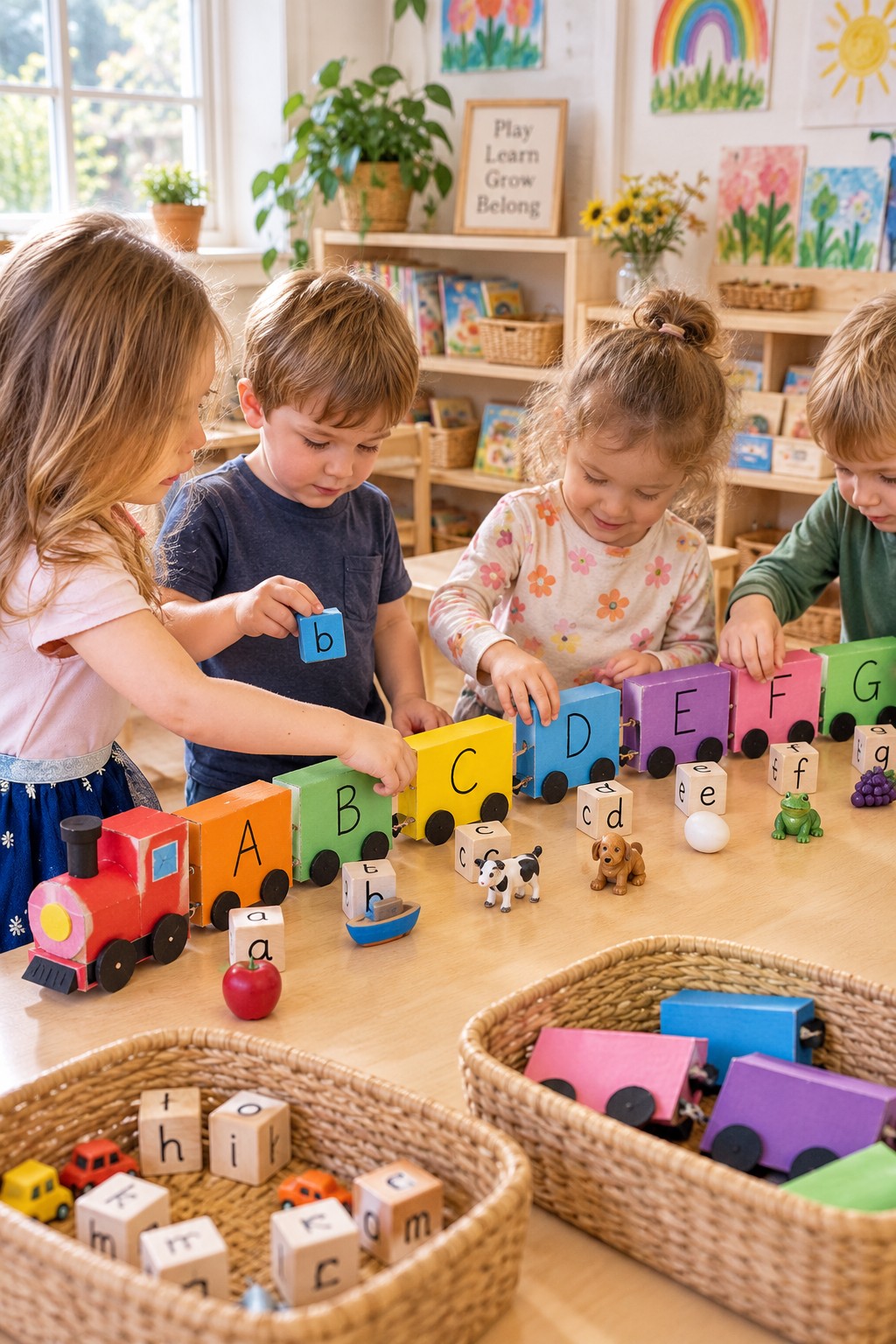
The train combines uppercase carriage labels, lowercase pieces and objects such as an apple, boat and cat. Use a few carriages for a first round of uppercase and lowercase matching: the child finds a, compares it with A and places it on that carriage. Join the chosen cars into a short train and take turns loading one piece at a time. There is no need to assemble all 26 cars.
Picture or object cargo introduces a separate sound task. Say apple together, model its first sound and show A before deciding where the cargo belongs. Cards can replace small toys, and only selected carriages need to be active. Adults prepare secure couplings and verify that loads do not tip the cars or obscure labels. For a later sequence game, arrange three consecutive carriages together. Keep the pieces sorted for resetting rather than mixing every matching goal into one trip.
17. Pretend Pancake Orders with Letter Toppings
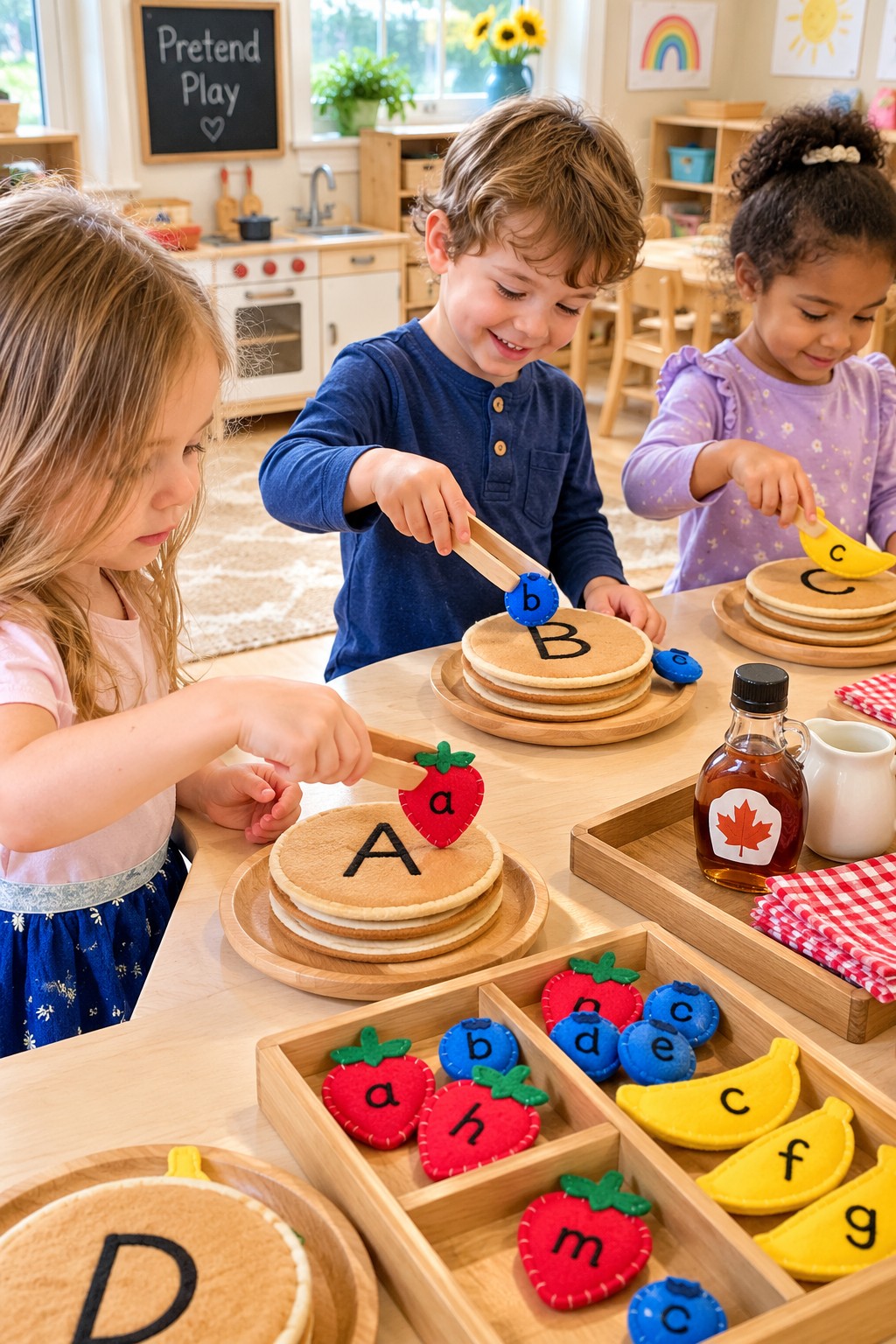
Uppercase pancake bases and lowercase fruit shaped toppings make matching part of a pretend meal. Prepare a small menu of two or three letters, with sturdy pieces that can be lifted easily. A customer asks for an A pancake; the cook selects its matching a topping and serves it on a play plate. Demonstrate the first order, then let the child give an order while the adult takes the cook's role.
Children can switch between ordering, cooking and serving, completing one order before taking another. An optional chef from these sock puppet characters for pretend play can speak the orders without changing the matching task. If remembering the spoken order is difficult, keep a letter card visible as a menu prompt. Later, add one new pair. Choose cleaning methods that suit the actual card or textile pieces, and check attached letter details before putting the set away.
18. Alphabet Farm with Matching Eggs and Nests
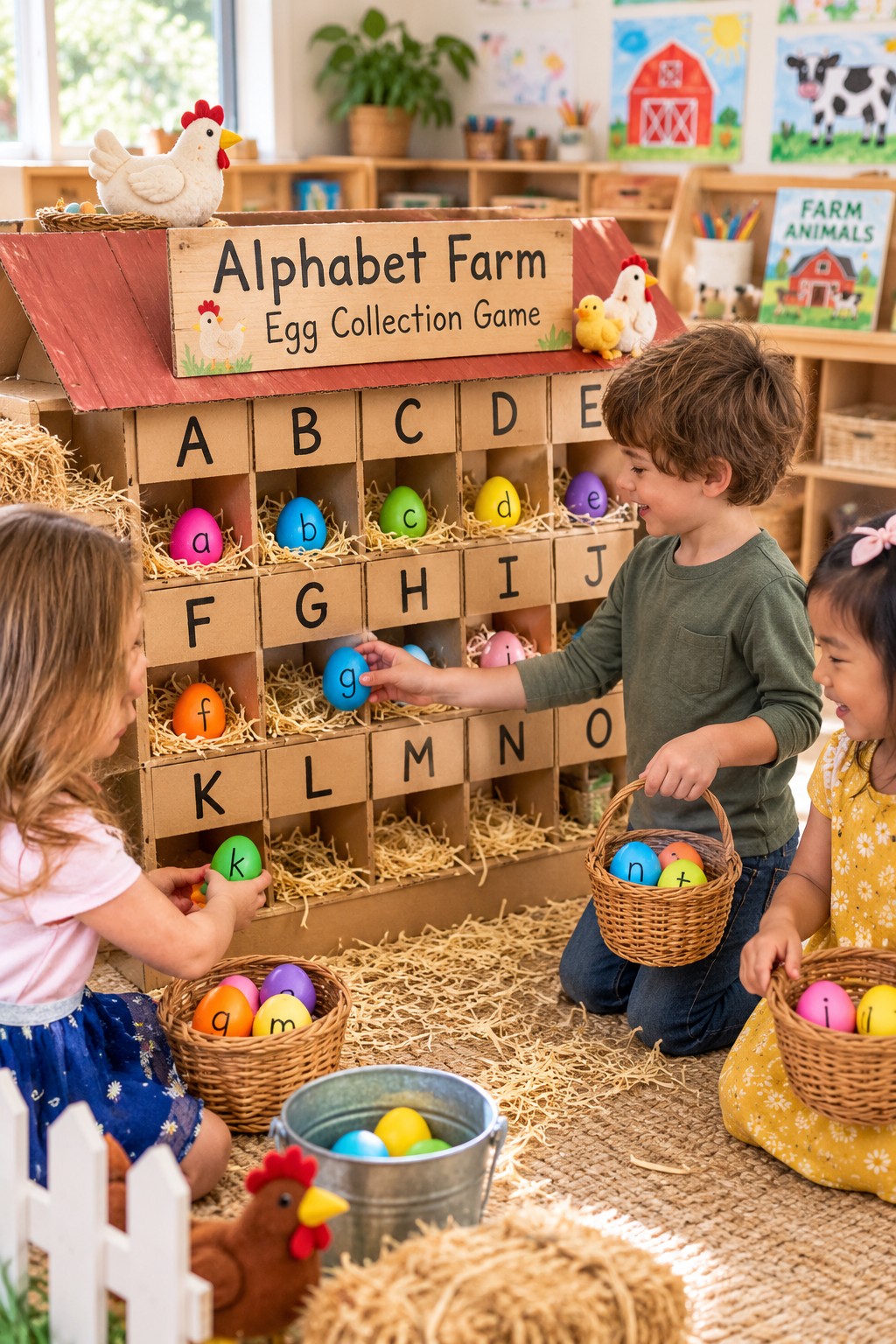
Lowercase letters on pretend eggs match uppercase labels at the nests. Adults choose suitable eggs and secure, readable labels, then set out a short group of pairs with a collection basket. Invite the child to gather one egg, compare its mark with the nest labels and return it to its matching place. Name the letter together before another collection turn. A shared farm story gives each placement a purpose.
Color can help a child navigate the display, but vary colors later if the goal is matching letters rather than colors. For an easier round, present two clearly different letters; for a later challenge, let children check one another's deliveries with adult help. Do not infer age suitability from an egg's apparent size: inspect detachable parts and follow the product's guidance. Count the eggs after play and keep them separate from real food and smaller decorative farm pieces.
19. Feed the Letter Monsters with Two Distinct Games
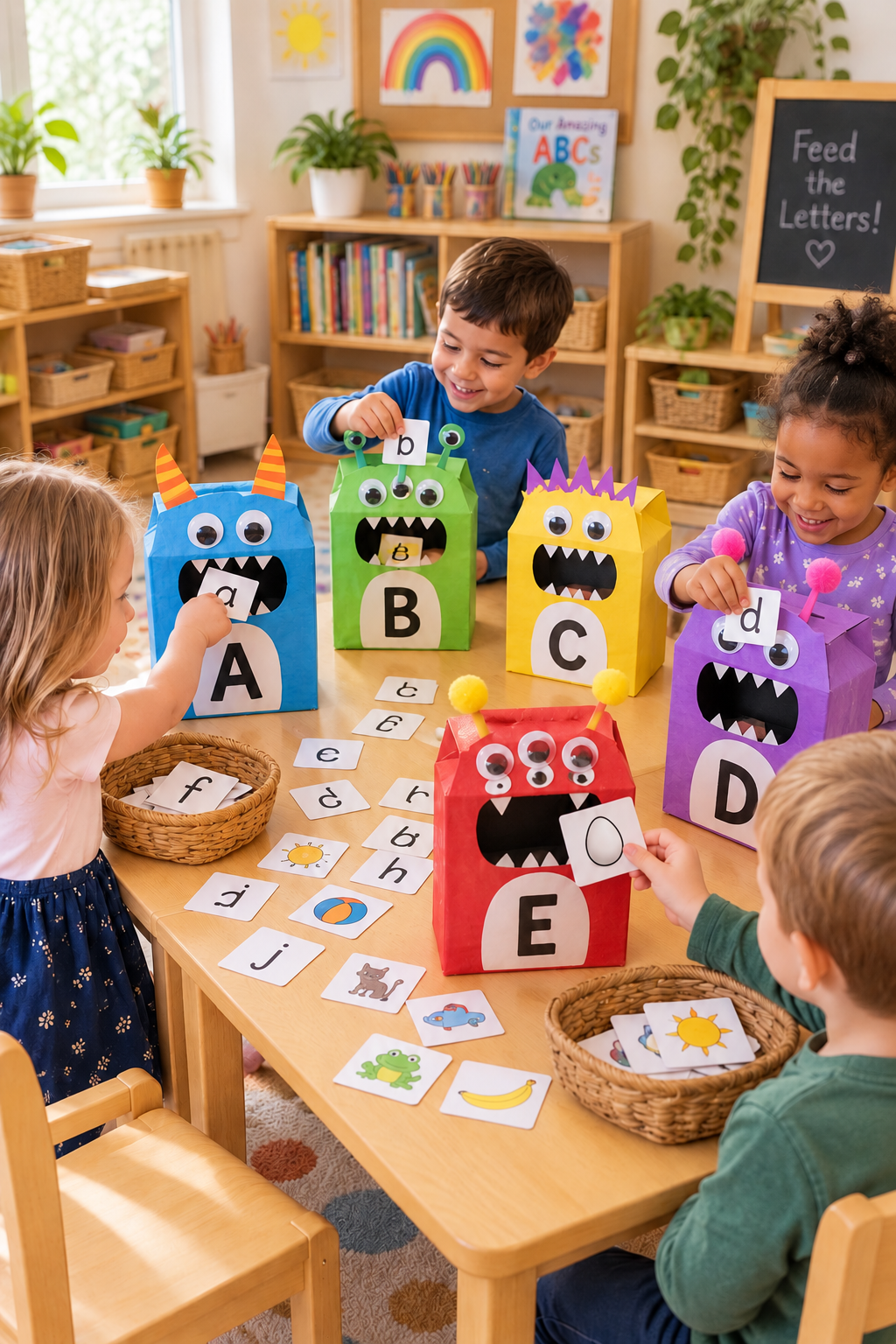
The monster boxes combine uppercase labels with lowercase and picture cards. Start with a letter matching round: a goes to the A monster, b to B and d to D. The child chooses one card, compares it with the box labels and feeds the matching monster before the next turn. Adults cut the mouth openings, smooth their edges and provide a way to retrieve cards without dismantling the boxes.
Use pictures in a separate beginning sound round. Say apple and model its first sound before showing A; say egg before choosing E, as in the pictured egg delivery. This is a sound and letter relationship, rather than matching two written forms. Begin with two monsters and familiar pictures. Later, offer a card with no matching box and a place to set it aside. Keep the feeding openings unobstructed and check decorations for loose pieces after play.
20. Alphabet Safari with Animal Tracks and Matching Cards
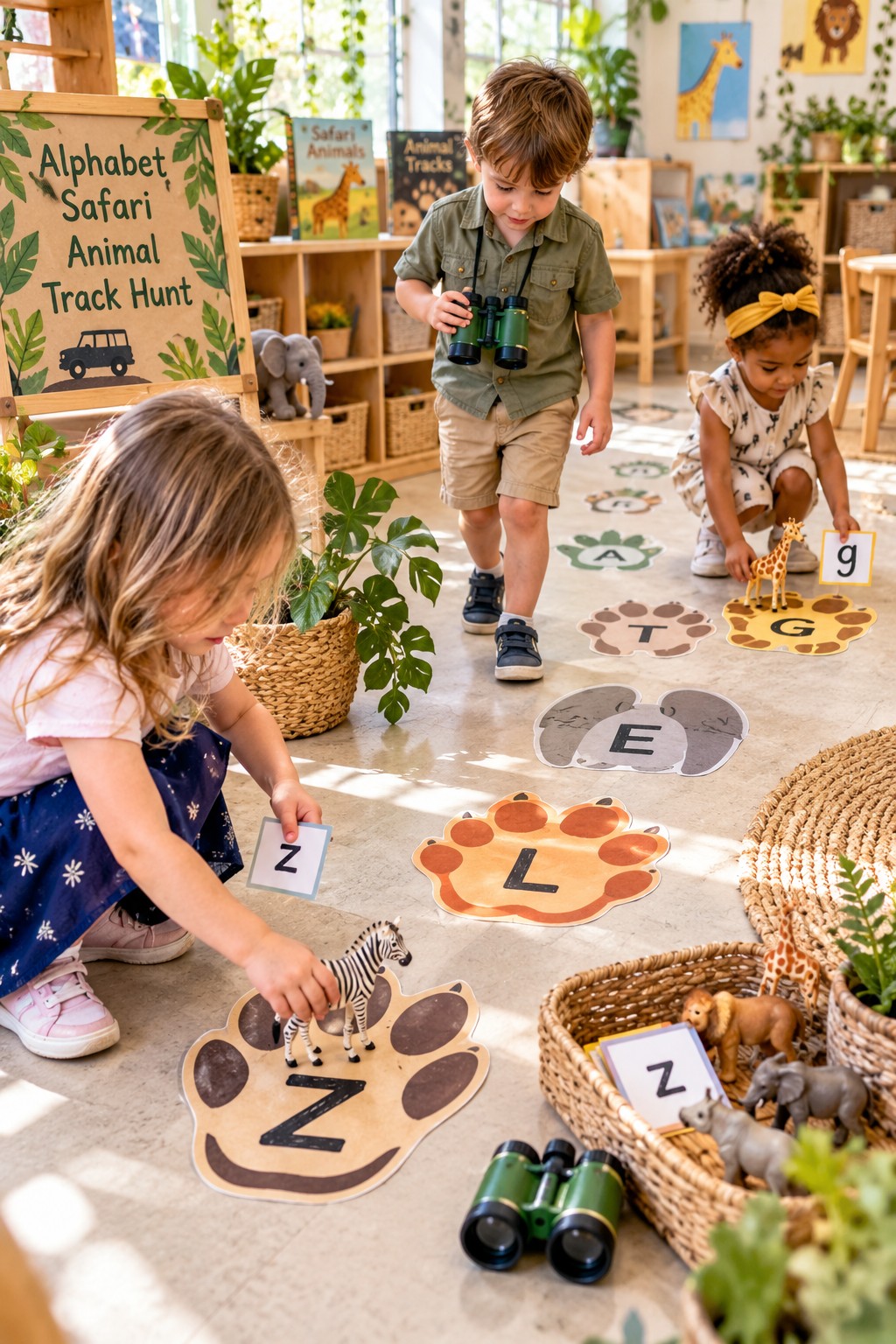
Animal shaped tracks turn letter searching into a short safari. Place a few large, readable tracks along a clear route and give the child one letter card to compare with them. Finding Z with a Z card is a written letter matching task. Let the child point out the match and choose the next search card; toy animals or binocular props can support the story without being essential to the activity.
Animal names introduce another round when appropriate. Say zebra, model its beginning sound and show Z, using a picture or toy whose name the child knows. Agree on the animal's name before asking for a sound match, and choose examples appropriate to the language being spoken. Keep tracks flat and outside daily walkways. A tabletop safari offers the same search for seated play. Finish by collecting the tracks together and checking which letters the child enjoyed finding.
Keep the Next Round Familiar
A favorite setting can stay the same while you change just one element: a new letter pair, a different picture or a new customer order. Notice whether the child enjoys searching, comparing, moving or making a story, and choose the next activity accordingly. Keep models available, help with unfamiliar sounds and stop when interest fades. Put loose pieces away together so the next game starts with a complete, checked set.


Leave a Reply