
Build a bracelet around the stories you want to carry, from a favorite book to a memorable journey. These 18 charm bracelet ideas combine themed pendants, beads, chain and textile details. The illustrated making stages explain an assembly approach you can adapt, with guidance on tools, crimp connections, charm rings and fit. Each inspiration then adds its own choices for placement, personal meaning and comfortable everyday wear.
Table of Contents
- Choose a Base, a Story and Compatible Components
- Assemble the Base Before Adding the Charms
- Check Fit and Movement Before Calling It Finished
- Take the Making Approach into These 18 Charm Themes
- 1. Celestial Story Charm Bracelet
- 2. Vintage Travel Keepsake Bracelet
- 3. Enchanted Garden Charm Bracelet
- 4. Gothic Romance Charm Bracelet
- 5. Literary Reader Charm Bracelet
- 6. Mystical Crystal Charm Bracelet
- 7. Cottagecore Memory Charm Bracelet
- 8. Retro Music Charm Bracelet
- 9. Wild Berry Garden Charm Bracelet
- 10. Art Studio Charm Bracelet
- 11. Ballet and Theatre Charm Bracelet
- 12. Bee Garden Charm Bracelet
- 13. Ancient Mythology Charm Bracelet
- 14. Vintage Circus Charm Bracelet
- 15. Moon Garden Charm Bracelet
- 16. Victorian Secret Garden Charm Bracelet
- 17. Moonlit Sakura Charm Bracelet
- 18. Botanical Mythology Treasure Charm Bracelet
- Balance the Composition and Leave Room for Its Story
- Store and Care for Mixed Material Bracelets
Choose a Base, a Story and Compatible Components
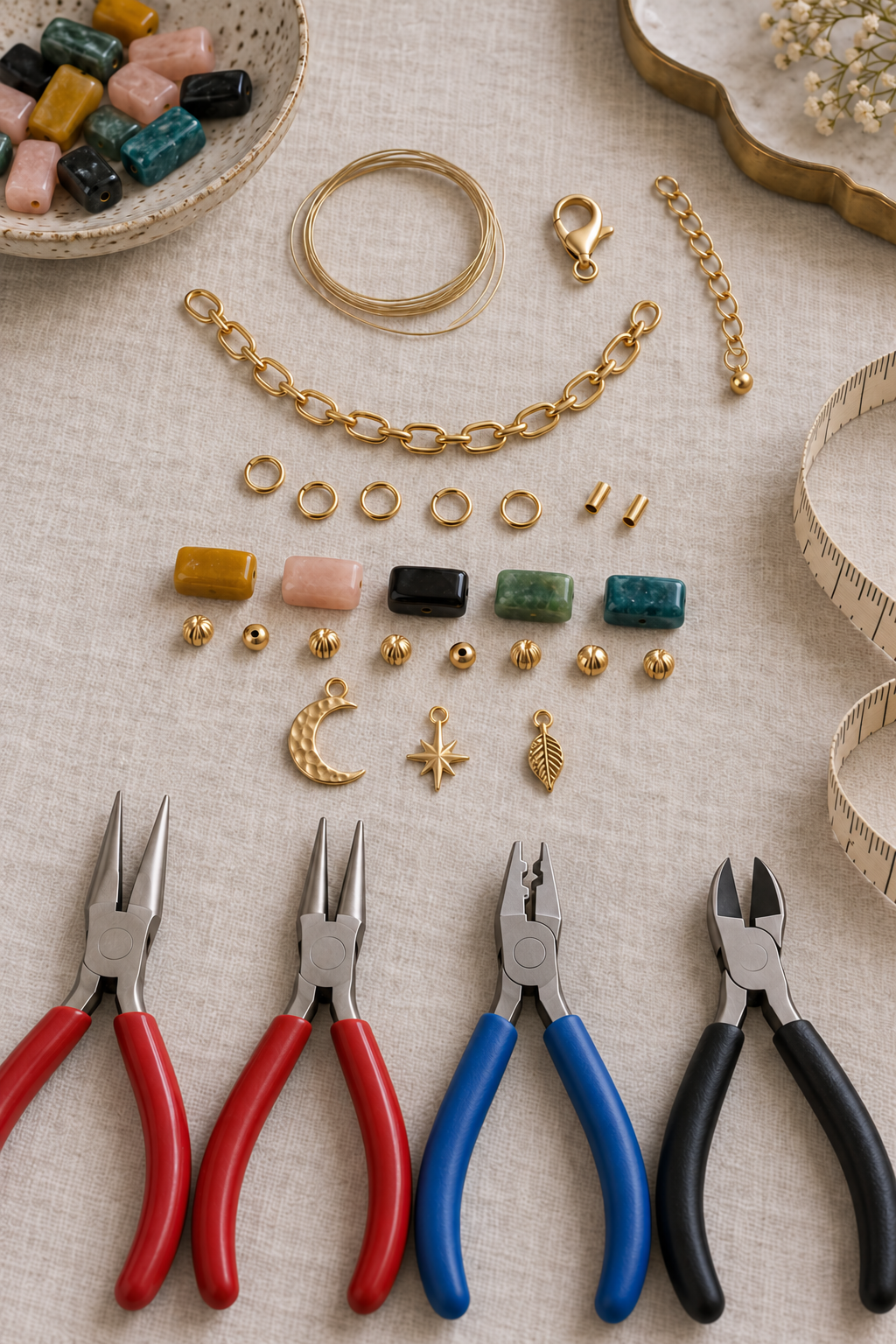
A chain bracelet offers links for adding or changing hanging charms. A beaded section gives color and spacing more control, while the making sequence combines both in one base. Start with the wearer's wrist measurement and the sizing guidance for the chosen base. Clasp length, bead size and charm bulk affect the fit, so do not apply one extra allowance to every style. Try the base before attaching all the pendants.
For the illustrated approach, gather chain, a clasp and extension if needed, flexible bead stringing wire, beads, spacers, matched crimp tubes and suitable charm carriers. Two smooth jaw jewelry pliers help operate jump rings; a crimping tool matched to the tubes secures wire ends, and suitable cutters trim wire and chain where permitted. A bead mat and measuring tool help organize the layout. Select ready charms or prepared drops by their attachment openings and supplier material information, including metal composition where that matters to the wearer.
Assemble the Base Before Adding the Charms
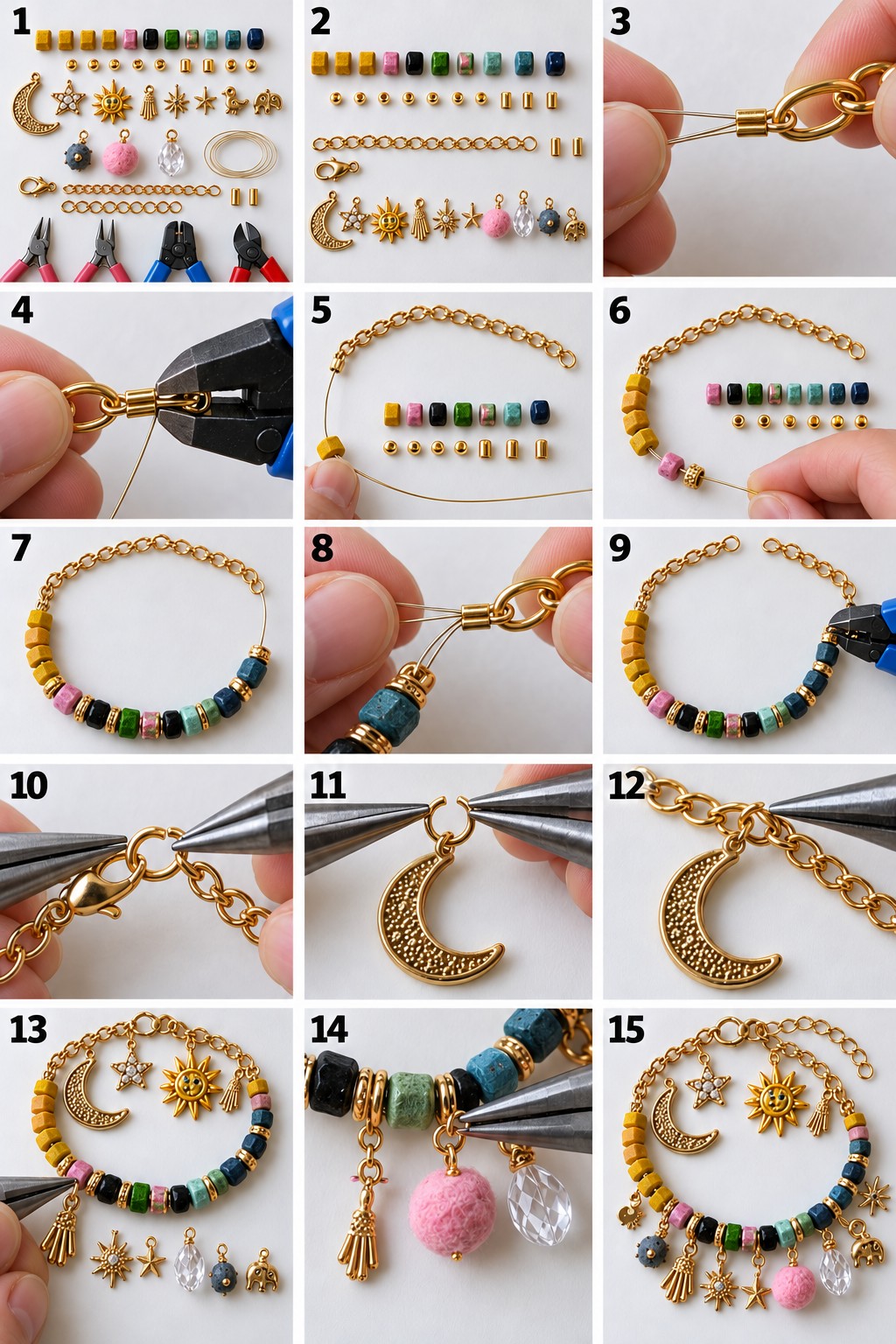
The making sequence begins with loose components, connects a wire section to a chain link, strings beads and spacers, finishes the other wire end, then adds the clasp and hanging charms. Use that order to plan the structure before the decoration. Arrange the color sequence on a mat and include clasp and chain length in the proposed fit. Keep enough working wire for both end connections rather than cutting only the finished bead length.
For each wire end, feed the wire through the matched crimp tube, around the intended attachment link and back through the tube. Leave the connection able to move and keep the wire paths positioned as the crimp system requires. Form the tube using its manufacturer's complete tool sequence; one squeeze with ordinary pliers is not a universal substitute. Route and trim the tail as directed, avoiding a sharp exposed tip. Leave enough flexibility between beads for the finished bracelet to curve around the wrist.
Attach hanging charms with rings that fit both the chain link and the charm eye. Hold an open jump ring on either side of its cut with two smooth jaw pliers. Move one end forward and the other backward rather than stretching the circle wider. Slip on the link and charm, reverse the movement and align the ends without a remaining gap. On the beaded section, include appropriate charm carriers during stringing so pendants have a planned attachment point. Braided bases need their own compatible ends or ready attachment loops; wire crimps are not a universal cord fastening.
Check Fit and Movement Before Calling It Finished
Close the bracelet and move your hand normally. Reposition a charm if it presses into skin, catches a sleeve or makes the bracelet feel unbalanced. Check that the clasp is reachable, rings are fully closed and wire ends are smooth. Avoid repeatedly opening plated or tool-marked components.
Take the Making Approach into These 18 Charm Themes
The same planning and attachment principles can support a celestial, literary or botanical design while the palette and charm arrangement change. Use 1 for a beaded and chain combination, 2 for memories that can grow over time, or 8 for a more open chain layout. The following inspirations help you decide what to include and where it belongs; adapt the base and fittings to your chosen components rather than assuming every bracelet needs the same construction.
1. Celestial Story Charm Bracelet
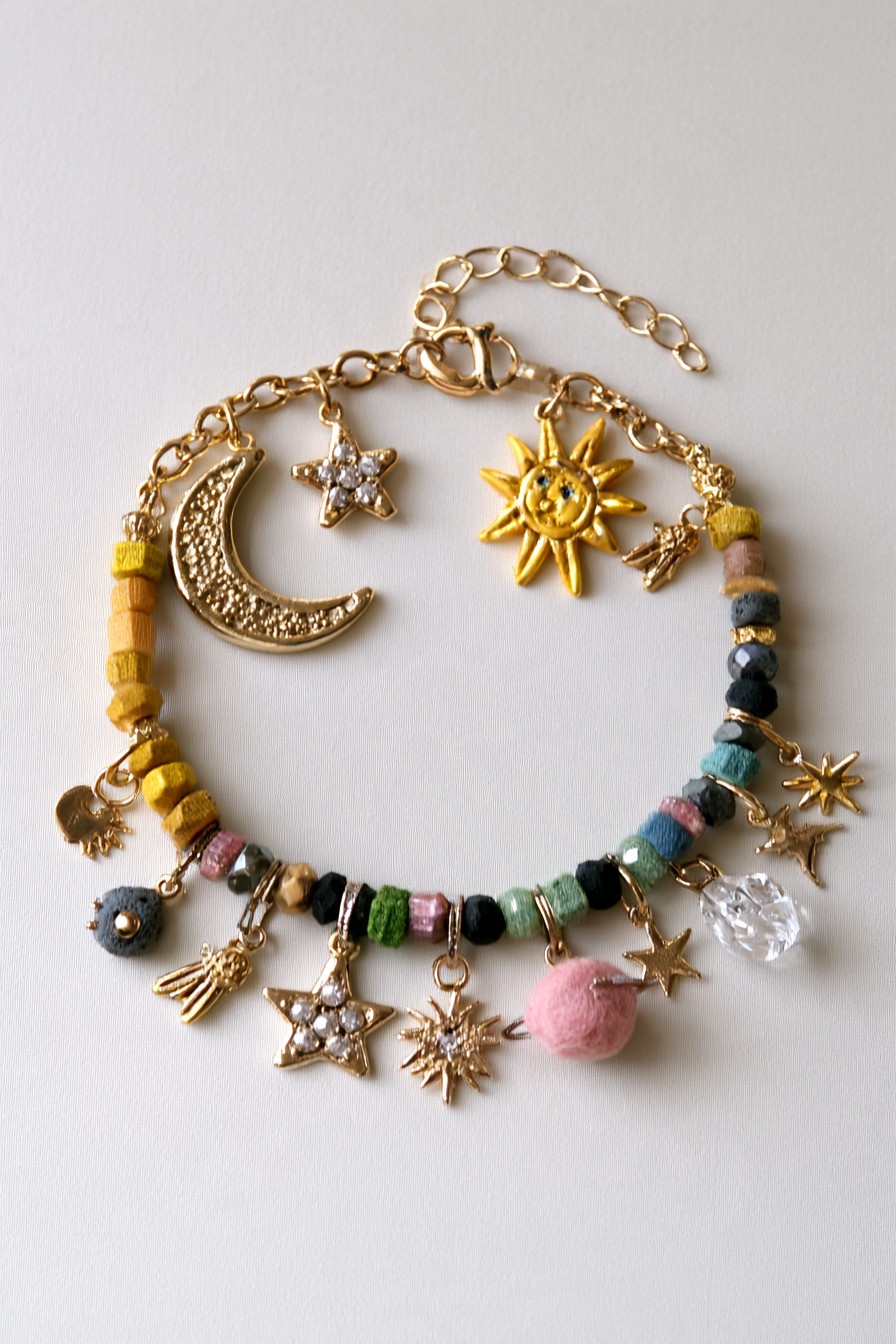
Moons, stars, a smiling sun, faceted drops and soft pompom accents make this celestial bracelet more varied than a row of identical astronomy symbols. The beaded arc adds mustard, green, pink, black and teal, while the chain section leaves room for hanging motifs. One prominent moon or sun can anchor the story without giving every charm equal visual importance.
Plan the colored beads and the hanging symbols as two related parts of the design. Match the chain finish to the spacer and attachment findings, then place the longest drop away from the clasp so it does not obstruct opening. Use the illustrated crimp method only if choosing a compatible wire and bead system. A zodiac motif or a bead in a meaningful color can replace one decoration without crowding the base. Check the soft pompom's attachment and care information separately from the metal pieces. Keep the focal moon visible when the bracelet settles on the wrist.
2. Vintage Travel Keepsake Bracelet
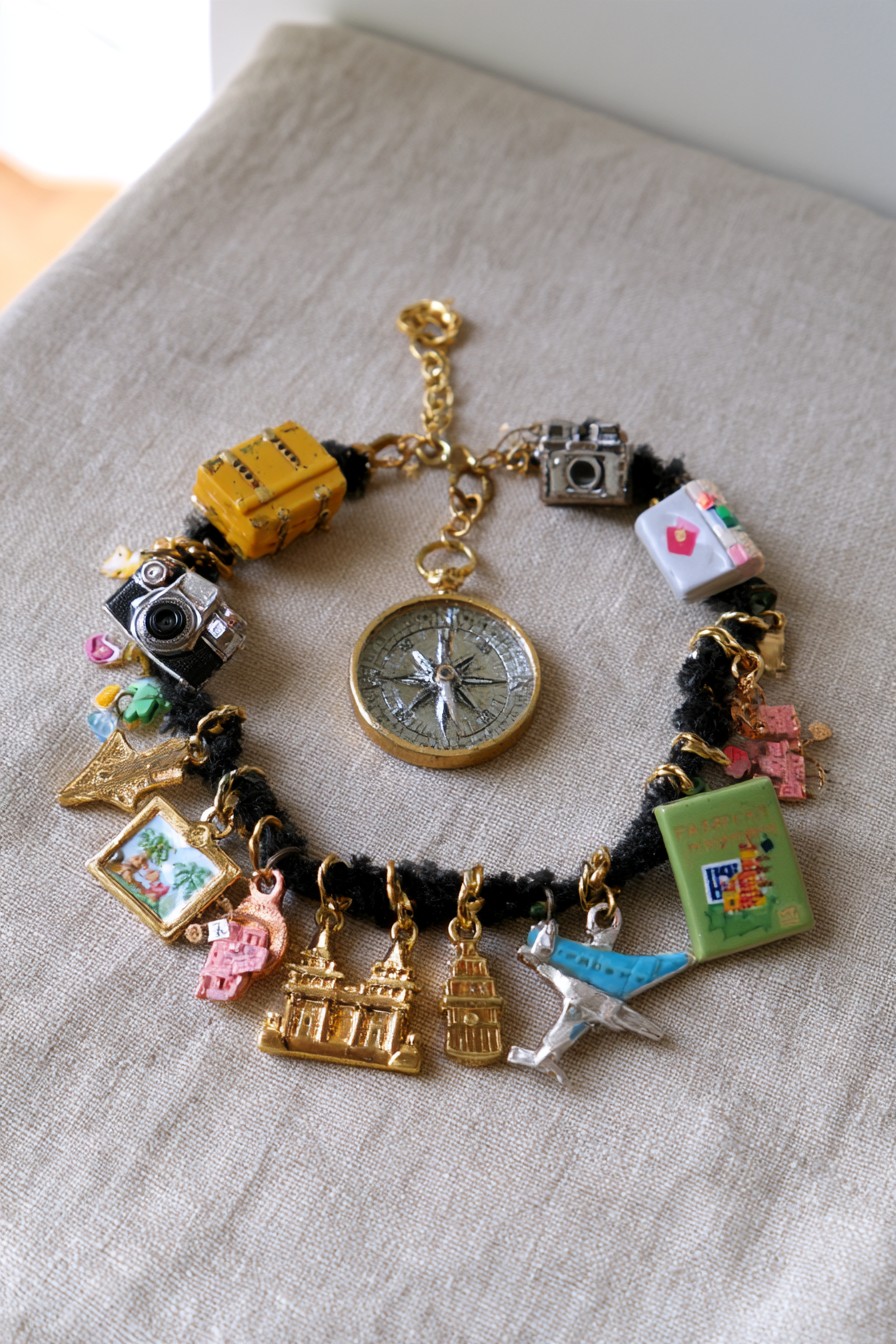
A travel bracelet becomes much more meaningful when its charms represent actual memories instead of generic destinations. Cameras, luggage, airplanes, maps, landmarks, and compass motifs provide a useful starting vocabulary, but the bracelet can gradually evolve as new journeys are added.
Choose a few charms linked to actual trips, such as a camera for photographs, an airplane for a first flight or a landmark connected to a visit. The dark textured section and warm findings can hold those different colors together. To add a later memory, use a ring suited to the base's existing attachment point and the new charm eye, following the opening and closing method above. Test its hanging position on the wrist before deciding the arrangement is complete. Leaving some links unoccupied lets the story develop without making the bracelet longer or denser than you prefer.
3. Enchanted Garden Charm Bracelet
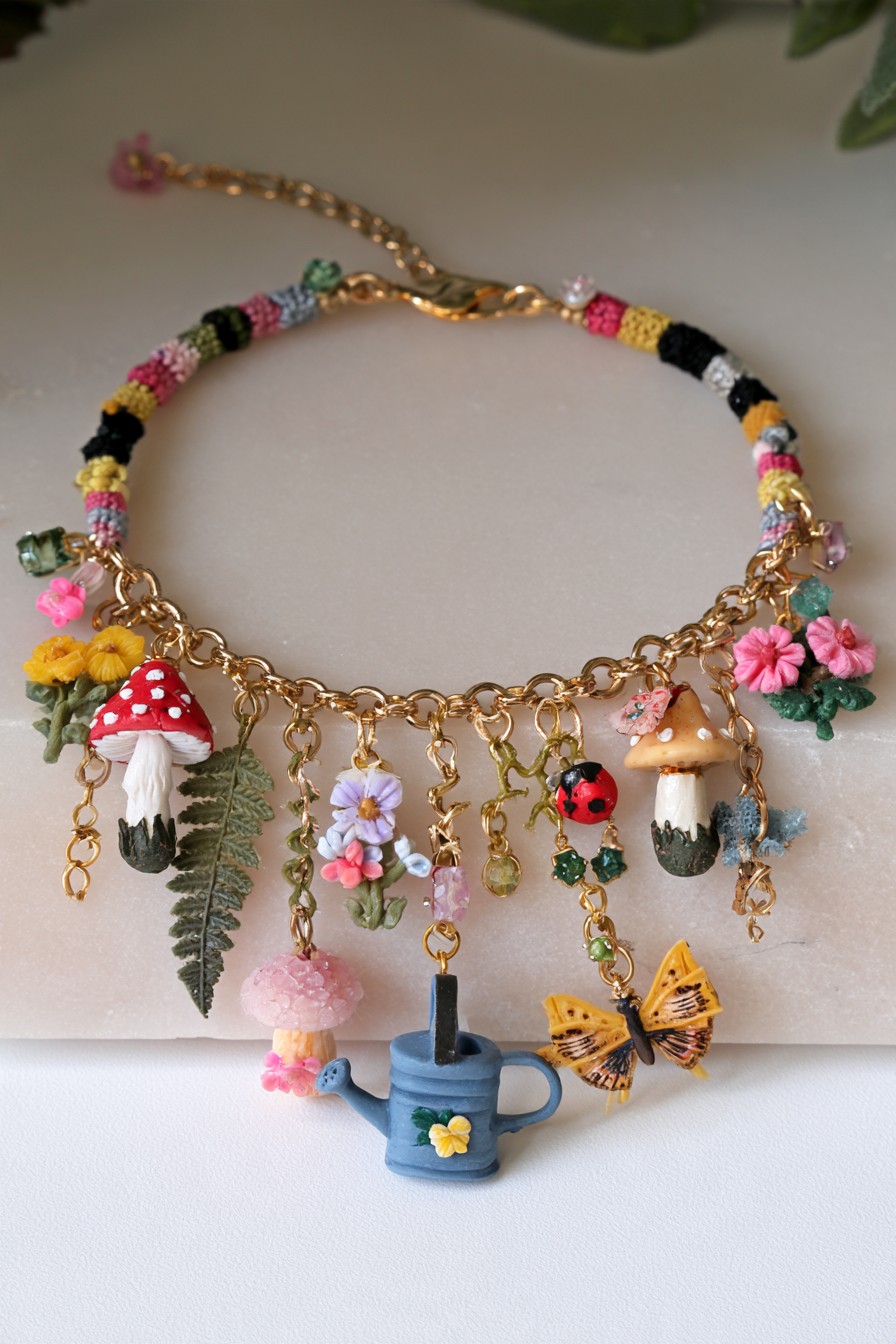
Garden inspired jewelry feels richer when botanical forms are combined with the small creatures and tools associated with a working garden. Ferns and flower clusters establish the plant theme, while butterflies, ladybugs, mushrooms, and a miniature watering can introduce variety and storytelling.
Separate the structured watering can and mushroom shapes with smaller floral or insect motifs so their outlines remain recognizable. The beaded upper section can repeat flower colors without requiring another dangling piece. If choosing the combined base method, plan charm carriers in the bead sequence before finishing the wire ends. The long watering can arrangement should be tried with the hand moving, not judged only from its position on a tabletop. A shorter version or fewer hanging pieces can preserve the garden story. Personalize with plants or tools connected to your own garden instead of copying every charm.
4. Gothic Romance Charm Bracelet
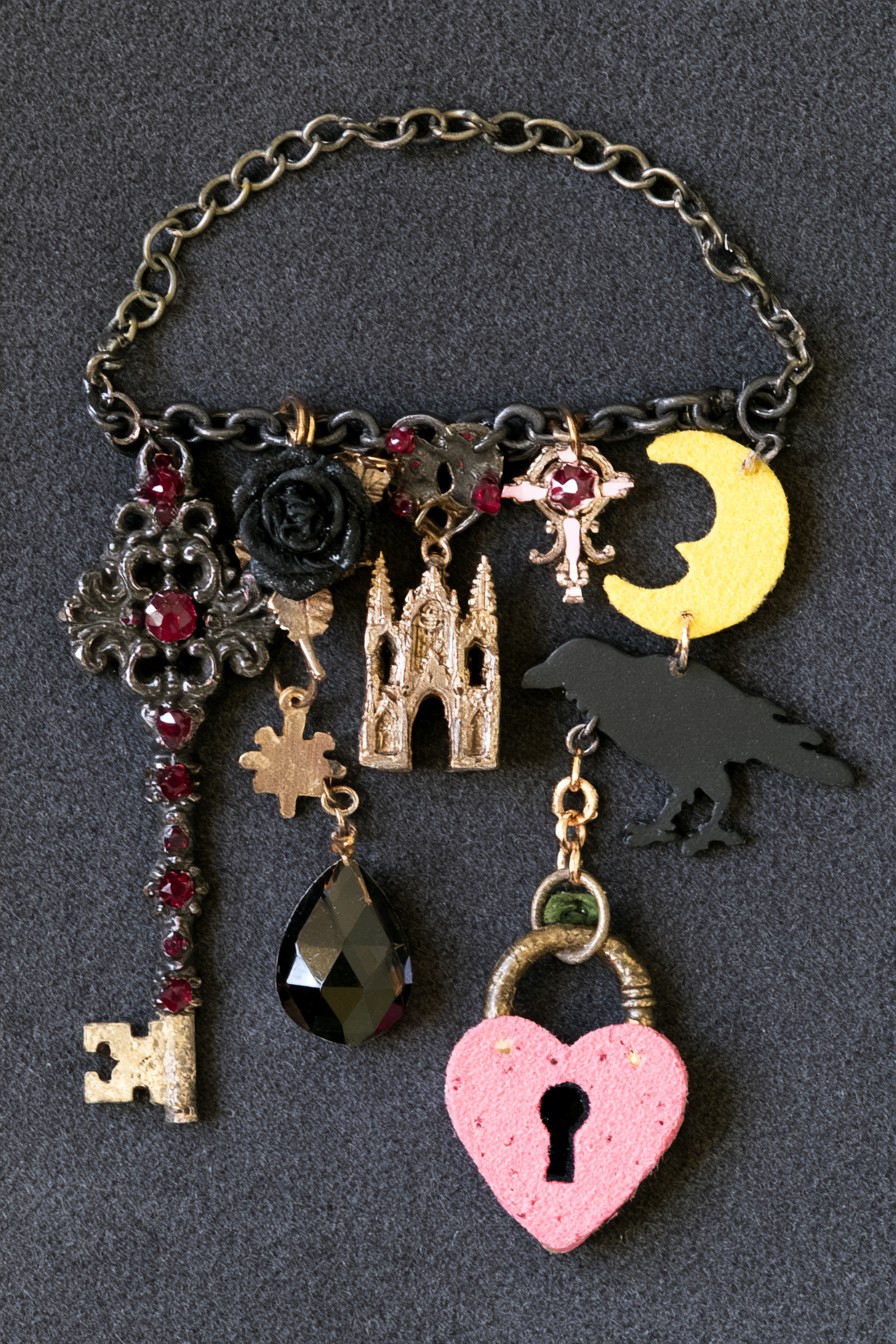
A rose shaped charm, cathedral motif, raven, crescent moon and heart lock establish this bracelet's romantic Gothic character. Dark outlines are interrupted by warmer metal tones and concentrated red accents. The photograph shows the rose's form, but not whether it was carved or made by another process. Several long hanging pieces contribute drama, making their behavior on the wrist part of the design decision.
A long heart lock or key gives the design a focal point, but its resting position needs checking against nearby pieces and clothing. Fasten it at a suitable link, then try the bracelet with the wrist turning and a sleeve in place. If the lock swings awkwardly, shorten its connector or select a smaller symbol that keeps the theme. Dark and warm metal finishes are visual descriptions unless their materials are documented. Repeat one red accent elsewhere for continuity, and leave the closure area relatively open so decorative chains do not tangle around the clasp.
5. Literary Reader Charm Bracelet
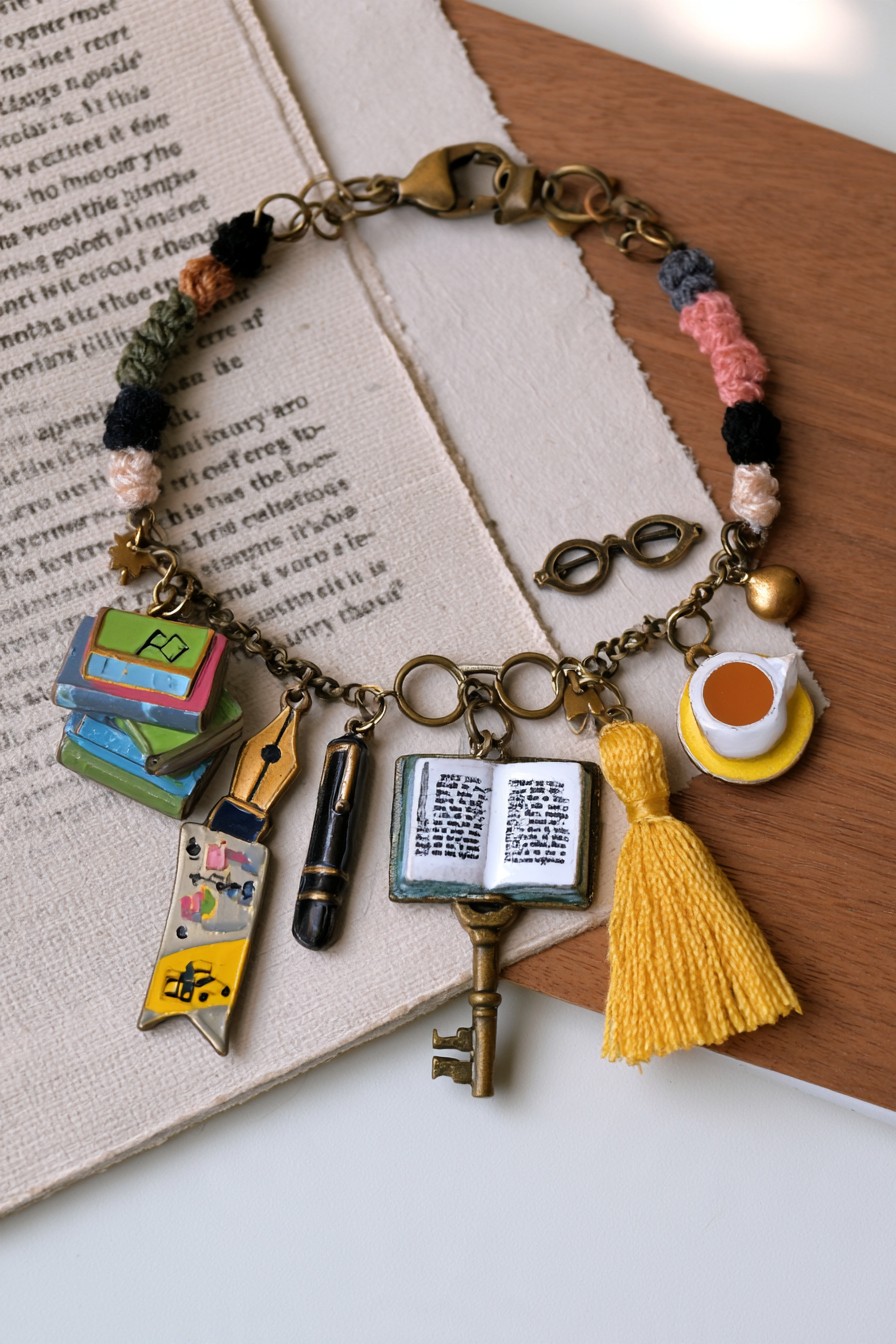
A literary bracelet can represent the wider experience of reading rather than relying only on miniature books. Stacked volumes establish the theme, while a pen, glasses, key, open book, cup and tassel suggest writing, curiosity and familiar reading rituals. Brass toned, aged looking metal suits the nostalgic palette without establishing the components' actual alloy or production date. The wrapped textile sections add a softer texture among the detailed objects.
Choose the reading rituals that matter to you before adding every literary object. One book, a pen and a cup can carry the story, with a small textile accent connecting their colors. The pictured yellow tassel is noticeably longer than nearby charms, so assess how it behaves while writing, handling a book or wearing a sleeve. Shortening or removing it need not weaken the reading theme. Use a chain or prepared base that provides suitable attachment points for the book shapes, and check that their corners do not press against the wrist when the bracelet rotates.
6. Mystical Crystal Charm Bracelet
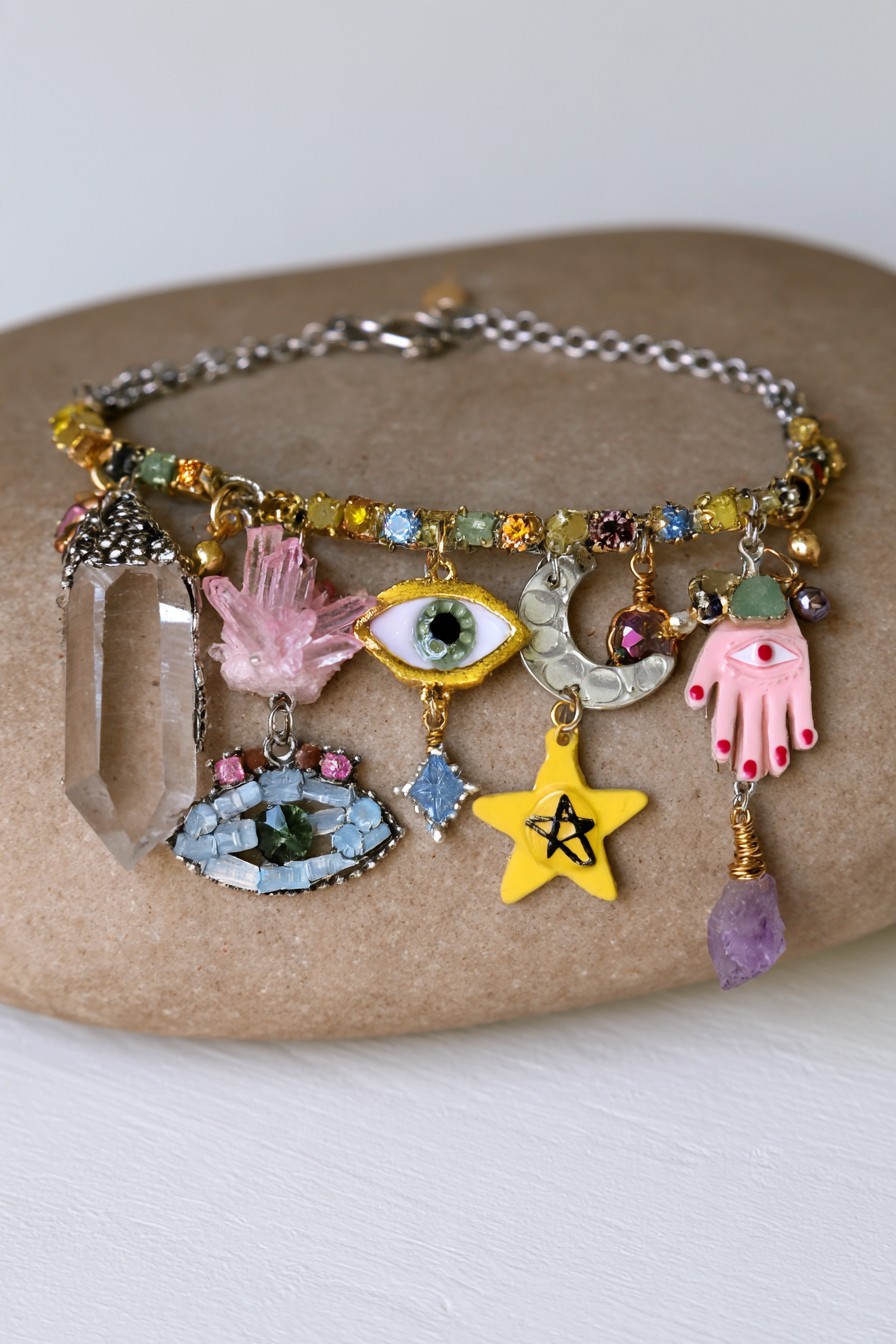
Clear pointed forms and colored faceted drops sit beside an eye, moon, star and hand motifs in this eclectic bracelet. Their irregular outlines provide variety even when the metal findings repeat one warm tone. Choose the symbols for their personal associations and appearance, and use supplier information to identify the beads and stones. Spacing is especially important where a long point hangs beside a broad figurative charm.
Select the actual bead or pendant material from the seller's specifications, particularly if the cleaning needs differ from the metal findings. Space pointed forms where they can hang without repeatedly knocking broader pieces, and check their edges before adding them. A small bead can repeat a color with less bulk than another large pendant. Leave enough room to reach the clasp and try the design in normal hand positions. If a point feels uncomfortable, a rounded drop offers the same color story. Keep symbolic meanings personal rather than assigning guaranteed effects to the stones or motifs.
7. Cottagecore Memory Charm Bracelet
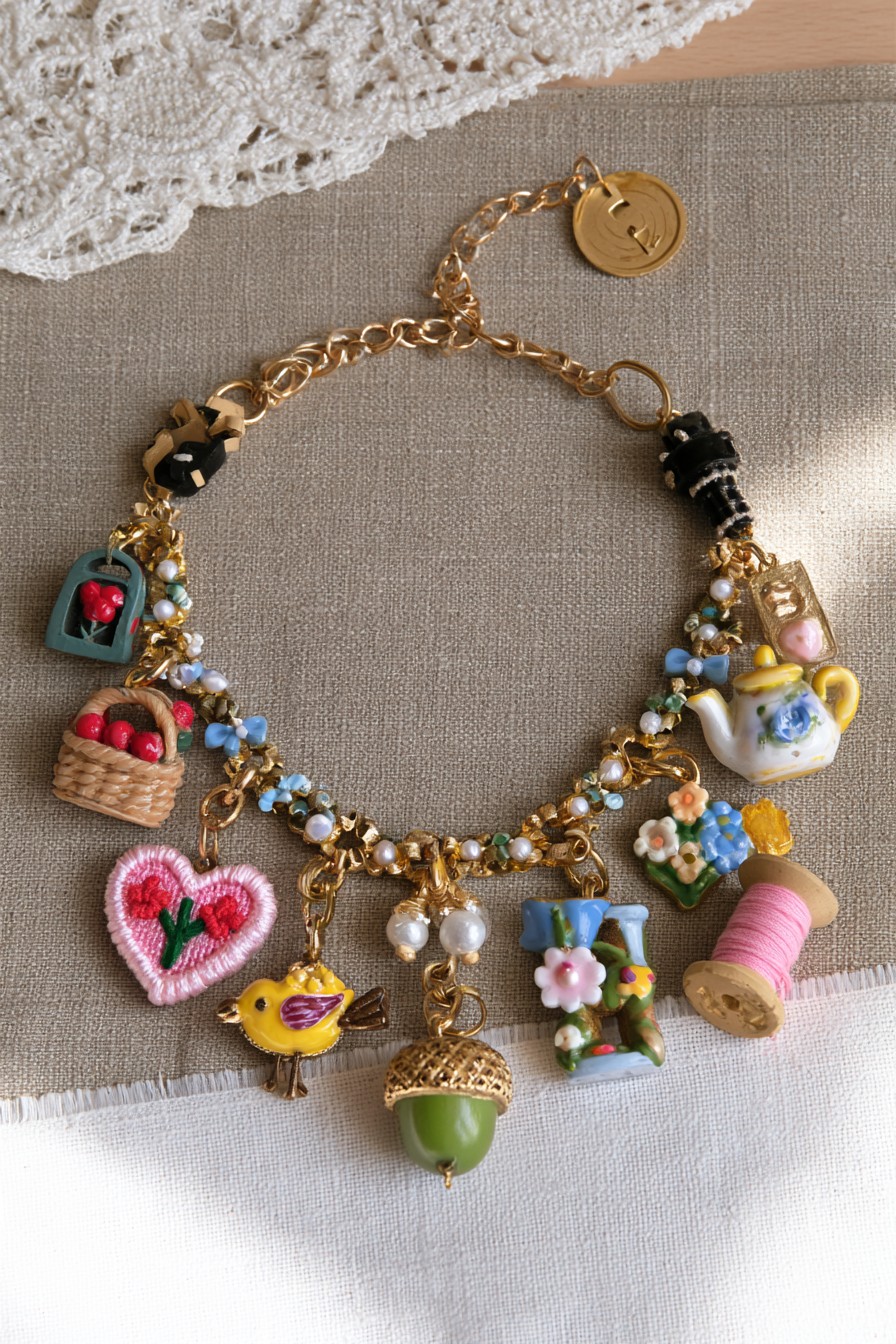
Cottagecore styling works particularly well with charms associated with everyday making, gardening, and domestic routines. A teapot, spool of thread, embroidered heart, flower basket, bird, acorn, and small floral pieces create a nostalgic collection without requiring every element to come from the same activity.
Let one genuine hobby guide the grouping: sewing might emphasize the spool and stitched heart, while gardening could place the basket and flowers at the center. The soft textures help the objects feel connected, but a fabric component may require different cleaning from the surrounding metal. Choose ready textile charms with appropriate attachment loops rather than relying on a few decorative stitches to carry a pendant. Keep the larger teapot or basket separated by smaller accents and check how the acorn settles on the wrist. A few carefully chosen details can be easier to wear than the full pictured collection.
8. Retro Music Charm Bracelet
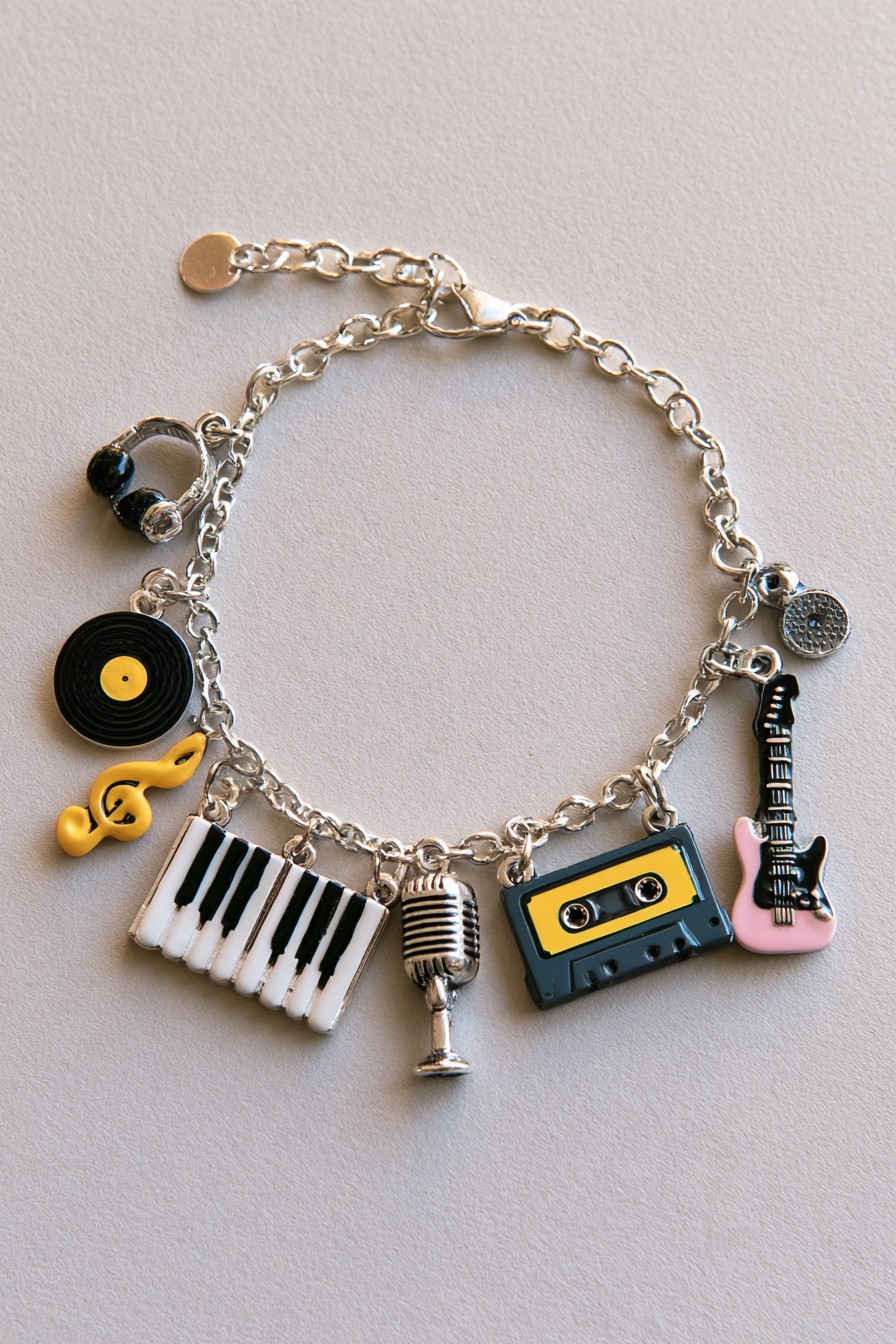
A music bracelet becomes visually interesting when it represents different parts of music culture. Piano keys and an electric guitar suggest performance, a microphone references vocals or live shows, while cassette tapes, records, and headphones bring listening and collecting into the same story.
The open chain arrangement gives the piano keys, microphone, cassette and guitar more space than a densely beaded base. Select links and attachment rings that let each charm face outward without forcing it flat. Try the longer guitar or microphone in different positions before finalizing their locations, especially if you use the bracelet while playing an instrument. Small notes or beads can connect the gaps without adding another large silhouette. A musician might choose their own instrument, while a listener could focus on records or headphones. These choices change the story without requiring a different attachment method.
9. Wild Berry Garden Charm Bracelet
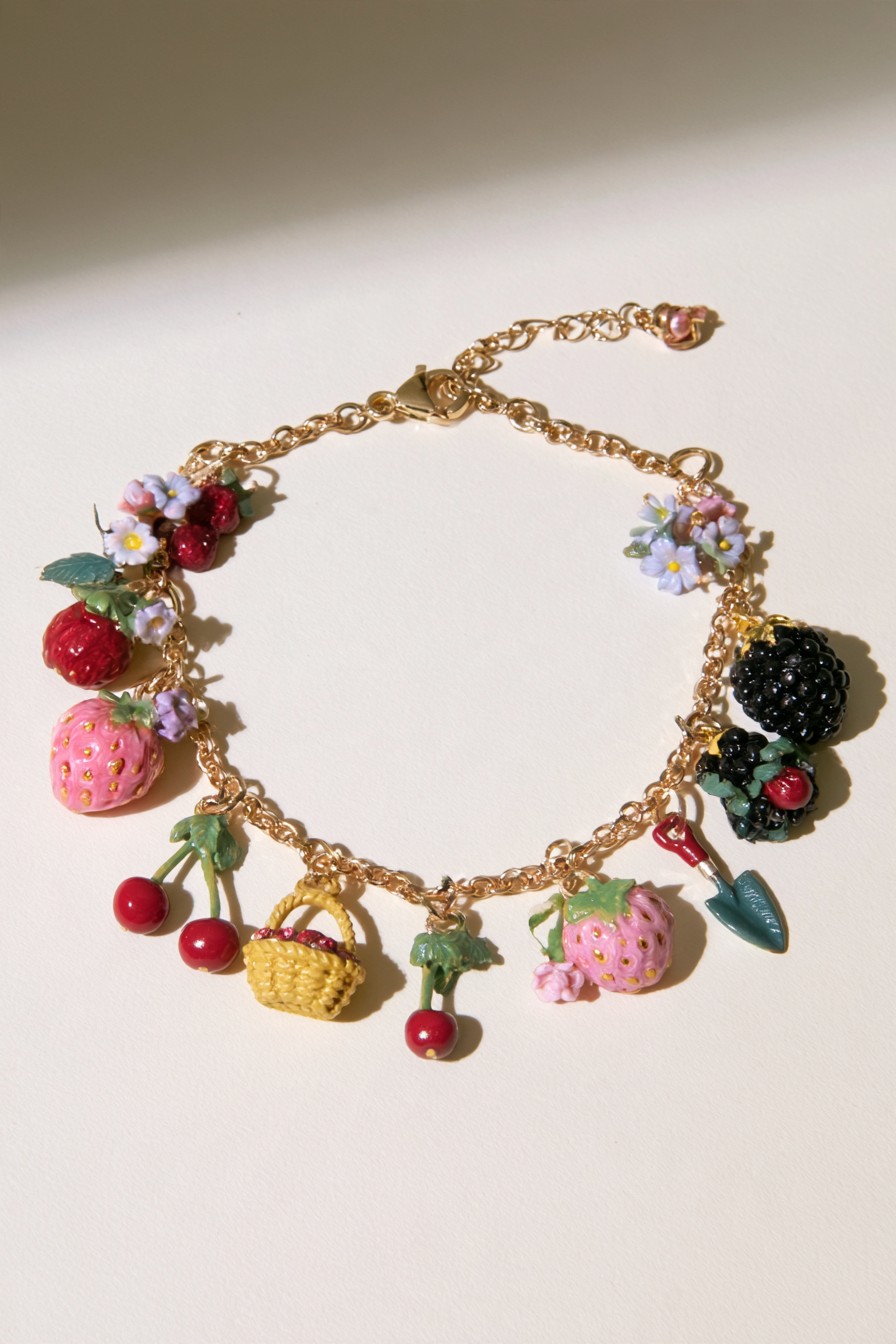
Fruit motifs can become surprisingly sophisticated when they are treated as part of a broader garden theme. Strawberries, cherries, blackberries, leaves, blossoms, a woven basket, and a miniature gardening tool create the feeling of a seasonal harvest rather than a collection of unrelated food charms.
Repeat a red or pink accent in two parts of the base, then use foliage and darker berry shapes to give the brightest pieces contrast. The basket can act as a central memory of gardening or picking fruit, with smaller berries distributed around it. Check rounded fruit shapes and projecting leaves for comfortable movement rather than assuming their playful appearance makes them light. Ready charms with suitable loops keep assembly focused on layout. If you adapt the theme seasonally, change only a few pendants and preserve the remaining spacing so the bracelet continues to fit as intended.
10. Art Studio Charm Bracelet
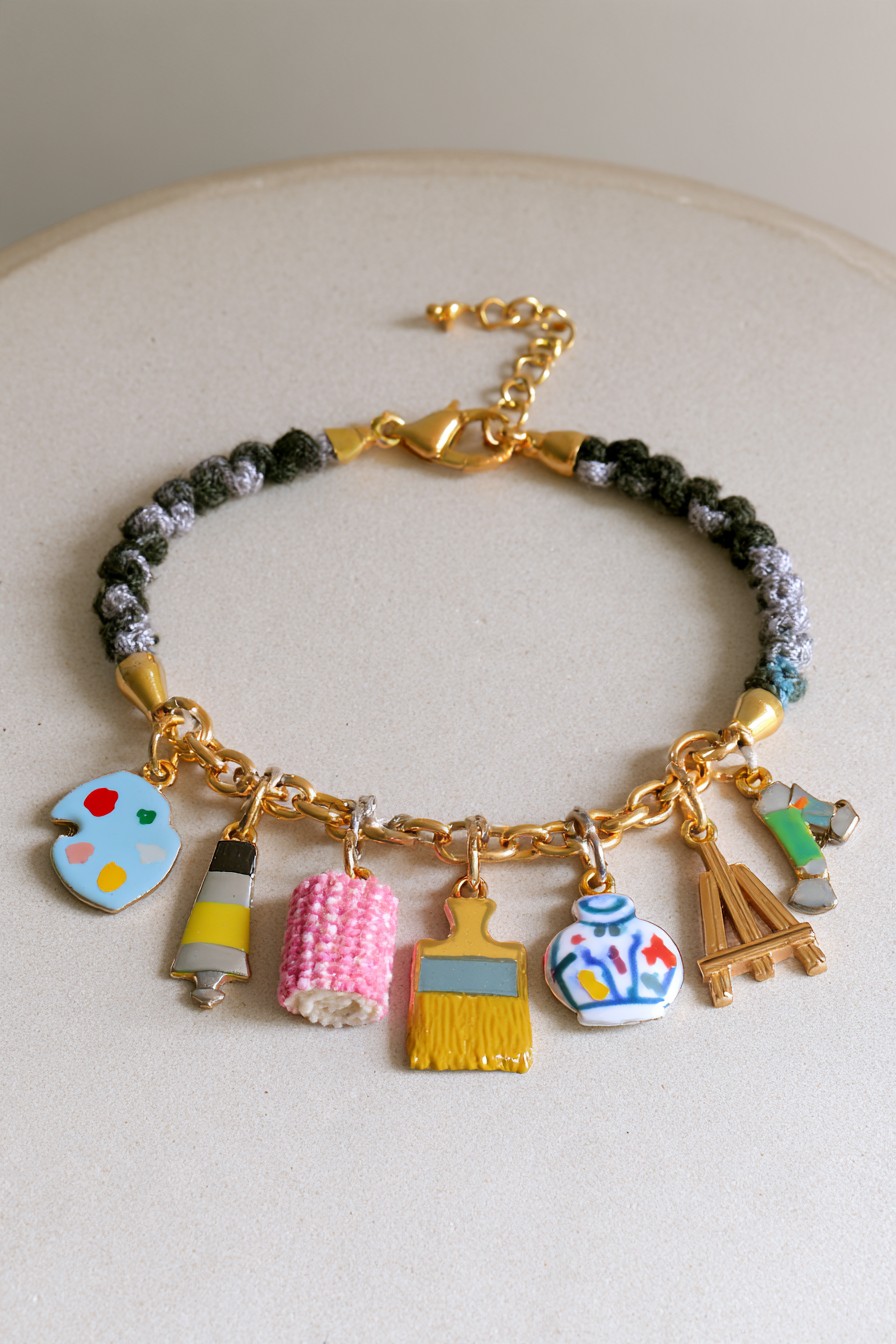
An art inspired bracelet benefits from combining tools with objects that suggest finished creative work. A paint palette, tube of paint, brush, easel, apron, and decorated vase create a miniature studio narrative rather than repeating the same art symbol several times.
Focus the design on the tools you use most, then choose one object that represents finished work, such as the small decorated vase. This gives the collection more meaning than a list of every available art charm. The easel and brush silhouettes need enough separation to avoid overlapping when worn. If adding a wrapped or textile section, use a prepared base or appropriate cord ends rather than assuming the wire finishing method applies. Check the attachment openings before buying matching rings. A favorite paint color repeated in a few beads can personalize the palette without another hanging tool.
11. Ballet and Theatre Charm Bracelet
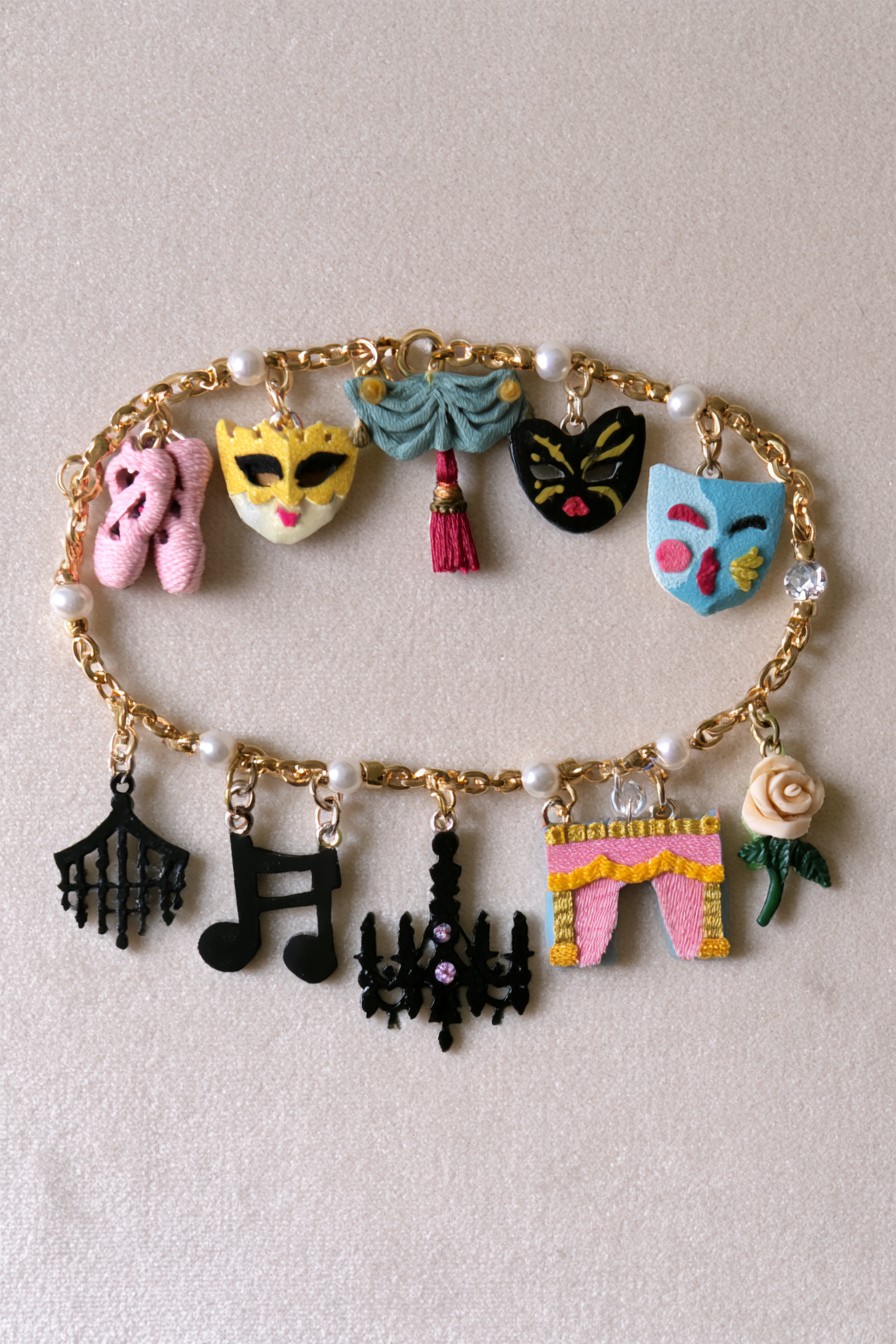
Performance inspired jewelry can draw from more than one discipline without losing its focus. Ballet slippers reference dance, dramatic masks suggest theatre, musical notes introduce sound, and stage curtains evoke the physical performance space. A rose, tassel, or chandelier shaped detail can then contribute the ornamental character associated with costumes and traditional theatres.
Decide whether the bracelet centers on dance, theatre or the memory of a particular performance. Slippers and a musical note can carry a dance story, while masks and curtains may better suit an actor. Pearl like beads supply a quieter transition between the detailed shapes; verify their actual material when selecting components. Position longer chandelier or curtain pieces so they do not collide with nearby charms, and avoid wearing anything that interferes with performance movements. A smaller set can retain the stage theme for daily use. Choose cleaning from the finished bracelet's materials rather than assuming every decorative surface tolerates soaking.
12. Bee Garden Charm Bracelet
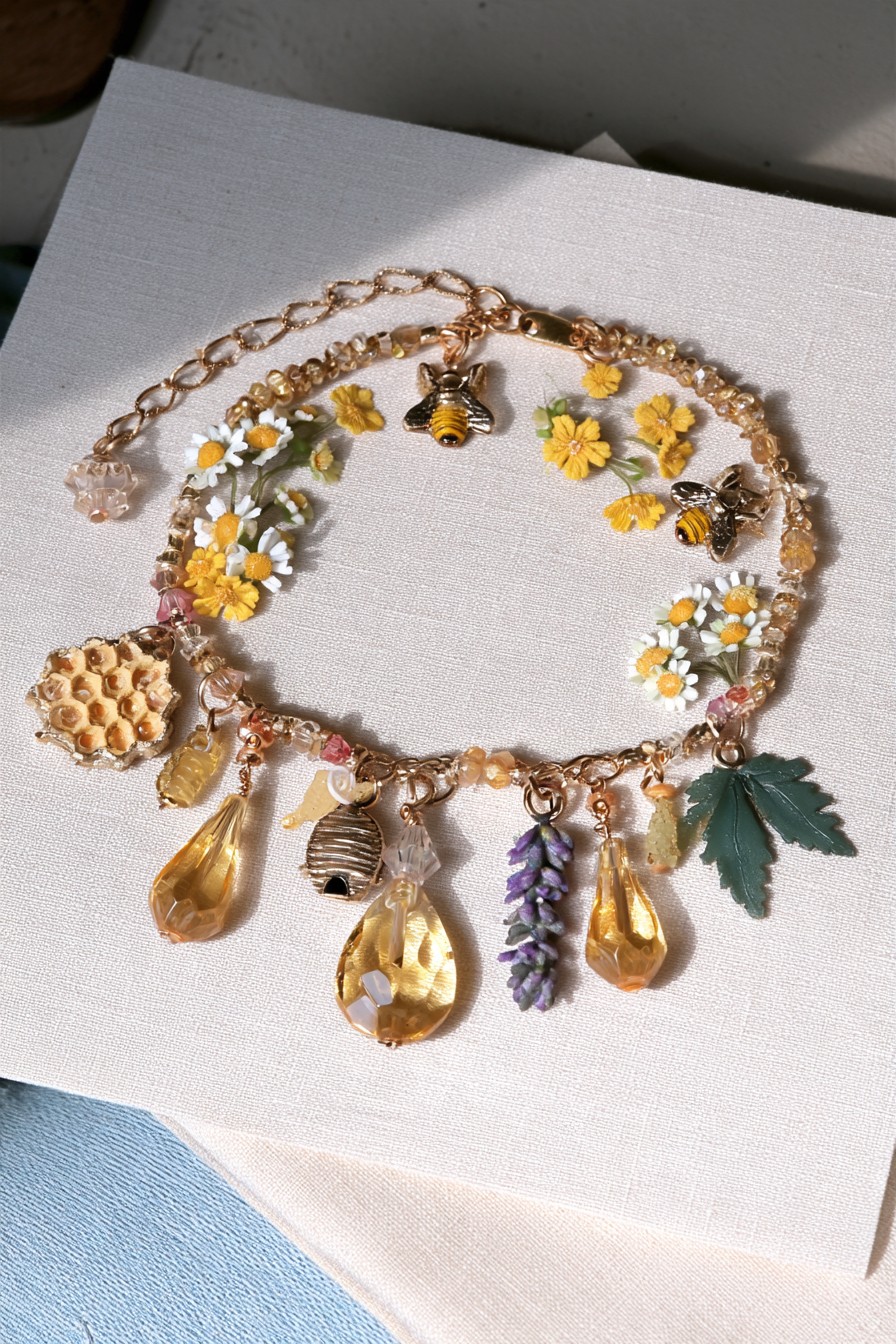
Bees, flowers and honeycomb shapes make this a coordinated nature theme without repeating one insect throughout. Small pale blossoms soften the geometric honeycomb piece, while yellow and clear faceted drops echo honey colors. The larger amber colored pendants add movement beneath the chain. Choose genuine amber or a decorative substitute using the supplier's material description, then match the bead size to the bracelet.
Place the wider honeycomb and flower cluster where their shapes can be seen, then distribute smaller insects and drops along the remaining attachment points. The yellow pendants create a flowing lower outline, which can become crowded if every available link is filled. Try the grouping before adding the final drops and remove one if it repeatedly strikes another charm. Choose documented materials for transparent components and follow their care requirements. A single bee with blooms associated with your own garden can make a more personal version, while repeating warm metal tones preserves the shared palette.
13. Ancient Mythology Charm Bracelet
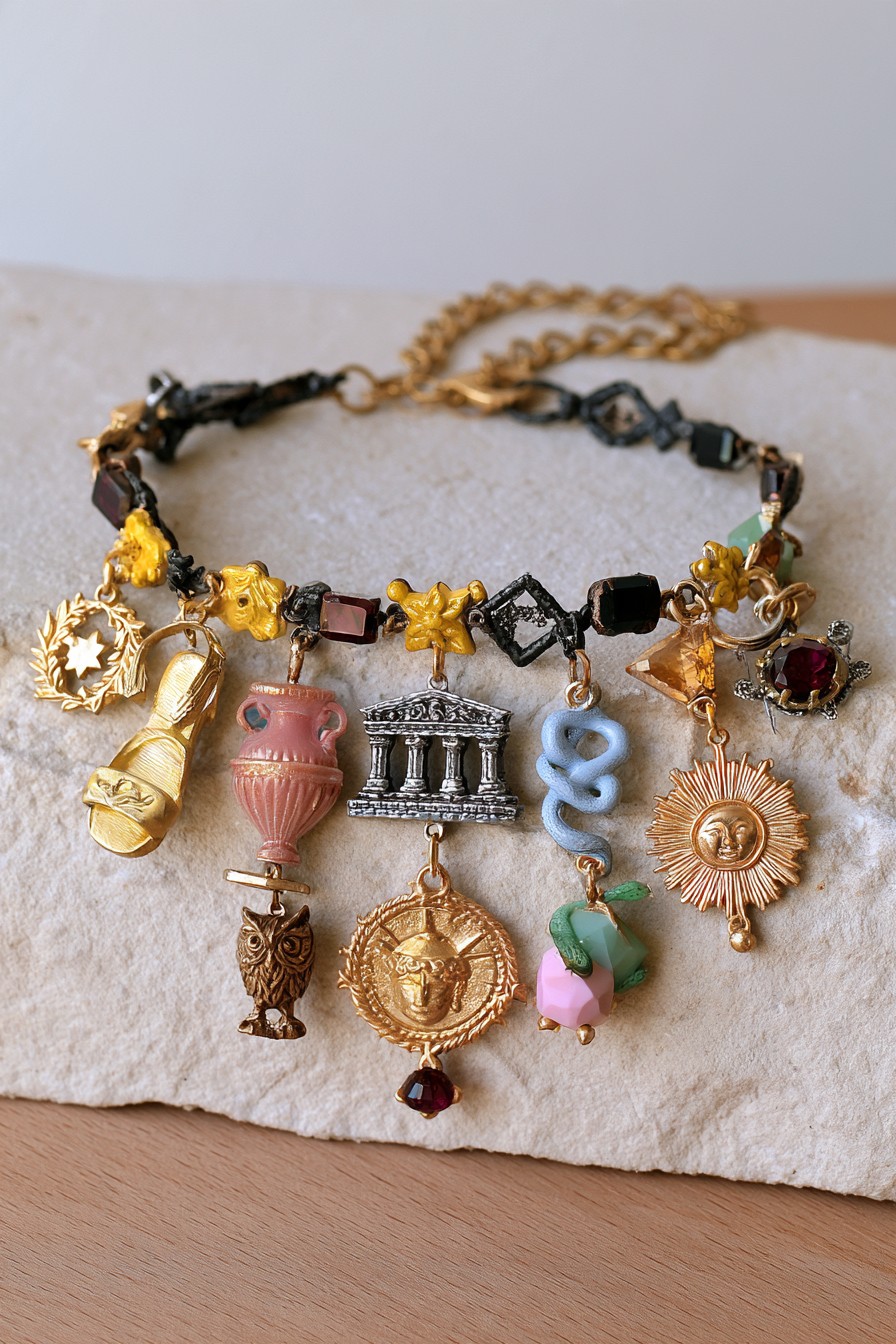
A mythology inspired bracelet gains depth when architectural, animal, decorative, and archaeological references are combined rather than reducing the theme to a single deity or symbol. A columned temple, amphora, owl, serpent, laurel like medallion, sandal, sun, and coin shaped pendant create the impression of objects gathered from different parts of the ancient world.
Start with one architectural centerpiece and a few smaller companions instead of assuming the entire pictured group is needed. Temple shapes and broad medallions can be awkward when they turn inward, so test where they rest on the wrist. A flat coin motif may preserve a historical reference with less projection. For an aged effect, use a documented patina or antiqued finish on metal whose composition you know. Select motifs connected to a known story, visit or interest, and avoid inventing historical meanings for their arrangement. Check that the base and attachment components suit the actual pieces, not only their visual size.
14. Vintage Circus Charm Bracelet
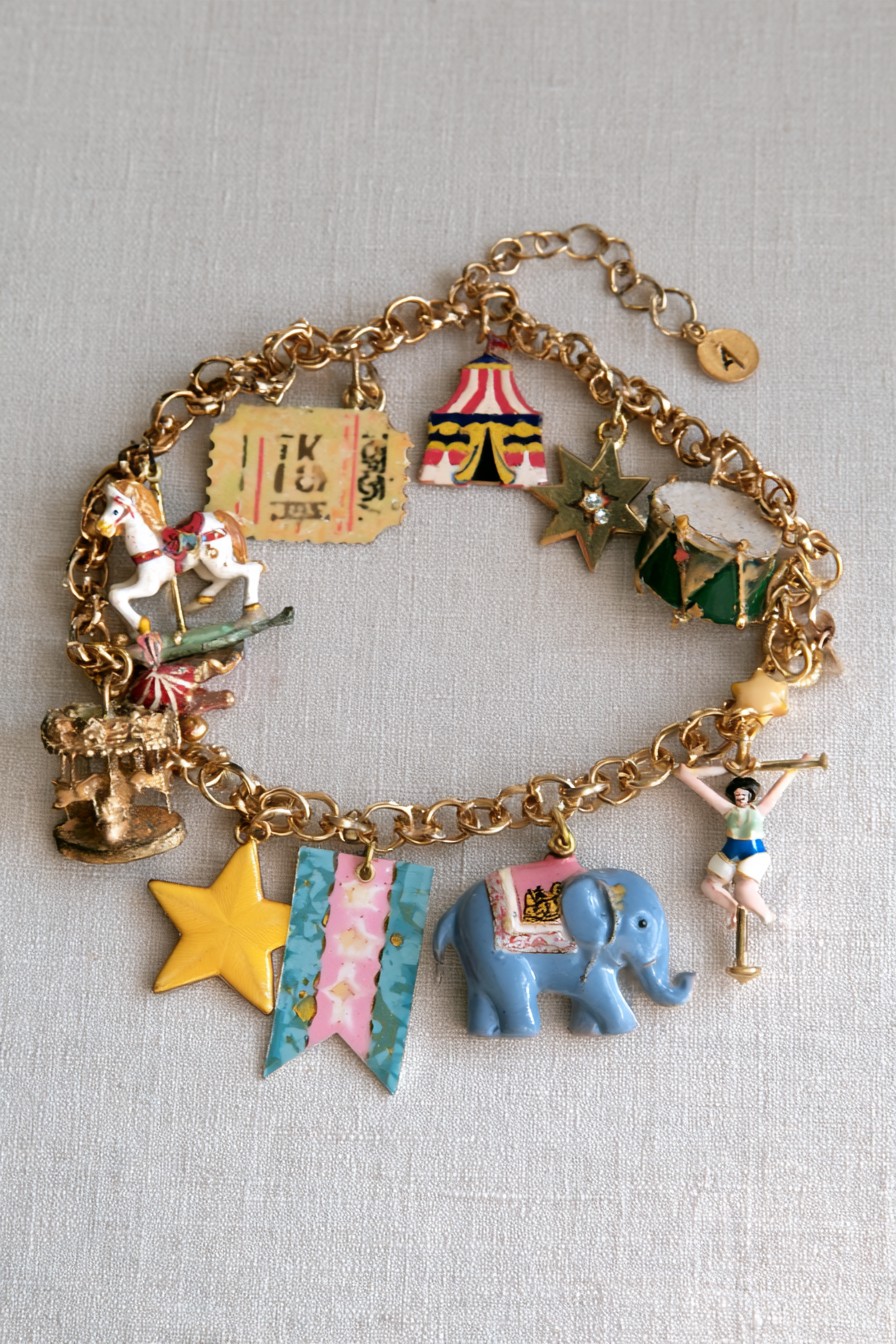
A circus bracelet has enough strong imagery that it benefits from careful editing. A carousel horse, striped tent, drum, elephant, acrobat, ticket inspired element, stars, and banner forms already create a complete narrative, so additional decorative motifs should be used sparingly.
Edit the lively palette by repeating two or three colors in the most noticeable charms, letting warm findings connect the rest. A carousel or fairground memory could be represented by the horse, ticket and star, with other figures left out. The pennants and acrobat forms hang differently from rounded animal charms, so try the combination with the bracelet moving. Choose separate attachment points rather than piling several large pieces onto one ring. For gifting, select a theme the recipient enjoys and confirm their preferred bracelet style; nostalgia alone does not tell you which base will feel comfortable.
15. Moon Garden Charm Bracelet
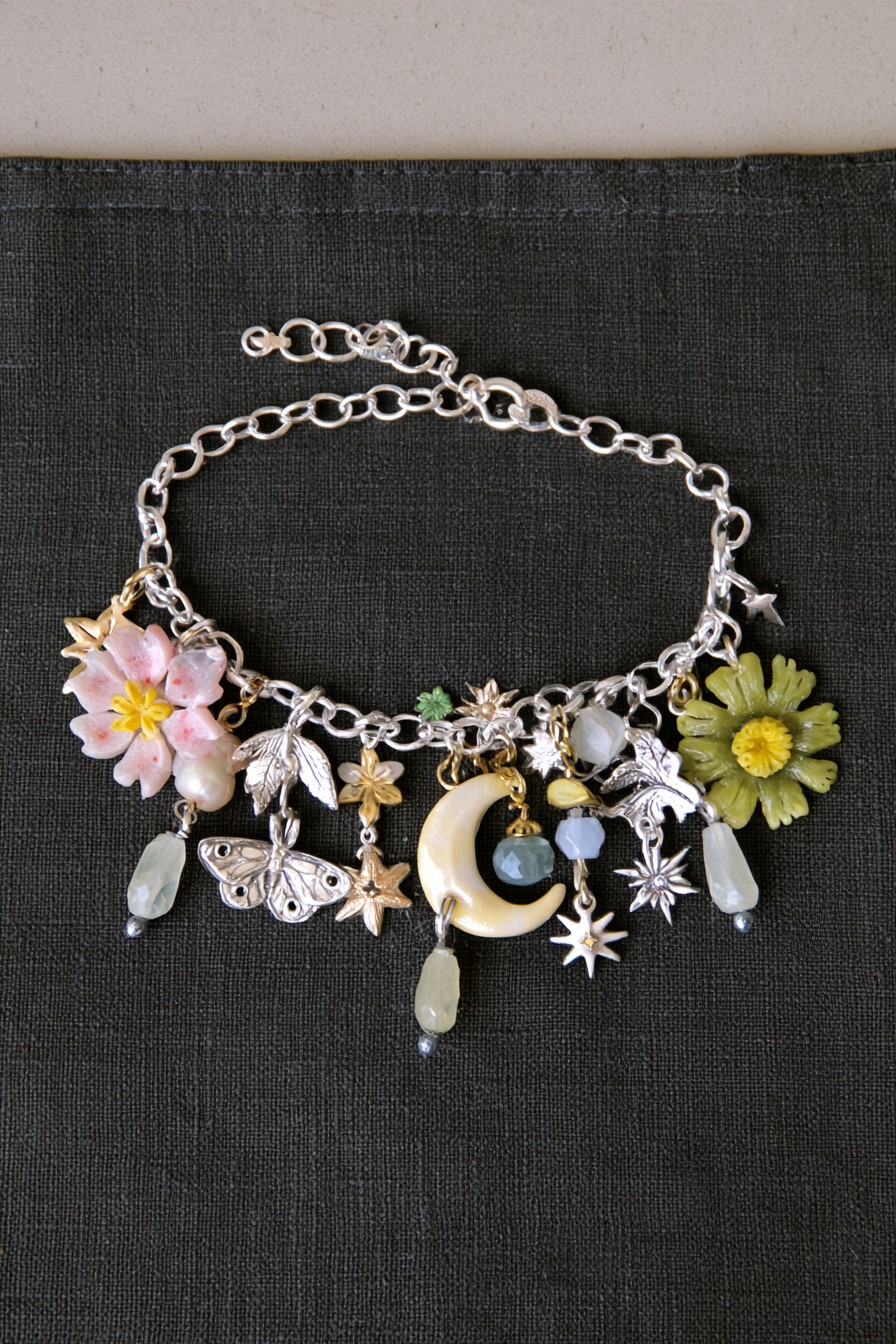
Combining celestial and botanical motifs creates a softer alternative to a purely astronomical bracelet. A crescent moon can provide the central focal point, while flowers, leaves, stars, moth imagery, pearl like details, and pale faceted drops form the surrounding garden.
Keep the moon visible by separating it from the larger flower heads, then use smaller stars or pale drops to bridge the spaces. A silver toned chain can support the cool nighttime palette without identifying its alloy. Floral elements may project farther than their face view suggests, so check how they turn against the wrist and catch nearby clothing. A smaller bloom or a flatter moth motif can reduce bulk while preserving the garden mood. Plan the long drops around comfortable movement, and use a storage compartment that will not crush delicate petals when the bracelet is put away.
16. Victorian Secret Garden Charm Bracelet
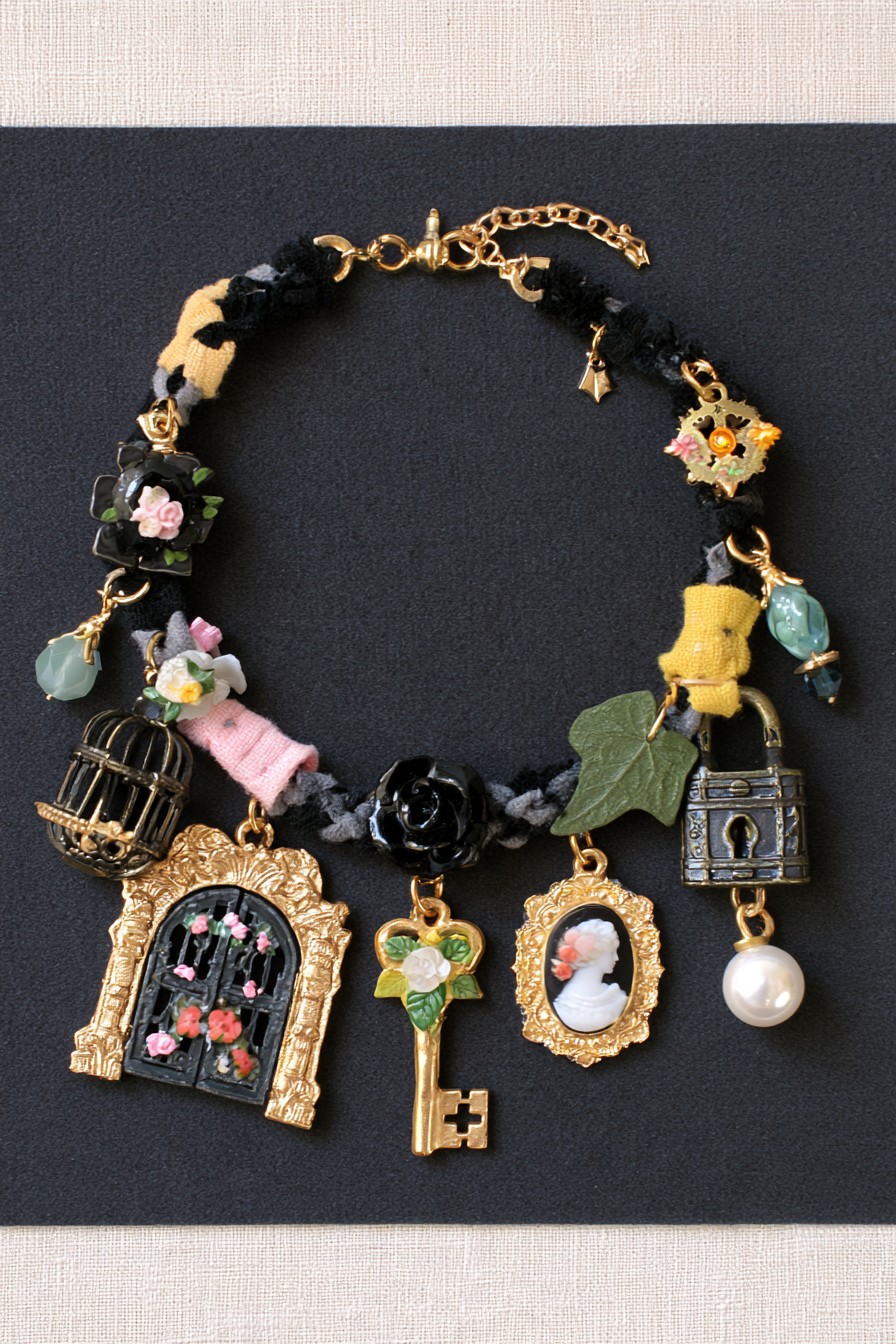
Victorian inspired charm jewelry is most convincing when decorative objects are connected through a clear story. A key and lock suggest secrecy, a cameo introduces portrait jewelry, while a birdcage, black rose, ivy leaf, pearl like drop, and garden gate extend the design into a romantic secret garden theme.
Give the cameo and gate their own attachment points, using leaves or small beads to prevent the larger motifs from crowding together. The rose shaped piece and dark textured sections supply a nostalgic appearance without proving the components are antique. If choosing a locket as a personal replacement, check that it closes securely and that opening it does not strain the connector. Keep the clasp accessible among the longer pieces. Try the bracelet with an ordinary sleeve and select a shorter hanging arrangement where needed. A real memory behind one motif can give the theme depth without adding more ornaments.
17. Moonlit Sakura Charm Bracelet
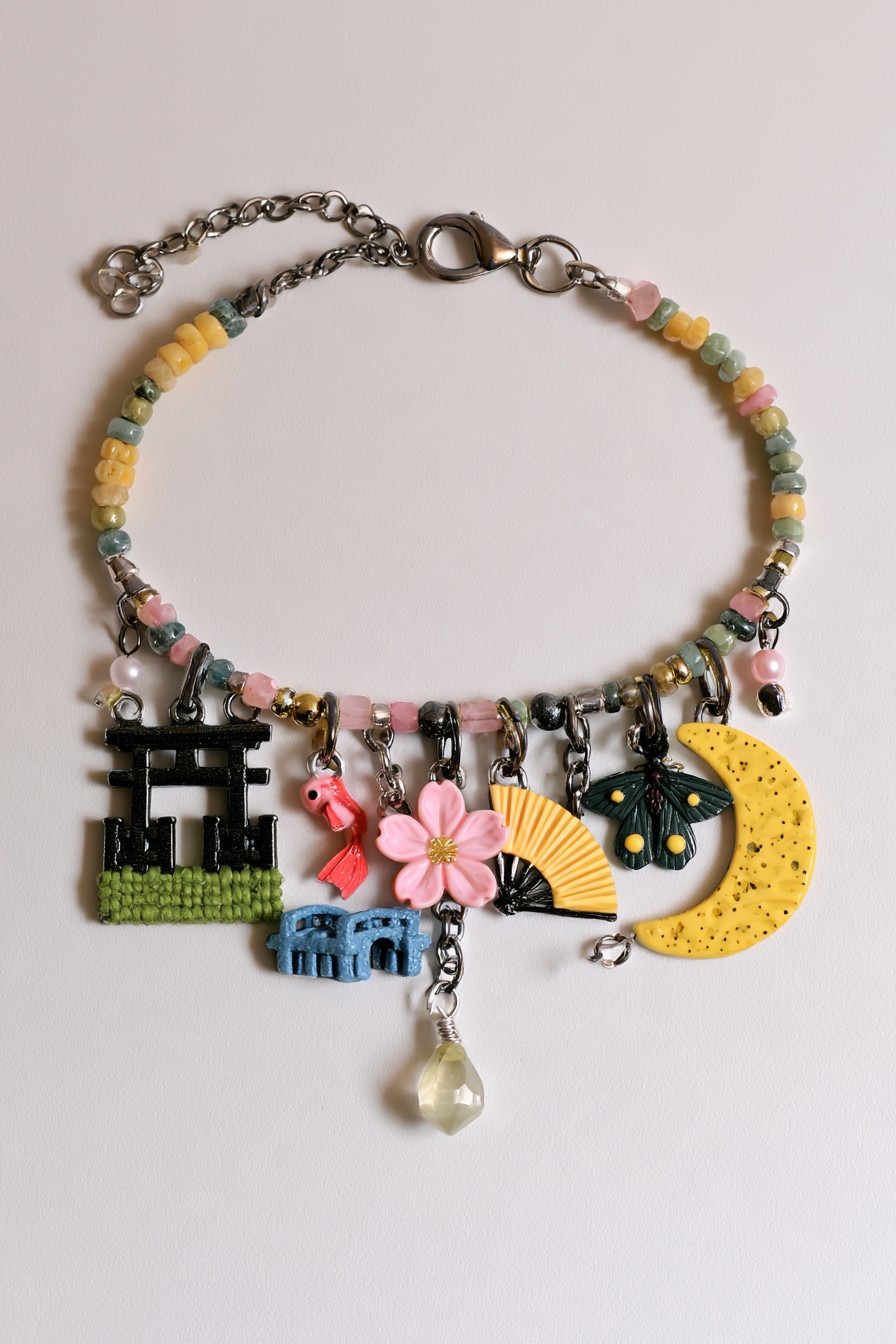
A sakura inspired bracelet can pair floral imagery with recognizable Japanese motifs such as cherry blossoms, koi, a torii gate, folding fan, bridge, and crescent moon. The strongest designs avoid treating every symbol as interchangeable decoration and instead use a smaller group of motifs that support one visual story.
Choose the grouping around a specific spring memory, destination or personal interest. Cherry blossom and koi motifs can support a botanical story, while a gate or bridge may recall a visit. Avoid assigning one universal meaning to all of these references. The small beads form a color sequence, so plan their holes, carriers and end fittings before stringing if using a beaded base. Position the longest faceted drop where it can move freely without knocking the nearby bridge. Keep a focused selection and repeat pale pink or green to connect the pieces instead of filling every possible attachment point.
18. Botanical Mythology Treasure Charm Bracelet
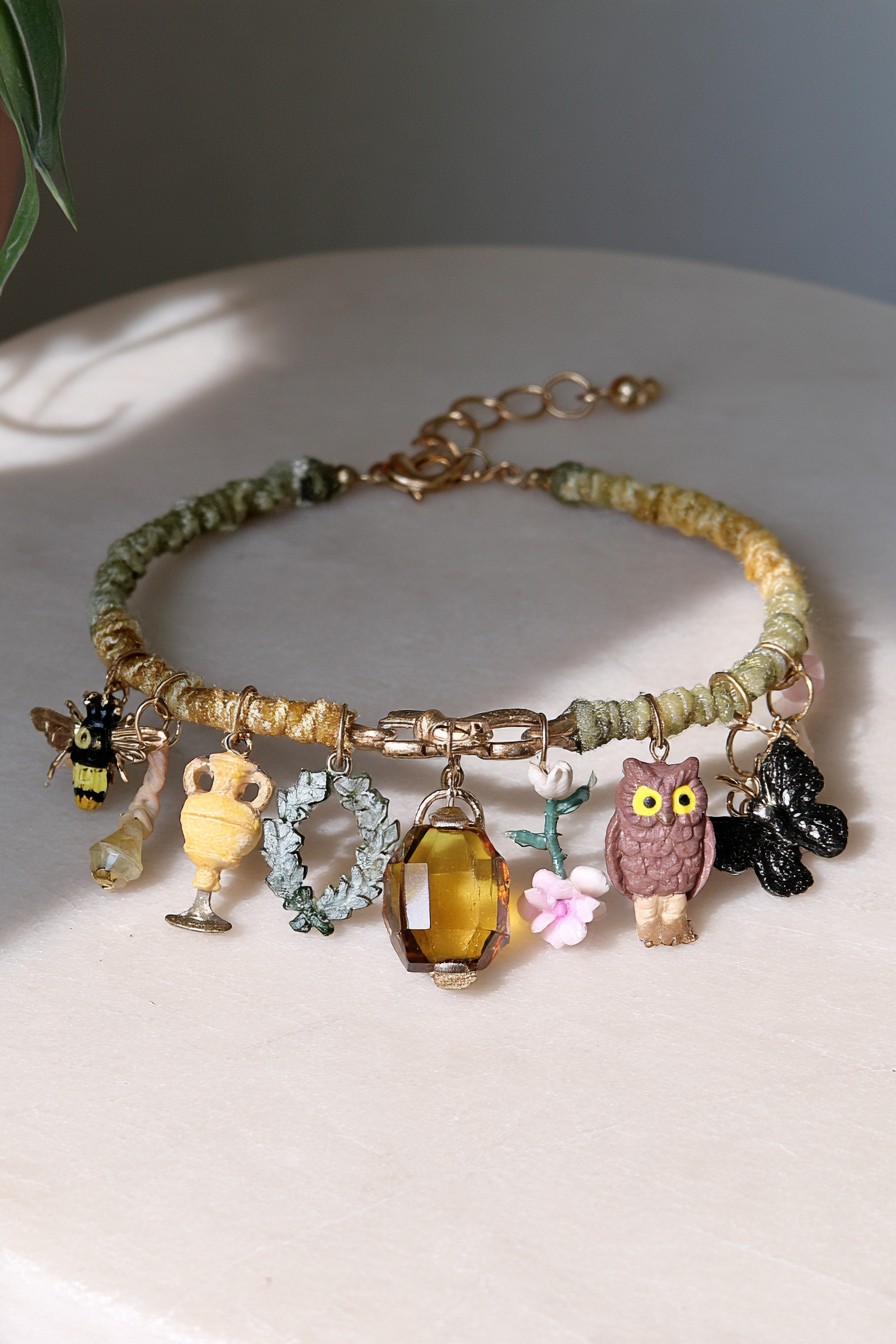
The green and gold textured base connects a bee, owl, butterfly, wreath, flowering sprig and vessel into a collected botanical theme. An amber colored faceted centerpiece anchors the hanging arrangement without identifying its material as genuine amber. Different outlines give the bracelet the feeling of gathered memories rather than a perfectly matched set, while muted metal tones keep the varied shapes connected.
Use the textured base as part of the palette, then choose one focal pendant and a few smaller natural forms. The wrapped or braided appearance does not show its hidden end construction, so select a prepared base or compatible findings for the material you actually use. Place the owl and wider wreath where they have space to turn, and test the hanging centerpiece against neighboring charms. A smaller botanical pendant can replace an uncomfortable component while keeping the collected effect. Check care compatibility across metal, textile and transparent details so maintaining the bracelet does not damage one material while cleaning another.
Balance the Composition and Leave Room for Its Story
Place larger looking shapes at different points to balance the appearance, then evaluate their real weight and movement on the wrist. Small beads and narrow motifs can repeat a color without another bulky pendant. Keep a few links available if you want to add new memories later; each addition should still leave the clasp accessible and the bracelet comfortable. You can also rotate a small selection of charms rather than wearing the whole collection at once.
Store and Care for Mixed Material Bracelets
Follow the care guidance for all the materials you combine. A cleaning method suitable for a metal chain may not suit textile charms, adhesive set details or unidentified stones. Avoid assuming the entire bracelet can be soaked or cleaned ultrasonically, and use a compatible gentle method instead. Let any damp components dry as directed before storage, and check rings, clasps, cord ends and wire for damage during routine handling.
Give the bracelet a compartment wide enough for its largest charm, with space for hanging pieces to rest without crushing each other. Keep spare charms separately so they do not rub against the finished arrangement. Choose a soft lining that will not snag the clasp or delicate hanging pieces. Add a small note explaining the symbol you chose and the memory it represents to make the bracelet more personal as a gift.

Leave a Reply