
Bohemian garden design gives color, natural texture, and generous planting a place in everyday outdoor life. A pair of benches can become a small social corner, a hammock can offer a quiet reading spot, and a larger garden can hold separate dining and conversation areas. These 25 ideas explain what each arrangement offers, how its furniture uses the space, and what its textiles and planting require. Use them as design inspiration, with supports, surfaces, and any construction planned for the actual site.
Table of Contents
- Arrange a Bohemian Garden for Everyday Use
- Find the Arrangement That Fits Your Routine
- Plan the Usable Space Before the Decorative Layers
- 1. Layered Bohemian Garden Lounge with Floral Textiles and Lush Greenery
- 2. Flower-Filled Bohemian Garden Nook with a Colorful Pebble Path
- 3. Maximalist Bohemian Garden Seating with Floral Accents
- 4. Colorful Bohemian Garden Walkway with Relaxed Rattan Seating
- 5. Cozy Bohemian Garden Conversation Area with Floral Textiles
- 6. Botanical Bohemian Outdoor Living Room with Layered Macramé Details
- 7. Pastel Bohemian Garden Retreat with a Macramé Hammock
- 8. Family-Friendly Bohemian Garden Lounge with a Hammock and Soft Pastels
- 9. Full Bohemian Garden with a Hammock Lounge and Curved Flower Borders
- 10. Romantic Bohemian Garden Retreat with Curved Floral Borders
- 11. Vibrant Bohemian Garden Living Room with Layered Floral Rugs
- 12. Maximalist Bohemian Garden with Colorful Entertaining Zones
- 13. Jewel-Toned Bohemian Garden Pavilion with Layered Lounge Seating
- 14. Pastel Bohemian Garden Pergola with Layered Floor Textiles
- 15. Floral Bohemian Garden Courtyard with a Decorative Water Feature
- 16. Maximalist Bohemian Garden Lounge Framed by a Floral Archway
- 17. Eclectic Bohemian Garden Lounge with Raised Succulent Borders
- 18. Curved Bohemian Garden Lounge with Fabric Shade
- 19. Bohemian Front Yard Retreat with a Cushioned Daybed and Wildflower Borders
- 20. Eclectic Bohemian Front Garden with a Cozy Tea Lounge
- 21. Woodland Bohemian Garden Pavilion with a Macramé Hammock Lounge
- 22. Bohemian Mosaic Courtyard with Tropical-Style Planting
- 23. Cottage Bohemian Front Garden with a Round Daybed and Flower-Filled Borders
- 24. Woodland Bohemian Hammock Nook with Ferns and Mossy Borders
- 25. Cottage Bohemian Garden Daybed Surrounded by Colorful Flower Borders
- Keep the Layers Comfortable to Use
Arrange a Bohemian Garden for Everyday Use
Find the Arrangement That Fits Your Routine
For narrow spaces, compare a small social corner, seating beside a garden passage, and sofas arranged for conversation. Hammock ideas range from individual reading to a family lounge, a framed woodland retreat, and a tree-side nook. Larger gatherings can use U-shaped seating or separate dining and lounge zones. For reclining, check the access and furniture proportions in 19, 23, and 25 before choosing a daybed.
Plan the Usable Space Before the Decorative Layers
Mark the furniture footprint with room for occupied seats, chair movement, and the routes already used through the garden. Check light at the hours you expect to sit outside, then assess soil and drainage where plants will grow. Decide where bulky soft accessories can dry and be stored before buying them. A comfortable bohemian garden comes from these practical choices as much as its patterns; the existing layout can often carry a new textile palette without adding another structure.
1. Layered Bohemian Garden Lounge with Floral Textiles and Lush Greenery
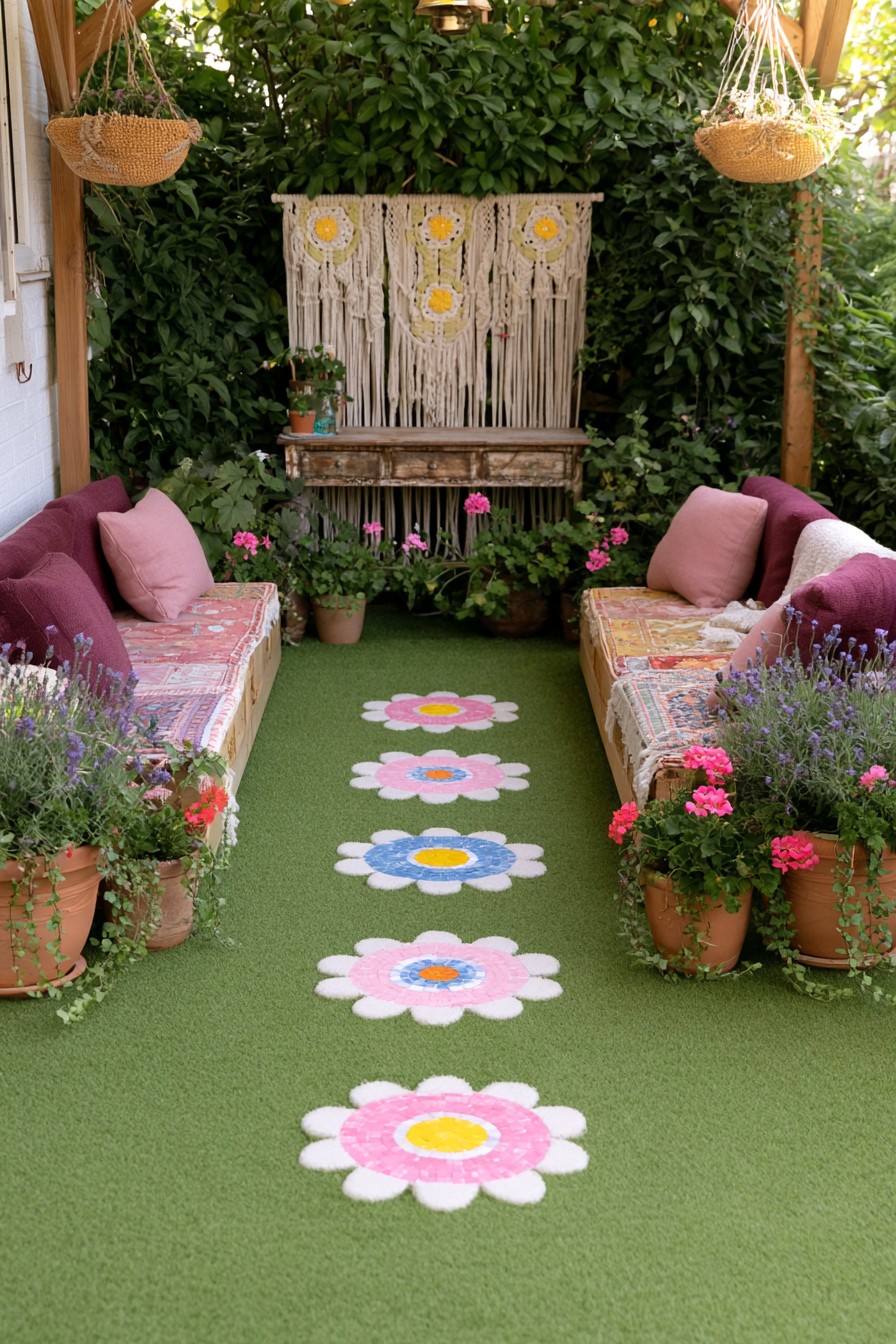
Two narrow benches turn this leafy pocket into a small social corner, with floral cushions supplying most of the color. Pots gather at the sides, and hanging baskets add height without taking another seat’s footprint. The arrangement suits brief visits and conversation in a compact garden where one large sofa would dominate.
Test the distance between the occupied benches, allowing for knees and for someone standing up while another guest remains seated. Keep the nearest pots reachable from the entrance, with trailing growth clear of shoulders and feet. Choose cushions that lift away easily from the long bench surfaces. The flower-shaped floor accents can reinforce the theme, but their position should follow the usable opening rather than determine where people must step.
2. Flower-Filled Bohemian Garden Nook with a Colorful Pebble Path
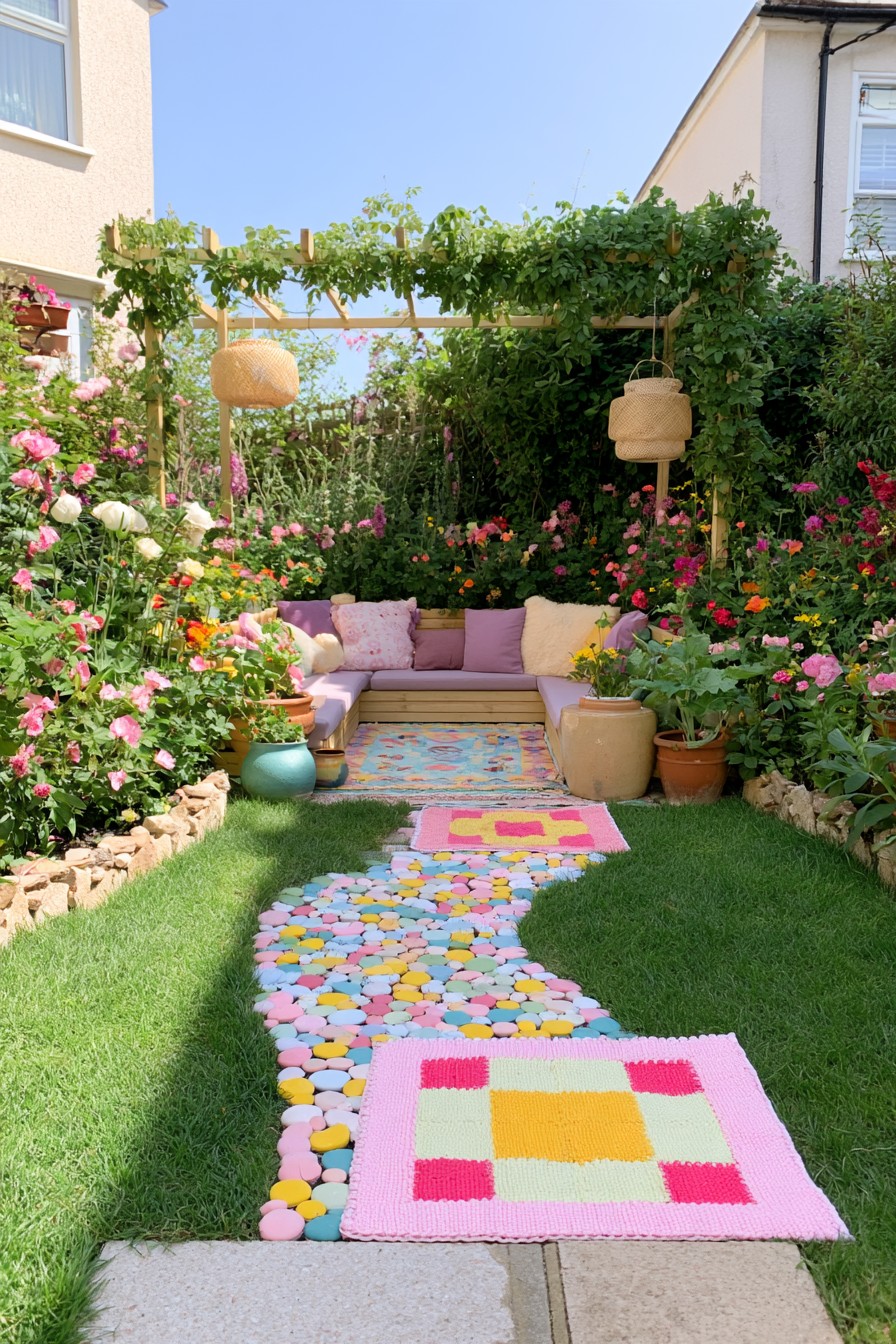
A colorful pebble pattern leads toward a low corner bench beneath a planted pergola. The route gives the flowers a playful center line, while larger ceramic pots punctuate the softer border. This works as a destination nook where the path itself is part of the garden’s decorative character.
For regular passage, translate the colors into a properly installed, even surface with a base, joints, and drainage suited to its use. Loose decorative pebbles are not enough for a dependable route, particularly for small wheels or walking aids. Keep rugs beside the main approach if their edges could interrupt it. The pergola defines the sitting area overhead; assess its actual shade at the intended sitting time as the sun and climbing growth change.
3. Maximalist Bohemian Garden Seating with Floral Accents
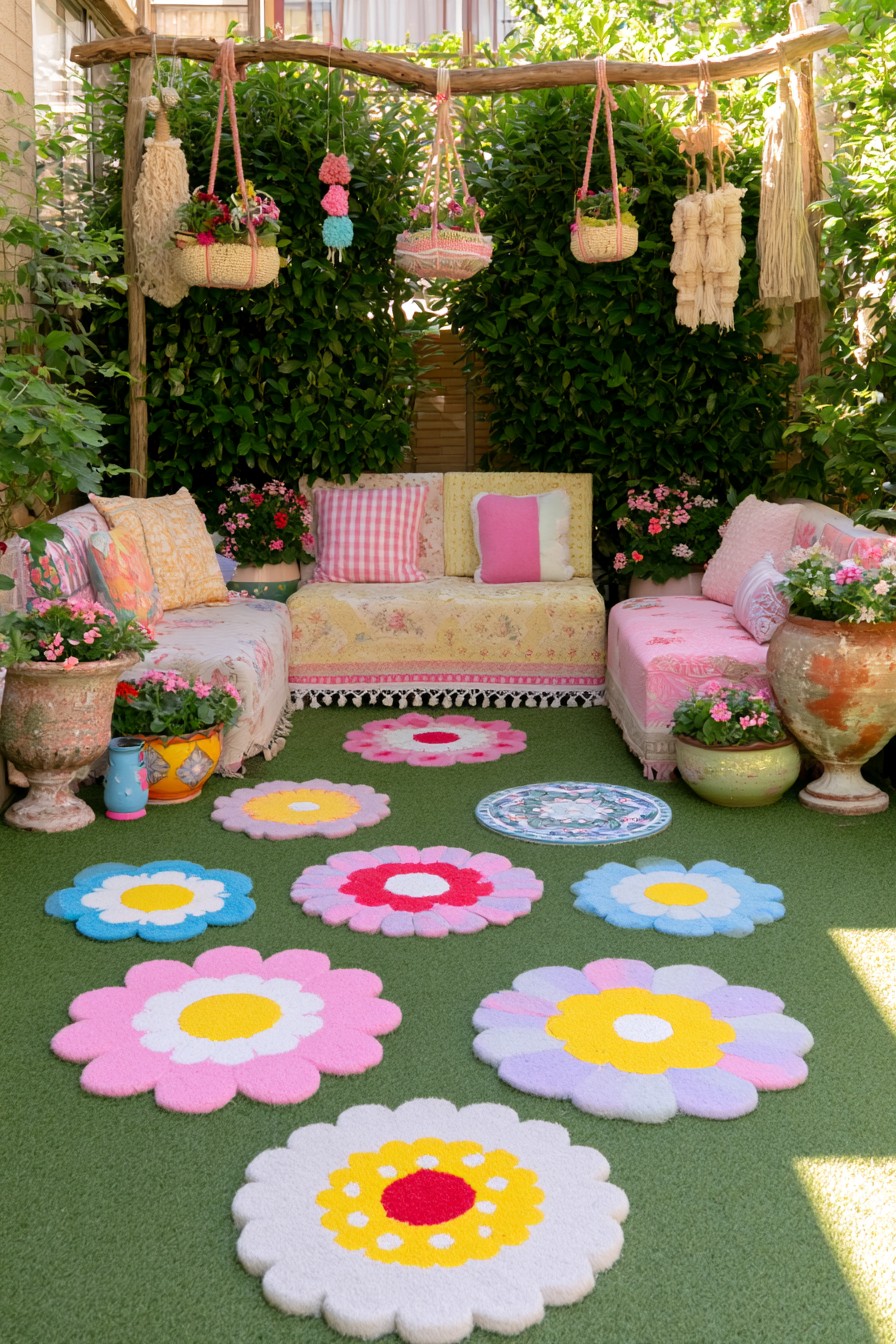
Floral upholstery, hanging planters, and large flower-shaped accents make this U-shaped lounge a maximalist gathering space. Three sides of seating bring guests into one shared area, while the green center separates the colorful pieces. Repeating the flower motif at floor level and overhead connects the furniture with the planted boundary.
Plan the entrance around people, not just the empty center: each guest needs a way to stand and leave without climbing past another seat. Place bulky pots beyond that movement area. For exposed upholstery, check both the water-repellent cover and the filling beneath it; the cover alone does not make a cushion waterproof. Select a drying and storage arrangement that suits the whole cushion, and keep loose floor flowers away from the approach.
4. Colorful Bohemian Garden Walkway with Relaxed Rattan Seating
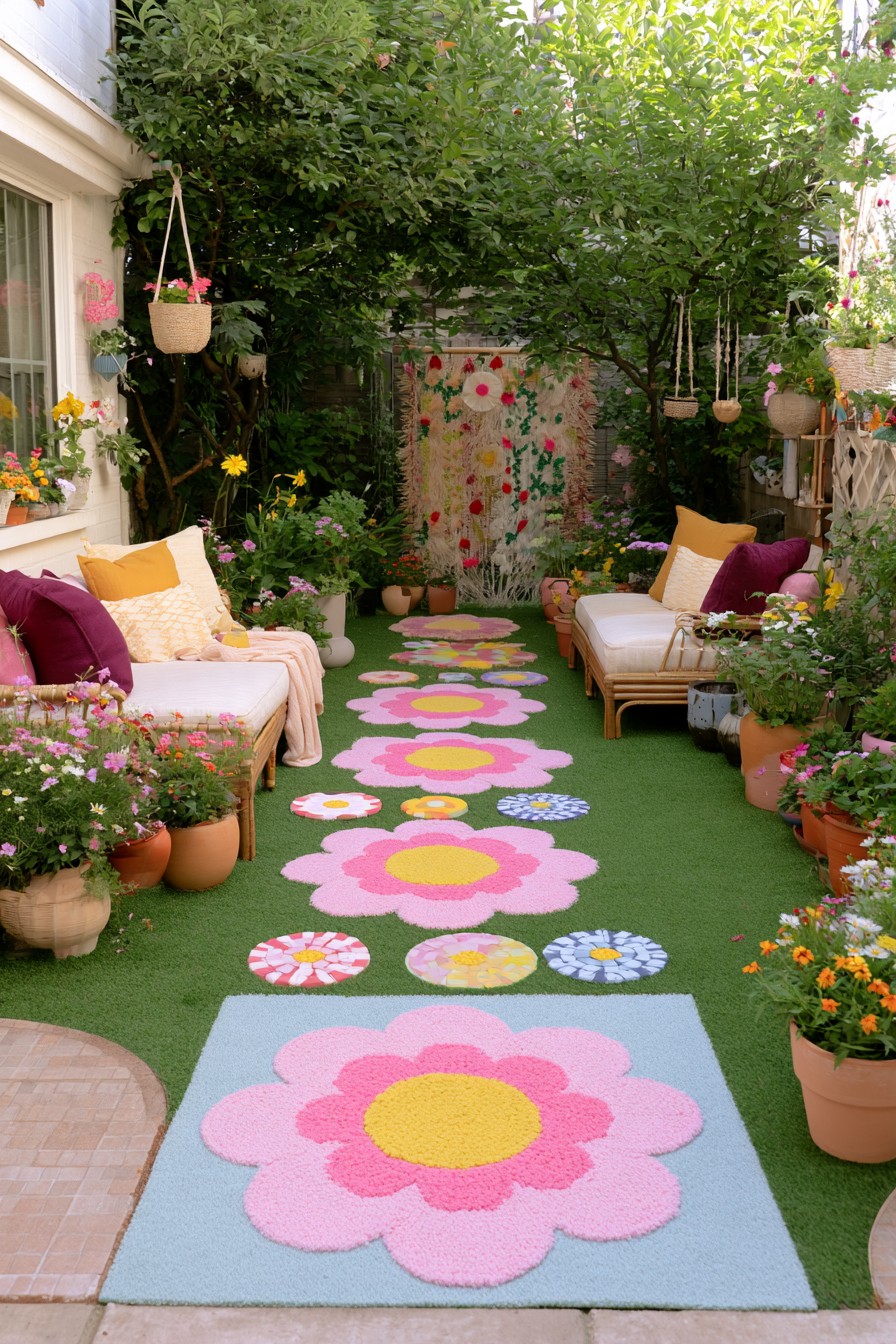
Woven seating along both sides turns a long garden into a sequence of places to pause. Mustard and burgundy cushions connect the sofas, while a textile feature at the far end draws the view forward. Unlike a compact conversation pocket, this layout needs to keep working as a passage through the garden.
Reserve the daily route before placing rugs or pots, including the space needed to carry equipment or use a mobility aid. Choose exterior rugs that sit flat, then lift them to clean and dry the surface beneath. A rug laid over grass or gravel cannot supply a prepared furniture base. Keep the seats beside the route so textile layers can be removed without interrupting access.
5. Cozy Bohemian Garden Conversation Area with Floral Textiles
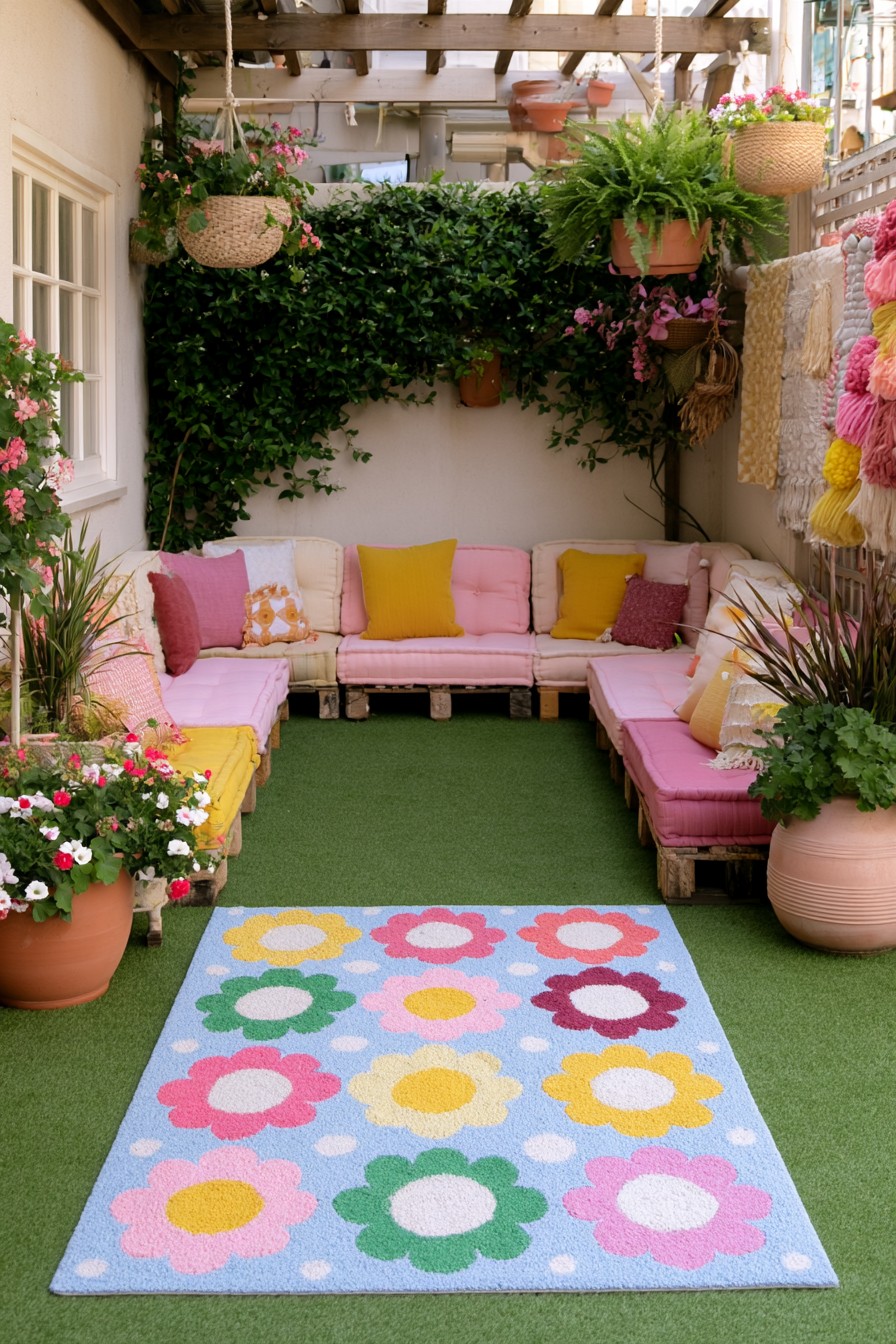
Slatted benches wrap around the pergola’s footprint, defining a conversation area with an open center. Floral textiles and hanging baskets soften its edges. Recreate the arrangement with purpose-built outdoor benches or suitable reclaimed timber, then size the cushions around the seats.
Compare small garden pallet seating layouts when choosing a shorter return, separate benches, or movable modules for your space. Check the overhead frame’s shade at your usual gathering time, and retain access to the baskets. Fit cushions so they can be lifted out independently rather than wedged behind neighboring pieces. Follow each cover’s cleaning instructions; removable fabric is not automatically machine washable. The rug also needs a clear place to dry after cleaning.
6. Botanical Bohemian Outdoor Living Room with Layered Macramé Details
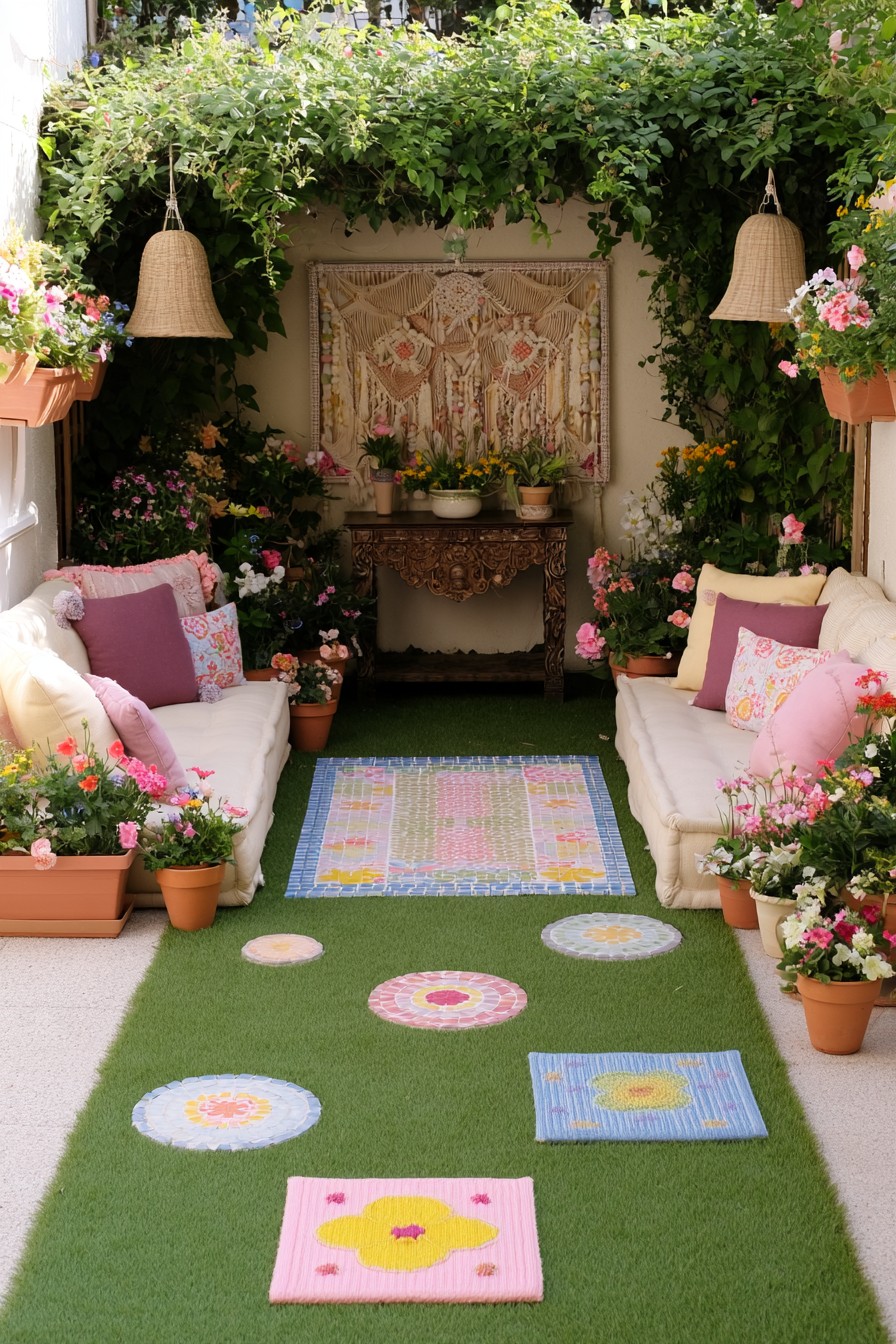
Two sofas facing each other make a narrow garden feel like a room for conversation. A console at the far end supplies a focal point and a place for selected objects, while plants soften the boundaries. This arrangement is most useful when guests will sit opposite one another rather than constantly move through the middle.
Check legroom with both sofas occupied before adding a table or more floor accents. Each person should be able to rise and reach the entrance without squeezing between pots. If the garden must also provide daily access, retain a continuous route beside or through the group that suits its users. Keep the console and pots accessible for watering, and choose a few movable containers so seasonal changes do not require rearranging the main furniture.
7. Pastel Bohemian Garden Retreat with a Macramé Hammock
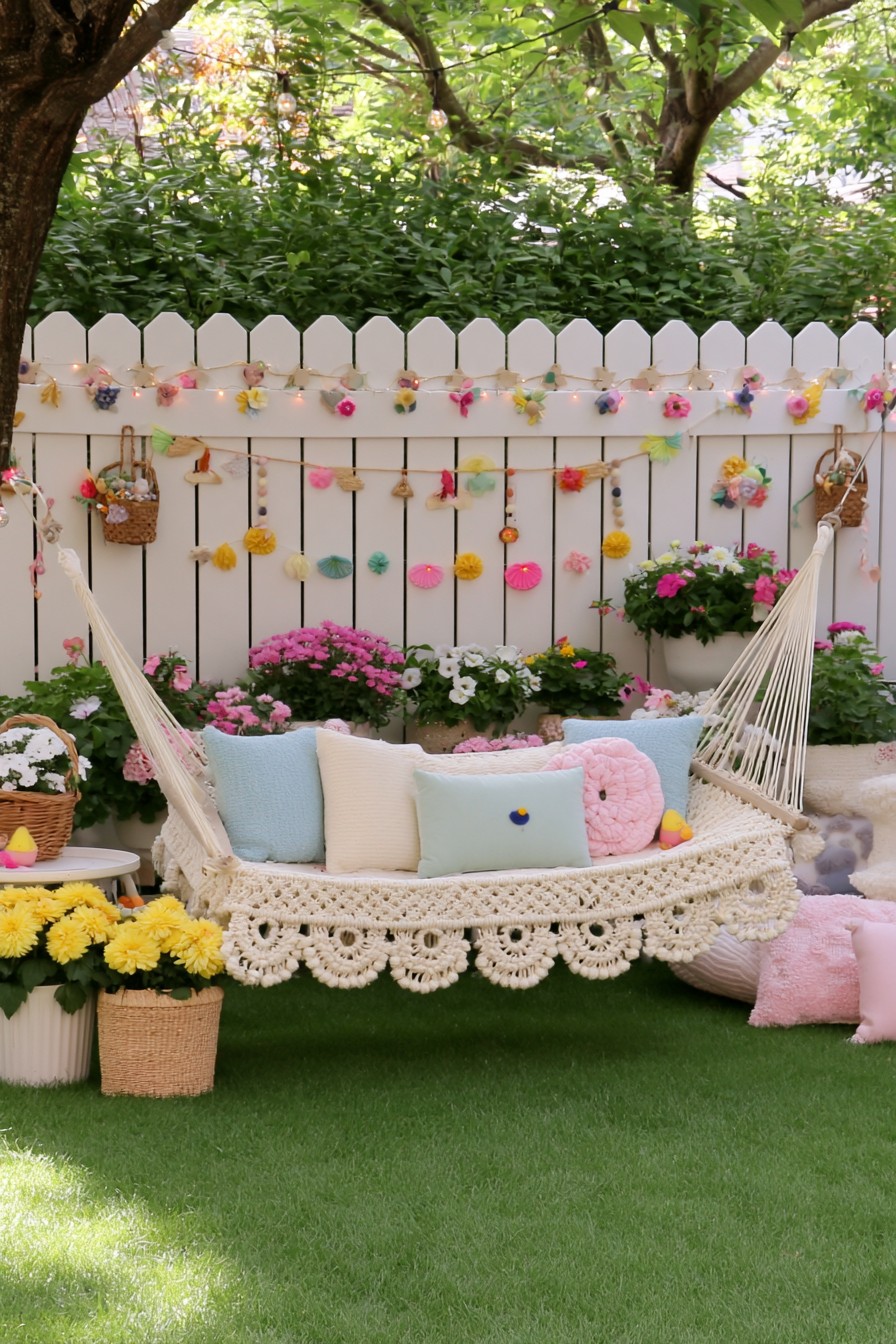
A pale woven hammock and a few soft cushions create a single-person reading retreat beneath the trees. Flowers around the boundary make it feel settled into the garden, while the suspended seat adds a different way to rest from the neighboring bench ideas. This suits someone who wants a quiet pause rather than a group lounge.
Choose the hammock and compatible support system together, following that product’s capacity and installation guidance. Leave an unobstructed area for entering and getting out as well as for movement during use. A book or drink surface belongs within useful reach but outside the landing space. Inspect suspension components as directed, and make the soft accessories easy to carry away. The shaded appearance is a starting point for placement, not evidence that the visible supports are adequate.
8. Family-Friendly Bohemian Garden Lounge with a Hammock and Soft Pastels
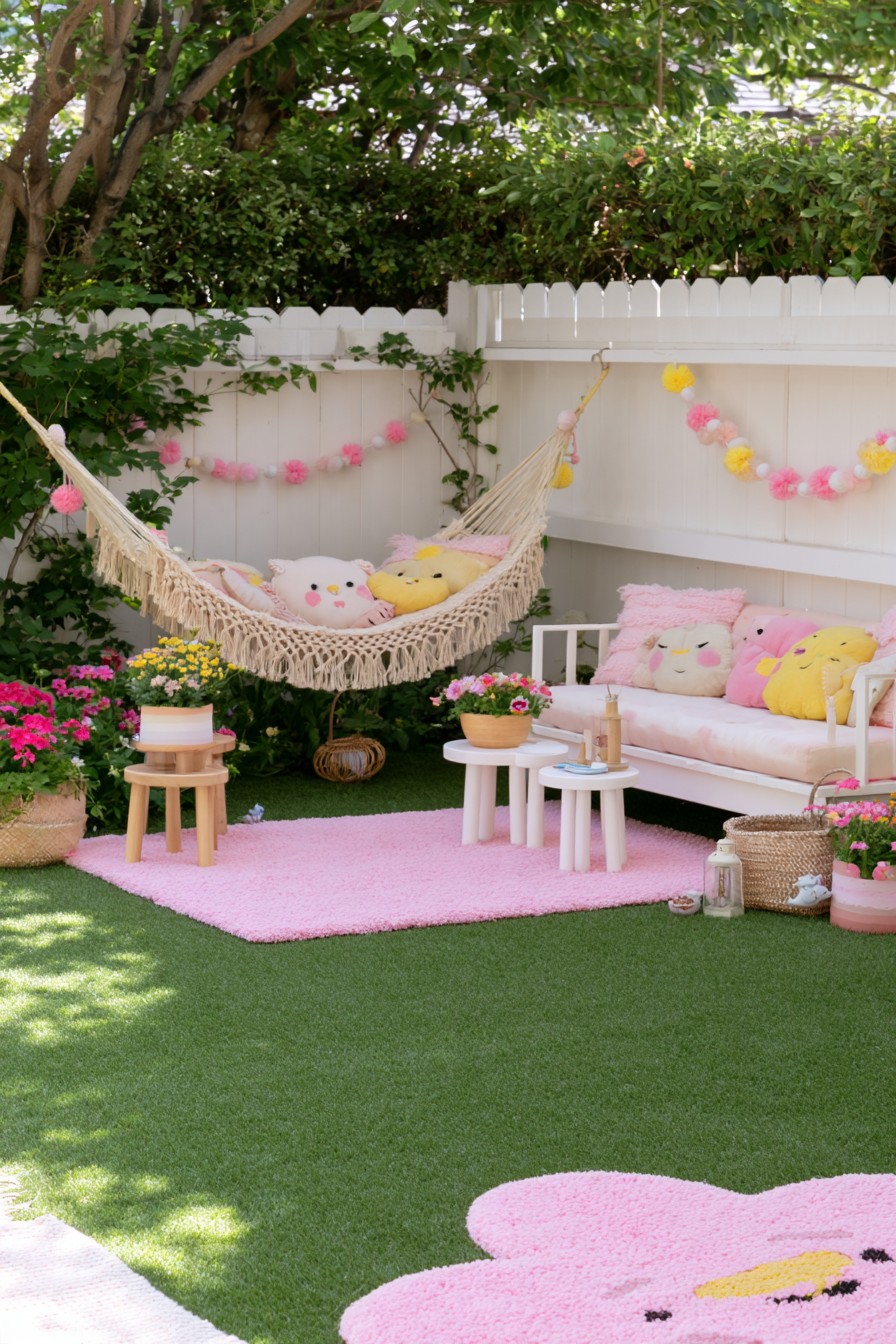
A bench and hammock give a family garden two separate resting options, with an open lawn between the lounge and the flower borders. The pastel rug marks the bench’s sitting zone, while small tables provide practical surfaces there. Keeping these functions distinct makes the scene easier to adapt than filling every open patch with furniture.
For children, follow the hammock manufacturer’s age and use guidance and provide continuous adult supervision. Treat it as resting equipment, not a play swing for jumping or vigorous swinging. Check the selected support system and its load limits for the intended users. Keep tables near the bench clear of the hammock’s movement area, and position the bench so the supervising adult has a direct view of anyone using it.
9. Full Bohemian Garden with a Hammock Lounge and Curved Flower Borders
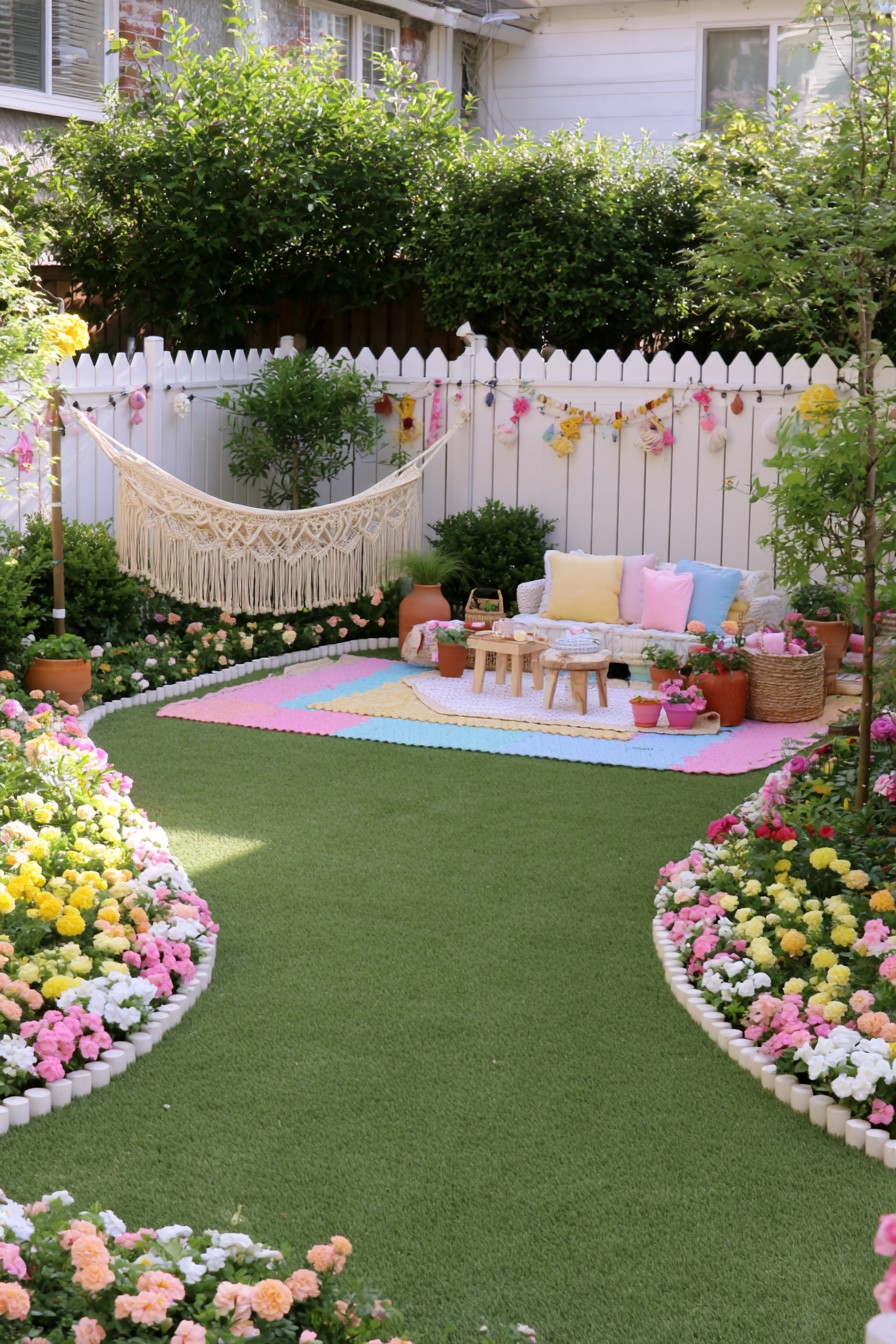
Curved flower borders frame a larger garden while the hammock and sofa occupy the rear perimeter. The open center connects those lounging choices and preserves the long view from the house. This is an arrangement for people who want several places to relax without turning the entire lawn into a furniture area.
Give the hammock its own usable footprint, then locate the conversation group where guests can approach without crossing that movement space. Keep small tables useful to seated visitors and leave a route along the borders for tending flowers. Use support components compatible with the hammock and its intended occupants. As plants mature, check whether the perimeter still leaves enough room to move behind the furniture; the open center should remain the layout’s organizing feature.
10. Romantic Bohemian Garden Retreat with Curved Floral Borders
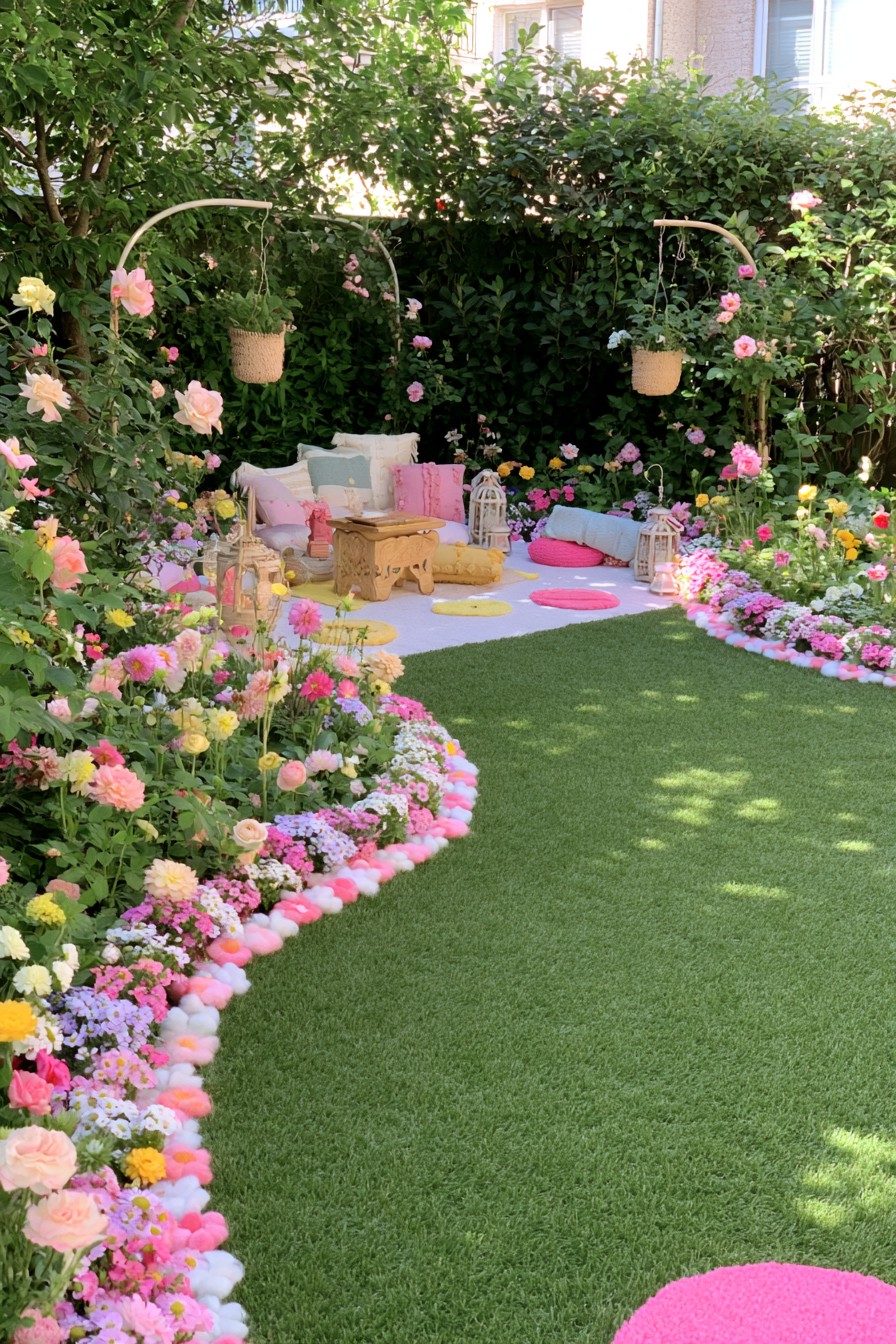
A curved floral border holds a low table, floor cushions, and an informal seat, leaving the main lawn open. The setting feels intimate because the flowers gather around a small activity zone. It suits people who enjoy sitting close to the ground for tea, conversation, or a relaxed afternoon outside.
Try the sitting height before committing to the arrangement; low cushions can make standing up difficult for some visitors. A couple of standard-height chairs can carry the same colors while offering another way to join the group. Prepare a stable furniture surface and keep the entrance free of loose cushions. Choose floor textiles whose fill and underside can dry, and leave access behind the seat so pruning the floral edge does not require moving every piece.
11. Vibrant Bohemian Garden Living Room with Layered Floral Rugs
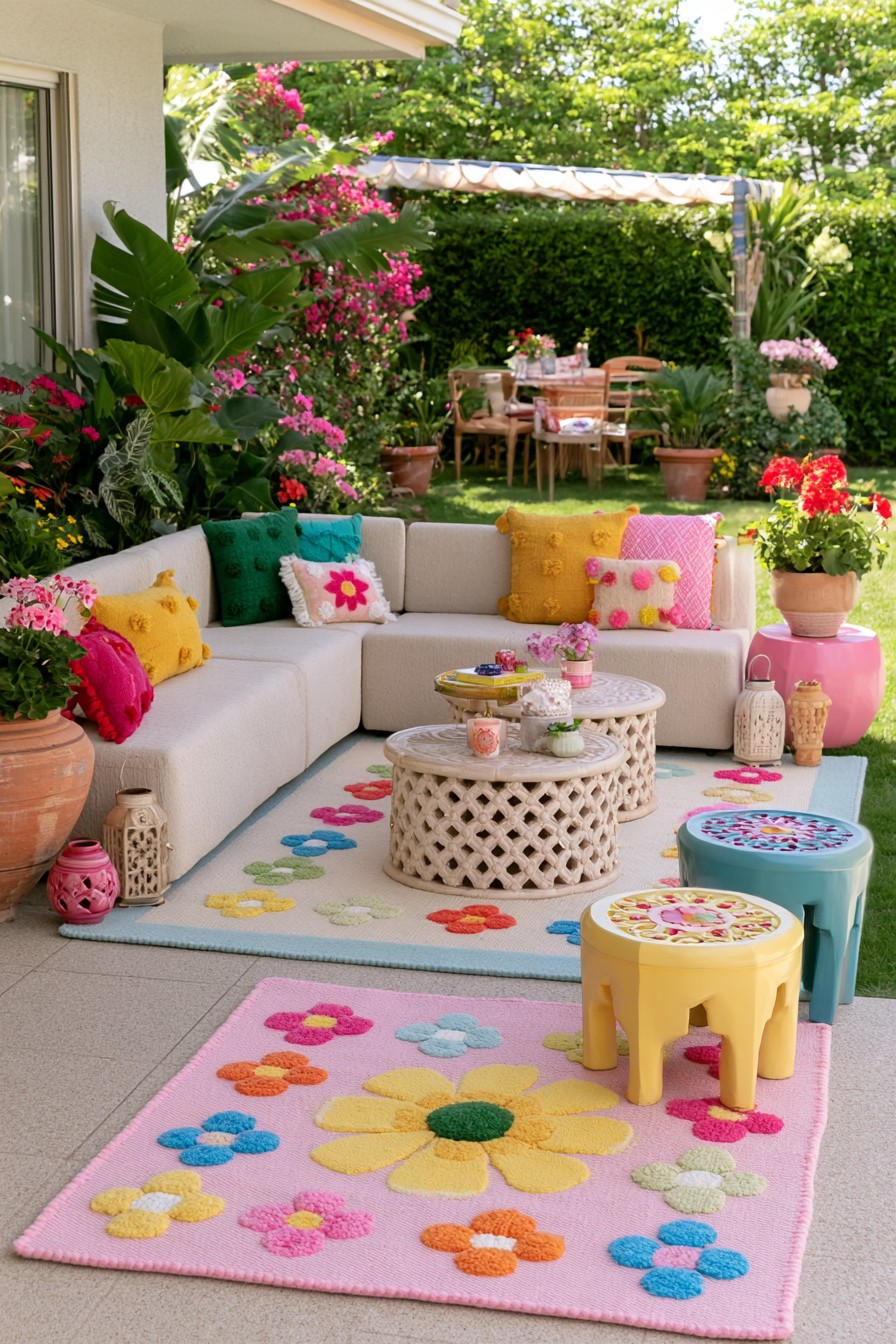
A paved patio holds a sectional sofa, small tables, and floral rug layers, with potted greenery linking the lounge to the garden beyond. Neutral upholstery allows emerald, pink, mustard, and turquoise accents to remain distinct. The layered floor gives this arrangement its identity, even when only a small part of the patio is beneath the house’s overhang.
Check the lounge during rain and extend or adjust the shelter where water reaches the seating and storage. Use rugs that can be lifted separately so trapped leaves, dirt, and moisture can be removed between layers and underneath. Keep their corners outside the principal walking line. Maintain enough space around the tables to carry a tray, and choose product-specific cleaning and drying methods rather than treating every patterned textile alike.
12. Maximalist Bohemian Garden with Colorful Entertaining Zones
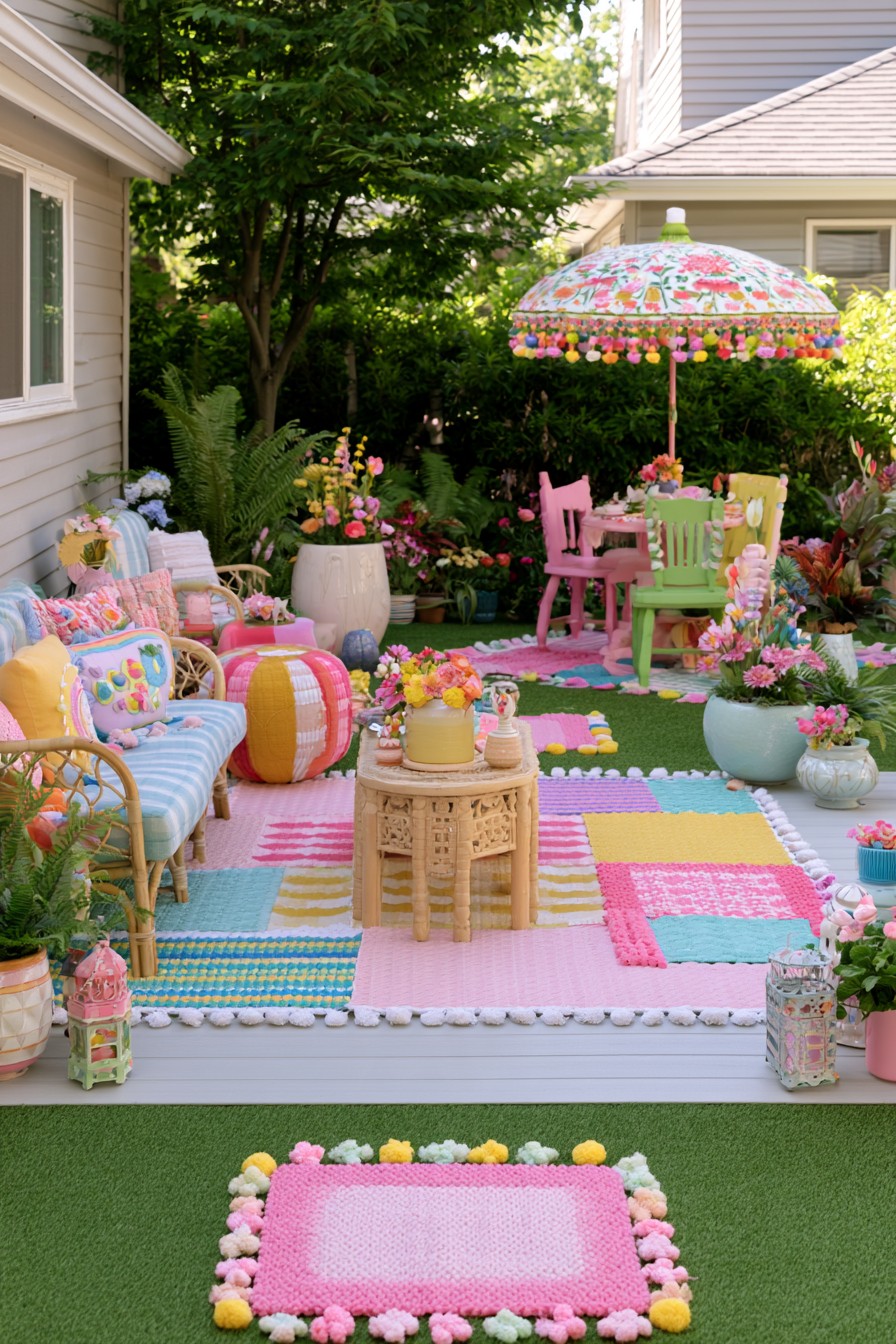
A conversation group near the house and a separate dining set farther into the garden create two entertaining zones. Related colors in the rugs, cushions, and parasol connect them without giving both areas the same furniture arrangement. This suits a garden where guests move between drinks, a meal, and quieter conversation.
Map the serving route from the kitchen to the dining table with chairs pulled out, then check how arriving guests can pass the conversation group. Keep movable stools and containers out of that line. Position the parasol according to the meal’s timing and follow its support and wind instructions. The lounge rugs should lift out individually for cleaning, and cushions need drying space between uses. A continuous route matters more here than an uninterrupted patchwork of floor textiles.
13. Jewel-Toned Bohemian Garden Pavilion with Layered Lounge Seating
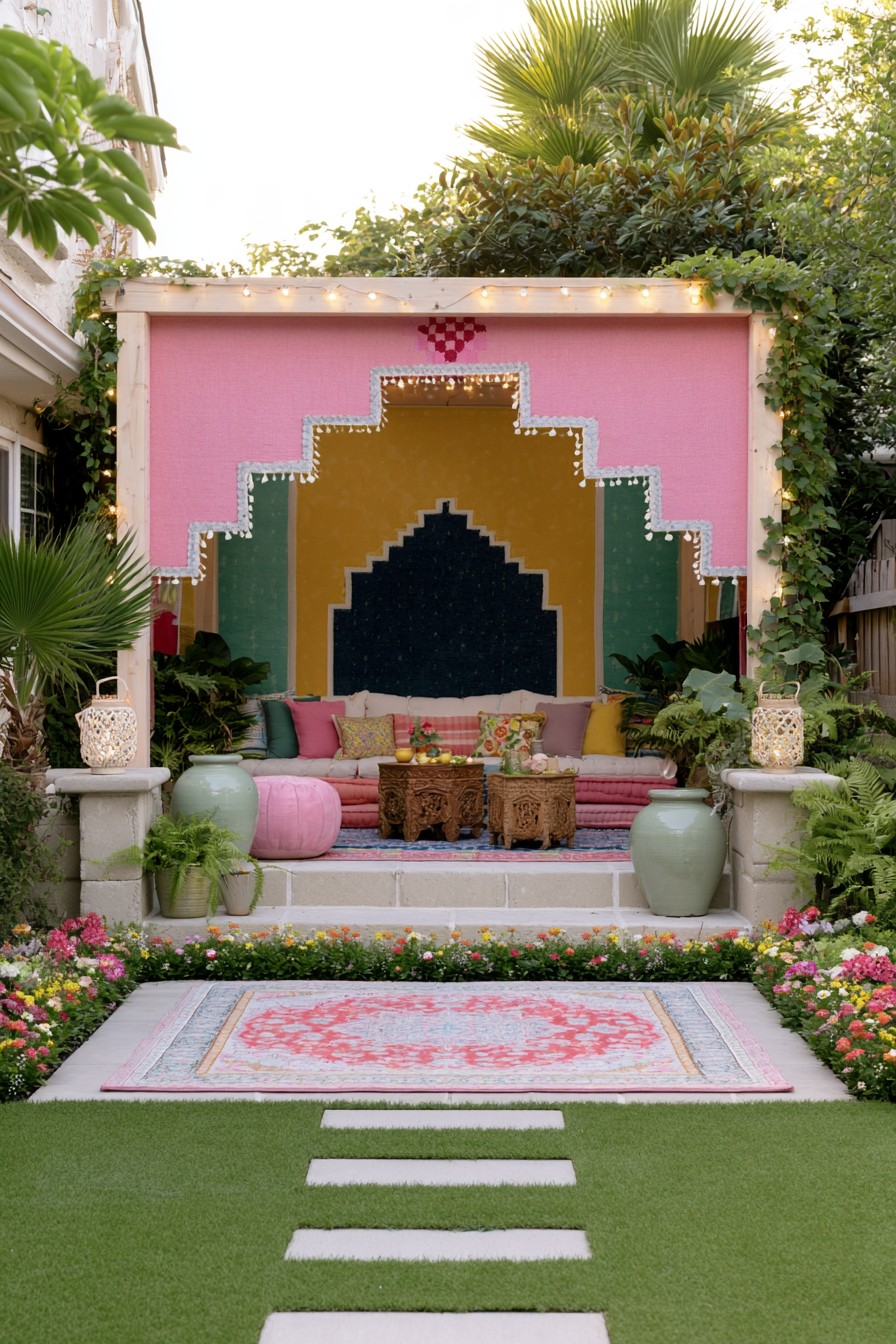
A stepped geometric backdrop and low, jewel-colored seating give this garden lounge an architectural identity. Carved tables and large glazed pots reinforce its room-like proportions, while the planting softens the frame. It suits a garden that needs one destination with a strong background rather than several scattered furniture groups.
Use the frame to define the view, adding a specified roof or canopy system where rain protection is needed. Check the actual overhead construction and shade during your sitting hours before deciding which textiles can remain there. Low furniture needs a comfortable way to sit down and rise, with pots outside the entrance. Keep rugs clear of the raised edge and retain access behind the seating to inspect the backdrop and tend climbing growth. A smaller framed background can create the same emphasis around existing furniture.
14. Pastel Bohemian Garden Pergola with Layered Floor Textiles
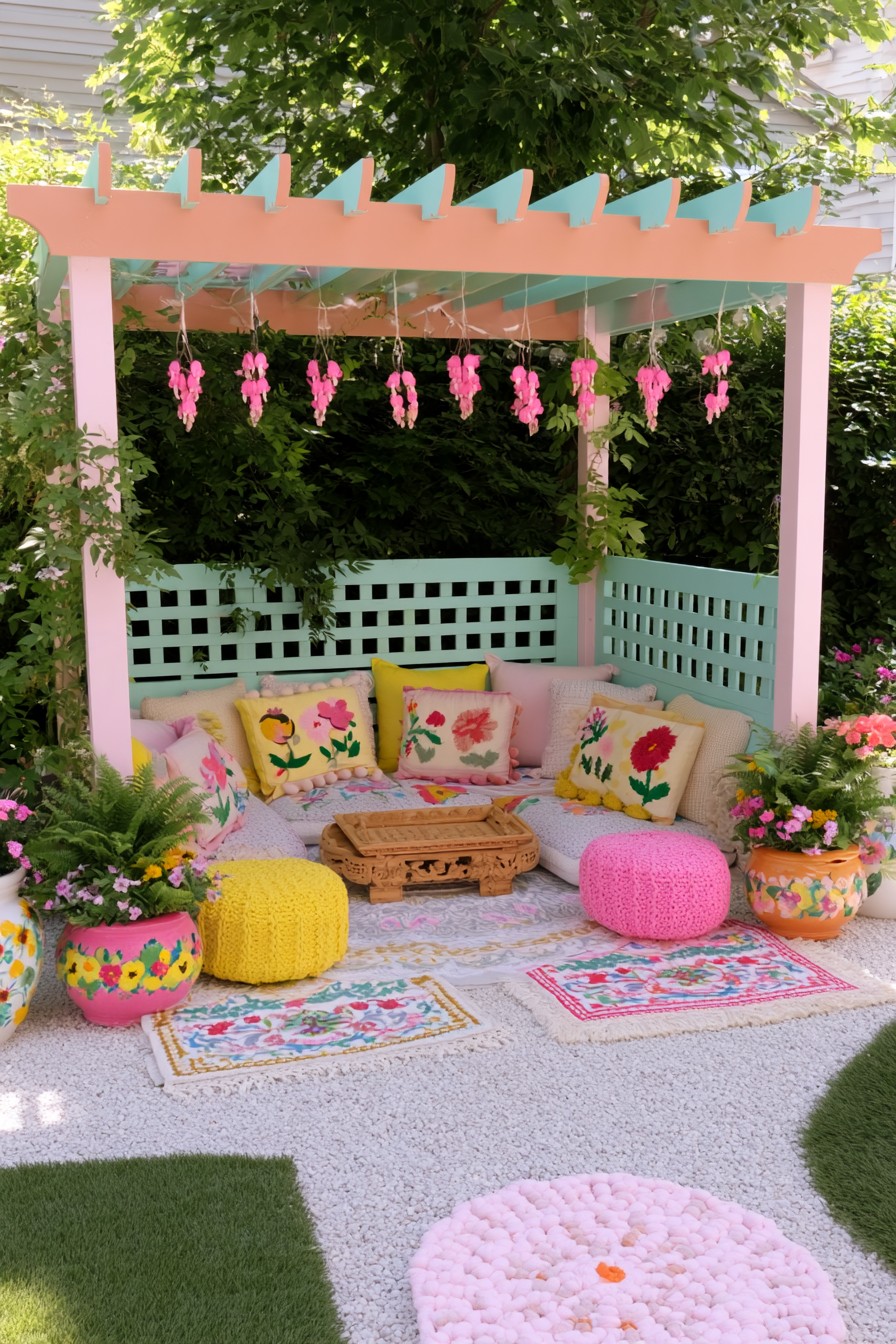
A pink-and-aqua pergola repeats its colors in cushions, pots, and floor textiles, giving an informal lounge a coordinated frame. Low seating wraps around the center, with poufs acting as movable accents. This arrangement suits a garden corner where the overhead shape and soft color matter more than a fully enclosed outdoor room.
Observe which seats receive shade as the sun moves through the open beams. Use a prepared support surface for the furniture; rugs over loose gravel cannot make an uneven base dependable. Choose poufs made for exterior use or small enough to carry to a dry storage shelf near the back door. Keep a place for each one before buying. Lift rugs to clear debris and dry underneath, and bring knitted accessories in fully dry before storing them.
15. Floral Bohemian Garden Courtyard with a Decorative Water Feature
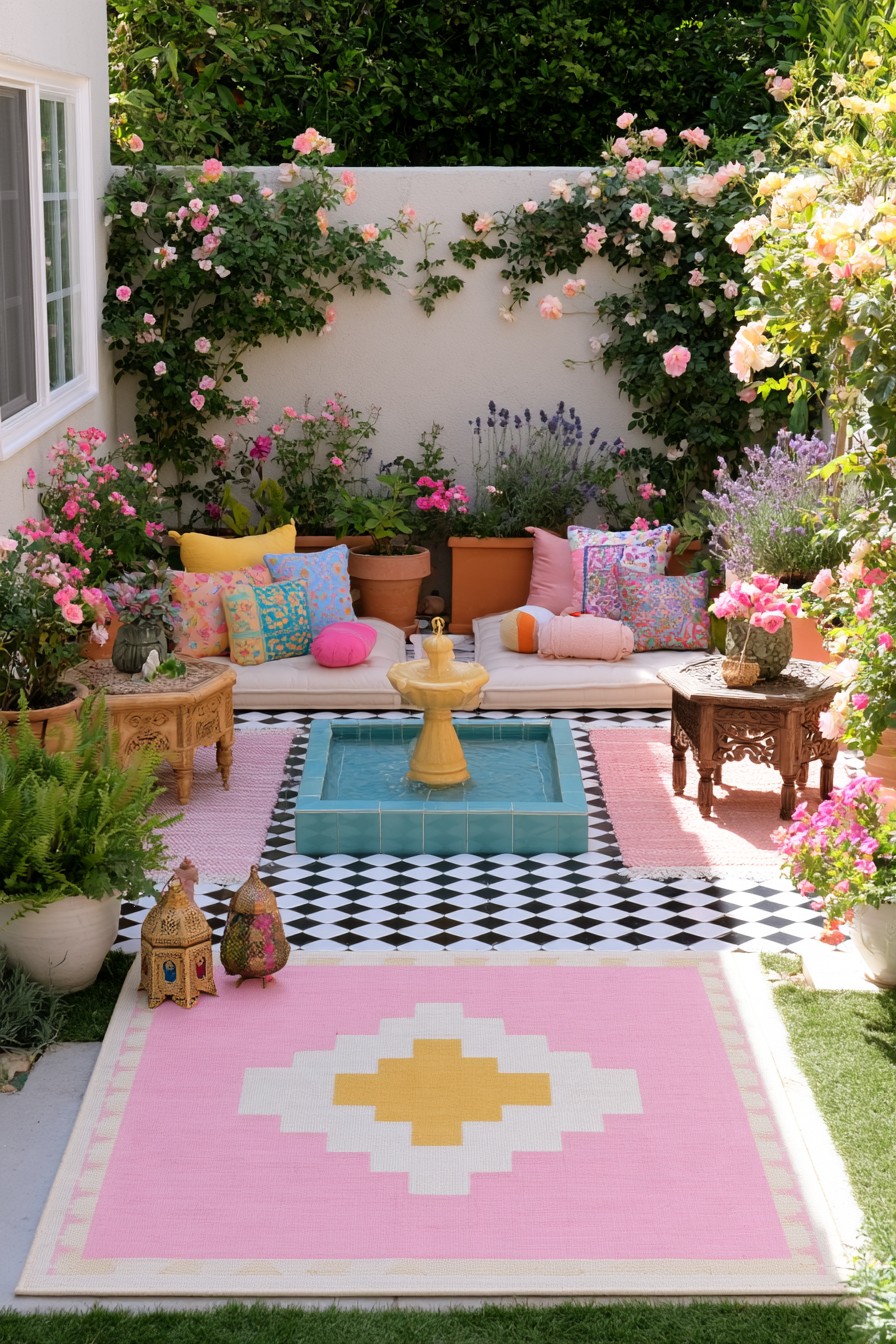
A rectangular water basin gives this flower-filled courtyard a reflective center, with low seating around its edges. The tiled pattern adds another color layer. For running water and gentle sound, choose a complete recirculating feature with a suitable basin, pump, and accessible connections.
Preserve a walkable approach to the seats and a service position for any pump. Check water levels, remove collected leaves, and position furniture beyond splash. Plan effective access control and close adult supervision where children can reach the water; powered equipment needs electrical provision by a qualified electrician. If adding lavender, choose a separate sunny position with freely draining soil, away from continually wet edges. Keep surrounding pots movable so cleaning the basin remains practical.
16. Maximalist Bohemian Garden Lounge Framed by a Floral Archway
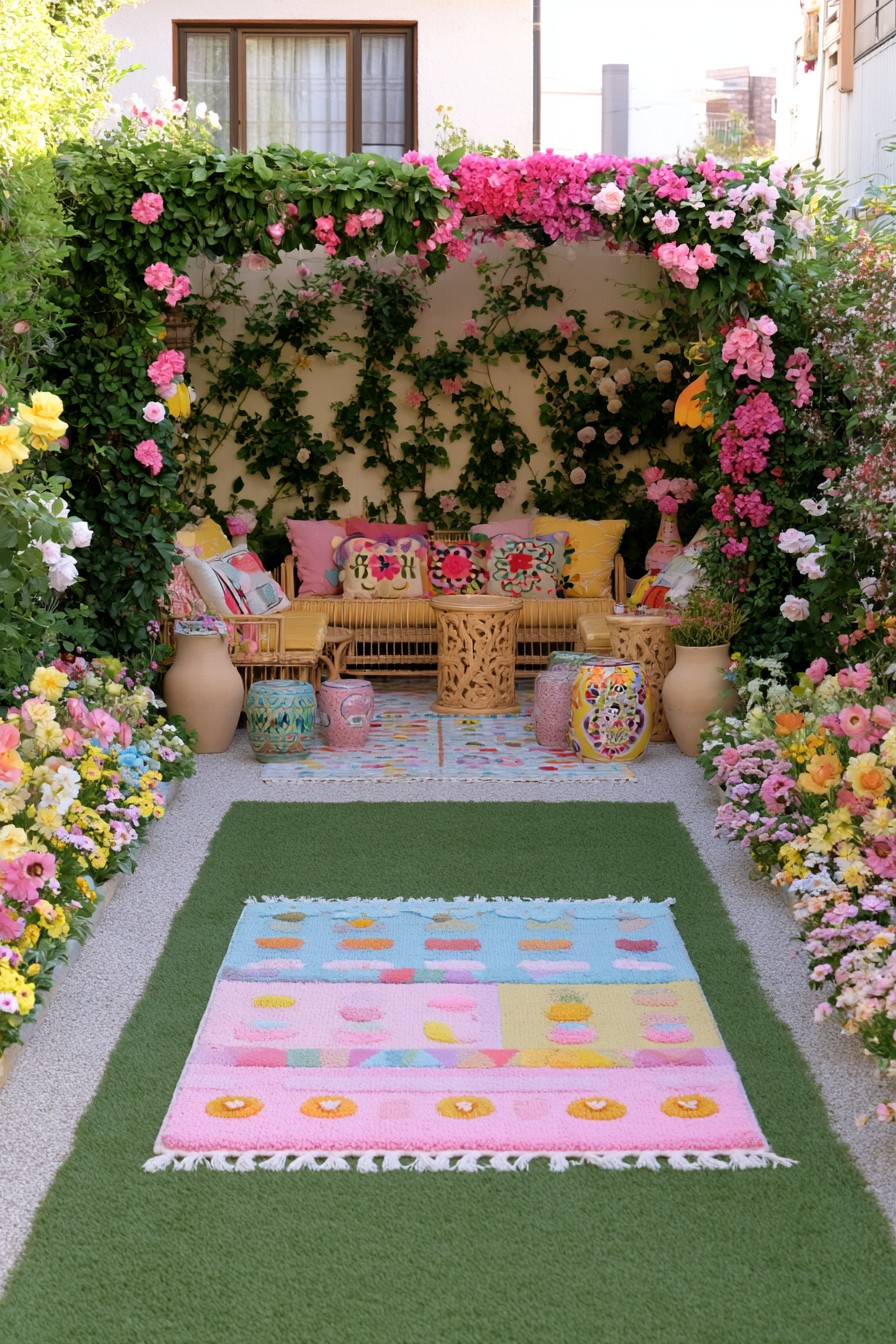
A floral arch turns the arrival at the lounge into a distinct moment, with a clear green approach between planted sides. Rattan-style furniture, embroidered cushions, and a patterned rug carry the color inside the opening. It is a useful direction when a seating area needs a threshold without another solid screen.
Choose a climber for its mature spread and pruning requirements, then match the support to that eventual growth. Leave working access on both sides of the arch so training stems does not require reaching across seated guests. Keep flowers and ties away from head and shoulder space within the opening. Decorative floral accents can supply a seasonal look, but they have different care from living vines. Place oversized planters beyond the entrance so the threshold remains comfortable to use.
17. Eclectic Bohemian Garden Lounge with Raised Succulent Borders
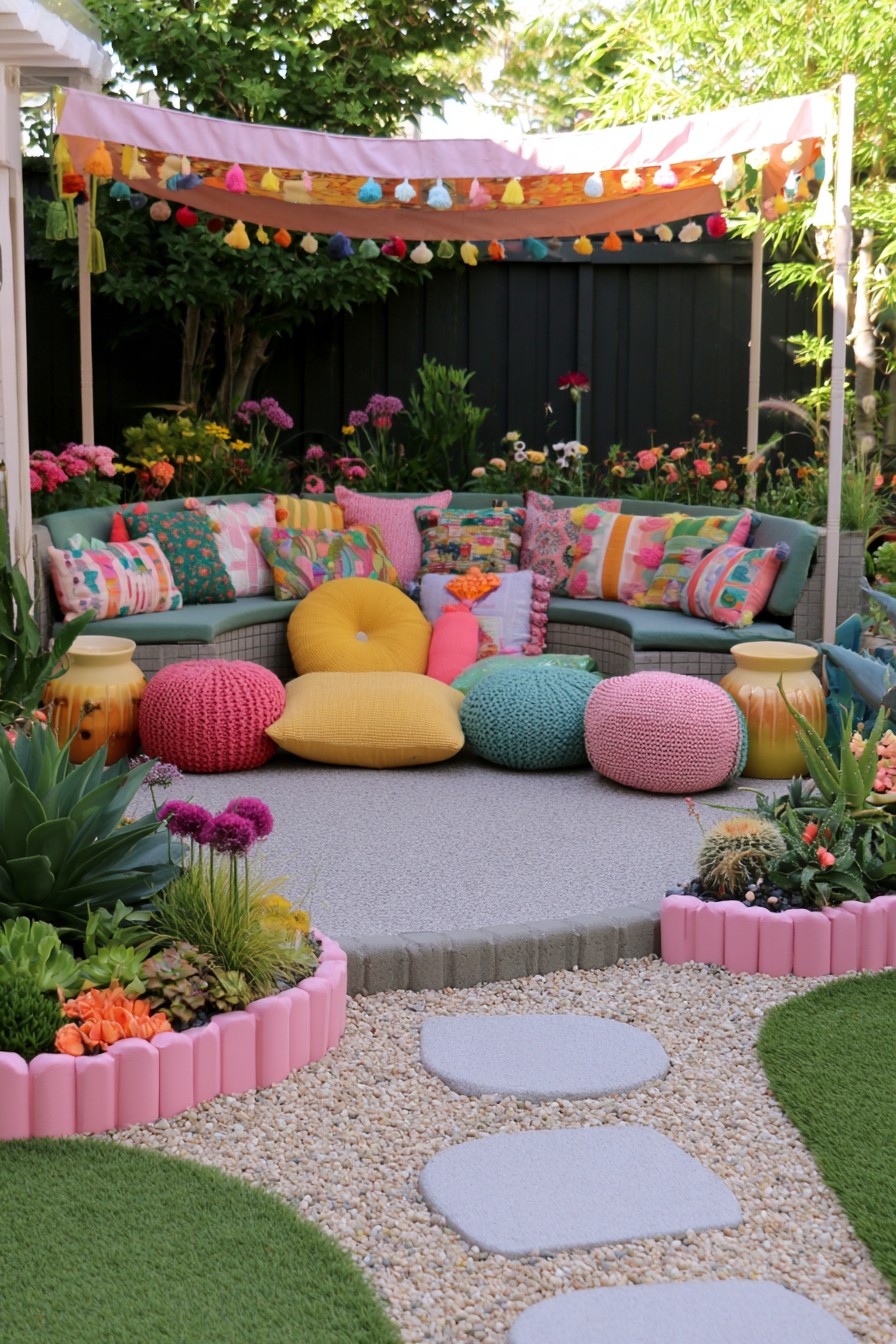
A curved sectional, bright cushions, and sculptural succulent borders define a lounge slightly above its gravel approach. The planting contributes strong leaf shapes, while a fabric shade adds a softer overhead layer. This suits a garden where the sitting area can have its own footprint without becoming the only route through the space.
Separate succulents from thirstier flowers using distinct pots or growing areas, so watering one group does not repeatedly wet the other. Check each succulent’s light, drainage, and local winter limits before planting outdoors. Keep poufs outside the entrance and assess the separated stepping stones for the people using them. Choose the shade using its documented weather and sun protection information, and follow the instructions for anchoring, closing, and removal in wind.
18. Curved Bohemian Garden Lounge with Fabric Shade
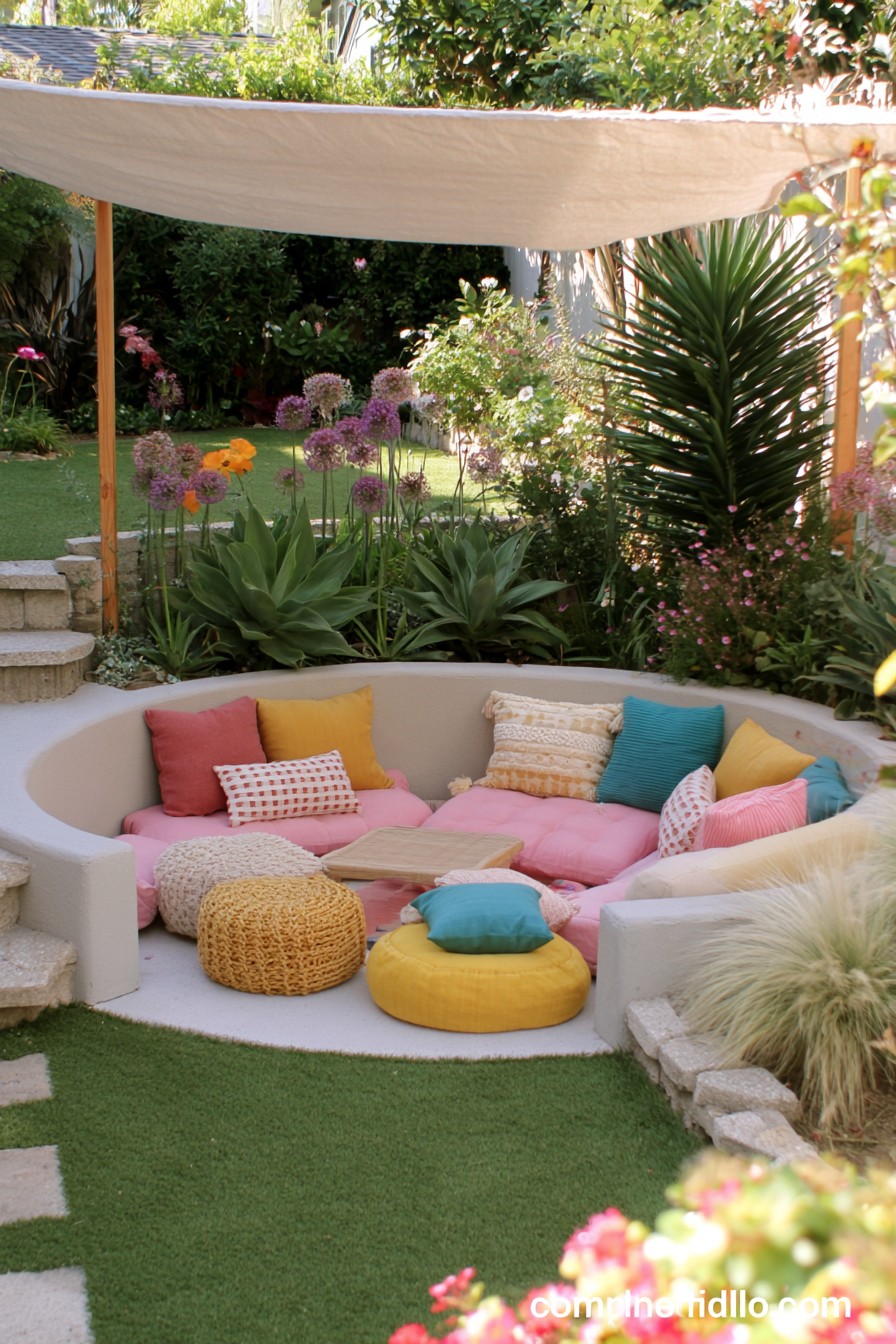
Curved benches gather around a low table beneath a broad fabric shade, creating an intimate lounge with an opening toward the lawn. Cushions and rounded poufs soften the hard seat perimeter. Guests enter between the bench ends, while the change from green foreground to pale floor marks out the sitting area.
Keep that opening generous enough for people to enter and move around the table while others remain seated. Give the poufs a storage position so they can be cleared quickly when the approach needs more room. Assess drainage across the floor and adjoining surfaces so runoff does not collect beside the seats. Use a shade system with specified fixings and follow its wind and removal guidance. Its fabric should be selected for the exposure and care routine you can provide.
19. Bohemian Front Yard Retreat with a Cushioned Daybed and Wildflower Borders
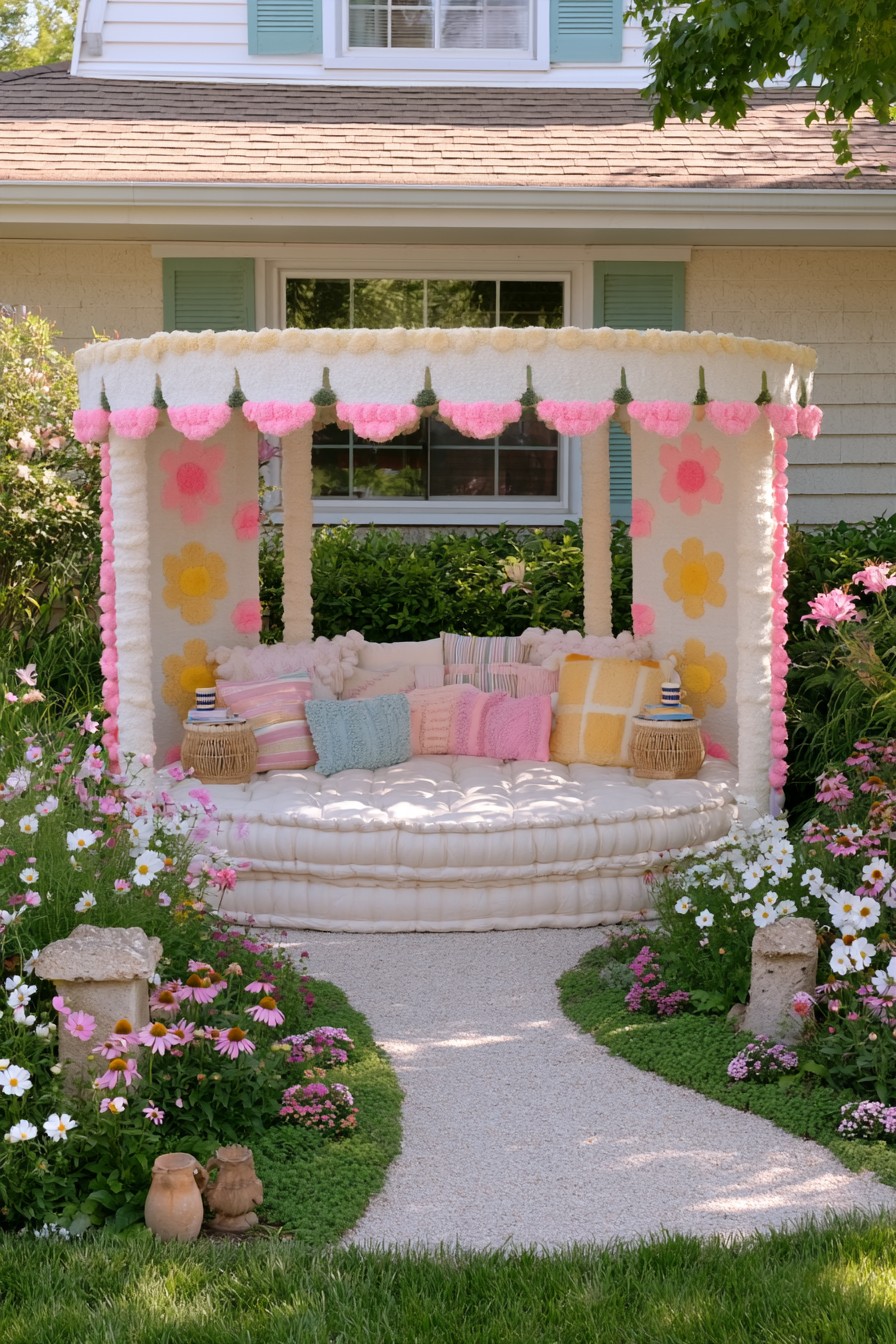
A cushioned resting seat near the house turns the front garden into somewhere to linger, with flower borders giving the entry area a softer character. A decorative canopy frames the seat, while a light approach connects it to the open foreground. This is an entry-adjacent retreat, so visitors and everyday household access still shape its placement.
Leave the route to the house usable when someone is resting, including room for deliveries or garden equipment. For daybed use, check the cushion length and depth for reclining and try the support and backrest before choosing the frame. Choose border plants for their mature width and flowering sequence, since the full flower display will change through the year. Allow pruning behind the seat, and treat the canopy’s weather protection as a product and construction question.
20. Eclectic Bohemian Front Garden with a Cozy Tea Lounge
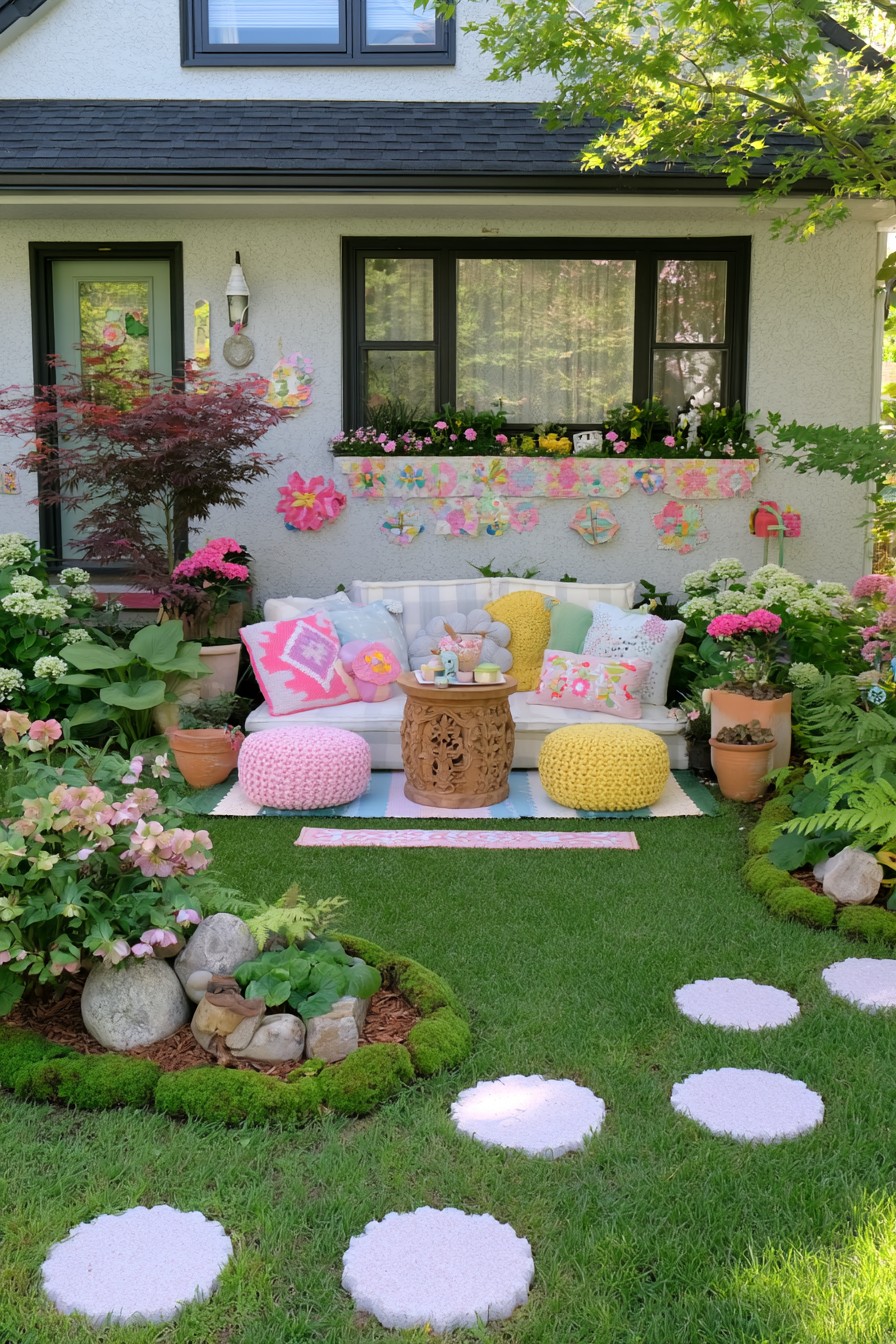
A bench, carved table, and two small poufs create a tea spot beside the house, with leafy planting making it feel enclosed. This idea offers upright sitting rather than the deeper lounging of the daybed corners. Its close relationship to the window and household route makes restrained furniture placement especially useful.
Check whether shade comes mainly from the building, nearby trees, or both. Tree roots can leave soil drier than an equally shaded bed elsewhere, so choose individual ferns, hostas, or hydrangeas for their own requirements instead of treating them as interchangeable. Keep pots reachable where watering needs separate attention. The approach to the house may need a continuous surface for daily users; scattered stones should not dictate that route. Move the poufs aside when extra passage width is needed.
21. Woodland Bohemian Garden Pavilion with a Macramé Hammock Lounge
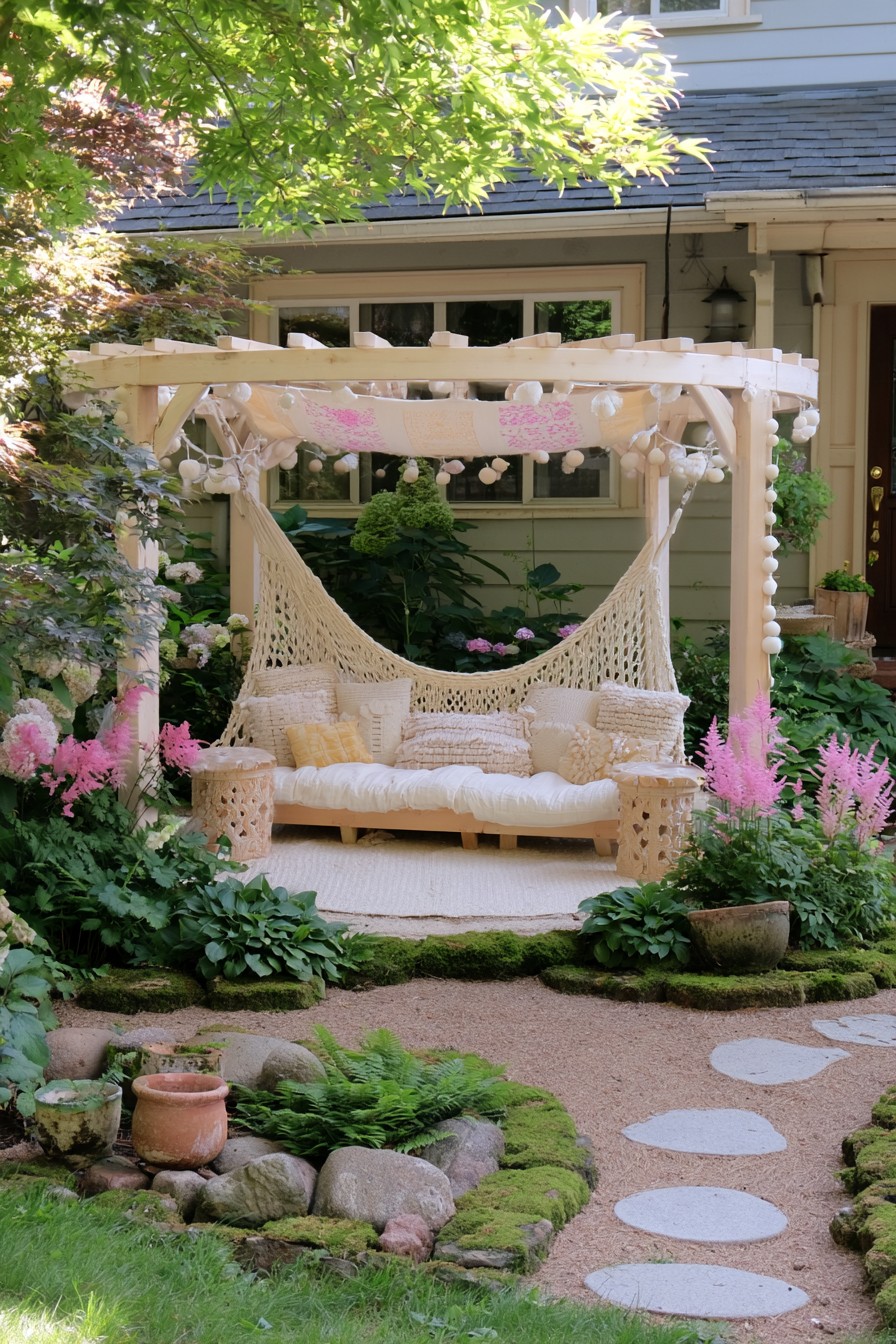
A timber-framed pavilion gives a hammock a destination within a leafy garden, with neutral cushions keeping attention on the planting. The surrounding paths and small side surfaces make the nook feel part of a wider garden route. This suits someone who wants suspended seating to have a defined setting rather than hang wherever two supports happen to stand.
Assess the hammock, suspension hardware, and carrying structure together for the intended moving load. The frame’s decorative appearance cannot confirm that capability. These considerations for planning supports for suspended garden seating help explain the relationship between structure and movement space. Keep tables outside the occupied hammock’s clearance and retain a comfortable landing area. For planting below the trees, check soil moisture and root competition; the lush woodland effect needs species chosen for those particular conditions.
22. Bohemian Mosaic Courtyard with Tropical-Style Planting
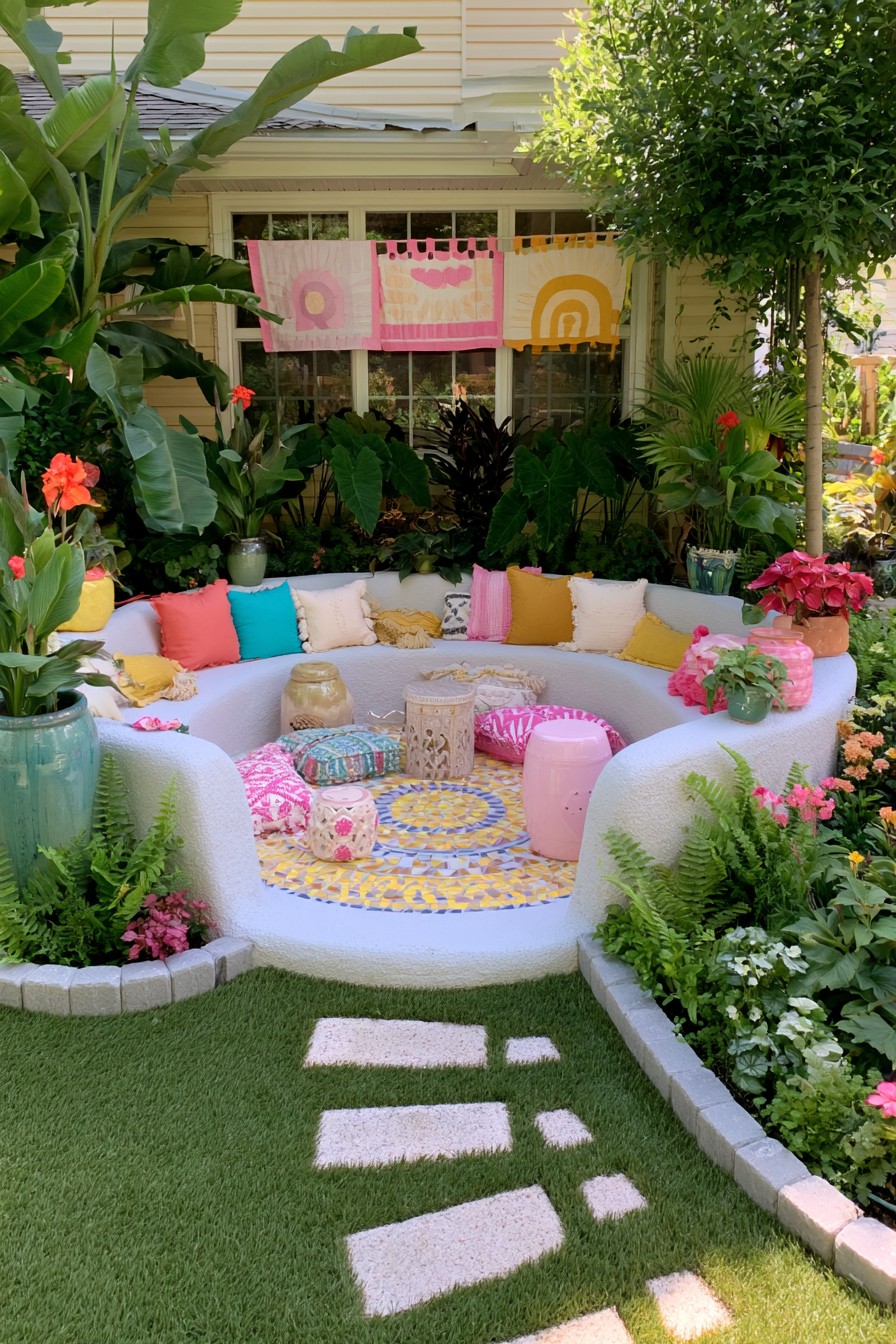
A mosaic-patterned courtyard and curved benches create a colorful outdoor room beside broad, tropical-style foliage. Coral and turquoise cushions repeat the floor’s playful color, while small stools can move to suit the group. The opening toward the lawn connects the seating area with the garden, and the clear space inside the bench curve leaves room for movement.
Choose the finished floor for dependable footing when wet, and have its base and drainage arranged to prevent standing water across the seating surface. Check the transition at the entrance and keep stools away from the main movement line. Select large-leaved plants for local climate and eventual spread, with access to protect or move tender specimens if needed. Leave enough working space to inspect the larger foliage without shifting the stools or narrowing the approach.
23. Cottage Bohemian Front Garden with a Round Daybed and Flower-Filled Borders
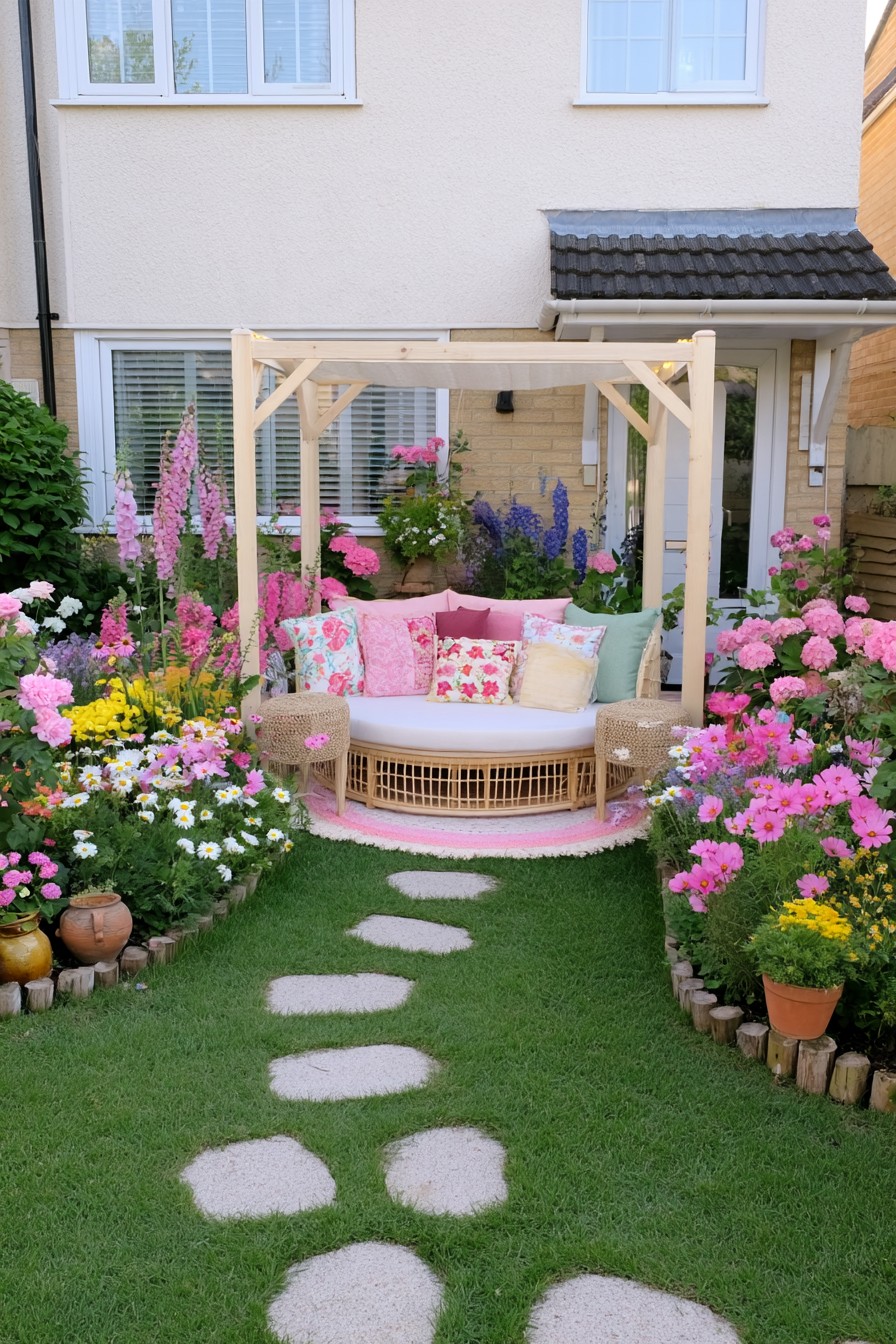
A round woven daybed gives the flower-filled front garden a central resting destination. Its circular outline differs from a bench against a border, and the light timber frame holds the view around it. This idea works when enough space remains to approach the rounded furniture and reach the surrounding planting from more than one side.
Check the usable cushion depth for lying down and the space needed to turn and stand at its edge. Keep a drinks table beside the access point without filling it. Separated stones may suit a decorative approach, while frequent household access can require a continuous route. Preserve working room around the curved back for trimming flowers and cleaning the frame. The overhead structure defines the nook; any rain protection needs to be confirmed separately.
24. Woodland Bohemian Hammock Nook with Ferns and Mossy Borders
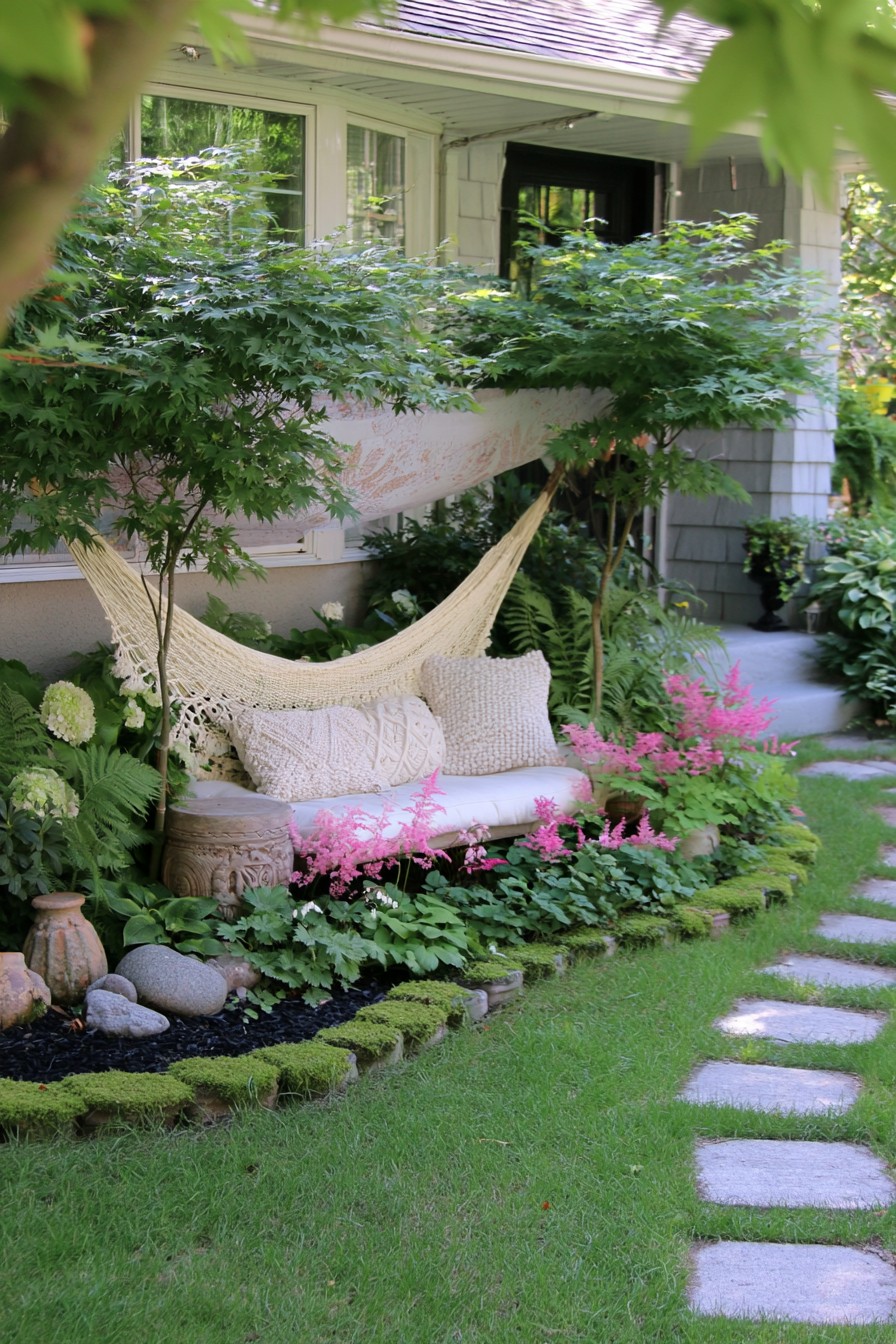
A woven hammock sits inside a woodland planting pocket, with fine foliage and pink flowers connecting it to the garden near the house. The setting is about resting among established trees, not building another large lounge. It can feel quiet and secluded while a separate path keeps visitors out of the planted bed.
Have the tree's condition and proposed suspension points assessed for the intended moving load before fitting a hammock or swing. Use a compatible tree-friendly system with broad straps that protect bark, following the manufacturer’s installation guidance, or select a separate rated stand. Avoid disturbing major roots when arranging the approach. Match underplanting to both light and soil moisture, since shade beneath trees can be dry. Keep the landing area free of rocks, pots, and loose accessories.
25. Cottage Bohemian Garden Daybed Surrounded by Colorful Flower Borders
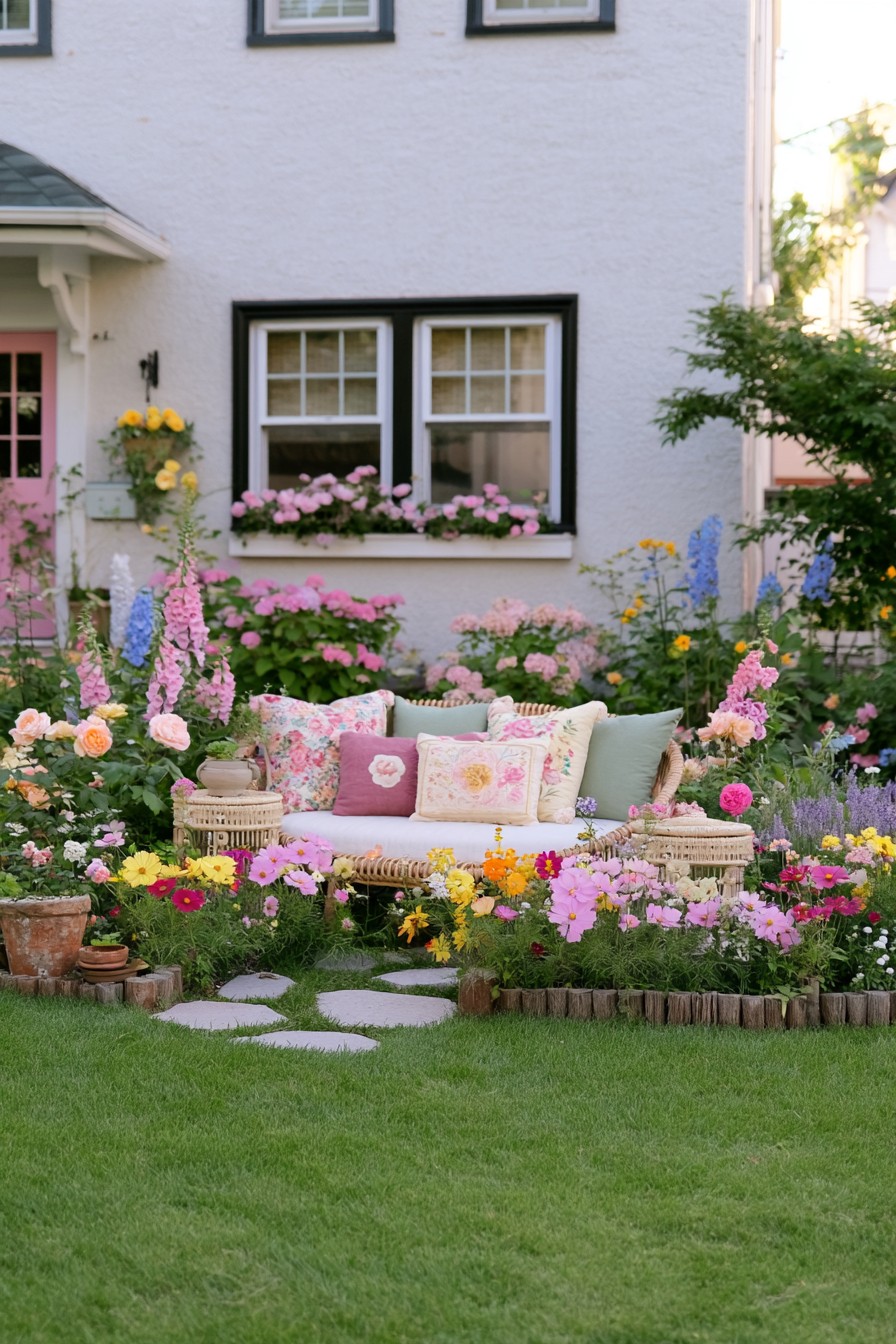
A woven resting seat along a generous flower border makes the garden itself the backdrop. Taller flowers rise behind the cushions, while smaller plants line the short approach and an open lawn stays in front. This is a border-side lounging corner, with its character coming from the changing flowers rather than a canopy or central furniture island.
Select a seat deep enough for the way you intend to recline, or choose a comfortable bench if the gap does not accommodate a daybed. Leave working space behind it for watering and pruning. Plan flowering times and mature widths so seasonal color changes do not leave the approach crowded or the seat buried. Keep a dependable route to the cushions; the decorative stone sequence can remain beside it. Check care labels before washing removable covers, and dry them as instructed.
Keep the Layers Comfortable to Use
Choose the activity first, then the seat height and depth, the approach, and any support or shade system. Add textiles once those parts work together, and use planting to frame the space without closing off the areas needed for care. This order makes it easier to adapt a colorful inspiration to a modest garden.
Follow the instructions for each textile, including its backing and cushion fill. Check whether a removable cover can be machine washed, allow cleaned pieces to dry as directed, and store them dry. Lift rugs to clear the surface underneath. Review hammock connections according to their product guidance, and trim plants when they begin to narrow a seat’s approach. Refresh seasonal flowers at useful points instead of making every border depend on one flowering period.

Leave a Reply