
Floral prints, faded furniture finishes and soft colors give these 25 bathrooms their shabby chic character. Choose a vanity finish, a textile or a useful storage piece that suits your room, with surfaces that can handle its everyday moisture and cleaning.
Table of Contents
- Choose a Shabby Chic Scheme That Fits Your Bathroom
- Build the Palette around One Pattern
- Match Decorative Materials to Water Exposure
- Measure Storage and Keep Everyday Access Clear
- 1. Pair a Distressed Sage Vanity with a Soft Tub Skirt
- 2. Balance a Faded Blue Vanity with a Floral Wallpaper Border
- 3. Coordinate Floral Curtains with Pink and Sage Paneling
- 4. Use Sage Tile as the Base for Pink Floral Accents
- 5. Frame the Doorway with Removable Rose Garlands
- 6. Emphasize an Arched Bath Alcove with Floral Trim
- 7. Let a Pink Vanity Lead the Rose Print Palette
- 8. Give Floral Tile Borders a Clear Role around the Bath
- 9. Focus Painted Roses on the Vanity Door Panels
- 10. Separate a Blush Tiled Shower from the Floral Wall Pattern
- 11. Frame the Basin Wall with an Arched Floral Tile Panel
- 12. Organize Towels in Shallow Cubbies around the Mirror
- 13. Introduce Soft Blue through Curtains and Cabinet Fabric
- 14. Fit a Narrow Drawer Tower into a Floral Attic Bathroom
- 15. Combine a Faded Blue Vanity with Glass Front Display Storage
- 16. Add a Decorative Towel Holder beside a Green Vanity
- 17. Turn a Pastel Cabinet into a Practical Linen Station
- 18. Place a Cottage Linen Cabinet beside a Blush Vanity
- 19. Shape a Corner Vanity with Painted Niches and Floral Panels
- 20. Make a Patterned Sage Tub the Main Decorative Feature
- 21. Use Bow Details and Blush Storage against Plain Walls
- 22. Balance a Curved Floral Vanity with a Plain Blush Cabinet
- 23. Give the Bath Wall a Floral Mantel Style Display
- 24. Ground an Ornate Pink Vanity with Checkerboard Flooring
- 25. Add a Skirted Dressing Table beside a Sage Vanity
- Finish with a Bathroom You Can Use and Maintain
Choose a Shabby Chic Scheme That Fits Your Bathroom
Start with the change that would make the biggest difference to your bathroom. If the layout already works, a floral curtain, a new cabinet color, or a coordinated towel display may be enough. Keep sound fixtures and useful furniture, then build the pattern around them. Moving a tub or converting a furniture vanity needs plumbing, dimensions, and installation planned before the decorative finish.
| Your decorating goal | Where to begin | What to keep in mind |
|---|---|---|
| A small refresh | Floral textiles, painted cabinet fronts, and selected ceramics | Existing cream fixtures and plain walls can support the new palette |
| More useful storage | Mirror cubbies, narrow drawers, or a tall linen cabinet | Check door movement, access, and the amount you actually need to store |
| A stronger focal point | Patterned tile, a statement vanity, or a colored tub | Plan the durable surfaces and installation before choosing ornaments |
Build the Palette around One Pattern
Choose a floral print or painted furniture detail, then pull out one muted color and a light background tone. Sage and cream, faded blue and ivory, or blush with soft green all appear in the ideas below. Compare samples together in your bathroom before committing. When wallpaper is busy, make the towels quieter; when the vanity has painted roses, leave some wall space plain.
Match Decorative Materials to Water Exposure
Keep wallpaper outside direct splash areas and follow its manufacturer's bathroom suitability and adhesive instructions. Around a shower, install a complete waterproofing assembly and finish intended for wet areas before adding decorative details. Repair leaks and address damp surfaces before decorating. Effective ventilation helps the room dry, while removable, washable textiles are easier to maintain than a permanent fabric covering.
For painted furniture, select a compatible preparation, paint, and protective finish for the actual substrate and use. Allow the stated curing time before putting it into service. A moisture resistant coating does not turn an ordinary dresser into a waterproof cabinet. Check old finishes for lead before sanding or creating a distressed effect, and obtain appropriate advice if the coating's history is unknown.
Measure Storage and Keep Everyday Access Clear
Draw the furniture footprint on the floor with removable tape. Include open drawers, swinging doors, space to stand at the basin, and access to plumbing. Check a tall cabinet's fixing instructions and the supporting wall before installation. For a vintage furniture conversion, ask a plumber or cabinetmaker to assess the basin, counter, pipe route, and remaining drawer space before making cuts.
Clawfoot tubs and decorative light fittings need their own installation checks. Confirm floor support and supply positions for the selected tub. Have a qualified electrician assess the suitability and permitted location of bathroom lighting under the rules that apply where you live. You can borrow an ornate shape from a photograph while choosing fittings designed for your actual room.
These 26 inspirations range from a single floral accent to more elaborate furniture arrangements. Use the notes beneath each image to identify what creates the look and which practical decisions matter when adapting it, rather than trying to copy every accessory.
1. Pair a Distressed Sage Vanity with a Soft Tub Skirt
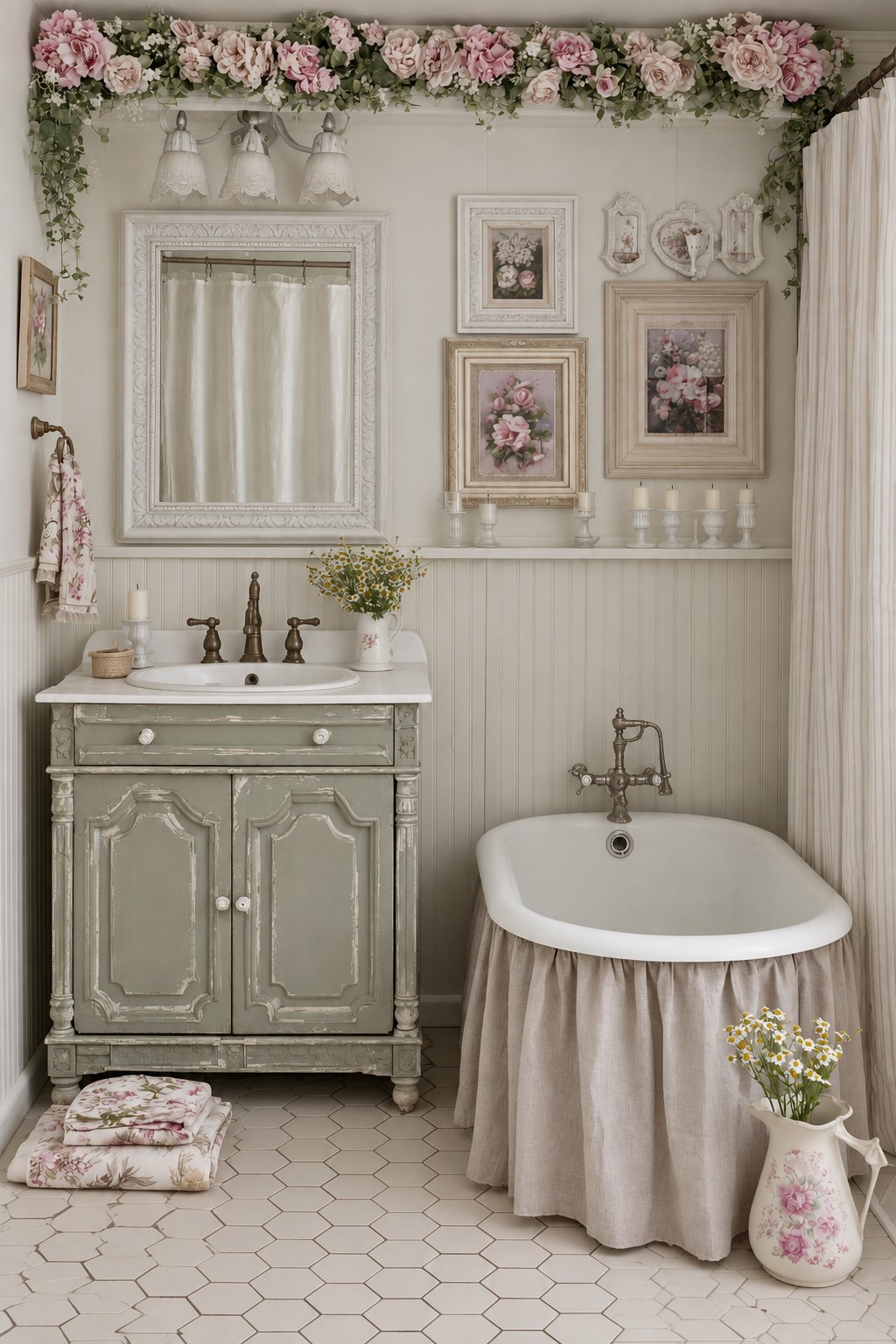
A faded sage cabinet and gathered ivory tub skirt give this compact room its furniture like softness. The white mirror, small floral details, and flowers near the ceiling add romance, while plain paneling and pale hexagonal flooring keep the base light. The skirt is the strongest textile feature, so it does not need another large print nearby.
Adapt the cabinet first, using a finish suited to the vanity's daily exposure. For a decorative tub skirt, choose washable fabric and a removable attachment that leaves fittings and any service access reachable. Keep the hem above the floor, allow the fabric to dry, and leave it outside the bathing surface. Measure the closed skirt so it cannot snag feet on the route beside the bath.
2. Balance a Faded Blue Vanity with a Floral Wallpaper Border
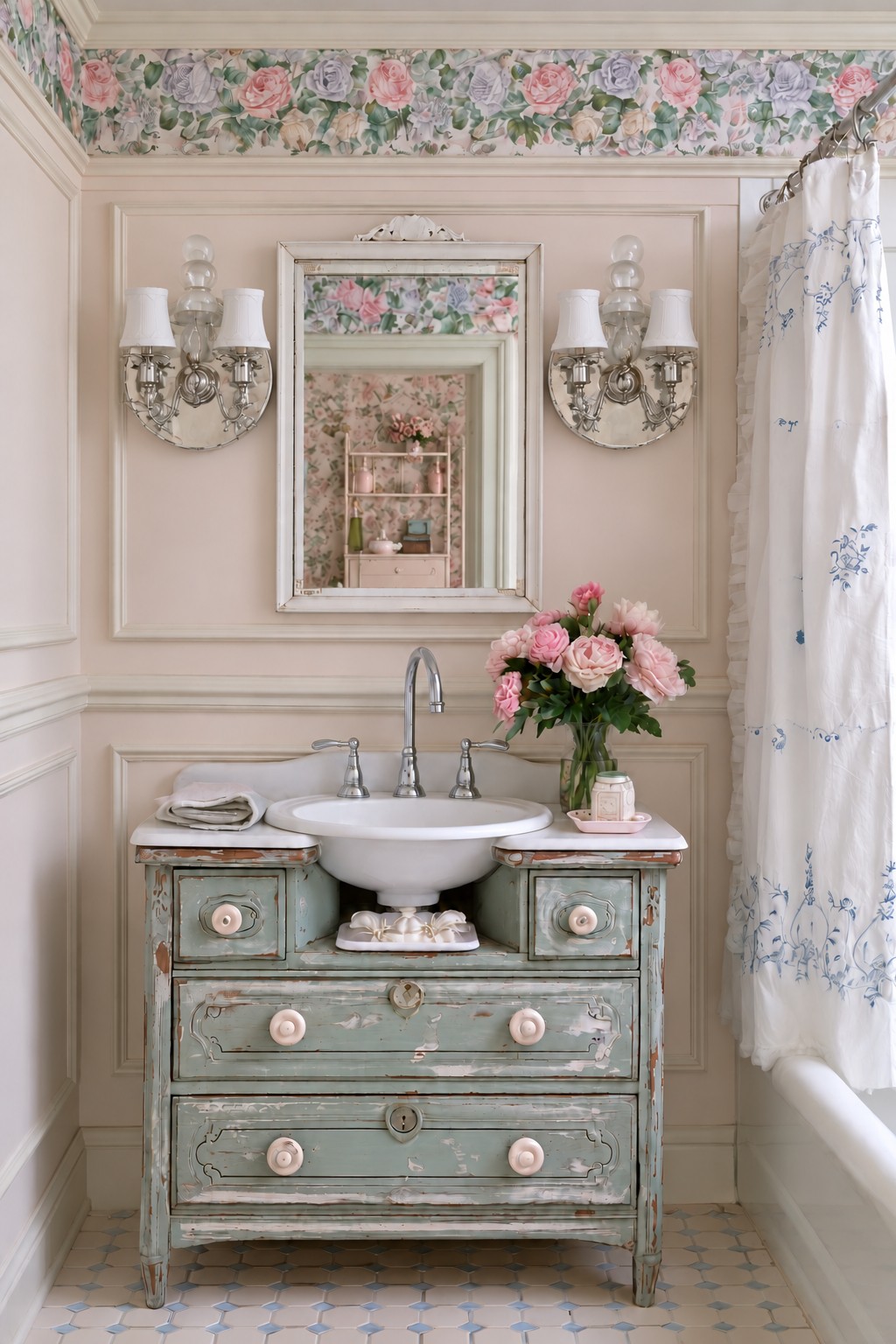
The narrow wallpaper band carries pink and green roses without covering the whole wall. Beneath it, a faded blue cabinet introduces contrast against the pale pink molding. Its drawer fronts and small side compartments give the vanity a furniture inspired character that you can recreate with a suitable bathroom cabinet.
If converting a dresser, check basin depth, drain position, drawer movement, and a suitable counter with the person doing the conversion. A paper border is a simpler decorating project: measure the full run, allow for the pattern repeat, and decide where seams will fall before cutting. Use the print's colors as a loose guide for accessories, leaving working space next to the basin rather than recreating the entire countertop display.
3. Coordinate Floral Curtains with Pink and Sage Paneling
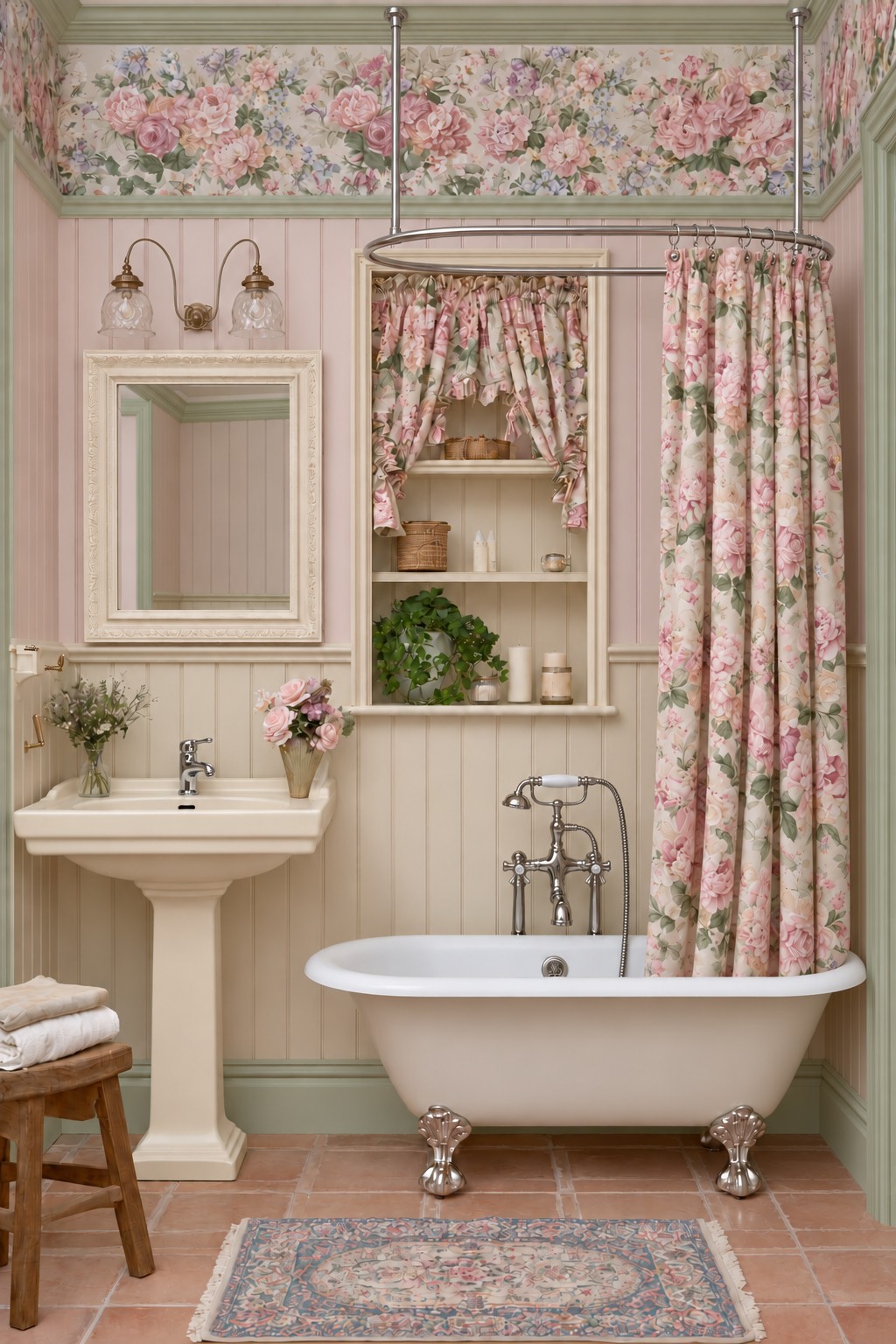
Repeating a rose print around the tub and the storage recess creates continuity in this bathroom. Pink panels and sage trim separate the patterned fabrics, while the pedestal basin and white tub give the eye simpler shapes to rest on. The useful idea is coordinated fabric, with calm permanent surfaces underneath.
Measure curtain width around the actual rail, including enough overlap for its intended coverage. Where a shower is used, provide a suitable water containing liner and arrangement rather than relying on decorative cloth. The smaller fabric treatment should lift or draw aside without obstructing the stored items. Choose pieces you can remove for laundering, and position daily toiletries on reachable shelves so opening a curtain does not become an extra task every time you wash.
4. Use Sage Tile as the Base for Pink Floral Accents
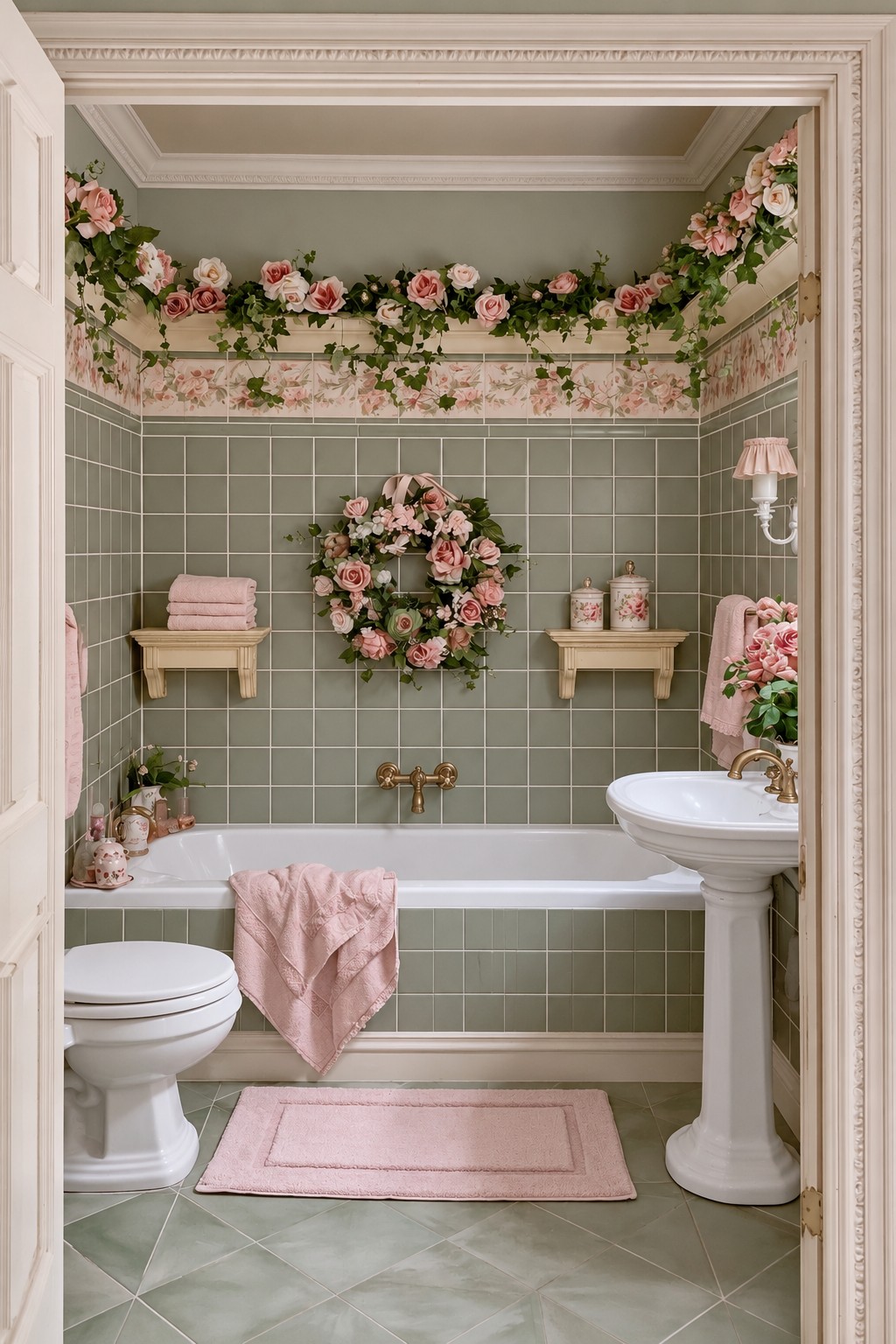
Sage tile provides the lasting color in this room; pink arrives through towels, a mat, and floral arrangements. Small cream shelves and a pedestal sink leave the green wall visible. This is a useful direction when you like romantic details but want the main surfaces to remain adaptable.
Start with the tiled area and its edge treatment, then choose one pink textile to test against the green. Reserve the little shelves for a modest towel stack or a lightweight container, with fixings suitable for the wall. Leave room to wipe the tile below. Around the bath, move flowers or a wreath outside regular spray exposure and ensure they do not hide controls. Accessories should be easy to lift away when the room needs cleaning.
5. Frame the Doorway with Removable Rose Garlands
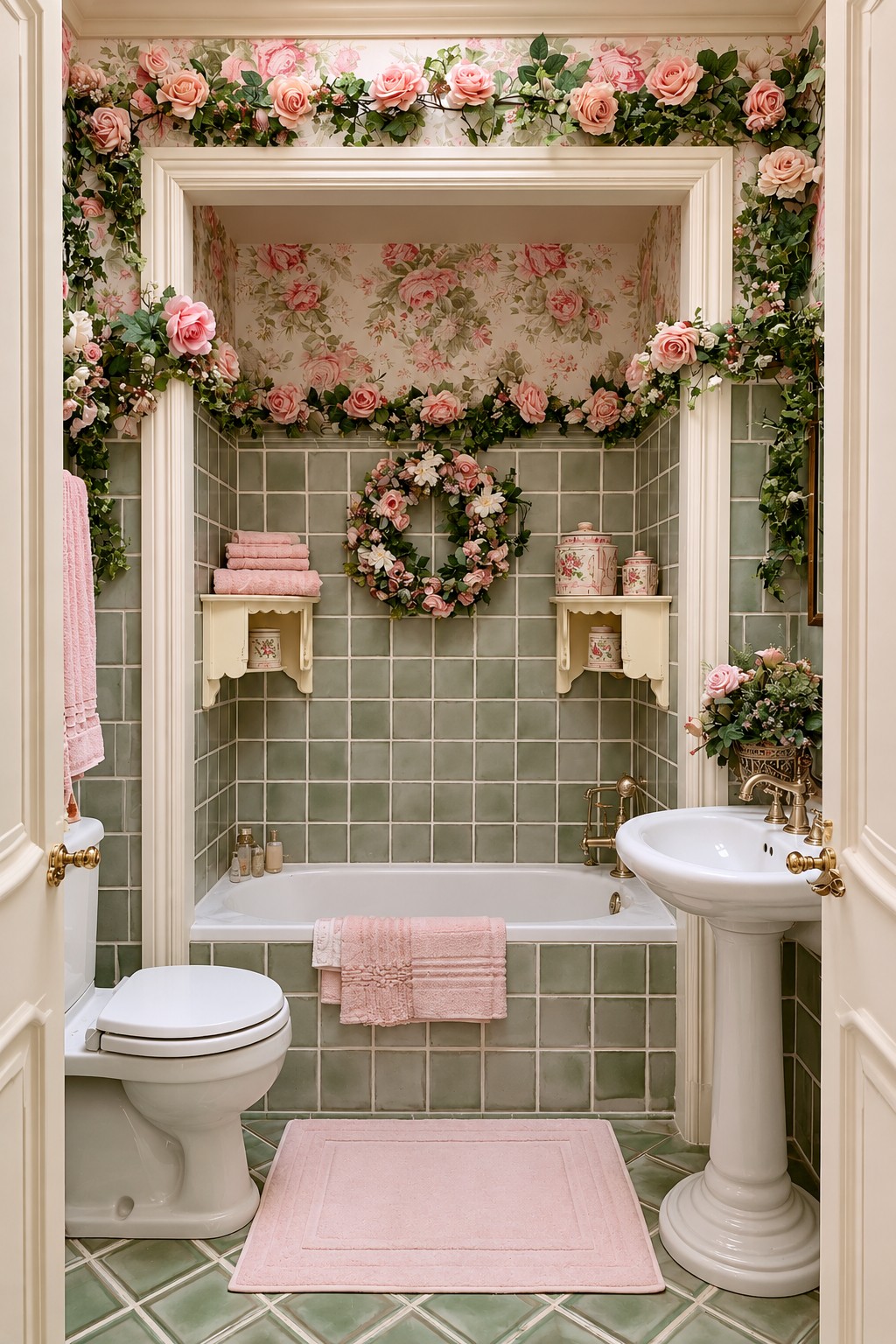
The flowers extend around the doorway as well as above the bath, making the room feel like a floral enclosure. Sage tile and a restrained pink floor mat keep the lower portion simpler. Compared with the previous idea, this arrangement puts more emphasis on the entrance frame than on individual accessories.
Plan the garland in manageable sections so each can be removed and cleaned. Check the fixing method against the wall finish and the arrangement's weight; an adhesive hook should not be assumed suitable in humid conditions. Leave the door swing, ventilation opening, and nearby fittings unobstructed. Start with the upper frame and assess the result before adding side lengths, which can make a narrow doorway feel crowded and collect splashes or dust.
6. Emphasize an Arched Bath Alcove with Floral Trim
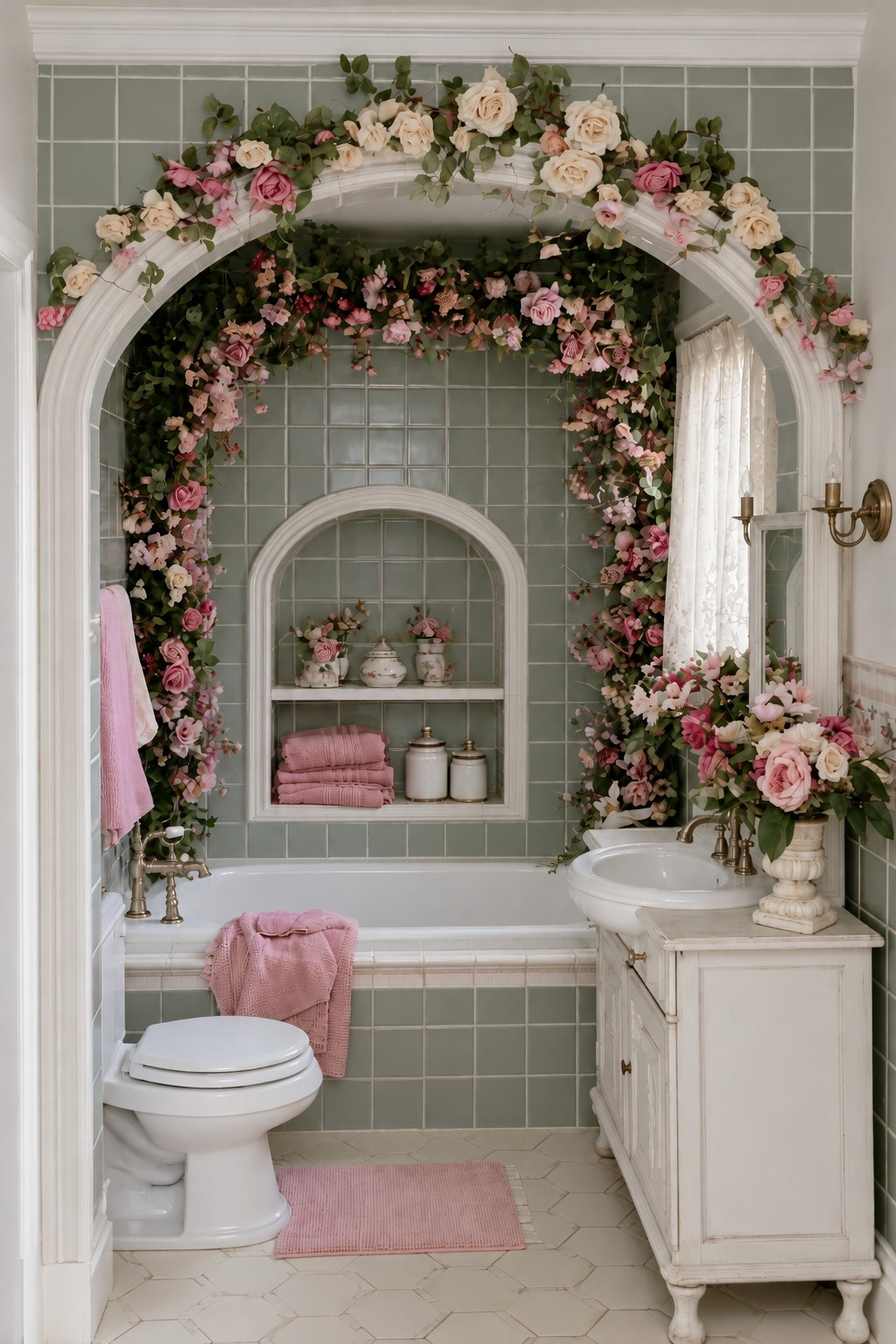
An existing arch gives the floral trim a clear path to follow. The smaller arched niche repeats the shape inside the tiled alcove, and a white vanity keeps the neighboring area quiet. Following an architectural boundary can produce a more deliberate result than distributing garlands over unrelated surfaces.
Check the opening from the position used to enter and clean the bath. Decorative stems must stay clear of your head, handles, and any shower spray. Keep a towel niche in a drier accessible location where possible; a shelf inside a regular spray zone is better used for products intended to stay there. If creating a new recess, have its waterproofing and supporting wall assessed before cutting. The arch itself can remain the feature with a much lighter floral arrangement.
7. Let a Pink Vanity Lead the Rose Print Palette
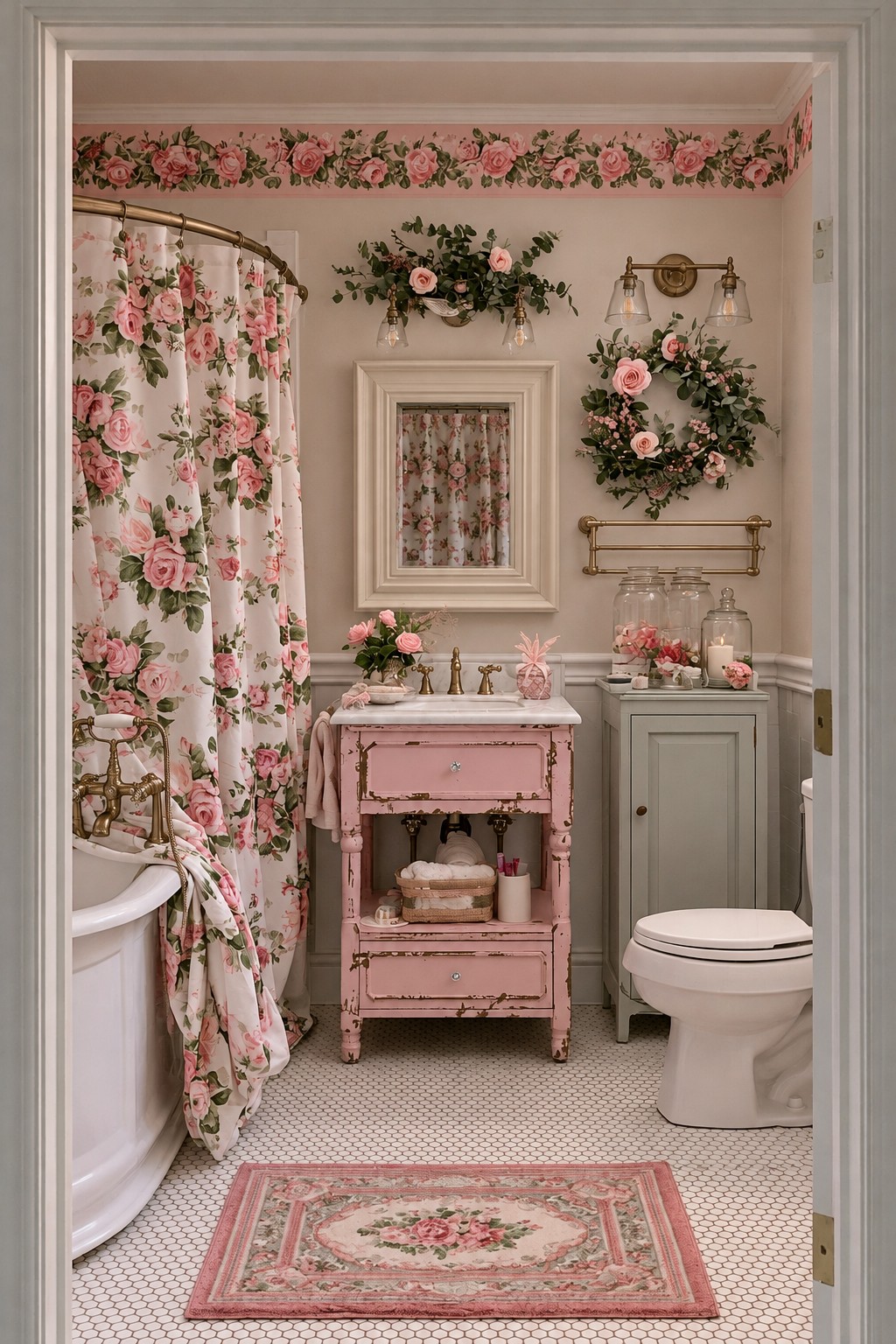
A small pink vanity gives this room its cheerful center, supported by a rose curtain and border. The gray cupboard introduces a quieter neighboring piece, so every cabinet does not need to carry the same color. This balance can help a vivid floral fabric feel settled in a small bathroom.
Choose the curtain first if its pink tones matter to your scheme, then compare a painted sample beside it. When refreshing the vanity, keep deliberate wear to selected edges and use an appropriate protective coating; avoid creating loose paint that can flake during use. Assign the adjacent closed cupboard to daily supplies and leave the vanity's open lower area easy to clean. Test drawers and doors with the bath curtain in its usual position.
8. Give Floral Tile Borders a Clear Role around the Bath
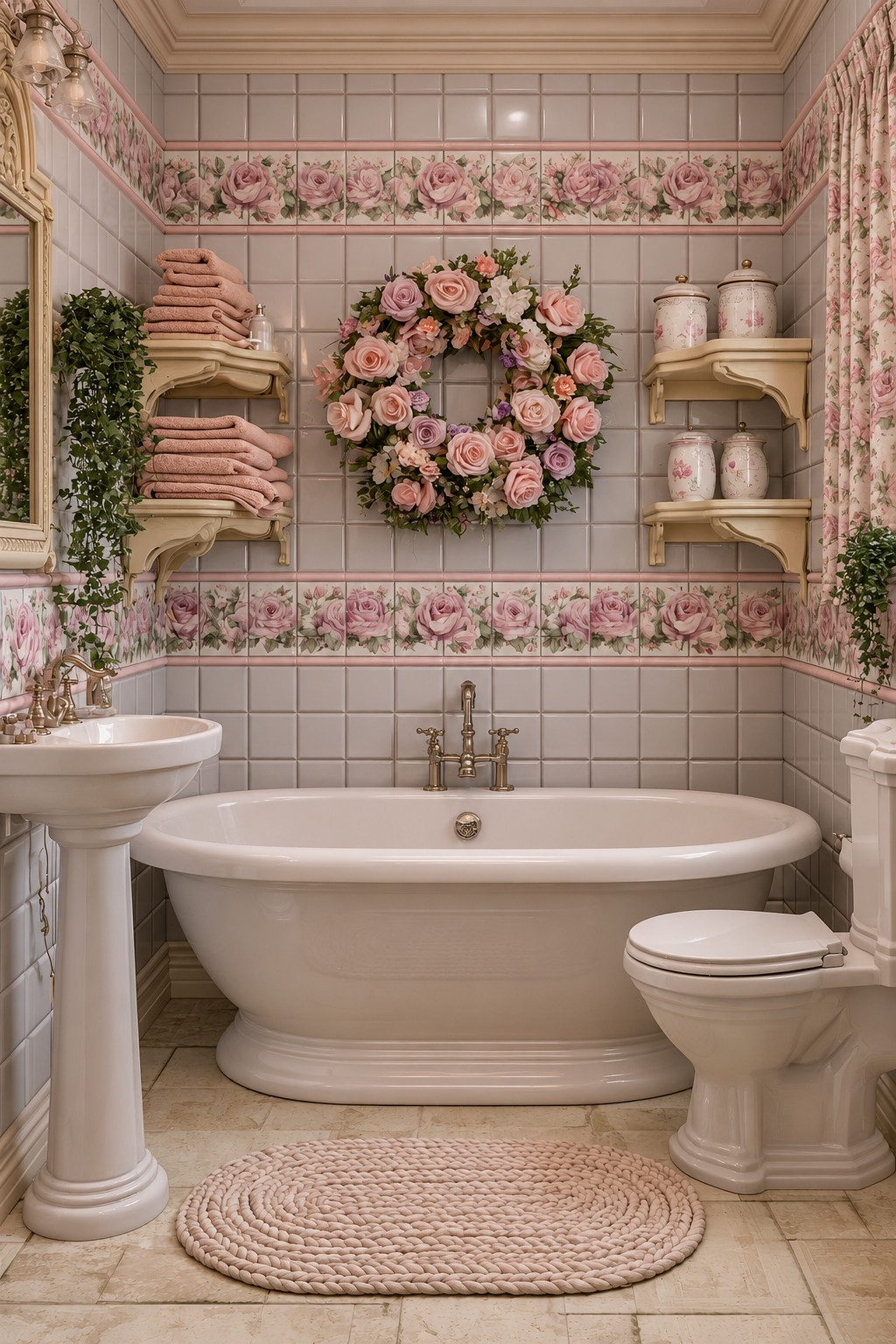
Horizontal rose bands give these plain tiles a decorative structure, with the wreath centered between the shelves. The tile pattern supplies the detail that wallpaper provides in other rooms. This approach suits someone already planning a wall finish who wants the floral motif to become part of that work.
Lay out a sample section or scaled drawing before ordering. Check where the borders meet corners and how the pattern relates to the bath rim and shelves. The placement should remain coherent even when towels cover part of the wall. Have the installer account for the wet area construction behind the tile. Keep shelf projections and contents out of the bathing clearance, and store spare linens somewhere drier if these ledges receive frequent steam or splashes.
9. Focus Painted Roses on the Vanity Door Panels
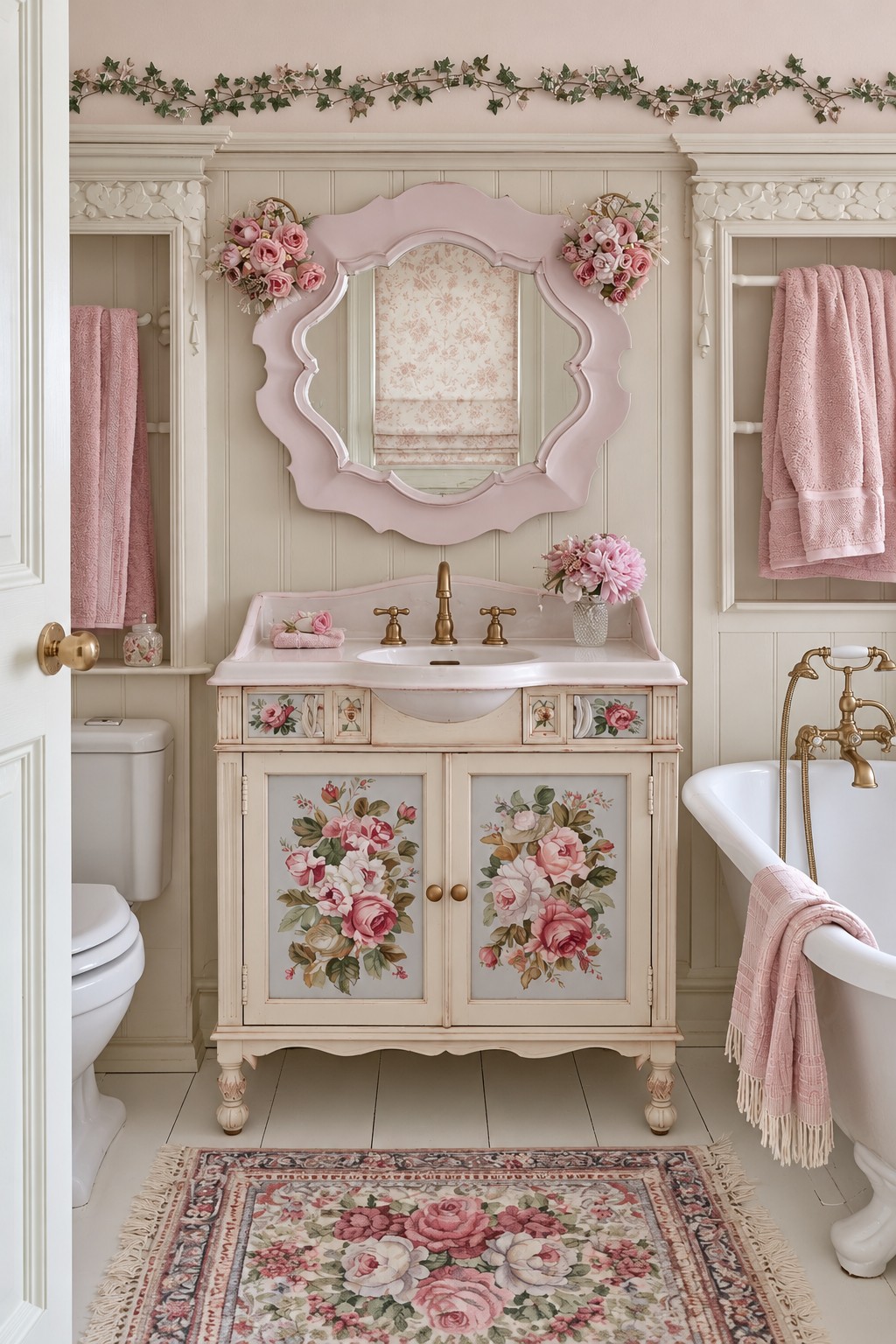
The rose decorated cabinet doors are the focal point here. A shaped pink mirror repeats their color, while plain cream paneling gives the furniture space to stand out. Recessed towel areas on either side add function without introducing another large floral surface.
Sketch the motif within each panel before painting, considering how the doors look when closed together. A furniture transfer can offer a similar decorative effect, but both it and the final coating need to suit the substrate and conditions. Test the complete finish on a sample first and keep the top suitable for basin use. Choose accessible towel storage beside the mirror, then check that hanging fabric does not obscure fittings or lie across the counter. A few plain towels can echo the pink without competing with the roses.
10. Separate a Blush Tiled Shower from the Floral Wall Pattern
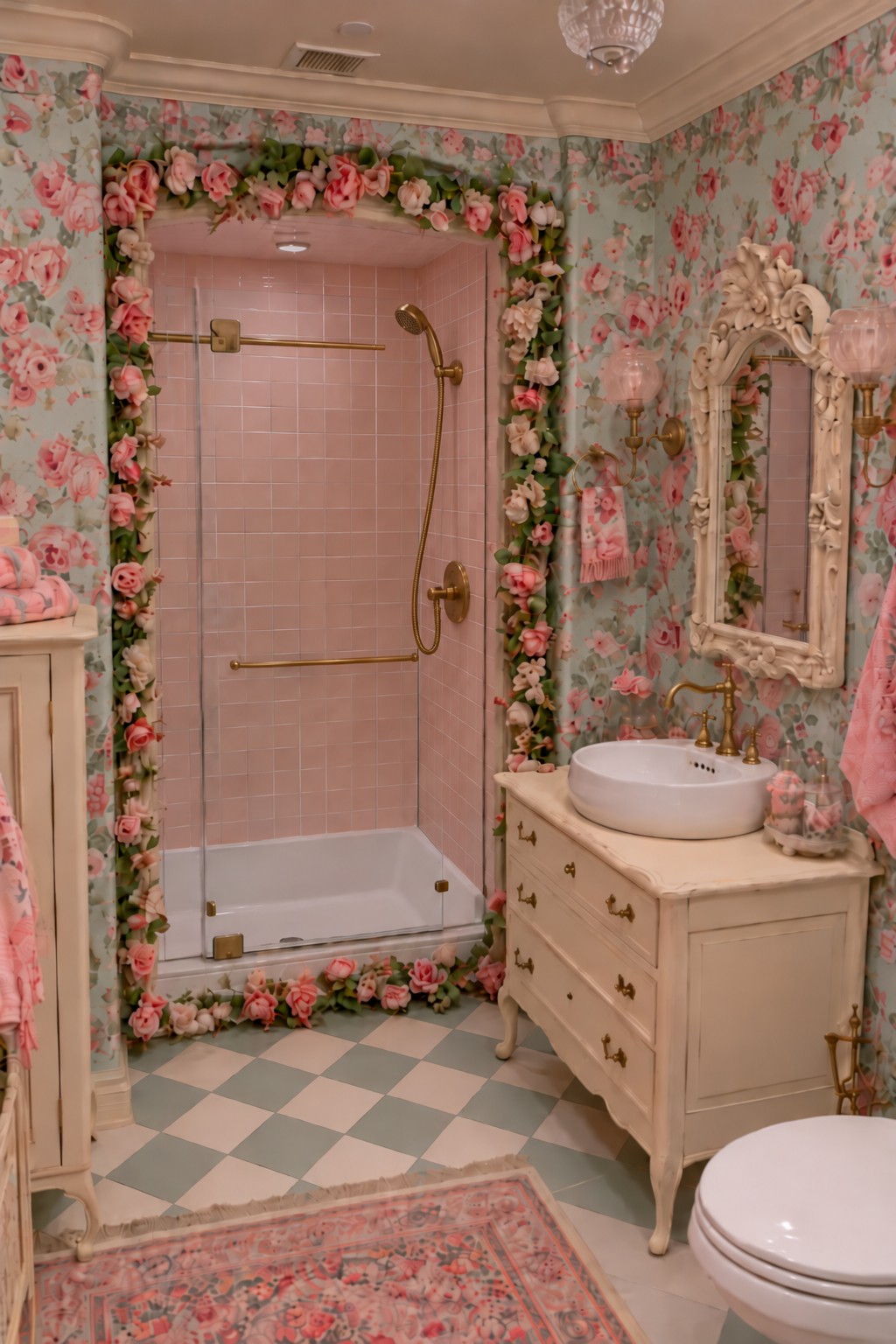
Pink shower tile forms a solid color block within the floral walls. A cream vanity and pale checkerboard floor introduce quieter surfaces, while the rose trim makes the opening theatrical. The practical version starts by distinguishing the shower's water containing construction from the surrounding decoration.
Specify the shower lining, waterproofing, tray or floor, and screen or curtain arrangement as a complete system. Keep wallpaper and decorative garlands outside water exposure, including the lower threshold where spray can escape; the photograph's flower trimmed opening is an inspiration rather than an installation detail to copy. Position any floral frame on a neighboring dry wall instead. Choose floor products intended for the location, and keep a washable mat clear of the shower opening so it does not obstruct drainage or movement.
11. Frame the Basin Wall with an Arched Floral Tile Panel
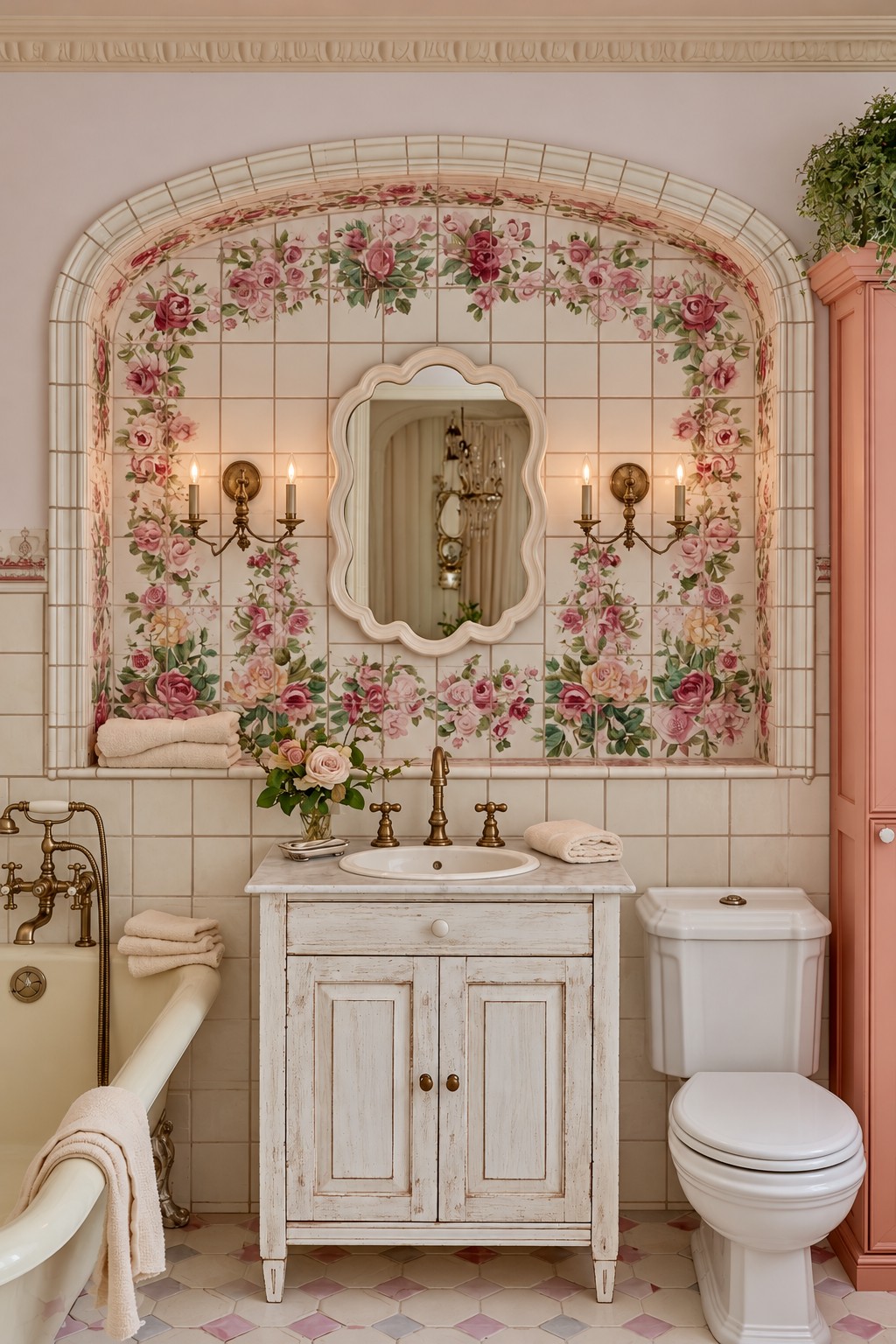
An arched tile panel surrounds the mirror, making the basin wall the room's principal feature. The distressed white vanity and coral cabinet contribute different tones without requiring every wall to have a dense pattern. The arch gives the floral print a defined beginning and end.
Use a wall elevation to check the tile layout, curved edge, mirror size, and light positions together. Small cuts near an arch can change how the rose pattern reads, so resolve them before fitting begins. If a full panel is beyond your plans, a smaller floral backsplash with finished edges can carry the same idea. Select a mirror whose frame leaves the decorated border visible, and keep accessible storage below or beside the basin rather than placing essential items on the display ledge.
12. Organize Towels in Shallow Cubbies around the Mirror
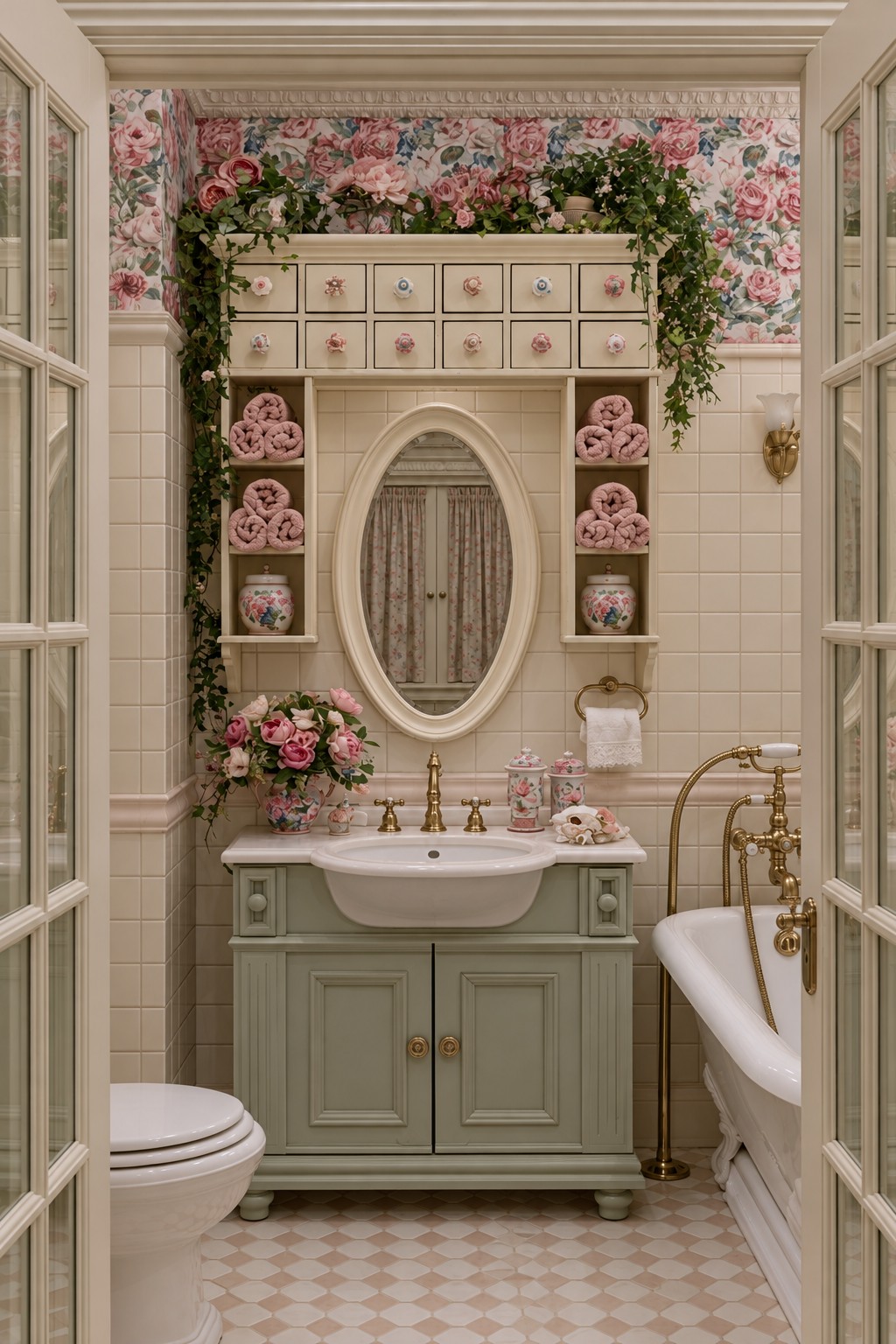
Rolled pink towels fill the side cubbies, while small drawers occupy the space above the mirror. The sage vanity anchors the unit and the upper floral wallpaper supplies the pattern. This arrangement makes wall storage part of the composition rather than adding a separate cabinet to the floor.
Measure the towels you actually use before deciding cubby dimensions; tightly packed compartments may look neat but make retrieval awkward. Keep a daily towel at a comfortable reach and reserve high drawers for light, occasional items. Check mirror usability and fitting access before enclosing its sides. The shelving needs secure support appropriate to its loaded weight. Put less attractive products behind the vanity doors and keep one working area clear on the counter, so the decorative storage helps the routine instead of consuming it.
13. Introduce Soft Blue through Curtains and Cabinet Fabric
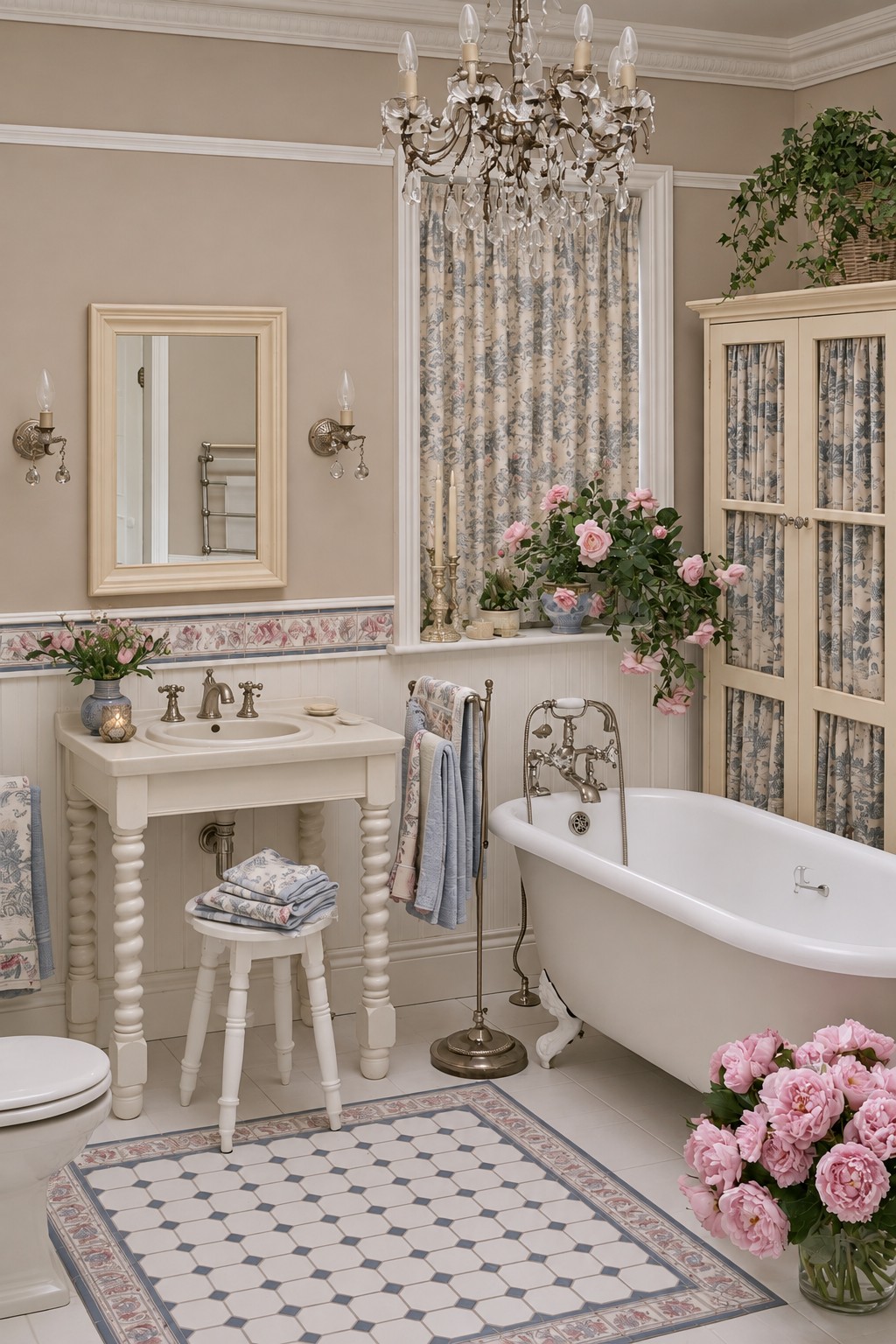
Muted blue fabrics connect the curtain, towels, and glass cabinet, giving this bathroom a French country influence. Cream furniture and a white clawfoot tub keep the scheme light, with a chandelier supplying the more formal shape. You can borrow the fabric palette independently of the overhead fixture.
Choose one print and use it in different quantities rather than making every textile equally prominent. Cabinet fabric can conceal toiletries if it is securely attached inside the doors and removable for washing. Check that the curtain allows access to its window hardware where applicable. For a chandelier, have its location, support, and bathroom suitability assessed before buying; an ordinary decorative fitting is not automatically appropriate above a tub. A suitable alternative can preserve the silhouette without copying an unsuitable installation.
14. Fit a Narrow Drawer Tower into a Floral Attic Bathroom
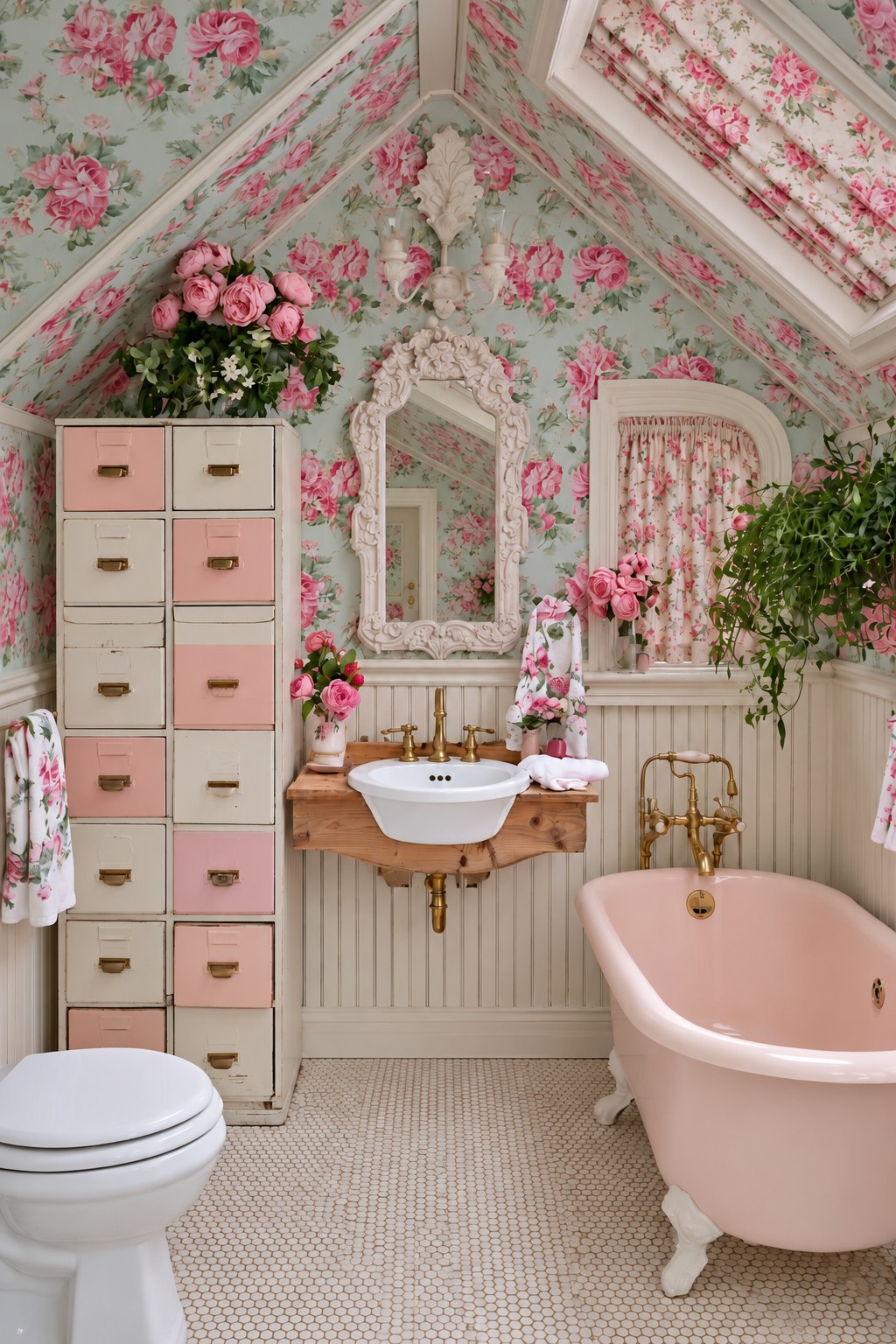
Floral paper follows the sloping walls, surrounding a pink tub and slim drawer tower. A timber basin shelf supplies a warm horizontal line beneath the mirror. The tower is especially useful to consider when a wide cabinet would consume the limited standing space.
Measure headroom where you stand at the basin, get into the bath, and open each drawer. Check the window and ceiling details before deciding where wallpaper can go, especially where condensation appears. Allocate small drawers by task, such as hair accessories or spare soap, and label inside if the fronts look alike. Ensure the tower is secured according to its fixing instructions. A heavy tub also requires the selected model's floor support and plumbing checks; a loft setting makes those part of the layout decision, not an afterthought.
15. Combine a Faded Blue Vanity with Glass Front Display Storage
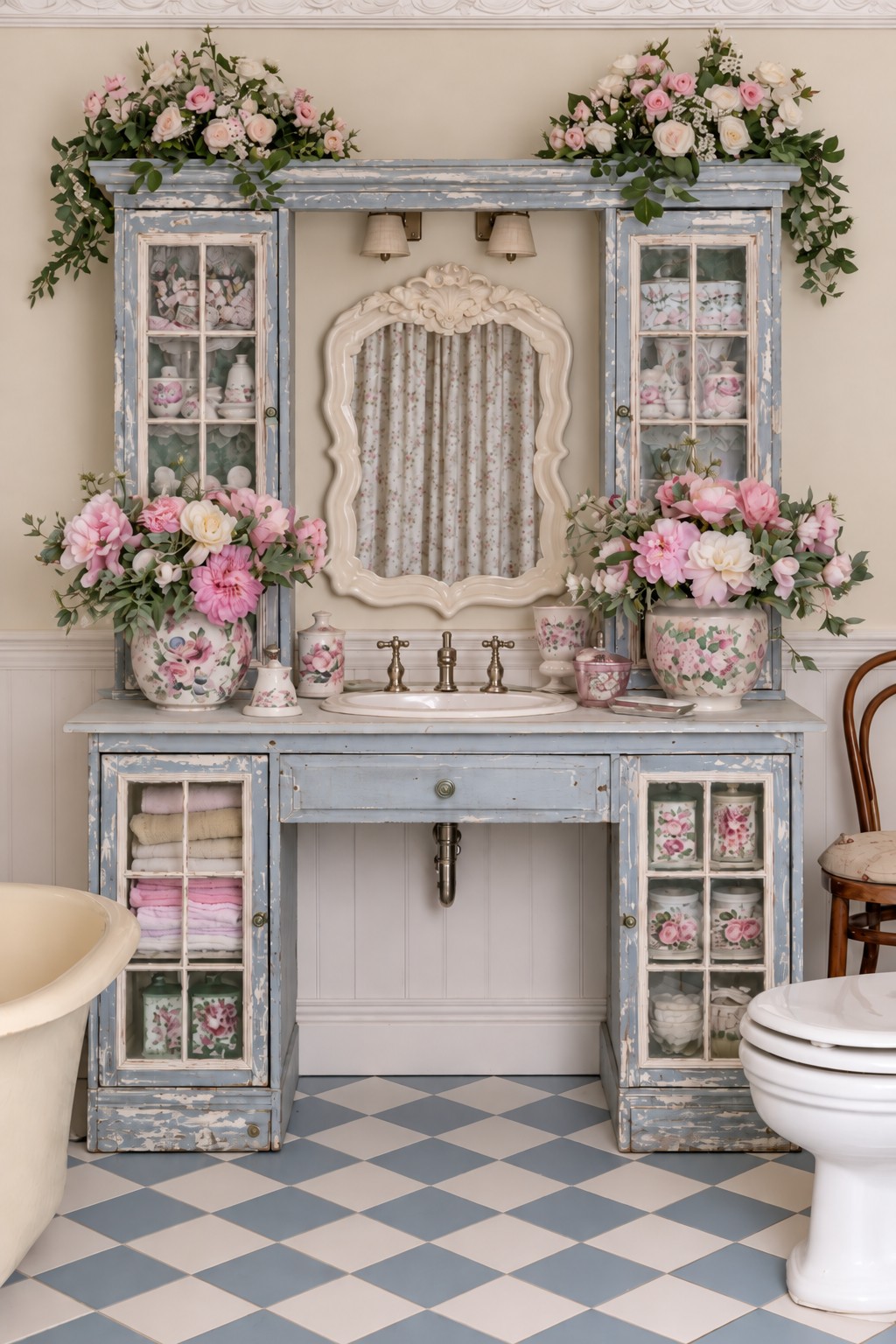
Glass cabinets surround the basin and mirror, presenting folded towels and floral ceramics as part of the room. The faded blue frame repeats the floor's blue tones, giving a broad furniture arrangement visual continuity. Compared with an open shelf, the glazed doors also create a more defined display boundary.
Check the available wall width and door swings before choosing a similar unit. Decide which towels and containers deserve display, and use concealed storage for the rest. Keep frequent items on the lower reachable shelves, with stable arrangements behind the glass. The large bouquets shown beside the basin can be reduced to one small vessel if counter space is needed. Plan access to plumbing beneath the center and leave enough clearance to wipe the floor under the open section. For proportion and color choices, compare these floral styling ideas and scale the arrangement to the counter space left after daily essentials.
16. Add a Decorative Towel Holder beside a Green Vanity
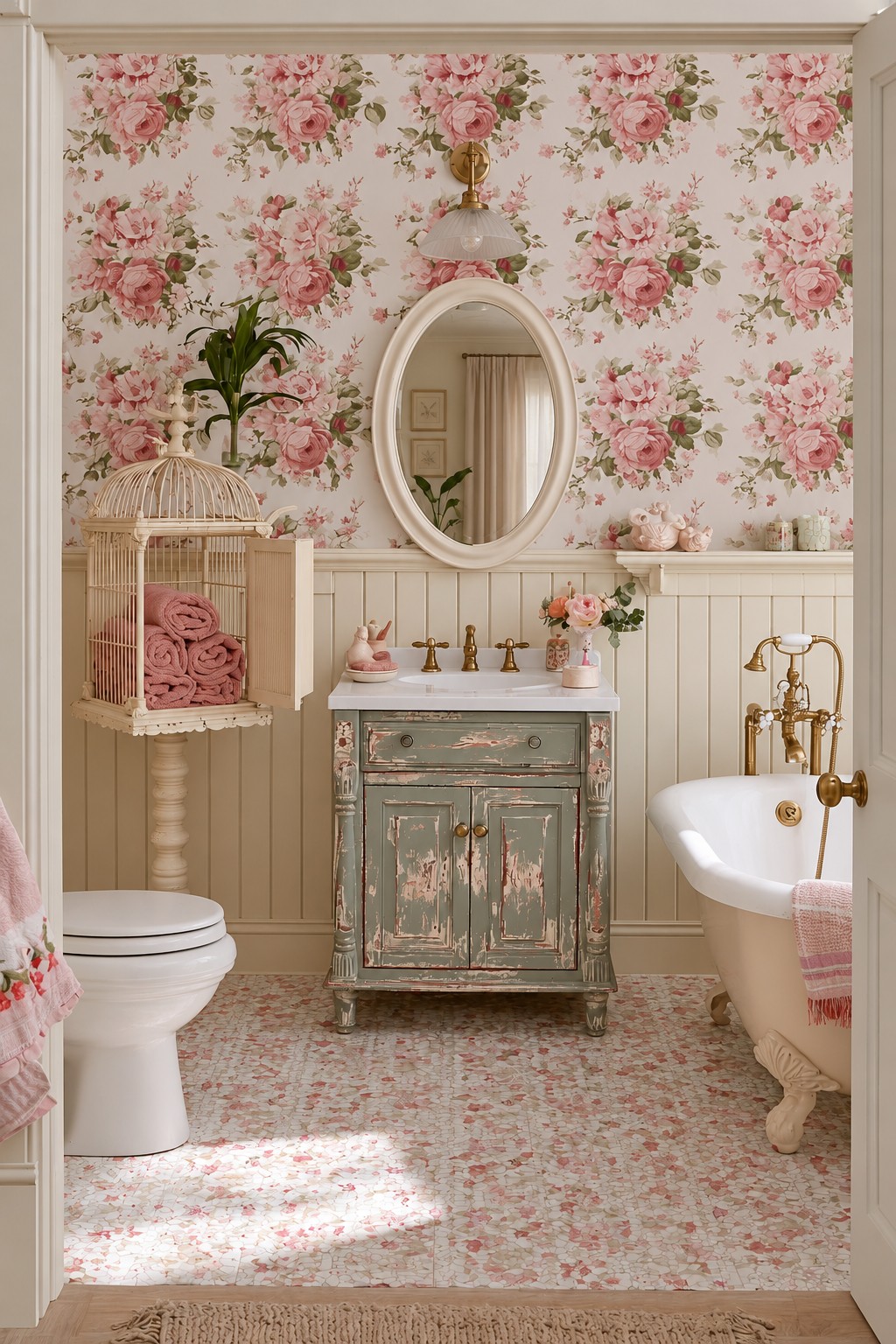
A cage shaped towel holder gives this green vanity a distinctive companion. Its pale frame stands apart from the large rose wallpaper while the rolled pink towels link the two. The small room gains a decorative storage point without another wide cupboard beside the basin.
Choose a holder with smooth edges, stable support, and an opening large enough to remove a towel without catching it. Check the material's suitability for bathroom conditions and place it away from regular splashing. Treat it as storage for a small current supply rather than the entire linen collection. Measure its projection into the room, particularly beside the toilet or doorway. If using a vintage piece, inspect joints and coatings before introducing it; a purpose made holder with a similar shape can be easier to maintain.
17. Turn a Pastel Cabinet into a Practical Linen Station
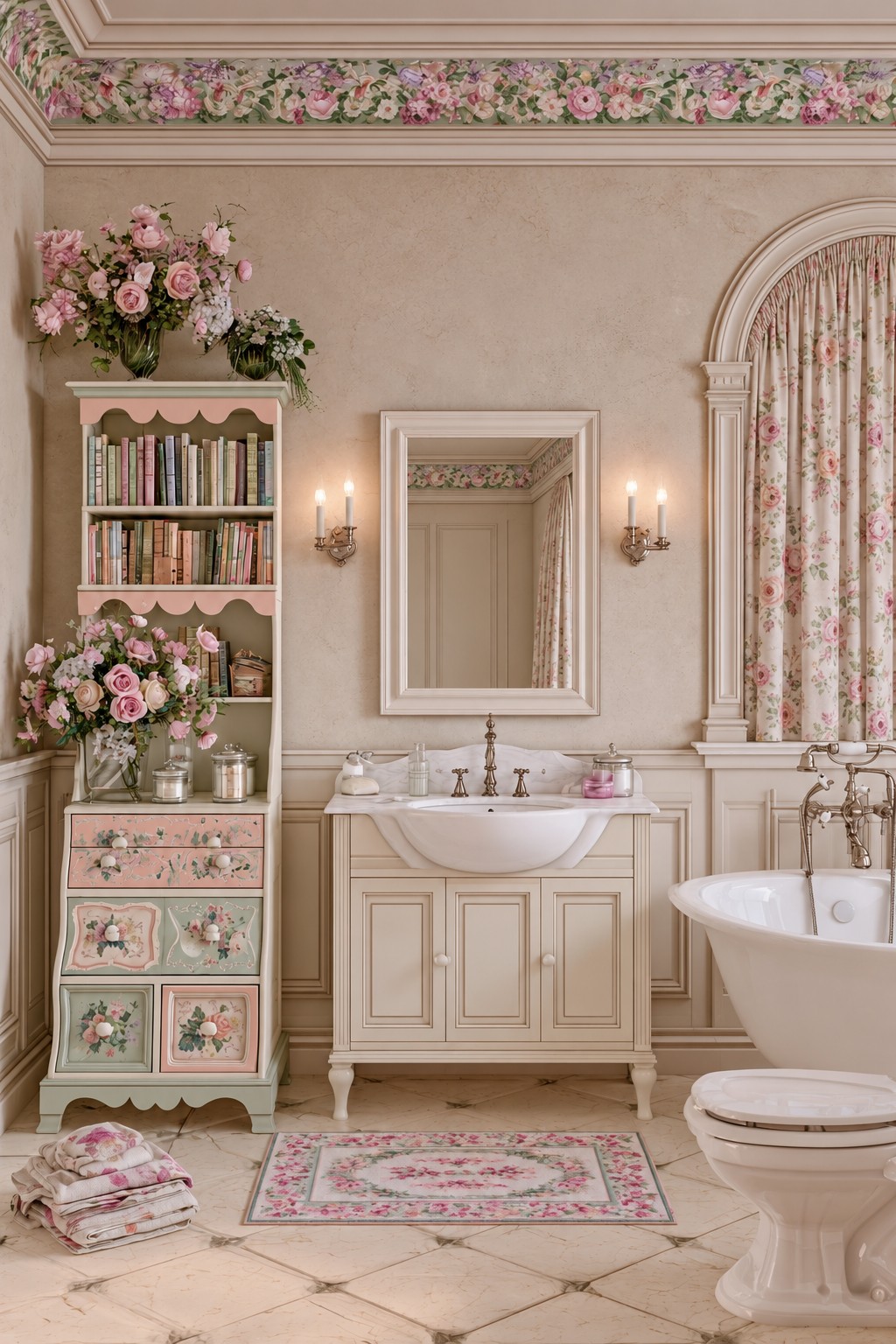
The tall cabinet mixes an open upper section with floral drawer fronts in pink, sage, and cream. Its varied storage breaks up the vertical form beside the plain vanity. The photograph displays books above, but a regularly humid bathroom may be better served by a limited supply of dry linens and washable containers there.
Give each level a job before filling it. A reachable shelf can hold folded hand towels, while drawers separate small toiletries or grooming supplies. Keep heavy stock lower and avoid putting routine items above comfortable reach. Allow cabinet drawers to open without colliding with nearby furniture, and follow its anchoring instructions. Use a few plain storage inserts so the painted fronts remain the decorative feature. Reserve sentimental paper items for a location where moisture and handling are easier to control.
18. Place a Cottage Linen Cabinet beside a Blush Vanity
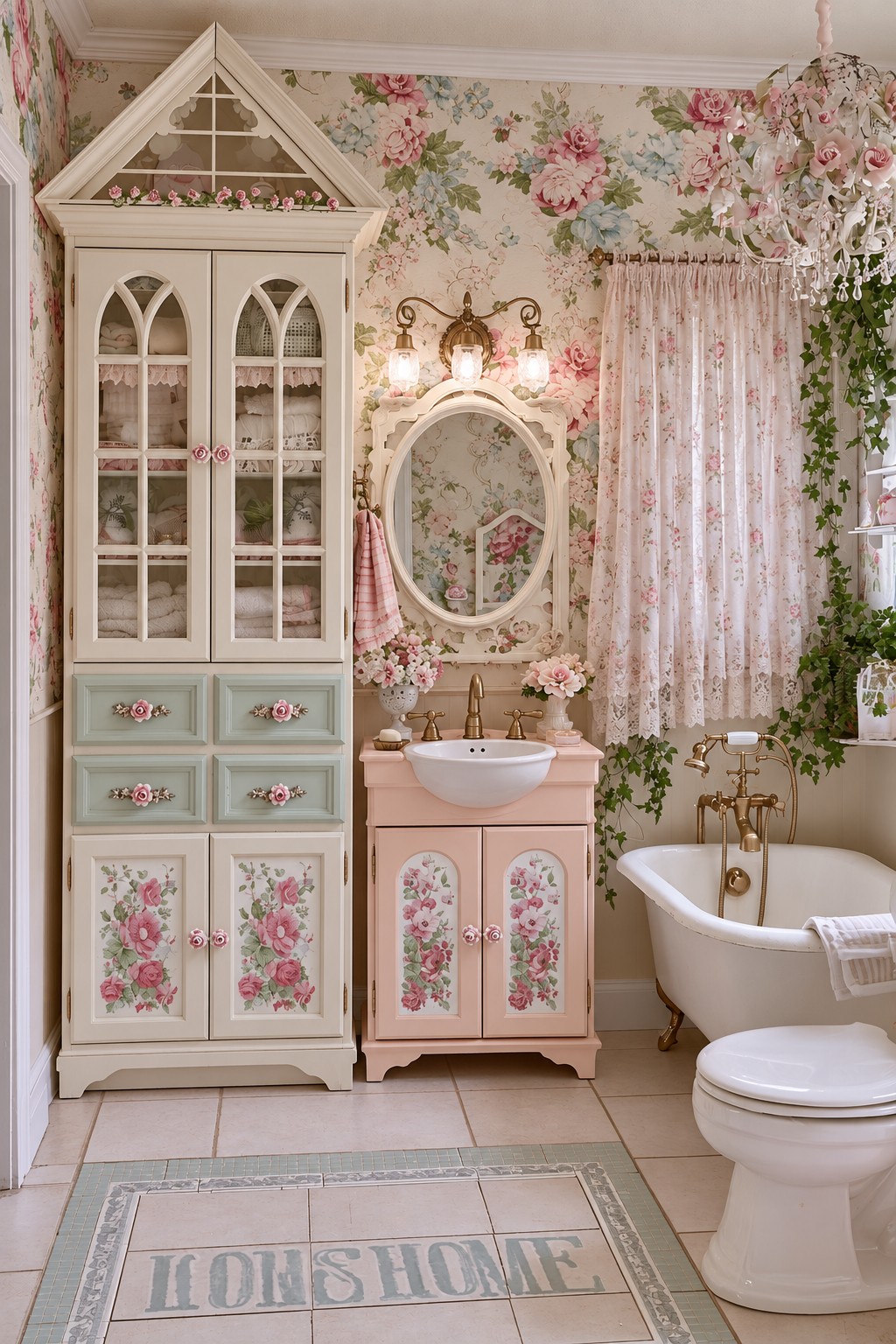
A pointed top and shaped glass doors turn the tall cabinet into an architectural feature on the left of the vanity. Sage drawers and floral lower panels connect it with the surrounding print, while the small pink basin cabinet retains its own identity. This pairing suits a layout with a clear stretch of wall for vertical storage.
Use a full-height outline to check the cabinet against the ceiling, lights and curtain rail. Arrange linens behind the glass and everyday supplies lower down. Test both pieces with their doors and drawers open. A central cupboard can separate basin and bath areas, provided it leaves a clear passage and towels remain within comfortable reach.
19. Shape a Corner Vanity with Painted Niches and Floral Panels
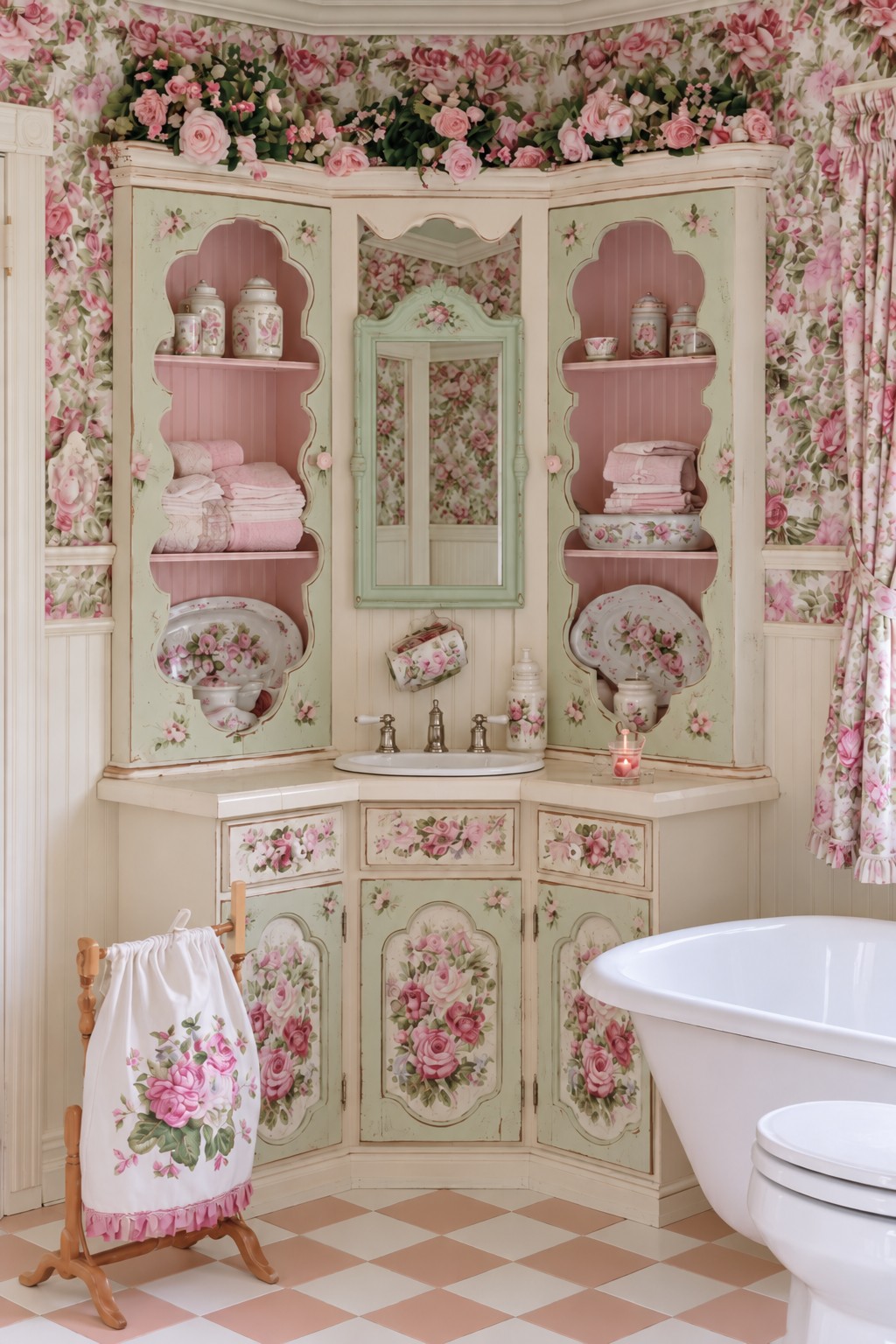
The cabinet wraps the corner, with pink backed niches on either side of the mirror. Floral door panels and wallpaper create a full patterned setting, while the checkerboard floor contributes a simpler repeated shape. This is a layout idea for a specific corner rather than a standard vanity that will fit any angled space.
Measure both walls, their actual angle, and the basin's usable standing position. Have the counter, sink, and plumbing route designed together so decorative symmetry does not dictate awkward access. Check how doors open at the junction and whether deep corner storage can be reached. Keep a few stable containers in the upper niches; storing daily products below leaves the display quieter. Match shelf dimensions to useful items before selecting the scalloped trim, so the decorative outline does not reduce the opening too far.
20. Make a Patterned Sage Tub the Main Decorative Feature
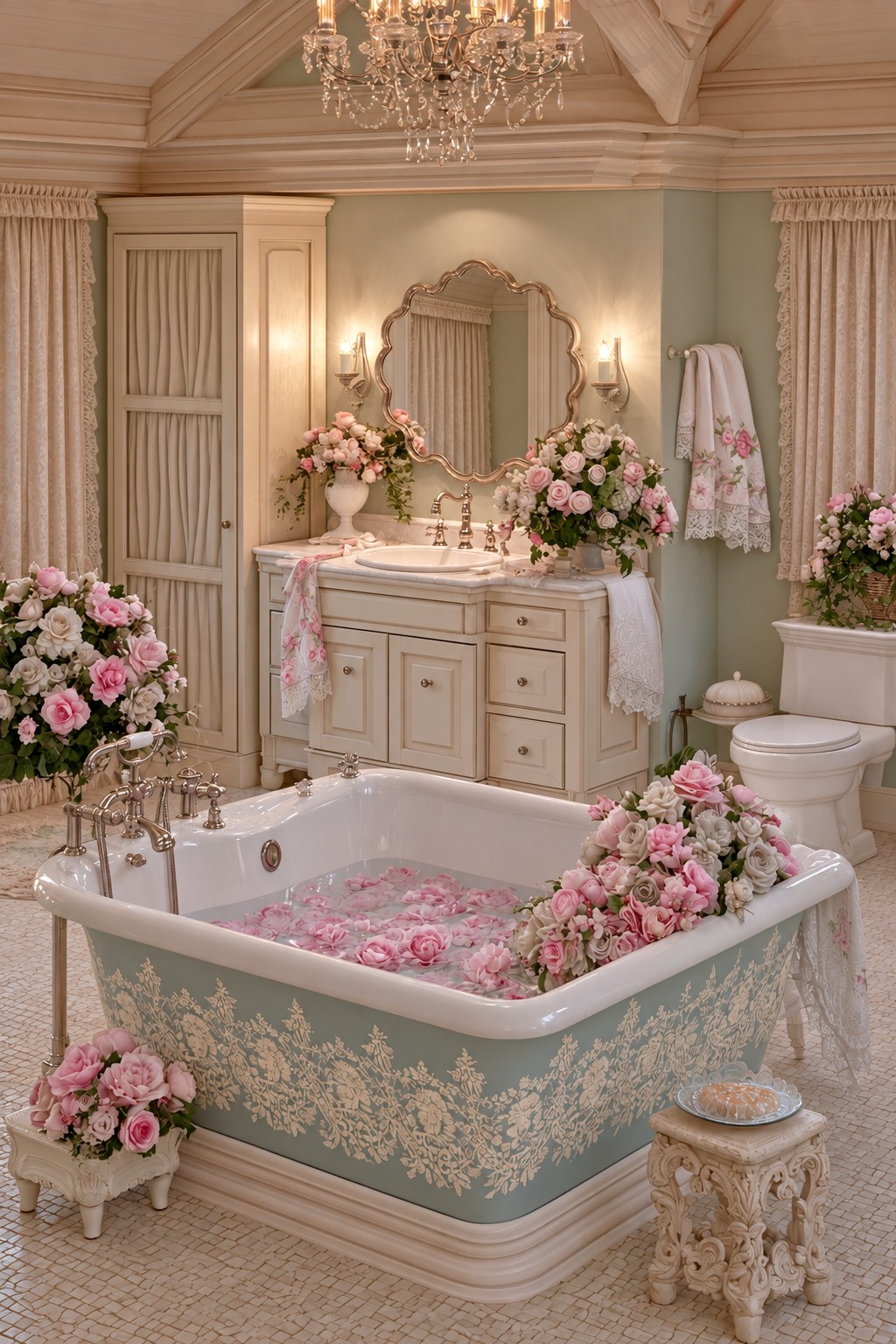
A cream botanical pattern covers the sage tub exterior, giving the bath a lace like appearance. Ivory cabinetry and walls keep the elaborate surface visible, while flowers repeat its romantic character. This idea concentrates the strongest decoration on one substantial fixture rather than using floral paper throughout.
If updating an existing tub, identify its material and original coating before choosing a refinishing system. Ask the manufacturer or a specialist whether the exterior treatment you propose is suitable, and follow the complete preparation and curing instructions. Ordinary furniture paint should not be assumed appropriate for bathing surfaces. Keep decorative work outside the water contact area unless a suitable system explicitly permits that use. Leave the tub rim clear for entering and cleaning; bouquets and ornamental stools can sit elsewhere without affecting the patterned exterior.
21. Use Bow Details and Blush Storage against Plain Walls
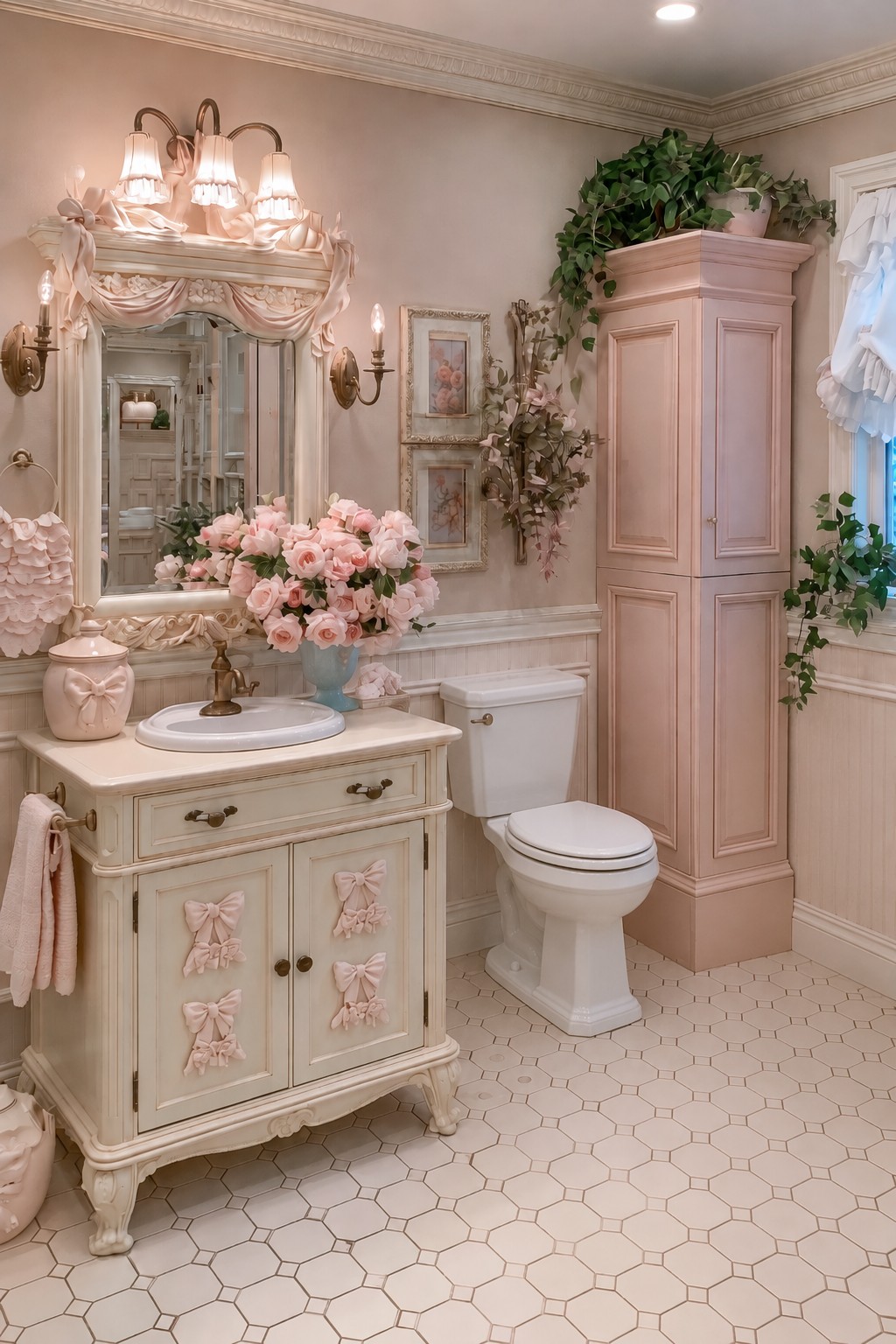
Raised bows on the vanity and draped carving around the mirror provide the ornament here. Plain walls and a tall blush cupboard give those forms space to stand out, offering a softer alternative to a floral wallpaper scheme. The pastel color is concentrated in storage instead of spread across every surface.
When adding appliqué details to a cabinet, choose shallow shapes that leave handles accessible and can be wiped around. Test their attachment and compatible finish on the actual door material. Avoid placing projecting decoration where knees, clothing, or cleaning cloths repeatedly catch. Allocate the tall cabinet to folded towels and reserve smaller vanity compartments for daily supplies. Greenery can provide contrast, but it should not cover ventilation or make the cabinet top difficult to maintain. A modest floral textile is enough to connect this arrangement to shabby chic styling. For coordinating ribbon, lace, and small storage details, explore these shabby chic craft ideas. Use their decorative motifs on removable accents in the drier parts of the room.
22. Balance a Curved Floral Vanity with a Plain Blush Cabinet
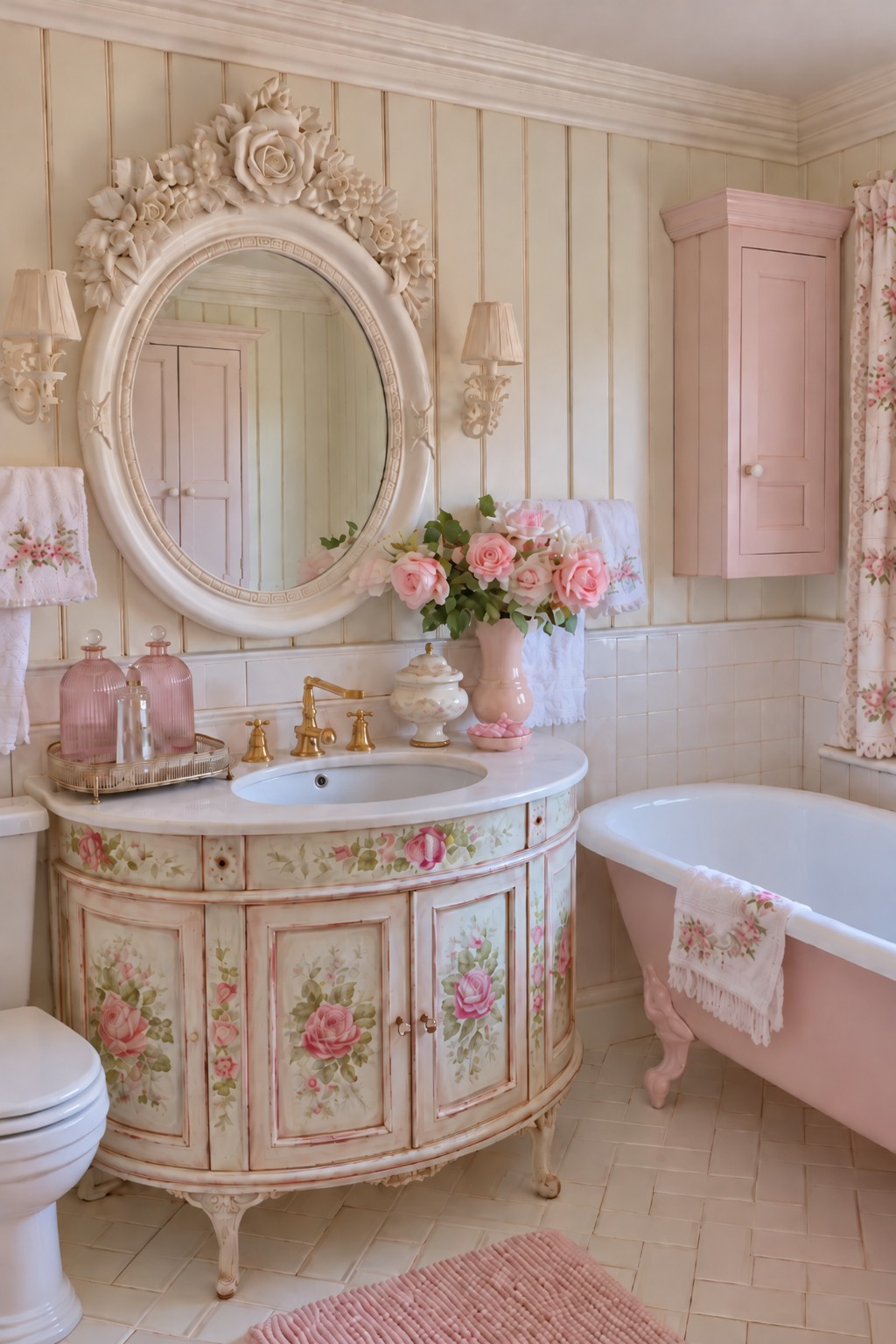
The curved vanity and rose crowned mirror create a rounded center, while the plain blush wall cabinet supplies a quieter shape to one side. The tub repeats the pink without another floral pattern. This contrast lets painted furniture feel decorative while the surrounding storage remains straightforward.
Check a curved vanity's usable counter area rather than judging capacity by its widest point. Measure how far the front projects into the walking route, and test access to the basin from a natural standing position. Keep the wall cabinet reachable with its door fully open. If refreshing the finish, place floral decoration where it will remain visible around handles and seams. Use the quieter cupboard for items that would otherwise crowd the basin, leaving one small arrangement to echo the mirror's roses.
23. Give the Bath Wall a Floral Mantel Style Display
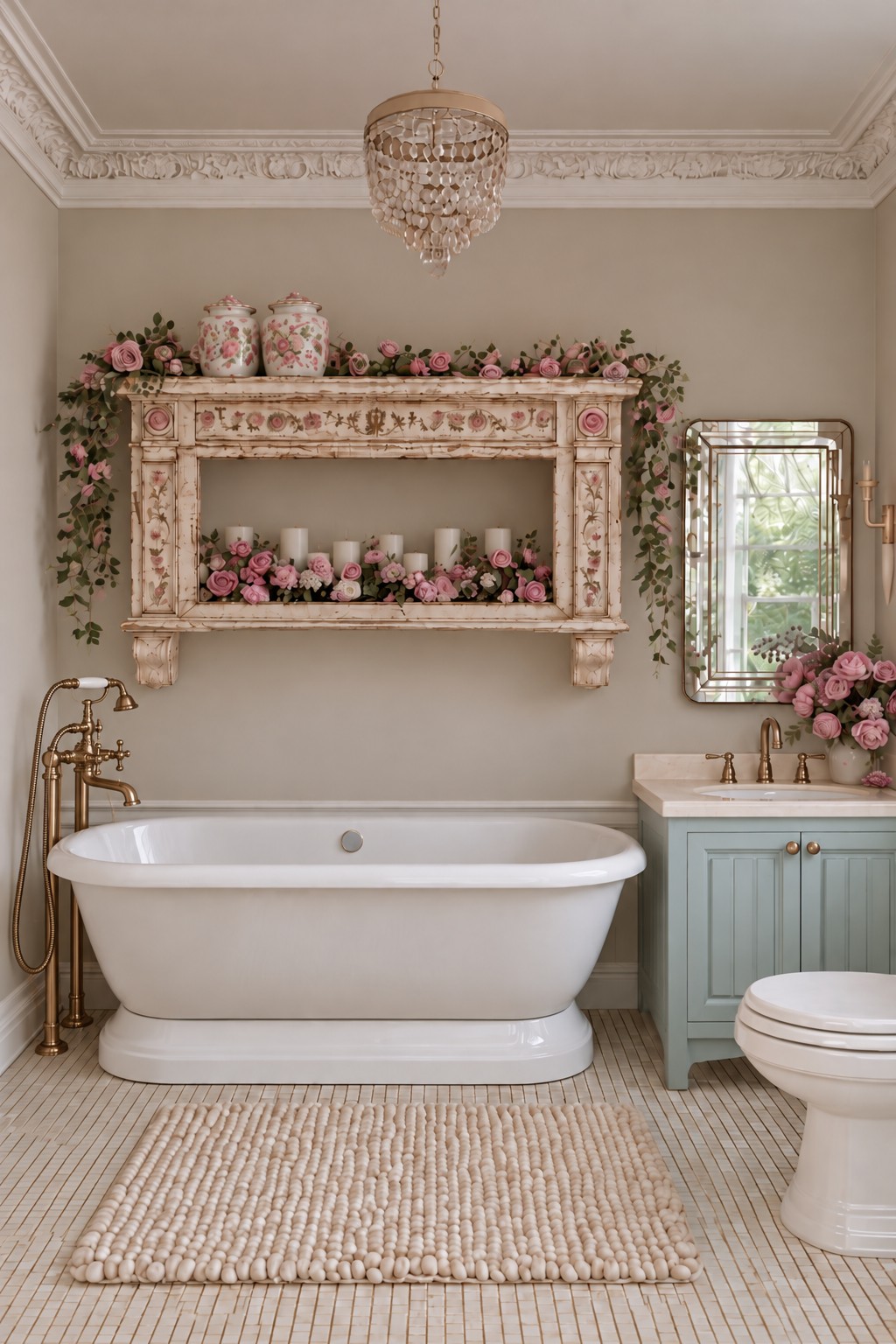
A shallow mantel style surround turns the bath wall into a decorative display. Painted roses, small containers, and trailing greenery fill its ledges, while the blue vanity introduces a cooler furniture tone. The pale wall around the surround prevents it from becoming one more pattern among many.
For an adaptation, confirm the wall support, fixing method, total display weight, and projection over the bathing area. Leave head clearance and access for wiping behind the tub. Use secure lightweight pieces rather than heavy loose ceramics directly above a bather. Choose flameless candle accents if recreating the row of candles, and place the floral trim away from regular splashing. A smaller ledge on a dry neighboring wall can provide the same collected effect where an overhead surround is impractical.
24. Ground an Ornate Pink Vanity with Checkerboard Flooring
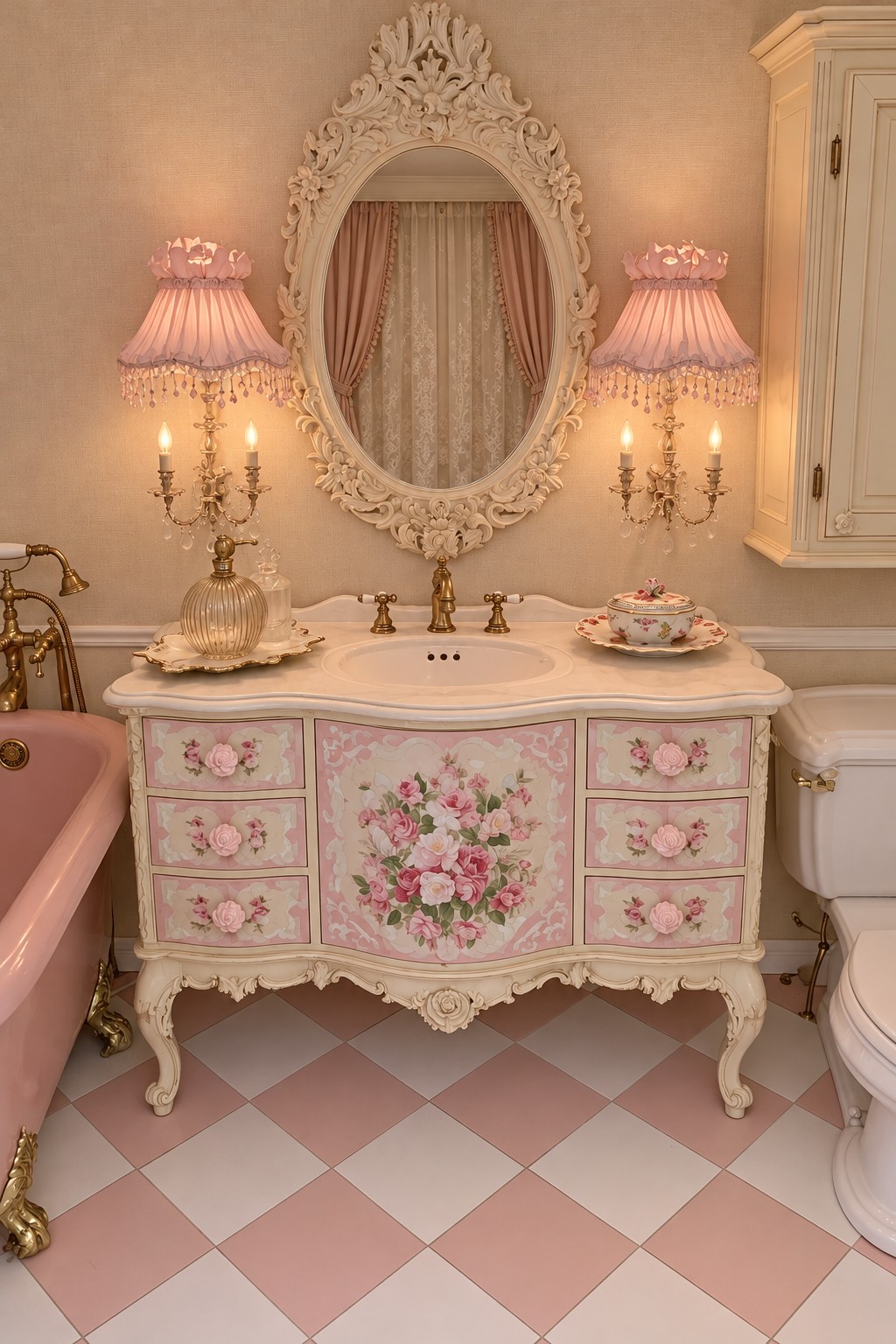
The painted vanity and deeply carved mirror supply the richest decoration, with a blush checkerboard floor connecting them to the tub. Pink shades introduce softness at another height. Because the cabinet is already elaborate, the floor's repeated squares offer a more orderly pattern than another floral surface would.
Compare tile samples with the vanity in the room and check product suitability for bathroom floors. Lay out the squares before installation to see how cuts finish at the walls and tub. Keep the counter mostly available for washing, even if the photograph suggests a decorative lamp or vessel. For similar pink lighting, select appropriate bathroom fittings and have their positions assessed; a portable decorative lamp beside a basin is not a detail to copy casually. You can repeat the shade color through washable towels instead.
25. Add a Skirted Dressing Table beside a Sage Vanity
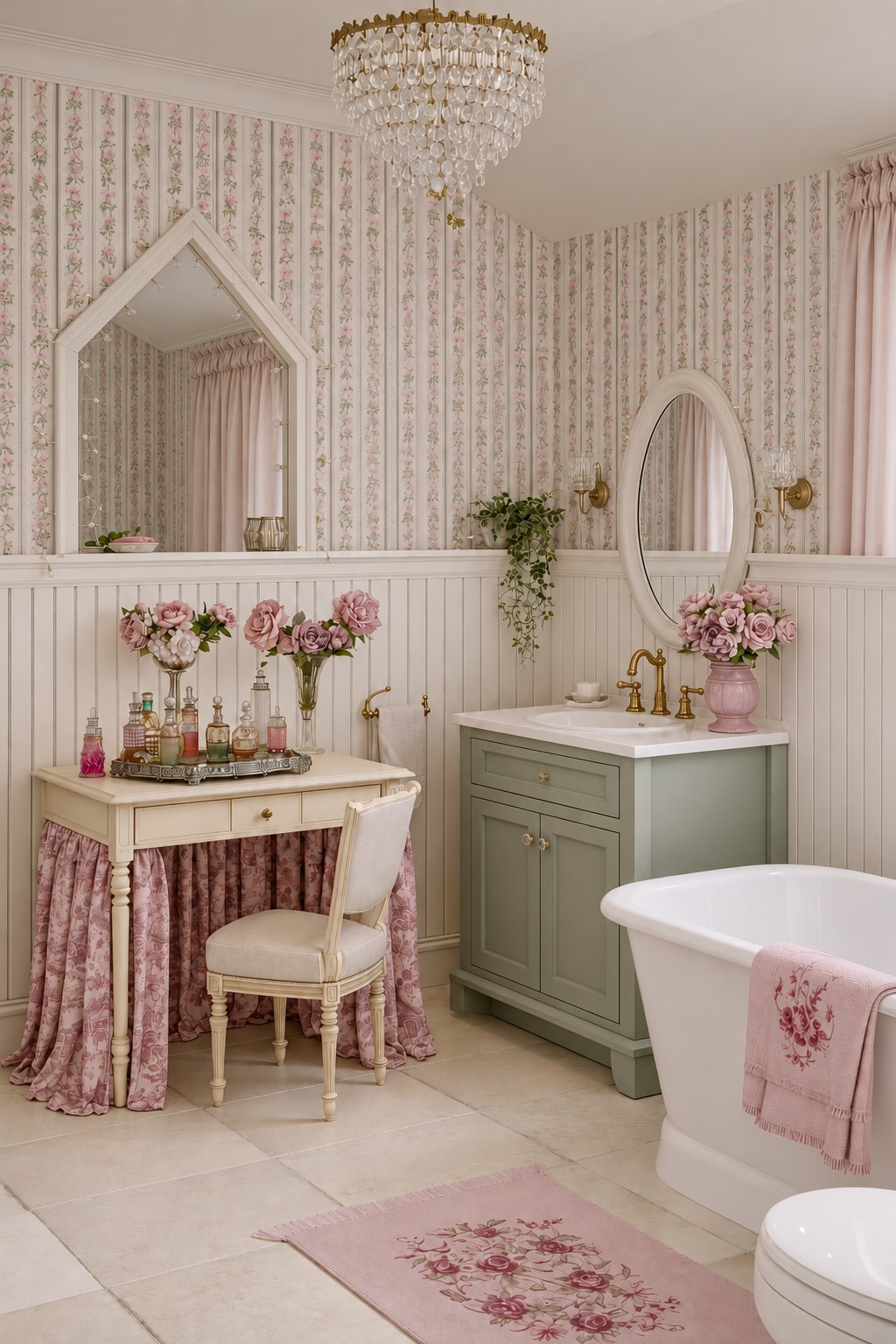
A separate dressing table makes this bathroom feel like a place to pause for grooming. Its gathered floral skirt links the furniture to the narrow wallpaper pattern, while the sage vanity keeps washing and dressing functions distinct. This arrangement needs room for a chair as well as the table itself.
Measure the chair's pulled out position and keep that area outside the main route to the bath and toilet. Use a removable washable skirt with a hem that clears the floor, and keep any baskets beneath reachable without dismantling the fabric. Store products according to their own instructions rather than assuming the bathroom is suitable for every perfume or cosmetic. Limit the tabletop to current essentials on a removable tray. If space is tight, a small dry wall shelf can serve the grooming task without introducing a second furniture footprint.
Finish with a Bathroom You Can Use and Maintain
Choose one change that addresses your room first: a better linen arrangement, a floral textile, or a vanity finish that works with the existing fixtures. Check the result during an ordinary morning routine before adding another decorative layer. If a bouquet crowds the counter or a cabinet makes the door awkward to open, reduce or reposition that detail rather than working around it every day.
Keep a simple care routine for the materials you introduce. Launder curtains and skirts as instructed, let damp textiles dry, wipe cabinetry with a cleaner suited to its finish, and remove floral arrangements for cleaning. Investigate recurrent moisture instead of covering it with decoration. A shabby chic bathroom gains lasting character when the furniture, patterns, and accessories leave room for comfortable use.

Leave a Reply