
Concrete blocks and timber can form a compact coffee table, open storage or a planted patio bench. These 36 furniture designs cover indoor and outdoor uses, with attention to stable supports, moisture and comfortable proportions.
Start with the six-stage coffee-table guide: clean and level the blocks, prepare one wooden top, then check its fit and support. For the seating, desks and tall storage that follow, plan the connections and intended loads separately. Keep planting water away from wood and cushions and protect indoor floors beneath the blocks.
Table of Contents
- Materials to Gather Before You Begin
- Make a Simple Coffee Table with One Flat Wooden Top
- Choose Supports, Water Protection, and Finishes Carefully
- 36 Cinder Block Furniture Ideas to Adapt to Your Space
- 1. Record Console with a Matching Listening Stool
- 2. Sewing Desk with a Folding Extension
- 3. Round Coffee Table with Book Niches
- 4. Window Bench with a Cat Hideaway
- 5. Chess Table with Tucked Away Stools
- 6. Bedroom Vanity with Fabric Storage Bins
- 7. Conversation Table with Four Low Seats
- 8. Woven Headboard Between Concrete Side Columns
- 9. Long Low Book Console with a Shaped Top
- 10. Sofa Side Table with Pocket Storage
- 11. Warm Terracotta Cushioned Reading Chair
- 12. Curved Modular Sofa with Open Storage
- 13. Canopy Bed with a Low Block Base
- 14. Stepped Drawer Cabinet in Soft Colors
- 15. Three Organic Shaped Occasional Tables
- 16. Castle Inspired Storage Daybed
- 17. Indoor Flower Steps with a Small Landing Shelf
- 18. Arched Indoor Bench with Floral Details
- 19. Low Floral Room Divider
- 20. Indoor Conversation Corner with a Floral Backdrop
- 21. Circular Garden Retreat with a Clear Entrance
- 22. Outdoor Reading Desk with a Sloping Top
- 23. Three Lane Garden Lounging Platform
- 24. Bridge Shaped Garden Bench Between Planters
- 25. Rose Arch Bench with Block Planter Ends
- 26. Round Patio Table with a Flower Ring
- 27. Train Inspired Planter Benches
- 28. Tiered Flower Island with Perimeter Seating
- 29. Curtained Garden Canopy Seat
- 30. Long Garden Daybed with Boat Shaped Planters
- 31. Outdoor Table with a Grid of Planting Pockets
- 32. Butterfly Inspired Paired Reading Seats
- 33. Three Floral Pedestal Tables
- 34. Shaped Garden Chaise with a Side Flower Border
- 35. Cross Shaped Flower Benches Around a Tea Table
- 36. Sheltered Reading Bench with Stepped Flower Sides
- Make the First Project Small and Useful
Materials to Gather Before You Begin
- Sound concrete masonry blocks in matching sizes, with no cracks or crumbling edges
- Suitable timber, plywood, or a properly constructed wooden frame for tops and seats
- A tape measure, spirit level, carpenter square, pencil, and woodworking tools
- Gloves, eye protection, and protective pads appropriate for your floor
- Fixings and brackets selected for the actual block type and timber connections
- An adhesive explicitly suitable for the chosen materials and exposure, where the design calls for it
- Wood finish suitable for indoor use or exterior exposure, depending on location
- Removable cushions, planting containers, and water protection where needed
The term cinder block is commonly used for hollow concrete blocks, although products differ. Measure the units you actually buy, including their openings. Do not assume a board, drawer, or pot will fit a nominal size. For seating, tall structures, and heavily loaded furniture, have the support arrangement and connections checked by someone qualified to assess the proposed construction.
Make a Simple Coffee Table with One Flat Wooden Top
A single straight rectangular wooden top and two concrete block supports create a simple low coffee table. There are no drawers, shelving panels, or extra wooden compartments. The six stages below follow the same tabletop and four blocks from preparation to the finished piece.
Gather four matching sound concrete blocks, one suitable solid timber tabletop, a tape measure, spirit level, damp cloth, gloves, sanding materials for the wood, wood finish, floor protection, and adhesive specifically suitable for the chosen concrete and timber surfaces. Each support uses two blocks laid flat, one above the other. Select the tabletop thickness, span, support spacing, and connections for the intended use before assembly. This is a coffee table, not a seat.
- Check the materials and footprint. Measure the actual blocks and tabletop. Position the two supports far enough apart for a stable table while keeping the timber span and edge overhang appropriate to the board. Reject cracked or crumbling blocks.
- Clean the blocks. Remove loose dirt with a damp cloth and let the contact surfaces dry as required by the adhesive instructions. Do not sand or grind the concrete as part of this preparation.
- Smooth the tabletop. Sand the wooden surface and soften the corners. Keep the top as one flat rectangular panel, checking for splits, distortion, and rough edges.
- Finish the wood. Apply a suitable wood finish according to its instructions. Prepare the underside bonding areas as specified by the adhesive manufacturer rather than assuming the adhesive can bond through the finish.
- Build two level supports. On a firm level surface, place suitable floor protection beneath the supports. Form each support from two blocks laid flat with their cavities upward. Bond the blocks where specified and check that both piers are level, aligned, and the same height. Follow the adhesive instructions for application, restraint, and cure time.
- Fit the single flat top. Secure the tabletop to the solid bearing faces using a connection suitable for the actual materials and design. Keep the assembly undisturbed for the required cure period. Before use, check that the top cannot slide, lift, or rock and that neither support moves. Start with light everyday items and do not sit or stand on the table.
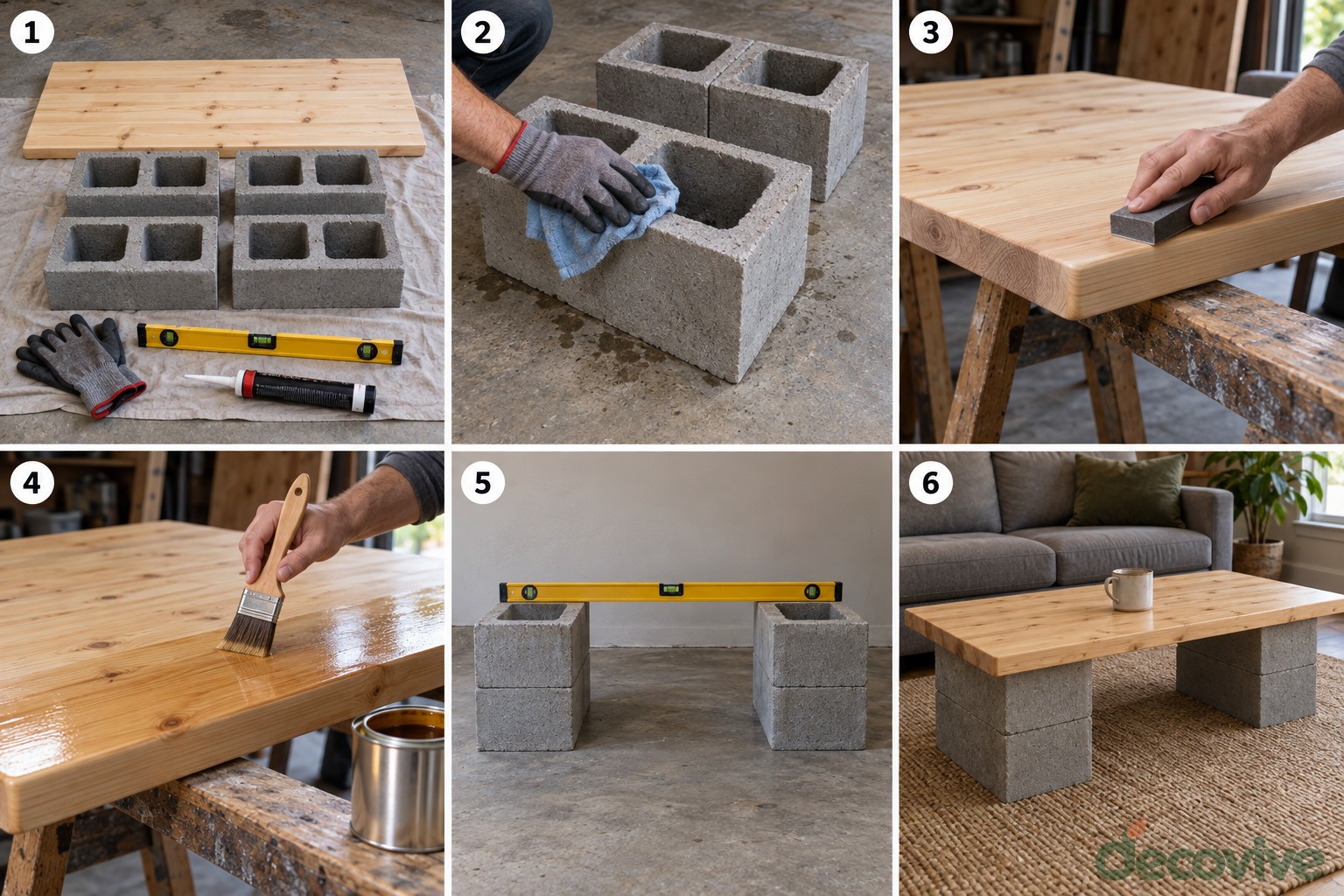 One straight wooden tabletop, four concrete blocks, and six clear preparation and assembly stages.
The collage illustrates the assembly sequence. It does not provide a tested load rating or replace the connection and span details needed for your chosen materials.
Avoid cutting, grinding, or drilling concrete blocks as a casual indoor craft step. These operations can release respirable silica dust and need appropriate dust controls and protective equipment. Buying units in suitable sizes can reduce the need for alterations.
Choose Supports, Water Protection, and Finishes Carefully
A block that is strong in a masonry wall is not automatically suitable in every furniture orientation. Hollow units, concentrated fixings, long timber spans, and sideways pressure all need consideration. Do not rely on a loose stack or a decorative cushion to make a seat safe. Tall side towers and headboards need restraint appropriate to the wall and construction.
Outside, use a stable prepared base and timber suited to the weather. Keep water from collecting against wood and inspect the furniture after wet weather or frost. Indoors, protect floors from abrasion and concentrated weight. Use removable watertight vessels for cut flowers, or pots with drainage inside suitable catch trays for living plants. A drainage hole should never empty onto an indoor floor or into a wooden storage compartment.
36 Cinder Block Furniture Ideas to Adapt to Your Space
With the basic preparation covered, you can now choose a design around the way you want to use your room, patio, or garden. The collection begins with indoor furniture for storing records, sewing, reading, and everyday living, then moves into floral displays and outdoor seating. Along the way, you will find both compact pieces and more ambitious arrangements that combine timber, cushions, and planted details.
You can carry the same preparation principles from the simple coffee table into these ideas: start with sound materials, plan the supports, finish exposed wood, and make the connections appropriate to the piece. Let your chosen design determine the extra work. A storage console needs shelves suited to its contents, a chair needs a secure seat and back frame, and a flower filled bench needs a planting system that keeps water away from the seating. Read each idea for its practical adaptation notes before deciding what to build.
1. Record Console with a Matching Listening Stool
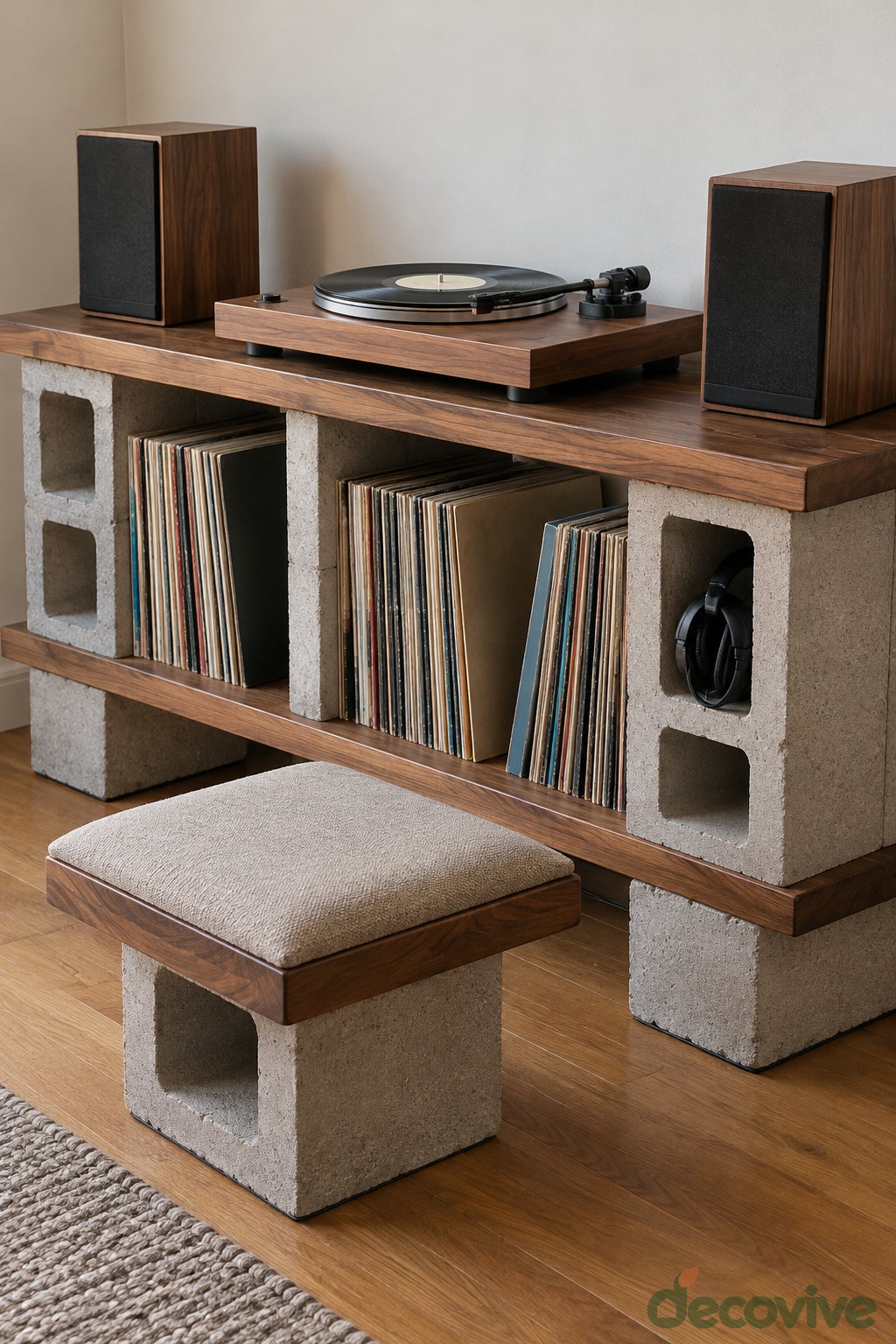
A long wooden top, lower record shelf, and exposed block ends give a listening corner a clear purpose. Upright vinyl storage makes the space below the turntable useful.
You can build the shelving as a timber cabinet supported on a checked block base, adding dividers sized to your record sleeves. Use a separate framed seat for the matching stool.
Keep the turntable level and allow ventilation around audio equipment. Support heavy record collections along the shelf rather than assuming a long board will remain straight.
2. Sewing Desk with a Folding Extension
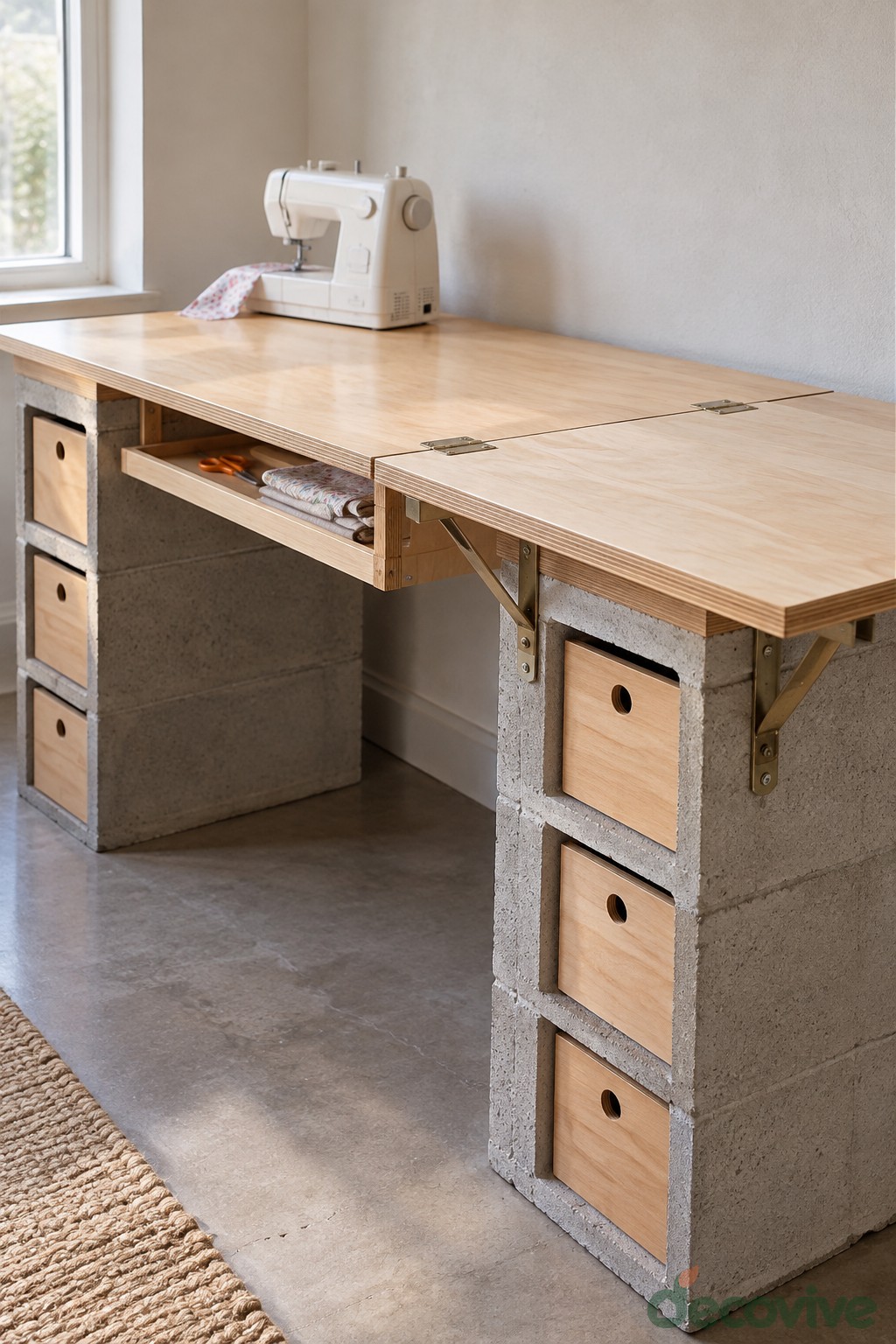
This sewing station combines a fixed machine surface with an extra leaf for handling fabric. Small wooden drawers soften the block supports.
Plan the work height around your chair and machine, then make a rigid timber desktop with a hinged extension. Fit locking support brackets suitable for the leaf and its intended load.
The extended surface needs positive support. Keep knee space clear and check vibration, cable routing, and stability before using the machine.
3. Round Coffee Table with Book Niches
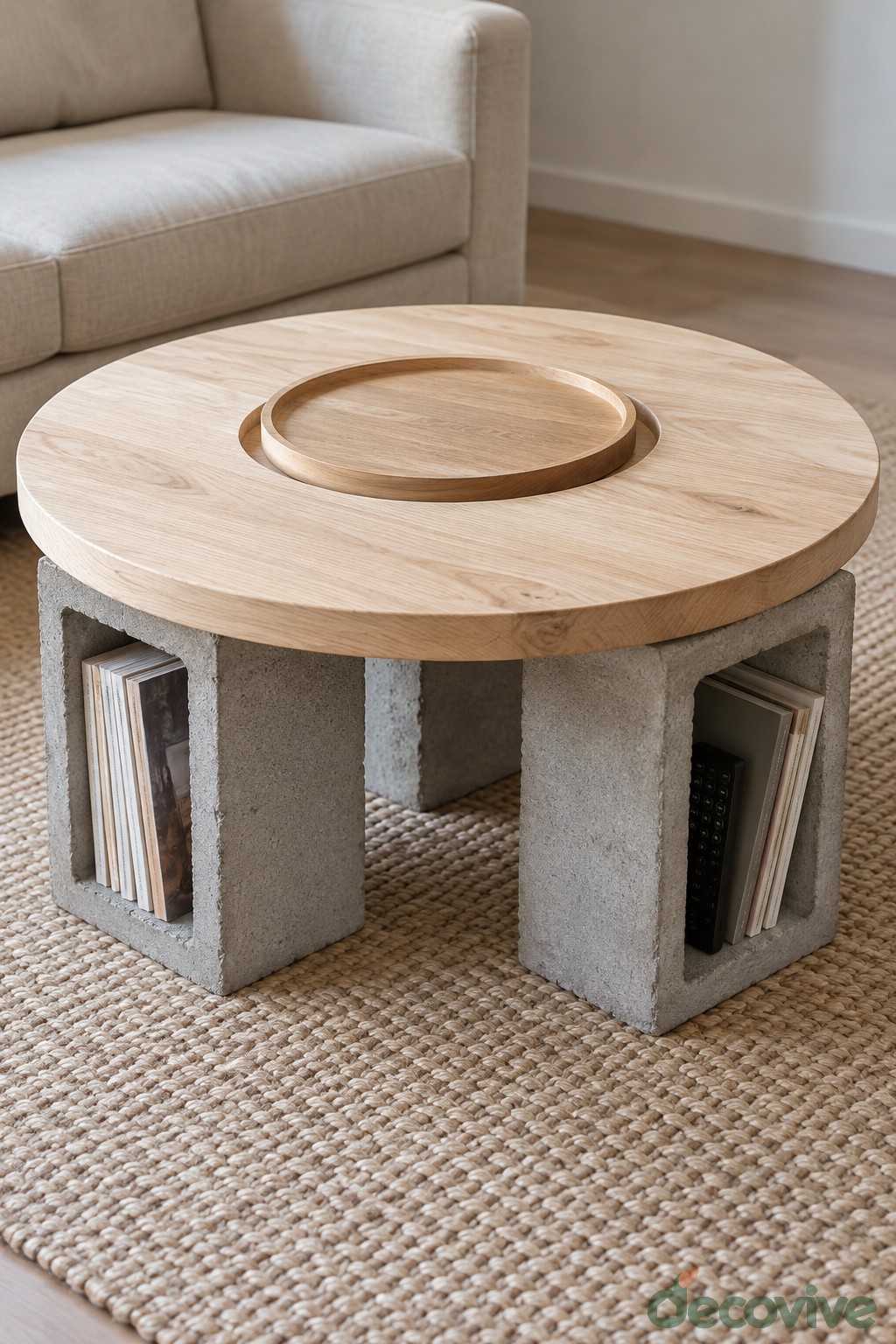
A circular top balances the square geometry of the concrete supports, while visible openings hold a few slim books.
You can adapt the idea with a finished round timber top and a broad, secured support arrangement. Measure the book openings before choosing what to store.
Set the supports far enough apart to resist tipping without leaving an excessive unsupported edge. Use books as storage, never as structural packing.
4. Window Bench with a Cat Hideaway
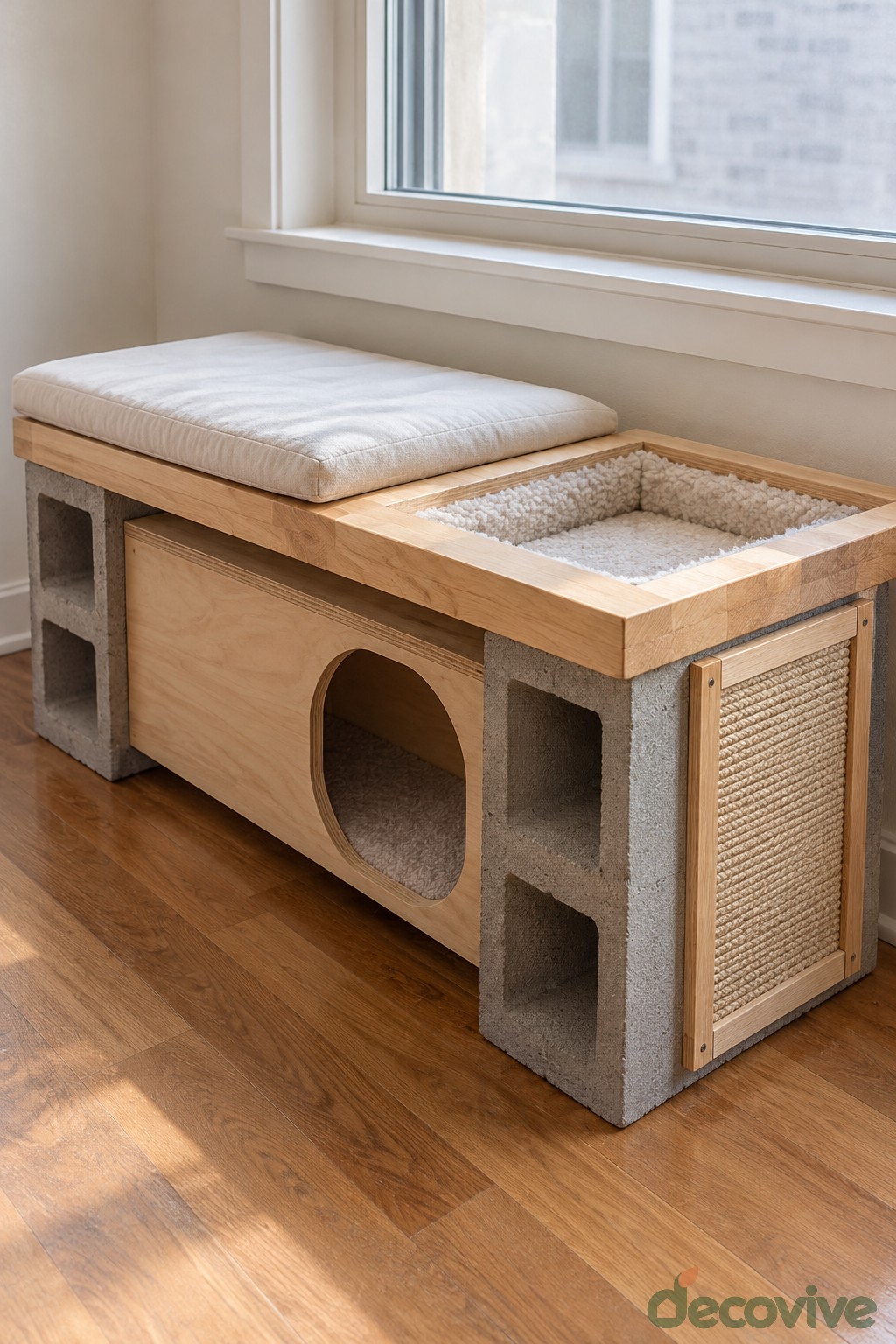
A cushioned perch, circular cat entrance, and recessed tray create several uses within one compact window bench.
Build a ventilated wooden enclosure with a smooth entrance and removable access panel, then integrate the block details around its supported frame. Keep the recessed tray removable for cleaning.
Give the cat a comfortable escape route and keep the interior dry. Secure the furniture and keep window cords out of reach.
5. Chess Table with Tucked Away Stools
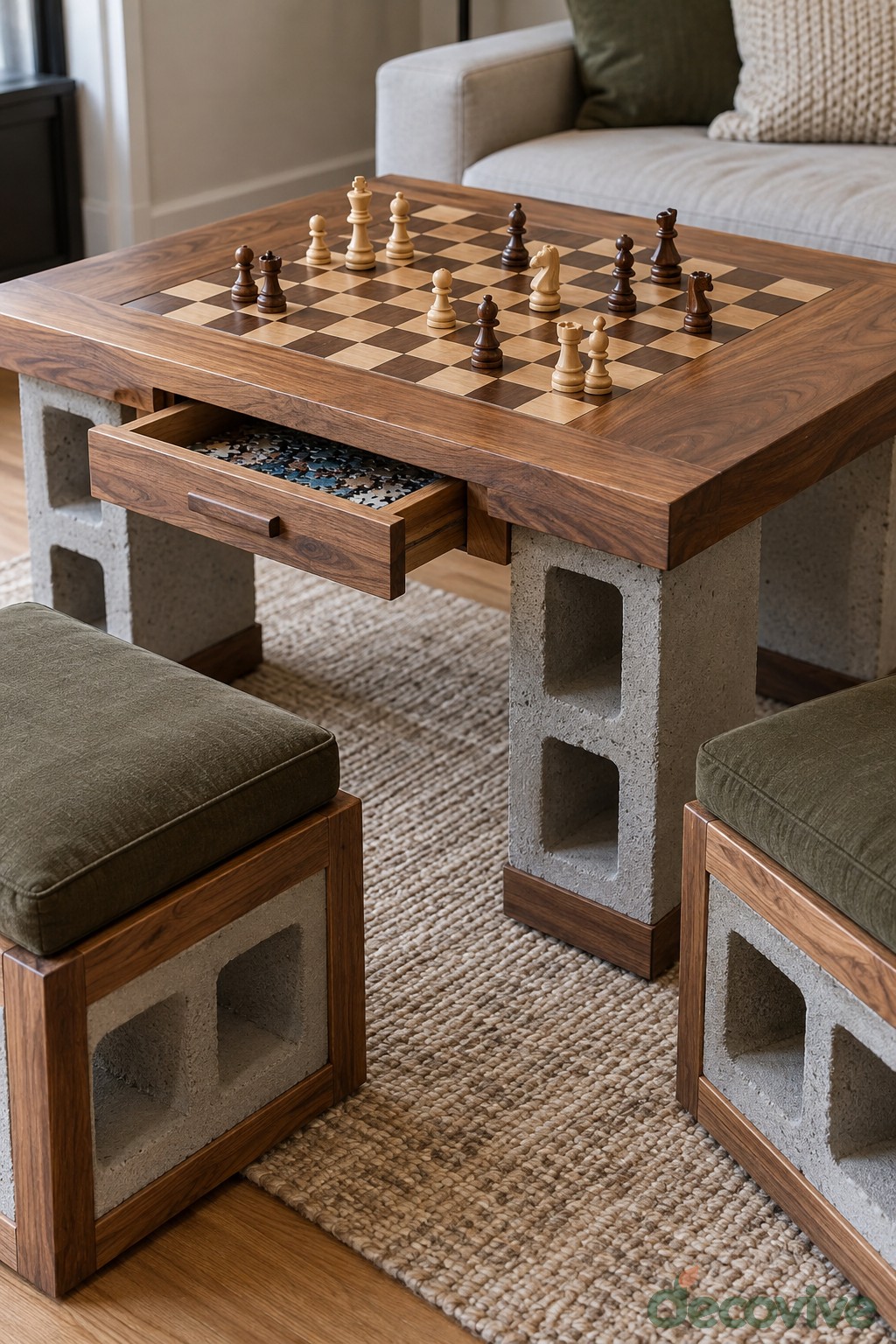
The chessboard surface turns an ordinary table into a permanent place to pause, with a shallow drawer for pieces and compact stools nearby.
Use a timber apron to carry the tabletop and drawer runners. You can create the board with a wood inlay or a carefully finished painted pattern.
Fit stops to the drawer and use independently secure stool frames. Allow enough space for knees and for pulling each seat out.
6. Bedroom Vanity with Fabric Storage Bins
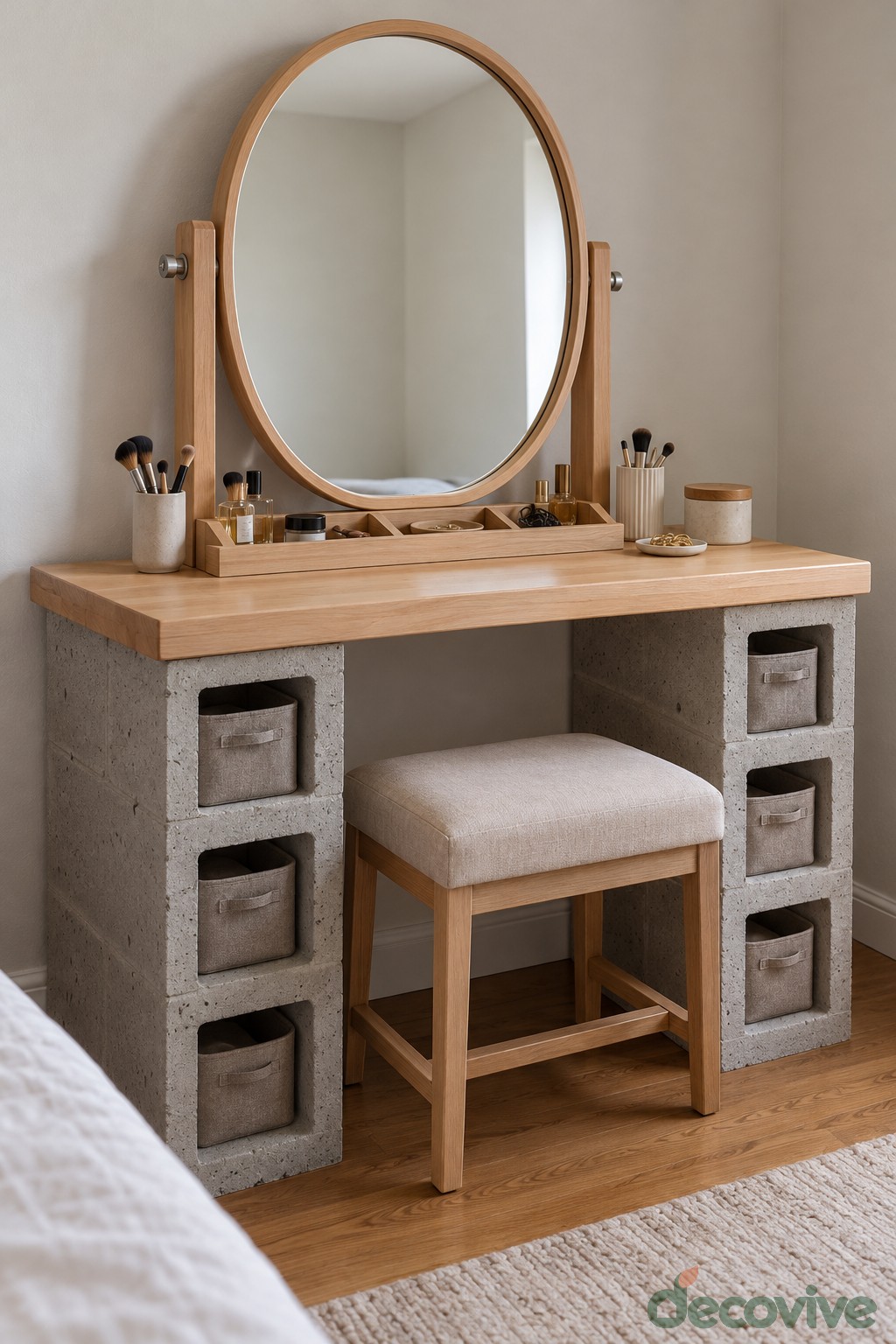
An oval mirror and soft storage bins bring warmth to a simple block sided dressing table.
Make the top wide enough for the mirror base and daily essentials, leaving a comfortable central opening for your stool. Add smooth liners where baskets meet rough concrete.
Secure the mirror according to its mounting design. Keep cosmetics away from abrasive edges and avoid blocking access to fixings with permanently fitted bins.
7. Conversation Table with Four Low Seats
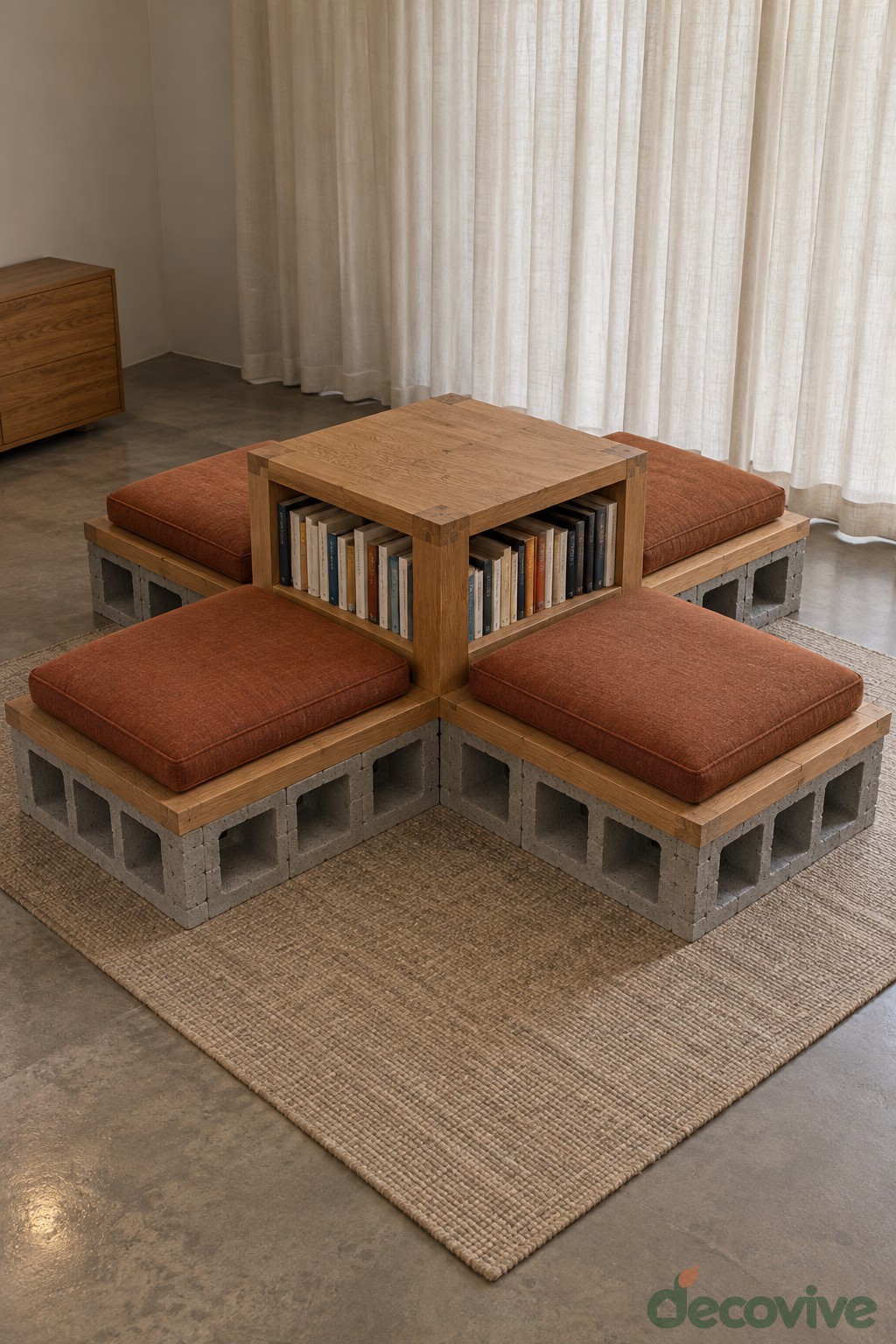
Four low seats gather around a central table with books stored beneath its top. The matching cushion color ties the pieces together.
You can repeat one small seat module around a framed storage table. First test the proposed seat height and leg position with a simple mockup.
Each seat needs its own stable construction. Leave clear gaps for feet rather than fitting all five pieces tightly together.
8. Woven Headboard Between Concrete Side Columns
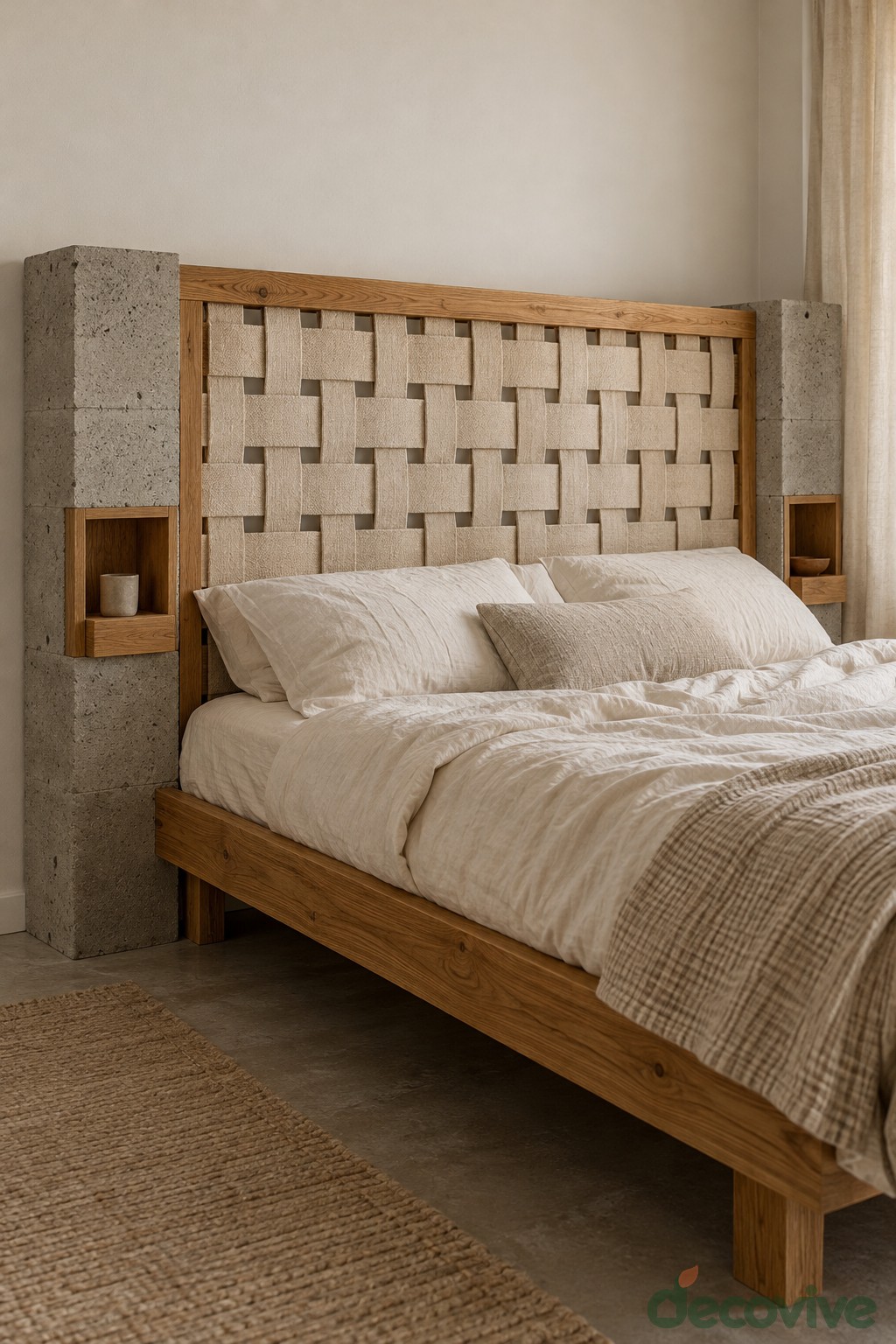
A broad woven headboard adds softness between concrete side columns with small bedside niches.
Build the woven panel in a timber frame, using wide upholstery webbing or another appropriate material. Mount it securely and treat the block columns as separate restrained elements.
Tall loose block stacks do not belong beside a sleeping area. Use a properly assessed anchored construction, and let the bed frame support the mattress independently.
9. Long Low Book Console with a Shaped Top
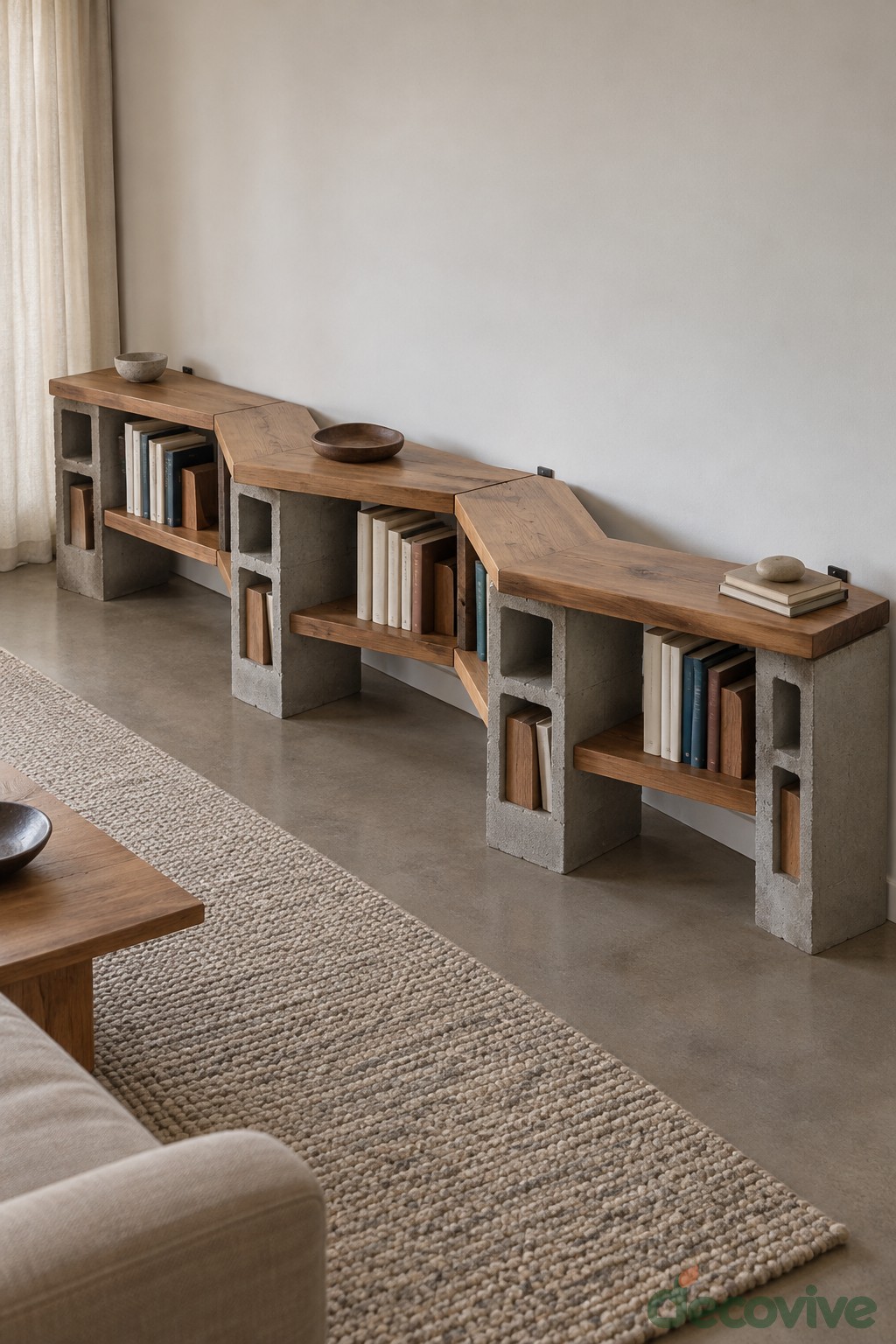
The softly irregular wooden edge makes this wall console feel more organic than a standard straight shelf.
You can trace a gentle outline onto a suitable timber panel, smooth the edge, and position supports beneath the shelving joints. Add short dividers for books.
Keep curves shallow enough to preserve useful surface area. Check shelf spans and secure the unit against unintended movement.
10. Sofa Side Table with Pocket Storage
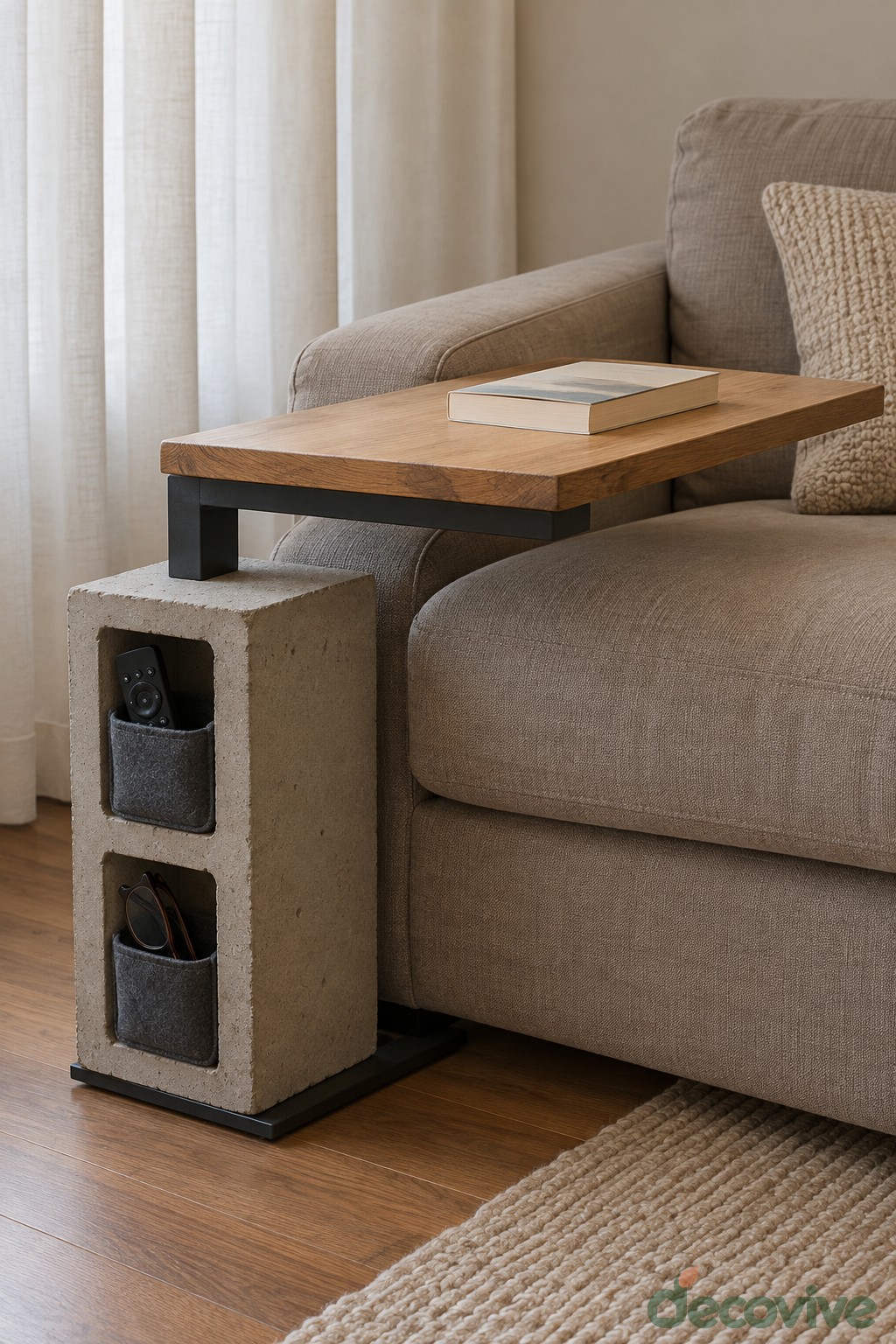
A slim surface reaches over the sofa arm while front pockets keep a remote or reading material close.
Use a rigid timber frame or bracketed assembly to support the projecting top. Fit removable fabric pockets into the accessible openings.
A single narrow block column cannot safely be assumed to balance a cantilever. Design the base and connections for sideways pressure and accidental leaning.
11. Warm Terracotta Cushioned Reading Chair
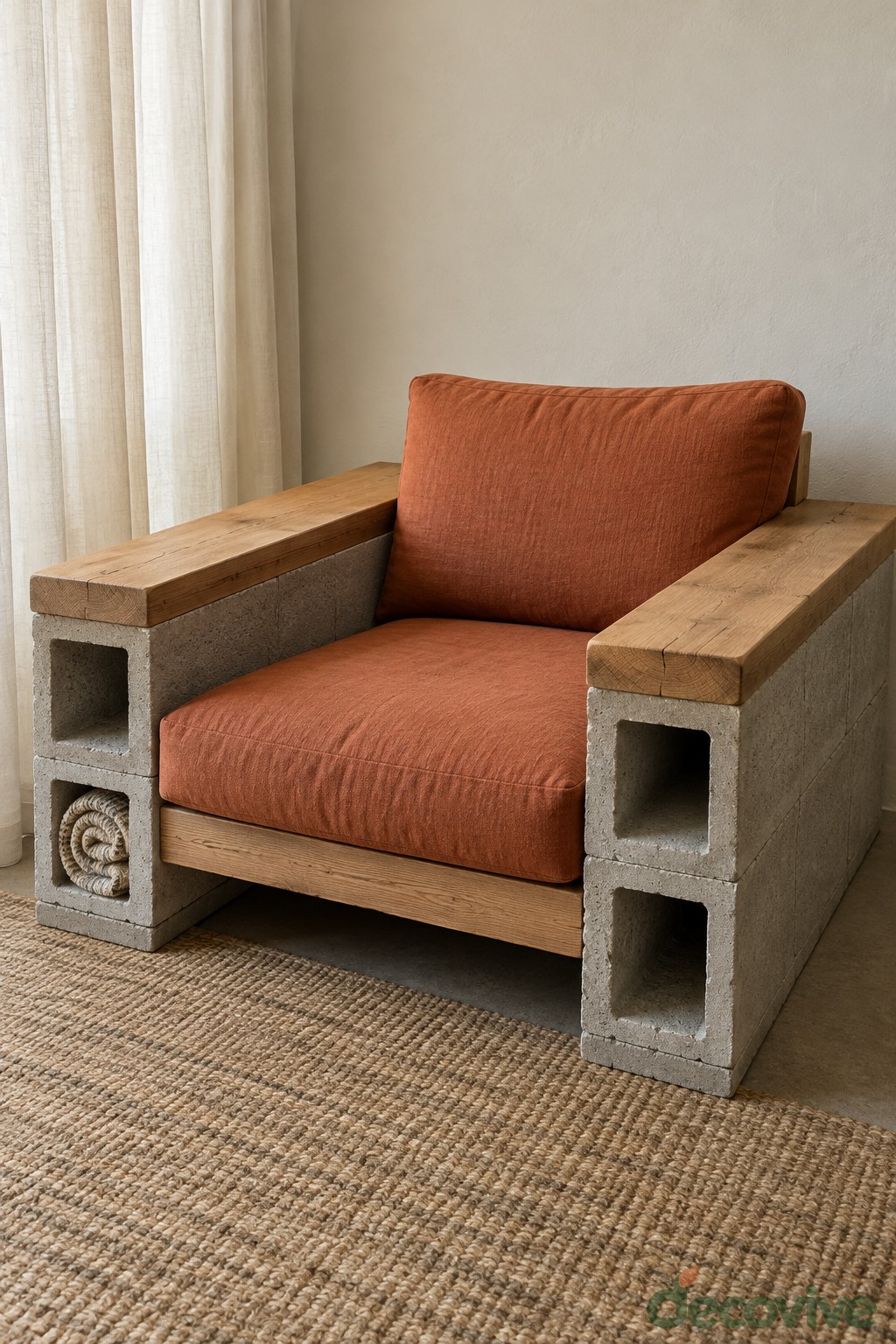
Wooden arm caps and generous orange cushions make the exposed concrete sides feel inviting.
Build a braced seat and back frame, then place the concrete side elements as part of a verified support arrangement. Choose removable cushion covers for easier cleaning.
The backrest needs a positive connection to the frame. Check arm edges and do not rely on friction between stacked units to resist a person shifting weight.
12. Curved Modular Sofa with Open Storage
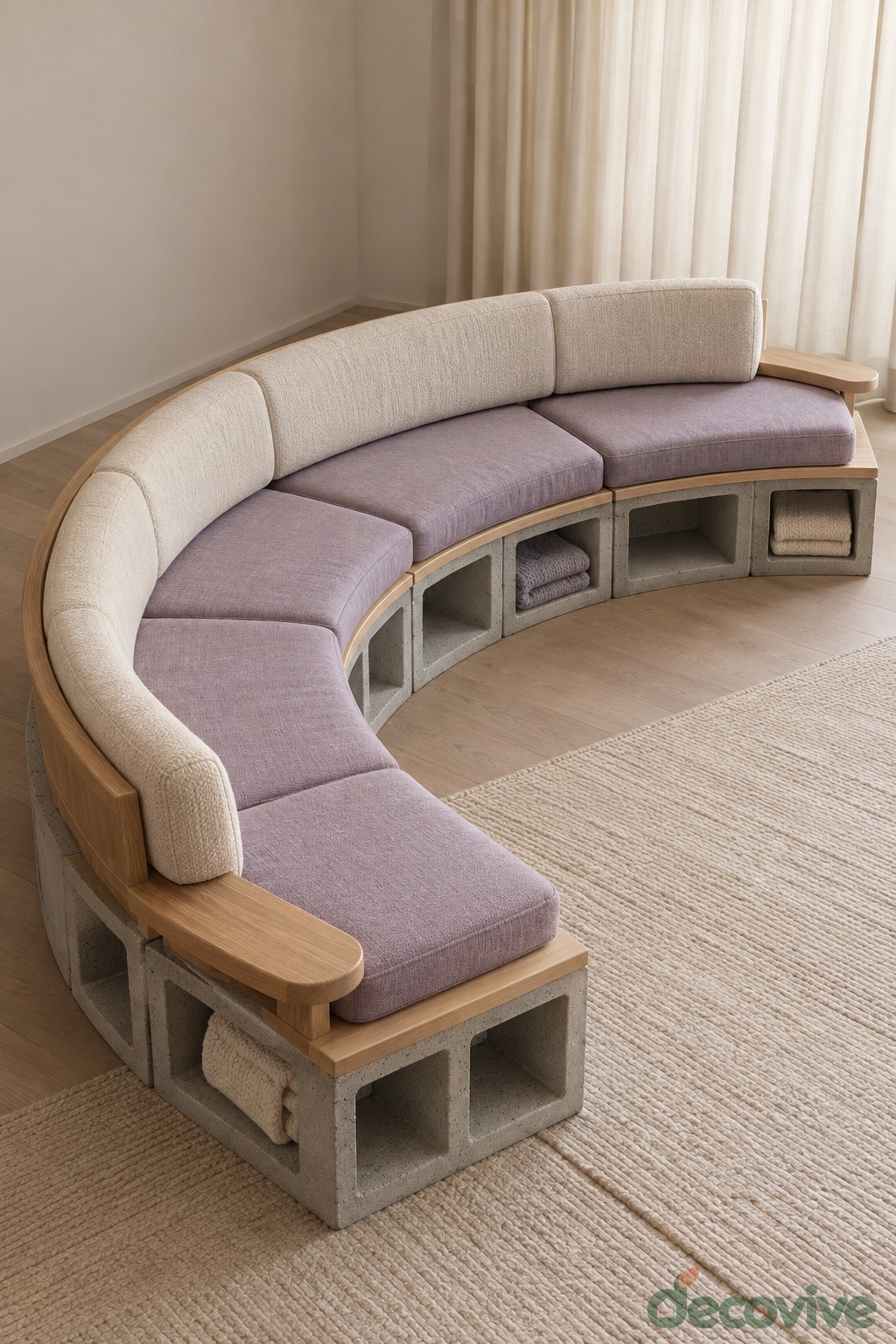
A sweeping sofa line creates a gathering area, with small storage openings following the curve underneath.
Translate the curve into several short timber seat sections rather than trying to bend ordinary boards. Use a full size layout to establish cushion shapes and support locations.
This is a custom upholstery and framing project. Tie modules together so gaps do not open during use, and check the complete assembly for stability.
13. Canopy Bed with a Low Block Base
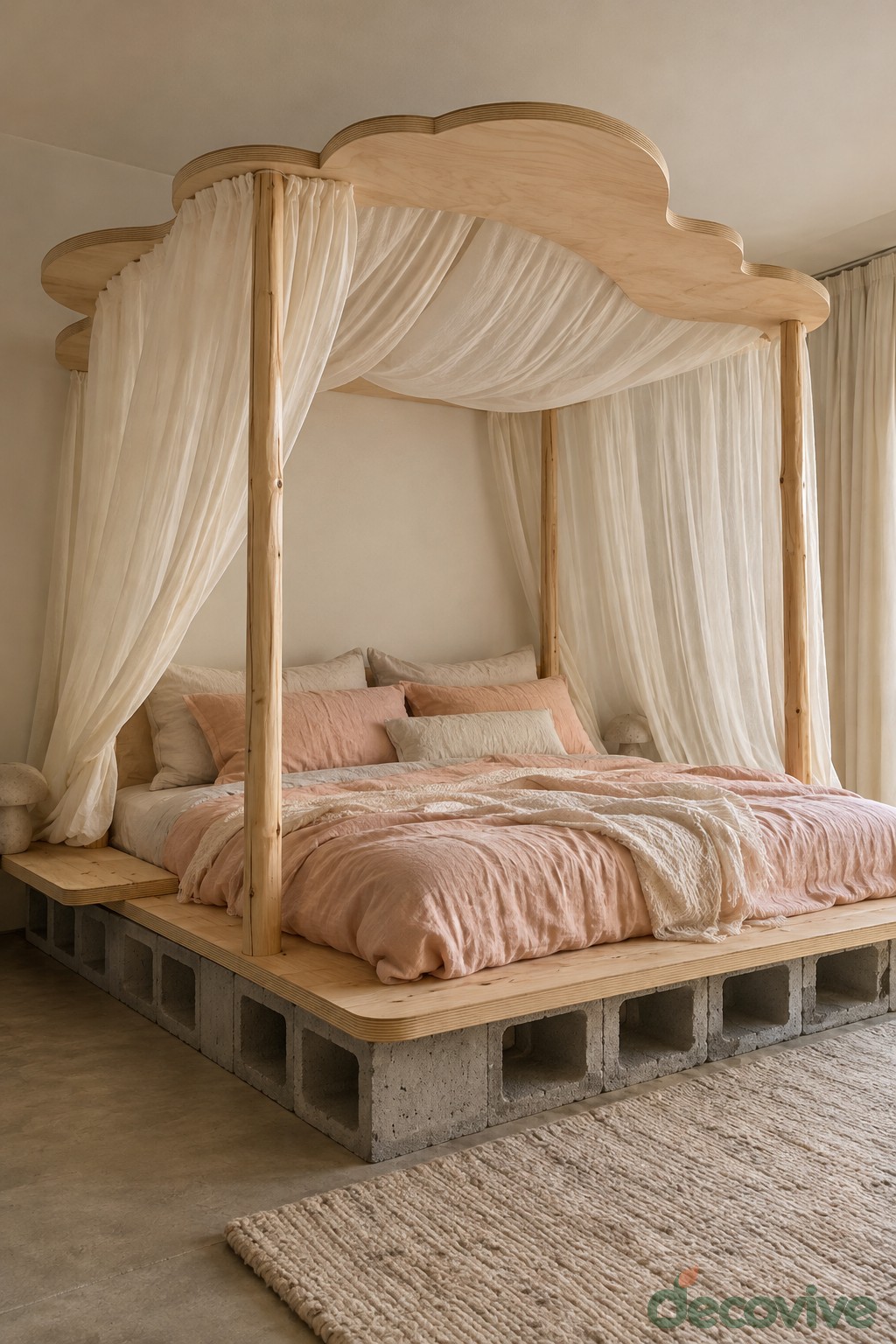
A light wooden canopy contrasts with a grounded base of exposed blocks and a wide timber platform.
Use a properly built bed frame with mattress ventilation and its own bracing. The block border can provide the visual language without carrying an improvised canopy.
Secure canopy posts and keep fabric away from heaters, lamps, and fans. This concept is not a crib or a child sleep space design.
14. Stepped Drawer Cabinet in Soft Colors
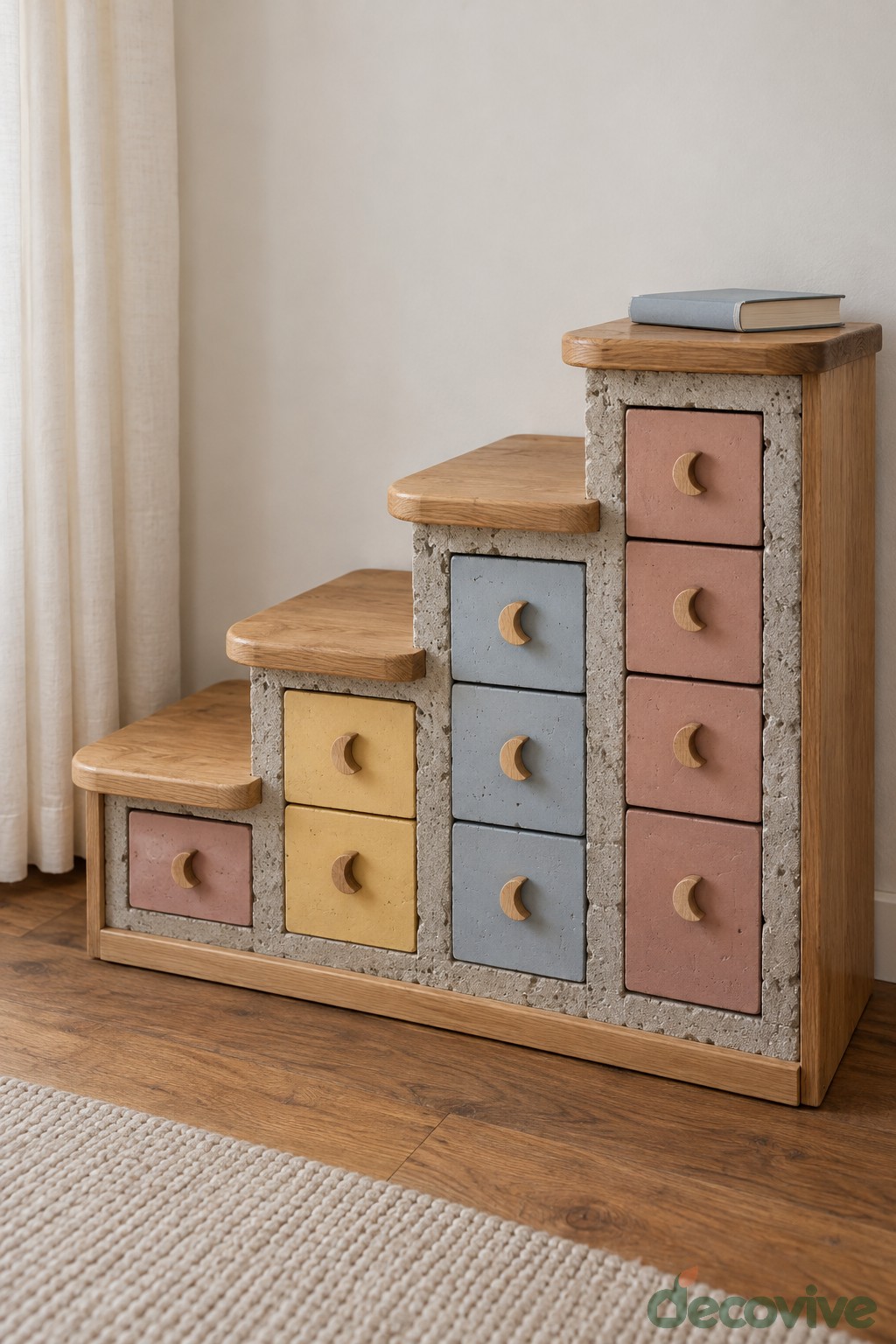
Pastel drawer fronts make a stepped storage cabinet feel playful while timber caps emphasize each level.
You can achieve a more manageable version with a restrained timber cabinet, concrete toned panels, and drawers on proper runners. If using real blocks, plan the full weight and fixing system first.
Treat the stepped silhouette as storage, never as stairs. Anchor the cabinet and fit drawer stops to reduce pullout and tipping hazards.
15. Three Organic Shaped Occasional Tables
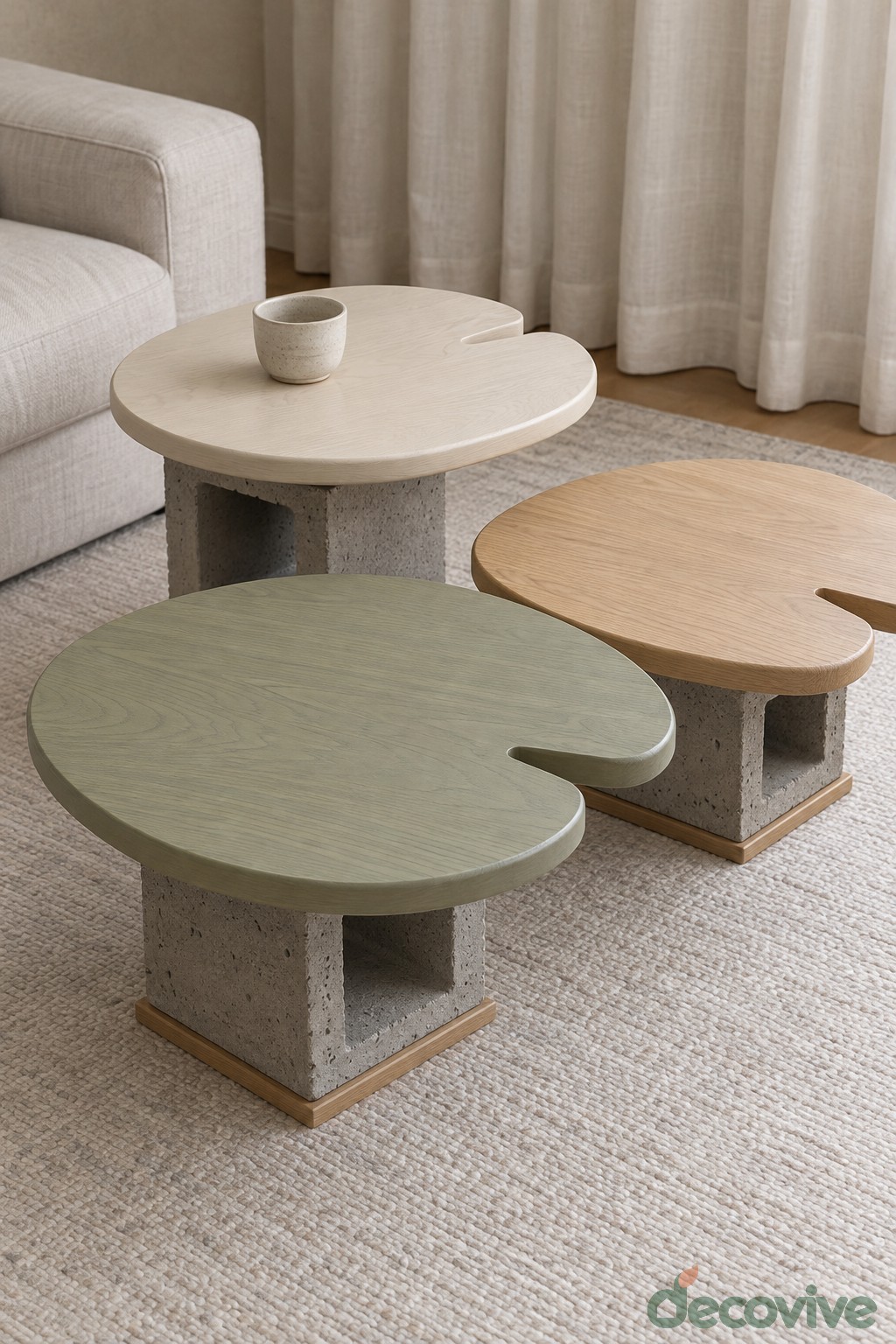
Three rounded, leaflike tabletops create a flexible alternative to one large coffee table.
Make paper templates in different sizes, then cut and smooth the wooden tops. Use broad secured bases and finishes that suit cups and everyday wiping.
Arrange the tables with visible walking gaps. Keep every top balanced over its base and avoid presenting them as seats.
16. Castle Inspired Storage Daybed
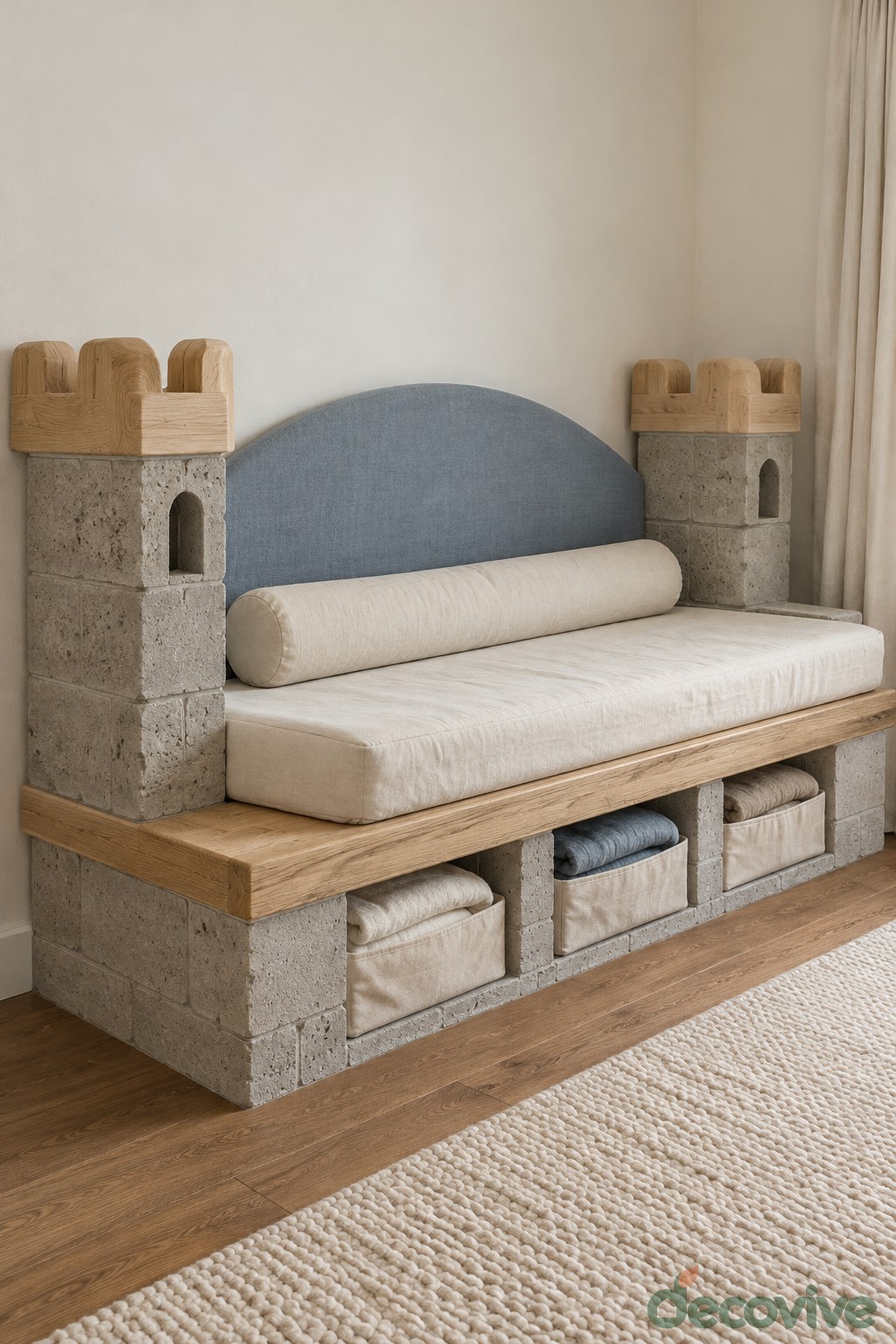
Timber battlement details, a rounded back panel, and front storage bins give a simple daybed a storybook character.
Use a freestanding framed bench with a secured upholstered back. Keep decorative tower shapes lightweight where possible, with block details placed only in a checked assembly.
Avoid loose masonry above the seat. Eliminate sharp points and climbing temptations, and do not describe decorative towers as suitable play equipment.
17. Indoor Flower Steps with a Small Landing Shelf
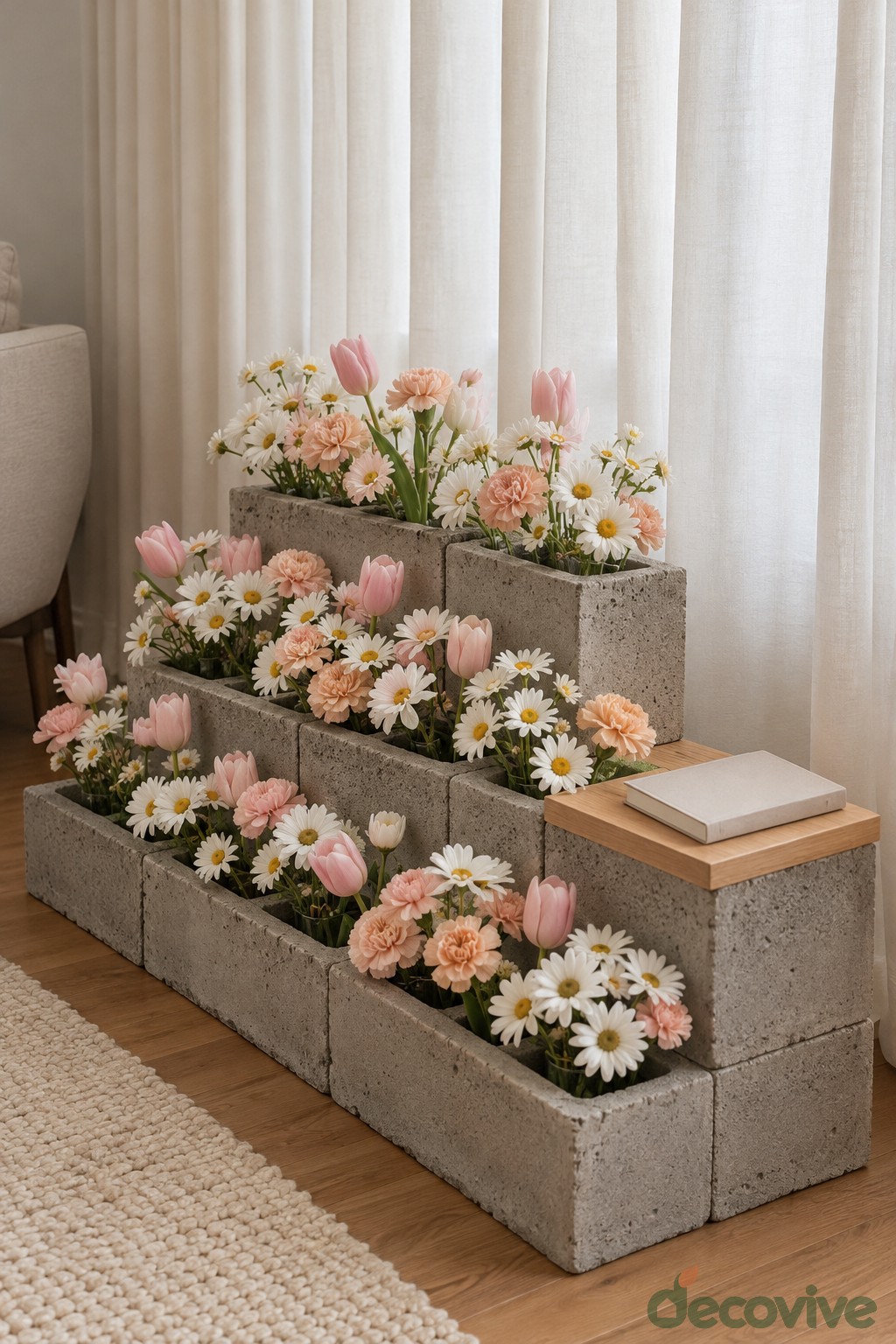
Rows of pink and white flowers follow a stepped block arrangement, with a timber landing for a book.
Build a restrained tiered display and place removable vessels in each row. For a short term arrangement, cut flowers in individual water containers are easier to manage than deep planted pockets.
Protect the floor with an accessible waterproof tray. These are display tiers, not steps to climb, and the small shelf is not a seat.
18. Arched Indoor Bench with Floral Details
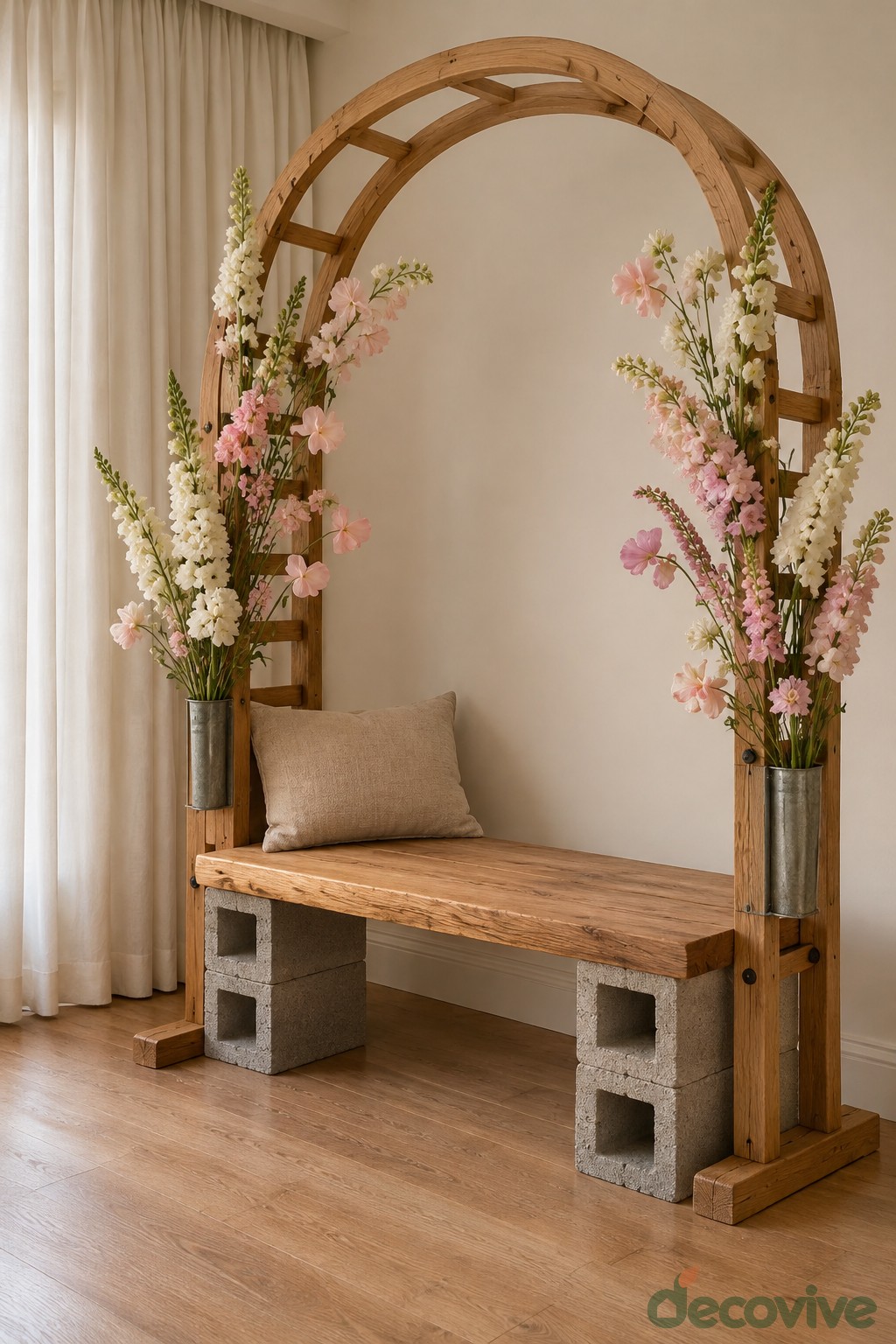
A timber arch turns a compact bench into a sheltered focal point, with floral accents following its sides.
Build and brace the wooden arch and bench as connected joinery. You can secure removable floral holders to the sides without concealing inspection points.
Fasten the arch against sway and tipping. Keep vessels secure and do not rely on flower stems or block openings to hold the arch upright.
19. Low Floral Room Divider
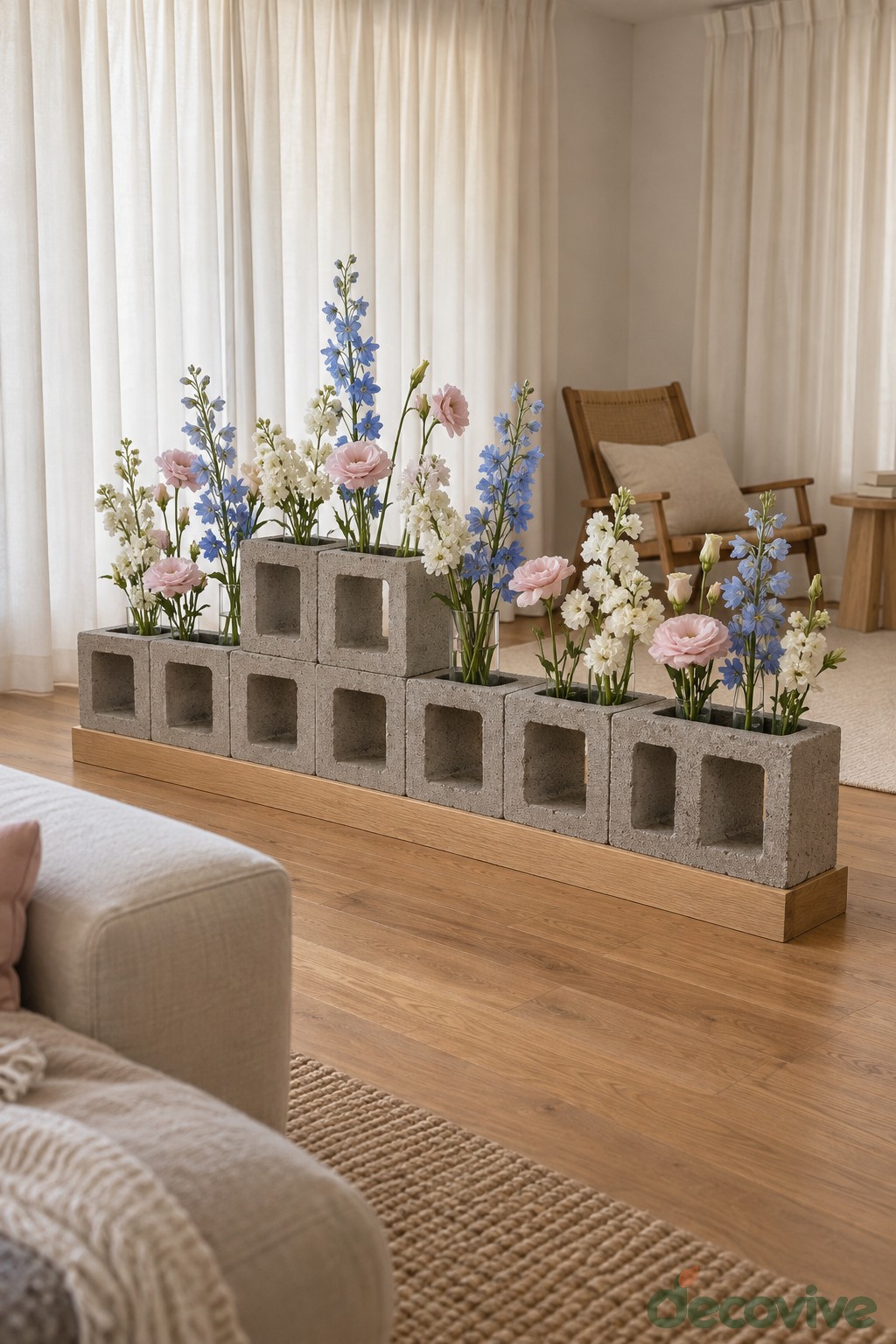
Staggered blocks create a low screen, while tall flowers soften the line without closing off the room.
You can arrange a modest height divider on a weight appropriate base and use removable narrow vessels. Keep the back accessible so water containers can be lifted out.
Prevent the raised blocks from shifting. Position the arrangement outside busy routes and protect the supporting timber from spills.
20. Indoor Conversation Corner with a Floral Backdrop
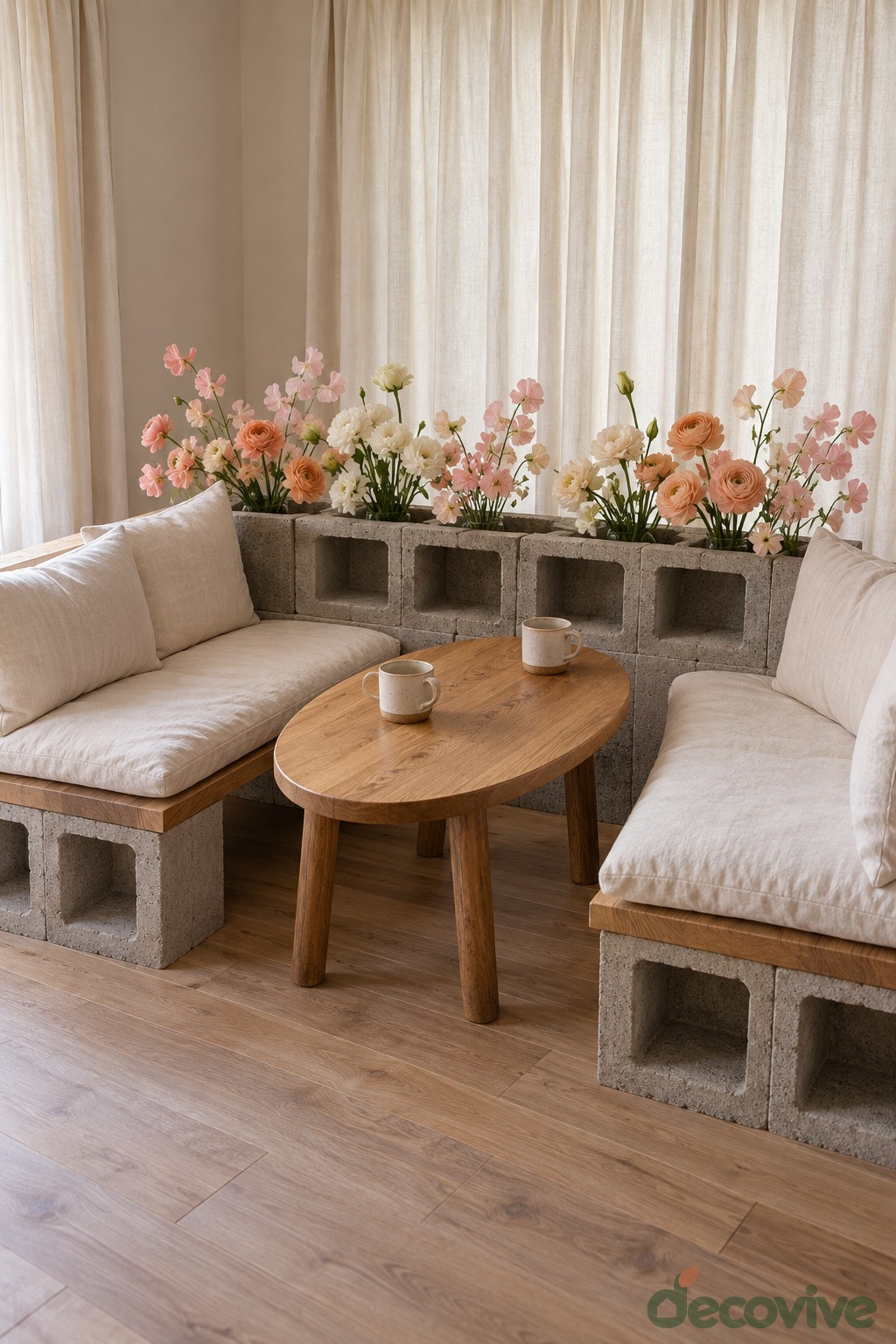
Two pale benches face a small oval table, with a flower filled backdrop defining the seating corner.
Start with comfortable framed benches and use the block language beneath them. Place the flower containers on a separate secured rear ledge.
Leave room to sit down without brushing flowers or tipping vessels. Choose flowers without strong fragrance if the corner will be used for long reading sessions.
For another way to bring small planted landscapes into your decorating, explore these tiered terracotta fairy garden ideas. Keep those miniature planting arrangements separate from furniture joints and upholstery.
21. Circular Garden Retreat with a Clear Entrance
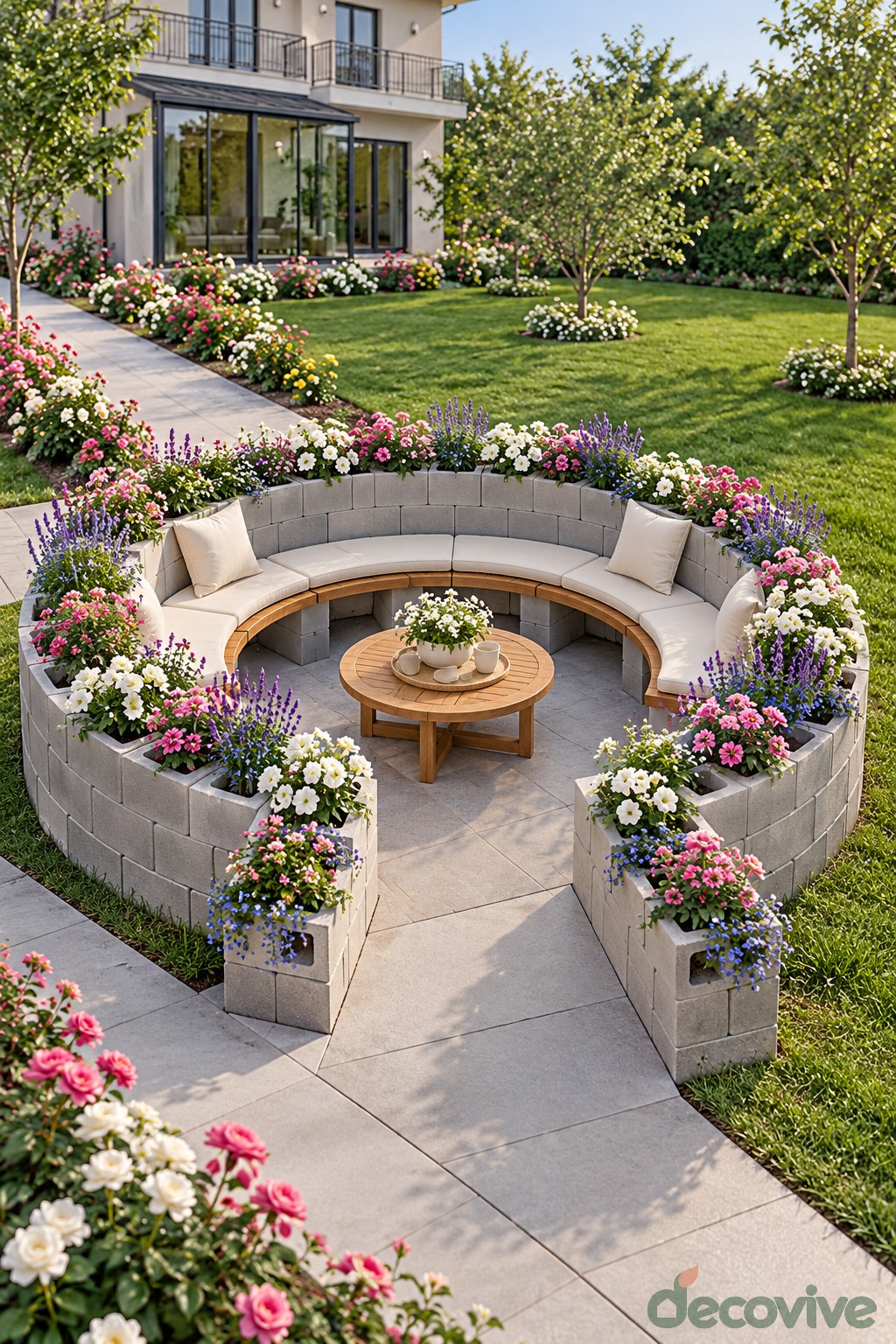
A circular seating arrangement wraps around a low table, with an opening that gives the garden nook a clear entrance.
Lay out the circle at full scale, then divide the seating into framed segments. Build flower borders separately so wet soil does not share the seat structure.
Check site drainage and avoid creating a basin that collects rain. Curved retaining work and seating foundations need assessment appropriate to the site.
22. Outdoor Reading Desk with a Sloping Top
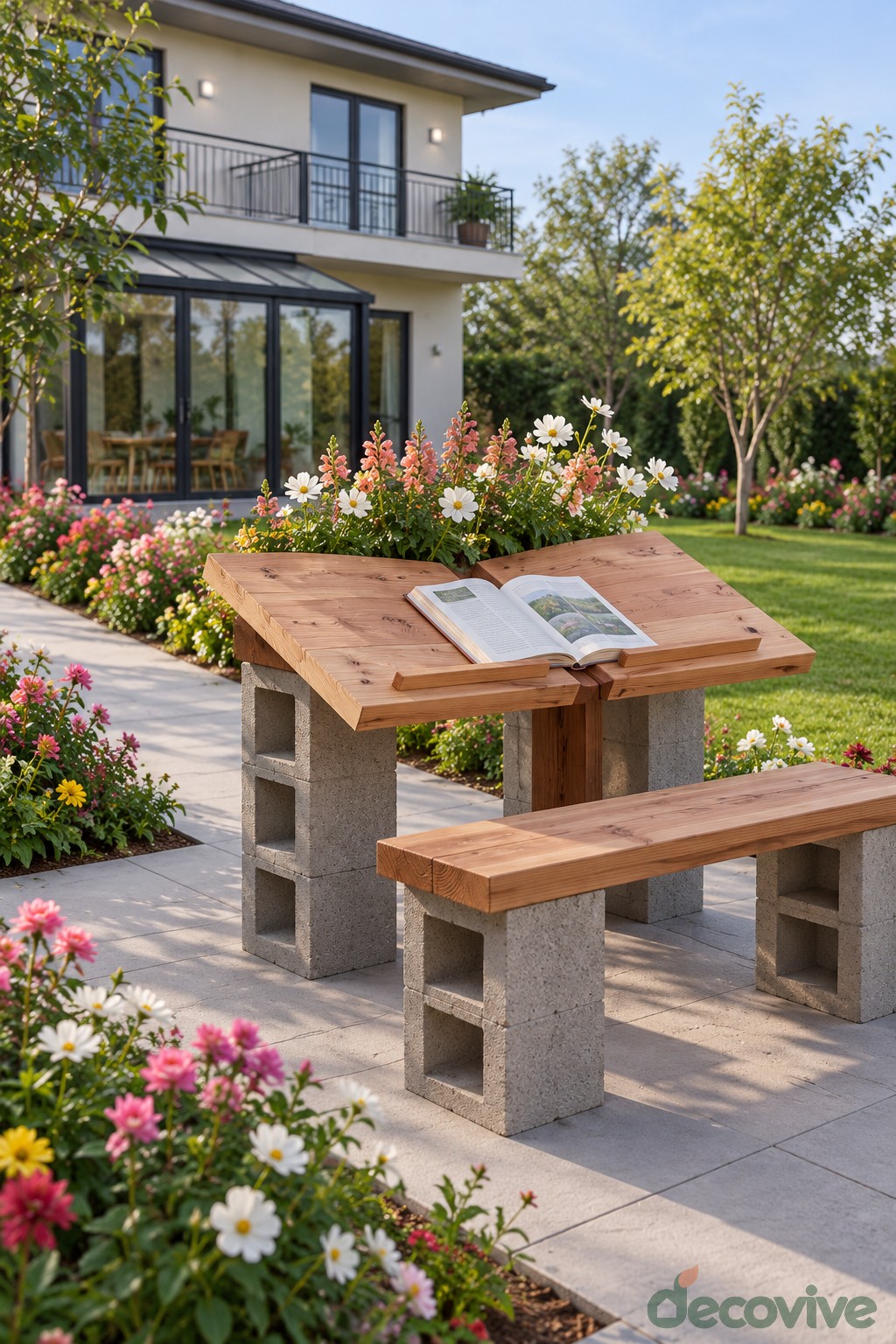
A gently angled wooden surface supports an open book, paired with a simple bench for quiet outdoor reading.
Fit a smooth ledge along the lower edge of an inclined top and support its angle with a timber frame. Match the bench height to the final working position.
Keep the ledge comfortable against forearms and provide a level spot for drinks elsewhere. Store books indoors when the desk is unattended.
23. Three Lane Garden Lounging Platform
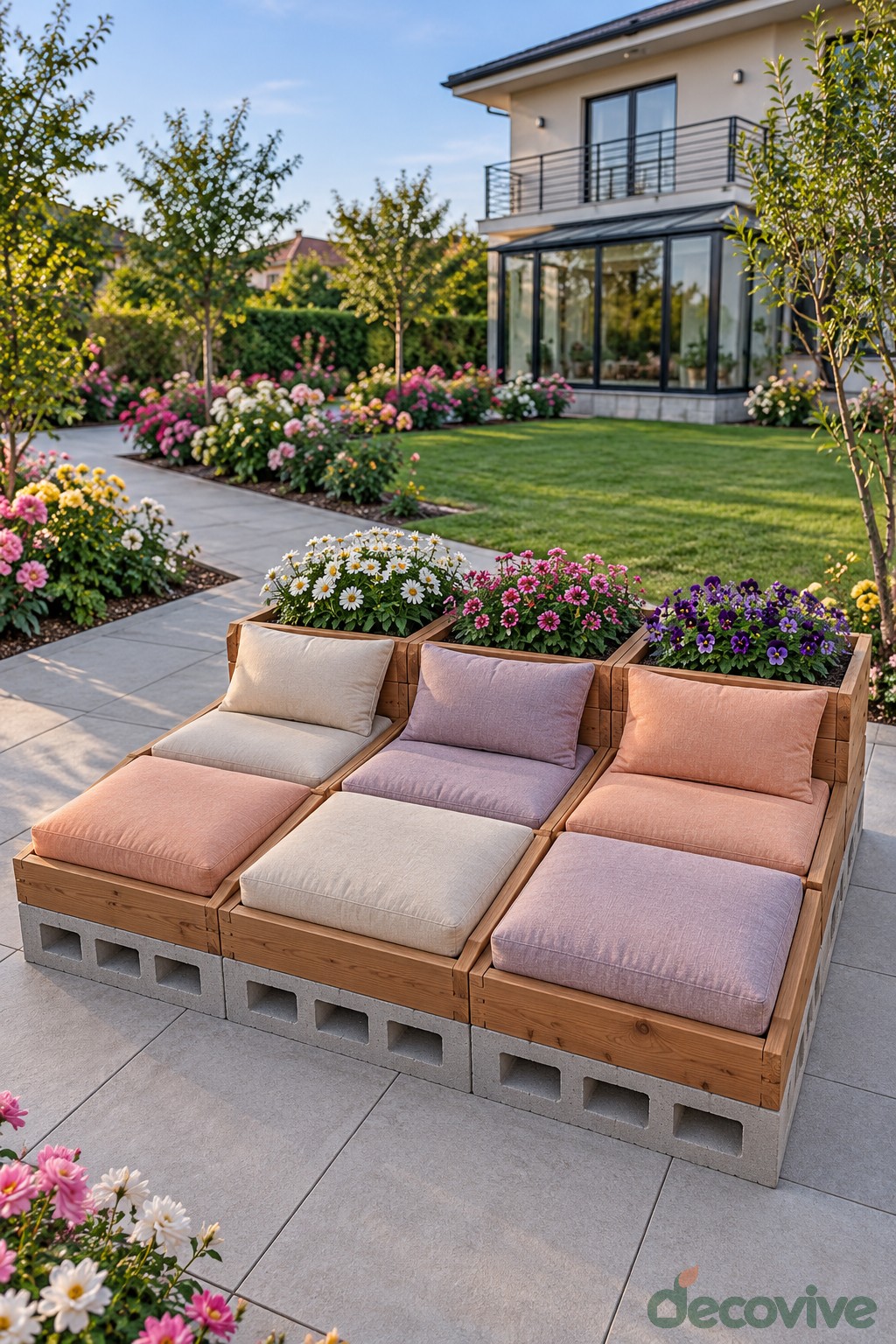
Three parallel cushion lanes create a shared sun lounging platform with a tidy timber border.
Build a braced slatted deck frame with supports beneath its structural members. Choose outdoor cushions that can be removed individually.
Do not bridge a broad seating area with unsupported boards. Provide drainage and access beneath the frame for inspection and cleaning.
24. Bridge Shaped Garden Bench Between Planters
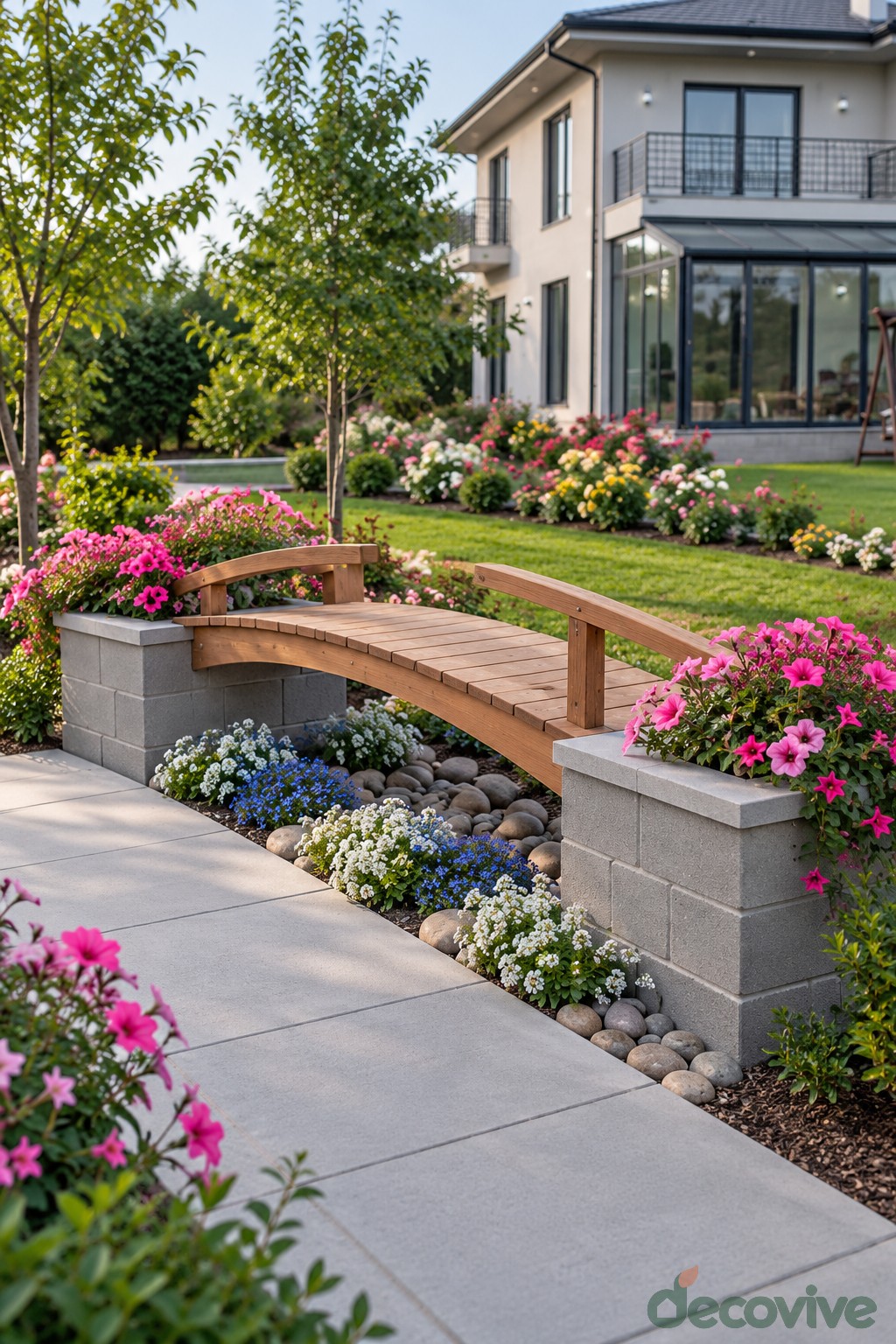
A curved timber seat spans a shallow decorative stone bed between two substantial planters.
Use a purpose built curved bench frame and separate lined planters at either end. Keep the gravel area decorative and easy to clean.
For a crossing people will use, choose a bridge designed for the actual span, supports, and expected load. Have the curved supports and connections checked before seating, and avoid hidden trip edges.
25. Rose Arch Bench with Block Planter Ends
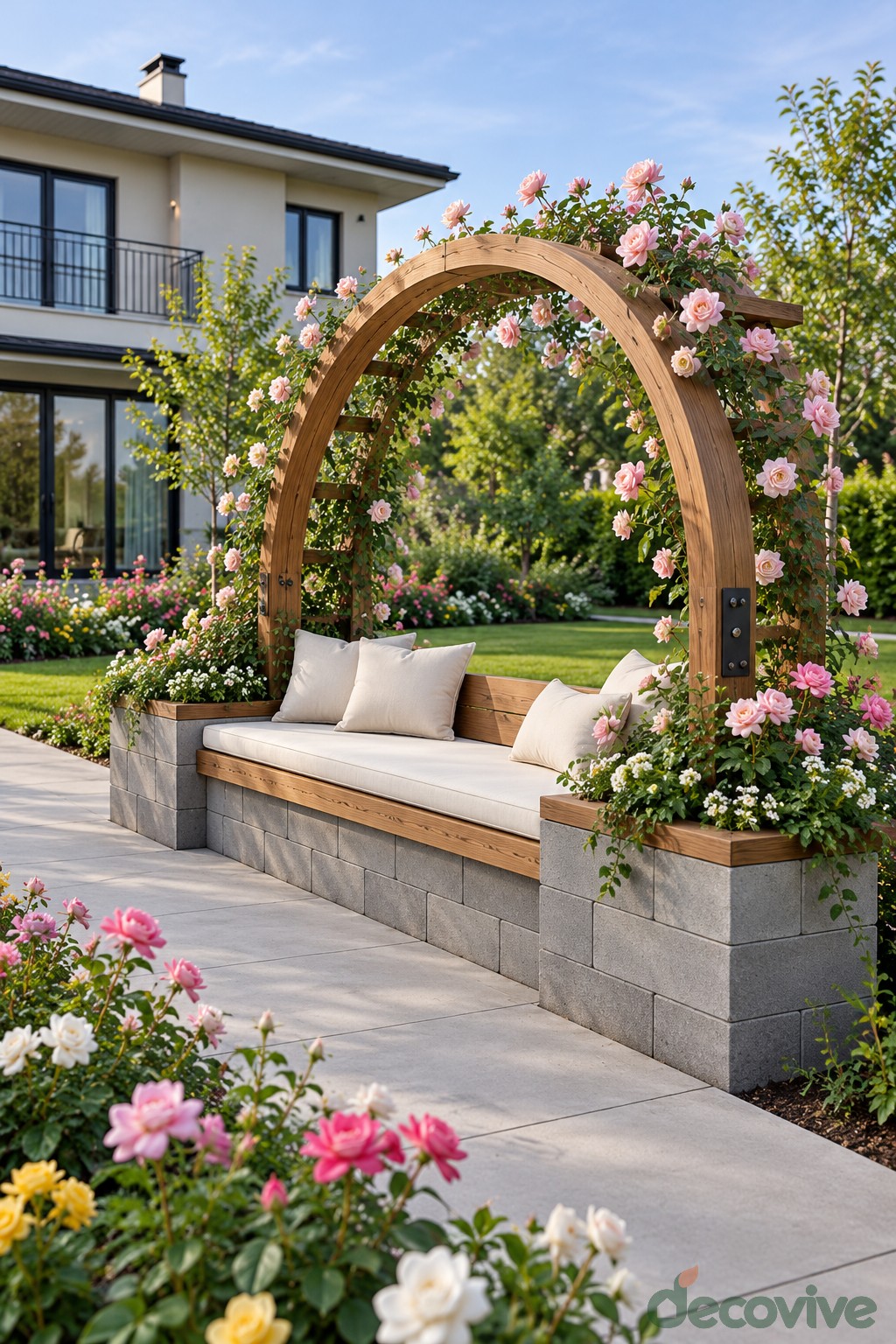
A broad wooden arch frames a pale bench cushion, while roses climb near its outer edges.
Give the arch its own secure footings or suitable anchoring. Place climbing plants in separate adequately sized containers and guide stems onto suitable supports.
Keep thorns away from shoulders and hands. Plan pruning access, drainage, and wind resistance before allowing the climber to fill the arch.
26. Round Patio Table with a Flower Ring
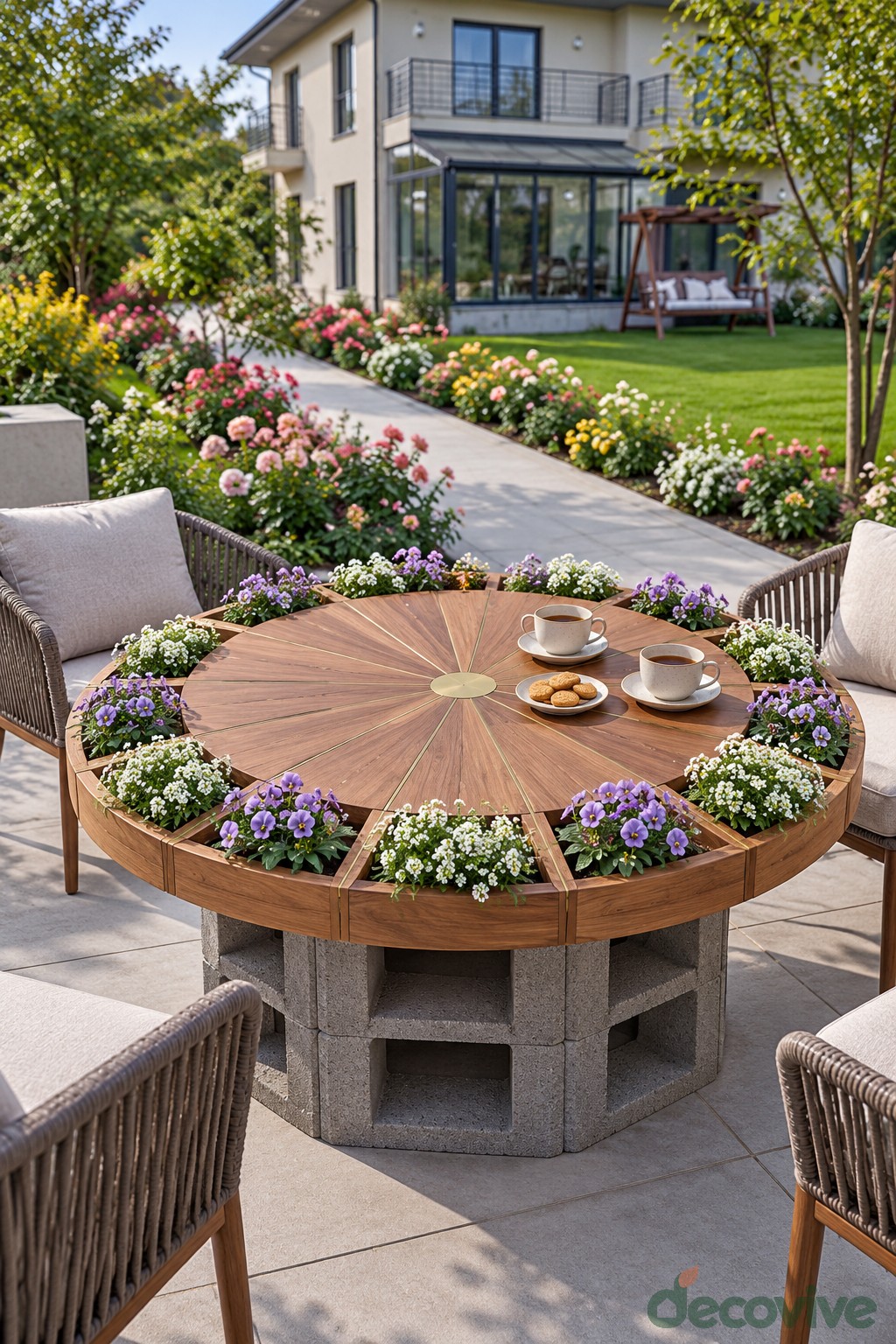
A narrow ring of flowers surrounds a generous circular dining surface, creating a planted border at table height.
Build an annular outer frame around a structurally supported central top. Fit separate removable containers into the ring, leaving enough clear space for tableware.
Keep drainage away from diners and wooden joints. Do not fill a hollow timber rim directly with wet soil.
27. Train Inspired Planter Benches
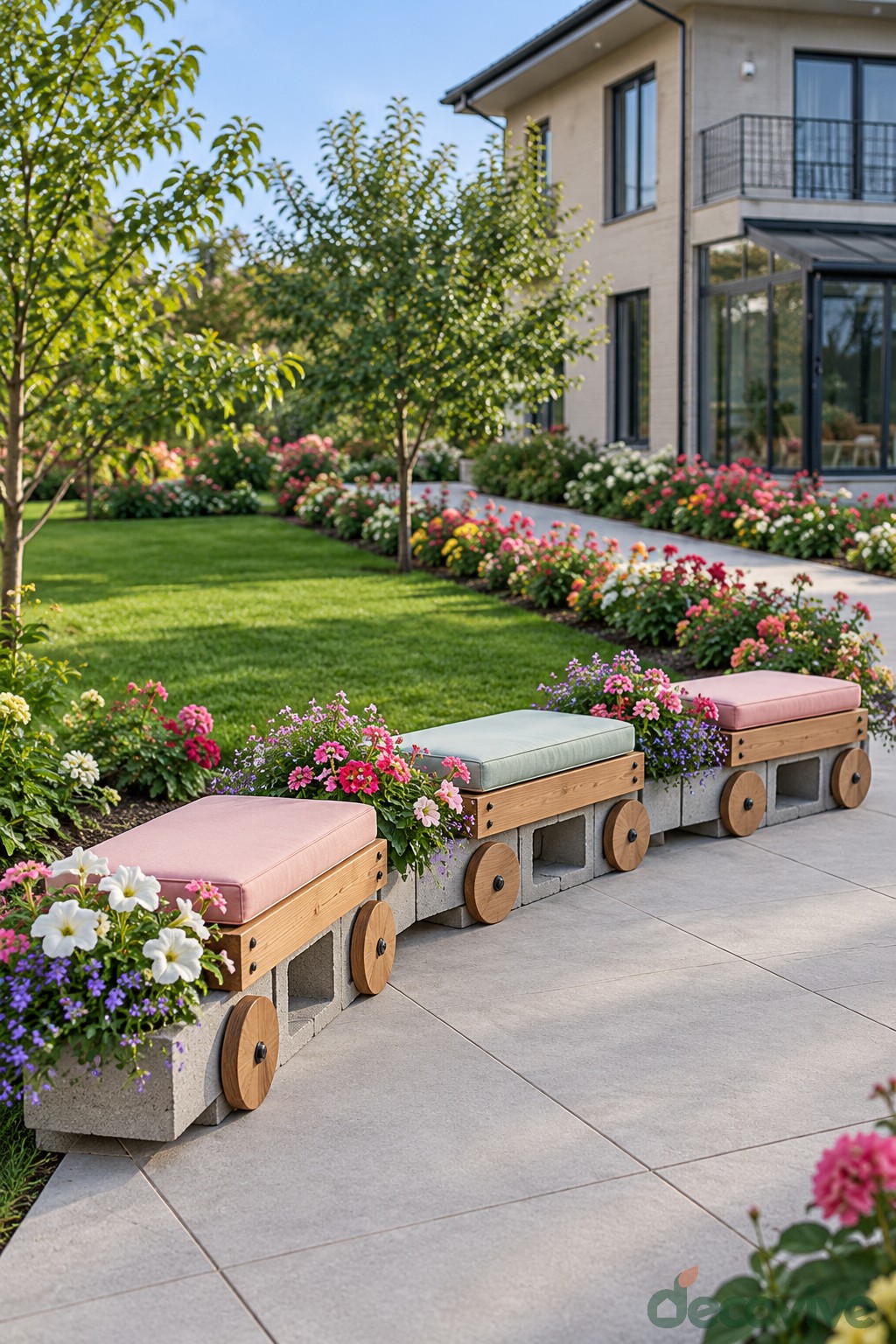
A row of small seat modules becomes a cheerful garden train through simple wooden wheel details and flower boxes.
Make each bench a separate stable framed unit with block details below. Fasten decorative wheel discs securely so they cannot turn or detach.
The wheels are visual accents, not a transport system. Keep the modules fixed in position and do not present them as movable ride on furniture.
28. Tiered Flower Island with Perimeter Seating
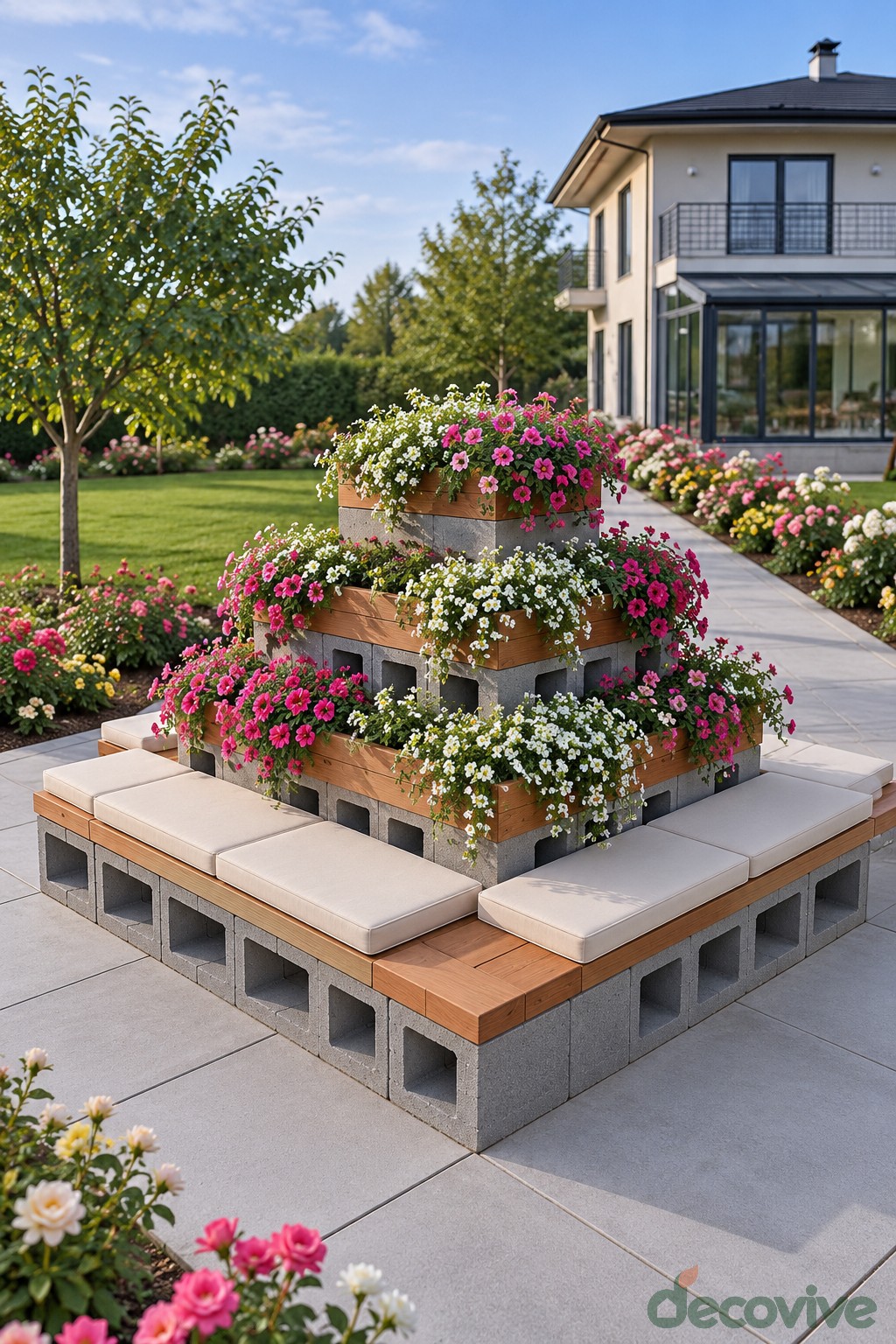
A central stack of flowering tiers gives a square seating island a strong focal point from every side.
Build the perimeter seat frame independently from the planting tiers. Use contained pots at each level and keep the central display low enough for comfortable maintenance.
Secure upper tiers and consider the weight of saturated containers. Keep irrigation from soaking cushions or draining into the seat base.
You can develop the planting details further with this layered fairy garden with succulents and miniatures. Choose plants suited to the actual light and watering conditions of your seating area.
29. Curtained Garden Canopy Seat
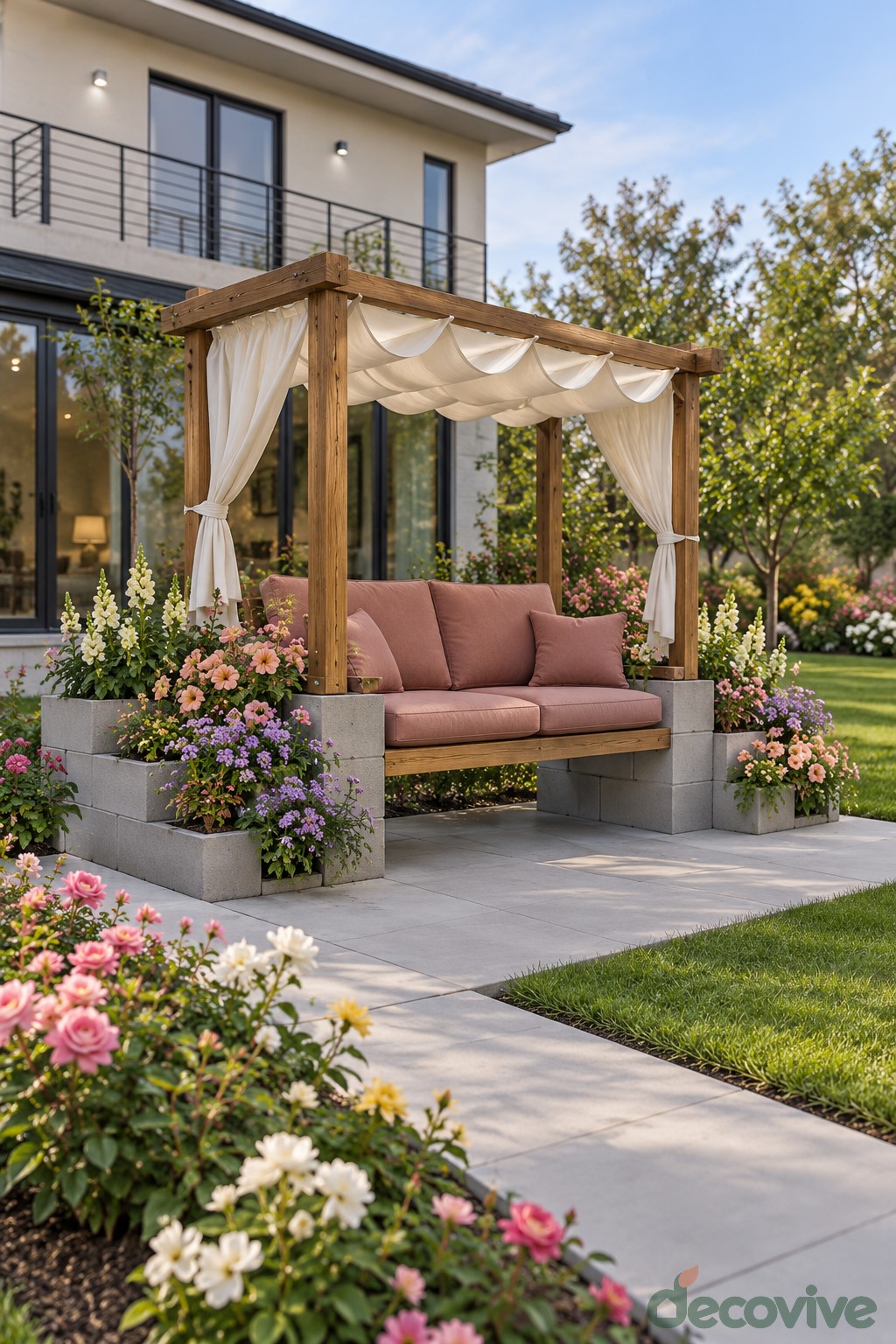
Soft curtains and a compact roof frame turn this garden seat into a shaded outdoor room.
Use an outdoor timber structure designed for local conditions, with a separately supported bench and planters near the corners. Choose curtains that can be tied back or removed.
Fabric catches wind. Anchor the structure appropriately and take down removable textiles when weather conditions require it.
30. Long Garden Daybed with Boat Shaped Planters
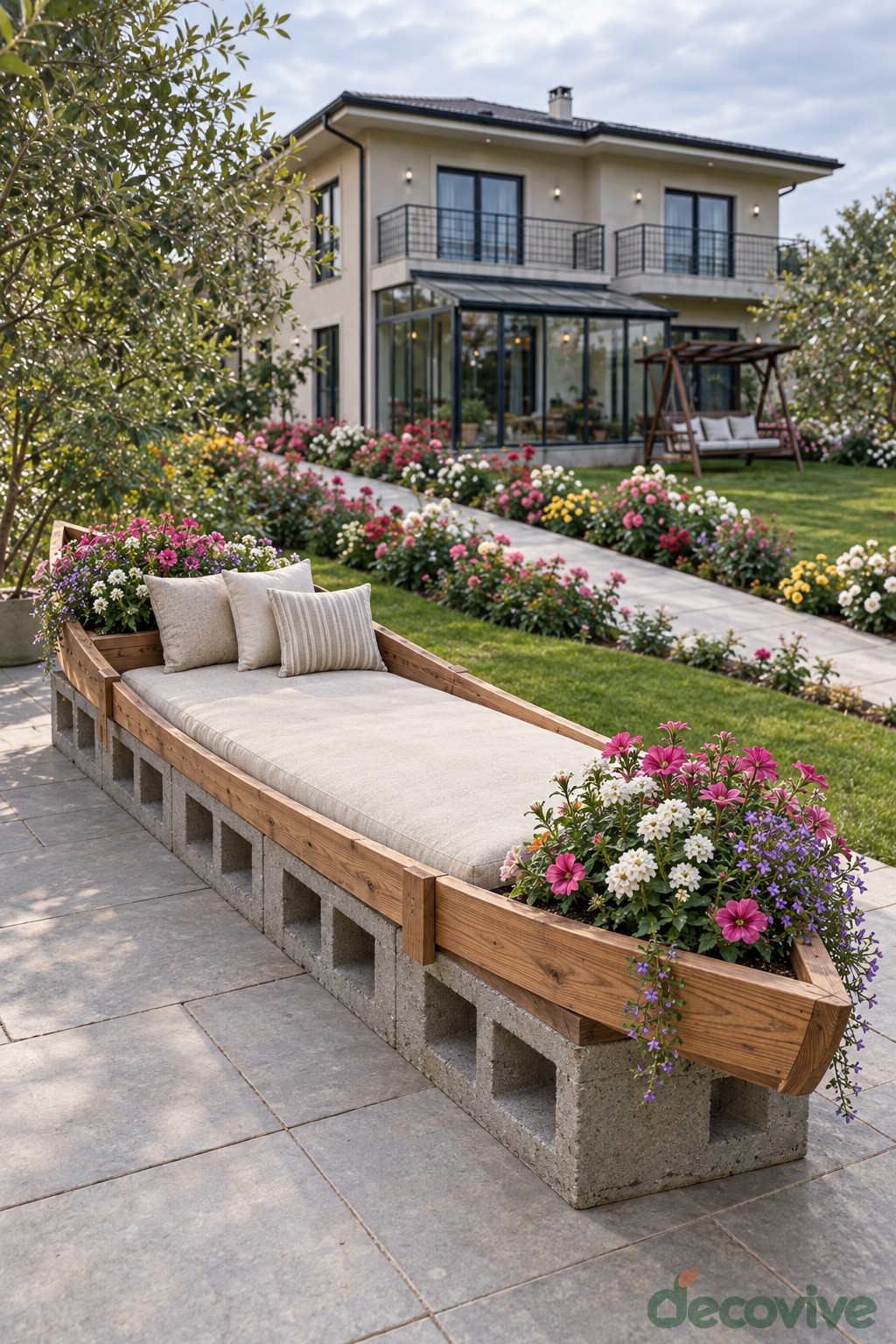
Pointed wooden planters extend the ends of a long lounging bed and bring flowers close to the cushions.
Build the daybed on a braced slatted frame, then add independent lined planter boxes that echo a boat shape. Leave a cleanable separation between planting and upholstery.
Use exterior materials and plan a drainage route that avoids the bed. Check the long seat span and all bearing points before use.
31. Outdoor Table with a Grid of Planting Pockets
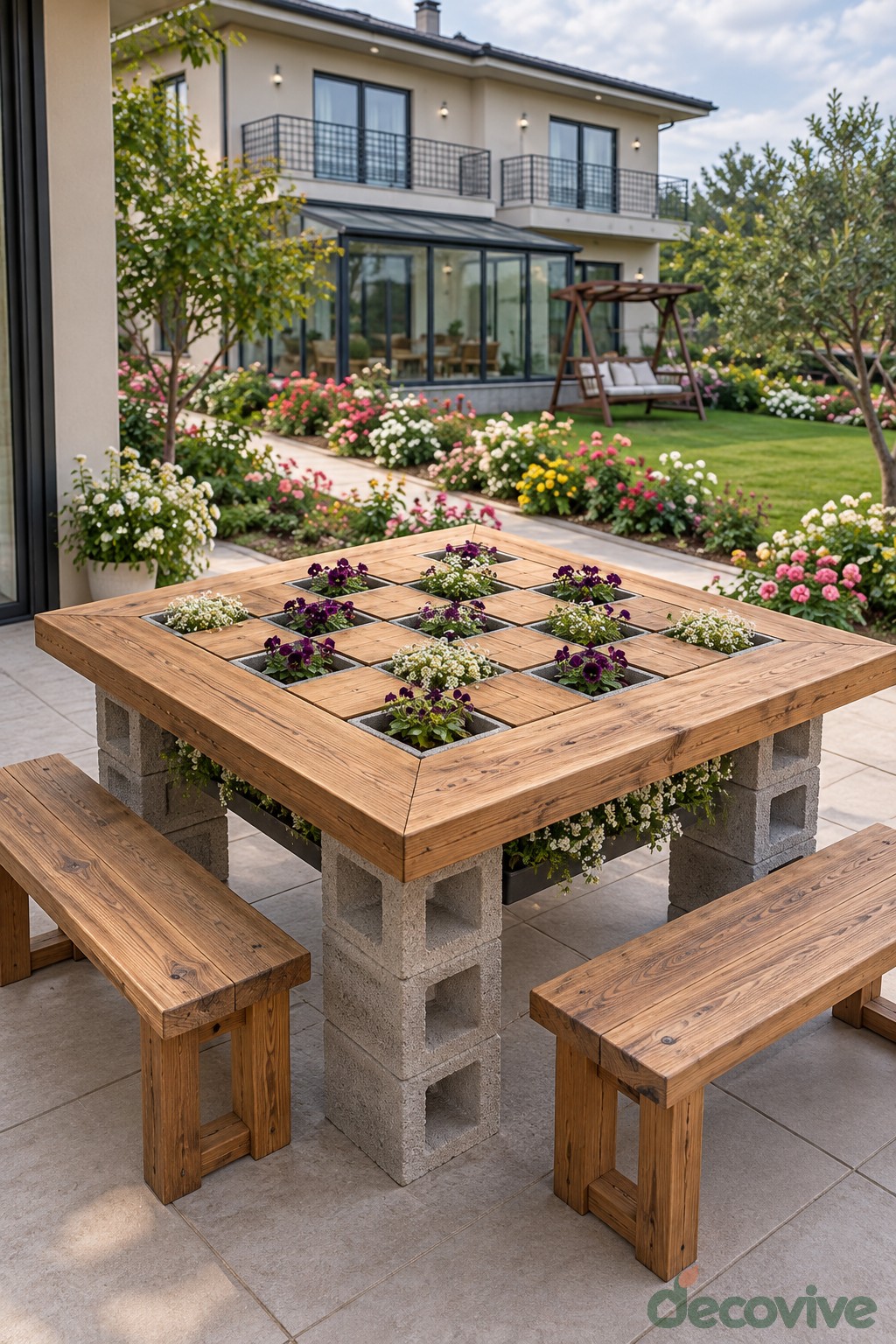
A grid of small planted openings turns a broad wooden table into a mixture of work surface and miniature garden.
Plan the supporting apron before cutting openings. Use removable pot inserts with rims, and maintain enough uninterrupted surface for the way you intend to use the table.
Cutouts weaken a panel and interrupt place settings. Keep drainage clear of the timber frame and avoid treating the table as a food preparation surface.
32. Butterfly Inspired Paired Reading Seats
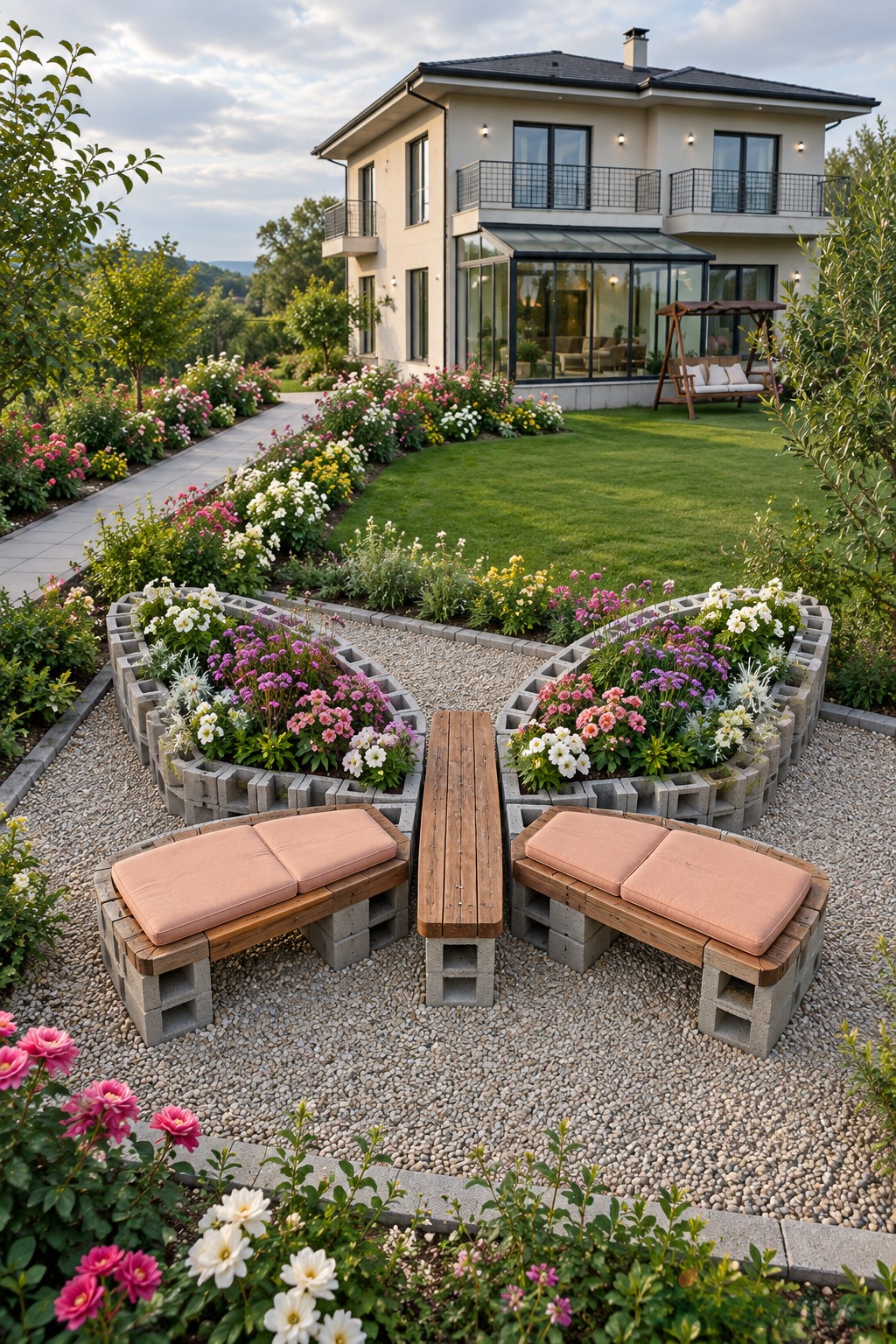
Two outward facing seats sit beside planted borders that suggest butterfly wings when viewed from above.
Mark the curved footprint on the ground, then simplify it into short straight border segments. Build each seat on its own frame and use suitable liners for the flower pockets.
Keep curved border ends out of walking paths. Provide a firm base under each seat rather than relying on loose decorative gravel.
33. Three Floral Pedestal Tables
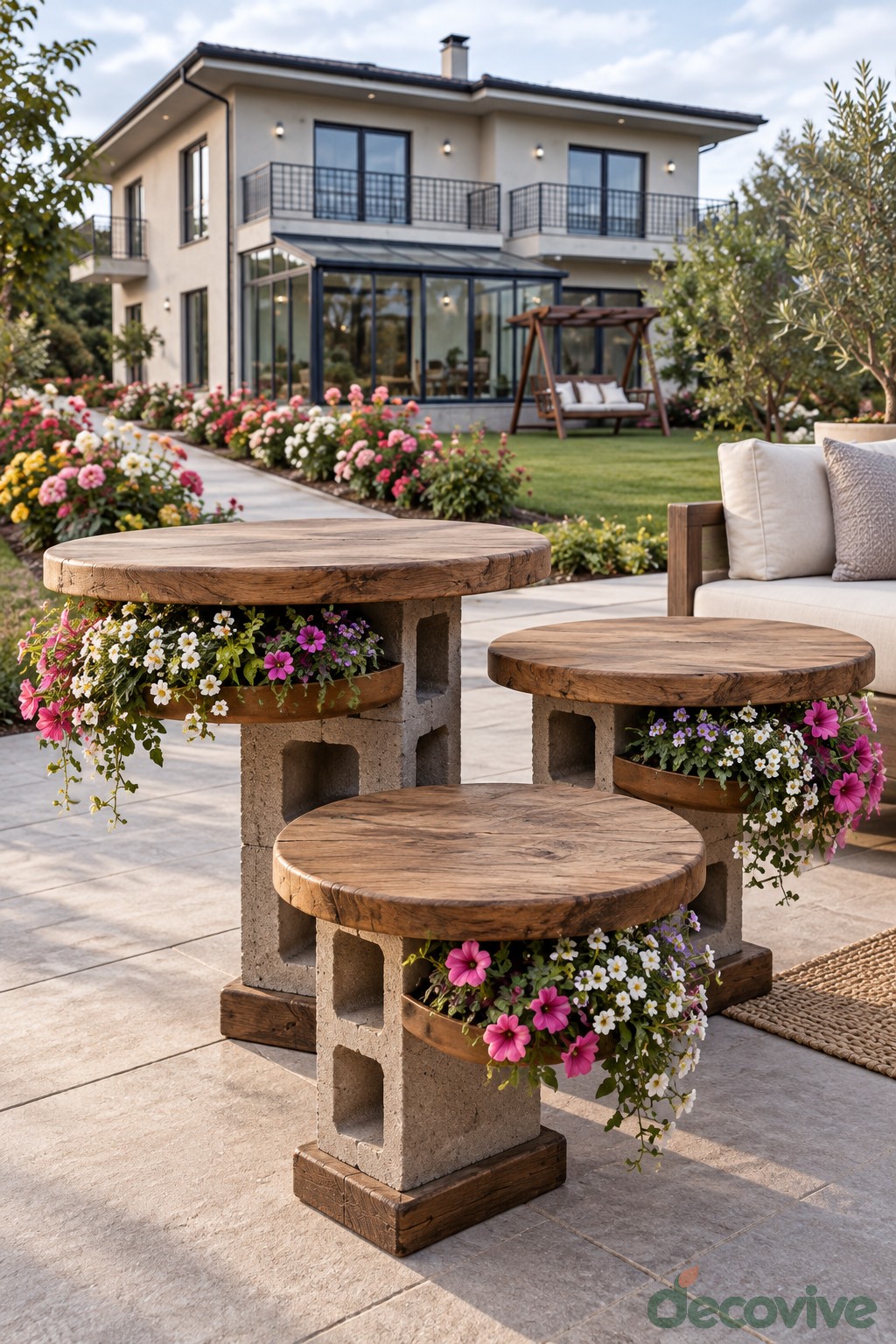
Round timber tops at varied heights rise above block supports, with flowers tucked underneath the edges.
Create each piece as an independent occasional table with a properly proportioned secured base. Hang removable flower containers from a separate supporting ring.
A narrow tall pedestal is vulnerable to tipping. Reduce height or widen the base where necessary, and do not use these tables as stools.
34. Shaped Garden Chaise with a Side Flower Border
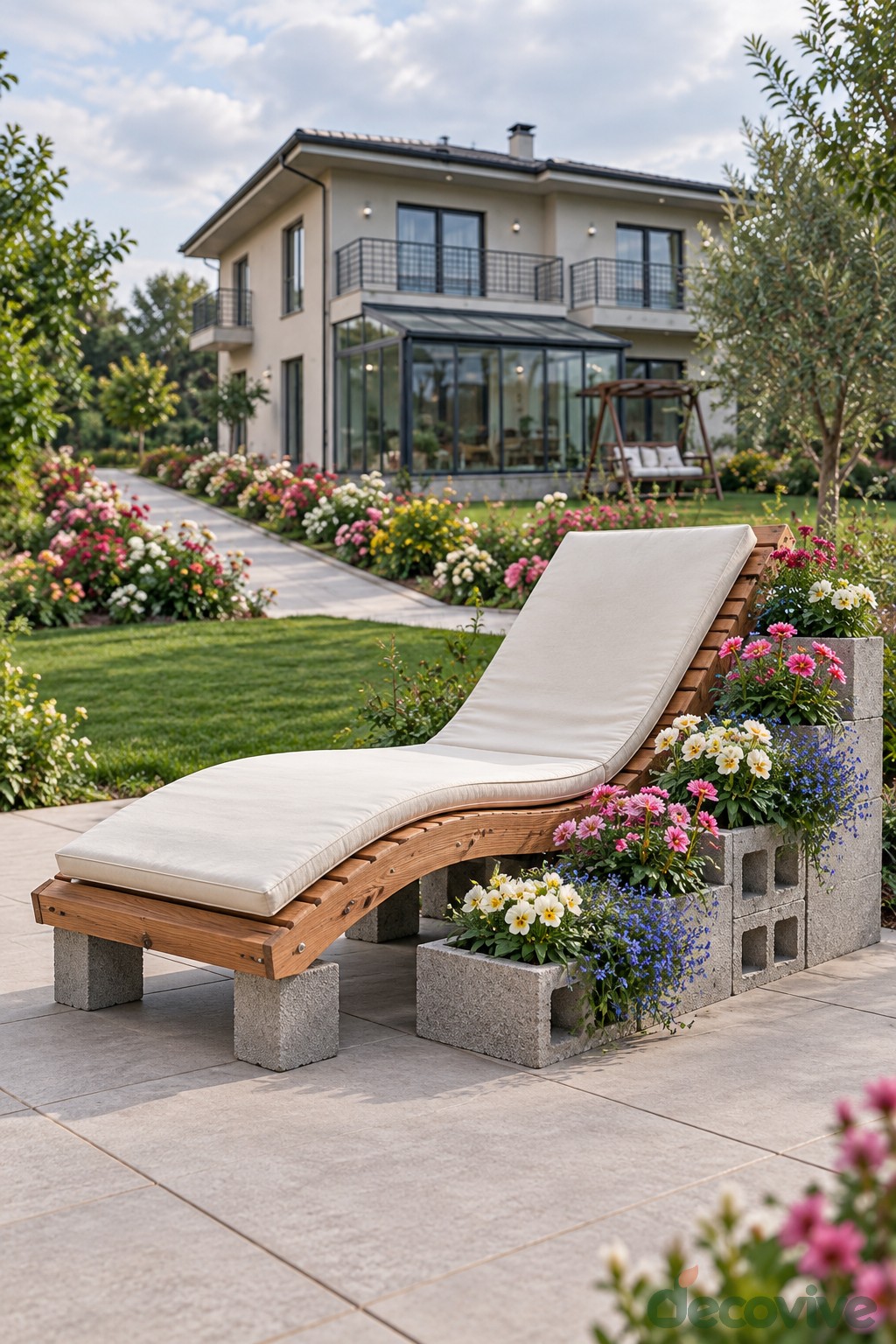
A curved wooden chaise follows the reclining cushion, with a low flower border running along one side.
Use a purpose built timber chaise frame with closely spaced slats and supports under its structural members. Keep the planting border separate and lower than the main reclining surface.
The curved profile requires real joinery and bracing. Check access beside the seat and avoid rough block edges where hands reach down.
35. Cross Shaped Flower Benches Around a Tea Table
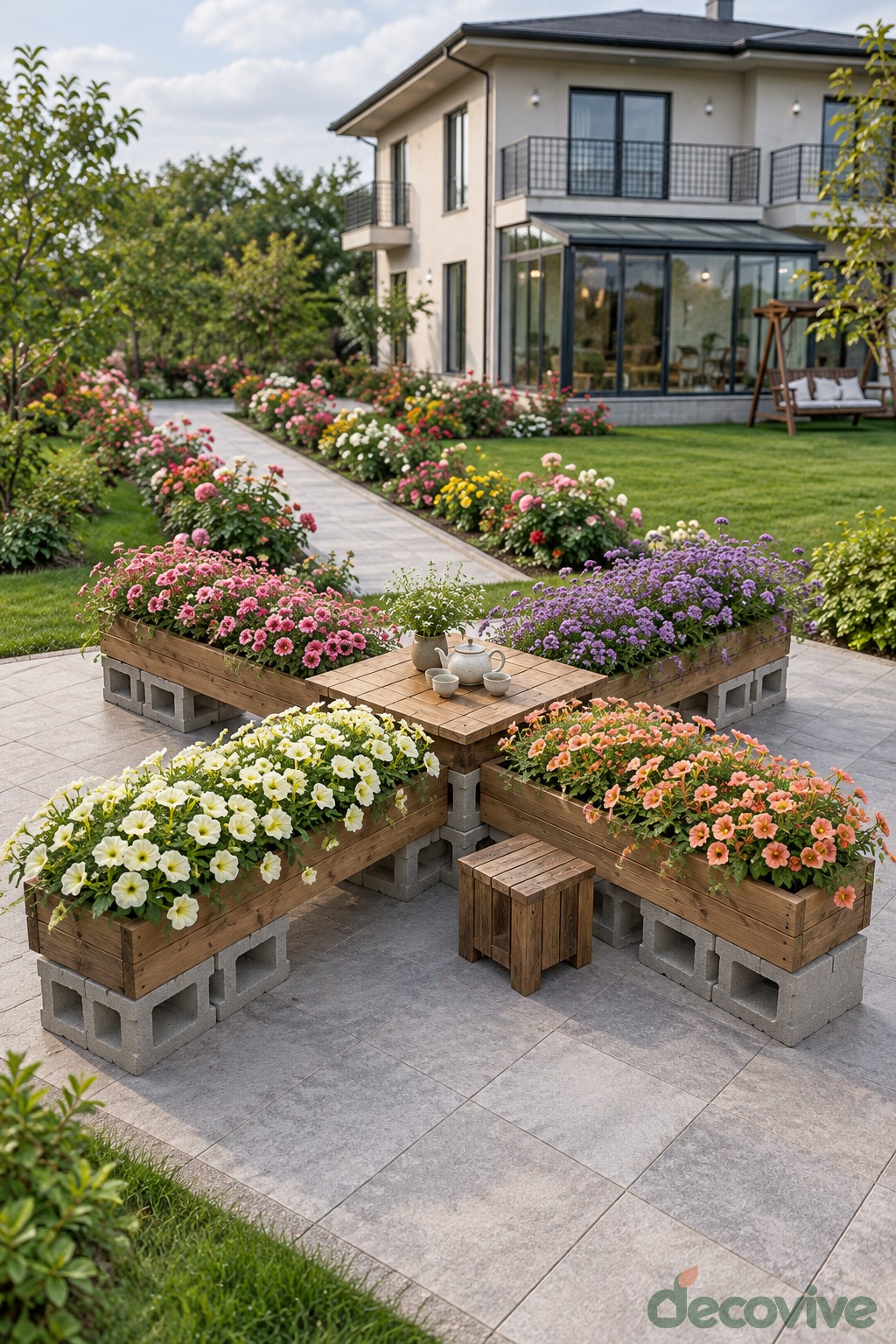
Four planted bench arms meet around a little central tea table, giving the garden a shared conversation point.
Build four repeated seat modules and position them around a separately supported table. Fit removable flower boxes along the outer edges.
Keep entry gaps between the benches and leave room for feet. Secure the modules so the central meeting point does not create pinch gaps.
36. Sheltered Reading Bench with Stepped Flower Sides
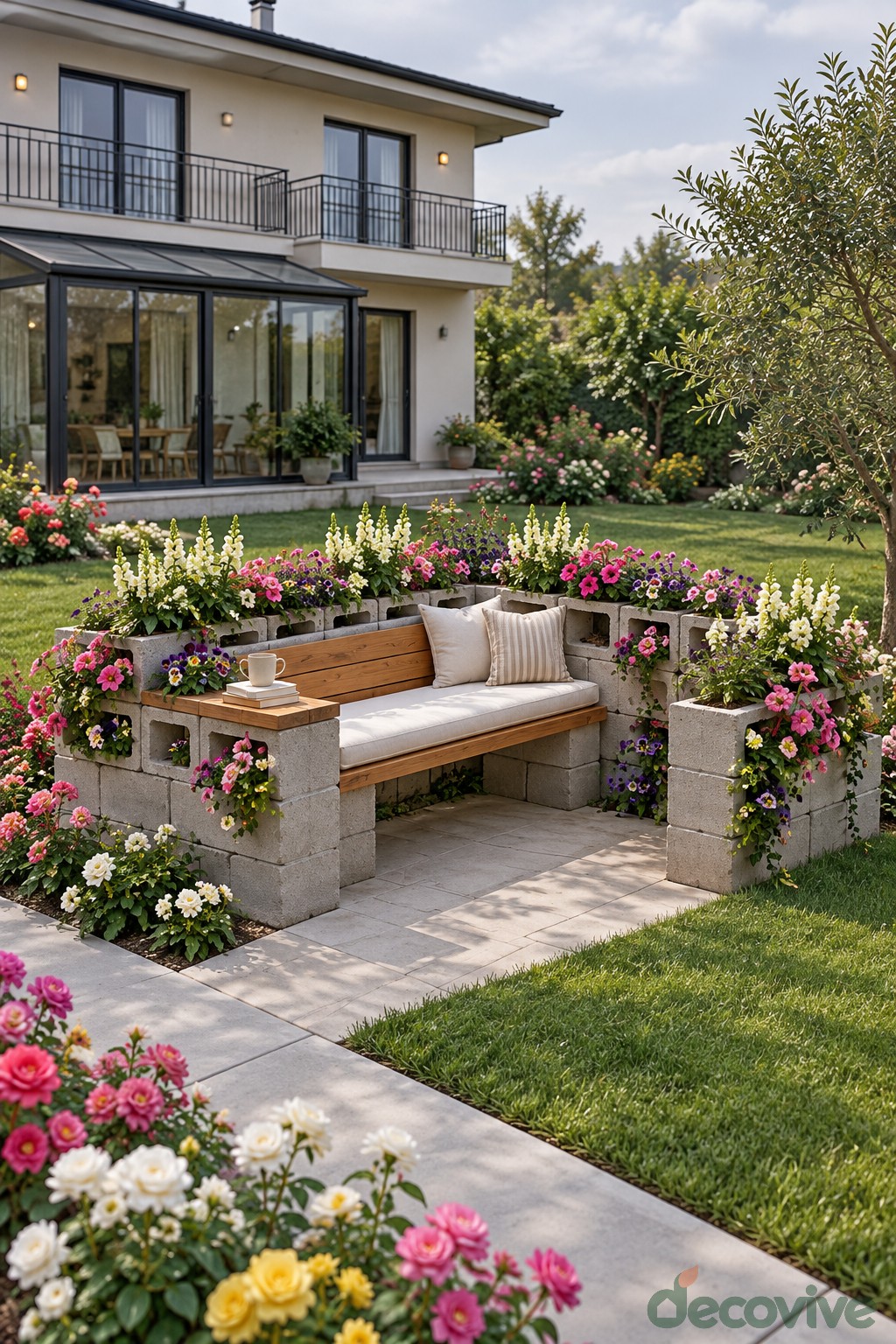
Stepped flower pockets and wooden arm shelves wrap around a single reading bench, creating a compact garden retreat.
Begin with a comfortable framed bench and add separately secured planter surrounds. Use smooth timber caps for arm shelves and removable containers for the flowers.
Keep water and soil away from the cushion and check that the surrounds cannot shift toward the sitter. Leave access behind the bench for pruning and maintenance.
Make the First Project Small and Useful
A low table or short storage console is a practical starting point because you can focus on surface preparation, stable supports, and clean timber edges before attempting complex seating. Choose one design detail you enjoy, such as a curved top or removable fabric bins, and build the rest around everyday use.
Before buying materials, include timber, fixings, finish, cushions, containers, delivery, and any professional help in your budget. Concrete blocks may be inexpensive individually, but a comfortable and durable finished piece involves more than stacking them. Recheck connections, timber condition, and water protection regularly so the furniture continues to work as well as it looks.


Leave a Reply