12 Western Gothic Living Room Details With Dark, Rustic Character

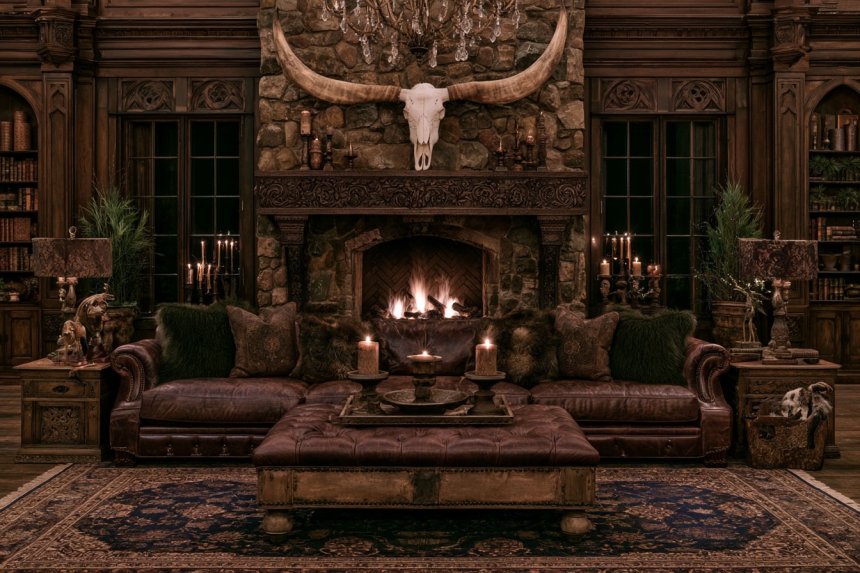
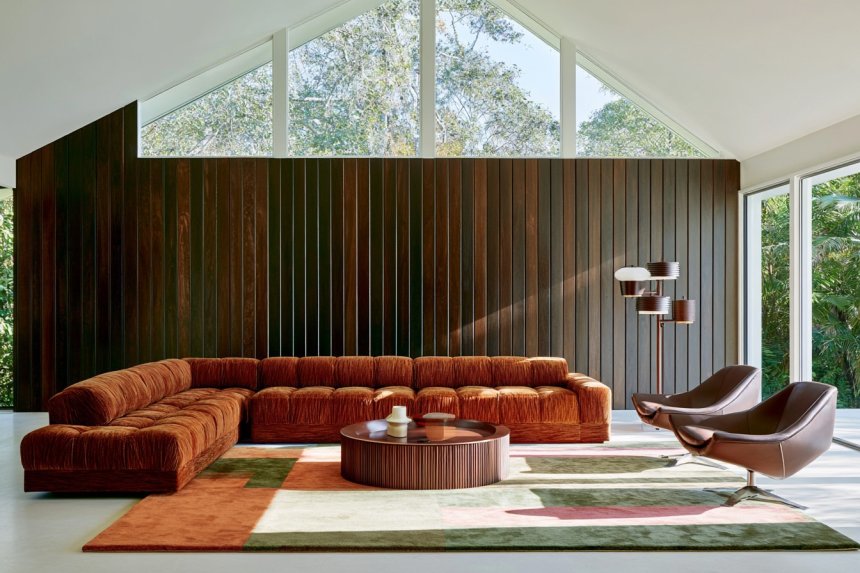
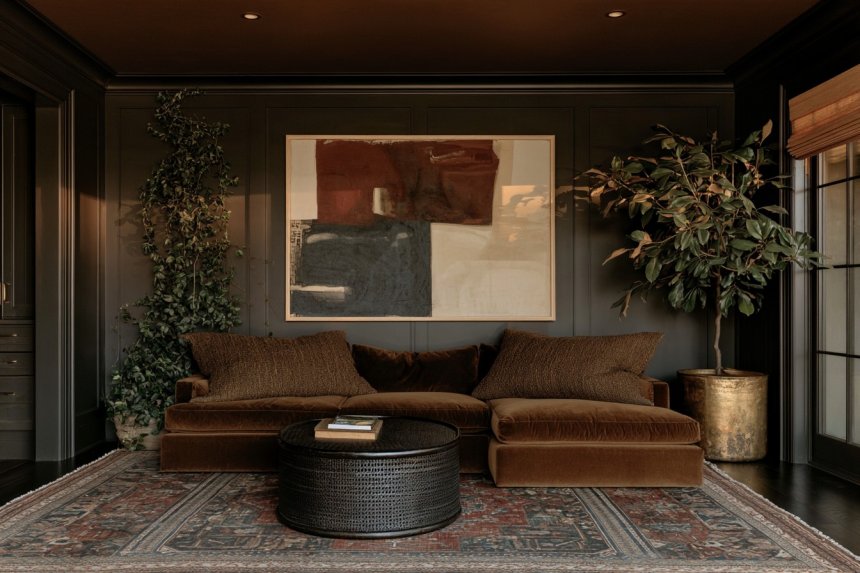
A Western Gothic living room combines the weathered materials of ranch and frontier interiors with deeper colors, dramatic silhouettes, aged metal, and carefully selected vintage details. The result should feel atmospheric without turning into a collection of unrelated themed objects. Begin with functional seating and a practical layout, then build the character through timber, leather, stone, textiles, artwork, and restrained dark accents.
Because deep colors absorb light, the room needs more than one source of illumination. Vintage furniture and electrical pieces should be inspected before use, heavy artwork requires secure mounting, and textured materials must remain practical to clean. Clear circulation and comfortable furniture are more important than reproducing a historical appearance. These design approaches show how Western and Gothic influences can coexist in a living room that remains balanced, maintainable, and suitable for everyday use.
1. Ground the Room With a Dark Leather Sofa
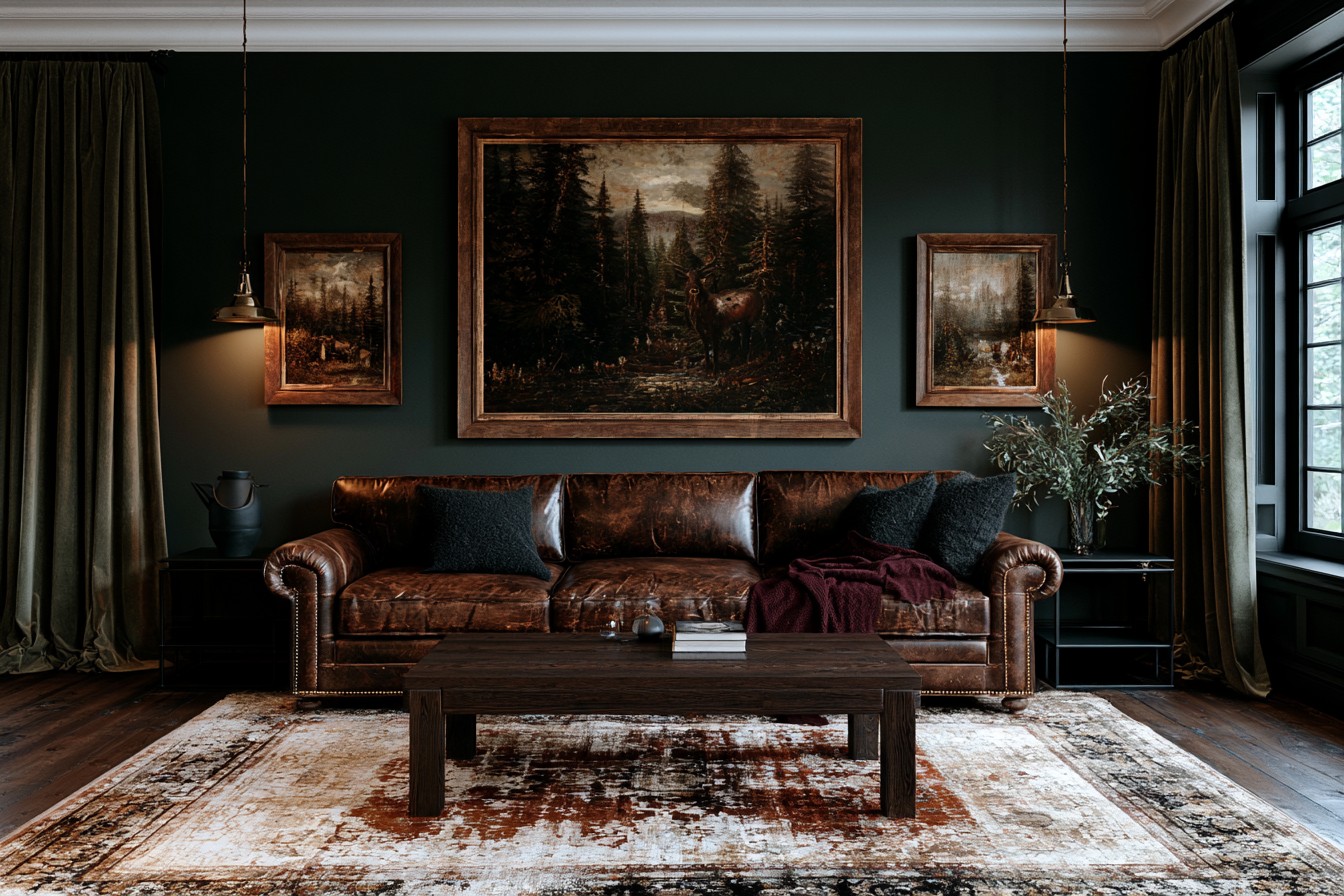
A deep brown, oxblood, or nearly black leather sofa can establish the visual weight required for a Western Gothic room. Choose a design with a strong frame and relatively simple silhouette so the color and natural variation of the material remain prominent. A pale wall, faded rug, or timber floor can prevent the dark upholstery from disappearing into the room.
Seat comfort, cushion support, and furniture dimensions should guide the purchase rather than color alone. Leather finishes vary in their resistance to sunlight, scratches, spills, and everyday wear, so review the care requirements. Vintage sofas need inspection for frame damage, weakened suspension, degraded filling, odors, and unstable legs. Add only a few textile cushions in burgundy, clay, charcoal, or faded pattern. This keeps the main seating usable and avoids hiding the material beneath excessive decoration.
2. Balance Charcoal Walls With Warmer Earth Tones
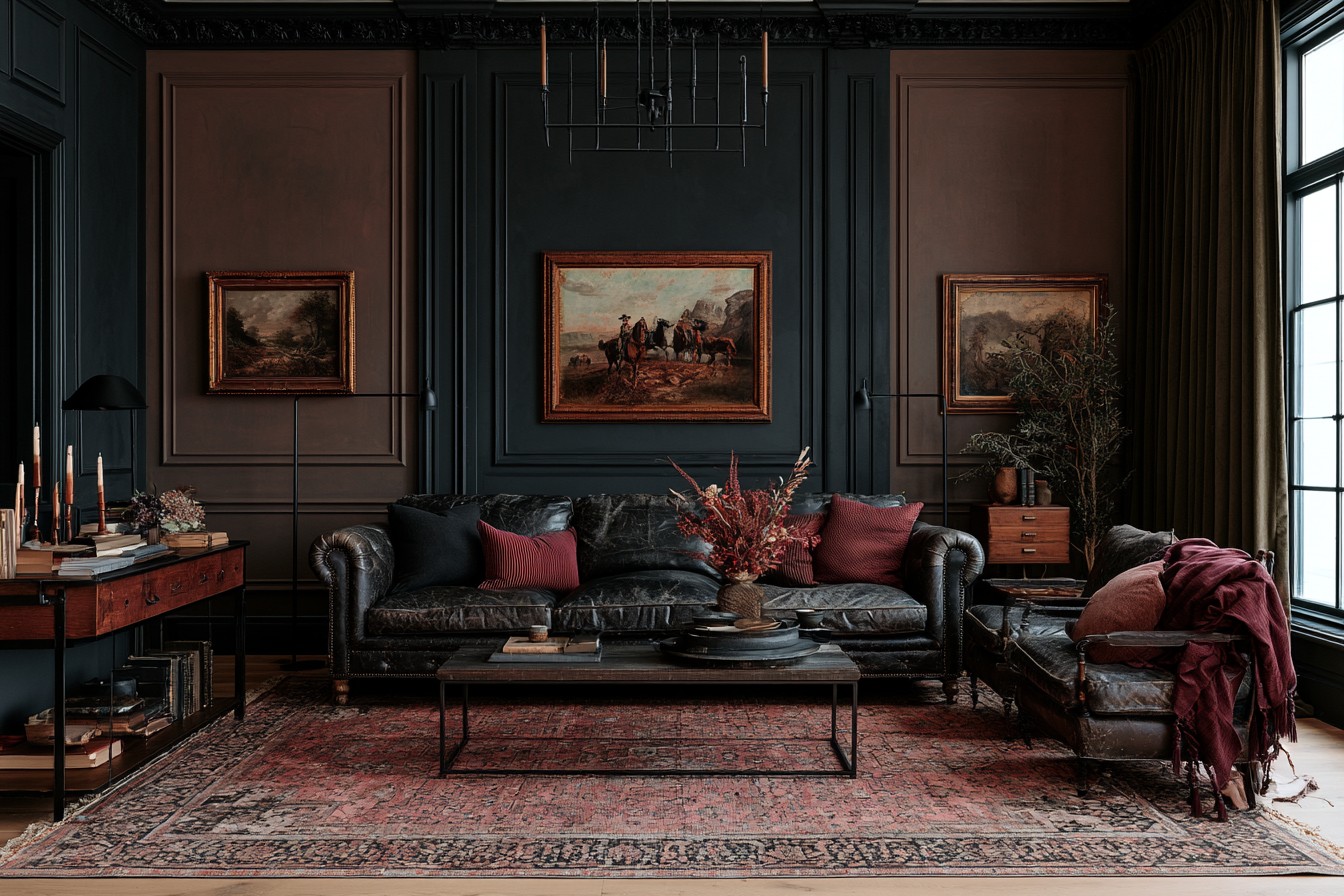
Charcoal walls can create depth, but using the same near-black shade across every surface may flatten the room. Introduce warmer earth tones through leather, wood, rust-colored textiles, clay ceramics, and muted beige upholstery. These colors prevent the space from feeling cold while preserving its darker identity.
Test large paint samples on more than one wall and observe them during daylight and evening. Charcoal can shift toward blue, green, or brown depending on its undertone and surrounding materials. Use washable interior paint in a sheen appropriate for the wall condition. If the room receives limited daylight, paint one focal wall or keep the ceiling lighter. Layer floor, table, and wall lighting so the room does not depend on one bright ceiling fixture that removes all atmosphere.
3. Center the Seating Around a Distressed Timber Table
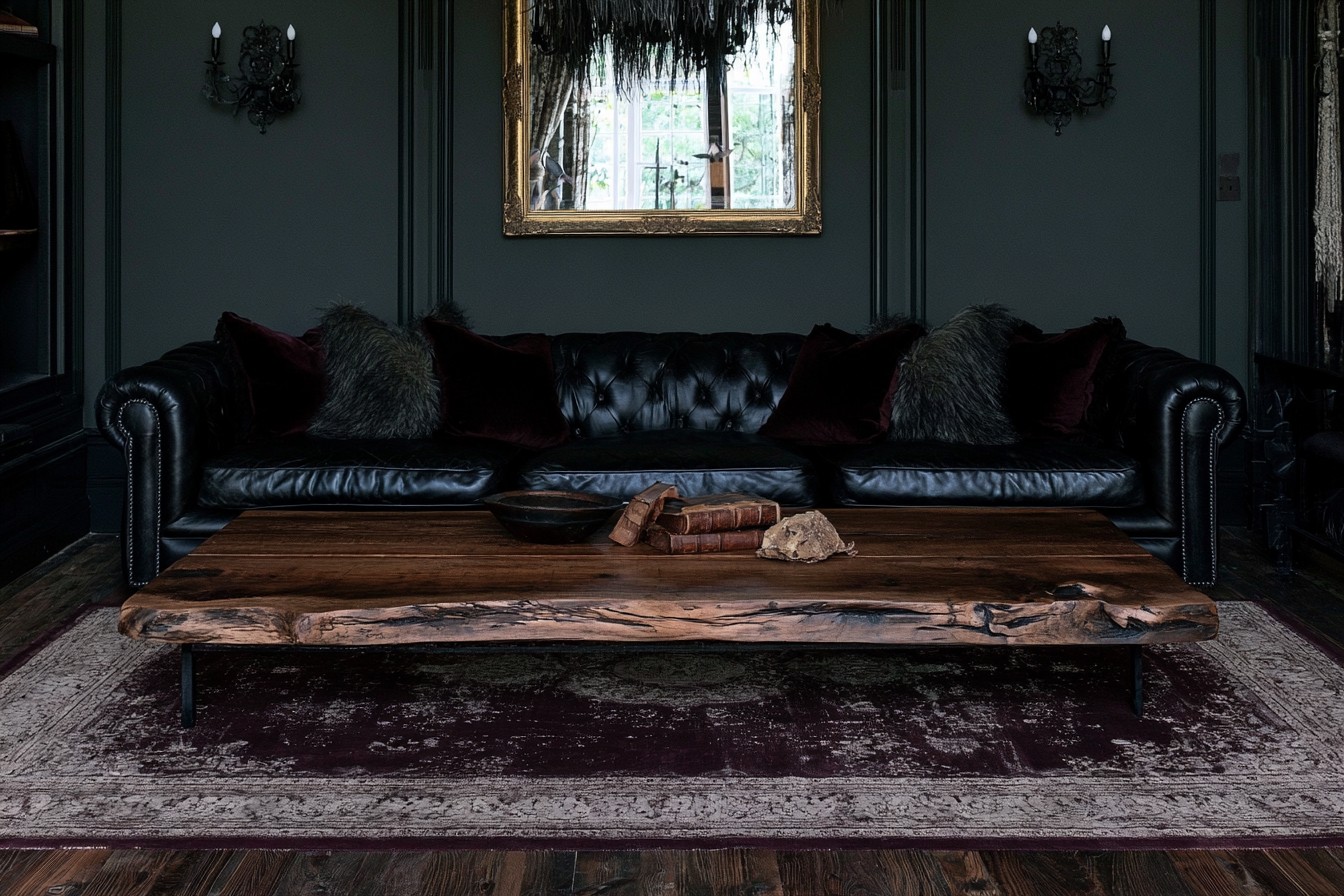
A substantial timber coffee table can introduce the rugged material character associated with Western interiors. Look for visible grain, restrained wear, and solid proportions rather than an artificially damaged surface covered in decorative marks. The table should relate to the sofa width while leaving enough space for comfortable movement around every side.
Reclaimed or vintage wood needs inspection for loose joints, protruding nails, splinters, pests, odors, and finishes of uncertain condition. Sand sharp areas carefully and use a protective finish suitable for regular cleaning without removing all evidence of age. Avoid tables with projecting corners in narrow walkways. Trays and coasters protect the surface from drinks and make small objects easier to organize. Keeping the tabletop mostly clear allows the material itself to remain the focal point.
4. Build a Dark Gallery With Vintage and Contemporary Frames
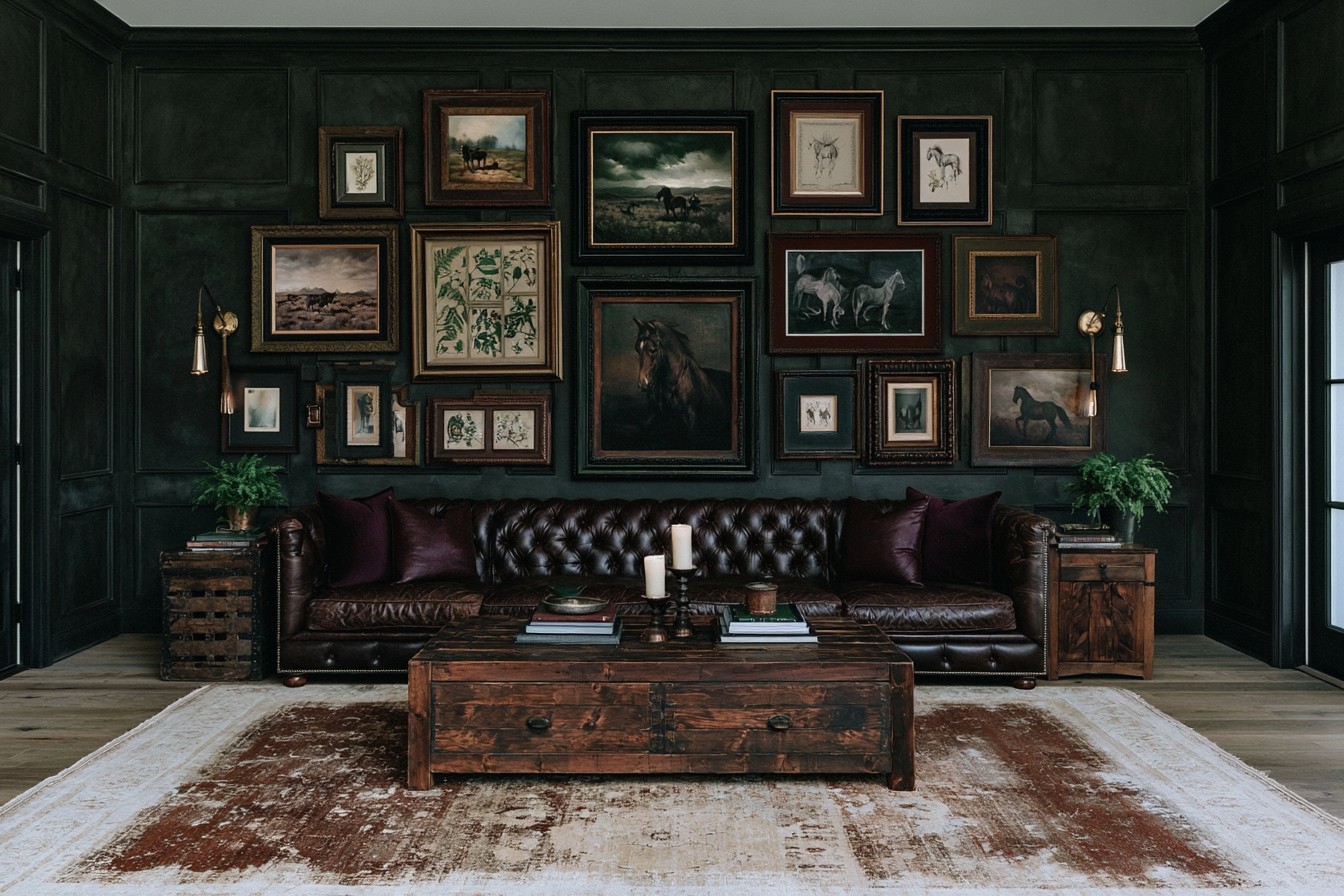
A gallery wall can combine landscape photography, abstract art, historical prints, personal photographs, and small textile pieces. Use black, dark timber, aged brass, or muted metal frames in varied shapes while repeating one finish often enough to connect the arrangement. A limited subject or color range prevents the wall from becoming a random collection.
Plan the composition with paper templates before installing it. Place the largest piece first, then build outward while maintaining reasonably consistent spacing. Each frame needs hardware appropriate for its weight and wall construction. Heavy objects should not be loosely mounted above seating. Vintage frames may require new backing, glazing, or repairs before use. Picture lighting can reveal details on a dark wall, but it should not create glare across glass or expose delicate artwork to excessive heat.
5. Anchor the Floor With One Large Textured Rug
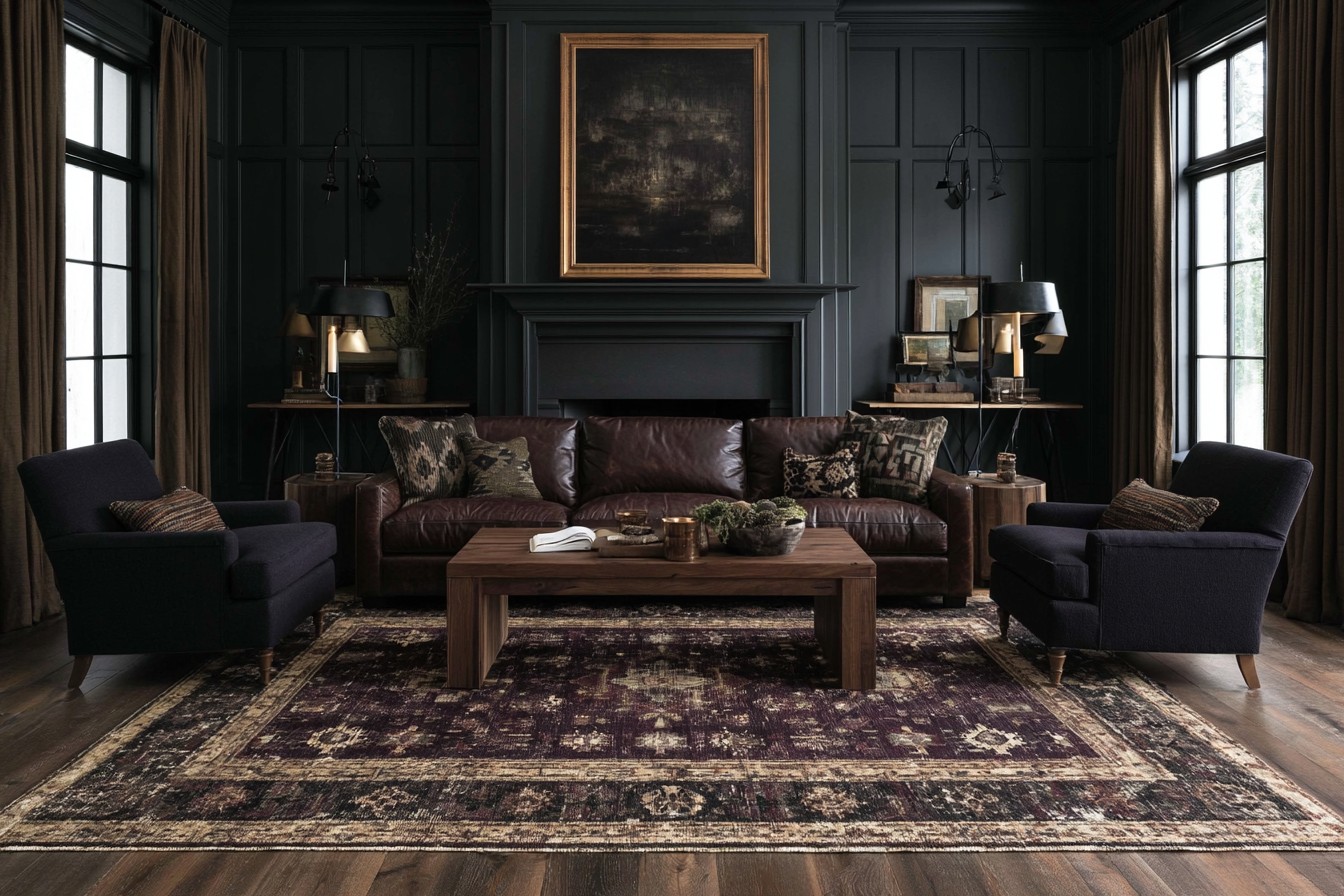
A large rug can soften dark furniture, reduce echo, and connect the seating arrangement. Faded traditional patterns, muted geometrics, or deep neutral textures work well with leather and timber. Choose a size that relates to the main furniture grouping rather than leaving a small isolated rug beneath the coffee table.
Use a suitable rug pad to reduce slipping and prevent edges from curling. Deep pile adds softness but may be difficult to clean in a busy household, while a lower pile can accommodate furniture movement more easily. Check vintage rugs for damage, odors, stains, and weakened areas before use. Burgundy, charcoal, rust, sand, and muted blue can add depth without introducing too many new colors. Keep the principal walking route flat and free from layered rug edges.
6. Combine Stone Texture With Warm Timber
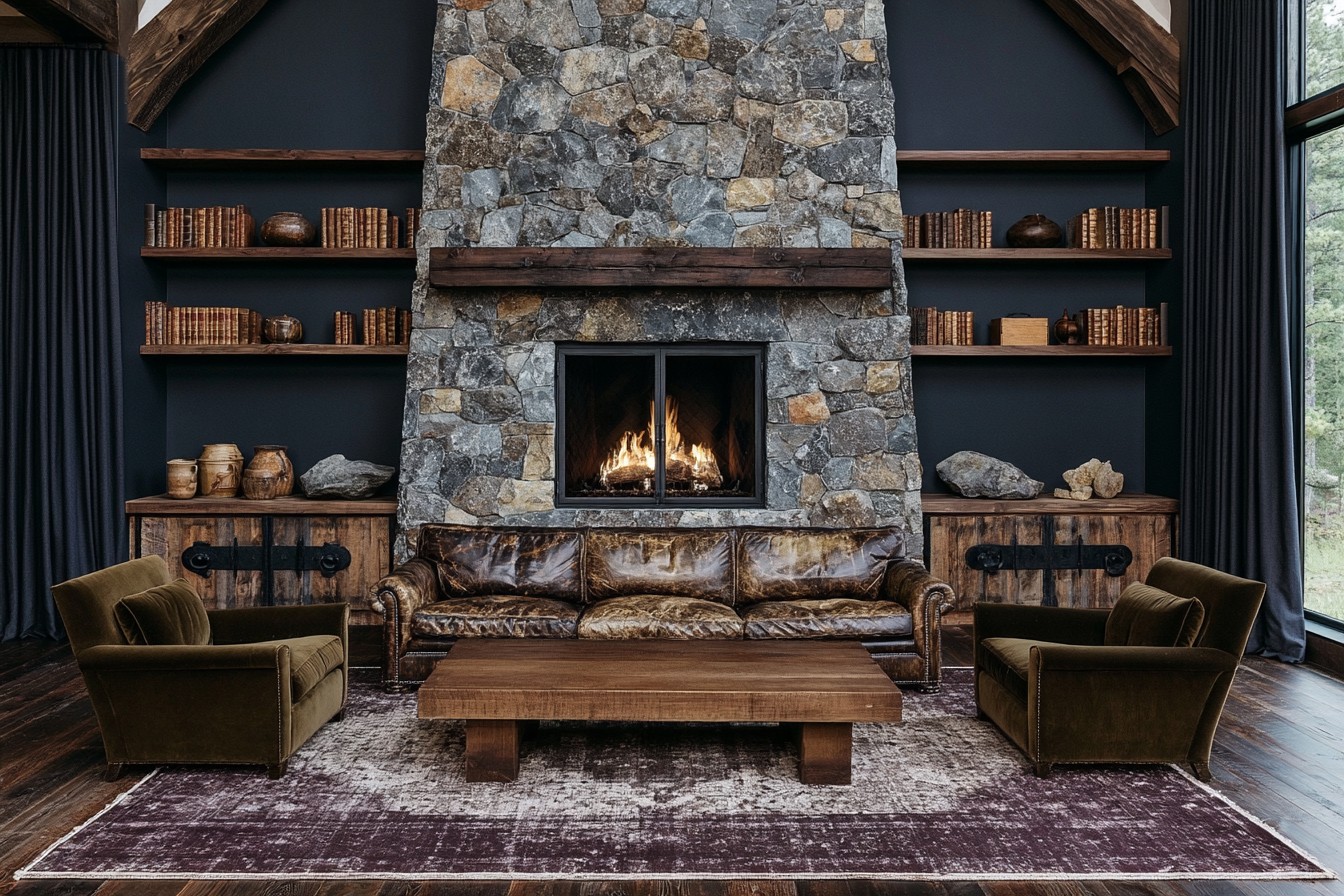
Stone and timber create a convincing rustic foundation without requiring obvious Western symbols. Concentrate stone around a fireplace, selected wall, or low architectural element, then repeat wood through shelving, ceiling details, or furniture. Limiting each material to purposeful locations keeps the room from resembling a themed venue.
Natural stone, veneer, porcelain, and architectural panels differ in weight, installation, heat resistance, and maintenance. Choose the material according to its intended location. Fireplace surrounds must observe the appliance manufacturer’s specifications and applicable construction requirements. Do not apply decorative cladding over damp surfaces or unstable walls. Sealed timber may be easier to clean than rough untreated boards. Warm lighting can reveal both textures while preventing the dark room from appearing flat.
7. Introduce Burgundy Through Controlled Accent Pieces
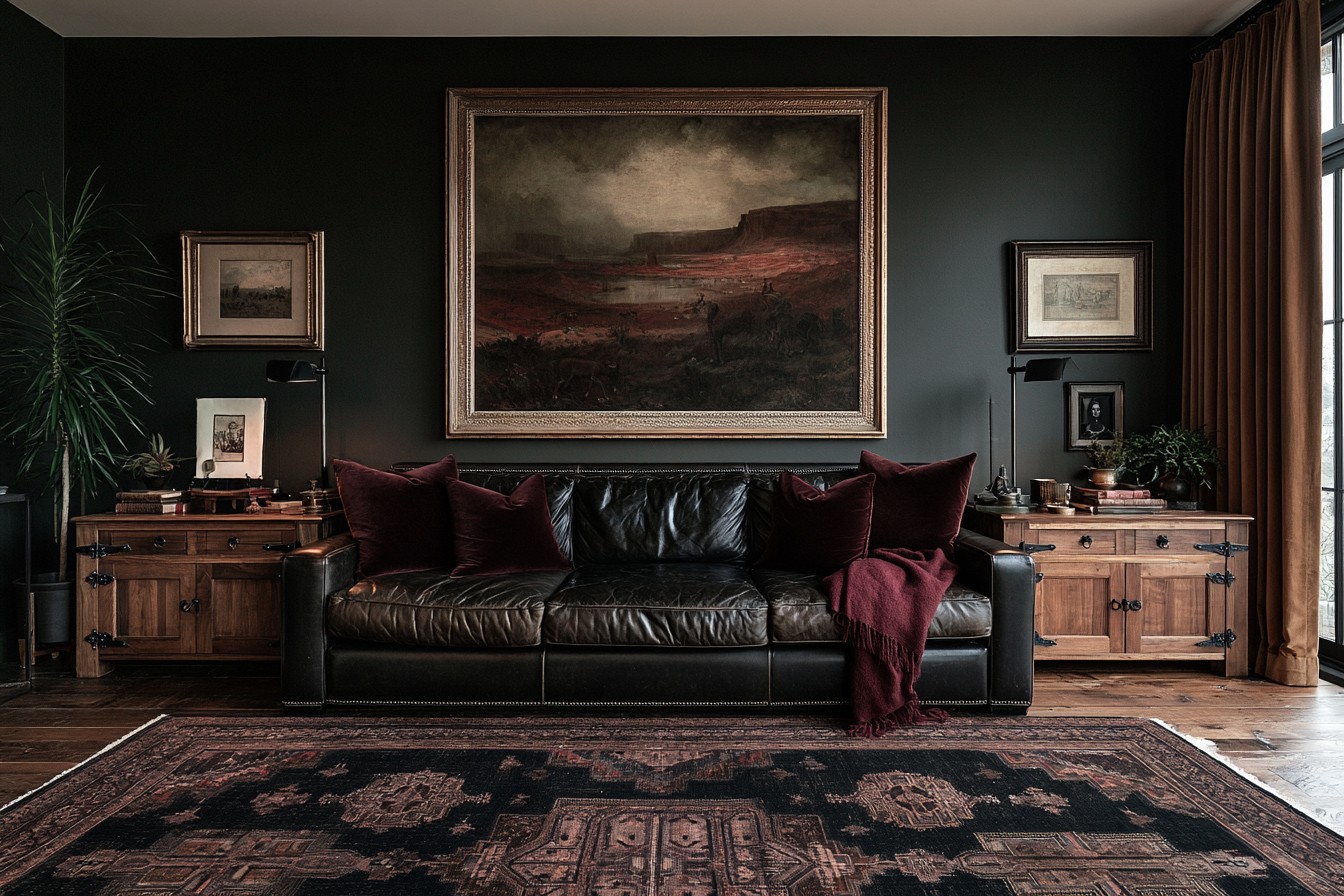
Burgundy and deep red add richness to charcoal, dark brown, and aged timber. Use the color through one chair, a pair of cushions, a throw, or selected artwork rather than repeating it across every surface. Muted wine and oxblood tones generally integrate more easily than a highly saturated bright red.
Test textile samples beside the sofa, rug, and wall color under the room’s installed lighting. Velvet creates a deeper appearance but has specific cleaning requirements, while woven wool-look or performance fabric may suit heavier use. Avoid filling the sofa with decorative cushions that must be removed daily. Repeating burgundy once in the gallery wall or rug is enough to connect the accent. Cream, tan, or soft gray can provide breathing space between the darker colors.
8. Create an Old-Library Effect With Dark Bookcases
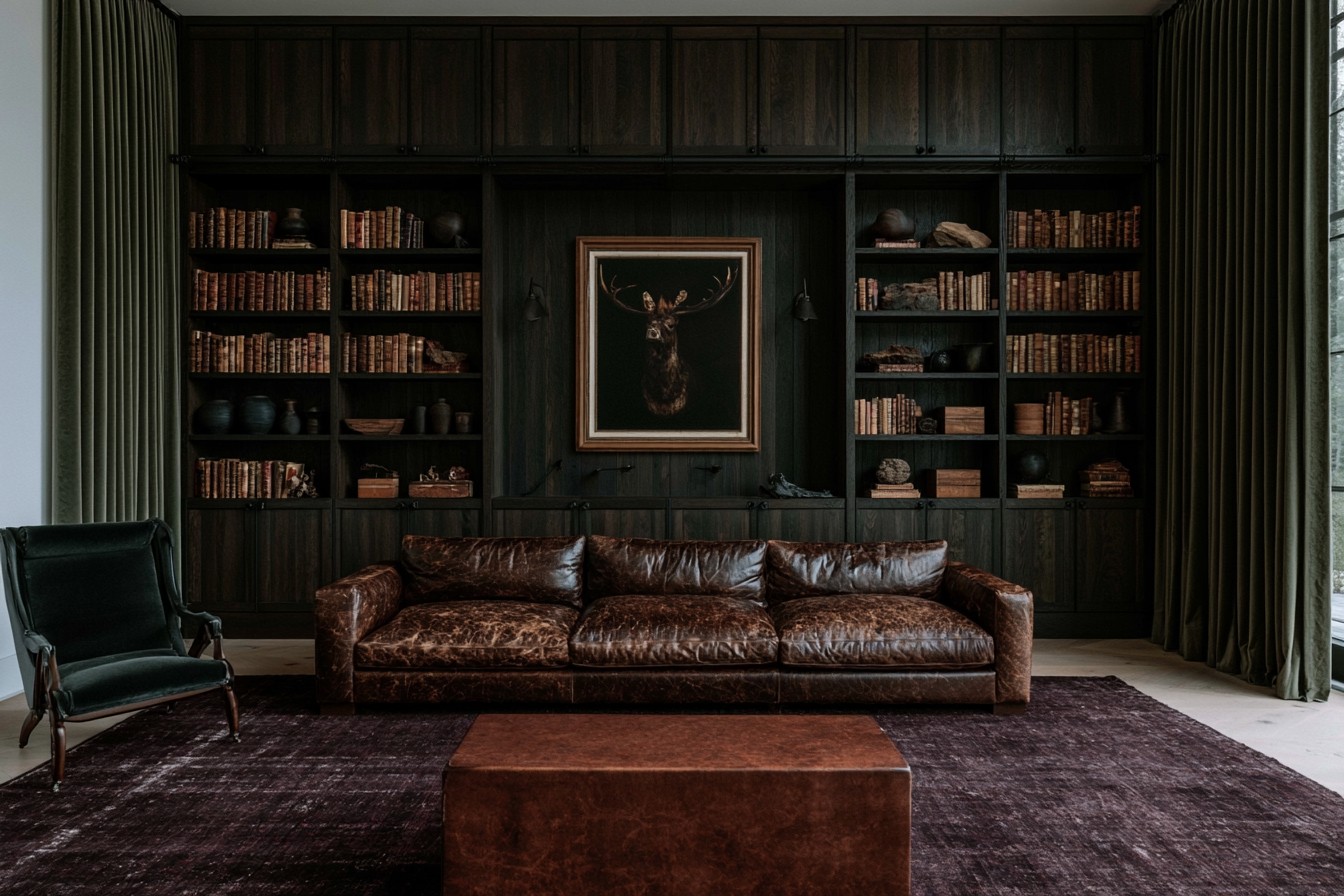
Dark timber bookcases can add height, storage, and an old-library atmosphere to one side of the room. Mix books with a restrained number of ceramics, boxes, and framed pieces rather than filling every shelf with decoration. Closed lower cabinets can conceal media accessories and household items that would disrupt the display.
Tall shelving needs suitable anchoring and should not cover outlets, ventilation, or service access. Store heavy books and objects on lower shelves and avoid placing fragile pieces directly above seating. Integrated lighting can improve visibility, but fittings and cables should remain serviceable and should not trap heat around books. Leave some shelf space open to prevent the dark unit from becoming visually dense. A nearby reading chair gives the bookcase a practical role beyond decoration.
9. Add Definition Through Blackened Metal Details
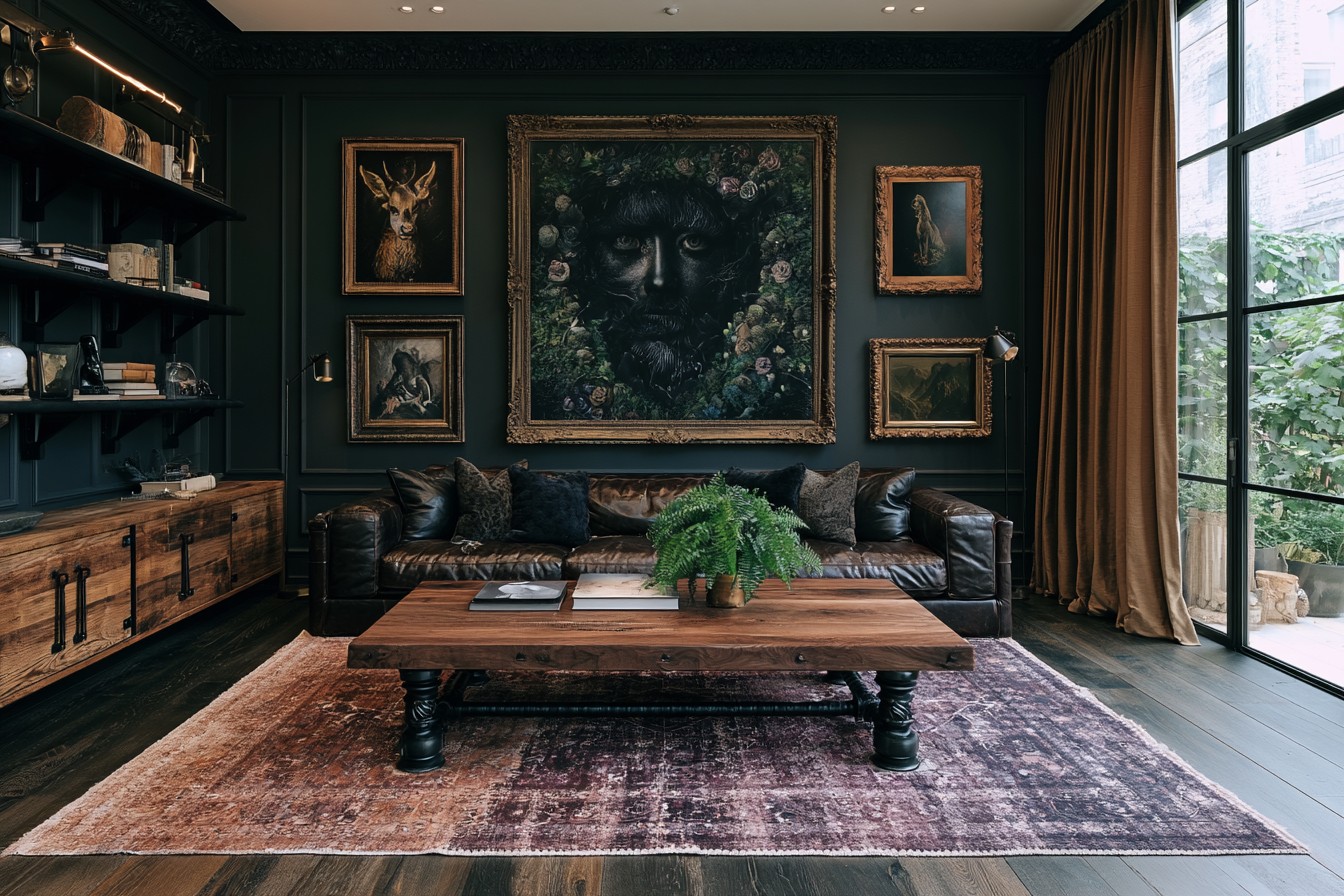
Black metal can outline the room through lamp bases, table frames, curtain hardware, fireplace tools, or cabinet handles. A matte or aged finish supports the darker aesthetic without producing strong reflections. Restrict metal to functional components so it strengthens the furniture lines instead of appearing as scattered themed decoration.
Check vintage metal pieces for sharp edges, rust, unstable joints, and damaged electrical components. Tables and shelving require level feet and enough structural strength for their intended load. Use protective pads where metal contacts timber flooring. Fireplace accessories should remain stable and positioned safely according to the fireplace type. Mixing one dominant black finish with a limited amount of aged brass or bronze can provide variation without making the hardware palette inconsistent.
10. Reinterpret Western Motifs With Restraint
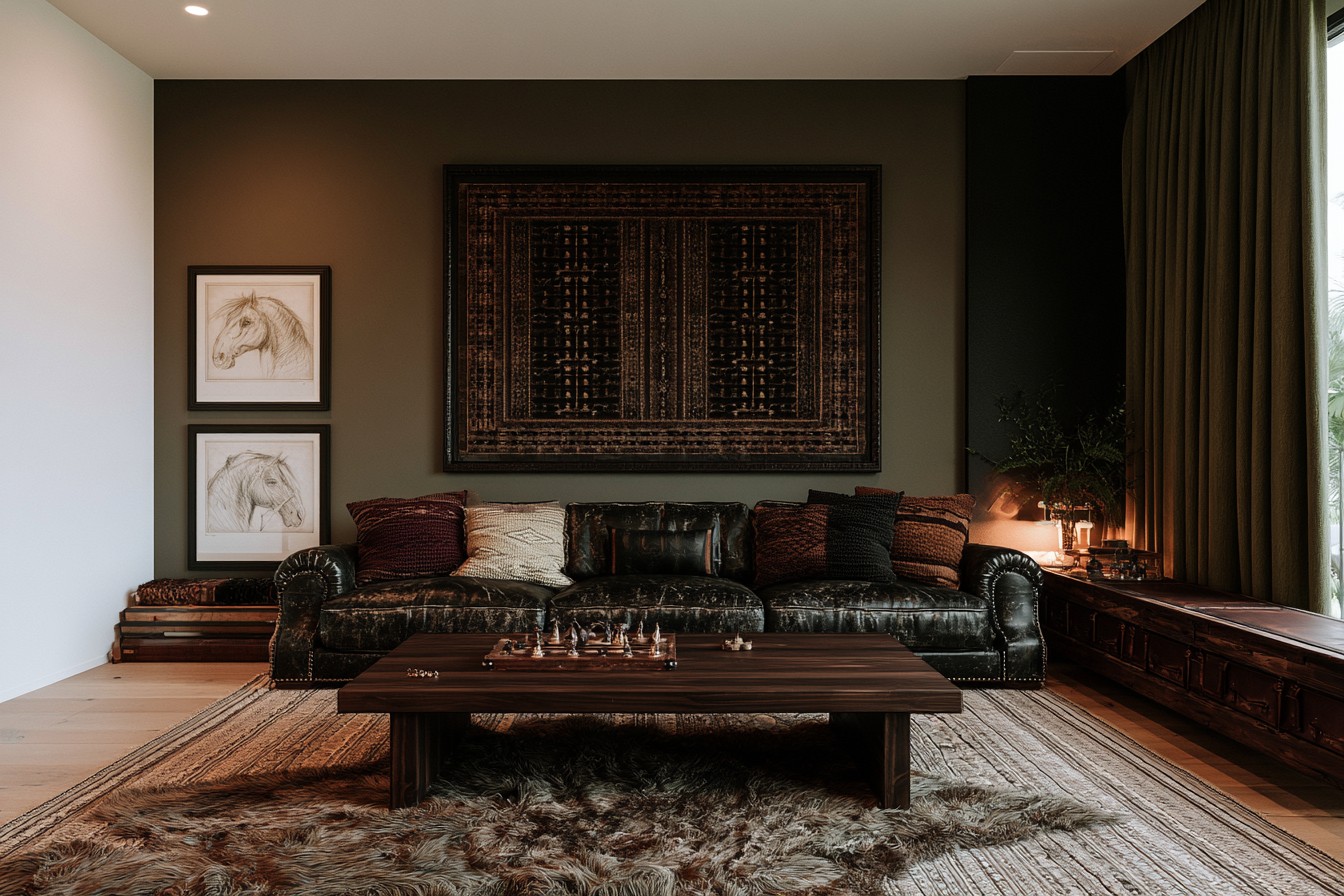
Western character can come from landscape photography, saddle-inspired leatherwork, woven geometry, weathered timber, iron hardware, or desert colors rather than a large quantity of obvious symbols. Select one or two references and interpret them through contemporary shapes. This gives the room regional texture without making it feel like a film set.
Artwork and textiles should be obtained from legitimate sources, and culturally specific patterns deserve accurate identification rather than being used as generic decoration. Avoid combining unrelated motifs simply because they appear rustic. One landscape, leather chair, or geometric textile may be enough. Keep practical furniture and negative space around these elements so the references remain visible. Repeating their colors rather than their exact imagery will create a more mature and cohesive interior.
11. Frame the Room With Substantial Drapery
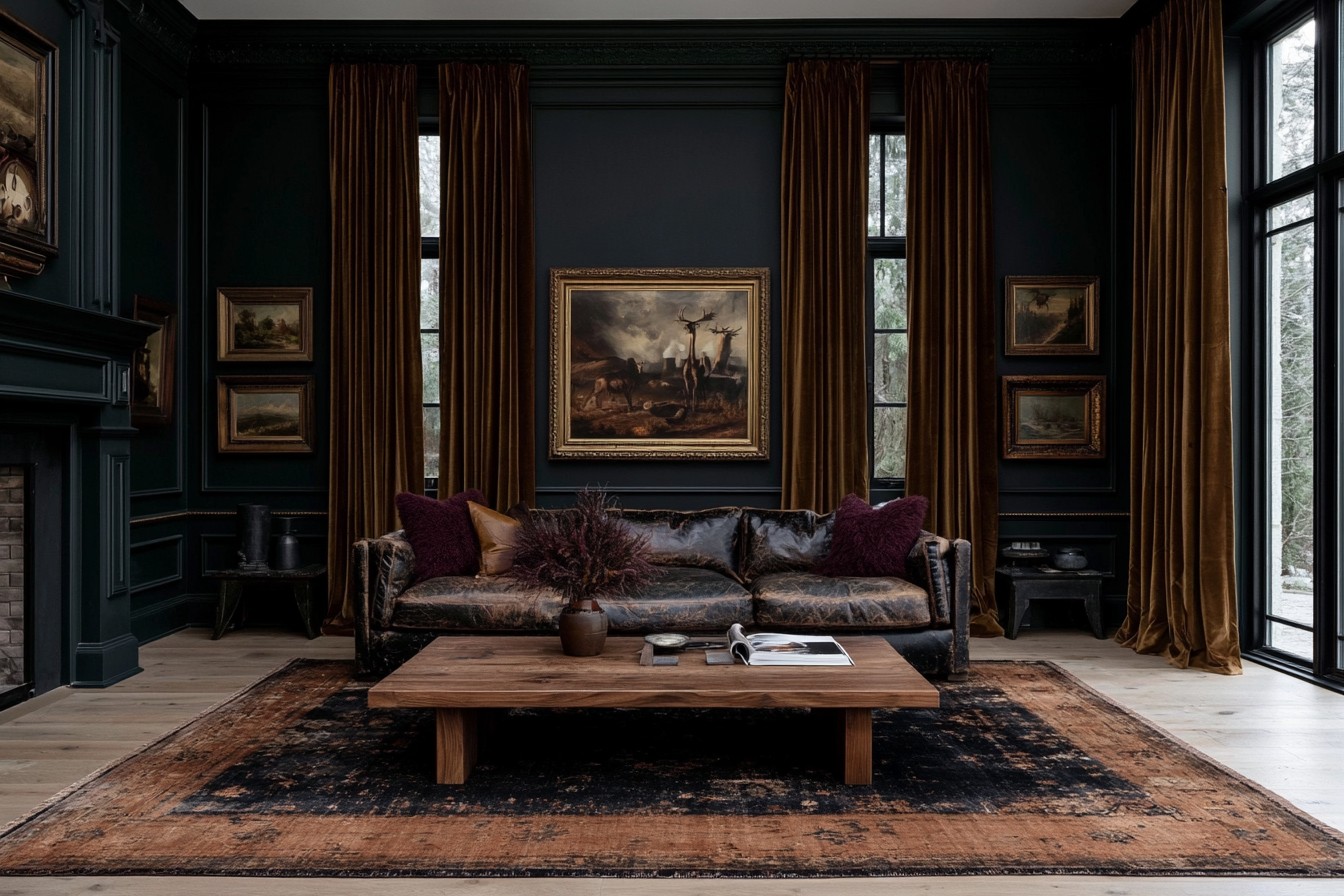
Full-length curtains in deep olive, charcoal, brown, or burgundy can soften hard surfaces and improve the room’s acoustic comfort. Mounting the rod beyond the opening allows more daylight to enter when the curtains are open. A lined fabric may provide greater privacy and light control, while a lighter inner layer offers flexibility during the day.
The rod, brackets, and wall fixings must support the finished curtain weight. Fabric should remain clear of portable heaters, fireplaces, radiators, vents, electrical equipment, and floor obstacles. Very heavy textiles collect dust and may require specialist cleaning, so review care instructions before purchasing. Avoid excessive pooling on the floor, particularly near doors or furniture. A curtain color related to the rug or upholstery will frame the room without creating another independent accent.
12. Establish One Carefully Edited Vintage Collection
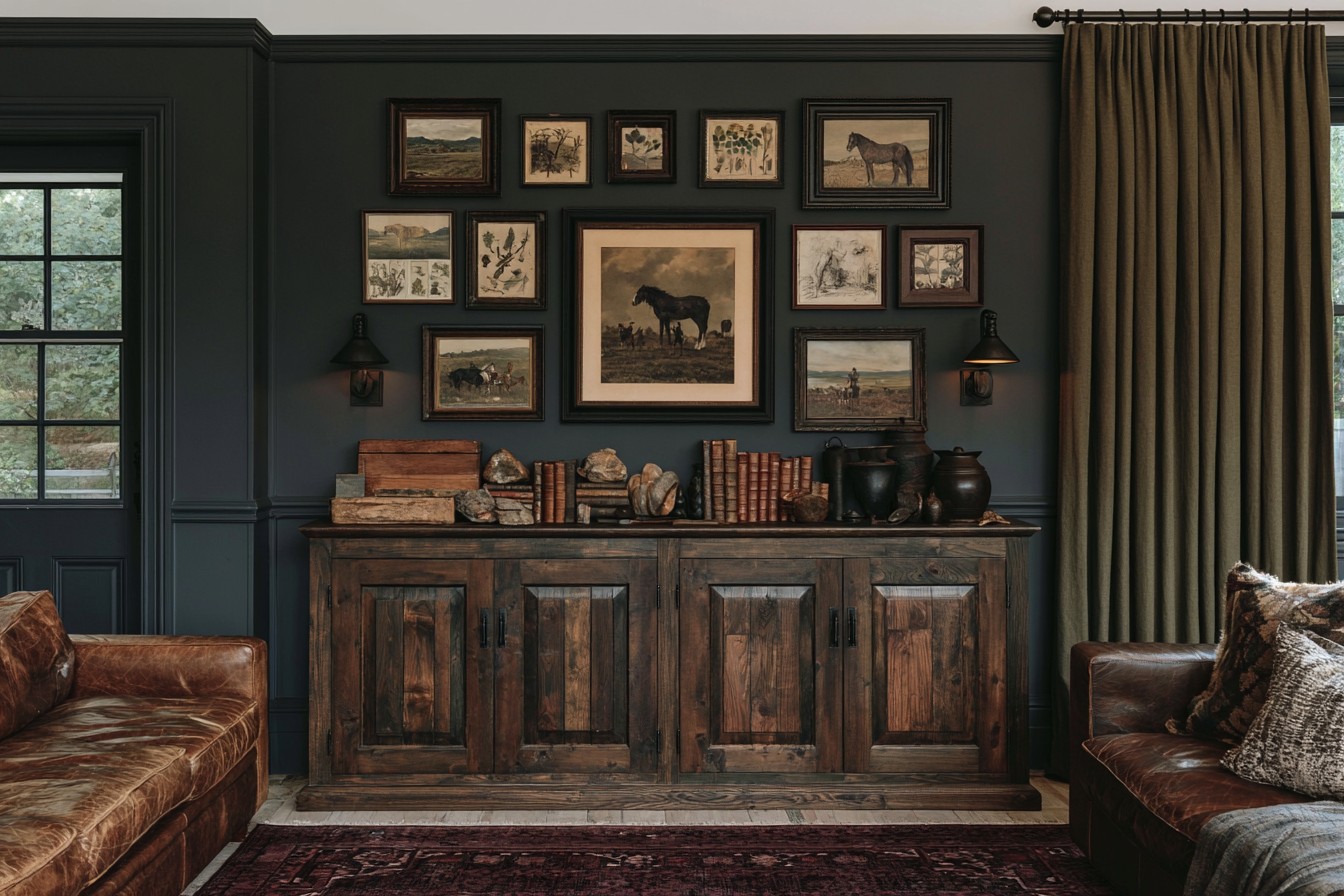
A dedicated corner can display old books, ceramics, framed photographs, boxes, tools, or travel finds without spreading small objects throughout the living room. Use a stable cabinet, console, or limited shelf arrangement and group items by material, subject, or color. Leaving part of the surface empty gives each object greater presence.
Secondhand pieces should be inspected for sharp edges, unstable bases, pests, moisture, odors, and damaged finishes. Heavy objects belong on lower supported levels and should not sit above seating. Vintage electrical items require assessment before they are powered, while containers of unknown composition or previous use are safest as decoration. Rotate the collection periodically rather than displaying everything at once. This keeps the room easier to clean and makes the chosen objects feel personal instead of theatrical.
MORE IDEAS


Share
What's Your Reaction?
 Like
0
Like
0
 Dislike
0
Dislike
0
 Love
0
Love
0
 Funny
0
Funny
0
 Angry
0
Angry
0
 Sad
0
Sad
0
 Wow
0
Wow
0