17 Mid-Century Modern Living Rooms With Warmth and Lasting Function

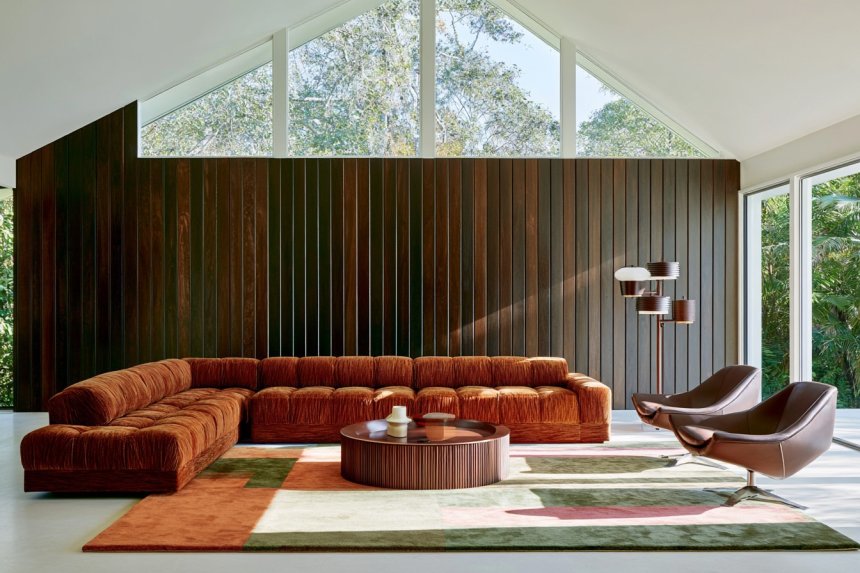
A mid-century modern living room is shaped by clear lines, practical furniture, warm timber, and a thoughtful relationship between open space and everyday comfort. The goal is not to fill the room with recognizable vintage objects. A stronger design selects a few well-proportioned pieces and gives each one enough space to be appreciated. Furniture scale, seat comfort, storage, lighting, and circulation should be considered before choosing decorative accessories.
Original vintage furniture can bring authenticity, but age alone does not guarantee quality or safety. Examine frames, joints, upholstery, electrical components, and surface finishes before use. Modern reproductions may be more appropriate when durability, dimensions, or budget are priorities. Walnut, teak, oak, leather, wool, linen, and textured upholstery can all support the style when their colors are balanced. These living room approaches show how mid-century character can be introduced without sacrificing maintenance, comfort, or the needs of a contemporary home.
1. Build the Room Around a Sculptural Walnut Media Wall
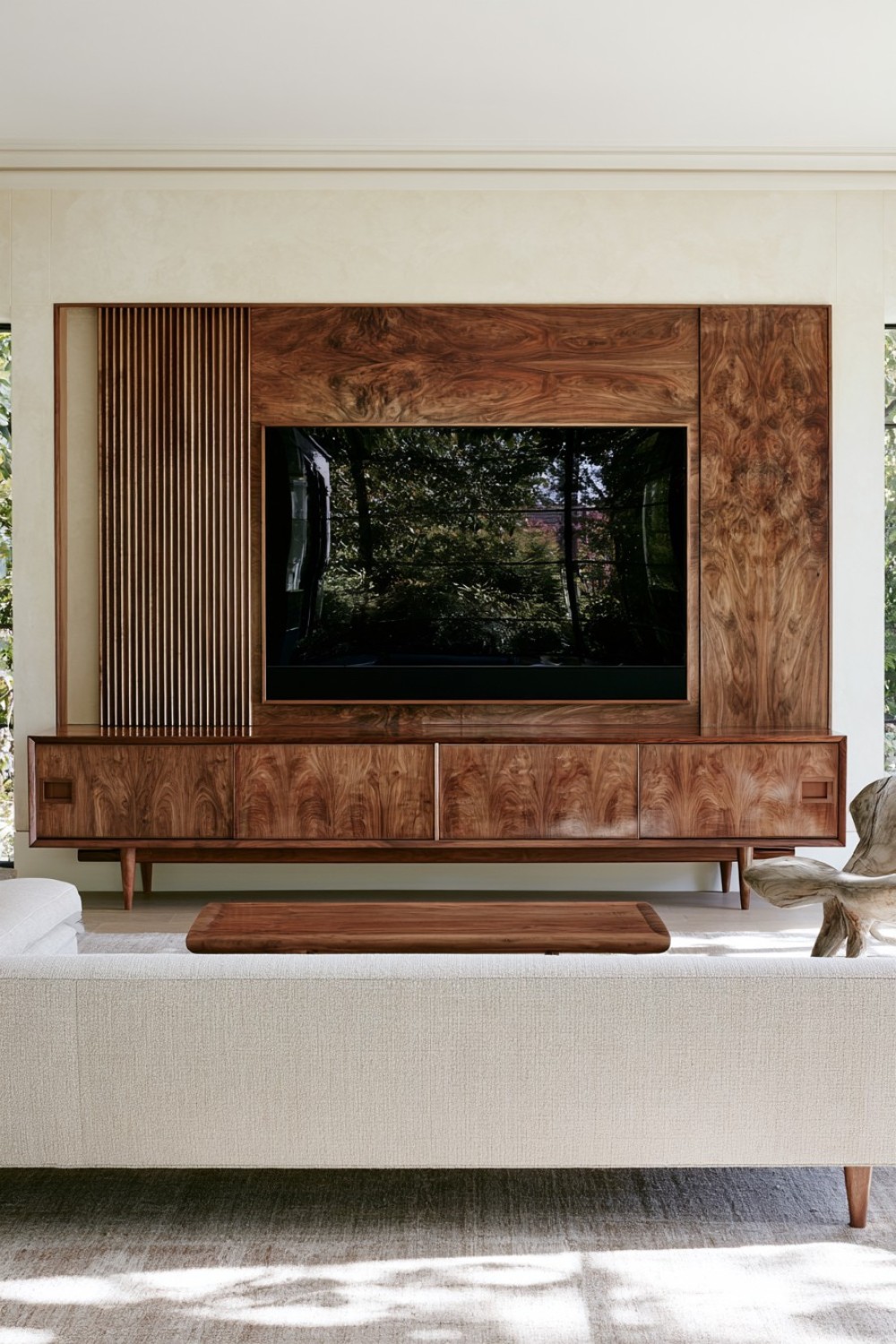
A walnut media wall can combine television equipment, closed storage, books, and display space within one architectural composition. Instead of surrounding the screen with identical cabinets, vary open and closed sections to create the asymmetry associated with many mid-century interiors. Long horizontal doors and slim shelves keep the elevation visually light while concealing cables, controllers, and everyday electronics.
Measure every device before finalizing cabinet depth and provide the ventilation clearances recommended by its manufacturer. Electrical outlets and cable routes should remain accessible rather than being permanently enclosed. Wall-mounted components need fixings suitable for their weight and the wall construction. Use display shelves selectively so the media unit does not become crowded with small accessories. A matte or low-sheen timber finish reduces reflections around the television and allows the natural grain to provide most of the decoration.
2. Replace the Standard Sofa Layout With a Conversation Circle
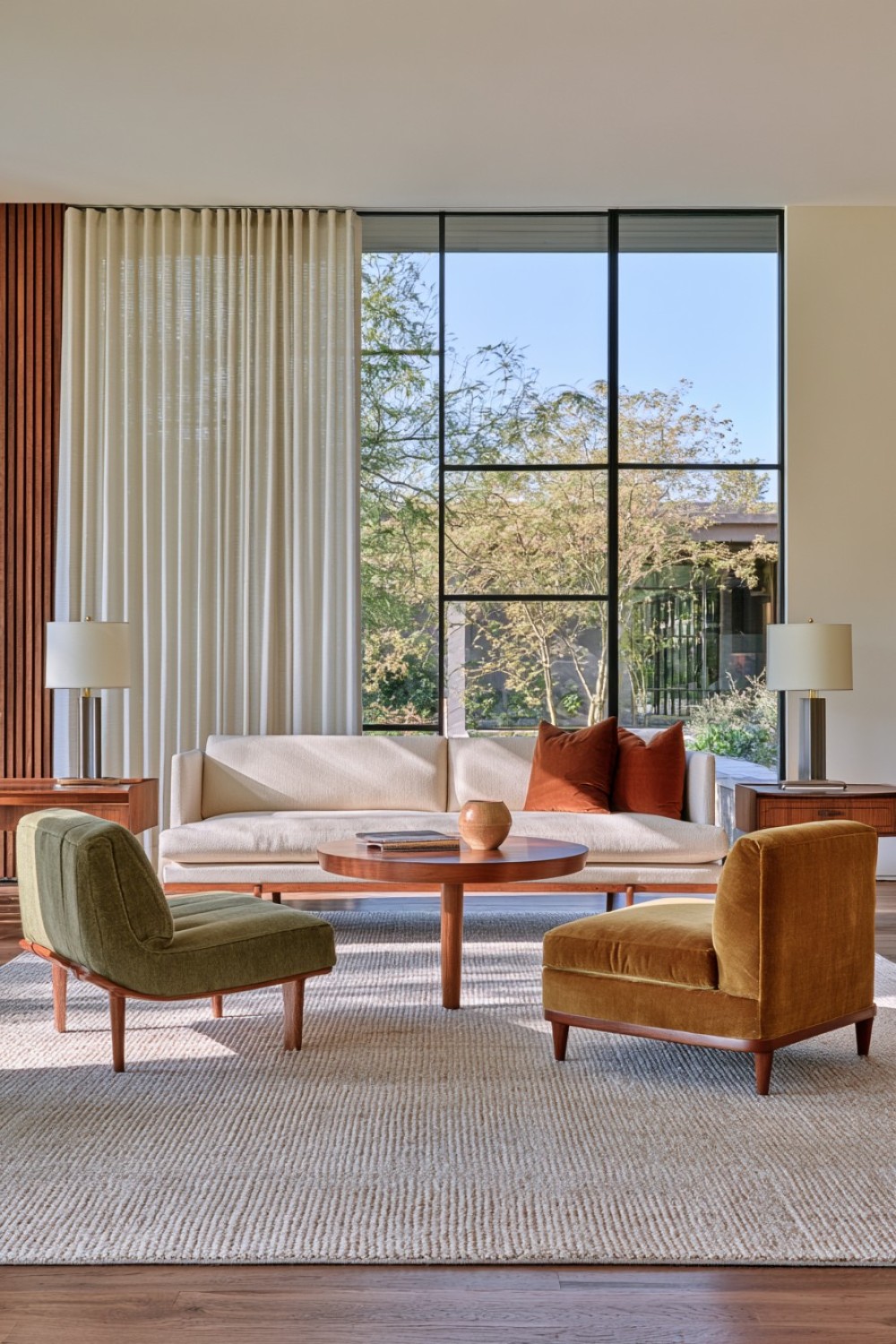
A circular or inward-facing seating arrangement encourages conversation and prevents the television from automatically becoming the room’s only focus. Combine a compact sofa with two lounge chairs angled toward a central table. The furniture does not need to form a perfect circle; the important point is that people can see one another without sharply turning their chairs.
Begin with the largest seat and preserve a clear route around the grouping. Coffee tables should be close enough to reach but not so large that they restrict legroom or access. A round or softly shaped table can connect furniture positioned at several angles. Use a rug large enough to relate the seats visually rather than placing a small isolated rug beneath the table. If the room also serves as a television lounge, select lightweight chairs that can be adjusted without scraping or damaging the floor.
3. Pair Olive Upholstery With Warm Teak Furniture
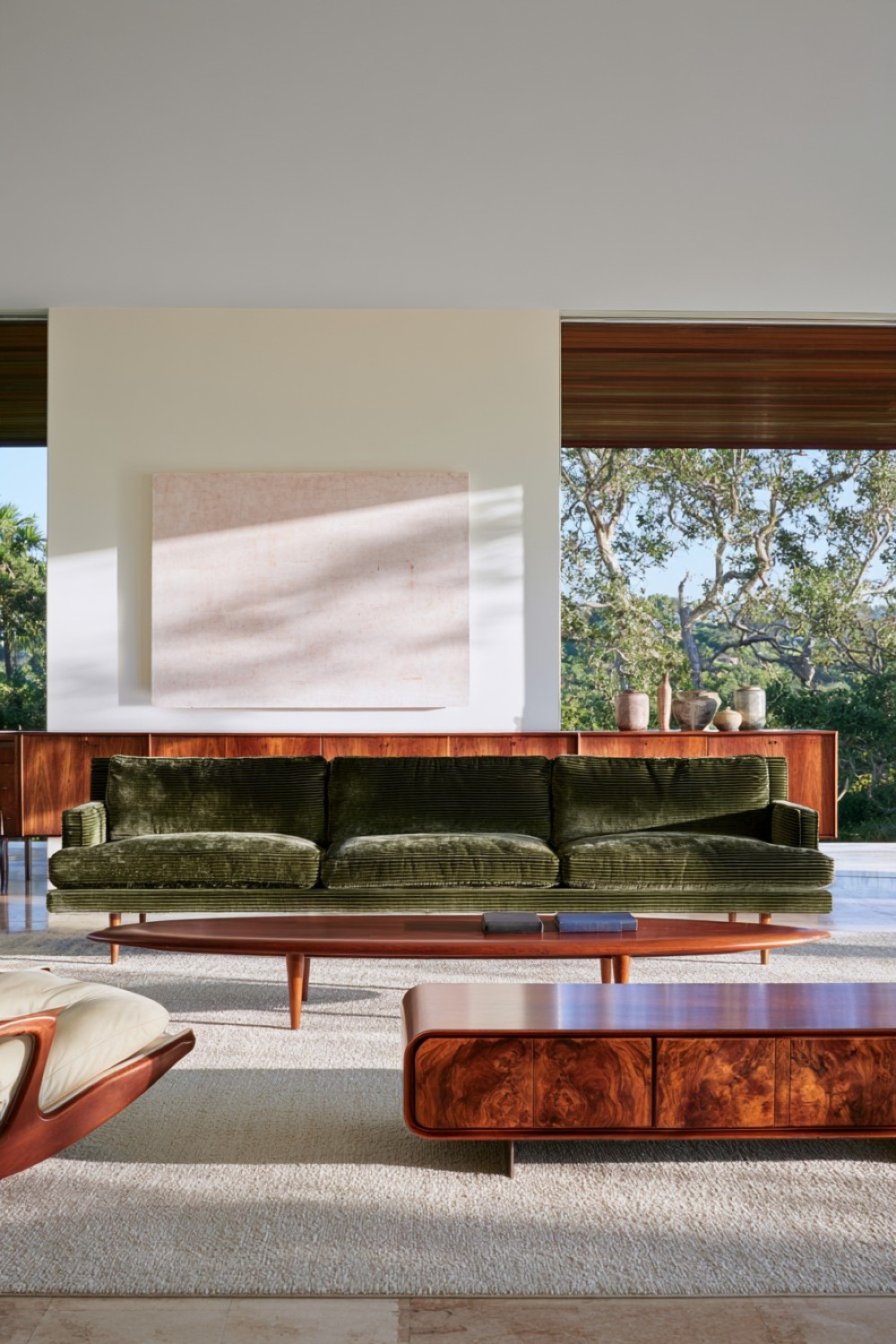
Muted olive upholstery complements the orange and brown undertones often found in teak. Use the green on one substantial piece, such as a sofa or pair of chairs, and allow timber to appear across tables, shelving, or a credenza. Cream, warm gray, or soft beige walls can keep the combination from becoming overly dark.
Before buying vintage upholstered furniture, inspect the internal frame, webbing, foam, seams, and evidence of moisture or pests. Reupholstering a well-made frame may produce a more durable result than retaining damaged original fabric. Teak surfaces should be cleaned and maintained according to their existing finish; aggressive sanding can remove veneer or alter the character of an older piece. Repeat olive through only one or two small accents, then introduce contrast with a rust, black, or pale neutral detail. This prevents the room from becoming uniformly green and brown.
4. Turn a Floating Shelf System Into Functional Wall Art
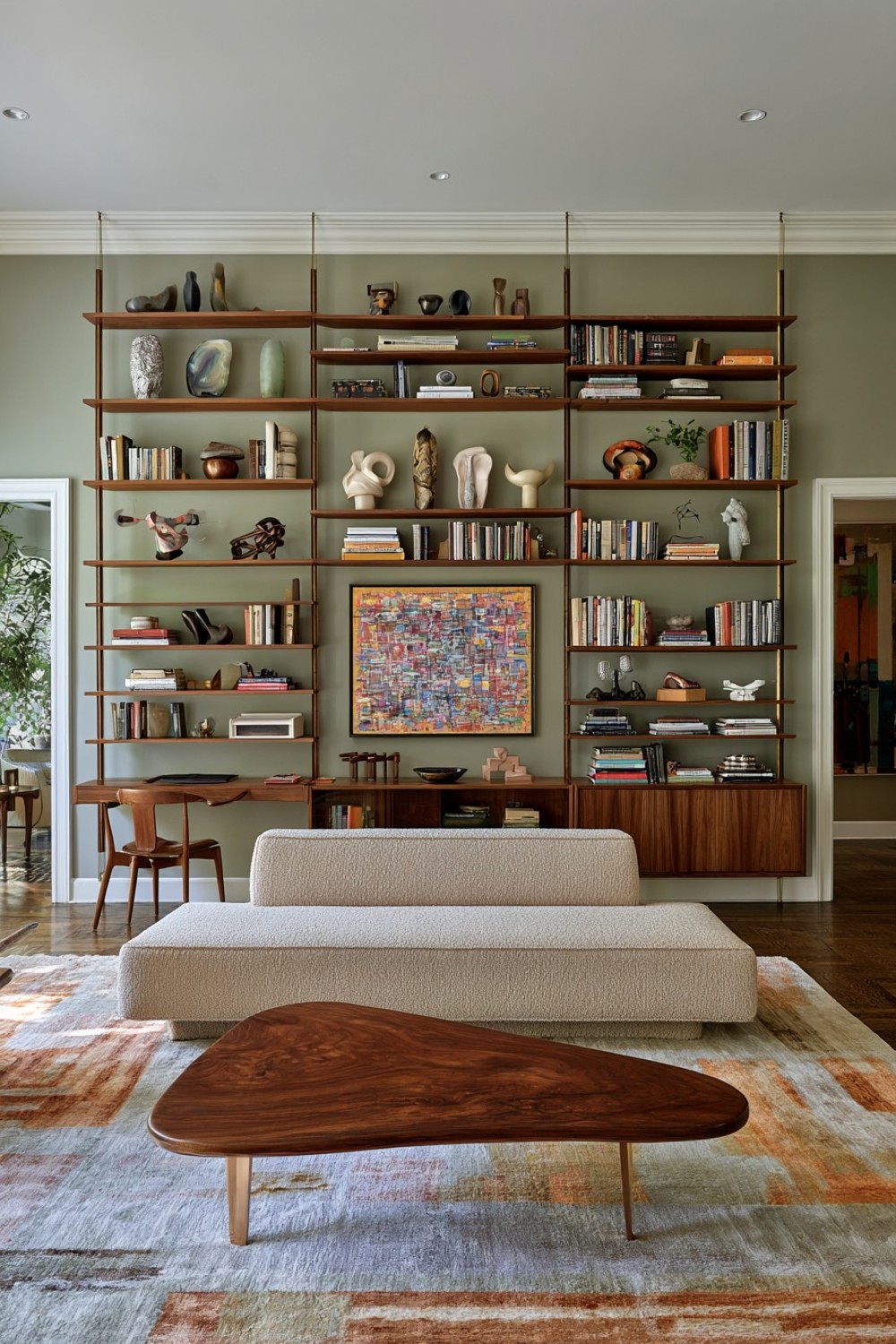
A modular wall system can provide storage while contributing the slender vertical and horizontal lines associated with mid-century design. Combine shelves, a small cabinet, and an optional writing surface rather than filling every available bay. The open structure keeps more of the wall visible and works particularly well in a living room where a full bookcase would feel too heavy.
Mount the supporting rails or standards into appropriate structural points and follow the system’s weight limits. Heavy books and ceramics belong on lower shelves, while lighter objects can occupy higher levels. Avoid installing substantial items above frequently used seating. Leave negative space between groups of books, plants, and artwork so the shelving remains legible as a composition. Cable access can turn one section into a charging or music station, but wires should be secured discreetly and kept away from sharp shelf edges.
5. Introduce Burnt Orange Through One Statement Sofa
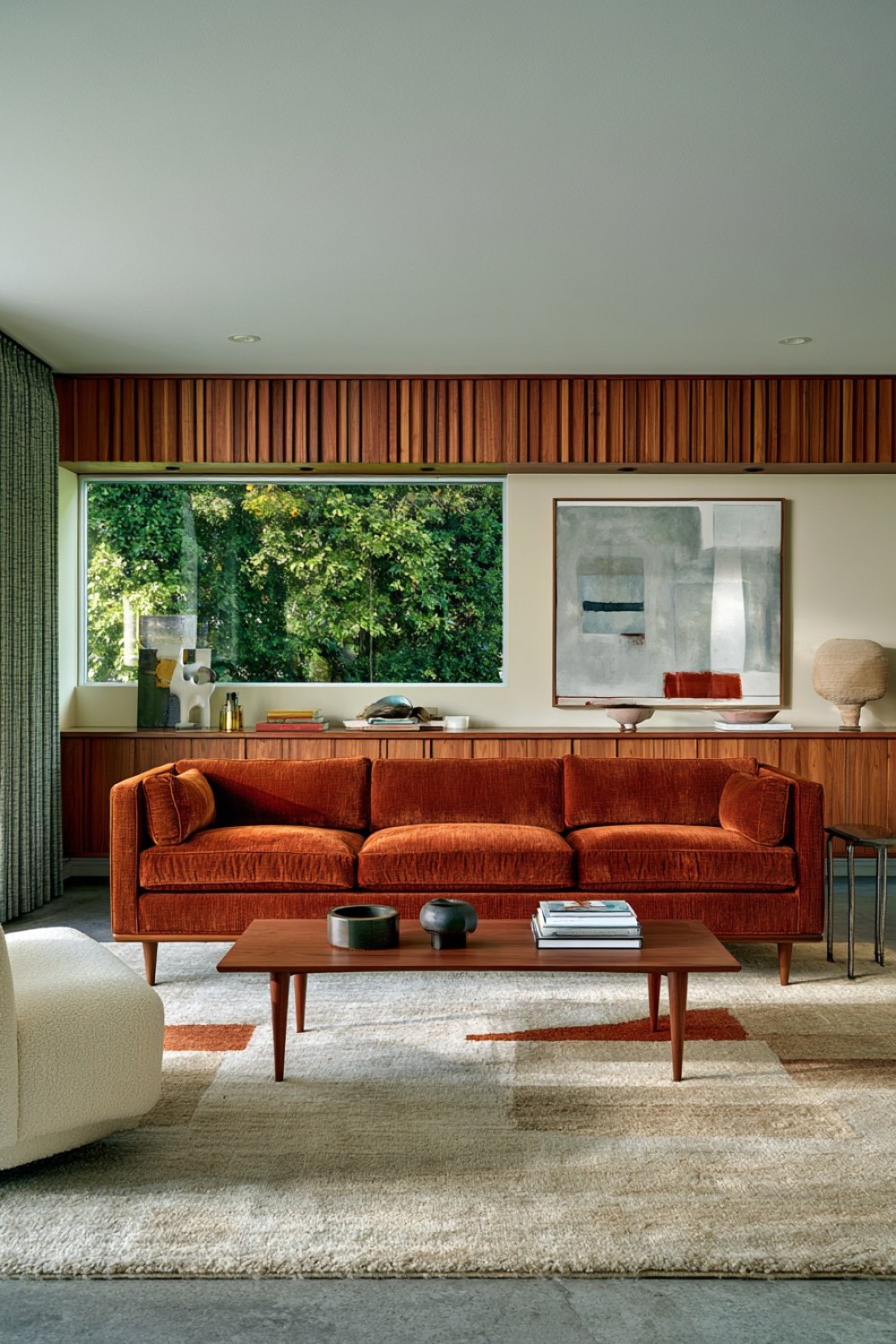
A burnt orange sofa can establish a strong period reference without requiring several bright accent colors. Balance it with warm white walls, walnut or oak furniture, and a rug containing quieter earth tones. Because the sofa already commands attention, chairs and curtains can remain comparatively restrained. One small orange repetition elsewhere is enough to connect the palette.
Color should not replace practical evaluation. Check seat depth, cushion support, upholstery durability, and the sofa’s relationship with doors and walkways before committing to a statement piece. Obtain a fabric sample and view it in both daylight and evening illumination, as burnt orange can shift from terracotta to brown under different light sources. Performance fabric or removable covers may suit busy households better than a delicate weave. Protect saturated upholstery from prolonged direct sunlight to reduce uneven fading.
6. Emphasize Horizontal Lines With Low-Profile Furniture
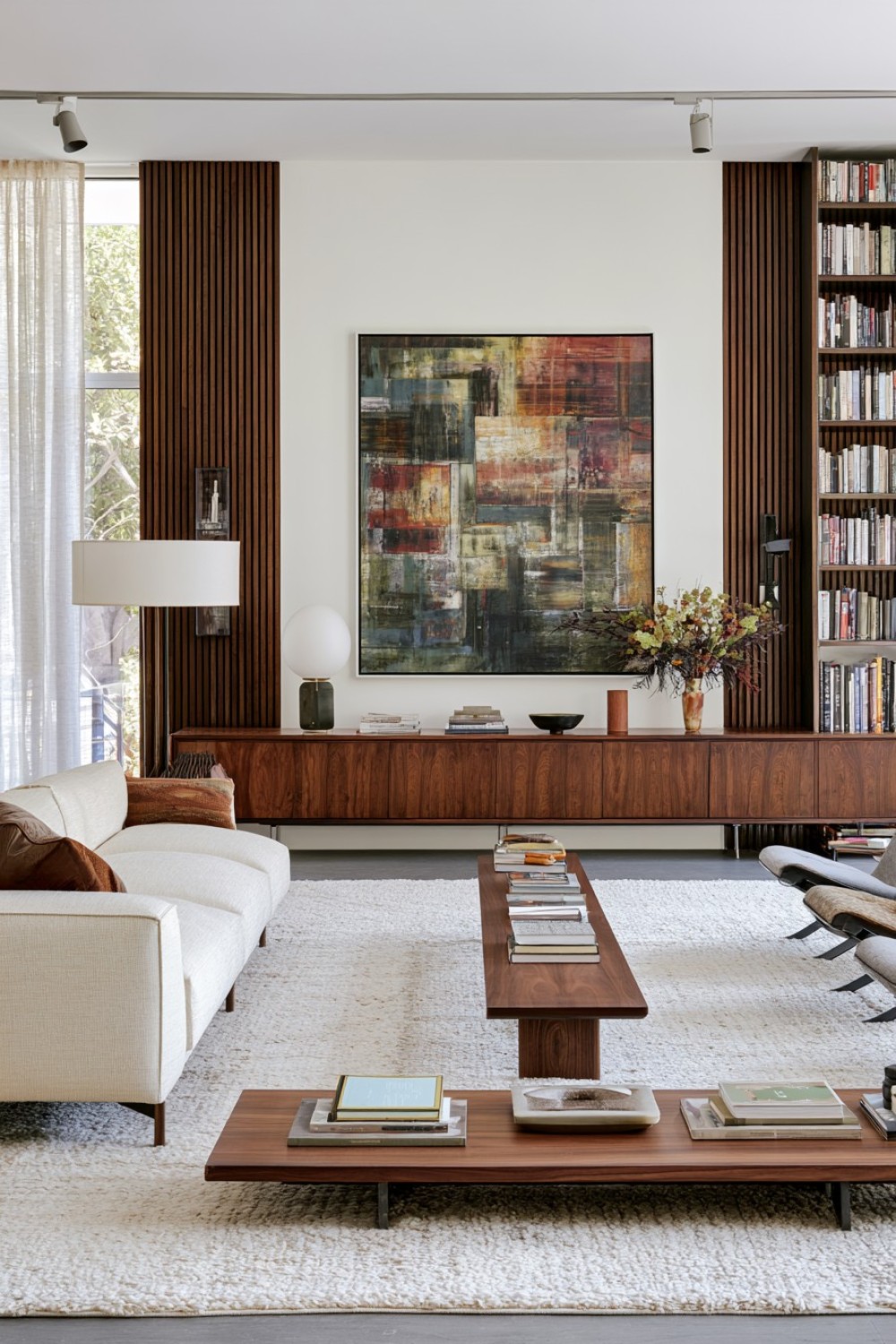
Low sofas, long credenzas, and slim coffee tables can make the ceiling appear more open by emphasizing the room’s width. Keep the furniture heights related rather than selecting one unusually tall cabinet that interrupts the composition. Visible floor beneath raised pieces contributes to the lighter appearance and makes a compact living room feel less crowded.
Low seating is not comfortable or accessible for everyone, so test the seat height and firmness before purchasing. A room can maintain horizontal lines while including one chair with a more supportive height. Avoid extending a long credenza across a necessary doorway or heating source. Furniture legs should be stable, securely attached, and protected with suitable floor pads. Use one taller element—such as a floor lamp, plant, or vertical artwork—to prevent the arrangement from appearing compressed against the lower half of the room.
7. Balance a Curved Sofa With Angular Timber Furniture
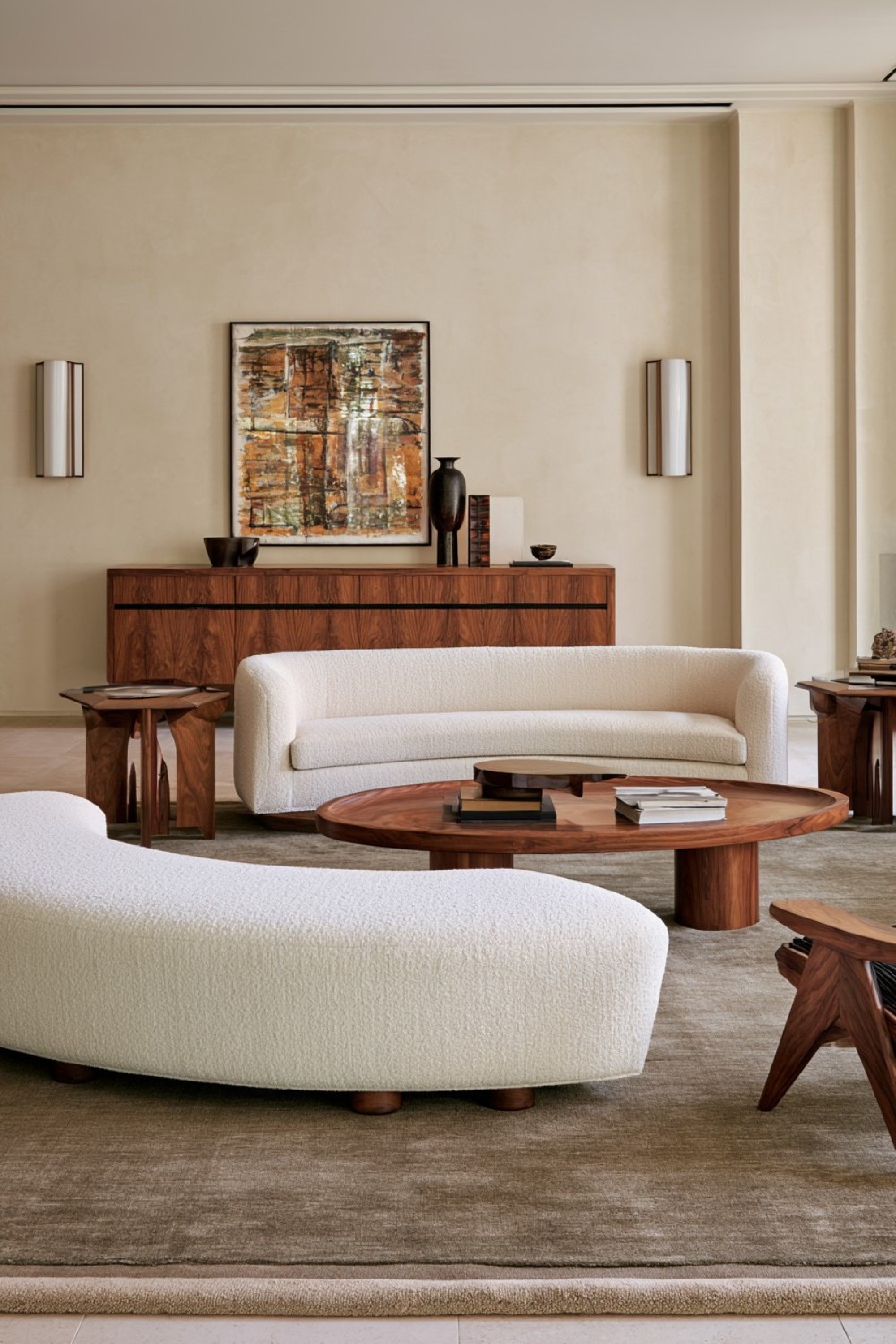
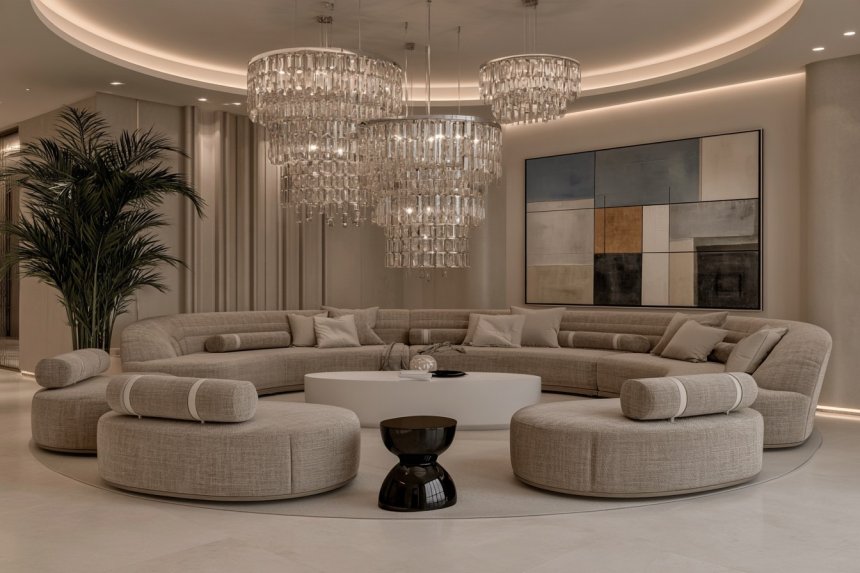
A curved sofa introduces movement, while rectangular walnut tables and cabinets provide structure. This contrast is especially effective in an open living room where a straight sofa would reinforce too many hard architectural lines. Position the curve toward the central seating area rather than pushing it tightly against a flat wall that leaves unusable gaps behind it.
Measure the full footprint carefully because curved furniture may occupy more depth than expected. A round or irregular coffee table can echo the sofa without repeating its exact form, while an angular side table creates a convenient surface near the seat. Maintain clear movement around the broadest part of the curve. Choose upholstery with a controlled texture so the unusual silhouette remains visible. If the sofa is modular, check that its sections lock securely and do not separate during everyday use.
8. Establish a Reading Corner With a Classic Lounge Chair
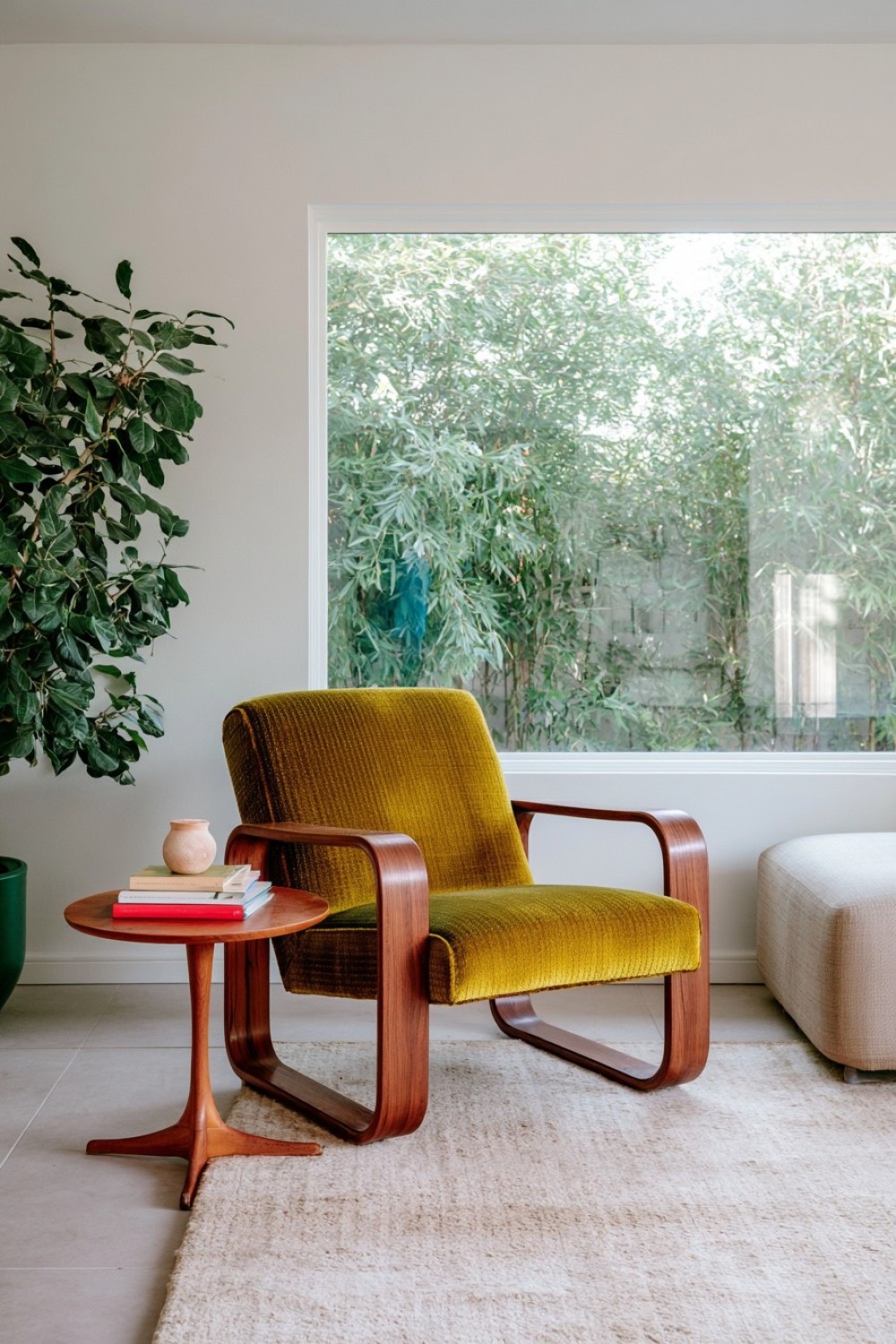
A distinctive lounge chair can create a useful reading area in a corner that is too small for another sofa. Pair it with a compact side table and an adjustable floor lamp positioned to illuminate the page without shining into the reader’s eyes. A small rug can define the corner, although it should remain secure and clear of the main walkway.
Recognizable silhouettes are available as vintage originals, licensed editions, and general period-inspired designs. Choose according to comfort, construction, condition, and budget rather than assuming a famous shape will suit every user. Older chairs should be checked for loose joints, weakened supports, degraded foam, and damaged upholstery. Vintage electrical lamps may need professional inspection or rewiring before use. Keep the arrangement simple so the chair has enough room to recline or rotate if its mechanism requires additional clearance.
9. Contrast Cream Bouclé With Dark Walnut
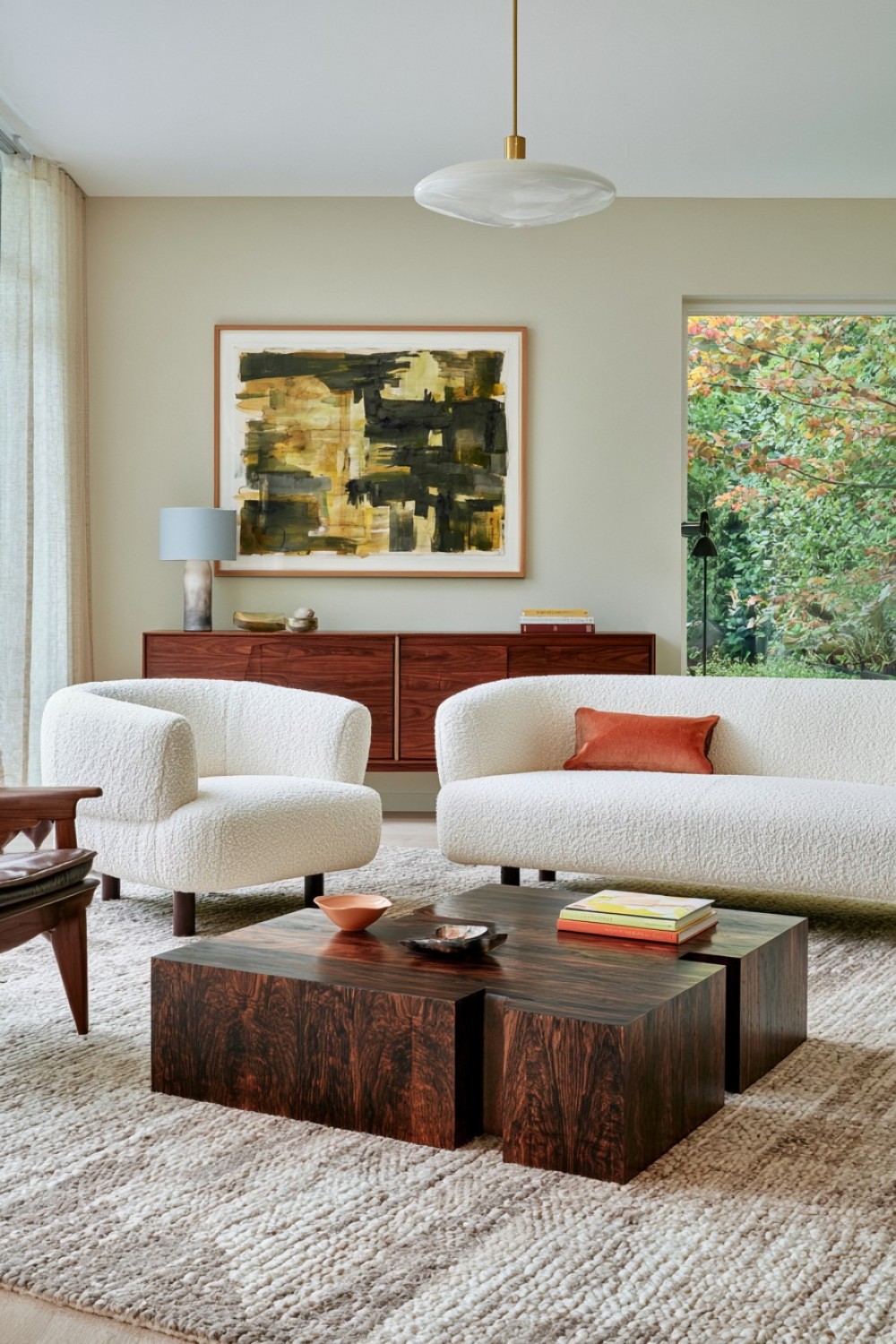
Cream bouclé softens the straight edges and deep color of walnut furniture. Use the textured fabric on a chair, compact sofa, or ottoman, then repeat walnut across one or two pieces rather than filling the entire room with dark timber. Warm white walls and a low-contrast rug can preserve the light-dark relationship without introducing another strong color.
Bouclé varies considerably in durability and cleaning requirements. Dense loops may withstand use better than loose constructions that catch jewelry, pet claws, or clothing fasteners. Review care instructions and obtain a sample before selecting it for a high-use household. Keep food and drinks on stable nearby tables rather than balancing them on upholstered ottomans. Dark wood shows dust and scratches under direct light, so use coasters, protective pads, and a cleaning method appropriate for the existing finish.
10. Define an Open Floor Plan With a Freestanding Divider
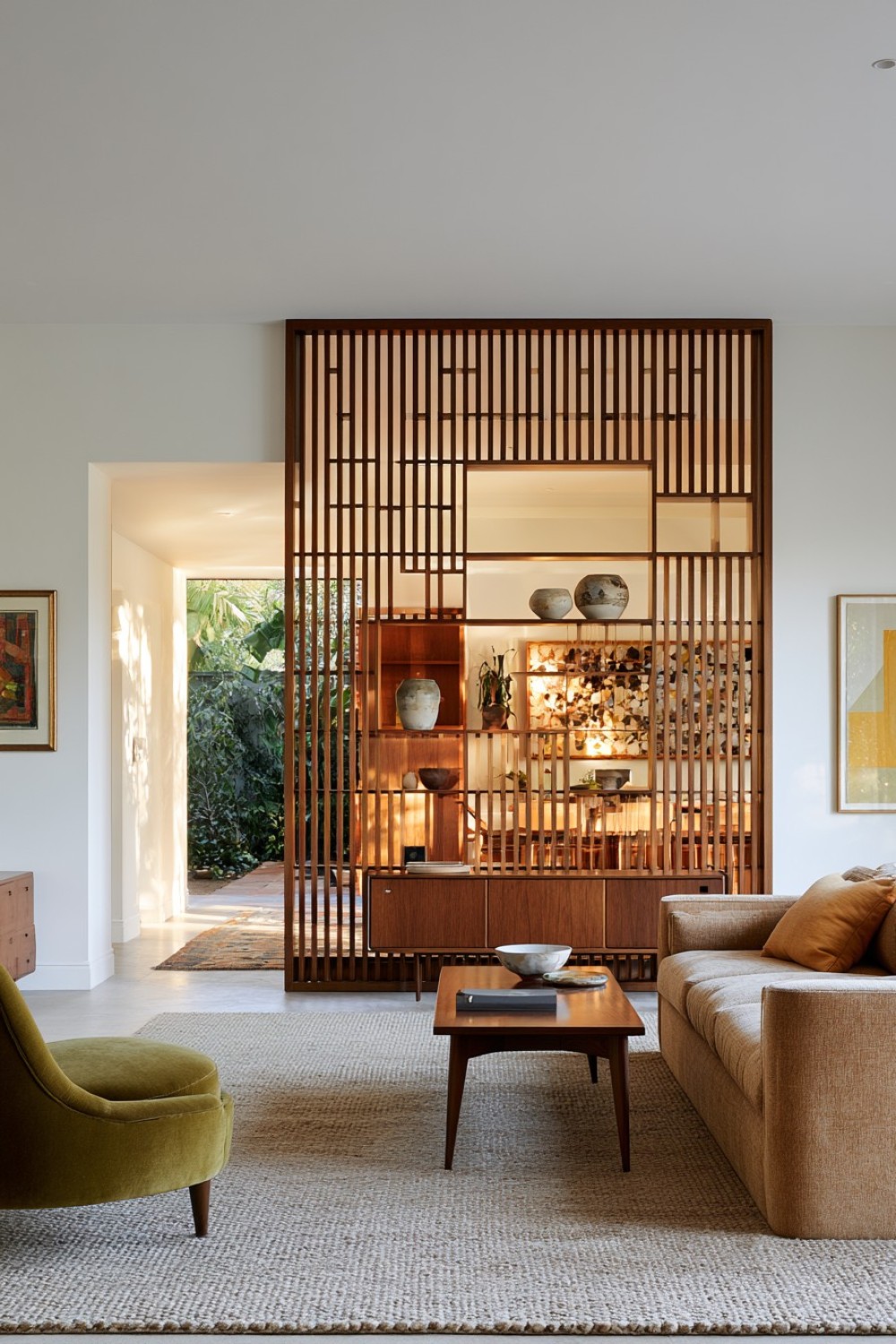
An open timber divider can distinguish the living room from a dining space, entry, or work area without blocking all light. Vertical slats or a combination of shelves and closed storage can provide partial separation while maintaining visual connection. Align the divider with an existing furniture edge or architectural line so it appears intentional rather than placed randomly in the center of the floor.
A tall freestanding structure must be stable and may require anchoring to a suitable wall, floor, or ceiling support. Open shelves should hold restrained, lightweight objects, particularly when the divider stands beside a busy route. Avoid positioning it where it reduces necessary clearance or creates a hidden corner near the entrance. Repeating the divider’s wood tone in the media cabinet or coffee table will connect both sides of the room. Leave several sections open to preserve daylight and sightlines.
11. Combine Muted Blue With Walnut Accents
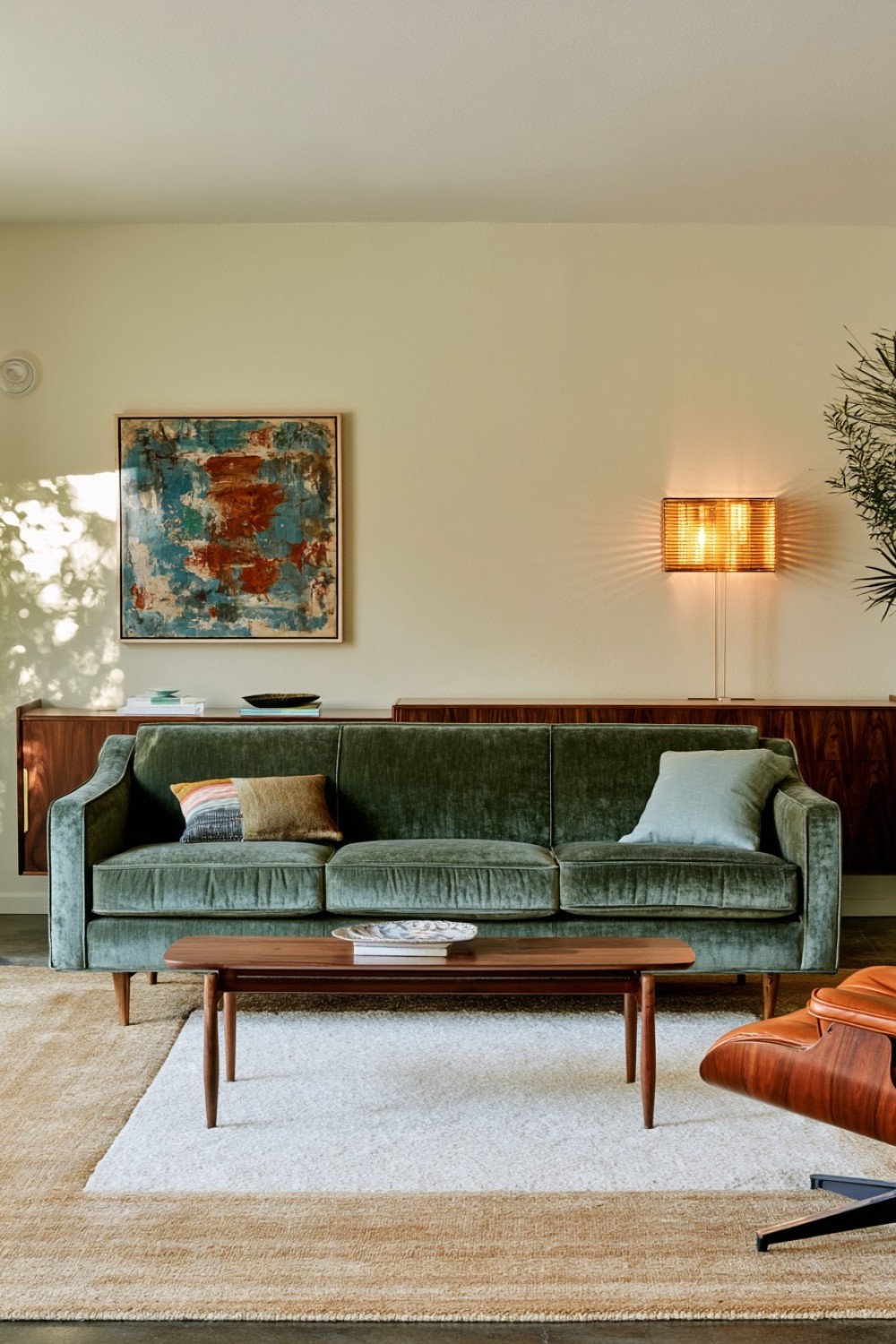
Dusty blue, blue-gray, or muted teal can provide a cooler counterpoint to warm walnut. Apply the color to upholstery, one painted wall, or substantial curtains rather than distributing small blue accessories everywhere. Cream, camel, and warm gray can bridge the temperature difference and keep the palette comfortable.
Test the selected blue beside the actual wood finish because walnut may appear red, golden, or nearly brown depending on age and lighting. North-facing and south-facing rooms can also change how the same paint sample appears. If blue is used on the sofa, keep nearby artwork and cushions more restrained. Introduce pattern through one rug or textile rather than several competing prints. Brass, blackened metal, or dark bronze details can outline the color scheme without becoming a separate decorative theme.
12. Let One Oversized Abstract Artwork Lead the Palette
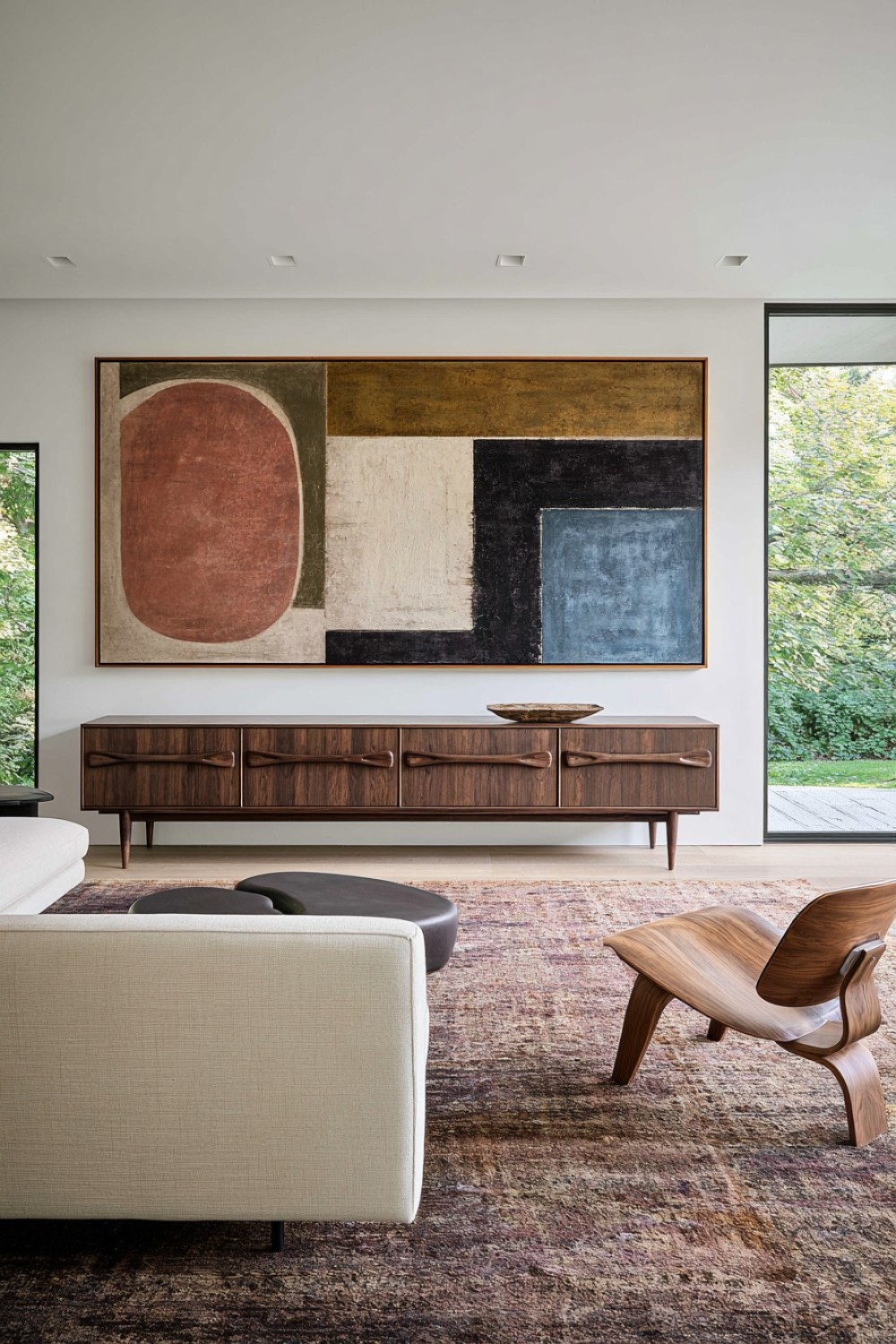
One large abstract artwork can give a restrained living room color and movement without requiring many small decorations. Select a piece whose proportions relate to the sofa or credenza beneath it, then draw two or three secondary shades from the artwork for upholstery, cushions, or ceramics. The furniture does not need to match the art exactly; slight variation usually feels more natural.
Large artwork should be mounted with hardware appropriate for its weight and the wall construction. Avoid placing heavy framed pieces above seating without reliable support. Glazing can produce reflections opposite windows and lamps, so test the viewing angle before installation. If the artwork is particularly vivid, keep the surrounding wall and major upholstery relatively quiet. A picture light or adjustable ceiling fixture can illuminate it after dark, provided glare and heat are controlled according to the artwork’s needs.
13. Suggest a Conversation Pit Without Altering the Floor
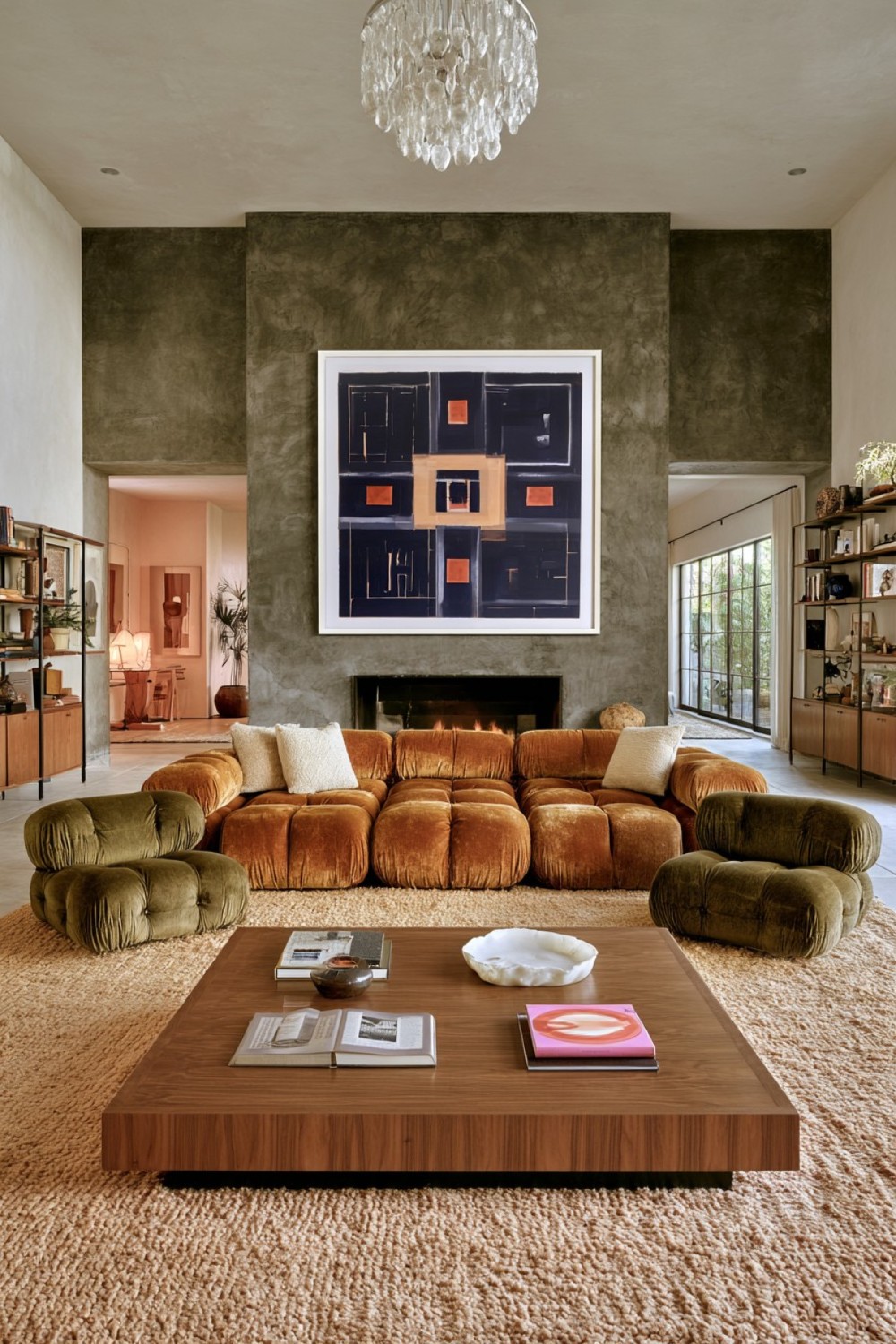
The social atmosphere of a conversation pit can be recreated without lowering the floor. Arrange low modular seating around a broad central rug and coffee table, keeping the backs of the seats relatively consistent in height. An inward-facing U-shape or broken circle can produce a sense of enclosure while remaining flexible enough for an ordinary living room.
Avoid building raised platforms merely to imitate a sunken area, since unmarked level changes can introduce tripping risks. Use color and furniture placement to define the zone instead. Preserve at least one clear opening into the seating group and make sure side tables do not narrow that entrance. Low furniture should still provide adequate support for its users. A pendant or grouped ceiling fixture can emphasize the center, but its height must remain appropriate above the table and outside normal movement paths.
14. Add Cane Details to Streamlined Wood Furniture
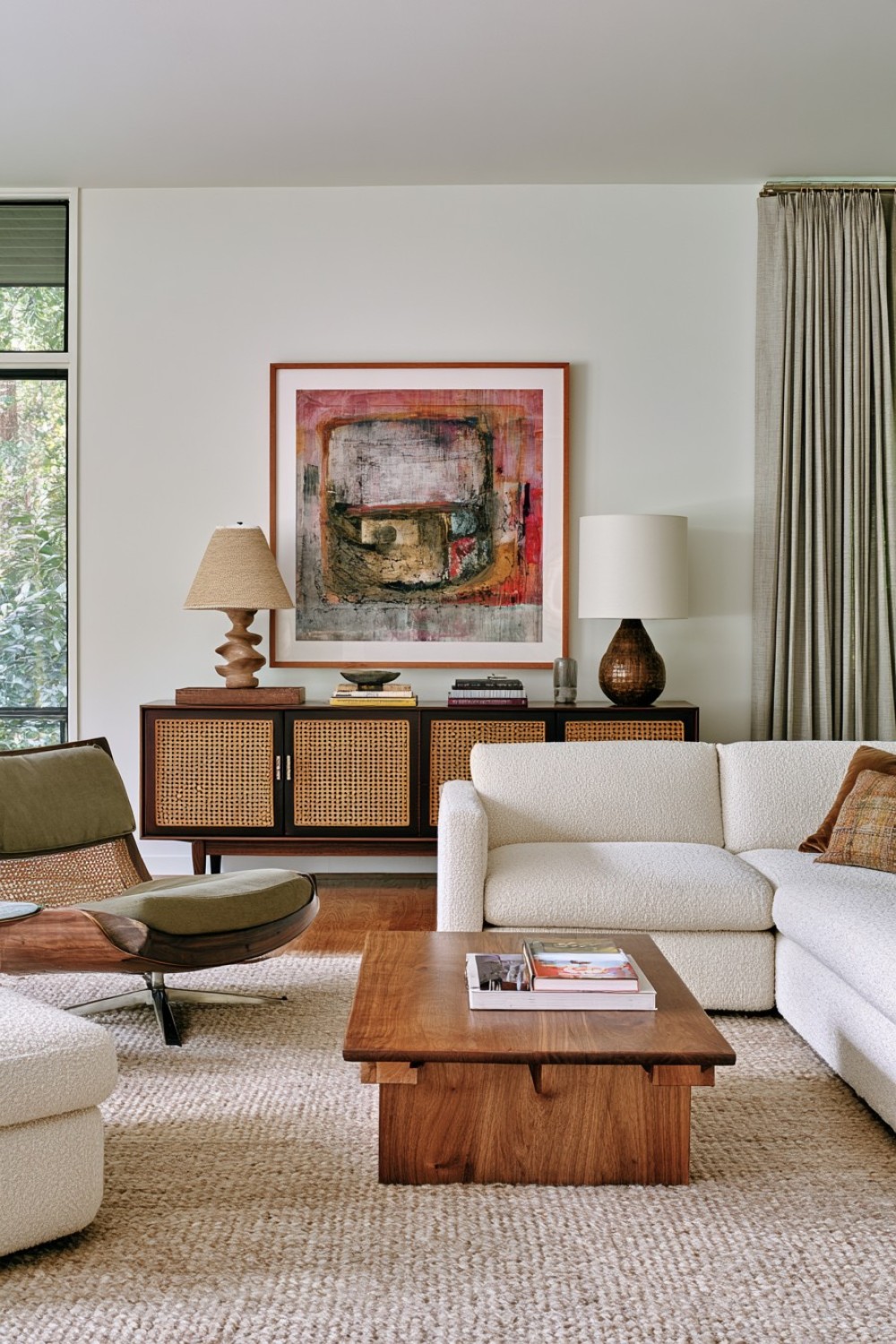
Cane panels can lighten the visual weight of walnut, teak, or oak cabinetry. Use them on selected cabinet doors, chair backs, or a small sideboard rather than repeating woven surfaces throughout the room. Their texture works particularly well beside plain upholstery and smooth plaster-like walls.
Inspect cane for broken strands, loose edges, and sagging, especially when it forms a load-bearing chair seat. Decorative cabinet panels require gentler treatment than solid doors and should not be pushed inward when opening the furniture. Keep woven surfaces away from persistent moisture and strong heat. Dust can be removed carefully with a soft brush or suitable vacuum attachment. If cane fronts conceal media equipment, confirm that the cabinet still provides adequate airflow and that remote signals function through the material.
15. Build a Refined Palette Around Cognac Leather and Gray
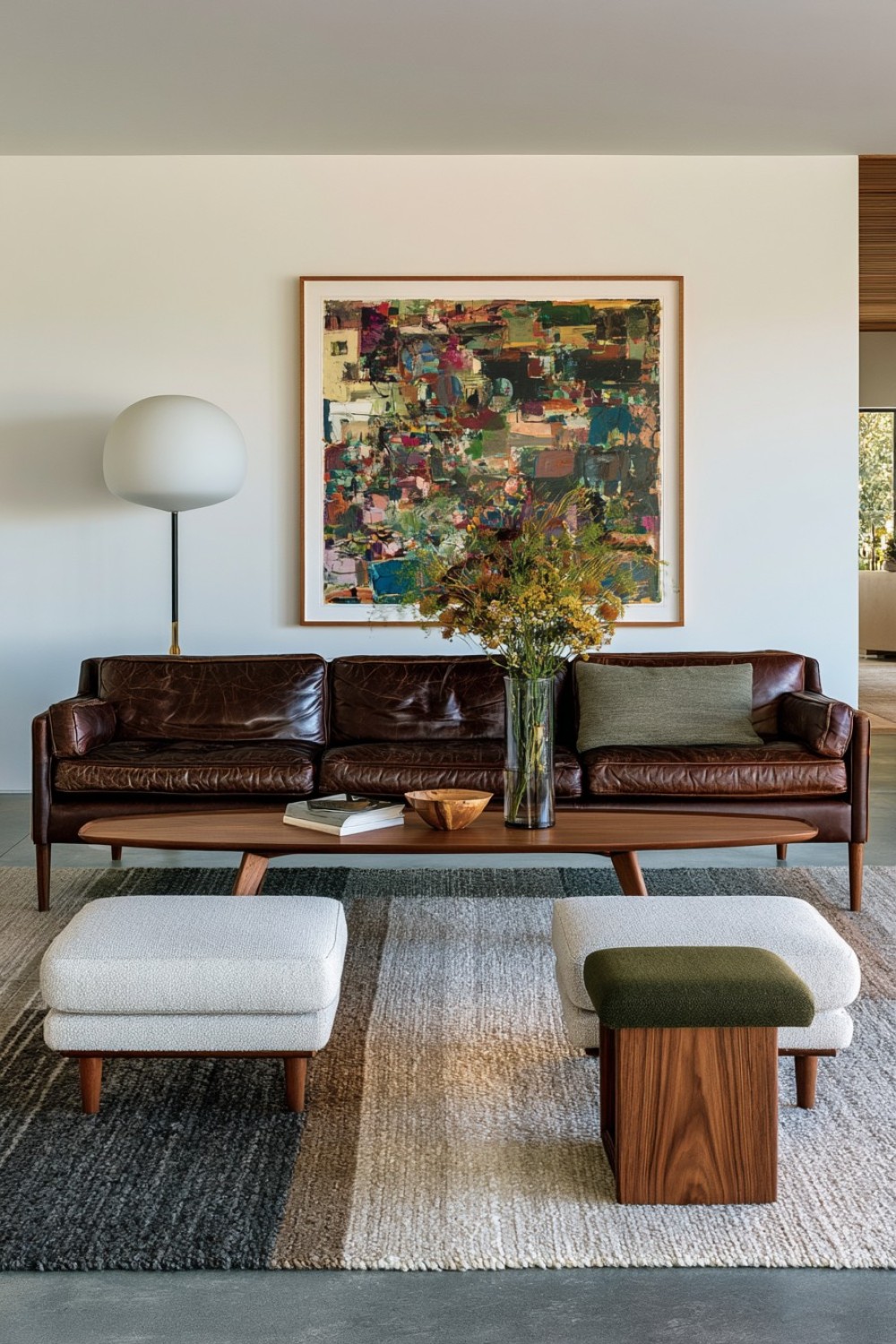
Cognac leather introduces warmth, while soft gray walls or upholstery provide a controlled neutral background. Use leather on one main piece and repeat its color through wood or a small textile rather than selecting an entire matching suite. Charcoal, blackened metal, and cream can add definition without competing with the warm brown.
Leather varies in finish, maintenance, and resistance to scratches or fading. Review care requirements and consider how pets, children, and direct sunlight will affect the chosen upholstery. Faux leather alternatives also vary greatly in durability, so inspect their specifications rather than choosing by appearance alone. A wool-look rug or textured curtain can soften the hard surface of leather and improve acoustic comfort. Keep the gray warm enough to coordinate with cognac undertones, testing samples together in the room before purchasing large pieces.
16. Style a Long Credenza as a Controlled Display Zone
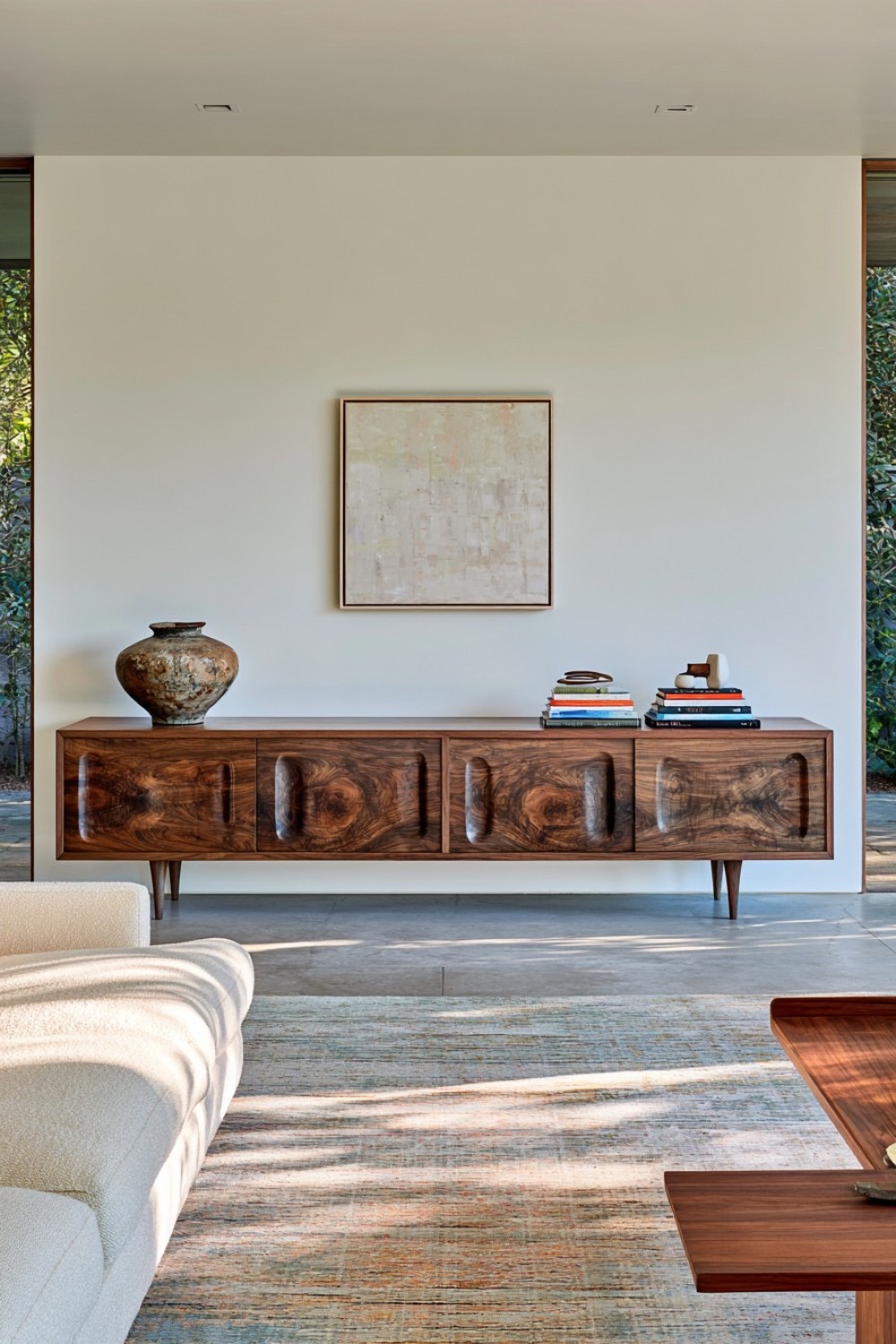
A long credenza provides concealed storage and a broad surface for a carefully edited display. Begin with one taller item, such as a lamp or sculptural vessel, then balance it with a small stack of books and one lower object. Leaving much of the surface visible emphasizes the furniture’s length and prevents it from becoming a shelf for unrelated possessions.
Use the interior for media accessories, documents, games, or serving pieces according to the room’s needs. Heavy items belong near the base and should be distributed rather than concentrated at one end. Anchor tall or potentially unstable furniture where appropriate, particularly in households with children. If the credenza supports a television, confirm its weight capacity and allow ventilation around connected equipment. Protect the finish with pads and trays beneath pottery, plants, and drinks. Route lamp cables along the back rather than across the visible surface.
17. Combine Moss, Clay, and Walnut for an Earthy Modern Room
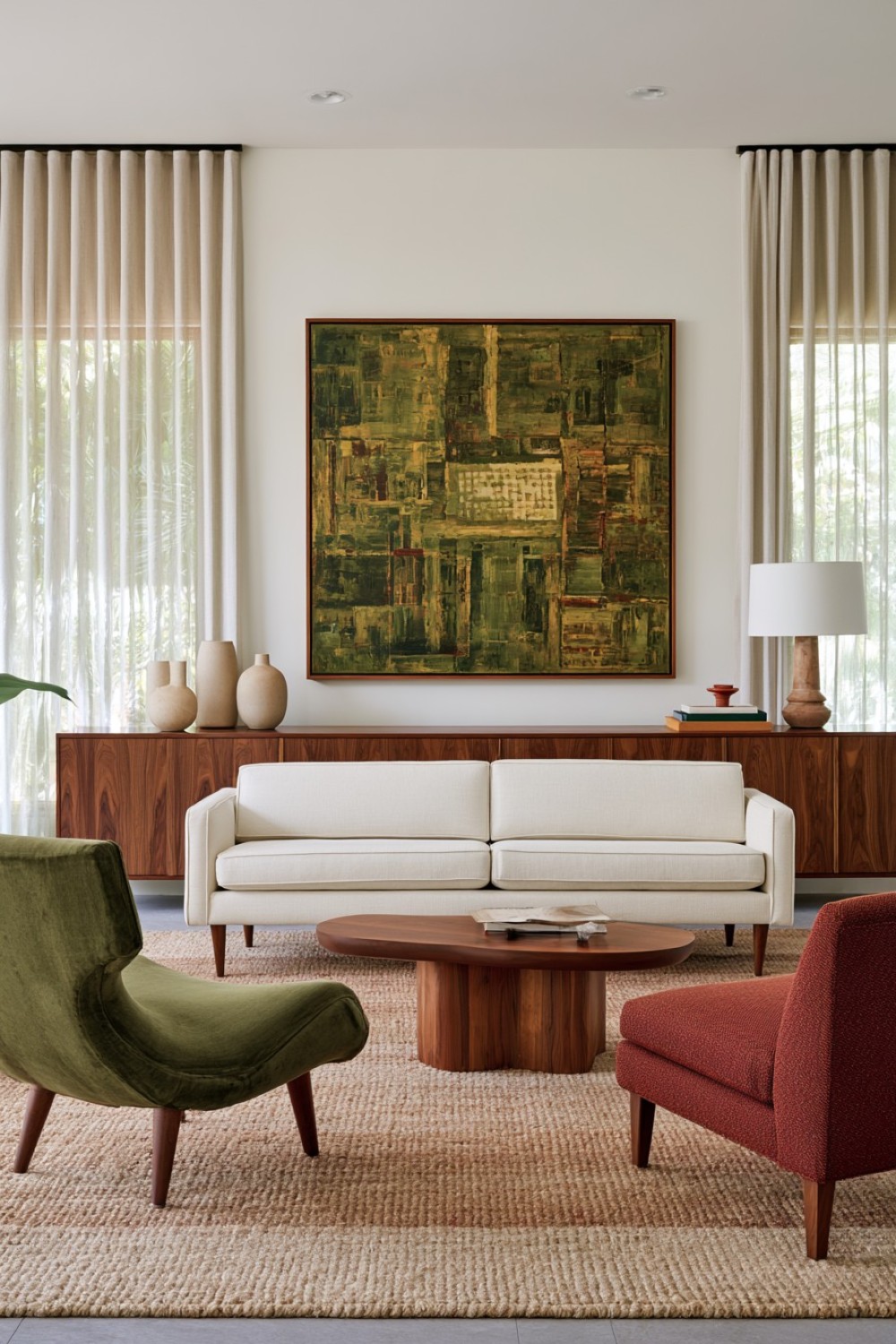
Moss green, clay, and walnut create an earthy palette that references mid-century color without reproducing a period room exactly. Use moss on a sofa or pair of chairs, clay through a rug or selected cushions, and walnut across the main storage furniture. Warm white walls provide enough separation for all three tones to remain visible.
Control the proportions so each color has a distinct role. One shade should dominate, another should support it, and the third should appear in smaller areas. Textiles with subtle variation can connect the colors more naturally than perfectly matched accessories. Plants can reinforce the green, but they should suit the room’s available light and remain in stable containers protected against leakage. A few matte ceramic and metal details complete the composition without turning the natural palette into an overly decorated theme.
MORE IDEAS


Share
What's Your Reaction?
 Like
0
Like
0
 Dislike
0
Dislike
0
 Love
0
Love
0
 Funny
0
Funny
0
 Angry
0
Angry
0
 Sad
0
Sad
0
 Wow
0
Wow
0