15 Statement Sofas That Elevate a Luxury Living Room

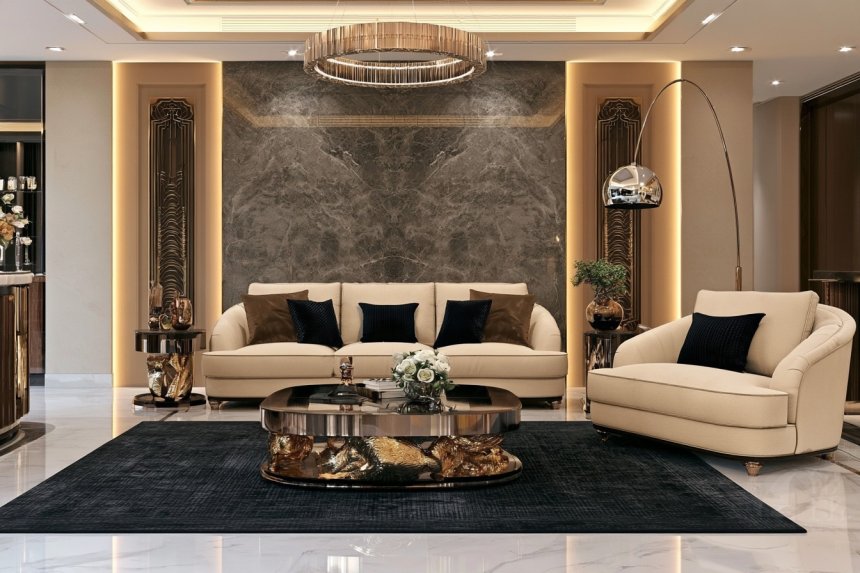
A luxury living room sofa should offer lasting comfort, suitable proportions, and dependable construction rather than relying only on an expensive-looking fabric. Begin by measuring the room, doorways, circulation routes, and the distance between the proposed seating and other furniture. Seat depth, cushion density, frame quality, upholstery care, and the way the household uses the room should guide the final decision. Sculptural curves, velvet, leather, modular forms, and integrated tables can all create a refined interior when selected carefully. These luxury sofa ideas explain how to balance statement design with practical placement, maintenance, comfortable conversation, and materials suited to everyday living.
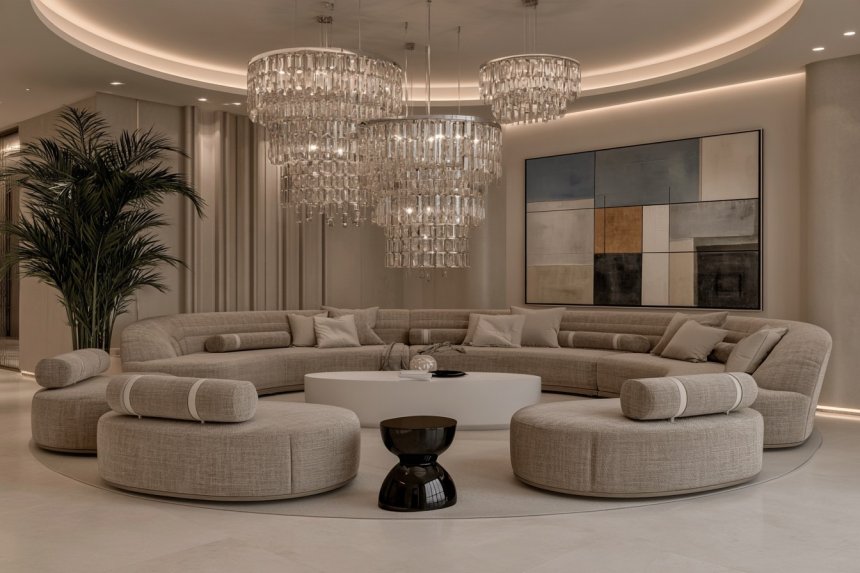
1. Make a Sculptural Ivory Sofa the Main Statement
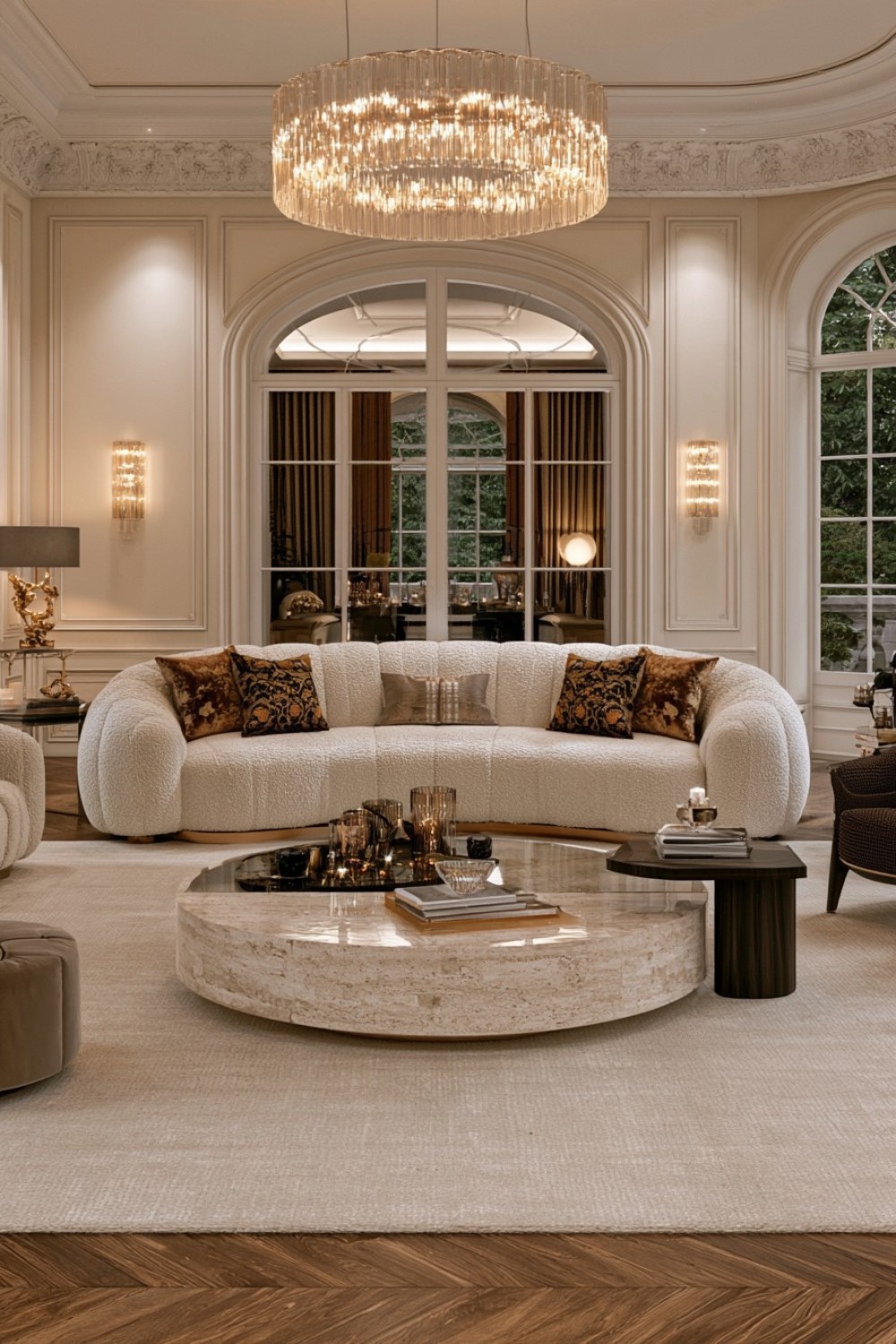
An ivory sofa with a curved or asymmetric silhouette can become the room’s focal point without requiring strong color. Give the piece enough open space for its outline to remain visible instead of pushing it tightly between side tables and cabinets. A restrained rug, low coffee table, and one or two contrasting chairs can support the composition while allowing the sofa to remain dominant.
Pale upholstery requires realistic consideration of children, pets, food, and daily use. Request fabric samples and review abrasion, pilling, lightfastness, and cleaning information before ordering. Removable covers or professionally cleanable performance fabric may be more practical than delicate natural material. Check the seat in person when possible, since a dramatic sculptural form does not automatically provide suitable back support or comfortable depth.
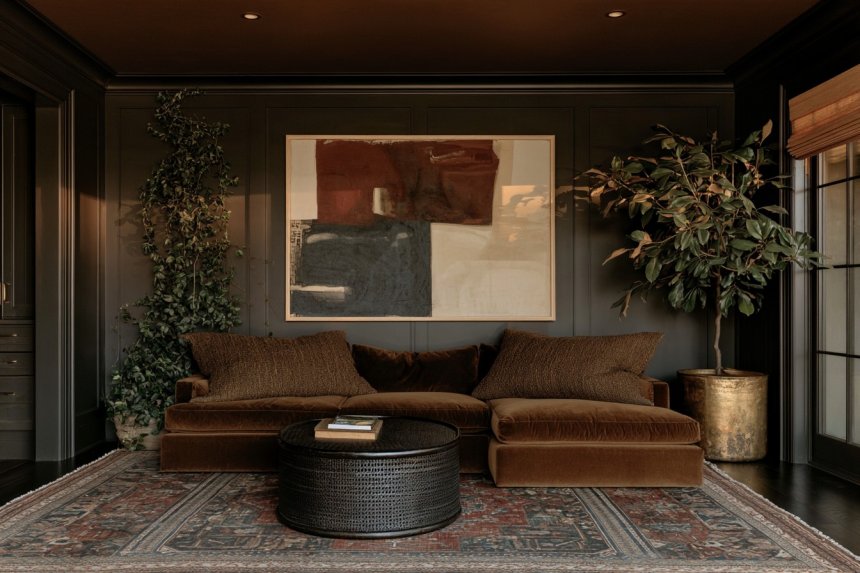
2. Pair Chocolate Velvet Seating With Cream Walls
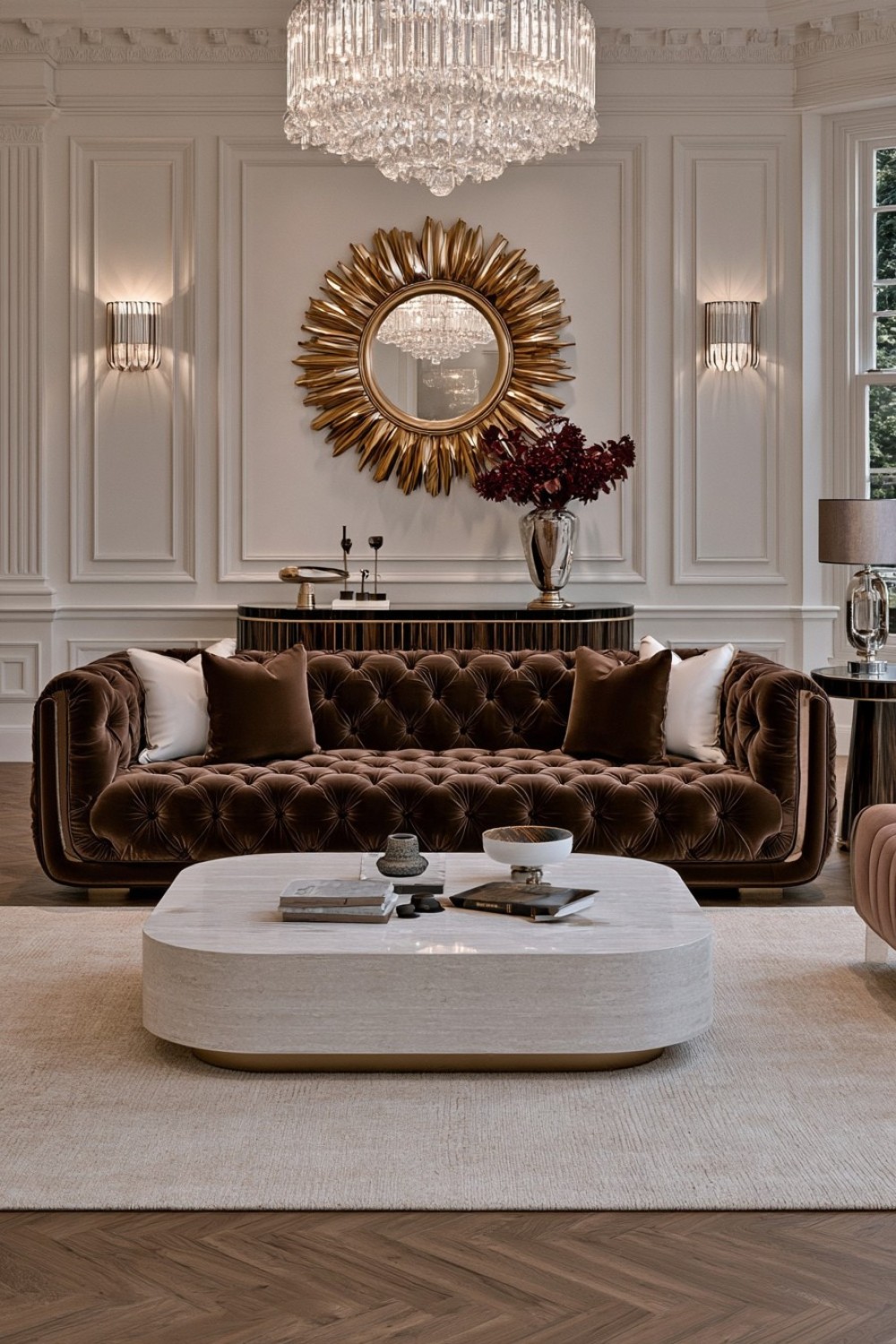
Chocolate velvet creates a rich visual anchor against warm cream walls, molding, or paneling. Repeat the brown through a timber table or small accessories rather than matching every piece of furniture. Cushions in oatmeal, muted gold, rust, or dusty blue can break up the dark surface. The contrast works particularly well when architectural details remain quieter than the sofa.
Velvet changes appearance as its pile moves and may show pressure marks, dust, or sunlight variation. Obtain a large sample and examine it from several directions before choosing the fabric. Regular gentle vacuuming helps maintain the surface, while spills should be treated according to the manufacturer’s instructions. Position the sofa where prolonged direct sunlight will not create uneven fading, and confirm that the fabric’s durability suits the room’s level of use.
3. Arrange Two Sofas in a Symmetrical Conversation Layout
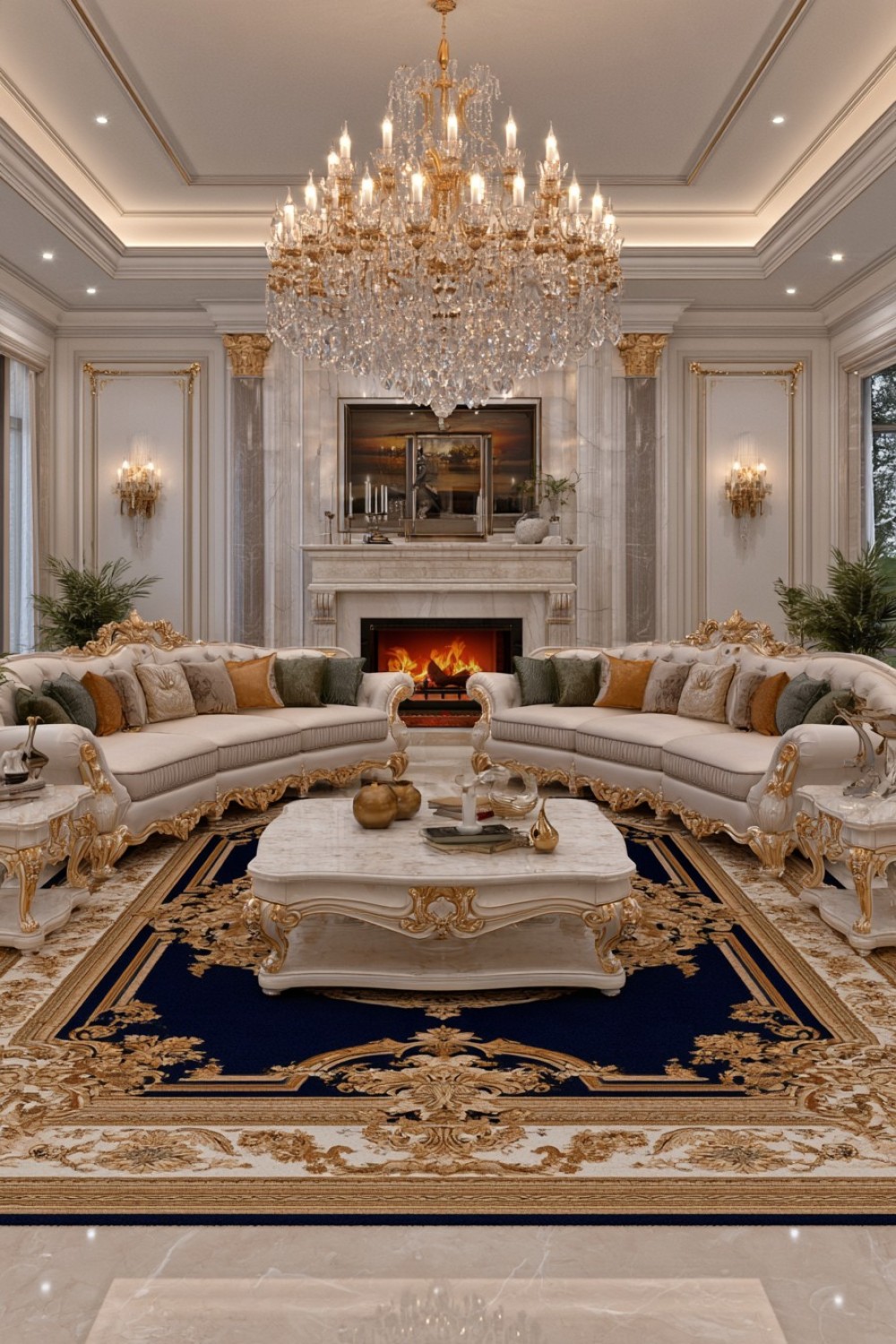
Two matching sofas placed opposite each other create a formal conversation area suitable for a large living room. Center them on a fireplace, artwork, or coffee table to establish a clear axis. The sofas do not need to touch the walls; floating them can improve balance and define the seating zone within an open interior. A large rug helps connect both sides.
Leave enough space between the sofa edges and coffee table for comfortable movement while keeping drinks within practical reach. The outer circulation route should allow people to enter and leave without crossing through a conversation. Before ordering two large pieces, mark their complete dimensions on the floor. Confirm that both sofas can pass through doors, hallways, elevators, and stair turns during delivery.
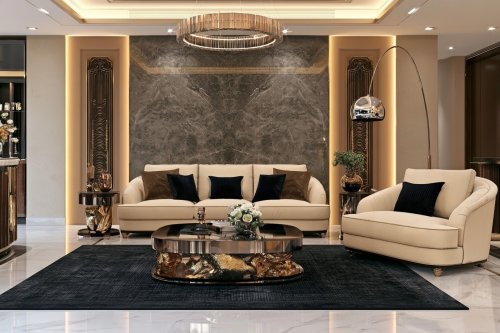
4. Combine a Low Cream Sofa With Dramatic Veined Stone
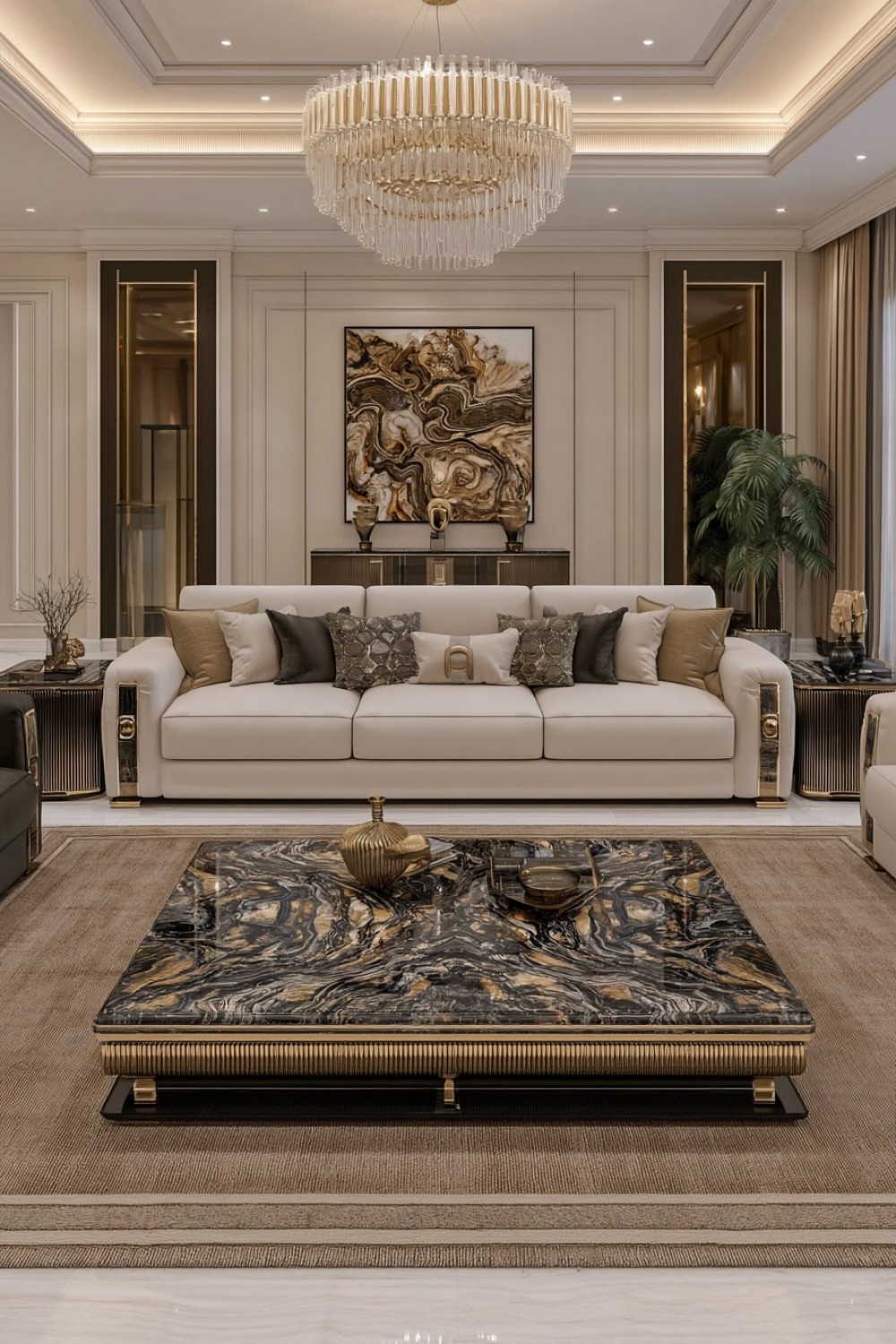
A low cream sofa can soften the strong movement of a dramatically veined stone wall or coffee table. Keep the upholstery plain and repeat only one or two colors from the stone through cushions or accessories. The lower profile allows the stone to remain visible, while rounded sofa edges can balance the material’s hard surface. Avoid adding several competing marble patterns to the same seating area.
Low sofas may be uncomfortable for users who find standing difficult, so test the seat height and cushion support before purchasing. Stone tables require enough separation from the sofa to prevent contact with knees and feet. Rounded or eased corners are preferable in narrow layouts. Natural stone also has material-specific sealing, staining, and cleaning requirements that should be understood before installation.
5. Use Deep Emerald Seating With Dark Timber Details
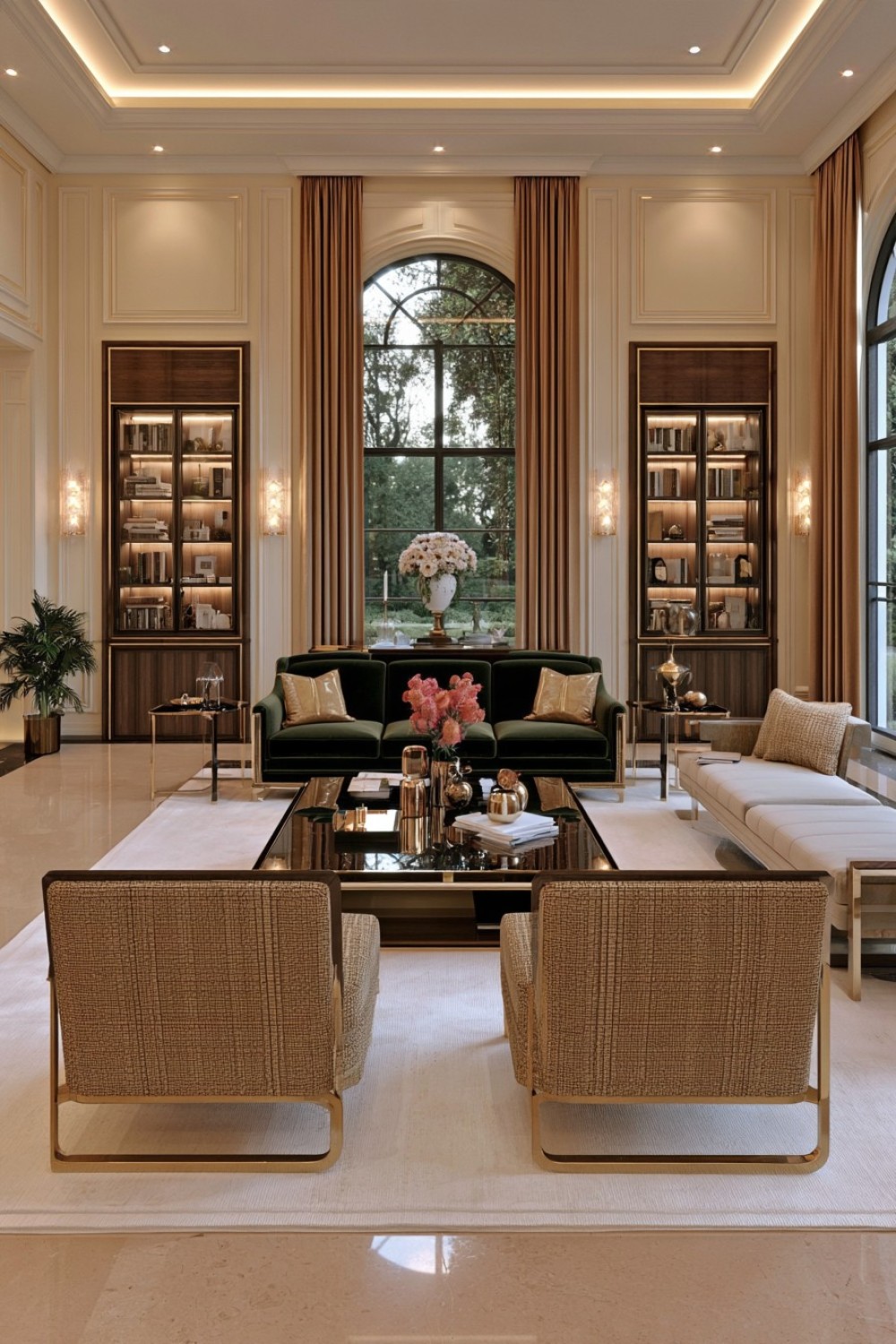
Deep emerald upholstery creates a distinctive focal point while remaining compatible with dark walnut, smoked oak, antique brass, and warm neutral walls. Use the green on the main sofa and keep secondary seating comparatively quiet. A rug containing small amounts of green can connect the arrangement without making the entire room monochromatic. Pale cushions also help define the sofa’s shape.
Dark green can appear almost black in a poorly lit room, so view upholstery samples under the actual lighting conditions. Velvet provides depth but requires more care, while woven performance fabrics may suit heavily used homes. Coordinate timber tones instead of attempting an exact match between every furniture piece. Too many dark surfaces can make a compact room feel visually compressed, making lighter walls and flooring important.
6. Create a Hotel-Inspired Sofa Wall With Upholstered Panels
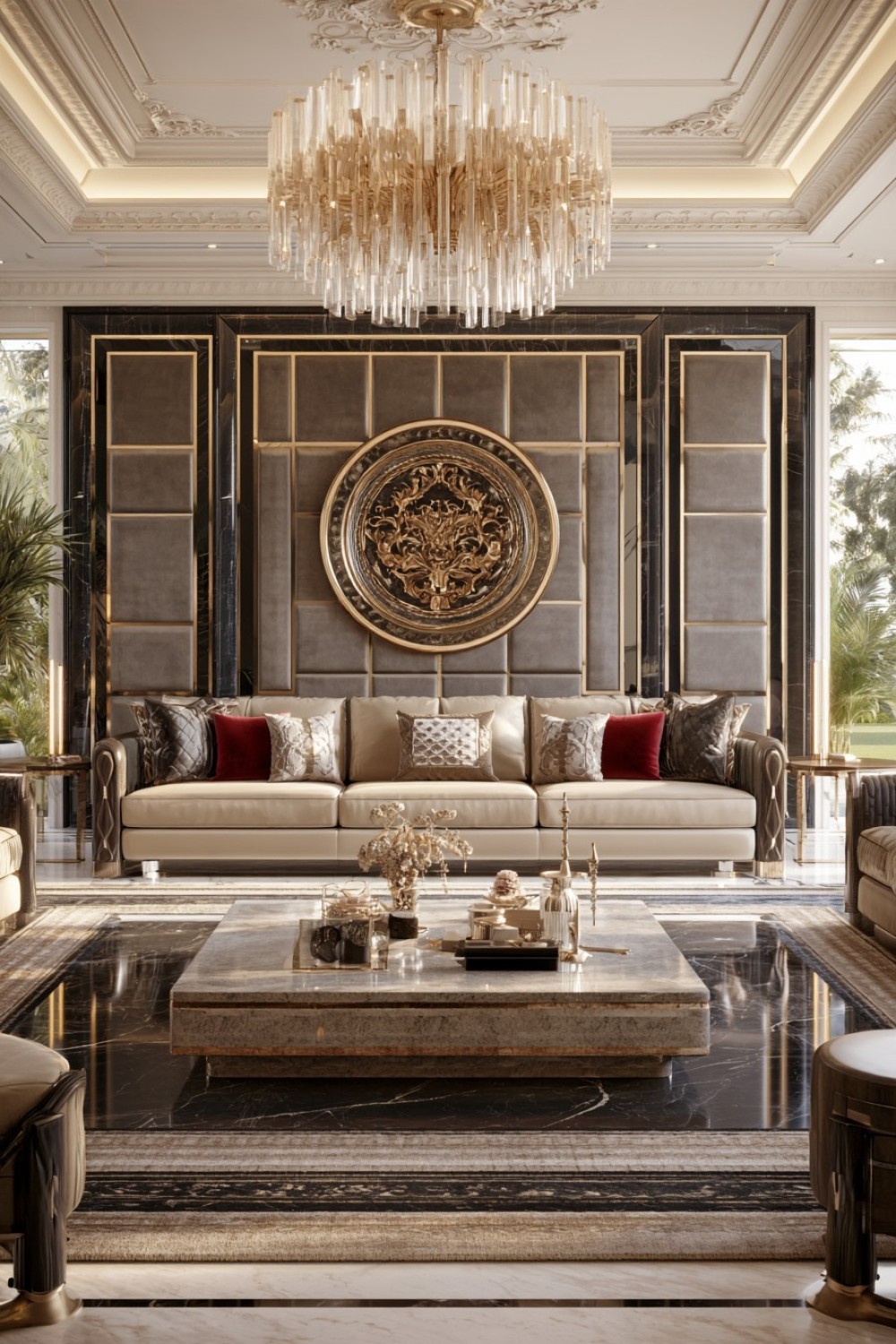
Upholstered wall panels can frame a sofa and introduce softness associated with luxury hotel lounges. Use broad panels in one restrained fabric rather than many narrow divisions. Align the composition with the sofa and nearby lighting so it reads as an architectural feature. A contrasting sofa can stand forward from the wall, while tonal upholstery produces a quieter layered effect.
Panels may reduce reflected sound within the room, but they should not be described as complete soundproofing. Select materials with suitable fire-performance information and consider how they will be vacuumed or spot-cleaned. Wall installation must not conceal dampness, electrical problems, outlets, or ventilation. Secure every panel properly and avoid projecting trim or hard edges directly behind seated occupants.
7. Pair a Curved Sofa With a Monolithic Coffee Table
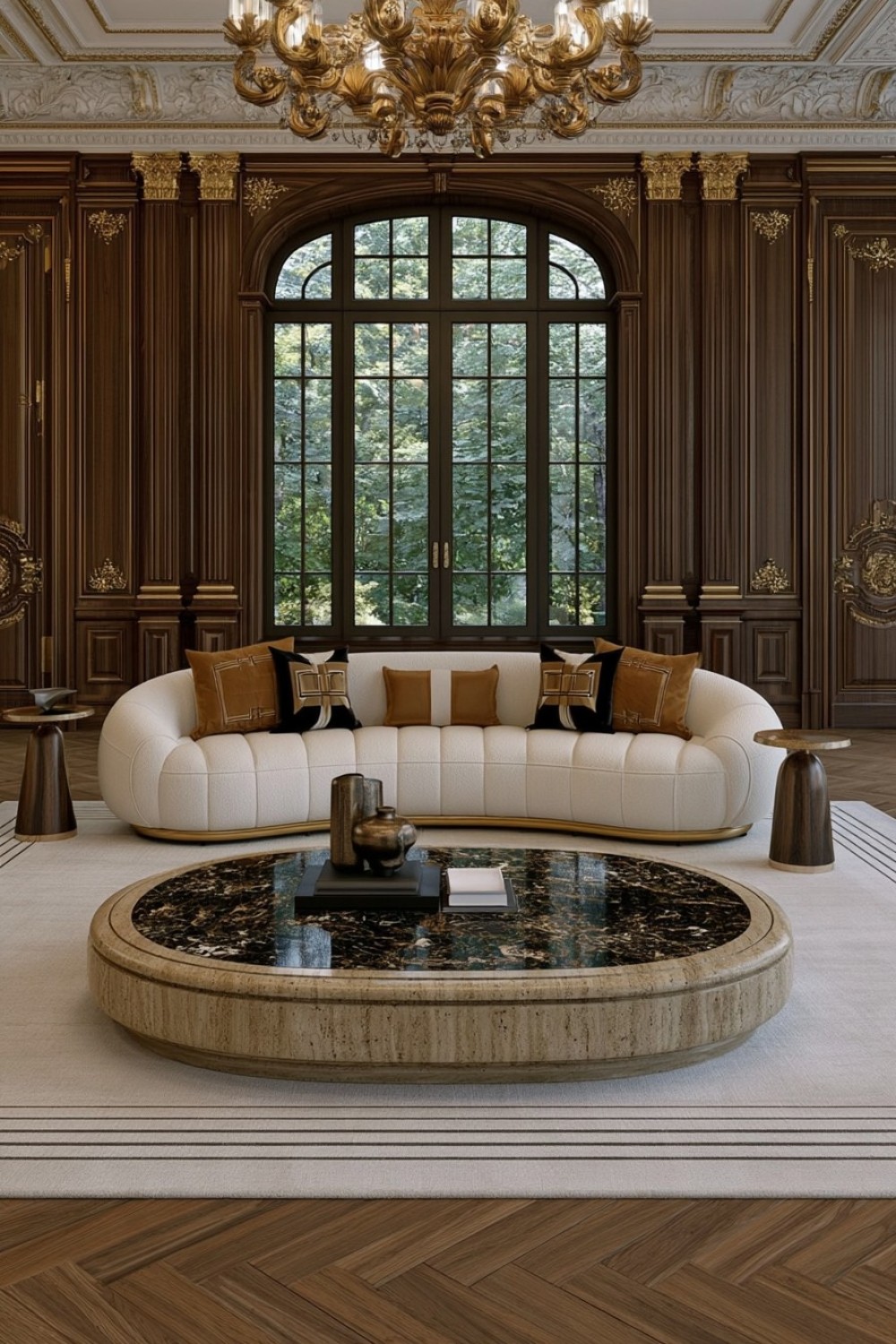
A curved sofa and solid-looking coffee table create a strong contrast between soft and geometric forms. Choose a table whose shape follows the sofa without filling the entire open area. An oval, rounded rectangle, or irregular stone form can support the composition. Leave enough visible rug around both pieces so the seating arrangement does not appear compressed.
A monolithic appearance does not require solid stone. Hollow construction, stone veneer, mineral composite, or plaster finishes may provide a similar effect with less weight. Confirm load requirements before placing an unusually heavy table on the floor. Maintain comfortable clearance around every edge and select rounded corners where possible. The table height should relate to the sofa seat so it remains convenient for everyday use.
8. Introduce Tailored Leather Through a Contemporary Sofa
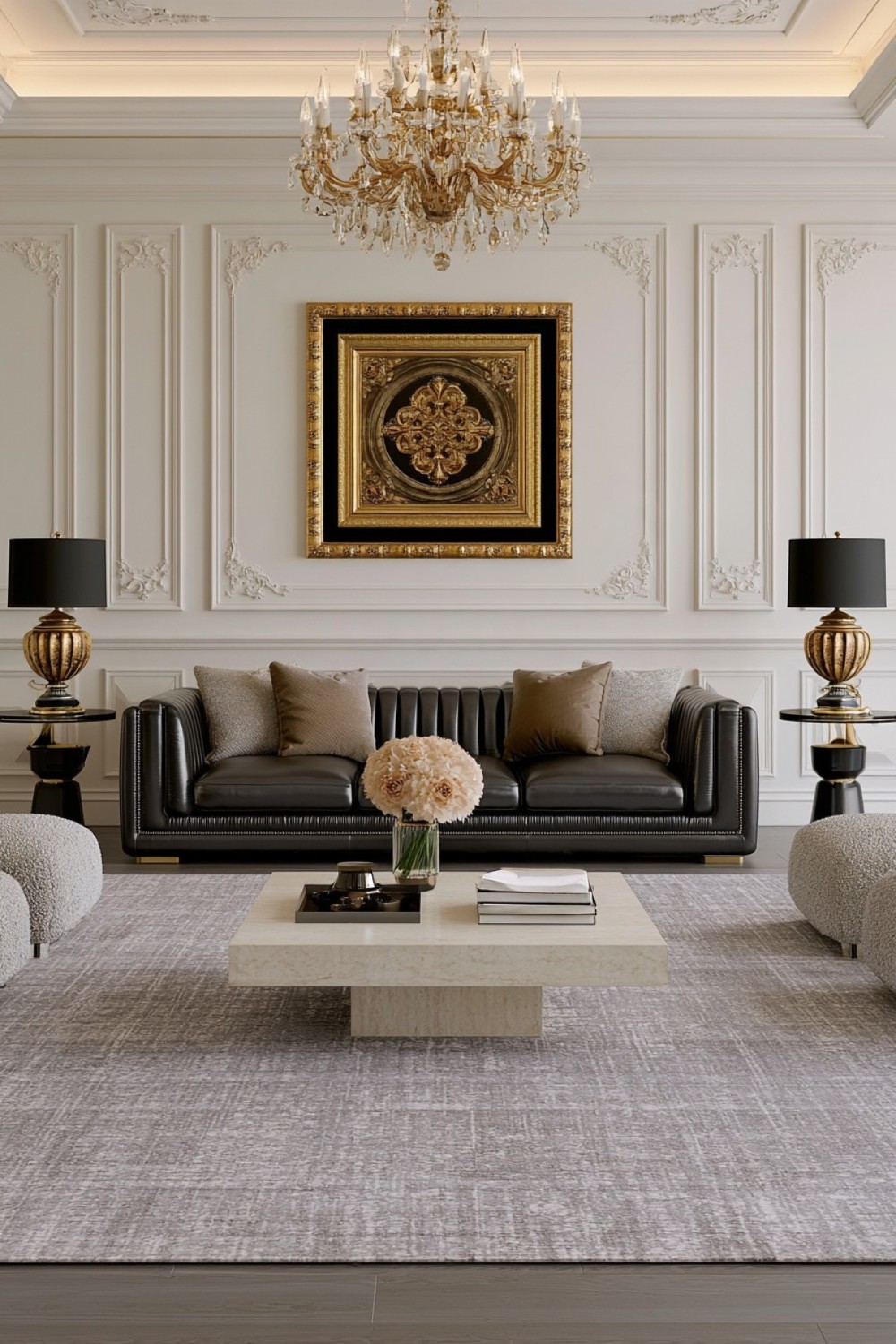
A tailored leather sofa adds structure through precise seams, controlled cushioning, and clean proportions. Cognac, tobacco, oxblood, charcoal, or deep brown can provide warmth without requiring elaborate ornament. Pair the leather with wool, linen-look fabric, timber, and stone so the room contains a balance of soft and hard textures. Limit additional leather pieces to prevent the seating area from feeling like a matching suite.
Leather type strongly affects durability, appearance, and maintenance. Ask whether the surface is aniline, semi-aniline, protected, bonded, or synthetic, and obtain written care guidance. Natural leather may develop patina and color variation, while heavily coated alternatives behave differently. Keep the sofa away from intense heat and prolonged sunlight. Test seat temperature and texture if the climate is especially warm.
9. Build a Monochromatic Taupe Room Around the Sofa
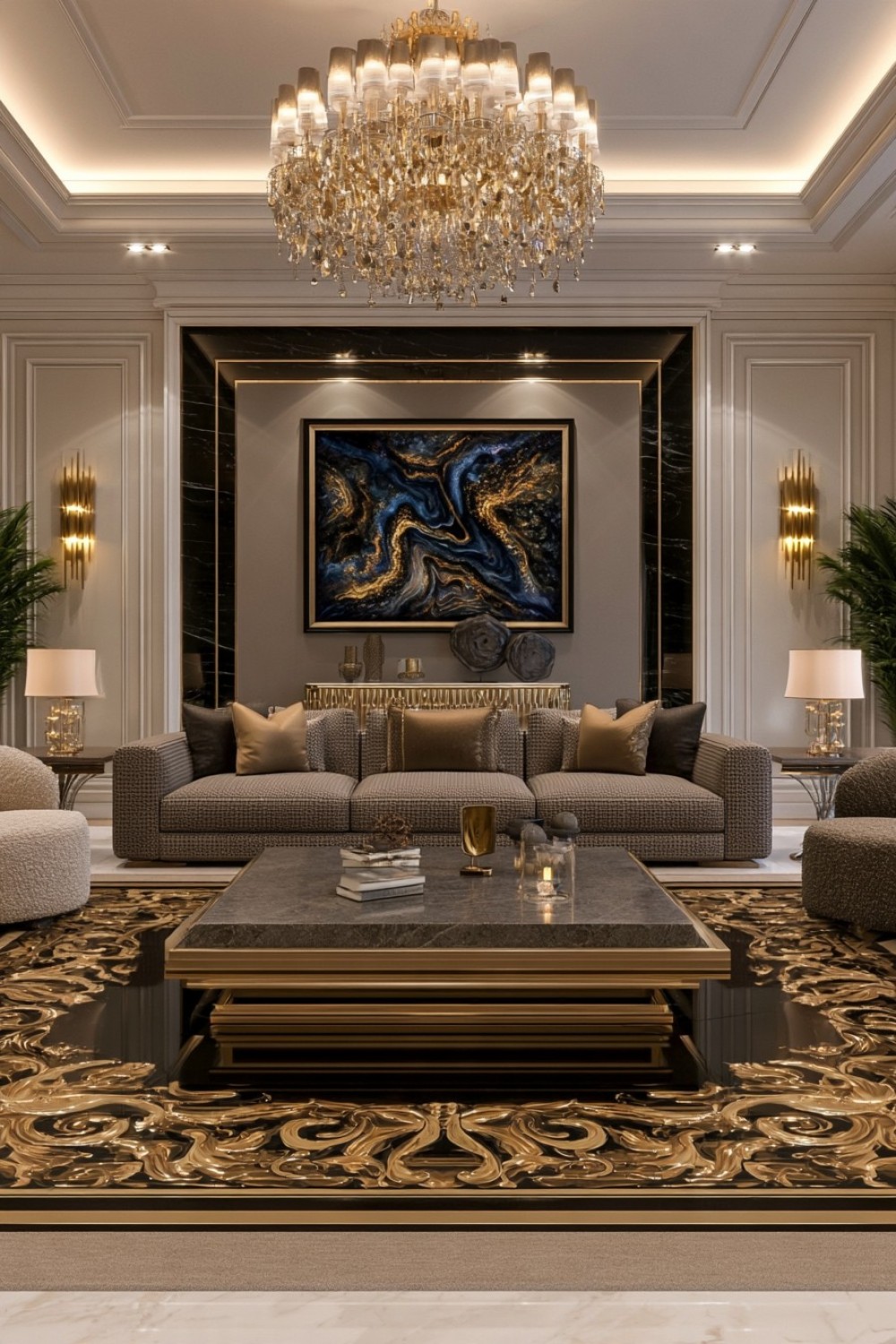
A taupe sofa can anchor a tonal room when surrounding materials vary in depth and texture. Combine pale greige walls, a medium taupe sofa, dark timber accents, and a rug that includes several related neutrals. Bouclé, smooth upholstery, wool, timber, and matte stone prevent the scheme from appearing flat even when the colors remain restrained.
Taupe shades may carry pink, green, yellow, or gray undertones. Compare every major sample in the room before ordering expensive furniture or flooring. Use darker contrast around selected edges so the arrangement remains visually defined. Practicality should also influence the exact shade: mid-tone upholstery can conceal routine wear more successfully than very pale fabric while retaining the same calm appearance.
10. Float a Sectional to Define an Open-Plan Interior
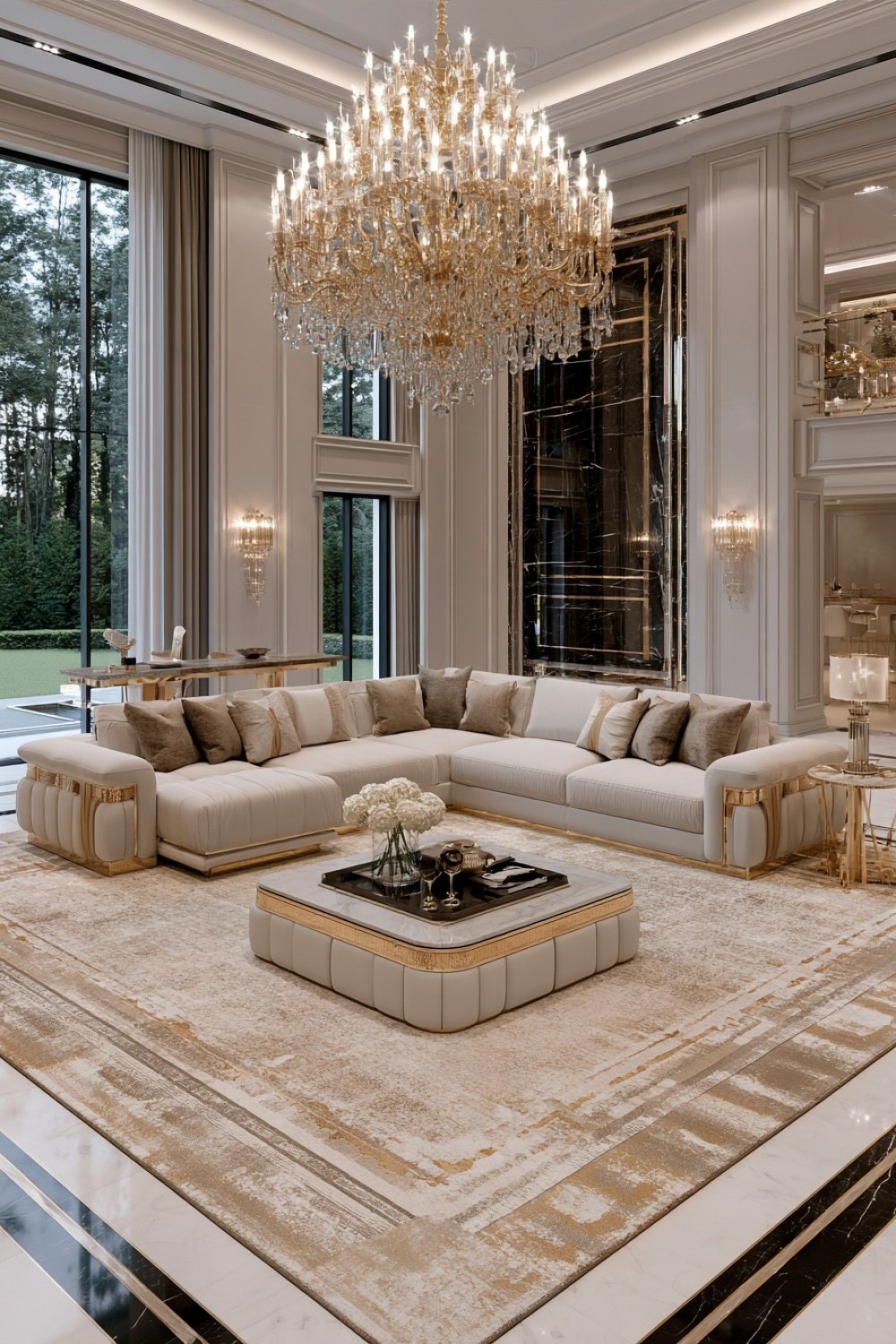
A floating sectional can separate the living area from a dining room, kitchen, or entrance without building a wall. Orient the longest side toward the room’s main focal point and use the back to establish a visual boundary. A narrow console behind the sofa may provide lighting and storage, but it should not reduce the passage or create an unstable collection of objects.
Plan circulation on every exposed side and ensure the sectional does not block doors, heating, or ventilation. Modular pieces should connect securely so sections do not separate during use. Consider how upholstery appears from behind, since the sofa will be visible throughout the open plan. Floor outlets or professionally planned cable routes prevent lamps and charging cords from crossing major walkways.
11. Add Burgundy Upholstery for a Rich Contemporary Mood
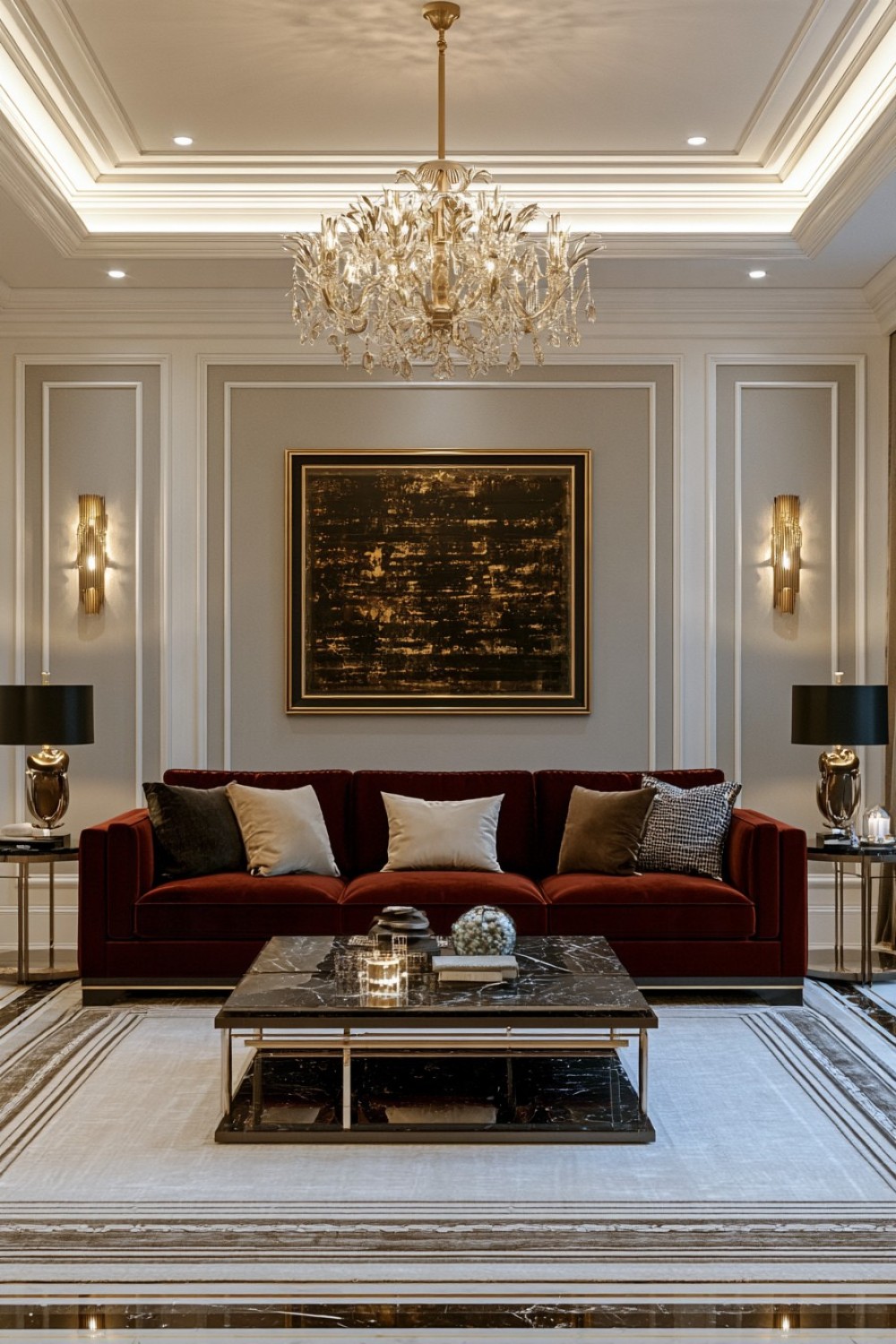
Burgundy can feel sophisticated when surrounded by warm gray, cream, walnut, and restrained metal finishes. Use the color on a sofa with a clean silhouette rather than combining it with excessive ornament. Cushions in dusty rose, tobacco, oatmeal, or muted blue can create a layered palette. Keeping walls quieter gives the upholstery enough visual space.
Large burgundy samples should be examined under natural and artificial lighting because the color may shift toward purple, red, or brown. Deep saturated fabric can also show lint and fading. Review cleaning and lightfastness information before buying. If a full sofa feels like too large a commitment, a burgundy loveseat or pair of chairs can provide a similar focal point with greater flexibility.
12. Choose a Sofa With Integrated Side Tables
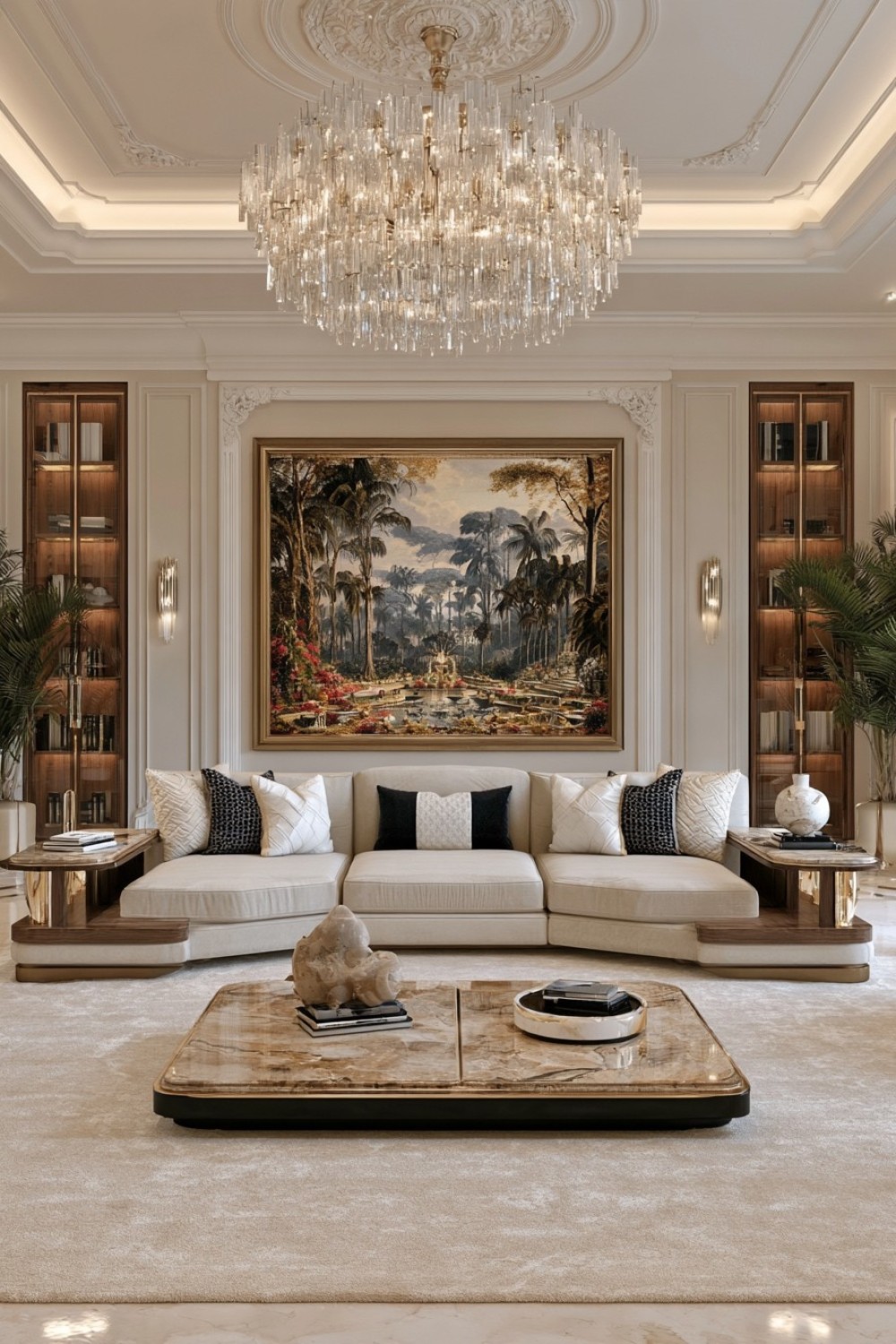
A sofa with integrated tables can create a tailored appearance and reduce the number of separate furniture pieces. Timber, stone, or lacquered surfaces may be incorporated into the arms or modular sections for books, drinks, and small lighting. Confirm that the tables are reachable from the intended seats and do not make the overall sofa too wide for the room.
Integrated elements reduce flexibility because they cannot be moved independently when the layout changes. Request detailed dimensions and consider how the sofa will pass through the property during delivery. Hard surfaces need protection from heat, moisture, and scratches. Electrical charging points should use accessible, professionally planned connections, with cables that can be serviced rather than permanently sealed inside the furniture.
13. Mix Complementary Textures Across a Modular Sofa
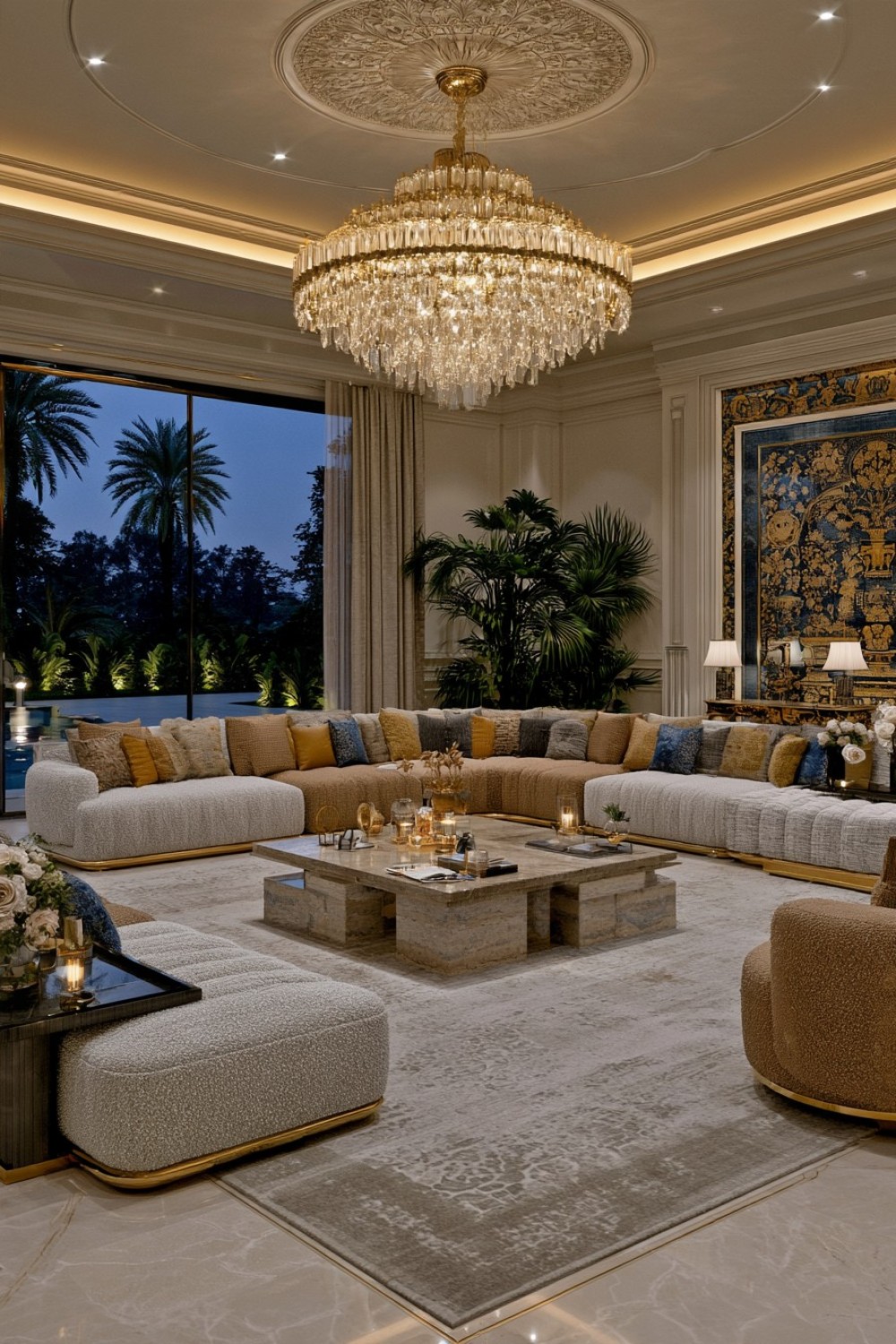
A modular sofa can combine related textures through its main upholstery, cushions, and optional sections. Keep the permanent modules in one durable fabric, then introduce bouclé, velvet, linen-look, or leather through removable elements. This approach produces depth without making replacement difficult. Restrict the palette to a few coordinated shades so the material variation remains visually controlled.
Confirm how the modules connect and whether they remain aligned on the chosen flooring. Measure every possible configuration rather than assuming the sofa will fit simply because individual sections are compact. Cushion fills also influence maintenance: feather-rich interiors require regular shaping, while foam-based cushions behave differently. Ask whether covers, cushions, and individual modules can be repaired or replaced separately.
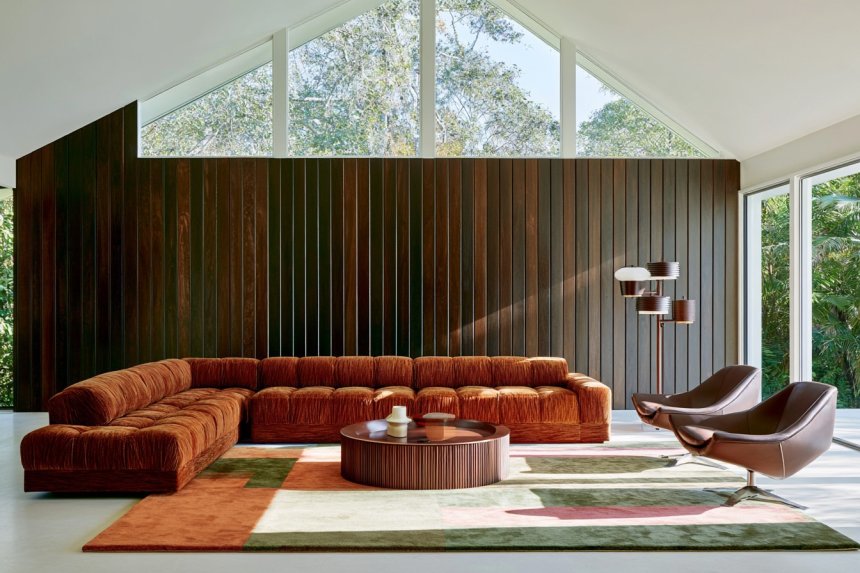
14. Frame a Statement Sofa With Dark Wood Details
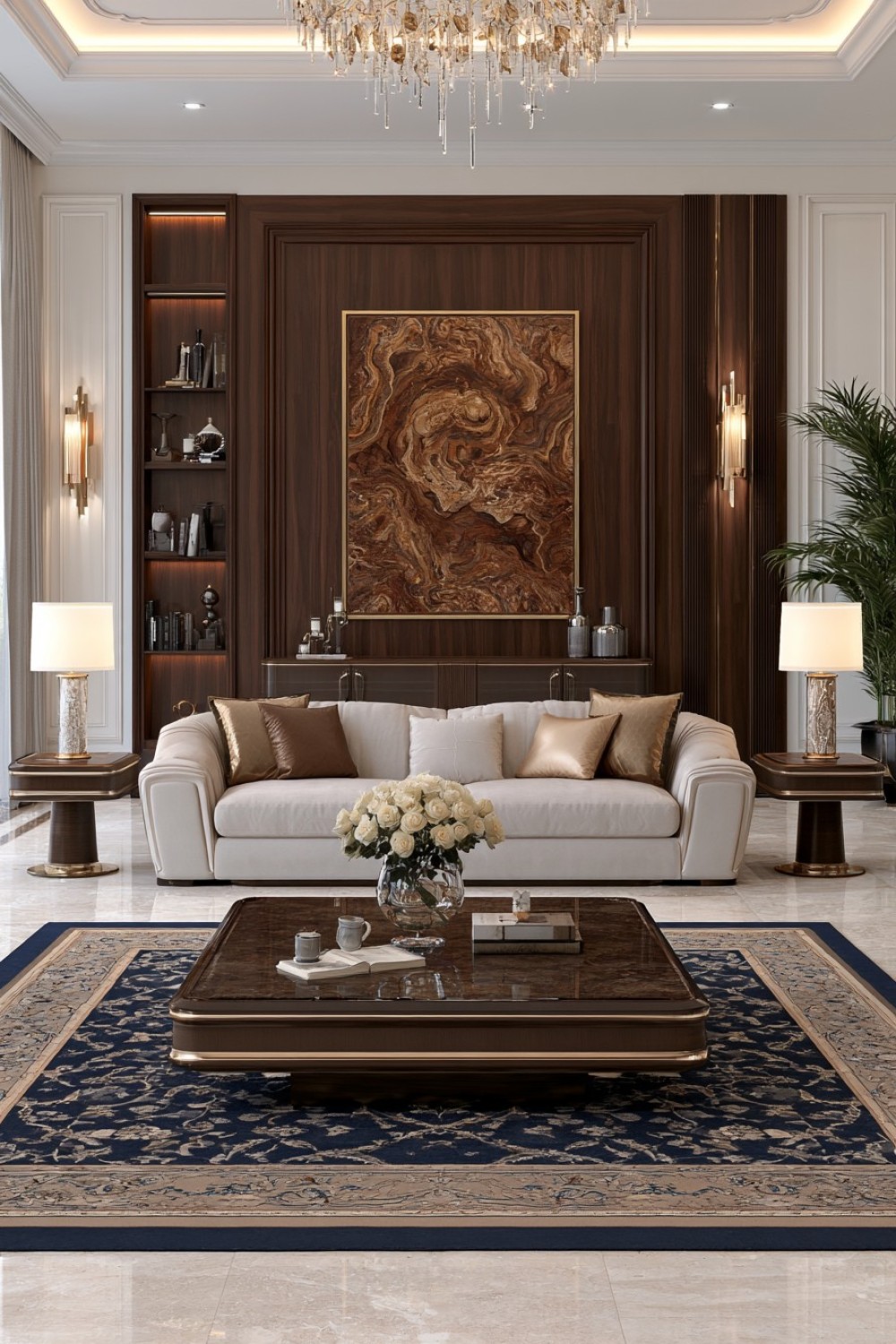
Dark wood panels, shelving, or door frames can give a statement sofa a strong architectural setting. Use the timber on selected vertical elements rather than covering every surface. A pale, rust, olive, or cream sofa will stand out clearly against walnut or smoked oak. Integrated shelving should remain lightly styled so it supports the seating area instead of becoming a competing focal point.
Timber veneer, solid wood, and laminate have different costs, repair options, and maintenance needs. Review full-size samples and confirm how edges, joints, and corners will be finished. Wall panels must not cover unresolved moisture, outlets, or service points. Shelves should be properly anchored, and heavy objects should not be positioned directly above the sofa where they could fall.
15. Create a Gallery-Like Lounge With Statement Seating
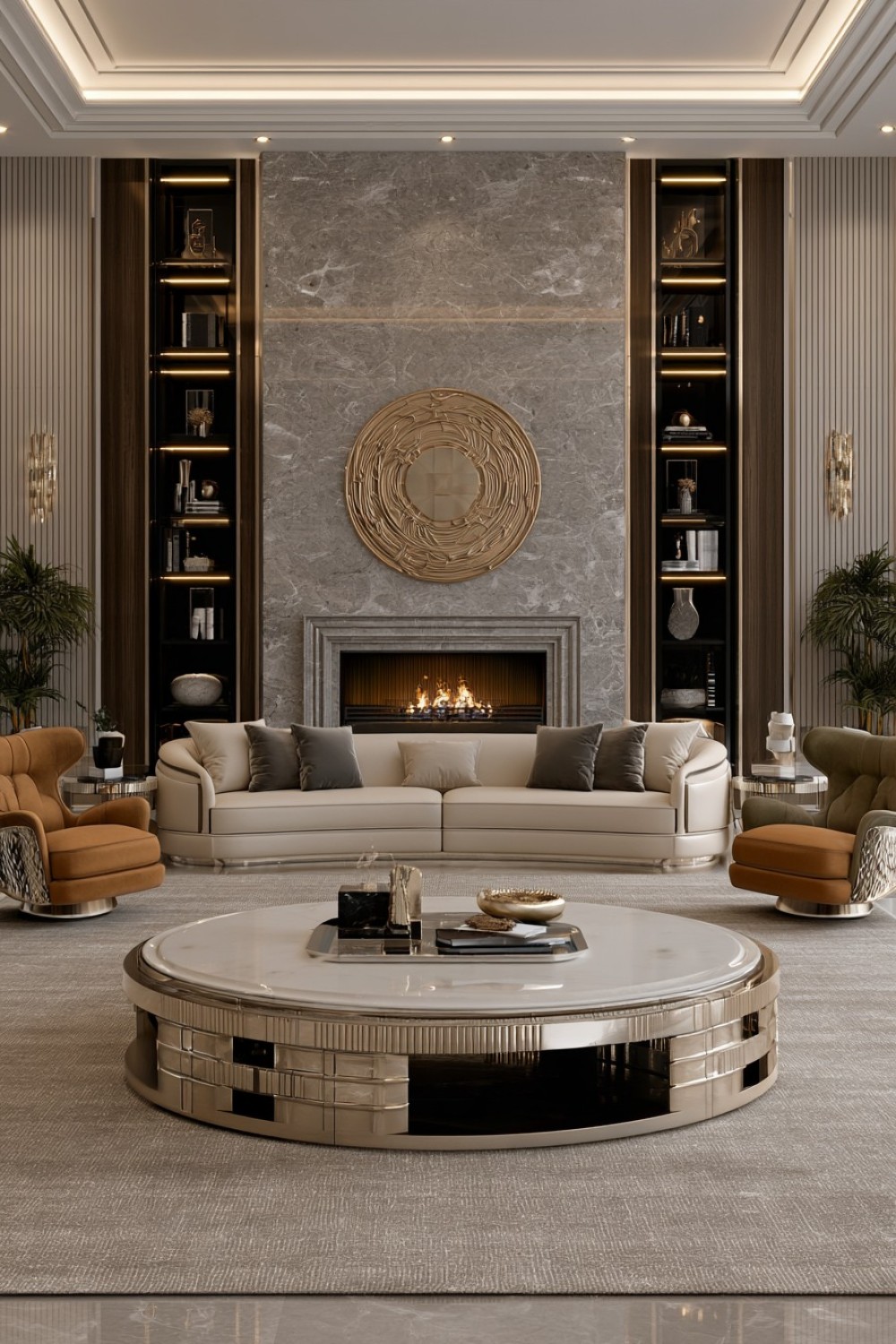
A gallery-like living room can combine one sculptural sofa with a limited selection of art and open floor space. Position the seating so it can be viewed from more than one direction and select a rug large enough to anchor the arrangement. One substantial artwork usually creates a clearer result than numerous small pieces. Track or directional lighting can highlight art without shining directly onto the screen or seating.
The room must still function comfortably rather than operating only as a visual display. Provide accessible tables, supportive seats, and clear conversation distances. Secure heavy artwork with fixings suited to the wall structure and protect light-sensitive pieces from prolonged exposure. Avoid placing fragile sculptures in walkways. A successful luxury lounge combines visual restraint with materials and furniture that can tolerate its actual level of everyday use.
MORE IDEAS


Share
What's Your Reaction?
 Like
0
Like
0
 Dislike
0
Dislike
0
 Love
0
Love
0
 Funny
0
Funny
0
 Angry
0
Angry
0
 Sad
0
Sad
0
 Wow
0
Wow
0