15 Kitchen Storage Upgrades for a More Functional Space

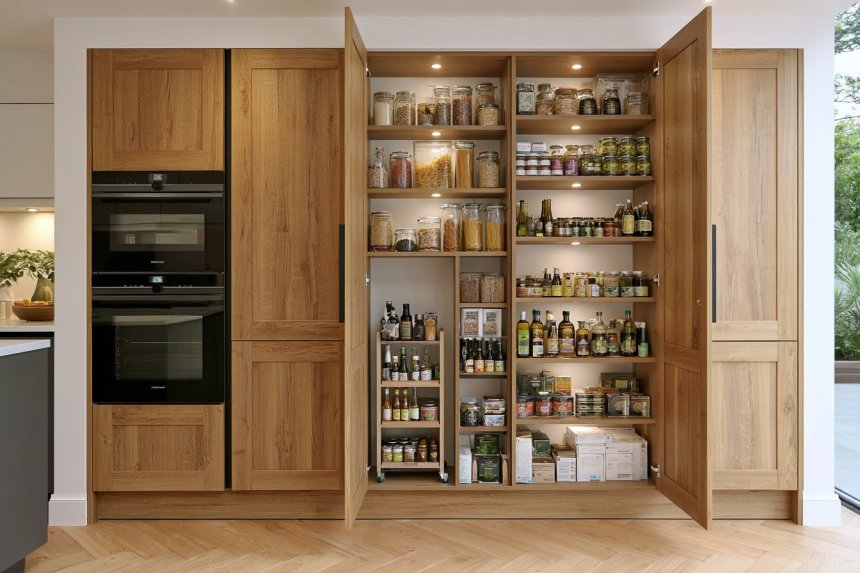
Effective kitchen storage is not about fitting the greatest possible number of objects into every cabinet. It should place frequently used items close to the activities they support while keeping worktops and walkways clear. Begin by removing duplicates, measuring cabinet interiors, and grouping supplies according to cooking, cleaning, food preparation, and serving routines. Drawer strength, ventilation, plumbing access, electrical safety, and ease of cleaning should influence every organizer selected. Adjustable components are often more useful than tightly fitted systems because household needs change over time. These kitchen storage upgrades focus on practical access, clear visibility, safe installation, and arrangements that are realistic to maintain during everyday use.
1. Create a Dedicated Drawer for Everyday Cooking Tools
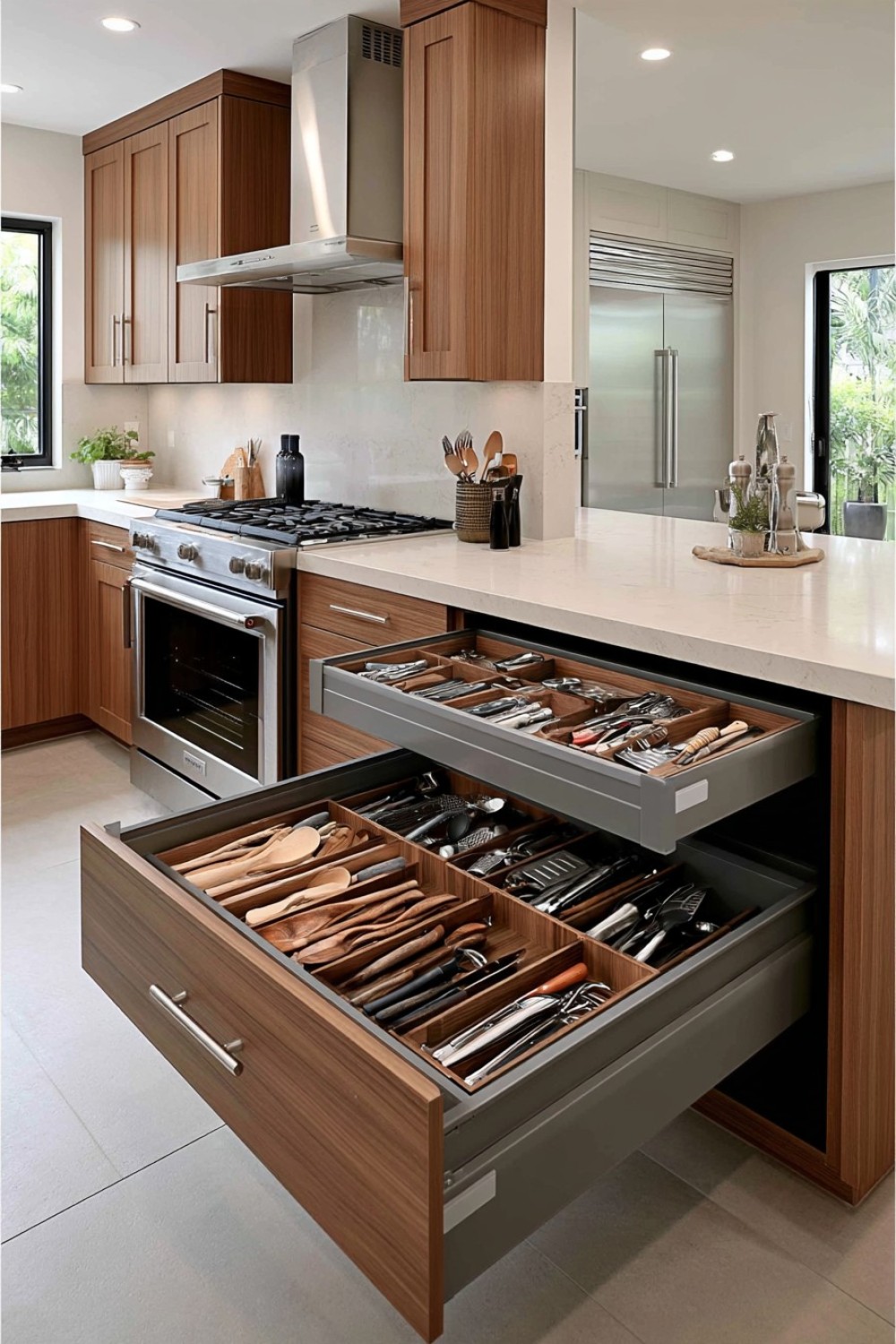
Place spatulas, measuring spoons, tongs, peelers, and other frequently used tools in a drawer close to the main preparation area. Adjustable dividers prevent utensils from overlapping and make the complete contents visible. Arrange objects by function rather than forcing each tool into an individual compartment. Items used only for occasional baking or entertaining can move to secondary storage.
Measure the internal width, depth, and height before ordering an insert because cabinet dimensions differ even when drawer fronts appear similar. Keep sharp tools in protected compartments and separate them from objects reached for quickly. Avoid loading the drawer beyond the runners’ rated capacity. Remove unnecessary duplicates periodically so the organizer continues to support cooking rather than becoming another crowded container.
2. Turn a Narrow Cabinet Into a Vertical Baking Station
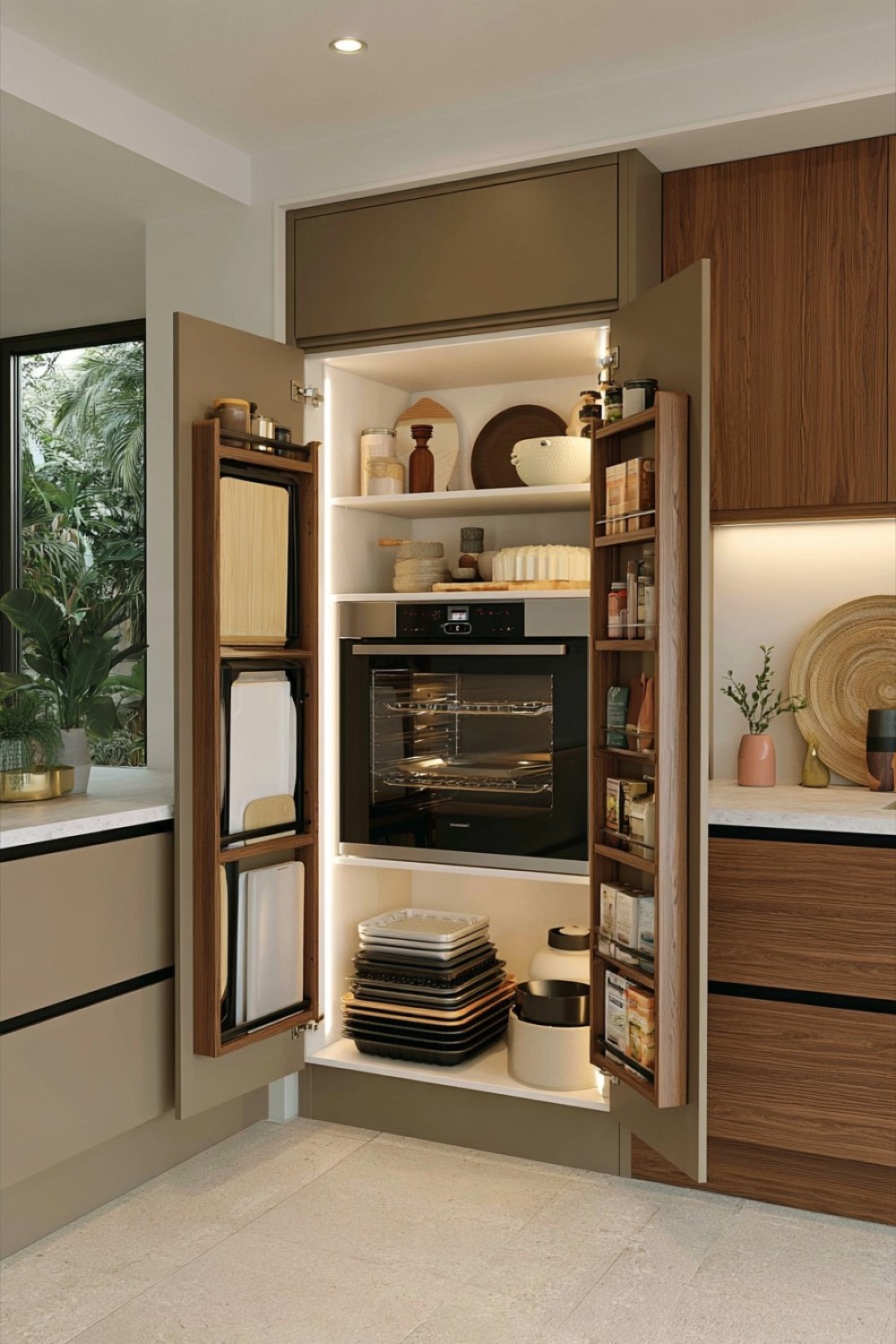
A narrow cabinet can hold baking sheets, cooling racks, chopping boards, muffin tins, and serving trays vertically. Dividers keep each piece upright so one item can be removed without lifting an entire stack. Position the cabinet near the oven or preparation counter when possible. Sort equipment by height and frequency of use, leaving enough space for fingers to grip each item comfortably.
Use rigid dividers secured according to the cabinet manufacturer’s guidance. Thin tension rods may shift under the weight of metal cookware and are not suitable for every cabinet. Avoid storing extremely heavy stone or cast-iron pieces in a lightweight pull-out unit. Clean crumbs from the base regularly and make sure projecting handles do not prevent the cabinet door from closing fully.
3. Build a Breakfast Cabinet for Busy Mornings
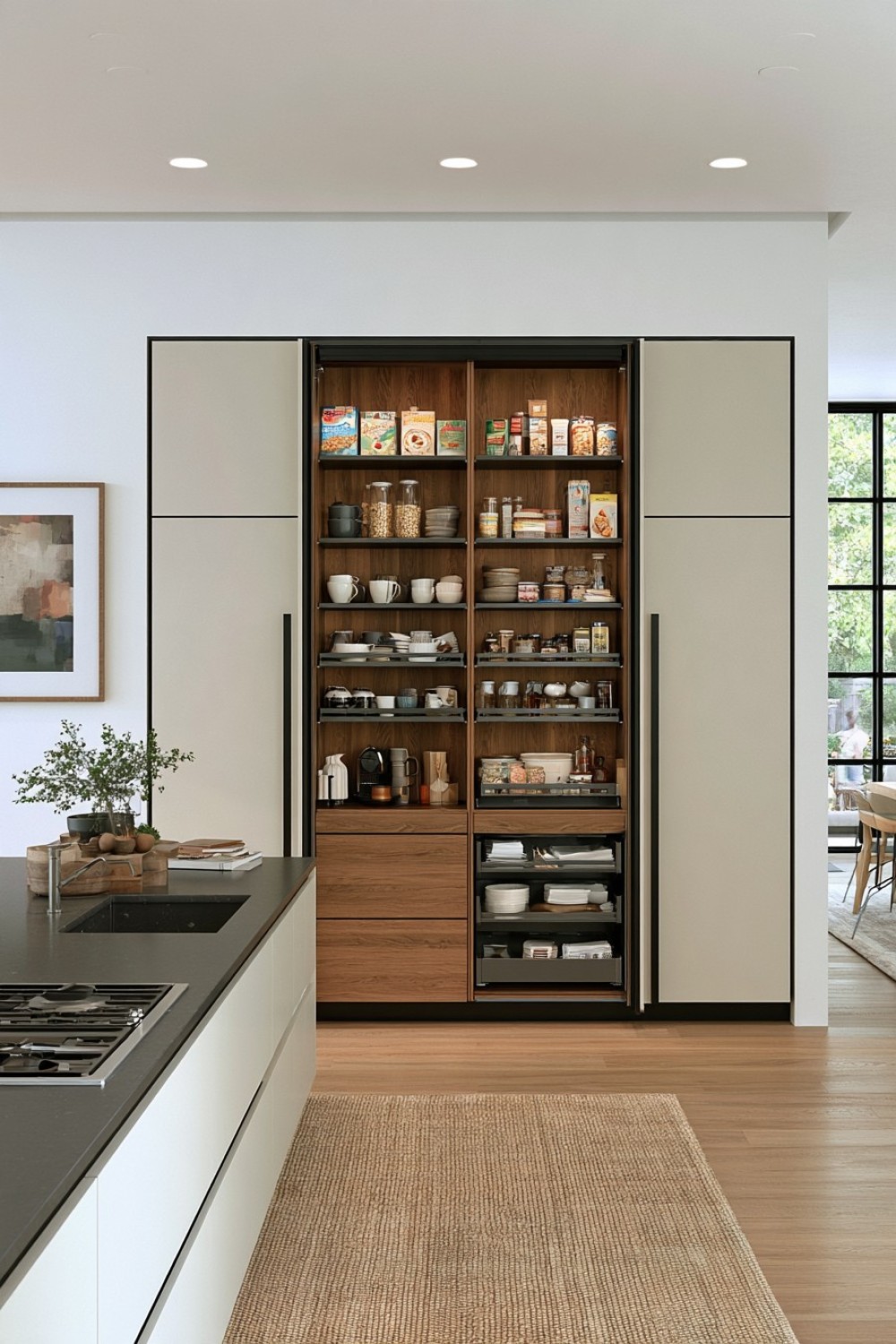
A breakfast cabinet can group cereal, bread, bowls, spreads, coffee, and other morning essentials in one location. Store everyday dishes at an accessible height and use shallow containers to prevent smaller packages from disappearing behind larger items. A nearby work surface makes preparation easier and reduces movement across the kitchen during busy periods.
Keep perishable food refrigerated and follow storage instructions rather than placing every breakfast product in the cabinet for convenience. Appliances such as toasters and kettles need heat-resistant surfaces, ventilation, and appropriate electrical connections. Do not operate them inside a closed cabinet unless the installation is specifically designed for that purpose. Clean crumbs and inspect expiry dates regularly to avoid attracting pests.
4. Organize the Sink Cabinet Around Cleaning Tasks
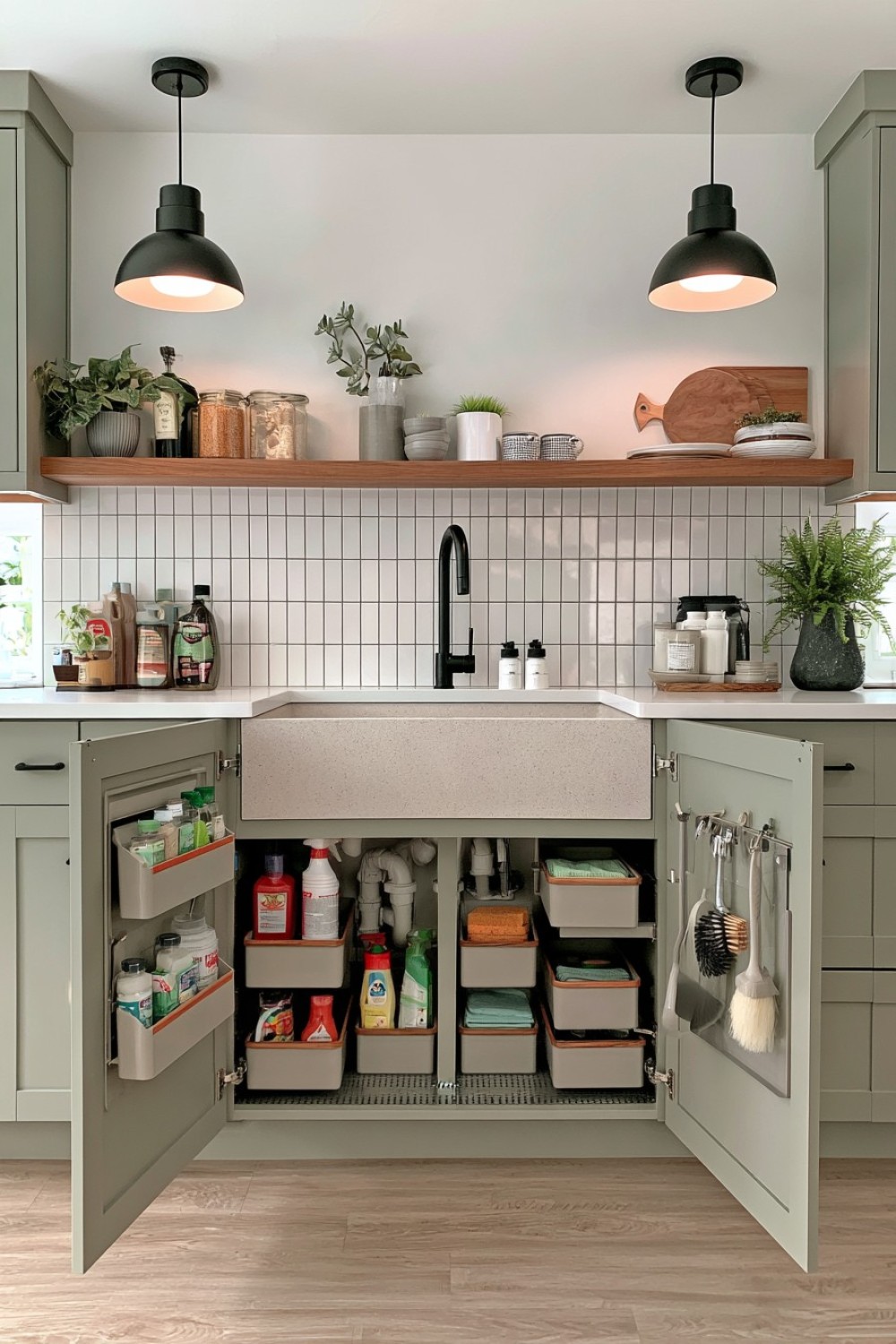
The cabinet beneath the sink works better when products are grouped by task. Use a removable tray for daily dishwashing supplies, a handled container for general cleaning, and a separate holder for cloths and sponges. Select organizers that fit around pipes, valves, and the waste system without preventing access. A waterproof base liner can make small leaks easier to notice and clean.
Cleaning products should remain sealed, upright, and stored according to their labels. Use child-resistant locks when children can access the kitchen, and never transfer chemicals into food or drink containers. Avoid tightly packing the cabinet because plumbing needs inspection space. Check periodically for dampness, corrosion, odors, or leakage instead of allowing organizers to conceal developing problems.
5. Add a Pull-Out Unit Beside the Refrigerator
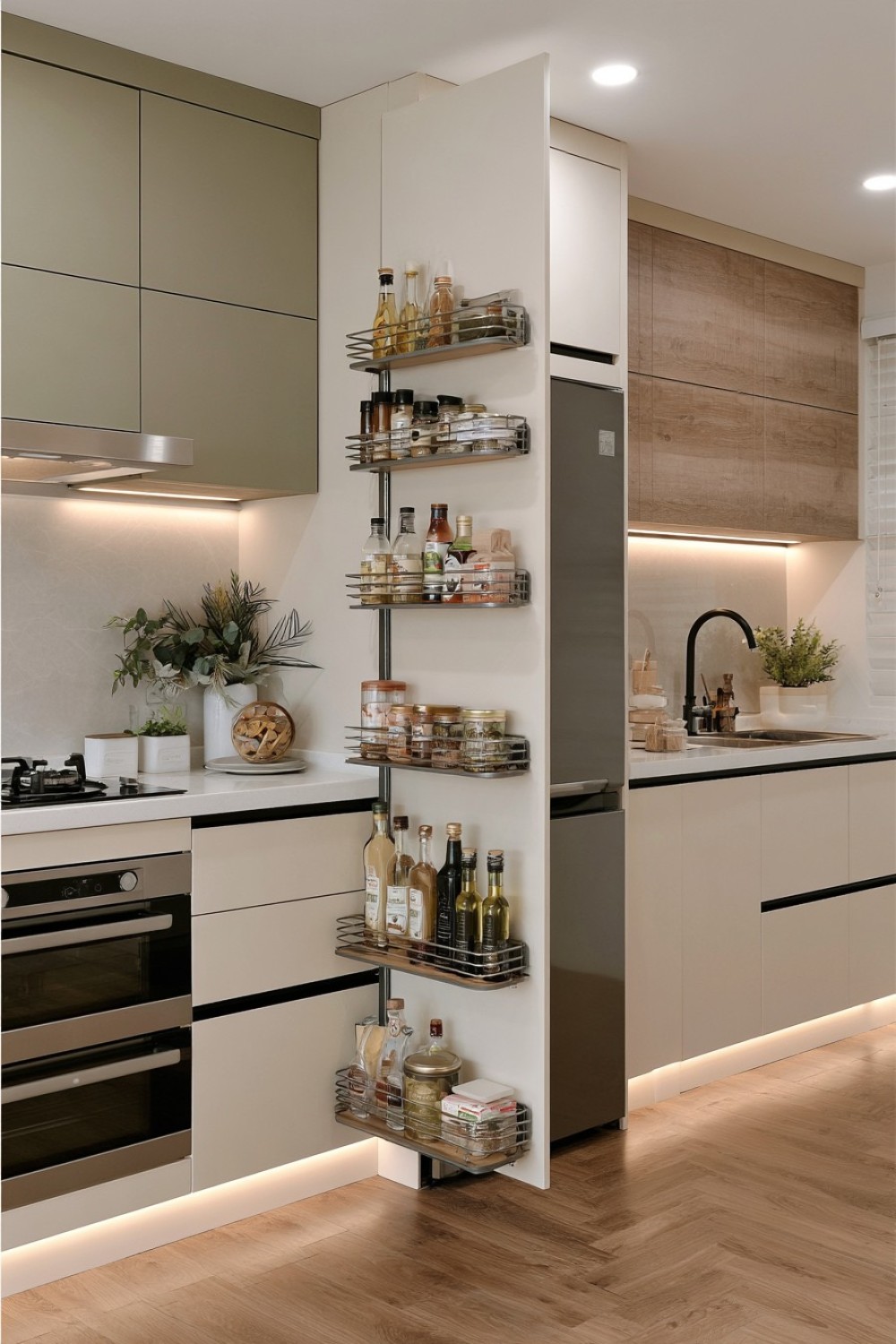
A narrow pull-out unit can make use of an otherwise awkward space beside the refrigerator. It may hold sealed pantry goods, wraps, trays, or lightweight bottles when fitted with retaining rails. Arrange heavier items near the bottom and label shelves according to category. Full-extension runners improve visibility and reduce the likelihood of forgotten stock remaining at the back.
Do not reduce the ventilation clearance required by the refrigerator manufacturer. Heat from the appliance may also make the location unsuitable for foods that require cool storage. A tall pull-out needs strong hardware and protection against tipping or twisting when fully extended. Confirm its load rating and ensure the handle does not interfere with refrigerator doors or nearby circulation.
6. Design a Ventilated Appliance Garage
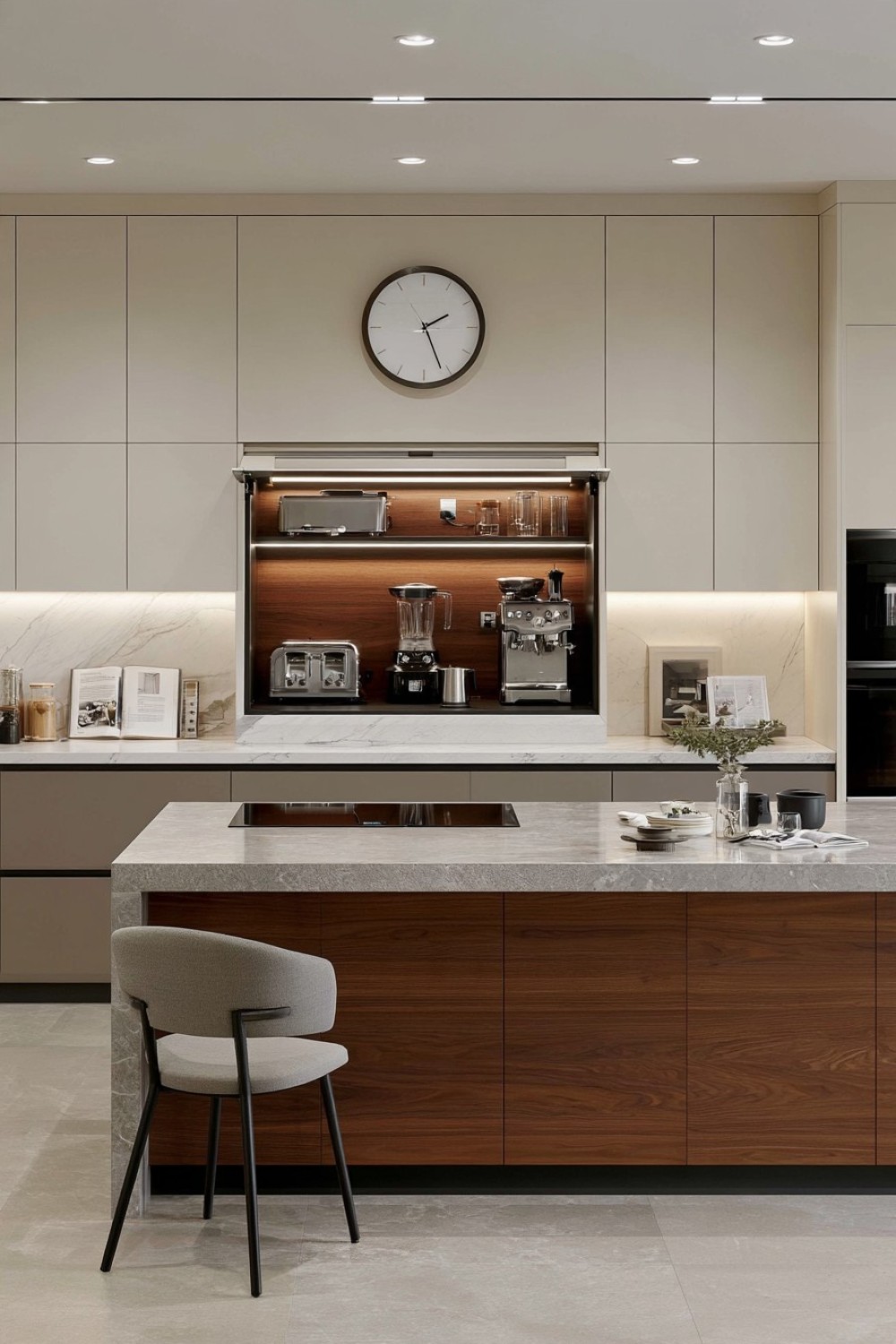
An appliance garage can conceal a coffee maker, blender, toaster, or mixer while keeping it close to the worktop. Pocket, lift-up, or retracting doors prevent open panels from occupying counter space. Give each appliance enough room to be moved forward and provide nearby storage for its attachments. A removable tray can protect the cabinet base from crumbs and spills.
Heat-producing appliances should not operate in an enclosed cabinet unless the unit, ventilation, clearances, and electrical installation are designed for that use. Follow each appliance manufacturer’s instructions and unplug equipment when appropriate. Outlets must remain accessible, and cords should not be pinched by moving doors. Avoid placing water containers where a leak could reach electrical connections.
7. Replace a Wall Rack With a Tiered Spice Drawer
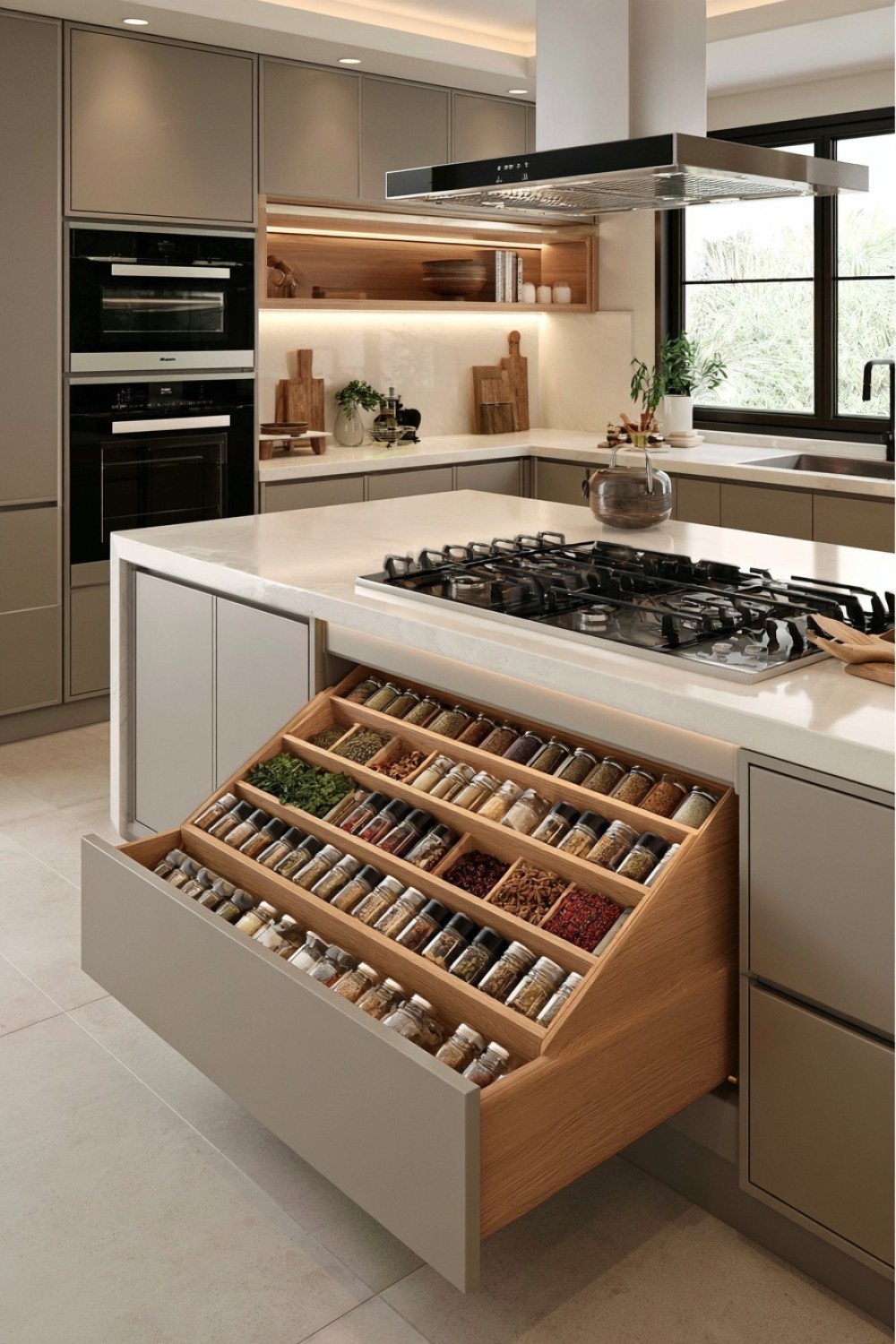
A tiered drawer protects spices from airborne cooking residue while keeping labels visible. Arrange jars alphabetically, by cuisine, or according to frequency of use. Consistent containers can improve fit, but transferring spices is optional if original packaging contains useful expiry and allergen information. Place the drawer near the preparation zone rather than directly beside a strong heat source.
Measure jar height before selecting an angled insert and confirm that the drawer will close without contacting lids. Spices generally retain quality better when protected from heat, moisture, and strong light. Record product names and dates when decanting ingredients. Review the drawer periodically and combine only identical products with compatible dates instead of topping up old containers indefinitely.
8. Store Pots in Deep Drawers With Adjustable Pegs
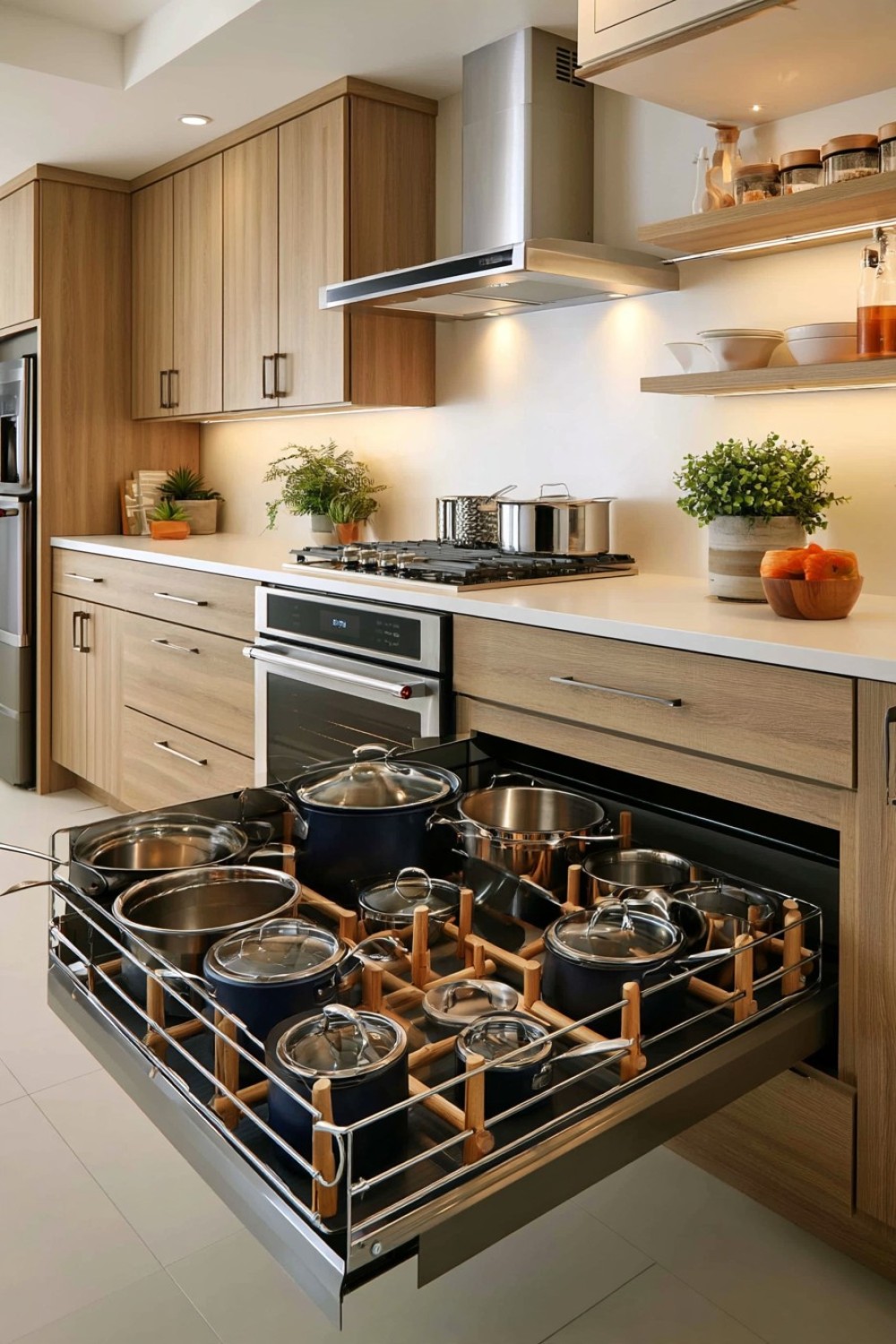
Deep drawers make heavy cookware easier to access than a low cabinet where pots must be lifted from the back. Adjustable pegs can separate pans, lids, and casserole dishes while adapting to different shapes. Store the heaviest cookware near the drawer’s center and position frequently used pieces toward the front. Protective separators can reduce scratching between stacked surfaces.
Confirm that the drawer runners and cabinet structure are rated for the combined weight of cookware. Overloaded drawers may sag, fail to close, or detach from their tracks. Pegs should lock firmly into the base rather than shifting as the drawer moves. Arrange handles so they do not collide with the sides or prevent the drawer above from operating correctly.
9. Use the Inside of Cabinet Doors Carefully
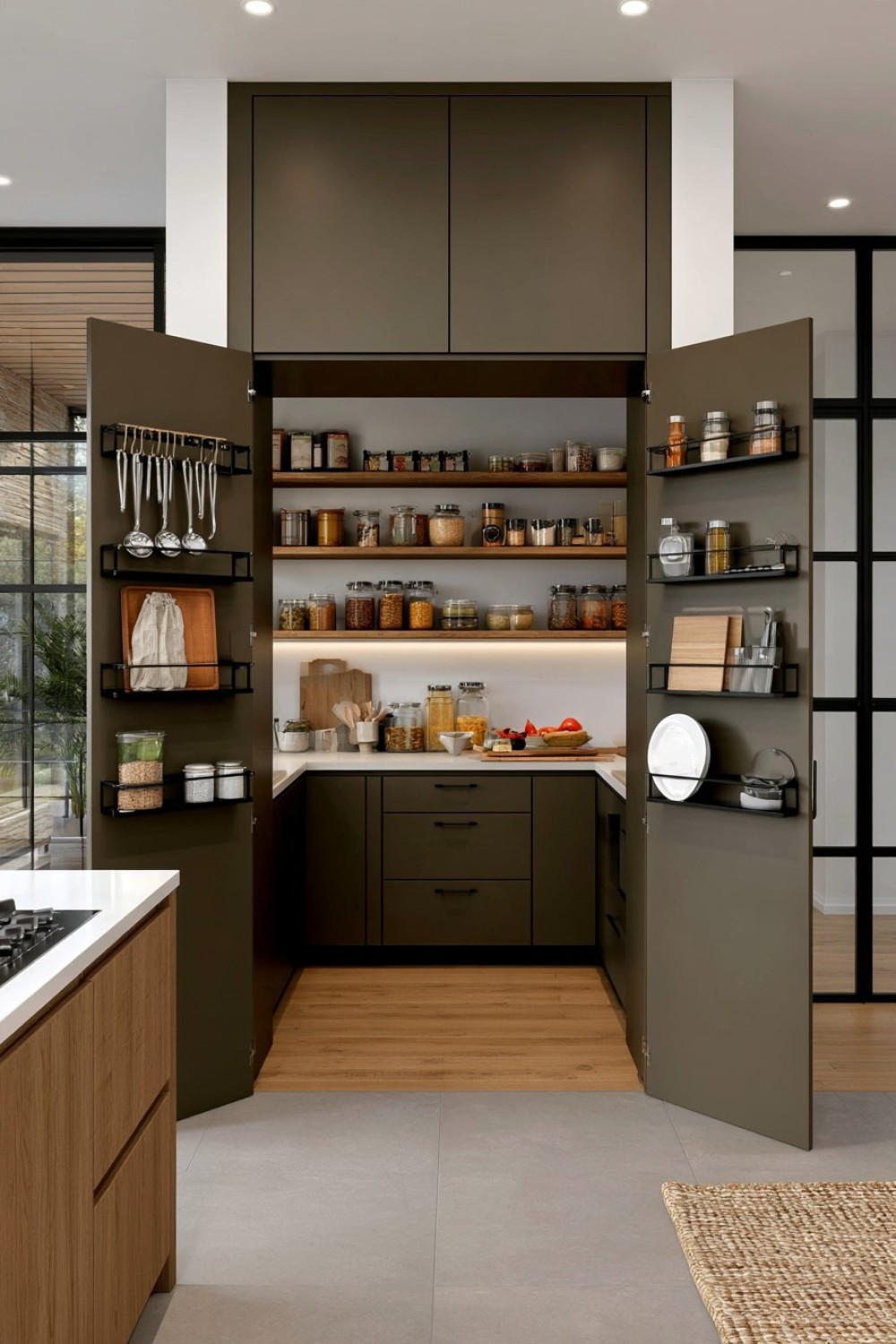
The inside of a cabinet door can hold measuring spoons, foil boxes, lightweight lids, or a shallow organizer for small packets. Choose items that do not project far enough to collide with shelves when the door closes. Removable organizers can work for renters, while permanently fitted racks provide greater stability when installation is allowed.
Cabinet hinges are not designed to carry unlimited additional weight. Avoid loading doors with glass jars, heavy boards, cleaning bottles, or bulky cookware unless the cabinetry is specifically rated for it. Test the complete closing path before fixing an organizer permanently. Screws must be short enough that they cannot penetrate the visible front of the door.
10. Give Food Containers Their Own Drawer
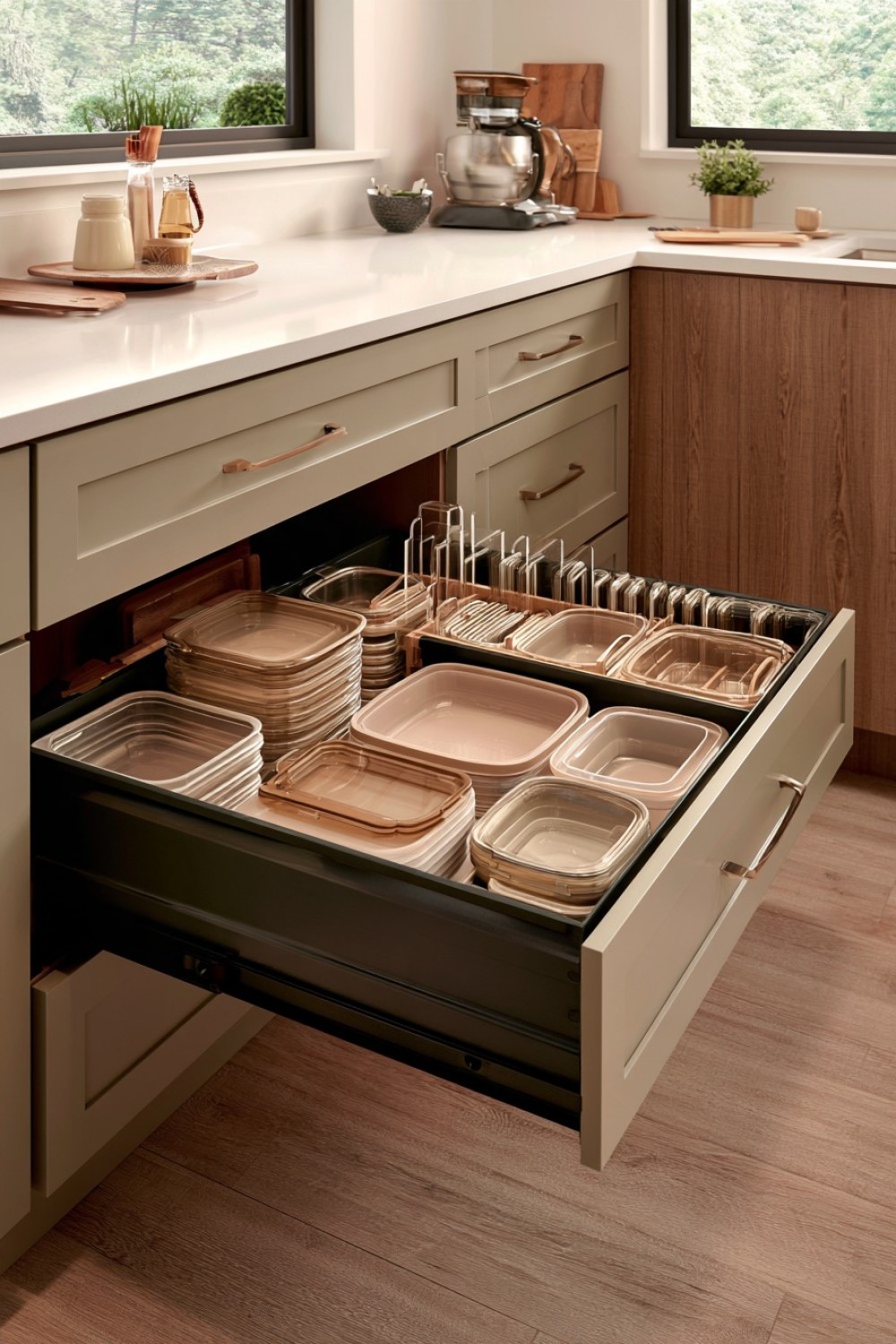
A dedicated drawer prevents reusable containers and lids from spreading through several cabinets. Nest containers by shape and keep lids upright in adjustable dividers. Reducing the collection to a few compatible sizes can make storage and meal preparation considerably easier. Place lunch boxes and frequently used containers toward the front, with larger occasional pieces behind them.
Discard containers that are cracked, permanently stained, warped, or no longer have compatible lids. Follow manufacturer guidance concerning dishwashers, freezers, microwaves, and hot food. Allow every piece to dry completely before closing it in the drawer. Avoid nesting containers so tightly that they become difficult to separate or trap residual moisture between surfaces.
11. Organize Pantry Shelves by Meal Function
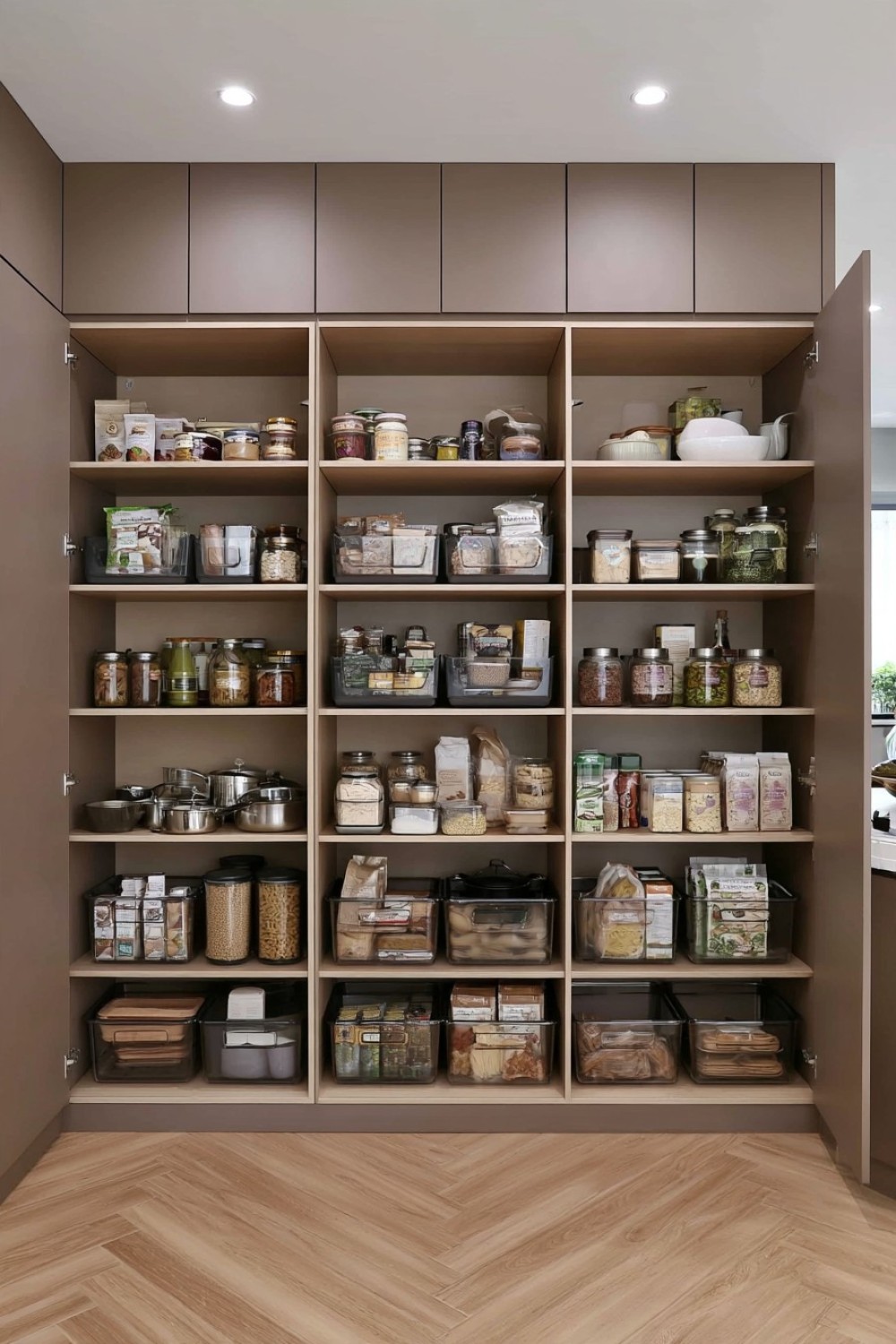
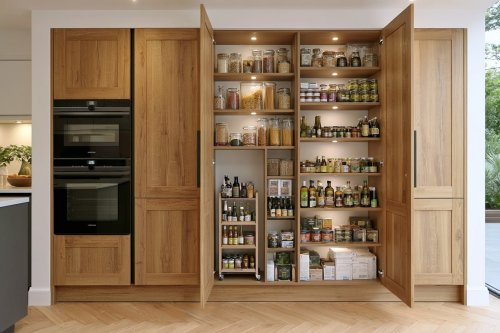
Grouping pantry supplies by meal function can be more intuitive than organizing them only by package type. Create zones for breakfast, baking, quick dinners, snacks, and frequently used staples. Shallow handled bins can keep related ingredients together and make stock checks easier. Place everyday foods within comfortable reach and reserve upper shelves for lightweight, less frequently used supplies.
Labels should describe real categories used by the household instead of adding decoration without purpose. Keep original packaging or transfer essential product names, preparation instructions, allergen details, and expiry dates to new containers. Rotate older products forward whenever groceries are added. Avoid storing heavy appliances or glass containers where they must be lifted above shoulder height.
12. Install a Professionally Planned Charging Drawer
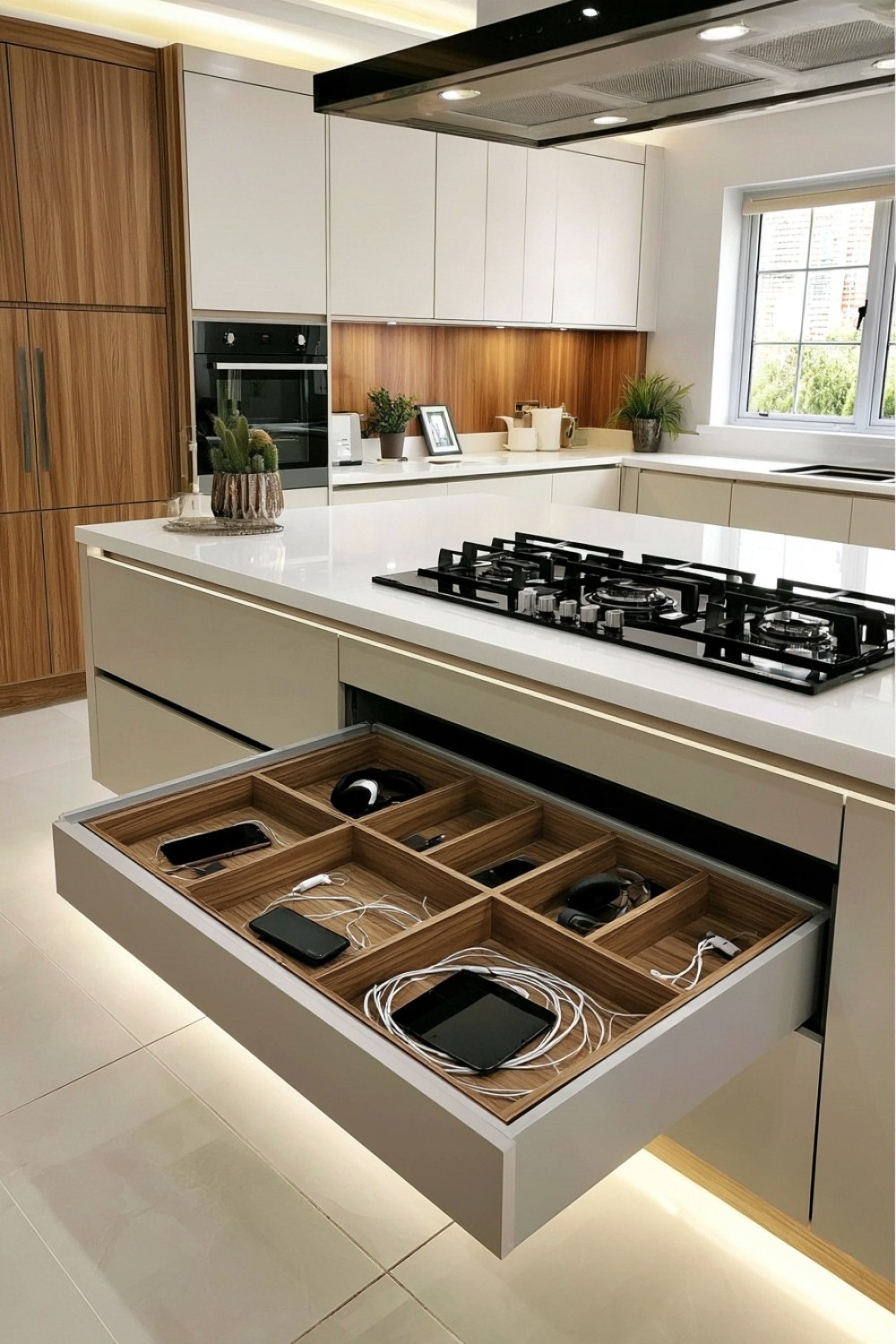
A charging drawer can keep phones, tablets, and cables away from food preparation surfaces. Use divided compartments so devices remain separated and cords do not tangle. Position the station outside wet areas and away from the heat generated by ovens, cooktops, and small appliances. The drawer should open easily without pulling or compressing connected cables.
Electrical installation inside cabinetry requires appropriate components, ventilation, cable routing, and compliance with local regulations. It should be planned or completed by a qualified professional where required. Do not close overheating devices, damaged batteries, or incompatible chargers inside a drawer. Keep the interior free from paper clutter and inspect cables regularly for fraying, loose connections, or heat damage.
13. Place a Coffee and Tea Drawer Below the Beverage Zone
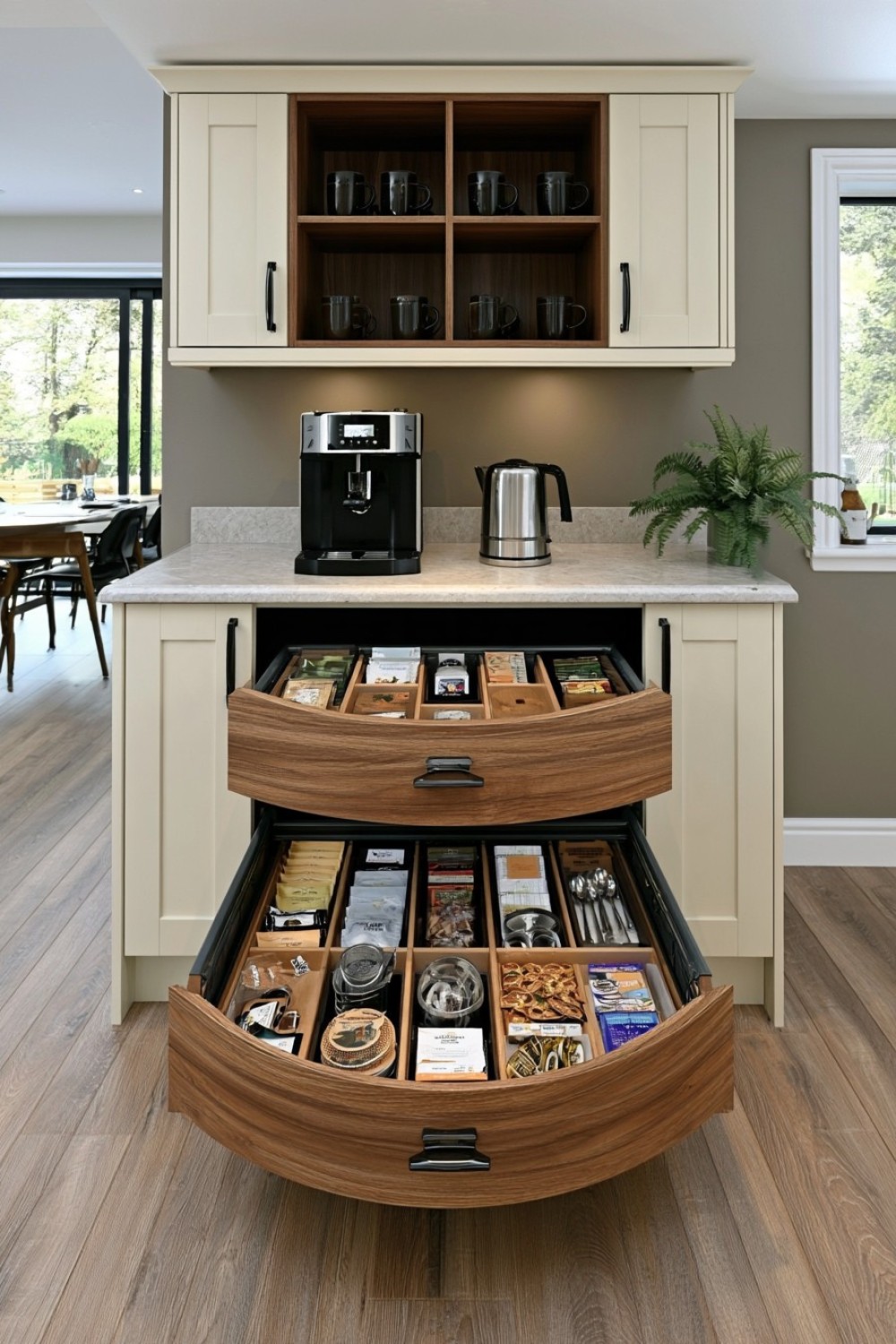
A drawer beneath the coffee maker or kettle can hold tea, coffee, filters, spoons, and reusable accessories. Divide it according to the household’s routine and keep everyday choices at the front. Small containers prevent packets and capsules from shifting each time the drawer opens. Reserve a separate section for guest options instead of mixing everything into one large compartment.
Protect supplies from moisture, heat, and direct contact with spills. Store coffee and tea according to their packaging instructions and retain relevant expiry information. The drawer should not interfere with appliance ventilation or electrical cables above it. Clean loose grounds and crumbs regularly, and avoid accumulating more single-use products than can realistically be consumed before their quality declines.
14. Add a Rolling Pantry Cart for Flexible Storage
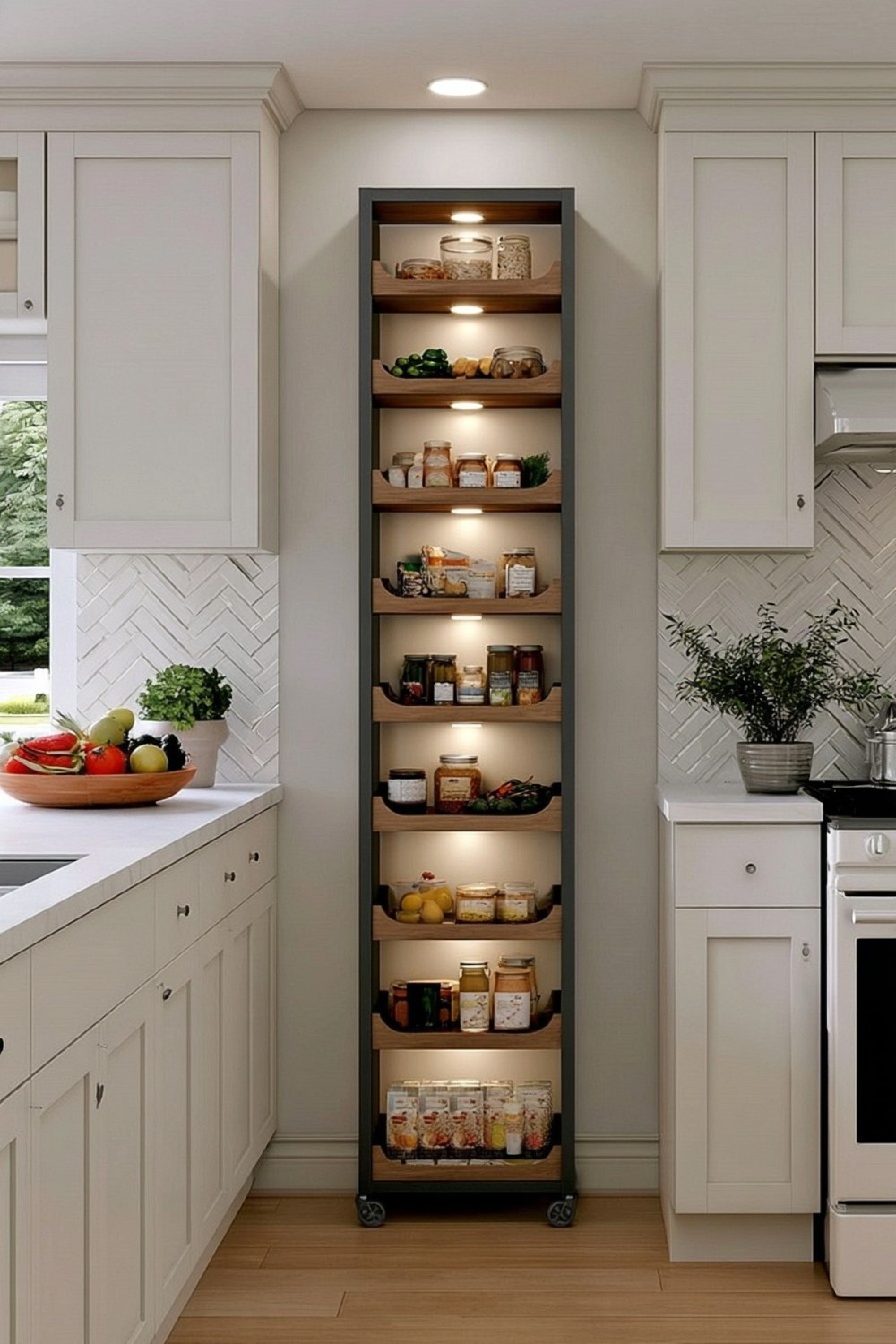
A rolling cart can provide temporary storage for produce, baking supplies, serving pieces, or ingredients used during meal preparation. Select a width that fits into an available recess without blocking cabinet doors. Raised edges or retaining rails help prevent items from falling while the cart moves. Lockable casters keep it stable when used as a stationary station.
Place heavy items on the lowest shelf to reduce the risk of tipping. Wheels should suit the flooring and move across thresholds without sudden stopping. A cart should not occupy a fire exit, doorway, or narrow working aisle, even temporarily. Avoid using its top for hot appliances unless the surface, stability, electrical access, and manufacturer’s instructions support that purpose.
15. Arrange the Main Counter as a Focused Preparation Station
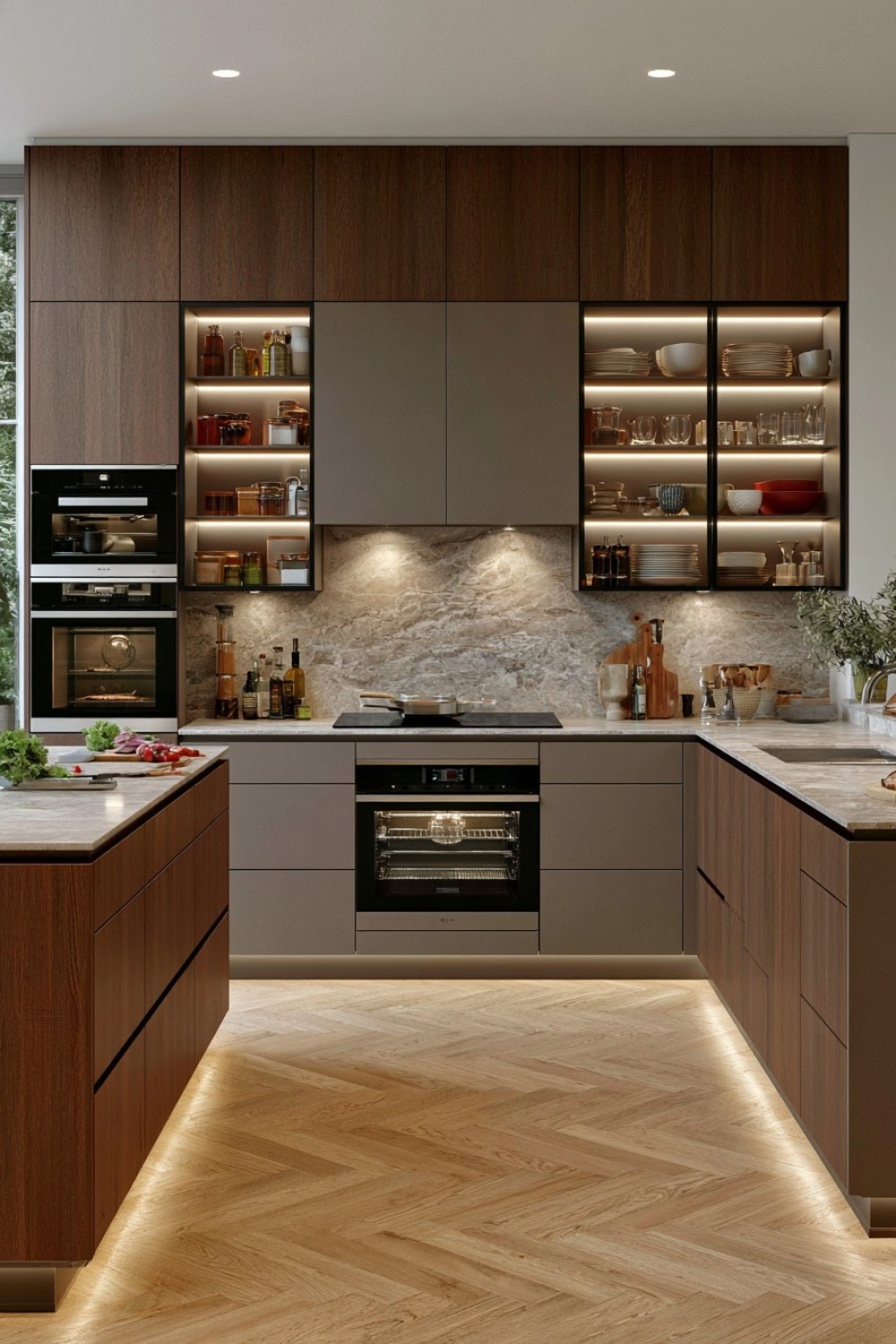
A practical preparation station places knives, boards, mixing bowls, waste access, and frequently used ingredients close to one clear section of counter. Store tools in the drawer below and heavier bowls in a nearby lower cabinet. Keep the work surface mostly empty rather than displaying every utensil. Adequate task lighting makes chopping, measuring, and cleaning easier.
Separate raw and ready-to-eat food according to appropriate food-safety practices, and clean the surface using methods suitable for its material. Knife storage should protect the blades and prevent accidental contact. Do not position the main preparation area where open appliance doors or passing household members create repeated conflicts. Reviewing the station after several weeks will reveal which items genuinely deserve the most accessible storage.
MORE IDEAS


Share
What's Your Reaction?
 Like
0
Like
0
 Dislike
0
Dislike
0
 Love
0
Love
0
 Funny
0
Funny
0
 Angry
0
Angry
0
 Sad
0
Sad
0
 Wow
0
Wow
0