15 Sofa Styles That Reshape the Living Room

The sofa usually occupies more visual and physical space than any other living room furnishing, making its shape and proportions central to the layout. Before selecting a design, measure the room, doorways, circulation paths, television distance, and the clearance required around tables and chairs. Seat depth, back height, cushion support, upholstery durability, and ease of cleaning should also reflect how the household actually relaxes and entertains. Curved, modular, asymmetric, patterned, and platform-based sofas can each change the way a room feels and functions. These sofa styles focus on practical placement, comfortable use, adaptable configurations, and designs that give the living area a clearer identity.
1. Make a Deep Curved Sofa the Architectural Centerpiece
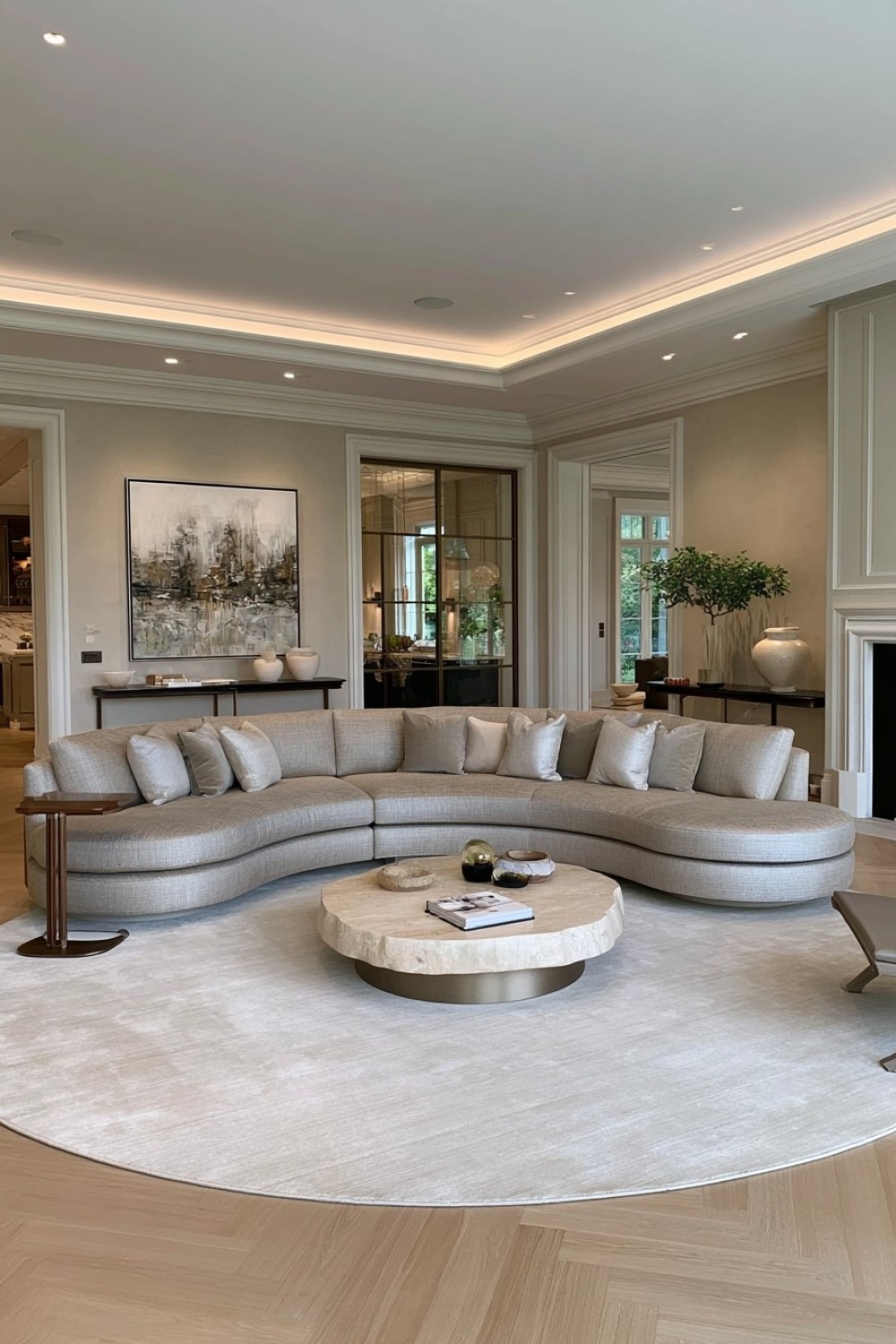
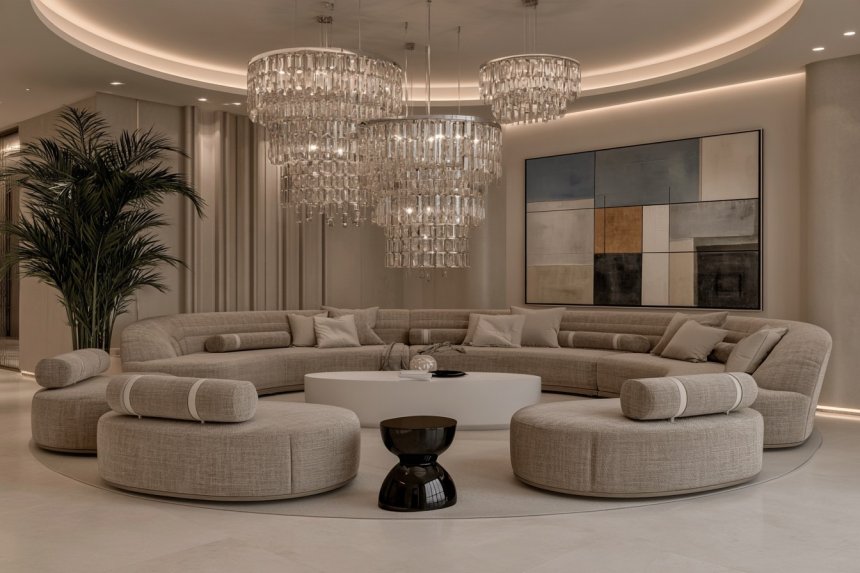
A curved sofa can direct attention toward the center of the living room and create a more conversational seating arrangement. It works particularly well when floated away from the walls, allowing its complete silhouette to remain visible. Pair it with a round or irregular coffee table that follows the curve without filling the open area. Keep surrounding furniture comparatively simple so the sofa remains the main form.
Curved designs often require more floor space than their seating capacity suggests. Mark the full outline before ordering and measure the widest delivery points, including stairs and door turns. Sit on the sofa before purchasing when possible, as the inner and outer portions may provide different levels of support. Custom curved rugs and tables can also affect the total cost of completing the arrangement.
2. Build a Relaxed Lounge Around an Extra-Deep Low Sofa
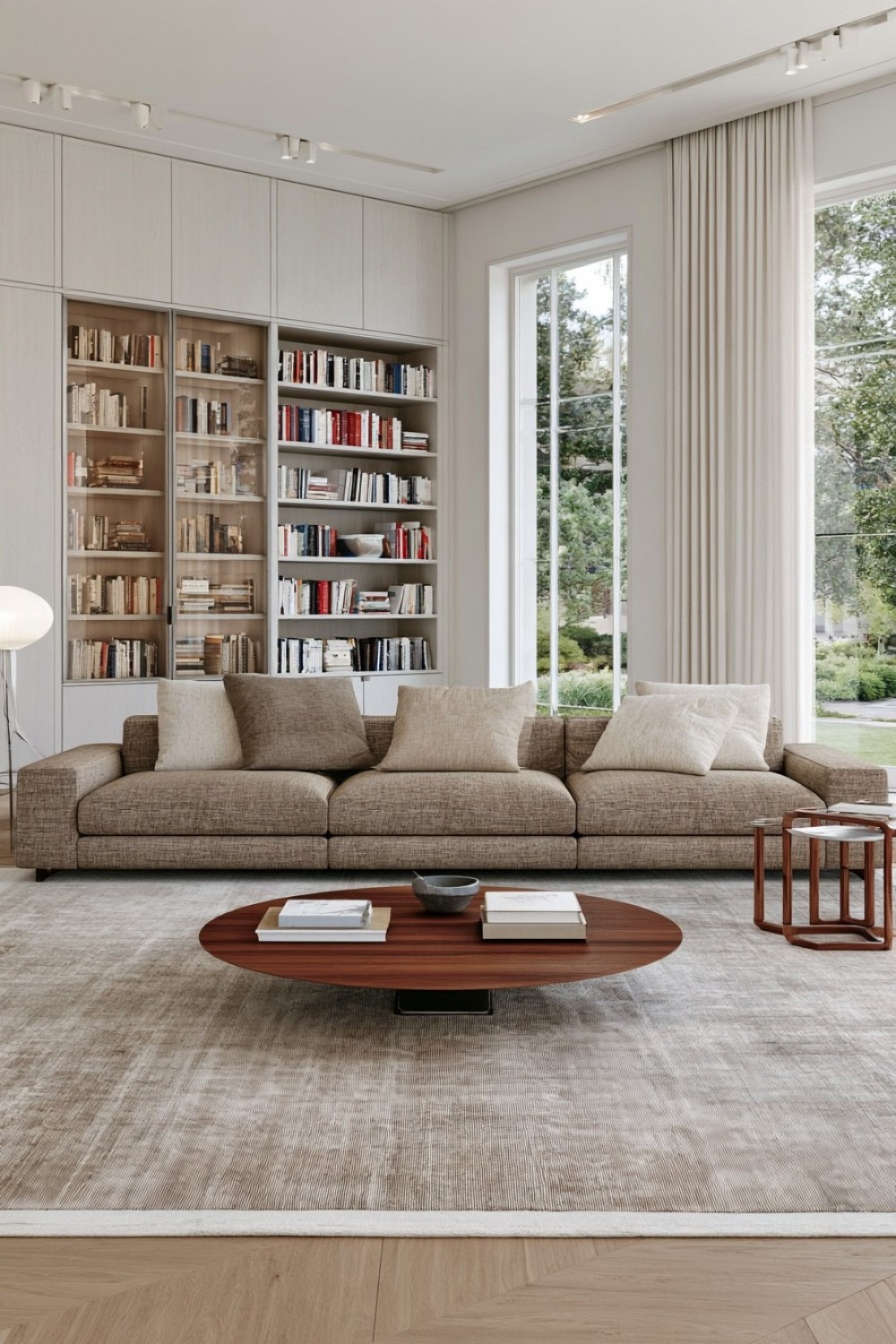
An extra-deep sofa suits reclining, informal movie nights, and households that prefer to sit with their legs raised. Layer it with supportive back cushions so people of different heights can adjust the usable seat depth. A low table and wide rug can reinforce its relaxed proportions, while a nearby conventional chair gives guests another seating option.
Very low seats may be difficult for older adults or anyone with limited mobility. Check seat height, cushion compression, back angle, and the effort required to stand. Deep sofas also project farther into the room and may reduce circulation. Feather-rich cushions need regular reshaping, while firmer foam behaves differently, so compare comfort and maintenance rather than choosing depth from photographs alone.
3. Use Two-Tone Upholstery for a More Custom Appearance
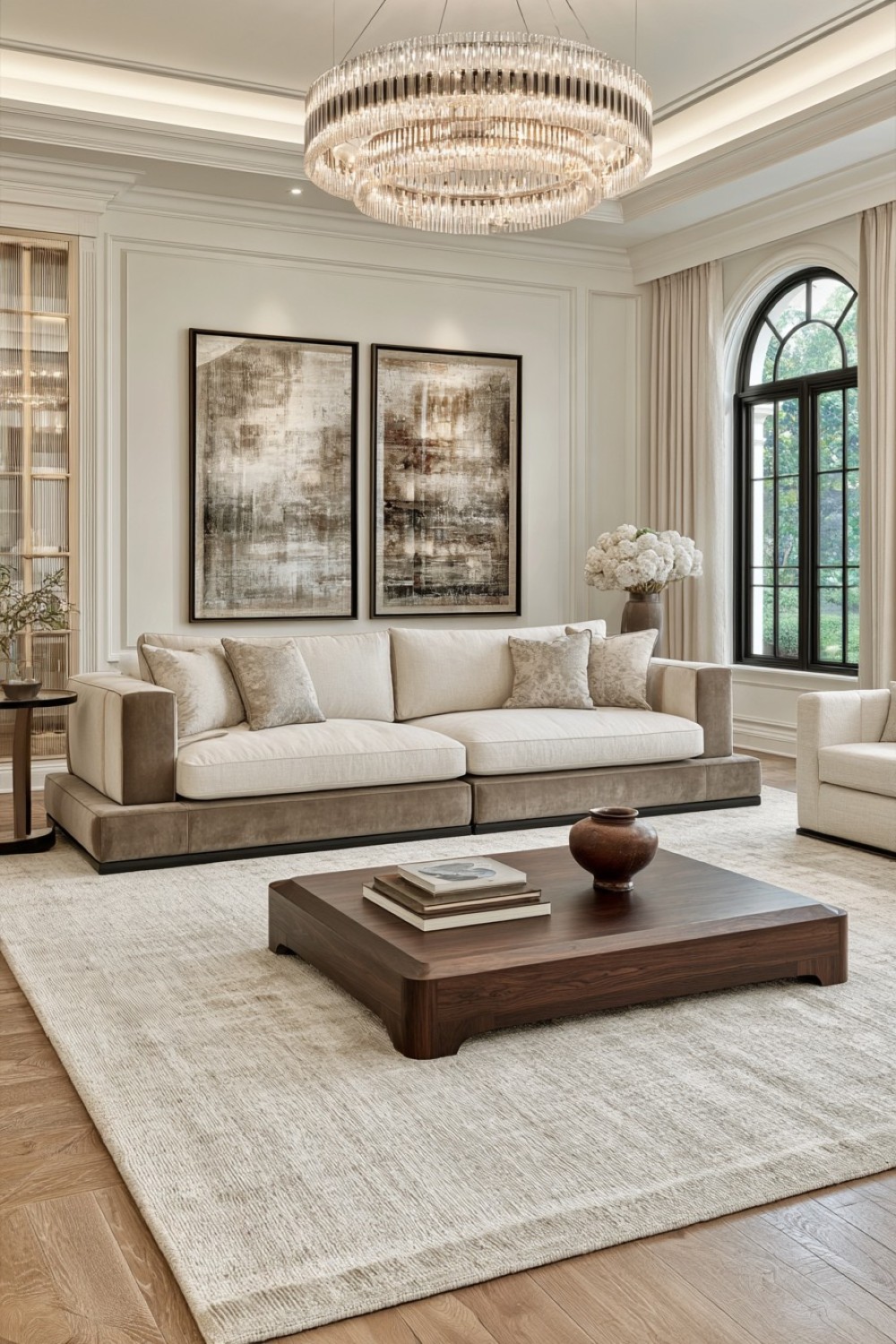
A two-tone sofa can highlight its frame, cushions, or modular construction without relying on a highly decorative silhouette. Use a darker color on the base and arms with a lighter seat, or keep the main upholstery neutral and introduce color through contrasting back cushions. Both fabrics should share a related undertone so the combination appears deliberate.
Compare full-size samples under the room’s actual lighting and check whether the materials age at similar rates. A delicate fabric beside a highly durable one may create uneven wear. Confirm cleaning codes, fading resistance, pilling performance, and whether individual covers can be replaced. Limit additional patterned furniture so the two-tone treatment remains clear rather than becoming one contrast among many.
4. Use a Modular Sofa to Define Separate Seating Zones
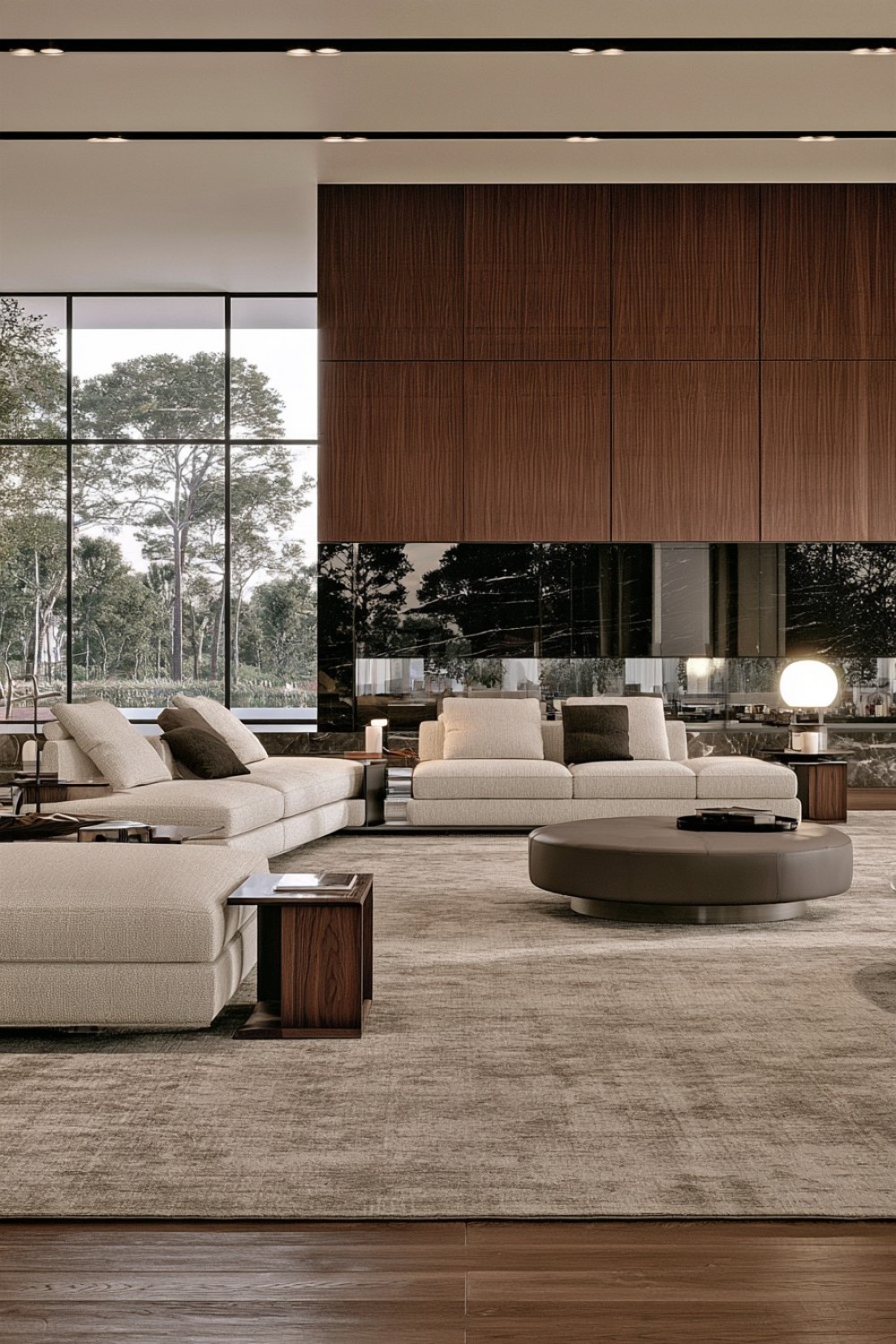
A modular sofa can divide an open living room into conversation, television, and relaxation zones. Arrange a main section toward the focal point and use a chaise or backless module to mark the edge of the seating area. Modules that are finished on every side work best when they remain visible from the dining room or entrance.
Measure each possible configuration and confirm that sections connect securely rather than sliding apart. Floor outlets and cable routes should be planned if lamps or charging tables sit beside a floating arrangement. Do not allow the sofa to block doors, vents, or important walkways. Before buying, ask whether additional modules and replacement covers will remain available if the layout changes later.
5. Add an Integrated Wooden Platform Beside the Seat
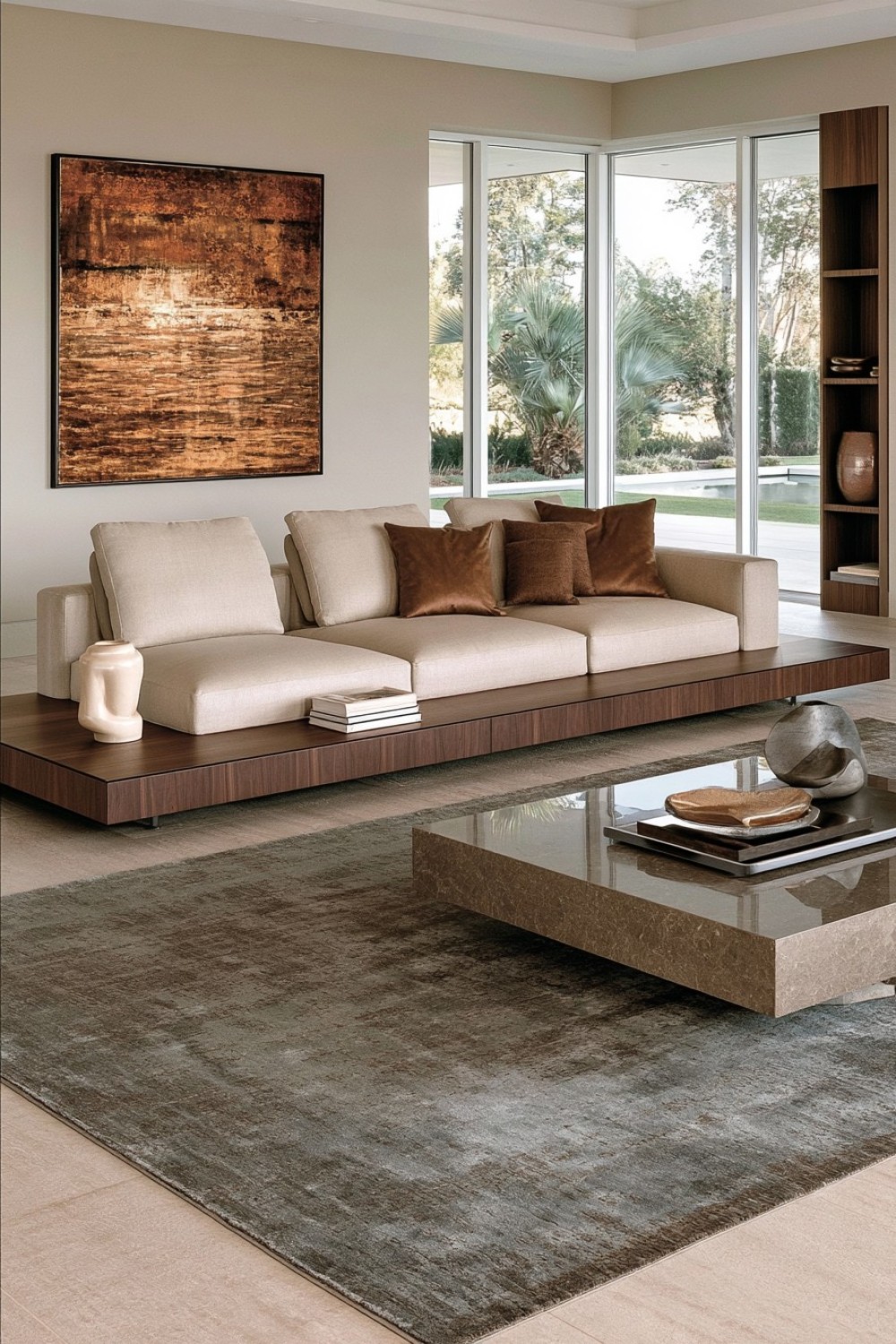
An integrated timber platform can replace a separate side table and give the sofa a more architectural profile. It may hold a book, lamp, or decorative tray while visually connecting the seating to other wood finishes. The platform should remain reachable from the intended seat and include enough usable surface without making the sofa excessively wide.
Permanent side platforms reduce flexibility because they cannot be repositioned when the room changes. Check how the complete sofa will pass through doors and whether the hard edge narrows circulation. Use coasters and suitable protection against heat, moisture, and scratches. Any integrated electrical or charging feature should remain accessible for servicing and use professionally planned connections.
6. Introduce Strong Rhythm With Channel-Tufted Upholstery
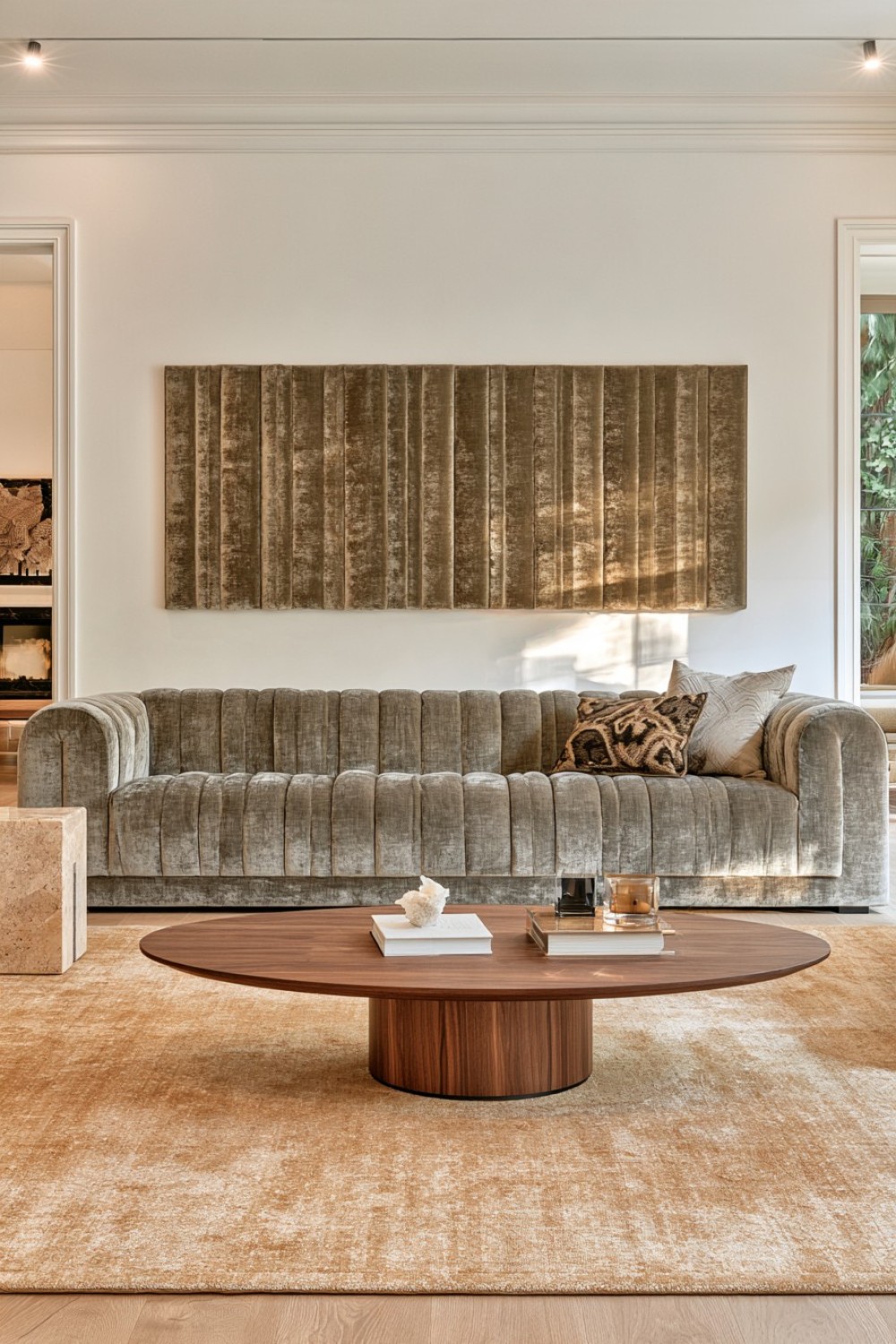
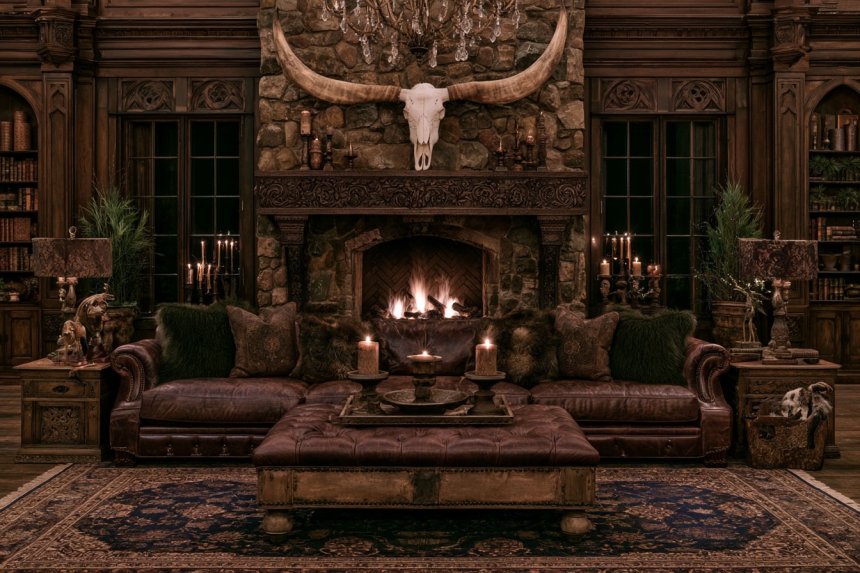
Vertical or horizontal channel tufting can give a simple sofa depth and repeated rhythm. Vertical channels emphasize height and suit upright seating, while horizontal sections can make a long sofa appear even wider. Solid upholstery allows the construction detail to remain visible. Keep nearby cushions limited so they do not conceal the feature.
Deep seams may collect dust, crumbs, and pet hair, making regular vacuuming necessary. Check whether the channels are stitched, pulled, or formed through separate upholstered sections because construction influences repair options. Very pronounced tufting may feel firmer against the back. Test the sofa for comfort and review fabric durability before prioritizing its visual texture.
7. Create an Asymmetric Layout With One Extended Chaise
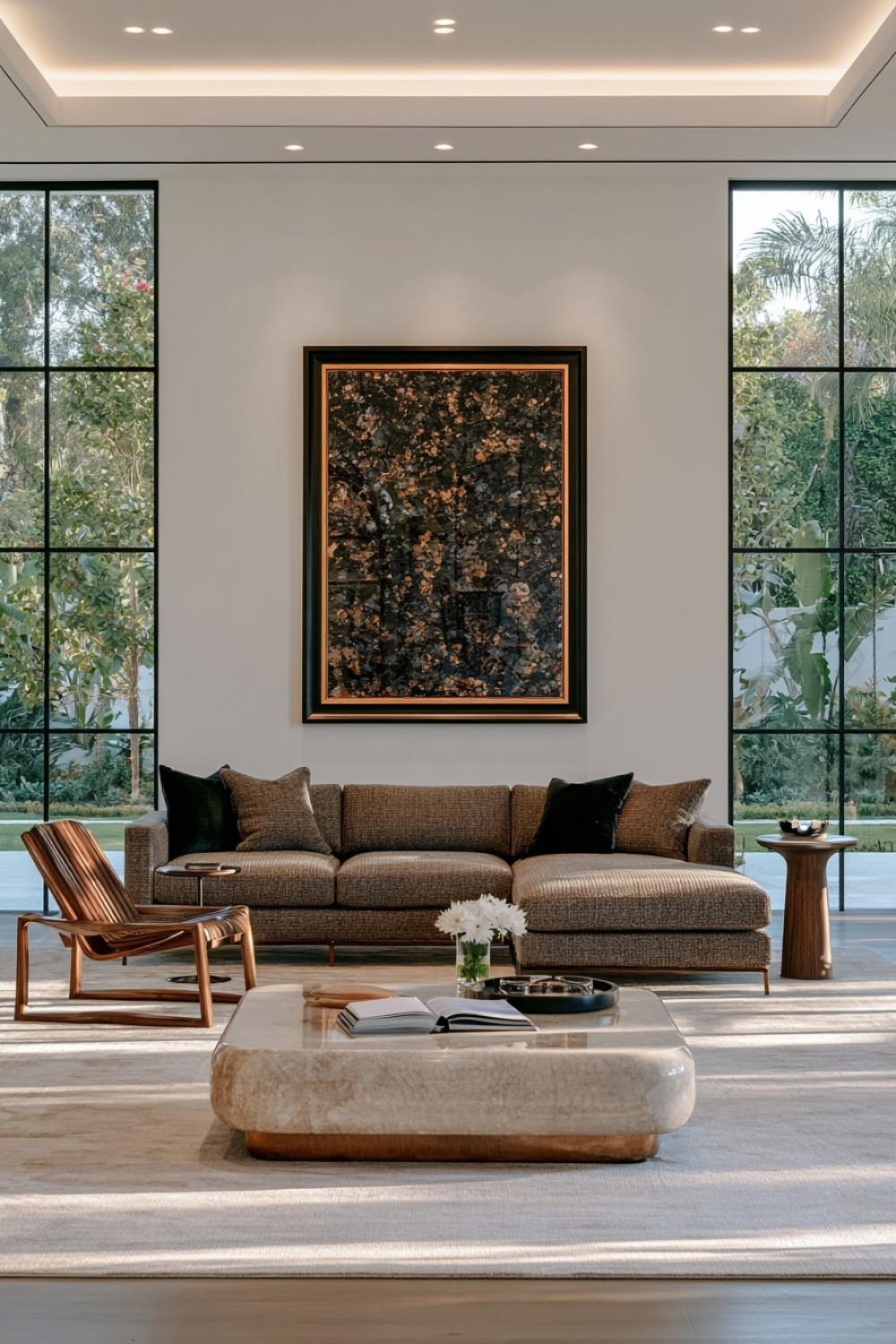
An extended chaise creates a relaxed end to the sofa and can visually direct movement through the room. Position it on the side that does not interrupt the entrance, balcony door, or route to adjoining spaces. A movable table is more adaptable than a large central piece when the chaise projects deeply into the seating area.
Confirm whether the chaise is left-facing or right-facing from the manufacturer’s stated viewing position, since terminology can vary. Mark its complete footprint and test the remaining walkway. Fixed chaises limit future arrangements, while reversible or modular versions provide flexibility. Make sure the seat offers sufficient support and does not become the only comfortable position on the sofa.
8. Give a Compact Sofa Character With Oversized Arms
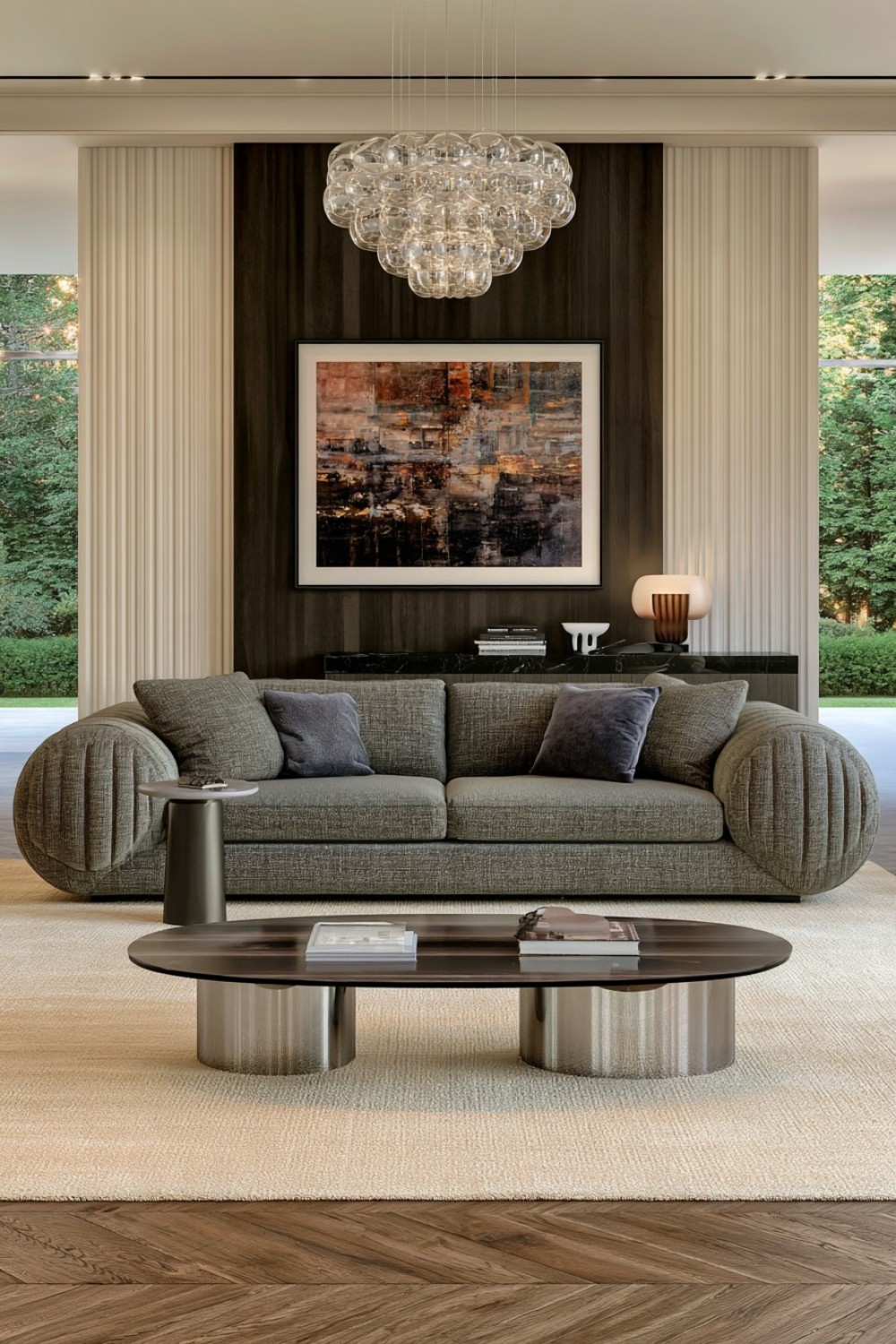
Oversized arms can give a compact sofa a strong silhouette and may provide a comfortable place to lean. Rounded arms create softness, while block forms make the piece feel more architectural. Keep the back and cushions comparatively restrained so the proportions remain balanced. A small side table may be unnecessary when the arm has a broad stable surface.
Wide arms reduce the usable seat width even when the sofa’s external dimensions appear generous. Compare the internal seating measurement with the overall width before purchasing. Hard trays placed on upholstered arms should remain stable and be removed when not in use. Ensure the projected arms do not narrow walkways or create corners that are difficult to move around.
9. Combine a Floating Sofa Base With a Minimal Interior
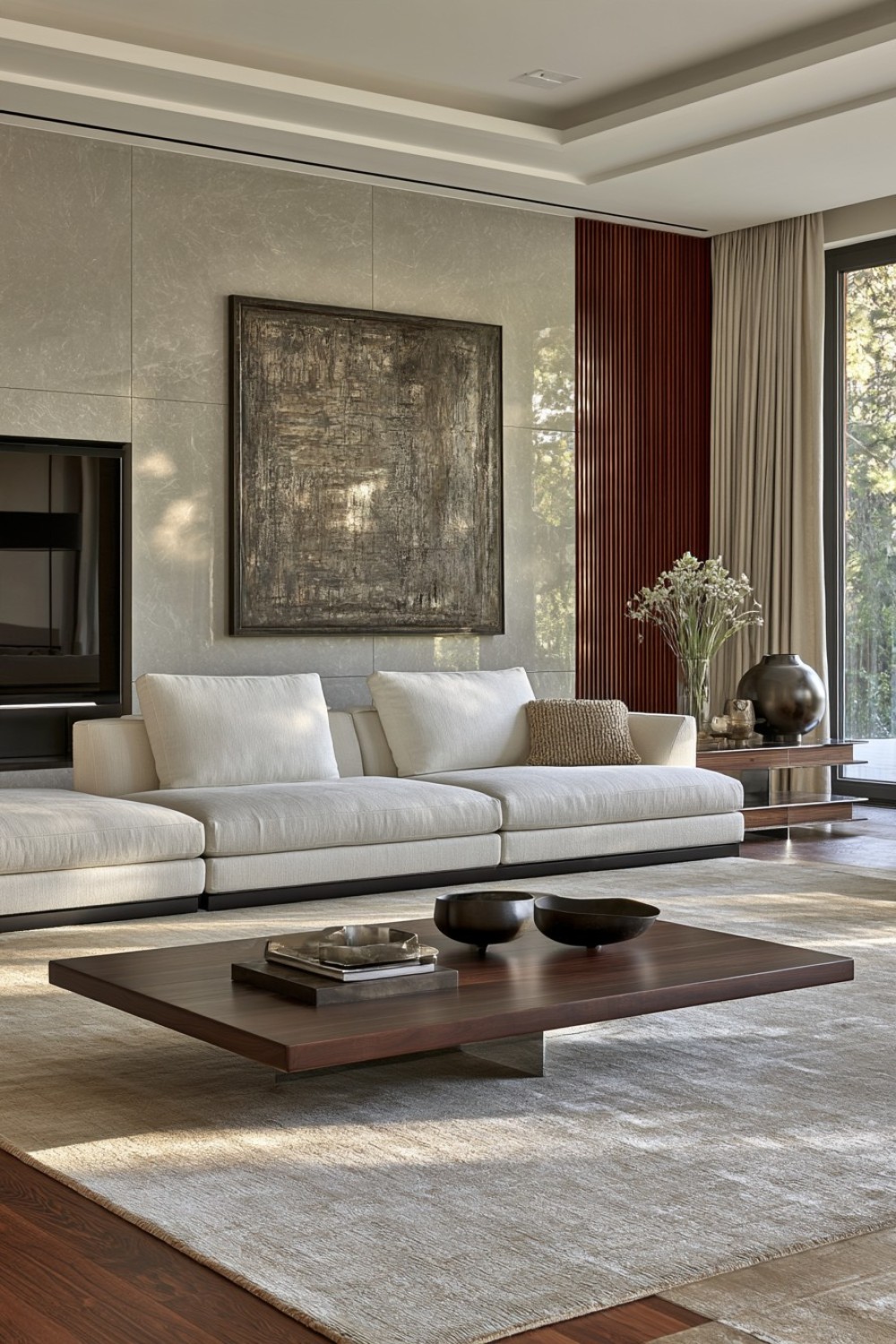
A recessed base can make a sofa appear to float, visually reducing its weight even when the cushions are substantial. This works well in a minimal interior where the furniture profile remains easy to see. Pair it with a low table, one large rug, and restrained artwork. Hidden legs or a shadow-gap plinth should be dark enough to recede naturally.
The concealed base still needs stable construction and even floor contact. Check the sofa’s load capacity, frame warranty, and whether cleaning beneath it will be possible. A very low clearance may trap dust and small objects while remaining inaccessible to a vacuum. Confirm that the recessed base does not create instability when someone sits near the outer edge.
10. Add Controlled Color Through Contrasting Back Cushions
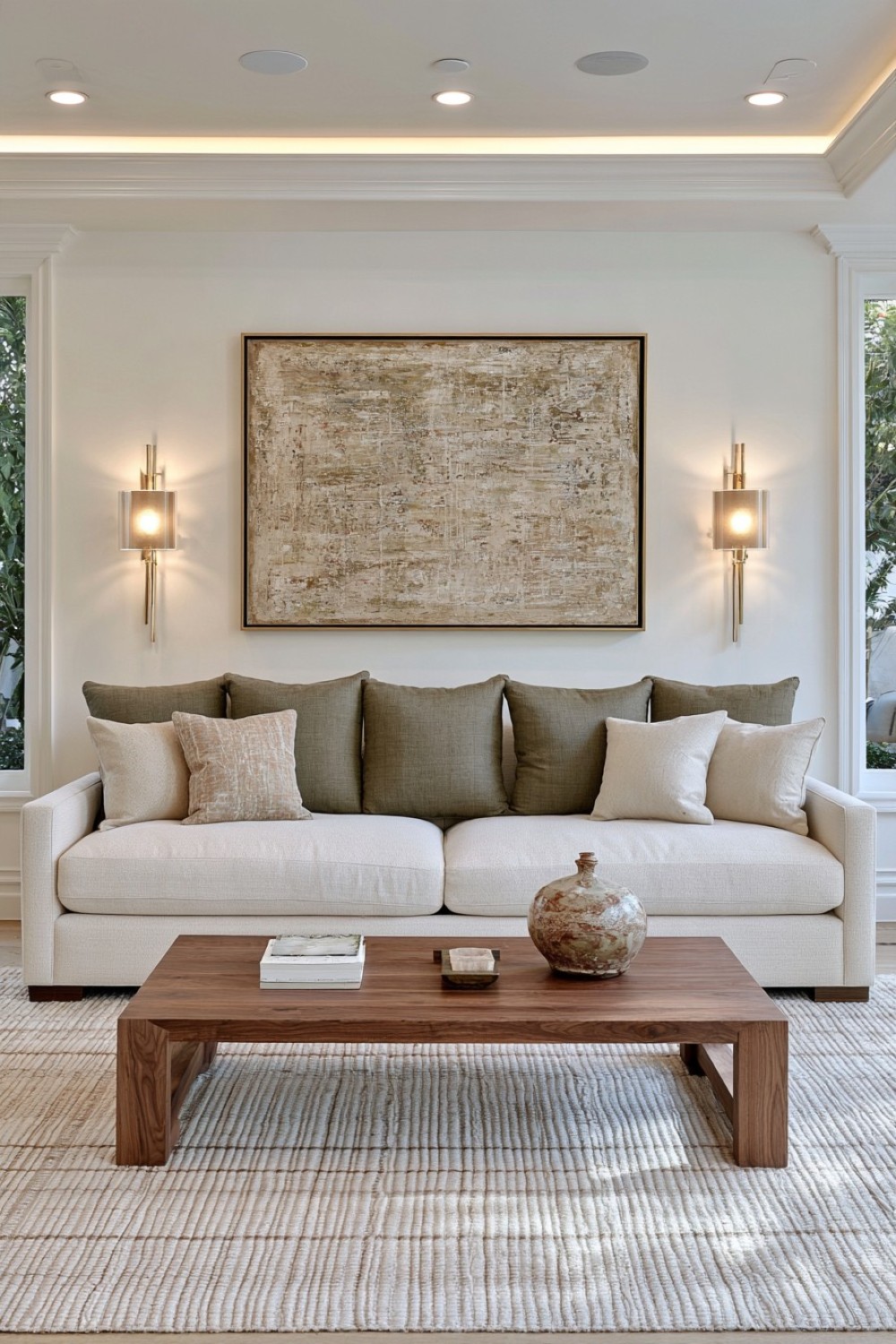
Contrasting back cushions allow a sofa to carry color without committing the entire frame to a bold fabric. A neutral base may be paired with rust, olive, blue, burgundy, or muted yellow cushions. Repeat the accent through one artwork or rug detail rather than matching every accessory. This creates connection while keeping the palette flexible.
Loose cushions require regular arrangement and may not provide consistent support. Check whether covers are removable and whether replacement cushion inserts can be obtained. Use no more cushions than the household can store or arrange comfortably. If pets or children use the room, select durable fabrics and closures that tolerate frequent washing and handling.
11. Arrange Two Sofas for a Social Living Room
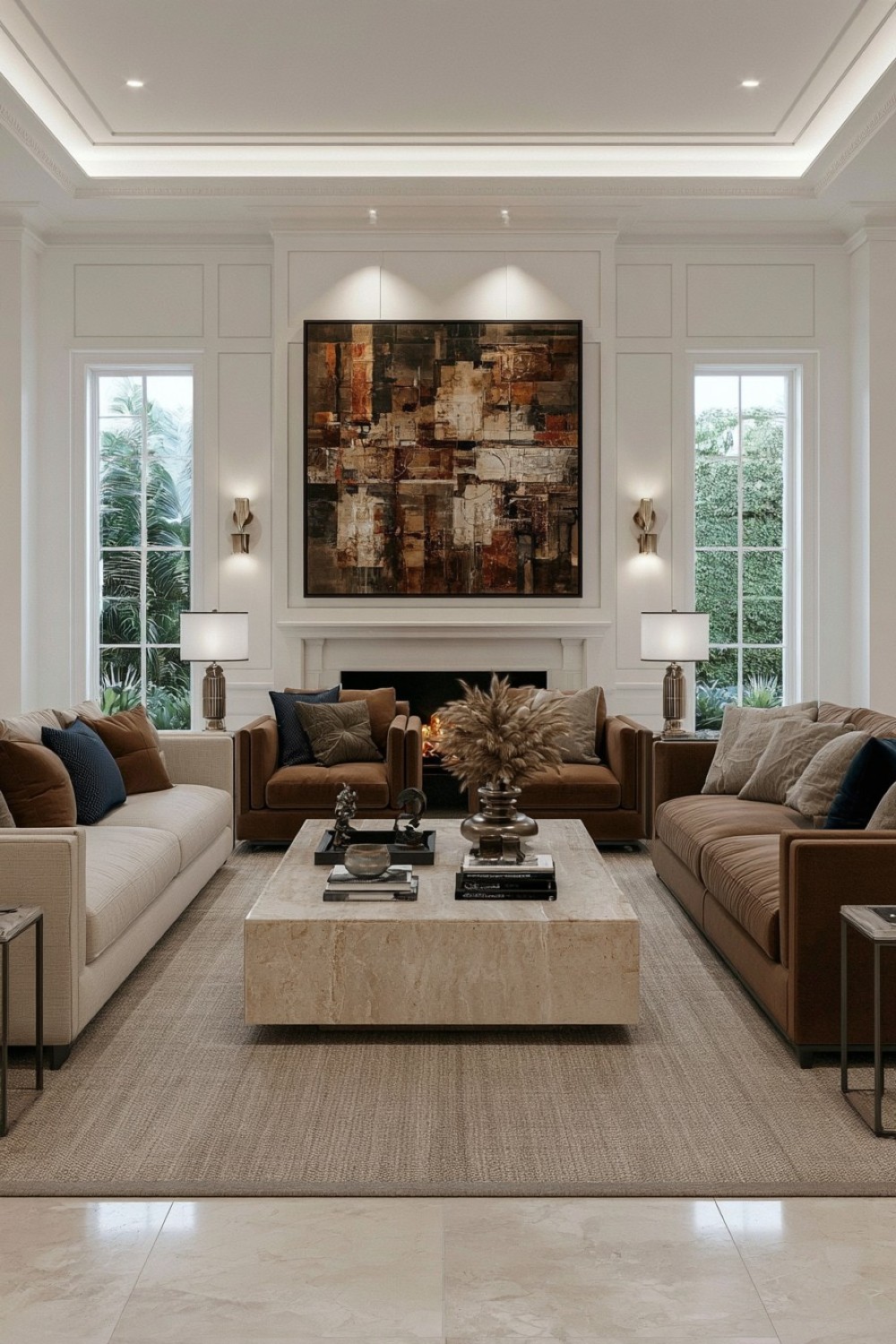
Two sofas can face one another for conversation or form an L-shaped arrangement around a shared focal point. Matching models create symmetry, while related sofas in different fabrics produce a more collected appearance. A sufficiently large rug can connect both pieces and define the social area within an open room.
Maintain clear access between seats and ensure the coffee table remains reachable without restricting movement. Before purchasing two large pieces, measure the room and delivery route carefully. If television viewing is important, test the angle from every position. One sofa may be paired with lighter chairs when a second full-size piece would make the room feel crowded.
12. Soften a Corner Sofa With Rounded Edges
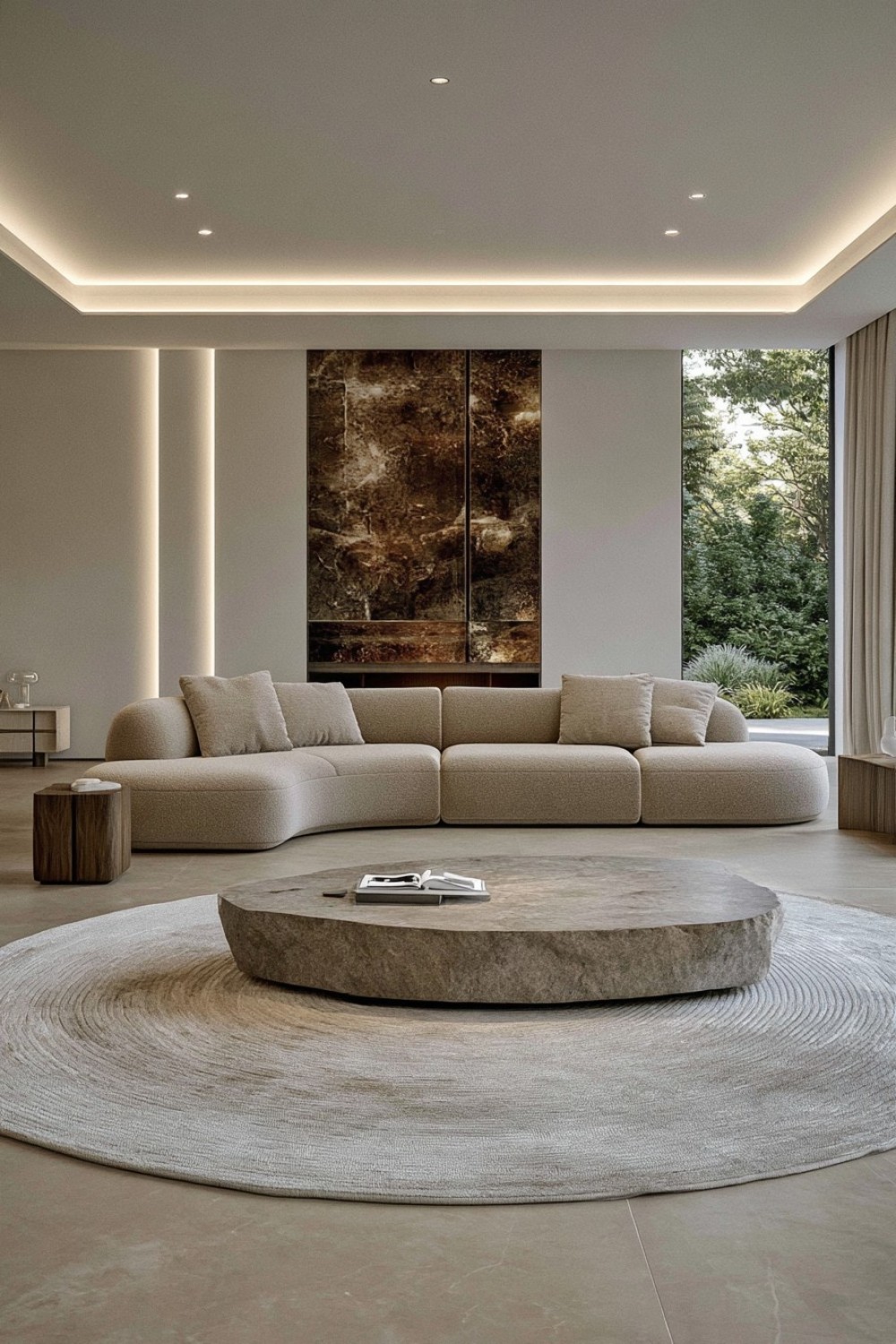
A corner sofa with rounded ends can provide generous seating while avoiding the heavy appearance of a sharply rectangular sectional. Curved arms and corners help movement feel more natural around the outer edges. Pair the sofa with an oval coffee table and a rug large enough to extend beneath its front sections.
Rounded profiles may create unused gaps when pushed tightly against square walls, so they often look better slightly floated. Measure the actual seating capacity rather than assuming a large external footprint provides more seats. Confirm how modules connect and whether the curved portions offer comfortable support. Custom covers and repairs may also be more complex than those for standard rectangular cushions.
13. Use Patterned Upholstery Instead of Numerous Accessories
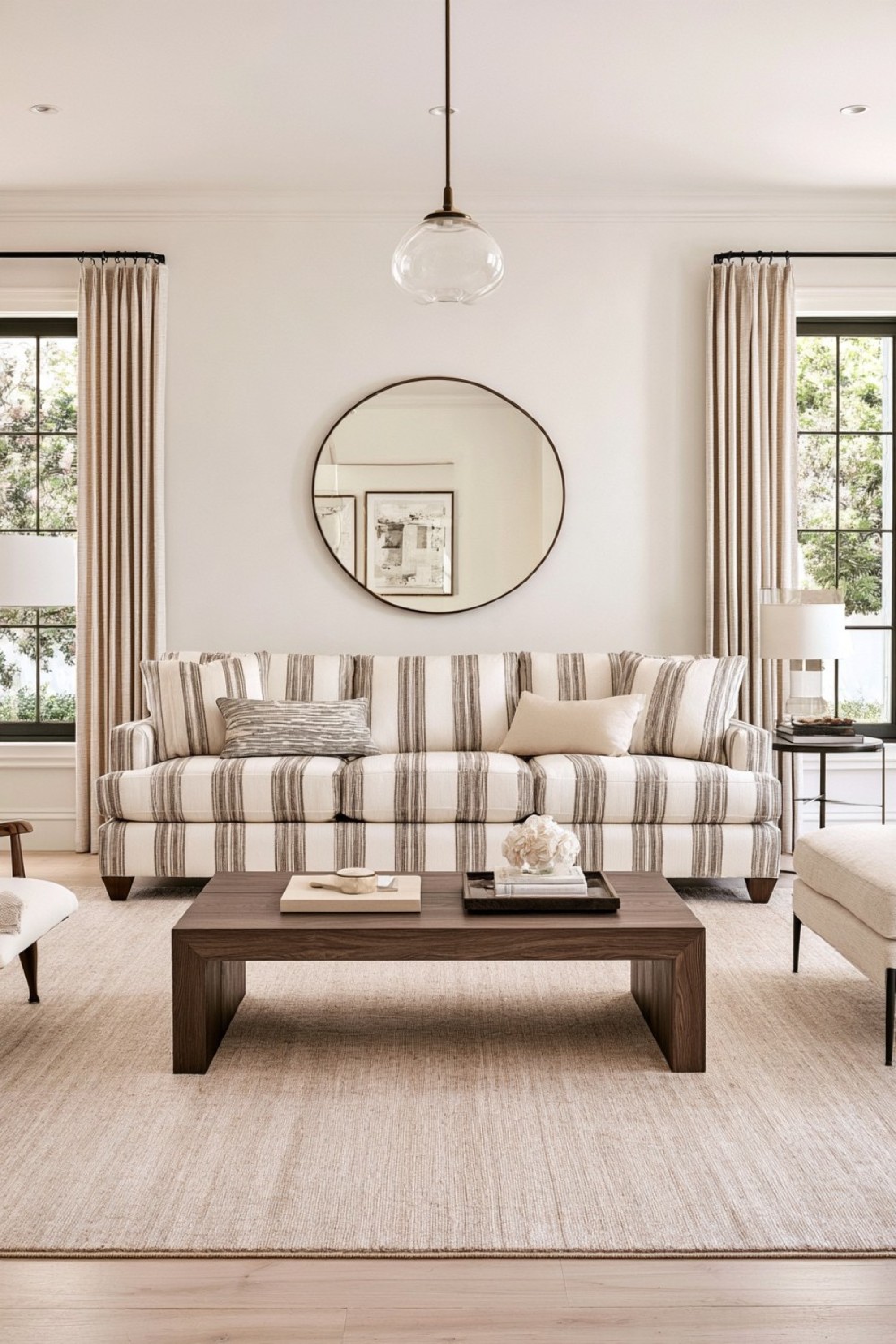
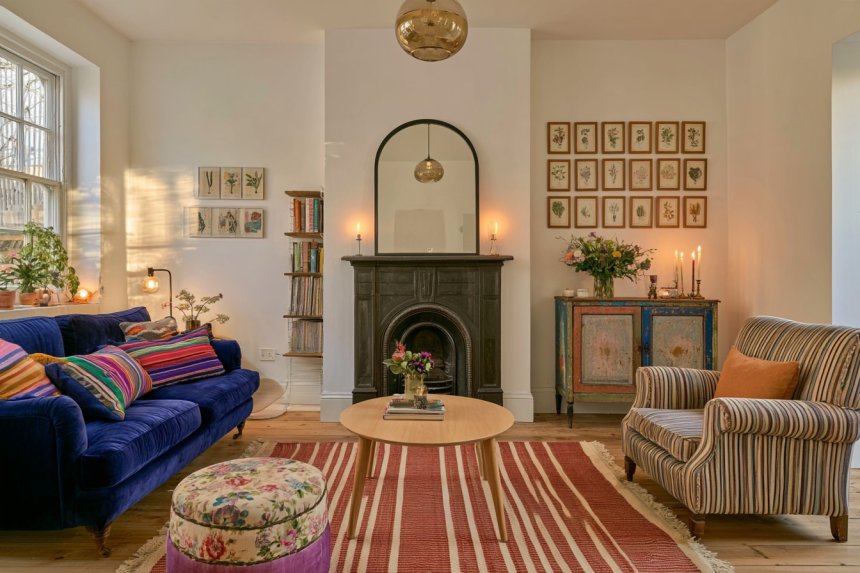
A patterned sofa can become the room’s decorative anchor and reduce the need for many small accessories. Stripes, checks, botanical motifs, and abstract designs each create a different effect. Larger patterns need enough uninterrupted upholstery to remain readable, while smaller repeats can appear calmer from a distance. Keep walls and secondary furniture relatively simple.
Pattern placement should be reviewed across seams, cushions, arms, and corners. Poor alignment may be particularly noticeable on tailored designs and can increase fabric requirements. Request a large sample to judge the true scale and color. Removable covers or a patterned slipcover offer greater flexibility when committing to permanent upholstery feels too restrictive.
14. Frame the Sofa With Built-In Storage
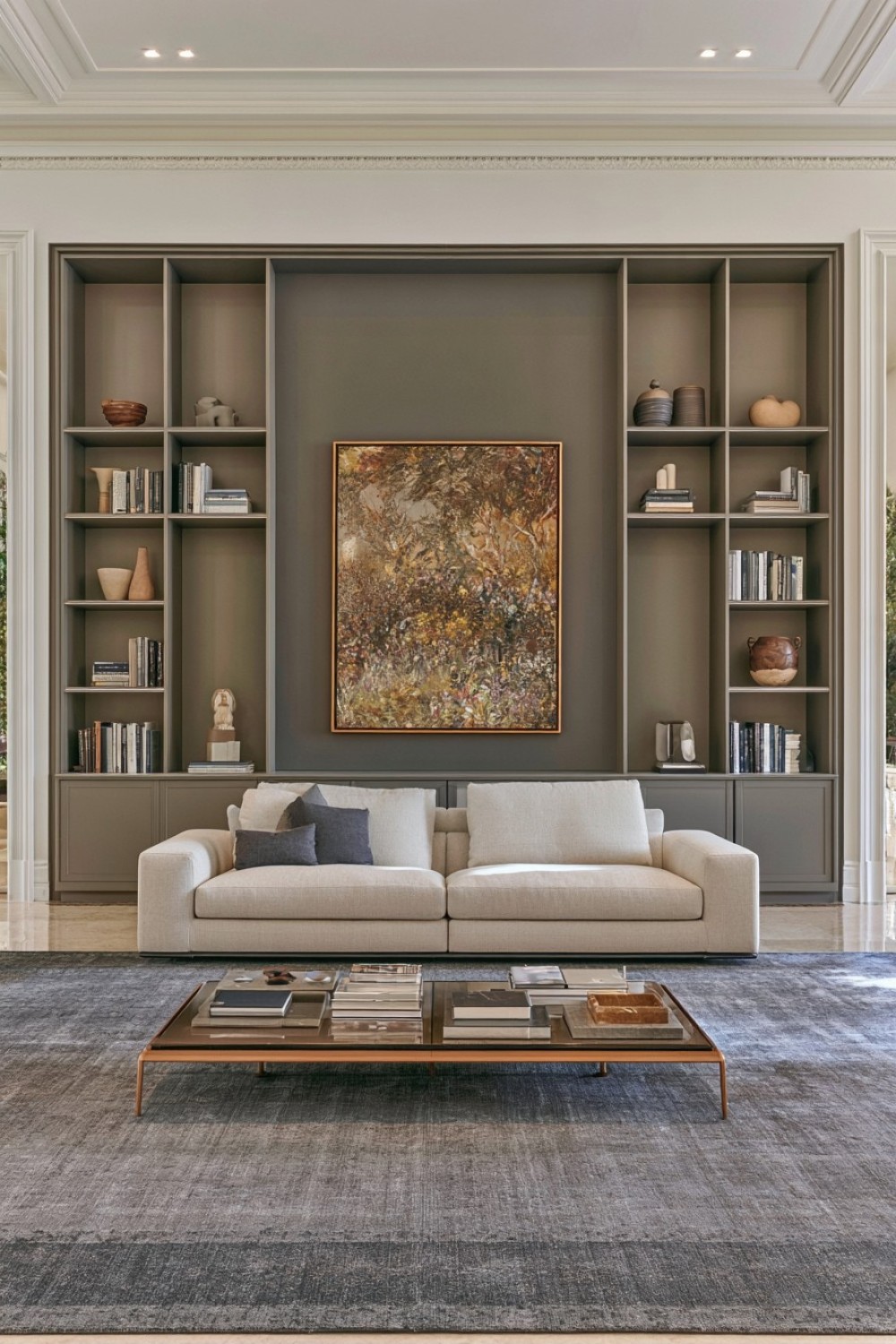
Built-in shelves and cabinets can frame the sofa while storing books, media, and living room essentials. Leave space around the sofa so it does not appear trapped inside the joinery. Closed lower cabinets control clutter, while a limited number of open shelves provide display space. Align lighting and shelving with the furniture’s center line for a balanced composition.
Tall joinery requires secure installation and must not overload the wall or floor. Heavy and fragile objects should not sit directly above people. Preserve access to outlets, ventilation, and service points. Measure the sofa’s actual dimensions and allow for future replacement; an opening designed too tightly around one model may restrict later furniture choices.
15. Build a Tonal Composition From Several Shades of One Color
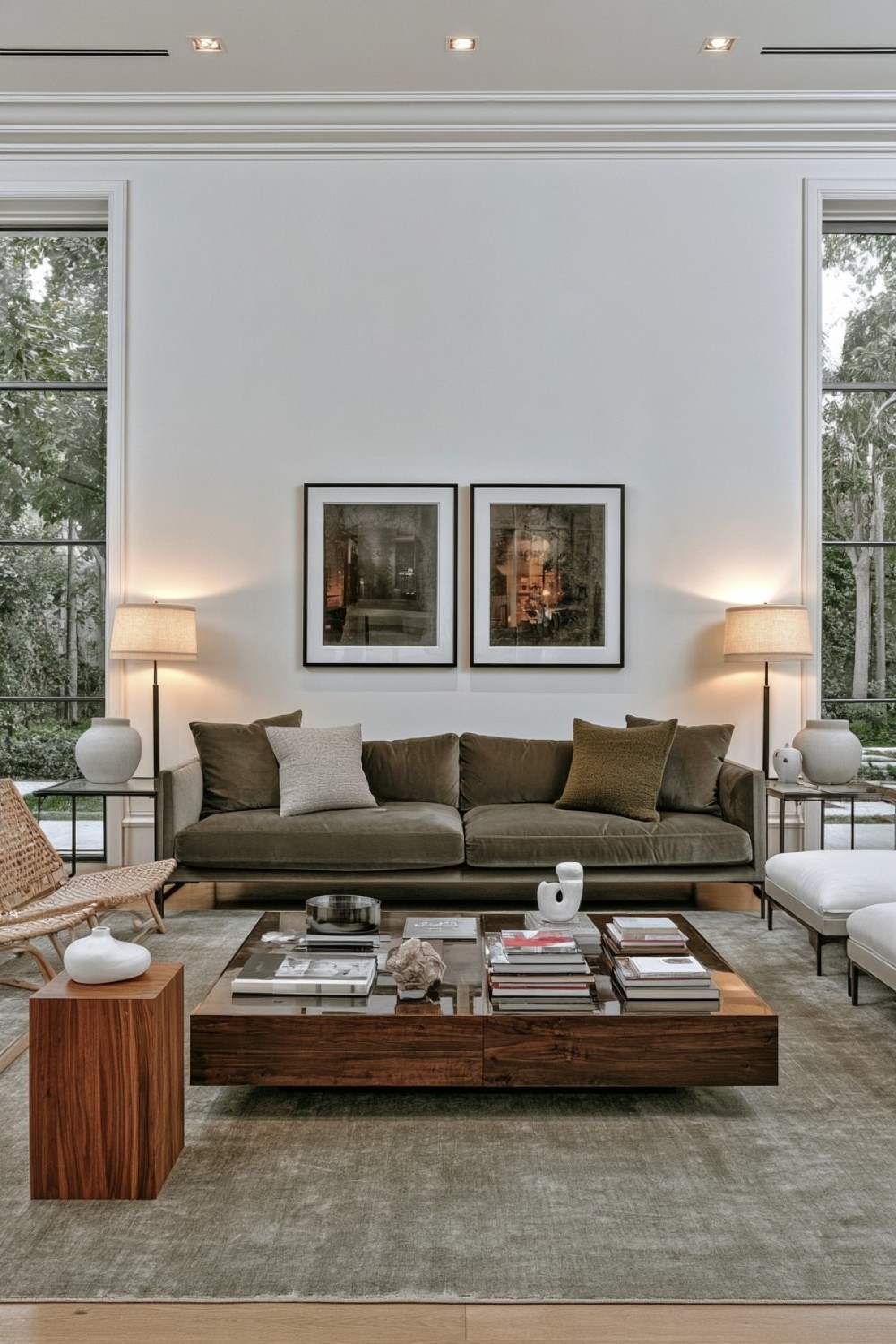
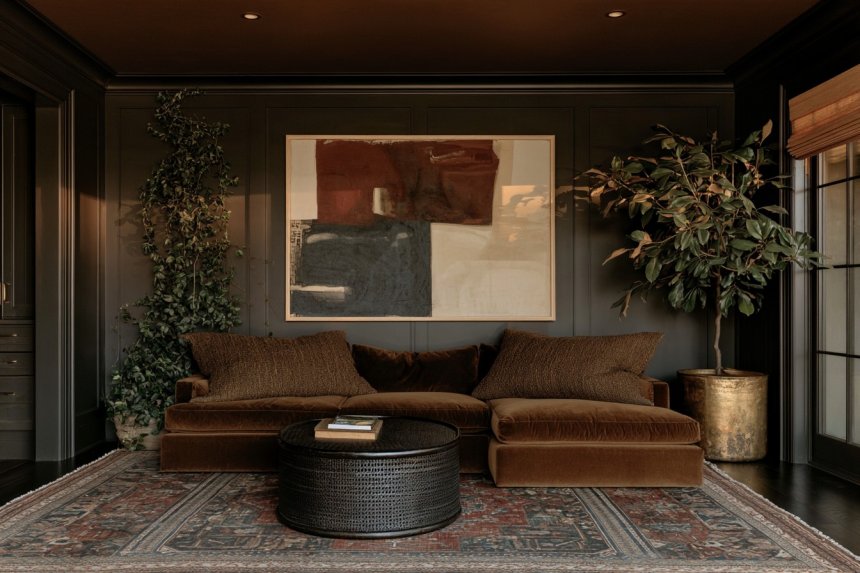
A tonal composition can combine a medium-colored sofa with lighter cushions, a darker chair, and a rug containing several related shades. Green, blue, terracotta, taupe, and gray all work when undertones remain compatible. Vary texture and material so the room retains depth even though the palette comes from one color family.
Collect upholstery, paint, rug, and timber samples before ordering major pieces. Colors that appear related online may shift differently under the room’s lighting. Use the most durable mid-tone on the sofa and reserve very pale or intense shades for replaceable accessories. A small neutral contrast prevents the composition from becoming visually flat or overly coordinated.
MORE IDEAS


Share
What's Your Reaction?
 Like
0
Like
0
 Dislike
0
Dislike
0
 Love
0
Love
0
 Funny
0
Funny
0
 Angry
0
Angry
0
 Sad
0
Sad
0
 Wow
0
Wow
0