14 Essential Checks Before Building and Maintaining a Stock Tank Pool

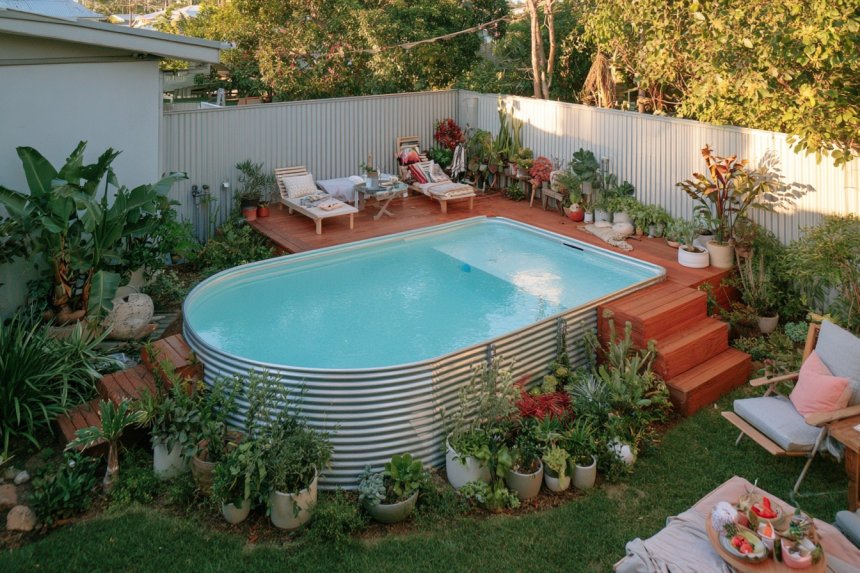
A stock tank can provide a compact place to cool down, but converting an agricultural container into a recreational pool requires more than filling it with water. A safe installation depends on a level foundation, suitable filtration, protected electrical equipment, controlled water chemistry, secure access, and a plan for drainage and seasonal maintenance. Decorative improvements should be considered only after these requirements have been resolved.
Before purchasing equipment, check local planning, building, electrical, fencing, water-use, and drainage requirements. Some authorities classify even a shallow portable installation as a swimming pool when it can hold water above a specified depth. A qualified pool professional, electrician, or structural specialist may be needed depending on the proposed location and equipment. Children must always receive active adult supervision around water.
1. Select a Tank Intended to Hold Water Reliably
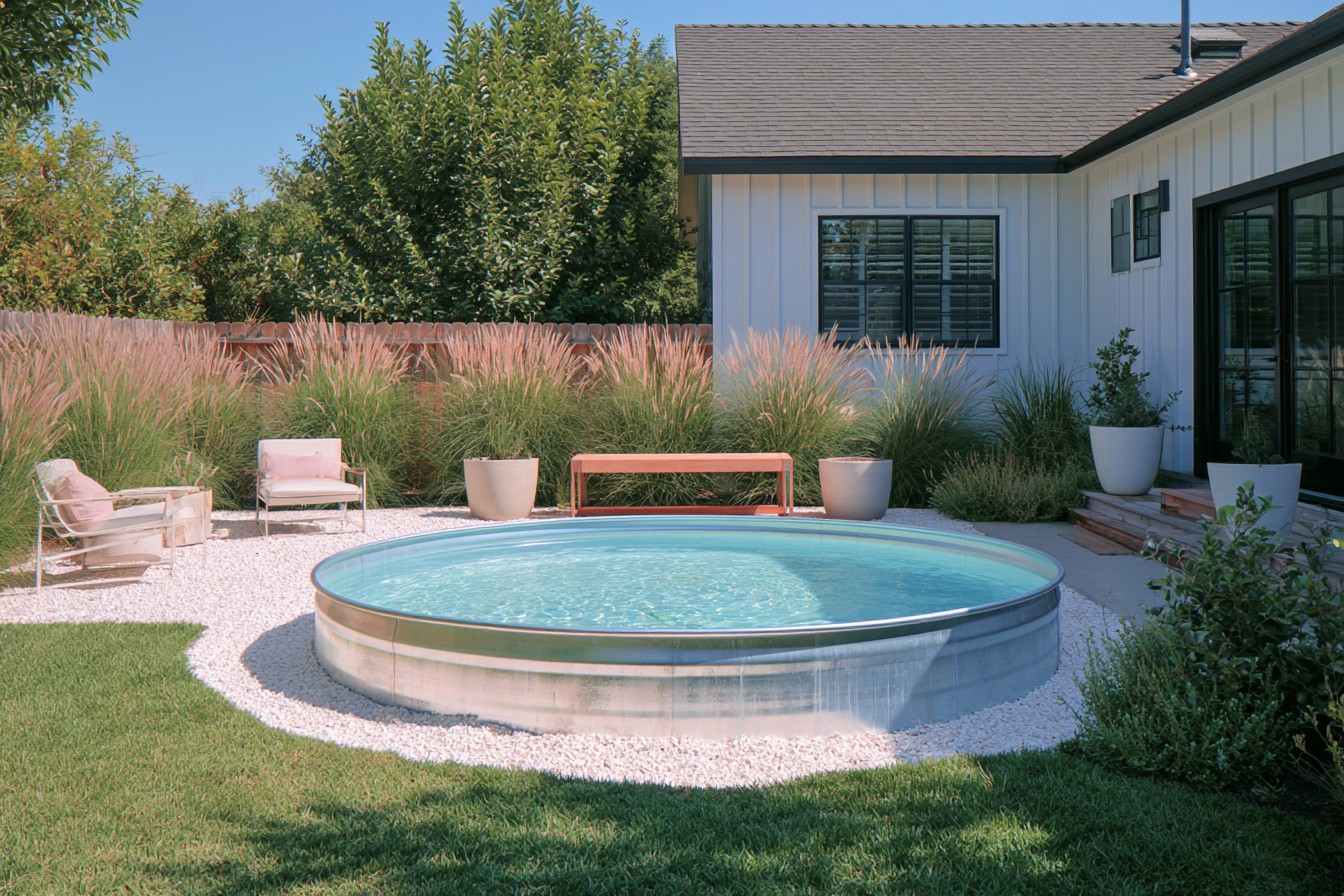
Choose a new or verifiably clean tank without structural dents, sharp edges, leaking seams, or an unknown chemical history. Galvanized steel and molded plastic tanks behave differently when exposed to disinfectants, sunlight, and temperature changes. Confirm the tank manufacturer’s recommendations before treating, coating, drilling, or converting the container.
Consider how many people will use the pool, how they will enter and exit, and how much surrounding clearance is available. A larger tank holds substantially more water and therefore creates a greater structural load. The rim should remain smooth and stable, and factory labels containing material or care information should be retained for future reference.
2. Calculate the Full Water Load Before Choosing a Base
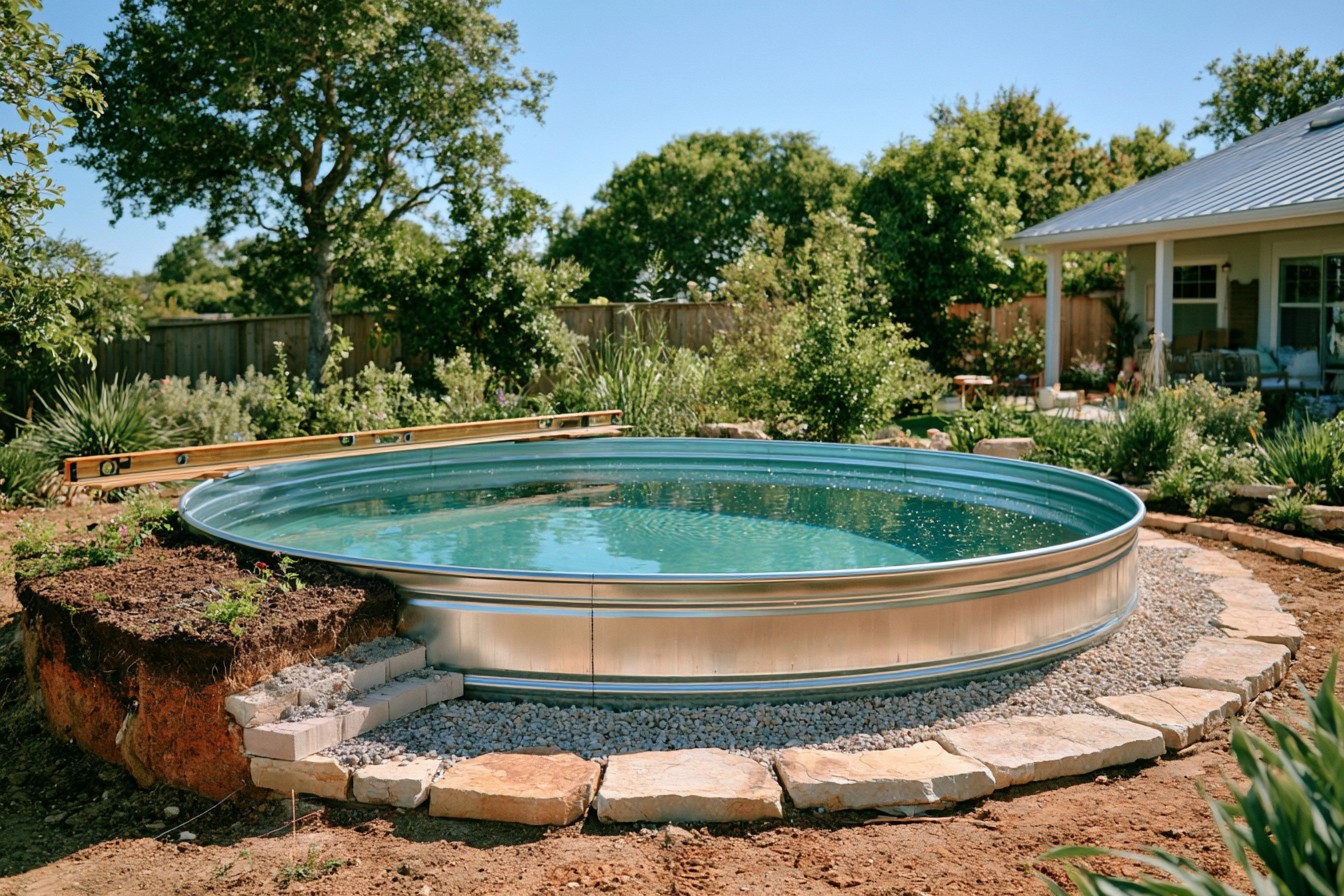
Water is heavy, and the total load includes the water, tank, equipment, occupants, and any surrounding structure. This makes an elevated deck, balcony, rooftop, or unsupported platform an unsuitable location unless a qualified structural professional has confirmed its capacity. Visual inspection alone cannot determine whether a structure can support the load.
Ground installations need a compacted, level, and adequately drained base. Soft soil can settle unevenly and place stress on the tank walls or plumbing connections. Remove roots, sharp stones, and organic material before preparing the foundation. Recheck the level in several directions before filling because a small difference becomes much more noticeable at the waterline.
3. Choose a Location with Safe Access and Drainage
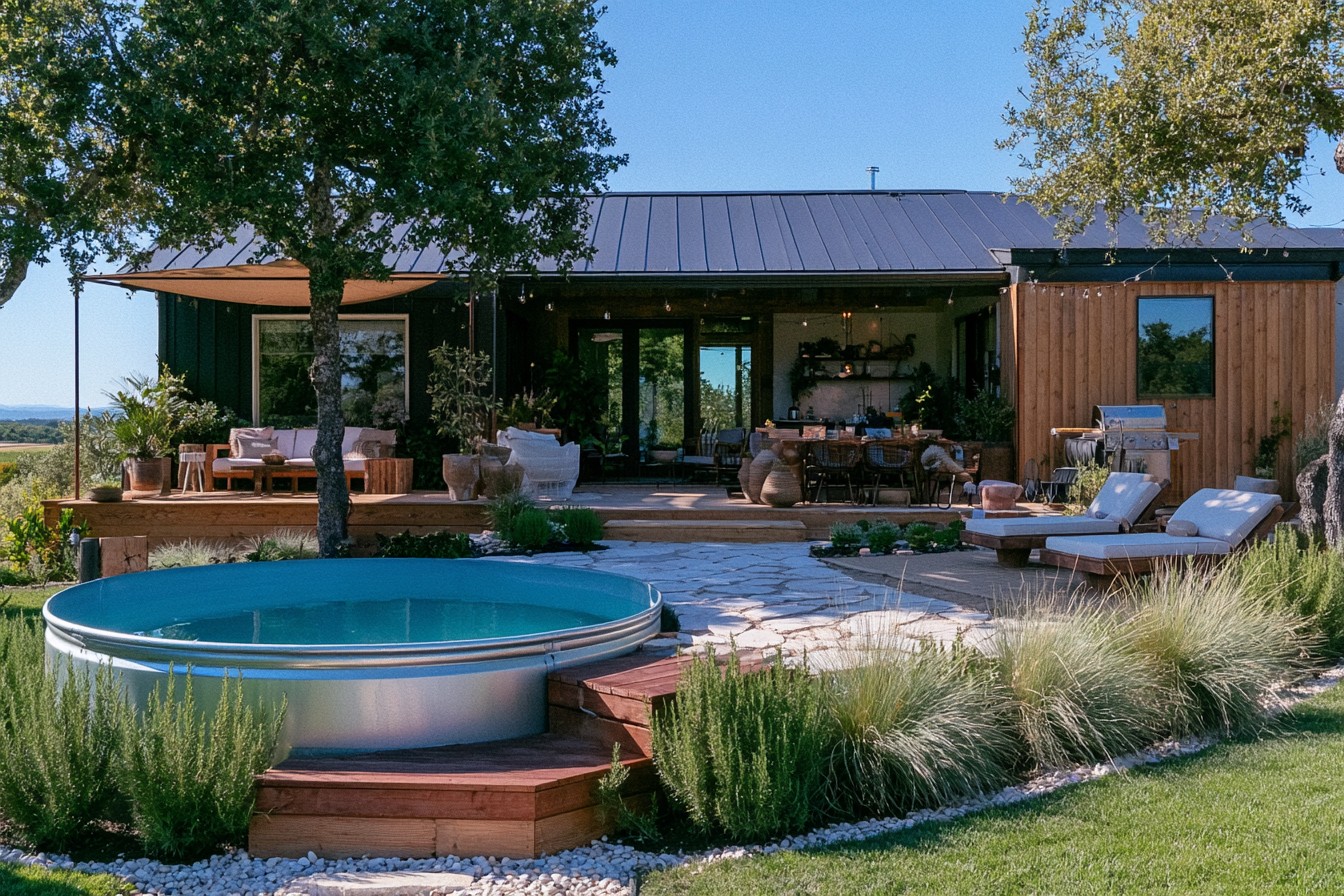
The installation area should provide clear supervision, controlled access, and enough working room around the pump and plumbing. Avoid locations beneath damaged branches, beside climbing structures, or where furniture would make a safety barrier easier to cross. Keep the pool away from septic areas and places where contaminated runoff could enter the water.
Plan where drained water will travel before the tank is filled. A complete pool contains enough water to flood planting beds, enter a basement, erode soil, or affect neighboring property. Discharge must comply with local rules and should not flow toward foundations, electrical equipment, public drains, or unstable slopes.
4. Clean and Inspect the Empty Tank
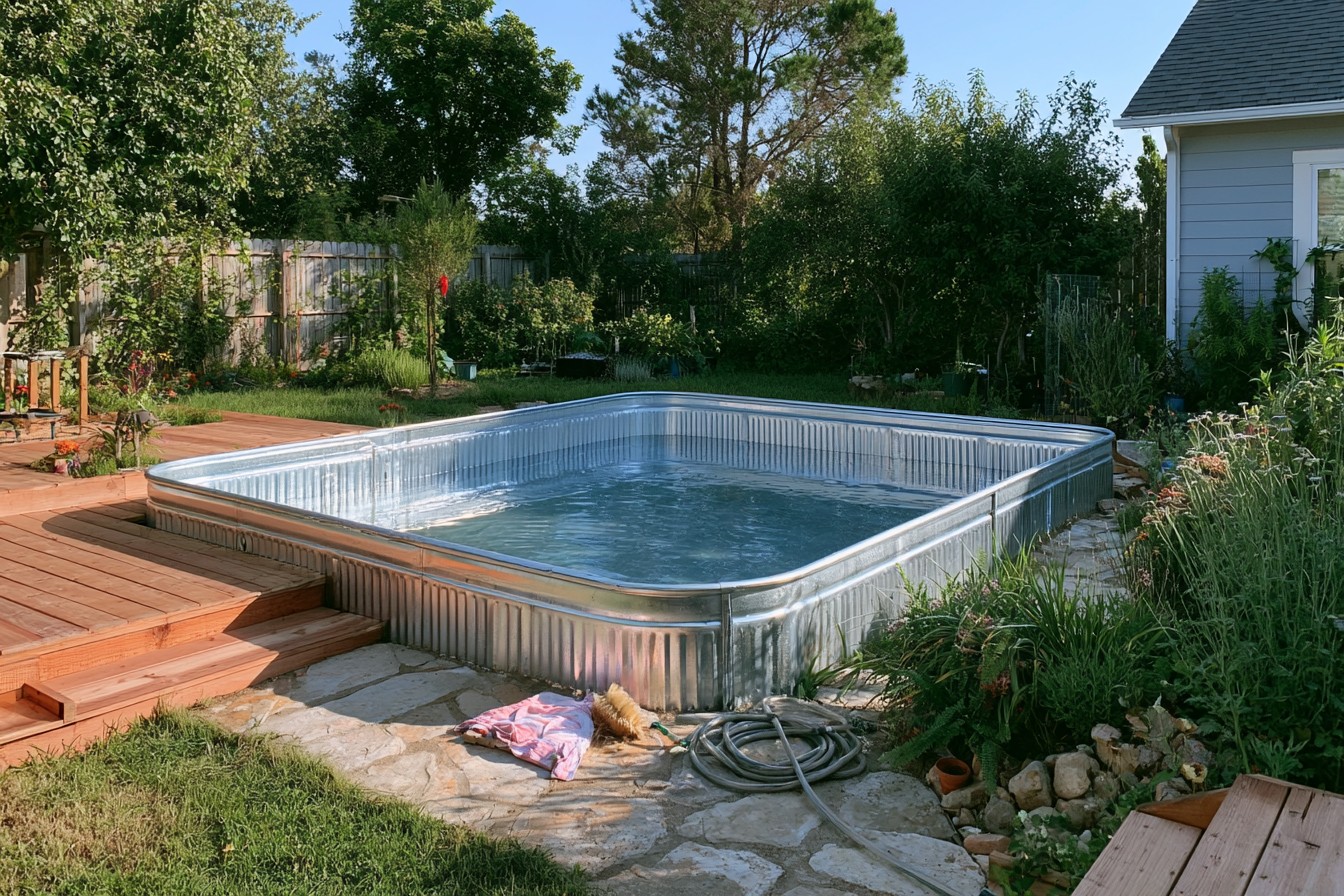
Remove manufacturing residue, dust, and loose debris using cleaning methods compatible with the tank material. Inspect the interior, seams, rim, drain fitting, and underside while every surface remains visible. Sharp projections, corrosion, cracks, or unstable repairs should be addressed before filtration components are installed.
Do not combine household cleaners or use an unidentified chemical treatment. Residue left inside the tank can react with pool products or affect water quality. Rinse according to the manufacturer’s guidance and allow the tank to be inspected again after cleaning. Any coating applied inside must be specifically suitable for the tank material and intended use.
5. Match the Filtration System to the Actual Water Volume
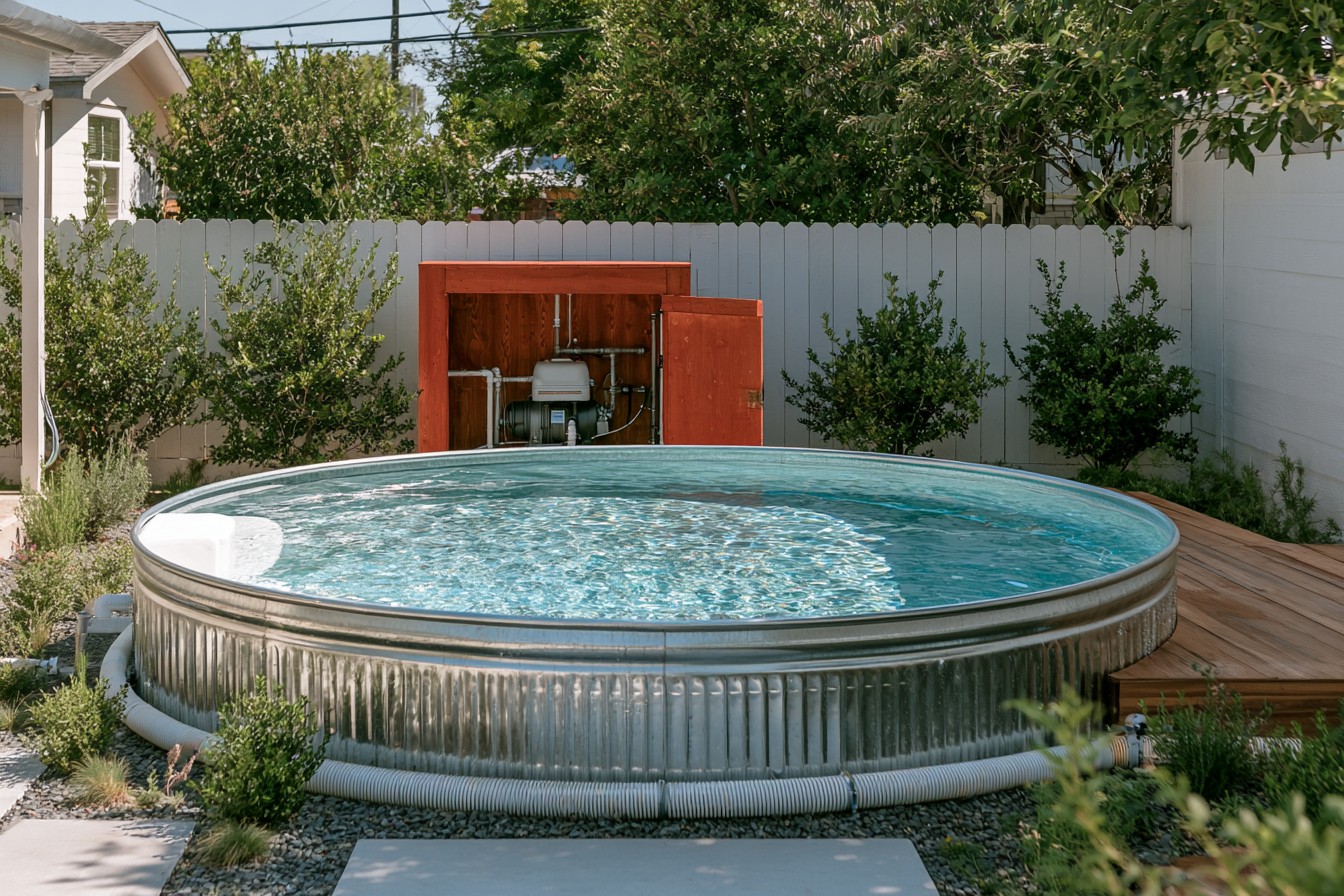
Calculate the tank’s working water volume rather than relying only on its advertised maximum capacity. Select a pool-rated pump and filter whose flow range is compatible with that volume, the pipe diameter, and the filter manufacturer’s recommendations. An oversized pump can create excessive suction or pressure, while an undersized system may not circulate and filter the water effectively.
Use purpose-made pool components, including compliant suction fittings and covers. Improvised drains or exposed suction openings can create an entrapment hazard. Position the equipment where it can be inspected and serviced, and follow the manufacturer’s operating schedule, cleaning procedure, and replacement intervals.
6. Separate Electrical Safety from Plumbing Repairs
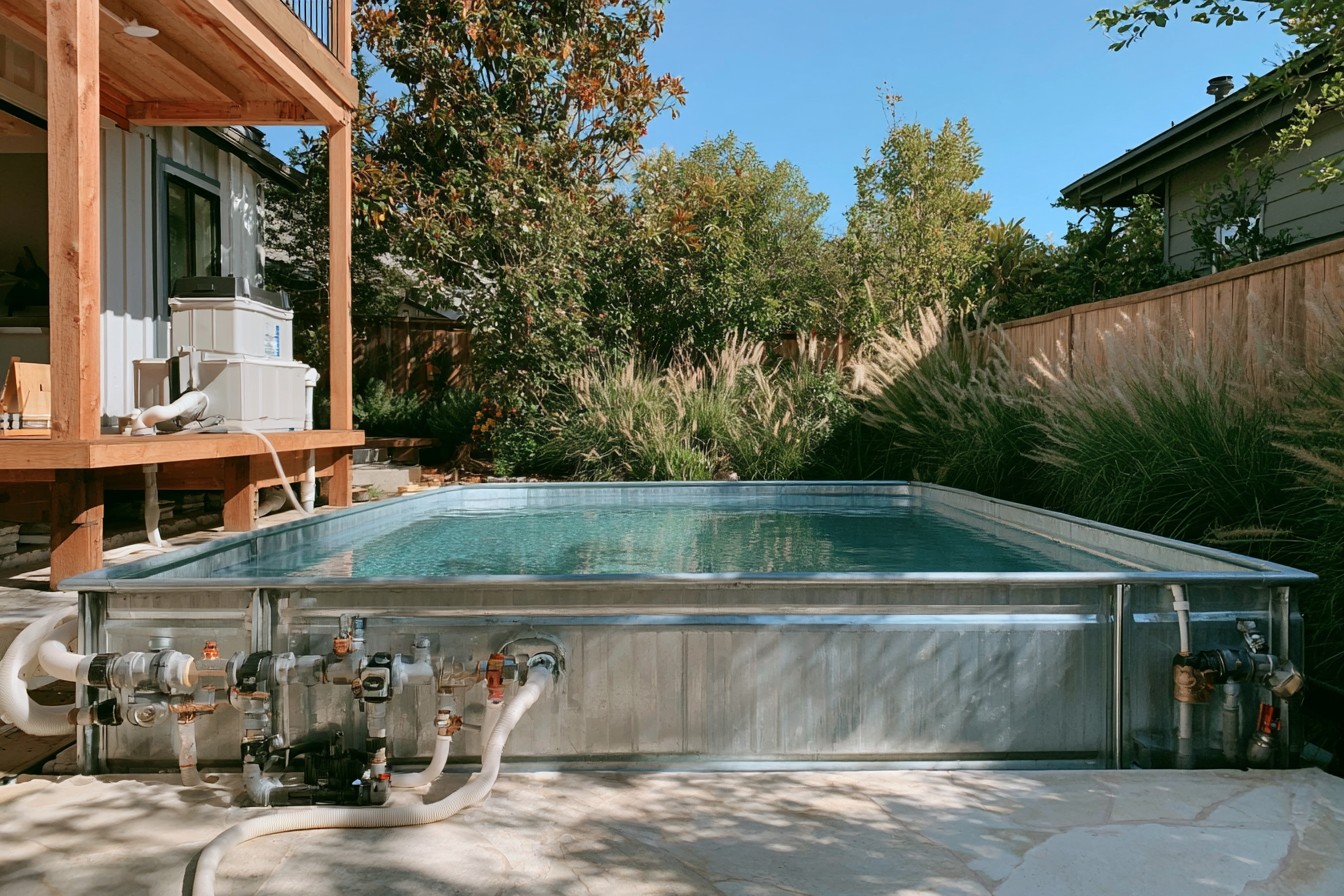
Pump plumbing should use compatible fittings, seals, valves, and pipe sizes rather than improvised adapters. Test every connection for leaks before the pool is used. Support hoses and pipes independently so their weight does not pull against openings in the tank. Connections must remain visible and accessible for routine inspection.
Outdoor electricity near water requires correctly rated equipment, protected outlets, grounding or bonding where applicable, and required safety devices such as ground-fault protection. Do not use indoor extension leads or place cable connections on wet ground. A qualified electrician should install and verify the electrical supply according to local codes and the equipment instructions.
7. Monitor Metal Surfaces for Corrosion
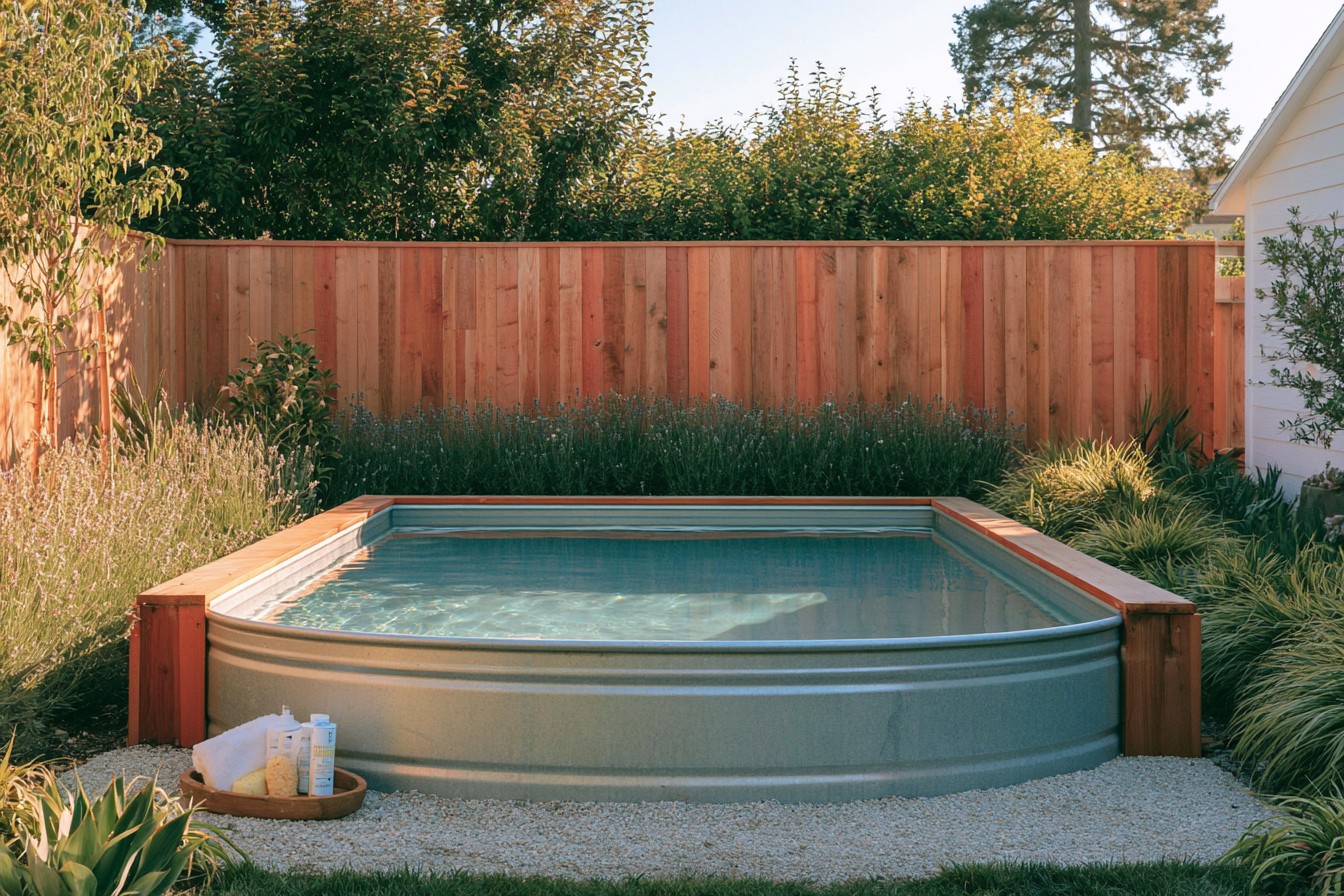
Disinfectants, incorrect water balance, scratches, and prolonged moisture can affect galvanized or coated metal. Inspect the waterline, seams, drilled openings, underside, and areas around fittings. Changes in color do not always indicate structural failure, but pitting, flaking, sharp corrosion, or active leaks require attention.
Do not apply an ordinary household paint or sealant to a submerged surface. Any repair product must be compatible with the metal, disinfectant system, and continuous water exposure. Maintaining water chemistry within the recommended range can also reduce unnecessary damage to the tank and equipment.
8. Provide Stable Entry Without Creating a Climbing Hazard
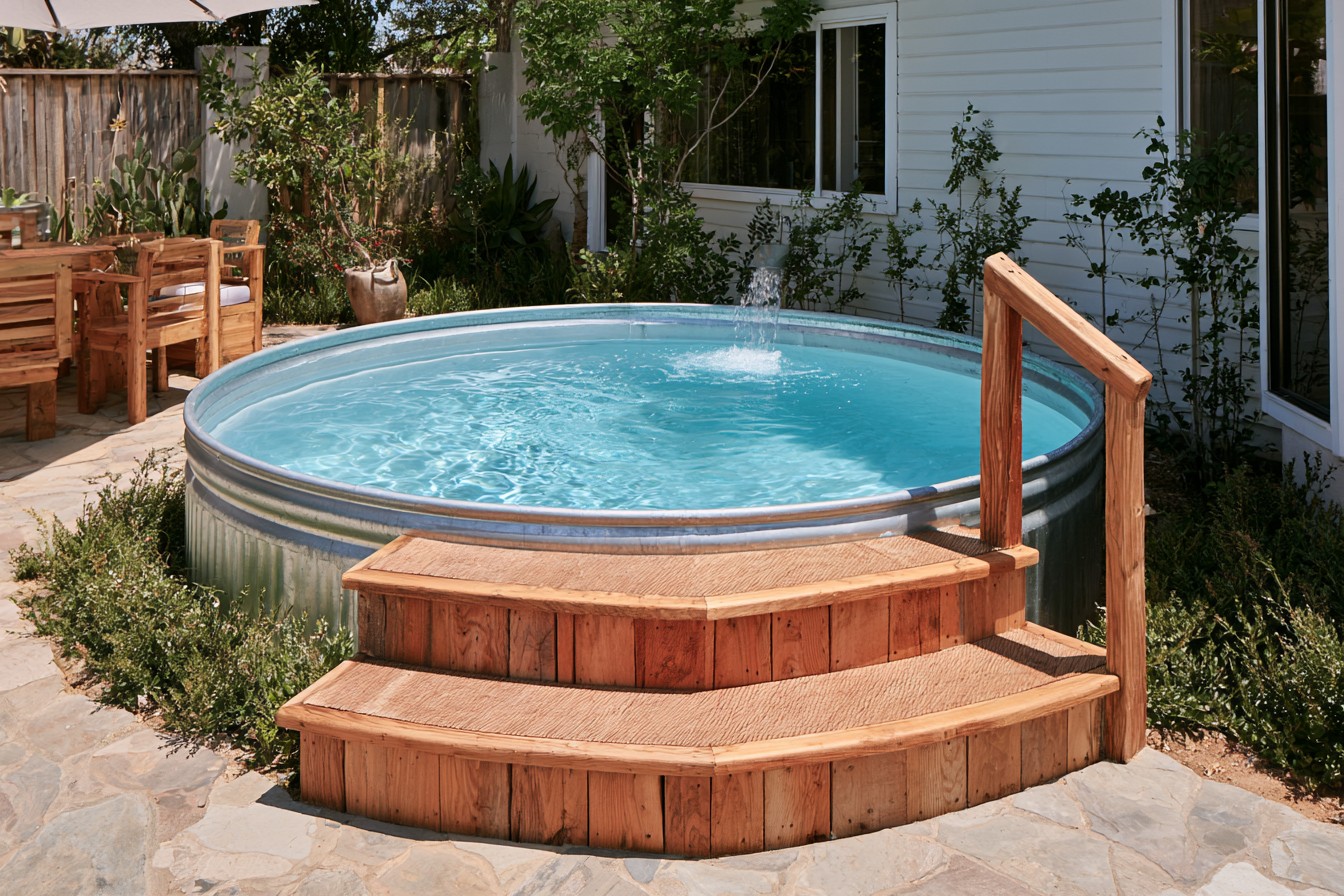
An entry step must remain stable when wet and should provide a slip-resistant surface. Its height and depth should allow users to enter without balancing on the thin tank rim. Inside the pool, any step or ladder must be intended for aquatic use and should not introduce sharp edges or entrapment points.
External steps can make it easier for an unsupervised child to reach the water. Remove or secure movable steps when the pool is not in use and ensure the overall barrier arrangement meets local safety requirements. A step, ladder, or cover never replaces close adult supervision.
9. Install a Draining, Slip-Resistant Surround
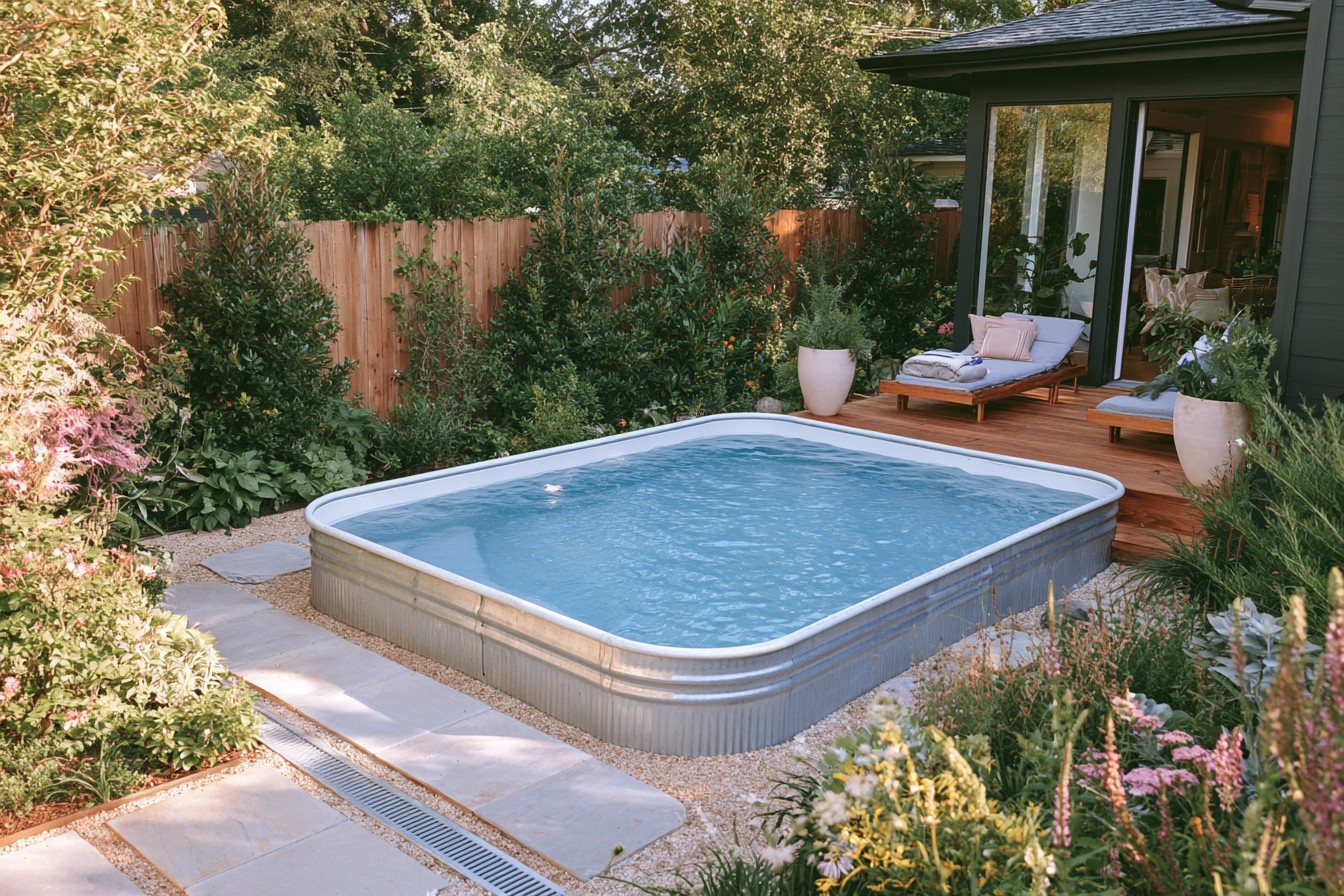
The area around the tank will receive splashed water and should remain stable under wet feet. Textured pavers, purpose-made outdoor surfaces, or a properly constructed draining deck can reduce mud and standing water. Loose rugs and unstable stepping stones may shift, curl, or become slippery after repeated soaking.
Slope the surrounding surface away from the tank and nearby buildings while maintaining a level foundation beneath the pool itself. Preserve access to the drain, plumbing, pump, and tank walls. Regularly remove algae, leaves, and other material that can reduce traction around the water.
10. Treat Wooden Cladding as a Separate Ventilated Structure
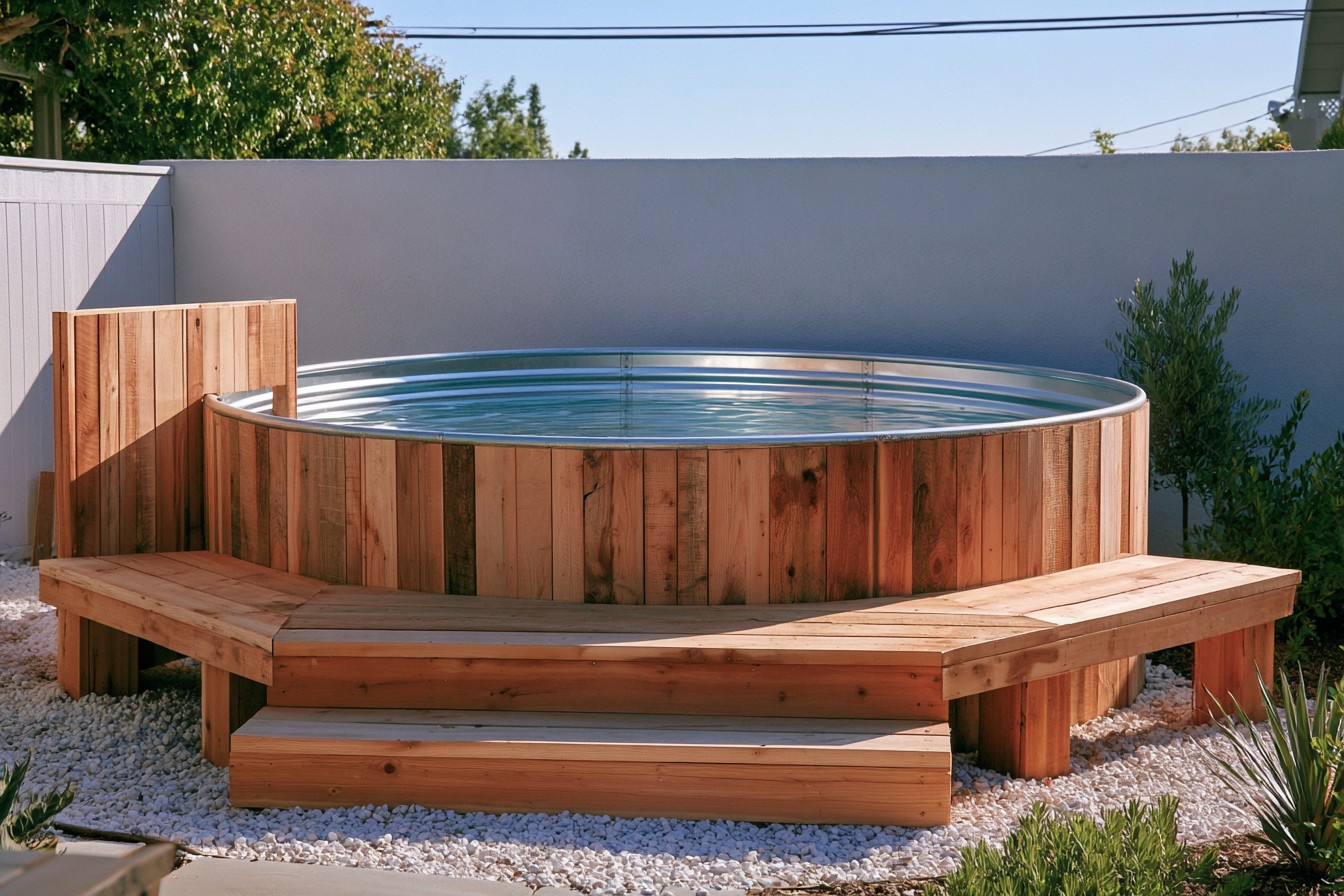
Wooden cladding can soften the tank’s industrial appearance, but it should not carry the tank’s water load unless it has been engineered as part of a larger structure. Build it as an independent surround using exterior-grade materials and corrosion-resistant fasteners. Leave a ventilation gap so moisture does not remain trapped against the metal.
Include removable service panels for plumbing, drainage, and wall inspection. The top edge should not become an unsafe seat, diving platform, or climbing aid. Seal cut timber surfaces and inspect the structure regularly for rot, loose boards, splinters, and fastener corrosion.
11. Keep Plants Clear of Equipment and Water
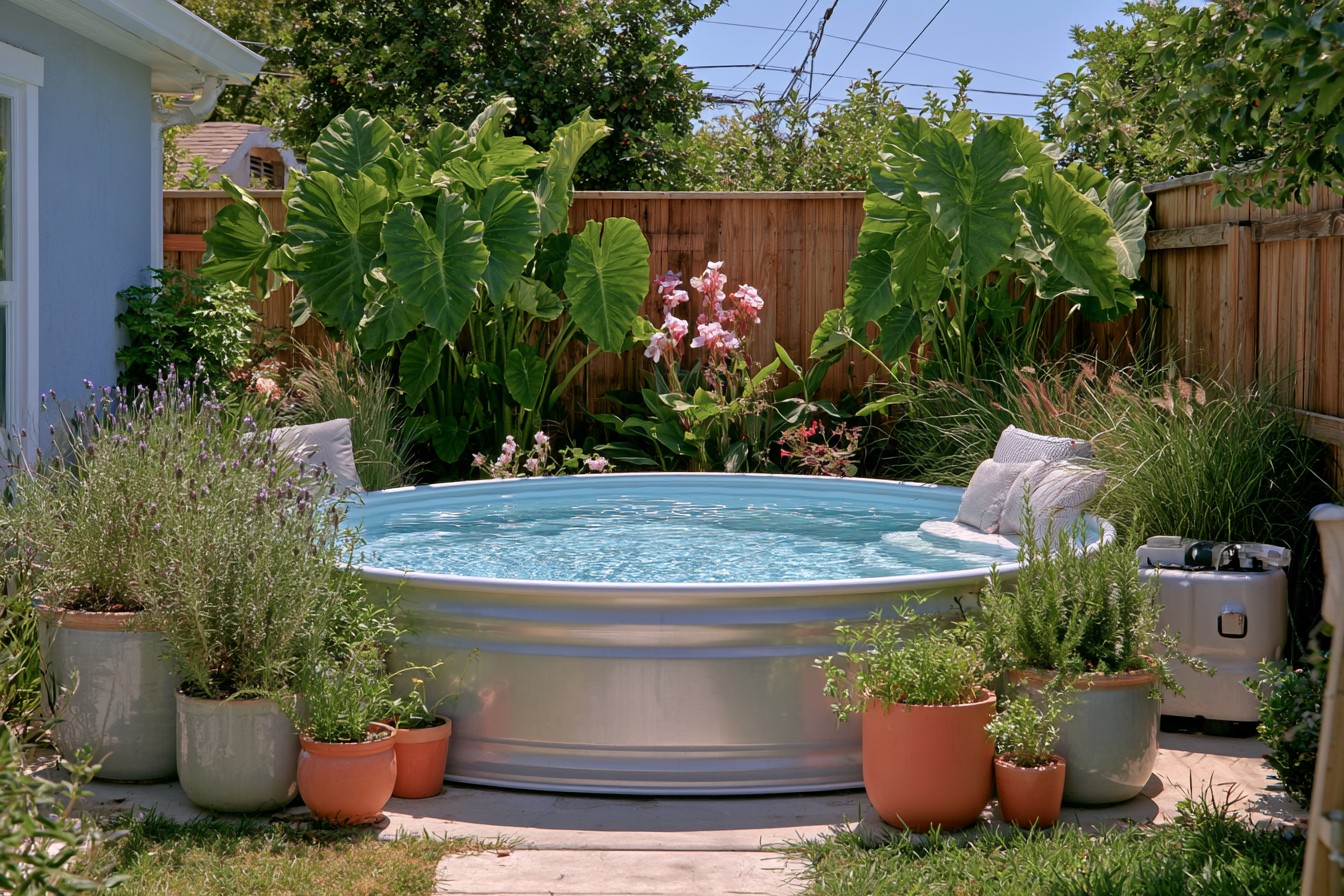
Plants can shade hard surfaces and integrate the tank into the garden. Choose species suited to reflected heat, sunlight, and occasional splashes. Avoid thorny plants, highly toxic species, and varieties that drop excessive flowers, fruit, or leaves into the water. Keep containers out of access routes and away from pool edges.
Do not allow roots, soil, fertilizer, or pesticide runoff to enter the pool. Heavy containers should remain stable and should not create steps that children could use to cross a barrier. Leave clear working space around pumps, valves, outlets, and plumbing connections.
12. Anchor Shade Structures for Wind and Weather
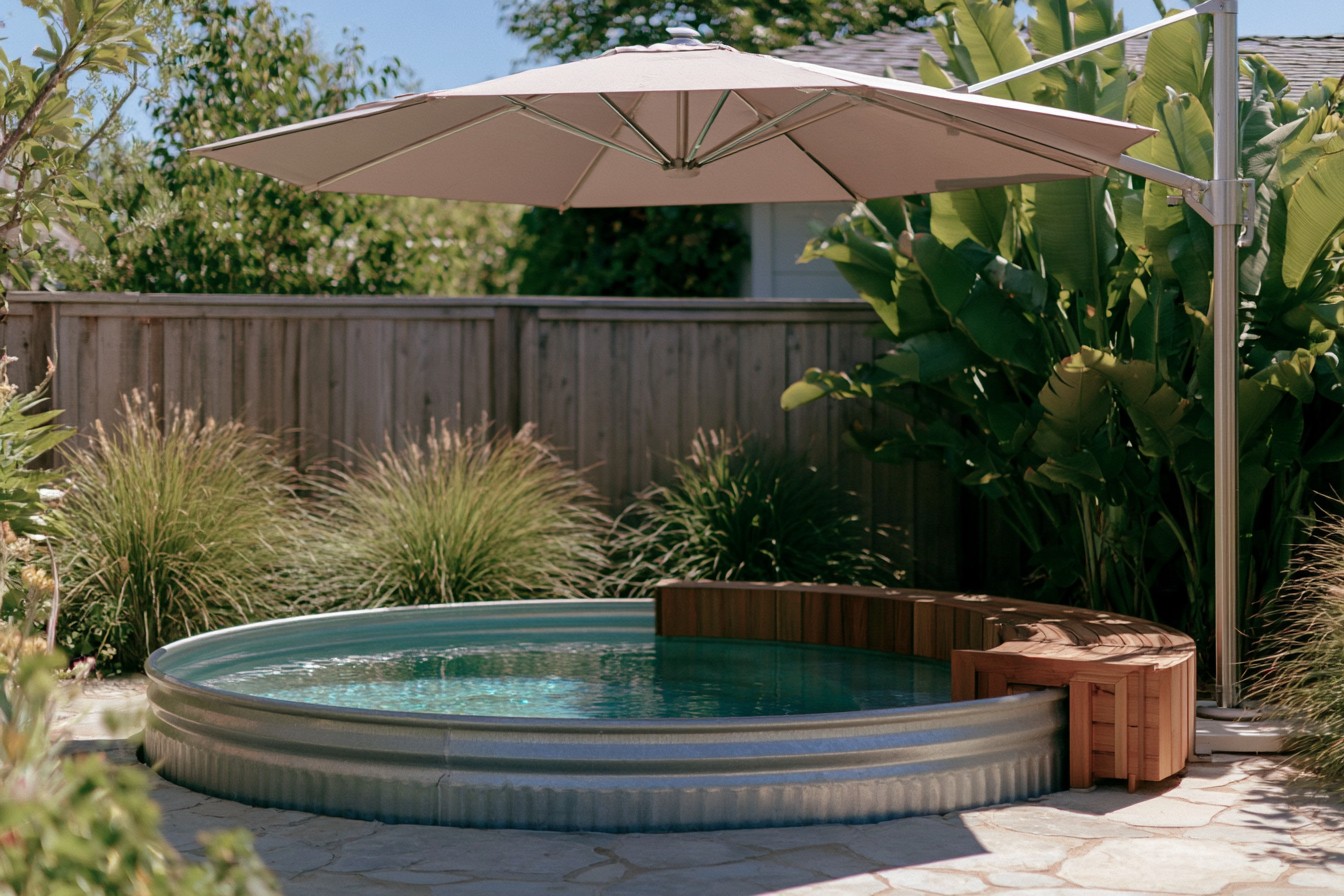
A freestanding umbrella or properly installed shade sail can improve comfort around an exposed tank. Position supports outside the main walking and entry areas. The structure should not obstruct supervision, interfere with electrical lines, or direct rainwater toward the pool and equipment.
Shade structures experience significant wind loads and require anchors specified for their size and location. Close or remove umbrellas during strong wind and follow the manufacturer’s weather guidance. Never attach a shade sail directly to a tank wall, temporary railing, weak post, or unidentified part of a building.
13. Test and Maintain the Water Before Swimming
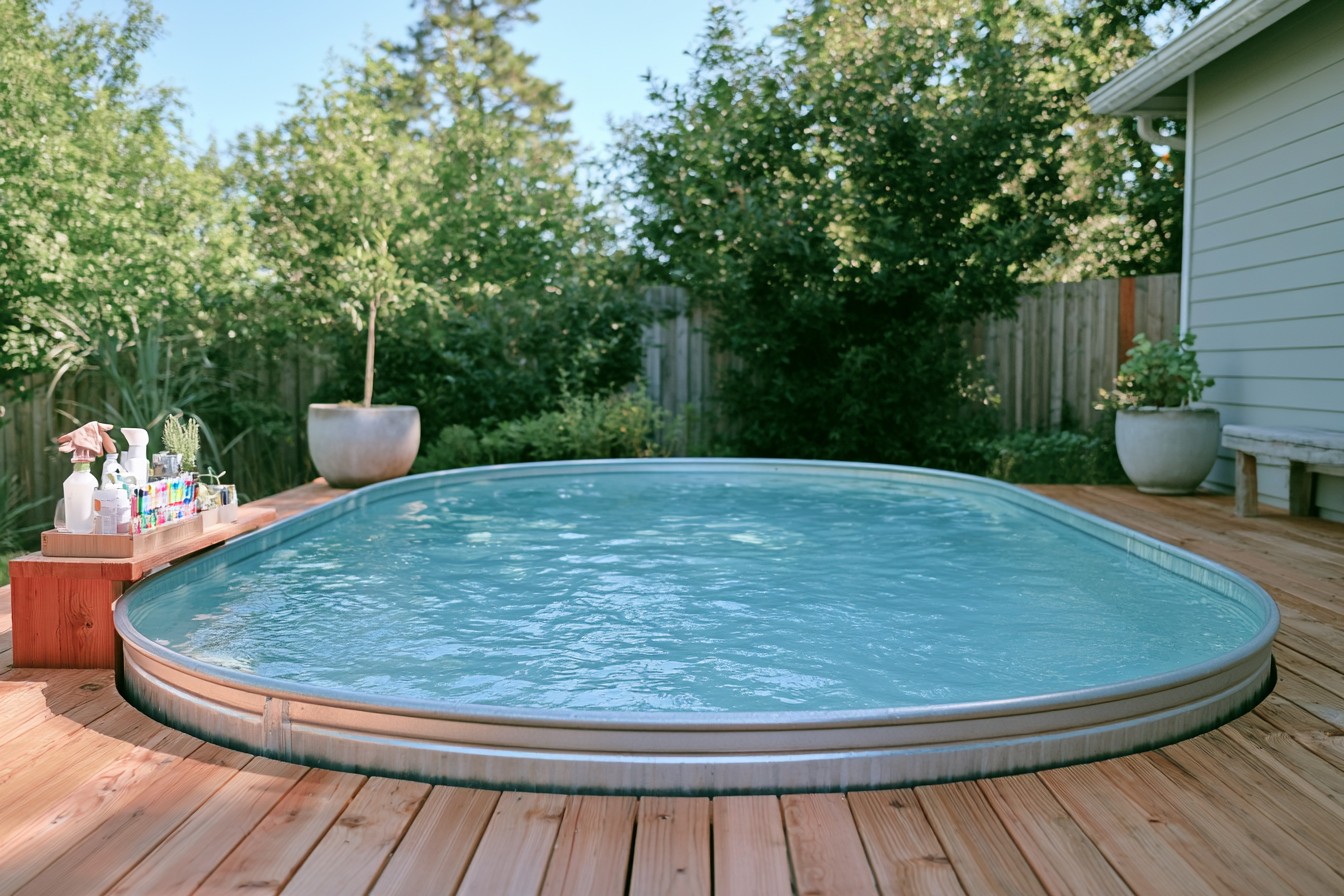
Clear-looking water is not proof that a pool is properly disinfected. Test the disinfectant and pH using a reliable method, follow the chemical and equipment manufacturers’ instructions, and consult local public-health guidance. Conditions should be checked regularly and after heavy use, storms, contamination, or extended periods without circulation.
Store pool chemicals in their original labeled containers in a cool, dry, ventilated, and secured location. Never mix different products or add water to concentrated chemicals unless the label specifically directs it. Keep swimmers out of the pool during treatment and until the product instructions indicate that the water is ready for use.
14. Use Barriers and a Genuine Safety Cover Between Uses
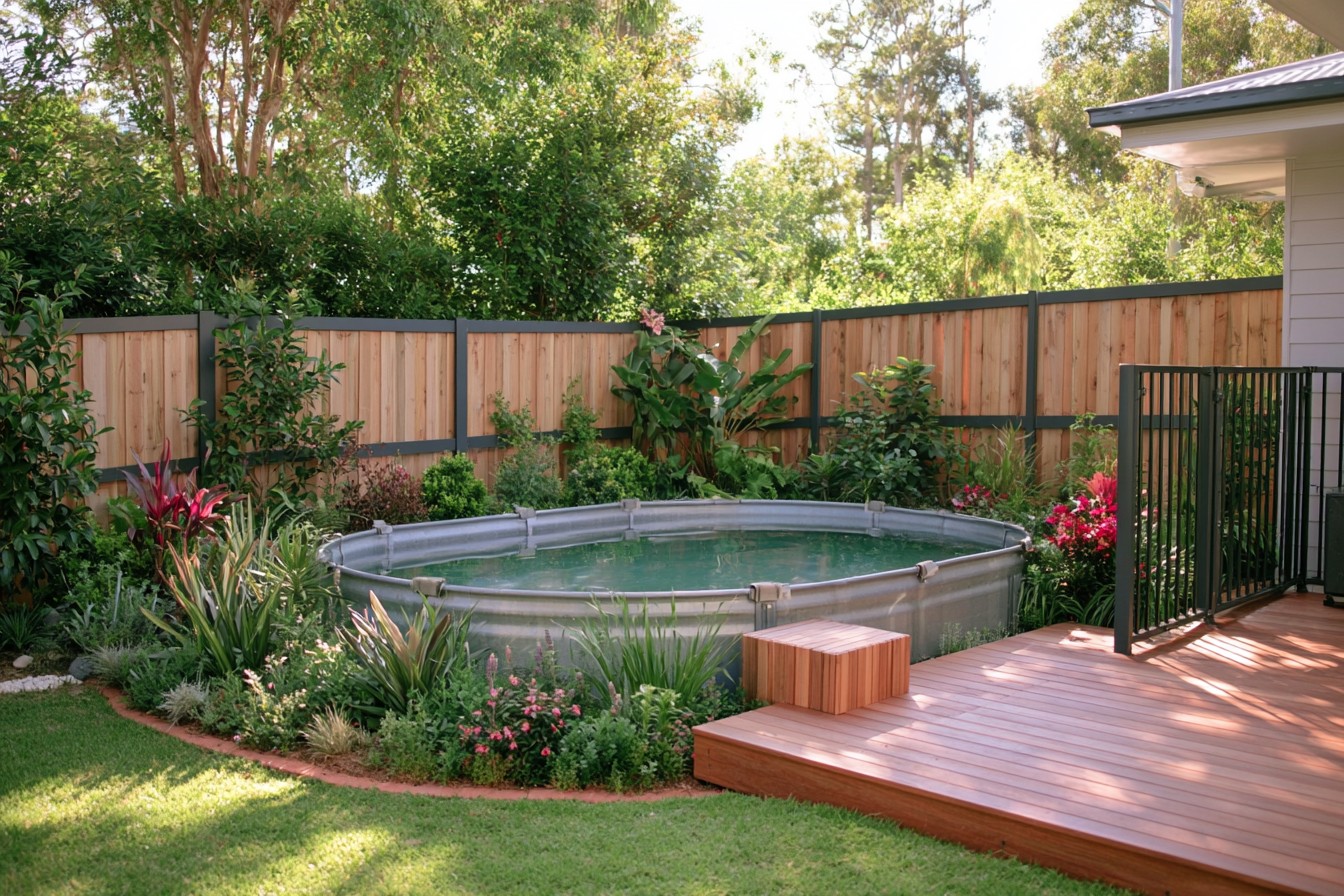
A loose tarpaulin or floating cover is not a safety cover and can create an additional entrapment hazard. Select a product specifically designed and rated for the tank or pool dimensions, install it according to the manufacturer’s instructions, and inspect its anchors and material regularly. Remove collected rainwater as directed.
Use the cover as one part of a wider protection system that may include a compliant four-sided barrier, self-closing and self-latching gate, door alarms, and controlled access to steps. Never leave a child unattended in or near the water, even briefly, and designate an adult whose only task is active supervision.
Maintain the Pool as a Water System, Not a Garden Ornament
A stock tank pool requires continuing maintenance after its initial construction. Inspect the foundation, tank walls, rim, fittings, suction covers, hoses, pump, filter, electrical protection, steps, surrounding surface, barrier, and safety cover. Stop using the pool when equipment is damaged, water quality is uncertain, or a structural problem appears.
This guide provides planning information rather than a substitute for local regulations or professional inspection. Requirements vary by location and installation type. Confirm them with the relevant authorities and use qualified pool, structural, and electrical professionals wherever the work exceeds normal manufacturer-approved assembly.
MORE IDEAS


Share
What's Your Reaction?
 Like
0
Like
0
 Dislike
0
Dislike
0
 Love
0
Love
0
 Funny
0
Funny
0
 Angry
0
Angry
0
 Sad
0
Sad
0
 Wow
0
Wow
0