18 Curtain Hanging Styles for Better-Looking Windows

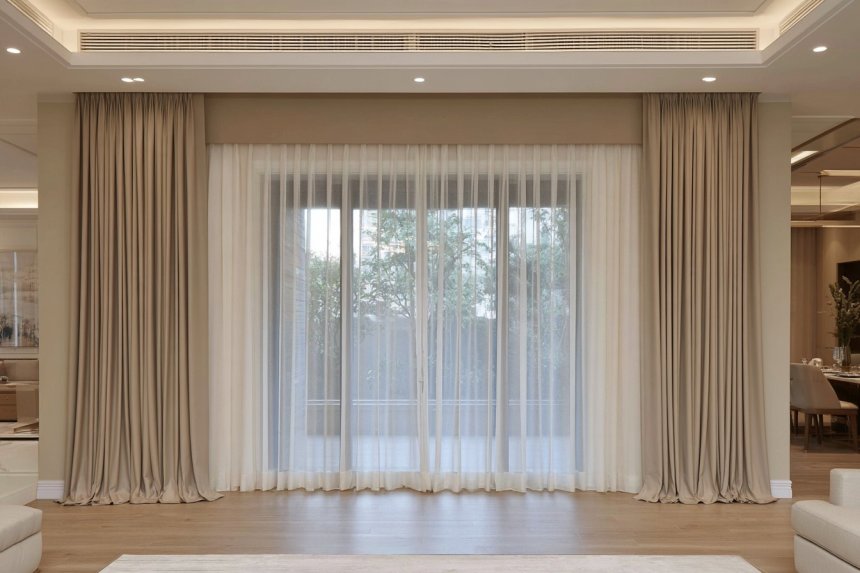
Curtains can change far more than privacy and light levels. The way they are mounted can make a ceiling look taller, soften an awkward window, hide unattractive hardware, or turn a basic opening into a stronger architectural feature. Instead of treating the curtain rod as an afterthought, consider it part of the room’s design. Ceiling tracks, corner wraps, exposed rings, recessed channels, layered rods, and even freestanding frames can each produce a very different effect. The best method depends on ceiling height, wall construction, fabric weight, and how frequently the curtains need to move. These curtain hanging ideas focus on creative installation approaches that still remain practical for everyday use.
1. Ceiling-Mounted Tracks
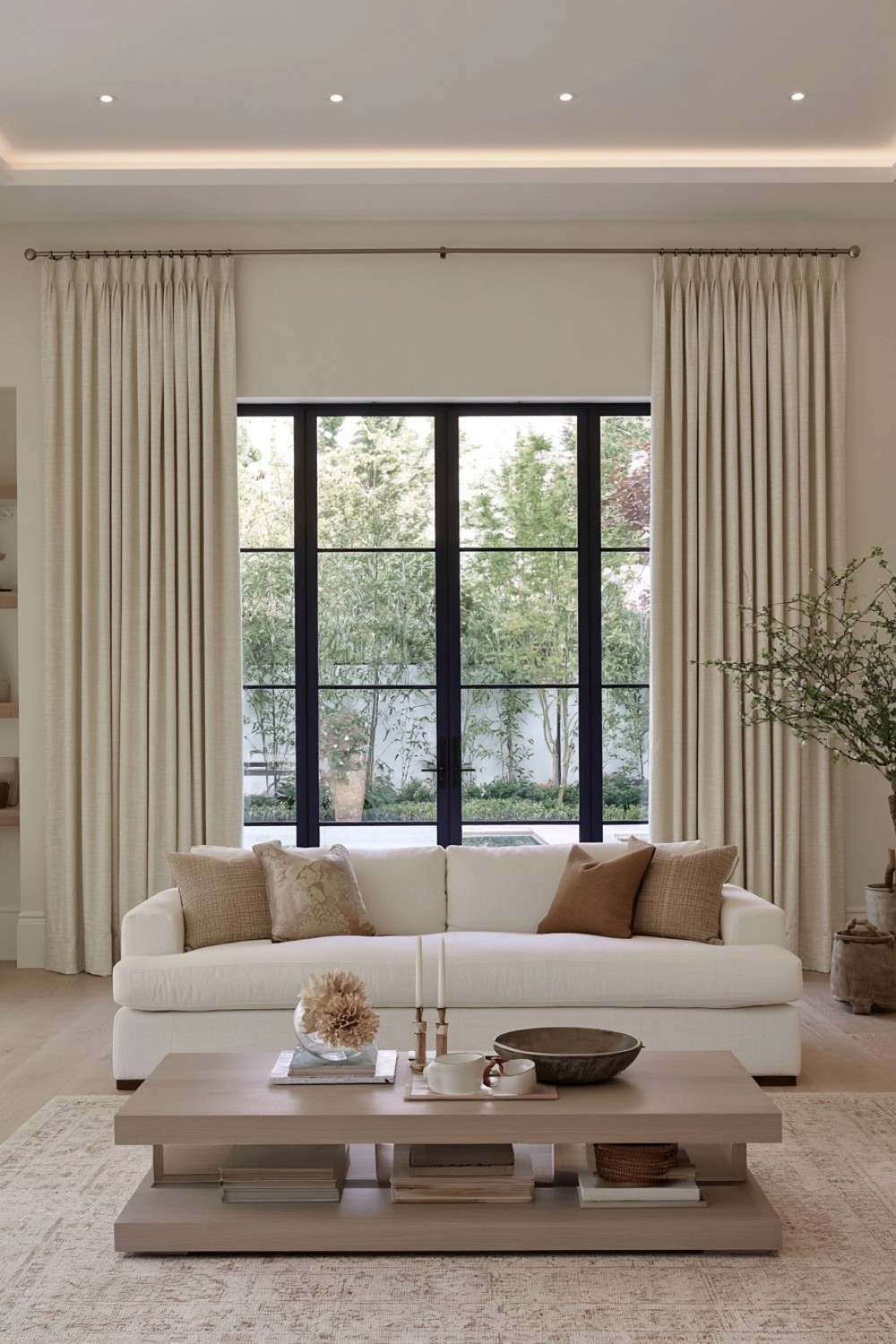
Mounting curtains directly to the ceiling can make a room feel noticeably taller.
Use a slim aluminum track positioned close to the ceiling and allow the fabric to fall almost to the floor. The uninterrupted vertical line draws the eye upward and removes the visual break created by a conventional wall-mounted rod.
This works particularly well in apartments with average ceiling heights or windows positioned close to the ceiling.
Choose ripple-fold, pinch-pleat, or simple wave curtains depending on how tailored you want the result to feel.
For heavy fabric, make sure the track is fixed into appropriate structural support rather than decorative ceiling material alone.
A ceiling track can also extend beyond the actual window width, allowing the curtain to stack against the wall and expose more glass when open.
2. Wall-to-Wall Drapery
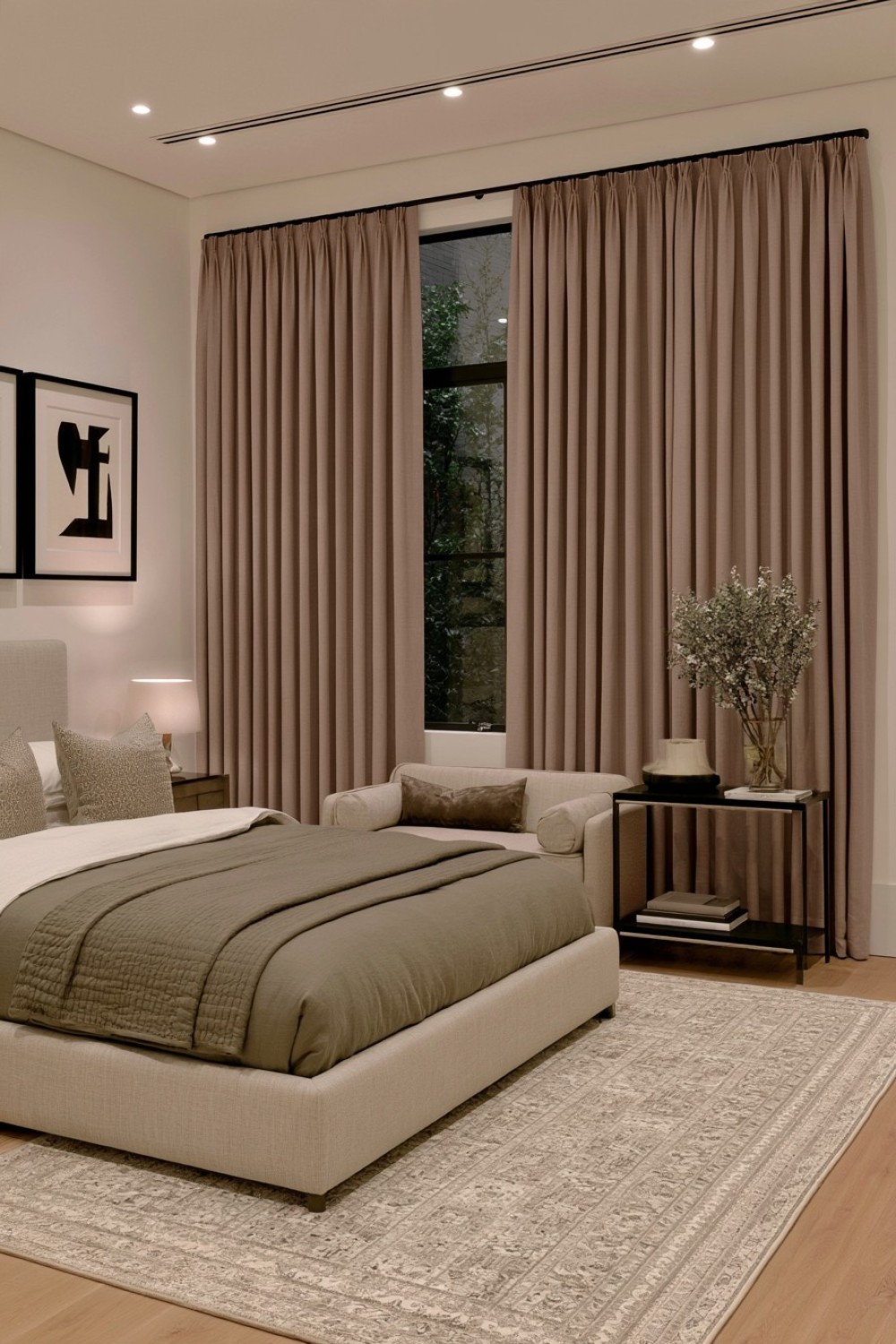
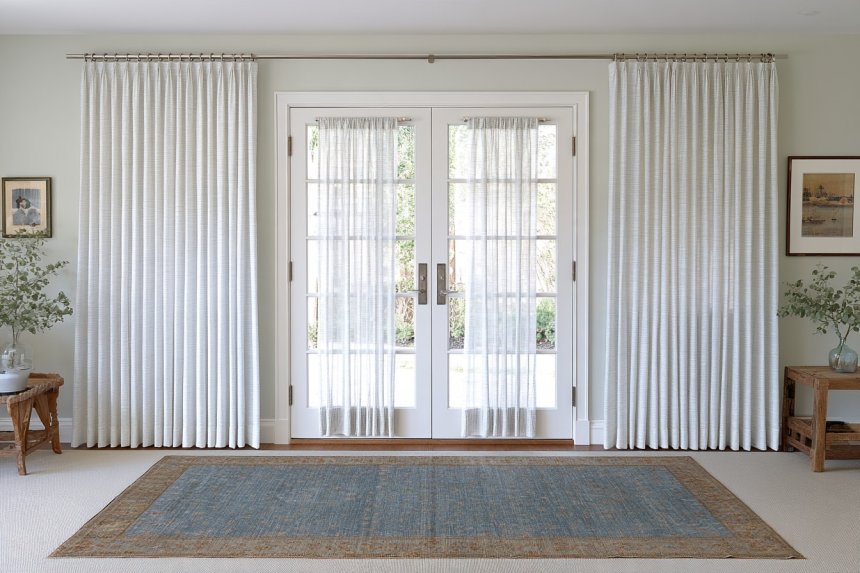
Instead of framing only the window, let the curtain treatment cover the entire wall.
Install a track or rod from one corner to the other and use enough fabric for generous folds even when closed.
This can disguise an awkwardly positioned window, create a softer backdrop behind furniture, and make several smaller windows appear as one larger architectural feature.
Neutral linen or textured fabric works particularly well because the large amount of material already creates visual impact.
For rooms with radiators, vents, or furniture against the wall, check clearance before selecting full-length curtains.
This approach is especially effective in bedrooms and living rooms where a broad textile surface can also soften acoustics and reduce visual clutter.
3. Hidden Curtain Channels
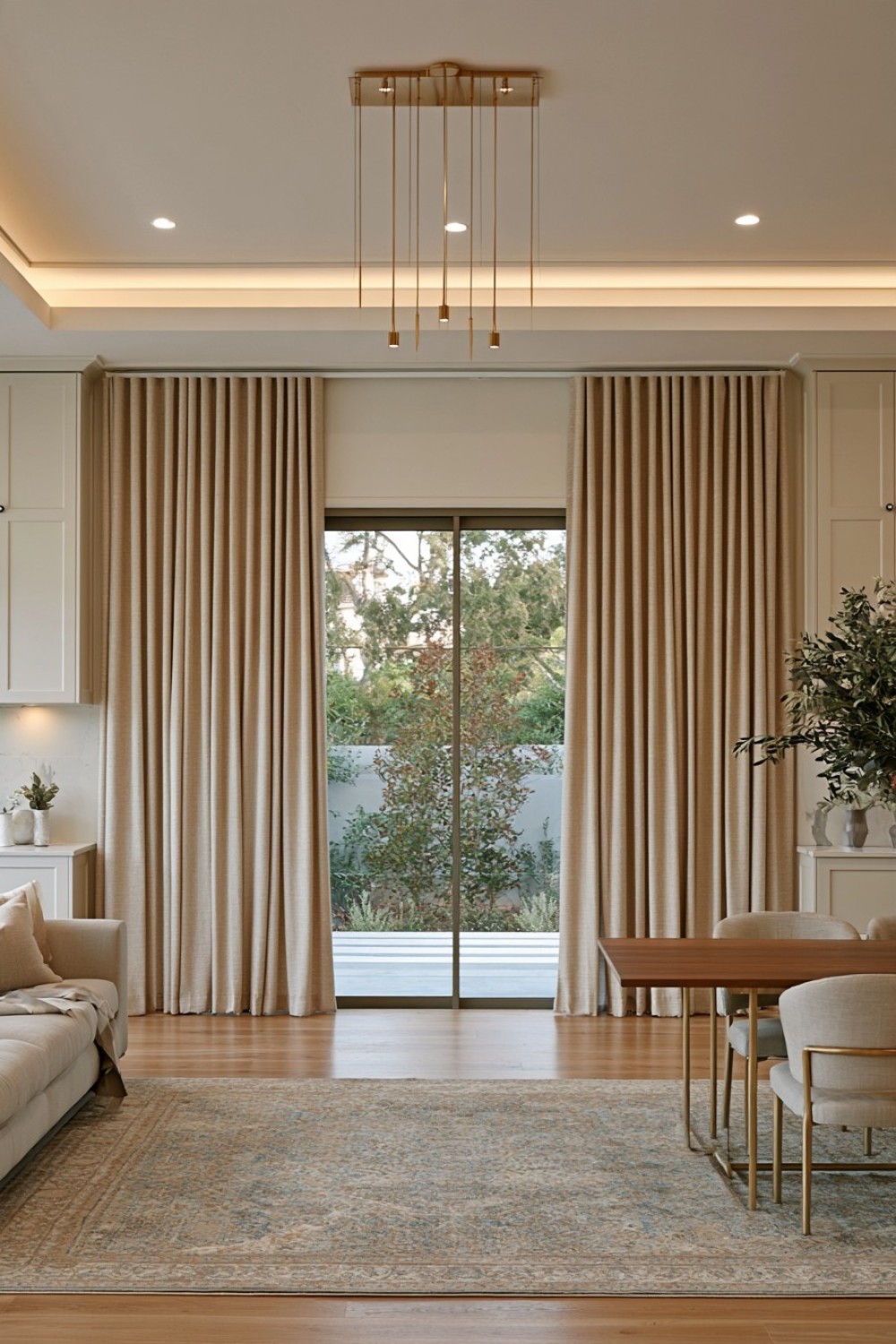
A recessed curtain track can make the fabric appear to emerge directly from the ceiling.
The track sits inside a narrow ceiling pocket, shadow gap, or boxed section rather than remaining visible.
This creates an exceptionally clean look and works well in contemporary interiors where decorative rods would interrupt the architecture.
The best time to plan this detail is during renovation, since the recess may need to be incorporated into plasterboard or ceiling construction.
If a full recess is not practical, a shallow timber or plaster pelmet can create a similar effect.
Leave enough space inside the channel for curtain hooks, track movement, and future maintenance.
The result works best with long curtains that reach close to the floor.
4. Extra-Wide Curtain Rods
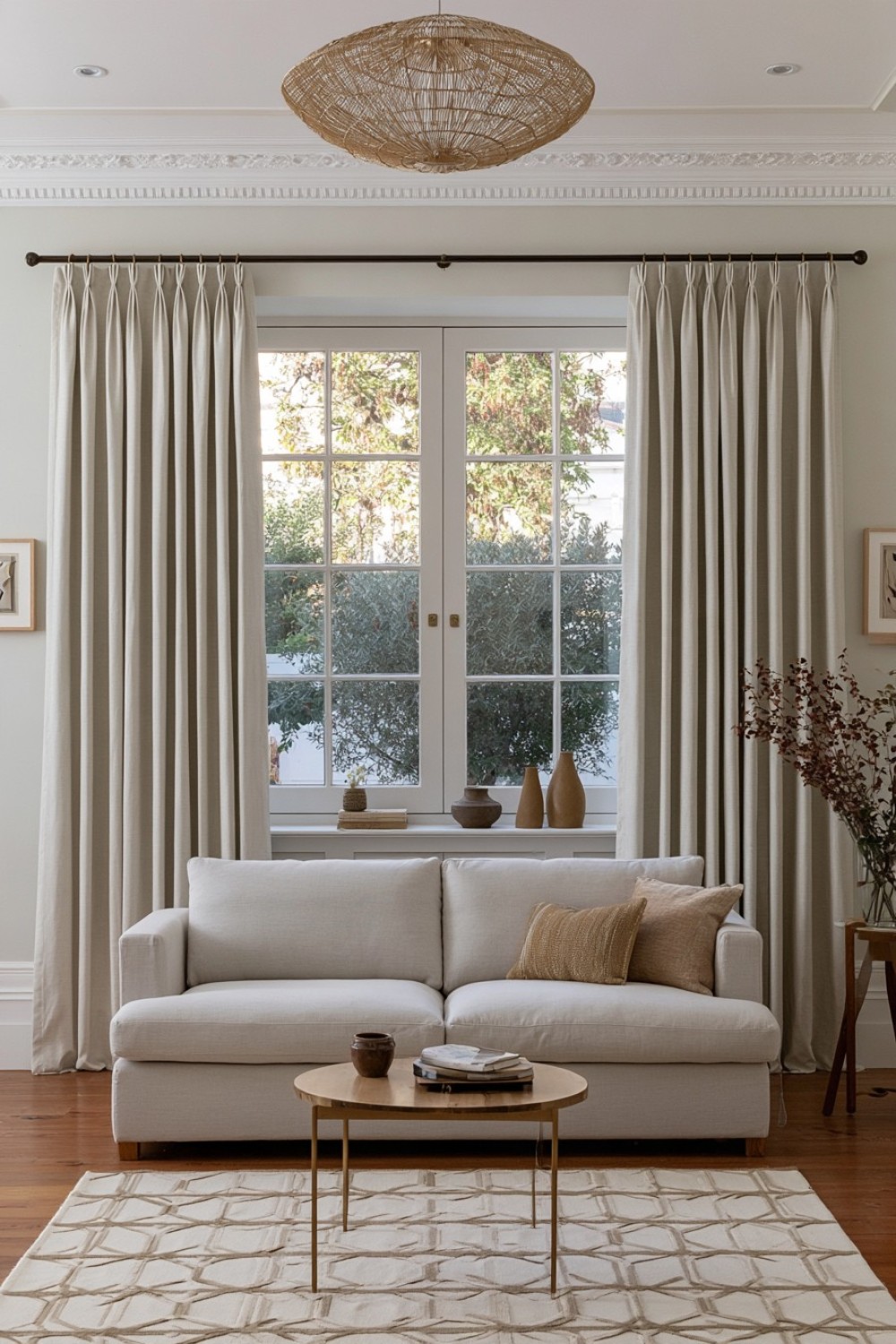
A curtain rod does not need to stop only a few centimeters beyond the window.
Extend it substantially farther onto the surrounding wall so the curtains can stack completely away from the glass.
This exposes more daylight when the curtains are open and can make a modest window appear wider.
The approach works especially well for decorative drapes combined with a separate blind or privacy layer.
Use substantial brackets if the rod is unusually long, particularly with lined or heavy curtains.
A center support may also be needed to prevent sagging.
Visually, the wider installation creates a more generous frame around the window and can help balance a large sofa, bed, or console positioned below it.
5. Corner-Wrapped Curtains
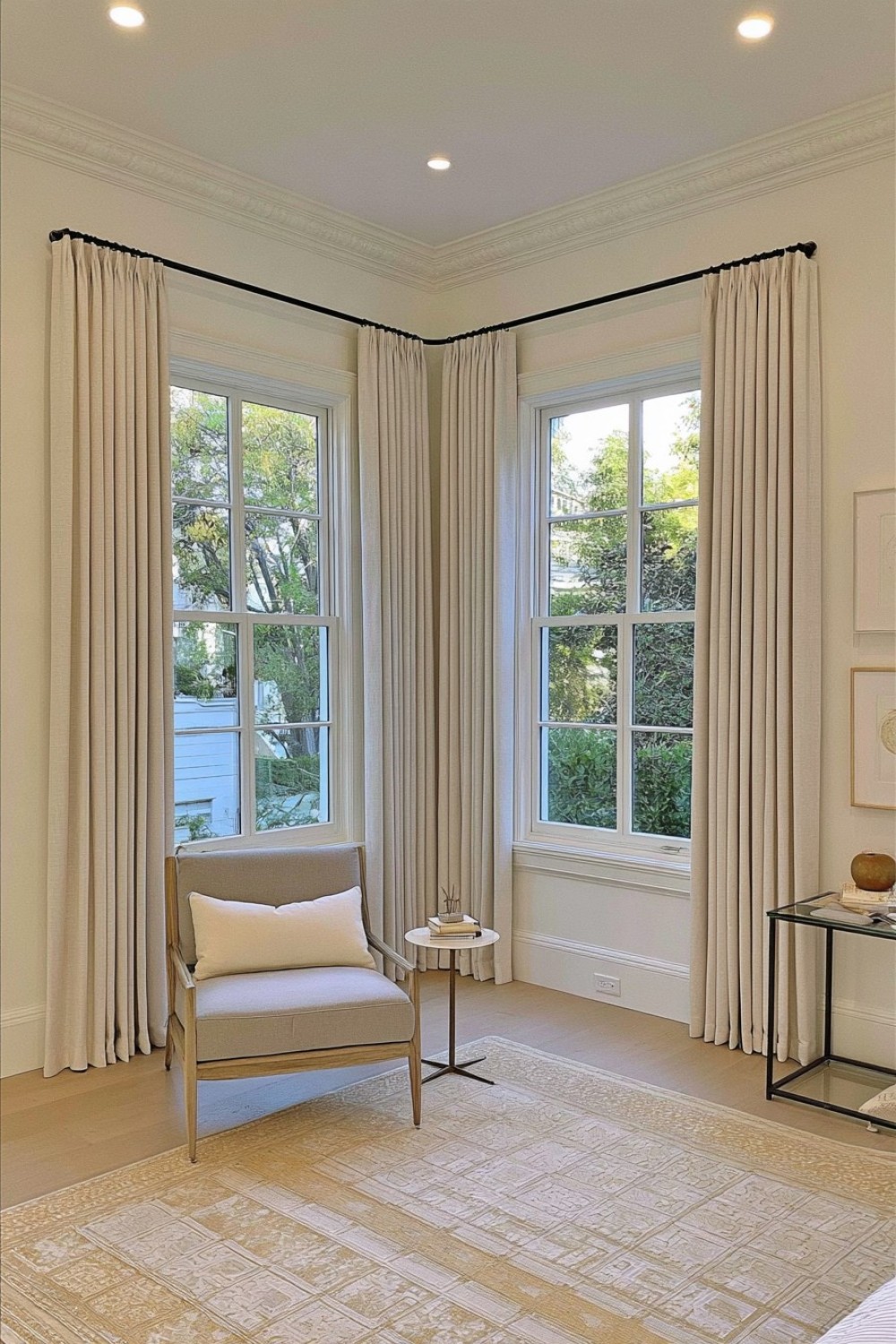
Corner windows can look disjointed when each opening receives a separate curtain rod.
A continuous corner track allows the fabric to move around the angle and visually connects both windows.
Ceiling-mounted bendable tracks are particularly useful because they can follow the architecture without bulky corner connectors.
Use a relatively fluid fabric so it moves easily around the curve.
This technique also works for windows positioned very close to an adjacent wall where there is not enough space for conventional finials.
Keep the curtain stack planned carefully so it does not collect directly in the corner.
The result feels much more integrated than treating each side as an unrelated window.
6. Layered Double Tracks
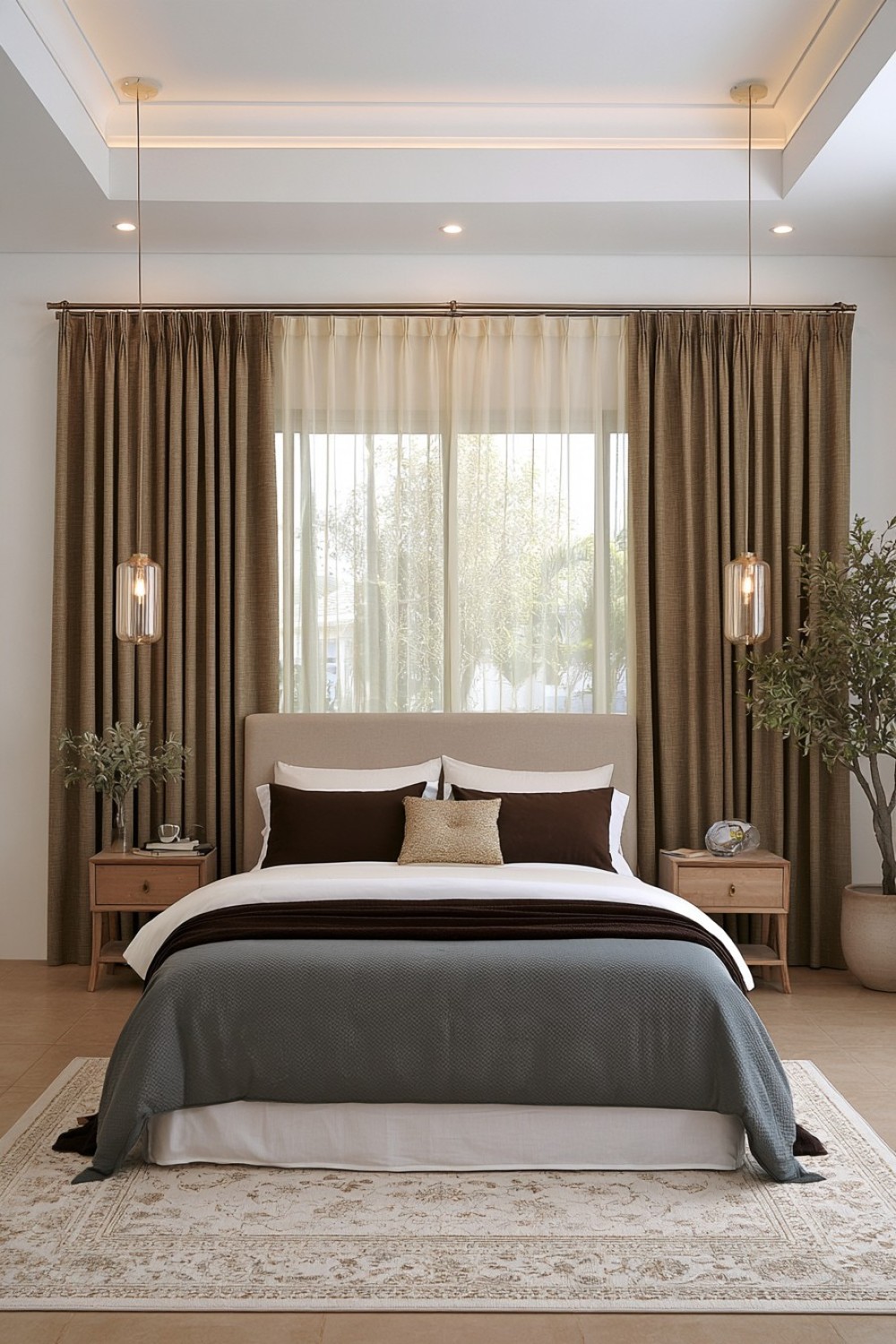
Two independent tracks give curtains different jobs.
Place a sheer curtain closest to the window and a heavier privacy or blackout layer toward the room.
During the day, the sheer can remain closed to diffuse glare and provide some privacy while the heavier layer stays open. At night, both layers can close.
Keep the track spacing wide enough that the fabrics can move without catching on each other.
Using different textures usually works better than choosing two visually similar materials. For example, combine lightweight linen-look voile with dense woven drapery.
This system is especially useful in bedrooms and street-facing living rooms where light and privacy requirements change throughout the day.
7. Oversized Curtain Rings
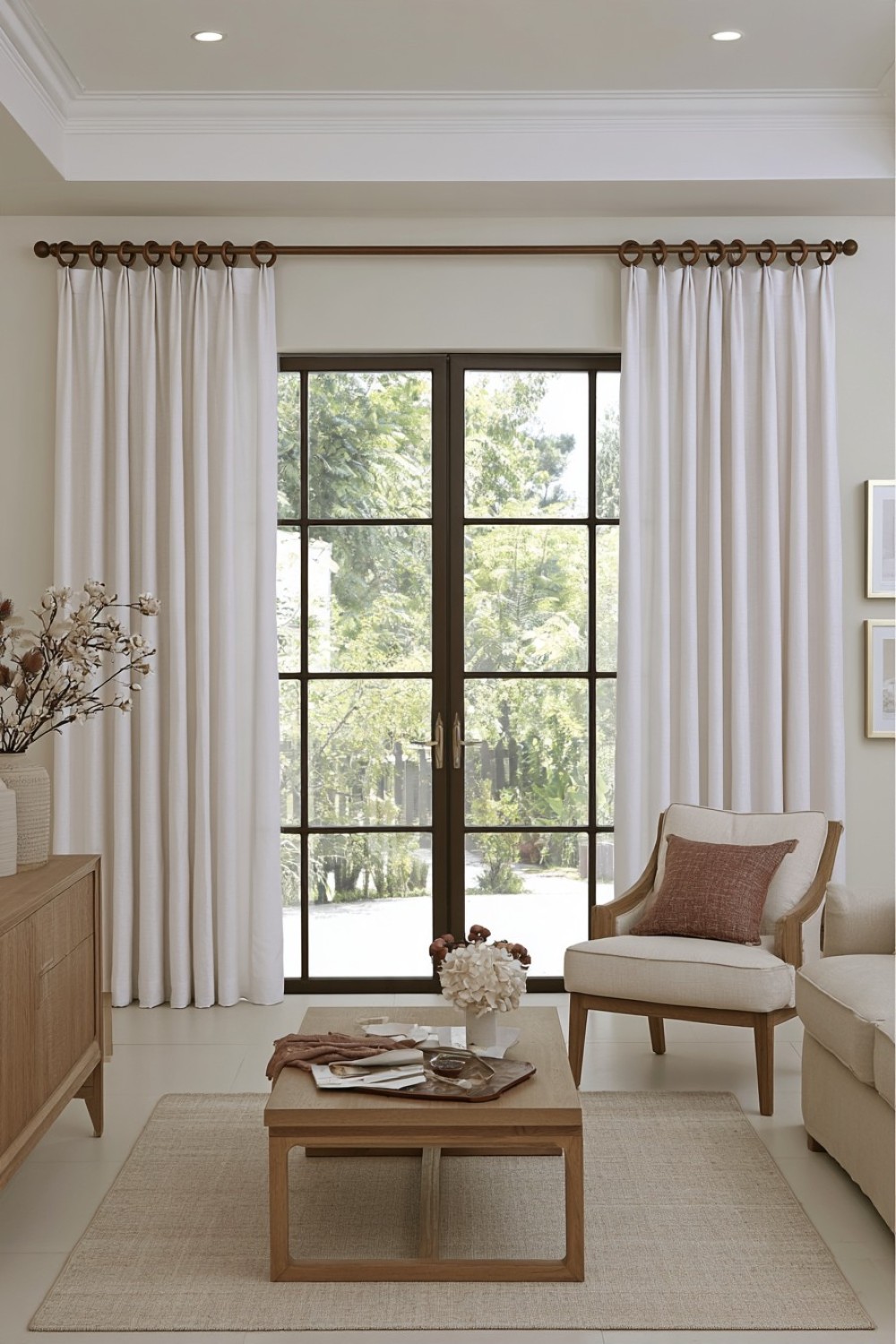
Exposed rings can become part of the design rather than hardware to hide.
Use unusually large timber, metal, or dark-finished rings with a simple rod and relatively plain curtain fabric.
The scale difference gives the top of the curtain more character and works especially well in relaxed, traditional, rustic, or transitional rooms.
Keep the number of rings consistent so the curtain folds remain evenly distributed.
If using clip rings, make sure they are rated for the weight of the fabric. Heavy lined curtains usually need sewn-on rings or proper drapery hooks rather than lightweight clips.
This is a simple way to make an ordinary curtain installation feel more deliberate without changing the window itself.
8. Leather Tab Hangers
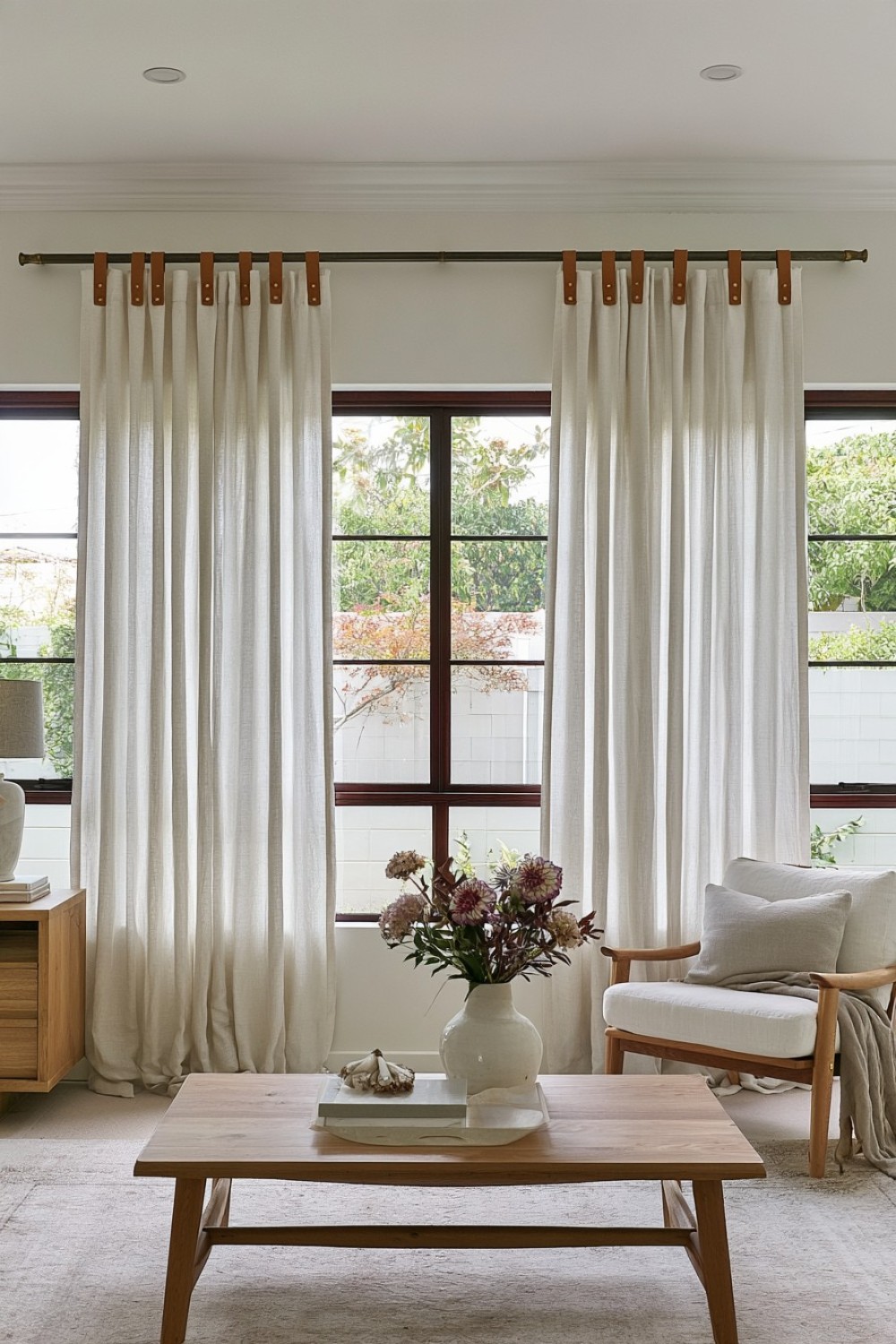
Leather tabs can replace standard fabric loops and create a more tactile curtain detail.
Use narrow leather or high-quality faux-leather straps wrapped around the rod and secured to the curtain with rivets, buttons, or concealed stitching.
The contrast works particularly well with linen, canvas, or other natural-looking fabrics.
Tan leather against oatmeal linen creates a warm look, while black leather with charcoal fabric feels more graphic.
Because the tabs are visible, keep their spacing precise.
This method is better suited to curtains that are opened manually and not moved constantly throughout the day, since leather tabs generally do not glide as freely as rings.
Use reinforced attachment points so the weight of the curtain does not pull directly on the fabric edge.
9. Suspended Rods
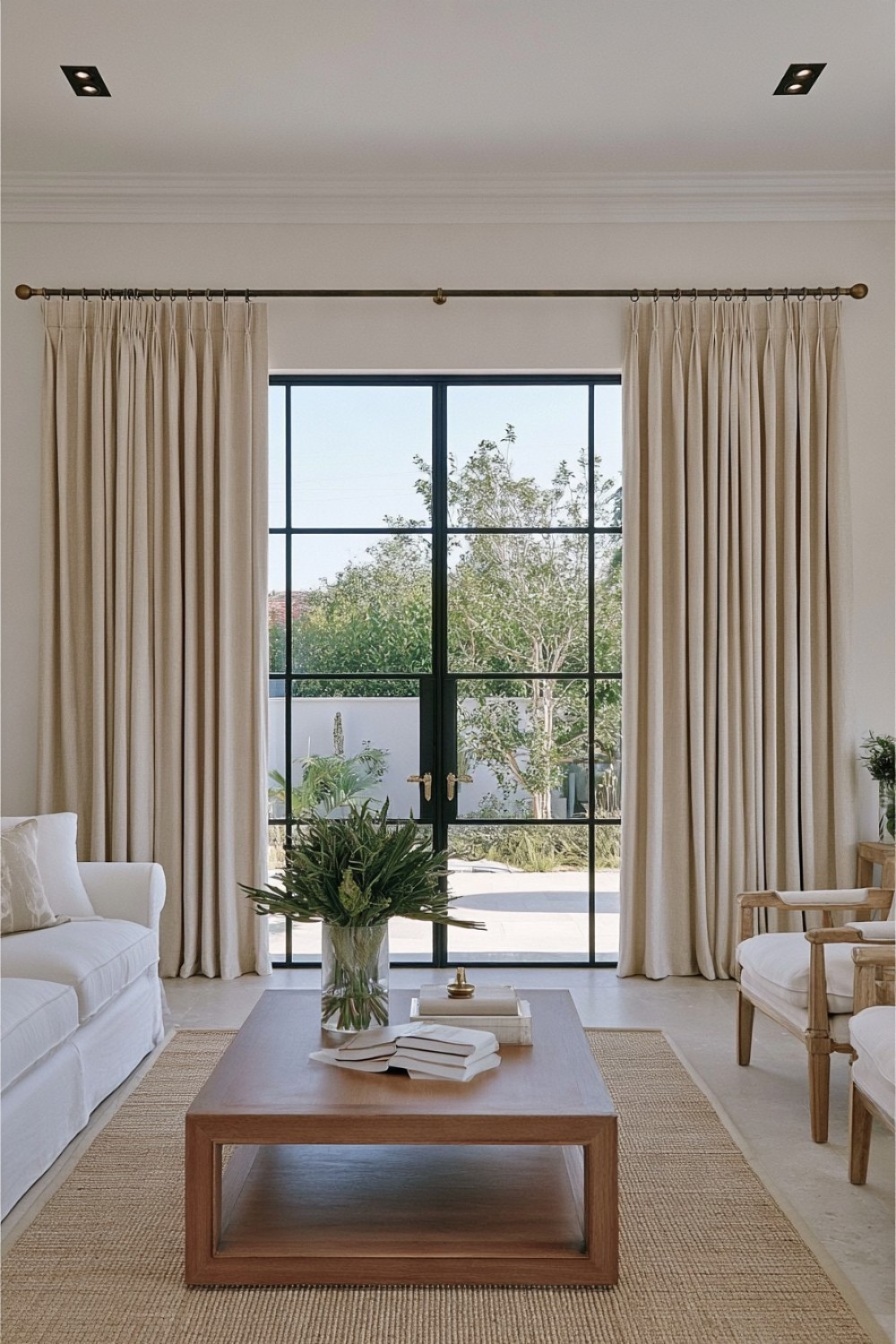
Instead of attaching the curtain rod to the wall, suspend it from the ceiling.
Use strong ceiling brackets or vertical metal supports to hold a horizontal rod several centimeters below the ceiling.
This can solve problems where there is little wall space above the window or where deep trim prevents conventional mounting.
The exposed suspension hardware also creates an architectural detail of its own.
Black metal works well in industrial or contemporary rooms, while brass can create a warmer finish.
The installation must be securely anchored into suitable structural support, especially for heavy curtains.
Once installed correctly, the suspended rod can make the window treatment feel almost freestanding rather than simply attached to the wall.
10. Curtain Wire Systems
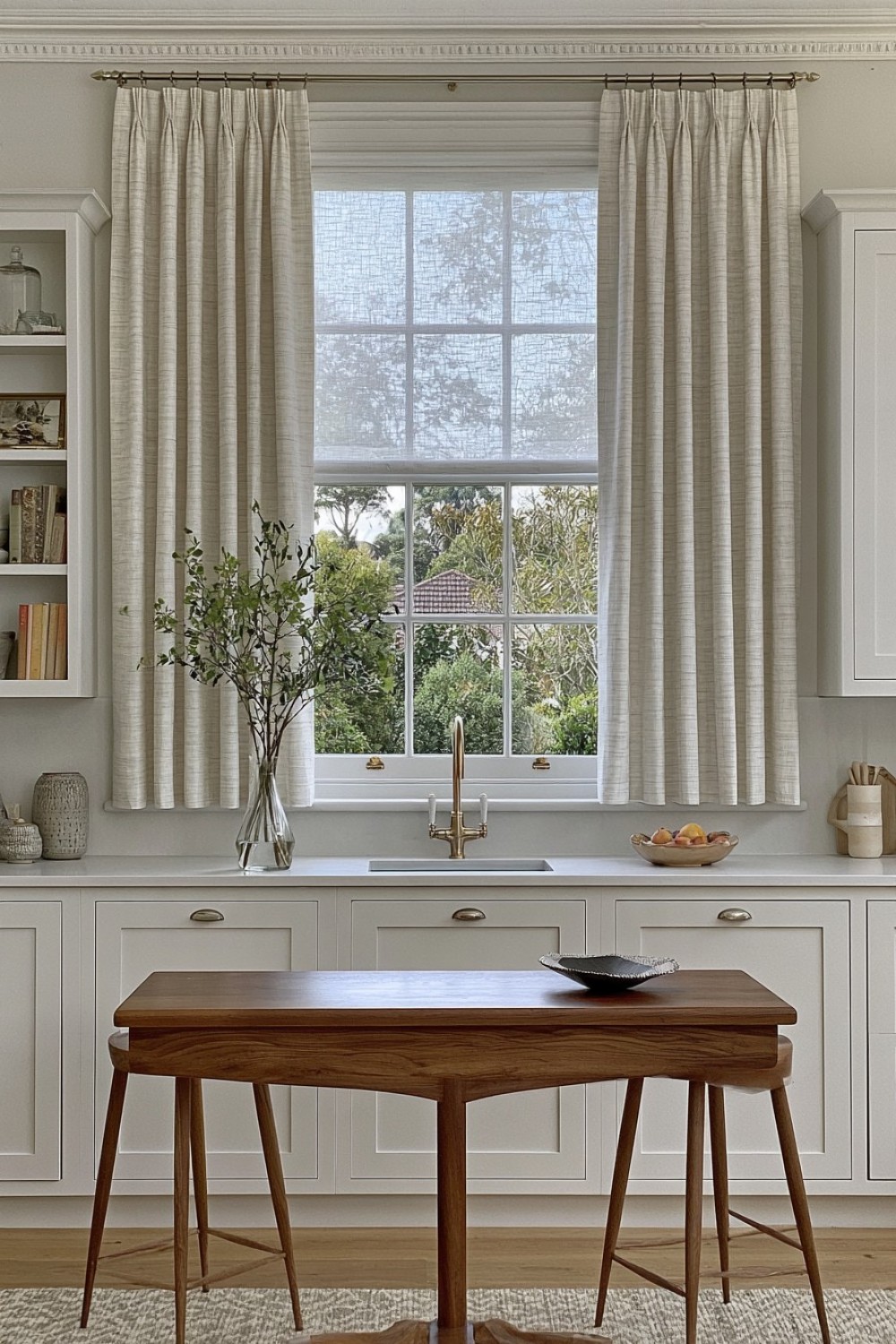
For very lightweight curtains, a tensioned wire can replace a bulky rod.
Use stainless-steel curtain cable with properly anchored wall fittings and lightweight voile, cotton, or café-style panels.
The thin line almost disappears, allowing the fabric to become the main visual element.
This works especially well for small windows, interior glazed doors, or minimalist spaces.
Do not use a wire system for heavy lined drapes because the cable can sag substantially under excess load.
For wider spans, an intermediate support may be required.
The restrained hardware also makes this a useful solution when the window already contains strong architectural detailing that you do not want to cover.
11. Inside-Frame Curtains
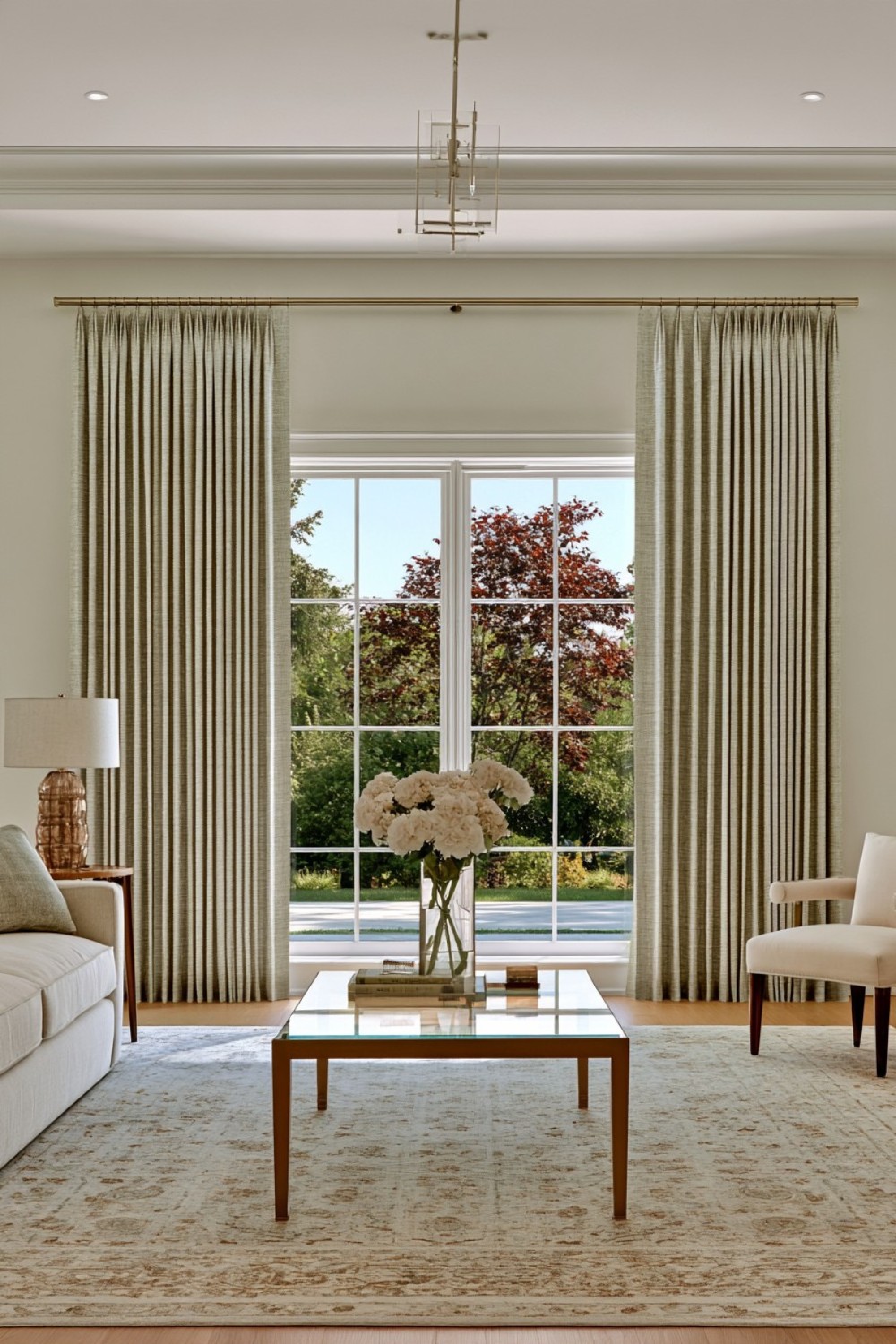
Not every curtain needs to sit outside the window frame.
For deep window recesses, mount a small tension rod or slim track inside the opening.
This creates a compact treatment that leaves surrounding wall space completely visible.
It works particularly well for café curtains, utility rooms, kitchens, and small windows where full-length drapery would feel excessive.
Measure the recess carefully because uneven walls can affect tension rods and hardware alignment.
Lightweight fabrics work best.
This method is also useful when a window sits close to cabinetry, shelving, or another architectural feature that prevents a wider rod installation.
The result feels neat and deliberately contained within the window itself.
12. One-Sided Drapery
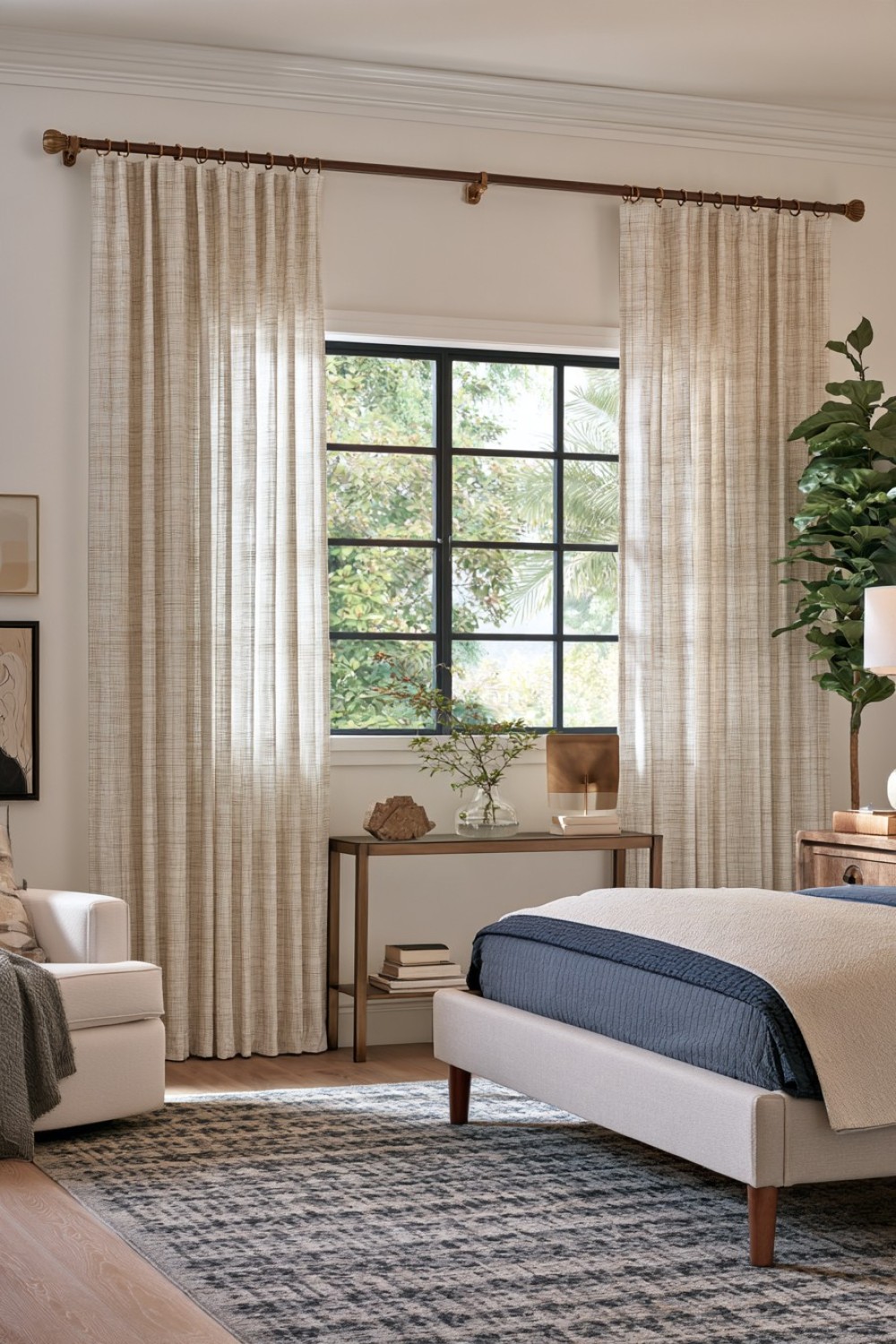
A curtain does not always need to divide symmetrically on both sides.
Hang one generous panel and allow it to stack entirely to one side of the window.
This works particularly well where furniture, a corner, or another window prevents balanced curtains.
Use enough fabric for full folds when closed rather than making the panel look like a narrow decorative strip.
A ceiling track can make this arrangement especially clean because there is no obvious rod symmetry to disrupt.
The single-panel treatment also suits doors and narrow windows that are typically approached from one side.
Choose the stacking side according to door movement, furniture placement, and the strongest uninterrupted section of wall.
13. Asymmetrical Rod Placement
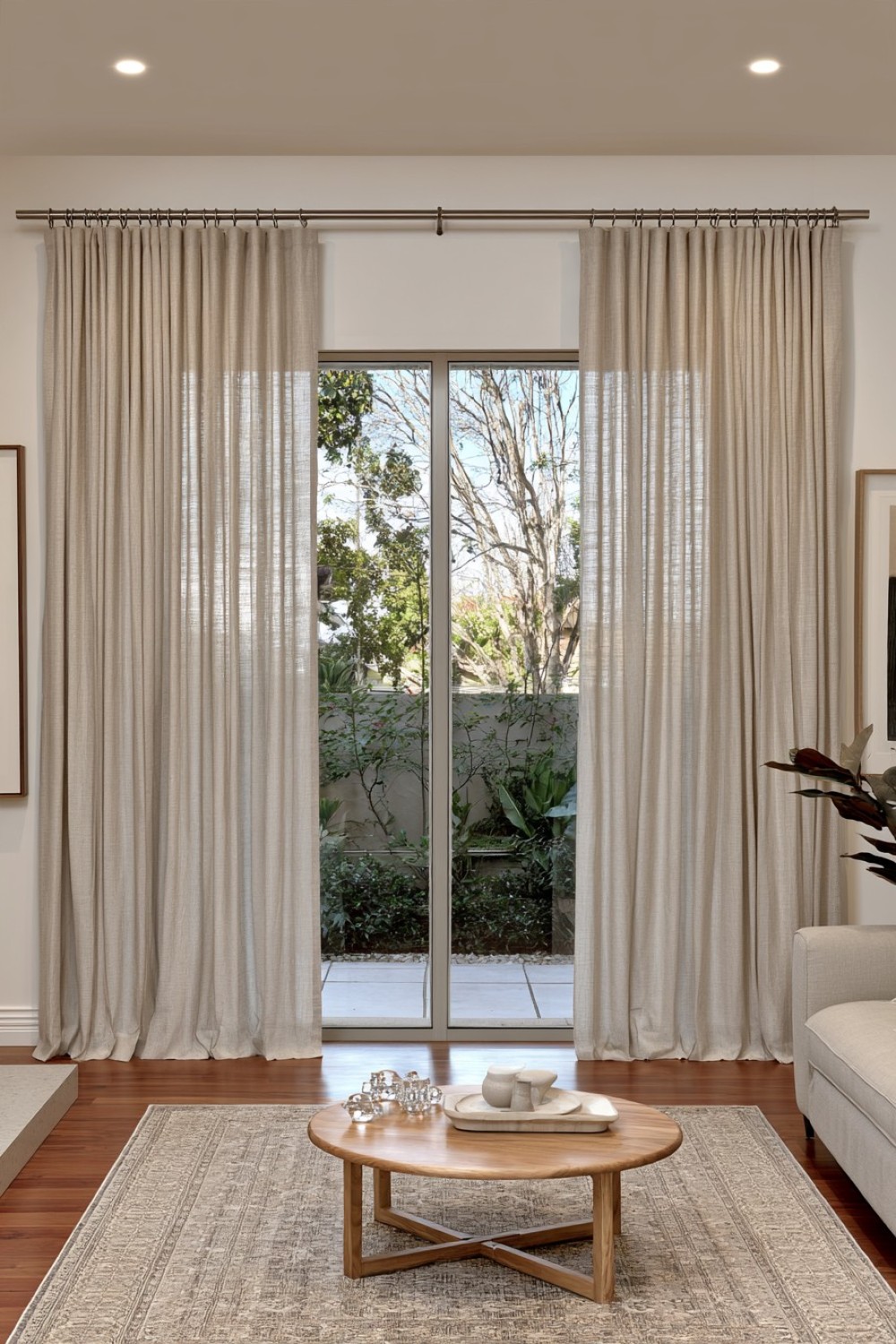
The rod itself can intentionally extend farther on one side than the other.
This is useful when the window is not centered on the wall or when nearby furniture creates an asymmetrical composition.
Rather than forcing the curtain to highlight the imbalance, extend the rod toward the larger open wall section and let the fabric stack there.
The treatment can visually rebalance the entire wall.
Keep the top installation straight and deliberate so the asymmetry reads as intentional.
This technique works particularly well behind beds, consoles, or sofas where furniture placement already establishes an off-center focal point.
It is a subtle change, but it can solve awkward window placement more effectively than decorative accessories.
14. Freestanding Curtain Frames
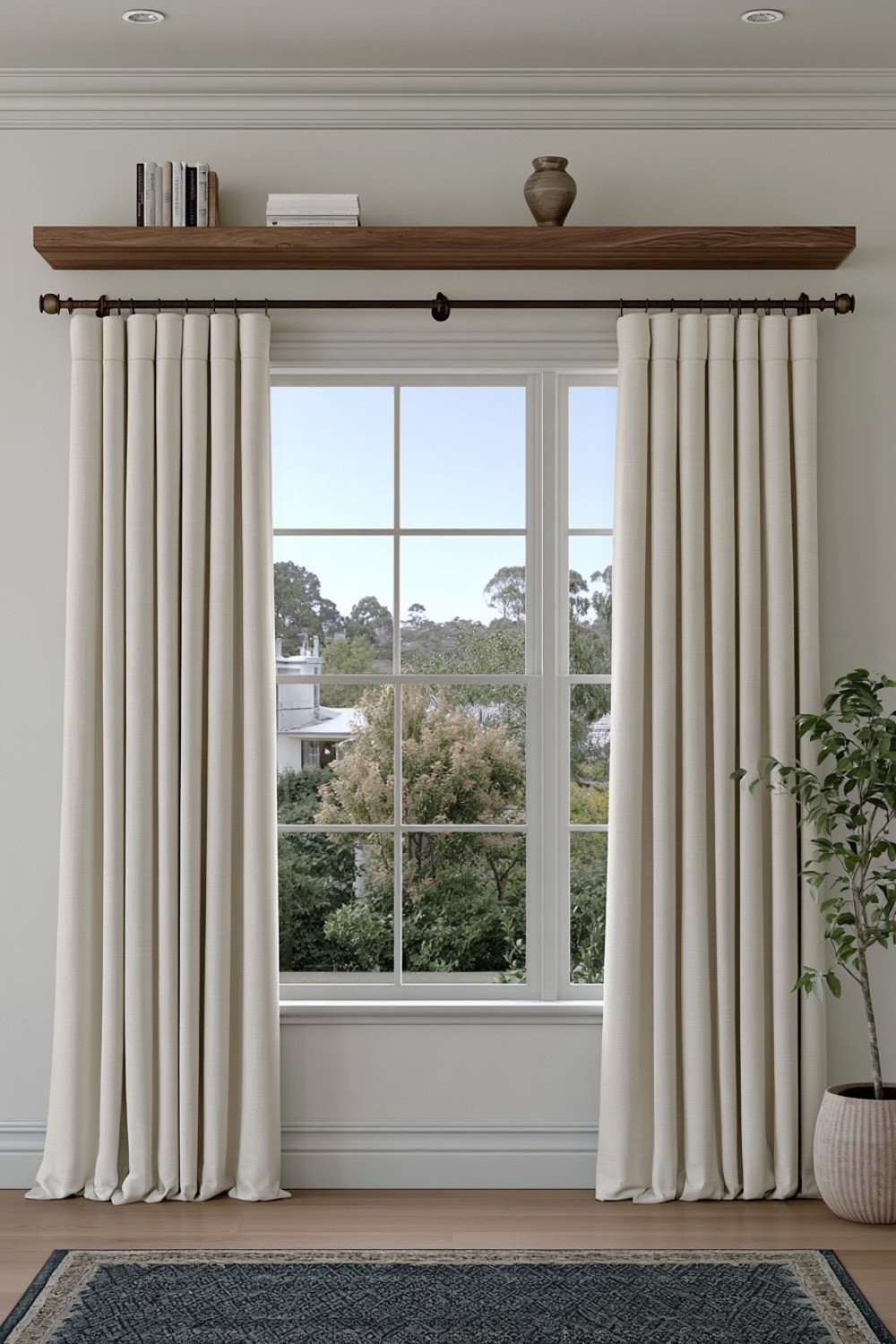
A curtain does not always need to be attached to the building.
A freestanding frame can hold fabric in front of a window, glass door, or open-plan area without permanent wall installation.
Build the structure from timber or metal tubing with a stable base and horizontal upper rail.
The frame must be sufficiently weighted and proportioned so it cannot tip when curtains are moved.
This solution can be useful in rental properties, studios, or rooms where drilling into the wall is undesirable.
It also creates the possibility of moving the treatment later.
Keep the frame visually simple and finish it to coordinate with nearby furniture so it looks like an intentional architectural object rather than temporary hardware.
15. Curtain Rods With Shelves
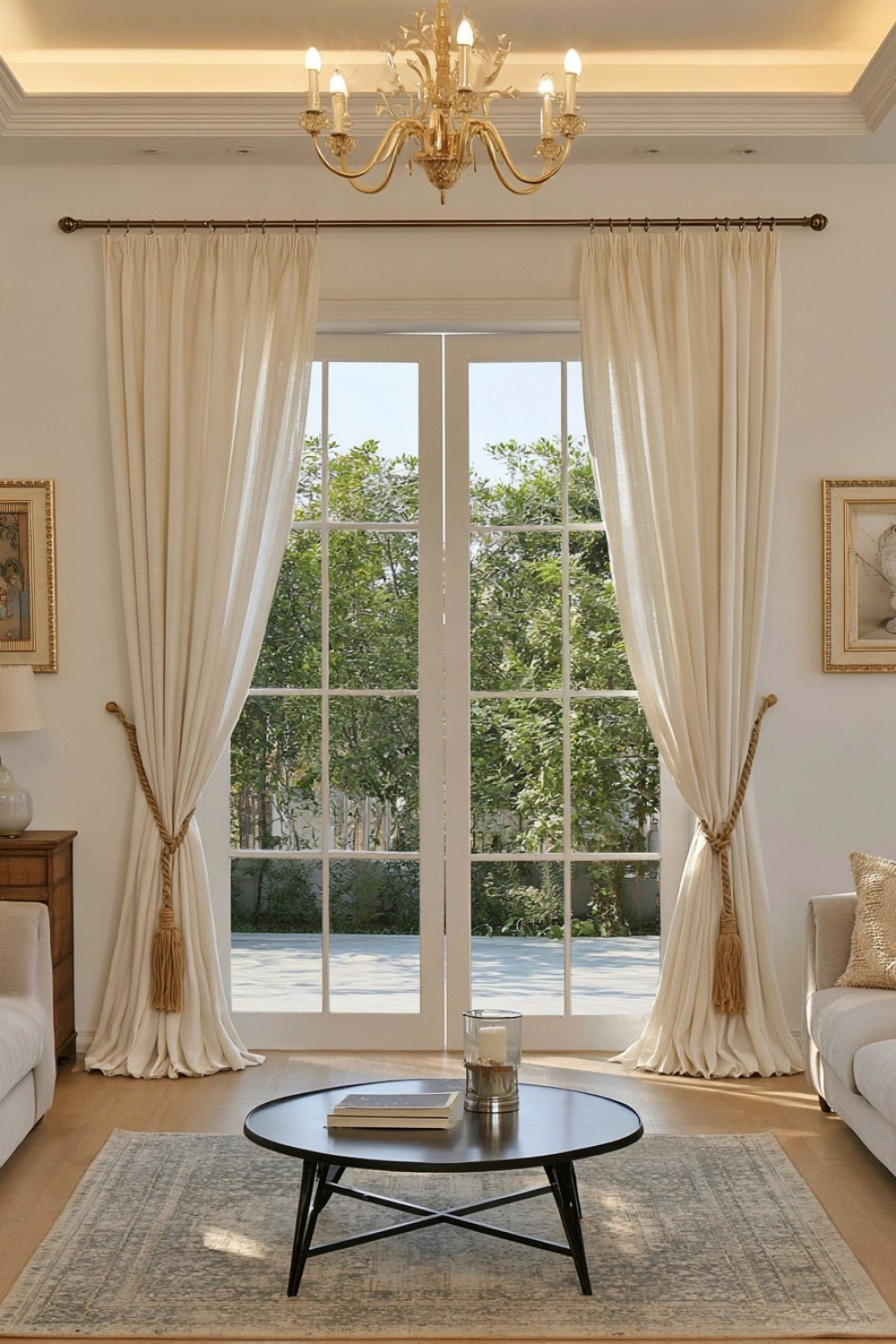
Combine the curtain support with a narrow display shelf above the window.
A sturdy shelf can conceal the curtain track underneath while providing a ledge for restrained decorative objects or books.
The result gives the window a more architectural frame.
Avoid loading the shelf with excessive decor; the combination already adds visual weight.
For DIY construction, use properly rated brackets and treat the shelf and curtain hardware as separate load requirements.
A shallow timber ledge works especially well in cottages, offices, and rooms with built-in storage.
Keep plants or objects that require frequent watering away from the curtains to prevent stains and moisture damage.
16. Decorative Rope Tie-Ups
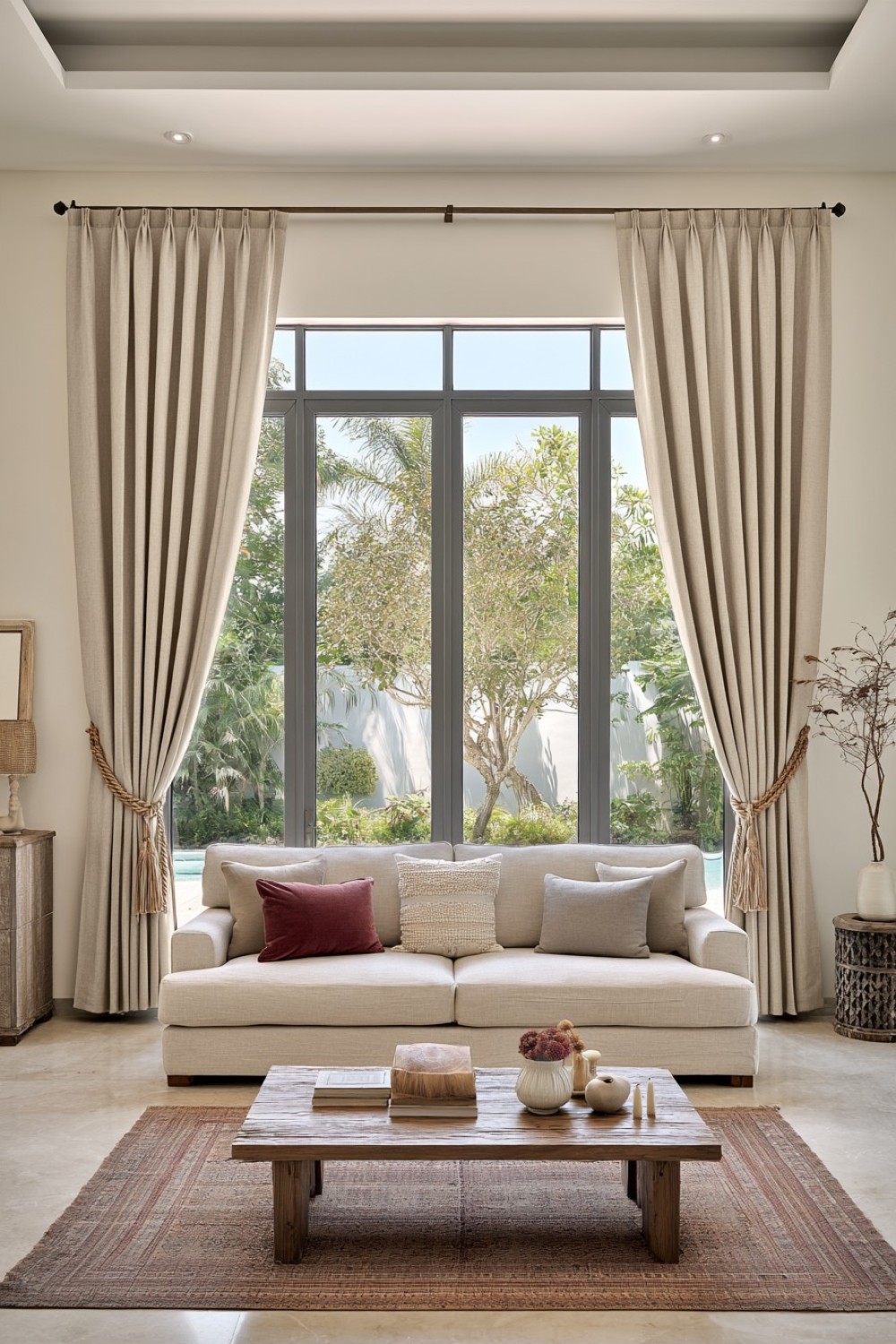
Instead of conventional tiebacks, use rope or braided textile cords as part of the hanging composition.
This works especially well with linen curtains and relaxed interiors.
Choose thick cotton cord, soft braided rope, or woven textile bands rather than rough utility rope that can abrade the curtain fabric.
Mount the tieback slightly lower than the midpoint for a softer, elongated drape.
For an unusual variation, use two cords at different heights to sculpt the curtain into a controlled fold.
The idea is decorative, but the placement also affects how much window area remains open.
Avoid pulling the fabric too tightly because repeated tension can distort seams and curtain headings over time.
17. Track-to-Track Room Corners
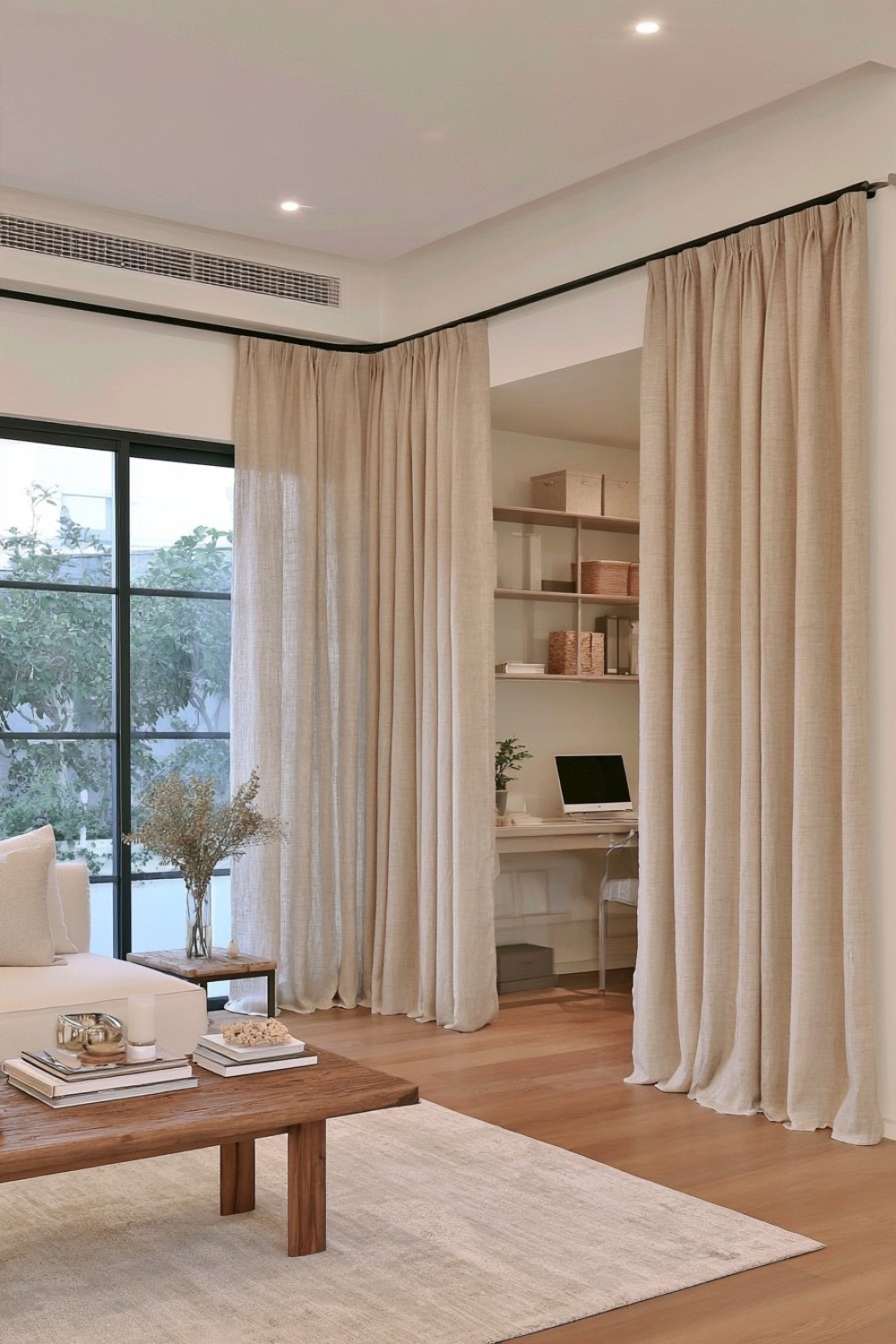
Curtains can extend beyond a window and continue around part of the room.
A continuous ceiling track can begin at the window, turn a corner, and travel along an adjacent wall.
This allows the curtain to conceal shelving, storage, a workspace, or an unattractive wall section when desired.
When open, all the fabric can stack in one designated area.
This is particularly useful in multifunctional rooms where curtains function as both window treatment and flexible room divider.
Use fabrics that look attractive from both sides if the curtain will be visible from different parts of the room.
Carefully plan track bends and stacking space before installation.
18. Mixed-Hardware Curtain Layers

A layered window does not require identical hardware for every fabric.
Try placing a sheer curtain on a discreet ceiling track while hanging heavier decorative curtains from an exposed rod below.
The difference in hardware creates visual hierarchy: the sheer seems integrated into the architecture while the outer drapes become a decorative feature.
This works particularly well when you want the practical privacy layer to disappear visually.
Keep finishes coordinated rather than perfectly matched. For example, a white ceiling track can recede while an aged brass or black rod relates to furniture hardware elsewhere in the room.
The combination offers excellent flexibility without making the top of the window feel overly mechanical.
Choosing the Right Hanging Method
The most effective curtain installation begins with the window and room rather than the fabric alone. Ceiling-mounted tracks can emphasize height, extended rods can improve daylight, and layered systems can solve privacy and blackout needs without compromising daytime brightness.
Hardware strength also matters. Long rods, heavy lined curtains, and ceiling installations need appropriate anchors and supports. Decorative plasterboard, thin trim, or weak tension fittings should not be expected to carry substantial weight.
Before drilling, check curtain stack depth, handles, radiators, vents, furniture, and how frequently the window itself needs to open.
A creative hanging method should ultimately make the window easier to use while improving the proportions of the room. When those two goals work together, even simple curtain fabric can look considerably more considered.
MORE IDEAS


Share
What's Your Reaction?
 Like
0
Like
0
 Dislike
0
Dislike
0
 Love
0
Love
0
 Funny
0
Funny
0
 Angry
0
Angry
0
 Sad
0
Sad
0
 Wow
0
Wow
0