17 Window Garland Designs With Light and Texture

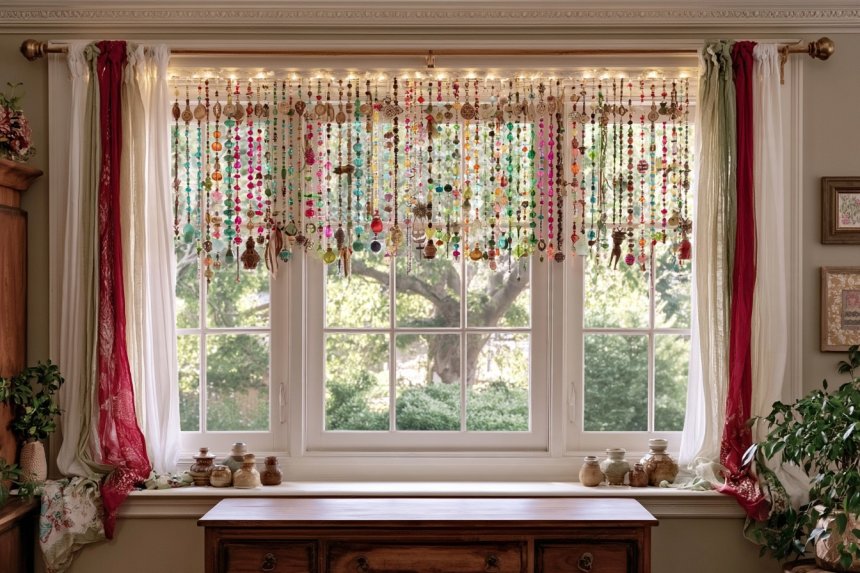
A window garland can do more than frame the glass. The right materials can glow in sunlight, cast patterned shadows, soften a hard window frame, or introduce seasonal color without blocking the view. Instead of relying on standard greenery or string lights, think about transparent paper, fabric scraps, dried botanicals, ceramic pieces, reflective shapes, and other materials that respond to changing daylight. Scale matters too: a narrow kitchen window needs a lighter treatment than a wide picture window or glass door. These ideas focus on garlands that feel decorative but still practical, giving you ways to use texture, repetition, and natural light as part of the design.
1. Pressed Botanical Panels
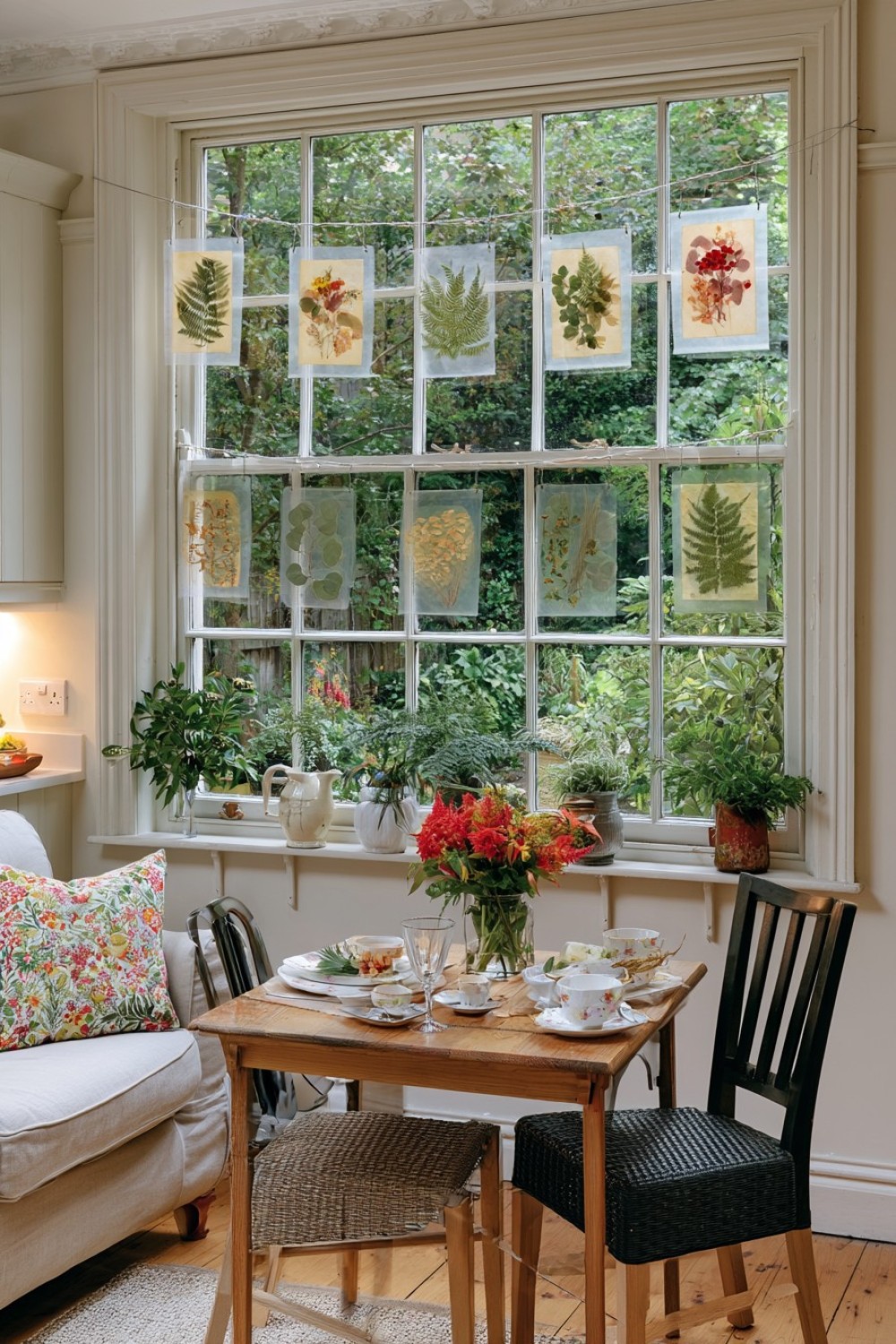
Pressed flowers and leaves can become small translucent artworks when they are displayed against glass.
Use fern fronds, eucalyptus, grasses, delicate flowers, or small leaves and press them until completely dry. Mount each specimen between two pieces of clear acetate or translucent vellum, then trim the edges into matching rectangles or organic shapes.
Hang the pieces along a fine cord with generous gaps between them.
The open spacing prevents the window from feeling crowded and allows the veins and silhouettes to become more visible in daylight.
For a cleaner look, keep the plant selection within one tonal family instead of mixing many colors.
This works particularly well in kitchens, studios, reading corners, and conservatories where botanical details already feel connected to the room.
2. Amber Citrus Strand
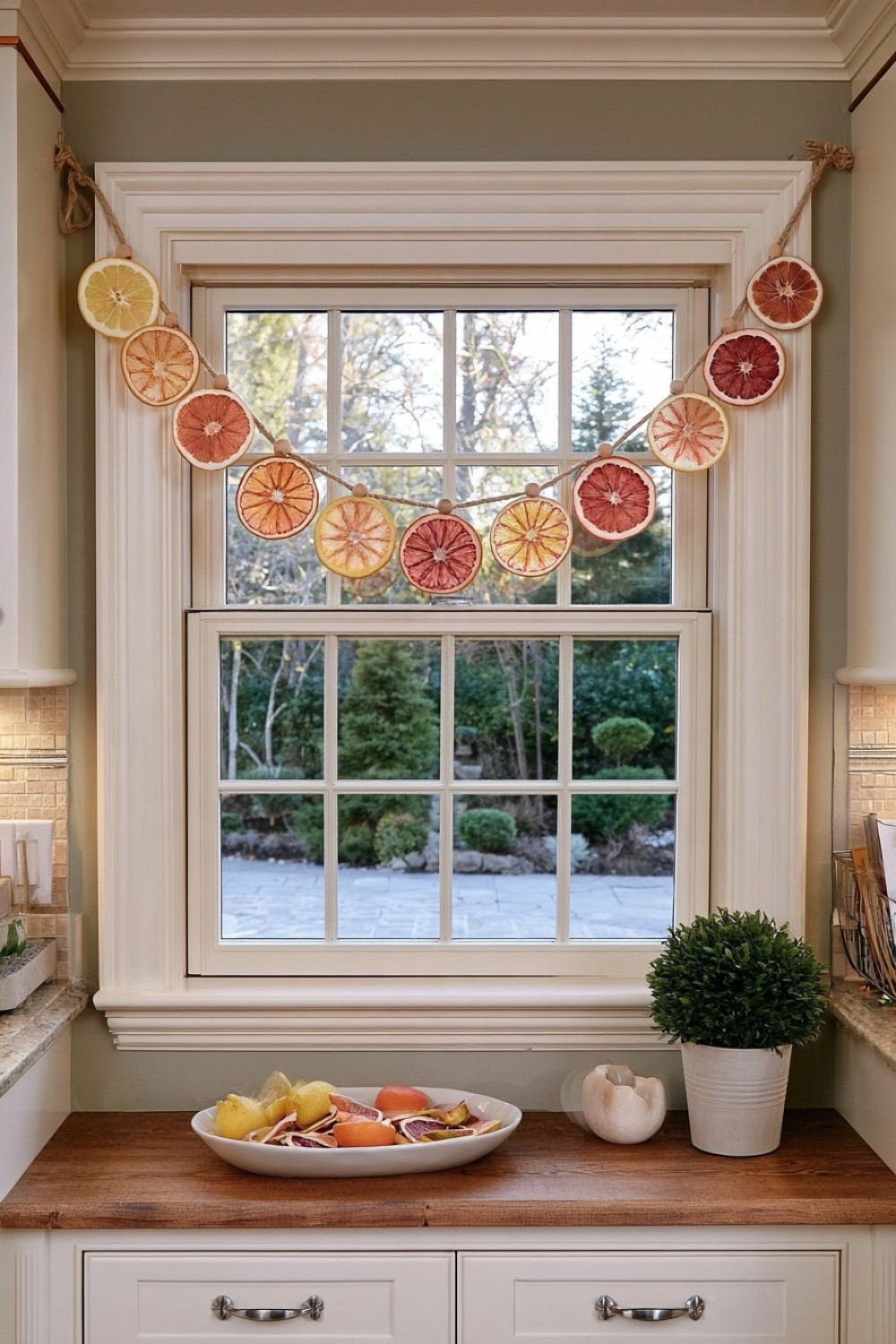
Dried citrus creates some of its best color when sunlight passes through it.
Slice lemon, orange, grapefruit, or blood orange thinly and dry the pieces thoroughly before threading them onto strong cotton cord.
Instead of alternating fruit randomly, arrange the slices from pale yellow through orange, coral, and deep red.
The result creates a natural color gradient across the window.
Leave several centimeters between each slice so individual pieces remain visible.
This garland works especially well above a breakfast nook or kitchen window because the material feels appropriate to the setting.
If you want extra separation, add a few small unfinished wooden beads between fruit sections.
Make sure every slice is completely dehydrated before hanging, particularly in humid rooms.
3. Sculpted Paper Arches
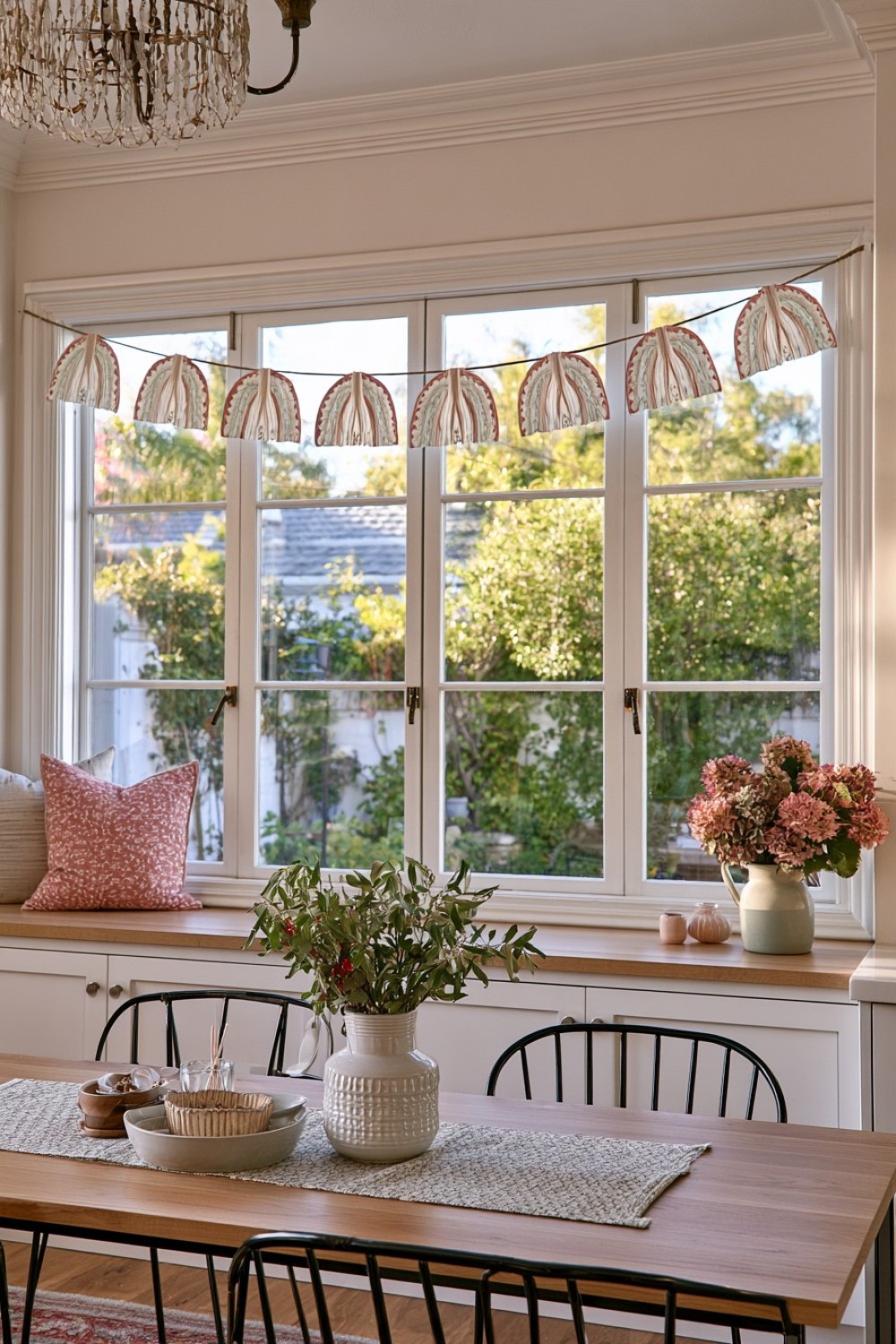
Paper garlands do not have to be flat.
Cut strips of heavyweight paper and bend them into small arches, loops, or folded architectural shapes.
Use muted terracotta, cream, sage, dusty blue, or several shades from one color family.
Suspend the finished forms across the upper portion of the window where their curved edges can cast subtle shadows.
Because the shapes project slightly into the room, the garland changes appearance depending on where you stand.
For a more polished result, keep all pieces the same basic shape but vary their scale.
This design works especially well in modern interiors where traditional bunting might feel too informal.
4. Frayed Linen Flags
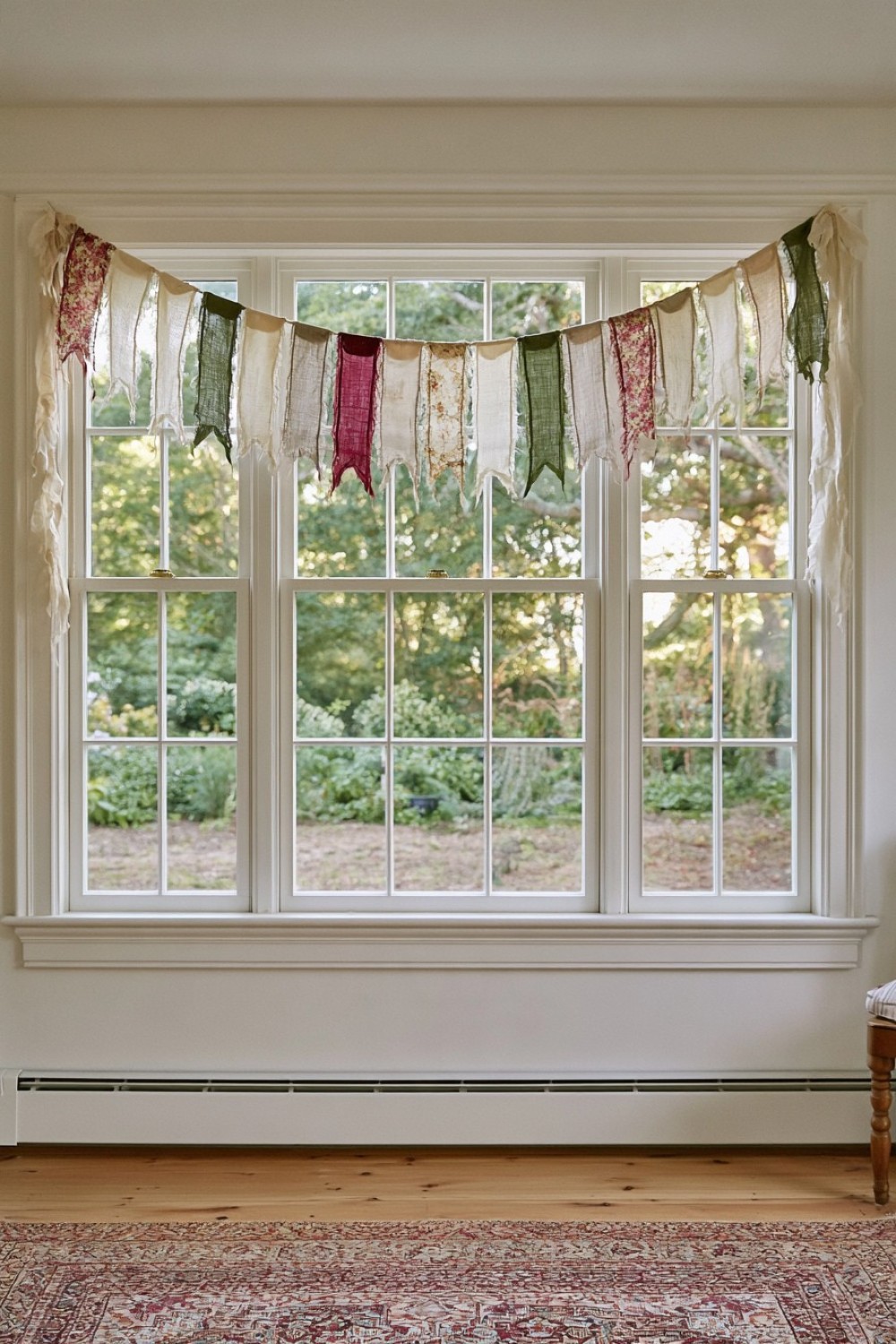
Natural linen brings softness without adding much visual weight.
Cut narrow flags from leftover linen, washed cotton, or gauze and attach them to a thin cord.
Leave some edges unfinished so the weave and loose fibers remain visible.
A restrained palette of ivory, flax, dusty rose, faded green, and pale gray tends to feel more sophisticated than bright mixed colors.
Vary the length of the flags slightly rather than making every piece identical.
The result works well in cottage, coastal, Scandinavian, and relaxed contemporary rooms.
Because the fabric moves gently when a window opens, the garland also adds subtle motion without becoming distracting.
5. Mini Herbarium Cards
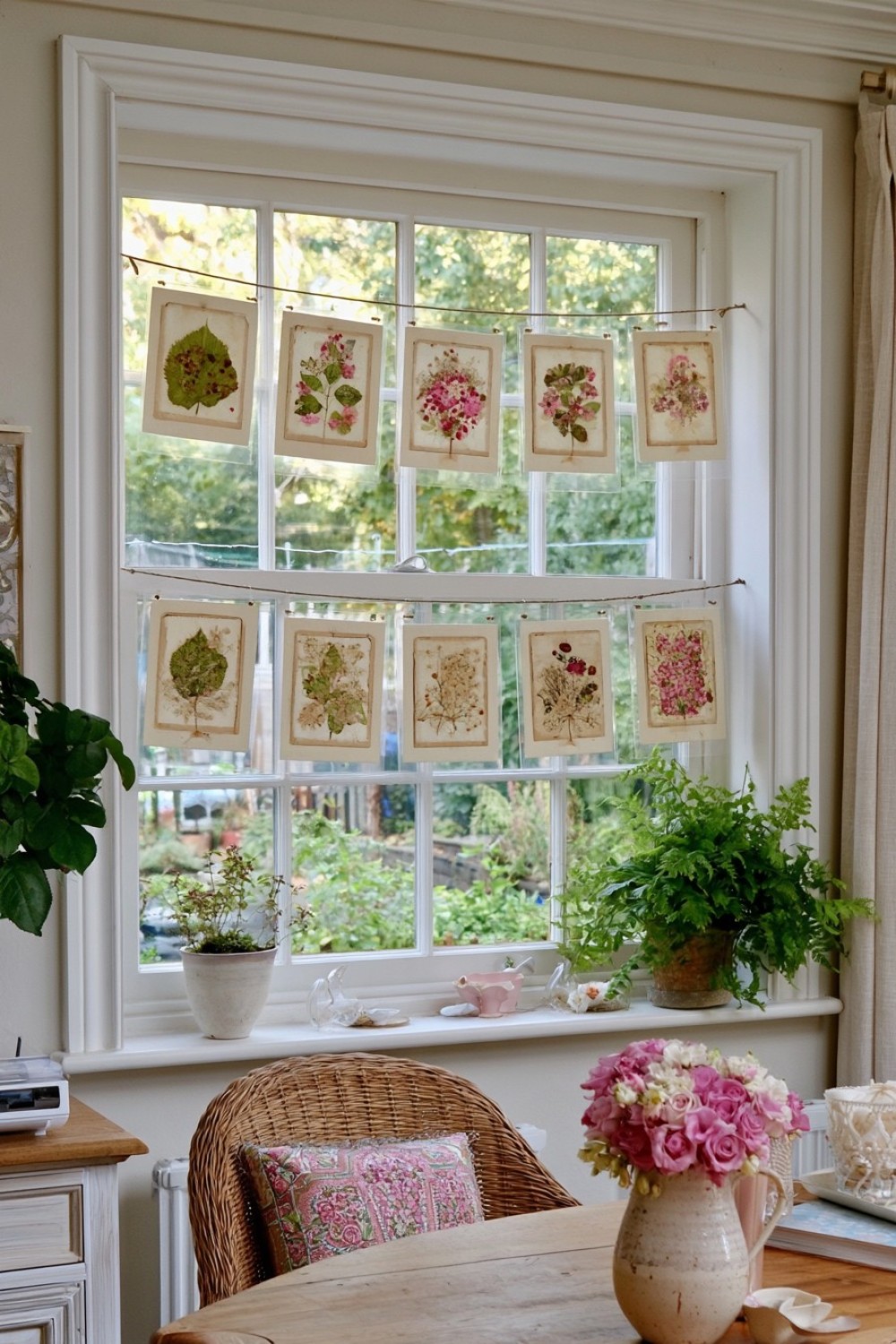
Turn the window into a small botanical archive.
Mount pressed leaves, seed heads, or tiny flowers onto cards no larger than a postcard and hang them individually from one horizontal line.
Use off-white card for a traditional herbarium look or transparent acetate for something lighter.
You can add a small plant name, date, or location if you want the display to feel collected rather than purely decorative.
Keep the typography minimal and the cards evenly spaced.
This idea works especially well in a home office, craft room, kitchen, or garden-facing room.
It also gives pressed botanicals a purpose beyond keeping them inside books or storage boxes.
6. Wrapped Wooden Rings
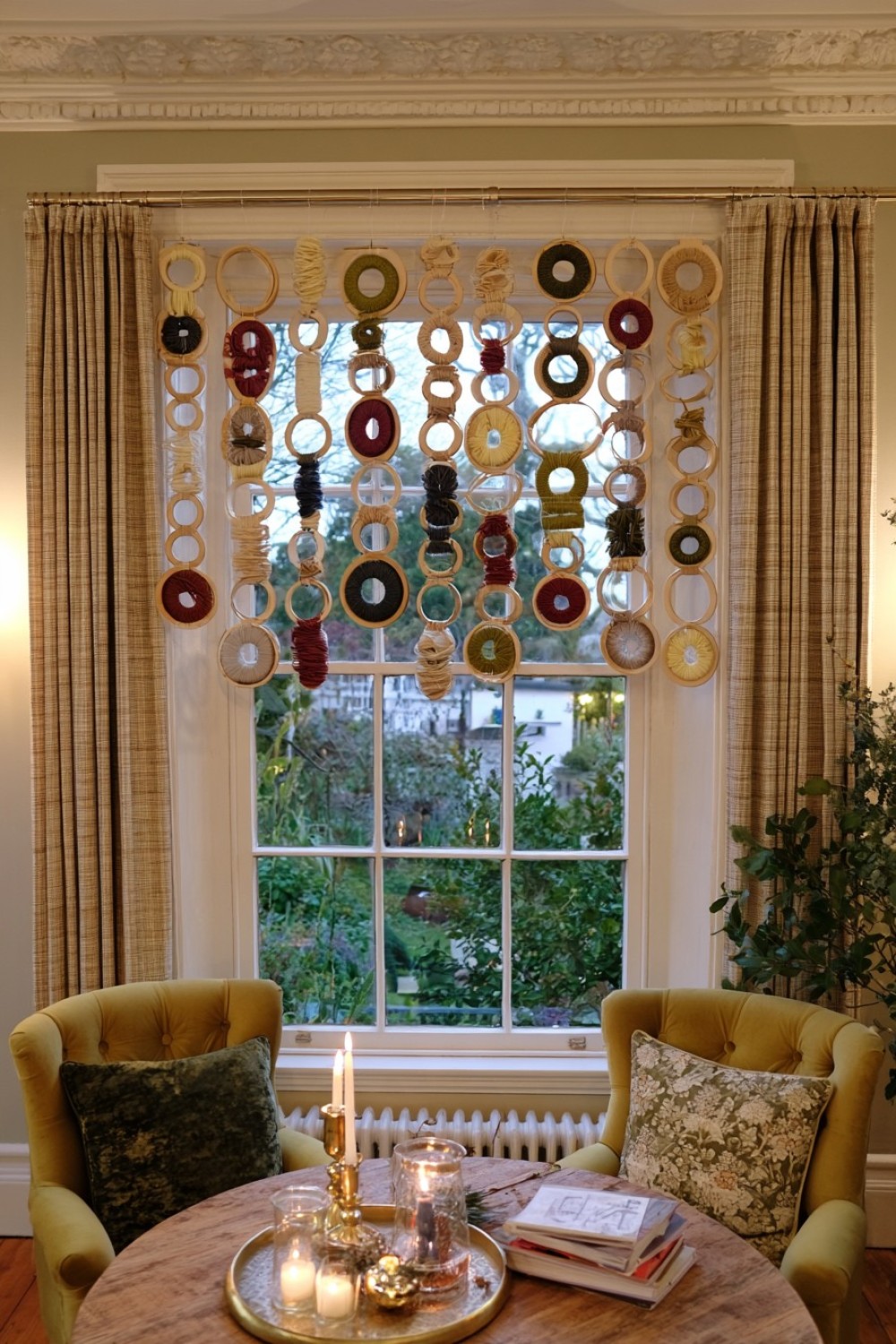
Wooden rings create an open, graphic garland that does not block much light.
Use small craft rings or miniature embroidery hoops and wrap only part of each one with embroidery floss, thin wool, or cotton cord.
Leave the rest of the timber exposed.
Choose related shades rather than completely different colors so the garland feels cohesive.
Suspend the rings at slightly different heights instead of aligning them in one flat row.
Their open centers allow plenty of daylight through, making this a useful option for smaller windows.
The mix of wood and thread also adds enough texture to work in both contemporary and softer natural interiors.
7. Vellum Lantern Forms
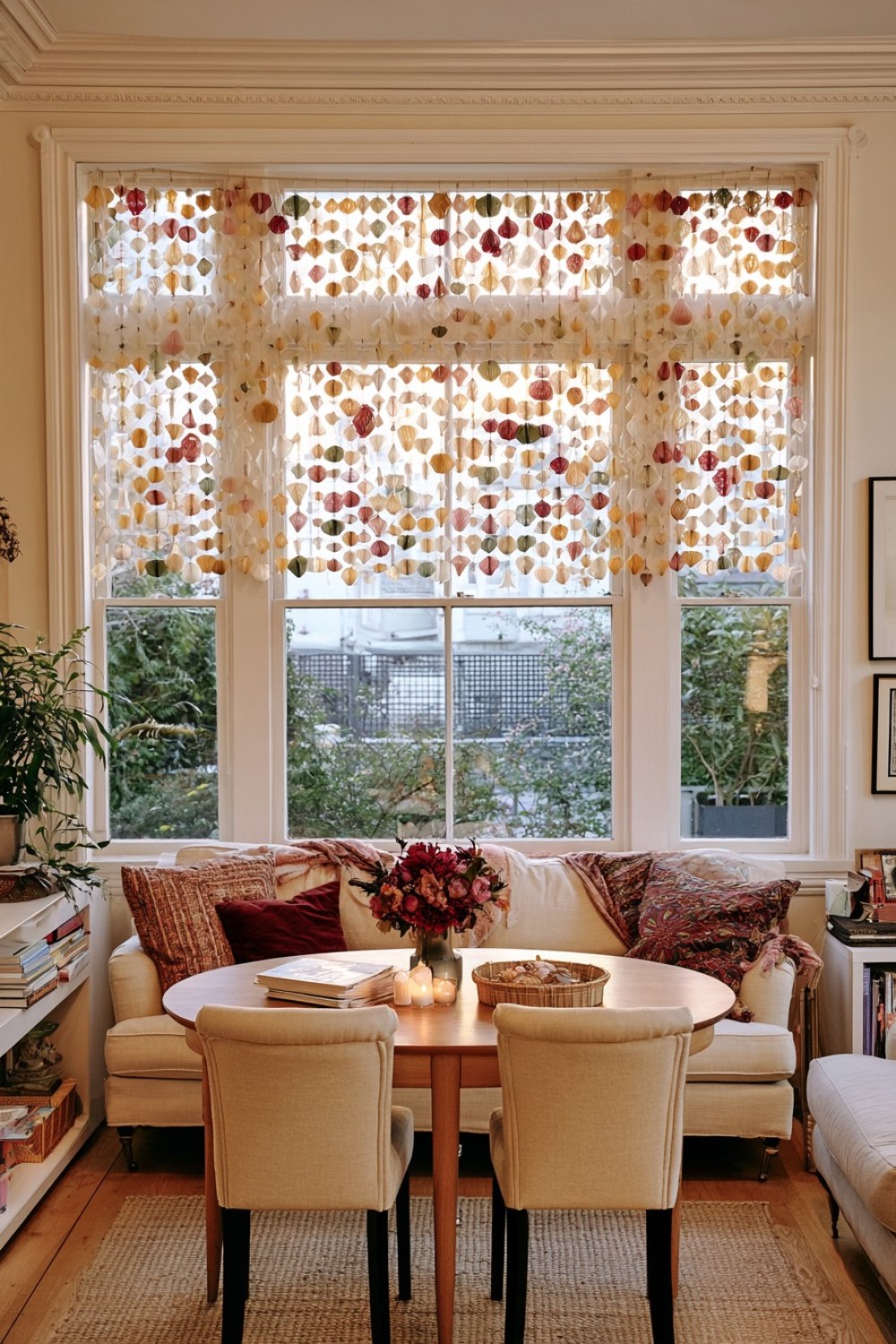
Translucent paper becomes especially effective when it is given volume.
Fold vellum or tracing paper into small ribbed lantern shapes, accordion forms, or faceted paper pods.
Hang them across the window on fine thread with enough spacing to keep the composition light.
Choose pale amber, ivory, blush, soft green, or clear white.
During the day, the paper will appear brighter where sunlight passes through it.
The effect is gentle rather than theatrical, which makes this garland suitable for bedrooms, dining rooms, and quiet living spaces.
Keep paper elements away from radiators, candles, and other heat sources.
8. Textile Knot Garland
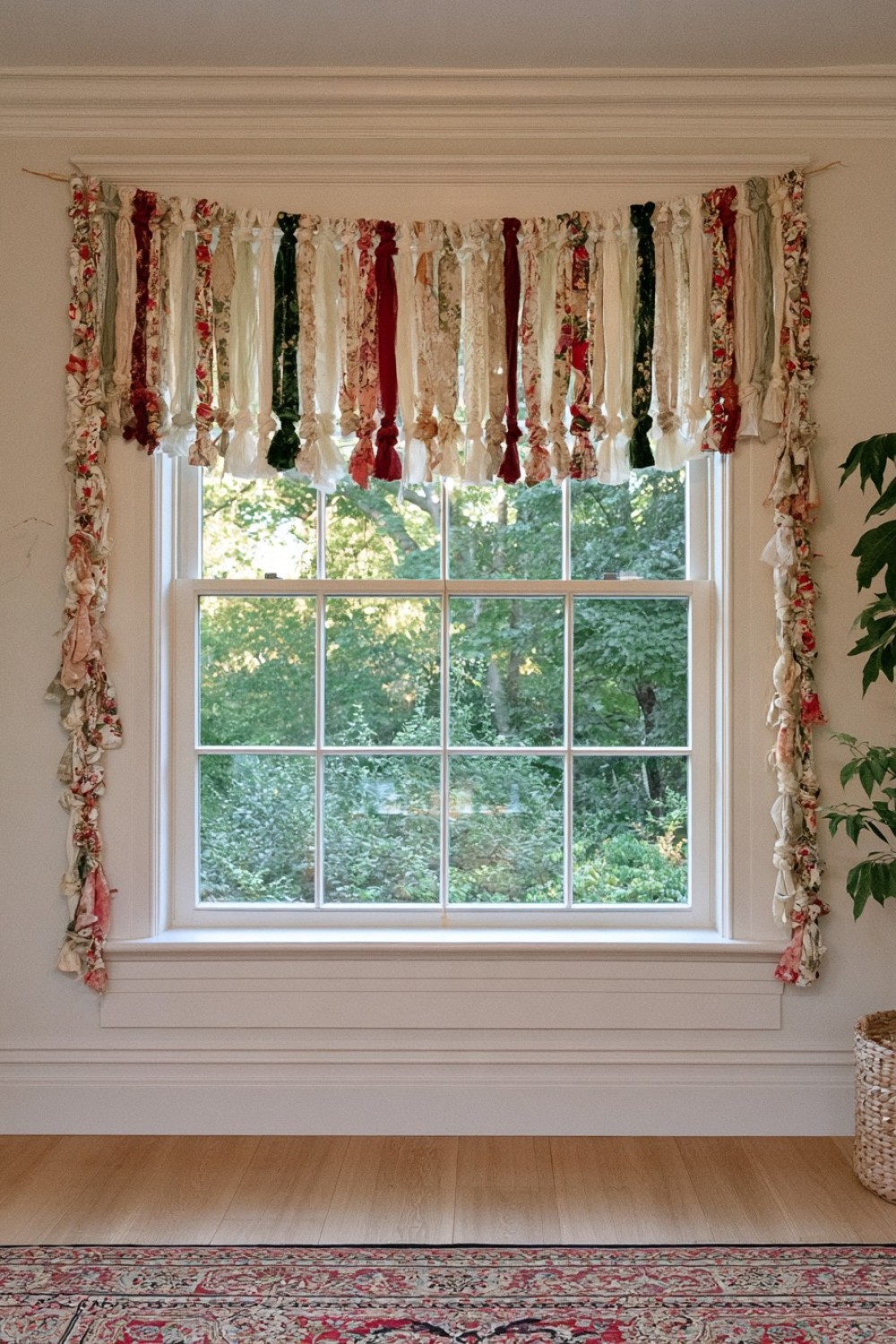
Fabric scraps can create a layered garland with much more depth than standard ribbon.
Cut narrow strips from linen, velvet, cotton, muslin, and gauze and knot them around one central cord.
Vary both length and texture.
A warm palette might combine rust, burgundy, cream, tobacco, and faded rose, while a cooler version could use sage, ivory, pale blue, and gray.
Different fibers respond differently to daylight: gauze becomes translucent, linen shows its weave, and velvet remains dense and matte.
This variation gives the strand more visual richness without needing patterns or prints.
It is also a practical way to use fabric remnants that are too small for larger projects.
9. Clay Talisman Strand
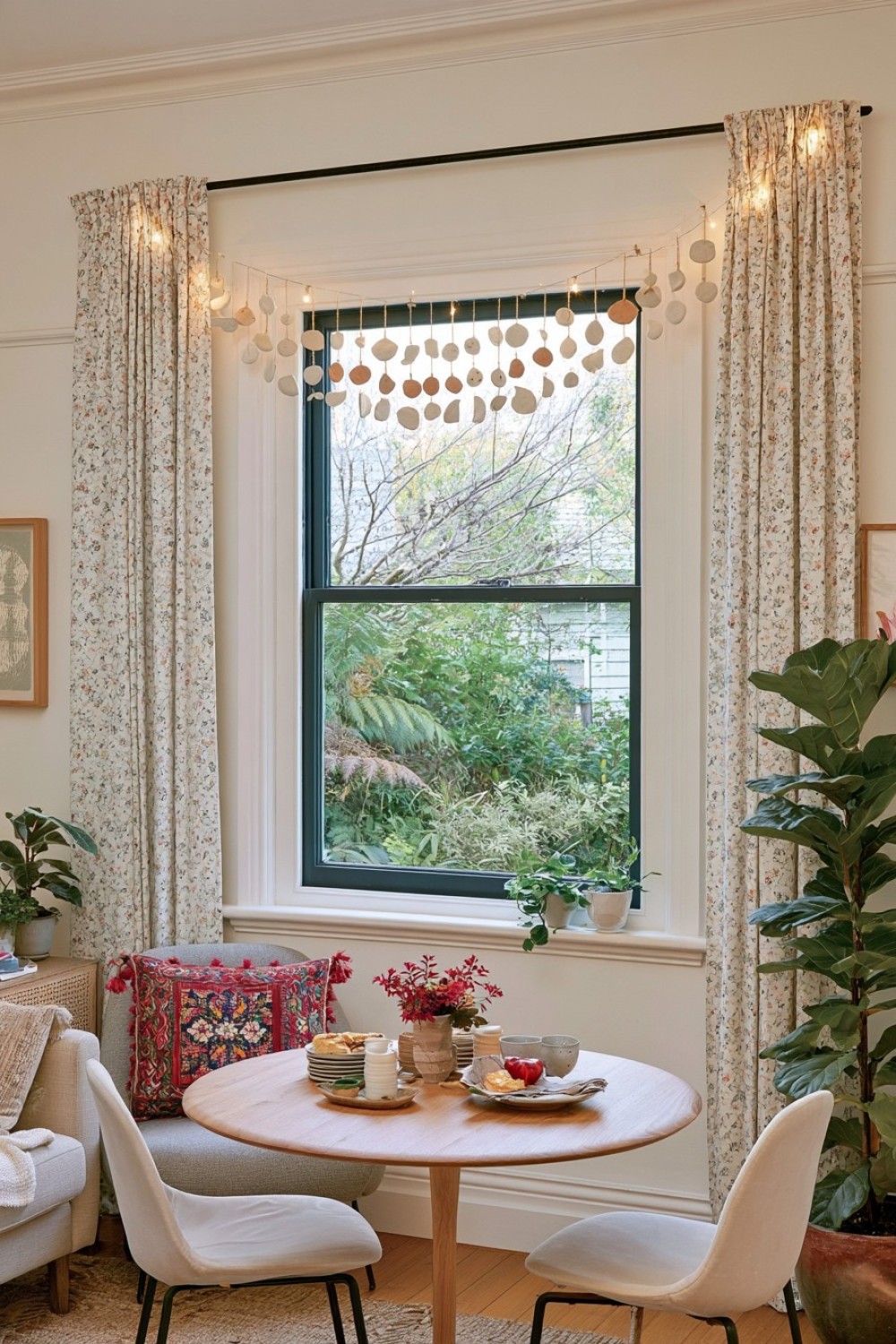
Small clay pieces can make a garland feel handcrafted and sculptural.
Roll air-dry clay thinly and cut simple shapes such as arches, leaves, circles, crescents, or irregular pebbles.
Pierce a hole in each piece before drying.
Once cured, sand the edges lightly and leave the pieces natural or paint them in a restrained palette.
Terracotta clay creates warmth, while ivory or stone-colored clay feels quieter.
String the pieces with generous gaps to avoid excessive weight.
This works particularly well against dark window frames because the forms remain clearly visible.
Keep the pieces small and hang them where they are unlikely to be knocked, since air-dry clay can chip if handled roughly.
10. Faceted Bead Strand
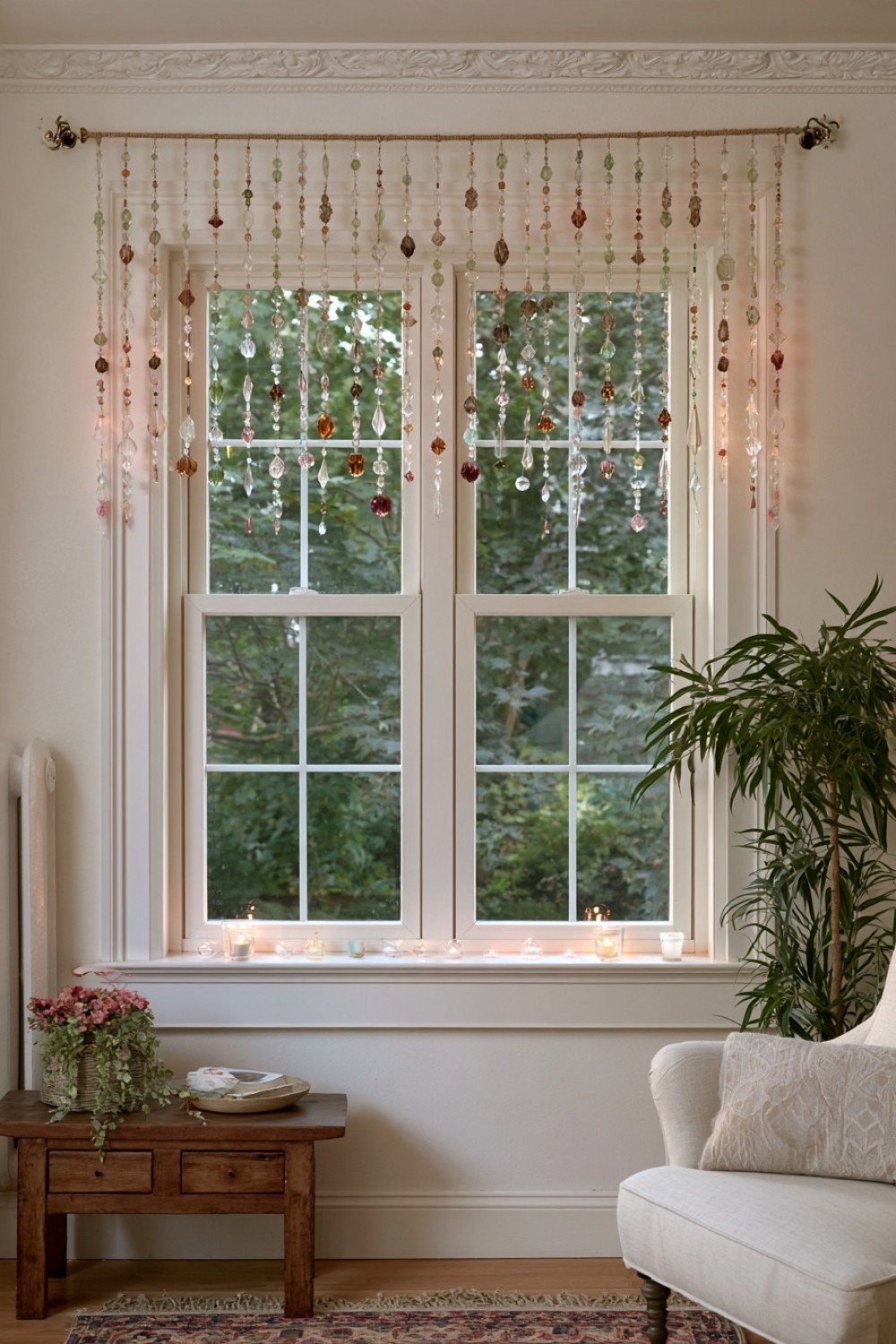
A few transparent beads can create moving points of reflected light.
Use faceted acrylic, resin, or lightweight glass-like beads in clear, amber, smoke, pale blue, or soft green.
Thread them onto strong transparent line with irregular spacing rather than making one dense necklace.
Mix elongated, round, and geometric bead shapes so the reflections vary.
Morning or late-afternoon sunlight can produce small highlights on the sill and nearby walls.
This works best when the rest of the window remains simple.
If the window is opened frequently, lightweight acrylic pieces are usually more practical than heavy glass.
11. Woven Miniatures
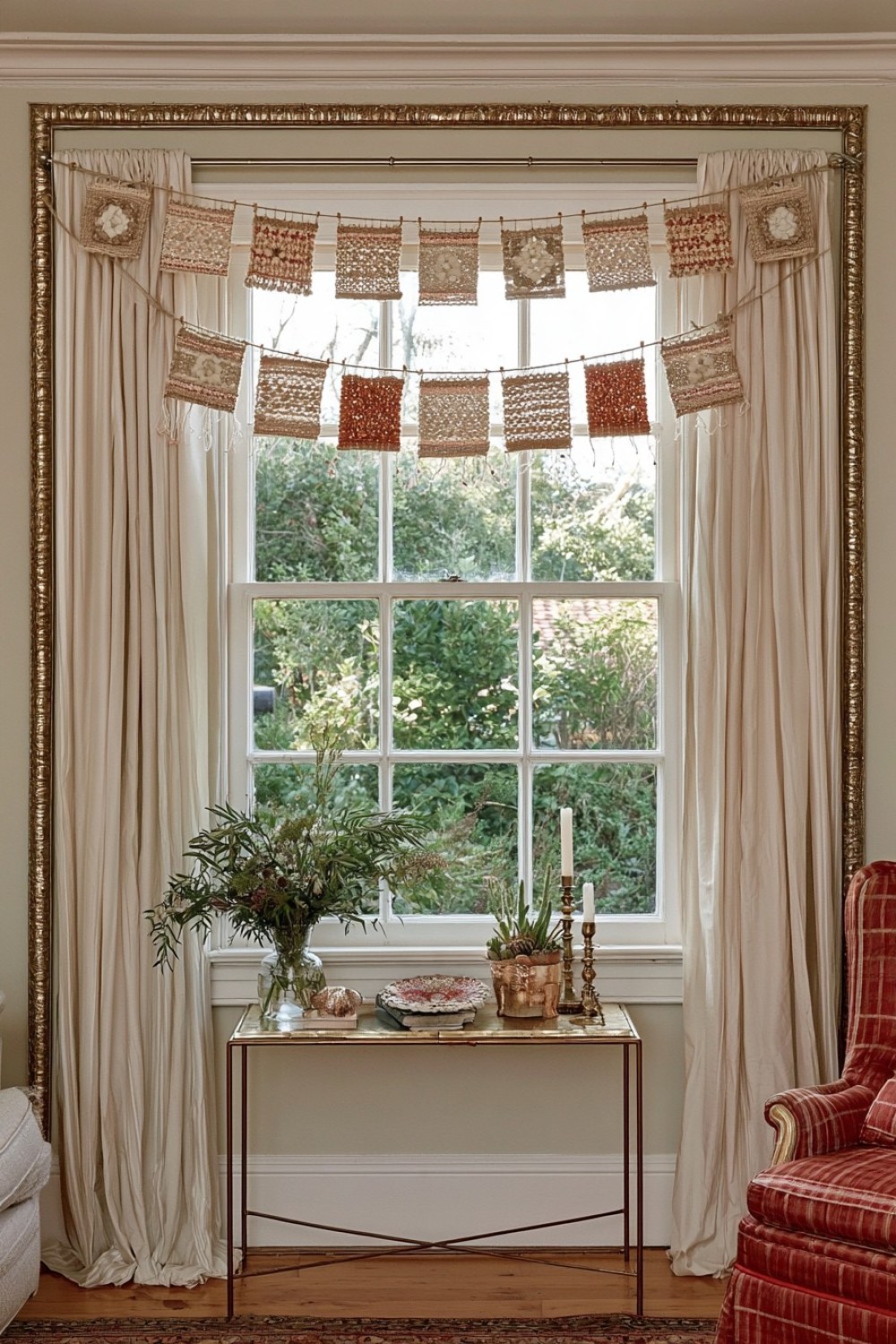
Tiny woven squares can turn leftover yarn into a decorative textile collection.
Create miniature looms from cardboard and weave small panels using wool, cotton, boucle, or textured thread.
Instead of using many colors, vary the weave and fiber thickness.
Attach each finished panel to a long cord and leave enough room between pieces for the window to remain open visually.
This is especially effective in craft rooms, bedrooms, or reading corners where textile details already feel appropriate.
Because each piece requires very little material, it is also an efficient way to reuse short lengths of yarn that might otherwise be discarded.
12. Seed Pod Line
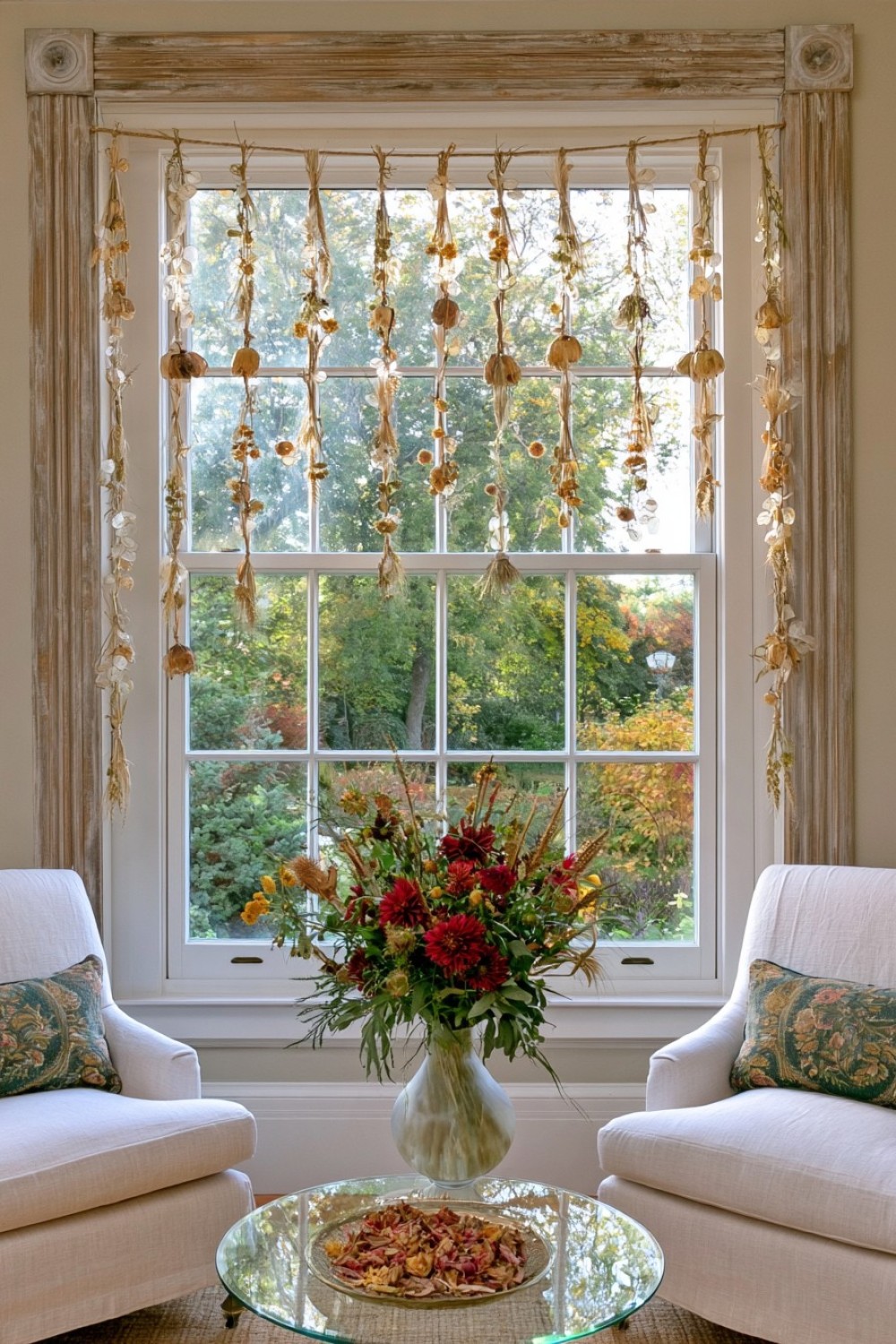
Seed heads and dried grasses can create a garland that feels quieter than flowers.
Use poppy pods, lunaria, wheat, ornamental grasses, or other fully dried botanical material.
Tie each element individually onto cotton string or fine jute rather than bundling everything together.
Allow each silhouette to stand alone.
Small wooden beads can be added between sections if you want more rhythm.
This type of garland works especially well in late summer and autumn but can remain year-round in neutral interiors.
Keep dried materials away from open flames, radiators, and damp windows where condensation may damage them.
13. Mirrored Cutouts
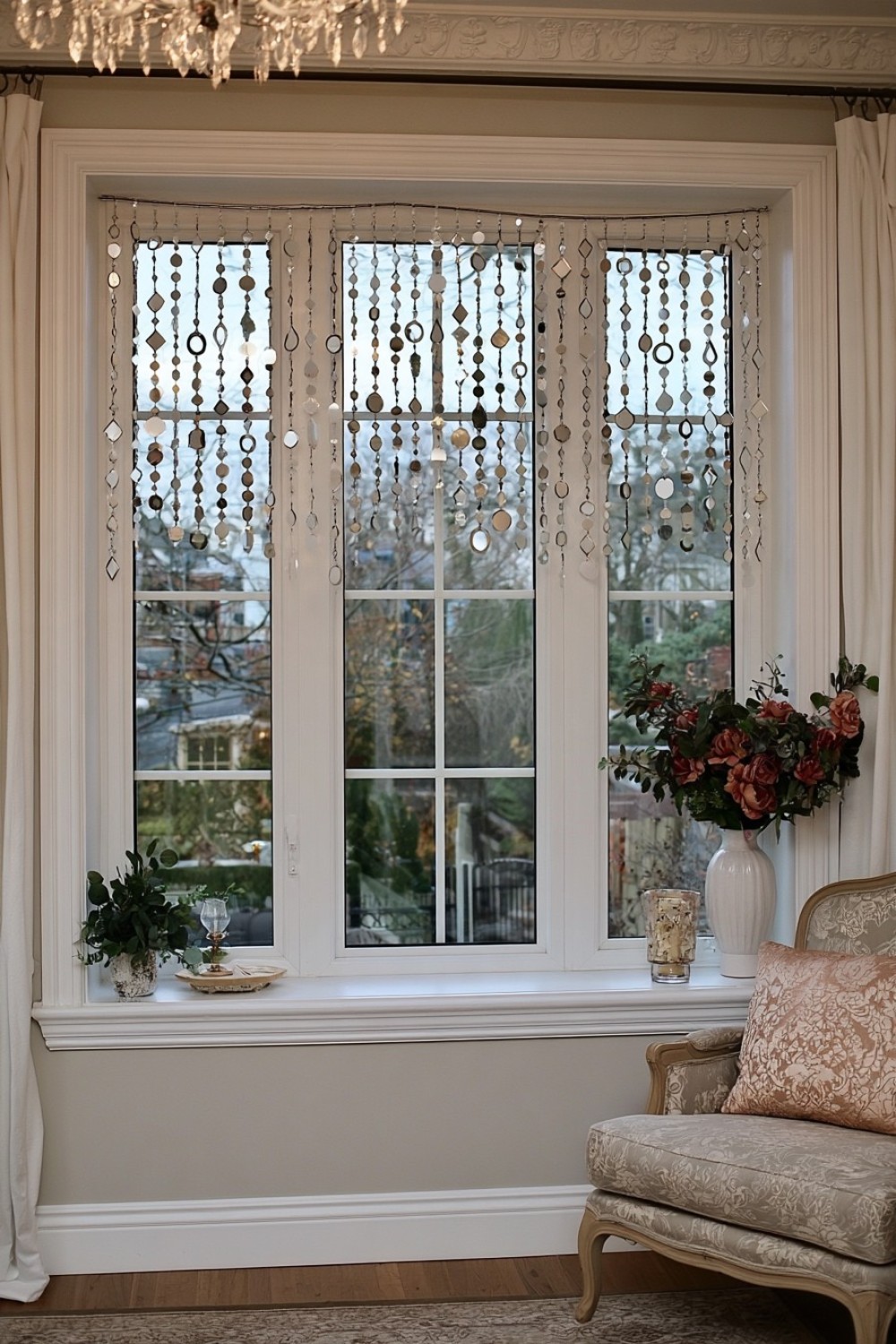
Small reflective shapes can make a window more dynamic without adding much color.
Use lightweight acrylic mirror rather than glass and choose simple circles, diamonds, arches, or irregular geometric pieces.
Attach them at slightly different angles so they catch light differently as they move.
A few pieces are usually enough.
Too many reflections can become visually distracting, especially in small rooms.
Hang the strand slightly away from the window so the shapes do not tap repeatedly against the pane.
This design works particularly well in modern interiors with simple frames and uncluttered surroundings.
14. Kitchen Herb Bundles
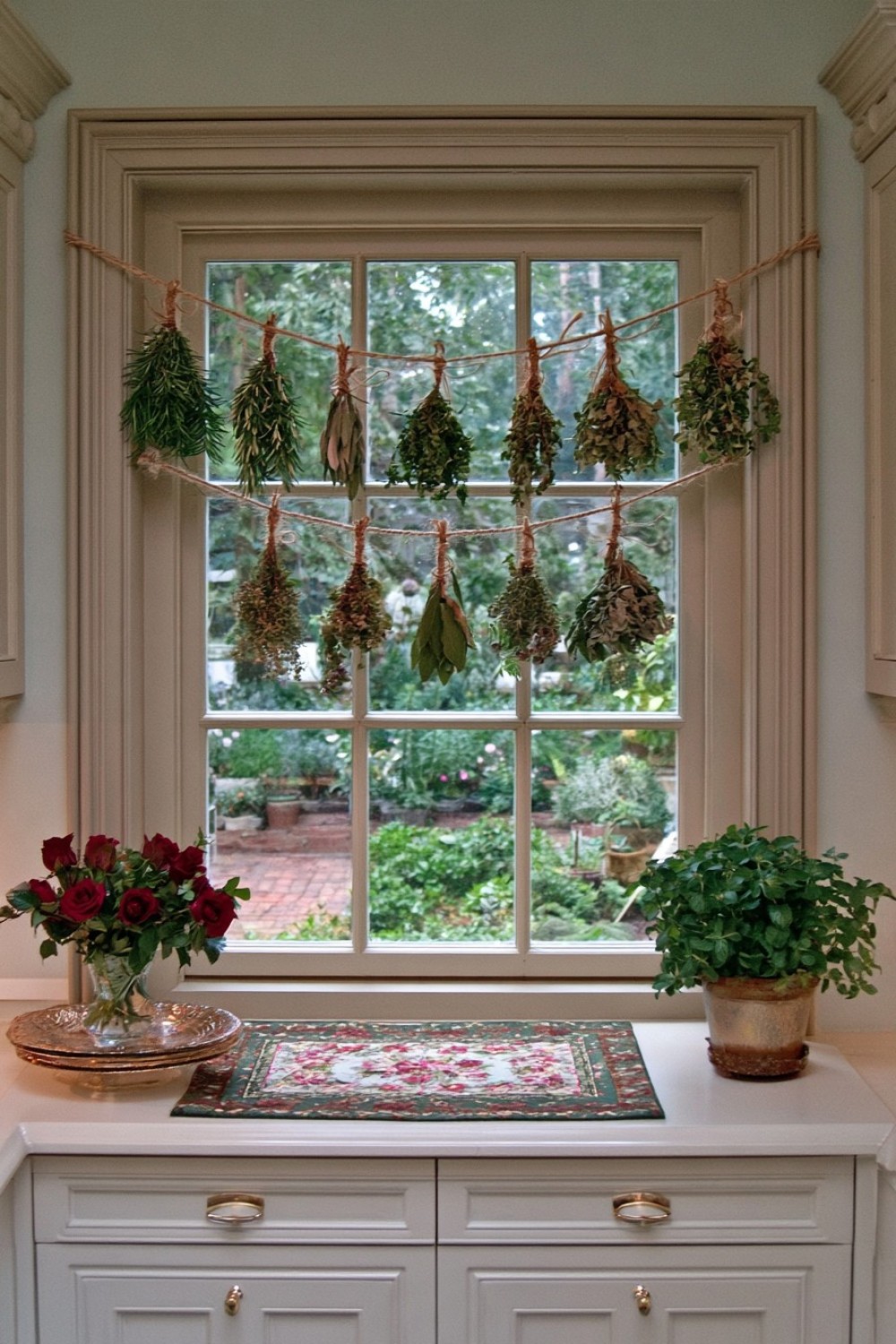
A kitchen window can hold a garland that has a practical role.
Tie small bundles of rosemary, thyme, sage, bay, or other suitable herbs along natural cotton cord.
Keep the bundles loose enough for air to circulate around them.
As the herbs dry, their shape and color gradually change, giving the window an evolving texture.
Once fully dried, edible herbs can be removed and stored properly for cooking.
Avoid hanging the garland directly above a sink, kettle, or other high-humidity area.
The idea works best in a dry, ventilated kitchen where the botanicals can dry evenly.
15. Tonal Paper Swatches
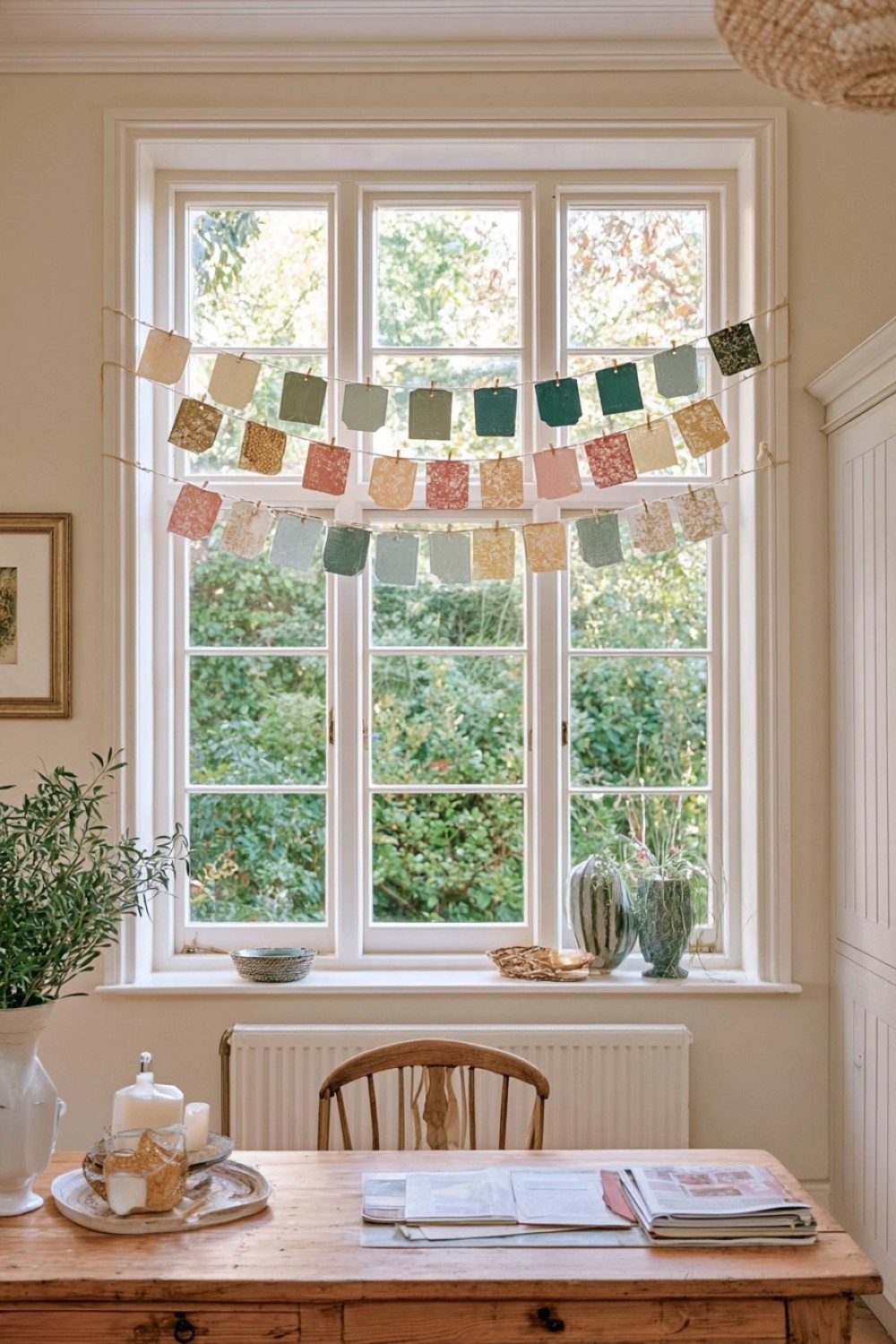
Color can become the main subject of the garland.
Use paint samples, heavyweight colored paper, or leftover card and cut each piece into the same simple shape.
Instead of building a full rainbow, choose one color family and arrange it from pale to deep.
For example, move from cream into ochre, pale sage into forest green, or powder blue into navy.
The repetition of shape keeps the display orderly while the tonal shift adds interest.
This works well in studios, creative rooms, and home offices.
It can also be a useful way to test a future room palette before committing to paint or textiles.
16. Seasonal Clip Rail
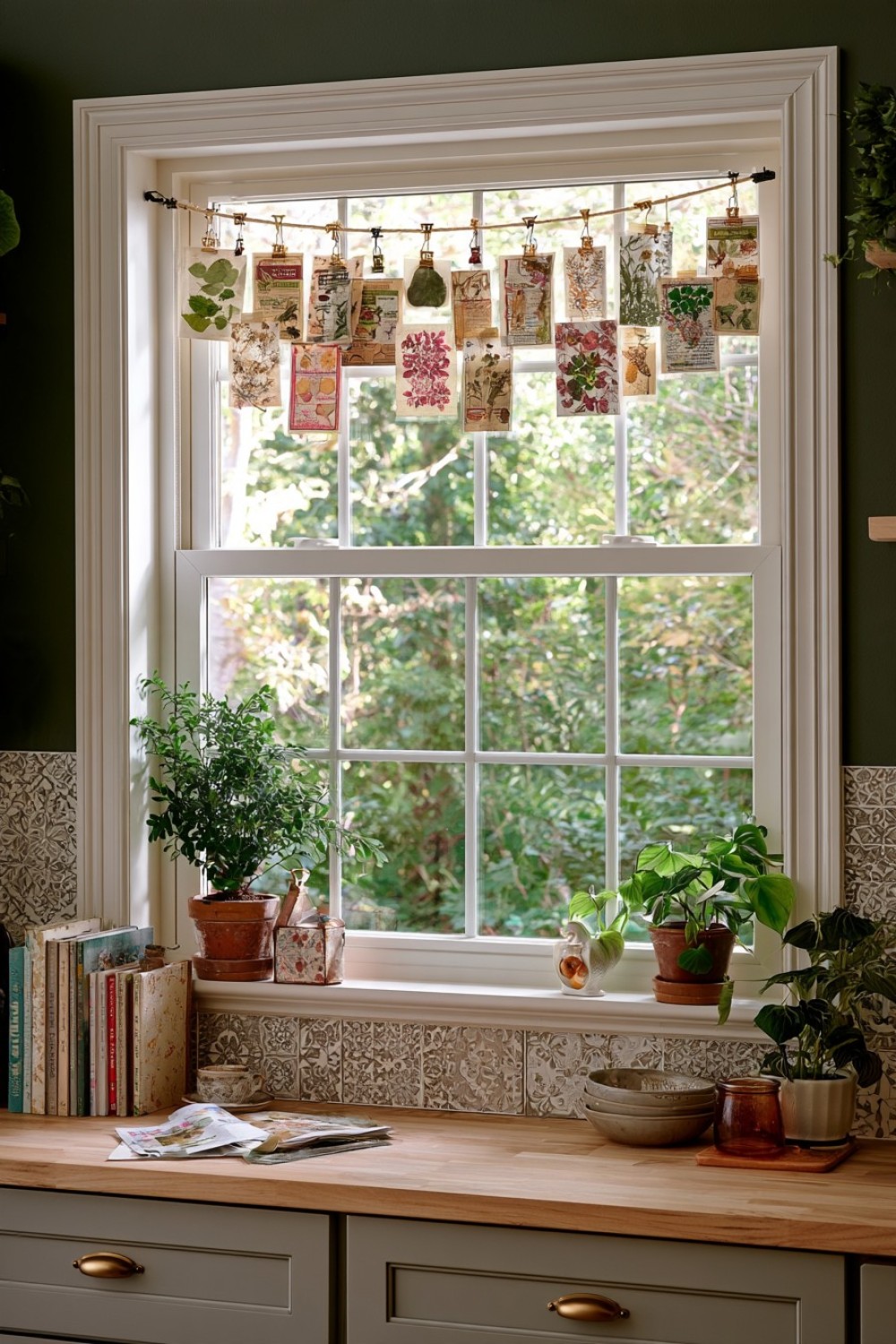
A reusable base makes it easier to change the window without remaking the whole garland.
Install a slim cord, wire, or lightweight timber rail and attach small clips at regular intervals.
Then rotate the hanging pieces throughout the year.
Pressed leaves can appear in autumn, paper forms in winter, seed packets or botanicals in spring, and dried citrus in summer.
Choose clips in wood, brass, or black metal so the rail still looks intentional when it is only partially filled.
This system is especially useful if you like seasonal decor but want to avoid storing multiple complete garlands.
17. Layered Window Strands
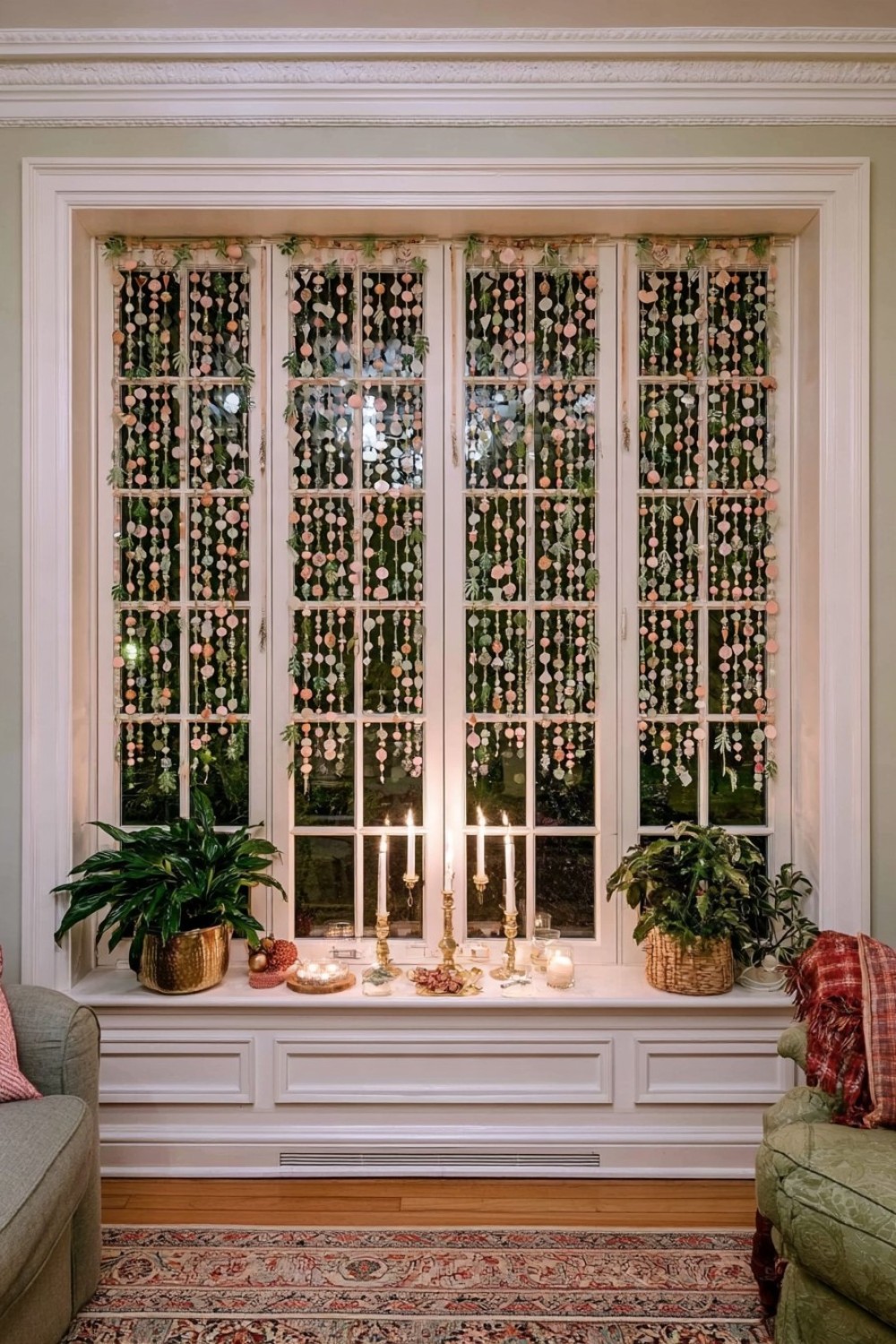
Two light garlands can create more depth than one heavy strand.
Hang the first line close to the glass and a second slightly farther into the room.
Use translucent or pale pieces on the rear layer and more tactile materials on the front.
For example, vellum circles could sit near the window while linen flags or wooden rings occupy the foreground.
As you move through the room, the two strands visually overlap and separate.
This works especially well on wide windows and glass doors where a single thin garland can appear undersized.
Keep both strands clear of blind cords, handles, and curtains so the window remains fully functional.
A Better Way to Style Windows
Window garlands work best when they respond to the glass rather than simply cover it. Transparent materials become brighter, textured fabrics reveal their weave, dried botanicals cast fine shadows, and reflective pieces can move light around the room.
Keep the scale appropriate to the window. Small panes usually benefit from fewer elements, while wide windows can support more spacing or layered strands.
It also helps to consider how the window functions. A beautiful garland becomes frustrating if it catches on curtains, blocks a handle, or suffers from condensation.
Leave plenty of open glass around the decoration. The empty space is what allows the material, light, and shadow to remain visible.
MORE IDEAS


Share
What's Your Reaction?
 Like
0
Like
0
 Dislike
0
Dislike
0
 Love
0
Love
0
 Funny
0
Funny
0
 Angry
0
Angry
0
 Sad
0
Sad
0
 Wow
0
Wow
0