15 Wine Barrel Projects for Rustic Home Style

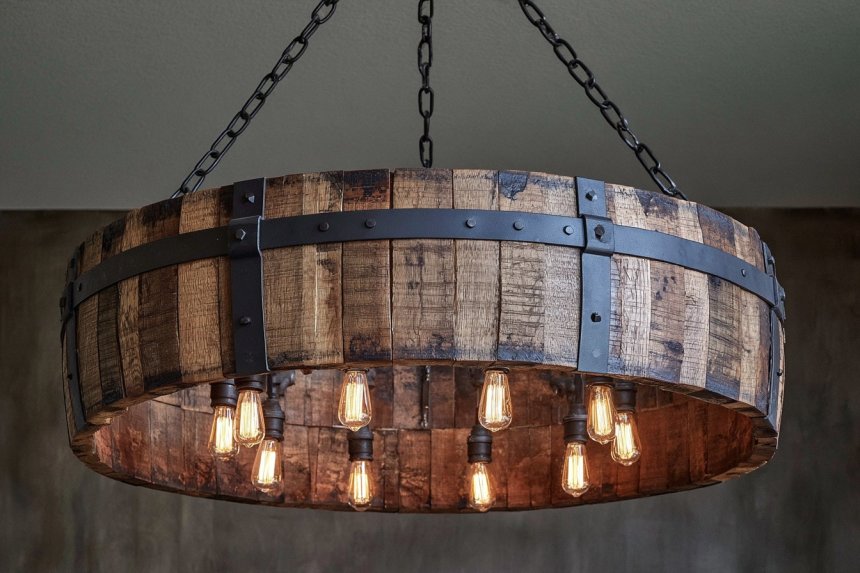
Reclaimed wine barrels bring aged oak, curved silhouettes, and visible metalwork into home projects. Before beginning, inspect every stave, hoop, and barrel head for rot, insects, loose fasteners, or unstable movement. Empty barrels can be extremely heavy, so plan transportation carefully and ask for help when lifting. Clean the wood according to its condition, allow it to dry, and preserve attractive markings whenever possible. Cutting curved oak requires suitable tools, eye protection, dust control, and confident woodworking skills. From compact furniture to garden storage, these projects demonstrate how one barrel can gain a useful, decorative second life indoors or outside.
1. Give a Half Barrel New Life as a Planter
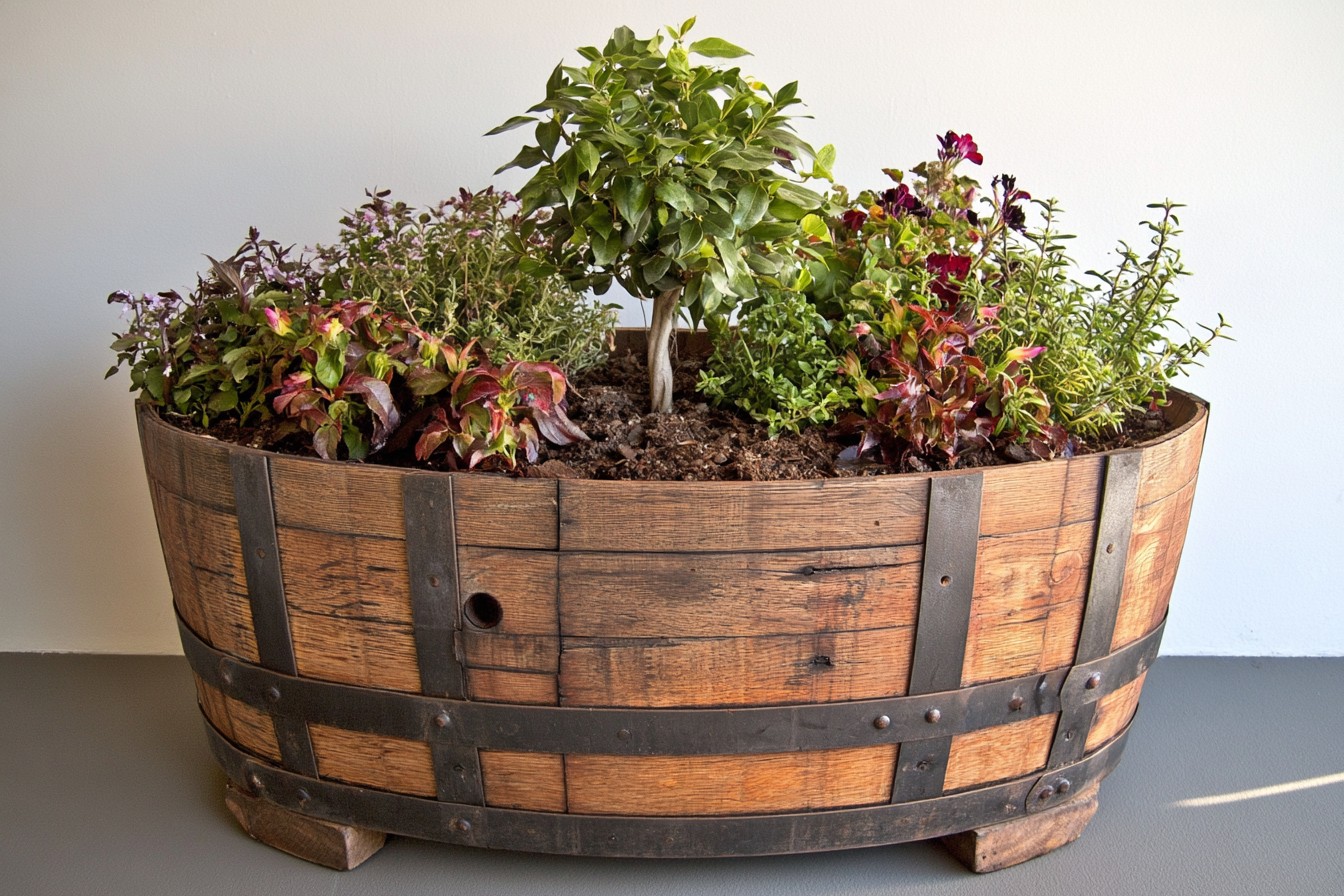
Turn half of a wine barrel into a deep planter for flowers, herbs, or a compact ornamental tree. Secure loose hoops with short screws, drill drainage holes, and raise the base on feet so water can escape. Line only the sides with breathable landscape fabric, leaving the drainage path open. Fill the bottom with lightweight planter material when the full depth is unnecessary, then add suitable soil. Highlight the oak with exterior oil or paint one hoop in a muted accent color. Position the finished planter before filling because it becomes heavy, and choose plants suited to the available sunlight.
2. Let the Original Barrel Shape Support a Patio Table
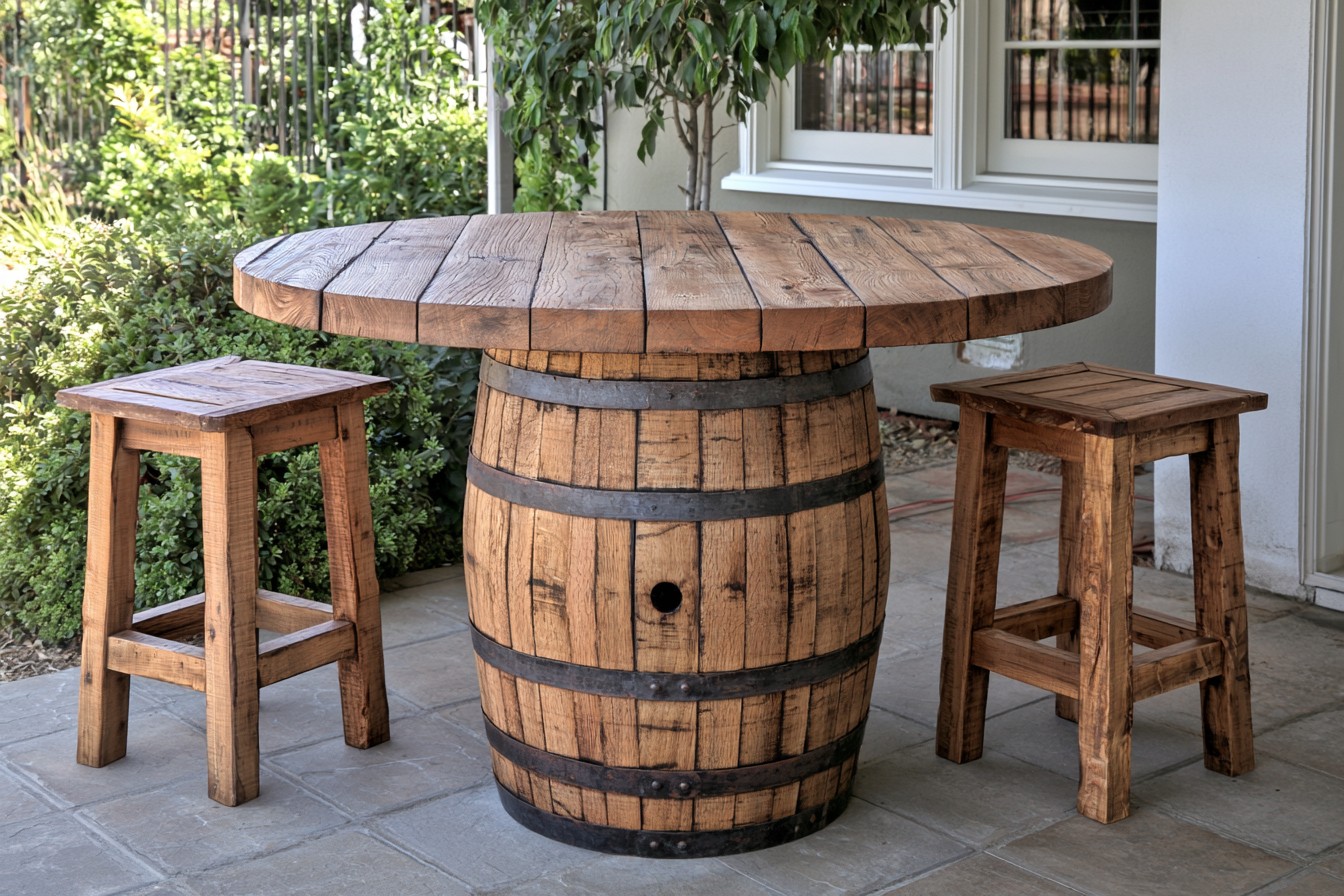
Preserve a barrel as the base for a patio or breakfast table. Check that the hoops are tight, level the bottom, and sand rough areas without removing every weathered mark. Attach a sealed hardwood top using concealed brackets that allow seasonal wood movement. Make the surface wider than the barrel while keeping enough knee space for comfortable seating. A clear exterior finish showcases the oak, whereas blackened hoops add a stronger industrial contrast. Decorate the table with simple pottery or woven placemats. Use adjustable feet on uneven paving, and anchor the top securely so it cannot shift when leaned upon.
3. Store Blankets Inside a Rolling Coffee Table
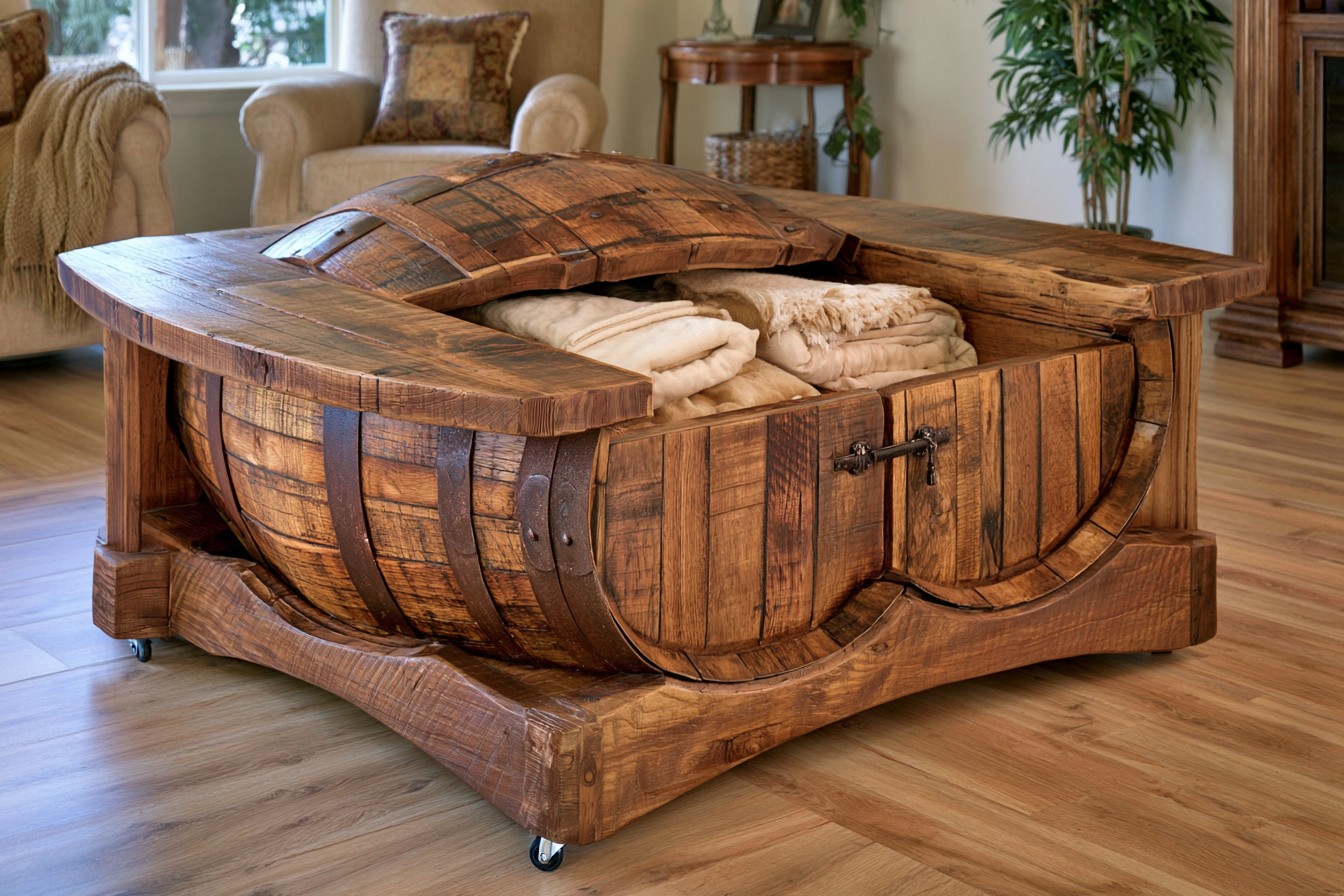
Lay a barrel horizontally and convert it into a coffee table with storage for throws, games, or cushions. A skilled woodworker should create a cradle, cut a hinged access panel, and reinforce surrounding staves before anything is removed. Add locking casters beneath the frame rather than attaching wheels directly to curved wood. Finish the upper surface with a fitted plank top that prevents glasses from tipping. Retain the iron hoops, then stain the cradle to match the barrel. Decorative leather pulls can open the compartment. Check hinge clearances carefully, smooth every cut edge, and keep fingers away from closing points.
4. Hide Entertaining Supplies Behind Curved Doors
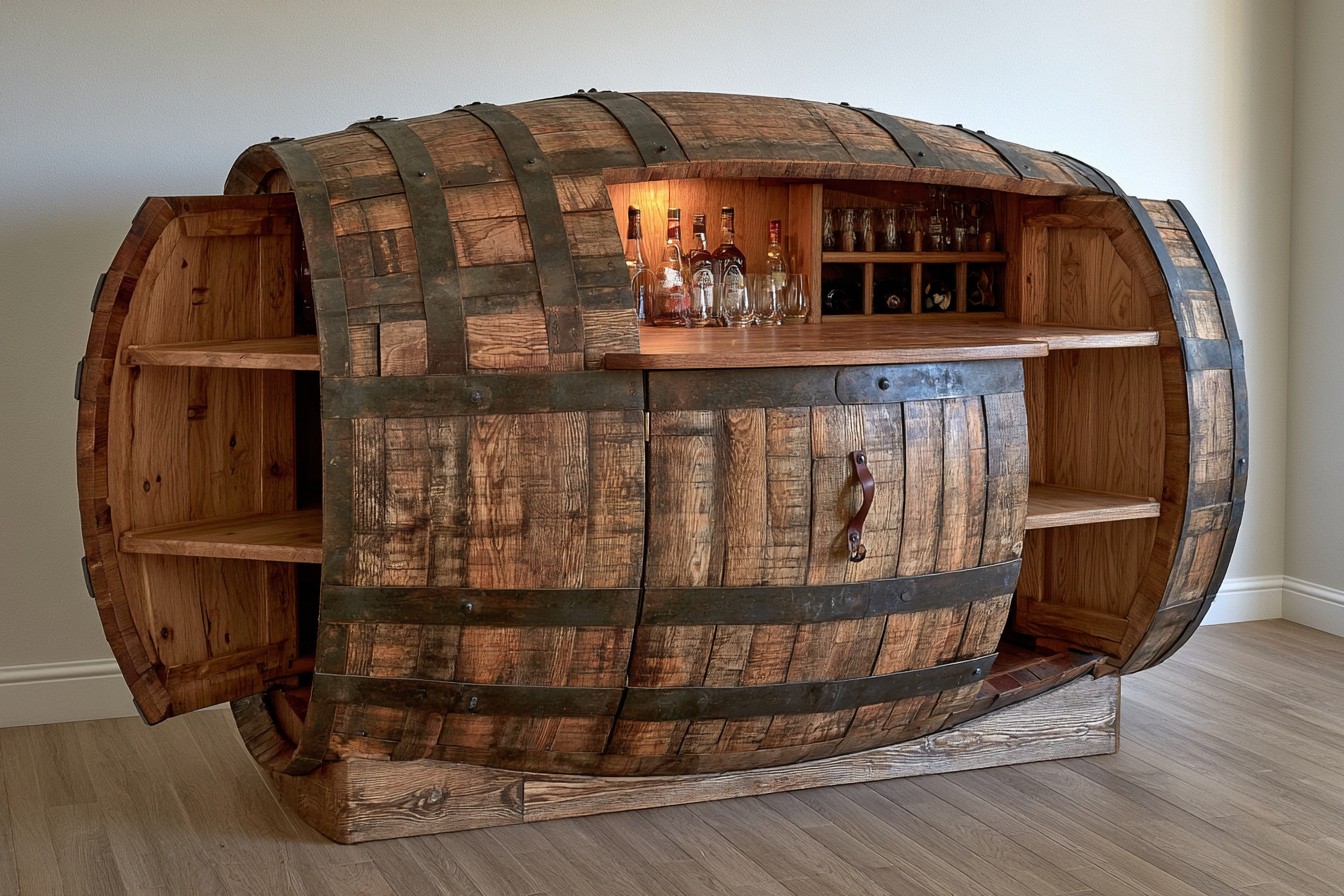
Convert an upright barrel into a cabinet that stores bottles, glassware, serving pieces, or coffee supplies. Mark a door section between the hoops, then have an experienced woodworker cut and brace it before separating the staves. Install hinges, a magnetic catch, and interior shelves supported by the barrel frame. A rotating shelf can improve access, provided its hardware carries the expected weight. Sand the opening thoroughly and seal the interior with a suitable clear finish. Decorate the door with a forged handle or leather pull. Place felt pads beneath the barrel and anchor it if the opened door affects stability.
5. Shape a Comfortable Retreat for Your Pet
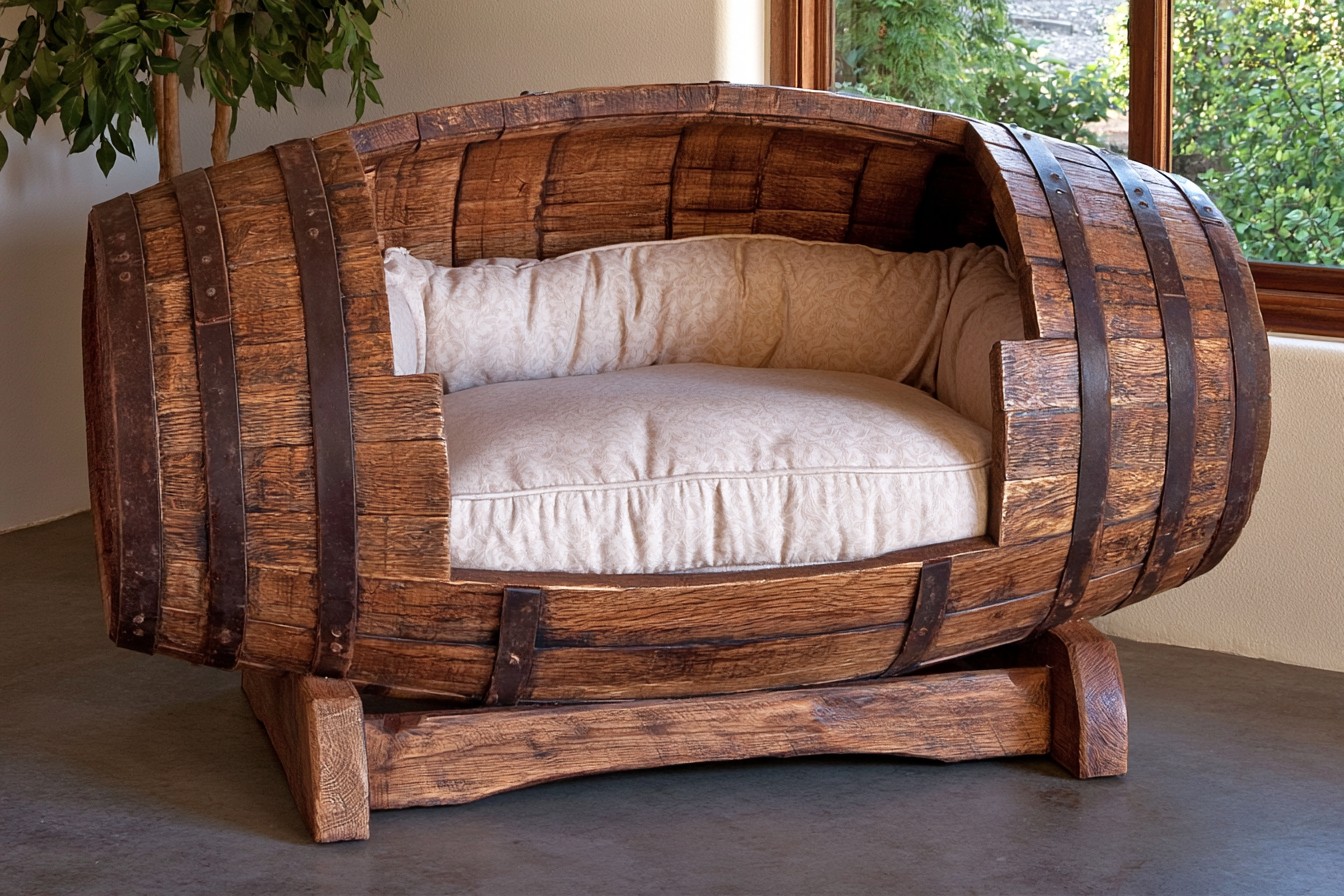
Create a pet bed from a barrel half while preserving the curved oak as a protective surround. Cut the barrel lengthwise only after securing every stave and hoop, then build a wooden base that prevents rocking. Lower part of the front edge for easier entry, smooth the opening, and cover exposed metal. Apply a pet appropriate finish and allow it to cure before use. Add a removable washable cushion fitted to the interior. Decorate with a fabric pattern that coordinates with the room. Confirm the finished bed has no splinters, sharp edges, strong odors, or unstable movement before introducing it.
6. Grow More Herbs With Tiered Barrel Sections
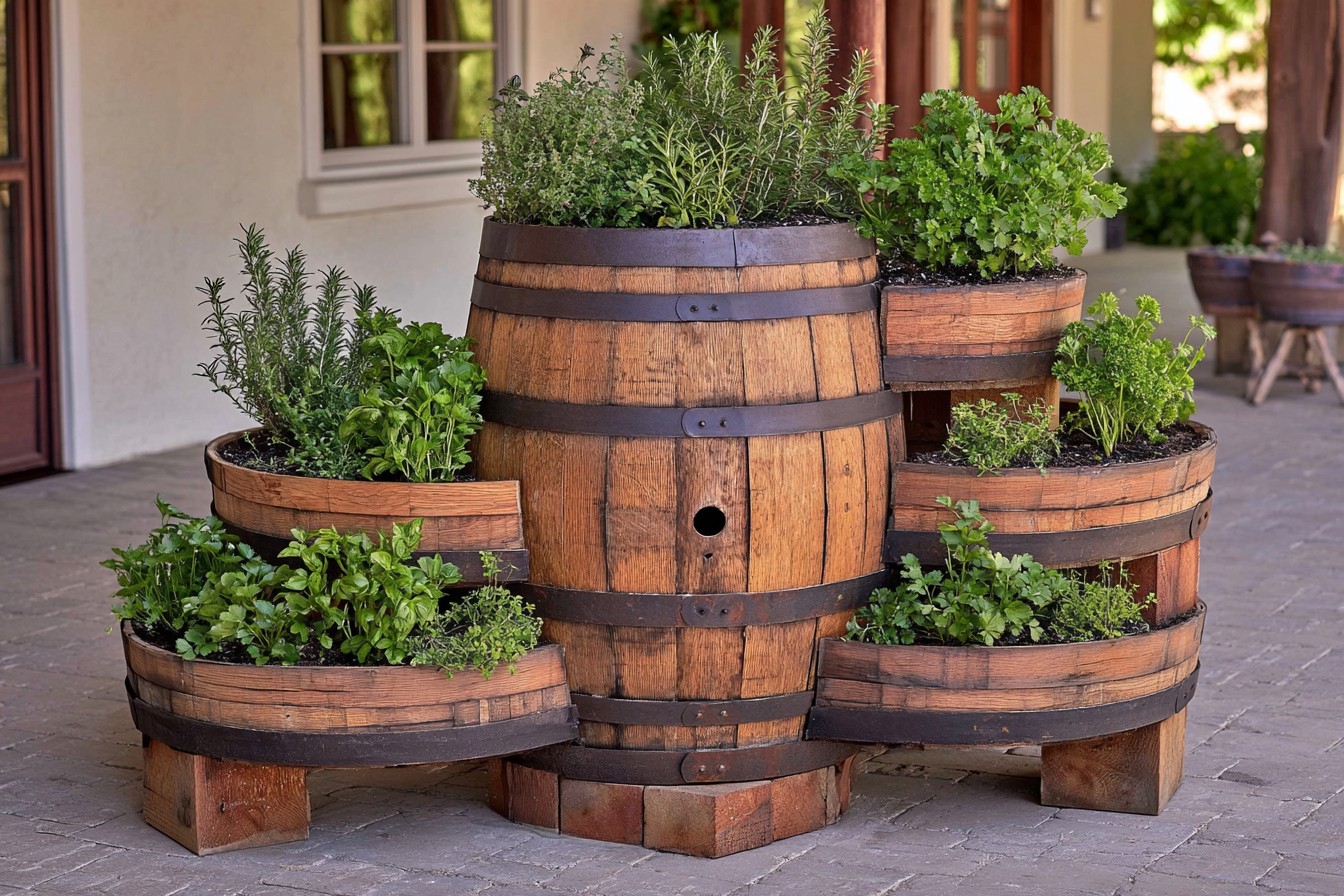
Build a tiered herb garden by combining one half barrel with curved sections positioned at different heights. Reinforce each section, add drainage holes, and support raised tiers with exterior grade wooden blocks rather than relying on soil pressure. Fill the containers with an appropriate growing mix and group herbs according to water and sunlight needs. Paint only the outer hoops, leaving natural oak visible for contrast. Plant trailing thyme near edges, upright rosemary toward the back, and parsley in accessible areas. Position the structure close to the kitchen, but verify that water drains away from walls, decking, and walking surfaces.
7. Turn a Barrel Head Into a Quiet Wall Clock
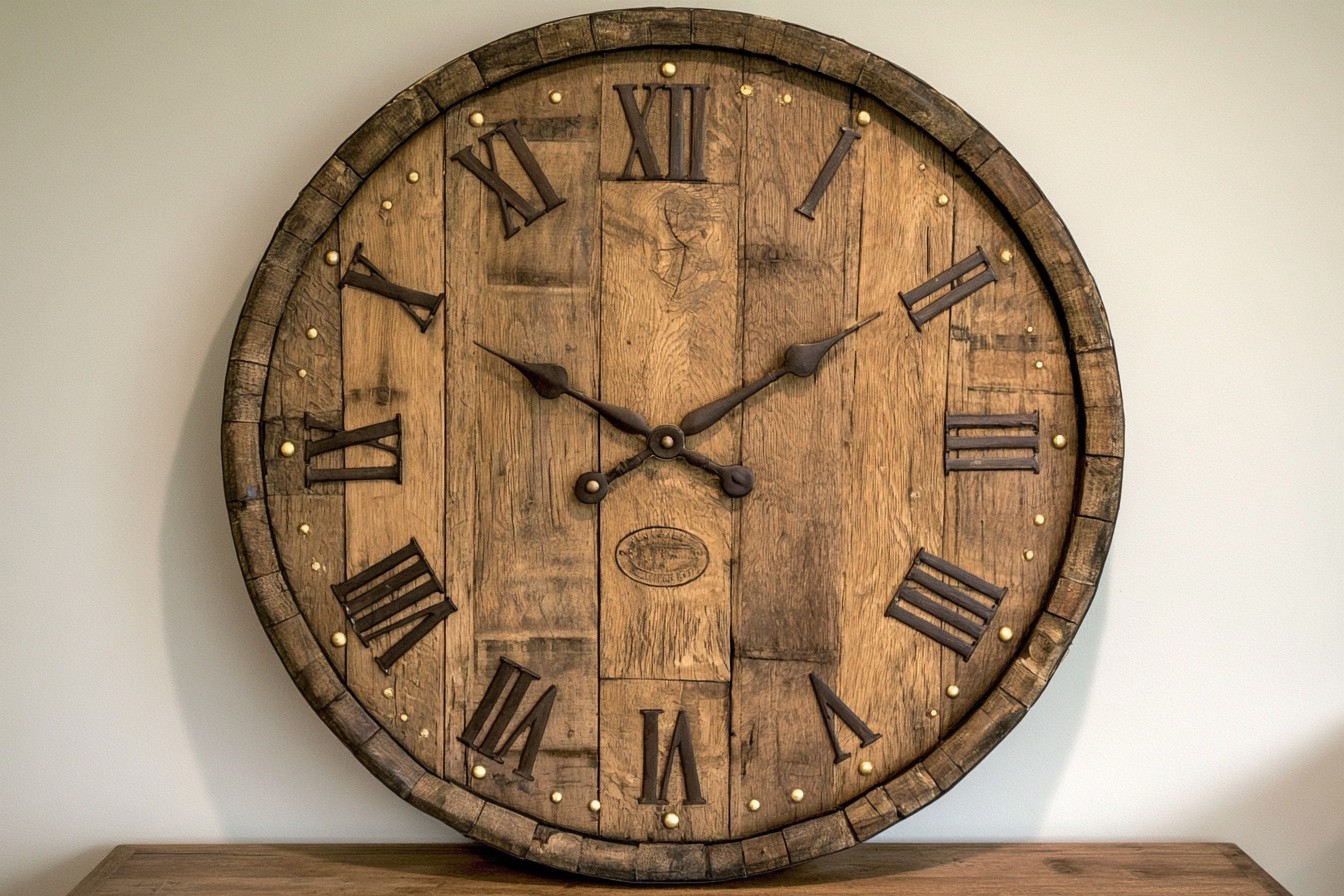
Repurpose a barrel head as a wall clock that preserves cooperage marks and oak variations. Stabilize separated boards from behind using slim battens, then sand the face lightly and apply clear wax. Locate the center precisely and drill the opening required by a quality clock mechanism. Choose simple metal hands that remain visible against the wood. Hour positions can be marked with small inlaid dots, short painted lines, or brass tacks instead of large numerals. Attach hanging hardware rated for the finished weight and secure it into suitable wall anchors. Keep the original stamp visible as the main decorative feature.
8. Frame a Round Mirror With Curved Staves
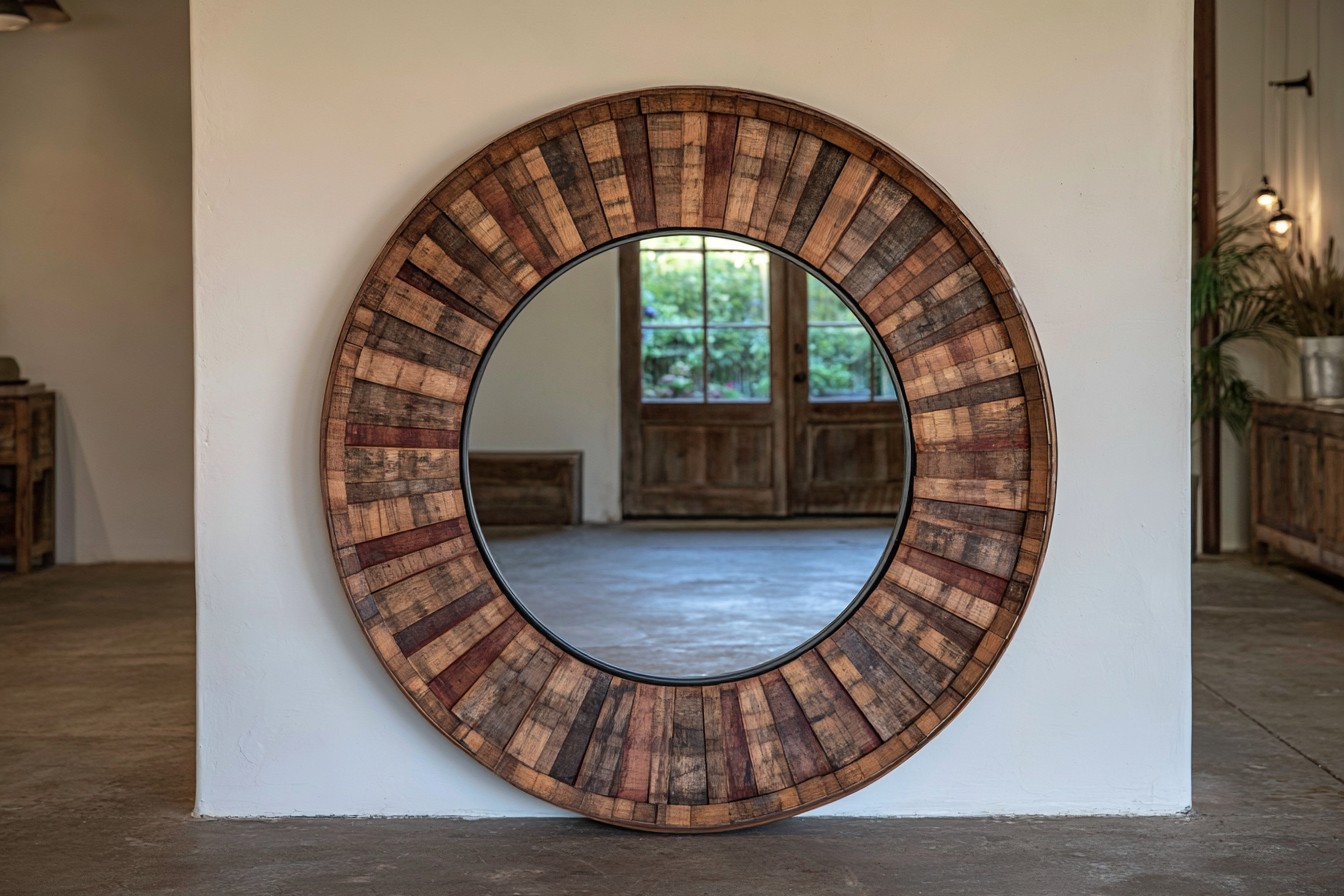
Arrange barrel staves around a mirror to create a frame with depth. Clean and sand each piece, then test the layout on a plywood backing before making cuts. Alternate the wider and narrower ends to form a balanced sunburst. Secure the mirror with proper clips and attach the staves to the backing using wood adhesive plus mechanical fasteners. A dark stain can unify mismatched oak, while a clear finish celebrates variations. Install a strong hanging system appropriate for the combined weight. This mirror suits an entryway, dining room, or powder room where the frame has enough space to remain visible.
9. Build a Garden Bench From Graceful Barrel Curves
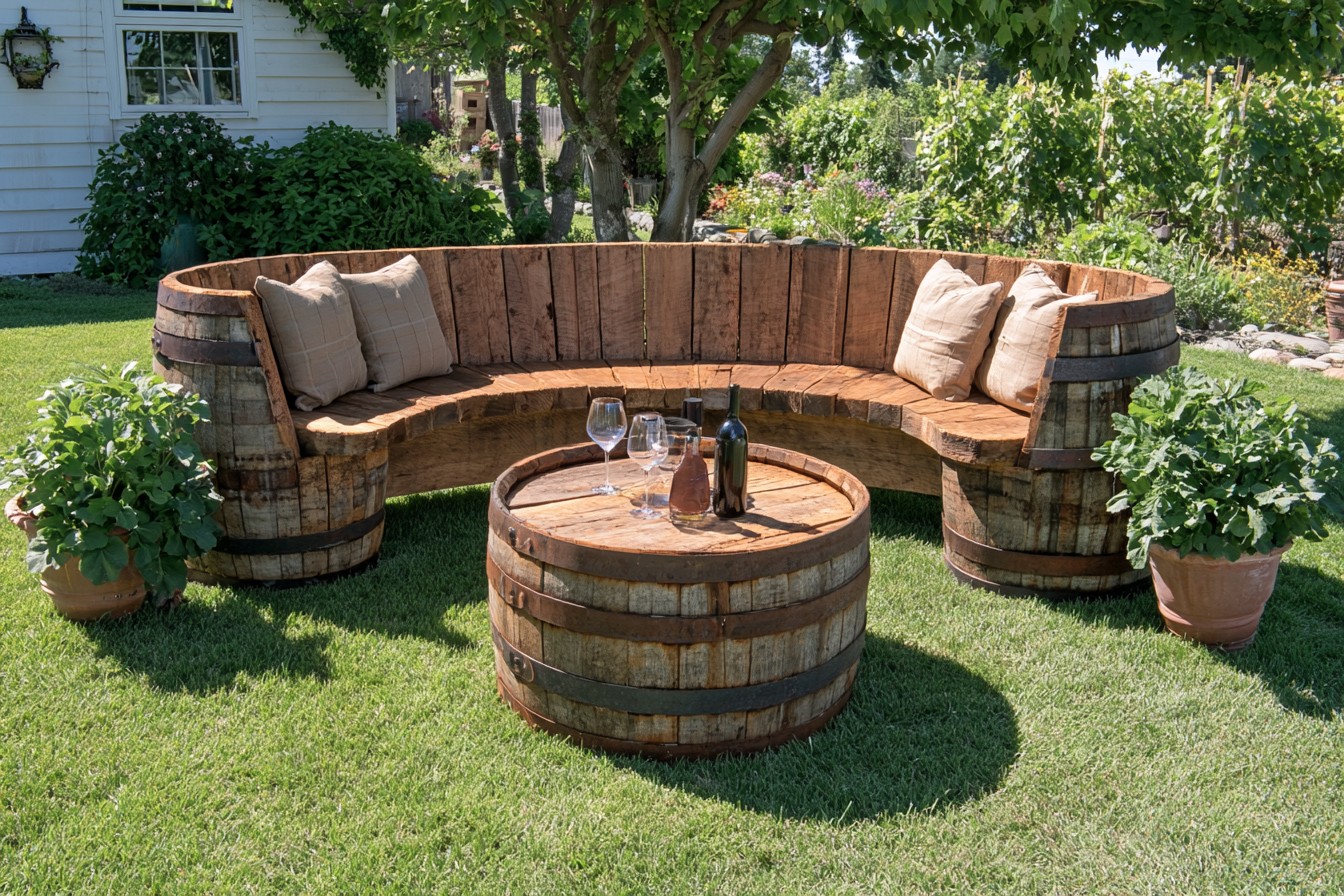
Use barrel staves to form the curved back of a garden bench supported by a structural frame. Select undamaged staves, remove protruding fasteners, and sand surfaces. Construct the legs and seat from exterior grade lumber sized for the expected load, then attach the decorative staves across the back with weather resistant screws. Keep gaps consistent and test the angle for comfort before final assembly. Finish the wood with outdoor oil and add removable cushions in durable fabric. Place the bench on level paving or compacted gravel. Because seating must support people safely, consult a builder when designing joints and dimensions.
10. Fit Shelves Into a Vertical Barrel Half
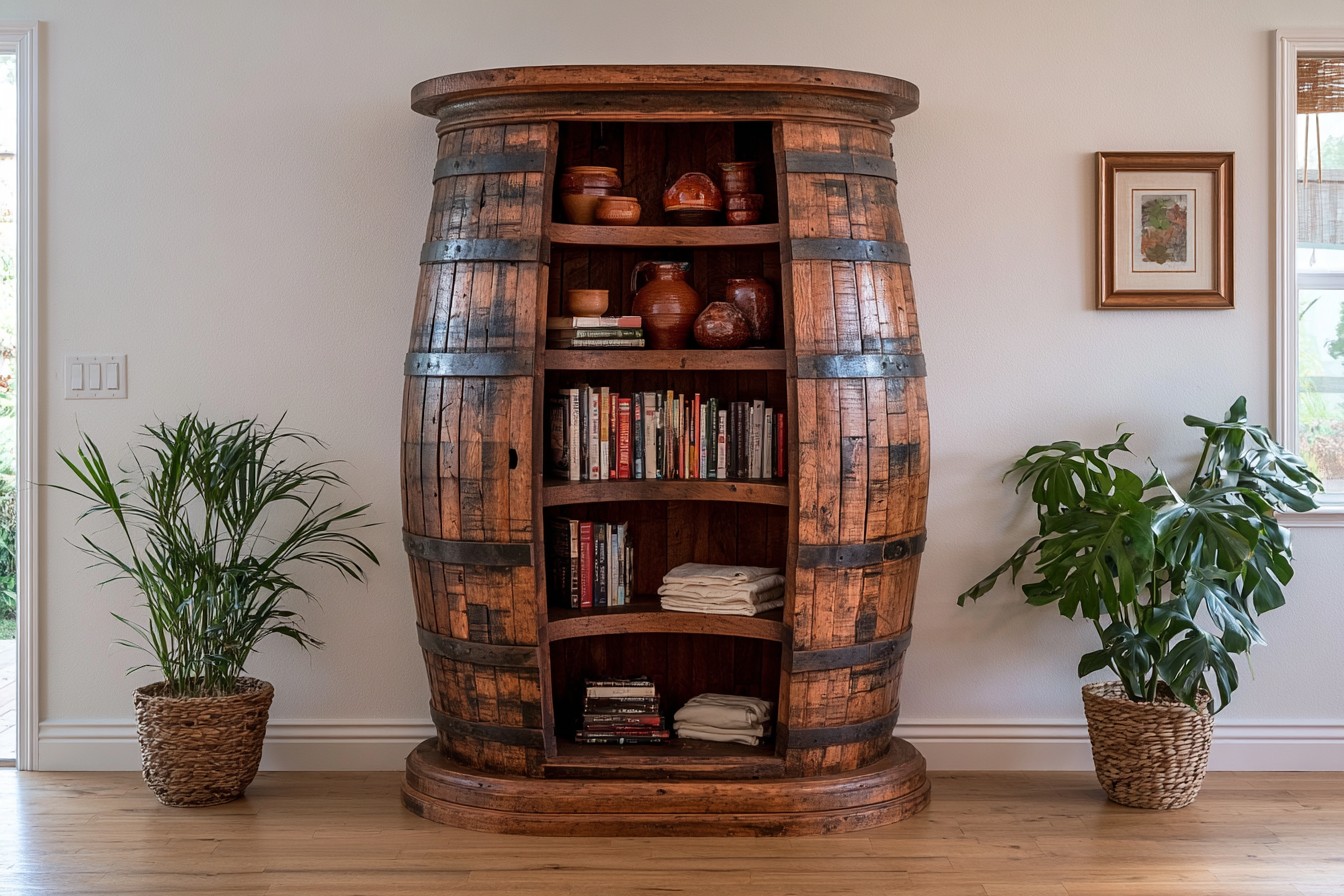
Split a banded barrel vertically to create a narrow display cabinet that follows its curved outline. Cutting must be completed by an experienced woodworker because releasing staves can cause sudden movement. Brace the half barrel, add a stable back panel, and install shelves that meet both curved sides without gaps. Paint the interior a deep contrasting shade to emphasize books, pottery, or folded linens. Leave the exterior oak natural and darken the hoops for definition. Secure the completed cabinet to the wall, especially in homes with children or pets. Avoid overloading upper shelves and distribute heavier objects near the bottom.
11. Make the Barrel Lid a Rotating Serving Tray
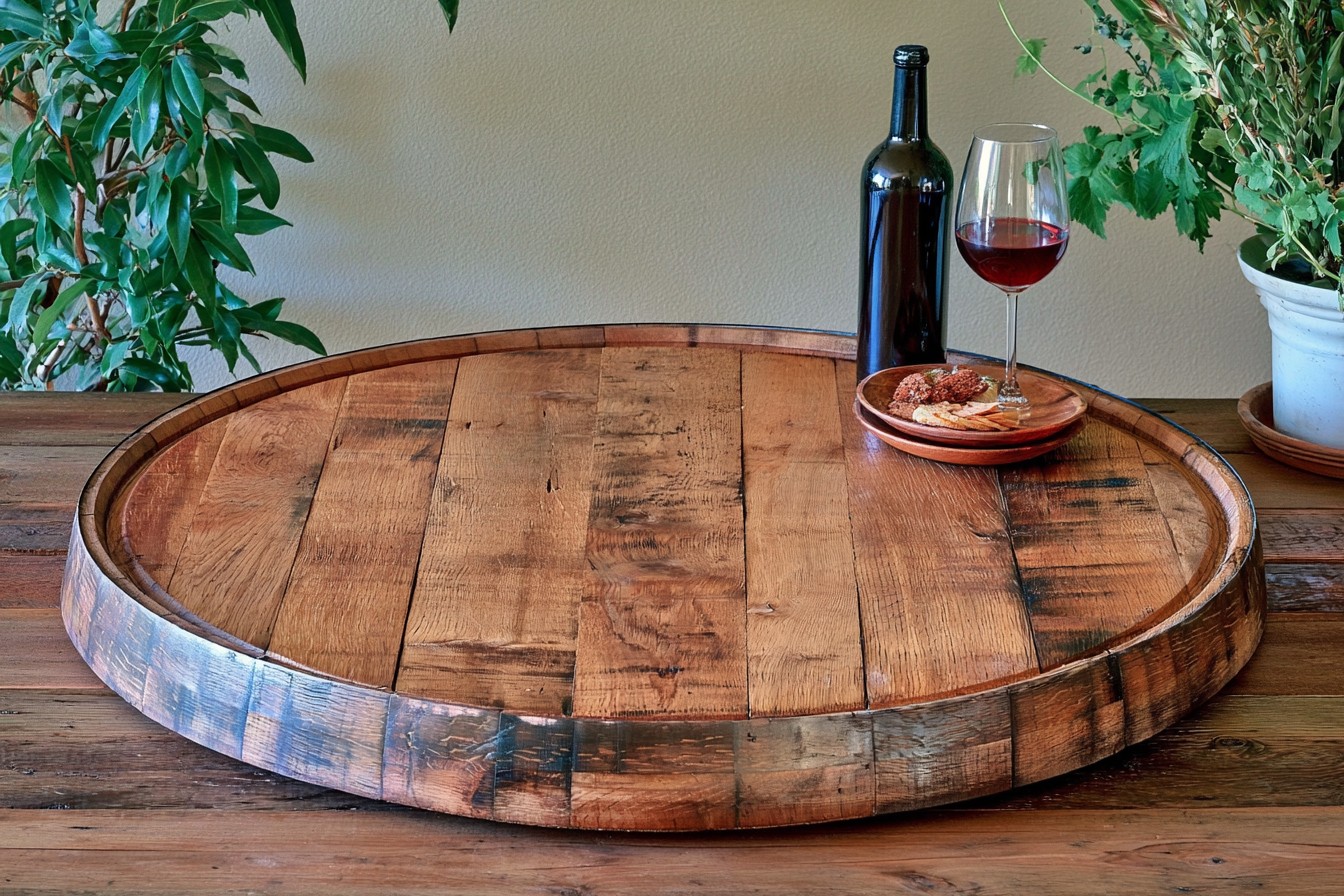
Transform a barrel head into a rotating serving tray for a dining table or kitchen island. Stabilize the boards from underneath, fill deep gaps if necessary, and sand the top until dishes sit evenly. Attach a duty turntable bearing centered beneath the wood, following its load rating and installation directions. Add a metal hoop or routed edge to define the perimeter without obstructing movement. Seal the surface with a food contact appropriate finish if unwrapped food may touch it. Decorate through contrasting wood tones rather than lettering. Test rotation, balance, and fasteners before placing glassware or serving dishes on top.
12. Organize Firewood With Hoops and Reclaimed Staves
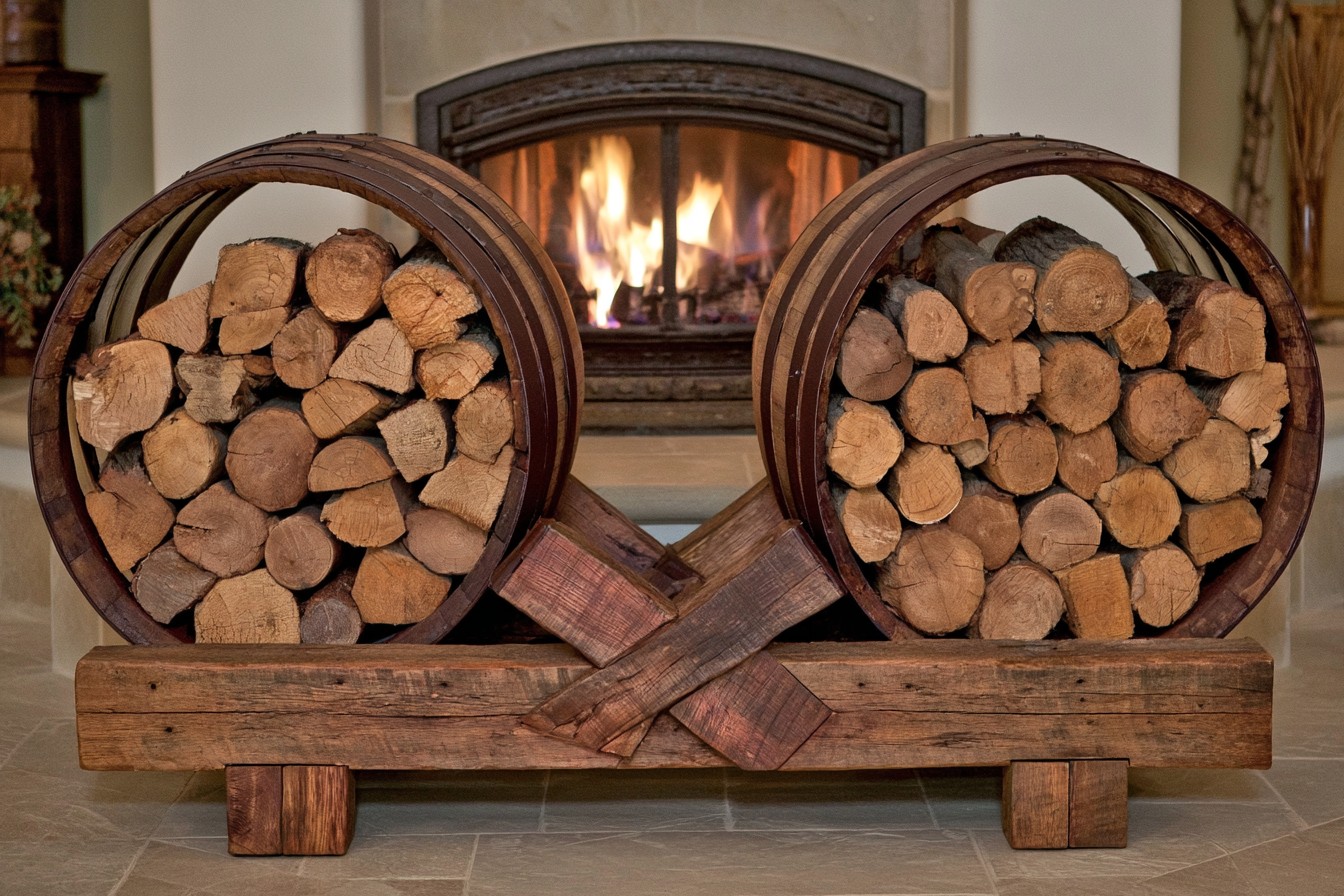
Create a firewood rack using barrel hoops as side supports and straight staves as the base. Clean rust from the hoops, apply a metal finish, and fasten them to a reinforced wooden platform. Space the base staves closely enough to hold logs while allowing debris to fall onto a tray. Add a cross brace so the structure cannot spread under weight. Preserve toasted oak surfaces or sand them for a lighter appearance. Position the rack on a noncombustible hearth area at the clearance required by the fireplace manufacturer. Never store wood against a stove, heat source, curtain, or upholstered furniture.
13. Bring Barrel Character Into a Slim Entry Console
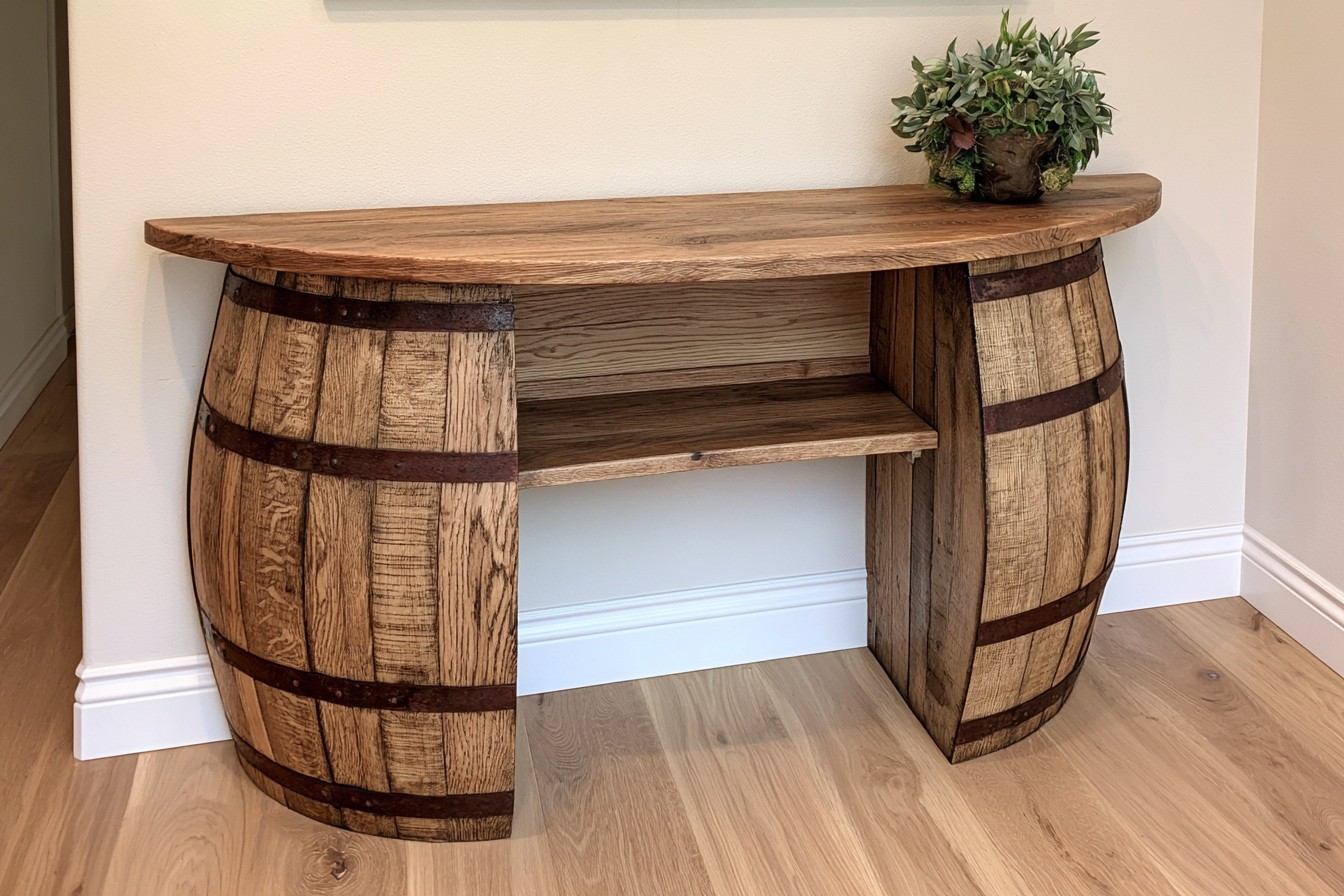
Use one half barrel as the curved base of a console for an entryway or hallway. Brace the cut shell, install a flat back, and attach it to wall studs so the form cannot tip. Add a sealed plank top slightly wider than the barrel, keeping passage space clear. Inside, fit one shelf for baskets, shoes, or pet accessories. Paint the interior to match surrounding walls and preserve the exterior oak for contrast. A tray can collect keys without adding clutter. Round every projecting corner and verify that the console does not obstruct doors, vents, or the normal walking route.
14. Keep Garden Scraps in a Ventilated Barrel Composter
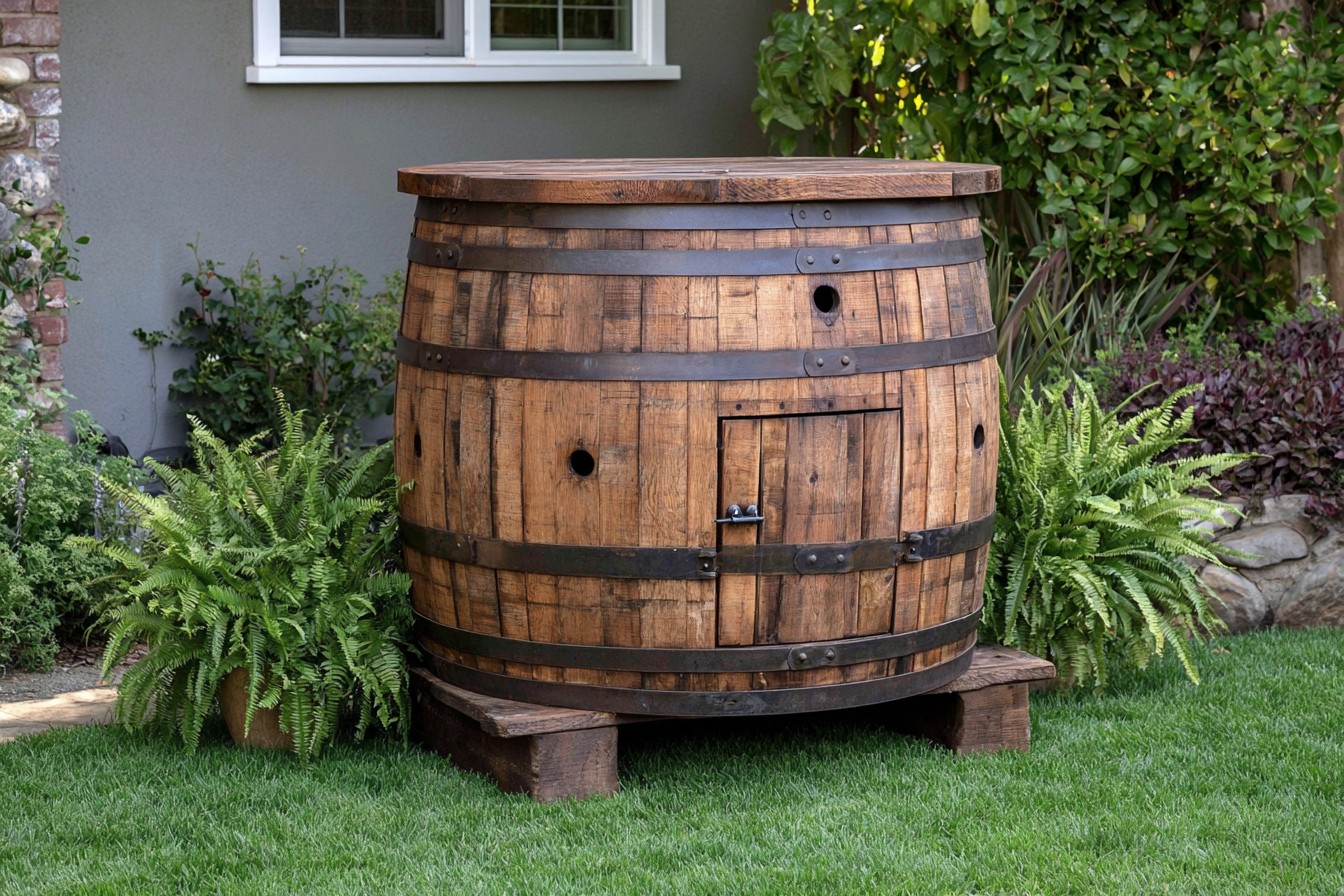
Adapt a barrel into a compost container by providing airflow, drainage, and a removable lid. Tighten the hoops, drill spaced ventilation holes, and elevate the base on masonry blocks. Create an access door only if a skilled woodworker can reinforce the surrounding staves safely. Line openings with metal mesh to discourage pests without blocking air. Protect the exterior with a breathable outdoor finish and mark the lid using a painted leaf motif. Place the composter on level soil away from wooden walls. Balance green and brown materials, monitor moisture, and follow local guidance about foods that should not be composted.
15. Collect Rainwater Behind an Oak Barrel Exterior
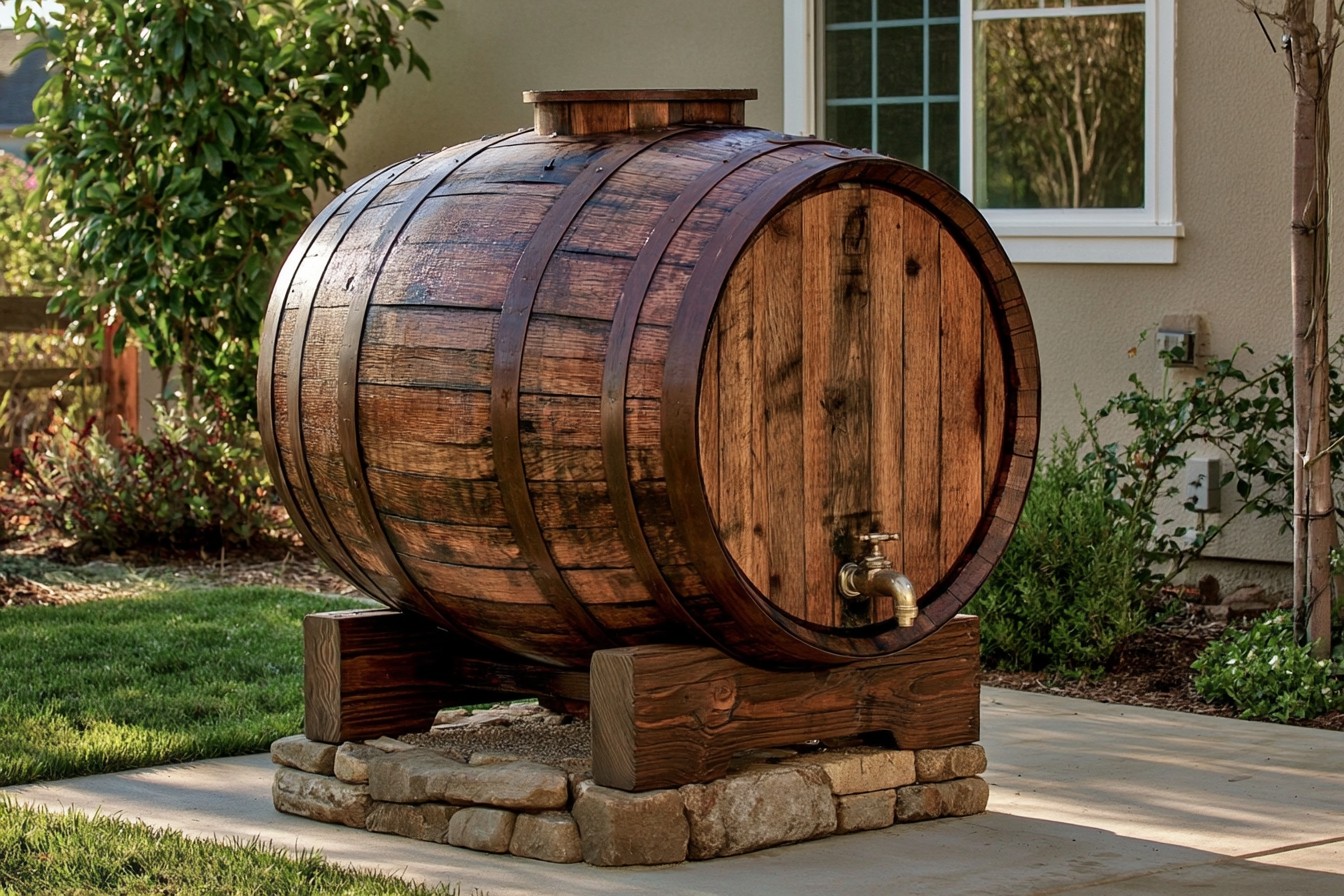
Convert a barrel into a rain collector that complements traditional garden materials. Confirm that the previous contents were safe and have the barrel cleaned when its history is uncertain. Fit a screened inlet, overflow connection, and purpose made spigot using compatible sealed hardware. Raise the barrel on a level masonry base strong enough for the weight of water. Connect overflow away from foundations and walking areas. Preserve the wood with an exterior treatment and surround the base with gravel or low plants. Keep the lid secured against children and animals, and follow regional regulations governing rainwater collection and permitted uses.
MORE IDEAS


Share
What's Your Reaction?
 Like
0
Like
0
 Dislike
0
Dislike
0
 Love
0
Love
0
 Funny
0
Funny
0
 Angry
0
Angry
0
 Sad
0
Sad
0
 Wow
0
Wow
0