18 White and Silver Wedding Details With Modern Elegance

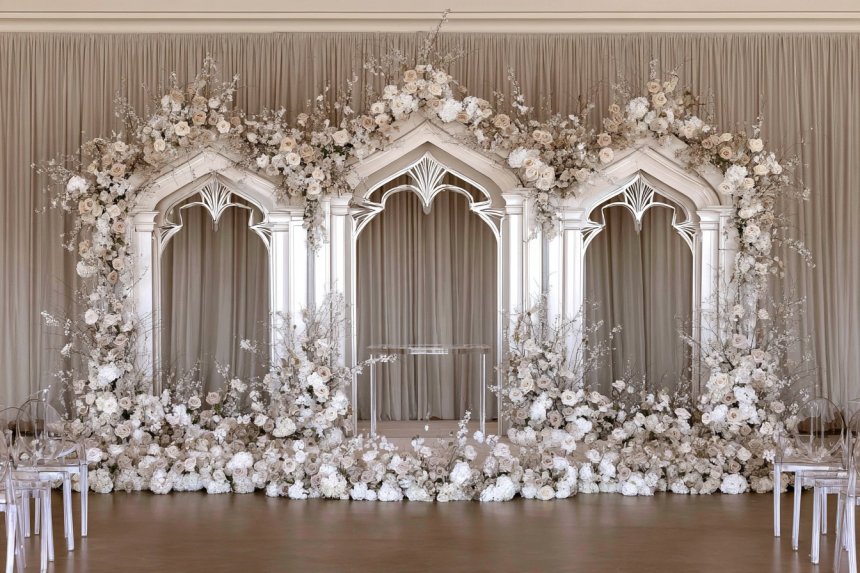
White and silver wedding decor can feel sophisticated without becoming cold, glitter-heavy, or overly formal. The strongest celebrations use silver as a reflective accent rather than covering every surface in metallic finishes. Soft white flowers, translucent materials, brushed metal, mirrored details, pearl-like textures, and carefully controlled lighting can create depth while preserving the calm elegance of a monochromatic palette. Material contrast matters particularly well here: satin against stone, frosted acrylic beside polished silver, or sculptural white florals against darker shadows. Instead of repeating the same metallic centerpiece across every table, these wedding decor approaches use the palette in more architectural and unexpected ways, creating a celebration that feels cohesive, luminous, and memorable from ceremony to reception.
1. Frame the Ceremony With Floating White Floral Clouds
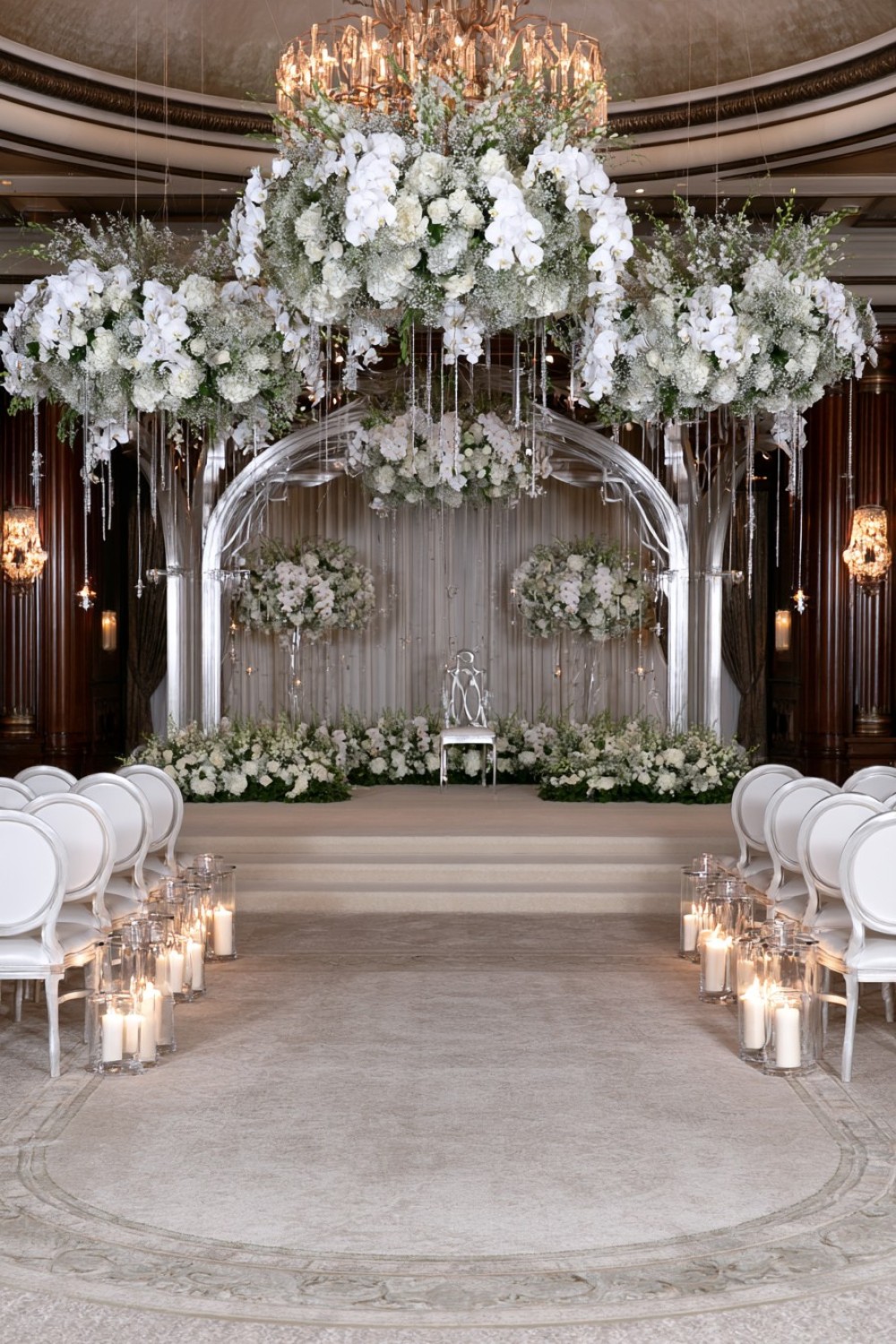
Instead of building a conventional flower arch, suspend loose clusters of white flowers above and slightly behind the ceremony area.
Hydrangeas, orchids, baby's breath, delphiniums, and lightweight preserved botanicals can be arranged at different heights so the installation appears to float rather than form a solid wall.
Introduce silver through the structure rather than the flowers themselves. Thin brushed-metal supports, discreet silver wire, or mirrored bases can catch small flashes of light without distracting from the softness overhead.
Leaving generous empty space between clusters is important. It allows the arrangement to feel atmospheric instead of dense and makes each floral shape visible in photographs.
For a more contemporary setting, keep the ceremony backdrop otherwise minimal. A pale floor, white chairs, and a few reflective details allow the suspended flowers to become the main visual moment.
Any overhead installation should be professionally secured and appropriate for the venue's load restrictions.
2. Use Brushed Silver Instead of High-Shine Chrome
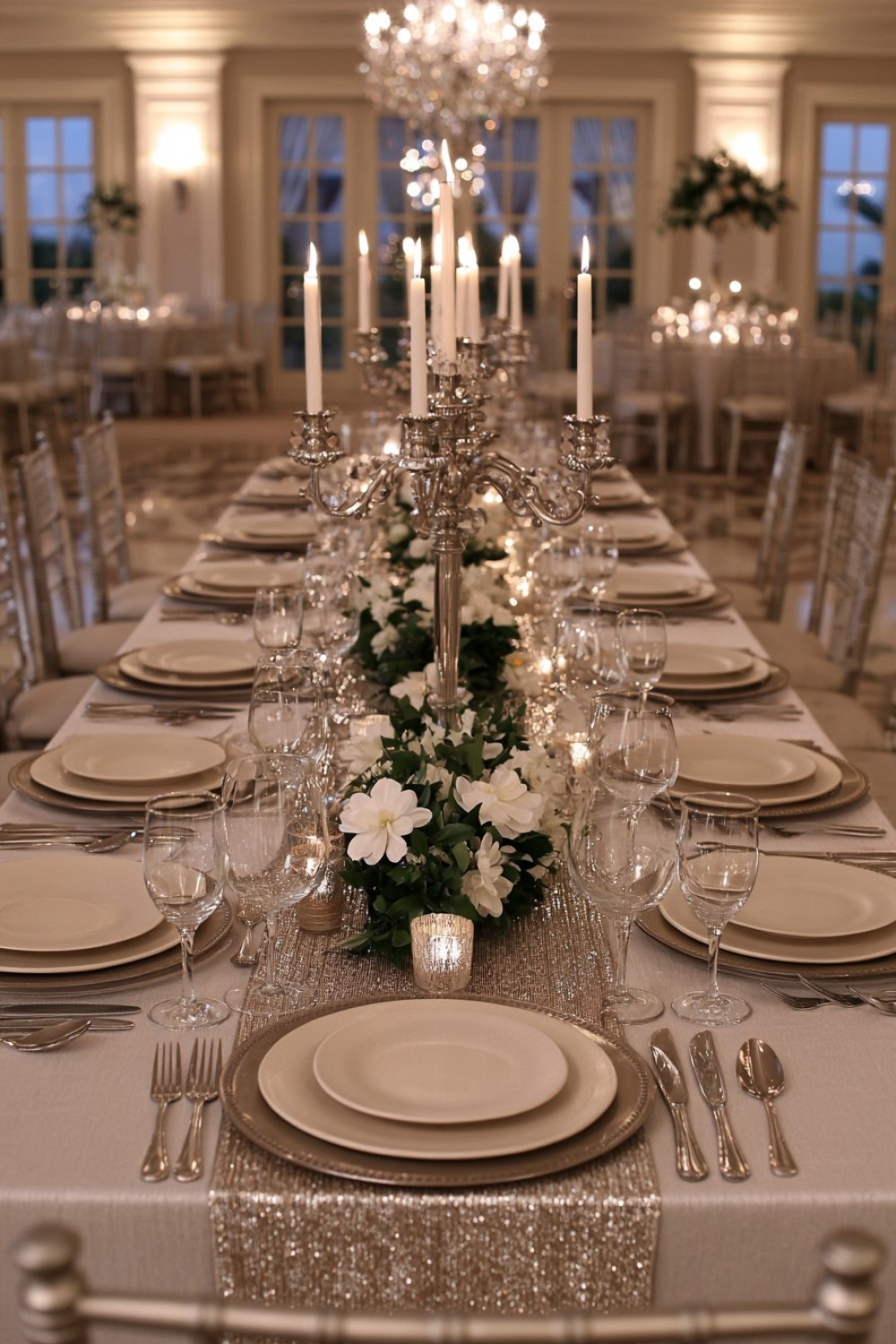
Silver does not have to mean mirror-like surfaces.
Brushed nickel, pewter, satin silver, and softly oxidized metal can create a much more sophisticated wedding palette because they reflect light gently rather than producing sharp highlights.
Use these finishes for table numbers, candle bases, menu stands, charger rims, or small structural details.
The softer metal works especially well with ivory linen, matte ceramics, and velvety white flowers. It also allows highly reflective elements elsewhere—such as a mirrored cake pedestal or polished flatware—to feel more special.
Mixing several closely related silver finishes can make the decor feel collected rather than commercially matched. The important part is keeping their undertones consistent.
Avoid combining cool blue chrome with very warm antique silver unless that contrast is intentional. A restrained range of metallic textures often looks more expensive than repeating one glossy finish everywhere.
3. Build a Reception Entrance From Frosted Acrylic Layers
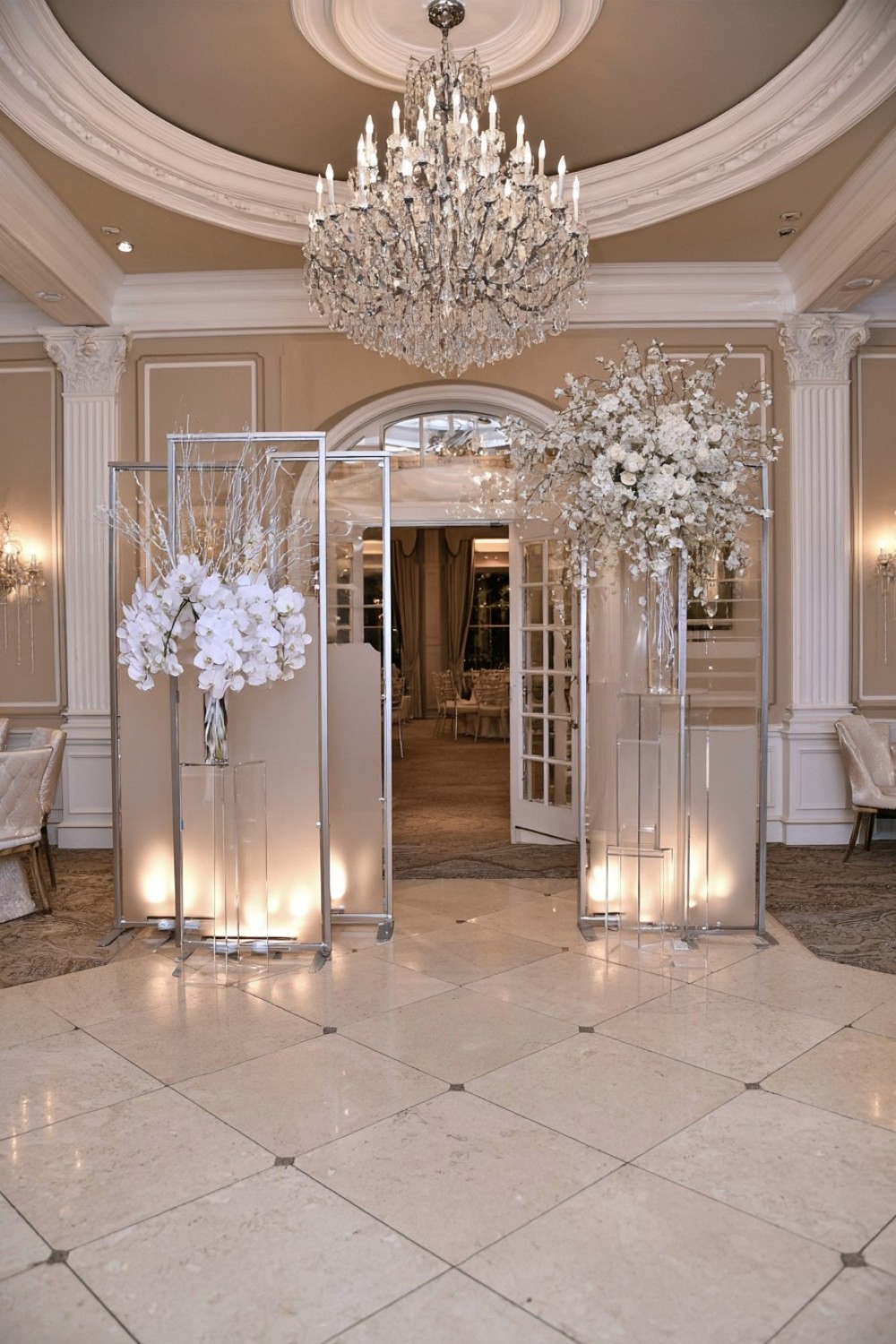
A reception entrance can become a major design moment without relying on a traditional floral wall.
Use overlapping sheets of frosted acrylic in different heights, some translucent and others more opaque. Place them slightly apart so lighting can travel through the gaps.
Thin silver edging or small metal standoffs can introduce the wedding's metallic element without overwhelming the installation.
Soft illumination from behind creates a hazy layered effect that changes as guests walk past. The structure can also frame a seating chart, monogram, or entrance pathway while still feeling architectural.
For a softer look, position a few white orchids or sculptural branches at the base rather than surrounding the entire installation with flowers.
This concept works particularly well in modern venues, hotel ballrooms, galleries, or minimalist spaces where a traditional flower-heavy entrance might feel disconnected from the architecture.
4. Replace Standard Centerpieces With Mirrored Floral Islands
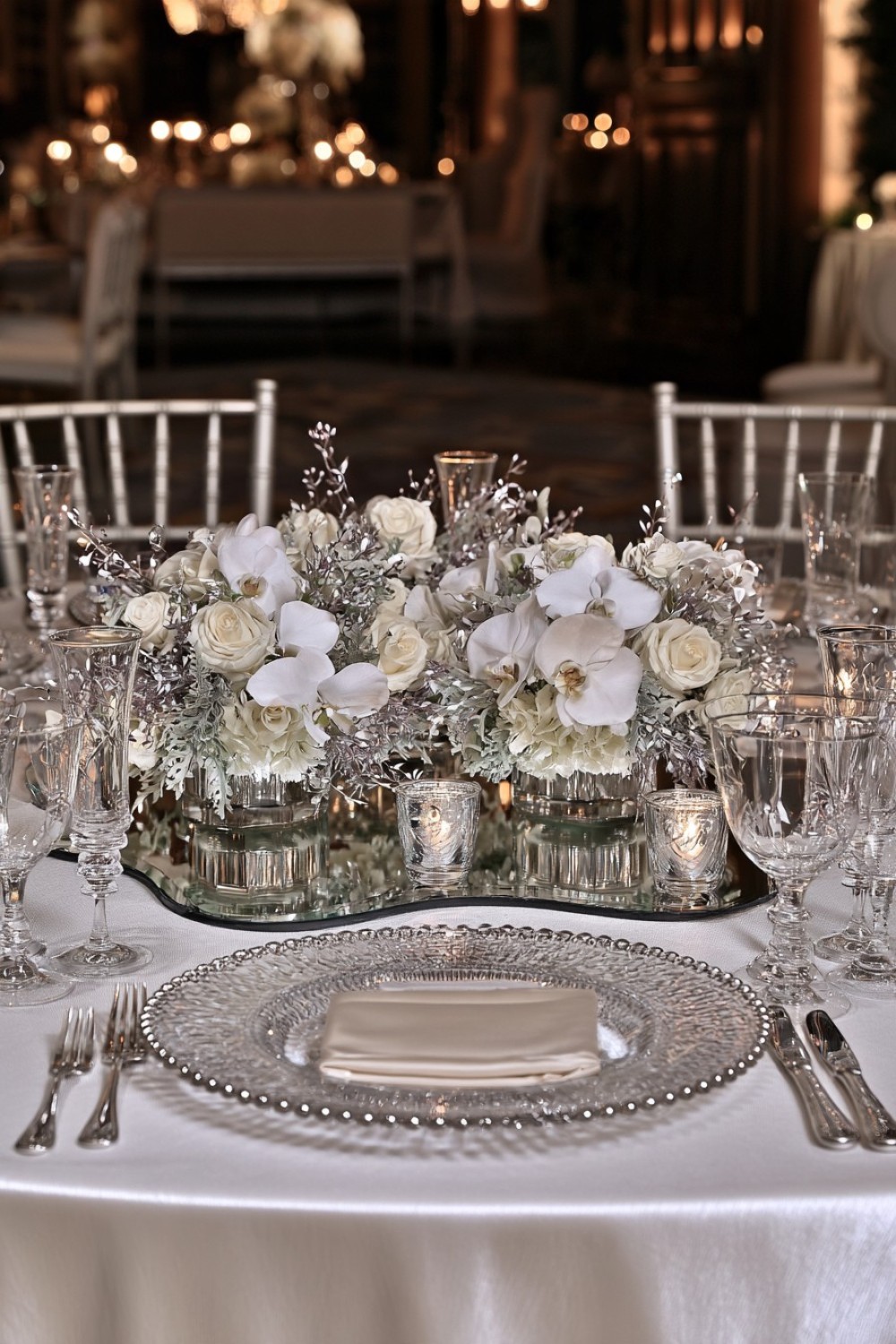
Instead of placing arrangements in ordinary vases, create low floral compositions that appear to float over irregular mirrored platforms.
Cut or commission asymmetrical mirror bases with softened edges, then place white florals in shallow hidden vessels across the surface. The mirror visually doubles petals and reflects nearby glassware, making a relatively restrained arrangement appear fuller.
Add one or two brushed-silver objects—perhaps sculptural candleholders or compact metal spheres—to introduce variation in height.
This technique works particularly well on long tables because several smaller mirrored islands can be distributed down the center rather than relying on one continuous runner.
Avoid filling every reflective surface. Exposed portions of mirror are what allow light and surrounding objects to become part of the centerpiece.
If real candles are used nearby, make sure bases are stable and adequately separated from flowers and fabrics.
5. Hang a Ceiling of Fine Silver Threads
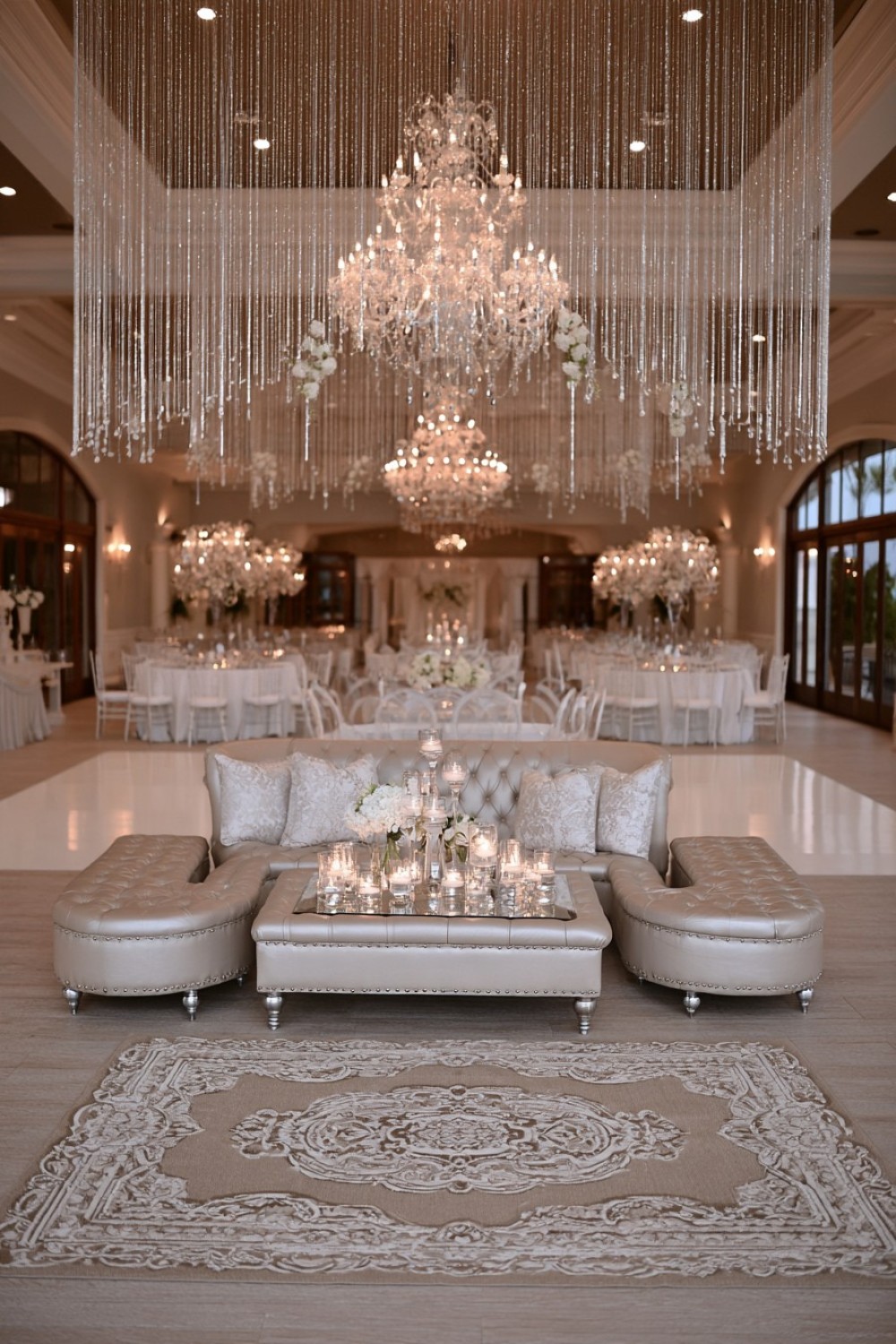
For a dramatic reception space, use extremely fine metallic strands suspended vertically from the ceiling.
Rather than creating dense tinsel-like curtains, space the strands generously and vary their lengths. Under controlled lighting, they catch small points of light as guests move beneath them.
White floral clusters or translucent shapes can be suspended among the threads to break up the metallic effect.
The result can resemble light rain or fine reflective lines rather than obvious party decor.
This treatment is especially effective above a dance floor or central dining area where vertical space might otherwise feel empty.
Keep the surrounding decor simple. Too many mirrored tables, sequined linens, or crystal accessories can push the room toward excess.
Professional rigging is essential for overhead installations, particularly in venues with sprinkler systems, chandeliers, or restrictions on ceiling attachments.
6. Use Pearlized Linen Instead of Sequined Tablecloths
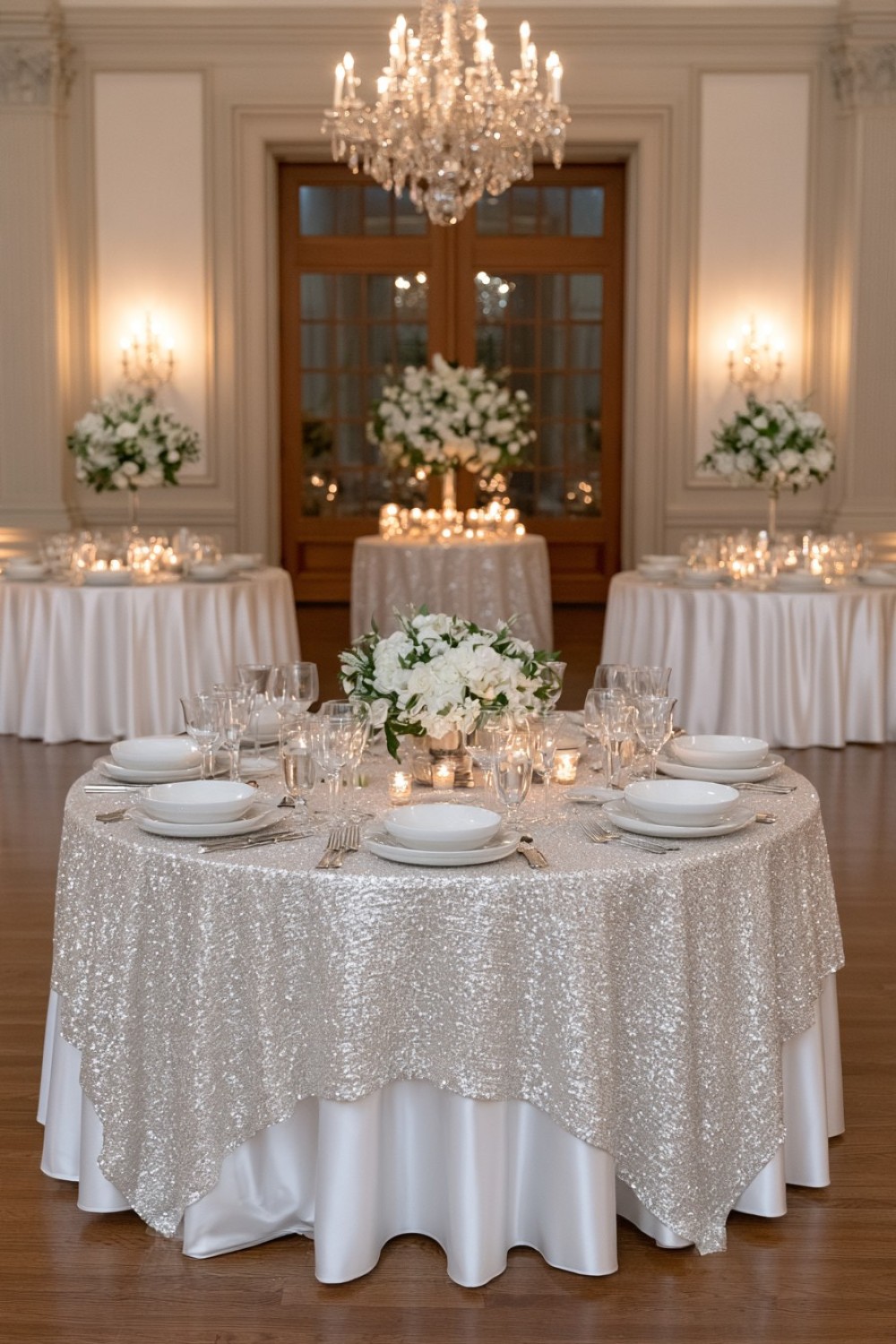
A white-and-silver wedding does not need glitter to feel luminous.
Pearlized or lightly lustrous linen can catch ambient light while still reading as fabric rather than metallic decoration. Look for textiles with a subtle satin weave, mother-of-pearl finish, or woven silver thread.
Use them selectively—perhaps on the head table, cake table, or a few feature tables—while keeping the remaining linens matte white or ivory.
The contrast between matte and lightly reflective fabric is what makes the special table noticeable.
Pair pearlized linen with simple white ceramics, clear glassware, and brushed flatware rather than adding more sparkle on top.
In daylight, the textile appears almost neutral. At night, directional lighting reveals the sheen.
This kind of quiet transformation can make a wedding palette feel much more refined than heavily sequined surfaces that announce themselves from every angle.
7. Create a Silver-Leaf Botanical Seating Chart
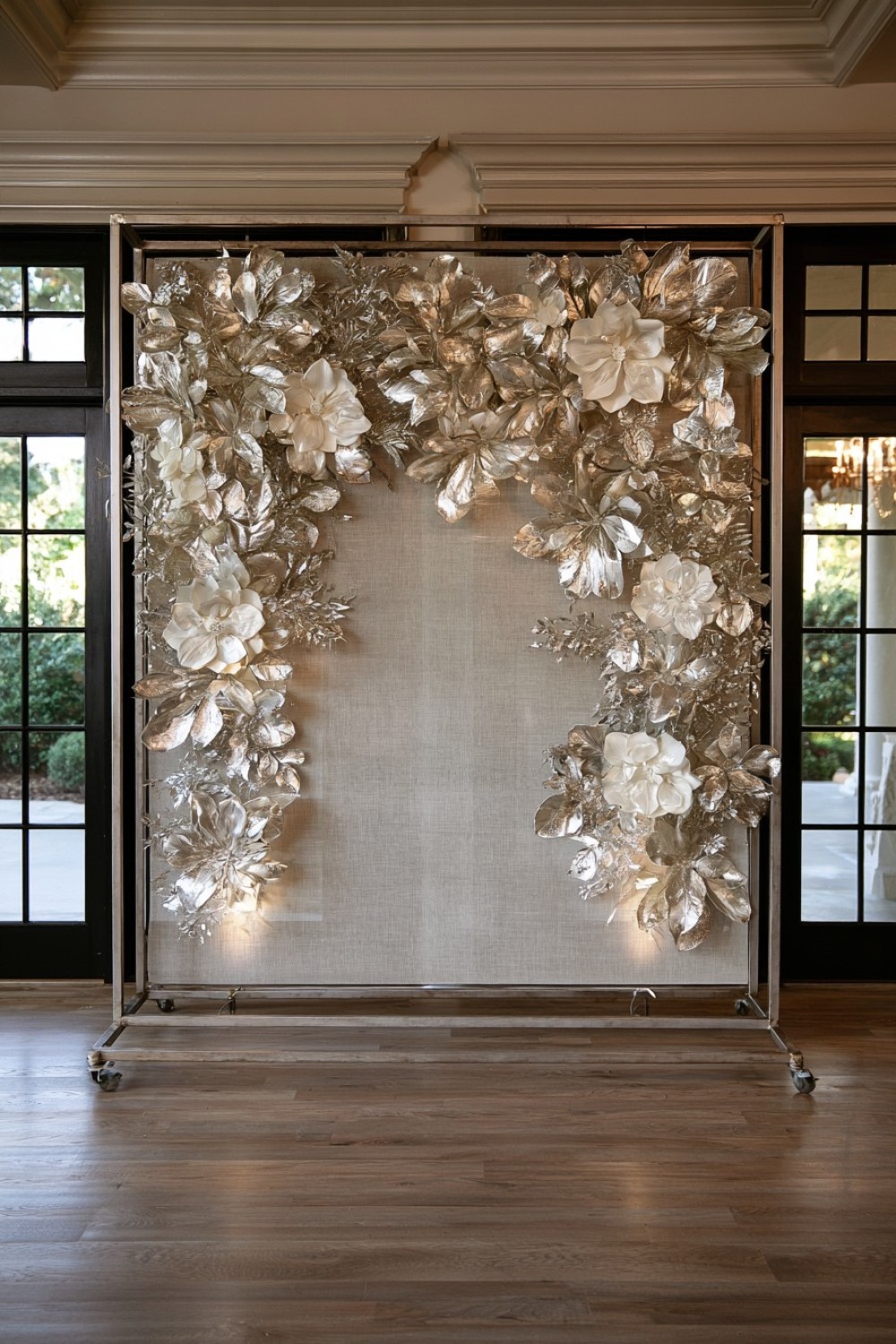
Instead of printing the seating chart on a standard board, build it around individually preserved leaves or botanical forms touched with silver leaf.
Magnolia leaves, sculptural pressed foliage, or artificial botanical forms can be partially gilded—leaving some natural texture exposed rather than coating them completely.
Arrange them across a matte white panel or linen-covered board, with guest assignments placed beside each cluster.
The irregular metallic surface catches light differently from flat foil printing and gives the installation a crafted quality.
For an even more dimensional effect, mount some leaves slightly away from the backing so shadows form behind them.
Keep typography restrained and let the botanical texture become the main decoration.
If using real preserved material, test adhesives and finishes in advance so the leaves remain stable throughout the event.
8. Turn White Draping Into a Sculptural Installation
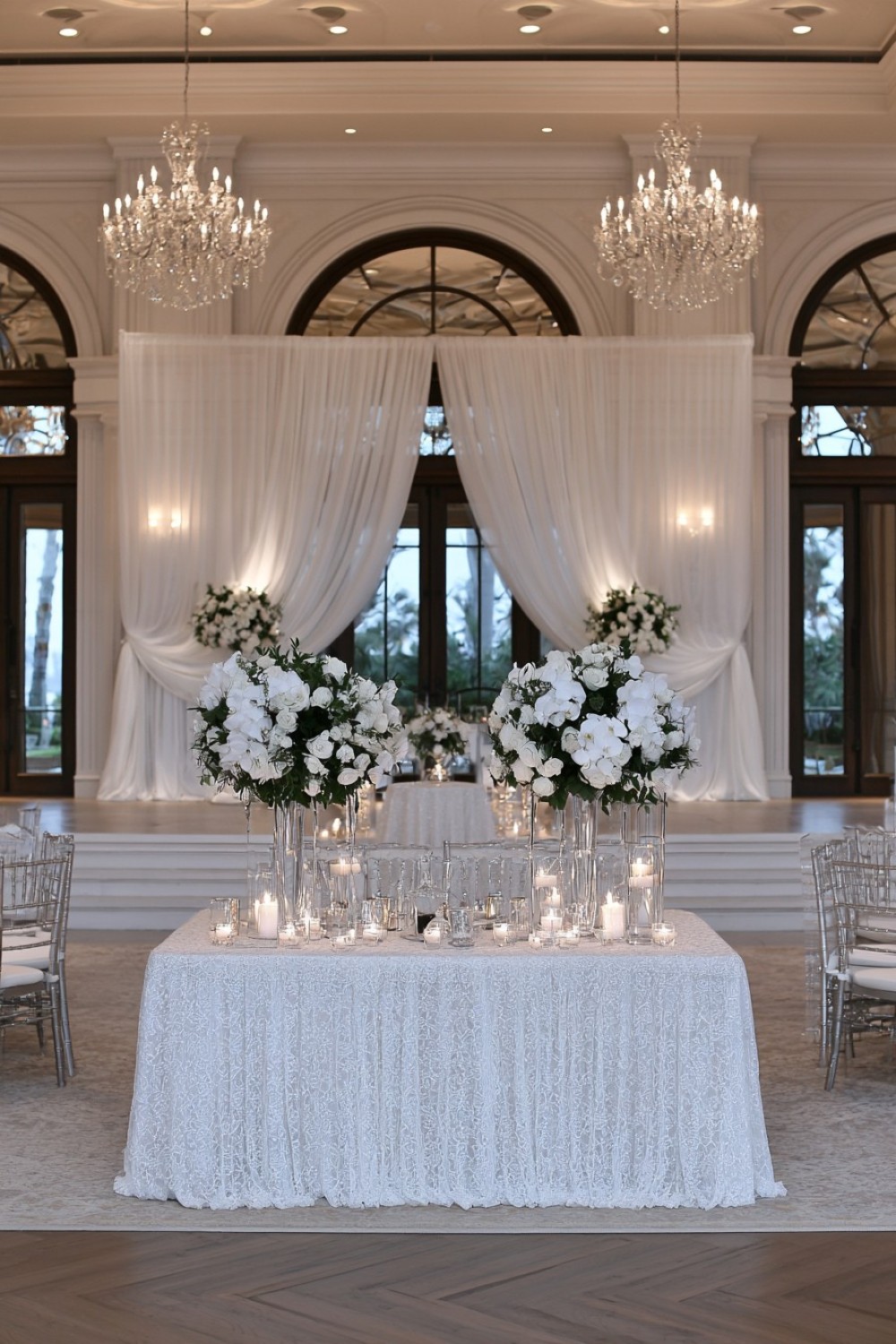
White fabric can become far more interesting when it is treated as architecture rather than simply hung behind a table.
Layer sheer organza, matte voile, and heavier satin at different depths. Twist or tension selected sections so some panels remain fluid while others create stronger folds.
Introduce silver through discreet metal clips, narrow suspended rods, or a few reflective structural elements instead of using metallic fabric everywhere.
Side lighting can reveal every fold, giving the installation more dimension after dark.
This works behind a sweetheart table, ceremony altar, stage, or photo area.
The best result comes from asymmetry. A perfectly even wall of fabric can feel like standard event draping, while irregular layering makes the material look intentionally sculpted.
Keep nearby floral arrangements relatively simple so the fabric installation has space to breathe.
9. Use Translucent Chairs With Silver Details
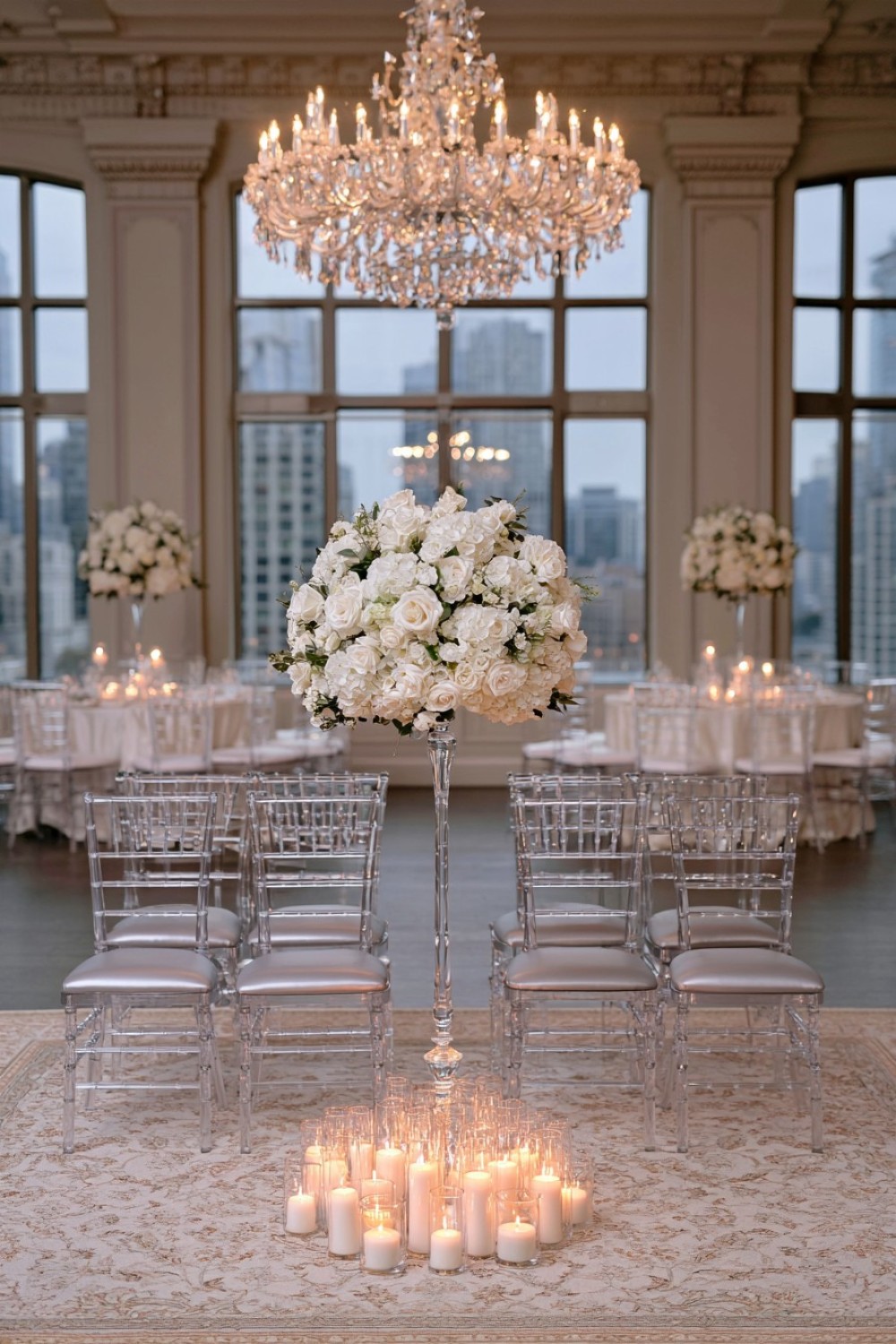
Instead of matching all seating to the palette through white covers or metallic frames, consider clear or frosted chairs.
Their transparency reduces visual weight, which can be particularly useful in heavily decorated reception spaces.
Introduce silver through small details: satin-gray cushions, brushed-metal chair numbers, or a slim silver frame on selected seats.
Clear chairs also allow flooring, flowers, and lighting to remain visible through them, making the overall room feel less crowded.
This works especially well at a ceremony where the aisle or floral installation already provides strong visual interest.
For the couple's seats, switch to a frosted or softly upholstered version rather than an oversized throne-style chair. The subtle distinction usually feels more sophisticated and photographs more naturally.
Comfort should still guide the final choice, particularly for long receptions.
10. Build a Dessert Display From White Stone and Polished Metal
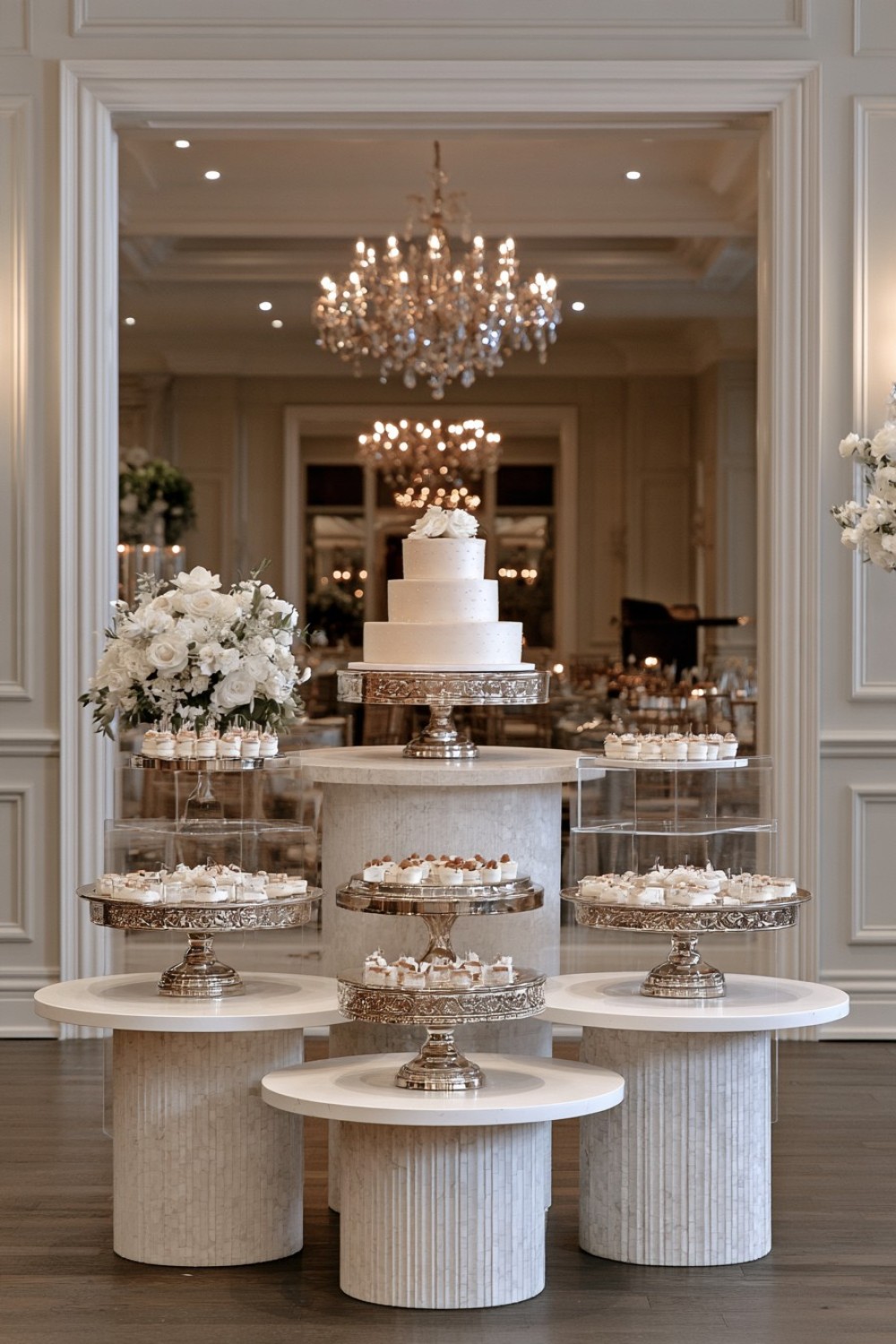
A dessert table can look more like a curated installation when different heights are created with materials rather than traditional cake stands.
Combine white marble or faux-stone plinths with polished silver trays, translucent acrylic risers, and matte white ceramic platforms.
Arrange desserts across several levels, leaving areas of negative space between them.
The contrasting materials create enough visual interest that the sweets themselves do not need excessive metallic decoration.
A mostly white cake could sit on the tallest stone plinth, while smaller desserts appear on reflective trays below.
For an unexpected detail, position a low light source so polished surfaces softly reflect the display rather than shining directly onto it.
The result feels cleaner and more editorial than covering an entire dessert table with mirrored surfaces or silver sequins.
11. Create an Almost-Monochrome Floral Table
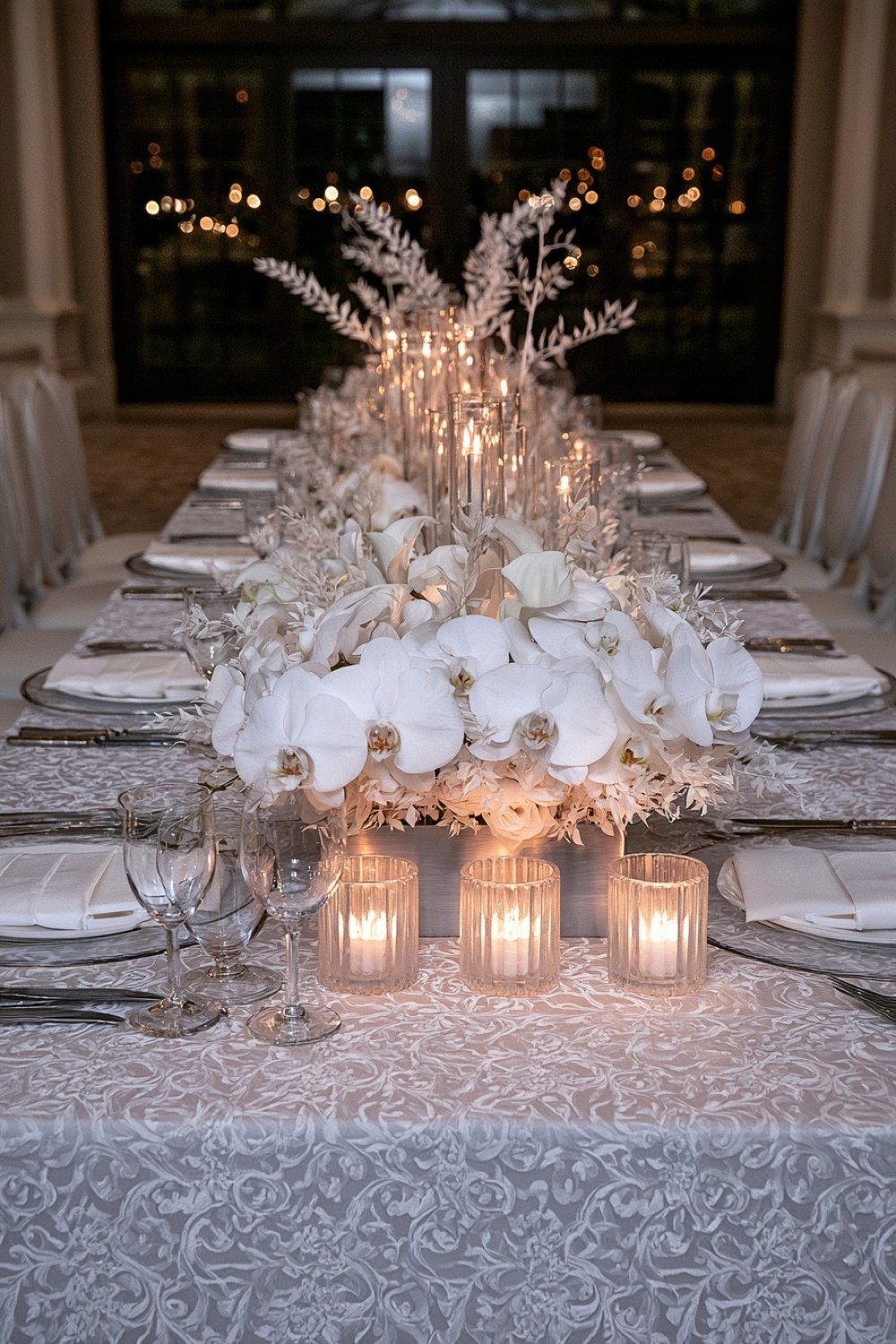
Instead of mixing multiple white flower varieties evenly, build the centerpiece around one dominant sculptural flower.
For example, a long arrangement composed primarily of white calla lilies can feel dramatically different from a conventional mixture of roses and hydrangeas.
Add only a few secondary textures—perhaps white sweet peas, pale foliage, or transparent glass forms.
Introduce silver through narrow metal vessels or tiny structural details that are partially hidden among the stems.
Using one dominant flower allows its silhouette to become part of the table design and creates stronger visual identity.
For another variation, use masses of white anthuriums for a contemporary reception or orchids for something more fluid.
The idea is not simply “white flowers,” but choosing one botanical shape and allowing it to define the entire centerpiece language.
12. Give the Bar a Frosted Silver Facade
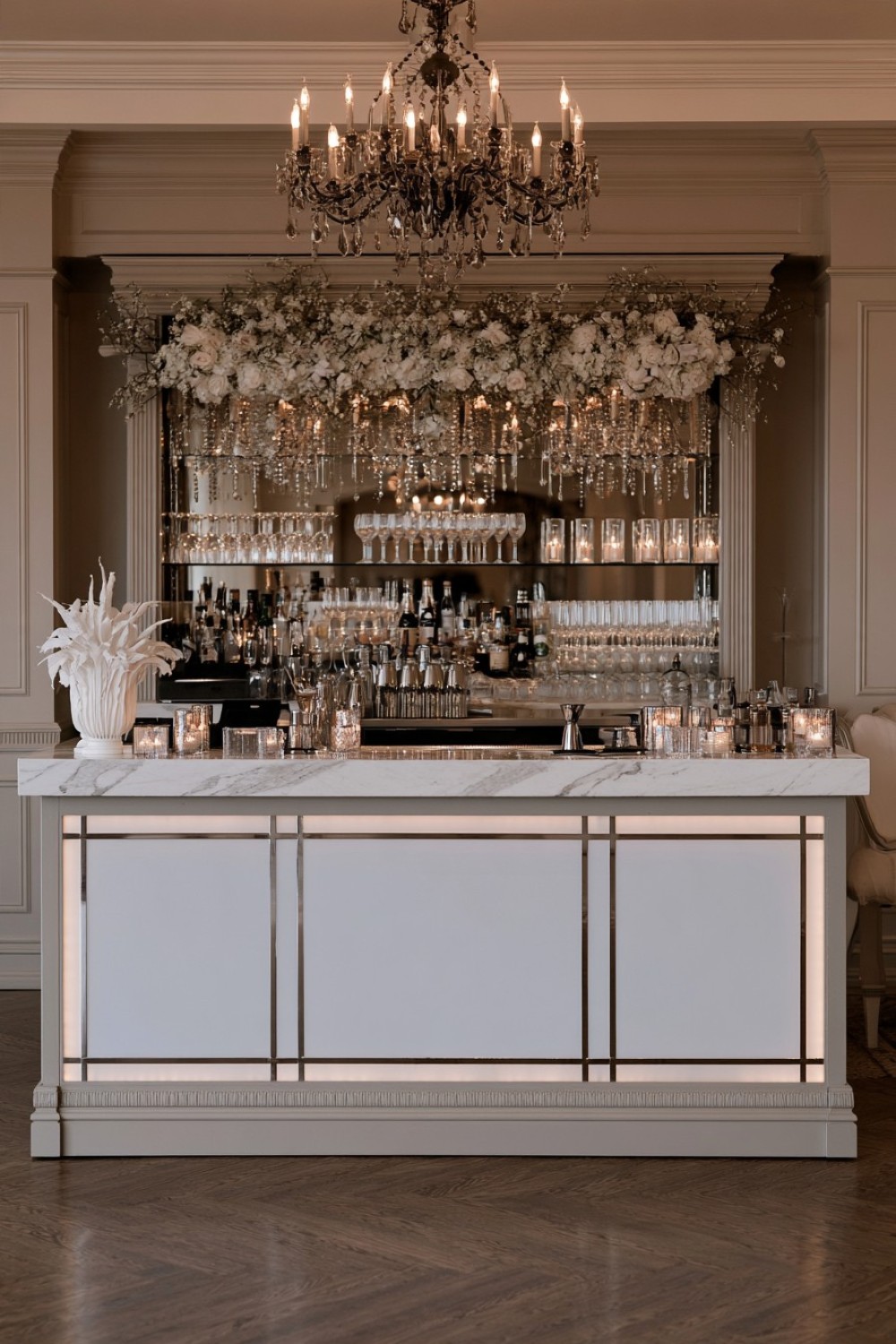
The bar often occupies a large part of the reception but is frequently treated as a purely functional object.
A custom facade can turn it into part of the visual design.
Consider frosted acrylic panels separated by narrow brushed-silver strips. Backlighting the acrylic very softly makes the panels appear luminous without turning the bar into a bright light box.
Another option is fluted white panels with metallic reveals between each section.
Keep the countertop darker or more solid—white stone with subtle gray veining works particularly well—so glasses and bottles remain visually grounded.
Instead of decorating the bar top with multiple flower arrangements, choose one sculptural white floral piece at one end.
This creates a focal point while preserving enough working space for staff.
13. Design a White Cake With Metallic Texture Rather Than Silver Color
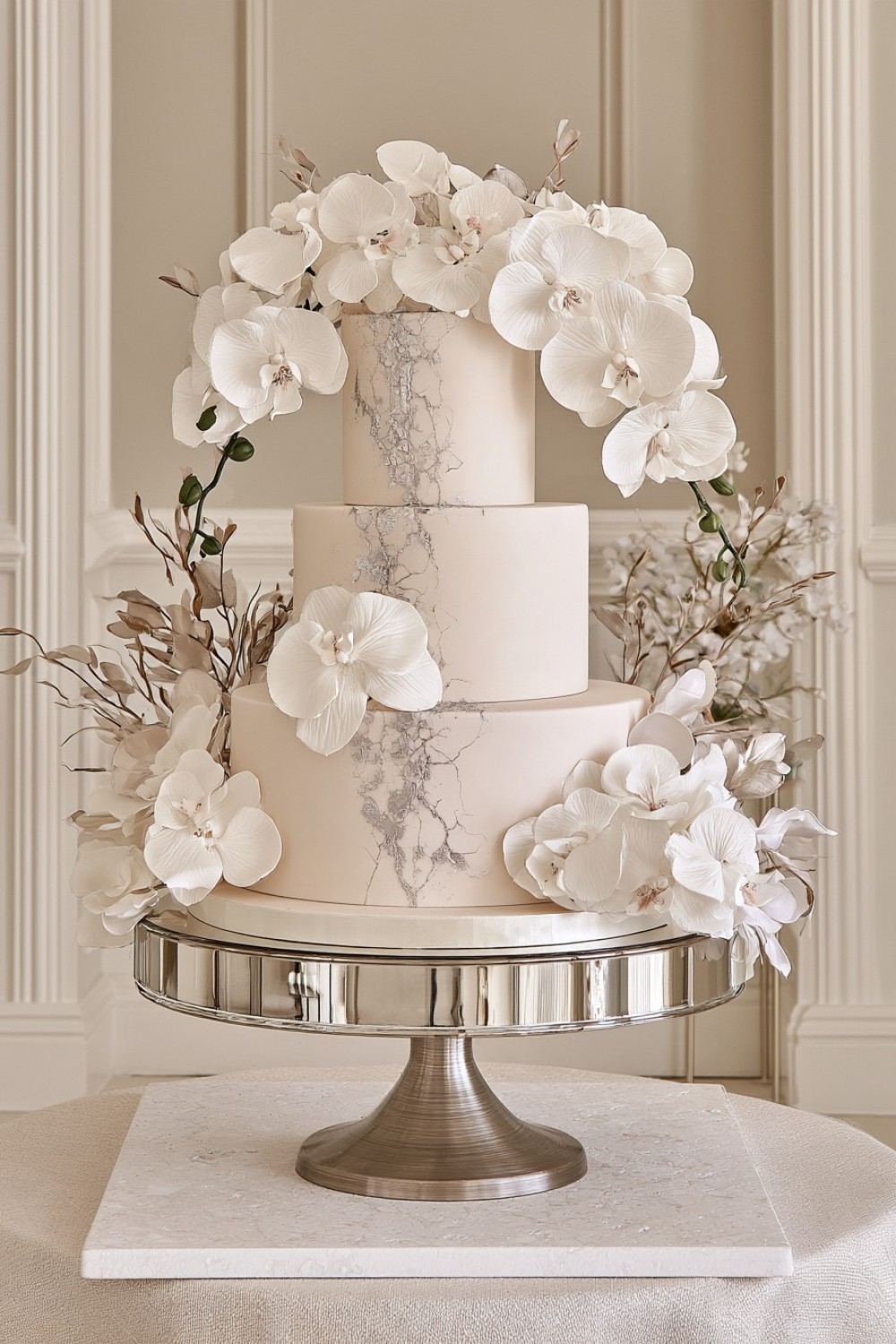
Silver wedding cakes are often decorated with obvious metallic tiers, but a subtler method can be more distinctive.
Keep most of the cake warm white and introduce silver through texture: delicate silver leaf fragments, thin embossed lines, metallic-edged sugar petals, or one sculptural relief section.
For example, a smooth white cake could have an irregular cracked-silver effect running vertically down one side rather than around each tier.
The asymmetry keeps the design contemporary and prevents the metallic detail from feeling repetitive.
Place the cake on a brushed-metal or mirrored pedestal to reinforce the palette without requiring additional decoration.
White sugar orchids, abstract petals, or minimal piping can provide dimension while keeping the overall design focused.
Food-safe metallic materials should always be handled by the cake professional rather than substituted with ordinary craft products.
14. Use Reflective Columns to Multiply Floral Arrangements
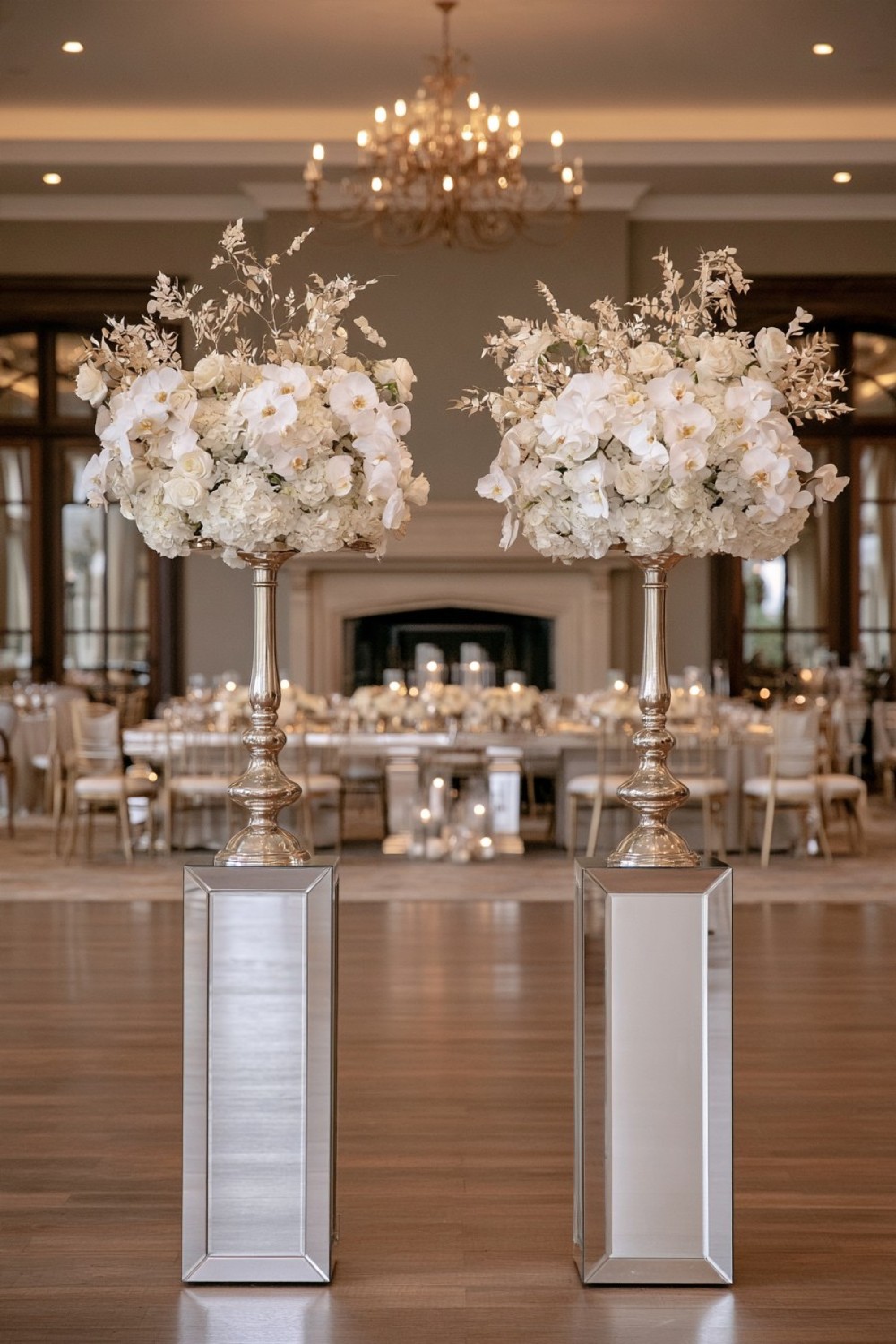
Mirrored or polished silver plinths can create an optical illusion when used beneath large white floral arrangements.
Instead of seeing a solid pedestal, guests see fragments of the surrounding room reflected across its surface. This can make flowers appear to float and reduces the visual heaviness of a tall centerpiece.
Use the technique at key locations rather than throughout the room: either side of the ceremony entrance, near the seating chart, or behind the couple's table.
For a more restrained effect, alternate mirrored sides with matte white panels.
The surrounding flowers should remain fairly monochromatic so reflections do not become chaotic.
This approach is particularly useful in venues where floor space is limited but vertical decoration is still desirable.
15. Create an Ice-Like Table Detail Without Using an Ice Theme
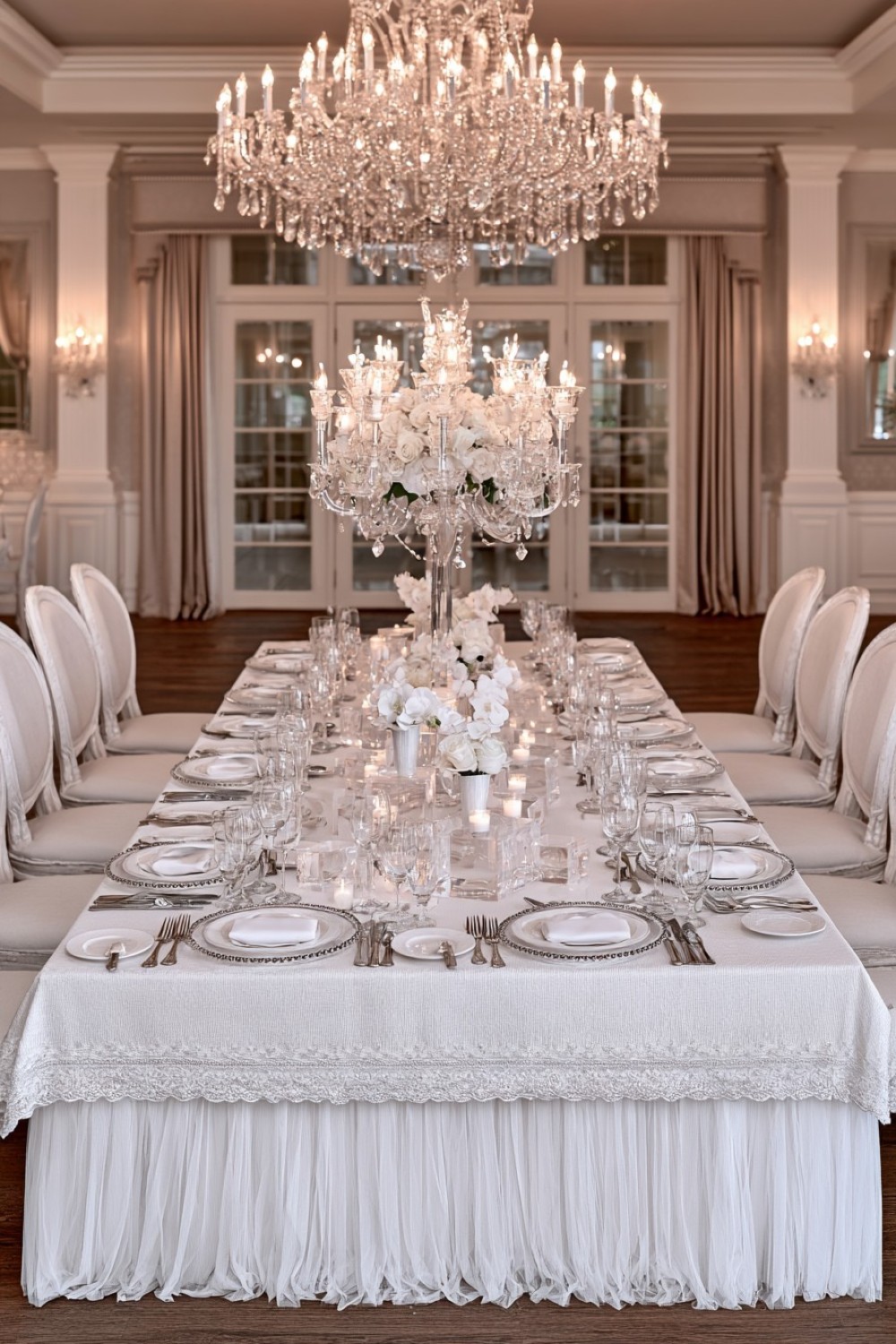
White and silver can easily drift into a literal winter aesthetic, but translucent materials can create a similar sense of clarity without snowflakes or icy motifs.
Use irregular clear acrylic blocks beneath place cards, menus, or small flower vessels. Their uneven edges catch light and make the tabletop feel crystalline.
Combine them with soft white linen and satin silver flatware to balance the harder material.
Frosted acrylic pieces can be mixed with transparent ones so the table does not feel overly glossy.
This is particularly effective for evening receptions where directional lighting can create soft internal reflections.
The result hints at ice and glass without turning the wedding into a seasonal theme, making it suitable year-round.
16. Make the Dance Floor a Quiet Graphic Feature
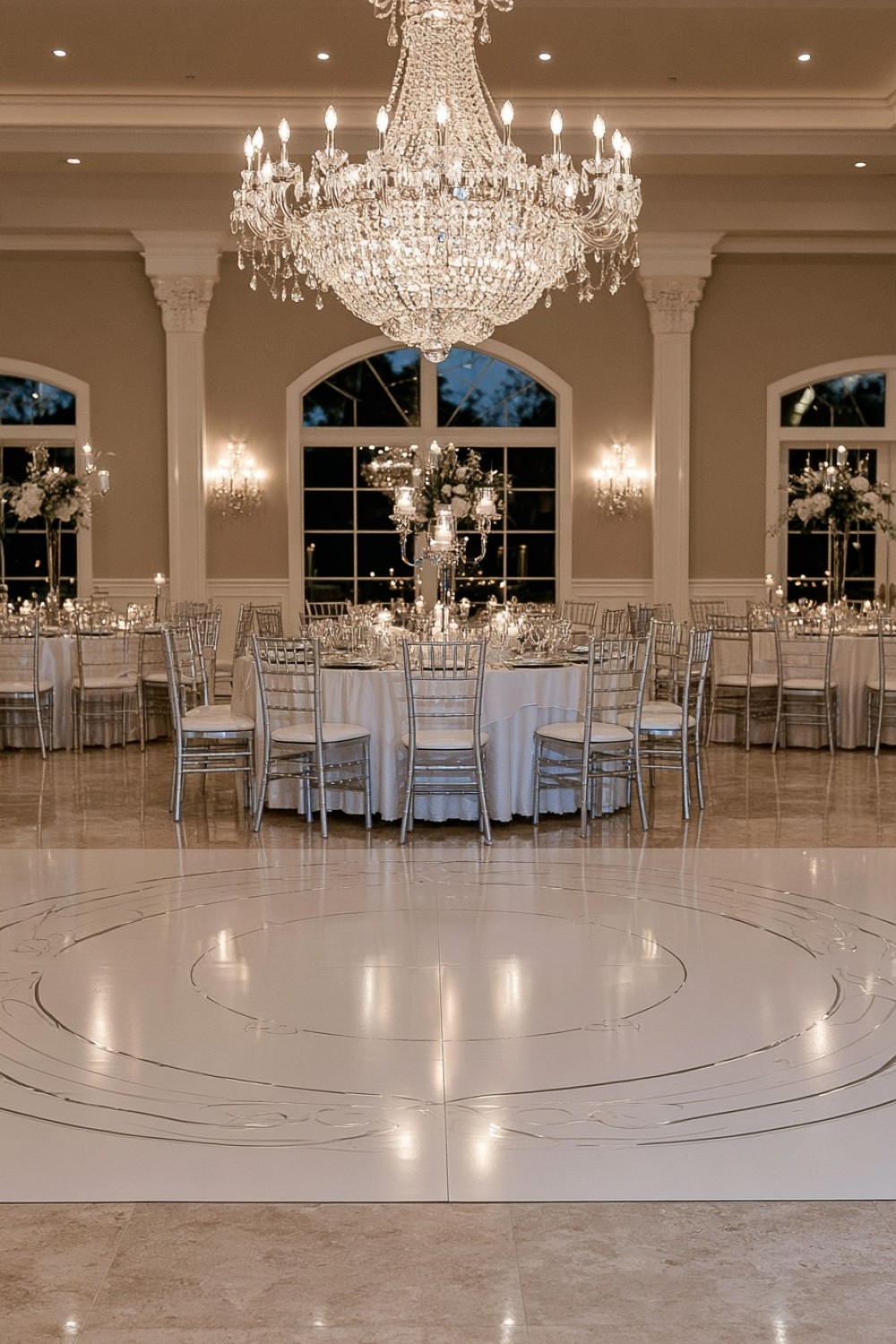
A white dance floor does not need a large monogram to feel customized.
Instead, consider a restrained pattern created with thin silver-gray lines—oversized arches, concentric curves, abstract botanical outlines, or a geometric border.
The pattern can reference another wedding detail, such as the invitation design or ceremony structure.
Keeping most of the floor white gives guests and clothing visual separation in photographs, while the graphic element prevents the surface from appearing blank.
Avoid highly reflective metallic films across the entire floor because glare can become distracting under event lighting.
A soft satin or matte finish generally photographs better.
The design should feel like part of the wedding's visual identity rather than an advertisement placed in the middle of the reception.
17. Build a Candle-Free Silver Reflection Table
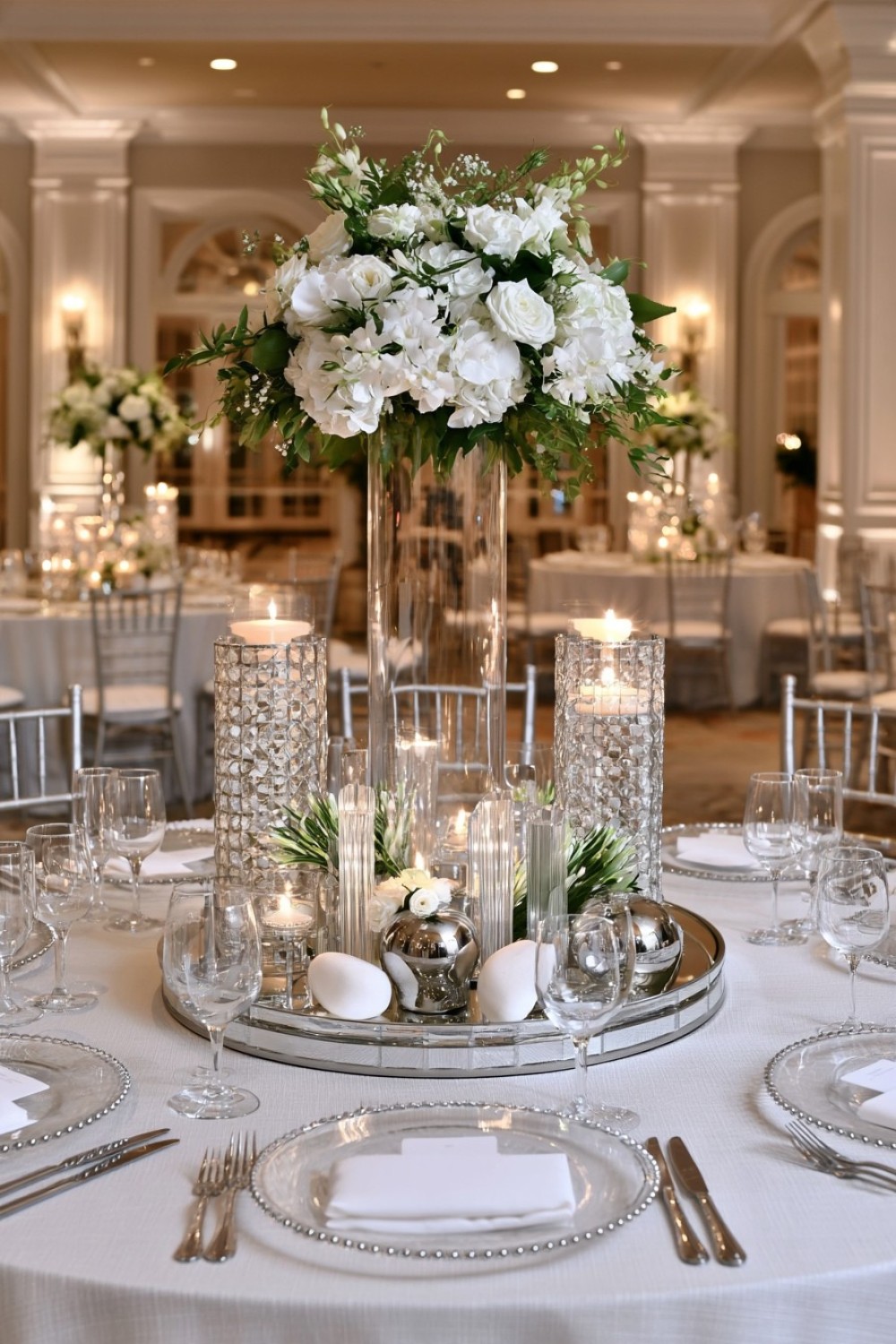
For venues that restrict flames—or for couples who want something less expected—create a table centerpiece based entirely on reflection.
Use shallow mirrored trays, polished metal sculptures, glass prisms, white stone pieces, and small directional lights concealed among the objects.
When illuminated, the composition creates highlights and shadows without relying on candles.
A few low white flowers can soften the harder materials while maintaining the monochromatic scheme.
This idea works particularly well for modern evening receptions where a traditional floral-and-candle centerpiece might feel too predictable.
Keep the light sources warm and low in intensity. The goal is gentle reflection rather than visible spotlights.
Because every object reflects its surroundings, the table remains visually dynamic as guests move around it.
18. Finish the Room With a Silver Light Gradient
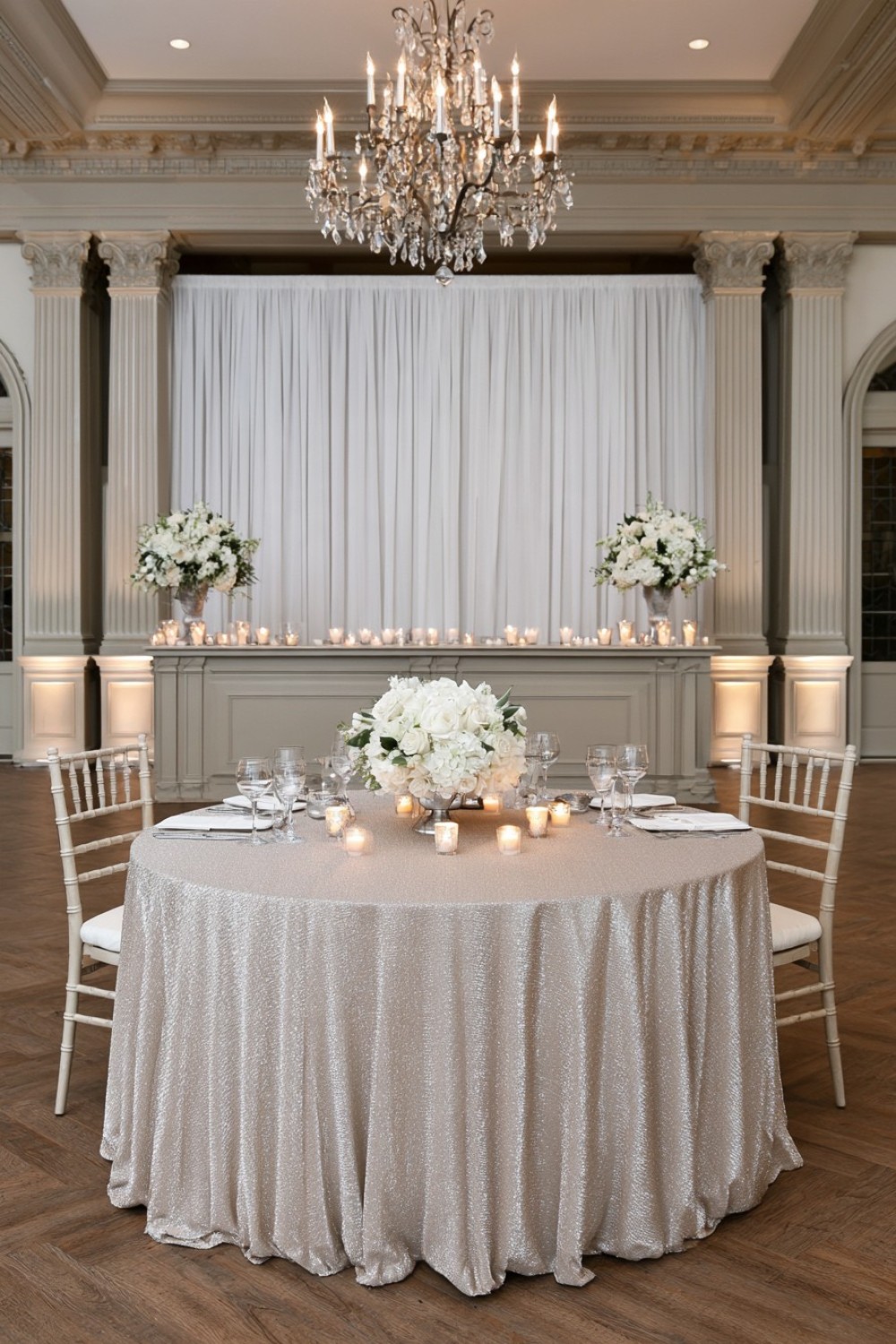
Rather than illuminating the entire reception in cool white or blue, create a gradual lighting shift across the room.
Keep dining tables in warm neutral light, then allow selected architectural areas—columns, draping, bar details, or the dance floor—to transition toward a subtle silvery tone.
The effect can be achieved through carefully controlled lighting rather than colored decorations.
This gives white flowers and linens warmer, more flattering light where guests are seated while still allowing the silver palette to emerge in the background.
It also creates depth in photographs because the room is not illuminated uniformly.
Avoid saturated blue lighting if the goal is elegance; it can quickly turn white decor icy and change skin tones.
A restrained gradient from warm white to neutral silver-gray generally feels more sophisticated and allows the materials themselves to remain recognizable.
Making White and Silver Feel Sophisticated Rather Than Predictable
The strongest white-and-silver weddings rely on contrast in finish, transparency, scale, and texture rather than simply repeating the two colors everywhere. A frosted acrylic wall behaves differently from polished silver, just as matte linen creates a different mood from mirrored glass. Those differences keep a monochromatic palette from becoming flat.
Choose a few moments where silver is allowed to shine—perhaps the ceiling installation, reception bar, cake pedestal, or sculptural centerpieces—and let white provide the visual calm around them. Warm lighting can also prevent silver finishes from making the celebration feel overly cold.
Most importantly, every decorative feature does not need to announce the theme. When the palette appears through materials, reflections, florals, and architectural details, the wedding feels designed rather than themed.
MORE IDEAS


Share
What's Your Reaction?
 Like
0
Like
0
 Dislike
0
Dislike
0
 Love
0
Love
0
 Funny
0
Funny
0
 Angry
0
Angry
0
 Sad
0
Sad
0
 Wow
0
Wow
0