13 Ways to Create an Old-Money Bedroom with Lasting Character

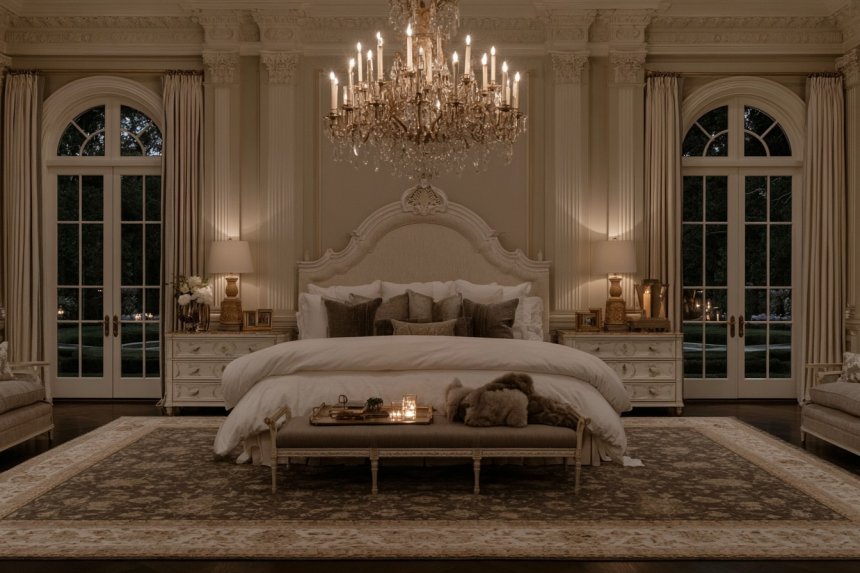
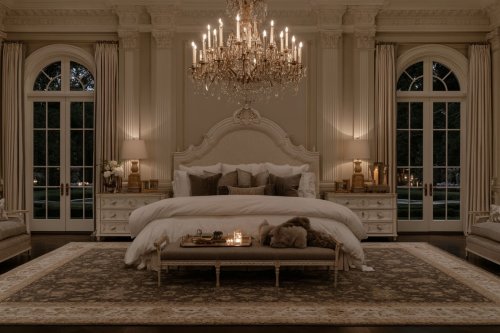
An old-money bedroom is defined less by visible luxury and more by permanence, craftsmanship, and restraint. Instead of filling the room with matching furniture or fashionable accessories, this style brings together substantial wood pieces, traditional textiles, collected artwork, and objects that appear to have been acquired gradually. The finished space should feel comfortable and established rather than staged.
Successful rooms also balance appearance with everyday use. Furniture must fit the available floor area, curtains should control light properly, and decorative pieces should not interfere with storage or movement. The following approaches explain how to create this character while maintaining a bedroom that remains practical, calm, and easy to live in.
1. Begin with a Well-Proportioned Walnut Bed
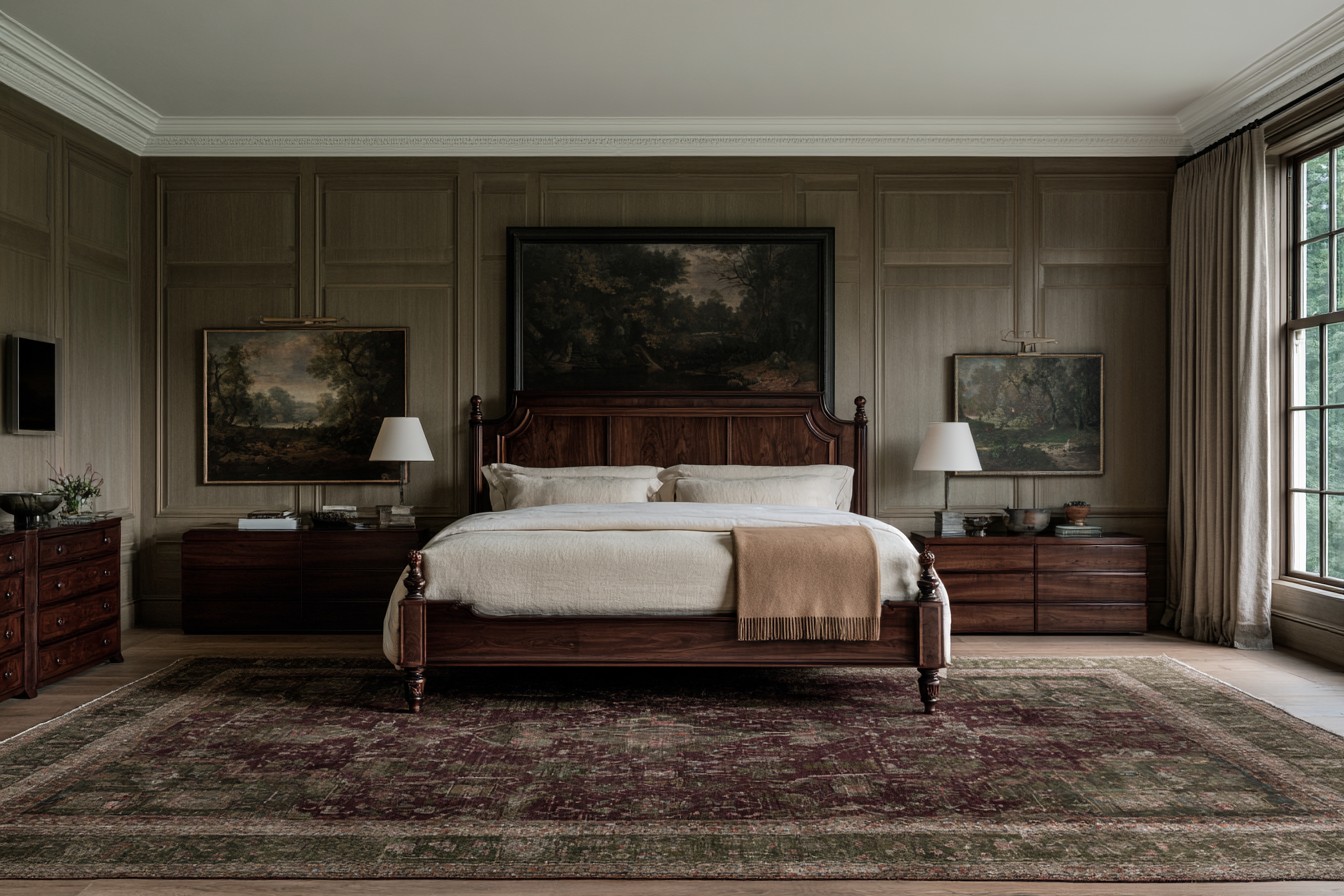
A bed made from walnut or another dark-toned hardwood gives the room a strong visual foundation. Look for details such as framed panels, turned posts, restrained carving, or a gently curved headboard. These features introduce traditional craftsmanship without making the bedroom resemble a formal museum display. A quality vintage bed can also work, provided its joints, slats, and center supports are structurally sound.
Measure the room before selecting an oversized frame. Ideally, leave approximately 30 to 36 inches of usable walking space along the accessible sides of the bed. If the room is compact, choose a solid headboard with simpler proportions instead of a four-poster design. Pairing dark wood with warm white or muted stone walls prevents the furniture from making the space feel unnecessarily heavy.
2. Give Plain Walls Architectural Depth
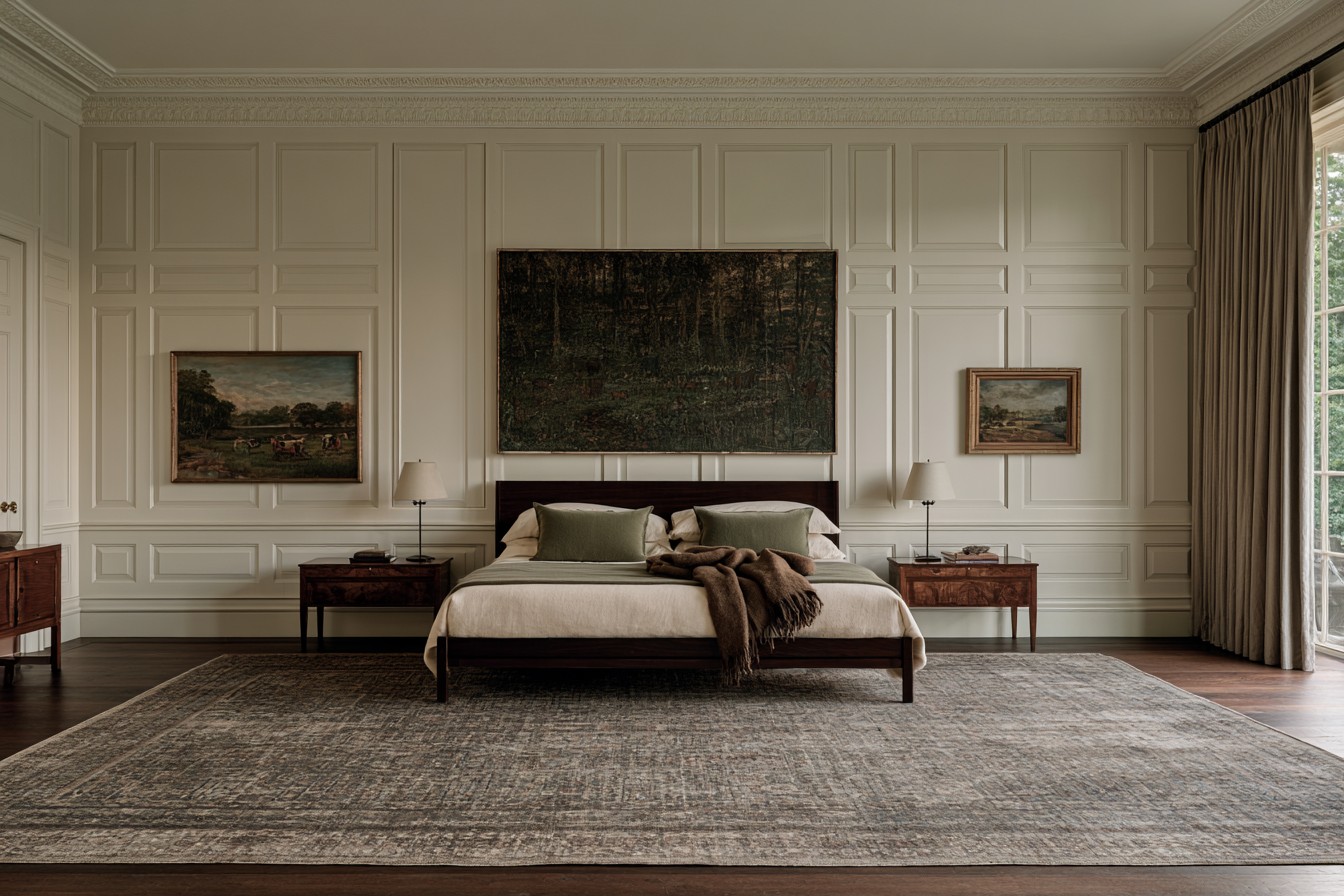
Wall molding can provide the architectural character that is often missing from newer homes. Picture-frame molding, a chair rail, or simple wall panels create shadows and proportions associated with traditional interiors. Keeping the profiles relatively narrow allows the detail to support the furniture rather than dominate it. Painting the molding and wall in the same color produces a particularly cohesive result.
Plan the panel layout around the bed, doors, electrical outlets, and existing trim before installation. Temporary painter’s tape is useful for testing the proportions directly on the wall. If permanent molding is unsuitable for a rental, lightweight removable strips can suggest a similar effect, although they should be tested on a hidden area to reduce the risk of paint damage.
3. Build the Bed in Comfortable, Usable Layers
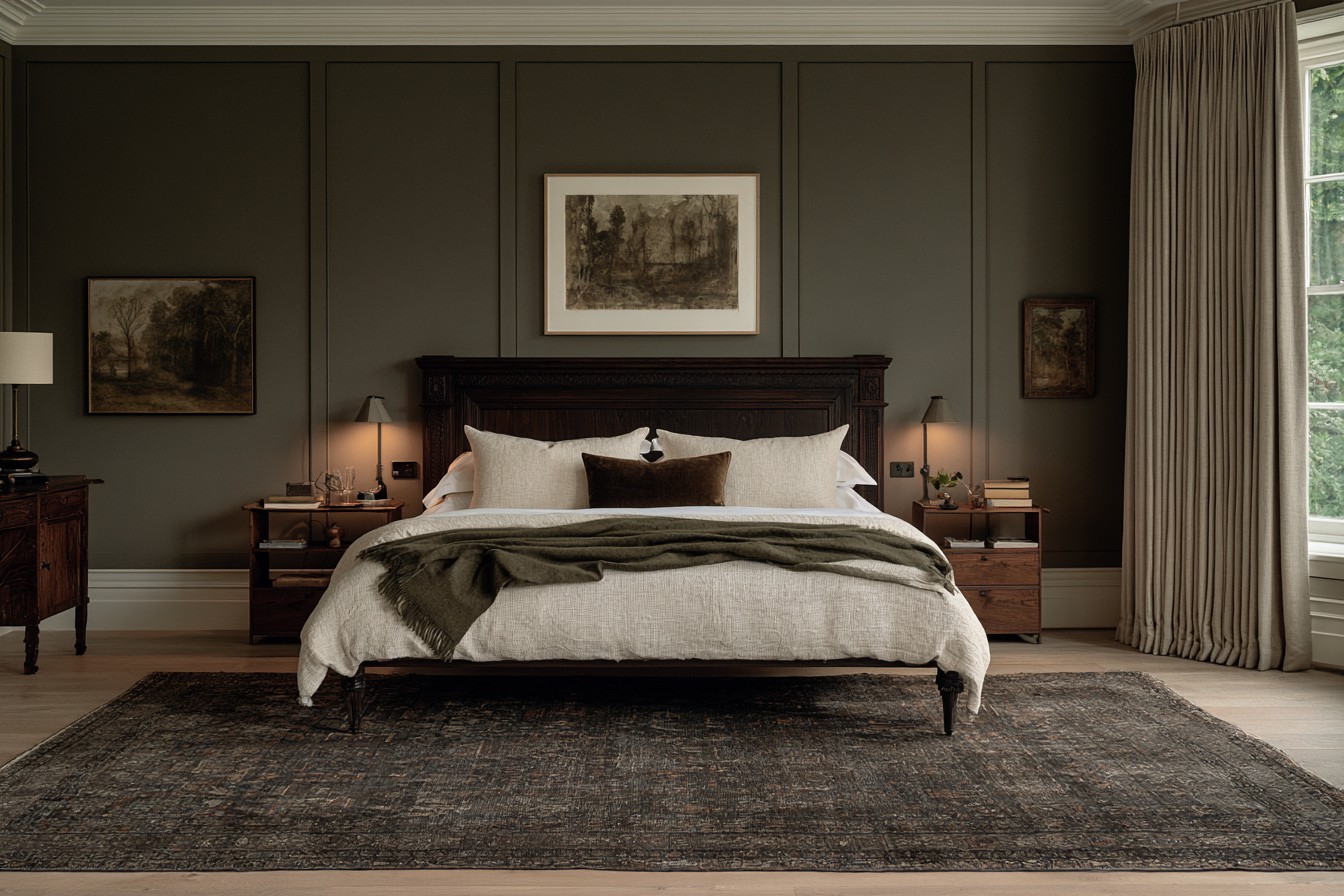
Layered bedding creates the inviting appearance of a heritage hotel without requiring excessive decoration. Begin with breathable sheets and a practical duvet or coverlet, then add a folded quilt or wool throw for color and texture. A restrained palette of ivory, taupe, tobacco, olive, navy, or burgundy helps different materials look connected.
Avoid piling on so many cushions that preparing the bed becomes an inconvenience. Two sleeping pillows per person, a pair of structured shams, and one smaller accent cushion are usually sufficient. Choose removable, washable covers wherever possible. This keeps the arrangement easier to maintain and prevents an elegant bedroom from becoming dependent on impractical styling.
4. Place a Functional Bench at the Foot of the Bed
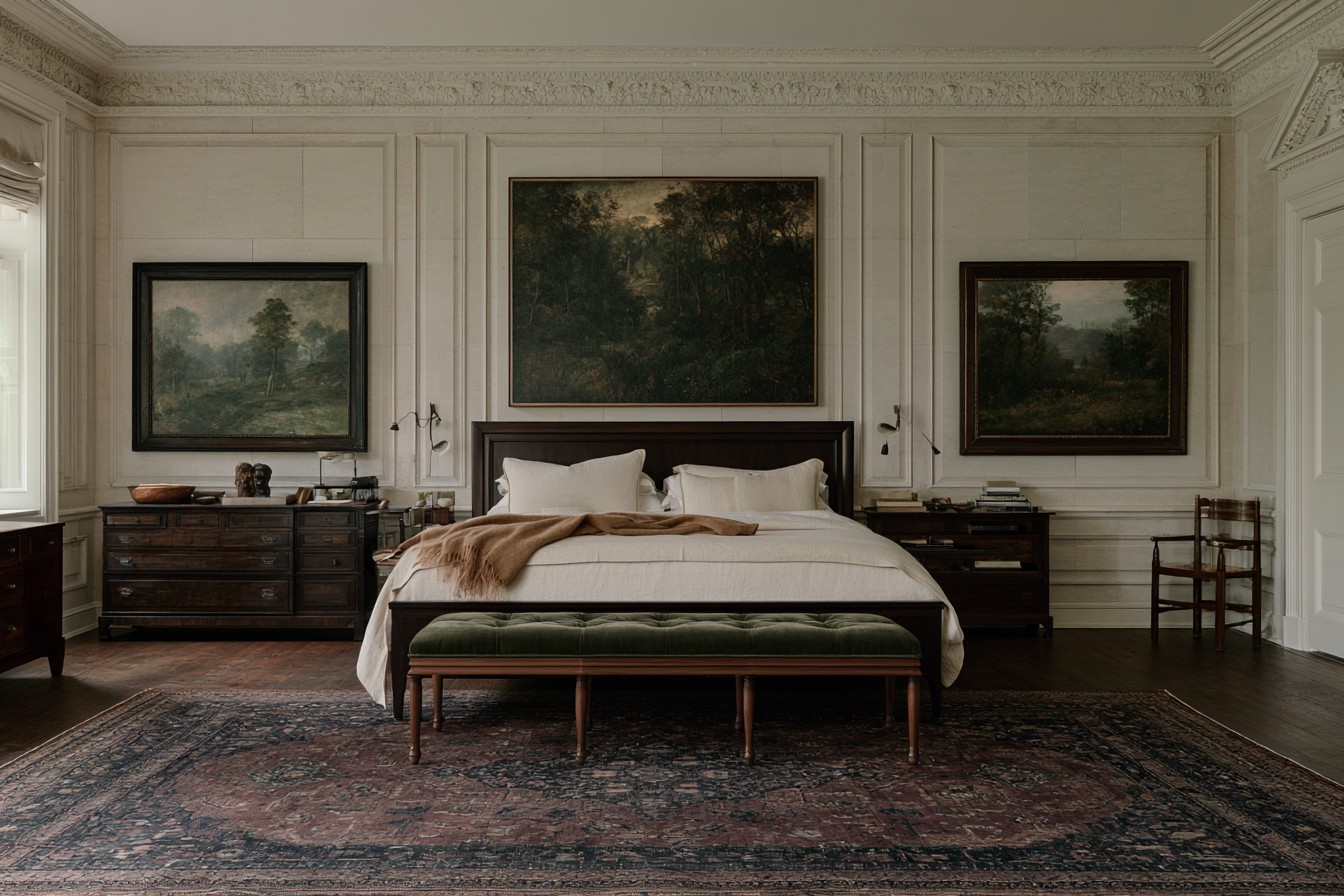
An upholstered bench introduces another furniture form while providing a convenient place to sit, dress, or set down a bedcover. Linen, wool, leather, velvet, and subtle woven patterns all complement the old-money aesthetic. Legs in a finish related to the bed frame help the separate pieces feel intentional without requiring an exact furniture set.
Choose a bench slightly narrower than the mattress so that its corners do not obstruct circulation. There should still be a comfortable route between the bench and the opposite wall or dresser. In smaller bedrooms, a storage bench can hold spare blankets, but the lid should open safely without striking the bed frame.
5. Create a Reading Corner That Is Actually Comfortable
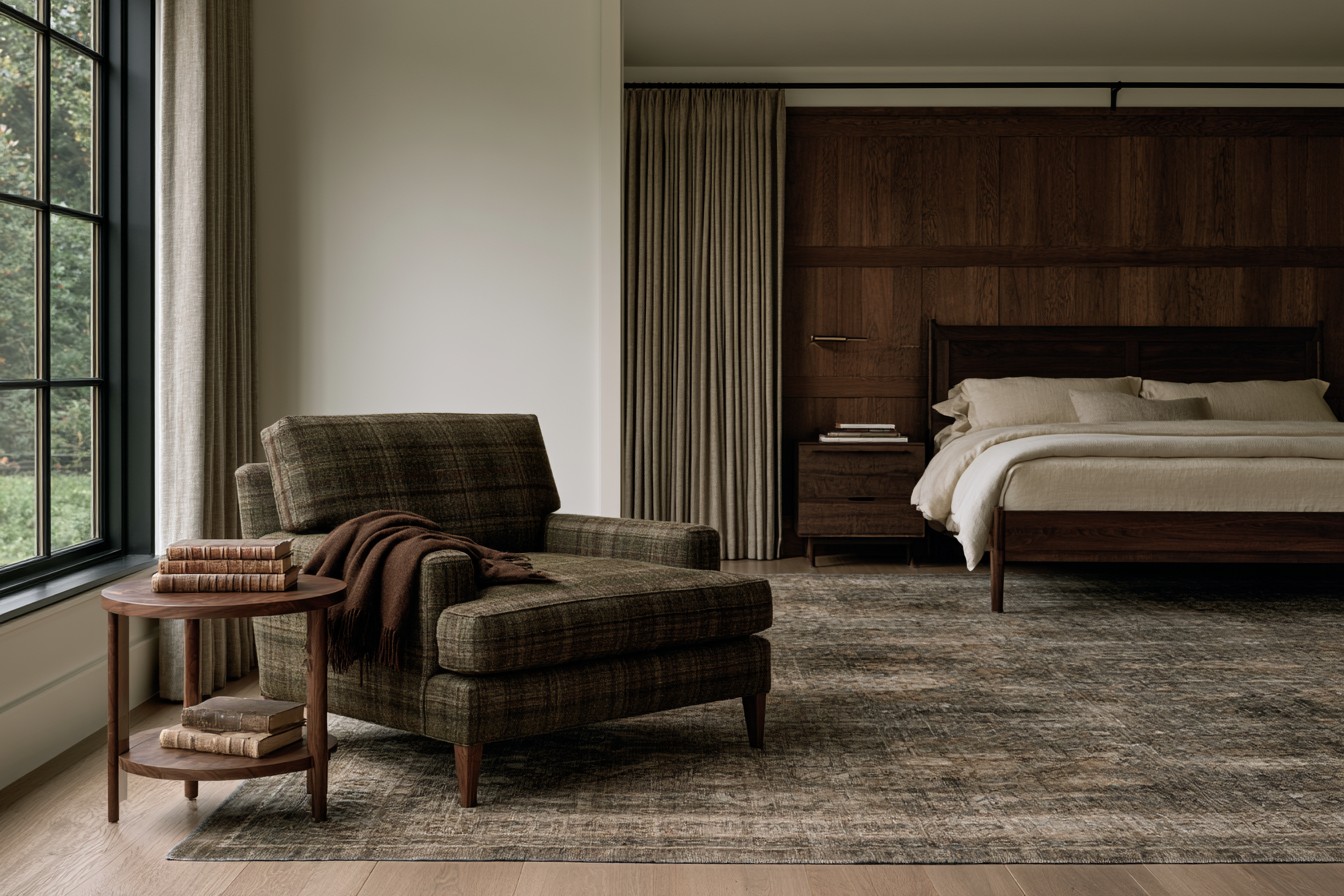
A reading corner makes the bedroom feel more personal and gives an unused corner a clear purpose. Select an armchair with supportive proportions rather than choosing entirely for appearance. A small side table should be large enough for a book, glasses, and a drink, while a shaded floor or table lamp provides focused illumination without lighting the entire room.
Position the chair where it will not interrupt access to wardrobes, curtains, or windows. If the bedroom is narrow, a compact slipper chair or wooden occasional chair may fit better than a deep club chair. A washable throw and one lumbar cushion can provide softness while keeping the arrangement visually controlled.
6. Display Traditional Artwork with a Sense of History
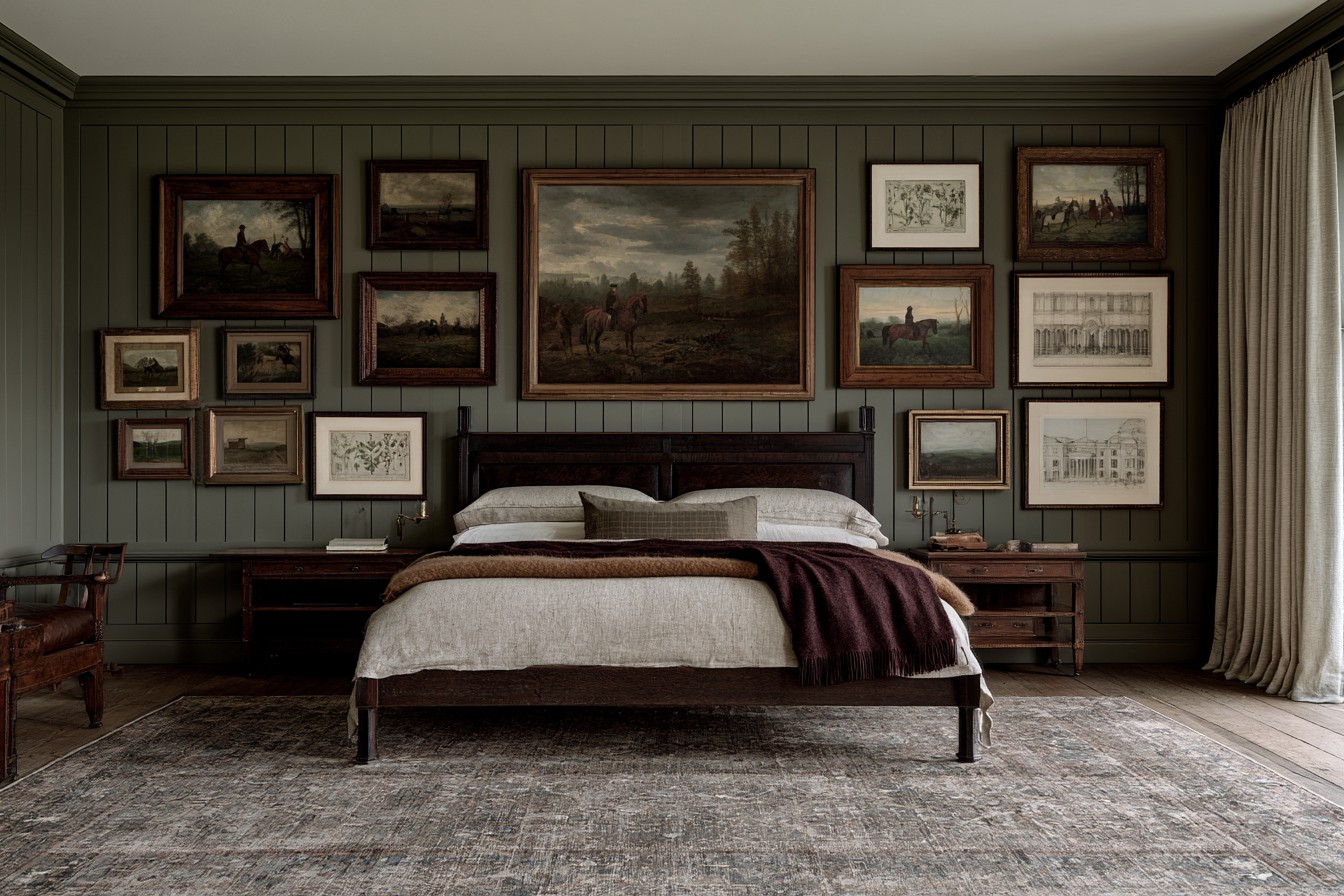
Landscape paintings, architectural sketches, botanical studies, and understated portraits add cultural depth to a traditional bedroom. Original antiques are not essential; vintage prints, public-domain artwork, and family photographs can be equally effective when framed thoughtfully. Frames in aged brass, stained wood, or dark painted finishes generally suit the mood better than highly reflective contemporary frames.
Select artwork because it contributes to the room’s story, not simply because an empty wall needs filling. One appropriately scaled piece above a dresser can have more presence than many unrelated prints. Use secure hardware suited to the wall material and avoid hanging heavy, glass-covered frames directly above the bed unless they can be professionally anchored.
7. Add a Writing Desk Instead of Purely Decorative Furniture
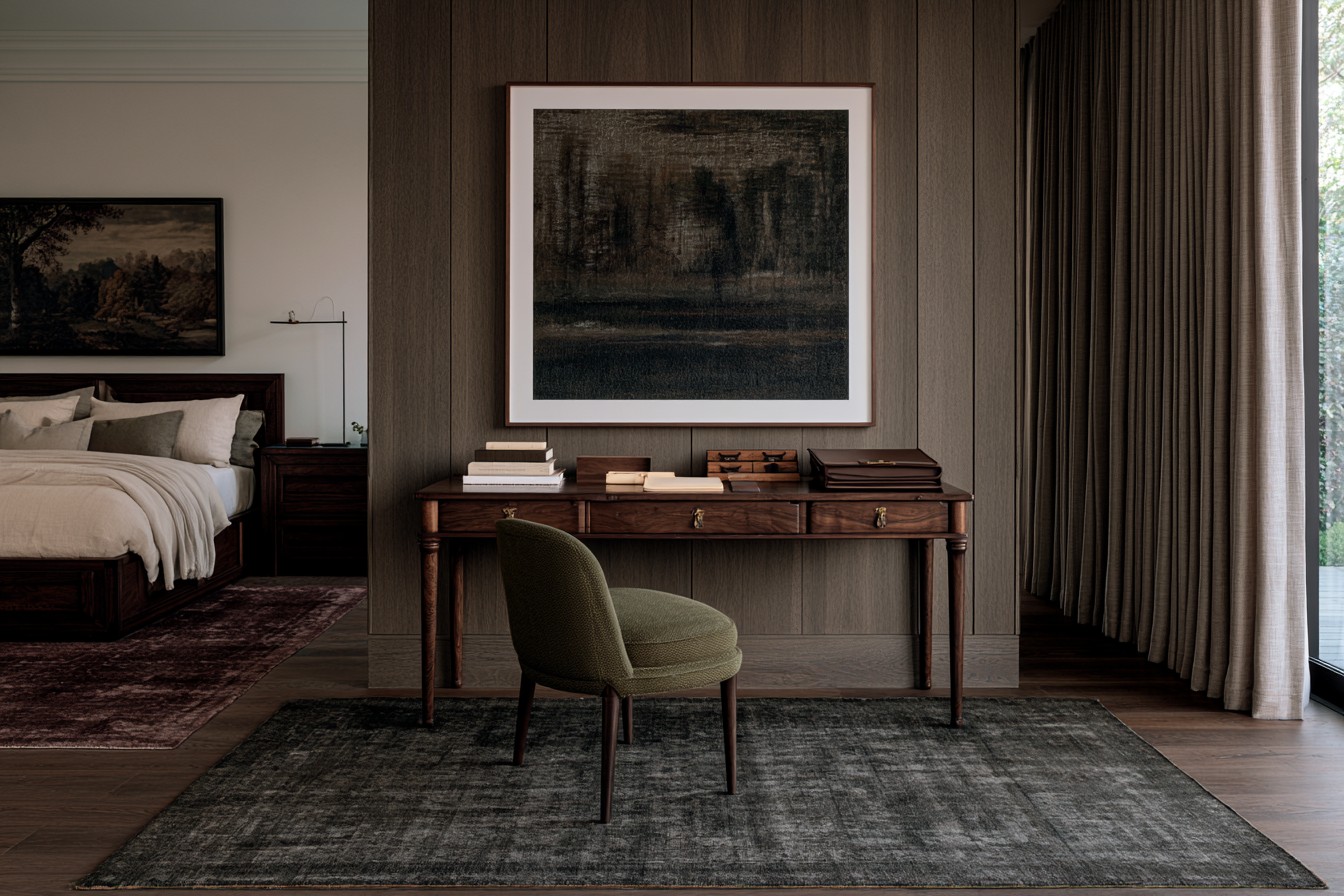
A writing desk introduces function while reinforcing the feeling of a room assembled over time. A compact pedestal, campaign, or writing desk can serve as a place for correspondence, reading, or occasional laptop use. It may also double as a dressing table when paired with a mirror and organized storage for smaller items.
Before buying a vintage desk, inspect drawer runners, joints, and signs of moisture or insect damage. The working height should be comfortable with the chosen chair, and cables should be routed discreetly if electronics will be used. Keep the surface selective: a lamp, a small tray, and one meaningful object will look more convincing than a collection of artificial props.
8. Anchor the Layout with a Heritage-Patterned Rug
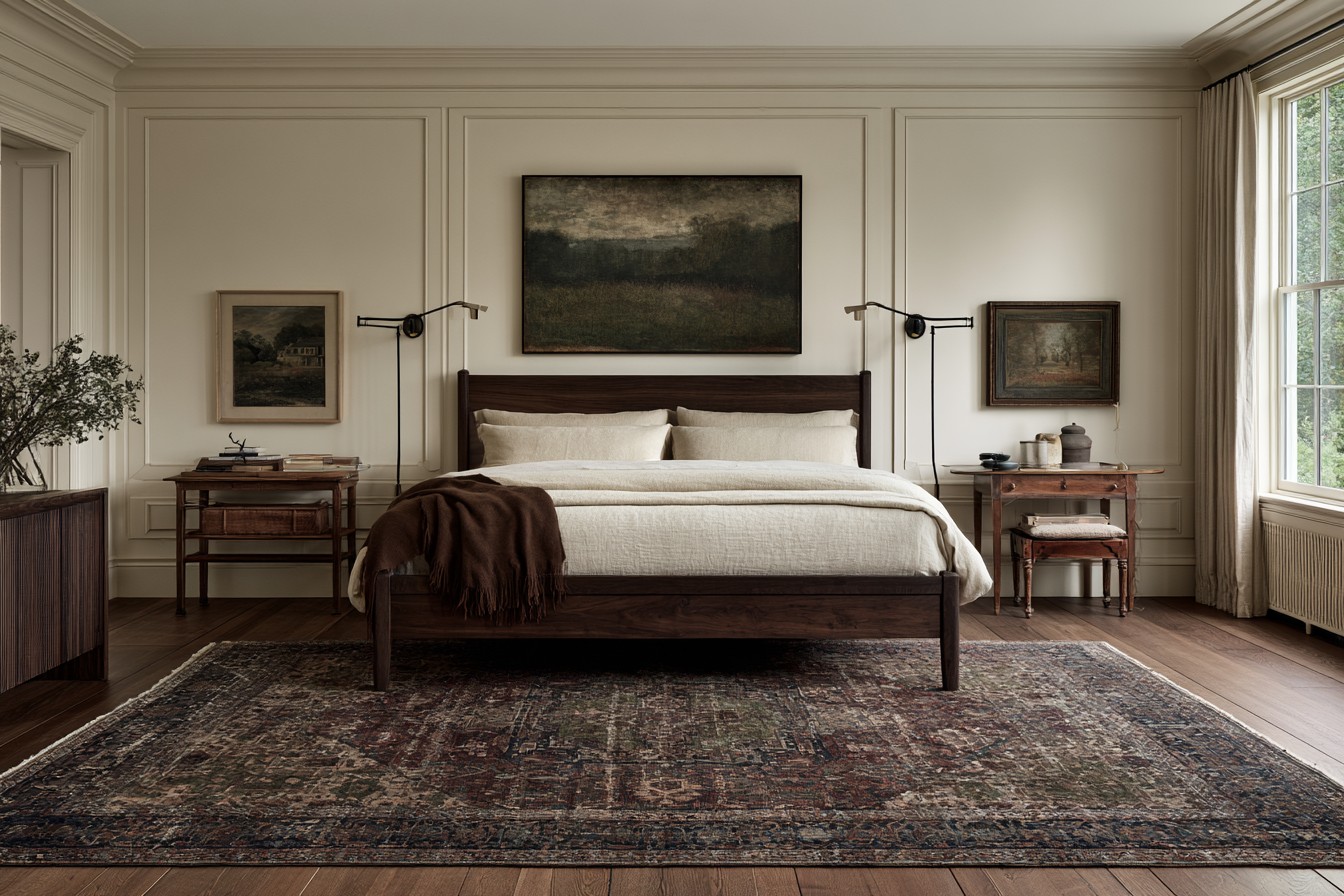
A rug can connect the bed, nightstands, and surrounding furniture while softening footsteps. Persian-inspired motifs, faded medallions, restrained florals, and small geometric patterns suit this style particularly well. Slightly muted colors tend to feel more established and are easier to coordinate with dark timber and layered fabrics.
The rug should be large enough to extend beyond the sides and foot of the bed, rather than appearing like a small floating mat. In many rooms, placing approximately the lower two-thirds of the bed on the rug creates a balanced arrangement. Use a nonslip pad to reduce movement, protect the floor, and add cushioning under thinner rugs.
9. Use a Wooden Armoire for Character and Storage
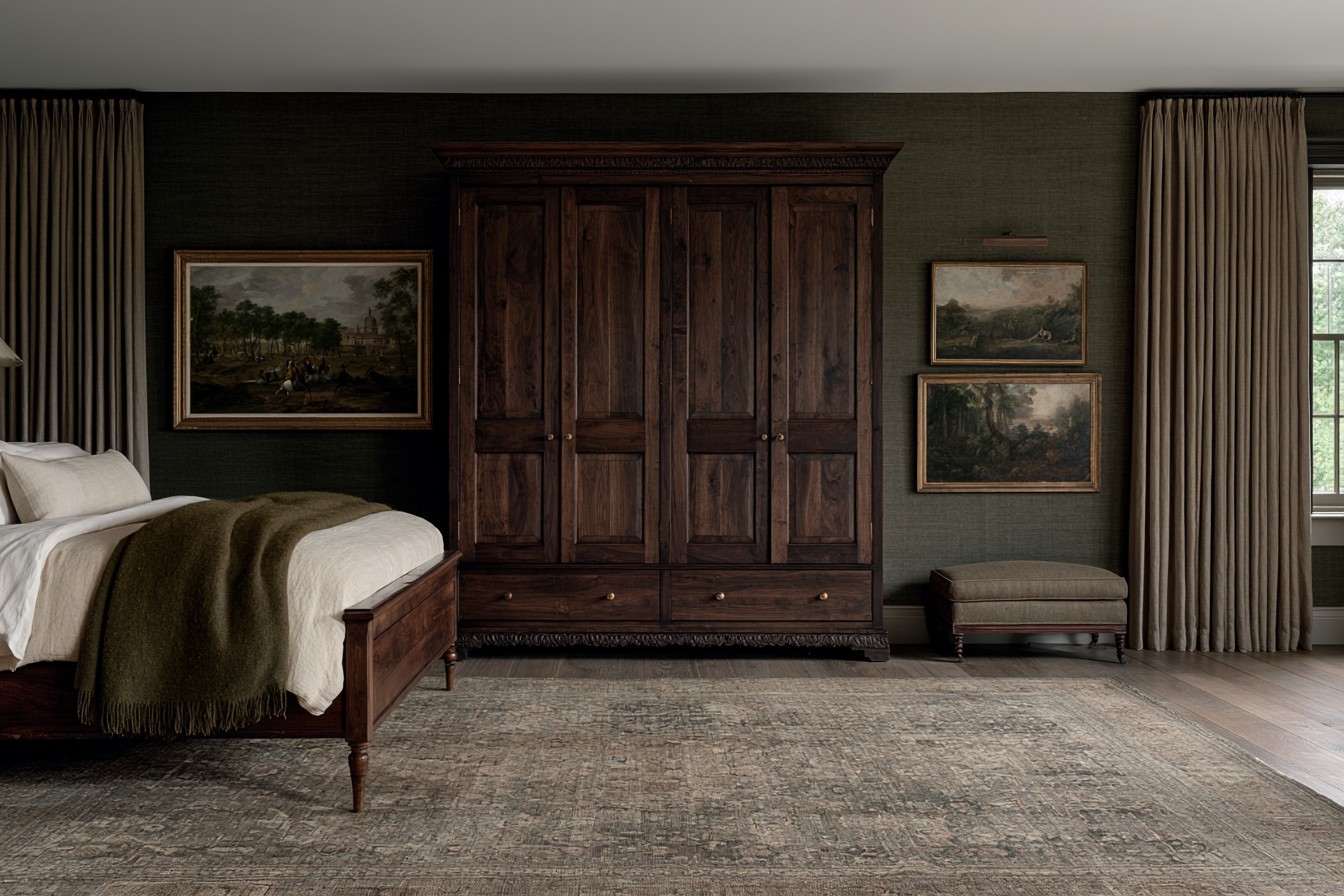
A tall armoire can supply valuable hanging or folded storage while giving the room a strong vertical element. It is especially useful in older bedrooms with limited built-in wardrobes. Paneled doors and traditional hardware add interest, while an uncluttered interior can accommodate clothing, linens, or even a concealed television.
Confirm the ceiling height, doorway dimensions, and turning space before bringing a large piece into the house. Tall furniture should be anchored securely to the wall, particularly in homes with children or pets. If the wood finish is very dark, position the armoire where it will not block natural light and balance it with paler surrounding surfaces.
10. Introduce Deep Color Without Darkening the Entire Room
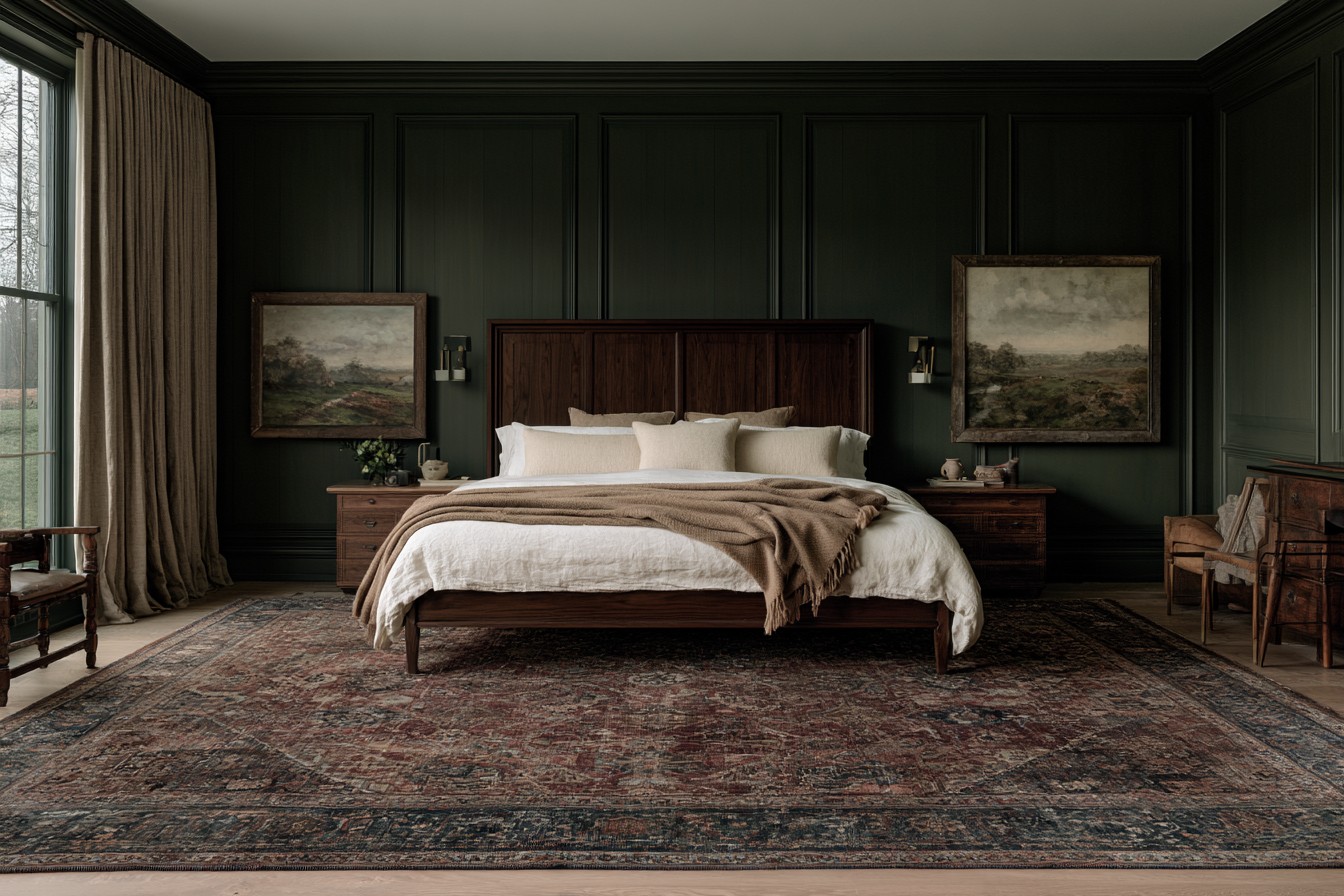
Forest green, oxblood, navy, aubergine, and warm brown can make a bedroom feel enveloping and sophisticated. The result depends heavily on the room’s daylight and artificial lighting. Test large painted samples on different walls and observe them in the morning, afternoon, and evening before committing to a color.
A deep shade does not have to cover every surface. It can be limited to the wall behind the bed, the lower portion of paneled walls, or selected joinery. Warm white bedding, reflective lamp bases, and lighter curtains help preserve visual balance. Using several lamps at different heights also prevents dark paint from flattening the room after sunset.
11. Combine Plaid and Herringbone with Restraint
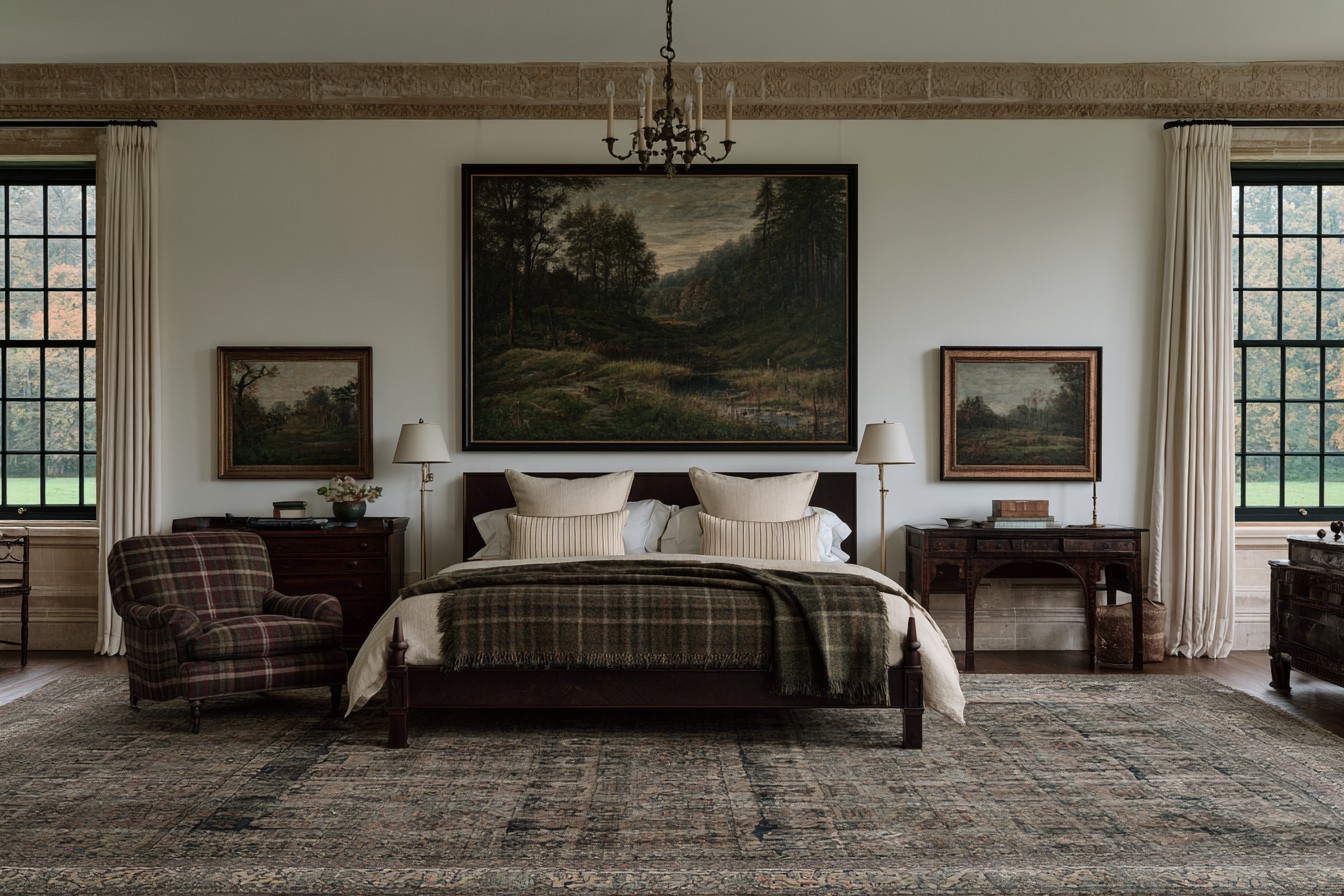
Plaid, herringbone, windowpane checks, and fine stripes bring tailored character to a bedroom. The most balanced approach is to let one pattern lead and use the others in smaller amounts. For example, a plaid throw can be paired with a herringbone chair and otherwise plain bedding in related colors.
Changing the scale prevents different patterns from competing. Combine a medium check with a much finer weave instead of placing two similarly sized motifs together. Durable wool blends work well for cushions and upholstery, while softer washable fabrics are generally more suitable for bedding that comes into frequent contact with the skin.
12. Put a Vintage Trunk to Practical Use
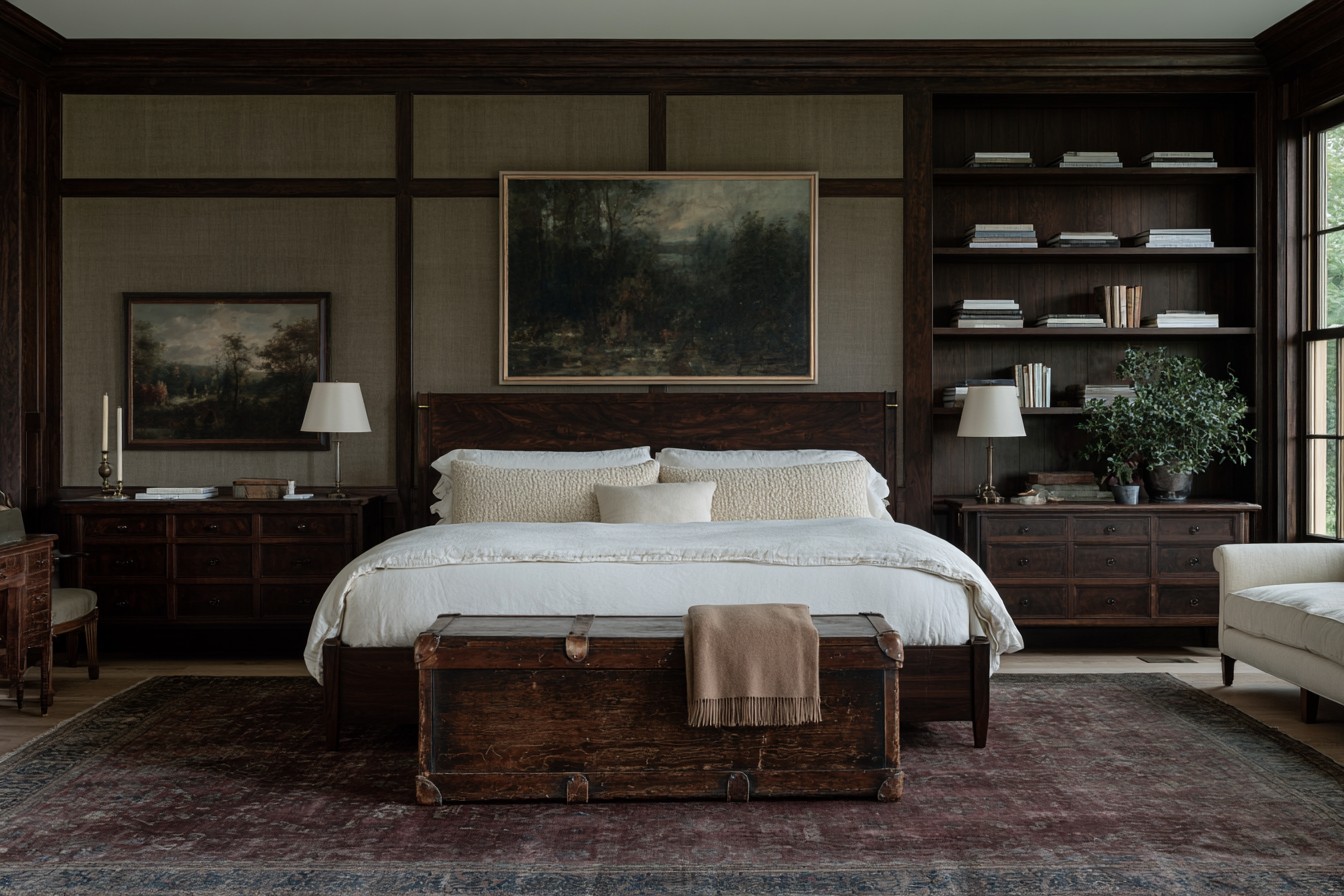
A wooden or leather-covered trunk offers concealed storage and the visual appeal of an object with a past. It can hold spare bedding, seasonal textiles, or infrequently used clothing. Scuffs and variations in the finish can add character, although the piece should still be clean, stable, and free from persistent odors.
Older trunks may have heavy lids or unreliable hinges, so inspect their mechanisms before regular use. A lid support or soft-close fitting can reduce the risk of trapped fingers. Maintain sufficient clearance around the trunk and avoid placing it where its corners narrow the route between the bed and doorway.
13. Curate Books and Personal Objects Thoughtfully
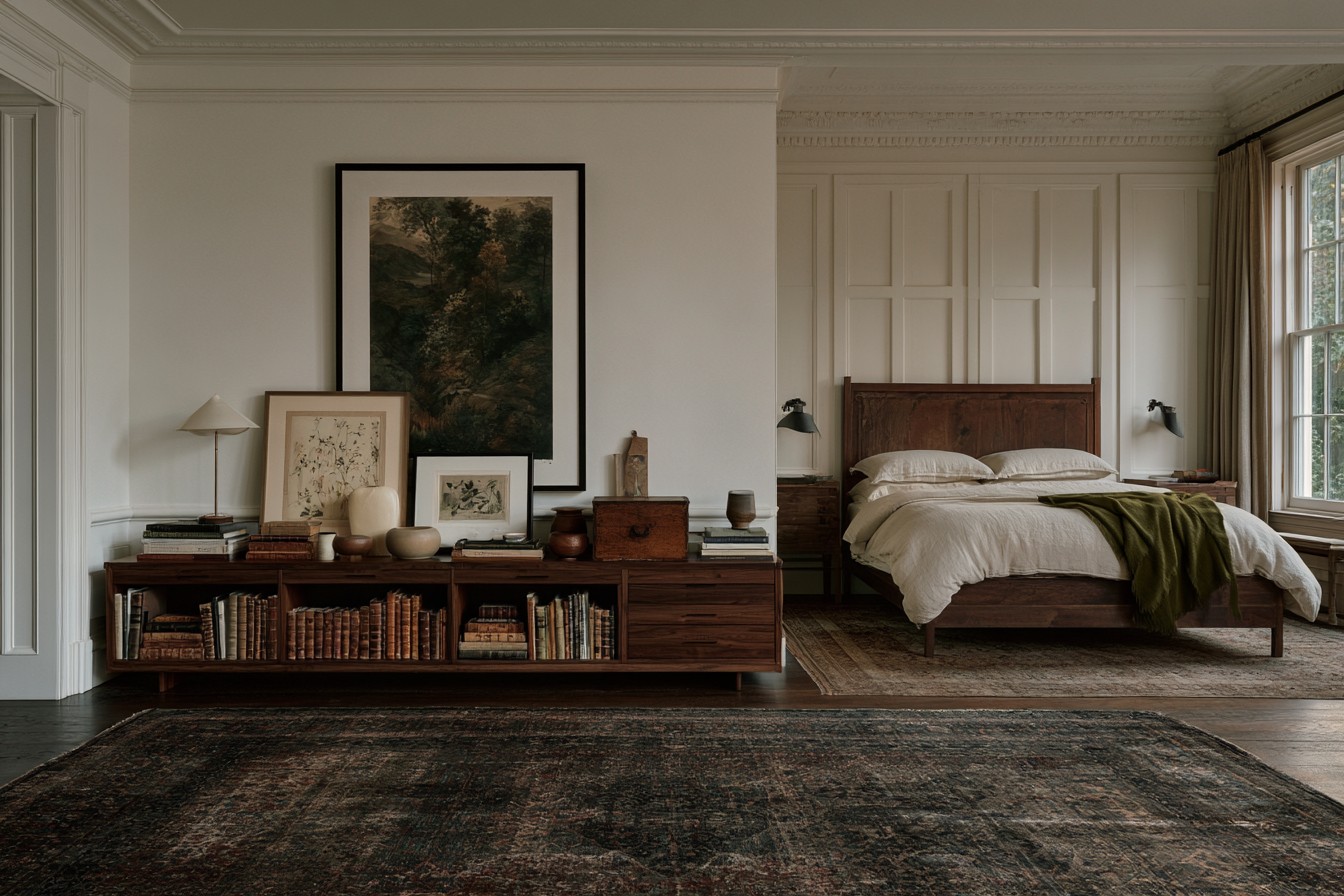
Books, framed photographs, ceramic pieces, small boxes, and travel mementos make a bedroom feel inhabited rather than commercially styled. Mix useful and meaningful objects, allowing some open space around each group. Arranging books both vertically and horizontally can vary the display without requiring additional decorative purchases.
Keep valuable or fragile objects away from shelf edges and direct sunlight. Closed storage is preferable for anything that creates visual clutter, while open shelves should contain items worth seeing. Revising the display occasionally also makes dusting easier and prevents the collection from expanding beyond the available space.
Bringing the Room Together
An old-money bedroom does not need to be completed in a single shopping trip. In fact, selecting furniture and artwork gradually often creates a more believable and personal result. Begin with the functional foundation—the bed, lighting, storage, and window treatments—before introducing rugs, artwork, and collected accessories.
The final room should support comfortable sleep as successfully as it communicates traditional character. Durable materials, safe furniture placement, controllable lighting, and manageable textiles matter more than decorative excess. When each addition has a purpose and relates naturally to the rest of the room, understated luxury follows without needing to be announced.
MORE IDEAS


Share
What's Your Reaction?
 Like
0
Like
0
 Dislike
0
Dislike
0
 Love
0
Love
0
 Funny
0
Funny
0
 Angry
0
Angry
0
 Sad
0
Sad
0
 Wow
0
Wow
0