16 Romantic Feminine Bedroom Ideas With Soft Elegance and Refined Details

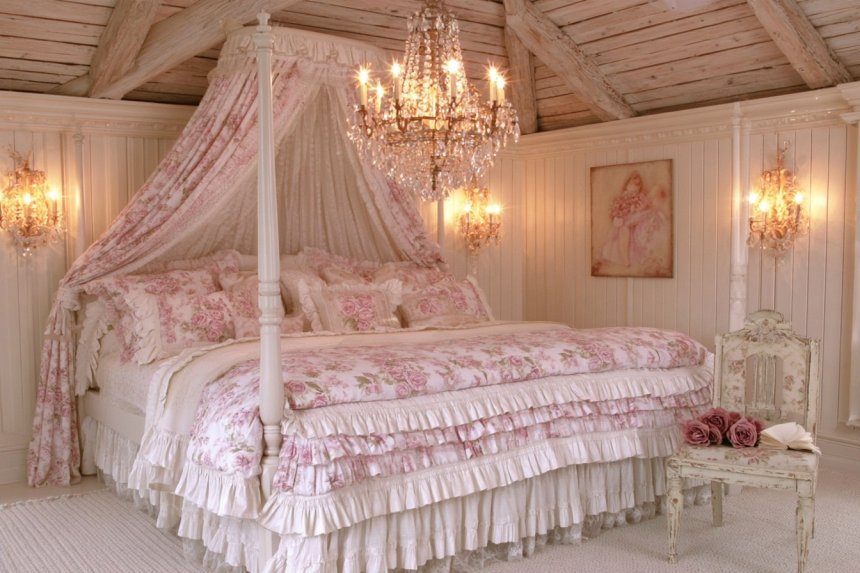
A romantic feminine bedroom feels most successful when softness is balanced with practical planning. Begin by measuring the bed wall, circulation areas, storage needs, and the space required to open doors and drawers. Then choose a restrained color palette that can connect furniture, fabrics, and decorative details without making every surface look identical. Blush, warm ivory, dusty rose, muted mauve, burgundy, natural wood, and aged brass can create an elegant foundation when used in different proportions. The following ideas explain how to apply romantic details according to room size, lighting, maintenance needs, and everyday habits. Each concept can be adapted individually, allowing the bedroom to feel graceful, comfortable, and personal without becoming crowded or excessively themed.
1. Create a Curved Upholstered Headboard With Scalloped Edges
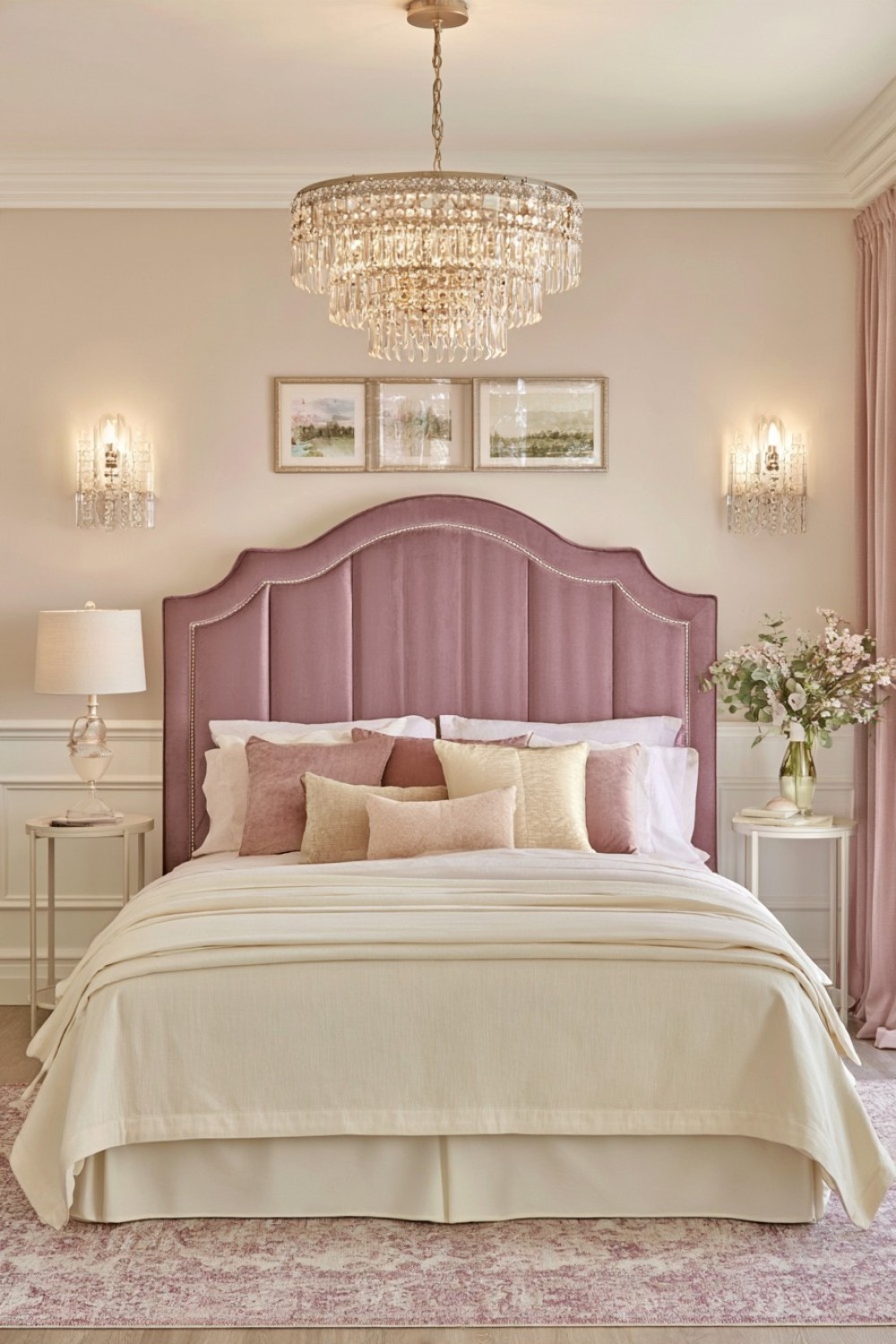
A scalloped headboard can establish the romantic character of the room without requiring heavily patterned walls or numerous accessories. Before selecting one, measure the mattress and the available wall space on both sides of the bed. A headboard extending slightly beyond the mattress can create a finished appearance, but it should not interfere with bedside tables, switches, sockets, or wardrobe doors. Use painter’s tape to mark the proposed height and width on the wall so you can judge its scale from the doorway.
Choose upholstery according to everyday use. Linen blends and tightly woven fabrics generally create a relaxed appearance, while velvet introduces richer color and light reflection. Pale upholstery may require more frequent cleaning, particularly where hair products or cosmetics could touch the surface. Check whether the cover can be removed or professionally cleaned. Keep tufting and decorative stitching restrained so the curved outline remains the main feature. Rounded bedside tables or lamps with gently shaped bases can repeat the silhouette without making every object look coordinated.
2. Design a Powder Pink and Burgundy Color Story
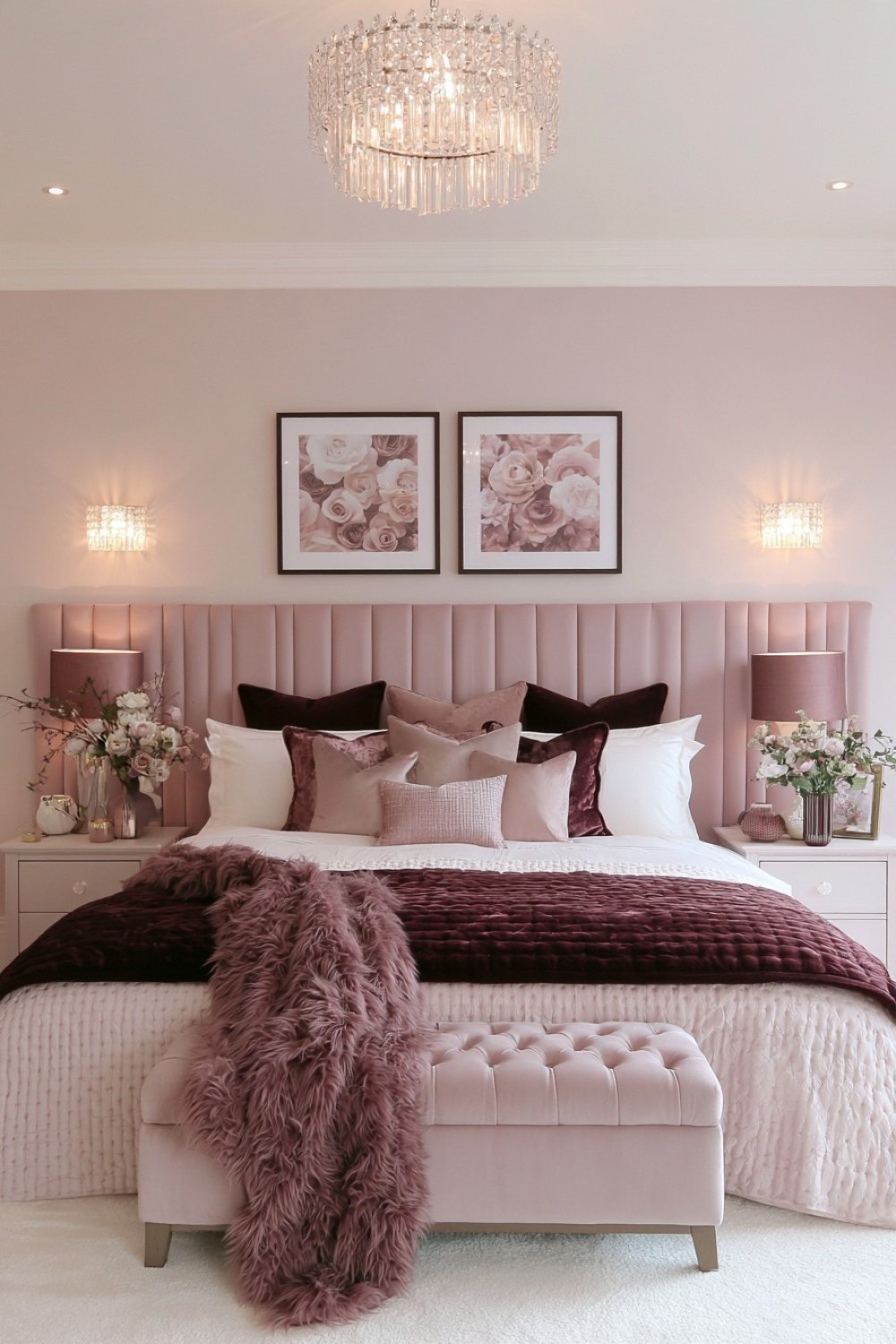
Powder pink and burgundy create a mature romantic palette when one shade remains dominant and the other is used selectively. Test paint and fabric samples in the bedroom during morning, afternoon, and artificial light. Pink can appear warmer beside cream lighting and cooler next to gray flooring, while burgundy may become nearly brown or purple depending on its surroundings. Examining samples beside the existing floor and furniture gives a more reliable result than choosing colors from a screen.
Use powder pink across a larger area, such as the walls, headboard, or bedcover, and introduce burgundy through smaller elements including cushions, piping, a throw, or one chair. Warm ivory and taupe can provide visual space between the two colors. Dark wood or aged brass can add definition if the room begins to look overly pale. Avoid distributing burgundy in many small, unrelated spots. Repeating it in two or three deliberate locations will make the color scheme feel connected while preserving a calm sleeping environment.
3. Add a French Inspired Dressing Table With an Oval Mirror
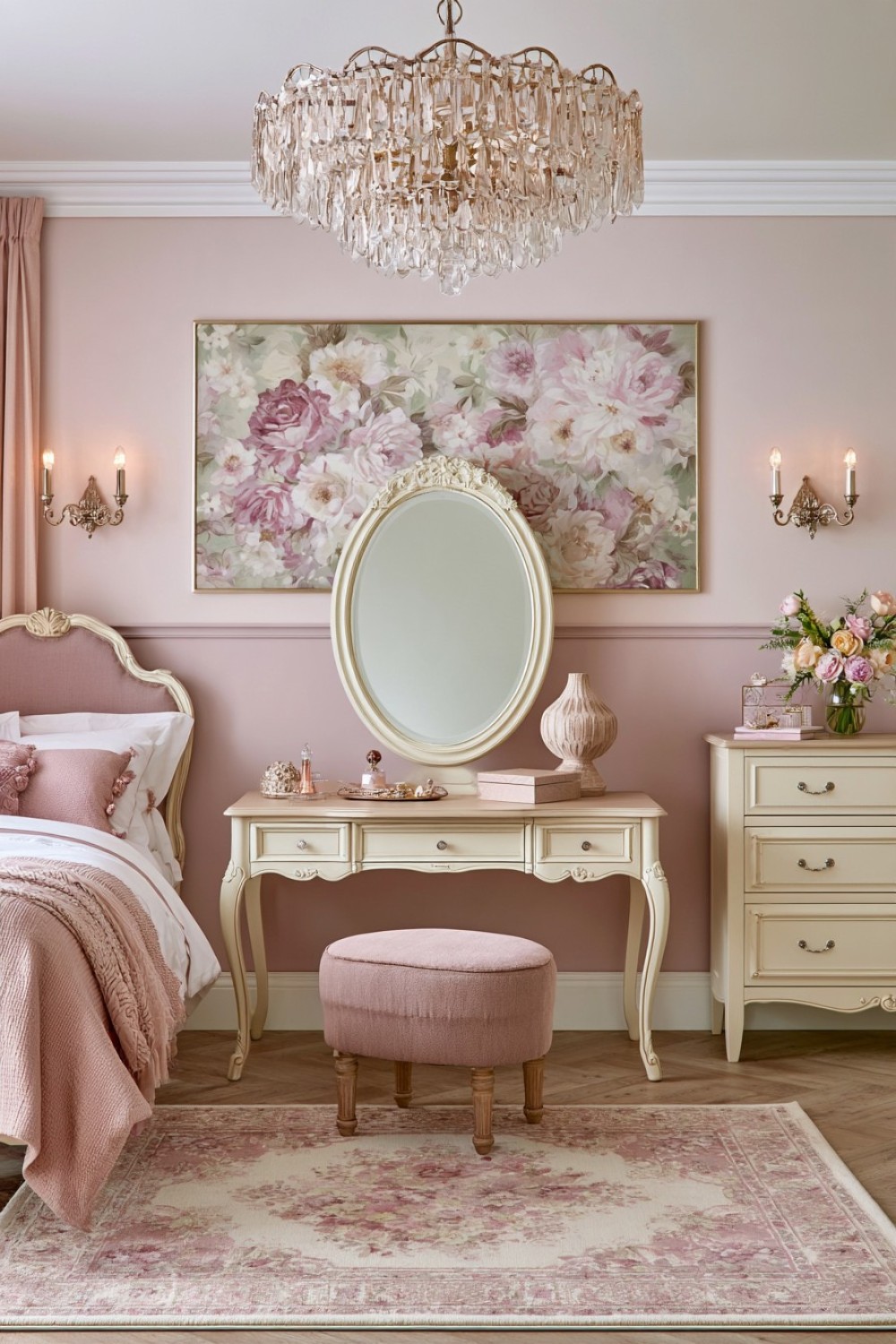
A dressing table should provide usable storage and comfortable seating as well as decorative appeal. Measure the wall, stool, and depth of the table before buying. Mark the proposed footprint on the floor and pull the stool out to its normal position. Check that someone can still pass behind it and that nearby drawers or wardrobe doors open freely. A narrow table may suit a compact room, but it still needs enough surface space for the items used during a normal routine.
Position the mirror at a practical seated height and secure it according to its weight and the wall construction. Natural side light is helpful, while strong light directly behind the mirror can create uneven visibility. Store everyday cosmetics in drawers or a small organizer and limit the visible display to a tray, jewelry dish, or decorative box. An oval mirror and softly curved legs introduce French-inspired character, while a simple painted finish keeps the arrangement from becoming theatrical. Choose a stable stool that fits beneath the table when it is not being used.
4. Introduce Floral Wallpaper Inside a Single Recess
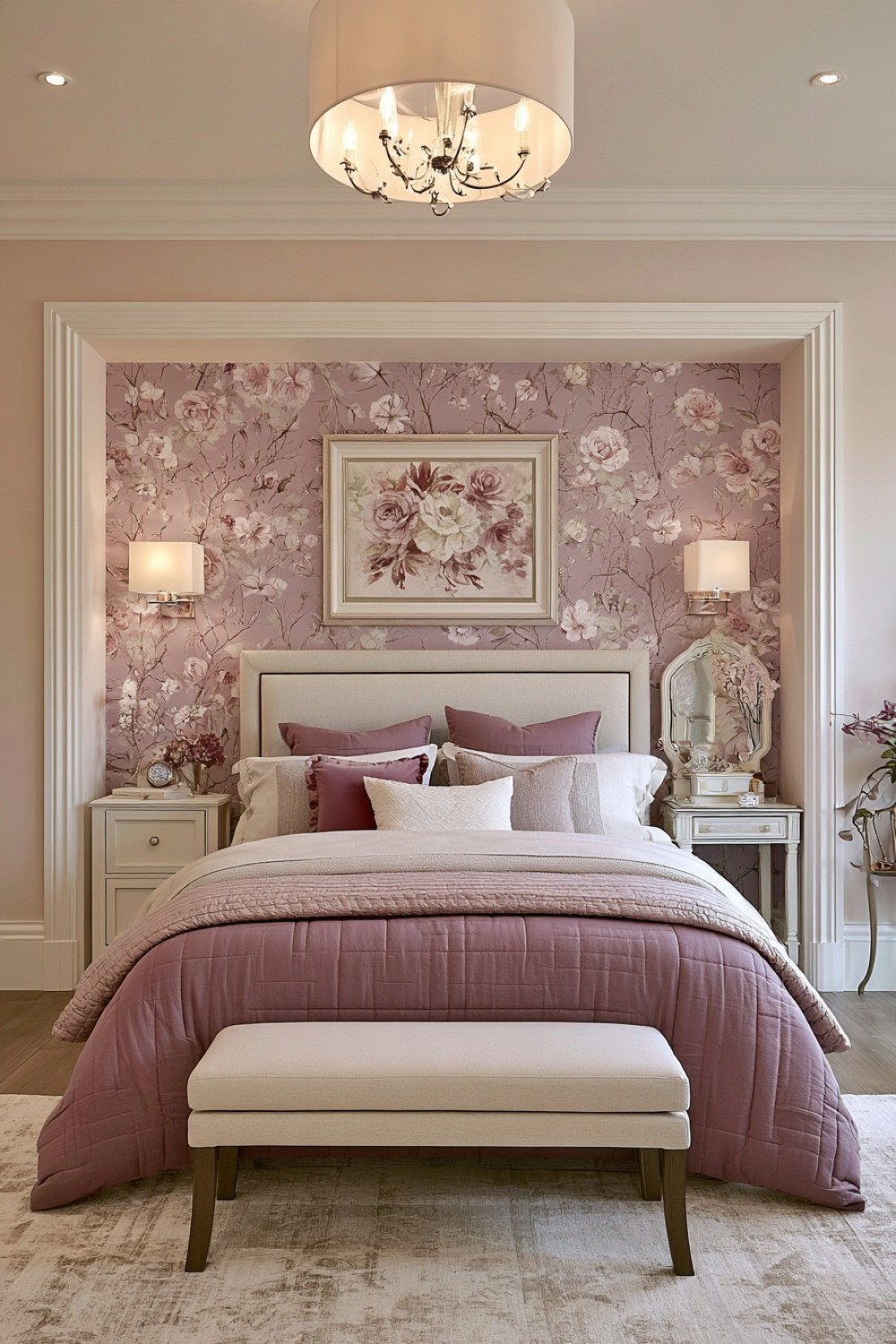
Applying floral wallpaper inside one recess gives the pattern a clear boundary and makes it easier to balance with plain surfaces. Measure the recess at several points because older walls may not be perfectly square. Calculate the number of drops according to the wallpaper width and allow additional material for trimming and pattern matching. Large repeats can require more paper than a simple area calculation suggests, so check the manufacturer’s repeat information before ordering.
Choose the scale of the pattern according to the way the recess will be used. A detailed botanical design can work behind a small dressing table, while a broader floral pattern may remain clearer behind a bed or chest of drawers. Test a generous sample vertically because a small swatch may not reveal the overall rhythm. Prepare the wall according to the wallpaper instructions and resolve dampness or loose surfaces before installation. Repeat only one or two colors from the pattern elsewhere in the bedroom, allowing the recess to remain the main decorative feature.
5. Use a Pleated Fabric Bed Base Instead of a Standard Frame
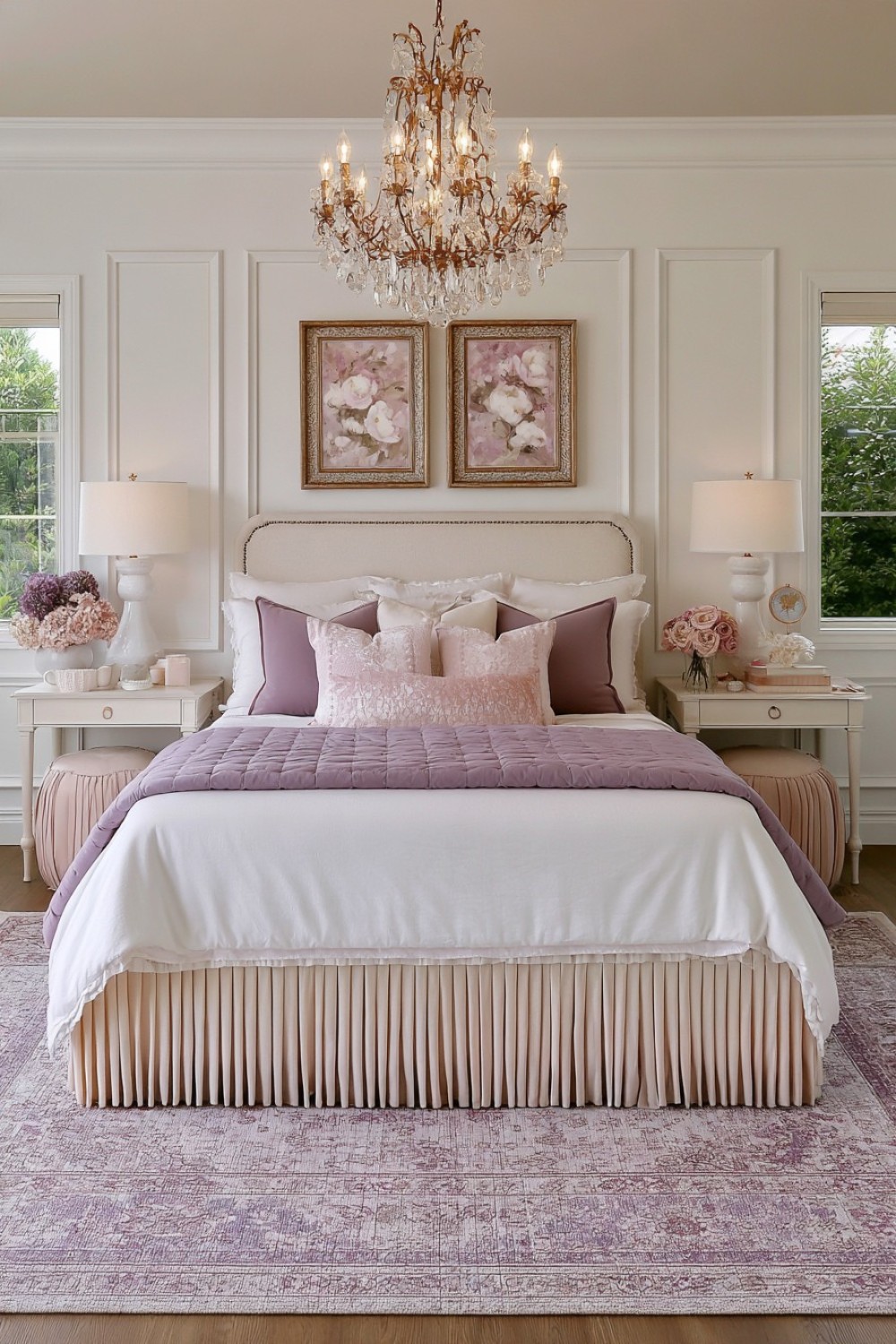
A pleated bed skirt can soften the lower portion of the bed and conceal practical storage. Measure from the top of the bed base to the floor after the mattress and bedding are in place. A skirt that is too short exposes the frame, while excess fabric can collect dust or interfere with vacuuming. If the bed height changes seasonally through mattress toppers, choose an adjustable design or confirm the final drop after all layers are fitted.
Tailored box pleats create a cleaner appearance, while gently gathered fabric feels more relaxed. Linen blends, washable cotton, and durable upholstery-weight fabrics offer different levels of structure and maintenance. Check laundering instructions before choosing a pale shade. If underbed storage is accessed frequently, use a split-corner or panelled design that can be lifted without disturbing the entire bed. Keep the duvet from hanging so low that it completely hides the pleats. Simple upper bedding allows this quieter detail to contribute texture without making the bed look overly decorated.
6. Create a Romantic Reading Chaise Near the Window
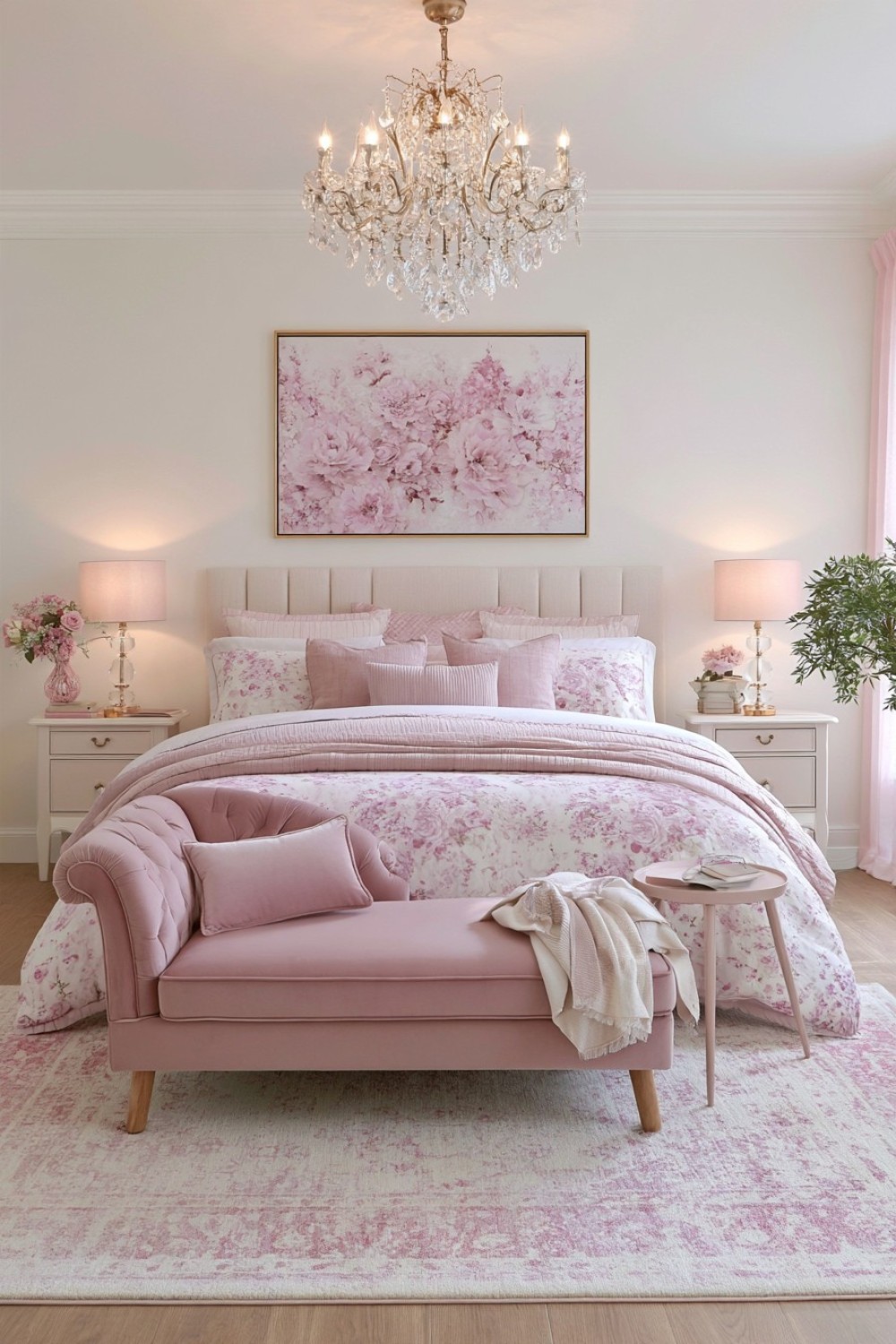
A chaise can create a comfortable reading area when its dimensions suit the available floor space. Measure the complete footprint, including any curved or rolled end, and mark it with tape before ordering. Leave a clear route between the doorway, bed, wardrobe, and window. Confirm that the chaise will not obstruct curtains, heating equipment, or access needed to clean and operate the window. Also check the staircase and bedroom doorway to ensure the furniture can be delivered.
Choose the orientation according to how you naturally prefer to sit and where the light enters. A small side table should be reachable without forcing the user to twist, while a movable reading lamp can provide light after dark. Select upholstery that complements the bed without matching it exactly. Cream linen, dusty rose velvet, or pale taupe textured fabric can maintain softness, while a removable throw protects the most frequently used area. If a full chaise would restrict circulation, an upholstered bench with supportive cushions can provide a lighter alternative.
7. Layer Satin, Cotton, and Matelassé on the Bed
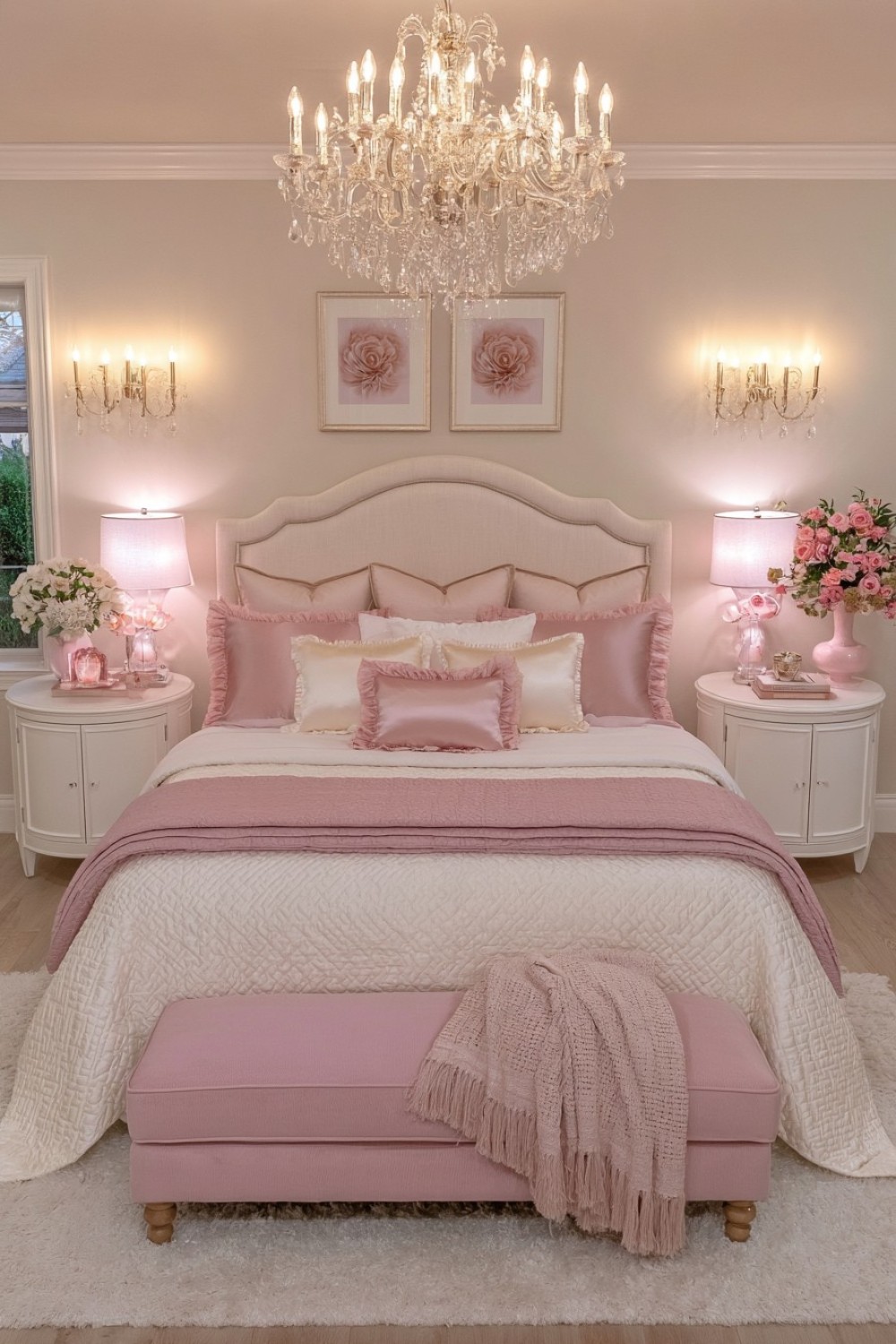
Layered bedding becomes useful when every textile has a clear purpose. Begin with sheets selected for personal comfort and laundering needs, then add a matelassé coverlet that can be used alone in warmer conditions. A folded throw provides an additional layer when required. Satin or silk-blend pillowcases can introduce gentle reflection, but their care instructions may differ from washable cotton bedding. Review all labels before building a combination that would be inconvenient to maintain.
Keep the palette closely related while varying surface texture. Warm ivory cotton, a dusty rose coverlet, and two champagne-toned pillowcases can look richer than several competing patterns. Decorative cushions should not make the bed difficult to use; two or three appropriately sized pieces are usually easier to store at night than a large collection. Consider where spare layers will go when removed. A bench, basket, or dedicated wardrobe shelf prevents clean bedding from being left on the floor and makes the arrangement practical for everyday use.
8. Add a Decorative Folding Vanity Screen
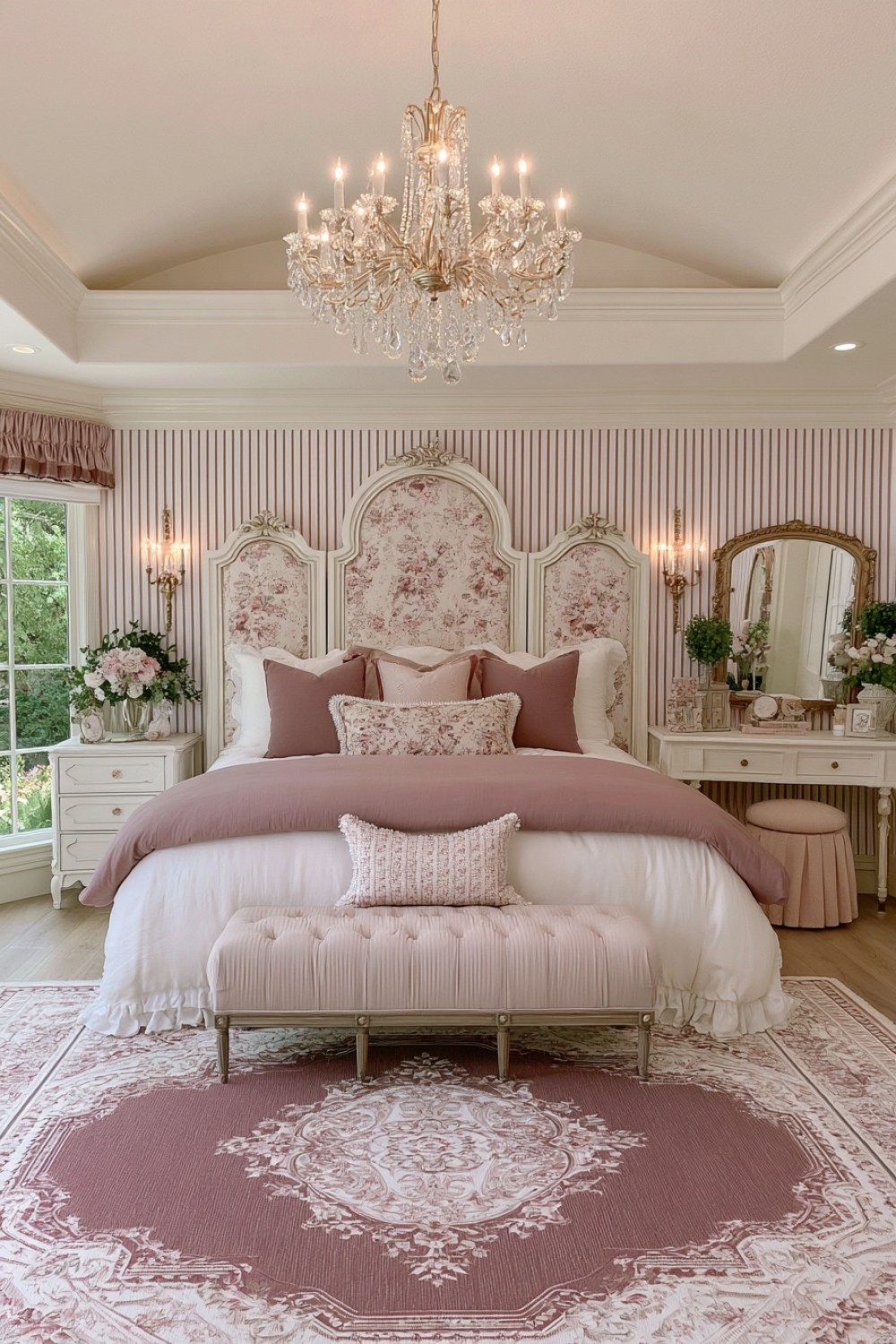
A folding screen can define a dressing corner, soften an empty wall, or partially conceal an open clothing rail. Give it a specific purpose before choosing the design. Measure both its fully extended width and the narrower width created when the panels stand at an angle. Screens require some folding to remain stable, so the advertised total width may be greater than the area they cover in actual use.
Place the screen outside the main walkway and away from doors that could strike it. Lightweight models may need additional stability in busy rooms or homes with children and pets. Fabric panels introduce softness, while carved or painted wood provides a stronger furniture presence. If the bedroom already contains floral wallpaper, choose a plain or lightly textured screen to prevent patterns from competing. A screen should not cover heaters, ventilation openings, sockets that need regular access, or the only useful daylight source. When floor space is limited, a curtain mounted around a dressing zone may perform the same function more efficiently.
9. Install Delicate Picture Frame Molding With Soft Contrast
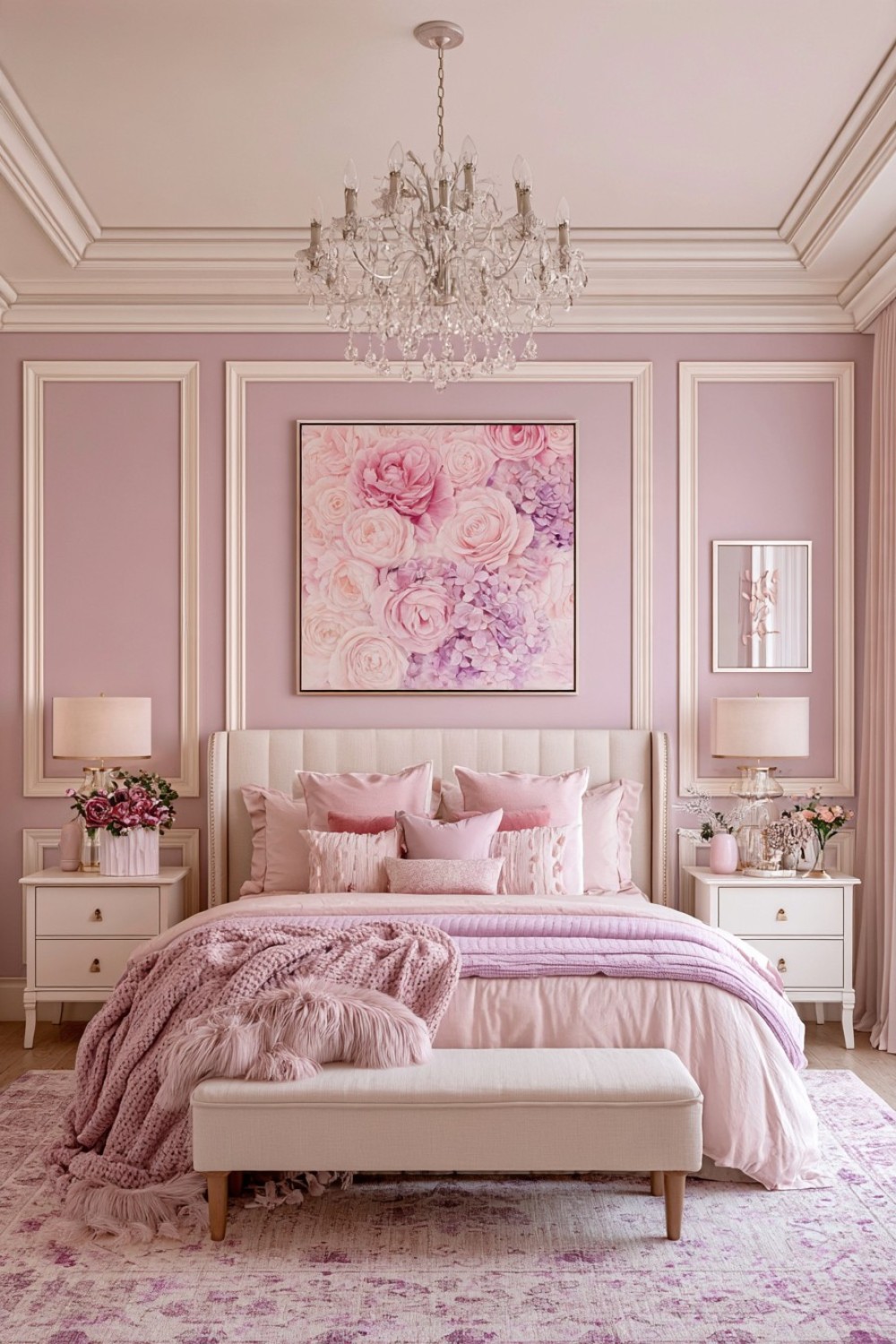
Picture frame molding adds architectural rhythm when its proportions respond to the furniture and wall. Begin with a measured drawing showing the bed, bedside tables, sockets, switches, and planned artwork. Use painter’s tape to create the proposed rectangles on the wall and view them from the doorway and bed. Equal spacing between panels usually creates a calm result, but the panel widths can vary to frame furniture more effectively.
Select molding with a depth that suits the room. A very heavy profile can overwhelm a compact bedroom, while a narrow profile produces a quieter finish. Confirm that the wall surface is suitable and locate concealed cables or pipes before fixing anything. Warm ivory molding on dusty rose walls creates gentle contrast; painting everything one color gives a more subtle effect. Samples should be viewed under the room’s evening lighting as well as daylight. Leave some panels empty so the architecture can breathe, and avoid positioning artwork where the molding makes it appear cramped.
10. Build a Jewelry Display Into a Shallow Glass Cabinet
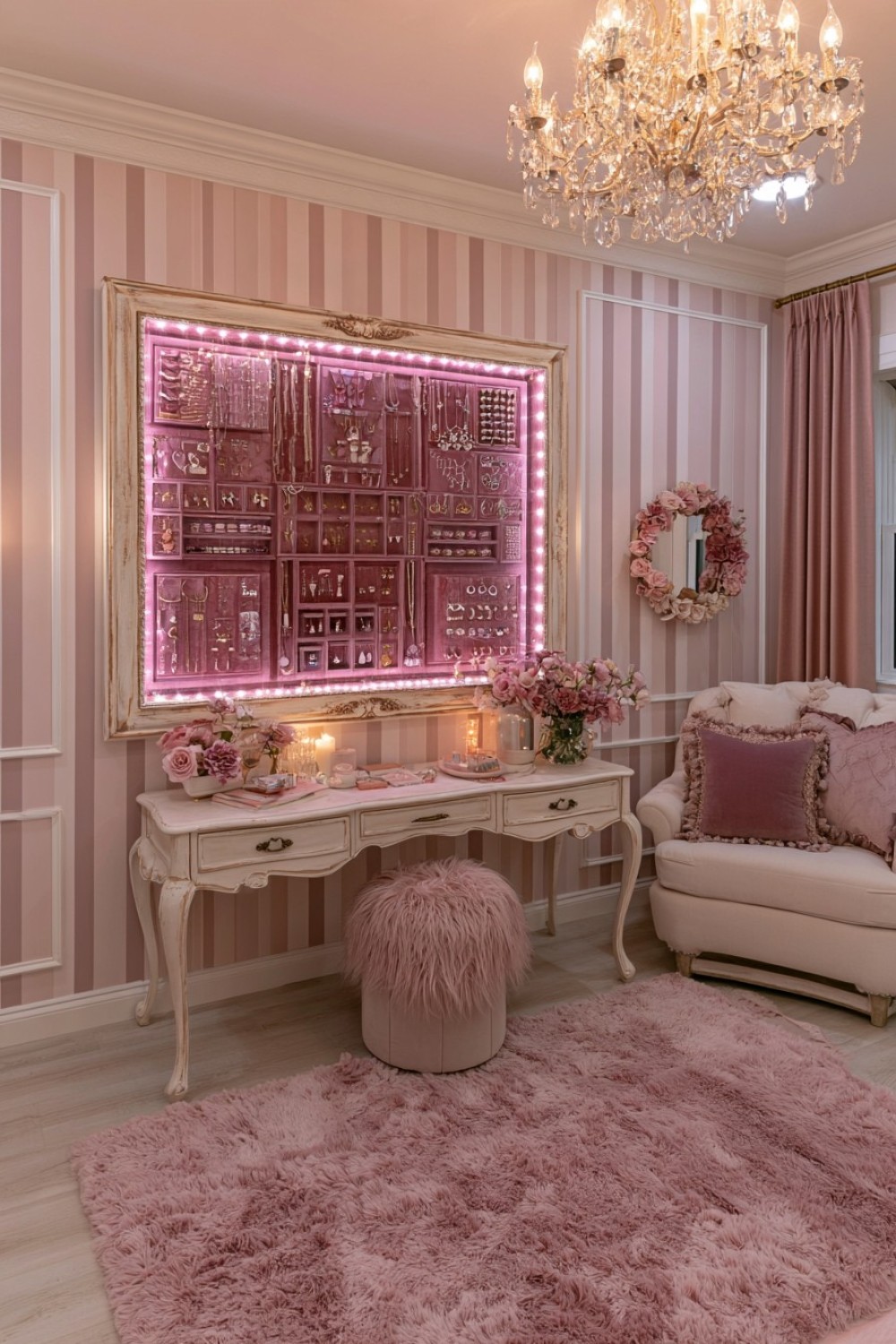
A shallow jewelry cabinet keeps small accessories visible while freeing space on the dressing table. Before selecting one, arrange your necklaces, earrings, bracelets, and rings by size and frequency of use. This reveals whether you need hooks, padded rolls, drawers, or divided trays. Long necklaces need enough vertical clearance to hang without tangling, while delicate pieces benefit from separate compartments rather than a single open shelf.
A wall-mounted cabinet must be secured with fixings appropriate for its combined weight when fully loaded. Check that the door can open without hitting the mirror, wardrobe, or nearby lighting. If valuable pieces will be stored inside, consider privacy and security as well as appearance; transparent glass may be better suited to costume jewelry and everyday accessories. Reeded, frosted, or partially covered glass can reduce exposure. Keep materials that may tarnish away from damp conditions and follow their care requirements. An edited display with unused space between pieces will be easier to navigate and visually calmer.
11. Use Rosette Inspired Textures Through Cushions and Upholstery
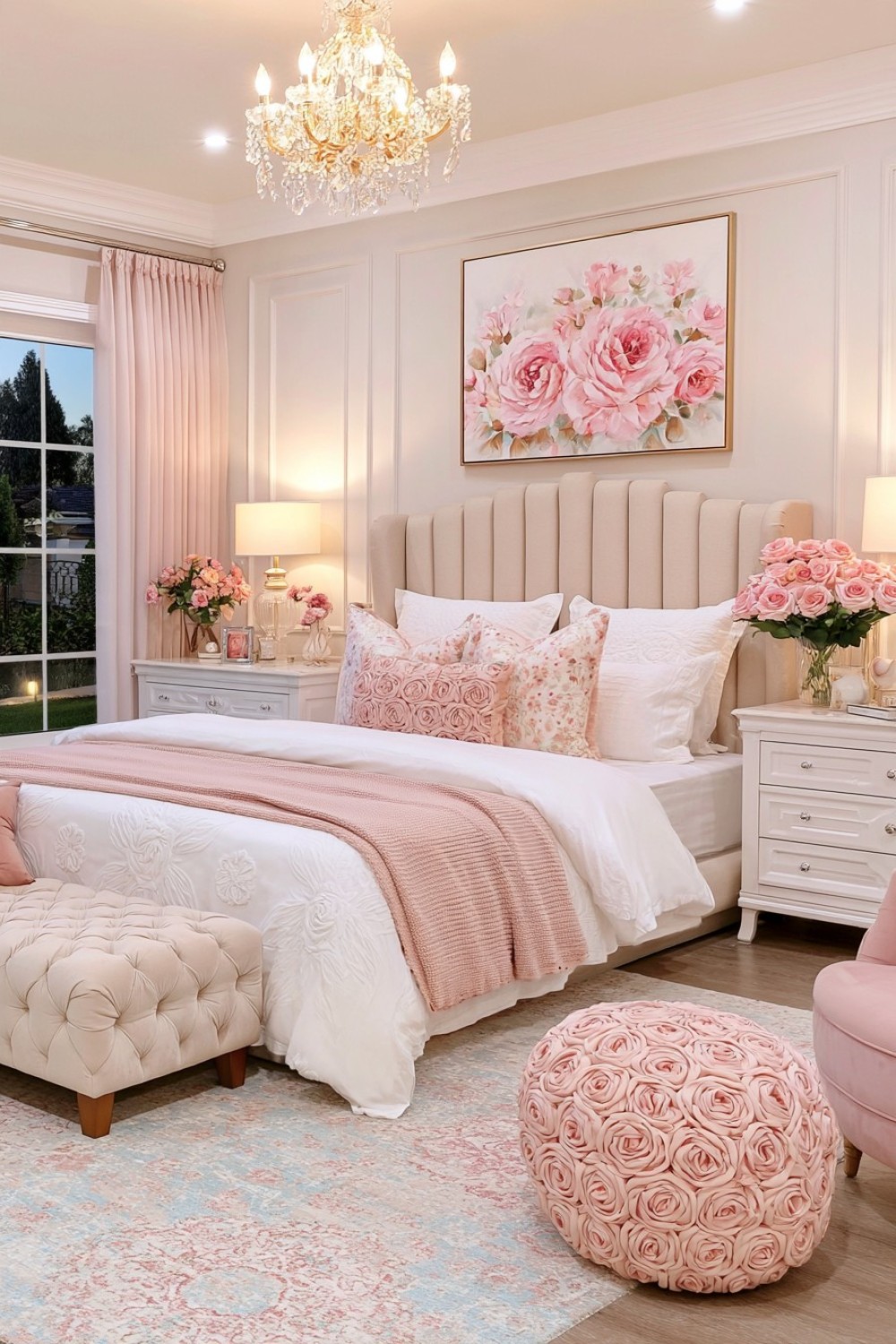
Rosette textures offer a way to introduce floral character without adding another printed pattern. Use the detail on one cushion, a compact stool, or a small section of upholstery where its three-dimensional surface can remain visible. Repeating sculptural flowers across the headboard, curtains, bed, and seating would make the room harder to balance and may create unnecessary maintenance.
Examine the construction before purchasing. Loops, gathered petals, and raised stitching can catch on jewelry or require more careful cleaning than flat fabric. A removable cushion cover is easier to maintain, while upholstery used on seating should be suitable for regular contact. Pair the textured piece with plain cotton, linen, or velvet so its form remains distinctive. Dusty pink, cream, pale peach, or muted mauve can make the technique feel refined, although color should be tested beside the other fabrics. Place the accent where it supports the composition rather than adding it solely to fill an empty surface.
12. Create a Soft Mauve Accent Wall With Tonal Artwork
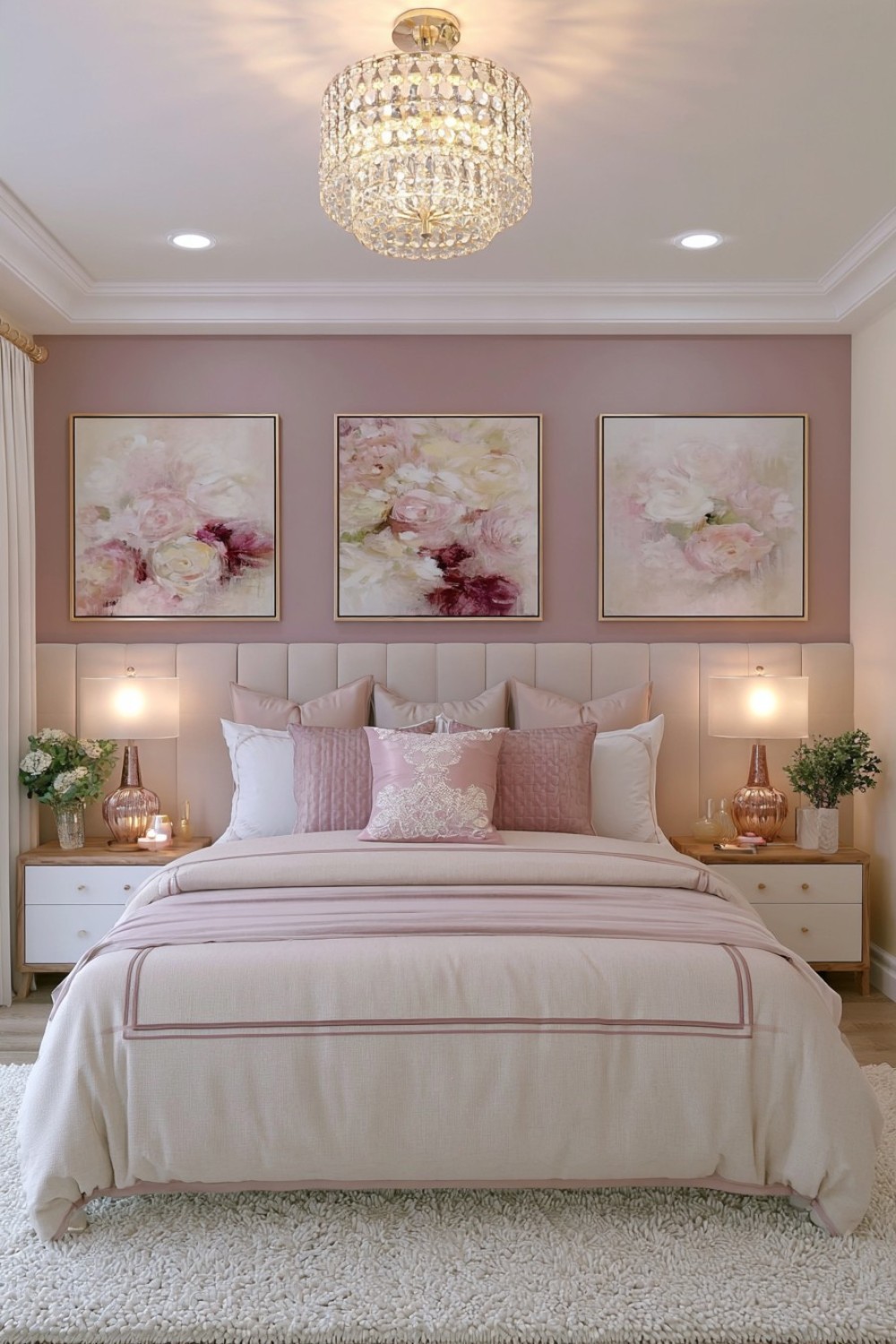
Mauve changes noticeably with light and neighboring colors, so begin with several painted samples rather than relying on a printed color card. Apply each sample to a movable board or separate sections of the proposed wall and observe it throughout the day. A north-facing room may emphasize cooler purple notes, while warm lamps can bring out brown or pink undertones. Compare the samples with the flooring, headboard, and curtains before choosing the final shade.
Plan artwork only after determining the bed and furniture positions. One substantial piece or two coordinated works can provide a clearer focal point than many small frames. Lay the proposed arrangement on the floor and measure the complete grouping before installing it. Tonal artwork can include ivory, dusty rose, muted plum, gray, and burgundy without matching the wall exactly. Use suitable hardware for the artwork’s weight and wall construction. Keep enough open wall visible around the frames so the mauve color contributes depth rather than functioning merely as a background strip.
13. Introduce a Glass Front Armoire for Elegant Storage
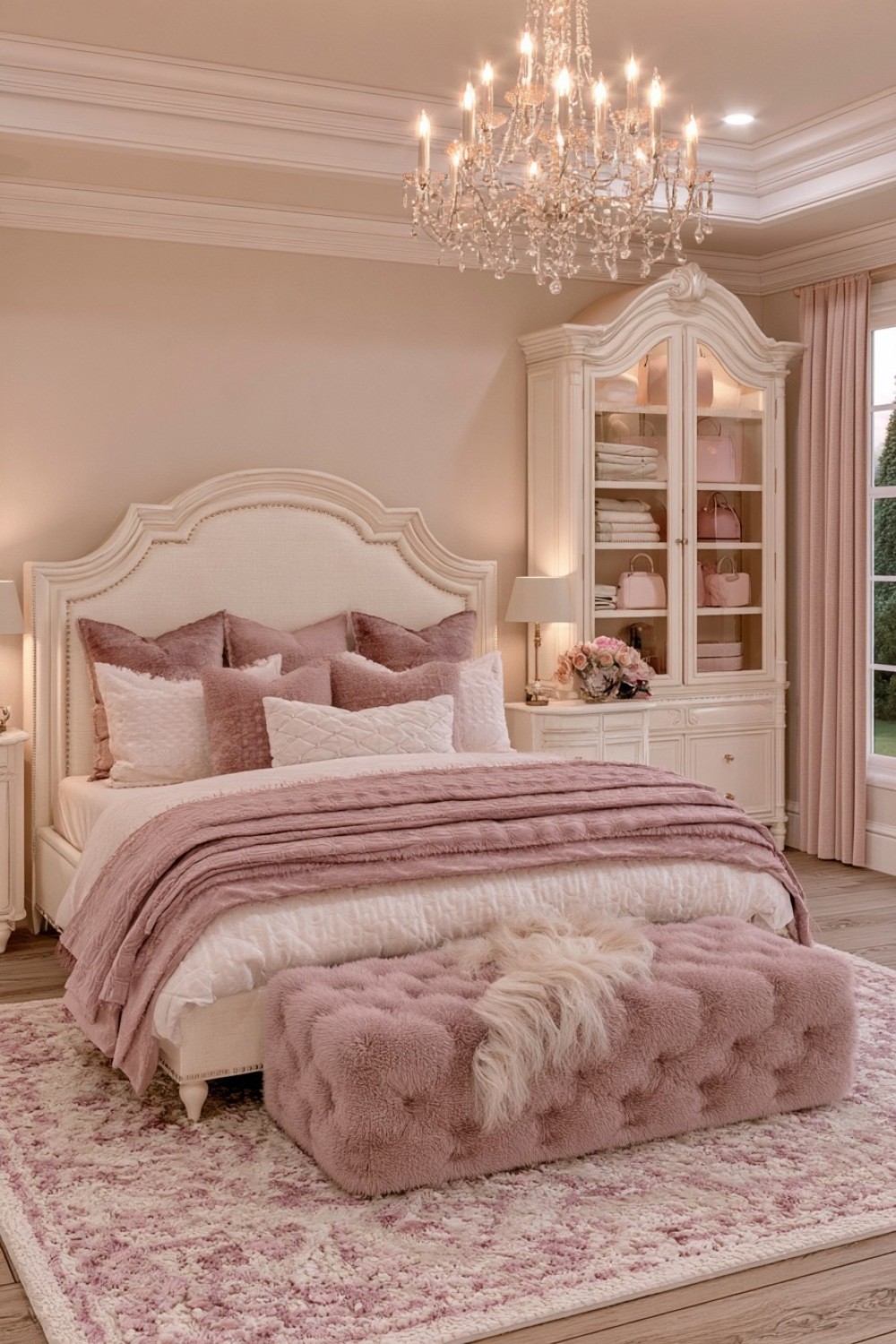
A glass-front armoire works best when its visible contents can remain orderly. Decide what it will hold before choosing shelf spacing and door style. Folded linens may need deeper shelves than handbags or decorative boxes, while hanging clothes require a different internal layout. Measure the cabinet as well as the door swing and route from the entrance. Tall furniture should be positioned where it will not make a narrow passage feel restricted.
Use matching boxes, fabric-covered containers, or baskets for small items that would otherwise create visual clutter. Transparent doors display the entire interior, while reeded or lightly frosted glass offers a softer view and requires less precise arrangement. Check the manufacturer’s anchoring instructions, especially for a tall or top-heavy cabinet. Avoid placing the armoire where reflected sunlight could affect sensitive fabrics or make the glass distracting. A warm wood or painted cream frame can connect the piece to the romantic palette while its internal organization supports everyday use.
14. Add Ribbon Trim and Piping to Otherwise Simple Textiles
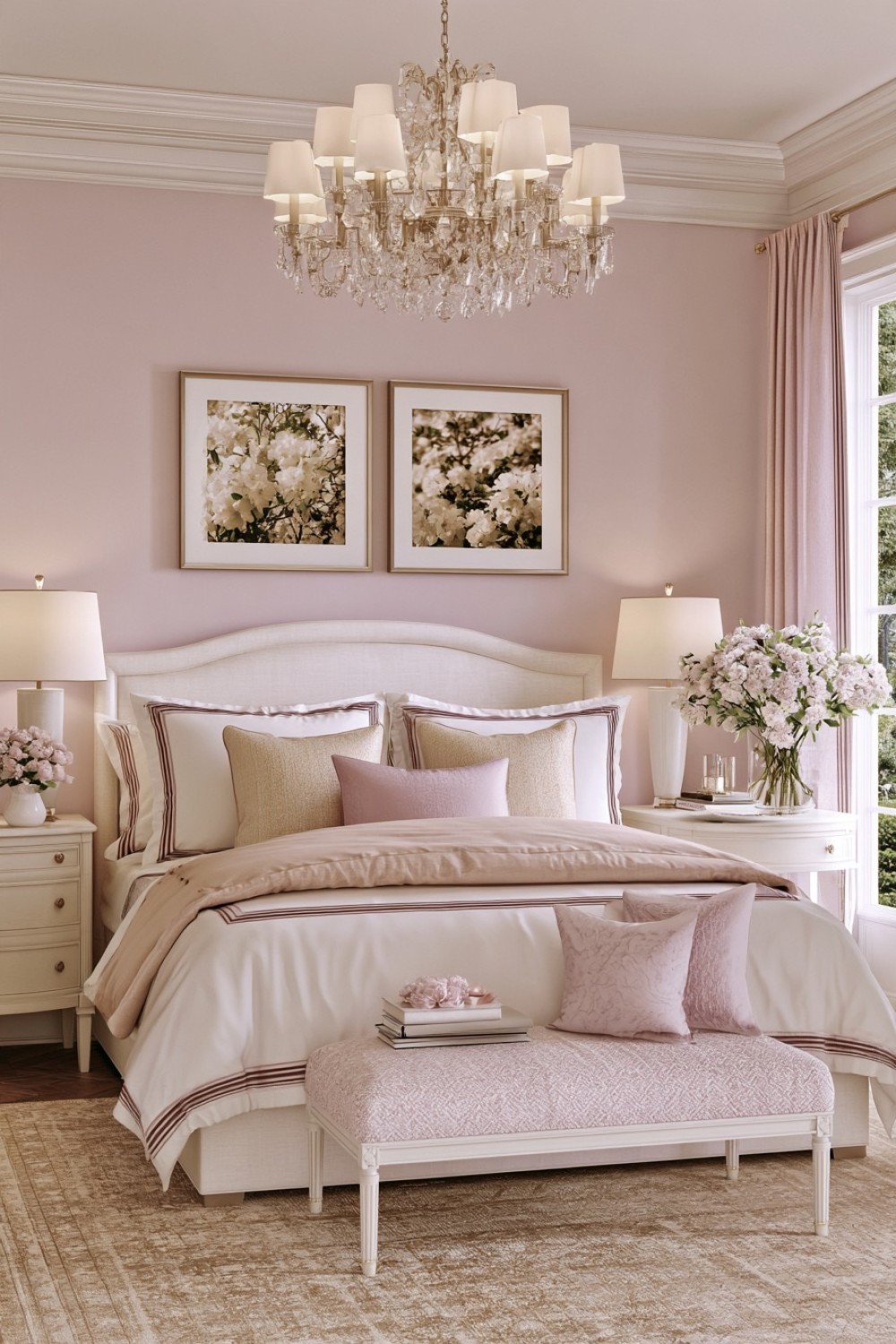
Ribbon trim and piping can connect separate fabrics without requiring identical patterns. Select one accent color already present in the room and repeat it on two or three pieces, such as a cushion edge, curtain border, and upholstered stool. Place fabric samples together before sewing because materials described by the same color name can look different under bedroom lighting.
Choose trim according to the item’s use and cleaning requirements. A delicate decorative ribbon may work on curtains or an occasional cushion, while frequently washed pillowcases need colorfast, washable material with secure stitching. Prewash compatible fabrics when shrinkage could cause the trim and base material to contract differently. Piping should be firm enough to define an edge without making the surface uncomfortable. Test a short sample before altering expensive curtains or bedding. This tailored approach works particularly well in a neutral bedroom because it adds a controlled line of color while leaving larger textiles calm and easy to coordinate.
15. Create a Vanity Stool With Bouclé and Curved Brass Legs
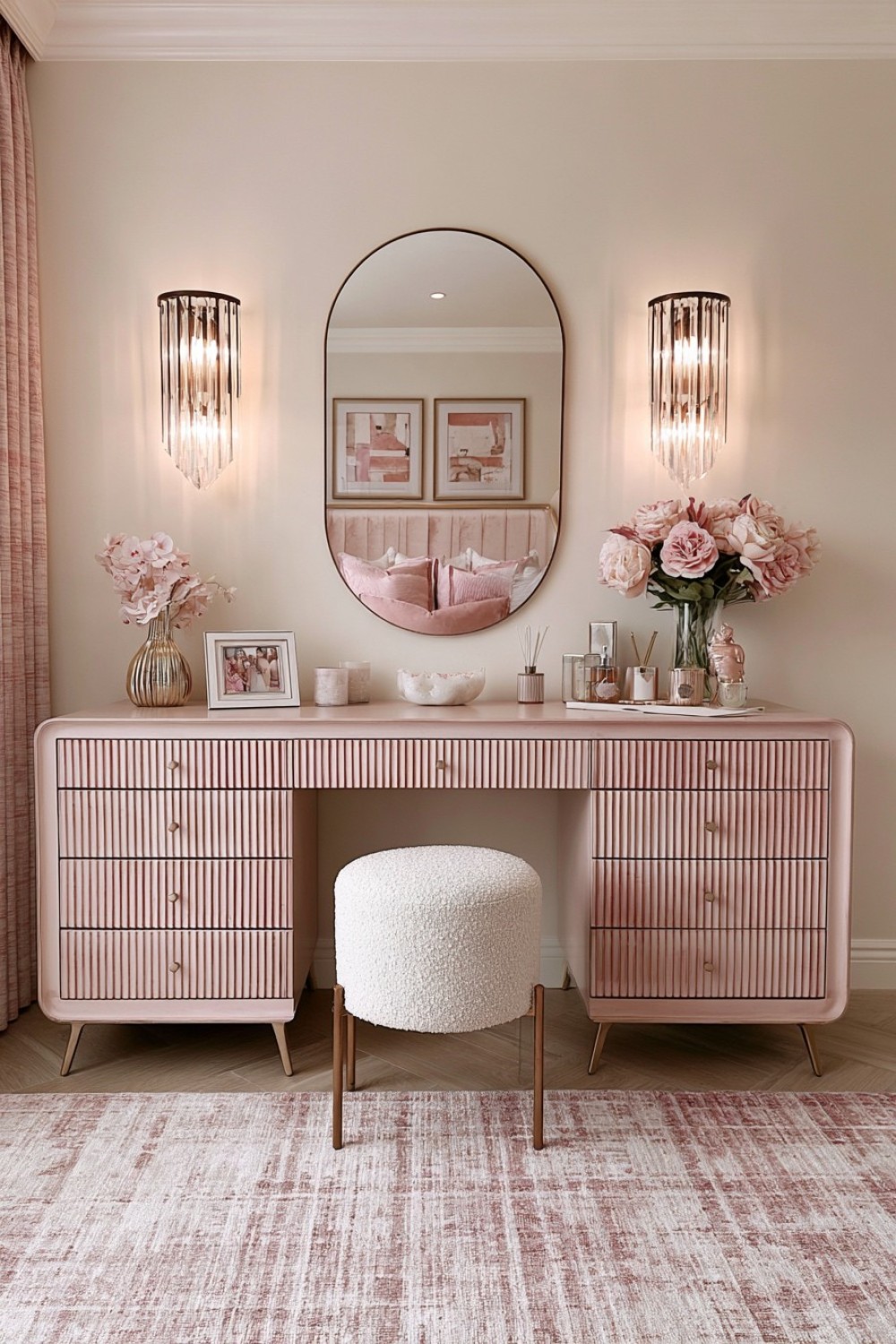
A vanity stool needs to fit the user and the dressing table before its fabric or finish is considered. Measure the clear space between the table legs, the underside height, and the seated position required to use the mirror. Confirm that the stool can slide underneath without rubbing against drawers or decorative trim. A rounded seat can soften the arrangement, but its width should still provide stable and comfortable support.
Bouclé introduces texture, although its loops may collect lint and can require careful cleaning. Review the upholstery instructions and consider a tightly constructed fabric for regular use. Brass-colored legs add definition, but the frame should be evaluated for stability and appropriate load rather than appearance alone. Check that the feet will not mark the floor and add compatible protective pads if needed. When the room already includes several metallic finishes, repeat the brass tone once nearby through a mirror frame or small handle so the stool feels connected without making every fitting match.
16. Finish the Room With a Soft Floral Border Near the Ceiling
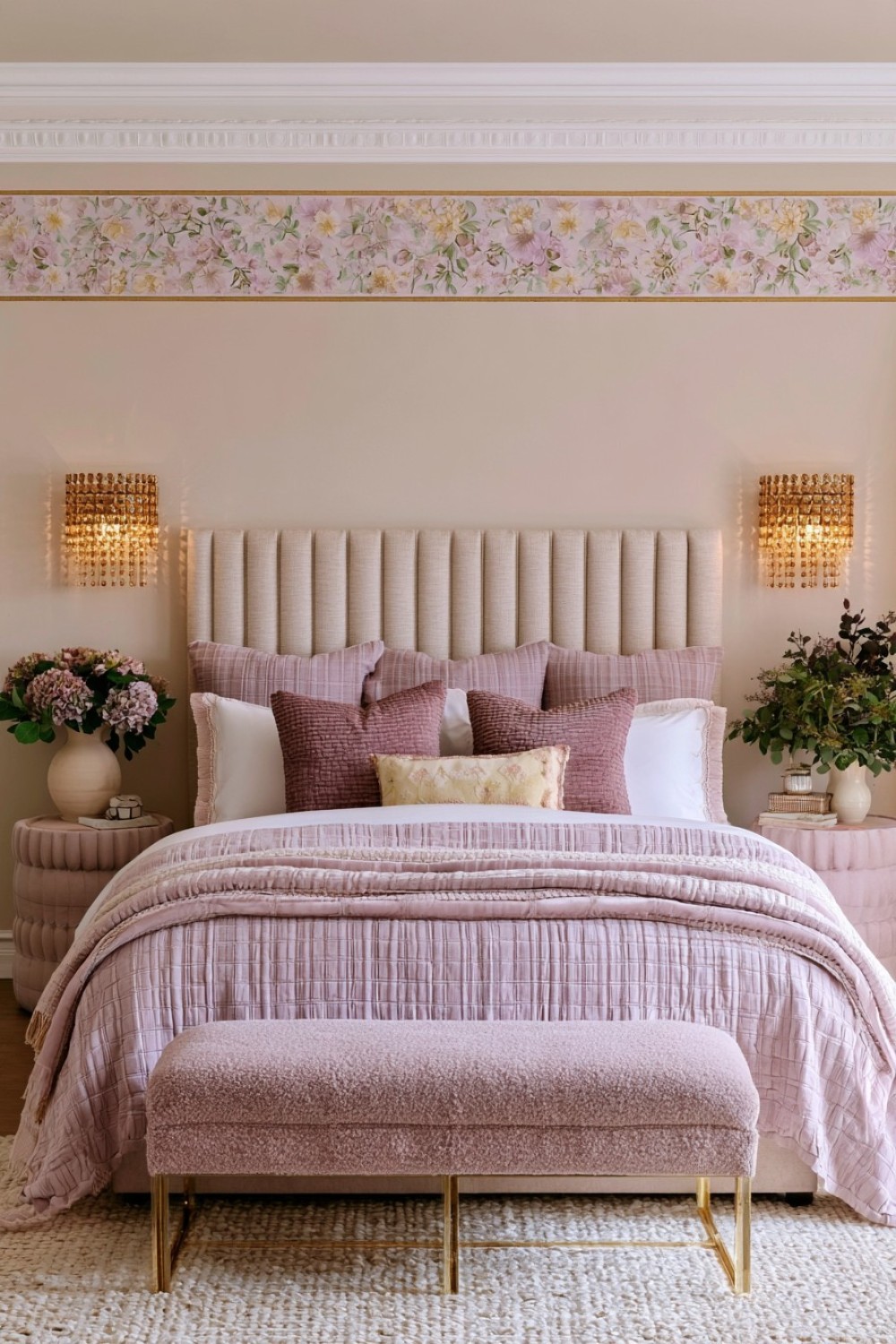
A floral border near the ceiling can draw attention upward while using less pattern than a fully wallpapered wall. Decide whether the border will continue around the entire bedroom or finish within one feature area. Measure the perimeter, subtract openings only when the border will stop at them, and add material for pattern matching and trimming. Check how the design meets in corners before installation, particularly when the motif has a clear direction.
Use painter’s tape or a paper mock-up to test the height. Positioning the border too far below the ceiling can visually divide a low room, while placing it close to existing cornices may create competition. Select muted colors connected to the bedding or wall paint and keep the remaining upper area simple. Painted stencils allow greater control but require consistent alignment; wallpaper borders offer a repeating pattern with their own surface-preparation instructions. Resolve uneven, damp, or loose surfaces first. The finished border should frame the room gently and remain secondary to the bed and main furniture.
MORE IDEAS


Share
What's Your Reaction?
 Like
0
Like
0
 Dislike
0
Dislike
0
 Love
0
Love
0
 Funny
0
Funny
0
 Angry
0
Angry
0
 Sad
0
Sad
0
 Wow
0
Wow
0