15 Southern Traditional Bedroom Ideas for Timeless Style

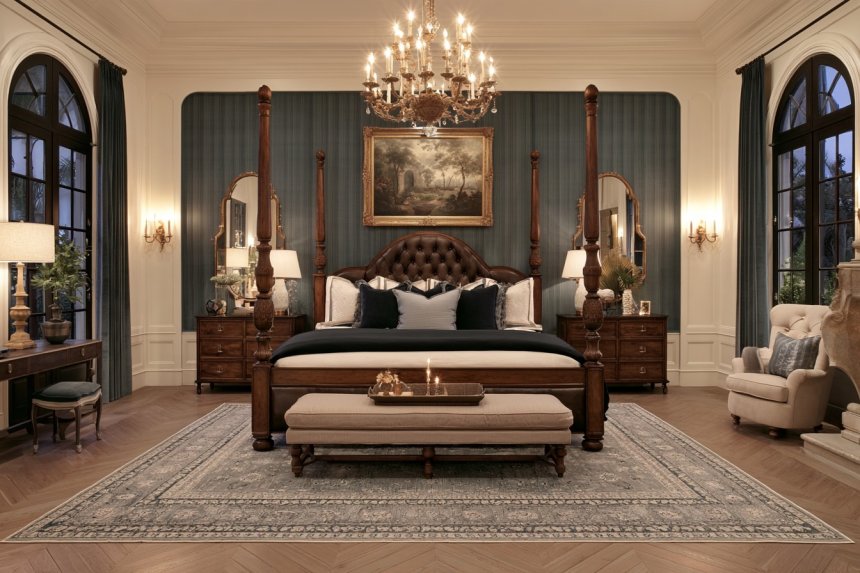
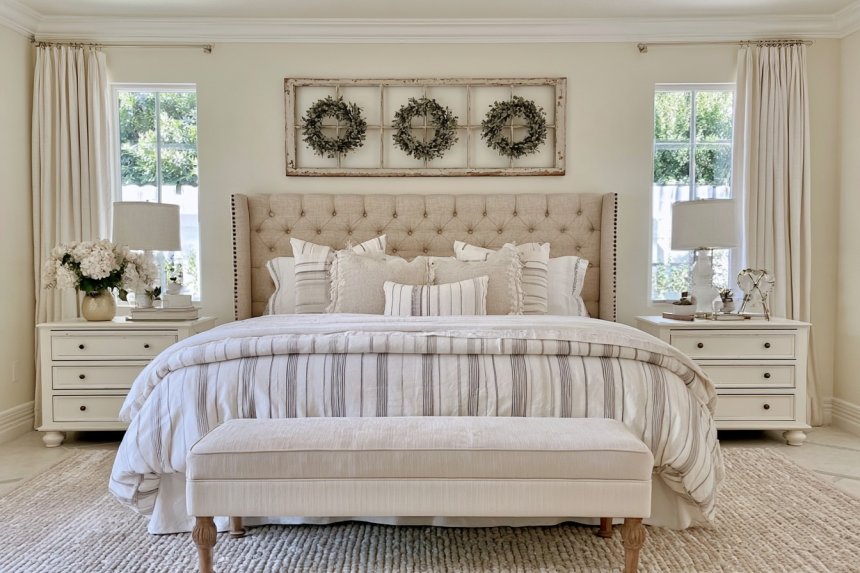
Southern traditional bedroom decor combines formal furniture, comfortable textiles, collected objects, and details that appear to have developed over time. Dark wood, botanical patterns, tailored drapery, blue and white porcelain, monogrammed linens, and inherited-looking accents can all support the style, but they should not compete for attention. Begin with the bed and one dominant furniture finish, then layer pattern and color gradually. Practical considerations such as walkway width, fabric care, lighting, storage, and furniture stability remain just as important as appearance. These ideas show how to create a gracious, welcoming bedroom that references tradition without feeling crowded, overly themed, or disconnected from everyday use.
1. Make a Mahogany Four-Poster Bed the Main Focal Point
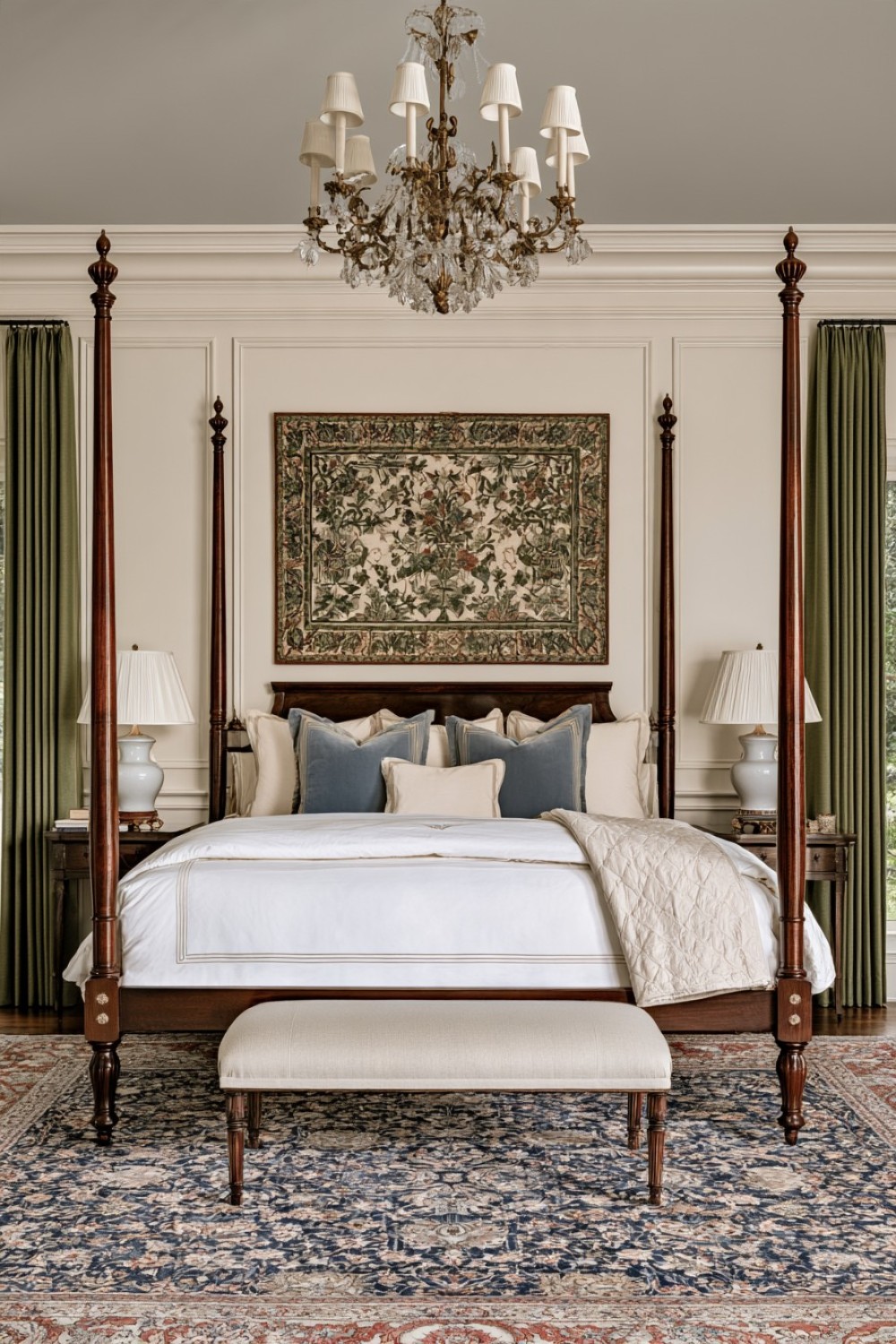
A four-poster bed can establish the room’s traditional character without requiring every other furnishing to be ornate. Position it where the posts will not conflict with ceiling details, lighting, doors, or air vents. Dark mahogany and mahogany-toned finishes look especially balanced against warm white, pale blue, celadon, or softly patterned walls. Keep nearby furniture slightly quieter so the bed remains the intentional centerpiece.
Measure the complete external dimensions of the frame rather than relying only on the mattress size. Four-poster designs may be considerably wider and taller than standard beds and require additional assembly clearance. Confirm that the floor can support the frame and that each joint is stable. Simple white or cream bedding can brighten the dark wood, while one patterned coverlet or pair of decorative pillows introduces color without hiding the bed’s structure.
2. Repeat Blue and White Porcelain in Selected Areas
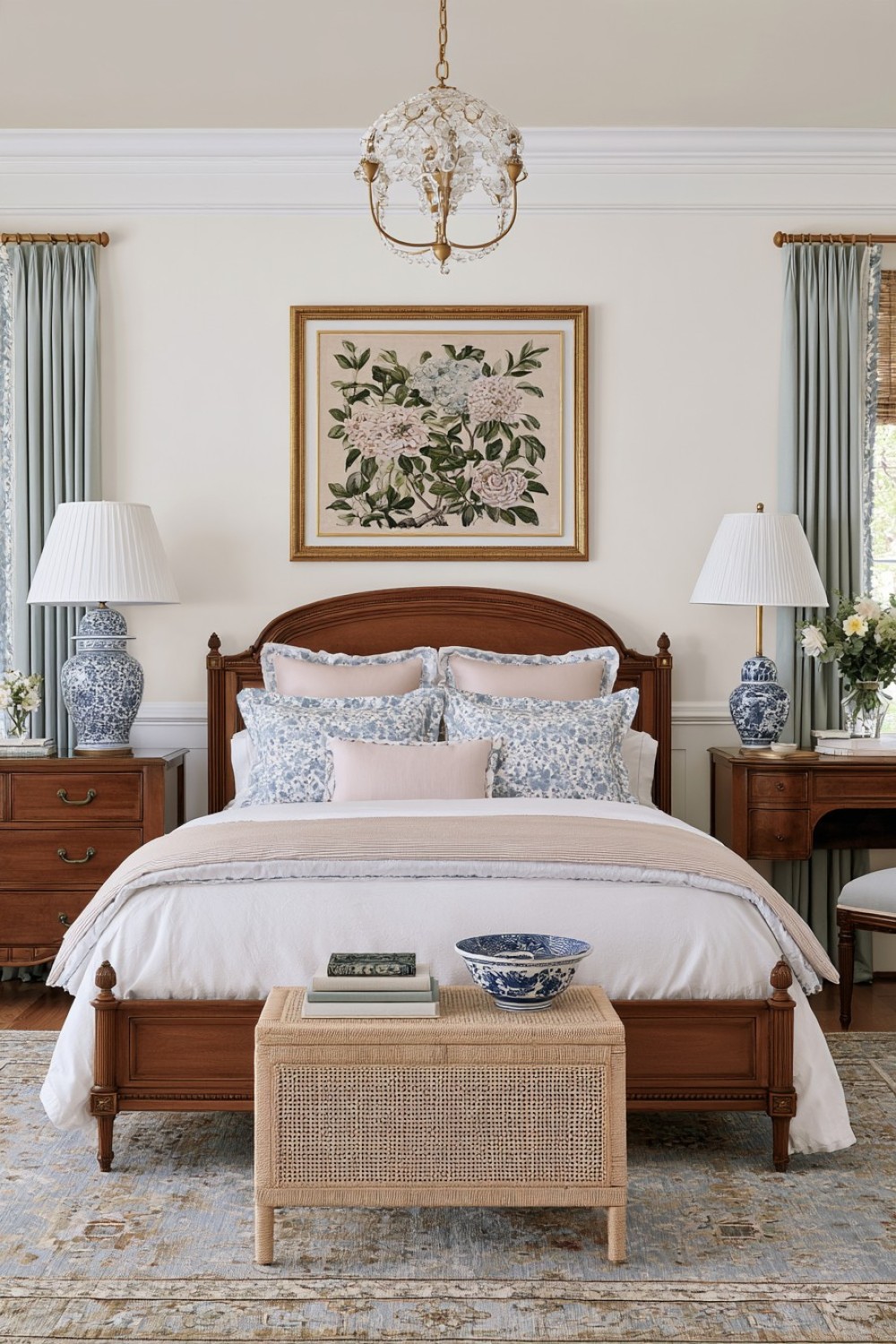
Blue and white porcelain can create continuity when it appears in two or three carefully chosen locations. Use a pair of lamps beside the bed, a covered jar on a chest, or a small dish for jewelry. Varying the shapes while maintaining a related color palette produces a collected appearance. Avoid filling every surface with porcelain, as too many pieces can make the bedroom resemble a formal display.
Place breakable objects away from narrow walkways and furniture edges. Heavy lamps require stable tables, suitable shades, and electrical cords positioned where they cannot be pulled or tripped over. Authentic antiques are not essential; well-proportioned contemporary pieces can provide the same color connection. Repeat a similar blue in a cushion, rug, or artwork so the porcelain feels integrated rather than added as an isolated theme.
3. Use Full-Length Patterned Drapery to Frame the Room
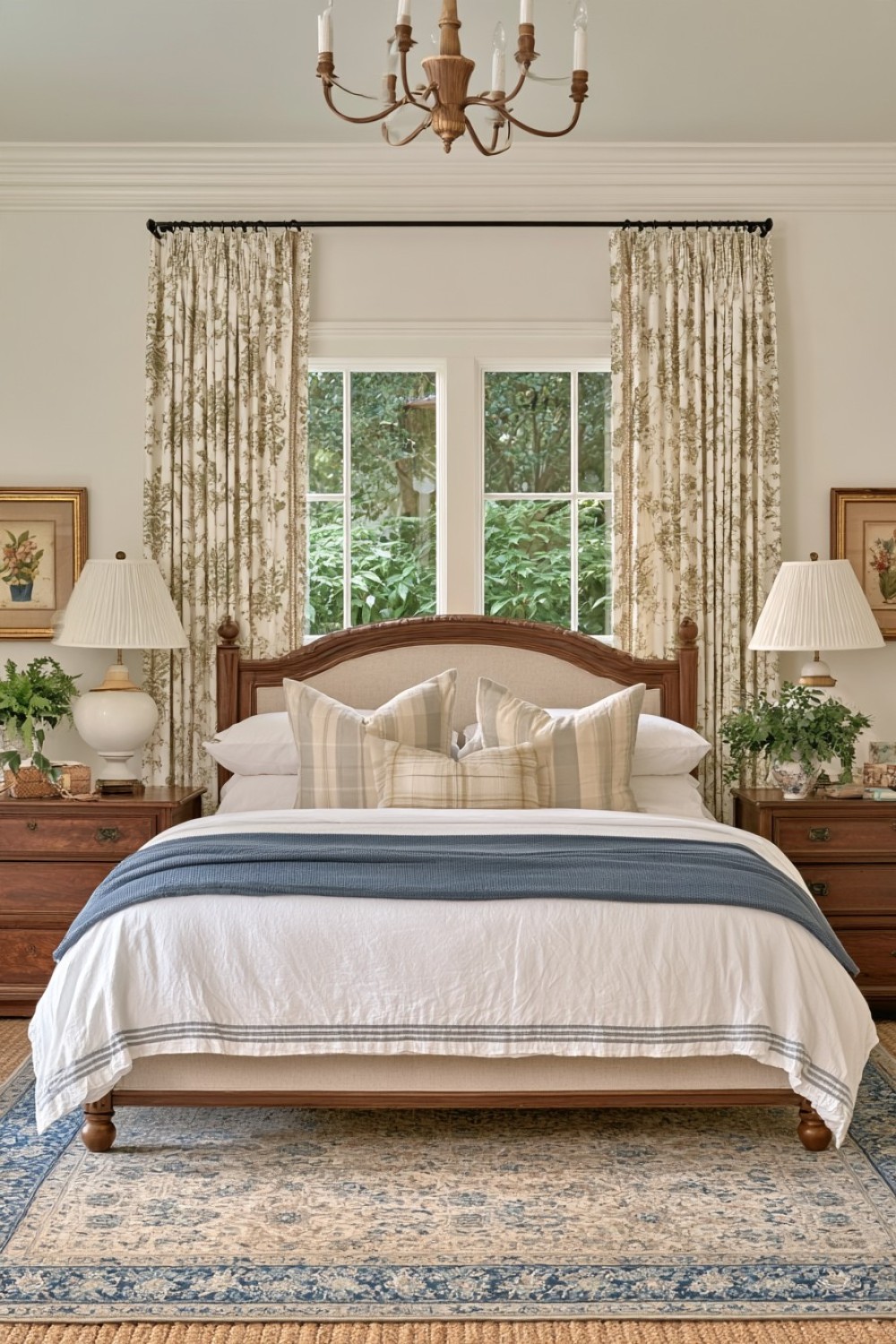
Full-length drapery gives a traditional bedroom softness and helps balance substantial wood furniture. Botanical prints, restrained florals, stripes, and small repeating motifs can all work when their colors connect with the bedding or walls. Mounting the curtain rod above the frame can create a taller visual proportion. The panels should remain wide enough to look full when closed rather than appearing stretched across the opening.
Select lining according to the room’s needs. A light-filtering layer supports daytime privacy, while a separate blackout lining may improve sleep comfort. Keep fabric away from heaters and ensure panels do not obstruct ventilation. Heavy curtains and rods require secure fixings appropriate for the wall structure. Choose washable or professionally cleanable material based on household routines, especially in rooms where dust sensitivity is a concern.
4. Create a Skirted Bedside Table With Tailored Fabric
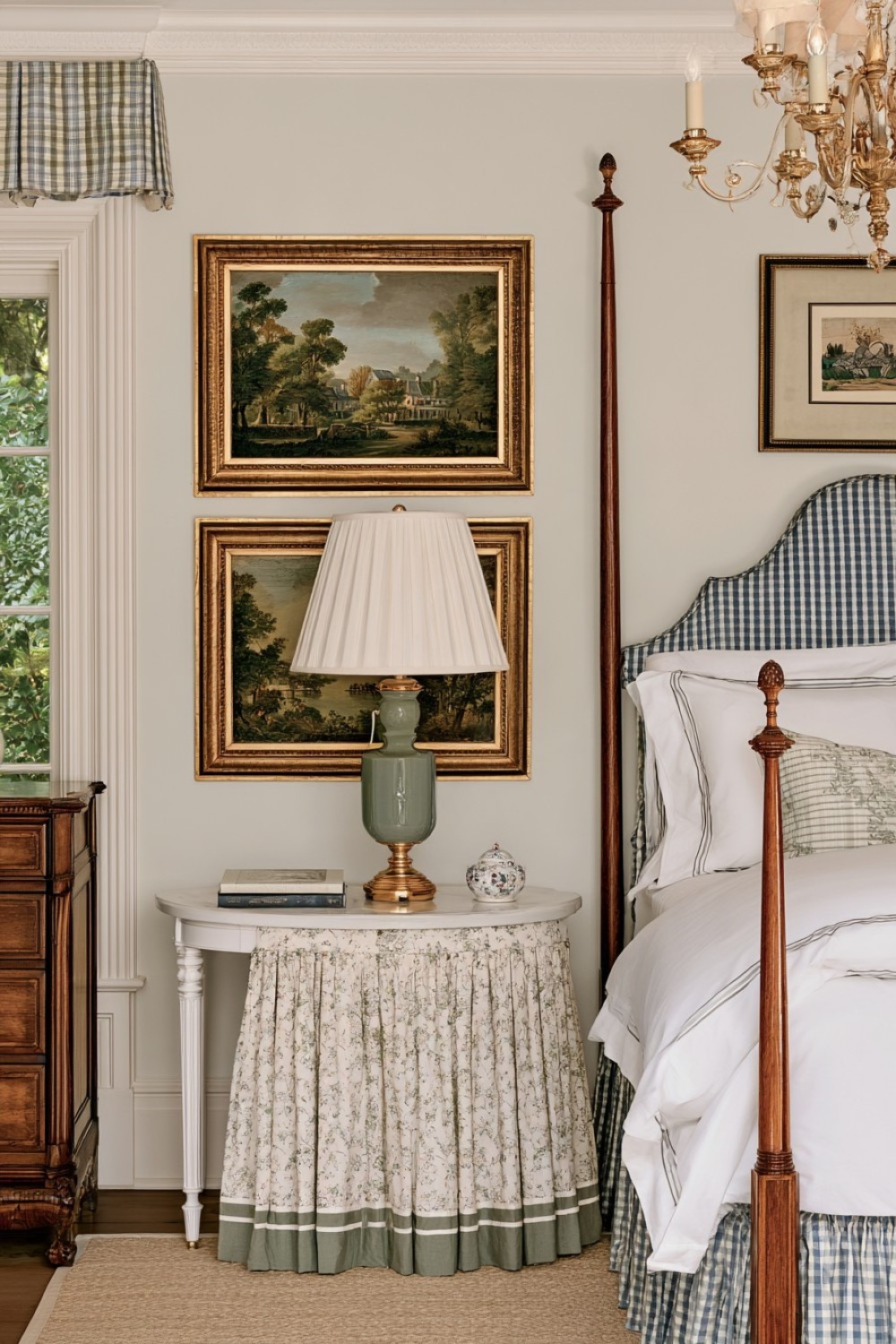
A skirted bedside table introduces pattern and can conceal practical storage beneath a simple round or rectangular surface. Use a tailored pleat rather than excessive gathering for a cleaner interpretation of Southern style. The fabric may repeat the drapery pattern or use a smaller coordinating stripe. A protective glass or wipeable top can provide a stable surface for a lamp and drinking glass.
Keep the skirt slightly above the floor so it does not collect dust or interfere with cleaning. Provide easy access to anything stored underneath rather than creating a hidden area that becomes cluttered. Electrical cords should not be trapped beneath fabric, and the table must remain stable under the lamp’s weight. Removable fabric attached with hook-and-loop tape makes laundering or future replacement more manageable.
5. Introduce Chintz Through One Statement Chair
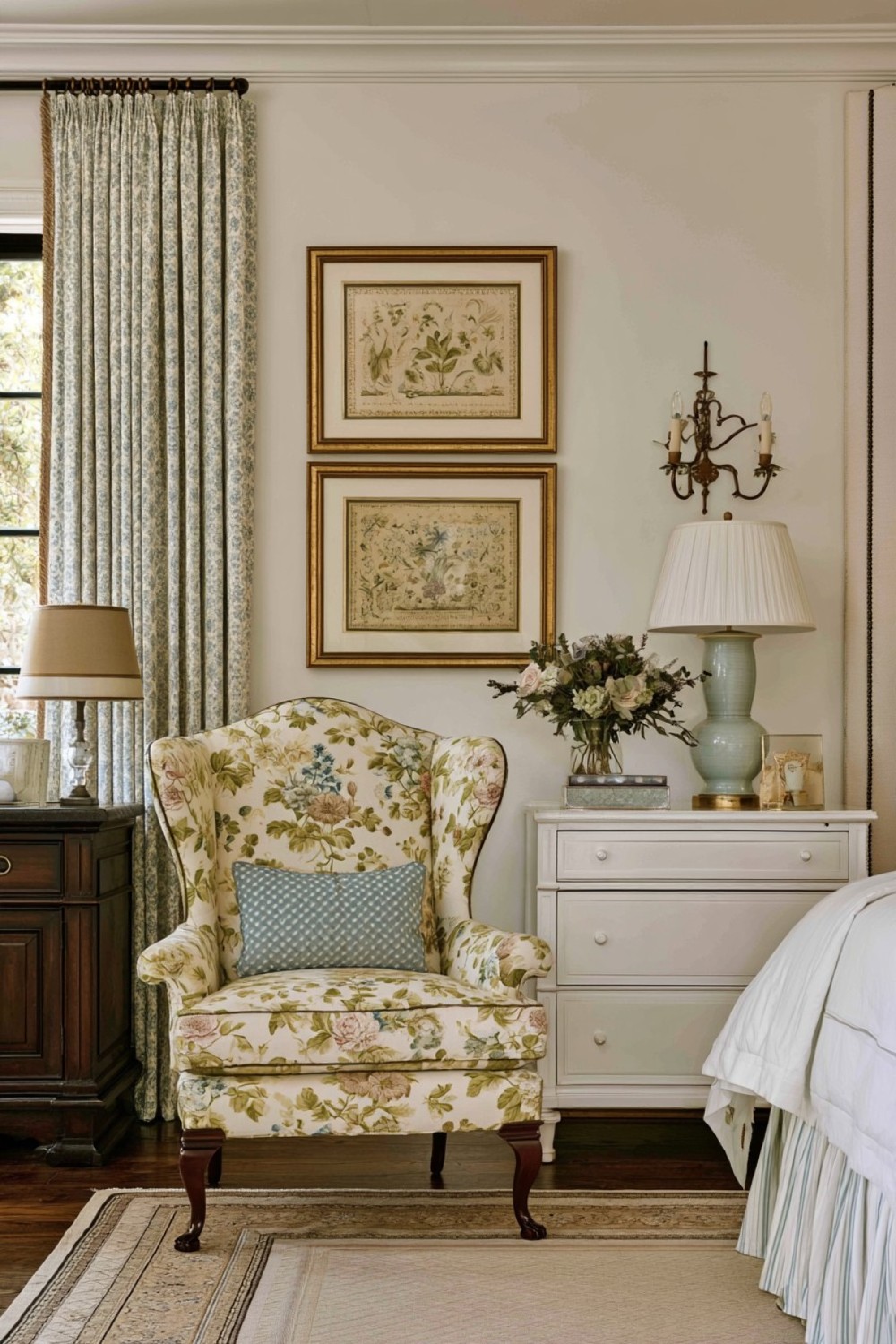
A single chintz-covered chair can provide enough floral pattern to shape the room’s character. Position it in a reading corner or beside a small table where it has a useful purpose. Choose a pattern containing at least one color already present in the room, such as the wall shade, rug, or bedding. Keeping larger surrounding surfaces relatively quiet allows the chair to feel intentional instead of overly decorative.
Comfort and condition should guide the purchase. Check seat depth, cushion support, frame stability, and upholstery wear before selecting a vintage or secondhand chair. Older filling may need professional replacement, while delicate fabric may not suit frequent use. If committing to full upholstery feels impractical, use a plain chair with one chintz cushion or a removable slipcover that can be cleaned more easily.
6. Place a Federal-Style Mirror Above an Antique Chest
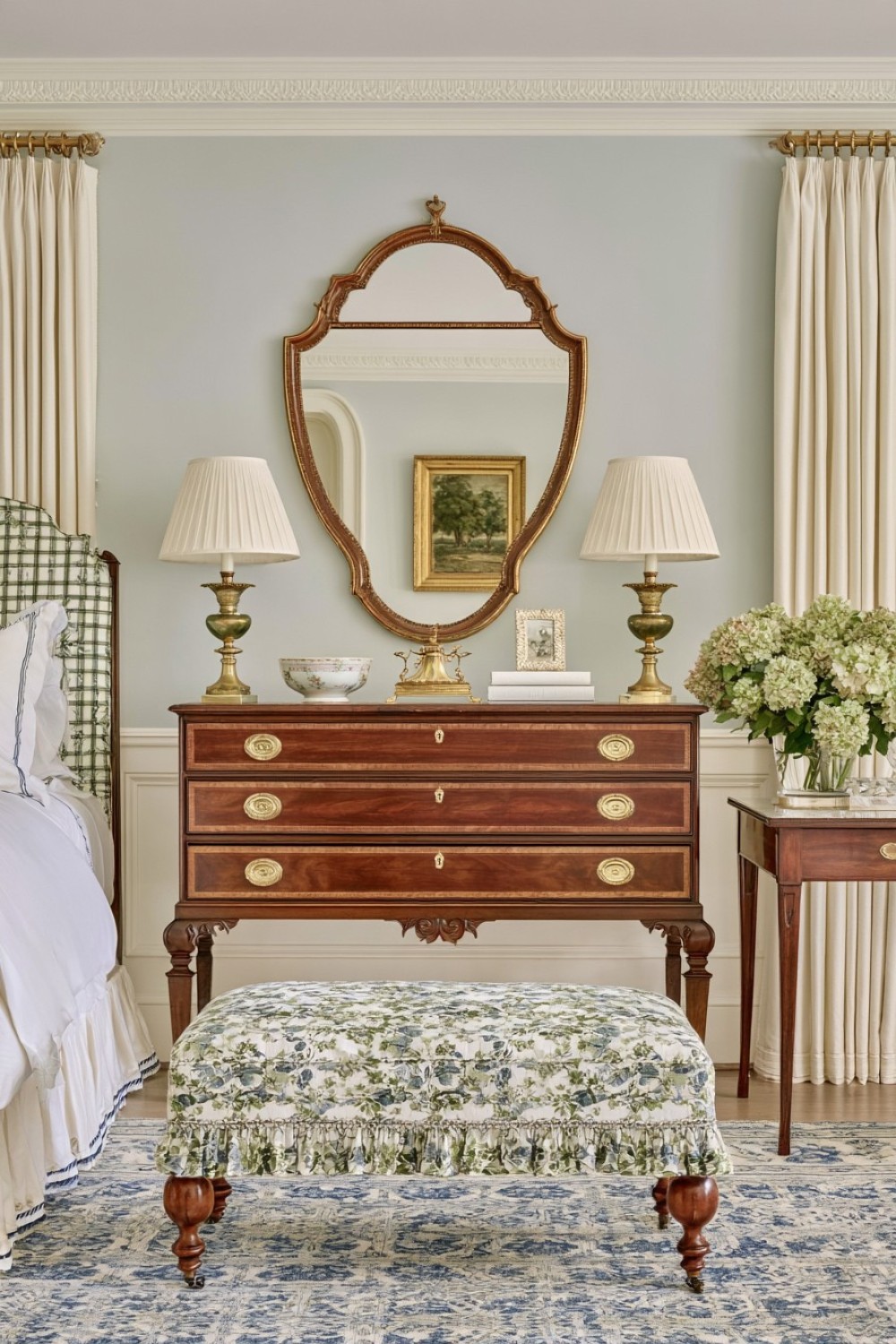
A Federal-style mirror can give a plain chest or dresser a more formal presence through its symmetrical shape and restrained ornament. Choose a mirror narrower than the furniture beneath it so the two pieces appear visually connected. A mahogany, dark cherry, antique gold, or painted frame can work depending on the room’s dominant finishes. Keep the chest surface edited with a tray, lamp, or one small decorative object.
Use wall fixings rated for the mirror’s weight and appropriate for the wall material. Heavy antique mirrors should not rely on a lightweight picture hook. Secure the chest to the wall if tipping is possible, particularly in homes with children. Position the mirror where it reflects a calm part of the room rather than exposed storage or strong glare. Inspect older silvering and frames carefully before cleaning them.
7. Personalize the Bed With Monogrammed Linens
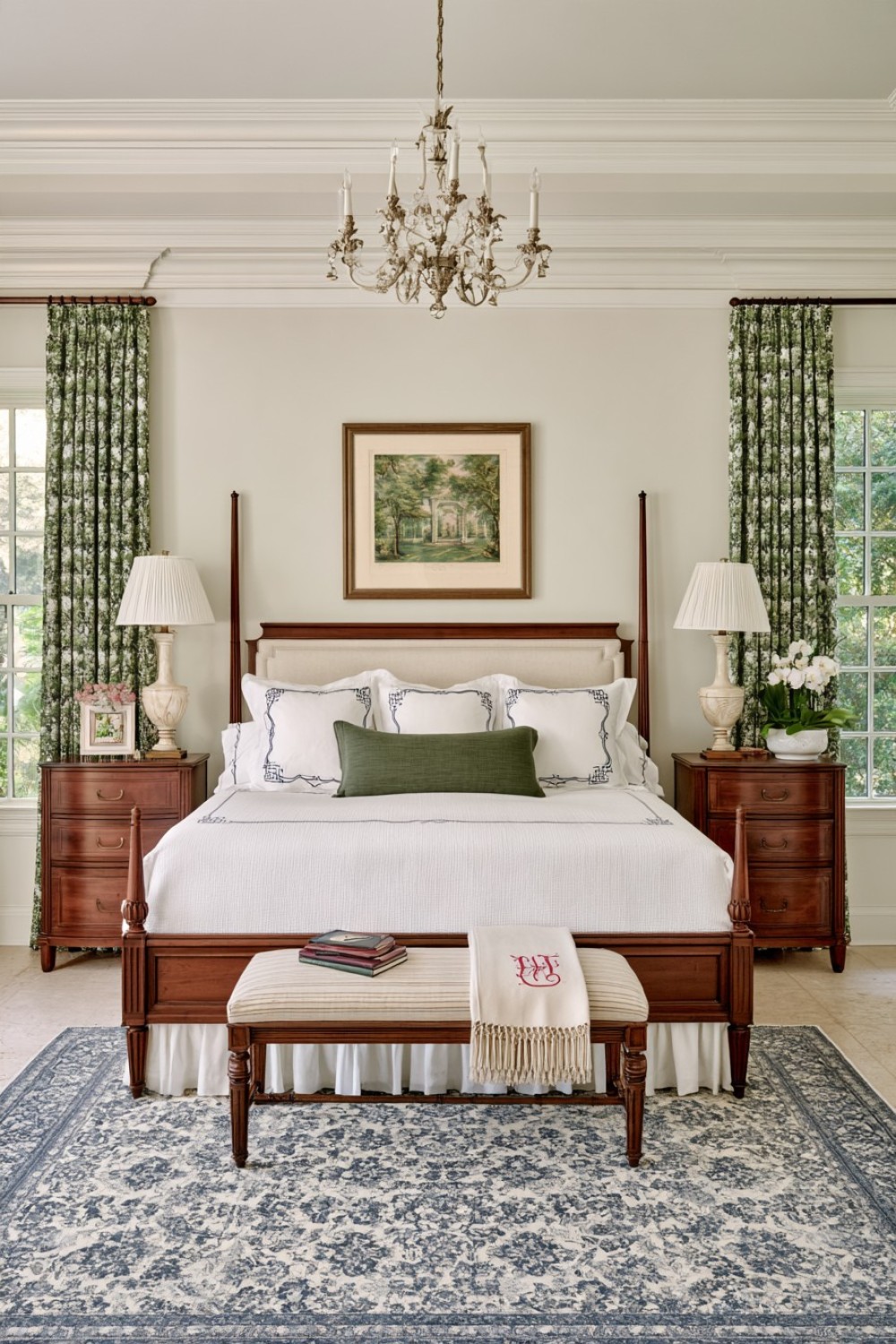
Monogrammed pillowcases, shams, or a folded coverlet can add a personal detail without changing the room’s larger furnishings. Limit the monogram to one visible layer so the result remains refined. White or cream cotton with navy, sage, burgundy, or tonal embroidery works well in a Southern traditional setting. A simple serif or script style generally ages more gracefully than an excessively elaborate design.
Consider how frequently the item will be laundered before choosing thread, placement, and fabric. Dense embroidery may feel uncomfortable on the sleeping surface, making decorative shams a practical location. Follow the care instructions to prevent shrinking or puckering around the stitched area. For a guest bedroom, a neutral decorative motif or the household’s initials may feel more appropriate than personalizing the linens for one visitor.
8. Display Botanical Prints in Matching Narrow Frames
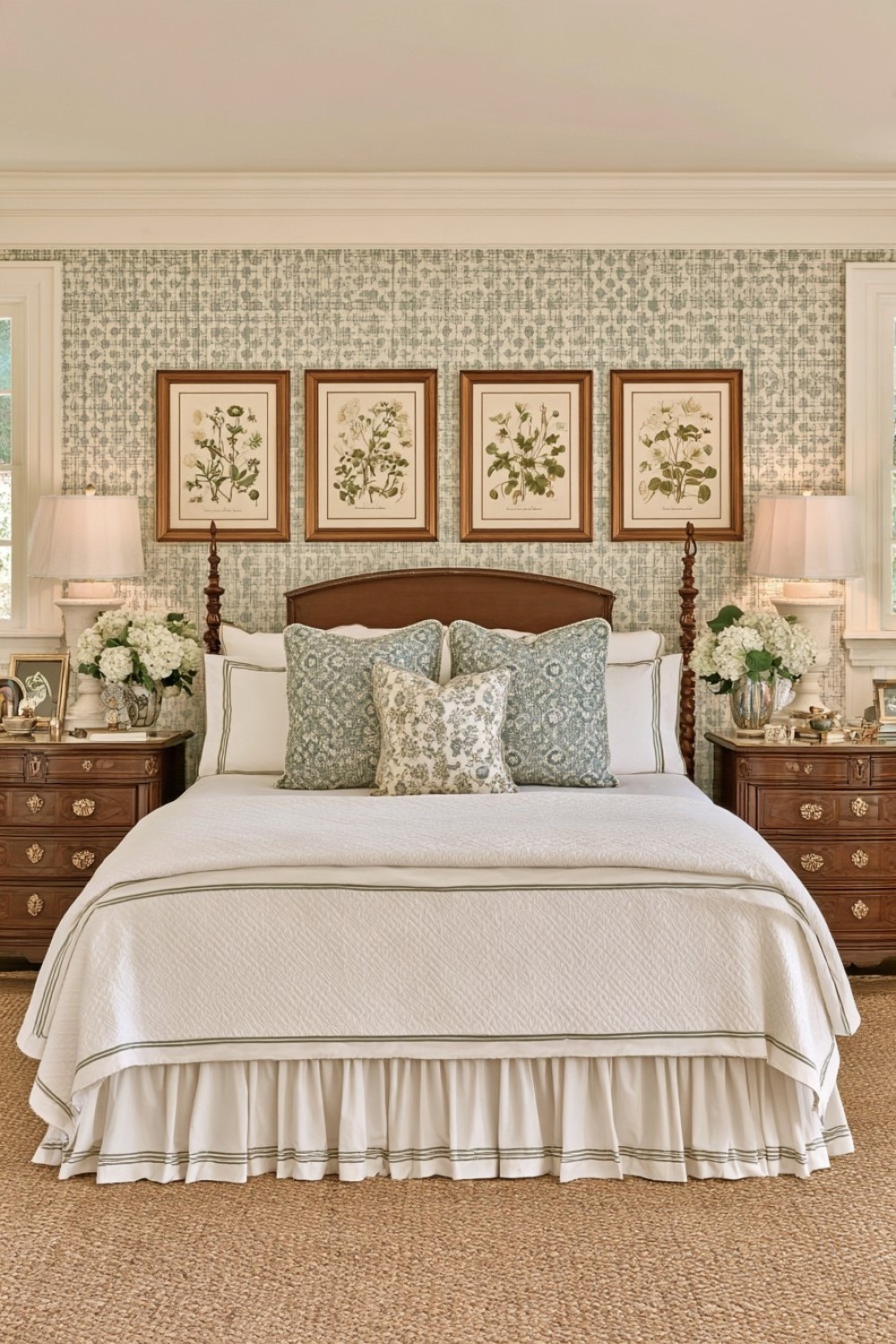
A series of botanical prints can introduce natural color and traditional detail without relying on a large piece of artwork. Arrange two to four related images in matching narrow frames above a dresser, reading chair, or long empty wall. Consistent spacing keeps the collection orderly, while varied plant subjects prevent it from feeling repetitive. Select artwork whose background and colors complement the room rather than competing with patterned textiles.
Plan the entire arrangement on the floor or with paper templates before making holes. Use glazing appropriate for the location and avoid hanging glass-fronted frames where they could be knocked easily. Vintage illustrations should be sourced legally or selected from public-domain collections. Keep valuable originals away from conditions that may cause fading or humidity damage; high-quality reproductions are often more practical for everyday decoration.
9. Add a Needlepoint Bench as a Heritage Accent
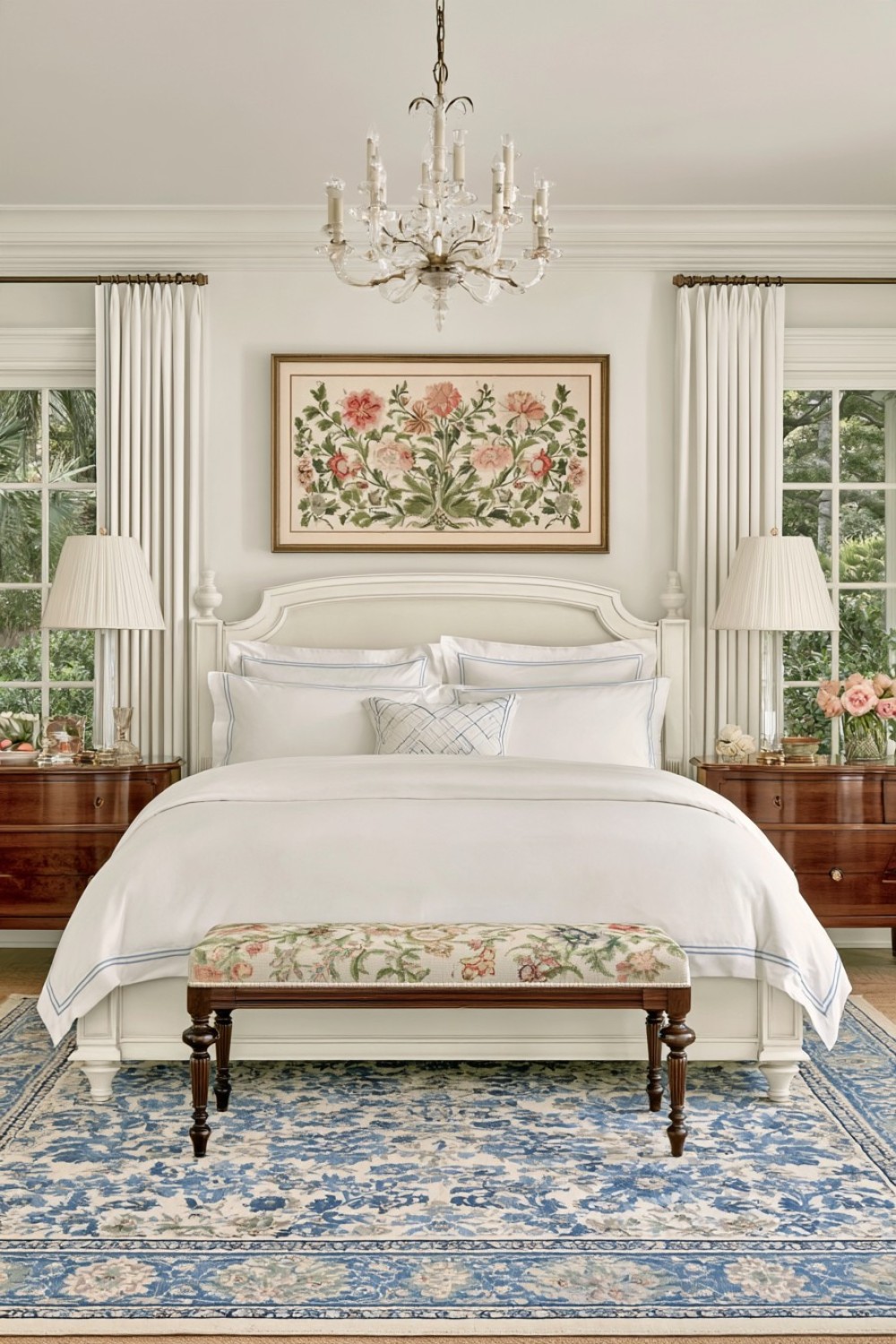
A needlepoint bench at the foot of the bed can introduce handcrafted texture while providing somewhere to sit or place a folded coverlet. Choose a pattern that repeats the room’s existing colors in a smaller scale. The bench should be narrower than the bed and leave enough clearance for walking around it. In a compact room, position it against a wall instead of forcing it into a restricted passage.
Examine vintage needlepoint for worn threads, stains, odors, loose trim, and weakened padding. Delicate examples may be better treated as decorative furniture than used for luggage or daily seating. Confirm that the frame and joints remain stable before applying weight. A contemporary bench upholstered with needlepoint-inspired fabric can offer a similar appearance with greater durability and easier maintenance.
10. Pair Dark Wood Furniture With Pale Celadon Walls
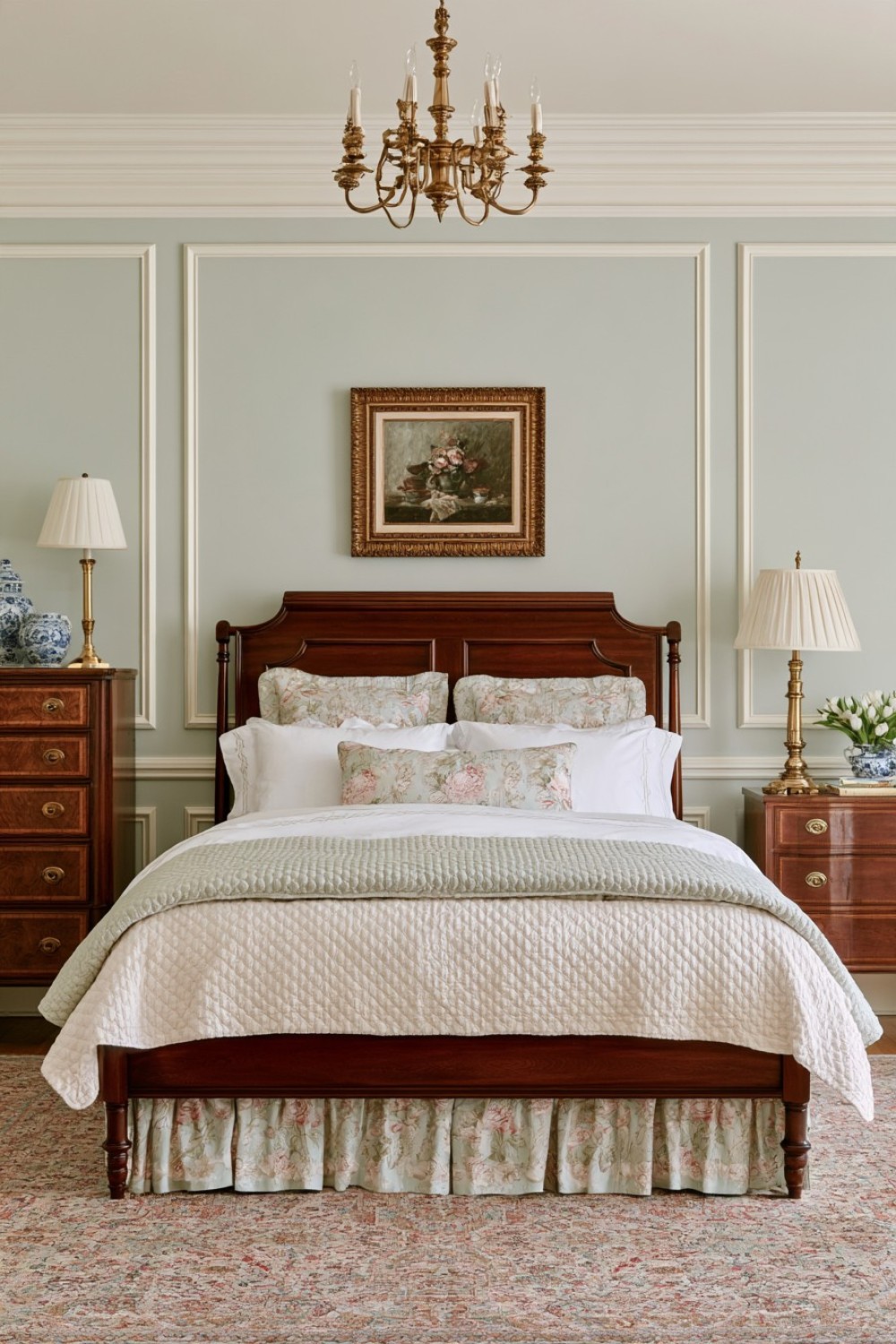
Pale celadon green provides a softer background for mahogany, walnut, and dark cherry furniture than bright white. Its muted undertone can connect wood, blue and white porcelain, botanical prints, and cream textiles in one balanced palette. Test several green samples because some celadon shades lean blue while others appear warmer and grayer. Observe them beside the furniture during both daylight and artificial light.
Use a washable low-sheen wall paint suitable for bedrooms and prepare the surface carefully before applying pale color. Large dark furniture can still make a small room feel heavy, so avoid placing tall pieces on every wall. Break up the wood with lighter bedding, an open section of wall, and a moderately sized rug. Mixing a small amount of painted furniture can also prevent the room from resembling a matching showroom set.
11. Add a Small Writing Desk With a Cane Chair
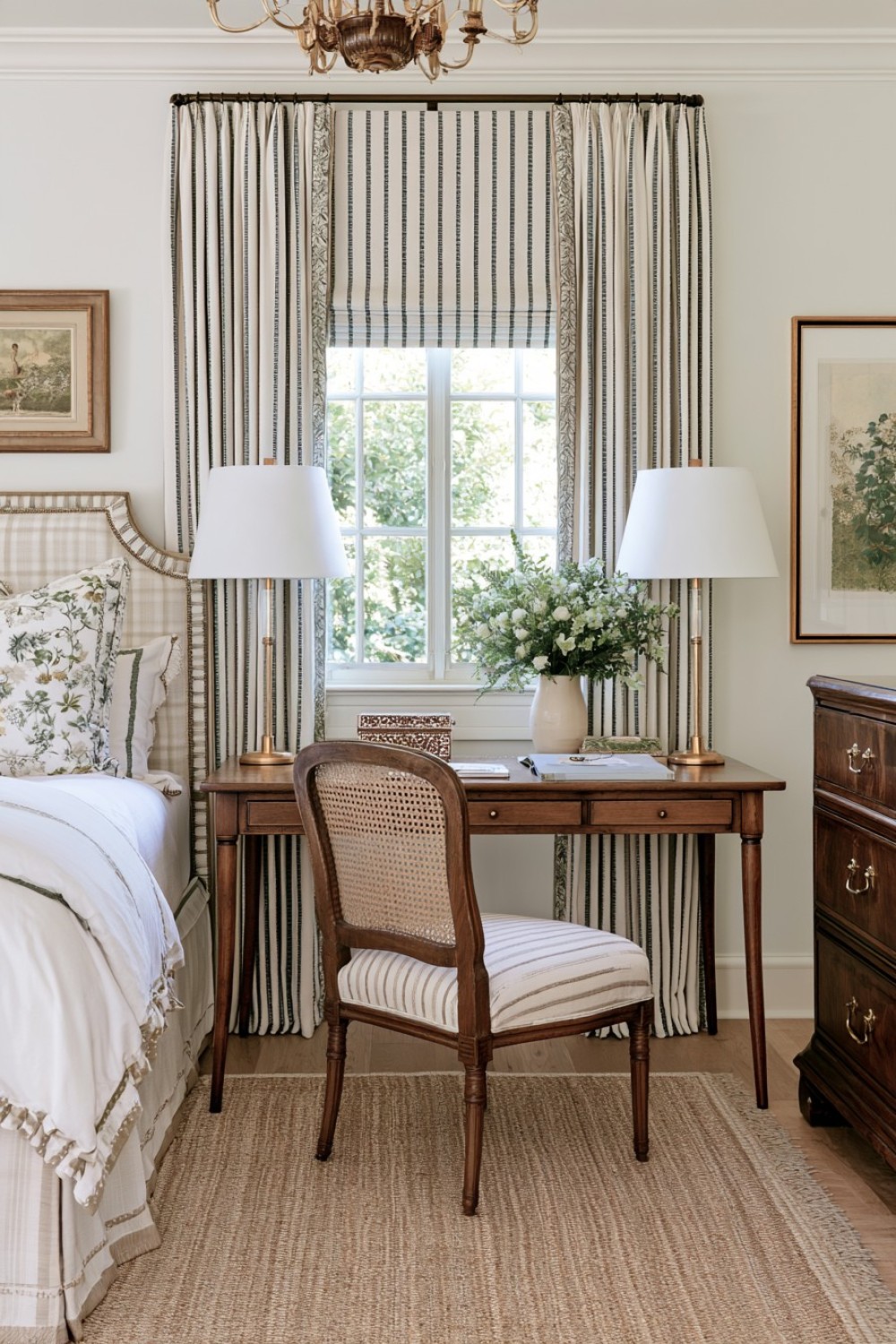
A narrow writing desk gives the bedroom a useful surface for reading, correspondence, or occasional laptop work. Pairing it with a cane chair lightens the appearance of dark furniture and introduces traditional texture. Select a desk with one or two discreet drawers so stationery and charging cables can be put away. Keep the surface simple with a lamp, small tray, and only the items used regularly.
Check that the chair height works with the desk and that the cane seat remains supportive. Vintage cane may become brittle or develop broken strands that require repair. Place electrical cords where they cannot cross a walkway, and avoid overloading old desks with heavy equipment. If the bedroom is compact, the desk can double as a dressing table when paired with a securely mounted mirror.
12. Soften Traditional Furniture With Pleated Lampshades
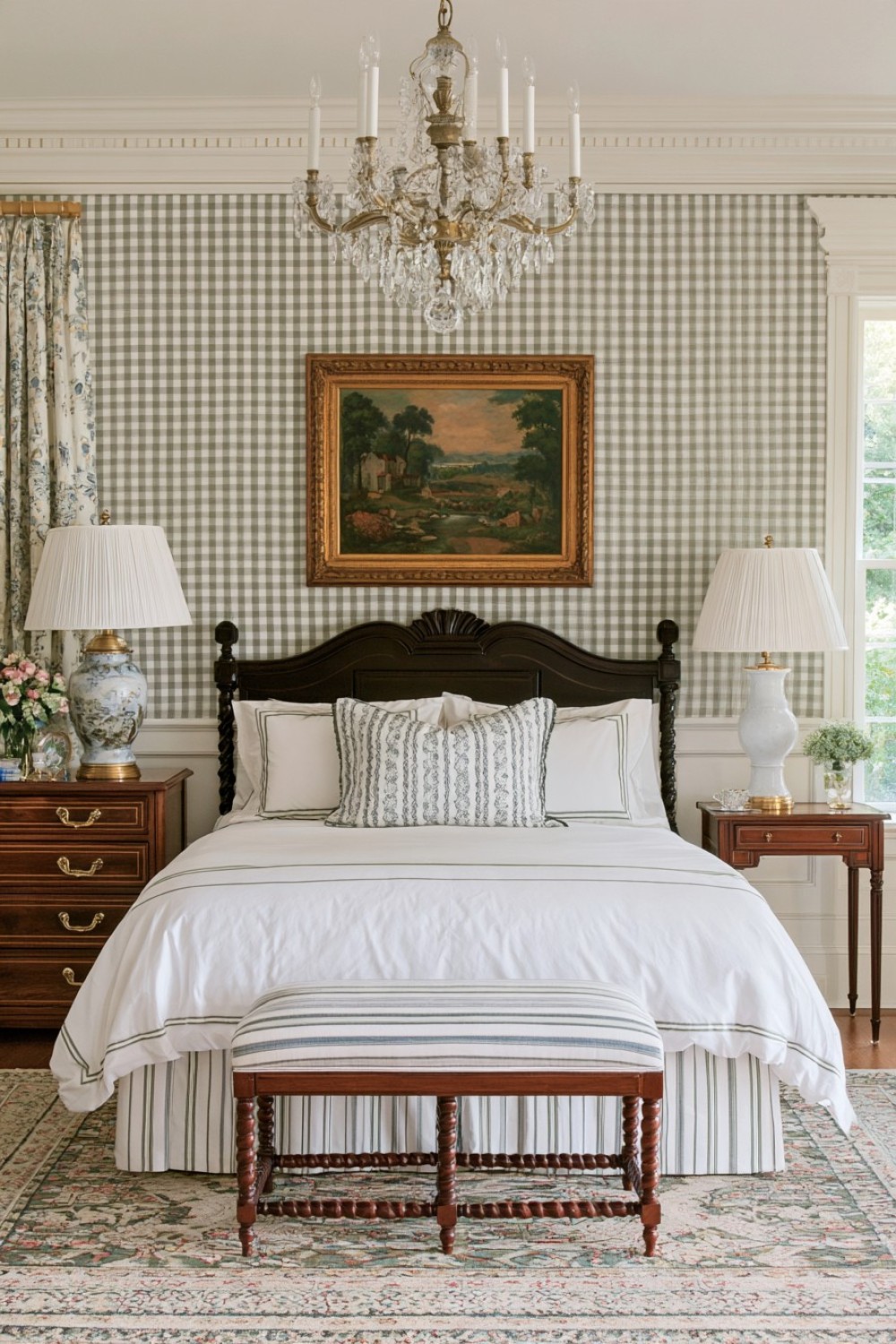
Pleated fabric lampshades introduce pattern and softness at eye level without requiring new furniture. Small stripes, botanical motifs, and gathered solid fabrics can work, provided the shade remains proportional to the lamp base. Matching shades create symmetry on bedside tables, while related but different fabrics can support a more collected appearance. The emitted light should still be sufficient for comfortable reading.
Use the bulb type and maximum wattage specified for the lamp and shade. Fabric must remain safely separated from the bulb and ventilation openings. Dust pleated shades gently with a soft brush attachment because folds collect more debris than smooth surfaces. Check plugs, cables, switches, and fittings on vintage lamps before use, and have questionable electrical components inspected by a qualified professional.
13. Frame the Bed With Traditional Wall Molding
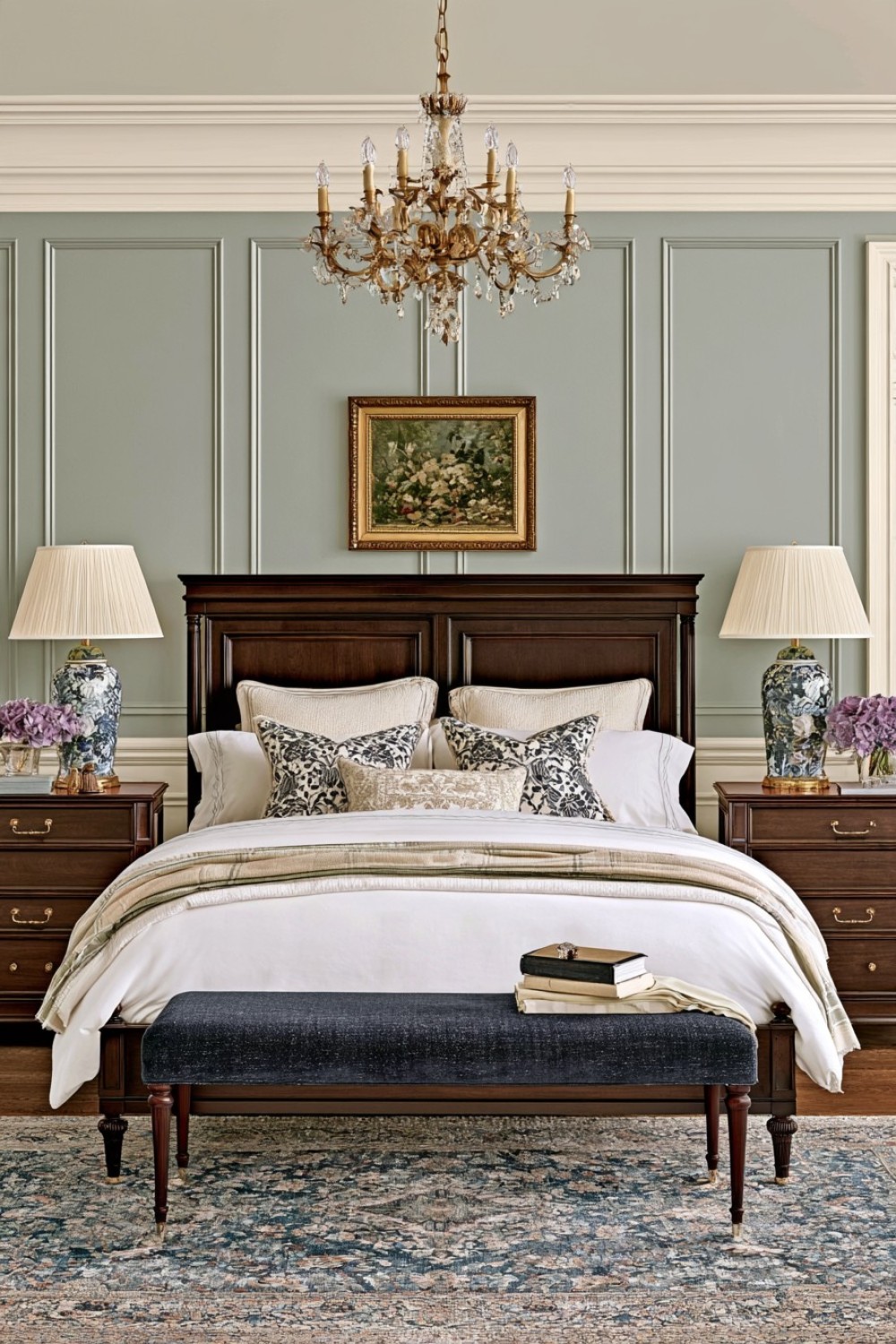
Simple wall molding can give the bed area greater architectural presence without adding another pattern. Create one large rectangular frame behind the headboard or use balanced panels across the entire wall. Painting the molding and wall in the same color produces subtle depth, while a restrained tonal contrast highlights the geometry. Align the design with the bed, bedside tables, and visible wall edges.
Use a level and paper plan to confirm proportions before cutting material. Check walls for electrical cables, pipes, and uneven surfaces before nailing or drilling. Lightweight removable molding may be more suitable for renters when applied according to property rules. Avoid overly complex panel arrangements in a small room, where too many narrow divisions can compete with furniture and make the wall feel busier.
14. Style an Heirloom Chest With Silver and Family Objects
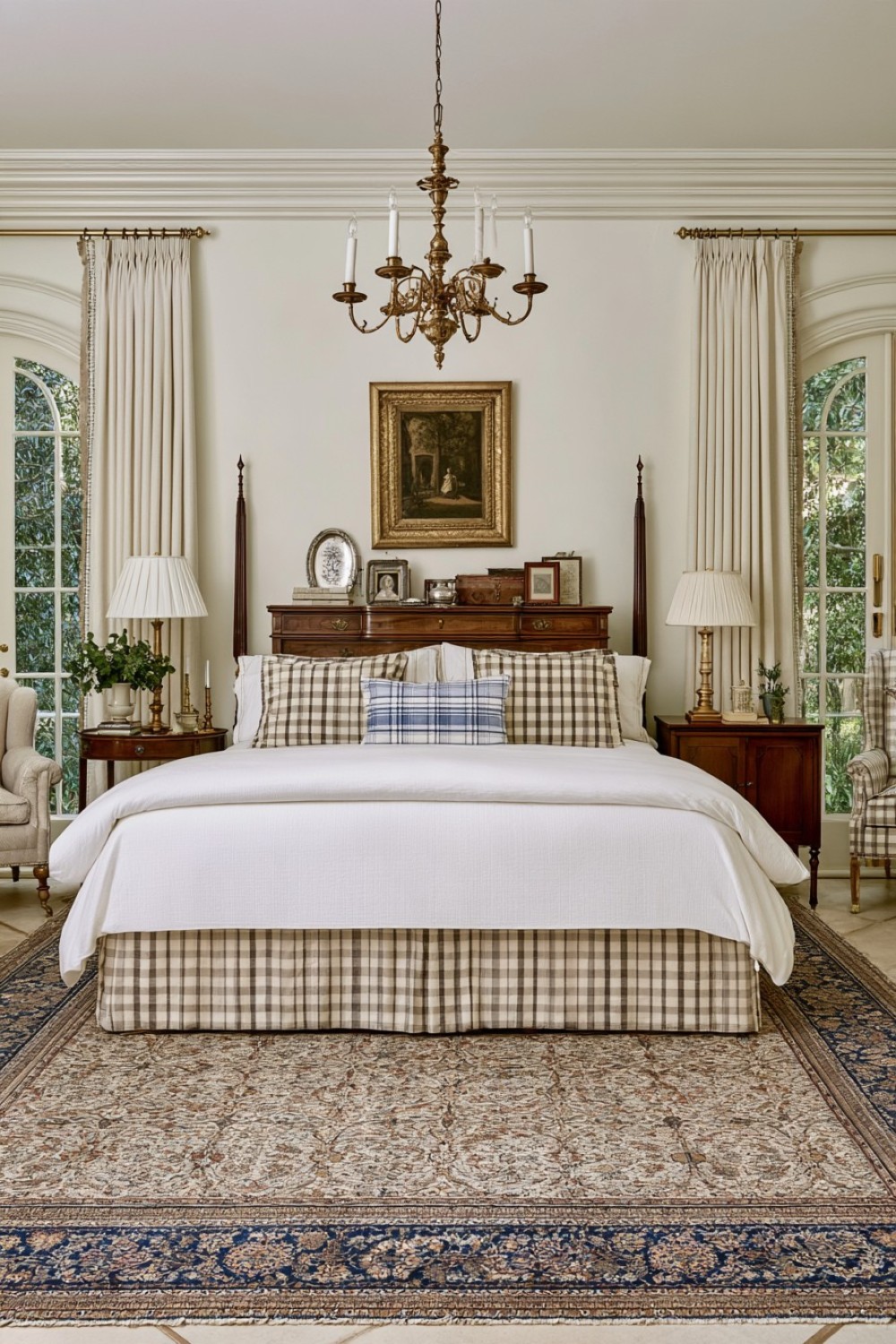
An inherited or antique-style chest can hold meaningful objects while providing practical bedroom storage. Arrange a restrained group containing a silver tray, framed photograph, small box, or ceramic piece at different heights. Leave enough empty surface visible to appreciate the furniture itself. Items do not need to be valuable antiques; objects connected to family history or personal travel can make the display more authentic.
Protect the chest with felt pads beneath metal and ceramic objects. Silver may tarnish and can react with certain surfaces or cleaning products, so follow appropriate care guidance. Secure heavy furniture against tipping and use internal storage for lightweight linens rather than overloading old drawers. Valuable documents, fragile heirlooms, and irreplaceable photographs should be stored under conditions appropriate for long-term preservation.
15. Finish the Bed With a Tailored Valance and Coordinating Trim
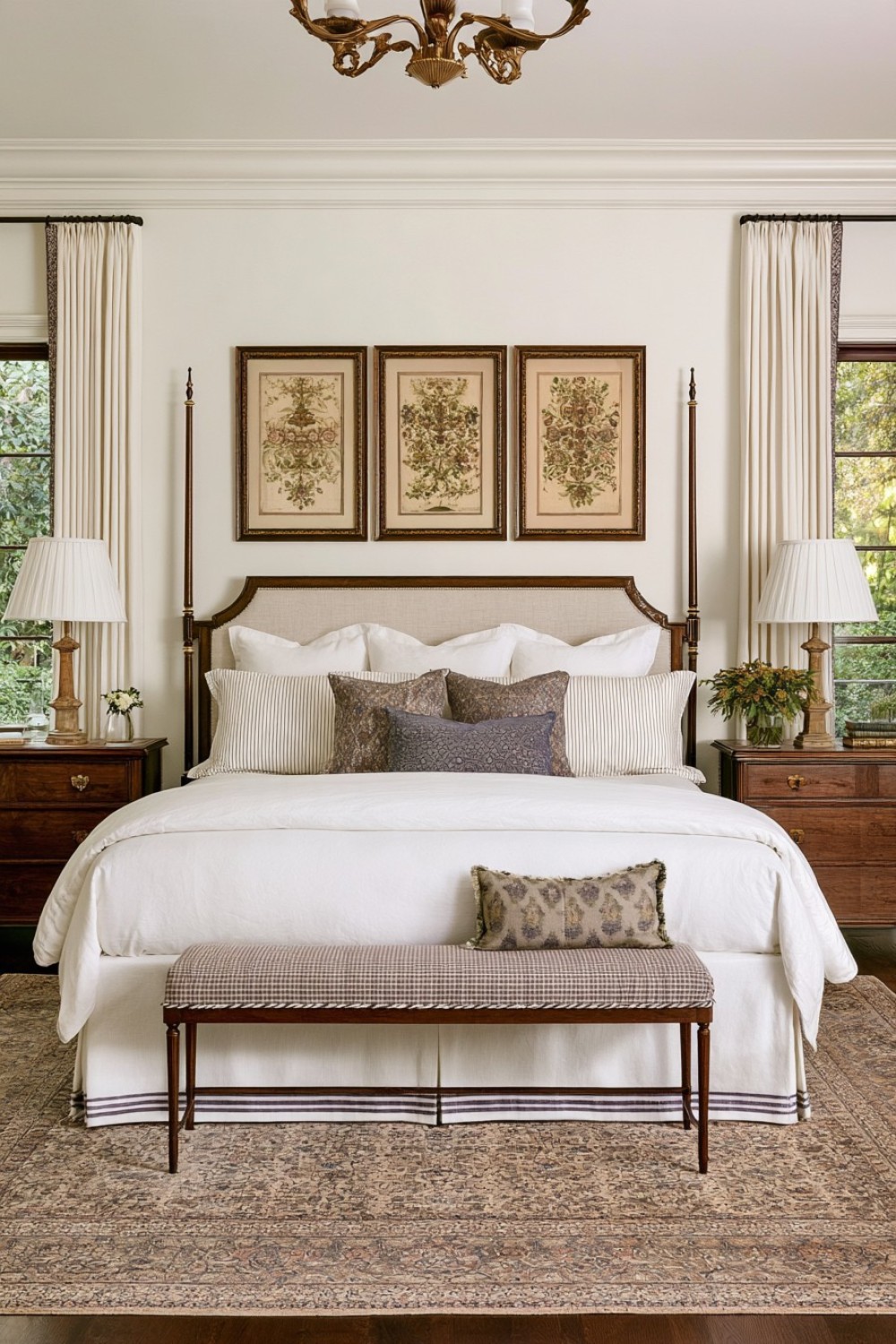
A tailored bed valance conceals the frame and can provide the final layer in a traditional bedroom. Use structured pleats rather than excessive gathering, particularly when the drapery and chair already contain pattern. The valance may match the headboard, repeat a curtain color, or use a quiet stripe with contrasting trim. Its proportions should relate to the distance between the bed base and floor.
Measure after the mattress and frame are fully assembled so the finished hem sits just above the floor. Fabric resting on the floor gathers dust and may interfere with vacuuming. A removable valance is easier to launder and provides access to any approved under-bed storage. Avoid loose cords, beads, or trims that can snag. Keeping the upper bedding relatively simple will allow this final tailored detail to look deliberate rather than excessive.
MORE IDEAS


Share
What's Your Reaction?
 Like
0
Like
0
 Dislike
0
Dislike
0
 Love
0
Love
0
 Funny
0
Funny
0
 Angry
0
Angry
0
 Sad
0
Sad
0
 Wow
0
Wow
0