15 Eclectic Bedroom Details for a Layered, Personal, and Restful Space

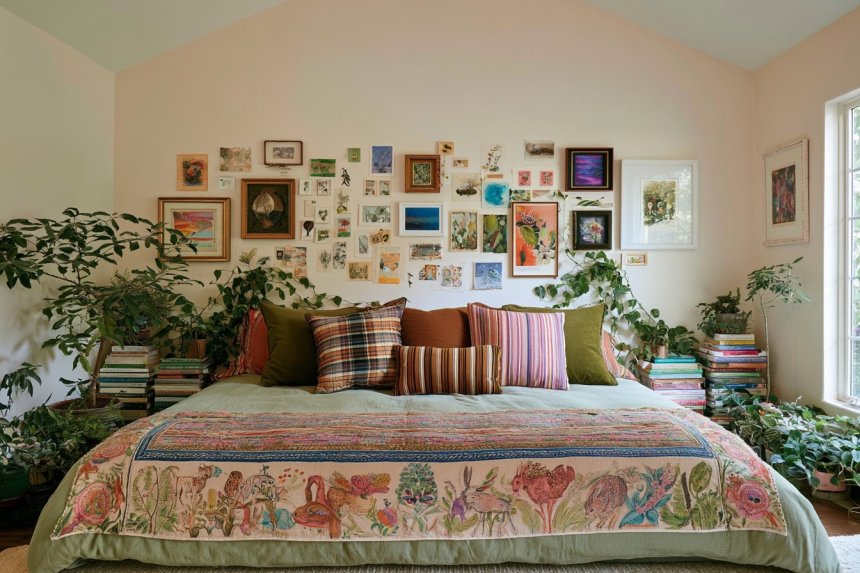
An eclectic bedroom combines furniture, colors, patterns, and objects from different periods without requiring every element to match. The strongest rooms still have a clear structure. A repeated color, wood tone, material, or shape can connect otherwise different pieces, while quieter surfaces give detailed textiles and artwork room to stand out. Begin with the bed and essential storage before adding decorative layers.
Practical considerations prevent a collected room from becoming cluttered. Preserve clear routes around the bed, keep heavy objects securely mounted, use washable bedding, and inspect vintage furniture before bringing it into a sleeping space. Rugs need stable placement, old lamps may require electrical assessment, and textiles should remain away from heat sources. These eclectic bedroom approaches show how contrasting elements can create character while supporting comfort, maintenance, storage, and a calmer place to rest.
1. Build the Room Around One Oversized Vintage Headboard
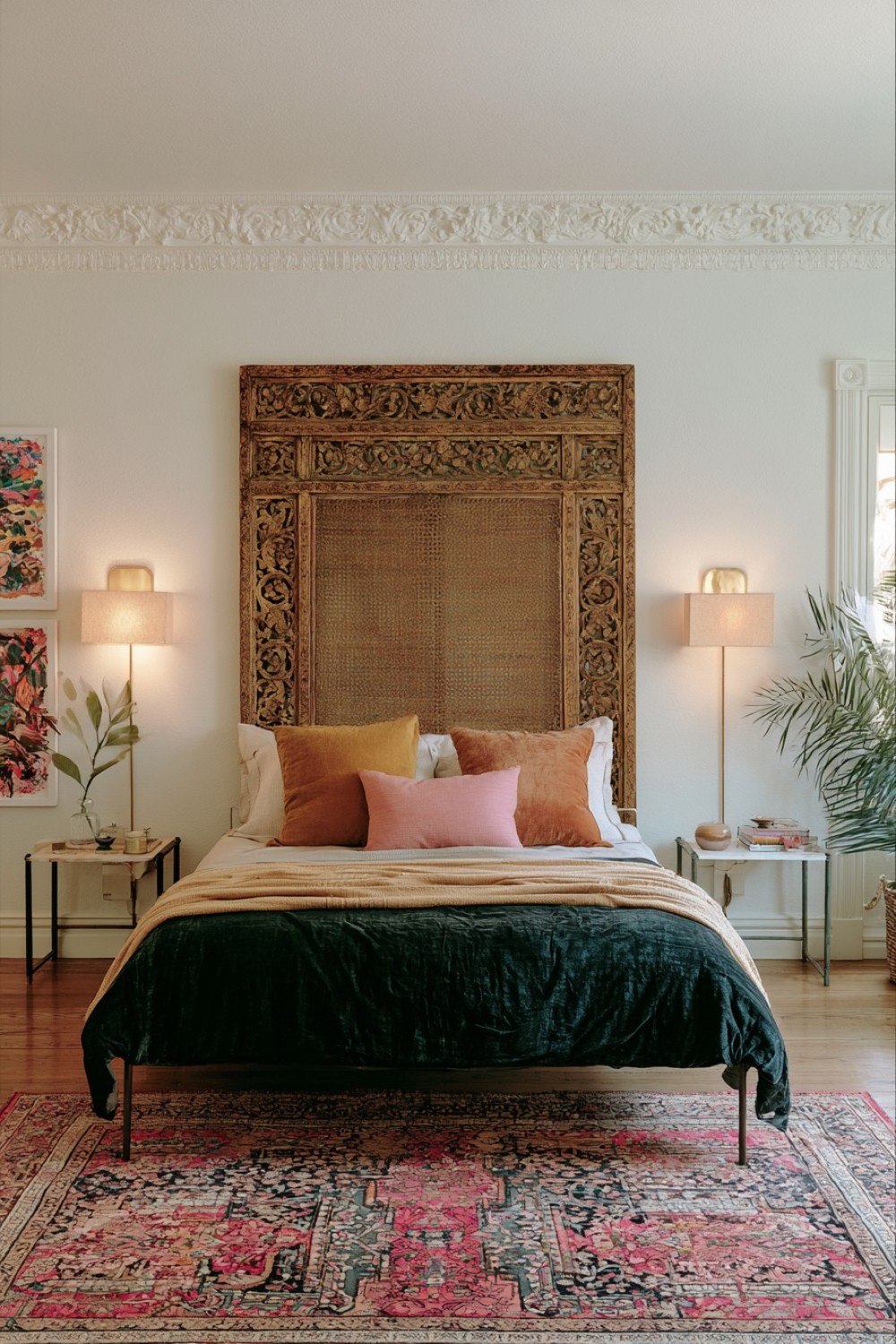
An oversized headboard can provide enough character to organize the entire bedroom. Carved timber, upholstered panels, woven cane, or a painted vintage piece may establish the room’s primary shape and color direction. Allow the headboard to remain dominant by choosing simpler bedding and limiting competing wall decoration immediately around it.
Measure its full width and height against outlets, switches, wall lights, and ceiling proportions before installation. An old headboard should be inspected for loose sections, splinters, unstable joints, odors, moisture damage, and finishes requiring careful handling. Secure it to the bed frame or an appropriate wall structure so it cannot shift while the bed is used. If the surface is highly detailed, keep pillows from catching on carved projections. Repeating one of its colors in a rug or throw connects the statement piece with the rest of the room.
2. Layer Rugs Without Creating Unstable Floor Edges
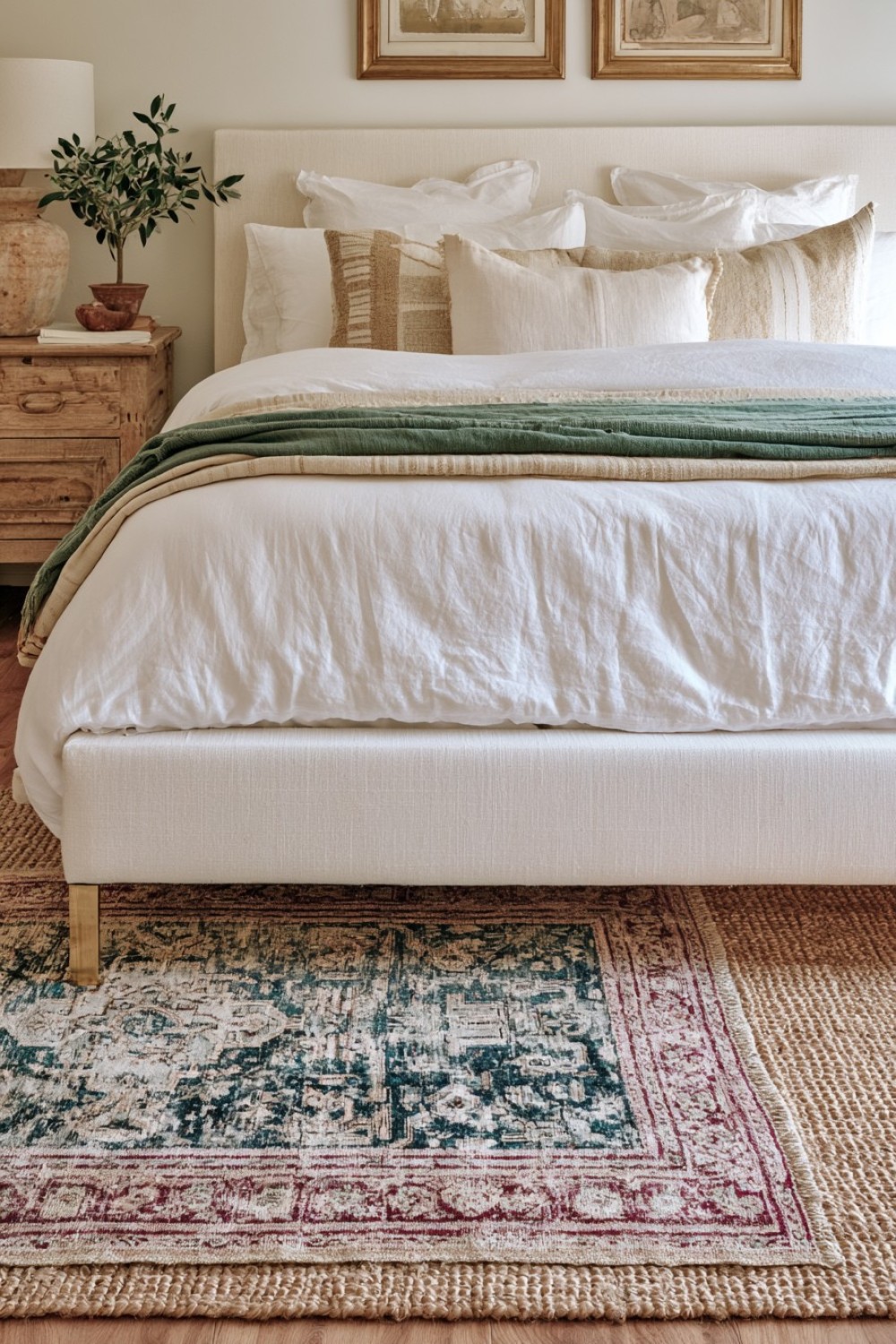
Layered rugs can combine geometric, faded traditional, striped, and natural woven surfaces without replacing an existing floor. Start with one broad low-pile rug that anchors the bed, then add a smaller patterned piece beside or partially beneath it. Repeating one color between both rugs creates continuity even when their motifs come from different styles.
Avoid stacking thick rugs at doorways or along the main route, where raised edges can become tripping hazards. Use suitable non-slip pads and make sure the upper rug lies flat rather than curling over a soft pile. Consider whether bed legs or other heavy furniture will create uneven pressure. Vintage rugs should be cleaned and inspected for damage before use. Limiting the room to two carefully positioned rugs usually provides enough variation without making vacuuming or furniture movement unnecessarily difficult.
3. Arrange an Asymmetrical Gallery Above a Dresser
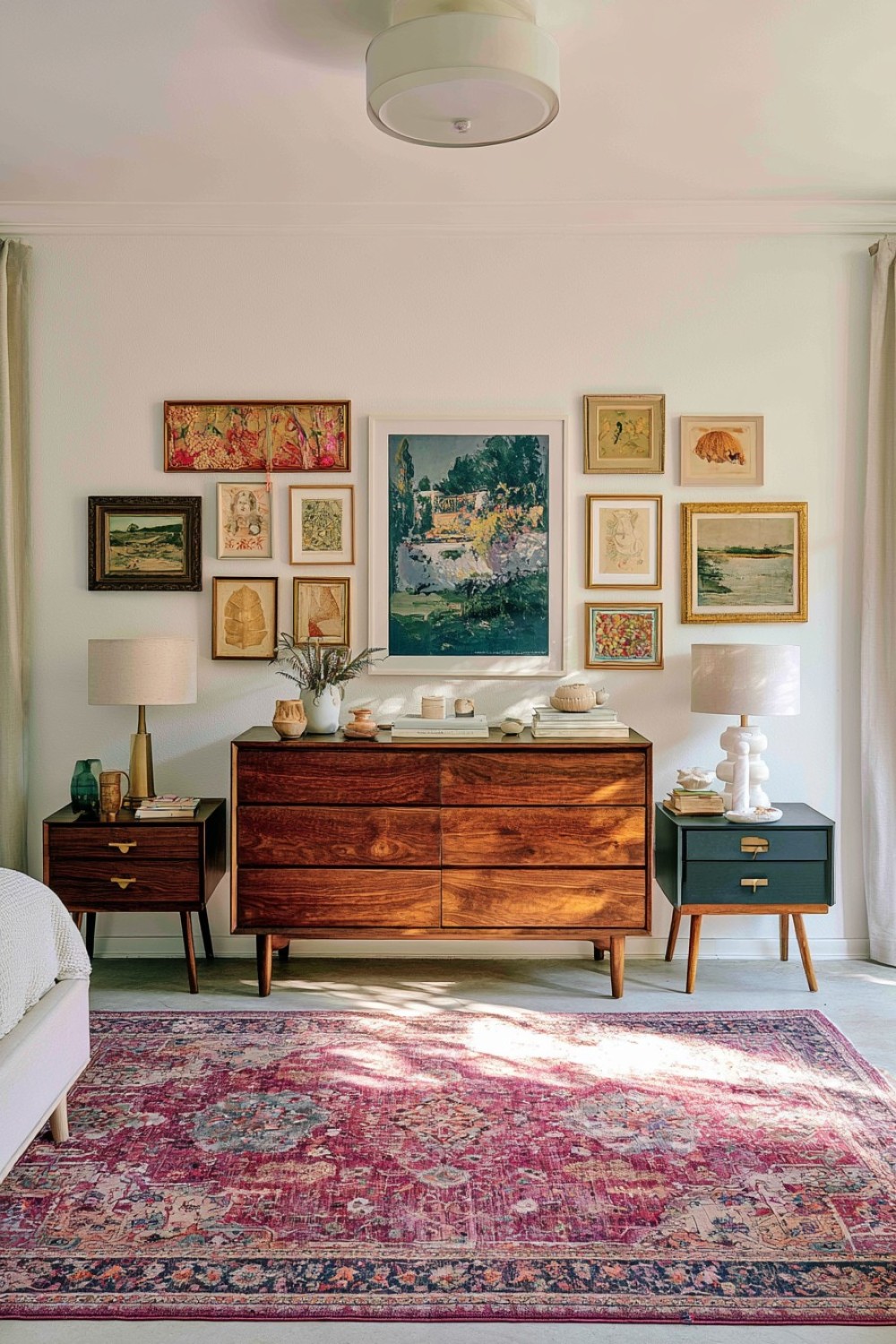
An asymmetrical gallery can unite photographs, prints, small paintings, and textile art without forcing them into a strict grid. Begin with the largest piece slightly away from the center, then build outward using smaller frames. Maintain a reasonably consistent distance between items so the arrangement feels connected despite variations in shape and finish.
Trace frame outlines on paper and test them on the wall before drilling. Every piece needs hardware appropriate for its weight and the wall construction. Avoid loosely leaning heavy frames where they could be knocked from the dresser. Leave enough space between the lowest frame and objects placed on the furniture. A shared subject, repeated mat color, or limited frame palette can prevent the collection from appearing random. Keep the dresser surface edited so the gallery remains visually legible.
4. Pair Two Different Nightstands Through Function
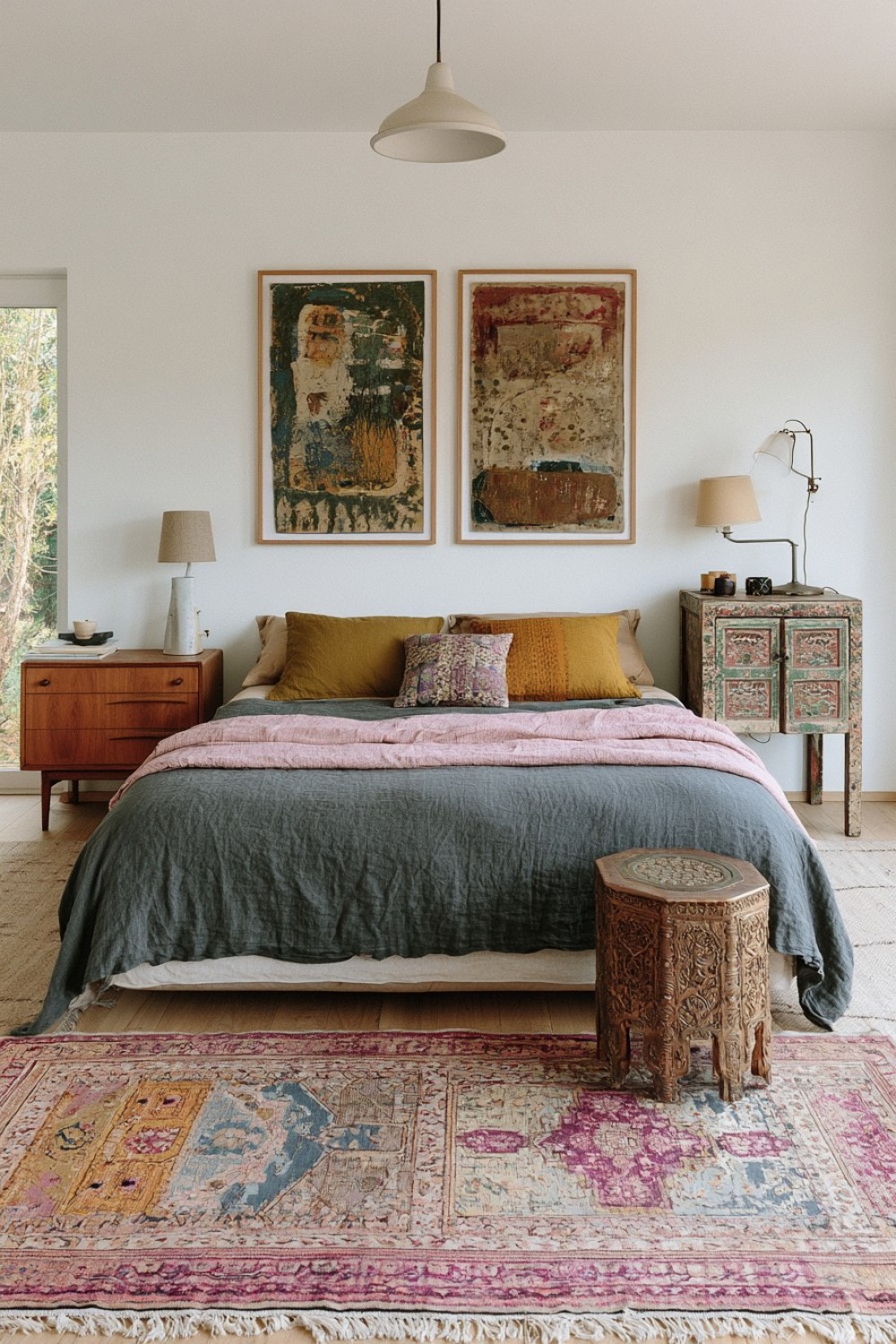
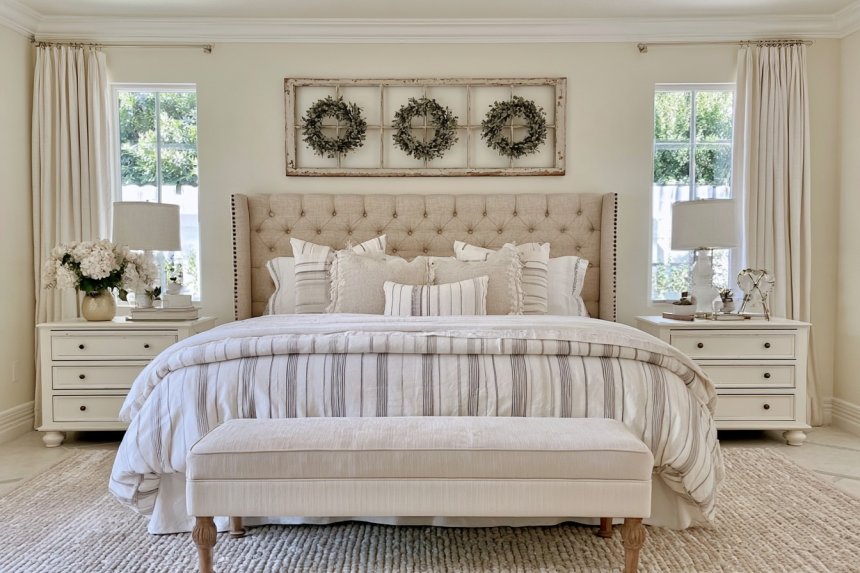
Different nightstands can make a bedroom feel collected while responding to the needs of each sleeper. One side might use a drawer cabinet for medication and personal items, while the other uses a compact table with space for books. The pieces can differ in age, shape, and material as long as their top surfaces sit at practical heights relative to the mattress.
Connect them through matching lamps, repeated hardware color, or related timber undertones rather than forcing identical furniture. Each table should remain stable and provide enough space for essentials without crowding the bed. Repair loose legs, drawers, and damaged surfaces on vintage pieces before use. Route charging cables behind the furniture and keep them away from walking paths. If one nightstand is visually heavier, balance it with a larger lamp or artwork on the opposite side rather than adding unnecessary objects.
5. Give the Ceiling a Controlled Pattern
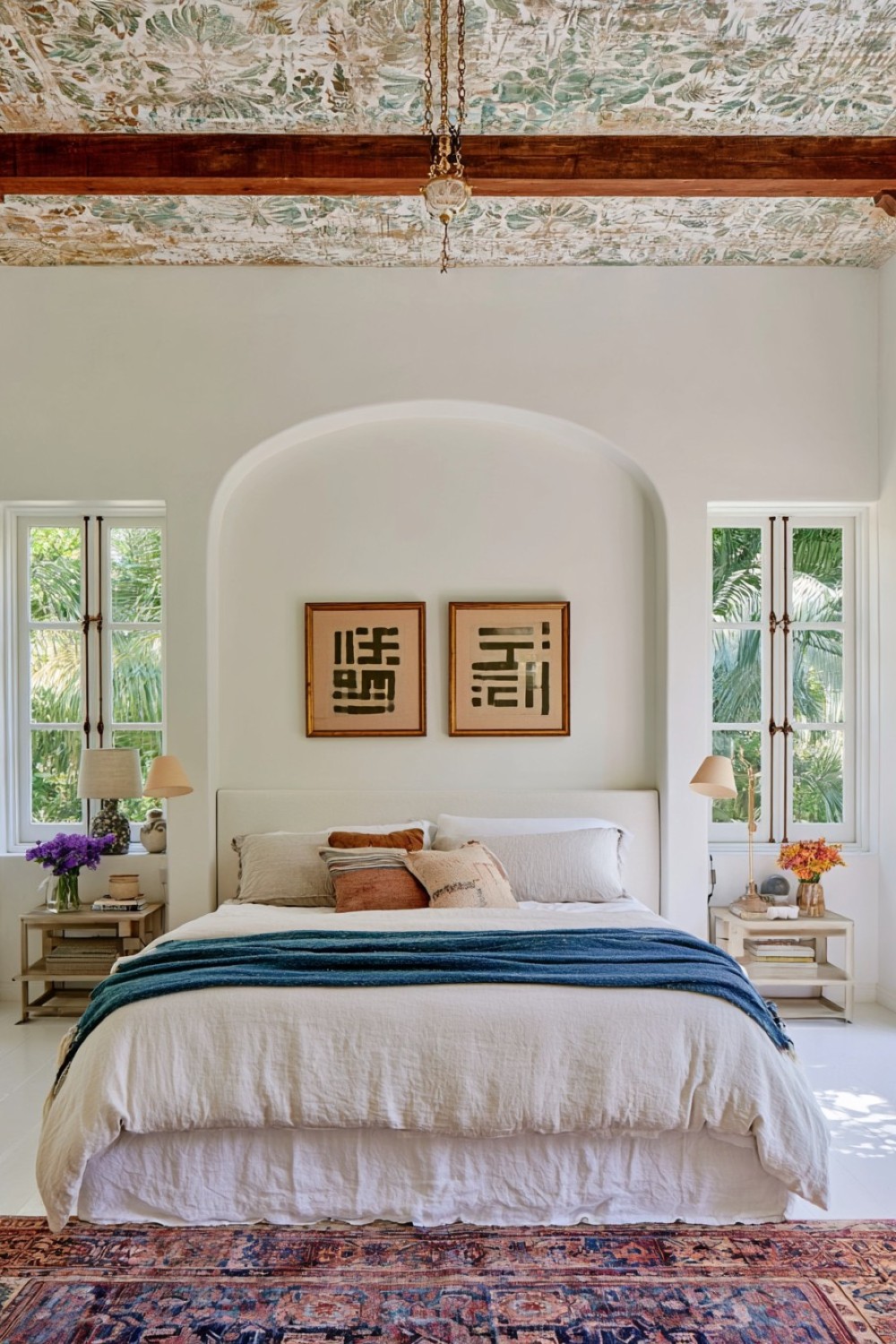
A patterned ceiling can introduce an unexpected focal surface while allowing the walls to remain comparatively quiet. Wallpaper, painted geometry, or a subtle mural may work, depending on ceiling condition and room height. In a small bedroom, a limited-scale pattern or low-contrast palette can provide interest without making the ceiling feel visually heavy.
The ceiling should be repaired, clean, and suitable for the selected finish before work begins. Wallpaper installation overhead is more demanding than a standard wall and may benefit from professional application. Fixtures, detectors, ventilation grilles, and access points must remain unobstructed. Do not drape fabric loosely across the ceiling or place decorative material close to lights and heat sources. Draw one color from the ceiling into the bedding or curtains so the feature relates to the room below.
6. Restore an Antique Cabinet as the Main Storage Feature
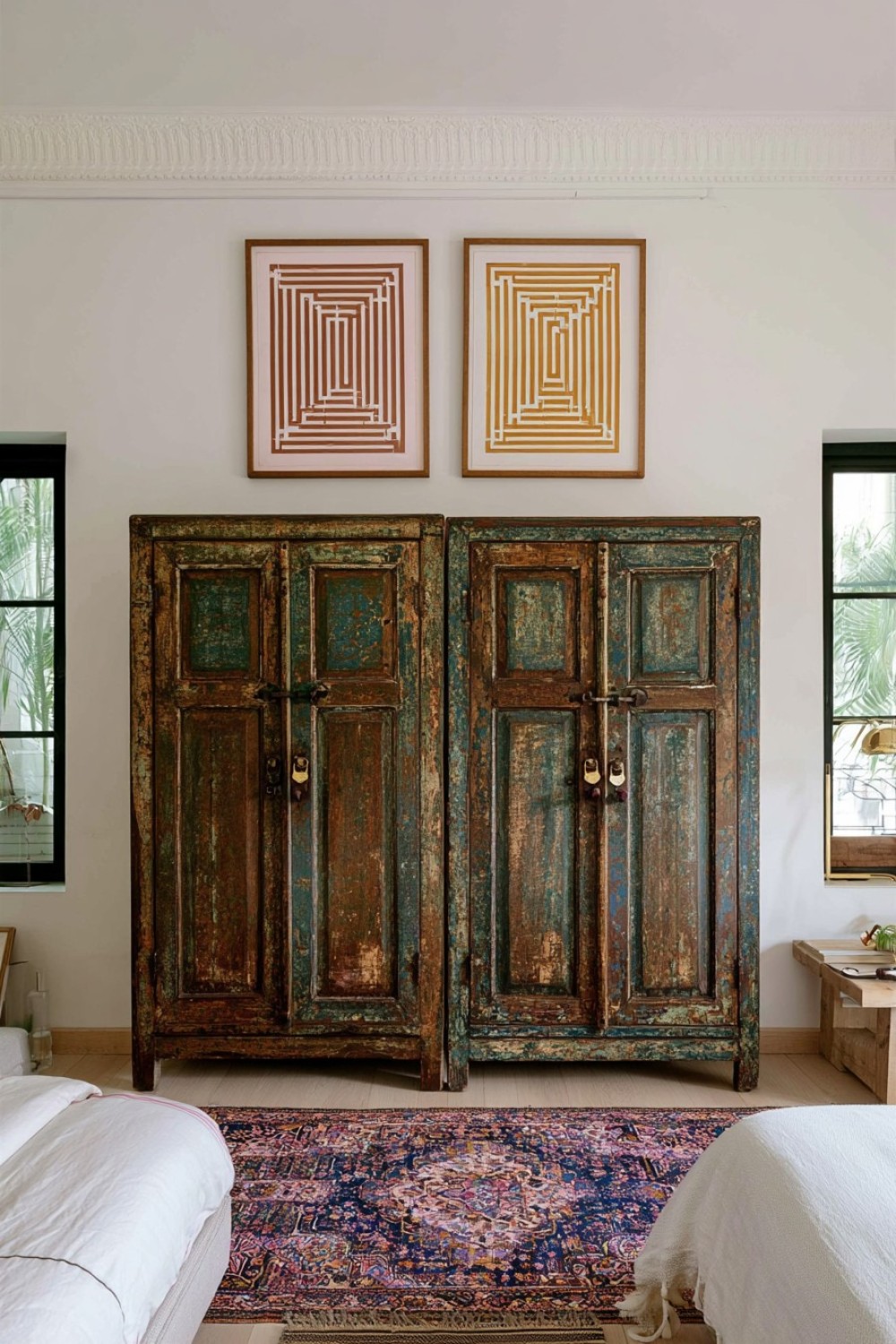
An antique wardrobe, linen press, or display cabinet can provide storage while introducing age and craftsmanship. Use it for folded clothing, bedding, books, or accessories according to the strength and interior layout. A single substantial antique often has more impact than several smaller imitation-vintage pieces.
Inspect the cabinet for instability, damaged joints, pests, moisture, odors, and old finishes before placing it in a bedroom. Tall furniture should be anchored where appropriate, particularly in homes with children. Confirm that doors and drawers open without blocking the route around the bed. Heavy items belong on lower shelves, and delicate interior surfaces may need removable liners. Avoid aggressive sanding or repainting until the existing material and finish are understood. Updated internal storage can improve function without removing the exterior character.
7. Combine Contrasting Styles in a Reading Corner
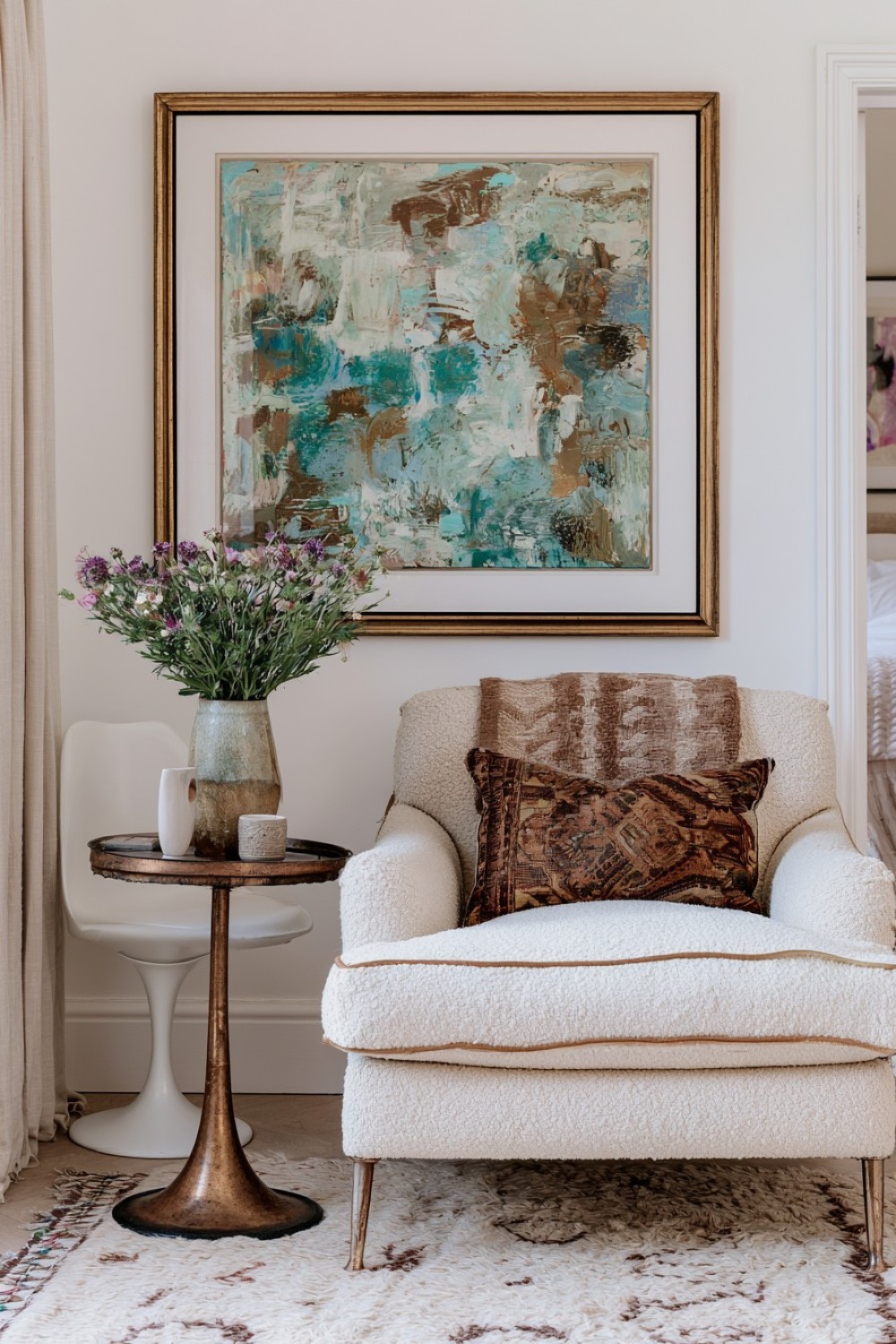
A contemporary upholstered chair can sit beside a vintage timber table, or a traditional chair can be paired with a streamlined metal lamp. The contrast feels intentional when the corner has a shared color or proportion. Position the chair where it receives useful light and does not narrow access to the wardrobe, bed, or door.
Comfort should guide the chair selection more than its visual style. Test seat depth, back support, and the ability to stand easily. A small table needs a stable surface for a book and drink, while an adjustable lamp should illuminate the page without shining toward the bed. Vintage electrical fixtures may require inspection before use. One rug or artwork can define the corner, but leave enough open floor around it to maintain a clear circulation route.
8. Balance Floral Bedding With Geometric Textiles
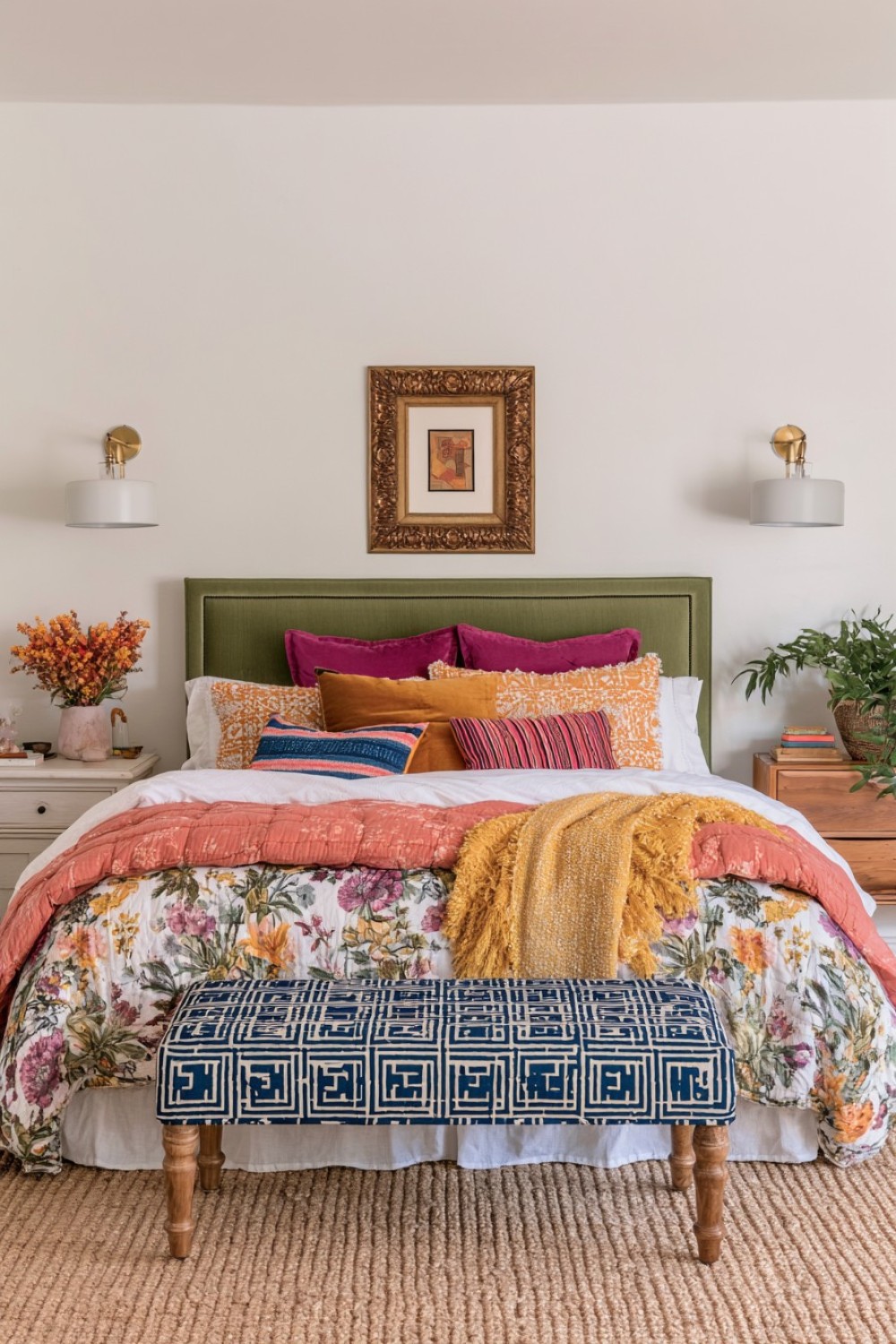
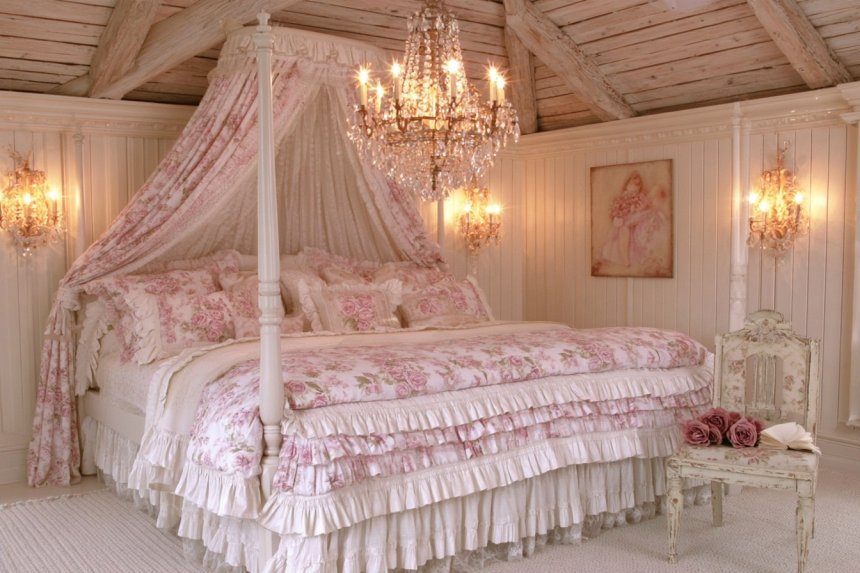
Floral and geometric patterns can coexist when their colors and scales are controlled. Pair a medium or large floral duvet with a smaller geometric cushion, throw, or rug. Alternatively, use a fine floral print against a broad stripe. Repeating two colors between the patterns will create more unity than matching their motifs.
Keep sheets, larger furniture, and at least one surrounding wall comparatively quiet. This provides visual rest and makes seasonal bedding easier to change. Select washable textiles and inspect decorative trims for loose beads, tassels, or elements that may be uncomfortable during sleep. People sensitive to dust may prefer fewer high-pile or heavily embroidered surfaces. Lay samples together before purchasing to check whether one pattern overwhelms the other under the bedroom’s actual lighting.
9. Place a Sculptural Bench at the Foot of the Bed
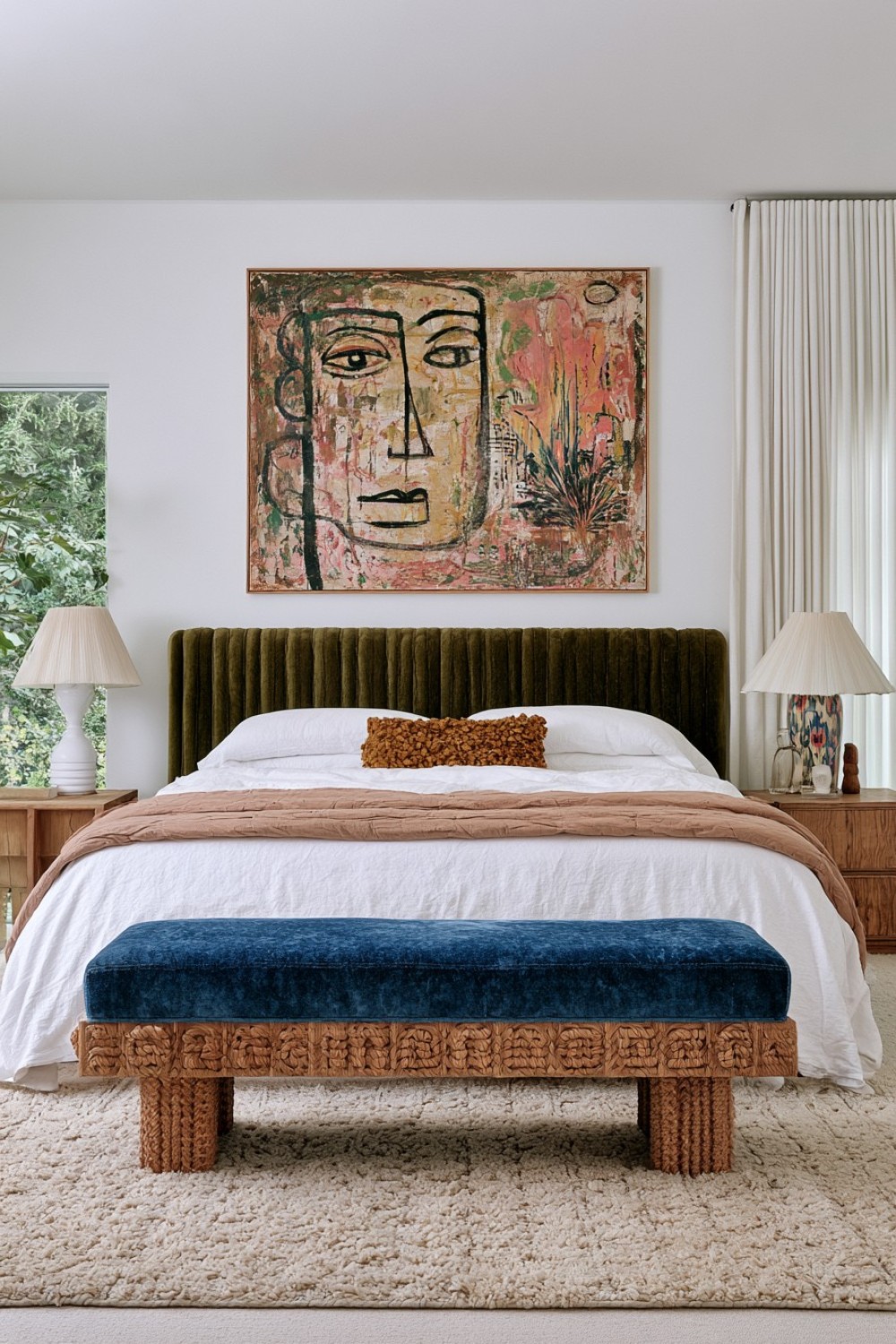
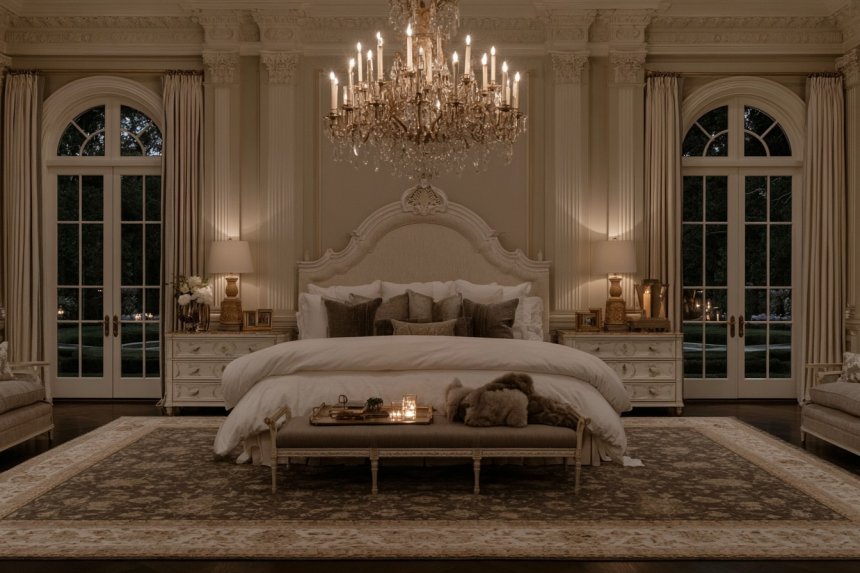
A bench can provide a place for dressing, setting down bedding, or organizing clothes while adding a different shape at the foot of the bed. Curved upholstery, carved timber, woven material, or a simple modern form can contrast with the bed frame. The bench should be narrower than the mattress so it does not make the sleeping area difficult to approach.
Measure the remaining passage after placing the bench, including the route to drawers and wardrobes. Choose a height comfortable for sitting and confirm that the frame is stable under actual use. Decorative benches not designed as seating should not be treated as load-bearing furniture. Avoid sharp corners in narrow rooms or use a softly upholstered design. If storage is included, the lid needs safe hinges and sufficient room to open without striking the bed.
10. Compose One Textile Wall Feature
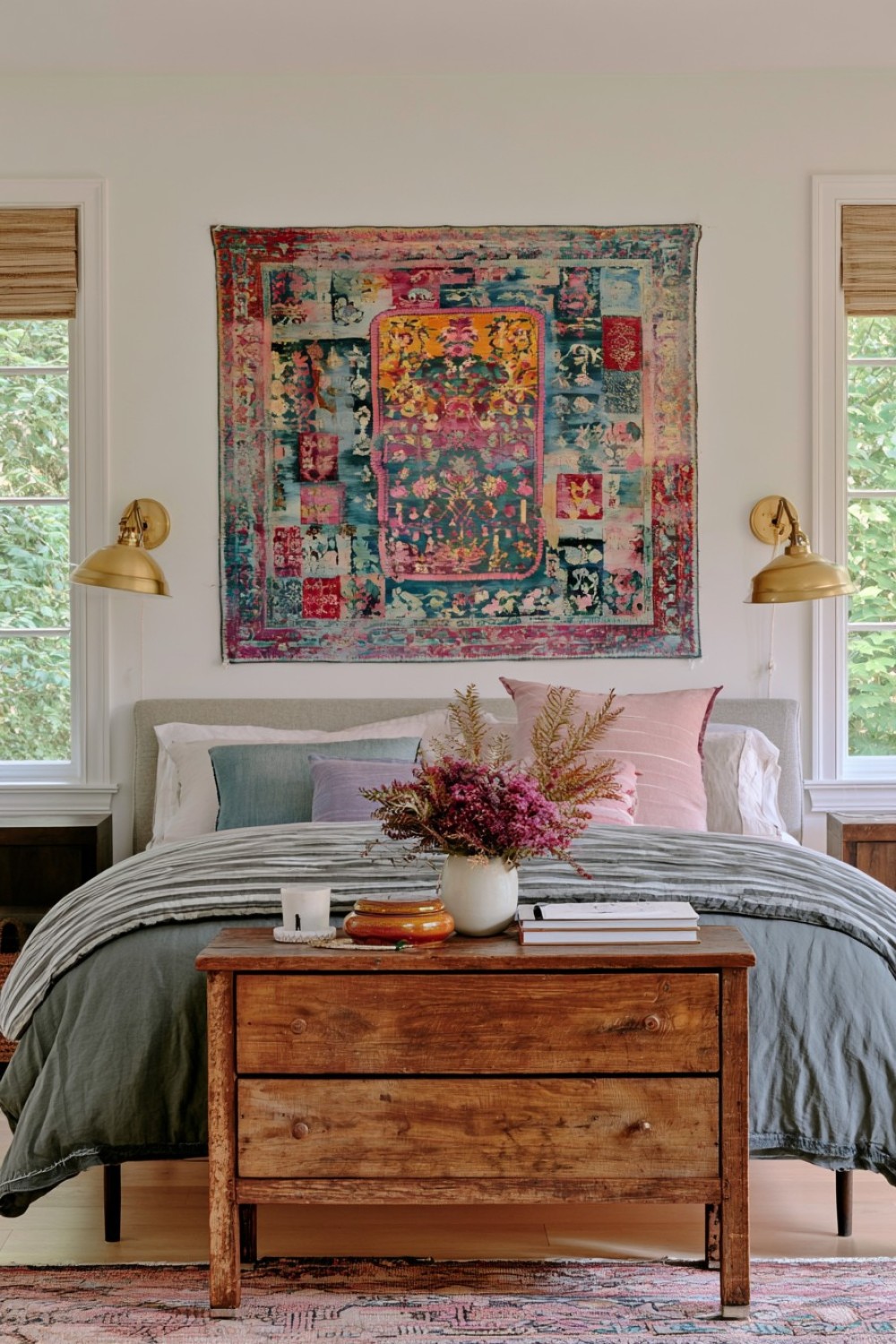
A quilt, woven panel, embroidered cloth, or small grouping of related textiles can soften a bedroom wall and introduce handmade detail. Select one primary piece or a clearly connected set rather than hanging unrelated fabric across every available surface. A plain wall color allows weave, stitching, and age to remain visible.
Use supports that distribute weight without piercing fragile fabric unnecessarily. Valuable textiles may require conservation-friendly mounting and protection from direct sunlight. All wall pieces should remain securely fixed and clear of lights, heaters, outlets, and electrical cables. Avoid loose material directly above the sleeper where it could detach or collect excessive dust. Choose textiles that can be cleaned appropriately and leave space around the display so it does not compete with patterned bedding.
11. Pair Bold Wallpaper With Restrained Vintage Furniture
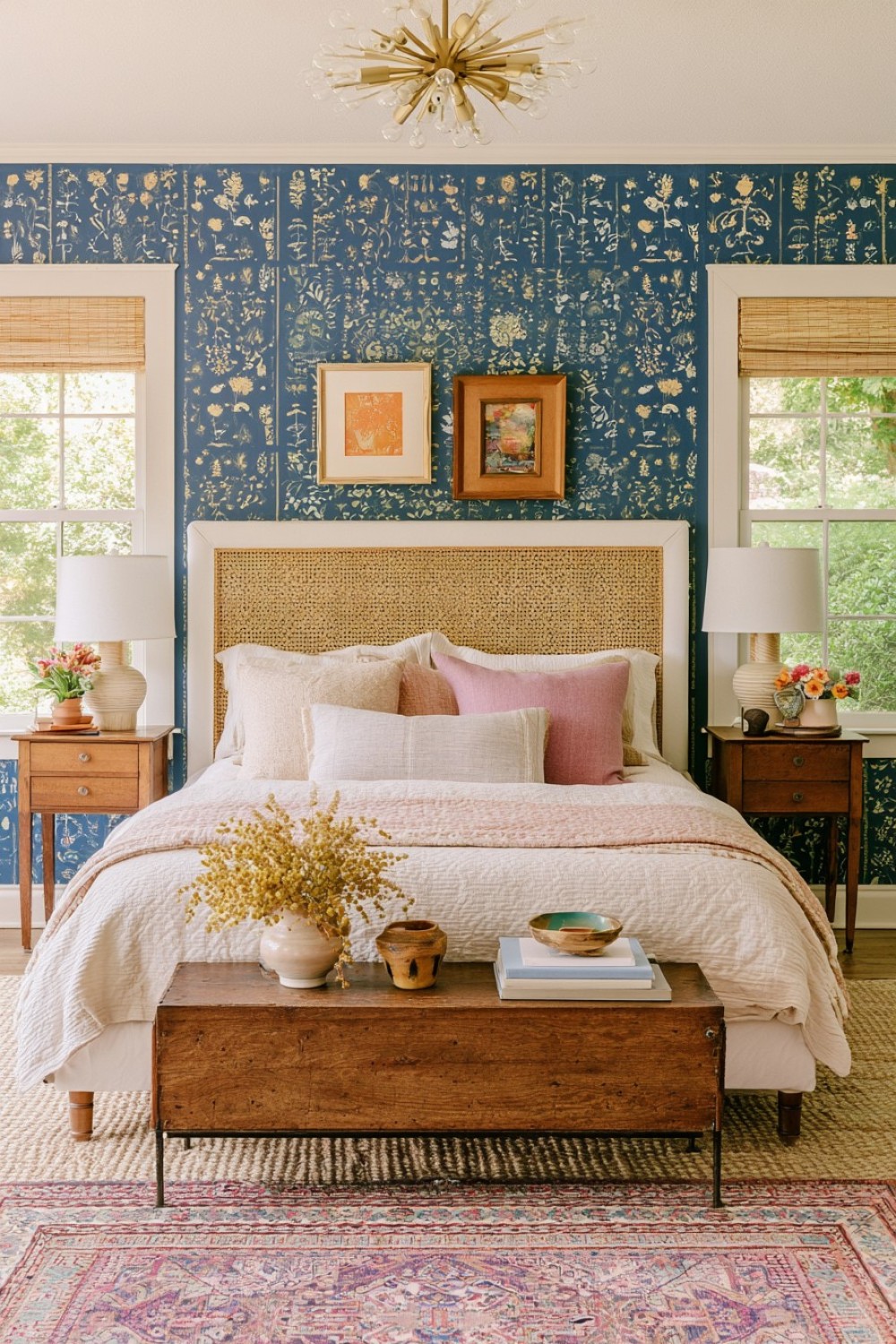
Expressive wallpaper can provide enough pattern for the whole bedroom when the main furniture has simple shapes and quiet finishes. Use it behind the bed, within a recess, or across all walls when the room has sufficient light and the pattern scale remains comfortable. Pull one muted shade from the paper into the upholstery or bedding.
Order a sample and view it across a full day before purchasing. Small swatches can make large repeats appear calmer than they will on the wall. Prepare the surface correctly and choose an adhesive and paper suitable for the room. In rentals, removable products may offer flexibility, but their compatibility with the existing paint should still be tested. Keep ornate furniture and numerous small artworks away from the strongest wallpaper so the room retains a clear focal hierarchy.
12. Repurpose a Decorative Screen as a Secure Headboard
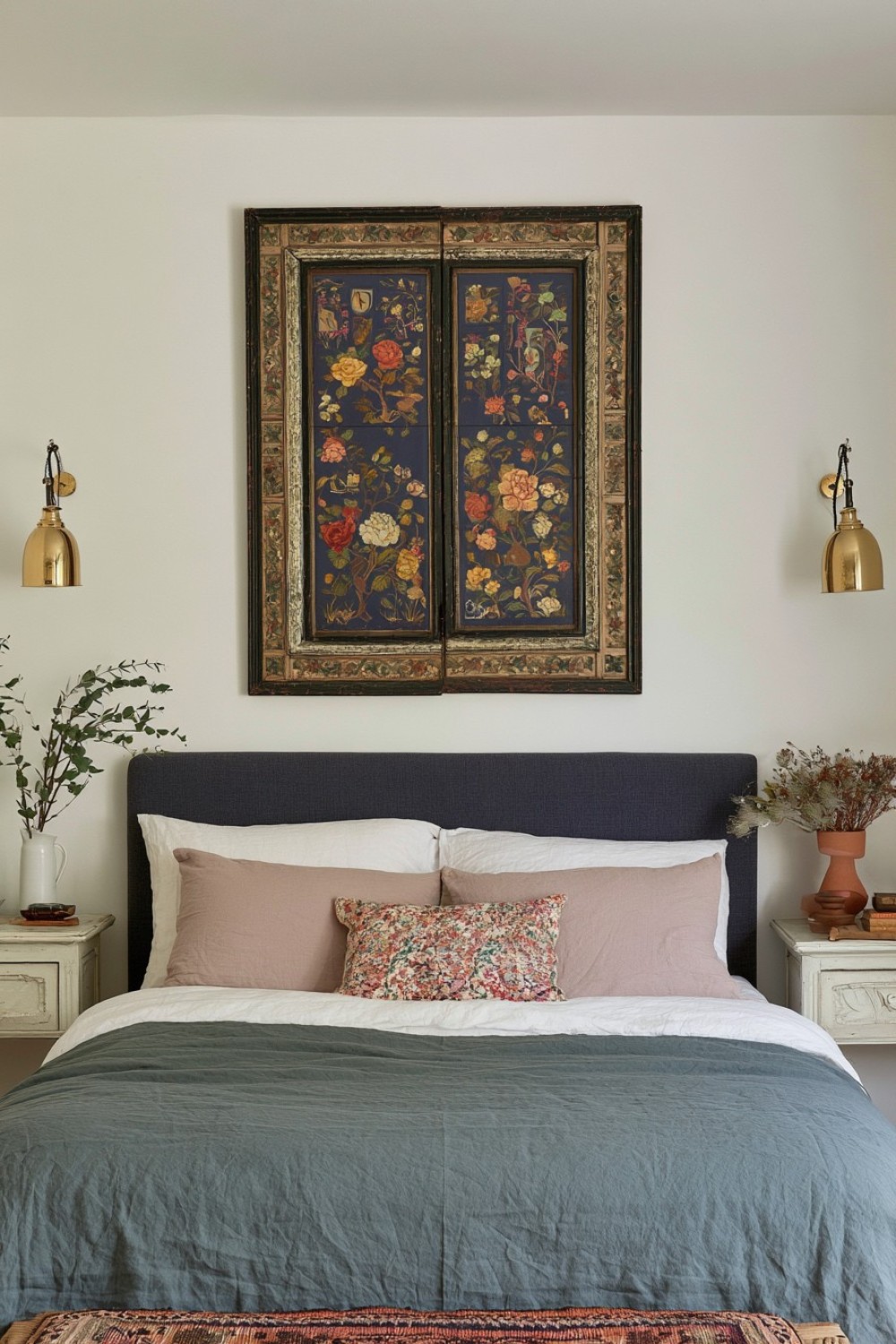
A painted, carved, woven, or upholstered screen can provide a broad headboard feature without constructing a custom panel. Open it to the required width and position its strongest section behind the mattress. The screen can introduce pattern and age while allowing the remaining furniture to stay relatively simple.
A freestanding screen should not remain loosely balanced behind the bed. Secure it to an appropriate wall or bed structure using a method suited to its weight and construction. Inspect hinges, panels, sharp edges, loose weaving, and old finishes before use. Keep projecting carvings away from pillows and occupants. If the screen is particularly heavy or valuable, displaying it on another wall may be safer than placing it directly above the sleeping area.
13. Frame the Bed With a Moody Color Block
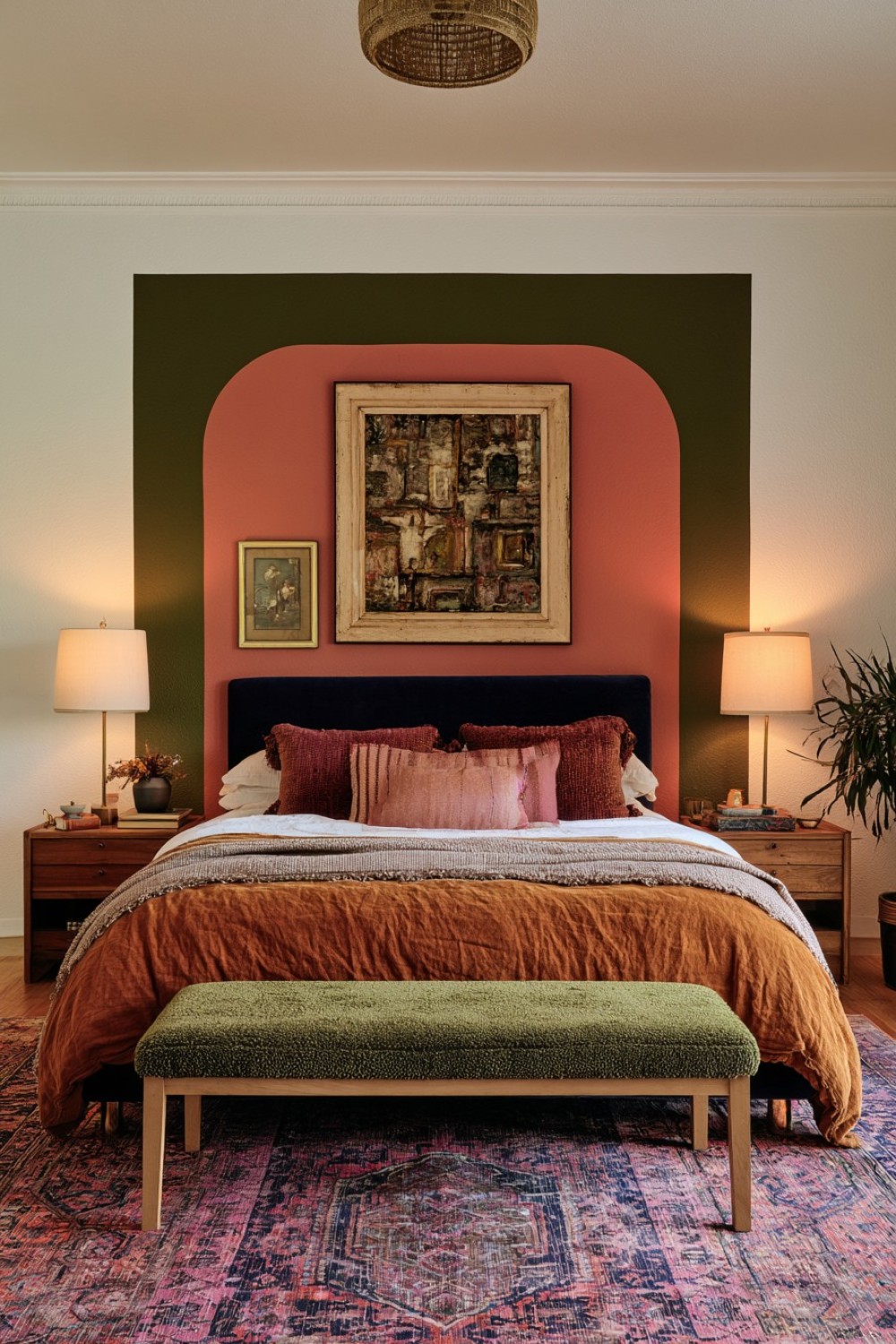
A deep painted block behind the bed can unite mismatched furniture and textiles without covering the entire room in dark color. Burgundy, forest green, ink blue, aubergine, or charcoal can form a rectangle, broad arch, or asymmetrical shape extending beyond the headboard. The area acts as a visual frame for the sleeping zone.
Test the color under daylight and bedside lighting because dark shades can change significantly in the evening. Mark the outline with removable tape and view it from the doorway before painting. Keep the bed position relatively permanent so the shape does not become misaligned later. Lighter bedding and warm timber can prevent the feature from making a small room feel closed. Use washable interior paint appropriate for the wall condition.
14. Connect Cane, Velvet, Wood, and Metal Through Color
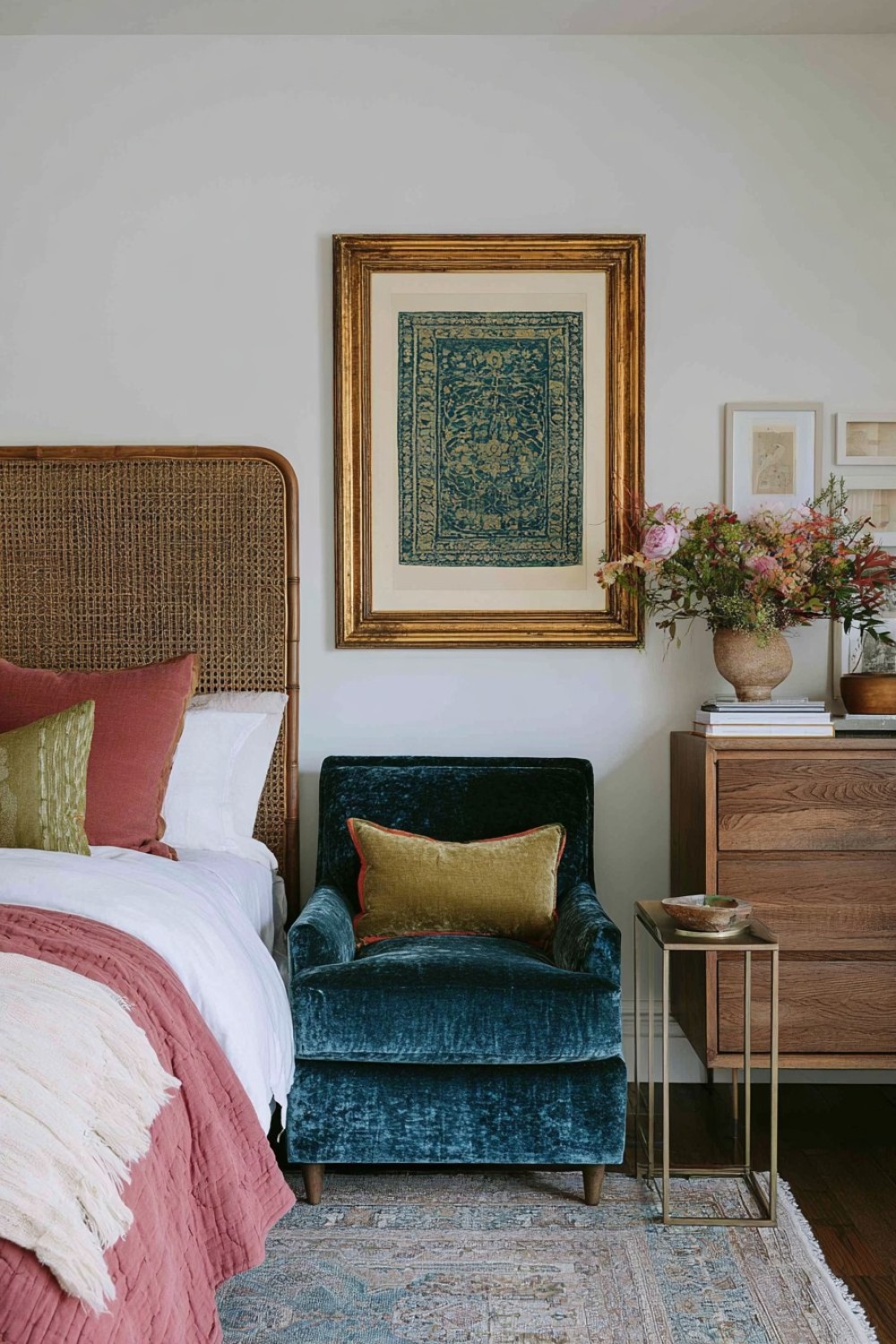
Several materials can coexist when each one performs a clear role. Cane may lighten a cabinet front, velvet can soften a chair or cushion, timber provides structure, and metal defines lighting or hardware. Select one shared undertone—warm brass and walnut, for example—to prevent the mixture from feeling arbitrary.
Limit each material to one or two visible applications. Inspect cane for broken strands, choose velvet according to its cleaning and wear requirements, and make sure metal edges are smooth. Timber furniture should be stable and appropriately finished. Avoid purchasing a separate object merely to represent every material. A quiet wall color and simple bedding will allow the contrast to remain noticeable while keeping the bedroom comfortable and maintainable.
15. Display Vintage Finds as an Edited Personal Collection
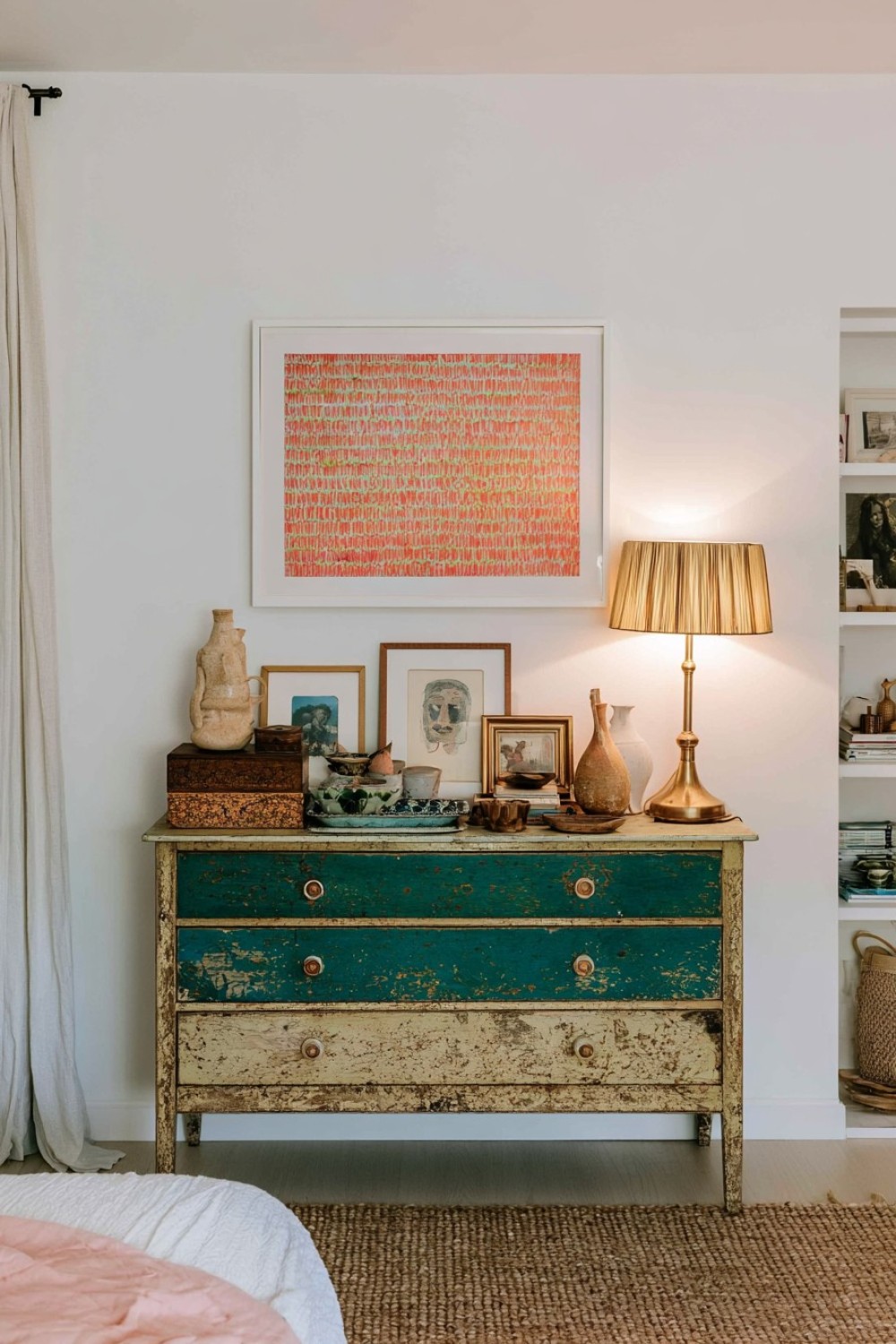
Books, ceramics, framed photographs, boxes, and travel objects can make an eclectic bedroom personal when they are grouped thoughtfully. Choose a dresser top, recessed shelf, or small cabinet as the main display zone. Arrange objects at varied heights while leaving enough empty surface to separate the individual forms.
Inspect secondhand pieces for damage, dust, odors, pests, sharp edges, and unstable bases before bringing them indoors. Heavy or fragile objects should remain on lower supported shelves rather than directly above the bed. Vintage containers should be used decoratively unless their material and previous purpose are understood. Rotate the collection instead of displaying everything at once, storing reserve pieces safely. An edited arrangement is easier to clean and communicates personal history more clearly than a crowded assortment.
MORE IDEAS


Share
What's Your Reaction?
 Like
0
Like
0
 Dislike
0
Dislike
0
 Love
0
Love
0
 Funny
0
Funny
0
 Angry
0
Angry
0
 Sad
0
Sad
0
 Wow
0
Wow
0