17 French Balcony Ideas for Small Elegant Outdoor Spaces

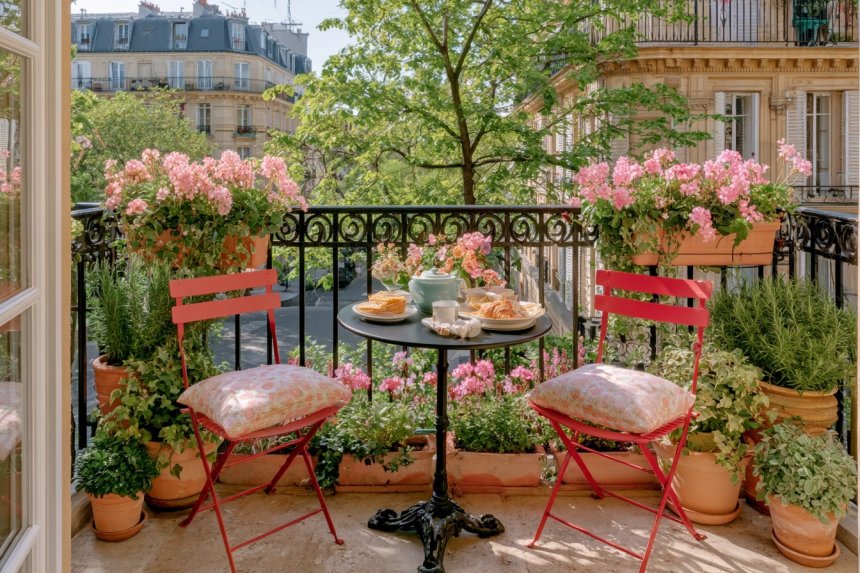
French balcony style is not defined by how many decorative pieces can fit into a small outdoor space. Its appeal comes from thoughtful proportions, restrained color choices, natural materials, elegant furniture, and greenery that works with the architecture rather than hiding it. Even a narrow apartment balcony can feel polished when every element has a clear purpose.
Before choosing furniture or plants, measure the usable floor area and check how fully the balcony door needs to open. Consider wind exposure, direct sunlight, drainage, maintenance needs, and any building rules that apply to planters or furniture attached near railings. Lightweight, weather-resistant pieces are often more practical for upper-floor spaces.
The following French balcony details combine traditional inspiration with realistic ideas for modern homes, helping create an outdoor area that feels graceful, comfortable, and genuinely usable.
1. Choose Slim Bistro Furniture With an Elegant Silhouette
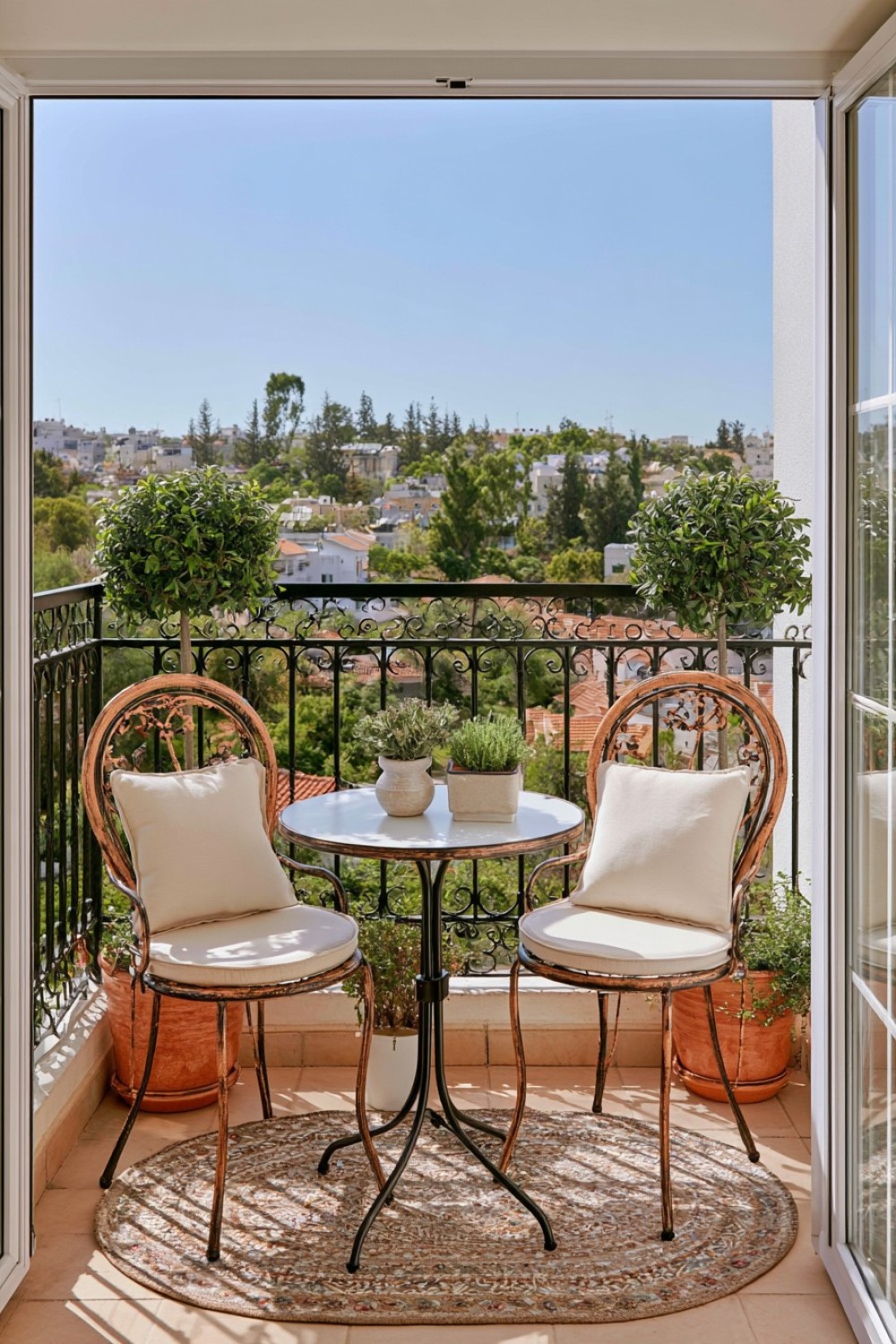
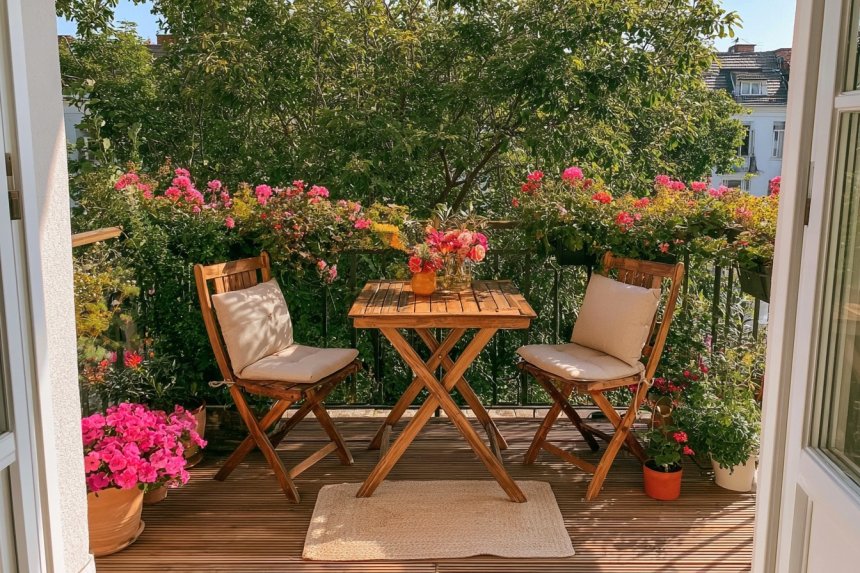
A compact café table and two slender chairs remain one of the easiest ways to introduce French character, but proportion matters more than simply buying a traditional bistro set. Look for chairs with narrow frames, curved backs, or subtle decorative metalwork that provide visual interest without occupying too much floor space.
A small round table usually allows easier movement than a square design with projecting corners. Finishes such as matte black, dark green, muted cream, aged bronze, or softly weathered metal work particularly well in this setting.
Leave enough clearance between the furniture and the balcony door for comfortable access. If the balcony is extremely narrow, one chair may be more useful than forcing in a complete set. Add a single planter or small herb pot nearby rather than covering the tabletop with accessories. The resulting arrangement feels deliberate, light, and far more sophisticated than an overcrowded outdoor seating area.
2. Use Vertical Greenery to Preserve Valuable Floor Space
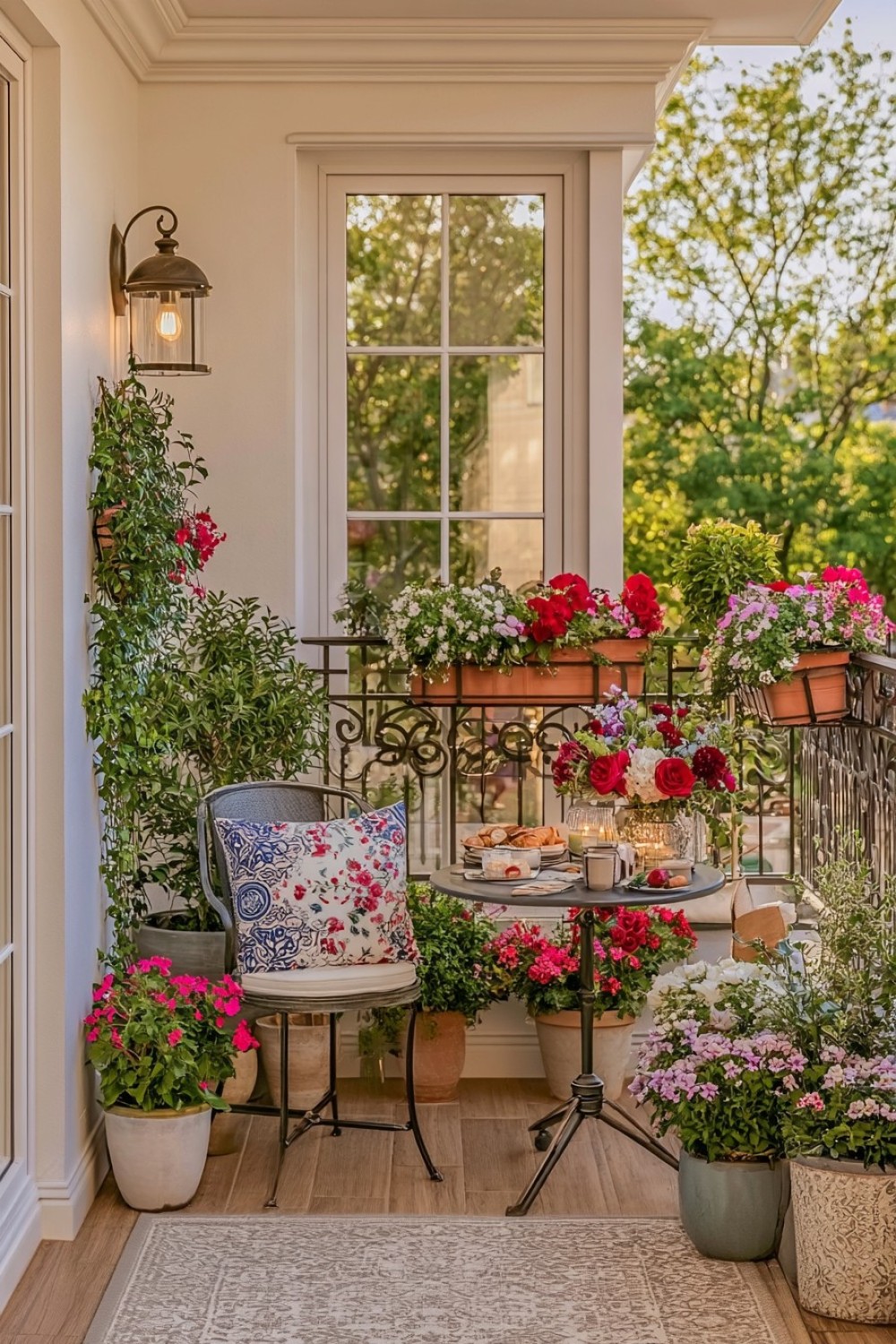
Plants bring softness to hard balcony surfaces, but placing numerous pots across the floor can quickly make a small space difficult to use. A better approach is to direct some of the greenery upward.
Tall, narrow planters placed beside a wall or doorway can support climbing plants and create a leafy frame without consuming the center of the balcony. Depending on local growing conditions, container-friendly climbers or upright plants can provide height while leaving room for seating.
Always choose plants according to sunlight, wind exposure, temperature, and watering requirements rather than appearance alone. Supports should also be stable and positioned so foliage does not interfere with doors, handles, drainage outlets, or safe circulation.
Using a restrained group of matching or closely related containers creates a cleaner architectural effect. Terracotta, stone-effect finishes, and muted ceramics work especially well. Regular trimming will keep the greenery controlled and prevent a small balcony from gradually becoming overgrown.
3. Bring Provence Character Through Weathered Natural Materials
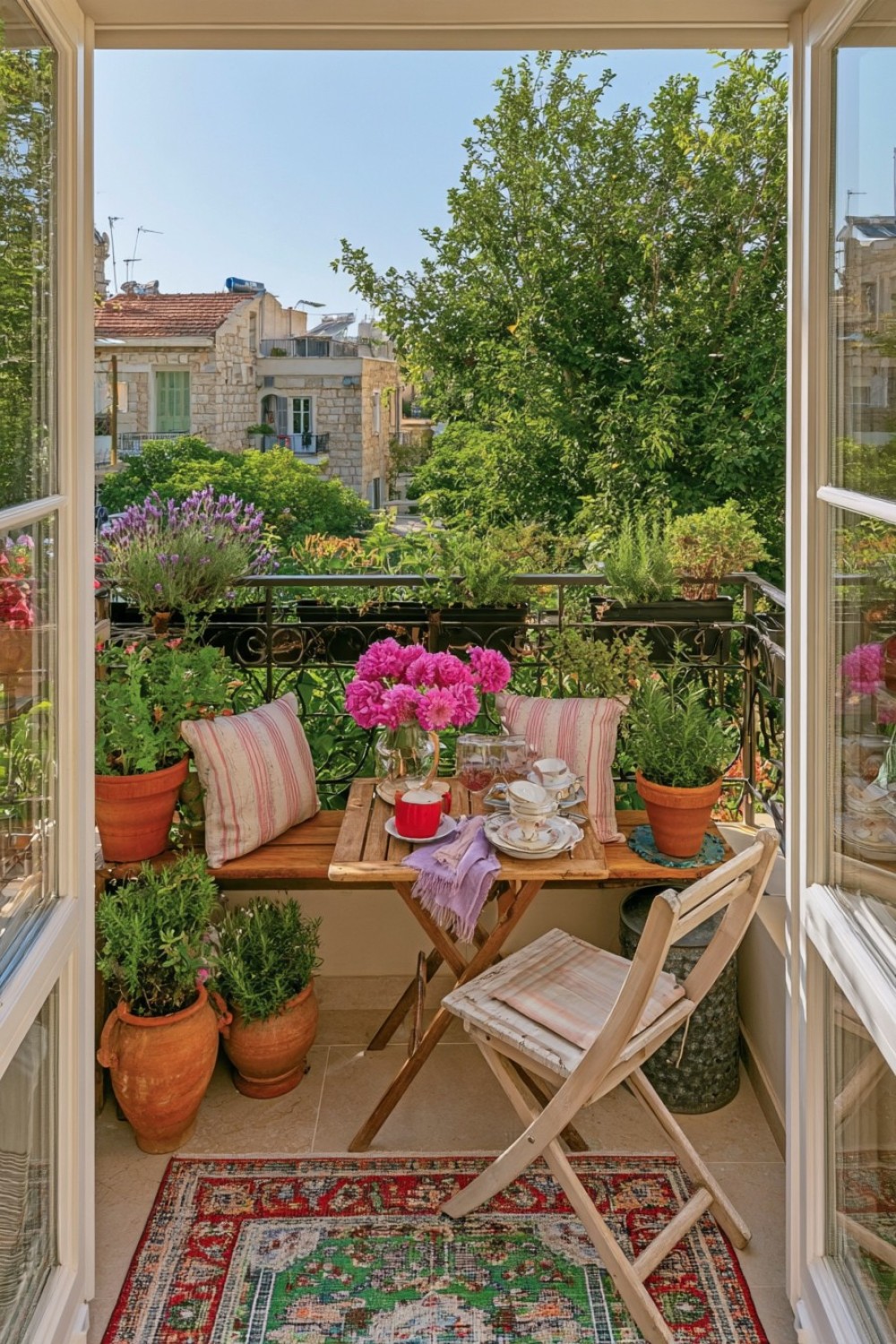
For a softer interpretation of French style, borrow from the relaxed landscapes and homes of Provence. Instead of using ornate black metal as the dominant feature, introduce pale wood, aged terracotta, warm cream, sage green, and dusty lavender tones.
A narrow wooden bench or folding chair can form the practical foundation of the design. Surround it with a limited selection of substantial pots rather than many tiny containers. Herbs such as rosemary, thyme, or lavender may suit sunny conditions, although plant choices should always be based on the actual climate and exposure of the balcony.
Slight variation between terracotta pots adds character and prevents the arrangement from looking overly coordinated. Outdoor textiles in faded stripes, washed neutrals, or subtle botanical colors can provide additional comfort.
The key is restraint. Provence-inspired decorating works best when materials appear naturally aged and compatible rather than when every available French-country motif is placed in the same small area.
4. Add Burgundy for a Deeper Parisian Color Palette
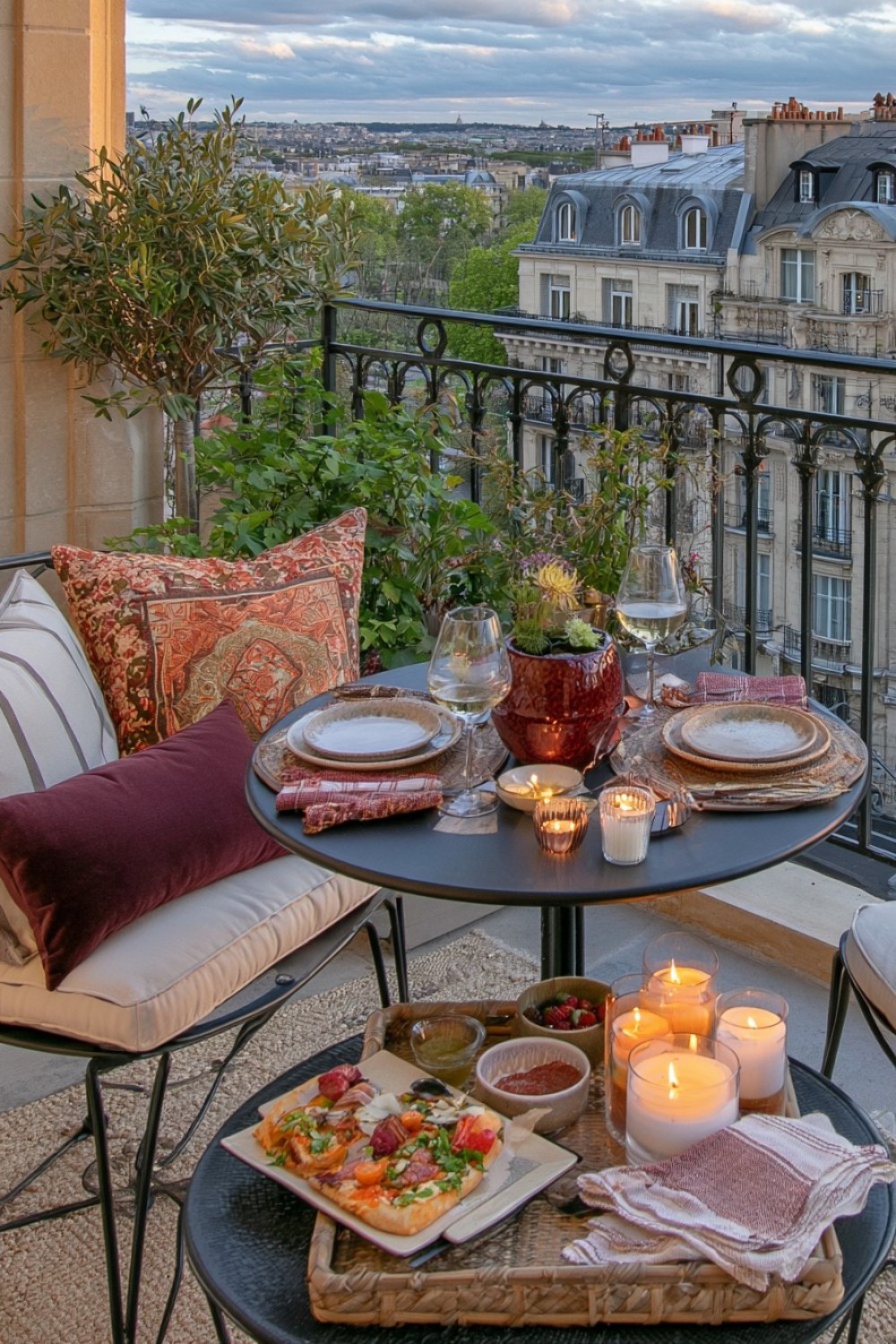
French-inspired balconies are often decorated with cream, gray, and soft green, but deeper colors can create a richer urban mood. Muted burgundy is particularly effective because it pairs naturally with black ironwork, aged bronze, warm stone, and leafy plants.
Use the shade sparingly. A burgundy seat cushion, weather-resistant textile, ceramic planter, or painted furniture detail may be enough to give the entire balcony greater visual depth. Repeating the color once or twice creates cohesion without making the scheme appear overly themed.
On a shaded balcony, balance dark tones with lighter surfaces such as beige fabric, pale stone-effect pots, or warm cream walls. This prevents the area from appearing smaller or heavier than it already is.
Choosing one dominant accent color is also a useful decorating strategy for compact spaces. Instead of competing decorative objects, the eye notices a controlled palette, making the balcony feel more organized and intentionally designed.
5. Let Decorative Iron Railings Remain Visible
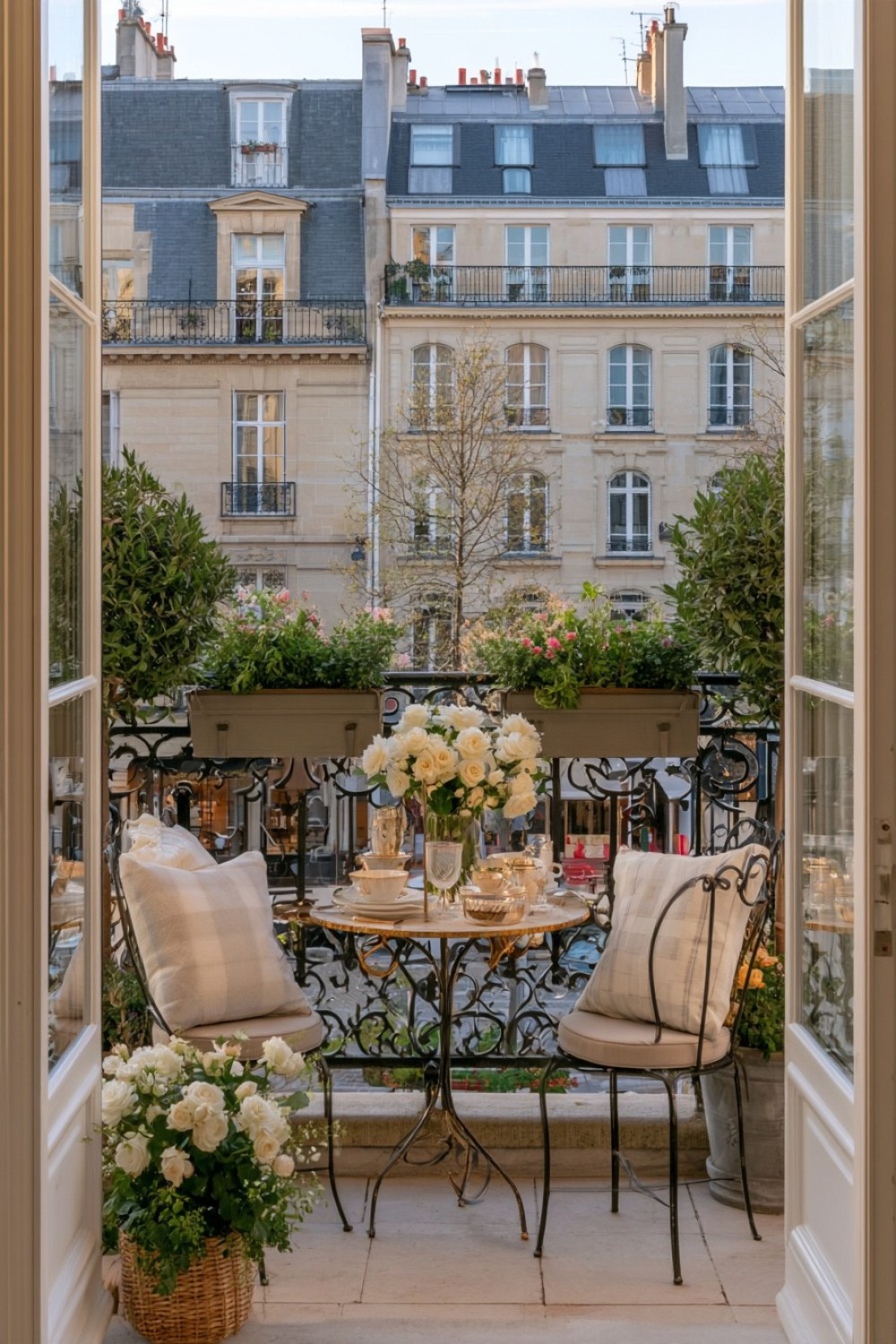
Existing balcony architecture can be more valuable than any accessory you add. If your balcony has decorative metal railings, scrollwork, or distinctive geometric details, treat them as part of the design instead of covering them completely with planters.
Low-profile furniture allows the railing to remain visible from both inside and outside the home. A simple round table or narrow chair can echo its metal finish without competing with the original detailing.
Plants can be grouped at selected points rather than positioned in an uninterrupted row. This leaves areas of negative space and keeps the balcony visually open.
If rail-mounted planters are permitted by your building, make sure they are designed for secure outdoor installation and suitable for expected wind conditions. Do not improvise unstable hanging arrangements on upper floors.
When repainting existing metalwork is allowed, use an exterior product compatible with the surface. Black is traditional, while charcoal, bronze, or deep green can offer a slightly softer appearance.
6. Combine Different Planters for a Collected French Country Look
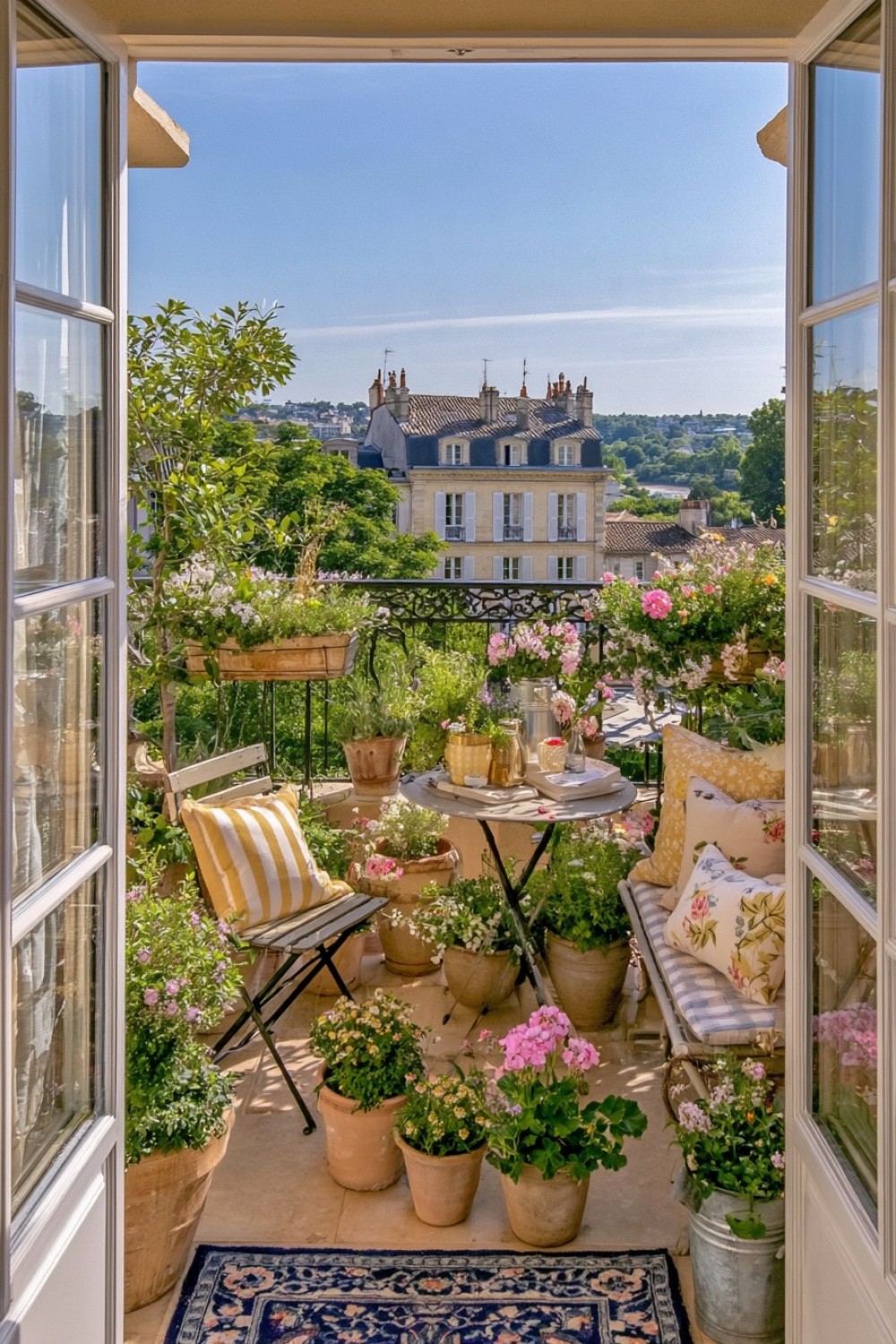
A row of identical containers can look neat, but a carefully mixed planter collection often creates greater character. French country style works particularly well with aged terracotta, stone-effect containers, muted ceramics, and understated galvanized finishes.
The collection should still share a visual connection. Similar earth tones or weathered textures prevent different shapes from appearing random.
Arrange containers according to height rather than placing everything in a straight line. Larger pots can sit toward a wall, with medium and smaller plants positioned in front. A stable outdoor plant stand can introduce another level without expanding the arrangement across the entire floor.
Select plants that have compatible light and watering requirements whenever possible. This makes ongoing maintenance considerably easier.
Most importantly, leave a usable path. A balcony should still function as an outdoor space rather than becoming storage for decorative pots. The strongest French country arrangements feel abundant but controlled, with enough open space to appreciate both the planting and the architecture.
7. Create Calm Structure With Black, Cream, and Symmetry
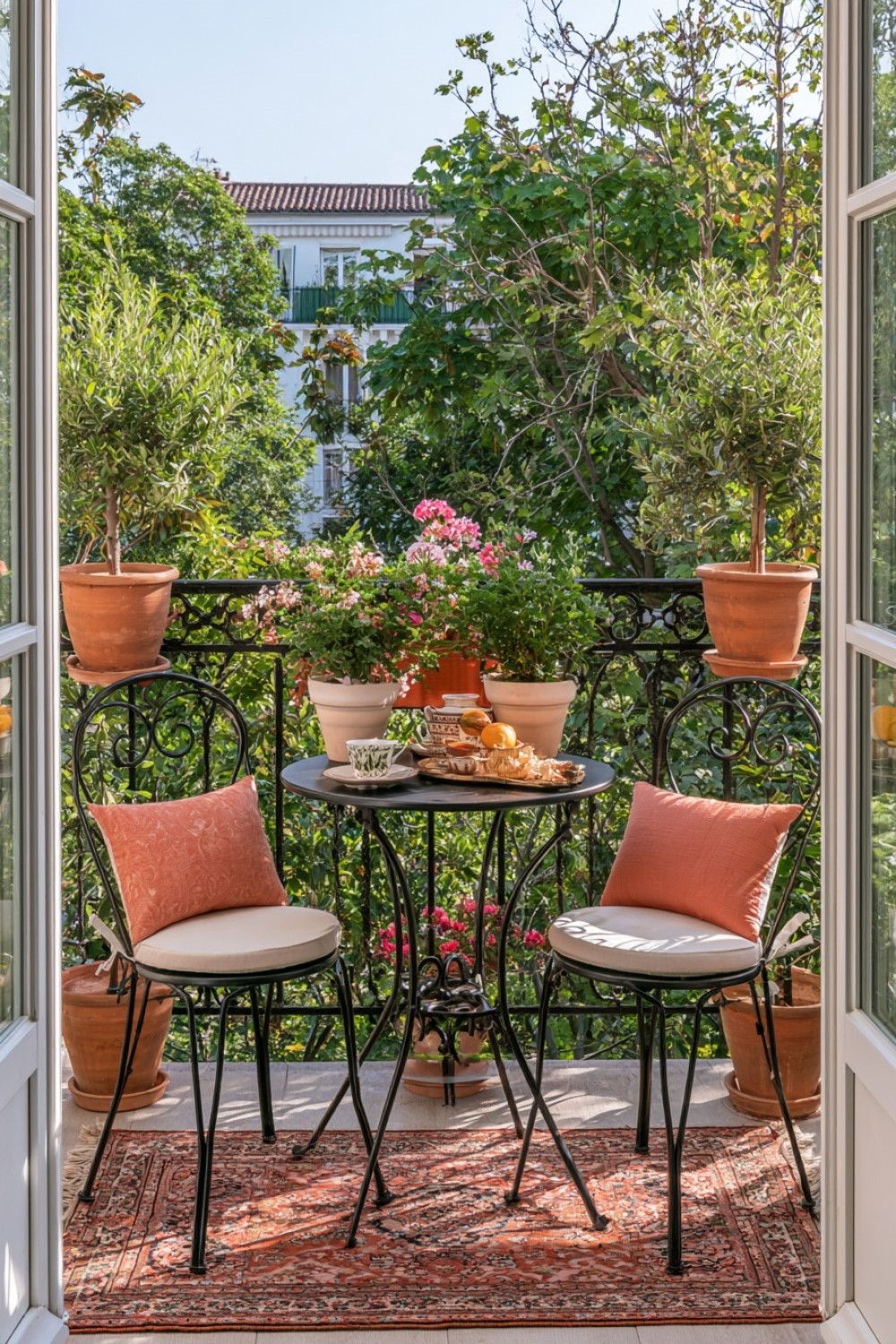
Symmetry can make a small balcony appear more ordered and architectural. This approach is especially effective when the balcony is centered outside large doors and can be seen clearly from the adjoining room.
Begin with a small table in the middle, then position two visually similar chairs on either side. Matching or closely related planters can anchor the outer edges. Black metal provides a defined structural line, while cream textiles and pale containers soften the overall composition.
Plants with upright or naturally tidy growth habits can reinforce the balanced appearance without requiring extremely formal pruning.
Avoid continuing to add accessories after the basic arrangement feels complete. One of the easiest ways to weaken a symmetrical design is to introduce several unrelated objects simply because empty space remains.
Minor natural differences between plants, textures, and aged finishes keep the balcony from feeling rigid. The goal is not perfect duplication but a sense of visual balance that makes a compact area feel calm and carefully planned.
8. Use a Stone-Effect Table to Add Courtyard Character
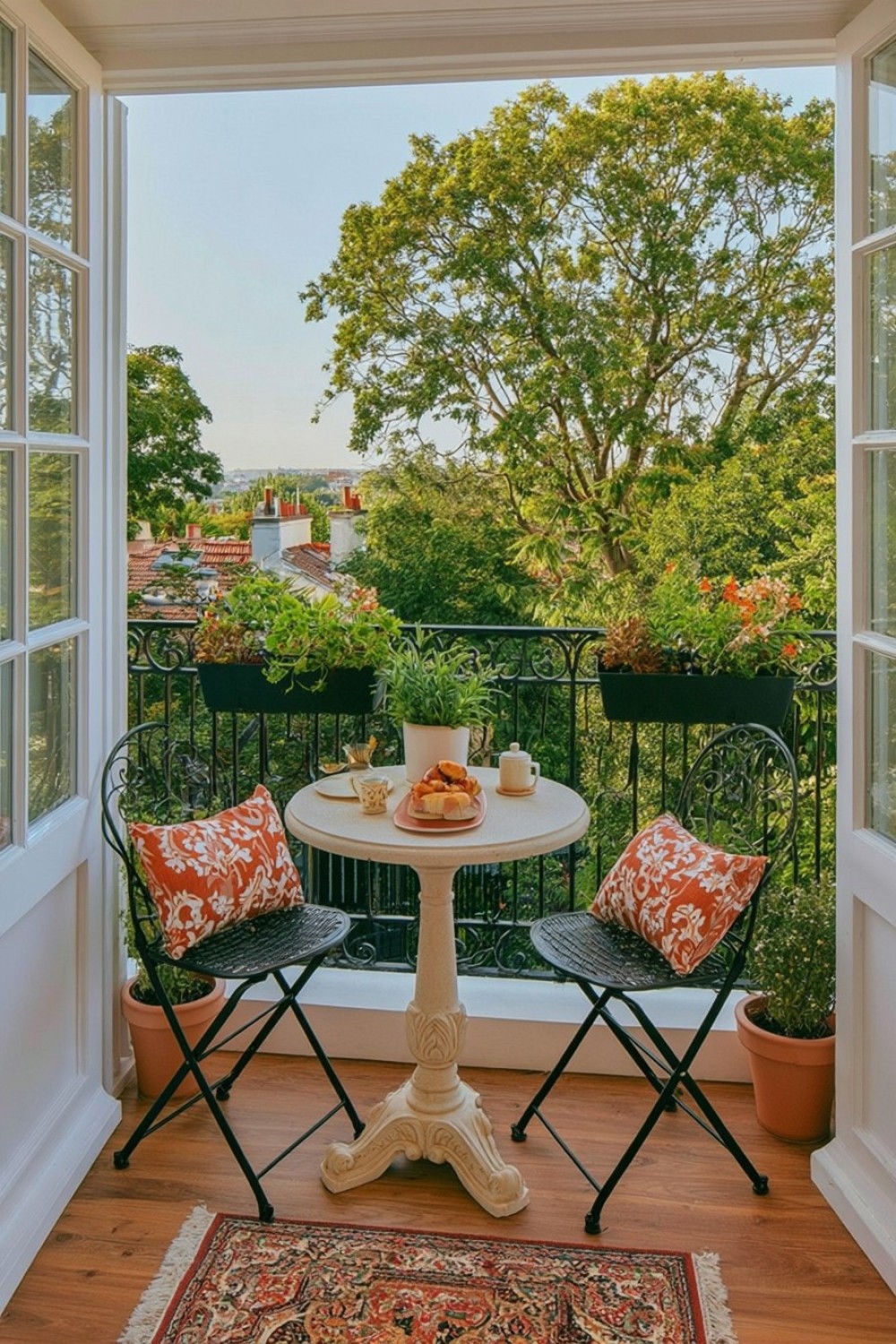
A small stone or stone-effect table can immediately change the atmosphere of a balcony. Instead of the familiar lightweight metal café table, a rounded pedestal design introduces the visual weight associated with old courtyards and traditional European terraces.
Pale limestone, warm gray, and softly veined finishes combine especially well with dark metal seating and green plants. Keep surrounding furniture visually light so the table does not dominate the limited space.
Real stone can be extremely heavy, so suitability should be considered carefully on balconies. Building load limits vary, and heavy architectural materials should never be added without understanding whether the structure can safely accommodate them. Lightweight outdoor furniture manufactured to imitate stone is often a more practical alternative.
Keep the tabletop relatively clear. A small planter or useful item is usually enough decoration. Allowing the material itself to remain visible makes the table feel intentional and gives the entire setting a quieter, more refined character.
9. Mix Two Different Chairs for an Informal Artistic Feel
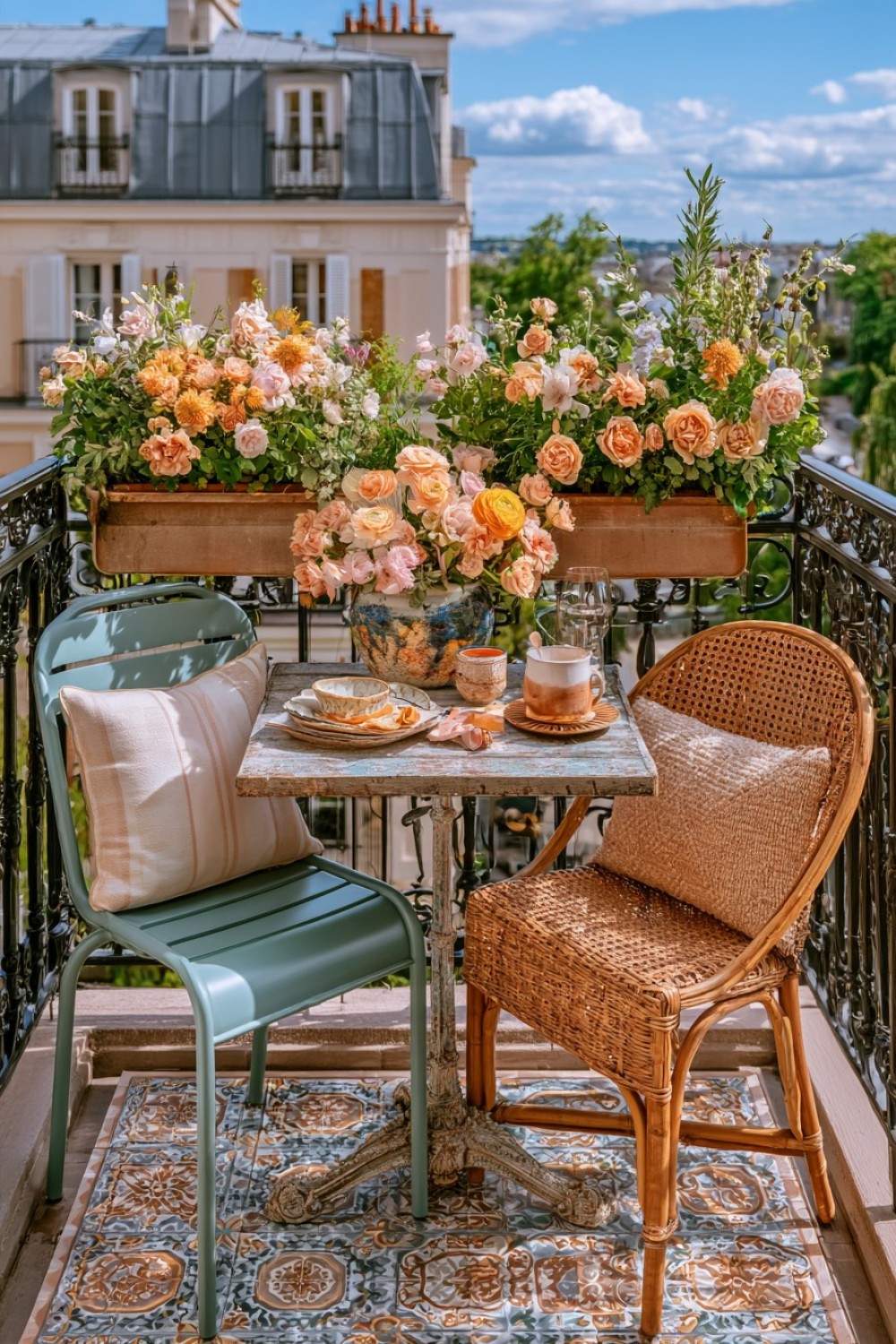
Not every French-inspired balcony needs to be perfectly coordinated. Combining two different chairs can create the sense of a space assembled gradually over time rather than purchased as one complete outdoor furniture package.
The contrast should still feel deliberate. For example, pair a narrow painted metal chair with a compact woven design while keeping both within a similar neutral or muted color palette.
A small table with an aged surface can connect the pieces visually. One distinctive ceramic planter or textured outdoor cushion may provide enough additional personality without adding unnecessary clutter.
Check chair dimensions carefully because mismatched furniture may have very different depths. Both pieces should allow comfortable movement and safe access to the balcony door.
This approach is particularly effective when the surrounding architecture already has character. Rather than trying to create a flawless showroom arrangement, the balcony can feel personal and lived-in while still maintaining the restrained elegance associated with French interiors.
10. Introduce Muted Blue Gray for a Softer Coastal Influence
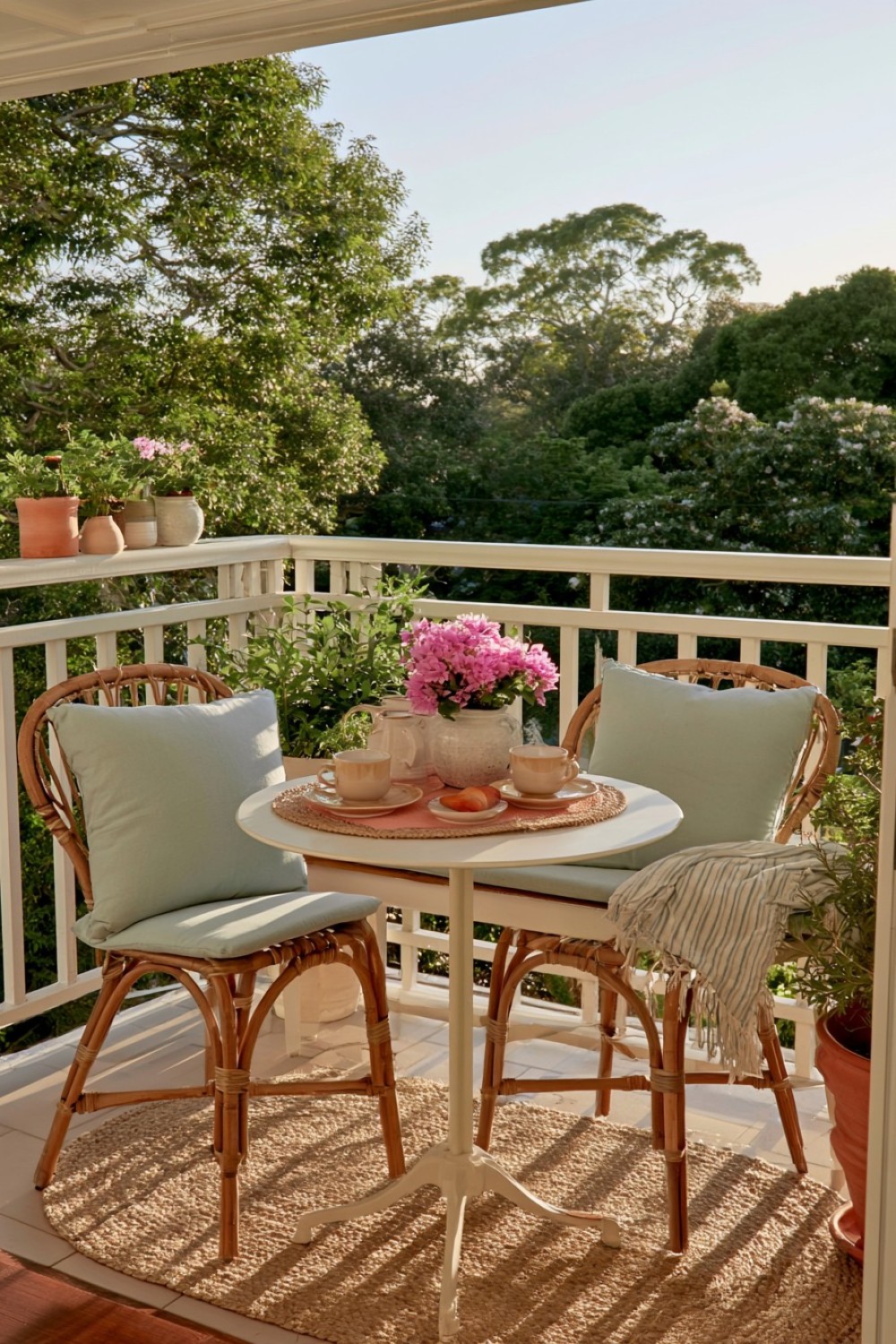
French coastal inspiration does not require bright nautical colors, anchors, or obvious seaside decorations. A more sophisticated approach uses muted blue gray as a subtle accent against cream, pale wood, terracotta, and natural green.
The color can appear on chair cushions, a painted furniture frame, an outdoor rug, or a glazed planter. Keeping it limited to a few surfaces allows the balcony to feel influenced by coastal France without becoming heavily themed.
Traditional or transitional furniture shapes work better here than oversized resort-style lounge pieces. A weathered table and a few pale containers can reinforce the relaxed mood while still fitting comfortably into a compact apartment balcony.
If you introduce pattern, consider a narrow stripe or lightly washed textile rather than several competing prints.
Blue-gray tones are particularly attractive in bright natural light, where their softer undertones become visible. Combined with greenery and warm neutral materials, they create a calm palette that can remain stylish beyond short-lived décor trends.
11. Replace a Dining Table With a Narrow Breakfast Ledge
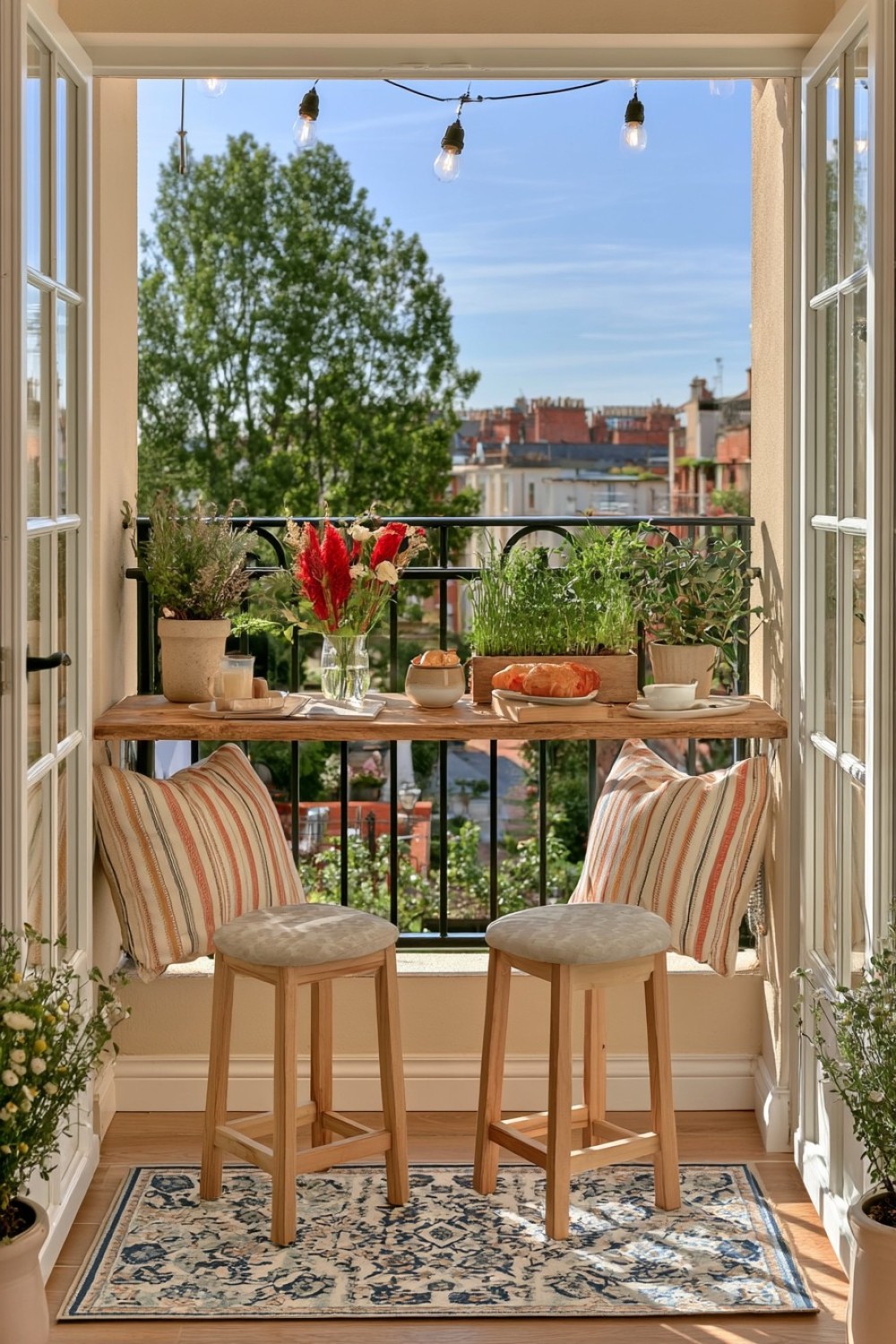
Some balconies are too shallow for a conventional table and chair arrangement. In these spaces, a narrow wall-mounted, freestanding, or appropriately designed railing-height surface can provide useful functionality without occupying most of the floor.
Pair the surface with one or two stools that can tuck underneath when not in use. Natural wood, dark metal, and lightweight stone-effect finishes can all suit a French-inspired setting.
Installation and safety require particular attention. Any wall-mounted or railing-related furniture should be suitable for exterior use and installed according to manufacturer instructions and building requirements. Avoid attaching makeshift structures to balcony railings.
Keep the usable surface mostly open. One small herb pot or ceramic container may provide sufficient decoration while leaving room for breakfast, reading, or working outdoors.
This type of arrangement is ideal for narrow urban balconies because it prioritizes actual use. Even without a traditional café table, the elevated surface can create a relaxed European terrace feeling.
12. Soften Metal Elements With Woven Outdoor Textures
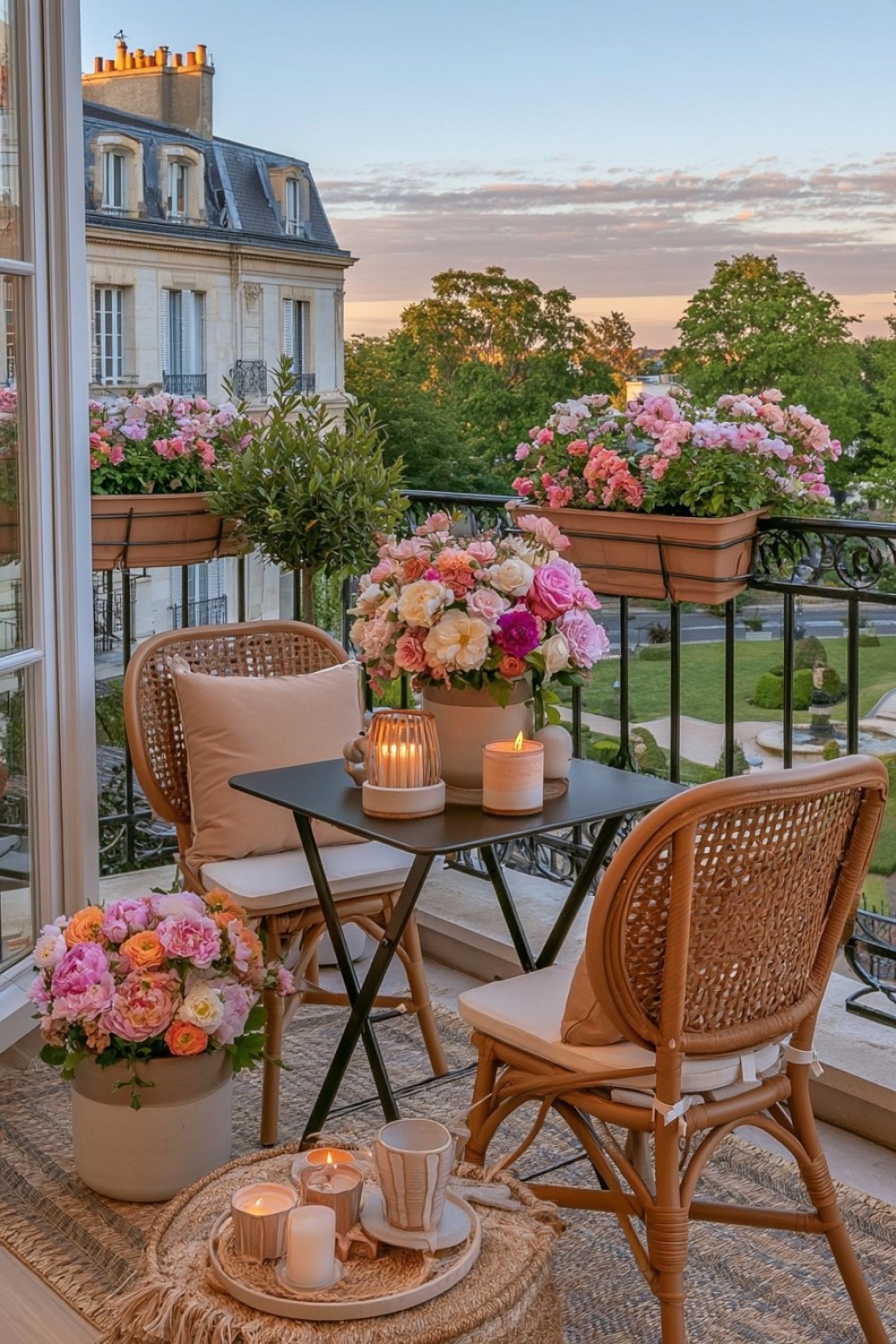
Woven textures can make a French balcony feel warmer and more residential, particularly when the surrounding architecture contains a large amount of stone, concrete, or metal.
Choose compact chairs with cane-inspired patterns, woven backs, or exterior-grade synthetic materials designed for changing weather conditions. Narrow frames are usually preferable to deep lounge chairs on small balconies.
Combine the woven texture with a contrasting material. A dark metal table, ceramic planter, or stone-effect container prevents the arrangement from becoming overly rustic.
Natural cane and similar indoor materials can deteriorate quickly when exposed to moisture and strong sunlight, so furniture intended specifically for outdoor use is generally a more practical choice.
Limit the palette to cream, tan, muted green, black, or warm gray. The texture itself already provides visual detail, so multiple additional patterns are rarely necessary.
The result is a softer alternative to traditional iron café furniture while retaining the compact proportions and understated character that work well in French-inspired outdoor spaces.
13. Build the Planting Scheme Around Different Shades of Green
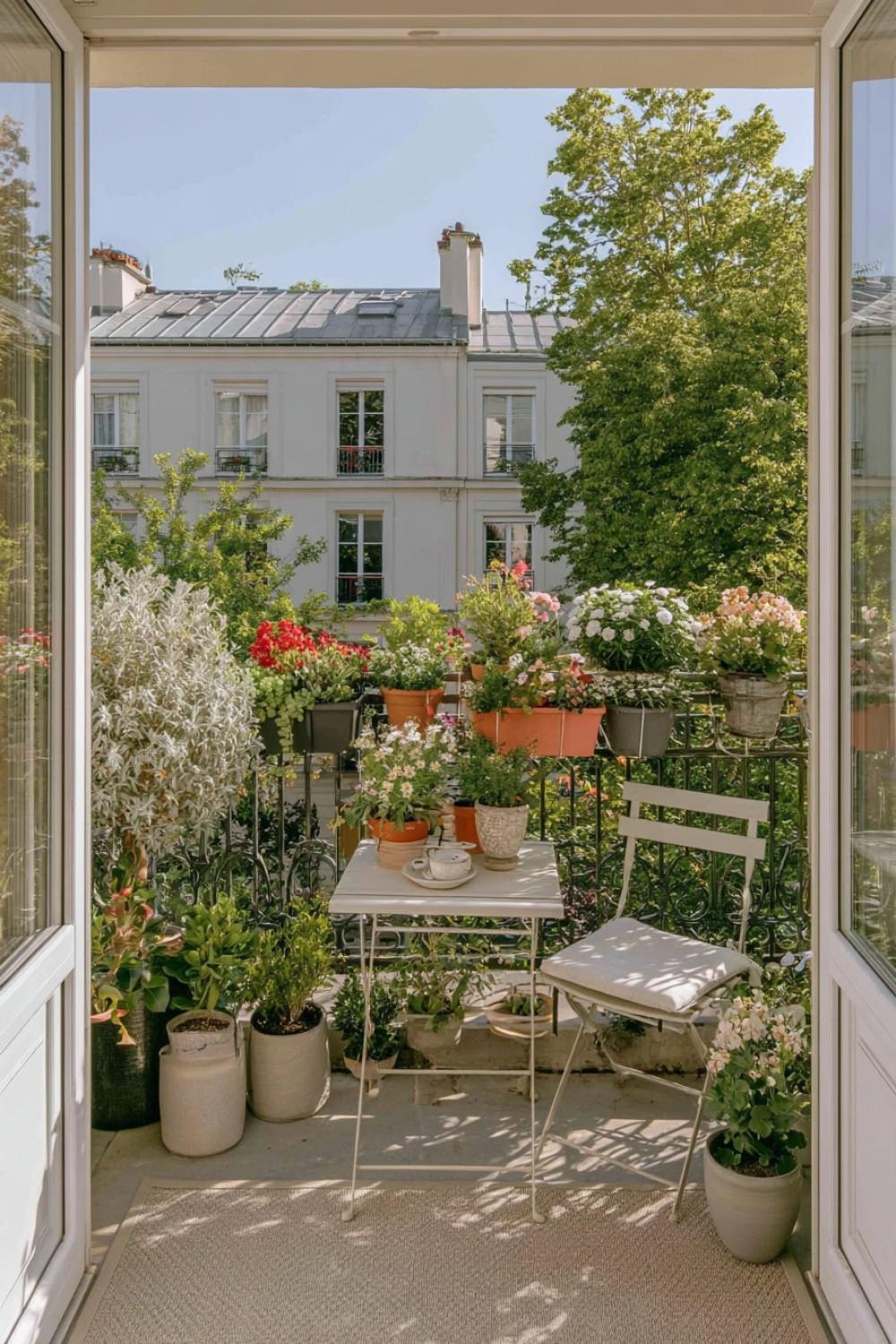
A balcony does not need abundant flowers to feel lush. Using several shades and textures of green can produce a calmer, more sophisticated garden effect that remains attractive even when few plants are blooming.
Combine upright foliage, small shrubs, herbs, trailing plants, and softer leaf shapes according to the growing conditions available. Dark glossy leaves can sit beside silvery or finely textured foliage to create contrast without introducing numerous colors.
Neutral containers allow plant forms to become the primary decorative feature. Terracotta, warm stone, charcoal metal, and subdued ceramic finishes all work well.
Rather than lining every plant around the perimeter, create two or three intentional groups. This approach produces depth while leaving portions of the railing and floor visible.
Before combining species in one arrangement, consider how much sun, water, shelter, and maintenance each requires. A planting design is more successful when it remains healthy over time, not simply when it looks appealing immediately after installation.
14. Reference Haussmann Style With Black Metal and Pale Stone
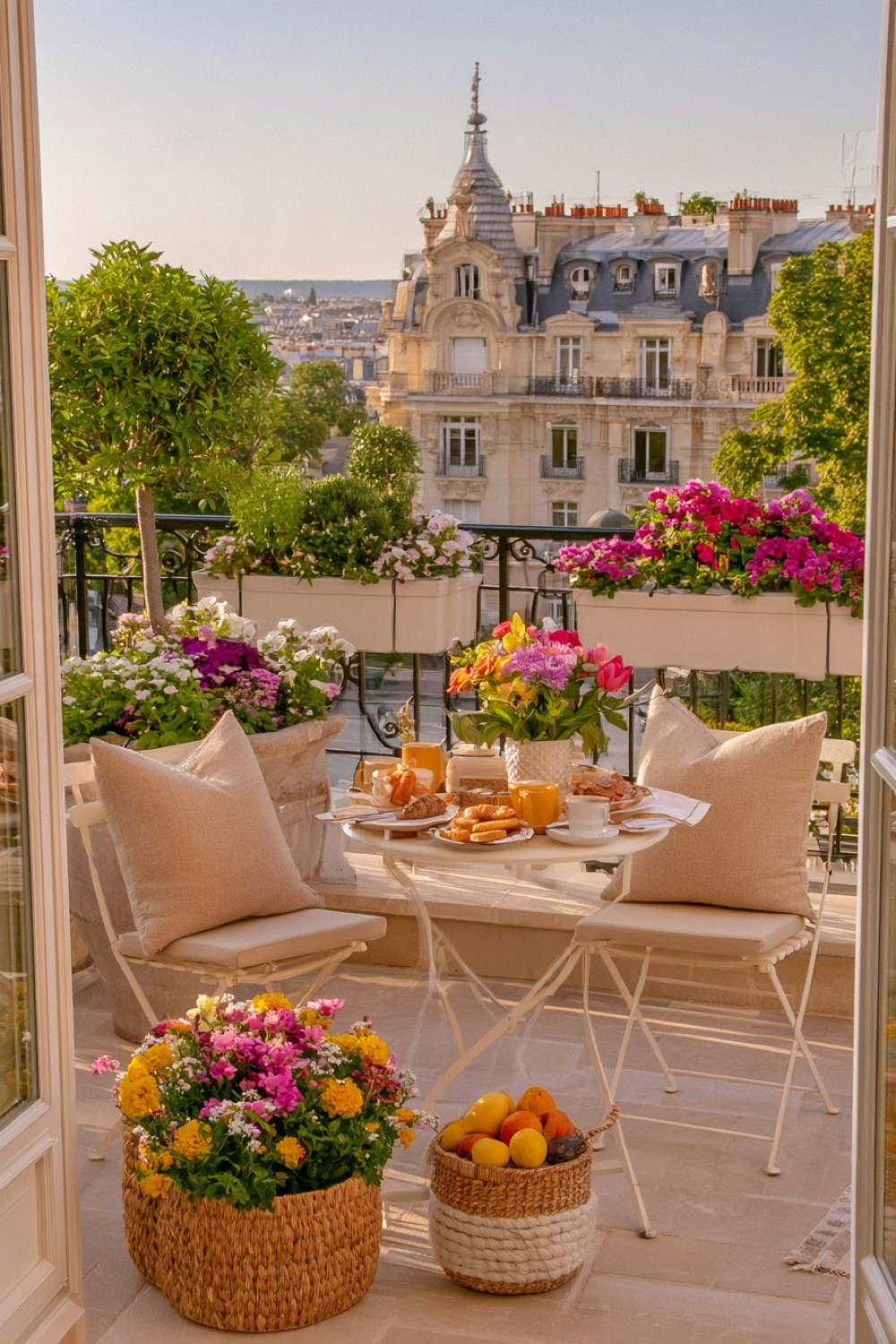
The contrast between dark iron balconies and pale stone façades is one of the most recognizable features of classic Parisian architecture. You can reference that visual language without attempting to recreate a historic building.
Start with simple black or charcoal furniture and combine it with limestone-colored containers, beige textiles, and warm neutral surfaces. If ornamental railings are already present, keep enough open space around them so their shape remains visible.
A restrained outdoor rug can add softness, but avoid covering every surface with additional pattern. The strength of this palette comes from clear contrast and simple materials.
Green plants prevent the black-and-stone combination from appearing severe. Choose a few well-proportioned specimens rather than numerous small decorative pots.
One weathered object can add character and prevent the arrangement from feeling overly polished. By using the architectural palette as inspiration rather than copying historical details literally, the balcony remains suitable for a contemporary apartment while retaining a distinctly Parisian reference.
15. Limit Flower Colors for a More Refined Romantic Balcony
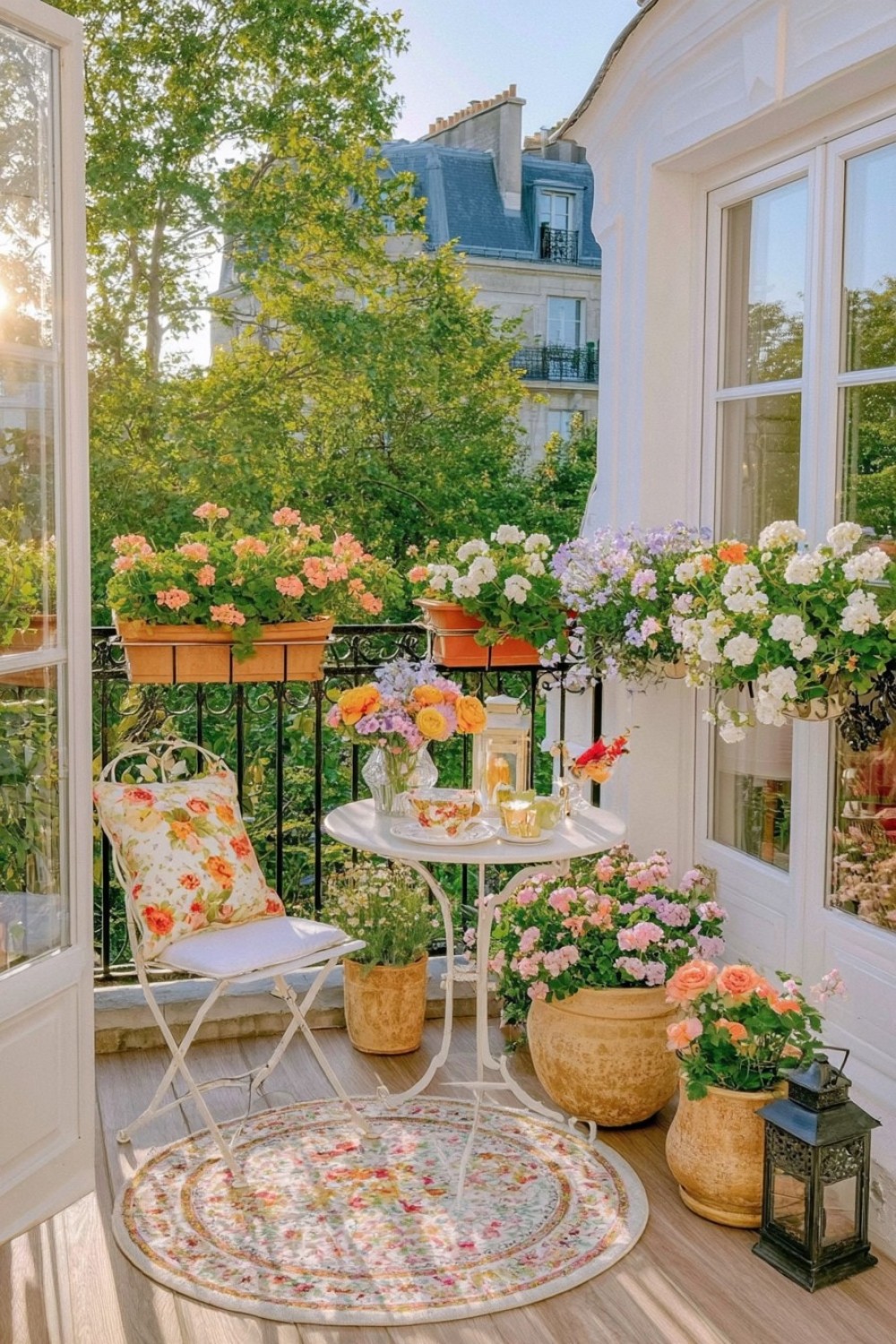
Flowers can create a beautiful French-inspired balcony, but using every available color often makes a small area visually busy. A limited palette creates a more cohesive result.
Choose two or three related flower colors, such as blush and cream, lavender and white, or muted peach and dusty pink. Repeat these tones in several areas rather than introducing a different color in every planter.
Foliage is equally important. Green leaves positioned between flowering plants give the eye somewhere to rest and help individual blooms stand out.
Consider each plant's blooming period and growing requirements. Combining varieties that flower at different times may help maintain seasonal interest, while plants suited to similar conditions are generally easier to care for.
Keep furniture and containers comparatively neutral so the planting remains the focal point. Dark metal, aged terracotta, and warm stone are particularly useful.
This controlled approach creates romance through color and texture without turning a narrow balcony into an overly decorated floral display.
16. Connect the Balcony Visually With the Adjoining Room
One of the most eff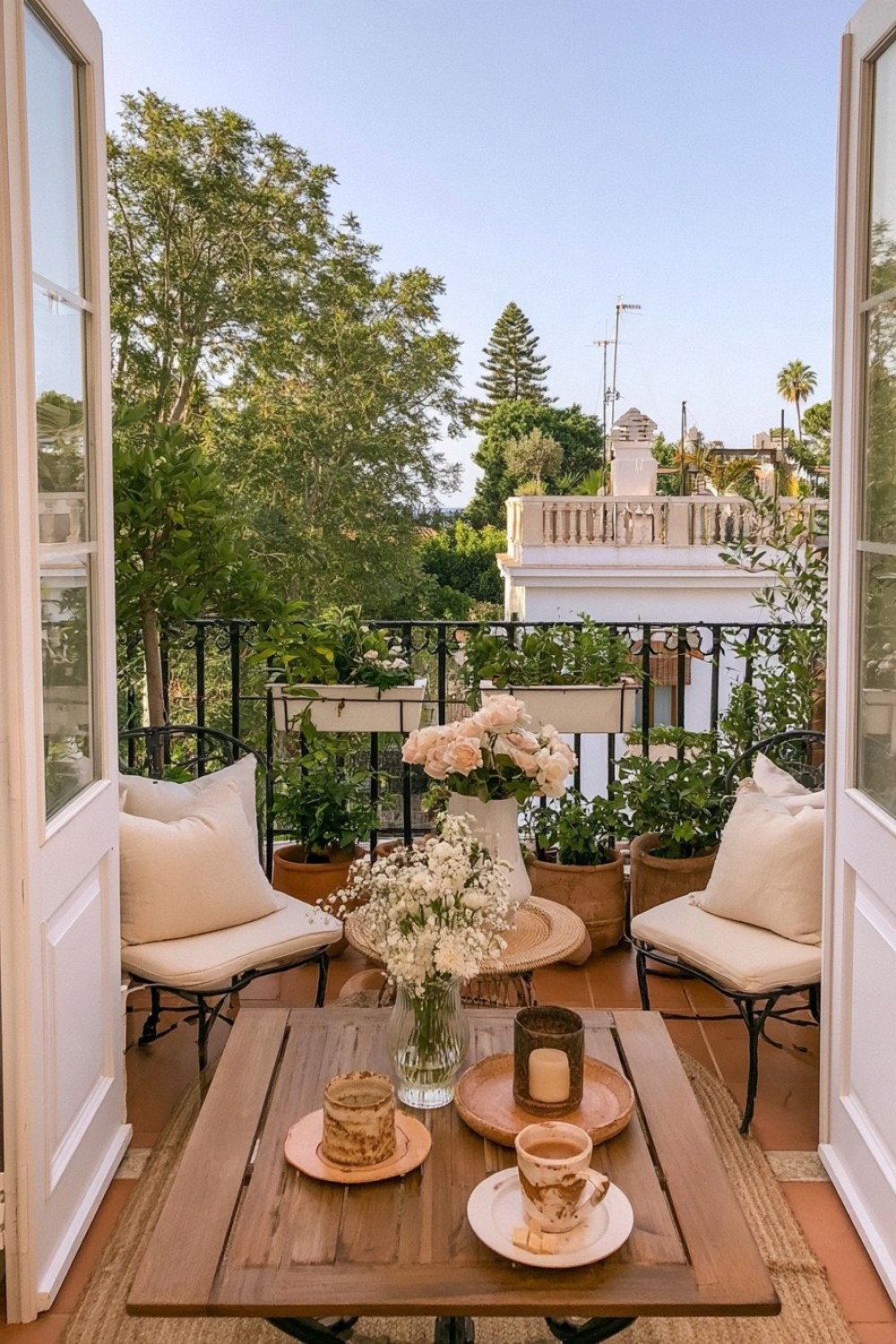 ective ways to make a small balcony feel intentional is to treat it as a visual continuation of the room beside it.
Stand inside and look toward the balcony before choosing outdoor furniture. Identify two or three materials or colors already present indoors that can be interpreted outside. Black metal, warm wood, cream fabric, muted blue, or aged ceramics can all provide useful connections.
Use exterior-rated versions rather than moving furniture or textiles designed for indoor conditions onto an exposed balcony.
Shape can create continuity as well. If the room contains curved furniture, a rounded outdoor table may relate naturally to it. If warm metallic details appear inside, dark bronze outdoor finishes can provide a subtle echo.
Avoid copying every interior element. The outdoor area should remain simpler because it must withstand different environmental conditions.
When the two spaces share a restrained visual language, the view through the doors becomes more cohesive and both areas can feel larger.
17. Use One Excellent Chair and One Statement Planter
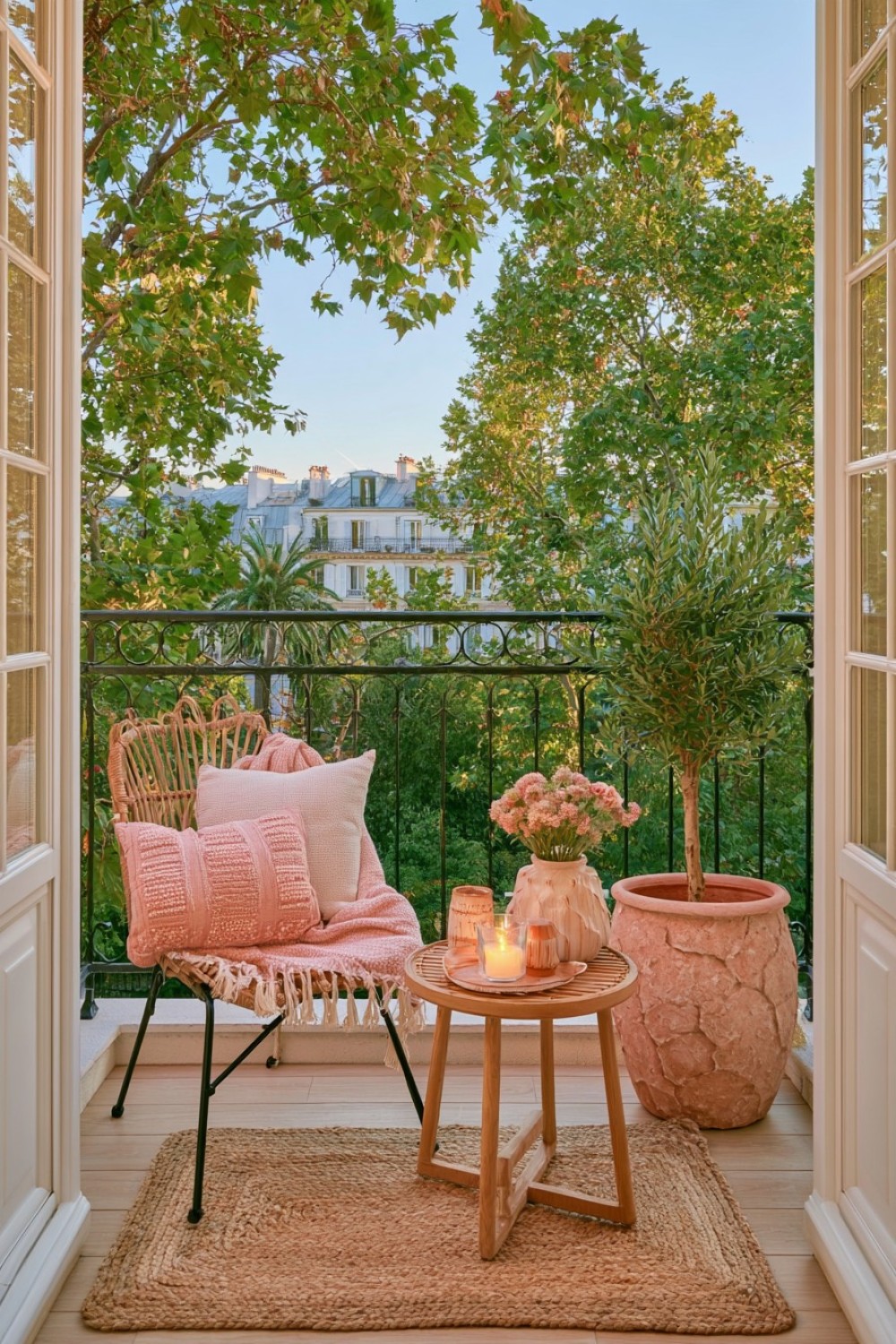
The smallest balconies often benefit from the simplest design. Instead of trying to fit a complete furniture arrangement into an area that cannot comfortably accommodate it, choose two strong elements: one useful chair and one substantial planter.
Look for a chair with an attractive silhouette and dimensions that allow the balcony door to operate freely. Slender metal, compact outdoor woven seating, or appropriately treated exterior wood can all work.
Place a well-proportioned planter nearby containing a plant suitable for the available light and wind exposure. Stone-effect ceramic, aged terracotta, or understated outdoor containers can provide enough visual weight to make the arrangement feel complete.
Resist the urge to fill the remaining gaps with numerous small accessories. In a minimal setting, the shape, texture, and placement of every object becomes more noticeable.
This approach is especially effective on narrow city balconies because it preserves circulation while still giving the outdoor space identity, comfort, and unmistakable French-inspired elegance.
Creating a French Balcony That Works in Everyday Life
The most convincing French-inspired balconies are not created by copying a fixed collection of decorative objects. They develop from good proportions, practical furniture, coordinated materials, healthy plants, and enough empty space for the balcony to remain comfortable.
Start with the dimensions and conditions of your own outdoor area rather than a photograph you want to reproduce exactly. Consider sunlight, weather exposure, maintenance, safe circulation, and building requirements before purchasing anything. Then choose a limited palette and introduce character gradually.
Whether your balcony uses formal black metal, relaxed Provence textures, romantic flowers, or a single beautiful chair, restraint is what allows each detail to stand out. A small outdoor space does not need to be filled to feel finished. Thoughtful choices can make even a compact balcony feel elegant, useful, and naturally connected to the home.
MORE IDEAS


Share
What's Your Reaction?
 Like
0
Like
0
 Dislike
0
Dislike
0
 Love
0
Love
0
 Funny
0
Funny
0
 Angry
0
Angry
0
 Sad
0
Sad
0
 Wow
0
Wow
0