16 Bohemian Bedroom Styling Details for a Warm Collected Retreat


A bohemian bedroom feels most convincing when its colors, textiles, furniture, and handmade details appear collected gradually rather than purchased as a matching set. The style allows considerable freedom, but a successful room still needs visual structure. Begin with a restrained background palette, identify two or three repeating accent colors, and use varied textures to provide depth. This approach keeps expressive patterns from making the sleeping area feel unnecessarily busy.
Comfort and maintenance are just as important as appearance. Bedding should remain breathable and washable, rugs need secure placement, and wall hangings or canopy fabrics must stay clear of lights, heaters, and electrical equipment. Natural materials can add warmth, although baskets, carved furniture, and vintage pieces should be inspected for rough edges, instability, dust, or damage. The following styling approaches show how to build a personal bohemian bedroom while preserving practical storage, comfortable circulation, and a restful atmosphere.
1. Ground the Room With a Low Bed and Earth-Toned Bedding
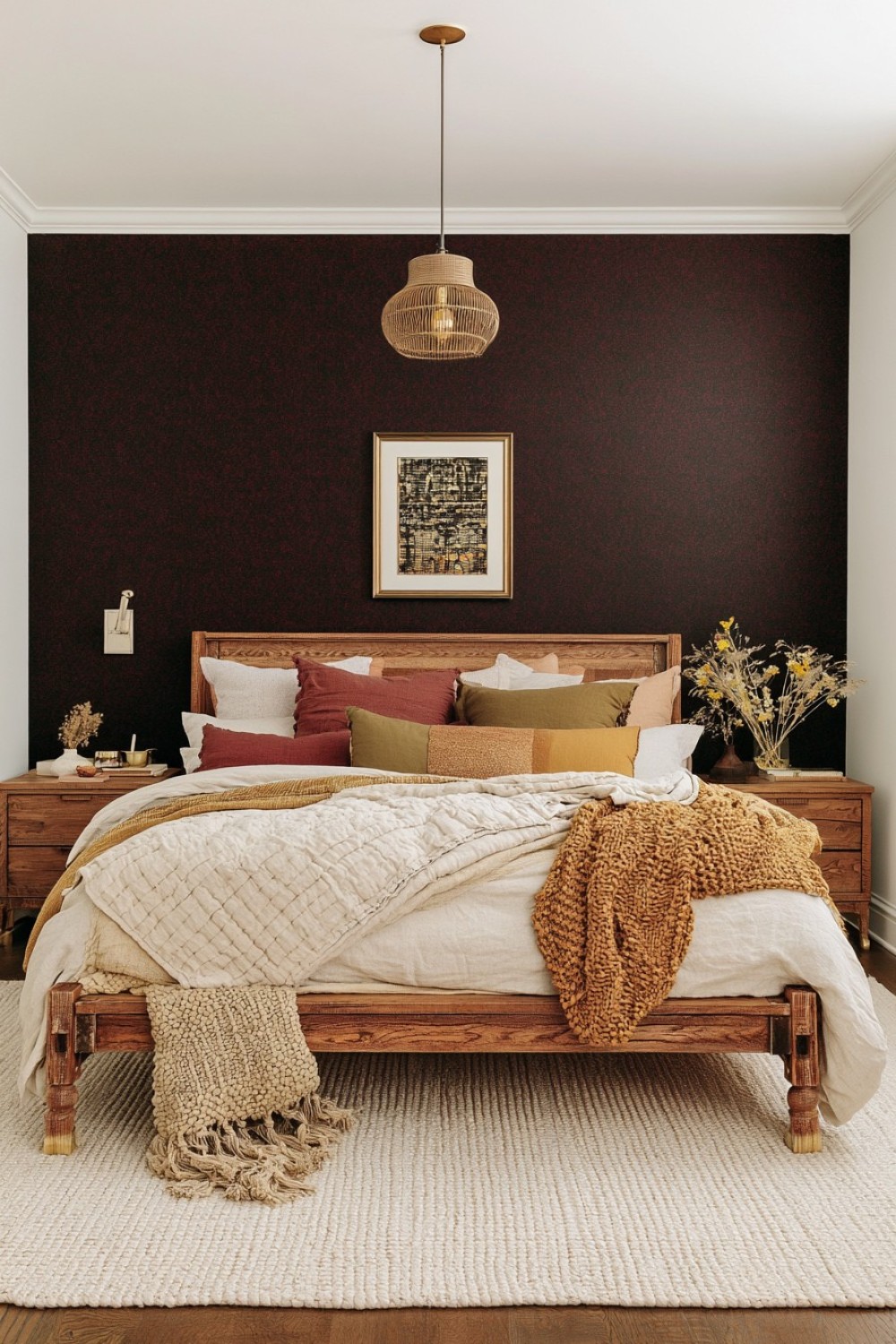
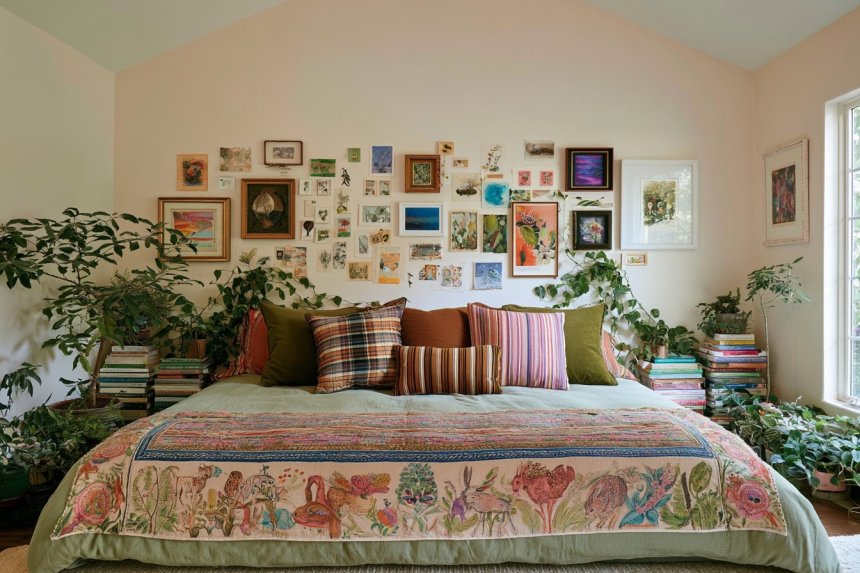
A low platform bed can make a bohemian bedroom feel informal while preserving more open wall space above the sleeping area. Use rust, clay, ochre, olive, sand, or muted terracotta across several layers rather than choosing one identical color. A washable duvet, lightweight quilt, and one textured throw can provide depth without making the bed difficult to maintain. Limiting decorative pillows keeps the arrangement comfortable for everyday use.
Confirm that the mattress receives adequate support and ventilation, especially when it sits close to the floor. Placing a mattress directly on an unsuitable solid surface can trap moisture underneath. The platform should also have smooth corners and enough surrounding clearance for changing bedding. In a compact room, allow the bed to remain the dominant element and keep nearby furniture visually light. Repeating one bedding color in a rug, pot, or small artwork will connect the palette without covering every surface in warm brown tones.
2. Extend a Woven Headboard Across the Bed Wall
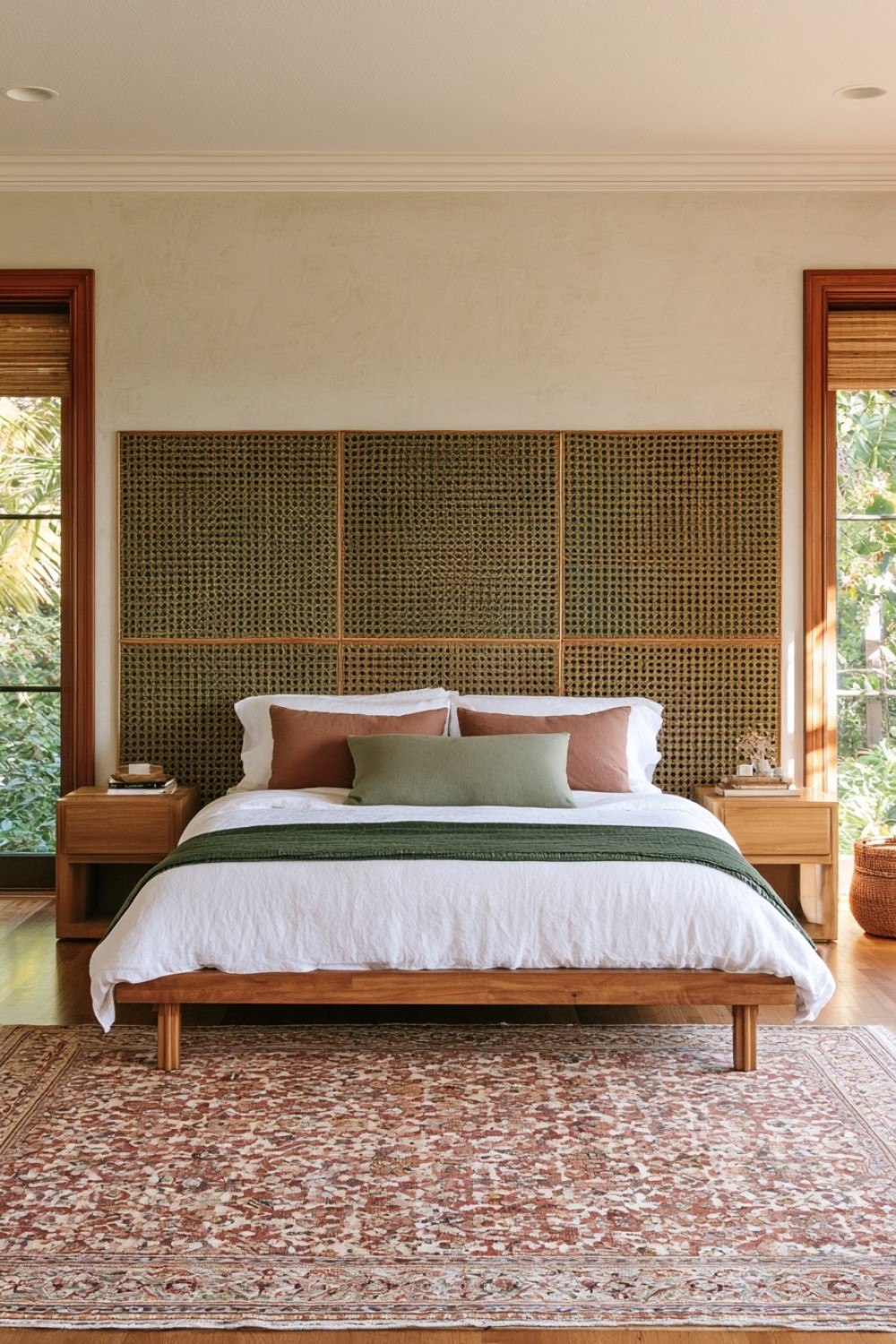
A wide woven headboard can establish texture while visually framing both the bed and bedside furniture. Rattan, cane, rush, or tightly woven natural fiber introduces pattern through construction rather than printed decoration. Extending the headboard beyond the mattress can make the sleeping area feel more intentional, particularly when two small bedside tables would otherwise appear disconnected.
Choose a design with a smooth surface where pillows and bedding will touch it. Open or fragile weaving can catch jewelry, hair, or loose fabric, while damaged fibers may create sharp ends. Secure the headboard to an appropriate wall or bed structure so it cannot shift. Natural materials can collect dust within their texture, so select a piece that can be cleaned with a soft brush or vacuum attachment. Pair the detailed headboard with plain bedding and quieter wall color, allowing its craftsmanship to remain visible instead of competing with several strong patterns.
3. Add a Floor-Level Reading Corner Beside the Bed
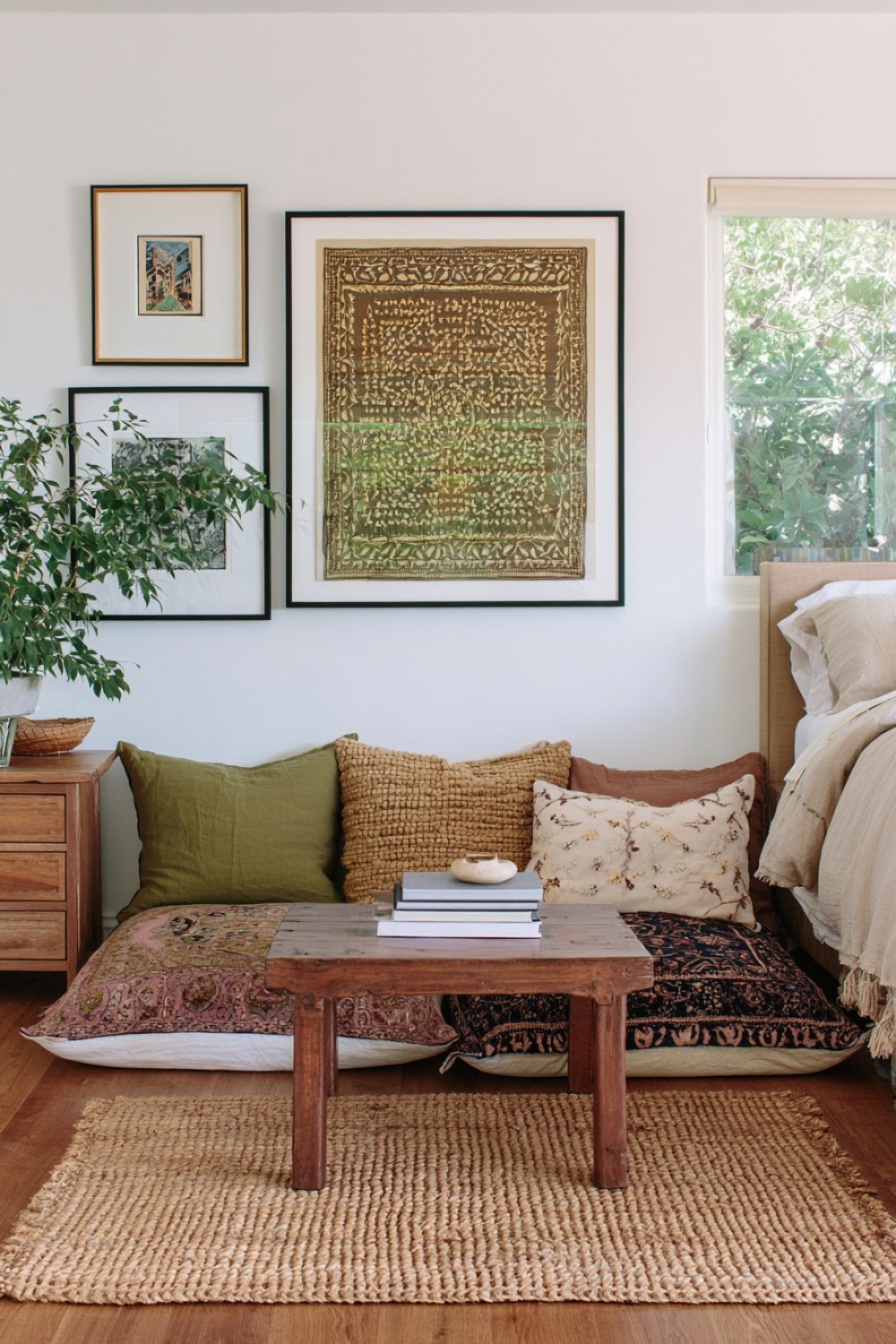
A small floor lounge can fill an unused bedroom corner without introducing another bulky chair. Begin with a supportive floor cushion or compact upholstered pad, then add a back cushion against a clean, dry wall. A low side table can hold a book or drink, while a wall-mounted or floor lamp provides focused light. Use fabrics that connect with the bed but do not duplicate every color and pattern.
This arrangement works best where it does not narrow the route between the door, bed, wardrobe, and windows. Floor cushions should not cover electrical outlets, ventilation grilles, or heating equipment. Removable covers make regular cleaning easier, particularly because low seating collects dust more quickly than raised furniture. A rug pad can keep the foundation from sliding on smooth flooring. If getting down to or rising from the floor is uncomfortable, a compact chair with proper back support will provide the same relaxed function more effectively.
4. Frame the Bed With a Hand-Painted Color Arch
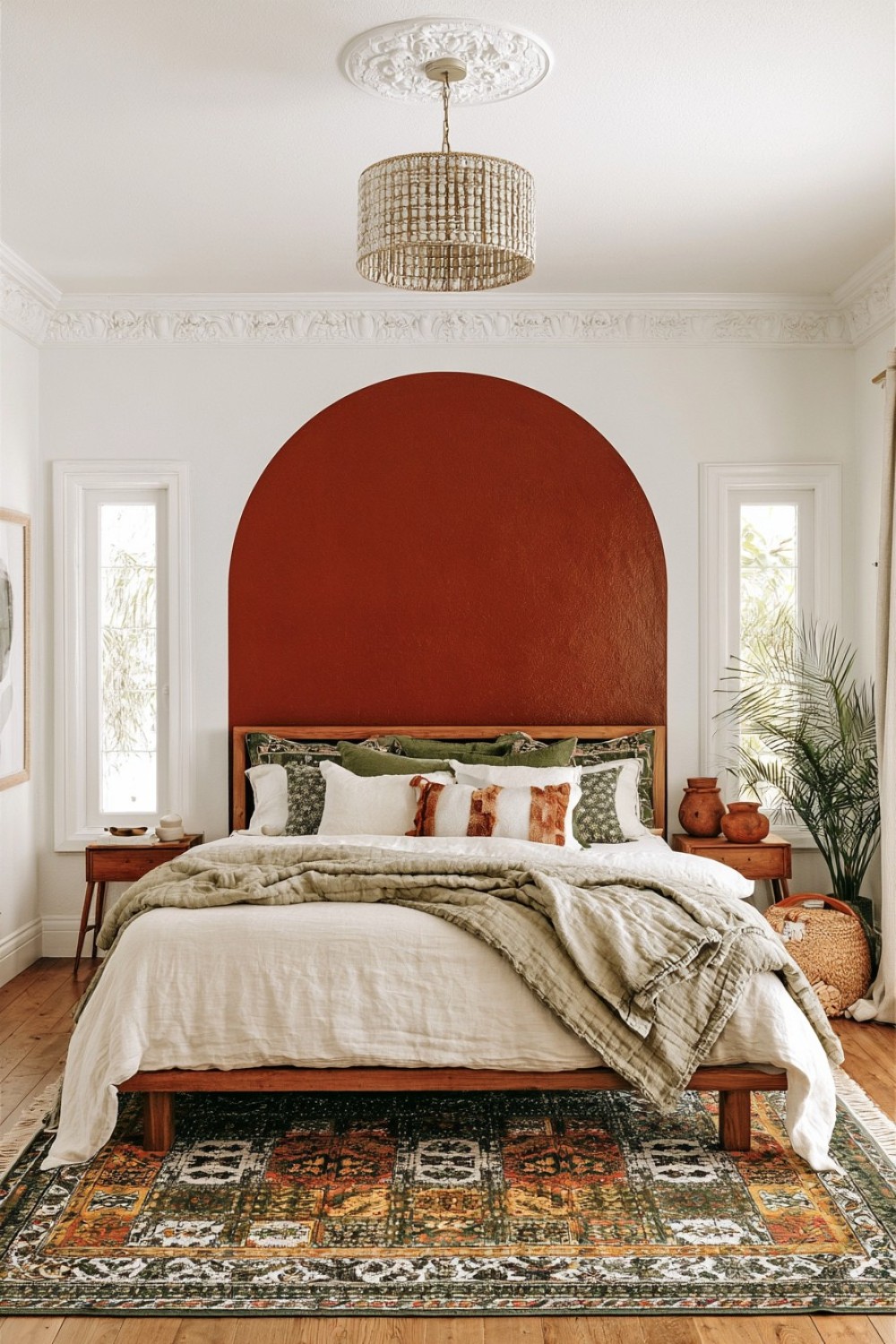
A painted arch can give the bed an architectural frame without adding a heavy headboard or wall panel. Use a warm mineral shade, dusty rose, muted ochre, olive, or soft terracotta that contrasts gently with the surrounding wall. The arch may align closely with the mattress or extend far enough to include both bedside tables. Testing the shape with removable tape helps confirm its proportions before painting.
Prepare the surface properly and use an interior paint appropriate for the existing wall finish. A homemade string compass can guide the curve, while careful masking creates cleaner vertical edges. Keep the remaining wall relatively simple so the arch reads as an intentional focal point. If the bed is later moved, the design may no longer align with the furniture, so confirm the long-term layout first. A narrow painted border or asymmetrical color block offers a more flexible alternative in rented rooms where permanent decorative changes may be restricted.
5. Introduce a Fabric Feature Without Covering the Entire Room
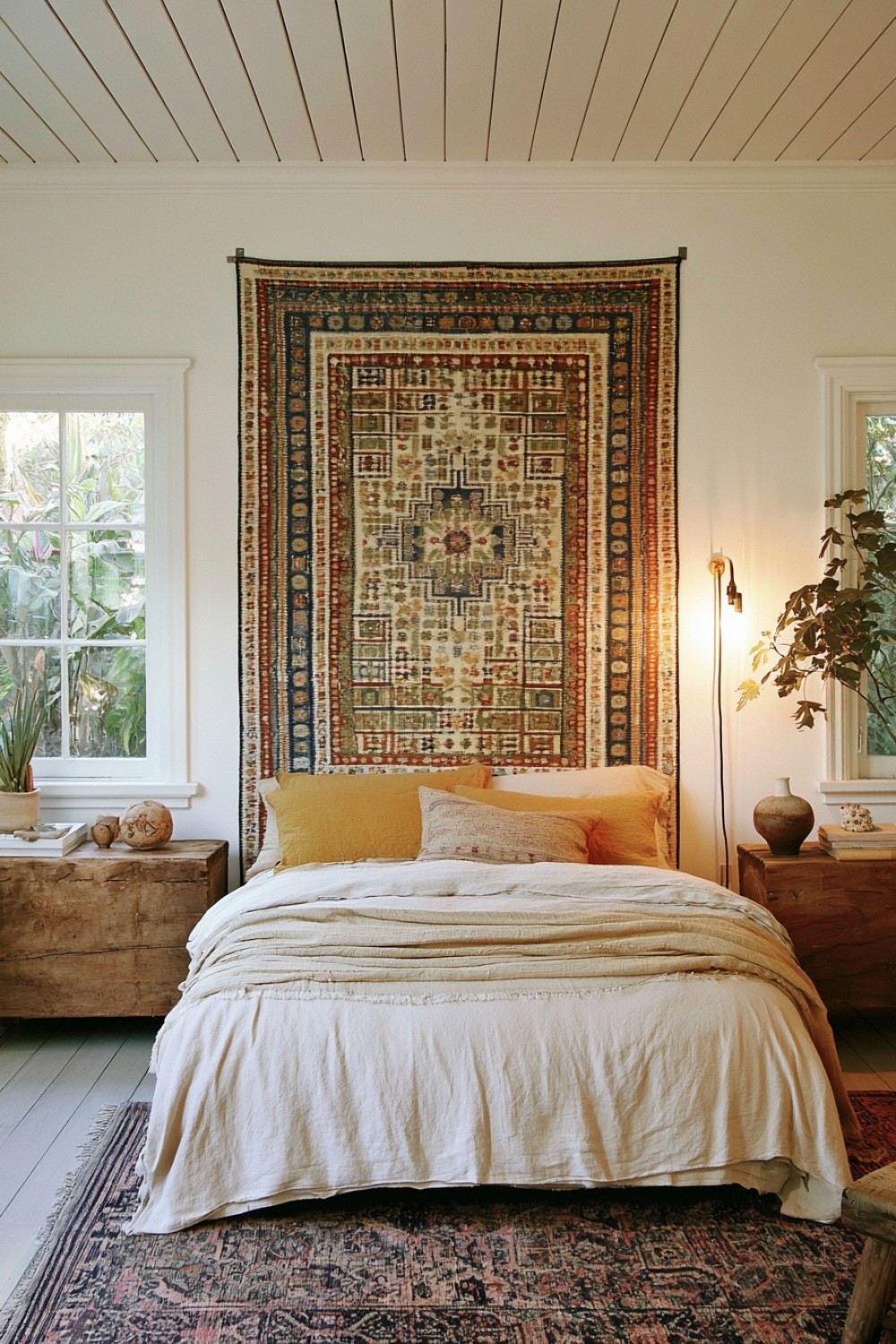
A large textile can soften a bedroom wall and introduce color, movement, or handcrafted detail. Instead of hanging several small pieces, use one substantial fabric panel behind a reading corner, beside the bed, or across a narrow section of wall. A flat-woven textile generally sits more neatly than a very heavy rug and is easier to remove for cleaning.
Mount the fabric with hardware suitable for both its weight and the wall construction. It should remain clear of portable heaters, radiators, exposed bulbs, outlets, and electrical cords. Avoid loosely draping material across the ceiling or placing it where occupants can pull it down while sleeping. Textiles attract dust, so choose a material that can be vacuumed carefully or cleaned according to its care instructions. Leaving visible wall around the piece helps it feel curated and prevents the room from becoming visually enclosed.
6. Balance Raw Timber With Soft Linen Surfaces
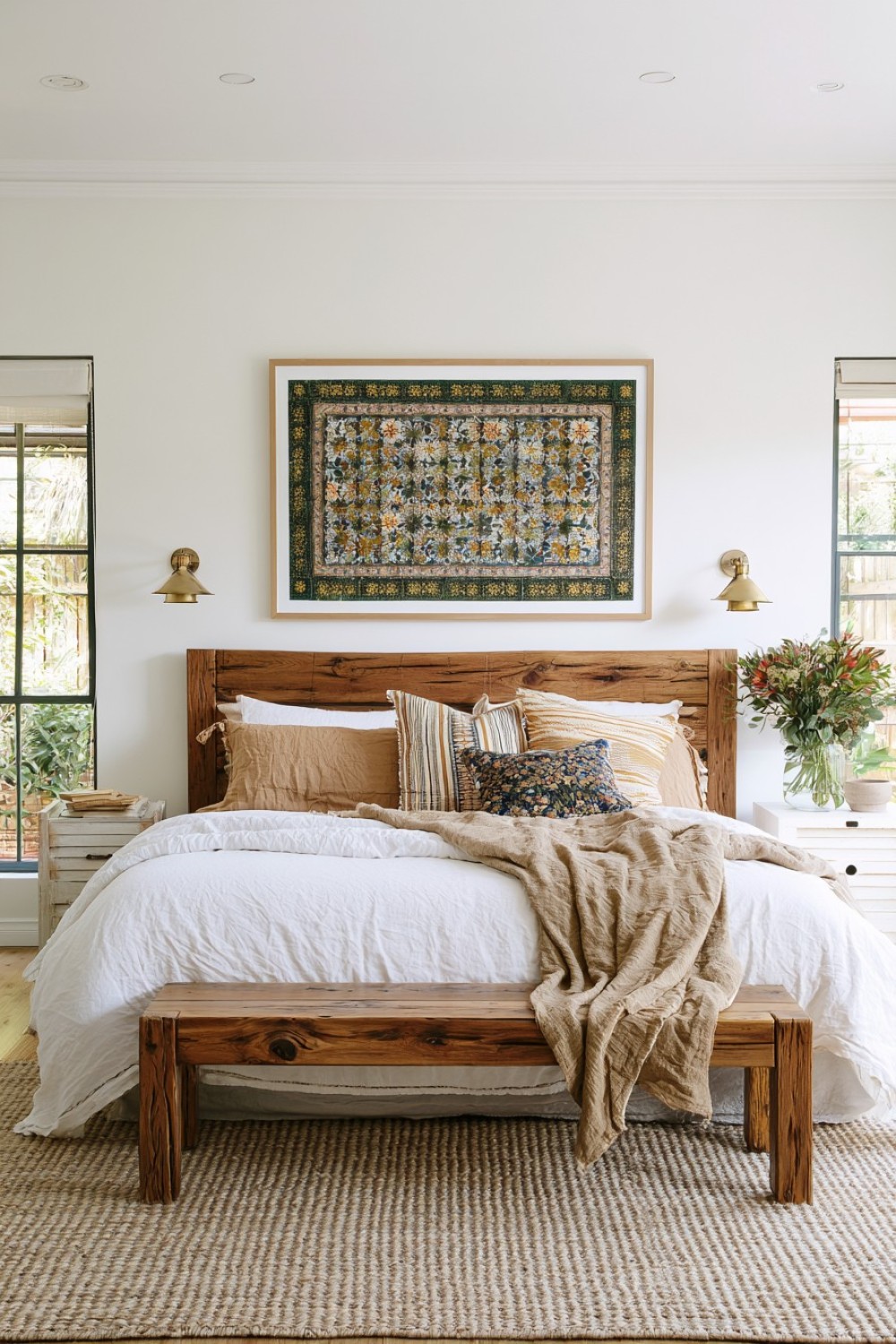
Combining substantial wood furniture with relaxed linen prevents a bohemian bedroom from feeling either too rustic or excessively delicate. A timber bed, bench, or chest can provide visual weight, while linen-look bedding and curtains soften its edges. The woods do not need to match exactly, but repeating similar warm or cool undertones helps different pieces look intentionally collected.
Furniture described as raw or reclaimed should still have a usable finish. Sand rough edges, stabilize loose joints, and seal surfaces that may transfer dust or stains to clothing and bedding. Place felt pads beneath heavy pieces to protect the floor and make small adjustments easier. Linen wrinkles naturally, so an overly precise bedding arrangement is unnecessary; however, washable covers and appropriate care remain important. Limit the room to a few meaningful timber elements so the natural grain can be appreciated without making a small bedroom feel heavy.
7. Display Handmade Pottery as a Small Curated Collection
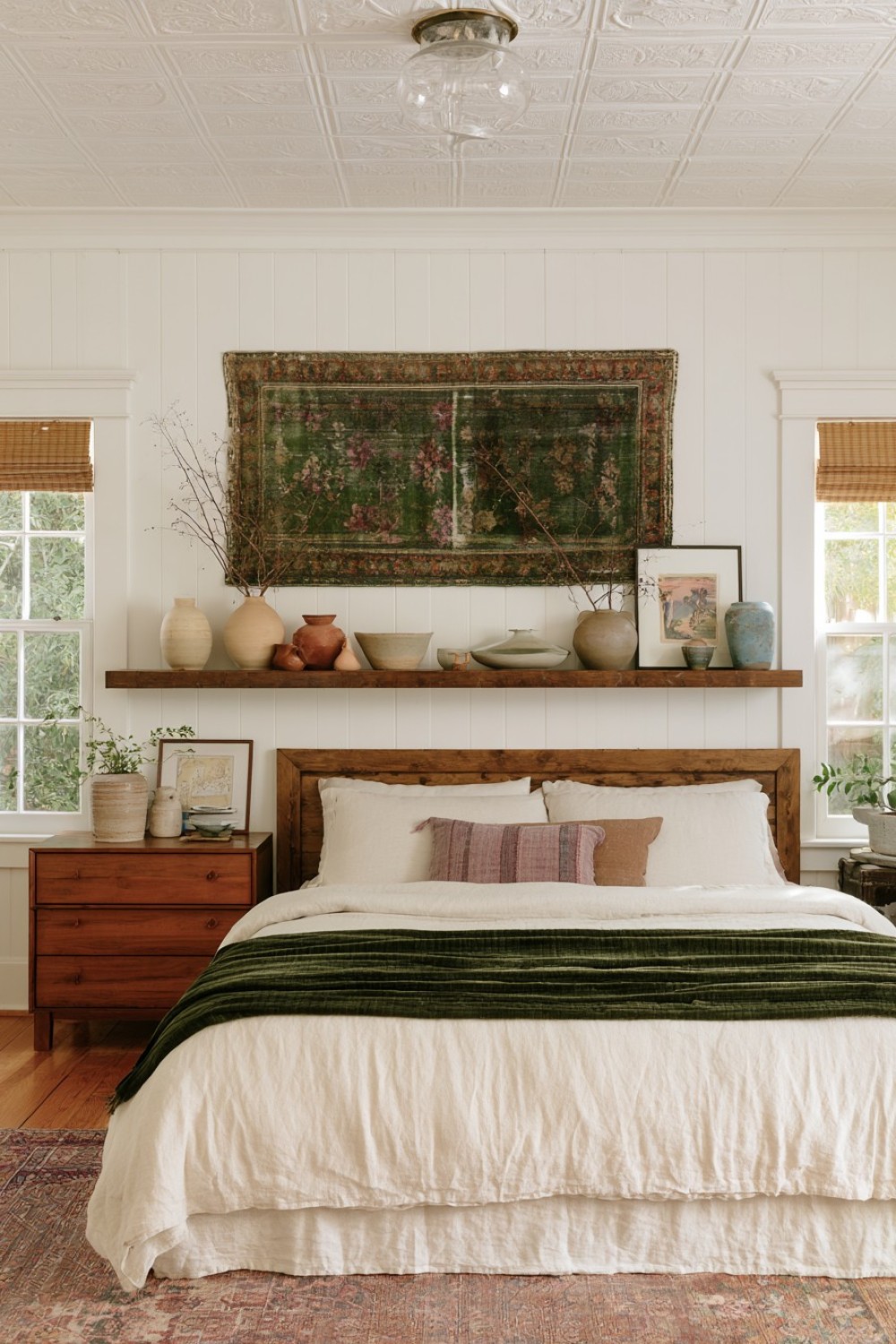
Handmade ceramics introduce irregular shapes and visible craftsmanship without requiring a large amount of decoration. Group three or four pieces on a dresser, recessed shelf, or stable ledge rather than scattering individual objects around the room. Vary the heights while repeating one glaze family, clay color, or surface finish. Empty vessels can be as visually effective as pieces filled with dried material.
Check every shelf for adequate depth and weight capacity. Pottery should not sit above the headboard, near the edge of a high cabinet, or where a curtain can knock it over. Use discreet museum putty where appropriate to improve stability, particularly in active households. Vintage or handmade containers should not automatically be assumed suitable for drinking water, food, or live plants; use them decoratively unless their finish and intended purpose are known. A restrained display gives each object more presence and leaves the bedroom easier to dust.
8. Build a Patchwork Bedding Scheme Around Repeated Colors
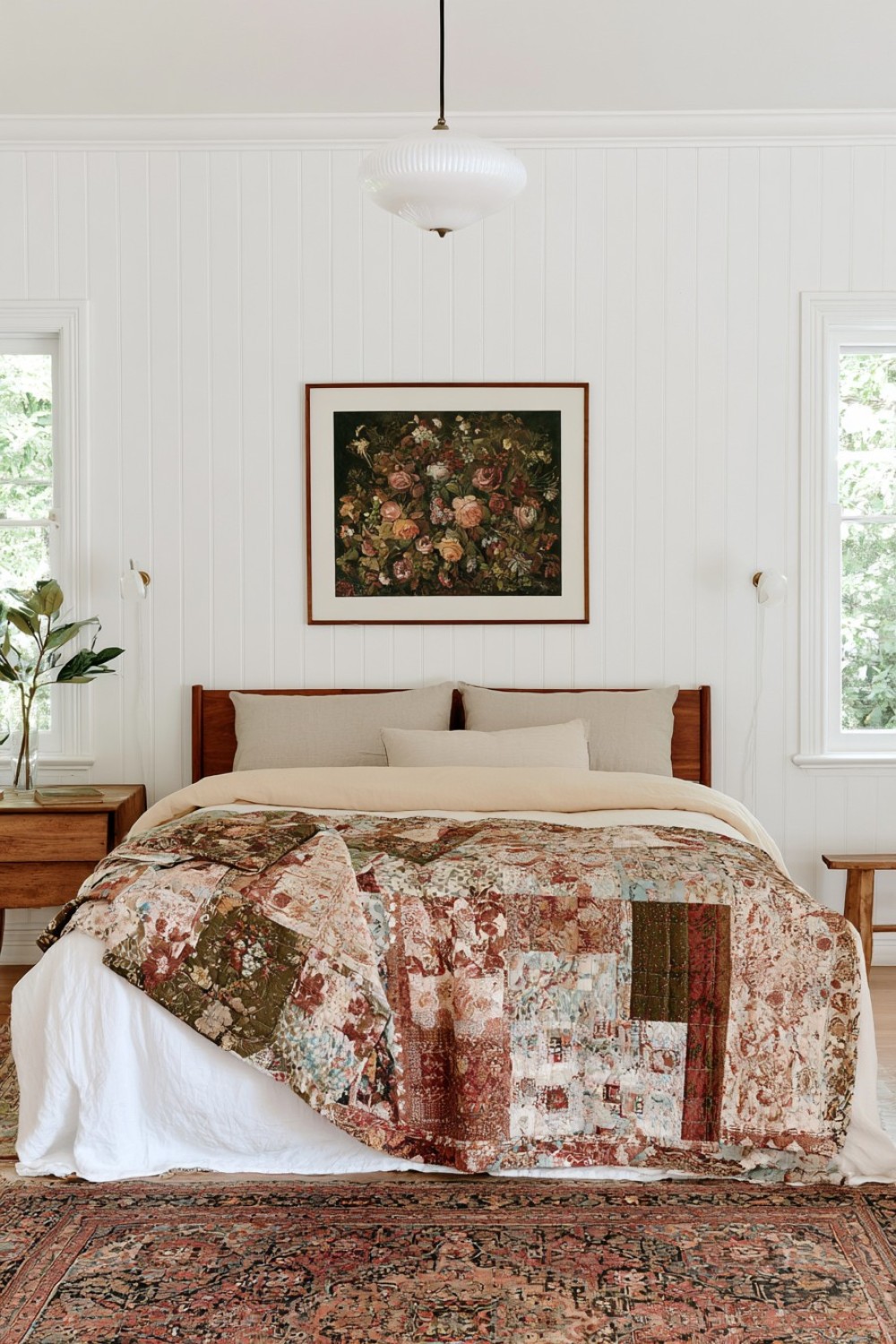
Patchwork bedding can combine floral, geometric, striped, and block-printed fabrics while still appearing coherent. Select one dominant color, one secondary shade, and a quieter neutral that appears in several sections. This repetition allows individual patterns to vary without turning the bed into an unrelated collection. Keep the sheets and larger pillowcases comparatively plain to provide visual rest.
Choose bedding suitable for regular laundering and check that decorative stitching, beads, mirrors, tassels, or loose trims will not be uncomfortable during sleep. Vintage textiles can be incorporated as a top layer after they have been cleaned and inspected, but fragile pieces may be better displayed at the foot of the bed than used every night. If sewing a patchwork cover, prewash compatible fabrics to reduce uneven shrinkage. Allow the patterned bed to remain the main feature by using a simpler rug and fewer decorative objects nearby.
9. Use a Carved Divider as Freestanding Decorative Architecture

A carved timber divider can distinguish a dressing area, work corner, or open wardrobe without constructing a solid wall. Its openings preserve some daylight and airflow while adding shadow and pattern. Position the screen where it supports a genuine function rather than placing it directly beside the bed as an unnecessary obstacle. A partially open design will generally feel lighter in a compact bedroom.
Freestanding dividers need a stable base and should not be placed in the route to the door or emergency exit. Tall or heavy panels may require anchoring to an appropriate surface, especially in homes with children or pets. Inspect vintage carving for splinters, loose sections, damaged hinges, or old finishes that may require careful handling. Keep the pattern balanced with quieter bedding and plain curtains. Using one carved element is usually more effective than repeating similarly detailed furniture on every side of the room.
10. Arrange Mismatched Pillows With a Clear Visual Hierarchy
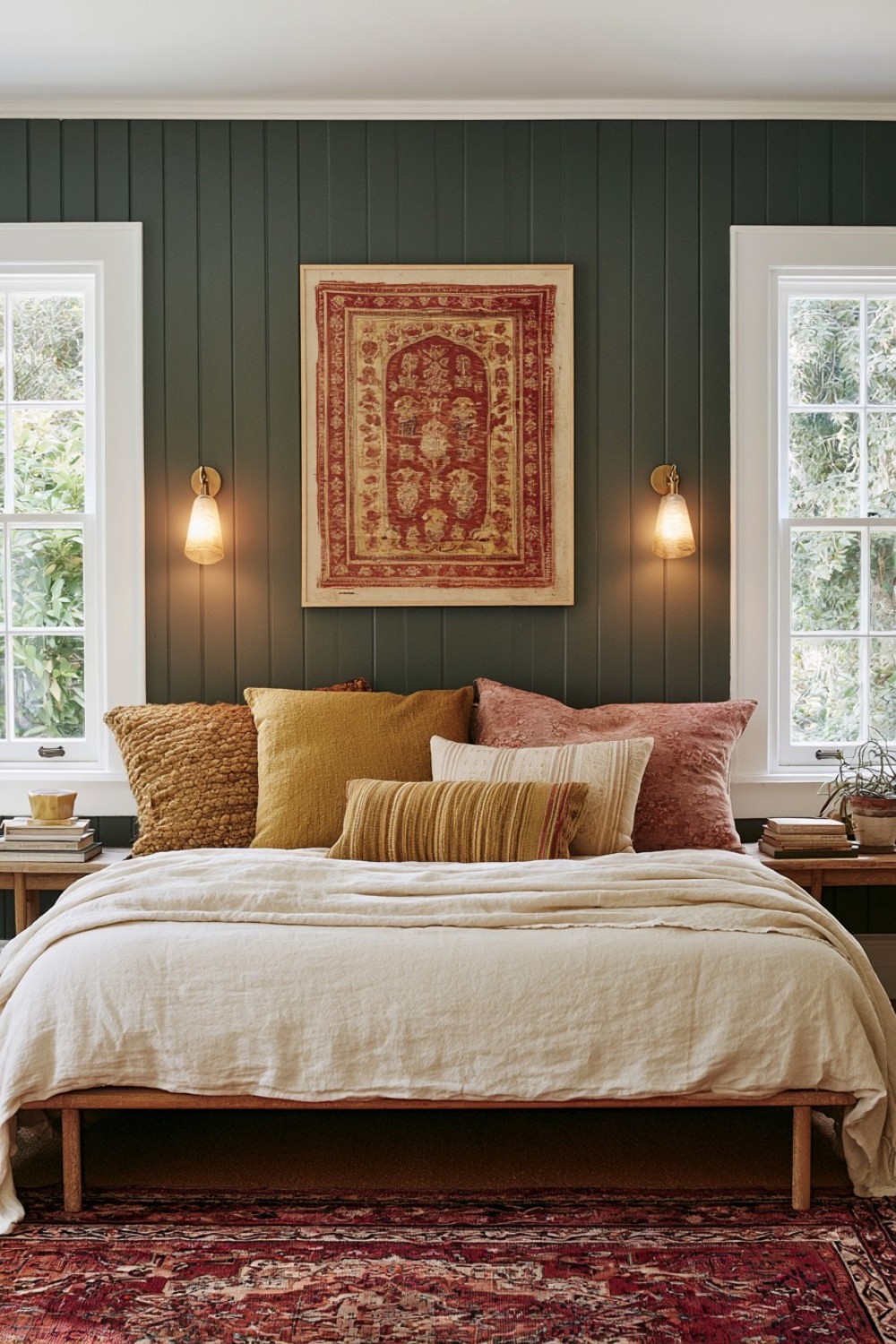
Mismatched pillows can look collected rather than chaotic when they share a limited palette or repeated motif. Begin with the pillows used for sleeping, place two larger decorative cushions behind them, and finish with one smaller contrasting shape. Differences in embroidery, weave, and print will then appear deliberate because the overall arrangement still has a visible order.
Avoid filling the bed with so many pillows that they must be stored on the floor each night. Removable washable covers simplify maintenance, while damaged tassels, beads, buttons, or mirrored details should be repaired before use. People with allergies may prefer tightly woven covers and fewer high-pile fabrics that retain dust. Draw one accent shade from the rug or artwork to connect the pillows with the wider room. Varying texture while maintaining similar color intensity creates a calmer result than combining many unrelated saturated patterns.
11. Create Practical Wall Storage With Natural-Fiber Baskets
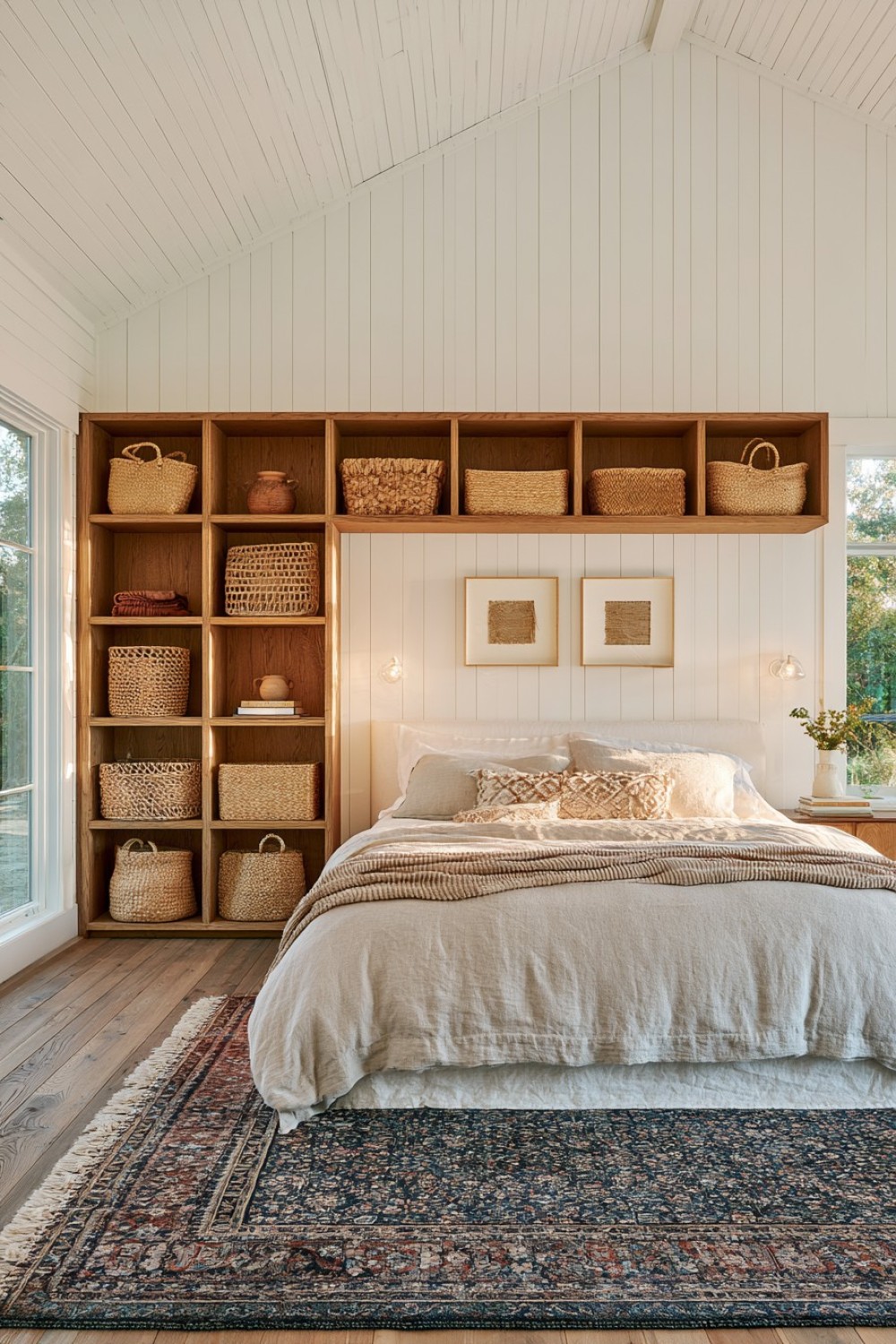
Woven baskets can provide useful storage while adding the natural texture associated with bohemian interiors. Use deeper baskets for spare bedding, scarves, or seasonal accessories and smaller containers for items that would otherwise clutter a dresser. A combination of closed cabinet storage and a limited number of visible baskets will usually look calmer than covering an entire wall with open containers.
Wall-mounted baskets should hold lightweight objects and be secured with fixings appropriate for the wall. Heavier storage belongs on the floor or within supported shelving. Check natural fibers for broken strands that can catch delicate fabrics, and clean them regularly with a soft vacuum attachment. Do not position open storage directly above the bed where contents could fall. Repeating two basket shapes or weave tones creates cohesion while still allowing individual handmade variations to remain visible.
12. Develop a Desert Palette With Varied Natural Tones
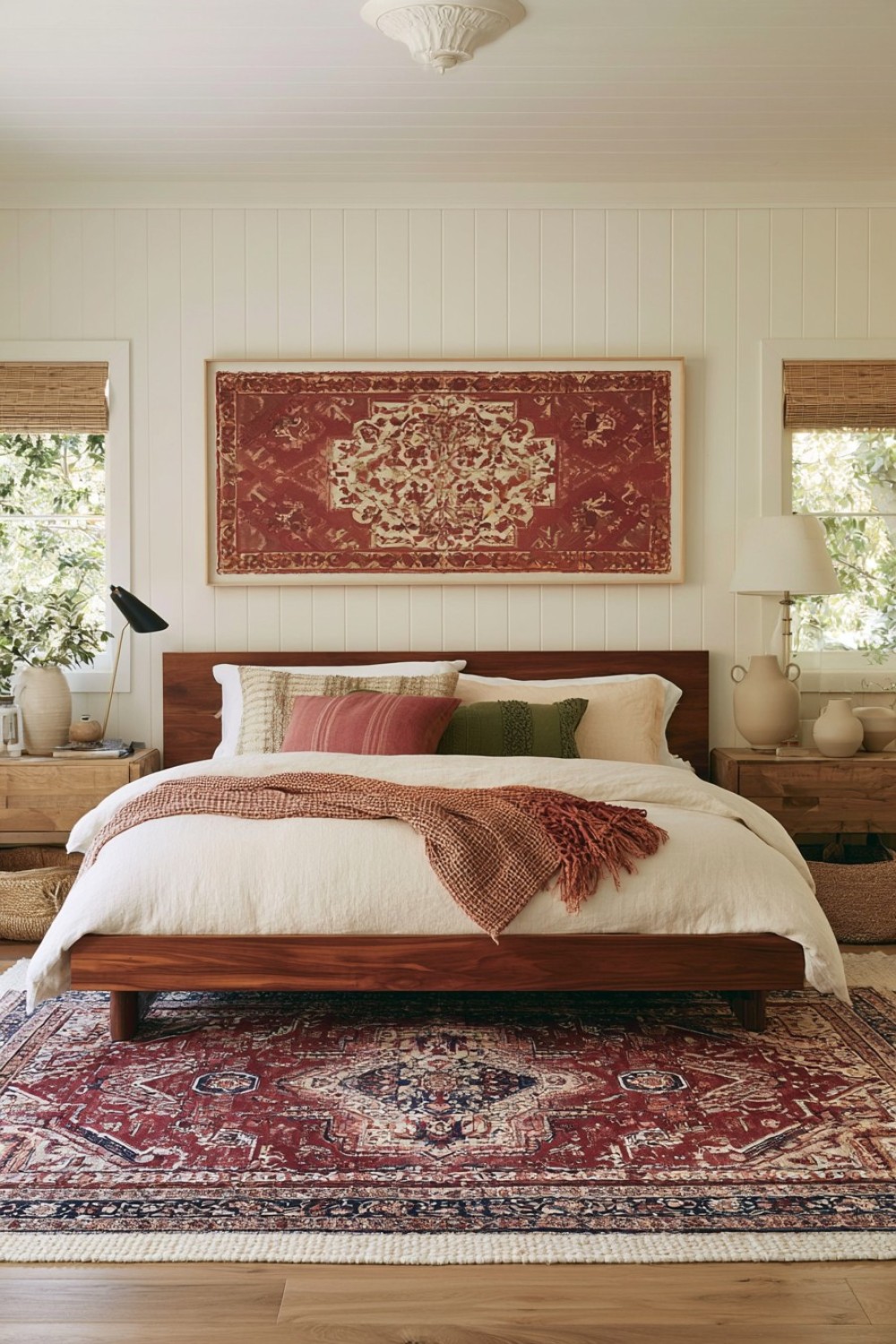
A desert-inspired bedroom can combine sand, sun-baked clay, muted peach, ochre, dusty rose, and faded olive without becoming an uninterrupted field of beige. Choose one pale wall color as the background, introduce a medium earth tone through bedding or a rug, and reserve the deepest shade for smaller accents. Natural wood and woven fibers can function as additional tones rather than separate decorations.
Evaluate paint and textile samples in morning, afternoon, and artificial light because warm shades can become noticeably orange or brown as lighting changes. Add contrast with off-white bedding, dark timber, or a restrained black detail to keep the palette defined. Plants may contribute green, but they should be selected according to the room’s real light conditions and kept away from bedding where damp soil could create marks. Variation in texture will give a limited color scheme more depth than repeatedly adding new shades.
13. Repurpose a Vintage Trunk as a Bedside Feature
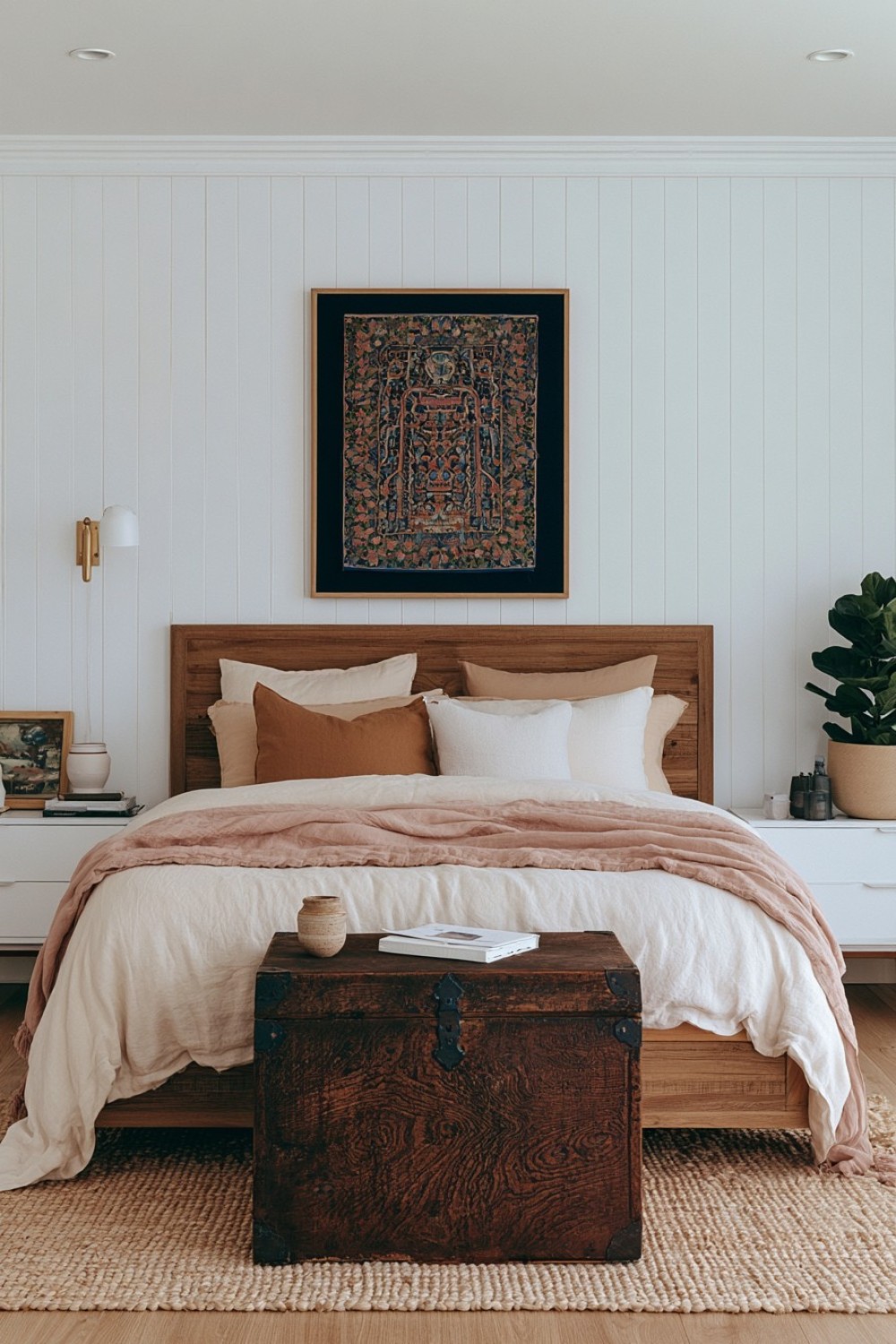
A compact vintage trunk can serve as storage and a bedside surface while bringing aged character into the bedroom. Its height should remain practical for reaching a book, glass, or lamp from the bed. Inside, use removable fabric boxes to organize spare linens or seasonal accessories and prevent small items from disappearing into a deep compartment.
Inspect an older trunk for odors, moisture damage, unstable hardware, rough edges, and finishes of uncertain condition before bringing it into a sleeping area. Clean it using a method appropriate for its material rather than immediately sanding or coating it. Heavy lids should have reliable supports or remain inaccessible to children to reduce the risk of trapped fingers. Provide a stable platform for any lamp and route its cable away from hinges and walkways. One vintage piece will usually feel more authentic than several artificially aged items crowded into the same room.
14. Create a Tonal Bohemian Room Through Texture
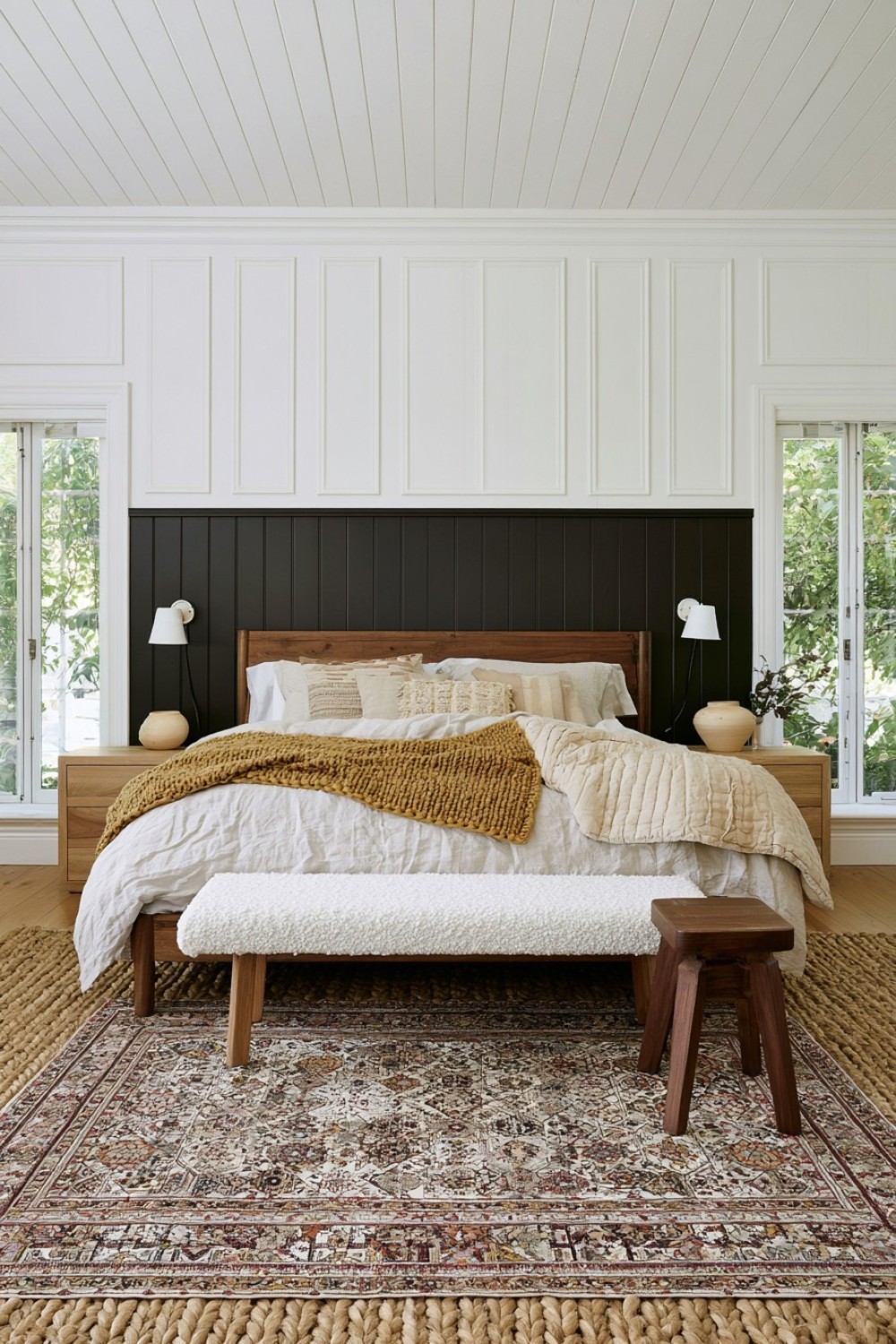
A tonal bohemian bedroom replaces strong pattern with differences in surface and weave. Combine washed linen, cotton, wool, cane, matte ceramics, timber, and plaster-like finishes within a narrow range of cream, oat, mushroom, or warm gray. The room remains visually layered, but the limited palette can create a quieter atmosphere than a highly patterned interpretation of the style.
Vary the scale of each texture. Fine bedding, a medium woven throw, and one deeper-pile rug provide clearer contrast than several materials with nearly identical surfaces. Use the most tactile pieces where they can be cleaned and enjoyed, while keeping dust-prone high-pile textiles to a manageable number. A darker wood frame or small metal accent can outline the pale scheme and prevent it from appearing washed out. Natural daylight and warm task lighting will reveal subtle surface differences more effectively than one harsh overhead fixture.
15. Turn a Bedside Recess Into a Display and Storage Niche
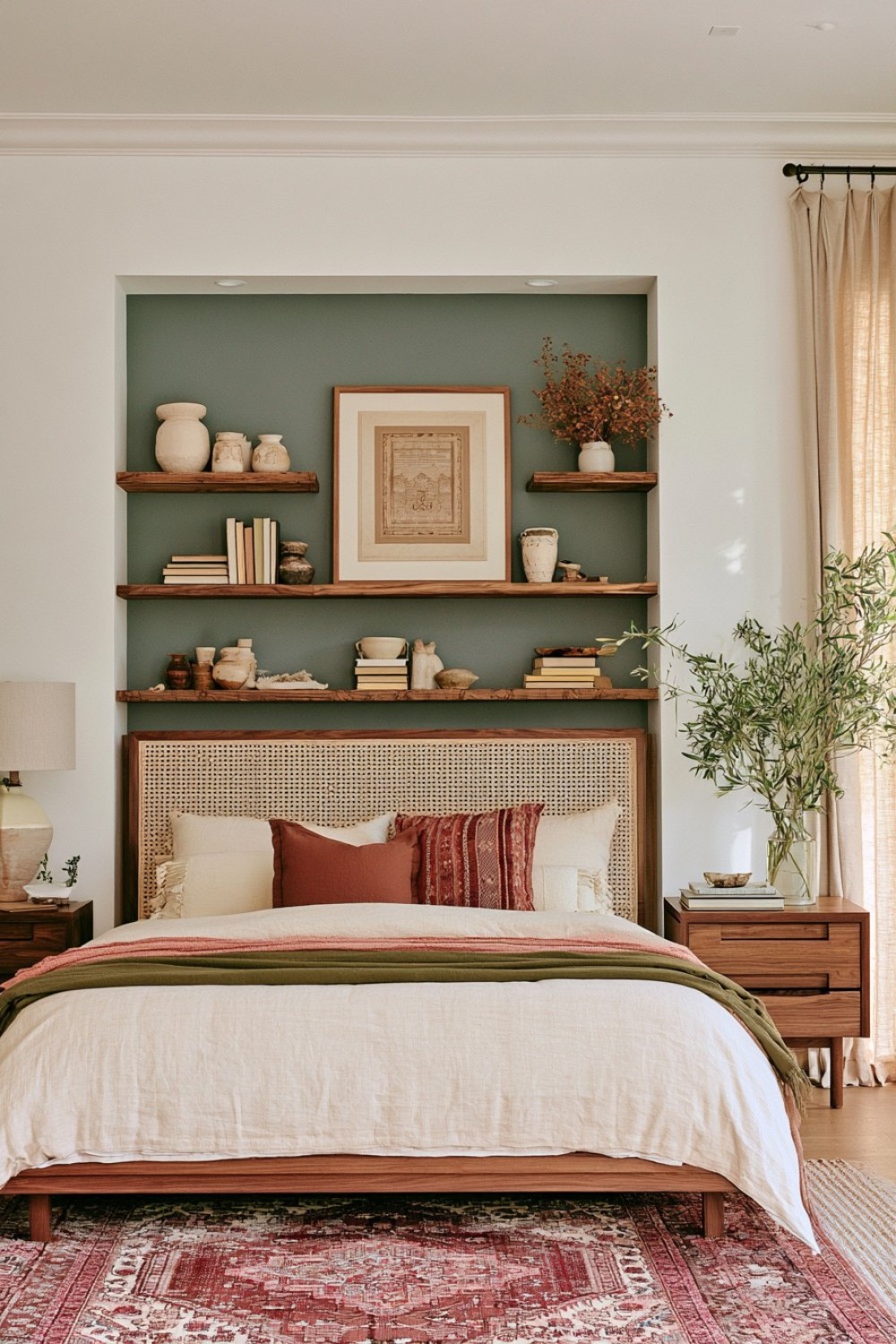
A recessed bedside niche can replace a projecting table where floor space is limited. Divide it into a practical lower shelf for a phone, book, and water, with higher compartments reserved for a few decorative objects. Painting the interior in a clay, olive, or muted rose shade can introduce depth without extending the color across the entire wall.
The niche must not cut into structural framing, plumbing, wiring, or insulation without proper assessment. In an existing recess, check that shelves are secure and deep enough to hold objects safely. Integrated lighting should use suitable fittings installed with protected wiring, and charging cables need a route that will not hang across the bed. Avoid placing heavy pottery, glass, or loosely balanced objects directly above the sleeper. Keeping part of the niche empty makes it easier to use and allows the displayed handmade pieces to remain distinct.
16. Construct a Soft Canopy With Carefully Secured Fabric

A lightweight canopy can make the bed feel enclosed and restful while adding movement to a bohemian bedroom. Use breathable fabric in a tone related to the bedding rather than introducing another dominant pattern. A structured frame attached to the bed is often easier to control than loose material suspended across several areas of the ceiling. Leave the sides sufficiently open for airflow and uncomplicated access.
All supports and ceiling fixings must be appropriate for the material and expected load. Fabric should remain well away from ceiling lights, lamps, heaters, fans, outlets, and electrical cords. Do not allow long sections to trail across the floor or hang where they could become entangled during sleep. Select material that can be removed and cleaned, since fabric above a bed gradually collects dust. In a very small room, draping only the headboard section can provide the soft canopy effect without visually lowering the entire ceiling.
MORE IDEAS


Share
What's Your Reaction?
 Like
0
Like
0
 Dislike
0
Dislike
0
 Love
0
Love
0
 Funny
0
Funny
0
 Angry
0
Angry
0
 Sad
0
Sad
0
 Wow
0
Wow
0