17 Creative Waste to Wonder Projects Perfect for Competitions

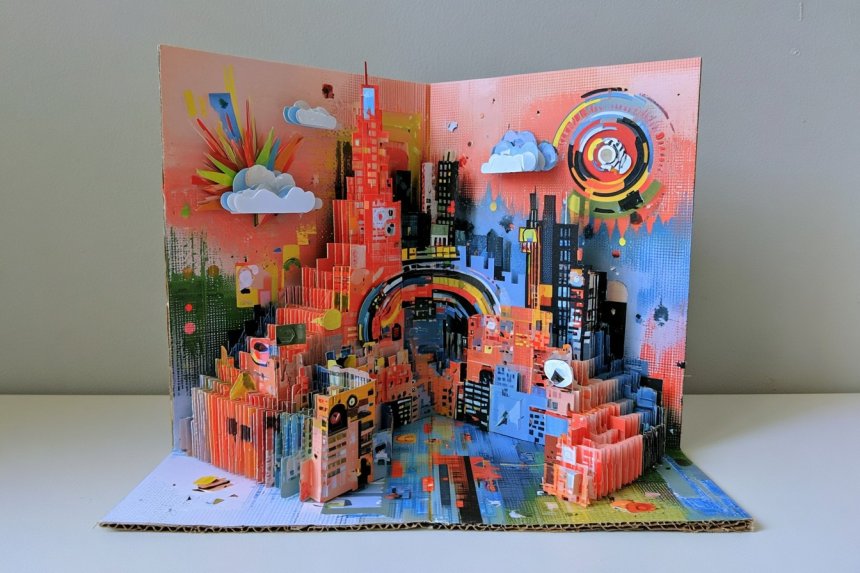
Best out of waste competitions reward more than crafting. Strong entries usually connect discarded materials with a clear environmental problem, thoughtful construction, and an easy explanation. Begin by collecting clean household waste, sorting it by material, and choosing pieces that can be handled safely. Avoid sharp metal, broken glass, unknown chemicals, damaged batteries, and unhygienic packaging. Sketch the design before cutting so every component serves a purpose. A neat finish, stable base, visible transformation, and concise presentation can make a project memorable. The following ideas combine art, science, practical design, and sustainability for distinctive and memorable competition displays at school.
1. Build a Pollinator City From Empty Cartons
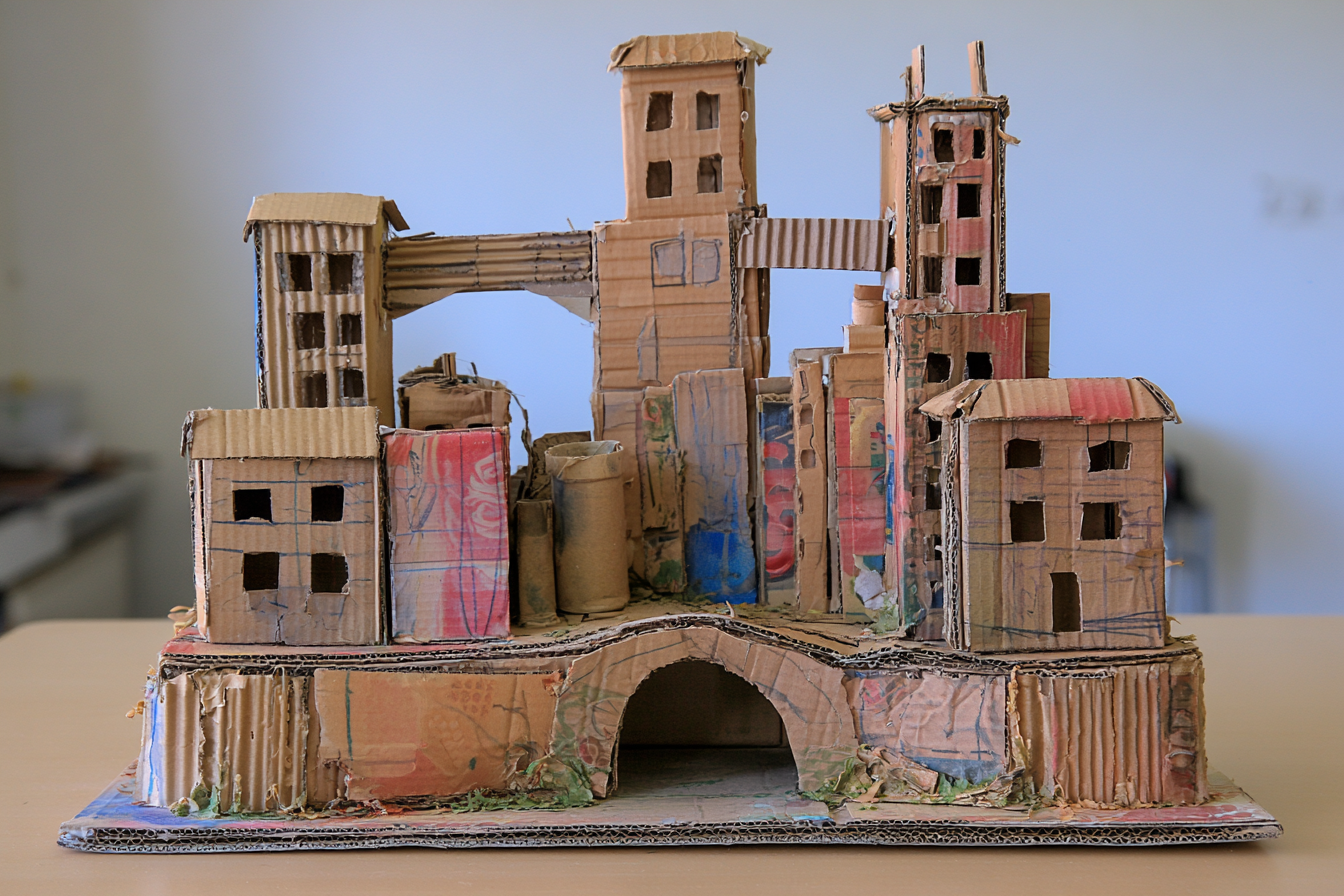
Transform cereal boxes, egg cartons, and paper tubes into a miniature city designed for pollinators. Flatten one carton for the base, then build houses, gardens, rooftop planters, and connected green corridors from smaller packaging. Egg carton cups become flowers, while rolled magazine strips form stems and pathways. Decorate each district with a different color family so the ecological features remain easy to identify. Add removable cardboard bees and butterflies to demonstrate movement between habitats. During judging, explain how urban planting supports pollinators. Keep labels on a separate presentation card, allowing the model itself to remain detailed, clean, and visually balanced.
2. Give Old Electronics a Robot Character
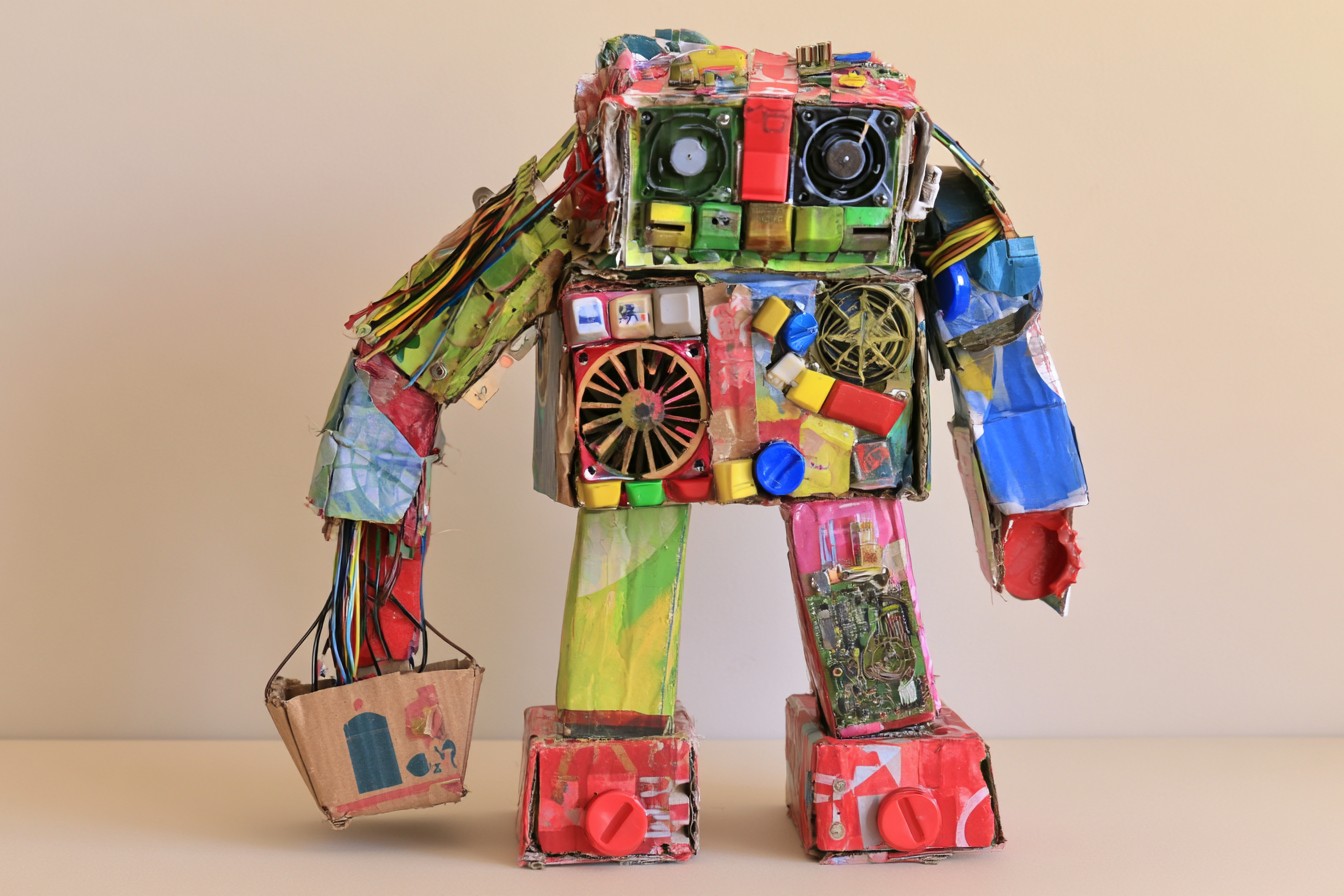
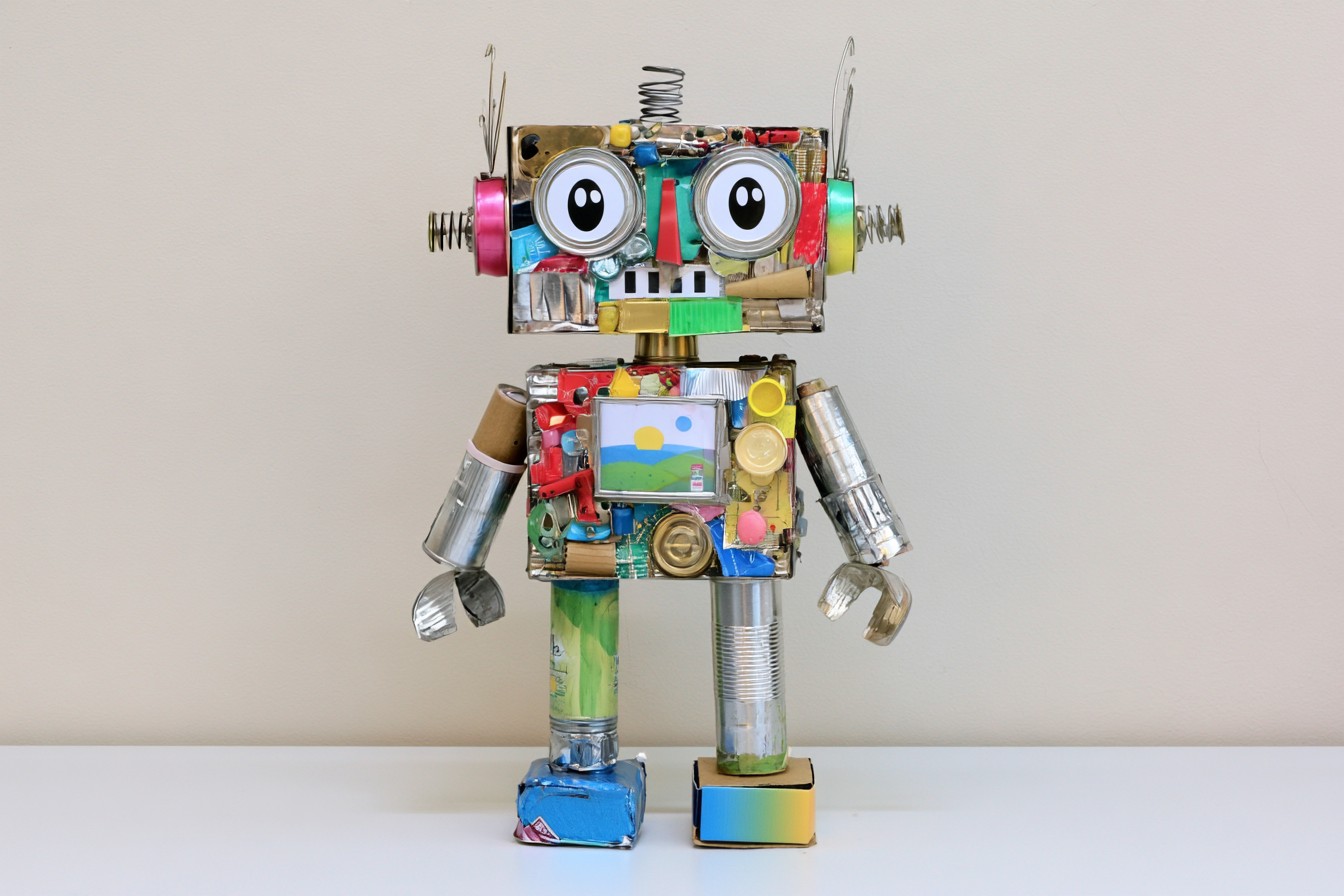
Arrange safe, disconnected electronic scraps into a robot sculpture that represents responsible technology recycling. Use keyboard keys, computer fan guards, cable pieces, bottle caps, and circuit boards sourced from equipment already handled by an adult. Never open batteries, screens, capacitors, or powered devices. Build the body from a shipping box and attach lightweight components with strong adhesive or paper ties. Paint only the cardboard so the recognizable electronic textures remain visible. Pose the robot holding a small collection bin made from packaging. A companion card can explain electronic waste hazards, repair, donation, and certified recycling, strengthening the project beyond decoration.
3. Map a Changing Planet With Bottle Caps
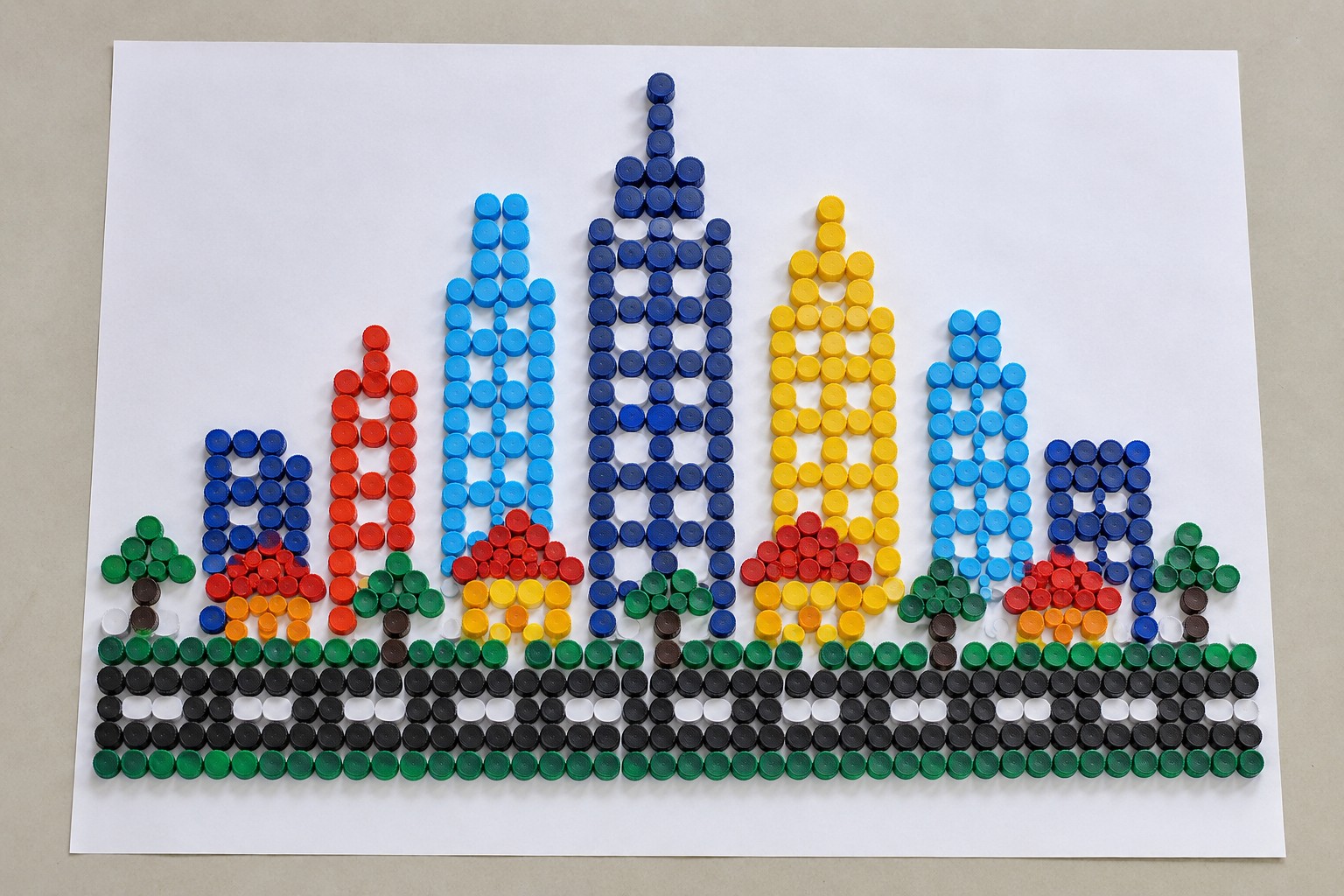
Create a relief map that compares a healthy environment with one affected by waste. Draw two landscapes on reclaimed cardboard, then arrange caps by color to form forests, water, buildings, roads, and polluted areas. Use raised cardboard layers beneath selected caps to create mountains and depth. Attach everything securely with adult supervision because loose caps can be choking hazards. Decorate the border using recycling symbols cut from packaging. Add movable arrows showing how litter travels toward rivers. During the presentation, invite judges to identify solutions such as sorting, reuse, cleaner transport, and habitat restoration shown throughout the restored landscape section.
4. Test a Bridge Made From Newspaper Tubes
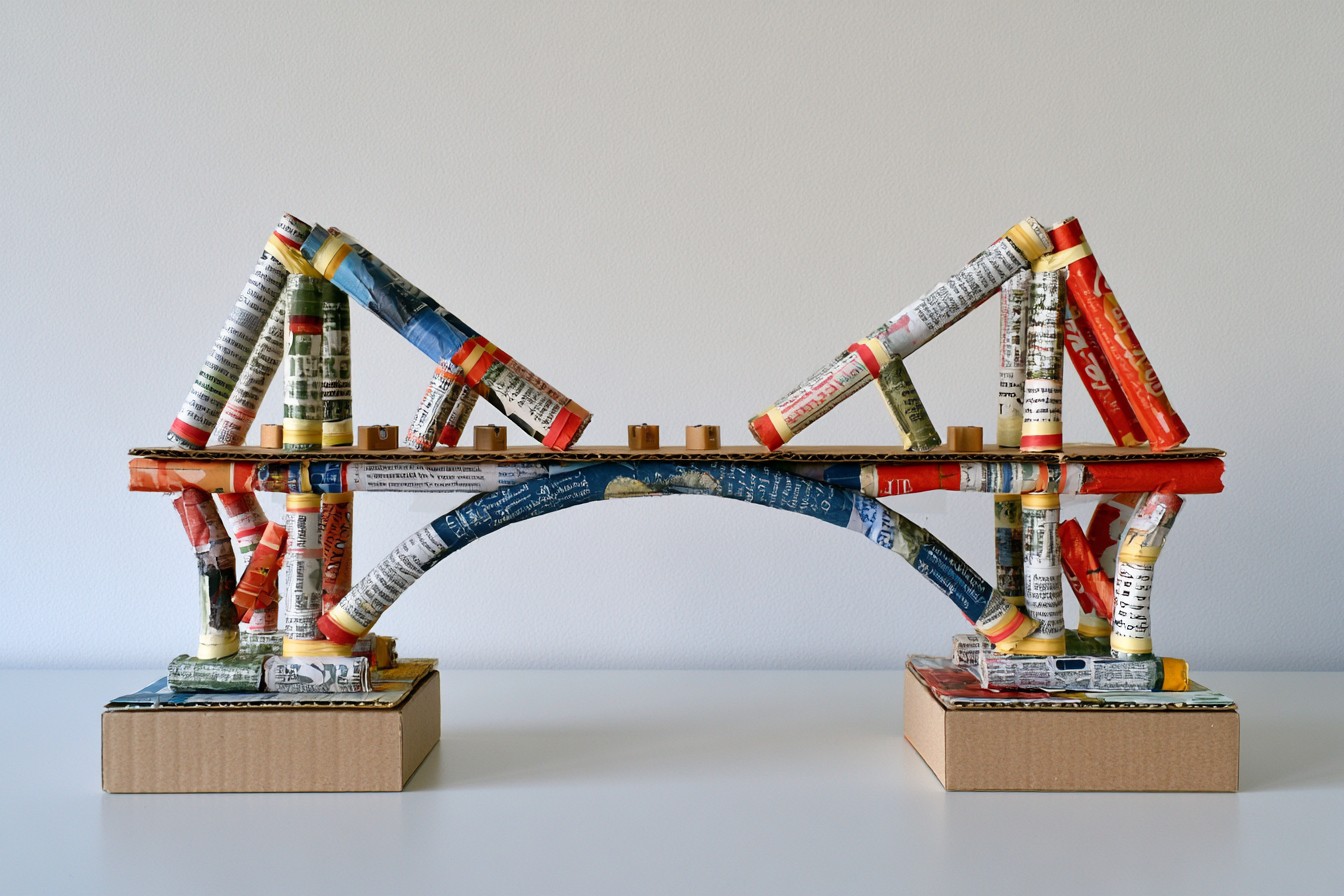
Roll newspaper sheets around a pencil to produce structural tubes, then use them to construct a model bridge. Remove the pencil, glue each roll closed, and trim pieces to planned lengths. Compare triangles, arches, and rectangular supports before choosing the strongest arrangement. Build two bridge sides, connect them with cross braces, and attach a flat cardboard deck. Use contrasting paper bands to highlight important joints without hiding the recycled material. Present the bridge between two equal boxes and test it gradually with identical weights. Record results on a chart, showing how geometry can turn weak paper into a strong structure.
5. Make Cardboard Movement With a Hydraulic Arm
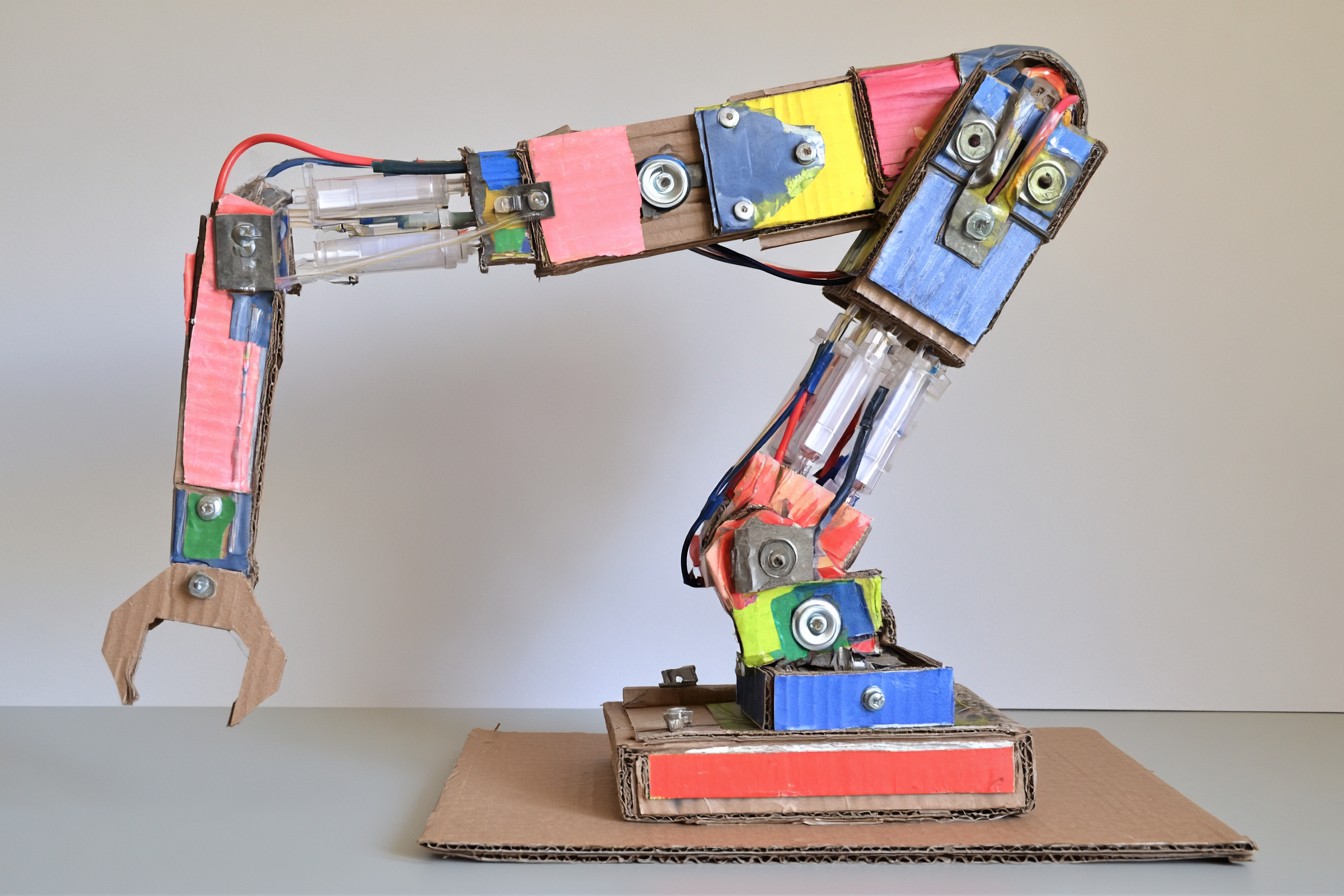
Build a working mechanical arm from corrugated cardboard, reused tubing, and clean needleless syringes. Draw arm segments, cut double layers with adult help, and connect the joints using paper fasteners or bolts. Pair syringes with tubing filled according to a safe classroom hydraulic demonstration, checking every connection for leaks. Mount the arm on a broad recycled board and add a lightweight cardboard gripper. Decorate moving sections with different colors so judges can follow each joint. Demonstrate how pressure transfers movement, but never aim liquid toward electrical equipment. This entry combines waste reduction, engineering, experimentation, and interactive presentation in one model.
6. Stitch Biodiversity Into a Scrap Fabric Landscape
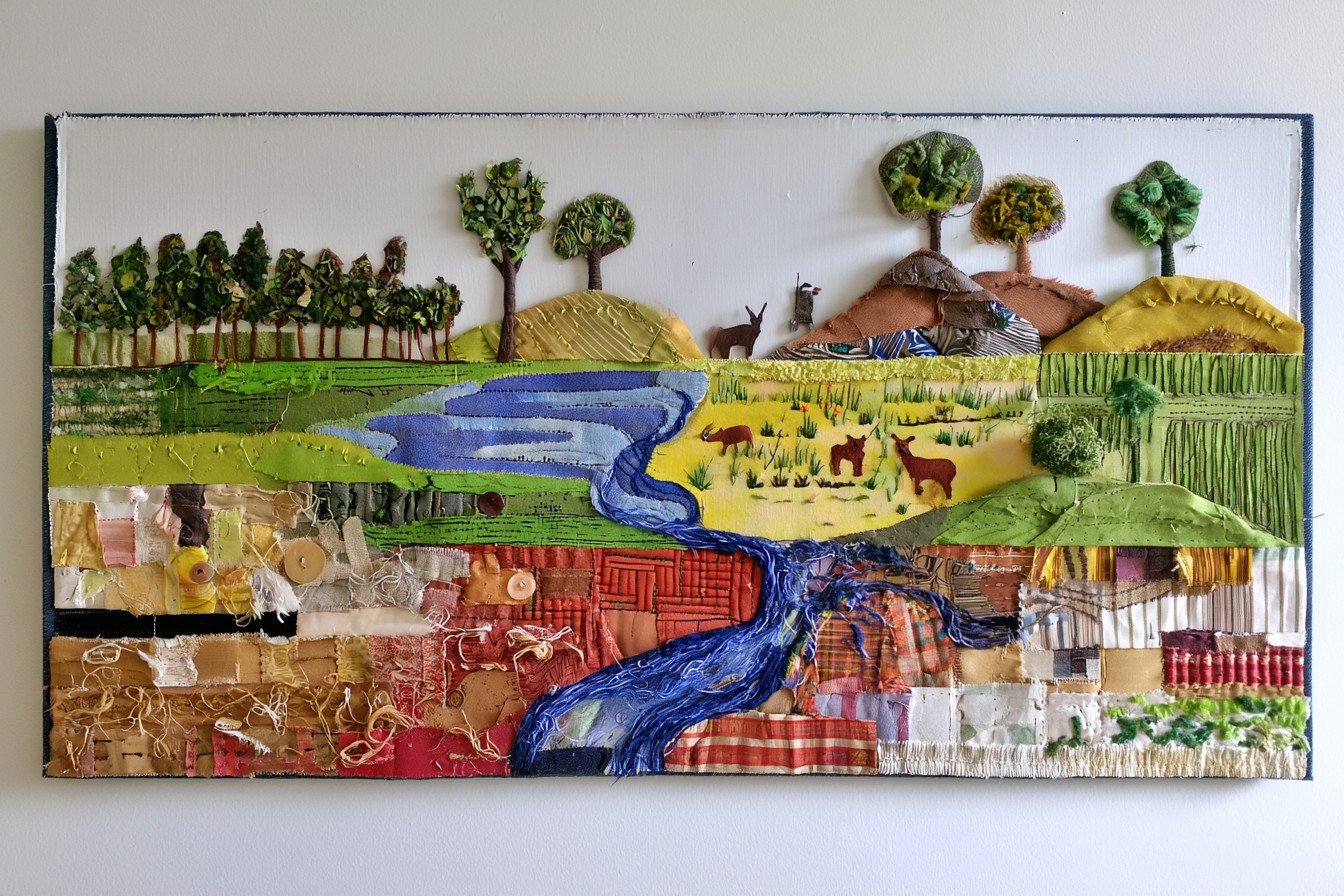
Turn fabric offcuts, clothing, ribbons, and loose threads into a layered biodiversity tapestry. Use a sturdy piece of discarded denim as the background, then arrange cotton shapes into forests, wetlands, grasslands, and cultivated fields. Stitch or glue pieces securely, adding yarn rivers and button free fabric animals. Raise selected elements with folded textile scraps to create dimension. Leave frayed edges visible in areas so the reused origin remains recognizable. Create a color transition from diverse habitat to damaged land, giving the artwork a clear narrative. During judging, describe how textile reuse and habitat protection address different forms of environmental waste.
7. Send Marbles Through a Cardboard Recycling Journey
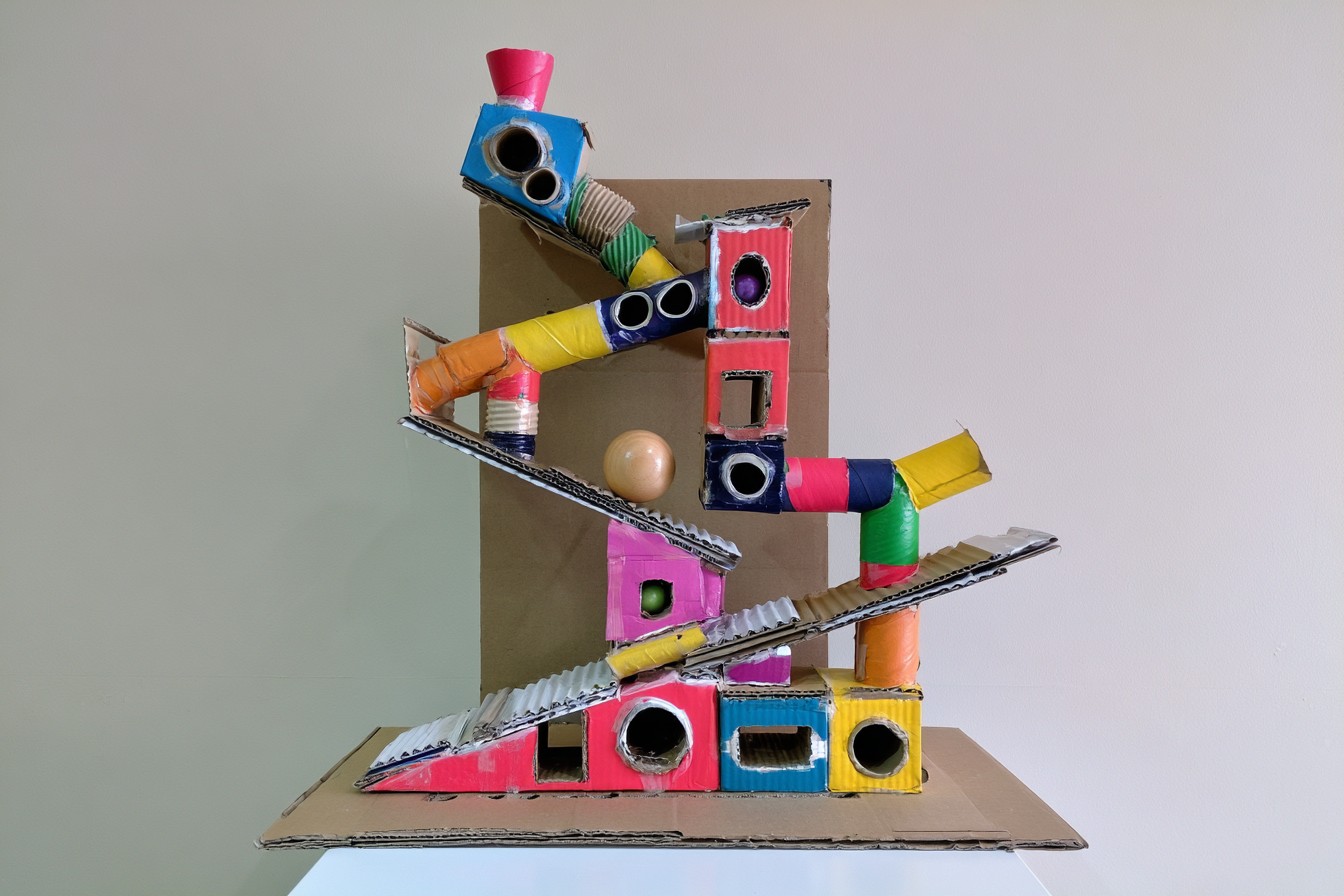
Design a marble run that represents the stages of recycling using paper tubes, cartons, and corrugated scraps. Mount angled tube sections on a strong cardboard backboard, testing each slope before gluing. Create funnels from rolled packaging and add inspection windows where the marble changes direction. Decorate every stage with a distinct color to represent collection, sorting, cleaning, processing, and manufacturing. Use a large wooden bead instead of a marble for younger participants. Add a removable starting gate made from a folded card tab. During demonstration, explain each stage as the bead travels downward, combining motion, education, and reused materials effectively.
8. Recreate a Coral Reef From Discarded Plastic
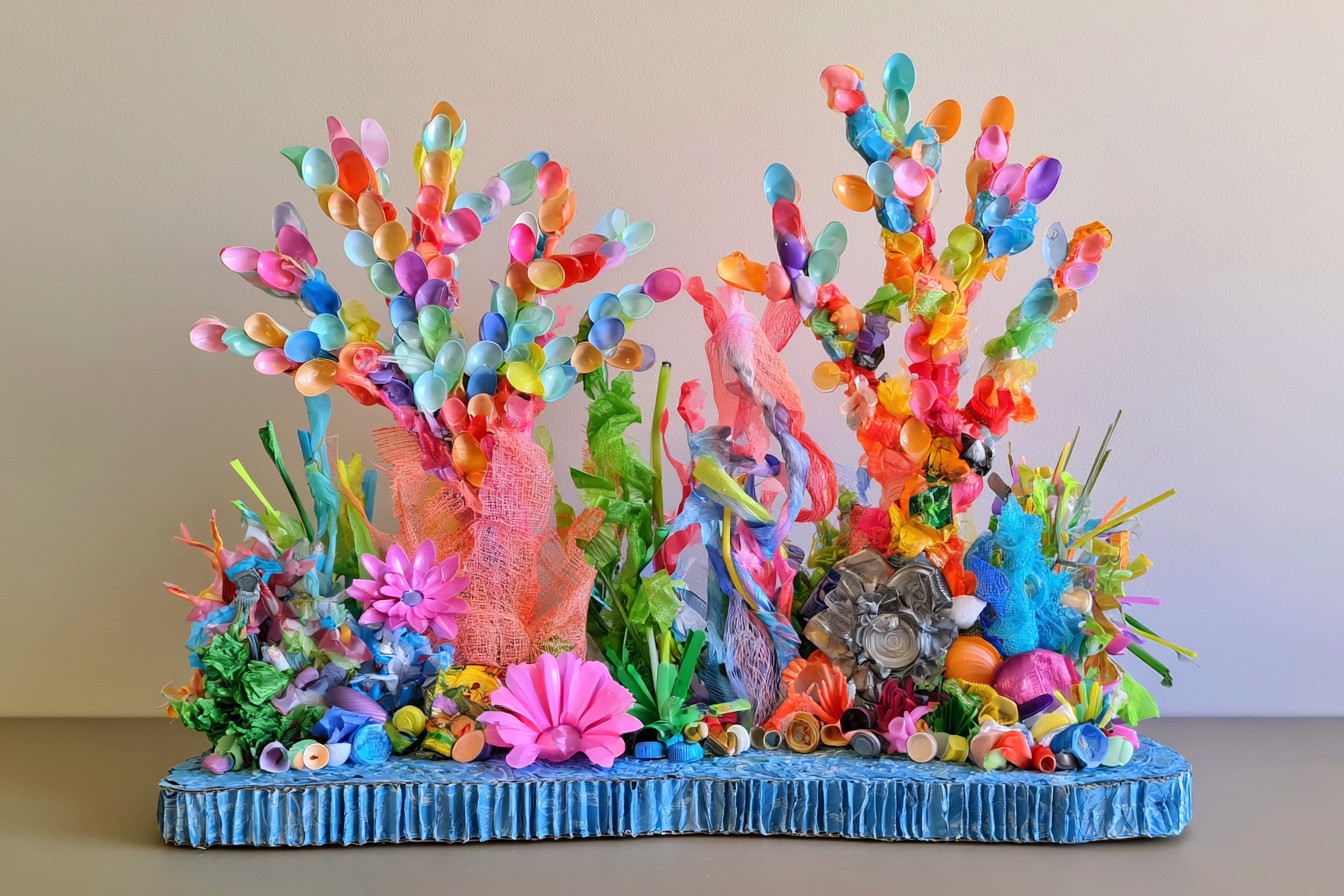
Construct a coral reef sculpture from plastic spoons, lids, mesh produce bags, straws, and food packaging. Build the base from layered corrugated cardboard sealed with blue paper scraps. Adults should cut plastic and cover every sharp edge before assembly. Cluster spoon bowls into branching coral, twist mesh into soft forms, and arrange caps as anemones or reef stones. Use a palette so the composition looks intentional rather than crowded. Include one visibly damaged section containing gray plastic fragments to show pollution. Explain during judging that the project does not celebrate plastic consumption; it illustrates how persistent waste threatens marine habitats.
9. Show Rainwater Moving Through a Model Home
Create a house model that demonstrates rainwater collection using boxes, paper tubes, bottle parts, and reused straws. Build a sloped cardboard roof and attach gutters made from folded packaging. Guide colored water through reused tubing into a bottle reservoir positioned below the model. Add a second channel leading toward a garden made from egg cartons. Waterproof only the necessary areas with reclaimed plastic sheet and test the system over a tray. Decorate the house with magazine paper siding and bottle cap paving. During judging, pour an amount of water onto the roof and compare how much reaches each collection point.
10. Balance an Aluminum Can Kinetic Sculpture
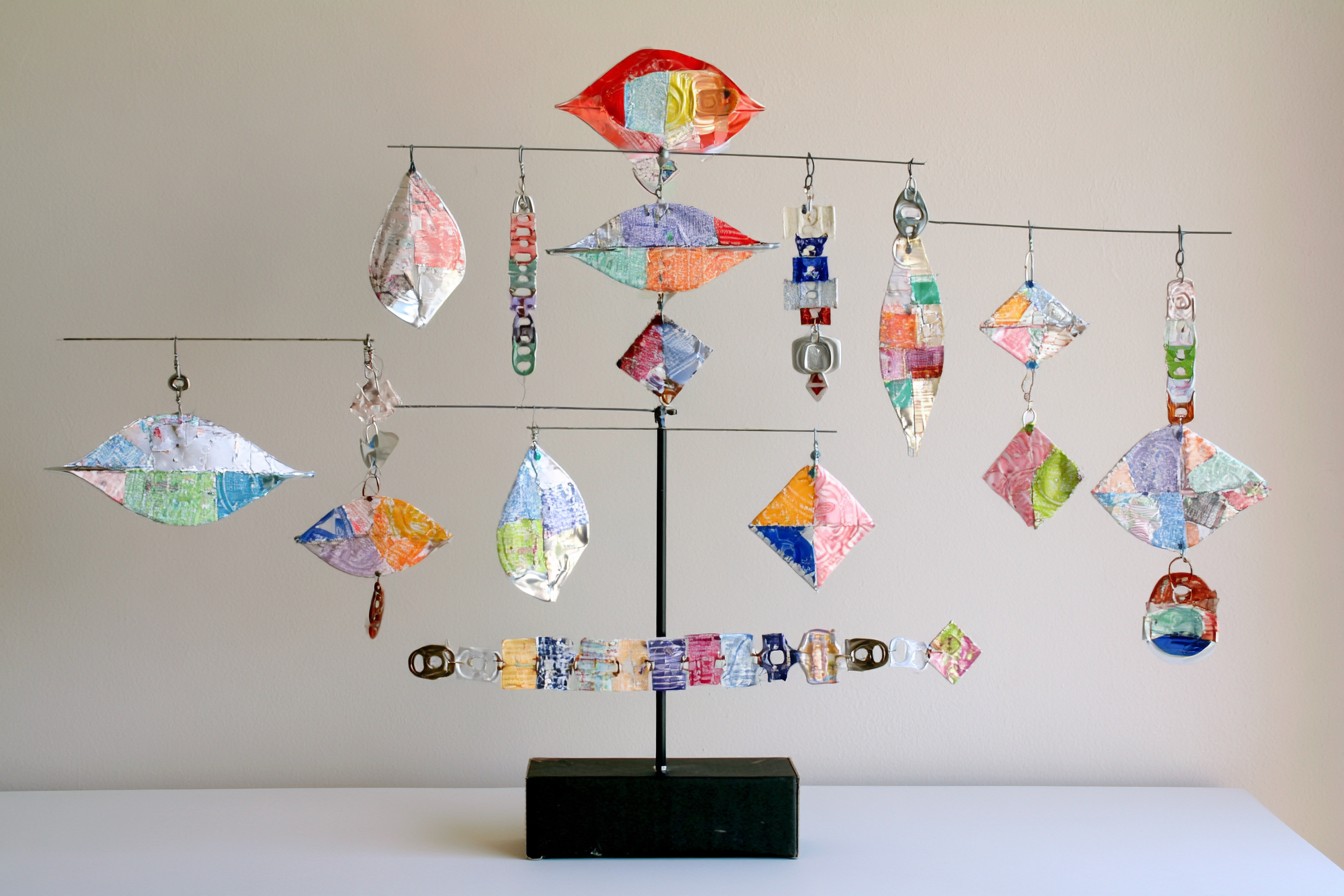
Explore balance and movement with a kinetic sculpture made from aluminum cans, pull tabs, wire, and a cardboard stand. An adult must wash, cut, fold, and cover every metal edge before students handle the pieces. Flatten safe sections into leaves or abstract shapes, then suspend them from wire arms at distances. Adjust each position until the sculpture balances and moves gently when air passes. Paint the stand matte black while leaving selected aluminum surfaces visible. Use pull tabs as repeating chains. Explain the roles of weight, distance, airflow, and material reuse, giving the entry both artistic presence and scientific reasoning.
11. Draw a Topographic Landscape With Broken Crayons
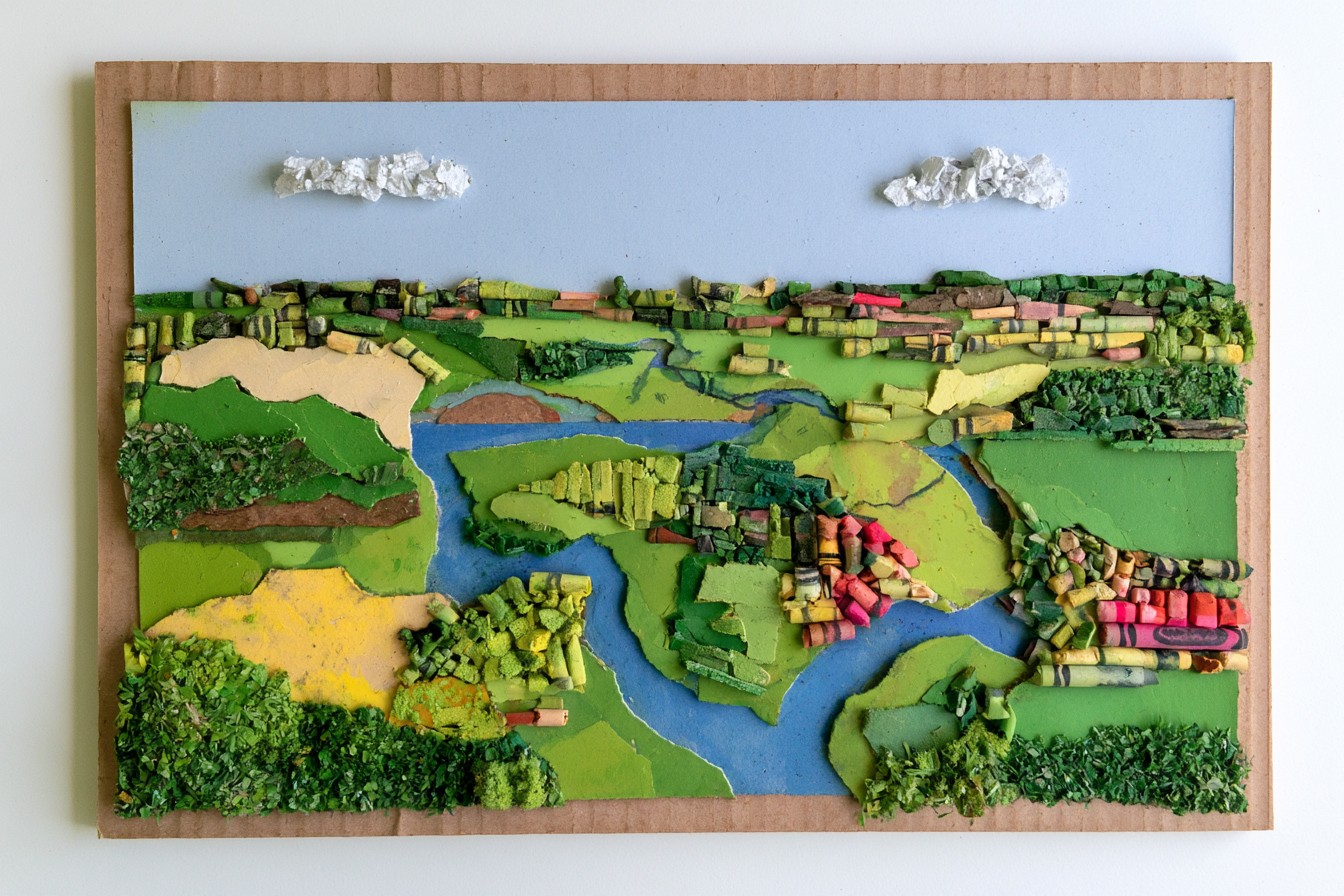
Arrange crayon fragments into a layered topographic landscape without melting them. Sort pieces by color, remove remaining paper, and glue them onto a reused wooden or cardboard panel. Use short greens and browns for raised land, blue fragments for waterways, and pale colors for settlement areas. Build height with cardboard beneath selected sections instead of using excessive crayons. Decorate the border with pencil shavings sealed under clear craft medium. Include a legend on a separate card explaining elevation, land use, and material recovery. This approach combines geography, color theory, texture, and reuse while avoiding heat based crafting during competition preparation.
12. Invent Protective Packaging From Waste Paper
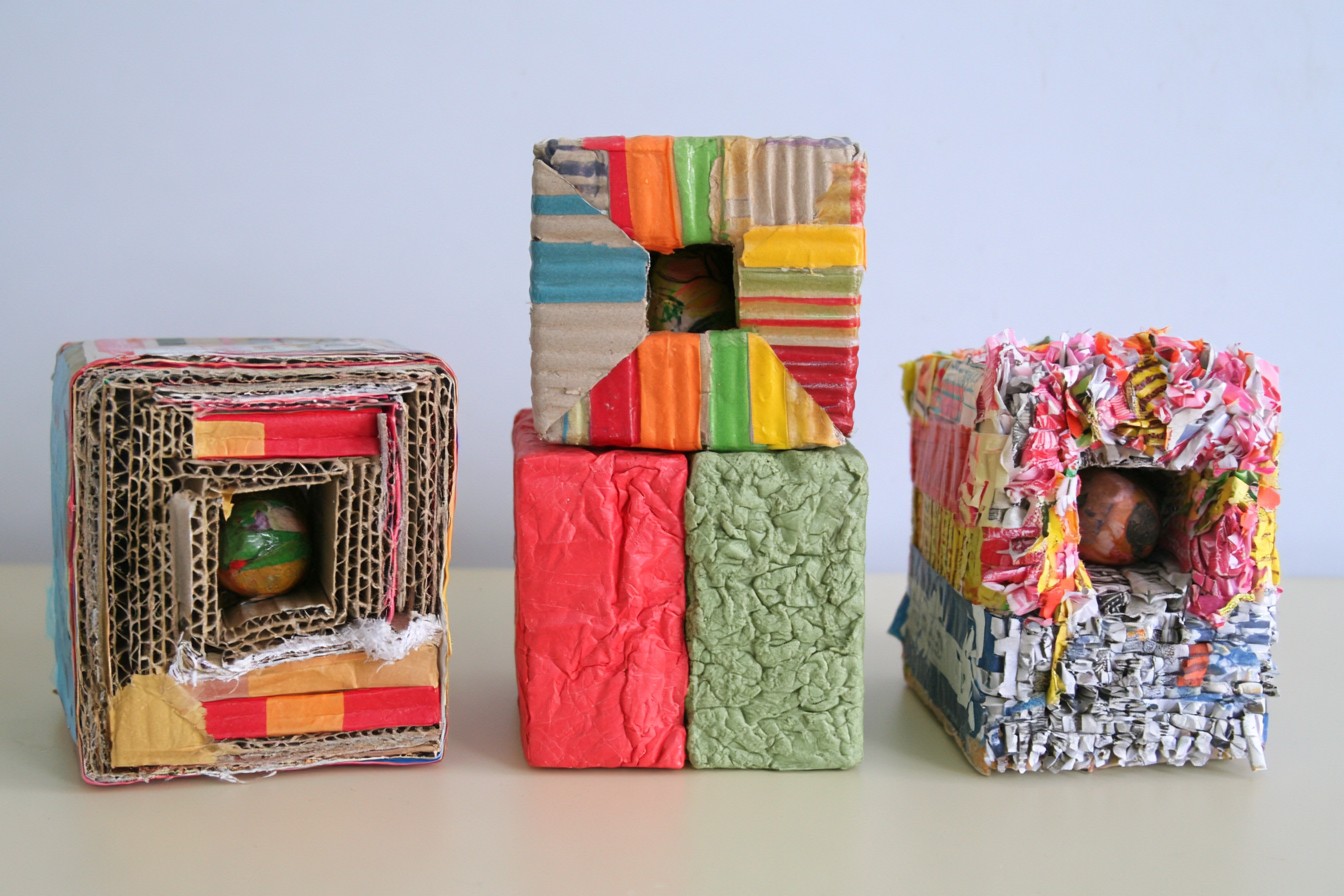
Design and test an alternative to disposable foam packaging using shredded paper, cardboard pulp, and folded carton structures. Choose a reusable object as the product being protected, then create cushioning samples. One may use honeycomb folds, another molded paper pulp, and another tightly packed shredded paper sleeves. Decorate only the outer box, leaving internal engineering visible for judges. Drop each prepared package from the same safe height onto a clear testing area and record whether the object moves or becomes damaged. Compare material weight, assembly time, and reusability. The competition display should emphasize experimentation, honest results, and possible design improvements.
13. Turn Scratched CDs Into a Spectrum Mobile
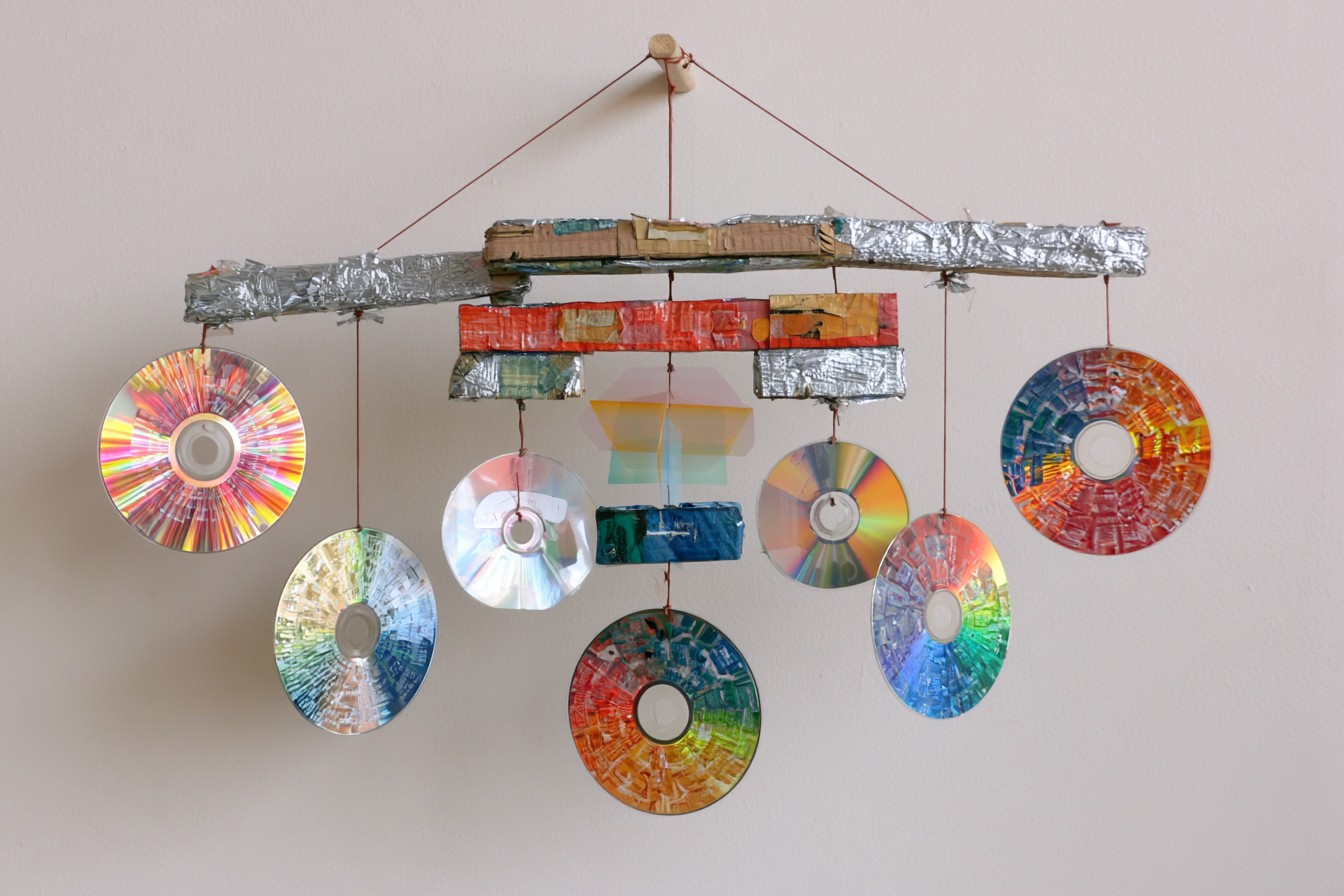
Use scratched CDs and packaging to build a hanging sculpture that explores reflected color. Inspect every disc and discard cracked pieces. Suspend CDs at different angles from a balanced cardboard frame using short lengths of strong thread. Cut translucent packaging into geometric shapes and place it between the discs to introduce color. Decorate the frame with silver paper rescued from clean wrappers. Position the mobile where daylight can reach it without adding electrical components. During the presentation, rotate the frame gently and explain how microscopic grooves separate reflected light. Keep hanging cords short and transport the project in a box.
14. Fold Drink Cartons Into a Modular Wallet
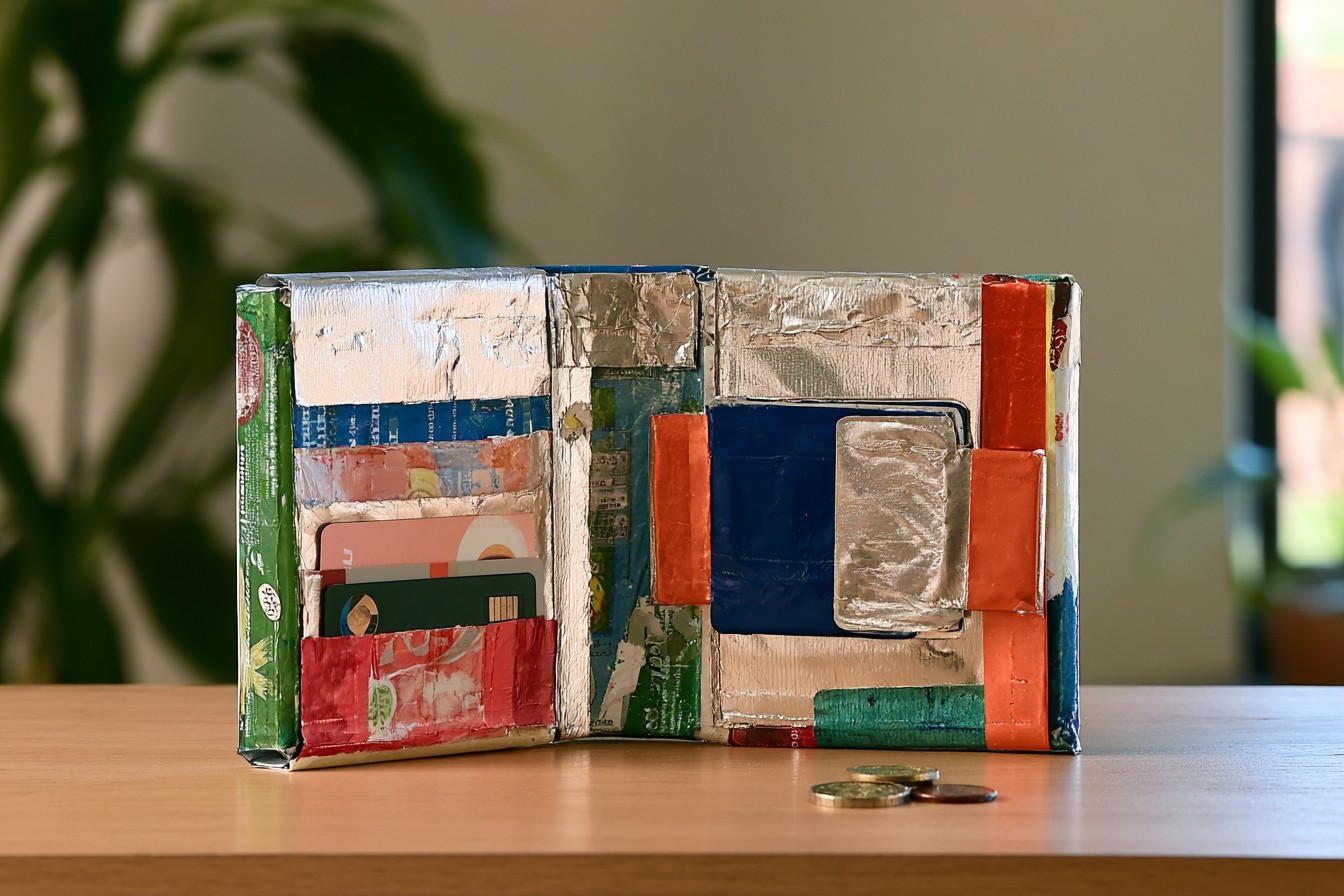
Transform drink cartons into a functional wallet that demonstrates waterproof packaging reuse. Open each carton along its existing seam, wash it thoroughly, and let it dry. Create a paper template with card slots, a pocket, and folding tabs, then trace it onto the printed material. Adults should assist with cutting. Fold along scored lines and secure connections using durable paper fasteners or suitable adhesive. Turn the plain silver side outward for a modern finish, adding narrow strips of another carton for color. Present coins and sample cards inside the wallet, explaining why multilayer packaging can be difficult to recycle conventionally.
15. Create a Hands On Sorting Station Model
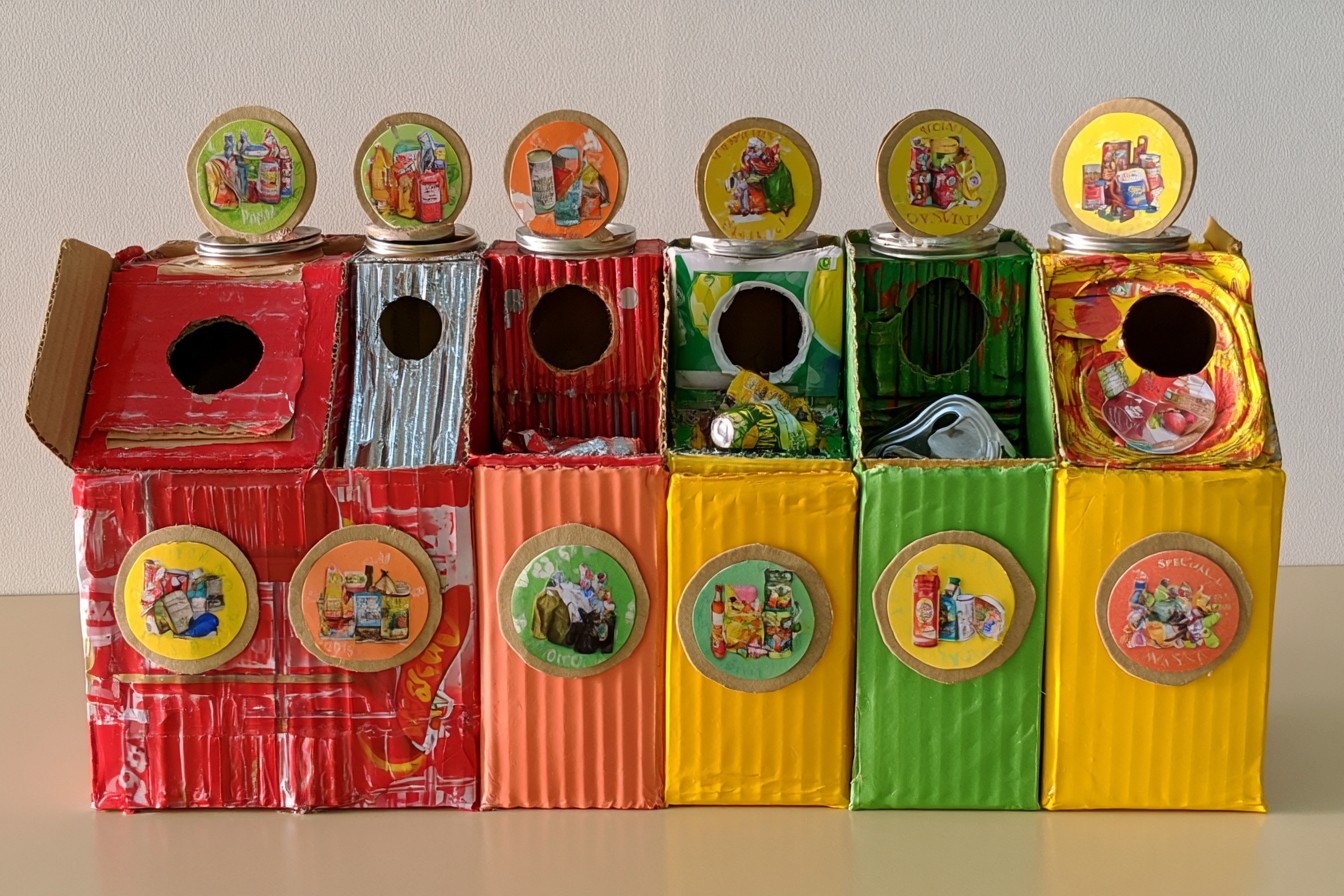
Build an interactive classroom waste sorting station from a shoebox, paper rolls, jar lids, and illustrated packaging scraps. Divide the box into compartments for paper, metal, glass, plastic, organic waste, and special items such as batteries. Make sample tokens from cardboard circles, decorating each with a recognizable object instead of written answers. Players place tokens through corresponding openings, then lift a rear flap to check the results. Use different textures and colors to improve accessibility. During judging, invite participation and discuss local sorting rules, which may vary. The project combines game design, environmental education, organization, and low cost reused materials.
16. Build a Safe Ecobrick Furniture Prototype
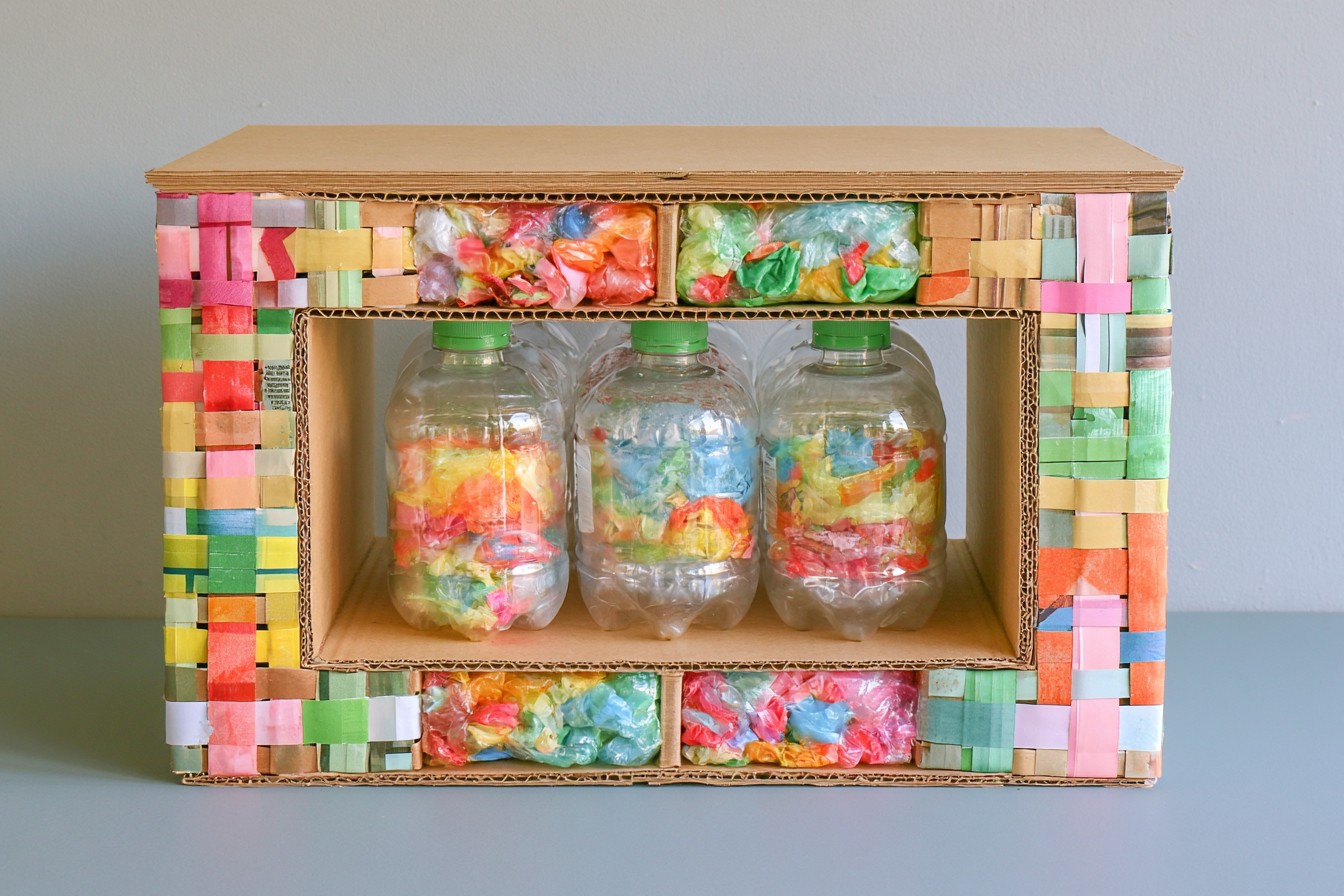
Create a model showing how tightly packed plastic bottles might support a modular stool or bench design. Use clean bottles filled consistently with dry, nonrecyclable soft plastic, then cap and weigh them for comparison. Do not present the model as approved structural furniture. Arrange the bottles inside a corrugated cardboard frame and add a top panel that reveals the construction. Decorate the exterior with paper woven from discarded magazines. Include a diagram explaining limitations, local ecobrick guidance, fire concerns, and the importance of reducing plastic first. Judges can evaluate both the concept and the critical thinking behind responsible material use.
17. Make Handmade Paper From Fruit and Paper Scraps
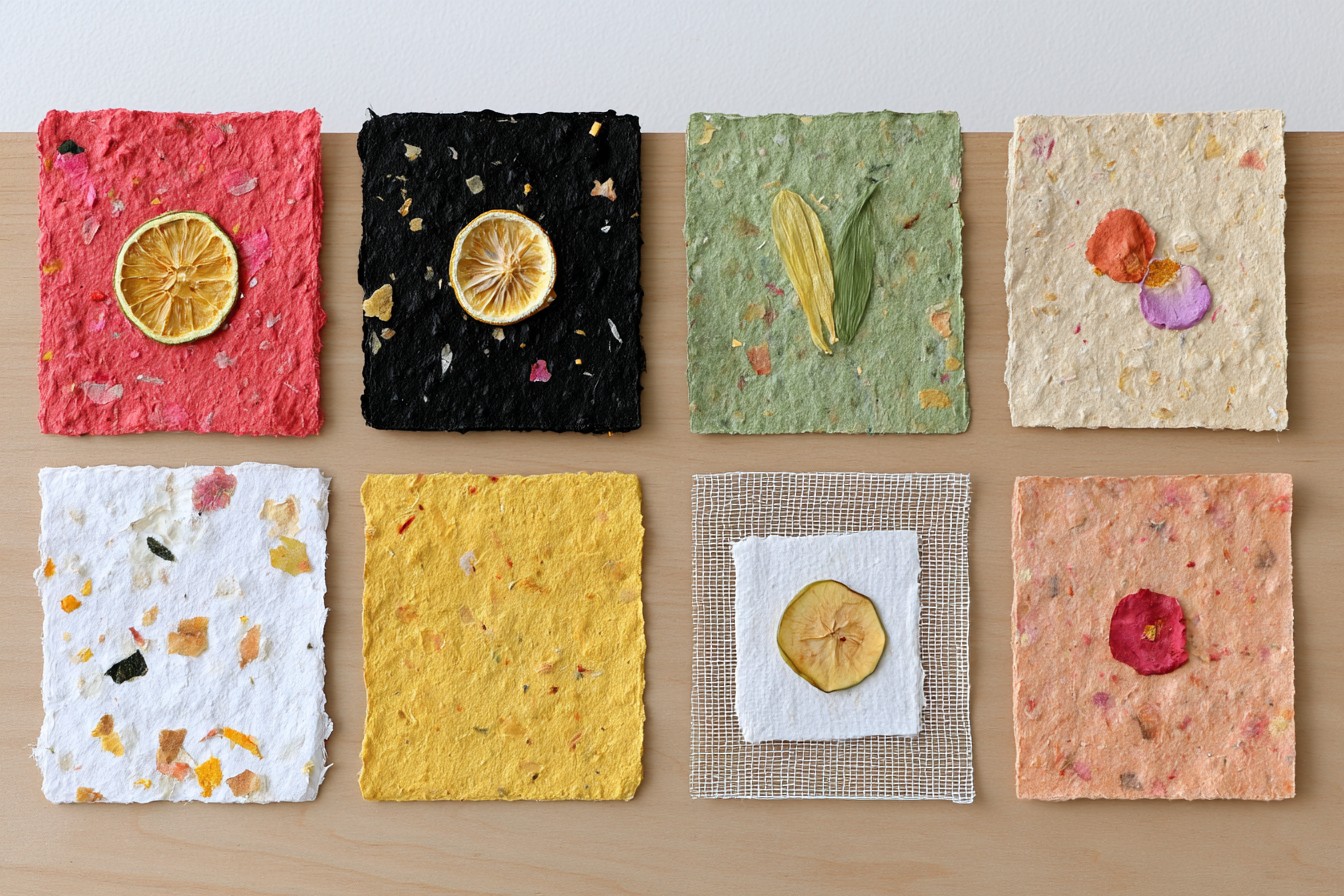
Experiment with handmade paper by combining soaked waste paper with amounts of dried fruit peel fiber. Tear uncoated paper into pieces, soak it, and blend it with adult supervision. Prepare citrus or apple peel by washing, drying, and grinding it before adding a measured quantity to the pulp. Spread the mixture across a mesh screen, press out water, and leave it to dry completely. Compare sheets containing different fiber ratios for strength, texture, and flexibility. Decorate finished samples with pressed petals or natural pigments. Present the results as a material experiment, noting mold prevention, drying time, and possible stationery uses.
MORE IDEAS


Share
What's Your Reaction?
 Like
0
Like
0
 Dislike
0
Dislike
0
 Love
0
Love
0
 Funny
0
Funny
0
 Angry
0
Angry
0
 Sad
0
Sad
0
 Wow
0
Wow
0