17 Attic Entertainment Spaces for Movies, Games, Music, and Gathering

An attic can become a useful entertainment room when its sloped ceilings, low eaves, structural capacity, and access limitations are considered from the beginning. Before adding heavy furniture or equipment, confirm that the floor and stair route are suitable for the proposed use. Insulation, heating, cooling, ventilation, electrical capacity, emergency escape, smoke detection, and local conversion requirements may also need professional assessment.
Reserve the highest section for standing activities and place seated functions or low storage beneath the roof slopes. Screens should be protected from glare, electronic equipment needs airflow, and speakers require thoughtful positioning to avoid excessive vibration or noise transfer. Furniture must not block stairs, windows, or required exits. These attic entertainment layouts support movies, games, music, and social gatherings while addressing storage, comfort, adaptable use, and the practical restrictions of a loft environment.
1. Suggest a Sunken Movie Lounge Without Lowering the Floor
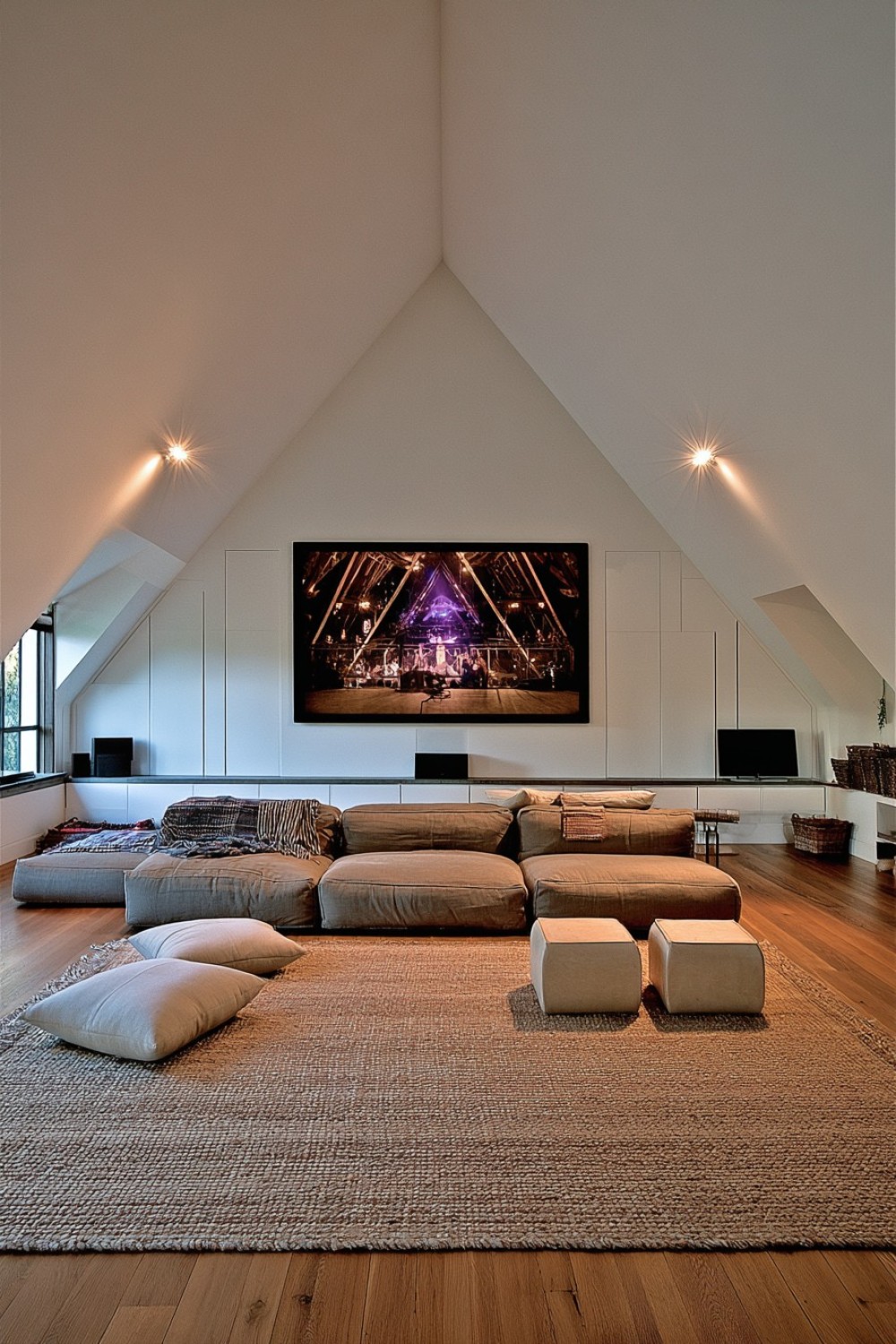
Low modular seating arranged beneath the highest roofline can create the enclosed atmosphere of a sunken lounge without altering the attic floor. Position the primary seats where occupants have comfortable headroom and a direct view of the screen. Use a broad rug and inward-facing furniture to define the zone instead of building an unnecessary raised platform around it.
Screen size and viewing distance should be planned together according to the equipment and room. Avoid mounting the screen so high that viewers must look sharply upward. Blackout shades can control glare, while dimmable general lighting allows people to enter and leave safely during a film. Keep speakers and subwoofers isolated from lightweight floor structures where possible to reduce vibration. Low furniture still needs suitable back support, and the route between the seating, stairs, and exits must remain completely clear.
2. Fit a Gaming Station Beneath a Low Eave
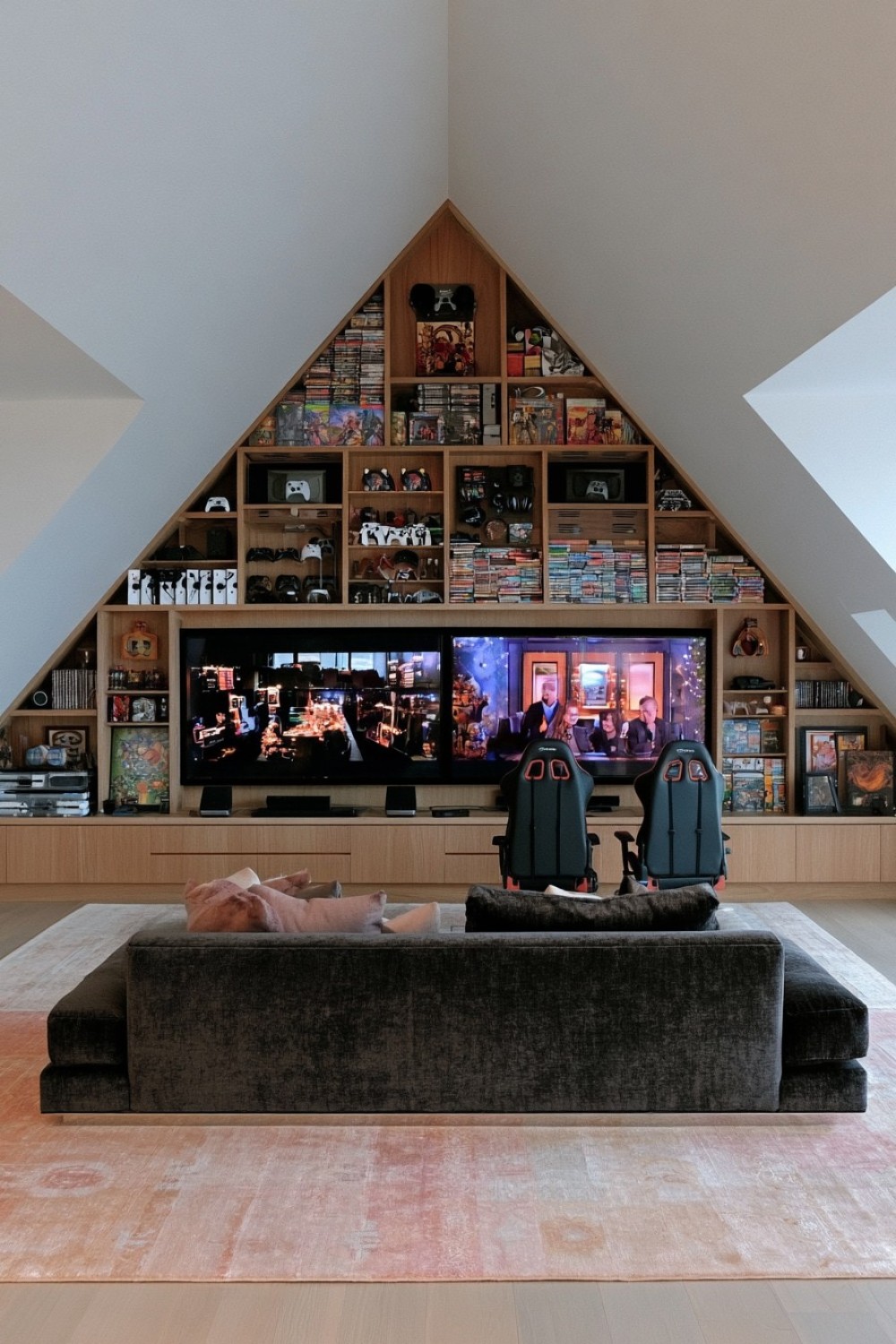
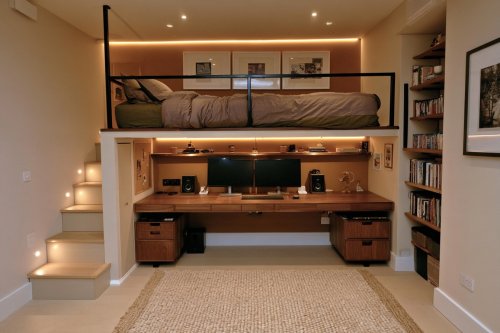
A seated gaming desk can use a low roof section that would be uncomfortable for standing activities. Confirm that the user can sit, stand, and move the chair without contacting the slope. A custom desk can follow the available width, while low cabinets beside it hold controllers, games, headsets, and accessories.
Do not close computers or consoles inside unventilated eave cupboards. Maintain the clearances recommended by each manufacturer and leave equipment accessible for cleaning and service. Cable trays beneath the desk prevent wires from spreading into the chair path. Monitor arms may free surface space, but the desk must support their concentrated load. Provide suitable outlets instead of relying on several connected extension leads. Adjustable task and background lighting can improve visibility without reflecting directly across the screen.
3. Form a Conversation-Pit Atmosphere With Modular Seating
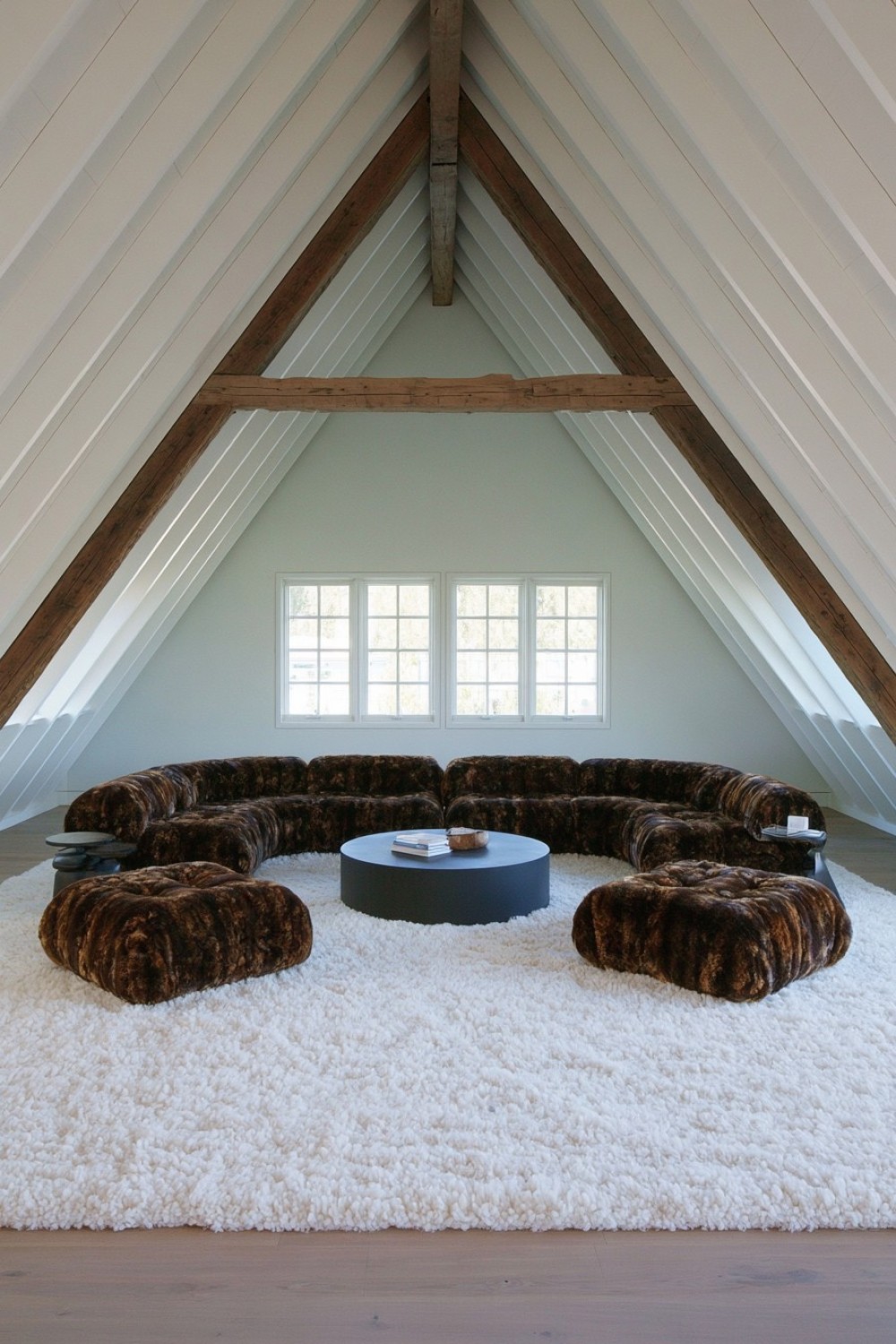
An inward-facing arrangement can make the attic feel designed for conversation rather than television alone. Combine a compact sofa, low lounge chairs, or modular floor-level sections around a central table. A broken circle or U-shaped layout creates enclosure while leaving one obvious entrance into the seating zone.
Mark the furniture footprint before ordering, paying attention to the broadest seat sections and the headroom available when occupants stand. Avoid introducing actual changes in floor level merely for visual effect, as unexpected steps create hazards and add construction complexity. Use rugs, lighting, and furniture direction to define the social area instead. A central table should be easy to reach without restricting knees or movement. Upholstery with removable covers may be more practical where food, drinks, or frequent gatherings are expected.
4. Build a Record-Listening Retreat With Stable Storage
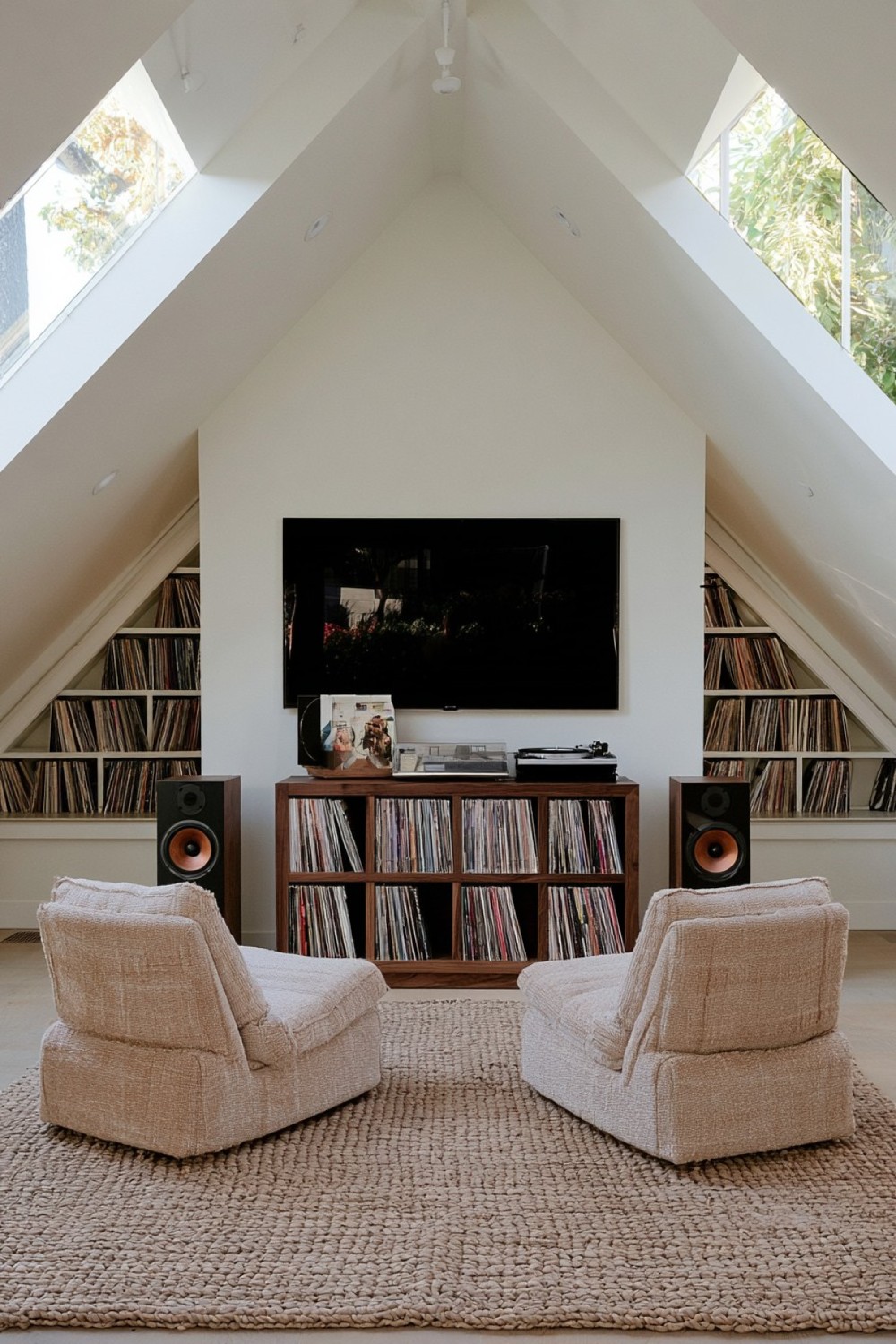
A record-listening space can occupy one attic end with a turntable cabinet, two supportive chairs, and accessible vinyl storage. Position speakers symmetrically enough to create balanced listening from the main seats, then test the arrangement before installing permanent shelves. Soft furnishings can reduce harsh reflections from roof slopes and bare floors.
Vinyl collections are heavy when concentrated in one cabinet, so use strong shelving and consider how the load is distributed across the attic floor. Store records vertically with adequate support and protect them from roof heat, dampness, and direct sunlight. The turntable needs a level, stable surface separated from strong speaker vibration. Older receivers, amplifiers, and lamps should be inspected before use, and electronic equipment requires ventilation. Keep cables organized and avoid placing drinks above records or powered components.
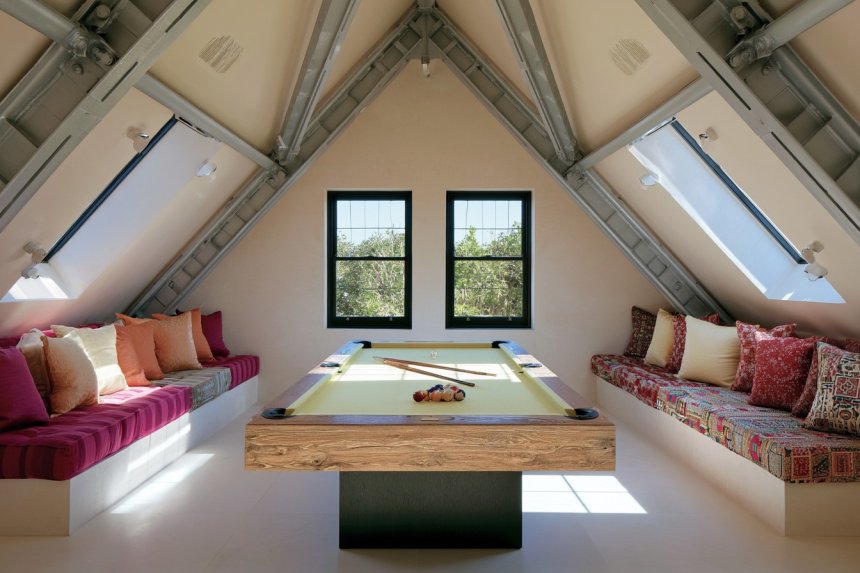
5. Place a Compact Billiards Table in the Attic Center
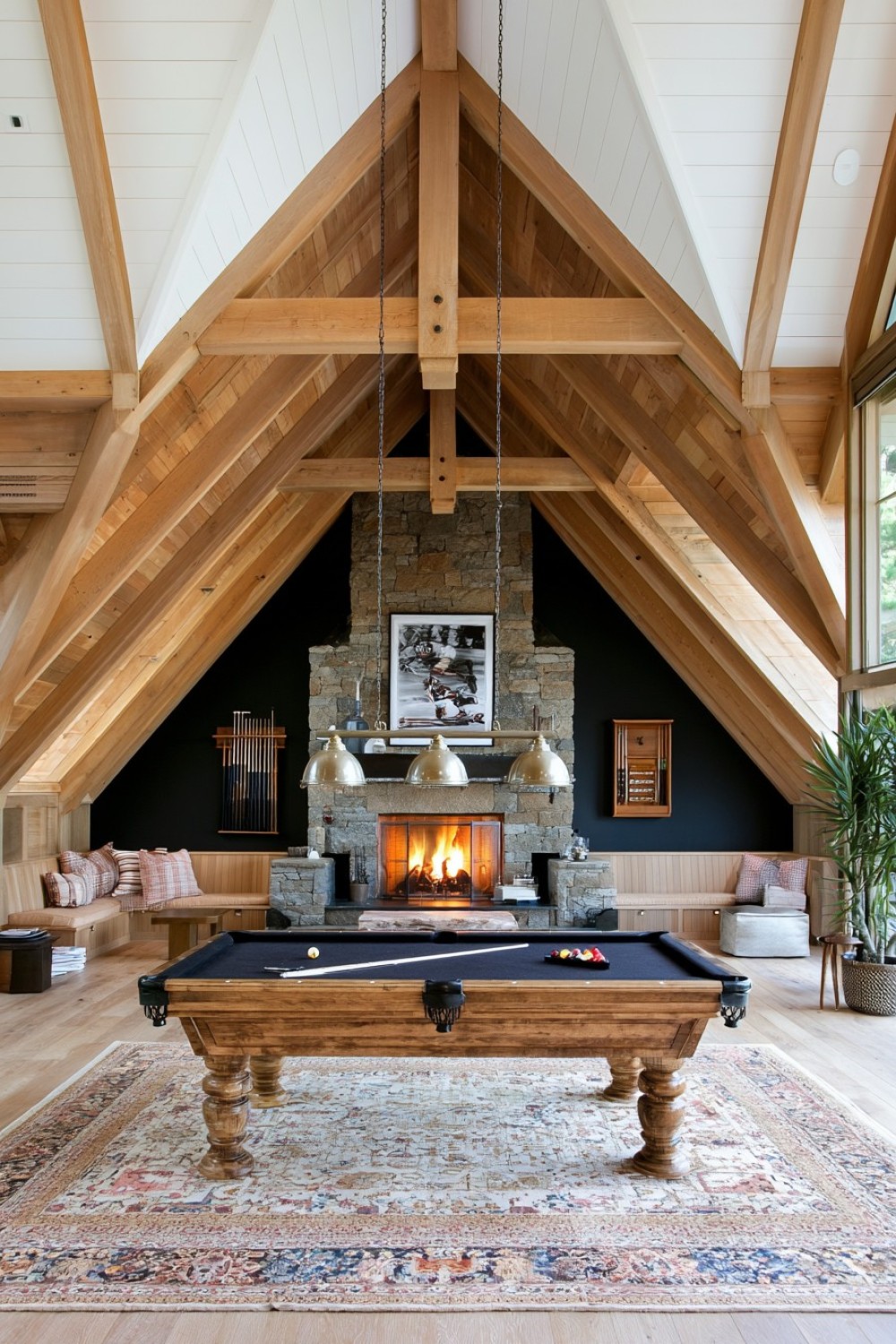
A billiards table needs more space than its external dimensions suggest because players require cue clearance on every side. Place the table beneath the highest central roof section and mark the full playing zone before purchasing. A shorter cue can help near occasional obstructions, but it should not compensate for a layout that is consistently too cramped.
Slate and full-size tables can be extremely heavy and difficult to carry through attic stairs. Structural capacity, delivery route, turning space, and professional assembly should be investigated first. A lighter compact table may suit the room better. Install a centered fixture that illuminates the playing surface without hanging where players or cues can strike it. Wall racks should keep cues vertical and secure. Benches or shallow cabinets beneath the eaves can provide seating and storage without entering the playing zone.
6. Conceal a Projector Cinema Within an Attic Library
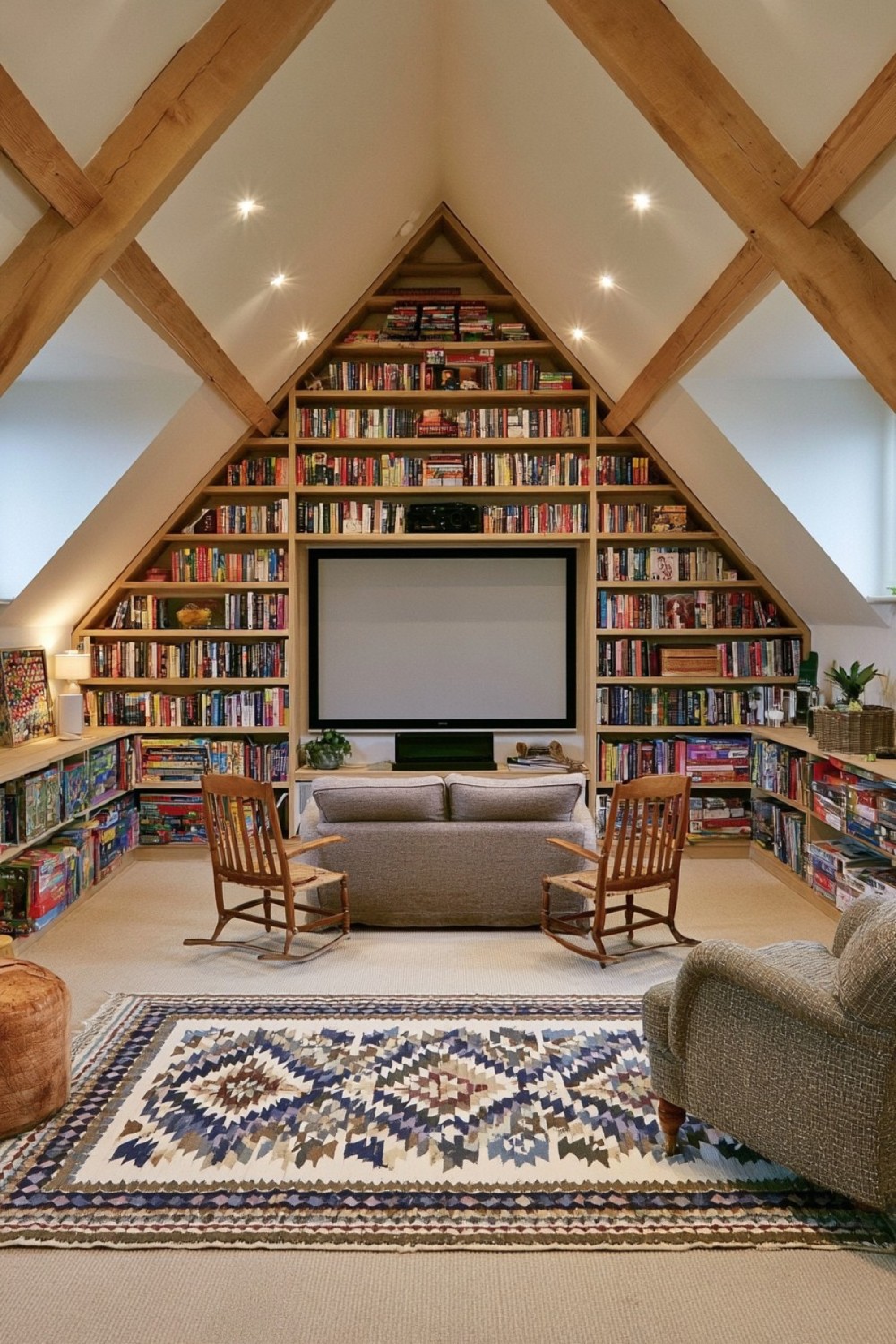
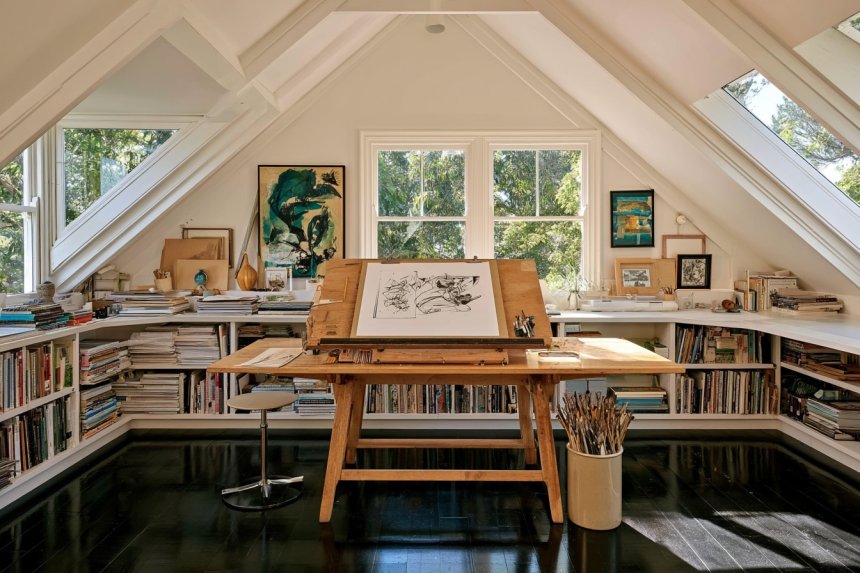
A retractable screen and discreet projector can allow an attic library to serve as a cinema without permanently sacrificing bookshelves. Position the screen on a clear gable wall or in front of shelving that does not need access during viewing. Test the projected image size, throw distance, ceiling slope, and seated sightlines before installing mounts.
Projectors generate heat and need the ventilation specified by their manufacturers. A concealed cabinet must provide airflow and access for filters, cables, and maintenance. Mounting hardware should attach to suitable structure rather than decorative ceiling panels. Bookshelves also need proper anchoring, with heavier books stored lower. Blackout shades improve daytime viewing, while separate shelf and floor lighting allows the library to function when the screen is raised. Cables should not cross walking routes or hang loosely from the roof structure.
7. Use a Convertible Table for Board Games and Dining
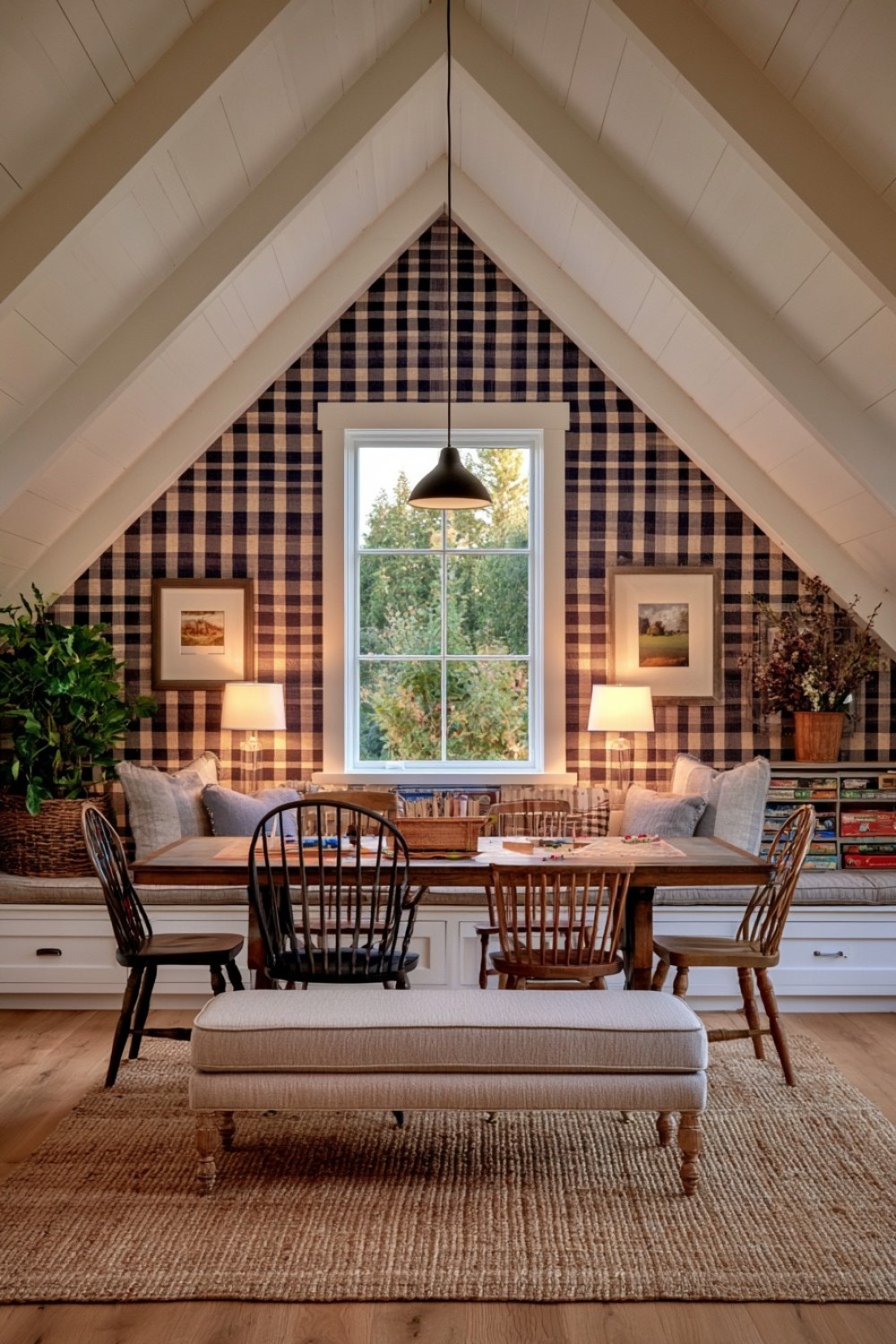
A convertible center table can support board games, puzzles, casual dining, and other group activities. Designs with a recessed play surface and removable top panels allow an unfinished game to remain protected beneath a usable table. Confirm that the mechanism is simple to operate and that panels have a safe storage position when removed.
Allow enough room for chairs to pull out beneath the sloped roof without occupants striking their heads when standing. Focused overhead lighting should illuminate the complete playing surface without creating glare on cards or glossy boards. Use low cabinets beneath the eaves to organize games by size or type, storing heavy boxes at lower levels. Cup holders or separate side tables can keep drinks away from active games. The table should have a stable frame and a surface durable enough for repeated rearrangement.
8. Convert One Gable End Into a Small Home Arcade
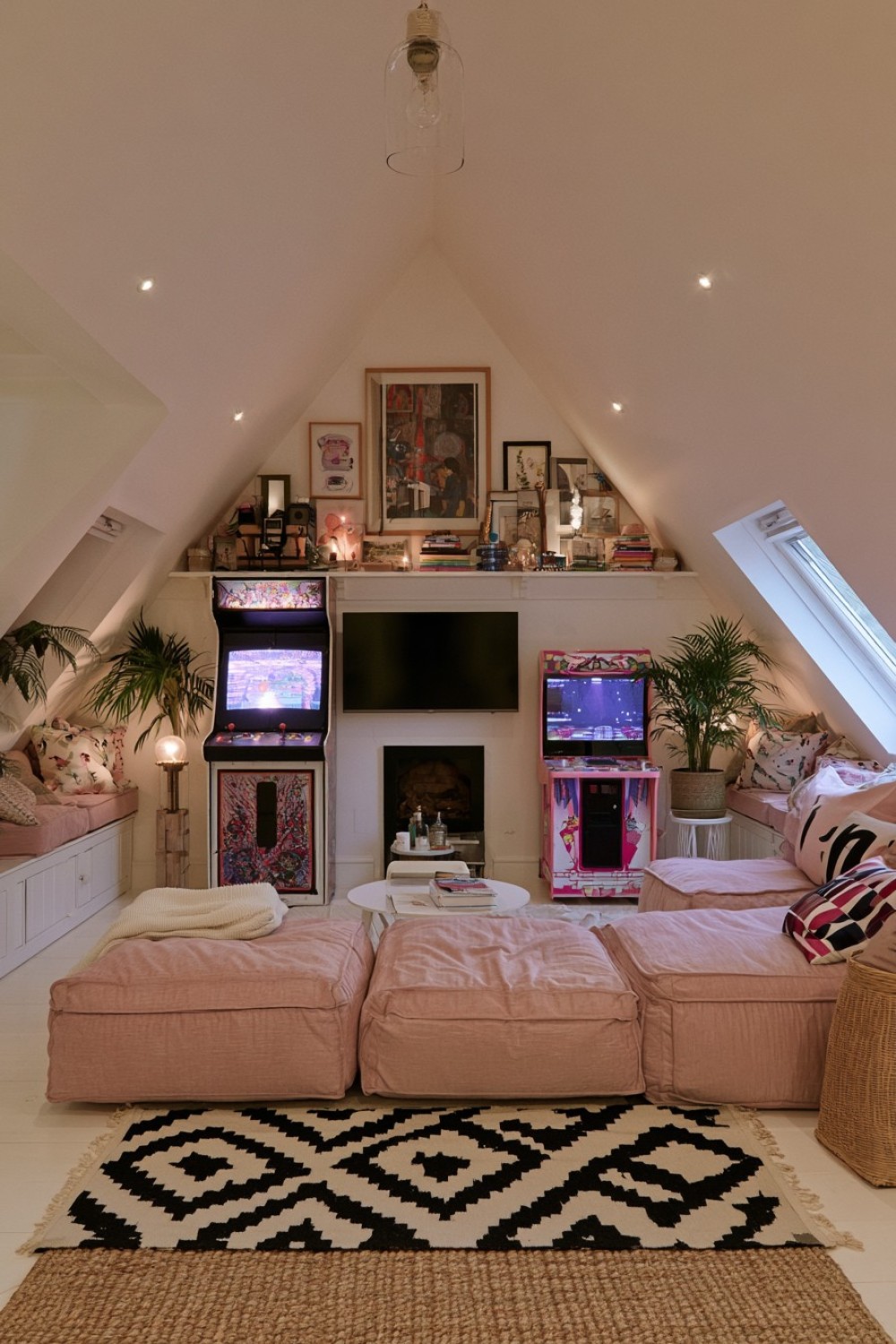
Grouping arcade machines or compact gaming cabinets at one attic end keeps their light, sound, and equipment concentrated in a defined zone. Measure cabinet depth, control clearance, standing room, and the delivery path before choosing full-size machines. Countertop or bartop units may provide a similar function with less weight and floor use.
Several machines operating together can create heat and place significant demand on the electrical supply. Use suitable outlets and have capacity assessed where necessary rather than connecting multiple high-load devices through one adapter. Maintain ventilation around every cabinet and leave access for repair. Anti-tip measures may be appropriate for tall units. Sound-absorbing furnishings can reduce reflections, while adjustable lighting should preserve safe movement without competing with the screens. Keep the arcade away from the stair opening and required exit routes.
9. Prepare a Flexible Karaoke and Performance Corner
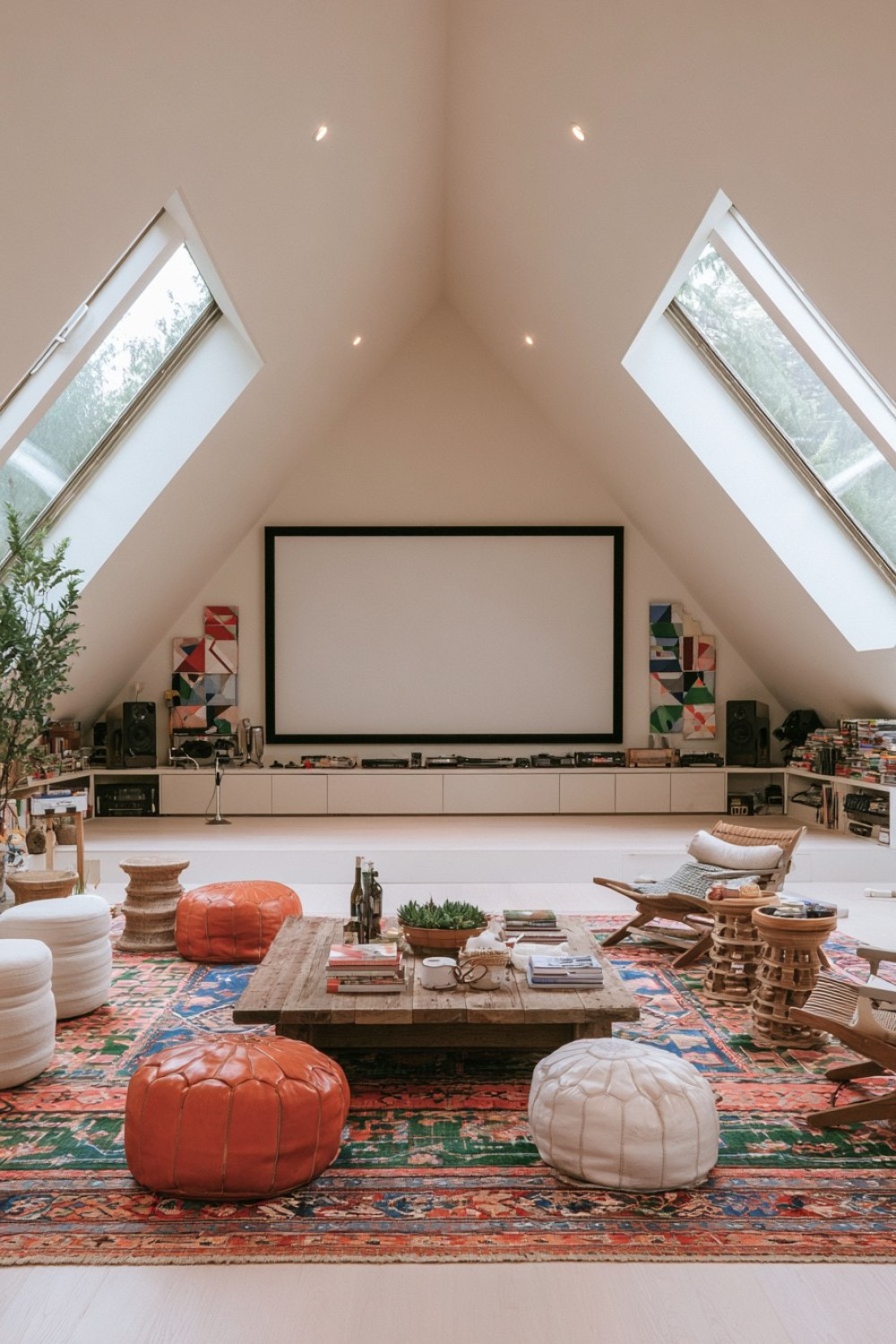
A karaoke corner can use a clear section of gable wall for a screen, speakers, and a compact equipment cabinet. Keep the central floor open rather than constructing a permanent stage. A movable rug or change in wall color can identify the performance zone while allowing it to return to ordinary lounge use.
Microphone, speaker, and power cables should be routed around the perimeter or protected so performers cannot trip over them. Speaker stands require stable bases and should remain away from stair openings. Soft roof surfaces, curtains, rugs, and upholstered furniture may reduce echo, but controlling sound transfer to rooms below can require more substantial construction. Store microphones and accessories in a ventilated cabinet after use. Adjustable lighting can support the activity, provided fixtures do not create glare on the screen or reduce visibility around the floor.
10. Divide a Sports-Viewing Loft Into Two Social Zones
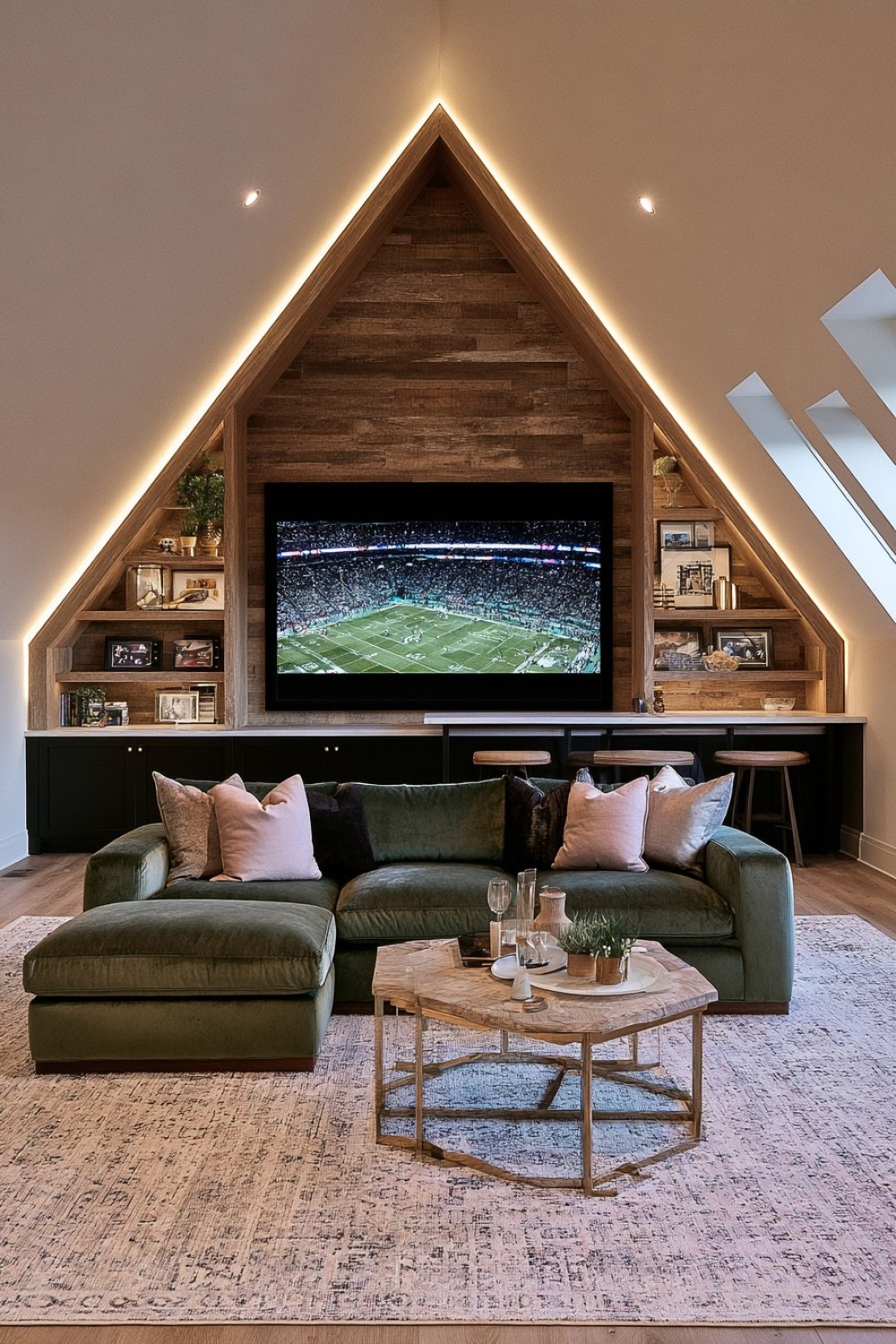
A sports-viewing attic can combine primary lounge seating with a secondary high or counter-height zone. Place the main sofa directly toward the screen and use a narrow table behind it for additional viewers, provided the higher seats retain a clear sightline. This approach supports larger groups without adding a second television.
Mark chair and stool movement before installing the rear counter so the two seating zones do not overlap. Higher furniture should sit beneath adequate roof height, while lower eaves can contain storage or compact benches. Secure the screen with a mounting system suitable for its size, weight, and wall construction. Keep food preparation limited to a safe serving surface rather than introducing unnecessary cooking equipment. Lighting should remain dimmable but sufficient for moving between the seating, stairs, and washroom.
11. Create a Puzzle and Strategy-Games Loft
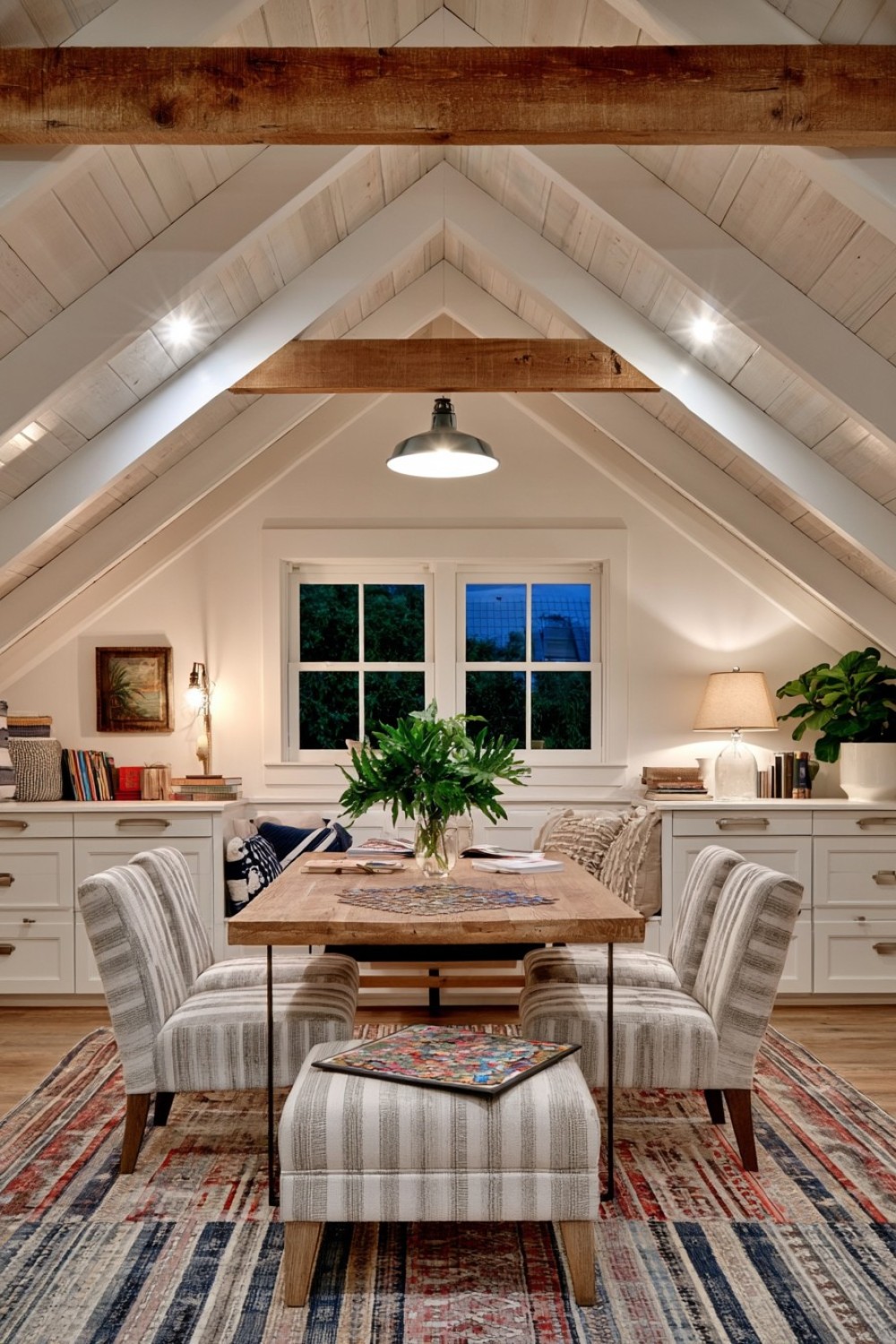
Puzzles and strategy games benefit from a dedicated table that can remain undisturbed between sessions. A surface with a removable cover or shallow recessed area protects active pieces while the attic is used for something else. Provide chairs with adequate back support and enough space for players to stand beneath the roofline.
Use even, controllable lighting across the complete table so colors and small pieces remain visible without harsh shadows. Drawers or labeled boxes can organize tokens, cards, reference books, and unfinished projects. Keep small parts secured where young children or pets use the room. A low cabinet beneath the eaves can hold boxed games without crowding the central table. Drinks should sit on side ledges or stable holders away from paper components. Maintain one clear route around the table rather than filling every wall with storage.
12. Assemble a Modular Floor Lounge for Casual Groups
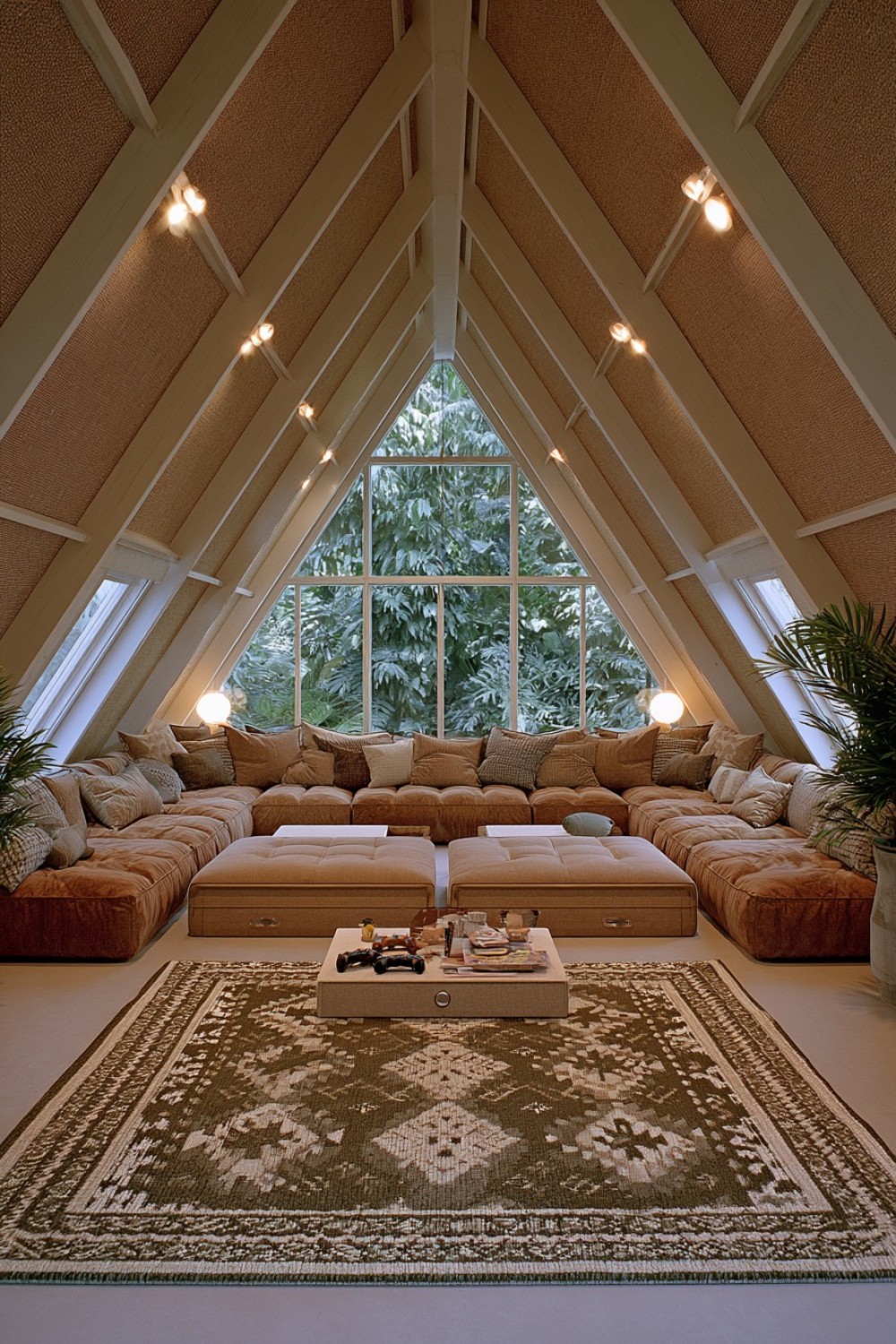
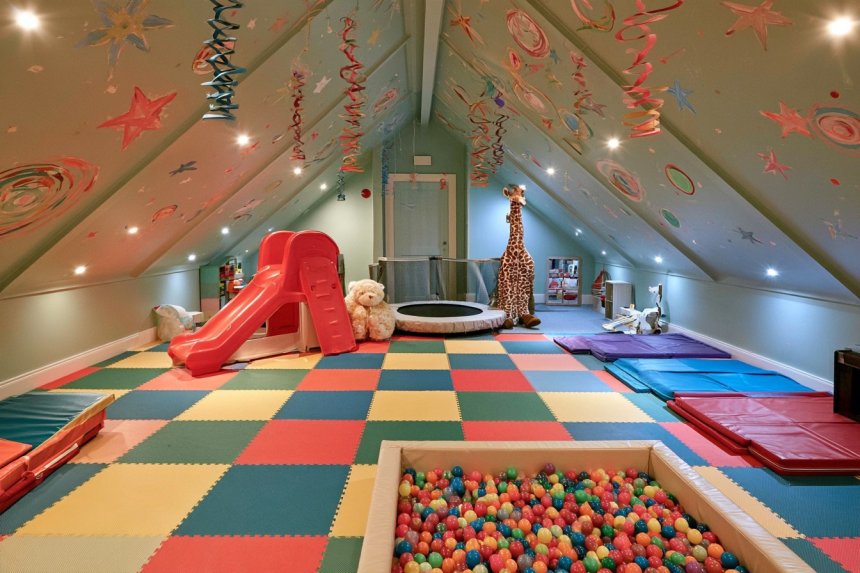
Modular cushions and low seating allow an attic to change between movie nights, casual games, reading, and conversation. Choose sections that connect securely and can be rearranged without being excessively heavy. A limited upholstery palette makes several movable pieces look coordinated even when their configuration changes.
Floor-level seating is not suitable for every user, so include at least one conventionally elevated supportive chair when space permits. Use removable washable covers and place non-slip material beneath lightweight modules. The pieces should have a designated storage or parking arrangement rather than being left in the route to the stairs. Avoid piling cushions against heaters, electrical equipment, or ventilation openings. A broad rug may define the lounge, but it should remain flat and secure across the floor.
13. Display a Collection Without Overloading the Loft
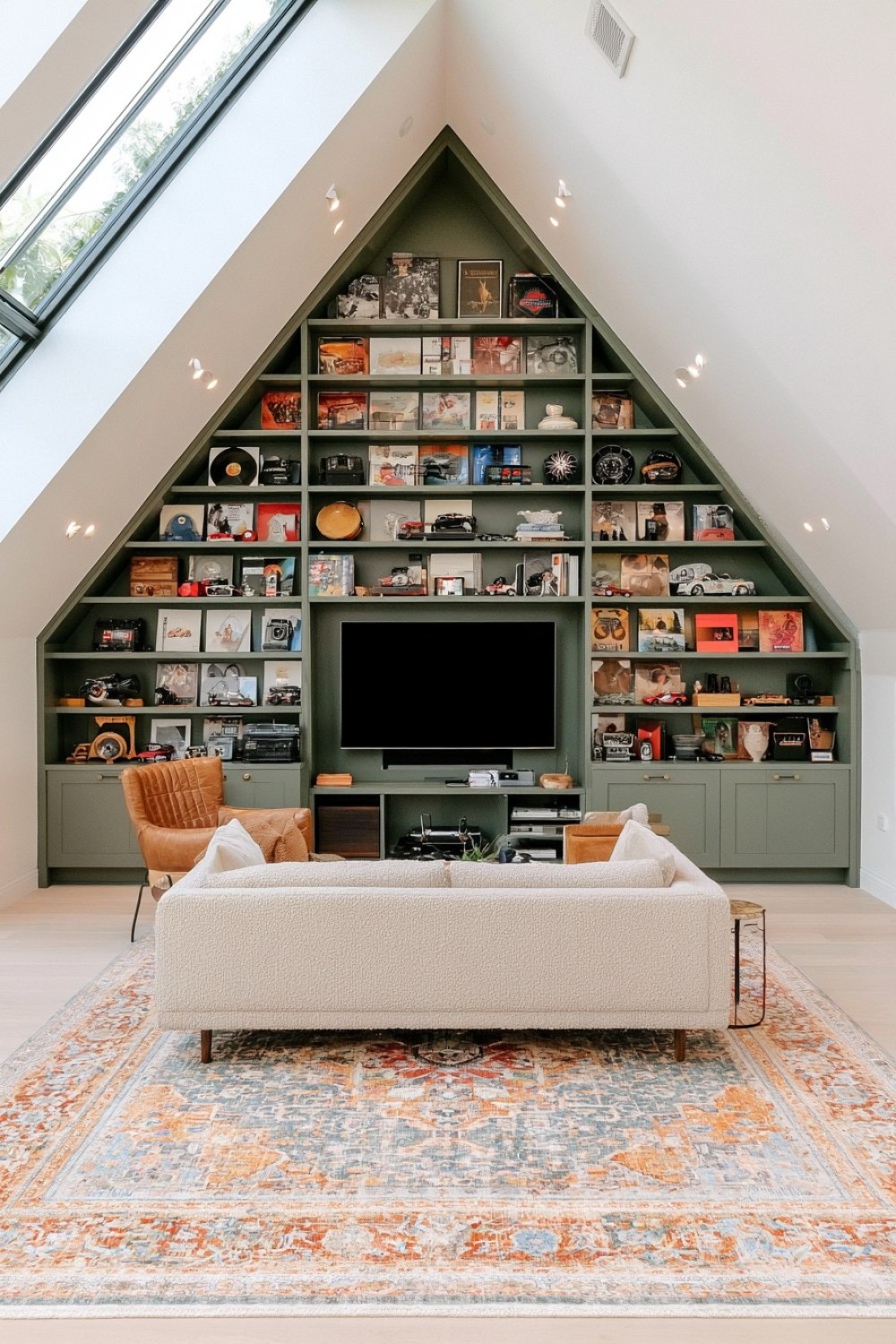
An attic gallery can give figures, games, film objects, sports pieces, or music memorabilia a dedicated setting. Organize the collection by subject, era, or material and display only enough items for each group to remain legible. Closed cabinets reduce dust, while open shelves provide easier access to frequently handled objects.
Collections and glass-fronted cabinets can create significant concentrated weight. Strong shelving, appropriate anchoring, and sensible load distribution are important. Place heavier objects on lower levels and avoid positioning fragile pieces above seating or stairs. Direct roof light and attic heat can damage paper, fabric, plastic, and packaging, so use shading and rotate vulnerable displays where necessary. Integrated cabinet lighting should not trap heat. Reserve concealed storage for boxes and accessories so the visible gallery remains edited.
14. Form a Retro Alcohol-Free Beverage Lounge
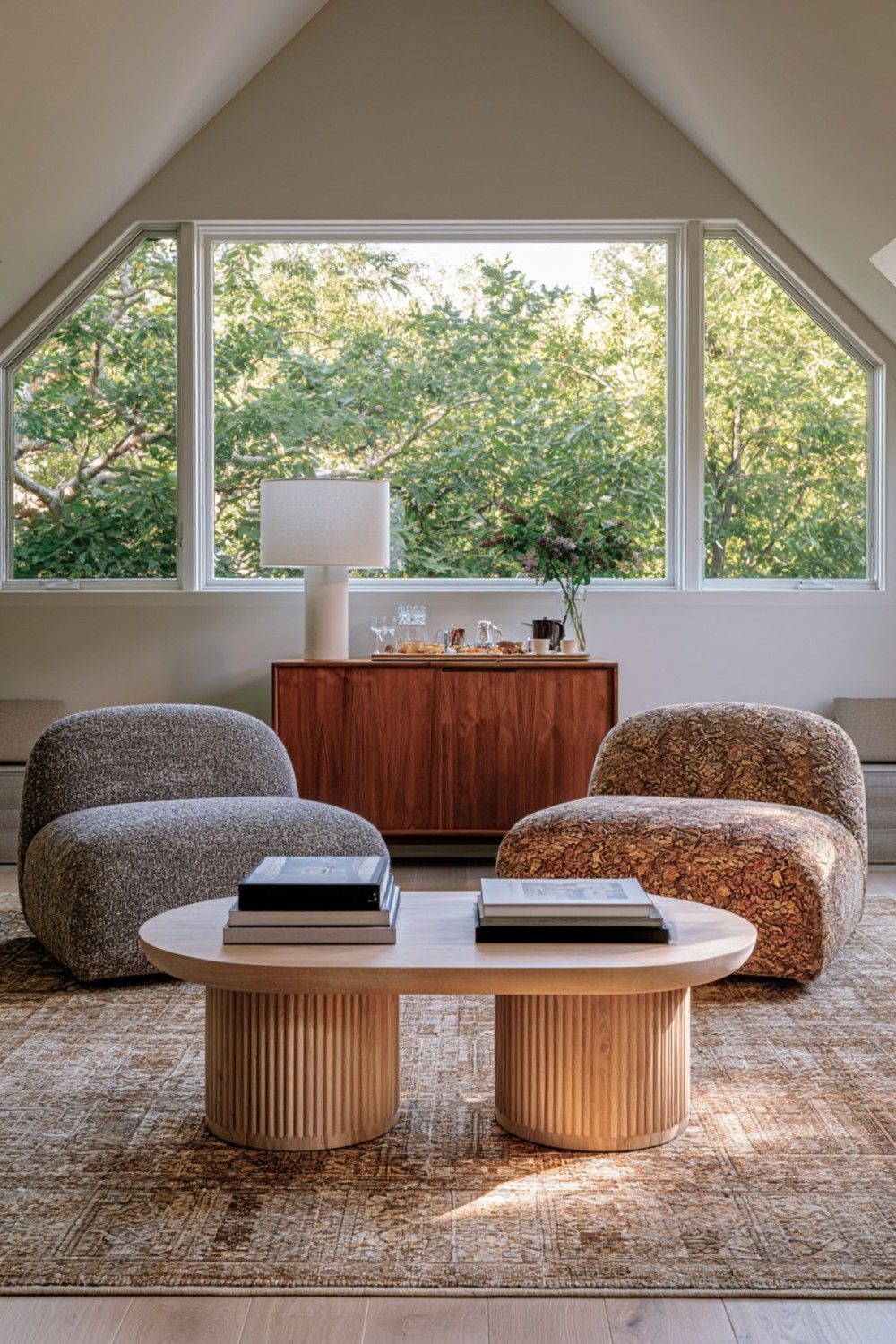
A compact beverage station can support coffee, tea, sparkling water, and snacks without turning the attic into a full kitchen. Use a small cabinet with wipeable surfaces, enclosed storage, and a tray for containing spills. Retro color, rounded furniture, and one period-inspired accessory can establish the atmosphere without filling the room with fragile vintage equipment.
Adding a sink introduces plumbing, drainage, leak protection, and service access that may not be practical in an attic. A dry station is simpler but still needs careful use around electronics and flooring. Refrigerators and powered appliances require manufacturer-specified ventilation and suitable outlets. Kettles or heat-producing equipment should sit on stable heat-resistant surfaces away from low roof materials and textiles. Keep liquids separate from the gaming or media equipment and carry waste downstairs regularly.
15. Use Platform Seating Only After Structural Planning
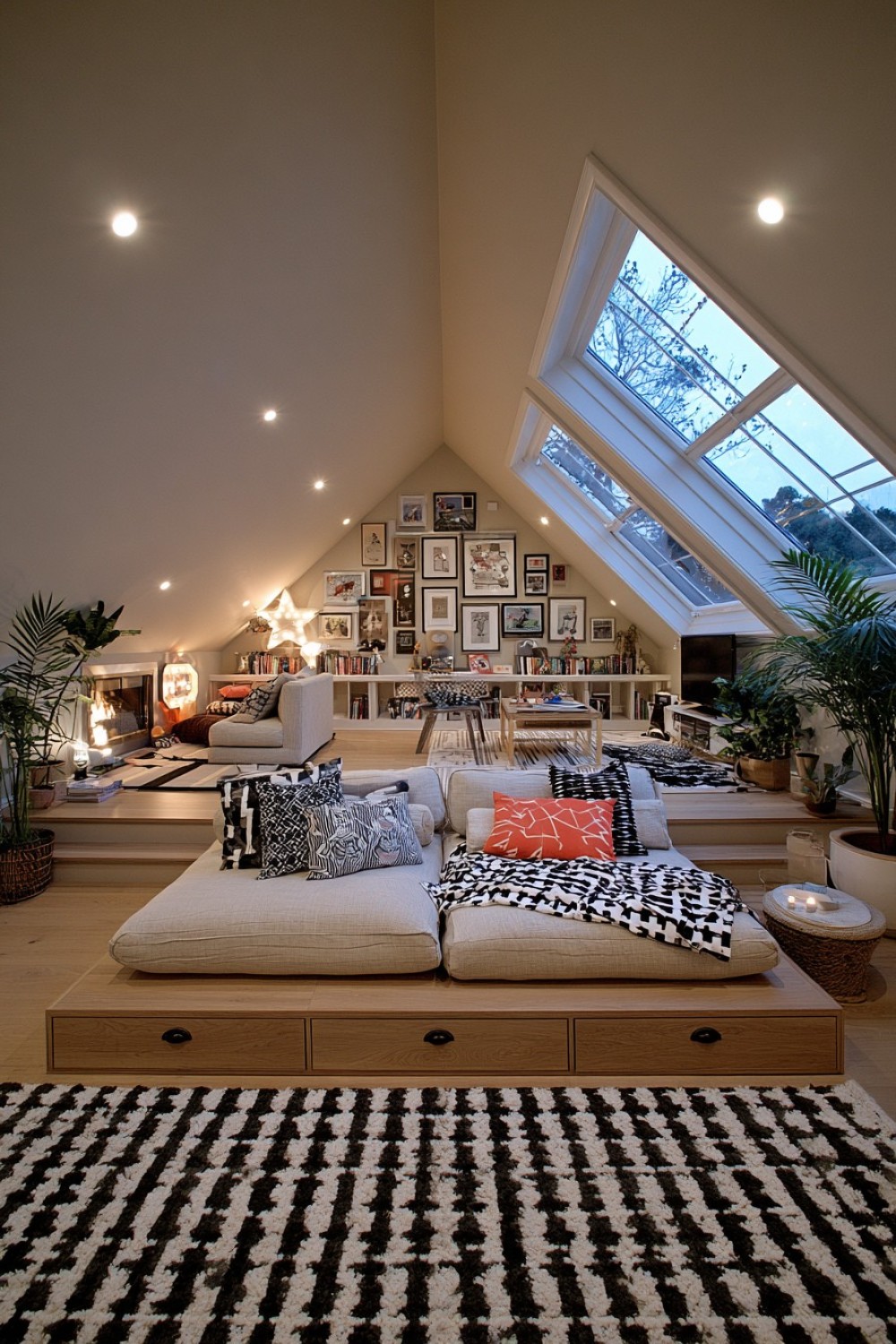
A raised seating platform can improve views in a cinema or divide a large attic into levels, but it requires more than building a timber box beneath a sofa. The additional structure, furniture, and occupants create load, while the step changes circulation and headroom. Professional assessment may be necessary before construction begins.
Steps should be clearly visible, consistently formed, and illuminated so users can identify the level change when the room is dark. Depending on height and local requirements, guards, hand support, or other safety provisions may be necessary. Do not allow the platform to cover electrical junctions, ventilation, or access to roof services. Use the interior for storage only if it is designed for that purpose and remains ventilated where required. A furniture-only layout is the safer and more reversible solution when the attic is small or structural information is uncertain.
16. Turn the Gable Wall Into an Interactive Game Surface
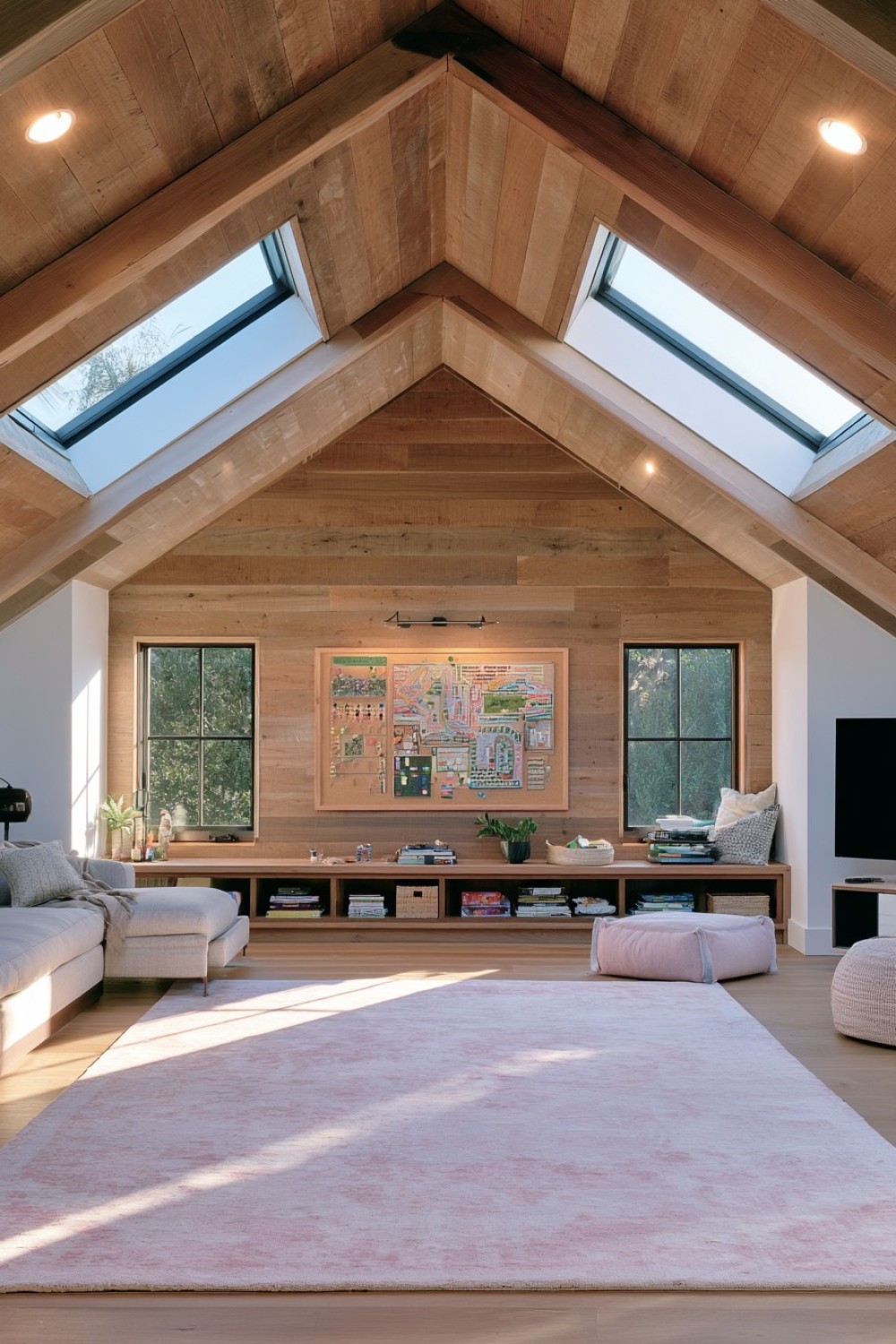
A clear gable wall can support a projection-based game, large magnetic board, erasable score surface, or modular puzzle display. Choose an activity that matches the available distance and does not require sharp projectiles or uncontrolled throwing in a compact loft. A smooth pale surface works well for projection, while removable panels allow the wall to change functions.
Keep the active floor zone free from low beams, fragile furniture, and the stair opening. Projectors and sensors need secure mounting, appropriate ventilation, and protected cables. Magnetic or writing panels must be attached according to their weight and wall construction. Use washable, low-odor products intended for interior surfaces when creating an erasable area. Equipment storage beneath the eaves can keep controllers, markers, and game components close without obstructing movement.
17. Plan Rotating Activity Zones With Movable Furniture
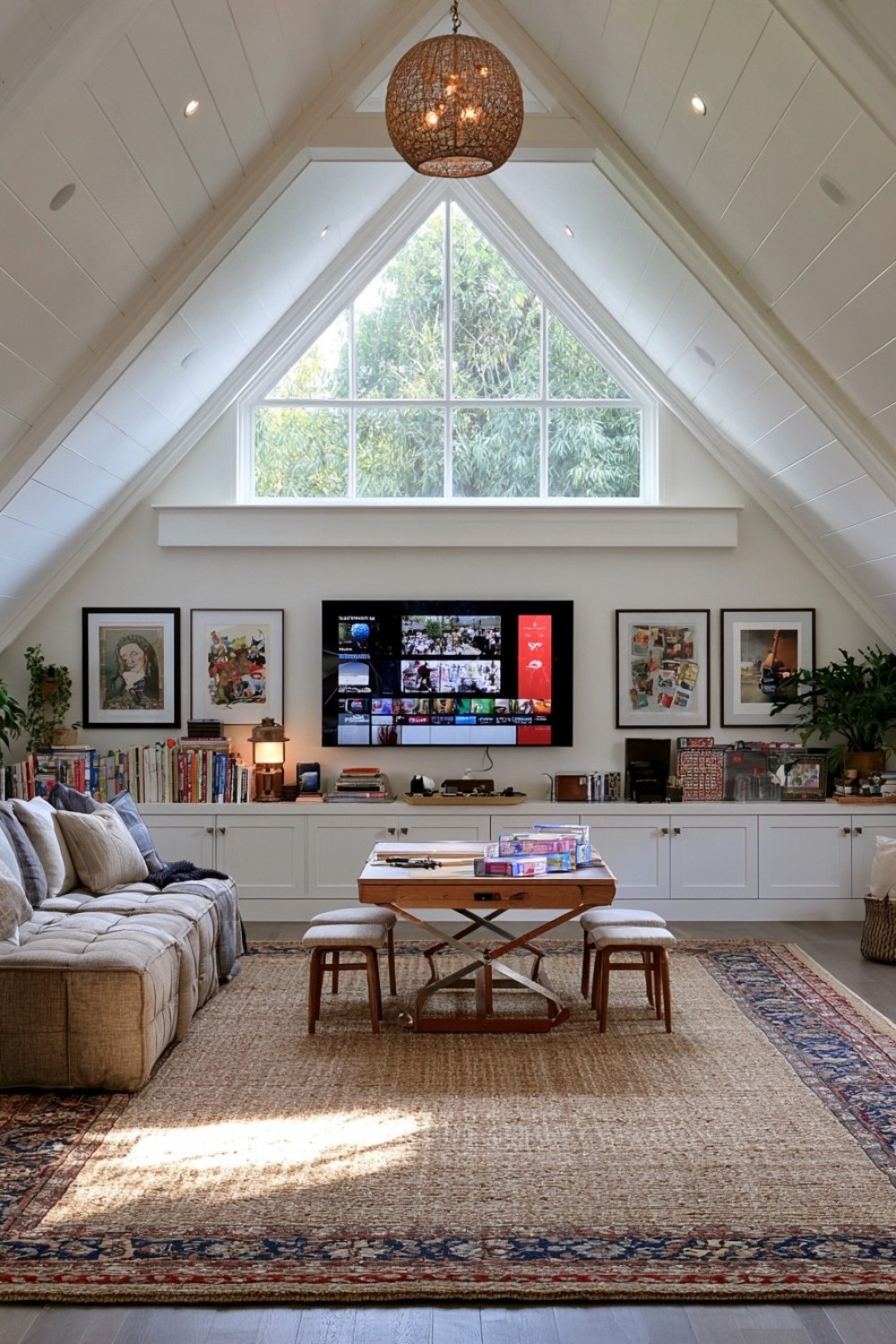
An attic can support different activities on different days when its furniture is light enough to reposition and every item has a defined storage place. A folding table may serve games and crafts, modular seating can face either a screen or conversation area, and rolling cabinets can bring activity-specific equipment into the central zone.
Movable pieces need locking casters, stable bases, and handles that make them easy to control. Mark permanent parking locations beneath the eaves so unused furniture does not accumulate near the stairs. Electrical equipment should remain connected only in approved positions rather than being moved with live cables stretched across the room. Keep one central circulation route open in every configuration. A consistent palette across the different modules helps the attic remain visually organized even as its function changes.
MORE IDEAS


Share
What's Your Reaction?
 Like
0
Like
0
 Dislike
0
Dislike
0
 Love
0
Love
0
 Funny
0
Funny
0
 Angry
0
Angry
0
 Sad
0
Sad
0
 Wow
0
Wow
0