11 Fun Easy Crafts for Kids Using Everyday Materials

1. Build a Modular Play City from Cardboard Boxes
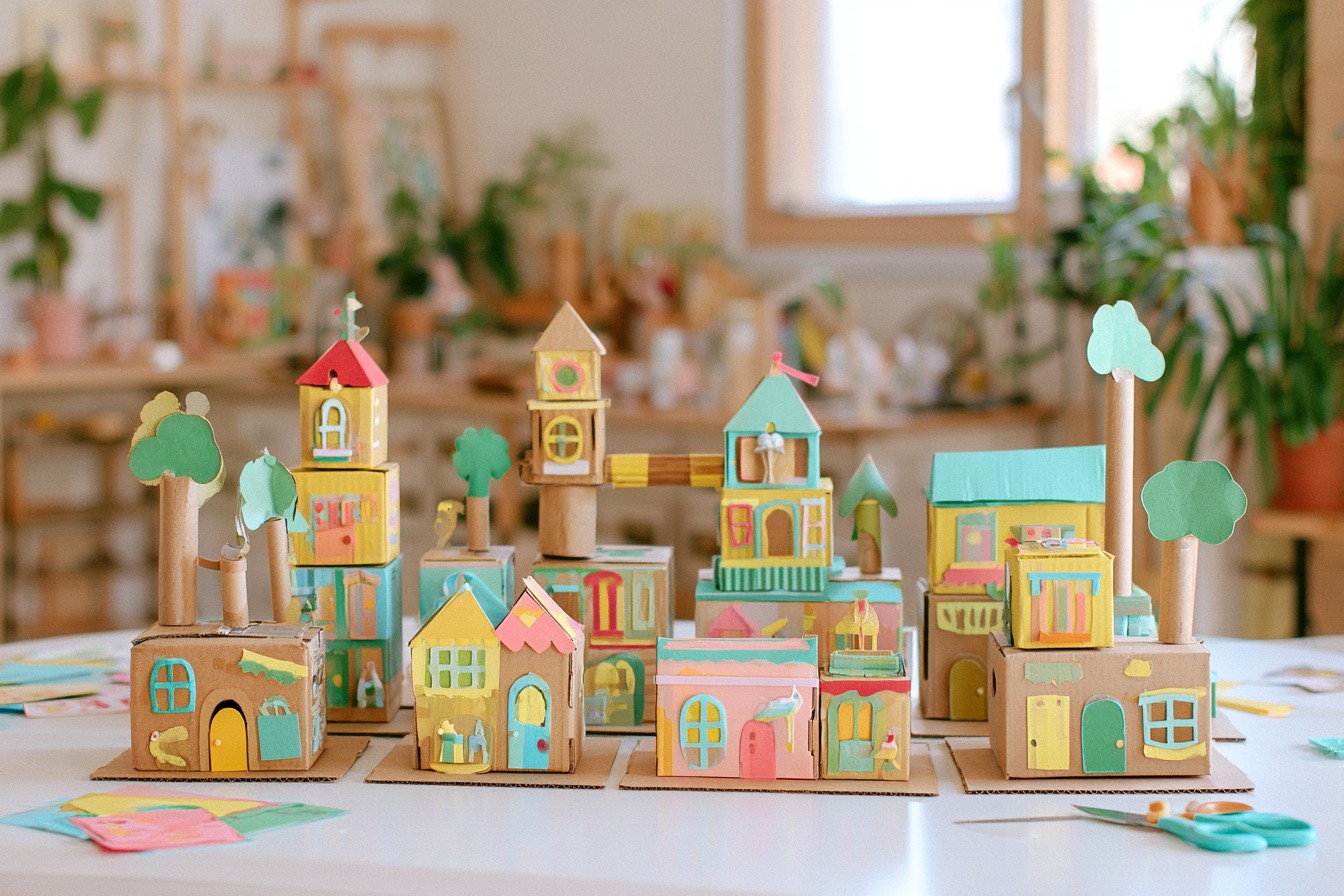
Unused cereal boxes, small shipping boxes, colored paper, child safe scissors, glue, markers, and cardboard tubes can be transformed into a colorful play city. Begin by cutting the boxes into different heights to create houses, schools, hospitals, shops, and fire stations. Children can make windows, doors, roofs, and balconies from colored paper before attaching them to the buildings. Cardboard tubes can become tree trunks, bridge supports, or observation towers. Add a wide piece of cardboard beneath each building to help it remain stable during play. Instead of permanently attaching the buildings to one large base, keep them separate so children can design a different city layout each time. Adults should complete any difficult cutting tasks, especially when thick cardboard is used. This creative project encourages imaginative play, spatial thinking, planning skills, and an early understanding of recycling.
2. Make a Spinning Weather Wheel from Paper Plates
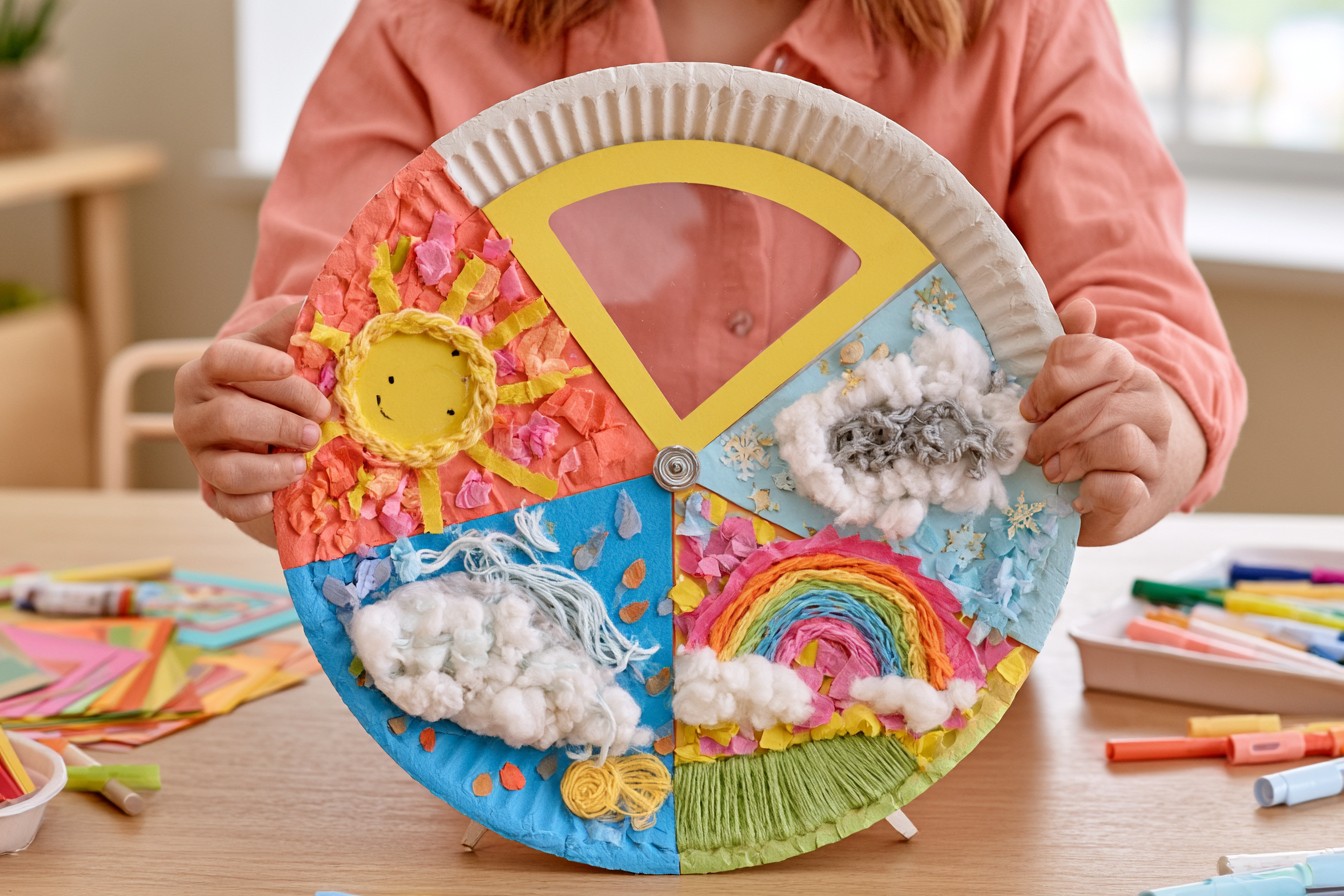
For this educational craft, gather two paper plates, colored cardstock, markers, child safe scissors, glue, and a paper fastener. Divide the first plate into sections representing sunny, rainy, snowy, windy, cloudy, and rainbow weather. Children can color each section and add texture with cotton, yarn, tissue paper, or small pieces of cardstock. Cut a triangular viewing window from the second plate, then connect the two plates through their centers with the paper fastener. When the top plate is turned, only one weather condition will appear through the window. Children can observe the sky each morning and rotate the wheel to match the day’s weather. Cover the back of the fastener with thick cardboard for additional safety. This simple craft becomes a useful learning tool that encourages daily observation, introduces basic weather vocabulary, and helps children understand seasonal changes.
3. Create a Mini Animal Garden from Egg Cartons
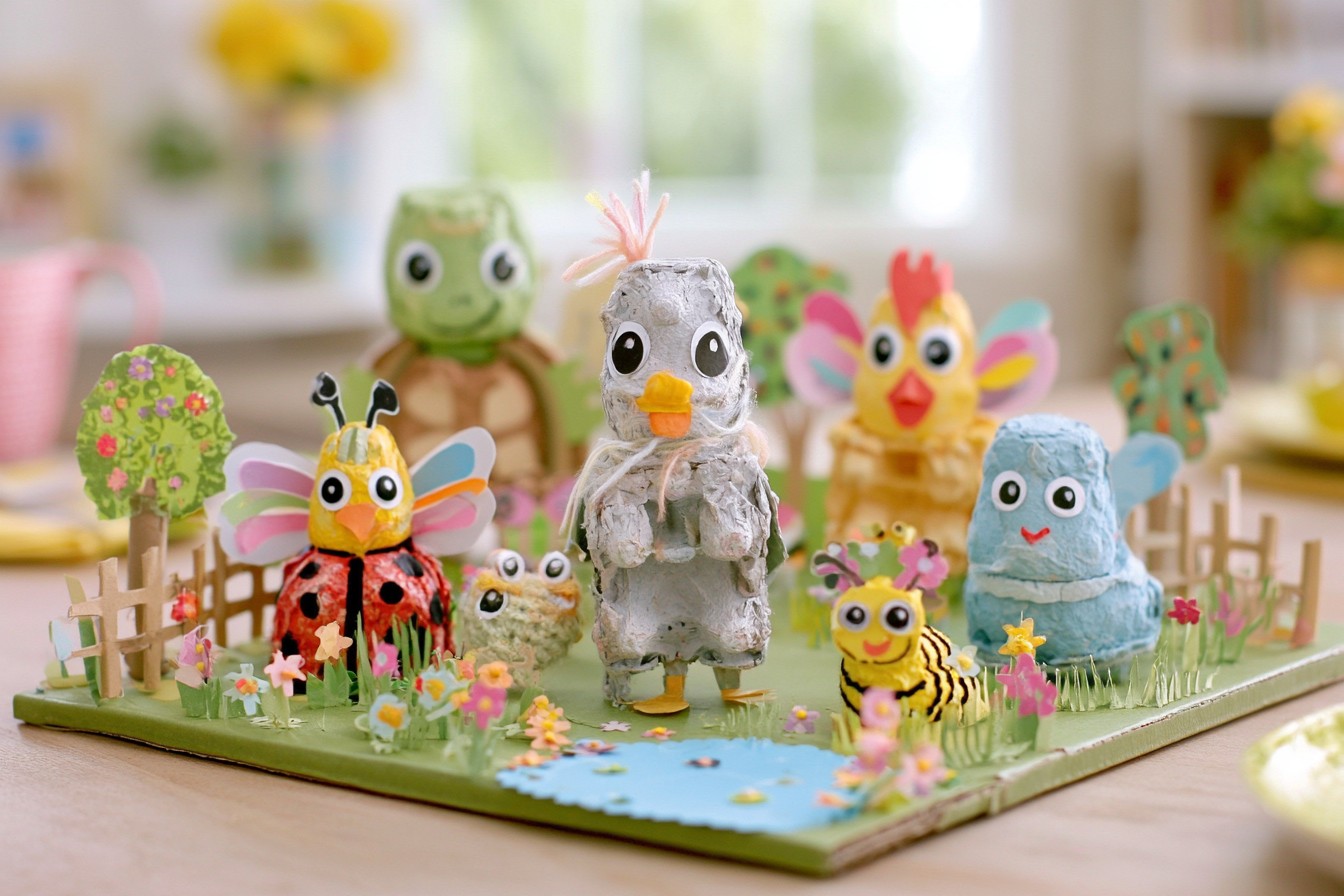
Empty egg cartons, water based paint, brushes, colored cardstock, glue, pom poms, large craft eyes, and yarn can be used to create an adorable miniature animal garden. An adult should begin by cutting the raised and hollow sections of the carton into individual pieces. Children can paint these shapes to resemble ladybugs, turtles, chickens, whales, bees, or frogs. Once the paint has dried, add cardstock wings, ears, feet, tails, or fins. Facial expressions can be drawn with markers or made with large craft eyes. Arrange the finished animals on green cardboard and surround them with paper flowers, fences, trees, or a small pond. Avoid beads, buttons, and other tiny decorations when crafting with children under three. This playful activity teaches colors and animal features while developing fine motor skills. The completed garden can also be used for storytelling and imaginative play.
4. Make Imaginary Fossils with Salt Dough
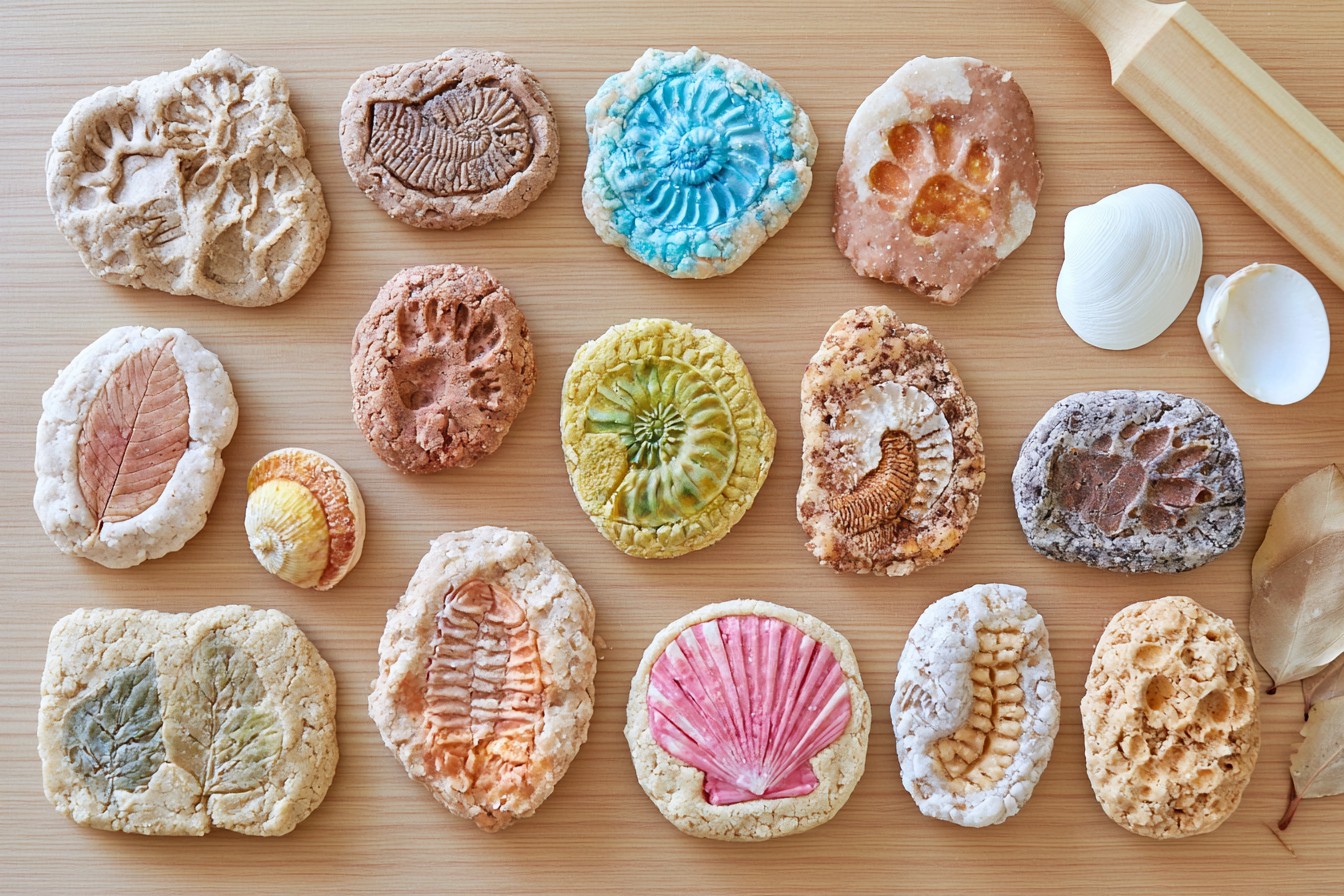
To create salt dough fossils, gather two parts flour, one part fine salt, approximately one part water, a mixing bowl, a rolling pin, natural leaves, clean shells, and toy animal figures. Combine the flour and salt, then gradually add water until a soft dough forms without sticking to the hands. Children can flatten small portions into circles, ovals, or uneven stone shapes. Press leaves, shells, toy footprints, and textured natural objects into the surface to leave detailed impressions. The pieces can be baked at a low temperature with adult supervision or left to air dry for several days. Once hardened, paint the fossils in earthy shades and gently wipe the raised surfaces to create an aged appearance. Children can invent a mysterious creature or discovery story for each fossil. This project combines art, history, nature study, sensory exploration, and imaginative storytelling in one engaging activity.
5. Turn Old Socks into Emotion Puppets
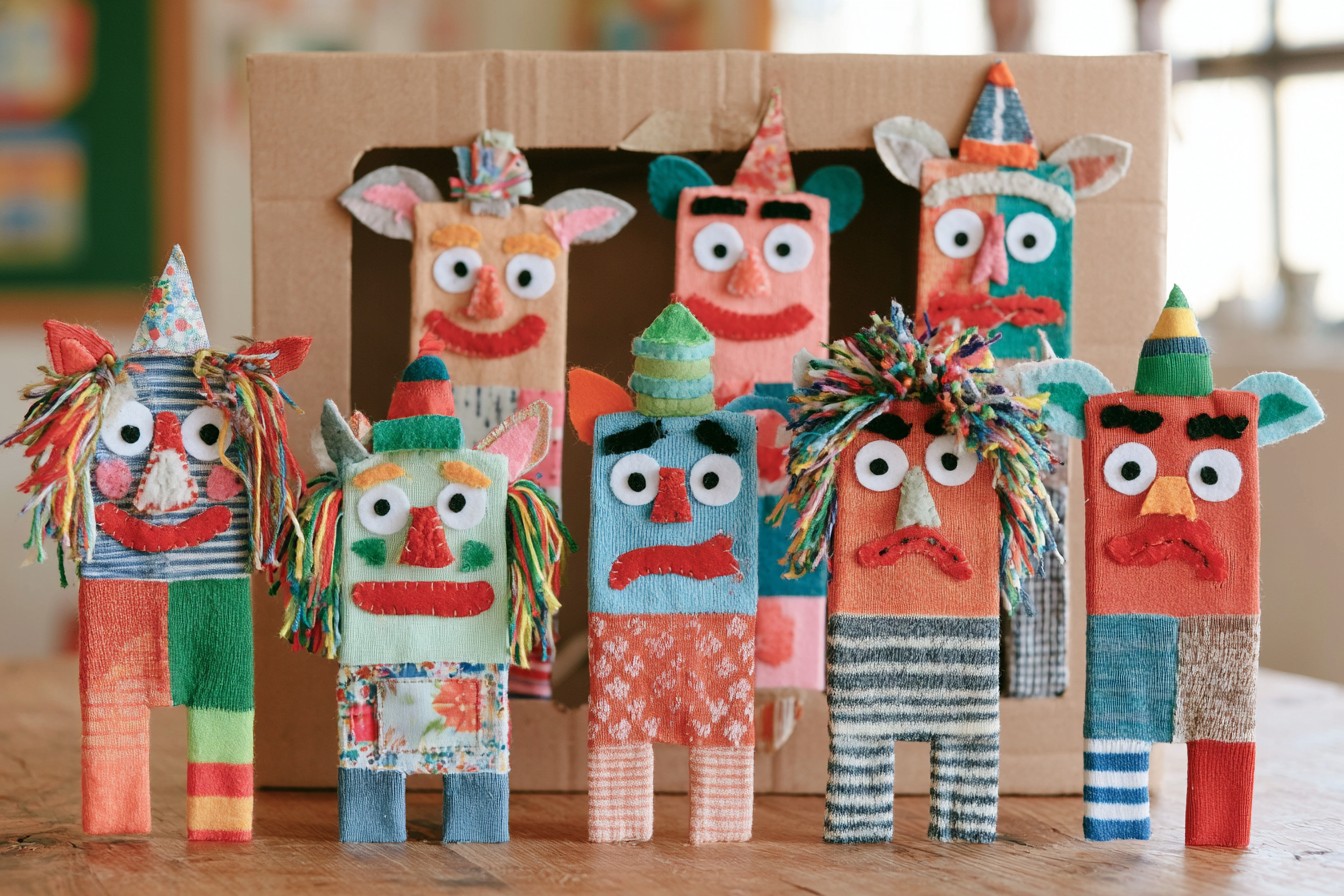
Clean mismatched socks, yarn, felt pieces, fabric glue, colored cardstock, markers, and large buttons can be transformed into expressive emotion puppets. Each child can choose an emotion such as happiness, surprise, sadness, excitement, worry, or anger. Cut mouths, eyebrows, eyes, and other facial details from felt, then attach them to the toe section of the sock. Yarn can be used for hair, while additional felt pieces can become ears, hats, or decorative clothing. If buttons are included, secure them carefully and reserve them for older children. Large felt eyes are a safer choice for younger participants. After completing the puppets, create a simple theater from a cardboard box and encourage children to perform short stories. They can demonstrate why each character feels a particular emotion and how the character might respond. This craft supports creativity, communication skills, emotional awareness, empathy, and confident self expression.
6. Weave a Colorful Decoration on a Cardboard Loom
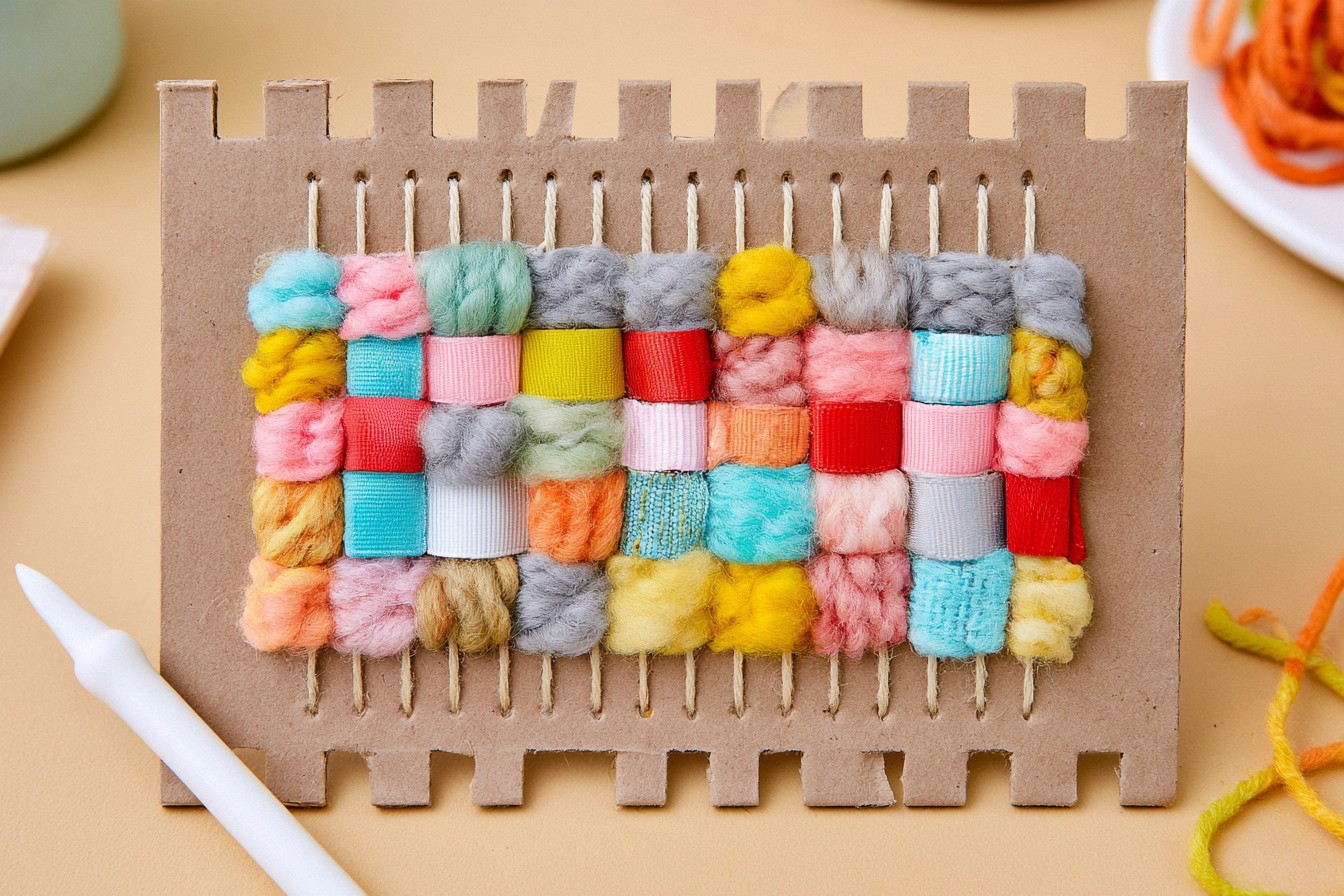
For this beginner weaving activity, gather thick cardboard, a ruler, child safe scissors, yarn, fabric strips, ribbon pieces, and a blunt plastic needle. Cut a rectangular piece of cardboard and make evenly spaced notches along its top and bottom edges. Wind a long piece of yarn vertically between the notches to create the foundation threads. Children can weave colorful yarn, ribbons, and strips cut from old fabric over and under these vertical strands. Encourage them to gently push each completed row downward so the woven surface remains neat and compact. Combining materials with different thicknesses will create an interesting texture. Once the design is complete, carefully remove the loops from the cardboard and tie the loose ends securely. A smooth wooden stick can be inserted across the top for displaying the finished piece. This craft develops patience, concentration, hand eye coordination, pattern recognition, and an understanding of color combinations.
7. Create Nature Texture Prints
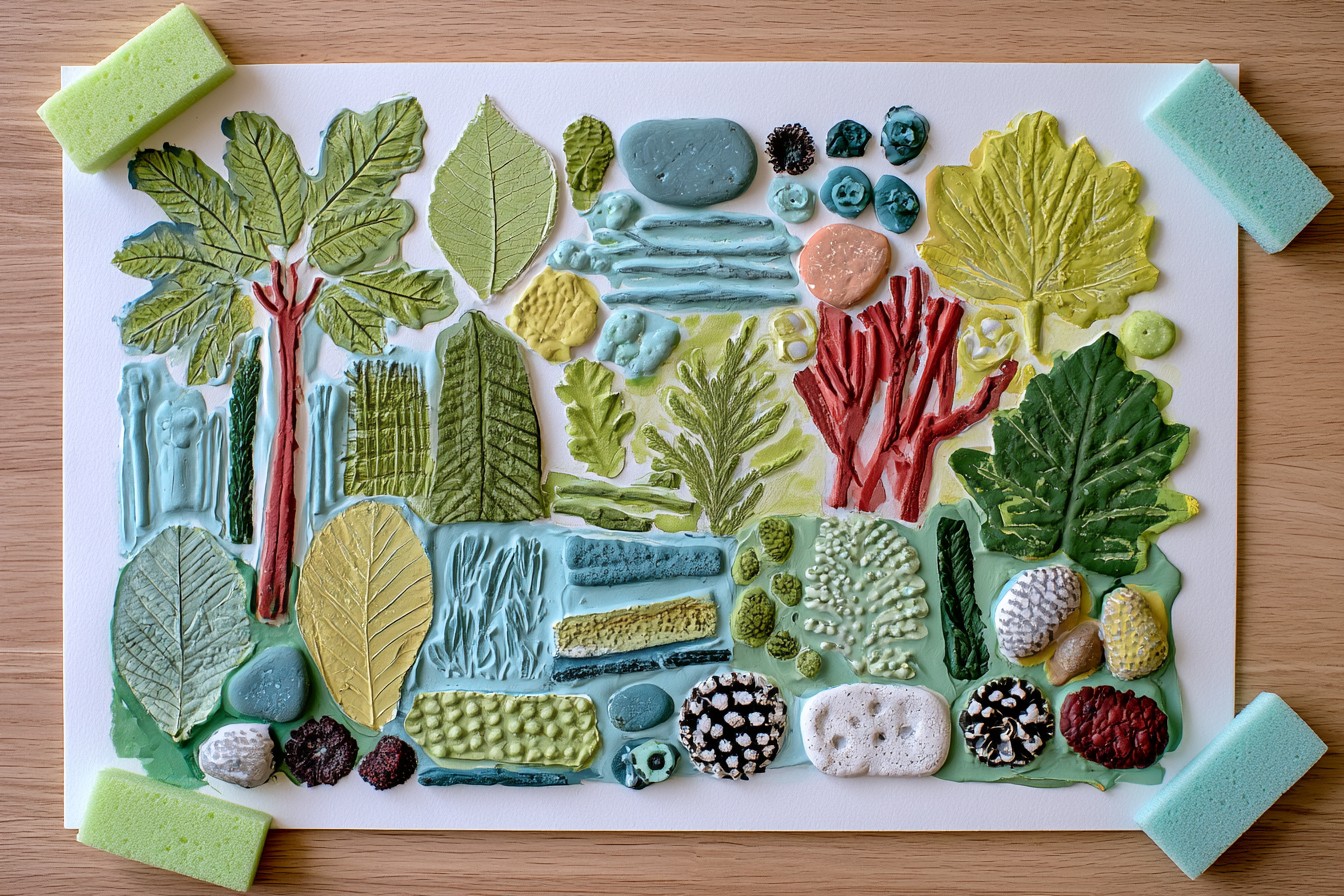
Strong leaves, small twigs, smooth stones, and pieces of pinecones collected during a garden or park walk can become creative printing tools. Additional materials include thick drawing paper, water based paint, brushes, paint sponges, and a washable table covering. Clean the natural objects and allow them to dry completely before beginning. Children can apply a thin layer of paint to the veined side of a leaf and press it firmly onto the paper. Twigs can be rolled through paint to create uneven lines, while pinecones can produce dotted and textured patterns. Layer several prints to design imaginary forests, animals, flowers, or abstract compositions. Avoid applying too much paint because a thick layer may hide the natural details. Children should also be taught not to touch unfamiliar plants, berries, or mushrooms. This activity encourages outdoor observation, texture recognition, creative experimentation, and respect for natural materials.
8. Build a Moving Ball Run from Cardboard Tubes
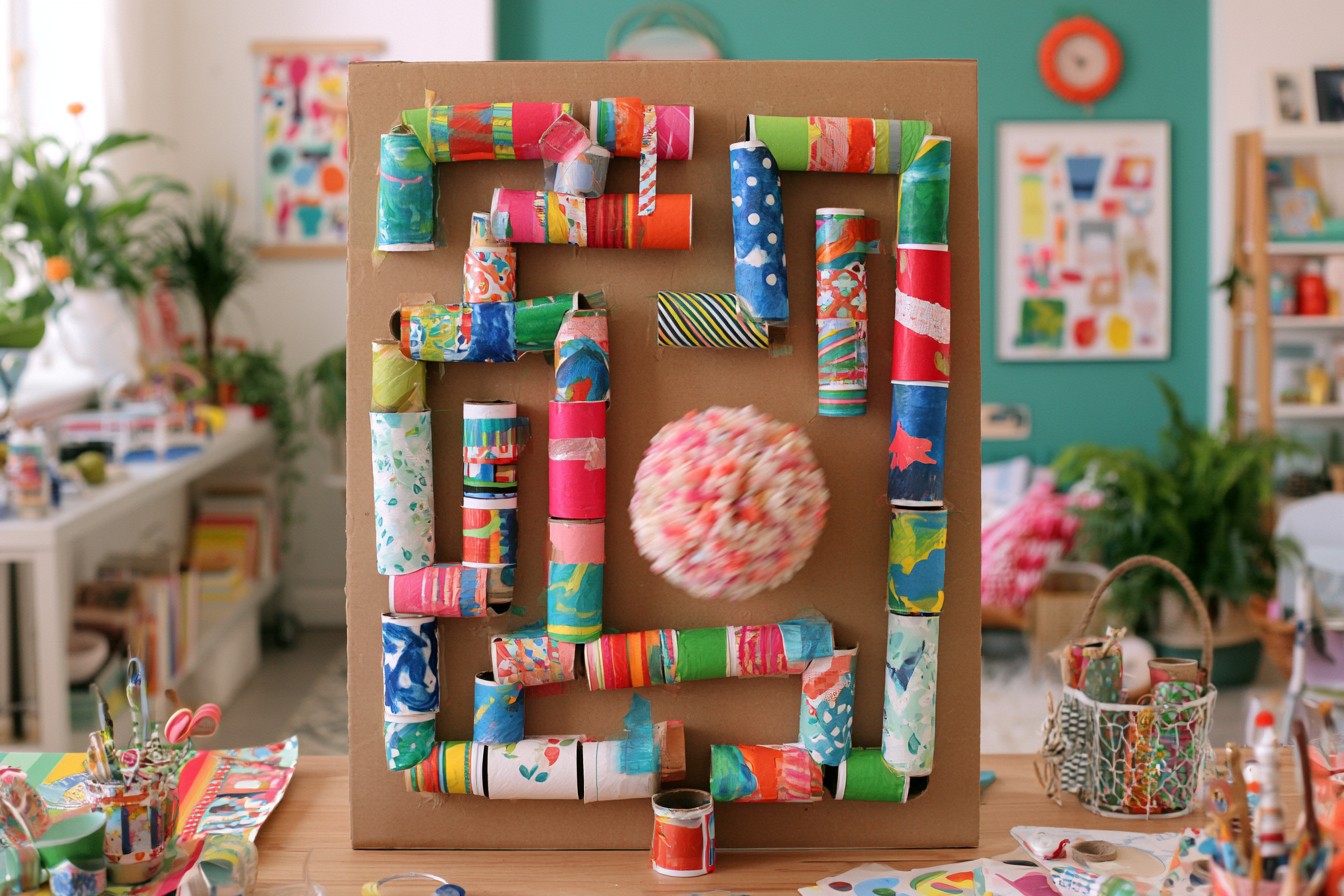
Paper towel tubes, toilet paper rolls, a large cardboard panel, paper tape, water based paint, scissors, and lightweight pom poms can be used to build an adjustable ball run. Cut the tubes into different lengths, then let children paint each piece in a different color or pattern. Once dry, position the tubes horizontally, vertically, and diagonally across the cardboard panel. Attach them with paper tape instead of permanent glue during the first stage. This allows children to test the track and change the angles when necessary. Drop a large pom pom into the top tube and try to guide it through every tunnel until it reaches a container at the bottom. If it becomes stuck, children must determine which section needs to be moved. Use large, soft pom poms instead of marbles or other small choking hazards. This interactive craft introduces problem solving, experimentation, gravity, motion, and simple engineering concepts.
9. Design a Layered Ocean Scene in a Paper Bag
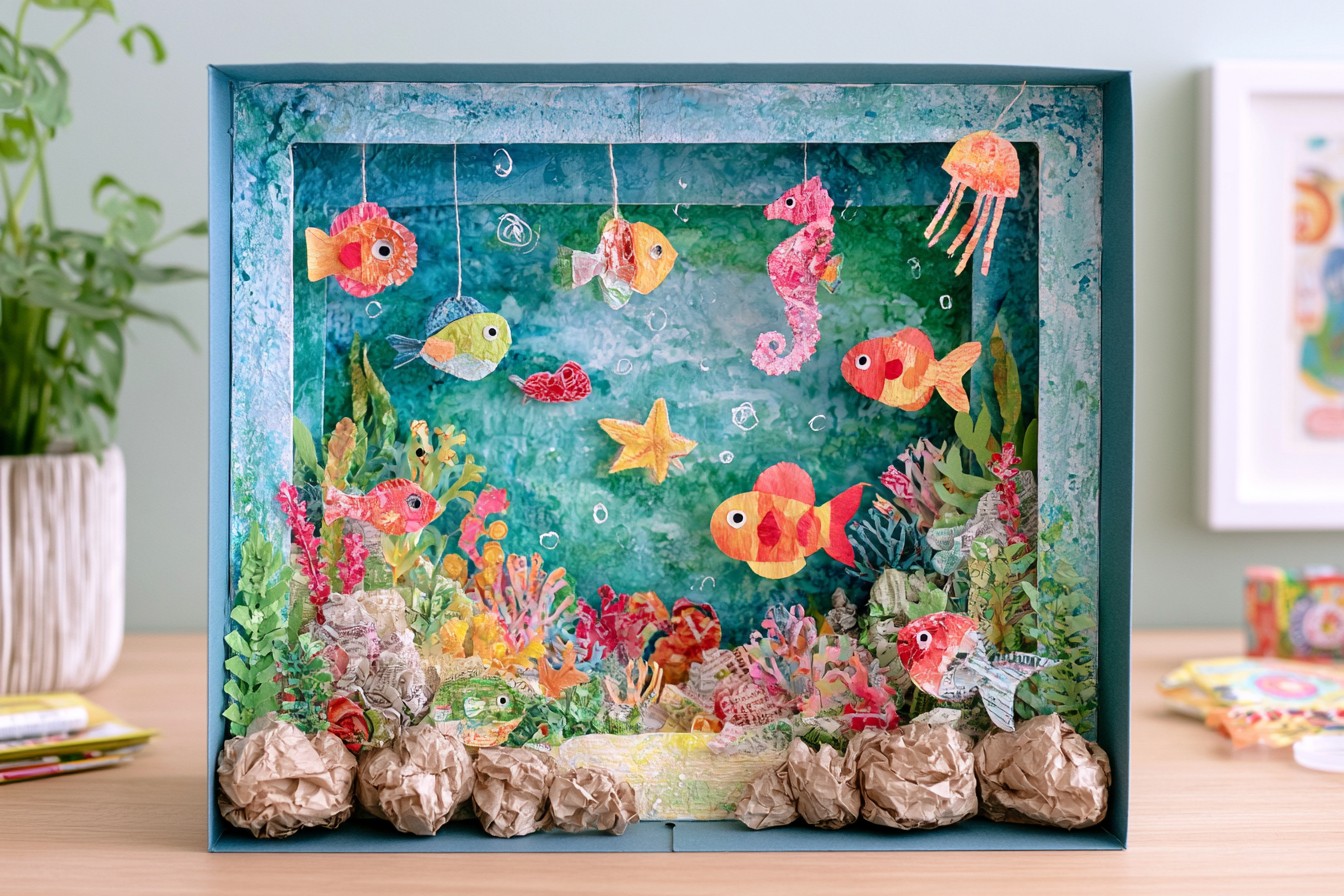
A blue paper bag or small cardboard box, colored paper, yarn, glue, child safe scissors, paint, and clean packaging materials can become a three dimensional ocean scene. Begin by asking an adult to cut a large viewing window into the front. Paint the inside with several shades of blue to create the background. Children can cut out fish, starfish, seahorses, jellyfish, and coral from cardstock. Hang some of the sea creatures from the top with yarn so they appear to be swimming. Add crumpled brown paper rocks to the bottom and make sea plants from clean paper packaging. Positioning the elements at different distances creates depth and makes the underwater scene more realistic. Children may study real ocean animals for inspiration or invent completely imaginary species. This craft provides an enjoyable opportunity to discuss marine habitats, ocean protection, color, depth, and the creative reuse of household materials.
10. Make a Story Puzzle from Recycled Cardboard
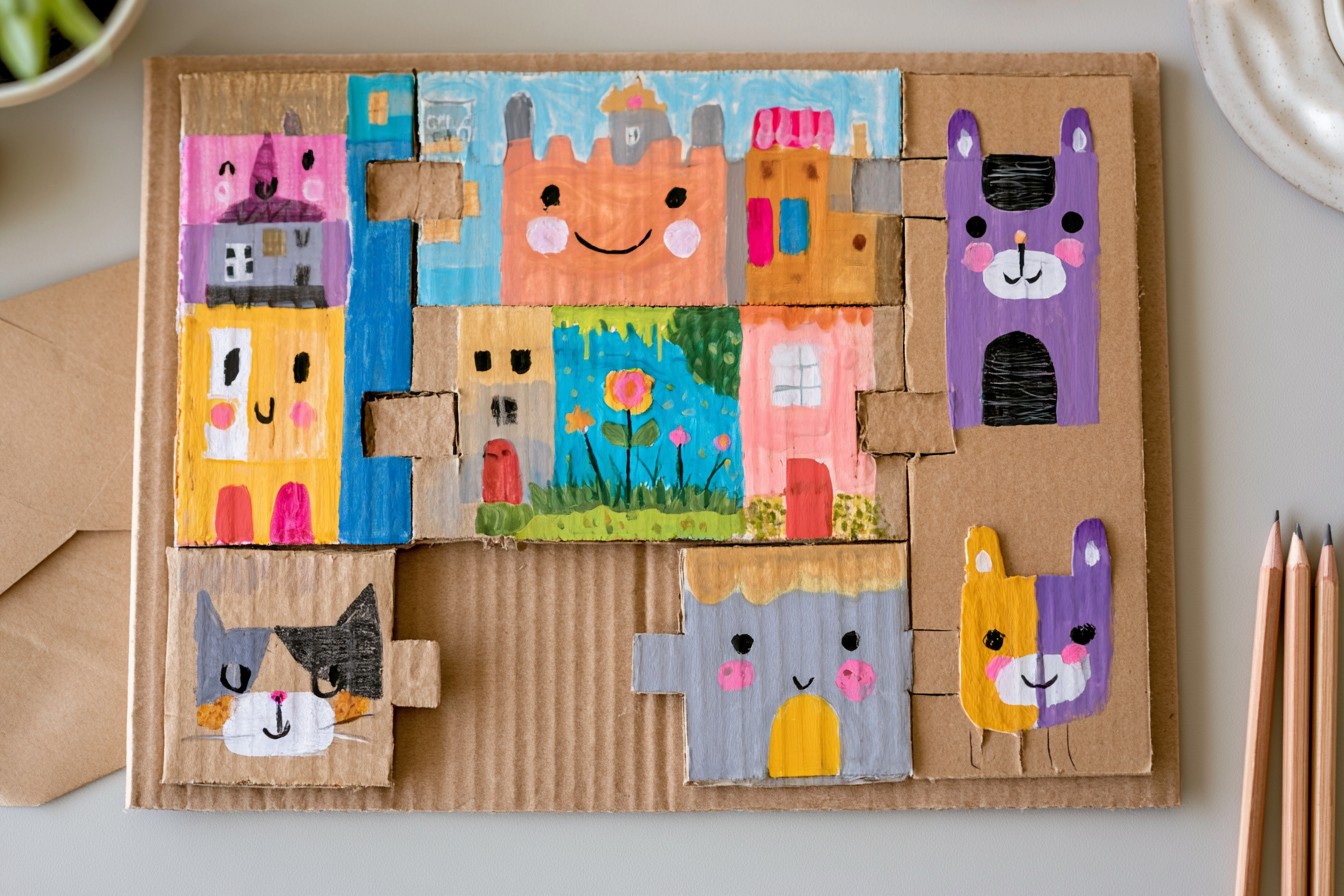
Thick packaging cardboard, a pencil, water based paint, markers, a ruler, scissors, and a storage envelope are all that is needed to make a personalized story puzzle. Draw a large, easy to recognize scene on the cardboard. It could feature a space journey, a hidden garden, a friendly town, or a family of imaginary animals. After the child finishes coloring the picture, an adult can draw six to twelve large puzzle pieces on the back and carefully cut them out. Adjust the number and complexity of the pieces according to the child’s age and ability. Once the puzzle has been assembled, ask the child to describe what is happening in the completed picture. Different characters can also be drawn on individual pieces so a new story develops with each game. Make sure every edge is smooth and free from sharp cardboard points. This project strengthens visual memory, sequencing, problem solving, and storytelling skills.
11. Paint a Set of Storytelling Stones
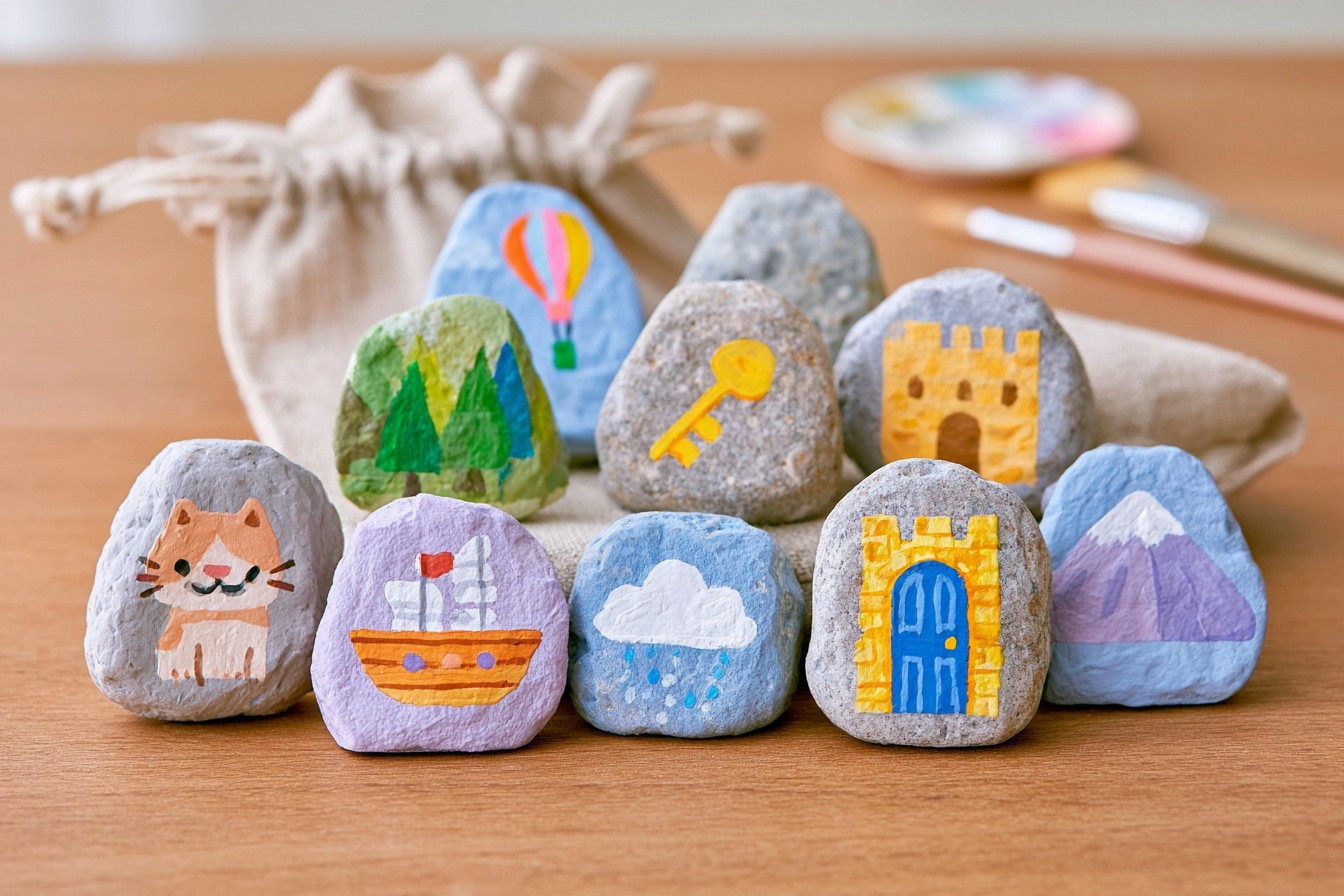
Smooth, medium sized stones, water based acrylic paint, thin and thick brushes, paint markers, a mixing palette, and a protective apron are the main supplies for this creative storytelling activity. Wash the stones carefully and allow them to dry completely. Paint a different character, object, place, or weather symbol on each stone. Possible designs include a cat, flying balloon, forest, key, ship, castle, mountain, rain cloud, or mysterious door. After the paint dries, place all the stones inside a fabric bag. The child can randomly select three or four stones and create a story that connects all the pictures. As new stones are painted, the number of possible stories will continue to grow. Choose stones that are too large to swallow and make sure they have no sharp edges. Adult supervision is necessary for younger children. This activity combines painting, vocabulary building, creative thinking, sequencing, and imaginative storytelling.
MORE IDEAS


Share
What's Your Reaction?
 Like
0
Like
0
 Dislike
0
Dislike
0
 Love
0
Love
0
 Funny
0
Funny
0
 Angry
0
Angry
0
 Sad
0
Sad
0
 Wow
0
Wow
0