19 Broken Pot Garden Projects for Creative Outdoor Upcycling

Broken pots do not have to end up in the trash. With a little imagination, cracked terracotta, chipped ceramic planters, and fragmented containers can become some of the most interesting features in a garden. Their irregular edges and weathered surfaces work especially well in rustic, cottage, Mediterranean, and natural landscapes. Broken pots can be reused as miniature planters, edging, drainage elements, herb markers, decorative layers, or creative focal points. Before using any damaged container, smooth sharp edges and make sure pieces are stable. The ideas below show how to turn imperfect pots into useful garden projects with practical DIY methods and plenty of decorative potential.
1. Create a Tiered Succulent Garden
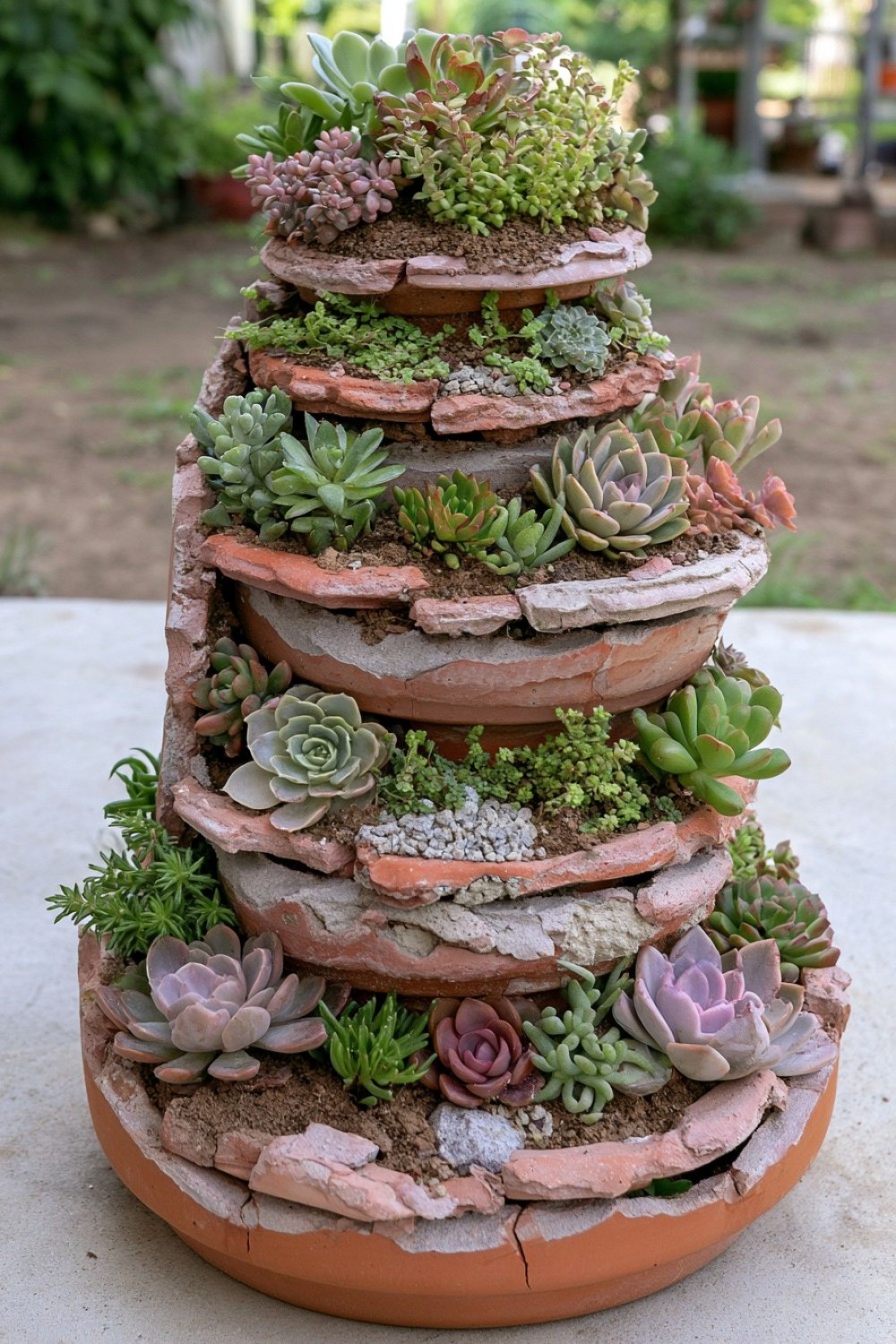
A large cracked terracotta pot can become the foundation for a layered succulent display. Start by placing the broken pot on its side or upright, depending on how much of the structure remains. Fill the bottom with well draining soil, then use larger broken pieces to form small terraces inside. Add compact succulents such as echeveria, sedum, haworthia, or crassula between each level. Smaller fragments can work as retaining walls around the plants. Use gravel or fine stones to fill gaps and keep soil from spilling out. This arrangement works beautifully on patios, garden steps, or beside an outdoor seating area.
2. Turn Broken Pot Pieces into Garden Edging
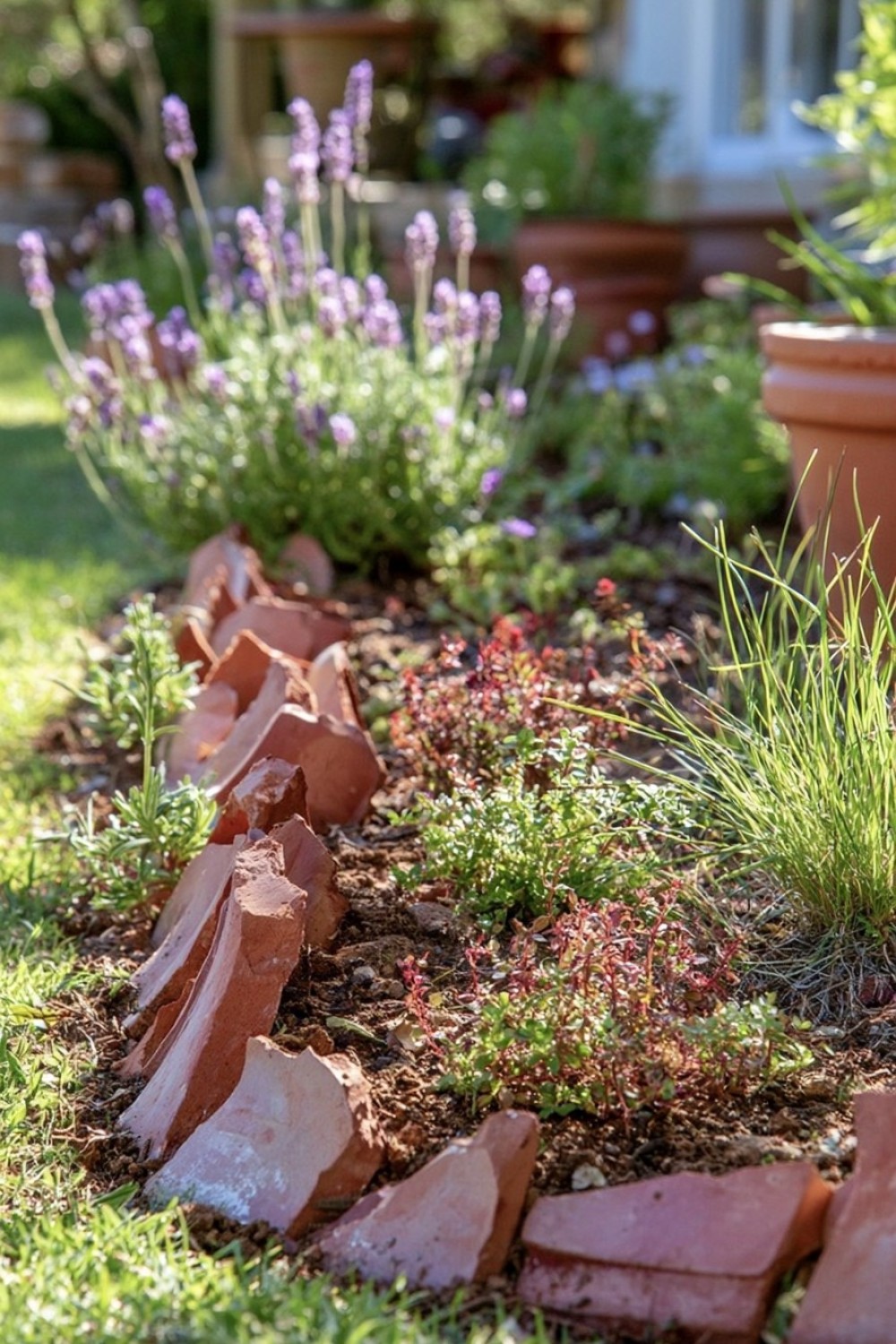
Large terracotta fragments can be reused as decorative edging around flower beds and pathways. Select pieces with broad curved surfaces and push them vertically into the soil, leaving the upper edges visible. Arrange them in a loose repeating pattern instead of trying to make every piece perfectly equal. The natural clay color pairs especially well with herbs, ornamental grasses, lavender, and cottage garden flowers. Make sure each fragment sits deeply enough in the ground to remain stable. If any edges feel sharp, sand them before installation. This simple project helps separate planting areas while giving discarded pottery a useful second life in the landscape.
3. Build a Broken Pot Herb Planter
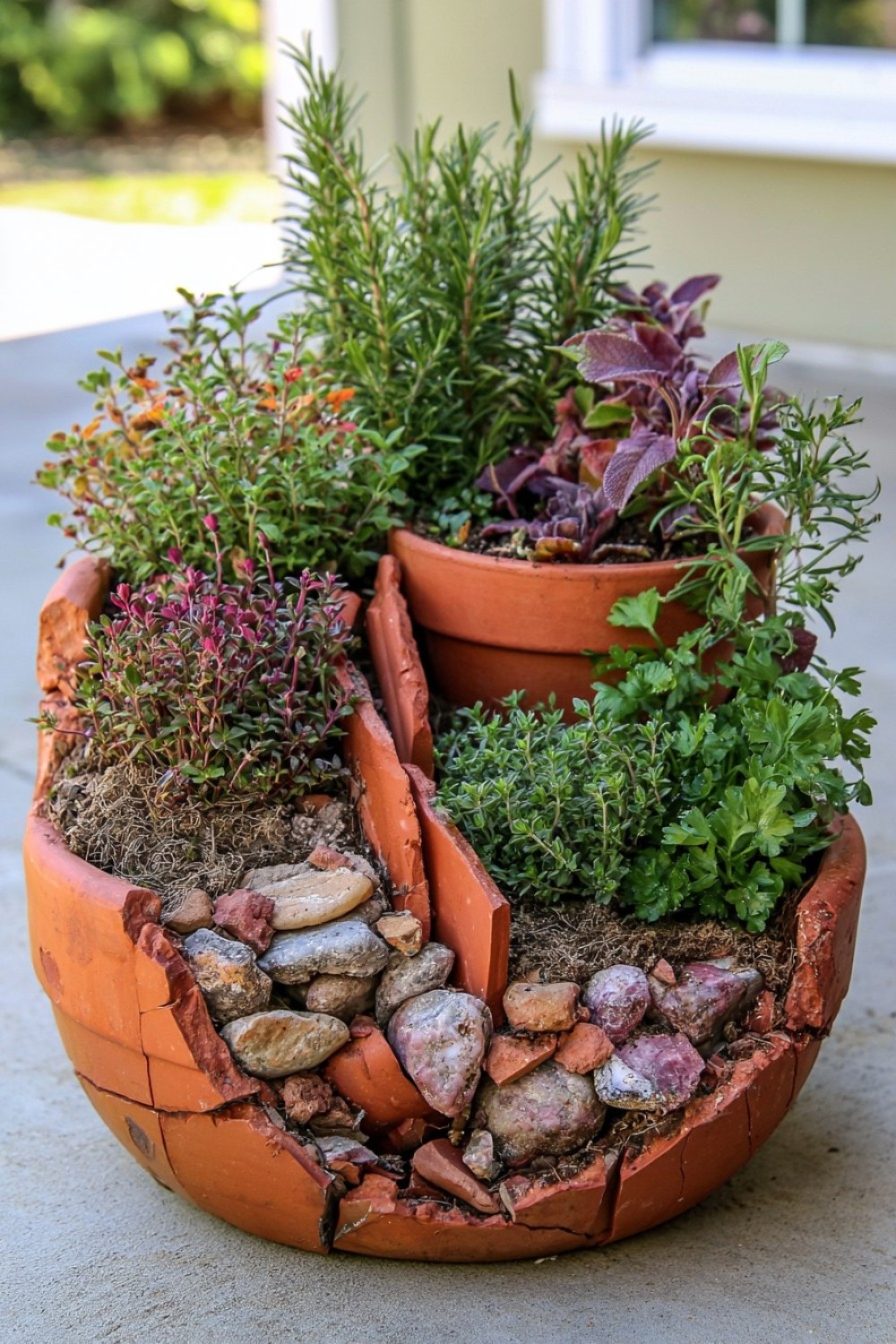
Cracked containers are ideal for creating informal herb planters because many herbs grow well in compact spaces. Use a partially broken terracotta pot and fill it with a light, well draining potting mix. Place taller herbs such as rosemary or sage toward the back, then add thyme, oregano, or parsley closer to the damaged opening. Broken pottery pieces can be inserted vertically to divide different herbs or help retain soil. Position the planter near a kitchen door or patio so fresh herbs remain easy to access. This project is especially practical when you want to grow several varieties without using multiple separate containers.
4. Design a Miniature Fairy Style Garden
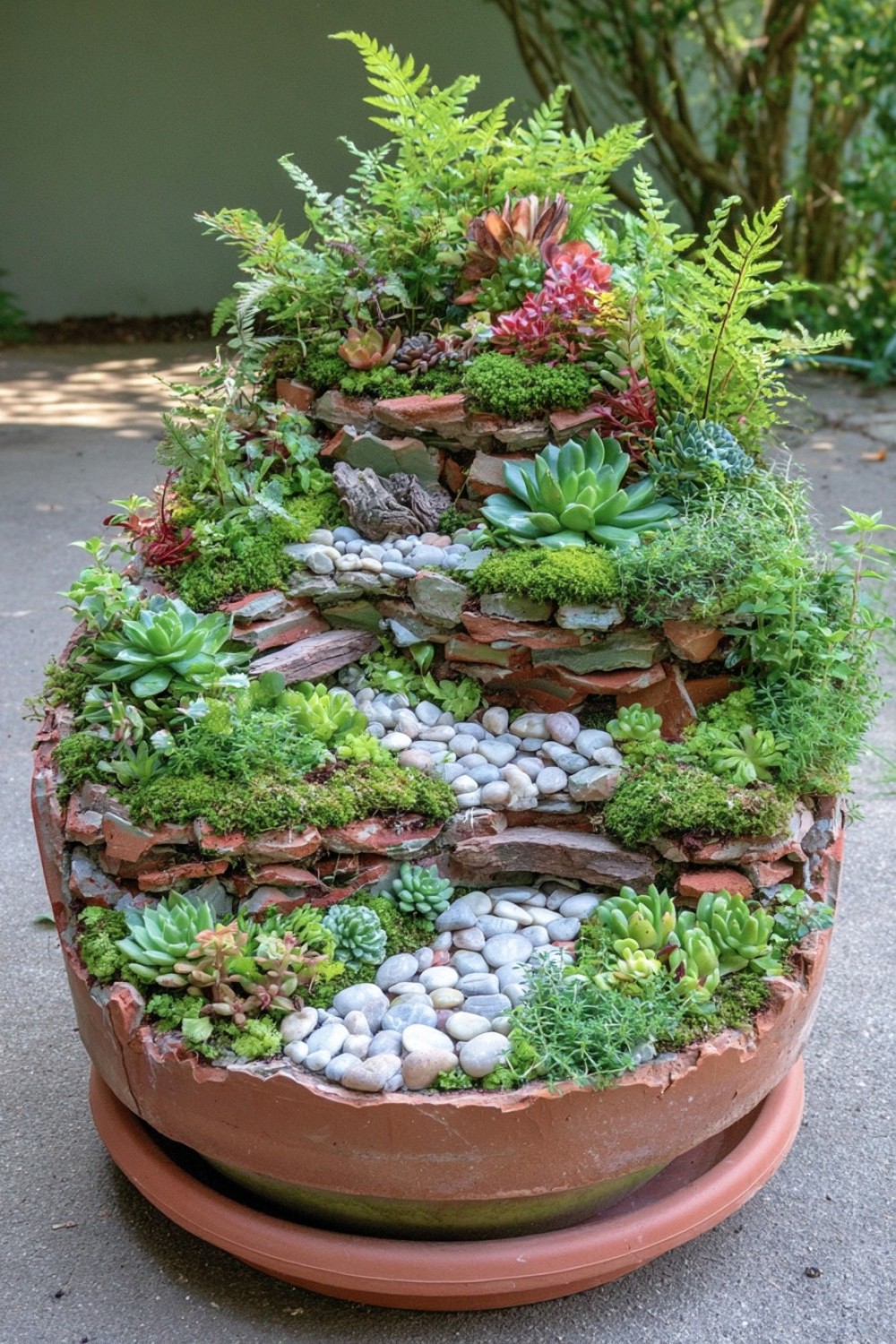
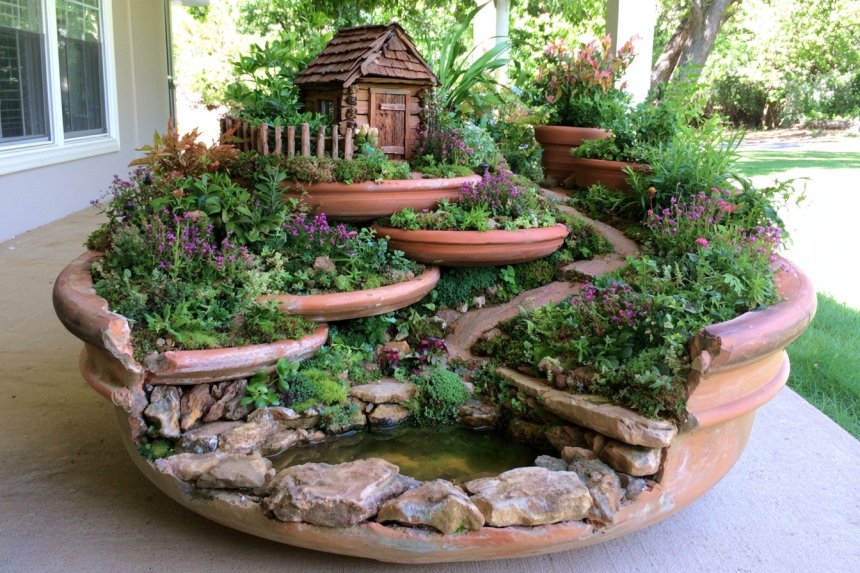
A damaged pot can be transformed into a miniature garden scene with layered soil, tiny pathways, and compact plants. Begin by arranging broken fragments inside the main pot to create terraces or small retaining walls. Add moss, miniature ferns, creeping thyme, or low growing succulents. Use pebbles to create a small winding path through the arrangement. Tiny handmade wooden steps or natural bark pieces can add structure without overwhelming the design. Keep the scale consistent so the display feels intentional. Place the finished pot on a shaded patio, porch step, or garden table where the details can be appreciated at close range.
5. Make a Rustic Strawberry Planter
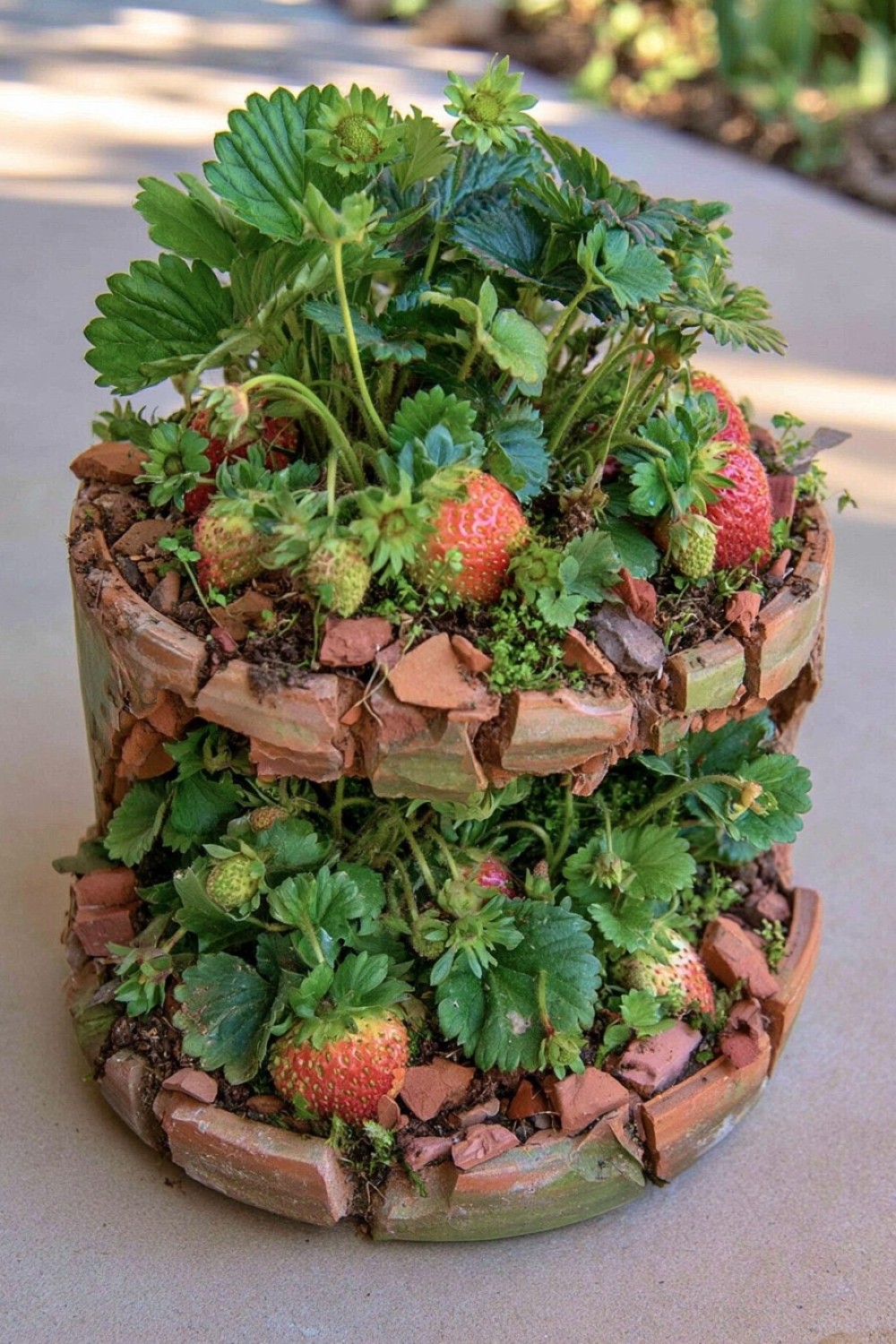
A large broken pot can become a practical strawberry planter when the damaged side is used as an extra planting opening. Fill the container gradually with rich but well draining soil and position strawberry plants around the top and through larger cracks. Use pottery shards to support soil around openings so it does not fall out. Place the pot in a sunny location where plants receive enough light for fruit production. Strawberries will naturally cascade over the edges, creating an attractive layered effect. This approach is especially useful for small patios and balconies because several plants can grow in one reused container without requiring much floor space.
6. Use Pot Fragments as Plant Markers
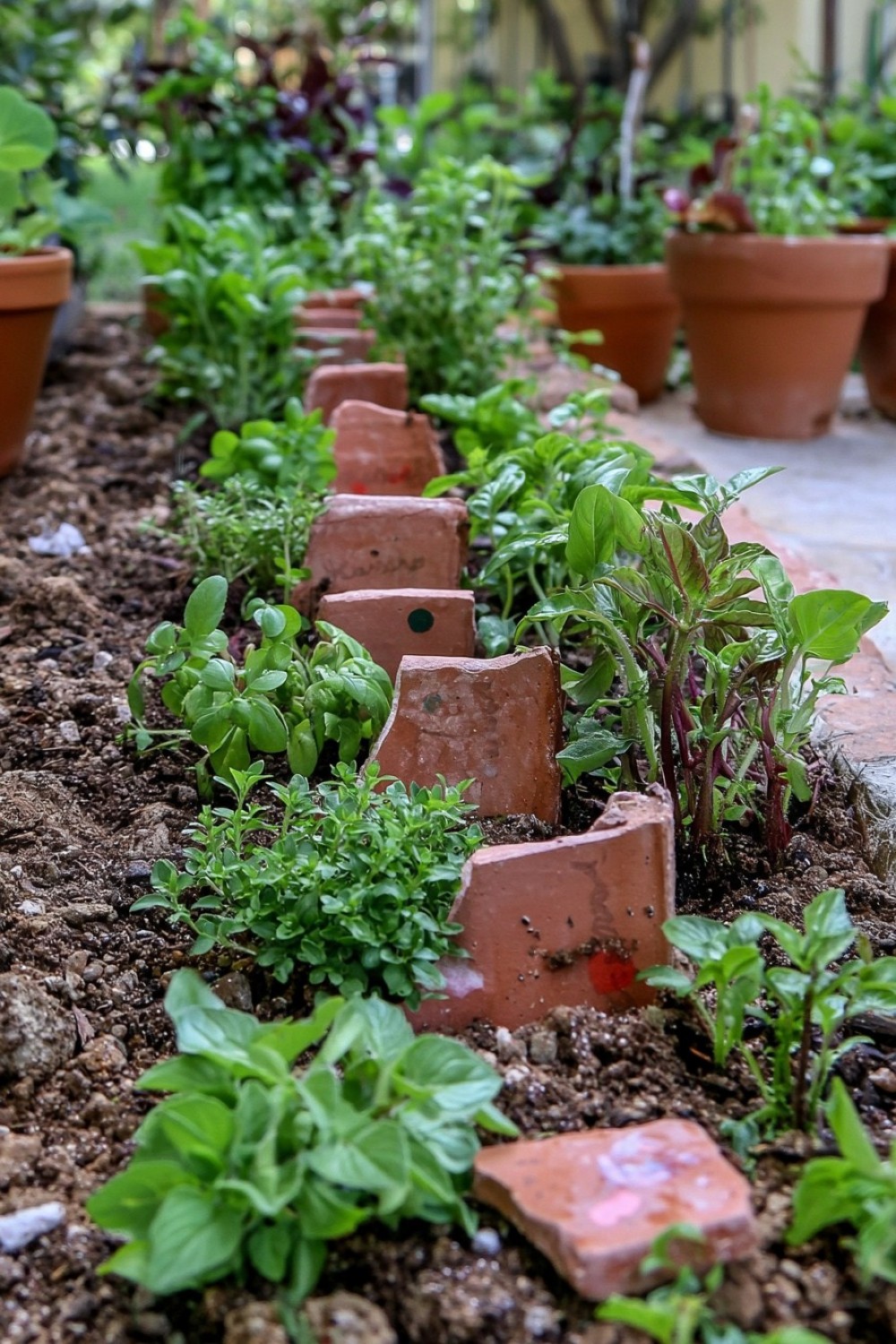
Smaller pottery shards can become durable garden labels instead of being discarded. Choose flat fragments large enough to stand upright and smooth any sharp edges. Write plant names using a waterproof outdoor marker or paint pen, then push each piece into the soil beside herbs, vegetables, or flowers. You can also leave them unpainted and use simple symbols or color dots to organize different sections. Terracotta pieces naturally blend into garden beds and weather attractively over time. This DIY idea works especially well in herb gardens, raised beds, seed starting areas, and cottage style landscapes where natural materials suit the overall appearance.
7. Create a Cascading Flower Display
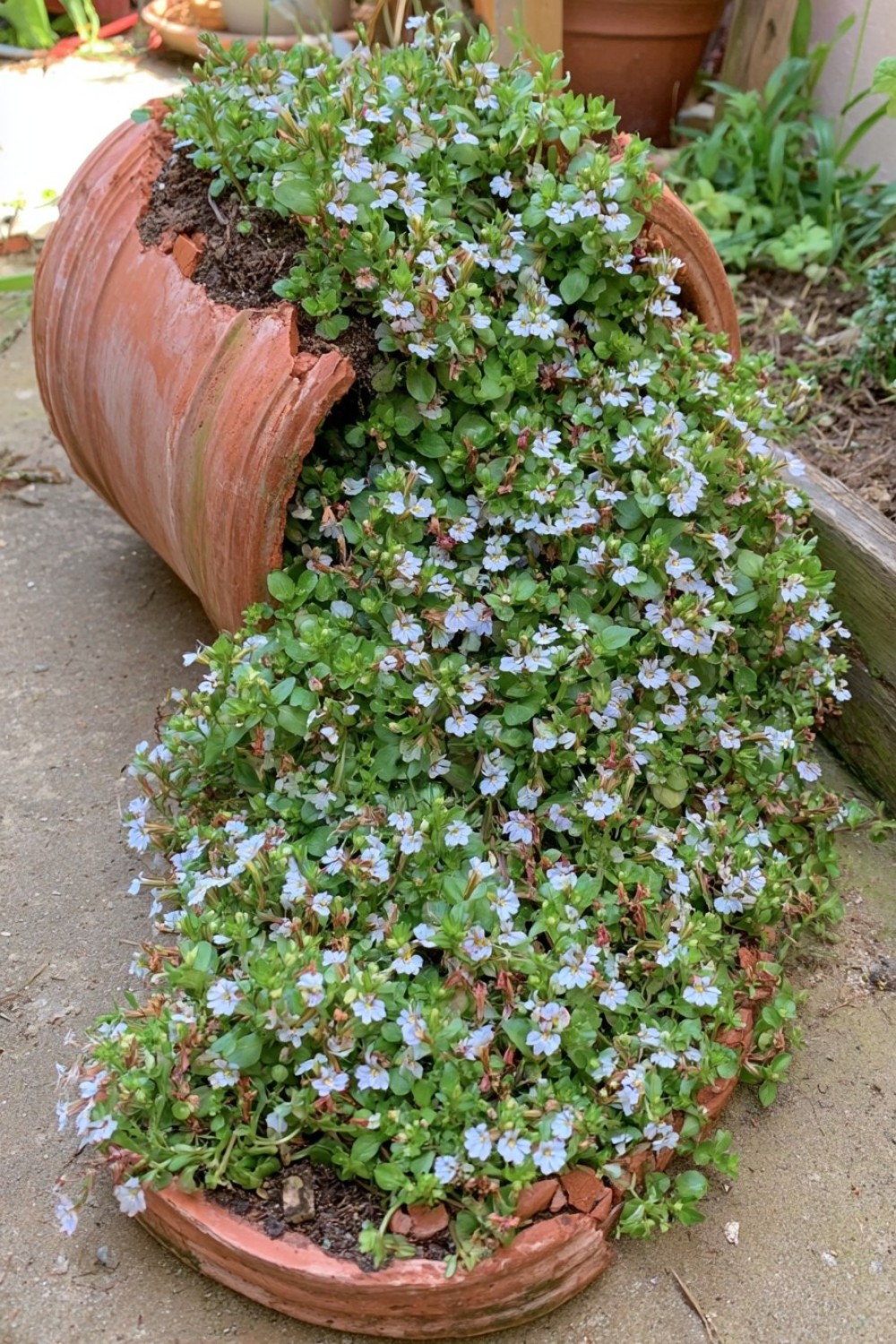
A broken pot placed on its side can give the impression that flowers are spilling naturally into the garden. Position the pot at the edge of a flower bed, partially burying it so it looks settled into the landscape. Fill the inside with soil and plant trailing flowers such as petunias, lobelia, alyssum, or creeping phlox. Continue planting outward from the opening to create a flowing trail of color. Choose one dominant flower variety for a stronger visual effect or blend two complementary shades. This arrangement works well beside pathways, under garden trees, or in open lawn areas that need a playful focal point.
8. Build a Rock Garden with Broken Pots
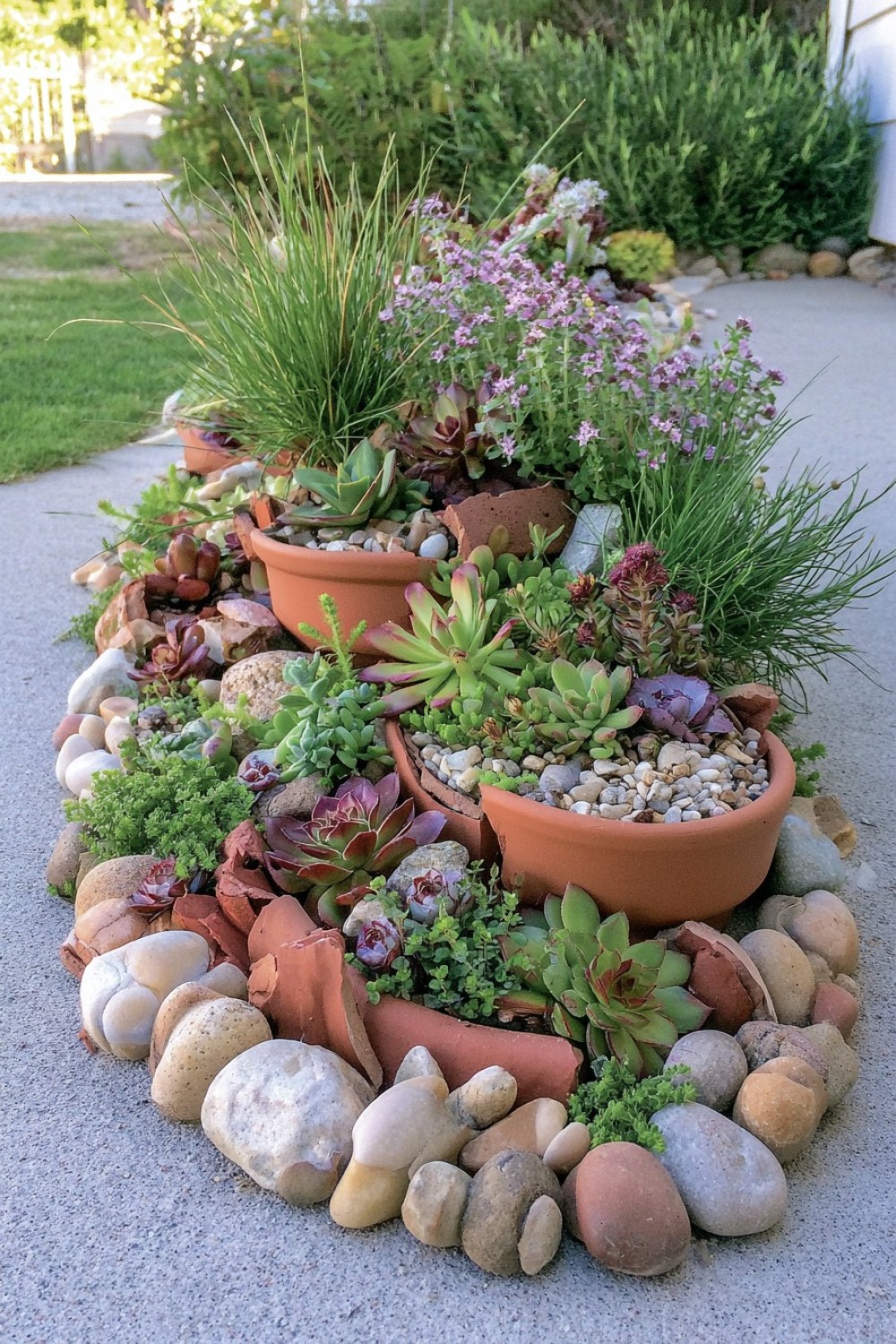
Broken terracotta can blend beautifully with stone in a compact rock garden. Arrange several pot fragments between gravel, larger stones, and drought tolerant plants such as sedum, thyme, sempervivum, or small ornamental grasses. Allow some pieces to remain partially buried so they appear naturally weathered rather than deliberately placed. Larger broken pots can also act as miniature planting pockets within the arrangement. Use different heights and textures to create depth, but avoid overcrowding the area. This style is particularly suitable for dry garden corners, sunny slopes, patio edges, and spaces where low maintenance planting is preferred.
9. Create a Vertical Pot Fragment Wall
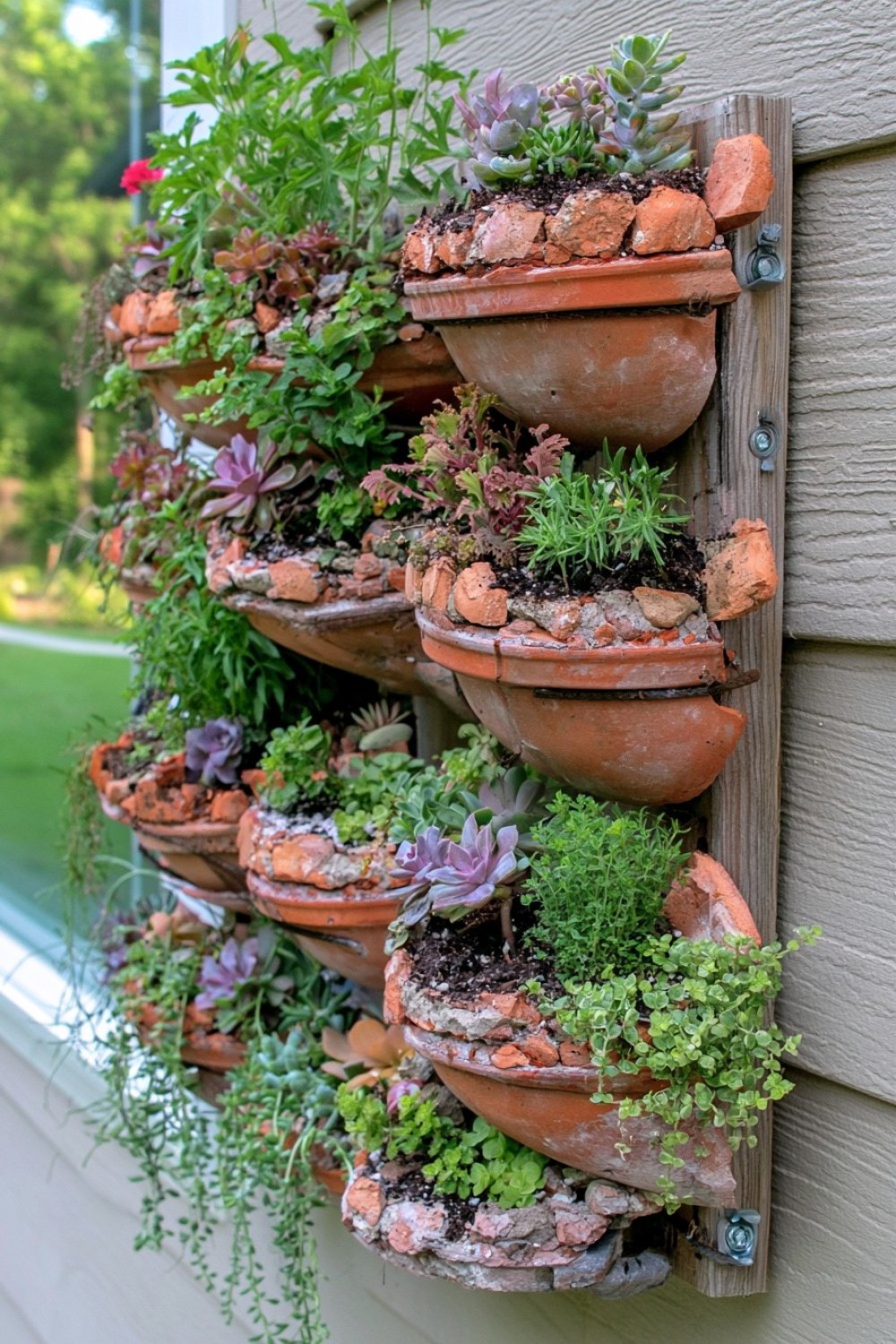
Large curved pottery pieces can be attached to a sturdy wooden or masonry backing to create small wall mounted planting pockets. Select fragments deep enough to hold a limited amount of soil, then drill or secure them using appropriate outdoor hardware. Fill each pocket with compact herbs, succulents, or trailing plants that do not require deep root space. Space the pieces unevenly for a relaxed artistic appearance. Make sure drainage water can escape easily and avoid placing heavy soil into fragile fragments. This project can transform an empty garden wall, courtyard corner, or balcony partition into a creative vertical display using materials that would otherwise be wasted.
10. Make a Broken Pot Watering Station for Birds
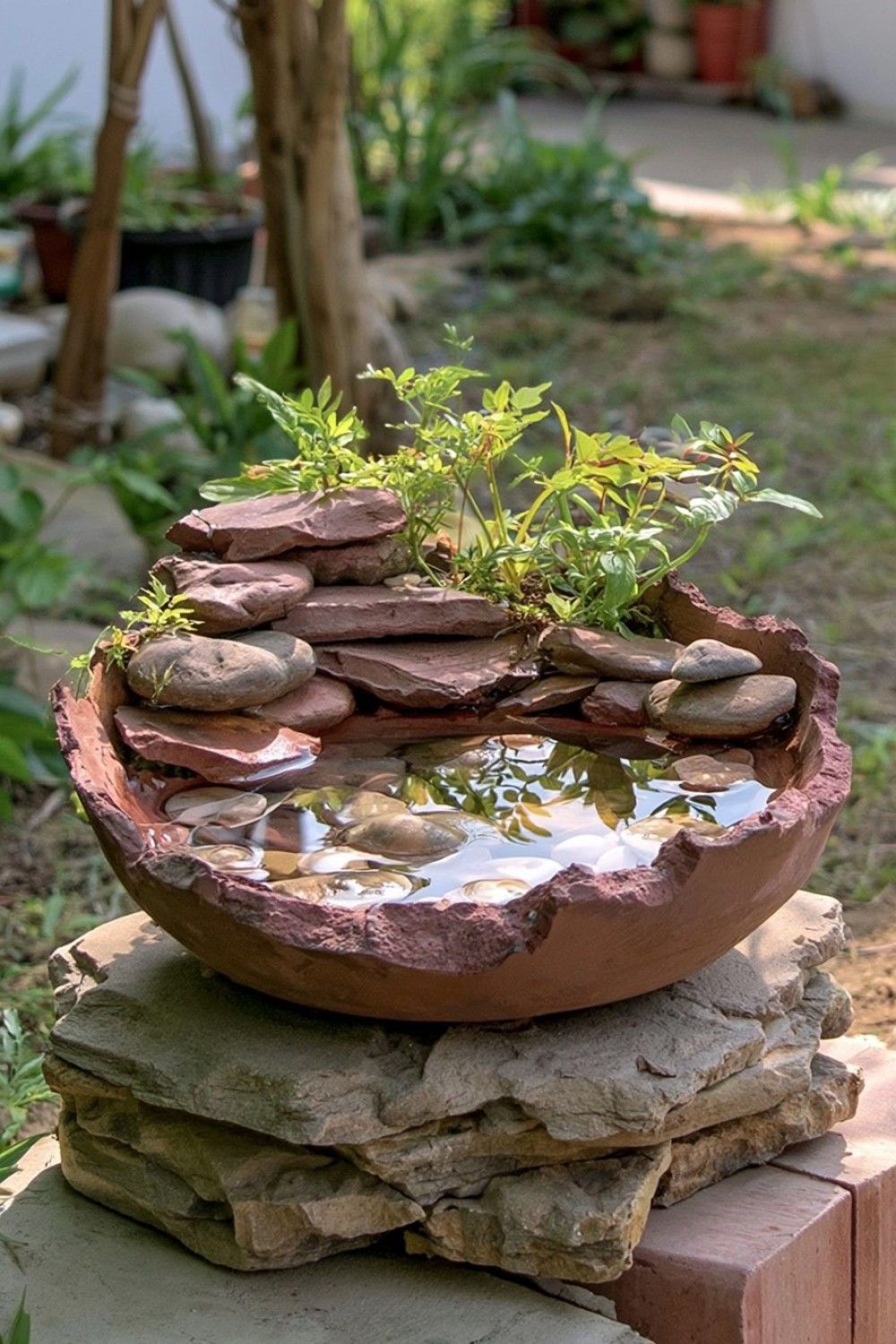
A wide shallow pot section can be reused as a small water dish for birds and beneficial insects. Choose a stable fragment with a broad base and no sharp edges, then place it on a level stone or brick platform. Add only a shallow amount of clean water and include a few smooth pebbles so smaller insects have safe landing points. Position the dish near shrubs or planting areas where birds already visit. Refresh the water regularly to keep the setup clean. This project is especially useful in wildlife friendly gardens and provides a practical function while reusing pottery in a simple, unobtrusive way.
11. Turn Pot Shards into Mosaic Stepping Stones
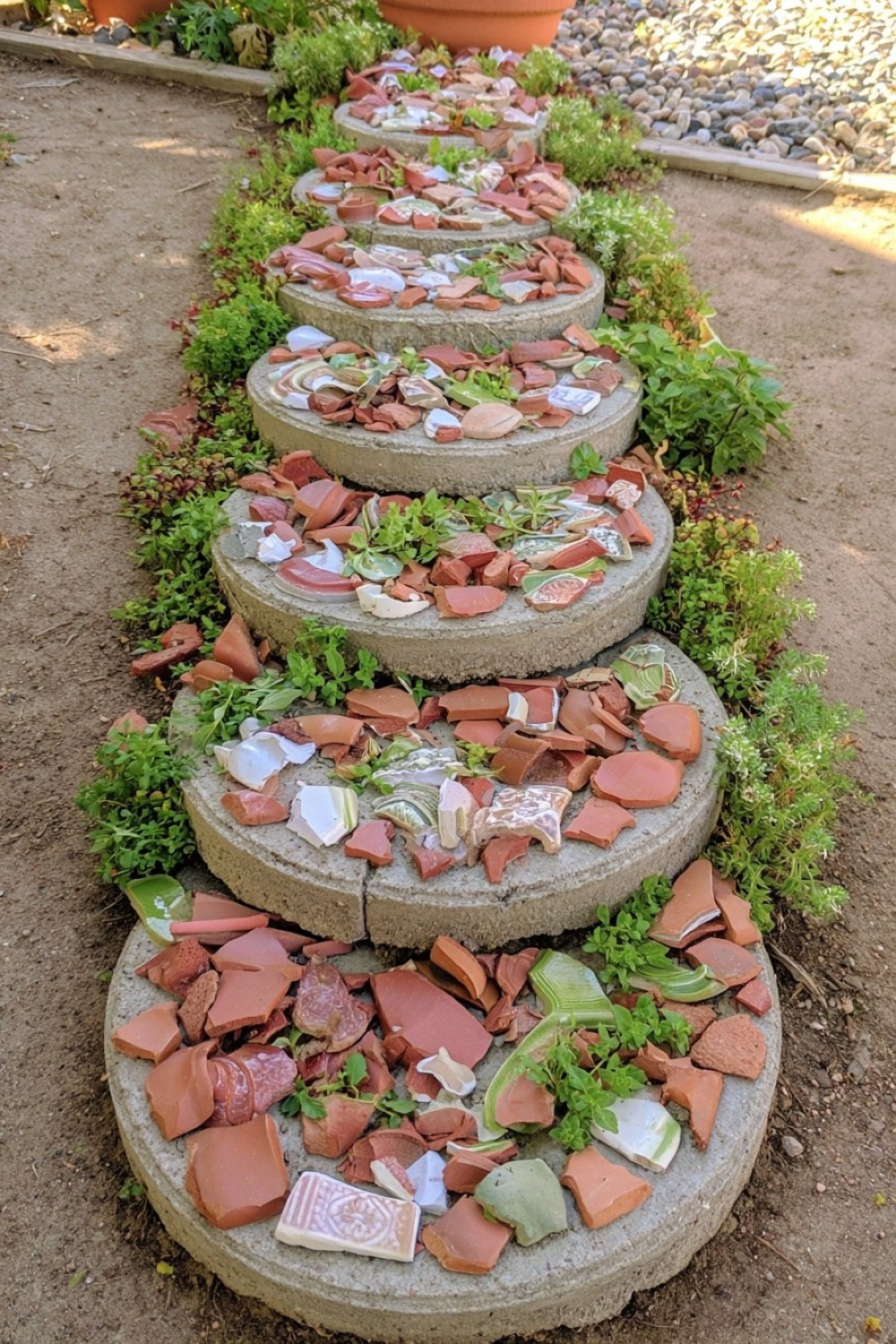
Colorful ceramic fragments can be embedded into handmade stepping stones for a decorative garden path. Begin with a concrete stepping stone mold and arrange pottery pieces face down in a pattern before adding the concrete mixture. Alternatively, press fragments into the surface while the concrete is still workable. Keep sharp edges completely embedded and leave enough space between pieces for structural strength. Once cured, clean the surface carefully and place the stones on a compacted base. This technique works particularly well with patterned ceramic pieces, glazed pots, and colorful planters that are too damaged to reuse whole. Each stone can become a unique piece of garden art.
12. Create a Decorative Drainage Layer
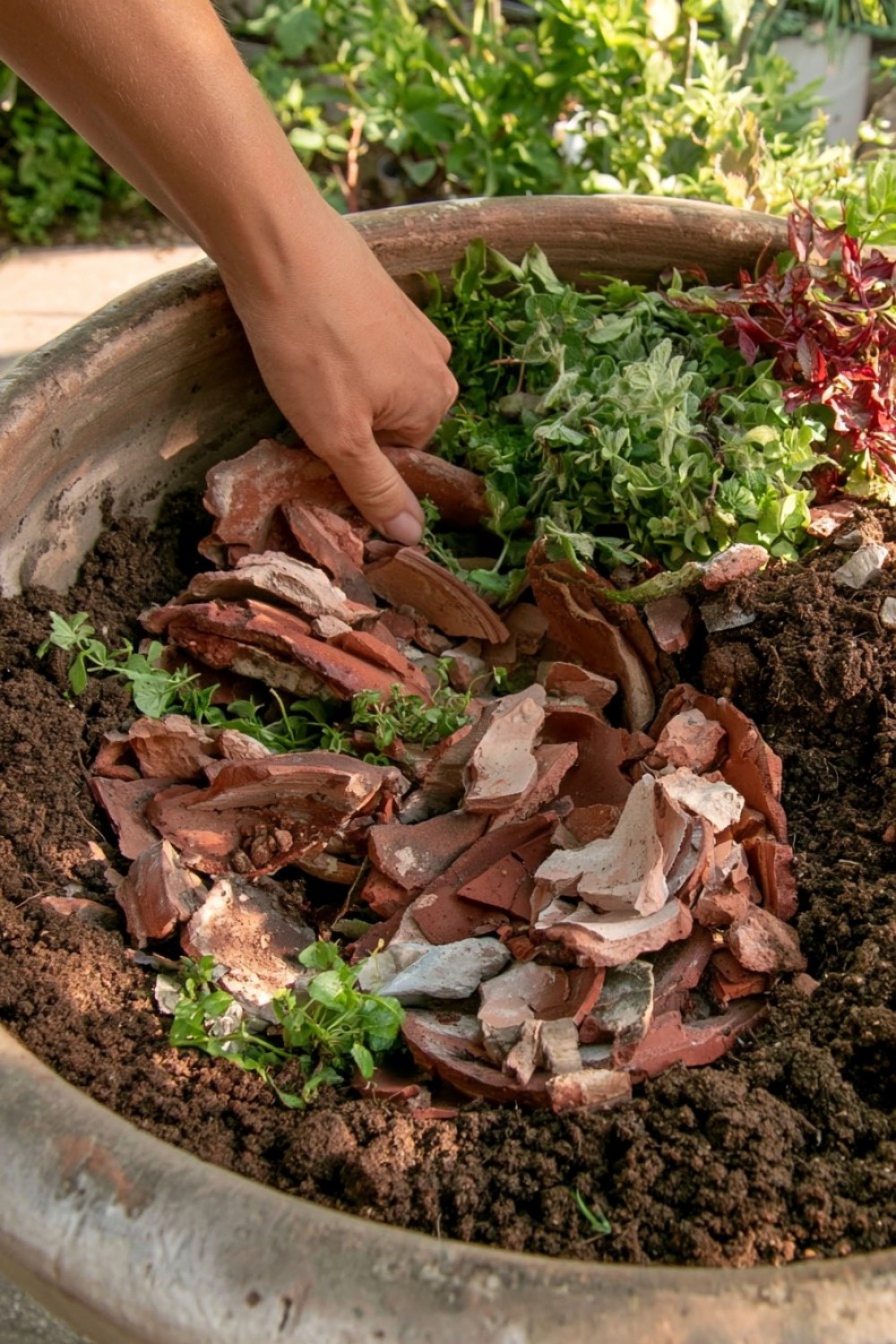
Broken terracotta pieces can be useful inside larger planters as part of a drainage system. Place several curved fragments over the drainage hole before adding potting mix, making sure water can still escape freely. This helps prevent soil from washing out while keeping the opening functional. Larger shards can also create small air pockets at the base of very deep containers. Avoid filling the entire bottom with excessive pottery because too much material can reduce growing space. This practical reuse method is ideal for oversized patio containers, herb planters, and seasonal flower pots. It gives broken pieces a hidden but valuable purpose in everyday gardening.
13. Build a Mini Alpine Garden
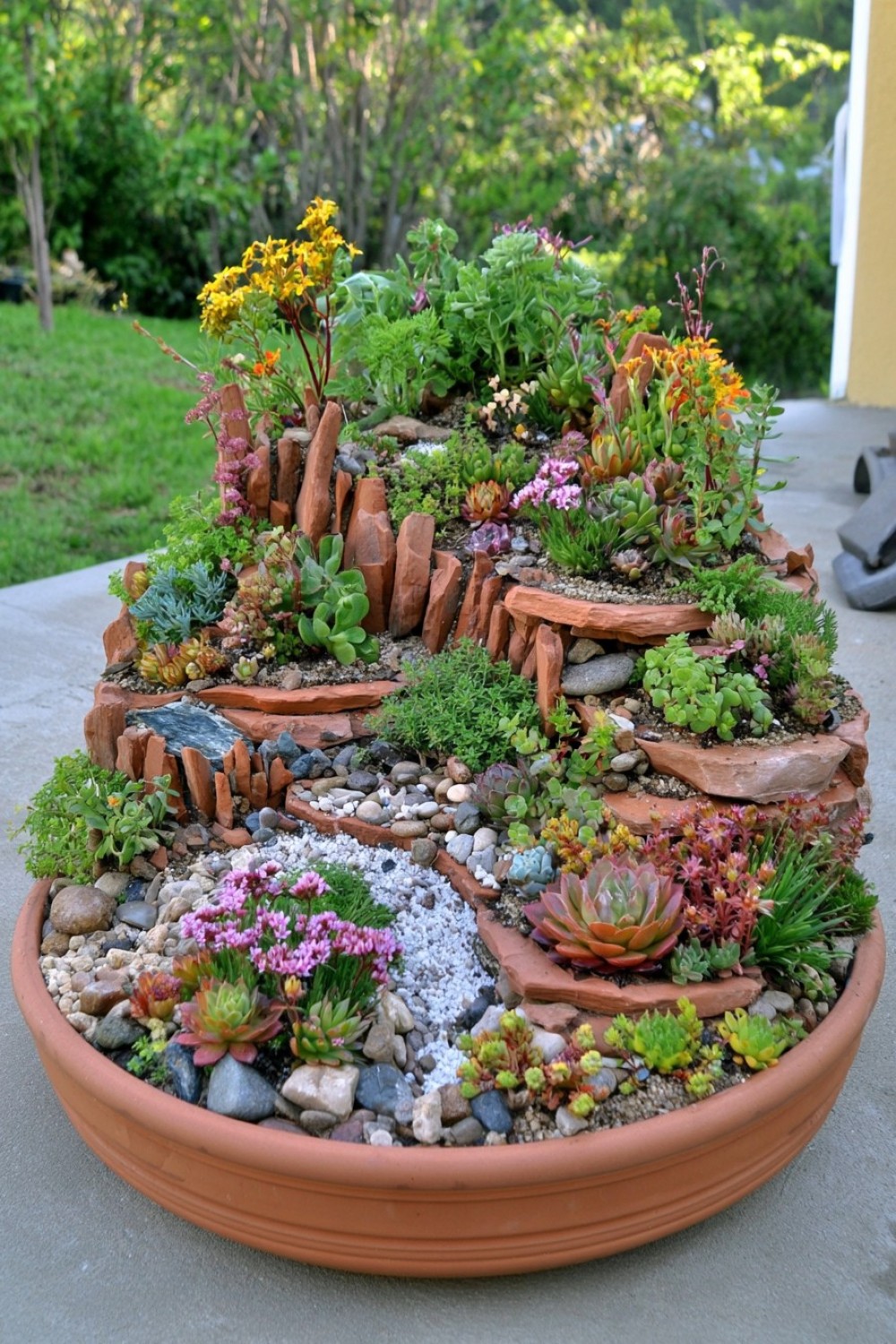
A broken shallow pot is an excellent container for alpine plants that prefer gritty soil and good drainage. Fill the remaining structure with a mix of coarse sand, gravel, and lightweight potting material. Add compact plants such as saxifrage, sempervivum, dwarf thyme, or small sedums. Position broken shards upright to create miniature ridges and terraces, then finish the surface with fine gravel. Keep taller pieces toward the back and smaller plants near the front so the arrangement remains balanced. This miniature landscape works especially well on sunny patios, stone walls, or garden tables and offers a low maintenance way to showcase tiny plants.
14. Make a Broken Pot Toad Shelter
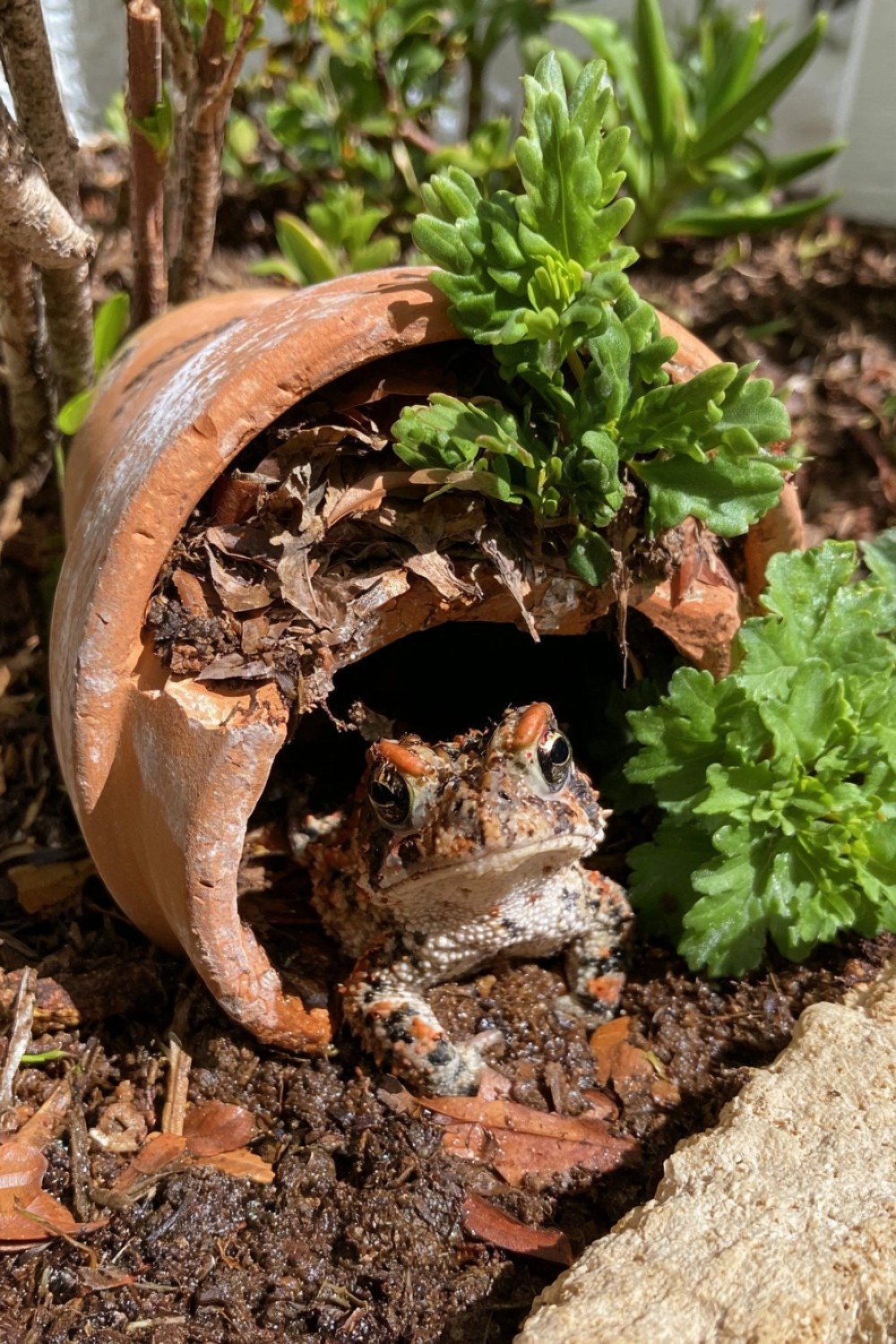
A cracked terracotta pot can become a simple shelter for toads and other small garden wildlife. Choose a pot with a naturally broken opening large enough for an animal to enter safely. Turn it upside down in a shaded, damp area beneath shrubs or near a garden bed. Partially bury the rim so the pot stays stable and the interior remains cool. Add a little leaf litter around the entrance to help the shelter blend into its surroundings. Avoid using painted or chemically treated pottery for this project. This small addition can support a wildlife friendly garden while giving damaged containers a functional purpose.
15. Create a Mediterranean Style Planter Arrangement
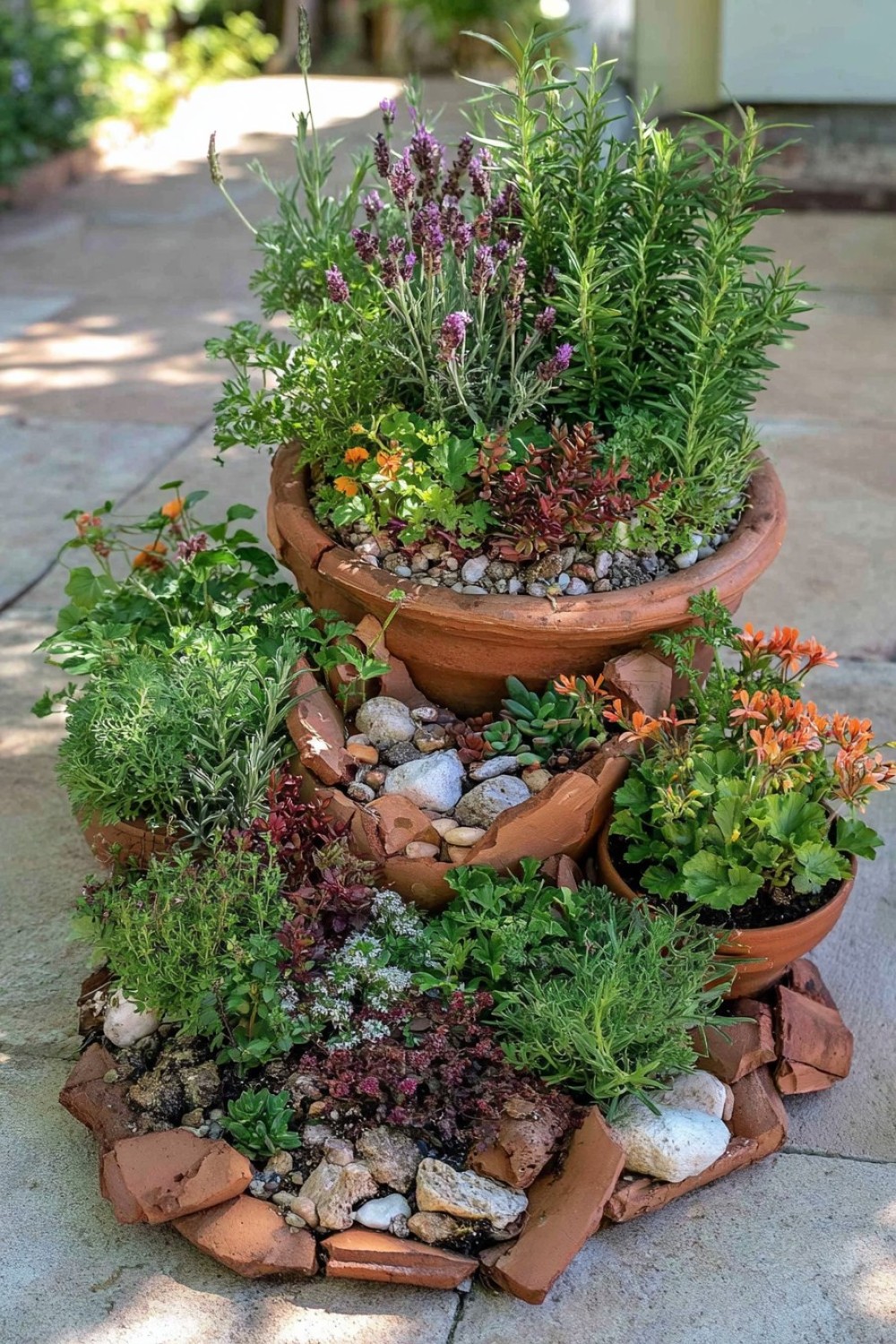
Terracotta fragments naturally complement Mediterranean planting schemes. Arrange one large broken pot with smaller clay pieces around it, then plant drought tolerant herbs and flowers such as rosemary, lavender, thyme, santolina, or small pelargoniums. Use gravel as a top dressing and allow some broken pieces to remain partially exposed. Keep the color palette earthy and simple so the pottery becomes part of the landscape rather than standing apart from it. This arrangement works especially well beside stone paths, courtyard walls, or sunny patios. The weathered clay texture adds warmth and creates the impression of an established garden that has developed gradually over time.
16. Make Pot Shard Mulch for Containers
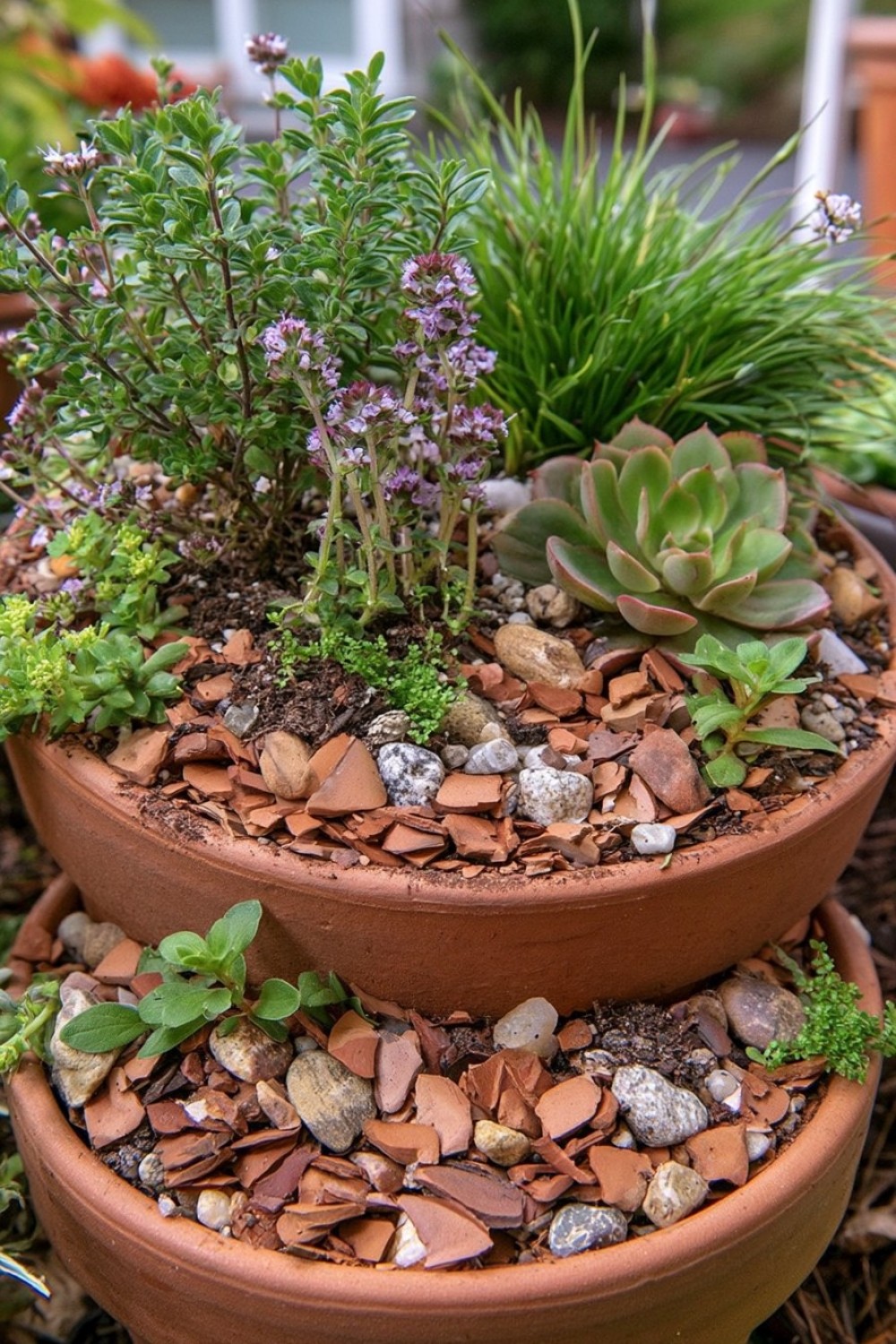
Small terracotta fragments can be used as a decorative surface layer in large containers. Break damaged pottery into manageable pieces and smooth any sharp points before use. Arrange the fragments loosely around established plants, leaving space around stems so water can penetrate the soil easily. The clay pieces help reduce soil splash during watering and add texture to otherwise plain planters. Combine them with gravel or small stones for a more varied surface. This technique suits olive trees, herbs, succulents, and ornamental grasses particularly well. It is a subtle reuse idea that makes old pottery useful without requiring a major craft project.
17. Create a Broken Pot Flower Tower
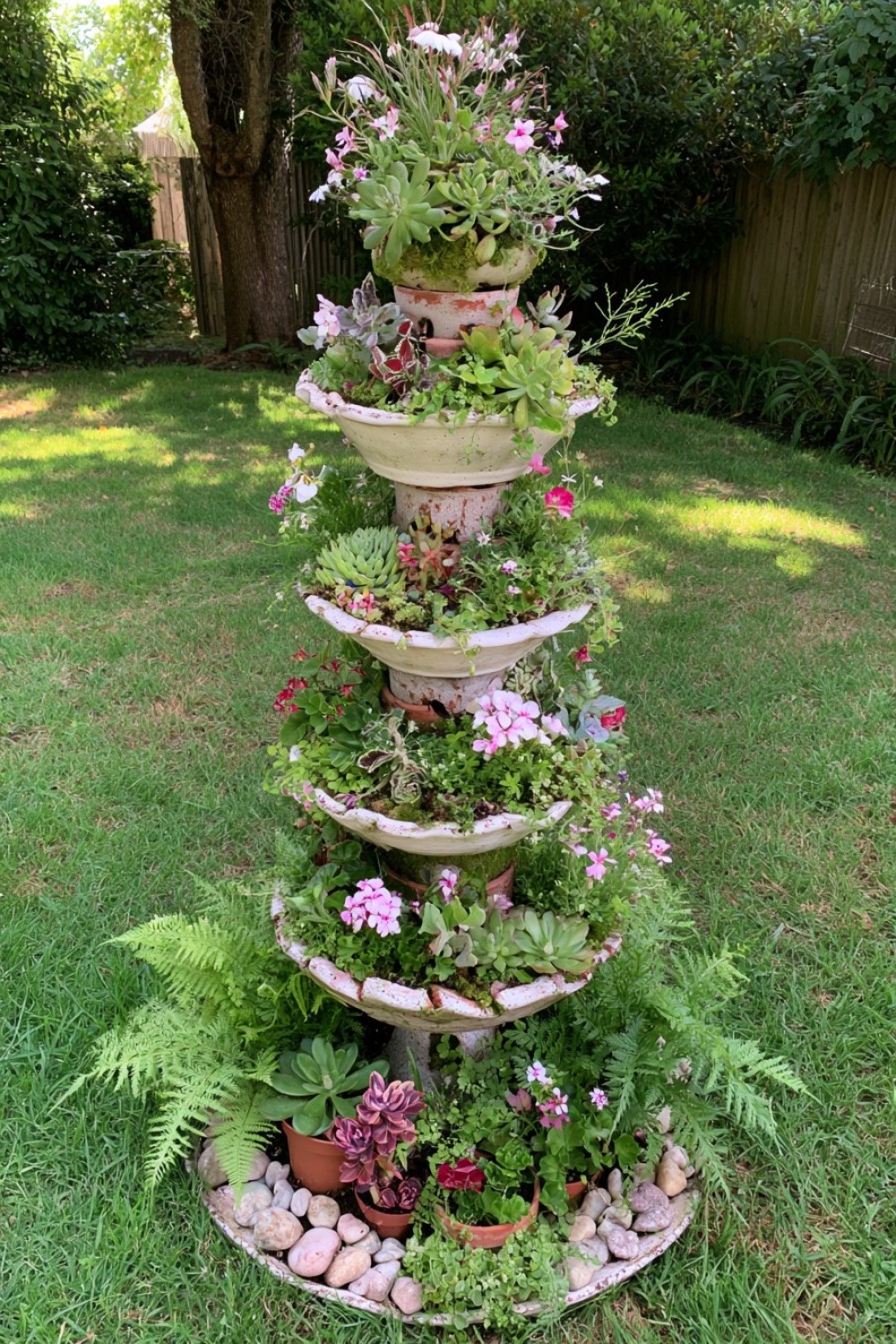
Stack several cracked pots at different angles to create a vertical flower tower. Start with the largest container at the bottom and fill it with soil. Position a smaller broken pot partially inside, tilting it slightly before adding more soil around the base. Continue upward with one or two additional pots, making sure the structure remains stable. Plant trailing flowers, herbs, or compact foliage around each level. Use pottery shards to hold soil in place where openings are large. This design creates height without taking up much ground space and works especially well on patios, small courtyards, or beside garden steps.
18. Build a Decorative Pot Fragment Path Border
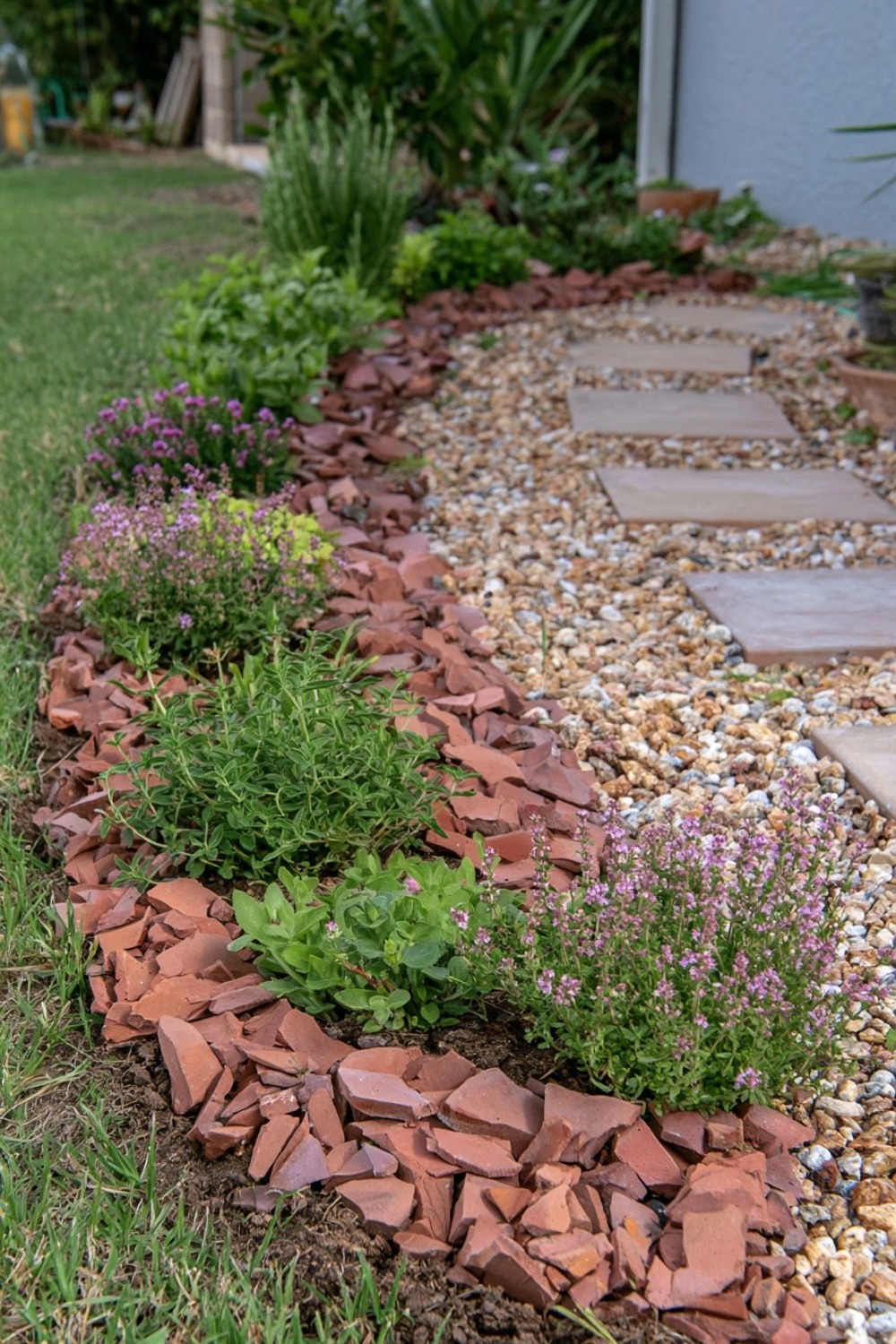
Instead of conventional edging, use repeated pottery fragments along the sides of a gravel or stepping stone path. Choose pieces with similar terracotta tones but varying sizes, then press them into the soil at alternating angles. Leave enough of each shard visible to create a textured border. Pair the edging with low growing herbs, groundcovers, or flowering plants for a relaxed garden look. This method is especially suitable for cottage gardens and informal landscapes because irregular shapes feel natural. Make sure every fragment is firmly embedded and sand any exposed sharp edges. The finished border adds warmth while making practical use of broken materials.
19. Create a Mixed Broken Pot Garden Display
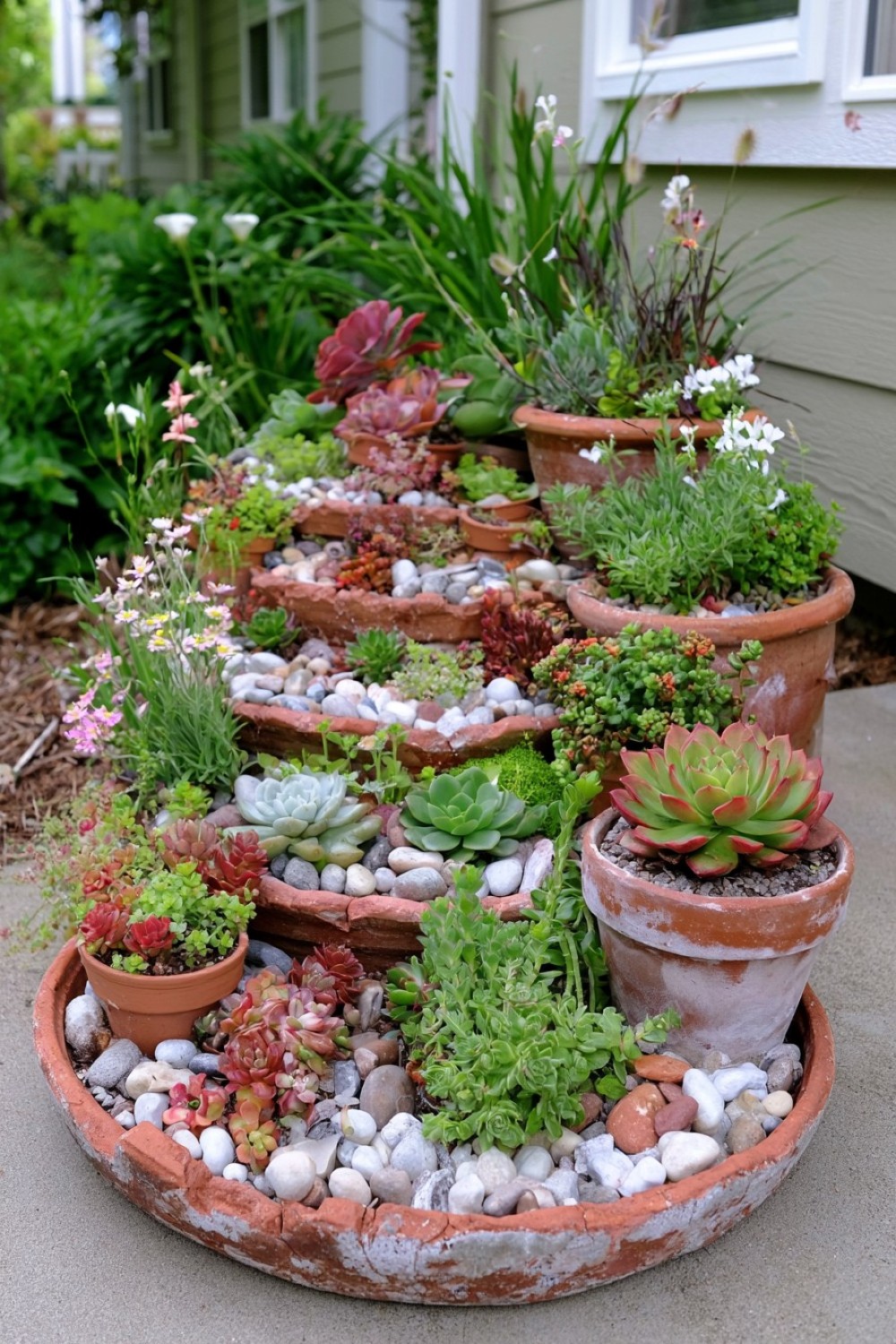
Combine several different upcycling techniques into one larger garden feature. Use a partially broken pot as the central planter, surround it with smaller fragments, and add miniature terraces, herbs, succulents, or flowering groundcovers. Place a few shards vertically as decorative accents and use others as small dividers between planting sections. Gravel, bark, and stones can help connect the different materials visually. Keep the arrangement asymmetrical so it feels natural rather than overly planned. This type of display works especially well in unused corners, near garden benches, or beside patio walls where a compact composition can create an eye catching focal point.
MORE IDEAS


Share
What's Your Reaction?
 Like
0
Like
0
 Dislike
0
Dislike
0
 Love
0
Love
0
 Funny
0
Funny
0
 Angry
0
Angry
0
 Sad
0
Sad
0
 Wow
0
Wow
0