16 Outdoor Kitchen Concepts for Practical Backyard Cooking

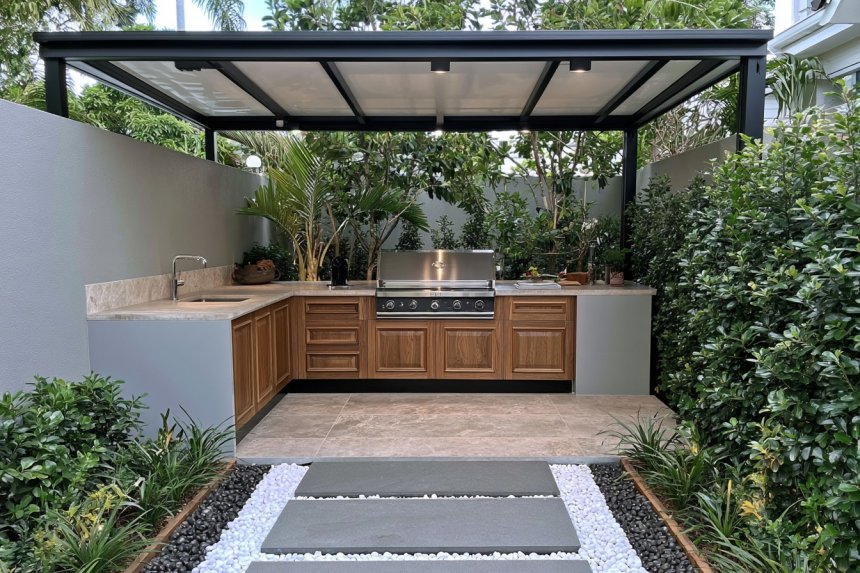
An outdoor kitchen should make cooking and serving easier while remaining safe under changing weather conditions. Before choosing finishes, plan the location of heat-producing appliances, food preparation surfaces, water, drainage, electricity, gas, lighting, ventilation, and waste storage. Every appliance and electrical fitting must be approved for outdoor use, and required clearances should follow local regulations and manufacturer instructions. Cabinets need to resist moisture and pests, while countertops and flooring should tolerate cleaning, heat, and seasonal temperature changes. These outdoor kitchen concepts focus on efficient layouts, protected storage, flexible preparation areas, and features that support food hygiene without turning the patio into an overcrowded second kitchen.
1. Create a Galley-Style Kitchen Along a Narrow Patio
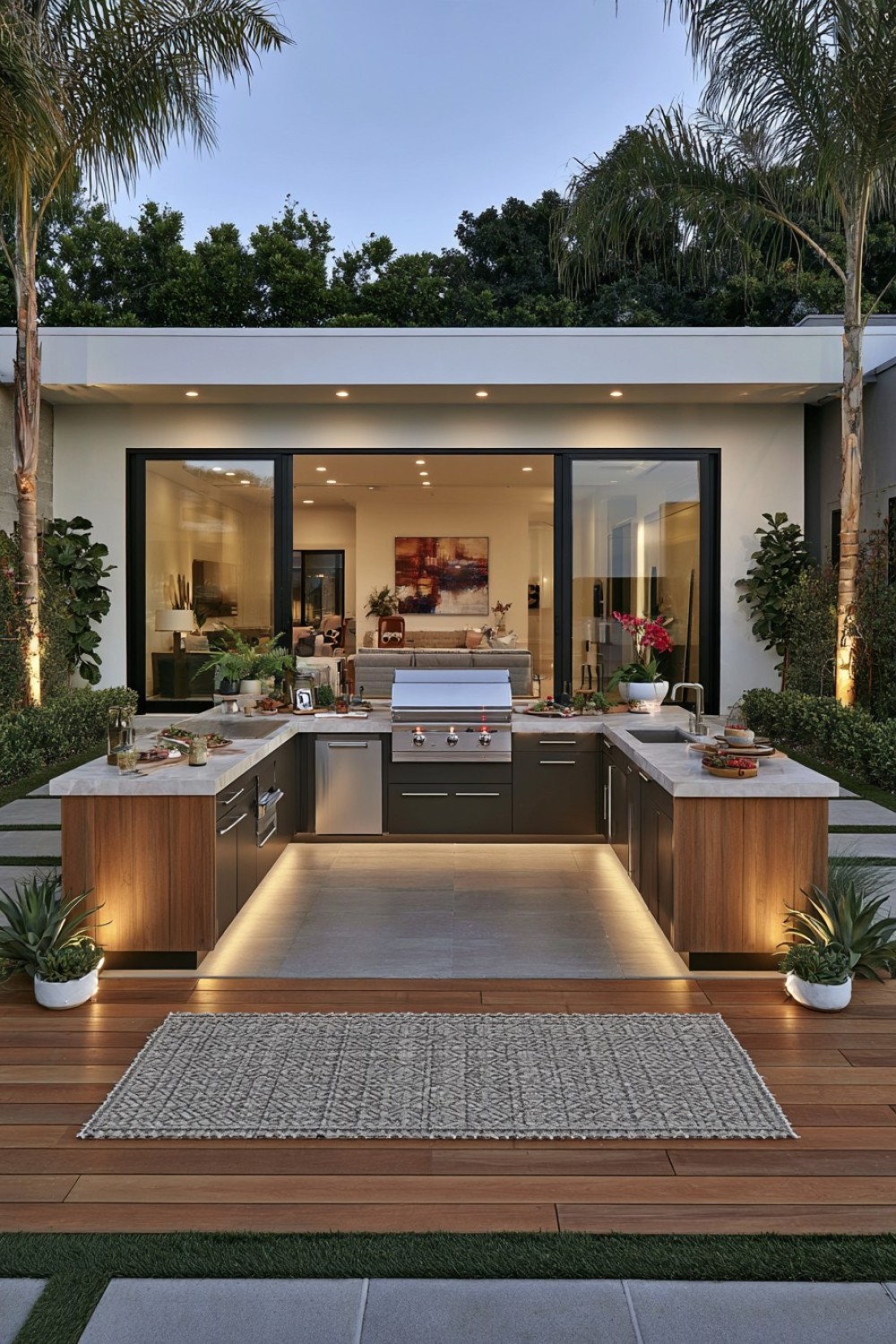
A single-wall galley arrangement can provide useful cooking space without consuming the entire width of a narrow patio. Place preparation surface between the sink and cooker when possible, with closed storage below. Keep tall cabinets and the refrigerator toward one end so they do not interrupt the worktop. A restrained row of durable materials can make the compact installation appear more organized.
Maintain a clear route between the house, garden, dining area, and emergency exit. Hot appliances must remain away from combustible walls, doors, overhangs, and busy circulation according to their required clearances. Flooring should be stable and slip-resistant when wet. Before construction, confirm how utilities will reach the kitchen without creating exposed pipes, trailing cables, or drainage problems.
2. Add a Fold-Down Serving Counter to a Compact Kitchen
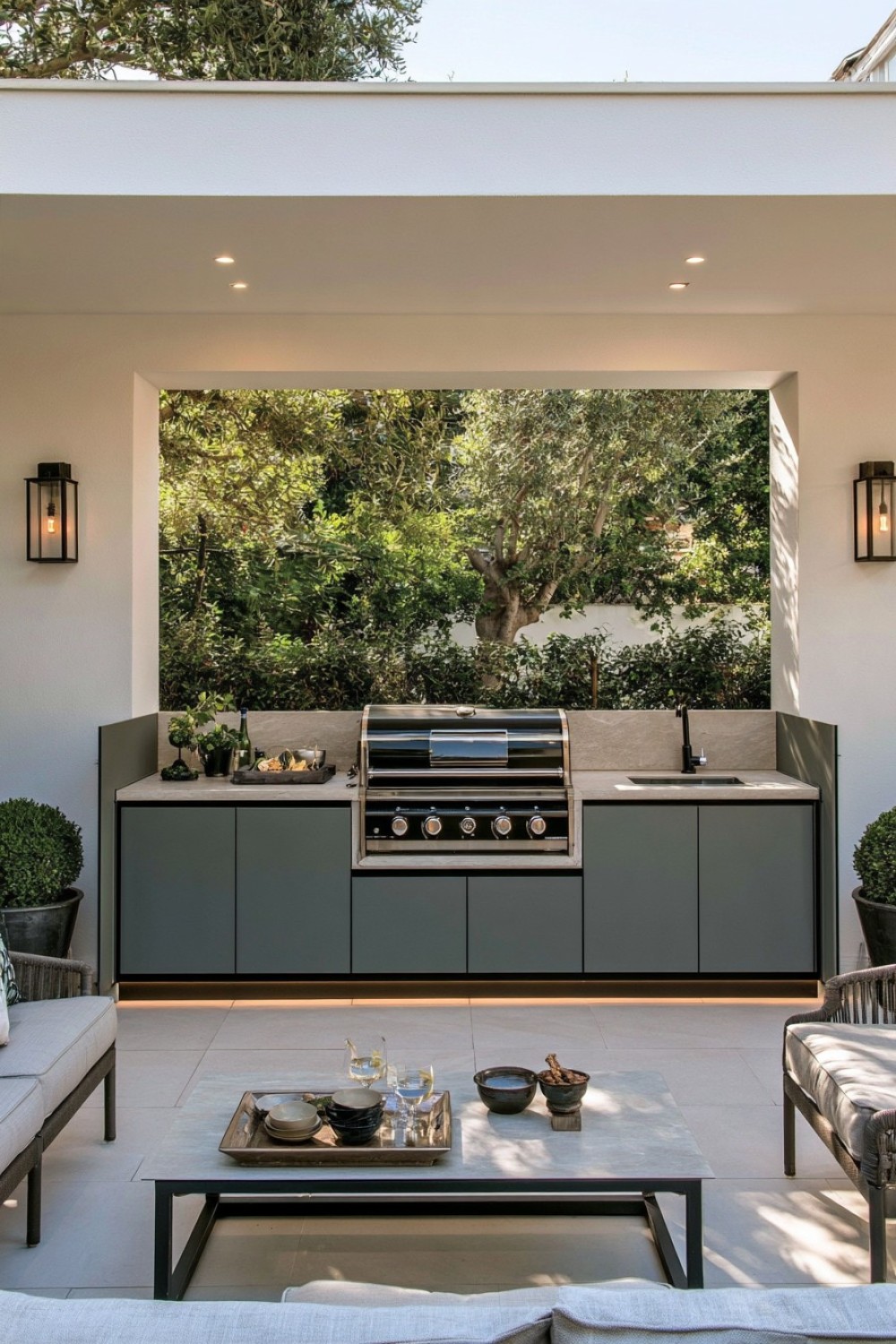
A fold-down counter can create temporary space for serving drinks, arranging plates, or preparing cold food. Mount it on the side of a suitable cabinet or wall where the open surface will not block a path. Weather-resistant hinges and supports should lock securely, while a smooth food-contact surface makes cleaning straightforward.
The support system must carry the expected load without relying on lightweight decorative hardware. Keep hot appliances and heavy equipment off a fold-down surface unless it is specifically designed for them. Check finger-clearance points around hinges and make sure the counter cannot drop unexpectedly. When closed, it should not trap moisture or prevent access to utilities and storage.
3. Build a Dedicated Outdoor Pizza Preparation Station
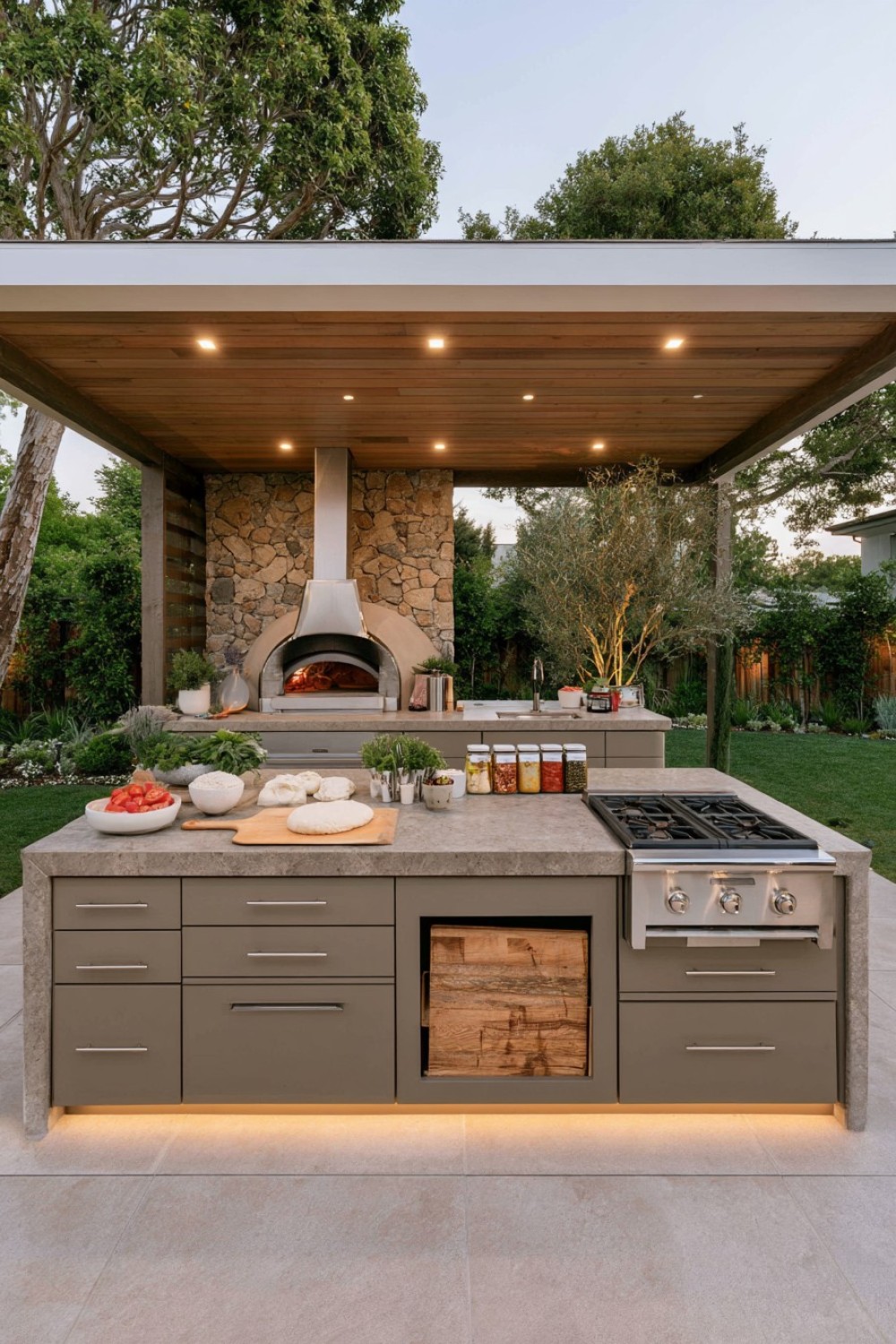
A pizza station benefits from a broad preparation counter for shaping dough, adding toppings, and resting tools. Store flour, boards, peels, and cutters in protected cabinets, while chilled ingredients remain in an outdoor-rated refrigerator until needed. Position the worktop close enough to the oven for efficient movement without exposing food or hands to excessive heat.
Pizza ovens generate intense heat and require manufacturer-specified clearances, ventilation, fuel storage, and non-combustible support. Do not place them beneath unsuitable roofs or beside timber screens merely for convenience. Counter materials must tolerate heat and food preparation. Keep children and guests away from hot surfaces, and provide a clear location for setting down heated tools safely.
4. Conceal Waste and Recycling in Weather-Resistant Drawers
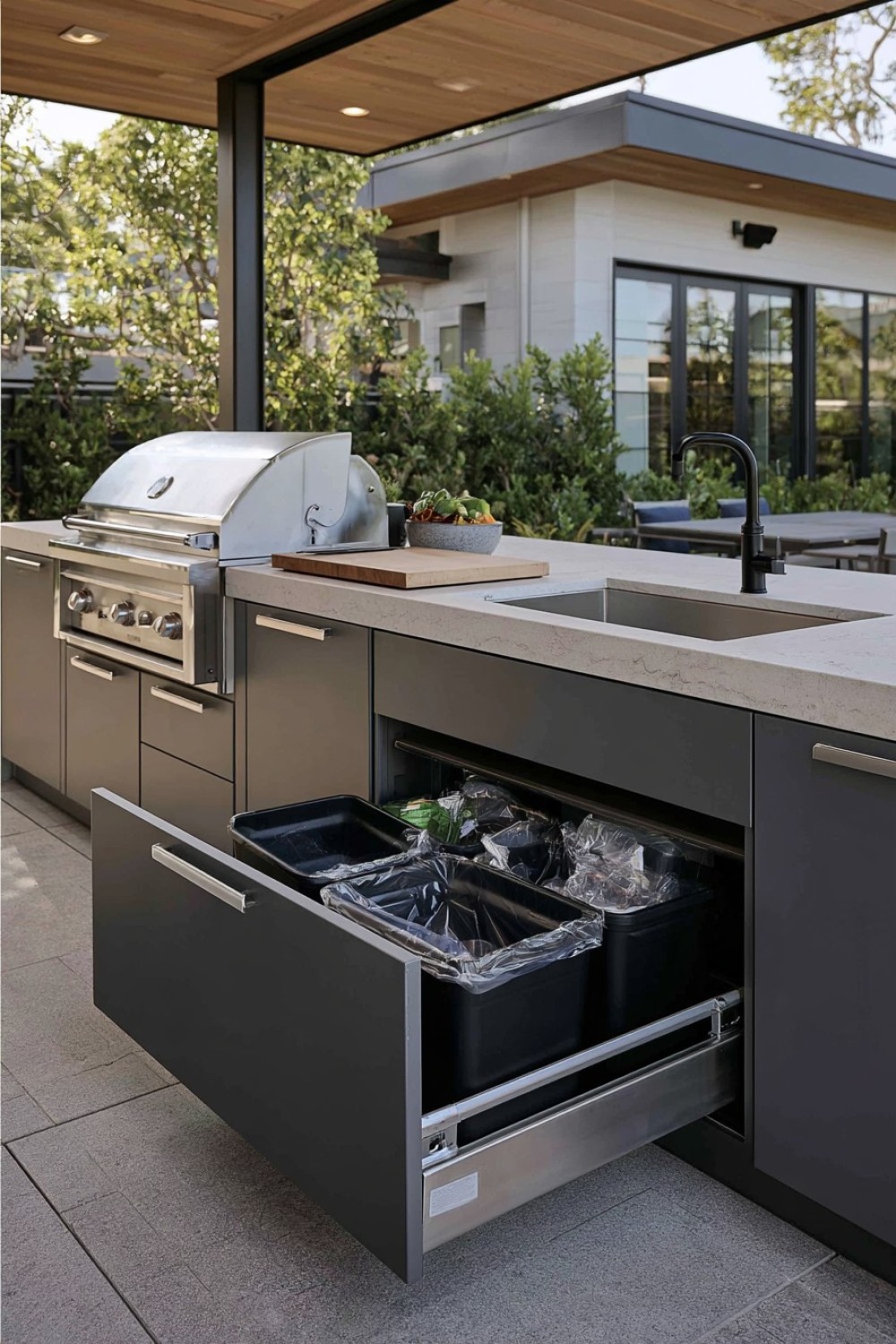
Pull-out waste and recycling containers keep preparation areas organized and prevent loose bins from interrupting circulation. Position them near the main worktop but away from clean dish and food storage. Removable liners and washable internal surfaces simplify maintenance. Separate compartments can support local recycling categories without requiring several freestanding containers.
Outdoor waste attracts insects and animals, making tight-fitting lids and frequent emptying essential. The cabinet should resist moisture while allowing any necessary ventilation and drainage. Clean spills promptly and avoid storing waste beside heat-producing appliances. Drawer runners must support the filled containers and remain operable after exposure to humidity, dust, and temperature changes.
5. Follow a Circular Patio With a Curved Kitchen
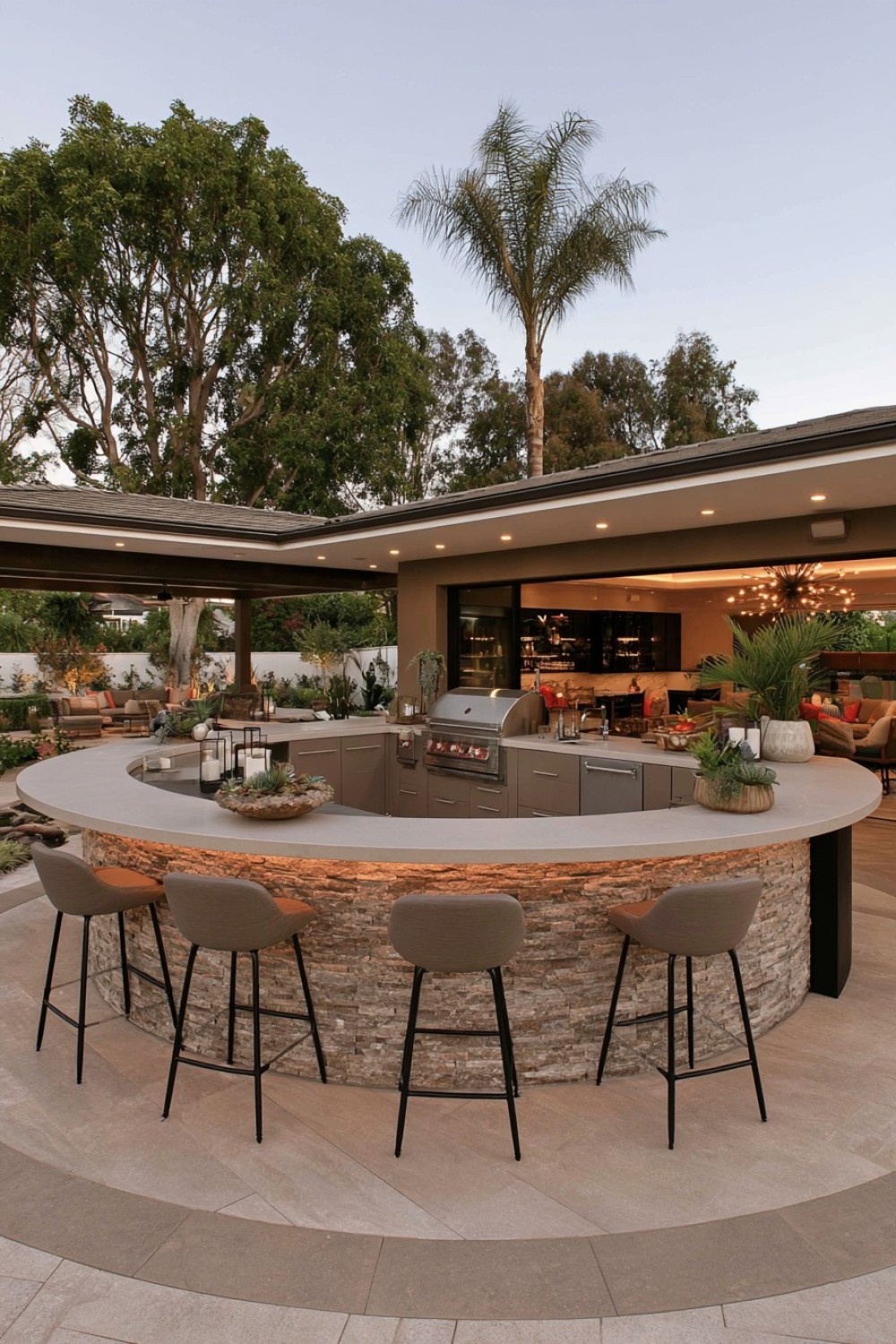
A curved kitchen can follow a round patio and direct the work area toward the dining or garden space. Use the inner curve for preparation and storage while placing guest seating on the outer side, separated from heat. Repeating one countertop material across the curve creates continuity, while cabinet sections can remain faceted beneath it to simplify construction.
Curved counters and custom doors may cost more and can reduce usable cabinet space. Confirm appliance cutouts, door swing, drawer clearance, and access to service connections before fabrication. Avoid narrowing the central patio with an oversized radius. Hot cooking zones should remain outside the main social route and comply with all required clearances.
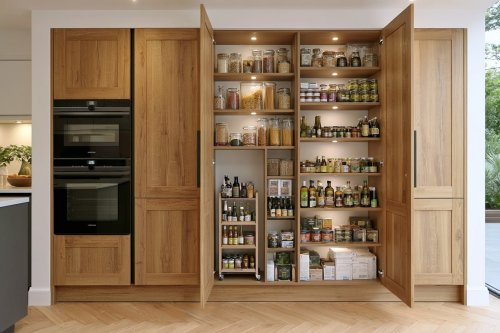
6. Introduce a Weather-Resistant Outdoor Pantry
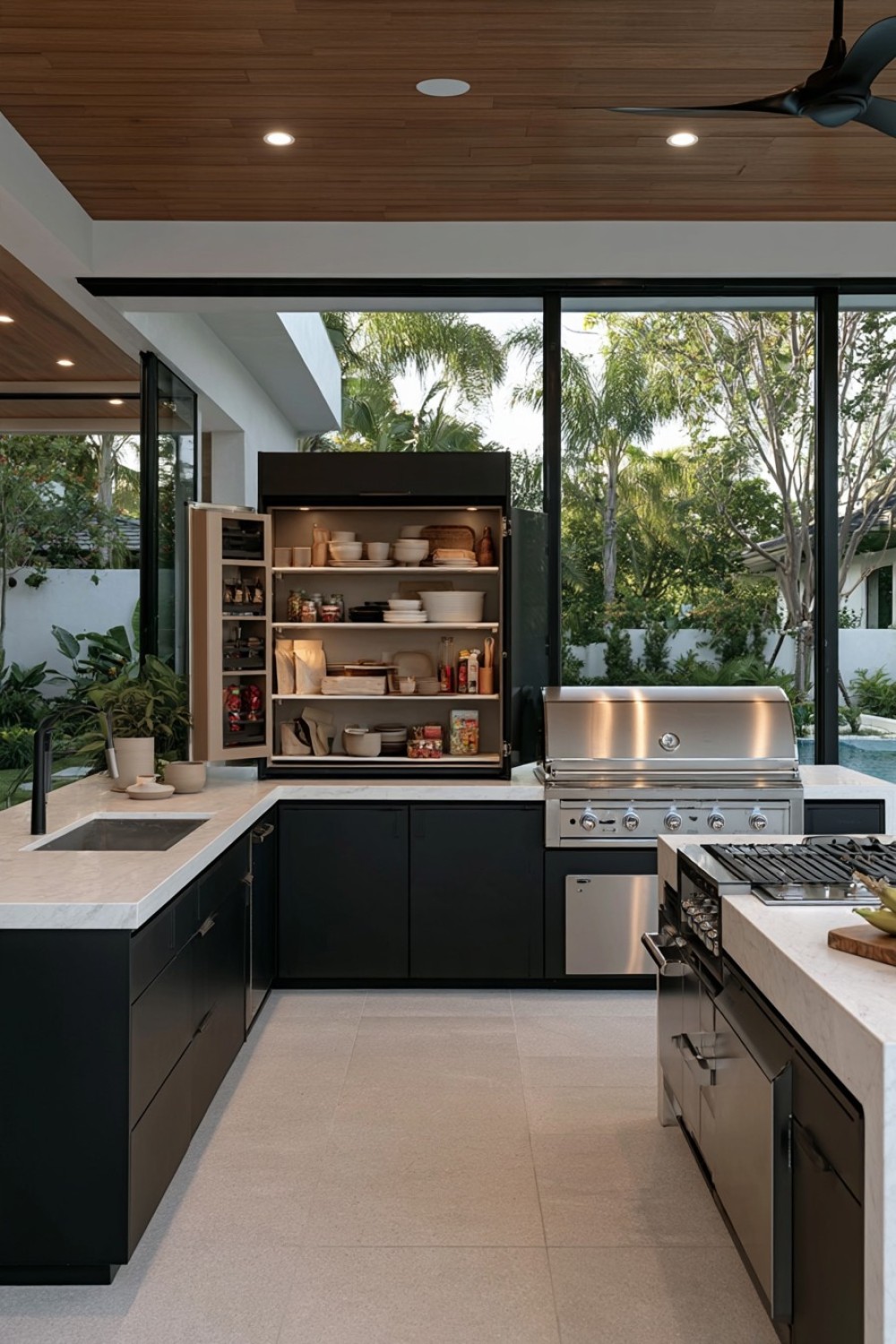
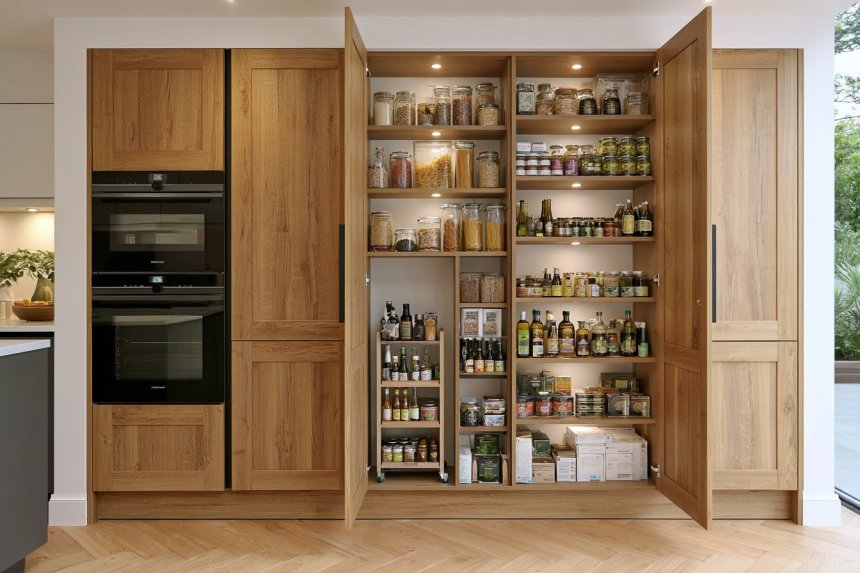
An outdoor pantry can store sealed tableware, napkins, grilling tools, and limited packaged supplies. Adjustable shelves make it easier to separate food from equipment, while gasketed doors may reduce dust and pests. Place frequently used items within comfortable reach and keep heavier dishes on lower shelves. A light interior color improves visibility inside deep cabinets.
Outdoor cabinets are rarely appropriate for long-term food storage unless temperature, humidity, pests, and manufacturer guidance are properly managed. Bring vulnerable ingredients indoors after use and inspect sealed packages regularly. Cabinet materials and hardware should resist corrosion, swelling, and ultraviolet exposure. Maintain clearance around ventilation openings and avoid installing pantry storage immediately beside a grill or oven.
7. Install an Outdoor-Rated Ice Drawer for Entertaining
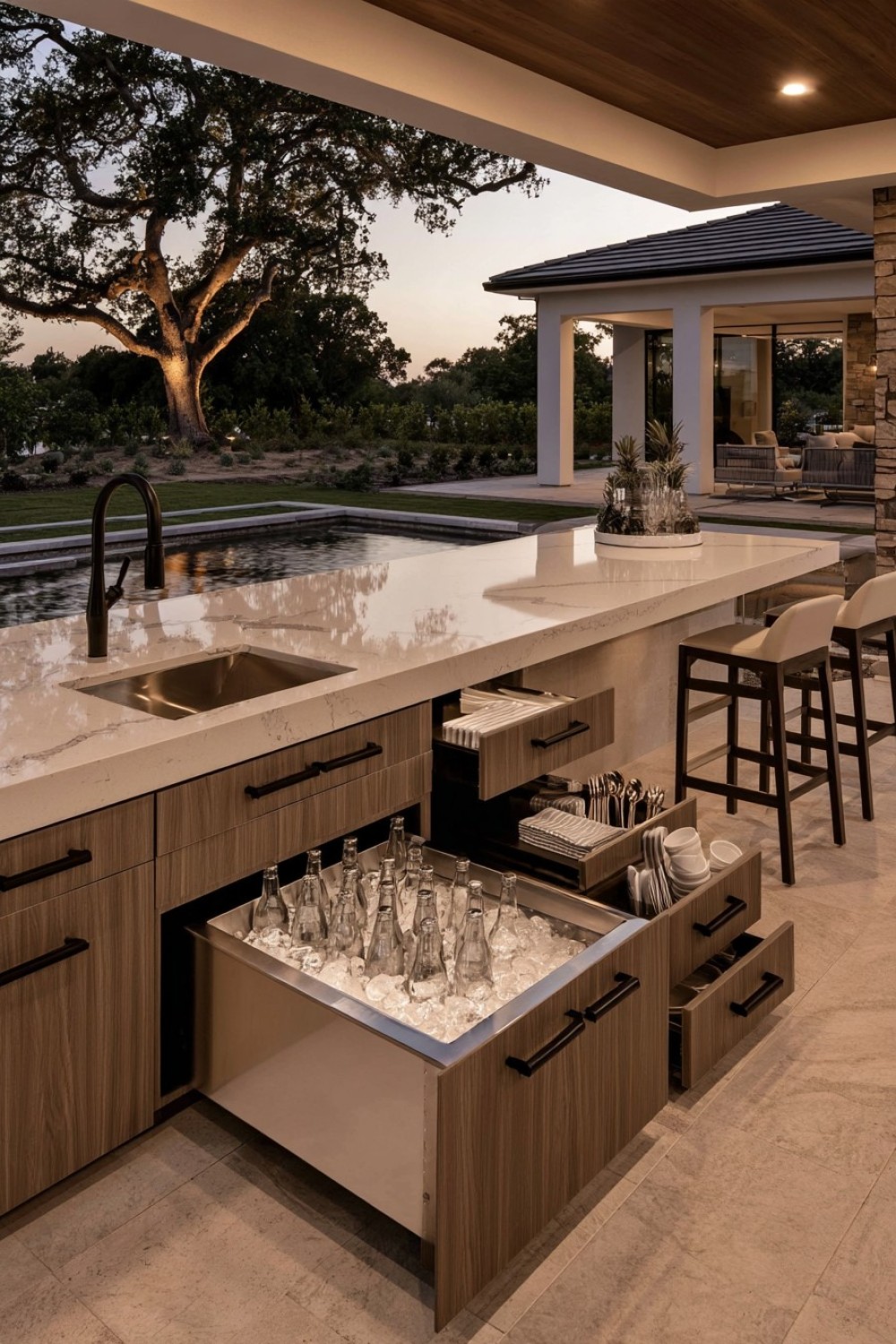
An integrated ice drawer can keep bottled drinks cool and reduce trips indoors during gatherings. Position it near the serving area rather than beside raw-food preparation. A removable insulated container may be sufficient for occasional use, while a built-in ice maker suits frequent entertaining when water, drainage, electricity, and maintenance are available.
Any appliance must be rated for outdoor installation and the local climate. Ice intended for consumption requires potable water connections and food-safe cleaning procedures. Meltwater needs controlled drainage rather than being released across the patio. Follow manufacturer ventilation clearances and seasonal shutdown instructions. Unplugged decorative coolers should not be mistaken for dependable refrigerated food storage.
8. Add a Raised Serving Counter Behind the Preparation Surface
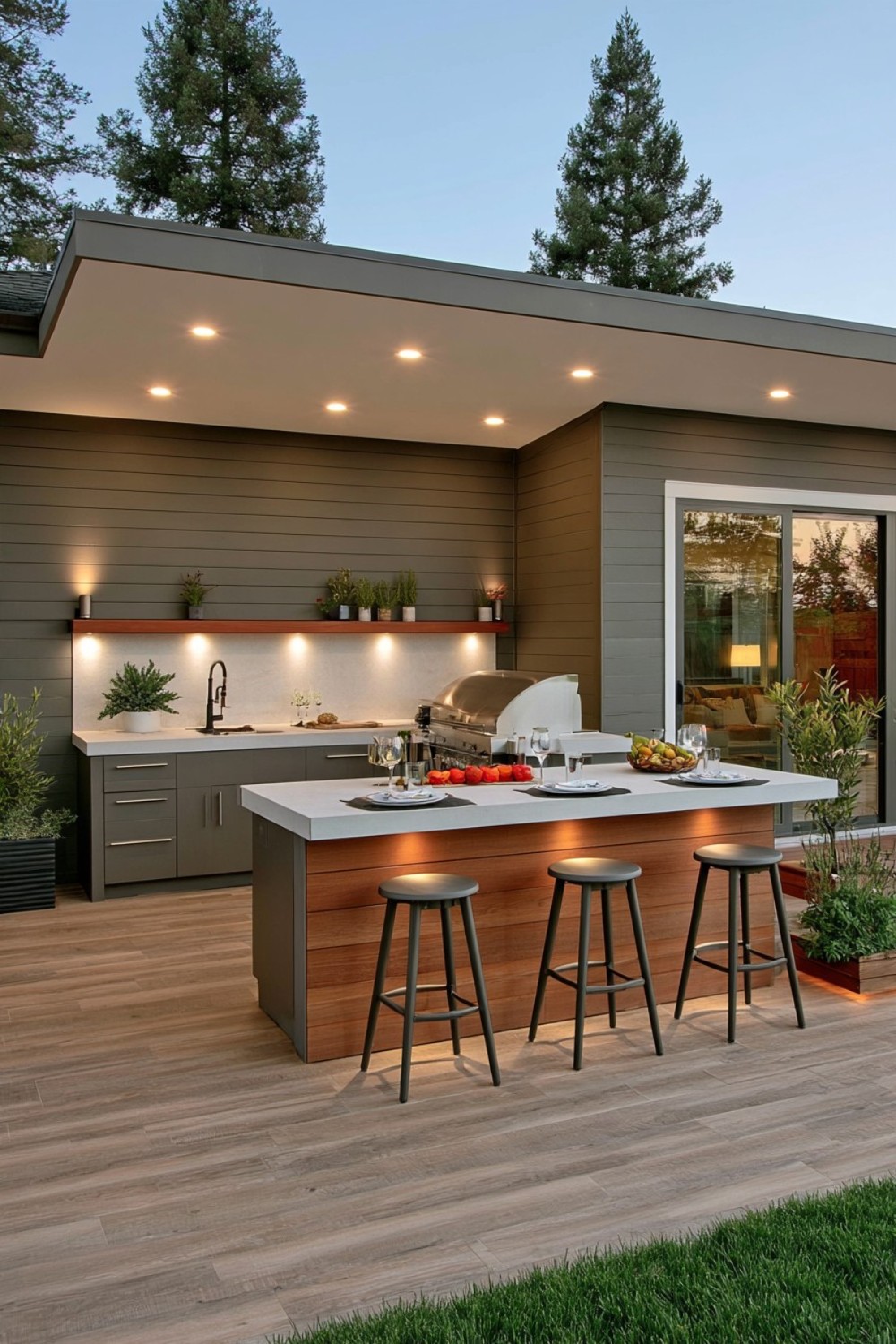
A raised counter can screen preparation clutter and give guests a separate place to sit or collect food. Plan enough depth for plates and drinks, with knee clearance appropriate to the selected stools. The counter should remain outside the cook’s main working path and create a clear boundary between food preparation and social seating.
Do not place guests directly across from an open flame, hot grill, fryer, or other hazardous appliance. Counter overhangs require adequate structural support, especially when heavy stone is used. Stools should stand on level flooring and leave space for people to pass behind them. Include an accessible-height serving surface where required by local regulations.
9. Add a Rinse Sink for Garden Produce
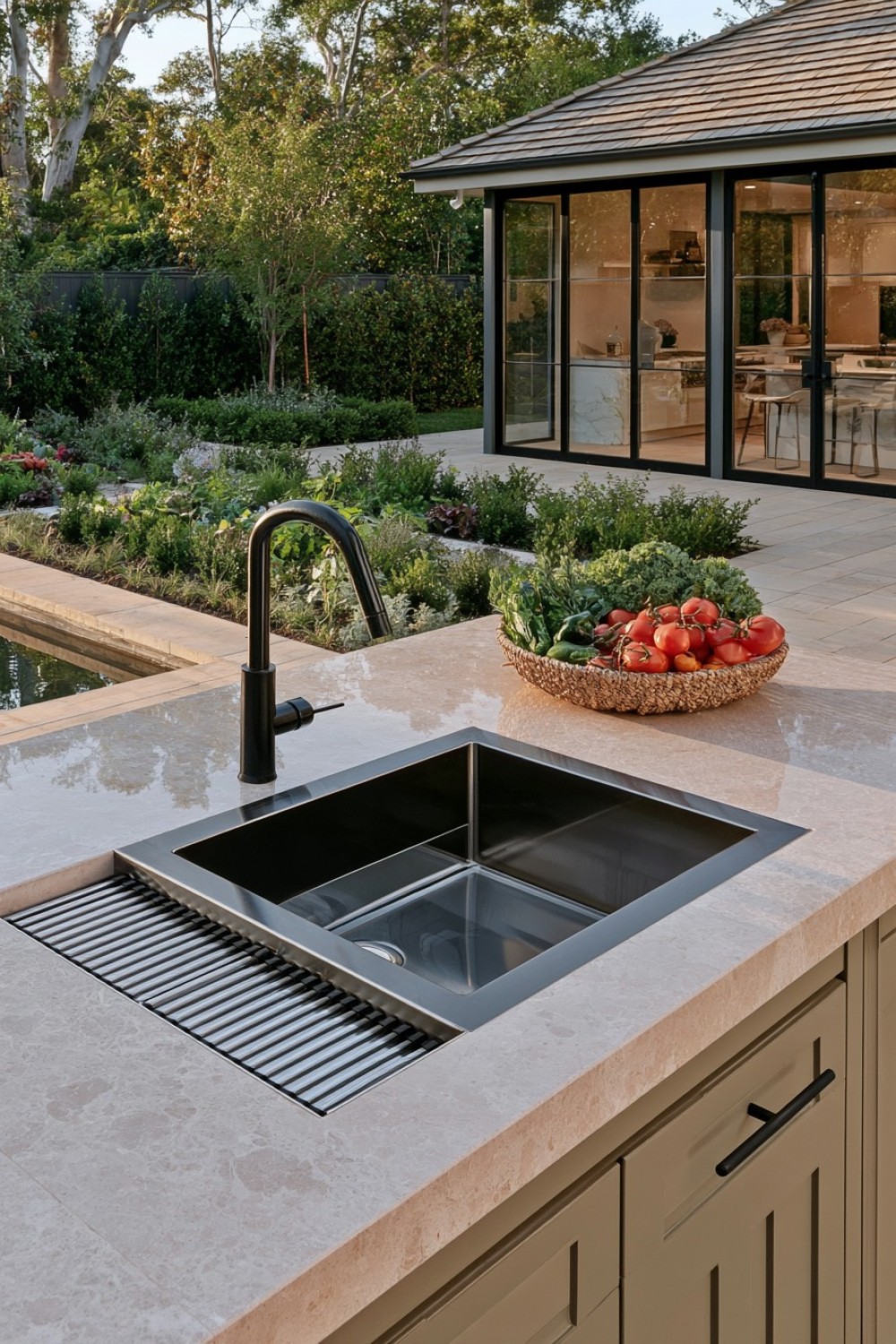
A secondary sink can provide a convenient place to rinse herbs, vegetables, and outdoor cooking tools. Position it beside a preparation surface and include a removable strainer to prevent soil and plant material from entering the drain. A pull-out or high-clearance tap may make large bowls easier to fill and clean.
Water used on food should come from a safe potable source. Plumbing, drainage, backflow prevention, and electrical separation need to meet local requirements. In cold climates, pipes and fixtures may require insulation, isolation valves, or seasonal draining. The sink should discharge into an approved system rather than releasing food residue and wastewater directly into the garden.
10. Use a Movable Preparation Console for Flexible Layouts
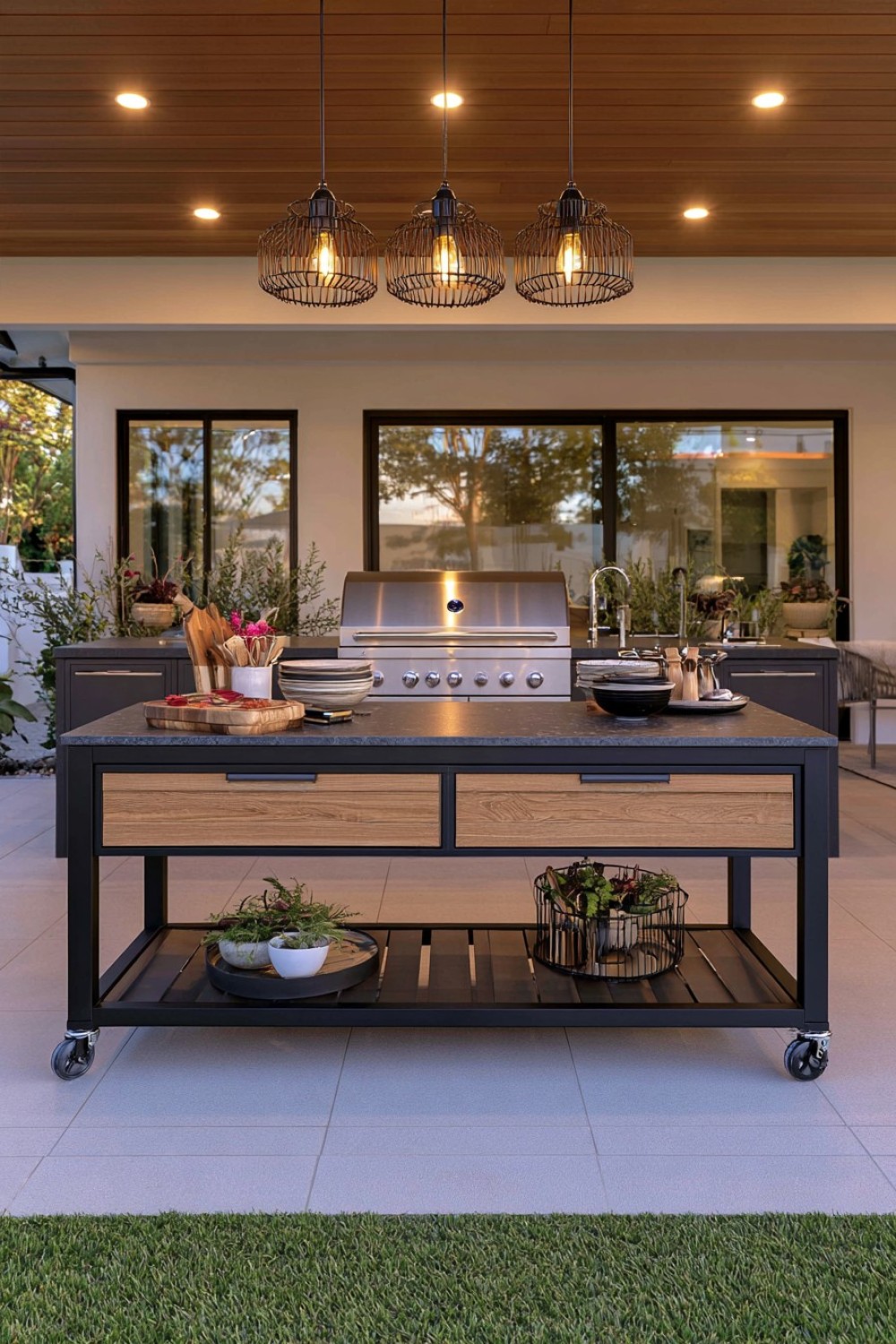
A movable console can provide additional preparation or serving space when required and return to a sheltered position afterward. Choose a durable counter, raised edges, and shelves for lightweight equipment. Locking wheels keep the unit stable during use, while handles make controlled movement easier. Size it to pass through gates and around fixed furniture.
Place heavier objects on the lowest shelf to reduce tipping and remove loose items before moving the cart. Wheels must suit the patio surface and should not catch in joints or drainage channels. Do not operate fuel-burning or heat-producing appliances on the console unless the product is specifically designed and approved for that purpose. Store it securely during severe weather.
11. Use Raised Planters as a Natural Kitchen Divider
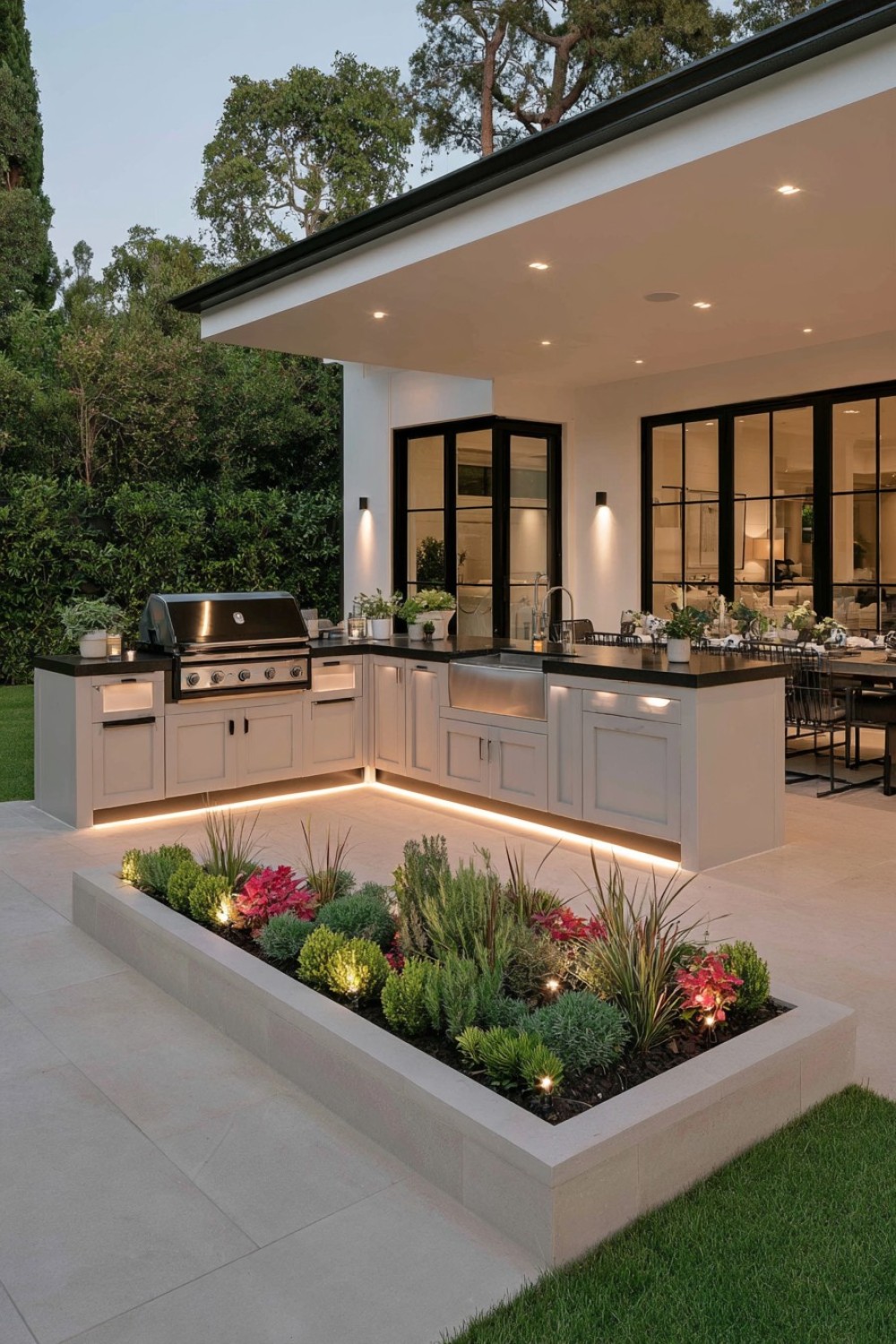
Raised planters can separate cooking and dining areas while supplying herbs close to the preparation counter. Use one continuous planter or a small coordinated group instead of surrounding the kitchen with unrelated pots. Select plants according to sunlight, wind, watering needs, and mature size. Keep culinary herbs identifiable and separate from decorative species.
Filled planters are heavy and require a stable surface with controlled drainage. Position them away from hot appliances, gas connections, doors, and required escape routes. Soil and irrigation water should not contaminate food-preparation surfaces. Avoid toxic plants where children or pets are present, and do not allow tall planting to obstruct visibility around active cooking zones.
12. Organize Grilling Tools in a Dedicated Drawer
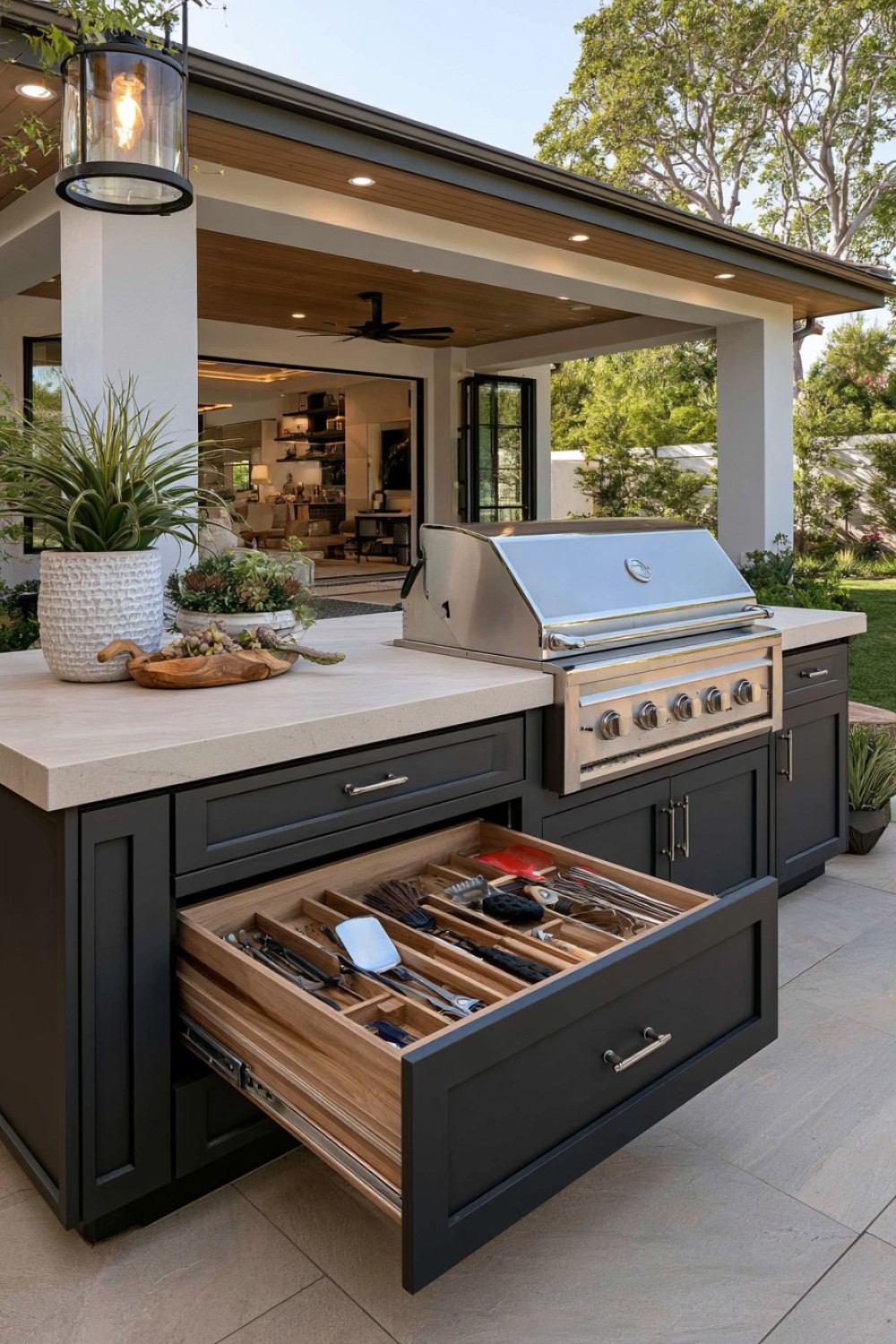
A drawer near the grill can hold tongs, spatulas, thermometers, heat-resistant gloves, and cleaning tools. Adjustable dividers keep long utensils separated and prevent sharp components from becoming tangled. Maintain different tools for raw and cooked food where appropriate, using clear organization to reduce cross-contamination during busy cooking sessions.
The drawer should remain outside the appliance’s heat-clearance zone and use corrosion-resistant runners. Allow tools to cool and dry before storage. Gas valves, ventilation openings, and service connections must remain accessible. Sharp skewers and thermometer probes need protective compartments, particularly when children can reach the outdoor kitchen.
13. Add a Low Stone Bench Beside the Kitchen
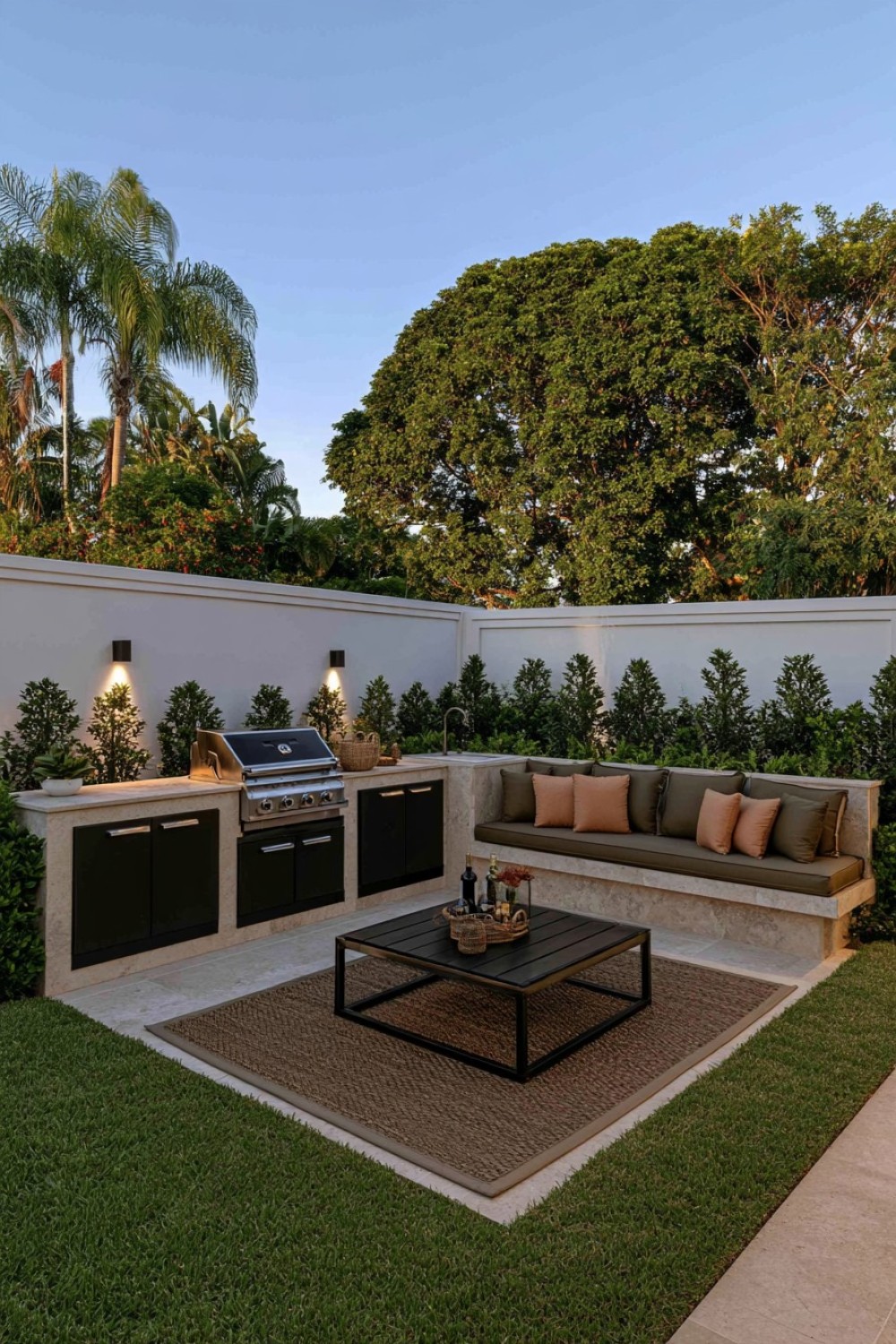
A stone bench can provide informal seating without introducing another furniture material. Position it near the serving area but outside the cook’s work route. A removable outdoor cushion improves comfort, while open space beneath a cantilevered design may make the patio feel less crowded. Coordinate the stone with the counter or paving rather than adding an unrelated finish.
Stone benches are heavy and require an adequate foundation and stable installation. Their surface can become hot in direct sun and slippery when wet. Rounded edges and suitable seat height improve comfort and safety. Maintain generous distance from grills, ovens, and traffic paths, and store removable cushions indoors when weather conditions could damage them.
14. Define the Kitchen With Color-Blocked Cabinets
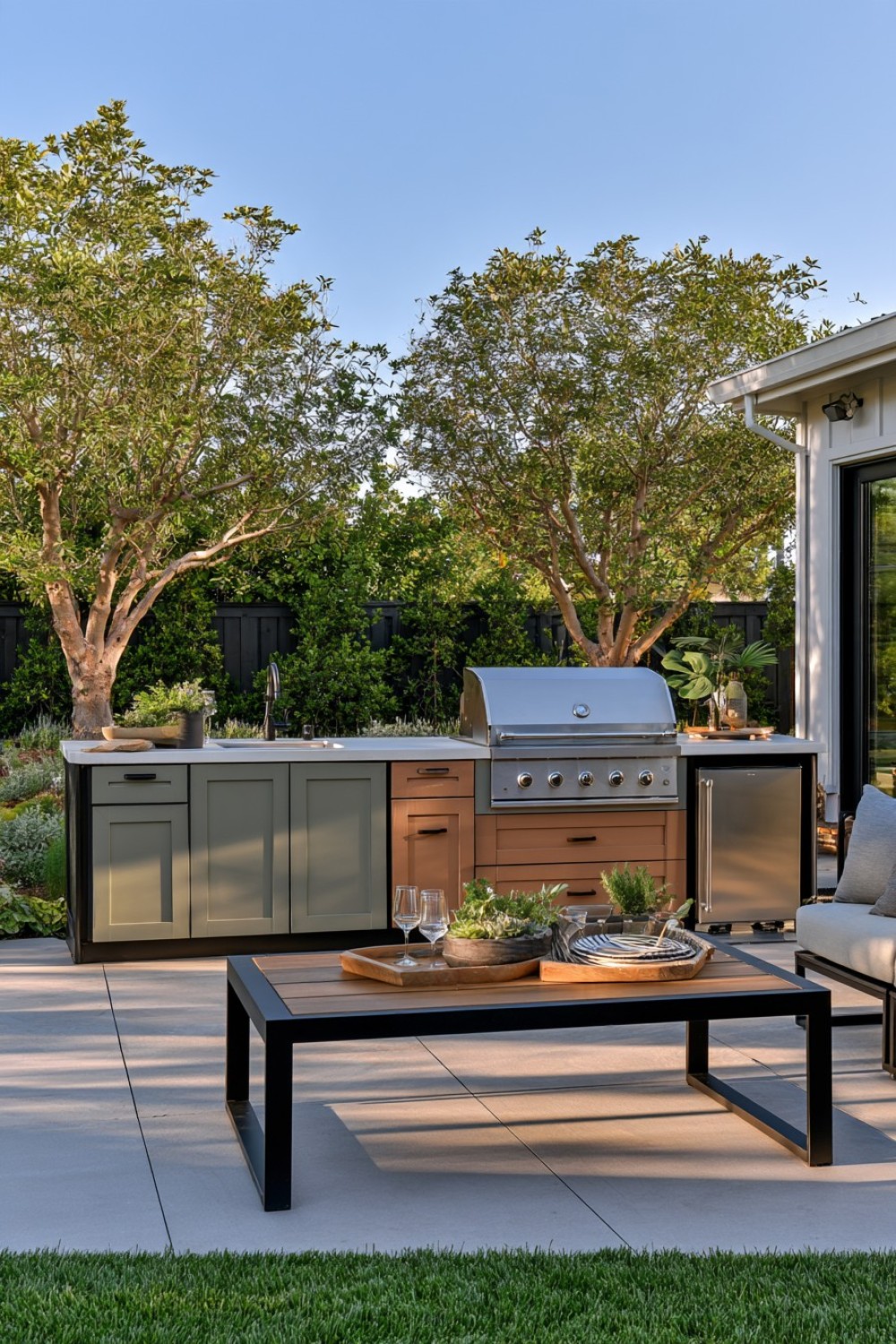
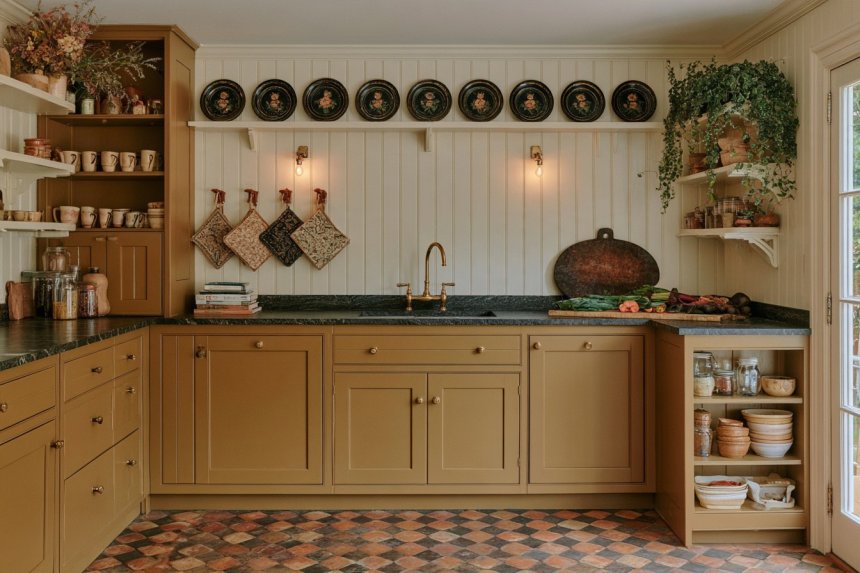
A controlled cabinet palette can give the outdoor kitchen identity without introducing multiple decorative materials. Use one neutral across most units and a stronger olive, terracotta, blue, or charcoal on an island or serving section. Relating the colors to nearby paving, planting, or exterior walls helps the kitchen belong to its surroundings.
Outdoor finishes must tolerate ultraviolet exposure, rain, temperature changes, grease, and regular cleaning. Dark colors may become hot and show fading, while pale finishes reveal dirt quickly. Request exterior samples and review warranty limitations before choosing a coating. Protect cut edges and repair damaged finishes promptly so moisture cannot enter the cabinet material.
15. Conceal Small Appliances Inside a Ventilated Cabinet
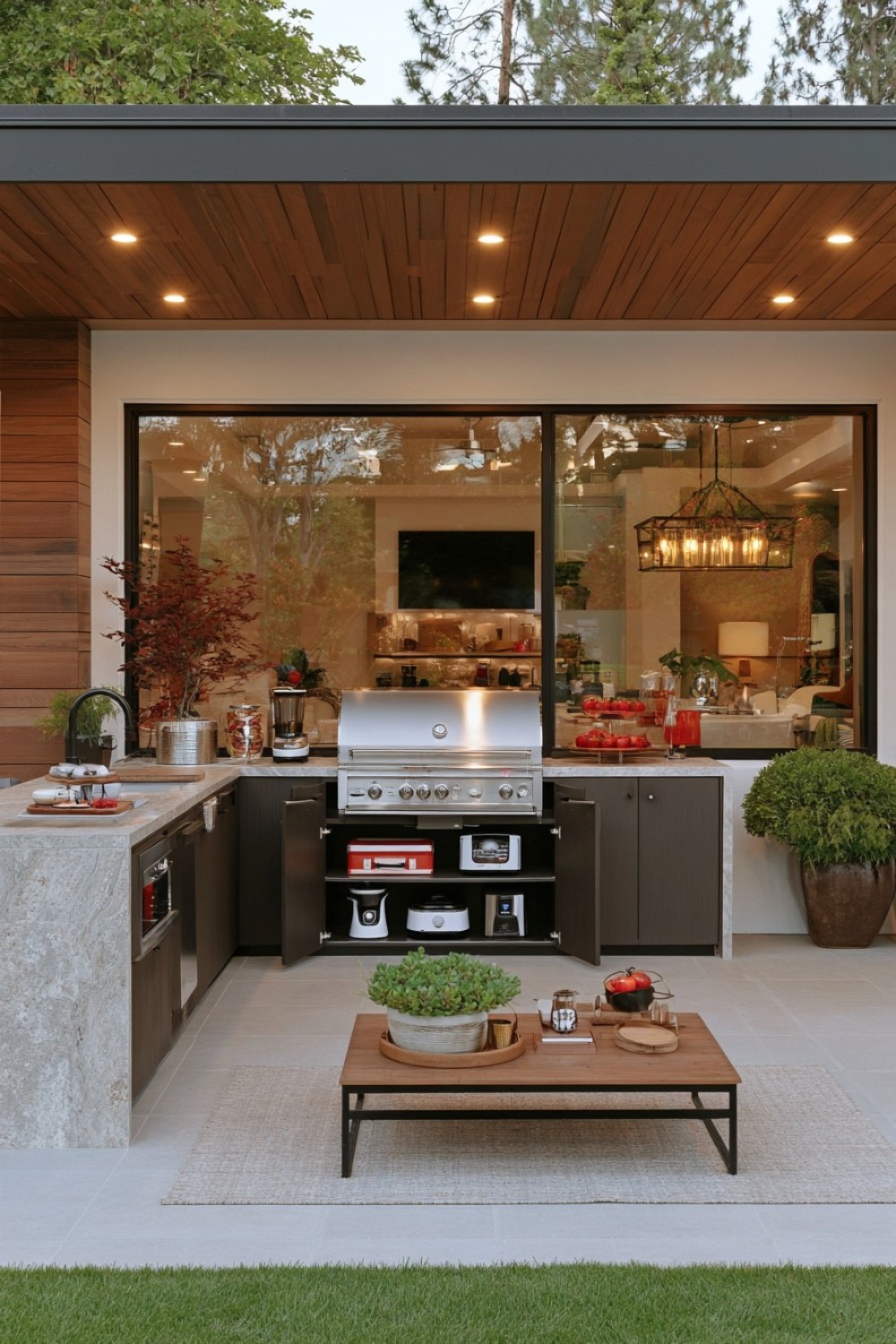
A protected equipment cabinet can store selected appliances and accessories between uses. Use adjustable shelves, weather-resistant doors, and accessible cable management. Appliances should be clean, dry, and cool before being returned to storage. Equipment not approved to remain outdoors is better carried inside rather than relying on cabinetry alone for protection.
Heat-producing appliances should not operate behind closed doors unless the entire installation is designed for that purpose. Outdoor-rated outlets require appropriate protection and professional installation. Maintain ventilation, drainage, and access to shutoffs. Inspect stored equipment for moisture, corrosion, insects, and damaged cables before each use, particularly after prolonged periods of bad weather.
16. Build a Breakfast Counter Facing the Garden
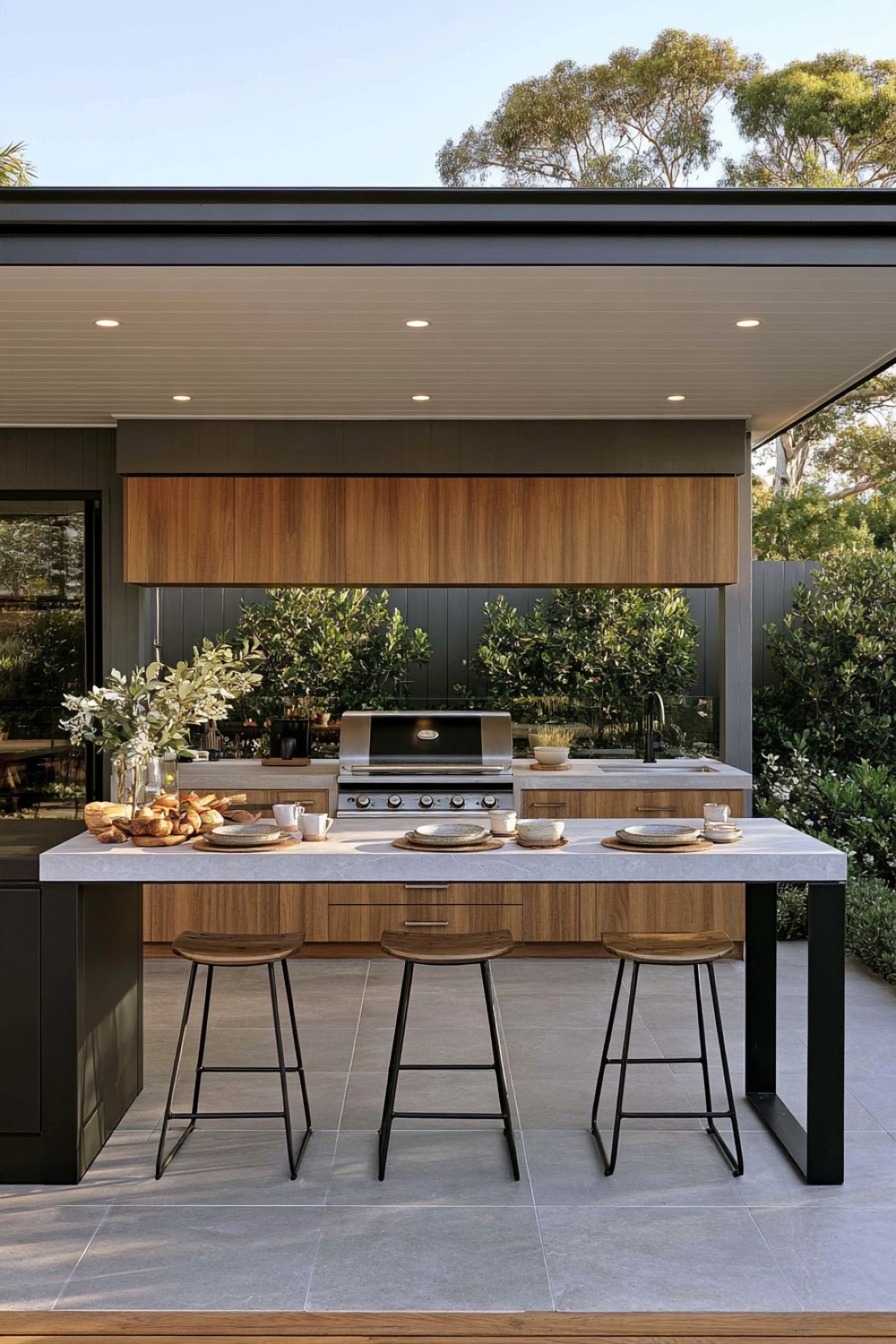
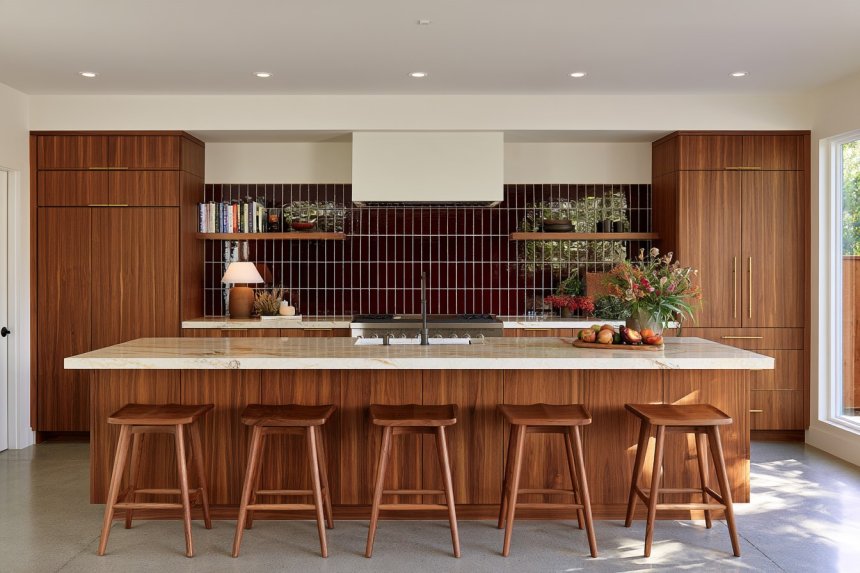
A garden-facing counter can create a pleasant place for breakfast while keeping seated guests separate from food preparation. Position stools along the outer edge and preserve a continuous work surface on the kitchen side. An overhang provides knee room, while a shaded orientation may make the seating more comfortable during warmer periods.
Counter supports must be designed for the material’s weight and overhang. Leave enough clearance behind occupied stools so people can pass without entering the cooking zone. Surfaces should be food-safe, weather-resistant, and easy to wipe. Avoid locating the counter beside smoke, excessive heat, gas equipment, or irrigation spray, and provide accessible seating arrangements where required.
MORE IDEAS


Share
What's Your Reaction?
 Like
0
Like
0
 Dislike
0
Dislike
0
 Love
0
Love
0
 Funny
0
Funny
0
 Angry
0
Angry
0
 Sad
0
Sad
0
 Wow
0
Wow
0