13 Tire Recycling Projects for Home and Garden

Old tires can become practical home and garden features when they are cleaned, inspected, and repurposed thoughtfully. Their curved shape suits tables, seating, planters, storage, and decorative displays, while durable rubber handles outdoor conditions well. Choose tires without exposed steel, chemical residue, or severe damage, and ask a recycling center when a tire is unsuitable for crafting. Scrub every surface, allow it to dry, and use coatings formulated for rubber. Add drainage outdoors and protect indoor floors with sealed wooden bases. These projects combine approachable construction, adaptable decoration, and responsible safety guidance for giving unwanted tires a useful second life.
1. Wrap a Tire into a Textured Storage Ottoman
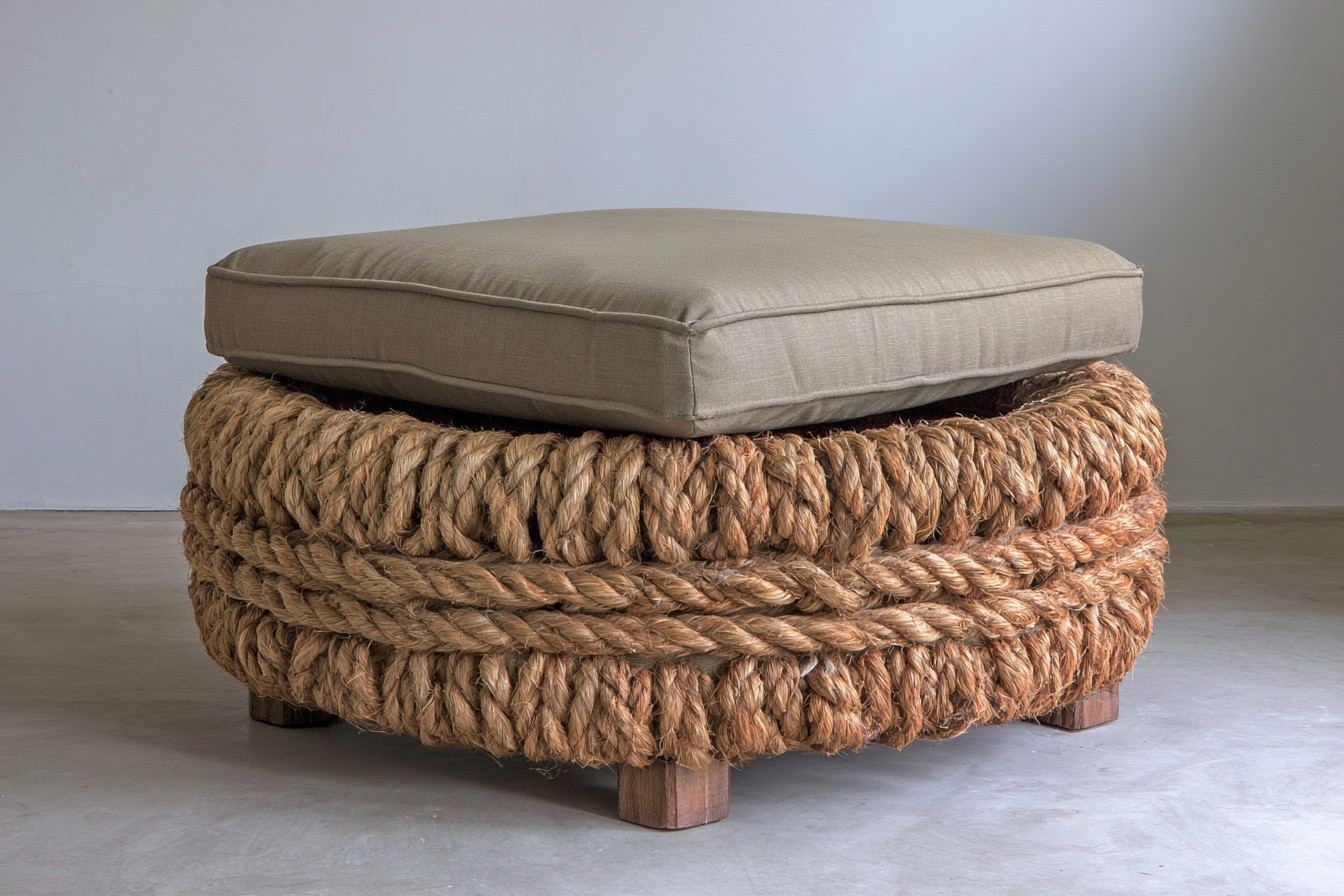
Transform a tire into a woven ottoman by attaching plywood panels to both sides with bolts and wide washers. Add short wooden feet beneath the lower panel, then wrap the exterior tightly with natural sisal rope using strong flexible adhesive. Cover the upper disc with dense foam and removable upholstery fabric to create a comfortable lid. The hollow center can store throws, magazines, or craft supplies inside a fabric basket. Choose neutral rope for coastal interiors or dye the cord for richer color. Keep the ottoman away from heat sources, inspect attachments regularly, and use it only for light seating.
2. Elevate Flowers in a Rope Covered Planter
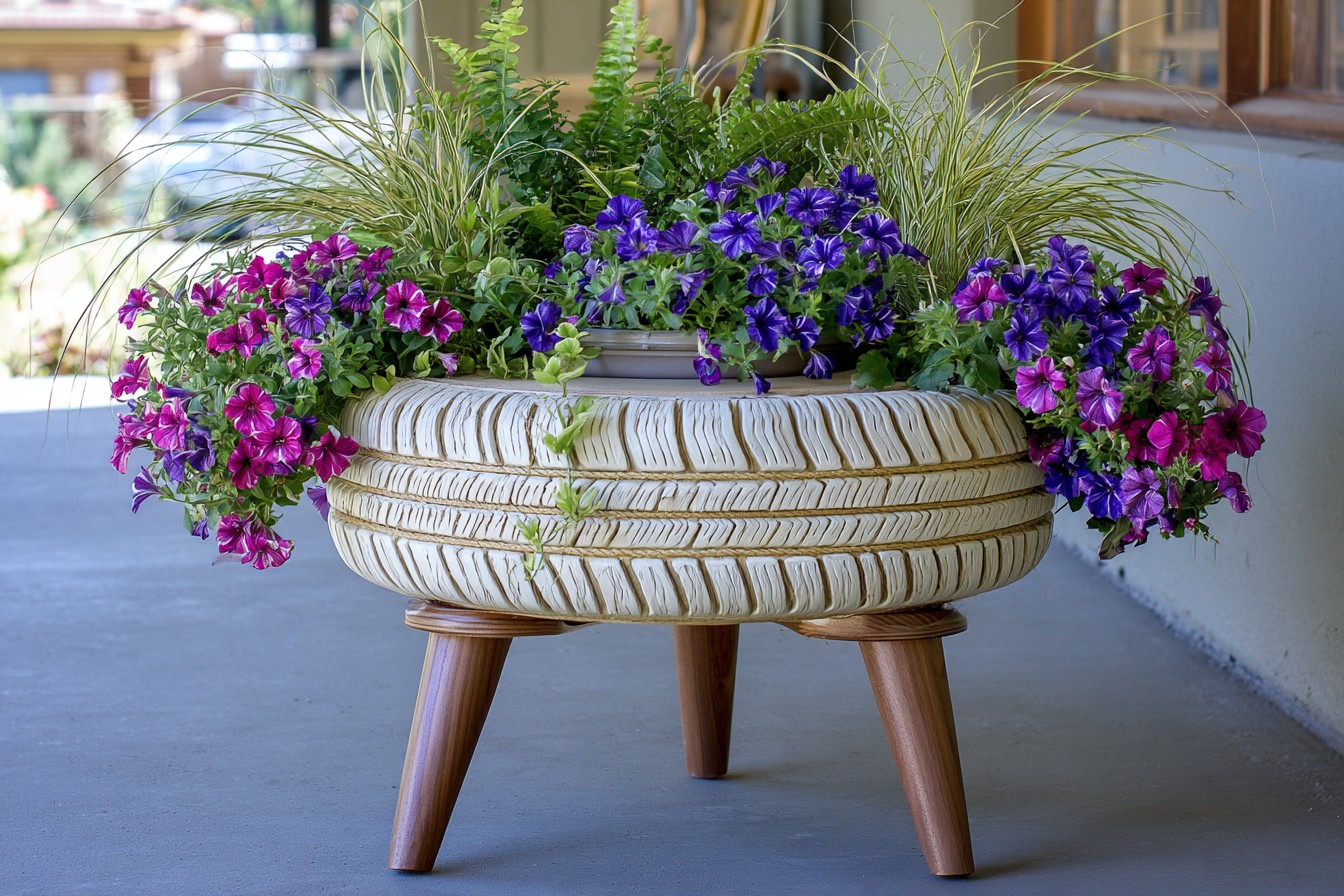
Build a porch planter by fastening a circular plywood base inside a tire and attaching three spaced timber legs. Wrap the sidewall with exterior rated rope, securing each row closely so the original rubber disappears. Place a removable nursery pot and saucer inside rather than adding soil directly, which improves drainage and simplifies seasonal planting. Stain the legs walnut for warmth or paint them the same tone as nearby furniture. Trailing petunias, ferns, and ornamental grasses soften the rounded form beautifully. Reserve recycled tire planters for decorative plants, protect the rope from prolonged rain, and verify the legs remain stable.
3. Bridge Two Tires into a Garden Bench
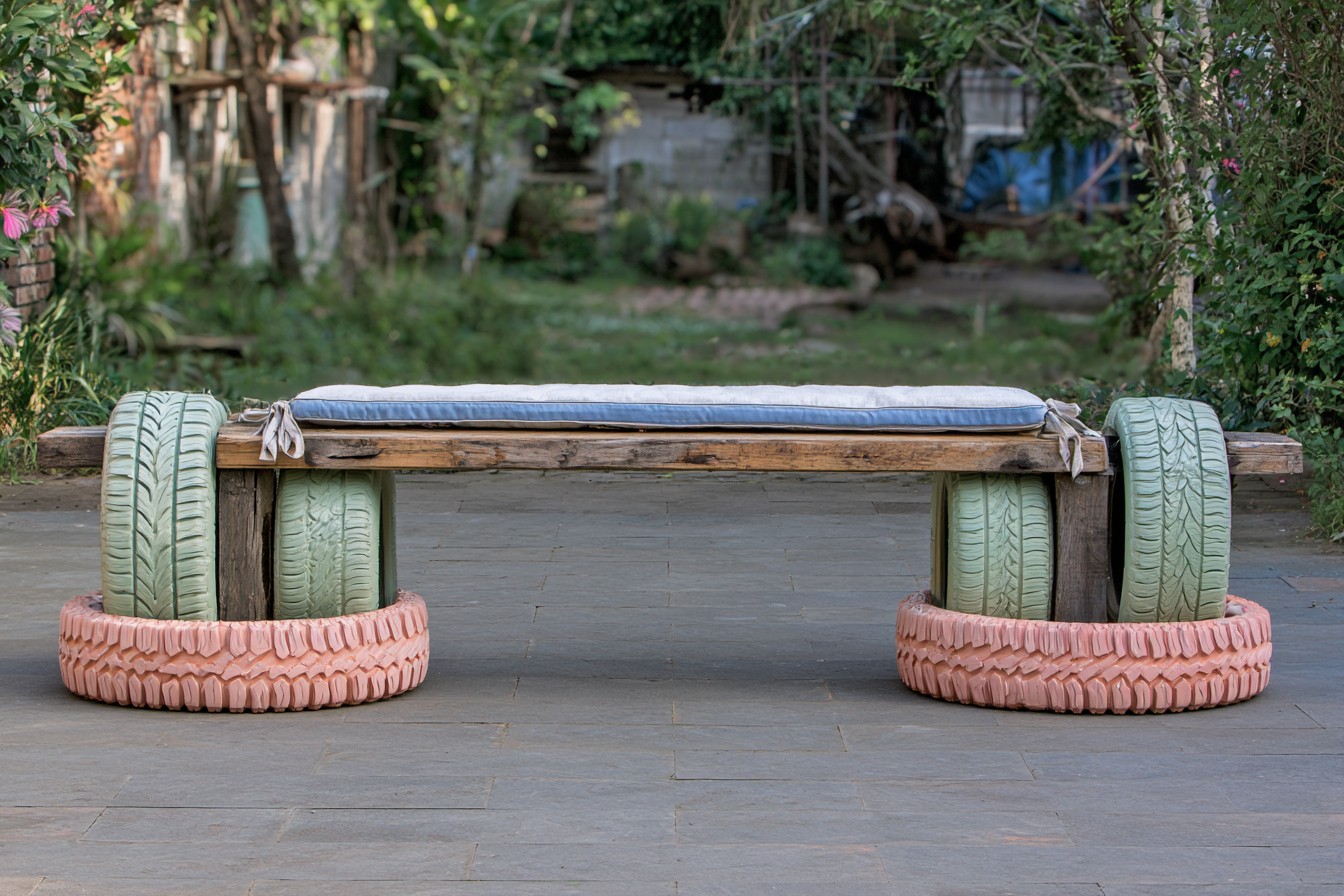
Create garden seating by positioning two upright tires at a comfortable distance and joining them with a weather resistant wooden plank. Bolt each tire to a timber support inside its lower opening, then secure the seat board across both bases. Sand every edge and apply exterior stain before assembly. Add a slim removable cushion with ties for comfort. Paint the tire sidewalls green to blend into planting, or use clay tones that coordinate with paving. Place the bench on a firm, level surface, retighten hardware seasonally, and avoid standing on the plank because the structure is intended for seated use.
4. Add a Removable Tray to a Rolling Side Table
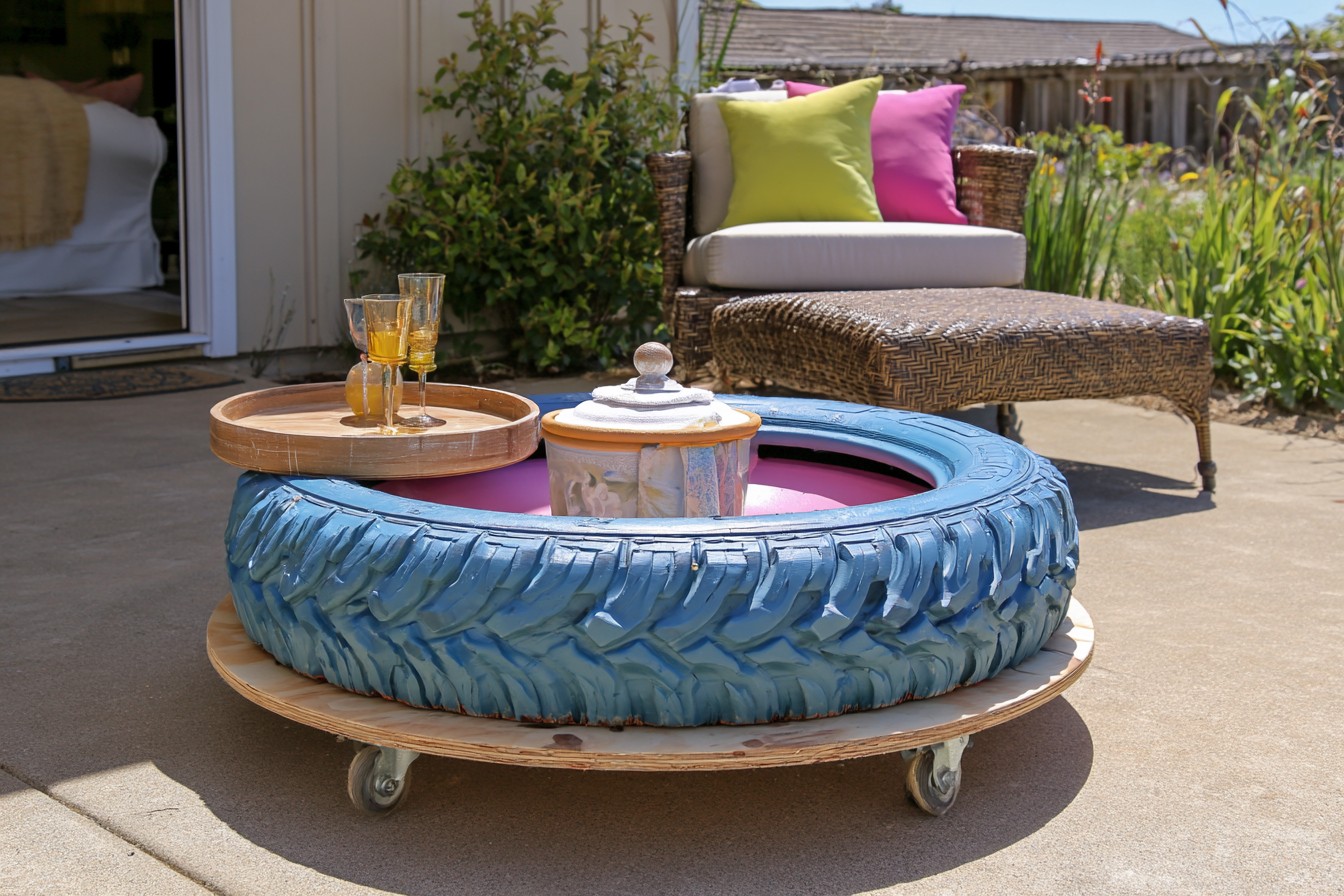
Turn one tire into a patio side table with a removable serving top. Bolt a plywood circle beneath the tire, then attach four locking casters rated for the weight. Fit a shallow wooden tray over the upper opening so it stays secure yet lifts away for cleaning. Paint the rubber matte charcoal, dusty blue, or another exterior color, and finish the tray in contrasting natural wood. The empty center can hold lightweight outdoor textiles inside a lidded basket. Lock every wheel before using the table, avoid placing hot cookware on top, and store the piece under cover during winter weather.
5. Fashion a Washable Outdoor Pet Bed

Give a medium tire a purpose as a sheltered porch bed for a small pet. Clean and deodorize the rubber thoroughly, seal it with pet safe paint, and attach a plywood base that covers the lower opening. Insert a thick cushion with a waterproof liner and machine washable cover, ensuring it fits snugly without gaps. Decorate the sidewall with simple color bands or paw shaped stencils in water based exterior paint. Position the bed in shade so the rubber cannot become hot. Check for chewing, loose fibers, or exposed hardware often, and discontinue use if the pet damages any surface.
6. Display Succulents in a Vertical Tire Frame
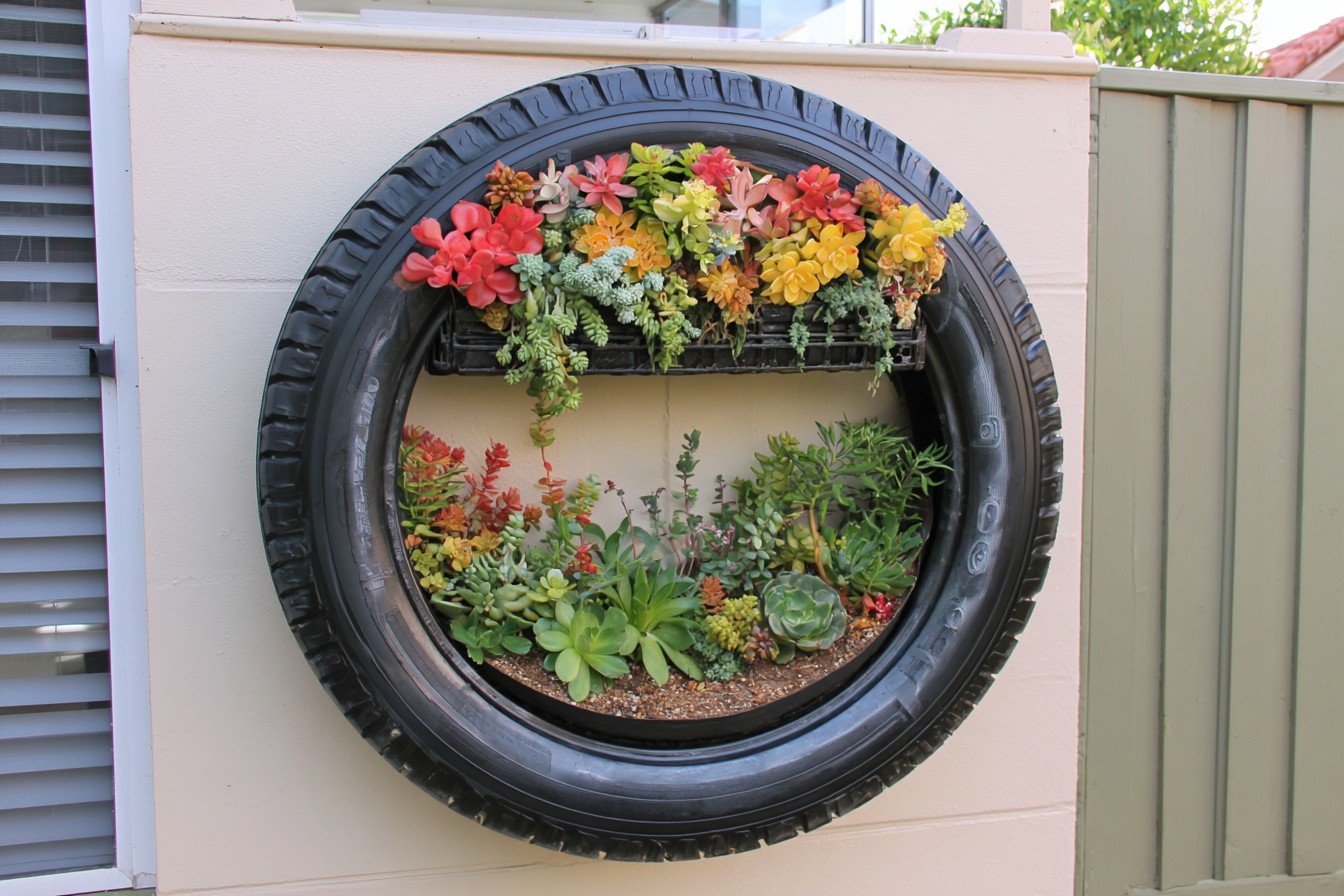
Mount a tire as a vertical planter on a masonry wall or reinforced fence. Drill drainage holes at the bottom, fasten the tire with load rated bolts, and install a planting liner inside the lower curve. Add lightweight potting mix and drought tolerant plants, keeping the arrangement below the tire center to prevent spills. Paint the exterior one muted shade, then outline the tread with a contrasting dry brush finish. Alternatively, leave the rubber black against a pale wall for graphic impact. Confirm the support can handle wet weight, water sparingly, and never hang the planter above seating or walkways.
7. Organize Umbrellas beside a Covered Door
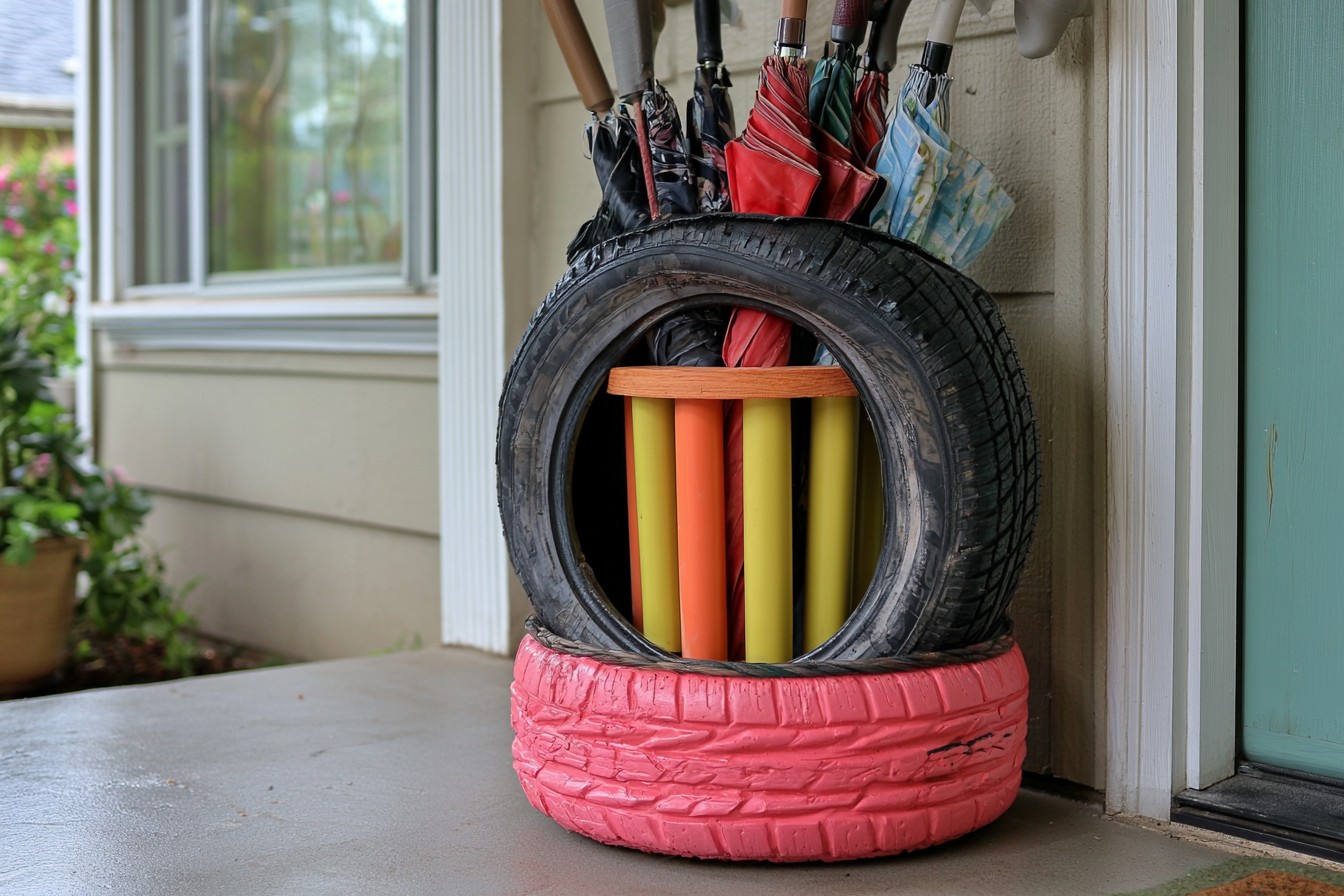
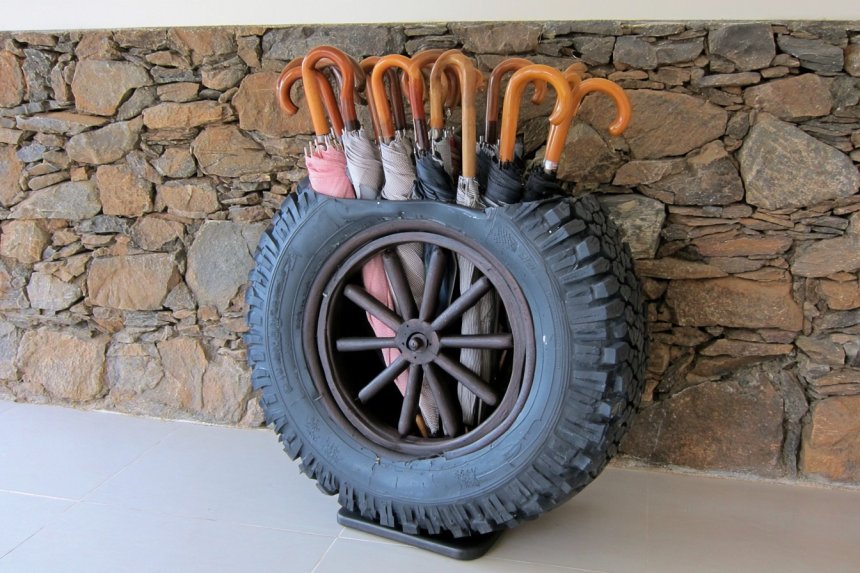
Create an umbrella station by standing a tire upright inside a wooden cradle. Bolt the rubber to the base, then place a removable waterproof tray beneath the opening to collect drips. Insert several smooth PVC sleeves through a plywood divider so umbrellas remain separated and upright. Wrap the visible tire edges with weatherproof cord, or paint the sidewall to coordinate with the door. Add felt beneath the base when using it on tile. Keep the organizer in a covered entry rather than a living space, empty collected water promptly, and check that umbrella tips cannot pierce the tray or rubber.
8. Stack Tires into a Garage Equipment Caddy
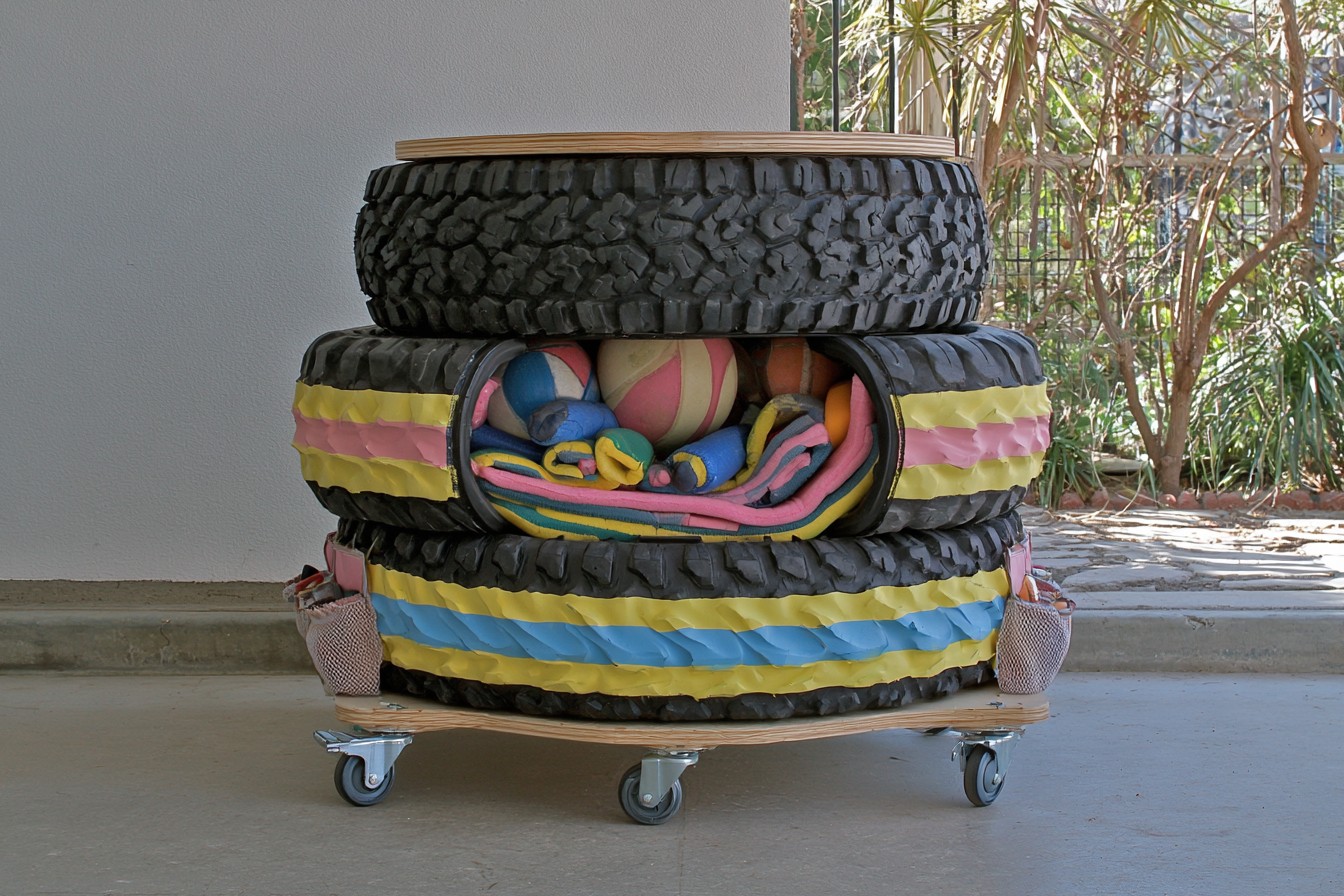
Organize sports gear by stacking two tires horizontally on a wheeled plywood platform. Bolt the tires together at points, cover every fastener, and add locking casters so the unit can move during garage cleaning. The central cavity can contain balls, protective pads, or rolled exercise mats, while clip on fabric pockets hold accessories. Paint a broad stripe around each sidewall to distinguish categories without adding labels. A fitted wooden lid turns the caddy into a packing surface. Keep heavy objects near the bottom, lock the wheels during storage, and position the organizer away from heaters, direct sunlight, and vehicle paths.
9. Build a Compact Garden Hose Station
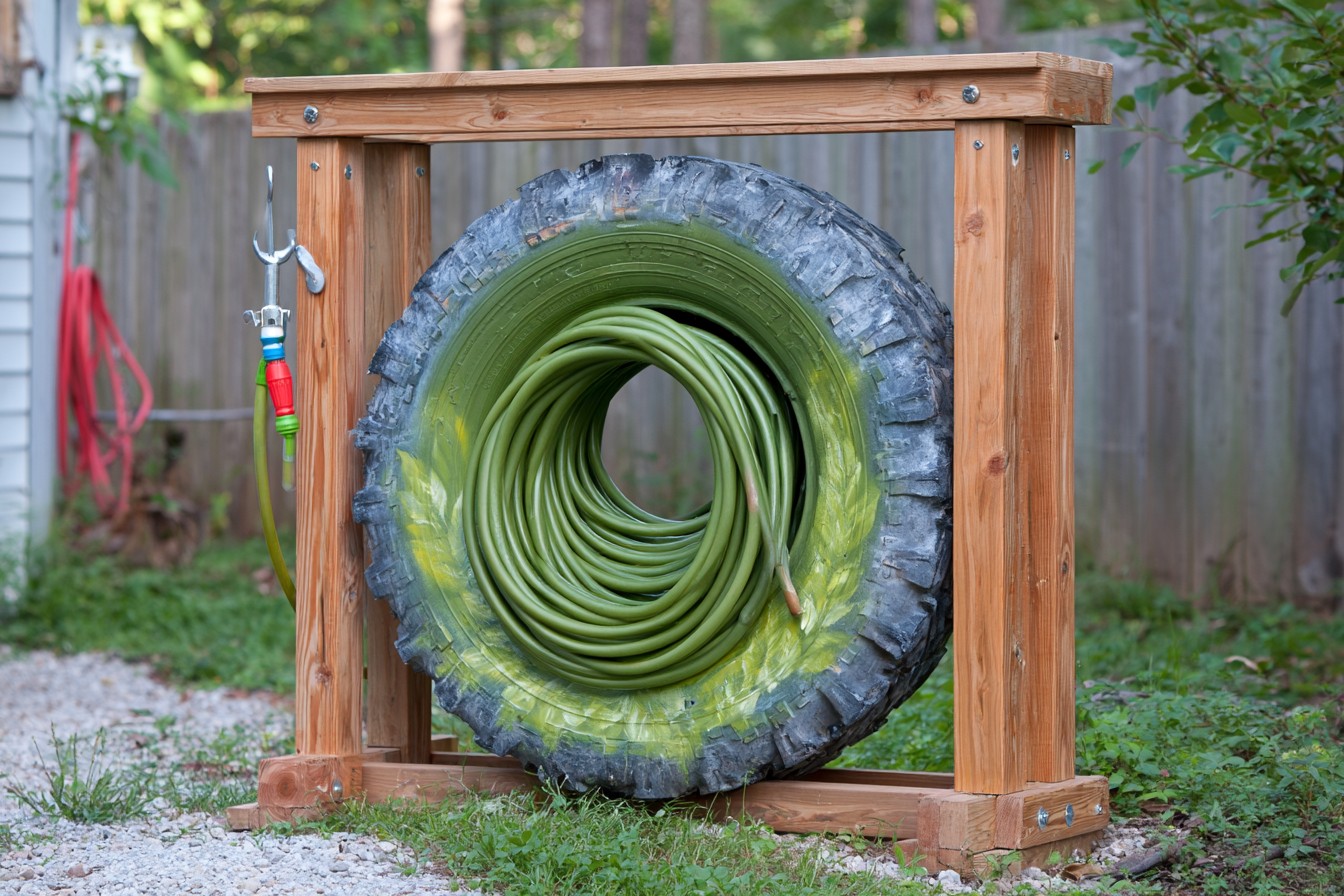
Repurpose an upright tire as a holder for a coiled garden hose. Secure the tire vertically to pressure treated timber posts set on a stable base, leaving its center accessible from both sides. Smooth exposed wood, seal it against moisture, and add a hook nearby for the spray nozzle. Paint the rubber to match a shed or fence, then stencil a leaf pattern around the sidewall for decoration. Coil the drained hose through the opening after use to keep paths clear. Ensure the frame cannot tip, use corrosion resistant hardware, and avoid drilling where internal steel belts may be exposed.
10. Create a Pair of Patio Stools
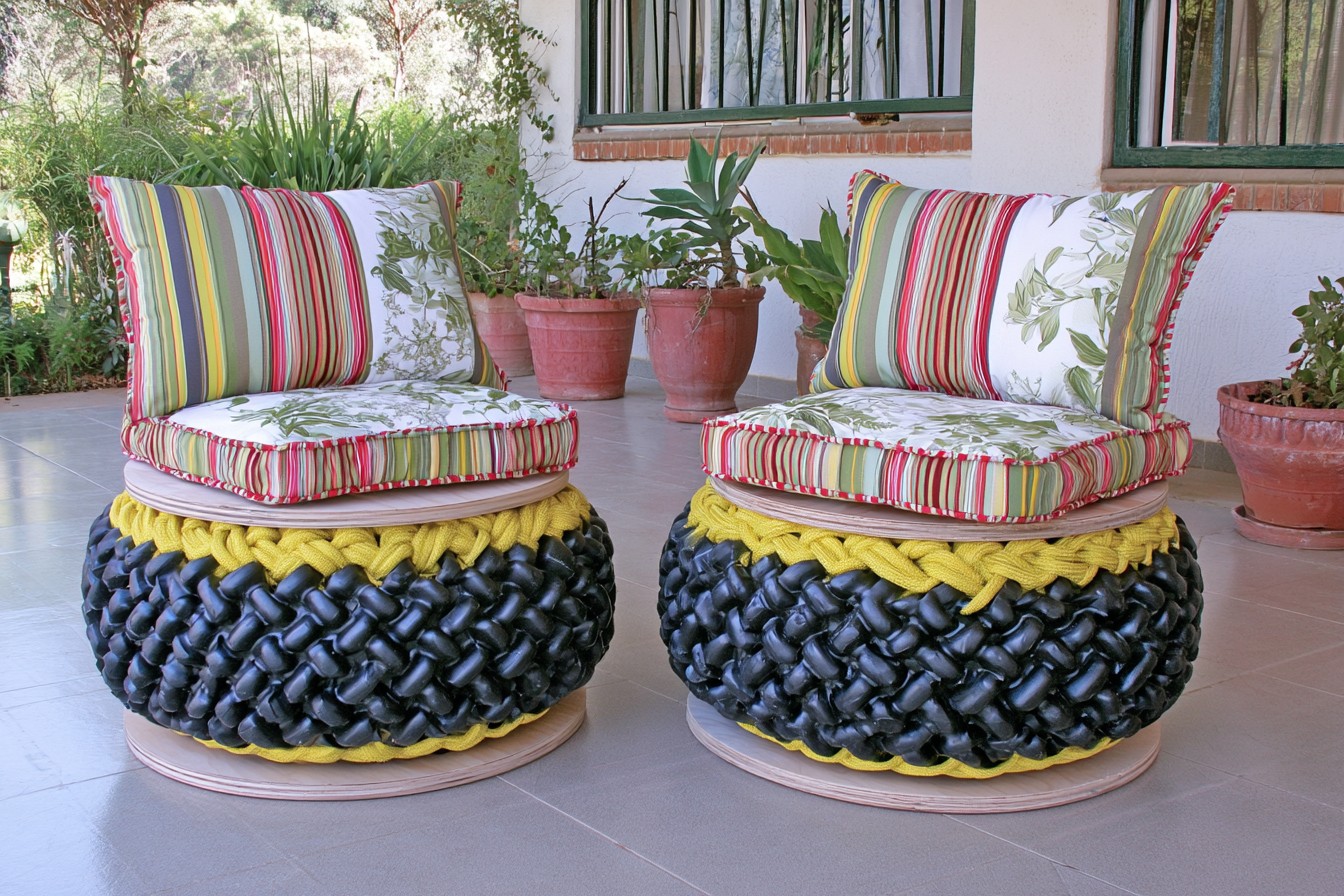
Make patio stools from two tires, plywood seats, dense outdoor foam, and washable covers. Bolt a wooden disc over each upper opening and attach a second disc below to create a stable base. Wrap the sidewalls with marine rope or coat them in flexible rubber paint. Upholster the tops in coordinating stripes, botanical prints, or solid canvas, adding hook and loop tape so covers can be removed easily. Group the stools around a table or use them as footrests. Confirm the seat panels withstand weight, place them on level paving, and bring the cushions indoors after rain to prevent mildew.
11. Turn a Tire into a Porch Magazine Table
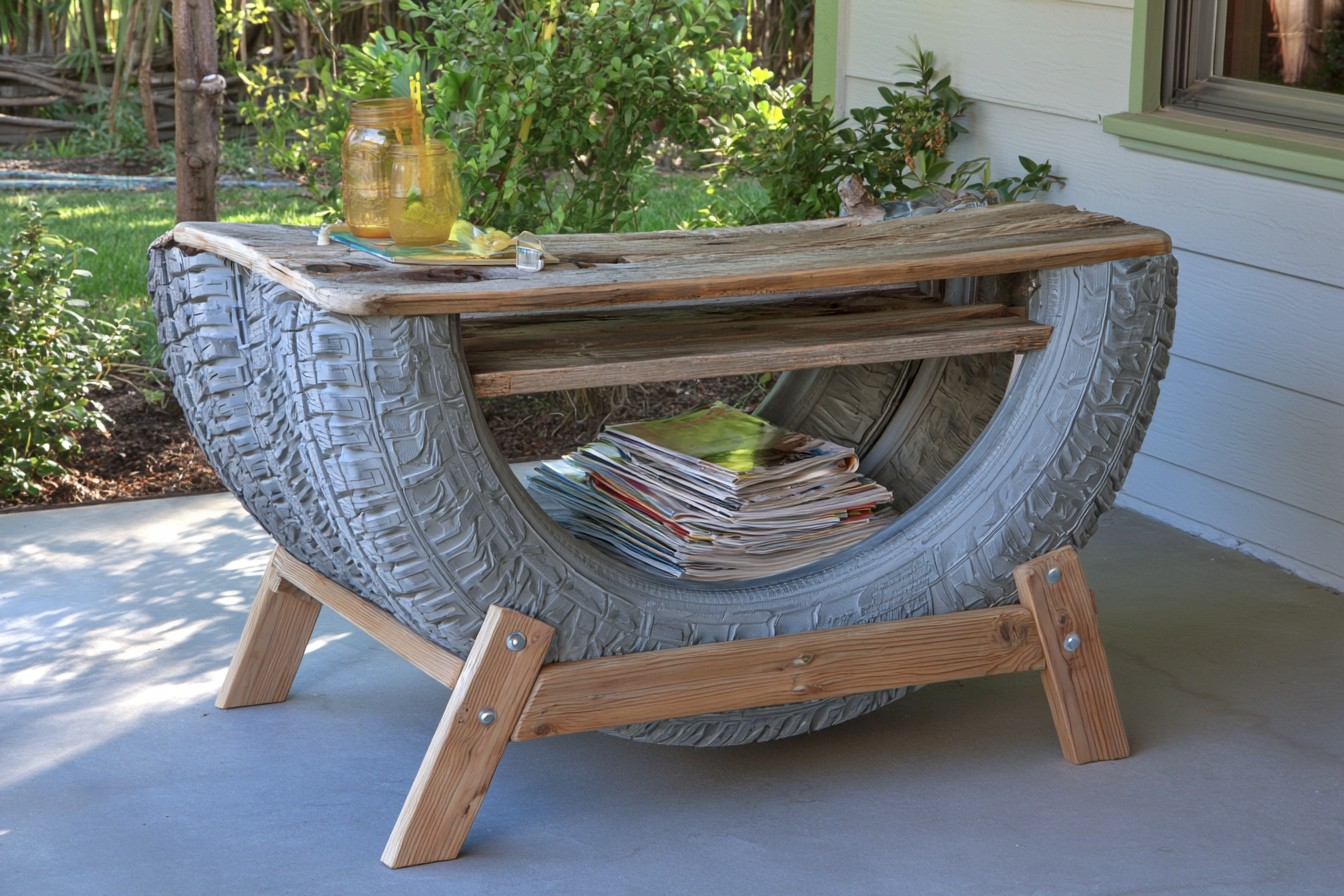
Combine reading storage and a tabletop by setting a tire inside a wooden stand. Build the stand with two parallel feet and cross braces, then bolt the tire through reinforced sidewall points. Slide magazines through the center and add a reclaimed wood shelf across the top for drinks or gardening gloves. Sand the shelf and finish it with exterior oil. Paint the rubber warm terracotta to complement brick, or retain black for an industrial look. Keep paper items only on a covered porch, avoid overfilling the opening, and use rounded bolt caps so hands cannot catch on the interior hardware.
12. Arrange a Tiered Courtyard Plant Display
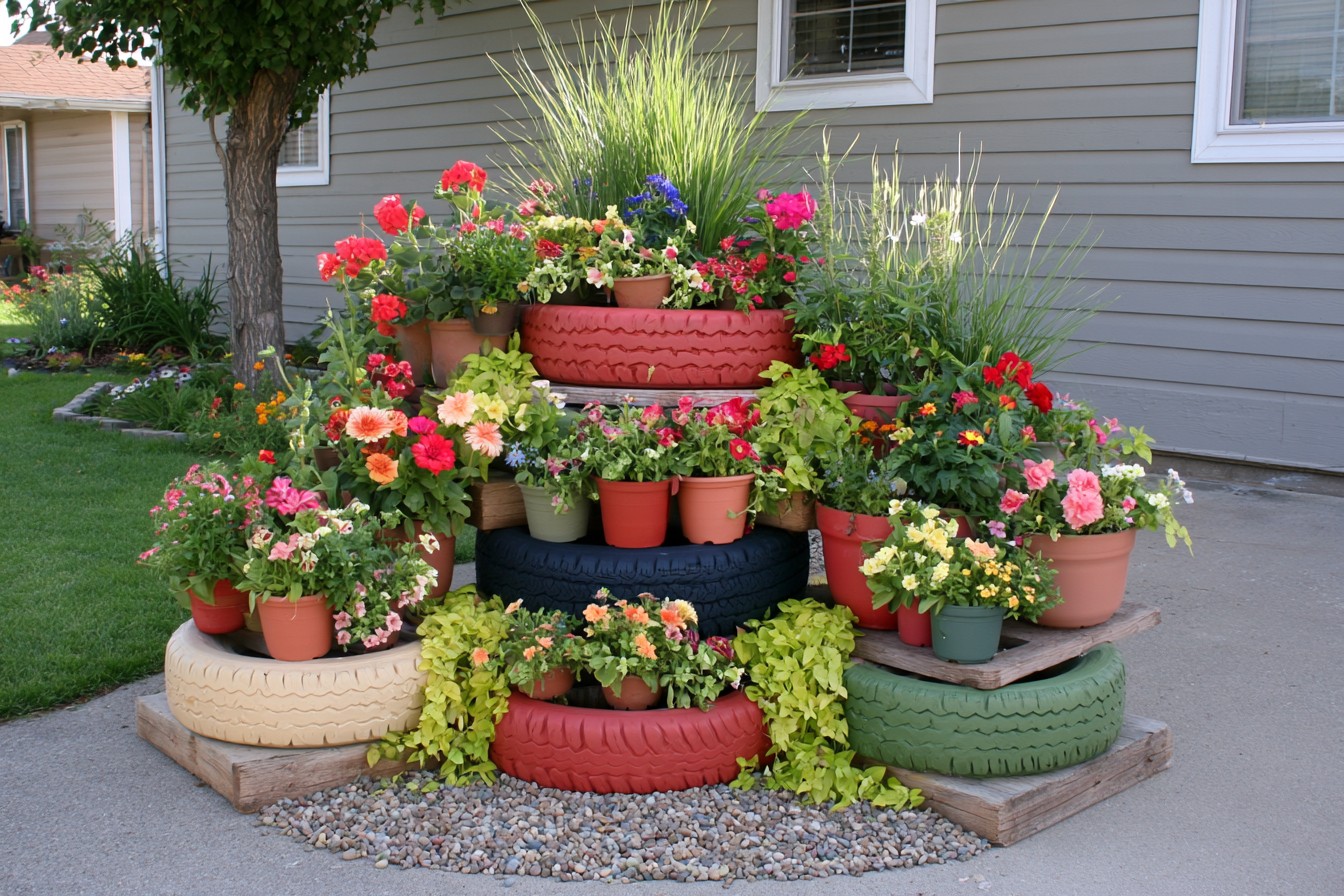
Build a plant display by arranging three tires at different heights on reclaimed wood platforms. Secure each tire to its support and place nursery pots inside the openings, allowing containers to be lifted out for watering. Unify the composition with one mineral inspired paint color, or use related shades from pale sand to burnt clay. Position taller grasses at the back and trailing flowers near the front to emphasize the levels. Add gravel around the base for a finished courtyard appearance. Use ornamental plants rather than edible crops, maintain clear drainage, and inspect wooden platforms for moisture damage each season.
13. Make a Mobile Workshop Stool
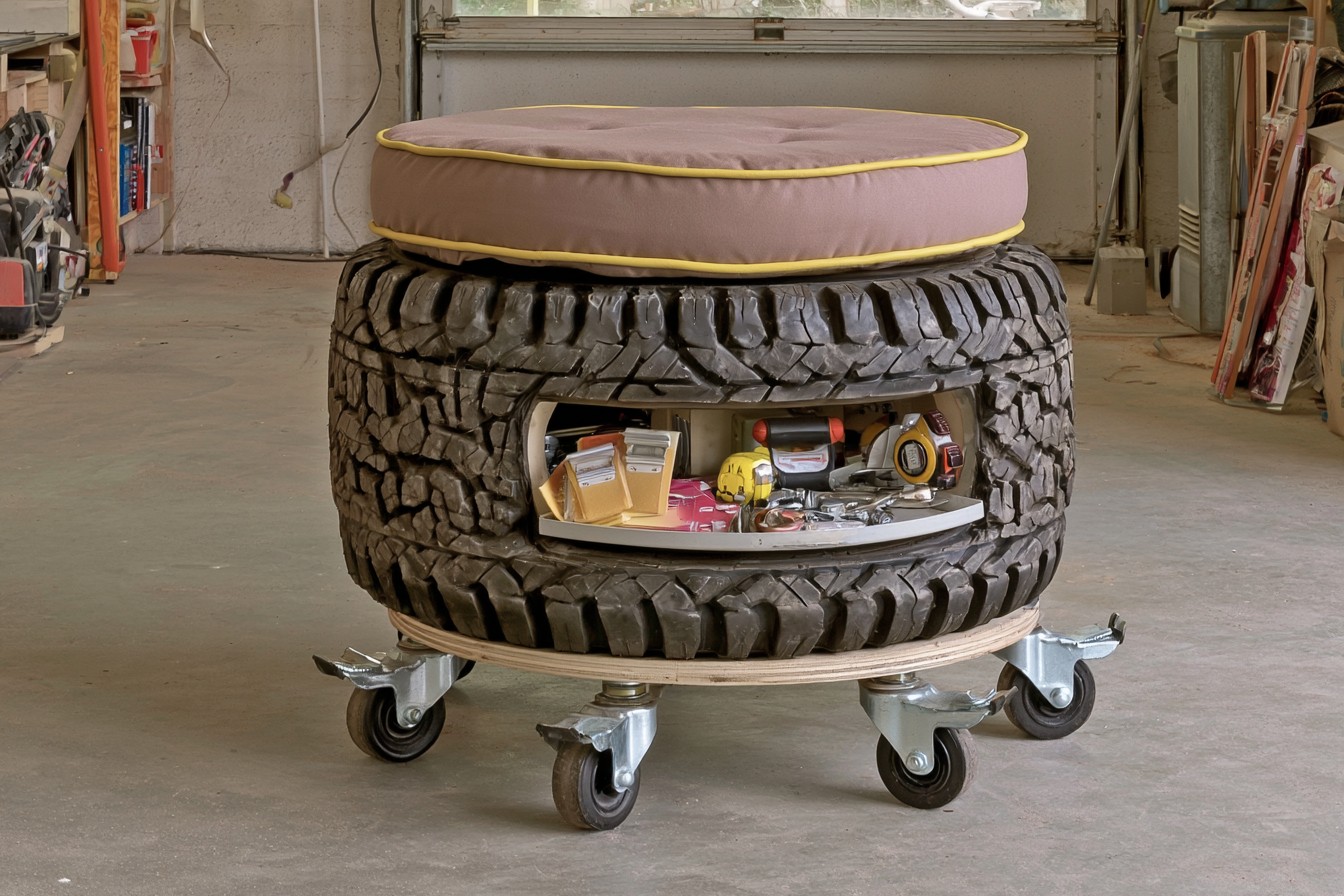
Create a workshop stool by bolting a plywood base and padded seat to opposite sides of a compact tire. Attach industrial locking casters underneath, checking their combined load rating before installation. Wrap the exposed sidewall with washable vinyl or leave the tread visible for a rugged finish. A shallow rotating organizer fitted beneath the seat can hold sanding sheets, tape measures, or clean hand tools. Use contrasting piping around the cushion to give the practical piece a tailored appearance. Lock all casters before sitting, keep sharp tools elsewhere, and inspect bolts frequently because workshop movement can gradually loosen the components.
MORE IDEAS


Share
What's Your Reaction?
 Like
0
Like
0
 Dislike
0
Dislike
0
 Love
0
Love
0
 Funny
0
Funny
0
 Angry
0
Angry
0
 Sad
0
Sad
0
 Wow
0
Wow
0